EP1105407B1 - Aminosterol compounds and uses thereof - Google Patents
Aminosterol compounds and uses thereof Download PDFInfo
- Publication number
- EP1105407B1 EP1105407B1 EP99942130A EP99942130A EP1105407B1 EP 1105407 B1 EP1105407 B1 EP 1105407B1 EP 99942130 A EP99942130 A EP 99942130A EP 99942130 A EP99942130 A EP 99942130A EP 1105407 B1 EP1105407 B1 EP 1105407B1
- Authority
- EP
- European Patent Office
- Prior art keywords
- aminosterol
- compound
- aminosterols
- compounds
- column
- Prior art date
- Legal status (The legal status is an assumption and is not a legal conclusion. Google has not performed a legal analysis and makes no representation as to the accuracy of the status listed.)
- Expired - Lifetime
Links
- VJENSJSGPUWLLF-OROMIIDTSA-N CCC[C@](C)(C(CC1)C2C(CC3)[C@@]1(C)[C@H]3C(C)CCC(C(C)CSCC(C(O)=O)N)=O)[C@](C)(CCNNCCN)C[C@H]2O Chemical compound CCC[C@](C)(C(CC1)C2C(CC3)[C@@]1(C)[C@H]3C(C)CCC(C(C)CSCC(C(O)=O)N)=O)[C@](C)(CCNNCCN)C[C@H]2O VJENSJSGPUWLLF-OROMIIDTSA-N 0.000 description 1
Images

Classifications
-
- A—HUMAN NECESSITIES
- A61—MEDICAL OR VETERINARY SCIENCE; HYGIENE
- A61K—PREPARATIONS FOR MEDICAL, DENTAL OR TOILETRY PURPOSES
- A61K31/00—Medicinal preparations containing organic active ingredients
- A61K31/56—Compounds containing cyclopenta[a]hydrophenanthrene ring systems; Derivatives thereof, e.g. steroids
- A61K31/575—Compounds containing cyclopenta[a]hydrophenanthrene ring systems; Derivatives thereof, e.g. steroids substituted in position 17 beta by a chain of three or more carbon atoms, e.g. cholane, cholestane, ergosterol, sitosterol
-
- A—HUMAN NECESSITIES
- A61—MEDICAL OR VETERINARY SCIENCE; HYGIENE
- A61P—SPECIFIC THERAPEUTIC ACTIVITY OF CHEMICAL COMPOUNDS OR MEDICINAL PREPARATIONS
- A61P31/00—Antiinfectives, i.e. antibiotics, antiseptics, chemotherapeutics
-
- A—HUMAN NECESSITIES
- A61—MEDICAL OR VETERINARY SCIENCE; HYGIENE
- A61P—SPECIFIC THERAPEUTIC ACTIVITY OF CHEMICAL COMPOUNDS OR MEDICINAL PREPARATIONS
- A61P31/00—Antiinfectives, i.e. antibiotics, antiseptics, chemotherapeutics
- A61P31/04—Antibacterial agents
-
- Y—GENERAL TAGGING OF NEW TECHNOLOGICAL DEVELOPMENTS; GENERAL TAGGING OF CROSS-SECTIONAL TECHNOLOGIES SPANNING OVER SEVERAL SECTIONS OF THE IPC; TECHNICAL SUBJECTS COVERED BY FORMER USPC CROSS-REFERENCE ART COLLECTIONS [XRACs] AND DIGESTS
- Y02—TECHNOLOGIES OR APPLICATIONS FOR MITIGATION OR ADAPTATION AGAINST CLIMATE CHANGE
- Y02A—TECHNOLOGIES FOR ADAPTATION TO CLIMATE CHANGE
- Y02A50/00—TECHNOLOGIES FOR ADAPTATION TO CLIMATE CHANGE in human health protection, e.g. against extreme weather
- Y02A50/30—Against vector-borne diseases, e.g. mosquito-borne, fly-borne, tick-borne or waterborne diseases whose impact is exacerbated by climate change
Definitions
- the invention relates to newly isolated aminosterol compounds.
- Such aminosterol compounds are useful in a variety of pharmaceutical compositions as well as methods of treatment of various disorders such as, for example, a microbial infection.
- antibiotics have been isolated from diverse species of vertebrate animals such as frogs (Zasloff, 1987), pigs (Lee et al., 1989), mice (Ouellette et al., 1989) and humans (Jones et al., 1992).
- These antibiotic agents including peptides (Steiner et al., 1981; Ganz et al., 1985; Zasloff, 1987), lipids (Kabara et al., 1977; Bibel et al., 1989) and alkaloids (Daly et al., 1987; Preusser et al., 1975), are believed to play a major role in host defense against environmental microbes.
- US-A-5 763 430 discloses a method of treating a viral infection by administering a steroid compound.
- US-A-5 733 899 discloses a method for treating infection using steroid based pharmaceutical compositions.
- US-A-5 637 691 discloses steroid derivatives, pharmaceutical compositions containing them, and their use as antibiotics or disinfectants.
- US-A-5 721 226 (Leah L et al. February 24, 1998 ) discloses a method for inhibiting angiogenesis using squalamine and squalamine steroid derivatives.
- the invention provides newly isolated aminosterol compounds and pharmaceutically acceptable salts thereof.
- the invention further provides pharmaceutical compositions comprising at least one aminosterol compound of the invention or a pharmaceutically acceptable salt thereof and a pharmaceutically acceptable carrier.
- the application further describes a method of treating a microbial infection comprising administering a therapeutically effective amount of at least one aminosterol compound of the invention or a pharmaceutically acceptable salt thereof.
- the invention provides newly isolated aminosterol compounds.
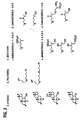
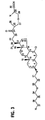
- the structure of the aminosterol compounds of the invention are illustrated in Figure 1.
- each of the aminosterol compounds of the invention has a steroid nucleus, a polyamine moiety attached to the steroid nucleus and a cholestane-related side chain.
- the steroid nucleus of an aminosterol compound of the invention has a trans AB ring junction (Wehrli et al., 1993).
- the C7 and/or the C12 position of an aminosterol compound of the invention may be further substituted with a hydroxyl group or a carbonyl moiety.
- the aminosterol compounds of the invention are substituted equatorially at the C3 position of the steroid nucleus with a polyamine moiety.
- the polyamine moiety may be either a spermidine moiety ( i.e . -NH-(CH 2 ) 3 -NH-(CH 2 ) 4 -NH 2 ) or a spermine moiety ( i.e. -NH-(CH 2 ) 3 -NH-H 2 ) 4 -NH-(CH 2 ) 3 -NH 2 ).
- aminosterol compounds (1)-(2) and (6) contain a spermidine moiety at the C3 position.
- the aminosterol compounds of the invention may be obtained in isolated or purified form the tissues (e.g. liver tissue) of the dogfish shark, Squalus acanthias.
- Fresh ground liver of the dogfish shark Squalus acanthias is treated with about 12% aqueous acetic acid at about 75 °C for about one hour. Next, ammonium sulfate and about 95% ethanol are added followed by vigorous agitation for about five minutes. The resulting suspension is then allowed to phase separate (i.e. separate into an organic phase and an aqueous phase) for about six days at about ambient temperature. The aqueous phase is then separated and filtered through cheesecloth. The filtrate is then slowly stirred with XAD-16 resin (commercially available from Supelco of Bellefonte, PA) for about twenty hours. The resin is then collected, washed with water and resuspended in about 70% ethanol for approximately twenty minutes. Removal of the resin leaves an alcohol solution containing the aminosterol compounds of the invention.
- XAD-16 resin commercially available from Supelco of Bellefonte, PA
- the alcohol solution containing aminosterol compounds (1) (2) and (6), as described above, is then filtered through a five micron polypure DCF filter (commercially available from Gelman Sciences of Ann Arbor, MI).
- the filtrate is then loaded onto a propylsulfonic acid column (commercially available from IT Baker of Phillipsburg, NJ).
- the column is then washed with about 20% isopropyl alcohol until an adsorption reading of about 254 nanometers (A254) reaches a constant level.
- the column may then be washed with about 0.4 M potassium acetate in about 10% isopropyl alcohol until the A254 again reaches a constant level.
- the aminosterol compounds of the invention are then eluted from the column with either an about 3.6 M or about 4.5 M potassium acetate (about pH 4) in about 10% isopropyl alcohol.
- the about 3.6 M and about 4.5 M potassium acetate eluates are separately filtered through an about 0.2 micron Sartopure GF capsules (commercially available from Sartorius of Edgewood, NY), diluted with water to about a 1.0 M salt concentration and loaded onto a YMC-ODS column (commercially available from YMC of Wilmington, NC).
- Two buffers, Buffer A and Buffer B are used to elute the aminosterols of the invention from the column.
- Buffer A consists of about 0.1 % trifluoroacetic acid in water while Buffer B consists of about 0.1% trifluoroacetic acid in acetonitrile.
- Buffer A consists of about 0.1 % trifluoroacetic acid in water while Buffer B consists of about 0.1% trifluoroacetic acid in acetonitrile.
- the column is first washed with Buffer A, then with about 25% Buffer B solution.
- the aminosterols of the invention are then eluted from the
- the fractions eluted with the about 25-34% Buffer B gradient system and the fractions eluted with the about 34-40% Buffer B gradient system may then be loaded onto a second propylsulfonic acid column.
- the propylsulfonic acid column is washed and the aminosterol compounds of the invention are eluted with the about 3.6 M and about 4.5 M potassium acetate solutions, each as described above.
- the eluates of the about 3.6 M and about 4.5 M potassium acetate solutions are collected and analyzed by thin-layer chromatography and HPLC.
- the eluates may be ultra-filtered through a spiral membrane cartridge with a three kiloDalton cutoff (commercially available from Amicon of Woburn, MA) to remove higher molecular weight residual pigments and proteins.
- the resulting permeate may then be loaded on YMC-ODS or Dynamax column (commercially available from Ranin of Woburn, MA), washed with Buffer A, as described above, and eluted with an appropriate gradient of Buffer B, as described above.
- the eluates may be further analyzed on an analytical reverse phase (RP) column using pre-column o-phthalaldehyde (OPA) derivatization and further purified on a Phenomenex Luna C18, Phenomenex phenyl-hexyl or Microsorb C18 column (commercially available from Ranin of Woburn, MA).
- RP analytical reverse phase
- OPA pre-column o-phthalaldehyde
- substantially homogeneous composition of each aminosterol compound of the invention, as described herein, may be prepared.
- substantially homogeneous composition is defined as a composition that is equal to or greater than about 95% pure excluding salt counter ions, as demonstrated by thin layer chromatography, o-phthalaldehyde analysis and NMR.
- Aminosterol compound (1) may be isolated and purified from the liver tissue of the common dogfish shark, Squalus acanthias, in amounts of about 0.5-2.5 milligrams per kilogram liver tissue and are designated as the "Major Aminosterols.”
- Aminosterol compounds (2), and (6) may be isolated and purified in amounts of less than about 0.05 milligrams per kilogram of liver tissue and are designated as the "Minor Aminosterols.”
- the aminosterol compounds of the invention have been numbered one (1) (2) and (6) based on their order of elution under high performance liquid chromatography (HPLC) conditions, as described herein.
- the structure of the Major Aminosterols i.e. aminosterol compounds (1) was determined using mass spectroscopy and two-dimensional proton ( 1 H) NMR and carbon-13 ( 13 C) NMR experiments, heteronuclear chemical shift correlation spectra (HMQC), proton detected carbon-proton multiple bond correlation spectra (HMBC), and phase sensitive correlated spectroscopy (COSY). The results were compared against similar data for squalamine for structure determination of the amino sterols.
- the 1 H NMR and "C NMR data of the Major Aminosterols are summarized in Tables 1 and 2, respectively.
- the mass spectroscopy data for the aminosterol compounds of the invention are summarized in Table 4.
- aminosterol compound (1) gave a positive ion mass by fast atom bombardment mass spectroscopy (FAB) [M + H] + at m/z 665 and fragment ions at m/z 578 and m/z 546, representing the loss of ⁇ -amino propionic acid and cysteine, respectively.
- Aminosterol compound (1) also gave a positive ion mass by high-resolution mass spectroscopy (HRMS) (FAB) [M + H] + at m/z 665.5043, consistent with the calculated value of 665.5039.
- HRMS high-resolution mass spectroscopy
- the one-dimensional 1 H NMR data for aminosterol compounds (1) indicated the characteristic appearance of a steroid, with two singlets for the angular methyl groups at the C18 and C19 positions and two doublets for methyl groups at the C21 and C26 positions (see Figure 3).
- the C24 keto group of aminosterol compound (1) displays a characteristic multiplet between ⁇ 2.4-2.8, integrating for two protons identified as the methylene protons at the C23 position.
- Aminosterol compound (1) also displays a multiplet for the ⁇ -proton of cysteine at ⁇ 3.96.
- the spermidine moiety at the C3 position integrates typically for nine protons, eight methylene protons immediately adjacent to an NH group of spermidine and the C3 axial proton.
- aminosterol compound (1) the four methylene protons at C27 and C28 adjacent to the sulfur atom also overlap in this region, in addition to the CH proton at C25.
- the rest of the steroid protons, including the hydrogen at the C7 position at ⁇ 3.80, are identical to squalamine.
- the following correlations establish that the cysteine sulfur atom is connected to the C27 carbon: C24 carbonyl carbon at ⁇ 216.27 and the C26 carbon at ⁇ 17.14 display correlations to the protons at the C27 position at ⁇ 2.62 and ⁇ 2.85; the C27 carbon at ⁇ 35.49 through S to the protons at the C28 position at ⁇ 2.97 and ⁇ 3.14; the C28 carbon at ⁇ 34.21 through S to the protons at the C27 position at ⁇ 2.62 and ⁇ 2.85; the C29 cysteine ⁇ -carbon at ⁇ 54.47 to the protons at the C28 position at ⁇ 2.97 and ⁇ 3.14.
- Aminosterol compound (2) is hydroxylated at the C25 position of the cholestane-related side chain. Aminosterol compound (2) is substituted with a keto group at the C24 position.
- the mass spectral data of aminosterol compound (2) display only a single mass in the positive mode (MALDI) [M + H] + at m/z 562.1 and m/z 547.8, respectively.
- Aminosterol compound (2) also displays a positive ion mass by high-resolution mass spectroscopy (FAB) [M + H] + at m/z 562.4966. These values is consistent with the calculated value of 562.4947.
- the 1 H NMR spectra of these aminosterols clearly identify the steroid region with singlets for angular methyl protons at the C18 and C19 positions and a doublet for the methyl group at the C21 position.
- the isopropyl protons produce a singlet integrating for six protons down field at ⁇ 1.28 for aminosterol compound (2), due to the substitution at the C25 position.
- aminosterol compound (2) produces a multiplet integrating for two protons at ⁇ 2.65 for the methylene protons at the C23 position, typical of 24-keto aminosterols.
- the C7 proton adjacent to the hydroxyl group in these aminosterols is a singlet at ⁇ 3.79 for aminosterol compound (2), while the polyamine region at the C3 position is characteristic of spermidine.
- One-dimensional 1 H NMR can readily distinguish aminosterol compound (6)
- the angular methyl groups at the C18 and C19 positions are singlets, while those at the C21 and C26 positions are well-separated doublets.
- Aminosterol compound (6) is a 24-keto aminosterol and typical of keto aminosterols, the methylene protons at the C23 position resonate at ⁇ 2.53.
- the proton at the C25 position which is usually buried in the polyamine region in most keto aminosterols is separated from the polyamine region as a multiplet at ⁇ 2.78 as is the case in aminosterol compound (6).
- aminosterol compound (6) displays a (MALDI) [M + H] + at m/z 562.1.
- Aminosterol compound (6) also displays a positive ion mass by high-resolution mass spectroscopy (FAB) [M + H] + at m/z 562.4954, consistent with the calculated value of 562.4948.
- the aminosterol compounds of the invention may be obtained in isolated or purified form by chemical synthetic means.
- the aminosterol compounds of the invention may be synthesized and isolated or purified by any means known in the art.
- U.S. Patents 5,637,691 , 5,721,226 , 5,733,899 , 5,763,430 , 5,792,635 , 5,795,885 , 5,840,740 , 5,840,936 , 5,847,172 , 5,856,535 and 5,874,597 and WO 94/19366 Synthesized and isolated or purified derivatives of the aminosterol compounds of the invention are also envisioned.
- the aminosterol compounds may be synthesized in which the spermidine polyamine moiety at the C3 position is replaced with a spermine polyamine moiety.
- salts of each of the aminosterol compounds (1) (2) or (6) or derivatives thereof, each as described above may be prepared by any means known in the art.
- Such salts include, but are not limited to, sodium, potassium, ammonium, chloride, triflouroacetate, lactate and acetate salts.
- the invention also provides a pharmaceutical composition
- a pharmaceutical composition comprising at least one of the aminosterols of the invention or a derivative thereof as an active ingredient present in a therapeutically effective amount and a pharmaceutically acceptable carrier.
- the aminosterol compound or derivative thereof are each as described above and the pharmaceutically acceptable carrier may be any such carrier known in the art, preferably a pharmaceutically acceptable, non-toxic sterile carrier as would be recognized by one of skill in the art.
- a "therapeutically effective amount” will be determined on a case by case basis. Factors to be considered include, but are not limited to, the disorder to be treated and the physical characteristics of the one suffering from the disorder. Accordingly, a "therapeutically effective amount" will be best determined through routine experimentation.
- a pharmaceutical composition of the invention contains between about 0.001 and about 5.0 % by weight, preferably between about 0.01 to about 1.0 % by weight of an aminosterol compound of the invention.
- a pharmaceutical composition of the invention may be prepared by means known in the art.
- a pharmaceutical composition of the invention may be, for example, a solid (e.g. powder, pill, tablet), liquid (e.g. syrup, elixir), suspension, or emulsion and may be adapted for systemic administration.
- Other modes of administration of a pharmaceutical composition of the invention include, depending on the state of the pharmaceutical composition, methods known in the art such as, but not limited to, oral administration, topical application, parenteral, intravenous, intranasal, intraocular, intracranial, deposition under the skin, intramuscular or intraperitoneal injection.
- a pharmaceutical composition of the invention is applied as a topical formulation. Any common topical formulation such as, for example, a solution, suspension, gel, ointment or salve may be used.
- a topical formulation of a pharmaceutical composition of the invention may also be administered as a powder or spray, particularly in aerosol form. Preparation of such topical formulations are well known in the art as exemplified in Remington's Pharmaceutical Sciences, 19th edition, Mack Publishing Company, 1995 .
- the amount of pharmaceutical composition systemically administered will be determined on a case by case basis, as described above, preferably between about 0.01-100 milligrams per kilogram body weight per day, more preferably, between about 0.1-10 milligrams per kilogram body weight per day, will be administered.
- additional therapeutic agents may be added to a pharmaceutical composition of the invention.
- the therapeutic agent may be any synthetic or naturally occurring biologically active therapeutic agent known in the art.
- suitable therapeutic agents include, but are not limited to, antibiotics, steroids, genomic DNA, cDNA, mRNA, antisense oligonucleotides, plasmids, peptides, peptide fragments, small-molecules and other biologically active macromolecules such as, for example, proteins and enzymes.
- the aminosterol compounds of the invention exhibit a broad range of antimicrobial activity or potent antibiotic activity against a plurality of microorganisms or microbes including, but not limited to, gram-positive and gram-negative bacteria, fungi, protozoa and the like.
- the invention provides a method of treating or controlling a infection or contamination by such microorganisms or microbes comprising administering a therapeutically effective amount of at least one amino sterol compound of the invention, a derivative thereof, or a pharmaceutically acceptable salt thereof, each as described above.
- a host or tissue susceptible or afflicted with a microbial infection is treated with a therapeutically effective amount of at least one of the aminosterol compounds of the invention, its derivative or its pharmaceutically acceptable salt, each as described above.
- a “therapeutically effective amount,” as described above, will be determined on a case by case basis upon routine experimentation as understood by of skill in the art. However, in general, a “therapeutically effective amount” is any amount sufficient to produce an antimicrobial or antibiotic effect in a susceptible or afflicted host or tissue.
- the aminosterol compounds of the invention may also be used as a preservative or sterilizer of materials susceptible to microbial contamination.
- aminosterol compounds of the invention, its derivative or its pharmaceutically acceptable salt, each as described above may also exhibit other activity including, but not limited to, antiangiogenic activity, direct inhibition of the growth of various cell types, appetite suppression, inhibition of an asthmatic response, inhibition of the sodium/proton exchanger NHE3, and localization of certain cell types or tissue types. Accordingly, the aminosterol compounds of the invention, its derivative or its pharmaceutically acceptable salt, each as described above, may be used in methods for: inhibiting angiogenic activity (e.g. inhibition of cancer growth and metastasis, inhibition of new blood vessel growth in the eye); directly inhibiting the growth of cells (e.g.
- endothelial cells prostate tumor cells (in conjunction with VEGF) and melanomas); suppressing appetite resulting in, for example, weight loss and/or growth retardation; inhibiting an asthmatic response to an allergen; inhibiting the sodium/proton exchanger NHE3; or cell type or tissue type localization, preferably in some or all those cells or tissues involved in steroidogenesis or steroid metabolism.
- the alcohol solutions from ten shark liver preparations were combined (approximately 200 liters) and further filtered using a five micron polypure DCF filter (commercially available from Gelman Sciences of Ann Arbor, MI).
- the filtrate was loaded onto a three kilogram propylsulfonic acid column (commercially available from JT Baker of Phillipsburg, NJ).
- the column was washed with 20% isopropyl alcohol until the adsorption at 254 nanometers (A254) reached a constant level.
- the column was washed with 0.4 M potassium acetate in 10% isopropyl alcohol until the A254 again reached a constant level.
- Aminosterol compounds (1) (2) and (6) were successively eluted from the column with either 3.6 M or 4.5 M potassium acetate (pH 4) in 10% isopropyl alcohol (15-30 liters until A254 was constant).
- the 3.6 M and 4.5 M potassium acetate eluates contained different compositions or various mixtures of the aminosterols.
- the 3.6 M and 4.5 M potassium acetate eluates were then separately filtered through 0.2 micron Sartopure GF capsules (commercially available from Sartorius of Edgewood, NY), diluted with water to a 1.0 M salt concentration and loaded onto a 10 x 25 cm YMC-ODS column (commercially available from YMC of Wilmington, NC).
- Two buffers were used to elute the aminosterols from the column.
- Buffer A consisted of 0.1 % trifluoroacetic acid in water while buffer B consisted of 0.1% trifluoroacetic acid in acetonitrile.
- the column was first washed at a flow rate of 470 milliliters per minute with forty liters of buffer A, then with ten liters of 25% buffer B.
- Aminosterols were then eluted from the column by a thirteen minute gradient from 25-34% buffer B followed by a twenty-two minute gradient from 34-40% buffer B. Five liter fractions were collected during the 25-34% elution followed by 235 milliliter fractions during the 34-40% elution. Side fractions containing less abundant aminosterols were pooled together according to their sequential elution order.
- Each of the pools of aminosterols (approximately 35 liters) were separately loaded onto a 700 milliliter propylsulfonic acid column. The column was washed and the aminosterol compounds (1) (2) and (6) eluted under the same conditions described above. The eluates of the 3.6 M and 4.5 M potassium acetate solutions were collected in two liter fractions and analyzed by thin-layer chromatography and HPLC. Fractions that contained a similar composition of aminosterols were combined while those that contained no aminosterols were discarded.
- the solution was ultra-filtered through a spiral membrane cartridge with a three kiloDalton cutoff (commercially available from Amicon of Woburn MA) to remove higher molecular weight residual pigments and proteins.
- the permeate was then loaded on a 1 x 25 cm YMC-ODS or 4 x 25 cm Dynamax (commercially available from Ranin of Woburn MA) column, washed with buffer A and eluted with an appropriate gradient of buffer B. Fractions were collected and analyzed by thin-layer chromatography. According to the thin-layer chromatography profile, fractions were further analyzed on an analytical reverse phase (RP) column using pre-column o-phthalaldehyde (OPA) derivatization.
- RP analytical reverse phase
- OPA pre-column o-phthalaldehyde
- Aminosterol compounds (1) (2) and (6) were assayed in vitro against several microbial organisms to evaluate their spectrum of activity.
- Minimum inhibitory concentrations (MIC) for the bacteria and yeast were determined by incubating 0.9-1.1e5 colony-forming units per milliliter of log-phase microbes in 0.5x trypticase soy broth with increasing concentrations of sample in ninety-six well microtiter plates (commercially available from Corning of Corning, NY) at 37°C for eighteen to twenty-four hours.
- the minimum inhibitory concentration (MIC) is the lowest concentration of sample at which no growth was observed. Control incubation in the absence of bacteria served as a baseline value.
Landscapes
- Health & Medical Sciences (AREA)
- Veterinary Medicine (AREA)
- Chemical & Material Sciences (AREA)
- Medicinal Chemistry (AREA)
- Pharmacology & Pharmacy (AREA)
- Life Sciences & Earth Sciences (AREA)
- Animal Behavior & Ethology (AREA)
- General Health & Medical Sciences (AREA)
- Public Health (AREA)
- Communicable Diseases (AREA)
- Epidemiology (AREA)
- Oncology (AREA)
- Chemical Kinetics & Catalysis (AREA)
- General Chemical & Material Sciences (AREA)
- Nuclear Medicine, Radiotherapy & Molecular Imaging (AREA)
- Organic Chemistry (AREA)
- Steroid Compounds (AREA)
- Pharmaceuticals Containing Other Organic And Inorganic Compounds (AREA)
- Organic Low-Molecular-Weight Compounds And Preparation Thereof (AREA)
- Polysaccharides And Polysaccharide Derivatives (AREA)
Applications Claiming Priority (3)
| Application Number | Priority Date | Filing Date | Title |
|---|---|---|---|
| US9633798P | 1998-08-12 | 1998-08-12 | |
| US96337P | 1998-08-12 | ||
| PCT/US1999/018322 WO2000009137A2 (en) | 1998-08-12 | 1999-08-12 | Aminosterol compounds and uses thereof |
Publications (3)
| Publication Number | Publication Date |
|---|---|
| EP1105407A2 EP1105407A2 (en) | 2001-06-13 |
| EP1105407A4 EP1105407A4 (en) | 2004-03-17 |
| EP1105407B1 true EP1105407B1 (en) | 2007-10-10 |
Family
ID=22256894
Family Applications (1)
| Application Number | Title | Priority Date | Filing Date |
|---|---|---|---|
| EP99942130A Expired - Lifetime EP1105407B1 (en) | 1998-08-12 | 1999-08-12 | Aminosterol compounds and uses thereof |
Country Status (8)
| Country | Link |
|---|---|
| US (1) | US6388108B1 (enExample) |
| EP (1) | EP1105407B1 (enExample) |
| JP (1) | JP2002522501A (enExample) |
| AT (1) | ATE375359T1 (enExample) |
| AU (1) | AU773038B2 (enExample) |
| CA (1) | CA2339174C (enExample) |
| DE (1) | DE69937301T2 (enExample) |
| WO (1) | WO2000009137A2 (enExample) |
Families Citing this family (17)
| Publication number | Priority date | Publication date | Assignee | Title |
|---|---|---|---|---|
| US5847172A (en) * | 1995-06-07 | 1998-12-08 | Magainin Pharmaceuticals Inc. | Certain aminosterol compounds and pharmaceutical compositions including these compounds |
| IL157578A0 (en) * | 2001-03-21 | 2004-03-28 | Leo Pharma As | Novel fusidic derivatives |
| KR20040097287A (ko) * | 2002-04-05 | 2004-11-17 | 레오 파마 에이/에스 | 분지된 폴리아민 스테로이드 유도체 |
| US20070129690A1 (en) | 2005-12-02 | 2007-06-07 | Joel Rosenblatt | Catheter with polymeric coating |
| WO2008038965A1 (en) * | 2006-09-26 | 2008-04-03 | Kyungpook National University Industry-Academic Cooperation Foundation | 7alpha-aminosteroid derivatives or pharmaceutically acceptable salts thereof, preparation method thereof and composition for anticancer or antibiotics containing the same as an active ingredient |
| AU2007327761A1 (en) * | 2006-12-08 | 2008-06-12 | Jado Technologies Gmbh | Cholesterylamines for the treatment and prevention of infectious diseases |
| US20080188830A1 (en) * | 2007-02-06 | 2008-08-07 | Arrow International, Inc. | Selectively reinforced medical devices |
| CA2985271A1 (en) * | 2007-09-06 | 2009-03-12 | Ohr Pharmaceutical, Inc. | A method for treating diabetes |
| US9078864B2 (en) | 2008-01-08 | 2015-07-14 | Akthelia Pharmaceuticals | Agonists for antimicrobial peptide systems |
| WO2009090063A1 (en) * | 2008-01-16 | 2009-07-23 | Jado Technologies Gmbh | Steroid sapogenin, androstane and triterpenoid sapogenin derivatives for the treatment and prevention of infectious diseases |
| US20100082097A1 (en) * | 2008-10-01 | 2010-04-01 | Joel Rosenblatt | Article Containing Segregated Biguanide and Lewis Acid |
| WO2011056650A2 (en) | 2009-10-27 | 2011-05-12 | Michael Zasloff | Methods and compositions for treating and preventing viral infections |
| WO2011066260A2 (en) * | 2009-11-25 | 2011-06-03 | Michael Zasloff | Formulations comprising aminosterols |
| US10040817B2 (en) | 2013-10-03 | 2018-08-07 | Enterin Laboratories, Inc. | Methods and compositions for stimulation of the intestinal enteroendocrine system for treating diseases or conditions related to the same |
| MX356006B (es) * | 2013-10-18 | 2018-04-24 | Centro De Investig Y Asistencia En Tecnologia Y Diseno Del Estado De Jalisco A C | Proceso para obtener una molécula que sirve como elicitor de péptidos antimicrobianos. |
| CA3037712A1 (en) * | 2016-09-21 | 2018-03-29 | Mount Desert Island Biological Laboratory | Methods and compositions for stimulation and enhancement of regeneration of tissues |
| EP3678671A4 (en) | 2017-09-08 | 2022-12-07 | Enterin, Inc. | METHODS OF TREATMENT OF SLEEPING DISEASES, SLEEP DISORDERS AND RELATED SYMPTOMS USING AMINOSTEROL COMPOSITIONS |
Family Cites Families (7)
| Publication number | Priority date | Publication date | Assignee | Title |
|---|---|---|---|---|
| US5192756A (en) * | 1992-03-18 | 1993-03-09 | The Children's Hospital Of Pennsylvania | Aminosterol antibiotic |
| CA2157594A1 (en) * | 1993-03-10 | 1994-09-15 | Leah L. Frye | Steroid derivatives, pharmaceutical compositions containing them, and their use as antibiotics or disinfectants |
| US5840936A (en) | 1995-06-07 | 1998-11-24 | Magainin Pharmaceuticals Inc. | Aminosterol compounds useful as inhibitors of the sodium/proton exchanger (NHE) |
| US5763430A (en) | 1995-06-07 | 1998-06-09 | Magainin Pharmaceuticals Inc. | Method of treating a viral infection by administering a steroid compound |
| US5737691A (en) * | 1995-07-14 | 1998-04-07 | Motorola, Inc. | System and method for allocating frequency channels in a two-way messaging network |
| PT910382E (pt) * | 1996-04-26 | 2003-10-31 | Genaera Corp | Esqualamina em combinacao com outros agentes anti-cancro para o tratamento de tumores |
| US6262283B1 (en) * | 1996-12-06 | 2001-07-17 | Magainin Pharmaceuticals Inc. | Stereoselective synthesis of 24-hydroxylated compounds useful for the preparation of aminosterols, vitamin D analogs, and other compounds |
-
1999
- 1999-08-12 CA CA002339174A patent/CA2339174C/en not_active Expired - Fee Related
- 1999-08-12 EP EP99942130A patent/EP1105407B1/en not_active Expired - Lifetime
- 1999-08-12 WO PCT/US1999/018322 patent/WO2000009137A2/en not_active Ceased
- 1999-08-12 AT AT99942130T patent/ATE375359T1/de not_active IP Right Cessation
- 1999-08-12 DE DE69937301T patent/DE69937301T2/de not_active Expired - Lifetime
- 1999-08-12 US US09/762,999 patent/US6388108B1/en not_active Expired - Fee Related
- 1999-08-12 JP JP2000564639A patent/JP2002522501A/ja active Pending
- 1999-08-12 AU AU55575/99A patent/AU773038B2/en not_active Ceased
Also Published As
| Publication number | Publication date |
|---|---|
| ATE375359T1 (de) | 2007-10-15 |
| DE69937301T2 (de) | 2008-08-14 |
| EP1105407A2 (en) | 2001-06-13 |
| US6388108B1 (en) | 2002-05-14 |
| DE69937301D1 (de) | 2007-11-22 |
| CA2339174C (en) | 2009-01-06 |
| EP1105407A4 (en) | 2004-03-17 |
| CA2339174A1 (en) | 2000-02-24 |
| WO2000009137A2 (en) | 2000-02-24 |
| JP2002522501A (ja) | 2002-07-23 |
| WO2000009137A3 (en) | 2000-05-18 |
| AU5557599A (en) | 2000-03-06 |
| AU773038B2 (en) | 2004-05-13 |
Similar Documents
| Publication | Publication Date | Title |
|---|---|---|
| US6388108B1 (en) | Aminosterol compounds and uses thereof | |
| Rao et al. | Aminosterols from the dogfish shark Squalus acanthias | |
| EP0637243B1 (en) | Novel aminosterol antibiotic | |
| EP0014815A2 (de) | Peptidderivate, Verfahren zu deren Herstellung und Zwischenprodukte sowie pharmazeutische Präparate mit einer dieser Verbindungen | |
| JP2009102446A (ja) | 抗菌活性を有する半合成グリコペプチド | |
| US11225505B2 (en) | Antimicrobial polymyxin derivative compounds | |
| US5330973A (en) | Lipopeptide derivatives | |
| EP0373260A1 (en) | Cyclosporin derivatives with modified "8-amino acid" | |
| WO2007038868A2 (en) | Novel enediyne compound and uses thereof | |
| EP2493493B1 (en) | New bacitracin antibiotics | |
| US5747527A (en) | Furanoeremophilane and eremophilanolide sesquiterpenes for treatment of diabetes | |
| US7285619B2 (en) | Echinocandin derivatives, their method of preparation and their application as anti-fungal agents | |
| JP4195089B2 (ja) | 亜酸化物単位から製造される巨大環式化合物 | |
| US5428009A (en) | Lipopeptide derivatives | |
| Poojary et al. | Synthetic studies on cyclic octapeptides: Yunnanin F and Hymenistatin | |
| EP0796841B1 (en) | Bis alkanoyl esters of carnitine having bactericidal, fungicidal and antiprotozoal activity | |
| WO2002022121A1 (en) | Fungicidal saponin, cay-1, and isolation thereof from capsicum species fruit | |
| EP1572226B1 (de) | Peptide mit hohem cysteingehalt | |
| TWI923787B (zh) | 一種阿尼芬淨衍生物的製備方法及其中間體 | |
| US5385884A (en) | Lipopeptide derivatives | |
| JP2010031034A (ja) | 治療方法ならびにサポゲニンおよびその誘導体の使用 | |
| EP0307553A2 (de) | Modifizierte Splenopentine, Verfahren zu ihrer Herstellung und ihre Verwendung | |
| JP3135491B2 (ja) | 新規抗生物質 | |
| JP2535045B2 (ja) | ハロサイアミンおよびその製造法 | |
| PL248804B1 (pl) | 5’-Chloro-2’-O-β-D-(4’’-O-metyloglukopiranozylo)-dihydrochalkon i sposób wytwarzania 5’-chloro-2’-O-β-D-(4’’-O-metyloglukopiranozylo)- dihydrochalkonu |
Legal Events
| Date | Code | Title | Description |
|---|---|---|---|
| PUAI | Public reference made under article 153(3) epc to a published international application that has entered the european phase |
Free format text: ORIGINAL CODE: 0009012 |
|
| 17P | Request for examination filed |
Effective date: 20010302 |
|
| AK | Designated contracting states |
Kind code of ref document: A2 Designated state(s): AT BE CH CY DE DK ES FI FR GB GR IE IT LI LU MC NL PT SE |
|
| A4 | Supplementary search report drawn up and despatched |
Effective date: 20040202 |
|
| RAP1 | Party data changed (applicant data changed or rights of an application transferred) |
Owner name: GENAERA CORPORATION |
|
| 17Q | First examination report despatched |
Effective date: 20050727 |
|
| GRAP | Despatch of communication of intention to grant a patent |
Free format text: ORIGINAL CODE: EPIDOSNIGR1 |
|
| GRAS | Grant fee paid |
Free format text: ORIGINAL CODE: EPIDOSNIGR3 |
|
| GRAA | (expected) grant |
Free format text: ORIGINAL CODE: 0009210 |
|
| AK | Designated contracting states |
Kind code of ref document: B1 Designated state(s): AT BE CH CY DE DK ES FI FR GB GR IE IT LI LU MC NL PT SE |
|
| REG | Reference to a national code |
Ref country code: GB Ref legal event code: FG4D |
|
| REG | Reference to a national code |
Ref country code: CH Ref legal event code: EP |
|
| REG | Reference to a national code |
Ref country code: IE Ref legal event code: FG4D |
|
| REF | Corresponds to: |
Ref document number: 69937301 Country of ref document: DE Date of ref document: 20071122 Kind code of ref document: P |
|
| REG | Reference to a national code |
Ref country code: CH Ref legal event code: NV Representative=s name: E. BLUM & CO. AG PATENT- UND MARKENANWAELTE VSP |
|
| NLV1 | Nl: lapsed or annulled due to failure to fulfill the requirements of art. 29p and 29m of the patents act | ||
| PG25 | Lapsed in a contracting state [announced via postgrant information from national office to epo] |
Ref country code: SE Free format text: LAPSE BECAUSE OF FAILURE TO SUBMIT A TRANSLATION OF THE DESCRIPTION OR TO PAY THE FEE WITHIN THE PRESCRIBED TIME-LIMIT Effective date: 20080110 Ref country code: NL Free format text: LAPSE BECAUSE OF FAILURE TO SUBMIT A TRANSLATION OF THE DESCRIPTION OR TO PAY THE FEE WITHIN THE PRESCRIBED TIME-LIMIT Effective date: 20071010 Ref country code: ES Free format text: LAPSE BECAUSE OF FAILURE TO SUBMIT A TRANSLATION OF THE DESCRIPTION OR TO PAY THE FEE WITHIN THE PRESCRIBED TIME-LIMIT Effective date: 20080121 |
|
| ET | Fr: translation filed | ||
| PG25 | Lapsed in a contracting state [announced via postgrant information from national office to epo] |
Ref country code: PT Free format text: LAPSE BECAUSE OF FAILURE TO SUBMIT A TRANSLATION OF THE DESCRIPTION OR TO PAY THE FEE WITHIN THE PRESCRIBED TIME-LIMIT Effective date: 20080310 |
|
| PG25 | Lapsed in a contracting state [announced via postgrant information from national office to epo] |
Ref country code: DK Free format text: LAPSE BECAUSE OF FAILURE TO SUBMIT A TRANSLATION OF THE DESCRIPTION OR TO PAY THE FEE WITHIN THE PRESCRIBED TIME-LIMIT Effective date: 20071010 |
|
| PLBE | No opposition filed within time limit |
Free format text: ORIGINAL CODE: 0009261 |
|
| STAA | Information on the status of an ep patent application or granted ep patent |
Free format text: STATUS: NO OPPOSITION FILED WITHIN TIME LIMIT |
|
| 26N | No opposition filed |
Effective date: 20080711 |
|
| PG25 | Lapsed in a contracting state [announced via postgrant information from national office to epo] |
Ref country code: GR Free format text: LAPSE BECAUSE OF FAILURE TO SUBMIT A TRANSLATION OF THE DESCRIPTION OR TO PAY THE FEE WITHIN THE PRESCRIBED TIME-LIMIT Effective date: 20080111 |
|
| PG25 | Lapsed in a contracting state [announced via postgrant information from national office to epo] |
Ref country code: CY Free format text: LAPSE BECAUSE OF FAILURE TO SUBMIT A TRANSLATION OF THE DESCRIPTION OR TO PAY THE FEE WITHIN THE PRESCRIBED TIME-LIMIT Effective date: 20071010 |
|
| PGFP | Annual fee paid to national office [announced via postgrant information from national office to epo] |
Ref country code: MC Payment date: 20091210 Year of fee payment: 11 Ref country code: LU Payment date: 20091221 Year of fee payment: 11 Ref country code: IE Payment date: 20091215 Year of fee payment: 11 Ref country code: CH Payment date: 20091215 Year of fee payment: 11 Ref country code: AT Payment date: 20091211 Year of fee payment: 11 |
|
| PG25 | Lapsed in a contracting state [announced via postgrant information from national office to epo] |
Ref country code: FI Free format text: LAPSE BECAUSE OF FAILURE TO SUBMIT A TRANSLATION OF THE DESCRIPTION OR TO PAY THE FEE WITHIN THE PRESCRIBED TIME-LIMIT Effective date: 20071010 |
|
| PGFP | Annual fee paid to national office [announced via postgrant information from national office to epo] |
Ref country code: GB Payment date: 20091209 Year of fee payment: 11 Ref country code: FR Payment date: 20091221 Year of fee payment: 11 |
|
| PGFP | Annual fee paid to national office [announced via postgrant information from national office to epo] |
Ref country code: DE Payment date: 20091222 Year of fee payment: 11 Ref country code: BE Payment date: 20091224 Year of fee payment: 11 |
|
| BERE | Be: lapsed |
Owner name: GENAERA CORP. Effective date: 20100831 |
|
| PG25 | Lapsed in a contracting state [announced via postgrant information from national office to epo] |
Ref country code: IT Free format text: LAPSE BECAUSE OF NON-PAYMENT OF DUE FEES Effective date: 20080831 |
|
| PG25 | Lapsed in a contracting state [announced via postgrant information from national office to epo] |
Ref country code: MC Free format text: LAPSE BECAUSE OF NON-PAYMENT OF DUE FEES Effective date: 20100831 |
|
| REG | Reference to a national code |
Ref country code: CH Ref legal event code: PL |
|
| GBPC | Gb: european patent ceased through non-payment of renewal fee |
Effective date: 20100812 |
|
| PG25 | Lapsed in a contracting state [announced via postgrant information from national office to epo] |
Ref country code: LI Free format text: LAPSE BECAUSE OF NON-PAYMENT OF DUE FEES Effective date: 20100831 Ref country code: CH Free format text: LAPSE BECAUSE OF NON-PAYMENT OF DUE FEES Effective date: 20100831 |
|
| REG | Reference to a national code |
Ref country code: FR Ref legal event code: ST Effective date: 20110502 |
|
| PG25 | Lapsed in a contracting state [announced via postgrant information from national office to epo] |
Ref country code: AT Free format text: LAPSE BECAUSE OF NON-PAYMENT OF DUE FEES Effective date: 20100812 |
|
| REG | Reference to a national code |
Ref country code: DE Ref legal event code: R119 Ref document number: 69937301 Country of ref document: DE Effective date: 20110301 |
|
| PG25 | Lapsed in a contracting state [announced via postgrant information from national office to epo] |
Ref country code: FR Free format text: LAPSE BECAUSE OF NON-PAYMENT OF DUE FEES Effective date: 20100831 Ref country code: IE Free format text: LAPSE BECAUSE OF NON-PAYMENT OF DUE FEES Effective date: 20100812 Ref country code: BE Free format text: LAPSE BECAUSE OF NON-PAYMENT OF DUE FEES Effective date: 20100831 Ref country code: DE Free format text: LAPSE BECAUSE OF NON-PAYMENT OF DUE FEES Effective date: 20110301 |
|
| PG25 | Lapsed in a contracting state [announced via postgrant information from national office to epo] |
Ref country code: GB Free format text: LAPSE BECAUSE OF NON-PAYMENT OF DUE FEES Effective date: 20100812 |
|
| PG25 | Lapsed in a contracting state [announced via postgrant information from national office to epo] |
Ref country code: LU Free format text: LAPSE BECAUSE OF NON-PAYMENT OF DUE FEES Effective date: 20100812 |