EP1069892B1 - Systeme therapeutique pouvant etre active par l'humidite - Google Patents
Systeme therapeutique pouvant etre active par l'humidite Download PDFInfo
- Publication number
- EP1069892B1 EP1069892B1 EP99914523A EP99914523A EP1069892B1 EP 1069892 B1 EP1069892 B1 EP 1069892B1 EP 99914523 A EP99914523 A EP 99914523A EP 99914523 A EP99914523 A EP 99914523A EP 1069892 B1 EP1069892 B1 EP 1069892B1
- Authority
- EP
- European Patent Office
- Prior art keywords
- therapeutic system
- therapeutic
- activating agent
- skin
- agent
- Prior art date
- Legal status (The legal status is an assumption and is not a legal conclusion. Google has not performed a legal analysis and makes no representation as to the accuracy of the status listed.)
- Expired - Lifetime
Links
- 230000001225 therapeutic effect Effects 0.000 title claims abstract description 39
- 150000003839 salts Chemical class 0.000 claims abstract description 37
- 239000000203 mixture Substances 0.000 claims abstract description 33
- 230000003213 activating effect Effects 0.000 claims abstract description 30
- 239000003795 chemical substances by application Substances 0.000 claims abstract description 29
- XLYOFNOQVPJJNP-UHFFFAOYSA-N water Substances O XLYOFNOQVPJJNP-UHFFFAOYSA-N 0.000 claims abstract description 29
- 239000000126 substance Substances 0.000 claims abstract description 24
- 239000013543 active substance Substances 0.000 claims abstract description 23
- 238000004519 manufacturing process Methods 0.000 claims abstract description 16
- 210000004400 mucous membrane Anatomy 0.000 claims abstract description 13
- 238000009792 diffusion process Methods 0.000 claims abstract description 12
- 239000002253 acid Substances 0.000 claims abstract description 11
- 238000003860 storage Methods 0.000 claims abstract description 11
- 239000007787 solid Substances 0.000 claims abstract description 9
- 239000007864 aqueous solution Substances 0.000 claims abstract description 4
- 241001465754 Metazoa Species 0.000 claims abstract description 3
- 238000013270 controlled release Methods 0.000 claims abstract 2
- 239000010410 layer Substances 0.000 claims description 62
- UHSKFQJFRQCDBE-UHFFFAOYSA-N Ropinirole hydrochloride Natural products CCCN(CCC)CCC1=CC=CC2=C1CC(=O)N2 UHSKFQJFRQCDBE-UHFFFAOYSA-N 0.000 claims description 20
- 230000004913 activation Effects 0.000 claims description 20
- 238000009472 formulation Methods 0.000 claims description 20
- 229960001879 ropinirole Drugs 0.000 claims description 18
- 239000004820 Pressure-sensitive adhesive Substances 0.000 claims description 15
- 238000006243 chemical reaction Methods 0.000 claims description 13
- 239000011159 matrix material Substances 0.000 claims description 13
- 239000003814 drug Substances 0.000 claims description 11
- -1 fatty acid ester Chemical class 0.000 claims description 11
- 238000010521 absorption reaction Methods 0.000 claims description 9
- 229940124597 therapeutic agent Drugs 0.000 claims description 8
- LFQSCWFLJHTTHZ-UHFFFAOYSA-N Ethanol Chemical compound CCO LFQSCWFLJHTTHZ-UHFFFAOYSA-N 0.000 claims description 7
- HIQIXEFWDLTDED-UHFFFAOYSA-N 4-hydroxy-1-piperidin-4-ylpyrrolidin-2-one Chemical compound O=C1CC(O)CN1C1CCNCC1 HIQIXEFWDLTDED-UHFFFAOYSA-N 0.000 claims description 6
- 238000004090 dissolution Methods 0.000 claims description 6
- ZJQPLBFKBQYYIO-UHFFFAOYSA-N dodecasodium;trisilicate Chemical compound [Na+].[Na+].[Na+].[Na+].[Na+].[Na+].[Na+].[Na+].[Na+].[Na+].[Na+].[Na+].[O-][Si]([O-])([O-])[O-].[O-][Si]([O-])([O-])[O-].[O-][Si]([O-])([O-])[O-] ZJQPLBFKBQYYIO-UHFFFAOYSA-N 0.000 claims description 6
- 239000007788 liquid Substances 0.000 claims description 5
- KAKZBPTYRLMSJV-UHFFFAOYSA-N Butadiene Chemical compound C=CC=C KAKZBPTYRLMSJV-UHFFFAOYSA-N 0.000 claims description 4
- RRHGJUQNOFWUDK-UHFFFAOYSA-N Isoprene Chemical compound CC(=C)C=C RRHGJUQNOFWUDK-UHFFFAOYSA-N 0.000 claims description 4
- PPBRXRYQALVLMV-UHFFFAOYSA-N Styrene Chemical compound C=CC1=CC=CC=C1 PPBRXRYQALVLMV-UHFFFAOYSA-N 0.000 claims description 4
- 150000004677 hydrates Chemical class 0.000 claims description 4
- RYFMWSXOAZQYPI-UHFFFAOYSA-K trisodium phosphate Chemical compound [Na+].[Na+].[Na+].[O-]P([O-])([O-])=O RYFMWSXOAZQYPI-UHFFFAOYSA-K 0.000 claims description 4
- XDXHAEQXIBQUEZ-UHFFFAOYSA-N Ropinirole hydrochloride Chemical compound Cl.CCCN(CCC)CCC1=CC=CC2=C1CC(=O)N2 XDXHAEQXIBQUEZ-UHFFFAOYSA-N 0.000 claims description 3
- 229960002349 ropinirole hydrochloride Drugs 0.000 claims description 3
- 239000001488 sodium phosphate Substances 0.000 claims description 3
- 229920002367 Polyisobutene Polymers 0.000 claims description 2
- 239000004115 Sodium Silicate Substances 0.000 claims description 2
- 229920001400 block copolymer Polymers 0.000 claims description 2
- 239000006185 dispersion Substances 0.000 claims description 2
- 229920001195 polyisoprene Polymers 0.000 claims description 2
- 229920002379 silicone rubber Polymers 0.000 claims description 2
- 239000004945 silicone rubber Substances 0.000 claims description 2
- 235000019795 sodium metasilicate Nutrition 0.000 claims description 2
- NTHWMYGWWRZVTN-UHFFFAOYSA-N sodium silicate Chemical compound [Na+].[Na+].[O-][Si]([O-])=O NTHWMYGWWRZVTN-UHFFFAOYSA-N 0.000 claims description 2
- 229910052911 sodium silicate Inorganic materials 0.000 claims description 2
- 210000000106 sweat gland Anatomy 0.000 claims description 2
- 125000004432 carbon atom Chemical group C* 0.000 claims 3
- 235000014113 dietary fatty acids Nutrition 0.000 claims 3
- 239000000194 fatty acid Substances 0.000 claims 3
- 229930195729 fatty acid Natural products 0.000 claims 3
- BNIILDVGGAEEIG-UHFFFAOYSA-L disodium hydrogen phosphate Chemical compound [Na+].[Na+].OP([O-])([O-])=O BNIILDVGGAEEIG-UHFFFAOYSA-L 0.000 claims 2
- 150000002148 esters Chemical class 0.000 claims 2
- 230000003232 mucoadhesive effect Effects 0.000 claims 2
- 229920006395 saturated elastomer Polymers 0.000 claims 2
- RZRNAYUHWVFMIP-KTKRTIGZSA-N 1-oleoylglycerol Chemical compound CCCCCCCC\C=C/CCCCCCCC(=O)OCC(O)CO RZRNAYUHWVFMIP-KTKRTIGZSA-N 0.000 claims 1
- 229910052799 carbon Inorganic materials 0.000 claims 1
- 150000001732 carboxylic acid derivatives Chemical class 0.000 claims 1
- 229910000397 disodium phosphate Inorganic materials 0.000 claims 1
- 235000019800 disodium phosphate Nutrition 0.000 claims 1
- 150000004665 fatty acids Chemical class 0.000 claims 1
- 210000004907 gland Anatomy 0.000 claims 1
- 125000002887 hydroxy group Chemical group [H]O* 0.000 claims 1
- XUGNVMKQXJXZCD-UHFFFAOYSA-N isopropyl palmitate Chemical compound CCCCCCCCCCCCCCCC(=O)OC(C)C XUGNVMKQXJXZCD-UHFFFAOYSA-N 0.000 claims 1
- 239000002245 particle Substances 0.000 claims 1
- XAEFZNCEHLXOMS-UHFFFAOYSA-M potassium benzoate Chemical compound [K+].[O-]C(=O)C1=CC=CC=C1 XAEFZNCEHLXOMS-UHFFFAOYSA-M 0.000 claims 1
- 239000002356 single layer Substances 0.000 claims 1
- 150000003626 triacylglycerols Chemical class 0.000 claims 1
- 229910000406 trisodium phosphate Inorganic materials 0.000 claims 1
- 235000019801 trisodium phosphate Nutrition 0.000 claims 1
- 239000012190 activator Substances 0.000 description 73
- 239000004480 active ingredient Substances 0.000 description 67
- 210000003491 skin Anatomy 0.000 description 38
- 238000001994 activation Methods 0.000 description 24
- 239000002585 base Substances 0.000 description 19
- 239000011734 sodium Substances 0.000 description 19
- 239000000243 solution Substances 0.000 description 16
- 238000000034 method Methods 0.000 description 12
- 230000008569 process Effects 0.000 description 10
- 150000003013 phosphoric acid derivatives Chemical class 0.000 description 9
- 229910019142 PO4 Inorganic materials 0.000 description 8
- 230000001070 adhesive effect Effects 0.000 description 8
- 235000021317 phosphate Nutrition 0.000 description 8
- 230000002378 acidificating effect Effects 0.000 description 7
- 150000001875 compounds Chemical class 0.000 description 6
- 238000001035 drying Methods 0.000 description 6
- 239000012458 free base Substances 0.000 description 6
- 238000002844 melting Methods 0.000 description 6
- 229920000139 polyethylene terephthalate Polymers 0.000 description 6
- 239000005020 polyethylene terephthalate Substances 0.000 description 6
- 150000004760 silicates Chemical class 0.000 description 6
- RTZKZFJDLAIYFH-UHFFFAOYSA-N Diethyl ether Chemical compound CCOCC RTZKZFJDLAIYFH-UHFFFAOYSA-N 0.000 description 5
- 238000007792 addition Methods 0.000 description 5
- 239000012790 adhesive layer Substances 0.000 description 5
- 238000000576 coating method Methods 0.000 description 5
- 238000000338 in vitro Methods 0.000 description 5
- 230000008018 melting Effects 0.000 description 5
- 239000002904 solvent Substances 0.000 description 5
- 238000010669 acid-base reaction Methods 0.000 description 4
- 239000000853 adhesive Substances 0.000 description 4
- KRKNYBCHXYNGOX-UHFFFAOYSA-N citric acid Chemical compound OC(=O)CC(O)(C(O)=O)CC(O)=O KRKNYBCHXYNGOX-UHFFFAOYSA-N 0.000 description 4
- 238000010276 construction Methods 0.000 description 4
- 230000007423 decrease Effects 0.000 description 4
- PWZFXELTLAQOKC-UHFFFAOYSA-A dialuminum;hexamagnesium;carbonate;hexadecahydroxide;tetrahydrate Chemical compound O.O.O.O.[OH-].[OH-].[OH-].[OH-].[OH-].[OH-].[OH-].[OH-].[OH-].[OH-].[OH-].[OH-].[OH-].[OH-].[OH-].[OH-].[Mg+2].[Mg+2].[Mg+2].[Mg+2].[Mg+2].[Mg+2].[Al+3].[Al+3].[O-]C([O-])=O PWZFXELTLAQOKC-UHFFFAOYSA-A 0.000 description 4
- 230000000694 effects Effects 0.000 description 4
- 229920000642 polymer Polymers 0.000 description 4
- 238000012545 processing Methods 0.000 description 4
- 239000000047 product Substances 0.000 description 4
- YMWUJEATGCHHMB-UHFFFAOYSA-N Dichloromethane Chemical compound ClCCl YMWUJEATGCHHMB-UHFFFAOYSA-N 0.000 description 3
- XEKOWRVHYACXOJ-UHFFFAOYSA-N Ethyl acetate Chemical compound CCOC(C)=O XEKOWRVHYACXOJ-UHFFFAOYSA-N 0.000 description 3
- FEWJPZIEWOKRBE-JCYAYHJZSA-M L-tartrate(1-) Chemical compound OC(=O)[C@H](O)[C@@H](O)C([O-])=O FEWJPZIEWOKRBE-JCYAYHJZSA-M 0.000 description 3
- YXFVVABEGXRONW-UHFFFAOYSA-N Toluene Chemical compound CC1=CC=CC=C1 YXFVVABEGXRONW-UHFFFAOYSA-N 0.000 description 3
- 239000000654 additive Substances 0.000 description 3
- JIFPTBLGXRKRAO-UHFFFAOYSA-K aluminum;magnesium;hydroxide;sulfate Chemical compound [OH-].[Mg+2].[Al+3].[O-]S([O-])(=O)=O JIFPTBLGXRKRAO-UHFFFAOYSA-K 0.000 description 3
- 230000008901 benefit Effects 0.000 description 3
- 239000011248 coating agent Substances 0.000 description 3
- 239000013078 crystal Substances 0.000 description 3
- 239000003502 gasoline Substances 0.000 description 3
- 239000003292 glue Substances 0.000 description 3
- UOVKYUCEFPSRIJ-UHFFFAOYSA-D hexamagnesium;tetracarbonate;dihydroxide;pentahydrate Chemical compound O.O.O.O.O.[OH-].[OH-].[Mg+2].[Mg+2].[Mg+2].[Mg+2].[Mg+2].[Mg+2].[O-]C([O-])=O.[O-]C([O-])=O.[O-]C([O-])=O.[O-]C([O-])=O UOVKYUCEFPSRIJ-UHFFFAOYSA-D 0.000 description 3
- 125000001449 isopropyl group Chemical group [H]C([H])([H])C([H])(*)C([H])([H])[H] 0.000 description 3
- 239000011777 magnesium Substances 0.000 description 3
- 229940031958 magnesium carbonate hydroxide Drugs 0.000 description 3
- VLKZOEOYAKHREP-UHFFFAOYSA-N n-Hexane Chemical compound CCCCCC VLKZOEOYAKHREP-UHFFFAOYSA-N 0.000 description 3
- 238000003756 stirring Methods 0.000 description 3
- UNXRWKVEANCORM-UHFFFAOYSA-N triphosphoric acid Chemical compound OP(O)(=O)OP(O)(=O)OP(O)(O)=O UNXRWKVEANCORM-UHFFFAOYSA-N 0.000 description 3
- GWHQHAUAXRMMOT-MERQFXBCSA-N 2,3-dihydroxybutanedioic acid;[3-[(1s)-1-(dimethylamino)ethyl]phenyl] n-ethyl-n-methylcarbamate Chemical compound OC(=O)C(O)C(O)C(O)=O.CCN(C)C(=O)OC1=CC=CC([C@H](C)N(C)C)=C1 GWHQHAUAXRMMOT-MERQFXBCSA-N 0.000 description 2
- IJGRMHOSHXDMSA-UHFFFAOYSA-N Atomic nitrogen Chemical compound N#N IJGRMHOSHXDMSA-UHFFFAOYSA-N 0.000 description 2
- CURLTUGMZLYLDI-UHFFFAOYSA-N Carbon dioxide Chemical compound O=C=O CURLTUGMZLYLDI-UHFFFAOYSA-N 0.000 description 2
- HEDRZPFGACZZDS-UHFFFAOYSA-N Chloroform Chemical compound ClC(Cl)Cl HEDRZPFGACZZDS-UHFFFAOYSA-N 0.000 description 2
- KCXVZYZYPLLWCC-UHFFFAOYSA-N EDTA Chemical class OC(=O)CN(CC(O)=O)CCN(CC(O)=O)CC(O)=O KCXVZYZYPLLWCC-UHFFFAOYSA-N 0.000 description 2
- VEXZGXHMUGYJMC-UHFFFAOYSA-N Hydrochloric acid Chemical compound Cl VEXZGXHMUGYJMC-UHFFFAOYSA-N 0.000 description 2
- IMNFDUFMRHMDMM-UHFFFAOYSA-N N-Heptane Chemical compound CCCCCCC IMNFDUFMRHMDMM-UHFFFAOYSA-N 0.000 description 2
- BPQQTUXANYXVAA-UHFFFAOYSA-N Orthosilicate Chemical compound [O-][Si]([O-])([O-])[O-] BPQQTUXANYXVAA-UHFFFAOYSA-N 0.000 description 2
- OFBQJSOFQDEBGM-UHFFFAOYSA-N Pentane Chemical compound CCCCC OFBQJSOFQDEBGM-UHFFFAOYSA-N 0.000 description 2
- NBIIXXVUZAFLBC-UHFFFAOYSA-N Phosphoric acid Chemical class OP(O)(O)=O NBIIXXVUZAFLBC-UHFFFAOYSA-N 0.000 description 2
- CDBYLPFSWZWCQE-UHFFFAOYSA-L Sodium Carbonate Chemical compound [Na+].[Na+].[O-]C([O-])=O CDBYLPFSWZWCQE-UHFFFAOYSA-L 0.000 description 2
- 238000007605 air drying Methods 0.000 description 2
- 239000003513 alkali Substances 0.000 description 2
- 229910052915 alkaline earth metal silicate Inorganic materials 0.000 description 2
- AZDRQVAHHNSJOQ-UHFFFAOYSA-N alumane Chemical class [AlH3] AZDRQVAHHNSJOQ-UHFFFAOYSA-N 0.000 description 2
- 150000001450 anions Chemical class 0.000 description 2
- 238000013459 approach Methods 0.000 description 2
- 230000004888 barrier function Effects 0.000 description 2
- 230000015572 biosynthetic process Effects 0.000 description 2
- 210000000481 breast Anatomy 0.000 description 2
- 150000001768 cations Chemical class 0.000 description 2
- 238000011161 development Methods 0.000 description 2
- 229940079593 drug Drugs 0.000 description 2
- 229960001484 edetic acid Drugs 0.000 description 2
- 239000005038 ethylene vinyl acetate Substances 0.000 description 2
- 239000012943 hotmelt Substances 0.000 description 2
- 229960001545 hydrotalcite Drugs 0.000 description 2
- 229910001701 hydrotalcite Inorganic materials 0.000 description 2
- 239000003094 microcapsule Substances 0.000 description 2
- 150000004686 pentahydrates Chemical class 0.000 description 2
- 230000035699 permeability Effects 0.000 description 2
- 239000012071 phase Substances 0.000 description 2
- 229920001200 poly(ethylene-vinyl acetate) Polymers 0.000 description 2
- 238000002360 preparation method Methods 0.000 description 2
- 239000000376 reactant Substances 0.000 description 2
- 238000012827 research and development Methods 0.000 description 2
- 239000000725 suspension Substances 0.000 description 2
- NAQWICRLNQSPPW-UHFFFAOYSA-N 1,2,3,4-tetrachloronaphthalene Chemical compound C1=CC=CC2=C(Cl)C(Cl)=C(Cl)C(Cl)=C21 NAQWICRLNQSPPW-UHFFFAOYSA-N 0.000 description 1
- KEZYHIPQRGTUDU-UHFFFAOYSA-N 2-[dithiocarboxy(methyl)amino]acetic acid Chemical compound SC(=S)N(C)CC(O)=O KEZYHIPQRGTUDU-UHFFFAOYSA-N 0.000 description 1
- QCQCHGYLTSGIGX-GHXANHINSA-N 4-[[(3ar,5ar,5br,7ar,9s,11ar,11br,13as)-5a,5b,8,8,11a-pentamethyl-3a-[(5-methylpyridine-3-carbonyl)amino]-2-oxo-1-propan-2-yl-4,5,6,7,7a,9,10,11,11b,12,13,13a-dodecahydro-3h-cyclopenta[a]chrysen-9-yl]oxy]-2,2-dimethyl-4-oxobutanoic acid Chemical compound N([C@@]12CC[C@@]3(C)[C@]4(C)CC[C@H]5C(C)(C)[C@@H](OC(=O)CC(C)(C)C(O)=O)CC[C@]5(C)[C@H]4CC[C@@H]3C1=C(C(C2)=O)C(C)C)C(=O)C1=CN=CC(C)=C1 QCQCHGYLTSGIGX-GHXANHINSA-N 0.000 description 1
- 229910018072 Al 2 O 3 Inorganic materials 0.000 description 1
- 239000004215 Carbon black (E152) Substances 0.000 description 1
- XDTMQSROBMDMFD-UHFFFAOYSA-N Cyclohexane Chemical compound C1CCCCC1 XDTMQSROBMDMFD-UHFFFAOYSA-N 0.000 description 1
- FEWJPZIEWOKRBE-JCYAYHJZSA-N Dextrotartaric acid Chemical compound OC(=O)[C@H](O)[C@@H](O)C(O)=O FEWJPZIEWOKRBE-JCYAYHJZSA-N 0.000 description 1
- 208000008454 Hyperhidrosis Diseases 0.000 description 1
- CTQNGGLPUBDAKN-UHFFFAOYSA-N O-Xylene Chemical compound CC1=CC=CC=C1C CTQNGGLPUBDAKN-UHFFFAOYSA-N 0.000 description 1
- 208000018737 Parkinson disease Diseases 0.000 description 1
- 239000004698 Polyethylene Substances 0.000 description 1
- 239000004743 Polypropylene Substances 0.000 description 1
- QAOWNCQODCNURD-UHFFFAOYSA-N Sulfuric acid Chemical class OS(O)(=O)=O QAOWNCQODCNURD-UHFFFAOYSA-N 0.000 description 1
- FEWJPZIEWOKRBE-UHFFFAOYSA-N Tartaric acid Natural products [H+].[H+].[O-]C(=O)C(O)C(O)C([O-])=O FEWJPZIEWOKRBE-UHFFFAOYSA-N 0.000 description 1
- XTXRWKRVRITETP-UHFFFAOYSA-N Vinyl acetate Chemical compound CC(=O)OC=C XTXRWKRVRITETP-UHFFFAOYSA-N 0.000 description 1
- 150000001447 alkali salts Chemical class 0.000 description 1
- 238000004873 anchoring Methods 0.000 description 1
- 239000000010 aprotic solvent Substances 0.000 description 1
- 239000008346 aqueous phase Substances 0.000 description 1
- 239000011230 binding agent Substances 0.000 description 1
- 238000009835 boiling Methods 0.000 description 1
- 239000007853 buffer solution Substances 0.000 description 1
- 239000001569 carbon dioxide Substances 0.000 description 1
- 229910002092 carbon dioxide Inorganic materials 0.000 description 1
- BVKZGUZCCUSVTD-UHFFFAOYSA-N carbonic acid Chemical class OC(O)=O BVKZGUZCCUSVTD-UHFFFAOYSA-N 0.000 description 1
- 150000004649 carbonic acid derivatives Chemical class 0.000 description 1
- 239000007795 chemical reaction product Substances 0.000 description 1
- 150000001860 citric acid derivatives Chemical class 0.000 description 1
- 230000001276 controlling effect Effects 0.000 description 1
- 230000002596 correlated effect Effects 0.000 description 1
- 230000000875 corresponding effect Effects 0.000 description 1
- 230000006378 damage Effects 0.000 description 1
- 238000000354 decomposition reaction Methods 0.000 description 1
- 230000003111 delayed effect Effects 0.000 description 1
- 230000006866 deterioration Effects 0.000 description 1
- FSBVERYRVPGNGG-UHFFFAOYSA-N dimagnesium dioxido-bis[[oxido(oxo)silyl]oxy]silane hydrate Chemical compound O.[Mg+2].[Mg+2].[O-][Si](=O)O[Si]([O-])([O-])O[Si]([O-])=O FSBVERYRVPGNGG-UHFFFAOYSA-N 0.000 description 1
- 239000004205 dimethyl polysiloxane Substances 0.000 description 1
- 235000011180 diphosphates Nutrition 0.000 description 1
- KDQPSPMLNJTZAL-UHFFFAOYSA-L disodium hydrogenphosphate dihydrate Chemical compound O.O.[Na+].[Na+].OP([O-])([O-])=O KDQPSPMLNJTZAL-UHFFFAOYSA-L 0.000 description 1
- 239000002270 dispersing agent Substances 0.000 description 1
- 238000012377 drug delivery Methods 0.000 description 1
- 239000007938 effervescent tablet Substances 0.000 description 1
- 230000001804 emulsifying effect Effects 0.000 description 1
- 238000005265 energy consumption Methods 0.000 description 1
- 238000005516 engineering process Methods 0.000 description 1
- 210000002615 epidermis Anatomy 0.000 description 1
- 230000007717 exclusion Effects 0.000 description 1
- 238000002474 experimental method Methods 0.000 description 1
- 230000002349 favourable effect Effects 0.000 description 1
- 229920002313 fluoropolymer Polymers 0.000 description 1
- 239000011888 foil Substances 0.000 description 1
- 125000000524 functional group Chemical group 0.000 description 1
- 238000004128 high performance liquid chromatography Methods 0.000 description 1
- 239000007970 homogeneous dispersion Substances 0.000 description 1
- 229930195733 hydrocarbon Natural products 0.000 description 1
- 150000002430 hydrocarbons Chemical class 0.000 description 1
- 150000003840 hydrochlorides Chemical class 0.000 description 1
- 150000004679 hydroxides Chemical class 0.000 description 1
- 239000004615 ingredient Substances 0.000 description 1
- 150000002484 inorganic compounds Chemical class 0.000 description 1
- 229910052909 inorganic silicate Inorganic materials 0.000 description 1
- 238000011835 investigation Methods 0.000 description 1
- 150000002500 ions Chemical class 0.000 description 1
- 229960004018 magaldrate Drugs 0.000 description 1
- 239000000391 magnesium silicate Substances 0.000 description 1
- 229910000386 magnesium trisilicate Inorganic materials 0.000 description 1
- 229940099273 magnesium trisilicate Drugs 0.000 description 1
- 235000019793 magnesium trisilicate Nutrition 0.000 description 1
- OKIWLDVQGKRUNR-UHFFFAOYSA-L magnesium;hydrogen phosphate;trihydrate Chemical compound O.O.O.[Mg+2].OP([O-])([O-])=O OKIWLDVQGKRUNR-UHFFFAOYSA-L 0.000 description 1
- 239000000463 material Substances 0.000 description 1
- 238000010309 melting process Methods 0.000 description 1
- 210000004379 membrane Anatomy 0.000 description 1
- 239000012528 membrane Substances 0.000 description 1
- 229910052751 metal Inorganic materials 0.000 description 1
- 239000002184 metal Substances 0.000 description 1
- 238000012986 modification Methods 0.000 description 1
- 230000004048 modification Effects 0.000 description 1
- 239000011185 multilayer composite material Substances 0.000 description 1
- 229910052757 nitrogen Inorganic materials 0.000 description 1
- TVMXDCGIABBOFY-UHFFFAOYSA-N octane Chemical compound CCCCCCCC TVMXDCGIABBOFY-UHFFFAOYSA-N 0.000 description 1
- 150000002894 organic compounds Chemical class 0.000 description 1
- 239000003960 organic solvent Substances 0.000 description 1
- 230000003647 oxidation Effects 0.000 description 1
- 238000007254 oxidation reaction Methods 0.000 description 1
- 239000000546 pharmaceutical excipient Substances 0.000 description 1
- NBIIXXVUZAFLBC-UHFFFAOYSA-K phosphate Chemical compound [O-]P([O-])([O-])=O NBIIXXVUZAFLBC-UHFFFAOYSA-K 0.000 description 1
- 239000010452 phosphate Substances 0.000 description 1
- 229920000435 poly(dimethylsiloxane) Polymers 0.000 description 1
- 229920000573 polyethylene Polymers 0.000 description 1
- 229920001155 polypropylene Polymers 0.000 description 1
- 229920001296 polysiloxane Polymers 0.000 description 1
- 239000004800 polyvinyl chloride Substances 0.000 description 1
- 239000005033 polyvinylidene chloride Substances 0.000 description 1
- VZOPRCCTKLAGPN-ZFJVMAEJSA-L potassium;sodium;(2r,3r)-2,3-dihydroxybutanedioate;tetrahydrate Chemical compound O.O.O.O.[Na+].[K+].[O-]C(=O)[C@H](O)[C@@H](O)C([O-])=O VZOPRCCTKLAGPN-ZFJVMAEJSA-L 0.000 description 1
- 230000002028 premature Effects 0.000 description 1
- 150000003141 primary amines Chemical class 0.000 description 1
- 238000009516 primary packaging Methods 0.000 description 1
- 239000011241 protective layer Substances 0.000 description 1
- 239000002994 raw material Substances 0.000 description 1
- 238000011160 research Methods 0.000 description 1
- 230000002441 reversible effect Effects 0.000 description 1
- GWHQHAUAXRMMOT-MBANBULQSA-N rivastigmine tartrate Chemical compound OC(=O)[C@H](O)[C@@H](O)C(O)=O.CCN(C)C(=O)OC1=CC=CC([C@H](C)N(C)C)=C1 GWHQHAUAXRMMOT-MBANBULQSA-N 0.000 description 1
- 238000000646 scanning calorimetry Methods 0.000 description 1
- 150000003335 secondary amines Chemical class 0.000 description 1
- 239000013464 silicone adhesive Substances 0.000 description 1
- 231100000245 skin permeability Toxicity 0.000 description 1
- 229910052708 sodium Inorganic materials 0.000 description 1
- 229910000029 sodium carbonate Inorganic materials 0.000 description 1
- NLJMYIDDQXHKNR-UHFFFAOYSA-K sodium citrate Chemical compound O.O.[Na+].[Na+].[Na+].[O-]C(=O)CC(O)(CC([O-])=O)C([O-])=O NLJMYIDDQXHKNR-UHFFFAOYSA-K 0.000 description 1
- 229910000162 sodium phosphate Inorganic materials 0.000 description 1
- 235000011008 sodium phosphates Nutrition 0.000 description 1
- VZWGHDYJGOMEKT-UHFFFAOYSA-J sodium pyrophosphate decahydrate Chemical compound O.O.O.O.O.O.O.O.O.O.[Na+].[Na+].[Na+].[Na+].[O-]P([O-])(=O)OP([O-])([O-])=O VZWGHDYJGOMEKT-UHFFFAOYSA-J 0.000 description 1
- 230000003068 static effect Effects 0.000 description 1
- 150000003890 succinate salts Chemical class 0.000 description 1
- 150000003467 sulfuric acid derivatives Chemical class 0.000 description 1
- 239000011975 tartaric acid Substances 0.000 description 1
- 235000002906 tartaric acid Nutrition 0.000 description 1
- 150000003892 tartrate salts Chemical class 0.000 description 1
- 230000002123 temporal effect Effects 0.000 description 1
- 150000003512 tertiary amines Chemical class 0.000 description 1
- 238000012360 testing method Methods 0.000 description 1
- KSYNLCYTMRMCGG-UHFFFAOYSA-J tetrasodium;2-[2-[bis(carboxylatomethyl)amino]ethyl-(carboxylatomethyl)amino]acetate;dihydrate Chemical compound O.O.[Na+].[Na+].[Na+].[Na+].[O-]C(=O)CN(CC([O-])=O)CCN(CC([O-])=O)CC([O-])=O KSYNLCYTMRMCGG-UHFFFAOYSA-J 0.000 description 1
- 238000002076 thermal analysis method Methods 0.000 description 1
- 230000036572 transepidermal water loss Effects 0.000 description 1
- 238000012546 transfer Methods 0.000 description 1
- YDQURDHFAGFVOV-UHFFFAOYSA-H trimagnesium;2-hydroxypropane-1,2,3-tricarboxylate;tetradecahydrate Chemical compound O.O.O.O.O.O.O.O.O.O.O.O.O.O.[Mg+2].[Mg+2].[Mg+2].[O-]C(=O)CC(O)(CC([O-])=O)C([O-])=O.[O-]C(=O)CC(O)(CC([O-])=O)C([O-])=O YDQURDHFAGFVOV-UHFFFAOYSA-H 0.000 description 1
- 239000001226 triphosphate Substances 0.000 description 1
- 235000011178 triphosphate Nutrition 0.000 description 1
- RMNIZOOYFMNEJJ-UHFFFAOYSA-K tripotassium;phosphate;hydrate Chemical compound O.[K+].[K+].[K+].[O-]P([O-])([O-])=O RMNIZOOYFMNEJJ-UHFFFAOYSA-K 0.000 description 1
- KPZYAGQLBFUTMA-UHFFFAOYSA-K tripotassium;phosphate;trihydrate Chemical compound O.O.O.[K+].[K+].[K+].[O-]P([O-])([O-])=O KPZYAGQLBFUTMA-UHFFFAOYSA-K 0.000 description 1
- ASTWEMOBIXQPPV-UHFFFAOYSA-K trisodium;phosphate;dodecahydrate Chemical compound O.O.O.O.O.O.O.O.O.O.O.O.[Na+].[Na+].[Na+].[O-]P([O-])([O-])=O ASTWEMOBIXQPPV-UHFFFAOYSA-K 0.000 description 1
- BPFZWBABAJEKEO-UHFFFAOYSA-K trisodium;phosphate;hexahydrate Chemical compound O.O.O.O.O.O.[Na+].[Na+].[Na+].[O-]P([O-])([O-])=O BPFZWBABAJEKEO-UHFFFAOYSA-K 0.000 description 1
- 238000009827 uniform distribution Methods 0.000 description 1
- 239000008096 xylene Substances 0.000 description 1
Images



Classifications
-
- A—HUMAN NECESSITIES
- A61—MEDICAL OR VETERINARY SCIENCE; HYGIENE
- A61K—PREPARATIONS FOR MEDICAL, DENTAL OR TOILETRY PURPOSES
- A61K9/00—Medicinal preparations characterised by special physical form
- A61K9/70—Web, sheet or filament bases ; Films; Fibres of the matrix type containing drug
-
- A—HUMAN NECESSITIES
- A61—MEDICAL OR VETERINARY SCIENCE; HYGIENE
- A61K—PREPARATIONS FOR MEDICAL, DENTAL OR TOILETRY PURPOSES
- A61K9/00—Medicinal preparations characterised by special physical form
- A61K9/70—Web, sheet or filament bases ; Films; Fibres of the matrix type containing drug
- A61K9/7023—Transdermal patches and similar drug-containing composite devices, e.g. cataplasms
- A61K9/703—Transdermal patches and similar drug-containing composite devices, e.g. cataplasms characterised by shape or structure; Details concerning release liner or backing; Refillable patches; User-activated patches
- A61K9/7038—Transdermal patches of the drug-in-adhesive type, i.e. comprising drug in the skin-adhesive layer
- A61K9/7046—Transdermal patches of the drug-in-adhesive type, i.e. comprising drug in the skin-adhesive layer the adhesive comprising macromolecular compounds
- A61K9/7069—Transdermal patches of the drug-in-adhesive type, i.e. comprising drug in the skin-adhesive layer the adhesive comprising macromolecular compounds obtained otherwise than by reactions only involving carbon to carbon unsaturated bonds, e.g. polysiloxane, polyesters, polyurethane, polyethylene oxide
-
- A—HUMAN NECESSITIES
- A61—MEDICAL OR VETERINARY SCIENCE; HYGIENE
- A61M—DEVICES FOR INTRODUCING MEDIA INTO, OR ONTO, THE BODY; DEVICES FOR TRANSDUCING BODY MEDIA OR FOR TAKING MEDIA FROM THE BODY; DEVICES FOR PRODUCING OR ENDING SLEEP OR STUPOR
- A61M31/00—Devices for introducing or retaining media, e.g. remedies, in cavities of the body
- A61M31/002—Devices for releasing a drug at a continuous and controlled rate for a prolonged period of time
-
- A—HUMAN NECESSITIES
- A61—MEDICAL OR VETERINARY SCIENCE; HYGIENE
- A61P—SPECIFIC THERAPEUTIC ACTIVITY OF CHEMICAL COMPOUNDS OR MEDICINAL PREPARATIONS
- A61P25/00—Drugs for disorders of the nervous system
- A61P25/14—Drugs for disorders of the nervous system for treating abnormal movements, e.g. chorea, dyskinesia
- A61P25/16—Anti-Parkinson drugs
-
- A—HUMAN NECESSITIES
- A61—MEDICAL OR VETERINARY SCIENCE; HYGIENE
- A61P—SPECIFIC THERAPEUTIC ACTIVITY OF CHEMICAL COMPOUNDS OR MEDICINAL PREPARATIONS
- A61P25/00—Drugs for disorders of the nervous system
- A61P25/28—Drugs for disorders of the nervous system for treating neurodegenerative disorders of the central nervous system, e.g. nootropic agents, cognition enhancers, drugs for treating Alzheimer's disease or other forms of dementia
Definitions
- the invention relates to a therapeutic system for temporal and quantity-controllable delivery of at least a therapeutic agent to a human or animal organism by means of diffusion through the skin or Mucous membrane, the active ingredient for the manufacture and
- Storage is initially in a first state, in which is chemically stable and for the skin or mucous membrane is not sufficiently permeable while it is at the application site by entering moisture into a second state is converted into diffusion through the skin or mucous membrane and into the organism is recorded.
- Therapeutic systems activated by moisture are known and for example in US 4,781,924; EP 0 316 065 B1; DE 38 81 340 described.
- an “activating agent” required that is water-free in the first state, while absorbing skin moisture into one second, hydrated and dissolved state passes.
- the activating agent is then in the Able to convert active ingredient into a second form, which through the surface of the system in therapeutically sufficient Diffuses amounts per time.
- the invention is based on the aforementioned state of the Technology based on the task, moisture-activated systems to simplify and thereby increase the manufacturing costs to reduce.
- Another part of the job is to speed up the activation process as well to achieve an increase in the delivery of active ingredient from such systems.
- TTS transdermal therapeutic systems
- the activator Since the activator is inactive in the undissolved state, it works it even, active ingredient and activator in one and the same Layer of a TTS to incorporate that at the same time itself can have adhesive properties.
- drug-in-adhesive structure succeeds in amazing the active ingredient to release quickly and in large quantities, even if the anhydrous forms of the activator can be used.
- the changing forms of chemical states affect specifically the acid-base balance in which the particular Active ingredient is present.
- the basic groups are usually primary, secondary or tertiary amines. These functional Groups are reactive and can participate in a variety of reactions participate (e.g. oxidation processes) that are easy to lead to decomposition of the active ingredient.
- the salts generally have higher melting points on than the free bases.
- One at room temperature liquid base can be converted into a salt even go into the solid state.
- the increased melting point also plays a special role and the reduced volatility of the salt form, in particular This is because many processes for the production of TTS always one section at a significantly higher working temperature typically in the range between 60 and 120 ° C include.
- TTS is very high easily problems with a low-melting and / or volatile active ingredient in the form of the free base.
- the salt forms offer significant advantages in this regard.
- the active ingredient salts are suitable compared to the Non-salt forms, little for transcutaneous administration.
- the barrier of human skin has one predominantly lipophilic character. Compared to strongly polar it is therefore almost impermeable to water-soluble compounds, which is why the transfer of an active ingredient into a salt in almost all cases with a deterioration the absorption goes hand in hand with the skin.
- Activatable forms of offer a solution to the problem TTS.
- the activation of a TTS here means that the favorable salt form in terms of processing and storage of the active ingredient used and only at the later application of the TTS under certain external Influences are converted into the non-salt form, which turns out to be characterized by better skin permeability.
- the inclusion of Moisture considered after application to the skin surface is considered after application to the skin surface.
- the epidermis It takes place over the outermost layer of skin called the epidermis always a passive exit caused by diffusion of water vapor, the transepidermal water loss. On the other hand, water vapor is actively released through the sweat glands, with heavy sweating, water even appears in liquid Shape on the surface of the skin.
- a TTS applied to the skin is this emerging Exposed to skin moisture and can vary depending on its nature absorb more or less moisture.
- the skin facing away plays an important role outer back layer of a TTS. The less permeable to water vapor this layer is the more pronounced the moisture build-up in the TTS and finally occlusion occurs.
- This moisture build-up can activate a chemical Conversion reaction can be used.
- the activating agent is only in a second state hydrates or goes into solution after using it Has absorbed moisture, or alternatively, after getting moisture from a supply within the system has recorded.
- An activator that is already hydrated in the system also provides advantages in terms of the activation process in the presence of moisture.
- systems according to the invention only include structures, where active ingredient and activator are separate in a common or in different Matrices are dispersed.
- a dispersing agent is not necessarily included.
- an acidic activator For the conversion of the basic reaction state of an active ingredient in the acidic state an acidic activator is used. Basically responding Activators, on the other hand, serve to convert the acidic responsive form of the active ingredient in the basic responsive form.
- Basic silicates basic phosphates, citrates, tartrates, Succinates, basic salts of ethylenediaminetetraacetic acid, Carbonates, hydrogen carbonates and hydroxides.
- These compounds come as alkali, alkaline earth or aluminum salts for use.
- Connections consisting of more than one are also possible of the aforementioned anions and more than one of the aforementioned Metal cations simultaneously in a crystalline defined Mixed state are built.
- the aforementioned can also Anions and cations in the crystal lattice with other ions not mentioned here can be combined.
- Dihydrogen phosphates citric acid and dihydrogen citrates, Tartaric acid and hydrogen tartrate, trihydrogen salts of ethylenediaminetetraacetic acid as well as hydrogen sulfates.
- These compounds may come as alkali, alkaline earth or aluminum salts are used.
- All such activators are preferably in one form used, the proportions defined in the crystalline state Water.
- Mixtures of different activators are also possible can be used to set a specific activation behavior make sense.
- the mixture can also be different strongly hydrated crystalline forms of one and the same Activators relate to the activation behavior to modulate.
- a mixture of different activators can also make sense be unstable when the active ingredient is too strong bases should be. About the mixture in such cases an optimum between desired, activating, and undesirable, corrosive influences can be set.
- the basic active ingredients are very often in the form of their chemically more stable and non-volatile, water-soluble Salts used. These are e.g. the hydrochlorides and sulfates.
- the conversion of the salts comes more basic Active substances in the free active substance bases special Meaning too. This conversion can be done using a basic Activators in a moisture-activatable TTS respectively.
- silicates and phosphates are particularly suitable.
- Sodium metasilicate pentahydrate is preferred among the silicates as well as the hydrated forms of Sodium trisilicate.
- the hydrates of magnesium trisilicate are also particularly suitable, typically the pentahydrate.
- the basic monohydrogen phosphates are suitable among the phosphates and orthophosphates and pyrophosphates.
- Tripotassium phosphate monohydrate and - Trihydrate and magnesium hydrogen phosphate trihydrate into consideration.
- Magaldrate is mentioned here as representative of aluminum magnesium hydroxide sulfate. According to USP 23, it is a product of changing composition with the general formula Al 5 Mg 10 (OH) 31 (SO 4 ) 2 • XH 2 O. Hydrotalcite (INN) represents magnesium carbonate hydroxide. According to the Merck Index (12th edition 1996), magnesium carbonate hydroxide is generally (MgCO 3 ) 4 Mg (OH) 2 • 5H 2 O and hydrotalcite in particular is Al 2 O 3 6MgO CO 2 • 12H 2 O.
- TTS When choosing a suitable activator, play generally the drainage temperatures play a big role.
- the Common manufacturing processes for a TTS include all Usually a drying process for solvent-based coating processes or a melting process at the Production in the hot melt process.
- the temperature-related complete release of water from the activator should, if possible, be above these processing temperatures or the processing temperatures should be below full drainage temperature of the activator.
- the difference should be at least 1-5 ° C, better 5-20 ° C and ideally be more than 20 ° C.
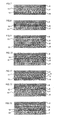
- FIG. 1-13 The build-up of moisture-activated transdermal therapeutic systems using hydrated activators can be designed in many ways. This is through the FIG. 1-13 illustrated, which are not to scale, but show exemplary layer structures.
- the active ingredient in a to manufacture and Storage of the TTS suitable salt form and the activator in the undissolved state in one and the same layer of the TTS is the active ingredient in a to manufacture and Storage of the TTS suitable salt form and the activator in the undissolved state in one and the same layer of the TTS.
- Another construction uses the active ingredient and activator incorporated into separate layers of the TTS.
- Control layers can be implemented in all cases. These tax layers are either between the Active substance and the activator brought or they are between the drug and activator reservoir and the skin surface.
- the release occurs after moisture absorption of the active ingredient in its already activated, skin-compatible Shape controlled to the skin surface.
- control layers can also be one Control the overall moisture absorption of the system or act on individual of its layers.
- such layers are suitable for control, whose water vapor permeability is below that rate per time, typically with the moisture from the skin is delivered.
- the backing the TTS is therefore preferably impervious to water vapor educated.
- Films made from polyethylene terephthalate have this property, Polyethylene, polypropylene, polyvinyl chloride (PVC) and polyvinylidene chloride (PVDC), but also such made of ethylene vinyl acetate copolymer (EVA) with preferably low Vinyl acetate content ⁇ 10%.
- EVA ethylene vinyl acetate copolymer
- films made from very elastic Hydrocarbon polymers such as polyisobutylene, polyisoprene or the block copolymers of styrene and isoprene or butadiene are possible.
- Multi-layer composite materials can also be used as the backing layer (Laminates) are used in which only one Layer consists of the polymers mentioned.
- the backing layer can also be used as a control membrane can be used by a defined, low water vapor permeability is set. This is a defined one Delay in the build-up of moisture and thus the Activation possible.
- Active ingredient (11) and activator (12) in one layer introduced this layer has (1) in one particular preferred construction at the same time pressure-sensitive adhesive properties, so that no separate adhesive layer is required (System A, FIG. 1).
- System A then only consists of a removable protective layer, a pressure-sensitive adhesive layer, the active ingredient and activator contains, as well as from a backing layer (2).
- the moisture absorption can also the active ingredient salt are dissolved and diffuse to the activator. There it gets into the free acid or base of the active ingredient converted the more skin-friendly form of the Represents active ingredient and then by diffusion the skin is released.
- System A can alternatively be equipped with a control layer (3) be equipped (System B, FIG. 2).
- control layer either controls moisture absorption and thus the activation itself or the drug delivery and thus the release behavior after activation.
- the control layer has simultaneously adhesive properties and serves to fix the system on the skin.
- this control function can also be carried out by one Active ingredient or the activator in the dispersed state Layer (4) are adopted (systems C and D, FIG.3 and 4).
- the additional pressure-sensitive adhesive layer does not have to cover the entire surface be trained.
- the system is anchored to the skin can also through an over the reservoir layer to the outside protruding pressure-sensitive adhesive layer (6) are brought about (system F, FIG. 6). This approach is also on the systems A-D transferable.
- one of these two reservoir layers is thus the layer (7) containing the active ingredient or the layer (8) containing the activator, at the same time the adhesive layer that allows it to be anchored to the skin. Either the active ingredient is in one layer closer to the skin than the activator (system G, FIG. 7) or vice versa (System H, FIG. 8).
- control layer (3) be useful between the two reservoir layers for the active ingredient and activator (System I, FIG. 9).
- the principle can also be applied analogously to system H.
- control layer can also be applied as a layer (3) closest to the skin and with adhesive properties at the same time anchoring the entire system to the skin serve (system J, FIG. 10).
- This structure is analogously applicable to the G-K systems.
- a TTS constructed according to the invention preferably has the structure described below:
- the overall construction follows Fig.1.
- the active ingredient and that activating agents in their first chemical state are dispersed as solids in one Matrix layer next to each other.
- this matrix layer also has adhesive properties and is used for fixation of the system on the skin.
- the adhesive matrix is preferably based on a silicone rubber.
- the active substance is a chemical in its non-ionic form Base, and this basic form has a low chemical Stability on.
- the activating agent is in its first state a basic reacting substance, preferably it is is an alkaline earth metal silicate or alkaline earth metal silicate in a hydrated form.
- the back layer of the TTS consists of an almost water vapor impermeable Foil, preferably made of polyethylene terephthalate (PET) or a laminate of 2 layers of one of which is made of PET.
- PET polyethylene terephthalate
- the primary packaging of the TTS is as high as possible Barrier effect against water vapor, including early activation prevent during storage.
- DSC Difference Scanning Calorimetry
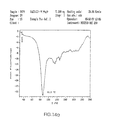
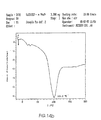
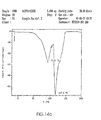
- Na 2 SiO 3 • 5 H 2 O is essentially dewatered at 86.5 ° C (FIG. 14 a). With Na 2 Si 3 O 7 • XH 2 O this only happens at 101.2 ° C (FIG. 14 b).
- TTS Transdermal therapeutic systems
- Remedies and therapeutic agents were used before ground in a cross beater mill and through a Sieve sieved with a mesh size of 50 ⁇ m. This was required to spread the preparations in thin layers can and a uniform distribution in the end product achieve.
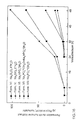
- a sample TTS was used to deliver the active ingredient SDZ ENA713 developed on the skin. It is a research substance from Novartis for the treatment of Alzheimer's Illness.
- the basic substance was in the form of the hydrogen tartrate salt used.
- This active ingredient salt was built up together with the activator Sodium metasilicate in a silicone-based pressure sensitive adhesive incorporated.
- composition of the pressure-sensitive adhesive layer (% by weight of the dried matrix): formulation I II III ENA 713 hydrogen tartrate 10 10 10 Na 2 SiO 3 --- 3 --- Na 2 SiO 3 • 5 H 2 O --- --- 3 Bio-PSA Q7-4301 90 87 87
- Bio-PSA Q7-4301 is a medical pressure sensitive adhesive based from polydimethylsiloxane (Dow Corning).
- the active ingredient and optionally the activator were the Solution of the glue in gasoline added. With stirring produced a homogeneous dispersion.
- This dispersion was on a suitable flat support coated (in the example ScotchPak 1022, a polyethylene terephthalate film from 3M with a adhesive coating based on fluorinated polymers).
- Drying was carried out for 10 minutes at room temperature and for 10 minutes at 50 ° C. in an exhaust air drying cabinet.
- the weight per unit area of the matrix was typically 60 g / m 2 .
- the exposed side of the dried matrix was covered with a suitable film laminated (in the example Hostaphan RN 15, a polyethylene terephthalate film from Hoechst).
- a suitable film laminated in the example Hostaphan RN 15, a polyethylene terephthalate film from Hoechst.
- the activator achieves in the hydrated state (pentahydrate) a significantly earlier and overall higher release of the active ingredient compared to the anhydrous Activator.
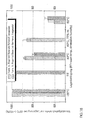
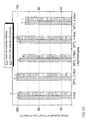
- Ropinirol is a basic active ingredient from SmithKline Beecham for the treatment of Parkinson's disease. ropinirole is chemically very unstable in the form of the free base and is therefore practically hardly suitable for processing and storage in a TTS.
- a moisture-activated TTS was developed that contains the hydrochloride instead of the free base.
- activators were sodium trisilicate and various basic Tried and tested sodium phosphate.
- composition of the pressure-sensitive adhesive layer (% By weight of the dried matrix): formulation IV V VI VII VIII IX Ropinirole HCl 10.0 10.0 10.0 10.0 10.0 10.0 Na 2 Si 3 O 7 --- --- --- --- --- 6.0 Na 2 Si 3 O 7 • XH 2 O 6.0 --- --- --- --- --- Na 2 SiO 3 • 5 H 2 O --- 5.2 --- --- --- Na 2 HPO 4 • 2 H 2 O --- --- 6.0 3.0 --- --- Na 3 PO 4 • 12 H 2 O --- --- 6.4 6.4 --- isopropyl 1.0 1.0 1.0 1.0 1.0 1.0 1.0 1.0 1.0 1.0 1.0 1.0 1.0 1.0 1.0 1.0 1.0 1.0 1.0 1.0 1.0 1.0 1.0 1.0 1.0 1.0 1.0 1.0 1.0 1.0 1.0 1.0 1.0 1.0 1.0 1.0 1.0 1.0 1.0 1.0 1.0 1.0 1.0 1.0 1.0 1.0 1.0 1.0 1.0 1.0
- the active ingredient and optionally the activator were the Solution of the glue in gasoline, in which the previously liquid isopropyl myristate was stirred. With stirring a homogeneous suspension was produced.
- This suspension was on a suitable flat support coated (in the example ScotchPak 1022).
- Drying was carried out for 10 minutes at room temperature and for 10 minutes at 80 ° C in an air drying cabinet.
- the weight per unit area of the dried matrix was typically 60 g / m 2 .
- the exposed side of the dried matrix is covered with a suitable film laminated (in the example Hostaphan RN 15).
- the silicates used generally turn out to be Activators clearly superior to the phosphates used.
- the mixture shows among the phosphate-containing recipes surprisingly the best of the two basic phosphates (VII) Results, although the pure triphosphate (VIII) below Moisture absorption react more alkaline and thus should increase the activation of ropinirole.
- This excipient is used for 2 hours before use dewatered at 130 ° C (formulation IX), so is delayed the activation process.
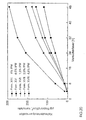
- Formulation X was made by emulsifying oily ropinirole base in the petrol glue solution and coating as well Dried this solution.
- Ropinirole base was initially derived from the in the following manner Hydrochloride salt isolated:
- the oily residue was dried in a desiccator and finally allowed to crystallize at 4 ° C in the refrigerator.
- the yield was 8.94 g of ropinirole base or 99% of theory.
- the melting point was determined to be 73 ° C (DSC), the purity was 98% (HPLC).
- Formulation XI used ropinirole HCl and sodium trisilicate first mixed with a little ethanol and 18 hours react with stirring at room temperature with the exclusion of light calmly. This preliminary solution was then in the appropriate Quantity mixed with the petrol solution of the adhesive, coated and dried.
- Formulations XII and XIII are prepared as follows Comments on formulations IV to VIII.
- Such solvents are preferably ethyl acetate, pentane, Hexane, cyclohexane, heptane, octane, toluene and xylene, Dichloromethane and chloroform as well as gasoline various Boiling ranges.
Landscapes
- Health & Medical Sciences (AREA)
- Engineering & Computer Science (AREA)
- Bioinformatics & Cheminformatics (AREA)
- Life Sciences & Earth Sciences (AREA)
- General Health & Medical Sciences (AREA)
- Veterinary Medicine (AREA)
- Public Health (AREA)
- Chemical & Material Sciences (AREA)
- Animal Behavior & Ethology (AREA)
- Medicinal Chemistry (AREA)
- Biomedical Technology (AREA)
- Pharmacology & Pharmacy (AREA)
- Neurology (AREA)
- Dermatology (AREA)
- Neurosurgery (AREA)
- Epidemiology (AREA)
- Chemical Kinetics & Catalysis (AREA)
- Hematology (AREA)
- General Chemical & Material Sciences (AREA)
- Nuclear Medicine, Radiotherapy & Molecular Imaging (AREA)
- Organic Chemistry (AREA)
- Anesthesiology (AREA)
- Heart & Thoracic Surgery (AREA)
- Psychiatry (AREA)
- Psychology (AREA)
- Hospice & Palliative Care (AREA)
- Medicinal Preparation (AREA)
- Pharmaceuticals Containing Other Organic And Inorganic Compounds (AREA)
- Medicines Containing Material From Animals Or Micro-Organisms (AREA)
- Medicines That Contain Protein Lipid Enzymes And Other Medicines (AREA)
- Acyclic And Carbocyclic Compounds In Medicinal Compositions (AREA)
Claims (27)
- Système thérapeutique pour le dégagement réglable et en temps voulu d'au moins une substance thérapeutiquement active à un organisme humain ou animal par diffusion à travers la peau ou à travers une muqueuse, dans lequel la substance active, pour la préparation et l'entreposage, est d'abord présente sous une première forme dans laquelle elle est stable du point de vue chimique et elle n'est pas suffisamment perméable pour la peau ou la muqueuse, tandis qu'elle est transformée, à l'endroit d'application, par apport d'humidité, en une deuxième forme dans laquelle elle est appropriée pour la diffusion à travers la peau ou à travers la muqueuse et dans laquelle elle est absorbée dans l'organisme, caractérisé en ce que ladite substance active est contenue, sous la première forme, dans le système, sous la forme d'un sel pharmaceutiquement acceptable qui est présent à l'état dispersé sous la forme d'une substance solide non dissoute et qui est transformé, par apport d'humidité et via un agent d'activation également contenu dans le système, par voie chimique, dans la deuxième forme à savoir celle d'un acide ou d'une base qui, par rapport à la forme de sel, est absorbée plus rapidement et en plus grande quantité par la peau ou la muqueuse dans l'organisme, dans lequel l'agent d'activation représente une substance solide du type à réaction acide ou basique dans une solution aqueuse ou représente un mélange de plusieurs substances de ce type, ledit agent d'activation contenant, rapporté à sa quantité pondérale, une fraction d'eau qui représente au moins 5 % à l'état incorporé dans sa structure de corps solide ou à l'état lié à cette dernière, et dans lequel la substance active sous la forme d'un sel et l'agent d'activation sont présents à l'état dans lequel ils sont séparés l'un de l'autre.
- Système thérapeutique selon la revendication 1, caractérisé en ce que l'agent d'activation est mis en oeuvre sous une forme chimique hydratée quoique non dissoute, dans lequel il s'agit de préférence d'hydrates de l'agent d'activation qui sont présents dans le système sous la forme d'une substance solide non dissoute.
- Système thérapeutique selon la revendication 1 ou 2, caractérisé en ce que, en ce qui concerne l'humidité à l'endroit d'application, il s'agit de liquide qui se dégage de la peau sous une forme active via les glandes sudoripares ou de vapeur d'eau qui se dégage passivement sous une forme gazeuse via la surface de la peau et, dans le cas d'une muqueuse, de fluides corporels sécrétés par des glandes.
- Système thérapeutique selon la revendication 1 ou 2, caractérisé en ce que la substance thérapeutiquement active est contenue en une quantité de 0,5 à 50 %, de préférence de 1,0 à 20 % du poids total.
- Système thérapeutique selon l'une quelconque des revendications précédentes, caractérisé en ce que l'agent d'activation est contenu, rapporté à la stoechiométrie de la réaction chimique, avec la substance thérapeutiquement active dans une proportion de 0,1 à 10,0, de préférence de 0,2 à 2,0 par rapport à la substance thérapeutiquement active.
- Système thérapeutique selon l'une quelconque des revendications précédentes, caractérisé en ce que, aussi bien la substance thérapeutiquement active que l'agent d'activation sont contenus essentiellement sous une forme non dissoute.
- Système thérapeutique selon la revendication 6, caractérisé en ce que les agents présents sous une forme non dissoute, présentent des granulométries entre 1 et 200 µm, de préférence entre 2 et 50 µm.
- Système thérapeutique selon la revendication 7, caractérisé en ce que l'on obtient, par apport d'humidité, essentiellement une dissolution de l'agent thérapeutique sous la forme d'un sel, qui diffuse alors dans le système en direction de l'agent d'activation où il est soumis à la transformation sous la forme d'un acide ou d'une base qui correspond au sel du point de vue chimique.
- Système thérapeutique selon la revendication 7, caractérisé en ce que l'on obtient, par apport d'humidité, essentiellement une dissolution de l'agent d'activation, qui diffuse alors dans le système en direction de l'agent thérapeutique sous la forme d'un sel et transforme ce dernier sous la forme d'un acide ou d'une base correspondant du point de vue chimique.
- Système thérapeutique selon la revendication 7, caractérisé en ce que la substance thérapeutiquement active et l'agent d'activation se trouvent à l'état dispersé de manière uniforme dans une matrice stratifiée commune.
- Système thérapeutique selon la revendication 10, caractérisé en ce qu'une matrice stratifiée ou une couche de réglage possède des propriétés adhésives ou mucoadhésives.
- Système thérapeutique selon la revendication 7, caractérisé en ce que la substance thérapeutiquement active et l'agent d'activation sont présents dans des matrices stratifiées séparées.
- Système thérapeutique selon la revendication 12, caractérisé en ce qu'une des deux matrices entre directement en contact avec la peau ou avec la muqueuse.
- Système thérapeutique selon la revendication 13, caractérisé en ce que la matrice prévue pour entrer en contact avec la peau possède des propriétés adhésives ou mucoadhésives.
- Système thérapeutique selon la revendication 1, caractérisé en ce qu'il présente une couche de réglage qui est exempte de la substance thérapeutiquement active et de l'agent d'activation.
- Système thérapeutique selon la revendication 15, caractérisé en ce que la couche de réglage est disposée de telle sorte que, lors de l'application du système, elle entre directement en contact avec la peau ou avec la muqueuse.
- Système thérapeutique selon la revendication 15, caractérisé en ce que la couche de réglage est réalisée et disposée de telle sorte qu'elle règle la mesure et la vitesse de l'absorption de l'humidité à partir de l'endroit d'application dans le système.
- Système thérapeutique selon la revendication 15, caractérisé en ce que la couche de réglage est réalisée et disposée de telle sorte qu'elle règle la mesure et la vitesse de la diffusion de l'agent thérapeutique sous sa forme activée à partir du système à l'endroit d'application.
- Système thérapeutique selon la revendication 15, caractérisé en ce que la couche de réglage est insérée entre la substance thérapeutiquement active et l'agent d'activation.
- Système thérapeutique selon la revendication 15, caractérisé en ce que la couche de réglage représente plusieurs couches individuelles de forme sphérique et possédant une composition identique qui enveloppent la substance thérapeutiquement active présente à l'état dispersé sous une forme non dissoute ou l'agent d'activation présent à l'état dispersé sous une forme non dissoute.
- Système thérapeutique selon la revendication 15, caractérisé en ce que la couche de réglage est réalisée et disposée de telle sorte qu'elle règle la mesure et la vitesse de la diffusion de l'agent d'activation sous sa forme dissoute en direction de la substance thérapeutiquement active.
- Système thérapeutique selon la revendication 15, caractérisé en ce que la couche de réglage est réalisée et disposée de telle sorte qu'elle règle la mesure et la vitesse de la diffusion de la substance thérapeutiquement active sous sa forme dissoute en direction de l'agent d'activation.
- Système thérapeutique selon l'une quelconque des revendications précédentes, caractérisé en ce qu'il contient, à titre de substance thérapeutiquement active du chlorhydrate de Ropinirol ou un autre sel pharmaceutiquement acceptable de Ropinirol.
- Système thérapeutique selon l'une quelconque des revendications précédentes, caractérisé en ce qu'il contient, à titre d'agent d'activation, au moins une substance choisie parmi le groupe comprenant le trisilicate de sodium, le métasilicate de sodium, le phosphate disodique (phosphate de sodium secondaire) ou le phosphate trisodique (phosphate de sodium tertiaire) ou encore le sel de potassium analogue.
- Système thérapeutique selon l'une quelconque des revendications précédentes, caractérisé en ce qu'il contient, à côté de la substance thérapeutiquement active et de l'agent d'activation, encore un ester d'acide gras d'un alcool à courte chaíne modulant l'activation, en. une quantité entre 0,5 et 5,0 % en poids.
- Système thérapeutique selon la revendication 25, caractérisé en ce que les esters sont formés à partir d'un acide carboxylique saturé ou une fois insaturé contenant de 6 à 18 atomes de carbone et d'un alcool contenant de 1 à 3 atomes de carbone qui présente au maximum un groupe hydroxyle par atome de carbone, dans lequel chaque molécule d'alcool peut être estérifiée avec jusqu'à 3 acides gras et dans lequel, en ce qui concerne ces derniers, il s'agit de préférence du myristate d'isopropyle, du palmitate d'isopropyle ou encore de triglycérides saturés de différentes compositions, ainsi que des monoglycérides que sont le monolaurate de glycérol et le monooléate de glycérol.
- Système thérapeutique selon la revendication 7, caractérisé en ce que la matrice stratifiée est constituée d'une formulation à base de caoutchouc silicone, de polyisobutylène, de polyisoprène ou d'un copolymère séquencé de styrène avec de l'isoprène respectivement du butadiène.
Applications Claiming Priority (3)
| Application Number | Priority Date | Filing Date | Title |
|---|---|---|---|
| DE19814087A DE19814087A1 (de) | 1998-03-30 | 1998-03-30 | Feuchtigkeitsaktivierbares therapeutisches System |
| DE19814087 | 1998-03-30 | ||
| PCT/EP1999/001802 WO1999049853A1 (fr) | 1998-03-30 | 1999-03-18 | Systeme therapeutique pouvant etre active par l'humidite |
Publications (2)
| Publication Number | Publication Date |
|---|---|
| EP1069892A1 EP1069892A1 (fr) | 2001-01-24 |
| EP1069892B1 true EP1069892B1 (fr) | 2002-08-07 |
Family
ID=7862905
Family Applications (1)
| Application Number | Title | Priority Date | Filing Date |
|---|---|---|---|
| EP99914523A Expired - Lifetime EP1069892B1 (fr) | 1998-03-30 | 1999-03-18 | Systeme therapeutique pouvant etre active par l'humidite |
Country Status (13)
| Country | Link |
|---|---|
| US (1) | US7175853B1 (fr) |
| EP (1) | EP1069892B1 (fr) |
| JP (1) | JP4252212B2 (fr) |
| KR (1) | KR100550886B1 (fr) |
| AT (1) | ATE221774T1 (fr) |
| AU (1) | AU3331299A (fr) |
| CA (1) | CA2326662C (fr) |
| DE (2) | DE19814087A1 (fr) |
| DK (1) | DK1069892T3 (fr) |
| ES (1) | ES2182507T3 (fr) |
| NO (1) | NO20004835L (fr) |
| PT (1) | PT1069892E (fr) |
| WO (1) | WO1999049853A1 (fr) |
Families Citing this family (23)
| Publication number | Priority date | Publication date | Assignee | Title |
|---|---|---|---|---|
| DE10053397A1 (de) | 2000-10-20 | 2002-05-02 | Schering Ag | Verwendung eines dopaminergen Wirkstoffes zur Behandlung von dopaminerg behandelbaren Erkrankungen |
| DE10137162A1 (de) * | 2001-07-30 | 2003-02-20 | Hexal Ag | Matrixkontrolliertes transdermales therapeutisches System zur Anwendung von Pramiprexol und Ropinirol |
| DE10159745A1 (de) * | 2001-12-05 | 2003-07-03 | Lohmann Therapie Syst Lts | Transdermales Therapeutisches System mit verbessertem Langzeittragekomfort |
| DE102007041734A1 (de) * | 2006-12-20 | 2008-06-26 | Tesa Ag | Repulpierbare Klebmassen |
| JP5537412B2 (ja) * | 2008-02-27 | 2014-07-02 | 久光製薬株式会社 | 貼付製剤 |
| JP5546013B2 (ja) * | 2008-02-27 | 2014-07-09 | 久光製薬株式会社 | 貼付剤及び包装体 |
| DE102008013701A1 (de) * | 2008-03-11 | 2009-09-17 | Lts Lohmann Therapie-Systeme Ag | Transdermales Therapeutisches System mit stabilisierter Membran |
| KR20120024562A (ko) * | 2009-04-24 | 2012-03-14 | 히사미쓰 세이야꾸 가부시키가이샤 | 첩부제 수용 포장 백, 및 첩부제의 보존 방법 |
| EP2438917B1 (fr) * | 2009-05-21 | 2014-09-03 | Hisamitsu Pharmaceutical Co., Inc. | Préparation transdermique |
| DE102009022915A1 (de) * | 2009-05-27 | 2010-12-09 | Lts Lohmann Therapie-Systeme Ag | Transdermales therapeutisches System mit gesteuertem Wirkstofffluss |
| AU2010319065B2 (en) * | 2009-11-12 | 2015-03-26 | Nihon University | Pharmaceutical composition for external use |
| EP2515886B1 (fr) * | 2009-12-22 | 2018-04-11 | Luye Pharma AG | Système thérapeutique transdermique servant à administrer de la rivastigmine ou ses dérivés |
| US10076502B2 (en) | 2009-12-22 | 2018-09-18 | Luye Pharma Ag | Transdermal therapeutic system for administering rivastigmine or derivatives thereof |
| AU2011205290C1 (en) * | 2010-01-14 | 2014-11-06 | Recordati Ag | Use of an adrenal hormone-modifying agent |
| JP5820469B2 (ja) | 2010-04-30 | 2015-11-24 | テイコク ファーマ ユーエスエー インコーポレーテッド | プロピニルアミノインダンの経皮組成物 |
| DE102010024105A1 (de) * | 2010-06-17 | 2011-12-22 | Grünenthal GmbH | Transdermale Verabreichung von Memantin |
| CN103476404B (zh) | 2011-03-24 | 2017-09-29 | 帝国制药美国公司 | 包含活性剂层和活性剂转化层的透皮组合物 |
| CN103561737A (zh) * | 2011-05-31 | 2014-02-05 | 久光制药株式会社 | 含有罗匹尼罗的贴附剂及其包装体 |
| WO2013070526A1 (fr) | 2011-11-09 | 2013-05-16 | Teikoku Pharma Usa, Inc. | Méthodes pour le traitement de tumeurs de la peau |
| US9481777B2 (en) | 2012-03-30 | 2016-11-01 | The Procter & Gamble Company | Method of dewatering in a continuous high internal phase emulsion foam forming process |
| AU2013338243B2 (en) | 2012-11-02 | 2016-09-29 | Teikoku Seiyaku Co., Ltd. | Propynylaminoindan transdermal compositions |
| WO2015137872A1 (fr) * | 2014-03-13 | 2015-09-17 | Innovator Skåne Ab | Système d'administration de médicament en forme de feuille ou tubulaire |
| JP2020518325A (ja) * | 2016-12-29 | 2020-06-25 | ピュア レイシオス ホールディングス, インコーポレイテッド | モジュール式経皮送達システムならびに製造および使用の関連する方法 |
Family Cites Families (11)
| Publication number | Priority date | Publication date | Assignee | Title |
|---|---|---|---|---|
| ES2028074T3 (es) * | 1986-06-13 | 1992-07-01 | Alza Corporation | Activacion por humedad de un sistema de suministro transdermico de farmacos. |
| US4837027A (en) * | 1987-11-09 | 1989-06-06 | Alza Corporation | Transdermal drug delivery device |
| US4781924A (en) * | 1987-11-09 | 1988-11-01 | Alza Corporation | Transdermal drug delivery device |
| AT392587B (de) | 1988-03-03 | 1991-04-25 | Sandoz Ag | Pharmazeutische zusammensetzung enthaltend phenylcarbamate |
| DE3905051A1 (de) * | 1989-02-18 | 1990-08-30 | Lohmann Therapie Syst Lts | Therapeutisches system zur verzoegerten und gesteuerten transdermalen oder transmucosalen verabreichung von wirkstoffen (i) |
| DE3905050A1 (de) * | 1989-02-18 | 1990-08-30 | Lohmann Therapie Syst Lts | Therapeutisches system zur verzoegerten und gesteuerten transdermalen oder transmucosalen verabreichung von wirkstoffen (ii) |
| DE3910543A1 (de) | 1989-04-01 | 1990-10-11 | Lohmann Therapie Syst Lts | Transdermales therapeutisches system mit erhoehtem wirkstofffluss und verfahren zu seiner herstellung |
| JPH04124128A (ja) * | 1990-09-13 | 1992-04-24 | Lion Corp | 肛門部疾患治療用貼付剤 |
| US5989586A (en) | 1992-10-05 | 1999-11-23 | Cygnus, Inc. | Two-phase matrix for sustained release drug delivery device |
| GB2290964A (en) * | 1994-07-08 | 1996-01-17 | Arto Olavi Urtti | Transdermal drug delivery system |
| US5807570A (en) * | 1995-09-29 | 1998-09-15 | Cygnus, Inc. | Transdermal administration of ropinirole and analogs thereof |
-
1998
- 1998-03-30 DE DE19814087A patent/DE19814087A1/de not_active Withdrawn
-
1999
- 1999-03-18 EP EP99914523A patent/EP1069892B1/fr not_active Expired - Lifetime
- 1999-03-18 DE DE59902270T patent/DE59902270D1/de not_active Expired - Lifetime
- 1999-03-18 CA CA002326662A patent/CA2326662C/fr not_active Expired - Lifetime
- 1999-03-18 DK DK99914523T patent/DK1069892T3/da active
- 1999-03-18 WO PCT/EP1999/001802 patent/WO1999049853A1/fr not_active Ceased
- 1999-03-18 JP JP2000540819A patent/JP4252212B2/ja not_active Expired - Lifetime
- 1999-03-18 AT AT99914523T patent/ATE221774T1/de active
- 1999-03-18 PT PT99914523T patent/PT1069892E/pt unknown
- 1999-03-18 US US09/647,289 patent/US7175853B1/en not_active Expired - Lifetime
- 1999-03-18 AU AU33312/99A patent/AU3331299A/en not_active Abandoned
- 1999-03-18 KR KR1020007010629A patent/KR100550886B1/ko not_active Expired - Lifetime
- 1999-03-18 ES ES99914523T patent/ES2182507T3/es not_active Expired - Lifetime
-
2000
- 2000-09-26 NO NO20004835A patent/NO20004835L/no not_active Application Discontinuation
Also Published As
| Publication number | Publication date |
|---|---|
| AU3331299A (en) | 1999-10-18 |
| KR100550886B1 (ko) | 2006-02-10 |
| EP1069892A1 (fr) | 2001-01-24 |
| DK1069892T3 (da) | 2002-12-02 |
| PT1069892E (pt) | 2002-12-31 |
| CA2326662A1 (fr) | 1999-10-07 |
| ATE221774T1 (de) | 2002-08-15 |
| US7175853B1 (en) | 2007-02-13 |
| NO20004835D0 (no) | 2000-09-26 |
| NO20004835L (no) | 2000-09-26 |
| DE59902270D1 (de) | 2002-09-12 |
| WO1999049853A1 (fr) | 1999-10-07 |
| ES2182507T3 (es) | 2003-03-01 |
| JP4252212B2 (ja) | 2009-04-08 |
| CA2326662C (fr) | 2007-01-16 |
| JP2002509879A (ja) | 2002-04-02 |
| KR20010042173A (ko) | 2001-05-25 |
| DE19814087A1 (de) | 1999-10-14 |
Similar Documents
| Publication | Publication Date | Title |
|---|---|---|
| EP1069892A1 (fr) | Systeme therapeutique pouvant etre active par l'humidite | |
| DE4241874C2 (de) | Medizinisches Pflaster für die perkutane Verabreichung des Wirkstoffs Ketoprofen | |
| EP2515886B1 (fr) | Système thérapeutique transdermique servant à administrer de la rivastigmine ou ses dérivés | |
| EP2468274B1 (fr) | Système thérapeutique transdermique pour l'enrichissement d'une substance active | |
| DE19814083C2 (de) | Verfahren zur Herstellung von transdermalen therapeutischen Systemen unter Verwendung von basischen Alkalimetallsalzen zur Umwandlung von Wirkstoffsalzen in die freien Basen | |
| DE60008608T2 (de) | Stabilisierte pharmazeutisch wirksame zubereitung und diese enthaltende arzneizusammensetzung | |
| DE102006054731B4 (de) | Transdermales therapeutisches System zur Verabreichung des Wirkstoffs Buprenorphin und Verwendung desselben in der Schmerztherapie | |
| DE19821788C1 (de) | Transdermales Therapeutisches System (TTS) Pergolid enthaltend | |
| DE69003632T2 (de) | Pflaster sowie dessen herstellung. | |
| DD290582A5 (de) | Verfahren zur herstellung eines transdermalen therapeutischen systems zur verabreichung von physostigmin an die haut | |
| DE4240430A1 (fr) | ||
| WO1999049852A1 (fr) | Systeme therapeutique transdermique contenant un agoniste d2 servant a traiter le syndrome parkinsonien, et son procede de production | |
| DE10137082A1 (de) | Matrixkontrolliertes transdermales therapeutisches System zur Anwendung von Pramiprexol und Ropinirol | |
| DE69329691T2 (de) | Pharmazeutische stabile Nicorandil-Formulierungen | |
| DE19906977C1 (de) | Desoxypeganin-TTS und seine Verwendung | |
| DE69103459T2 (de) | Transdermale absorbierbare Eperison- oder Tolperison-Arzneizubereitung. | |
| EP0227988A2 (fr) | Système thérapeutique | |
| DE4429667C2 (de) | Estradiol-TTS mit wasserbindenden Zusätzen und Verfahren zu seiner Herstellung | |
| EP0880366B1 (fr) | Preparation pharmaceutique adherant a la peau, notamment systeme therapeutique transdermique pour la liberation de 17-beta-estradiol dans l'organisme humain | |
| DE3438005A1 (de) | Pharmazeutisches mittel zur lokalen therapie der psoriasis | |
| EP0776197B1 (fr) | Systeme therapeutique transdermique contenant de l' stradiol et des additifs hydrophiles | |
| DE102004059674B4 (de) | Transdermales System zur Abgabe von Scopolamin | |
| DE4245089B4 (de) | Stabilisiertes pharmazeutisches Mittel, enthaltend einen HMG-CoA-Reduktase-Inhibitor als Wirkstoff | |
| EP0659079A1 (fr) | Systeme therapeutique percutane contenant du pentylenetetrazol comme principe actif. | |
| DD279406A5 (de) | Verfahren zur herstellung von arzneipraeparaten fuer die perkutane resorption |
Legal Events
| Date | Code | Title | Description |
|---|---|---|---|
| PUAI | Public reference made under article 153(3) epc to a published international application that has entered the european phase |
Free format text: ORIGINAL CODE: 0009012 |
|
| 17P | Request for examination filed |
Effective date: 20000916 |
|
| AK | Designated contracting states |
Kind code of ref document: A1 Designated state(s): AT BE CH DE DK ES FI FR GB GR IE IT LI LU NL PT SE |
|
| AX | Request for extension of the european patent |
Free format text: SI PAYMENT 20000916 |
|
| GRAG | Despatch of communication of intention to grant |
Free format text: ORIGINAL CODE: EPIDOS AGRA |
|
| GRAG | Despatch of communication of intention to grant |
Free format text: ORIGINAL CODE: EPIDOS AGRA |
|
| GRAH | Despatch of communication of intention to grant a patent |
Free format text: ORIGINAL CODE: EPIDOS IGRA |
|
| 17Q | First examination report despatched |
Effective date: 20020123 |
|
| GRAH | Despatch of communication of intention to grant a patent |
Free format text: ORIGINAL CODE: EPIDOS IGRA |
|
| GRAA | (expected) grant |
Free format text: ORIGINAL CODE: 0009210 |
|
| AK | Designated contracting states |
Kind code of ref document: B1 Designated state(s): AT BE CH DE DK ES FI FR GB GR IE IT LI LU NL PT SE |
|
| AX | Request for extension of the european patent |
Free format text: SI PAYMENT 20000916 |
|
| REF | Corresponds to: |
Ref document number: 221774 Country of ref document: AT Date of ref document: 20020815 Kind code of ref document: T |
|
| REG | Reference to a national code |
Ref country code: GB Ref legal event code: FG4D Free format text: NOT ENGLISH |
|
| REG | Reference to a national code |
Ref country code: CH Ref legal event code: EP |
|
| REG | Reference to a national code |
Ref country code: IE Ref legal event code: FG4D Free format text: GERMAN |
|
| REF | Corresponds to: |
Ref document number: 59902270 Country of ref document: DE Date of ref document: 20020912 |
|
| REG | Reference to a national code |
Ref country code: CH Ref legal event code: NV Representative=s name: PATENTANWAELTE FELDMANN & PARTNER AG |
|
| GBT | Gb: translation of ep patent filed (gb section 77(6)(a)/1977) |
Effective date: 20020916 |
|
| ET | Fr: translation filed | ||
| REG | Reference to a national code |
Ref country code: DK Ref legal event code: T3 |
|
| REG | Reference to a national code |
Ref country code: GR Ref legal event code: EP Ref document number: 20020403691 Country of ref document: GR |
|
| REG | Reference to a national code |
Ref country code: PT Ref legal event code: SC4A Free format text: AVAILABILITY OF NATIONAL TRANSLATION Effective date: 20021031 |
|
| REG | Reference to a national code |
Ref country code: ES Ref legal event code: FG2A Ref document number: 2182507 Country of ref document: ES Kind code of ref document: T3 |
|
| PLBE | No opposition filed within time limit |
Free format text: ORIGINAL CODE: 0009261 |
|
| STAA | Information on the status of an ep patent application or granted ep patent |
Free format text: STATUS: NO OPPOSITION FILED WITHIN TIME LIMIT |
|
| 26N | No opposition filed |
Effective date: 20030508 |
|
| REG | Reference to a national code |
Ref country code: CH Ref legal event code: PFA Owner name: LTS LOHMANN THERAPIE-SYSTEME AG Free format text: LTS LOHMANN THERAPIE-SYSTEME AG#LOHMANNSTRASSE 2#56626 ANDERNACH (DE) -TRANSFER TO- LTS LOHMANN THERAPIE-SYSTEME AG#LOHMANNSTRASSE 2#56626 ANDERNACH (DE) |
|
| PGFP | Annual fee paid to national office [announced via postgrant information from national office to epo] |
Ref country code: IE Payment date: 20120322 Year of fee payment: 14 Ref country code: LU Payment date: 20120328 Year of fee payment: 14 |
|
| PGFP | Annual fee paid to national office [announced via postgrant information from national office to epo] |
Ref country code: PT Payment date: 20120316 Year of fee payment: 14 |
|
| PGFP | Annual fee paid to national office [announced via postgrant information from national office to epo] |
Ref country code: DK Payment date: 20120322 Year of fee payment: 14 Ref country code: GR Payment date: 20120329 Year of fee payment: 14 Ref country code: FI Payment date: 20120313 Year of fee payment: 14 |
|
| REG | Reference to a national code |
Ref country code: PT Ref legal event code: MM4A Free format text: LAPSE DUE TO NON-PAYMENT OF FEES Effective date: 20130918 |
|
| REG | Reference to a national code |
Ref country code: DK Ref legal event code: EBP |
|
| PG25 | Lapsed in a contracting state [announced via postgrant information from national office to epo] |
Ref country code: PT Free format text: LAPSE BECAUSE OF NON-PAYMENT OF DUE FEES Effective date: 20130918 Ref country code: FI Free format text: LAPSE BECAUSE OF NON-PAYMENT OF DUE FEES Effective date: 20130318 |
|
| REG | Reference to a national code |
Ref country code: GR Ref legal event code: ML Ref document number: 20020403691 Country of ref document: GR Effective date: 20131002 |
|
| REG | Reference to a national code |
Ref country code: IE Ref legal event code: MM4A |
|
| PG25 | Lapsed in a contracting state [announced via postgrant information from national office to epo] |
Ref country code: IE Free format text: LAPSE BECAUSE OF NON-PAYMENT OF DUE FEES Effective date: 20130318 |
|
| PG25 | Lapsed in a contracting state [announced via postgrant information from national office to epo] |
Ref country code: GR Free format text: LAPSE BECAUSE OF NON-PAYMENT OF DUE FEES Effective date: 20131002 |
|
| PG25 | Lapsed in a contracting state [announced via postgrant information from national office to epo] |
Ref country code: DK Free format text: LAPSE BECAUSE OF NON-PAYMENT OF DUE FEES Effective date: 20130331 |
|
| PG25 | Lapsed in a contracting state [announced via postgrant information from national office to epo] |
Ref country code: LU Free format text: LAPSE BECAUSE OF NON-PAYMENT OF DUE FEES Effective date: 20130318 |
|
| REG | Reference to a national code |
Ref country code: FR Ref legal event code: PLFP Year of fee payment: 18 |
|
| REG | Reference to a national code |
Ref country code: FR Ref legal event code: PLFP Year of fee payment: 19 |
|
| REG | Reference to a national code |
Ref country code: FR Ref legal event code: PLFP Year of fee payment: 20 |
|
| PGFP | Annual fee paid to national office [announced via postgrant information from national office to epo] |
Ref country code: NL Payment date: 20180321 Year of fee payment: 20 Ref country code: DE Payment date: 20180322 Year of fee payment: 20 Ref country code: GB Payment date: 20180321 Year of fee payment: 20 Ref country code: CH Payment date: 20180321 Year of fee payment: 20 |
|
| PGFP | Annual fee paid to national office [announced via postgrant information from national office to epo] |
Ref country code: SE Payment date: 20180321 Year of fee payment: 20 Ref country code: FR Payment date: 20180323 Year of fee payment: 20 Ref country code: AT Payment date: 20180322 Year of fee payment: 20 Ref country code: BE Payment date: 20180321 Year of fee payment: 20 |
|
| PGFP | Annual fee paid to national office [announced via postgrant information from national office to epo] |
Ref country code: ES Payment date: 20180427 Year of fee payment: 20 |
|
| PGFP | Annual fee paid to national office [announced via postgrant information from national office to epo] |
Ref country code: IT Payment date: 20180327 Year of fee payment: 20 |
|
| REG | Reference to a national code |
Ref country code: DE Ref legal event code: R071 Ref document number: 59902270 Country of ref document: DE |
|
| REG | Reference to a national code |
Ref country code: NL Ref legal event code: MK Effective date: 20190317 |
|
| REG | Reference to a national code |
Ref country code: CH Ref legal event code: PL |
|
| REG | Reference to a national code |
Ref country code: GB Ref legal event code: PE20 Expiry date: 20190317 |
|
| PG25 | Lapsed in a contracting state [announced via postgrant information from national office to epo] |
Ref country code: GB Free format text: LAPSE BECAUSE OF EXPIRATION OF PROTECTION Effective date: 20190317 |
|
| REG | Reference to a national code |
Ref country code: BE Ref legal event code: MK Effective date: 20190318 |
|
| REG | Reference to a national code |
Ref country code: AT Ref legal event code: MK07 Ref document number: 221774 Country of ref document: AT Kind code of ref document: T Effective date: 20190318 |
|
| REG | Reference to a national code |
Ref country code: ES Ref legal event code: FD2A Effective date: 20200721 |
|
| PG25 | Lapsed in a contracting state [announced via postgrant information from national office to epo] |
Ref country code: ES Free format text: LAPSE BECAUSE OF EXPIRATION OF PROTECTION Effective date: 20190319 |