EP1069892B1 - Therapeutic system which can be moisture-activated - Google Patents
Therapeutic system which can be moisture-activated Download PDFInfo
- Publication number
- EP1069892B1 EP1069892B1 EP99914523A EP99914523A EP1069892B1 EP 1069892 B1 EP1069892 B1 EP 1069892B1 EP 99914523 A EP99914523 A EP 99914523A EP 99914523 A EP99914523 A EP 99914523A EP 1069892 B1 EP1069892 B1 EP 1069892B1
- Authority
- EP
- European Patent Office
- Prior art keywords
- therapeutic system
- therapeutic
- activating agent
- skin
- agent
- Prior art date
- Legal status (The legal status is an assumption and is not a legal conclusion. Google has not performed a legal analysis and makes no representation as to the accuracy of the status listed.)
- Expired - Lifetime
Links
- 230000001225 therapeutic effect Effects 0.000 title claims abstract description 39
- 150000003839 salts Chemical class 0.000 claims abstract description 37
- 239000000203 mixture Substances 0.000 claims abstract description 33
- 230000003213 activating effect Effects 0.000 claims abstract description 30
- 239000003795 chemical substances by application Substances 0.000 claims abstract description 29
- XLYOFNOQVPJJNP-UHFFFAOYSA-N water Substances O XLYOFNOQVPJJNP-UHFFFAOYSA-N 0.000 claims abstract description 29
- 239000000126 substance Substances 0.000 claims abstract description 24
- 239000013543 active substance Substances 0.000 claims abstract description 23
- 238000004519 manufacturing process Methods 0.000 claims abstract description 16
- 210000004400 mucous membrane Anatomy 0.000 claims abstract description 13
- 238000009792 diffusion process Methods 0.000 claims abstract description 12
- 239000002253 acid Substances 0.000 claims abstract description 11
- 238000003860 storage Methods 0.000 claims abstract description 11
- 239000007787 solid Substances 0.000 claims abstract description 9
- 239000007864 aqueous solution Substances 0.000 claims abstract description 4
- 241001465754 Metazoa Species 0.000 claims abstract description 3
- 238000013270 controlled release Methods 0.000 claims abstract 2
- 239000010410 layer Substances 0.000 claims description 62
- UHSKFQJFRQCDBE-UHFFFAOYSA-N Ropinirole hydrochloride Natural products CCCN(CCC)CCC1=CC=CC2=C1CC(=O)N2 UHSKFQJFRQCDBE-UHFFFAOYSA-N 0.000 claims description 20
- 230000004913 activation Effects 0.000 claims description 20
- 238000009472 formulation Methods 0.000 claims description 20
- 229960001879 ropinirole Drugs 0.000 claims description 18
- 239000004820 Pressure-sensitive adhesive Substances 0.000 claims description 15
- 238000006243 chemical reaction Methods 0.000 claims description 13
- 239000011159 matrix material Substances 0.000 claims description 13
- 239000003814 drug Substances 0.000 claims description 11
- -1 fatty acid ester Chemical class 0.000 claims description 11
- 238000010521 absorption reaction Methods 0.000 claims description 9
- 229940124597 therapeutic agent Drugs 0.000 claims description 8
- LFQSCWFLJHTTHZ-UHFFFAOYSA-N Ethanol Chemical compound CCO LFQSCWFLJHTTHZ-UHFFFAOYSA-N 0.000 claims description 7
- HIQIXEFWDLTDED-UHFFFAOYSA-N 4-hydroxy-1-piperidin-4-ylpyrrolidin-2-one Chemical compound O=C1CC(O)CN1C1CCNCC1 HIQIXEFWDLTDED-UHFFFAOYSA-N 0.000 claims description 6
- 238000004090 dissolution Methods 0.000 claims description 6
- ZJQPLBFKBQYYIO-UHFFFAOYSA-N dodecasodium;trisilicate Chemical compound [Na+].[Na+].[Na+].[Na+].[Na+].[Na+].[Na+].[Na+].[Na+].[Na+].[Na+].[Na+].[O-][Si]([O-])([O-])[O-].[O-][Si]([O-])([O-])[O-].[O-][Si]([O-])([O-])[O-] ZJQPLBFKBQYYIO-UHFFFAOYSA-N 0.000 claims description 6
- 239000007788 liquid Substances 0.000 claims description 5
- KAKZBPTYRLMSJV-UHFFFAOYSA-N Butadiene Chemical compound C=CC=C KAKZBPTYRLMSJV-UHFFFAOYSA-N 0.000 claims description 4
- RRHGJUQNOFWUDK-UHFFFAOYSA-N Isoprene Chemical compound CC(=C)C=C RRHGJUQNOFWUDK-UHFFFAOYSA-N 0.000 claims description 4
- PPBRXRYQALVLMV-UHFFFAOYSA-N Styrene Chemical compound C=CC1=CC=CC=C1 PPBRXRYQALVLMV-UHFFFAOYSA-N 0.000 claims description 4
- 150000004677 hydrates Chemical class 0.000 claims description 4
- RYFMWSXOAZQYPI-UHFFFAOYSA-K trisodium phosphate Chemical compound [Na+].[Na+].[Na+].[O-]P([O-])([O-])=O RYFMWSXOAZQYPI-UHFFFAOYSA-K 0.000 claims description 4
- XDXHAEQXIBQUEZ-UHFFFAOYSA-N Ropinirole hydrochloride Chemical compound Cl.CCCN(CCC)CCC1=CC=CC2=C1CC(=O)N2 XDXHAEQXIBQUEZ-UHFFFAOYSA-N 0.000 claims description 3
- 229960002349 ropinirole hydrochloride Drugs 0.000 claims description 3
- 239000001488 sodium phosphate Substances 0.000 claims description 3
- 229920002367 Polyisobutene Polymers 0.000 claims description 2
- 239000004115 Sodium Silicate Substances 0.000 claims description 2
- 229920001400 block copolymer Polymers 0.000 claims description 2
- 239000006185 dispersion Substances 0.000 claims description 2
- 229920001195 polyisoprene Polymers 0.000 claims description 2
- 229920002379 silicone rubber Polymers 0.000 claims description 2
- 239000004945 silicone rubber Substances 0.000 claims description 2
- 235000019795 sodium metasilicate Nutrition 0.000 claims description 2
- NTHWMYGWWRZVTN-UHFFFAOYSA-N sodium silicate Chemical compound [Na+].[Na+].[O-][Si]([O-])=O NTHWMYGWWRZVTN-UHFFFAOYSA-N 0.000 claims description 2
- 229910052911 sodium silicate Inorganic materials 0.000 claims description 2
- 210000000106 sweat gland Anatomy 0.000 claims description 2
- 125000004432 carbon atom Chemical group C* 0.000 claims 3
- 235000014113 dietary fatty acids Nutrition 0.000 claims 3
- 239000000194 fatty acid Substances 0.000 claims 3
- 229930195729 fatty acid Natural products 0.000 claims 3
- BNIILDVGGAEEIG-UHFFFAOYSA-L disodium hydrogen phosphate Chemical compound [Na+].[Na+].OP([O-])([O-])=O BNIILDVGGAEEIG-UHFFFAOYSA-L 0.000 claims 2
- 150000002148 esters Chemical class 0.000 claims 2
- 230000003232 mucoadhesive effect Effects 0.000 claims 2
- 229920006395 saturated elastomer Polymers 0.000 claims 2
- RZRNAYUHWVFMIP-KTKRTIGZSA-N 1-oleoylglycerol Chemical compound CCCCCCCC\C=C/CCCCCCCC(=O)OCC(O)CO RZRNAYUHWVFMIP-KTKRTIGZSA-N 0.000 claims 1
- 229910052799 carbon Inorganic materials 0.000 claims 1
- 150000001732 carboxylic acid derivatives Chemical class 0.000 claims 1
- 229910000397 disodium phosphate Inorganic materials 0.000 claims 1
- 235000019800 disodium phosphate Nutrition 0.000 claims 1
- 150000004665 fatty acids Chemical class 0.000 claims 1
- 210000004907 gland Anatomy 0.000 claims 1
- 125000002887 hydroxy group Chemical group [H]O* 0.000 claims 1
- XUGNVMKQXJXZCD-UHFFFAOYSA-N isopropyl palmitate Chemical compound CCCCCCCCCCCCCCCC(=O)OC(C)C XUGNVMKQXJXZCD-UHFFFAOYSA-N 0.000 claims 1
- 239000002245 particle Substances 0.000 claims 1
- XAEFZNCEHLXOMS-UHFFFAOYSA-M potassium benzoate Chemical compound [K+].[O-]C(=O)C1=CC=CC=C1 XAEFZNCEHLXOMS-UHFFFAOYSA-M 0.000 claims 1
- 239000002356 single layer Substances 0.000 claims 1
- 150000003626 triacylglycerols Chemical class 0.000 claims 1
- 229910000406 trisodium phosphate Inorganic materials 0.000 claims 1
- 235000019801 trisodium phosphate Nutrition 0.000 claims 1
- 239000012190 activator Substances 0.000 description 73
- 239000004480 active ingredient Substances 0.000 description 67
- 210000003491 skin Anatomy 0.000 description 38
- 238000001994 activation Methods 0.000 description 24
- 239000002585 base Substances 0.000 description 19
- 239000011734 sodium Substances 0.000 description 19
- 239000000243 solution Substances 0.000 description 16
- 238000000034 method Methods 0.000 description 12
- 230000008569 process Effects 0.000 description 10
- 150000003013 phosphoric acid derivatives Chemical class 0.000 description 9
- 229910019142 PO4 Inorganic materials 0.000 description 8
- 230000001070 adhesive effect Effects 0.000 description 8
- 235000021317 phosphate Nutrition 0.000 description 8
- 230000002378 acidificating effect Effects 0.000 description 7
- 150000001875 compounds Chemical class 0.000 description 6
- 238000001035 drying Methods 0.000 description 6
- 239000012458 free base Substances 0.000 description 6
- 238000002844 melting Methods 0.000 description 6
- 229920000139 polyethylene terephthalate Polymers 0.000 description 6
- 239000005020 polyethylene terephthalate Substances 0.000 description 6
- 150000004760 silicates Chemical class 0.000 description 6
- RTZKZFJDLAIYFH-UHFFFAOYSA-N Diethyl ether Chemical compound CCOCC RTZKZFJDLAIYFH-UHFFFAOYSA-N 0.000 description 5
- 238000007792 addition Methods 0.000 description 5
- 239000012790 adhesive layer Substances 0.000 description 5
- 238000000576 coating method Methods 0.000 description 5
- 238000000338 in vitro Methods 0.000 description 5
- 230000008018 melting Effects 0.000 description 5
- 239000002904 solvent Substances 0.000 description 5
- 238000010669 acid-base reaction Methods 0.000 description 4
- 239000000853 adhesive Substances 0.000 description 4
- KRKNYBCHXYNGOX-UHFFFAOYSA-N citric acid Chemical compound OC(=O)CC(O)(C(O)=O)CC(O)=O KRKNYBCHXYNGOX-UHFFFAOYSA-N 0.000 description 4
- 238000010276 construction Methods 0.000 description 4
- 230000007423 decrease Effects 0.000 description 4
- PWZFXELTLAQOKC-UHFFFAOYSA-A dialuminum;hexamagnesium;carbonate;hexadecahydroxide;tetrahydrate Chemical compound O.O.O.O.[OH-].[OH-].[OH-].[OH-].[OH-].[OH-].[OH-].[OH-].[OH-].[OH-].[OH-].[OH-].[OH-].[OH-].[OH-].[OH-].[Mg+2].[Mg+2].[Mg+2].[Mg+2].[Mg+2].[Mg+2].[Al+3].[Al+3].[O-]C([O-])=O PWZFXELTLAQOKC-UHFFFAOYSA-A 0.000 description 4
- 230000000694 effects Effects 0.000 description 4
- 229920000642 polymer Polymers 0.000 description 4
- 238000012545 processing Methods 0.000 description 4
- 239000000047 product Substances 0.000 description 4
- YMWUJEATGCHHMB-UHFFFAOYSA-N Dichloromethane Chemical compound ClCCl YMWUJEATGCHHMB-UHFFFAOYSA-N 0.000 description 3
- XEKOWRVHYACXOJ-UHFFFAOYSA-N Ethyl acetate Chemical compound CCOC(C)=O XEKOWRVHYACXOJ-UHFFFAOYSA-N 0.000 description 3
- FEWJPZIEWOKRBE-JCYAYHJZSA-M L-tartrate(1-) Chemical compound OC(=O)[C@H](O)[C@@H](O)C([O-])=O FEWJPZIEWOKRBE-JCYAYHJZSA-M 0.000 description 3
- YXFVVABEGXRONW-UHFFFAOYSA-N Toluene Chemical compound CC1=CC=CC=C1 YXFVVABEGXRONW-UHFFFAOYSA-N 0.000 description 3
- 239000000654 additive Substances 0.000 description 3
- JIFPTBLGXRKRAO-UHFFFAOYSA-K aluminum;magnesium;hydroxide;sulfate Chemical compound [OH-].[Mg+2].[Al+3].[O-]S([O-])(=O)=O JIFPTBLGXRKRAO-UHFFFAOYSA-K 0.000 description 3
- 230000008901 benefit Effects 0.000 description 3
- 239000011248 coating agent Substances 0.000 description 3
- 239000013078 crystal Substances 0.000 description 3
- 239000003502 gasoline Substances 0.000 description 3
- 239000003292 glue Substances 0.000 description 3
- UOVKYUCEFPSRIJ-UHFFFAOYSA-D hexamagnesium;tetracarbonate;dihydroxide;pentahydrate Chemical compound O.O.O.O.O.[OH-].[OH-].[Mg+2].[Mg+2].[Mg+2].[Mg+2].[Mg+2].[Mg+2].[O-]C([O-])=O.[O-]C([O-])=O.[O-]C([O-])=O.[O-]C([O-])=O UOVKYUCEFPSRIJ-UHFFFAOYSA-D 0.000 description 3
- 125000001449 isopropyl group Chemical group [H]C([H])([H])C([H])(*)C([H])([H])[H] 0.000 description 3
- 239000011777 magnesium Substances 0.000 description 3
- 229940031958 magnesium carbonate hydroxide Drugs 0.000 description 3
- VLKZOEOYAKHREP-UHFFFAOYSA-N n-Hexane Chemical compound CCCCCC VLKZOEOYAKHREP-UHFFFAOYSA-N 0.000 description 3
- 238000003756 stirring Methods 0.000 description 3
- UNXRWKVEANCORM-UHFFFAOYSA-N triphosphoric acid Chemical compound OP(O)(=O)OP(O)(=O)OP(O)(O)=O UNXRWKVEANCORM-UHFFFAOYSA-N 0.000 description 3
- GWHQHAUAXRMMOT-MERQFXBCSA-N 2,3-dihydroxybutanedioic acid;[3-[(1s)-1-(dimethylamino)ethyl]phenyl] n-ethyl-n-methylcarbamate Chemical compound OC(=O)C(O)C(O)C(O)=O.CCN(C)C(=O)OC1=CC=CC([C@H](C)N(C)C)=C1 GWHQHAUAXRMMOT-MERQFXBCSA-N 0.000 description 2
- IJGRMHOSHXDMSA-UHFFFAOYSA-N Atomic nitrogen Chemical compound N#N IJGRMHOSHXDMSA-UHFFFAOYSA-N 0.000 description 2
- CURLTUGMZLYLDI-UHFFFAOYSA-N Carbon dioxide Chemical compound O=C=O CURLTUGMZLYLDI-UHFFFAOYSA-N 0.000 description 2
- HEDRZPFGACZZDS-UHFFFAOYSA-N Chloroform Chemical compound ClC(Cl)Cl HEDRZPFGACZZDS-UHFFFAOYSA-N 0.000 description 2
- KCXVZYZYPLLWCC-UHFFFAOYSA-N EDTA Chemical class OC(=O)CN(CC(O)=O)CCN(CC(O)=O)CC(O)=O KCXVZYZYPLLWCC-UHFFFAOYSA-N 0.000 description 2
- VEXZGXHMUGYJMC-UHFFFAOYSA-N Hydrochloric acid Chemical compound Cl VEXZGXHMUGYJMC-UHFFFAOYSA-N 0.000 description 2
- IMNFDUFMRHMDMM-UHFFFAOYSA-N N-Heptane Chemical compound CCCCCCC IMNFDUFMRHMDMM-UHFFFAOYSA-N 0.000 description 2
- BPQQTUXANYXVAA-UHFFFAOYSA-N Orthosilicate Chemical compound [O-][Si]([O-])([O-])[O-] BPQQTUXANYXVAA-UHFFFAOYSA-N 0.000 description 2
- OFBQJSOFQDEBGM-UHFFFAOYSA-N Pentane Chemical compound CCCCC OFBQJSOFQDEBGM-UHFFFAOYSA-N 0.000 description 2
- NBIIXXVUZAFLBC-UHFFFAOYSA-N Phosphoric acid Chemical class OP(O)(O)=O NBIIXXVUZAFLBC-UHFFFAOYSA-N 0.000 description 2
- CDBYLPFSWZWCQE-UHFFFAOYSA-L Sodium Carbonate Chemical compound [Na+].[Na+].[O-]C([O-])=O CDBYLPFSWZWCQE-UHFFFAOYSA-L 0.000 description 2
- 238000007605 air drying Methods 0.000 description 2
- 239000003513 alkali Substances 0.000 description 2
- 229910052915 alkaline earth metal silicate Inorganic materials 0.000 description 2
- AZDRQVAHHNSJOQ-UHFFFAOYSA-N alumane Chemical class [AlH3] AZDRQVAHHNSJOQ-UHFFFAOYSA-N 0.000 description 2
- 150000001450 anions Chemical class 0.000 description 2
- 238000013459 approach Methods 0.000 description 2
- 230000004888 barrier function Effects 0.000 description 2
- 230000015572 biosynthetic process Effects 0.000 description 2
- 210000000481 breast Anatomy 0.000 description 2
- 150000001768 cations Chemical class 0.000 description 2
- 238000011161 development Methods 0.000 description 2
- 229940079593 drug Drugs 0.000 description 2
- 229960001484 edetic acid Drugs 0.000 description 2
- 239000005038 ethylene vinyl acetate Substances 0.000 description 2
- 239000012943 hotmelt Substances 0.000 description 2
- 229960001545 hydrotalcite Drugs 0.000 description 2
- 229910001701 hydrotalcite Inorganic materials 0.000 description 2
- 239000003094 microcapsule Substances 0.000 description 2
- 150000004686 pentahydrates Chemical class 0.000 description 2
- 230000035699 permeability Effects 0.000 description 2
- 239000012071 phase Substances 0.000 description 2
- 229920001200 poly(ethylene-vinyl acetate) Polymers 0.000 description 2
- 238000002360 preparation method Methods 0.000 description 2
- 239000000376 reactant Substances 0.000 description 2
- 238000012827 research and development Methods 0.000 description 2
- 239000000725 suspension Substances 0.000 description 2
- NAQWICRLNQSPPW-UHFFFAOYSA-N 1,2,3,4-tetrachloronaphthalene Chemical compound C1=CC=CC2=C(Cl)C(Cl)=C(Cl)C(Cl)=C21 NAQWICRLNQSPPW-UHFFFAOYSA-N 0.000 description 1
- KEZYHIPQRGTUDU-UHFFFAOYSA-N 2-[dithiocarboxy(methyl)amino]acetic acid Chemical compound SC(=S)N(C)CC(O)=O KEZYHIPQRGTUDU-UHFFFAOYSA-N 0.000 description 1
- QCQCHGYLTSGIGX-GHXANHINSA-N 4-[[(3ar,5ar,5br,7ar,9s,11ar,11br,13as)-5a,5b,8,8,11a-pentamethyl-3a-[(5-methylpyridine-3-carbonyl)amino]-2-oxo-1-propan-2-yl-4,5,6,7,7a,9,10,11,11b,12,13,13a-dodecahydro-3h-cyclopenta[a]chrysen-9-yl]oxy]-2,2-dimethyl-4-oxobutanoic acid Chemical compound N([C@@]12CC[C@@]3(C)[C@]4(C)CC[C@H]5C(C)(C)[C@@H](OC(=O)CC(C)(C)C(O)=O)CC[C@]5(C)[C@H]4CC[C@@H]3C1=C(C(C2)=O)C(C)C)C(=O)C1=CN=CC(C)=C1 QCQCHGYLTSGIGX-GHXANHINSA-N 0.000 description 1
- 229910018072 Al 2 O 3 Inorganic materials 0.000 description 1
- 239000004215 Carbon black (E152) Substances 0.000 description 1
- XDTMQSROBMDMFD-UHFFFAOYSA-N Cyclohexane Chemical compound C1CCCCC1 XDTMQSROBMDMFD-UHFFFAOYSA-N 0.000 description 1
- FEWJPZIEWOKRBE-JCYAYHJZSA-N Dextrotartaric acid Chemical compound OC(=O)[C@H](O)[C@@H](O)C(O)=O FEWJPZIEWOKRBE-JCYAYHJZSA-N 0.000 description 1
- 208000008454 Hyperhidrosis Diseases 0.000 description 1
- CTQNGGLPUBDAKN-UHFFFAOYSA-N O-Xylene Chemical compound CC1=CC=CC=C1C CTQNGGLPUBDAKN-UHFFFAOYSA-N 0.000 description 1
- 208000018737 Parkinson disease Diseases 0.000 description 1
- 239000004698 Polyethylene Substances 0.000 description 1
- 239000004743 Polypropylene Substances 0.000 description 1
- QAOWNCQODCNURD-UHFFFAOYSA-N Sulfuric acid Chemical class OS(O)(=O)=O QAOWNCQODCNURD-UHFFFAOYSA-N 0.000 description 1
- FEWJPZIEWOKRBE-UHFFFAOYSA-N Tartaric acid Natural products [H+].[H+].[O-]C(=O)C(O)C(O)C([O-])=O FEWJPZIEWOKRBE-UHFFFAOYSA-N 0.000 description 1
- XTXRWKRVRITETP-UHFFFAOYSA-N Vinyl acetate Chemical compound CC(=O)OC=C XTXRWKRVRITETP-UHFFFAOYSA-N 0.000 description 1
- 150000001447 alkali salts Chemical class 0.000 description 1
- 238000004873 anchoring Methods 0.000 description 1
- 239000000010 aprotic solvent Substances 0.000 description 1
- 239000008346 aqueous phase Substances 0.000 description 1
- 239000011230 binding agent Substances 0.000 description 1
- 238000009835 boiling Methods 0.000 description 1
- 239000007853 buffer solution Substances 0.000 description 1
- 239000001569 carbon dioxide Substances 0.000 description 1
- 229910002092 carbon dioxide Inorganic materials 0.000 description 1
- BVKZGUZCCUSVTD-UHFFFAOYSA-N carbonic acid Chemical class OC(O)=O BVKZGUZCCUSVTD-UHFFFAOYSA-N 0.000 description 1
- 150000004649 carbonic acid derivatives Chemical class 0.000 description 1
- 239000007795 chemical reaction product Substances 0.000 description 1
- 150000001860 citric acid derivatives Chemical class 0.000 description 1
- 230000001276 controlling effect Effects 0.000 description 1
- 230000002596 correlated effect Effects 0.000 description 1
- 230000000875 corresponding effect Effects 0.000 description 1
- 230000006378 damage Effects 0.000 description 1
- 238000000354 decomposition reaction Methods 0.000 description 1
- 230000003111 delayed effect Effects 0.000 description 1
- 230000006866 deterioration Effects 0.000 description 1
- FSBVERYRVPGNGG-UHFFFAOYSA-N dimagnesium dioxido-bis[[oxido(oxo)silyl]oxy]silane hydrate Chemical compound O.[Mg+2].[Mg+2].[O-][Si](=O)O[Si]([O-])([O-])O[Si]([O-])=O FSBVERYRVPGNGG-UHFFFAOYSA-N 0.000 description 1
- 239000004205 dimethyl polysiloxane Substances 0.000 description 1
- 235000011180 diphosphates Nutrition 0.000 description 1
- KDQPSPMLNJTZAL-UHFFFAOYSA-L disodium hydrogenphosphate dihydrate Chemical compound O.O.[Na+].[Na+].OP([O-])([O-])=O KDQPSPMLNJTZAL-UHFFFAOYSA-L 0.000 description 1
- 239000002270 dispersing agent Substances 0.000 description 1
- 238000012377 drug delivery Methods 0.000 description 1
- 239000007938 effervescent tablet Substances 0.000 description 1
- 230000001804 emulsifying effect Effects 0.000 description 1
- 238000005265 energy consumption Methods 0.000 description 1
- 238000005516 engineering process Methods 0.000 description 1
- 210000002615 epidermis Anatomy 0.000 description 1
- 230000007717 exclusion Effects 0.000 description 1
- 238000002474 experimental method Methods 0.000 description 1
- 230000002349 favourable effect Effects 0.000 description 1
- 229920002313 fluoropolymer Polymers 0.000 description 1
- 239000011888 foil Substances 0.000 description 1
- 125000000524 functional group Chemical group 0.000 description 1
- 238000004128 high performance liquid chromatography Methods 0.000 description 1
- 239000007970 homogeneous dispersion Substances 0.000 description 1
- 229930195733 hydrocarbon Natural products 0.000 description 1
- 150000002430 hydrocarbons Chemical class 0.000 description 1
- 150000003840 hydrochlorides Chemical class 0.000 description 1
- 150000004679 hydroxides Chemical class 0.000 description 1
- 239000004615 ingredient Substances 0.000 description 1
- 150000002484 inorganic compounds Chemical class 0.000 description 1
- 229910052909 inorganic silicate Inorganic materials 0.000 description 1
- 238000011835 investigation Methods 0.000 description 1
- 150000002500 ions Chemical class 0.000 description 1
- 229960004018 magaldrate Drugs 0.000 description 1
- 239000000391 magnesium silicate Substances 0.000 description 1
- 229910000386 magnesium trisilicate Inorganic materials 0.000 description 1
- 229940099273 magnesium trisilicate Drugs 0.000 description 1
- 235000019793 magnesium trisilicate Nutrition 0.000 description 1
- OKIWLDVQGKRUNR-UHFFFAOYSA-L magnesium;hydrogen phosphate;trihydrate Chemical compound O.O.O.[Mg+2].OP([O-])([O-])=O OKIWLDVQGKRUNR-UHFFFAOYSA-L 0.000 description 1
- 239000000463 material Substances 0.000 description 1
- 238000010309 melting process Methods 0.000 description 1
- 210000004379 membrane Anatomy 0.000 description 1
- 239000012528 membrane Substances 0.000 description 1
- 229910052751 metal Inorganic materials 0.000 description 1
- 239000002184 metal Substances 0.000 description 1
- 238000012986 modification Methods 0.000 description 1
- 230000004048 modification Effects 0.000 description 1
- 239000011185 multilayer composite material Substances 0.000 description 1
- 229910052757 nitrogen Inorganic materials 0.000 description 1
- TVMXDCGIABBOFY-UHFFFAOYSA-N octane Chemical compound CCCCCCCC TVMXDCGIABBOFY-UHFFFAOYSA-N 0.000 description 1
- 150000002894 organic compounds Chemical class 0.000 description 1
- 239000003960 organic solvent Substances 0.000 description 1
- 230000003647 oxidation Effects 0.000 description 1
- 238000007254 oxidation reaction Methods 0.000 description 1
- 239000000546 pharmaceutical excipient Substances 0.000 description 1
- NBIIXXVUZAFLBC-UHFFFAOYSA-K phosphate Chemical compound [O-]P([O-])([O-])=O NBIIXXVUZAFLBC-UHFFFAOYSA-K 0.000 description 1
- 239000010452 phosphate Substances 0.000 description 1
- 229920000435 poly(dimethylsiloxane) Polymers 0.000 description 1
- 229920000573 polyethylene Polymers 0.000 description 1
- 229920001155 polypropylene Polymers 0.000 description 1
- 229920001296 polysiloxane Polymers 0.000 description 1
- 239000004800 polyvinyl chloride Substances 0.000 description 1
- 239000005033 polyvinylidene chloride Substances 0.000 description 1
- VZOPRCCTKLAGPN-ZFJVMAEJSA-L potassium;sodium;(2r,3r)-2,3-dihydroxybutanedioate;tetrahydrate Chemical compound O.O.O.O.[Na+].[K+].[O-]C(=O)[C@H](O)[C@@H](O)C([O-])=O VZOPRCCTKLAGPN-ZFJVMAEJSA-L 0.000 description 1
- 230000002028 premature Effects 0.000 description 1
- 150000003141 primary amines Chemical class 0.000 description 1
- 238000009516 primary packaging Methods 0.000 description 1
- 239000011241 protective layer Substances 0.000 description 1
- 239000002994 raw material Substances 0.000 description 1
- 238000011160 research Methods 0.000 description 1
- 230000002441 reversible effect Effects 0.000 description 1
- GWHQHAUAXRMMOT-MBANBULQSA-N rivastigmine tartrate Chemical compound OC(=O)[C@H](O)[C@@H](O)C(O)=O.CCN(C)C(=O)OC1=CC=CC([C@H](C)N(C)C)=C1 GWHQHAUAXRMMOT-MBANBULQSA-N 0.000 description 1
- 238000000646 scanning calorimetry Methods 0.000 description 1
- 150000003335 secondary amines Chemical class 0.000 description 1
- 239000013464 silicone adhesive Substances 0.000 description 1
- 231100000245 skin permeability Toxicity 0.000 description 1
- 229910052708 sodium Inorganic materials 0.000 description 1
- 229910000029 sodium carbonate Inorganic materials 0.000 description 1
- NLJMYIDDQXHKNR-UHFFFAOYSA-K sodium citrate Chemical compound O.O.[Na+].[Na+].[Na+].[O-]C(=O)CC(O)(CC([O-])=O)C([O-])=O NLJMYIDDQXHKNR-UHFFFAOYSA-K 0.000 description 1
- 229910000162 sodium phosphate Inorganic materials 0.000 description 1
- 235000011008 sodium phosphates Nutrition 0.000 description 1
- VZWGHDYJGOMEKT-UHFFFAOYSA-J sodium pyrophosphate decahydrate Chemical compound O.O.O.O.O.O.O.O.O.O.[Na+].[Na+].[Na+].[Na+].[O-]P([O-])(=O)OP([O-])([O-])=O VZWGHDYJGOMEKT-UHFFFAOYSA-J 0.000 description 1
- 230000003068 static effect Effects 0.000 description 1
- 150000003890 succinate salts Chemical class 0.000 description 1
- 150000003467 sulfuric acid derivatives Chemical class 0.000 description 1
- 239000011975 tartaric acid Substances 0.000 description 1
- 235000002906 tartaric acid Nutrition 0.000 description 1
- 150000003892 tartrate salts Chemical class 0.000 description 1
- 230000002123 temporal effect Effects 0.000 description 1
- 150000003512 tertiary amines Chemical class 0.000 description 1
- 238000012360 testing method Methods 0.000 description 1
- KSYNLCYTMRMCGG-UHFFFAOYSA-J tetrasodium;2-[2-[bis(carboxylatomethyl)amino]ethyl-(carboxylatomethyl)amino]acetate;dihydrate Chemical compound O.O.[Na+].[Na+].[Na+].[Na+].[O-]C(=O)CN(CC([O-])=O)CCN(CC([O-])=O)CC([O-])=O KSYNLCYTMRMCGG-UHFFFAOYSA-J 0.000 description 1
- 238000002076 thermal analysis method Methods 0.000 description 1
- 230000036572 transepidermal water loss Effects 0.000 description 1
- 238000012546 transfer Methods 0.000 description 1
- YDQURDHFAGFVOV-UHFFFAOYSA-H trimagnesium;2-hydroxypropane-1,2,3-tricarboxylate;tetradecahydrate Chemical compound O.O.O.O.O.O.O.O.O.O.O.O.O.O.[Mg+2].[Mg+2].[Mg+2].[O-]C(=O)CC(O)(CC([O-])=O)C([O-])=O.[O-]C(=O)CC(O)(CC([O-])=O)C([O-])=O YDQURDHFAGFVOV-UHFFFAOYSA-H 0.000 description 1
- 239000001226 triphosphate Substances 0.000 description 1
- 235000011178 triphosphate Nutrition 0.000 description 1
- RMNIZOOYFMNEJJ-UHFFFAOYSA-K tripotassium;phosphate;hydrate Chemical compound O.[K+].[K+].[K+].[O-]P([O-])([O-])=O RMNIZOOYFMNEJJ-UHFFFAOYSA-K 0.000 description 1
- KPZYAGQLBFUTMA-UHFFFAOYSA-K tripotassium;phosphate;trihydrate Chemical compound O.O.O.[K+].[K+].[K+].[O-]P([O-])([O-])=O KPZYAGQLBFUTMA-UHFFFAOYSA-K 0.000 description 1
- ASTWEMOBIXQPPV-UHFFFAOYSA-K trisodium;phosphate;dodecahydrate Chemical compound O.O.O.O.O.O.O.O.O.O.O.O.[Na+].[Na+].[Na+].[O-]P([O-])([O-])=O ASTWEMOBIXQPPV-UHFFFAOYSA-K 0.000 description 1
- BPFZWBABAJEKEO-UHFFFAOYSA-K trisodium;phosphate;hexahydrate Chemical compound O.O.O.O.O.O.[Na+].[Na+].[Na+].[O-]P([O-])([O-])=O BPFZWBABAJEKEO-UHFFFAOYSA-K 0.000 description 1
- 238000009827 uniform distribution Methods 0.000 description 1
- 239000008096 xylene Substances 0.000 description 1
Images



Classifications
-
- A—HUMAN NECESSITIES
- A61—MEDICAL OR VETERINARY SCIENCE; HYGIENE
- A61K—PREPARATIONS FOR MEDICAL, DENTAL OR TOILETRY PURPOSES
- A61K9/00—Medicinal preparations characterised by special physical form
- A61K9/70—Web, sheet or filament bases ; Films; Fibres of the matrix type containing drug
-
- A—HUMAN NECESSITIES
- A61—MEDICAL OR VETERINARY SCIENCE; HYGIENE
- A61K—PREPARATIONS FOR MEDICAL, DENTAL OR TOILETRY PURPOSES
- A61K9/00—Medicinal preparations characterised by special physical form
- A61K9/70—Web, sheet or filament bases ; Films; Fibres of the matrix type containing drug
- A61K9/7023—Transdermal patches and similar drug-containing composite devices, e.g. cataplasms
- A61K9/703—Transdermal patches and similar drug-containing composite devices, e.g. cataplasms characterised by shape or structure; Details concerning release liner or backing; Refillable patches; User-activated patches
- A61K9/7038—Transdermal patches of the drug-in-adhesive type, i.e. comprising drug in the skin-adhesive layer
- A61K9/7046—Transdermal patches of the drug-in-adhesive type, i.e. comprising drug in the skin-adhesive layer the adhesive comprising macromolecular compounds
- A61K9/7069—Transdermal patches of the drug-in-adhesive type, i.e. comprising drug in the skin-adhesive layer the adhesive comprising macromolecular compounds obtained otherwise than by reactions only involving carbon to carbon unsaturated bonds, e.g. polysiloxane, polyesters, polyurethane, polyethylene oxide
-
- A—HUMAN NECESSITIES
- A61—MEDICAL OR VETERINARY SCIENCE; HYGIENE
- A61M—DEVICES FOR INTRODUCING MEDIA INTO, OR ONTO, THE BODY; DEVICES FOR TRANSDUCING BODY MEDIA OR FOR TAKING MEDIA FROM THE BODY; DEVICES FOR PRODUCING OR ENDING SLEEP OR STUPOR
- A61M31/00—Devices for introducing or retaining media, e.g. remedies, in cavities of the body
- A61M31/002—Devices for releasing a drug at a continuous and controlled rate for a prolonged period of time
-
- A—HUMAN NECESSITIES
- A61—MEDICAL OR VETERINARY SCIENCE; HYGIENE
- A61P—SPECIFIC THERAPEUTIC ACTIVITY OF CHEMICAL COMPOUNDS OR MEDICINAL PREPARATIONS
- A61P25/00—Drugs for disorders of the nervous system
- A61P25/14—Drugs for disorders of the nervous system for treating abnormal movements, e.g. chorea, dyskinesia
- A61P25/16—Anti-Parkinson drugs
-
- A—HUMAN NECESSITIES
- A61—MEDICAL OR VETERINARY SCIENCE; HYGIENE
- A61P—SPECIFIC THERAPEUTIC ACTIVITY OF CHEMICAL COMPOUNDS OR MEDICINAL PREPARATIONS
- A61P25/00—Drugs for disorders of the nervous system
- A61P25/28—Drugs for disorders of the nervous system for treating neurodegenerative disorders of the central nervous system, e.g. nootropic agents, cognition enhancers, drugs for treating Alzheimer's disease or other forms of dementia
Definitions
- the invention relates to a therapeutic system for temporal and quantity-controllable delivery of at least a therapeutic agent to a human or animal organism by means of diffusion through the skin or Mucous membrane, the active ingredient for the manufacture and
- Storage is initially in a first state, in which is chemically stable and for the skin or mucous membrane is not sufficiently permeable while it is at the application site by entering moisture into a second state is converted into diffusion through the skin or mucous membrane and into the organism is recorded.
- Therapeutic systems activated by moisture are known and for example in US 4,781,924; EP 0 316 065 B1; DE 38 81 340 described.
- an “activating agent” required that is water-free in the first state, while absorbing skin moisture into one second, hydrated and dissolved state passes.
- the activating agent is then in the Able to convert active ingredient into a second form, which through the surface of the system in therapeutically sufficient Diffuses amounts per time.
- the invention is based on the aforementioned state of the Technology based on the task, moisture-activated systems to simplify and thereby increase the manufacturing costs to reduce.
- Another part of the job is to speed up the activation process as well to achieve an increase in the delivery of active ingredient from such systems.
- TTS transdermal therapeutic systems
- the activator Since the activator is inactive in the undissolved state, it works it even, active ingredient and activator in one and the same Layer of a TTS to incorporate that at the same time itself can have adhesive properties.
- drug-in-adhesive structure succeeds in amazing the active ingredient to release quickly and in large quantities, even if the anhydrous forms of the activator can be used.
- the changing forms of chemical states affect specifically the acid-base balance in which the particular Active ingredient is present.
- the basic groups are usually primary, secondary or tertiary amines. These functional Groups are reactive and can participate in a variety of reactions participate (e.g. oxidation processes) that are easy to lead to decomposition of the active ingredient.
- the salts generally have higher melting points on than the free bases.
- One at room temperature liquid base can be converted into a salt even go into the solid state.
- the increased melting point also plays a special role and the reduced volatility of the salt form, in particular This is because many processes for the production of TTS always one section at a significantly higher working temperature typically in the range between 60 and 120 ° C include.
- TTS is very high easily problems with a low-melting and / or volatile active ingredient in the form of the free base.
- the salt forms offer significant advantages in this regard.
- the active ingredient salts are suitable compared to the Non-salt forms, little for transcutaneous administration.
- the barrier of human skin has one predominantly lipophilic character. Compared to strongly polar it is therefore almost impermeable to water-soluble compounds, which is why the transfer of an active ingredient into a salt in almost all cases with a deterioration the absorption goes hand in hand with the skin.
- Activatable forms of offer a solution to the problem TTS.
- the activation of a TTS here means that the favorable salt form in terms of processing and storage of the active ingredient used and only at the later application of the TTS under certain external Influences are converted into the non-salt form, which turns out to be characterized by better skin permeability.
- the inclusion of Moisture considered after application to the skin surface is considered after application to the skin surface.
- the epidermis It takes place over the outermost layer of skin called the epidermis always a passive exit caused by diffusion of water vapor, the transepidermal water loss. On the other hand, water vapor is actively released through the sweat glands, with heavy sweating, water even appears in liquid Shape on the surface of the skin.
- a TTS applied to the skin is this emerging Exposed to skin moisture and can vary depending on its nature absorb more or less moisture.
- the skin facing away plays an important role outer back layer of a TTS. The less permeable to water vapor this layer is the more pronounced the moisture build-up in the TTS and finally occlusion occurs.
- This moisture build-up can activate a chemical Conversion reaction can be used.
- the activating agent is only in a second state hydrates or goes into solution after using it Has absorbed moisture, or alternatively, after getting moisture from a supply within the system has recorded.
- An activator that is already hydrated in the system also provides advantages in terms of the activation process in the presence of moisture.
- systems according to the invention only include structures, where active ingredient and activator are separate in a common or in different Matrices are dispersed.
- a dispersing agent is not necessarily included.
- an acidic activator For the conversion of the basic reaction state of an active ingredient in the acidic state an acidic activator is used. Basically responding Activators, on the other hand, serve to convert the acidic responsive form of the active ingredient in the basic responsive form.
- Basic silicates basic phosphates, citrates, tartrates, Succinates, basic salts of ethylenediaminetetraacetic acid, Carbonates, hydrogen carbonates and hydroxides.
- These compounds come as alkali, alkaline earth or aluminum salts for use.
- Connections consisting of more than one are also possible of the aforementioned anions and more than one of the aforementioned Metal cations simultaneously in a crystalline defined Mixed state are built.
- the aforementioned can also Anions and cations in the crystal lattice with other ions not mentioned here can be combined.
- Dihydrogen phosphates citric acid and dihydrogen citrates, Tartaric acid and hydrogen tartrate, trihydrogen salts of ethylenediaminetetraacetic acid as well as hydrogen sulfates.
- These compounds may come as alkali, alkaline earth or aluminum salts are used.
- All such activators are preferably in one form used, the proportions defined in the crystalline state Water.
- Mixtures of different activators are also possible can be used to set a specific activation behavior make sense.
- the mixture can also be different strongly hydrated crystalline forms of one and the same Activators relate to the activation behavior to modulate.
- a mixture of different activators can also make sense be unstable when the active ingredient is too strong bases should be. About the mixture in such cases an optimum between desired, activating, and undesirable, corrosive influences can be set.
- the basic active ingredients are very often in the form of their chemically more stable and non-volatile, water-soluble Salts used. These are e.g. the hydrochlorides and sulfates.
- the conversion of the salts comes more basic Active substances in the free active substance bases special Meaning too. This conversion can be done using a basic Activators in a moisture-activatable TTS respectively.
- silicates and phosphates are particularly suitable.
- Sodium metasilicate pentahydrate is preferred among the silicates as well as the hydrated forms of Sodium trisilicate.
- the hydrates of magnesium trisilicate are also particularly suitable, typically the pentahydrate.
- the basic monohydrogen phosphates are suitable among the phosphates and orthophosphates and pyrophosphates.
- Tripotassium phosphate monohydrate and - Trihydrate and magnesium hydrogen phosphate trihydrate into consideration.
- Magaldrate is mentioned here as representative of aluminum magnesium hydroxide sulfate. According to USP 23, it is a product of changing composition with the general formula Al 5 Mg 10 (OH) 31 (SO 4 ) 2 • XH 2 O. Hydrotalcite (INN) represents magnesium carbonate hydroxide. According to the Merck Index (12th edition 1996), magnesium carbonate hydroxide is generally (MgCO 3 ) 4 Mg (OH) 2 • 5H 2 O and hydrotalcite in particular is Al 2 O 3 6MgO CO 2 • 12H 2 O.
- TTS When choosing a suitable activator, play generally the drainage temperatures play a big role.
- the Common manufacturing processes for a TTS include all Usually a drying process for solvent-based coating processes or a melting process at the Production in the hot melt process.
- the temperature-related complete release of water from the activator should, if possible, be above these processing temperatures or the processing temperatures should be below full drainage temperature of the activator.
- the difference should be at least 1-5 ° C, better 5-20 ° C and ideally be more than 20 ° C.
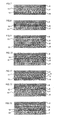
- FIG. 1-13 The build-up of moisture-activated transdermal therapeutic systems using hydrated activators can be designed in many ways. This is through the FIG. 1-13 illustrated, which are not to scale, but show exemplary layer structures.
- the active ingredient in a to manufacture and Storage of the TTS suitable salt form and the activator in the undissolved state in one and the same layer of the TTS is the active ingredient in a to manufacture and Storage of the TTS suitable salt form and the activator in the undissolved state in one and the same layer of the TTS.
- Another construction uses the active ingredient and activator incorporated into separate layers of the TTS.
- Control layers can be implemented in all cases. These tax layers are either between the Active substance and the activator brought or they are between the drug and activator reservoir and the skin surface.
- the release occurs after moisture absorption of the active ingredient in its already activated, skin-compatible Shape controlled to the skin surface.
- control layers can also be one Control the overall moisture absorption of the system or act on individual of its layers.
- such layers are suitable for control, whose water vapor permeability is below that rate per time, typically with the moisture from the skin is delivered.
- the backing the TTS is therefore preferably impervious to water vapor educated.
- Films made from polyethylene terephthalate have this property, Polyethylene, polypropylene, polyvinyl chloride (PVC) and polyvinylidene chloride (PVDC), but also such made of ethylene vinyl acetate copolymer (EVA) with preferably low Vinyl acetate content ⁇ 10%.
- EVA ethylene vinyl acetate copolymer
- films made from very elastic Hydrocarbon polymers such as polyisobutylene, polyisoprene or the block copolymers of styrene and isoprene or butadiene are possible.
- Multi-layer composite materials can also be used as the backing layer (Laminates) are used in which only one Layer consists of the polymers mentioned.
- the backing layer can also be used as a control membrane can be used by a defined, low water vapor permeability is set. This is a defined one Delay in the build-up of moisture and thus the Activation possible.
- Active ingredient (11) and activator (12) in one layer introduced this layer has (1) in one particular preferred construction at the same time pressure-sensitive adhesive properties, so that no separate adhesive layer is required (System A, FIG. 1).
- System A then only consists of a removable protective layer, a pressure-sensitive adhesive layer, the active ingredient and activator contains, as well as from a backing layer (2).
- the moisture absorption can also the active ingredient salt are dissolved and diffuse to the activator. There it gets into the free acid or base of the active ingredient converted the more skin-friendly form of the Represents active ingredient and then by diffusion the skin is released.
- System A can alternatively be equipped with a control layer (3) be equipped (System B, FIG. 2).
- control layer either controls moisture absorption and thus the activation itself or the drug delivery and thus the release behavior after activation.
- the control layer has simultaneously adhesive properties and serves to fix the system on the skin.
- this control function can also be carried out by one Active ingredient or the activator in the dispersed state Layer (4) are adopted (systems C and D, FIG.3 and 4).
- the additional pressure-sensitive adhesive layer does not have to cover the entire surface be trained.
- the system is anchored to the skin can also through an over the reservoir layer to the outside protruding pressure-sensitive adhesive layer (6) are brought about (system F, FIG. 6). This approach is also on the systems A-D transferable.
- one of these two reservoir layers is thus the layer (7) containing the active ingredient or the layer (8) containing the activator, at the same time the adhesive layer that allows it to be anchored to the skin. Either the active ingredient is in one layer closer to the skin than the activator (system G, FIG. 7) or vice versa (System H, FIG. 8).
- control layer (3) be useful between the two reservoir layers for the active ingredient and activator (System I, FIG. 9).
- the principle can also be applied analogously to system H.
- control layer can also be applied as a layer (3) closest to the skin and with adhesive properties at the same time anchoring the entire system to the skin serve (system J, FIG. 10).
- This structure is analogously applicable to the G-K systems.
- a TTS constructed according to the invention preferably has the structure described below:
- the overall construction follows Fig.1.
- the active ingredient and that activating agents in their first chemical state are dispersed as solids in one Matrix layer next to each other.
- this matrix layer also has adhesive properties and is used for fixation of the system on the skin.
- the adhesive matrix is preferably based on a silicone rubber.
- the active substance is a chemical in its non-ionic form Base, and this basic form has a low chemical Stability on.
- the activating agent is in its first state a basic reacting substance, preferably it is is an alkaline earth metal silicate or alkaline earth metal silicate in a hydrated form.
- the back layer of the TTS consists of an almost water vapor impermeable Foil, preferably made of polyethylene terephthalate (PET) or a laminate of 2 layers of one of which is made of PET.
- PET polyethylene terephthalate
- the primary packaging of the TTS is as high as possible Barrier effect against water vapor, including early activation prevent during storage.
- DSC Difference Scanning Calorimetry
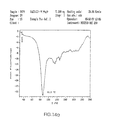
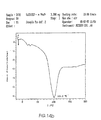
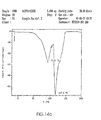
- Na 2 SiO 3 • 5 H 2 O is essentially dewatered at 86.5 ° C (FIG. 14 a). With Na 2 Si 3 O 7 • XH 2 O this only happens at 101.2 ° C (FIG. 14 b).
- TTS Transdermal therapeutic systems
- Remedies and therapeutic agents were used before ground in a cross beater mill and through a Sieve sieved with a mesh size of 50 ⁇ m. This was required to spread the preparations in thin layers can and a uniform distribution in the end product achieve.
- a sample TTS was used to deliver the active ingredient SDZ ENA713 developed on the skin. It is a research substance from Novartis for the treatment of Alzheimer's Illness.
- the basic substance was in the form of the hydrogen tartrate salt used.
- This active ingredient salt was built up together with the activator Sodium metasilicate in a silicone-based pressure sensitive adhesive incorporated.
- composition of the pressure-sensitive adhesive layer (% by weight of the dried matrix): formulation I II III ENA 713 hydrogen tartrate 10 10 10 Na 2 SiO 3 --- 3 --- Na 2 SiO 3 • 5 H 2 O --- --- 3 Bio-PSA Q7-4301 90 87 87
- Bio-PSA Q7-4301 is a medical pressure sensitive adhesive based from polydimethylsiloxane (Dow Corning).
- the active ingredient and optionally the activator were the Solution of the glue in gasoline added. With stirring produced a homogeneous dispersion.
- This dispersion was on a suitable flat support coated (in the example ScotchPak 1022, a polyethylene terephthalate film from 3M with a adhesive coating based on fluorinated polymers).
- Drying was carried out for 10 minutes at room temperature and for 10 minutes at 50 ° C. in an exhaust air drying cabinet.
- the weight per unit area of the matrix was typically 60 g / m 2 .
- the exposed side of the dried matrix was covered with a suitable film laminated (in the example Hostaphan RN 15, a polyethylene terephthalate film from Hoechst).
- a suitable film laminated in the example Hostaphan RN 15, a polyethylene terephthalate film from Hoechst.
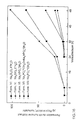
- the activator achieves in the hydrated state (pentahydrate) a significantly earlier and overall higher release of the active ingredient compared to the anhydrous Activator.
- Ropinirol is a basic active ingredient from SmithKline Beecham for the treatment of Parkinson's disease. ropinirole is chemically very unstable in the form of the free base and is therefore practically hardly suitable for processing and storage in a TTS.
- a moisture-activated TTS was developed that contains the hydrochloride instead of the free base.
- activators were sodium trisilicate and various basic Tried and tested sodium phosphate.
- composition of the pressure-sensitive adhesive layer (% By weight of the dried matrix): formulation IV V VI VII VIII IX Ropinirole HCl 10.0 10.0 10.0 10.0 10.0 10.0 Na 2 Si 3 O 7 --- --- --- --- --- 6.0 Na 2 Si 3 O 7 • XH 2 O 6.0 --- --- --- --- --- Na 2 SiO 3 • 5 H 2 O --- 5.2 --- --- --- Na 2 HPO 4 • 2 H 2 O --- --- 6.0 3.0 --- --- Na 3 PO 4 • 12 H 2 O --- --- 6.4 6.4 --- isopropyl 1.0 1.0 1.0 1.0 1.0 1.0 1.0 1.0 1.0 1.0 1.0 1.0 1.0 1.0 1.0 1.0 1.0 1.0 1.0 1.0 1.0 1.0 1.0 1.0 1.0 1.0 1.0 1.0 1.0 1.0 1.0 1.0 1.0 1.0 1.0 1.0 1.0 1.0 1.0 1.0 1.0 1.0 1.0 1.0 1.0 1.0 1.0 1.0 1.0 1.0
- the active ingredient and optionally the activator were the Solution of the glue in gasoline, in which the previously liquid isopropyl myristate was stirred. With stirring a homogeneous suspension was produced.
- This suspension was on a suitable flat support coated (in the example ScotchPak 1022).
- Drying was carried out for 10 minutes at room temperature and for 10 minutes at 80 ° C in an air drying cabinet.
- the weight per unit area of the dried matrix was typically 60 g / m 2 .
- the exposed side of the dried matrix is covered with a suitable film laminated (in the example Hostaphan RN 15).
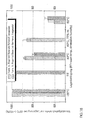
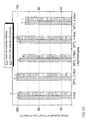
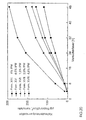
- the silicates used generally turn out to be Activators clearly superior to the phosphates used.
- the mixture shows among the phosphate-containing recipes surprisingly the best of the two basic phosphates (VII) Results, although the pure triphosphate (VIII) below Moisture absorption react more alkaline and thus should increase the activation of ropinirole.
- This excipient is used for 2 hours before use dewatered at 130 ° C (formulation IX), so is delayed the activation process.
- Formulation X was made by emulsifying oily ropinirole base in the petrol glue solution and coating as well Dried this solution.
- Ropinirole base was initially derived from the in the following manner Hydrochloride salt isolated:
- the oily residue was dried in a desiccator and finally allowed to crystallize at 4 ° C in the refrigerator.
- the yield was 8.94 g of ropinirole base or 99% of theory.
- the melting point was determined to be 73 ° C (DSC), the purity was 98% (HPLC).
- Formulation XI used ropinirole HCl and sodium trisilicate first mixed with a little ethanol and 18 hours react with stirring at room temperature with the exclusion of light calmly. This preliminary solution was then in the appropriate Quantity mixed with the petrol solution of the adhesive, coated and dried.
- Formulations XII and XIII are prepared as follows Comments on formulations IV to VIII.
- Such solvents are preferably ethyl acetate, pentane, Hexane, cyclohexane, heptane, octane, toluene and xylene, Dichloromethane and chloroform as well as gasoline various Boiling ranges.
Landscapes
- Health & Medical Sciences (AREA)
- Engineering & Computer Science (AREA)
- Bioinformatics & Cheminformatics (AREA)
- Life Sciences & Earth Sciences (AREA)
- General Health & Medical Sciences (AREA)
- Veterinary Medicine (AREA)
- Public Health (AREA)
- Chemical & Material Sciences (AREA)
- Animal Behavior & Ethology (AREA)
- Medicinal Chemistry (AREA)
- Biomedical Technology (AREA)
- Pharmacology & Pharmacy (AREA)
- Neurology (AREA)
- Dermatology (AREA)
- Neurosurgery (AREA)
- Epidemiology (AREA)
- Chemical Kinetics & Catalysis (AREA)
- Hematology (AREA)
- General Chemical & Material Sciences (AREA)
- Nuclear Medicine, Radiotherapy & Molecular Imaging (AREA)
- Organic Chemistry (AREA)
- Anesthesiology (AREA)
- Heart & Thoracic Surgery (AREA)
- Psychiatry (AREA)
- Psychology (AREA)
- Hospice & Palliative Care (AREA)
- Medicinal Preparation (AREA)
- Pharmaceuticals Containing Other Organic And Inorganic Compounds (AREA)
- Medicines Containing Material From Animals Or Micro-Organisms (AREA)
- Medicines That Contain Protein Lipid Enzymes And Other Medicines (AREA)
- Acyclic And Carbocyclic Compounds In Medicinal Compositions (AREA)
Abstract
Description
Die Erfindung betrifft ein therapeutisches System zur zeitlichen und mengenmäßig steuerbaren Abgabe von wenigstens einem therapeutischen Wirkstoff an einen menschlichen oder tierischen Organismus mittels Diffusion durch die Haut oder Schleimhaut, wobei der Wirkstoff für die Herstellung undThe invention relates to a therapeutic system for temporal and quantity-controllable delivery of at least a therapeutic agent to a human or animal organism by means of diffusion through the skin or Mucous membrane, the active ingredient for the manufacture and
Lagerung zunächst in einer ersten Zustandsform vorliegt, in der er chemisch stabil und für die Haut oder Schleimhaut nicht ausreichend permeabel ist, während er am Applikationsort durch Zutritt von Feuchtigkeit in eine zweite Zustandsform umgewandelt wird, in der er für die Diffusion durch die Haut oder Schleimhaut geeignet ist und in den Organismus aufgenommen wird.Storage is initially in a first state, in which is chemically stable and for the skin or mucous membrane is not sufficiently permeable while it is at the application site by entering moisture into a second state is converted into diffusion through the skin or mucous membrane and into the organism is recorded.
Anlaß zum Einsatz eines aktivierbaren Systems besteht immer dann, wenn diejenige chemische Zustandsform eines Wirkstoffs, die sich am besten für die Abgabe an den Körper eignet, nicht identisch ist mit derjenigen Form, die für die Produktion und Lagerung eines therapeutischen Systems optimal geeignet ist.There is always reason to use an activatable system when that chemical state of an active ingredient, which are best for delivery to the body suitable, is not identical to the form for the production and storage of a therapeutic system is optimally suitable.
Therapeutische Systeme, die durch Feuchtigkeit aktiviert werden, sind bekannt und beispielsweise in US 4,781,924; EP 0 316 065 B1; DE 38 81 340 beschrieben.Therapeutic systems activated by moisture are known and for example in US 4,781,924; EP 0 316 065 B1; DE 38 81 340 described.
Nur ein Teil dieser Dokumente betrifft feuchtigkeitsaktivierbare Systeme, bei denen die Aktivierung eine chemische Umwandlung des Wirkstoffes beinhaltet.Only a part of these documents concerns moisture-activatable ones Systems in which the activation is a chemical Conversion of the active ingredient involves.
Diese umfassen beispielsweise Systeme, bei denen Wirkstoff zunächst in einer Zustandsform enthalten ist, die durch die Oberfläche des Systems nicht in therapeutisch ausreichenden Mengen pro zeit diffundieren kann. These include systems where active ingredient is initially contained in a state that is defined by the Surface of the system is not therapeutically adequate Can diffuse amounts per time.
Neben dem Wirkstoff ist daher ein "aktivierendes Mittel" erforderlich, das im ersten Zustand wasserfrei vorliegt, während es unter Aufnahme von Hautfeuchtigkeit in einen zweiten, hydratisierten und gelösten Zustand übergeht.In addition to the active ingredient is therefore an "activating agent" required that is water-free in the first state, while absorbing skin moisture into one second, hydrated and dissolved state passes.
Im gelösten Zustand ist dann das aktivierende Mittel in der Lage, Wirkstoff in eine zweite Form zu überführen, welche durch die Oberfläche des Systems in therapeutisch ausreichenden Mengen pro Zeit zu diffundieren vermag.In the dissolved state, the activating agent is then in the Able to convert active ingredient into a second form, which through the surface of the system in therapeutically sufficient Diffuses amounts per time.
Darüber hinaus ist in den genannten Dokumenten ein Aufbau von Systemen beschrieben, bei denen der Aktivator von vornherein in gelöster Form vorliegt, jedoch in Mikrokapseln eingeschlossen ist, welche im Ausgangszustand den Aktivator nicht an die Umgebung abgeben. Die Aktivierung umfaßt eine Zerstörung der Mikrokapseln, vorzugsweise durch Zerbrechen oder Schmelzen. Eine Aktivierung durch Hautfeuchtigkeit wird bei dieser Modifizierung nicht beschrieben. Die bekannten Systeme sind im Aufbau kompliziert und verursachen deshalb vergleichsweise hohe Fertigungskosten bei zum Teil unbefriedigendem Aktivierungsprozeß.There is also a structure in the documents mentioned described by systems in which the activator is a priori is in dissolved form, but in microcapsules is included, which is the activator in the initial state do not release to the environment. The activation includes one Destruction of the microcapsules, preferably by breaking or melting. An activation by skin moisture is not described in this modification. The well-known Systems are complex in structure and cause therefore comparatively high manufacturing costs for some unsatisfactory activation process.
Der Erfindung liegt ausgehend vom vorgenannten Stand der Technik die Aufgabe zugrunde, feuchtigkeitsaktivierbare Systeme zu vereinfachen und dadurch die Herstellungskosten zu reduzieren.The invention is based on the aforementioned state of the Technology based on the task, moisture-activated systems to simplify and thereby increase the manufacturing costs to reduce.
Ein weiterer Teil der Aufgabe ist es, den Aktivierungsprozeß
zu beschleunigen sowie
eine Erhöhung der Abgabeleistung an Wirkstoff aus solchen
Systemen zu erreichen.Another part of the job is to speed up the activation process as well
to achieve an increase in the delivery of active ingredient from such systems.
Diese Aufgaben werden mit der Erfindung überraschend mit
den Merkmalen von Anspruch 1 gelöst. Dadurch, daß der Aktivator
weder in wasserfreiem Zustand, noch in gelöster Form
im System vorliegt, und daß er statt dessen in einer hydratisierten,
aber ungelösten chemischen Zustandsform eingesetzt
wird, wobei es sich vorzugsweise um Hydrate des Aktivators
handelt, weisen diese einen kristallinen Ordnungszustand
auf, wobei sie in diesem Zustand zusätzlich zum Aktivator
Wasser in einem definierten Mengenverhältnis mitführen.These objects are surprisingly achieved with the invention
solved the features of
Diese hydratisierte Form des Aktivators liegt als ungelöster Feststoff im System vor.This hydrated form of the activator is undissolved Solid in the system.
Diese ungelöste Form ist praktisch nicht in der Lage, den Wirkstoff von einer ersten chemischen Zustandsform in eine zweite zu überführen. Sie geht erst bei Zutritt von Hautfeuchtigkeit in Lösung und wird dann in der gewünschten Weise gegenüber dem Wirkstoff aktiv. Durch das von Anfang an im Kristall des Aktivators mitgeführte Wasser wird der Prozeß der Aktivierung beschleunigt und im Gesamtausmaß deutlich verbessert.This unsolved form is practically unable to Active substance from a first chemical state into one convict second. It only works when there is moisture in the skin in solution and is then in the desired Way active against the active ingredient. From the beginning of water carried in the crystal of the activator Process of activation accelerated and in total clearly improved.
Pevorzugten Einsatz findet das erfindungsgemäße System bei der Herstellung von transdermalen therapeutischen Systemen (TTS).The system according to the invention is used with preference the production of transdermal therapeutic systems (TTS).
Da der Aktivator im ungelösten Zustand inaktiv ist, gelingt es sogar, Wirkstoff und Aktivator in ein und dieselbe Schicht eines TTS einzuarbeiten, die gleichzeitig auch selbst haftklebende Eigenschaften haben kann.Since the activator is inactive in the undissolved state, it works it even, active ingredient and activator in one and the same Layer of a TTS to incorporate that at the same time itself can have adhesive properties.
Insbesondere durch diesen letztgenannten "Drug-in-Adhesive"-Aufbau gelingt es, den Wirkstoff erstaunlich schnell und in großer Menge freizusetzen, selbst wenn die wasserfreien Formen des Aktivators eingesetzt werden.In particular through this last-mentioned "drug-in-adhesive" structure succeeds in amazing the active ingredient to release quickly and in large quantities, even if the anhydrous forms of the activator can be used.
Damit werden vereinfachte TTS-Aufbauten möglich bei gleichzeitig beschleunigter und erhöhter Wirkstofffreisetzung.This makes simplified TTS structures possible at the same time accelerated and increased drug release.
Die veränderlichen chemischen Zustandsformen betreffen speziell das Säure-Base-Gleichgewicht, in dem der betreffende Wirkstoff vorliegt. The changing forms of chemical states affect specifically the acid-base balance in which the particular Active ingredient is present.
Unter den verwendeten Wirkstoffen befindet sich eine große Zahl von Verbindungen, die saure oder basisch reagierende Molekülgruppen beinhalten; die überwiegende Mehrzahl besitzt basische Eigenschaften.There is a large one among the active ingredients used Number of compounds that react acidic or basic Include molecular groups; the vast majority owns basic properties.
Bei den basischen Gruppen handelt es sich in aller Regel um primäre, sekundäre oder tertiäre Amine. Diese funktionellen Gruppen sind reaktiv und können an einer Vielzahl von Reaktionen teilnehmen (z.B. Oxidationsprozesse), die leicht zu einer Zersetzung des Wirkstoffs führen.The basic groups are usually primary, secondary or tertiary amines. These functional Groups are reactive and can participate in a variety of reactions participate (e.g. oxidation processes) that are easy to lead to decomposition of the active ingredient.
Werden diese Gruppen durch Reaktion mit einer Säure in ein Salz überführt, so führt dies sehr häufig zu einer deutlichen Verbesserung der chemischen Stabilität.These groups are converted into one by reaction with an acid Salt transferred, this very often leads to a clear Improve chemical stability.
Weiterhin weisen die Salze in aller Regel höhere Schmelzpunkte auf als die freien Basen. Eine bei Raumtemperatur flüssig vorliegende Base kann durch Umwandlung in ein Salz sogar in den Festzustand übergehen.Furthermore, the salts generally have higher melting points on than the free bases. One at room temperature liquid base can be converted into a salt even go into the solid state.
Neben der Erhöhung des Schmelzpunktes findet durch Salzbildung immer eine Erniedrigung der Flüchtigkeit statt. Schließlich nimmt durch die Salzbildung die Wasserlöslichkeit praktisch immer deutlich zu, während die Löslichkeit in organischen Lösungsmitteln parallel dazu deutlich abnimmt.In addition to increasing the melting point takes place through salt formation always a decrease in volatility instead. Finally, the water solubility decreases due to the salt formation practically always clear while solubility in organic solvents decreases significantly in parallel.
Die vorgenannten Eigenschaften der Salze basischer Wirkstoffe führen dazu, daß in der pharmazeutischen Forschung und Entwicklung in einer großen Mehrzahl der Fälle dem Salz eines basischen Wirkstoffes der Vorzug als Rohstoff gegenüber der freien Base gegeben wird.The aforementioned properties of the salts of basic active ingredients lead to pharmaceutical research and development in a large majority of cases the salt preference over a basic active ingredient as a raw material is given to the free base.
Für die TTS-Entwicklung ergibt sich daraus häufig ein Nutzen durch die höhere Stabilität der Salze.This often results in a benefit for TTS development due to the higher stability of the salts.
Eine besondere Rolle spielen aber auch der erhöhte Schmelzpunkt und die erniedrigte Flüchtigkeit der Salzform, insbesondere deshalb, weil viele Verfahren zur Herstellung von TTS immer einen Abschnitt bei deutlich erhöhter Arbeitstemperatur im Bereich typischerweise zwischen 60 und 120 °C umfassen.The increased melting point also plays a special role and the reduced volatility of the salt form, in particular This is because many processes for the production of TTS always one section at a significantly higher working temperature typically in the range between 60 and 120 ° C include.
Bei lösungsmittelhaltigen Beschichtungsverfahren betrifft dies die Trocknung zur Entfernung der prozeßbedingten Lösungsmittel. Beim lösungsmittelfreien Heißschmelzverfahren wird die Produktmasse zur Erniedrigung der Viskosität zeitweise stark aufgeheizt.Concerning solvent-based coating processes this is drying to remove the process-related solvents. In the solvent-free hot melt process the product mass temporarily decreases the viscosity strongly heated.
Bei der Herstellung von TTS ergeben sich folglich sehr leicht Probleme mit einem niedrigschmelzenden und/oder flüchtigen Wirkstoff in der Form der freien Base. Die Salzformen bieten in dieser Hinsicht erhebliche Vorteile.As a result, the production of TTS is very high easily problems with a low-melting and / or volatile active ingredient in the form of the free base. The salt forms offer significant advantages in this regard.
Unter den vorgenannten Gesichtspunkten ist es bei der TTS-Entwicklung häufig wünschenswert, einen Wirkstoff in der Salzform zu verarbeiten.From the above point of view, it is with TTS development often desirable to have an active ingredient in the Process salt form.
Die Wirkstoffsalze eignen sich jedoch, verglichen mit den Nicht-Salz-Formen, wenig für die transkutane Verabreichung. Beispielsweise hat die Barriere der menschlichen Haut einen vorwiegend lipophilen Charakter. Gegenüber stark polaren, wasserlöslichen Verbindungen ist sie deshalb nahezu undurchlässig, weshalb die Überführung eines Wirkstoffes in ein Salz in nahezu allen Fällen mit einer Verschlechterung der Aufnahme über die Haut einhergeht.However, the active ingredient salts are suitable compared to the Non-salt forms, little for transcutaneous administration. For example, the barrier of human skin has one predominantly lipophilic character. Compared to strongly polar it is therefore almost impermeable to water-soluble compounds, which is why the transfer of an active ingredient into a salt in almost all cases with a deterioration the absorption goes hand in hand with the skin.
Damit ergeben sich häufig widersprüchliche Anforderungen an den Wirkstoff, die nicht von einer seiner chemischen Zustandsformen allein erfüllt werden können.This often results in conflicting requirements the active ingredient that is not one of its chemical states can be fulfilled alone.
Eine Lösung des Problems bieten aktivierbare Formen von TTS.Activatable forms of offer a solution to the problem TTS.
Unter der Aktivierung eines TTS ist hier zu verstehen, daß die hinsichtlich Verarbeitung und Lagerung günstige Salzform des enthaltenen Wirkstoffes eingesetzt und erst bei der späteren Anwendung des TTS unter bestimmten äußeren Einflüssen in die Nicht-Salz-Form überführt wird, die sich durch bessere Hautgängigkeit auszeichnet. Unter den möglichen äußeren Einflüssen wird bevorzugt die Aufnahme von Feuchtigkeit nach Applikation auf die Hautoberfläche betrachtet.The activation of a TTS here means that the favorable salt form in terms of processing and storage of the active ingredient used and only at the later application of the TTS under certain external Influences are converted into the non-salt form, which turns out to be characterized by better skin permeability. Among the possible external influences, the inclusion of Moisture considered after application to the skin surface.
Die menschliche Haut gibt Feuchtigkeit auf zwei Wegen ab:Human skin releases moisture in two ways:
Über die als Epidermis bezeichnete äußerste Hautschicht erfolgt ständig ein passiver, durch Diffusion bedingter Austritt von Wasserdampf, der transepidermale Wasserverlust. Über die Schweißdrüsen wird dagegen aktiv Wasserdampf abgegeben, bei stärkerem Schwitzen tritt Wasser sogar in flüssiger Form auf der Hautoberfläche aus.It takes place over the outermost layer of skin called the epidermis always a passive exit caused by diffusion of water vapor, the transepidermal water loss. On the other hand, water vapor is actively released through the sweat glands, with heavy sweating, water even appears in liquid Shape on the surface of the skin.
Ein auf die Haut appliziertes TTS ist dieser austretenden Hautfeuchtigkeit ausgesetzt und kann je nach seiner Beschaffenheit mehr oder weniger viel Feuchtigkeit aufnehmen. Eine wichtige Rolle spielt dabei die der Haut abgewandte äußere Rückschicht eines TTS. Je weniger wasserdampfdurchlässig diese Schicht ist, um so ausgeprägter ist der Feuchtigkeitsstau im TTS und es kommt schließlich zur Okklusion.A TTS applied to the skin is this emerging Exposed to skin moisture and can vary depending on its nature absorb more or less moisture. The skin facing away plays an important role outer back layer of a TTS. The less permeable to water vapor this layer is the more pronounced the moisture build-up in the TTS and finally occlusion occurs.
Dieser Feuchtigkeitsstau kann zur Aktivierung einer chemischen Umwandlungsreaktion genutzt werden.This moisture build-up can activate a chemical Conversion reaction can be used.
Zwei wasserlösliche oder zumindest wasserquellbare Reaktionspartner A und B, die im TTS in trockener, praktisch ungelöster Form vorliegen, können erst nach Zutritt von Feuchtigkeit unter Auflösung oder zumindest Anlösung miteinander in Reaktion treten.Two water-soluble or at least water-swellable reactants A and B in the TTS in dry, practically undissolved Can only be in shape after Moisture with dissolution or at least dissolution with one another to react.
Dieses Prinzip ist durch die Brausetablette allgemein bekannt, die erst durch Zutritt von Wasser im Rahmen einer Säure-Base-Reaktion Kohlendioxid bildet.This principle is well known from the effervescent tablet, which only occurs when water is Acid-base reaction forms carbon dioxide.
Handelt es sich um eine Säure-Base-Reaktion, so ist Wasser lediglich als Lösungsmittel für die Reaktanden erforderlich. Es wird jedoch bei der Reaktion nicht vei aucht. Eine geringe Menge Wasser genügt daher bereits, um den Prozeß zu starten und kontinuierlich weiterlaufen zu lassen. If it is an acid-base reaction, it is water only required as a solvent for the reactants. However, it is not used in the reaction. A small amount of water is therefore sufficient to complete the process to start and keep running.
Um nun den salzförmig vorliegenden Wirkstoff im Rahmen einer Säure-Base-Reaktion aus dem Salz freizusetzen, bedarf es eines hier als Aktivator bezeichneten Reaktionspartners. Therapeutische Systeme, die sich dieses Aktivierungsprinzip zunutze machen, wurden bereits in den oben zitierten US 4,781,924, EP O 316 065 B1, DE 3881 340 beschrieben.In order to get the active ingredient in salt form in the context of a It needs to release acid-base reaction from the salt it a reaction partner referred to here as an activator. Therapeutic systems that follow this activation principle have already been used in the US cited above 4,781,924, EP O 316 065 B1, DE 3881 340.
Dort wurde jedoch davon ausgegangen, daß das aktivierende Agenz in einem ausdrücklich wasserfreien Zustand vorliegen muß.There, however, it was assumed that the activating Agent in an expressly water-free state got to.
Das aktivierende Agens ist erst in einem zweiten Zustand hydratisiert bzw. geht in Lösung, nachdem es bei der Anwendung Feuchtigkeit aufgenommen hat, oder aber alternativ, nachdem es aus einem Vorrat innerhalb des Systems Feuchtigkeit aufgenommen hat.The activating agent is only in a second state hydrates or goes into solution after using it Has absorbed moisture, or alternatively, after getting moisture from a supply within the system has recorded.
Es wurde nun überraschend gefunden, daß es nicht erforderlich ist, den Aktivator in einer wasserfreien Form im System vorrätig zu halten. Auch wenn der Aktivator in einer hydratisierten, aber ungelösten Form vorliegt, unterbleibt offenbar die Reaktion mit dem Wirkstoffsalz während der Herstellung und Lagerung des Systems nahezu völlig.It has now surprisingly been found that it is not required is the activator in an anhydrous form in the system to keep in stock. Even if the activator is in a hydrated, but undissolved form is omitted apparently the reaction with the active ingredient salt during the Manufacturing and storage of the system almost completely.
Viele als Aktivatoren geeignete Hilfsstoffe liegen typischerweise gar nicht wasserfrei vor. Sie müssen erst getrocknet oder in der (häufig teureren) wasserfreien Form bezogen und entsprechend gelagert werden. Dies betrifft beispielsweise die in dem zitierten Stand der Technik genannten Stoffe Natriumcarbonat, Natriummonohydrogen- undMany auxiliary substances suitable as activators are typically located not at all anhydrous. You need to dry first or in the (often more expensive) anhydrous form obtained and stored accordingly. this concerns for example those mentioned in the cited prior art Substances sodium carbonate, sodium monohydrogen and
Natriumorthophosphat, die in der wasserfreien Form sogar hygroskopisch sind.Sodium orthophosphate, even in the anhydrous form are hygroscopic.
Die entsprechenden Nachteile entfallen bei Einsatz der hydratisierten Formen.The corresponding disadvantages are eliminated when using the hydrated ones To form.
Ein im System bereits hydratisiert vorliegender Aktivator erbringt darüber hinaus sogar Vorteile hinsichtlich des Aktivierungsverlaufes bei Zutritt von Feuchtigkeit. An activator that is already hydrated in the system also provides advantages in terms of the activation process in the presence of moisture.
Es wurde gefunden, daß unter Verwendung bereits hydratisierter Aktivatoren die Geschwindigkeit und das Ausmaß des Aktivierungprozesses gegenüber den wasserfreien Aktivatoren verbessert ablaufen.It was found that using already hydrated Activators the speed and extent of Activation process compared to the water-free activators run better.
Dieser Vorgang ist nicht zu verwechseln mit einer in WO 94/07468 beschriebenen Vorgehensweise, nach der der Wirkstoff in seiner wasserlöslichen Salzform und ein anorganisches Silikat zunächst in Wasser miteinander vermischt, diese wäßrige Lösung in eine Polymerlösung eingearbeitet und daraus TTS hergestellt werden. Diese enthalten nach einem Trocknungsschritt erfindungsgemäß das Silikat in hydratisierter Form innig mit dem Wirkstoff gemischt als innere disperse Phase in einem umgebenden Polymer. Dabei ist der wasserlösliche Wirkstoff erfindungsgemäß sogar teilweise in der wäßrigen Phase des Silikates gelöst.This process is not to be confused with an in WO 94/07468 described procedure according to which Active ingredient in its water-soluble salt form and an inorganic Silicate first mixed together in water, this aqueous solution incorporated into a polymer solution and TTS are made from it. After a Drying step according to the invention, the silicate in hydrated Form intimately mixed with the active ingredient as inner disperse phase in a surrounding polymer. Here is the water-soluble active ingredient even partially according to the invention dissolved the aqueous phase of the silicate.
Dagegen beinhalten die Systeme nach der Erfindung nur Aufbauten, bei denen Wirkstoff und Aktivator getrennt voneinander in einer gemeinsamen oder auch in verschiedenen Matrices dispergiert vorliegen. Ein dispergierendes Agens ist nicht notwendigerweise enthalten.In contrast, the systems according to the invention only include structures, where active ingredient and activator are separate in a common or in different Matrices are dispersed. A dispersing agent is not necessarily included.
Als Aktivatoren mit wasserhaltigem kristallinen Aufbau kommen anorganische oder organische Verbindungen in Betracht, die in wäßriger Lösung sauer oder basisch reagieren.Coming as activators with a water-containing crystalline structure inorganic or organic compounds into consideration, which react acidic or basic in aqueous solution.
Für die Umwandlung der basisch reagierenden Zustandsform eines Wirkstoffs in die sauer reagierende Zustandsform wird ein sauer reagierender Aktivator eingesetzt. Basisch reagierende Aktivatoren dienen dagegen zur Umwandlung der sauer reagierenden Zustandsform des Wirkstoffs in die basisch reagierende Form.For the conversion of the basic reaction state of an active ingredient in the acidic state an acidic activator is used. Basically responding Activators, on the other hand, serve to convert the acidic responsive form of the active ingredient in the basic responsive form.
Als basisch reagierende Aktivatoren kommen, ohne Anspruch auf Vollständigkeit, folgende Verbindungen in Betracht:As basic reacting activators come without claim for completeness, consider the following connections:
Basische Silikate, basische Phosphate, Citrate, Tartrate, Succinate, basische Salze der Ethylendiamintetraessigsäure, Carbonate, Hydrogencarbonate und Hydroxide. Basic silicates, basic phosphates, citrates, tartrates, Succinates, basic salts of ethylenediaminetetraacetic acid, Carbonates, hydrogen carbonates and hydroxides.
Diese Verbindungen kommen als Alkali-, Erdalkali- oder Aluminiumsalze zum Einsatz.These compounds come as alkali, alkaline earth or aluminum salts for use.
Weiterhin möglich sind Verbindungen, die aus mehr als einem der vorgenannten Anionen und mehr als einem der vorgenannten Metallkationen gleichzeitig in einem kristallin definierten Mischzustand aufgebaut sind. Auch können die vorgenannten Anionen und Kationen im Kristallgitter mit noch weiteren, hier nicht genannten Ionen kombiniert sein.Connections consisting of more than one are also possible of the aforementioned anions and more than one of the aforementioned Metal cations simultaneously in a crystalline defined Mixed state are built. The aforementioned can also Anions and cations in the crystal lattice with other ions not mentioned here can be combined.
Als sauer reagierende Aktivatoren kommen, ohne Anspruch auf Vollständigkeit, folgende Verbindungen in Betracht:As acidic activators come without claim Completeness, consider the following connections:
Dihydrogenphosphate, Citronensäure und Dihydrogencitrate, Weinsäure und Hydrogentartrate, Trihydrogensalze der Ethylendiamintetraessigsäure sowie Hydrogensulfate.Dihydrogen phosphates, citric acid and dihydrogen citrates, Tartaric acid and hydrogen tartrate, trihydrogen salts of ethylenediaminetetraacetic acid as well as hydrogen sulfates.
Diese Verbindungen kommen gegebenenfalls als Alkali-, Erdalkali- oder Aluminiumsalze zum Einsatz.These compounds may come as alkali, alkaline earth or aluminum salts are used.
Alle solchen Aktivatoren werden vorzugsweise in einer Form verwendet, die im kristallinen Zustand definierte Mengenanteile Wasser mit sich führt.All such activators are preferably in one form used, the proportions defined in the crystalline state Water.
Auch Mischungen verschiedener Aktivatoren sind möglich und können zur Einstellung eines bestimmten Aktivierungsverhaltens sinnvoll sein. Die Mischung kann auch verschieden stark wasserhaltige kristalline Zustandsformen ein und desselben Aktivators betreffen, um das Aktivierungsverhalten zu modulieren.Mixtures of different activators are also possible can be used to set a specific activation behavior make sense. The mixture can also be different strongly hydrated crystalline forms of one and the same Activators relate to the activation behavior to modulate.
Eine Mischung verschiedener Aktivatoren kann auch sinnvoll sein, wenn der Wirkstoff gegenüber allzu starken Basen instabil sein sollte. Über die Mischung kann in solchen Fällen ein Optimum zwischen erwünschten, aktivierenden, und unerwünschten, zersetzenden Einflüssen eingestellt werden.A mixture of different activators can also make sense be unstable when the active ingredient is too strong bases should be. About the mixture in such cases an optimum between desired, activating, and undesirable, corrosive influences can be set.
Bei der überwiegenden Mehrheit der heutigen pharmazeutischen Wirkstoffe handelt es sich um basische Substanzen, saure Wirkstoffe stellen dagegen die Minderheit dar. The vast majority of today's pharmaceuticals Active ingredients are basic substances, acidic ingredients, on the other hand, represent the minority.
Die basischen Wirkstoffe werden sehr häufig in Form ihrer chemisch stabileren und nichtflüchtigen, wasserlöslichen Salze verwendet. Dies sind z.B. die Hydrochloride und Sulfate.The basic active ingredients are very often in the form of their chemically more stable and non-volatile, water-soluble Salts used. These are e.g. the hydrochlorides and sulfates.
Da die freien Basen in aller Regel besser hautgängig sind als die ionischen Salze, kommt der Umwandlung der Salze basischer Wirkstoffe in die freien Wirkstoffbasen besondere Bedeutung zu. Diese Umwandlung kann unter Einsatz eines basischen Aktivators in einem feuchtigkeitsaktivierbaren TTS erfolgen.Since the free bases are generally easier to get through to the skin than the ionic salts, the conversion of the salts comes more basic Active substances in the free active substance bases special Meaning too. This conversion can be done using a basic Activators in a moisture-activatable TTS respectively.
Basische Aktivatoren finden daher im Rahmen der vorliegenden Erfindung eine besondere Beachtung:Basic activators can therefore be found within the scope of the present Invention special attention:
Unter den möglichen basischen Aktivatoren eignen sich speziell die Silikate und Phosphate.Among the possible basic activators are particularly suitable the silicates and phosphates.
Bevorzugten Einsatz finden unter den Silikaten das Natriummetasilikat-Pentahydrat sowie die hydratisierten Formen von Natriumtrisilikat.Sodium metasilicate pentahydrate is preferred among the silicates as well as the hydrated forms of Sodium trisilicate.
Ebenfalls besonders geeignet sind die Hydrate des Magnesiumtrisilikates, typischerweise das Pentahydrat.The hydrates of magnesium trisilicate are also particularly suitable, typically the pentahydrate.
Unter den Phosphaten eignen sich die basischen Monohydrogenphosphate und Orthophosphate sowie Pyrophosphate.The basic monohydrogen phosphates are suitable among the phosphates and orthophosphates and pyrophosphates.
Dies sind insbesondere Dinatriummonohydrogenphosphat-Dihydrat, -Heptahydrat und -Dodecahydrat sowie Trinatriumphosphat-Hexahydrat und -Dodecahydrat. Außerdem eignet sich Tetranatriumdiphosphat-Decahydrat.These are especially disodium monohydrogen phosphate dihydrate, -Heptahydrate and -dodecahydrate and trisodium phosphate hexahydrate and dodecahydrate. Also suitable tetrasodium diphosphate decahydrate.
Weiterhin kommen Trikaliumphosphat-Monohydrat und - Trihydrat sowie Magnesiumhydrogenphosphat-Trihydrat in Betracht.Tripotassium phosphate monohydrate and - Trihydrate and magnesium hydrogen phosphate trihydrate into consideration.
Besonderes Interesse gilt weiterhin solchen Aktivatoren, die ein inneres Puffersystem aufweisen und somit nur kontrolliert basisch reagieren.Special interest continues to be those activators which have an internal buffer system and are therefore only controlled react basicly.
Dies betrifft speziell die auch als säurebindende Mittel vom Menschen innerlich einnehmbaren Verbindungen Magnesiumcarbonathydroxid und Aluminiummagnesiumhydroxidsulfat. Beide Verbindungen können in verschiedenen Zusammensetzungen auftreten, die wegen ihres Gehaltes an Wasser im Kristall gut zur Herstellung der erfindungsgemäßen TTS geeignet sind.This applies especially to the acid-binding agents Magnesium carbonate hydroxide internally ingestible compounds and aluminum magnesium hydroxide sulfate. Both Compounds can come in different compositions occur because of their water content in the crystal well suited for the production of the TTS according to the invention are.
Stellvertretend für Aluminiummagnesiumhydroxidsulfat wird hier Magaldrat (INN) genannt. Nach den Angaben der USP 23 handelt es sich um ein Produkt wechselnder Zusammensetzung mit der allgemeinen Formel Al5Mg10(OH)31(SO4)2 •X H2O. Stellvertretend für Magnesiumcarbonathydroxid steht Hydrotalcit (INN). Nach den Angaben des Merck-Index (12. Auflage 1996) handelt es sich bei Magnesiumcarbonathydroxid im allgemeinen um (MgCO3)4 Mg(OH)2 •5H2O und bei Hydrotalcit im speziellen um Al2O3 6MgO CO2 •12H2O.Magaldrate (INN) is mentioned here as representative of aluminum magnesium hydroxide sulfate. According to USP 23, it is a product of changing composition with the general formula Al 5 Mg 10 (OH) 31 (SO 4 ) 2 • XH 2 O. Hydrotalcite (INN) represents magnesium carbonate hydroxide. According to the Merck Index (12th edition 1996), magnesium carbonate hydroxide is generally (MgCO 3 ) 4 Mg (OH) 2 • 5H 2 O and hydrotalcite in particular is Al 2 O 3 6MgO CO 2 • 12H 2 O.
Neben diesen Beispielen aus der anorganischen Chemie seien noch folgende Aktivatoren auf organischer Basis erwähnt: Trinatriumcitrat Dihydrat (C6H5Na3O7•2H2O), Magnesiumcitrat Tetradecahydrat (C12H10Mg3O14•14 H2O), Tetranatriumedetat Dihydrat (C14H12N2Na4O8•2H2O), Kaliumnatriumtartrat Tetrahydrat (C4H4KNaO6•4H2O) und Dinatriumsuccinat Hexahydrat (C4H4Na2O4•6H2O).In addition to these examples from inorganic chemistry, the following activators on an organic basis should also be mentioned: trisodium citrate dihydrate (C 6 H 5 Na 3 O 7 • 2H 2 O), magnesium citrate tetradecahydrate (C 12 H 10 Mg 3 O 14 • 14 H 2 O) , Tetrasodium edetate dihydrate (C 14 H 12 N 2 Na 4 O 8 • 2H 2 O), potassium sodium tartrate tetrahydrate (C 4 H 4 KNaO 6 • 4H 2 O) and disodium succinate hexahydrate (C 4 H 4 Na 2 O 4 • 6H 2 O ).
Bei der Auswahl eines geeigneten Aktivators spielen allgemein die Entwässerungstemperaturen eine große Rolle. Die üblichen Herstellungsprozesse für ein TTS umfassen in aller Regel einen Trocknungsprozeß bei lösungsmittelhaltigen Beschichtungsverfahren oder aber einen Schmelzvorgang bei der Herstellung im Heißschmelzverfahren.When choosing a suitable activator, play generally the drainage temperatures play a big role. The Common manufacturing processes for a TTS include all Usually a drying process for solvent-based coating processes or a melting process at the Production in the hot melt process.
Die temperaturbedingte vollständige Abgabe von Wasser aus dem Aktivator sollte möglichst oberhalb dieser Verarbeitungstemperaturen liegen bzw. die Verarbeitungstemperaturen sollten unterhalb der vollständigen Entwässerungstemperatur des Aktivators gehalten werden. The temperature-related complete release of water from the activator should, if possible, be above these processing temperatures or the processing temperatures should be below full drainage temperature of the activator.
Die Differenz sollte mindestens 1-5°C, besser 5-20°C und idealerweise mehr als 20°C betragen.The difference should be at least 1-5 ° C, better 5-20 ° C and ideally be more than 20 ° C.
Unter diesem Gesichtspunkt eignen sich unter den vorgenannten Aktivatoren ganz besonders die Silikate und Phosphate.From this point of view, the above are suitable Activators especially the silicates and phosphates.
Der Aufbau von feuchtigkeitsaktivierbaren transdermalen therapeutischen Systemen unter Einsatz hydratisierter Aktivatoren läßt sich vielseitig gestalten. Dies wird durch die FIG. 1-13 illustriert, die nicht maßstabsgetreu sind, sondern beispielhafte Schichtaufbauten zeigen.The build-up of moisture-activated transdermal therapeutic systems using hydrated activators can be designed in many ways. This is through the FIG. 1-13 illustrated, which are not to scale, but show exemplary layer structures.
Im Rahmen des einfachsten und zugleich bevorzugten Aufbaues befinden sich der Wirkstoff in einer zur Herstellung und Lagerung des TTS geeigneten Salzform sowie der Aktivator im ungelösten Zustand in ein und derselben Schicht des TTS. Bei einer anderen Konstruktion werden Wirkstoff und Aktivator in getrennte Schichten des TTS eingearbeitet.As part of the simplest and at the same time preferred construction are the active ingredient in a to manufacture and Storage of the TTS suitable salt form and the activator in the undissolved state in one and the same layer of the TTS. Another construction uses the active ingredient and activator incorporated into separate layers of the TTS.
In allen Fällen können Steuerschichten implementiert werden. Diese Steuerschichten werden entweder zwischen den Wirkstoff und den Aktivator gebracht oder aber sie befinden sich zwischen dem Wirkstoff- sowie Aktivatorreservoir und der Hautoberfläche.Control layers can be implemented in all cases. These tax layers are either between the Active substance and the activator brought or they are between the drug and activator reservoir and the skin surface.
Im ersten Fall wird der Zutritt des Aktivators nach Feuchtigkeitsaufnahme und Lösung zum Wirkstoff gesteuert oder aber der Zutritt des Wirkstoffs nach Feuchtigkeitsaufnahme und Lösung zum Aktivator.In the first case there is access to the activator after moisture absorption and solution to the active ingredient controlled or but the access of the active ingredient after moisture absorption and solution to the activator.
Im zweiten Fall wird nach Feuchtigkeitsaufnahme die Freisetzung des Wirkstoffs in seiner bereits aktivierten, hautgängigen Form an die Hautoberfläche gesteuert.In the second case the release occurs after moisture absorption of the active ingredient in its already activated, skin-compatible Shape controlled to the skin surface.
Alternativ kann es sich bei den Steuerschichten auch um eine Steuerung der Feuchtigkeitsaufnahme des Systems insgesamt oder einzelner seiner Schichten handeln.Alternatively, the control layers can also be one Control the overall moisture absorption of the system or act on individual of its layers.
Zur Steuerung eignen sich in diesem Sinne solche Schichten, deren Wasserdampfdurchlässigkeit unterhalb derjenigen Rate pro Zeit liegt, mit der Feuchtigkeit von der Haut typischerweise abgegeben wird. In this sense, such layers are suitable for control, whose water vapor permeability is below that rate per time, typically with the moisture from the skin is delivered.
Um eine Feuchtigkeitsaktivierung zu erzielen, müssen bei allen vorstehenden Aufbauten aus der Haut austretendes Wasser bzw. Wasserdampf im TTS gestaut werden. Die Rückschicht des TTS ist daher vorzugsweise wasserdampfundurchlässig ausgebildet.To achieve moisture activation, water leaking from the skin of all of the above structures or water vapor in the TTS. The backing the TTS is therefore preferably impervious to water vapor educated.
Diese Eigenschaft besitzen insbesondere Filme aus Polyethylenterephthalat, Polyethylen, Polypropylen, Polyvinylchlorid (PVC) und Polyvinylidenchlorid (PVDC), aber auch solche aus Ethylenvinylacetat-Copolymer (EVA) mit vorzugsweise geringem Vinylacetat-Anteil <10 %. Auch Filme aus sehr elastischen Kohlenwasserstoffpolymeren wie Polyisobutylen, Polyisopren oder die Blockcopolymere von Styrol und Isopren bzw. Butadien kommen infrage.Films made from polyethylene terephthalate have this property, Polyethylene, polypropylene, polyvinyl chloride (PVC) and polyvinylidene chloride (PVDC), but also such made of ethylene vinyl acetate copolymer (EVA) with preferably low Vinyl acetate content <10%. Even films made from very elastic Hydrocarbon polymers such as polyisobutylene, polyisoprene or the block copolymers of styrene and isoprene or butadiene are possible.
Als Rückschicht können auch mehrschichtige Verbundmaterialien (Laminate) eingesetzt werden, bei denen nur eine Schicht aus den genannten Polymeren besteht.Multi-layer composite materials can also be used as the backing layer (Laminates) are used in which only one Layer consists of the polymers mentioned.
Schließlich kann auch die Rückschicht als Steuermembran eingesetzt werden, indem eine definierte, geringe Wasserdampfdurchlässigkeit eingestellt wird. Dadurch ist eine definierte Verzögerung des Feuchtigkeitsstaues und damit der Aktivierung möglich.Finally, the backing layer can also be used as a control membrane can be used by a defined, low water vapor permeability is set. This is a defined one Delay in the build-up of moisture and thus the Activation possible.
Beispielhafte Schichtaufbauten werden nachfolgend unter Bezug auf die Figuren beschrieben.Exemplary layer structures are referred to below described on the figures.
Werden Wirkstoff (11) und Aktivator (12) in eine Schicht eingebracht, so besitzt diese Schicht (1) in einem besonders bevorzugten Aufbau gleichzeitig haftklebende Eigenschaften, so daß keine separate Kleberschicht benötigt wird (System A, FIG. 1).Active ingredient (11) and activator (12) in one layer introduced, this layer has (1) in one particular preferred construction at the same time pressure-sensitive adhesive properties, so that no separate adhesive layer is required (System A, FIG. 1).
Das System A besteht dann nur aus einer ablösbaren Schutzschicht, einer haftklebenden Schicht, die Wirkstoff und Aktivator enthält, sowie aus einer Rückschicht (2). System A then only consists of a removable protective layer, a pressure-sensitive adhesive layer, the active ingredient and activator contains, as well as from a backing layer (2).
Nach Applikation auf die Haut kommt es unter Feuchtigkeitsaufnahme zu einer Auflösung des Aktivators, der bis dahin in einem hydratisierten, aber ungelösten Zustand vorlag. Der gelöste Aktivator diffundiert zum salzförmig vorliegenden Wirkstoff und wandelt diesen in die Form einer freien Säure oder freien Base um. Diese freie Form diffundiert durch die haftklebende Schicht zur Haut und wird dort in den Körper aufgenommen.After application to the skin, it takes up moisture to a dissolution of the activator that by then was in a hydrated but undissolved state. The dissolved activator diffuses to the salt form Active ingredient and converts it into the form of a free one Acid or free base around. This free form diffuses through the adhesive layer to the skin and is there in the body absorbed.
Alternativ kann durch die Feuchtigkeitsaufnahme aber auch das Wirkstoffsalz gelöst werden und zum Aktivator diffundieren. Dort wird es in die freie Säure oder Base des Wirkstoffs umgewandelt, die die besser hautgängige Form des Wirkstoffs darstellt und anschließend durch Diffusion an die Haut abgegeben wird.Alternatively, the moisture absorption can also the active ingredient salt are dissolved and diffuse to the activator. There it gets into the free acid or base of the active ingredient converted the more skin-friendly form of the Represents active ingredient and then by diffusion the skin is released.
Das System A kann alternativ mit einer Steuerschicht (3) ausgerüstet werden (System B, FIG.2).System A can alternatively be equipped with a control layer (3) be equipped (System B, FIG. 2).
Die Steuerschicht steuert entweder die Feuchtigkeitsaufnahme und damit die Aktvierung selbst oder aber die Wirkstoffabgabe und damit das Freisetzungsverhalten nach Aktivierung. In dem dargestellten Aufbau besitzt die Steuerschicht gleichzeitig haftklebende Eigenschaften und dient zur Fixierung des Systems auf der Haut.The control layer either controls moisture absorption and thus the activation itself or the drug delivery and thus the release behavior after activation. In the structure shown, the control layer has simultaneously adhesive properties and serves to fix the system on the skin.
Wahlweise kann diese Steuerfunktion auch von einer den Wirkstoff oder den Aktivator im dispergierten Zustand umhüllenden Schicht (4) übernommen werden (Systeme C und D, FIG.3 und 4).Optionally, this control function can also be carried out by one Active ingredient or the activator in the dispersed state Layer (4) are adopted (systems C and D, FIG.3 and 4).
Falls der Wirkstoff oder der Aktivator mit der haftklebenden Schicht inkompatibel sein sollten, ist die Hinzufügung einer separaten haftklebenden Schicht (5) auf der hautzugewandten Seite zu bevorzugen (System E, FIG. 5). Diese Hinzufügung einer Haftkleberschicht ist sinngemäß auch auf die Systeme A-D anwendbar.If the active ingredient or the activator with the pressure sensitive adhesive Layer should be incompatible, is the addition a separate adhesive layer (5) on the skin facing Preferred side (System E, FIG. 5). This addition a layer of pressure sensitive adhesive is analogous to the Systems A-D applicable.
Die zusätzliche haftklebende Schicht muß nicht vollflächig ausgebildet sein. Die Verankerung des Systems auf der Haut kann auch durch eine über die Reservoirschicht nach außen überstehende haftklebende Schicht (6) bewirkt werden (System F, FIG. 6). Auch dieses Vorgehen ist auf die Systeme A-D übertragbar.The additional pressure-sensitive adhesive layer does not have to cover the entire surface be trained. The system is anchored to the skin can also through an over the reservoir layer to the outside protruding pressure-sensitive adhesive layer (6) are brought about (system F, FIG. 6). This approach is also on the systems A-D transferable.
Mit dem Ziel, ein bestimmtes Aktivierungs- oder Freisetzungsverhalten zu erzielen, kann es erforderlich sein, den Wirkstoff und den Aktivator in getrennte Schichten des TTS einzuarbeiten.With the aim of a specific activation or release behavior it may be necessary to achieve the Active ingredient and the activator in separate layers of the TTS incorporate.
Im bevorzugten Fall ist eine dieser beiden Reservoirschichten, also die den Wirkstoff enthaltende Schicht (7) oder die den Aktivator enthaltende Schicht (8), gleichzeitig die haftklebende Schicht, die die Verankerung auf der Haut ermöglicht. Entweder befindet sich der Wirkstoff in einer hautnäheren Schicht als der Aktivator (System G, FIG. 7) oder umgekehrt (System H, FIG. 8).In the preferred case, one of these two reservoir layers is thus the layer (7) containing the active ingredient or the layer (8) containing the activator, at the same time the adhesive layer that allows it to be anchored to the skin. Either the active ingredient is in one layer closer to the skin than the activator (system G, FIG. 7) or vice versa (System H, FIG. 8).
Bei einem solchen Aufbau wird unter Feuchtigkeitsaufnahme der Aktivator gelöst, diffundiert in die Nachbarschicht zum Wirkstoff in der Salzform und setzt daraus die Base oder Säure frei. Diese freie Form diffundiert dann zur Haut und tritt über diese in den Körper ein. Alternativ kann es auch zur Auflösung des Wirkstoffs kommen, der in die Nachbarschicht zum Aktivator diffundiert und von diesem zur freien Base oder Säure umgewandelt wird.With such a structure, it absorbs moisture the activator is released and diffuses into the neighboring layer Active ingredient in the salt form and sets the base or Acid free. This free form then diffuses to the skin and enters the body through this. Alternatively, it can come to the dissolution of the active ingredient in the neighboring layer diffuses to the activator and from there to the free one Base or acid is converted.
Um den Zutritt von Wirkstoff zum Aktivator oder den umgekehrten Vorgang zu steuern, kann eine Steuerschicht (3) sinnvoll sein, die zwischen den beiden Reservoirschichten für Wirkstoff und Aktivator angebracht ist (System I, FIG. 9). Das Prinzip ist sinngemäß auch auf das System H anwendbar.For the access of active ingredient to the activator or the reverse To control the process, a control layer (3) be useful between the two reservoir layers for the active ingredient and activator (System I, FIG. 9). The principle can also be applied analogously to system H.
Die Steuerschicht kann auch als hautnächste Schicht (3) angebracht werden und bei gleichzeitig haftklebenden Eigenschaften der Verankerung des Gesamtsystems auf der Haut dienen (System J, FIG. 10).The control layer can also be applied as a layer (3) closest to the skin and with adhesive properties at the same time anchoring the entire system to the skin serve (system J, FIG. 10).
Anstelle der Einführung separater Steuerschichten können in Analogie zu den Systemen C und D auch der Wirkstoff oder der Aktivator im dispersen Zustand mit einer steuernden Schicht (4) umhüllt werden (System K, FIG. 11).Instead of introducing separate tax layers, in Analogy to systems C and D also the active ingredient or the activator in the dispersed state with a controlling Layer (4) are encased (system K, FIG. 11).
Falls weder Wirkstoff noch Aktivator mit einem geeigneten Haftkleber kompatibel sein sollten, kann die Einführung einer separaten Haftkleberschicht (5) erforderlich sein (System L, FIG. 12).If neither active ingredient nor activator with a suitable Pressure sensitive adhesives should be compatible with the introduction of a separate pressure-sensitive adhesive layer (5) may be required (system L, FIG. 12).
Dieser Aufbau ist sinngemäß auf die Systeme G-K übertragbar.This structure is analogously applicable to the G-K systems.
Schließlich kann anstelle einer vollflächigen, hautseitigen Haftkleberschicht auch eine nur im Randbereich die Reservoirschichten überlappende Haftkleberschicht (6) in Analogie zu System F verwendet werden (System M, FIG. 13). Auch dieses Vorgehen ist sinngemäß auf die Systeme G-K übertragbar.Finally, instead of a full-surface, skin-side A layer of pressure-sensitive adhesive is also only in the edge area of the reservoir layers overlapping adhesive layer (6) in analogy can be used for system F (system M, FIG. 13). Also this procedure is analogously applicable to the G-K systems.
Vorzugsweise besitzt ein erfindungsgemäß konstruiertes TTS den im folgenden beschriebenen Aufbau:A TTS constructed according to the invention preferably has the structure described below:
Die Gesamtkonstruktion folgt Fig.1. Der Wirkstoff und das aktivierende Mittel in ihrer jeweils ersten chemischen Zustandsform liegen als Feststoffe dispergiert in einer einzigen Matrixschicht nebeneinander vor. diese Matrixschicht hat zugleich haftklebende Eigenschaften und dient zur Fixierung des Systems auf der Haut. Die haftklebende Matrix basiert vorzugsweise auf einem Silikonkautschuk.The overall construction follows Fig.1. The active ingredient and that activating agents in their first chemical state are dispersed as solids in one Matrix layer next to each other. this matrix layer also has adhesive properties and is used for fixation of the system on the skin. The adhesive matrix is preferably based on a silicone rubber.
Der Wirkstoff ist in seiner nichtionischen Form eine chemische Base, und diese basische Form weist eine geringe chemische Stabilität auf.The active substance is a chemical in its non-ionic form Base, and this basic form has a low chemical Stability on.
Das aktivierende Mittel ist in seiner ersten Zustandsform ein basisch reagierender Stoff, vorzugsweise handelt es sich um ein Erdalkalimetasilikat oder Erdalkalitrisilikat in einer hydratisierten Form.The activating agent is in its first state a basic reacting substance, preferably it is is an alkaline earth metal silicate or alkaline earth metal silicate in a hydrated form.
Die Rückschicht des TTS besteht aus einer nahezu wasserdampfundurchlässigen Folie, vorzugsweise aus Polyethylenterephthalat (PET) oder einem Laminat aus 2 Schichten von denen eine aus PET besteht. The back layer of the TTS consists of an almost water vapor impermeable Foil, preferably made of polyethylene terephthalate (PET) or a laminate of 2 layers of one of which is made of PET.
Die Primärverpackung des TTS besitzt eine mgölichst hohe Sperrwirkung gegenüber wasserdampt, uum eine vorzeitige Aktivierung während der Lagerung zu unterbinden.The primary packaging of the TTS is as high as possible Barrier effect against water vapor, including early activation prevent during storage.
Unter den beschriebenen basischen Aktivatoren eignen sich wegen ihres ausgeprägten Wasserbindungsvermögens besonders die Silikate und Phosphate.Among the basic activators described are suitable because of their distinctive water retention capacity the silicates and phosphates.
Deren Entwässerungsverhalten wurde an 3 Beispielsubstanzen durch Difference Scanning Calorimetry (DSC) untersucht. Diese thermische Analyse gibt Auskunft über die unter Energieaufnahme stattfindenden Stufen der Entwässerung und die jeweils typische Temperatur.Their drainage behavior was demonstrated on 3 sample substances examined by Difference Scanning Calorimetry (DSC). This thermal analysis provides information about the energy consumption stages of drainage and the each typical temperature.
Na2SiO3•5 H2O entwässert im wesentlichen bei 86,5 °C (FIG. 14 a). Bei Na2Si3O7•X H2O geschieht dies erst bei 101,2 °C (FIG. 14 b).Na 2 SiO 3 • 5 H 2 O is essentially dewatered at 86.5 ° C (FIG. 14 a). With Na 2 Si 3 O 7 • XH 2 O this only happens at 101.2 ° C (FIG. 14 b).
Bei Na3PO4•12 H2O wird eine mehrstufige Entwässerung beobachtet, die hauptsächlich bei 93,6 °C und 117,6 °C erfolgt (FIG. 14 c).With Na 3 PO 4 • 12 H 2 O, a multi-stage dewatering is observed, which mainly takes place at 93.6 ° C and 117.6 ° C (FIG. 14 c).
Alle im Rahmen der Beispielsysteme verwendeten aktivierenden Mittel und therapeutischen Mittel wurden vor ihrer Verwendung in einer Schlagkreuzmühle gemahlen und durch ein Sieb mit 50 µm Maschenweite gesiebt. Dies war erforderlich, um die Zubereitungen in dünnen Schichten ausstreichen zu können und eine einheitliche Verteilung im Endprodukt zu erzielen. All activating used in the example systems Remedies and therapeutic agents were used before ground in a cross beater mill and through a Sieve sieved with a mesh size of 50 µm. This was required to spread the preparations in thin layers can and a uniform distribution in the end product achieve.
Ein Beispiel-TTS wurde zur Abgabe des Wirkstoffs SDZ ENA713 an die Haut entwickelt. Es handelt sich um eine Forschungssubstanz des Unternehmens Novartis zur Behandlung der Alzheimerschen Erkrankung.A sample TTS was used to deliver the active ingredient SDZ ENA713 developed on the skin. It is a research substance from Novartis for the treatment of Alzheimer's Illness.
Die basische Substanz wurde in Form des Hydrogentartrat-Salzes eingesetzt. In einem dem System A entsprechenden Aufbau wurde dieses Wirkstoffsalz gemeinsam mit dem Aktivator Natriummetasilikat in einen Haftkleber auf Silikonbasis eingearbeitet.The basic substance was in the form of the hydrogen tartrate salt used. In a system A compliant This active ingredient salt was built up together with the activator Sodium metasilicate in a silicone-based pressure sensitive adhesive incorporated.
Zusammensetzung der haftklebenden Schicht (Gew.-% der getrockneten
Matrix):
Bio-PSA Q7-4301 ist ein medizinischer Haftkleber auf Basis von Polydimethylsiloxan (Dow Corning).Bio-PSA Q7-4301 is a medical pressure sensitive adhesive based from polydimethylsiloxane (Dow Corning).
Der Wirkstoff und gegebenenfalls der Aktivator wurden der Lösung des Klebers in Benzin zugegeben. Unter Rühren wurde eine homogene Dispersion hergestellt.The active ingredient and optionally the activator were the Solution of the glue in gasoline added. With stirring produced a homogeneous dispersion.
Diese Dispersion wurde auf einen geeigneten flächigen Träger beschichtet (im Beispiel ScotchPak 1022, ein Polyethylenterephthalatfilm der Fa. 3M mit einer dehäsiven Beschichtung auf Basis fluorierter Polymere).This dispersion was on a suitable flat support coated (in the example ScotchPak 1022, a polyethylene terephthalate film from 3M with a adhesive coating based on fluorinated polymers).
Die Trocknung erfolgte 10 Minuten bei Raumtemperatur und 10 Minuten bei 50 °C in einem Ablufttrockenschrank. Das Flächengewicht der Matrix betrug typischerweise 60 g/m2. Drying was carried out for 10 minutes at room temperature and for 10 minutes at 50 ° C. in an exhaust air drying cabinet. The weight per unit area of the matrix was typically 60 g / m 2 .
Die offenliegende Seite der getrockneten Matrix wurde mit
einer geeigneten Folie laminiert (im Beispiel Hostaphan RN
15, ein Polyethylenterephthalatfilm der Fa. Hoechst).The exposed side of the dried matrix was covered with
a suitable film laminated (in the
Mit den Formulierungen I-III wurden In-vitro-Permeationsversuche am Modell der Kuheuterhaut durchgeführt (n=3). Es handelte sich um statische, zweikammerige Diffusionszellen vom Typ der modifizierten Franz-Zelle, wie sie auf dem Gebiet der TTS-Forschung und - Entwicklung allgemein bekannt ist.Formulations I-III were used for in vitro permeation experiments performed on the model of the cow udder skin (n = 3). It were static, two-chamber diffusion cells of the modified Franz cell type as used in the field of TTS research and development is well known is.
Die erhaltenen Permeationsprofile zeigt FIG. 15.The permeation profiles obtained are shown in FIG. 15th
Während das Wirkstoffsalz ohne Aktivatorzusatz nur in sehr geringer Menge freigesetzt wird, kommt es unter Einfluß der Aktivatoren zu einer gesteigerten Permeation.While the active ingredient salt without activator addition only in very small amount is released, it comes under the influence of Activators for increased permeation.
Der Aktivator erzielt dabei im hydratisierten Zustand (Pentahydrat) eine deutlich früher einsetzende und insgesamt höhere Freisetzung des Wirkstoffes gegenüber dem wasserfreien Aktivator.The activator achieves in the hydrated state (pentahydrate) a significantly earlier and overall higher release of the active ingredient compared to the anhydrous Activator.
Ropinirol ist ein basischer Wirkstoff der Fa. SmithKline Beecham zur Behandlung der Parkinsonschen Krankheit. Ropinirol ist in Form der freien Base chemisch sehr instabil und eignet sich daher praktisch kaum für die Verarbeitung und Lagerung in einem TTS.Ropinirol is a basic active ingredient from SmithKline Beecham for the treatment of Parkinson's disease. ropinirole is chemically very unstable in the form of the free base and is therefore practically hardly suitable for processing and storage in a TTS.
Es wurde ein feuchtigkeitsaktivierbares TTS entwickelt, das anstelle der freien Base das Hydrochlorid enthält. Als Aktivatoren wurden Natriumtrisilikat und verschiedene basische Natriumphosphate erprobt. A moisture-activated TTS was developed that contains the hydrochloride instead of the free base. As activators were sodium trisilicate and various basic Tried and tested sodium phosphate.
Zusammensetzung der haftklebenden Schicht
(Gew.-% der getrockneten Matrix):
(% By weight of the dried matrix):
Der Wirkstoff und gegebenenfalls der Aktivator wurden der Lösung des Klebers in Benzin zugegeben, in welche zuvor das flüssige Isopropylmyristat eingerührt wurde. Unter Rühren wurde eine homogene Suspension hergestellt.The active ingredient and optionally the activator were the Solution of the glue in gasoline, in which the previously liquid isopropyl myristate was stirred. With stirring a homogeneous suspension was produced.
Diese Suspension wurde auf einen geeigneten flächigen Träger beschichtet (im Beispiel ScotchPak 1022).This suspension was on a suitable flat support coated (in the example ScotchPak 1022).
Die Trocknung erfolgte 10 Minuten bei Raumtemperatur und 10 Minuten bei 80 °C in einem Ablufttrockenschrank. Das Flächengewicht der getrockneten Matrix betrug typischerweise 60 g/m2.Drying was carried out for 10 minutes at room temperature and for 10 minutes at 80 ° C in an air drying cabinet. The weight per unit area of the dried matrix was typically 60 g / m 2 .
Die offenliegende Seite der getrockneten Matrix wird mit einer geeigneten Folie laminiert (im Beispiel Hostaphan RN 15).The exposed side of the dried matrix is covered with a suitable film laminated (in the example Hostaphan RN 15).
Mit den Formulierungen IV-VIII wurden In-vitro-Permeationsversuche an menschlicher Vollhaut in modifizierten Franz-Zellen durchgeführt (n=3).Formulations IV-VIII were used for in vitro permeation tests on human whole skin in modified Franz cells performed (n = 3).
Die erhaltenen Permeationsprofile zeigt FIG. 16. The permeation profiles obtained are shown in FIG. 16th
Die verwendeten Silikate erweisen sich grundsätzlich als Aktivatoren den verwendeten Phosphaten deutlich überlegen. Unter den phosphathaltigen Rezepturen zeigt die Mischung der beiden basischen Phosphate (VII) überraschend die besten Ergebnisse, obwohl das reine Triphosphat (VIII) unter Feuchtigkeitsaufnahme stärker basisch reagieren und damit eine verstärkte Aktivierung von Ropinirol bewirken sollte.The silicates used generally turn out to be Activators clearly superior to the phosphates used. The mixture shows among the phosphate-containing recipes surprisingly the best of the two basic phosphates (VII) Results, although the pure triphosphate (VIII) below Moisture absorption react more alkaline and thus should increase the activation of ropinirole.
Die weitere Untersuchung ergab, daß sich der Hydratwassergehalt des Natriumtrisilikates eindeutig positiv auf die Aktivatorfunktion auswirkt.Further investigation showed that the hydrated water content of sodium trisilicate is clearly positive for Activator function affects.
Wird dieser Hilfsstoff vor seiner Anwendung 2 Stunden lang bei 130 °C entwässert (Formulierung IX), so verzögert sich der Aktivierungsprozeß.This excipient is used for 2 hours before use dewatered at 130 ° C (formulation IX), so is delayed the activation process.
Dieser Befund konnte in vitro an humaner Vollhaut von 2 verschiedenen Individuen bestätigt werden (n=3, Fig. 17). Allein der Hydratwassergehalt bewirkte eine Erhöhung der Permeation nach 24 Stunden um 33 % bzw. 37 % gegenüber der wasserfreien Form des Aktivators.This finding was confirmed in vitro on human whole skin from 2 different individuals are confirmed (n = 3, Fig. 17). The hydrate water content alone caused an increase in Permeation after 24 hours by 33% and 37% compared to anhydrous form of the activator.
Für herkömmliche und für feuchtigkeitsaktivierbare TTS mit
dem Wirkstoff Ropinirol wurde die Stabilität untersucht.
Folgende Formulierungen wurden getestet:
Formulierung X wurde durch Emulgierung von öliger Ropinirol-Base in der Benzin-Kleberlösung und Beschichtung sowie Trocknung dieser Lösung hergestellt.Formulation X was made by emulsifying oily ropinirole base in the petrol glue solution and coating as well Dried this solution.
Ropinirol-Base wurde zunächst in folgender Weise aus dem Hydrochlorid-Salz isoliert:Ropinirole base was initially derived from the in the following manner Hydrochloride salt isolated:
Eine Lösung von 10,0 g Ropinirol-hydrochlorid in 100 ml Wasser wurde durch Zutropfen einer 5 N wäßrigen MaOH-Lösung auf einen pH-Wert von 10-11 eingestellt.A solution of 10.0 g ropinirole hydrochloride in 100 ml Water was added by dropping a 5 N aqueous MaOH solution adjusted to a pH of 10-11.
Dieser Ansatz wurde zweimal hintereinander mit je 50 ml Diethylether extrahiert, die beiden Etherphasen wurden vereinigt.This approach was carried out twice in succession with 50 ml each Extracted diethyl ether, the two ether phases were combined.
Die etherische Lösung von Ropinirol-Base wurde mit wasserfreiem Na2SO4 getrocknet, abfiltriert und anschließend im Stickstoffstrom zur Trockene eingeengt.The ethereal solution of ropinirole base was dried with anhydrous Na 2 SO 4 , filtered off and then concentrated to dryness in a stream of nitrogen.
Der ölige Rückstand wurde im Exsikkator nachgetrocknet und schließlich bei 4 °C im Kühlschrank kristallisieren gelassen. Die Ausbeute betrug 8,94 g Ropinirol-Base oder 99 % der Theorie. Der Schmelzpunkt wurde zu 73 °C bestimmt (DSC), die Reinheit betrug 98 % (HPLC).The oily residue was dried in a desiccator and finally allowed to crystallize at 4 ° C in the refrigerator. The yield was 8.94 g of ropinirole base or 99% of theory. The melting point was determined to be 73 ° C (DSC), the purity was 98% (HPLC).
Bei Formulierung XI wurden Ropinirol HCl und Natriumtrisilikat zunächst mit wenig Ethanol vermischt und 18 Stunden unter Rühren bei Raumtemperatur unter Lichtabschluß reagieren gelassen. Diese Vorlösung wurde dann in entsprechender Menge mit der Benzin-Lösung des Klebers vermischt, beschichtet und getrocknet.Formulation XI used ropinirole HCl and sodium trisilicate first mixed with a little ethanol and 18 hours react with stirring at room temperature with the exclusion of light calmly. This preliminary solution was then in the appropriate Quantity mixed with the petrol solution of the adhesive, coated and dried.
Die Herstellung der Formulierungen XII und XIII folgt den Ausführungen zu den Formulierungen IV bis VIII. Formulations XII and XIII are prepared as follows Comments on formulations IV to VIII.
Für die Bedingungen der Beschichtung und Trocknung sowie die verwendeten Folienmaterialien bei den Formulierungen X bis XIII siehe ebenfalls die Formulierungen IV bis VIII.For the conditions of coating and drying as well the film materials used in formulations X to XIII see also formulations IV to VIII.
Bereits nach einem Monat Lagerdauer ergibt sich folgendes Bild (n=6):The following results after only one month of storage Image (n = 6):
Die freie Base Ropinirol erweist sich selbst bei Verwendung eines reinen Silikonklebers ohne weitere Zusatzstoffe als zu instabil für ein vermarktbares Produkt (Formulierung X, FIG. 18).The free base ropinirole proves itself when used a pure silicone adhesive without additional additives as too unstable for a marketable product (formulation X, FIG. 18).
Dies gilt auch, wenn Ropinirol zwar in der Salzform des Hydrochlorides eingesetzt, jedoch daraus schon während der Herstellung des TTS durch den Aktivator die Base freigesetzt wird (Formulierung XI, FIG. 19).This also applies if ropinirole is in the salt form of the hydrochloride used, but already during the Production of the TTS by the activator released the base (formulation XI, FIG. 19).
Bei Verwendung von wäßrigem Natriumtrisilikat genügt bereits die Anwesenheit von Ethanol (welches in gewöhnlicher Qualität immer geringe Mengen Wasser enthält), um die Umsetzung von Ropinirol-hydrochlorid zur Base ablaufen zu lassen.When using aqueous sodium trisilicate, it is sufficient the presence of ethanol (which in ordinary Quality always contains small amounts of water) to implement from ropinirole hydrochloride to the base to let.
Diese leicht ablaufende Reaktion führt zu der Erkenntnis, daß zur Herstellung der erfindungsgemäßen TTS möglichst unpolare, aprotische Lösungsmittel eingesetzt werden sollten. So kann ein unerwünscht vorzeitiger Ablauf der Umsetzung des Wirkstoffsalzes zur Base verhindert werden.This smooth reaction leads to the realization that that to produce the TTS according to the invention as non-polar as possible, aprotic solvents should be used. This can lead to an undesirable premature implementation of the active ingredient salt to the base can be prevented.
Solche Lösungsmittel sind vorzugsweise Ethylacetat, Pentan, Hexan, Cyclohexan, Heptan, Octan, Toluol und Xylol, Dichlormethan und Chloroform sowie Benzin verschiedener Siedebereiche.Such solvents are preferably ethyl acetate, pentane, Hexane, cyclohexane, heptane, octane, toluene and xylene, Dichloromethane and chloroform as well as gasoline various Boiling ranges.
Die in Benzin-Lösung angesetzten feuchtigkeitsaktivierbaren Rezepturen XII und XIII zeigen anhand der Daten nach 2 und 4 Monaten Lagerung eine erheblich bessere und für ein vermarktbares Produkt genügende Stabilität (n=6, Fig. 19). Die Freisetzung von Base erfolgt hier offenbar, wenn überhaupt, nur zu einem vernachlässigbaren Anteil bei der Herstellung des TTS. The moisture-activated in the petrol solution Recipes XII and XIII show on the basis of the data according to 2 and 4 months storage a much better and for a marketable Product sufficient stability (n = 6, Fig. 19). The Base release apparently occurs here, if at all, only to a negligible extent during production of the TTS.
Es wurde bei Formulierungen mit dem Wirkstoff Ropinirol
weiterhin gefunden, daß der Verlauf der Feuchtigkeitsaktivierung
offenbar durch geringe Mengen von bestimmten Zusatzstoffen
modifiziert werden kann. So bewirkt bereits der
Zusatz sehr geringer Mengen von Isopropylmyristat eine beschleunigte
Aktivierung und dementsprechend erhöhte Gesamtpermeation
in vitro. Folgende Rezepturen wurden auf Kuheuterhaut
in vitro getestet (n=3):
Die Herstellung erfolgte gemäß den Ausführungen zu den Formulierungen IV bis VIII.The preparation was carried out in accordance with the statements on the formulations IV to VIII.
Im Resultat führen schon überraschend geringe Zusätze von Isopropylmyristat zu einer beschleunigten Aktivierung. Der Effekt ist deutlich mit der Menge von Isopropylmyristat korreliert (FIG. 20).As a result, surprisingly small additions of Isopropyl myristate for accelerated activation. The Effect is clear with the amount of isopropyl myristate correlated (FIG. 20).
Zwar wurde Isopropylmyristat in der Vergangenheit in vielen Fällen als Permeationsbeschleuniger beobachtet und beschrieben. Jedoch wurde ein solcher, den Hautzustand beeinflussender Effekt, bisher nie für Konzentrationen von nur 0,5 % gefunden. Wahrscheinlicher ist ein die unter Zutritt von Feuchtigkeit ablaufende Säure-Base-Reaktion modulierender Effekt, der hier genutzt werden kann. Daraus ergibt sich die Möglichkeit, die erfindungsgemäßen, feuchtigkeitsaktivierbaren Systeme durch geeignete Zusatzstoffe im Verlauf der Aktivierung zu modulieren.Although isopropyl myristate has been used in many in the past Cases observed and described as permeation accelerators. However, one that has an influence on the skin condition Effect, never for concentrations of only 0.5% found. The more likely is the one under access Moisture-modulating acid-base reaction Effect that can be used here. It follows the possibility of the moisture-activatable according to the invention Systems through suitable additives in the course the activation to modulate.
Claims (27)
- Therapeutic system for timed and controlled release of at least one therapeutic active agent to a human or animal organism by means of diffusion through the skin or mucous membrane, said active agent initially being present, for the purposes of manufacture and storage, in a first state in which it is chemically stable and insufficiently permeable for the skin or mucous membrane, whereas it is converted at the application site into a second state by access of moisture, in which state it is suitable for diffusion through the skin or mucous membrane and in which it is taken up by the organism, characterized in that said active agent in said first state is contained in the system as a pharmaceutically acceptable salt which is present dispersed as an undissolved solid and which upon access of moisture and by means of an activating agent, which is likewise contained in the system, is chemically converted into the said second state of an acid or base which is taken up through the skin or mucous membrane into the organism in an accelerated manner and in greater quantities compared to the salt form, said activating agent being a solid substance reacting in aqueous solution as an acid or base, or a mixture of a plurality of such substances, and containing a portion of water of at least 5% in its solid body structure, either intercalated or bound thereto, and active substance salt and activating agent being present separate from each other.
- Therapeutic system according to Claim 1, characterized in that the activating agent is utilized in a hydrated but undissolved chemical state, this preferably being hydrates of the activating agent which are present in the system as an undissolved solid.
- Therapeutic system according to Claim 1 or 2, characterized in that the moisture present at the application site is a liquid which is actively released by the skin via the sweat glands, or water vapour which is passively released in the form of a gas via the skin surface, and that in the case of mucous membranes, said moisture are body liquids secreted by glands.
- Therapeutic system according to Claim 1 or 2, characterized in that the therapeutic active agent is contained in an amount of 0.5 to 50%, preferably 1.0 to 20%, of the overall weight.
- Therapeutic system according to any one of the preceding claims, characterized in that the activating agent, relative to the stoichiometry of the chemical reaction, is contained along with the therapeutic agent at a ratio of 0.1 to 10, preferably 0.2 to 2.0, to the therapeutic agent.
- Therapeutic system according to any one of the preceding claims, characterized in that both the therapeutically active agent and the activating agent are contained in substantially undissolved form.
- Therapeutic system according to Claim 6, characterized in that agents present in undissolved form are of a particle size of between 1 and 200 µm, preferably between 2 and 50 µm.
- Therapeutic system according to Claim 7, characterized in that upon access of moisture there occurs a substantial dissolution of the salt-like therapeutic agent, which therapeutic agent then diffuses towards the activating agent and is subject there to conversion into the form of the acid or base which chemically corresponds to the salt.
- Therapeutic system according to Claim 7, characterized in that under access of moisture there occurs substantial dissolution of the activating agent, which activating agent then diffuses in the system towards the salt-like therapeutic agent and transforms the same into the form of the chemically corresponding acid or base.
- Therapeutic system according to Claim 7, characterized in that the therapeutic agent and the activating agent are present in a joint, layer-like matrix in uniform dispersion.
- Therapeutic system according to Claim 10, characterized in that a layer-like matrix or a control layer possesses pressure-sensitive adhesive or mucoadhesive properties.
- Therapeutic system according to Claim 7, characterized in that the therapeutically active agent and the activating agent are present in separate layer-like matrices.
- Therapeutic system according to Claim 12, characterized in that one of the two matrices is in direct contact with the skin or mucous membrane.
- Therapeutic system according Claim 13, characterized in that the matrix layer intended for contact with the skin possesses pressure-sensitive adhesive or mucoadhesive properties.
- Therapeutic system according to Claim 1, characterized in that it has a control layer which is free of therapeutically active agent and activating agent.
- Therapeutic system according to Claim 15, characterized in that the control layer is arranged such that it is in direct contact with the skin or mucous membrane when the system is applied.
- Therapeutic system according to Claim 15, characterized in that the control layer is configured and arranged such that it controls the extent and speed of the absorption of moisture from the site of application into the system.
- Therapeutic system according to Claim 15, characterized in that the control layer is configured and arranged such that it controls the extent and speed of the diffusion of the therapeutically active agent in its activated form out of the system to the application site.
- Therapeutic system according to Claim 15, characterized in that the control layer is inserted between the therapeutically active agent and the activating agent.
- Therapeutic system according to Claim 15, characterized in that the control layer constitutes a plurality of spherical single layers of identical composition which envelope the undissolved, dispersed therapeutically active agent or the undissolved, dispersed activating agent.
- Therapeutic system according to Claim 15, characterized in that the control layer is configured and arranged such that it controls the extent and speed of the diffusion of the activating agent in its dissolved form towards the therapeutically active agent.
- Therapeutic system according to Claim 15, characterized in that the control layer is configured and arranged such that it controls the extent and speed of the diffusion of the therapeutically active agent in its dissolved form towards the activating agent.
- Therapeutic system according to any one of the preceding claims, characterized in that as therapeutically active agent it contains ropinirole hydrochloride or another, pharmaceutically acceptable, salt of ropinirole.
- Therapeutic system according to any one of the preceding claims, characterized in that as activating agent it contains at least one substance from the group of sodium trisilicate, sodium metasilicate, disodium phosphate (secondary sodium phosphate) or trisodium phosphate (tertiary sodium phosphate) or the analogous potassium salt.
- Therapeutic system according to any one of the preceding claims, characterized in that apart from therapeutically active agent and activating agent it also contains a fatty acid ester of a short-chain alcohol in an amount between 0.5 and 5.0 percent by weight, said fatty acid ester modulating the activation.
- Therapeutic system according to Claim 25, characterized in that the esters are formed from a saturated or mono-unsaturated carboxylic acid with 6 to 18 carbon atoms, and an alcohol with 1 to 3 carbon atoms and having maximally one hydroxyl group per carbon atom, it being possible that each alcohol molecule is esterified with up to 3 fatty acids, and that said esters preferably are isopropyl myristate, isopropyl palmitate or saturated triglycerides of various composition, as well as the monoglycerides glycerin monolaurate and glycerin monooleate.
- Therapeutic system according to Claim 7, characterized in that the layer-like matrix consists of a formulation based on silicone rubber, polyisobutylene, polyisoprene, or a block copolymer of styrene with isoprene or butadiene.
Applications Claiming Priority (3)
| Application Number | Priority Date | Filing Date | Title |
|---|---|---|---|
| DE19814087A DE19814087A1 (en) | 1998-03-30 | 1998-03-30 | Moisture-activated therapeutic system |
| DE19814087 | 1998-03-30 | ||
| PCT/EP1999/001802 WO1999049853A1 (en) | 1998-03-30 | 1999-03-18 | Therapeutic system which can be moisture-activated |
Publications (2)
| Publication Number | Publication Date |
|---|---|
| EP1069892A1 EP1069892A1 (en) | 2001-01-24 |
| EP1069892B1 true EP1069892B1 (en) | 2002-08-07 |
Family
ID=7862905
Family Applications (1)
| Application Number | Title | Priority Date | Filing Date |
|---|---|---|---|
| EP99914523A Expired - Lifetime EP1069892B1 (en) | 1998-03-30 | 1999-03-18 | Therapeutic system which can be moisture-activated |
Country Status (13)
| Country | Link |
|---|---|
| US (1) | US7175853B1 (en) |
| EP (1) | EP1069892B1 (en) |
| JP (1) | JP4252212B2 (en) |
| KR (1) | KR100550886B1 (en) |
| AT (1) | ATE221774T1 (en) |
| AU (1) | AU3331299A (en) |
| CA (1) | CA2326662C (en) |
| DE (2) | DE19814087A1 (en) |
| DK (1) | DK1069892T3 (en) |
| ES (1) | ES2182507T3 (en) |
| NO (1) | NO20004835L (en) |
| PT (1) | PT1069892E (en) |
| WO (1) | WO1999049853A1 (en) |
Families Citing this family (23)
| Publication number | Priority date | Publication date | Assignee | Title |
|---|---|---|---|---|
| DE10053397A1 (en) | 2000-10-20 | 2002-05-02 | Schering Ag | Use of a dopaminergic active ingredient for the treatment of dopaminerg treatable diseases |
| DE10137162A1 (en) * | 2001-07-30 | 2003-02-20 | Hexal Ag | Transdermal therapeutic system for administration of pramipexole or ropinirole for treating Parkinson's disease, comprises backing layer, reservoir, semipermeable membrane, adhesive layer and protecting layer |
| DE10159745A1 (en) * | 2001-12-05 | 2003-07-03 | Lohmann Therapie Syst Lts | Transdermal therapeutic system with improved long-term comfort |
| DE102007041734A1 (en) * | 2006-12-20 | 2008-06-26 | Tesa Ag | Repulpable adhesives |
| JP5537412B2 (en) * | 2008-02-27 | 2014-07-02 | 久光製薬株式会社 | Patch preparation |
| JP5546013B2 (en) * | 2008-02-27 | 2014-07-09 | 久光製薬株式会社 | Patches and packaging |
| DE102008013701A1 (en) * | 2008-03-11 | 2009-09-17 | Lts Lohmann Therapie-Systeme Ag | Transdermal therapeutic system with stabilized membrane |
| KR20120024562A (en) * | 2009-04-24 | 2012-03-14 | 히사미쓰 세이야꾸 가부시키가이샤 | Adhesive patch-containing package bag and method for storing adhesive patch |
| EP2438917B1 (en) * | 2009-05-21 | 2014-09-03 | Hisamitsu Pharmaceutical Co., Inc. | Transdermal preparation |
| DE102009022915A1 (en) * | 2009-05-27 | 2010-12-09 | Lts Lohmann Therapie-Systeme Ag | Transdermal therapeutic system with controlled drug flux |
| AU2010319065B2 (en) * | 2009-11-12 | 2015-03-26 | Nihon University | Pharmaceutical composition for external use |
| EP2515886B1 (en) * | 2009-12-22 | 2018-04-11 | Luye Pharma AG | Transdermal therapeutic system for administering rivastigmine or derivatives thereof |
| US10076502B2 (en) | 2009-12-22 | 2018-09-18 | Luye Pharma Ag | Transdermal therapeutic system for administering rivastigmine or derivatives thereof |
| AU2011205290C1 (en) * | 2010-01-14 | 2014-11-06 | Recordati Ag | Use of an adrenal hormone-modifying agent |
| JP5820469B2 (en) | 2010-04-30 | 2015-11-24 | テイコク ファーマ ユーエスエー インコーポレーテッド | Transdermal composition of propynylaminoindane |
| DE102010024105A1 (en) * | 2010-06-17 | 2011-12-22 | Grünenthal GmbH | Transdermal administration of memantine |
| CN103476404B (en) | 2011-03-24 | 2017-09-29 | 帝国制药美国公司 | Transdermal composition comprising active agent layer and activating agent conversion coating |
| CN103561737A (en) * | 2011-05-31 | 2014-02-05 | 久光制药株式会社 | Ropinirole-containing adhesive skin patch and packaged product thereof |
| WO2013070526A1 (en) | 2011-11-09 | 2013-05-16 | Teikoku Pharma Usa, Inc. | Methods for the treatment of skin neoplasms |
| US9481777B2 (en) | 2012-03-30 | 2016-11-01 | The Procter & Gamble Company | Method of dewatering in a continuous high internal phase emulsion foam forming process |
| AU2013338243B2 (en) | 2012-11-02 | 2016-09-29 | Teikoku Seiyaku Co., Ltd. | Propynylaminoindan transdermal compositions |
| WO2015137872A1 (en) * | 2014-03-13 | 2015-09-17 | Innovator Skåne Ab | Tubular or sheet-shaped drug delivery system |
| JP2020518325A (en) * | 2016-12-29 | 2020-06-25 | ピュア レイシオス ホールディングス, インコーポレイテッド | Modular transdermal delivery system and related methods of manufacture and use |
Family Cites Families (11)
| Publication number | Priority date | Publication date | Assignee | Title |
|---|---|---|---|---|
| ES2028074T3 (en) * | 1986-06-13 | 1992-07-01 | Alza Corporation | ACTIVATION BY MOISTURE OF A TRANSDERMIC PHARMACY SUPPLY SYSTEM. |
| US4837027A (en) * | 1987-11-09 | 1989-06-06 | Alza Corporation | Transdermal drug delivery device |
| US4781924A (en) * | 1987-11-09 | 1988-11-01 | Alza Corporation | Transdermal drug delivery device |
| AT392587B (en) | 1988-03-03 | 1991-04-25 | Sandoz Ag | Pharmaceutical composition containing phenylcarbamates |
| DE3905051A1 (en) * | 1989-02-18 | 1990-08-30 | Lohmann Therapie Syst Lts | THERAPEUTIC SYSTEM FOR DELAYED AND CONTROLLED TRANSDERMAL OR TRANSMUCOSAL ADMINISTRATION OF ACTIVE SUBSTANCES (I) |
| DE3905050A1 (en) * | 1989-02-18 | 1990-08-30 | Lohmann Therapie Syst Lts | THERAPEUTIC SYSTEM FOR DELAYED AND CONTROLLED TRANSDERMAL OR TRANSMUCOSAL ADMINISTRATION OF ACTIVE SUBSTANCES (II) |
| DE3910543A1 (en) | 1989-04-01 | 1990-10-11 | Lohmann Therapie Syst Lts | TRANSDERMAL THERAPEUTIC SYSTEM WITH INCREASED ACTIVE FLUID AND METHOD FOR THE PRODUCTION THEREOF |
| JPH04124128A (en) * | 1990-09-13 | 1992-04-24 | Lion Corp | Plaster for treating disease of anus part |
| US5989586A (en) | 1992-10-05 | 1999-11-23 | Cygnus, Inc. | Two-phase matrix for sustained release drug delivery device |
| GB2290964A (en) * | 1994-07-08 | 1996-01-17 | Arto Olavi Urtti | Transdermal drug delivery system |
| US5807570A (en) * | 1995-09-29 | 1998-09-15 | Cygnus, Inc. | Transdermal administration of ropinirole and analogs thereof |
-
1998
- 1998-03-30 DE DE19814087A patent/DE19814087A1/en not_active Withdrawn
-
1999
- 1999-03-18 EP EP99914523A patent/EP1069892B1/en not_active Expired - Lifetime
- 1999-03-18 DE DE59902270T patent/DE59902270D1/en not_active Expired - Lifetime
- 1999-03-18 CA CA002326662A patent/CA2326662C/en not_active Expired - Lifetime
- 1999-03-18 DK DK99914523T patent/DK1069892T3/en active
- 1999-03-18 WO PCT/EP1999/001802 patent/WO1999049853A1/en not_active Ceased
- 1999-03-18 JP JP2000540819A patent/JP4252212B2/en not_active Expired - Lifetime
- 1999-03-18 AT AT99914523T patent/ATE221774T1/en active
- 1999-03-18 PT PT99914523T patent/PT1069892E/en unknown
- 1999-03-18 US US09/647,289 patent/US7175853B1/en not_active Expired - Lifetime
- 1999-03-18 AU AU33312/99A patent/AU3331299A/en not_active Abandoned
- 1999-03-18 KR KR1020007010629A patent/KR100550886B1/en not_active Expired - Lifetime
- 1999-03-18 ES ES99914523T patent/ES2182507T3/en not_active Expired - Lifetime
-
2000
- 2000-09-26 NO NO20004835A patent/NO20004835L/en not_active Application Discontinuation
Also Published As
| Publication number | Publication date |
|---|---|
| AU3331299A (en) | 1999-10-18 |
| KR100550886B1 (en) | 2006-02-10 |
| EP1069892A1 (en) | 2001-01-24 |
| DK1069892T3 (en) | 2002-12-02 |
| PT1069892E (en) | 2002-12-31 |
| CA2326662A1 (en) | 1999-10-07 |
| ATE221774T1 (en) | 2002-08-15 |
| US7175853B1 (en) | 2007-02-13 |
| NO20004835D0 (en) | 2000-09-26 |
| NO20004835L (en) | 2000-09-26 |
| DE59902270D1 (en) | 2002-09-12 |
| WO1999049853A1 (en) | 1999-10-07 |
| ES2182507T3 (en) | 2003-03-01 |
| JP4252212B2 (en) | 2009-04-08 |
| CA2326662C (en) | 2007-01-16 |
| JP2002509879A (en) | 2002-04-02 |
| KR20010042173A (en) | 2001-05-25 |
| DE19814087A1 (en) | 1999-10-14 |
Similar Documents
| Publication | Publication Date | Title |
|---|---|---|
| EP1069892A1 (en) | Therapeutic system which can be moisture-activated | |
| DE4241874C2 (en) | Medical patch for percutaneous administration of the active ingredient ketoprofen | |
| EP2515886B1 (en) | Transdermal therapeutic system for administering rivastigmine or derivatives thereof | |
| EP2468274B1 (en) | Transdermal therapeutic system for application of an agent | |
| DE19814083C2 (en) | Process for the production of transdermal therapeutic systems using basic alkali metal salts for converting active substance salts into the free bases | |
| DE60008608T2 (en) | STABILIZED PHARMACEUTICAL PREPARATION AND THIS MEDICINAL COMPOSITION | |
| DE102006054731B4 (en) | Transdermal therapeutic system for administration of the active ingredient buprenorphine and use thereof in pain therapy | |
| DE19821788C1 (en) | Transdermal therapeutic system (TTS) containing pergolide | |
| DE69003632T2 (en) | PLASTER AND THEIR PRODUCTION. | |
| DD290582A5 (en) | METHOD FOR PRODUCING A TRANSDERMAL THERAPEUTIC SYSTEM FOR THE ADMINISTRATION OF PHYSOSTIGMIN TO THE SKIN | |
| DE4240430A1 (en) | ||
| WO1999049852A1 (en) | Transdermal therapeutic system which contains a d2 agonist and which is provided for treating parkinsonism, and a method for the production thereof | |
| DE10137082A1 (en) | Stable transdermal therapeutic system containing pramipexol or ropinirol, especially for treating Parkinson's disease, comprises backing, drug-containing pressure-sensitive adhesive matrix and protective layers | |
| DE69329691T2 (en) | Pharmaceutical stable nicorandil formulations | |
| DE19906977C1 (en) | Transdermal patch for administering deoxypeganin, useful for treating dementia-associated cognitive impairment and preventing intoxication by organic thiophosphate esters | |
| DE69103459T2 (en) | Transdermal absorbable eperisone or tolperisone drug preparation. | |
| EP0227988A2 (en) | Therapeutic system | |
| DE4429667C2 (en) | Estradiol TTS with water-binding additives and process for its preparation | |
| EP0880366B1 (en) | Skin-adhering pharmaceutical preparation, in particular transdermal therapeutic system for the release of 17-beta-estradiol to the human organism | |
| DE3438005A1 (en) | PHARMACEUTICAL AGENT FOR LOCAL THERAPY OF PSORIASIS | |
| EP0776197B1 (en) | Oestradiol-containing transdermal therapeutic system comprising hydrophylic additives | |
| DE102004059674B4 (en) | Transdermal delivery system for scopolamine | |
| DE4245089B4 (en) | Oral pharmaceutical compsn. for treating hyperlipoproteinaemia or atherosclerosis - comprises hydroxymethyl glutaryl coenzyme A reductase cholesterol inhibitor | |
| EP0659079A1 (en) | Transdermal therapeutic system with pentylene tetrazol as active substance. | |
| DD279406A5 (en) | PROCESS FOR PREPARING ARZNEIPRAEPARATES FOR PERCUTANEOUS RESORPTION |
Legal Events
| Date | Code | Title | Description |
|---|---|---|---|
| PUAI | Public reference made under article 153(3) epc to a published international application that has entered the european phase |
Free format text: ORIGINAL CODE: 0009012 |
|
| 17P | Request for examination filed |
Effective date: 20000916 |
|
| AK | Designated contracting states |
Kind code of ref document: A1 Designated state(s): AT BE CH DE DK ES FI FR GB GR IE IT LI LU NL PT SE |
|
| AX | Request for extension of the european patent |
Free format text: SI PAYMENT 20000916 |
|
| GRAG | Despatch of communication of intention to grant |
Free format text: ORIGINAL CODE: EPIDOS AGRA |
|
| GRAG | Despatch of communication of intention to grant |
Free format text: ORIGINAL CODE: EPIDOS AGRA |
|
| GRAH | Despatch of communication of intention to grant a patent |
Free format text: ORIGINAL CODE: EPIDOS IGRA |
|
| 17Q | First examination report despatched |
Effective date: 20020123 |
|
| GRAH | Despatch of communication of intention to grant a patent |
Free format text: ORIGINAL CODE: EPIDOS IGRA |
|
| GRAA | (expected) grant |
Free format text: ORIGINAL CODE: 0009210 |
|
| AK | Designated contracting states |
Kind code of ref document: B1 Designated state(s): AT BE CH DE DK ES FI FR GB GR IE IT LI LU NL PT SE |
|
| AX | Request for extension of the european patent |
Free format text: SI PAYMENT 20000916 |
|
| REF | Corresponds to: |
Ref document number: 221774 Country of ref document: AT Date of ref document: 20020815 Kind code of ref document: T |
|
| REG | Reference to a national code |
Ref country code: GB Ref legal event code: FG4D Free format text: NOT ENGLISH |
|
| REG | Reference to a national code |
Ref country code: CH Ref legal event code: EP |
|
| REG | Reference to a national code |
Ref country code: IE Ref legal event code: FG4D Free format text: GERMAN |
|
| REF | Corresponds to: |
Ref document number: 59902270 Country of ref document: DE Date of ref document: 20020912 |
|
| REG | Reference to a national code |
Ref country code: CH Ref legal event code: NV Representative=s name: PATENTANWAELTE FELDMANN & PARTNER AG |
|
| GBT | Gb: translation of ep patent filed (gb section 77(6)(a)/1977) |
Effective date: 20020916 |
|
| ET | Fr: translation filed | ||
| REG | Reference to a national code |
Ref country code: DK Ref legal event code: T3 |
|
| REG | Reference to a national code |
Ref country code: GR Ref legal event code: EP Ref document number: 20020403691 Country of ref document: GR |
|
| REG | Reference to a national code |
Ref country code: PT Ref legal event code: SC4A Free format text: AVAILABILITY OF NATIONAL TRANSLATION Effective date: 20021031 |
|
| REG | Reference to a national code |
Ref country code: ES Ref legal event code: FG2A Ref document number: 2182507 Country of ref document: ES Kind code of ref document: T3 |
|
| PLBE | No opposition filed within time limit |
Free format text: ORIGINAL CODE: 0009261 |
|
| STAA | Information on the status of an ep patent application or granted ep patent |
Free format text: STATUS: NO OPPOSITION FILED WITHIN TIME LIMIT |
|
| 26N | No opposition filed |
Effective date: 20030508 |
|
| REG | Reference to a national code |
Ref country code: CH Ref legal event code: PFA Owner name: LTS LOHMANN THERAPIE-SYSTEME AG Free format text: LTS LOHMANN THERAPIE-SYSTEME AG#LOHMANNSTRASSE 2#56626 ANDERNACH (DE) -TRANSFER TO- LTS LOHMANN THERAPIE-SYSTEME AG#LOHMANNSTRASSE 2#56626 ANDERNACH (DE) |
|
| PGFP | Annual fee paid to national office [announced via postgrant information from national office to epo] |
Ref country code: IE Payment date: 20120322 Year of fee payment: 14 Ref country code: LU Payment date: 20120328 Year of fee payment: 14 |
|
| PGFP | Annual fee paid to national office [announced via postgrant information from national office to epo] |
Ref country code: PT Payment date: 20120316 Year of fee payment: 14 |
|
| PGFP | Annual fee paid to national office [announced via postgrant information from national office to epo] |
Ref country code: DK Payment date: 20120322 Year of fee payment: 14 Ref country code: GR Payment date: 20120329 Year of fee payment: 14 Ref country code: FI Payment date: 20120313 Year of fee payment: 14 |
|
| REG | Reference to a national code |
Ref country code: PT Ref legal event code: MM4A Free format text: LAPSE DUE TO NON-PAYMENT OF FEES Effective date: 20130918 |
|
| REG | Reference to a national code |
Ref country code: DK Ref legal event code: EBP |
|
| PG25 | Lapsed in a contracting state [announced via postgrant information from national office to epo] |
Ref country code: PT Free format text: LAPSE BECAUSE OF NON-PAYMENT OF DUE FEES Effective date: 20130918 Ref country code: FI Free format text: LAPSE BECAUSE OF NON-PAYMENT OF DUE FEES Effective date: 20130318 |
|
| REG | Reference to a national code |
Ref country code: GR Ref legal event code: ML Ref document number: 20020403691 Country of ref document: GR Effective date: 20131002 |
|
| REG | Reference to a national code |
Ref country code: IE Ref legal event code: MM4A |
|
| PG25 | Lapsed in a contracting state [announced via postgrant information from national office to epo] |
Ref country code: IE Free format text: LAPSE BECAUSE OF NON-PAYMENT OF DUE FEES Effective date: 20130318 |
|
| PG25 | Lapsed in a contracting state [announced via postgrant information from national office to epo] |
Ref country code: GR Free format text: LAPSE BECAUSE OF NON-PAYMENT OF DUE FEES Effective date: 20131002 |
|
| PG25 | Lapsed in a contracting state [announced via postgrant information from national office to epo] |
Ref country code: DK Free format text: LAPSE BECAUSE OF NON-PAYMENT OF DUE FEES Effective date: 20130331 |
|
| PG25 | Lapsed in a contracting state [announced via postgrant information from national office to epo] |
Ref country code: LU Free format text: LAPSE BECAUSE OF NON-PAYMENT OF DUE FEES Effective date: 20130318 |
|
| REG | Reference to a national code |
Ref country code: FR Ref legal event code: PLFP Year of fee payment: 18 |
|
| REG | Reference to a national code |
Ref country code: FR Ref legal event code: PLFP Year of fee payment: 19 |
|
| REG | Reference to a national code |
Ref country code: FR Ref legal event code: PLFP Year of fee payment: 20 |
|
| PGFP | Annual fee paid to national office [announced via postgrant information from national office to epo] |
Ref country code: NL Payment date: 20180321 Year of fee payment: 20 Ref country code: DE Payment date: 20180322 Year of fee payment: 20 Ref country code: GB Payment date: 20180321 Year of fee payment: 20 Ref country code: CH Payment date: 20180321 Year of fee payment: 20 |
|
| PGFP | Annual fee paid to national office [announced via postgrant information from national office to epo] |
Ref country code: SE Payment date: 20180321 Year of fee payment: 20 Ref country code: FR Payment date: 20180323 Year of fee payment: 20 Ref country code: AT Payment date: 20180322 Year of fee payment: 20 Ref country code: BE Payment date: 20180321 Year of fee payment: 20 |
|
| PGFP | Annual fee paid to national office [announced via postgrant information from national office to epo] |
Ref country code: ES Payment date: 20180427 Year of fee payment: 20 |
|
| PGFP | Annual fee paid to national office [announced via postgrant information from national office to epo] |
Ref country code: IT Payment date: 20180327 Year of fee payment: 20 |
|
| REG | Reference to a national code |
Ref country code: DE Ref legal event code: R071 Ref document number: 59902270 Country of ref document: DE |
|
| REG | Reference to a national code |
Ref country code: NL Ref legal event code: MK Effective date: 20190317 |
|
| REG | Reference to a national code |
Ref country code: CH Ref legal event code: PL |
|
| REG | Reference to a national code |
Ref country code: GB Ref legal event code: PE20 Expiry date: 20190317 |
|
| PG25 | Lapsed in a contracting state [announced via postgrant information from national office to epo] |
Ref country code: GB Free format text: LAPSE BECAUSE OF EXPIRATION OF PROTECTION Effective date: 20190317 |
|
| REG | Reference to a national code |
Ref country code: BE Ref legal event code: MK Effective date: 20190318 |
|
| REG | Reference to a national code |
Ref country code: AT Ref legal event code: MK07 Ref document number: 221774 Country of ref document: AT Kind code of ref document: T Effective date: 20190318 |
|
| REG | Reference to a national code |
Ref country code: ES Ref legal event code: FD2A Effective date: 20200721 |
|
| PG25 | Lapsed in a contracting state [announced via postgrant information from national office to epo] |
Ref country code: ES Free format text: LAPSE BECAUSE OF EXPIRATION OF PROTECTION Effective date: 20190319 |