EP1017843B1 - Verfahren zur bestimmung von wirksubstanzen - Google Patents
Verfahren zur bestimmung von wirksubstanzen Download PDFInfo
- Publication number
- EP1017843B1 EP1017843B1 EP98951475A EP98951475A EP1017843B1 EP 1017843 B1 EP1017843 B1 EP 1017843B1 EP 98951475 A EP98951475 A EP 98951475A EP 98951475 A EP98951475 A EP 98951475A EP 1017843 B1 EP1017843 B1 EP 1017843B1
- Authority
- EP
- European Patent Office
- Prior art keywords
- gram
- positive bacteria
- cell wall
- reporter
- sequence
- Prior art date
- Legal status (The legal status is an assumption and is not a legal conclusion. Google has not performed a legal analysis and makes no representation as to the accuracy of the status listed.)
- Expired - Lifetime
Links
- 238000000034 method Methods 0.000 title claims abstract description 63
- 239000013543 active substance Substances 0.000 title claims abstract description 26
- 241000192125 Firmicutes Species 0.000 claims abstract description 50
- 108090000765 processed proteins & peptides Proteins 0.000 claims abstract description 44
- 239000000126 substance Substances 0.000 claims abstract description 38
- 102000004196 processed proteins & peptides Human genes 0.000 claims abstract description 32
- 229920001184 polypeptide Polymers 0.000 claims abstract description 29
- 230000002255 enzymatic effect Effects 0.000 claims abstract description 28
- 210000002421 cell wall Anatomy 0.000 claims description 63
- 102000004190 Enzymes Human genes 0.000 claims description 20
- 108090000790 Enzymes Proteins 0.000 claims description 20
- 150000001413 amino acids Chemical class 0.000 claims description 19
- 239000000523 sample Substances 0.000 claims description 18
- 239000013074 reference sample Substances 0.000 claims description 8
- 230000002209 hydrophobic effect Effects 0.000 claims description 7
- 108010076504 Protein Sorting Signals Proteins 0.000 claims description 6
- 238000001506 fluorescence spectroscopy Methods 0.000 claims description 5
- 108091005804 Peptidases Proteins 0.000 claims description 4
- 102000035195 Peptidases Human genes 0.000 claims description 4
- 108010013639 Peptidoglycan Proteins 0.000 claims description 4
- 239000004365 Protease Substances 0.000 claims description 4
- 230000008859 change Effects 0.000 claims description 4
- 102000010911 Enzyme Precursors Human genes 0.000 claims description 3
- 108010062466 Enzyme Precursors Proteins 0.000 claims description 3
- 239000000304 virulence factor Substances 0.000 claims description 3
- 230000007704 transition Effects 0.000 claims description 2
- 230000007306 turnover Effects 0.000 claims description 2
- 238000002360 preparation method Methods 0.000 abstract description 2
- 108090000623 proteins and genes Proteins 0.000 description 60
- 102000004169 proteins and genes Human genes 0.000 description 53
- 235000018102 proteins Nutrition 0.000 description 52
- 210000004027 cell Anatomy 0.000 description 48
- 108090001060 Lipase Proteins 0.000 description 39
- 102000004882 Lipase Human genes 0.000 description 38
- 239000004367 Lipase Substances 0.000 description 38
- 235000019421 lipase Nutrition 0.000 description 38
- 239000013612 plasmid Substances 0.000 description 31
- 238000004873 anchoring Methods 0.000 description 22
- 108090000988 Lysostaphin Proteins 0.000 description 21
- 241000191965 Staphylococcus carnosus Species 0.000 description 20
- 239000002299 complementary DNA Substances 0.000 description 20
- 235000019626 lipase activity Nutrition 0.000 description 20
- 239000002609 medium Substances 0.000 description 17
- 229940024606 amino acid Drugs 0.000 description 16
- 235000001014 amino acid Nutrition 0.000 description 16
- 238000003556 assay Methods 0.000 description 16
- 239000012228 culture supernatant Substances 0.000 description 16
- 229940088598 enzyme Drugs 0.000 description 16
- 108010052285 Membrane Proteins Proteins 0.000 description 15
- 102000018697 Membrane Proteins Human genes 0.000 description 15
- 239000002773 nucleotide Substances 0.000 description 14
- 125000003729 nucleotide group Chemical group 0.000 description 14
- 241000894006 Bacteria Species 0.000 description 13
- SRBFZHDQGSBBOR-IOVATXLUSA-N D-xylopyranose Chemical compound O[C@@H]1COC(O)[C@H](O)[C@H]1O SRBFZHDQGSBBOR-IOVATXLUSA-N 0.000 description 13
- 108010056458 bacterial fibronectin-binding proteins Proteins 0.000 description 13
- 239000006228 supernatant Substances 0.000 description 12
- 102000016943 Muramidase Human genes 0.000 description 10
- 108010014251 Muramidase Proteins 0.000 description 10
- 108010062010 N-Acetylmuramoyl-L-alanine Amidase Proteins 0.000 description 10
- 241000191982 Staphylococcus hyicus Species 0.000 description 10
- 210000004899 c-terminal region Anatomy 0.000 description 10
- 230000004927 fusion Effects 0.000 description 10
- 238000003119 immunoblot Methods 0.000 description 10
- 235000010335 lysozyme Nutrition 0.000 description 10
- 229940051921 muramidase Drugs 0.000 description 10
- 239000000758 substrate Substances 0.000 description 10
- 230000001580 bacterial effect Effects 0.000 description 9
- 230000008569 process Effects 0.000 description 9
- 238000003776 cleavage reaction Methods 0.000 description 8
- 230000000694 effects Effects 0.000 description 8
- 238000002415 sodium dodecyl sulfate polyacrylamide gel electrophoresis Methods 0.000 description 8
- 108010040806 Prolipase Proteins 0.000 description 7
- PYMYPHUHKUWMLA-UHFFFAOYSA-N arabinose Natural products OCC(O)C(O)C(O)C=O PYMYPHUHKUWMLA-UHFFFAOYSA-N 0.000 description 7
- SRBFZHDQGSBBOR-UHFFFAOYSA-N beta-D-Pyranose-Lyxose Natural products OC1COC(O)C(O)C1O SRBFZHDQGSBBOR-UHFFFAOYSA-N 0.000 description 7
- DHMQDGOQFOQNFH-UHFFFAOYSA-N Glycine Chemical compound NCC(O)=O DHMQDGOQFOQNFH-UHFFFAOYSA-N 0.000 description 6
- 241000272534 Struthio camelus Species 0.000 description 6
- 230000015572 biosynthetic process Effects 0.000 description 6
- 239000001963 growth medium Substances 0.000 description 6
- 230000006698 induction Effects 0.000 description 6
- 230000005764 inhibitory process Effects 0.000 description 6
- 230000007017 scission Effects 0.000 description 6
- 239000013589 supplement Substances 0.000 description 6
- AYFVYJQAPQTCCC-GBXIJSLDSA-N L-threonine Chemical compound C[C@@H](O)[C@H](N)C(O)=O AYFVYJQAPQTCCC-GBXIJSLDSA-N 0.000 description 5
- 239000012131 assay buffer Substances 0.000 description 5
- 238000005119 centrifugation Methods 0.000 description 5
- 238000006243 chemical reaction Methods 0.000 description 5
- 108020004707 nucleic acids Proteins 0.000 description 5
- 102000039446 nucleic acids Human genes 0.000 description 5
- 150000007523 nucleic acids Chemical class 0.000 description 5
- 239000008188 pellet Substances 0.000 description 5
- 238000004088 simulation Methods 0.000 description 5
- 229960002898 threonine Drugs 0.000 description 5
- 229920001817 Agar Polymers 0.000 description 4
- 241001529936 Murinae Species 0.000 description 4
- 239000004098 Tetracycline Substances 0.000 description 4
- AYFVYJQAPQTCCC-UHFFFAOYSA-N Threonine Natural products CC(O)C(N)C(O)=O AYFVYJQAPQTCCC-UHFFFAOYSA-N 0.000 description 4
- 239000004473 Threonine Substances 0.000 description 4
- UYXTWWCETRIEDR-UHFFFAOYSA-N Tributyrin Chemical compound CCCC(=O)OCC(OC(=O)CCC)COC(=O)CCC UYXTWWCETRIEDR-UHFFFAOYSA-N 0.000 description 4
- 239000008272 agar Substances 0.000 description 4
- 210000000170 cell membrane Anatomy 0.000 description 4
- 229960005091 chloramphenicol Drugs 0.000 description 4
- WIIZWVCIJKGZOK-RKDXNWHRSA-N chloramphenicol Chemical compound ClC(Cl)C(=O)N[C@H](CO)[C@H](O)C1=CC=C([N+]([O-])=O)C=C1 WIIZWVCIJKGZOK-RKDXNWHRSA-N 0.000 description 4
- 238000002060 fluorescence correlation spectroscopy Methods 0.000 description 4
- 239000012634 fragment Substances 0.000 description 4
- 238000005259 measurement Methods 0.000 description 4
- 230000028327 secretion Effects 0.000 description 4
- 239000000243 solution Substances 0.000 description 4
- 229960002180 tetracycline Drugs 0.000 description 4
- 229930101283 tetracycline Natural products 0.000 description 4
- 235000019364 tetracycline Nutrition 0.000 description 4
- 150000003522 tetracyclines Chemical class 0.000 description 4
- FWMNVWWHGCHHJJ-SKKKGAJSSA-N 4-amino-1-[(2r)-6-amino-2-[[(2r)-2-[[(2r)-2-[[(2r)-2-amino-3-phenylpropanoyl]amino]-3-phenylpropanoyl]amino]-4-methylpentanoyl]amino]hexanoyl]piperidine-4-carboxylic acid Chemical compound C([C@H](C(=O)N[C@H](CC(C)C)C(=O)N[C@H](CCCCN)C(=O)N1CCC(N)(CC1)C(O)=O)NC(=O)[C@H](N)CC=1C=CC=CC=1)C1=CC=CC=C1 FWMNVWWHGCHHJJ-SKKKGAJSSA-N 0.000 description 3
- CSCPPACGZOOCGX-UHFFFAOYSA-N Acetone Chemical compound CC(C)=O CSCPPACGZOOCGX-UHFFFAOYSA-N 0.000 description 3
- HRPVXLWXLXDGHG-UHFFFAOYSA-N Acrylamide Chemical compound NC(=O)C=C HRPVXLWXLXDGHG-UHFFFAOYSA-N 0.000 description 3
- IAZDPXIOMUYVGZ-UHFFFAOYSA-N Dimethylsulphoxide Chemical compound CS(C)=O IAZDPXIOMUYVGZ-UHFFFAOYSA-N 0.000 description 3
- 229920004890 Triton X-100 Polymers 0.000 description 3
- 239000013504 Triton X-100 Substances 0.000 description 3
- 230000009471 action Effects 0.000 description 3
- 238000004458 analytical method Methods 0.000 description 3
- 239000012895 dilution Substances 0.000 description 3
- 238000010790 dilution Methods 0.000 description 3
- 230000006870 function Effects 0.000 description 3
- 238000001502 gel electrophoresis Methods 0.000 description 3
- 230000014509 gene expression Effects 0.000 description 3
- 239000011521 glass Substances 0.000 description 3
- 230000036039 immunity Effects 0.000 description 3
- 230000002401 inhibitory effect Effects 0.000 description 3
- 238000011835 investigation Methods 0.000 description 3
- 238000004519 manufacturing process Methods 0.000 description 3
- 230000007246 mechanism Effects 0.000 description 3
- 239000000047 product Substances 0.000 description 3
- 125000006850 spacer group Chemical group 0.000 description 3
- GGIDEJQGAZSTES-UHFFFAOYSA-N (4-nitrophenyl) octanoate Chemical compound CCCCCCCC(=O)OC1=CC=C([N+]([O-])=O)C=C1 GGIDEJQGAZSTES-UHFFFAOYSA-N 0.000 description 2
- QKNYBSVHEMOAJP-UHFFFAOYSA-N 2-amino-2-(hydroxymethyl)propane-1,3-diol;hydron;chloride Chemical compound Cl.OCC(N)(CO)CO QKNYBSVHEMOAJP-UHFFFAOYSA-N 0.000 description 2
- 238000002965 ELISA Methods 0.000 description 2
- ULGZDMOVFRHVEP-RWJQBGPGSA-N Erythromycin Chemical compound O([C@@H]1[C@@H](C)C(=O)O[C@@H]([C@@]([C@H](O)[C@@H](C)C(=O)[C@H](C)C[C@@](C)(O)[C@H](O[C@H]2[C@@H]([C@H](C[C@@H](C)O2)N(C)C)O)[C@H]1C)(C)O)CC)[C@H]1C[C@@](C)(OC)[C@@H](O)[C@H](C)O1 ULGZDMOVFRHVEP-RWJQBGPGSA-N 0.000 description 2
- 241000588724 Escherichia coli Species 0.000 description 2
- WQZGKKKJIJFFOK-GASJEMHNSA-N Glucose Natural products OC[C@H]1OC(O)[C@H](O)[C@@H](O)[C@@H]1O WQZGKKKJIJFFOK-GASJEMHNSA-N 0.000 description 2
- 239000004471 Glycine Substances 0.000 description 2
- 108010043121 Green Fluorescent Proteins Proteins 0.000 description 2
- 102000004144 Green Fluorescent Proteins Human genes 0.000 description 2
- FAPWRFPIFSIZLT-UHFFFAOYSA-M Sodium chloride Chemical compound [Na+].[Cl-] FAPWRFPIFSIZLT-UHFFFAOYSA-M 0.000 description 2
- 241000295644 Staphylococcaceae Species 0.000 description 2
- 241000191967 Staphylococcus aureus Species 0.000 description 2
- 210000004900 c-terminal fragment Anatomy 0.000 description 2
- 125000003178 carboxy group Chemical group [H]OC(*)=O 0.000 description 2
- 230000001413 cellular effect Effects 0.000 description 2
- 238000010367 cloning Methods 0.000 description 2
- 230000006735 deficit Effects 0.000 description 2
- 230000004069 differentiation Effects 0.000 description 2
- 238000009826 distribution Methods 0.000 description 2
- 238000005315 distribution function Methods 0.000 description 2
- 238000002474 experimental method Methods 0.000 description 2
- 238000001943 fluorescence-activated cell sorting Methods 0.000 description 2
- 239000000499 gel Substances 0.000 description 2
- 239000008103 glucose Substances 0.000 description 2
- 239000005090 green fluorescent protein Substances 0.000 description 2
- 230000012010 growth Effects 0.000 description 2
- 238000010166 immunofluorescence Methods 0.000 description 2
- 230000001965 increasing effect Effects 0.000 description 2
- 230000001939 inductive effect Effects 0.000 description 2
- 208000015181 infectious disease Diseases 0.000 description 2
- 230000004807 localization Effects 0.000 description 2
- 239000002245 particle Substances 0.000 description 2
- 238000012545 processing Methods 0.000 description 2
- 230000006337 proteolytic cleavage Effects 0.000 description 2
- 238000011002 quantification Methods 0.000 description 2
- 230000003248 secreting effect Effects 0.000 description 2
- 230000001225 therapeutic effect Effects 0.000 description 2
- 230000032258 transport Effects 0.000 description 2
- 230000001018 virulence Effects 0.000 description 2
- XLYOFNOQVPJJNP-UHFFFAOYSA-N water Substances O XLYOFNOQVPJJNP-UHFFFAOYSA-N 0.000 description 2
- 102000008186 Collagen Human genes 0.000 description 1
- 108010035532 Collagen Proteins 0.000 description 1
- 108090000204 Dipeptidase 1 Proteins 0.000 description 1
- 101000867232 Escherichia coli Heat-stable enterotoxin II Proteins 0.000 description 1
- 102000010834 Extracellular Matrix Proteins Human genes 0.000 description 1
- 108010037362 Extracellular Matrix Proteins Proteins 0.000 description 1
- DUKURNFHYQXCJG-UHFFFAOYSA-N Lewis A pentasaccharide Natural products OC1C(O)C(O)C(C)OC1OC1C(OC2C(C(O)C(O)C(CO)O2)O)C(NC(C)=O)C(OC2C(C(OC3C(OC(O)C(O)C3O)CO)OC(CO)C2O)O)OC1CO DUKURNFHYQXCJG-UHFFFAOYSA-N 0.000 description 1
- 241001465754 Metazoa Species 0.000 description 1
- MSFSPUZXLOGKHJ-UHFFFAOYSA-N Muraminsaeure Natural products OC(=O)C(C)OC1C(N)C(O)OC(CO)C1O MSFSPUZXLOGKHJ-UHFFFAOYSA-N 0.000 description 1
- MNLRQHMNZILYPY-MDMHTWEWSA-N N-acetyl-alpha-D-muramic acid Chemical compound OC(=O)[C@@H](C)O[C@H]1[C@H](O)[C@@H](CO)O[C@H](O)[C@@H]1NC(C)=O MNLRQHMNZILYPY-MDMHTWEWSA-N 0.000 description 1
- OVRNDRQMDRJTHS-FMDGEEDCSA-N N-acetyl-beta-D-glucosamine Chemical compound CC(=O)N[C@H]1[C@H](O)O[C@H](CO)[C@@H](O)[C@@H]1O OVRNDRQMDRJTHS-FMDGEEDCSA-N 0.000 description 1
- 101710097941 N-acetylmuramoyl-L-alanine amidase CwlA Proteins 0.000 description 1
- 108091034117 Oligonucleotide Proteins 0.000 description 1
- 206010034133 Pathogen resistance Diseases 0.000 description 1
- 239000001888 Peptone Substances 0.000 description 1
- 108010080698 Peptones Proteins 0.000 description 1
- 102000007056 Recombinant Fusion Proteins Human genes 0.000 description 1
- 108010008281 Recombinant Fusion Proteins Proteins 0.000 description 1
- 108700008625 Reporter Genes Proteins 0.000 description 1
- 102000007562 Serum Albumin Human genes 0.000 description 1
- 108010071390 Serum Albumin Proteins 0.000 description 1
- 101900079885 Staphylococcus aureus Fibronectin-binding protein B Proteins 0.000 description 1
- 101000966376 Staphylococcus hyicus Lipase Proteins 0.000 description 1
- 241000191973 Staphylococcus xylosus Species 0.000 description 1
- 239000007983 Tris buffer Substances 0.000 description 1
- 230000003213 activating effect Effects 0.000 description 1
- 125000003295 alanine group Chemical group N[C@@H](C)C(=O)* 0.000 description 1
- 125000003277 amino group Chemical group 0.000 description 1
- 230000003698 anagen phase Effects 0.000 description 1
- 239000003242 anti bacterial agent Substances 0.000 description 1
- 229940088710 antibiotic agent Drugs 0.000 description 1
- 239000012911 assay medium Substances 0.000 description 1
- 230000010065 bacterial adhesion Effects 0.000 description 1
- 244000052616 bacterial pathogen Species 0.000 description 1
- 230000009286 beneficial effect Effects 0.000 description 1
- 102000006635 beta-lactamase Human genes 0.000 description 1
- 102000023732 binding proteins Human genes 0.000 description 1
- 108091008324 binding proteins Proteins 0.000 description 1
- 239000000872 buffer Substances 0.000 description 1
- 229940041514 candida albicans extract Drugs 0.000 description 1
- 238000004113 cell culture Methods 0.000 description 1
- 230000004186 co-expression Effects 0.000 description 1
- 229920001436 collagen Polymers 0.000 description 1
- 230000000052 comparative effect Effects 0.000 description 1
- 230000000295 complement effect Effects 0.000 description 1
- 238000012790 confirmation Methods 0.000 description 1
- 238000005520 cutting process Methods 0.000 description 1
- 210000000805 cytoplasm Anatomy 0.000 description 1
- 238000000354 decomposition reaction Methods 0.000 description 1
- 238000012217 deletion Methods 0.000 description 1
- 230000037430 deletion Effects 0.000 description 1
- 230000001419 dependent effect Effects 0.000 description 1
- 238000001514 detection method Methods 0.000 description 1
- ZPWVASYFFYYZEW-UHFFFAOYSA-L dipotassium hydrogen phosphate Chemical compound [K+].[K+].OP([O-])([O-])=O ZPWVASYFFYYZEW-UHFFFAOYSA-L 0.000 description 1
- 208000037265 diseases, disorders, signs and symptoms Diseases 0.000 description 1
- 239000000975 dye Substances 0.000 description 1
- 230000001516 effect on protein Effects 0.000 description 1
- 238000001493 electron microscopy Methods 0.000 description 1
- 229960003276 erythromycin Drugs 0.000 description 1
- 230000005284 excitation Effects 0.000 description 1
- 239000013613 expression plasmid Substances 0.000 description 1
- 210000002744 extracellular matrix Anatomy 0.000 description 1
- 230000004992 fission Effects 0.000 description 1
- MHMNJMPURVTYEJ-UHFFFAOYSA-N fluorescein-5-isothiocyanate Chemical compound O1C(=O)C2=CC(N=C=S)=CC=C2C21C1=CC=C(O)C=C1OC1=CC(O)=CC=C21 MHMNJMPURVTYEJ-UHFFFAOYSA-N 0.000 description 1
- 108020001507 fusion proteins Proteins 0.000 description 1
- 102000037865 fusion proteins Human genes 0.000 description 1
- 125000002791 glucosyl group Chemical group C1([C@H](O)[C@@H](O)[C@H](O)[C@H](O1)CO)* 0.000 description 1
- 210000005255 gram-positive cell Anatomy 0.000 description 1
- 230000007062 hydrolysis Effects 0.000 description 1
- 238000006460 hydrolysis reaction Methods 0.000 description 1
- 230000001900 immune effect Effects 0.000 description 1
- 210000000987 immune system Anatomy 0.000 description 1
- 238000001727 in vivo Methods 0.000 description 1
- 238000011534 incubation Methods 0.000 description 1
- 230000002452 interceptive effect Effects 0.000 description 1
- 125000001909 leucine group Chemical group [H]N(*)C(C(*)=O)C([H])([H])C(C([H])([H])[H])C([H])([H])[H] 0.000 description 1
- 238000009630 liquid culture Methods 0.000 description 1
- 238000005461 lubrication Methods 0.000 description 1
- 230000014759 maintenance of location Effects 0.000 description 1
- 201000004792 malaria Diseases 0.000 description 1
- 230000004048 modification Effects 0.000 description 1
- 238000012986 modification Methods 0.000 description 1
- 230000009456 molecular mechanism Effects 0.000 description 1
- 238000002703 mutagenesis Methods 0.000 description 1
- 231100000350 mutagenesis Toxicity 0.000 description 1
- 230000035772 mutation Effects 0.000 description 1
- 229950006780 n-acetylglucosamine Drugs 0.000 description 1
- 239000013642 negative control Substances 0.000 description 1
- 230000003287 optical effect Effects 0.000 description 1
- 230000008506 pathogenesis Effects 0.000 description 1
- MXHCPCSDRGLRER-UHFFFAOYSA-N pentaglycine Chemical group NCC(=O)NCC(=O)NCC(=O)NCC(=O)NCC(O)=O MXHCPCSDRGLRER-UHFFFAOYSA-N 0.000 description 1
- 235000019319 peptone Nutrition 0.000 description 1
- 229920000642 polymer Polymers 0.000 description 1
- 239000002244 precipitate Substances 0.000 description 1
- 239000002243 precursor Substances 0.000 description 1
- 238000004321 preservation Methods 0.000 description 1
- 125000002924 primary amino group Chemical group [H]N([H])* 0.000 description 1
- 230000017854 proteolysis Effects 0.000 description 1
- 238000000163 radioactive labelling Methods 0.000 description 1
- 108091008146 restriction endonucleases Proteins 0.000 description 1
- 230000000717 retained effect Effects 0.000 description 1
- 210000002966 serum Anatomy 0.000 description 1
- 239000011780 sodium chloride Substances 0.000 description 1
- 241000894007 species Species 0.000 description 1
- 238000004611 spectroscopical analysis Methods 0.000 description 1
- 238000001228 spectrum Methods 0.000 description 1
- 239000011550 stock solution Substances 0.000 description 1
- 238000006467 substitution reaction Methods 0.000 description 1
- 230000002195 synergetic effect Effects 0.000 description 1
- 238000003786 synthesis reaction Methods 0.000 description 1
- 230000008685 targeting Effects 0.000 description 1
- 238000012360 testing method Methods 0.000 description 1
- 210000001519 tissue Anatomy 0.000 description 1
- 230000005945 translocation Effects 0.000 description 1
- YNJBWRMUSHSURL-UHFFFAOYSA-N trichloroacetic acid Chemical compound OC(=O)C(Cl)(Cl)Cl YNJBWRMUSHSURL-UHFFFAOYSA-N 0.000 description 1
- LENZDBCJOHFCAS-UHFFFAOYSA-N tris Chemical compound OCC(N)(CO)CO LENZDBCJOHFCAS-UHFFFAOYSA-N 0.000 description 1
- 108010087967 type I signal peptidase Proteins 0.000 description 1
- 230000035899 viability Effects 0.000 description 1
- 239000012138 yeast extract Substances 0.000 description 1
Images



Classifications
-
- C—CHEMISTRY; METALLURGY
- C12—BIOCHEMISTRY; BEER; SPIRITS; WINE; VINEGAR; MICROBIOLOGY; ENZYMOLOGY; MUTATION OR GENETIC ENGINEERING
- C12Q—MEASURING OR TESTING PROCESSES INVOLVING ENZYMES, NUCLEIC ACIDS OR MICROORGANISMS; COMPOSITIONS OR TEST PAPERS THEREFOR; PROCESSES OF PREPARING SUCH COMPOSITIONS; CONDITION-RESPONSIVE CONTROL IN MICROBIOLOGICAL OR ENZYMOLOGICAL PROCESSES
- C12Q1/00—Measuring or testing processes involving enzymes, nucleic acids or microorganisms; Compositions therefor; Processes of preparing such compositions
- C12Q1/02—Measuring or testing processes involving enzymes, nucleic acids or microorganisms; Compositions therefor; Processes of preparing such compositions involving viable microorganisms
Definitions
- the structure of the cell wall anchor of the surface proteins in Staphylococcus aureus is the subject of a report by Schneewind et al. (Science, Vol. 268, p. 103-106, 1995).
- the authors use a combination of molecular biological and mass spectrometric techniques and can show that after cleavage of the surface protein between threonine and glycine of the conserved LPXTG motif, the carboxyl group of the threonine is covalently bound to the murine acculus by transpeptidation with the free amino group of the cell wall pentaglycin.
- the protein presumably responsible for proteolysis and transpeptidation, the so-called sortase is also described by Schneewind et al. not identified or characterized.
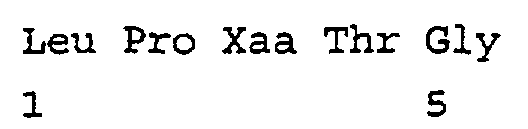
- US-A-5,616,686 discloses one of about 6 to 20 amino acids existing polypeptide, which as an integral part for anchoring virulence-determining proteins responsible for the surface of Gram-positive bacteria Contains peptide construct.
- this construct characterized in that it is in positions 1, 2, 4 and 5 of the amino acid sequence has the amino acids L, P, T and G. Due to the homology of these peptides with the sequences of the Virulence determinants in the wild-type surface proteins the former probably react with those involved in the anchoring Enzymes. As a result, the virulence determinants the bacteria are not anchored or only anchored to a lesser extent and the progression of the infection can be prevented becomes.
- enzyme or enzymes are also used in this patent not characterized.
- the cellular and molecular basis of the reporter assay is a recombinant Staphylococcus carnosus clone which contains a selectable expression plasmid with an inducible reporter gene fusion.
- the gene fusion codes for a hybrid polypeptide consisting of an N-terminal signal peptide, a precursor protein of the lipase from Staphylococcus hyicus and a C-terminal portion of the fibronectin binding protein B (FnBPB) from Staphylococcus aureus .
- FnBPB fibronectin binding protein B
- the hybrid polypeptide After production in the cytoplasm, the hybrid polypeptide is transported through the bacterial cell membrane due to its N-terminal signal structures and processed at the amino end by a signal peptidase. Furthermore, cleavage takes place in the C-terminal LPXTG recognition motif and the remaining hybrid protein is covalently linked to the murein. It was determined experimentally that different lengths of the FnBPB portion influence the formation of enzymatic activity of the lipase fusions in different ways. A construct was identified that had no lipase activity in its cell surface bound form (encoded by plasmid pTX30 ⁇ 82).
- S. carnosus / pTX30 ⁇ 82.mem produces a hybrid protein consisting of S after induction of the xylose promoter. hyicus prolipase and the C-terminal fragment of the S. aureus fibronectin binding protein B (FnBPB), the LPXTG motif which is important for anchoring to the cell wall being replaced by the sequence ISQAS (FIG. 1). In other embodiments, however, it can also be exchanged for any other sequence, preferably consisting of 5 amino acids. In a further embodiment, an LPXTG substitution is not necessary for the mem phenotype, but a complete deletion of the LPXTG motif is also conceivable.
- S. carnosus / pTX30 ⁇ 82.sec produces a hybrid protein consisting of S after induction of the xylose promoter. hyicus prolipase and a C-terminal fragment of the S. aureus fibronectin binding protein B (FnBPB), which ends with the motif LPETGG ( Figure 1).
- This clone simulates the inhibition of the (covalent) linkage reaction between the lipase hybrid protein to be anchored and C-terminally processed and the cell wall.
- the lipase hybrid protein is released quantitatively by this clone in active conformation into the culture supernatant.
- Determination of the enzymatic activity of the reporter substance the gram-positive bacteria of the sample can preferably compared to at least one reference sample not using the active substance has been brought into contact, and / or at least a reference sample in which the reporter substance is non-covalent is bound to the surface of Gram-positive bacteria, and / or at least one reference sample in which the reporter substance covalently bound to the surface of the Gram-positive bacteria and / or at least one reference sample in which the reporter substance without covalent attachment to the surface of the Gram-positive Bacteria are present.
- both active substances are detected which inhibit the cleavage reaction and thus also a covalent linkage of the polypeptides prevent as well as those active substances that have an inhibitory Function in the second step of surface anchoring have.
- the method according to the invention is detected also active substances that e.g. by inhibiting Cell wall biosynthesis enzymes have an inhibitory influence on the Cell wall biosynthesis, so that as a result a covalent Linking polypeptides, especially pathogenicity factors, on the cell wall, here in particular on interpeptide bridges des Mureinsacculus, not possible or only possible to a limited extent is.
- the inventive method also active substances that e.g. by activating Cell wall hydrolases, already covalently anchored in the cell wall Release polypeptides.
- Naturally occurring surface polypeptides can serve as reporter substances which, due to the action of suitable active substances in the medium, can be detected using the entire range of known chemical, biochemical and immunological methods.
- reporter substances may also be preferred to use reporter substances to use at least one detectable property, wherein the reporter substance without covalent binding to the surface the gram-positive bacteria an altered detectable Has property than with covalent bonding to the surface the gram-positive bacteria.
- the change may be particularly preferred the enzymatic activity from the transition of the enzyme an inactive to an active conformation or vice versa determine. This can preferably be done by using an between Enzyme and LPXTG motif arranged linker peptide can be achieved.
- the method according to the invention can be carried out not only with naturally occurring Gram-positive bacteria such as S. carnosus , but also with already genetically modified bacteria.
- Embodiment 2 describes a preferred embodiment of the method according to the invention for examining the anchoring of proteins in the cell wall of cells expressing life using the S. hyicus lipase or proLipFnBPB selected as an example.
- the method is used to determine the enzymatic Activity of the reporter substance by means of fluorescence spectroscopy, in particular confocal fluorescence spectroscopy as in the exemplary embodiment 1 shown. It is possible to use the known To use methods of single or multi-photon excitation. In particular, it has proven to be an advantageous method of determination the method of fluorescence correlation spectroscopy (FCS) proven as described in detail in WO-A-94/16313 is. Instead of that described in the aforementioned patent application Device may also be preferred using FCS perform elements from near-field spectroscopy, as in DE-C-44 38 391 and the corresponding WO-A-96/13744 spelled out. These citations are used to supplement the Description expressly referred.
- WO-A-98/16814 describes a method for the analysis of Samples containing particles by repeated measurement of the Number of photons per defined time interval of emitted or light scattered in the sample, followed by the determination the distribution function of the number of photons per defined Time interval from which the distribution function of Particle brightness is determined.
- This procedure can be done in preferably also for examining luminescent, in particular fluorescent, samples are used and is in this specific embodiment as a so-called fluorescence intensity distribution analysis (fluorescence intensity distribution analysis, FIDA).
- FIDA fluorescence intensity distribution analysis
- Cell wall proteins released directly from the cell show how the proteins obtained by the action of lysostaphin (80 mg ml -1 in BM, 30 min 37 ° C) from the supernatant of non-Lif expressing cells, instead of a smeared one from a sum of lipase-specific signals existing band, a narrow, very limited band on SDS-PAGE and subsequent immunoblotting.
- lysostaphin 80 mg ml -1 in BM, 30 min 37 ° C
- FIG. 1 describes, by way of example, the structure of a hybrid protein which can be used as a reporter substance (assay plasmid pTX30 ⁇ 82) and the structures of the hybrid proteins (plasmids pTX30 ⁇ 82.sec and pTX30 ⁇ 82.mem) used to simulate the method according to the invention, as compared to the structure of the S. hyicus lipase (plasmid pTX15).
- signal peptide hatchched
- the lipase is preferably followed by a linker peptide, the length of which is selected such that the lipase can be covalently anchored in an inactive conformation on the surface of the Gram-positive bacteria.
- a linker peptide the length of which is selected such that the lipase can be covalently anchored in an inactive conformation on the surface of the Gram-positive bacteria.
- Figure 2 shows the quantification of lipase activity in the Simulation cloning.
- the respective lipase activity in the culture supernatant was in relation to the overall activity of the corresponding Clones determined.
- Figure 3 shows the structure of the peptidoglycan in staphylococci with a C-terminally linked surface protein. The interfaces for Muramidase Ch and Lysostaphin are highlighted.
- FIG. 4 shows the influence of lysostaphin on cell surface proteins which were released from the cell wall of S. carnosus by Muramidase Ch.
- ProLipFnBPB was synthesized in the presence (+) or absence (-) of Lif (pCXLif) in these cells.
- the released hybrid proteins were incubated in the presence (+) or absence (-) of lysostaphin and then by SDS-PAGE (10% acrylamide) and immunoblotting (prolipase-specific antiserum) according to Strauss and Götz (Mol. Microbiol. 21: 491-500 , 1996).
- the molecular mass of the protein standards in kDa is shown on the left margin.
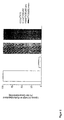
- Figure 5 shows the influence of lysostaphin on proLipFnBPB, which from S. carnosus was released into the culture medium by natural cell wall changes.
- Supernatants from cells expressing proLipFnBPB (pTX30) in the presence (+) or absence (-) of Lif (pCXlif) were examined in the presence (+) or absence (-) of lysostaphin.
- ProLipFnBPB was used as a reference. It was released from the cell wall of S. carnosus cells containing only the plasmid pTX30 was released.
- the proteins were separated by SDS-PAGE (10% acrylamide) and immunoblotting (prolipase-specific antiserum) was carried out. The molecular masses of the standard molecules are shown on the left margin.
- Wild-type strain S. carnosus TM300 (Götz, F., J. Appl. Bacteriol. Symp. Supp. 69: 49-53, 1990) was used as the host organism for the production of all recombinant staphylococcal strains.
- the preparation of the assay plasmid pTX30 ⁇ 82 is described below:
- Plasmid pTX30 ⁇ 82 was prepared analogously to plasmid pCX30 ⁇ 82 (Strauß and Götz, Mol. Microbiol. 21: 491-500, 1996). However, it was not the chloramphenicol-selectable plasmid pCX15 (Wieland et al., Gene 158: 91-96, 1995) that was used, but the tetracycline-selectable plasmid pTX15 (Peschel et al., FEMS Microbiol. Lett. 137: 279-284, 1996) as the starting vector.
- This plasmid contains a gene fusion which comprises the assay hybrid protein (proLipFnBPB ⁇ 82) consisting of S. hyicus lipase and the C-terminal part of the fibronectin binding protein B (FnBPB) and which is under the control of the inducible xylose promoter (Wieland et al., Gene 158: 91-96, 1995).
- the distance between the C-terminal alanine residue of the lipase and the leucine residue of the LPXTG motif of the FnBPB was 10 amino acids (FIG. 1).
- the plasmids pTX30 ⁇ 82.mem and pTX30 ⁇ 82.sec were prepared analogously to the plasmid pTX30 ⁇ 82 using the oligonucleotide pairs (Seq. ID No. 2 to 5) AS14 (5'-ATAAGGCGCCTTAGTTTAATTATGCTTTGTGATTC) / AS45 (5'-CGCATGAAAGAGATATAGAGATAGAGAGATATAGAGATCAGGAAGCTTAATAGAGATAGAGAGTATAGAGCAGGAAGGTATAGAGCAGGAAGGTATAGAGCAGGAAGCTAATCAGCATGAAGGTAA).
- Lipase test plates were made using tributyrin agar base (Merck) according to instructions prepared by the manufacturer. The agar was before Pour the plates with 1% glycerol tributyrate and the corresponding Antibiotics (Tc, Em) added. Can on these plates Lipase-releasing bacterial cells through the formation clearer Courtyards to be identified.
- the total activity resulted from the sum of the cell-bound activity and the activity in the culture supernatant.
- the respective lipase activity in the culture supernatant was then determined in relation to the total activity of the corresponding clone (FIG. 2).
- the reference serves to supplement the description.
- the S. carnosus clones S. carnosus / pTX30 ⁇ 82, /pTX30 ⁇ 82.mem, and /pTX30 ⁇ 82.sec were cultivated overnight at 37 ° C. in basic medium.
- the cell densities of these cultures were determined by measuring the optical densities (OD576) in the photometer and dilutions (approx. 1: 200) of the same cell density were prepared.
- Modified base medium induction medium
- the diluted cultures were then allowed to grow again at 37 ° C.
- microtiter plates as well as other vessels were used for the cultivations. At different times during the cultivation, the lipase activity released by the bacteria in the culture supernatants was determined.
- the cells were sedimented by centrifugation, the culture supernatants were removed and, if necessary, kept on ice. Assays were carried out in microtiter plates (100 ⁇ l ) with a glass bottom.
- the lipase assay buffer was composed as follows: 10 mM CaCl 2 , 0.05% Triton-X-100, 20 mM Tris / HCl, pH 8.0. 1,2-o-dilauryl-rac-glycero-3-glutaric acid resorufine ester (Sigma # D7414) was used as the fluorogenic color substrate.
- the substrate stock solution was prepared in 100% DMSO at 1 mg / ml and stored at -20 ° C.
- the wild-type strain S. carnosus TM300 (Götz, F., J. Appl. Bacteriol. Symp. Supp. 69: 49-53, 1990) was used as the host organism for the production of all recombinant staphylococcal strains.
- the plasmids pTX15, pTX30 (encodes ProLipFnBPB, a hybrid protein consisting of S. hyicus lipase linked to the C-terminus of the S. aureus fibronectin binding protein B) and pCXlif (lif, lysostaphin immunity factor) were described in S. carnosus TM 300, as described by Götz and Schuhmacher (FEMS, Microbiol. Lett. 40: 285-288, 1987).
- PCXlif was constructed according to that of Thumm and Götz (Mol. Microbiol. 23: 1251-1256, 1997).
- the genes were expressed under the control of the xylose promoter system (Wieland et al., Gene 158: 91-96, 1995). Expression was induced as described in Strauß and Götz (Mol. Microbiol. 21: 491-500, 1996).
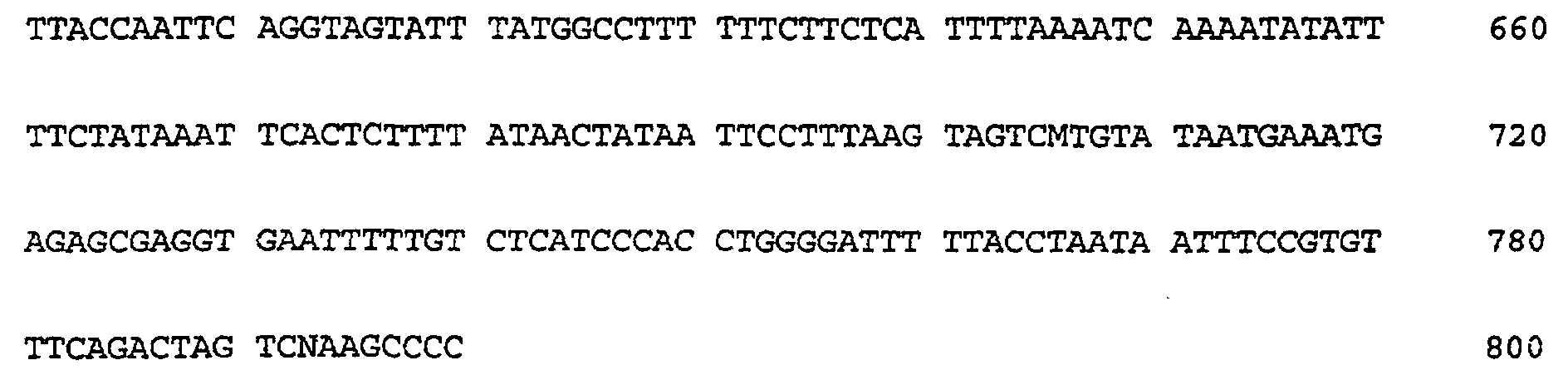
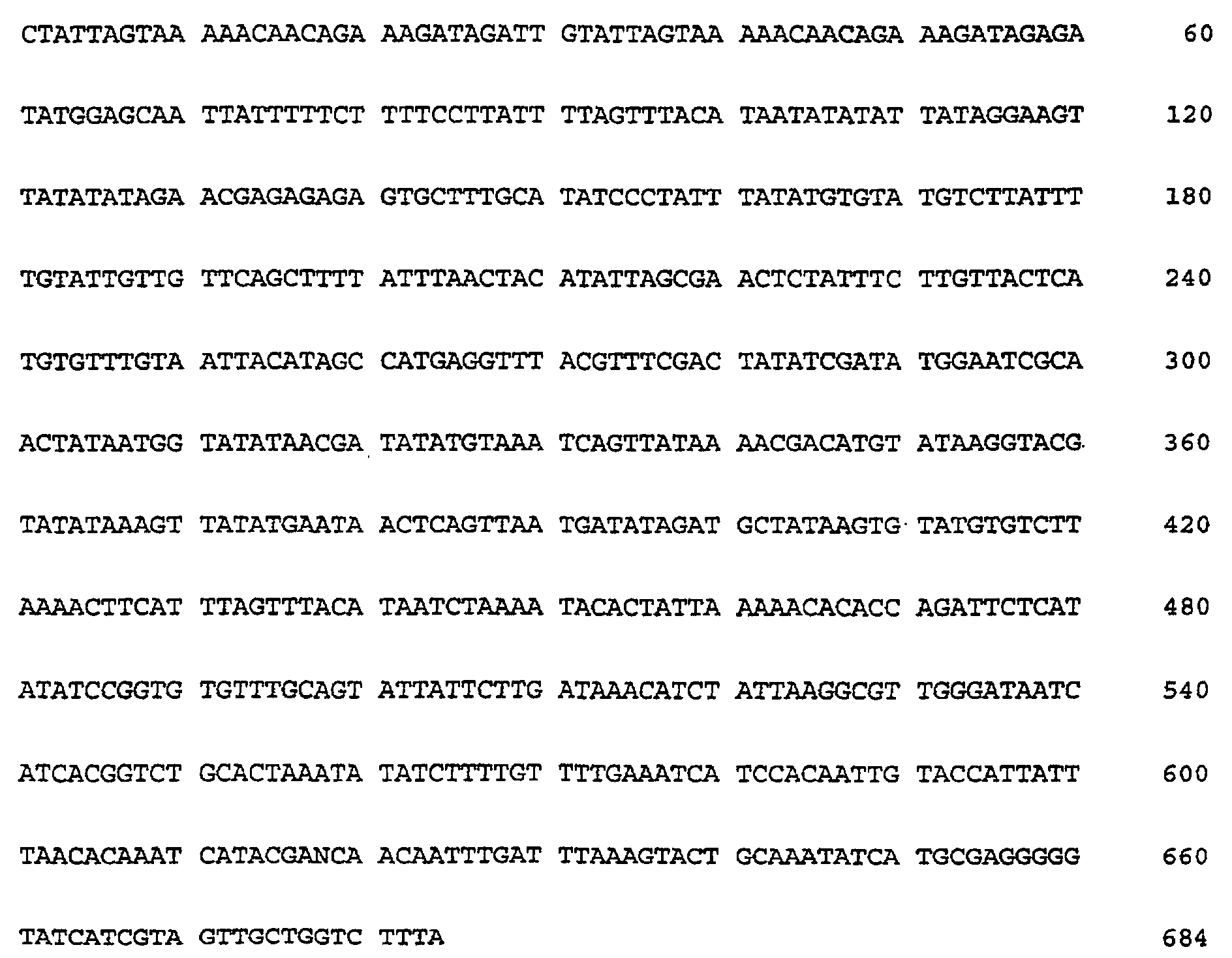
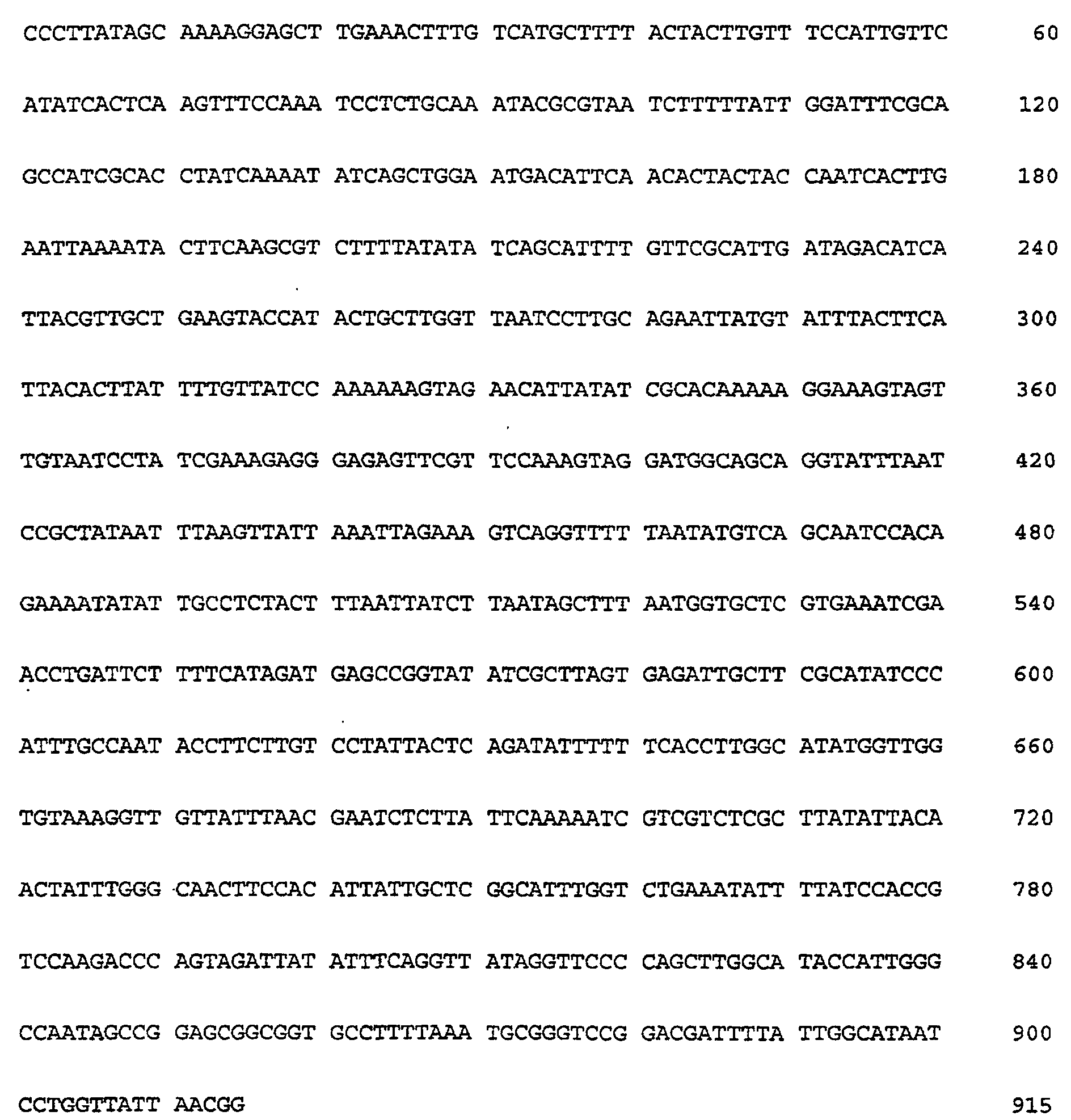
- the sequences of the nucleic acids used herein are stored in gene banks as follows: Genbank entry number: plasmid pT181: g151679; xyl R ( S. xylosus ): g48833; lip ( S. hyicus ): g488333; Plasmid pC194: g150548; fnb B ( S. aureus ): g49040.
- the bacteria were in basic medium (BM; see embodiment 1) cultivated at 30 ° C. As needed, the basic medium with chloramphenicol (Cm, 10mg / l) or tetracycline (Tc, 25 mg / l) transferred.
- BM basic medium
- Cm chloramphenicol
- Tc tetracycline
- Lysostaphin immunity factors (Lif) on the secretion and anchoring of S. hyicus lipase or proLipFnBPB in the cell wall by comparing the lipase activity on the cell wall and in the supernatant of the culture medium .
- each 5 ⁇ l of the culture supernatants with 95 ⁇ l of lipase assay buffer (10 mM CaCl 2, 0.1% Triton X-100 and 20 mM Tris-HCl, pH 8.5) containing the chromogenic lipase substrate p-nitrophenyl caprylate [Sigma] contained in a concentration of 5 mM, added.
- the hydrolysis of the substrate was then monitored photometrically for 10 minutes at 30 ° C. using a microtiter plate (Elisa) reader (SpectraMax, Molecular Devices) or by means of fluorescence correlation spectroscopy with the ConfoCor at a wavelength of 405 nm.
- the assays were carried out in microtiter plates with or without a glass bottom.
- Muramidase Ch hydrolyzes the ⁇ -1,4 bond of N-acetylmuramic acid and Acetylglucosamine ( Figure 3) (Ghuysen, Bacteriol. Rev. 32: 425-464, 1968). It doesn't cut directly at the tie points of the surface proteins with the cell wall so that the proteins can be cleaved with variable length cell wall fragments (Schneewind et al., EMBO J.
- the cells were obtained from 500 ⁇ l of culture medium by centrifugation. The pellets were then washed three times with water and precipitated by adding trichloroacetic acid (7% wt / vol) (20 min on ice). After centrifugation of the precipitate, the resulting pellet was washed twice with acetone and dried in vacuo. The pellets were then dissolved in 170 ⁇ l of BM, to which Muramidase Ch (100 ⁇ g ml ⁇ 1 ) was added, and the solution was incubated at 37 ° C. for 3 hours.
- FIG. 4 It was shown (FIG. 4) that Muramidase Ch for the complete release of proLipFnBPB from the cell wall of S. carnosus performs regardless of whether Lif (pCXlif) was also expressed in these cells. In both cases, a spectrum of lipase-specific signals was seen as a smear on the gel, which can be attributed to cell wall fragments of different lengths covalently bound to proLipFnBPB.
- strains and plasmids used correspond to those in the exemplary embodiment 2 mentioned.
- the lipase activity released by the bacteria in the culture supernatants determined according to embodiment 3.
Landscapes
- Chemical & Material Sciences (AREA)
- Organic Chemistry (AREA)
- Life Sciences & Earth Sciences (AREA)
- Health & Medical Sciences (AREA)
- Wood Science & Technology (AREA)
- Proteomics, Peptides & Aminoacids (AREA)
- Zoology (AREA)
- Engineering & Computer Science (AREA)
- Immunology (AREA)
- General Engineering & Computer Science (AREA)
- Microbiology (AREA)
- Molecular Biology (AREA)
- Analytical Chemistry (AREA)
- Biotechnology (AREA)
- Physics & Mathematics (AREA)
- Biochemistry (AREA)
- Bioinformatics & Cheminformatics (AREA)
- Biophysics (AREA)
- General Health & Medical Sciences (AREA)
- Genetics & Genomics (AREA)
- Measuring Or Testing Involving Enzymes Or Micro-Organisms (AREA)
- Steroid Compounds (AREA)
- Investigating Or Analysing Biological Materials (AREA)
- Enzymes And Modification Thereof (AREA)
- Peptides Or Proteins (AREA)
- Investigating Or Analyzing Non-Biological Materials By The Use Of Chemical Means (AREA)
Description
Überstände von Zellen, die proLipFnBPB (pTX30) in Gegenwart (+) oder Abwesenheit (-) von Lif (pCXlif) exprimieren, wurden in Gegenwart (+) oder Abwesenheit (-) von Lysostaphin untersucht. Als Referenz diente proLipFnBPB, das durch Lysostaphineinwirkung aus der Zellwand von S. carnosus Zellen, die nur das Plasmid pTX30 enthalten, freigesetzt wurde. Die Proteine wurden durch SDS-PAGE (10% Acrylamid) aufgetrennt und Immunoblotting (Prolipase-spezifisches Antiserum) durchgeführt. Die molekularen Massen der Standardmoleküle sind am linken Rand angegeben.
Zu unterschiedlichen Zeitpunkten der Kultivierung wurde die von den Bakterien freigesetzte Lipaseaktivität in den Kulturüberständen bestimmt. Die Zellen wurden durch Zentrifugation sedimentiert, die Kulturüberstände abgehoben und, wenn notwendig, auf Eis aufbewahrt. Assays wurden in Mikrotiterplatten (100 µl) mit Glasboden durchgeführt. Der Lipase-Assay-Puffer setzte sich wie folgt zusammen: 10 mM CaCl2, 0,05% Triton-X-100, 20 mM Tris/HCl, pH 8,0. Als fluorogenes Farbsubstrat wurde 1,2-o-Dilauryl-rac-glycero-3-glutarsäure-resorufinester (Sigma # D7414) eingesetzt. Die Substrat-Stammlösung wurde in 100% DMSO bei 1mg/ml angesetzt und bei -20°C gelagert. Pro Messprobe wurden jeweils 10 µl der Kulturüberstände mit 80 µl Lipase-Assay-Puffer und 10 µl Substrat-Lösung (10 µM Endkonzentration) vermischt. Die Umsetzung des Substrats wurde fluorometrisch unter Verwendung eines Fluoreszenz-(ELISA)Readers oder mittels eines Fluoreszenz-Korrelationsspektrometers, wie dem ConfoCor™ (Carl-Zeiss-Jena, und Evotec, Deutschland) bestimmt.
Die Sequenzen der hierin verwendeten Nukleinsäuren sind wie folgt in Genbanken abgelegt: Genbank-Entry-Number: Plasmid pT181: g151679; xylR (S. xylosus) : g48833; lip (S. hyicus) : g488333; Plasmid pC194: g150548; fnbB (S. aureus) : g49040.
Die Zellen wurden durch Zentrifugation sedimentiert, die Kulturüberstände abgehoben und, wenn notwendig, auf Eis aufbewahrt. Assays wurden in Mikrotiterplatten ohne Glasboden durchgeführt. Der Lipase-Assay-Puffer (10mM CaCl2, 0.1% Triton X-100 und 20 mM Tris-HCl, pH 8.5), enthielt das chromogene Lipasesubstrat p-Nitrophenyl Caprylat [Sigma] in einer Konzentration von 5 mM. Pro Messprobe wurden jeweils 5 µl der Kulturüberstände mit 95 µl Lipase-Assay-Puffer vermischt. Die Umsetzung des Substrats wurde photometrisch unter Verwendung eines Mikrotiterplatten (ELISA)-Readers bestimmt.





Claims (14)
- Verfahren zur Bestimmung von Wirksubstanzen, welche die kovalente Verknüpfung von Polypeptiden an die Oberfläche von Gram-positiven Bakterien beeinflussen, mit folgenden Schritten:a) Bereitstellen einer Probe Gram-positiver Bakterien, welche mindestens eine kovalent mit der Oberfläche der Gram-positiven Bakterien verbundene oder verbindbare enzymatische Reportersubstanz aufweisen oder bilden, wobei die mindestens eine Reportersubstanz ohne kovalente Bindung an die Oberfläche der Gram-positiven Bakterien eine andere enzymatische Aktivität aufweist als bei kovalenter Bindung an die Oberfläche der Gram-positiven Bakterien,b) Inkontaktbringen der Probe mit einer möglichen Wirksubstanz, undc) Bestimmen der enzymatischen Aktivität der Reportersubstanz der Gram-positiven Bakterien der Probe.
- Verfahren nach Anspruch 1, dadurch gekennzeichnet, daß die enzymatische Aktivität der Reportersubstanz im Vergleich zu mindestens einer Referenzprobe, die nicht genetisch verändert wurde, und/oder mindestens einer Referenzprobe, in der die Reportersubstanz nicht-kovalent an die Oberfläche Gram-positiver Bakterien gebunden ist, und/oder mindestens einer Referenzprobe, in der die Reportersubstanz kovalent an die Oberfläche der Gram-positiven Bakterien gebunden ist, und/ oder mindestens einer Referenzprobe, in der die Reportersubstanz ohne kovalente Bindung an die Oberfläche der Gram-positiven Bakterien vorliegt, bestimmt wird.
- Verfahren nach Ansprüchen 1 und/oder 2, dadurch gekennzeichnet, daß die kovalente Verknüpfung der Polypeptide an das Murein der Zellwand, insbesondere an Interpeptidbrücken wie z.B. Pentaglycine, Gram-positiver Bakterien erfolgt.
- Verfahren nach mindestens einem der Ansprüche 1 bis 3,
dadurch gekennzeichnet, daß die Polypeptide Pathogenitätsfaktoren Gram-positiver Bakterien darstellen. - Verfahren nach mindestens einem der Ansprüche 1 bis 4,
dadurch gekennzeichnet, daß die Reportersubstanz ein Hybridpolypeptid ist. - Verfahren nach Anspruch 5, dadurch gekennzeichnet, daß das Hybridpolypeptid eine Anordnung der folgenden Sequenzabschnitte aufweist: N-terminales Signalpeptid, Enzym, Sequenzabschnitt mit der Sequenz LPXTG, hydrophober Sequenzabschnitt und geladener Sequenzabschnitt.
- Verfahren nach Anspruch 6, dadurch gekennzeichnet, daß das Enzym als Proenzym bereitgestellt wird.
- Verfahren nach mindestens einem der Ansprüche 6 bis 7,
dadurch gekennzeichnet, daß die Änderung der enzymatischen Aktivität durch einen Übergang des Enzyms aus einer inaktiven in eine aktive Konformation oder umgekehrt bedingt ist. - Verfahren nach Anspruch 6 bis 8, dadurch gekennzeichnet, daß zwischen Enzym und Sequenzabschnitt mit der Sequenz LPXTG ein Linkerpeptid, welches insbesondere weniger als 10 Aminosäuren umfaßt, angeordnet ist.
- Verfahren nach mindestens einem der Ansprüche 1 bis 9,
dadurch gekennzeichnet, daß die Gram-positiven Bakterien einen geringen natürlichen Zellwand turn-over und/oder eine geringe Anzahl an Zellwandproteasen und/oder eine geringe Anzahl an sekretierten Proteasen aufweisen. - Verfahren nach mindestens einem der Ansprüche 1 bis 10,
dadurch gekennzeichnet, daß die Bestimmung der enzymatischen Aktivität der mindestens einen Reportersubstanz mittels Fluoreszenzspektroskopie, insbesondere konfokaler Fluoreszenzspektroskopie erfolgt. - Verfahren nach mindestens einem der Ansprüche 1 bis 11,
dadurch gekennzeichnet, daß die Gram-positiven Bakterien Lif exprimieren. - Verfahren nach mindestens einem der Ansprüche 1 bis 12,
dadurch gekennzeichnet, daß der Anteil der durch natürliche Zellwandveränderungen freigesetzten Reportersubstanzen bestimmt wird. - Verfahren nach mindestens einem der Ansprüche 1 bis 13,
dadurch gekennzeichnet, daß der Anteil nicht-kovalent mit der Oberfläche Gram-positiver Bakterien verbundener Reportersubstanzen bestimmt wird.
Priority Applications (1)
| Application Number | Priority Date | Filing Date | Title |
|---|---|---|---|
| EP98951475A EP1017843B1 (de) | 1997-09-27 | 1998-09-26 | Verfahren zur bestimmung von wirksubstanzen |
Applications Claiming Priority (6)
| Application Number | Priority Date | Filing Date | Title |
|---|---|---|---|
| EP97116840 | 1997-09-27 | ||
| EP97116840 | 1997-09-27 | ||
| EP97118756 | 1997-10-29 | ||
| EP97118756A EP0913482A1 (de) | 1997-10-29 | 1997-10-29 | Verfahren zur Bestimmung von Wirksubstanzen |
| PCT/EP1998/006137 WO1999016894A1 (de) | 1997-09-27 | 1998-09-26 | Verfahren zur bestimmung von wirksubstanzen |
| EP98951475A EP1017843B1 (de) | 1997-09-27 | 1998-09-26 | Verfahren zur bestimmung von wirksubstanzen |
Publications (2)
| Publication Number | Publication Date |
|---|---|
| EP1017843A1 EP1017843A1 (de) | 2000-07-12 |
| EP1017843B1 true EP1017843B1 (de) | 2001-08-01 |
Family
ID=26145802
Family Applications (1)
| Application Number | Title | Priority Date | Filing Date |
|---|---|---|---|
| EP98951475A Expired - Lifetime EP1017843B1 (de) | 1997-09-27 | 1998-09-26 | Verfahren zur bestimmung von wirksubstanzen |
Country Status (6)
| Country | Link |
|---|---|
| EP (1) | EP1017843B1 (de) |
| JP (1) | JP2001518307A (de) |
| AT (1) | ATE203773T1 (de) |
| DE (1) | DE59801140D1 (de) |
| DK (1) | DK1017843T3 (de) |
| WO (1) | WO1999016894A1 (de) |
Family Cites Families (3)
| Publication number | Priority date | Publication date | Assignee | Title |
|---|---|---|---|---|
| US5616686A (en) * | 1990-05-11 | 1997-04-01 | The Rockefeller University | Polypeptide of a hybrid surface protein by bacteria |
| US5861267A (en) * | 1995-05-01 | 1999-01-19 | Vertex Pharmaceuticals Incorporated | Methods, nucleotide sequences and host cells for assaying exogenous and endogenous protease activity |
| WO1997008553A1 (en) * | 1995-08-22 | 1997-03-06 | The Regents Of The University Of California | Targeting of proteins to the cell wall of gram-positive bacteria |
-
1998
- 1998-09-26 DK DK98951475T patent/DK1017843T3/da active
- 1998-09-26 JP JP2000513963A patent/JP2001518307A/ja active Pending
- 1998-09-26 DE DE59801140T patent/DE59801140D1/de not_active Expired - Fee Related
- 1998-09-26 EP EP98951475A patent/EP1017843B1/de not_active Expired - Lifetime
- 1998-09-26 WO PCT/EP1998/006137 patent/WO1999016894A1/de not_active Ceased
- 1998-09-26 AT AT98951475T patent/ATE203773T1/de not_active IP Right Cessation
Also Published As
| Publication number | Publication date |
|---|---|
| JP2001518307A (ja) | 2001-10-16 |
| EP1017843A1 (de) | 2000-07-12 |
| ATE203773T1 (de) | 2001-08-15 |
| WO1999016894A1 (de) | 1999-04-08 |
| DK1017843T3 (da) | 2001-10-22 |
| DE59801140D1 (de) | 2001-09-06 |
Similar Documents
| Publication | Publication Date | Title |
|---|---|---|
| US11041015B2 (en) | Recombinant collagen and elastin molecules and uses thereof | |
| DE69434083T2 (de) | Expression eines fusionspolypeptides, das ohne leadersequenz aus dem cytoplasma transportiert wird | |
| DE60021497T2 (de) | Menschliche, für zyklische Nukleotide spezifische Phosphodiesterase | |
| EP1844150B1 (de) | Rekombinante expression von proteinen in einer disulfidverbrückten, zweikettigen form | |
| Driks | Bacillus subtilis spore coat | |
| DE60014166T2 (de) | Verfahren zum messen der deacetylaseaktivität und verfahren zum screenen von inhibitoren oder promotoren dieses enzyms | |
| DE68914664T2 (de) | Gereinigte ubiquitin-hydrolase, diese kodierende dns-sequenzen und ihre verwendung zur gewinnung von polypeptiden. | |
| DE69534252T2 (de) | Enzyme zur spaltung der verankerungsregion von oberflächenproteinen aus gram-positiven bakterien | |
| Siesenop et al. | Comparative studies on keratinase production of Trichophyton mentagrophytes strains of animal origin: Vergleichende Untersuchungen zur Keratinasebildung animaler Trichophyton mentagrophytes‐Stämme | |
| DE68922297T2 (de) | Für das menschliche angiotension-umformungsenzym (ace) kodierende nukleinsäure und ihre anwendungen, insbesondere zur in-vitro-diagnose von bluthochdruck. | |
| DE60122582T2 (de) | Verfahren zum nachweis von listeria monocytogenes | |
| Zhang et al. | Cytotoxic activity and probable apoptotic effect of Sph2, a sphigomyelinase hemolysin from Leptospira interrogans strain Lai | |
| EP1307482B1 (de) | Zweifarbiges fluorimetrisches proteaseassay | |
| WO2000056871A2 (de) | Zellen, die ein amyloidvorlauferprotein und ein a-sekretase coexprimieren und deren anwendungen in testverfahren und diagnostik | |
| DE60315014T2 (de) | Verfahren zur herstellung sequenzspezifischer proteasen durch gezielte evolution | |
| EP1019543B1 (de) | Verfahren zum identifizieren einer nukleinsäure | |
| DE69936973T2 (de) | Phosphodiesterase | |
| EP0630401B1 (de) | Mikroorganismus stamm w, von diesem erhältliche enzymzusammensetzung, verwendung des mikroorganismus und verfahren zur hydrolyse insbesondere von keratin | |
| DE69530261T2 (de) | Durch Zelldichte stimulierte Protein-Tyrosin-Phosphatasen | |
| EP1017843A1 (de) | Verfahren zur bestimmung von wirksubstanzen | |
| DE60114443T2 (de) | Verfahren zur identifizierung von listeria-monozytogenen und kulturmedium | |
| EP0729580B1 (de) | Nachweisverfahren für hdm-2-spezifische antikörper | |
| EP0913482A1 (de) | Verfahren zur Bestimmung von Wirksubstanzen | |
| EP0919631A1 (de) | Verfahren zum Identifizieren einer Nukleinsäure | |
| EP1009811A2 (de) | Neue gewebsspezifische calpaine, ihre herstellung und verwendung |
Legal Events
| Date | Code | Title | Description |
|---|---|---|---|
| PUAI | Public reference made under article 153(3) epc to a published international application that has entered the european phase |
Free format text: ORIGINAL CODE: 0009012 |
|
| 17P | Request for examination filed |
Effective date: 19991204 |
|
| AK | Designated contracting states |
Kind code of ref document: A1 Designated state(s): AT BE CH CY DE DK ES FI FR GB GR IE IT LI LU MC NL PT SE |
|
| GRAG | Despatch of communication of intention to grant |
Free format text: ORIGINAL CODE: EPIDOS AGRA |
|
| 17Q | First examination report despatched |
Effective date: 20000928 |
|
| GRAG | Despatch of communication of intention to grant |
Free format text: ORIGINAL CODE: EPIDOS AGRA |
|
| GRAH | Despatch of communication of intention to grant a patent |
Free format text: ORIGINAL CODE: EPIDOS IGRA |
|
| GRAH | Despatch of communication of intention to grant a patent |
Free format text: ORIGINAL CODE: EPIDOS IGRA |
|
| GRAA | (expected) grant |
Free format text: ORIGINAL CODE: 0009210 |
|
| AK | Designated contracting states |
Kind code of ref document: B1 Designated state(s): AT BE CH CY DE DK ES FI FR GB GR IE IT LI LU MC NL PT SE |
|
| PG25 | Lapsed in a contracting state [announced via postgrant information from national office to epo] |
Ref country code: NL Free format text: LAPSE BECAUSE OF FAILURE TO SUBMIT A TRANSLATION OF THE DESCRIPTION OR TO PAY THE FEE WITHIN THE PRESCRIBED TIME-LIMIT Effective date: 20010801 Ref country code: IT Free format text: LAPSE BECAUSE OF FAILURE TO SUBMIT A TRANSLATION OF THE DESCRIPTION OR TO PAY THE FEE WITHIN THE PRE;WARNING: LAPSES OF ITALIAN PATENTS WITH EFFECTIVE DATE BEFORE 2007 MAY HAVE OCCURRED AT ANY TIME BEFORE 2007. THE CORRECT EFFECTIVE DATE MAY BE DIFFERENT FROM THE ONE RECORDED.SCRIBED TIME-LIMIT Effective date: 20010801 Ref country code: IE Free format text: LAPSE BECAUSE OF FAILURE TO SUBMIT A TRANSLATION OF THE DESCRIPTION OR TO PAY THE FEE WITHIN THE PRESCRIBED TIME-LIMIT Effective date: 20010801 Ref country code: FI Free format text: LAPSE BECAUSE OF FAILURE TO SUBMIT A TRANSLATION OF THE DESCRIPTION OR TO PAY THE FEE WITHIN THE PRESCRIBED TIME-LIMIT Effective date: 20010801 Ref country code: CY Free format text: LAPSE BECAUSE OF NON-PAYMENT OF DUE FEES Effective date: 20010801 |
|
| REF | Corresponds to: |
Ref document number: 203773 Country of ref document: AT Date of ref document: 20010815 Kind code of ref document: T |
|
| REG | Reference to a national code |
Ref country code: CH Ref legal event code: EP |
|
| REG | Reference to a national code |
Ref country code: CH Ref legal event code: NV Representative=s name: SCHMAUDER & PARTNER AG PATENTANWALTSBUERO |
|
| REG | Reference to a national code |
Ref country code: IE Ref legal event code: FG4D Free format text: GERMAN |
|
| REF | Corresponds to: |
Ref document number: 59801140 Country of ref document: DE Date of ref document: 20010906 |
|
| PG25 | Lapsed in a contracting state [announced via postgrant information from national office to epo] |
Ref country code: MC Free format text: LAPSE BECAUSE OF NON-PAYMENT OF DUE FEES Effective date: 20010926 Ref country code: LU Free format text: LAPSE BECAUSE OF NON-PAYMENT OF DUE FEES Effective date: 20010926 |
|
| REG | Reference to a national code |
Ref country code: DK Ref legal event code: T3 |
|
| PG25 | Lapsed in a contracting state [announced via postgrant information from national office to epo] |
Ref country code: GR Free format text: LAPSE BECAUSE OF FAILURE TO SUBMIT A TRANSLATION OF THE DESCRIPTION OR TO PAY THE FEE WITHIN THE PRESCRIBED TIME-LIMIT Effective date: 20011102 |
|
| PG25 | Lapsed in a contracting state [announced via postgrant information from national office to epo] |
Ref country code: PT Free format text: LAPSE BECAUSE OF FAILURE TO SUBMIT A TRANSLATION OF THE DESCRIPTION OR TO PAY THE FEE WITHIN THE PRESCRIBED TIME-LIMIT Effective date: 20011105 |
|
| GBT | Gb: translation of ep patent filed (gb section 77(6)(a)/1977) |
Effective date: 20011122 |
|
| ET | Fr: translation filed | ||
| REG | Reference to a national code |
Ref country code: GB Ref legal event code: IF02 |
|
| NLV1 | Nl: lapsed or annulled due to failure to fulfill the requirements of art. 29p and 29m of the patents act | ||
| RAP2 | Party data changed (patent owner data changed or rights of a patent transferred) |
Owner name: EVOTEC OAI AG |
|
| REG | Reference to a national code |
Ref country code: CH Ref legal event code: PFA Free format text: EVOTEC BIOSYSTEMS AG TRANSFER- EVOTEC OAI AG |
|
| PG25 | Lapsed in a contracting state [announced via postgrant information from national office to epo] |
Ref country code: ES Free format text: LAPSE BECAUSE OF FAILURE TO SUBMIT A TRANSLATION OF THE DESCRIPTION OR TO PAY THE FEE WITHIN THE PRESCRIBED TIME-LIMIT Effective date: 20020228 |
|
| REG | Reference to a national code |
Ref country code: FR Ref legal event code: CD |
|
| PLBE | No opposition filed within time limit |
Free format text: ORIGINAL CODE: 0009261 |
|
| STAA | Information on the status of an ep patent application or granted ep patent |
Free format text: STATUS: NO OPPOSITION FILED WITHIN TIME LIMIT |
|
| 26N | No opposition filed | ||
| PGFP | Annual fee paid to national office [announced via postgrant information from national office to epo] |
Ref country code: DK Payment date: 20070914 Year of fee payment: 10 |
|
| PGFP | Annual fee paid to national office [announced via postgrant information from national office to epo] |
Ref country code: DE Payment date: 20070920 Year of fee payment: 10 |
|
| PGFP | Annual fee paid to national office [announced via postgrant information from national office to epo] |
Ref country code: CH Payment date: 20070927 Year of fee payment: 10 Ref country code: AT Payment date: 20070912 Year of fee payment: 10 |
|
| PGFP | Annual fee paid to national office [announced via postgrant information from national office to epo] |
Ref country code: GB Payment date: 20070926 Year of fee payment: 10 |
|
| PGFP | Annual fee paid to national office [announced via postgrant information from national office to epo] |
Ref country code: SE Payment date: 20070905 Year of fee payment: 10 |
|
| PGFP | Annual fee paid to national office [announced via postgrant information from national office to epo] |
Ref country code: BE Payment date: 20071121 Year of fee payment: 10 |
|
| PGFP | Annual fee paid to national office [announced via postgrant information from national office to epo] |
Ref country code: FR Payment date: 20070914 Year of fee payment: 10 |
|
| BERE | Be: lapsed |
Owner name: *EVOTEC OAI A.G. Effective date: 20080930 |
|
| REG | Reference to a national code |
Ref country code: CH Ref legal event code: PL |
|
| REG | Reference to a national code |
Ref country code: DK Ref legal event code: EBP |
|
| GBPC | Gb: european patent ceased through non-payment of renewal fee |
Effective date: 20080926 |
|
| REG | Reference to a national code |
Ref country code: FR Ref legal event code: ST Effective date: 20090529 |
|
| PG25 | Lapsed in a contracting state [announced via postgrant information from national office to epo] |
Ref country code: BE Free format text: LAPSE BECAUSE OF NON-PAYMENT OF DUE FEES Effective date: 20080930 |
|
| PG25 | Lapsed in a contracting state [announced via postgrant information from national office to epo] |
Ref country code: DE Free format text: LAPSE BECAUSE OF NON-PAYMENT OF DUE FEES Effective date: 20090401 Ref country code: AT Free format text: LAPSE BECAUSE OF NON-PAYMENT OF DUE FEES Effective date: 20080926 |
|
| PG25 | Lapsed in a contracting state [announced via postgrant information from national office to epo] |
Ref country code: LI Free format text: LAPSE BECAUSE OF NON-PAYMENT OF DUE FEES Effective date: 20080930 Ref country code: FR Free format text: LAPSE BECAUSE OF NON-PAYMENT OF DUE FEES Effective date: 20080930 Ref country code: CH Free format text: LAPSE BECAUSE OF NON-PAYMENT OF DUE FEES Effective date: 20080930 |
|
| PG25 | Lapsed in a contracting state [announced via postgrant information from national office to epo] |
Ref country code: GB Free format text: LAPSE BECAUSE OF NON-PAYMENT OF DUE FEES Effective date: 20080926 |
|
| PG25 | Lapsed in a contracting state [announced via postgrant information from national office to epo] |
Ref country code: DK Free format text: LAPSE BECAUSE OF NON-PAYMENT OF DUE FEES Effective date: 20090331 |
|
| PG25 | Lapsed in a contracting state [announced via postgrant information from national office to epo] |
Ref country code: SE Free format text: LAPSE BECAUSE OF NON-PAYMENT OF DUE FEES Effective date: 20080927 |