EP1009725B1 - 13c,15n,2h markierte proteine zur nmr strukturbestimmung und deren herstellung - Google Patents
13c,15n,2h markierte proteine zur nmr strukturbestimmung und deren herstellung Download PDFInfo
- Publication number
- EP1009725B1 EP1009725B1 EP98945835A EP98945835A EP1009725B1 EP 1009725 B1 EP1009725 B1 EP 1009725B1 EP 98945835 A EP98945835 A EP 98945835A EP 98945835 A EP98945835 A EP 98945835A EP 1009725 B1 EP1009725 B1 EP 1009725B1
- Authority
- EP
- European Patent Office
- Prior art keywords
- amino acids
- isotopically substituted
- molecule
- carbons
- amino acid
- Prior art date
- Legal status (The legal status is an assumption and is not a legal conclusion. Google has not performed a legal analysis and makes no representation as to the accuracy of the status listed.)
- Expired - Lifetime
Links
Images


Classifications
-
- C—CHEMISTRY; METALLURGY
- C12—BIOCHEMISTRY; BEER; SPIRITS; WINE; VINEGAR; MICROBIOLOGY; ENZYMOLOGY; MUTATION OR GENETIC ENGINEERING
- C12N—MICROORGANISMS OR ENZYMES; COMPOSITIONS THEREOF; PROPAGATING, PRESERVING, OR MAINTAINING MICROORGANISMS; MUTATION OR GENETIC ENGINEERING; CULTURE MEDIA
- C12N5/00—Undifferentiated human, animal or plant cells, e.g. cell lines; Tissues; Cultivation or maintenance thereof; Culture media therefor
- C12N5/0018—Culture media for cell or tissue culture
-
- C—CHEMISTRY; METALLURGY
- C07—ORGANIC CHEMISTRY
- C07B—GENERAL METHODS OF ORGANIC CHEMISTRY; APPARATUS THEREFOR
- C07B59/00—Introduction of isotopes of elements into organic compounds ; Labelled organic compounds per se
- C07B59/008—Peptides; Proteins
-
- C—CHEMISTRY; METALLURGY
- C07—ORGANIC CHEMISTRY
- C07K—PEPTIDES
- C07K14/00—Peptides having more than 20 amino acids; Gastrins; Somatostatins; Melanotropins; Derivatives thereof
- C07K14/435—Peptides having more than 20 amino acids; Gastrins; Somatostatins; Melanotropins; Derivatives thereof from animals; from humans
- C07K14/575—Hormones
- C07K14/59—Follicle-stimulating hormone [FSH]; Chorionic gonadotropins, e.g.hCG [human chorionic gonadotropin]; Luteinising hormone [LH]; Thyroid-stimulating hormone [TSH]
-
- C—CHEMISTRY; METALLURGY
- C12—BIOCHEMISTRY; BEER; SPIRITS; WINE; VINEGAR; MICROBIOLOGY; ENZYMOLOGY; MUTATION OR GENETIC ENGINEERING
- C12N—MICROORGANISMS OR ENZYMES; COMPOSITIONS THEREOF; PROPAGATING, PRESERVING, OR MAINTAINING MICROORGANISMS; MUTATION OR GENETIC ENGINEERING; CULTURE MEDIA
- C12N1/00—Microorganisms; Compositions thereof; Processes of propagating, maintaining or preserving microorganisms or compositions thereof; Processes of preparing or isolating a composition containing a microorganism; Culture media therefor
- C12N1/20—Bacteria; Culture media therefor
-
- C—CHEMISTRY; METALLURGY
- C12—BIOCHEMISTRY; BEER; SPIRITS; WINE; VINEGAR; MICROBIOLOGY; ENZYMOLOGY; MUTATION OR GENETIC ENGINEERING
- C12P—FERMENTATION OR ENZYME-USING PROCESSES TO SYNTHESISE A DESIRED CHEMICAL COMPOUND OR COMPOSITION OR TO SEPARATE OPTICAL ISOMERS FROM A RACEMIC MIXTURE
- C12P21/00—Preparation of peptides or proteins
-
- G—PHYSICS
- G01—MEASURING; TESTING
- G01R—MEASURING ELECTRIC VARIABLES; MEASURING MAGNETIC VARIABLES
- G01R33/00—Arrangements or instruments for measuring magnetic variables
- G01R33/20—Arrangements or instruments for measuring magnetic variables involving magnetic resonance
- G01R33/44—Arrangements or instruments for measuring magnetic variables involving magnetic resonance using nuclear magnetic resonance [NMR]
- G01R33/46—NMR spectroscopy
- G01R33/465—NMR spectroscopy applied to biological material, e.g. in vitro testing
-
- C—CHEMISTRY; METALLURGY
- C12—BIOCHEMISTRY; BEER; SPIRITS; WINE; VINEGAR; MICROBIOLOGY; ENZYMOLOGY; MUTATION OR GENETIC ENGINEERING
- C12N—MICROORGANISMS OR ENZYMES; COMPOSITIONS THEREOF; PROPAGATING, PRESERVING, OR MAINTAINING MICROORGANISMS; MUTATION OR GENETIC ENGINEERING; CULTURE MEDIA
- C12N2500/00—Specific components of cell culture medium
- C12N2500/30—Organic components
- C12N2500/32—Amino acids
-
- Y—GENERAL TAGGING OF NEW TECHNOLOGICAL DEVELOPMENTS; GENERAL TAGGING OF CROSS-SECTIONAL TECHNOLOGIES SPANNING OVER SEVERAL SECTIONS OF THE IPC; TECHNICAL SUBJECTS COVERED BY FORMER USPC CROSS-REFERENCE ART COLLECTIONS [XRACs] AND DIGESTS
- Y10—TECHNICAL SUBJECTS COVERED BY FORMER USPC
- Y10T—TECHNICAL SUBJECTS COVERED BY FORMER US CLASSIFICATION
- Y10T436/00—Chemistry: analytical and immunological testing
- Y10T436/24—Nuclear magnetic resonance, electron spin resonance or other spin effects or mass spectrometry
Definitions
- This invention is concerned with determining the three-dimensional structure of biological macromolecules, especially proteins.
- it is concerned with methods for rapidly determining protein structures by NMR spectroscopy, by providing methods for simplifying NMR spectra using labeled proteins prepared from specifically isotopically labeled amino acids, and the means whereby these labeled proteins and amino acids may be obtained.
- This strategy for the design of drugs involves determining the three-dimensional structure of an "active part" of a particular biological molecule, such as a protein. Knowing the three-dimensional structure of the active part can enable scientists to design a synthetic analogue of the active part that will block, mimic or enhance the natural biological activity of the molecule. ( Appelt, K. et al., J. Mend. Chem., 34:1925 (1991 )).
- the biological molecule may, for example, be a receptor, an enzyme, a hormone, or other biologically active molecule. Determining the three-dimensional structures of biological molecules is, therefore, of great practical and commercial significance.
- the first technique developed to determine three-dimensional structures was X-ray crystallography.
- the structures of hemoglobin and DNA were determined using this technique.
- X-ray crystallography a crystal (or fiber) of the material to be examined is bombarded with a beam of X-rays which are refracted by the atoms of the ordered molecules in the crystal.
- the scattered X-rays are captured on a photographic plate which is then developed using standard techniques.
- the diffracted X-rays are thus visualized as a series of spots on the plate and from this pattern, the structure of the molecules in the crystal can be determined.
- NMR nuclear magnetic resonance
- Isotopic substitution is usually accomplished by growing a bacterium or yeast, transformed by genetic engineering to produce the protein of choice, in a growth medium containing 13 C-, 15 N- and/or 2 H-labeled substrates.
- bacterial growth media usually consist of 13 C-labeled glucose and/or 15 N-labeled ammonium salts dissolved in D 2 O where necessary.
- isotopically labeled media especially adapted for the labeling of bacterially produced macromolecules have been described. See U.S. patent 5,324,658 .
- the library is then "screened” by allowing each member of the library to come into contact with the target protein. Those that bind are identified, and similar compounds are synthesized and screened. The whole process continues in an iterative manner until a drug candidate of suitably high binding affinity has been identified.
- This screening strategy has recently been published by Fesik et al., Science, 274, 1531-34 (1996 ), wherein the screening of the libraries takes place using NMR against an isotopically labeled protein and the binding is detected from perturbations in the NMR spectrum.
- Prior knowledge of the three-dimensional structure of a target protein can enable the design of a "focused" combinatorial library, thereby increasing the likelihood of finding potential drug candidates that interact with the biological molecule of interest.
- genomic and combinatorial chemistry each can be performed in months, known methods for protein structural determinations usually take much longer. Therefore, there is a need for methods to increase the speed with which high resolution structures of proteins, including those that are the targets of potential drug candidates, may be determined.
- the present invention provides an isotopically substituted molecule suitable for NMR structural determination comprising a peptidic sequence of at least 50 amino acid residues, wherein said molecule is specifically isotopically substituted in all residues of any combination of one or more amino acids of choice at specific positions of the residue only, with 13 C and 15 N, said specific positions being in the backbone structure but not the side chains of said amino acids and which is further specifically isotopically substituted with 2 H at the hydrogen atoms bonded to the ⁇ -carbons of said isotopically substituted amino acid residues.
- the invention provides a method for making an isotopically substituted molecule as defined above which comprises
- Also described herein is a method for determining three-dimensional structure information of a peptidic sequence of 50 or more amino acids comprising subjecting the isotopically substituted molecule defined above to NMR spectroscopic analysis to determine information about its three-dimensional structure.
- the invention provides a means for rapidly determining the three-dimensional structure of proteins by NMR. As described in further detail below, this improvement in NMR spectroscopic techniques is accomplished by i) increasing the resolution of key signals in the NMR spectrum and ii) eliminating the splitting of the key signals by an adjacent NMR active nucleus. These effects are accomplished by specifically isotopically labeling all residues of any combination of one or more amino acids utilized in the synthesis of the protein with only those atoms that the analyst wishes to detect in the NMR spectrum, so that all other atoms, including those adjacent to the key nuclei, are unlabeled. This approach is a departure from current NMR labeling techniques wherein the goal has been to prepare proteins in a universally labeled form.
- Proteins containing specifically labeled amino acids can be expressed by bacteria, yeast or mammalian or insect cells or in cell-free systems, (cell-free systems are described in Yokoyama et al .).
- the labeled proteins of the invention comprise at least about 50 amino acid residues.
- the compositions and methods of the invention may advantageously be employed in connection with proteins having molecular masses of at least about 5kD.
- the medium should contain all of the amino acids necessary for protein biosynthesis in the desired specifically labeled form to prevent non-specific labeling. Notwithstanding the provisions of substantially all amino acids in specifically labeled form, isotope shuffling may still occur with bacteria or yeast grown in such a medium. Accordingly, proteins containing specifically isotopically labeled amino acids are preferably expressed either in a cell-free system or in mammalian or insect cells grown in a medium containing the amino acids required for protein biosynthesis. It is well known that nearly all naturally occurring amino acids cannot be synthesized by mammalian or insect cells, therefore, isotope shuffling will be at a minimum in such cells.
- amino acid compositions for insect and mammalian cell culture media are well known. Such media are described in U.S. patents 5,393,669 and 5,627,044 , the disclosures of which are incorporated herein by reference. Generally, all twenty essential amino acids are present in such media, and in accordance with the present invention, any or all such amino acids may be specifically isotopically labeled.
- the labeled amino acids of the target protein are labeled at specific positions with the NMR isotopes 13 C and 15 N, in the backbone structure but not the side chains, such that only those atoms desired to be detectable in the spectrum are NMR active.
- the labeled amino acids are further specifically labeled with 2 H at the hydrogen atoms bonded to the ⁇ -carbons of said amino acids. It will be recognized by those skilled in the art that a key set of identifications required in elucidating protein structure by NMR is obtained from the assignment of signals from the backbone of the protein, i.e., in the signals between the ⁇ -carbon of a given amino acid and the amino protons of the same and adjacent residues in the protein sequence. Grzesiek, S.
- the amino acids of the target protein are advantageously labeled at the ⁇ -amino group with 15 N and at the C-carbonyl and the ⁇ -carbon with 13 C, while the side chains are left unlabeled.
- the signals from the C-carbonyl and the ⁇ -carbon are uncoupled from each other using conventional NMR techniques.
- the signal from the ⁇ -carbon is not split into two parts by the adjacent ⁇ -carbon atom when that carbon is in the inactive, 12 C form.
- This approach contrasts with the method described by Matsuo et al., J. Magn. Reson., 113,91-96 (1996 ), which uses a selective radio-frequency field to decouple the ⁇ -carbon resonances.
- This method lacks generality, particularly, for serine residues, where the ⁇ -carbon and the ⁇ -carbon resonances are insufficiently resolved.
- all of the amino acids of the target protein are not only labeled at the ⁇ -amino group with 15 N and at the C-carbonyl and the ⁇ -carbon with 13 C, but are also deuterated at the ⁇ -carbon, the side chains being left unlabeled.
- the linewidth of the signals from each ⁇ -carbon is significantly narrowed because the carbon nucleus is no longer efficiently relaxed by an attached proton. This decrease in linewidth significantly increases the resolution of the distinct signals from each amino acid residue ( Grzesiek et al., J. Am. Chem. Soc., 115, 4369-4370 (1993 )).
- all of the amino acids of the target protein are not only labeled at the ⁇ -amino group with 15 N and at the C-carbonyl and the ⁇ -carbon with 13 C, but are also partially protonated at the ⁇ -carbon.
- This approach preserves the advantage of line-narrowing mentioned in the previous paragraph, as well as permits the application of experiments that involve protonation at the ⁇ -carbon. These experiments include those described for determining long-range structure in macromolecules, which experiments exploit the presence of residual dipolar couplings between atoms such as 13 C and 1 H in dilute liquid crystalline solutions.
- the angular information derived from these experiments may be used for determining the structures of large proteins (>40kDa).
- the present invention thus may be used in connection with these experiments to restrict the dipolar coupling information to N-H and C ⁇ -H spin pairs, which greatly simplifies the relevant NMR spectra.
- the amino acids are deuterated at the ⁇ -carbon to a level of about 30-70% in a preferred embodiment, about 40-60% in a more preferred embodiment, and about 50% in a most preferred embodiment.
- Amino acids have been chemically synthesized in unlabeled forms by various means, and some have been synthesized in specifically isotopically labeled forms. See, e.g., Martin, Isotopes Environ. Health Stud., 32:15 (1996 ); Schmidt, Isotopes Environ., Health Stud., 31:161 (1995 ). Ragnarsson et al., J. Chem. Soc.
- isotopically labeled amino acids may be synthesized by asymmetric synthesis from an appropriately isotopically labeled precursor.
- Glycine specifically labeled with any combination of 13 C and 15 N, is readily available commercially.
- the amino acids are synthesized using glycine, isotopically labeled as required, as a precursor.
- 13 C 2 , 15 N-glycine is first esterified with a suitable alcohol, such as methanol, ethanol or isopropanol, to give the corresponding ester.
- a suitable alcohol such as methanol, ethanol or isopropanol
- the amino group of the glycine ester may be protected by procedures known in the art. See Green, Protective Groups in Organic Synthesis, Wiley, N.Y. (1991 ). Schiff bases ( Stork, J. Org. Chem., 41:3491 (1976 )) are preferred for protection with the diphenyl ketimine ( O'Donnell, J. Org. Chem., 47:2663 (1982 )) or bis(methylsulfanyl) imine ( Hoppe, Liebigs Ann.
- Introducing the protecting group may be accomplished by reacting the glycine ester with the corresponding aryl imine for the diphenyl ketimine protecting group, or by reacting the glycine ester with carbon disulfide and methyl iodide for the bis(methylsulfanyl) imine protecting group.
- the amino acids in the expression medium are deuterated at the ⁇ -carbon. If deuterated amino acids are required, then the doubly protected glycine derivative obtained above is deuterated at the ⁇ -carbon by treating it with a base in a deuteronic solvent, such as sodium carbonate in D 2 O ( Ragnarsson, J. Chem. Soc. Chem. Commun., 935 (1996 )).
- a deuteronic solvent such as sodium carbonate in D 2 O ( Ragnarsson, J. Chem. Soc. Chem. Commun., 935 (1996 )
- the deuteration is preferably accomplished by treating the doubly protected glycine derivative with a catalytic amount of sodium in an anhydrous deuteronic solvent such as deuteromethanol (MeOD) or deuteroethanol (EtOD).
- the required backbone labeled amino acids can now be synthesized from the doubly protected glycine derivative or, preferably, its deuterated analogue, by introducing the characteristic sidechain in a stereospecific manner to preserve the L-configuration at the ⁇ -carbon chiral center.
- Methods for such chiral syntheses are known to those skilled in the art. They involve reacting the glycine derivative with a chiral molecule, called a "chiral auxiliary," which directs the subsequent incorporation of the amino acid sidechain in a chiral manner ( March, J., Advanced Organic Chemistry, 4th ed., Wiley, N.Y., p. 118, 1992 ).
- the deuterated glycine analogue is converted to the chiral "sultam" derivative.
- a chiral "sultam" derivative See Oppolzer, J. Chem. Soc. Perkin 1: 2503 (1996 ).
- methyl or ethyl N-[bis(methylthio)methylidene]glycinate or methyl or ethyl N-(diphenyl methylene)glycinate is treated with (2R)-bornane-10,2-sultam or (2S)-bornane-10,2-sultam in the presence of trimethylaluminum or triethylaluminum and a solvent (usually toluene).
- (2R)-Bornane-10,2-sultam, ethyl N-(diphenyl methylene)glycinate and trimethylaluminum are particularly preferred for forming the L-amino acids.
- the resulting sultam derivative is then treated with a strong base such as lithium diisopropylamide (“LDA”) or n-butyl lithium, in an appropriate solvent such as tetrahydrofuran (“THF”), in the presence of a coordinating solvent such as hexamethylphosphoramide (“HMPA”) or N,N-dimethylpropyleneurea (“DMPU”) to give the resulting glycine derivative.
- a strong base such as lithium diisopropylamide (“LDA”) or n-butyl lithium
- THF tetrahydrofuran
- HMPA hexamethylphosphoramide
- DMPU N,N-dimethylpropyleneurea
- the derivatized glycine molecule is treated with the appropriate alkyl halide to form the fully protected amino acid.
- the derivatized glycine molecule is treated with benzyl iodide to form the fully protected amino acid.
- treating the derivatized glycine molecule with benzyl iodide leads to the formation of protected phenylalanine.
- Table 1 A list of alkyl halides and corresponding amino acids is provided in Table 1. TABLE 1 Alanine Me -I Isoleucine Leucine Methionine Phenylalanine Valine
- the fully protected amino acid thus prepared may be unblocked by a variety of means.
- the preferred method is a simple two-step procedure consisting of treating the protected amino acid with aqueous acid to remove the imine protecting group, followed by treating the amino acid with an aqueous base to remove the sultam group.
- aqueous acid and base can be employed, but dilute HCL followed by dilute LiOH is preferred.
- the liberated, specifically isotopically labeled amino acid may then be further purified by, for instance, ion exchange chromatography.
- the functional groups present in the sidechains are advantageously protected prior to reaction with the derivatized glycine molecule.
- the derivatized glycine molecule is treated with a previously protected alkyl halide.
- aspartic and glutamic acid may be prepared via the commercially available tert-butyl bromoacetate ( Oppolzer, Helvetica Chimica Acta, 77:2363 (1994 )) and methyl acrylate ( Schollkopf, Synthesis, 737 (1986 )), respectively.
- the alkyl ester protecting group is removed by treating the glycine anion with acid during the two-step unblocking procedure described above to give the desired amino acid.
- tyrosine may be prepared via the commercially available 4-benzyloxybenzyl or 4-methoxybenzyl chloride.
- the benzyl or methyl protecting group may be removed prior to the two-step unblocking procedure by, for instance, treating the derivatized glycine molecule with trimethyl silyl iodide in a suitable solvent such as dichloromethane.
- Protected sidechaim precursors for histidine and tryptophan may be prepared, for example, by the reaction shown in Table 2.
- a suitable protecting group such as t-boc, F-moc, tosyl, etc.
- the alcohol functional group of the protected molecule is then converted to a suitable leaving group, e.g., the corresponding halide such as bromide, by reacting the alcohol with a suitable brominating agent, such as free bromine, or triphenylphosphine and carbon tetrabromide, in a suitable solvent such as carbon tetrachloride.
- a suitable brominating agent such as free bromine, or triphenylphosphine and carbon tetrabromide
- the required tryptophan precursor may be prepared from commercially available indole-3-carboxaldehyde via protection of the ring nitrogen with a suitable protecting group such as t-boc, F-moc, etc., followed by conversion to the corresponding alcohol by reduction with, for example, sodium borohydride in ethanol, and halogenation as described above.
- a suitable protecting group such as t-boc, F-moc, etc.
- the protected bromomethylindole derivative may then be reacted directly with the derivatized glycine molecule.
- Table 2 The production of these heterocyclic halides and corresponding amino acids is illustrated in Table 2.
- Fully protected tryptophan and histidine may be unlocked by the simple two-step procedure described above as t-boc, F-moc, or tosyl groups may be removed by the acid/base treatment.
- acid/base treatment any combination of an aqueous acid or base can be employed.
- aqueous HCL followed by LiOH is preferred.
- isotopically labeled asparagine and glutamine may be prepared respectively from labeled aspartic acid and glutamic acid prepared above using established techniques. For example, the techniques described in U.S. patents 5,393,669 and 5,627,044 may be used.
- asparagine and glutamine, and arginine and lysine can be prepared by treating the derivatized glycine molecule with an alkyl halide carrying a terminal nitrile group. For example, treating the derivatized glycine molecule with 3-bromopropionitrile leads to the formation of the corresponding fully protected nitrile derivative.
- lysine may be formed by reacting 4-bromobutyronitrile with the derivatized glycine molecule and then reducing the resulting nitrile with a suitable reducing agent such as sodium borohydride and cobalt chloride.
- arginine is prepared from the nitrile isolated from the two-step unblocking procedure by reducing the nitrile with sodium borohydride and cobalt chloride, followed by treating the resulting ornithine with O-methylisourea tosylate.
- the O-methylisourea tosylate compound is prepared from urea treated with methyl tosylate in the presence of basic copper II carbonate, followed by treatment with sodium sulfhydride ( Kurtz, J. Biol. Chem., 180:1259 (1949 )).
- the remaining specifically isotopically labeled amino acids required for a specifically labeled mammalian or insect cell medium i.e., serine, cysteine and threonine
- a specifically labeled mammalian or insect cell medium i.e., serine, cysteine and threonine
- the specifically isotopically labeled amino acids thus prepared may be incorporated into a mammalian or insect cell medium individually or in any combination so that the protein expressed by the cells growing in the medium may be specifically labeled at the amino acid residues of choice.
- the composition and use of such medium for bacterial, yeast, mammalian and insect cell lines are well known.
- the compositions described in U.S. patent 5,324,658 and in U.S. patents 5,393,669 and 5,627,044 may advantageously be used for the media of this invention.
- NMR analysis of the specifically labeled protein thus produced may be used to interpret NMR data from the same protein separately obtained in universally labeled form and thereby expedite the determination of the structure of the protein.
- application of the HNCA experiment to.a specifically labeled protein will enable the maximum sensitivity and resolution to be obtained for the determination of the protein backbone resonance assignments.
- the C ⁇ resonance for each amino acid residue will exhibit a correlation with the amide nitrogen atom of the same residue via the one-bond C ⁇ i-Ni coupling, which is then transferred to the amide proton using another transfer via the one-bond Ni-Hi coupling.
- Deprotection was effected by adding 0.1 M HCL (100 ml) to a solution of the oil in THF (100 ml). After 15 minutes, lithium hydroxide (2.11 g, 5 eq) was added and the reaction stirred at room temperature overnight. Removing the solvent in vacuo, extracting with diethyl ether (5 x 50 ml) then with hexane (50 ml) and purifying the aqueous phase by ion exchange chromatography (Dowex 8 x 400 H+ resin) gave the title compound (889 mg, 60%) as a white powder.
- Deprotection was effected by adding 0.2 M HCL (160 ml) to a solution of the oil in THF (160 ml). After 15 minutes, lithium hydroxide (6.71 g, 10 eq) was added and the reaction stirred at room temperature overnight. Removing the solvent in vacuo , extracting with diethyl ether (5 x 50 ml) then with hexane (50 ml), and purifying the aqueous phase by ion exchange chromatography (Dowex 8 x 400 H+ resin) gave the title compound (1.2 g, 45%) as a white powder.
- Deprotection was effected by adding 0.2 M HCL (60 ml) to a solution of the crystals in THF (70 ml). After 15 minutes, lithium hydroxide (2.17 g, 10 eq) was added and the reaction stirred at room temperature overnight. Removing the solvent in vacuo , extracting with diethyl ether (5 x 50 ml) and purifying the aqueous phase by ion exchange chromatography (Dowex 8 x 400 H+ resin) gave the title compound (395 mg, 68%) as a white powder.
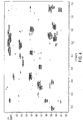
- Two-dimensional HNCA spectra were acquired with deuterium decoupling on said acylated derivative of backbone-labeled Phe versus the acylated derivative of uniformly triple (>95% 13 C, 15 N, 50% 2 H) labeled Phe ( Fig. 1(b) ). As indicated, these spectra are shown in Figures 1(a) and 1(b) , respectively.
- the acylated derivative of backbone ( 13 C, 15 N) labeled and uniformly 2 H enriched Phe was dissolved in 700 ul glycerol-d7/H 2 O (85% v/v) to a final concentration of 1mM.
- a sample of the acylated derivative of uniformly ( 13 C, 15 N, 2 H) Phe was similarly prepared.
- Two-dimensional HNCA spectra with 2 H decoupling were acquired identically on these samples at 0°C. At this temperature, the rotational correlation time of the molecule ( ⁇ 18 ns) and hence resonance linewidths equaled that expected for a ⁇ 40 kDa protein. These spectra are shown in Figures 2(a) and 2(b) , respectively.
- Deprotection (of 2.74 g, 5.74 mmol) was effected by adding 1 M HCL (9.06 ml) to a solution of the solid in THF (150 ml) and water (60 ml). After 15 minutes, lithium hydroxide (0.88 g, 3.65 eq) was added and the reaction stirred at room temperature overnight. Removing the solvent in vacuo, extracting with diethyl ether (5 x 50 ml), then with hexane (50 ml), and purifying the aqueous phase by ion exchange chromatography (Dowex 8 x 400 H+ resin) gave the title compound (560 mg, 83%) as a white powder.
- Deprotection was effected by adding 1 M HCL (10.93 ml) to a solution of the oil in THF (72.8 ml) and water (72.8 ml). After 15 minutes, lithium hydroxide (1.07 g, 4.2 eq) was added and the reaction stirred at room temperature overnight. Removing the solvent in vacuo, extracting with diethyl ether (5 x 50 ml), then with hexane (50 ml), and purifying the aqueous phase by ion exchange chromatography (Dowex 8 x 400 H+ resin) gave the title compound (0.24 g, 23%) as a white powder.
- Deprotection was effected by adding 1 M HCL (12.1 ml) to a solution of the solid in THF (110 ml) and water (81 ml). After 15 minutes, lithium hydroxide (1.1 g, 3.5 eq) was added and the reaction stirred at room temperature overnight. Removing the solvent in vacuo, extracting with diethyl ether (5 x 50 ml), then with hexane (50 ml), and purifying the aqueous phase by ion exchange chromatography (Dowex 8 x 400 H+ resin) gave the title compound (0.976 g, 97 %) as a white powder.
- the components were mixed for ten minutes, sonicated for three one-minute intervals, stirred for ten more minutes, and sterile filtered with a 0.2 m PES Nalgene sterile filter. The filtered mixture was transferred to a Nalge bottle for shipping.
- the resulting medium was used to culture a CHO cell line engineered to express human choriogonadotropin ("hCG"). Cells were cultured and the specifically isotopically labeled hCG ⁇ -subunit was purified by procedures known in the art.
- hCG human choriogonadotropin
Landscapes
- Health & Medical Sciences (AREA)
- Chemical & Material Sciences (AREA)
- Life Sciences & Earth Sciences (AREA)
- Organic Chemistry (AREA)
- Engineering & Computer Science (AREA)
- Zoology (AREA)
- Biotechnology (AREA)
- Genetics & Genomics (AREA)
- Wood Science & Technology (AREA)
- General Health & Medical Sciences (AREA)
- Bioinformatics & Cheminformatics (AREA)
- Biochemistry (AREA)
- Physics & Mathematics (AREA)
- Biomedical Technology (AREA)
- Microbiology (AREA)
- General Engineering & Computer Science (AREA)
- Molecular Biology (AREA)
- Endocrinology (AREA)
- Medicinal Chemistry (AREA)
- Biophysics (AREA)
- High Energy & Nuclear Physics (AREA)
- Toxicology (AREA)
- Reproductive Health (AREA)
- Proteomics, Peptides & Aminoacids (AREA)
- Tropical Medicine & Parasitology (AREA)
- Virology (AREA)
- Chemical Kinetics & Catalysis (AREA)
- General Chemical & Material Sciences (AREA)
- Cell Biology (AREA)
- Spectroscopy & Molecular Physics (AREA)
- Gastroenterology & Hepatology (AREA)
- Condensed Matter Physics & Semiconductors (AREA)
- General Physics & Mathematics (AREA)
- Peptides Or Proteins (AREA)
- Investigating Or Analysing Biological Materials (AREA)
- Preparation Of Compounds By Using Micro-Organisms (AREA)
- Measuring Or Testing Involving Enzymes Or Micro-Organisms (AREA)
- Organic Low-Molecular-Weight Compounds And Preparation Thereof (AREA)
- Investigating Or Analysing Materials By The Use Of Chemical Reactions (AREA)
- Micro-Organisms Or Cultivation Processes Thereof (AREA)
Claims (16)
- Ein isotopisch substituiertes Molekül, welches für die Strukturaufklärung mittels NMR geeignet ist, umfassend eine Peptid-Sequenz von mindestens 50 Aminosäureresten, worin das Molekül mit 13C und 15N spezifisch isotopisch substituiert ist an allen Resten jeder Kombination von einer oder mehreren ausgewählten Aminosäuren nur in spezifischen Positionen des Restes, wobei diese spezifischen Positionen in der Struktur des Rückgrats und nicht in den Seitenketten der Aminosäuren vorliegen und welches darüber hinaus an den Wasserstoffatomen, welche an die α-Kohlenstoffatome der isotopisch substituierten Aminosäurereste gebunden sind, spezifisch isotopisch mit 2H substituiert ist.
- Das isotopisch substituierte Molekül nach Anspruch 1, worin alle Wasserstoffatome, welche an die α-Kohlenstoffatome der isotopisch substituierten Aminosäuren gebunden sind, ungefähr 30 % bis ungefähr 70 % 2H sind.
- Das isotopisch substituierte Molekül nach Anspruch 1, worin alle Wasserstoffatome, welche an die α-Kohlenstoffatome der isotopisch substituierten Aminosäuren gebunden sind, ungefähr 40 % bis ungefähr 60 % 2H sind.
- Das isotopisch substituierte Molekül nach Anspruch 1, worin alle Wasserstoffatome, welche an die α-Kohlenstoffatome der isotopisch substituierten Aminosäuren gebunden sind, ungefähr 50 % 2H sind.
- Das isotopisch substituierte Molekül nach Anspruch 1, worin im Wesentlichen alle Aminosäurereste eine isotopische Substitution umfassen.
- Ein Verfahren zum Herstellen eines isotopisch substituierten Moleküls, umfassend eine Peptid-Sequenz von mindestens 50 Aminosäureresten, worin das Molekül mit 13C und 15N spezifisch isotopisch substituiert ist an allen Resten von jeder Kombination von einer oder mehreren ausgewählten Aminosäuren nur in spezifischen Positionen des Resten, wobei diese spezifischen Positionen in der Struktur des Rückgrats und nicht in den Seitenketten der Aminosäuren vorliegen und welches darüber hinaus an den Wasserstoffatomen, welche an die α-Kohlenstoffatomen der isotopisch substituierten Aminosäurereste gebunden sind, spezifisch isotopisch mit 2H substituiert ist, welches umfasst:(a) Bereistellen eines Mediums, welches geeignet ist für die Kultivierung von bakteriellen Zellen, Hefenzellen, Säugetierzellen oder Insektenzellen oder einem zellfreien System, wobei das Medium alle 20 Aminosäuren umfasst, welche erforderlich sind für die Biosynthese von Proteinen, und wobei die ausgewählte(n) Aminosäure(n) mit 15N und 13C isotopisch substituiert ist/sind an dem Stickstoff und Kohlenstoff in dem Rückgrat, jedoch nicht in den Seitenketten der Aminosäuren, und darüber hinaus spezifisch isotopisch substituiert sind mit 2H an den Wasserstoffatomen, welche an die α-Kohlenstoffatome der isotopisch substituierten Aminosäurereste gebunden sind, und die übrigen Aminosäuren nicht isotopisch substituiert sind:(b) Kultivieren der bakteriellen Zellen, Hefezellen, Säugetierzellen oder Insektenzellen oder des zellfreien Systems in dem Medium: und(c) Isolieren des spezifisch isotopisch substituierten Peptids oder Proteinmoleküls aus dem Medium oder den Zellen,worin die Aminosäuren des Peptids oder des Proteinmoleküls die spezifisch isotopische Substitution oder Substitutionen der isotopisch substituierten Aminosäuren in dem Medium aufweisen und die übrigen Aminosäuren des Peptids oder des Proteinmoleküls nicht isotopisch substituiert sind.
- Das Verfahren nach Anspruch 6, worin alle Wasserstoffatome, welche an die α-Kohlenstoffatome der isotopisch substituierten Aminosäure gebunden sind, ungefähr 30 % bis ungefähr 70 % 2H sind.
- Das Verfahren nach Anspruch 6, worin alle Wasserstoffatome, welche an die α-Kohlenstoffatome der isotopisch substituierten Aminosäure gebunden sind, ungefähr 40 % bis ungefähr 60 % 2H sind.
- Das Verfahren nach Anspruch 6, worin alle Wasserstoffatome, welche an die α-Kohlenstoffatome der isotopisch substituierten Aminosäure gebunden sind, ungefähr 50 % 2H sind.
- Das Verfahren nach Anspruch 6, worin im Wesentlichen alle Aminosäurereste isotopisch substituiert sind mit 15N oder 13C.
- Das Verfahren nach einem der Ansprüche 6 bis 10, worin das Kultivieren dasjenige eines Zellkultursystems ist.
- Das Verfahren nach Anspruch 11, worin das Zellkultursystem Säugetierzellen umfasst.
- Das Verfahren nach Anspruch 11, worin das Zellkultursystem Insektenzellen umfasst.
- Das Verfahren nach Anspruch 11, worin das Zellkultursystem Hefezellen umfasst.
- Das Verfahren nach Anspruch 11, worin das Zellkultursystem bakteriellen Zellen umfasst.
- Das isotopisch substituierte Molekül nach einem der Ansprüche 1 bis 5, welches hergestellt wird durch das Verfahren nach einem der Ansprüche 6 bis 15.
Priority Applications (1)
| Application Number | Priority Date | Filing Date | Title |
|---|---|---|---|
| EP07120079A EP1889823A1 (de) | 1997-09-02 | 1998-09-02 | 13C-, 15N-, 2H-etikettierte Proteine zur Bestimmung von NMR-Strukturen und deren Herstellung |
Applications Claiming Priority (3)
| Application Number | Priority Date | Filing Date | Title |
|---|---|---|---|
| US08/921,554 US6111066A (en) | 1997-09-02 | 1997-09-02 | Peptidic molecules which have been isotopically substituted with 13 C, 15 N and 2 H in the backbone but not in the sidechains |
| US921554 | 1997-09-02 | ||
| PCT/US1998/018197 WO1999011589A1 (en) | 1997-09-02 | 1998-09-02 | 13c, 15n, 2h labeled proteins for nmr structure determinations and their preparation |
Related Child Applications (1)
| Application Number | Title | Priority Date | Filing Date |
|---|---|---|---|
| EP07120079A Division EP1889823A1 (de) | 1997-09-02 | 1998-09-02 | 13C-, 15N-, 2H-etikettierte Proteine zur Bestimmung von NMR-Strukturen und deren Herstellung |
Publications (2)
| Publication Number | Publication Date |
|---|---|
| EP1009725A1 EP1009725A1 (de) | 2000-06-21 |
| EP1009725B1 true EP1009725B1 (de) | 2009-01-07 |
Family
ID=25445613
Family Applications (2)
| Application Number | Title | Priority Date | Filing Date |
|---|---|---|---|
| EP98945835A Expired - Lifetime EP1009725B1 (de) | 1997-09-02 | 1998-09-02 | 13c,15n,2h markierte proteine zur nmr strukturbestimmung und deren herstellung |
| EP07120079A Withdrawn EP1889823A1 (de) | 1997-09-02 | 1998-09-02 | 13C-, 15N-, 2H-etikettierte Proteine zur Bestimmung von NMR-Strukturen und deren Herstellung |
Family Applications After (1)
| Application Number | Title | Priority Date | Filing Date |
|---|---|---|---|
| EP07120079A Withdrawn EP1889823A1 (de) | 1997-09-02 | 1998-09-02 | 13C-, 15N-, 2H-etikettierte Proteine zur Bestimmung von NMR-Strukturen und deren Herstellung |
Country Status (12)
| Country | Link |
|---|---|
| US (4) | US6111066A (de) |
| EP (2) | EP1009725B1 (de) |
| JP (1) | JP2001514239A (de) |
| AT (1) | ATE420061T1 (de) |
| AU (1) | AU754232B2 (de) |
| CA (1) | CA2301046C (de) |
| DE (1) | DE69840448D1 (de) |
| HU (1) | HUP0003383A3 (de) |
| NO (1) | NO20001052L (de) |
| TW (1) | TW581772B (de) |
| WO (1) | WO1999011589A1 (de) |
| ZA (1) | ZA987975B (de) |
Families Citing this family (40)
| Publication number | Priority date | Publication date | Assignee | Title |
|---|---|---|---|---|
| US6111066A (en) | 1997-09-02 | 2000-08-29 | Martek Biosciences Corporation | Peptidic molecules which have been isotopically substituted with 13 C, 15 N and 2 H in the backbone but not in the sidechains |
| US6882939B2 (en) * | 2000-10-20 | 2005-04-19 | Prospect Pharma | Rapid determination of protein global folds |
| EP1328815A1 (de) * | 2000-10-20 | 2003-07-23 | Martek Biosciences Corporation | Schnelle bestimmung der global folds von proteinen |
| US20030068650A1 (en) * | 2001-03-12 | 2003-04-10 | Jack Greenblatt | Target analysis for chemistry of specific and broad spectrum anti-infectives and other therapeutics |
| WO2003006488A1 (en) * | 2001-07-13 | 2003-01-23 | The Regents Of The University Of California | In-cell nmr spectroscopy |
| JP2003096098A (ja) * | 2001-09-25 | 2003-04-03 | Nippon Sanso Corp | 安定同位体標識抗体及びその製造方法ならびにこれを用いた検出方法 |
| US20030077572A1 (en) * | 2001-10-11 | 2003-04-24 | Abramson Fred P. | Quantitative differential display using isotope ratio monitoring |
| AU2002364728A1 (en) * | 2001-12-13 | 2003-06-23 | The Johns Hopkins University School Of Medicine | Method for mr/nmr imaging |
| WO2003053910A1 (en) * | 2001-12-19 | 2003-07-03 | Japan Science And Technology Agency | Stable isotope-labeled amino acid, method of integrating the same into target protein, method of nmr structural analysis of protein and process for producing site-selective stable isotope-labeled fumaric acid and tartaric acid |
| US20060154323A1 (en) * | 2002-06-10 | 2006-07-13 | Prospect Pharma | Method for obtaining dynamic and structural data pertaining to proteins and protein/ligand complexes |
| WO2003106656A2 (en) | 2002-06-17 | 2003-12-24 | Thrasos, Inc. | Single domain tdf-related compounds and analogs thereof |
| US7473535B2 (en) * | 2002-08-20 | 2009-01-06 | The Institute For Systems Biology | Chemical reagents and methods for detection and quantification of proteins in complex mixtures |
| US7553455B1 (en) * | 2003-04-02 | 2009-06-30 | Sandia Corporation | Micromanifold assembly |
| US7672791B2 (en) * | 2003-06-13 | 2010-03-02 | International Business Machines Corporation | Method of performing three-dimensional molecular superposition and similarity searches in databases of flexible molecules |
| WO2005005616A2 (en) | 2003-07-11 | 2005-01-20 | Egorova-Zachernyuk Tatiana A | Compositions and methods for stable isotope labelling of biological compounds |
| US20070275442A1 (en) * | 2003-10-07 | 2007-11-29 | Prospect Pharma | Side Chain Deuterated Amino Acids Methods Of Use |
| JP5019280B2 (ja) | 2003-10-31 | 2012-09-05 | 独立行政法人科学技術振興機構 | 安定同位体標識芳香族アミノ酸、その標的蛋白質への組み込み方法並びに蛋白質のnmr構造解析方法 |
| US20080293150A1 (en) * | 2004-02-02 | 2008-11-27 | Toshiyuki Kohno | Nmr Signal Assignment Method |
| US8410246B2 (en) | 2004-06-17 | 2013-04-02 | Thrasos, Inc. | TDF-related compounds and analogs thereof |
| US7480356B2 (en) * | 2004-12-08 | 2009-01-20 | Telefonaktiebolaget L M Ericsson (Publ) | Method of and system for path selection in rich multipath conditions |
| US7372895B2 (en) * | 2004-12-08 | 2008-05-13 | Telefonaktiebolaget Lm Ericsson (Publ) | Method of and system for delay estimation with minimized finger allocation |
| ES2626018T3 (es) | 2005-06-07 | 2017-07-21 | Dsm Nutritional Products Ag | Microorganismos eucariotas para la producción de lípidos y antioxidantes |
| DK2497780T3 (en) | 2005-09-20 | 2015-06-01 | Thrasos Innovation Inc | TDF-related compounds and analogs thereof |
| US20070196280A1 (en) * | 2006-02-21 | 2007-08-23 | The Government Of The U.S.A. As Represented By The Sec. Of The Dept. Of Health And Human Services | In vivo magnetic resonance spectroscopy of aspartate transaminase activity |
| GB0604647D0 (en) | 2006-03-08 | 2006-04-19 | Shchepinov Mikhail | Stabilized food supplements and their derivatives |
| JP2007255910A (ja) * | 2006-03-20 | 2007-10-04 | Hokkaido Univ | Nmrシグナルの帰属方法 |
| CN101981201A (zh) * | 2006-08-01 | 2011-02-23 | 加拿大海洋营养食品有限公司 | 产油微生物及改良这些微生物的方法 |
| US8637486B2 (en) * | 2008-03-14 | 2014-01-28 | Retrotope, Inc. | Therapeutic substances that modulate genome methylation |
| JP2011514361A (ja) * | 2008-03-14 | 2011-05-06 | レトロトップ、 インコーポレイテッド | 同位体で置換されたリジンを用いたがん治療 |
| US10052299B2 (en) | 2009-10-30 | 2018-08-21 | Retrotope, Inc. | Alleviating oxidative stress disorders with PUFA derivatives |
| CN101914030B (zh) * | 2010-07-23 | 2013-04-24 | 上海化工研究院 | 一种13c,15n双标记甘氨酸的合成方法 |
| WO2012148930A2 (en) | 2011-04-26 | 2012-11-01 | Retrotope, Inc. | Oxidative retinal diseases |
| JP6145087B2 (ja) | 2011-04-26 | 2017-06-07 | レトロトップ、 インコーポレイテッドRetrotope, Inc. | Pufa酸化関与障害 |
| KR102112087B1 (ko) | 2011-04-26 | 2020-05-18 | 레트로토프 인코포레이티드 | 에너지 프로세싱 손상 장애 및 미토콘드리아 결함 |
| JP6106157B2 (ja) | 2011-04-26 | 2017-03-29 | レトロトップ、 インコーポレイテッドRetrotope, Inc. | 神経変性障害および筋疾患に関与するpufa |
| DK2970926T3 (en) | 2013-03-13 | 2018-04-16 | Dsm Nutritional Products Ag | GENMANIPULATION OF MICROorganisms |
| EP3950649A1 (de) | 2015-11-23 | 2022-02-09 | Retrotope, Inc. | Ortsspezifische isotopische markierung von 1,4-dien-systemen |
| FR3055337A1 (fr) * | 2016-08-24 | 2018-03-02 | Commissariat A L'energie Atomique Et Aux Energies Alternatives | Methode de preparation de milieux de culture riches pour le marquage d'acides amines incorpores dans des proteines |
| IL295783B2 (en) | 2020-02-21 | 2026-03-01 | Retrotope Inc | Processes for isotopic alteration of polyunsaturated fatty acids and their derivatives |
| US12109194B2 (en) | 2021-02-05 | 2024-10-08 | Biojiva Llc | Synergistic combination therapy for treating ALS |
Family Cites Families (10)
| Publication number | Priority date | Publication date | Assignee | Title |
|---|---|---|---|---|
| JPH0768446B2 (ja) * | 1988-11-09 | 1995-07-26 | 三菱化学株式会社 | 芳香族ポリカーボネート樹脂組成物を用いた医療用部品 |
| JP2518917B2 (ja) | 1989-02-07 | 1996-07-31 | 日本電子株式会社 | 蛋白質の構造解析方法 |
| EP0474790B1 (de) | 1989-06-14 | 1997-05-21 | Martek Corporation | Medien zur zellzucht und verfahren dazu |
| JP2517688B2 (ja) * | 1989-12-25 | 1996-07-24 | 日本電子株式会社 | 3次元核磁気共鳴スペクトルの対称化処理方法 |
| JPH0446143A (ja) * | 1990-06-11 | 1992-02-17 | Hitachi Ltd | 同位体多重標識アミノ酸の合成法 |
| US5393669A (en) * | 1993-02-05 | 1995-02-28 | Martek Biosciences Corp. | Compositions and methods for protein structural determinations |
| US5698401A (en) | 1995-11-14 | 1997-12-16 | Abbott Laboratories | Use of nuclear magnetic resonance to identify ligands to target biomolecules |
| US5891643A (en) | 1995-11-14 | 1999-04-06 | Abbott Laboratories | Use of nuclear magnetic resonance to design ligands to target biomolecules |
| US6043024A (en) | 1997-04-18 | 2000-03-28 | Abbott Laboratories | Use of one-dimensional nuclear magnetic resonance to identify ligands to target biomolecules |
| US6111066A (en) | 1997-09-02 | 2000-08-29 | Martek Biosciences Corporation | Peptidic molecules which have been isotopically substituted with 13 C, 15 N and 2 H in the backbone but not in the sidechains |
-
1997
- 1997-09-02 US US08/921,554 patent/US6111066A/en not_active Expired - Lifetime
-
1998
- 1998-09-01 ZA ZA9807975A patent/ZA987975B/xx unknown
- 1998-09-02 EP EP98945835A patent/EP1009725B1/de not_active Expired - Lifetime
- 1998-09-02 EP EP07120079A patent/EP1889823A1/de not_active Withdrawn
- 1998-09-02 TW TW087114552A patent/TW581772B/zh not_active IP Right Cessation
- 1998-09-02 JP JP2000508633A patent/JP2001514239A/ja active Pending
- 1998-09-02 WO PCT/US1998/018197 patent/WO1999011589A1/en not_active Ceased
- 1998-09-02 HU HU0003383A patent/HUP0003383A3/hu unknown
- 1998-09-02 AT AT98945835T patent/ATE420061T1/de not_active IP Right Cessation
- 1998-09-02 US US09/486,837 patent/US6335196B1/en not_active Expired - Lifetime
- 1998-09-02 DE DE69840448T patent/DE69840448D1/de not_active Expired - Lifetime
- 1998-09-02 CA CA002301046A patent/CA2301046C/en not_active Expired - Fee Related
- 1998-09-02 AU AU92988/98A patent/AU754232B2/en not_active Ceased
-
2000
- 2000-03-01 NO NO20001052A patent/NO20001052L/no not_active Application Discontinuation
- 2000-07-10 US US09/613,571 patent/US6340578B1/en not_active Expired - Lifetime
- 2000-07-10 US US09/613,570 patent/US6376253B1/en not_active Expired - Lifetime
Also Published As
| Publication number | Publication date |
|---|---|
| TW581772B (en) | 2004-04-01 |
| NO20001052L (no) | 2000-04-28 |
| CA2301046C (en) | 2009-03-10 |
| US6340578B1 (en) | 2002-01-22 |
| US6335196B1 (en) | 2002-01-01 |
| HUP0003383A2 (hu) | 2001-02-28 |
| US6376253B1 (en) | 2002-04-23 |
| DE69840448D1 (de) | 2009-02-26 |
| US6111066A (en) | 2000-08-29 |
| EP1009725A1 (de) | 2000-06-21 |
| EP1889823A1 (de) | 2008-02-20 |
| HUP0003383A3 (en) | 2003-07-28 |
| AU9298898A (en) | 1999-03-22 |
| WO1999011589A1 (en) | 1999-03-11 |
| ZA987975B (en) | 2000-01-21 |
| CA2301046A1 (en) | 1999-03-11 |
| AU754232B2 (en) | 2002-11-07 |
| ATE420061T1 (de) | 2009-01-15 |
| NO20001052D0 (no) | 2000-03-01 |
| JP2001514239A (ja) | 2001-09-11 |
Similar Documents
| Publication | Publication Date | Title |
|---|---|---|
| EP1009725B1 (de) | 13c,15n,2h markierte proteine zur nmr strukturbestimmung und deren herstellung | |
| McIntosh et al. | Biosynthetic incorporation of 15N and 13C for assignment and interpretation of nuclear magnetic resonance spectra of proteins | |
| Neri et al. | Stereospecific nuclear magnetic resonance assignments of the methyl groups of valine and leucine in the DNA-binding domain of the 434 repressor by biosynthetically directed fractional carbon-13 labeling | |
| Gardner et al. | The use of 2H, 13C, 15N multidimensional NMR GTO study the structure and dynamics of proteins | |
| Hunkapiller et al. | Carbon nuclear magnetic resonance studies of the histidine residue in α-lytic protease. Implications for the catalytic mechanism of serine proteases | |
| FI112116B (fi) | Menetelmä proteiinin 3-ulotteisen rakenneinformaation määrittämiseksi ja ravintoväliaine | |
| Rosen et al. | Selective methyl group protonation of perdeuterated proteins | |
| Fesik et al. | NMR studies of [U-13C] cyclosporin A bound to cyclophilin: bound conformation and portions of cyclosporin involved in binding | |
| EP0839152B1 (de) | Kombinatorische bibliotheken aus markierten biochemischen verbindungen und verfahren zu ihrer herstellung | |
| Ramer et al. | Formation of peptide amides by peptidylglycine. alpha.-amidating monooxygenase: a new assay and stereochemistry of hydrogen loss | |
| Takeuchi et al. | 1-13C amino acid selective labeling in a 2H15N background for NMR studies of large proteins | |
| CA2365385C (en) | Use of 13c-nmr to detect binding | |
| Rohden et al. | Synthesis of Selectively 13C/2H/15N‐Labeled Arginine to Probe Protein Conformation and Interaction by NMR Spectroscopy | |
| Gerothanassis et al. | Nuclear magnetic resonance detection of bound water molecules in the active site of Lactobacillus casei dihydrofolate reductase in aqueous solution | |
| Soteriou et al. | 3D 13C/1H NMR-based assignments for side-chain resonances of Lactobacillus casei dihydrofolate reductase. Evidence for similarities between the solution and crystal structures of the enzyme | |
| Kahana et al. | Biosynthesis of l-[15N] aspartic acid and l-[15N] alanine by immobilized bacteria | |
| Illos et al. | Dual role of hydrophobic racemic thioesters of α-amino acids in the generation of isotactic peptides and co-peptides in water; implications for the origin of homochirality | |
| HK1044753B (en) | Site-specific isotopically-labeled proteins, amino acids, and biochemical precursors therefor | |
| Matsuo et al. | Assignments of1H− 15N magnetic resonances and identification of secondary structure elements of the λ-cro repressor | |
| Egorova-Zachernyuk et al. | MAS NMR on a uniformly [13C, 15N] labeled LH2 light-harvesting complex from Rhodopseudomonas acidophila 10050 at ultra-high magnetic fields | |
| Cistola et al. | WILLIAM W. BACHOVCHIN AND CLIFFORD J. UNKEFER |
Legal Events
| Date | Code | Title | Description |
|---|---|---|---|
| PUAI | Public reference made under article 153(3) epc to a published international application that has entered the european phase |
Free format text: ORIGINAL CODE: 0009012 |
|
| 17P | Request for examination filed |
Effective date: 20000331 |
|
| AK | Designated contracting states |
Kind code of ref document: A1 Designated state(s): AT BE CH CY DE DK ES FI FR GB GR IE IT LI LU MC NL PT SE |
|
| 17Q | First examination report despatched |
Effective date: 20030620 |
|
| 17Q | First examination report despatched |
Effective date: 20030620 |
|
| GRAP | Despatch of communication of intention to grant a patent |
Free format text: ORIGINAL CODE: EPIDOSNIGR1 |
|
| GRAS | Grant fee paid |
Free format text: ORIGINAL CODE: EPIDOSNIGR3 |
|
| GRAA | (expected) grant |
Free format text: ORIGINAL CODE: 0009210 |
|
| AK | Designated contracting states |
Kind code of ref document: B1 Designated state(s): AT BE CH CY DE DK ES FI FR GB GR IE IT LI LU MC NL PT SE |
|
| REG | Reference to a national code |
Ref country code: GB Ref legal event code: FG4D |
|
| REG | Reference to a national code |
Ref country code: CH Ref legal event code: EP |
|
| REG | Reference to a national code |
Ref country code: IE Ref legal event code: FG4D |
|
| REF | Corresponds to: |
Ref document number: 69840448 Country of ref document: DE Date of ref document: 20090226 Kind code of ref document: P |
|
| REG | Reference to a national code |
Ref country code: CH Ref legal event code: NV Representative=s name: MOINAS & SAVOYE SA |
|
| PG25 | Lapsed in a contracting state [announced via postgrant information from national office to epo] |
Ref country code: NL Free format text: LAPSE BECAUSE OF FAILURE TO SUBMIT A TRANSLATION OF THE DESCRIPTION OR TO PAY THE FEE WITHIN THE PRESCRIBED TIME-LIMIT Effective date: 20090107 |
|
| NLV1 | Nl: lapsed or annulled due to failure to fulfill the requirements of art. 29p and 29m of the patents act | ||
| PG25 | Lapsed in a contracting state [announced via postgrant information from national office to epo] |
Ref country code: FI Free format text: LAPSE BECAUSE OF FAILURE TO SUBMIT A TRANSLATION OF THE DESCRIPTION OR TO PAY THE FEE WITHIN THE PRESCRIBED TIME-LIMIT Effective date: 20090107 Ref country code: ES Free format text: LAPSE BECAUSE OF FAILURE TO SUBMIT A TRANSLATION OF THE DESCRIPTION OR TO PAY THE FEE WITHIN THE PRESCRIBED TIME-LIMIT Effective date: 20090418 |
|
| PG25 | Lapsed in a contracting state [announced via postgrant information from national office to epo] |
Ref country code: SE Free format text: LAPSE BECAUSE OF FAILURE TO SUBMIT A TRANSLATION OF THE DESCRIPTION OR TO PAY THE FEE WITHIN THE PRESCRIBED TIME-LIMIT Effective date: 20090407 Ref country code: PT Free format text: LAPSE BECAUSE OF FAILURE TO SUBMIT A TRANSLATION OF THE DESCRIPTION OR TO PAY THE FEE WITHIN THE PRESCRIBED TIME-LIMIT Effective date: 20090608 Ref country code: AT Free format text: LAPSE BECAUSE OF FAILURE TO SUBMIT A TRANSLATION OF THE DESCRIPTION OR TO PAY THE FEE WITHIN THE PRESCRIBED TIME-LIMIT Effective date: 20090107 |
|
| PG25 | Lapsed in a contracting state [announced via postgrant information from national office to epo] |
Ref country code: BE Free format text: LAPSE BECAUSE OF FAILURE TO SUBMIT A TRANSLATION OF THE DESCRIPTION OR TO PAY THE FEE WITHIN THE PRESCRIBED TIME-LIMIT Effective date: 20090107 |
|
| PG25 | Lapsed in a contracting state [announced via postgrant information from national office to epo] |
Ref country code: DK Free format text: LAPSE BECAUSE OF FAILURE TO SUBMIT A TRANSLATION OF THE DESCRIPTION OR TO PAY THE FEE WITHIN THE PRESCRIBED TIME-LIMIT Effective date: 20090107 |
|
| PLBE | No opposition filed within time limit |
Free format text: ORIGINAL CODE: 0009261 |
|
| STAA | Information on the status of an ep patent application or granted ep patent |
Free format text: STATUS: NO OPPOSITION FILED WITHIN TIME LIMIT |
|
| 26N | No opposition filed |
Effective date: 20091008 |
|
| PG25 | Lapsed in a contracting state [announced via postgrant information from national office to epo] |
Ref country code: MC Free format text: LAPSE BECAUSE OF NON-PAYMENT OF DUE FEES Effective date: 20090930 |
|
| REG | Reference to a national code |
Ref country code: IE Ref legal event code: MM4A |
|
| PG25 | Lapsed in a contracting state [announced via postgrant information from national office to epo] |
Ref country code: IE Free format text: LAPSE BECAUSE OF NON-PAYMENT OF DUE FEES Effective date: 20090902 |
|
| PG25 | Lapsed in a contracting state [announced via postgrant information from national office to epo] |
Ref country code: GR Free format text: LAPSE BECAUSE OF FAILURE TO SUBMIT A TRANSLATION OF THE DESCRIPTION OR TO PAY THE FEE WITHIN THE PRESCRIBED TIME-LIMIT Effective date: 20090408 |
|
| PG25 | Lapsed in a contracting state [announced via postgrant information from national office to epo] |
Ref country code: IT Free format text: LAPSE BECAUSE OF FAILURE TO SUBMIT A TRANSLATION OF THE DESCRIPTION OR TO PAY THE FEE WITHIN THE PRESCRIBED TIME-LIMIT Effective date: 20090107 |
|
| PG25 | Lapsed in a contracting state [announced via postgrant information from national office to epo] |
Ref country code: LU Free format text: LAPSE BECAUSE OF NON-PAYMENT OF DUE FEES Effective date: 20090902 |
|
| PG25 | Lapsed in a contracting state [announced via postgrant information from national office to epo] |
Ref country code: CY Free format text: LAPSE BECAUSE OF FAILURE TO SUBMIT A TRANSLATION OF THE DESCRIPTION OR TO PAY THE FEE WITHIN THE PRESCRIBED TIME-LIMIT Effective date: 20090107 |
|
| REG | Reference to a national code |
Ref country code: FR Ref legal event code: PLFP Year of fee payment: 18 |
|
| PGFP | Annual fee paid to national office [announced via postgrant information from national office to epo] |
Ref country code: CH Payment date: 20150928 Year of fee payment: 18 Ref country code: GB Payment date: 20150930 Year of fee payment: 18 |
|
| PGFP | Annual fee paid to national office [announced via postgrant information from national office to epo] |
Ref country code: DE Payment date: 20150929 Year of fee payment: 18 |
|
| PGFP | Annual fee paid to national office [announced via postgrant information from national office to epo] |
Ref country code: FR Payment date: 20150930 Year of fee payment: 18 |
|
| REG | Reference to a national code |
Ref country code: CH Ref legal event code: PFA Owner name: MARTEK BIOSCIENCES CORPORATION, US Free format text: FORMER OWNER: MARTEK BIOSCIENCES CORPORATION, US |
|
| REG | Reference to a national code |
Ref country code: DE Ref legal event code: R119 Ref document number: 69840448 Country of ref document: DE |
|
| REG | Reference to a national code |
Ref country code: CH Ref legal event code: PL |
|
| GBPC | Gb: european patent ceased through non-payment of renewal fee |
Effective date: 20160902 |
|
| REG | Reference to a national code |
Ref country code: FR Ref legal event code: ST Effective date: 20170531 |
|
| PG25 | Lapsed in a contracting state [announced via postgrant information from national office to epo] |
Ref country code: GB Free format text: LAPSE BECAUSE OF NON-PAYMENT OF DUE FEES Effective date: 20160902 Ref country code: CH Free format text: LAPSE BECAUSE OF NON-PAYMENT OF DUE FEES Effective date: 20160930 Ref country code: DE Free format text: LAPSE BECAUSE OF NON-PAYMENT OF DUE FEES Effective date: 20170401 Ref country code: FR Free format text: LAPSE BECAUSE OF NON-PAYMENT OF DUE FEES Effective date: 20160930 Ref country code: LI Free format text: LAPSE BECAUSE OF NON-PAYMENT OF DUE FEES Effective date: 20160930 |