EP0973791B1 - Verfahren zur herstellung einer epoxyverbindung - Google Patents
Verfahren zur herstellung einer epoxyverbindung Download PDFInfo
- Publication number
- EP0973791B1 EP0973791B1 EP96945103A EP96945103A EP0973791B1 EP 0973791 B1 EP0973791 B1 EP 0973791B1 EP 96945103 A EP96945103 A EP 96945103A EP 96945103 A EP96945103 A EP 96945103A EP 0973791 B1 EP0973791 B1 EP 0973791B1
- Authority
- EP
- European Patent Office
- Prior art keywords
- formula
- group
- compound
- hydrogen
- chr
- Prior art date
- Legal status (The legal status is an assumption and is not a legal conclusion. Google has not performed a legal analysis and makes no representation as to the accuracy of the status listed.)
- Expired - Lifetime
Links
- 150000001875 compounds Chemical class 0.000 title claims abstract description 212
- 238000000034 method Methods 0.000 title claims abstract description 160
- 230000008569 process Effects 0.000 title claims description 136
- 239000004593 Epoxy Substances 0.000 title claims description 7
- 238000002360 preparation method Methods 0.000 title description 31
- 238000006243 chemical reaction Methods 0.000 claims abstract description 247
- 229910052739 hydrogen Inorganic materials 0.000 claims abstract description 77
- 239000001257 hydrogen Substances 0.000 claims abstract description 77
- 125000003545 alkoxy group Chemical group 0.000 claims abstract description 50
- 125000001475 halogen functional group Chemical group 0.000 claims abstract description 47
- 125000004453 alkoxycarbonyl group Chemical group 0.000 claims abstract description 40
- 125000000217 alkyl group Chemical group 0.000 claims abstract description 39
- 125000004093 cyano group Chemical group *C#N 0.000 claims abstract description 39
- ORTFAQDWJHRMNX-UHFFFAOYSA-N hydroxidooxidocarbon(.) Chemical group O[C]=O ORTFAQDWJHRMNX-UHFFFAOYSA-N 0.000 claims abstract description 38
- 125000004183 alkoxy alkyl group Chemical group 0.000 claims abstract description 36
- 125000004104 aryloxy group Chemical group 0.000 claims abstract description 36
- 125000002768 hydroxyalkyl group Chemical group 0.000 claims abstract description 34
- 125000004435 hydrogen atom Chemical class [H]* 0.000 claims abstract description 26
- 125000000623 heterocyclic group Chemical group 0.000 claims abstract description 25
- 125000002252 acyl group Chemical group 0.000 claims abstract description 24
- 125000005041 acyloxyalkyl group Chemical group 0.000 claims abstract description 24
- 125000002837 carbocyclic group Chemical group 0.000 claims abstract description 24
- 230000015572 biosynthetic process Effects 0.000 claims abstract description 20
- 239000000758 substrate Substances 0.000 claims description 108
- -1 peroxide compound Chemical class 0.000 claims description 101
- 238000000855 fermentation Methods 0.000 claims description 79
- 230000004151 fermentation Effects 0.000 claims description 79
- 150000002431 hydrogen Chemical class 0.000 claims description 43
- 125000002887 hydroxy group Chemical group [H]O* 0.000 claims description 41
- 239000003153 chemical reaction reagent Substances 0.000 claims description 34
- 229910052760 oxygen Inorganic materials 0.000 claims description 33
- 239000001301 oxygen Substances 0.000 claims description 33
- 229910052783 alkali metal Inorganic materials 0.000 claims description 30
- UPQQXPKAYZYUKO-UHFFFAOYSA-N 2,2,2-trichloroacetamide Chemical group OC(=N)C(Cl)(Cl)Cl UPQQXPKAYZYUKO-UHFFFAOYSA-N 0.000 claims description 24
- 239000012190 activator Substances 0.000 claims description 20
- 150000002978 peroxides Chemical class 0.000 claims description 20
- 238000006735 epoxidation reaction Methods 0.000 claims description 18
- 244000005700 microbiome Species 0.000 claims description 16
- 150000003839 salts Chemical class 0.000 claims description 16
- XFXPMWWXUTWYJX-UHFFFAOYSA-N Cyanide Chemical compound N#[C-] XFXPMWWXUTWYJX-UHFFFAOYSA-N 0.000 claims description 15
- 239000003795 chemical substances by application Substances 0.000 claims description 14
- 125000004423 acyloxy group Chemical group 0.000 claims description 13
- 150000004820 halides Chemical class 0.000 claims description 12
- 239000000872 buffer Substances 0.000 claims description 10
- 125000006701 (C1-C7) alkyl group Chemical group 0.000 claims description 8
- 150000001340 alkali metals Chemical class 0.000 claims description 5
- 230000003301 hydrolyzing effect Effects 0.000 claims description 5
- 239000002516 radical scavenger Substances 0.000 claims description 5
- 125000001424 substituent group Chemical group 0.000 claims description 5
- 125000005278 alkyl sulfonyloxy group Chemical group 0.000 claims description 4
- 125000000732 arylene group Chemical group 0.000 claims description 4
- 125000001188 haloalkyl group Chemical group 0.000 claims description 4
- 229910052736 halogen Inorganic materials 0.000 claims description 4
- 150000002367 halogens Chemical class 0.000 claims description 4
- 239000012433 hydrogen halide Substances 0.000 claims description 4
- 229910000039 hydrogen halide Inorganic materials 0.000 claims description 4
- 125000004966 cyanoalkyl group Chemical group 0.000 claims description 3
- 230000001590 oxidative effect Effects 0.000 claims description 2
- LMBFAGIMSUYTBN-MPZNNTNKSA-N teixobactin Chemical compound C([C@H](C(=O)N[C@@H]([C@@H](C)CC)C(=O)N[C@@H](CO)C(=O)N[C@H](CCC(N)=O)C(=O)N[C@H]([C@@H](C)CC)C(=O)N[C@@H]([C@@H](C)CC)C(=O)N[C@@H](CO)C(=O)N[C@H]1C(N[C@@H](C)C(=O)N[C@@H](C[C@@H]2NC(=N)NC2)C(=O)N[C@H](C(=O)O[C@H]1C)[C@@H](C)CC)=O)NC)C1=CC=CC=C1 LMBFAGIMSUYTBN-MPZNNTNKSA-N 0.000 claims description 2
- 125000004390 alkyl sulfonyl group Chemical group 0.000 claims 1
- JUKPWJGBANNWMW-VWBFHTRKSA-N eplerenone Chemical compound C([C@@H]1[C@]2(C)C[C@H]3O[C@]33[C@@]4(C)CCC(=O)C=C4C[C@H]([C@@H]13)C(=O)OC)C[C@@]21CCC(=O)O1 JUKPWJGBANNWMW-VWBFHTRKSA-N 0.000 abstract description 30
- 229960001208 eplerenone Drugs 0.000 abstract description 30
- 239000000543 intermediate Substances 0.000 abstract description 18
- 238000003786 synthesis reaction Methods 0.000 abstract description 7
- 125000004356 hydroxy functional group Chemical group O* 0.000 abstract 1
- YMWUJEATGCHHMB-UHFFFAOYSA-N Dichloromethane Chemical compound ClCCl YMWUJEATGCHHMB-UHFFFAOYSA-N 0.000 description 222
- 239000000243 solution Substances 0.000 description 192
- UJVLDDZCTMKXJK-WNHSNXHDSA-N canrenone Chemical compound C([C@H]1[C@H]2[C@@H]([C@]3(CCC(=O)C=C3C=C2)C)CC[C@@]11C)C[C@@]11CCC(=O)O1 UJVLDDZCTMKXJK-WNHSNXHDSA-N 0.000 description 153
- XLYOFNOQVPJJNP-UHFFFAOYSA-N water Chemical compound O XLYOFNOQVPJJNP-UHFFFAOYSA-N 0.000 description 153
- 229960005057 canrenone Drugs 0.000 description 152
- 239000000203 mixture Substances 0.000 description 145
- XEKOWRVHYACXOJ-UHFFFAOYSA-N Ethyl acetate Chemical group CCOC(C)=O XEKOWRVHYACXOJ-UHFFFAOYSA-N 0.000 description 144
- OKKJLVBELUTLKV-UHFFFAOYSA-N Methanol Chemical compound OC OKKJLVBELUTLKV-UHFFFAOYSA-N 0.000 description 143
- 239000000047 product Substances 0.000 description 131
- WQZGKKKJIJFFOK-GASJEMHNSA-N Glucose Natural products OC[C@H]1OC(O)[C@H](O)[C@@H](O)[C@@H]1O WQZGKKKJIJFFOK-GASJEMHNSA-N 0.000 description 115
- WQZGKKKJIJFFOK-VFUOTHLCSA-N beta-D-glucose Chemical compound OC[C@H]1O[C@@H](O)[C@H](O)[C@@H](O)[C@@H]1O WQZGKKKJIJFFOK-VFUOTHLCSA-N 0.000 description 115
- HEMHJVSKTPXQMS-UHFFFAOYSA-M Sodium hydroxide Chemical compound [OH-].[Na+] HEMHJVSKTPXQMS-UHFFFAOYSA-M 0.000 description 114
- 239000008103 glucose Substances 0.000 description 111
- 229910001868 water Inorganic materials 0.000 description 108
- 239000002904 solvent Substances 0.000 description 93
- 238000007792 addition Methods 0.000 description 89
- 239000011541 reaction mixture Substances 0.000 description 81
- 239000001963 growth medium Substances 0.000 description 69
- IJGRMHOSHXDMSA-UHFFFAOYSA-N Atomic nitrogen Chemical compound N#N IJGRMHOSHXDMSA-UHFFFAOYSA-N 0.000 description 64
- YXFVVABEGXRONW-UHFFFAOYSA-N Toluene Chemical compound CC1=CC=CC=C1 YXFVVABEGXRONW-UHFFFAOYSA-N 0.000 description 59
- 239000000725 suspension Substances 0.000 description 57
- 239000002609 medium Substances 0.000 description 50
- 239000007787 solid Substances 0.000 description 49
- WFDIJRYMOXRFFG-UHFFFAOYSA-N Acetic anhydride Chemical compound CC(=O)OC(C)=O WFDIJRYMOXRFFG-UHFFFAOYSA-N 0.000 description 45
- 238000003756 stirring Methods 0.000 description 43
- MHAJPDPJQMAIIY-UHFFFAOYSA-N Hydrogen peroxide Chemical compound OO MHAJPDPJQMAIIY-UHFFFAOYSA-N 0.000 description 42
- 239000002253 acid Substances 0.000 description 41
- 238000013019 agitation Methods 0.000 description 41
- 229940041514 candida albicans extract Drugs 0.000 description 41
- 239000012138 yeast extract Substances 0.000 description 41
- ZMANZCXQSJIPKH-UHFFFAOYSA-N Triethylamine Chemical compound CCN(CC)CC ZMANZCXQSJIPKH-UHFFFAOYSA-N 0.000 description 39
- 238000004519 manufacturing process Methods 0.000 description 37
- BDAGIHXWWSANSR-UHFFFAOYSA-N methanoic acid Natural products OC=O BDAGIHXWWSANSR-UHFFFAOYSA-N 0.000 description 36
- ZMXDDKWLCZADIW-UHFFFAOYSA-N N,N-Dimethylformamide Chemical compound CN(C)C=O ZMXDDKWLCZADIW-UHFFFAOYSA-N 0.000 description 35
- 238000004128 high performance liquid chromatography Methods 0.000 description 35
- 239000010410 layer Substances 0.000 description 35
- 235000015097 nutrients Nutrition 0.000 description 35
- VEXZGXHMUGYJMC-UHFFFAOYSA-N Hydrochloric acid Chemical compound Cl VEXZGXHMUGYJMC-UHFFFAOYSA-N 0.000 description 33
- 239000001888 Peptone Substances 0.000 description 33
- 108010080698 Peptones Proteins 0.000 description 33
- 240000004808 Saccharomyces cerevisiae Species 0.000 description 33
- 238000000605 extraction Methods 0.000 description 33
- 235000019319 peptone Nutrition 0.000 description 33
- RJTDWMKVQUPGSY-NYTLBARGSA-N (8s,9s,10r,11r,13s,14s,17r)-11-hydroxy-10,13-dimethylspiro[2,8,9,11,12,14,15,16-octahydro-1h-cyclopenta[a]phenanthrene-17,5'-oxolane]-2',3-dione Chemical compound C([C@H]1[C@H]2[C@@H]([C@]3(CCC(=O)C=C3C=C2)C)[C@H](O)C[C@@]11C)C[C@@]11CCC(=O)O1 RJTDWMKVQUPGSY-NYTLBARGSA-N 0.000 description 32
- 229910052757 nitrogen Inorganic materials 0.000 description 32
- 238000011218 seed culture Methods 0.000 description 31
- 230000009466 transformation Effects 0.000 description 31
- FAPWRFPIFSIZLT-UHFFFAOYSA-M Sodium chloride Chemical compound [Na+].[Cl-] FAPWRFPIFSIZLT-UHFFFAOYSA-M 0.000 description 30
- 239000012071 phase Substances 0.000 description 30
- 238000010992 reflux Methods 0.000 description 30
- 238000004659 sterilization and disinfection Methods 0.000 description 28
- WEVYAHXRMPXWCK-UHFFFAOYSA-N Acetonitrile Chemical compound CC#N WEVYAHXRMPXWCK-UHFFFAOYSA-N 0.000 description 27
- 230000001954 sterilising effect Effects 0.000 description 27
- 125000005594 diketone group Chemical group 0.000 description 26
- QTBSBXVTEAMEQO-UHFFFAOYSA-N Acetic acid Chemical compound CC(O)=O QTBSBXVTEAMEQO-UHFFFAOYSA-N 0.000 description 24
- ZPWVASYFFYYZEW-UHFFFAOYSA-L dipotassium hydrogen phosphate Chemical compound [K+].[K+].OP([O-])([O-])=O ZPWVASYFFYYZEW-UHFFFAOYSA-L 0.000 description 24
- LFQSCWFLJHTTHZ-UHFFFAOYSA-N Ethanol Chemical compound CCO LFQSCWFLJHTTHZ-UHFFFAOYSA-N 0.000 description 23
- 240000008042 Zea mays Species 0.000 description 23
- 235000005824 Zea mays ssp. parviglumis Nutrition 0.000 description 23
- 235000002017 Zea mays subsp mays Nutrition 0.000 description 23
- 235000005822 corn Nutrition 0.000 description 23
- 239000000284 extract Substances 0.000 description 23
- QVGXLLKOCUKJST-UHFFFAOYSA-N atomic oxygen Chemical compound [O] QVGXLLKOCUKJST-UHFFFAOYSA-N 0.000 description 22
- 229910052698 phosphorus Inorganic materials 0.000 description 22
- 238000004809 thin layer chromatography Methods 0.000 description 22
- CSCPPACGZOOCGX-UHFFFAOYSA-N Acetone Chemical compound CC(C)=O CSCPPACGZOOCGX-UHFFFAOYSA-N 0.000 description 21
- 238000001914 filtration Methods 0.000 description 21
- 230000012010 growth Effects 0.000 description 21
- 238000004821 distillation Methods 0.000 description 20
- 230000035611 feeding Effects 0.000 description 20
- 239000012074 organic phase Substances 0.000 description 20
- 239000002245 particle Substances 0.000 description 20
- 229920001817 Agar Polymers 0.000 description 19
- 239000008272 agar Substances 0.000 description 19
- 210000004027 cell Anatomy 0.000 description 19
- 239000000463 material Substances 0.000 description 19
- 239000003960 organic solvent Substances 0.000 description 19
- 239000002002 slurry Substances 0.000 description 19
- HPALAKNZSZLMCH-UHFFFAOYSA-M sodium;chloride;hydrate Chemical compound O.[Na+].[Cl-] HPALAKNZSZLMCH-UHFFFAOYSA-M 0.000 description 19
- 150000003431 steroids Chemical class 0.000 description 19
- ZWEHNKRNPOVVGH-UHFFFAOYSA-N 2-Butanone Chemical compound CCC(C)=O ZWEHNKRNPOVVGH-UHFFFAOYSA-N 0.000 description 18
- OSWFIVFLDKOXQC-UHFFFAOYSA-N 4-(3-methoxyphenyl)aniline Chemical compound COC1=CC=CC(C=2C=CC(N)=CC=2)=C1 OSWFIVFLDKOXQC-UHFFFAOYSA-N 0.000 description 18
- IAZDPXIOMUYVGZ-UHFFFAOYSA-N Dimethylsulphoxide Chemical compound CS(C)=O IAZDPXIOMUYVGZ-UHFFFAOYSA-N 0.000 description 18
- WQDUMFSSJAZKTM-UHFFFAOYSA-N Sodium methoxide Chemical compound [Na+].[O-]C WQDUMFSSJAZKTM-UHFFFAOYSA-N 0.000 description 18
- 235000019253 formic acid Nutrition 0.000 description 18
- 239000002054 inoculum Substances 0.000 description 18
- RTZKZFJDLAIYFH-UHFFFAOYSA-N Diethyl ether Chemical compound CCOCC RTZKZFJDLAIYFH-UHFFFAOYSA-N 0.000 description 17
- AFVFQIVMOAPDHO-UHFFFAOYSA-N Methanesulfonic acid Chemical compound CS(O)(=O)=O AFVFQIVMOAPDHO-UHFFFAOYSA-N 0.000 description 16
- VYPSYNLAJGMNEJ-UHFFFAOYSA-N Silicium dioxide Chemical compound O=[Si]=O VYPSYNLAJGMNEJ-UHFFFAOYSA-N 0.000 description 16
- QAOWNCQODCNURD-UHFFFAOYSA-N Sulfuric acid Chemical compound OS(O)(=O)=O QAOWNCQODCNURD-UHFFFAOYSA-N 0.000 description 16
- 239000002585 base Substances 0.000 description 16
- 239000008367 deionised water Substances 0.000 description 16
- 229910021641 deionized water Inorganic materials 0.000 description 16
- 239000012044 organic layer Substances 0.000 description 16
- YNPNZTXNASCQKK-UHFFFAOYSA-N phenanthrene Chemical compound C1=CC=C2C3=CC=CC=C3C=CC2=C1 YNPNZTXNASCQKK-UHFFFAOYSA-N 0.000 description 16
- 230000002829 reductive effect Effects 0.000 description 16
- 239000012267 brine Substances 0.000 description 15
- 229910052799 carbon Inorganic materials 0.000 description 15
- 238000003379 elimination reaction Methods 0.000 description 15
- 150000002081 enamines Chemical class 0.000 description 15
- 239000012065 filter cake Substances 0.000 description 15
- 125000000457 gamma-lactone group Chemical group 0.000 description 15
- 238000003306 harvesting Methods 0.000 description 15
- 230000001965 increasing effect Effects 0.000 description 15
- 239000007788 liquid Substances 0.000 description 15
- 241000122824 Aspergillus ochraceus Species 0.000 description 14
- WYURNTSHIVDZCO-UHFFFAOYSA-N Tetrahydrofuran Chemical compound C1CCOC1 WYURNTSHIVDZCO-UHFFFAOYSA-N 0.000 description 14
- 238000005273 aeration Methods 0.000 description 14
- LFVGISIMTYGQHF-UHFFFAOYSA-N ammonium dihydrogen phosphate Chemical compound [NH4+].OP(O)([O-])=O LFVGISIMTYGQHF-UHFFFAOYSA-N 0.000 description 14
- 238000010438 heat treatment Methods 0.000 description 14
- LELOWRISYMNNSU-UHFFFAOYSA-N hydrogen cyanide Chemical compound N#C LELOWRISYMNNSU-UHFFFAOYSA-N 0.000 description 14
- GEHJYWRUCIMESM-UHFFFAOYSA-L sodium sulfite Chemical compound [Na+].[Na+].[O-]S([O-])=O GEHJYWRUCIMESM-UHFFFAOYSA-L 0.000 description 14
- 239000002028 Biomass Substances 0.000 description 13
- OKTJSMMVPCPJKN-UHFFFAOYSA-N Carbon Chemical group [C] OKTJSMMVPCPJKN-UHFFFAOYSA-N 0.000 description 13
- UIIMBOGNXHQVGW-UHFFFAOYSA-M Sodium bicarbonate Chemical compound [Na+].OC([O-])=O UIIMBOGNXHQVGW-UHFFFAOYSA-M 0.000 description 13
- 238000004458 analytical method Methods 0.000 description 13
- 239000003242 anti bacterial agent Substances 0.000 description 13
- 229940088710 antibiotic agent Drugs 0.000 description 13
- 239000012153 distilled water Substances 0.000 description 13
- 238000001035 drying Methods 0.000 description 13
- 238000011084 recovery Methods 0.000 description 13
- HEDRZPFGACZZDS-UHFFFAOYSA-N Chloroform Chemical compound ClC(Cl)Cl HEDRZPFGACZZDS-UHFFFAOYSA-N 0.000 description 12
- PEDCQBHIVMGVHV-UHFFFAOYSA-N Glycerine Chemical compound OCC(O)CO PEDCQBHIVMGVHV-UHFFFAOYSA-N 0.000 description 12
- CSNNHWWHGAXBCP-UHFFFAOYSA-L Magnesium sulfate Chemical compound [Mg+2].[O-][S+2]([O-])([O-])[O-] CSNNHWWHGAXBCP-UHFFFAOYSA-L 0.000 description 12
- NBIIXXVUZAFLBC-UHFFFAOYSA-N Phosphoric acid Chemical compound OP(O)(O)=O NBIIXXVUZAFLBC-UHFFFAOYSA-N 0.000 description 11
- 239000012984 antibiotic solution Substances 0.000 description 11
- 230000008901 benefit Effects 0.000 description 11
- 238000002156 mixing Methods 0.000 description 11
- 239000000523 sample Substances 0.000 description 11
- 239000012265 solid product Substances 0.000 description 11
- 238000005406 washing Methods 0.000 description 11
- OAICVXFJPJFONN-UHFFFAOYSA-N Phosphorus Chemical compound [P] OAICVXFJPJFONN-UHFFFAOYSA-N 0.000 description 10
- 239000000654 additive Substances 0.000 description 10
- 239000008346 aqueous phase Substances 0.000 description 10
- 230000008030 elimination Effects 0.000 description 10
- 238000005805 hydroxylation reaction Methods 0.000 description 10
- 239000012535 impurity Substances 0.000 description 10
- 239000011574 phosphorus Substances 0.000 description 10
- 239000002244 precipitate Substances 0.000 description 10
- 238000012546 transfer Methods 0.000 description 10
- 0 CC(C(BB1)C2[C@](*)C3)(C(*)C(*)C2C(C)(**2)C3=CC2=O)C1(*)* Chemical compound CC(C(BB1)C2[C@](*)C3)(C(*)C(*)C2C(C)(**2)C3=CC2=O)C1(*)* 0.000 description 9
- 239000012359 Methanesulfonyl chloride Substances 0.000 description 9
- 239000002518 antifoaming agent Substances 0.000 description 9
- 238000001816 cooling Methods 0.000 description 9
- 238000010790 dilution Methods 0.000 description 9
- 239000012895 dilution Substances 0.000 description 9
- 229910000396 dipotassium phosphate Inorganic materials 0.000 description 9
- 230000000694 effects Effects 0.000 description 9
- RAXXELZNTBOGNW-UHFFFAOYSA-N imidazole Natural products C1=CNC=N1 RAXXELZNTBOGNW-UHFFFAOYSA-N 0.000 description 9
- 238000011081 inoculation Methods 0.000 description 9
- QARBMVPHQWIHKH-UHFFFAOYSA-N methanesulfonyl chloride Chemical compound CS(Cl)(=O)=O QARBMVPHQWIHKH-UHFFFAOYSA-N 0.000 description 9
- 239000003921 oil Substances 0.000 description 9
- 235000019198 oils Nutrition 0.000 description 9
- 239000011780 sodium chloride Substances 0.000 description 9
- 239000008223 sterile water Substances 0.000 description 9
- 241000228245 Aspergillus niger Species 0.000 description 8
- JUJWROOIHBZHMG-UHFFFAOYSA-N Pyridine Chemical compound C1=CC=NC=C1 JUJWROOIHBZHMG-UHFFFAOYSA-N 0.000 description 8
- DRUIESSIVFYOMK-UHFFFAOYSA-N Trichloroacetonitrile Chemical compound ClC(Cl)(Cl)C#N DRUIESSIVFYOMK-UHFFFAOYSA-N 0.000 description 8
- 241000215410 Trichothecium roseum Species 0.000 description 8
- DTQVDTLACAAQTR-UHFFFAOYSA-N Trifluoroacetic acid Chemical compound OC(=O)C(F)(F)F DTQVDTLACAAQTR-UHFFFAOYSA-N 0.000 description 8
- 238000002425 crystallisation Methods 0.000 description 8
- 230000008025 crystallization Effects 0.000 description 8
- 229910052500 inorganic mineral Inorganic materials 0.000 description 8
- 239000007791 liquid phase Substances 0.000 description 8
- KWGKDLIKAYFUFQ-UHFFFAOYSA-M lithium chloride Chemical compound [Li+].[Cl-] KWGKDLIKAYFUFQ-UHFFFAOYSA-M 0.000 description 8
- 235000010755 mineral Nutrition 0.000 description 8
- 239000011707 mineral Substances 0.000 description 8
- 230000035484 reaction time Effects 0.000 description 8
- WSCUHXPGYUMQEX-GBHAUCNQSA-N 11b-Hydroxyandrost-4-ene-3,17-dione Chemical compound O=C1CC[C@]2(C)[C@H]3[C@H](O)C[C@](C)(C(CC4)=O)[C@@H]4[C@@H]3CCC2=C1 WSCUHXPGYUMQEX-GBHAUCNQSA-N 0.000 description 7
- 240000005384 Rhizopus oryzae Species 0.000 description 7
- 235000013752 Rhizopus oryzae Nutrition 0.000 description 7
- 241000235546 Rhizopus stolonifer Species 0.000 description 7
- PMZURENOXWZQFD-UHFFFAOYSA-L Sodium Sulfate Chemical compound [Na+].[Na+].[O-]S([O-])(=O)=O PMZURENOXWZQFD-UHFFFAOYSA-L 0.000 description 7
- 235000019764 Soybean Meal Nutrition 0.000 description 7
- 230000000996 additive effect Effects 0.000 description 7
- 238000005119 centrifugation Methods 0.000 description 7
- 239000012141 concentrate Substances 0.000 description 7
- 238000002474 experimental method Methods 0.000 description 7
- 150000002576 ketones Chemical class 0.000 description 7
- 238000013411 master cell bank Methods 0.000 description 7
- WFIZEGIEIOHZCP-UHFFFAOYSA-M potassium formate Chemical compound [K+].[O-]C=O WFIZEGIEIOHZCP-UHFFFAOYSA-M 0.000 description 7
- 235000010265 sodium sulphite Nutrition 0.000 description 7
- 239000004455 soybean meal Substances 0.000 description 7
- 230000000153 supplemental effect Effects 0.000 description 7
- 238000011282 treatment Methods 0.000 description 7
- 238000010626 work up procedure Methods 0.000 description 7
- 229920000858 Cyclodextrin Polymers 0.000 description 6
- NTIZESTWPVYFNL-UHFFFAOYSA-N Methyl isobutyl ketone Chemical compound CC(C)CC(C)=O NTIZESTWPVYFNL-UHFFFAOYSA-N 0.000 description 6
- UIHCLUNTQKBZGK-UHFFFAOYSA-N Methyl isobutyl ketone Natural products CCC(C)C(C)=O UIHCLUNTQKBZGK-UHFFFAOYSA-N 0.000 description 6
- 229910019142 PO4 Inorganic materials 0.000 description 6
- KWYUFKZDYYNOTN-UHFFFAOYSA-M Potassium hydroxide Chemical compound [OH-].[K+] KWYUFKZDYYNOTN-UHFFFAOYSA-M 0.000 description 6
- 150000008044 alkali metal hydroxides Chemical class 0.000 description 6
- PNEYBMLMFCGWSK-UHFFFAOYSA-N aluminium oxide Inorganic materials [O-2].[O-2].[O-2].[Al+3].[Al+3] PNEYBMLMFCGWSK-UHFFFAOYSA-N 0.000 description 6
- 239000007795 chemical reaction product Substances 0.000 description 6
- 239000013078 crystal Substances 0.000 description 6
- 239000002274 desiccant Substances 0.000 description 6
- 238000006073 displacement reaction Methods 0.000 description 6
- 238000009826 distribution Methods 0.000 description 6
- 150000002148 esters Chemical class 0.000 description 6
- 238000001704 evaporation Methods 0.000 description 6
- 239000000706 filtrate Substances 0.000 description 6
- 239000006260 foam Substances 0.000 description 6
- 238000011534 incubation Methods 0.000 description 6
- 238000001556 precipitation Methods 0.000 description 6
- 230000002441 reversible effect Effects 0.000 description 6
- 239000000377 silicon dioxide Substances 0.000 description 6
- 229910000030 sodium bicarbonate Inorganic materials 0.000 description 6
- 229910052938 sodium sulfate Inorganic materials 0.000 description 6
- 235000011152 sodium sulphate Nutrition 0.000 description 6
- 239000007858 starting material Substances 0.000 description 6
- QAEDZJGFFMLHHQ-UHFFFAOYSA-N trifluoroacetic anhydride Chemical compound FC(F)(F)C(=O)OC(=O)C(F)(F)F QAEDZJGFFMLHHQ-UHFFFAOYSA-N 0.000 description 6
- UAYWVJHJZHQCIE-UHFFFAOYSA-L zinc iodide Chemical compound I[Zn]I UAYWVJHJZHQCIE-UHFFFAOYSA-L 0.000 description 6
- QGZKDVFQNNGYKY-UHFFFAOYSA-O Ammonium Chemical compound [NH4+] QGZKDVFQNNGYKY-UHFFFAOYSA-O 0.000 description 5
- 241000351920 Aspergillus nidulans Species 0.000 description 5
- 241000751139 Beauveria bassiana Species 0.000 description 5
- CURLTUGMZLYLDI-UHFFFAOYSA-N Carbon dioxide Chemical compound O=C=O CURLTUGMZLYLDI-UHFFFAOYSA-N 0.000 description 5
- 150000007513 acids Chemical class 0.000 description 5
- 229910000148 ammonium phosphate Inorganic materials 0.000 description 5
- 239000006227 byproduct Substances 0.000 description 5
- ZAIPMKNFIOOWCQ-UEKVPHQBSA-N cephalexin Chemical compound C1([C@@H](N)C(=O)N[C@H]2[C@@H]3N(C2=O)C(=C(CS3)C)C(O)=O)=CC=CC=C1 ZAIPMKNFIOOWCQ-UEKVPHQBSA-N 0.000 description 5
- 229940106164 cephalexin Drugs 0.000 description 5
- 230000008020 evaporation Effects 0.000 description 5
- 239000011521 glass Substances 0.000 description 5
- 239000005457 ice water Substances 0.000 description 5
- 239000003456 ion exchange resin Substances 0.000 description 5
- 229920003303 ion-exchange polymer Polymers 0.000 description 5
- 238000002955 isolation Methods 0.000 description 5
- QSHDDOUJBYECFT-UHFFFAOYSA-N mercury Chemical compound [Hg] QSHDDOUJBYECFT-UHFFFAOYSA-N 0.000 description 5
- 229910052753 mercury Inorganic materials 0.000 description 5
- 125000001570 methylene group Chemical group [H]C([H])([*:1])[*:2] 0.000 description 5
- 235000021317 phosphate Nutrition 0.000 description 5
- 239000011347 resin Substances 0.000 description 5
- 229920005989 resin Polymers 0.000 description 5
- 235000017557 sodium bicarbonate Nutrition 0.000 description 5
- YBBRCQOCSYXUOC-UHFFFAOYSA-N sulfuryl dichloride Chemical compound ClS(Cl)(=O)=O YBBRCQOCSYXUOC-UHFFFAOYSA-N 0.000 description 5
- 238000012360 testing method Methods 0.000 description 5
- 239000001974 tryptic soy broth Substances 0.000 description 5
- NWUYHJFMYQTDRP-UHFFFAOYSA-N 1,2-bis(ethenyl)benzene;1-ethenyl-2-ethylbenzene;styrene Chemical compound C=CC1=CC=CC=C1.CCC1=CC=CC=C1C=C.C=CC1=CC=CC=C1C=C NWUYHJFMYQTDRP-UHFFFAOYSA-N 0.000 description 4
- GQHTUMJGOHRCHB-UHFFFAOYSA-N 2,3,4,6,7,8,9,10-octahydropyrimido[1,2-a]azepine Chemical compound C1CCCCN2CCCN=C21 GQHTUMJGOHRCHB-UHFFFAOYSA-N 0.000 description 4
- 241000223211 Curvularia lunata Species 0.000 description 4
- 241000221930 Hypomyces chrysospermus Species 0.000 description 4
- FXHOOIRPVKKKFG-UHFFFAOYSA-N N,N-Dimethylacetamide Chemical compound CN(C)C(C)=O FXHOOIRPVKKKFG-UHFFFAOYSA-N 0.000 description 4
- 241000589774 Pseudomonas sp. Species 0.000 description 4
- CDBYLPFSWZWCQE-UHFFFAOYSA-L Sodium Carbonate Chemical compound [Na+].[Na+].[O-]C([O-])=O CDBYLPFSWZWCQE-UHFFFAOYSA-L 0.000 description 4
- 239000003463 adsorbent Substances 0.000 description 4
- 150000004703 alkoxides Chemical class 0.000 description 4
- 150000001413 amino acids Chemical class 0.000 description 4
- AEMFNILZOJDQLW-QAGGRKNESA-N androst-4-ene-3,17-dione Chemical compound O=C1CC[C@]2(C)[C@H]3CC[C@](C)(C(CC4)=O)[C@@H]4[C@@H]3CCC2=C1 AEMFNILZOJDQLW-QAGGRKNESA-N 0.000 description 4
- 235000011089 carbon dioxide Nutrition 0.000 description 4
- 239000003518 caustics Substances 0.000 description 4
- 239000007810 chemical reaction solvent Substances 0.000 description 4
- 239000012043 crude product Substances 0.000 description 4
- 238000011161 development Methods 0.000 description 4
- 230000018109 developmental process Effects 0.000 description 4
- 125000004494 ethyl ester group Chemical group 0.000 description 4
- 150000004676 glycans Chemical class 0.000 description 4
- 230000007062 hydrolysis Effects 0.000 description 4
- 238000006460 hydrolysis reaction Methods 0.000 description 4
- 238000004895 liquid chromatography mass spectrometry Methods 0.000 description 4
- 229910052943 magnesium sulfate Inorganic materials 0.000 description 4
- 229910052751 metal Inorganic materials 0.000 description 4
- 239000002184 metal Substances 0.000 description 4
- 125000001160 methoxycarbonyl group Chemical group [H]C([H])([H])OC(*)=O 0.000 description 4
- 229910000402 monopotassium phosphate Inorganic materials 0.000 description 4
- 150000002924 oxiranes Chemical class 0.000 description 4
- 239000008188 pellet Substances 0.000 description 4
- NBIIXXVUZAFLBC-UHFFFAOYSA-K phosphate Chemical compound [O-]P([O-])([O-])=O NBIIXXVUZAFLBC-UHFFFAOYSA-K 0.000 description 4
- 239000010452 phosphate Substances 0.000 description 4
- 235000011007 phosphoric acid Nutrition 0.000 description 4
- 229920001282 polysaccharide Polymers 0.000 description 4
- 239000005017 polysaccharide Substances 0.000 description 4
- 229910052700 potassium Inorganic materials 0.000 description 4
- SCVFZCLFOSHCOH-UHFFFAOYSA-M potassium acetate Chemical compound [K+].CC([O-])=O SCVFZCLFOSHCOH-UHFFFAOYSA-M 0.000 description 4
- NLKNQRATVPKPDG-UHFFFAOYSA-M potassium iodide Substances [K+].[I-] NLKNQRATVPKPDG-UHFFFAOYSA-M 0.000 description 4
- 230000001681 protective effect Effects 0.000 description 4
- 238000005086 pumping Methods 0.000 description 4
- UMJSCPRVCHMLSP-UHFFFAOYSA-N pyridine Natural products COC1=CC=CN=C1 UMJSCPRVCHMLSP-UHFFFAOYSA-N 0.000 description 4
- HFHDHCJBZVLPGP-UHFFFAOYSA-N schardinger α-dextrin Chemical compound O1C(C(C2O)O)C(CO)OC2OC(C(C2O)O)C(CO)OC2OC(C(C2O)O)C(CO)OC2OC(C(O)C2O)C(CO)OC2OC(C(C2O)O)C(CO)OC2OC2C(O)C(O)C1OC2CO HFHDHCJBZVLPGP-UHFFFAOYSA-N 0.000 description 4
- 238000000926 separation method Methods 0.000 description 4
- 239000011734 sodium Substances 0.000 description 4
- 238000000638 solvent extraction Methods 0.000 description 4
- 239000008174 sterile solution Substances 0.000 description 4
- 238000005292 vacuum distillation Methods 0.000 description 4
- MWFMGBPGAXYFAR-UHFFFAOYSA-N 2-hydroxy-2-methylpropanenitrile Chemical compound CC(C)(O)C#N MWFMGBPGAXYFAR-UHFFFAOYSA-N 0.000 description 3
- NHQDETIJWKXCTC-UHFFFAOYSA-N 3-chloroperbenzoic acid Chemical compound OOC(=O)C1=CC=CC(Cl)=C1 NHQDETIJWKXCTC-UHFFFAOYSA-N 0.000 description 3
- 241000235389 Absidia Species 0.000 description 3
- VHUUQVKOLVNVRT-UHFFFAOYSA-N Ammonium hydroxide Chemical compound [NH4+].[OH-] VHUUQVKOLVNVRT-UHFFFAOYSA-N 0.000 description 3
- 241000194107 Bacillus megaterium Species 0.000 description 3
- 241000437818 Cercospora vignicola Species 0.000 description 3
- 241001492222 Epicoccum Species 0.000 description 3
- 238000010268 HPLC based assay Methods 0.000 description 3
- UFHFLCQGNIYNRP-UHFFFAOYSA-N Hydrogen Chemical compound [H][H] UFHFLCQGNIYNRP-UHFFFAOYSA-N 0.000 description 3
- 102220632799 Immunoglobulin heavy variable 1-69_R11A_mutation Human genes 0.000 description 3
- 239000007836 KH2PO4 Substances 0.000 description 3
- 241000932914 Physalospora obtusa Species 0.000 description 3
- 241000305298 Pseudopithomyces atro-olivaceus Species 0.000 description 3
- 241000158504 Rhodococcus hoagii Species 0.000 description 3
- 241000187560 Saccharopolyspora Species 0.000 description 3
- VMHLLURERBWHNL-UHFFFAOYSA-M Sodium acetate Chemical compound [Na+].CC([O-])=O VMHLLURERBWHNL-UHFFFAOYSA-M 0.000 description 3
- 239000005708 Sodium hypochlorite Substances 0.000 description 3
- 229920002472 Starch Polymers 0.000 description 3
- 241000187747 Streptomyces Species 0.000 description 3
- 241000187389 Streptomyces lavendulae Species 0.000 description 3
- 241000187410 Streptomyces purpurascens Species 0.000 description 3
- QAOWNCQODCNURD-UHFFFAOYSA-L Sulfate Chemical compound [O-]S([O-])(=O)=O QAOWNCQODCNURD-UHFFFAOYSA-L 0.000 description 3
- 241001450870 Thamnostylum piriforme Species 0.000 description 3
- 230000002378 acidificating effect Effects 0.000 description 3
- 230000009471 action Effects 0.000 description 3
- 238000005054 agglomeration Methods 0.000 description 3
- 230000002776 aggregation Effects 0.000 description 3
- 229910000318 alkali metal phosphate Inorganic materials 0.000 description 3
- 239000012670 alkaline solution Substances 0.000 description 3
- 239000003125 aqueous solvent Substances 0.000 description 3
- 230000036983 biotransformation Effects 0.000 description 3
- 239000007844 bleaching agent Substances 0.000 description 3
- 125000004432 carbon atom Chemical group C* 0.000 description 3
- 125000002915 carbonyl group Chemical group [*:2]C([*:1])=O 0.000 description 3
- 239000000460 chlorine Substances 0.000 description 3
- 235000019797 dipotassium phosphate Nutrition 0.000 description 3
- 230000008034 disappearance Effects 0.000 description 3
- 230000002349 favourable effect Effects 0.000 description 3
- 239000012467 final product Substances 0.000 description 3
- 239000010419 fine particle Substances 0.000 description 3
- 238000005187 foaming Methods 0.000 description 3
- 230000006872 improvement Effects 0.000 description 3
- 150000007529 inorganic bases Chemical class 0.000 description 3
- 229930027917 kanamycin Natural products 0.000 description 3
- 229960000318 kanamycin Drugs 0.000 description 3
- SBUJHOSQTJFQJX-NOAMYHISSA-N kanamycin Chemical compound O[C@@H]1[C@@H](O)[C@H](O)[C@@H](CN)O[C@@H]1O[C@H]1[C@H](O)[C@@H](O[C@@H]2[C@@H]([C@@H](N)[C@H](O)[C@@H](CO)O2)O)[C@H](N)C[C@@H]1N SBUJHOSQTJFQJX-NOAMYHISSA-N 0.000 description 3
- 229930182823 kanamycin A Natural products 0.000 description 3
- 239000006166 lysate Substances 0.000 description 3
- 235000019341 magnesium sulphate Nutrition 0.000 description 3
- 238000004949 mass spectrometry Methods 0.000 description 3
- ADZYJDJNIBFOQE-RGKMBJPFSA-N mexrenone Chemical compound C([C@@H]1[C@]2(C)CC[C@@H]3[C@@]4(C)CCC(=O)C=C4C[C@H]([C@@H]13)C(=O)OC)C[C@@]21CCC(=O)O1 ADZYJDJNIBFOQE-RGKMBJPFSA-N 0.000 description 3
- 238000005191 phase separation Methods 0.000 description 3
- 235000010482 polyoxyethylene sorbitan monooleate Nutrition 0.000 description 3
- 229920000053 polysorbate 80 Polymers 0.000 description 3
- 239000011591 potassium Substances 0.000 description 3
- GNSKLFRGEWLPPA-UHFFFAOYSA-M potassium dihydrogen phosphate Chemical compound [K+].OP(O)([O-])=O GNSKLFRGEWLPPA-UHFFFAOYSA-M 0.000 description 3
- BDAWXSQJJCIFIK-UHFFFAOYSA-N potassium methoxide Chemical compound [K+].[O-]C BDAWXSQJJCIFIK-UHFFFAOYSA-N 0.000 description 3
- LWIHDJKSTIGBAC-UHFFFAOYSA-K potassium phosphate Substances [K+].[K+].[K+].[O-]P([O-])([O-])=O LWIHDJKSTIGBAC-UHFFFAOYSA-K 0.000 description 3
- 239000000843 powder Substances 0.000 description 3
- 230000001376 precipitating effect Effects 0.000 description 3
- 238000000746 purification Methods 0.000 description 3
- 239000012066 reaction slurry Substances 0.000 description 3
- 238000001953 recrystallisation Methods 0.000 description 3
- 239000000741 silica gel Substances 0.000 description 3
- 229910002027 silica gel Inorganic materials 0.000 description 3
- 239000001632 sodium acetate Substances 0.000 description 3
- 235000017281 sodium acetate Nutrition 0.000 description 3
- SUKJFIGYRHOWBL-UHFFFAOYSA-N sodium hypochlorite Chemical compound [Na+].Cl[O-] SUKJFIGYRHOWBL-UHFFFAOYSA-N 0.000 description 3
- 239000007790 solid phase Substances 0.000 description 3
- 235000019698 starch Nutrition 0.000 description 3
- 239000008107 starch Substances 0.000 description 3
- 239000006228 supernatant Substances 0.000 description 3
- 239000004094 surface-active agent Substances 0.000 description 3
- 229960002180 tetracycline Drugs 0.000 description 3
- YLQBMQCUIZJEEH-UHFFFAOYSA-N tetrahydrofuran Natural products C=1C=COC=1 YLQBMQCUIZJEEH-UHFFFAOYSA-N 0.000 description 3
- 239000012808 vapor phase Substances 0.000 description 3
- SCYULBFZEHDVBN-UHFFFAOYSA-N 1,1-Dichloroethane Chemical compound CC(Cl)Cl SCYULBFZEHDVBN-UHFFFAOYSA-N 0.000 description 2
- RXYPXQSKLGGKOL-UHFFFAOYSA-N 1,4-dimethylpiperazine Chemical compound CN1CCN(C)CC1 RXYPXQSKLGGKOL-UHFFFAOYSA-N 0.000 description 2
- LULAYUGMBFYYEX-UHFFFAOYSA-N 3-chlorobenzoic acid Chemical compound OC(=O)C1=CC=CC(Cl)=C1 LULAYUGMBFYYEX-UHFFFAOYSA-N 0.000 description 2
- YYROPELSRYBVMQ-UHFFFAOYSA-N 4-toluenesulfonyl chloride Chemical compound CC1=CC=C(S(Cl)(=O)=O)C=C1 YYROPELSRYBVMQ-UHFFFAOYSA-N 0.000 description 2
- 241000235390 Absidia glauca Species 0.000 description 2
- QTBSBXVTEAMEQO-UHFFFAOYSA-M Acetate Chemical compound CC([O-])=O QTBSBXVTEAMEQO-UHFFFAOYSA-M 0.000 description 2
- 240000005007 Actinomucor elegans Species 0.000 description 2
- 235000013650 Actinomucor elegans Nutrition 0.000 description 2
- 241001103808 Albifimbria verrucaria Species 0.000 description 2
- QGZKDVFQNNGYKY-UHFFFAOYSA-N Ammonia Chemical compound N QGZKDVFQNNGYKY-UHFFFAOYSA-N 0.000 description 2
- 239000004254 Ammonium phosphate Substances 0.000 description 2
- 241000134991 Aspergillus flavipes Species 0.000 description 2
- 241001225321 Aspergillus fumigatus Species 0.000 description 2
- 241000194110 Bacillus sp. (in: Bacteria) Species 0.000 description 2
- 244000063299 Bacillus subtilis Species 0.000 description 2
- 235000014469 Bacillus subtilis Nutrition 0.000 description 2
- 241000894006 Bacteria Species 0.000 description 2
- 238000006220 Baeyer-Villiger oxidation reaction Methods 0.000 description 2
- 241000577959 Calonectria Species 0.000 description 2
- 241000830360 Chaetomium cochliodes Species 0.000 description 2
- 241000010216 Cunninghamella blakesleeana Species 0.000 description 2
- 241001290628 Cunninghamella echinulata Species 0.000 description 2
- 241000235556 Cunninghamella elegans Species 0.000 description 2
- BDAGIHXWWSANSR-UHFFFAOYSA-M Formate Chemical compound [O-]C=O BDAGIHXWWSANSR-UHFFFAOYSA-M 0.000 description 2
- 241000912945 Fusarium oxysporum f. sp. cepae Species 0.000 description 2
- 241001450899 Gongronella butleri Species 0.000 description 2
- 241001509401 Gordonia rubripertincta Species 0.000 description 2
- 241000908271 Ilyonectria destructans Species 0.000 description 2
- KFZMGEQAYNKOFK-UHFFFAOYSA-N Isopropanol Chemical compound CC(C)O KFZMGEQAYNKOFK-UHFFFAOYSA-N 0.000 description 2
- HETCEOQFVDFGSY-UHFFFAOYSA-N Isopropenyl acetate Chemical compound CC(=C)OC(C)=O HETCEOQFVDFGSY-UHFFFAOYSA-N 0.000 description 2
- 241000908213 Metarhizium carneum Species 0.000 description 2
- YNAVUWVOSKDBBP-UHFFFAOYSA-N Morpholine Chemical compound C1COCCN1 YNAVUWVOSKDBBP-UHFFFAOYSA-N 0.000 description 2
- 241001149951 Mucor mucedo Species 0.000 description 2
- 241000906049 Musicillium theobromae Species 0.000 description 2
- JGFZNNIVVJXRND-UHFFFAOYSA-N N,N-Diisopropylethylamine (DIPEA) Chemical compound CCN(C(C)C)C(C)C JGFZNNIVVJXRND-UHFFFAOYSA-N 0.000 description 2
- 241000187654 Nocardia Species 0.000 description 2
- 241000228127 Penicillium griseofulvum Species 0.000 description 2
- NBIIXXVUZAFLBC-UHFFFAOYSA-L Phosphate ion(2-) Chemical compound OP([O-])([O-])=O NBIIXXVUZAFLBC-UHFFFAOYSA-L 0.000 description 2
- GLUUGHFHXGJENI-UHFFFAOYSA-N Piperazine Chemical compound C1CNCCN1 GLUUGHFHXGJENI-UHFFFAOYSA-N 0.000 description 2
- 241000720793 Pithomyces cynodontis Species 0.000 description 2
- ZLMJMSJWJFRBEC-UHFFFAOYSA-N Potassium Chemical compound [K] ZLMJMSJWJFRBEC-UHFFFAOYSA-N 0.000 description 2
- 241001303076 Pseudomonas cruciviae Species 0.000 description 2
- SMWDFEZZVXVKRB-UHFFFAOYSA-N Quinoline Chemical compound N1=CC=CC2=CC=CC=C21 SMWDFEZZVXVKRB-UHFFFAOYSA-N 0.000 description 2
- 241001400950 Stachylidium bicolor Species 0.000 description 2
- 241000187438 Streptomyces fradiae Species 0.000 description 2
- 241001062464 Streptomyces fradiae ATCC 10745 = DSM 40063 Species 0.000 description 2
- 241000187391 Streptomyces hygroscopicus Species 0.000 description 2
- 241000736855 Syncephalastrum racemosum Species 0.000 description 2
- 241001540751 Talaromyces ruber Species 0.000 description 2
- 241001450871 Thamnidium elegans Species 0.000 description 2
- 150000008065 acid anhydrides Chemical class 0.000 description 2
- 229910000288 alkali metal carbonate Inorganic materials 0.000 description 2
- 150000008041 alkali metal carbonates Chemical class 0.000 description 2
- 229910001508 alkali metal halide Inorganic materials 0.000 description 2
- 150000008045 alkali metal halides Chemical class 0.000 description 2
- 229910052784 alkaline earth metal Inorganic materials 0.000 description 2
- 150000003973 alkyl amines Chemical class 0.000 description 2
- 239000000908 ammonium hydroxide Substances 0.000 description 2
- 235000019289 ammonium phosphates Nutrition 0.000 description 2
- 150000003863 ammonium salts Chemical class 0.000 description 2
- 239000012736 aqueous medium Substances 0.000 description 2
- 239000007864 aqueous solution Substances 0.000 description 2
- 238000010936 aqueous wash Methods 0.000 description 2
- 229940091771 aspergillus fumigatus Drugs 0.000 description 2
- 238000003556 assay Methods 0.000 description 2
- 238000010533 azeotropic distillation Methods 0.000 description 2
- 235000015278 beef Nutrition 0.000 description 2
- 235000013405 beer Nutrition 0.000 description 2
- WGQKYBSKWIADBV-UHFFFAOYSA-N benzylamine Chemical compound NCC1=CC=CC=C1 WGQKYBSKWIADBV-UHFFFAOYSA-N 0.000 description 2
- 230000015556 catabolic process Effects 0.000 description 2
- 239000006285 cell suspension Substances 0.000 description 2
- KXZJHVJKXJLBKO-UHFFFAOYSA-N chembl1408157 Chemical compound N=1C2=CC=CC=C2C(C(=O)O)=CC=1C1=CC=C(O)C=C1 KXZJHVJKXJLBKO-UHFFFAOYSA-N 0.000 description 2
- XMEVHPAGJVLHIG-FMZCEJRJSA-N chembl454950 Chemical compound [Cl-].C1=CC=C2[C@](O)(C)[C@H]3C[C@H]4[C@H]([NH+](C)C)C(O)=C(C(N)=O)C(=O)[C@@]4(O)C(O)=C3C(=O)C2=C1O XMEVHPAGJVLHIG-FMZCEJRJSA-N 0.000 description 2
- 150000008280 chlorinated hydrocarbons Chemical class 0.000 description 2
- 229910052801 chlorine Inorganic materials 0.000 description 2
- MVPPADPHJFYWMZ-UHFFFAOYSA-N chlorobenzene Chemical compound ClC1=CC=CC=C1 MVPPADPHJFYWMZ-UHFFFAOYSA-N 0.000 description 2
- 238000004587 chromatography analysis Methods 0.000 description 2
- 230000001276 controlling effect Effects 0.000 description 2
- 239000000498 cooling water Substances 0.000 description 2
- 230000001186 cumulative effect Effects 0.000 description 2
- 150000001923 cyclic compounds Chemical class 0.000 description 2
- 238000006731 degradation reaction Methods 0.000 description 2
- 238000006704 dehydrohalogenation reaction Methods 0.000 description 2
- 239000008121 dextrose Substances 0.000 description 2
- MNNHAPBLZZVQHP-UHFFFAOYSA-N diammonium hydrogen phosphate Chemical compound [NH4+].[NH4+].OP([O-])([O-])=O MNNHAPBLZZVQHP-UHFFFAOYSA-N 0.000 description 2
- 239000012973 diazabicyclooctane Substances 0.000 description 2
- 229940111685 dibasic potassium phosphate Drugs 0.000 description 2
- 239000002024 ethyl acetate extract Substances 0.000 description 2
- 230000028564 filamentous growth Effects 0.000 description 2
- 238000004108 freeze drying Methods 0.000 description 2
- 239000007789 gas Substances 0.000 description 2
- 239000006481 glucose medium Substances 0.000 description 2
- XMBWDFGMSWQBCA-UHFFFAOYSA-N hydrogen iodide Chemical compound I XMBWDFGMSWQBCA-UHFFFAOYSA-N 0.000 description 2
- 230000033444 hydroxylation Effects 0.000 description 2
- 238000011065 in-situ storage Methods 0.000 description 2
- 229910052738 indium Inorganic materials 0.000 description 2
- 238000001802 infusion Methods 0.000 description 2
- 230000000977 initiatory effect Effects 0.000 description 2
- AMXOYNBUYSYVKV-UHFFFAOYSA-M lithium bromide Chemical compound [Li+].[Br-] AMXOYNBUYSYVKV-UHFFFAOYSA-M 0.000 description 2
- 230000007246 mechanism Effects 0.000 description 2
- 125000005905 mesyloxy group Chemical group 0.000 description 2
- NBTOZLQBSIZIKS-UHFFFAOYSA-N methoxide Chemical compound [O-]C NBTOZLQBSIZIKS-UHFFFAOYSA-N 0.000 description 2
- 230000007935 neutral effect Effects 0.000 description 2
- 239000002736 nonionic surfactant Substances 0.000 description 2
- 150000007524 organic acids Chemical class 0.000 description 2
- CTSLXHKWHWQRSH-UHFFFAOYSA-N oxalyl chloride Chemical compound ClC(=O)C(Cl)=O CTSLXHKWHWQRSH-UHFFFAOYSA-N 0.000 description 2
- 230000003647 oxidation Effects 0.000 description 2
- 238000007254 oxidation reaction Methods 0.000 description 2
- 230000020477 pH reduction Effects 0.000 description 2
- 238000009928 pasteurization Methods 0.000 description 2
- 230000000737 periodic effect Effects 0.000 description 2
- 150000003013 phosphoric acid derivatives Chemical class 0.000 description 2
- 239000002798 polar solvent Substances 0.000 description 2
- 229920001467 poly(styrenesulfonates) Polymers 0.000 description 2
- 235000011056 potassium acetate Nutrition 0.000 description 2
- 238000011165 process development Methods 0.000 description 2
- 230000000750 progressive effect Effects 0.000 description 2
- 239000011369 resultant mixture Substances 0.000 description 2
- 238000004007 reversed phase HPLC Methods 0.000 description 2
- 235000020183 skimmed milk Nutrition 0.000 description 2
- 229910052708 sodium Inorganic materials 0.000 description 2
- 229910000029 sodium carbonate Inorganic materials 0.000 description 2
- 229960002256 spironolactone Drugs 0.000 description 2
- 229910001220 stainless steel Inorganic materials 0.000 description 2
- 239000010935 stainless steel Substances 0.000 description 2
- 238000003860 storage Methods 0.000 description 2
- 239000000126 substance Substances 0.000 description 2
- 230000009469 supplementation Effects 0.000 description 2
- VZGDMQKNWNREIO-UHFFFAOYSA-N tetrachloromethane Chemical compound ClC(Cl)(Cl)Cl VZGDMQKNWNREIO-UHFFFAOYSA-N 0.000 description 2
- 229940005232 tetracycline 100 mg Drugs 0.000 description 2
- 238000005979 thermal decomposition reaction Methods 0.000 description 2
- FYSNRJHAOHDILO-UHFFFAOYSA-N thionyl chloride Chemical compound ClS(Cl)=O FYSNRJHAOHDILO-UHFFFAOYSA-N 0.000 description 2
- JOXIMZWYDAKGHI-UHFFFAOYSA-N toluene-4-sulfonic acid Chemical compound CC1=CC=C(S(O)(=O)=O)C=C1 JOXIMZWYDAKGHI-UHFFFAOYSA-N 0.000 description 2
- GKASDNZWUGIAMG-UHFFFAOYSA-N triethyl orthoformate Chemical compound CCOC(OCC)OCC GKASDNZWUGIAMG-UHFFFAOYSA-N 0.000 description 2
- IMNIMPAHZVJRPE-UHFFFAOYSA-N triethylenediamine Chemical compound C1CN2CCN1CC2 IMNIMPAHZVJRPE-UHFFFAOYSA-N 0.000 description 2
- WJKHJLXJJJATHN-UHFFFAOYSA-N triflic anhydride Chemical compound FC(F)(F)S(=O)(=O)OS(=O)(=O)C(F)(F)F WJKHJLXJJJATHN-UHFFFAOYSA-N 0.000 description 2
- 238000011179 visual inspection Methods 0.000 description 2
- 239000003643 water by type Substances 0.000 description 2
- 238000001238 wet grinding Methods 0.000 description 2
- RJTDWMKVQUPGSY-GOAYFHFKSA-N (10r,11r,13s,17r)-11-hydroxy-10,13-dimethylspiro[2,8,9,11,12,14,15,16-octahydro-1h-cyclopenta[a]phenanthrene-17,5'-oxolane]-2',3-dione Chemical compound C([C@H](O)C[C@@]12C)([C@]3(CCC(=O)C=C3C=C3)C)C3C1CC[C@@]21CCC(=O)O1 RJTDWMKVQUPGSY-GOAYFHFKSA-N 0.000 description 1
- YZOUYRAONFXZSI-SBHWVFSVSA-N (1S,3R,5R,6R,8R,10R,11R,13R,15R,16R,18R,20R,21R,23R,25R,26R,28R,30R,31S,33R,35R,36R,37S,38R,39S,40R,41S,42R,43S,44R,45S,46R,47S,48R,49S)-5,10,15,20,25,30,35-heptakis(hydroxymethyl)-37,39,40,41,42,43,44,45,46,47,48,49-dodecamethoxy-2,4,7,9,12,14,17,19,22,24,27,29,32,34-tetradecaoxaoctacyclo[31.2.2.23,6.28,11.213,16.218,21.223,26.228,31]nonatetracontane-36,38-diol Chemical compound O([C@@H]([C@H]([C@@H]1OC)OC)O[C@H]2[C@@H](O)[C@@H]([C@@H](O[C@@H]3[C@@H](CO)O[C@@H]([C@H]([C@@H]3O)OC)O[C@@H]3[C@@H](CO)O[C@@H]([C@H]([C@@H]3OC)OC)O[C@@H]3[C@@H](CO)O[C@@H]([C@H]([C@@H]3OC)OC)O[C@@H]3[C@@H](CO)O[C@@H]([C@H]([C@@H]3OC)OC)O3)O[C@@H]2CO)OC)[C@H](CO)[C@H]1O[C@@H]1[C@@H](OC)[C@H](OC)[C@H]3[C@@H](CO)O1 YZOUYRAONFXZSI-SBHWVFSVSA-N 0.000 description 1
- PAOWPNQOTVTCAF-OEUJLIAZSA-N (8r,9s,10r,13s,14s)-3-ethoxy-10,13-dimethyl-1,2,7,8,9,11,12,14,15,16-decahydrocyclopenta[a]phenanthren-17-one Chemical compound C1C[C@@H]2[C@](CCC(OCC)=C3)(C)C3=CC[C@H]2[C@@H]2CCC(=O)[C@]21C PAOWPNQOTVTCAF-OEUJLIAZSA-N 0.000 description 1
- MCNZISFQKMPWRJ-DOYHNPMNSA-N (8s,10r,13s,14s,17r)-10,13-dimethylspiro[2,8,12,14,15,16-hexahydro-1h-cyclopenta[a]phenanthrene-17,5'-oxolane]-2',3-dione Chemical compound C([C@H]1[C@H]2C([C@]3(CCC(=O)C=C3C=C2)C)=CC[C@@]11C)C[C@@]11CCC(=O)O1 MCNZISFQKMPWRJ-DOYHNPMNSA-N 0.000 description 1
- MSEZLHAVPJYYIQ-VMXHOPILSA-N (8s,9s,10r,13s,14s)-10,13-dimethyl-1,2,6,7,8,9,11,12,14,15,16,17-dodecahydrocyclopenta[a]phenanthren-3-one Chemical compound C1CC2=CC(=O)CC[C@]2(C)[C@@H]2[C@@H]1[C@@H]1CCC[C@@]1(C)CC2 MSEZLHAVPJYYIQ-VMXHOPILSA-N 0.000 description 1
- DSQNUORSFQNUMX-BKPCUGBPSA-N (8s,9s,10s,11r,13s,14s)-11-hydroxy-10,13-dimethyl-2,4,5,6,7,8,9,11,12,14-decahydro-1h-cyclopenta[a]phenanthrene-3,17-dione Chemical compound C1C(=O)CC[C@]2(C)[C@H]3[C@H](O)C[C@](C)(C(C=C4)=O)[C@@H]4[C@@H]3CCC21 DSQNUORSFQNUMX-BKPCUGBPSA-N 0.000 description 1
- KYVBNYUBXIEUFW-UHFFFAOYSA-N 1,1,3,3-tetramethylguanidine Chemical compound CN(C)C(=N)N(C)C KYVBNYUBXIEUFW-UHFFFAOYSA-N 0.000 description 1
- FZEAQJIXYCPBLD-UHFFFAOYSA-N 11beta-hydroxyandrostenedione Natural products C1C(=O)CCC2(C)C3C(O)CC(C)(C(CC4)=O)C4C3CCC21 FZEAQJIXYCPBLD-UHFFFAOYSA-N 0.000 description 1
- NRKYWOKHZRQRJR-UHFFFAOYSA-N 2,2,2-trifluoroacetamide Chemical compound NC(=O)C(F)(F)F NRKYWOKHZRQRJR-UHFFFAOYSA-N 0.000 description 1
- LTMRRSWNXVJMBA-UHFFFAOYSA-L 2,2-diethylpropanedioate Chemical compound CCC(CC)(C([O-])=O)C([O-])=O LTMRRSWNXVJMBA-UHFFFAOYSA-L 0.000 description 1
- HZAXFHJVJLSVMW-UHFFFAOYSA-N 2-Aminoethan-1-ol Chemical compound NCCO HZAXFHJVJLSVMW-UHFFFAOYSA-N 0.000 description 1
- LBLYYCQCTBFVLH-UHFFFAOYSA-N 2-Methylbenzenesulfonic acid Chemical compound CC1=CC=CC=C1S(O)(=O)=O LBLYYCQCTBFVLH-UHFFFAOYSA-N 0.000 description 1
- VNJOEUSYAMPBAK-UHFFFAOYSA-N 2-methylbenzenesulfonic acid;hydrate Chemical compound O.CC1=CC=CC=C1S(O)(=O)=O VNJOEUSYAMPBAK-UHFFFAOYSA-N 0.000 description 1
- USFZMSVCRYTOJT-UHFFFAOYSA-N Ammonium acetate Chemical compound N.CC(O)=O USFZMSVCRYTOJT-UHFFFAOYSA-N 0.000 description 1
- 239000005695 Ammonium acetate Substances 0.000 description 1
- 241000122818 Aspergillus ustus Species 0.000 description 1
- 108010023063 Bacto-peptone Proteins 0.000 description 1
- BTBUEUYNUDRHOZ-UHFFFAOYSA-N Borate Chemical compound [O-]B([O-])[O-] BTBUEUYNUDRHOZ-UHFFFAOYSA-N 0.000 description 1
- 101000856746 Bos taurus Cytochrome c oxidase subunit 7A1, mitochondrial Proteins 0.000 description 1
- 238000009631 Broth culture Methods 0.000 description 1
- HJTUINCBGMVXOB-UHFFFAOYSA-O CC1(C(CC2)C(CCC(C3(C)CC4)=CC4=[OH+])C3=CC1)C2=O Chemical compound CC1(C(CC2)C(CCC(C3(C)CC4)=CC4=[OH+])C3=CC1)C2=O HJTUINCBGMVXOB-UHFFFAOYSA-O 0.000 description 1
- OYPRJOBELJOOCE-UHFFFAOYSA-N Calcium Chemical compound [Ca] OYPRJOBELJOOCE-UHFFFAOYSA-N 0.000 description 1
- 239000004215 Carbon black (E152) Substances 0.000 description 1
- UGFAIRIUMAVXCW-UHFFFAOYSA-N Carbon monoxide Chemical compound [O+]#[C-] UGFAIRIUMAVXCW-UHFFFAOYSA-N 0.000 description 1
- BVKZGUZCCUSVTD-UHFFFAOYSA-L Carbonate Chemical compound [O-]C([O-])=O BVKZGUZCCUSVTD-UHFFFAOYSA-L 0.000 description 1
- 241001114511 Cephalotrichum microsporum Species 0.000 description 1
- ZAMOUSCENKQFHK-UHFFFAOYSA-N Chlorine atom Chemical compound [Cl] ZAMOUSCENKQFHK-UHFFFAOYSA-N 0.000 description 1
- 241000589519 Comamonas Species 0.000 description 1
- 241000235555 Cunninghamella Species 0.000 description 1
- 241000371652 Curvularia clavata Species 0.000 description 1
- XBPCUCUWBYBCDP-UHFFFAOYSA-N Dicyclohexylamine Chemical compound C1CCCCC1NC1CCCCC1 XBPCUCUWBYBCDP-UHFFFAOYSA-N 0.000 description 1
- XTHFKEDIFFGKHM-UHFFFAOYSA-N Dimethoxyethane Chemical compound COCCOC XTHFKEDIFFGKHM-UHFFFAOYSA-N 0.000 description 1
- 102000004190 Enzymes Human genes 0.000 description 1
- 108090000790 Enzymes Proteins 0.000 description 1
- IAYPIBMASNFSPL-UHFFFAOYSA-N Ethylene oxide Chemical compound C1CO1 IAYPIBMASNFSPL-UHFFFAOYSA-N 0.000 description 1
- 241000221778 Fusarium fujikuroi Species 0.000 description 1
- 241000223195 Fusarium graminearum Species 0.000 description 1
- 241000223221 Fusarium oxysporum Species 0.000 description 1
- 241001450909 Gongronella Species 0.000 description 1
- 241000223198 Humicola Species 0.000 description 1
- DGAQECJNVWCQMB-PUAWFVPOSA-M Ilexoside XXIX Chemical compound C[C@@H]1CC[C@@]2(CC[C@@]3(C(=CC[C@H]4[C@]3(CC[C@@H]5[C@@]4(CC[C@@H](C5(C)C)OS(=O)(=O)[O-])C)C)[C@@H]2[C@]1(C)O)C)C(=O)O[C@H]6[C@@H]([C@H]([C@@H]([C@H](O6)CO)O)O)O.[Na+] DGAQECJNVWCQMB-PUAWFVPOSA-M 0.000 description 1
- 238000003109 Karl Fischer titration Methods 0.000 description 1
- 241001121966 Lecanicillium muscarium Species 0.000 description 1
- 241001305961 Lichtheimia hyalospora Species 0.000 description 1
- 241001489207 Lipomyces lipofer Species 0.000 description 1
- FYYHWMGAXLPEAU-UHFFFAOYSA-N Magnesium Chemical compound [Mg] FYYHWMGAXLPEAU-UHFFFAOYSA-N 0.000 description 1
- OFOBLEOULBTSOW-UHFFFAOYSA-L Malonate Chemical compound [O-]C(=O)CC([O-])=O OFOBLEOULBTSOW-UHFFFAOYSA-L 0.000 description 1
- 241000235575 Mortierella Species 0.000 description 1
- 241000235395 Mucor Species 0.000 description 1
- 241001623528 Mucor circinelloides f. griseocyanus Species 0.000 description 1
- 241000186359 Mycobacterium Species 0.000 description 1
- 102000006386 Myelin Proteins Human genes 0.000 description 1
- 108010083674 Myelin Proteins Proteins 0.000 description 1
- HTLZVHNRZJPSMI-UHFFFAOYSA-N N-ethylpiperidine Chemical compound CCN1CCCCC1 HTLZVHNRZJPSMI-UHFFFAOYSA-N 0.000 description 1
- 229910017677 NH4H2 Inorganic materials 0.000 description 1
- 238000005481 NMR spectroscopy Methods 0.000 description 1
- YEJRWHAVMIAJKC-UHFFFAOYSA-N O=C1OCCC1 Chemical compound O=C1OCCC1 YEJRWHAVMIAJKC-UHFFFAOYSA-N 0.000 description 1
- 241000228150 Penicillium chrysogenum Species 0.000 description 1
- ISWSIDIOOBJBQZ-UHFFFAOYSA-N Phenol Chemical class OC1=CC=CC=C1 ISWSIDIOOBJBQZ-UHFFFAOYSA-N 0.000 description 1
- 241000235401 Phycomyces blakesleeanus Species 0.000 description 1
- 239000002202 Polyethylene glycol Substances 0.000 description 1
- 239000004743 Polypropylene Substances 0.000 description 1
- 229920001213 Polysorbate 20 Polymers 0.000 description 1
- 241000589776 Pseudomonas putida Species 0.000 description 1
- 241000051536 Rhizopogon sp. Species 0.000 description 1
- 241000187693 Rhodococcus rhodochrous Species 0.000 description 1
- 241000187562 Rhodococcus sp. Species 0.000 description 1
- 241000220317 Rosa Species 0.000 description 1
- 241001279820 Sepedonium ampullosporum Species 0.000 description 1
- 241001645002 Sphaerodes fimicola Species 0.000 description 1
- 241000958262 Streptomyces californicus Species 0.000 description 1
- 241000187432 Streptomyces coelicolor Species 0.000 description 1
- 241000946902 Streptomyces flocculus Species 0.000 description 1
- 241000187392 Streptomyces griseus Species 0.000 description 1
- 241000958284 Streptomyces griseus subsp. griseus Species 0.000 description 1
- 241000087134 Streptomyces hydrogenans Species 0.000 description 1
- 241000938048 Streptomyces paucisporogenes Species 0.000 description 1
- 241000970875 Streptomyces spectabilis Species 0.000 description 1
- 239000004098 Tetracycline Substances 0.000 description 1
- 241001494489 Thielavia Species 0.000 description 1
- 241000183072 Thielavia terricola Species 0.000 description 1
- 241000631893 Tieghemella Species 0.000 description 1
- 241001149594 Trichoderma deliquescens Species 0.000 description 1
- 241000223261 Trichoderma viride Species 0.000 description 1
- 241000306282 Umbelopsis isabellina Species 0.000 description 1
- 241000082085 Verticillium <Phyllachorales> Species 0.000 description 1
- 125000002777 acetyl group Chemical group [H]C([H])([H])C(*)=O 0.000 description 1
- 239000008186 active pharmaceutical agent Substances 0.000 description 1
- 150000001260 acyclic compounds Chemical class 0.000 description 1
- 150000001266 acyl halides Chemical class 0.000 description 1
- GZCGUPFRVQAUEE-SLPGGIOYSA-N aldehydo-D-glucose Chemical compound OC[C@@H](O)[C@@H](O)[C@H](O)[C@@H](O)C=O GZCGUPFRVQAUEE-SLPGGIOYSA-N 0.000 description 1
- 150000001342 alkaline earth metals Chemical class 0.000 description 1
- 150000001336 alkenes Chemical class 0.000 description 1
- 125000003342 alkenyl group Chemical group 0.000 description 1
- 150000001408 amides Chemical class 0.000 description 1
- 150000001412 amines Chemical class 0.000 description 1
- 239000004469 amino acid formulation Substances 0.000 description 1
- 229910021529 ammonia Inorganic materials 0.000 description 1
- 235000019257 ammonium acetate Nutrition 0.000 description 1
- 229940043376 ammonium acetate Drugs 0.000 description 1
- 150000001441 androstanes Chemical class 0.000 description 1
- 239000003957 anion exchange resin Substances 0.000 description 1
- 239000006286 aqueous extract Substances 0.000 description 1
- 239000012223 aqueous fraction Substances 0.000 description 1
- 239000008135 aqueous vehicle Substances 0.000 description 1
- 125000003118 aryl group Chemical group 0.000 description 1
- 125000005279 aryl sulfonyloxy group Chemical group 0.000 description 1
- 239000012298 atmosphere Substances 0.000 description 1
- JUHORIMYRDESRB-UHFFFAOYSA-N benzathine Chemical compound C=1C=CC=CC=1CNCCNCC1=CC=CC=C1 JUHORIMYRDESRB-UHFFFAOYSA-N 0.000 description 1
- CSKNSYBAZOQPLR-UHFFFAOYSA-N benzenesulfonyl chloride Chemical compound ClS(=O)(=O)C1=CC=CC=C1 CSKNSYBAZOQPLR-UHFFFAOYSA-N 0.000 description 1
- 150000003939 benzylamines Chemical class 0.000 description 1
- 230000002051 biphasic effect Effects 0.000 description 1
- 239000005388 borosilicate glass Substances 0.000 description 1
- 210000004556 brain Anatomy 0.000 description 1
- 125000000484 butyl group Chemical group [H]C([*])([H])C([H])([H])C([H])([H])C([H])([H])[H] 0.000 description 1
- 239000011575 calcium Substances 0.000 description 1
- 229910052791 calcium Inorganic materials 0.000 description 1
- 150000001720 carbohydrates Chemical class 0.000 description 1
- 235000014633 carbohydrates Nutrition 0.000 description 1
- 229910002091 carbon monoxide Inorganic materials 0.000 description 1
- 238000006473 carboxylation reaction Methods 0.000 description 1
- 150000001732 carboxylic acid derivatives Chemical class 0.000 description 1
- 150000001735 carboxylic acids Chemical class 0.000 description 1
- 230000003197 catalytic effect Effects 0.000 description 1
- 239000003729 cation exchange resin Substances 0.000 description 1
- 150000001768 cations Chemical class 0.000 description 1
- 230000010261 cell growth Effects 0.000 description 1
- 230000008859 change Effects 0.000 description 1
- 235000013351 cheese Nutrition 0.000 description 1
- HGAZMNJKRQFZKS-UHFFFAOYSA-N chloroethene;ethenyl acetate Chemical compound ClC=C.CC(=O)OC=C HGAZMNJKRQFZKS-UHFFFAOYSA-N 0.000 description 1
- 238000003776 cleavage reaction Methods 0.000 description 1
- 230000001010 compromised effect Effects 0.000 description 1
- 239000006184 cosolvent Substances 0.000 description 1
- 239000000287 crude extract Substances 0.000 description 1
- 239000002178 crystalline material Substances 0.000 description 1
- 150000001916 cyano esters Chemical class 0.000 description 1
- 125000004122 cyclic group Chemical group 0.000 description 1
- 229940097362 cyclodextrins Drugs 0.000 description 1
- 210000000805 cytoplasm Anatomy 0.000 description 1
- 230000003247 decreasing effect Effects 0.000 description 1
- 230000001419 dependent effect Effects 0.000 description 1
- 125000005265 dialkylamine group Chemical group 0.000 description 1
- 235000014113 dietary fatty acids Nutrition 0.000 description 1
- ZBCBWPMODOFKDW-UHFFFAOYSA-N diethanolamine Chemical compound OCCNCCO ZBCBWPMODOFKDW-UHFFFAOYSA-N 0.000 description 1
- 238000007865 diluting Methods 0.000 description 1
- 238000004090 dissolution Methods 0.000 description 1
- 239000000839 emulsion Substances 0.000 description 1
- 230000002708 enhancing effect Effects 0.000 description 1
- 150000002084 enol ethers Chemical class 0.000 description 1
- 150000002085 enols Chemical group 0.000 description 1
- 230000032050 esterification Effects 0.000 description 1
- 238000005886 esterification reaction Methods 0.000 description 1
- CCGKOQOJPYTBIH-UHFFFAOYSA-N ethenone Chemical compound C=C=O CCGKOQOJPYTBIH-UHFFFAOYSA-N 0.000 description 1
- 150000002170 ethers Chemical class 0.000 description 1
- 125000003754 ethoxycarbonyl group Chemical group C(=O)(OCC)* 0.000 description 1
- 125000001495 ethyl group Chemical group [H]C([H])([H])C([H])([H])* 0.000 description 1
- 238000011156 evaluation Methods 0.000 description 1
- 239000004744 fabric Substances 0.000 description 1
- 239000000194 fatty acid Substances 0.000 description 1
- 229930195729 fatty acid Natural products 0.000 description 1
- 229910052731 fluorine Inorganic materials 0.000 description 1
- 125000002485 formyl group Chemical group [H]C(*)=O 0.000 description 1
- 238000013467 fragmentation Methods 0.000 description 1
- 238000006062 fragmentation reaction Methods 0.000 description 1
- 238000004817 gas chromatography Methods 0.000 description 1
- 239000008187 granular material Substances 0.000 description 1
- 230000005484 gravity Effects 0.000 description 1
- 230000002140 halogenating effect Effects 0.000 description 1
- 230000026030 halogenation Effects 0.000 description 1
- 238000005658 halogenation reaction Methods 0.000 description 1
- 239000002815 homogeneous catalyst Substances 0.000 description 1
- 229930195733 hydrocarbon Natural products 0.000 description 1
- 150000002430 hydrocarbons Chemical class 0.000 description 1
- 150000003840 hydrochlorides Chemical class 0.000 description 1
- 238000007654 immersion Methods 0.000 description 1
- 238000009655 industrial fermentation Methods 0.000 description 1
- 239000011261 inert gas Substances 0.000 description 1
- 230000002401 inhibitory effect Effects 0.000 description 1
- 229910017053 inorganic salt Inorganic materials 0.000 description 1
- 230000002452 interceptive effect Effects 0.000 description 1
- 239000013067 intermediate product Substances 0.000 description 1
- 229910052740 iodine Inorganic materials 0.000 description 1
- 150000002500 ions Chemical class 0.000 description 1
- RUTXIHLAWFEWGM-UHFFFAOYSA-H iron(3+) sulfate Chemical compound [Fe+3].[Fe+3].[O-]S([O-])(=O)=O.[O-]S([O-])(=O)=O.[O-]S([O-])(=O)=O RUTXIHLAWFEWGM-UHFFFAOYSA-H 0.000 description 1
- 229910000360 iron(III) sulfate Inorganic materials 0.000 description 1
- 125000000959 isobutyl group Chemical group [H]C([H])([H])C([H])(C([H])([H])[H])C([H])([H])* 0.000 description 1
- 125000001449 isopropyl group Chemical group [H]C([H])([H])C([H])(*)C([H])([H])[H] 0.000 description 1
- 125000005928 isopropyloxycarbonyl group Chemical group [H]C([H])([H])C([H])(OC(*)=O)C([H])([H])[H] 0.000 description 1
- 239000005453 ketone based solvent Substances 0.000 description 1
- 150000002596 lactones Chemical class 0.000 description 1
- 230000000670 limiting effect Effects 0.000 description 1
- 238000004811 liquid chromatography Methods 0.000 description 1
- JORQDGTZGKHEEO-UHFFFAOYSA-N lithium cyanide Chemical compound [Li+].N#[C-] JORQDGTZGKHEEO-UHFFFAOYSA-N 0.000 description 1
- 238000000464 low-speed centrifugation Methods 0.000 description 1
- 239000011777 magnesium Substances 0.000 description 1
- 229910052749 magnesium Inorganic materials 0.000 description 1
- 238000005259 measurement Methods 0.000 description 1
- 235000013372 meat Nutrition 0.000 description 1
- 238000002844 melting Methods 0.000 description 1
- 230000008018 melting Effects 0.000 description 1
- 230000004060 metabolic process Effects 0.000 description 1
- 229910021645 metal ion Inorganic materials 0.000 description 1
- YWOITFUKFOYODT-UHFFFAOYSA-N methanol;sodium Chemical compound [Na].OC YWOITFUKFOYODT-UHFFFAOYSA-N 0.000 description 1
- 125000000956 methoxy group Chemical group [H]C([H])([H])O* 0.000 description 1
- ZYDNRZOTRVTMRC-IIYDDONESA-N methyl (7r,8s,9s,10r,11r,13s,14s,17r)-11-hydroxy-10,13-dimethyl-3,5'-dioxospiro[2,6,7,8,9,11,12,14,15,16-decahydro-1h-cyclopenta[a]phenanthrene-17,2'-oxolane]-7-carboxylate Chemical compound C([C@@H]1[C@]2(C)C[C@@H](O)[C@@H]3[C@@]4(C)CCC(=O)C=C4C[C@H]([C@@H]13)C(=O)OC)C[C@@]21CCC(=O)O1 ZYDNRZOTRVTMRC-IIYDDONESA-N 0.000 description 1
- 125000002496 methyl group Chemical group [H]C([H])([H])* 0.000 description 1
- ANXKZXRDXAZQJT-UHFFFAOYSA-M methyl sulfate;trimethylsulfanium Chemical compound C[S+](C)C.COS([O-])(=O)=O ANXKZXRDXAZQJT-UHFFFAOYSA-M 0.000 description 1
- 235000013336 milk Nutrition 0.000 description 1
- 239000008267 milk Substances 0.000 description 1
- 210000004080 milk Anatomy 0.000 description 1
- 235000013379 molasses Nutrition 0.000 description 1
- 235000019796 monopotassium phosphate Nutrition 0.000 description 1
- 239000012452 mother liquor Substances 0.000 description 1
- 210000005012 myelin Anatomy 0.000 description 1
- HHQJWDKIRXRTLS-UHFFFAOYSA-N n'-bromobutanediamide Chemical compound NC(=O)CCC(=O)NBr HHQJWDKIRXRTLS-UHFFFAOYSA-N 0.000 description 1
- QJGQUHMNIGDVPM-UHFFFAOYSA-N nitrogen group Chemical group [N] QJGQUHMNIGDVPM-UHFFFAOYSA-N 0.000 description 1
- 230000006911 nucleation Effects 0.000 description 1
- 238000010899 nucleation Methods 0.000 description 1
- JRZJOMJEPLMPRA-UHFFFAOYSA-N olefin Natural products CCCCCCCC=C JRZJOMJEPLMPRA-UHFFFAOYSA-N 0.000 description 1
- 235000005985 organic acids Nutrition 0.000 description 1
- 125000001477 organic nitrogen group Chemical group 0.000 description 1
- 238000006053 organic reaction Methods 0.000 description 1
- 150000004965 peroxy acids Chemical class 0.000 description 1
- 230000005501 phase interface Effects 0.000 description 1
- PJNZPQUBCPKICU-UHFFFAOYSA-N phosphoric acid;potassium Chemical compound [K].OP(O)(O)=O PJNZPQUBCPKICU-UHFFFAOYSA-N 0.000 description 1
- 229920001223 polyethylene glycol Polymers 0.000 description 1
- 239000000256 polyoxyethylene sorbitan monolaurate Substances 0.000 description 1
- 235000010486 polyoxyethylene sorbitan monolaurate Nutrition 0.000 description 1
- 229920001155 polypropylene Polymers 0.000 description 1
- 239000011148 porous material Substances 0.000 description 1
- 239000013641 positive control Substances 0.000 description 1
- XAEFZNCEHLXOMS-UHFFFAOYSA-M potassium benzoate Chemical compound [K+].[O-]C(=O)C1=CC=CC=C1 XAEFZNCEHLXOMS-UHFFFAOYSA-M 0.000 description 1
- 159000000001 potassium salts Chemical class 0.000 description 1
- 238000004321 preservation Methods 0.000 description 1
- 238000011112 process operation Methods 0.000 description 1
- 102000004196 processed proteins & peptides Human genes 0.000 description 1
- 108090000765 processed proteins & peptides Proteins 0.000 description 1
- 239000013587 production medium Substances 0.000 description 1
- 230000000644 propagated effect Effects 0.000 description 1
- 125000001436 propyl group Chemical group [H]C([*])([H])C([H])([H])C([H])([H])[H] 0.000 description 1
- 102000004169 proteins and genes Human genes 0.000 description 1
- 108090000623 proteins and genes Proteins 0.000 description 1
- 150000003254 radicals Chemical class 0.000 description 1
- 239000012429 reaction media Substances 0.000 description 1
- 230000008929 regeneration Effects 0.000 description 1
- 238000011069 regeneration method Methods 0.000 description 1
- 230000001105 regulatory effect Effects 0.000 description 1
- 238000011160 research Methods 0.000 description 1
- 230000004044 response Effects 0.000 description 1
- 230000000717 retained effect Effects 0.000 description 1
- 238000002390 rotary evaporation Methods 0.000 description 1
- 239000011833 salt mixture Substances 0.000 description 1
- 239000012488 sample solution Substances 0.000 description 1
- 238000005070 sampling Methods 0.000 description 1
- 229920006395 saturated elastomer Polymers 0.000 description 1
- 230000035040 seed growth Effects 0.000 description 1
- 230000035945 sensitivity Effects 0.000 description 1
- 238000010008 shearing Methods 0.000 description 1
- 238000010898 silica gel chromatography Methods 0.000 description 1
- MNWBNISUBARLIT-UHFFFAOYSA-N sodium cyanide Chemical compound [Na+].N#[C-] MNWBNISUBARLIT-UHFFFAOYSA-N 0.000 description 1
- QDRKDTQENPPHOJ-UHFFFAOYSA-N sodium ethoxide Chemical compound [Na+].CC[O-] QDRKDTQENPPHOJ-UHFFFAOYSA-N 0.000 description 1
- AKHNMLFCWUSKQB-UHFFFAOYSA-L sodium thiosulfate Chemical compound [Na+].[Na+].[O-]S([O-])(=O)=S AKHNMLFCWUSKQB-UHFFFAOYSA-L 0.000 description 1
- 235000019345 sodium thiosulphate Nutrition 0.000 description 1
- 229910052717 sulfur Inorganic materials 0.000 description 1
- 239000013589 supplement Substances 0.000 description 1
- 229930101283 tetracycline Natural products 0.000 description 1
- 235000019364 tetracycline Nutrition 0.000 description 1
- 150000003522 tetracyclines Chemical class 0.000 description 1
- HFRXJVQOXRXOPP-UHFFFAOYSA-N thionyl bromide Chemical compound BrS(Br)=O HFRXJVQOXRXOPP-UHFFFAOYSA-N 0.000 description 1
- 125000003944 tolyl group Chemical group 0.000 description 1
- 229910052723 transition metal Inorganic materials 0.000 description 1
- 150000003624 transition metals Chemical class 0.000 description 1
- ODLHGICHYURWBS-LKONHMLTSA-N trappsol cyclo Chemical compound CC(O)COC[C@H]([C@H]([C@@H]([C@H]1O)O)O[C@H]2O[C@@H]([C@@H](O[C@H]3O[C@H](COCC(C)O)[C@H]([C@@H]([C@H]3O)O)O[C@H]3O[C@H](COCC(C)O)[C@H]([C@@H]([C@H]3O)O)O[C@H]3O[C@H](COCC(C)O)[C@H]([C@@H]([C@H]3O)O)O[C@H]3O[C@H](COCC(C)O)[C@H]([C@@H]([C@H]3O)O)O3)[C@H](O)[C@H]2O)COCC(O)C)O[C@@H]1O[C@H]1[C@H](O)[C@@H](O)[C@@H]3O[C@@H]1COCC(C)O ODLHGICHYURWBS-LKONHMLTSA-N 0.000 description 1
- 125000005270 trialkylamine group Chemical group 0.000 description 1
- ILWRPSCZWQJDMK-UHFFFAOYSA-N triethylazanium;chloride Chemical class Cl.CCN(CC)CC ILWRPSCZWQJDMK-UHFFFAOYSA-N 0.000 description 1
- 125000004953 trihalomethyl group Chemical group 0.000 description 1
- 238000001665 trituration Methods 0.000 description 1
- 108010050327 trypticase-soy broth Proteins 0.000 description 1
- 235000015112 vegetable and seed oil Nutrition 0.000 description 1
- 239000008158 vegetable oil Substances 0.000 description 1
- 235000013343 vitamin Nutrition 0.000 description 1
- 239000011782 vitamin Substances 0.000 description 1
- 229940088594 vitamin Drugs 0.000 description 1
- 229930003231 vitamin Natural products 0.000 description 1
Images


Classifications
-
- C—CHEMISTRY; METALLURGY
- C07—ORGANIC CHEMISTRY
- C07J—STEROIDS
- C07J71/00—Steroids in which the cyclopenta(a)hydrophenanthrene skeleton is condensed with a heterocyclic ring
-
- C—CHEMISTRY; METALLURGY
- C07—ORGANIC CHEMISTRY
- C07J—STEROIDS
- C07J21/00—Normal steroids containing carbon, hydrogen, halogen or oxygen having an oxygen-containing hetero ring spiro-condensed with the cyclopenta(a)hydrophenanthrene skeleton
-
- C—CHEMISTRY; METALLURGY
- C07—ORGANIC CHEMISTRY
- C07J—STEROIDS
- C07J21/00—Normal steroids containing carbon, hydrogen, halogen or oxygen having an oxygen-containing hetero ring spiro-condensed with the cyclopenta(a)hydrophenanthrene skeleton
- C07J21/001—Lactones
- C07J21/003—Lactones at position 17
-
- C—CHEMISTRY; METALLURGY
- C07—ORGANIC CHEMISTRY
- C07J—STEROIDS
- C07J31/00—Normal steroids containing one or more sulfur atoms not belonging to a hetero ring
- C07J31/006—Normal steroids containing one or more sulfur atoms not belonging to a hetero ring not covered by C07J31/003
-
- C—CHEMISTRY; METALLURGY
- C07—ORGANIC CHEMISTRY
- C07J—STEROIDS
- C07J53/00—Steroids in which the cyclopenta(a)hydrophenanthrene skeleton has been modified by condensation with a carbocyclic rings or by formation of an additional ring by means of a direct link between two ring carbon atoms, including carboxyclic rings fused to the cyclopenta(a)hydrophenanthrene skeleton are included in this class
-
- C—CHEMISTRY; METALLURGY
- C07—ORGANIC CHEMISTRY
- C07J—STEROIDS
- C07J53/00—Steroids in which the cyclopenta(a)hydrophenanthrene skeleton has been modified by condensation with a carbocyclic rings or by formation of an additional ring by means of a direct link between two ring carbon atoms, including carboxyclic rings fused to the cyclopenta(a)hydrophenanthrene skeleton are included in this class
- C07J53/002—Carbocyclic rings fused
-
- C—CHEMISTRY; METALLURGY
- C07—ORGANIC CHEMISTRY
- C07J—STEROIDS
- C07J71/00—Steroids in which the cyclopenta(a)hydrophenanthrene skeleton is condensed with a heterocyclic ring
- C07J71/0005—Oxygen-containing hetero ring
- C07J71/001—Oxiranes
- C07J71/0015—Oxiranes at position 9(11)
-
- C—CHEMISTRY; METALLURGY
- C12—BIOCHEMISTRY; BEER; SPIRITS; WINE; VINEGAR; MICROBIOLOGY; ENZYMOLOGY; MUTATION OR GENETIC ENGINEERING
- C12P—FERMENTATION OR ENZYME-USING PROCESSES TO SYNTHESISE A DESIRED CHEMICAL COMPOUND OR COMPOSITION OR TO SEPARATE OPTICAL ISOMERS FROM A RACEMIC MIXTURE
- C12P33/00—Preparation of steroids
- C12P33/005—Degradation of the lateral chains at position 17
-
- C—CHEMISTRY; METALLURGY
- C12—BIOCHEMISTRY; BEER; SPIRITS; WINE; VINEGAR; MICROBIOLOGY; ENZYMOLOGY; MUTATION OR GENETIC ENGINEERING
- C12P—FERMENTATION OR ENZYME-USING PROCESSES TO SYNTHESISE A DESIRED CHEMICAL COMPOUND OR COMPOSITION OR TO SEPARATE OPTICAL ISOMERS FROM A RACEMIC MIXTURE
- C12P33/00—Preparation of steroids
- C12P33/06—Hydroxylating
- C12P33/08—Hydroxylating at 11 position
- C12P33/10—Hydroxylating at 11 position at 11 alpha-position
-
- C—CHEMISTRY; METALLURGY
- C12—BIOCHEMISTRY; BEER; SPIRITS; WINE; VINEGAR; MICROBIOLOGY; ENZYMOLOGY; MUTATION OR GENETIC ENGINEERING
- C12Q—MEASURING OR TESTING PROCESSES INVOLVING ENZYMES, NUCLEIC ACIDS OR MICROORGANISMS; COMPOSITIONS OR TEST PAPERS THEREFOR; PROCESSES OF PREPARING SUCH COMPOSITIONS; CONDITION-RESPONSIVE CONTROL IN MICROBIOLOGICAL OR ENZYMOLOGICAL PROCESSES
- C12Q1/00—Measuring or testing processes involving enzymes, nucleic acids or microorganisms; Compositions therefor; Processes of preparing such compositions
- C12Q1/02—Measuring or testing processes involving enzymes, nucleic acids or microorganisms; Compositions therefor; Processes of preparing such compositions involving viable microorganisms
Definitions
- This invention relates to a novel processes for the preparation of an epoxy compound, especially those of the 20-spiroxane series and their analogs. Most particularly, the invention is directed to a novel and advantageous method for the preparation of methyl hydrogen 9,11 ⁇ -epoxy-17 ⁇ -hydroxy-3-oxopregn-4-ene-7 ⁇ ,21-dicarboxylate, ⁇ -lactone (eplerenone; epoxymexrenone).
- the primary object of the present invention is the provision of an improved process for the preparation of epoxymexrenone, other 20-spiroxanes and other steroids having common structural features.
- the particular objects of the invention are: to provide an improved process that produces products of Formula IA and other related compounds in high yield; the provision of such a process which involves a minimum of isolation steps; and the provision of such a process which may be implemented with reasonable capital expense and operated at reasonable conversion cost.
- the present invention is directed to
- a compound of Formula IV corresponds to the structure: wherein:
- a compound of Formula IVA corresponds to Formula IV wherein R 8 and R 9 together with the ring carbon to which they are attached form the structure: where X, Y 1 , Y 2 and C(17) are as defined above.
- a compound of Formula IVB corresponds to Formula IVA wherein R 8 and R 9 together form the structure of Formula XXXIII:
- Compounds of Formulae IVC, IVD and IVE correspond to any of Formula IV, IVA, or IVB wherein each of -A-A- and -B-Bis -CH 2 -CH 2 -, R 3 is hydrogen, and R 1 is alkoxycarbonyl, preferably methoxycarbonyl.
- Compounds within the scope of Formula IV may be prepared by reacting a lower alkylsulfonylating or acylating reagent, or a halide generating agent, with a corresponding compound within the scope of Formula V.
- a compound of Formula V corresponds to the structure: wherein -A-A-, -B-B-, R 1 , R 3 , R 8 and R 9 are as defined in Formula IV.
- a compound of Formula VA corresponds to Formula V wherein R 8 and R 9 with the ring carbon to which they are attached together form the structure: where X, Y 1 , Y 2 and C (17) are as defined above.
- a compound of Formula VB corresponds to Formula VA wherein R 8 and R 9 together form the structure of Formula XXXIII:
- Compounds of Formulae VC, VD and VE correspond to any of Formula V, VA, or VB wherein each of -A-A- and -B-B- is -CH 2 -CH 2 -, R 3 is hydrogen, and R 1 is alkoxycarbonyl, preferably methoxycarbonyl.
- Compounds within the scope of Formula V may be prepared by reacting an alkali metal alkoxide with a corresponding compound of Formula VI.
- a compound of Formula VI corresponds to the structure: wherein -A-A-, -B-B-, R 3 , R 8 and R 9 are as defined in Formula IV.
- a compound of Formula VIA corresponds to Formula VI wherein R 8 and R 9 together with the ring carbon to which they are attached form the structure: where X, Y 1 , Y 2 and C(17) are as defined above.
- a compound of Formula VIB corresponds to Formula VIA wherein R 8 and R 9 together form the structure of Formula XXXIII:
- Compounds of Formulae VIC, VID and VIE, respectively, correspond to any of Formula VI, VIA, or VIB wherein each of -A-A- and -B-B- is -CH 2 -CH 2 -, and R 3 is hydrogen.
- Compounds of Formula VI, VIA, VIB and VIC are prepared by hydrolyzing a compound corresponding to Formula VII, VIIA, VIIB or VIIC, respectively.
- a compound of Formula VII corresponds to the structure: wherein -A-A-, -B-B-, R 3 , R 8 and R 9 are as defined in Formula IV.
- a compound of Formula VIIA corresponds to Formula VII wherein R 8 and R 9 together with the ring carbon to which they are attached form the structure: where X, Y 1 , Y 2 and C(17) are as defined above.
- a compound of Formula VIIB corresponds to Formula VIIA wherein R 8 and R 9 together form the structure of Formula XXXIII:
- Compounds of Formulae VIIC, VIID and VIIE, respectively, correspond to any of Formula VII, VIIA, or VIIB wherein each of -A-A- and -B-B- is -CH 2 -CH 2 -, and R 3 is hydrogen.
- a compound within the scope of Formula VII may be prepared by cyanidation of a compound within the scope of Formula VIII.
- a compound of Formula VIII corresponds to the structure: wherein -A-A-, -B-B-, R 3 , R 8 and R 9 are as defined in Formula IV.
- a compound of Formula VIIIA corresponds to Formula VIII wherein R 8 and R 9 together with the ring carbon to which they are attached form the structure: where X, Y 1 , Y 2 and C(17) are as defined above.
- a compound of Formula VIIIB corresponds to Formula VIIIA wherein R 8 and R 9 together form the structure of Formula XXXIII:
- Compounds of Formulae VIIIC, VIIID and VIIIE, respectively, correspond to any of Formula VIII, VIIIA, or VIIIB wherein each of -A-A- and -B-B- is -CH 2 -CH 2 -, and R 3 is hydrogen.
- Compounds within the scope of Formula VIII are prepared by oxidizing a substrate comprising a compound of Formula XIII as described hereinbelow by fermentation effective for introducing an 11-hydroxy group into the substrate in ⁇ -orientation.
- a compound of Formula XIV corresponds to the structure: wherein -A-A-, -B-B-, R 3 , R 8 and R 9 are as defined in Formula IV.
- a compound of Formula XIVA corresponds to Formula XIV wherein R 8 and R 9 together with the ring carbon to which they are attached form the structure: where X, Y 1 , Y 2 and C (17) are as defined above.
- a compound of Formula XIV corresponds to Formula XIVA wherein R 8 and R 9 together with the ring carbon to which they are attached form the structure of Formula XXXIII:
- Compounds of Formulae XIVC, XIVD and XIVE, respectively, correspond to any of Formula XIV, XIVA, or XIVB wherein each of -A-A- and -B-B- is -CH 2 -CH 2 -, and R 3 is hydrogen.
- Compounds within the scope of Formula XIV can be prepared by hydrolysis of a corresponding compound within the scope of Formula XV.
- a compound of Formula XV corresponds to the structure: wherein -A-A-, -B-B-, R 3 , R 8 and R 3 are as defined in Formula IV.
- a compound of Formula XVA corresponds to Formula XV wherein R 8 and R 9 together with the ring carbon to which they are attached form the structure: where X, Y 1 , Y 2 and C(17) are as defined above.
- a compound of Formula XVB corresponds to Formula XVA wherein R 6 and R 9 together with the ring carbon to which they are attached form the structure of Formula XXXIII:
- Compounds of Formulae XVC, XVD and XVE, respectively, correspond to any of Formula XV, XVA, or XVB wherein each of -A-A- and -B-B- is -CH 2 -CH 2 -, and R 3 is hydrogen.
- Compounds within the scope of Formula XV can be prepared by cyanidation of a corresponding compound within the scope of Formula XVI.
- a compound of Formula XXI corresponds to the structure: wherein -A-A-, -B-B-, R 3 , R 8 and R 9 are as defined in Formula IV.
- a compound of Formula XXIA corresponds to Formula XXI wherein R 8 and R 9 together with the ring carbon to which they are attached form the structure: where X, Y 1 , Y 2 and C(17) are as defined above.
- a compound of Formula XXIB corresponds to Formula XXIA wherein R 8 and R 9 together form the structure of Formula XXXIII:
- Compounds of Formulae XXIC, XXID and XXIE, respectively, correspond to any of Formula XXI, XXIA, or XXIB wherein each of -A-A- and -B-B- is -CH 2 -CH 2 -, and R 3 is hydrogen.
- Compounds within the scope of Formula XXI may be prepared by hydrolyzing a corresponding compound within the scope of Formula XXII.
- a compound of Formula XXII corresponds to the structure: wherein -A-A-, -B-B-, R 3 , R 8 and R 9 are as defined in Formula IV.
- a compound of Formula XXIIA corresponds to Formula XXII wherein R 8 and R 9 together with the ring carbon to which they are attached form the structure: where X, Y 1 , Y 2 and C(17) are as defined above.
- a compound of Formula XXIIB corresponds to Formula XXIIA wherein R 8 and R 9 together form the structure of Formula XXXIII:
- Compounds of Formulae XXIIC, XXIID and XXIIE, respectively, correspond to any of Formula XXII, XXIIA, or XXIIB wherein each of -A-A- and -B-B- is -CH 2 -CH 2 -, and R 3 is hydrogen.
- Compounds within the scope of Formula XXII may be prepared by cyanidation of a compound within the scope of Formula XXIII.
- a compound of Formula XXIII corresponds to the structure: wherein -A-A-, -B-B-, R 3 , R 8 and R 9 are as defined in Formula IV.
- a compound of Formula XXIIIA corresponds to Formula XXIII wherein R 8 and R 9 together with the ring carbon to which they are attached form the structure: where X, Y 1 , Y 2 and C(17) are as defined above.
- a compound of Formula XXIIIB corresponds to Formula XXIIIA wherein R 8 and R 9 together form the structure of Formula XXXIII:
- Compounds of Formulae XXIIIC, XXIIID and XXIIIE, respectively, correspond to any of Formula XXIII, XXIIIA, or XXIIIB wherein each of -A-A- and -B-B- is -CH 2 -CH 2 -, and R 3 is hydrogen.
- Compounds within the scope of Formula XXIII can be prepared by oxidation of a compound of Formula XXIV, as described hereinbelow.
- a compound of Formula 104 corresponds to the structure: wherein -A-A-, -B-B-, and R 3 are as defined in Formula IV, and R 11 is C 1 to C 4 alkyl.
- a compound of Formula 104A corresponds to Formula 104 wherein each of -A-A- and -B-B- is -CH 2 -CH 2 -, and R 3 is hydrogen.
- Compounds within the scope of Formula 104 may be prepared by thermal decomposition of a compound of Formula 103.
- a compound of Formula 103 corresponds to the structure: wherein -A-A-, -B-B-, R 3 and R 11 are as defined in Formula 104, and R 12 is C 1 -C 4 lower alkyl.
- a compound of Formula 103A corresponds to Formula 103 wherein each of -A-A- and -B-B- is -CH 2 -CH 2 -, and R 3 is hydrogen.
- Compounds within the scope of Formula 103 may be prepared by reaction of a corresponding compound of Formula 102 with a dialkyl malonate in the presence of a base such as an alkali metal alkoxide.
- a compound of Formula 102 corresponds to the structure: wherein -A-A-, -B-B-, R 3 and R 11 are as defined in Formula 104.
- a compound of Formula 102A corresponds to Formula 102 wherein each of -A-A- and -B-B- is -CH 2 -CH 2 -, and R 3 is hydrogen.
- Compounds within the scope of Formula 102 may be prepared by reaction of a corresponding compound of Formula 101 with a trialkyl sulfonium compound in the presence of a base.
- a compound of Formula 101 corresponds to the structure: wherein -A-A-, -B-B-, R 3 and R 11 are as defined in Formula 104.
- a compound of Formula 101A corresponds to Formula 101 wherein each of -A-A- and -B-B- is -CH 2 -CH 2 -, and R 3 is hydrogen.
- Compounds within the scope of Formula 101 may be prepared by reaction of 11a-hydroxyandrostene-3,17-dione or other compound of Formula XXXVI with a trialkyl orthoformate in the presence of an acid.
- organic radicals referred to as "lower” in the present disclosure contain at most 7, and preferably from 1 to 4, carbon atoms.
- a lower alkoxycarbonyl radical is preferably one derived from an alkyl radical having from 1 to 4 carbon atoms, such as methyl, ethyl, propyl, isopropyl, butyl, isobutyl, sec.-butyl and tert.-butyl; especially preferred are methoxycarbonyl, ethoxycarbonyl and isopropoxycarbonyl.
- a lower alkoxy radical is preferably one derived from one of the above-mentioned C 1 -C 4 alkyl radicals, especially from a primary C 1 -C 4 alkyl radical; especially preferred is methoxy.
- a lower alkanoyl radical is one derived from a straight-chain alkyl having from 1 to 7 carbon atoms; especially preferred are formyl and acetyl.
- a methylene bridge in the 15,16-position is preferably ⁇ -oriented.
- a preferred class of compounds that may be produced in accordance with the method of the invention are the 20-spiroxane compounds described in U.S. patent 4,559,332 , i.e., those corresponding to Formula IA: where:
- 20-spiroxane compounds produced by the novel method of the invention are those of Formula I in which Y 1 and Y 2 together represent the oxygen bridge -O-.
- Especially preferred compounds of the formula I are those in which X represents oxo.
- 17 ⁇ -hydroxy-21-carboxylic acid may also be in the form of their salts.
- metal and ammonium salts such as alkali metal and alkaline earth metal salts, for example sodium, calcium, magnesium and, preferably, potassium, salts, and ammonium salts derived from ammonia or a suitable, preferably physiologically tolerable, organic nitrogen-containing base.
- amines for example lower alkylamines (such as triethylamine), hydroxy-lower alkylamines [such as 2-hydroxyethylamine, di-(2-hydroxyethyl)-amine or tri-(2-hydroxyethyl)-amine], cycloalkylamines (such as dicyclohexylamine) or benzylamines (such as benzylamine and N,N'-dibenzylethylenediamine), but also nitrogen-containing heterocyclic compounds, for example those of aromatic character (such as pyridine or quinoline) or those having an at least partially saturated heterocyclic ring (such as N-ethylpiperidine, morpholine, piperazine or N,N'-dimethylpiperazine).
- lower alkylamines such as triethylamine
- hydroxy-lower alkylamines such as 2-hydroxyethylamine, di-(2-hydroxyethyl)-amine or tri-(2-hydroxyethyl)
- alkali metal salts especially potassium salts, of compounds of the formula IA in which R 1 represents alkoxycarbonyl, with X representing oxo and each of Y 1 and Y 2 representing hydroxy.
- Especially preferred compounds of the formula I and IA are, for example, the following:
- One preferred process scheme for the preparation of compounds of Formula I advantageously begins with canrenone or a related starting material corresponding to Formula XIII wherein
- an 11-hydroxy group of ⁇ -orientation is introduced in the compound of Formula XIII, thereby producing a compound of Formula VIII: where -A-A-, -B-B-, R 3 , R 8 and R 9 are as defined above.
- the compound of Formula XIII has the structure and the 11 ⁇ -hydroxy product has the structure in each of which
- Aspergillus ochraceus NRRL 405 Aspergillus ochraceus ATCC 18500, Aspergillus niger ATCC 16888 and ATCC 26693, Aspergillus nidulans ATCC 11267, Rhizopus oryzae ATCC 11145, Rhizopus stolonifer ATCC 6227b, Streptomyces fradiae ATCC 10745, Bacillus megaterium ATCC 14945, Pseudomonas cruciviae ATCC 13262, and Trichothecium roseum ATCC 12543.
- Other preferred organisms include Fusarium oxysporum f.sp.cepae ATCC 11171 and Rhizopus arrhizus ATCC 11145.
- Absidia coerula ATCC 6647 Absidia glauca ATCC 22752
- Actinomucor elegans ATCC 6476 Aspergillus flavipes ATCC 1030, Aspergillus fumigatus ATCC 26934, Beauveria bassiana ATCC 7159 and ATCC 13144
- Botryosphaeria obtusa IMI 038560 Calonectria decora ATCC 14767
- Chaetomium cochliodes ATCC 10195 Corynespora cassiicola ATCC 16718, Cunninghamella blakesleeana ATCC 8688a, Cunninghamella echinulata ATCC 3655, Cunninghamella elegans ATCC 9245, Curvularia clavata ATCC 22921, Curvularia lunata ACTT 12071, Cylindrocarpon radicicola ATCC 1011, Epicoccum humicola ATCC 12722, Go
- ATCC 12231 Saccharopolyspora erythrae ATCC 11635, Sepedonium chrysospermum ATCC 13378, Stachylidium bicolor ATCC 12672, Streptomyces hygroscopicus ATCC 27438, Streptomyces purpurascens ATCC 25489, Syncephalastrum racemosum ATCC 18192, Thamnostylum piriforme ATCC 8992, Thielavia terricola ATCC 13807, and Verticillium theobromae ATCC 12474.
- Additional organisms that may be expected to show activity for the 11 ⁇ -hydroxylation include Cephalosporium aphidicola ( Phytochemistry (1996), 42(2), 411-415 ), Cochliobolus lunatas ( J. Biotechnol. (1995), 42(2), 145-150 ), Tieghemella orchidis ( Khim.-Farm.Zh. (1986), 20(7), 871-876 ), Tieghemella hyalospora ( Khim.-Farm.Zh. (1986), 20(7), 871-876 ), Monosporium olivaceum ( Acta Microbiol. Pol., Ser. B. (1973), 5(2), 103-110 ), Aspergillus ustus ( Acta Microbiol.
- an inoculum of cells is prepared in a seed fermentation system comprising a seed fermenter, or a series of two or more seed fermenters.
- a working stock spore suspension is introduced into the first seed fermenter, together with a nutrient solution for growth of cells. If the volume of inoculum desired or needed for production exceeds that produced in the first seed fermenter, the inoculum volume may be progressively and geometrically amplified by progression through the remaining fermenters in the seed fermentation train.
- the inoculum produced in the seed fermentation system is of sufficient volume and viable cells for achieving rapid initiation of reaction in the production fermenter, relatively short production batch cycles, and high production fermenter activity.
- the second and subsequent seed fermenters are preferably sized so that the extent of dilution at each step in the train is essentially the same.
- the initial dilution of inoculum in each seed fermenter can be approximately the same as the dilution in the production fermenter.
- Canrenone or other Formula XIII substrate is charged to the production fermenter along with inoculum and nutrient solution, and the hydroxylation reaction conducted there.
- the spore suspension charged to the seed fermentation system is from a vial of working stock spore suspension taken from a plurality of vials constituting a working stock cell bank that is stored under cryogenic conditions prior to use.
- the working stock cell bank is in turn derived from a master stock cell bank that has been prepared in the following manner.
- a spore specimen obtained from an appropriate source is initially suspended in an aqueous medium such as, for example, saline solution, nutrient solution or a surfactant solution, (e.g., a nonionic surfactant such as Tween 20 at a concentration of about 0.001% by weight), and the suspension distributed among culture plates, each plate bearing a solid nutrient mixture, typically based on a non-digestible polysaccharide such as agar, where the spores are propagated.
- an aqueous medium such as, for example, saline solution, nutrient solution or a surfactant solution, (e.g., a nonionic surfactant such as Tween 20 at a concentration of about 0.001% by weight)
- a surfactant solution e.g., a nonionic surfactant such as Tween 20 at a concentration of about 0.001% by weight
- the solid nutrient mixture preferably contains between about 0.5% and about 5% by weight glucose, between about 0.05% and about 5% by weight of a nitrogen source, e.g., peptone, between about 0.05% and about 0.5% by weight of a phosphorus source, e.g., an ammonium or alkali metal phosphate such as dipotassium hydrogen phosphate, between about 0.25% and about 2.5% by weight yeast lysate or extract (or other amino acid source such as meat extract or brain heart infusion), between about 1% and about 2% by weight agar or other non-digestible polysaccharide.
- the solid nutrient mixture may further comprise and/or contain between about 0.1% and about 5% by weight malt extract.
- the pH of the solid nutrient mixture is preferably between about 5.0 and about 7.0, adjusted as required by alkali metal hydroxide or orthophosphoric acid.
- useful solid growth media are the following: 1. Solid Medium #1: 1% glucose, 0.25% yeast extract, 0.3% K 2 HPO 4 and 2% agar (Bacto); pH adjusted to 6.5 with 20% NaOH. 2. Solid Medium #2: 2% peptone (Bacto), 1% yeast extract (Bacto), 2% glucose and 2% agar (Bacto); pH adjusted to 5 with 10% H 3 PO 4 . 3. Solid Medium #3: 0.1% peptone (Bacto), 2% malt extract (Bacto), 2% glucose and 2% agar (Bacto); pH as is 5.3. 4.
- Liquid Medium 5% blackstrap molasses, 0.5% cornsteep liquor, 0.25% glucose, 0.25% NaCl and 0.5% KH 2 PO 4 , pH adjusted to 5.8. 5. Difco Mycological agar (low pH).
- the number of agar plates used in the development of a master stock cell bank can be selected with a view to future demands for master stock, but typically about 15 to about 30 plates are so prepared. After a suitable period of growth, e.g., 7 to 10 days, the plates are scraped in the presence of an aqueous vehicle, typically saline or buffer, for harvesting the spores, and the resulting master stock suspension is divided among small vials, e.g., one ml. in each of a plurality of 1.5 ml vials.
- the contents of one or more of these second generation master stock vials can be distributed among and incubated on agar plates in the manner described above for the preparation of master stock spore suspension.
- routine manufacturing operations are contemplated, as many as 100 to 400 plates may be used to generate second generation working stock.
- Each plate is scraped into a separate working stock vial, each vial typically containing one ml of the inoculum produced.
- both the master stock suspension and the second generation production inoculum are advantageously stored in the vapor space of a cryogenic storage vessel containing liquid N 2 or other cryogenic liquid.
- aqueous growth medium which includes a nitrogen source such as peptone, a yeast derivative or equivalent, glucose, and a source of phosphorus such as a phosphate salt.
- Spores of the microorganism are cultured in this medium in the seed fermentation system.
- the preferred microorganism is Aspergillus ochraceus NRRL 405 (ATCC 18500).
- the seed stock so produced is then introduced into the production fermenter together with the substrate of Formula XIII.
- the fermentation broth is agitated and aerated for a time sufficient for the reaction to proceed to the desired degree of completion.
- the medium for the seed fermenter preferably comprises an aqueous mixture which contains: between about 0.5% and about 5% by weight glucose, between about 0.05% and about 5% by weight of a nitrogen source, e.g., peptone, between about 0.05% and about 0.5% by weight of a phosphorus source, e.g., an ammonium or alkali metal phosphate such as ammonium phosphate monobasic or dipotassium hydrogen phosphate, between about 0.25% and about 2.5% by weight yeast lysate or extract (or other amino acid source such as distiller's solubles), between about 1% and about 2% by weight agar or other non-digestible polysaccharide.
- a nitrogen source e.g., peptone
- a phosphorus source e.g., an ammonium or alkali metal phosphate such as ammonium phosphate monobasic or dipotassium hydrogen phosphate
- yeast lysate or extract or other amino acid source such as distill
- a particularly preferred seed growth medium contains about 0.05% and about 5% by weight of a nitrogen source such as peptone, between about 0.25% and about 2.5% by weight of autolyzed yeast or yeast extract, between about 0.5% and about 5% by weight glucose, and between about 0.05% by weight and about 0.5% by weight of a phosphorus source such as ammonium phosphate monobasic.
- a nitrogen source such as peptone
- autolyzed yeast or yeast extract between about 0.5% and about 5% by weight glucose
- a phosphorus source such as ammonium phosphate monobasic.
- Another preferred seed culture which contains between about 0.5% and about 5% by weight corn steep liquor, between about 0.25% and about 2.5% autolyzed yeast or yeast extract, between about 0.5% and about 5% by weight glucose and about 0.05% and about 0.5% by weight ammonium phosphate monobasic.
- Corn steep liquor is a particularly economical source of proteins, peptides, carbohydrates, organic acids, vitamins, metal ions, trace matters and phosphates. Mash liquors from other grains may be used in place of, or in addition to, corn steep liquor.
- the pH of the medium is preferably adjusted within the range of between about 5.0 and about 7.0, e.g., by addition of an alkali metal hydroxide or orthophosphoric acid.
- the pH is preferably adjusted within the range of about 6.2 to about 6.8.
- the medium comprising peptone and glucose is preferably adjusted to a pH between about 5.4 and about 6.2.
- Medium #1 2% peptone, 2% yeast autolyzed (or yeast extract) and 2% glucose; pH adjusted to 5.8 with 20% NaOH. 2.
- Medium #2 3% corn steep liquor, 1.5% yeast extract 0.3% ammonium phosphate monobasic and 3% glucose; pH adjusted to 6.5 with 20% NaOH.
- Spores of the microorganism are introduced into this medium from a vial typically containing in the neighborhood of 10 9 spores per ml, of suspension.
- Optimal productivity of seed generation is realized where dilution with growth medium at the beginning of a seed culture does not reduce the spore population density below about 10 7 per ml.
- the spores are cultured in the seed fermentation system until the packed mycelial volume (PMV) in the seed fermenter is at least about 20%, preferably 35% to 45%. Since the cycle in the seed fermentation vessel (or any vessel of a plurality which comprise a seed fermentation train) depends on the initial concentration in that vessel, it may be desirable to provide two or three seed fermentation stages to accelerate the overall process.
- the seed culture fermentation is conducted under agitation at a temperature in the range of about 23° to about 37°C, preferably in range of between about 24° and about 28°C.
- non-sterile canrenone or other substrate of Formula XIII serves as the substrate for the reaction.
- the substrate is added to the production fermenter in the form of a 10% to 30% by weight slurry in growth medium.
- the particle size of the Formula XIII substrate is reduced by passing the substrate through an off line micronizer prior to introduction into the fermenter.
- a sterile nutrient feed stock containing glucose, and a second sterile nutrient solution containing a yeast derivative such as autolyzed yeast (or equivalent amino acid formulation based on alternative sources such as distiller's solubles) are also separately introduced.
- the medium comprises an aqueous mixture containing: between about 0.5% and about 5% by weight glucose, between about 0.05% and about 5% by weight of a nitrogen source, e.g., peptone, between about 0.05% and about 0.5% by weight of a phosphorus source, e.g., an ammonium or alkali metal phosphate such as dipotassium hydrogen phosphate, between about 0.25% and about 2.5% by weight yeast lysate or extract (or other amino acid source such as distiller's solubles), between about 1% and about 2% by weight agar or other non-digestible polysaccharide.
- a nitrogen source e.g., peptone
- a phosphorus source e.g., an ammonium or alkali metal phosphate such as dipotassium hydrogen phosphate
- yeast lysate or extract or other amino acid source such as distiller's solubles
- a particularly preferred production growth medium contains about 0.05% and about 5% by weight of a nitrogen source such as peptone, between about 0.25% and about 2.5% by weight of autolyzed yeast or yeast extract, between about 0.5% and about 5% by weight glucose, and between about 0.05% and about 0.5% by weight of a phosphorus source such as ammonium phosphate monobasic.
- a nitrogen source such as peptone
- autolyzed yeast or yeast extract between about 0.5% and about 5% by weight glucose
- a phosphorus source such as ammonium phosphate monobasic.
- Another preferred production medium contains between about 0.5% and about 5% by weight corn steep liquor, between about 0.25% and about 2.5% autolyzed yeast or yeast extract, between about 0.5% and about 5% by weight glucose and about 0.05% and about 0.5% by weight ammonium phosphate monobasic.
- the pH of the production fermentation medium is preferably adjusted in the manner described above for the seed fermentation medium, with the same preferred ranges for the pH of peptone/glucose based media and corn steep liquor based media, respectively.
- Useful bioconversion growth media are set forth below: 1. Medium #1: 2% peptone, 2% yeast autolyzed (or yeast extract) and 2% glucose; pH adjusted to 5.8 with 20% NaOH. 2. Medium #2: 1% peptone, 1% yeast autolyzed (or yeast extract) and 2% glucose; pH adjusted to 5.8 with 20% NaOH. 3. Medium #3: 0.5% peptone, 0.5% yeast autolyzed (or yeast extract) and 0.5% glucose; pH adjusted to 5.8 with 20% NaOH. 4.
- Medium #4 3% corn steep liquor, 1.5% yeast extract 0.3% ammonium phosphate monobasic and 3% glucose; pH adjusted to 6.5 with 20% NaOH. 5.
- Medium #5 2.55% corn steep liquor, 1.275% yeast extract 0.255% ammonium phosphate monobasic and 3% glucose; pH adjusted to 6.5 with 20% NaOH. 6.
- Medium #6 2.1% corn steep liquor, 1.05% yeast extract 0.21% ammonium phosphate monobasic and 3% glucose; pH adjusted to 6.5 with 20% NaOH.
- Non-sterile canrenone and sterile nutrient solutions are chain fed to the production fermenter in five to twenty, preferably ten to fifteen, preferably substantially equal, portions each over the production batch cycle.
- the substrate is initially introduced in an amount sufficient to establish a concentration of between about 0.1% by weight and about 3% by weight, preferably between about 0.5% and about 2% by weight, before inoculation with seed fermentation broth, then added periodically, conveniently every 8 to 24 hours, to a cumulative proportion of between about 1% and about 8% by weight. Where additional substrate is added every 8 hour shift, total addition may be slightly lower, e.g., 0.25% to 2.5% by weight, than in the case where substrate is added only on a daily basis.
- the supplemental nutrient mixture fed during the fermentation reaction is preferably a concentrate, for example, a mixture containing between about 40% and about 60% by weight sterile glucose, and between about 16% and about 32% by weight sterile yeast extract or other sterile source of yeast derivative (or other amino acid source). Since the substrate fed to the production fermenter of Fig. 1 is non-sterile, antibiotics are periodically added to the fermentation broth to control the growth of undesired organisms. Antibiotics such as kanamycin, tetracycline, and cefalexin can be added without disadvantageously affecting growth and bioconversion.
- these are introduced into the fermentation broth in a concentration, e.g., of between about 0.0004% and about 0.002% based on the total amount of the broth, comprising, e.g., between about 0.0002% and about 0.0006% kanamicyn sulfate, between about 0.0002% and about 0.006% tetracycline HCl and/or between about 0.001% and about 0.003% cefalexin, again based on the total amount of broth.
- a concentration e.g., of between about 0.0004% and about 0.002% based on the total amount of the broth, comprising, e.g., between about 0.0002% and about 0.0006% kanamicyn sulfate, between about 0.0002% and about 0.006% tetracycline HCl and/or between about 0.001% and about 0.003% cefalexin, again based on the total amount of broth.
- the inoculum charge to the production fermenter is about 0.5 to about 7%, more preferably about 1 to about 2%, by volume based on the total mixture in the fermenter, and the glucose concentration is maintained between about 0.01% and about 1.0%, preferably between about 0.025% and about 0.5%, more preferably between about 0.05% and about 0.25% by weight with periodic additions that are preferably in portions of about 0.05% to about 0.25% by weight, based on the total batch charge.
- the fermentation temperature is conveniently controlled within a range of about 20° to about 37°C, preferably about 24°C to about 28°C, but it may be desirable to step down the temperature during the reaction, e.g., in 2°C increments, to maintain the packed mycelium volume (PMV) below about 60%, more preferably below about 50%, and thereby prevent the viscosity of the fermentation broth from interfering with satisfactory mixing. If the biomass growth extends above the liquid surface, substrate retained within the biomass may be carried out of the reaction zone and become unavailable for the hydroxylation reaction. For productivity, it is desirable to reach a PMV in the range of 30 to 50%, preferably 35% to 45%, within the first 24 hours of the fermentation reaction, but thereafter conditions are preferably managed to control further growth within the limits stated above.
- PMV packed mycelium volume
- the pH of the fermentation medium is controlled at between about 5.0 and about 6.5, preferably between about 5.2 and about 5.8, and the fermenter is agitated at a rate of between about 400 and about 800 rpm.
- a dissolved oxygen level of at least about 10% of saturation is achieved by aerating the batch at between about 0.2 and about 1.0 vvm, and maintaining the pressure in the head space of the fermenter at between about atmospheric and about 1.0 bar gauge, most preferably in the neighborhood of about 0.7 bar gauge. Agitation rate may also been increased as necessary to maintain minimum dissolved oxygen levels.
- the dissolved oxygen is maintained at well above 10%, in fact as high as 50% to promote conversion of substrate. Maintaining the pH in the range of 5.5 ⁇ 0.2 is also optimal for bioconversion.
- Foaming is controlled as necessary by addition of a common antifoaming agent. After all substrate has been added, reaction is preferably continued until the molar ratio of Formula VIII product to remaining unreacted Formula XIII substrate is at least about 9 to 1. Such conversion may be achieve within the 80-160 hour batch cycle indicated above.
- FIG. 2 A particularly preferred process for preparation of a compound of Formula VIII is illustrated in Fig. 2.
- the preferred microorganism is Aspergillus ochraceus NRRL 405 (ATCC 18500).
- growth medium preferably comprises between about 0.5% and about 5% by weight corn steep liquor, between about 0.5% and about 5% by weight glucose, between about 0.1% and about 3% by weight yeast extract, and between about 0.05% and about 0.5% by weight ammonium phosphate.
- other production growth media as described herein may also be used.
- the seed culture is prepared essentially in the manner described for the process of Fig. 1, using any of the seed fermentation media described herein.
- a suspension of non-micronized canrenone or other Formula XIII substrate in the growth medium is prepared aseptically in a blender, preferably at a relatively high concentration of between about 10% and about 30% by weight substrate.
- aseptic preparation may comprise sterilization or pasteurization of the suspension after mixing.
- the entire amount of sterile substrate suspension required for a production batch is introduced into the production fermenter at the beginning of the batch, or by periodical chain feeding.
- the particle size of the substrate is reduced by wet milling in an on-line shear pump which transfers the slurry to the production fermenter, thus obviating the need for use of an off line micronizer.
- agglomeration may be insignificant, but the use of a shear pump may be desirable to provide positive control of particle size.
- Sterile growth medium and glucose solution are introduced into the production fermenter essentially in the same manner as described above. All feed components to the production fermenter are sterilized before introduction, so that no antibiotics are required.
- the inoculum is introduced into the production fermenter in a proportion of between about 0.5% and about 7%, the fermentation temperature is between about 20° and about 37°C, preferably between about 24°C and about 28°C, and the pH is controlled between about 4.4 and about 6.5, preferably between about 5.3 and about 5.5, e.g., by introduction of gaseous ammonia, aqueous ammonium hydroxide, aqueous alkali metal hydroxide, or orthophosphoric acid.
- the temperature is preferably trimmed to control growth of the biomass so that PMV does not exceed 55-60%.
- the initial glucose charge is preferably between about 1% and about 4% by weight, most preferably 2.5% to 3.5% by weight, but is preferably allowed to drift below about 1.0% by weight during fermentation.
- Supplemental glucose is fed periodically in portions of between about 0.2% and about 1.0% by weight based on the total batch charge, so as to maintain the glucose concentration in the fermentation zone within a range of between about 0.1% and about 1.5% by weight, preferably between about 0.25% and about 0.5% by weight.
- nitrogen and phosphorus sources may be supplemented along with glucose. However, because the entire canrenone charge is made at the beginning of the batch cycle, the requisite supply of nitrogen and phosphorus bearing nutrients can also be introduced at that time, allowing the use of only a glucose solution for supplementation during the reaction.
- the batch is preferably aerated at a rate of between about 0.3 and about 1.0 vvm, preferably 0.4 to 0.8 vvm, and the pressure in the head space of the fermenter is preferably between about 0.5 and about 1.0 bar gauge. Temperature, agitation, aeration and back pressure are preferably controlled to maintain dissolved oxygen in the range of at least about 10% by volume during the bioconversion. Total batch cycle is typically between about 100 and about 140 hours.
- Fig. 2 Although the principle of operation for the process of Fig. 2 is based on early introduction of substantially the entire canrenone charge, it will be understood that growth of the fermentation broth may be carried out before the bulk of the canrenone is charged. Optionally, some portion of the canrenone can also be added later in the batch. Generally, however, at least about 75% of the sterile canrenone charge should be introduced into the transformation fermenter within 48 hours after initiation of fermentation. Moreover, it is desirable to introduce at least about 25% by weight canrenone at the beginning of the fermentation, or at least within the first 24 hours in order to promote generation of the bioconversion enzyme(s).
- the entire batch charge and nutrient solution are sterilized in the production fermentation vessel prior to the introduction of inoculum.
- the nutrient solutions that may be used, as well as the preferences among them, are essentially the same as in the process of Fig. 2.
- the shearing action of the agitator impeller breaks down the substrate agglomerates that otherwise tend to form upon sterilization. It has been found that the reaction proceeds satisfactorily if the mean particle size of the canrenone is less than about 200 ⁇ and at least 75% by weight of the particles are smaller than 240 ⁇ .
- a suitable impeller e.g., a disk turbine impeller
- a tip speed of at least about 400 cm/sec.
- the remaining operation of the process of Fig. 3 is essentially the same as the process of Fig. 2.
- the processes of Figs. 2 and 3 offer several distinct advantages over the process of Fig. 1. A particular advantage is the amenability to use of a low cost nutrient base such as corn steep liquor.
- the product of Formula VIII is a crystalline solid which, together with the biomass, may be separated from the reaction broth by filtration or low speed centrifugation. Alternatively, the product can be extracted from the entire reaction broth with organic solvents.
- Product of Formula VIII is recovered by solvent extraction. For maximum recovery, both the liquid phase filtrate and the biomass filter or centrifuge cake are treated with extraction solvent, but usually ⁇ 95% of the product is associated with the biomass.
- hydrocarbon, ester, chlorinated hydrocarbon, and ketone solvents may be used for extraction.
- a preferred solvent is ethyl acetate.
- Other typically suitable solvents include toluene and methyl isobutyl ketone.
- a volume of solvent approximately equal to the volume of reaction solution which it contacts.
- the latter is suspended in the solvent, preferably in large excess relative to the initial charge of substrate, e.g., 50 to 100 ml. solvent per gram of initial canrenone charge, and the resulting suspension preferably refluxed for a period of 20 minutes to several hours to assure transfer of product to the solvent phase from recesses and pores of the biomass.
- the biomass is removed by filtration or centrifugation, and the filter cake preferably washed with both fresh solvent and deionized water. Aqueous and solvent washes are then combined and the phases allowed to separate.
- Formula VIII product is recovered by crystallization from the solution.
- the mycelium is contacted twice with fresh solvent. After settling to allow complete separation of the aqueous phase, product is recovered from the solvent phase. Most preferably, the solvent is removed under vacuum until crystallization begins, then the concentrated extract is cooled to a temperature of 0° to 20°C, preferably about 10° to about 15°C for a time sufficient for crystal precipitation and growth, typically 8 to 12 hours.
- Fig. 2 and especially that of Fig. 3, are particularly preferred. These processes operate at low viscosity, and are amenable to close control of process parameters such as pH, temperature and dissolved oxygen. Moreover, sterile conditions are readily preserved without resort to antibiotics.
- the bioconversion process is exothermic, so that heat should be removed, using a jacketed fermenter or a cooling coil within the production fermenter.
- the reaction broth may be circulated through an external heat exchanger.
- Dissolved oxygen is preferably maintained at a level of at least about 5%, preferably at least about 10%, by volume, sufficient to provide energy for the reaction and assure conversion of the glucose to CO 2 and H 2 O, by regulating the rate of air introduced into the reactor in response to measurement of oxygen potential in the broth.
- the pH is preferably controlled at between about 4.5 and about 6.5.
- productivity is limited by mass transfer from the solid substrate to the aqueous phase, or the phase interface, where reaction is understood to occur. As indicated above, productivity is not significantly limited by mass transfer rates so long as the particle mean particle size of the substrate is reduced to less than about 300 ⁇ , and at least 75% by weight of the particles are smaller than 240 ⁇ . However, productivity of these processes may be further enhanced in certain alternative embodiments which provide a substantial charge of canrenone or other Formula XIII substrate to the production fermenter in an organic solvent. According to one option, the substrate is dissolved in a water-immiscible solvent and mixed with the aqueous growth medium inoculum and a surfactant.
- Useful water-immiscible solvents inlcude for example, DMF, DMSO, C 6 -C 12 fatty acids, C 6 -C 12 n-alkanes, vegetable oils, sorbitans, and aqueous surfactant solutions. Agitation of this charge generates an emulsion reaction system having an extended interfacial area for mass transfer of substrate from the organic liquid phase to the reaction sites.
- a second option is to initially dissolve the substrate in a water miscible solvent such as acetone, methylethyl ketone, methanol, ethanol, or glycerol in a concentration substantially greater than its solubility in water.
- a water miscible solvent such as acetone, methylethyl ketone, methanol, ethanol, or glycerol
- solubility is increased, thereby further increasing the amount of solution form substrate introduced into the reactor and ultimately enhancing the reactor payload.
- the warm substrate solution is charged to the production fermentation reactor along with the relatively cool aqueous charge comprising growth medium and inoculum.
- the substrate solution is mixed with the aqueous medium, precipitation of the substrate occurs.
- nucleation is favored over crystal growth, and very fine particles of high surface area are formed.
- the high surface area promotes mass transfer between the liquid phase and the solid substrate.
- the equilibrium concentration of substrate in the aqueous liquid phase is also enhanced in the presence of a water-mis
- the microorganism may not necessarily tolerate a high concentration of organic solvent in the aqueous phase, a concentration of ethanol, e.g., in the range of about 3% to about 5% by weight, can be used to advantage.
- a third option is to solubilize the substrate in an aqueous cyclodextrin solution.
- Illustrative cyclodextrins include hydroxypropyl- ⁇ -cyclodextrin and methyl- ⁇ -cyclodextrin.
- the molar ratio of substrate:cyclodextrin can be about 1:1 to about 1:1.5, substrate:cyclodextrin.
- the substrate:cyclodextrin mixture can then be added aseptically to the bioconversion reactor.
- 11 ⁇ -Hydroxycanrenone and other products of the 11 ⁇ -hydroxylation process may be isolated by filtering the reaction medium, and extracting the product from the biomass collected on the filtration medium.
- Conventional organic solvents e.g., ethyl acetate, acetone, toluene, chlorinated hydrocarbons, and methyl isobutyl ketone may be used for the extraction.
- the product of Formula VIII may then be recrystallized from an organic solvent of the same type.
- the compounds of Formula VIII have substantial value as intermediates for the preparation of compounds of Formula I, and especially of Formula IA.
- the compounds of Formula VIII correspond to Formula VIIIA in which -A-A- and -B-B- are -CH 2 -CH 2 -, R 3 is hydrogen, lower alkyl or lower alkoxy, and R 8 and R 9 together constitute the 20-spiroxane ring:
- the compound of Formula VIII is reacted under alkaline conditions with a source of cyanide ion to produce an enamine compound of Formula VII wherein -A-A-, R 3 , -B-B-, R 8 and R 9 are as defined above.
- the product is of Formula VIIA wherein -A-A-, -B-B-, R 3 , Y 1 , Y 2 , and X are as defined in Formula XIII.
- Cyanidation of the 11 ⁇ -hydroxyl substrate of Formula VIII may be carried out by reacting it with a cyanide ion source such as a ketone cyanohydrin, most preferably acetone cyanohydrin, in the presence of a base and an alkali metal salt, most preferably LiCl.
- cyanidation can be effected without a cyanohydrin by using an alkali metal cyanide in the presence of an acid.
- the reaction is conducted in solution, preferably using an aprotic polar solvent such as dimethylformamide or dimethyl sulfoxide.
- Formation of the enamine requires at least two moles of cyanide ion source per mole of substrate, and preferably a slight excess of the cyanide source is used.
- the base is preferably a nitrogenous base such as a dialkylamine, trialkylamine, alkanolamine, pyridine or the like.
- inorganic bases such as alkali metal carbonates or alkali metal hydroxides can also be used.
- the substrate of Formula VIII is initially present in a proportion of between about 20 and about 50% by weight and the base is present in a proportion of between 0.5 to two equivalents per equivalent of substrate.
- the temperature of the reaction is not critical, but productivity is enhanced by operation at elevated temperature.
- the reaction is advantageously conducted in the range of about 80°C to about 90°C. At such temperatures, the reaction proceeds to completion in about 5 to about 20 hours.
- diisopropylethyl amine is used as the base and the reaction is conducted at 105°C, the reaction is completed at 8 hours.
- the solvent is removed under vacuum and the residual oil dissolved in water and neutralized to pH 7 with dilute acid, preferably hydrochloric.
- the product precipitates from this solution, and is thereafter washed with distilled water and air dried.
- Liberated HCN may be stripped with an inert gas and quenched in an alkaline solution.
- the dried precipitate is taken up in chloroform or other suitable solvent, then extracted with concentrated acid, e.g., 6N HCl.
- the extract is neutralized to pH 7 by addition of an inorganic base, preferably an alkali metal hydroxide, and cooled to a temperature in the range of 0°C.
- the resulting precipitate is washed and dried, then recrystallized from a suitable solvent, e.g., acetone, to produce a product of Formula VII suitable for use in the next step of the process.
- reaction may be conducted in an aqueous solvent system comprising a water-miscible organic solvent such as methanol or in a biphasic system comprising water and an organic solvent such as ethyl acetate.
- product may be recovered by diluting the reaction solution with water, and thereafter extracting the product using an organic solvent such as methylene chloride or chloroform, and then back extracting from the organic extract using concentrated mineral acid, e.g., 2 N HCl. See U.S. patent 3,200,113 .
- the reaction may be conducted in a water-miscible solvent such as dimethylformamide, dimethylacetamide, N-methyl, pyrolidone or dimethyl sulfoxide, after which the reaction product solution is diluted with water and rendered alkaline, e.g., by addition of an alkali metal carbonate, then cooled to 0° to 10°C, thereby causing the product to precipitate.
- a water-miscible solvent such as dimethylformamide, dimethylacetamide, N-methyl, pyrolidone or dimethyl sulfoxide
- the reaction product solution is diluted with water and rendered alkaline, e.g., by addition of an alkali metal carbonate, then cooled to 0° to 10°C, thereby causing the product to precipitate.
- the system is quenched with an alkali metal hypohalite or other reagent effective to prevent evolution of cyanide.
- the precipitated product is suitable for use in the next step of the process.
- the enamine product of Formula VII may be produced by reaction of a substrate of Formula VIII in the presence of a proton source, with an excess of alkali metal cyanide, preferably NaCN, in an aqueous solvent comprising an aprotic water-miscible polar solvent such as dimethylformamide or dimethylacetamide.
- a proton source is preferably a mineral acid or C 1 to C 5 carboxylic acid, sulfuric acid being particularly preferred.
- no discrete proton source need be added where the cyanidation reagent is commercial LiCN in DMF.
- Cyanide ion is preferably charged to the reactor in a proportion of between about 2.05 and about 5 molar equivalents per equivalent of substrate.
- the mineral acid or other proton source is believed to promote addition of HCN across the 4,5 and 6,7 double bonds, and is preferably present in a proportion of at least one mole equivalent per mole equivalent substrate; but the reaction system should remain basic by maintaining an excess of alkali metal cyanide over acid present.
- Reaction is preferably carried out at a temperature of at least about 75°C, typically 60°C to 100°C, for a period of about 1 to about 8 hours, preferably about 1.5 to about 3 hours.
- the reaction mixture is cooled, preferably to about room temperature; and the product enamine is precipitated by acidifying the reaction mixture and mixing it with cold water, preferably at about ice bath temperature. Acidification is believed to close the 17-lactone, which tends to open under the basic conditions prevailing in the cyanidation.
- the reaction mixture is conveniently acidified using the same acid that is present during the reaction, preferably sulfuric acid. Water is preferably added in a proportion of between about 10 and about 50 mole equivalents per mole of product.
- the compounds of Formula VII have substantial value as intermediates for the preparation of compounds of Formula I, and especially of Formula IA.
- the compounds of Formula VII correspond to Formula VIIA in which -A-A- and -B-B- are - CH 2 -CH 2 -, R 3 is hydrogen, lower alkyl or lower alkoxy, and R 8 and R 9 together constitute the 20-spiroxane ring:
- the compound of Formula VII is 5'R(5' ⁇ ),7' ⁇ -20'-Aminohexadecahydro-11' ⁇ -hydroxy-10' ⁇ ,13' ⁇ -dimethyl-3',5-dioxospiro[furan-2(3H),17' ⁇ (5'H)-[7,4]metheno[4H]cyclopenta[a]phenanthrene]-5'-carbonitrile.
- the enamine of Formula VII is hydrolyzed to produce a diketone compound of Formula VI where -A-A-, R 3 , -B-B-, R 8 and R 9 are as defined in Formula VIII.
- Any aqueous organic or mineral acid can be used for the hydrolysis. Hydrochloric acid is preferred.
- a water-miscible organic solvent such as a lower alkanol, is preferably used as a cosolvent.
- the acid should be present in proportion of at least one equivalent per equivalent of Formula VII substrate.
- the enamine substrate VII can be substantially converted to the diketone of Formula VII in a period of about 5 hours at about 80°C. Operation at elevated temperature increases productivity, but temperature is not critical. Suitable temperatures are selected based on the volatility of the solvent system and acid.
- the enamine substrate of Formula VII corresponds to Formula VIIA and the diketone product corresponds to Formula VIA in each of which -A-A-, -B-B-, Y 1 , Y 2 , and X are as defined in Formula VIIIA.
- the solution is cooled to 0° and 25°C to crystallize the product.
- the product crystals may be recrystallized from a suitable solvent such as isopropanol or methanol to produce a product of Formula VI suitable for use in the next step of the process; but recrystallization is usually not necessary.
- the products of Formula VI have substantial value as intermediates for the preparation of compounds of Formula I, and especially of Formula IA.
- the compounds of Formula VI correspond to Formula VIA in which -A-A- and - B-B- are -CH 2 -CH 2 -, R 3 is hydrogen, lower alkyl or lower alkoxy, and R 8 and R 9 together constitute the 20-spiroxane ring:
- the compound of Formula VI is 4'S(4' ⁇ ),7' ⁇ -Hexadecahydro-11' ⁇ -hydroxy-10' ⁇ ,13' ⁇ -dimethyl-3',5,20'-trioxospiro[furan-2(3H),17' ⁇ -[4,7]methano[17H]cyclopenta[a]phenanthrene]-5' ⁇ (2'H)-carbonitrile.
- the product enamine of Formula VII is produced from the compound of Formula VIII in the manner described above, and converted in situ to the diketone of Formula VI.
- a formula VIII substrate is reacted with an excess of alkali metal cyanide in an aqueous solvent containing a proton source, or optionally an excess of ketone cyanohydrin in the presence of a base and LiCl, as described hereinabove.
- substantial cooling of the reaction mixture is preferably avoided.
- Water and an acid preferably a mineral acid such as sulfuric, are indeed added to mixture at the end of the cyanidation reaction, and the proportion of acid added is sufficient to neutralize excess alkali metal cyanide, which ordinarily requires introduction of at least one molar equivalent acid per mole of Formula VIII substrate, preferably between about 2 and about 5 mole equivalents per equivalent substrate.
- the temperature is maintained at high enough, and the dilution greater enough, so that substantial precipitation is avoided and hydrolysis of the enamine to the diketone is allowed to proceed in the liquid phase.
- the process proceeds with minimum interruption and high productivity.
- Hydrolysis is preferably conducted at a temperature of at least 80°C, more preferably in the range of about 90°C to about 100°C, for a period of typically about 1 to about 10 hours, more preferably about 2 to about 5 hours. Then the reaction mixture is cooled, preferably to a temperature of between about 0°C and about 15°C, advantageously in an ice bath to about 5°C to about 10°C, for precipitation of the product diketone of Formula VI. The solid product may be recovered, as by filtration, and impurities removed by washing with water.
- the diketone compound of Formula VI is reacted with a metal alkoxide to open up the ketone bridge between the 4 and 7 positions, cleave the bond between the carbonyl group and the 4-carbon, and form an ⁇ -oriented alkanoyloxycarbonyl substituent at the 7 position and eliminating cyanide at the 5-carbon.
- the product of this reaction is a hydroxyester compound corresponding to Formula V where -A-A-, R 3 , -B-B-, R 8 and R 9 are as defined in Formula VIII, and R 1 is lower alkoxycarbonyl or hydroxycarbonyl.
- the metal alkoxide used in the reaction corresponds to the formula R 10 OM where M is alkali metal and R 10 O- corresponds to the alkoxy substituent of R 1 . Yields of this reaction are most satisfactory when the metal alkoxide is potassium or sodium methoxide, but other lower alkoxides can be used. A potassium alkoxide is particularly preferred. Phenoxides, other aryloxides may also be used, as well as arylsulfides.
- the reaction is conveniently carried out in the presence of an alcohol corresponding to the formula R 10 OH where R 10 is as defined above. Other conventional solvents may be used.
- the Formula VI substrate is present in a proportion of between about 2% and about 12% by weight, more preferably at least about 6% by weight and R 10 OM is present in a proportion of between about 0.5 and about 4 moles per mole of substrate.
- Temperature is not critical but elevated temperature enhances productivity.
- Reaction time is typically between about 4 and about 24 hours, preferably about 4 to 16 hours. Conveniently, the reaction is carried out at atmospheric reflux temperature depending on the solvent used.
- by-product cyanide ion can react with the product to form 5-cyanoester. Because the equilibrium is more favorable at low concentrations, the reaction is preferably run at rather high dilution, e.g., as high as 40:1 for reaction with Na methoxide. It has been found that significantly higher productivity can be realized by use of potassium methoxide rather than sodium methoxide, because a dilution in the range of about 20:1 is generally sufficient to minimize the extent of reverse cyanidation where potassium methoxide is the reagent.
- the reverse cyanidation reaction may be inhibited by taking appropriate chemical or physical measures to remove by-product cyanide ion from the reaction zone.
- the reaction of the diketone with alkali metal alkoxide may be carried out in the presence of an precipitating agent for cyanide ion such as, for example, a salt comprising a cation which forms an insoluble cyanide compound.
- an precipitating agent for cyanide ion such as, for example, a salt comprising a cation which forms an insoluble cyanide compound.
- Such salts may, for example, include zinc iodide, ferric sulfate, or essentially any halide, sulfate or other salt of an alkaline earth or transition metal that is more soluble than the corresponding cyanide. If zinc iodide is present in proportions in the range of about one equivalent per equivalent diketone substrate, it has been observed that the productivity of the reaction is increased substantially as compared to the process as conducted in the absence
- the diketone substrate of Formula VI corresponds to Formula VIA and the hydroxyester product corresponds to Formula VA in each of which -A-A-, -B-B-, Y 1 , Y 2 , and X are as defined in Formula XIIIA and R 1 is as defined in Formula V.
- the products of Formula V have substantial value as intermediates for the preparation of compounds of Formula I, and especially of Formula IA.
- the compounds of Formula V correspond to Formula VA in which -A-A- and -B-B- are - CH 2 -CH 2 -, R 3 is hydrogen, lower alkyl or lower alkoxy, and R 8 and R 9 together constitute the 20-spiroxane ring:
- the compound of Formula V is Methyl Hydrogen 11 ⁇ ,17 ⁇ -Dihydroxy-3-oxopregn-4-ene-7 ⁇ ,21-dicarboxylate, ⁇ -Lactone.
- the compound of Formula V may be isolated by acidifying the reaction solution, e.g., with concentrated HCl, cooling to ambient temperature, and extracting the product with an organic solvent such as methylene chloride or ethyl acetate. The extract is washed with an aqueous alkaline wash solution, dried and filtered, after which the solvent is removed.
- the reaction solution containing the product of Formula V may be quenched with concentrated acid. The product solution is concentrated, cooled to 0° to 25°C and the product solid is isolated by filtration.
- methanol and HCN are removed by distillation after the conclusion of the reaction period, with water and acid being added before or during the distillation. Addition of water before the distillation simplifies operations, but progressive addition during the distillation allows the volume in the still to be maintained substantially constant. Product of Formula V crystallizes from the still bottoms as the distillation proceeds. This mode of recovery provides a high quality crystalline product without extraction operations.
- the reaction solution containing the product of Formula V may be quenched with mineral acid, e.g., 4N HCl, after which the solvent is removed by distillation. Removal of the solvent is also effective for removing residual HCN from the reaction product.
- mineral acid e.g. 4N HCl
- removal of the solvent is also effective for removing residual HCN from the reaction product.
- the 11 ⁇ -hydroxyl is esterified by reaction with a lower alkylsulfonyl halide, an acyl halide or an acid anhydride which is added to the solution containing the intermediate product of Formula V.
- Lower alkylsulfonyl halides, and especially methanesulfonyl chloride, are preferred.
- the 11- ⁇ hydroxy group could be converted to a halide by reaction of a suitable reagent such as thionyl bromide, thionyl chloride, sulfuryl chloride or oxalyl chloride.
- reagents for forming 11 ⁇ -sulfonic acid esters include tosyl chloride, benzenesulfonyl chloride and trifluoromethanesulfonic anhydride.
- the reaction is conducted in a solvent containing a hydrogen halide scavenger such as triethylamine or pyridine.
- a hydrogen halide scavenger such as triethylamine or pyridine.
- Inorganic bases such as K or Na carbonate can also be used.
- the initial concentration of the hydroxyester of Formula V is preferably between about 5% and about 50% by weight.
- the esterification reagent is preferably present in slight excess.
- Methylene chloride is a particularly suitable solvent for the reaction, but other solvents such as dichloroethane, pyridine, chloroform, methyl ethyl ketone, dimethoxyethane, methyl isobutyl ketone, acetone, other ketones, ethers, acetonitrile, toluene, and tetrahydrofuran can also be employed.
- the reaction temperature is governed primarily by the volatility of the solvent. In methylene chloride, the reaction temperature is preferably in the range of between about -10°C and about 10°C.
- the hydroxyester substrate of Formula V corresponds to Formula VA and the product corresponds to Formula IVA in each of which -A-A-, -B-B-, Y 1 , Y 2 , and X are as defined in Formula XIII, R 1 is lower alkanoyloxycarbonyl or hydroxycarbonyl, and R 2 is as defined in Formula IV.
- the products of Formula IV have substantial value as intermediates for the preparation of compounds of Formula I, and especially of Formula IA.
- the compounds of Formula IV correspond to Formula IVA in which -A-A- and -B-B- are - CH 2 -CH 2 -, R 3 is hydrogen, lower alkyl or lower alkoxy, and R 8 and R 9 together constitute the 20-spiroxane ring:
- the compound of Formula IV is Methyl Hydrogen 17 ⁇ -Hydroxy-11 ⁇ -(methylsulfonyl)oxy-3-oxopregn-4-ene-7 ⁇ ,21-dicarboxylate, ⁇ -Lactone.
- the compound of Formula IV may be isolated by removal of the solvent.
- the reaction solution is first washed with an aqueous alkaline wash solution, e.g., 0.5-2N NaOH, followed by an acid wash, e.g., 0.5-2N HCl.
- an aqueous alkaline wash solution e.g. 0.5-2N NaOH
- an acid wash e.g. 0.5-2N HCl.
- the product is recrystallized, e.g., by taking the product up in methylene chloride and then adding another solvent such as ethyl ether which lowers the solubility of the product of Formula IV, causing it to precipitate in crystalline form.
- all extractions and/or washing steps may be dispensed with if the solution is instead treated with ion exchange resins for removal of acidic and basic impurities.
- the solution is treated first with an anion exchange resin, then with a cation exchange resin.
- the reaction solution may first be treated with inorganic adsorbents such as basic alumina or basic silica, followed by a dilute acid wash.
- Basic silica or basic alumina may typically be mixed with the reaction solution in a proportion of between about 5 and about 50 g per kg of product, preferably between about 15 and about 20 g per kg product.
- the treatment can be carried out by simply slurrying the resin or inorganic adsorbent with the reaction solution under agitation at ambient temperature, then removing the resin or inorganic adsorbent by filtration.
- the product compound of Formula IV is recovered in crude form as a concentrated solution by removal of a portion of the solvent.
- This concentrated solution is used directly in the following step of the process, which is removal of the 11 ⁇ -leaving group from the compound of Formula IV, thereby producing an enester of Formula II: where -A-A-, R 3 , -B-B-, R 8 and R 9 are as defined in Formula VIII, and R 1 is as defined in Formula V.
- the R 2 substituent of the compound of Formula IV may be any leaving group the abstraction of which is effective for generating a double bond between the 9- and 11-carbons.
- the leaving group is a lower alkylsulfonyloxy or acyloxy substituent which is removed by reaction with an acid and an alkali metal salt.
- Mineral acids can be used, but lower alkanoic acids are preferred.
- the reagent for the reaction further includes an alkali metal salt of the alkanoic acid utilized. It is particularly preferred that the leaving group comprise mesyloxy and the reagent for the reaction comprise formic acid or acetic acid and an alkali metal salt of one of these acids or another lower alkanoic acid. Where the leaving group is mesyloxy and the removal reagent is formic acid and potassium formate a relatively high ratio of 9,11 to 11,12-olefin is observed.
- reaction mixture contains between about 4% and about 50% by weight of the substrate of Formula IV in the alkanoic acid.
- acetic anhydride is used as the drying agent, it is preferably present in a proportion of between about 0.05 moles and about 0.2 moles per mole of alkanoic acid.
- the elimination reagent comprises a combination of trifluoroacetic acid, trifluoroacetic anhydride and potassium acetate as the reagent for elimination of the leaving group and formation of the enester (9,11-olefin).
- Trifluoroacetic anhydride serves as the drying agent, and should be present in a proportion of at least about 3% by weight, more preferably at least about 15% by weight, most preferably about 20% by weight, based on the trifluoroacetic acid eliminating reagent.
- the 11 ⁇ -leaving groups from the compound of Formula IV may be eliminated to produce an enester of Formula II by heating a solution of Formula IV in an organic solvent such as DMSO, DMF or DMA.
- the compound of Formula IV is reacted initially with an alkenyl alkanoate such as isopropenyl acetate in the presence of an acid such as toluene sulfonic acid or an anhydrous mineral acid such as sulfuric acid to form the 3-enol ester: of the compound of Formula IV.
- an acid such as toluene sulfonic acid or an anhydrous mineral acid such as sulfuric acid
- the 3-enol ester can be formed by treatment with an acid anhydrides and base such as acetic acid and sodium acetate.
- Further alternatives include treatment with ketene in the presence of an acid to produce IV(Z).
- the intermediate of Formula IV(Z) is thereafter reacted with an alkali metal formate or acetate in the presence of formic or acetic acid to produce the ⁇ -9,11 enol acetate of Formula IV (Y) : which can then be converted to the enester of Formula II in an organic solvent, preferably an alcohol such as methanol, by either thermal decomposition of the enol acetate or reaction thereof with an alkali metal alkoxide.
- the elimination reaction is highly selective to the enester of Formula II in preference to the 11,12-olefin and 7,9-lactone, and this selectivity is preserved through conversion of the enol acetate to the enone.
- the substrate of Formula IV corresponds to Formula IVA and the enester product corresponds to Formula IIA in each of which -A-A-, -B-B-, Y 1 , Y 2 , and X are as defined in Formula XIII and R 1 is as defined in Formula V.
- the compound of Formula II may be isolated by removing the solvent, taking up the solid product in cold water, and extracting with an organic solvent, such as ethyl acetate. After appropriate washing and drying steps, the product is recovered by removing the extraction solvent. The enester is then dissolved in a solvent appropriate for the conversion to the product of Formula I. Alternatively, the enester can be isolated by adding water to the concentrated product solution and filtering the solid product, thereby preferentially removing the 7,9-lactone.
- the hydroxyester of Formula V may be converted to the enester of Formula II without isolation of the intermediate compound of Formula IV.
- the hydroxyester is taken up in an organic solvent, such as methylene chloride; and either an acylating agent, e.g., methanesulfonyl chloride, or halogenating reagent, e.g., sulfuryl chloride, is added to the solution.
- an acylating agent e.g., methanesulfonyl chloride
- halogenating reagent e.g., sulfuryl chloride
- the resulting mixture is warmed to moderate temperature, e.g., 0°C to room temperature or slightly above, and reacted for a period of typically 1 to 4 hours.
- moderate temperature e.g., 0°C to room temperature or slightly above
- the solvent is stripped, preferably under high vacuum (e.g., 24" to 28" Hg) conditions at -10° to +15°C, more preferably about 0° to about 5°C, to concentrate the solution and remove excess base.
- the substrate is then redissolved in an organic solvent, preferably a halogenated solvent such as methylene chloride for conversion to the enester.
- the leaving group elimination reagent is preferably prepared by mixing an organic acid, an organic acid salt and a drying agent, preferably formic acid, alkali metal formate and acetic anhydride, respectively, in a dry reactor. Addition of acetic anhydride is exothermic and results in release of CO, so the addition rate must be controlled accordingly. To promote the removal of water, the temperature of this reaction is preferably maintained in the range of 60° to 90°C, most preferably about 65° to about 75°C. This reagent is then added to the product solution of the compound of Formula IV to effect the elimination reaction.
- a drying agent preferably formic acid, alkali metal formate and acetic anhydride, respectively
- reaction mixture is preferably heated to a temperature of at least about 85°C, but not above about 95°C until all volatile distillate has been removed, and then for an additional period to complete the reaction, typically about.1 to 4 hours.
- the reaction mixture is cooled, and after recovery by standard extraction techniques, the enester may be recovered as desired by evaporating the solvent.
- the enester of Formula II may be recovered from the reaction solution by an alternative procedure which avoids the need for extraction steps following the elimination reaction, thereby providing savings in cost, improvement in yield and/or improvement in productivity.
- the enester product is precipitated by dilution of the reaction mixture with water after removal of formic acid. The product is then isolated by filtration. No extractions are required.
- the 11 ⁇ -hydroxy group of the Formula V hydroxyester is replaced by halogen, and the Formula II enester is then formed in situ by thermal dehydro halogenation.
- Replacement of the hydroxy group by halogen is effected by reaction with sulfuryl halide, preferably sulfuryl chloride, in the cold in the presence of a hydrogen halide scavenger such as imidazole.
- the hydroxyester is dissolved in a solvent such as tetrahydrofuran and cooled to 0°C to -70°C.
- the sulfuryl halide is added and the reaction mixture is warmed to moderate temperature, e.g., room temperature, for a time sufficient to complete the elimination reaction, typically 1 to 4 hours.
- moderate temperature e.g., room temperature
- the process of this embodiment not only combines two steps into one, but eliminates the use of: a halogenated reaction solvent; an acid (such as acetic); and a drying reagent (acetic anhydride or sodium sulfate).
- the reaction does not require refluxing conditions, and avoids the generation of by-product CO which results when acetic acid is used as a drying reagent.
- the diketone compound of Formula VI can be converted to epoxymexrenone or other compound of Formula I without isolating any intermediate in purified form.
- the reaction solution containing the hydroxyester is quenched with a strong acid solution, cooled to ambient temperature and then extracted with an appropriate extraction solvent.
- an aqueous solution of inorganic salt e.g., 10% by weight saline solution, is added to the reaction mixture prior to the extraction.
- the extract is washed and dried by azeotropic distillation for removal of the methanol solvent remaining from the ketone cleavage reaction.
- the resulting concentrated solution containing between about 5% and about 50% by weight compound of Formula V is then contacted in the cold with an acylating or alkylsulfonylating reagent to form the sulfonic ester or dicarboxylic acid ester.
- an acylating or alkylsulfonylating reagent to form the sulfonic ester or dicarboxylic acid ester.
- the reaction solution is passed over an acidic and then a basic exchange resin column for the removal of basic and acidic impurities. After each pass, the column is washed with an appropriate solvent, e.g., methylene chloride, for the recovery of residual sulfonic or dicarboxylic ester therefrom.
- the combined eluate and wash fractions are combined and reduced, preferably under vacuum, to produce a concentrated solution containing the sulfonic ester or dicarboxylic ester of Formula IV.
- This concentrated solution is then contacted with a dry reagent comprising an agent effect for removal of the 11 ⁇ -ester leaving group and abstraction of hydrogen to form a 9,11 double bond.
- the reagent for removal of the leaving group comprises the formic acid/alkali metal formate/acetic anhydride dry reagent solution described above.
- the reaction mixture is cooled and formic acid and/or other volatile components are removed under vacuum.
- the residue is cooled to ambient temperature, subjected to appropriate washing steps, and then dried to give a concentrated solution containing the enester of Formula II.
- the solvent is removed from the reaction solution under vacuum, and the product of Formula IV is partitioned between water and an appropriate organic solvent, e.g., ethyl acetate.
- the aqueous layer is then back extracted with the organic solvent, and the back extract washed with an alkaline solution, preferably a solution of an alkali metal hydroxide containing an alkali metal halide.
- the organic phase is concentrated, preferably under vacuum, to yield the enester product of Formula II.
- the product of Formula II may then be taken up in an organic solvent, e.g., methylene chloride, and further reacted in the manner described below to produce the product of Formula I.
- the epoxidation is carried out by reaction of the substrate of Formula IIA with hydrogen peroxide in the presence of trichlokoacetamide and an appropriate buffer, wherein the reaction is conducted in a pH in the range of about 3 to about 7, most preferably between about 5 and about 7.
- a buffer comprising dipotassium hydrogen phosphate, and/or with a buffer comprising a combination of dipotassium hydrogenphosphate and potassium dihydrogen phosphate in relative proportions of between about 1:4 and about 2:1, most preferably in the range of about 2:3.
- Borate buffers can also be used, but generally give slower conversions than dipotassium phosphate or K 2 HPO 4 or K 2 HPO 4 /KH 2 PO 4 mixtures.
- it should provide a pH in the range indicated above. Aside from the overall composition of the buffer or the precise pH it may impart, it has been observed that the reaction proceeds much more effectively if at least a portion of the buffer is comprised of dibasic hydrogenphosphate ion.
- this ion may participate essentially as a homogeneous catalyst in the formation of an adduct or complex comprising the promoter and hydroperoxide ion, the generation of which may in turn be essential to the overall epoxidation reaction mechanism.
- the quantitative requirement for dibasic hydrogenphosphate (preferably from K 2 HPO 4 ) may be only a small catalytic concentration.
- HPO 4 be present in a proportion of at least about 0.1 equivalents, e.g., between about 0.1 and about 0.3 equivalents, per equivalent substrate.
- the reaction is carried out in a suitable solvent, preferably methylene chloride, but alternatively other halogenated solvents such as chlorobenzene or dichloroethane can be used.
- a suitable solvent preferably methylene chloride, but alternatively other halogenated solvents such as chlorobenzene or dichloroethane can be used.
- Toluene and mixtures of toluene and acetonitrile have also been found satisfactory. Without committing to a particular theory, it is posited that the reaction proceeds most effectively in a two phase system in which a hydroperoxide intermediate is formed and distributes to the organic phase of low water content, and reacts with the substrate in the organic phase.
- the preferred solvents are those in which water solubility is low. Effective recovery from toluene is promoted by inclusion of another solvent such as acetonitrile.
- toluene provides a process advantage since the substrates are freely soluble in toluene and the products are not.
- the product precipitates during the reaction when conversions reach the 40-50% range, producing a three phase mixture from which the product can be conveniently separated by filtration.
- Methanol, ethyl acetate, acetonitrile alone, THF and THF/water have not proved as to be as effective as the halogenated solvents or toluene in carrying out the conversion of this step of the process.
- the peroxide activator may correspond to the formula: R°C (O) NH 2 where R° is a group having an electron withdrawing strength (as measured by sigma constant) at least as high as that of the monochloromethyl group.
- the peroxide activator may correspond to the formula: where X 1 , X 2 , and X 3 are independently selected from among halo, hydrogen, alkyl, haloalkyl and cyano and cyanoalkyl, and R p is selected from among arylene and - (CX 4 X 5 ) n -, where n is O or 1, at least one of X 1 , X 2 , X 3 , X 4 and X 5 being halo or perhaloalkyl. Where any of X 1 , X 2 , X 3 , X 4 or X 5 is not halo, it is preferably haloalkyl, most preferably perhaloalkyl.
- Particularly preferred activators include those in which n is 0 and at least two of X 1 , X 2 and X 3 are halo; or in which all of X 1 , X 2 , X 3 , X 4 and X 5 are halo or perhaloalkyl.
- Each of X 1 , X 2 X 3 , X 4 and X 5 is preferably Cl or F, most preferably Cl, though mixed halides may also be suitable, as may perchloralkyl or perbromoalkyl and combinations thereof.
- the peroxide activator is present in a proportion of at least about 1 equivalents, more preferably between about 1.5 and about 2 equivalents, per equivalent of substrate initially present.
- Hydrogen peroxide should be charged to the reaction in at least modest excess, or added progressively as the epoxidation reaction proceeds. Although the reaction consumes only one to two equivalents of hydrogen peroxide per mole of substrate, hydrogen peroxide is preferably charged in substantial excess relative to substrate and activator initially present.
- reaction mechanism involves formation of an adduct of the activator and OOH - , that the formation of this reaction is reversible with the equilibrium favoring the reverse reaction, and that a substantial initial excess of hydrogen peroxide is therefore necessary in order to drive the reaction in the forward direction.
- Temperature of the reaction is not narrowly critical, and may be effectively carried out within the range of 0° to 100°C. The optimum temperature depends on the selection of solvent. Generally, the preferred temperature is between about 20°C and 30°C, but in certain solvents, e.g., toluene the reaction may be advantageously conducted in the range of 60°-70°C. At 25°C, reaction typically requires less than 10 hours, typically 3 to 6 hours. If needed additional activator and hydrogen peroxide may be added at the end of the reaction cycle to achieve complete conversion of the substrate.
- the organic reaction solution is preferably washed for removal of water soluble impurities, after which the product may be recovered by removal of the solvent.
- the reaction solution should be washed, at with least a mild to moderately alkaline wash, e.g., sodium carbonate.
- a mild reducing solution such as a weak (e.g.
- novel epoxidation method utilizing trichloroacetamide or other novel peroxide activator has application well beyond the various schemes for the preparation of epoxymexrenone, and in fact may be used for the formation of epoxides across olefinic double bonds in a wide variety of substrates subject to reaction in the liquid phase.
- the reaction proceeds most rapidly and completely where the substrate is a cyclic compound with a trisubstituted double bond, or either a cyclic or acyclic compound with tetrasubstituted double bonds.
- substrates for this reaction include ⁇ -9,11-canrenone, and
- reaction proceeds more rapidly and completely with trisubstituted and tetrasubstituted double bonds, it is especially effective for selective epoxidation across such double bonds in compounds that may include other double bonds where the olefinic carbons are monosubstituted, or even disubstituted.
- reaction may be used to advantage in the epoxidation of monosubstituted or even disubstituted double bonds, such as the 11,12-olefin in various steroid substrates.
- the process of this invention is especially effective for achieving high yields and productivity in the epoxidation steps of the various reaction schemes described elsewhere herein.
- the trichloroacetamide reaction exhibits minimum exothermic effects, thus facilitating control of the thermal profile of the reaction. Agitation effects are observed to be minimal and reactor performance more consistent, a further advantage over the trichloroacetonitrile process.
- the reaction is more amenable to scaleup than the trichloroacetonitrile promoted reaction.
- Product isolation and purification is simple, there is no observable Bayer-Villager oxidation of carbonyl function (peroxide promoted conversion of ketone to ester) as experienced, e.g., using m-chloroperoxybenzoic acid or other peracids and the reagent is inexpensive, readily available, and easily handled.
- Slants were prepared with a growth medium as set forth in Table 1 TABLE 1 - Y P D A (medium for slants and plates) yeast extract 20 g peptone 20 g glucose 20 g agar 20 g distilled water, q.s.
- the first generation slant cultures were suspended in a sterile solution (4 ml) containing Tween 80 nonionic surfactant (3% by weight), and 0.15 ml aliquots of this suspension were used to inoculate second generation slants that had been prepared with the growth medium set forth in Table 2 TABLE 2 (for second generation and routine slants) malt extract 20 g peptone 1 g glucose 20 g agar 20 g distilled water q.s.
- a protective medium was prepared having the composition set forth in Table 3.
- skim milk Sterilize at 120°C for 15 minutes. Cool at 33°C and use before the day is over Cultures from five of the second generation slants were suspended in the protective solution (15 ml) in a 100 ml flask. The suspension was distributed in aliquots (0.5 ml each) among 100x10 mm tubes for lyophilization.
- mother culture slants suitable for industrial scale fermentation a single aliquot of lyophilized culture, which had been prepared in the manner described above, was suspended in distilled water (1 ml) and 0.15 ml aliquots of the suspension were used to inoculate slants that had been provided with a growth medium having the composition set forth in Table 2.
- the mother slants were incubated for seven days at 25°C. At the end of incubation, the culture developed on the slants was preserved at 4°C.
- routine slant cultures To prepare a routine slant, culture, the culture from a mother slant was suspended in a sterile solution (4 ml) containing Tween 80 (3% by weight) and the resulting suspension distributed in 0.15 ml aliquots among slants which had been coated with the growth medium described in Table 2.
- the routine slant cultures may be used to inoculate the primary seed flasks for laboratory or industrial fermentations.
- the seed flask was incubated on a rotating shaker (200 rpm, 5 cm displacement) for 24 hours at 28°C, thereby producing a culture in the form of pellet-like mycelia having diameters of 3 to 4 mm.
- the seed culture was found to be a pure culture, with synnematic growth, with big hyphae and well twisted.
- the pH of the suspension was 5.4 to 5.6.
- PMV was 5 to 8% as determined by centrifugation (3000 rpm x 5 min.).
- a transformation flask culture was prepared by inoculating a growth medium (100 ml) having the composition set forth Table 4 in a second 500 ml shaker flask with biomass (1 ml) from the seed culture flask. The resulting mixture was incubated on a rotating shaker (200 rpm, 5 cm displacement) for 18 hours at 28°C. The culture was examined and found to comprise pellet like mycelia with a 3-4 mm diameter. On microscopic examination, the culture was determined to be a pure culture, with synnematic and filamentous growth in which the apical cells were full of cytoplasm and the olden cells were little vacuolated. The pH of the culture suspension was 5 to 5.2 and the PMV was determined by centrifugation to be between 10% and 15%. Accordingly, the culture was deemed suitable for transformation of canrenone to 11 ⁇ -hydroxycanrenone.
- Canrenone (1 g) was micronized to about 5 ⁇ and suspended in sterile water (20 ml). To this suspension were added: a 40% (w/v) sterile glucose solution; a 16% (w/v) sterile solution of autolyzed yeast; and a sterile antibiotic solution; all in the proportions indicated for 0 hours reaction time in Table 5.
- the antibiotic solution had been prepared by dissolving kanamicyn sulfate (40 mg), tetracycline HCl (40 mg) and cefalexin (200 mg) in water (100 ml). The steroid suspension, glucose solution, and autolyzed yeast solution were added gradually to the culture contained in the shaker flask.
- Additional canrenone substrate and nutrients were added to the fermentation reaction mixture during the reaction at rates controlled to maintain the glucose content in the range of about 0.1% by weight.
- the addition schedule for steroid suspension, glucose solution, autolyzed yeast solution and antibiotic solution is set forth in Table 5.
- the transformation reaction continued for 96 hours at 25°C on a rotary shaker (200 rpm and 5 cm displacement). The pH ranged between 4.5 and 6 during the fermentation. Whenever the PMV rose to or above 60%, a 10 ml portion of broth culture was withdrawn and replaced with 10 ml distilled water.
- a primary seed flask culture was prepared in the manner described in Example 1.
- a nutrient mixture was prepared having the composition set forth in Table 7 TABLE 7 For Transformation Culture in 10 l glass fermenter quantity g/l glucose 80 g 20 peptone 80 g 20 yeast autolyzed 80 g 20 antifoam SAG 471 0.5 g deionized water q.s.
- the external diameter of the impellers was 80 mm, each of the blades was 25 mm in radial dimension and 30 mm high, the upper wheel was positioned 280 mm below the top of the vessel, the lower wheel was 365 mm below the top, and baffles for the vessel were 210 mm high and extended radially inwardly 25 mm from the interior vertical wall of the vessel.
- Seed culture (40 ml) was mixed with the nutrient charge in the fermenter, and a transformation culture established by incubation for 22 hours at 28°C, and an aeration rate of 0.5 1/1-min. at a pressure of 0.5 kg/cm 2 .
- the PMV of the culture was 20-25% and the pH 5 to 5.2.
- a suspension was prepared comprising canrenone (80 g) in sterile water (400 ml), and a 10 ml portion added to the mixture in the transformation fermenter.
- a 40% (w/v) sterile glucose solution, a 16% (w/v) sterile solution of autolyzed yeast, and a sterile antibiotic solution were added in the proportions indicated in Table 8 at 0 hours reaction time.
- the antibiotic solution was prepared in the manner described in Example 1.
- the temperature was maintained at 28°C until PVM reached 45%, then decreased to 26°C and maintained at that temperature as PVM grew from 45% to 60%, and thereafter controlled at 24°C.
- the initial agitation rate was 400 rpm, increasing to 700 rpm after 40 hours.
- the pH was maintained at between 4.7 and 5.3 by additions of 2M orthophosphoric acid or 2M NaOH, as indicated.
- Foaming was controlled by adding a few drops of Antifoam SAG 471 as foam developed. The disappearance of canrenone and appearance of 11 ⁇ -hydroxycanrenone were monitored at 4 hour intervals during the reaction by TLC analysis of broth samples. When most of the canrenone had disappeared from the broth, additional increments were added.
- the fermentation broth was filtered through cheese cloth for separation of the mycelium from the liquid broth.
- the mycelia fraction was resuspended in ethyl acetate using about 65 volumes (5.2 liters) per gram canrenone charged over the course of the reaction.
- the suspension of mycelia in ethyl acetate was refluxed for one hour under agitation, cooled to about 20°C, and filtered on a Buchner.
- the mycelia cake was washed sequentially with ethyl acetate (5 vol. per g canrenone charge; 0.4 L) and deionized water (500 ml) to displace the ethyl acetate extract from the cake.
- the filter cake was discarded.
- the rich extract, solvent washing and water washing were collected in a separator, then allowed to stand for 2 hours for phase separation.
- the aqueous phase was then discarded and the organic phase concentrated under vacuum to a residual volume of 350 ml.
- the still bottoms were cooled to 15°C and kept under agitation for about one hour.
- the resulting suspension was filtered to remove the crystalline product, and the filter cake was washed with ethyl acetate (40 ml). After drying, the yield of 11 ⁇ -hydroxycanrenone was determined to be 60 g.
- a spore suspension was prepared from a routine slant in the manner described in Example 1.
- a 2000 ml baffled round bottomed flask (3 baffles, each 50 mm x 30 mm)
- an aliquot (0.5 ml) of the spore suspension was introduced into a nutrient solution (500 ml) having the composition set forth in Table 4.
- the resulting mixture was incubated in the flask for 24 hours at 25°C on an alternating shaker (120 strokes per min.; displacement 5 cm), thereby producing a culture which, on microscopic examination, was observed to appear as a pure culture with hyphae well twisted.
- the pH of the culture was between about 5.3 and 5.5, and the PMV (as determined by centrifugation at 3000 rpm for 5 min.) was 8 to 10%.
- the fermenter was provided with a disk turbine type agitator having two wheels, each wheel having six blades with an external diameter of 240 mm, each blade having a radial dimension of 80 mm and a height of 50 mm.
- the upper wheel was positioned at a depth of 780 mm from the top of the fermenter, and the second at a depth of 995 mm.
- Vertical baffles having a height of 890 mm extended radially inwardly 40 mm from the interior vertical wall of the fermenter.
- the agitator was operated at 170 rpm.
- a nutrient mixture (100 L) having the composition set forth in Table 9 was introduced into the fermenter, followed by a portion of preinoculum (1 L) prepared as described above and having a pH of 5.7.
- preinoculum 1 L
- TABLE 9 For Vegetative Culture in 160 L Fermenter About 8 L are needed to Seed Productive fermenter Quantity g/L glucose 2 kg 20 peptone 2 kg 20 yeast autolysed 2 kg 20 antifoam SAG 471 0.010 Kg traces deionized water q.s.
- the fermenter was provided with a turbine agitator having two impellers, one positioned 867 cm below the top of the reactor and the other positioned 1435 cm from the top. Each wheel was provided with six blades, each 95 cm in radial dimension and 75 cm high. Vertical baffles 1440 cm high extended radially inwardly 100 cm from the interior vertical wall of the reactor.
- a nutrient mixture was prepared having the composition set forth in Table 11 TABLE 11 For Bioconversion Culture in 1000 L Fermenter Quantity g/L glucose 16 kg 23 peptone 16 kg 23 yeast autolysed 16 kg 23 antifoam SAG 471 0.080 Kg traces deionized water q.s.
- the nutrient mixture containing inoculum was incubated for 24 hours at an aeration rate of 0.5L/L-min at a head pressure of 0.5 kg/cm 2 .
- the temperature was controlled at 28°C, and the agitation rate was 110 rpm. Growth of mycelium volume is shown in Table 12, along with pH and dissolved oxygen profiles of the seed culture reaction.
- the agitation rate was initially 100 rpm, increased to 165 rpm at 40 hours and 250 rpm at 64 hours.
- the initial temperature was 28°C, lowered to 26°C when PMV reached 45%, and lowered to 24°C when PMV rose to 60%.
- SAG 471 in fine drops was added as necessary to control foaming.
- Glucose levels in the fermentation were monitored at 4 hour intervals and, whenever the glucose concentration fell below 1 gpl, an increment of sterile additive solution (10 L) was added to the batch. Disappearance of canrenone and appearance of 11 ⁇ -hydroxycanrenone were also monitored during the reaction by HPLC. When at least 90% of the initial canrenone charge had been converted to 11 ⁇ -hydroxycanrenone, an increment of 1.250 kg canrenone was added.
- the mycelia were separated from the broth by centrifugation in a basket centrifuge.
- the filtrate was determined by HPLC to contain only 2% of the total quantity of 11 ⁇ -hydroxycanrenone in the harvest broth, and was therefore eliminated.
- the mycelia were suspended in ethyl acetate (1000 L) in an extraction tank of 2 m 3 capacity. This suspension was heated for one hour under agitation and ethyl acetate reflux conditions, then cooled and centrifuged in a basket centrifuge.
- the mycelia cake was washed with ethyl acetate (200 L) and thereafter discharged.
- the steroid rich solvent extract was allowed to stand for one hour for separation of the water phase.
- the water phase was extracted with a further amount of ethyl acetate solvent (200 L) and then discarded.
- the combined solvent phases were clarified by centrifugation and placed in a concentrator (500 L geometric volume) and concentrated under vacuum to a residual volume of 100 L.
- the initial charge to the concentrator of combined extract and wash solutions was 100 L, and this volume was kept constant by continual or periodic additions of combined solution as solvent was taken off.
- the still bottoms were cooled to 20°C and stirred for two hours, then filtered on a Buchner filter.
- the concentrator pot was washed with ethyl acetate (20 L) and this wash solution was then used to wash the cake on the filter.
- the product was dried under vacuum for 16 hours at 50°C. Yield of 11 ⁇ -hydroxycanrenone was 14 kg.
- Lyophilized spores of Aspergillus ochraceus NRRL 405 were suspended in a corn steep liquor growth medium (2 ml) having the composition set forth in Table 15: TABLE 15 - Corn Steep Liquor Medium (Growth Medium for Primary Seed Cultivation) Corn steep liquor 30 g Yeast extract 15 g Ammonium phosphate 3 g Monobasic Glucose (charge after sterilization) distilled water, q.s. to 1000 ml pH as is: 4.6, adjust to pH 6.5 with 20% NaOH, distribute 50 ml to 250 ml Erlenmeyer flask sterilize 121°C for 20 minutes.
- vials constitute a master cell bank that can be drawn on to produce working cell banks for use in generation of inoculum for bioconversion of canrenone to 11 ⁇ -hydroxycanrenone.
- the vials comprising the master cell bank were stored in the vapor phase of a liquid nitrogen freezer at -130°C.
- spores from a single master cell bank vial were resuspended in a sterile growth medium (1 ml) having the composition set forth in Table 15. This suspension was divided into ten 0.2 ml aliquots and each aliquot used to inoculate an agar plate bearing a solid growth medium having the composition set forth in Table 16. These plates were incubated for ten days at 25°C. By the third day of incubation, the underside of the growth medium was brown-orange. At the end of the incubation there was heavy production of golden colored spores. The spores from each plate were harvested by the procedure described hereinabove for the preparation of the master cell bank. A total of one hundred vials was prepared, each containing 1 ml of suspension. These vials constituted the working cell bank. The working cell bank vials were also preserved by storage in the vapor phase of a liquid nitrogen freezer at -130°C.
- Growth medium 50 ml having the composition set forth in Table 15 was charged to a 250 ml Erlenmeyer flask. An aliquot (0.5 ml) of working cell suspension was introduced into the flask and mixed with the growth medium. The inoculated mixture was incubated for 24 hours at 25°C to produce a primary seed culture having a percent packed mycelial volume of approximately 45%. Upon visual inspection the culture was found to comprise pellet-like mycelia of 1 to 2 mm diameter; and upon microscopic observation it appeared as a pure culture.
- Cultivation of a secondary seed culture was initiated by introducing a growth medium having the composition set forth in Table 15 into a 2.8 L Fernbach flask, and inoculating the medium with a portion (10 ml) of the primary seed culture of this example, the preparation of which was as described above.
- the inoculated mixture was incubated at 25°C for 24 hours on a rotating shaker (200 rpm, 5 cm displacement).
- the culture exhibited the same properties as described above for the primary seed culture, and was suitable for use in a transformation fermentation in which canrenone was bioconverted to 11 ⁇ -hydroxycanrenone.
- mycelial biomass was separated from the broth by centrifugation. The supernatant was extracted with an equal volume of ethyl acetate, and the aqueous layer discarded. The mycelial fraction was resuspended in ethyl acetate using approximately 65 volumes per g canrenone charged to the fermentation reactor. The mycelial suspension was refluxed for one hour under agitation, cooled to about 20°C, and filtered on a Buchner funnel.
- the mycelial filter cake was washed twice with 5 volumes of ethyl acetate per g of canrenone charged to the fermenter, and then washed with deionized water (1 L) to displace the residual ethyl acetate.
- the aqueous extract, rich solvent, solvent washing and water washing were combined.
- the remaining exhausted mycelial cake was either discarded or extracted again, depending on analysis for residual steroids therein.
- the combined liquid phases were allowed to settle for two hours. Thereafter, the aqueous phase was separated and discarded, and the organic phase concentrated under vacuum until the residual volume was approximately 500 ml.
- the still bottle was then cooled to about 15°C with slow agitation for about one hour.
- the crystalline product was recovered by filtration, and washed with chilled ethyl acetate (100 ml). Solvent was removed from the crystals by evaporation, and the crystalline product dried under vacuum at 50°C.
- Lyophilized spores of Aspergillus ochraceus ATCC 18500 were suspended in a corn steep liquor growth medium (2 ml) as described in Example 4.
- Ten agar plates were prepared, also in the manner of Example 4. The plates were incubated and harvested as described in Example 4 to provide a master cell bank.
- the vials comprising the master cell bank were stored in the vapor phase of a liquid nitrogen freezer at -130°C.
- a working cell bank was prepared as described in Example 4, and stored in the nitrogen freezer at -130°C.
- Growth medium 300 mL having the composition set forth in Table 19 was charged to a 2 L baffled flask. An aliquot (3 mL) of working cell suspension was introduced into the flask. The inoculated mixture was incubated for 20 to 24 hours at 28°C on a rotating shaker (200 rpm, 5 cm displacement) to produce a primary seed culture having a percent packed mycelial volume of approximately 45%. Upon visual inspection the culture was found to comprise pellet like mycelia of 1 to 2 mm diameter; and upon microscopic observation it appeared as a pure culture. TABLE 19 Growth medium for primary and secondary seed cultivation Amount/L glucose (charge after sterilization) 20 g peptone 20 g Yeast extract 20 g distilled water q.s. to 1000 mL sterilize 121°C for 30 minutes
- Cultivation of a secondary seed culture was initiated by introducing 8L growth medium having the composition set forth in Table 19 into a 14L glass fermenter. Inoculate the fermenter with 160 mL to 200 mL of the primary seed culture of this example. The preparation of which was as described above.
- the inoculated mixture was cultivated at 28°C for 18-20 hours, 200 rmp agitation, aeration rate was 0.5 vvm. At the end of the propagation, the culture exhibited the same properties as described above for the primary seed.
- Transformation was conducted in a 60L fermenter, substantially in the manner described in Example 4, except that the growth medium had the composition set forth in Table 20, and the initial charge of secondary seed culture was 350 mL to 700 mL. Agitation rate was initially 200 rpm, but increased to 500 rpm as necessary to maintain dissolved oxygen above 10% by volume. The approximate bioconversion time for 20 g/L canrenone was 80 to 160 hours.
- runs R2B and R2D the entire canrenone charge was introduced at the beginning of the batch and the process generally carried in the manner described in Example 4, except that the canrenone charge was sterilized in a separate vessel before it was charged to the fermenter and glucose was added as the batch progressed. A Waring blender was used to reduce chunks produced on sterilization.
- runs R2A and R2B canrenone was introduced into the batch in methanol solution, in which respect these runs further differed from the runs of Examples 3 and 4, respectively. TABLE 21 - Descriptions of the Initial Canrenone Bioconversion Processes Run Number R2A R2B R2C R2D Medium (g/L) Corn steep liq.
- the methanol concentration accumulated to about 6.0% in the fermentation beer, which was found to be inhibitory to the growth of culture and bioconversion.
- methanol or other water-miscible solvent could serve effectively at lower concentrations to increase the canrenone charge and provide canrenone as a fine particle precipitate providing a large interfacial area for supply of canrenone to the subject to the reaction.
- Canrenone proved stable at sterilization temperature (121°C) but aggregated into chunks.
- a Waring blender was employed to crush the lumps into fine particles, which were successfully converted to product.
- Example 7 Using a spore suspension from the working cell bank produced in accordance with the method described in Example 4, primary and secondary seed cultures were prepared, also substantially in the manner described in Example 4. The description and results of Example 7 are shown in Table 22.
- R3C one bioconversion
- R3A, R3B and R3D canrenone was sterilized in a portable tank, together with the growth medium except for glucose. Glucose was aseptically fed from another tank. The sterilized canrenone suspension was introduced into the fermenter either before inoculation or during the early stage of bioconversion.
- BI 50 g BI: 50 g charged by the 16.5 hrs: 110 g 16.5 hrs: 110 g scheduled listed BI: 50 g 46.5 hrs: 80 g in Table 23 16.5 hrs: 110 g Feedings see Table 23 see Table 23 see Table 23 see Table 23 Harvest time 118.5 hrs. 118.5 hrs. 118.5 hrs. 73.5 hrs. Bioconversion 93.7% 94.7% 60.0% 68.0% TABLE 23 - The Feeding Schedule for Canrenone, Glucose and Growth Medium in the Development Experiment Addition Time hr. R3C R3A R3B R3D canrenone 200g/2L sterile DI Glucose 50% solution Peptone & Yeast ext.
- Example 8 The description and results of Example 8 are summarized in Table 24.
- Four fermentation runs were made in which 11a-hydroxycanrenone was produced by bioconversion of canrenone.
- the bioconversion was conducted in substantially the same manner as runs R3A and R3D of Example 6.
- canrenone was converted to 11 ⁇ -hydroxycanrenone generally in the manner described in Example 3.
- Run R4B the process was carried out generally as described in Example 4, i.e., with sterilization of canrenone and growth medium in the fermenter just prior to inoculation, all nitrogen and phosphorus nutrients were introduced at the start of the batch, and a supplemental solution containing glucose only was fed into the fermenter to maintain the glucose level as the batch proceeded.
- Residual glucose concentration was above the desired 5-10 gpl control range during the initial 80 hours. Run performance was apparently unaffected by a light cake that accumulated in the head space of both the fermenters.
- Extraction efficiency was determined in a series of 1 L extraction runs as summarized in Table 29.
- steroids were extracted from the mycelium using ethyl acetate (1 L/L fermentation volume). Two sequential extractions were performed in each run. Based on RP-HPLC, About 80% of the total steroid was recovered in the first extraction; and recovery was increased to 95% by the second extraction. A third extraction would have recovered another 3% of steroid. The remaining 2% is lost in the supernatant aqueous phase. The extract was drawn to dryness using vacuum but was not washed with any additional solvent. Chasing with solvent would improve recovery from the initial extraction if justified by process economics.
- reaction performance data showed that the pre-sterilization processes were at least as productive as the process of Fig. 1. Further advantages may be realized in the process of Fig. 2 by certain steps for further reducing and controlling particle size, e.g., wet milling of sterilized canrenone, and/or by pasteurizing rather than sterilizing.
- a seed culture was prepared in the manner described in Example 5. At 20 hours, the mycelia in the inoculum fermenter was pulpy with a 40% PMV. Its pH was 5.4 and 14.8 gpl glucose remained unused.
- a transformation growth medium (35 L) was prepared having the composition shown in Table 20.
- glucose and yeast extract were sterilized separately and mixed as a single feed at an initial concentration of 30% by weight glucose and 10% by weight yeast extract. pH of the feed was adjusted to 5.7.
- Initial charge of the growth medium to the fermenter was 35 L.
- Micronized and unsterilized canrenone was added to an initial concentration of 0.5%.
- the medium in the fermenter was inoculated with a seed culture prepared in the manner described in Example 5 at an initial inoculation ratio of 2.5%. Fermentation was carried out at a temperature of 28°C, an agitation rate of 200 to 500 rpm, an aeration rate of 0.5 vvm, and backpressure sufficient to maintain a dissolved oxygen level of at least 20% by volume.
- the transformation culture developed during the production run was in the form of very small oval pellets (about 1-2 mm).
- Canrenone and supplemental nutrients were chain fed to the fermenter generally in the manner described in Example 1. Nutrient additions were made every four hours at a ratio of 3.4 g glucose and 0.6 g yeast extract per liter of broth in the fermenter.
- Table 31 Set forth in Table 31 are the aeration rate, agitation rate, dissolved oxygen, PMV, and pH prevailing at stated intervals during each of the runs of this Example, as well as the glucose additions made during the batch.
- Table 32 shows the canrenone conversion profile. Run R11A was terminated after 46 hours; Run R11B continued for 96 hours. In the latter run, 93% conversion was reached at 81 hours; one more feed addition was made at 84 hours; and feeding then terminated. Note that a significant change in viscosity occurred between the time feeding was stopped and the end of the run.
- a working cell bank of each of Aspergillus niger ATCC 11394, Rhizopus arrhizus ATCC 11145 and Rhizopus stolonifer ATCC 6227b was prepared in the manner described in Example 5.
- Growth medium (50 ml) having the composition set forth in Table 18 was inoculated with a suspension-of spores (1 ml) from the working cell bank and placed in an incubator.
- a seed culture was prepared in the incubator by fermentation at 26°C for about 20 hours. The incubator was agitated at a rate of 200 rpm.
- Starter cultures were inoculated with frozen spore stocks (20 ml soybean meal in 250 ml Erlenmayer flask). The flasks were covered with a milk filter and bioshield. Starter cultures (24 or 48 hours old) were used to inoculate metabolism cultures (also 20 ml in 250 ml Erlenmeyer flask) - with a 10% to 15% crossing volume - and the latter incubated for 24 to 48 hours before addition of steroid substrate for the transformation reaction.
- Canrenone was dissolved/suspended in methanol (20 mg/ml), filter sterilized, and added to the cultures to a final concentration of 0.1 mg/ml. All transformation fermentation flasks were shaken at 250 rpm (2" throw) in a controlled temperature room at 26°C and 60% humidity.
- Biotransformations were harvested at 5 and 48 hours, or at 24 hours, after addition of substrate. Harvesting began with the addition of ethyl acetate (23 ml) or methylene chloride to the fermentation flask. The flasks were then shaken for two minutes and the contents of each flask poured into a 50 ml conical tube. To separate the phases, tubes were centrifuged at 4000 rpm for 20 minutes in a room temperature unit. The organic layer from each tube was transferred to a 20 ml borosilicate glass vial and evaporated in a speed vac. Vials were capped and stored at -20°C.
- biotransformations were scaled up to 500 ml by increasing the number of shake flask fermentations to 25.
- ethyl acetate was added to each flask individually, and the flasks were capped and put back on the shaker for 20 minutes.
- the contents of the flasks were then poured into polypropylene bottles and centrifuged to separate the phases, or into a separatory funnel in which phases were allowed to separate by gravity.
- the organic phase was dried, yielding crude extract of steroids contained in the reaction mixture.
- Reaction product was analyzed first by thin layer chromatography on silica gel (250 ⁇ m) fluorescence backed plates (254 nm). Ethyl acetate (500 ⁇ L was added to each vial containing dried ethyl acetate extract from the reaction mixture.Further analyses were conducted by high performance liquid chromatography and mass spectrometry. Plates were developed in a 95:5 v/v chloroform/methanol medium.
- Mass spectrometric fragmentation patterns proved useful in sorting from among the hydroxylated substrates.
- the 9 ⁇ -hydroxycanrenone formed an ammonium adduct more readily than did 11 ⁇ -hydroxycanrenone.
- Table 35 is a summary of the TLC, HPLC/UV and LC/MS data for canrenone fermentations, showing which of the tested microorganism were effective in the bioconversion of canrenone to 9 ⁇ -hydroxycanrenone.
- the preferred microorganism was Corynespora cassiicola ATCC 16718.
- a working cell bank of each of Aspergillus ochraceus NRRL 405 (ATCC 18500); Aspergillus niger ATCC 11394; Aspergillus nidulans ATCC 11267; Rhizopus oryzae ATCC 11145; Rhizopus stolonifer ATCC 6227b; Trichothecium roseum ATCC 12519 and ATCC 8685 was prepared essentially in the manner described in Example 4.
- Growth medium (50 ml) having the composition set forth in Table 18 was inoculated with a suspension of spores (1 ml) from the working cell bank and placed in an incubator. A seed culture was prepared in the incubator by fermentation at 26°C for about 20 hours. The incubator was agitated at a rate of 200 rpm.
- Aspergillus ochraceus NRRL 405 (ATCC 18500) was retested by the same procedure described above, and the culture products were isolated and purified by normal phase silica gel column chromatography using methanol as the solvent. Fractions were analyzed by thin layer chromatography. TLC plates were Whatman K6F silica gel 60 ⁇ , 10x20 size, 250 ⁇ thickness. The solvent system was methanol:chloroform, 5:95, v/v. The crystallized product and 11 ⁇ -hydroxyandrostendione standard were both analyzed by LC-MS and NMR spectroscopy. Both compounds yielded similar profiles and molecular weights.
- Fermentation media for this example were prepared as described in Table 34.
- Example 17 The fermentation conditions and analytical methods were the same as those in Example 17. TLC plates and the solvent system were as described in Example 18.
- the rationale for chromatographic analysis is as follows: 11 ⁇ -hydroxymexrenone and 11 ⁇ -hydroxycanrenone have the same chromatographic mobility. 11 ⁇ -hydroxycanrenone and 9 ⁇ -hydroxycanrenone exhibit the same mobility pattern as 11 ⁇ -hydroxyandrostendione and 11 ⁇ -hydroxyandrostendione. Therefore, 11 ⁇ -hydroxymexrenone should have the same mobility as 9 ⁇ -hydroxycanrenone. Therefore, compounds extracted from the growth media were run against 9 ⁇ -hydroxycanrenone as a standard. The results are shown in Table 36.
- Scheme 1 Step 1: Preparation of 5'R (5' ⁇ ), 7' ⁇ -20'-Aminohexadecahydro-11' ⁇ -hydroxy-10'a,13' ⁇ -dimethyl-3',5-dioxospiro[furan-2(3H),17' ⁇ (5'H)-[7,4]metheno[4H[cyclopenta[a]phenanthrene]-5'-carbonitrile.
- Step 3A Preparation of Methyl Hydrogen 11 ⁇ ,17 ⁇ -Dihydroxy-3-oxopregn-4-ene-7 ⁇ ,21-dicarboxylate, ⁇ -Lactone.
- a 4-neck 5-L bottom flask was equipped with mechanical stirrer, pressure equalizing addition funnel with nitrogen inlet tube, thermometer and condenser with bubbler.
- the bubbler was connected via tygon tubing to two 2-L traps, the first of which was empty and placed to prevent back-suction of the material in the second trap (1 L of concentrated sodium hypochlorite solution) into the reaction vessel.
- the diketone 3 (79.50 g; [weight not corrected for purity, which was 85%]) was added to the flask in 3 L methanol.
- a 25% methanolic sodium methoxide solution 64.83 g was placed in the funnel and added dropwise, with stirring under nitrogen, over a 10 minute period.
- reaction mixture was heated to reflux for 20 hours. After this period, 167 mL of 4 N HCl was added (Caution: HCN evolution at this point!) dropwise through the addition funnel to the still refluxing reaction mixture. The reaction mixture lightened in color to a pale golden orange. The condenser was then replaced with a take-off head and 1.5 L of methanol was removed by distillation while 1.5 L of water was simultaneously added to the flask through the funnel, in concert with the distillation rate. The reaction mixture was cooled to ambient temperature and extracted twice with 2.25 L aliquots of methylene chloride.
- Step 3B Conversion of Methyl Hydrogen 12 ⁇ ,17 ⁇ -Dihydroxy-3-oxopregn-4-ene-7 ⁇ ,21-dicarboxylate, ⁇ -Lactone to Methyl Hydrogen 17 ⁇ -Hydroxy-11 ⁇ -(methylsulfonyl)oxy-3-oxopregn-4-ene-7 ⁇ ,21-dicarboxylate, ⁇ -Lactone.
- a 5-L four neck flask was equipped as in the above example, except that no trapping system was installed beyond the bubbler.
- a quantity of 138.70 g of the hydroxyester was added to the flask, followed by 1425 mL methylene chloride, with stirring under nitrogen.
- the reaction mixture was cooled to -5°C using a salt/ice bath.
- Methanesulfonyl chloride (51.15 g, 0.447 mole) was added rapidly, followed by the slow dropwise addition of triethylamine (54.37 g) in 225 mL methylene chloride. Addition, which required -30 minutes, was adjusted so that the temperature of the reaction never rose about 5°C.
- Step 3C Method A: Preparation of Methyl Hydrogen 17 ⁇ -Hydroxy-3-oxopregna-4,9(11)-diene-7 ⁇ ,21-dicarboxylate, ⁇ -Lactone.
- a 1-L four neck flask was equipped as in the second example.
- Formic acid 250 mL
- acetic anhydride 62mL
- Potassium formate 6.17 g
- the reaction mixture was heated with an oil bath to an internal temperature of 40°C (this,was later repeated at 70°C with better results) for 16 hours.
- the mesylate 5 was added and the internal temperature was increased to 100°C. Heating and stirring were continued for 2 hours, after which the solvent was removed in vacuo on a rotavap.
- the residue was stirred with 500 mL ice water for fifteen minutes, then extracted twice with 500 mL aliquots of ethyl acetate.
- Step 3C Method B: Preparation of Methyl Hydrogen 17 ⁇ -Hydroxy-3-oxopregna-4,9(11)-diene-7 ⁇ ,21-dicarboxylate, ⁇ -Lactone.
- a 5-L four neck flask was equipped as in the above example and 228.26 g acetic acid and 41.37 g sodium acetate were added with stirring under nitrogen. Using an oil bath, the mixture was heated to an internal temperature of 100°C. The mesylate (123.65 g) was added, and heating was continued for thirty minutes. At the end of this period, heating was stopped and 200 mL of ice water was added. The temperature dropped to 40°C and stirring was continued for 1 hour, after which the reaction mixture was poured slowly into 1.5 L of cold water in a 5-L stirred flask. The product separated as a gummy oil.
- Step 3D Synthesis of Methyl Hydrogen 9,11 ⁇ -Epoxy-17 ⁇ -hydroxy-3-oxopregn-4-ene-7 ⁇ ,21-dicarboxylate, ⁇ -Lactone.
- a 4-neck jacketed 500 mL reactor was equipped with mechanical stirrer, condenser/bubbler, thermometer and addition funnel with nitrogen inlet tube.
- the reactor was charged with 8.32 g of the crude enester in 83 mL methylene chloride, with stirring under nitrogen.
- To this was added 4.02 g dibasic potassium phosphate, followed by 12 mL of trichloroacetonitrile.
- External cooling water was run through the reactor jacket and the reaction mixture was cooled to 8°C.
- To the addition funnel 36 mL of 30% hydrogen peroxide was added over a 10 minute period. The initially pale yellow colored reaction mixture turned almost colorless after the addition was complete. The reaction mixture remained at 9 ⁇ 1°C throughout the addition and on continued stirring overnight (23 hours total).
- Methanesulfonyl chloride (5 mL) was added followed by a slow addition of 10.8 ml of triethylamine. The product was stirred for 45 minutes. The solvent was removed by vacuum distillation to give the crude mesylate 5.
- the formic acid mixture was added to the concentrated mesylate solution 5 prepared above. The mixture was heated to 95-105°C for 2 hours. The product mixture was cooled to 50°C and the volatile components were removed by vacuum distillations at 50°C. The product was partitioned between 275 ml of ethyl acetate and 275 ml of water. The aqueous layer was back extracted with 137 ml of ethyl acetate, washed with 240 ml of cold 1N sodium hydroxide solution and then 120 ml of saturated NaCl. After phase separation, the organic layer was concentrated to under vacuum distillation to give crude enester.
- the product was dissolved in 180 mL of methylene chloride and cooled to 0 to 15°C. 8.68 g of dipotassium hydrogen phosphate was added followed by 2.9 mL of trichloroacetonitrile. A 78 mL solution of 30% hydrogen peroxide was added to the mixture over a 3 minute period. The reaction mixture was stirred at 0-15°C for 6-24 hours. After the reaction, the two phase mixture was separated. The organic layer was washed with 126 mL of 3% sodium sulfite solution, 126 mL of 0.5 N sodium hydroxide solution, 126 mL of 1 N hydrochloric acid and 126 mL of 10% brine.
- the product was dried over anhydrous magnesium sulfate or filtered over Celite and the solvent methylene chloride was removed by distillation at atmospheric pressure.
- the product was crystallized from methylethyl ketone twice to give 7.2 g of eplerenone.
- a 4-neck 5-L round bottom flask was equipped with mechanical stirrer, addition funnel with nitrogen inlet tube, thermometer and condenser with bubbler attached to a sodium hypochlorite scrubber.
- the diketone (83.20 g) was added to the flask in 3.05 L methanol.
- the addition funnel was charged with 67.85 g of a 25% (w:w) solution of sodium methoxide in methanol.
- the methoxide was added dropwise to the flask over a 15 minute period. A dark orange/yellow slurry developed.
- the reaction mixture was heated to reflux for 20 hours and 175 mL 4 N hydrochloric acid was added dropwise while refluxing continued.
- the concentrated organic solution (hydroxyester) was added back to the original reaction flask equipped as before, but without the HCN trap.
- the flask was cooled to 0°C and 30.7 g methanesulfonyl chloride was added with stirring under nitrogen.
- the addition funnel was charged with 32.65 g triethylamine, which was added dropwise over a 15 minute period, keeping the temperature at 5°C. Stirring was continued for 2 hours, while the reaction mixture warmed to ambient.
- a column consisting of 250 g Dowex 50 W x 8-100 acid ion exchange resin was prepared and washed before using with 250 mL water, 250 mL methanol and 500 mL methylene chloride. The reaction mixture was run down this column and collected.
- a fresh column was prepared and the above process was repeated.
- a third 250 g column, consisting of Dowex 1 x 8-200 basic ion exchange resin was prepared and pretreated as in the acid resin treatment described above. The reaction mixture was run down this column and collected.
- a fourth column of the basic resin was prepared and the reaction mixture again was run down the column and collected. Each column pass was followed by two 250 mL methylene chloride washes down the column, and each pass required ⁇ 10 minutes. The solvent washes were combined with the reaction mixture and the volume was reduced in vacuo to ⁇ 500 mL and 2% of this was removed for qc. The remainder was further reduced to a final volume of 150 mL (crude mesylate solution).
- a 4-neck jacketed 1 L reactor was equipped with mechanical stirrer, condenser/bubbler, thermometer and addition funnel with nitrogen inlet tube.
- the reactor was charged with the crude enester solution (estimated 60 g) in 600 mL methylene chloride, with stirring under nitrogen.
- 24.0 g dibasic potassium phosphate followed by 87 mL trichloroacetonitrile.
- External cooling water was run through the reactor jacket and the reaction mixture was cooled to 10°C.
- To the addition funnel 147 mL 30% hydrogen peroxide was added mixture over a 30 minute period. The initially dark reddish brown colored reaction mixture turned a pale yellow after the addition was complete.
- the reaction mixture remained at 10 ⁇ 1°C throughout the addition and on continued stirring overnight (23 hours total).
- the phases were separated and the aqueous portion was extracted twice with 120 mL portions of methylene chloride.
- the combined organic phases were then washed with 210 mL 3% sodium sulfite solution was added. This was repeated a second time, after which both the organic and aqueous parts were negative for peroxide by starch/iodide test paper.
- the organic phase was successively washed with 210 mL aliquots of cold 1 N sodium hydroxide, 1 N hydrochloric acid, and finally two washes with brine.
- the solid diketone i.e., 4' S (4' ⁇ ),7' ⁇ -Hexadecahydro-11 ⁇ -hydroxy-10' ⁇ ,13' ⁇ -dimethyl-3',5,20'-trioxospiro[furan-2(3H),17' ⁇ -[4,7]methano[17H]cyclopenta[a]phenanthrene]-5' ⁇ (2'H)-carbonitrile was dried in a vacuum oven to yield 3.0 g of a solid.
- the temperature of the solution was raised to 81.5°C during water addition and an additional 4 mL of hydrogen cyanide/methanol solution was removed by distillation. After water addition was complete, the mixture became cloudy and the heat source was removed. The mixture was stirred for 3.5 hours and product slowly crystallized. The suspension was filtered and the collected solid was washed with water, dried in a stream of air on the funnel, and dried at 92°C (26 in. Hg) for 16 hours to give 2.98 g of an off-white solid. The solid was 91.4% of the hydroxyester, i.e., methyl hydrogen 11 ⁇ ,17 ⁇ -dihydroxy-3-oxopregn-4-ene-7 ⁇ ,21-dicarboxylate, ⁇ -lactone by weight. The yield was 56.1%.
- Diketone prepared in the manner described in Example 31 was charged into a cleaned and dried 3-neck reaction flask equipped with a thermometer, a Dean Stark trap and a mechanical stirrer.
- Methanol 24 mL was charged to the reactor at room temperature (22°C) and the resulting slurry stirred for 5 min.
- a 25% by weight solution of sodium methoxide in methanol (52.8 mL) was charged to the reactor and the mixture stirred for 10 min. at room temperature during which the reaction mixture turned to a light brown clear solution and a slight exotherm was observed (2-3°C).
- the addition rate was controlled to prevent the pot temperature from exceeding 30°C.
- the mixture was thereafter heated to reflux conditions (about 67°C) and continued under reflux for 16 hrs.
- Diketone as prepared in accordance with Example 31 (1 eq.) was reacted with sodium methoxide (4.8 eqs.) in a methanol solvent in the presence of zinc iodide (1 eq.).
- Work up of the reaction product can be either in accordance with the extractive process described herein, or by a non-extractive process in which methylene chloride extractions, brine and caustic washes, and sodium sulfate drying steps are eliminated. Also in the non-extractive process, toluene was replaced with 5% by weight sodium bicarbonate solution.
- the hydroxyester prepared as by Example 34 (1.97 g) was combined with tetrahydrofuran (20 mL) and the resulting mixture cooled to -70°C. Sulfuryl chloride (0.8 mL) was added and the mixture was stirred for 30 min., after which imidazole (1.3 g) was added. The reaction mixture was warmed to room temperature and stirred for an additional 2 hrs. The mixture was then diluted with methylene chloride and extracted with water. The organic layer was concentrated to yield crude enester (1.97 g). A small sample of the crude product was analyzed by HPLC.
- This procedure combines into one step the introduction of a leaving group and elimination thereof for the introduction of the 9,11-olefin structure of the enester, i.e., reaction was sulfuryl chloride causes the 11 ⁇ -hydroxy group of the hydroxy ester of Formula V to be replaced by halide and this is followed by dehydrohalogenation to the ⁇ -9,11 structure.
- formation of the enester is effected without the use of a strong acid (such as formic) or a drying agent such as acetic anhydride. Also eliminated is the refluxing step of the alternative process which generates carbon monoxide.
- the elimination reaction is sensitive to the amount of water present; if there is >0.1% water (KF), the level of the 7,9-lactone impurity may be increased. This by product is difficult to remove from the final product.
- KF >0.1% water
- the active eliminating agent was transferred to the concentrate of mesylate (0.070 mol) prepared in the previous step. The resulting solution was heated to 95°C and the volatile material was distilled off and collected in a Dean Stark trap. When volatile material evolution ceased, the Dean Stark trap was replaced with the condenser and the reaction mixture was heated for additional 1 h at 95°C.
- the pH of aqueous was measured, and the organic layer rewashed if the pH of the spent wash liquor was ⁇ 8.
- the pH of the spent wash was observed to be >8, the ethyl acetate layer was washed once with brine solution (120 mL) and concentrated to dryness by rotary evaporation using a 50°C water bath.
- the resulting enester, solid product i.e., methyl hydrogen 17 ⁇ -hydroxy-3-oxopregna-4,9(11)-diene-7 ⁇ ,21-dicarboxylate, ⁇ -lactone weighed 92 g (77% mol yield).
- the aqueous layer was transferred to another vessel to which an additional amount of ethyl acetate (350 mL) was charged. This back extraction of the aqueous layer was carried out for 30 min. after which the phases were allowed to settle and the ethyl acetate layers combined.
- saturated sodium chloride solution 600 mL was charged and stirring carried out for 30 min. The phases were then allowed to settle. The aqueous layer was removed. An additional sodium chloride (600 mL) wash was carried out. The organic phase was separated from the second spent wash liquor. The organic phase was then washed with 1 N sodium hydroxide (600 mL) under stirring for 30 min. The phases were settled for 30 min.
- Example 37 The procedure of Example 37 was repeated except that the multiple washing steps were avoided by treating the reaction solution with an ion exchange resin.
- Basic alumina or basic silica Conditions for treatment with basic silica are set forth in Table 38. Each of these treatments was found effective for removal of impurities without the multiple washes of Example 44.
- the preformed TFA/TFA anhydride elimination reagent was added to a previously prepared solution of the mesylate of Formula IV.
- the resulting mixture was heated at 40°C for 41 ⁇ 2 hrs., the degree of conversion being periodically checked by TLC or HPLC.
- the reaction was complete, the mixture was transferred to 1-neck flask and concentrated to dryness under reduced pressure at room temperature (22°C).
- Ethyl acetate (137 mL) was added to the mixture to obtain complete dissolution of solid phase material after which a water/brine mixture (137 mL) was added and the resulting two phase mixture stirred for 10 min. The phases were then allowed to separate for 20 min. Brine strength was 24% by weight.
- the aqueous phase was contacted with an additional amount of ethyl acetate (68 mL) and the two phase mixture thus prepared was stirred for 10 min. after which it was allowed to stand for 15 min. for phase separation.
- the ethyl acetate layers from the two extractions were combined and washed with 24% by weight brine (120 mL), another aliquot of 24% by weight brine (60 mL), 1 N sodium hydroxide solution (150 mL) and another portion of brine (60 mL). After each aqueous phase addition, the mixture was stirred for 10 min. and allowed to stand for 15 min. for separation.
- the resulting solution was concentrated to dryness under reduced pressure at 45°C using a water aspirator.
- the solid product (8.09 g) was analyzed by HPLC and found to include 83.4 area % of the enester, 2.45 area % of the 11,12-olefin, 1.5% of the 7,9-lactone, and 1.1% of unreacted mesylate.
- This material was added to a mixture of sodium acetate (0.12 g) and acetic acid (2.0 ml) that had been previously heated to 100 °C with stirring. After 60 minutes the mixture was cooled to 25 °C and diluted with CH 2 Cl 2 (20 ml). The solution was washed with water (20 ml) and dried over MgSO 4 . The drying agent was removed by filtration and the filtrate was concentrated in vacuo to give 0.4 g of the desired 9,11-olefin, IV(Y). The crude product contained less than 2% of the 7,9-lactone impurity.
- Enester of Formula IIA (5.4 g, assaying 74.4% enester) was added to a 100 mL reactor. Trichloroacetamide (4.9 g) and dipotassium hydrogen phosphate (3.5 g) both in solid form were added to the enester followed by methylene chloride (50 mL). The mixture was cooled to 15°C and a 30% hydrogen peroxide (25 g) was added over a ten min. period. The reaction mixture was allowed to come to 20°C and stirred at that temperature for 6 hrs., at which point conversion was checked by HPLC. Remaining enester was determined to be less than 1% by weight.
- the reaction mixture was added to water (100 mL), the phases were allowed to separate, and the methylene chloride layer was removed.
- Sodium hydroxide 0.5 N; 50 mL was added to the methylene chloride layer.
- the phases were allowed to separate HCl (0.5 N; 50 mL) was added to the methylene chloride layer after which the phases were allowed to separate and the organic phase was washed with saturated brine (50 mL).
- the methylene chloride layer was dried over anhydrous magnesium sulfate and the solvent removed. A white solid (5.7 g) was obtained.
- the aqueous sodium hydroxide layer was acidified and extracted and the extract worked up to yield an additional 0.2 g of product. Yield of epoxymexrenone was 90.2%.
- Enester of Formula IIA was converted to epoxymexrenone in the manner described in Example 43 with the following differences: the initial charge comprised of enester (5.4 g assaying 74.4% enester), trichloroacetamide (3.3 g), and dipotassium hydrogen phosphate (3.5 g). Hydrogen peroxide solution (12.5 mL) was added. The reaction was conducted overnight at 20°C after which HPLC showed a 90% conversion of enester to epoxymexrenone. Additional trichloroacetamide (3.3 g) and 30% hydrogen peroxide (5.0 mL) was added and the reaction carried out for an additional 6 hrs. at which point the residual enester was only 2% based on the enester charge. After work up as described in Example 43, 5.71 g of epoxymexrenone resulted.
- the enester of Formula IIA was converted to epoxymexrenone in the manner generally described in Example 43.
- enester charge was 5.4 g (assaying 74.4% enester)
- the trichloroacetamide charge was 4.9 g
- hydrogen peroxide charge was 25 g
- dipotassium hydrogen phosphate charge was 3.5 g.
- the reaction was run at 20°C for 18 hrs.
- the residual enester was less than 2%. After work up, 5.71 g of epoxymexrenone resulted.
- Enester of Formula IIA was converted to epoxymexrenone in the manner described in Example 43 except that the reaction temperature in this Example was 28°C.
- the materials charged in the reactor included enester (2.7 g), trichloroacetamide (2.5 g), dipotassium hydrogen phosphate (1.7 g), hydrogen peroxide (17.0 g) and methylene chloride (50 mL). After 4 hrs. reaction, unreacted enester was only 2% based on the enester charge. After work up as described in Example 43, 3.0 g of epoxymexrenone was obtained.
- Enester of Formula IIA (17 g assaying 72% enester) was dissolved in methylene chloride (150 mL) after which trichloroacetamide (14.9 g) was added under slow agitation. The temperature of the mixture was adjusted to 25°C and the solution of dipotassium hydrogen phosphate (10.6 g) in water (10.6 mL) was stirred into the enester substrate solution under 400 rpm agitation. Hydrogen peroxide (30% by weight solution; 69.4 mL) was added to the substrate/phosphate/ trichloroacetamide solution over a 3-5 min. period. No exotherm or oxygen evolution was observed.
- the reaction mixture thus prepared was stirred at 400 rpm and 25°C for 18.5 hrs. No oxygen evolution was observed throughout the course of the reaction.
- the reaction mixture was diluted with water (69.4 mL) and the mixture stirred at about 250 rpm for 15 min. No temperature control was necessary for this operation and it was conducted essentially at room temperature (any temperature in the range of 5-25°C being acceptable).
- the aqueous and organic layers were allowed to separate and the lower methylene chloride layer was removed.
- the methylene chloride phase was washed once with 0.1 N hydrochloric acid (61 mL) for 15 min. under 250 rpm agitation at a temperature in the range 15-25°C. The layers were then allowed to separate and the lower methylene chloride layer removed and washed again with 10% by weight aqueous sodium chloride (61 mL) for 15 min at 250 rpm at a temperature in the range of 15-25°C. Again the layers were allowed to separate and the organic layer removed. The organic layer was filtered through a pad of Solkafloc and then evaporated to dryness under reduced pressure. Drying was completed with a water bath temperature of 65°C. An off-white solid (17.95 g) was obtained and submitted for HPLC assay. Epoxymexrenone assay was 66.05%. An adjusted molar yield for the reaction was 93.1%.
- the product was dissolved in hot methyl ethyl ketone (189 mL) and the resulting solution was distilled at atmospheric pressure until 95 mL of the ketone solvent had been removed. The temperature was lowered to 50°C as the product crystallized. Stirring was continued at 50°C for 1 hr. The temperature was then lowered to 20-25°C and stirring continued for another 2 hrs. The solid was filtered and rinsed with MEK (24 mL) and the solid dried to a constant weight of 9.98 g, which by HPLC assay contain 93.63% epoxymexrenone. This product was redissolved in hot MEK (106 mL) and the hot solution filtered through a 10 micron line filter under pressure.
- the enester of Formula IIA was converted to eplerenone in the method generally described in Example 46 except that toluene was used as the solvent.
- the materials charged to the reactor included enester (2.7 g) trichloroacetamide (2.5 g), dipotassium hydrogen phosphate (1.7 g), hydrogen peroxide (17.0 g) and toluene (50 ml).
- the reaction was allowed to exotherm to 28 °C and was complete in 4 hours.
- the resulting three phase mixture was cooled to 15 °C, filtered, washed with water and dried in vacuo to yield 2.5 g of product.
- a compound designated XVIIA (compound XVII wherein -A-A- and -B-B- are both -CH 2 -CH 2 -) (40.67 g) was dissolved in methylene chloride (250 mL) in a one liter 3 necked flask and cooled by ice salt mixture externally. Dipotassium phosphate (22.5 g), and trichloroacetonitrile (83.5 g) were added and mixture cooled to 2°C after which 30% Hydrogen peroxide (200 g) was slowly added over a period of 1 hour. The reaction mixture was stirred at 12° for 8 hours and 14 hours at room temperature.
- the product was found to contain Baeyer-Villiger oxidation product that had to be removed by trituration from ethyl acetate followed by crystallization from methylene chloride. On a 500 g scale, the precipitated m-chlorobenzoic acid was filtered followed by the usual work up.
- Potassium hydroxide (56.39 g; 1005.03 mmol; 3.00 eq.) was charged to a 2000 mL flask and slurried with dimethylsulfoxide (750.0 mL) at ambient temperature.
- a trienone corresponding to Formula XX (wherein R 3 is H and -A-A- and -B-B- are each -CH 2 -CH 2 -) (100.00 g; 335.01 mmol; 1.00 eq.) was charged to the flask together with THF (956.0 mL).
- Trimethylsulfonium methylsulfate (126.14 g; 670.02 mmol; 2.00 eq.) was charged to the flask and the resulting mixture heated at reflux, 80 to 85°C for 1 hr. Conversion to the 17-spirooxymethylene was checked by HPLC. THF approximately 1 L was stripped from the reaction mixture under vacuum after which water (460 mL) was charged over a 30 min. period while the reaction mixture was cooled to 15°C. The resulting mixture was filtered and the solid oxirane product washed twice with 200 mL aliquots of water. The product was observed to be highly crystalline and filtration was readily carried out. The product was thereafter dried under vacuum at 40°C. 104.6 g of the 3-methyl enol ether ⁇ -5,6,9,11,-17-oxirane steroid product was isolated.
- the system was then filtered with a water cooled condenser and a dry ice condenser (filled with dry ice in acetone) to prevent escape of HCN.
- the vent line from the dry ice condenser passed into a scrubber filled with a large excess of chlorine bleach.
- the mixture was heated to 80 °C.
- the filtrate was placed in a 4 L separatory funnel and extracted with methylene chloride (3 x 800 mL); and the organic layers were combined and back extracted with water (2 x 2 L).
- the methylene chloride solution was concentrated in vacuo to give 61 g of a dark red oil.
- 9,11-epoxyenamine (4.600 g; 0.011261 mol; 1.00 eq.) as prepared in accordance with Example 57 was introduced into a 1000 mL round bottom flask.
- Methanol (300 mL) and 0.5% by weight aqueous HCl (192 mL) were added to the mixture which was thereafter refluxed for 17 hrs.
- Methanol was thereafter removed under vacuum reducing the amount of material in the still pot to 50 mL and causing a white precipitate to be formed.
- Water 100 mL was added to the slurry which was thereafter filtered producing a white solid cake which was washed three times with water. Yield of solid 9,11-epoxydiketone product was 3.747 g (81.3%).
- Example 59 (reference only).
- the epoxydiketone prepared in accordance with Example 58 (200 mg; 0.49 mmol) was suspended in methanol (3 mL) and 1,8-diazabicyclo[5.4.0]undec-7-ene(DBU) added to the mixture. Upon heating under reflux for 24 hrs. the mixture became homogeneous. It was then concentrated to dryness at 30°C on a rotary evaporator and the residue partitioned between methylene chloride and 3.0 N HCl. Concentration of the organic phase yielded a yellow solid (193 mg) which was determined to be 22% by weight epoxy mexrenone. The yield was 20%.
Landscapes
- Chemical & Material Sciences (AREA)
- Organic Chemistry (AREA)
- Health & Medical Sciences (AREA)
- General Health & Medical Sciences (AREA)
- Life Sciences & Earth Sciences (AREA)
- Wood Science & Technology (AREA)
- Engineering & Computer Science (AREA)
- Zoology (AREA)
- Biotechnology (AREA)
- Microbiology (AREA)
- Genetics & Genomics (AREA)
- General Engineering & Computer Science (AREA)
- Biochemistry (AREA)
- Bioinformatics & Cheminformatics (AREA)
- Chemical Kinetics & Catalysis (AREA)
- Proteomics, Peptides & Aminoacids (AREA)
- General Chemical & Material Sciences (AREA)
- Molecular Biology (AREA)
- Biophysics (AREA)
- Analytical Chemistry (AREA)
- Immunology (AREA)
- Physics & Mathematics (AREA)
- Steroid Compounds (AREA)
- Pharmaceuticals Containing Other Organic And Inorganic Compounds (AREA)
- Heterocyclic Carbon Compounds Containing A Hetero Ring Having Oxygen Or Sulfur (AREA)
- Epoxy Compounds (AREA)
- Organic Low-Molecular-Weight Compounds And Preparation Thereof (AREA)
- Preparation Of Compounds By Using Micro-Organisms (AREA)
Claims (27)
- Verfahren zur Bildung einer Epoxy-Verbindung, umfassend das In-Kontakt-Bringen einer Substratverbindung mit einer olefinischen Doppelbindung mit einer Peroxidverbindung in Gegenwart eines Peroxidaktivators, wobei der Peroxidaktivator der Formel:

- Verfahren nach Anspruch 1, worin der Peroxidaktivator der Formel
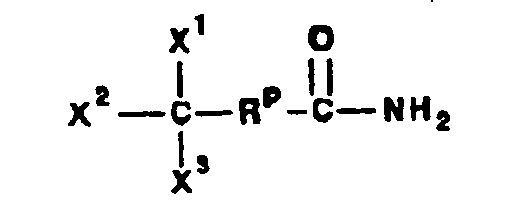
- Verfahren nach Anspruch 2,
worin n 0 ist und mindestens zwei von X1, X2 und X3 Halogen oder Perhalogenalkyl sind. - Verfahren nach Anspruch 2,
worin alle von X1, X2, X3, X4 und X5 Halogen oder Perhalogenalkyl sind. - Verfahren nach Anspruch 1,
worin der Peroxidaktivator ein Trihalogenacetamid ist. - Verfahren nach Anspruch 5,
worin der Peroxidaktivator Trichloracetamid ist. - Verfahren nach Anspruch 1,
worin die Substratverbindung der Formel : -A-A- die Gruppe -CHR4-CHR5- oder -CR4=CR5- darstellt,R3, R4 und R5 aus der Gruppe bestehend aus Wasserstoff, Halogen, Hydroxy, C1-C7-Alkyl, C1-C7-Alkoxy, Hydroxyalkyl, Alkoxyalkyl, Hydroxycarbonyl, Cyano und Aryloxy ausgewählt sind,R1 ein alphaorientiertes C1-C7-Alkoxycarbonyl- oder C1-C7-Hydroxycarbonylradikal darstellt,-B-B- die Gruppe -CHR6-CHR7- oder eine alpha- oder betaorientierte Gruppe:
 darstellt, worin R6 und R7 unabhängig voneinander aus der Gruppe bestehend aus Wasserstoff, Halogen, C1-C7-Alkoxy, Acyl, Hydroxyalkyl, Alkoxyalkyl, Hydroxycarbonyl, Alkyl, Alkoxycarbonyl, Acyloxyalkyl, Cyano und Aryloxy ausgewählt sind, undR8 und R9 unabhängig voneinander aus der Gruppe bestehend aus Wasserstoff, Halogen, C1-C7Alkoxy, Acyl, Hydroxyalkyl, Alkoxyalkyl, Hydroxycarbonyl, Alkyl, Alkoxycarbonyl, Acyloxyalkyl, Cyano, Aryloxy ausgewählt sind, oder R8 und R9 zusammen eine carbozyklische oder heterozyklische Ringstruktur umfassen, oder R8 oder R9 zusammen mit R6 oder R7 eine carbozyklische oder heterozyklische Ringstruktur umfassen, die an den pentazyklischen D-Ring angebunden ist.
 - Verfahren nach Anspruch 1,
worin die Substratverbindung aus der Gruppe bestehend aus: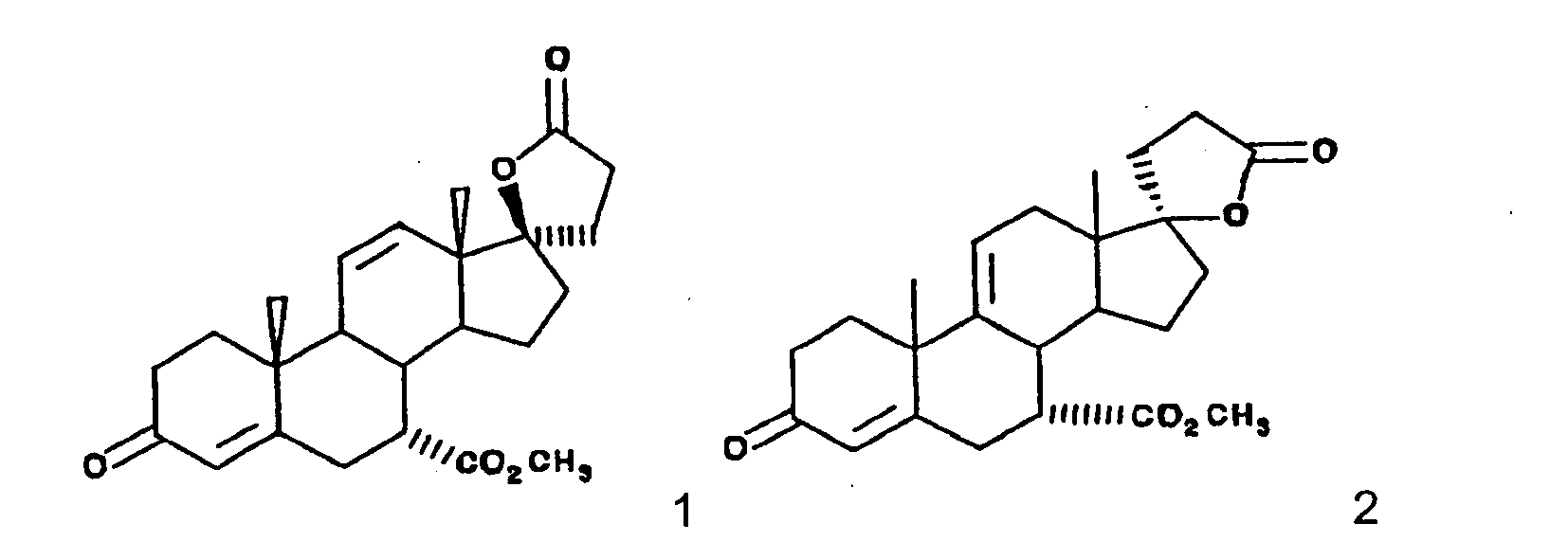

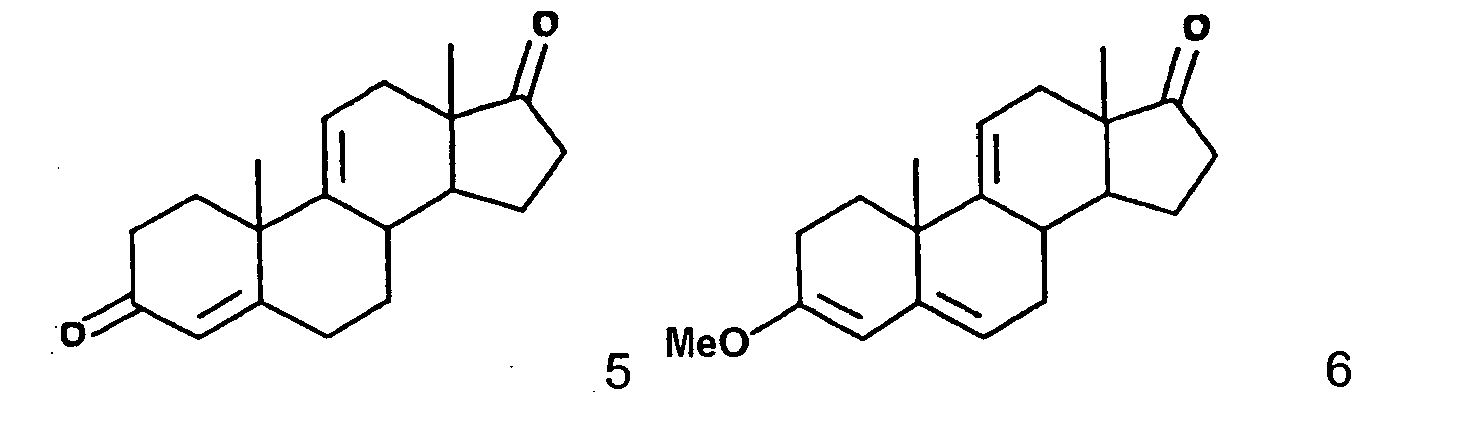
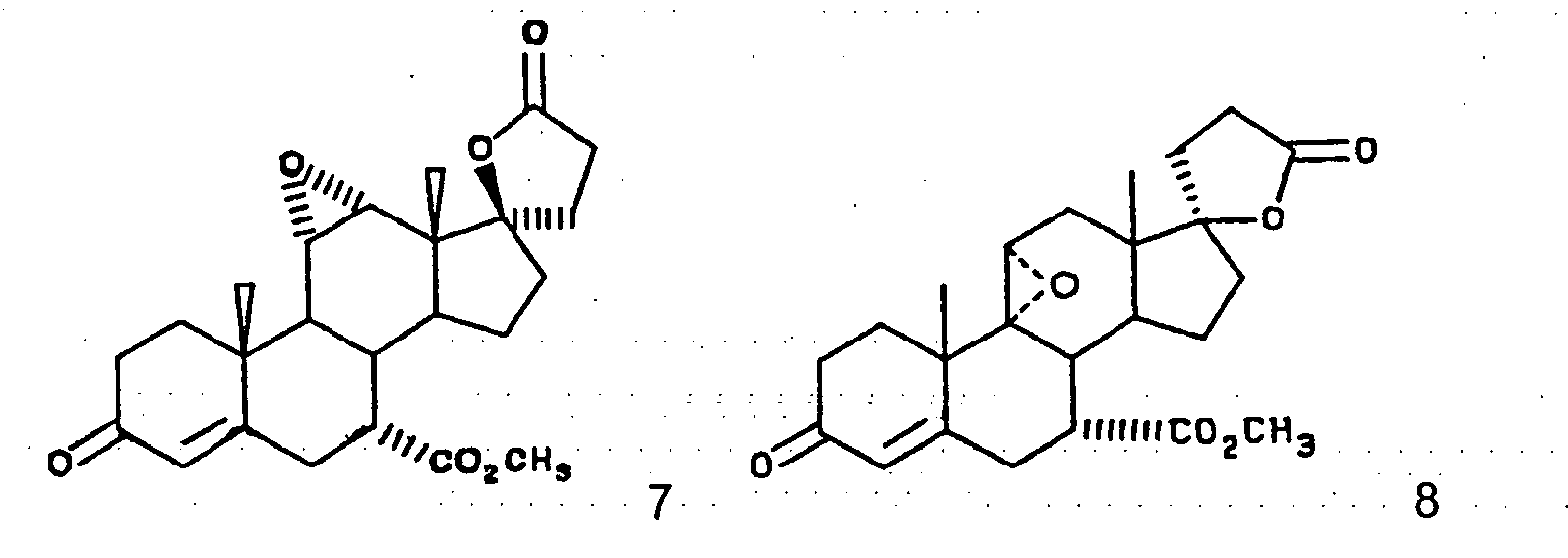
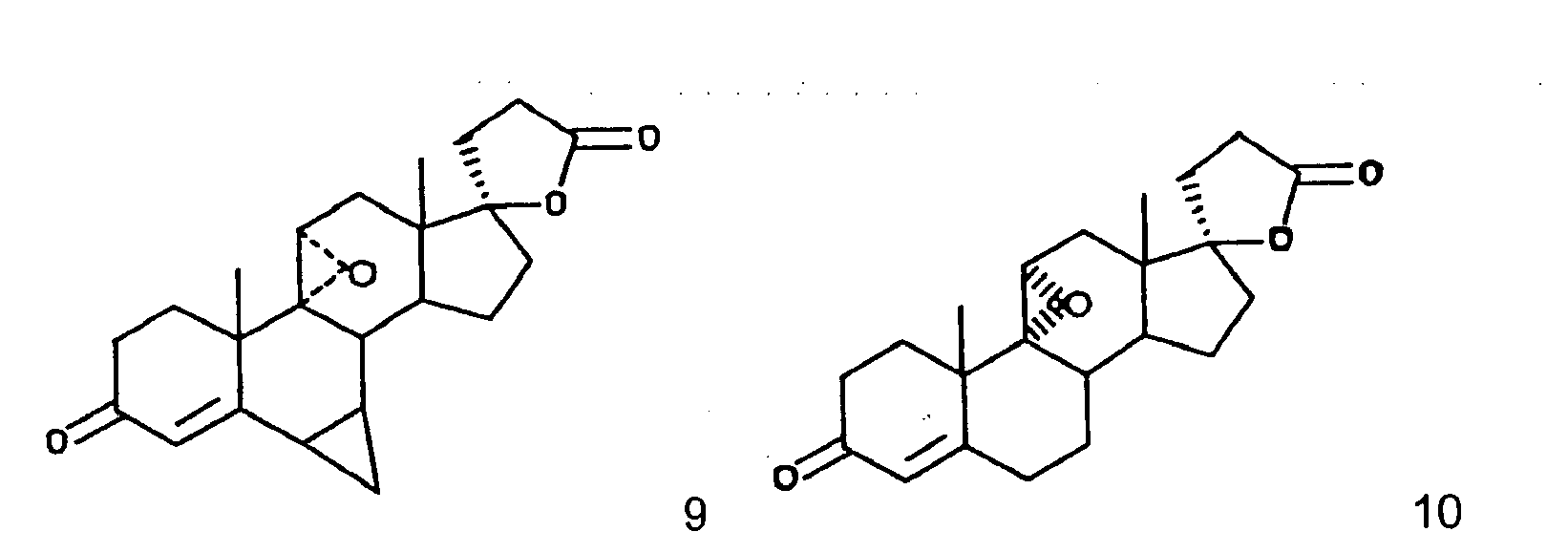

- Verfahren nach Anspruch 7,
worin die Verbindung der Formel II durch Entfernen einer 11α-Abgangsgruppe aus einer Verbindung der Formel IV: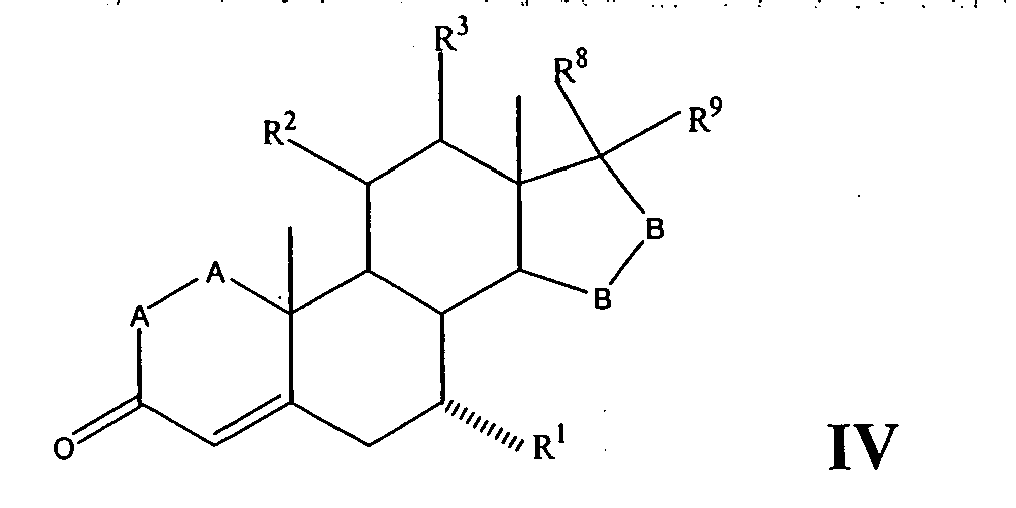 R1 ein alphaorientiertes C1-C7-Alkoxycarbonyl- oder C1-C7-Hydroxyalkylradikal darstellt;R2 ein C1-C7-Alkylsulfonyloxy oder C1-C7-Acyloxy oder ein Halogenid ist;-A-A- die Gruppe -CHR4=CHR5- oder -CR4=CR5- darstellt;R3, R4 und R5 unabhängig voneinander aus der Gruppe bestehend aus Wasserstoff, Halogen, Hydroxy, C1-C7-Alkyl, C1-C7-Alkoxy, Hydroxyalkyl, Alkoxyalkyl, Hydroxycarbonyl, Cyano und Aryloxy ausgewählt sind;-B-B- die Gruppe -CHR6-CHR7- oder eine alpha- oder betaorientierte Gruppe darstellt:
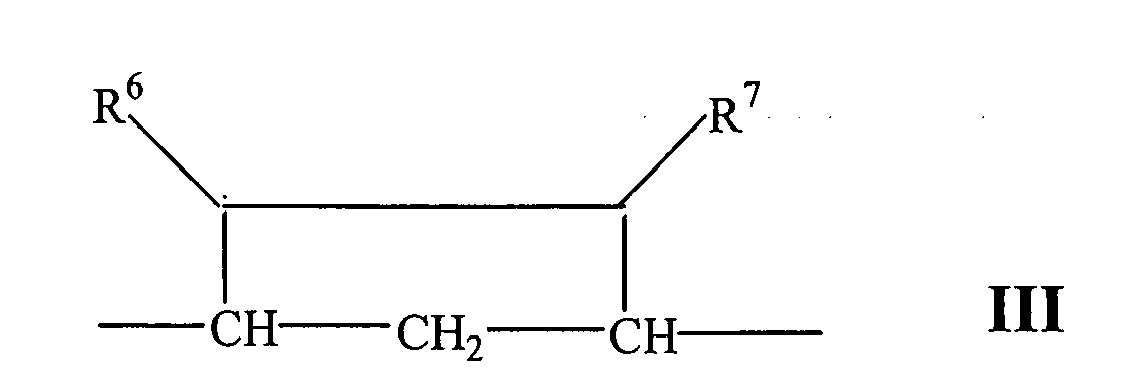 worin R6 und R7 unabhängig voneinander aus der Gruppe bestehend aus Wasserstoff, Halogen, C1-C7-Alkoxy, Acyl, Hydroxyalkyl, Alkoxyalkyl, Hydroxycarbonyl, Alkyl, Alkoxycarbonyl, Acyloxyalkyl, Cyano und Aryloxy ausgewählt sind; undR8 and R9 unabhängig voneinander aus der Gruppe bestehend aus Wasserstoff, Halogen, C1-C7-Alkoxy, Acyl, Hydroxyalkyl, Alkoxyalkyl, Hydroxycarbonyl, Alkyl, Alkoxycarbonyl, Acyloxyalkyl, Cyano und Aryloxy ausgewählt sind, oder R8 and R9 zusammen eine carbozyklische oder heterozyklische Ringstruktur umfassen, oder R8 oder R9 zusammen mit R6 oder R7 eine carbozyklische oder heterozyklische Ringstruktur umfassen, die an den pentazyklischen D-Ring angebunden ist.
 - Verfahren nach Anspruch 9,
worin die Verbindung der Formel IV durch Umsetzen eines C1-C7-Alkylsulfonierungs- oder C1-C7-Acylierungsmittels oder eines Halogenid generierenden Mittels und, falls ein Halogenid generierendes Mittel gegenwärtig ist, eines Halogenwasserstoffradikalfängers mit einer Verbindung der Formel V hergestellt wird: R1 ein alpha-orientiertes C1-C7-Alkoxycarbonyl- oder C1-C7-Hydroxyalkylradikal darstellt;-A-A- die Gruppe -CHR4-CHR5- oder -CR4=CR5- darstellt;R3, R4 and R5 unabhängig voneinander aus der Gruppe bestehend aus Wasserstoff, Halogen, Hydroxy, C1-C7-Alkyl, C1-C7-Alkoxy, Hydroxyalkyl, Alkoxyalkyl, Hydroxycarbonyl, Cyano und Aryloxy ausgewählt sind;-B-B- die Gruppe -CHR6-CHR7- oder eine alpha- oder betaorientierte Gruppe darstellt:
 worin R6 und R7 unabhängig voneinander aus der Gruppe bestehend aus Wasserstoff, Halogen, C1-C7-Alkoxy, Acyl, Hydroxyalkyl, Alkoxyalkyl, Hydroxycarbonyl, Alkyl, Alkoxycarbonyl, Acyloxyalkyl, Cyano und Aryloxy ausgewählt sind; undR8 und R9 unabhängig voneinander aus der Gruppe bestehend aus Wasserstoff, Halogen, C1-C7-Alkoxy, Acyl, Hydroxyalkyl, Alkoxyalkyl, Hydroxycarbonyl, Alkyl, Alkoxycarbonyl, Acyloxyalkyl, Cyano und Aryloxy ausgewählt sind, oder R8 und R9 zusammen eine carbozyklische oder heterozyklische Ringstruktur umfassen, oder R8 oder R9 zusammen mit R6 oder R7 eine carbozyklische oder heterozyklische Ringstruktur umfassen, die an den pentazyklischen D-Ring angebunden ist.
 - Verfahren nach Anspruch 10,
worin die Verbindung der Formel V durch Umsetzen einer Verbindung der Formel VI mit einem Alkalimetallalkoxid, das der Formel R10OM entspricht, hergestellt wird, worin M ein Alkalimetall und R10O- dem Alkoxysubstituenten von R1 entspricht, wobei die Verbindung der Formel VI die Struktur aufweist: -A-A- die Gruppe -CHR4-CHR5- oder -CR4=CR5- darstellt;R3, R4 und R5 unabhängig voneinander aus der Gruppe bestehend aus Wasserstoff, Halogen, Hydroxy, C1-C7-Alkyl, C1-C7-Alkoxy, Hydroxyalkyl, Alkoxyalkyl, Hydroxycarbonyl, Cyano und Aryloxy ausgewählt sind;-B-B- die Gruppe -CHR6-CHR7- oder eine alpha- oder betaorientierte Gruppe:
 darstellt, worin R6 und R7 unabhängig voneinander aus der Gruppe bestehend aus Wasserstoff, Halogen, C1-C7-Alkoxy, Acyl, Hydroxyalkyl, Alkoxyalkyl, Hydroxycarbonyl, Alkyl, .Alkoxycarbonyl, Acyloxyalkyl, Cyano und Aryloxy ausgewählt sind; undR8 und R9 unabhängig voneinander aus der Gruppe bestehend aus Wasserstoff, Halogen, C1-C7-Alkoxy, Acyl, Hydroxyalkyl, Alkoxyalkyl, Hydroxycarbonyl, Alkyl, Alkoxycarbonyl, Acyloxyalkyl, Cyano und Aryloxy ausgewählt sind, oder R8 und R9 zusammen eine carbozyklische oder heterozyklische Ringstruktur umfassen, oder R8 oder R9 zusammen mit R6 oder R7 eine carbozyklische oder heterozyklische Ringstruktur umfassen, die an den pentazyklischen D-Ring angebunden ist.
 - Verfahren nach Anspruch 11,
worin die Verbindung der Formel VI durch Hydrolysieren einer Verbindung hergestellt ist, die der Formel VII entspricht: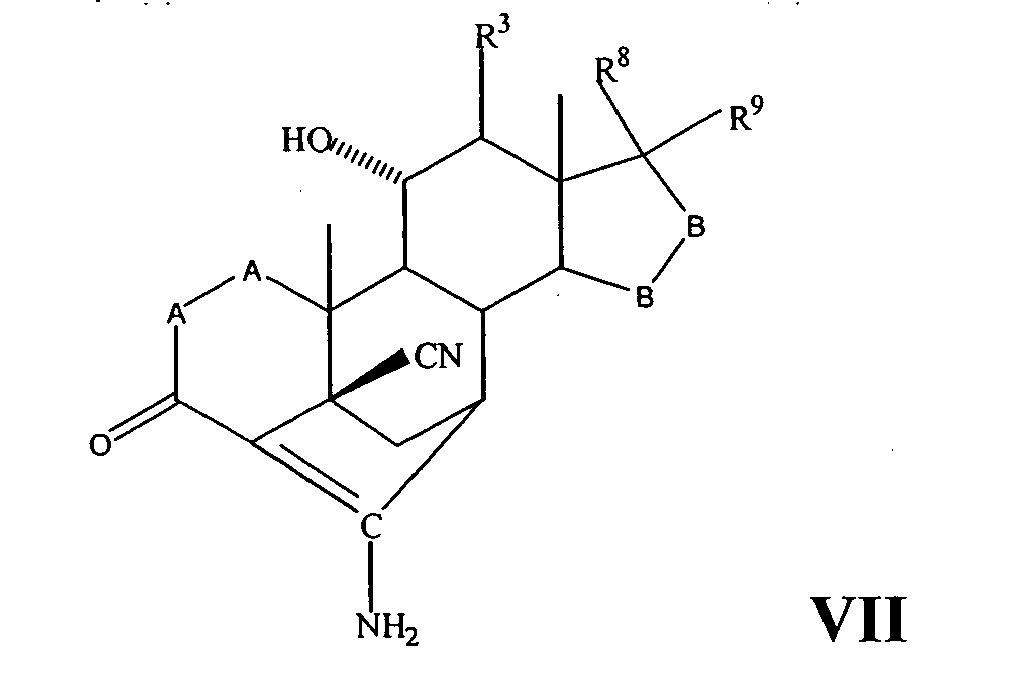 -A-A- die Gruppe -CHR4-CHR5- oder -CR4=CR5- darstellt,R3, R4 und R5 unabhängig voneinander aus der Gruppe bestehend aus Wasserstoff, Halogen, Hydroxy, C1-C7-Alkyl, C1-C7-Alkoxy, Hydroxyalkyl, Alkoxyalkyl, Hydroxycarbonyl, Cyano und Aryloxy ausgewählt sind;-B-B- die Gruppe -CHR6-CHR7- oder eine alpha- oder betaorientierte Gruppe
 worin R6 and R7 unabhängig voneinander aus der Gruppe bestehend aus Wasserstoff, Halogen, C1-C7-Alkoxy, Acyl, Hydroxyalkyl, Alkoxyalkyl, Hydroxycarbonyl, Alkyl, Alkoxycarbonyl, Acyloxyalkyl, Cyano und Aryloxy ausgewählt sind; undR8 and R9 unabhängig voneinander aus der Gruppe bestehend aus Wasserstoff, Halogen, C1-C7-Alkoxy, Acyl, Hydroxyalkyl, Alkoxyalkyl, Hydroxycarbonyl, Alkyl, Alkoxycarbonyl, Acyloxyalkyl, Cyano und Aryloxy ausgewählt sind, oder R8 und R9 zusammen eine carbozyklische oder heterozyklische Ringstruktur umfassen, oder R8 und R9 zusammen mit R6 oder R7 eine carbozyklische oder heterozyklische Ringstruktur umfassen, die an den pentazyklischen D-Ring angebunden ist.
 - Verfahren nach Anspruch 12,
worin die Verbindung der Formel VII durch Umsetzen einer Verbindung der Formel VIII mit einer Cyanidionenquelle in Gegenwart eines Alkalimetallsalzes hergestellt wird, wobei die Verbindung der Formel VIII die folgende Struktur aufweist: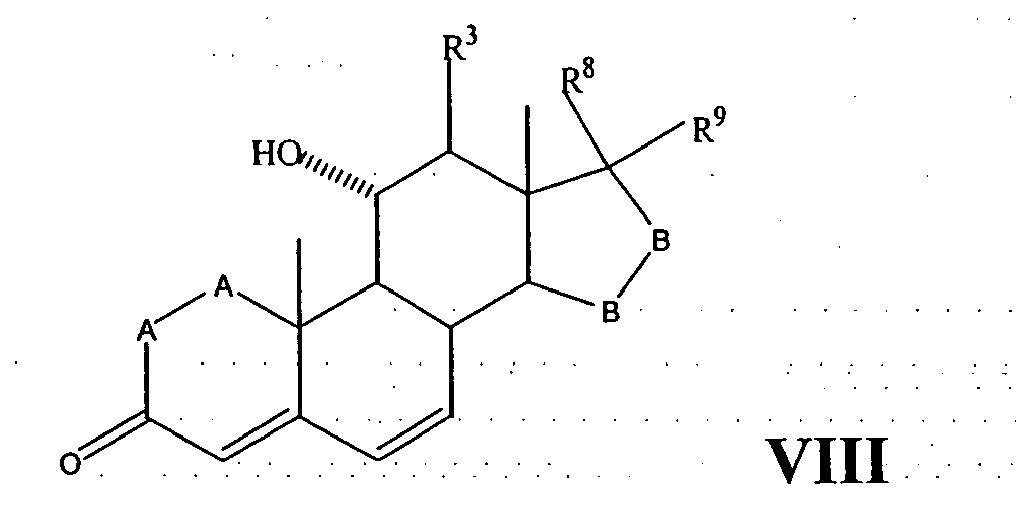 -A-A- die Gruppe -CHR4-CHR5- oder -CR4=CR 5- darstellt;R3, R4 und R5 unabhängig voneinander aus der Gruppe bestehend aus Wasserstoff, Halogen, Hydroxy, C1-C7-Alkyl, C1-C7-Alkoxy, Hydroxyalkyl, Alkoxyalkyl, Hydroxycarbonyl, Cyano und Aryloxy ausgewählt sind;-B-B- die Gruppe -CHR6-CHR7- oder an alpha- oder betaorientierte Gruppe
 darstellt, worin R6 und R7 unabhängig voneinander aus der Gruppe bestehend aus Wasserstoff, Halogen, C1-C7-Alkoxy, Acyl, Hydroxyalkyl, Alkoxyalkyl, Hydroxycarbonyl, Alkyl, Alkoxycarbonyl, Acyloxyalkyl, Cyano und Aryloxy ausgewählt sind; undR8 und R9 unabhängig voneinander aus der Gruppe bestehend aus Wasserstoff, Halogen, C1-C7-Alkoxy, Acyl, Hydroxyalkyl, Alkoxyalkyl, Hydroxycarbonyl, Alkyl, Alkoxycarbonyl, Acyloxyalkyl, Cyano und Aryloxy ausgewählt sind, oder R8 und R9 zusammen eine carbozyklische oder heterozyklische Ringstruktur umfassen, oder R8 oder R9 zusammen mit R6 oder R7 eine carbozyklische oder heterozyklische Ringstruktur umfassen, die an den pentazyklischen D-Ring angebunden ist.
 - Verfahren nach Anspruch 13,
worin die Verbindung der Formeln VIII durch Oxidieren einer Substratverbindung, die der Formel XIII entspricht, mittels Fermentation in Gegenwart eines Mikroorganismus, der zum Einführen einer 11-Hydroxy-Gruppe in das Substrat in α-Orientierung wirksam ist, hergestellt wird, wobei die Substratverbindung der folgenden Formel entspricht: -A-A die Gruppe -CHR4-CHR5- oder -CR4=CR5- darstellt,R3, R4 und R5 unabhängig voneinander aus der Gruppe bestehend aus Wasserstoff, Halogen, Hydroxy, C1-C7-Alkyl, C1-C7-Alkoxy, Hydroxyalkyl, Alkoxyalkyl, Hydroxycarbonyl, Cyano und Aryloxy ausgewählt sind;-B-B- die Gruppe -CHR6-CHR7- oder eine alpha- oder betaorientierte Gruppe darstellt:
 worin R6 und R7 unabhängig voneinander aus der Gruppe bestehend aus Wasserstoff, Halogen, C1-C7-Alkoxy, Acyl, Hydroxyalkyl, Alkoxyalkyl, Hydroxycarbonyl, Alkyl, Alkoxycarbonyl, Acyloxyalkyl, Cyano und Aryloxy ausgewählt sind; undR8 and R9 unabhängig voneinander aus der Gruppe bestehend aus Wasserstoff, Halogen, C1-C7-Alkoxy, Acyl, Hydroxyalkyl, Alkoxyalkyl, Hydroxycarbonyl, Alkyl, Alkoxycarbonyl, Acyloxyalkyl, Cyano, and Aryloxy ausgewählt sind, oder R8 und R9 zusammen eine carbozyklische oder heterozyklische Ringstruktur bilden, oder R8 oder R9 zusammen mit R6 oder R7 eine carbozyklische oder heterozyklische Ringstruktur bilden, die an den pentazyklischen D-Ring gebunden ist.
 - Verfahren nach Anspruch 1,
worin die Substratverbindung der Formel IIA entspricht: -A-A- die Gruppe -CH2-CH2- oder -CH=CH- darstellt,-B-B- die Gruppe -CH2-CH2- oder eine alpha- oder betaorientierte Gruppe darstellt:
 R1 ein alphaorientiertes C1-C7Alkoxycarbonyl- oder C1-C7-Hydroxycarbonylradikal darstellt.X zwei Wasserstoffatome oder Oxo darstellt,Y1 and Y2 zusammen die Sauerstoffbrücke -O- darstellen, oderY1 Hydroxy darstellt, undY2 Hydroxy, C1-C7-Alkoxy, oder, falls X H2 darstellt, ebenso C1-C7-Alkanoyloxy darstellt,und Salze der Verbindungen, worin X Oxo and y2 Hydroxy darstellt.
 - Verfahren nach Anspruch 15,
worin die Verbindung der Formel IIA durch Entfernen einer 11α-Abgangsgruppe aus einer Verbindung der Formel IVA hergestellt wird: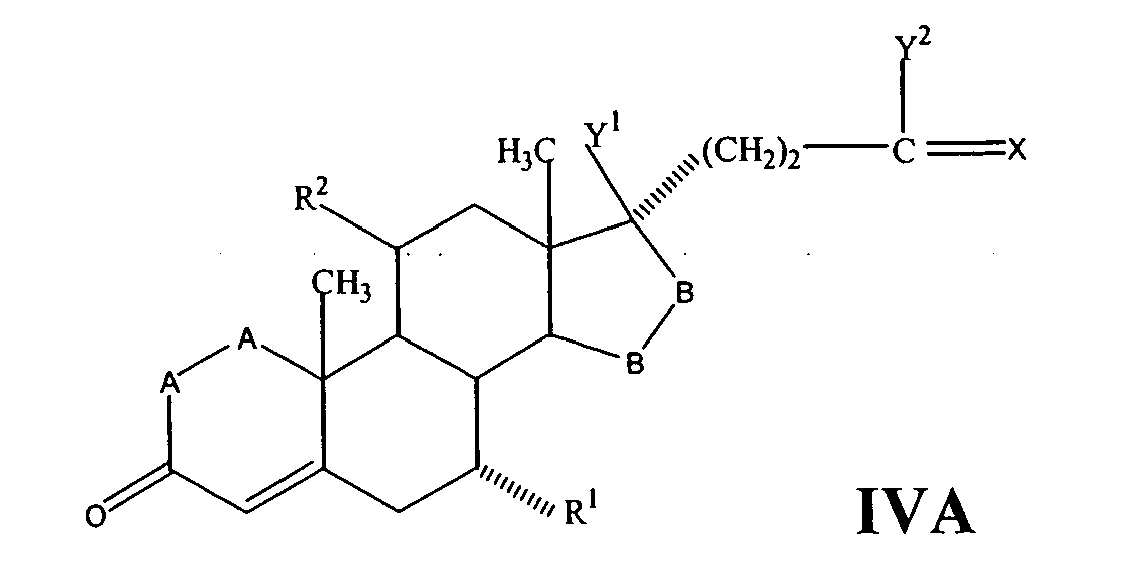 -A-A- die Gruppe -CH2-CH2- oder -CH=CH- darstellt,-B-B- die Gruppe -CH2-CH2- oder eine alpha- oder betaorientierte Gruppe darstellt:
 R1 ein alpha-orientiertes C1-C7-Alkoxycarbonyl- oder C1-C7-Hydroxycarbonylradikal darstellt,R2 C1-C7-Alkylsulfonyl oder C1-C7-Acyloxy ist,X zwei Wasserstoffatome oder Oxo darstellt,Y1 und Y2 zusammen die Sauerstoffbrücke -O- darstellen, oderY1 Hydroxy darstellt, undY2 Hydroxy, C1-C7-Alkoxy, oder,falls X H2 darstellt, ebenso C1-C7-Alkanoyloxy darstellt,und Salze der Verbindungen, worin X Oxo und Y2 Hydroxy darstellt.
 - Verfahren nach Anspruch 16,
worin die Verbindung der Formel IVA durch Umsetzen eines C1-C7-Alkylsulfonylierungs- oder Acylierungsmittels oder eines Halogenidgenerierenden Mittels und, falls ein Halogenid generierendes Mittel anwesend ist, ein Halogenwasserstoffradikalfänger mit einer Verbindung der Formel VA hergestellt wird: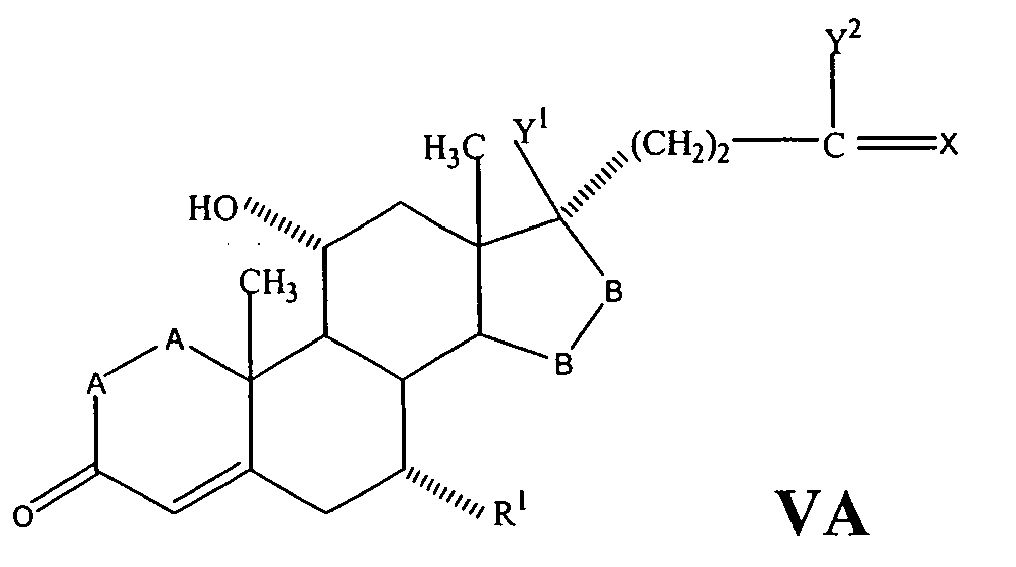 -A-A- die Gruppe -CH2-CH2- oder -CH=CH- darstellt,-B-B- die Gruppe -CH2-CH2- oder eine alpha- oder betaorientierte Gruppe darstellt:
 R1 ein alpha-orientiertes C1-C7-Alkoxycarbonyl- oder C1-C7-Hydroxycarbonylradikal darstellt,X zwei Wasserstoffatome oder Oxo darstellt,Y1 und Y2 zusammen die Sauerstoffbrücke -O- darstellen, oderY1 Hydroxy darstellt, undY2 Hydroxy, C1-C7-Alkoxy, oder, falls X H2 darstellt, ebenso C1-C7-Alkanoyloxy darstellt,und Salze der Verbindungen, worin X Oxo und Y2 Hydroxy darstellt.
 - Verfahren nach Anspruch 17,
worin die Verbindung der Formel VA durch Umsetzen einer Verbindung der Formel VIA mit einem Alkalimetallalkoxid, das der Formel R10OM entspricht, worin M ein Alkalimetall ist und R10O- dem Alkoxysubstituenten von R1 entspricht, hergestellt wird, wobei die Verbindung der Formel VIA die Struktur aufweist: -A-A- die Gruppe -CH2-CH2- oder -CH=CH- darstellt,-B-B- die Gruppe -CH2-CH2- oder eine alpha- oder betaorientierte Gruppe darstellt:
 X zwei Wasserstoffatome oder Oxo darstellt,Y1 and Y2 zusammen die Sauerstoffbrücke O darstellen, oderY1 Hydroxy darstellt, undY2 Hydroxy, C1-C7Alkoxy, oder, falls X H2 darstellt, auch C1-C7-Alkanoyloxy darstellt,und Salze der Verbindungen, worin X Oxo und Y2 Hydroxy darstellt.
 - Verfahren nach Anspruch 18,
worin die Verbindung der Formel VIA durch Hydrolysieren einer Verbindung hergestellt wird, die der Formel VIIA entspricht: -A-A- die Gruppe -CH2-CH2- oder -CH=CH- darstellt,-B-B- die Gruppe -CH2-CH2- oder eine alpha- oder beta- orientierte Gruppe darstellt:
 X zwei Wasserstoffatome oder Oxo darstellt,Y1 und Y2 zusammen die Sauerstoffbrücke -O-darstellen, oderY1 Hydroxy darstellt, undY2 Hydroxy, C1-C7-Alkoxy, oder, falls X H2 darstellt, ebenso C1-C7-Alkanoyloxy darstellt,und Salze der Verbindungen, worin X Oxo und Y2 Hydroxy darstellt.
 - Verfahren nach Anspruch 19,
worin die Verbindung der Formel VIIA durch Umsetzen einer Verbindung der Formel VIIIA mit einer Cyanidionenquelle in Gegenwart eines Alkalimetallsalzes hergestellt wird, wobei die Verbindung der Formel VIIIA die folgende Struktur aufweist: -A-A- die Gruppe -CH2-CH2- oder -CH=CH- darstellt,-B-B- die Gruppe -CH2-CH2- oder eine alpha- oder betaorientierte Gruppe darstellt:
 X zwei Wasserstoffatome oder Oxo darstellt,Y1 and Y2 zusammen die Sauerstoffbrücke -O- darstellen, oderY1 Hydroxy darstellt, undY2 Hydroxy, C1-C7-Alkoxy, oder, falls X H2darstellt, ebenso C1-C7-Alkanoyloxy darstellt,und Salze der Verbindungen, worin X Oxo und Y2 Hydroxy darstellt.
 - Verfahren nach Anspruch 1,
worin die Substratverbindung der Formel IIB entspricht:
- Verfahren nach Anspruch 21,
worin die Verbindung der Formel IIB durch Entfernen einer 11-Methylsulfonyloxy-Gruppe aus einer Verbindung der Formel IVB hergestellt ist:
- Verfahren nach Anspruch 22,
worin die Verbindung der Formel IVB durch Umsetzen eines C1-C7-Methylsulfonylierungsmittels mit einer Verbindung der Formel VB hergestellt wird:
- Verfahren nach Anspruch 23,
worin die Verbindung der Formel VB durch Umsetzen einer Verbindung der Formel VIB mit einem Alkalimetallmethoxid hergestellt wird, wobei die Verbindung der Formel VIB die folgende Struktur aufweist:
- Verfahren nach Anspruch 24,
worin die Verbindung der Formel VIB durch Hydrolysieren einer Verbindung hergestellt wird, die der Formel VIIB entspricht:
- Verfahren nach Anspruch 25,
worin die Verbindung der Formel VIIB durch Umsetzen einer Verbindung der Formel VIIIB mit einer Cyanidionenquelle in Gegenwart eines Alkalimetallsalzes hergestellt wird, wobei die Verbindung der Formel VIIIB die folgende Struktur aufweist:
- Verfahren nach einem der Ansprüche 7 bis 26, worin der Peroxidaktivator Trichloracetamid ist.
Priority Applications (3)
| Application Number | Priority Date | Filing Date | Title |
|---|---|---|---|
| EP01122428A EP1167380A3 (de) | 1995-12-11 | 1996-12-11 | 11.alpha.-Hydroxy-Steroid-4,6-dien-3-on Verbindungen und ein Verfahren zu ihrer Herstellung |
| EP01122427A EP1170299A3 (de) | 1995-12-11 | 1996-12-11 | Zwischenprodukte zur Herstellung von 9,11-Epoxysteroiden und Verfahren zu ihrer Herstellung |
| EP01122429A EP1167381A3 (de) | 1995-12-11 | 1996-12-11 | Verfahren zur Herstellung von 7-alpha-carboxyl 9,11-epoxy-steroiden und darin brauchbare Zwischenprodukte |
Applications Claiming Priority (5)
| Application Number | Priority Date | Filing Date | Title |
|---|---|---|---|
| US845595P | 1995-12-11 | 1995-12-11 | |
| US8455P | 1995-12-11 | ||
| PCT/US1996/020780 WO1997021720A2 (en) | 1995-12-11 | 1996-12-11 | Processes for preparation of 7 alpha-carboxyl 9,11-epoxy steroids and intermediates useful therein and a general process for the epoxidation of olifinic double bonds |
| US763910 | 1996-12-11 | ||
| US08/763,910 US5981744A (en) | 1995-12-11 | 1996-12-11 | Processes for preparation of 9,11-epoxy steroids and intermediates useful therein |
Related Child Applications (3)
| Application Number | Title | Priority Date | Filing Date |
|---|---|---|---|
| EP01122427A Division EP1170299A3 (de) | 1995-12-11 | 1996-12-11 | Zwischenprodukte zur Herstellung von 9,11-Epoxysteroiden und Verfahren zu ihrer Herstellung |
| EP01122429A Division EP1167381A3 (de) | 1995-12-11 | 1996-12-11 | Verfahren zur Herstellung von 7-alpha-carboxyl 9,11-epoxy-steroiden und darin brauchbare Zwischenprodukte |
| EP01122428A Division EP1167380A3 (de) | 1995-12-11 | 1996-12-11 | 11.alpha.-Hydroxy-Steroid-4,6-dien-3-on Verbindungen und ein Verfahren zu ihrer Herstellung |
Publications (2)
| Publication Number | Publication Date |
|---|---|
| EP0973791A2 EP0973791A2 (de) | 2000-01-26 |
| EP0973791B1 true EP0973791B1 (de) | 2007-06-20 |
Family
ID=26678218
Family Applications (1)
| Application Number | Title | Priority Date | Filing Date |
|---|---|---|---|
| EP96945103A Expired - Lifetime EP0973791B1 (de) | 1995-12-11 | 1996-12-11 | Verfahren zur herstellung einer epoxyverbindung |
Country Status (12)
| Country | Link |
|---|---|
| US (13) | US5981744A (de) |
| EP (1) | EP0973791B1 (de) |
| JP (2) | JP4146897B2 (de) |
| CN (1) | CN100384866C (de) |
| AT (1) | ATE365171T1 (de) |
| DE (1) | DE69637140T2 (de) |
| DK (1) | DK0973791T3 (de) |
| EA (1) | EA009176B1 (de) |
| ES (1) | ES2287943T3 (de) |
| IL (2) | IL124631A (de) |
| PT (1) | PT973791E (de) |
| WO (1) | WO1997021720A2 (de) |
Families Citing this family (42)
| Publication number | Priority date | Publication date | Assignee | Title |
|---|---|---|---|---|
| US20050267302A1 (en) * | 1995-12-11 | 2005-12-01 | G.D. Searle & Co. | Eplerenone crystalline form exhibiting enhanced dissolution rate |
| US20020038021A1 (en) * | 1995-12-11 | 2002-03-28 | Barton Kathleen P. | Eplerenone crystalline form exhibiting enhanced dissolution rate |
| DE69637140T2 (de) | 1995-12-11 | 2008-04-10 | G.D. Searle Llc, Chicago | Verfahren zur herstellung einer epoxy-verbindung |
| US20020045746A1 (en) * | 1995-12-11 | 2002-04-18 | Barton Kathleen P. | Eplerenone crystalline form |
| EP1148061B1 (de) * | 1996-12-11 | 2007-10-17 | G.D. Searle LLC. | Epoxidierungsverfahren |
| US6887991B1 (en) | 1996-12-11 | 2005-05-03 | G. D. Searle & Company | Processes for preparation of 9, 11-epoxy steroids and intermediates useful therein |
| KR100523409B1 (ko) * | 1996-12-11 | 2005-10-24 | 지.디. 썰 엘엘씨 | 9,11-에폭시 스테로이드의 제조방법 및 이 제조방법에유용한 중간체 |
| DK1955700T3 (da) | 1999-09-30 | 2011-05-23 | Harbor Biosciences Inc | Terapeutisk behandling af androgenreceptor-betingede lidelser |
| KR100584104B1 (ko) * | 1999-12-08 | 2006-05-30 | 파마시아 코포레이션 | 결정형 에플레레논 |
| US20030083493A1 (en) * | 1999-12-08 | 2003-05-01 | Barton Kathleen P. | Eplerenone drug substance having high phase purity |
| US6716829B2 (en) | 2000-07-27 | 2004-04-06 | Pharmacia Corporation | Aldosterone antagonist and cyclooxygenase-2 inhibitor combination therapy to prevent or treat inflammation-related cardiovascular disorders |
| DK1487859T3 (da) * | 2002-03-22 | 2008-10-06 | Pharmacia & Upjohn Co Llc | Fremstillingsmetoder til at fremstille Eplerenon |
| US7235655B2 (en) | 2002-03-22 | 2007-06-26 | Pharmacia & Upjohn Company | Processes to prepare eplerenone |
| US20070066579A1 (en) * | 2002-08-16 | 2007-03-22 | White Michael J | 5-androsten-3beta-ol steroid intermediates and processs for their preparation |
| EP1534732B1 (de) * | 2002-08-16 | 2006-09-13 | Pharmacia & Upjohn Company LLC | 5-androsten-3-olsteroidzwischenprodukte und verfahren zu deren herstellung |
| US7196208B2 (en) * | 2002-11-06 | 2007-03-27 | Peter Guillaume Marie Wuts | Processes for preparing 7-carboxy substituted steroids |
| CA2500580A1 (en) * | 2002-11-07 | 2004-05-27 | Pharmacia & Upjohn Company Llc | Processes for preparing c-7 substituted 5-androstenes |
| CL2004000574A1 (es) * | 2003-03-21 | 2005-02-11 | Pharmacia Corp Sa Organizada B | Proceso para preparar un compuesto 17-espirolactona o la sal de lactona abierta por carbonilacion del correspondiente 17-alquenil o alquinil derivado, los intermediarios que se usan y su proceso de obtencion. |
| US20040265948A1 (en) * | 2003-06-27 | 2004-12-30 | White Michael Jon | Microbial method for hydrolysis and oxidation of androst-5-ene and pregn-5-ene steroid esters |
| WO2005016912A1 (en) * | 2003-08-19 | 2005-02-24 | Pfizer Inc. | An efficient microbial preparation of capravirine metabolites m4 and m5 |
| CA2560389A1 (en) * | 2004-03-22 | 2005-10-06 | Pharmacia & Upjohn Company Llc | Improved process for the preparation of 9,11 epoxy steroids |
| CN1321128C (zh) * | 2005-07-15 | 2007-06-13 | 浙江医药股份有限公司新昌制药厂 | 孕甾-4-烯-7,21-二甲酸,9,11-环氧-17-羟基-3-氧代,γ-内酯,甲酯,(7α,11α,17α)-的制备方法 |
| WO2007025780A2 (en) * | 2005-09-02 | 2007-03-08 | Recordati Ireland Limited | Aldosterone receptor antagonists |
| US20080176269A1 (en) * | 2006-10-06 | 2008-07-24 | Mohler James L | Method for determination of DHT levels in tissue samples |
| US20080242856A1 (en) * | 2007-04-02 | 2008-10-02 | Funci Biotechnology Co., Ltd. | Extracts of taiwanofungus camphoratus with a capacity for inhibiting the activity of matrix metalloproteinases and method for preparing the same |
| HU227304B1 (en) * | 2007-07-04 | 2011-02-28 | Richter Gedeon Nyrt | Process for producing 9alpha-hydroxy-steroids |
| EP2367808A4 (de) * | 2008-11-25 | 2012-05-09 | Evestra Inc | PROGESTATIVE 3-(6,6-ETHYLEN-17b-HYDROXY-3-OXO-17a-PREGNA-4-EN-17a-YL) PROPIONSÄURE-g-LACTONE |
| JP6148175B2 (ja) | 2010-05-10 | 2017-06-14 | アンスティチュ ナショナル ドゥ ラ サンテ エ ドゥ ラ ルシェルシュ メディカル | 網膜中および/または網膜下における液体貯留の処置のための方法および組成物 |
| EP2582365B1 (de) | 2010-06-16 | 2019-03-20 | INSERM (Institut National de la Santé et de la Recherche Médicale) | Zusammensetzungen zur stimulierung der reepithelialisation während der wundheilung |
| CN104262450A (zh) * | 2014-09-19 | 2015-01-07 | 江苏嘉逸医药有限公司 | 依普利酮的制备及精制方法 |
| ES2699923T3 (es) | 2014-10-17 | 2019-02-13 | Ind Chimica Srl | Proceso para la preparación de 7alfa-(metoxicarbonil)-3-oxo-17alfa-pregn-4,9(11)-dien-21,17-carbolactona, un intermedio útil para la síntesis de moléculas con actividad farmacológica |
| WO2016063269A1 (en) | 2014-10-20 | 2016-04-28 | Prendergast Patrick T | Use of antagonists to the nuclear steroid receptor alone or in combination as direct antiviral agents to inhibit alphavirus, togaviridae, arenaviridae, filoviridae, bunyaviridae, flaviviridae and rhabdoviridae |
| WO2017055248A1 (en) | 2015-09-28 | 2017-04-06 | INSERM (Institut National de la Santé et de la Recherche Médicale) | Methods and pharmaceutical compositions for the treatment of heart failure |
| EP3362095B1 (de) | 2015-10-13 | 2020-11-25 | INSERM (Institut National de la Santé et de la Recherche Médicale) | Verfahren und pharmazeutische zusammensetzungen zur behandlung von choroidaler neovaskularisation |
| CN105753930A (zh) * | 2016-03-30 | 2016-07-13 | 北京万全德众医药生物技术有限公司 | 依普利酮的一种合成方法 |
| US20190262363A1 (en) | 2016-07-26 | 2019-08-29 | INSERM (Institut National de la Santé et de la Recherche Médicale | Antagonist of mineralocorticoid receptor for the treatment of osteoarthritis |
| CN106501388A (zh) * | 2016-09-22 | 2017-03-15 | 北京万全德众医药生物技术有限公司 | 一种用气相色谱法分离测定依普利酮中三氯乙酰胺的方法 |
| CN108085359B (zh) * | 2016-11-22 | 2020-07-24 | 保定九孚生化有限公司 | 一种11α-羟基-4-烯-3,17-雄甾二酮的生产方法 |
| CN110698529A (zh) * | 2019-11-19 | 2020-01-17 | 湖南新合新生物医药有限公司 | 一种依普利酮中间体△9,11烯酯的制备方法 |
| US20240366632A1 (en) | 2021-08-31 | 2024-11-07 | Institut National de la Santé et de la Recherche Médicale | Methods for the treatment of ocular rosacea |
| CN114235976B (zh) * | 2021-11-09 | 2023-11-03 | 暨南大学 | 一种含氮杂环有机化合物中间产物的合成和分析方法 |
| US12060148B2 (en) | 2022-08-16 | 2024-08-13 | Honeywell International Inc. | Ground resonance detection and warning system and method |
Family Cites Families (29)
| Publication number | Priority date | Publication date | Assignee | Title |
|---|---|---|---|---|
| US2602769A (en) | 1952-02-23 | 1952-07-08 | Upjohn Co | Oxygenation of steroids by mucorales fungi |
| US2691030A (en) * | 1952-03-28 | 1954-10-05 | Upjohn Co | 11 alpha-hydroxy-6-dehydroprogesterone and esters thereof |
| US3053856A (en) * | 1958-10-29 | 1962-09-11 | Shell Oil Co | Epoxidation of ethylenic compounds with peroxycarboximidic acids |
| US3095412A (en) * | 1961-12-19 | 1963-06-25 | Searle & Co | 9alpha, 11alpha-epoxy and 11beta-chloro-9alpha-hydroxy 17alpha-(2-carboxyethyl)-17beta-hydroxyandrost-4-en-3-one gamma-lactones and delta1 and delta6 analogs |
| US3120515A (en) * | 1962-05-31 | 1964-02-04 | Sterling Drug Inc | 5-cyano steroids, their preparation, and derivatives thereof |
| US3200113A (en) * | 1963-01-09 | 1965-08-10 | Sterling Drug Inc | 7-cyano steroids and derivatives thereof |
| US3300489A (en) * | 1964-07-24 | 1967-01-24 | Smith Kline French Lab | Steroidal c-17 spirolactones and processes and intermediates used in the preparation thereof |
| US3413288A (en) * | 1965-07-07 | 1968-11-26 | Parke Davis & Co | Process for the production of steroidal c-17 spirolactones |
| US3741990A (en) * | 1969-07-28 | 1973-06-26 | Upjohn Co | Organic compounds and processes |
| US3759791A (en) * | 1970-12-10 | 1973-09-18 | Searle & Co | Selective microbiological preparation of androst-4-ene-3,17-dione |
| DE2404946C3 (de) * | 1973-02-06 | 1978-03-02 | Roussel-Uclaf S.A., Paris | Verfahren zur Herstellung von 7alpha-Acylthio-Steroidspirolactonen |
| FR2216273B1 (de) * | 1973-02-06 | 1977-07-22 | Roussel Uclaf | |
| GB1455220A (de) * | 1973-09-14 | 1976-11-10 | Searle & Co | |
| DE2349022A1 (de) * | 1973-09-26 | 1975-04-10 | Schering Ag | Neue d-homo-steroide |
| FR2260569B1 (de) | 1974-02-08 | 1978-06-16 | Ugine Kuhlmann | |
| US3972871A (en) * | 1975-09-22 | 1976-08-03 | G. D. Searle & Co. | 6β,17-Dihydroxy-7α-(lower alkoxy)carbonyl-3-oxo-17α-pregn-4-ene-21-carboxylic acid γ-lactones and congeners |
| CH631462A5 (de) * | 1976-03-05 | 1982-08-13 | Schering Ag | Verfahren zur herstellung von neuen steroiden der androstan- oder oestranreihe. |
| US4069219A (en) | 1976-12-27 | 1978-01-17 | G. D. Searle & Co. | 7ξ-(Alkoxycarbonyl)-6ξ-alkyl/halo-17-hydroxy-3-oxo-17α-pregn-4-ene-21-carboxylic acid γ-lactones and corresponding 21-carboxylic acids, their salts, and esters |
| YU41412B (en) * | 1978-08-15 | 1987-04-30 | Gist Brocades Nv | Process for obtaining 17 beta-hydroxy -3-dxo-17 alpha-pregn-4-en-21-carboxylic acid |
| US4270994A (en) | 1980-02-20 | 1981-06-02 | G. D. Searle & Co. | Electrochemical dehydrogenation of steroidal Δ3,5 enol ethers under basic conditions to provide steroidal Δ4,6 dienones |
| JPS56120697A (en) * | 1980-02-28 | 1981-09-22 | Mitsubishi Chem Ind Ltd | Preparation of 4,6-diene-3-oxosteroid |
| JPS58179498A (ja) * | 1982-04-13 | 1983-10-20 | Dainippon Ink & Chem Inc | 微生物による11α−ヒドロキシル化アンドロスタン系化合物の製造方法 |
| FI77669C (fi) * | 1983-04-13 | 1989-04-10 | Ciba Geigy Ag | 20-spiroxaner och analoger, som innehaoller en oeppen ring e, foerfarande foer deras framstaellning samt dessa innehaollande farmaceutiska preparat. |
| EP0123734A1 (de) * | 1983-04-29 | 1984-11-07 | Gist-Brocades N.V. | 17-(Isocyano-sulfonylmethylen)-Steroide, 17-(Formamido-sulfonylmethylen)-Steroide und ihre Herstellung |
| US4670551A (en) * | 1984-06-21 | 1987-06-02 | Ciba-Geigy Corporation | Epoxy steroids |
| US5352809A (en) | 1986-10-10 | 1994-10-04 | Gist-Brocades N.V. | 9-alpha-hydroxy steroids, process for their preparation, process for the preparation of the corresponding 9(11)-dehydro derivatives and pharmaceutical preparations containing such steroids |
| US5502222A (en) * | 1994-06-01 | 1996-03-26 | Schering Corporation | Process for preparing delta 9,11 and 21-chloro corticosteroids |
| US5565558A (en) * | 1994-12-30 | 1996-10-15 | Mccully; Kilmer S. | Thioretinaco ozonide and enhanced biological activity of thioretinaco ozonide in combination with interferon |
| DE69637140T2 (de) | 1995-12-11 | 2008-04-10 | G.D. Searle Llc, Chicago | Verfahren zur herstellung einer epoxy-verbindung |
-
1996
- 1996-12-11 DE DE69637140T patent/DE69637140T2/de not_active Expired - Fee Related
- 1996-12-11 IL IL12463196A patent/IL124631A/en not_active IP Right Cessation
- 1996-12-11 DK DK96945103T patent/DK0973791T3/da active
- 1996-12-11 ES ES96945103T patent/ES2287943T3/es not_active Expired - Lifetime
- 1996-12-11 WO PCT/US1996/020780 patent/WO1997021720A2/en not_active Ceased
- 1996-12-11 PT PT96945103T patent/PT973791E/pt unknown
- 1996-12-11 AT AT96945103T patent/ATE365171T1/de not_active IP Right Cessation
- 1996-12-11 EP EP96945103A patent/EP0973791B1/de not_active Expired - Lifetime
- 1996-12-11 US US08/763,910 patent/US5981744A/en not_active Expired - Fee Related
- 1996-12-11 JP JP52230497A patent/JP4146897B2/ja not_active Expired - Fee Related
- 1996-12-11 EA EA199800449A patent/EA009176B1/ru not_active IP Right Cessation
- 1996-12-11 CN CNB961999616A patent/CN100384866C/zh not_active Expired - Fee Related
-
1999
- 1999-02-08 US US09/246,204 patent/US6331622B1/en not_active Expired - Fee Related
- 1999-02-09 US US09/246,908 patent/US6180780B1/en not_active Expired - Fee Related
-
2000
- 2000-05-30 US US09/583,158 patent/US6335441B1/en not_active Expired - Fee Related
- 2000-05-30 US US09/583,137 patent/US6258946B1/en not_active Expired - Fee Related
-
2001
- 2001-04-03 US US09/826,406 patent/US20020016455A1/en not_active Abandoned
- 2001-04-04 US US09/826,434 patent/US20020019522A1/en not_active Abandoned
- 2001-08-07 US US09/923,977 patent/US6630587B2/en not_active Expired - Fee Related
- 2001-08-31 US US09/943,117 patent/US6586591B2/en not_active Expired - Fee Related
-
2003
- 2003-06-27 US US10/608,101 patent/US7038040B2/en not_active Expired - Fee Related
- 2003-09-26 US US10/672,680 patent/US6953851B2/en not_active Expired - Fee Related
-
2005
- 2005-06-20 US US11/156,418 patent/US7129345B2/en not_active Expired - Fee Related
-
2006
- 2006-04-27 IL IL175299A patent/IL175299A0/en unknown
- 2006-07-21 US US11/459,040 patent/US20070060746A1/en not_active Abandoned
-
2007
- 2007-10-12 JP JP2007265977A patent/JP2008100996A/ja not_active Withdrawn
Also Published As
Similar Documents
| Publication | Publication Date | Title |
|---|---|---|
| EP0973791B1 (de) | Verfahren zur herstellung einer epoxyverbindung | |
| US6610844B2 (en) | Processes for preparation of 9,11-epoxy steroids and intermediates useful therein | |
| US7112669B2 (en) | Processes for preparation of 9,11-epoxy steroids and intermediates useful therein | |
| EP1170299A2 (de) | Zwischenprodukte zur Herstellung von 9,11-Epoxysteroiden und Verfahren zu ihrer Herstellung | |
| EP1148061B1 (de) | Epoxidierungsverfahren | |
| CA2347345C (en) | Process for preparation of 7 alpha-carboxyl 9,11-epoxy steroids and intermediates useful therein and a general process for the epoxidation of olefinic double bonds | |
| AU2002300873B2 (en) | Processes for preparation of 9, 11-epoxy steriods and intermediates useful therein | |
| AU744223B2 (en) | Process for the epoxidation of olefinic double bonds | |
| IL158857A (en) | Processes for preparation of steroids and intermediates useful therein | |
| CA2553379A1 (en) | Processes for preparation of 7 alpha-carboxyl 9,11-epoxy steroids and intermediates useful therein and a general process for the epoxidation of olifinic double bonds |
Legal Events
| Date | Code | Title | Description |
|---|---|---|---|
| PUAI | Public reference made under article 153(3) epc to a published international application that has entered the european phase |
Free format text: ORIGINAL CODE: 0009012 |
|
| 17P | Request for examination filed |
Effective date: 19980618 |
|
| AK | Designated contracting states |
Kind code of ref document: A2 Designated state(s): AT BE CH DE DK ES FI FR GB GR IE IT LI LU NL PT SE |
|
| 17Q | First examination report despatched |
Effective date: 20000620 |
|
| RAP1 | Party data changed (applicant data changed or rights of an application transferred) |
Owner name: G.D. SEARLE LLC. |
|
| GRAP | Despatch of communication of intention to grant a patent |
Free format text: ORIGINAL CODE: EPIDOSNIGR1 |
|
| RTI1 | Title (correction) |
Free format text: PROCESS FOR THE PREPARATION OF AN EPOXY COMPOUND |
|
| GRAS | Grant fee paid |
Free format text: ORIGINAL CODE: EPIDOSNIGR3 |
|
| GRAA | (expected) grant |
Free format text: ORIGINAL CODE: 0009210 |
|
| AK | Designated contracting states |
Kind code of ref document: B1 Designated state(s): AT BE CH DE DK ES FI FR GB GR IE IT LI LU NL PT SE |
|
| REG | Reference to a national code |
Ref country code: GB Ref legal event code: FG4D |
|
| REG | Reference to a national code |
Ref country code: CH Ref legal event code: EP |
|
| REG | Reference to a national code |
Ref country code: IE Ref legal event code: FG4D |
|
| REF | Corresponds to: |
Ref document number: 69637140 Country of ref document: DE Date of ref document: 20070802 Kind code of ref document: P |
|
| REG | Reference to a national code |
Ref country code: DK Ref legal event code: T3 |
|
| REG | Reference to a national code |
Ref country code: PT Ref legal event code: SC4A Free format text: AVAILABILITY OF NATIONAL TRANSLATION Effective date: 20070913 |
|
| REG | Reference to a national code |
Ref country code: SE Ref legal event code: TRGR |
|
| REG | Reference to a national code |
Ref country code: CH Ref legal event code: NV Representative=s name: ISLER & PEDRAZZINI AG |
|
| REG | Reference to a national code |
Ref country code: GR Ref legal event code: EP Ref document number: 20070402740 Country of ref document: GR |
|
| ET | Fr: translation filed | ||
| REG | Reference to a national code |
Ref country code: ES Ref legal event code: FG2A Ref document number: 2287943 Country of ref document: ES Kind code of ref document: T3 |
|
| PLBE | No opposition filed within time limit |
Free format text: ORIGINAL CODE: 0009261 |
|
| STAA | Information on the status of an ep patent application or granted ep patent |
Free format text: STATUS: NO OPPOSITION FILED WITHIN TIME LIMIT |
|
| 26N | No opposition filed |
Effective date: 20080325 |
|
| PGFP | Annual fee paid to national office [announced via postgrant information from national office to epo] |
Ref country code: NL Payment date: 20081111 Year of fee payment: 13 Ref country code: LU Payment date: 20081021 Year of fee payment: 13 Ref country code: IE Payment date: 20081016 Year of fee payment: 13 Ref country code: DK Payment date: 20081112 Year of fee payment: 13 Ref country code: CH Payment date: 20081028 Year of fee payment: 13 |
|
| PGFP | Annual fee paid to national office [announced via postgrant information from national office to epo] |
Ref country code: PT Payment date: 20081006 Year of fee payment: 13 Ref country code: FI Payment date: 20081112 Year of fee payment: 13 Ref country code: ES Payment date: 20081217 Year of fee payment: 13 Ref country code: AT Payment date: 20081110 Year of fee payment: 13 |
|
| PGFP | Annual fee paid to national office [announced via postgrant information from national office to epo] |
Ref country code: IT Payment date: 20081216 Year of fee payment: 13 Ref country code: SE Payment date: 20081208 Year of fee payment: 13 |
|
| PGFP | Annual fee paid to national office [announced via postgrant information from national office to epo] |
Ref country code: FR Payment date: 20081205 Year of fee payment: 13 |
|
| PGFP | Annual fee paid to national office [announced via postgrant information from national office to epo] |
Ref country code: DE Payment date: 20081230 Year of fee payment: 13 |
|
| PGFP | Annual fee paid to national office [announced via postgrant information from national office to epo] |
Ref country code: GR Payment date: 20081014 Year of fee payment: 13 Ref country code: GB Payment date: 20081110 Year of fee payment: 13 |
|
| PGFP | Annual fee paid to national office [announced via postgrant information from national office to epo] |
Ref country code: BE Payment date: 20090112 Year of fee payment: 13 |
|
| REG | Reference to a national code |
Ref country code: PT Ref legal event code: MM4A Free format text: LAPSE DUE TO NON-PAYMENT OF FEES Effective date: 20100611 |
|
| BERE | Be: lapsed |
Owner name: G.D. SEARLE LLC. Effective date: 20091231 |
|
| REG | Reference to a national code |
Ref country code: NL Ref legal event code: V1 Effective date: 20100701 |
|
| EUG | Se: european patent has lapsed | ||
| PG25 | Lapsed in a contracting state [announced via postgrant information from national office to epo] |
Ref country code: PT Free format text: LAPSE BECAUSE OF NON-PAYMENT OF DUE FEES Effective date: 20100611 |
|
| REG | Reference to a national code |
Ref country code: CH Ref legal event code: PL |
|
| REG | Reference to a national code |
Ref country code: DK Ref legal event code: EBP |
|
| GBPC | Gb: european patent ceased through non-payment of renewal fee |
Effective date: 20091211 |
|
| PG25 | Lapsed in a contracting state [announced via postgrant information from national office to epo] |
Ref country code: FI Free format text: LAPSE BECAUSE OF NON-PAYMENT OF DUE FEES Effective date: 20091211 Ref country code: AT Free format text: LAPSE BECAUSE OF NON-PAYMENT OF DUE FEES Effective date: 20091211 |
|
| REG | Reference to a national code |
Ref country code: FR Ref legal event code: ST Effective date: 20100831 |
|
| PG25 | Lapsed in a contracting state [announced via postgrant information from national office to epo] |
Ref country code: NL Free format text: LAPSE BECAUSE OF NON-PAYMENT OF DUE FEES Effective date: 20100701 Ref country code: LI Free format text: LAPSE BECAUSE OF NON-PAYMENT OF DUE FEES Effective date: 20091231 Ref country code: IE Free format text: LAPSE BECAUSE OF NON-PAYMENT OF DUE FEES Effective date: 20091211 Ref country code: FR Free format text: LAPSE BECAUSE OF NON-PAYMENT OF DUE FEES Effective date: 20091231 Ref country code: CH Free format text: LAPSE BECAUSE OF NON-PAYMENT OF DUE FEES Effective date: 20091231 Ref country code: BE Free format text: LAPSE BECAUSE OF NON-PAYMENT OF DUE FEES Effective date: 20091231 |
|
| PG25 | Lapsed in a contracting state [announced via postgrant information from national office to epo] |
Ref country code: DE Free format text: LAPSE BECAUSE OF NON-PAYMENT OF DUE FEES Effective date: 20100701 |
|
| PG25 | Lapsed in a contracting state [announced via postgrant information from national office to epo] |
Ref country code: GB Free format text: LAPSE BECAUSE OF NON-PAYMENT OF DUE FEES Effective date: 20091211 |
|
| PG25 | Lapsed in a contracting state [announced via postgrant information from national office to epo] |
Ref country code: DK Free format text: LAPSE BECAUSE OF NON-PAYMENT OF DUE FEES Effective date: 20100104 |
|
| PG25 | Lapsed in a contracting state [announced via postgrant information from national office to epo] |
Ref country code: IT Free format text: LAPSE BECAUSE OF NON-PAYMENT OF DUE FEES Effective date: 20091211 |
|
| REG | Reference to a national code |
Ref country code: ES Ref legal event code: FD2A Effective date: 20110401 |
|
| PG25 | Lapsed in a contracting state [announced via postgrant information from national office to epo] |
Ref country code: LU Free format text: LAPSE BECAUSE OF NON-PAYMENT OF DUE FEES Effective date: 20091211 |
|
| PG25 | Lapsed in a contracting state [announced via postgrant information from national office to epo] |
Ref country code: SE Free format text: LAPSE BECAUSE OF NON-PAYMENT OF DUE FEES Effective date: 20091212 |
|
| PG25 | Lapsed in a contracting state [announced via postgrant information from national office to epo] |
Ref country code: ES Free format text: LAPSE BECAUSE OF NON-PAYMENT OF DUE FEES Effective date: 20110321 |
|
| PG25 | Lapsed in a contracting state [announced via postgrant information from national office to epo] |
Ref country code: ES Free format text: LAPSE BECAUSE OF NON-PAYMENT OF DUE FEES Effective date: 20091212 |