EP0959638A2 - Verfahren und Vorrichtung zur Ablehnung von einkommende Anrufen - Google Patents
Verfahren und Vorrichtung zur Ablehnung von einkommende Anrufen Download PDFInfo
- Publication number
- EP0959638A2 EP0959638A2 EP99303878A EP99303878A EP0959638A2 EP 0959638 A2 EP0959638 A2 EP 0959638A2 EP 99303878 A EP99303878 A EP 99303878A EP 99303878 A EP99303878 A EP 99303878A EP 0959638 A2 EP0959638 A2 EP 0959638A2
- Authority
- EP
- European Patent Office
- Prior art keywords
- transmission
- incoming call
- mobile phone
- call
- rejected
- Prior art date
- Legal status (The legal status is an assumption and is not a legal conclusion. Google has not performed a legal analysis and makes no representation as to the accuracy of the status listed.)
- Withdrawn
Links
Images


Classifications
-
- H—ELECTRICITY
- H04—ELECTRIC COMMUNICATION TECHNIQUE
- H04W—WIRELESS COMMUNICATION NETWORKS
- H04W4/00—Services specially adapted for wireless communication networks; Facilities therefor
- H04W4/20—Services signaling; Auxiliary data signalling, i.e. transmitting data via a non-traffic channel
-
- H—ELECTRICITY
- H04—ELECTRIC COMMUNICATION TECHNIQUE
- H04M—TELEPHONIC COMMUNICATION
- H04M1/00—Substation equipment, e.g. for use by subscribers
- H04M1/66—Substation equipment, e.g. for use by subscribers with means for preventing unauthorised or fraudulent calling
- H04M1/663—Preventing unauthorised calls to a telephone set
-
- H—ELECTRICITY
- H04—ELECTRIC COMMUNICATION TECHNIQUE
- H04M—TELEPHONIC COMMUNICATION
- H04M1/00—Substation equipment, e.g. for use by subscribers
- H04M1/57—Arrangements for indicating or recording the number of the calling subscriber at the called subscriber's set
Definitions
- the present invention relates generally to call processing techniques in cellular telecommunications systems. More particularly, the present invention relates to apparatus, and associated method, for rejecting incoming calls to a mobile communications device within a cellular telecommunications system.
- Wireless telecommunications systems provide a convenient way for users to communicate when landline phones are unavailable. What was once an expensive luxury is now an affordable convenience. By simply carrying a small, lightweight mobile communications device, users may place or receive calls of excellent quality in any geographic region offering such wireless service.
- wireless telecommunications systems are made up of a series of base stations connected to landline telecommunications networks through the use of base station controllers.
- the base stations have the capacity to communicate with each other via the base station controllers and to establish a fixed number of radio frequency (RF) communications channels with remote mobile phones.
- RF communications channels act as a conduit by which the mobile phones may ultimately communicate with landline phones.
- CDMA Code Division Multiple Access
- IS-95 Code Division Multiple Access
- analog voice signals are converted to the digital domain, orthogonally encoded and then spread by a pseudo-random spreading signal so as to occupy a 1.23 MHz frequency band. From this spread signal, in-phase and quadrature phase signals are generated which are then combined and modulated onto RF carrier signals for transmission between remote mobile stations and fixed base stations.
- the base station acts as an intermediary by alerting the mobile of the attempted call via at least one RF channel. After alerting the mobile, the base station waits for a fixed time period, which defines a ringing cycle, to receive a response from the mobile. The response indicates the mobile is ready to accept the call. If the mobile does not respond within the ringing cycle time period, the base station releases the call by terminating the call alert to the mobile and signaling to the caller that the mobile is unavailable. During the ringing cycle, the mobile phone produces an audible ringing or mechanical vibration to alert the mobile phone user of the incoming call.
- a response is sent from the mobile to the base station indicating that the call is to be accepted.
- the base station sets up a connection on the existing RF channel or establishes a second RF channel where the call will ultimately be connected.
- the call alert to the mobile phone may be identification information about the caller, sometimes referred to as caller ID.
- This identification information can be displayed by the mobile phone allowing the mobile phone user to determine who is calling before the call is answered. If the mobile phone user decides not to receive calls from specific callers, the identification information can be viewed, and if desired, the incoming call can be left unanswered for the entire ringing cycle.
- One of the major benefits to users of mobile phones is the ability to place or receive calls without being restricted to a fixed location as when using a landline phone. So long as the mobile phone maintains an RF communication channel with at least one base station, communication services are generally available. This allows mobile users to send and receive calls when away from their home or office and even while traveling in automobiles.
- a call-waiting feature may be implemented in a mobile phone system.
- a user of a mobile phone may be connected and in active communication with a first caller when a second caller attempts a call to the same mobile phone.
- a ringing cycle occurs where the mobile phone user receives a call alert indicating that there is an incoming call.
- the mobile phone user may then switch over to the second call and put the first call on hold, or may ignore the second call and continue on the first call. If the second call is not answered, the call alert to the mobile phone user will continue for a time period defining the ringing cycle. Unless the mobile phone user answers the second call, there is currently no way to terminate the call alert until the ringing cycle is complete.
- Such a method and apparatus should provide the user an automatic mode of rejection and a manual mode of rejection.
- the automatic mode should allow the user to preprogram the mobile phone with information descriptive of calling stations whose calls are to be rejected.
- the mobile phone should automatically reject the call.
- the preprogrammed information should include wild card characters, thereby allowing entire groups of calling stations to be rejected from a single entry.
- the method and apparatus should allow a user to manually reject any incoming call as desired.
- the user can conveniently and effectively screen incoming calls, prevent undesirable audible ringing and minimize unnecessary utilization of the phone.
- the present invention provides a method and apparatus for rejecting calls to a mobile communications device.
- Incoming calls received by the mobile device may contain information that is descriptive of the origin of the call. Based on the descriptive information, automatic rejection can occur. Additionally, a manual rejection feature is provided to allow the user to reject any call as desired.
- the mobile phone comprises an input actuator, a rejection memory and a message processor.
- the rejection memory contains information descriptive of calling stations whose calls are to be rejected.
- identification information associated with an incoming call is compared with identification information stored in the rejection memory. A determination is made, and if the incoming call is to be rejected, the message processor automatically transmits a rejection message from the mobile station to the base station.
- the manual mode upon receipt of an incoming call, the user may immediately actuate the input actuator. This causes the message processor to immediately transmit the rejection message to the base station. Once the base station receives the rejection message, the call is released by the base station and the caller is notified of the unavailability of the mobile.
- the method and apparatus is especially suited to provide convenience to the mobile user by allowing unwanted calls to be easily rejected.
- a method of selectably rejecting an incoming call to a mobile phone has a transceiver circuit for transmitting and receiving transmissions with a remote transceiver.
- An incoming transmission is selectively rejected in a process beginning when the incoming transmission from the remote transceiver is received by the mobile phone.
- a determination is made at the mobile phone whether the incoming transmission is to be rejected. If it is determined that the incoming transmission is to be rejected, a rejection message is transmitted to the remote transceiver, wherein the rejection message indicates to the remote transceiver that the incoming transmission is to be rejected.
- a method of selectably rejecting an incoming call to a mobile phone said mobile phone having a transceiver circuit for transmitting and receiving transmissions to and from a remote transceiver, said method comprising the steps of:
- a method of rejecting an incoming call to a mobile phone said mobile phone having a transceiver circuit for transmitting and receiving transmissions to and from a remote transceiver, said mobile phone in communication with a first calling station via the remote transceiver, said method comprising the steps of:
- a mobile communications device for selectably rejecting an incoming call, said apparatus comprising:
- a method of selectably terminating a transmission transmitted from a base station said base station having a transceiver circuit for transmitting and receiving transmissions to and from at least a first remote station and a second remote station, said method comprising the steps of:
- a method for selectably rejecting a transmission in a cellular communications system said cellular communications system having a base station capable of two-way communication over a radio frequency link with a remote station, said method comprising the steps of:
- Another advantage of this invention is the provision of a method and apparatus allowing mobile phone users to selectively reject incoming calls, wherein the determination process is done at the mobile phone.
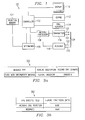
- Apparatus 100 for rejecting an incoming call according to an embodiment of the invention.
- Apparatus 100 comprises controller 102, rejection memory 104, determiner 106, message processor 108, display 110, keypad 112, call indicator 114, transmitter 116 and receiver 118.
- Transmitter 116 and receiver 118 are used to communicate with a base station over communication channel 124.
- Transmitter 116 is capable of transmitting information from the mobile phone to the base station over access channel 120 and reverse traffic channel 121.
- Receiver 118 is capable of receiving information transmitted from the base station to the mobile station over paging channel 122 and forward traffic channel 123.
- the combination of channels 120, 121, 122 and 123 comprise communication channel 124.
- a registration process occurs.
- the registration process comprises a series of messages sent between the base station and the remote mobile station over communication channel 124.
- Registration allows the mobile station to obtain system parameters from the base station regarding operation of the telecommunications system.
- Registration also allows the base station to determine which mobile stations are operating in the base station's geographic area.
- the mobile station may enter a standby mode where it waits to process incoming and outgoing calls.
- the registration process is well known to those skilled in the art and is not relevant to the disclosed embodiment of the present invention. Therefore, the registration messaging sequence will not be discussed in detail. However, the reader may refer to the IS-95 standard for a complete description.
- rejection memory 104 is used to store information identifying callers whose calls are to be automatically rejected.
- the information in rejection memory 104 may reference individual callers, lists of callers or contain "wild card" characters referencing entire groups of callers. Partial entries may also be used wherein, for example, a few numbers are used, such as 234, to reject all calls from originating stations having at least the numbers 234 included in their complete numbers.
- Stored information may also contain alphanumeric characters, such as the name of the calling party or other information used to identify the calling party or calling station. This capability allows the invention to operate more efficiently as more caller identification information becomes available for use.
- Information may be entered into the rejection memory through user inputs, such as inputs entered on a keypad 112.
- rejection memory 104 may be received by controller 102 and then input into rejection memory 104.
- a computer interface such as a hardwired connection or an infrared (IR) link may be used to enter information into rejection memory 104.
- Information may also be downloaded to the mobile station from a network such as a wireless telecommunications network for entry into rejection memory 104. In this method of entry, rejection information is received at receiver 118, passed to message processor 108, sent to controller 102 and then entered into rejection memory 104.
- Call flow diagram 200 illustrates how a call to a mobile station may be automatically or manually rejected.
- the mobile station begins in the standby mode at block 202 where it waits to process calls. Entering the standby mode may occur, for example, after completion of the registration process described above.
- the user can enter information descriptive of calls to be automatically rejected into the rejection memory 104 as shown at block 204. The user can accomplish this through the use of keypad 112, wherein controller 102 receives user input from keypad 112 and stores the information into rejection memory 104.
- an indication of an incoming call may be received as shown at block 206.
- the incoming call indication is received at receiver 118 via communication channel 124.
- the incoming call indication may contain information about the origin of the call, such as the caller ID information described above.
- a determination is made whether or not to automatically reject the incoming call. The determination can be made when the information about the incoming call received at receiver 118 is sent to determiner 106 via message processor 108.
- information about calls to be rejected is received at determiner 106 from rejection memory 104. Determiner 106 then determines if the call is to be rejected by utilizing one or more of the comparison techniques described above.
- a rejection message is transmitted as shown at block 216 when determiner 106 informs message processor 108 to generate a rejection message and send it to transmitter 116 for transmission to the base station.
- the base station releases the call from the mobile as shown at block 218. The release occurs when the base station sends a release message to the mobile phone over communication channel 124.
- Receiver 118 receives the release message and transfers it to message processor 108 and further to controller 102.
- controller 102 After controller 102 receives the release message, it responds by re-initializing the call process to return to block 202 where the phone enters the standby mode again.
- the base station may terminate the incoming call or transfer the call to a voice messaging system as shown at block 220.
- a call alert is activated and the user is given the opportunity to manually reject the call at block 210.
- the call alert occurs when controller 102 displays the incoming call identification information on display 110 and activates the call indicator 114.
- Call indicator 114 is capable of generating rings, tones or other audible sounds, as well as mechanical vibration or other physical indications detectable by the mobile phone user. If the user decides to manually reject the call, the user indicates this to the phone by, for example, pressing a button on keypad 112, or some other available input actuator, thereby providing a user interaction as shown at block 214.
- a user interaction at keypad 112 is received at controller 102 which in turn directs message processor 108 to send the rejection message to transmitter 116 for transmission to the base station. As before, when the base station receives the rejection message, the call will be released.
- the call is processed normally as shown at block 212. This means the user has the option to answer the call or let it continue to ring.
- the user may answer the call by entering a user input on keypad 112, for example. If the user does not answer after a fixed period of time, for example, a ringing cycle, a time out will occur and the base station will release the call.
- the rejection message is used to notify the base station that the mobile phone user would like to immediately reject the attempted incoming call.
- a rejection message could be incorporated under IS-95 section 6.7.4, Reverse Traffic Channel Information Records.
- information records may be included in a Flash with Information Message.
- Figure 3a depicts an information record type 300 known as a Feature Indicator, which could be used to provide the rejection message in a Flash with Information Message.
- section 6.7.4.1 defines a Feature Indicator message.
- message format 302 for the Feature Indicator which can be used to indicate a rejection message to the base station.
- the first four bits may be used to signify call rejection by setting them to the value of "0000.”
- the next four bits are reserved.
- the rejection message indicates to the base station that the mobile phone user desires to have the attempted incoming call immediately rejected. This is different from merely indicating to the base station that the mobile phone cannot receive the call because it is busy.
- the base station can distinguish between a busy message and a rejection message and thereby process the call as appropriate for each situation. For instance, if the mobile phone indicates it is busy, the caller may hear a message indicating this and be given an opportunity to leave a voice message. If the mobile phone indicates that the call is to be rejected as an undesired call, for example, the caller may be given no opportunity to leave a message and the call may be immediately terminated.
- call processing flow graph 400 another embodiment of the invention is depicted by call processing flow graph 400.
- the mobile phone user is connected to a current call when the incoming call is attempted.
- Block 402 functions identically to block 202 of Figure 2.
- the mobile phone user is connected to a current call.
- the current call may become active when the phone goes through the stages of call process 200 to reach block 212.
- the user decides to accept the incoming call which is then connected.
- an indication of an incoming call arrives as shown at block 406.
- the incoming call indication is received at receiver 118 via communication channel 124.
- the incoming call indication may contain identification information about the origin of the call, such as the caller ID information described above.
- a determination in made whether or not to automatically reject the incoming call can be made when the information about the incoming call received at receiver 118 is sent to determiner 106 via message processor 108. In addition, information about calls to be rejected is received at determiner 106 from rejection memory 104. Determiner 106 then determines if the call is to be rejected by utilizing one or more of the comparison techniques described above. If a determination is made to reject the incoming call, no indication of the incoming call is given to the user as shown at block 410. Therefore, the user who is on the current call is undisturbed by the attempted incoming call. The mobile phone then automatically sends the rejection message to the base station as shown at block 412.
- Determiner 106 informs message processor 108 to generate a rejection message and send it to transmitter 116 for transmission to the base station.
- a user notification may be provided, via call indicator 114, indicating to the user an incoming call was attempted and automatically rejected.
- the base station releases the incoming call from the mobile phone as shown at block 414, and then the call may be transferred to voice mail as shown at block 416 or simply terminated if desired.
- the user is then provided an indication of the incoming call at block 418.
- This indication may be a short beeping in the phone earpiece or other indication, such as a muted ring, to notify the user of the incoming call.
- the user may still decide to manually reject the incoming call at block 420, by providing some input to the phone at block 422. If this is done, the phone sends out the rejection message as shown at block 412.
- the base station then releases the call from the mobile phone as shown at block 414 and then may transfer the call to voice mail as shown at block 416.
- the call can be accepted as shown at block 424.
- the currently connected call may be placed in a hold state while the incoming call is connected. The user then has the option to switch between calls or to terminate one call and continue the other.
- messaging sequence 500 which can be used to implement an embodiment of the present invention as depicted in Figure 2.
- Messaging sequence 500 can be used in a telecommunications system operating in accordance with the IS-95 standard. It will be apparent to those skilled in the art that by substituting the corresponding protocol and processes, the disclosed call rejection invention may be similarly implemented using different message sequencing as found in other types of communications networks.
- mobile station activities are shown at 501 and base station activities are shown at 502.
- the portion of communication channel 124 used for transmitting messages is shown at 503.
- an indication of the incoming call is received by the mobile phone as shown at block 206. This indication is accomplished through a series of messages indicated at 537 between the base station and the mobile phone as can be seen in Figure 5.
- the base station acts as a conduit by which calls are routed to the mobile phone.
- a page message 504 is sent to the mobile phone via paging channel 122 as shown at 505.
- the page message alerts the mobile that a calling party is attempting a call to the mobile phone user.
- the mobile Upon receipt of the page message 504, the mobile responds by transmitting a page response message 506 over the access channel 120 as shown at 507.
- the page response message tells the base station that the mobile is available to receive the call.
- the base station sets up a forward traffic channel 123 as shown at 508 where the call may be connected.
- the base station starts transmitting null data 509 on the newly established channel and then transmits a channel assignment message 510 over the paging channel 122 as shown at 511 to inform the mobile station about the assigned traffic channels where the call may be connected.
- the mobile receives the channel assignment message 510, it sets up transmitter 116 and receiver 118 to use the assigned traffic channels as shown at 512 and prepares to communicate over the assigned channel by receiving a number (N) of consecutive valid information frames over the assigned forward traffic channel 123 as shown at 513.
- the number of frames (N) is an operating parameter determined by the telecommunications system.
- the mobile begins sending a traffic channel preamble 514 to the base station over the assigned reverse traffic channel 121 as shown at 515.
- the base station acquires the traffic channel preamble 516 and transmits an acknowledgment order 517 over the forward traffic channel 123 as shown at 518.
- the mobile When the mobile receives the acknowledgment order 517, it begins transmitting null traffic data 519 over the reverse traffic channel 121 as shown at 520.
- the base station continues the call setup process by sending a service option response order 521 over the forward traffic channel 123 as shown at 522.
- the service option response order is another operating parameter determined by the telecommunications system.
- the mobile station responds by processing the primary traffic channel in accordance with the service option selected at 523.
- the base station provides the mobile phone user information about the incoming call by sending an Alert with Information Message 524 over the forward traffic channel 123 as shown at 525.
- This message may contain caller ID information as described above and can be used by the mobile phone as an indication of an incoming call wherein the mobile phone may begin a ringing cycle if desired.
- the mobile phone may not automatically start a ringing cycle.
- the mobile phone may determine if the incoming call should be automatically rejected. The determination occurs when the mobile phone compares the caller ID information contained in the Information Message 524 to information stored in rejection memory 104 as shown at 526. If a match is detected, the mobile phone transmits a rejection message 527 to the base station over the reverse traffic channel 121 as shown at 528.
- the rejection message can be formatted as shown in Figures 3a and 3b, thereby indicating to the base station that the attempted call is to be rejected.
- the base station Upon receipt of the rejection message, the base station releases the call as shown at 529 and may transfer the caller to a voice messaging system as shown at block 220. If no match of the identification information is detected as shown at 530, the mobile phone may begin a ringing cycle to alert the mobile phone user of the incoming call by activating call indicator 114. During this time the caller ID information may also be displayed on mobile phone display 110.
- the incoming call can still be rejected if the user provides a manual rejection input as shown at blocks 210 and 214.
- the messaging sequence for manual rejection is shown in Figure 5.
- the mobile phone transmits the rejection message 531 over the reverse traffic channel 121 as shown at 532.
- the call will be released as shown at 533.
- the call is not automatically or manually rejected, it may be answered or, if desired, ignored. If the user wishes to answer the call, the user may provide an input to the mobile phone indicating that the call is to be answered. This action is shown at block 212 and results in the transmission by the phone of a connect message as shown at 534.
- a connect order 534 is transmitted to the base station over the reverse traffic channel 121 as shown at 535.
- the base station receives this message, the incoming call is connected as shown at 536 to allow communication between the calling party and the mobile phone user.
- the process of connecting the call allows two-way communication between the mobile phone user and the calling party by utilizing the forward traffic channel 123 and the reverse traffic channel 121.
- messaging sequence 600 which can be used to implement an embodiment of the present invention as depicted in Figure 4.
- Messaging sequence 600 can be used in a telecommunications system operating in accordance with the IS-95 standard. It will be apparent to those skilled in the art that by substituting the corresponding protocol and processes, the disclosed call rejection invention may be similarly implemented using different message sequencing as found in other types of communications networks.
- mobile station activities are shown at 601 and base station activities are shown at 602.
- the portion of communication channel 124 used for transmitting messages is shown at 603.
- call processing is dependent on the current state of the mobile phone.
- the mobile phone is actively involved in a current conversation as shown at 404.
- the current conversation comprises information messages shown at 604 and 605, which are transmitted over the forward traffic channel 123 and the reverse traffic channel 121 as shown at 606.
- an incoming call is received as shown at block 406.
- the incoming call is detected by the base station as shown at 607.
- the base station then sends an Alert with Information Message to the mobile phone as shown at 608.
- This message is sent over the forward traffic channel 123, as shown at 609, to alert the mobile there is an incoming call.
- the information message may contain caller ID information and can be used by the mobile phone to trigger an alert signal to notify the mobile phone user of the attempted incoming call if desired.
- the mobile phone Upon receipt by the mobile phone of the Alert with Information Message 608, the mobile phone does not automatically alert the mobile phone user of the incoming call.
- the mobile phone may determine if the incoming call should be automatically rejected. The determination occurs when the mobile phone compares the caller ID information contained in the Information Message 608 to information stored in rejection memory 104 as shown in the call flow at 408 and in the message sequence at 610. If a match is detected, the mobile phone transmits a rejection message 611 to the base station over the reverse traffic channel 121 as shown at 612.
- the rejection message can be formatted as shown in Figures 3a and 3b, indicating to the base station that the attempted call is to be rejected.
- the base station releases the call as shown at 613 and may transfer the caller to a voice messaging system as shown at block 416 or provide other call processing as desired.
- the mobile phone may alert the mobile phone user of the incoming call by activating an audible call waiting tone or a muted ring as shown at 418. During this time, the caller ID information may also be displayed to the mobile phone user on mobile phone display 110.
- a manual call rejection can be activated as shown at blocks 420 and 422. If the user decides to manually reject the call, a manual rejection input can be activated as shown in block 422. This manual rejection input is detected as shown at 615. When the manual rejection input is detected, the mobile phone transmits the rejection message 616 over the reverse traffic channel 121 as shown at 617. When the message is received by the base station, the call will be released as shown at 618.
- the user has the option to answer the incoming call.
- This option is provided at block 424.
- the user provides input indicating the incoming call is to be connected.
- a call-waiting feature is activated where a first call is placed on hold while a second call is connected.
- the user input is detected at 619 and results in a flash with information message 620 being transmitted to the base station via the reverse traffic channel 121 as shown at 621.
- the format of this message will not be discussed in detail as it does not pertain to the present invention. However, this message should comply with the applicable standard for implementing the call-waiting feature.
- the base station receives this message, as shown at 622, the speech path of the first party is muted which has the effect of placing the first party on hold. In the meantime, the second party is connected to the mobile phone user, thereby allowing two-way conversation to occur.
- the present invention includes any novel feature or combination of features disclosed herein either explicitly or any generalisation thereof irrespective of whether or not it relates to the claimed invention or mitigates any or all of the problems addressed.
Landscapes
- Engineering & Computer Science (AREA)
- Signal Processing (AREA)
- Computer Security & Cryptography (AREA)
- Computer Networks & Wireless Communication (AREA)
- Telephone Function (AREA)
- Mobile Radio Communication Systems (AREA)
Applications Claiming Priority (4)
| Application Number | Priority Date | Filing Date | Title |
|---|---|---|---|
| US8603298P | 1998-05-19 | 1998-05-19 | |
| US86032P | 1998-05-19 | ||
| US212757 | 1998-12-16 | ||
| US09/212,757 US6253075B1 (en) | 1998-05-19 | 1998-12-16 | Method and apparatus for incoming call rejection |
Publications (2)
| Publication Number | Publication Date |
|---|---|
| EP0959638A2 true EP0959638A2 (de) | 1999-11-24 |
| EP0959638A3 EP0959638A3 (de) | 2000-04-19 |
Family
ID=26774285
Family Applications (1)
| Application Number | Title | Priority Date | Filing Date |
|---|---|---|---|
| EP99303878A Withdrawn EP0959638A3 (de) | 1998-05-19 | 1999-05-18 | Verfahren und Vorrichtung zur Ablehnung von einkommende Anrufen |
Country Status (2)
| Country | Link |
|---|---|
| US (1) | US6253075B1 (de) |
| EP (1) | EP0959638A3 (de) |
Cited By (8)
| Publication number | Priority date | Publication date | Assignee | Title |
|---|---|---|---|---|
| KR20020049167A (ko) * | 2000-12-19 | 2002-06-26 | 구자홍 | 이동통신 단말기의 발신자 차별 통화방법 |
| WO2002054739A3 (de) * | 2000-12-29 | 2002-12-12 | Siemens Ag | Signalisierung eines abgelehnten verbindungswunsches innerhalb eines mobilfunknetzes an eine rufende mobilstation |
| EP1361767A3 (de) * | 2002-04-25 | 2003-11-19 | NTT DoCoMo, Inc. | Einrichtungs-Informations-Management eines Kommunikationsterminals |
| RU2231225C2 (ru) * | 2000-12-23 | 2004-06-20 | Эл Джи Электроникс Инк. | Способ и устройство передачи информации, идентифицирующей вызывающего абонента, в системе бмл |
| WO2005025251A1 (de) * | 2003-09-11 | 2005-03-17 | Siemens Ag Österreich | Stimuliertes senden von information seitens eines telefon-endgerätes |
| EP1730650A4 (de) * | 2004-02-13 | 2009-01-28 | Yahoo Inc | Prädiktives kommunikations-routing-schema mit instant-messaging-präferenzen und/oder -einstellungen zum routen von paketverkehr für voice-, video- oder andere multimedia-kommunikation |
| US8428568B1 (en) | 2012-06-08 | 2013-04-23 | Lg Electronics Inc. | Apparatus and method for providing additional caller ID information |
| WO2013177210A1 (en) * | 2012-05-22 | 2013-11-28 | Onephone, L.L.C. | System and methods for extending domestic mobile communication services to foreign mobile networks |
Families Citing this family (111)
| Publication number | Priority date | Publication date | Assignee | Title |
|---|---|---|---|---|
| JPH11355439A (ja) * | 1998-06-04 | 1999-12-24 | Fujitsu Ltd | 電話着信通知装置 |
| SE515820C3 (sv) * | 1998-09-01 | 2001-12-11 | Ericsson Telefon Ab L M | Mobiltelefonapparat och metod för vidarekoppling av samtal |
| JP3068570B2 (ja) * | 1998-10-09 | 2000-07-24 | 埼玉日本電気株式会社 | 携帯型通信装置 |
| US6654603B1 (en) | 1998-12-31 | 2003-11-25 | At&T Corp. | Call waiting in a wireless centrex system |
| US6738615B1 (en) | 1998-12-31 | 2004-05-18 | At&T Corp. | Wireless centrex caller ID |
| US6574470B1 (en) | 1998-12-31 | 2003-06-03 | At&T Corp. | Programmable ring-call forwarding in a wireless centrex services system |
| US6745025B1 (en) | 1998-12-31 | 2004-06-01 | At&T Corp. | Time-of-day call forwarding in a wireless centrex services system |
| US6535730B1 (en) | 1998-12-31 | 2003-03-18 | At&T Corp. | Wireless centrex conference call adding a party |
| US6606505B1 (en) * | 1998-12-31 | 2003-08-12 | At&T Corp. | Wireless centrex call screen |
| US6711401B1 (en) | 1998-12-31 | 2004-03-23 | At&T Corp. | Wireless centrex call return |
| US6591115B1 (en) | 1998-12-31 | 2003-07-08 | At&T Corp. | Wireless centrex call hold |
| US6631258B1 (en) | 1998-12-31 | 2003-10-07 | At&T Corp. | Busy call forwarding in a wireless centrex services system |
| US6606493B1 (en) | 1998-12-31 | 2003-08-12 | At&T Corp. | Wireless centrex conference call deleting a party |
| US6771953B1 (en) | 1998-12-31 | 2004-08-03 | At&T Corp. | Wireless centrex call transfer |
| US6785560B1 (en) | 1998-12-31 | 2004-08-31 | At&T Corp. | Speed calling in a wireless centrex system |
| US6618600B1 (en) | 1998-12-31 | 2003-09-09 | At&T Corp. | Distinctive ringing in a wireless centrex system |
| US6587683B1 (en) | 1998-12-31 | 2003-07-01 | At&T Corp. | Unconditional call forwarding in a wireless centrex services system |
| US6654615B1 (en) | 1998-12-31 | 2003-11-25 | Albert Chow | Wireless centrex services |
| US6643507B1 (en) | 1998-12-31 | 2003-11-04 | At&T Corp. | Wireless centrex automatic callback |
| US6819945B1 (en) | 1998-12-31 | 2004-11-16 | At&T Corp. | Wireless centrex feature activation/deactivation |
| US6317607B1 (en) * | 1999-06-14 | 2001-11-13 | Qualcomm Inc. | Method and apparatus for rejecting an over-the-air request for call initialization |
| US20060121938A1 (en) * | 1999-08-12 | 2006-06-08 | Hawkins Jeffrey C | Integrated handheld computing and telephony device |
| US6714637B1 (en) * | 1999-10-19 | 2004-03-30 | Nortel Networks Limited | Customer programmable caller ID alerting indicator |
| US6738618B1 (en) * | 1999-10-28 | 2004-05-18 | Nortel Networks Limited | Method and system for regulating autonomous messaging by subscriber units in a wireless communication network |
| US6603977B1 (en) | 2000-02-04 | 2003-08-05 | Sbc Properties, Lp | Location information system for a wireless communication device and method therefor |
| US6662014B1 (en) * | 2000-02-04 | 2003-12-09 | Sbc Properties, L.P. | Location privacy manager for a wireless communication device and method therefor |
| US7248864B1 (en) * | 2000-09-29 | 2007-07-24 | Palmsource, Inc. | System and method of managing incoming calls on a mobile device having an earplug |
| JP2002118626A (ja) * | 2000-10-06 | 2002-04-19 | Nec Corp | 携帯電話機 |
| US7212620B1 (en) * | 2000-11-06 | 2007-05-01 | Michael Patrick Mastro | System and method for providing an anti-telemarketing feature in a telephony network |
| JP2002232957A (ja) * | 2001-02-06 | 2002-08-16 | Nec Corp | 携帯電話通話方法および装置 |
| US7031453B1 (en) | 2001-03-19 | 2006-04-18 | Nortel Networks Limited | Telephony ring customization |
| US7177630B2 (en) * | 2001-06-04 | 2007-02-13 | Northrop Grumman Corporation | Method and system for initiating wireless phone calls |
| US7395089B1 (en) | 2001-06-11 | 2008-07-01 | Palm, Inc | Integrated personal digital assistant device |
| US7180879B2 (en) * | 2001-08-17 | 2007-02-20 | Ragulan Sinnarajah | Method and apparatus for call setup latency reduction |
| US7107081B1 (en) | 2001-10-18 | 2006-09-12 | Iwao Fujisaki | Communication device |
| US7466992B1 (en) | 2001-10-18 | 2008-12-16 | Iwao Fujisaki | Communication device |
| US7127271B1 (en) | 2001-10-18 | 2006-10-24 | Iwao Fujisaki | Communication device |
| JP3851185B2 (ja) * | 2002-02-26 | 2006-11-29 | 三洋電機株式会社 | 電話機及び電話番号登録方法 |
| US20040052360A1 (en) * | 2002-09-18 | 2004-03-18 | Tony Tsai | Equipment and method for automatically screening and filtering disturbance for the incoming phone call |
| US7099653B2 (en) * | 2002-12-20 | 2006-08-29 | International Business Machines Corporation | Pre-connection call authentication within a telephony network |
| US8229512B1 (en) | 2003-02-08 | 2012-07-24 | Iwao Fujisaki | Communication device |
| US6961413B2 (en) * | 2003-02-19 | 2005-11-01 | Sarakas Stephen T | Residential telephone system and method |
| US20040192367A1 (en) * | 2003-03-25 | 2004-09-30 | Barros Mark A. | Dispatch call "cut-in" alert |
| US8241128B1 (en) | 2003-04-03 | 2012-08-14 | Iwao Fujisaki | Communication device |
| US7295852B1 (en) | 2003-05-01 | 2007-11-13 | Palm, Inc. | Automated telephone conferencing method and system |
| US7043261B2 (en) * | 2003-06-27 | 2006-05-09 | Nokia Corporation | System, mobile station and method for delivering services |
| US8090402B1 (en) | 2003-09-26 | 2012-01-03 | Iwao Fujisaki | Communication device |
| US8121635B1 (en) | 2003-11-22 | 2012-02-21 | Iwao Fujisaki | Communication device |
| US20050129221A1 (en) * | 2003-12-11 | 2005-06-16 | Dickens James E. | Alerting of network-associated information associated with a telephone call |
| US8041348B1 (en) | 2004-03-23 | 2011-10-18 | Iwao Fujisaki | Communication device |
| US7636431B2 (en) * | 2004-03-23 | 2009-12-22 | Williams L Lloyd | Method and apparatus for subscriber control of an inbound call |
| US20050276277A1 (en) * | 2004-06-09 | 2005-12-15 | Pace Joshua C | Interactive priority discrimination apparatus and method |
| US7903795B2 (en) * | 2004-06-15 | 2011-03-08 | Avaya Inc. | System and method for indicating status of an incoming transmission to a user |
| US20050276397A1 (en) * | 2004-06-15 | 2005-12-15 | Cynthia Hiatt | System and method for providing availability information to a user |
| US8529341B2 (en) * | 2004-07-27 | 2013-09-10 | Igt | Optically sensitive display for a gaming apparatus |
| US20060025159A1 (en) * | 2004-07-30 | 2006-02-02 | Texas Instruments Incorporated | System and method for context-based notification of a received transmission |
| US8079904B2 (en) * | 2004-08-20 | 2011-12-20 | Igt | Gaming access card with display |
| US8351419B2 (en) * | 2005-01-19 | 2013-01-08 | Qualcomm Iskoot, Inc. | Local access to a mobile network |
| US8856359B2 (en) | 2005-06-29 | 2014-10-07 | Qualcomm Connected Experiences, Inc. | Caller-callee association of a plurality of networked devices |
| US8756328B2 (en) * | 2005-01-19 | 2014-06-17 | Qualcomm Connected Experiences, Inc. | Caller-callee association of a plurality of networked devices with direct dial through thin client |
| US20060210024A1 (en) * | 2005-03-21 | 2006-09-21 | Chenxia Qiu | Method of screening calls and communication device having the call screening function |
| US8208954B1 (en) | 2005-04-08 | 2012-06-26 | Iwao Fujisaki | Communication device |
| US7835747B2 (en) * | 2005-05-20 | 2010-11-16 | Alcatel-Lucent Usa Inc. | Method for sending a message to a calling phone when called phone aborts an incoming call request |
| US7809119B2 (en) * | 2005-06-09 | 2010-10-05 | At&T Intellectual Property I, L.P. | Method and system for blocking incoming calls to mobile subscriber devices |
| KR100653162B1 (ko) * | 2005-07-14 | 2006-12-05 | 삼성전자주식회사 | 이동통신단말기에서 수신 거부 방법 |
| US7844262B2 (en) * | 2005-12-20 | 2010-11-30 | At&T Intellectual Property I, L.P. | Method for announcing a calling party from a communication device |
| US9479604B2 (en) * | 2006-01-30 | 2016-10-25 | Qualcomm Incorporated | System and method for dynamic phone book and network content links in a mobile device |
| US20080102820A1 (en) * | 2006-10-31 | 2008-05-01 | Mediatek Inc. | System and method for processing connection requests in a mobile terminal |
| US8032161B2 (en) * | 2006-12-01 | 2011-10-04 | Alcatel Lucent | Using SMS to explicity notify called party when called party becomes available |
| US20080153503A1 (en) * | 2006-12-21 | 2008-06-26 | Motorola, Inc. | Enhanced user and caller notifications for a multimodal phone being used in a mode other than one over which a communication attempt is made |
| US8559983B1 (en) | 2007-05-03 | 2013-10-15 | Iwao Fujisaki | Communication device |
| US7890089B1 (en) | 2007-05-03 | 2011-02-15 | Iwao Fujisaki | Communication device |
| US8644798B2 (en) * | 2007-07-12 | 2014-02-04 | Omnitracs, Inc. | Method and apparatus for separable voice billing for business and personal airtime use |
| US8676273B1 (en) | 2007-08-24 | 2014-03-18 | Iwao Fujisaki | Communication device |
| US8639214B1 (en) | 2007-10-26 | 2014-01-28 | Iwao Fujisaki | Communication device |
| US8472935B1 (en) | 2007-10-29 | 2013-06-25 | Iwao Fujisaki | Communication device |
| US8744720B1 (en) | 2007-12-27 | 2014-06-03 | Iwao Fujisaki | Inter-vehicle middle point maintaining implementer |
| US8566839B2 (en) * | 2008-03-14 | 2013-10-22 | William J. Johnson | System and method for automated content presentation objects |
| US8543157B1 (en) | 2008-05-09 | 2013-09-24 | Iwao Fujisaki | Communication device which notifies its pin-point location or geographic area in accordance with user selection |
| US8340726B1 (en) | 2008-06-30 | 2012-12-25 | Iwao Fujisaki | Communication device |
| US8452307B1 (en) | 2008-07-02 | 2013-05-28 | Iwao Fujisaki | Communication device |
| KR101571723B1 (ko) * | 2008-09-02 | 2015-11-25 | 엘지전자 주식회사 | 단말기 및 그 제어 방법 |
| US9867020B2 (en) | 2008-09-15 | 2018-01-09 | Microsoft Technology Licensing, Llc | Pre-determined responses for wireless devices |
| US8571532B2 (en) | 2009-03-12 | 2013-10-29 | Centurylink Intellectual Property Llc | System and method for providing cellular call gating via a femto cell |
| US8352561B1 (en) | 2009-07-24 | 2013-01-08 | Google Inc. | Electronic communication reminder technology |
| US20110034154A1 (en) * | 2009-08-04 | 2011-02-10 | Verizon Patent And Licensing Inc. | System and method for providing a reason for ignoring a call |
| US8131848B1 (en) | 2009-09-29 | 2012-03-06 | Jason Adam Denise | Image analysis and communication device control technology |
| US8286085B1 (en) | 2009-10-04 | 2012-10-09 | Jason Adam Denise | Attachment suggestion technology |
| US8843119B2 (en) * | 2010-05-14 | 2014-09-23 | Mitel Networks Corporation | Method and apparatus for call handling |
| US9349368B1 (en) * | 2010-08-05 | 2016-05-24 | Google Inc. | Generating an audio notification based on detection of a triggering event |
| US8626137B1 (en) | 2010-08-20 | 2014-01-07 | WhitePages, Inc. | Providing caller identification to mobile devices |
| US20120115435A1 (en) * | 2010-11-09 | 2012-05-10 | Microsoft Corporation | Privacy in Mobile Device Communications |
| EP2712441B1 (de) | 2011-06-05 | 2020-09-23 | Apple Inc. | Systeme und verfahren zur anzeige von über mehrere anwendungen erhaltenen benachrichtigungen |
| EP2748776B1 (de) | 2011-08-26 | 2018-10-31 | Five9, Inc. | Warteschlangenverwaltung in einem prädiktiven netzwerk-kundenservice |
| US9280541B2 (en) | 2012-01-09 | 2016-03-08 | Five9, Inc. | QR data proxy and protocol gateway |
| US9565539B2 (en) * | 2012-09-28 | 2017-02-07 | Kyocera Corporation | Electronic device and call transfer control method |
| US10080112B2 (en) | 2013-05-13 | 2018-09-18 | Hiya, Inc. | Unwanted caller and message sender identification for restricted communication devices |
| US9588591B2 (en) * | 2013-10-10 | 2017-03-07 | Google Technology Holdings, LLC | Primary device that interfaces with a secondary device based on gesture commands |
| US11343335B2 (en) | 2014-05-29 | 2022-05-24 | Apple Inc. | Message processing by subscriber app prior to message forwarding |
| EP2986012A1 (de) * | 2014-08-14 | 2016-02-17 | mFabrik Holding Oy | Steuern des Inhalts auf einer Anzeigevorrichtung |
| DE202015006066U1 (de) | 2014-09-02 | 2015-12-14 | Apple Inc. | Kleinere Schnittstellen zur Handhabung von Benachrichtigungen |
| US10254911B2 (en) | 2015-03-08 | 2019-04-09 | Apple Inc. | Device configuration user interface |
| US9491288B1 (en) | 2015-06-03 | 2016-11-08 | Hiya, Inc. | Caller identification for restricted mobile devices |
| US20170134551A1 (en) * | 2015-11-09 | 2017-05-11 | Qualcomm Incorporated | Retrieving Caller Identification Information in Mobile Devices |
| US11039009B2 (en) | 2017-08-01 | 2021-06-15 | International Business Machines Corporation | Real-time communication with a caller without accepting a call |
| US11481094B2 (en) | 2019-06-01 | 2022-10-25 | Apple Inc. | User interfaces for location-related communications |
| US11477609B2 (en) | 2019-06-01 | 2022-10-18 | Apple Inc. | User interfaces for location-related communications |
| US11152100B2 (en) | 2019-06-01 | 2021-10-19 | Apple Inc. | Health application user interfaces |
| IT201900016142A1 (it) * | 2019-09-12 | 2021-03-12 | St Microelectronics Srl | Sistema e metodo di rilevamento di passi a doppia convalida |
| US12405717B2 (en) | 2020-10-26 | 2025-09-02 | Apple Inc. | Methods and user interfaces for handling user requests |
| WO2024112933A2 (en) * | 2022-11-25 | 2024-05-30 | Jerry Joseph | Secure communication system and method |
Family Cites Families (14)
| Publication number | Priority date | Publication date | Assignee | Title |
|---|---|---|---|---|
| US5553125A (en) | 1991-01-11 | 1996-09-03 | Nokia Mobile Phones (U.K.) Limited | Telephone apparatus with calling line identification |
| JPH04258029A (ja) * | 1991-02-12 | 1992-09-14 | Sony Corp | 通信システム |
| US5329578A (en) * | 1992-05-26 | 1994-07-12 | Northern Telecom Limited | Personal communication service with mobility manager |
| US5559860A (en) | 1992-06-11 | 1996-09-24 | Sony Corporation | User selectable response to an incoming call at a mobile station |
| JP2847039B2 (ja) * | 1994-10-12 | 1999-01-13 | 富士通株式会社 | 電話着信通知システム及びそれに用いられる情報処理システム |
| US5657372A (en) | 1994-10-17 | 1997-08-12 | Ericsson Inc. | Systems and methods for selectively accepting telephone calls without establishing voice communications |
| KR0135777B1 (ko) | 1995-01-25 | 1998-04-27 | 김광호 | 전화기에 있어서 선택적 통화 방법 |
| GB2303025A (en) * | 1995-06-30 | 1997-02-05 | Samsung Electronics Co Ltd | Receiving and displaying a caller's telephone number in a mobile cordless telephone |
| JPH0984140A (ja) * | 1995-09-14 | 1997-03-28 | Nec Corp | 無線通信機 |
| US5748709A (en) * | 1995-09-25 | 1998-05-05 | Sheerin; Howard H. | Programmable answering machine with multiple voice boxes and caller ID |
| US5930351A (en) * | 1996-03-18 | 1999-07-27 | Lappen; William Ascher | Remote telephone ringer controller |
| US6108630A (en) * | 1997-12-23 | 2000-08-22 | Nortel Networks Corporation | Text-to-speech driven annunciation of caller identification |
| US6044148A (en) * | 1997-07-16 | 2000-03-28 | Nortel Networks Corporation | Pre-ring caller identification apparatus and method and call screening therefrom |
| US6122347A (en) * | 1997-11-13 | 2000-09-19 | Advanced Micro Devices, Inc. | System and method for self-announcing a caller of an incoming telephone call |
-
1998
- 1998-12-16 US US09/212,757 patent/US6253075B1/en not_active Expired - Lifetime
-
1999
- 1999-05-18 EP EP99303878A patent/EP0959638A3/de not_active Withdrawn
Cited By (13)
| Publication number | Priority date | Publication date | Assignee | Title |
|---|---|---|---|---|
| KR20020049167A (ko) * | 2000-12-19 | 2002-06-26 | 구자홍 | 이동통신 단말기의 발신자 차별 통화방법 |
| RU2231225C2 (ru) * | 2000-12-23 | 2004-06-20 | Эл Джи Электроникс Инк. | Способ и устройство передачи информации, идентифицирующей вызывающего абонента, в системе бмл |
| WO2002054739A3 (de) * | 2000-12-29 | 2002-12-12 | Siemens Ag | Signalisierung eines abgelehnten verbindungswunsches innerhalb eines mobilfunknetzes an eine rufende mobilstation |
| US7761086B2 (en) | 2002-04-25 | 2010-07-20 | Ntt Docomo, Inc. | Communication terminal, service providing equipment, common setup information management equipment, and communication control method |
| EP1361767A3 (de) * | 2002-04-25 | 2003-11-19 | NTT DoCoMo, Inc. | Einrichtungs-Informations-Management eines Kommunikationsterminals |
| WO2005025251A1 (de) * | 2003-09-11 | 2005-03-17 | Siemens Ag Österreich | Stimuliertes senden von information seitens eines telefon-endgerätes |
| EP1730650A4 (de) * | 2004-02-13 | 2009-01-28 | Yahoo Inc | Prädiktives kommunikations-routing-schema mit instant-messaging-präferenzen und/oder -einstellungen zum routen von paketverkehr für voice-, video- oder andere multimedia-kommunikation |
| US8223747B2 (en) | 2004-02-13 | 2012-07-17 | Yahoo! Inc. | Predictive communication routing scheme using instant messaging preferences and/or settings for routing packet traffic for voice, video and other multimedia communications |
| WO2013177210A1 (en) * | 2012-05-22 | 2013-11-28 | Onephone, L.L.C. | System and methods for extending domestic mobile communication services to foreign mobile networks |
| US8428568B1 (en) | 2012-06-08 | 2013-04-23 | Lg Electronics Inc. | Apparatus and method for providing additional caller ID information |
| US8600362B1 (en) | 2012-06-08 | 2013-12-03 | Lg Electronics Inc. | Portable device and method for controlling the same |
| WO2013183811A1 (en) * | 2012-06-08 | 2013-12-12 | Lg Electronics Inc. | Portable device and method for controlling the same |
| US8897758B2 (en) | 2012-06-08 | 2014-11-25 | Lg Electronics Inc. | Portable device and method for controlling the same |
Also Published As
| Publication number | Publication date |
|---|---|
| EP0959638A3 (de) | 2000-04-19 |
| US6253075B1 (en) | 2001-06-26 |
Similar Documents
| Publication | Publication Date | Title |
|---|---|---|
| US6253075B1 (en) | Method and apparatus for incoming call rejection | |
| US6577721B1 (en) | Conference call | |
| EP0787414B1 (de) | Systeme und verfahren zur selektiven telefonischen rufentgegennahme ohne sprachdurchschaltung | |
| EP0771511B1 (de) | Zellulares telefon und verfahren zum öffnen eines sprachkanals mit einem anrufenden telefon ohne herstellung einer sprachverbindung | |
| KR100630239B1 (ko) | 호출자 id에 기초하는 호출 자동 응답 방법 | |
| KR100721641B1 (ko) | 콜 개시에 대한 무선 요구를 거절하기 위한 방법 및 장치 | |
| US6058305A (en) | Incoming call control for wireless sets | |
| US7340246B1 (en) | Transmission of information during call establishment | |
| US6944444B1 (en) | Method and system for conditionally routing calls | |
| US6334054B1 (en) | Wireless telephone with improved pager mode | |
| US6678515B1 (en) | Method and system for conditionally routing calls | |
| EP1645146B1 (de) | System, mobilstation und verfahren zum abliefern von diensten | |
| AU717502B2 (en) | Connecting telephones, faxmachines and computers in an intelligent network | |
| KR100566227B1 (ko) | 이동 통신 단말기에서 긴급 통화임을 알리기 위한 방법 | |
| JP4183147B2 (ja) | 通信端末、制御方法 | |
| US20030053604A1 (en) | Method for announcing data entering a communication terminal device and communication terminal device | |
| KR100455772B1 (ko) | 이동통신 단말기에서 단문 메시지를 이용한 자동응답방법 | |
| JP3676164B2 (ja) | コードレス電話接続装置 | |
| JPH09284854A (ja) | コードレス電話装置 | |
| KR19980043213A (ko) | 이동통신시스템의 조건부 착신 통화 전환 방법 | |
| JPH02226822A (ja) | 選択呼出装置 |
Legal Events
| Date | Code | Title | Description |
|---|---|---|---|
| PUAI | Public reference made under article 153(3) epc to a published international application that has entered the european phase |
Free format text: ORIGINAL CODE: 0009012 |
|
| AK | Designated contracting states |
Kind code of ref document: A2 Designated state(s): DE ES FR GB IT NL SE |
|
| AX | Request for extension of the european patent |
Free format text: AL;LT;LV;MK;RO;SI |
|
| PUAL | Search report despatched |
Free format text: ORIGINAL CODE: 0009013 |
|
| AK | Designated contracting states |
Kind code of ref document: A3 Designated state(s): AT BE CH CY DE DK ES FI FR GB GR IE IT LI LU MC NL PT SE |
|
| AX | Request for extension of the european patent |
Free format text: AL;LT;LV;MK;RO;SI |
|
| 17P | Request for examination filed |
Effective date: 20000915 |
|
| AKX | Designation fees paid |
Free format text: DE ES FR GB IT NL SE |
|
| RAP1 | Party data changed (applicant data changed or rights of an application transferred) |
Owner name: NOKIA CORPORATION |
|
| 17Q | First examination report despatched |
Effective date: 20040223 |
|
| STAA | Information on the status of an ep patent application or granted ep patent |
Free format text: STATUS: THE APPLICATION IS DEEMED TO BE WITHDRAWN |
|
| 18D | Application deemed to be withdrawn |
Effective date: 20040706 |