EP0959355A1 - Reagenzien zum Nachweis und zur Quantifizierung von Thyroxin in flüssigen Proben - Google Patents
Reagenzien zum Nachweis und zur Quantifizierung von Thyroxin in flüssigen Proben Download PDFInfo
- Publication number
- EP0959355A1 EP0959355A1 EP99115138A EP99115138A EP0959355A1 EP 0959355 A1 EP0959355 A1 EP 0959355A1 EP 99115138 A EP99115138 A EP 99115138A EP 99115138 A EP99115138 A EP 99115138A EP 0959355 A1 EP0959355 A1 EP 0959355A1
- Authority
- EP
- European Patent Office
- Prior art keywords
- thyroxine
- tracer
- antibody
- derivative
- immunogen
- Prior art date
- Legal status (The legal status is an assumption and is not a legal conclusion. Google has not performed a legal analysis and makes no representation as to the accuracy of the status listed.)
- Granted
Links
- 0 CC([*-]C(CC1=CC(I)=C(Oc2cc(I)cc(I)c2)I=C1)*O)=O Chemical compound CC([*-]C(CC1=CC(I)=C(Oc2cc(I)cc(I)c2)I=C1)*O)=O 0.000 description 3
Images

Classifications
-
- C—CHEMISTRY; METALLURGY
- C07—ORGANIC CHEMISTRY
- C07D—HETEROCYCLIC COMPOUNDS
- C07D493/00—Heterocyclic compounds containing oxygen atoms as the only ring hetero atoms in the condensed system
- C07D493/02—Heterocyclic compounds containing oxygen atoms as the only ring hetero atoms in the condensed system in which the condensed system contains two hetero rings
- C07D493/10—Spiro-condensed systems
-
- C—CHEMISTRY; METALLURGY
- C07—ORGANIC CHEMISTRY
- C07F—ACYCLIC, CARBOCYCLIC OR HETEROCYCLIC COMPOUNDS CONTAINING ELEMENTS OTHER THAN CARBON, HYDROGEN, HALOGEN, OXYGEN, NITROGEN, SULFUR, SELENIUM OR TELLURIUM
- C07F9/00—Compounds containing elements of Groups 5 or 15 of the Periodic Table
- C07F9/02—Phosphorus compounds
- C07F9/547—Heterocyclic compounds, e.g. containing phosphorus as a ring hetero atom
- C07F9/6561—Heterocyclic compounds, e.g. containing phosphorus as a ring hetero atom containing systems of two or more relevant hetero rings condensed among themselves or condensed with a common carbocyclic ring or ring system, with or without other non-condensed hetero rings
-
- C—CHEMISTRY; METALLURGY
- C07—ORGANIC CHEMISTRY
- C07K—PEPTIDES
- C07K16/00—Immunoglobulins [IG], e.g. monoclonal or polyclonal antibodies
- C07K16/18—Immunoglobulins [IG], e.g. monoclonal or polyclonal antibodies against material from animals or humans
-
- C—CHEMISTRY; METALLURGY
- C07—ORGANIC CHEMISTRY
- C07K—PEPTIDES
- C07K16/00—Immunoglobulins [IG], e.g. monoclonal or polyclonal antibodies
- C07K16/44—Immunoglobulins [IG], e.g. monoclonal or polyclonal antibodies against material not provided for elsewhere, e.g. haptens, metals, DNA, RNA, amino acids
-
- C—CHEMISTRY; METALLURGY
- C09—DYES; PAINTS; POLISHES; NATURAL RESINS; ADHESIVES; COMPOSITIONS NOT OTHERWISE PROVIDED FOR; APPLICATIONS OF MATERIALS NOT OTHERWISE PROVIDED FOR
- C09B—ORGANIC DYES OR CLOSELY-RELATED COMPOUNDS FOR PRODUCING DYES, e.g. PIGMENTS; MORDANTS; LAKES
- C09B11/00—Diaryl- or thriarylmethane dyes
- C09B11/04—Diaryl- or thriarylmethane dyes derived from triarylmethanes, i.e. central C-atom is substituted by amino, cyano, alkyl
- C09B11/06—Hydroxy derivatives of triarylmethanes in which at least one OH group is bound to an aryl nucleus and their ethers or esters
- C09B11/08—Phthaleins; Phenolphthaleins; Fluorescein
-
- G—PHYSICS
- G01—MEASURING; TESTING
- G01N—INVESTIGATING OR ANALYSING MATERIALS BY DETERMINING THEIR CHEMICAL OR PHYSICAL PROPERTIES
- G01N33/00—Investigating or analysing materials by specific methods not covered by groups G01N1/00 - G01N31/00
- G01N33/48—Biological material, e.g. blood, urine; Haemocytometers
- G01N33/50—Chemical analysis of biological material, e.g. blood, urine; Testing involving biospecific ligand binding methods; Immunological testing
- G01N33/53—Immunoassay; Biospecific binding assay; Materials therefor
- G01N33/531—Production of immunochemical test materials
- G01N33/532—Production of labelled immunochemicals
-
- G—PHYSICS
- G01—MEASURING; TESTING
- G01N—INVESTIGATING OR ANALYSING MATERIALS BY DETERMINING THEIR CHEMICAL OR PHYSICAL PROPERTIES
- G01N33/00—Investigating or analysing materials by specific methods not covered by groups G01N1/00 - G01N31/00
- G01N33/48—Biological material, e.g. blood, urine; Haemocytometers
- G01N33/50—Chemical analysis of biological material, e.g. blood, urine; Testing involving biospecific ligand binding methods; Immunological testing
- G01N33/53—Immunoassay; Biospecific binding assay; Materials therefor
- G01N33/531—Production of immunochemical test materials
- G01N33/532—Production of labelled immunochemicals
- G01N33/533—Production of labelled immunochemicals with fluorescent label
-
- G—PHYSICS
- G01—MEASURING; TESTING
- G01N—INVESTIGATING OR ANALYSING MATERIALS BY DETERMINING THEIR CHEMICAL OR PHYSICAL PROPERTIES
- G01N33/00—Investigating or analysing materials by specific methods not covered by groups G01N1/00 - G01N31/00
- G01N33/48—Biological material, e.g. blood, urine; Haemocytometers
- G01N33/50—Chemical analysis of biological material, e.g. blood, urine; Testing involving biospecific ligand binding methods; Immunological testing
- G01N33/74—Chemical analysis of biological material, e.g. blood, urine; Testing involving biospecific ligand binding methods; Immunological testing involving hormones or other non-cytokine intercellular protein regulatory factors such as growth factors, including receptors to hormones and growth factors
- G01N33/78—Thyroid gland hormones, e.g. T3, T4, TBH, TBG or their receptors
-
- Y—GENERAL TAGGING OF NEW TECHNOLOGICAL DEVELOPMENTS; GENERAL TAGGING OF CROSS-SECTIONAL TECHNOLOGIES SPANNING OVER SEVERAL SECTIONS OF THE IPC; TECHNICAL SUBJECTS COVERED BY FORMER USPC CROSS-REFERENCE ART COLLECTIONS [XRACs] AND DIGESTS
- Y10—TECHNICAL SUBJECTS COVERED BY FORMER USPC
- Y10S—TECHNICAL SUBJECTS COVERED BY FORMER USPC CROSS-REFERENCE ART COLLECTIONS [XRACs] AND DIGESTS
- Y10S436/00—Chemistry: analytical and immunological testing
- Y10S436/80—Fluorescent dyes, e.g. rhodamine
-
- Y—GENERAL TAGGING OF NEW TECHNOLOGICAL DEVELOPMENTS; GENERAL TAGGING OF CROSS-SECTIONAL TECHNOLOGIES SPANNING OVER SEVERAL SECTIONS OF THE IPC; TECHNICAL SUBJECTS COVERED BY FORMER USPC CROSS-REFERENCE ART COLLECTIONS [XRACs] AND DIGESTS
- Y10—TECHNICAL SUBJECTS COVERED BY FORMER USPC
- Y10S—TECHNICAL SUBJECTS COVERED BY FORMER USPC CROSS-REFERENCE ART COLLECTIONS [XRACs] AND DIGESTS
- Y10S530/00—Chemistry: natural resins or derivatives; peptides or proteins; lignins or reaction products thereof
- Y10S530/807—Hapten conjugated with peptide or protein
Definitions
- the present invention relates to the immunoassay quantification of thyroxine in a test sample.
- the present invention relates to immunogens, antibodies prepared from such immunogens, and labelled reagents for the specific quantification of thyroxine in a test sample, preferably for use in fluorescence polarization immunoassays.
- T4 The amino acid 3, 5, 3', 5' - tetraiodo - L - thyronine, commonly called thyroxine and often referred to as T4, is the predominant iodothyronine secreted from the thyroid gland.
- T4 is responsible for regulating diverse biochemical processes throughout the body, which are essential for normal metabolic and neural activities.
- the measurement of serum T4 concentration has become the common initial test in the diagnosis of altered thyroid function. Several conditions other than thyroid disease may cause abnormal serum levels of T4.
- thyroid binding globulin TSG
- the concentration of thyroxine in the bloodstream is extremely low and can only be detected with very sensitive techniques. Approximately 0.05% of the total circulating thyroxine is physiologically active (i.e. free thyroxine). The remaining circulating thyroxine is bound to proteins, primarily thyroxine binding globulin (TBG). Thyroxine will also bind to other binding proteins, particularly. thyroxine binding pre-albumin and albumin. Early T4 determinations were indirect measurements of the concentration of protein-bound or butanol-extractable iodine in serum. Later, competitive protein binding (CPB) assays were developed.
- CPB competitive protein binding
- radioimmunoassay procedures have been developed which use both polyclonal and monoclonal antibodies, such as disclosed in U.S. Patent Nos 4,636,478 and 4,888,296 to Siebert et al., which disclose radioimmunoassay for thyroxine using specific monoclonal antibodies recognizing L-thyroxine.
- radioimmunoassay procedures in the art measure counts of radioactivity which are related to the binding of the antibody to L-thyroxine.
- D-thyroxine is a non-naturally occurring isomer of thyroxine.
- Both L-and D- thyroxine are represented by Formula 1 below:
- Fluorescent polarization techniques are based on the principle that a fluorescent labelled compound when excited by linearly polarized light will emit fluorescence having a degree of polarization inversely related to its rate of rotation. Therefore, when a fluorescent labelled tracer-antibody complex is excited with linearly polarized light, the emitted light remains highly polarized because the fluorophore is constrained from rotating between the time light is absorbed and emitted.
- fluorescent polarization provides a quantitative means for measuring the amount of tracer-antibody conjugate produced in a competitive binding immunoassay.
- U.S. Patent Nos. 4,510, 251 and 4,614,823, to Kirkemo et al. disclose fluorescent polarization assays for ligands using aminomethylfluorescein derivatives as tracers, and the aminomethylfluorescein derivatives, respectively.
- U.S. Patent No. 4,476,229, to Fino et al. discloses substituted carboxyfluoresceins, including those containing a thyroxine analog, for use in fluorescence polarization immunoassays.
- U.S. Patent No. 4,668,640, to Wang et al. discloses fluorescence polarization immunoassay utilizing substituted carboxyfluoresceins.
- Example IX of Wang et al. discloses a method for making a L-thyroxinecarboxyfluorescein conjugate of the following formula:
- FPIA fluorescence polarization immunoassays
- FPIAs have an advantage over radioimmunoassay (RIA) in that there are no radioactive substances to dispose of and FPIAs are homogenous assays that can be easily performed.
- RIA radioimmunoassay
- Abbott TDx® T4 assay showed a low level of T4 which did not conform to radioimmunoassay measurement and the clinical symptoms of hypothyroidism. See Levine, S. et al., Clin. Chem., 36 (10): 1838-1840 (1990).
- the present invention provides unique antibody reagents and labelled reagents for the quantification of thyroxine in a test sample.
- the present invention also provides synthetic procedures for preparing the labelled reagents, and for preparing immunogens which are employed for the production of the antibody reagents.
- the labelled reagents and the antibody reagents offer an advance in the art beyond previously known procedures when used in an immunoassay for the quantification of thyroxine in a test sample.
- the labelled reagent and the antibody reagent are used in a fluorescence polarization immunoassay which combines specificity with the speed and convenience of homogeneous methods to provide a reliable quantification of thyroxine in a test sample and to avoid interference from endogenous immunoglobulin G (hereinafter referred to as "IgG”) produced by some humans.
- IgG endogenous immunoglobulin G
- the specific quantification of thyroxine is accomplished by first contacting a test sample with a labelled reagent or tracer and an antibody reagent, either simultaneously or sequentially in either order, and then measuring the amount of the labelled reagent which either has or has not participated in a binding reaction with the antibody reagent as a function of the amount of thyroxine in the test sample.
- test sample can be any naturally occurring body fluid or tissue, or an extract or dilution thereof, and includes, but is not intended to be limited to whole blood, serum, plasma, urine, saliva, cerebrospinal fluid, brain tissue, feces, and the like.
- the present invention relates to immunogens, antibodies prepared from such immunogens, and labelled reagents for use in fluorescence polarization immunoassays (FPIA) for the specific quantification of thyroxine
- FPIA fluorescence polarization immunoassays
- the chemical structures shown in the formulae can be either the L or D isomer or a combination of L and D isomers. However, in all the formulae, L isomers are the most preferred.
- Antibodies both polyclonal and monoclonal antibodies, of the present invention are produced with immunogens of the following general formula: wherein P is an immunogenic carrier material and X is a linking moiety.
- the terms linking moeity, tether, spacer, spacer arm, and linker are used interchangeably and are meant to define any covalently bound chemical entity that separates one defined substance (such as a hapten) from a second defined substance (such as an immunogenic carrier or detectable moiety).
- X is a linking moiety preferably consisting of from 0 to 50 carbon and heteroatoms, including not more than ten heteroatoms, arranged in a straight or branched chain or cyclic moiety or any combination thereof, saturated or unsaturated, with the provisos that (1) not more than two heteroatoms may be directly linked, (2) X cannot contain -O-O- linkages, (3) the cyclic moieties contain 6 or fewer members, and (4) branching may occur only on carbon atoms. Heteroatoms may include nitrogen, oxygen, sulfur and phosphorous. Examples of X are: alkylene, aralkylene and alkylene substituted cycloalkylene groups.
- the immunogenic carrier material P can be selected from any of those conventionally known in the art, and in most instances will be a protein or polypeptide, although other materials such as carbohydrates, polysaccharides, lipopolysaccharides, poly(amino) acids, nucleic acids, and the like, of sufficient size and immunogenicity can also be employed.
- the immunogenic carrier material is a protein such as bovine serum albumin (BSA), keyhole limpet hemocyanin (KLH), thyroglobulin, and the like.
- BSA bovine serum albumin
- the preferred immunogen is shown below:
- the most preferred thyroxine immunogen is the L isomer of Formula 3.
- the Formulae 2 and 3 are not limited to one to one conjugates of thyroxine and the immunogenic carrier, as one skilled in the art would realize.
- the ratio of thyroxine derivative to immunogenic carrier is defined by the number of chemically available functional groups on the immunogenic carrier and controlled by the ratio of the two materials in the synthesis.
- the degree of substitution on P by the thyroxine derivative can vary between 1 to 100% of the available functional groups on the immunogenic carrier.
- the level of substitution is preferably between 10% to 95%; and more preferably, between 15% to 85%.
- Labelled reagents of the present invention have the following general formula: wherein Q is a detectable moiety, preferably a fluorescent moiety; and W is a linking moiety.
- Q is a fluorescein derivative chosen from the group consisting of 4'-aminomethylfluorescein, 5-aminomethylfluorescein, 6-aminomethylfluorescein, 5-carboxyfluorescein, 6-carboxyfluorescein, 5 and 6-aminofluorescein, thioureafluorescein, and methoxytriazinolyl-aminofluorescein.
- W is a linking moiety preferably consisting of from 0 to 50 carbon and heteroatoms, including not more than ten heteroatoms, arranged in a straight or branched chain or cyclic moiety or any combination thereof, saturated or unsaturated, with the provisos that (1) not more than two heteroatoms may be directly linked, (2) W cannot contain -O-O- linkages, (3) the cyclic moieties contain 6 or fewer members, and (4) branching may occur only on carbon atoms. Heteroatoms may include nitrogen, oxygen, sulfur and phosphorous.
- the most preferred labelled reagent is the L isomer of Formula 5.
- An example of a process for preparing the 5 methyl-substituted fluorescein derivative of Formula 5 is disclosed in U.S. Patent Application Serial No. 859, 775, of P. G. Mattingly, filed March 30, 1992, entitled "5(6) - Methyl Substituted Fluorescein Derivatives".
- the present invention has a surprising feature. It is known to one of ordinary skill in the art that when preparing specific antibodies and complementary labelled haptens (as the labelled reagents), one needs to consider the chemical structure of both the immunogen used to elicit the antibody response and the labelled hapten. Traditionally, one attaches the hapten to the carrier protein through a site on the hapten that is remote from the unique features of the hapten that are critical for achieving selective antibodies. Likewise, when preparing a labelled hapten able to bind to such antibodies, it is customary to attach the label to the hapten through the same site as the carrier protein. One reason behind such an approach is that the carrier protein may sterically block access of the immune system to that part of the hapten. Normally, the complementary labelled hapten is synthesized by attaching its label to the same site on the hapten as the immunogen uses for attachment of its carrier protein, so as not to interfere with antibody binding to the critical features of the hapten.
- thyroxine immunogen and labelled thyroxine of the present invention which were derived from different sites of attachment on thyroxine, lead to development of specific antibodies to thyroxine and an excellent assay with improved quantification of thyroxine.
- the immunogen was prepared from a thyroxine molecule which was conjugated to the carrier protein via the carboxylic acid terminal of thyroxine; whereas the labelled thyroxine reagent was prepared by attachment of the label at the amino terminal of thyroxine.
- the Wang et al. and Fino et al. patents present a conjugate in which a carboxyfluorescein is directly attached to the amino group of the thyroxine via an amide bond.
- the detectable moiety is attached, via a linking moiety to N-carboxymethyl-L-thyroxine, wherein the original amino group of the thyroxine is a secondary amine; not an amide.
- the synthetic method of the current invention requires a multistep treatment of thyroxine which makes extensive use of orthogonal protecting groups to arrive at the desired structure.
- Immunogens of Formula 2 may be produced according to the following scheme:
- N-acetyl-L-thyroxine (I) is coupled, according to methods known to those skilled in the art, with a bifunctional linker designated v-X-y wherein v- and -y are functional groups, one of which can react with the carboxylate of N-acetyl-L-thyroxine (I) and the other with chemically available functional groups on P.
- X is the linking moiety.
- Many bifunctional linkers are known to one skilled in this art. For example, heterobifunctional linkers are described in U.S. Patent 5,002,883 to Bieniarz, et al. These heterobifunctional linkers are preferred in some cases due to the specificity of their ends for one functional group or another.
- v is selected from the group consisting of -OH, -halogen (e.g. -Cl, -Br, -I), -SH, and -NHR'-.
- R' is selected from H, alkyl, aryl, substituted alkyl and substituted aryl;
- X is a linking moiety preferably consisting of from 0 to 50 carbon and heteroatoms, including not more than ten heteroatoms, arranged in a straight or branched chain or cyclic moiety or any combination thereof, saturated or unsaturated, with the provisos that (1) not more than two heteroatoms may be directly linked, (2) X cannot contain -O-O-linkages, (3) the cyclic moieties contain 6 or fewer members, and (4) branching may occur only on carbon atoms. Heteroatoms may include nitrogen, oxygen, sulfur and phosphorous. Examples of X are: alkylene, aralkylene and alkylene substituted cycloalkylene groups.
- Reaction of the N-acetyl-L-thyroxine (5) with v-X-y produces tethered intermediate compound (II) having linking moiety X with a functional group y.
- the activated form is then reacted with a buffered solution containing the immunogenic carrier materials.
- the carboxylic acid group may be converted, with or without isolation, into a highly reactive mixed anhydride, acyl halide, acyl imidazolide, or mixed carbonate and then combined with the immunogenic carrier materials.
- a buffered solution containing the immunogenic carrier materials.
- the carboxylic acid group may be converted, with or without isolation, into a highly reactive mixed anhydride, acyl halide, acyl imidazolide, or mixed carbonate and then combined with the immunogenic carrier materials.
- a suitable solvent such as acetonitrile or dimethylformamide.
- the resultant urethane is then reacted with the immunogenic carrier materials in a buffered, aqueous solution to provide an immunogen.
- phosgene or phosgene equivalent such as di or triphosgene or carbonyldiimidazole
- the tethered intermediate can be coupled to P by photolysis in aqueous buffered solution.
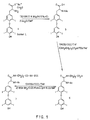
- the preferred immunogen of Formula 3 is thus prepared according to the scheme of Figure 1.
- L-thyroxine (1) sodium salt is converted to N-acetyl-L-thyroxine (5); the carboxyl group of N-acetyl-L-thyroxine (5) is activated with dicylcohexylcarbodiimide and N-hydroxysuccinimide (the bold-faced numerals contained in parenthesis refer to the structural formulae used in Figure 1).
- the y-group is then activated with dicylcohexylcarbodiimide and N-hydroxysuccinimide and coupled to P.
- Those skilled in the art will recognize that other methods for peptide bond formation could be employed with equal success.
- spacer arms can be conjugated to solid supports having functional groups such as amino, hydroxyl or carboxyl groups that are reactive in a complementary sense with reactive groups on the spacer arm.
- functional groups such as amino, hydroxyl or carboxyl groups that are reactive in a complementary sense with reactive groups on the spacer arm.
- the result is a solid phase which can be used to separate or purify antibodies against the hapten.
- thyroxine derivatives can be coupled to immunogenic carrier materials P by various conventional techniques known in the art.
- the immunogens according to the present invention are used to prepare antibodies, both polyclonal and monoclonal, according to methods known in the an, for use in an immunoassay system according to the present invention.
- a host animal such as a rabbit, goat, mouse, guinea pig, or horse is injected at one or more of a variety of sites with the immunogen, normally in a mixture with an adjuvant. Further injections are made at the same site or different sites at regular or irregular intervals thereafter with bleedings being taken to assess antibody titer until it is determined that optimal titer has been reached.
- antibodies are obtained by either bleeding the host animal to yield a volume of antiserum, or by somatic cell hybridization techniques or other techniques known in the art to obtain monoclonal antibodies, and can be stored, for example, at - 20°C.
- antibodies herein include antigen binding fragments of the immunoglobins. Examples of these fragments are Fab, F(ab')2 and Fv. Such fragments can be produced by known methods.
- the assays or kits can use the labelled reagents of the present invention with antibodies, whether polyclonal or monoclonal, which recognize both thyroxine and the labelled reagents, and which are preferably antibodies that are raised by the immunogens of Formulae 2 and 3. Additionally, to enable the performance of competitive immunoassays such as FPIA, the tracers and thyroxine must be able to competitively bind to the antibodies.
- the antibodies may bind both isomers of thyroxine, it is preferable that the antibodies preferably bind L-thyroxine.
- the immunogens are preferably derivatives or analogs of L-thyroxine.
- the labelled reagents preferably do not bind or significantly bind endogenous immunoglobulins which may be found in the test sample, i.e. antibodies that are not intended to bind the labelled reagents, such that the binding interferes with the accuracy of the assay.
- these immunoglobulins are immunoglobulins G (IgG).
- labelled reagents of the present invention can be synthesized from thyroxine by: (a) differentially protecting the carboxylic acid, a-amino and phenolic groups of thyroxine (according to the method as shown in, e.g. T. W. Greene and P. G. M. Wutts, Protective Groups in Organic Synthesis, 2nd ed.
- the labelled reagent can be synthesized by: (a) (i) reacting a sodium salt of thyroxine with 9-fluorenylmethoxycarbonyl chloride (EMOC-Cl) to protect the amino group followed by (ii) protecting the phenolic functionality of the resulting thyroxine derivative by acetylation, then (iii) protecting the carboxylic group of the N-FMOC-O-acetyl-thyroxine as the tert-butyl ester; followed by (b) removing the FMOC protective group to give t-butyl O-acetyl-thyroxine; next (c) alkylating amino group of t-butyl O-acetyl-thyroxine with bromoacetic acid ethyl ester to give t-butyl O-acetyl-N-carboethoxymethylthyroxine; then (d) hydrolysing the ethyl ester and ace
- the above synthetic methods are used to produce the labelled reagents of Formulae 4 and 5, and more preferably the L structures of these formulae.
- the concentration or level of thyroxine in a test sample can be accurately quantified in a fluorescence polarization immunoassay (FPIA) by employing the reagents of the present invention.
- FPIA fluorescence polarization immunoassay
- the tracer can be of Formula 4.
- the detectable moiety component of the tracer is a fluorescent moiety such as fluorescein, aminofluorescein, carboxyfluorescein, and the like, preferably 5 and 6-aminomethylfluorescein, 5 and 6-aminofluorescein, 6-carboxyfluorescein, 5-carboxyfluorescein, thioureafluorescein, and methoxytriazinolyl-aminofluorescein, and similar fluorescent derivatives.
- the fluorescent tracer can be used in combination with an antibody which is capable of binding both the tracer and T4.
- the tracer and T4 must be able to competitively bind to the antibody.
- the antibody reagent comprises antibodies which are capable of binding to or recognizing thyroxine wherein the antibodies are preferably produced with an immunogen of Formula 2, and more preferably that of Formula 3.
- the amount of tracer bound to the antibody varies inversely to the amount of thyroxine present in the test sample. Accordingly, the relative binding affinities of thyroxine and the tracer to the antibody binding site are important parameters of the assay system.
- fluorescent polarization techniques are based on the principle that a fluorescent tracer, when excited by plane polarized light of a characteristic wavelength, will emit light at another characteristic wavelength (i.e., fluorescence) that retains a degree of the polarization relative to the incident stimulating light that is inversely related to the rate of rotation of the tracer in a given medium.
- a tracer substance with constrained rotation such as in a viscous solution phase or when bound to another solution component such as an antibody with a relatively lower rate of rotation, will retain a relatively greater degree of polarization of emitted light than if in free solution.
- a test sample suspected of containing thyroxine is contacted with antiserum or monoclonal antibodies prepared with immunogens according to the present invention, in the presence of labelled reagent of the present invention, which is capable of producing a detectable fluorescence polarization response to the presence of antiserum or monoclonal antibodies prepared with immunogens according to the present invention.
- Plane polarized light is then passed through the solution to obtain a fluorescent polarization response and the response is detected as a measure of amount of thyroxine present in the test sample.
- the thyroxine derivatives of the present invention are employed to prepare immunogens by coupling them to conventional carrier materials, and subsequently used to obtain antibodies.
- the thyroxine derivatives of the present invention are also used to prepare labelled reagents which serve as the detection reagents in immunoassays for quantifying thyroxine in a test sample.
- the fluorescence polarization assays can be conducted in commercially available automated instruments such as: IMx®, TDx®, and TDxFLxTM (Abbott Laboratories).
- immunoassay formats include, but are not limited to competitive and sandwich assay techniques.
- immunoassay systems depend upon the ability of an immunoglobulin, i.e., a whole antibody or fragment thereof, to bind to a specific analyte from a test sample wherein a labelled reagent comprising an antibody of the present invention, or fragment thereof, attached to a label or detectable moiety is employed to determine the extent of binding.
- Such labels or detectable moieties include, but are not intended to be limited to, enzymes, radiolabels, biotin, toxins, drugs, haptens, DNA, RNA, liposomes, chromophores, chemiluminescens, colored particles and colored microparticles, fluorescent compounds such as aminomethylfluorescein, 5-carboxyfluorescein, 6-carboxyfluorescein, aminofluorescein, thioureafluorescein, and methoxytriazinolyl-aminofluorescein, and the like fluorescent derivatives.
- the extent of binding in such immunoassay system formats is determined by the amount of the detectable moiety present in the labelled reagent which either has or has not participated in a binding reaction with the analyte, wherein the amount of the detectable moiety detected and measured can be correlated to the amount of analyte present in the test sample.
- a substance being measured often referred to as a ligand
- a tracer a substance of close structural similarity coupled to a detectable moiety
- binding sites are usually shared with an immunogen employed to produce such antibodies.
- test kit comprises all of the essential reagents required to perform a desired specific fluorescence polarization immunoassay according to the present invention for the quantification of thyroxine in a test sample.
- the test kit is presented in a commercially packaged form as a combination of one or more containers holding the necessary reagents, as a composition or admixture where the compatibility of the reagents will allow.
- test kit for the fluorescent polarization immunoassay quantification of thyroxine in a test sample, comprising fluorescent tracer compounds and antibodies as described above for the quantification of thyroxine.
- test kit can, of course, include other materials as are known in the art and which may be desirable from a user standpoint, such as buffers, diluents, standards, and the like.
- EtOH ethanol
- NH4OH ammonium hydroxide
- HCl hydrochloric acid
- DMF dimethylformamide
- NaOH sodium hydroxide
- THF tetrahydrofuran
- CH2Cl2 methylene chloride
- MeOH methanol
- HOAc acetic acid.
- N-Acetyl L-thyroxine (5) (1.0 g, 1.2 mmol) was dissolved in 50 mL THF, 170 mg (1.5 mmol) of N-hydroxysuccinimide added, 300 mg (1.5 mmol) of 1,3-dicyclohexylcarbodiimide added, and reaction stirred under N2 for 3 days. The reaction was then vacuum filtered to remove insoluble urea, affording 40 mL of filtrate. Half the filtrate volume (20 mL, 0.6 mmol) was combined with 80 mg (0.6 mmol) of 6-aminocaproic acid, reaction pH adjusted to 9 with triethylamine, and reaction allowed to stir under N2 for 2 days.
- THF tetrahydrofuran
- EtOAc ethyl acetate
- DMSO dimethylsulfoxide
- CHC13 chloroform
- CH2C12 methylene chloride
- MeOH methanol
- HOAc acetic acid
- Hex hexane
- DMF dimethylformamide.
- N-FMOC protected L-Thyroxine (26.3 g, 23.2 mmol) was dissolved in 150 mL THF, 3.28 mL (34.8 mmol) of acetic anhydride added, 283 mg (2.32 mmol) of 4-dimethylaminopyridine added, and reaction stirred under N2 for 45 minutes, then poured into 400 mL H2O and extracted with CHCl3 (3 x 400 mL). The CHCl3 extracts were combined, dried over Na2SO4, and solvent removed in vacuo.
- N-FMOC, O-acetyl L-thyroxine (21.70 g, 19.17 mmol) was dissolved in 250 mL CH2Cl2, cooled to 0oC, and 19.20 g (95.85 mmol) of O-t-butyl-N,N'-diisopropylisourea in 50 mL CH2Cl2 added in a dropwise fashion.
- the reaction was then stirred overnight, under N2, at room temperature, then vacuum filtered to remove insoluble impurities, and filtrate solvent removed in vacuo.
- the ethyl ester intermediate (3.73 g, 3.88 mmol) was dissolved in 85 mL MeOH, 12.4 mL (31 mmol) of 10% sodium hydroxide added, and reaction stirred for 40 minutes. The reaction was then poured into 250 mL H2O, pH adjusted to 4 with 1 M HCl, and extracted with EtOAc (3 x 250 mL).
- the serum samples were tested on the TDx® instrument using the commercially available T4 reagent pack (both from Abbott Laboratories, Abbott Park, IL) to determine the presence of antibody which could bind the commercially available TDx® T4 tracer from the TDx® T4 reagent pack (Catalog Code No. 97608, Abbott Laboratories) in a fluorescence polarization assay.
- the screening assay was essentially the same as described in the commercially available TDx® T4 assay user manual except that the T4 antibodies in the commercially available T4 reagent pack were replaced with the commercially available TDx® diluent (Abbott Laboratories.).
- the serum samples to be tested were added to the sample well of the cartridge of the TDx® carousel.
- mice The serum samples were titrated in log2 dilutions in the sample wells of the TDx® carousel.
- Nine of the mice produced antibodies which bind the commercially available TDx® T4 tracer.
- One of the animals, designated animal #12 was selected because its Net P (i.e. Net Polarization) signals were greater than the titrated normal mouse serum control from non-immunized mice (Catalog No. #5011-1380, lyophilized normal mouse serum, Cappel, Dunham, NC) by 60-80 mP. ("mP" denotes "millipolarization").
- animal #12 was administered a 25 ⁇ g/ml interveneous pre-fusion boost 3 days prior to the fusion.
- the animal was sacrificed and the splenocytes were washed one time in Iscove's Modified Dulbecco Medium (IMDM) (GIBCO, Grand Island, New York) and centrifuged 1000 RPM for 10 minutes.
- IMDM Iscove's Modified Dulbecco Medium
- the pelleted splenocytes were combined with SP2/0 mycloma cells (from the laboratory of Dr. Milstein, Cambridge, United Kingdom) at a 1:3 ratio, washed in IMDM, and centrifuged. The supernatant was removed and 1 50% PEG (i.e.
- polyethylene glycol (American Type Culture Collection, Rockville, Maryland) was added to the pellet for 1 minute as the pellet was gently being dispersed by tapping and swirling. Thirty mls of IMDM was added to the mixture and centrifuged as previously described. Supernate was decanted, the pellet was resuspended in IMDM with HAT (i.e. hypoxanthine aminopterin thymidine) (GIBCO), 10% FBS (i.e. fetal bovine serum) (Hyclone, Logan, Utah) and 1% STM v/v (RIBI Immunochem Research, Inc.). STM denotes Salmonella typhimurium mitogen. The STM solution was added as a B-cell mitogen. The fusion cell suspension was plated into 96-well tissue culture plates.
- HAT hypoxanthine aminopterin thymidine
- FBS i.e. fetal bovine serum
- STM denotes Salmonella typhimurium mitogen
- FCPIA fluorescent concentrated particle immunoassay
- Hybrid #1-189 was cloned directly from the 96 well fusion plate by limiting dilutions starting at 1-100, 10-fold to 106.
- the cloning media used was IMDM with 10% v/v FBS and 1% v/v HT (i.e. hypoxanthine thymidine) Supplement (GIBCO). 100 ⁇ l cell suspension was added to each of the 96 wells in the tissue culture plate. On day 7 the plates were fed with 200 ⁇ l/well of cloning media.
- Clone T4 1-189-252 was selected for further evaluation based on the modified TDx® T4 screen of the above "Sera evaluation" section.
- the polyclonal antisera in the T4 reagent pack was replaced with commercially available TDx® diluent (Abbott Laboratories.).
- the clone supernate was added to the sample well of the cartridge of the TDx® carousel.
- duplicates of 0 and 24 ⁇ g/dl free T4 were placed.
- the TDx® T4 Plus assay (previously commercially available from Abbott Laboratories for the TDx® instrument, this assay measured the total circulating T4 in a serum or plasma sample) was run (as described in the previously commercially available TDx® T4 Plus assay user manual), and the monoclonal antibody samples which showed a decrease in polarization were selected for further evaluation. The decrease in polarization was due to the T4 in the sample which competitively displaced the T4-FITC from the monoclonal antibdody.
- TDx® T4 assay Abbott Laboratories, this assay also measures the total circulating T4 in a serum or plasma sample
- TDx® T4 Plus assay The polyclonal antibodies and tracer used in the TDx® T4 Plus assay are the same as those used in the TDx® T4 assay.
- the isotype of the monoclonal antibody secreted from the cell line identified as T4 1-189-252 was determined on an EIA clonotyping kit (Southern Biotech, Birmingham, AL). The assay was performed according to the vendor recommendations and the results indicated an isotype of IgG2a, kappa.
- the hybridoma cell line T4 1-189-252 has been deposited with the American Type Culture Collection (ATCC), 12301 Parklawn Drive, Rockville, MD 20852. U.S.A. in accordance with the Budapest Treaty. The deposit date is September 16, 1992 and the ATCC number assigned to the cell line is HB 11125.
- the monoclonal antibody produced by this hybridoma is hereby referred to as monoclonal antibody 1-189-252.
- mP millipolarization units
- the tracer of Example 2 and monoclonal antibody 1-189-252 were optimized to perform as well as the commercially available Abbott T4 FPIA, and it was discovered that this new assay has the additional advantage of avoiding the above discrepant readings.
- the new assay uses the same standard protocol and diluents as used in the commercially available assays.
- the results of the assay run are reported in millipolarization units (mP).
- the mP units are automatically interpolated from a stored standard curve and expressed as concentrations (microgram/dL) of thyroxine in the assayed samples. This procedure is the same for both the commercially available Abbott reagents and the new tracer and monoclonal antibody.
- the samples were run according to the standard protocol on the TDx® analyzer.
- the efficacy of the TDx® new T4 assay was evaluated by comparing it with the commercially available TDx® T4 assay using 373 patient serum samples. Good agreement between the two assays for detecting T4 was found.
- the new assay could detect between 0 to 24 ⁇ g/dL of thyroxine in a sample. Samples containing thyroxine concentrations greater than 24 ⁇ g/dL should be diluted first, for example, in accordance with the vendor's instruction for the commercially available TDx® T4 assay.
- the minimum polarization span for the standard calibration curves is preferably at least 100 mP, more preferably greater than 125 mP or 130 mP.
- the commercially available assays have similar spans.
- the upper limit for the span is preferably less than 300 mP.
- the tracer in the assays must bind to the antibody used and must effectively compete with endogenous T4 present in a sample.
- the TDx® System Operation Manuals contain: 1) theory of operation: fluorescense polarization immunoassay: 2) operational precautions and limitations; 3) daily start-up procedure; 4) monthly and periodic procedures necessary for quality control to be maintained.
- the discrepant samples were obtained from patients whose samples gave a reading of zero or abnormally low level of thyroxine concentration in the commercially available TDx® T4 assay but a reading indicating the presence of or a higher level of thyroxine concentration in a T4 RIA assay.
- T4 (microgram/dL) RIA 1. TDx® 2. TDx® 3. TDx® 4. T4 T4 Assay Commercially Available Reagents
- T4 Assay MAB 1-189-252 & *T4 Tracer T4 Assay MAB 1-189-252 & Tracer of Example 2
- DISCREPANT 1 1.97 0.0 9.80 10.26 2 0.0 0.0 6.78 7.02 3 2.21 0.0 6.17 6.41 4 1.04 -- 7.97 9.39 5 0.0 0.0 7.03 8.23 6 0.0 0.0 5.34 4.63 7 0.0 0.0 12.75 15.95 8 0.0 0.0 8.82 10.16 9 2.65 2.24 7.03 8.18 10 0.0 0.0 15.85 15.43 11 3.31 0.89 7.78 8.71 12 2.37 0.0 8.57 10.05
- "*T4 tracer" denotes the commercially available T4 tracer.
- the tracers and antibodies of the present invention can also be used in the IMx® and TDxFLxTM T4 assays.
- the commercially available TDx® reagent pack contains three bottles of reagents, designated "S", "T", and "P” pots.
- the S pot contains the T4 antibodies.
- the T pot contains the commercially available T4 tracer T4-FITC.
- the P pot contains the T4 pretreatment solution which removes the protein from any protein bound thyroxine in order to release the thyroxine for assay.
- the commercially available assay was conducted with the exception that the S pot which normally contained the T4 antibodies was replaced with a buffer solution.
- Immunoblot analysis of the selected fractions indicated a band corresponding to human IgG which was detected with goat a-human IgG.
- Protein-G sepharose selectively binds IgG. Following removal of the Protein-G sepharose by centrifugation, an analysis of the supernatants revealed that the T4 binding component was no longer present.
- the assays utilizing the tracers and antibodies of the present invention can also be conducted on other FPIA instruments besides TDx®, TDxFLxTM and IMx®.
- the parameters, such as the span and concentration of thyroxine detectable, will be optimized according to the characteristics, such as the sensitvity, of each instrument used.
Landscapes
- Health & Medical Sciences (AREA)
- Chemical & Material Sciences (AREA)
- Life Sciences & Earth Sciences (AREA)
- Immunology (AREA)
- Molecular Biology (AREA)
- Organic Chemistry (AREA)
- Engineering & Computer Science (AREA)
- Hematology (AREA)
- Biochemistry (AREA)
- General Health & Medical Sciences (AREA)
- Urology & Nephrology (AREA)
- Biomedical Technology (AREA)
- Medicinal Chemistry (AREA)
- Physics & Mathematics (AREA)
- Biotechnology (AREA)
- Analytical Chemistry (AREA)
- Microbiology (AREA)
- Cell Biology (AREA)
- General Physics & Mathematics (AREA)
- Pathology (AREA)
- Food Science & Technology (AREA)
- Biophysics (AREA)
- Genetics & Genomics (AREA)
- Proteomics, Peptides & Aminoacids (AREA)
- Endocrinology (AREA)
- Heterocyclic Carbon Compounds Containing A Hetero Ring Having Oxygen Or Sulfur (AREA)
- Peptides Or Proteins (AREA)
- Preparation Of Compounds By Using Micro-Organisms (AREA)
Applications Claiming Priority (5)
| Application Number | Priority Date | Filing Date | Title |
|---|---|---|---|
| US07/859,775 US5352803A (en) | 1992-03-30 | 1992-03-30 | 5(6)-methyl substituted fluorescein derivatives |
| US859775 | 1992-03-30 | ||
| US07/973,140 US5359093A (en) | 1992-03-30 | 1992-11-06 | Reagents and methods for the detection and quantification of thyroxine in fluid samples |
| US973140 | 1992-11-06 | ||
| EP93908638A EP0649533B1 (de) | 1992-03-30 | 1993-03-29 | Reagenzien und verfahren zum nachweis und zur quantifizierung von thyroxin in flüssigen proben |
Related Parent Applications (1)
| Application Number | Title | Priority Date | Filing Date |
|---|---|---|---|
| EP93908638A Division EP0649533B1 (de) | 1992-03-30 | 1993-03-29 | Reagenzien und verfahren zum nachweis und zur quantifizierung von thyroxin in flüssigen proben |
Publications (2)
| Publication Number | Publication Date |
|---|---|
| EP0959355A1 true EP0959355A1 (de) | 1999-11-24 |
| EP0959355B1 EP0959355B1 (de) | 2003-05-14 |
Family
ID=25331682
Family Applications (2)
| Application Number | Title | Priority Date | Filing Date |
|---|---|---|---|
| EP93908636A Withdrawn EP0635020A1 (de) | 1992-03-30 | 1993-03-29 | 5(6)-methylsubstituierte fluorescein-derivate |
| EP99115138A Expired - Lifetime EP0959355B1 (de) | 1992-03-30 | 1993-03-29 | Reagenzien zum Nachweis und zur Quantifizierung von Thyroxin in flüssigen Proben |
Family Applications Before (1)
| Application Number | Title | Priority Date | Filing Date |
|---|---|---|---|
| EP93908636A Withdrawn EP0635020A1 (de) | 1992-03-30 | 1993-03-29 | 5(6)-methylsubstituierte fluorescein-derivate |
Country Status (5)
| Country | Link |
|---|---|
| US (7) | US5352803A (de) |
| EP (2) | EP0635020A1 (de) |
| JP (1) | JP3667753B2 (de) |
| CA (1) | CA2130197A1 (de) |
| WO (1) | WO1993020060A1 (de) |
Cited By (1)
| Publication number | Priority date | Publication date | Assignee | Title |
|---|---|---|---|---|
| WO2023083723A1 (en) * | 2021-11-11 | 2023-05-19 | F. Hoffmann-La Roche Ag | Novel monoclonal antibodies directed against l-thyroxine and diagnostic uses thereof |
Families Citing this family (145)
| Publication number | Priority date | Publication date | Assignee | Title |
|---|---|---|---|---|
| US5352803A (en) * | 1992-03-30 | 1994-10-04 | Abbott Laboratories | 5(6)-methyl substituted fluorescein derivatives |
| US5491071A (en) * | 1993-08-03 | 1996-02-13 | Abbott Laboratories | Reagents and methods for the detection and quantification of testosterone in fluid samples |
| US5639875A (en) * | 1995-02-01 | 1997-06-17 | Hybridon, Inc. | Methods for H-phosphonate syntheis of oligonucleotides using triphosgene |
| US6797479B2 (en) * | 1995-04-04 | 2004-09-28 | Abbott Laboratories | Reagents and methods for the detection and quantification of vancomycin in biological fluids |
| CA2216880A1 (en) * | 1995-04-04 | 1996-10-10 | Abbott Laboratories | Reagents and methods for the detection and quantification of vancomycin in biological fluids |
| US6162931A (en) | 1996-04-12 | 2000-12-19 | Molecular Probes, Inc. | Fluorinated xanthene derivatives |
| US20030036106A1 (en) * | 1996-10-28 | 2003-02-20 | Burke Thomas J. | Kinase and phosphatase activity measurement using fluorescence polarization |
| US6424702B1 (en) * | 1999-01-28 | 2002-07-23 | Ameritech Corporation | Method and system for termination blocking of message delivery service |
| US7047190B1 (en) * | 1999-04-19 | 2006-05-16 | At&Tcorp. | Method and apparatus for performing packet loss or frame erasure concealment |
| US6811998B2 (en) * | 1999-06-25 | 2004-11-02 | Roche Diagnostics Operations, Inc. | Conjugates of uncompetitive inhibitors of inosine monophosphate dehydrogenase |
| US7198924B2 (en) | 2000-12-11 | 2007-04-03 | Invitrogen Corporation | Methods and compositions for synthesis of nucleic acid molecules using multiple recognition sites |
| US7163918B2 (en) * | 2000-08-22 | 2007-01-16 | New River Pharmaceuticals Inc. | Iodothyronine compositions |
| US8394813B2 (en) | 2000-11-14 | 2013-03-12 | Shire Llc | Active agent delivery systems and methods for protecting and administering active agents |
| ES2390425T3 (es) | 2000-12-22 | 2012-11-12 | MAX-PLANCK-Gesellschaft zur Förderung der Wissenschaften e.V. | Uso de moléculas de orientación repulsivas (RGM) y sus moduladores |
| US6423549B1 (en) * | 2001-03-14 | 2002-07-23 | Bio-Rad Laboratories, Inc. | Phycoerythrin labeled thyronine analogues and assays using labeled analogues |
| EP1379689B1 (de) * | 2001-03-23 | 2012-09-26 | Geron Corporation | Oligonukleotidkonjugate |
| US7563618B2 (en) | 2001-03-23 | 2009-07-21 | Geron Corporation | Oligonucleotide conjugates |
| WO2002097123A2 (en) * | 2001-05-25 | 2002-12-05 | Xenon Genetics, Inc. | Diagnostic methods for cardiovascular disease, low hdl-cholesterol levels, and high triglyceride levels |
| US7026166B2 (en) * | 2002-01-22 | 2006-04-11 | Chiron Corporation | Fluorogenic dyes |
| AU2003216382A1 (en) * | 2002-02-22 | 2003-09-09 | New River Pharmaceuticals | Idothyronine compositions |
| AU2003233681A1 (en) * | 2002-05-23 | 2003-12-12 | Michael J. Powell | Diagnosis and treatment of human dormancy syndrome |
| US7485298B2 (en) * | 2002-05-23 | 2009-02-03 | Michael Powell | Diagnosis and treatment of human dormancy-related sequellae |
| US20050233307A1 (en) | 2002-09-12 | 2005-10-20 | Kyle Gee | Site-specific labeling of affinity tags in fusion proteins |
| US7704756B2 (en) * | 2003-01-21 | 2010-04-27 | Novartis Vaccines And Diagnostics, Inc. | Fluorogenic dyes |
| US7727752B2 (en) | 2003-07-29 | 2010-06-01 | Life Technologies Corporation | Kinase and phosphatase assays |
| US7619059B2 (en) | 2003-07-29 | 2009-11-17 | Life Technologies Corporation | Bimolecular optical probes |
| CA2445420A1 (en) | 2003-07-29 | 2005-01-29 | Invitrogen Corporation | Kinase and phosphatase assays |
| US20050074796A1 (en) * | 2003-07-31 | 2005-04-07 | Stephen Yue | Unsymmetrical cyanine dimer compounds and their application |
| US7271265B2 (en) | 2003-08-11 | 2007-09-18 | Invitrogen Corporation | Cyanine compounds and their application as quenching compounds |
| EP2298312B1 (de) | 2003-10-31 | 2018-09-26 | Molecular Probes Inc. | Fluorierte Resorufinverbindungen und deren Anwendung beim Nachweis von Wasserstoffperoxid |
| US20050214807A1 (en) * | 2003-11-19 | 2005-09-29 | Iain Johnson | Environmental sensitive fluorogenic compounds and their application for singlet oxygen and protein detection |
| US8304189B2 (en) | 2003-12-01 | 2012-11-06 | Life Technologies Corporation | Nucleic acid molecules containing recombination sites and methods of using the same |
| EP1720945B1 (de) | 2003-12-05 | 2016-03-16 | Life Technologies Corporation | Methinsubstituierte cyaninfarbstoffverbindungen |
| US7776529B2 (en) | 2003-12-05 | 2010-08-17 | Life Technologies Corporation | Methine-substituted cyanine dye compounds |
| US7446202B2 (en) | 2003-12-05 | 2008-11-04 | Molecular Probes, Inc. | Cyanine dye compounds |
| WO2005071096A2 (en) | 2004-01-21 | 2005-08-04 | Molecular Probes, Inc. | Derivatives of cephalosporin and clavulanic acid for detecting beta-lacamase in a sample |
| US20050208607A1 (en) * | 2004-03-10 | 2005-09-22 | Mark Roberts | Immunoassays for everolimus |
| US20060024833A1 (en) | 2004-07-27 | 2006-02-02 | Molecular Probes, Inc. | Fluorescent metal ion indicators with large stokes shift |
| JP5306811B2 (ja) | 2005-05-11 | 2013-10-02 | ライフ テクノロジーズ コーポレーション | 2本鎖dnaへの高い選択性を有する蛍光化学物質及びそれらの使用 |
| WO2007030521A1 (en) * | 2005-09-06 | 2007-03-15 | Invitrogen Corporation | Control of chemical modification |
| WO2007038659A1 (en) * | 2005-09-26 | 2007-04-05 | Invitrogen Corporation | Violet laser excitable dyes and their method of use |
| CN101277974A (zh) | 2005-09-30 | 2008-10-01 | 阿伯特有限及两合公司 | 排斥性引导分子(rgm)蛋白质家族的蛋白质的结合结构域及其功能性片段和它们的用途 |
| US7521577B2 (en) | 2006-01-12 | 2009-04-21 | Molecular Probes, Inc. | Heavy metal binding compounds and their method of use |
| JP5636189B2 (ja) | 2006-10-27 | 2014-12-03 | ライフ テクノロジーズ コーポレーション | 蛍光発生性pH感受性色素およびその使用方法 |
| US20080102535A1 (en) * | 2006-11-01 | 2008-05-01 | Chace Donald H | Measuring thyroxine levels from dried blood samples using mass spectrometry |
| EP2033971A1 (de) * | 2007-09-06 | 2009-03-11 | Abbott GmbH & Co. KG | Bone Morphogenetic Protein (BMP)-bindende Domänen von Proteinen der Repulsive Guidance Molecule (RGM) Proteinfamilie und funktionale Fragmente davon sowie deren Verwendung |
| WO2009094536A1 (en) | 2008-01-24 | 2009-07-30 | Life Technologies Corporation | Fluorogenic hydrazine-substituted compounds |
| US8962803B2 (en) | 2008-02-29 | 2015-02-24 | AbbVie Deutschland GmbH & Co. KG | Antibodies against the RGM A protein and uses thereof |
| JP5646457B2 (ja) | 2008-04-29 | 2014-12-24 | アッヴィ・インコーポレイテッド | 二重可変ドメイン免疫グロブリン及びその使用 |
| US20090286329A1 (en) * | 2008-05-19 | 2009-11-19 | Abbott Laboratoires | Isolated human autoantibodies to natriuretic peptides and methods and kits for detecting human autoantibodies to natriuretic peptides |
| US20090286256A1 (en) * | 2008-05-19 | 2009-11-19 | Abbott Laboratories | Isolated human autoantibodies to natriuretic peptides and methods and kits for detecting human autoantibodies to natriuretic peptides |
| PE20100054A1 (es) | 2008-06-03 | 2010-03-03 | Abbott Lab | Inmunoglobulina con dominio variable dual |
| EP3002299A1 (de) | 2008-06-03 | 2016-04-06 | AbbVie Inc. | Dual-variable- domain-immunglobuline und ihre verwendungen |
| US20100105150A1 (en) * | 2008-10-24 | 2010-04-29 | Abbott Laboratories | Isolated human autoantibodies to neutrophil gelatinase-associated lipocalin (ngal) and methods and kits for the detection of human autoantibodies to ngal |
| US8349325B2 (en) | 2008-12-23 | 2013-01-08 | Abbott Laboratories | Soluble FMS-like tyrosine kinase-1 (sFLT-1) antibody and related composition, kit, methods of using, and materials and method for making |
| TW201613969A (en) * | 2009-03-05 | 2016-04-16 | Abbvie Inc | IL-17 binding proteins |
| US20110004085A1 (en) | 2009-04-30 | 2011-01-06 | Dexcom, Inc. | Performance reports associated with continuous sensor data from multiple analysis time periods |
| JP5715137B2 (ja) | 2009-08-31 | 2015-05-07 | アボット・ラボラトリーズAbbott Laboratories | 主要有害心イベントの予測のためのバイオマーカーおよびその使用 |
| KR20120118002A (ko) | 2009-12-08 | 2012-10-25 | 애보트 게엠베하 운트 콤파니 카게 | 망막 신경 섬유 층 변성의 치료에 사용하기 위한 rgm a 단백질에 대한 모노클로날 항체 |
| US20110229921A1 (en) | 2010-03-18 | 2011-09-22 | Abbott Laboratories | METHODS OF ASSAYING URINARY NEUTROPHIL GELATINASE-ASSOCIATED LIPOCALIN (uNGAL) IN THE PROGNOSIS OF CADAVERIC KIDNEY TRANSPLANT FUNCTION IN A PATIENT, INCLUDING A PATIENT DIAGNOSED WITH DELAYED GRAFT FUNCTION (DGF), A METHOD OF ASSAYING uNGAL IN THE ASSESSMENT OF RISK OF DGF IN A PATIENT DIAGNOSED WITH EARLY GRAFT FUNCTION (EGF), AND RELATED KITS |
| JP5786020B2 (ja) | 2010-04-16 | 2015-09-30 | アボットジャパン株式会社 | 関節リウマチを診断する方法および試薬 |
| AU2011252883B2 (en) | 2010-05-14 | 2015-09-10 | Abbvie Inc. | IL-1 binding proteins |
| US9551714B2 (en) | 2010-06-25 | 2017-01-24 | Abbott Laboratories | Materials and methods for assay of anti-hepatitis C virus (HCV) antibodies |
| WO2012006500A2 (en) | 2010-07-08 | 2012-01-12 | Abbott Laboratories | Monoclonal antibodies against hepatitis c virus core protein |
| UY33492A (es) | 2010-07-09 | 2012-01-31 | Abbott Lab | Inmunoglobulinas con dominio variable dual y usos de las mismas |
| US8735546B2 (en) | 2010-08-03 | 2014-05-27 | Abbvie Inc. | Dual variable domain immunoglobulins and uses thereof |
| US20120115244A1 (en) | 2010-11-09 | 2012-05-10 | Abbott Laboratories | Materials and methods for immunoassay of pterins |
| WO2012121775A2 (en) | 2010-12-21 | 2012-09-13 | Abbott Laboratories | Dual variable domain immunoglobulins and uses thereof |
| EP2771360A1 (de) | 2011-10-24 | 2014-09-03 | AbbVie Inc. | Gegen sclerostin gerchtet immunbinder |
| EP2791175A2 (de) | 2011-12-14 | 2014-10-22 | Abbvie Deutschland GmbH & Co. KG | Zusammensetzung und verfahren zur diagnose und behandlung von durch eisenmangel bedingten erkrankungen |
| CN104144947B (zh) | 2011-12-14 | 2017-10-27 | 艾伯维德国有限责任两合公司 | 用于诊断和治疗铁相关病症的组合物和方法 |
| US8993248B2 (en) | 2011-12-31 | 2015-03-31 | Abbott Laboratories | Truncated human vitamin D binding protein and mutation and fusion thereof and related materials and methods of use |
| EP3369746A1 (de) | 2012-01-27 | 2018-09-05 | AbbVie Deutschland GmbH & Co KG | Zusammensetzung und verfahren zur diagnose und behandlung von krankheiten im zusammenhang mit neuritenabbau |
| BR112014018717A8 (pt) | 2012-03-13 | 2017-07-11 | Abbvie Inc | Método para selecionar ou identificar um sujeito para terapia de antagonista de v1b |
| WO2013180811A1 (en) | 2012-05-30 | 2013-12-05 | Life Technologies Corporation | FLUOROGENIC pH-SENSITIVE DYES AND THEIR METHODS OF USE |
| TW201402608A (zh) | 2012-07-12 | 2014-01-16 | Abbvie Inc | Il-1結合蛋白質 |
| CN105102978B (zh) | 2013-02-02 | 2018-11-02 | 杜克大学 | 分离循环肿瘤细胞的方法 |
| JP6505076B2 (ja) | 2013-03-14 | 2019-04-24 | アボット・ラボラトリーズAbbott Laboratories | Hcv抗原−抗体組み合わせアッセイおよびこれに使用するための方法および組成物 |
| CN105378099B (zh) | 2013-03-14 | 2021-05-11 | 雅培制药有限公司 | Hcv核心脂质结合结构域单克隆抗体 |
| EP2970947A4 (de) | 2013-03-14 | 2016-10-12 | Abbott Lab | Rekombinante hcv-ns3-antigene und mutanten für den verbesserten nachweis von antikörpern |
| US9157910B2 (en) | 2013-03-15 | 2015-10-13 | Abbott Laboratories | Assay with increased dynamic range |
| US9005901B2 (en) | 2013-03-15 | 2015-04-14 | Abbott Laboratories | Assay with internal calibration |
| US9469686B2 (en) | 2013-03-15 | 2016-10-18 | Abbott Laboratories | Anti-GP73 monoclonal antibodies and methods of obtaining the same |
| WO2015031626A1 (en) | 2013-08-28 | 2015-03-05 | Abbvie Inc. | Soluble cmet assay |
| EP3502693A1 (de) | 2014-05-16 | 2019-06-26 | Life Technologies Corporation | Zellverfolgungsreagenzien und deren verfahren zur verwendung |
| US10018617B2 (en) | 2014-05-16 | 2018-07-10 | Life Technologies Corporation | Carbopyronone compounds useful as diagnostic adjuvants |
| WO2015200833A2 (en) | 2014-06-27 | 2015-12-30 | Abbott Laboratories | COMPOSITIONS AND METHODS FOR DETECTING HUMAN PEGIVIRUS 2 (HPgV-2) |
| ES2828713T3 (es) | 2014-10-29 | 2021-05-27 | Abbott Lab | Ensayos de detección de anticuerpos anti-VHC objeto usando péptidos de captura NS3 |
| US10246410B2 (en) | 2014-12-03 | 2019-04-02 | Life Technologies Corporation | Hydrazinyl and aminooxy compounds and their methods of use |
| CN107690582B (zh) | 2015-04-03 | 2023-10-20 | 雅培制药有限公司 | 用于样品分析的装置和方法 |
| JP2018518655A (ja) | 2015-04-03 | 2018-07-12 | アボット・ラボラトリーズAbbott Laboratories | サンプル分析用デバイス及び方法 |
| WO2016209753A1 (en) | 2015-06-26 | 2016-12-29 | Life Technologies Corporation | Cell tracking reagents and their methods of use |
| US20170089905A1 (en) | 2015-09-28 | 2017-03-30 | Abbott Japan Co., Ltd. | Methods of diagnosing hepatocellular carcinoma and pancreatic cancer |
| EP3475443B1 (de) | 2016-06-23 | 2025-02-12 | Life Technologies Corporation | Verfahren und zusammensetzungen zur detektion oder messung von caspasen oder apoptosen |
| EP4521116A3 (de) | 2016-10-03 | 2025-05-28 | Abbott Laboratories | Verbesserte verfahren zur beurteilung des uch-l1-status in patientenproben |
| US11198129B2 (en) | 2016-10-05 | 2021-12-14 | Abbott Laboratories | Devices and methods for sample analysis |
| CA3261113A1 (en) | 2017-03-23 | 2025-10-27 | Abbott Laboratories | Methods for aiding in the diagnosis and determination of the extent of traumatic brain injury in a human subject using the early biomarker ubiquitin carboxy-terminal hydrolase l1 |
| CN110546513A (zh) | 2017-04-15 | 2019-12-06 | 雅培实验室 | 使用早期生物标记物帮助超急性诊断和确定人类受试者中的创伤性脑损伤的方法 |
| ES3053676T3 (en) | 2017-04-28 | 2026-01-23 | Abbott Lab | Methods for aiding in the hyperacute diagnosis and determination of traumatic brain injury using early biomarkers on at least two samples from the same human subject |
| AU2018272054B2 (en) | 2017-05-25 | 2024-10-31 | Abbott Laboratories | Methods for aiding in the determination of whether to perform imaging on a human subject who has sustained or may have sustained an injury to the head using early biomarkers |
| JP7269182B2 (ja) | 2017-05-30 | 2023-05-08 | アボット・ラボラトリーズ | 心臓トロポニンi及び早期バイオマーカーを使用する、ヒト対象における軽度外傷性脳損傷を診断及び査定する一助となるための方法 |
| CA3068041C (en) | 2017-07-03 | 2024-06-25 | Abbott Laboratories | Improved methods for measuring ubiquitin carboxy-terminal hydrolase l1 levels in blood |
| US11661447B2 (en) | 2017-08-03 | 2023-05-30 | The Cleveland Clinic Foundation | Human β2-glycoprotein I expression |
| US11022617B2 (en) | 2017-12-09 | 2021-06-01 | Abbott Laboratories | Methods for aiding in the diagnosis and evaluation of a subject who has sustained an orthopedic injury and that has or may have sustained an injury to the head, such as mild traumatic brain injury (TBI), using glial fibrillary acidic protein (GFAP) and/or ubiquitin carboxy-terminal hydrolase L1 (UCH-L1) |
| EP3721234A1 (de) | 2017-12-09 | 2020-10-14 | Abbott Laboratories | Verfahren zur unterstützung bei der diagnose und bewertung einer traumatischen hirnverletzung beim menschen mit einer kombination aus gfap und uch-l1 |
| AU2018395255B2 (en) | 2017-12-29 | 2025-02-20 | Abbott Laboratories | Novel biomarkers and methods for diagnosing and evaluating traumatic brain injury |
| WO2019165078A1 (en) | 2018-02-22 | 2019-08-29 | The Regents Of The University Of Michigan | Liquid activated devices and systems |
| US11249091B2 (en) | 2018-02-22 | 2022-02-15 | The Cleveland Clinic Foundation | Detection of glucuronidated and 3-bromotyrosine |
| WO2019213583A1 (en) | 2018-05-04 | 2019-11-07 | Abbott Laboratories | Sequential sampling method for improving immunoassay sensitivity and kinetics of small volume samples |
| BR112021002507A2 (pt) | 2018-08-10 | 2021-07-27 | Life Technologies Corporation | corantes de rodamina substituída por silício e conjugados de corante |
| US11079395B2 (en) | 2019-03-01 | 2021-08-03 | Abbott Laboratories | Methods for predicting major adverse cardiovascular events in subjects with coronary artery disease |
| US12496305B2 (en) | 2019-07-30 | 2025-12-16 | The Cleveland Clinic Foundation | Detection for determining corticosteroid responsiveness |
| WO2021211331A1 (en) | 2020-04-13 | 2021-10-21 | Abbott Point Of Care Inc. | METHODS, COMPLEXES AND KITS FOR DETECTING OR DETERMINING AN AMOUNT OF A ß-CORONAVIRUS ANTIBODY IN A SAMPLE |
| KR20230012539A (ko) | 2020-05-13 | 2023-01-26 | 디스크 메디슨, 인크. | 골수섬유증을 치료하기 위한 항-헤모주벨린 (hjv) 항체 |
| EP4193149A1 (de) | 2020-08-04 | 2023-06-14 | Abbott Laboratories | Verbesserte verfahren und kits zum nachweis von sars-cov-2-protein in einer probe |
| CN112625049A (zh) * | 2020-11-06 | 2021-04-09 | 上海应用技术大学 | 一种叠氮基团修饰荧光素类化合物及其制备方法和应用 |
| CA3198161A1 (en) | 2020-12-01 | 2022-06-09 | Beth MCQUISTON | Use of one or more biomarkers to determine traumatic brain injury (tbi) in a subject having received a head computerized tomography scan that is negative for a tbi |
| WO2023102384A1 (en) | 2021-11-30 | 2023-06-08 | Abbott Laboratories | Use of one or more biomarkers to determine traumatic brain injury (tbi) in a subject having received a head computerized tomography scan that is negative for a tbi |
| EP4271998A1 (de) | 2020-12-30 | 2023-11-08 | Abbott Laboratories | Verfahren zur bestimmung des sars-cov-2-antigens und anti-sars-cov-2-antikörpers in einer probe |
| US20220334059A1 (en) * | 2021-04-19 | 2022-10-20 | Hach Company | Mercury measurement |
| JP2024518331A (ja) | 2021-04-29 | 2024-05-01 | アボット・ラボラトリーズ | 生体試料のハイスループット核酸検査 |
| US20220381796A1 (en) | 2021-05-18 | 2022-12-01 | Abbott Laboratories | Methods of evaluating brain injury in a pediatric subject |
| EP4356129A1 (de) | 2021-06-14 | 2024-04-24 | Abbott Laboratories | Verfahren zur diagnose oder unterstützung der diagnose von hirnverletzungen durch akustische energie, elektromagnetische energie, überdruckwelle und/oder explosionswind |
| EP4392783A1 (de) | 2021-08-27 | 2024-07-03 | Abbott Laboratories | Verfahren zum nachweis von immunoglobulin g, subklassen 4 (igg4) in einer biologischen probe |
| CN118715440A (zh) | 2021-08-31 | 2024-09-27 | 雅培实验室 | 诊断脑损伤的方法和系统 |
| EP4396587A1 (de) | 2021-08-31 | 2024-07-10 | Abbott Laboratories | Verfahren und systeme zur diagnose von hirnverletzungen |
| EP4409294A1 (de) | 2021-09-30 | 2024-08-07 | Abbott Laboratories | Verfahren und systeme zur diagnose von hirnverletzungen |
| WO2023114978A1 (en) | 2021-12-17 | 2023-06-22 | Abbott Laboratories | Systems and methods for determining uch-l1, gfap, and other biomarkers in blood samples |
| CN114853779B (zh) * | 2022-06-09 | 2023-11-10 | 南京工业大学 | 细胞及生物体内生物硫醇检测与特异性快速标记巯基蛋白质的荧光探针、制备方法及应用 |
| CA3257731A1 (en) | 2022-06-29 | 2024-01-04 | Abbott Laboratories | OUTSIDE THE LABORATORY, MAGNETIC SYSTEMS AND ANALYSES FOR DETERMINING GLIOFIBRILLARY ACID PROTEIN IN BIOLOGICAL SAMPLES |
| JP2025532597A (ja) | 2022-09-15 | 2025-10-01 | アボット・ラボラトリーズ | 軽度及び超軽度の外傷性脳損傷を区別するためのバイオマーカー及び方法 |
| WO2024107430A1 (en) | 2022-11-17 | 2024-05-23 | Regeneron Pharmaceuticals, Inc. | Methods for assaying enzyme activity |
| WO2024211475A1 (en) | 2023-04-04 | 2024-10-10 | Abbott Laboratories | Use of biomarkers to determine whether a subject has sustained, may have sustained or is suspected of sustaining a subacute acquired brain injury (abi) |
| KR20260003222A (ko) | 2023-04-28 | 2026-01-06 | 아보트 러보러터리즈 | 말기 간세포 암종의 진단 |
| EP4713682A1 (de) | 2023-04-28 | 2026-03-25 | Abbott Point of Care Inc. | Verbesserte tests, kartuschen und kits zum nachweis von biomarkern, einschliesslich biomarkern für hirnverletzungen |
| CN116768914A (zh) * | 2023-05-23 | 2023-09-19 | 中国原子能科学研究院 | 一种氟化荧光素衍生物及其制备方法 |
| WO2025030178A1 (en) | 2023-08-03 | 2025-02-06 | Abbott Laboratories | Isothermal amplification of nucleic acids |
| KR20260054068A (ko) | 2023-09-01 | 2026-04-21 | 애벗트 라보라토리이즈 | 변이체 핵산을 검출하는 방법 |
| WO2025137528A1 (en) | 2023-12-20 | 2025-06-26 | Abbott Laboratories | Reducing agent compositions for isothermal amplification of nucleic acids |
| WO2025230857A1 (en) | 2024-05-01 | 2025-11-06 | Abbott Laboratories | Improved methods for determining cardiac myosin binding protein c in biological samples |
| WO2025240630A1 (en) | 2024-05-14 | 2025-11-20 | Abbott Laboratories | Reagent compositions for isothermal amplification of nucleic acids |
| WO2026010899A1 (en) | 2024-07-02 | 2026-01-08 | Abbott Laboratories | Methods of deteriming and predicting the effectiveness of immune checkpoint inhibitor treatment in subjects with hepatocellular carcinoma |
| WO2026024677A1 (en) | 2024-07-22 | 2026-01-29 | Abbott Laboratories | Method for determining the plasma volume of a blood sample and method for determining the dilution of plasma |
| WO2026024666A1 (en) | 2024-07-22 | 2026-01-29 | Abbott Laboratories | Systems and methods for digital detection assays |
| WO2026024668A1 (en) | 2024-07-22 | 2026-01-29 | Abbott Laboratories | Method of determining a volume of a liquid in a sample |
Citations (2)
| Publication number | Priority date | Publication date | Assignee | Title |
|---|---|---|---|---|
| US4307071A (en) * | 1977-08-02 | 1981-12-22 | Kallestad Laboratories, Inc. | Analytical reagent and method |
| EP0073865A1 (de) * | 1981-09-11 | 1983-03-16 | AMERSHAM INTERNATIONAL plc | Iodthyronin-Derivate und ihre Anwendung zur Bestimmung freier Iodthyronin-Verbindungen |
Family Cites Families (31)
| Publication number | Priority date | Publication date | Assignee | Title |
|---|---|---|---|---|
| US3714344A (en) * | 1969-05-01 | 1973-01-30 | Mallinckrodt Chemical Works | Method for determining thyroxine in blood serum and reagent therefor |
| CA1050425A (en) * | 1975-06-26 | 1979-03-13 | Mallinckrodt | Radioimmunoassay methods for the determination of l-triiodothyronine and thyroxine |
| US4430263A (en) * | 1978-09-18 | 1984-02-07 | Abbott Laboratories | Hapten-inhibitor immunoassay |
| US4366143A (en) * | 1979-09-24 | 1982-12-28 | Amersham International Public Limited Company | Assay for the free portion of substances in biological fluids |
| BR8008816A (pt) * | 1979-10-29 | 1981-08-25 | American Cyanamid Co | Processo de polimerizacao e produto |
| US4329461A (en) * | 1980-01-11 | 1982-05-11 | Syva Company | Fluorescent thyroid hormone conjugates and their uses |
| JPS56121039A (en) * | 1980-02-27 | 1981-09-22 | Hitachi Ltd | Composite type electrophotographic plate |
| US4391795A (en) * | 1980-03-21 | 1983-07-05 | Becton Dickinson And Company | Assay for free thyroid hormone |
| US4341865A (en) * | 1980-07-21 | 1982-07-27 | Abbott Laboratories | Determination of thyroxine binding globulin |
| US4433051A (en) * | 1981-10-14 | 1984-02-21 | Yeda Research And Development Co., Ltd. | Derivatives of α-difluoromethylornithine useful in analysis |
| US4668640A (en) * | 1981-12-11 | 1987-05-26 | Abbott Laboratories | Fluorescence polarization immunoassay utilizing substituted carboxyfluoresceins |
| US4476228A (en) * | 1982-11-08 | 1984-10-09 | Abbott Laboratories | Determination of unsaturated thyroxine binding protein sites using fluorescence polarization techniques |
| US4614823A (en) * | 1982-11-08 | 1986-09-30 | Abbott Laboratories | Aminomethylfluorescein derivatives |
| US4510251A (en) * | 1982-11-08 | 1985-04-09 | Abbott Laboratories | Fluorescent polarization assay for ligands using aminomethylfluorescein derivatives as tracers |
| US4476229A (en) * | 1982-11-08 | 1984-10-09 | Abbott Laboratories | Substituted carboxyfluoresceins |
| CA1195995A (en) * | 1982-11-08 | 1985-10-29 | Curtis L. Kirkemo | Substituted carboxyfluoresceins |
| US4489165A (en) * | 1983-01-24 | 1984-12-18 | Becton Dickinson And Company | Chromogenic tracers for use in an assay |
| US4640893A (en) * | 1983-10-28 | 1987-02-03 | University Of Illinois | Novel rhodamine derivatives as fluorogenic substrates for proteinases |
| US4636478A (en) * | 1984-07-16 | 1987-01-13 | Becton, Dickinson And Company | Monoclonal antibodies recognizing L-thyroxine |
| US4888296A (en) * | 1984-07-16 | 1989-12-19 | Becton, Dickinson And Company | Monoclonal antibodies recognizing L-thyroxine |
| DE3751673T2 (de) * | 1986-10-24 | 1996-08-01 | Abbott Lab | Test, Indikatoren, Immunogene und Antikörper für Benzodiazepine |
| US4868132A (en) * | 1987-02-03 | 1989-09-19 | Abbott Laboratories | Fluorescence polarization immunoassay for amphetamine/methamphetamine |
| US4912208A (en) * | 1987-06-29 | 1990-03-27 | Abbott Laboratories | Fluorophores for encapsulation into liposomes |
| US4894348A (en) * | 1987-07-01 | 1990-01-16 | Ronald Robert C | Fluorescein-conjugated proteins with enhanced fluorescence |
| US5002883A (en) * | 1987-10-30 | 1991-03-26 | Abbott Laboratories | Covalent attachment of antibodies and antigens to solid phases using extended length heterobifunctional coupling agents |
| US5099020A (en) * | 1989-11-27 | 1992-03-24 | Abbott Laboratories | Barbiturate assay compositions and methods |
| US5145790A (en) * | 1990-05-04 | 1992-09-08 | Abbott Laboratories | Reagents and method for detecting polychlorinated biphenyls |
| DE69116034T2 (de) * | 1990-08-15 | 1996-06-20 | Abbott Lab | Immunotestreagenzien und Verfahren zur Bestimmung von Cyclosporin |
| EP0603266B1 (de) * | 1991-08-23 | 1999-05-12 | Molecular Probes, Inc. | Verwendung von haloalkylderivaten von reportermolekülen zur analyse der metabolischen aktivität in zellen |
| US5296599A (en) * | 1991-09-19 | 1994-03-22 | Millipore Corporation | Activated carbamates compounds |
| US5352803A (en) * | 1992-03-30 | 1994-10-04 | Abbott Laboratories | 5(6)-methyl substituted fluorescein derivatives |
-
1992
- 1992-03-30 US US07/859,775 patent/US5352803A/en not_active Expired - Lifetime
- 1992-11-06 US US07/973,140 patent/US5359093A/en not_active Expired - Lifetime
-
1993
- 1993-03-29 CA CA002130197A patent/CA2130197A1/en not_active Abandoned
- 1993-03-29 JP JP51759393A patent/JP3667753B2/ja not_active Expired - Lifetime
- 1993-03-29 EP EP93908636A patent/EP0635020A1/de not_active Withdrawn
- 1993-03-29 EP EP99115138A patent/EP0959355B1/de not_active Expired - Lifetime
- 1993-03-29 WO PCT/US1993/002905 patent/WO1993020060A1/en not_active Ceased
-
1995
- 1995-04-13 US US08/421,143 patent/US5496925A/en not_active Expired - Lifetime
- 1995-05-18 US US08/443,834 patent/US5688921A/en not_active Expired - Lifetime
- 1995-05-18 US US08/444,128 patent/US5691456A/en not_active Expired - Lifetime
- 1995-05-22 US US08/445,978 patent/US5573904A/en not_active Expired - Lifetime
- 1995-05-22 US US08/445,962 patent/US5616298A/en not_active Expired - Lifetime
Patent Citations (2)
| Publication number | Priority date | Publication date | Assignee | Title |
|---|---|---|---|---|
| US4307071A (en) * | 1977-08-02 | 1981-12-22 | Kallestad Laboratories, Inc. | Analytical reagent and method |
| EP0073865A1 (de) * | 1981-09-11 | 1983-03-16 | AMERSHAM INTERNATIONAL plc | Iodthyronin-Derivate und ihre Anwendung zur Bestimmung freier Iodthyronin-Verbindungen |
Cited By (1)
| Publication number | Priority date | Publication date | Assignee | Title |
|---|---|---|---|---|
| WO2023083723A1 (en) * | 2021-11-11 | 2023-05-19 | F. Hoffmann-La Roche Ag | Novel monoclonal antibodies directed against l-thyroxine and diagnostic uses thereof |
Also Published As
| Publication number | Publication date |
|---|---|
| EP0635020A4 (de) | 1994-12-06 |
| US5352803A (en) | 1994-10-04 |
| US5688921A (en) | 1997-11-18 |
| US5359093A (en) | 1994-10-25 |
| EP0959355B1 (de) | 2003-05-14 |
| CA2130197A1 (en) | 1993-10-14 |
| US5616298A (en) | 1997-04-01 |
| US5496925A (en) | 1996-03-05 |
| US5573904A (en) | 1996-11-12 |
| WO1993020060A1 (en) | 1993-10-14 |
| JP3667753B2 (ja) | 2005-07-06 |
| US5691456A (en) | 1997-11-25 |
| EP0635020A1 (de) | 1995-01-25 |
| JPH07505627A (ja) | 1995-06-22 |
Similar Documents
| Publication | Publication Date | Title |
|---|---|---|
| EP0959355B1 (de) | Reagenzien zum Nachweis und zur Quantifizierung von Thyroxin in flüssigen Proben | |
| EP0649533B1 (de) | Reagenzien und verfahren zum nachweis und zur quantifizierung von thyroxin in flüssigen proben | |
| JP4435305B2 (ja) | トピラメートのイムノアッセイ、並びに類似体及び抗体 | |
| JPH04230855A (ja) | ポリ塩化ビフェニルの検出用試薬および方法 | |
| US20080206788A1 (en) | Reagents and methods for the detection and quantification of vancomycin in biological fluids | |
| EP0712497B1 (de) | Reagenzien und verfahren zur detektion und quantitativen bestimmung von testosteron in flüssigen proben | |
| EP0745602A1 (de) | Chinidin-Immunoassay und Reagenzien | |
| Adamczyk et al. | Immunoassay reagents for thyroid testing. 1. Synthesis of thyroxine conjugates | |
| HK1026264B (en) | Reagents for the detection and quantification of thryoxine in fluid samples | |
| US6797479B2 (en) | Reagents and methods for the detection and quantification of vancomycin in biological fluids | |
| EP0597034B1 (de) | Haptene, tracer, immunogene und antikörper für immunassays für propoxyphen | |
| US5824786A (en) | Synthesis of galactosylhydroxylysine | |
| US6175016B1 (en) | Pyridine derivatives |
Legal Events
| Date | Code | Title | Description |
|---|---|---|---|
| PUAI | Public reference made under article 153(3) epc to a published international application that has entered the european phase |
Free format text: ORIGINAL CODE: 0009012 |
|
| AC | Divisional application: reference to earlier application |
Ref document number: 649533 Country of ref document: EP |
|
| AK | Designated contracting states |
Kind code of ref document: A1 Designated state(s): BE CH DE ES FR GB IT LI |
|
| RIN1 | Information on inventor provided before grant (corrected) |
Inventor name: PERKOWITZ, MARY M. Inventor name: TYNER, JOAN D. Inventor name: CLARISSE, DIANA E. Inventor name: MATTINGLY, PHILLIP G. Inventor name: JOHNSON, DONALD D. Inventor name: ADAMCZYK, MACIEJ |
|
| 17P | Request for examination filed |
Effective date: 20000414 |
|
| AKX | Designation fees paid |
Free format text: BE CH DE ES FR GB IT LI |
|
| 17Q | First examination report despatched |
Effective date: 20000914 |
|
| GRAH | Despatch of communication of intention to grant a patent |
Free format text: ORIGINAL CODE: EPIDOS IGRA |
|
| GRAH | Despatch of communication of intention to grant a patent |
Free format text: ORIGINAL CODE: EPIDOS IGRA |
|
| GRAA | (expected) grant |
Free format text: ORIGINAL CODE: 0009210 |
|
| AC | Divisional application: reference to earlier application |
Ref document number: 0649533 Country of ref document: EP Kind code of ref document: P |
|
| AK | Designated contracting states |
Designated state(s): BE CH DE ES FR GB IT LI |
|
| REG | Reference to a national code |
Ref country code: GB Ref legal event code: FG4D |
|
| REG | Reference to a national code |
Ref country code: CH Ref legal event code: EP |
|
| REF | Corresponds to: |
Ref document number: 69332988 Country of ref document: DE Date of ref document: 20030618 Kind code of ref document: P |
|
| REG | Reference to a national code |
Ref country code: CH Ref legal event code: NV Representative=s name: A. BRAUN, BRAUN, HERITIER, ESCHMANN AG PATENTANWAE |
|
| REG | Reference to a national code |
Ref country code: ES Ref legal event code: FG2A Ref document number: 2198823 Country of ref document: ES Kind code of ref document: T3 |
|
| PLBE | No opposition filed within time limit |
Free format text: ORIGINAL CODE: 0009261 |
|
| STAA | Information on the status of an ep patent application or granted ep patent |
Free format text: STATUS: NO OPPOSITION FILED WITHIN TIME LIMIT |
|
| ET | Fr: translation filed | ||
| PGFP | Annual fee paid to national office [announced via postgrant information from national office to epo] |
Ref country code: BE Payment date: 20040416 Year of fee payment: 12 |
|
| 26N | No opposition filed |
Effective date: 20040217 |
|
| PGFP | Annual fee paid to national office [announced via postgrant information from national office to epo] |
Ref country code: CH Payment date: 20050317 Year of fee payment: 13 |
|
| PG25 | Lapsed in a contracting state [announced via postgrant information from national office to epo] |
Ref country code: BE Free format text: LAPSE BECAUSE OF NON-PAYMENT OF DUE FEES Effective date: 20050331 |
|
| BERE | Be: lapsed |
Owner name: *ABBOTT LABORATORIES Effective date: 20050331 |
|
| PG25 | Lapsed in a contracting state [announced via postgrant information from national office to epo] |
Ref country code: LI Free format text: LAPSE BECAUSE OF NON-PAYMENT OF DUE FEES Effective date: 20060331 Ref country code: CH Free format text: LAPSE BECAUSE OF NON-PAYMENT OF DUE FEES Effective date: 20060331 |
|
| REG | Reference to a national code |
Ref country code: CH Ref legal event code: PL |
|
| BERE | Be: lapsed |
Owner name: *ABBOTT LABORATORIES Effective date: 20050331 |
|
| PGFP | Annual fee paid to national office [announced via postgrant information from national office to epo] |
Ref country code: FR Payment date: 20120328 Year of fee payment: 20 |
|
| PGFP | Annual fee paid to national office [announced via postgrant information from national office to epo] |
Ref country code: GB Payment date: 20120227 Year of fee payment: 20 Ref country code: IT Payment date: 20120323 Year of fee payment: 20 |
|
| PGFP | Annual fee paid to national office [announced via postgrant information from national office to epo] |
Ref country code: DE Payment date: 20120330 Year of fee payment: 20 |
|
| REG | Reference to a national code |
Ref country code: DE Ref legal event code: R071 Ref document number: 69332988 Country of ref document: DE |
|
| REG | Reference to a national code |
Ref country code: GB Ref legal event code: PE20 Expiry date: 20130328 |
|
| PG25 | Lapsed in a contracting state [announced via postgrant information from national office to epo] |
Ref country code: GB Free format text: LAPSE BECAUSE OF EXPIRATION OF PROTECTION Effective date: 20130328 |
|
| PGFP | Annual fee paid to national office [announced via postgrant information from national office to epo] |
Ref country code: ES Payment date: 20120320 Year of fee payment: 20 |
|
| REG | Reference to a national code |
Ref country code: ES Ref legal event code: FD2A Effective date: 20130717 |
|
| PG25 | Lapsed in a contracting state [announced via postgrant information from national office to epo] |
Ref country code: ES Free format text: LAPSE BECAUSE OF EXPIRATION OF PROTECTION Effective date: 20130330 Ref country code: DE Free format text: LAPSE BECAUSE OF EXPIRATION OF PROTECTION Effective date: 20130403 |