EP0910376B1 - Use of clotrimazole and related compounds in the treatment of diarrhea - Google Patents
Use of clotrimazole and related compounds in the treatment of diarrhea Download PDFInfo
- Publication number
- EP0910376B1 EP0910376B1 EP97916035A EP97916035A EP0910376B1 EP 0910376 B1 EP0910376 B1 EP 0910376B1 EP 97916035 A EP97916035 A EP 97916035A EP 97916035 A EP97916035 A EP 97916035A EP 0910376 B1 EP0910376 B1 EP 0910376B1
- Authority
- EP
- European Patent Office
- Prior art keywords
- group
- phenyl
- diarrhea
- scours
- aromatic compound
- Prior art date
- Legal status (The legal status is an assumption and is not a legal conclusion. Google has not performed a legal analysis and makes no representation as to the accuracy of the status listed.)
- Expired - Lifetime
Links
- KTVAHLGKTSPDOG-UHFFFAOYSA-N OC(c1ccccc1)(c1ccccc1)c1ccccc1Cl Chemical compound OC(c1ccccc1)(c1ccccc1)c1ccccc1Cl KTVAHLGKTSPDOG-UHFFFAOYSA-N 0.000 description 1
Images

Classifications
-
- A—HUMAN NECESSITIES
- A61—MEDICAL OR VETERINARY SCIENCE; HYGIENE
- A61K—PREPARATIONS FOR MEDICAL, DENTAL OR TOILETRY PURPOSES
- A61K45/00—Medicinal preparations containing active ingredients not provided for in groups A61K31/00 - A61K41/00
- A61K45/06—Mixtures of active ingredients without chemical characterisation, e.g. antiphlogistics and cardiaca
-
- A—HUMAN NECESSITIES
- A61—MEDICAL OR VETERINARY SCIENCE; HYGIENE
- A61K—PREPARATIONS FOR MEDICAL, DENTAL OR TOILETRY PURPOSES
- A61K31/00—Medicinal preparations containing organic active ingredients
- A61K31/045—Hydroxy compounds, e.g. alcohols; Salts thereof, e.g. alcoholates
- A61K31/05—Phenols
-
- A—HUMAN NECESSITIES
- A61—MEDICAL OR VETERINARY SCIENCE; HYGIENE
- A61K—PREPARATIONS FOR MEDICAL, DENTAL OR TOILETRY PURPOSES
- A61K31/00—Medicinal preparations containing organic active ingredients
- A61K31/045—Hydroxy compounds, e.g. alcohols; Salts thereof, e.g. alcoholates
- A61K31/065—Diphenyl-substituted acyclic alcohols
-
- A—HUMAN NECESSITIES
- A61—MEDICAL OR VETERINARY SCIENCE; HYGIENE
- A61K—PREPARATIONS FOR MEDICAL, DENTAL OR TOILETRY PURPOSES
- A61K31/00—Medicinal preparations containing organic active ingredients
- A61K31/33—Heterocyclic compounds
- A61K31/395—Heterocyclic compounds having nitrogen as a ring hetero atom, e.g. guanethidine or rifamycins
- A61K31/41—Heterocyclic compounds having nitrogen as a ring hetero atom, e.g. guanethidine or rifamycins having five-membered rings with two or more ring hetero atoms, at least one of which being nitrogen, e.g. tetrazole
- A61K31/4164—1,3-Diazoles
- A61K31/4174—Arylalkylimidazoles, e.g. oxymetazolin, naphazoline, miconazole
-
- A—HUMAN NECESSITIES
- A61—MEDICAL OR VETERINARY SCIENCE; HYGIENE
- A61K—PREPARATIONS FOR MEDICAL, DENTAL OR TOILETRY PURPOSES
- A61K39/00—Medicinal preparations containing antigens or antibodies
- A61K39/395—Antibodies; Immunoglobulins; Immune serum, e.g. antilymphocytic serum
- A61K39/39508—Antibodies; Immunoglobulins; Immune serum, e.g. antilymphocytic serum from milk, i.e. lactoglobulins
-
- A—HUMAN NECESSITIES
- A61—MEDICAL OR VETERINARY SCIENCE; HYGIENE
- A61P—SPECIFIC THERAPEUTIC ACTIVITY OF CHEMICAL COMPOUNDS OR MEDICINAL PREPARATIONS
- A61P1/00—Drugs for disorders of the alimentary tract or the digestive system
-
- A—HUMAN NECESSITIES
- A61—MEDICAL OR VETERINARY SCIENCE; HYGIENE
- A61P—SPECIFIC THERAPEUTIC ACTIVITY OF CHEMICAL COMPOUNDS OR MEDICINAL PREPARATIONS
- A61P1/00—Drugs for disorders of the alimentary tract or the digestive system
- A61P1/12—Antidiarrhoeals
-
- A—HUMAN NECESSITIES
- A61—MEDICAL OR VETERINARY SCIENCE; HYGIENE
- A61P—SPECIFIC THERAPEUTIC ACTIVITY OF CHEMICAL COMPOUNDS OR MEDICINAL PREPARATIONS
- A61P31/00—Antiinfectives, i.e. antibiotics, antiseptics, chemotherapeutics
-
- A—HUMAN NECESSITIES
- A61—MEDICAL OR VETERINARY SCIENCE; HYGIENE
- A61P—SPECIFIC THERAPEUTIC ACTIVITY OF CHEMICAL COMPOUNDS OR MEDICINAL PREPARATIONS
- A61P31/00—Antiinfectives, i.e. antibiotics, antiseptics, chemotherapeutics
- A61P31/10—Antimycotics
-
- A—HUMAN NECESSITIES
- A61—MEDICAL OR VETERINARY SCIENCE; HYGIENE
- A61P—SPECIFIC THERAPEUTIC ACTIVITY OF CHEMICAL COMPOUNDS OR MEDICINAL PREPARATIONS
- A61P31/00—Antiinfectives, i.e. antibiotics, antiseptics, chemotherapeutics
- A61P31/12—Antivirals
Definitions
- Acute and chronic diarrheas represent a major medical problem in many areas of the world. Diarrhea is both a significant factor in malnutrition and the leading cause of death (5,000,000 deaths/year) in children less than five years old. Secretory diarrheas are also a dangerous condition in patients of acquired immunodeficiency syndrome (AIDS) and chronic inflammatory bowel disease (IBD). 16 million travelers to developing countries from industrialized nations every year develop diarrhea, with the severity and number of cases of diarrhea varying depending on the country and area of travel. The major medical consequences of diarrheal diseases include dehydration, acidosis, death and impaired growth.
- AIDS acquired immunodeficiency syndrome
- IBD chronic inflammatory bowel disease
- Diarrhea in barn animals and pets such as cows, pigs and horses, sheep, goats, cats and dogs, also known as scours, is a major cause of death in these animals. Diarrhea can result from any major transition, such as weaning or physical movement.
- One form of diarrhea is characterized by diarrhea in response to a bacterial or viral infection and generally occurs within the first few hours of the animal's life.
- diarrheal diseases Although the major consequences of diarrheal diseases are very similar, there are numerous causes of diarrhea. Secretory and exudative diarrhea are primarily caused by bacterial or viral infections. The most common diarrheal causing bacteria is enterotoxogenic E-coli (ETEC) having the K99 pilus antigen. Common viral causes of diarrhea include rotavirus and coronavirus. Other infectious agents include cryptosporidium, giardia lamblia, and salmonella, among others.
- ETEC enterotoxogenic E-coli
- Diarrhea which is found in travelers to industrialized nations (travelers diarrhea) frequently is caused by bacterial pathogens which are acquired through ingestion of fecally contaminated food and/or water. Approximately 50-75% of these cases are attributed to ETEC. Although traveler's diarrhea is painful, it is generally not life-threatening and often the symptoms last only 3-5 days. The symptoms include urgent diarrhea, abdominal cramps, nausea and fever. The most effective course of treatment for traveler's diarrhea is the administration of antibiotics in conjunction with oral rehydration. It has been shown that prophylactic administration of antibiotics drastically reduces the number of travelers experiencing symptoms of diarrhea. However, routine administration of antibiotics is not suggested as it may cause resistant strains of a bacteria to develop. Other treatment methods include administration of bismuth subsalicylate, often taken in the form of Pepto-Bismal, diphenoxylate and loperamide.
- AIDS enteropathy is a disorder characterized by diarrhea without the involvement of secondary infections. It is caused by the human immunodeficiency virus (HIV) infection of the small bowel mucosal cells and colonic mucosal cells. The most common infective agent causing diarrhea due to enteric infection in AIDS patients is cryptosporidium.
- the methods for treating diarrhea in AIDS patients include administration of antibiotics and administration of immunoglobulins or an immunoglobulin enriched fraction of bovine colostrum. Colostrum, which is the first milk produced by mammals after birthing is enriched with antibodies.
- Acute diarrhea or scours is a main cause of death in many newborn barn animals such as calves and pigs. Scours is often caused by ETEC with a K99 pilus antigen. Infection with the ETEC causes hypersecretion of fluid and electrolytes. Hypersecretion in turn causes dehydration and pH imbalance which may result in death of the newborn calf or pig.
- Newborn barn animals are also susceptible to viral infectious agents causing scours. Infections with rotavirus and coronavirus are common in newborn calves and pigs. Rotavirus infection often occurs within 12 hours of birth. Symptoms of rotaviral infection include excretion of watery feces, dehydration and weakness. Coronavirus which causes a more severe illness in the newborn animals, has a higher mortality rate than rotaviral infection. Often, however, a young animal may be infected with more than one virus or with a combination of viral and bacterial microorganisms at one time. This dramatically increases the severity of the disease.
- a common method of treatment includes administration of a concentrated colostrum solution or an immunoglobulin fraction isolated from a colostrum solution. This oral treatment may be combined with rehydration salts. Although these methods have improved the morbidity and mortality rate of newborn animals having scours, there still exists a need for more effective treatments.
- Certain imidazoles such as clotrimazole are agents which have been used both topically and systemically as antifungals. More recently, studies have identified other uses for such imidazoles.
- U.S. patent no. 5,273,992 revealed that these imidazoles regulate Ca ++ activated K + channels in erythrocytes, and are thus useful in treating sickle cell anemia, which involves the inhibition of potassium transport. These imidazoles have also been found to be effective in inhibiting endothelial and/or vascular smooth muscle cell proliferation. The results of this finding are described in U.S. patent no. 5,358,959 and U.S. serial no. 08/018,840, which discloses using clotrimazole for treating atherosclerotic and angiogenic conditions, respectively. Nonimidazole metabolites and analogs of the foregoing compounds also have been described as useful in treating the foregoing conditions (see U.S. serials nos. 08/307,874 and 08/307,887).
- the present invention provides methods and products for treating diarrhea and scours. It has been discovered that aromatic compounds are effective in treating patients with diarrhea. These compounds are potent inhibitors of secretagogue-stimulated transepithelial electrogenic chloride secretion in intestinal cells.
- a method for treating diarrhea of diverse etiology involves administering to a subject who is in need of such treatment, an aromatic compound of the invention in an amount effective to inhibit the diarrhea.
- an aromatic compound of the invention is administered orally in conjunction with oral rehydration fluids.
- a heteroaryl group includes but is not limited to furanyl, imidazole, pyridinyl, thiophenyl, indolyl, imidazolyl, and quinolyl.
- the aromatic compound is a metabolite of clotrimazole.
- the foregoing aromatic compounds may be administered in combination with other anti-diarrheal agents. In another embodiment the aromatic compounds may be administered in combination with other anti-scours agents.
- the subject in need of such treatment is a subject who has symptoms of diarrhea or scours.
- the subject in need of such treatment is a subject at risk of developing diarrhea or scours.
- pharmaceutical preparations are provided. These pharmaceutical preparations include the aromatic compounds of the invention together with an anti-diarrheal agent.
- aromatic compounds useful according to the invention have the general formula provided above.
- aromatic compounds useful according to the invention have the above-disclosed general formula, but wherein R' and Ar 1 do not include imidazoles.
- pharmaceutical composition of the invention may be administered orally.
- veterinary preparations are provided. These veterinary preparations include the aromatic compounds useful according to the invention together with an anti-scours preparation.
- the aromatic compounds of the invention have the general formula provided above.
- the aromatic compounds useful according to the invention have the above-disclosed general formula, but wherein R' and Ar 1 do not include imidazoles.
- the invention also provides the aromatic compounds of the invention in the manufacture of a medicament for the treatment of diarrhea.
- the aromatic compounds of the invention have the above-disclosed general formula, but do not include clotrimazole.
- the aromatic compounds useful in the manufacture of a medicamept for the treatment of diarrhea have the above-disclosed general formula, but wherein R' and Ar 1 do not include imidazoles.
- the invention also provides the aromatic compounds of the invention in the manufacture of a medicament for the treatment of scours.
- the aromatic compounds of the invention have the above-disclosed general formula but do not include clotrimazole.
- aromatic compounds useful in the manufacture of a medicament for the treatment of scours have the above-disclosed general formula, but wherein R' and Ar 1 do not include imidazoles.
- the invention involves a use of and product for reducing the symptoms of diarrhea or preventing diarrhea in a subject at risk for developing diarrhea.
- the compounds of the invention are aromatic compounds.
- the aromatic compounds useful according to the invention are provided in a pharmaceutical preparation and a veterinary preparation.
- the aromatic compounds of the invention are also useful in a method for treating diarrhea and scours as well as a method for preventing diarrhea and scours.
- a heteroaryl group includes but is not limited to furanyl, imidazole, pyridinyl, thiophenyl, indolyl, imidazolyl, and quinolyl.
- clotrimazole metabolites which have the following chemical structure:
- aromatic compounds of the invention are commercially available compounds, are derived from commercially available compounds or are synthesized de novo using routine chemical synthetic procedures known to those of ordinary skill in the art.
- Diarrhea indicates a medical syndrome which is characterized by the symptoms of diarrhea or scours. Diarrhea may be divided into three categories based on the underlying mechanism: exudative, decreased absorption, and secretory. Exudative diarrheas result from inflammatory processes leading to impaired colonic absorption, and outpouring of cells and colloid caused by such disorders as ulcerative colitis, shigellosis, and amebiasis. Disorders of decreased absorption include osmotic, anatomic derangement, and motility disorders. Osmotic diarrhea can occur as a result of digestive abnormalities such as lactose intolerance.
- Anatomic derangement results in a decreased absorption surface caused by such procedures as subtotal colectomy and gastrocolic fistula.
- Motility disorders result from decreased contact time resulting from such diseases as hyperthyroidism and irritable bowel syndrome.
- Secretory diarrhea is characterized by the hypersecretion of fluid and electrolytes from the cells of the intestinal wall. In classical form, the hypersecretion is due to changes which are independent of the permeability, absorptive capacity and exogenously generated osmotic gradients within the intestine. However, all forms of diarrhea may manifest a secretory component.
- the methods and products of the invention are particularly useful in treating diarrhea which is secretory.
- the methods and products of the invention may also be used in combination with other treatment methods which are known in the art to treat diarrhea caused by decreased absorption or inflammation.
- the compounds of the invention are involved in regulating Cl - secretion and can function alone or when used in combination with other treatment methods to decrease net fluid secretion even when this is due primarily to abnormalities in absorption or inflammation.
- the methods and products of the invention are useful in preventing diarrhea and scours in subjects at risk of developing these disorders.
- Subjects at risk of developing diarrhea and scours are those subjects which have a high likelihood of exposure to the bacterial and viral microorganisms which cause these symptoms. For example, approximately 1/3 of travelers to developing countries will develop diarrhea; infection with rotavirus is one of the leading causes of death in infants in developing countries; patients with HIV have a greater than 50% chance of developing diarrhea, and many newborn calves and pigs develop scours. Patients with inflammatory bowel disease develop recurrent diarrhea.
- the methods and products of the invention are also useful in treating subjects who already exhibit the symptoms of diarrhea and scours. Once a subject has been exposed to a microorganism causing the symptoms, the subject may be treated with the methods and products of the present invention in order to reduce the symptoms.
- the symptoms of diarrhea include bowel irregularity, fecal fluid rich in sodium or potassium, fluid feces, dehydration, fever, loss of body weight, headache, anorexia, vomiting, malaise and myalgia.
- the symptoms of scours include a loss of body weight or failure to grow, dehydration, malodorous feces, fluid feces, feces containing pieces of partially digested milk or semisolid material, and feces of a yellow-white or gray color.
- One product of the invention is a veterinary preparation of an aromatic compound of the invention, used alone or combined with an anti-scours agent.
- An anti-scours agent is a composition which is known to be useful in preventing or inhibiting the symptoms of scours.
- Known compositions include, for example, colostral extracts, such as those described in U.S. patent no. 4,377,569 and Canadian patent no. 1,175,352 and widely commercially available (e.g. Soluble Colostrum Powder, by VedCo, Inc., St.
- bovine immunoglobulin fraction prepared from bovine plasma or clear bovine serum such as the fraction described in U.S. patent no. 3,984,539
- oral rehydration fluids and/or replacement electrolyte compositions which are widely commercially available in the form of dry compositions or liquid solutions prepared for oral or intravenous administration
- Electrolyte H by Agri-Pet Inc., Aubrey TX
- Electrolyte Powder 8x by Phoenix Pharmaceutical Inc, St. Joseph MO
- Electrolyte Solution Rx by Lextron Inc., Greeley CO, ProLabs LTD, St.
- the aromatic compounds useful in the veterinary preparation include the aromatic compounds of the general formula provided above.
- the aromatic compounds useful in the veterinary preparation include the aromatic compounds of the general formula provided above, but wherein Ar 1 does not include imidazole.
- the veterinary preparation is a dry preparation of the aromatic compound of the invention and an antiscours agent.
- the dry preparation may be administered directly or may be hydrated and/or diluted in a liquid solution prior to administration.
- the veterinary preparation is a liquid solution of the compound of the invention and an anti-scours agent.
- Another product of the invention is a pharmaceutical preparation of an aromatic compound of the invention and an anti-diarrheal agent.
- An anti-diarrheal agent includes, for example, an immunoglobulin preparation from bovine colostrum; lomotil; an intravenous or oral rehydration fluid; a dry rehydration composition salt; an electrolyte replacement composition (in dry or liquid form); an oral or intravenous sugar-electrolyte solution or dry composition; an antibiotic such as tetracycline, trirmethoprim or sulfamethoxazole; a quinolone drug such as norfloxacin or ciprofloxacin, bismuth subsalicylate, diphenoxylate; and loperamide.
- the aromatic compounds useful in the pharmaceutical preparation include the aromatic compounds of the general formula provided above.
- aromatic compounds useful in the pharmaceutical preparation include the aromatic compounds of the general formula provided above, but wherein Ar 1 does not include imidazole.
- the pharmaceutical preparation is a dry preparation of the aromatic compound of the invention and an anti-diarrheal agent.
- the dry preparation may be administered directly or may be hydrated and/or diluted in a liquid solution prior to administration.
- the pharmaceutical preparation is a liquid solution of the aromatic compound of the invention and an anti-diarrheal agent.
- a subject as used herein means humans, primates, horses, cows, sheep, pigs, goats, cats and dogs.
- the time of administration of the aromatic compounds useful according to the invention varies depending upon the purpose of the administration.
- the compounds of the invention When the compounds of the invention are administered in order to prevent the development of diarrhea in subjects traveling to areas with high risk of exposure to infectious agent or subjects otherwise exposed to diarrhea causing agents, the compounds should be administered at about the time that the subject is exposed to the risk or the high risk area.
- the veterinary preparation When the compounds are administered to subjects in order to prevent the development of scours, the veterinary preparation should be administered within the first 12 hours after birth, and preferably within the first 4 hours after birth.
- the compounds of the invention When the compounds of the invention are used to treat subjects having symptoms of diarrhea or scours, the compounds may be administered at any point while the subject is experiencing symptoms, and preferably as soon as the symptoms develop.
- the formulations of the invention are applied in pharmaceutically acceptable amounts and in pharmaceutically acceptable compositions.
- Such preparations may routinely contain salts, buffering agents, preservatives, compatible carriers, and optionally other therapeutic ingredients.
- the salts should be pharmaceutically acceptable, but non-pharmaceutically acceptable salts may conveniently be used to prepare pharmaceutically acceptable salts thereof and are not excluded from the scope of the invention.
- Such pharmacologically and pharmaceutically acceptable salts include, but are not limited to, those prepared from the following acids: hydrochloric, hydrobromic, sulfuric, nitric, phosphoric, maleic, acetic, salicylic, p-toluene sulfonic, tartaric, citric, methane sulfonic, formic, malonic, succinic, naphthalene-2-sulfonic, and benzene sulfonic.
- pharmaceutically acceptable salts can be prepared as alkaline metal or alkaline earth salts, such as sodium, potassium or calcium salts of the carboxylic acid group.
- Suitable buffering agents include: acetic acid and a salt (1-2% W/V); citric acid and a salt (1-3% W/V); boric acid and a salt (0.5-2.5% W/V); and phosphoric acid and a salt (0.8-2% W/V).
- Suitable preservatives include benzalkonium chloride (0.003-0.03% W/V); chlorobutanol (0.3-0.9% W/V); parabens (0.01-0.25% W/V) and thimerosal (0.004-0.02% W/V).
- the active compounds of the present invention may be pharmaceutical compositions having a therapeutically effective amount of an aromatic compound of the general formula provided above in combination with an anti-diarrheal agent, optionally included in a pharmaceutically-acceptable carrier.
- the active compounds of the present invention also may be veterinary compositions having a therapeutically effective amount of an aromatic compound of the general formula provided above in combination with an anti-scours agent, optionally included in a pharmaceutically-acceptable carrier.
- pharmaceutically-acceptable carrier as used herein means one or more compatible solid or liquid filler, dilutants or encapsulating substances which are suitable for administration to a human or other animal.
- carrier denotes an organic or inorganic ingredient, natural or synthetic, with which the active ingredient is combined to facilitate the application.
- the components of the pharmaceutical compositions also are capable of being commingled with the compound of the present invention, with the anti-diarrheal or anti-scours agents, and with each other, in a manner such that there is no interaction which would substantially impair the desired pharmaceutical efficacy.
- a common administration vehicle e.g., pill, tablet, bolus, powder or solution for dilution, pig pump, implant, injectable solution, etc.
- a common administration vehicle e.g., pill, tablet, bolus, powder or solution for dilution, pig pump, implant, injectable solution, etc.
- the present invention provides pharmaceutical or veterinary compositions, for medical or veterinary use, which comprise the active compounds of the invention together with one or more pharmaceutically acceptable carriers thereof and other therapeutic ingredients.
- the formulations of the invention are administered in effective amounts.
- An effective amount is one sufficient to inhibit the Cl- secretion of intestinal epithelial cells, thereby effectively decreasing the secretory response, thereby resulting in a decrease in diarrhea or scours and/or the symptoms thereof. Effective amounts will depend, of course, on the particular condition being treated; the severity of the condition; individual patient parameters including age, physical condition, size and weight; concurrent treatment; frequency of treatment; and the mode of administration. These factors are well known to those of ordinary skill in the art and can be addressed with no more than routine experimentation. It is preferred generally that a maximum dose be used, that is, the highest safe dose according to sound medical judgment, particularly if acute diarrhea or scours are the dominant clinical manifestation.
- a variety of administration routes are available. The particular mode selected will depend of course, upon the particular drug selected, the severity of the diarrhea or scours being treated and the dosage required for therapeutic efficacy.
- the methods of this invention may be practiced using any mode of administration that is medically acceptable, meaning any mode that produces effective levels of the active compounds without causing clinically unacceptable adverse effects.
- modes of administration include oral, rectal, topical, nasal, transdermal or parenteral routes.
- parenteral includes subcutaneous, intravenous, intramuscular, or infusion. Intravenous and intramuscular routes are not particularly suited for long term therapy and prophylaxis. They could, however, be preferred in emergency situations. Oral administration will be preferred for prophylactic treatment because of the convenience to the subject as well as the dosing schedule.
- compositions may conveniently be presented in unit dosage form and may be prepared by any of the methods well known in the art of pharmacy. All methods include the step of bringing the active compounds into association with a carrier which constitutes one or more accessory ingredients. In general, the compositions are prepared by uniformly and intimately bringing the active compounds into association with a liquid carrier, a finely divided solid carrier, or both, and then, if necessary, shaping the product.
- compositions suitable for oral administration may be presented as discrete units such as capsules, cachets, tablets, or lozenges, each containing a predetermined amount of the active compound.
- Other compositions include suspensions in aqueous liquors or non-aqueous liquids such as a syrup, an elixir, or an emulsion.
- Active ingredients administered orally may be in any form suitable for oral administration, e.g., a pill, tablet, bolus, drinking solution, liquid or powder composition to be diluted or mixed with food, pig pump, etc.
- compositions suitable for parenteral administration conveniently comprise a sterile aqueous preparation of the active compound, which is preferably isotonic with the blood of the recipient.
- This aqueous preparation may be formulated according to known methods using those suitable dispersing or wetting agents and suspending agents.
- the sterile injectable preparation may also be a sterile injectable solution or suspension in a non-toxic parenterally-acceptable diluent or solvent, for example as a solution in 1, 3-butane diol.
- acceptable vehicles and solvents that may be employed are water, Ringer's solution, and isotonic sodium chloride solution.
- sterile, fixed oils are conventionally employed as a solvent or suspending medium.
- any bland fixed oil may be employed including synthetic mono or di-glycerides.
- fatty acids such as oleic acid find use in the preparation of injectables.
- Carrier formulations suitable for oral, subcutaneous, intravenous, intramuscular, etc. can be found in Remington's Pharmaceutical Sciences, Mack Publishing Company, Easton, PA.
- Other delivery systems can include time-release, delayed release or sustained release delivery systems. Such systems can avoid repeated administrations of the active compounds of the invention, increasing convenience to the subject and the physician.
- Many types of release delivery systems are available and known to those of ordinary skill in the art. They include polymer based systems such as polylactic and polyglycolic acid, polyanhydrides and polycaprolactone; nonpolymer systems that are lipids including sterols such as cholesterol, cholesterol esters and fatty acids or neutral fats such as mono-, di- and triglycerides; hydrogel release systems; silastic systems; peptide based systems; wax coatings, compressed tablets using conventional binders and excipients, partially fused implants and the like.
- Long-term sustained release implant may be particularly suitable for treatment of diarrhea in immunodeficient patients, who need continuous administration of the compositions of the invention.
- Long-term release as used herein, means that the implant is constructed and arranged to deliver therapeutic levels of the active ingredient for at least 30 days, and preferably 60 days.
- Long-term sustained release implants are well known to those of ordinary skill in the art and include some of the release systems described above.
- Example 1 Clotrimazole inhibits water and electrolyte secretion in intestinal epithelial cells.
- the biochemical basis of secretory diarrhea involves intestinal Cl - secretion in intestinal crypt cells.
- Cl - ions are maintained within intestinal crypt cells at levels above their electrochemical potential by primarily and secondarily active transport mechanisms such as the Na/K ATPase pumps and Na/K/2Cl cotransporters.
- Cl - is transported into the lumen from the intestinal crypt cells through apical Cl - channels.
- Intracellular levels of K + , cAMP, cGMP, and Ca ++ are all involved in regulating the secretory response.
- T84 cells were used to determine whether clotrimazole regulates Cl - secretion in intestinal crypt cells. T84 cells form confluent monolayers of columnar epithelia that exhibit high transepithelial resistances, polarized apical and basilateral membranes, and cAMP and Ca ++ regulated Cl - secretory pathways analogous to those found in native intestine.
- T84 cells obtained from ATCC were cultured and passaged in equal parts of dulbecco's modified eagle's medium (DMEM), 1g/1D-glucose) and Hams F-12 nutrient mixture, supplemented with 5% newborn calf serum, 15 mM HEPES, 14 mM Na HCO 3 , 40mg/l penicillin, 8mg/l ampicillin, 0.90 mg/l streptomycin. Cells were seeded at confluent density onto 0.33 cm 2 or 5cm 2 Transwell inserts (Costar, Cambridge, MA) coated with dilute rat collagen solution as previously described (Lencer et al., J. Clin. Invest.
- DMEM dulbecco's modified eagle's medium
- Hams F-12 nutrient mixture supplemented with 5% newborn calf serum, 15 mM HEPES, 14 mM Na HCO 3 , 40mg/l penicillin, 8mg/l ampicillin, 0.90 mg/l
- Transepithelial resistances attain stable levels (>1000 Ohms.cm 2 ) after 7 days.
- the development of high transepithelial resistances correlated with the formation of confluent monolayers with well-developed tight junctions as assessed by morphological analysis, and with the ability of monolayers to secrete Cl - (Madara et al., Gastro. 92: 1133-1145 (1987).
- Electrophysiology (mesurement of elctrogenic Cl - secretion) : Confluent monolayers were transferred to Hanks Buffered Salt Solution (HBSS) containing 0.185 g/l CaCl 2 , 0.098 g/l MgSO 4 , 0.4 g/l KCl, 0.06 g/l KH 2 PO 4 , 8g/l NaCl, 0.048 g/l Na 2 HPO 4 , 1 g/l glucose, and 10nM HEPES, pH 7.4. Serosal and mucosal reservoirs were interfaced with Calomel and Ag-Ag Cl electrodes via 5% agar bridges made with Ringer's buffer.
- HBSS Hanks Buffered Salt Solution
- Transepithelial resistance was measured using a dual voltage clamp device to apply 25 or 50 ⁇ A current pulses.
- Short circuit current (Isc) was calculated using Ohms law as previously described (Lencer et al., J. Clin. Invest. 92: 2941-2951 (1993); Lencer et al. J. Cell Biol. 117: 1197-1209 (1992).
- Clotrimazole reversibly inhibits Cl - secretion elicited by Ca ++ - or cAMP- dependant agonists in T84 cells : Previous studies have shown that Cl - secretion in T84 cells is controlled by K + efflux pathways which are biophysically and pharmacologically distinct from one another. One pathway participates in the secretory response to cAMP-dependent agonists and displays sensitivity to Ba ++ salts (McRoberts, et al., J . Biol. Chem. 260: 14163-14172 (1985); Reenstra, Am J. Physiol. 264: C161-168 (1993)).
- Several pathway specific agonists of K+ channels are useful for determining whether a particular compound is functioning through a cAMP or Ca ++ specific pathway.
- vasoactive intestinal peptide (VIP) and cholera toxin are cAMP mediated agonists of the K + channel
- carbachol is a Ca ++ -dependent agonist of the Ca ++ regulated K + channels.
- the pathway by which a particular inhibitor of Cl - secretion in T84 cells is functioning may be identified by measuring the ability of the inhibitor to modify transepithelial resistances in T84 cells which have been treated with VIP or carbachol to stimulate Cl - secretion.
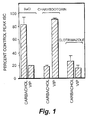
- T84 cells were grown as described above and Cl- secretion was stimulated by the addition to the media of either carbachol (100 ⁇ M) or VIP (5nM). The cells were then treated with BaCl (3mM), charybdotoxin (100nM), or clotrimazole (33 ⁇ M). The short circuit current (Isc) was determined for the various inhibitor treatments as a percentage of the control in the absence of inhibitor (Fig. 1). BaCl strongly inhibited the secretory response to the cAMP mediated agonist VIP, but had no apparent affect on the secretory response elicited by the Ca ++ -dependent agonist carbachol.
- clotrimazole potentiated slightly (by 5-10%) the CI-secretory responses to either agonist.
- clotrimazole inhibited effectively the secretory response to cholera toxin (20 nM, a cAMP-dependent agonist) and E. Coli heat-stabile toxin (100 nm, a cGMP-agonist) (IC50 values of 10 ⁇ M and 15 ⁇ M, respectively).
- T84 cells were grown in the presence of a cAMP agonist, VIP, or a Ca ++ mediated agonist (Thapsigargin).
- Clotrimazole was added and 86 RB efflux was measured.
- Clotrimazole significantly inhibited baseline and Ca ++ stimulated 86 RB efflux in the presence of both cAMP and Ca ++ mediated agonists compared to those cells which were not treated with clotrimazole.
- Example 2 Clotrimazole acts at distal steps in the cAMP and Ca ++ -dependent signal transduction pathways
- clotrimazole To determine the site of clotrimazole action, the effects of clotrimazole pretreatment were examined on monolayers stimulated with agonists that initiate Cl - secretion at sequential steps in the cAMP signalling cascade. T84 monolayers were preincubated in HBSS in the presence or absence of clotrimazole (33 ⁇ M) and then stimulated with either 5 nM VIP (which activates adenylate cyclase through heterotrimeric GTPase-linked cell surface receptors), 10 ⁇ M forskolin (which activates adenylate cyclase directly), or 3 mM 8Br-cAMP (a direct stimulator of protein kinase A). Clotrimazole inhibited the secretory response to each of these agonists. These data provide evidence that clotrimazole acts at a step distal to the activation of Protein Kinase A.
- IP3 inositol trisphosphate
- Ca ++ -dependent intracellular signaling in T84 and other non-exciteable cells involves recruitment of inositol trisphosphate (IP3)-dependent intracellular Ca ++ stores (Halm and Frizzell, Textbook of Secretory Diarrhea, Raven Press, 47-58 (1990); Mandel et al., J. Biol. Chem. 267: 704-712 (1986); Halm et al., Am. J. Physiol. (Cell Physiol. 23 ) 254:C505-C511 (1988)), and subsequent activation of plasma membrane Ca ++ influx pathways (Barrett, Am. J . Physiol. (Cell Physiol. 34 ): C859-C868 (1993)).
- IP3 inositol trisphosphate
- Downstream events may be mediated by [Ca ++ ]i, IP3, diacylglycerol, or as yet unidentified diffusable factors (Putney and Bird, Cell 75:199-201 (1993)).
- this signalling, cascade, T84 monolayers pretreated in the presence or absence of clotrimazole were stimulated with the Ca ++ -dependent agonists carbachol (100 ⁇ M which elicits both Ca ++ and IP 3 signals), thapsigargin (5 ⁇ M, which elevates cytoplasmic Ca ++ via inhibition of ER Ca ++ -ATPase) (Vandorpe et al., Biophys. J.
- Clotrimazole inhibited strongly the Cl-secretory response to each to these reagents. These data suggest that clotrimazole acts at steps in the secretory response distal to the release of intracellular Ca ++ stores.
- Example 3 Clotrimazole does not affect apical membrane anion conductance or basolateral NaK2Cl cotransporters
- Example 4 Clotrimazole inhibits Chloride secretion by inhibiting K + efflux through basolateral K + channels in T84 cells.
- Clotrimazole inhibits chloride secretion by blockade of K + transport through both Ba ++ -sensitive and charybdotoxin-sensitive channels
- K + channel activity was estimated by measurement of 86 Rb efflux.
- clotrimazole was found to significantly inhibit the rate of 86 Rb efflux after treatment with the cAMP agonist VIP (5 nM.
- Clotrimazole inhibits chloride secretion through distinct cAMP and Ca ++ sensitive basolateral K + channels
- the basolateral potassium conductance was measured using the technique developed by Dawson and co-workers.
- a potassium gradient (mucosal to serosal) was first established across the monolayer using asymmetric mucosal and serosal buffers containing K + as the sole permeant ion.
- the addition of amphotericin B (20 ⁇ M) to the mucosal reservoir forms conductive pores in the apical membrane, and thus removes all resistance to transepithelial potassium movement across this membrane.
- the amphotericin-dependent Isc becomes a measure of the rate of the transepithelial potassium flux across basolateral membranes.
- Changes in short circuit current (Isc) then represent changes in basolateral K + conductances (gK). Isc and K + conductances were measured using calomel electrodes, 3M KCI-agar bridges, and a voltage clamp (University of Iowa, Iowa City).
- Basolateral K + transport was examined in T84 monolayers permeabilized apically by pretreatment with amphotericin B.
- Apical and basolateral buffers contained K + as the sole permeant ion. All studies were performed with a 135 mM basolaterally directed K + gradient. This method has been utilized previously to examine both Cl - and K + transport in T84 cells and HT29-C1.16E cells. Briefly, ion conductances in the luminal or basolateral membranes of confluent T84 cell monolayers can be assessed separately by selectively permeabilizing the apical or basolateral membrane using the ionophore amphotericin B.
- K + transport was measured at baseline and after the ordered additions of cAMP- and Ca ++ -agonists.
- the initial permeabilization with amphotericin B was associated with 49 ⁇ 19% increase in conductance. Pores formed by amphotericin B display selectivity for monovalent cations.
- Ca ++ remained relatively impermeant as evidenced by the small steady state increase in Isc and G K caused by apical permeabilization with amphotericin B. Given this low baseline Isc and G K , both cAMP- and Ca ++ -sensitive K + permeabilities (PK) were readily apparent after agonist stimulation.
- clotrimazole may inhibit directly basolateral membrane K + channels in human intestinal T84 cells, as it does in the red cell.
- clotrimazole significantly inhibited the time course of K + transport after treatment with the cAMP agonist forskolin (10 ⁇ M) and the Ca ++ agonist carbachol (100 ⁇ M).
- Formal IV relations taken at steady state after cAMP or Ca ++ stimulation confirm that clotrimazole affected both cAMP- and Ca ++ -- sensitive channels. Nearly identical results were obtained with 2-chlorophenyl-bis-phenyl methanol.
- Clotrimazole targets the basolateral rather than the apical surface of T84 cells
- clotrimazole In contrast to the clear inhibitory effects of clotrimazole on basolateral K + conductances, however, clotrimazole had no detectable effect on either forskolin- or thapsigargin-stimulated Cl - conductances. I/V relations for Cl - transport were nearly identical in monolayers treated or not treated with clotrimazole. These data provide further evidence that clotrimazole inhibits Cl - secretion in intact T84 cell monolayers by affecting specifically basolateral K + channels. Apical membrane Cl - channels are not inhibited.
- Example 5 Clotrimazole inhibits Cl - secretion in vivo.
- Luminal and serosal buffer solutions were interfaced via Ag-AgCl electrodes (Voltage/Current Clamp, Model VCC600, Physiologic Instruments, Inc., San Diego, CA, USA) and Ringer/agar bridge to voltage clamp device (model DVC-1000; Voltage/Current Clamp, World Precision Instruments, Inc.). Resistance (R) was calculated using Ohm's law and the Isc is given in ⁇ x cm2.
- mucosal preparations were incubated in the presence or absence of serosal clotrimazole (30 ⁇ M) for 30 min, and then stimulated by the addition of forskolin (10 ⁇ M) or carbachol (10 ⁇ M) to the serosal reservoir.
- mice Treated and control, untreated, mice were gavage fed either clotrimazole (150 mg/kg/day divided in two equal doses, dissolved in peanut oil at a concentration of 20 mg/ml) or vehicle control over a 7 day loading period. Mice were then challenged by gavage with either 25 ⁇ g purified cholera toxin (Calbiochem, San Diego, CA) in PBS, vehicle control alone (PBS without cholera toxin), or cholera toxin in PBS containing 30 ⁇ M clotrimazole. Animals were sacrificed after 5 hours in an uncrowded C0 2 hood. The carcass was weighed, the abdomen was opened, and ligatures were tied at the proximal duodenum and distal rectum. The intestinal block was dissected free of supporting structures and removed as a single unit and weighed. Small and large intestinal segments were normalized to body weight (intestinal weight/carcass weight) for each animal.
- clotrimazole 150 mg/kg/day divided in two equal dose
- mice were gavage fed 150 mg/kg/day clotrimazole, divided into two equal doses, or vehicle control every 12 h for 7 days and subsequently challenged orally with purified cholera toxin (25 ⁇ g). Five hours after treatment with cholera toxin, the mice were sacrificed and intestinal fluid secretion assessed gravimetrically. Pretreatment with clotrimazole reduced by 86% intestinal fluid secretion induced by cholera toxin. Clotrimazole had no effect on intestinal secretion in the absence of cholera toxin. Thus, clotrimazole effectively treated secretory diarrhea in vivo, presumably by inhibiting basolateral K + channels of crypt epithelial cells.
Landscapes
- Health & Medical Sciences (AREA)
- Life Sciences & Earth Sciences (AREA)
- Medicinal Chemistry (AREA)
- Chemical & Material Sciences (AREA)
- General Health & Medical Sciences (AREA)
- Veterinary Medicine (AREA)
- Public Health (AREA)
- Animal Behavior & Ethology (AREA)
- Pharmacology & Pharmacy (AREA)
- Epidemiology (AREA)
- Organic Chemistry (AREA)
- Nuclear Medicine, Radiotherapy & Molecular Imaging (AREA)
- Chemical Kinetics & Catalysis (AREA)
- General Chemical & Material Sciences (AREA)
- Bioinformatics & Cheminformatics (AREA)
- Engineering & Computer Science (AREA)
- Oncology (AREA)
- Communicable Diseases (AREA)
- Microbiology (AREA)
- Immunology (AREA)
- Mycology (AREA)
- Virology (AREA)
- Pharmaceuticals Containing Other Organic And Inorganic Compounds (AREA)
- Acyclic And Carbocyclic Compounds In Medicinal Compositions (AREA)
- Medicines That Contain Protein Lipid Enzymes And Other Medicines (AREA)
- Medicines Containing Material From Animals Or Micro-Organisms (AREA)
Applications Claiming Priority (3)
| Application Number | Priority Date | Filing Date | Title |
|---|---|---|---|
| US621169 | 1996-03-20 | ||
| US08/621,169 US5889038A (en) | 1996-03-20 | 1996-03-20 | Methods and products for treating diarrhea and scours: use of clotrimazole and related aromatic compounds |
| PCT/US1997/004244 WO1997034599A2 (en) | 1996-03-20 | 1997-03-20 | Use of clotrimazole and related compounds in the treatment of diarrhea |
Publications (2)
| Publication Number | Publication Date |
|---|---|
| EP0910376A2 EP0910376A2 (en) | 1999-04-28 |
| EP0910376B1 true EP0910376B1 (en) | 2003-07-30 |
Family
ID=24489031
Family Applications (1)
| Application Number | Title | Priority Date | Filing Date |
|---|---|---|---|
| EP97916035A Expired - Lifetime EP0910376B1 (en) | 1996-03-20 | 1997-03-20 | Use of clotrimazole and related compounds in the treatment of diarrhea |
Country Status (9)
| Country | Link |
|---|---|
| US (3) | US5889038A (enExample) |
| EP (1) | EP0910376B1 (enExample) |
| JP (2) | JP2000506895A (enExample) |
| AT (1) | ATE245981T1 (enExample) |
| DE (1) | DE69723843T2 (enExample) |
| DK (1) | DK0910376T3 (enExample) |
| ES (1) | ES2199358T3 (enExample) |
| PT (1) | PT910376E (enExample) |
| WO (1) | WO1997034599A2 (enExample) |
Families Citing this family (22)
| Publication number | Priority date | Publication date | Assignee | Title |
|---|---|---|---|---|
| US7048906B2 (en) * | 1995-05-17 | 2006-05-23 | Cedars-Sinai Medical Center | Methods of diagnosing and treating small intestinal bacterial overgrowth (SIBO) and SIBO-related conditions |
| US5889038A (en) * | 1996-03-20 | 1999-03-30 | Children's Hospital | Methods and products for treating diarrhea and scours: use of clotrimazole and related aromatic compounds |
| ATE314060T1 (de) | 1996-03-20 | 2006-01-15 | Harvard College | Triarylmethanverbindungen zur behandlung von krebs, aktinischer keratose und kaposisarkom |
| US6667063B2 (en) * | 1998-06-10 | 2003-12-23 | Albert Crum | Nutritional or therapeutic supplement and method |
| EP1465863B1 (en) | 2002-01-04 | 2008-07-09 | NeuroSearch A/S | Potassium channel modulators |
| US20050175597A1 (en) * | 2002-03-21 | 2005-08-11 | Rawlin Grant T. | Compositions containing labile bioactive materials and mammalian colostrum, methods of preparation and treatment |
| AU2003273141B2 (en) | 2002-05-20 | 2009-05-07 | Cedars-Sinai Medical Center | Manipulation of the rate of gastrointestinal transit by modulating intestinal methane concentration |
| US10066254B2 (en) * | 2002-05-20 | 2018-09-04 | Cedars-Sinai Medical Center | Diagnosis of constipation by analysis of methane concentration |
| WO2005027851A2 (en) * | 2003-09-18 | 2005-03-31 | Children's Medical Center Corporation | Treatment of severe distal colitis |
| US20060013890A1 (en) * | 2004-06-24 | 2006-01-19 | Green Shawn J | Dairy-derived anticholesterol immunoglobulin to lower dietary cholesterol in humans |
| US20070087002A1 (en) * | 2005-10-14 | 2007-04-19 | Green Shawn J | Anticholesterol immunoglobulin to treat lipid raft diseases |
| PT2152663E (pt) | 2007-06-04 | 2014-06-03 | Univ Ben Gurion | Compostos de triarilo e composições que compreendem os mesmos |
| WO2009027292A1 (en) | 2007-08-24 | 2009-03-05 | Neurosearch A/S | Carbonylamino derivatives useful for the treatment of certain inflammatory disorders |
| KR101345860B1 (ko) | 2011-10-25 | 2013-12-30 | 이화여자대학교 산학협력단 | 모다피닐 또는 이의 유도체를 포함하는 혈관질환 치료용 조성물 |
| US9744208B2 (en) | 2013-03-15 | 2017-08-29 | Cedars-Sinai Medical Center | Methods of diagnosis, selection, and treatment of diseases and conditions caused by or associated with methanogens |
| US9289418B2 (en) | 2013-03-15 | 2016-03-22 | Cedars-Sinai Medical Center | Methods of diagnosis, selection, and treatment of diseases and conditions caused by or associated with methanogens |
| CN103266281B (zh) * | 2013-05-24 | 2015-02-04 | 无锡鑫常钢管有限责任公司 | 一种超级双相不锈钢管及其生产工艺 |
| EP3065723B1 (en) | 2013-11-05 | 2020-09-23 | Ben Gurion University of the Negev Research and Development Authority | Compounds for the treatment of diabetes and disease complications arising from same |
| US9956292B2 (en) | 2014-08-13 | 2018-05-01 | Cedars-Sinai Medical Center | Anti-methanogenic compositions and uses thereof |
| US10736871B2 (en) | 2015-04-01 | 2020-08-11 | Cedars-Sinai Medical Center | Anti-methanogenic lovastatin analogs or derivatives and uses thereof |
| TW202042799A (zh) * | 2019-01-16 | 2020-12-01 | 美國加利福尼亞大學董事會 | 治療酪胺酸激酶抑制劑引起之腹瀉的方法 |
| JP6664637B1 (ja) * | 2019-08-08 | 2020-03-13 | 株式会社 レオロジー機能食品研究所 | ストレス低下用及び/又は体重回復用経口組成物、並びにプラズマローゲン含有組成物の製造方法 |
Family Cites Families (25)
| Publication number | Priority date | Publication date | Assignee | Title |
|---|---|---|---|---|
| US307874A (en) * | 1884-11-11 | Bessemer converter | ||
| US3655882A (en) * | 1968-08-26 | 1972-04-11 | Staley Mfg Co A E | Stable dietary supplement for new born pigs |
| US3965112A (en) * | 1971-01-11 | 1976-06-22 | John Wyeth & Brother Limited | Imidazoline derivatives |
| CA1007568A (en) * | 1973-12-13 | 1977-03-29 | Canada Packers Limited | Bovine immunoglobulin isolation process |
| US3917615A (en) * | 1974-04-01 | 1975-11-04 | Searle & Co | 1,1-Diaryl-1-oxadiazol-alkylamines |
| US3998832A (en) * | 1975-04-16 | 1976-12-21 | G. D. Searle & Co. | Anti-diarrheal compounds |
| US4284829A (en) * | 1977-09-13 | 1981-08-18 | Pfizer Inc. | Hydroxyalkyl and oxoalkyl substituted phenols as analgesics and sedatives |
| US4806685A (en) | 1985-08-05 | 1989-02-21 | Gyogyszerkutato Inteezet/Pharmaceutical Research Institute | 1,1,2-triphenylpropane and -propene derivatives |
| JPS62163662A (ja) * | 1986-01-11 | 1987-07-20 | Nippon Nousan Kogyo Kk | 犬猫用ペツトフ−ド |
| EP0323740A3 (en) | 1987-12-24 | 1990-12-12 | California Biotechnology, Inc. | Linear analogs of atrial natriuretic peptides |
| AU629559B2 (en) * | 1988-08-04 | 1992-10-08 | Thomas Julius Borody | Oral antibody therapy for patients with lowered immune response and composition therefor |
| AU5254790A (en) * | 1989-04-06 | 1990-10-11 | Chugai Seiyaku Kabushiki Kaisha | Process for preparing a therapeutic agent for rotavirus infection |
| WO1991015199A1 (en) * | 1990-04-09 | 1991-10-17 | Medicis Corporation | Antidiarrheal composition and method |
| DE4130689A1 (de) * | 1991-09-14 | 1993-03-18 | Biotest Pharma Gmbh | Verfahren zur herstellung eines leicht loeslichen getrockneten immunglobulin-praeparats aus kolostralmilch |
| US5430062A (en) | 1992-05-21 | 1995-07-04 | Research Corporation Technologies, Inc. | Stilbene derivatives as anticancer agents |
| US5387600A (en) | 1992-07-30 | 1995-02-07 | Fuji Photo Film Co., Ltd. | Treating arteriosclerosis using benzimidazole compositions |
| US5512591A (en) | 1993-02-18 | 1996-04-30 | President And Fellows Of Harvard College | Treatments for diseases characterized by neovascularization |
| US5439086A (en) * | 1993-12-10 | 1995-08-08 | Oceaneering International, Inc. | Mechanical clutch |
| FR2715068B1 (fr) * | 1994-01-17 | 1996-04-19 | Paul Vidal | Procédé permettant de recueillir des doses de sérocolostrum bovin destinées à être administrées par voie orale à des veaux nouveau-nés ainsi que dispositif permettant la mise en Óoeuvre de ce procédé. |
| US5650425A (en) | 1994-04-04 | 1997-07-22 | Pharmos Corporation | Permanently ionic derivatives of steroid hormones and their antagonists |
| AU2880595A (en) | 1994-07-06 | 1996-01-25 | Bo Arne Hofmann | Use of pharmaceutical agents for restoring, alleviation, or treatment of immunodeficiency, including the alleviation or treatment of the immune dysfunction related to infection with human immunodeficiency viruses (hiv) or related viruses |
| WO1996008242A2 (en) * | 1994-09-16 | 1996-03-21 | Children's Medical Center Corporation | Clotrimazole metabolites in the treatment of sickle cell disease |
| ATE314060T1 (de) | 1996-03-20 | 2006-01-15 | Harvard College | Triarylmethanverbindungen zur behandlung von krebs, aktinischer keratose und kaposisarkom |
| US5889038A (en) * | 1996-03-20 | 1999-03-30 | Children's Hospital | Methods and products for treating diarrhea and scours: use of clotrimazole and related aromatic compounds |
| WO1999025347A2 (en) | 1997-11-14 | 1999-05-27 | Neurosearch A/S | Chemical compounds having ion channel blocking activity for the treatment of immune dysfunction |
-
1996
- 1996-03-20 US US08/621,169 patent/US5889038A/en not_active Expired - Lifetime
-
1997
- 1997-03-20 JP JP9533600A patent/JP2000506895A/ja active Pending
- 1997-03-20 EP EP97916035A patent/EP0910376B1/en not_active Expired - Lifetime
- 1997-03-20 PT PT97916035T patent/PT910376E/pt unknown
- 1997-03-20 AT AT97916035T patent/ATE245981T1/de not_active IP Right Cessation
- 1997-03-20 DK DK97916035T patent/DK0910376T3/da active
- 1997-03-20 ES ES97916035T patent/ES2199358T3/es not_active Expired - Lifetime
- 1997-03-20 DE DE69723843T patent/DE69723843T2/de not_active Expired - Lifetime
- 1997-03-20 WO PCT/US1997/004244 patent/WO1997034599A2/en not_active Ceased
-
1998
- 1998-09-23 US US09/159,399 patent/US6495567B1/en not_active Expired - Lifetime
-
2002
- 2002-11-08 US US10/290,861 patent/US20030119784A1/en not_active Abandoned
-
2008
- 2008-07-16 JP JP2008184496A patent/JP2009007368A/ja active Pending
Also Published As
| Publication number | Publication date |
|---|---|
| JP2009007368A (ja) | 2009-01-15 |
| JP2000506895A (ja) | 2000-06-06 |
| US5889038A (en) | 1999-03-30 |
| DE69723843T2 (de) | 2004-03-04 |
| EP0910376A2 (en) | 1999-04-28 |
| US20030119784A1 (en) | 2003-06-26 |
| WO1997034599A3 (en) | 1998-02-12 |
| WO1997034599A2 (en) | 1997-09-25 |
| DK0910376T3 (da) | 2003-11-17 |
| PT910376E (pt) | 2003-12-31 |
| DE69723843D1 (de) | 2003-09-04 |
| ES2199358T3 (es) | 2004-02-16 |
| ATE245981T1 (de) | 2003-08-15 |
| US6495567B1 (en) | 2002-12-17 |
Similar Documents
| Publication | Publication Date | Title |
|---|---|---|
| US6495567B1 (en) | Triaryl methane compounds and their use in the treatment of diarrhea and scours | |
| Rezvani et al. | Attenuation of alcohol consumption by a novel nontoxic ibogaine analogue (18-methoxycoronaridine) in alcohol-preferring rats | |
| Ganapathy et al. | Drugs of abuse and placental transport | |
| WO2002038141A9 (en) | Compositions and methods for treatment of mild cognitive impairment | |
| Rocker et al. | 1, 25-Dihydroxyvitamin D3 potentiates the cytotoxic effect of TNF on human breast cancer cells | |
| Aricioglu et al. | Effect of agmatine on the development of morphine dependence in rats: potential role of cAMP system | |
| US4835140A (en) | Method for treating pneumocystis carinii pneumonia patients with clindamycin and primaquine | |
| US20020132855A1 (en) | Use of acetaminophen to prevent and treat arteriosclerosis | |
| US4994481A (en) | Treatment of AIDS with diphenylhydantoin and its derivatives | |
| Lehrich et al. | Tyrosine phosphorylation is a novel pathway for regulation of chloride secretion in shark rectal gland | |
| Chu et al. | Calcium-sensing receptor activator cinacalcet for treatment of cyclic nucleotide-mediated secretory diarrheas | |
| CZ20021116A3 (cs) | Synergické kombinace antagonisty receptoru NK1 a strukturálního analogu GABA | |
| EP0217794A1 (en) | Method for treating the effects of alcohol | |
| KR20080106183A (ko) | 살균성, 정균성 및 항염증을 위한 방법 및 조성물 | |
| US6291449B1 (en) | Use of 11-phenyl-dibenzazepine compounds to treat diarrhea or scours | |
| EP1906972B1 (en) | LPA2 receptor agonist for treating diarrhea | |
| US20020004519A1 (en) | Method for reducing chloride secetion by intestinal epithlial cells in situ | |
| KR20150119439A (ko) | 통증 치료를 위한 na(v) 1.9 채널 활성의 억제제 및 이의 용도 | |
| US6350768B1 (en) | Combination of riluzole and of gabapentin and its use as a medicament | |
| JP2001523720A (ja) | 鎌状赤血球病、異常な細胞増殖によって特徴づけられる炎症性疾患、下痢症および伝染性下痢症の治療または予防用の置換11−フェニル−ジベンザゼピン化合物の使用。 | |
| Newsholme et al. | Identification of a novel complement-dependent serum-elicited inward current in the Xenopus oocyte provoking Ca2+ influx and subsequent activation of Cl− channels | |
| JPH0232020A (ja) | モルフィン鎮痛治療における耐性発現の抑制方法および薬剤 | |
| US7842702B2 (en) | Treatment for irritable bowel syndrome | |
| GB2317110A (en) | Anti-diarrhoeal compositions comprising loperamide | |
| DE102004028899A1 (de) | Mittel zur Steigerung der Aktivität der sekretorischen Phospholipase A2-IIA |
Legal Events
| Date | Code | Title | Description |
|---|---|---|---|
| PUAI | Public reference made under article 153(3) epc to a published international application that has entered the european phase |
Free format text: ORIGINAL CODE: 0009012 |
|
| 17P | Request for examination filed |
Effective date: 19981020 |
|
| AK | Designated contracting states |
Kind code of ref document: A2 Designated state(s): AT BE CH DE DK ES FI FR GB GR IE IT LI LU MC NL PT SE |
|
| 17Q | First examination report despatched |
Effective date: 20001002 |
|
| GRAH | Despatch of communication of intention to grant a patent |
Free format text: ORIGINAL CODE: EPIDOS IGRA |
|
| GRAH | Despatch of communication of intention to grant a patent |
Free format text: ORIGINAL CODE: EPIDOS IGRA |
|
| GRAA | (expected) grant |
Free format text: ORIGINAL CODE: 0009210 |
|
| AK | Designated contracting states |
Designated state(s): AT BE CH DE DK ES FI FR GB GR IE IT LI LU MC NL PT SE |
|
| REG | Reference to a national code |
Ref country code: GB Ref legal event code: FG4D |
|
| REG | Reference to a national code |
Ref country code: CH Ref legal event code: EP |
|
| REG | Reference to a national code |
Ref country code: IE Ref legal event code: FG4D |
|
| REF | Corresponds to: |
Ref document number: 69723843 Country of ref document: DE Date of ref document: 20030904 Kind code of ref document: P |
|
| REG | Reference to a national code |
Ref country code: CH Ref legal event code: NV Representative=s name: LUCHS & PARTNER PATENTANWAELTE |
|
| REG | Reference to a national code |
Ref country code: SE Ref legal event code: TRGR |
|
| REG | Reference to a national code |
Ref country code: DK Ref legal event code: T3 Ref country code: GR Ref legal event code: EP Ref document number: 20030404264 Country of ref document: GR |
|
| REG | Reference to a national code |
Ref country code: ES Ref legal event code: FG2A Ref document number: 2199358 Country of ref document: ES Kind code of ref document: T3 |
|
| ET | Fr: translation filed | ||
| PLBE | No opposition filed within time limit |
Free format text: ORIGINAL CODE: 0009261 |
|
| STAA | Information on the status of an ep patent application or granted ep patent |
Free format text: STATUS: NO OPPOSITION FILED WITHIN TIME LIMIT |
|
| 26N | No opposition filed |
Effective date: 20040504 |
|
| PGFP | Annual fee paid to national office [announced via postgrant information from national office to epo] |
Ref country code: NL Payment date: 20060228 Year of fee payment: 10 |
|
| PGFP | Annual fee paid to national office [announced via postgrant information from national office to epo] |
Ref country code: MC Payment date: 20060303 Year of fee payment: 10 Ref country code: AT Payment date: 20060303 Year of fee payment: 10 |
|
| PGFP | Annual fee paid to national office [announced via postgrant information from national office to epo] |
Ref country code: PT Payment date: 20060306 Year of fee payment: 10 |
|
| PGFP | Annual fee paid to national office [announced via postgrant information from national office to epo] |
Ref country code: ES Payment date: 20060327 Year of fee payment: 10 |
|
| PGFP | Annual fee paid to national office [announced via postgrant information from national office to epo] |
Ref country code: IE Payment date: 20060329 Year of fee payment: 10 Ref country code: SE Payment date: 20060329 Year of fee payment: 10 |
|
| PGFP | Annual fee paid to national office [announced via postgrant information from national office to epo] |
Ref country code: FI Payment date: 20060330 Year of fee payment: 10 Ref country code: CH Payment date: 20060330 Year of fee payment: 10 |
|
| PGFP | Annual fee paid to national office [announced via postgrant information from national office to epo] |
Ref country code: IT Payment date: 20060331 Year of fee payment: 10 Ref country code: GR Payment date: 20060331 Year of fee payment: 10 Ref country code: DK Payment date: 20060331 Year of fee payment: 10 |
|
| PGFP | Annual fee paid to national office [announced via postgrant information from national office to epo] |
Ref country code: LU Payment date: 20060403 Year of fee payment: 10 |
|
| PGFP | Annual fee paid to national office [announced via postgrant information from national office to epo] |
Ref country code: BE Payment date: 20060427 Year of fee payment: 10 |
|
| PG25 | Lapsed in a contracting state [announced via postgrant information from national office to epo] |
Ref country code: FI Free format text: LAPSE BECAUSE OF NON-PAYMENT OF DUE FEES Effective date: 20070320 |
|
| PG25 | Lapsed in a contracting state [announced via postgrant information from national office to epo] |
Ref country code: SE Free format text: LAPSE BECAUSE OF NON-PAYMENT OF DUE FEES Effective date: 20070321 |
|
| PG25 | Lapsed in a contracting state [announced via postgrant information from national office to epo] |
Ref country code: PT Free format text: LAPSE BECAUSE OF NON-PAYMENT OF DUE FEES Effective date: 20070920 |
|
| REG | Reference to a national code |
Ref country code: PT Ref legal event code: MM4A Free format text: LAPSE DUE TO NON-PAYMENT OF FEES Effective date: 20070920 |
|
| REG | Reference to a national code |
Ref country code: DK Ref legal event code: EBP |
|
| REG | Reference to a national code |
Ref country code: CH Ref legal event code: PL |
|
| EUG | Se: european patent has lapsed | ||
| PG25 | Lapsed in a contracting state [announced via postgrant information from national office to epo] |
Ref country code: AT Free format text: LAPSE BECAUSE OF NON-PAYMENT OF DUE FEES Effective date: 20070320 |
|
| NLV4 | Nl: lapsed or anulled due to non-payment of the annual fee |
Effective date: 20071001 |
|
| REG | Reference to a national code |
Ref country code: IE Ref legal event code: MM4A |
|
| BERE | Be: lapsed |
Owner name: *CHILDREN'S MEDICAL CENTER CORP. Effective date: 20070331 |
|
| PG25 | Lapsed in a contracting state [announced via postgrant information from national office to epo] |
Ref country code: BE Free format text: LAPSE BECAUSE OF NON-PAYMENT OF DUE FEES Effective date: 20070331 |
|
| PG25 | Lapsed in a contracting state [announced via postgrant information from national office to epo] |
Ref country code: NL Free format text: LAPSE BECAUSE OF NON-PAYMENT OF DUE FEES Effective date: 20071001 Ref country code: MC Free format text: LAPSE BECAUSE OF NON-PAYMENT OF DUE FEES Effective date: 20070331 Ref country code: IE Free format text: LAPSE BECAUSE OF NON-PAYMENT OF DUE FEES Effective date: 20070320 |
|
| PG25 | Lapsed in a contracting state [announced via postgrant information from national office to epo] |
Ref country code: CH Free format text: LAPSE BECAUSE OF NON-PAYMENT OF DUE FEES Effective date: 20070331 Ref country code: LI Free format text: LAPSE BECAUSE OF NON-PAYMENT OF DUE FEES Effective date: 20070331 |
|
| PG25 | Lapsed in a contracting state [announced via postgrant information from national office to epo] |
Ref country code: DK Free format text: LAPSE BECAUSE OF NON-PAYMENT OF DUE FEES Effective date: 20070402 |
|
| REG | Reference to a national code |
Ref country code: ES Ref legal event code: FD2A Effective date: 20070321 |
|
| PG25 | Lapsed in a contracting state [announced via postgrant information from national office to epo] |
Ref country code: ES Free format text: LAPSE BECAUSE OF NON-PAYMENT OF DUE FEES Effective date: 20070321 |
|
| PG25 | Lapsed in a contracting state [announced via postgrant information from national office to epo] |
Ref country code: GR Free format text: LAPSE BECAUSE OF NON-PAYMENT OF DUE FEES Effective date: 20071003 |
|
| PG25 | Lapsed in a contracting state [announced via postgrant information from national office to epo] |
Ref country code: LU Free format text: LAPSE BECAUSE OF NON-PAYMENT OF DUE FEES Effective date: 20070320 |
|
| PG25 | Lapsed in a contracting state [announced via postgrant information from national office to epo] |
Ref country code: IT Free format text: LAPSE BECAUSE OF NON-PAYMENT OF DUE FEES Effective date: 20070320 |
|
| REG | Reference to a national code |
Ref country code: FR Ref legal event code: PLFP Year of fee payment: 20 |
|
| PGFP | Annual fee paid to national office [announced via postgrant information from national office to epo] |
Ref country code: GB Payment date: 20160329 Year of fee payment: 20 Ref country code: FR Payment date: 20160328 Year of fee payment: 20 |
|
| PGFP | Annual fee paid to national office [announced via postgrant information from national office to epo] |
Ref country code: DE Payment date: 20160331 Year of fee payment: 20 |
|
| REG | Reference to a national code |
Ref country code: DE Ref legal event code: R071 Ref document number: 69723843 Country of ref document: DE |
|
| REG | Reference to a national code |
Ref country code: GB Ref legal event code: PE20 Expiry date: 20170319 |
|
| PG25 | Lapsed in a contracting state [announced via postgrant information from national office to epo] |
Ref country code: GB Free format text: LAPSE BECAUSE OF EXPIRATION OF PROTECTION Effective date: 20170319 |