EP0876708B1 - Adressübergangs-detektorschaltkreis - Google Patents
Adressübergangs-detektorschaltkreis Download PDFInfo
- Publication number
- EP0876708B1 EP0876708B1 EP96941480A EP96941480A EP0876708B1 EP 0876708 B1 EP0876708 B1 EP 0876708B1 EP 96941480 A EP96941480 A EP 96941480A EP 96941480 A EP96941480 A EP 96941480A EP 0876708 B1 EP0876708 B1 EP 0876708B1
- Authority
- EP
- European Patent Office
- Prior art keywords
- output
- input
- circuit
- responsive
- signal
- Prior art date
- Legal status (The legal status is an assumption and is not a legal conclusion. Google has not performed a legal analysis and makes no representation as to the accuracy of the status listed.)
- Expired - Lifetime
Links
- 230000007704 transition Effects 0.000 title claims description 73
- 238000001514 detection method Methods 0.000 title claims description 29
- 230000008859 change Effects 0.000 claims description 48
- 230000015654 memory Effects 0.000 claims description 40
- 239000003990 capacitor Substances 0.000 claims description 32
- 230000000630 rising effect Effects 0.000 claims description 28
- 230000004044 response Effects 0.000 claims description 8
- 238000003708 edge detection Methods 0.000 claims 13
- 230000003111 delayed effect Effects 0.000 description 9
- 230000000694 effects Effects 0.000 description 2
- 208000000044 Amnesia Diseases 0.000 description 1
- 230000007812 deficiency Effects 0.000 description 1
- 230000006870 function Effects 0.000 description 1
- 231100000863 loss of memory Toxicity 0.000 description 1
- 238000012986 modification Methods 0.000 description 1
- 230000004048 modification Effects 0.000 description 1
Images




Classifications
-
- H—ELECTRICITY
- H03—ELECTRONIC CIRCUITRY
- H03K—PULSE TECHNIQUE
- H03K5/00—Manipulating of pulses not covered by one of the other main groups of this subclass
- H03K5/153—Arrangements in which a pulse is delivered at the instant when a predetermined characteristic of an input signal is present or at a fixed time interval after this instant
- H03K5/1534—Transition or edge detectors
-
- G—PHYSICS
- G11—INFORMATION STORAGE
- G11C—STATIC STORES
- G11C7/00—Arrangements for writing information into, or reading information out from, a digital store
- G11C7/22—Read-write [R-W] timing or clocking circuits; Read-write [R-W] control signal generators or management
-
- G—PHYSICS
- G11—INFORMATION STORAGE
- G11C—STATIC STORES
- G11C8/00—Arrangements for selecting an address in a digital store
- G11C8/18—Address timing or clocking circuits; Address control signal generation or management, e.g. for row address strobe [RAS] or column address strobe [CAS] signals
Definitions
- the present invention relates to digital circuits and more particularly to (ATD) Address Transition Detection circuits.
- ATD circuits are employed in memory devices to detect a change in any one of the address lines of memory.
- a new address is supplied by the user to memory, that address is received by both a memory controller and by the row and column decoders for the memory array.
- a new address has been supplied by the user, and this address must be decoded by the decoding circuitry of the memory device in order to access the actual memory address.
- the data path to and from the memory address must be precharged in preparation for the transfer of this data. This precharging may involve charging a capacitor in a row and column to be addressed Typically, a pulse from the ATD circuit is used in the memory to begin precharging this path
- a device for precharging a memory circuit in response to an ATD circuits is disclosed in U.S. Patent No. 5,493,538, issued on February 20, 1996, and entitled Minimum Pulse Width Address Transition Detection Circuit.
- This patent discloses a device for detecting a change of address and latching the change for a period of time sufficient to precharge a memory.
- the address changes are detected by an edge detect and output as a series of pulses to the set input of a latch. Provided the latch has been reset before a pulse is received, the output of the latch will transition to a set condition.
- the set condition initiates memory precharge.
- the set condition also initiates a delayed feedback to the reset input of the latch. Precharge continues until the latch is reset.
- the problem with this device is that when pulses are spaced apart in time by an interval less than the maximum delay interval, the pulse immediately after a pulse that placed the latch output in a set condition, will not be operated on
- the '538 device will not therefore precharge memory for a sufficient period of time. This can lead to the need to resend an address in order to properly precharge memory. It can also lead to incorrect data being written to or read from memory if the memory has not been adequately precharged.
- the shortcomings of the '538 device are compounded in memories having address buses with a large number of address lines. In this environment the occurrence of narrowly spaced address changes is relatively frequent and the inability of the '538 device to detect each pulse results in delayed or incorrect memory accesses.
- the ATD pulse is also used to pre bias the sense amplifier, to boost the wordlines. or to precharge the output driver.
- the ATD does not detect each narrowly spaced address change, it may lead to delayed or incorrect memory accesses in the above application. For example, if two address transitions are narrowly spaced and only first address transitions are detected, the memory control circuit will not bias the sense amplifier to the optimized timing corresponding to the second address change since its address transition is not detected.
- the ATD circuit In the event the ATD circuit is used to boost a wordline, a specified time interval must exist between the final address transition and the boost of the wordlines. Otherwise, the wordlines may be boosted before the decoded wordlines have settled to their final state. This may cause the wrong set of wordlines to be boosted and can also lead to incorrect data being read from the memory What is needed is an ATD circuit that will detect each address transition under all conditions.
- a first object of the invention is to provide an ATD circuit which detects each address transition.
- a second object of the invention is to provide an ATD circuit suitable for use with memories having address buses with a large number of addresses.
- a third object of the invention is to reduce the amount of space required to construct an ATD circuit.
- the present invention provides a new ATD circuit for use on an address bus having any number of addresses.
- an ATD circuit which comprises a first and second circuit and an interval timer.
- the circuit provides an extended second state at the output of the first circuit, for all including the last received in a series of change signals
- the first circuit has a first and second input and an output.
- the first circuit receives, at the first input, a change signal corresponding to transitions in an address signal.
- the output of the first circuit transitions from an initial first state to a second state.
- the first circuit is also responsive to a reset command at the second input to return the output to the first state.
- the interval timer has an output coupled to the second input of the first circuit and an input
- the interval timer responsive to an initialize command at the input initiates a timed interval and after the timed interval generates the reset command at the output.
- the second circuit has an output coupled to the input of the interval timer and an input.
- the second circuit is responsive to the change signal at the input to generate an initialize command at the output.
- the second circuit is responsive to both the change signal and the output of the first circuit to generate an initialize command at the output.
- a compact circuit for use in address buses with a large number of address lines is disclosed.
- the novel features of this embodiment allow a single ATD circuit to respond to change signals received from the 'N' address of an address bus.
- a plurality of change signals corresponding to address changes in a respective address of an 'N' address bus are combined in an OR gate.
- the output of the OR gate is a combined change signal.
- the combined change signal is received at a first input of the first circuit.
- the combined change signal is processed by a first and second circuit and interval timer corresponding to that discussed above in connection with the first preferred embodiment.
- an integrated circuit memory having a plurality of input pins and comprising an ATD unit.
- the plurality of input pins are each connected to the input of a respective edge detect unit.
- the edge detect units respond to rising or falling edge of an address connected to a respective input pin and output a change signal.
- the output of all edge detect units is coupled to a respective input of an OR gate.
- the OR gate responds to change signals at its inputs to output a combined change signal.
- the combined change signal is received and processed by a first and second circuit and interval timer similar to that discussed above in connection with the first preferred embodiment.
- the output of the first circuit may be coupled to a memory controller, decoder, or buffer.
- the present invention is an ATD circuit for use on a single address or a plurality of address lines, to detect address transitions.
- the ATD detects each address transition even under conditions of rapid address input change.
- the invention may advantageously be used in memories having address buses with a large number of addresses
- Fig. 1 illustrates a Prior Art ATD circuit.
- the circuit consists of a edge detect unit 100, a first circuit 102 and maximum delay unit 104.
- Edge detect unit 100 consists of a minimum delay unit 106 and a difference detector 108.
- the minimum delay unit has an input coupled to an AIs (address input signal) and an output coupled to one of the two inputs of the difference detector.
- the other input of the difference detector is coupled directly to AIs.
- the difference detector detects a difference between the AIs and the delayed AIs by generating a DDs (Difference Detector signal) on its output.
- DDs comprises pulses corresponding to either one or both of a rising/falling edge in the address input signal.
- the difference signal is received by the first circuit 102.
- the first circuit is an SR latch and the DDs is received at the first input of the latch, the set input.
- the output of the latch is the ATs (address transition signal).
- the ATs first and a second state, corresponding in the '538 patent. to a reset condition and a set condition.
- the set condition is associated with a memory precharge.
- the ATs is feed back to the input of maximum delay unit 104.
- When a transition in the ATs to a set condition is detected by the maximum delay unit, that signal is subject to a maximum delay interval.
- an Rs Reset Signal
- the latch Upon receipt of the reset signal, the latch returns the ATs from a set condition to a reset condition, thereby disabling memory precharge.
- Fig. 2 illustrates a Prior Art ATD circuit for an address bus having 'N' address lines.
- the circuit of Fig. 2 consists of a plurality of edge detect units, each dedicated to a specific address.
- the edge detect units 200A and 200Z are referenced.
- Edge detect unit 200A consists of maximum delay unit 204A and difference detector 208A.
- Edge detect unit 200Z consists of maximum delay unit 204Z and difference detector 208Z.
- the output of all edge detects 220A-Z is connected to each of the inputs of OR gate 202.
- an address referenced as AIs-1 serves as input to edge detect 200A and specifically to both maximum delay unit 204Z and to the first of two inputs of difference detector 208A.
- Maximum delay unit 204Z imposes a delay on the address signal and outputs the delayed signal to the second input of difference detector 208A.
- the difference detector 208A detects a difference between the original and delayed signal from bitline AIs-1, and outputs a DDs in the form of pulses corresponding to that difference.
- Edge detect 200Z is connected to Als-N and consists of a maximum delay unit 204Z and a difference detector 208Z, which perform in the manner discussed above in connection with maximum delay unit 204Z and difference detector 208Z.
- the difference detector 208Z detects a difference between the original and delayed signal from bitline Als-N and outputs a DDs in the form of pulses corresponding to that difference.
- the DDs from all edge detect units including the referenced units is combined in OR gate 202.
- the output of OR gate is the ATs.
- the circuit is not compact.
- the circuit consumes a large amount of chip 'real estate' because it utilizes a maximum delay circuit for each of the addresses.
- the maximum delay circuit relies on capacitors to produce the maximum delay interval.
- Fig. 3 illustrates a preferred embodiment of an ATD circuit suitable for connection to a single address in accordance with the current invention.
- the circuit comprises an edge detect unit 100 with a first circuit 102 and a maximum resettable delay unit 300.
- Edge detect unit 100 comprises a minimum delay unit 106 and a difference detector 108
- the minimum delay unit has an input coupled to an AIs and an output.
- the difference detector has two inputs and an output. One of the inputs is connected to the output ofthe minimum delay unit and the other is connected to the AIs.
- minimum delay unit 106 outputs the AIs in delayed form to difference detector 108. Responsive to both the AIs and the delayed AIs on either of its inputs, the difference detector 108 outputs a DDs.
- the DDs may comprise positive or negative going pulses corresponding to changes in the AIs. Changes to which the pulses correspond may be either one or both of a rising/falling edge of the address input signal. Difference detector 108 may be realized in multiple forms including for example, an XNOR or XOR gate.
- the DDs is received by both first circuit 102 and by resettable maximum delay unit 300.
- First circuit 102 has a first and a second input. The DDs is received at the first input. A reinitialized reset signal is received at the second input.
- the first circuit is a SR latch and the first input is a set input and the second input is a reset input.
- the SR latch has the properties set forth in the following tables.
- the first circuit 102 may also be realized for example. as RS, JK, T, D latch, as a sample and hold circuit, and so forth..
- the output of first circuit 102 is the ATs.
- the ATs is feedback to resettable maximum delay unit 300.
- the maximum resettable delay unit has a first and second input and an output. The first input is connected to the output of the first circuit 102 and the second input is connected to the output of the difference detector 108. This latter connection is lacking in the Prior Art.
- the output is connected to the second input of the first circuit 102.
- Maximum resettable delay unit receives at its first input the ATs and at its second input the DDs and responsive thereto generates, at its output, an RRs (reinitialized reset signal).
- a difference between this circuit and the circuit in Prior Art Fig. 1 is that the DDs is feed forward to the maximum resettable delay unit 300.
- This feed forward feature allows all pulses to effect the maximum resettable delay unit.
- only those pulses which produce a transition in the output of the first circuit from a first state to a second state effect the maximum resettable delay unit.
- resettable maximum delay unit 300 For pulses spaced apart farther in time than the delay interval resettable maximum delay unit 300 will perform in a manner similar to that shown in Prior Art Fig. 1. However, for pulses separated in time by an interval less than the delay interval the circuit disclosed herein will perform substantially differently then that of the Prior Art.
- each pulse on the DDs causes the reinitialize delay logic to reinitialize the delay interval and thereby extend the second state, the set condition on the output of the first circuit. This assures that the next received pulse, in a string of pulses separated in time by an interval less than the timed interval of the resettable maximum delay unit, will not be ignored and will result in a delay period sufficient to recharge memory.
- Fig. 4 illustrates in detail, a preferred embodiment of the resettable maximum delay unit 300.
- the unit has a first and second input and an output.
- the unit comprises an interval timer and a second circuit.
- the interval timer comprises inverters 408 and 410.
- the second circuit comprises inverter 400, AND gate 402, NMOS transistor 404 and capacitor 406.
- the first input of the resettable maximum delay unit 300 is the ATs input which is coupled to the first of the two inputs of AND gate 402.
- the second input, the DDs input. is coupled in parallel to the input of inverter 400 and the gate of NMOS transistor 404
- the output of inverter 400 is coupled to the second of the two inputs of AND gate 402.
- the AND gate output is coupled to the input of inverter 408 and also to the drain side of NMOS transistor 404 and capacitor 406.
- the source side of NMOS transistor 404 and capacitor is coupled to ground.
- the output of inverter 408 is connected to the input of inverter 410.
- the output of inverter 410 is connected to the second input of first circuit 102.
- the output of the AND gate 402 will be a logic 1 only when no change or pulse is present on DDs and when ATs is in a second state, corresponding in this embodiment to a set condition and a memory precharge.
- This condition will correspond to the instance in which a pulse has been received by first circuit 102 thereby placing the output in a second state or set condition.
- a logic 1 will be output by AND gate 402.
- the logic 1 condition of AND gate 402 will cause charge to be placed on capacitor 406.
- the inverter 408 will transition from a logic 1 output to a logic 0
- inverter 410 connected to the output of inverter 408 will transition from a logic 0 output to a logic 1.
- the output RRs of inverter 410 is communicated to the second input, in this embodiment the reset input, of the first circuit 102.
- the first circuit will reset and the ATs will return to the first state, in this embodiment the reset state.
- the operation of the reinitialize feature of the current invention involves the cooperative operation of inverter 400, AND gate 402, NMOS transistor 404 and capacitor 406. Given an initial input condition which produces a logic 1 output from AND gate 402, a finite amount of time is required before the output of inverter 408 will flip from a from a logic 1 to a logic 0. The reason for the disparity in state between the output of AND gate 402 and the input of inverter 408 is explained by the presence of capacitor 406. When AND gate 402 transitions to a logic 1 condition a finite amount of current is output from that AND gate and the inverter 408 input will not immediately transition to a logic 1 condition.
- inverter 408 will only be placed in a logic 1 condition when enough charge has been built up on capacitor 406 to elevate the voltage on the inverter to a threshold condition corresponding to a logic 1. If during the charging of capacitor 406 a change signal, in this embodiment a pulse, is output by difference detector 108 then that pulse on the gate of NMOS transistor 404 will cause that transistor to short capacitor 406 to ground. All charge will be removed from the capacitor and the voltage on the input of inverter 408 will return to logic 0 At the termination of the change signal or pulse, when the NMOS transistor 404 returns to the open condition the capacitor will resume charging from its reinitialized state if the output of AND gate 402 is a logic 1.
- inverter 408 When the voltage on the capacitor exceeds the threshold voltage, inverter 408 will transition to a logic 1 condition at its input. The time associated with this transition is the time constant associated with the charging of capacitor 406. When the voltage on the input of the inverter exceeds the threshold a finite time interval is required for the inverter 408 to transition its output. After the output of inverter 408 changes, a further finite time interval is required to transition the output of inverter 410. After the further finite time interval an RRs signal is generated on the output of inverter 410. In this embodiment that signal corresponds to a logic 1. When that signal is received at the second input of the first circuit 102 the output will transition to a first state. The first state, in this embodiment corresponds to the reset condition
- maximum resettable delay unit 300 is not solely a function of the time constant associated with the charging of capacitor 406.
- an additional delay of approximately 1ns is added by each gate, in this case inverters 400, 408, 410 and AND gate 402.
- transistor capacitor pair could be implemented as a pull-up rather than a pull-down arrangement.
- the delay and reinitialize feature could be achieved by numerous analog and digital devices.
- Digital realization of the teachings of this invention could include a count down or count up timer that could be reinitialized.
- the resettable maximum delay unit 300 need only receive the feed-forward signal DDs in order to achieve the results described above.
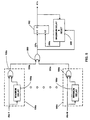
- an ATD circuit suitable for an 'N' address system is disclosed.
- a plurality of edge detect units of which 100A and 100Z are referenced are shown connected to individual address of an address bus having 'N' addresses of which AIs-1 and AIs-N are referenced.
- the input of edge detect unit 100A, and specifically minimum delay unit 106A and difference detector 108A are both connected to AIs-1.
- the output of minimum delay unit 106A is connected to the second input of difference detector 108A.
- the input of edge detect unit 100z, and specifically minimum delay unit 106Z and difference detector 108Z are both connected to AIs-N.
- the output of minimum delay unit 106Z is connected to the second input of difference detector 108Z.
- each edge detect unit including the referenced difference detectors 108A and 108Z, is connected to a respective input of OR gate 500.
- the output of the OR gate is connected to both the first input of first circuit 102 and the second of two inputs of the resettable maximum delay unit 300.
- the output of the first circuit is connected to the first of the two inputs of resettable maximum delay unit 300.
- the output of maximum resettable delay unit 300 is connected to the second input of the first circuit.
- an address signal from Als-1 is received by both minimum delay unit 106A and difference detector 108A of edge detect unit 100A.
- difference detector 108A receives the address signal both directly from AIs-1 and indirectly via the output of minimum delay 106A, and responsive to these inputs, outputs a DDs.
- the DDs has pulses corresponding to either one or both of a rising/falling edge of the address signal.
- Each of the address lines and edge detect units, including the referenced edge detect unit 100z, operates in a similar manner.
- the outputs are combined by OR gate 500.
- the output of OR gate 500 is a series of combined pulses corresponding to changes on all of the address lines of the address bus.
- the CPs (combined pulse signal) is received at the first input, in this embodiment the set input, of first circuit 102 and also by the reset input of resettable maximum delay unit 300.
- the first circuit and maximum resettable delay unit 300 operate in the manner discussed above in connection with Figs. 3 and 4 to produce an ATs at the output of first circuit.
- the circuit initiates a second state, in this embodiment a set condition on ATs, on the occurrence of a CPs. If the CPs are narrowly spaced in time, in relation to the timed interval of maximum resettable delay 300, the set state will be maintained until all addresses on an address bus have settled.
- the ATs produced by this address transition detection circuit may therefore serve as the input of a state machine for controlling memory, or a decoder for a row or column of memory, or a buffer for moving data to and from memory.
- Fig. 6 illustrates the wave forms of the Prior Art ATD circuit shown in Fig. 1.
- the example in Fig. 6 exhibits a condition in which the shortcomings of the Prior Art ATD circuits are exhibited. Specifically, two closely spaced address changes are shown and the second of those changes is not processed properly. This will cause any circuit to which that Prior Art device is connected to be prone to a loss of memory or a delay in a memory access.
- Four wave forms are shown in Fig. 6 over a time interval of 60 nano seconds.
- the first wave form is the AIs input to edge detect unit 100 shown in Fig. 1.
- the second wave form is the DDs output by the difference detector 108.
- the third wave form is the Rs output by maximum delay unit 104
- the fourth wave form is the ATs output by the first circuit 102.
- AIs is shown with a falling edge 608 and a rising edge 610.
- a first pulse is shown in DDs.
- a second pulse is shown in DDs.
- the first pulse in DDs has a rising edge 612 and a falling edge 614.
- the second pulse has a rising edge 616 and a falling edge 618.
- the rising edge 612 of the first pulse of DDs is received at the first input of first circuit 102 as shown in Fig. 1.
- the output transitions from a first to a second state, evidenced by the rising edge 624 on ATs.
- ATs will only be held in a second state for the timed interval following the first pulse but not the second. Even if the second pulse followed the first pulse more closely in time, it would not be operated on There would be no extension of the period of time that ATs was held in the second state, or set condition, because the Prior Art maximum delay unit 104 as shown in Fig. 1 is only responsive to ATs and not to DDs.
- Fig. 7 shows the wave forms associated with the current invention as illustrated in Fig. 3.
- Four wave forms are shown over the 60 nano second interval discussed above in Fig. 6.
- the first two wave forms: AIs and DDs, are identical to those shown and discussed above in Fig. 6. They correspond respectively, to the Als input to the edge detect unit 100 and the output of difference detector 108 as shown in Fig. 3.
- Als has a falling edge 608 and a rising edge 610.
- DDs has a first and a second pulse responsive respectively to the falling edge 608 and the rising edge 610 of AIs.
- the first pulse has a rising edge 612 and a falling edge 614 and the second pulse has a rising edge 616 and a falling edge 618.
- the third and fourth wave forms are distinctly different, however, then those shown in Fig. 6.
- the fourth wave form, the ATs corresponds to the output of the first circuit 102.
- the ATs exhibits a rising edge 624 at the same time as the rising edge shown on the ATs in Fig. 6.
- a falling edge 706 of that wave form does not occur until approximately 20 nano seconds after the falling edge discussed above in connection with the ATs shown in Fig. 6.
- the falling edge 706 is responsive to a rising edge 702 in the third waveform, the RRs.
- the RRs corresponds to the output of the maximum resettable delay unit 300 shown in Figs. 3-4.
- the rising edge 702 of RRs does not occur until 20 nano seconds after the rising edge discussed above in connection with Rs in Fig. 6.
- the extended time interval before the rising edge 702 is a result of the reinitialization feature of the invention.
- a falling edge 704 on RRs finally occurs, there is no change in ATs because DDs has remained low.
- the present invention provides a new address detection circuit which achieves a number of advantages over the Prior Art.
- each and every address transition is accorded a corresponding delay interval.
- the output of ATs is maintained in a second state, corresponding to a set condition, even while the circuitry is being reinitialized by the receipt of a second pulse.
- a very compact arrangement has been disclosed for detecting address transitions on a plurality of address lines of an address bus.
Landscapes
- Engineering & Computer Science (AREA)
- Microelectronics & Electronic Packaging (AREA)
- Physics & Mathematics (AREA)
- Nonlinear Science (AREA)
- Static Random-Access Memory (AREA)
- Dram (AREA)
Claims (19)
- Schaltkreis für die Erfassung eines Signalüberganges, der aufweist:wobei der Signalübergangserfassungsschaltkreis gekennzeichnet ist durch:einen ersten Schaltkreis (102), der einen ersten Eingang, einen zweiten Eingang und einen Ausgang aufweist, wobei in Antwort auf ein Veränderungssignal an dem ersten Eingang der Ausgang von einem ersten in einen zweiten Zustand übergeht, und wobei in Antwort auf einen Rückstellbefehl (Reset) an dem zweiten Eingang der Ausgang von dem zweiten Zustand zu dem ersten Zustand übergeht,einen Intervallzeitgeber (408, 410), der einen Ausgang, der mit dem zweiten Eingang des ersten Schaltkreises verbunden ist, und einen Eingang aufweist, und wobei der Intervallzeitgeber auf ein Signal an dem Eingang derart reagiert, daß ein getaktetes Intervall initiiert wird und nach dem Ablauf des getakteten Intervalls der Rückstellbefehl an dem Ausgang des Intervallzeitgebers erzeugt wird,einen zweiten Schaltkreis (400, 402, 404, 406), der einen Eingang und einen Ausgang aufweist, wobei der Ausgang des zweiten Schaltkreises mit dem Eingang des Intervallzeitgebers verbunden ist, wobei der zweite Schaltkreis auf das Veränderungssignal an dem Eingang des zweiten Schaltkreises reagiert, um einen Initialisierungsbefehl an dem Ausgang des zweiten Schaltkreises zu erzeugen, so daß der Intervallzeitgeber auf den Initialisierungsbefehl reagiert, um das getaktete Intervall zu initiieren, und wobei der zweite Schaltkreiseine Logik aufweist, die auf den Ausgangszustand des ersten Schaltkreises und das Veränderungssignal reagiert, um den Initialisierungsbefehl an dem Ausgang des zweiten Schaltkreises zu erzeugen.
- Signalübergangserfassungsschaltkreis nach Anspruch 1, der weiterhin aufweist:einen Flankenerfassungsschaltkreis (100), der einen Eingang und einen Ausgang aufweist, wobei der Ausgang des Flankenerfassungsschaltkreises sowohl mit dem ersten Eingang des ersten Schaltkreises als auch mit dem Eingang des zweiten Schaltkreises verbunden ist, und wobei der Eingang des Flankenerfassungsschaltkreises auf einen Eingangssignalübergang reagiert, um das Veränderungssignal zu erzeugen.
- Signalübergangserfassungsschaltkreis nach Anspruch 2, in dem:der Übergang des Eingangssignals zumindest eine ansteigende Signalflanke oder eine abfallende Signalflanke einer Adresse ist.
- Signalübergangserfassungsschaltkreis nach Anspruch 1, wobei der Intervallzeitgeber aufweist:wobei das getaktete Intervall eine Verzögerung ist, die mit dem Invertierer verknüpft ist, der den Ausgang des Invertierers von einem Anfangszustand in einen anderen überwechselt, um den Rückstellbefehl in Antwort auf den Initialisierungsbefehl zu erzeugen.einen Invertierer, der einen Eingang und einen Ausgang aufweist, wobei der Ausgang des Invertierers mit dem Ausgang des Intervallzeitgebers verbunden ist und der Eingang des Invertierers auf den Initialisierungsbefehl reagiert, um den Rückstellbefehl an dem Ausgang des Invertierers nach der Beendigung des getakteten Intervalls zu erzeugen, und
- Signalübergangserfassungsschaltkreis nach Anspruch 1, wobei der Intervallzeitgeber aufweist:wobei das getaktete Intervall eine Verzögerung ist, die mit den beiden invertierern verknüpft ist, wobei der Ausgang des letzten Invertierers von einem Anfangszustand in einen anderen wechselt, um den Rückstellbefehl in Antwort auf den Initialisierungsbefehl zu erzeugen.zumindest zwei Invertierer, die in Reihe geschaltet sind und einen Eingang eines ersten Invertierers und einen Eingang eines letzten Invertierers aufweisen, wobei der Ausgang des letzten Invertierers mit dem Ausgang des Intervallzeitgebers gekoppelt ist und der Eingang des ersten Invertierers auf den Initialisierungsbefehl reagiert, um den Rückstellbefehl an dem Ausgang des letzten Invertierers nach dem Beendigen des getakteten Intervalls zu erzeugen, und
- Signalübergangserfassungsschaltkreis nach Anspruch 5, wobei die Logik aufweist:einen Kondensator, der eine erste Seite, die mit dem Eingang des ersten der zumindest zwei Invertierer verbunden ist, und eine zweite Seite aufweist, die mit einem Massepotential verbunden ist,einen ersten Schalter, der auf das Veränderungssignal reagiert, um die erste Seite des Kondensators mit dem Massepotential kurzzuschließen, undein logisches Gatter, das auf eine logische Kombination reagiert, die einem (zweiter Zustand) UND (NICHT(Veränderungssignal)) entspricht, um eine ausreichende Ladung an die erste Seite des Kondensators anzulegen, um zu veranlassen, daß der Kondensator den Initialisierungsbefehl erzeugt.
- Signalübergangserfassungsschaltkreis nach Anspruch 6, der weiterhin aufweist:einen Flankenerfassungsschaltkreis, der einen Eingang und einen Ausgang aufweist, wobei der Ausgang des Erfassungsschaltkreises sowohl mit dem ersten Eingang des ersten Schaltkreises als auch dem Eingang des zweiten Schaltkreises verbunden ist, und wobei der Eingang des Erfassungsschaltkreises auf einen Übergang eines Eingangssignals reagiert, um das Veränderungssignal zu erzeugen.
- Signalübergangserfassungsschaltkreis nach Anspruch 7, wobei:der Eingangssignalübergang zumindest eine ansteigende Flanke eines Adreßübergangs oder eine abfallende Flanke eines Adreßübergangs ist.
- Adreßübergangserfassungsschaltkreis, um Veränderungen in einer Mehrzahl von Leitungen eines Adreßbusses zu erfassen, der aufweist:wobei der Adreßübergangserfassungsschaltkreis gekennzeichnet ist durch:einen Kombinator (500), der eine Mehrzahl von Eingängen und einen Ausgang aufweist, der auf Veränderungssignale auf der Mehrzahl von Eingängen reagiert, um ein kombiniertes Veränderungssignal an seinem Ausgang zu erzeugen,einen ersten Schaltkreis (102), der einen ersten Eingang, einen zweiten Eingang und einen Ausgang aufweist, wobei der erste Eingang mit dem Ausgang des Kombinators verbunden ist, und auf das kombinierte Veränderungssignal auf dem ersten Eingang reagiert, um den Ausgang von einem ersten in einen zweiten Zustand zu wechseln, und auf einen Rückstellbefehl auf dem zweiten Eingang reagiert, um den Ausgang von dem zweiten Zustand zu dem ersten Zustand zu wechseln,einen Intervallzeitgeber (408, 410), der einen Ausgang, der mit dem zweiten Eingang des ersten Schaltkreises verbunden ist, und einen Eingang aufweist, wobei der Intervallzeitgeber auf ein Signal auf dem Eingang reagiert, um ein getaktetes Intervall zu initiieren, und nach dem Ablauf des getakteten Intervalls den Rückstellbefehl an dem Ausgang des Intervallzeitgebers zu erzeugen, undeinen zweiten Schaltkreis (400, 402, 404, 406), der einen Eingang und einen Ausgang aufweist, wobei der Ausgang des zweiten Schaltkreises mit dem Eingang des Intervallzeitgebers gekoppelt ist, und der Eingang des zweiten Schaltkreises mit dem Ausgang des Kombinators gekoppelt ist und auf das kombinierte Veränderungssignal auf dem Eingang reagiert, um einen Initialisierungsbefehl an den Ausgang des zweiten Schaltkreises zu erzeugen, so daß der Intervalltaktgeber auf den Initialisierungsbefehl reagiert, um das getaktete Intervall zu initiieren, und wobei der zweite Schaltkreis aufweist:eine Logik, die auf den Ausgangszustand des ersten Schaltkreises und das kombinierte Veränderungssignal reagiert, um den Initialisierungsbefehl an dem Ausgang des zweiten Schaltkreises zu erzeugen.
- Adreßübergangserfassungsschaltkreis nach Anspruch 9, der weiterhin aufweist:eine Mehrzahl von Flankenerfassungsschaltkreisen, die jeweils einen Eingang und einen Ausgang aufweisen, und wobei jeder Eingang mit einer separaten Adreßleitung verbunden ist,und der Ausgang von jedem der Mehrzahl von Flankenerfassungsschaltkreisen mit einem separaten Eingang der Mehrzahl von Eingängen des Kombinators verbunden ist, und der Eingang von jedem der Mehrzahl von Flankenerfassungsschaltkreisen auf einen Adreßsignalübergang reagiert, um eines der Veränderungssignale zu erzeugen.
- Adreßübergangserfassungsschaltkreis nach Anspruch 10, wobei:der Adreßsignalübergang zumindest eine ansteigende Signalflanke oder eine abfallende Signalflanke ist.
- Adreßübergangserfassungsschaltkreis nach Anspruch 9, wobei der Intervallzeitgeber aufweist:wobei das getaktete Intervall eine Verzögerung ist, die mit dem Invertierer verknüpft ist, der den Ausgang des Invertierers von einem ursprünglichen Zustand in einen anderen wechselt, um den Rückstellbefehl in Antwort auf den Initialisierungsbefehl zu erzeugen.einen Invertierer, der einen Eingang und einen Ausgang aufweist, wobei der Ausgang des Invertierers mit dem Ausgang des Invertallzeitgebers verbunden ist und der Eingang des Invertierers auf den Initialisierungsbefehl reagiert, um den Rückstellbefehl an dem Ausgang des Invertierers nach der Beendigung des getakteten Intervalls zu erzeugen, und
- Adreßübergangserfassungsschaltkreis nach Anspruch 9, wobei der Intervallzeitgeber aufweist:wobei das getaktete Intervall eine Verzögerung ist, die mit den zumindest zwei Invertierern verknüpft ist, wobei der Ausgang des letzten Invertierers von einem ursprünglichen Zustand in einen anderen wechselt, um den Rückstellbefehl in Antwort auf den Initialisierungsbefehl zu erzeugen.zumindest zwei Invertierer, die in Reihe geschaltet sind und einen Eingang eines ersten Invertierers und einen Ausgang eines letzten Invertierers aufweisen, wobei der Ausgang des letzten Invertierers mit dem Ausgang des Intervallzeitgebers gekoppelt ist und der Eingang des ersten Invertierers auf den Initialisierungsbefehl reagiert, um den Rückstellbefehl an den Ausgang des letzten Invertierers nach der Beendigung des getakteten Intervalls zu erzeugen, und
- Adreßübergangserfassungsschaltkreis nach Anspruch 13, wobei die Logik aufweist:einen Kondensator, der eine erste Seite, die mit dem Eingang des ersten der zumindest zwei Invertierer verbunden ist, und eine zweite Seite aufweist, die mit einem Massepotential verbunden ist,einen ersten Schalter, der auf das kombinierte Veränderungssignal reagiert, um die erste Seite des Kondensators mit dem Massepotential kurzzuschließen, undein logisches Gatter, das auf eine logische Kombination reagiert, die einem (zweiter Zustand) UND (NICHT(Veränderungssignal)) entspricht, um eine ausreichende Ladung an den Kondensator anzulegen, um zu veranlassen, daß der Kondensator den Initialisierungsbefehl erzeugt.
- Adreßübergangserfassungsschaltkreis nach Anspruch 14, der weiterhin aufweist:eine Mehrzahl von Flankenerfassungsschaltkreisen, die jeweils einen Eingang und einen Ausgang aufweisen, wobei jeder Eingang mit einer separaten Leitung der Mehrzahl von Leitungen eines Adreßbusses verbunden ist,und der Ausgang von jedem der Mehrzahl von Flankenerfassungsschaltkreisen mit einem getrennten Eingang der Mehrzahl von Eingängen des Kombinators verknüpft ist, und wobei der Eingang von jedem der Mehrzahl von Flankenerfassungsschaltkreisen auf einen Übergang eines Adreßsignals reagiert, um eines der Veränderungssignale zu erzeugen.
- Adreßübergangserfassungsschaltkreis nach Anspruch 15, wobei:der Adreßsignalübergang zumindest eine ansteigende Signalflanke oder eine abfallende Signalflanke ist.
- Integrierter Speicherschaltkreis mit einer Mehrzahl von Eingangsanschlüssen, der aufweist:eine Mehrzahl von Flankenerfassungsschaltkreisen (100a ...100g) mit einem Eingang und einem Ausgang, wobei jeder Eingang mit einem getrennten Anschluß der Mehrzahl von Eingangsanschlüssen verbunden ist, und wobei jeder der Mehrzahl von Flankenerfassungsschaltkreisen auf einen Übergang eines Adreßsignals auf den separaten Anschluß der Eingangsanschlüsse reagiert, um auf dem Ausgang ein Veränderungssignal zu erzeugen,einen Kombinator (500), der eine Mehrzahl von Eingängen und einen Ausgang aufweist, wobei jeder der Mehrzahl von Eingängen mit einem separaten Ausgang der Ausgänge der Mehrzahl von Flankenerfassungsschaltkreisen verbunden ist, und auf die Veränderungssignale auf der Mehrzahl von Eingängen reagiert, um ein kombiniertes Veränderungssignal an dem Ausgang zu erzeugen,einen ersten Schaltkreis (102), der einen ersten Eingang, einen zweiten Eingang und einen Ausgang aufweist, wobei der erste Eingang mit dem Ausgang des Kombinators verbunden ist und auf das kombinierte Veränderungssignal auf dem ersten Eingang reagiert, um den Ausgang von einem ersten in einen zweiten Zustand zu wechseln, und wobei in Antwort auf den Rückstellbefehl auf dem zweiten Eingang der Ausgang von dem zweiten Zustand in den ersten Zustand übergeht,einen Intervallzeitgeber (408, 410), der einen Ausgang aufweist, der mit dem zweiten Eingang des ersten Schaltkreises verbunden ist, und einen Eingang aufweist, wobei der Intervallzeitgeber auf einen Initialisierungsbefehl auf dem Eingang reagiert, um ein getaktetes Intervall zu initiieren und um nach dem Ablauf des getakteten Intervalls den Rückstellbefehl an dem Ausgang zu erzeugen,einen zweiten Schaltkreis (400, 402, 404, 406), der einen Eingang und einen Ausgang aufweist, wobei der Ausgang des zweiten Schaltkreises mit dem Eingang des Intervallzeitgebers verbunden ist, und der Eingang des zweiten Schaltkreises mit dem Ausgang des Kombinators verbunden ist und auf das kombinierte Veränderungssignal auf dem Eingang reagiert, um den Initialisierungsbefehl an dem Ausgang zu erzeugen, und wobei der zweite Schaltkreis aufweist:eine Logik, die auf dem Ausgangszustand des ersten Schaltkreises und das kombinierte Veränderungssignal reagiert, um den Initialisierungsbefehl an dem Ausgang des zweiten Schaltkreises zu erzeugen, undeine Speichersteuerlogik mit einem Eingang und einem Ausgang, wobei der Eingang mit dem Ausgang des ersten Schaltkreises verbunden ist und der Ausgang mit den Speicher verbunden ist, und auf den Ausgangszustand des ersten Schaltkreises auf dem Eingang reagiert, um ein Speichersteuersignal zu erzeugen.
- Integrierter Speicherschaltkreis nach Anspruch 17, wobei der Intervallzeitgeber aufweist:wobei das getaktete Intervall eine Verzögerung ist, die mit den zumindest zwei Invertierern verknüpft ist, wobei der Ausgang des letzten Invertierers von einem ursprünglichen Zustand in einen anderen wechselt, um den Rückstellbefehl in Antwort auf den Initialisierungsbefehl zu erzeugen.zumindest zwei Invertierer, die in Reihe geschaltet sind, und einen Eingang eines ersten Invertierers und einen Ausgang eines letzten Invertierers aufweisen, wobei der Ausgang des letzten Invertierers mit dem Ausgang des Intervallzeitgebers verbunden ist, und die auf den Initialisierungsbefehl an dem Eingang des ersten Invertierers reagieren, um den Rückstellbefehl an dem Ausgang des letzten Invertierers nach dem Beendigen des Taktintervalls zu erzeugen, und
- Integrierter Speicherschaltkreis nach Anspruch 18, wobei die Logik aufweist:einen Kondensator, der eine erste Seite, die mit dem Eingang des ersten der zumindest zwei Invertierer verbunden ist, und eine zweite Seite aufweist, die mit einem Massepotential verbunden ist,einen ersten Schalter, der auf das kombinierte Veränderungssignal reagiert, um die erste Seite des Kondensators mit dem Massepotential kurzzuschließen, undein logisches Gatter, das auf eine Logikkombination reagiert, die einem (zweiter Zustand) UND (NICHT(Veränderungssignal)) entspricht, um eine ausreichende Ladung an den Kondensator anzulegen, um zu veranlassen, daß der Kondensator den Initialisierungsbefehl erzeugt.
Applications Claiming Priority (3)
| Application Number | Priority Date | Filing Date | Title |
|---|---|---|---|
| US08/751,513 US5875152A (en) | 1996-11-15 | 1996-11-15 | Address transition detection circuit for a semiconductor memory capable of detecting narrowly spaced address changes |
| PCT/US1996/018917 WO1998023032A1 (en) | 1996-11-15 | 1996-11-26 | An address transition detection circuit |
| US751513 | 2000-12-29 |
Publications (3)
| Publication Number | Publication Date |
|---|---|
| EP0876708A1 EP0876708A1 (de) | 1998-11-11 |
| EP0876708A4 EP0876708A4 (de) | 2000-05-24 |
| EP0876708B1 true EP0876708B1 (de) | 2003-08-13 |
Family
ID=25022324
Family Applications (1)
| Application Number | Title | Priority Date | Filing Date |
|---|---|---|---|
| EP96941480A Expired - Lifetime EP0876708B1 (de) | 1996-11-15 | 1996-11-26 | Adressübergangs-detektorschaltkreis |
Country Status (5)
| Country | Link |
|---|---|
| US (1) | US5875152A (de) |
| EP (1) | EP0876708B1 (de) |
| JP (1) | JP2000504464A (de) |
| DE (1) | DE69629496T2 (de) |
| WO (1) | WO1998023032A1 (de) |
Families Citing this family (12)
| Publication number | Priority date | Publication date | Assignee | Title |
|---|---|---|---|---|
| US5838631A (en) | 1996-04-19 | 1998-11-17 | Integrated Device Technology, Inc. | Fully synchronous pipelined ram |
| US6115320A (en) | 1998-02-23 | 2000-09-05 | Integrated Device Technology, Inc. | Separate byte control on fully synchronous pipelined SRAM |
| JP3263658B2 (ja) * | 1998-03-30 | 2002-03-04 | 三洋電機株式会社 | アドレス遷移検出回路 |
| US7069406B2 (en) * | 1999-07-02 | 2006-06-27 | Integrated Device Technology, Inc. | Double data rate synchronous SRAM with 100% bus utilization |
| US6326809B1 (en) * | 1999-09-27 | 2001-12-04 | University Of New Mexico | Apparatus for and method of eliminating single event upsets in combinational logic |
| US7167400B2 (en) * | 2004-06-22 | 2007-01-23 | Micron Technology, Inc. | Apparatus and method for improving dynamic refresh in a memory device |
| US8054119B2 (en) * | 2005-04-19 | 2011-11-08 | International Business Machines Corporation | System and method for on/off-chip characterization of pulse-width limiter outputs |
| US7358785B2 (en) * | 2006-04-06 | 2008-04-15 | International Business Machines Corporation | Apparatus and method for extracting a maximum pulse width of a pulse width limiter |
| US8081010B1 (en) | 2009-11-24 | 2011-12-20 | Ics, Llc | Self restoring logic |
| CN103310832B (zh) * | 2012-03-12 | 2015-11-25 | 旺宏电子股份有限公司 | 侦测地址转变的电路与方法 |
| TWI473114B (zh) * | 2012-03-19 | 2015-02-11 | Macronix Int Co Ltd | 偵測位址轉變之電路與方法 |
| US8861303B2 (en) | 2012-04-26 | 2014-10-14 | Macronix International Co., Ltd. | Circuit and method for address transition detection |
Family Cites Families (6)
| Publication number | Priority date | Publication date | Assignee | Title |
|---|---|---|---|---|
| DE69317927T2 (de) * | 1992-02-28 | 1998-11-19 | Sony Corp | Halbleiterspeicheranordnung mit einer Adressübergangsabfühlschaltung |
| US5374894A (en) * | 1992-08-19 | 1994-12-20 | Hyundai Electronics America | Transition detection circuit |
| US5383155A (en) * | 1993-11-08 | 1995-01-17 | International Business Machines Corporation | Data output latch control circuit and process for semiconductor memory system |
| US5418479A (en) * | 1993-12-27 | 1995-05-23 | Intel Corporation | Method and circuitry for generating a safe address transition pulse in a memory device |
| US5475320A (en) * | 1994-08-11 | 1995-12-12 | Texas Instruments Incorporated | Data processing with a self-timed approach to spurious transitions |
| US5493538A (en) * | 1994-11-14 | 1996-02-20 | Texas Instruments Incorporated | Minimum pulse width address transition detection circuit |
-
1996
- 1996-11-15 US US08/751,513 patent/US5875152A/en not_active Expired - Lifetime
- 1996-11-26 DE DE69629496T patent/DE69629496T2/de not_active Expired - Lifetime
- 1996-11-26 EP EP96941480A patent/EP0876708B1/de not_active Expired - Lifetime
- 1996-11-26 JP JP10523605A patent/JP2000504464A/ja active Pending
- 1996-11-26 WO PCT/US1996/018917 patent/WO1998023032A1/en not_active Ceased
Also Published As
| Publication number | Publication date |
|---|---|
| WO1998023032A1 (en) | 1998-05-28 |
| JP2000504464A (ja) | 2000-04-11 |
| EP0876708A4 (de) | 2000-05-24 |
| DE69629496T2 (de) | 2004-06-17 |
| EP0876708A1 (de) | 1998-11-11 |
| US5875152A (en) | 1999-02-23 |
| DE69629496D1 (de) | 2003-09-18 |
Similar Documents
| Publication | Publication Date | Title |
|---|---|---|
| US5455802A (en) | Dual dynamic sense amplifiers for a memory array | |
| EP0558079B1 (de) | Halbleiterspeicheranordnung mit einer Adressübergangsabfühlschaltung | |
| US5568445A (en) | Synchronous semiconductor memory device with a write latency control function | |
| US6061295A (en) | Integrated circuit memory devices having time compensated column selection capability for improving write operation reliability | |
| EP0876708B1 (de) | Adressübergangs-detektorschaltkreis | |
| US4802129A (en) | RAM with dual precharge circuit and write recovery circuitry | |
| JPH08227582A (ja) | 最少パルス幅アドレス遷移検出回路 | |
| EP0657891A2 (de) | Datenbusstruktur für beschleunigten Spaltenzugriff in einem RAM | |
| JPH0330185A (ja) | メモリ素子の出力バッファのプレチャージ制御回路 | |
| US4712194A (en) | Static random access memory | |
| EP0144836A2 (de) | Adressenübergangsimpulsschaltung | |
| NL9000478A (nl) | Aftastversterkerstuurketen voor een geheugeninrichting. | |
| US5530677A (en) | Semiconductor memory system having a write control circuit responsive to a system clock and/or a test clock for enabling and disabling a read/write latch | |
| KR980011453A (ko) | 출력버퍼회로 | |
| EP0208316B1 (de) | Dynamische Speicheranordnung | |
| US4618786A (en) | Precharge circuit for enhancement mode memory circuits | |
| EP1355315B1 (de) | Spannungsdetektionsschaltung und -Verfahren für Halbleiterspeicheranordnungen | |
| EP0845784B1 (de) | Verfahren und Vorrichtung zur Erzeugung eines Addressenübergangssynchronisationsignals (ATD) | |
| US5051955A (en) | Semiconductor memory having improved data readout scheme | |
| US20030043668A1 (en) | Dynamic dram sense amplifier | |
| EP0313748B1 (de) | Steuerschaltung für Leseverstärker | |
| KR0177754B1 (ko) | 반도체 메모리장치의 데이타 출력회로 및 방법 | |
| EP0915476B1 (de) | Verfahren und Schaltung zur Regulierung der Länge eines Adressenübergangssignals ATD | |
| JP3077808B2 (ja) | グリッチ抑制回路 | |
| GB2256070A (en) | Semiconductor memory device with redundancy |
Legal Events
| Date | Code | Title | Description |
|---|---|---|---|
| PUAI | Public reference made under article 153(3) epc to a published international application that has entered the european phase |
Free format text: ORIGINAL CODE: 0009012 |
|
| 17P | Request for examination filed |
Effective date: 19980707 |
|
| AK | Designated contracting states |
Kind code of ref document: A1 Designated state(s): DE FR GB IT |
|
| A4 | Supplementary search report drawn up and despatched |
Effective date: 20000412 |
|
| AK | Designated contracting states |
Kind code of ref document: A4 Designated state(s): DE FR GB IT |
|
| RAP1 | Party data changed (applicant data changed or rights of an application transferred) |
Owner name: MACRONIX INTERNATIONAL CO., LTD. |
|
| GRAG | Despatch of communication of intention to grant |
Free format text: ORIGINAL CODE: EPIDOS AGRA |
|
| 17Q | First examination report despatched |
Effective date: 20020626 |
|
| GRAG | Despatch of communication of intention to grant |
Free format text: ORIGINAL CODE: EPIDOS AGRA |
|
| GRAG | Despatch of communication of intention to grant |
Free format text: ORIGINAL CODE: EPIDOS AGRA |
|
| GRAH | Despatch of communication of intention to grant a patent |
Free format text: ORIGINAL CODE: EPIDOS IGRA |
|
| GRAH | Despatch of communication of intention to grant a patent |
Free format text: ORIGINAL CODE: EPIDOS IGRA |
|
| GRAA | (expected) grant |
Free format text: ORIGINAL CODE: 0009210 |
|
| AK | Designated contracting states |
Designated state(s): DE FR GB IT |
|
| REG | Reference to a national code |
Ref country code: GB Ref legal event code: FG4D |
|
| REF | Corresponds to: |
Ref document number: 69629496 Country of ref document: DE Date of ref document: 20030918 Kind code of ref document: P |
|
| ET | Fr: translation filed | ||
| PLBE | No opposition filed within time limit |
Free format text: ORIGINAL CODE: 0009261 |
|
| STAA | Information on the status of an ep patent application or granted ep patent |
Free format text: STATUS: NO OPPOSITION FILED WITHIN TIME LIMIT |
|
| 26N | No opposition filed |
Effective date: 20040514 |
|
| REG | Reference to a national code |
Ref country code: FR Ref legal event code: PLFP Year of fee payment: 20 |
|
| PGFP | Annual fee paid to national office [announced via postgrant information from national office to epo] |
Ref country code: GB Payment date: 20151125 Year of fee payment: 20 Ref country code: DE Payment date: 20151118 Year of fee payment: 20 Ref country code: IT Payment date: 20151124 Year of fee payment: 20 |
|
| PGFP | Annual fee paid to national office [announced via postgrant information from national office to epo] |
Ref country code: FR Payment date: 20151008 Year of fee payment: 20 |
|
| REG | Reference to a national code |
Ref country code: DE Ref legal event code: R071 Ref document number: 69629496 Country of ref document: DE |
|
| REG | Reference to a national code |
Ref country code: GB Ref legal event code: PE20 Expiry date: 20161125 |
|
| PG25 | Lapsed in a contracting state [announced via postgrant information from national office to epo] |
Ref country code: GB Free format text: LAPSE BECAUSE OF EXPIRATION OF PROTECTION Effective date: 20161125 |