EP0861275B1 - Zusammensetzung und härtungsverfahren eines recorcinolharzes - Google Patents
Zusammensetzung und härtungsverfahren eines recorcinolharzes Download PDFInfo
- Publication number
- EP0861275B1 EP0861275B1 EP96940334A EP96940334A EP0861275B1 EP 0861275 B1 EP0861275 B1 EP 0861275B1 EP 96940334 A EP96940334 A EP 96940334A EP 96940334 A EP96940334 A EP 96940334A EP 0861275 B1 EP0861275 B1 EP 0861275B1
- Authority
- EP
- European Patent Office
- Prior art keywords
- wood
- resin
- oxazolidine
- methylolurea
- hardener
- Prior art date
- Legal status (The legal status is an assumption and is not a legal conclusion. Google has not performed a legal analysis and makes no representation as to the accuracy of the status listed.)
- Expired - Lifetime
Links
Images

Classifications
-
- C—CHEMISTRY; METALLURGY
- C08—ORGANIC MACROMOLECULAR COMPOUNDS; THEIR PREPARATION OR CHEMICAL WORKING-UP; COMPOSITIONS BASED THEREON
- C08G—MACROMOLECULAR COMPOUNDS OBTAINED OTHERWISE THAN BY REACTIONS ONLY INVOLVING UNSATURATED CARBON-TO-CARBON BONDS
- C08G14/00—Condensation polymers of aldehydes or ketones with two or more other monomers covered by at least two of the groups C08G8/00 - C08G12/00
- C08G14/02—Condensation polymers of aldehydes or ketones with two or more other monomers covered by at least two of the groups C08G8/00 - C08G12/00 of aldehydes
- C08G14/04—Condensation polymers of aldehydes or ketones with two or more other monomers covered by at least two of the groups C08G8/00 - C08G12/00 of aldehydes with phenols
- C08G14/06—Condensation polymers of aldehydes or ketones with two or more other monomers covered by at least two of the groups C08G8/00 - C08G12/00 of aldehydes with phenols and monomers containing hydrogen attached to nitrogen
-
- C—CHEMISTRY; METALLURGY
- C09—DYES; PAINTS; POLISHES; NATURAL RESINS; ADHESIVES; COMPOSITIONS NOT OTHERWISE PROVIDED FOR; APPLICATIONS OF MATERIALS NOT OTHERWISE PROVIDED FOR
- C09J—ADHESIVES; NON-MECHANICAL ASPECTS OF ADHESIVE PROCESSES IN GENERAL; ADHESIVE PROCESSES NOT PROVIDED FOR ELSEWHERE; USE OF MATERIALS AS ADHESIVES
- C09J161/00—Adhesives based on condensation polymers of aldehydes or ketones; Adhesives based on derivatives of such polymers
- C09J161/34—Condensation polymers of aldehydes or ketones with monomers covered by at least two of the groups C09J161/04, C09J161/18 and C09J161/20
-
- C—CHEMISTRY; METALLURGY
- C08—ORGANIC MACROMOLECULAR COMPOUNDS; THEIR PREPARATION OR CHEMICAL WORKING-UP; COMPOSITIONS BASED THEREON
- C08L—COMPOSITIONS OF MACROMOLECULAR COMPOUNDS
- C08L2666/00—Composition of polymers characterized by a further compound in the blend, being organic macromolecular compounds, natural resins, waxes or and bituminous materials, non-macromolecular organic substances, inorganic substances or characterized by their function in the composition
- C08L2666/02—Organic macromolecular compounds, natural resins, waxes or and bituminous materials
- C08L2666/26—Natural polymers, natural resins or derivatives thereof according to C08L1/00 - C08L5/00, C08L89/00, C08L93/00, C08L97/00 or C08L99/00
-
- C—CHEMISTRY; METALLURGY
- C08—ORGANIC MACROMOLECULAR COMPOUNDS; THEIR PREPARATION OR CHEMICAL WORKING-UP; COMPOSITIONS BASED THEREON
- C08L—COMPOSITIONS OF MACROMOLECULAR COMPOUNDS
- C08L97/00—Compositions of lignin-containing materials
- C08L97/02—Lignocellulosic material, e.g. wood, straw or bagasse
Definitions
- the present invention is directed to a catalyst curing system and method of using the same to reduce emissions or "fuming" of formaldehyde in resorcinol-formaldehyde or phenol-resorcinol-formaldehyde resins.
- the present invention replaces a portion of oxazolidine, normally used for crosslinking of a resorcinol or phenol-resorcinol resin with a class of compounds normally called methylolureas, which are reaction products of formaldehyde and urea chemicals.
- Resorcinol-formaldehyde and phenol-resorcinol-formaldehyde resins are used as adhesives, such as in the wood products industry, to manufacture a variety of exterior rated laminated wood items. They are noted for their excellent exterior bonding properties, and their ability to fully crosslink and cure at temperatures as low as 60°F (15.6°C). The latter is important since most items produced with these adhesives in the wood products industry do not lend themselves to heated cure because of size or geometry. Both of these resins are manufactured with a deficiency of formaldehyde, to prevent premature and uncontrolled cure or gelation of the resin.
- a methylene donor, or crosslinking agent that does not release formaldehyde gas
- One such material is a class of compounds known as oxazotidines. These compounds are the reaction product of formaldehyde and certain amino alcohols. When mixed with resorcinol or phenol-resorcinol resin they release formaldehyde to the resin for curing, but do not release a discernible amount of formaldehyde gas to the atmosphere. This makes them preferable to formaldehyde solution or paraformaldehyde as crosslinkers for the adhesives.
- the oxazolidines have two major drawbacks that prevent widespread acceptance in the marketplace, however.
- the gel times achieved with oxazolidines are generally much shorter than those obtained with conventional paraformaldehyde catalyst. This limits the plants that can use the oxazolidine catalyst to those with fast article assembly, such as wood I-beam processes.
- the oxazolidine is much more expensive than formaldehyde solution or paraformaldehyde. Some plants that would like to have the low "fuming" properties of the oxazolidine catalyzed glue are unwilling to pay the additional price for this improvement.
- the improvement should address problems inherent in the oxazolidine catalyst, namely, too rapid gelation and cure, and high cost.
- the improvement should lead to better control of cure time and lower cost, while maintaining the low "fuming" attribute of oxazolidine catalyst.
- the present invention provides an adhesive composition comprising methylolurea in combination with a resorcinolic resin and oxazolidine.
- methylolurea i.e. a reaction product of formaldehyde and urea
- methylene donors such as nitro alcohols and hexamethylenetetramine (hexa) have been used in the past as crosslinkers for resorcinol or phenol-resorcinol resin. They are not used to any great degree in wood bonding because of poor bonding performance or high cost. In the case of hexa, ammonia is generated during the curing process, and is emitted from the glue.
- hexa hexamethylenetetramine
- the present invention provides a hardener for resorcinolic resins comprising methylolurea and oxazolidine.
- the present invention provides a wood product comprising wood particles which are adhered to each other by an adhesive composition comprising a resorcinolic resin and a hardener, wherein the hardener comprises oxazolidine and methylolurea.
- the wood particles may be wood chips.
- the wood particles may be wood veneers.
- the wood particles may be strands.
- the invention provides a wood product comprising a wood joint which wood joint is filled with an adhesive composition comprising a resorcinolic resin and a hardener, wherein the hardener comprises oxazolidine and methylolurea.
- the wood product may be a fingerjointed lumber.
- the wood product may be a laminated beam.
- the wood product may be an I-beam.
- the wood product may be a lumber flange joined to a web member selected from the group consisting of oriented strand board, lumber and plywood.
- the wood product may be a laminated veneer lumber flange joined to a web member selected from the group consisting of oriented strand board, lumber and plywood.
- Fig.1 illustrates the effect of monomethylolurea substitution level in FM-7210 on the 21°C gel time of LT-5210/FM-7210 when modified with Potassium Phosphate buffer salts.
- the resin to slurry mix ratio was 2.5 to 1, by weight.
- Fig.2 illustrates the effect of mixed adhesive pH on the 21°C gel time of LT-5210/FM-7340 when modified with Potassium Phosphate buffer salts.
- the resin to hardener mix ratio was 2.5 to 1, by weight.
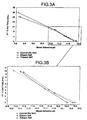
- Fig.3a illustrates the effect of mixed pH on the 21°C gel time of LT-5210/100% methylolurea when modified with Potassium Phosphate buffer salts.
- the resin to methylolurea mix ratio was 100 to 32 parts, by weight.
- the preferred method of using the invention is to replace a portion of the oxazolidine in a hardener, intended to be used with a resorcinol or phenol-resorcinol resin, with methylolurea.
- a catalyst is designed to contain a certain amount of formaldehyde equivalence, on a molar basis.
- the substitution of methylolurea for a portion of the oxazolidine is done so as to retain the overall formaldehyde equivalence of the catalyst solution.
- This catalyst solution may then be used as-is to catalyze a resin, or it may be used to compound a liquid "slurry" catalyst which in turn is used to catalyze a resin.
- the methylolurea is formed in situ from formaldehyde and urea. This is done by making a mixture of oxazolidine with 50% formaldehyde solution, urea, and caustic soda solution. As stated previously, the amount of formaldehyde in the solution is equal to the formaldehyde equivalence of the oxazolidine that is being replaced. A slight excess amount of urea is used, above that necessary to form methylolurea, so as to shift the equilibrium and minimize free formaldehyde in the solution. Caustic sodium hydroxide is added to adjust pH to the range of 9-11, which is conducive to the formation of methylolurea.
- This solution is essentially odor free and can be used as a catalyst for resin.
- this solution is mixed with fillers and flow modifiers to produce a "slurry" catalyst which can be used with on-demand meter-mix equipment, as is normally done in wood products plants.
- This slurry is metered and mixed with a metered amount of resorcinol or phenol-resorcinol resin to yield an adhesive mix that is used to bond wood.
- the replacement of oxazolidine with methylolurea amounts from 20% to 70% replacement of oxazolidine with methylolurea formaldehyde equivalence in the catalyst solution, with 40% replacement being the most preferred embodiment, noting, however, that the preferable and most preferable embodiments of percentage replacement of oxazolidine with a methylolurea may vary depending on pH.
- This substituted catalyst solution is then used in place of oxazolidine to produce a slurry catalyst. An adhesive mix is made with this slurry catalyst and a resorcinol or phenol-resorcinol resin.
- the mix ratio of the slurry catalyst to resin is sufficient to provide an amount of formaldehyde equivalence to assure complete crosslink cure of the resin. This ratio is in the range of 1.5:1 to 3.5:1, resin:slurry. and most typically 2:1 to 3:1, resin:slurry, by volume.
- Typical fillers used in slurry hardeners include clays, nutshell flours, and fine mesh wood flours.
- the fillers generally provide a certain amount of gap-filling character and thixotropy to the adhesive or glue.
- Slurry flow modifiers include such things as dispersants and surfactants which tend to lower slurry viscosity and make it easier to pump.
- the invention is specific in the allowable resin types, namely, resorcinol formaldehyde or phenol-resorcinol formaldehyde polymers or modifications of these polymers through use of tannins, cresols, xylenols, lignins, or other materials that could result in terms of equivalent wood product gluing.
- the invention does include all forms of these resins that are suitable for wood gluing processes, including but not limited to flat laminated beams, wood I-beams. fingerjointing, veneer lamination, general millwork, or speciality products made with wood chips. veneers, flakes, strands, or fibers.
- These resins may be alkaline, pH-neutral, or acidic, and may be considered resoles, or novolacs.
- the class of compounds known as oxazolidines may be any reaction product of an aldehyde and any aminohydroxy compound that yields saturated heterocyclic compounds capable of functioning as methylene donors during polymer resin cure.
- the class of compounds known as methylolurea would include any reaction product of an aldehyde and urea that is capable of functioning as a methylene donor during polymer resin cure. These reaction products include, but are not limited to, mono-, di-, and polyfunctional methylolureas, and any urealaldehyde polymer or oligomer that has methylol functionality or available methylene equivalents.
- the methylolurea is dimethylolurea.
- the methylolurea may be formed in situ with the oxazolidine or amino alcohol present, as outlined in the preferred method, or it may be added, as a previously prepared or purchased chemical or material. While sodium hydroxide is used in the preferred method, any alkaline pH modifier may be used in the manufacture of methylolurea.
- the methylolurea/oxazolidine mixture may be used as a catalyst for the polymer resin by itself, or as a component of a hardener mixture or slurry.
- the methylolurea and oxazolidine may also be mixed with the polymer resin as separate components to achieve the same end result, that is, the adhesive mix composed of resin, crosslinking catalyst, and optional fillers or modifiers.
- the permissible ratio of substitution of methylolurea for oxazolidine is 5 : 95 to 95 : 5 on a formaldehyde functionality basis.
- the permissible ratio of methylolurea/oxazolidine catalyst to resorcinol or phenol-resorcinol resin is any amount of catalyst sufficient to cause complete crosslink cure of the resin. Generally this amount is that necessary to give an overall molar ratio of moles of aldehyde functionality : moles of resorcinol or phenol-resorcinol of about 1:1.
- the catalyst system is sometimes described as a "hardener” in that it causes the resin to crosslink into an infusible product.
- a solution of methylolurea was prepared by dissolving 200 grams of urea in 150 grams water, adding 100 grams 50% formaldehyde solution, and adjusting pH with 1 gram of 50% sodium hydroxide solution. This was then used as catalyst to determine gel time with a phenol-resorcinol resin (Borden Cascophen® LT-5210). A comparison was made to the same resin catalyzed with an oxazolidine (Zoldine® ZT-55) slurry. 1.
- LT-5210 resin 100 parts no gel overnight Methylolurea sin. 32 parts 2.
- LT-5210 resin 100 parts no gel overnight Methylolurea sin. 82 parts 3.
- LT-5210 resin 100 parts 60 minute gel @ 21°C ZT-55 slurry (80%) 40 parts
- Catalyst slurries were made with an oxazolidine (Zoldine® ZT-55) and different substitution levels of methylolurea (MU). These were then mixed with a phenol-resorcinol resin (Cascophen® LT-5210) for gel time determination.
- ZT-55 oxazolidine slurry control 1 part LT-5210 resin 2.5 parts 21°C gel time 63 minutes 2.
- ZT-55 (60%)/MU (40%) 1 part LT-5210 resin 2.5 parts 21°C gel time 100 minutes 3.
- ZT-55 (50%)/MU (50%) 1 part LT-5210 resin 2.5 parts 21°C gel time 129 minutes 4.
- the adhesive mixes from Example 2 were subjected to testing as per ASTM D2559-90, standard specification for Adhesives For Structural Laminated Wood Products For Use Under Exterior (Wet Use) Exposure Conditions.
- the glued beams were cured at 70-75°F (21.1-23.9°C).
- Block shear specimens were tested for compression strength and percent wood failure, and delamination was determined after cyclic delaminating testing. In the case of the block shear tests, high breaking strength and high wood failure are desirable, indicating that the glued wood and not the cured glue is failing in the destructive testing. A low value in the delamination test is desirable, indicating that the glued wood specimen is resisting the effects of cyclic soaking and drying.
- the shear breaking strength mainly reflects the breaking strength of the wood if percent wood failure is good.
- the minimum shear strength allowed is 1075 psi (7.4 MPa) average, and all four adhesives exceeded this.
- the depth of adhesive penetration of the control adhesive, 100% oxazolidine, was not as good as the adhesives containing the methylolurea replacement for portions of the oxazolidine. This is reflected minimally in the percent wood failure, and dramatically in the average percent delamination.
- Example 2 The four adhesive mixes described in Example 2 were glued again in the same manner as described in Example 3.
- Block shear specimens were tested for compression shear strength and percent wood failure (% WF). The durability was determined by a cyclic vacuum pressure delaminating test. The percent delamination following cyclic exposure was determined.
- Example 2 Expansion of Example 2 data to include methylolurea up to the 90% replacement level.
- ZT-55 (60%)/MU (40%) 1 part LT-5210 resin 2.5 parts 21°C gel time 104 minutes 3.
- ZT-55 (50%)/MU (50%) 1 part LT-5210 resin 2.5 parts 21°C gel time 126 minutes 4.
- ZT-55 (30%)/MU (70%) 1 part LT-5210 resin 2.5 parts 21°C gel time 159 minutes 5.
- ZT-55 (40%)/MU (60%) 1 part LT-5210 resin 2.5 parts 21°C gel time 211 minutes 6.
- ZT-55 (20%)/MU (80%) 1 part LT-5210 resin 2.5 parts 21°C gel time 303 minutes 7.
- ZT-55 (10%)/MU (90%) 1 part LT-5210 resin 2.5 parts 21°C gel time 486 minutes
- the usual test for composite wood I-joists is a bending test where an eight foot length is stressed in bending until the specimen breaks.
- the total load (psi) at the time of breaking is determined.
- the value is typically expressed in terms of a safety factor.
- the usual specification is that the safety factor must meet or exceed 2.3, or 2.3 times the design load in bending for the particular constructions.
- the average safety factor found for 10 specimens was 3.0 *
- the normal average safety factor range for LT-5210 or FM-6210 at a commercial facility is 2.9-3.2.
- the typical test for structural fingerjoints is a tension test where a 6 foot piece with single fingerjoint in the middle is stressed in tension until failure.
- the load (psi) at the time of breaking is determined.
- the safety factor criteria will depend upon the species, size and grade of lumber being joined.
- the percent wood failure (% WF) in the fingerjoint area is also determined.
- Example 5 The four experimental adhesive mixes described in Example 5 were glued in a similar manner as described in Example 3. We used the same resin lot that was used for the first two gluing series. In these series the density of the Douglas fir was limited to a specific gravity range of approximately 0.43 to 0.48. Testing was in accordance with ASTM D 2559-90 Standard for phenol-formaldehyde resorcinol and resorcinol formaldehyde resins.
- Block shear specimens were tested for compression shear strength and percent wood failure (% WF). The durability was determined by a cyclic pressure delamination test. The percent delamination following cyclic exposure was determined.
- a stock dimethylolurea chemical was utilized in combination with Borden Resin WS 421-126. This resin has no gel without adding a crosslinker.
- the following composition was made:
- DSC Differential scanning calorimetry
- Oxazolidine alone (systems 2,3 and 6,7) gave earlier onset and peak temperatures. Addition of monomeric urea tended to slow down reactivities (systems 4,8 vs systems 3,7). In summary the data indicates that when present, methylolureas are important contributors to the reactivity of a PRF adhesive system.
- WS-554-103B is a catalyst blend comprised of 60% Angus Zoldine® ZT-55 and 40% methylolurea. 20°C/min scan rate. System Catalyst Exotherm (J/g) Peak (°C) Onset (°C) Sample Characteristics After Run 1.
Landscapes
- Chemical & Material Sciences (AREA)
- Organic Chemistry (AREA)
- Health & Medical Sciences (AREA)
- Chemical Kinetics & Catalysis (AREA)
- Medicinal Chemistry (AREA)
- Polymers & Plastics (AREA)
- Adhesives Or Adhesive Processes (AREA)
- Phenolic Resins Or Amino Resins (AREA)
- Veneer Processing And Manufacture Of Plywood (AREA)
- Dry Formation Of Fiberboard And The Like (AREA)
- Compositions Of Macromolecular Compounds (AREA)
- Macromonomer-Based Addition Polymer (AREA)
Claims (20)
- Klebemittel-Zusammensetzung, umfassend Methylol-harnstoff in Kombination mit einem Resorcinol-Harz und Oxazolidin.
- Zusammensetzung nach Anspruch 1, wobei der Methylol-hamstoff Dimethylol-harnstoff ist.
- Zusammensetzung nach Anspruch 1 oder 2, wobei das Verhältnis von Dimethylol-harnstoff zu Oxazolidin auf Basis der Formaldehyd-Funktionalität 5:95 bis 95:5 ist.
- Zusammensetzung nach einem der Ansprüche 1 bis 3, die zusätzlich Füllstoffe enthält.
- Zusammensetzung nach einem der Ansprüche 1 bis 4, die zusätzlich Modifiziermittel für das Fließverhalten enthält.
- Zusammensetzung nach einem der Ansprüche 1 bis 5, wobei das Resorcinol-Harz ein Resorcinol/Formaldehyd-Harz ist.
- Zusammensetzung nach einem der Ansprüche 1 bis 5, wobei das Resorcinol-Harz ein Phenol-Resorcinol/Formaldehyd-Harz ist.
- Härter für Resorcinol-Harze, umfassend Methylol-harnstoff und Oxazolidin.
- Härter nach Anspruch 8, wobei der Methylol-harnstoff Dimethylol-harnstoff ist.
- Härter nach Anspruch 8 oder 9 wobei das Verhältnis von Dimethylolharnstoff zu Oxazolidin auf Basis der Formaldehyd-Funktionalität 5:95 bis 95:5 ist.
- Holzprodukt, umfassend Holzteitchen die mit Hilfe einer Klebemittel-Zusammensetzung miteinander verbunden sind, umfassend ein Resorcinol-Harz und einen Härter, wobei der Härter Oxazolidin und Methylol-harnstoff umfaßt.
- Holzprodukt nach Anspruch 11, wobei die Holzteilchen Holzspäne sind.
- Holzprodukt nach Anspruch 11, wobei die Holzteilchen Holzfurniere sind.
- Holzprodukt nach Anspruch 11, wobei die Holzteilchen Holzfasern sind.
- Holzprodukt, umfassend eine Holzverbindung, wobei die Holzverbindung mit einer Klebemittel-Zusammensetzung gefüllt ist, umfassend ein Resorcinol-Harz und einen Härter, wobei der Härter Oxazolidin und Methylol-harnstoff umfaßt.
- Holzprodukt nach Anspruch 15, wobei das Holzprodukt ein keilverzinktes Bauholz ist.
- Holzprodukt nach Anspruch 15, wobei das Holzprodukt ein Schicht-Balken ist.
- Holzprodukt nach Anspruch 15, wobei das Holzprodukt ein Doppel-T-Träger ist.
- Holzprodukt nach Anspruch 15, wobei das Holzprodukt ein Bauholz-Flansch ist, der mit einer Fasermatte verbunden ist, ausgewählt aus der Gruppe, bestehend aus einer Platte mit orientierten Fasern, Schnittholz und Sperrholz.
- Holzprodukt nach Anspruch 15, wobei das Holzprodukt ein laminierter Furnier- Bauholz-Flansch ist, der mit einer Fasermatte verbunden ist mit einer Fasermatte verbundenes laminiertes Furnier-Bauholz ist, ausgewählt aus der Gruppe, bestehend aus einer Platte mit orientierten Fasern, Schnittholz und Sperrholz.
Applications Claiming Priority (3)
| Application Number | Priority Date | Filing Date | Title |
|---|---|---|---|
| US659095P | 1995-11-13 | 1995-11-13 | |
| US6590P | 1995-11-13 | ||
| PCT/US1996/017899 WO1997018251A1 (en) | 1995-11-13 | 1996-11-12 | Composition and method for curing a resorcinol resin |
Publications (3)
| Publication Number | Publication Date |
|---|---|
| EP0861275A1 EP0861275A1 (de) | 1998-09-02 |
| EP0861275A4 EP0861275A4 (de) | 1998-11-04 |
| EP0861275B1 true EP0861275B1 (de) | 2003-02-12 |
Family
ID=21721624
Family Applications (1)
| Application Number | Title | Priority Date | Filing Date |
|---|---|---|---|
| EP96940334A Expired - Lifetime EP0861275B1 (de) | 1995-11-13 | 1996-11-12 | Zusammensetzung und härtungsverfahren eines recorcinolharzes |
Country Status (14)
| Country | Link |
|---|---|
| EP (1) | EP0861275B1 (de) |
| JP (1) | JP3655640B2 (de) |
| AR (1) | AR004319A1 (de) |
| AT (1) | ATE232547T1 (de) |
| AU (1) | AU700953B2 (de) |
| CA (1) | CA2236417C (de) |
| DE (1) | DE69626215T2 (de) |
| DK (1) | DK0861275T3 (de) |
| ES (1) | ES2191120T3 (de) |
| MY (1) | MY119267A (de) |
| NZ (1) | NZ323176A (de) |
| PT (1) | PT861275E (de) |
| UY (1) | UY24365A1 (de) |
| WO (1) | WO1997018251A1 (de) |
Families Citing this family (7)
| Publication number | Priority date | Publication date | Assignee | Title |
|---|---|---|---|---|
| US5858553A (en) * | 1997-04-02 | 1999-01-12 | Angus Chemical Company | Oxazolidine-based hardeners for the room temperature cure of resorcinol resins in the bonding of wood articles |
| US6573375B2 (en) | 2000-12-20 | 2003-06-03 | Union Carbide Chemicals & Plastics Technology Corporation | Liquid thickener for surfactant systems |
| US7319131B2 (en) | 2003-03-07 | 2008-01-15 | Angus Chemical Company | Phenolic resins |
| US7317063B2 (en) | 2003-03-07 | 2008-01-08 | Angus Chemical Company | Phenolic resins |
| US20040116647A1 (en) * | 2002-12-04 | 2004-06-17 | Swedo Raymond J. | Novel phenolic resins |
| US7317064B2 (en) | 2003-03-07 | 2008-01-08 | Angus Chemical Company | Phenolic resin systems for fiber reinforced composite manufacture |
| WO2009048717A1 (en) * | 2007-10-08 | 2009-04-16 | Dow Global Technologies Inc. | Phenolic novolac foams and compositions for preparing them |
Family Cites Families (17)
| Publication number | Priority date | Publication date | Assignee | Title |
|---|---|---|---|---|
| JPS4737512B1 (de) * | 1968-06-24 | 1972-09-21 | ||
| US3705832A (en) * | 1970-11-12 | 1972-12-12 | Commercial Solvents Corp | Process for joining cellulose articles utilizing a two-part adhesive,wherein the first part is a partially reacted condensate of resorcinol and formaldehyde,and the second part is an oxazolidine |
| CA1050182A (en) * | 1974-03-11 | 1979-03-06 | Maurice F. Gillern | Phenol-formaldehyde-resorcinol resins and adhesives |
| US4116740A (en) * | 1974-06-07 | 1978-09-26 | Anheuser-Busch, Incorporated | Water resistant corrugating adhesive composition |
| JPS5753536A (en) * | 1980-09-16 | 1982-03-30 | Nagoya Yukagaku Kogyo Kk | Curing of resorcinol resin |
| JPS5759947A (en) * | 1980-09-29 | 1982-04-10 | Nagoya Yukagaku Kogyo Kk | Curing of phenolic resin |
| JPS5759946A (en) * | 1980-09-29 | 1982-04-10 | Nagoya Yukagaku Kogyo Kk | Curing of phenolic resin |
| JPS5849769A (ja) * | 1981-09-04 | 1983-03-24 | Nagoya Yukagaku Kogyo Kk | 精密鋳造法に用いたユリアの再利用方法 |
| JPS6015450A (ja) * | 1983-07-07 | 1985-01-26 | Nagoya Yukagaku Kogyo Kk | アルデヒド硬化型樹脂の硬化方法 |
| JPS6014935A (ja) * | 1983-07-07 | 1985-01-25 | Nagoya Yukagaku Kogyo Kk | 微小カプセル |
| JPH0222332A (ja) * | 1988-07-12 | 1990-01-25 | Nichigou Rubber Kako Kk | 繊維強化ゴム組成物の製造法 |
| JPH02255856A (ja) * | 1988-12-26 | 1990-10-16 | Mitsui Toatsu Chem Inc | 射出成形用熱硬化性樹脂組成成物 |
| CA1338410C (en) * | 1989-02-07 | 1996-06-18 | Theodore H. Dailey, Jr. | Resorcinol-modified phenolic resin binder for reinforced plastics |
| JPH0593026A (ja) * | 1991-03-22 | 1993-04-16 | Nagoya Yuka Kk | 構造材 |
| JP2529149B2 (ja) * | 1991-12-27 | 1996-08-28 | 株式会社ノリタケカンパニーリミテド | 多孔質砥石用樹脂含浸溶液 |
| US6150492A (en) * | 1994-02-04 | 2000-11-21 | Borden Chemical, Inc. | Cross-catalyzed phenol-resorcinol adhesive |
| JP3603136B2 (ja) * | 1995-06-26 | 2004-12-22 | 株式会社オーシカ | 分別塗布による木質積層体の製造方法 |
-
1996
- 1996-11-12 EP EP96940334A patent/EP0861275B1/de not_active Expired - Lifetime
- 1996-11-12 AT AT96940334T patent/ATE232547T1/de not_active IP Right Cessation
- 1996-11-12 MY MYPI96004695A patent/MY119267A/en unknown
- 1996-11-12 CA CA002236417A patent/CA2236417C/en not_active Expired - Lifetime
- 1996-11-12 PT PT96940334T patent/PT861275E/pt unknown
- 1996-11-12 JP JP51893297A patent/JP3655640B2/ja not_active Expired - Lifetime
- 1996-11-12 AU AU77243/96A patent/AU700953B2/en not_active Expired
- 1996-11-12 DK DK96940334T patent/DK0861275T3/da active
- 1996-11-12 NZ NZ323176A patent/NZ323176A/en not_active IP Right Cessation
- 1996-11-12 UY UY24365A patent/UY24365A1/es not_active IP Right Cessation
- 1996-11-12 DE DE69626215T patent/DE69626215T2/de not_active Expired - Fee Related
- 1996-11-12 WO PCT/US1996/017899 patent/WO1997018251A1/en not_active Ceased
- 1996-11-12 ES ES96940334T patent/ES2191120T3/es not_active Expired - Lifetime
- 1996-12-11 AR ARP960105146A patent/AR004319A1/es unknown
Also Published As
| Publication number | Publication date |
|---|---|
| JPH11510850A (ja) | 1999-09-21 |
| PT861275E (pt) | 2003-06-30 |
| CA2236417C (en) | 2005-03-22 |
| DE69626215D1 (de) | 2003-03-20 |
| CA2236417A1 (en) | 1997-05-22 |
| NZ323176A (en) | 1999-10-28 |
| ES2191120T3 (es) | 2003-09-01 |
| MY119267A (en) | 2005-04-30 |
| ATE232547T1 (de) | 2003-02-15 |
| AR004319A1 (es) | 1998-11-04 |
| DK0861275T3 (da) | 2003-06-10 |
| AU7724396A (en) | 1997-06-05 |
| JP3655640B2 (ja) | 2005-06-02 |
| EP0861275A1 (de) | 1998-09-02 |
| UY24365A1 (es) | 1997-05-07 |
| WO1997018251A1 (en) | 1997-05-22 |
| AU700953B2 (en) | 1999-01-14 |
| EP0861275A4 (de) | 1998-11-04 |
| DE69626215T2 (de) | 2003-11-13 |
Similar Documents
| Publication | Publication Date | Title |
|---|---|---|
| EP0062389B1 (de) | Herstellung von Spanplatten und ein Bindemittel dafür | |
| US6632912B2 (en) | Process for preparing a black liquor-phenol formaldehyde thermoset resin | |
| US4282119A (en) | Manufacture of chipboard having high strength and reduced formaldehyde emission, using a minor amount of protein in combination with low formaldehyde:urea resins | |
| Ormondroyd | Adhesives for wood composites | |
| EP0025245B1 (de) | Verfahren zur Herstellung von Spanplatten und dafür verwendeter Aminoplastleim | |
| CA2108176A1 (en) | Improved lignin-based wood adhesives | |
| CA2159711A1 (en) | Lignin-based formulations for wood composites | |
| JP2010502773A (ja) | 低放出性製品のための天然化合物を有する新規な複合バインダー | |
| EP0861275B1 (de) | Zusammensetzung und härtungsverfahren eines recorcinolharzes | |
| US3734918A (en) | Wood adhesive | |
| WO1997018251A9 (en) | Composition and method for curing a resorcinol resin | |
| US5543487A (en) | Hydroxymethylated resorcinol coupling agent and method for bonding wood | |
| Li et al. | Investigation of formaldehyde-free wood adhesives from kraft lignin and a polyaminoamide–epichlorohydrin resin | |
| US6541576B1 (en) | Composition and method for curing a resorcinol resin | |
| RU2344032C2 (ru) | Продукт из древесины, получаемый с использованием клеевой системы | |
| EP0924280B1 (de) | Warmehärtbare Klebstoffe aus kondensierten Tanninen und Verwendung in der Holzindustrie | |
| Christiansen et al. | Development of a novolak-based hydroxymethylated resorcinol coupling agent for wood adhesives | |
| JP2001254066A (ja) | フェノール樹脂接着剤 | |
| Chen et al. | Curing behavior and bonding strength of two-component fast-setting adhesives prepared with phenol-liquefied Cryptomeria japonica wood | |
| JP2001254065A (ja) | 木材用接着剤組成物 | |
| Dermawan et al. | Process modification involving strong-acid step in urea-formaldehyde resin preparation | |
| Christiansen et al. | A novolak-based hydroxymethylated resorcinol coupling agent for wood bonding | |
| WO1996015169A1 (en) | Resins | |
| Gu | Evaluation of new formaldehyde-free, soy flour-based wood adhesives for making particleboard | |
| Mousavi et al. | * Department of Wood Science and Engineering, Oregon State University, Corvallis, OR 97331 |
Legal Events
| Date | Code | Title | Description |
|---|---|---|---|
| PUAI | Public reference made under article 153(3) epc to a published international application that has entered the european phase |
Free format text: ORIGINAL CODE: 0009012 |
|
| 17P | Request for examination filed |
Effective date: 19980507 |
|
| AK | Designated contracting states |
Kind code of ref document: A1 Designated state(s): AT BE CH DE DK ES FI FR GB GR IE IT LI LU MC NL PT SE |
|
| A4 | Supplementary search report drawn up and despatched |
Effective date: 19980918 |
|
| AK | Designated contracting states |
Kind code of ref document: A4 Designated state(s): AT BE CH DE DK ES FI FR GB GR IE IT LI LU MC NL PT SE |
|
| 17Q | First examination report despatched |
Effective date: 20010622 |
|
| GRAH | Despatch of communication of intention to grant a patent |
Free format text: ORIGINAL CODE: EPIDOS IGRA |
|
| GRAH | Despatch of communication of intention to grant a patent |
Free format text: ORIGINAL CODE: EPIDOS IGRA |
|
| GRAA | (expected) grant |
Free format text: ORIGINAL CODE: 0009210 |
|
| AK | Designated contracting states |
Designated state(s): AT BE CH DE DK ES FI FR GB GR IE IT LI LU MC NL PT SE |
|
| PG25 | Lapsed in a contracting state [announced via postgrant information from national office to epo] |
Ref country code: LI Free format text: LAPSE BECAUSE OF FAILURE TO SUBMIT A TRANSLATION OF THE DESCRIPTION OR TO PAY THE FEE WITHIN THE PRESCRIBED TIME-LIMIT Effective date: 20030212 Ref country code: GR Free format text: LAPSE BECAUSE OF FAILURE TO SUBMIT A TRANSLATION OF THE DESCRIPTION OR TO PAY THE FEE WITHIN THE PRESCRIBED TIME-LIMIT Effective date: 20030212 Ref country code: CH Free format text: LAPSE BECAUSE OF FAILURE TO SUBMIT A TRANSLATION OF THE DESCRIPTION OR TO PAY THE FEE WITHIN THE PRESCRIBED TIME-LIMIT Effective date: 20030212 |
|
| REG | Reference to a national code |
Ref country code: GB Ref legal event code: FG4D |
|
| REG | Reference to a national code |
Ref country code: CH Ref legal event code: EP |
|
| REF | Corresponds to: |
Ref document number: 69626215 Country of ref document: DE Date of ref document: 20030320 Kind code of ref document: P |
|
| REG | Reference to a national code |
Ref country code: SE Ref legal event code: TRGR |
|
| REG | Reference to a national code |
Ref country code: DK Ref legal event code: T3 |
|
| REG | Reference to a national code |
Ref country code: PT Ref legal event code: SC4A Free format text: AVAILABILITY OF NATIONAL TRANSLATION Effective date: 20030502 |
|
| REG | Reference to a national code |
Ref country code: IE Ref legal event code: FG4D |
|
| RAP2 | Party data changed (patent owner data changed or rights of a patent transferred) |
Owner name: BORDEN CHEMICAL, INC. |
|
| REG | Reference to a national code |
Ref country code: CH Ref legal event code: PL |
|
| REG | Reference to a national code |
Ref country code: ES Ref legal event code: FG2A Ref document number: 2191120 Country of ref document: ES Kind code of ref document: T3 |
|
| REG | Reference to a national code |
Ref country code: PT Ref legal event code: PC4A Free format text: BORDEN CHEMICAL, INC. US Effective date: 20030711 Ref country code: PT Ref legal event code: PC4A Free format text: BORDEN CHEMICAL HOLDINGS, INC. US Effective date: 20030711 |
|
| NLT2 | Nl: modifications (of names), taken from the european patent patent bulletin |
Owner name: BORDEN CHEMICAL, INC. |
|
| PGFP | Annual fee paid to national office [announced via postgrant information from national office to epo] |
Ref country code: PT Payment date: 20031023 Year of fee payment: 8 |
|
| ET | Fr: translation filed | ||
| PGFP | Annual fee paid to national office [announced via postgrant information from national office to epo] |
Ref country code: GB Payment date: 20031029 Year of fee payment: 8 |
|
| PGFP | Annual fee paid to national office [announced via postgrant information from national office to epo] |
Ref country code: NL Payment date: 20031030 Year of fee payment: 8 |
|
| PGFP | Annual fee paid to national office [announced via postgrant information from national office to epo] |
Ref country code: IE Payment date: 20031031 Year of fee payment: 8 |
|
| PGFP | Annual fee paid to national office [announced via postgrant information from national office to epo] |
Ref country code: SE Payment date: 20031103 Year of fee payment: 8 Ref country code: DE Payment date: 20031103 Year of fee payment: 8 |
|
| PGFP | Annual fee paid to national office [announced via postgrant information from national office to epo] |
Ref country code: FI Payment date: 20031104 Year of fee payment: 8 Ref country code: DK Payment date: 20031104 Year of fee payment: 8 |
|
| PGFP | Annual fee paid to national office [announced via postgrant information from national office to epo] |
Ref country code: AT Payment date: 20031105 Year of fee payment: 8 |
|
| PGFP | Annual fee paid to national office [announced via postgrant information from national office to epo] |
Ref country code: FR Payment date: 20031107 Year of fee payment: 8 |
|
| PG25 | Lapsed in a contracting state [announced via postgrant information from national office to epo] |
Ref country code: LU Free format text: LAPSE BECAUSE OF NON-PAYMENT OF DUE FEES Effective date: 20031112 |
|
| PGFP | Annual fee paid to national office [announced via postgrant information from national office to epo] |
Ref country code: ES Payment date: 20031120 Year of fee payment: 8 |
|
| PG25 | Lapsed in a contracting state [announced via postgrant information from national office to epo] |
Ref country code: MC Free format text: LAPSE BECAUSE OF NON-PAYMENT OF DUE FEES Effective date: 20031130 |
|
| PGFP | Annual fee paid to national office [announced via postgrant information from national office to epo] |
Ref country code: BE Payment date: 20031209 Year of fee payment: 8 |
|
| PLBE | No opposition filed within time limit |
Free format text: ORIGINAL CODE: 0009261 |
|
| STAA | Information on the status of an ep patent application or granted ep patent |
Free format text: STATUS: NO OPPOSITION FILED WITHIN TIME LIMIT |
|
| 26N | No opposition filed |
Effective date: 20031113 |
|
| NLS | Nl: assignments of ep-patents |
Owner name: BORDEN CHEMICAL HOLDINGS, INC. |
|
| NLT1 | Nl: modifications of names registered in virtue of documents presented to the patent office pursuant to art. 16 a, paragraph 1 |
Owner name: BORDEN CHEMICAL, INC. |
|
| PG25 | Lapsed in a contracting state [announced via postgrant information from national office to epo] |
Ref country code: IE Free format text: LAPSE BECAUSE OF NON-PAYMENT OF DUE FEES Effective date: 20041112 Ref country code: GB Free format text: LAPSE BECAUSE OF NON-PAYMENT OF DUE FEES Effective date: 20041112 Ref country code: FI Free format text: LAPSE BECAUSE OF NON-PAYMENT OF DUE FEES Effective date: 20041112 Ref country code: AT Free format text: LAPSE BECAUSE OF NON-PAYMENT OF DUE FEES Effective date: 20041112 |
|
| PG25 | Lapsed in a contracting state [announced via postgrant information from national office to epo] |
Ref country code: SE Free format text: LAPSE BECAUSE OF NON-PAYMENT OF DUE FEES Effective date: 20041113 Ref country code: ES Free format text: LAPSE BECAUSE OF NON-PAYMENT OF DUE FEES Effective date: 20041113 |
|
| PG25 | Lapsed in a contracting state [announced via postgrant information from national office to epo] |
Ref country code: DK Free format text: LAPSE BECAUSE OF NON-PAYMENT OF DUE FEES Effective date: 20041130 Ref country code: BE Free format text: LAPSE BECAUSE OF NON-PAYMENT OF DUE FEES Effective date: 20041130 |
|
| PG25 | Lapsed in a contracting state [announced via postgrant information from national office to epo] |
Ref country code: PT Free format text: LAPSE BECAUSE OF NON-PAYMENT OF DUE FEES Effective date: 20050512 |
|
| BERE | Be: lapsed |
Owner name: *BORDEN CHEMICAL INC. Effective date: 20041130 |
|
| PG25 | Lapsed in a contracting state [announced via postgrant information from national office to epo] |
Ref country code: NL Free format text: LAPSE BECAUSE OF NON-PAYMENT OF DUE FEES Effective date: 20050601 Ref country code: DE Free format text: LAPSE BECAUSE OF NON-PAYMENT OF DUE FEES Effective date: 20050601 |
|
| REG | Reference to a national code |
Ref country code: DK Ref legal event code: EBP |
|
| GBPC | Gb: european patent ceased through non-payment of renewal fee |
Effective date: 20041112 |
|
| EUG | Se: european patent has lapsed | ||
| PG25 | Lapsed in a contracting state [announced via postgrant information from national office to epo] |
Ref country code: FR Free format text: LAPSE BECAUSE OF NON-PAYMENT OF DUE FEES Effective date: 20050729 |
|
| REG | Reference to a national code |
Ref country code: FR Ref legal event code: TP Ref country code: PT Ref legal event code: MM4A Effective date: 20050512 Ref country code: FR Ref legal event code: CD |
|
| NLV4 | Nl: lapsed or anulled due to non-payment of the annual fee |
Effective date: 20050601 |
|
| REG | Reference to a national code |
Ref country code: IE Ref legal event code: MM4A |
|
| REG | Reference to a national code |
Ref country code: FR Ref legal event code: ST |
|
| PG25 | Lapsed in a contracting state [announced via postgrant information from national office to epo] |
Ref country code: IT Free format text: LAPSE BECAUSE OF NON-PAYMENT OF DUE FEES Effective date: 20051112 |
|
| REG | Reference to a national code |
Ref country code: ES Ref legal event code: FD2A Effective date: 20041113 |
|
| BERE | Be: lapsed |
Owner name: *BORDEN CHEMICAL INC. Effective date: 20041130 |