EP0859608B1 - Treating niddm with rxr agonists - Google Patents
Treating niddm with rxr agonists Download PDFInfo
- Publication number
- EP0859608B1 EP0859608B1 EP96931613A EP96931613A EP0859608B1 EP 0859608 B1 EP0859608 B1 EP 0859608B1 EP 96931613 A EP96931613 A EP 96931613A EP 96931613 A EP96931613 A EP 96931613A EP 0859608 B1 EP0859608 B1 EP 0859608B1
- Authority
- EP
- European Patent Office
- Prior art keywords
- insulin
- agonist
- rxr
- pparγ
- brl
- Prior art date
- Legal status (The legal status is an assumption and is not a legal conclusion. Google has not performed a legal analysis and makes no representation as to the accuracy of the status listed.)
- Expired - Lifetime
Links
Images

Classifications
-
- G—PHYSICS
- G01—MEASURING; TESTING
- G01N—INVESTIGATING OR ANALYSING MATERIALS BY DETERMINING THEIR CHEMICAL OR PHYSICAL PROPERTIES
- G01N33/00—Investigating or analysing materials by specific methods not covered by groups G01N1/00 - G01N31/00
- G01N33/48—Biological material, e.g. blood, urine; Haemocytometers
- G01N33/50—Chemical analysis of biological material, e.g. blood, urine; Testing involving biospecific ligand binding methods; Immunological testing
- G01N33/5005—Chemical analysis of biological material, e.g. blood, urine; Testing involving biospecific ligand binding methods; Immunological testing involving human or animal cells
- G01N33/5008—Chemical analysis of biological material, e.g. blood, urine; Testing involving biospecific ligand binding methods; Immunological testing involving human or animal cells for testing or evaluating the effect of chemical or biological compounds, e.g. drugs, cosmetics
- G01N33/5044—Chemical analysis of biological material, e.g. blood, urine; Testing involving biospecific ligand binding methods; Immunological testing involving human or animal cells for testing or evaluating the effect of chemical or biological compounds, e.g. drugs, cosmetics involving specific cell types
-
- A—HUMAN NECESSITIES
- A61—MEDICAL OR VETERINARY SCIENCE; HYGIENE
- A61K—PREPARATIONS FOR MEDICAL, DENTAL OR TOILETRY PURPOSES
- A61K31/00—Medicinal preparations containing organic active ingredients
- A61K31/185—Acids; Anhydrides, halides or salts thereof, e.g. sulfur acids, imidic, hydrazonic or hydroximic acids
- A61K31/19—Carboxylic acids, e.g. valproic acid
-
- A—HUMAN NECESSITIES
- A61—MEDICAL OR VETERINARY SCIENCE; HYGIENE
- A61K—PREPARATIONS FOR MEDICAL, DENTAL OR TOILETRY PURPOSES
- A61K31/00—Medicinal preparations containing organic active ingredients
- A61K31/185—Acids; Anhydrides, halides or salts thereof, e.g. sulfur acids, imidic, hydrazonic or hydroximic acids
- A61K31/19—Carboxylic acids, e.g. valproic acid
- A61K31/192—Carboxylic acids, e.g. valproic acid having aromatic groups, e.g. sulindac, 2-aryl-propionic acids, ethacrynic acid
-
- A—HUMAN NECESSITIES
- A61—MEDICAL OR VETERINARY SCIENCE; HYGIENE
- A61K—PREPARATIONS FOR MEDICAL, DENTAL OR TOILETRY PURPOSES
- A61K31/00—Medicinal preparations containing organic active ingredients
-
- A—HUMAN NECESSITIES
- A61—MEDICAL OR VETERINARY SCIENCE; HYGIENE
- A61K—PREPARATIONS FOR MEDICAL, DENTAL OR TOILETRY PURPOSES
- A61K31/00—Medicinal preparations containing organic active ingredients
- A61K31/185—Acids; Anhydrides, halides or salts thereof, e.g. sulfur acids, imidic, hydrazonic or hydroximic acids
- A61K31/19—Carboxylic acids, e.g. valproic acid
- A61K31/20—Carboxylic acids, e.g. valproic acid having a carboxyl group bound to a chain of seven or more carbon atoms, e.g. stearic, palmitic, arachidic acids
- A61K31/203—Retinoic acids ; Salts thereof
-
- A—HUMAN NECESSITIES
- A61—MEDICAL OR VETERINARY SCIENCE; HYGIENE
- A61K—PREPARATIONS FOR MEDICAL, DENTAL OR TOILETRY PURPOSES
- A61K31/00—Medicinal preparations containing organic active ingredients
- A61K31/33—Heterocyclic compounds
- A61K31/395—Heterocyclic compounds having nitrogen as a ring hetero atom, e.g. guanethidine or rifamycins
- A61K31/41—Heterocyclic compounds having nitrogen as a ring hetero atom, e.g. guanethidine or rifamycins having five-membered rings with two or more ring hetero atoms, at least one of which being nitrogen, e.g. tetrazole
- A61K31/425—Thiazoles
-
- A—HUMAN NECESSITIES
- A61—MEDICAL OR VETERINARY SCIENCE; HYGIENE
- A61K—PREPARATIONS FOR MEDICAL, DENTAL OR TOILETRY PURPOSES
- A61K31/00—Medicinal preparations containing organic active ingredients
- A61K31/33—Heterocyclic compounds
- A61K31/395—Heterocyclic compounds having nitrogen as a ring hetero atom, e.g. guanethidine or rifamycins
- A61K31/41—Heterocyclic compounds having nitrogen as a ring hetero atom, e.g. guanethidine or rifamycins having five-membered rings with two or more ring hetero atoms, at least one of which being nitrogen, e.g. tetrazole
- A61K31/425—Thiazoles
- A61K31/426—1,3-Thiazoles
-
- A—HUMAN NECESSITIES
- A61—MEDICAL OR VETERINARY SCIENCE; HYGIENE
- A61K—PREPARATIONS FOR MEDICAL, DENTAL OR TOILETRY PURPOSES
- A61K31/00—Medicinal preparations containing organic active ingredients
- A61K31/33—Heterocyclic compounds
- A61K31/395—Heterocyclic compounds having nitrogen as a ring hetero atom, e.g. guanethidine or rifamycins
- A61K31/435—Heterocyclic compounds having nitrogen as a ring hetero atom, e.g. guanethidine or rifamycins having six-membered rings with one nitrogen as the only ring hetero atom
- A61K31/44—Non condensed pyridines; Hydrogenated derivatives thereof
-
- A—HUMAN NECESSITIES
- A61—MEDICAL OR VETERINARY SCIENCE; HYGIENE
- A61K—PREPARATIONS FOR MEDICAL, DENTAL OR TOILETRY PURPOSES
- A61K31/00—Medicinal preparations containing organic active ingredients
- A61K31/33—Heterocyclic compounds
- A61K31/395—Heterocyclic compounds having nitrogen as a ring hetero atom, e.g. guanethidine or rifamycins
- A61K31/435—Heterocyclic compounds having nitrogen as a ring hetero atom, e.g. guanethidine or rifamycins having six-membered rings with one nitrogen as the only ring hetero atom
- A61K31/44—Non condensed pyridines; Hydrogenated derivatives thereof
- A61K31/4418—Non condensed pyridines; Hydrogenated derivatives thereof having a carbocyclic group directly attached to the heterocyclic ring, e.g. cyproheptadine
-
- A—HUMAN NECESSITIES
- A61—MEDICAL OR VETERINARY SCIENCE; HYGIENE
- A61K—PREPARATIONS FOR MEDICAL, DENTAL OR TOILETRY PURPOSES
- A61K31/00—Medicinal preparations containing organic active ingredients
- A61K31/33—Heterocyclic compounds
- A61K31/395—Heterocyclic compounds having nitrogen as a ring hetero atom, e.g. guanethidine or rifamycins
- A61K31/435—Heterocyclic compounds having nitrogen as a ring hetero atom, e.g. guanethidine or rifamycins having six-membered rings with one nitrogen as the only ring hetero atom
- A61K31/44—Non condensed pyridines; Hydrogenated derivatives thereof
- A61K31/4427—Non condensed pyridines; Hydrogenated derivatives thereof containing further heterocyclic ring systems
- A61K31/4439—Non condensed pyridines; Hydrogenated derivatives thereof containing further heterocyclic ring systems containing a five-membered ring with nitrogen as a ring hetero atom, e.g. omeprazole
-
- A—HUMAN NECESSITIES
- A61—MEDICAL OR VETERINARY SCIENCE; HYGIENE
- A61K—PREPARATIONS FOR MEDICAL, DENTAL OR TOILETRY PURPOSES
- A61K31/00—Medicinal preparations containing organic active ingredients
- A61K31/33—Heterocyclic compounds
- A61K31/395—Heterocyclic compounds having nitrogen as a ring hetero atom, e.g. guanethidine or rifamycins
- A61K31/435—Heterocyclic compounds having nitrogen as a ring hetero atom, e.g. guanethidine or rifamycins having six-membered rings with one nitrogen as the only ring hetero atom
- A61K31/44—Non condensed pyridines; Hydrogenated derivatives thereof
- A61K31/455—Nicotinic acids, e.g. niacin; Derivatives thereof, e.g. esters, amides
-
- A—HUMAN NECESSITIES
- A61—MEDICAL OR VETERINARY SCIENCE; HYGIENE
- A61K—PREPARATIONS FOR MEDICAL, DENTAL OR TOILETRY PURPOSES
- A61K38/00—Medicinal preparations containing peptides
- A61K38/16—Peptides having more than 20 amino acids; Gastrins; Somatostatins; Melanotropins; Derivatives thereof
- A61K38/17—Peptides having more than 20 amino acids; Gastrins; Somatostatins; Melanotropins; Derivatives thereof from animals; from humans
- A61K38/22—Hormones
- A61K38/28—Insulins
-
- A—HUMAN NECESSITIES
- A61—MEDICAL OR VETERINARY SCIENCE; HYGIENE
- A61K—PREPARATIONS FOR MEDICAL, DENTAL OR TOILETRY PURPOSES
- A61K45/00—Medicinal preparations containing active ingredients not provided for in groups A61K31/00 - A61K41/00
- A61K45/06—Mixtures of active ingredients without chemical characterisation, e.g. antiphlogistics and cardiaca
-
- A—HUMAN NECESSITIES
- A61—MEDICAL OR VETERINARY SCIENCE; HYGIENE
- A61P—SPECIFIC THERAPEUTIC ACTIVITY OF CHEMICAL COMPOUNDS OR MEDICINAL PREPARATIONS
- A61P3/00—Drugs for disorders of the metabolism
-
- A—HUMAN NECESSITIES
- A61—MEDICAL OR VETERINARY SCIENCE; HYGIENE
- A61P—SPECIFIC THERAPEUTIC ACTIVITY OF CHEMICAL COMPOUNDS OR MEDICINAL PREPARATIONS
- A61P3/00—Drugs for disorders of the metabolism
- A61P3/06—Antihyperlipidemics
-
- A—HUMAN NECESSITIES
- A61—MEDICAL OR VETERINARY SCIENCE; HYGIENE
- A61P—SPECIFIC THERAPEUTIC ACTIVITY OF CHEMICAL COMPOUNDS OR MEDICINAL PREPARATIONS
- A61P3/00—Drugs for disorders of the metabolism
- A61P3/08—Drugs for disorders of the metabolism for glucose homeostasis
- A61P3/10—Drugs for disorders of the metabolism for glucose homeostasis for hyperglycaemia, e.g. antidiabetics
-
- C—CHEMISTRY; METALLURGY
- C07—ORGANIC CHEMISTRY
- C07C—ACYCLIC OR CARBOCYCLIC COMPOUNDS
- C07C251/00—Compounds containing nitrogen atoms doubly-bound to a carbon skeleton
- C07C251/32—Oximes
- C07C251/34—Oximes with oxygen atoms of oxyimino groups bound to hydrogen atoms or to carbon atoms of unsubstituted hydrocarbon radicals
- C07C251/48—Oximes with oxygen atoms of oxyimino groups bound to hydrogen atoms or to carbon atoms of unsubstituted hydrocarbon radicals with the carbon atom of at least one of the oxyimino groups bound to a carbon atom of a six-membered aromatic ring
-
- C—CHEMISTRY; METALLURGY
- C07—ORGANIC CHEMISTRY
- C07C—ACYCLIC OR CARBOCYCLIC COMPOUNDS
- C07C57/00—Unsaturated compounds having carboxyl groups bound to acyclic carbon atoms
- C07C57/46—Unsaturated compounds having carboxyl groups bound to acyclic carbon atoms containing six-membered aromatic rings and other rings, e.g. cyclohexylphenylacetic acid
- C07C57/50—Unsaturated compounds having carboxyl groups bound to acyclic carbon atoms containing six-membered aromatic rings and other rings, e.g. cyclohexylphenylacetic acid containing condensed ring systems
-
- C—CHEMISTRY; METALLURGY
- C07—ORGANIC CHEMISTRY
- C07C—ACYCLIC OR CARBOCYCLIC COMPOUNDS
- C07C59/00—Compounds having carboxyl groups bound to acyclic carbon atoms and containing any of the groups OH, O—metal, —CHO, keto, ether, groups, groups, or groups
- C07C59/40—Unsaturated compounds
- C07C59/58—Unsaturated compounds containing ether groups, groups, groups, or groups
- C07C59/72—Unsaturated compounds containing ether groups, groups, groups, or groups containing six-membered aromatic rings and other rings
-
- C—CHEMISTRY; METALLURGY
- C07—ORGANIC CHEMISTRY
- C07C—ACYCLIC OR CARBOCYCLIC COMPOUNDS
- C07C63/00—Compounds having carboxyl groups bound to a carbon atoms of six-membered aromatic rings
- C07C63/33—Polycyclic acids
- C07C63/49—Polycyclic acids containing rings other than six-membered aromatic rings
-
- C—CHEMISTRY; METALLURGY
- C07—ORGANIC CHEMISTRY
- C07C—ACYCLIC OR CARBOCYCLIC COMPOUNDS
- C07C63/00—Compounds having carboxyl groups bound to a carbon atoms of six-membered aromatic rings
- C07C63/66—Polycyclic acids with unsaturation outside the aromatic rings
-
- C—CHEMISTRY; METALLURGY
- C07—ORGANIC CHEMISTRY
- C07C—ACYCLIC OR CARBOCYCLIC COMPOUNDS
- C07C65/00—Compounds having carboxyl groups bound to carbon atoms of six—membered aromatic rings and containing any of the groups OH, O—metal, —CHO, keto, ether, groups, groups, or groups
- C07C65/21—Compounds having carboxyl groups bound to carbon atoms of six—membered aromatic rings and containing any of the groups OH, O—metal, —CHO, keto, ether, groups, groups, or groups containing ether groups, groups, groups, or groups
- C07C65/28—Compounds having carboxyl groups bound to carbon atoms of six—membered aromatic rings and containing any of the groups OH, O—metal, —CHO, keto, ether, groups, groups, or groups containing ether groups, groups, groups, or groups having unsaturation outside the aromatic rings
-
- C—CHEMISTRY; METALLURGY
- C07—ORGANIC CHEMISTRY
- C07C—ACYCLIC OR CARBOCYCLIC COMPOUNDS
- C07C65/00—Compounds having carboxyl groups bound to carbon atoms of six—membered aromatic rings and containing any of the groups OH, O—metal, —CHO, keto, ether, groups, groups, or groups
- C07C65/32—Compounds having carboxyl groups bound to carbon atoms of six—membered aromatic rings and containing any of the groups OH, O—metal, —CHO, keto, ether, groups, groups, or groups containing keto groups
- C07C65/34—Compounds having carboxyl groups bound to carbon atoms of six—membered aromatic rings and containing any of the groups OH, O—metal, —CHO, keto, ether, groups, groups, or groups containing keto groups polycyclic
- C07C65/36—Compounds having carboxyl groups bound to carbon atoms of six—membered aromatic rings and containing any of the groups OH, O—metal, —CHO, keto, ether, groups, groups, or groups containing keto groups polycyclic containing rings other than six-membered aromatic rings
-
- C—CHEMISTRY; METALLURGY
- C07—ORGANIC CHEMISTRY
- C07D—HETEROCYCLIC COMPOUNDS
- C07D221/00—Heterocyclic compounds containing six-membered rings having one nitrogen atom as the only ring hetero atom, not provided for by groups C07D211/00 - C07D219/00
- C07D221/02—Heterocyclic compounds containing six-membered rings having one nitrogen atom as the only ring hetero atom, not provided for by groups C07D211/00 - C07D219/00 condensed with carbocyclic rings or ring systems
- C07D221/04—Ortho- or peri-condensed ring systems
- C07D221/06—Ring systems of three rings
- C07D221/08—Aza-anthracenes
-
- C—CHEMISTRY; METALLURGY
- C07—ORGANIC CHEMISTRY
- C07D—HETEROCYCLIC COMPOUNDS
- C07D265/00—Heterocyclic compounds containing six-membered rings having one nitrogen atom and one oxygen atom as the only ring hetero atoms
- C07D265/28—1,4-Oxazines; Hydrogenated 1,4-oxazines
- C07D265/34—1,4-Oxazines; Hydrogenated 1,4-oxazines condensed with carbocyclic rings
-
- C—CHEMISTRY; METALLURGY
- C07—ORGANIC CHEMISTRY
- C07D—HETEROCYCLIC COMPOUNDS
- C07D311/00—Heterocyclic compounds containing six-membered rings having one oxygen atom as the only hetero atom, condensed with other rings
- C07D311/02—Heterocyclic compounds containing six-membered rings having one oxygen atom as the only hetero atom, condensed with other rings ortho- or peri-condensed with carbocyclic rings or ring systems
- C07D311/78—Ring systems having three or more relevant rings
- C07D311/92—Naphthopyrans; Hydrogenated naphthopyrans
-
- C—CHEMISTRY; METALLURGY
- C07—ORGANIC CHEMISTRY
- C07D—HETEROCYCLIC COMPOUNDS
- C07D317/00—Heterocyclic compounds containing five-membered rings having two oxygen atoms as the only ring hetero atoms
- C07D317/08—Heterocyclic compounds containing five-membered rings having two oxygen atoms as the only ring hetero atoms having the hetero atoms in positions 1 and 3
- C07D317/10—Heterocyclic compounds containing five-membered rings having two oxygen atoms as the only ring hetero atoms having the hetero atoms in positions 1 and 3 not condensed with other rings
- C07D317/14—Heterocyclic compounds containing five-membered rings having two oxygen atoms as the only ring hetero atoms having the hetero atoms in positions 1 and 3 not condensed with other rings with substituted hydrocarbon radicals attached to ring carbon atoms
- C07D317/30—Radicals substituted by carbon atoms having three bonds to hetero atoms with at the most one bond to halogen, e.g. ester or nitrile radicals
-
- G—PHYSICS
- G01—MEASURING; TESTING
- G01N—INVESTIGATING OR ANALYSING MATERIALS BY DETERMINING THEIR CHEMICAL OR PHYSICAL PROPERTIES
- G01N33/00—Investigating or analysing materials by specific methods not covered by groups G01N1/00 - G01N31/00
- G01N33/48—Biological material, e.g. blood, urine; Haemocytometers
- G01N33/50—Chemical analysis of biological material, e.g. blood, urine; Testing involving biospecific ligand binding methods; Immunological testing
- G01N33/5005—Chemical analysis of biological material, e.g. blood, urine; Testing involving biospecific ligand binding methods; Immunological testing involving human or animal cells
- G01N33/5008—Chemical analysis of biological material, e.g. blood, urine; Testing involving biospecific ligand binding methods; Immunological testing involving human or animal cells for testing or evaluating the effect of chemical or biological compounds, e.g. drugs, cosmetics
-
- G—PHYSICS
- G01—MEASURING; TESTING
- G01N—INVESTIGATING OR ANALYSING MATERIALS BY DETERMINING THEIR CHEMICAL OR PHYSICAL PROPERTIES
- G01N33/00—Investigating or analysing materials by specific methods not covered by groups G01N1/00 - G01N31/00
- G01N33/48—Biological material, e.g. blood, urine; Haemocytometers
- G01N33/50—Chemical analysis of biological material, e.g. blood, urine; Testing involving biospecific ligand binding methods; Immunological testing
- G01N33/5005—Chemical analysis of biological material, e.g. blood, urine; Testing involving biospecific ligand binding methods; Immunological testing involving human or animal cells
- G01N33/5008—Chemical analysis of biological material, e.g. blood, urine; Testing involving biospecific ligand binding methods; Immunological testing involving human or animal cells for testing or evaluating the effect of chemical or biological compounds, e.g. drugs, cosmetics
- G01N33/502—Chemical analysis of biological material, e.g. blood, urine; Testing involving biospecific ligand binding methods; Immunological testing involving human or animal cells for testing or evaluating the effect of chemical or biological compounds, e.g. drugs, cosmetics for testing non-proliferative effects
- G01N33/5038—Chemical analysis of biological material, e.g. blood, urine; Testing involving biospecific ligand binding methods; Immunological testing involving human or animal cells for testing or evaluating the effect of chemical or biological compounds, e.g. drugs, cosmetics for testing non-proliferative effects involving detection of metabolites per se
-
- G—PHYSICS
- G01—MEASURING; TESTING
- G01N—INVESTIGATING OR ANALYSING MATERIALS BY DETERMINING THEIR CHEMICAL OR PHYSICAL PROPERTIES
- G01N33/00—Investigating or analysing materials by specific methods not covered by groups G01N1/00 - G01N31/00
- G01N33/48—Biological material, e.g. blood, urine; Haemocytometers
- G01N33/50—Chemical analysis of biological material, e.g. blood, urine; Testing involving biospecific ligand binding methods; Immunological testing
- G01N33/5005—Chemical analysis of biological material, e.g. blood, urine; Testing involving biospecific ligand binding methods; Immunological testing involving human or animal cells
- G01N33/5008—Chemical analysis of biological material, e.g. blood, urine; Testing involving biospecific ligand binding methods; Immunological testing involving human or animal cells for testing or evaluating the effect of chemical or biological compounds, e.g. drugs, cosmetics
- G01N33/5044—Chemical analysis of biological material, e.g. blood, urine; Testing involving biospecific ligand binding methods; Immunological testing involving human or animal cells for testing or evaluating the effect of chemical or biological compounds, e.g. drugs, cosmetics involving specific cell types
- G01N33/5061—Muscle cells
-
- C—CHEMISTRY; METALLURGY
- C07—ORGANIC CHEMISTRY
- C07C—ACYCLIC OR CARBOCYCLIC COMPOUNDS
- C07C2602/00—Systems containing two condensed rings
- C07C2602/02—Systems containing two condensed rings the rings having only two atoms in common
- C07C2602/04—One of the condensed rings being a six-membered aromatic ring
- C07C2602/10—One of the condensed rings being a six-membered aromatic ring the other ring being six-membered, e.g. tetraline
-
- C—CHEMISTRY; METALLURGY
- C07—ORGANIC CHEMISTRY
- C07C—ACYCLIC OR CARBOCYCLIC COMPOUNDS
- C07C2603/00—Systems containing at least three condensed rings
- C07C2603/02—Ortho- or ortho- and peri-condensed systems
- C07C2603/04—Ortho- or ortho- and peri-condensed systems containing three rings
- C07C2603/22—Ortho- or ortho- and peri-condensed systems containing three rings containing only six-membered rings
- C07C2603/24—Anthracenes; Hydrogenated anthracenes
-
- G—PHYSICS
- G01—MEASURING; TESTING
- G01N—INVESTIGATING OR ANALYSING MATERIALS BY DETERMINING THEIR CHEMICAL OR PHYSICAL PROPERTIES
- G01N2500/00—Screening for compounds of potential therapeutic value
Definitions
- This invention relates to pharmaceutical compounds for treating diabetes and related symptoms.
- Non-insulin-dependent diabetes mellitus is characterized by abnormalities in insulin secretion and insulin action.
- NIDDM constitutes 90-95% of the approximately 6 million diagnosed diabetics in the United States.
- NIDDM is characterized by hyperglycemia, the result of insulin resistance in peripheral tissues (skeletal muscle and adipose tissue), where insulin-stimulated uptake/utilization of glucose is blunted, and in liver, where insulin suppression of glucose output is insufficient.
- NIDDM patients Diet and exercise are first-line therapy for NIDDM patients. NIDDM patients also take oral hypoglycemic drugs to control blood glucose levels. The most widely used hypoglycemic agents are various formulations of insulin and sulfonylureas. A major drawback with these therapies is the occurrence of potentially life-threatening hypoglycemia due to hyperinsulinemia.
- hyperinsulinemia that can occur with these therapies is also associated with an elevated risk of cardiovascular disease, a major killer of diabetics. Therefore, a need exists for antidiabetic drugs which do not increase circulating insulin concentrations.
- thiazolidinediones have been documented to effect antihyperglycemic activity by increasing insulin action rather than by promoting insulin secretion.
- Thiazolidinediones ameliorate insulin resistance and normalize plasma glucose and insulin (where elevated) without causing a hypoglycemic state, even at very high doses.
- the thiazolidinedione insulin sensitizers e.g., ciglitazone, englitazone, pioglitazone, BRL 49653 (5-[[4-[2-(methyl-2-pyridinylamino)ethoxy]phenyl]methyl]-2,4-thiazolidinedione), and troglitazone, enhance insulin-mediated suppression of hepatic glucose output and insulin-stimulated glucose uptake and utilization by adipose tissue.
- Thiazolidinediones also change glucose transporter (e.g. Glut 4) expression to contribute to increased insulin responsiveness.
- RXR agonists mimic or enhance the antidiabetic effects of thiazolidinedione compounds.
- RXR agonists activate the transcriptional activity of RXR/PPAR ⁇ heterodimers, increase insulin stimulated glucose uptake, lower the level of triglyceride, suppress the level of insulin, and increase the level of HDL cholesterol.
- Two RXR agonists have been shown to lower glucose, triglycerides and insulin levels in two established animal models of NIDDM, i.e. the ob / ob and db / db mice. Therefore, RXR agonists may be used as insulin sensitizers or insulin mimetics in the treatment of NIDDM and related symptoms.
- the present invention refers to the use of a Retinoid X Receptor (RXR) agonist in the manufacture of a pharmaceutical composition for treating a host having non-insulin-dependent diabetes mellitus (NIDDM) wherein said composition further comprises a peroxisome proliferator-activated receptor ⁇ (PPAR ⁇ ) agonist, said PPAR ⁇ agonist being a thiazolidinedione compound, wherein said RXR agonist is 2-[1-3,5,5,8,8-pentamethyl-5,6,7,8-tetrahydro-2-naphthyl)-cyclopropyl]-pyridine-5-carboxylic acid (LG 100268) or 4-[1-(5,6,7,8-tetrahydro-3,5,5,8,8-pentamethyl-2-naphthalenyl)ethenyl]benzoic acid (LGD 1069).
- RXR Retinoid X Receptor
- the present invention refers to a pharmaceutical composition for the treatment of NIDDM comprising (a) an RXR agonist; (b) a PPAR ⁇ agonist; and (c) a pharmaceutically acceptable carrier, wherein said PPAR ⁇ agonist is a thiazolidinedione compound, and wherein said RXR agonist is selected from the group consisting of LG 100268, LGD 1069 or 9-cis retinoic acid.
- Said thiazolidinedione compound is selected from the group consisting of BRL 49653, troglitazone, pioglitazone, ciglitazone, WAY-120,744, englitazone, AD 5075 and darglitazone.
- the present invention refers to the use of an RXR agonist in the manufacture of a pharmaceutical composition for treating a host having NIDDM, wherein said RXR agonist is LG 100268 or LGD 1069.
- the present invention refers to an in vitro method for increasing glucose uptake in adipose or muscle tissue, comprising the step of administering to said tissue a composition comprising an RXR agonist, said composition further comprising a peroxisome proliferator-activated receptor ⁇ (PPAR ⁇ ) agonist, said PPAR ⁇ agonist being a thiazolidinedione compound, wherein said RXR agonist is LG 100268 or LGD 1069, and wherein said thiazolidinedione compound is selected from the group consisting of BRL 49653, troglitazone, pioglitazone, ciglitazone, WAY-120, 744, englitazone, AD 5075 and darglitazone.
- BRL 49653 troglitazone,
- the present invention refers to an in vitro method for increasing glucose uptake in adipose or muscle tissue, comprising the step of administering to said tissue a composition comprising an RXR agonist, wherein said RXR agonist is LG 100268 or LGD 1069.
- the compositions of this invention are adapted to cure, improve or prevent one or more symptoms of NIDDM in the host.
- a preferred drug is highly potent and selective with low toxicity.
- NIDDM as an example of a metabolic disease that can be treated with the RXR agonist-containing compounds and compositions of the present invention.
- Other examples of metabolic diseases treatable with the compounds and compositions of the present invention include obesity and thyroid hormone abnormalties.
- a pharmaceutically effective amount is meant an amount of a pharmaceutical compound or composition having a therapeutically relevant effect on NIDDM.
- a therapeutically relevant effect relieves to some extent one or more symptoms of NIDDM in a patient or returns to normal either partially or completely one or more physiological or biochemical parameters associated with or causative of NIDDM, e.g. increasing the sensitivity of cellular response to circulating insulin, curing, reducing, or preventing one or more clinical symptoms of NIDDM, including, but not limited to, hyperglycemia, hyperinsulinemia and hypertriglyceridemia.
- a pharmaceutically effective amount of a compound or composition means an amount that increases the uptake of glucose by adipose tissue or muscle tissue.
- a pharmaceutically effective amount of a compound or composition means an amount that increases the uptake of triglyceride by adipose tissue.
- activator of the RXR/PPAR ⁇ heterodimer is meant a compound or composition which when combined with the RXR/PPAR ⁇ heterodimer increases the transcriptional regulation activity of the heterodimer, as measured by an assay known to one skilled in the art, including the “co-transfection” or "cis-trans” assays described or disclosed in U.S. Patent Nos. 4,981,784, 5,071,773, 5,298,429, 5,506,102, WO89/05355, WO91/06677, WO92/05447, WO93/11235, WO95/18380, PCT/US93/04399, PCT/US94/03795 and CA 2,034,220. It includes compounds that bind RXR, PPAR ⁇ , or both.
- RXR agonist is meant a compound or composition which when combined with RXR homodimers or heterodimers increases the transcriptional regulation activity of RXR, as measured by an assay known to one skilled in the art, including the “co-transfection” or “cis-trans” assays described or disclosed in U.S. Patent Nos. 4,981,784, 5,071,773, 5,298,429, 5,506,102, WO89/05355, WO91/06677, WO92/05447, WO93/11235, WO95/18380, PCT/US93/04399, PCT/US94/03795 and CA 2,034,220. It includes compounds that preferentially activate RXR over RAR (i.e.
- RXR specific agonists and compounds that activate both RXR and RAR (i.e. pan agonists). It also includes compounds that activate RXR in a certain cellular context but not others (i.e. partial agonists).
- RXR specific agonists used here are LG 100268 and LGD 1069 and pharmaceutically acceptable salts thereof. The structures and syntheses of LG 100268 and LGD 1069 are disclosed in Boehm, et al. J. Med. Chem. 38(16):3146-3155, 1994.
- Pan agonist is ALRT 1057 (i.e. 9-cis retinoic acid), and pharmaceutically acceptable salts thereof.
- the pharmaceutical composition contains a pharmaceutically effective amount of a PPAR ⁇ agonist.
- PPAR ⁇ agonist is meant a compound or composition which when combined with PPAR ⁇ increases a reaction typical for the receptor, e.g., transcriptional regulation activity, as measured by an assay known to one skilled in the art, including the “co-transfection” or “cis-trans” assays described or disclosed in U.S. Patent Nos. 4,981,784 and 5,071,773 and Lehmann, et al., J. Biol. Chem. 270:12953-12956 (1995).
- the PPAR ⁇ agonist used here is a thiazolidinedione compound, including BRL 49653, troglitazone, pioglitazone, ciglitazone, WAY-120,744, englitazone, AD 5075, darglitazone and pharmaceutically acceptable salts thereof.
- the pharmaceutical composition also contains a pharmaceutically effective amount of insulin, insulin derivative, insulin secretagogue, insulin sensitizer, or insulin mimetic.
- a composition containing a pharmaceutically effective amount of insulin, insulin derivative, insulin secretagogue, insulin sensitizer, or insulin mimetic is administered to the host separately.
- a composition containing a pharmaceutically effective amount of an active ingredient may be administered orally or systemically to a host. In a preferred embodiment, it is administered orally.
- this invention features a pharmaceutical composition for treating NIDDM containing a pharmaceutically effective amount of the RXR agonist LG 100268 or LGS 1069; and a pharmaceutically acceptable carrier adapted for a host having NIDDM.
- the pharmaceutical composition also includes a pharmaceutically effective amount of insulin, insulin derivative, insulin secretagogue, insulin sensitizer, insulin mimetic or PPAR ⁇ agonist being a thiazolidinedione.
- the composition is held within a container which includes a label stating to the effect that the composition is approved by the FDA in the United States (or an equivalent regulatory agency in a foreign country) for treating NIDDM or for treating hyperglycemia, hyperinsulinemia or hypertriglyceridemia.
- a container provides a therapeutically effective amount of the active ingredient to be administered to a host.
- Thiazolidinediones are insulin sensitizers that significantly reduce glucose and lipid levels in animal models of NIDDM and obesity (Kees, et al., J. Medicinal Chem. 38(4):617-628, 1995; Willson, et al., J. Medicinal Chem. 39(3):665-668, 1996; Young, et al. Diabetes 44:1087-1092, 1995). Thiazolidinediones improve glucose utilization without stimulating insulin release.
- BRL 49653 For example, repeated administration of BRL 49653 to obese mice improves glycemic control by increasing insulin responsiveness of target tissues.
- BRL 49653 potentiates insulin-stimulated glucose transport in adipocytes from insulin-resistant obese mice, both by increasing insulin receptor number and by facilitating translocation of GLUT4, from an expanded intracellular pool, to the cell surface.
- Thiazolidinediones are also selective PPAR ⁇ agonists (Lehmann, et al. J. Biol. Chem. 270(22):1-4, 1995). Comparison of the EC 50 for activation of PPAR ⁇ with the minimum effective dose (MED) for anti-hyperglycemic activity revealed a significant correlation. The correlation between in vitro PPAR ⁇ activity and in vivo antihyperglycemic activity of thiazolidinediones implicates PPAR ⁇ as the molecular target for the antidiabetic effects of thiazolidinediones.
- MED minimum effective dose
- PPAR ⁇ is a member of the nuclear receptor superfamily of ligand-activated transcription factors. It is expressed in an adipose-specific manner and its expression is induced early during the differentiation of several preadipocyte cell lines. Forced expression of PPAR ⁇ in fibroblasts resulted in adipocyte differentiation.
- thiazolidinediones In addition to insulin sensitizing activity, thiazolidinediones have marked adipogenic effects on preadipocyte and mesenchymal stem cells (Tontonoz, et al., Cell 79:1147-1156, 1994). Treatment of C3H/10T1/2 cells with BRL 49653 resulted in efficient adipocyte differentiation, showing that ligand-mediated activation of PPAR ⁇ is sufficient to initiate the adipogenic signaling cascade in a mesenchymal stem cell line. PPAR ⁇ is the molecular target for the adipogenic effects of thiazolidinediones.
- Adipogenesis plays a role in the development of NIDDM, which is characterized by not only unbalanced glucose homeostasis, but also elevated levels of circulating lipids. Increases in lipid levels have been shown to interfere with glucose disposal.
- Adipocytes are highly specialized cells that play a critical role in lipid metabolism and energy homeostasis. Their primary role is to store triglycerides in times of caloric excess and to mobilize this reserve during periods of nutritional deprivation.
- Adipocyte differentiation is characterized by a coordinate increase in adipocyte-specific gene expression.
- PPAR ⁇ is specifically expressed in adipocytes. Its expression is induced early during the course of differentiation of several preadipocyte cell lines. Forced expression of PPAR ⁇ in fibroblasts resulted in adipocyte differentiation.
- PPAR ⁇ PPAR ⁇ regulates adipogenesis by modulating the transcription of other adipocyte-specific genes, e.g. adipocyte P2 gene (aP2 gene).
- aP2 gene encodes an intracellular lipid-binding protein and is expressed exclusively in adipose cells.
- a 518-bp DNA fragment from the 5'-flanking region of the aP2 gene has been identified as an enhancer that directs high-level adipocyte-specific gene expression in both cultured cells and transgenic mice.
- the ARF6-binding sites are both necessary and sufficient for adipocyte-specific expression, suggesting that the trans-acting factor ARF6 functions as a differentiation-dependent and tissue-specific switch for the aP2 enhancer (Tontonoz, et al. Genes & Development , 8:1224-1234, 1994).
- the ARF6 recognition sequence resembles a type of nuclear hormone receptor-binding site known as DR-1 (direct repeat with 1-nucleotide spacer). This motif has been shown to preferentially bind heterodimers of RXR and COUP-TF and heterodimers of RXR and the PPARs. DNA mobility retardation experiments using various HRE sequences as competitor demonstrated that ARF6 preferentially recognizes DR-1 sites.
- DR-1 nuclear hormone receptor-binding site
- ARF6 has been identified as a heterodimeric complex of RXR ⁇ and PPAR ⁇ . It has been shown that PPAR ⁇ and RXR ⁇ form heterodimers on ARF6-binding sites in vitro . Forced expression of these factors in transient transfections is sufficient to activate the adipocyte-specific aP2 enhancer in nonadipose cells such as fibroblasts. This activation is potentiated by peroxisome proliferators, fatty acids, and 9- cis retinoic acid. Antiserum to RXR ⁇ specifically inhibits ARF6 activity in adipocyte nuclear extracts.
- Cotransfection of the RXR ⁇ expression vector and the PPAR ⁇ expression vector has a synergistic effect to activate the aP2 enhancer in nonadipose cells. Maximal activation of the aP2 enhancer is observed when both PPAR ⁇ , RXR ⁇ and their agonists are present.
- an RXR agonist affects glucose usage in tissues through the synergistic effects of RXR and PPAR ⁇ heterodimers.
- the RXR/PPAR ⁇ heterodimers when activated by an RXR agonist or a combination of an RXR agonist and a PPAR ⁇ agonist, induce adipogenesis and modulates the levels of glucose and triglyceride uptake.
- the RXR/PPAR ⁇ heterodimers when activated by an RXR agonist or a combination of an RXR agonist and a PPAR ⁇ agonist, regulate signaling molecules secreted by adipose tissue such as tumor necrosis factor- ⁇ or leptin, which in turn modulates glucose metabolism in other tissues.
- adipose tissue such as tumor necrosis factor- ⁇ or leptin
- PPAR ⁇ , ⁇ and ⁇ all form heterodimers with RXRs. These RXR/PPAR heterodimers bind to DNA and regulate transcription activity. RXR activators cooperate with PPAR ⁇ activators to activate the activity of PPAR ⁇ protein (Kliewer, et al . Nature 358:771-774 (1992) and Mukherjee, et al. Steroid Biochem. Molec. Biol. 51:157-166 (1994)).
- the RXR agonists LGD 1069, ALRT 1057 and LG 100268, may be utilized in the treatment of diabetes.
- 3T3-LI and C3H/10T1/2 cells were obtained from ATCC and are derived from mouse embryo. They are contact inhibited and can be induced to differentiate into adipocyte cells containing large lipid droplets within the cytoplasm. Adipocyte differentiation can be observed by oil red O staining which stains the lipid droplets within the cytoplasm red. The extent of adipocyte differentiation can then be monitored by microscope observation.
- a 96-well plate assay was developed to quantitate the amount of triglyceride produced by the differentiating adipocytes.
- cells are grown as a monolayer to confluence on a 96-well plate and treated with BRL 49653, insulin, and retinoids alone or in various combinations. These treatments induce differentiation to different extent in both 3T3-LI and C3H/10T1/2 cells. The level of triglyceride accumulation can then be measured via an enzymatic color reaction which can be read in a plate reader.
- a third measure of adipocyte differentiation is to examine regulation of gene expression.
- the mRNA expression levels of both PPAR ⁇ and lipoprotein lipase (LPL) have been shown to be modulated during adipocyte differentiation.
- Northern blot analysis was used to dissect the molecular aspects of how retinoids effect target genes of differentiating adipocytes.
- PPAR ⁇ , lipoprotein lipase (LPL), and ⁇ -actin (loading control) mRNA levels were monitored after cells were treated with thiazolidinediones and retinoids.
- a fourth indicator for the utility of a compound in treating NIDDM or insulin-resistant diabetes is the compound's ability to enhance insulin-stimulated glucose uptake.
- Labeled 2-deoxyglucose (2-DOG, a glucose analog) assay was performed with a preadipocyte cell line in the presence of insulin and a candidate compound to measure the level of 2-DOG incorporation.
- Table 1 shows the percent of 3T3-LI cells that had differentiated into adipocytes as observed by oil red O staining assay.
- BRL 49653 and LG 100268 were used at 1 ⁇ M, insulin was used at 0.01 mg/ml.
- BRL 49653 and LG 100268 treatment alone induced 50% of the cells to differentiate into adipocytes. This was increased dramatically with the addition of insulin. Insulin in combination with BRL induced 80% of the 3T3-LI cells into adipocytes while the combination of insulin and LG 100268 induced 90% of the cells to differentiate.
- BRL 49653 was used in combination with LG 100268, an RXR agonist, the amount of adipocytes differentiation was also increased dramatically. Other RXR agonists mimic the activity of LG 100268.
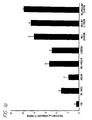
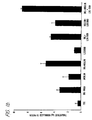
- FIGS. 1a and 1b show triglyceride accumulation in 3T3-LI cells treated with a retinoid (LG 100268 or LGD 1069) alone or in combination with a thiazolidinedione and insulin. Retinoids and BRL 49653 were used at 1 ⁇ M, insulin was used at 0.01 mg/ml for all experimental combinations.
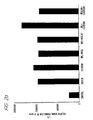
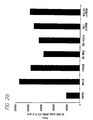
- FIG. 2a and 2b show the expression pattern of LPL (lipoprotein lipase) mRNA and PPAR ⁇ mRNA in cells that were treated for 7 days with BRL 49653 (1 ⁇ M), LG 100268 (1 ⁇ M) and insulin (0.01 mg/ml), alone or in combination.
- LPL lipoprotein lipase
- Northern blot analysis shows an increase in the relative signal normalized to ⁇ -actin of both LPL and PPAR ⁇ mRNA expression in cells treated with either compound alone. There was a three to five fold increase in mRNA levels for these adipocyte target genes demonstrating that transcriptional regulation occurs with treatment by insulin, BRL 49653 and LG 100268. Combination of insulin, BRL 49653 and LG 100268 did not further enhance the mRNA level.
- RXR agonists induce adipocyte differentiation by themselves or in combination with thiazolidinediones or insulin.
- RXR agonists enhance the activity of thiazolidinediones and insulin.
- Three independent measurements support that RXR agonists contribute to the modulation of the RXR/PPAR ⁇ heterodimer in regulating adipocyte differentiation and useful in treating NIDDM.
- LG 100268 enhances insulin stimulated glucose uptake in 3T3-LI cells
- a murine preadipocyte cell line, 3T3-L1 is widely used to study glucose uptake, adipogenesis, and has been used in the characterization of thiazolidinediones and other PPAR ⁇ activators. Insulin stimulated uptake of labeled 2-deoxyglucose (2-DOG, a glucose analog) was observed in 3T3-L1 cells treated with BRL 49653 or LG 100268.
- 3T3-L1 cells were treated with BRL 49653 (10 ⁇ M) or LG 100268 (1 ⁇ M) for 10 days. Insulin was added to the cells at a concentration of 0.01 mg/ml for 5 days, thereafter no insulin was added. Labeled 2-deoxyglucose uptake assay was performed (Szalkowski, et al., J. Endocrin. 136:1474-1481, 1995). The level of incorporated labeled 2-DOG was normalized to the amount of total cellular protein. About 5-fold increase in 2-DOG uptake was observed in 3T3-L1 cells treated with BRL 49653 alone. About 2-fold increase in 2-DOG uptake was observed in 3T3-L1 cells treated with LG 100268 alone.
- RXR agonist increases insulin mediated glucose uptake in x3T3-L1 cells like a known insulin sensitizer, a thiazolidinedione. It demonstrates directly that RXR agonists can be used to treat a major symptom of NIDDM, i . e . insulin resistance. Other RXR agonists useful for the treatment of NIDDM can be confirmed using this assay.
- C3H/10T1/2 cells which are mouse embryo fibroblast/multipotent stem cells that can be induced to differentiate into adipocytes or muscle cells.
- Table 2 shows the percent of C3H/10T1/2 cells that have differentiated into adipocytes as observed by oil red O staining assay.
- Experiment A was conducted in the presence of BRL 49653.
- Experiment B was conducted in the presence of both BRL 49653 and insulin.
- ALRT 1057 and LGD 1069 were used at 1 ⁇ M and TTNPB (RAR selective compound) was used at 10 nM concentration. Insulin was used at 0.01 mg/ml; and BRL 49653 was used at 0.1, 1 and 10 ⁇ M.
- C3H/10T1/2 cells were treated for 7 days, cells were stained with oil red O and observed under the microscope.
- BRL 49653 alone caused no more than 10 percent of the cells to undergo adipocyte differentiation.
- BRL 49653 was used in combination with an RXR agonist, LGD 1069 or ALRT 1057, there was a large increase in the amount of differentiation, the same effect was seen when BRL 49653 was used in combination with insulin.
- TTNPB (which does not activate RXR) did not have the same effect as RXR agonist LGD 1069 and ALRT 1057. In fact, TTNPB inhibited the differentiation induced by BRL 49653 or BRL/insulin.
- mice were identified by an ear punch code (#1-82) and separated into 8 groups (A-H). Each group consisted of 10 mice separated into 4 cages with 2-3 mice/cage. Several mice were lost during the course of the study from fluid injections into the lungs resulting in 2 groups with 9 mice/group. Control group C consisted of 12 mice. The mice were fed pelleted Purina Lab chow #5015 containing 3.83kcal/g with a caloric composition of 56% carbohydrate, 26% fat and 18% protein. Food and water were provided ad libitum. Food intake/cage was measured over selected periods and expressed as g food consumed/100g mouse/day.
- Blood samples were collected on days 0 -1 , 0, 3, 7, 10, and on the final day of study, days 13-15. After collection of blood samples on day 0, animals were refed their Purina chow diet and subsequently gavaged with control solution in group C and one of seven test solutions in groups designated A, B, D-H. The volume administered was equivalent in each group averaging .6ml/42g mouse (.01429 ml/g). The various solutions were gavaged daily to their respective groups based on the animals weight taken that morning or the weight of the animal taken on the preceding day of weighing. To assess alterations in plasma FFA, on day 10 an addition 75 ⁇ l blood sample was collected into an EDTA-coated capillary tube immediately after collecting the basal heparinized capillary tube sample.
- mice were not gavaged with test solution. The last gavage was administered on the day preceding the final day, i.e., day 12 for animals terminated on day 13, day 13 for animals terminated on day 14 and day 14 for animals terminated on day 15. Terminal blood was collected by decapitation to provide serum for assessment of HDL.
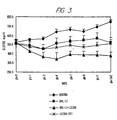
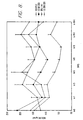
- FIG. 3 shows that BRL49653 and LG100268 each independently lowered the level of glucose in db / db mice.
- BRL49653 and LG100268 lowered the glucose level more than each compound did by itself.
- BRL 49653 (1 mg/kg) and LG 100268 (20 mg/kg) lowered the level of glucose by 40% by day 15 in comparison to control.
- the thiazolidinedione BRL 49653 at 1 mg/kg showed similar efficacy.
- the combination of an RXR activator and a PPAR activator showed greater efficacy, leading to almost 50% drop in the level of glucose.
- the effect of the combination was rapid, glucose levels were reduced by day 1 of the study and reached a steady state by day 4. This indicates a rapid resetting of the steady state levels of glucose homeostasis. Therefore, RXR activators enhance the efficacy of PPAR ⁇ activators, and vice vesa.
- Figure 4 shows that RXR activators lowered the level of triglycerides in db/db mice.
- LG 100268 (20 mg/kg) lowered the level of triglycerides 40% by day 15 of the study.
- BRL 49653 (1 mg/kg) showed similar efficacy. The combination of these two compounds worked even better.
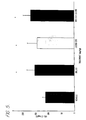
- FIG. 5 shows that RXR activators modulators increased the level of HDL cholesterol in db/db mice.
- LG 100268 (20 mg/kg) increased HDL-cholesterol levels (20%) in comparison to controls in db/db mice.
- BRL 49653 caused an equivalent level of increase.
- the combination of these two compounds showed a higher increase.
- HDL-C was measured by the precipitation method using kits obtained from Bohringer-Mannheim (catalog # 543004 and 427578).
- mice were identified by an ear punch code (#1-121) and separated into 12 groups. Each group consisting of 10 mice. (one mouse was terminated before start of the study because of bad teeth causing initial weight loss. As in preceding studies, mice in each group were housed in 4 cages (2-3 mice/cage) and provided water and Purina Lab chow #505 ⁇ 15 ad libitum .
- Blood samples were collected on days 0 -3 , 0, 3, 6, 8, 10, 14 ⁇ 1 and final collections were made on days 15, 16 or 17.
- FFA samples were collected on day 10 by drawing a second 75 ⁇ l blood sample in a non-heparinized tube coated with EDTA. This tube was collected immediately after the heparinized tube collection.
- mice in groups H were administered control gavage solution (0.6 ml/42 g) daily commencing on day 0 and ending on the day preceding the final day.
- 11 test solutions were administered to animals in groups designated A-G, I-L. All gavage solutions were administered after refeeding on days in which mice were fasted for blood sampling.
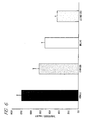
- FIG. 6 shows that RXR modulators lowered the level of triglycerides in ob / ob mice.
- RXR activators LGD 1069 (30 mg/kg) and LG 100268 (20 mg/kg) lowered the level of triglycerides by 34% and 60% respectively in ob / ob mice by day 14 of the study.
- BRL 49653 was also able to lower the level of triglycerides, although not as efficacious as LG100268.
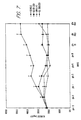
- FIG. 7 shows that RXR modulators lowered the level of glucose in ob / ob mice.
- the level of glucose was reduced to almost euglycemic levels by day 14 of the study.
- Figure 8 shows that RXR modulators, LGD 1069 (30 mg/kg) and LG 100268 (20 mg/kg), lowered the level of insulin in ob / ob mice.
- LG100268 lowered the level of insulin by 66% by day 14 of the study.
- LGD 1069 showed lower efficacy. There was a very rapid effect of the compounds since the level of insulin started to drop in day 1.
- the particular compound that affects the disorders or conditions of interest can be administered to a patient either by themselves, or in pharmaceutical compositions where it is mixed with suitable carriers or excipient(s).
- a therapeutically effective amount of a agent or agents such as these is administered.
- a therapeutically effective dose refers to that amount of the compound that results in amelioration of symptoms or a prolongation of survival in a patient.
- the compounds also can be prepared as pharmaceutically acceptable salts.
- pharmaceutically acceptable salts include acid addition salts such as those containing hydrochloride, sulfate, phosphate, sulfamate, acetate, citrate, lactate, tartrate, methanesulfonate, ethanesulfonate, benzenesulfonate, p -toluenesulfonate, cyclohexylsulfamate and quinate. ( See e.g ., PCT/US92/03736).
- Such salts can be derived using acids such as hydrochloric acid, sulfuric acid, phosphoric acid, sulfamic acid, acetic acid, citric acid, lactic acid, tartaric acid, malonic acid, methanesulfonic acid, ethanesulfonic acid, benzenesulfonic acid, p -toluenesulfonic acid, cyclohexylsulfamic acid, and quinic acid.
- acids such as hydrochloric acid, sulfuric acid, phosphoric acid, sulfamic acid, acetic acid, citric acid, lactic acid, tartaric acid, malonic acid, methanesulfonic acid, ethanesulfonic acid, benzenesulfonic acid, p -toluenesulfonic acid, cyclohexylsulfamic acid, and quinic acid.
- These salts can be prepared by standard techniques. For example, the free base form of the compound
- Carriers or excipients can be used to facilitate administration of the compound, for example, to increase the solubility of the compound.
- carriers and excipients include calcium carbonate, calcium phosphate, various sugars or types of starch, cellulose derivatives, gelatin, vegetable oils, polyethylene glycols and physiologically compatible solvents.
- the molecules tested can be used to determine the structural features that enable them to act on the RXR/PPAR ⁇ heterodimer, and thus to select useful molecules.
- Toxicity and therapeutic efficacy of such compounds can be determined by standard pharmaceutical procedures in cell cultures or experimental animals, e.g. , for determining the LD 50 (the dose lethal to 50% of the population) and the ED 50 (the dose therapeutically effective in 50% of the population).
- the dose ratio between toxic and therapeutic effects is the therapeutic index and it can be expressed as the ratio LD 50 /ED 50 .
- Compounds which exhibit large therapeutic indices are preferred.
- the data obtained from these cell culture assays and animal studies can be used in formulating a range of dosage for use in human.
- the dosage of such compounds lies preferably within a range of circulating concentrations that include the ED 50 with little or no toxicity.
- the dosage may vary within this range depending upon the dosage form employed and the route of administration utilized. Levels in plasma may be measured, for example, by HPLC.
- the exact formulation, route of administration and dosage can be chosen by the individual physician in view of the patient's condition. (See e.g. Fingl et al., in The Pharmacological Basis of Therapeutics , 1975, Ch. 1 p. 1). It should be noted that the attending physician would know how to and when to terminate, interrupt, or adjust administration due to toxicity, or to organ dysfunctions. Conversely, the attending physician would also know to adjust treatment to higher levels if the clinical response were not adequate (precluding toxicity).
- the magnitude of an administrated dose in the management of the disorder of interest will vary with the severity of the condition to be treated and to the route of administration. The severity of the condition may, for example, be evaluated, in part, by standard prognostic evaluation methods. Further, the dose and perhaps dose frequency, will also vary according to the age, body weight, and response of the individual patient. A program comparable to that discussed above may be used in veterinary medicine.
- Suitable routes may include oral, rectal, transdermal, vaginal, transmucosal, or intestinal administration; parenteral delivery, including intramuscular, subcutaneous, intramedullary injections, as well as intrathecal, direct intraventricular, intravenous, intraperitoneal, intranasal, or intraocular injections, just to name a few.
- the agents of the invention may be formulated in aqueous solutions, preferably in physiologically compatible buffers such as Hanks's solution, Ringer's solution, or physiological saline buffer.
- physiologically compatible buffers such as Hanks's solution, Ringer's solution, or physiological saline buffer.
- penetrants appropriate to the barrier to be permeated are used in the formulation. Such penetrants are generally known in the art.
- compositions of the present invention in particular, those formulated as solutions, may be administered parenterally, such as by intravenous injection.
- the compounds can be formulated readily using pharmaceutically acceptable carriers well known in the art into dosages suitable for oral administration.
- Such carriers enable the compounds of the invention to be formulated as tablets, pills, capsules, liquids, gels, syrups, slurries, suspensions and the like, for oral ingestion by a patient to be treated.
- Agents intended to be administered intracellularly may be administered using techniques well known to those of ordinary skill in the art. For example, such agents may be encapsulated into liposomes, then administered as described above. Liposomes are spherical lipid bilayers with aqueous interiors. All molecules present in an aqueous solution at the time of liposome formation are incorporated into the aqueous interior. The liposomal contents are both protected from the external microenvironment and, because liposomes fuse with cell membranes, are efficiently delivered into the cell cytoplasm. Additionally, due to their hydrophobicity, small organic molecules may be directly administered intracellularly.
- compositions suitable for use in the present invention include compositions wherein the active ingredients are contained in an effective amount to achieve its intended purpose. Determination of the effective amounts is well within the capability of those skilled in the art, especially in light of the detailed disclosure provided herein.
- these pharmaceutical compositions may contain suitable pharmaceutically acceptable carriers comprising excipients and auxiliaries which facilitate processing of the active compounds into preparations which can be used pharmaceutically.
- the preparations formulated for oral administration may be in the form of tablets, dragees, capsules, or solutions.
- compositions of the present invention may be manufactured in a manner that is itself known, e.g., by means of conventional mixing, dissolving, granulating, dragee-making, levitating, emulsifying, encapsulating, entrapping or lyophilizing processes.
- compositions for parenteral administration include aqueous solutions of the active compounds in water-soluble form. Additionally, suspensions of the active compounds may be prepared as appropriate oily injection suspensions. Suitable lipophilic solvents or vehicles include fatty oils such as sesame oil, or synthetic fatty acid esters, such as ethyl oleate or triglycerides, or liposomes. Aqueous injection suspensions may contain substances which increase the viscosity of the suspension, such as sodium carboxymethyl cellulose, sorbitol, or dextran. Optionally, the suspension may also contain suitable stabilizers or agents which increase the solubility of the compounds to allow for the preparation of highly concentrated solutions.
- compositions for oral use can be obtained by combining the active compounds with solid excipient, optionally grinding a resulting mixture, and processing the mixture of granules, after adding suitable auxiliaries, if desired, to obtain tablets or dragee cores.
- suitable excipients are, in particular, fillers such as sugars, including lactose, sucrose, mannitol, or sorbitol; cellulose preparations such as, for example, maize starch, wheat starch, rice starch, potato starch, gelatin, gum tragacanth, methyl cellulose, hydroxypropylmethyl-cellulose, sodium carboxymethylcellulose, and/or polyvinylpyrrolidone (PVP).
- disintegrating agents may be added, such as the cross-linked polyvinyl pyrrolidone, agar, or alginic acid or a salt thereof such as sodium alginate.
- Dragee cores are provided with suitable coatings.
- suitable coatings For this purpose, concentrated sugar solutions may be used, which may optionally contain gum arabic, talc, polyvinyl pyrrolidone, carbopol gel, polyethylene glycol, and/or titanium dioxide, lacquer solutions, and suitable organic solvents or solvent mixtures.
- Dyestuffs or pigments may be added to the tablets or dragee coatings for identification or to characterize different combinations of active compound doses.
- compositions which can be used orally include push-fit capsules made of gelatin, as well as soft, sealed capsules made of gelatin and a plasticizer, such as glycerol or sorbitol.
- the push-fit capsules can contain the active ingredients in admixture with filler such as lactose, binders such as starches, and/or lubricants such as talc or magnesium stearate and, optionally, stabilizers.
- the active compounds may be dissolved or suspended in suitable liquids, such as fatty oils, liquid paraffin, or liquid polyethylene glycals.
- stabilizers may be added. Liposomes may be used for encapsulated delivery.
Landscapes
- Health & Medical Sciences (AREA)
- Chemical & Material Sciences (AREA)
- Life Sciences & Earth Sciences (AREA)
- Organic Chemistry (AREA)
- Medicinal Chemistry (AREA)
- General Health & Medical Sciences (AREA)
- Engineering & Computer Science (AREA)
- Pharmacology & Pharmacy (AREA)
- Animal Behavior & Ethology (AREA)
- Public Health (AREA)
- Veterinary Medicine (AREA)
- Epidemiology (AREA)
- Immunology (AREA)
- Biomedical Technology (AREA)
- Hematology (AREA)
- Molecular Biology (AREA)
- Urology & Nephrology (AREA)
- Bioinformatics & Cheminformatics (AREA)
- Cell Biology (AREA)
- Diabetes (AREA)
- Analytical Chemistry (AREA)
- Biotechnology (AREA)
- Pathology (AREA)
- General Physics & Mathematics (AREA)
- Biochemistry (AREA)
- Physics & Mathematics (AREA)
- Microbiology (AREA)
- Toxicology (AREA)
- Tropical Medicine & Parasitology (AREA)
- Food Science & Technology (AREA)
- Obesity (AREA)
- Chemical Kinetics & Catalysis (AREA)
- Nuclear Medicine, Radiotherapy & Molecular Imaging (AREA)
- General Chemical & Material Sciences (AREA)
- Endocrinology (AREA)
- Zoology (AREA)
- Emergency Medicine (AREA)
- Proteomics, Peptides & Aminoacids (AREA)
- Gastroenterology & Hepatology (AREA)
- Medicines That Contain Protein Lipid Enzymes And Other Medicines (AREA)
Priority Applications (1)
| Application Number | Priority Date | Filing Date | Title |
|---|---|---|---|
| EP04002911A EP1426048A3 (en) | 1995-09-18 | 1996-09-17 | Treating hypertriglyceridemia with RXR agonists in combination with a PPARgamma agonist |
Applications Claiming Priority (11)
| Application Number | Priority Date | Filing Date | Title |
|---|---|---|---|
| US386995P | 1995-09-18 | 1995-09-18 | |
| US3869P | 1995-09-18 | ||
| US489795P | 1995-10-06 | 1995-10-06 | |
| US4897P | 1995-10-06 | ||
| US988496P | 1996-01-10 | 1996-01-10 | |
| US9884P | 1996-01-11 | ||
| US18318P | 1996-05-21 | ||
| US1831896P | 1996-05-24 | 1996-05-24 | |
| US2183996P | 1996-07-10 | 1996-07-10 | |
| US21839P | 1996-07-10 | ||
| PCT/US1996/014904 WO1997010819A1 (en) | 1995-09-18 | 1996-09-17 | Treating niddm with rxr agonists |
Related Child Applications (1)
| Application Number | Title | Priority Date | Filing Date |
|---|---|---|---|
| EP04002911A Division EP1426048A3 (en) | 1995-09-18 | 1996-09-17 | Treating hypertriglyceridemia with RXR agonists in combination with a PPARgamma agonist |
Publications (2)
| Publication Number | Publication Date |
|---|---|
| EP0859608A1 EP0859608A1 (en) | 1998-08-26 |
| EP0859608B1 true EP0859608B1 (en) | 2004-02-11 |
Family
ID=27533028
Family Applications (2)
| Application Number | Title | Priority Date | Filing Date |
|---|---|---|---|
| EP96931613A Expired - Lifetime EP0859608B1 (en) | 1995-09-18 | 1996-09-17 | Treating niddm with rxr agonists |
| EP04002911A Withdrawn EP1426048A3 (en) | 1995-09-18 | 1996-09-17 | Treating hypertriglyceridemia with RXR agonists in combination with a PPARgamma agonist |
Family Applications After (1)
| Application Number | Title | Priority Date | Filing Date |
|---|---|---|---|
| EP04002911A Withdrawn EP1426048A3 (en) | 1995-09-18 | 1996-09-17 | Treating hypertriglyceridemia with RXR agonists in combination with a PPARgamma agonist |
Country Status (12)
| Country | Link |
|---|---|
| EP (2) | EP0859608B1 (enExample) |
| JP (1) | JPH11511472A (enExample) |
| KR (1) | KR19990045756A (enExample) |
| AT (1) | ATE259227T1 (enExample) |
| AU (1) | AU725998B2 (enExample) |
| BR (1) | BR9610624A (enExample) |
| DE (1) | DE69631541T2 (enExample) |
| DK (1) | DK0859608T3 (enExample) |
| ES (1) | ES2216062T3 (enExample) |
| NO (1) | NO981192L (enExample) |
| PT (1) | PT859608E (enExample) |
| WO (1) | WO1997010819A1 (enExample) |
Families Citing this family (36)
| Publication number | Priority date | Publication date | Assignee | Title |
|---|---|---|---|---|
| US7115728B1 (en) | 1995-01-30 | 2006-10-03 | Ligand Pharmaceutical Incorporated | Human peroxisome proliferator activated receptor γ |
| EP0930882A2 (en) * | 1996-08-02 | 1999-07-28 | Institut Pasteur De Lille | Prevention or treatment of type 2 diabetes or cardiovascular disease with ppar modulators |
| US6121288A (en) * | 1996-11-08 | 2000-09-19 | Nippon Chemiphar Co., Ltd. | Visceral fat lowering agent |
| DE69726182T2 (de) | 1996-12-11 | 2004-08-12 | Dana-Farber Cancer Institute, Inc., Boston | Methoden und pharmazeutische zusammenstellungen zur wachstumsverhinderung von tumorzellen enthaltend einen ppar-gamma agonisten und einen map kinase inhibitor |
| US6586455B1 (en) * | 1996-12-31 | 2003-07-01 | The Salk Institute For Biological Studies | Treatment of liposarcomas using a combination of thiazolidinediones and retinoid X receptor selective agonists |
| GB9712866D0 (en) * | 1997-06-18 | 1997-08-20 | Smithkline Beecham Plc | Novel method of treatment |
| AU8355998A (en) | 1997-07-24 | 1999-02-16 | Yamanouchi Pharmaceutical Co., Ltd. | Medicinal compositions with cholesterol-lowering effect |
| WO1999005161A1 (en) | 1997-07-25 | 1999-02-04 | Ligand Pharmaceuticals Incorporated | HUMAN PEROXISOME PROLIFERATOR ACTIVATED RECEPTOR GAMMA (PPARη) GENE REGULATORY SEQUENCES AND USES THEREFOR |
| FR2767058B1 (fr) * | 1997-08-05 | 2000-05-05 | Centre Nat Rech Scient | Utilisation d'un compose de type retinoide, notamment l'acide retinoique pour la preparation d' un medicament destine au traitement de l'obesite. |
| AU2893199A (en) * | 1998-03-03 | 1999-09-20 | Board Of Regents, The University Of Texas System | Fatty acid-induced beta-cell apoptosis |
| AU1707599A (en) * | 1998-03-20 | 1999-10-18 | Warner-Lambert Company | Retinoid-glitazone combinations |
| US7045519B2 (en) | 1998-06-19 | 2006-05-16 | Chiron Corporation | Inhibitors of glycogen synthase kinase 3 |
| US6191154B1 (en) * | 1998-11-27 | 2001-02-20 | Case Western Reserve University | Compositions and methods for the treatment of Alzheimer's disease, central nervous system injury, and inflammatory diseases |
| AU1797700A (en) | 1998-12-14 | 2000-07-03 | Nuclear Receptor Research Limited | Novel ligands of nuclear receptor |
| US6756360B1 (en) | 1998-12-24 | 2004-06-29 | Metabasis Therapeutics, Inc. | Combination of FBPase inhibitors and insulin sensitizers for the treatment of diabetes |
| US6436993B1 (en) | 1999-07-13 | 2002-08-20 | The Salk Institute For Biological Studies | Use of RAR antagonists as modulators of hormone mediated processes |
| WO2001016120A1 (en) | 1999-08-27 | 2001-03-08 | Eli Lilly And Company | Biaryl-oxa(thia)zole derivatives and their use as ppars modulators |
| CA2407421C (en) | 2000-04-24 | 2009-11-03 | Nikken Chemicals Co., Ltd. | Activators of peroxisome proliferator-activated receptors |
| US7563774B2 (en) | 2000-06-29 | 2009-07-21 | Metabasis Therapeutics, Inc. | Combination of FBPase inhibitors and antidiabetic agents useful for the treatment of diabetes |
| US20020031539A1 (en) * | 2000-08-30 | 2002-03-14 | The Brigham And Women's Hospital, Inc. | Oxidized forms of retinoic acid as ligands for peroxisome proliferator activated receptor gamma |
| WO2002028175A2 (en) * | 2000-10-03 | 2002-04-11 | Association Pour Le Developpement De La Recherche En Genetique Moleculaire (Aderegem) | Transgenic mouse for targeted recombination mediated by modified cre-er |
| FR2814642B1 (fr) | 2000-10-03 | 2005-07-01 | Ass Pour Le Dev De La Rech En | Souris transgenique pour la recombinaison ciblee mediee par la cre-er modifiee |
| US20030045553A1 (en) | 2001-04-04 | 2003-03-06 | Bussolari Jacqueline C. | Combination therapy comprising glucose reabsorption inhibitors and PPAR modulators |
| JP4590158B2 (ja) | 2001-04-04 | 2010-12-01 | オーソ−マクニール・フアーマシユーチカル・インコーポレーテツド | グルコース再吸収阻害剤およびレチノイド−x受容体モジュレーターを含んで成る併用療法 |
| FR2832064A1 (fr) * | 2001-11-13 | 2003-05-16 | Lipha | Composition pharmaceutique comprenant une glitazone et un derive de thiazolidinedione et son utilisation pour traiter le diabete |
| TW200303742A (en) * | 2001-11-21 | 2003-09-16 | Novartis Ag | Organic compounds |
| US7264813B2 (en) | 2003-09-24 | 2007-09-04 | Nikken Sohonsha Corporation | Therapeutic uses of Dunaliella powder |
| US20080274193A1 (en) * | 2004-01-23 | 2008-11-06 | Japan Science And Technology Agency | Retinoic Acid-Containing Antidiabetic Agent |
| EP1737809B1 (en) | 2004-02-27 | 2013-09-18 | Amgen, Inc | Compounds, pharmaceutical compositions and methods for use in treating metabolic disorders |
| JP4737084B2 (ja) * | 2004-03-12 | 2011-07-27 | 堺化学工業株式会社 | アミド化合物、医薬組成物及びrxr機能調節剤 |
| JP5211322B2 (ja) * | 2008-03-07 | 2013-06-12 | 国立医薬品食品衛生研究所長 | ピリミジン−5−カルボン酸誘導体の抗肥満剤としての新規用途 |
| WO2011006157A2 (en) * | 2009-07-10 | 2011-01-13 | Case Western Reserve University | Rxr agonist compounds and methods |
| JP5725491B2 (ja) * | 2010-04-14 | 2015-05-27 | 国立大学法人鳥取大学 | レチノイン酸受容体リガンドによるインスリン抵抗性改善作用 |
| CN105143445B (zh) * | 2012-11-29 | 2020-07-07 | 宝生物欧洲公司 | 衍生自人多能干细胞的肝细胞样细胞的成熟 |
| US9585857B2 (en) | 2013-01-18 | 2017-03-07 | Cornell University | Methods of treating diseases associated with high-fat diet and vitamin A deficiency using retinoic acid receptor agonists |
| WO2015138686A1 (en) * | 2014-03-13 | 2015-09-17 | J. David Gladstone Institutes, A Testamentary Trust Established Under The Will Of J. David Gladstone | Inducing brown fat fate and function |
Citations (2)
| Publication number | Priority date | Publication date | Assignee | Title |
|---|---|---|---|---|
| WO1997012853A1 (en) * | 1995-10-06 | 1997-04-10 | Ligand Pharmaceuticals Incorporated | Dimer-selective rxr modulators and methods for their use |
| WO1997033881A1 (fr) * | 1996-03-14 | 1997-09-18 | Centre International De Recherches Dermatologiques Galderma (C.I.R.D. Galderma) | Composés bicycliques-aromatiques |
Family Cites Families (4)
| Publication number | Priority date | Publication date | Assignee | Title |
|---|---|---|---|---|
| CZ282548B6 (cs) * | 1992-01-22 | 1997-08-13 | F. Hoffmann-La Roche Ag | Farmaceutický přípravek |
| US5219888A (en) * | 1992-03-31 | 1993-06-15 | American Cyanamid Company | Use of retinoids for the treatment of coronary artery disease |
| DE69333894D1 (de) * | 1992-04-22 | 2005-12-01 | Ligand Pharm Inc | Verbindungen mit Retinoid x rezeptorselektivität |
| FR2723315B1 (fr) * | 1994-08-02 | 1996-10-25 | Cird Galderma | Procede et composition pour stimuler la differenciation des cellules preadipocytaires et traitements therapeutiques associes |
-
1996
- 1996-09-17 PT PT96931613T patent/PT859608E/pt unknown
- 1996-09-17 EP EP96931613A patent/EP0859608B1/en not_active Expired - Lifetime
- 1996-09-17 AT AT96931613T patent/ATE259227T1/de active
- 1996-09-17 JP JP9512842A patent/JPH11511472A/ja active Pending
- 1996-09-17 AU AU70742/96A patent/AU725998B2/en not_active Ceased
- 1996-09-17 WO PCT/US1996/014904 patent/WO1997010819A1/en not_active Ceased
- 1996-09-17 DE DE69631541T patent/DE69631541T2/de not_active Expired - Lifetime
- 1996-09-17 DK DK96931613T patent/DK0859608T3/da active
- 1996-09-17 ES ES96931613T patent/ES2216062T3/es not_active Expired - Lifetime
- 1996-09-17 BR BR9610624A patent/BR9610624A/pt not_active Application Discontinuation
- 1996-09-17 KR KR1019980702000A patent/KR19990045756A/ko not_active Ceased
- 1996-09-17 EP EP04002911A patent/EP1426048A3/en not_active Withdrawn
-
1998
- 1998-03-17 NO NO981192A patent/NO981192L/no unknown
Patent Citations (2)
| Publication number | Priority date | Publication date | Assignee | Title |
|---|---|---|---|---|
| WO1997012853A1 (en) * | 1995-10-06 | 1997-04-10 | Ligand Pharmaceuticals Incorporated | Dimer-selective rxr modulators and methods for their use |
| WO1997033881A1 (fr) * | 1996-03-14 | 1997-09-18 | Centre International De Recherches Dermatologiques Galderma (C.I.R.D. Galderma) | Composés bicycliques-aromatiques |
Non-Patent Citations (1)
| Title |
|---|
| HEYMAN R.A. ET AL: "9-Cis Retinoic Acid Is a High Affinity Ligand for the Retinoid X Receptor", CELL, vol. 68, 1992, pages 397 - 406 * |
Also Published As
| Publication number | Publication date |
|---|---|
| NO981192L (no) | 1998-05-18 |
| EP1426048A3 (en) | 2004-06-16 |
| KR19990045756A (ko) | 1999-06-25 |
| BR9610624A (pt) | 1999-03-16 |
| PT859608E (pt) | 2004-06-30 |
| NO981192D0 (no) | 1998-03-17 |
| MX9802104A (es) | 1998-10-31 |
| AU7074296A (en) | 1997-04-09 |
| DE69631541T2 (de) | 2004-12-23 |
| ES2216062T3 (es) | 2004-10-16 |
| EP0859608A1 (en) | 1998-08-26 |
| JPH11511472A (ja) | 1999-10-05 |
| WO1997010819A1 (en) | 1997-03-27 |
| AU725998B2 (en) | 2000-10-26 |
| EP1426048A2 (en) | 2004-06-09 |
| DK0859608T3 (da) | 2004-06-14 |
| DE69631541D1 (de) | 2004-03-18 |
| ATE259227T1 (de) | 2004-02-15 |
Similar Documents
| Publication | Publication Date | Title |
|---|---|---|
| US6521633B2 (en) | Treating NIDDM with RXR agonists | |
| AU725998B2 (en) | Treating NIDDM with RXR agonists | |
| US20030220373A1 (en) | Therapeutic uses of PPAR mediators | |
| WO2002013812A1 (en) | Methods for treating inflammatory diseases | |
| Shibata et al. | Pharmacological profiles of a novel oral antidiabetic agent, JTT-501, an isoxazolidinedione derivative | |
| EP0930882A2 (en) | Prevention or treatment of type 2 diabetes or cardiovascular disease with ppar modulators | |
| US20090093546A1 (en) | Method and Pharmaceutical Compositions for Treatment of Anti-Estrogen Resistant Breast Cancer Using RXR Modulators | |
| MX2008012506A (es) | Tratamiento de combinacion de trastornos metabolicos. | |
| US6605639B1 (en) | Ligands of nuclear receptor | |
| TW200803896A (en) | Method of improvement of cognitive function | |
| US20070037882A1 (en) | Remedy for cerebral neurodegenerative diseases using ppar agonist | |
| CA2232288C (en) | Treating niddm with rxr agonists | |
| RU2191007C2 (ru) | Способ лечения иhcд агонистами rxr | |
| KR20010005678A (ko) | 비인슐린의존성 당뇨병 치료용 레티노이드계 분자 | |
| WO1998042340A9 (en) | Retinoid related molecules for the treatment of non-insulin dependent diabetes mellitus | |
| MXPA98002104A (en) | Compositions using a rxr agonist only or in combination with a ppar agonist, to treat diabetes mellitus not dependent on insul | |
| JP2000500490A (ja) | 糖尿病治療用の4−ヒドロキシクマリン−3−カルボキシアミド | |
| WO1999048529A1 (en) | Retinoid-glitazone combinations | |
| CA2209303C (en) | Method of preventing proliferation of retinal pigment epithelium by retinoic acid receptor agonists | |
| MXPA99008765A (en) | Methods and compositions for treating and/or preventing non-insulin dependent diabetes mellitus (niddm) using specific retinoid compounds |
Legal Events
| Date | Code | Title | Description |
|---|---|---|---|
| PUAI | Public reference made under article 153(3) epc to a published international application that has entered the european phase |
Free format text: ORIGINAL CODE: 0009012 |
|
| 17P | Request for examination filed |
Effective date: 19980417 |
|
| AK | Designated contracting states |
Kind code of ref document: A1 Designated state(s): AT BE CH DE DK ES FI FR GB GR IE IT LI LU MC NL PT SE |
|
| 17Q | First examination report despatched |
Effective date: 19990201 |
|
| GRAH | Despatch of communication of intention to grant a patent |
Free format text: ORIGINAL CODE: EPIDOS IGRA |
|
| RIC1 | Information provided on ipc code assigned before grant |
Ipc: 7A 61P 3/10 B Ipc: 7A 61K 31/426 B Ipc: 7A 61K 31/192 B Ipc: 7A 61K 31/455 B Ipc: 7A 61K 31/203 A |
|
| GRAS | Grant fee paid |
Free format text: ORIGINAL CODE: EPIDOSNIGR3 |
|
| GRAA | (expected) grant |
Free format text: ORIGINAL CODE: 0009210 |
|
| AK | Designated contracting states |
Kind code of ref document: B1 Designated state(s): AT BE CH DE DK ES FI FR GB GR IE IT LI LU MC NL PT SE |
|
| REG | Reference to a national code |
Ref country code: GB Ref legal event code: FG4D |
|
| REG | Reference to a national code |
Ref country code: CH Ref legal event code: EP |
|
| REG | Reference to a national code |
Ref country code: IE Ref legal event code: FG4D |
|
| REF | Corresponds to: |
Ref document number: 69631541 Country of ref document: DE Date of ref document: 20040318 Kind code of ref document: P |
|
| REG | Reference to a national code |
Ref country code: CH Ref legal event code: NV Representative=s name: PATENTANWAELTE SCHAAD, BALASS, MENZL & PARTNER AG |
|
| REG | Reference to a national code |
Ref country code: SE Ref legal event code: TRGR |
|
| REG | Reference to a national code |
Ref country code: DK Ref legal event code: T3 Ref country code: GR Ref legal event code: EP Ref document number: 20040401530 Country of ref document: GR |
|
| REG | Reference to a national code |
Ref country code: PT Ref legal event code: SC4A Free format text: AVAILABILITY OF NATIONAL TRANSLATION Effective date: 20040510 |
|
| REG | Reference to a national code |
Ref country code: ES Ref legal event code: FG2A Ref document number: 2216062 Country of ref document: ES Kind code of ref document: T3 |
|
| ET | Fr: translation filed | ||
| PLBE | No opposition filed within time limit |
Free format text: ORIGINAL CODE: 0009261 |
|
| STAA | Information on the status of an ep patent application or granted ep patent |
Free format text: STATUS: NO OPPOSITION FILED WITHIN TIME LIMIT |
|
| 26N | No opposition filed |
Effective date: 20041112 |
|
| BECA | Be: change of holder's address |
Owner name: *EISAI R&D MANAGEMENT CO. LTD4-6-10 KOISHIKAWA BUN Effective date: 20110531 |
|
| REG | Reference to a national code |
Ref country code: CH Ref legal event code: PUE Owner name: EISAI R&D MANAGEMENT CO., LTD. Free format text: LIGAND PHARMACEUTICALS, INC.#9393 TOWNE CENTRE DRIVE#SAN DIEGO, CA 92121 (US) -TRANSFER TO- EISAI R&D MANAGEMENT CO., LTD.#4-6-10 KOISHIKAWA, BUNKYO-KU,#TOKYO 112-8088 (JP) |
|
| REG | Reference to a national code |
Ref country code: NL Ref legal event code: SD Effective date: 20110628 |
|
| REG | Reference to a national code |
Ref country code: GB Ref legal event code: 732E Free format text: REGISTERED BETWEEN 20110616 AND 20110622 |
|
| REG | Reference to a national code |
Ref country code: FR Ref legal event code: TP |
|
| REG | Reference to a national code |
Ref country code: DE Ref legal event code: R082 Ref document number: 69631541 Country of ref document: DE Representative=s name: RECHTS- UND PATENTANWAELTE LORENZ SEIDLER GOSS, DE |
|
| REG | Reference to a national code |
Ref country code: DE Ref legal event code: R082 Ref document number: 69631541 Country of ref document: DE Representative=s name: LORENZ SEIDLER GOSSEL RECHTSANWAELTE PATENTANW, DE Effective date: 20120123 Ref country code: DE Ref legal event code: R081 Ref document number: 69631541 Country of ref document: DE Owner name: EISAI R&D MANAGEMENT CO., LTD., JP Free format text: FORMER OWNER: LIGAND PHARMACEUTICALS, INC., SAN DIEGO, CALIF., US Effective date: 20120123 |
|
| PGFP | Annual fee paid to national office [announced via postgrant information from national office to epo] |
Ref country code: DK Payment date: 20140925 Year of fee payment: 19 Ref country code: IE Payment date: 20140929 Year of fee payment: 19 Ref country code: MC Payment date: 20140903 Year of fee payment: 19 Ref country code: FI Payment date: 20140929 Year of fee payment: 19 Ref country code: CH Payment date: 20140929 Year of fee payment: 19 Ref country code: GR Payment date: 20140929 Year of fee payment: 19 |
|
| PGFP | Annual fee paid to national office [announced via postgrant information from national office to epo] |
Ref country code: FR Payment date: 20140917 Year of fee payment: 19 Ref country code: SE Payment date: 20140929 Year of fee payment: 19 Ref country code: ES Payment date: 20140926 Year of fee payment: 19 Ref country code: GB Payment date: 20140929 Year of fee payment: 19 Ref country code: LU Payment date: 20141001 Year of fee payment: 19 Ref country code: AT Payment date: 20140904 Year of fee payment: 19 |
|
| PGFP | Annual fee paid to national office [announced via postgrant information from national office to epo] |
Ref country code: IT Payment date: 20140924 Year of fee payment: 19 Ref country code: PT Payment date: 20140317 Year of fee payment: 19 |
|
| PGFP | Annual fee paid to national office [announced via postgrant information from national office to epo] |
Ref country code: DE Payment date: 20140929 Year of fee payment: 19 |
|
| PGFP | Annual fee paid to national office [announced via postgrant information from national office to epo] |
Ref country code: NL Payment date: 20140926 Year of fee payment: 19 |
|
| PGFP | Annual fee paid to national office [announced via postgrant information from national office to epo] |
Ref country code: BE Payment date: 20140929 Year of fee payment: 19 |
|
| REG | Reference to a national code |
Ref country code: PT Ref legal event code: MM4A Free format text: LAPSE DUE TO NON-PAYMENT OF FEES Effective date: 20160317 |
|
| REG | Reference to a national code |
Ref country code: DE Ref legal event code: R119 Ref document number: 69631541 Country of ref document: DE |
|
| REG | Reference to a national code |
Ref country code: DK Ref legal event code: EBP Effective date: 20150930 |
|
| PG25 | Lapsed in a contracting state [announced via postgrant information from national office to epo] |
Ref country code: IT Free format text: LAPSE BECAUSE OF NON-PAYMENT OF DUE FEES Effective date: 20150917 Ref country code: LU Free format text: LAPSE BECAUSE OF NON-PAYMENT OF DUE FEES Effective date: 20150917 Ref country code: MC Free format text: LAPSE BECAUSE OF NON-PAYMENT OF DUE FEES Effective date: 20150930 |
|
| REG | Reference to a national code |
Ref country code: CH Ref legal event code: PL |
|
| REG | Reference to a national code |
Ref country code: SE Ref legal event code: EUG |
|
| REG | Reference to a national code |
Ref country code: AT Ref legal event code: MM01 Ref document number: 259227 Country of ref document: AT Kind code of ref document: T Effective date: 20150917 |
|
| GBPC | Gb: european patent ceased through non-payment of renewal fee |
Effective date: 20150917 |
|
| PG25 | Lapsed in a contracting state [announced via postgrant information from national office to epo] |
Ref country code: SE Free format text: LAPSE BECAUSE OF NON-PAYMENT OF DUE FEES Effective date: 20150918 Ref country code: PT Free format text: LAPSE BECAUSE OF NON-PAYMENT OF DUE FEES Effective date: 20160317 Ref country code: FI Free format text: LAPSE BECAUSE OF NON-PAYMENT OF DUE FEES Effective date: 20150917 |
|
| REG | Reference to a national code |
Ref country code: NL Ref legal event code: MM Effective date: 20151001 |
|
| REG | Reference to a national code |
Ref country code: GR Ref legal event code: ML Ref document number: 20040401530 Country of ref document: GR Effective date: 20160405 |
|
| REG | Reference to a national code |
Ref country code: IE Ref legal event code: MM4A |
|
| REG | Reference to a national code |
Ref country code: FR Ref legal event code: ST Effective date: 20160531 |
|
| PG25 | Lapsed in a contracting state [announced via postgrant information from national office to epo] |
Ref country code: GR Free format text: LAPSE BECAUSE OF NON-PAYMENT OF DUE FEES Effective date: 20160405 Ref country code: CH Free format text: LAPSE BECAUSE OF NON-PAYMENT OF DUE FEES Effective date: 20150930 Ref country code: LI Free format text: LAPSE BECAUSE OF NON-PAYMENT OF DUE FEES Effective date: 20150930 Ref country code: DE Free format text: LAPSE BECAUSE OF NON-PAYMENT OF DUE FEES Effective date: 20160401 Ref country code: GB Free format text: LAPSE BECAUSE OF NON-PAYMENT OF DUE FEES Effective date: 20150917 Ref country code: IE Free format text: LAPSE BECAUSE OF NON-PAYMENT OF DUE FEES Effective date: 20150917 |
|
| PG25 | Lapsed in a contracting state [announced via postgrant information from national office to epo] |
Ref country code: NL Free format text: LAPSE BECAUSE OF NON-PAYMENT OF DUE FEES Effective date: 20151001 Ref country code: FR Free format text: LAPSE BECAUSE OF NON-PAYMENT OF DUE FEES Effective date: 20150930 Ref country code: AT Free format text: LAPSE BECAUSE OF NON-PAYMENT OF DUE FEES Effective date: 20150917 |
|
| REG | Reference to a national code |
Ref country code: ES Ref legal event code: FD2A Effective date: 20161026 |
|
| PG25 | Lapsed in a contracting state [announced via postgrant information from national office to epo] |
Ref country code: DK Free format text: LAPSE BECAUSE OF NON-PAYMENT OF DUE FEES Effective date: 20150930 |
|
| PG25 | Lapsed in a contracting state [announced via postgrant information from national office to epo] |
Ref country code: PT Free format text: LAPSE BECAUSE OF EXPIRATION OF PROTECTION Effective date: 20160927 |
|
| PG25 | Lapsed in a contracting state [announced via postgrant information from national office to epo] |
Ref country code: ES Free format text: LAPSE BECAUSE OF NON-PAYMENT OF DUE FEES Effective date: 20150918 |
|
| PG25 | Lapsed in a contracting state [announced via postgrant information from national office to epo] |
Ref country code: PT Free format text: LAPSE BECAUSE OF EXPIRATION OF PROTECTION Effective date: 20160324 Ref country code: BE Free format text: LAPSE BECAUSE OF NON-PAYMENT OF DUE FEES Effective date: 20150930 |