EP0850269B1 - Verfahren zur herstellung von formkörpern aus biologisch abbaubarem material und formkörper - Google Patents
Verfahren zur herstellung von formkörpern aus biologisch abbaubarem material und formkörper Download PDFInfo
- Publication number
- EP0850269B1 EP0850269B1 EP95932728A EP95932728A EP0850269B1 EP 0850269 B1 EP0850269 B1 EP 0850269B1 EP 95932728 A EP95932728 A EP 95932728A EP 95932728 A EP95932728 A EP 95932728A EP 0850269 B1 EP0850269 B1 EP 0850269B1
- Authority
- EP
- European Patent Office
- Prior art keywords
- mould
- baking
- starch
- coating
- fibre
- Prior art date
- Legal status (The legal status is an assumption and is not a legal conclusion. Google has not performed a legal analysis and makes no representation as to the accuracy of the status listed.)
- Expired - Lifetime
Links
- 238000000034 method Methods 0.000 title claims abstract description 225
- 238000004806 packaging method and process Methods 0.000 title claims abstract description 49
- 230000008569 process Effects 0.000 claims abstract description 101
- 229920002472 Starch Polymers 0.000 claims abstract description 95
- 239000008107 starch Substances 0.000 claims abstract description 95
- 235000019698 starch Nutrition 0.000 claims abstract description 88
- XLYOFNOQVPJJNP-UHFFFAOYSA-N water Substances O XLYOFNOQVPJJNP-UHFFFAOYSA-N 0.000 claims abstract description 79
- 239000000463 material Substances 0.000 claims abstract description 67
- 239000000203 mixture Substances 0.000 claims abstract description 34
- 239000002657 fibrous material Substances 0.000 claims abstract description 33
- 239000002131 composite material Substances 0.000 claims abstract description 12
- 239000005871 repellent Substances 0.000 claims abstract description 7
- 239000000835 fiber Substances 0.000 claims description 155
- 238000000576 coating method Methods 0.000 claims description 85
- 239000011248 coating agent Substances 0.000 claims description 77
- 239000010893 paper waste Substances 0.000 claims description 51
- 229920000881 Modified starch Polymers 0.000 claims description 34
- 238000004519 manufacturing process Methods 0.000 claims description 33
- 230000002209 hydrophobic effect Effects 0.000 claims description 30
- XEKOWRVHYACXOJ-UHFFFAOYSA-N Ethyl acetate Chemical compound CCOC(C)=O XEKOWRVHYACXOJ-UHFFFAOYSA-N 0.000 claims description 27
- 239000002994 raw material Substances 0.000 claims description 23
- 238000002156 mixing Methods 0.000 claims description 21
- CSCPPACGZOOCGX-UHFFFAOYSA-N Acetone Chemical compound CC(C)=O CSCPPACGZOOCGX-UHFFFAOYSA-N 0.000 claims description 20
- 239000000126 substance Substances 0.000 claims description 18
- 229920002301 cellulose acetate Polymers 0.000 claims description 16
- 239000011888 foil Substances 0.000 claims description 16
- 238000004898 kneading Methods 0.000 claims description 16
- 239000007788 liquid Substances 0.000 claims description 15
- 229920000728 polyester Polymers 0.000 claims description 15
- 239000002318 adhesion promoter Substances 0.000 claims description 14
- 239000002904 solvent Substances 0.000 claims description 13
- 229920003043 Cellulose fiber Polymers 0.000 claims description 12
- 230000004888 barrier function Effects 0.000 claims description 12
- 239000000843 powder Substances 0.000 claims description 11
- HEDRZPFGACZZDS-UHFFFAOYSA-N Chloroform Chemical compound ClC(Cl)Cl HEDRZPFGACZZDS-UHFFFAOYSA-N 0.000 claims description 10
- 239000004372 Polyvinyl alcohol Substances 0.000 claims description 10
- 229920002678 cellulose Polymers 0.000 claims description 10
- 239000001913 cellulose Substances 0.000 claims description 10
- 239000000945 filler Substances 0.000 claims description 10
- 229920001610 polycaprolactone Polymers 0.000 claims description 10
- 229920002451 polyvinyl alcohol Polymers 0.000 claims description 10
- 238000005507 spraying Methods 0.000 claims description 10
- 239000000020 Nitrocellulose Substances 0.000 claims description 9
- 229920001220 nitrocellulos Polymers 0.000 claims description 9
- BVKZGUZCCUSVTD-UHFFFAOYSA-L Carbonate Chemical compound [O-]C([O-])=O BVKZGUZCCUSVTD-UHFFFAOYSA-L 0.000 claims description 7
- 230000001143 conditioned effect Effects 0.000 claims description 7
- 239000008187 granular material Substances 0.000 claims description 7
- 229920001281 polyalkylene Polymers 0.000 claims description 7
- 230000003750 conditioning effect Effects 0.000 claims description 6
- 239000003925 fat Substances 0.000 claims description 6
- JVTAAEKCZFNVCJ-UHFFFAOYSA-N lactic acid Chemical compound CC(O)C(O)=O JVTAAEKCZFNVCJ-UHFFFAOYSA-N 0.000 claims description 6
- 229920002689 polyvinyl acetate Polymers 0.000 claims description 6
- 239000011118 polyvinyl acetate Substances 0.000 claims description 6
- 239000002699 waste material Substances 0.000 claims description 6
- 235000016068 Berberis vulgaris Nutrition 0.000 claims description 5
- 241000335053 Beta vulgaris Species 0.000 claims description 5
- UXVMQQNJUSDDNG-UHFFFAOYSA-L Calcium chloride Chemical compound [Cl-].[Cl-].[Ca+2] UXVMQQNJUSDDNG-UHFFFAOYSA-L 0.000 claims description 5
- 239000004368 Modified starch Substances 0.000 claims description 5
- 238000010438 heat treatment Methods 0.000 claims description 5
- 235000019426 modified starch Nutrition 0.000 claims description 5
- FHVDTGUDJYJELY-UHFFFAOYSA-N 6-{[2-carboxy-4,5-dihydroxy-6-(phosphanyloxy)oxan-3-yl]oxy}-4,5-dihydroxy-3-phosphanyloxane-2-carboxylic acid Chemical compound O1C(C(O)=O)C(P)C(O)C(O)C1OC1C(C(O)=O)OC(OP)C(O)C1O FHVDTGUDJYJELY-UHFFFAOYSA-N 0.000 claims description 4
- 229940072056 alginate Drugs 0.000 claims description 4
- 229920000615 alginic acid Polymers 0.000 claims description 4
- 235000010443 alginic acid Nutrition 0.000 claims description 4
- 239000001110 calcium chloride Substances 0.000 claims description 4
- 229910001628 calcium chloride Inorganic materials 0.000 claims description 4
- QVGXLLKOCUKJST-UHFFFAOYSA-N atomic oxygen Chemical compound [O] QVGXLLKOCUKJST-UHFFFAOYSA-N 0.000 claims description 3
- 239000003795 chemical substances by application Substances 0.000 claims description 3
- 229920006238 degradable plastic Polymers 0.000 claims description 3
- 238000007598 dipping method Methods 0.000 claims description 3
- 239000004310 lactic acid Substances 0.000 claims description 3
- 235000014655 lactic acid Nutrition 0.000 claims description 3
- 239000001301 oxygen Substances 0.000 claims description 3
- 229910052760 oxygen Inorganic materials 0.000 claims description 3
- 239000008188 pellet Substances 0.000 claims description 3
- MKRNVBXERAPZOP-UHFFFAOYSA-N Starch acetate Chemical compound O1C(CO)C(OC)C(O)C(O)C1OCC1C(OC2C(C(O)C(OC)C(CO)O2)OC(C)=O)C(O)C(O)C(OC2C(OC(C)C(O)C2O)CO)O1 MKRNVBXERAPZOP-UHFFFAOYSA-N 0.000 claims description 2
- 229940043430 calcium compound Drugs 0.000 claims description 2
- 150000001674 calcium compounds Chemical class 0.000 claims description 2
- 229920001577 copolymer Polymers 0.000 claims description 2
- 230000002093 peripheral effect Effects 0.000 claims description 2
- 229920000642 polymer Polymers 0.000 claims description 2
- 229920000297 Rayon Polymers 0.000 claims 13
- FEMUCTANJCMZQP-UHFFFAOYSA-N phenyl butaneperoxoate Chemical compound CCCC(=O)OOC1=CC=CC=C1 FEMUCTANJCMZQP-UHFFFAOYSA-N 0.000 claims 2
- DKPFZGUDAPQIHT-UHFFFAOYSA-N Butyl acetate Natural products CCCCOC(C)=O DKPFZGUDAPQIHT-UHFFFAOYSA-N 0.000 claims 1
- 229920001131 Pulp (paper) Polymers 0.000 claims 1
- -1 ethyl acetale Chemical compound 0.000 claims 1
- FUZZWVXGSFPDMH-UHFFFAOYSA-N hexanoic acid Chemical compound CCCCCC(O)=O FUZZWVXGSFPDMH-UHFFFAOYSA-N 0.000 claims 1
- 238000005470 impregnation Methods 0.000 abstract description 3
- 238000000465 moulding Methods 0.000 description 44
- 239000010410 layer Substances 0.000 description 31
- 239000000243 solution Substances 0.000 description 25
- 239000002344 surface layer Substances 0.000 description 14
- 230000015572 biosynthetic process Effects 0.000 description 11
- 239000002761 deinking Substances 0.000 description 10
- 239000000123 paper Substances 0.000 description 10
- 230000000694 effects Effects 0.000 description 9
- 235000013305 food Nutrition 0.000 description 9
- 229920000229 biodegradable polyester Polymers 0.000 description 7
- 239000004622 biodegradable polyester Substances 0.000 description 7
- 238000005516 engineering process Methods 0.000 description 7
- 238000001704 evaporation Methods 0.000 description 7
- 230000008020 evaporation Effects 0.000 description 7
- 229920003023 plastic Polymers 0.000 description 7
- 239000004033 plastic Substances 0.000 description 7
- 230000004907 flux Effects 0.000 description 6
- 238000002844 melting Methods 0.000 description 6
- 230000008018 melting Effects 0.000 description 6
- 229920000704 biodegradable plastic Polymers 0.000 description 5
- 239000005022 packaging material Substances 0.000 description 5
- 239000004632 polycaprolactone Substances 0.000 description 5
- 238000003825 pressing Methods 0.000 description 5
- 238000010521 absorption reaction Methods 0.000 description 4
- 239000011159 matrix material Substances 0.000 description 4
- 239000007858 starting material Substances 0.000 description 4
- 230000001954 sterilising effect Effects 0.000 description 4
- 238000004659 sterilization and disinfection Methods 0.000 description 4
- 239000010751 BS 2869 Class A2 Substances 0.000 description 3
- HEMHJVSKTPXQMS-UHFFFAOYSA-M Sodium hydroxide Chemical compound [OH-].[Na+] HEMHJVSKTPXQMS-UHFFFAOYSA-M 0.000 description 3
- 239000000654 additive Substances 0.000 description 3
- 238000005520 cutting process Methods 0.000 description 3
- 238000010586 diagram Methods 0.000 description 3
- 230000029087 digestion Effects 0.000 description 3
- 239000000975 dye Substances 0.000 description 3
- 239000000839 emulsion Substances 0.000 description 3
- 230000007613 environmental effect Effects 0.000 description 3
- 238000011156 evaluation Methods 0.000 description 3
- 238000011049 filling Methods 0.000 description 3
- 230000006872 improvement Effects 0.000 description 3
- 230000035515 penetration Effects 0.000 description 3
- 238000002360 preparation method Methods 0.000 description 3
- 238000007493 shaping process Methods 0.000 description 3
- 239000000725 suspension Substances 0.000 description 3
- 239000002023 wood Substances 0.000 description 3
- 229920000331 Polyhydroxybutyrate Polymers 0.000 description 2
- GWEVSGVZZGPLCZ-UHFFFAOYSA-N Titan oxide Chemical compound O=[Ti]=O GWEVSGVZZGPLCZ-UHFFFAOYSA-N 0.000 description 2
- 239000000853 adhesive Substances 0.000 description 2
- 238000010009 beating Methods 0.000 description 2
- 239000011230 binding agent Substances 0.000 description 2
- 238000009447 edible packaging Methods 0.000 description 2
- 238000000227 grinding Methods 0.000 description 2
- 239000004615 ingredient Substances 0.000 description 2
- 235000021056 liquid food Nutrition 0.000 description 2
- OUHCLAKJJGMPSW-UHFFFAOYSA-L magnesium;hydrogen carbonate;hydroxide Chemical compound O.[Mg+2].[O-]C([O-])=O OUHCLAKJJGMPSW-UHFFFAOYSA-L 0.000 description 2
- 239000000155 melt Substances 0.000 description 2
- 229930014626 natural product Natural products 0.000 description 2
- 239000002245 particle Substances 0.000 description 2
- 239000005015 poly(hydroxybutyrate) Substances 0.000 description 2
- 239000007787 solid Substances 0.000 description 2
- 238000012549 training Methods 0.000 description 2
- 238000011144 upstream manufacturing Methods 0.000 description 2
- 239000001993 wax Substances 0.000 description 2
- JTXMVXSTHSMVQF-UHFFFAOYSA-N 2-acetyloxyethyl acetate Chemical compound CC(=O)OCCOC(C)=O JTXMVXSTHSMVQF-UHFFFAOYSA-N 0.000 description 1
- 239000005995 Aluminium silicate Substances 0.000 description 1
- VHUUQVKOLVNVRT-UHFFFAOYSA-N Ammonium hydroxide Chemical compound [NH4+].[OH-] VHUUQVKOLVNVRT-UHFFFAOYSA-N 0.000 description 1
- 229920000298 Cellophane Polymers 0.000 description 1
- 241000196324 Embryophyta Species 0.000 description 1
- 240000008415 Lactuca sativa Species 0.000 description 1
- 229920000426 Microplastic Polymers 0.000 description 1
- 239000004721 Polyphenylene oxide Substances 0.000 description 1
- 244000061456 Solanum tuberosum Species 0.000 description 1
- 235000002595 Solanum tuberosum Nutrition 0.000 description 1
- 240000008042 Zea mays Species 0.000 description 1
- 235000005824 Zea mays ssp. parviglumis Nutrition 0.000 description 1
- 235000002017 Zea mays subsp mays Nutrition 0.000 description 1
- 230000001070 adhesive effect Effects 0.000 description 1
- 239000012790 adhesive layer Substances 0.000 description 1
- 125000001931 aliphatic group Chemical group 0.000 description 1
- PNEYBMLMFCGWSK-UHFFFAOYSA-N aluminium oxide Inorganic materials [O-2].[O-2].[O-2].[Al+3].[Al+3] PNEYBMLMFCGWSK-UHFFFAOYSA-N 0.000 description 1
- 235000012211 aluminium silicate Nutrition 0.000 description 1
- 239000000908 ammonium hydroxide Substances 0.000 description 1
- 210000004381 amniotic fluid Anatomy 0.000 description 1
- 239000012298 atmosphere Substances 0.000 description 1
- 230000009286 beneficial effect Effects 0.000 description 1
- FFBHFFJDDLITSX-UHFFFAOYSA-N benzyl N-[2-hydroxy-4-(3-oxomorpholin-4-yl)phenyl]carbamate Chemical compound OC1=C(NC(=O)OCC2=CC=CC=C2)C=CC(=C1)N1CCOCC1=O FFBHFFJDDLITSX-UHFFFAOYSA-N 0.000 description 1
- 230000000903 blocking effect Effects 0.000 description 1
- 238000009835 boiling Methods 0.000 description 1
- 239000004566 building material Substances 0.000 description 1
- 125000004432 carbon atom Chemical group C* 0.000 description 1
- 238000005266 casting Methods 0.000 description 1
- 235000013339 cereals Nutrition 0.000 description 1
- 230000008859 change Effects 0.000 description 1
- SKCNIGRBPJIUBQ-UHFFFAOYSA-N chloroform;ethyl acetate Chemical compound ClC(Cl)Cl.CCOC(C)=O SKCNIGRBPJIUBQ-UHFFFAOYSA-N 0.000 description 1
- 238000004140 cleaning Methods 0.000 description 1
- 238000004040 coloring Methods 0.000 description 1
- 230000000052 comparative effect Effects 0.000 description 1
- 238000009264 composting Methods 0.000 description 1
- 150000001875 compounds Chemical class 0.000 description 1
- 230000006835 compression Effects 0.000 description 1
- 238000007906 compression Methods 0.000 description 1
- 238000010411 cooking Methods 0.000 description 1
- 238000001816 cooling Methods 0.000 description 1
- 239000012792 core layer Substances 0.000 description 1
- 235000005822 corn Nutrition 0.000 description 1
- 239000002537 cosmetic Substances 0.000 description 1
- 238000000354 decomposition reaction Methods 0.000 description 1
- 230000001419 dependent effect Effects 0.000 description 1
- 230000009189 diving Effects 0.000 description 1
- 238000009837 dry grinding Methods 0.000 description 1
- 238000007580 dry-mixing Methods 0.000 description 1
- 238000001035 drying Methods 0.000 description 1
- 238000001125 extrusion Methods 0.000 description 1
- 239000004744 fabric Substances 0.000 description 1
- 235000021149 fatty food Nutrition 0.000 description 1
- 230000002349 favourable effect Effects 0.000 description 1
- 239000007888 film coating Substances 0.000 description 1
- 238000009501 film coating Methods 0.000 description 1
- 239000000834 fixative Substances 0.000 description 1
- 239000000796 flavoring agent Substances 0.000 description 1
- 235000019634 flavors Nutrition 0.000 description 1
- 239000012530 fluid Substances 0.000 description 1
- 239000007789 gas Substances 0.000 description 1
- 239000010440 gypsum Substances 0.000 description 1
- 229910052602 gypsum Inorganic materials 0.000 description 1
- 231100001261 hazardous Toxicity 0.000 description 1
- 238000000265 homogenisation Methods 0.000 description 1
- 238000007654 immersion Methods 0.000 description 1
- 238000012994 industrial processing Methods 0.000 description 1
- 238000003780 insertion Methods 0.000 description 1
- 230000037431 insertion Effects 0.000 description 1
- NLYAJNPCOHFWQQ-UHFFFAOYSA-N kaolin Chemical compound O.O.O=[Al]O[Si](=O)O[Si](=O)O[Al]=O NLYAJNPCOHFWQQ-UHFFFAOYSA-N 0.000 description 1
- 239000004922 lacquer Substances 0.000 description 1
- 230000007774 longterm Effects 0.000 description 1
- 239000001095 magnesium carbonate Substances 0.000 description 1
- 229910000021 magnesium carbonate Inorganic materials 0.000 description 1
- 230000004048 modification Effects 0.000 description 1
- 238000012986 modification Methods 0.000 description 1
- 230000009965 odorless effect Effects 0.000 description 1
- 210000000056 organ Anatomy 0.000 description 1
- 239000011368 organic material Substances 0.000 description 1
- TWNQGVIAIRXVLR-UHFFFAOYSA-N oxo(oxoalumanyloxy)alumane Chemical compound O=[Al]O[Al]=O TWNQGVIAIRXVLR-UHFFFAOYSA-N 0.000 description 1
- 239000003973 paint Substances 0.000 description 1
- 229920000570 polyether Polymers 0.000 description 1
- 239000011148 porous material Substances 0.000 description 1
- 238000007639 printing Methods 0.000 description 1
- 238000012545 processing Methods 0.000 description 1
- 238000004064 recycling Methods 0.000 description 1
- 230000009467 reduction Effects 0.000 description 1
- 229920005989 resin Polymers 0.000 description 1
- 239000011347 resin Substances 0.000 description 1
- 229940100486 rice starch Drugs 0.000 description 1
- 235000012045 salad Nutrition 0.000 description 1
- 238000007789 sealing Methods 0.000 description 1
- 229920006300 shrink film Polymers 0.000 description 1
- 239000011877 solvent mixture Substances 0.000 description 1
- 235000014347 soups Nutrition 0.000 description 1
- 239000007921 spray Substances 0.000 description 1
- 239000000758 substrate Substances 0.000 description 1
- KDYFGRWQOYBRFD-UHFFFAOYSA-L succinate(2-) Chemical compound [O-]C(=O)CCC([O-])=O KDYFGRWQOYBRFD-UHFFFAOYSA-L 0.000 description 1
- 238000004381 surface treatment Methods 0.000 description 1
- 239000000454 talc Substances 0.000 description 1
- 229910052623 talc Inorganic materials 0.000 description 1
- 238000012360 testing method Methods 0.000 description 1
- 238000003856 thermoforming Methods 0.000 description 1
- 239000004408 titanium dioxide Substances 0.000 description 1
- 239000002351 wastewater Substances 0.000 description 1
Images






Classifications
-
- B—PERFORMING OPERATIONS; TRANSPORTING
- B65—CONVEYING; PACKING; STORING; HANDLING THIN OR FILAMENTARY MATERIAL
- B65D—CONTAINERS FOR STORAGE OR TRANSPORT OF ARTICLES OR MATERIALS, e.g. BAGS, BARRELS, BOTTLES, BOXES, CANS, CARTONS, CRATES, DRUMS, JARS, TANKS, HOPPERS, FORWARDING CONTAINERS; ACCESSORIES, CLOSURES, OR FITTINGS THEREFOR; PACKAGING ELEMENTS; PACKAGES
- B65D65/00—Wrappers or flexible covers; Packaging materials of special type or form
- B65D65/38—Packaging materials of special type or form
- B65D65/46—Applications of disintegrable, dissolvable or edible materials
- B65D65/466—Bio- or photodegradable packaging materials
-
- C—CHEMISTRY; METALLURGY
- C08—ORGANIC MACROMOLECULAR COMPOUNDS; THEIR PREPARATION OR CHEMICAL WORKING-UP; COMPOSITIONS BASED THEREON
- C08J—WORKING-UP; GENERAL PROCESSES OF COMPOUNDING; AFTER-TREATMENT NOT COVERED BY SUBCLASSES C08B, C08C, C08F, C08G or C08H
- C08J7/00—Chemical treatment or coating of shaped articles made of macromolecular substances
- C08J7/04—Coating
- C08J7/0427—Coating with only one layer of a composition containing a polymer binder
-
- C—CHEMISTRY; METALLURGY
- C08—ORGANIC MACROMOLECULAR COMPOUNDS; THEIR PREPARATION OR CHEMICAL WORKING-UP; COMPOSITIONS BASED THEREON
- C08J—WORKING-UP; GENERAL PROCESSES OF COMPOUNDING; AFTER-TREATMENT NOT COVERED BY SUBCLASSES C08B, C08C, C08F, C08G or C08H
- C08J7/00—Chemical treatment or coating of shaped articles made of macromolecular substances
- C08J7/04—Coating
- C08J7/046—Forming abrasion-resistant coatings; Forming surface-hardening coatings
-
- C—CHEMISTRY; METALLURGY
- C08—ORGANIC MACROMOLECULAR COMPOUNDS; THEIR PREPARATION OR CHEMICAL WORKING-UP; COMPOSITIONS BASED THEREON
- C08J—WORKING-UP; GENERAL PROCESSES OF COMPOUNDING; AFTER-TREATMENT NOT COVERED BY SUBCLASSES C08B, C08C, C08F, C08G or C08H
- C08J7/00—Chemical treatment or coating of shaped articles made of macromolecular substances
- C08J7/04—Coating
- C08J7/048—Forming gas barrier coatings
-
- C—CHEMISTRY; METALLURGY
- C08—ORGANIC MACROMOLECULAR COMPOUNDS; THEIR PREPARATION OR CHEMICAL WORKING-UP; COMPOSITIONS BASED THEREON
- C08L—COMPOSITIONS OF MACROMOLECULAR COMPOUNDS
- C08L1/00—Compositions of cellulose, modified cellulose or cellulose derivatives
- C08L1/02—Cellulose; Modified cellulose
-
- C—CHEMISTRY; METALLURGY
- C08—ORGANIC MACROMOLECULAR COMPOUNDS; THEIR PREPARATION OR CHEMICAL WORKING-UP; COMPOSITIONS BASED THEREON
- C08L—COMPOSITIONS OF MACROMOLECULAR COMPOUNDS
- C08L3/00—Compositions of starch, amylose or amylopectin or of their derivatives or degradation products
- C08L3/02—Starch; Degradation products thereof, e.g. dextrin
-
- C—CHEMISTRY; METALLURGY
- C08—ORGANIC MACROMOLECULAR COMPOUNDS; THEIR PREPARATION OR CHEMICAL WORKING-UP; COMPOSITIONS BASED THEREON
- C08J—WORKING-UP; GENERAL PROCESSES OF COMPOUNDING; AFTER-TREATMENT NOT COVERED BY SUBCLASSES C08B, C08C, C08F, C08G or C08H
- C08J2303/00—Characterised by the use of starch, amylose or amylopectin or of their derivatives or degradation products
- C08J2303/02—Starch; Degradation products thereof, e.g. dextrin
-
- Y—GENERAL TAGGING OF NEW TECHNOLOGICAL DEVELOPMENTS; GENERAL TAGGING OF CROSS-SECTIONAL TECHNOLOGIES SPANNING OVER SEVERAL SECTIONS OF THE IPC; TECHNICAL SUBJECTS COVERED BY FORMER USPC CROSS-REFERENCE ART COLLECTIONS [XRACs] AND DIGESTS
- Y02—TECHNOLOGIES OR APPLICATIONS FOR MITIGATION OR ADAPTATION AGAINST CLIMATE CHANGE
- Y02W—CLIMATE CHANGE MITIGATION TECHNOLOGIES RELATED TO WASTEWATER TREATMENT OR WASTE MANAGEMENT
- Y02W90/00—Enabling technologies or technologies with a potential or indirect contribution to greenhouse gas [GHG] emissions mitigation
- Y02W90/10—Bio-packaging, e.g. packing containers made from renewable resources or bio-plastics
Definitions
- the invention relates to a process for the production of moldings, in particular molded packaging, made of organic degradable material and a molded body by this method.
- the invention relates to a method of manufacture of moldings for use as recyclable, organic degradable packaging, the biodegradable fiber material included and which e.g. to absorb damp Food are sufficiently waterproof and climatic Meet the requirements of the application areas.
- Waste paper As a raw material for paper production reused.
- Waste paper and cellulose fiber and starchy production residues such as wood or Ground paper as well as decolored waste paper (deinking material) therefore come as raw materials for production of moldings as packaging.
- packaging of food is made from recycled waste paper Subjecting products to a special surface treatment, to meet the hygienic requirements. With exclusive Use of uncontaminated waste paper from the Industrial processing can comply with such treatment of legally defined production framework conditions omitted.
- DE-OS 39 23 497 is the production of a multilayer Packaging tray for food known Base layer predominantly made from recycled material of waste paper. There is a portion of this as a binder on foamed plastic necessary.
- the production of such Packaging trays require a relatively complex, multi-stage process in which shredded waste paper material via an extruder to a web-shaped carrier layer and then in combination with a top layer Thermoforming or pressing into packaging trays. A controlled, metered addition must be made during production of plastic granules as a binder in the carrier layer respectively. Due to the plastic insert there is one Packaging tray disadvantageously not from completely rotten, organic material. Moreover, the manufacture due to the complex procedure, expensive.
- Wafer batter-based packaging both as edible packaging as well, depending on the additives used, as non-edible packaging are also known (EP 513 106). Difficulties exist with regard to Longevity, elasticity, breaking strength and durability such packaging.
- biodegradable packaging material that has an oxygen-blocking core layer made of polyvinyl alcohol, on both sides with a biodegradable plastic, e.g. Polyhydroxylbutyrate is coated, this biodegradable plastic layers in turn for protection against environmental conditions with long-term waterproof layers, e.g. are coated from cellulose derivative and / or paper (EP 0 603 876 A1).
- a biodegradable plastic e.g. Polyhydroxylbutyrate
- this biodegradable plastic layers in turn for protection against environmental conditions with long-term waterproof layers, e.g. are coated from cellulose derivative and / or paper (EP 0 603 876 A1).
- the production of such composite films is relatively complex and does not lead to three-dimensional Moldings.
- WO94 / 1373 describes a method for water-repellent or watertight Coating of moldings is known, with a lacquer being applied and with the surface layer of the molded body to be adsorbed Hydrate water is partially removed, whereupon that used to apply the paint Solvent mixture while maintaining a minimum moisture content of the Substrate of 5 wt .-% is removed until it is odorless.
- WO95 / 20628 discloses a process for the production of moldings under Use of a viscous mass made of biodegradable fiber material, water and starch, forming a fiber-starch composite in a mold is baked.
- composition for the production is biological degradable commodities known, the starch and a maximum of 40 wt .-% water contains, with the starch as a component of shredded natural products with the others Components of these natural products are present.
- DE 41 35 330 C1 discloses a building material which is a mixture of waste paper and water and starch is, which by heat and pressure to a solid wood-like Product is processed.
- the invention is therefore based on the object of a method for the production of moldings from biodegradable material and to specify such a shaped body that in less expensive and can be carried out in a simple manner and into a shaped body, especially for packaging, from complete rotten, biodegradable material that leads due to high surface quality and low porosity, structural Strength and elasticity as well as sufficient properties distinguishes its surface so that it can accommodate liquid and / or fatty foods different Temperature is suitable.
- the boundary layer is used as one following the baking of the molded body applied, biodegradable, liquid-tight film coating, e.g. by dipping, spraying a hydrophobic substance containing Solution or under heat treatment, especially by powdering or melting of hydrophobic substances such as cellulose derivatives such as cellulose acetates and nitrocellulose-containing Powders, granules or pellets.
- a hydrophobic substance containing Solution e.g. by dipping, spraying a hydrophobic substance containing Solution or under heat treatment, especially by powdering or melting of hydrophobic substances such as cellulose derivatives such as cellulose acetates and nitrocellulose-containing Powders, granules or pellets.
- cellulose derivatives such as cellulose acetates and nitrocellulose-containing Powders, granules or pellets.
- the coating preferably contains cellulose derivatives, in particular Cellulose acetate and nitrocellulose.
- the method can contain the fiber / fiber bundle mixture Shaped body made of biodegradable fibers or fiber bundles also by applying a liquid-repellent, in particular cellulose acetate, cellophane, synthetic or biological manufactured and biodegradable polyester, polyester derivatives or film containing polycaprolactone, preferably using an adhesive agent intimately e.g. under Use of vacuum, compressed air or by mechanical pressing is connected to the baked molded body with which liquid-tight surface layer.
- a liquid-repellent in particular cellulose acetate, cellophane, synthetic or biological manufactured and biodegradable polyester, polyester derivatives or film containing polycaprolactone
- the process is used to make the baking compound hydrophobic a hydrophobic substance or a mixture of such substances, such as e.g. Cellulose derivatives, polyalkylene carbonate, polyvinyl alcohol, synthetically or biologically produced and biodegradable Polyester or polyester derivatives, in particular polycaprolactone, Polyhydroxybutyrate, polyhydroxybutyrate / hydroxyvalerate copolymer and / or polyalkyl succinate and also polyfluorocarbons, in particular fluorinated resins and / or hydrophobic Polyether or polyester with aliphatic groups with 3 to 17 carbon atoms or biodegradable plastics added so that the baked molded body at the end of the Baking process itself already hydrophobic properties and in particular a corresponding, the penetration of liquid at least for a sufficient period of time, preventing the boundary layer having.
- a hydrophobic substance or a mixture of such substances such as e.g. Cellulose derivatives, polyalkylene carbonate, polyvinyl alcohol, synthetically or biological
- this first with steam are conditioned, then an adhesion promoter is applied and then the coating is applied, preferably another one at the coating process sterilization process carried out with superheated steam.
- the molded body essentially made of biodegradable fiber material, that with starch to form a fiber material-starch composite the gelatinization of the starch is solidified.
- the fiber-containing raw material or the type of biodegradable Fibers that can also be used immediately and the intended use as well as depending on the Packaging shape (depth of form during the baking process) results a variable field of process parameters both with regard to the mixing ratios of the input materials water, biological degradable fiber material and strength, as well as the used Crushing leveling and baking technology.
- Procedure can do this with a relatively high proportion of fiber material, i.e. on waste paper and cellulose fiber and starchy production residues, or other biological degradable fiber material sources, e.g. Beet pulp, used be, while still having excellent product properties of the moldings produced in this way as packaging materials can be achieved.
- the moldings or the so produced Packaging materials are rapidly biodegradable and can be recycled with little effort.
- Waste paper and cellulose fiber and starchy production residues such as. Wood and paper sanding, beet pulp or the like.
- the aforementioned task is performed by a moldings solved according to claim 71.
- the boundary layer consists of a following baking the molded body applied coating with a hydrophobic material, especially cellulose acetate, Alignat in Connection with calcium compounds, in particular calcium chloride, as fixative, polyalkylene carbonate, synthetic or organically produced and biodegradable polyester and polyester derivatives, polycarprolactone, polyvinyl acetate, nitrocellulose or polyvinyl alcohol.
- a hydrophobic material especially cellulose acetate, Alignat in Connection with calcium compounds, in particular calcium chloride, as fixative, polyalkylene carbonate, synthetic or organically produced and biodegradable polyester and polyester derivatives, polycarprolactone, polyvinyl acetate, nitrocellulose or polyvinyl alcohol.
- the molded body preferably has a porous inner structure on that is completed by a peripheral skin layer of greater density is, the skin layer, preferably with an intermediate layer an adhesion promoter layer, the liquid-tight Coating carries.
- fiber material or fiber structure for both up to Single fibers as well as for the digestion except for only relatively large fiber bundles of the fibrous raw material used.
- the term includes "Liquid-tight" a property that is due to the hydrophobization of the shaped body depending on the coating even only for a certain, possibly proportional can be given for a short period of time.
- Liquid resistance property of the molded body be this at room temperature (25-40 ° C) and a relative Has ambient humidity of 0-90% for several days (Application class A1).
- As “liquid-tight" in the frame also has a cold water resistance designated for 24 hours, the goods being packaged at room temperature (25-40 ° C) or less than room temperature (application class A2).
- training means biological degradable, liquid-tight surface layer also has a boiling water resistance of at least 30 minutes preferably 1 hour, the packaged goods being at a temperature of 95 ° C (application class A3).
- the molded body should not lose its dimensional stability and a noticeable penetration of liquid into the molded body structure be avoided.
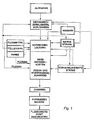
- Fig. 1 illustrates a first embodiment of the method for the production of packaging moldings on the basis of waste paper.
- feed materials are shown in FIG. 1 (e.g. pre-gelatinized starch, fillers, Flux, color) or the addition of feed materials in alternative process stages or combinatorial to those in solid lines shown uses by interrupted Lines shown.
- the waste paper is dry Condition shredded, this shredding preferably gentle and not cutting, but e.g. through shredders, Choppers or beating mills, such as pin or hammer mills should, so that essentially the paper fibers are not cut as this leads to a significantly increased water absorption in the subsequent process due to the increased absorbency of the cellulose fibers of the waste paper.
- the crushing process is said to be tearing into shreds of waste paper of the order of up to approximately 10 mm, preferably up to approx. 5 mm.
- For thick-walled and / or large-area moldings can improve the stability of the fibers or preferably loosened fiber bundles up to 50 mm fiber or fiber bundle length be used. Also for this application becomes a mixture of longer fibers or fiber bundles in the range of approx. 10 mm to 50 mm with short fibers or Fiber bundles in the range from 0.5 mm to 20 mm are used.
- the preferred loosening of the fiber bundles leads to a more intimate one Connection with the gelatinizing strength that is in the Bundle of mold cavities can penetrate, so that the formation of a Fiber / fiber bundle structure ("networked" fibers / fiber bundle with each other) penetrate and overlaid by a strength matrix is encouraged and made possible to an excellent inner bond under the circumstances of a water vapor under pressure releasing baking process.
- the crushing process is preferably carried out so that it to loosen up those affected by the crushing process
- the bundle of waste paper chips comes.
- Waste paper is used to unlock its fiber structure then with the addition of water and with softening and others Loosening in a mixing and kneading process frayed and into one equalized viscous mass.
- the mixing and kneading process for the preferably discontinuous or continuous kneader or mixer and kneader used be done in the presence of water.
- the viscous mass and in particular depending on Starch portion for its sufficient gelatinization the free Water is essentially required
- the water content as possible to keep it low to the subsequent shaping process It has been shown to be able to perform (baking) efficiently that for many preferred applications (high-strength molded articles, dense structure) a water content of 2: 1 to 3: 1, preferably 2.5: 1, based on the dry weight of the waste paper, is advantageous.
- a water content of 2: 1 to 3: 1, preferably 2.5: 1, based on the dry weight of the waste paper is advantageous.
- it becomes native to the mass Starch e.g. native cereal, potato, corn or rice starch given.
- the mixing and kneading process to equalize these viscous mass also becomes gentle on the fibers and therefore to reduce water absorption by the cellulose fibers practically completely under shear, i.e. using the Shear forces between the mass particles or between the mass particles and a kneading or mixing organ and thus by internal Friction causes a gentle disintegration of the waste paper done on their fiber structure.
- fiber structure includes in the context of this application both the digestion down to individual fibers and the digestion except for only a relatively large, preferably loosened fiber bundles of the starting material.
- the ratio of starch to fiber material can be in the viscous Dimensions vary widely and especially from the area of application and the quality requirements for the finished one Suspend molded article.
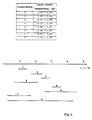
- the starch is preferably mixed in as native starch. mixing ratios between native starch and fiber material (Waste paper), based on the dry weight of the waste paper and while maintaining a 2.5-fold excess of water on this dry mass of waste paper are shown in Fig. 4.
- this process step can have its fiber structure (preferably fiber bundle) in a pretreatment of the waste paper Soften them with the addition of water and further loosening be divided, also at this stage of the process Flux, especially additives with an alkaline effect Improvement of the flow properties of the viscous mass in one subsequent baking process as well as fillers or dyes can optionally be added.
- fiber structure preferably fiber bundle
- fillers with the native Pre-mix starch or parts of it and partially already during the upstream process step of dry grinding to be added or added to the mixture as a whole the formation of the in the presence of water viscous mass by performing the mixing and kneading process to disassemble the waste paper into its fiber structure.
- Fluxing agents are alkaline additives such as magnesium carbonate, magnesium hydroxide carbonate, Sodium hydroxide solution or ammonium hydroxide used.
- the water preferably in a proportion of 2.5 times the dry matter of the waste paper material is in a lot fed, on the one hand for achieving a viscous, flowing-mushy to highly viscous, plastic consistency of the mass is necessary and on the other hand to gelatinize the starch is required in a subsequent baking process.
- the viscous mass is leveled with regard to the subsequent introduction to at least one baking pan dosed and entered into the baking pan.
- the baking pan will by at least two baking plates, i.e. one upper and one lower baking plate (accommodated in baking tongs), the inner surfaces of the baking plates in a closed, locked state of the baking pan to form a Mold cavity are kept spaced and the mold cavity is filled by the viscous mass.
- a plurality of baking tongs can also be used.
- the use amount is native Starch with a constant amount of water (2.5 times) each on the dry mass of the waste paper fiber material (Fiber bundle).
- the baking process which is based on the basic elements of the technology Using wafer baking technology begins with the closing and locking the baking pan while leaving the mass-filled Mold cavity between the upper baking plate and lower baking plate. This distance by locking the top and bottom Baking plate kept constant during the baking process is determined, the wall thickness of the finished molded body.
- the baking process is carried out at a temperature between 105 ° C and 300 ° C, often with a baking temperature of about 180 ° C particularly favorable results in terms baking of the shaped body and the shaped body geometry have been achieved.
- the baking time depends on different ones Parameters, especially the viscosity of the mass (Water content), the starch content (the duration must be the complete and continuous gelatinization of the native starch, also in cooperation with the one used modified or pre-gelatinized starch), the Geometry of the molded body and the specific mass components.
- a baking time of 0.5 to 15 minutes can be varied, with shorter cycle times in the range of 1 to 3 minutes are generally sufficient and dimensionally stable Molded articles with high, smooth surface quality, great elasticity and structural strength due to the forming fiber or fiber bundle-strength composite, one fiber-reinforced starch matrix.
- t 1 denotes the time from closing the baking mold until the value of the mold closing force f min representing a minimum evaporation pressure in the baking mold
- t 2 denotes the time from closing the baking mold until reaching a value representing a maximum evaporation pressure inside the baking mold the mold closing force f max
- t 3 the time from closing the baking mold to the end of the steam release
- t 4 the baking time or drying of the baked molded body
- t 5 the total baking time from closing the baking mold to opening the baking mold.
- a good quality and moldability of the shaped body was achieved with a closing force difference f max -f min of approx. 100 kp, with t 5 representing the preferred baking time in the range from 1 to 3 minutes.
- the difference t 3 -t 1 thus relates to the baking process and the shaping while releasing steam.
- the native starch (if necessary even under water from a pre-gelatinized Starch portion) and solidifies.
- the starch of the waste paper is stored and produced a stable bond with the loosened fiber structure the starch matrix that forms through gelatinization.
- Such moldings are sufficient if only native starch is used already with a variety of use cases Elasticity and surface quality. While a high proportion of starch to a better surface with reduced elasticity leads, the elasticity of the molded body by a Reduction in the proportion of starch usually only at the expense of one smooth surface can be reduced.
- the particular effectiveness of using a mixture from pre-gelatinized and native starch is attributed to that, due to the high absorbency of the waste paper, in the baking process for the gelatinization of the native starch not enough free water or baking time available stands.
- the introduced, native starch therefore gelatinizes with conventional products are often not complete and effective a wide variation in the elasticity of the thus obtained Moldings.
- pre-gelatinized Starch can also be modified to suit the baking technology Starch can be used.
- the baking technology Shaped body to replace non-biodegradable Plastic packaging, e.g. for packaging moisture-containing Food or as disposable packaging for outpatient intake of soups, salads or others solid, hygroscopic food, it is necessary that the molded body is also sufficiently moisture-resistant, without fundamentally losing its biodegradability.
- the baked shaped body is preferably provided either in an "in-line” process, optionally with removal of the shaped body from the baking pan but inserting the same in another section of the baking device, liquid-tight to coat, this also outside the baking device and, depending on the specific coating process using the process heat of the baking process on the hot or already cooled mold can.
- the baking device a common drive and a coordinated Control between baking process and subsequent coating process, if necessary using a handling device to remove the baked molded body from the Baking pan and for insertion in a coating device intended.
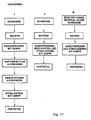
- Fig. 11 Preferred method for hydrophobizing the baked molded body by applying a liquid-tight coating are shown in Fig. 11. Thereafter, in process I in Connection to the baking of the molded body with steam conditioned (increased flexibility through moisture input) an adhesion promoter following the conditioning step is applied to ensure the adhesion of the subsequently applied biodegradable, liquid-tight coating too improve. Finally, sterilization is preferably carried out of the baked and liquid-tightly coated molded body with superheated steam.
- the Training of the biodegradability of the overall product non-hazardous, liquid-tight surface layer or continuous total impregnation of the molded body take place that in the viscous raw mass as finely distributable Fluid, powder or granules are the liquid-tight feed material introduced and this during the baking process, if necessary with melting and embedding in the developing Fiber-starch composite, essentially uniform in the Molded material is distributed and after completion of the baking process to a liquid-tight, yet biodegradable Molded body leads.
- the method according to FIG. 1 can take place in terms of the baking process subsequent application of a liquid-tight Coating can therefore also be modified so that the against gas permeation or the penetration of liquid Barrier layer forming material in a previous process step already added to the preparation of the baking mixture becomes, and with the hydrophobicization of the baking mass to an integral liquid-tight molded body leads.
- Fig. 12 shows schematically a cross section through a wall section of the manufactured according to the method of embodiment 1 Molding. Due to the formation of steam and emerging Overpressure within the body mass during the Baking process creates a loosened up on both sides a skin layer 21 delimited base material layer 20 in which in connection with a mixture of long and short-fiber, biodegradable fibers or fiber bundles form a starch-fiber material framework formed. To the upper skin layer 21 is followed by an adhesive layer 22, which is the liquid-tight Coating 23 carries. In this case it is Shaped body, only on one side (e.g. on a higher stressed one Inner surface) with the liquid-tight coating 23 Mistake.
- liquid-tight coating 23 possibly in different quality with regard to their barrier properties also on both skin layers 21, so preferably inside and outside on the molded body be formed.
- the barrier layer or liquid-tight Coating 23 can also be on both sides of the base material layer Have 20 different properties or thickness, or from different, liquid-tight material consist.
- the liquid-tight coating can preferably be coated Dip the molded body in the coating material or spray on a hydrophobic solution or under heat treatment, in particular by melting a hydrophobic granulate or powder.
- cellulose derivatives preferably cellulose acetate and / or starch acetate used become.
- a liquid coating or melting a powder or granulate Coating also by applying a liquid-tight one Foil on the baked molded body, in particular a foil containing the starch or cellulose acetate, which Adhesion of the film under vacuum, using compressed air or through mechanical pressing can take place and where edge protrusions the film together with cleaning the baked molded body material residues from the evaporation channels are removed.
- liquid-tight Surface layer a melt of liquid-tight material applied a molding in the baking mold and the Shaped bodies are baked to form the surface layer.
- organic degradable plastics such as biodegradable polyesters and polyester derivatives, especially polycaprolactone or polyalkylene carbonate be used.
- the thickness of the liquid-tight, biodegradable surface layer is preferably in the range from 5 ⁇ m to 100 ⁇ m the use of foils e.g. in the range from 60 ⁇ m to 100 ⁇ m.
- the liquid-tight coating can also be used as a multiple coating are applied, the either integral formed by the hydrophobization of the baking mass, liquid-tight surface layer or as after baking applied coating formed liquid-tight Surface layer has a barrier effect against liquids, in particular against water, lactic acid or fats.
- the coating can also be gas-tight, in particular Permeation resistant to water vapor or oxygen the coating can e.g. polyvinyl alcohol contain.
- foil can, if necessary, using an adhesion promoter the molding still hot from the baking process, if necessary under applied a melt connection or on the cooled Shaped body under vacuum, with the help of compressed air or mechanical pressing on.
- this can be liquid-tight Material as powder or granules or in the form of pellets and the molding under powdering, spraying or immersion be provided with a liquid-tight coating, or it can be made water-repellent immediately by introduction these materials into the baking mass before baking alternatively to the subsequent coating shown in FIG. 1 of the molded body to form a liquid-tight Boundary layer.
- the material melted and the molded body is still from the previous one Baking process hot.
- the surface density of the coated Shaped body is also advantageous to change the surface density of the coated Shaped body to reduce porosity to achieve a smooth surface, e.g. through a subordinate (fine) pressing process, so the barrier effect the coating e.g. against hot water, hot fats or the like further increase.
- an adhesion promoter between the surface of the molded body and the liquid-tight This can preferably be made of nitrocellulose or polyvinyl alcohol, in the latter case at the same time with gas-blocking effect.
- polyvinyl acetate Polycaprolactone, polyvinyl alcohol, nitrocellulose, synthetic or biodegradable and biodegradable polyester and polyester derivatives, alginate in combination with calcium chloride, Polyalkylene carbonate or cellulose acetate can do this in advantageously done with superheated steam, this at the same time a steam conditioning of the baked molded body in the Connection to the baking process results.
- the inner surface of the packaging molding possibly higher requirements for the barrier effect of your Surface layer with regard to temperature and fat resistance is subjected as the outer surface for which possibly in particular moisture and climate resistance sufficient for a sufficient period of time.
- liquid-tight material as an emulsion or as a solution apply the baked molded article, the layer after the application hardens and, if necessary, under special After heat treatment is dried.
- the solution can be used as a cold medium on the baking process hot molded body sprayed or even on the cooled Molded articles, optionally using an adhesion promoter, be applied.
- the emulsion or solution with the liquid-tight material can also be heated or be hot, for spraying on the cold or hot molded body or immersing the same in the coating liquid.
- the solution preferably contains one volatile solvent.
- a cold solution the cellulose acetate and as a solvent acetone or Contains ethyl acetate on the preferably cooled molded body sprayed on or immersed in the solution.
- a hot or cold alginate combined with a calcium chloride solution in water can preferably on the hot or cooled moldings are applied.
- Other, hydrophobic Substances are biodegradable plastics such as polyalkylene carbonate, that as a cold solution in acetone or ethyl acetate can be sprayed onto the cold molded body.
- biodegradable plastics such as polyalkylene carbonate, that as a cold solution in acetone or ethyl acetate can be sprayed onto the cold molded body.
- biodegradable plastics such as polyalkylene carbonate
- a cold solution in acetone or ethyl acetate can be sprayed onto the cold molded body.
- Nitrocellulose can also preferably be used as the hydrophobic substance a solution with ethyl acetate can be used, the solution is applied cold to the also cooled molded body.
- a coating with polycaprolactone in one Solution with chloroform (cold solution / molded body cold) or polyvinyl acetate also in solution with acetone or ethyl acetate cold solution on the cold or cooled moldings.
- the application classes are sufficient from the lowest requirement level A1 (room temperature 25-40 ° C, relative humidity of 0-90%), barrier effect the liquid-tight boundary layer over several days
- Application class A2 cold-water resistant even at room temperature (25-40 ° C), for 24 hours up to an application class A3 Cooking water resistance guaranteed at 95 ° C for up to an hour.
- the coating material is for the individual application classes also in terms of layer thickness and applied Concentration different.
- the lowest application class A1 comes especially for one Outer coating of the shaped body into consideration if this can also be closed by a lid, or for coating inside and outside when the packaging molding is open remains.
- the application class A2 cold water resistant
- A3 boiling water resistant
- Moisture absorption of the shaped body can also be the result be reduced to a significant extent as a result of the baking process denser skin layer (see the schematic representation in Fig. 12) by appropriate release agent (fully hydrogenated fats or waxes) during the baking process is achieved.
- filling materials e.g. Waxes, polymers, fatty substances
- this primer also serves as an adhesion promoter for the adhesive bond serves the liquid-tight layer, the adhesion promoter layer also by e.g. Diving, spraying and / or heating can be applied.
- the liquid tightness Coating e.g. when using a solution (e.g. cellulose acetate), with a higher concentration (e.g. 50%) carried out and applied several times (e.g. three times).
- a solution e.g. cellulose acetate
- concentration e.g. 50%
- the barrier effect e.g. A3
- lower ones are sufficient Concentrations and usually a multiple order can be omitted.
- An indicator is preferably on the outside of the molded body for humidity and / or time provided during the Display product life given barrier effect.
- the biodegradability of the molded body which is not affected by the liquid-tight surface layer
- the moldings can be shipped with a Shrink film as additional protection from one of the aforementioned biodegradable materials are encased.
- a starting material containing biodegradable fibers fibrous raw material, in particular containing cellulose fibers Material of plant origin
- deinking material i.e. discolored waste paper that is already in one powdery to small chips, although this process too (with the involvement of a comminution step) with waste paper as raw material, as in the process 1, or with other biodegradable fibers contained fiber material can be performed.
- the one that is already sufficiently shredded Deinking fabric dry or moist with a part of native starch optionally as in the method of FIG. 1 with addition of fillers (which also act as a premix with the native starch can be added), and optionally with the addition of Fluxes of the aforementioned type and / or dyes premixed, while another portion of native starch with water is pre-pasted.
- the dry premix allows a high Equalization and homogenization of the mass and is followed from the further process step of the mixing and kneading process in the presence of water to unlock the deinking material on its fiber structure, i.e.
- flux can also be in the presence of Water-running mixing and kneading process can be added, such as this also for the addition of filler or the addition of dye suspensions applies.
- kneading process can be added, such as this also for the addition of filler or the addition of dye suspensions applies.
- the steam pressure in the baking pan can be controlled by controlling the steam discharge channels in the baking pan in terms of cross-section and location through to the use of control valves in the desired Controlled way.
- additional water can be added to the mixing and Kneading process for the production of the viscous mass (in FIG. 2 shown in dashed lines) are completely dispensed with, so that the moisture of the mass and thus also the water content for gelatinization the native strength through the water content of the used pre-gelatinized starch is determined.
- the steam pressure conditions during the baking process can also be changed and thus controls the surface quality of the moldings become.
- the native starch is preferably used in the mixing process with the other components of the dry matter added, but can also at least partially directly into the fiber bundle decomposition effecting and leveling the viscous mass Mixing and kneading process are introduced (also in Fig. 2 shown in dashed lines).
- These other ingredients are dry shredded waste paper in the present case and / or deinking material, alternatively additional flux and / or fillers.
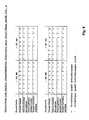
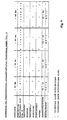
- the structure and thus the strength of the molded body will by the ratio of starch to waste paper or deinking material essentially determined, as well as by the length of the used fiber bundles or fibers, which are significantly affects different strengths, such as studies of Show comparative samples shown in Figs. 8 and 9.
- Fig. 10 With regard to the respective application and molded body geometry is therefore the ratio of native to pre-gelatinized starch (preferably 3: 1) considering the fiber lengths of the fibrous material or the mixture different long fibers or bundles of fibers to adapt, being particularly advantageous conditions also with regard to a proportionate short baking process of between 0.5 and 3 minutes about 150 ° C to 200 ° C in moldings, their composition is shown in Fig. 10.
- FIG. 3 Another embodiment of the method according to the invention is shown in Fig. 3, here as the starting material Cellulose fibers, pulp, beet pulp and pulp (Cellulose fibers) as exemplary representatives of production waste are selected, but also other biodegradable ones Production waste containing fibers, in particular Cellulose base, are usable.
- biological degradable fiber structures in particular fiber bundles, in a length between 0.5 mm and approx. 50 mm (higher values for large-area and / or thick-walled packaging moldings), preferably between 1 mm and 5 mm (especially for thin-walled, lightweight molded packaging) can be used.
- Fig. 3 illustrates that the method can also be used of mixed raw materials from the paper, food or animal feed industries or various recycled materials from waste paper can be carried out, these materials already in Fig. 3 adequately crushed, especially using Shredding, shredders or beating mills like pin mills or Hammer mills, i.e. preferably with tearing and non-cutting Processing to protect the fibers (and to reduce them water absorption of cellulose fibers) are crushed, the comminuted raw material in a further process step first with regard to the existing fiber length and its share of strength to hire the others Components (addition of native and pre-gelatinized starch or selection of the mixture ratio of long and short Fibers or fiber bundles) is classified.
- the surface and structure will be further essentially due to the evaporation conditions during the baking process, i.e. determined by the moisture content of the viscous mass, which should be as low as possible, in many cases for the mass preparation is sufficient, the moistening to the indirect Water addition in the form of admixture with excess water limit pre-gelatinized starch. This moisture is sufficient to completely gelatinize the native To bring about strength.
- longer fibers / fiber bundles can also be used up to approx. 10 mm in length depending on the requirements the molded body can be used, this also being the requirements the upstream shredding process, e.g. of Waste paper, minimized.
- Wet deinking material can be the process stage "Mix dry” in the methods of Fig. 2 and 3 also in the moist state, if necessary under slight Water is added.
- the baking process according to the in 1 to 3 illustrated method conditioning the obtained, Connect the molded article taken from the baking mold, especially when applying (spraying) the liquid-tight Material as a solution, emulsion or suspension in a water vapor atmosphere.
- FIGS. 8 and 9 again illustrates the advantages the use of fiber mixtures of different fiber lengths compared to the use of cellulose fibers or fiber bundles, which is only a specific one or in a narrow one Represent area lying fiber length.
- Fig. 10 Preferred recipes for carrying out the method according to the invention are shown in Fig. 10. It follows that also moldings with a very large depth with good strength, Elasticity, structure and surface structure according to the invention Process could be made if the Use of fiber material, especially loosened fiber bundles, to the total mass of the viscous mass was 15 to 30% by weight, the share of total starch (native plus pre-gelatinized starch) to the total mass of the viscous mass was approximately 40 to 5% by weight, the proportion of water in the total mass of the viscous mass is approx. 45 up to 70% by weight and the proportion of pre-gelatinized starch the total mass of the viscous mass was approximately 10 to 1%.
- 13 to 16 are embodiments of moldings, which were produced by the process according to the invention, shown.
- 11 shows a molded packaging body 1 with bottom and cover parts 2, 3, which are connected by a hinge 4 are and e.g. for the lockable intake of food, is also suitable when warm.
- the liquid tight Edge layer is not shown here.
- the Packaging molded body 1 has at least one inner liquid-tight Surface layer, preferably coating the application phase A2 on.
- Fig. 14 shows a molded body (half-shell) with a corresponding Counter-shaped body also to a completely closed Packaging can be connected.
- the bowl-shaped Shaped body 1 has a plurality of cylindrical section Wells 5, these with each other in a longer Section 6 and a shorter section 7 are divided and this arrangement is symmetrical, divided by a central web 8 repeated on the other side of the molded body.
- lateral "Feet" 9 increase the dimensional stability and improve the Support and stackability of the shaped packaging.
- a such packaging tray can e.g. to hold pens, Lipsticks, cosmetics, pencils, Writing instruments, or also in pharmacy, e.g. to record of packaging tubes. In this case a sufficient resistance of the packaging molded body 1 against climatic environmental influences (humidity) -Application class A1-im generally sufficient.
- 15 and 16 show relatively deep packaging bodies 1, e.g. as a flower pot, seed bowl or for other Packaging or wrapping purposes can be used.
- All packaging molded body 1, according to the previously explained method could be produced quickly, inexpensively and with excellent material properties with regard to dimensional stability, Breaking strength and elasticity, structural density and surface quality are manufactured and are, although biodegradable, a hydrophobizing treatment as based on of Fig. 1, 2, 3, 11 and 12 explained, subjected.
- the invention relates to a method for producing Shaped articles, in particular shaped articles made of packaging, made from biological degradable material using a viscous Bulk, the biodegradable fiber material in a mixture of fibers of different lengths, water and strength contains and with the formation of a fiber material-starch composite is baked in a baking dish, as well as shaped bodies according to this procedure.
- the shaped body preferably in the baking system, preferably in an in-line process, coated liquid-tight and / or has Impregnation of the viscous mass after baking a hydrophobic Characteristic on.
Landscapes
- Chemical & Material Sciences (AREA)
- Health & Medical Sciences (AREA)
- Chemical Kinetics & Catalysis (AREA)
- Medicinal Chemistry (AREA)
- Polymers & Plastics (AREA)
- Organic Chemistry (AREA)
- Engineering & Computer Science (AREA)
- Biodiversity & Conservation Biology (AREA)
- Life Sciences & Earth Sciences (AREA)
- Mechanical Engineering (AREA)
- Biological Depolymerization Polymers (AREA)
- Paper (AREA)
- Compositions Of Macromolecular Compounds (AREA)
- Laminated Bodies (AREA)
- Dry Formation Of Fiberboard And The Like (AREA)
- Wrappers (AREA)
- Reinforced Plastic Materials (AREA)
- Casting Or Compression Moulding Of Plastics Or The Like (AREA)
Description
- Fig. 1
- ein Ablaufdiagramm des Verfahrens zur Formkörperherstellung auf der Grundlage des Einsatzes von Altpapier als faserhaltigem Rohmaterial,
- Fig. 2
- ein Ablaufdiagramm eines weiteren Ausführungsbeispieles zur Formkörperherstellung auf der Grundlage der Verwendung von bereits vorzerkleinertem, entfärbtem Altpapiermaterial (Deinking-Material),
- Fig. 3
- ein Ablaufdiagramm für ein weiteres Ausführungsbeispiel eines Verfahrens zur Formkörperherstellung auf der Basis der Verwendung von Produktionsabfällen als faserhaltigem Rohmaterial, wie Papierschliff, Rübenschnitzel, Holzschliff etc.,
- Fig. 4
- eine Tabelle für verschiedene Probenmuster mit unterschiedlichem Einsatz nativer Stärke und konstantem Wasseranteil, bezogen jeweils auf die Trockenmasse des Fasermateriales,
- Fig. 5
- eine Tabelle für verschiedene Probenmuster mit unterschiedlichem Einsatz nativer Stärke sowie vorverkleisterter Stärke bei konstantem Wasseranteil, bezogen jeweils auf die Trockenmasse des Fasermateriales,
- Fig. 6
- eine Tabelle und eine entsprechende grafische Darstellung der Klassierungen der Länge des verwendeten Fasermateriales,
- Fig. 7
- ein Druck-Zeit-Diagramm für einen Backvorgang zur Herstellung eines Formkörpers nach einem der vorgenannten Verfahren,
- Fig. 8
- eine Tabelle zur Produktbewertung von Formkörpern in Abhängigkeit von der Formtiefe der verwendeten Backform und in Abhängigkeit von klassiertem Fasermaterial,
- Fig. 9
- eine Tabelle zur Produktbewertung von Formkörpern in Abhängigkeit von der Formtiefe der verwendeten Backform und in Abhängigkeit von Fasermaterialgemischen mit unterschiedlicher Länge der Fasern bzw. Faserbündel,
- Fig.10
- eine Rezepturtabelle für die Herstellung von Formkörpern auf der Basis von Altpapier als faserhaltigem
- Fig.11
- Ablaufdiagramme von drei Ausführungsbeispielen I bis III für Beschichtungsverfahren von Formkörpern,
- Fig.12
- eine vergrößerte Querschnittsdarstellung eines Wandabschnittes eines gemäß Verfahren nach Fig. 11 hergestellten Formkörpers, und
- Fig.13
- bis Fig.16 verschiedene Ausführungsformen von Formkörpern, die nach Ausführungsbeispielen des erfindungsgemäßen Verfahrens hergestellt wurden.
Claims (80)
- Verfahren zur Herstellung von folienbeschichteten Formkörpern, insbesondere von Verpackungsformkörpern, aus biologisch abbaubarem Material unter Verwendung einer viskosen Masse, die biologisch abbaubares Fasermaterial mit langfaserigen Fasern oder Faserbündeln mit einer Faser- oder Faserbündellänge in einem Bereich von 10 mm bis 50 mm im Gemisch mit kurzfaserigen Fasern oder Faserbündeln mit einer Faser- oder Faserbündellänge von 0,5 bis 20 mm, Wasser und Stärke enthält und unter Ausbildung eines Fasermaterial-Stärke-Verbundes in einer geschlossenen Backform gebacken wird, wobei das Verhältnis von Stärke zu Fasermaterial in der Masse im Bereich von 15 Gew.-% bis 200 Gew.-% liegt, das Backen für eine Zeitdauer zwischen 0,5 und 15 Minuten bei einer Backtemperatur zwischen 105°C und 300°C erfolgt und der folienbeschichtete Formkörper zumindest teilweise unter Ausbildung einer biologisch abbaubaren, flüssigkeitsdichten Randschicht hergestellt wird, wobei die Ausbildung der Randschicht durch Aufbringen einer flüssigkeitsabweisenden Folienbeschichtung auf den gebackenen Formkörper erfolgt.
- Verfahren nach Anspruch 1, dadurch gekennzeichnet, daß die Beschichtung durch Tauchen oder Aufsprühen einer hydrophoben Lösung oder unter Wärmebehandlung, insbesondere durch Aufschmelzen eines hydrophoben Granulates oder Pulvers erfolgt.
- Verfahren nach Anspruch 1 oder 2, dadurch gekennzeichnet, daß die Beschichtung Cellulosederivate enthält, insbesondere im wesentlichen aus Celluloseacetat besteht.
- Verfahren nach zumindest einem der vorhergehenden Ansprüche 1-3, dadurch gekennzeichnet, daß die Beschichtung Stärkeacetat enthält.
- Verfahren nach zumindest einem der vorhergehenden Ansprüche 1-4, dadurch gekennzeichnet, daß die Beschichtung durch Aufbringen einer Stärke- oder Zelluloseacetat enthaltenden Folie auf den gebackenen Formkörper erfolgt.
- Verfahren nach zumindest einem der vorhergehenden Ansprüche 1-5, dadurch gekennzeichnet, daß die Ausbildung der Randschicht durch Aufbringen einer hydrophoben Beschichtung auf den noch vor vorangehenden Backvorgang heißen Formkörper unter gleichzeitigem Konditionieren, vorzugsweise durch Aufbringen der hydrophoben Beschichtung unter Heißdampf erfolgt.
- Verfahren nach Anspruch 6, dadurch gekennzeichnet, daß der Beschichtungsvorgang innerhalb einer die Backform enthaltenden Backvorrichtung vorgenommen wird.
- Verfahren nach zumindest einem der vorhergehenden Ansprüche 1-6, dadurch gekennzeichnet, daß der Formkörper mit zumindest einer Folie aus biologisch abbaubaren Kunststoff-Polymeren überzogen wird.
- Verfahren nach zumindest einem der vorhergehenden Ansprüche 1-8, dadurch gekennzeichnet, daß eine Dicke der flüssigkeitsdichten, biologisch abbaubaren Randschicht 5 µm - 100 µm beträgt.
- Verfahren nach zumindest einem der vorhergehenden Ansprüche 1-9, dadurch gekennzeichnet, daß der Formkörper innen und/oder außen mit einer Randschicht, gebildet durch eine flüssigkeitsdichte Beschichtung versehen wird.
- Verfahren nach zumindest einem der vorhergehenden Ansprüche 1-10, dadurch gekennzeichnet, daß die Beschichtung als Mehrfachbeschichtung aufgebracht wird.
- Verfahren nach zumindest einem der vorhergehenden Ansprüche 1-11, dadurch gekennzeichnet, daß die Randschicht als Barriereschicht eine Barrierewirkung gegenüber Flüssigkeiten, insbesondere Wasser, Milchsäure sowie Fetten aufweist.
- Verfahren nach Anspruch 12, dadurch gekennzeichnet, daß die Randschicht eine im wesentlichen flüssigkeits- und gasdichte Barriereschicht, insbesondere Beschichtung bildet, vorzugsweise gegenüber Wasserdampf, Sauerstoff und Aroma.
- Verfahren nach zumindest einem der vorhergehenden Ansprüche 1-13, dadurch gekennzeichnet, daß eine innere, flüssigkeitsdichte Oberfläche des Formkörpers eine höhere Feuchtigkeitsund/oder Temperaturbeständigkeit und/oder Fettbeständigkeit und/oder Gas-bzw. Aromadichtigkeit als eine äußere Oberfläche des Formkörpers aufweist.
- Verfahren nach zumindest einem der vorhergehenden Ansprüche 1-14, dadurch gekennzeichnet, daß der Formkörper entlang einer Innenoberfläche mit einer flüssigkeitsdichten Beschichtung größerer Dicke als auf seiner Außenoberfläche versehen wird.
- Verfahren nach zumindest einem der vorhergehenden Ansprüche 1-15, dadurch gekennzeichnet, daß der Formkörper in der Backform gebacken, anschließend aus der Backform entnommen und innerhalb der Backvorrichtung in eine weitere Vorrichtung zum Aufbringen der flüssigkeitsdichten Beschichtung eingesetzt wird.
- Verfahren nach zumindest einem der vorhergehenden Ansprüche 1-16, dadurch gekennzeichnet, daß die Prozeßwärme der Backform, vorzugsweise innerhalb der Backvorrichtung, zur Erwärmung des Formkörpers und/oder eines auf diesen aufzubringenden hydrophoben Mediums für eine anschließende Beschichtung des Formkörpers, vorzugsweise innerhalb der Backvorrichtung, genutzt wird.
- Verfahren nach zumindest einem der vorhergehenden Ansprüche 1-16, dadurch gekennzeichnet, daß der gebackene, vorzugsweise abgekühlte Formkörper zumindest teilweise durch Aufbringen einer kalten oder heißen Lösung flüssigkeitsdicht beschichtet wird.
- Verfahren nach zumindest einem der vorhergehenden Ansprüche 1-16, dadurch gekennzeichnet, daß der durch den vorhergehenden Backvorgang noch heiße, gebackene Formkörper zumindest teilweise durch eine heiße Lösung flüssigkeitsdicht beschichtet wird.
- Verfahren nach einem der Ansprüche 18 oder 19, dadurch gekennzeichnet, daß die Lösung einen hydrophoben Stoff sowie ein, insbesondere leicht flüchtiges, Lösungsmittel enthält.
- Verfahren nach zumindest einem der vorhergehenden Ansprüche 18-20, dadurch gekennzeichnet, daß die vorzugsweise kalte Lösung als hydrophoben Stoff Celluloseacetat und als Lösungsmittel Aceton oder Ethylacetat enthält und auf den vorzugsweise abgekühlten Formkörper aufgebracht wird.
- Verfahren nach zumindest einem der vorhergehenden Ansprüche 18-20, dadurch gekennzeichnet, daß die Lösung als hydrophoben Stoff Alginat und als Lösungsmittel Wasser enthält.
- Verfahren nach Anspruch 22, dadurch gekennzeichnet, daß als Fixermittel Stoff Calciumverbindungen, vorzugsweise Calciumchlorid verwendet werden.
- Verfahren nach zumindest einem der vorhergehenden Ansprüche 18-20, dadurch gekennzeichnet, daß vorzugsweise die kalte Lösung als hydrophoben Stoff Polyalkylencarbonat und als Lösungsmittel Aceton oder Ethylacetat enthält und auf den vorzugsweise abgekühlten Formkörper aufgebracht wird.
- Verfahren nach zumindest einem der vorhergehenden Ansprüche 18-20, dadurch gekennzeichnet, daß die vorzugweise heiße Lösung als hydrophobe Stoffe synthetisch oder biologisch hergestellte und biologisch abbauber Polyester und Polyesterderivate und vorzugsweise die heiße Lösung als Lösungsmittel Chloroform, Aceton oder Ethylenacetat enthält.
- Verfahren nach zumindest einem der vorhergehenden Ansprüche 18-20, dadurch gekennzeichnet, daß die vorzugsweise kalte Lösung als hydrophoben Stoff Nitrocellulose und als Lösungsmittel Ethylacetat oder Butylacetat enthält.
- Verfahren nach zumindest einem der vorhergehenden Ansprüche 18-20, dadurch gekennzeichnet, daß die vorzugsweise kalte Lösung als hydrophoben Stoff Polyvinylalkohol und als Lösungsmittel Ethylacetat, Wasser oder Aceton enthält und auf den vorzugsweise abgekühlten Formkörper aufgebracht wird.
- Verfahren nach zumindest einem der vorhergehenden Ansprüche 18-20, dadurch gekennzeichnet, daß die vorzugsweise kalte Lösung als hydrophoben Stoff Polycabrolacton und als Lösungsmittel Chloroform enthält und auf den vorzugsweise abgekühlten Formkörper aufgebracht wird.
- Verfahren nach zumindest einem der vorhergehenden Ansprüche 18-20, dadurch gekennzeichnet, daß die vorzugsweise kalte Lösung als hydrophoben Stoff Polyvinylacetat und als Lösungsmittel Aceton oder Ethylacetat enthält und auf den vorzugsweise abgekühlten Formkörper aufgebracht wird.
- Verfahren nach zumindest einem der vorhergehenden Ansprüche 1-17, dadurch gekennzeichnet, daß auf den, vorzugsweise heißen Formkörper Pulver, Granulate oder Pellets synthetisch oder biologisch hergestellter und biologisch abbaubarer Polyester und Polyesterderivate, insbesondere Polycaprolacton, Polyhydroxybutyrat, Polyhydroxybutyrat/Hydroxyvaleratcopolymere und/oder Polyaklylsuccinat aufgebracht und innig anhaftend mit dem Formkörper verbunden werden.
- Verfahren nach Anspruch 30, dadurch gekennzeichnet, daß das Auftragen durch Bepulvern, Aufsprühen von Beschichtungsmaterial oder Tauchen des Formkörpers in das Beschichtungsmaterial erfolgt.
- Verfahren nach Anspruch 30 oder 31, dadurch gekennzeichnet, daß das Aufbringen der Beschichtung durch Aufschmelzen erfolgt.
- Verfahren nach zumindest einem der vorhergehenden Ansprüche 30-32, dadurch gekennzeichnet, daß die auf den Formkörper aufgebrachte Beschichtung nachfolgend zur Oberflächenverdichtung druckbeansprucht wird.
- Verfahren nach zumindest einem der vorhergehenden Ansprüche 1-33, dadurch gekennzeichnet, daß die flüssigkeitsdichte Beschichtung unter Anwendung eines Haftvermittlers zwischen dem Formkörper und der Beschichtung auf den Formkörper aufgebracht wird, vorzugsweise unter Verwendung von Nitrocellulose oder Polyvinylacetat oder Polyvinylalkohol als Haftvermittler.
- Verfahren nach zumindest einem der vorhergehenden Ansprüche 1-34, dadurch gekennzeichnet, daß im Anschluß an die Ausbildung der flüssigkeitsdichten Randschicht, insbesondere im Anschluß an die flüssigkeitsdichte Beschichtung des Formkörpers eine Konditionierung mit Dampf, insbesondere Heißdampf, erfolgt.
- Verfahren nach zumindest einem der vorhergehenden Ansprüche 30-35, dadurch gekennzeichnet, daß auf den, insbesondere heißen, Formkörper ein Pulver zur Ausbildung einer flüssigkeitsdichten Beschichtung auf dem Formkörper unter Anwendung von Heißdampf zur Verbindung des Konditionierungs- und Beschichtungsvorganges aufgesprüht wird.
- Verfahren nach zumindest einem der vorhergehenden Ansprüche 1-17, dadurch gekennzeichnet, daß der Formkörper zumindest teilweise mit biologischer abbaubarer Folie, im Anschluß an das Backen des Formkörpers beschichtet wird.
- Verfahren nach Anspruch 37, dadurch gekennzeichnet, daß die Folie aus Celluloseacetat, Zellglas oder synthetisch oder biologisch hergestellte und biologisch abbaubare Polyester oder Polyesterderivate, insbesondere Polycaprolacton besteht.
- Verfahren nach Anspruch 38, dadurch gekennzeichnet, daß die Folie, insbesondere unter Einsatz eines Haftvermittlers, unter Vakuum, durch Druckluft oder mechanisches Aufpressen mit dem gebackenen Formkörper verbunden wird.
- Verfahren nach zumindest einem der vorhergehenden Ansprüche 37-39, dadurch gekennzeichnet, daß ein Beschneiden der Folie am beschichteten Formkörper nach Entnahme desselben in Verbindung mit einem Abtrennen von Materialüberständen, die aus Abdampfkanälen der Backform herrühren, erfolgt.
- Verfahren nach zumindest einem der vorhergehenden Ansprüche 37-40, dadurch gekennzeichnet, daß im Anschluß an das Ausbilden der flüssigkeitsdichten Randschicht abschließend eine Sterilisierung des Formkörpers mit Heißdampf erfolgt.
- Verfahren nach zumindest einem der vorhergehenden Ansprüche 1-41, dadurch gekennzeichnet, daß der Formkörper gebacken und anschließend dieser mit Wasserdampf konditioniert wird, nach dem Konditionieren ein Haftvermittler aufgetragen und im Anschluß daran die flüssigkeitsdichte Beschichtung aufgebracht und der beschichtete Formkörper abschließend einer Heißdampfsterilisation unterzogen wird.
- Verfahren nach zumindest einem der vorhergehenden Ansprüche 1-41, dadurch gekennzeichnet, daß der Formkörper nach dem Bakken mit Wasserdampf konditioniert und anschließend direkt mit einer flüssigkeitsdichten Beschichtung versehen sowie hieran anschließend mit Heißdampf sterilisiert wird.
- Verfahren nach zumindest einem der vorhergehenden Ansprüche 1-41, dadurch gekennzeichnet, daß das die Ausbildung einer flüssigkeitsdichten Randschicht bewirkende Material einer Backmasse zum Backen des Formkörpers unmittelbar beigegeben und in dieser eingemischt wird und nach Abschluß des Backvorganges der Formkörper konditioniert und mit Heißdampf sterilisiert wird.
- Verfahren nach zumindest einem der Ansprüche 1-44, dadurch gekennzeichnet, daß zur Bildung des Fasermateriales faserhaltiges Rohmaterial verwendet wird, das insbesondere unter vorheriger Zerkleinerung zerfasert wird.
- Verfahren nach zumindest einem der vorhergehenden Ansprüche 1-45, dadurch gekennzeichnet, daß das faserhaltige Rohmaterial Altpapier, Recyclingmaterial, insbesondere entfärbtes Altpapier, biologisch abbaubares Fasermaterial wie Zellulosefasern enthaltende Produktionsabfälle, insbesondere Holz- oder Papierschliff, Rübenschnitzel oder dgl. sind.
- Verfahren nach zumindest einem der vorhergehenden Ansprüche 1-46, dadurch gekennzeichnet, daß das Fasermaterial direkt aus biologisch abbaubaren Fasern oder Faserbündeln besteht.
- Verfahren nach Anspruch 47, dadurch gekennzeichnet, daß die Faser oder Faserbündel eine Länge im Bereich von 0,5 mm bis 5 mm aufweisen.
- Verfahren nach zumindest einem der vorhergehenden Ansprüche 1-48, dadurch gekennzeichnet, daß als Stärke native und/oder vorverkleisterte Stärke verwendet wird.
- Verfahren nach zumindest einem der vorhergehenden Ansprüche 1-49, dadurch gekennzeichnet, daß zur Bildung der viskosen Masse Wasser im Verhältnis von bis zu ca. 8 : 1, vorzugsweise 2,5 : 1, bezogen auf die Trockenmasse des faserhaltigen Rohmateriales, insbesondere Altpapieres, zugesetzt wird.
- Verfahren nach Anspruch 49, dadurch gekennzeichnet, daß der Anteil vorverkleisterter oder modifizierter Stärke am gesamten Stärkeanteil innerhalb der viskosen Masse ca. 30 Gew.% beträgt.
- Verfahren nach zumindest einem der vorhergehenden Ansprüche 1-51, dadurch gekennzeichnet, daß der Anteil von Stärke zu Wasser in der viskosen Masse ca. 1 : 10 bis 1 : 1, vorzugsweise 1 : 3 bis 1 : 2, beträgt und Wasser zur Bildung der viskosen Masse anschließend in Form von modifizierter oder unter Wasserüberschuß vorverkleisteter Stärke zugegeben wird.
- Verfahren nach zumindest einem der vorhergehenden Ansprüche 1-52, dadurch gekennzeichnet, daß in der viskosen Masse der Anteil Fasermaterial 15 Gew.% bis 30 Gew.%, der Anteil Stärke 5 Gew.% bis 40 Gew.%, der Anteil Wasser 70 Gew.% bis 40 Gew.% beträgt.
- Verfahren nach Anspruch 52, dadurch gekennzeichnet, daß in der viskosen Masse der Anteil vorverkleisteter oder modifizierter Stärke 1 Gew.% bis 10 Gew.% beträgt.
- Verfahren nach zumindest einem der vorhergehenden Ansprüche 1-54, dadurch gekennzeichnet, daß das faserhaltige Rohmaterial, insbesondere Altpapier, zerkleinert und anschließend in Anwesenheit von Wasser und Zugabe von Stärke, vorzugsweise nativer Stärke, auf seine Faserstruktur zurückgeführt und die formbare, viskose Masse gebildet und diese anschließend gebacken wird.
- Verfahren nach zumindest einem der vorhergehenden Ansprüche 1-55, dadurch gekennzeichnet, daß das faserhaltige Rohmaterial, insbesondere Altpapier, unter Anwesenheit von Wasser zerkleinert und anschließend unter Zugabe von Stärke, vorzugsweise nativer Stärke, auf seine Faserstruktur zurückgeführt und die formbare, viskose Masse gebildet und dieses anschließend gebakken wird.
- Verfahren nach zumindest einem der vorhergehenden Ansprüche 1-56, dadurch gekennzeichnet, daß vor dem Backen der viskosen Masse diese dosiert wird.
- Verfahren nach zumindest einem der vorhergehenden Ansprüche 1-57, dadurch gekennzeichnet, daß das faserhaltige Rohmaterial, oder das unmittelbar verwendete Fasermaterial hinsichtlich seiner Faserlänge sowie seines Stärkeanteiles untersucht und vor oder nach dem Zerkleinerungsvorgang klassiert wird.
- Verfahren nach Anspruch 49, dadurch gekennzeichnet, daß die native Stärke teilweise bereits während einer Zerkleinerung des faserhaltigen Rohmateriales, insbesondere als Premix mit Füllstoffen, beigegeben wird.
- Verfahren nach zumindest einem der vorhergehenden Ansprüche 1-59, dadurch gekennzeichnet, daß die Stärke dem faserhaltigen Rohmaterial, zumindest teilweise, während des Zerkleinerungsvorganges und/oder eines anschließenden Trocken- oder Naß-Mischvorganges und/oder während eines anschließenden, egalisierenden Misch- und Knetvorganges als native und/oder modifizierte, insbesondere vorverkleisterte Stärke, zugesetzt wird.
- Verfahren nach zumindest einem der vorhergehenden Ansprüche 1-60, dadurch gekennzeichnet, daß die Stärke als vorverkleisterte Stärke und als native Stärke eingesetzt und der nativen Stärke vor Zugabe in den Zerkleinerungsprozeß des faserhaltigen Rohmateriales oder in den anschließenden, egalisierenden Mischund Knetprozeß zumindest ein Füllstoffmaterial beigegeben wird.
- Verfahren nach Anspruch 60 oder 61, dadurch gekennzeichnet, daß die vorverkleisterte Stärke direkt in den Misch- und Knetprozeß zur Bildung der viskosen Masse gegeben wird.
- Verfahren nach zumindest einem der vorhergehenden Ansprüche 1-62, dadurch gekennzeichnet, daß die Bildung der viskosen Masse unter Verwendung faserhaltigen Rohmateriales unterschiedlichen Zerkleinerungsgrades und unterschiedlicher Faserlänge erfolgt.
- Verfahren nach zumindest einem der vorhergehenden Ansprüche 1-63, dadurch gekennzeichnet, daß vor Einfüllen der Masse in die Backform diese beheizt wird.
- Verfahren nach zumindest einem der Ansprüche 1-64, dadurch gekennzeichnet, daß die zumindest zwei Backplatten der Backform am Beginn des Backvorganges miteinander unter Gewährleistung eines konstanten Abstandes der oberen und unteren Backplatte während des Backprozesses zueinander verriegelt werden, wobei der Abstand der einander zugewandten Innenoberflächen der Backplatten, zwischen denen sich die Masse befindet, eine Wandstärke des gebackenen Formkörpers bestimmt.
- Verfahren nach zumindest einem der vorhergehenden Ansprüche 1-65, dadurch gekennzeichnet, daß während des Backvorganges eine kontrollierte Abfuhr von Wasserdampf aus der Backform erfolgt.
- Verfahren nach Anspruch 66, dadurch gekennzeichnet, daß die Abführung von Wasserdampf aus dem Formhohlraum der Backform zeitlich und/oder örtlich gesteuert und/oder innendruckgesteuert erfolgt.
- Verfahren nach zumindest einem der vorhergehenden Ansprüche 1-67, dadurch gekennzeichnet, daß nach Schließen und Verriegeln der Backplatten der Backform am Beginn des Backvorganges ein Nachdrücken von viskoser Masse in die Backform erfolgt.
- Verfahren nach zumindest einem der vorhergehenden Ansprüche 1-64, 66-68, dadurch gekennzeichnet, daß der Backprozeß unter Abstandsverringerung zwischen oberer und unterer Backplatte der Backform erfolgt.
- Verfahren nach zumindest einem der vorhergehenden Ansprüche 1-69, dadurch gekennzeichnet, daß für dickwandige und/oder großflächige Formkörper langfasrige Fasern oder Faserbündel bis zu 50 mm Länge verwendet werden.
- Formkörper, insbesondere Verpackungsformkörper, aus biologisch abbaubarem Material, bestehend aus biologisch abbaubarem Fasermaterial, Stärke und einem Restanteil Wasser, hergestellt gemäß Verfahren nach zumindest einem der vorhergehenden Ansprüche 1-70, dadurch gekennzeichnet, daß der Formkörper ein Gemisch aus langfasrigen Fasern oder Fasernbündeln mit einer Faser- oder Faserbündellänge von 10 mm bis 50 mm und aus kurzfasrigen Fasern oder Fasernbündeln mit einer Faser- oder Faserbündellänge von 0,5 mm bis 20 mm sowie zumindest einseitig eine auf den gebackenen Formkörper aufgebrachte biologisch abbaubare, flüssigkeitsabweisende Folienbeschichtung als flüssigkeitsdichte Randschicht aufweist.
- Formkörper nach Anspruch 71, dadurch gekennzeichnet, daß die Randschicht eine aufgebrachte Beschichtung mit einem hydrophoben Material, insbesondere Celluloseacetat, Alginat, Calciumchlorid, Polyalkylencarbonat, Biopolyester, Polycaprolacton, Polyvinylacetat, Nitrocellulose oder Polyvinylalkohol ist.
- Formkörper nach Anspruch 72, dadurch gekennzeichnet, daß der Formkörper allseitig beschichtet ist.
- Formkörper nach zumindest einem der Ansprüche 71-73, dadurch gekennzeichnet, daß der Formkörper eine poröse Innenstruktur, die durch eine periphere Hautschicht abgeschlossen ist, aufweist, und die Hautschicht vorzugsweise unter Zwischenlage einer Haftvertmittlerschicht, die flüssigkeitsdichte Beschichtung trägt.
- Formkörper nach Anspruch 71, dadurch gekennzeichnet, daß der Formkörper innerhalb seines Fasermaterial- Stärke-Verbundes ein in diesem dispergiertes, flüssigkeitsdichtes Material enthält.
- Formkörper nach Anspruch 71, dadurch gekennzeichnet, daß die Beschichtung eine Folie aus biologisch abbaubarem Kunststoff, insbesondere basierend auf Polyesterderivaten, ist.
- Formkörper nach zumindest einem der vorhergehenden Ansprüche 71-77, dadurch gekennzeichnet, daß für dickwandige und/oder großflächige Formkörper bevorzugt langfasrige Fasern oder Faserbündel bis zu 50mm Länge verwendet werden, insbesondere Fasern oder Faserbündel mit einer Faser- oder Faserbündellänge im Bereich von 10 mmm bis 50 mm im Gemisch mit kurzfrasrigen Fasern oder Faserbündeln mit einer Faser- oder Faserbündellänge von 0,5 mm bis 20 mm.
- Formkörper nach zumindest einem der vorhergehenden Ansprüche 71-77, dadurch gekennzeichnet, daß der Anteil Fasermaterial zu Stärke 4 : 1 bis 1 : 2 beträgt.
- Formkörper nach zumindest einem der vorhergehenden Ansprüche 71-78, dadurch gekennzeichnet, daß der Formkörper einen Anteil vorverkleisteter Stärke enthält.
- Formkörper nach zumindest einem der vorhergehenden Ansprüche 71-79, dadurch gekennzeichnet, daß der Formkörper ein Gemisch aus, insbesondere langfasrigen, aufgelockerten Faserbündeln und, insbesondere kurzfasrigen, Einzelfasern oder Faserbündeln enthält.
Priority Applications (1)
| Application Number | Priority Date | Filing Date | Title |
|---|---|---|---|
| EP95932728A EP0850269B1 (de) | 1995-01-26 | 1995-09-12 | Verfahren zur herstellung von formkörpern aus biologisch abbaubarem material und formkörper |
Applications Claiming Priority (4)
| Application Number | Priority Date | Filing Date | Title |
|---|---|---|---|
| PCT/EP1995/000285 WO1995020628A1 (de) | 1994-01-27 | 1995-01-26 | Verfahren zur herstellung von formkörpern aus biologisch abbaubarem material und formkörper |
| WOPCT/EP95/00285 | 1995-01-26 | ||
| PCT/EP1995/003592 WO1996023026A1 (de) | 1995-01-26 | 1995-09-12 | Verfahren zur herstellung von formkörpern aus biologisch abbaubarem material und formkörper |
| EP95932728A EP0850269B1 (de) | 1995-01-26 | 1995-09-12 | Verfahren zur herstellung von formkörpern aus biologisch abbaubarem material und formkörper |
Publications (2)
| Publication Number | Publication Date |
|---|---|
| EP0850269A1 EP0850269A1 (de) | 1998-07-01 |
| EP0850269B1 true EP0850269B1 (de) | 2003-01-15 |
Family
ID=8165948
Family Applications (1)
| Application Number | Title | Priority Date | Filing Date |
|---|---|---|---|
| EP95932728A Expired - Lifetime EP0850269B1 (de) | 1995-01-26 | 1995-09-12 | Verfahren zur herstellung von formkörpern aus biologisch abbaubarem material und formkörper |
Country Status (6)
| Country | Link |
|---|---|
| EP (1) | EP0850269B1 (de) |
| CN (1) | CN1127817A (de) |
| AT (1) | ATE231175T1 (de) |
| CZ (1) | CZ288612B6 (de) |
| DE (1) | DE59510534D1 (de) |
| WO (1) | WO1996023026A1 (de) |
Cited By (2)
| Publication number | Priority date | Publication date | Assignee | Title |
|---|---|---|---|---|
| DE102014221425A1 (de) | 2013-10-23 | 2015-04-23 | Michael Egger | Fertigbauelement, insbesondere für ein Gebäude, mit einem Grundkörper |
| US9526370B2 (en) | 2007-10-22 | 2016-12-27 | Illycaffe' S.P.A. | Funnel element for mocha provided with perforation arrangement and cartridge therefore |
Families Citing this family (20)
| Publication number | Priority date | Publication date | Assignee | Title |
|---|---|---|---|---|
| DE19706642A1 (de) * | 1997-02-20 | 1998-08-27 | Apack Verpackungen Gmbh | Verfahren zur Herstellung eines Formkörpers aus biologisch abbaubarem Material |
| CN1099439C (zh) * | 1998-10-29 | 2003-01-22 | 孙国榆 | 一种可生物降解的餐饮器具 |
| CN1099985C (zh) * | 1999-03-26 | 2003-01-29 | 朱秀刚 | 一种包装物原料的制作方法 |
| DE10007986A1 (de) | 2000-02-22 | 2001-08-30 | Apack Ag Bio Verpackungen | Verfahren zur Herstellung biologisch abbaubarer, vertiefter Aufnahmeformkörper durch Backen einer Backmasse und Einrichtung zur Durchführung dieses Verfahrens |
| DE10012686A1 (de) * | 2000-03-15 | 2001-09-27 | Apack Ag Bio Verpackungen | Beschichtung von biologisch abbaubaren Formkörpern |
| DE10020461A1 (de) * | 2000-04-26 | 2001-10-31 | Apack Ag Bio Verpackungen | Folienbeschichteter Formkörper |
| DE10034901A1 (de) | 2000-07-18 | 2002-02-07 | Apack Ag Bio Verpackungen | Verbindungselement mit elastischer Beschichtung |
| WO2002088245A1 (de) * | 2001-04-26 | 2002-11-07 | Compopure Staerke Ag | Verfahren zur herstellung von biologisch abbaubaren verpackungen und formkörpern |
| DE10120556A1 (de) * | 2001-04-26 | 2002-10-31 | Compopure Staerke Ag | Verfahren zur Herstellung von biologisch abbaubaren Formkörpern aus vorwiegend nachwachsenden Rohstoffen mit erhöhter Formsteifigkeit und Zeitstandsfestigkeit |
| KR20030061675A (ko) * | 2002-01-11 | 2003-07-22 | 뉴 아이스 리미티드 | 생분해성 또는 부패성 컨테이너 |
| KR100559377B1 (ko) | 2004-05-28 | 2006-03-10 | 율촌화학 주식회사 | 생분해성 전분 용기용 조성물 및 이를 이용한 생분해성전분 용기 |
| CN101180937B (zh) * | 2007-10-23 | 2010-11-03 | 张金水 | 一种木糠花盆及其制备方法 |
| JP5082122B2 (ja) * | 2008-01-29 | 2012-11-28 | トヨタ紡織株式会社 | 繊維複合体の製造方法 |
| RU2542558C2 (ru) * | 2010-07-02 | 2015-02-20 | Нгамтип ПООВАРОДОМ | Гомогенная биоразлагаемая смесь для производства формованных изделий, способ получения |
| CN103711044A (zh) * | 2012-09-29 | 2014-04-09 | 林品蓁 | 制造纸浆模塑制品的方法 |
| CN103711042A (zh) * | 2012-09-29 | 2014-04-09 | 林品蓁 | 纸浆模塑制品 |
| CN111941918B (zh) * | 2020-07-07 | 2022-09-02 | 金华市瑞鑫纸制品有限公司 | 一种利用废旧纸箱再生高强度包装纸箱的方法 |
| CN111995874A (zh) * | 2020-07-14 | 2020-11-27 | 广州至简通用设备制造有限公司 | 一种可自然降解的聚合材料及其制备方法 |
| JP7386484B2 (ja) * | 2021-03-22 | 2023-11-27 | Nissha株式会社 | 成形品、成形材料、接合構造、成形材料の製造方法、成形品の製造方法および成形品の接合方法 |
| CN115385653A (zh) * | 2022-05-07 | 2022-11-25 | 华南理工大学 | 一种造纸脱墨污泥基凝胶材料及其制备方法与应用 |
Family Cites Families (4)
| Publication number | Priority date | Publication date | Assignee | Title |
|---|---|---|---|---|
| CH680925A5 (de) * | 1990-09-03 | 1992-12-15 | Buehler Ag | |
| DE4135330C1 (en) * | 1991-10-26 | 1992-12-03 | Christian 8359 Ortenburg De Ellwein | Building material used as replacement for wood - comprises mixt. of old paper, water, and starch which is worked to the wood type prod. using heat and pressure |
| CA2150929A1 (en) * | 1992-12-04 | 1994-06-23 | Franz Haas | Process for producing biodegradable thin-walled starch-based mouldings |
| DE9422084U1 (de) * | 1994-01-27 | 1998-02-05 | FVP Formverpackung GmbH, 01445 Radebeul | Verpackung |
-
1995
- 1995-06-26 CN CN95107082A patent/CN1127817A/zh active Pending
- 1995-09-12 DE DE59510534T patent/DE59510534D1/de not_active Expired - Fee Related
- 1995-09-12 EP EP95932728A patent/EP0850269B1/de not_active Expired - Lifetime
- 1995-09-12 CZ CZ19971650A patent/CZ288612B6/cs not_active IP Right Cessation
- 1995-09-12 AT AT95932728T patent/ATE231175T1/de not_active IP Right Cessation
- 1995-09-12 WO PCT/EP1995/003592 patent/WO1996023026A1/de not_active Ceased
Cited By (2)
| Publication number | Priority date | Publication date | Assignee | Title |
|---|---|---|---|---|
| US9526370B2 (en) | 2007-10-22 | 2016-12-27 | Illycaffe' S.P.A. | Funnel element for mocha provided with perforation arrangement and cartridge therefore |
| DE102014221425A1 (de) | 2013-10-23 | 2015-04-23 | Michael Egger | Fertigbauelement, insbesondere für ein Gebäude, mit einem Grundkörper |
Also Published As
| Publication number | Publication date |
|---|---|
| CZ165097A3 (en) | 1997-10-15 |
| DE59510534D1 (de) | 2003-02-20 |
| ATE231175T1 (de) | 2003-02-15 |
| CN1127817A (zh) | 1996-07-31 |
| WO1996023026A1 (de) | 1996-08-01 |
| EP0850269A1 (de) | 1998-07-01 |
| CZ288612B6 (cs) | 2001-07-11 |
Similar Documents
| Publication | Publication Date | Title |
|---|---|---|
| EP0850270B1 (de) | Verfahren zur herstellung von formkörpern mit barriereschicht aus biologisch abbaubarem material und formkörper | |
| EP0741761B1 (de) | Verfahren zur herstellung von formkörpern aus biologisch abbaubarem material und formkörper | |
| EP0850269A1 (de) | Verfahren zur herstellung von formkörpern aus biologisch abbaubarem material und formkörper | |
| DE19860360C1 (de) | Verfahren zur Herstellung eines Formkörpers aus biologisch abbaubarem Material, Formkörper und Verwendung | |
| DE60121454T2 (de) | Bioabbaubare formteile, verfahren zur herstellung derselben sowie zusammensetzung für schaumformteile | |
| EP3856649B9 (de) | Becher aus rein pflanzlichen materialien | |
| EP4025631B1 (de) | Granulat aus rein natürlichen bestandteilen; granulat zur herstellung kompostierbarer produkte sowie herstellungsverfahren des granulats | |
| DE102018201187B3 (de) | Portionsbehälter aus mit Biokunststoff compoundiertem Holzmaterial | |
| DE3937168C2 (de) | Verfahren zum Herstellen einer geformten Verpackung | |
| DE19814373C2 (de) | Biologisch abbaubares Material für Verpackungen, Verfahren und Verwendung | |
| WO1994013734A1 (de) | Verfahren zur herstellung von verrottbaren, dünnwandigen formkörpern auf stärkebasis | |
| DE69625391T2 (de) | Verfahren zur herstellung von faserverstärkten, geschäumten, papierartigen produkten | |
| DE69827666T2 (de) | Verfahren zur herstellung eines geschäumten, geformten gegenstandes aus einer naturpolymere und wasser enthaltenden masse und vorrichtung zur herstellung geschäumter gegenstände nach dem verfahren | |
| DE4228779A1 (de) | Biologisch abbaubares Verbundmaterial auf der Basis von gehärtetem Stärkeschaum und Verfahren zu seiner Herstellung | |
| DE69913901T2 (de) | Verfahren zur Herstellung von Gegenständen aus rohem, pflanzlichem Material durch Pressen | |
| EP3666972B1 (de) | Verfahren zur herstellung eines kompostierbaren behälters aus pflanzlichen landwirtschaftlichen abfällen | |
| DE102004007941B4 (de) | Biologisch abbaubares Compound, das sich für Spritzguss, Folienextrusion und zum Blasformen eignet, Verfahren zu seiner Herstellung und seine Verwendung, insbesondere im Lebensmittelbereich | |
| DE202020107372U1 (de) | Granulat aus rein natürlichen Bestandteilen; Granulat als Ausgangsmaterial zur Herstellung kompostierbarer Produkte sowie Produkte hergestellt aus Granulat | |
| DE19903375C1 (de) | Zusammensetzung zur Herstellung von biologisch abbaubaren Formkörpern, Verfahren und Verwendung | |
| EP3954727A1 (de) | Granulat aus rein natürlichen bestandteilen; granulat zur herstellung kompostierbarer produkte sowie herstellungsverfahren des granulats und daraus zu erhaltenden produkten | |
| EP4039751B1 (de) | Körper, insbesondere ein formkörper oder eine folie, hergestellt aus einer giess- oder teigförmigen masse oder einem granulat | |
| EP4467592A1 (de) | Verfahren zum herstellen eines formteils mittels einer thermoplastischen verarbeitungsmaschine | |
| DE102023113612A1 (de) | Verfahren zum Herstellen eines Formteils mittels einer thermoplastischen Verarbeitungsmaschine | |
| CH720798A2 (de) | Verfahren zum Herstellen eines Formteils mittels einer thermoplastischen Verarbeitungsmaschine | |
| CH720535A2 (de) | Plasmabehandelte geschäumte Biogranulatkörner |
Legal Events
| Date | Code | Title | Description |
|---|---|---|---|
| PUAI | Public reference made under article 153(3) epc to a published international application that has entered the european phase |
Free format text: ORIGINAL CODE: 0009012 |
|
| 17P | Request for examination filed |
Effective date: 19970723 |
|
| AK | Designated contracting states |
Kind code of ref document: A1 Designated state(s): AT CH DE DK ES FR GB IT LI SE |
|
| 17Q | First examination report despatched |
Effective date: 19980921 |
|
| RAP1 | Party data changed (applicant data changed or rights of an application transferred) |
Owner name: AIG ALLGEMEINE IMMOBILIENVERWALTUNGSGESELLSCHAFT M |
|
| RAP1 | Party data changed (applicant data changed or rights of an application transferred) |
Owner name: APACK AG FUER BIOLOGISCHE VERPACKUNGEN |
|
| GRAG | Despatch of communication of intention to grant |
Free format text: ORIGINAL CODE: EPIDOS AGRA |
|
| GRAG | Despatch of communication of intention to grant |
Free format text: ORIGINAL CODE: EPIDOS AGRA |
|
| GRAH | Despatch of communication of intention to grant a patent |
Free format text: ORIGINAL CODE: EPIDOS IGRA |
|
| GRAH | Despatch of communication of intention to grant a patent |
Free format text: ORIGINAL CODE: EPIDOS IGRA |
|
| GRAA | (expected) grant |
Free format text: ORIGINAL CODE: 0009210 |
|
| AK | Designated contracting states |
Kind code of ref document: B1 Designated state(s): AT CH DE DK ES FR GB IT LI SE |
|
| PG25 | Lapsed in a contracting state [announced via postgrant information from national office to epo] |
Ref country code: IT Free format text: LAPSE BECAUSE OF FAILURE TO SUBMIT A TRANSLATION OF THE DESCRIPTION OR TO PAY THE FEE WITHIN THE PRESCRIBED TIME-LIMIT;WARNING: LAPSES OF ITALIAN PATENTS WITH EFFECTIVE DATE BEFORE 2007 MAY HAVE OCCURRED AT ANY TIME BEFORE 2007. THE CORRECT EFFECTIVE DATE MAY BE DIFFERENT FROM THE ONE RECORDED. Effective date: 20030115 Ref country code: GB Free format text: LAPSE BECAUSE OF FAILURE TO SUBMIT A TRANSLATION OF THE DESCRIPTION OR TO PAY THE FEE WITHIN THE PRESCRIBED TIME-LIMIT Effective date: 20030115 |
|
| REG | Reference to a national code |
Ref country code: GB Ref legal event code: FG4D Free format text: NOT ENGLISH Ref country code: CH Ref legal event code: EP |
|
| REF | Corresponds to: |
Ref document number: 59510534 Country of ref document: DE Date of ref document: 20030220 Kind code of ref document: P |
|
| PG25 | Lapsed in a contracting state [announced via postgrant information from national office to epo] |
Ref country code: SE Free format text: LAPSE BECAUSE OF FAILURE TO SUBMIT A TRANSLATION OF THE DESCRIPTION OR TO PAY THE FEE WITHIN THE PRESCRIBED TIME-LIMIT Effective date: 20030415 Ref country code: DK Free format text: LAPSE BECAUSE OF FAILURE TO SUBMIT A TRANSLATION OF THE DESCRIPTION OR TO PAY THE FEE WITHIN THE PRESCRIBED TIME-LIMIT Effective date: 20030415 |
|
| GBV | Gb: ep patent (uk) treated as always having been void in accordance with gb section 77(7)/1977 [no translation filed] |
Effective date: 20030115 |
|
| PG25 | Lapsed in a contracting state [announced via postgrant information from national office to epo] |
Ref country code: ES Free format text: LAPSE BECAUSE OF FAILURE TO SUBMIT A TRANSLATION OF THE DESCRIPTION OR TO PAY THE FEE WITHIN THE PRESCRIBED TIME-LIMIT Effective date: 20030730 |
|
| ET | Fr: translation filed | ||
| PG25 | Lapsed in a contracting state [announced via postgrant information from national office to epo] |
Ref country code: AT Free format text: LAPSE BECAUSE OF NON-PAYMENT OF DUE FEES Effective date: 20030912 |
|
| PG25 | Lapsed in a contracting state [announced via postgrant information from national office to epo] |
Ref country code: LI Free format text: LAPSE BECAUSE OF NON-PAYMENT OF DUE FEES Effective date: 20030930 Ref country code: CH Free format text: LAPSE BECAUSE OF NON-PAYMENT OF DUE FEES Effective date: 20030930 |
|
| PLBE | No opposition filed within time limit |
Free format text: ORIGINAL CODE: 0009261 |
|
| STAA | Information on the status of an ep patent application or granted ep patent |
Free format text: STATUS: NO OPPOSITION FILED WITHIN TIME LIMIT |
|
| 26N | No opposition filed |
Effective date: 20031016 |
|
| REG | Reference to a national code |
Ref country code: CH Ref legal event code: PL |
|
| PG25 | Lapsed in a contracting state [announced via postgrant information from national office to epo] |
Ref country code: FR Free format text: LAPSE BECAUSE OF NON-PAYMENT OF DUE FEES Effective date: 20040528 |
|
| REG | Reference to a national code |
Ref country code: FR Ref legal event code: ST |