EP0839767B1 - Hydrophilic dispersion polymers for the clarification of deinking process waters - Google Patents
Hydrophilic dispersion polymers for the clarification of deinking process waters Download PDFInfo
- Publication number
- EP0839767B1 EP0839767B1 EP97119083A EP97119083A EP0839767B1 EP 0839767 B1 EP0839767 B1 EP 0839767B1 EP 97119083 A EP97119083 A EP 97119083A EP 97119083 A EP97119083 A EP 97119083A EP 0839767 B1 EP0839767 B1 EP 0839767B1
- Authority
- EP
- European Patent Office
- Prior art keywords
- composition
- mcq
- dmaea
- hydrophilic dispersion
- water
- Prior art date
- Legal status (The legal status is an assumption and is not a legal conclusion. Google has not performed a legal analysis and makes no representation as to the accuracy of the status listed.)
- Expired - Lifetime
Links
Images

Classifications
-
- C—CHEMISTRY; METALLURGY
- C02—TREATMENT OF WATER, WASTE WATER, SEWAGE, OR SLUDGE
- C02F—TREATMENT OF WATER, WASTE WATER, SEWAGE, OR SLUDGE
- C02F9/00—Multistage treatment of water, waste water or sewage
-
- C—CHEMISTRY; METALLURGY
- C02—TREATMENT OF WATER, WASTE WATER, SEWAGE, OR SLUDGE
- C02F—TREATMENT OF WATER, WASTE WATER, SEWAGE, OR SLUDGE
- C02F1/00—Treatment of water, waste water, or sewage
- C02F1/24—Treatment of water, waste water, or sewage by flotation
-
- C—CHEMISTRY; METALLURGY
- C02—TREATMENT OF WATER, WASTE WATER, SEWAGE, OR SLUDGE
- C02F—TREATMENT OF WATER, WASTE WATER, SEWAGE, OR SLUDGE
- C02F1/00—Treatment of water, waste water, or sewage
- C02F1/52—Treatment of water, waste water, or sewage by flocculation or precipitation of suspended impurities
- C02F1/54—Treatment of water, waste water, or sewage by flocculation or precipitation of suspended impurities using organic material
- C02F1/56—Macromolecular compounds
-
- C—CHEMISTRY; METALLURGY
- C02—TREATMENT OF WATER, WASTE WATER, SEWAGE, OR SLUDGE
- C02F—TREATMENT OF WATER, WASTE WATER, SEWAGE, OR SLUDGE
- C02F2103/00—Nature of the water, waste water, sewage or sludge to be treated
- C02F2103/26—Nature of the water, waste water, sewage or sludge to be treated from the processing of plants or parts thereof
- C02F2103/28—Nature of the water, waste water, sewage or sludge to be treated from the processing of plants or parts thereof from the paper or cellulose industry
-
- Y—GENERAL TAGGING OF NEW TECHNOLOGICAL DEVELOPMENTS; GENERAL TAGGING OF CROSS-SECTIONAL TECHNOLOGIES SPANNING OVER SEVERAL SECTIONS OF THE IPC; TECHNICAL SUBJECTS COVERED BY FORMER USPC CROSS-REFERENCE ART COLLECTIONS [XRACs] AND DIGESTS
- Y10—TECHNICAL SUBJECTS COVERED BY FORMER USPC
- Y10S—TECHNICAL SUBJECTS COVERED BY FORMER USPC CROSS-REFERENCE ART COLLECTIONS [XRACs] AND DIGESTS
- Y10S210/00—Liquid purification or separation
- Y10S210/902—Materials removed
- Y10S210/917—Color
-
- Y—GENERAL TAGGING OF NEW TECHNOLOGICAL DEVELOPMENTS; GENERAL TAGGING OF CROSS-SECTIONAL TECHNOLOGIES SPANNING OVER SEVERAL SECTIONS OF THE IPC; TECHNICAL SUBJECTS COVERED BY FORMER USPC CROSS-REFERENCE ART COLLECTIONS [XRACs] AND DIGESTS
- Y10—TECHNICAL SUBJECTS COVERED BY FORMER USPC
- Y10S—TECHNICAL SUBJECTS COVERED BY FORMER USPC CROSS-REFERENCE ART COLLECTIONS [XRACs] AND DIGESTS
- Y10S210/00—Liquid purification or separation
- Y10S210/928—Paper mill waste, e.g. white water, black liquor treated
Definitions
- the invention relates to the clarification of deinking process waters which result from the recycling of paper stocks. More specifically, the present invention relates to the use of hydrophilic dispersion copolymers of DMAEA•MCQ and acrylamide as water clarifying agents for deinking influents.
- Recycled paper is increasingly used as a pulp source.
- One of the major pulping steps involves removal of the ink from any source of printed recycled paper.
- Large volumes of water are required for the ink removal process and its clean-up is accomplished using a solids/liquid separation unit operation.
- Dissolved air flotation (DAF) is commonly used.
- Recycle mills are most frequently located in the metropolitan areas where an emphasis on closing the water cycle of the mill is great. Consequently, effective clean-up of the deinking wash waters becomes important because reuse of the water generated e.g. from a DAF, can lead to reduced sheet quality such as brightness. Also, if these waters are used for other purposes, minimizing the amounts of BOD/-COD and suspended solids is desirable.
- Clarification chemicals are typically utilized in conjunction with mechanical clarifiers for the removal of solids from the process water stream.
- the clarification chemicals coagulate and/or flocculate the suspended solids into larger particles, which can then be removed from the process stream by gravitational settling or flotation.
- differing chemical types and programs may be utilized.
- Clarification generally refers to the removal of nonsettleable material by coagulation, flocculation and sedimentation.
- Coagulation is the process of destabilization by charge neutralization. Once neutralized, particles no longer repel each other and can be brought together. Coagulation is necessary for removal of colloidal sized suspended matter.
- Flocculation is the process of bringing together the destabilized, "coagulated" particles to form a larger agglomeration or floc.
- a dual polymer program is the treatment of choice for clarification of deinking process waters by dissolved air flotation.
- this comprises a low molecular weight cationic coagulant followed by a high molecular weight flocculant.
- the preferred flocculant of the invention is a hydrophilic dispersion copolymer of dimethylaminoethyl acrylate methylchloride quaternary salt, DMAEA•MCQ and acrylamide.
- DMAEA•MCQ dimethylaminoethyl acrylate methylchloride quaternary salt
- DMAEA•MCQ dimethylaminoethyl acrylate methylchloride quaternary salt
- DMAEA•MCQ dimethylaminoethyl acrylate methylchloride quaternary salt
- DMAEA•MCQ dimethylaminoethyl acrylate methylchloride quaternary salt
- DMAEA•MCQ dimethylamin
- the document EP-A- 0 262 945 discloses a water clarification process, e.g. for deinking liquors, which may involve a sequential dosing of coagulant and flocculant, the latter being preferably in the form of a hydrophilic dispersion polymer.
- the polymer may be a copolymer of dimethylaminoethyl (meth)acrylate methyl chloride quaternary salt and (meth)acrylamide.
- the invention comprises a method for clarifying ink-ladened water obtained from the recycling of paper stocks by treating said water with a coagulant followed by treatment with a hydrophilic dispersion polymer as defined in claim 1. Resultant from the addition of the polymers is a clarified process water stream and highly flocculated solids, the latter being readily handled by ordinary solid/liquid separation processes, such as a dissolved air flotation method.
- the invention comprises a method for clarifying ink-ladened water obtained from the recycling of paper stocks by treating said water with a conventional coagulant followed by treatment with a hydrophilic dispersion polymer.
- the hydrophilic dispersion polymer of the invention is a copolymer of dimethylaminoethyl (meth)acrylate methyl chloride quat (DMAEA•MCQ) cationic monomer and (meth)acrylamide (AcAm). It has been found that the polymer described above confers advantages for use in a papermaking process. Specifically, the hydrophilic dispersion polymers of the invention show improved or equal activity with respect to deinking process water clarification as compared to the commercial standard DMAEA methyl chloride quaternary latex of the same charge. The use of these flocculants affords removal of particulate materials without the unwanted addition of oils and surfactants contained in conventional latex polymers. Additionally, these flocculants require no inverter system and can be introduced to the paper process stream using simple feeding equipment. Latex polymer is defined within this application as an inverse water-in-oil emulsion polymer.
- the amount of dimethylaminoethyl acrylate methyl chloride quaternary present in the copolymer is from about 3 mole percent to about 30 mole percent.
- the hydrophilic dispersion polymer has a cationic charge of from about 1% mol to about 30% mol.
- the range of intrinsic viscosities for the hydrophilic dispersion polymers of the invention is preferably from about 11.9 to about 21.2 dl/g. According to the preferred method of the invention, the dispersion polymer is added in an amount from about 0.1 to about 100 ppm on a products basis.
- the recycled paper effluent is initially treated with a coagulant to produce a coagulated effluent.
- This step functions to generally aggregate ink impurities in the effluent together. However, the aggregation of the impurities does not form them into particulates which are amenable to removal by mechanical solids liquid separation processes.
- coagulants prior to using flocculants in the deinking process waters to provide charge neutralization.
- a variety of polymeric coagulants may be employed depending upon the particular deinking waste water treated. For a more detailed description of conventional polymeric coagulants see the Nalco Water Handbook, Second Edition, 1988, McGraw-Hill, Inc., the disclosure of which is incorporated herein by reference. The use of coagulants is conventional and does not form a part of this invention.
- the flocculant of the invention is a copolymer of dimethylaminoethyl (meth)acrylate methyl chloride quat (DMAEA•MCQ) cationic monomer and (meth)acrylamide (AcAm).
- the flocculant has an intrinsic viscosity of from about 10.0 to about 22.0 deciliters per gram (dl/g).
- the flocculant is believed to cause the aggregation of neutralized colloidal particles which are suspended in the paper process water stream. Aggregation is the result of either entrapping agents (i.e., inorganic flocculants) or bonding agents (i.e., organic flocculants) bringing the neutralized particles together.
- entrapping agents i.e., inorganic flocculants
- bonding agents i.e., organic flocculants
- a dual polymer treatment generally comprises a low molecular weight cationic coagulant in combination with a high molecular weight flocculant.
- Typical cationic coagulants are poly(diallyldimethyl ammonium chloride), amphoteric diallyldimethyl ammonium chloride/acrylic acid containing copolymers, condensation polymers of ethylene dichloride/ammonia or dimethylamine/epichlorohydrin.
- Conventional acrylamide-based flocculants have been utilized to assist in the solid/liquid separation.
- coagulants are preferably added to the system in solution form prior to the DAF unit while the flocculants are added to the DAF unit following dissolved air injection.
- the flocculants are added in an effective amount, generally between about 0.5-10 ppm.
- Example 1 Process for Synthesizing Dispersion Copolymers of Acrylamide and 3 mole % DMAEA•MCQ.
- the resulting dispersion had a Brookfield viscosity of 1525 cps and contained 20% of a 97/3 copolymer of acrylamide and DMAEA•MCQ with an intrinsic viscosity of 12.1 dl/gm in 0.125 molar NaNO 3 .
- Example 2 Process for Synthesizing Dispersion Copolymers of Acrylamide and 10 mole % DMAEA•MCQ.
- the resulting dispersion had a Brookfield viscosity of 2100 cps and contained 20% of a 90/10 copolymer of acrylamide and DMAEA•MCQ with an intrinsic viscosity of 15.5 dl/gm in 0.125 molar NaNO 3 .
- Synthetic samples were prepared in the laboratory under the following conditions. A mixture of oil-based printed newsprint (70 wt%) and magazine (30 wt%) was repulped (4.5% consistency, 45°C, 30 min.) with sodium hydroxide (0.5% based on paper), sodium silicate (2.0%), surfactant (0.5%, ethoxylated linear alcohol, HLB 14.5), chelant (0.25%, DTPA, diethylenetriaminepentaacetic acid), and hydrogen peroxide (1.0%). The deinking water was mechanically extracted, collected, and diluted ⁇ 3-fold.
- DAF influent was obtained from a Midwestern tissue manufacturer wherein the furnish was a typical newsprint magazine composition. Total solids in this influent were 4500 ppm with a solution pH of 7. All samples were stored at 4°C and tested within five days.
- Standard coagulants were prepared as 1% (actives) solutions and flocculants as ⁇ 0.1% (product) solutions in deionized water. Dosages reported are based on actives for coagulants and as product for flocculants. Samples of the deinking influent were stirred at 200 rpm (fast mix) for 3 min. wherein the coagulant was added at the beginning of the fast mix and the flocculant during the last 40 seconds of the fast mix. This was followed by a slow mix of 25 rpm for 2 minutes. The samples were allowed to settle for 5 minutes and an aliquot of the upper liquid layer was removed and diluted appropriately when required. Turbidity measurements were acquired with a HACH DR-2000 at 450 nm.
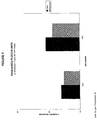
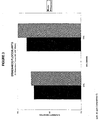
- Tables III - V summarize the results of the DMAEA ⁇ MCQ dispersion polymer screening studies in conjunction with Composition A, Composition B, and Composition C, respectively. It is apparent that for each coagulant, the charge on the flocculant minimally affected the reduction in turbidity. Also, there was little difference in the turbidity values obtained at 5 ppm versus 3 ppm flocculant for a given coagulant.
- Tables VII-IX display the results for the DMAEA ⁇ MCQ/AcAm copolymers and their ability to aid in the clarification of the mill water.
- Composition A Table VII
- Composition B Table VIII
- an increase in the amount of DMAEA ⁇ MCQ present in the copolymer slightly enhanced the reduction in turbidity.
- Composition C wherein minimal differences were obtained in turbidity reductions as a function of the flocculant's cationic charge.
- increasing the concentration of flocculant from 3 to 5 ppm did not enhance turbidity reduction.
Landscapes
- Life Sciences & Earth Sciences (AREA)
- Hydrology & Water Resources (AREA)
- Engineering & Computer Science (AREA)
- Environmental & Geological Engineering (AREA)
- Water Supply & Treatment (AREA)
- Chemical & Material Sciences (AREA)
- Organic Chemistry (AREA)
- Separation Of Suspended Particles By Flocculating Agents (AREA)
- Paper (AREA)
- Solid-Sorbent Or Filter-Aiding Compositions (AREA)
- Treatments Of Macromolecular Shaped Articles (AREA)
- Addition Polymer Or Copolymer, Post-Treatments, Or Chemical Modifications (AREA)
Applications Claiming Priority (2)
| Application Number | Priority Date | Filing Date | Title |
|---|---|---|---|
| US08/743,437 US5750034A (en) | 1996-11-01 | 1996-11-01 | Hydrophilic dispersion polymers for the clarification of deinking process waters |
| US743437 | 1996-11-01 |
Publications (3)
| Publication Number | Publication Date |
|---|---|
| EP0839767A2 EP0839767A2 (en) | 1998-05-06 |
| EP0839767A3 EP0839767A3 (en) | 1998-07-08 |
| EP0839767B1 true EP0839767B1 (en) | 2004-01-02 |
Family
ID=24988769
Family Applications (1)
| Application Number | Title | Priority Date | Filing Date |
|---|---|---|---|
| EP97119083A Expired - Lifetime EP0839767B1 (en) | 1996-11-01 | 1997-10-31 | Hydrophilic dispersion polymers for the clarification of deinking process waters |
Country Status (12)
| Country | Link |
|---|---|
| US (1) | US5750034A (enExample) |
| EP (1) | EP0839767B1 (enExample) |
| JP (1) | JPH10192868A (enExample) |
| KR (1) | KR100468554B1 (enExample) |
| AU (1) | AU723643B2 (enExample) |
| BR (1) | BR9705405A (enExample) |
| CA (1) | CA2219868A1 (enExample) |
| DE (1) | DE69727030T2 (enExample) |
| ES (1) | ES2210446T3 (enExample) |
| ID (1) | ID18838A (enExample) |
| MY (1) | MY126364A (enExample) |
| NO (1) | NO313092B1 (enExample) |
Families Citing this family (20)
| Publication number | Priority date | Publication date | Assignee | Title |
|---|---|---|---|---|
| US5938937A (en) * | 1995-08-16 | 1999-08-17 | Nalco Chemical Company | Hydrophilic dispersion polymers for treating wastewater |
| US6235205B1 (en) | 1996-10-03 | 2001-05-22 | Cytec Technology Corp. | Aqueous dispersions |
| US6310124B1 (en) | 1996-10-03 | 2001-10-30 | Cytec Technology, Corp. | Aqueous dispersions |
| US6262168B1 (en) | 1998-03-11 | 2001-07-17 | Cytec Technology Corp. | Aqueous dispersions |
| WO1999055625A1 (en) | 1998-04-24 | 1999-11-04 | Nalco Chemical Company | Use of polymer dispersions for paper mill color removal |
| US6036868A (en) * | 1998-07-23 | 2000-03-14 | Nalco Chemical Company | Use of hydrophilic dispersion polymers for oily wastewater clarification |
| KR100278507B1 (ko) | 1998-08-24 | 2001-03-02 | 한성욱 | 무기응집제를 포함하는 폐수처리용 수용성 고분자 분산액 및 그 제조방법 |
| KR100278510B1 (ko) | 1998-08-24 | 2001-03-02 | 한성욱 | 콜로이달 실리카를 포함하는 미립자보류용 수용성 고분자 분산액 및 그 제조방법 |
| AU764315B2 (en) * | 1998-12-03 | 2003-08-14 | Nalco Chemical Company | Hydrophilic dispersion polymers of diallyldimethyl ammonium chloride and acrylamide for the clarification of deinking process waters |
| US6365052B1 (en) | 2000-03-21 | 2002-04-02 | Nalco Chemical Company | Very high molecular weight cationic dispersion polymers for dewatering animal farm wastewater |
| US6398967B2 (en) * | 2000-04-20 | 2002-06-04 | Nalco Chemical Company | Method of clarifying water using low molecular weight cationic dispersion polymers |
| GB0018314D0 (en) * | 2000-07-27 | 2000-09-13 | Ciba Spec Chem Water Treat Ltd | Processes of reducing contamination from cellulosic suspensions |
| US6623658B1 (en) * | 2000-09-22 | 2003-09-23 | Industrial Chemical Consultants | Additive for controlling secondary contaminates |
| FR2815960B1 (fr) * | 2000-10-30 | 2003-02-21 | Atofina | Nouveaux acrylates comportant plusieurs groupes amino quaternaires dans la partie alcool, leur procede de fabrication et les ( co) polymeres obtenus a partir de ces monomeres |
| JP5159009B2 (ja) * | 2001-08-31 | 2013-03-06 | ハイモ株式会社 | 水溶性高分子分散液及びその製造方法 |
| JP5593791B2 (ja) * | 2010-03-31 | 2014-09-24 | 栗田工業株式会社 | 脱墨工程におけるフローテーター用異物除去剤、異物除去方法、及び脱墨パルプの製造方法 |
| US8764974B2 (en) | 2010-04-16 | 2014-07-01 | Nalco Company | Processing aids to improve the bitumen recovery and froth quality in oil sands extraction processes |
| JP5961773B1 (ja) * | 2016-02-25 | 2016-08-02 | オー・ジー株式会社 | 澱粉糊 |
| CA3040279A1 (en) | 2016-10-17 | 2018-04-26 | Ecolab Usa Inc. | Methods and compositions for clarifying produced waters for boiler feed waters |
| CN111268842B (zh) * | 2020-02-25 | 2022-05-20 | 濮阳市盛源能源科技股份有限公司 | 一种污水处理方法 |
Family Cites Families (16)
| Publication number | Priority date | Publication date | Assignee | Title |
|---|---|---|---|---|
| CA1267483A (en) * | 1984-11-19 | 1990-04-03 | Hisao Takeda | Process for the production of a water-soluble polymer dispersion |
| US4738750A (en) * | 1986-02-10 | 1988-04-19 | Stone Container Corp. | System and method for treating pulp and paper mill waste water |
| US4715962A (en) * | 1986-08-15 | 1987-12-29 | Nalco Chemical Company | Ampholytic diallyldimethyl ammonium chloride (DADMAC) copolymers and terpolymers for water clarification |
| EP0262945B1 (en) * | 1986-10-01 | 1994-01-05 | Ciba Specialty Chemicals Water Treatments Limited | Water soluble polymeric compositions |
| JPH0651755B2 (ja) * | 1988-10-14 | 1994-07-06 | ハイモ株式会社 | 水溶性カチオンポリマー分散液の製造方法 |
| US5032286A (en) * | 1988-10-18 | 1991-07-16 | Boise Cascade Corporation | Pulp mill effluent color removal process |
| US4874521A (en) * | 1988-10-18 | 1989-10-17 | Boise Cascade Corporation | Pulp mill effluent color removal process |
| EP0473653B1 (en) * | 1989-05-22 | 1995-11-08 | Commonwealth Scientific And Industrial Research Organisation | Effluent treatment |
| US5013456A (en) * | 1990-04-13 | 1991-05-07 | Nalco Chemical Company | Diallyldimethyl ammonium chloride polymers with anionic monomers for coagulating deinking process waters |
| US5178770A (en) * | 1991-07-12 | 1993-01-12 | Nalco Canada Inc. | Method of treating bctmp/ctmp wastewater |
| US5587415A (en) * | 1991-07-30 | 1996-12-24 | Hymo Corporation | Process for preparation of dispersion of water-soluble cationic polymer the dispersion produced thereby and its use |
| US5292793A (en) * | 1992-07-14 | 1994-03-08 | Nalco Chemical Company | Hydrophobic polyelectrolytes used in color removal |
| US5286806C1 (en) * | 1993-05-14 | 2001-01-30 | Cytec Tech Corp | Methods of making and using high molecular weight acrylamide polymers |
| DE4321819A1 (de) * | 1993-07-01 | 1995-01-12 | Henkel Kgaa | Verfahren zur Verringerung des Gehalts an feindispergierten Feststoffen in Prozeßwässern der Papierherstellung |
| US5454988A (en) * | 1994-01-12 | 1995-10-03 | Mitsubishi Corporation | Packing to be used in substance and/or heat exchanging tower |
| US5708071A (en) * | 1994-12-15 | 1998-01-13 | Hymo Corporation | Aqueous dispersion of an amphoteric water-soluble polymer, a method of manufacturing the same, and a treating agent comprising the same |
-
1996
- 1996-11-01 US US08/743,437 patent/US5750034A/en not_active Expired - Fee Related
-
1997
- 1997-10-31 ID IDP973573A patent/ID18838A/id unknown
- 1997-10-31 EP EP97119083A patent/EP0839767B1/en not_active Expired - Lifetime
- 1997-10-31 DE DE69727030T patent/DE69727030T2/de not_active Expired - Fee Related
- 1997-10-31 CA CA002219868A patent/CA2219868A1/en not_active Abandoned
- 1997-10-31 ES ES97119083T patent/ES2210446T3/es not_active Expired - Lifetime
- 1997-10-31 NO NO19975027A patent/NO313092B1/no not_active IP Right Cessation
- 1997-11-01 KR KR1019970057559A patent/KR100468554B1/ko not_active Expired - Fee Related
- 1997-11-01 MY MYPI97005185A patent/MY126364A/en unknown
- 1997-11-03 AU AU43679/97A patent/AU723643B2/en not_active Ceased
- 1997-11-03 BR BR9705405-4A patent/BR9705405A/pt not_active IP Right Cessation
- 1997-11-04 JP JP9301876A patent/JPH10192868A/ja active Pending
Also Published As
| Publication number | Publication date |
|---|---|
| MY126364A (en) | 2006-09-29 |
| NO313092B1 (no) | 2002-08-12 |
| US5750034A (en) | 1998-05-12 |
| JPH10192868A (ja) | 1998-07-28 |
| NO975027L (no) | 1998-05-04 |
| EP0839767A2 (en) | 1998-05-06 |
| KR100468554B1 (ko) | 2005-03-16 |
| ES2210446T3 (es) | 2004-07-01 |
| NO975027D0 (no) | 1997-10-31 |
| CA2219868A1 (en) | 1998-05-01 |
| BR9705405A (pt) | 1999-11-03 |
| AU4367997A (en) | 1998-05-07 |
| AU723643B2 (en) | 2000-08-31 |
| DE69727030T2 (de) | 2004-06-09 |
| ID18838A (id) | 1998-05-14 |
| DE69727030D1 (de) | 2004-02-05 |
| EP0839767A3 (en) | 1998-07-08 |
| KR19980042020A (ko) | 1998-08-17 |
Similar Documents
| Publication | Publication Date | Title |
|---|---|---|
| EP0839767B1 (en) | Hydrophilic dispersion polymers for the clarification of deinking process waters | |
| KR100678487B1 (ko) | 정화 및 탈수용 음이온성 및 비이온성 분산 중합체 | |
| US5013456A (en) | Diallyldimethyl ammonium chloride polymers with anionic monomers for coagulating deinking process waters | |
| JPH10192868A5 (enExample) | ||
| EP0522334A1 (en) | A method of treating BCTMP/CTMP wastewater | |
| US6171505B1 (en) | Higher actives dispersion polymer to aid clarification, dewatering, and retention and drainage | |
| US5286390A (en) | Method for treating deink wastes using melamine aldehyde-type polymers | |
| US5573675A (en) | Clarification of deinking process waters using polymers containing vinylamine | |
| EP0789673B1 (en) | Methods of coagulating and decolorizing waste streams | |
| US6019904A (en) | Hydrophilic dispersion polymers of diallyldimethyl ammonium chloride and acrylamide for the clarification of deinking process waters | |
| US5589075A (en) | Use of silicon containing polyelectrolytes in wastewater treatment | |
| US5624570A (en) | Method for reducing turbidity in laundry waste water | |
| NO326144B1 (no) | Fremgangsmate for klaring, avvanning,retensjon og drenering ved tilsetting av en hoyere aktiv polymerdispersjon | |
| WO1999050195A1 (en) | Dewatering of organic suspensions with anionic and cationic polymers | |
| US5948270A (en) | Method for reducing turbidity in laundry waste water | |
| AU764315B2 (en) | Hydrophilic dispersion polymers of diallyldimethyl ammonium chloride and acrylamide for the clarification of deinking process waters | |
| CZ2003215A3 (en) | Processes of reducing contamination from cellulosic suspensions | |
| WO1989002417A1 (en) | Improvements in or relating to effluent treatment | |
| MXPA97008391A (en) | Hydrofilic dispersion polymers for the clarification of destige process water | |
| JP2000005507A (ja) | エマルジョンおよび凝集剤組成物 | |
| MXPA01005383A (en) | Hydrophilic dispersion polymers of diallyldimethyl ammonium chloride and acrylamide for the clarification of deinking process waters | |
| MXPA97002741A (en) | Methods of coagulation and decoloration decorrientes residua | |
| MXPA01010035A (en) | Higher actives dispersion polymer to aid clarification, dewatering, and retention and drainage |
Legal Events
| Date | Code | Title | Description |
|---|---|---|---|
| PUAI | Public reference made under article 153(3) epc to a published international application that has entered the european phase |
Free format text: ORIGINAL CODE: 0009012 |
|
| AK | Designated contracting states |
Kind code of ref document: A2 Designated state(s): DE ES FI FR GB IT SE |
|
| AX | Request for extension of the european patent |
Free format text: AL;LT;LV;RO;SI |
|
| PUAL | Search report despatched |
Free format text: ORIGINAL CODE: 0009013 |
|
| AK | Designated contracting states |
Kind code of ref document: A3 Designated state(s): AT BE CH DE DK ES FI FR GB GR IE IT LI LU MC NL PT SE |
|
| AX | Request for extension of the european patent |
Free format text: AL;LT;LV;RO;SI |
|
| 17P | Request for examination filed |
Effective date: 19981208 |
|
| AKX | Designation fees paid |
Free format text: DE ES FI FR GB IT SE |
|
| RBV | Designated contracting states (corrected) |
Designated state(s): DE ES FI FR GB IT SE |
|
| 17Q | First examination report despatched |
Effective date: 20021008 |
|
| GRAH | Despatch of communication of intention to grant a patent |
Free format text: ORIGINAL CODE: EPIDOS IGRA |
|
| GRAS | Grant fee paid |
Free format text: ORIGINAL CODE: EPIDOSNIGR3 |
|
| GRAA | (expected) grant |
Free format text: ORIGINAL CODE: 0009210 |
|
| AK | Designated contracting states |
Kind code of ref document: B1 Designated state(s): DE ES FI FR GB IT SE |
|
| REG | Reference to a national code |
Ref country code: GB Ref legal event code: FG4D |
|
| REF | Corresponds to: |
Ref document number: 69727030 Country of ref document: DE Date of ref document: 20040205 Kind code of ref document: P |
|
| REG | Reference to a national code |
Ref country code: SE Ref legal event code: TRGR |
|
| REG | Reference to a national code |
Ref country code: ES Ref legal event code: FG2A Ref document number: 2210446 Country of ref document: ES Kind code of ref document: T3 |
|
| ET | Fr: translation filed | ||
| PGFP | Annual fee paid to national office [announced via postgrant information from national office to epo] |
Ref country code: FR Payment date: 20041020 Year of fee payment: 8 |
|
| PGFP | Annual fee paid to national office [announced via postgrant information from national office to epo] |
Ref country code: SE Payment date: 20041021 Year of fee payment: 8 |
|
| PGFP | Annual fee paid to national office [announced via postgrant information from national office to epo] |
Ref country code: FI Payment date: 20041022 Year of fee payment: 8 |
|
| PGFP | Annual fee paid to national office [announced via postgrant information from national office to epo] |
Ref country code: GB Payment date: 20041027 Year of fee payment: 8 |
|
| PLBE | No opposition filed within time limit |
Free format text: ORIGINAL CODE: 0009261 |
|
| STAA | Information on the status of an ep patent application or granted ep patent |
Free format text: STATUS: NO OPPOSITION FILED WITHIN TIME LIMIT |
|
| PGFP | Annual fee paid to national office [announced via postgrant information from national office to epo] |
Ref country code: ES Payment date: 20041110 Year of fee payment: 8 |
|
| PGFP | Annual fee paid to national office [announced via postgrant information from national office to epo] |
Ref country code: DE Payment date: 20041130 Year of fee payment: 8 |
|
| 26N | No opposition filed |
Effective date: 20041005 |
|
| PG25 | Lapsed in a contracting state [announced via postgrant information from national office to epo] |
Ref country code: IT Free format text: LAPSE BECAUSE OF NON-PAYMENT OF DUE FEES Effective date: 20051031 Ref country code: FI Free format text: LAPSE BECAUSE OF NON-PAYMENT OF DUE FEES Effective date: 20051031 |
|
| PG25 | Lapsed in a contracting state [announced via postgrant information from national office to epo] |
Ref country code: SE Free format text: LAPSE BECAUSE OF NON-PAYMENT OF DUE FEES Effective date: 20051101 |
|
| PG25 | Lapsed in a contracting state [announced via postgrant information from national office to epo] |
Ref country code: ES Free format text: LAPSE BECAUSE OF NON-PAYMENT OF DUE FEES Effective date: 20051102 |
|
| PG25 | Lapsed in a contracting state [announced via postgrant information from national office to epo] |
Ref country code: DE Free format text: LAPSE BECAUSE OF NON-PAYMENT OF DUE FEES Effective date: 20060503 |
|
| GBPC | Gb: european patent ceased through non-payment of renewal fee |
Effective date: 20051031 |
|
| PG25 | Lapsed in a contracting state [announced via postgrant information from national office to epo] |
Ref country code: FR Free format text: LAPSE BECAUSE OF NON-PAYMENT OF DUE FEES Effective date: 20060630 |
|
| EUG | Se: european patent has lapsed | ||
| REG | Reference to a national code |
Ref country code: FR Ref legal event code: ST Effective date: 20060630 |
|
| REG | Reference to a national code |
Ref country code: ES Ref legal event code: FD2A Effective date: 20051102 |