EP0824588B1 - Inhibitoren der il-6 aktivitaet - Google Patents
Inhibitoren der il-6 aktivitaet Download PDFInfo
- Publication number
- EP0824588B1 EP0824588B1 EP95919438A EP95919438A EP0824588B1 EP 0824588 B1 EP0824588 B1 EP 0824588B1 EP 95919438 A EP95919438 A EP 95919438A EP 95919438 A EP95919438 A EP 95919438A EP 0824588 B1 EP0824588 B1 EP 0824588B1
- Authority
- EP
- European Patent Office
- Prior art keywords
- plasmid
- sequence
- nucleotide sequence
- use according
- cells
- Prior art date
- Legal status (The legal status is an assumption and is not a legal conclusion. Google has not performed a legal analysis and makes no representation as to the accuracy of the status listed.)
- Expired - Lifetime
Links
- 230000000694 effects Effects 0.000 title claims abstract description 28
- 239000003112 inhibitor Substances 0.000 title description 56
- 101150101999 IL6 gene Proteins 0.000 title 1
- 102000004889 Interleukin-6 Human genes 0.000 claims abstract description 85
- 108090001005 Interleukin-6 Proteins 0.000 claims abstract description 85
- 239000002773 nucleotide Substances 0.000 claims abstract description 33
- 125000003729 nucleotide group Chemical group 0.000 claims abstract description 33
- 108091023040 Transcription factor Proteins 0.000 claims abstract description 14
- 102000040945 Transcription factor Human genes 0.000 claims abstract description 14
- 230000027455 binding Effects 0.000 claims abstract description 14
- 239000008194 pharmaceutical composition Substances 0.000 claims abstract description 5
- 238000002560 therapeutic procedure Methods 0.000 claims abstract description 3
- 108091034117 Oligonucleotide Proteins 0.000 claims description 7
- 206010035226 Plasma cell myeloma Diseases 0.000 claims description 3
- 239000013600 plasmid vector Substances 0.000 claims description 3
- 208000023275 Autoimmune disease Diseases 0.000 claims description 2
- 206010065687 Bone loss Diseases 0.000 claims description 2
- 206010018364 Glomerulonephritis Diseases 0.000 claims description 2
- 108010086512 Hepatocyte Nuclear Factor 1 Proteins 0.000 claims description 2
- 102000006754 Hepatocyte Nuclear Factor 1 Human genes 0.000 claims description 2
- 102000003945 NF-kappa B Human genes 0.000 claims description 2
- 108010057466 NF-kappa B Proteins 0.000 claims description 2
- 102100035593 POU domain, class 2, transcription factor 1 Human genes 0.000 claims description 2
- 101710084414 POU domain, class 2, transcription factor 1 Proteins 0.000 claims description 2
- 201000004681 Psoriasis Diseases 0.000 claims description 2
- 108700026226 TATA Box Proteins 0.000 claims description 2
- 230000009471 action Effects 0.000 claims description 2
- 201000010099 disease Diseases 0.000 claims description 2
- 208000037265 diseases, disorders, signs and symptoms Diseases 0.000 claims description 2
- 230000000148 hypercalcaemia Effects 0.000 claims description 2
- 208000030915 hypercalcemia disease Diseases 0.000 claims description 2
- 208000027866 inflammatory disease Diseases 0.000 claims description 2
- 201000000050 myeloid neoplasm Diseases 0.000 claims description 2
- 206010039073 rheumatoid arthritis Diseases 0.000 claims description 2
- 101000700937 Amsacta albistriga Sex-specific storage protein 1 Proteins 0.000 claims 1
- 108010018242 Transcription Factor AP-1 Proteins 0.000 claims 1
- 101710189834 Transcription factor AP-2-alpha Proteins 0.000 claims 1
- 238000004519 manufacturing process Methods 0.000 claims 1
- 108700039691 Genetic Promoter Regions Proteins 0.000 abstract description 6
- 239000013612 plasmid Substances 0.000 description 133
- 210000004027 cell Anatomy 0.000 description 69
- 108020004414 DNA Proteins 0.000 description 36
- 108060001084 Luciferase Proteins 0.000 description 32
- 108700008625 Reporter Genes Proteins 0.000 description 26
- 239000012634 fragment Substances 0.000 description 25
- 238000001890 transfection Methods 0.000 description 25
- 239000005089 Luciferase Substances 0.000 description 21
- 238000002474 experimental method Methods 0.000 description 21
- 230000005764 inhibitory process Effects 0.000 description 20
- 238000003571 reporter gene assay Methods 0.000 description 18
- 108091028043 Nucleic acid sequence Proteins 0.000 description 16
- 108090000623 proteins and genes Proteins 0.000 description 14
- 238000012360 testing method Methods 0.000 description 12
- 102220497176 Small vasohibin-binding protein_T47D_mutation Human genes 0.000 description 9
- 238000006243 chemical reaction Methods 0.000 description 7
- 238000000246 agarose gel electrophoresis Methods 0.000 description 6
- 230000000692 anti-sense effect Effects 0.000 description 6
- 239000002299 complementary DNA Substances 0.000 description 6
- 102000039446 nucleic acids Human genes 0.000 description 6
- 108020004707 nucleic acids Proteins 0.000 description 6
- 150000007523 nucleic acids Chemical class 0.000 description 6
- UCSJYZPVAKXKNQ-HZYVHMACSA-N streptomycin Chemical compound CN[C@H]1[C@H](O)[C@@H](O)[C@H](CO)O[C@H]1O[C@@H]1[C@](C=O)(O)[C@H](C)O[C@H]1O[C@@H]1[C@@H](NC(N)=N)[C@H](O)[C@@H](NC(N)=N)[C@H](O)[C@H]1O UCSJYZPVAKXKNQ-HZYVHMACSA-N 0.000 description 6
- 206010073071 hepatocellular carcinoma Diseases 0.000 description 5
- JKMHFZQWWAIEOD-UHFFFAOYSA-N 2-[4-(2-hydroxyethyl)piperazin-1-yl]ethanesulfonic acid Chemical compound OCC[NH+]1CCN(CCS([O-])(=O)=O)CC1 JKMHFZQWWAIEOD-UHFFFAOYSA-N 0.000 description 4
- 206010006187 Breast cancer Diseases 0.000 description 4
- 208000026310 Breast neoplasm Diseases 0.000 description 4
- 101001078385 Homo sapiens Haptoglobin Proteins 0.000 description 4
- 101000826373 Homo sapiens Signal transducer and activator of transcription 3 Proteins 0.000 description 4
- 102100024040 Signal transducer and activator of transcription 3 Human genes 0.000 description 4
- 238000013459 approach Methods 0.000 description 4
- 238000003556 assay Methods 0.000 description 4
- 201000008275 breast carcinoma Diseases 0.000 description 4
- 238000012761 co-transfection Methods 0.000 description 4
- 238000010276 construction Methods 0.000 description 4
- 230000006698 induction Effects 0.000 description 4
- 239000000203 mixture Substances 0.000 description 4
- 230000004044 response Effects 0.000 description 4
- 238000003146 transient transfection Methods 0.000 description 4
- FWMNVWWHGCHHJJ-SKKKGAJSSA-N 4-amino-1-[(2r)-6-amino-2-[[(2r)-2-[[(2r)-2-[[(2r)-2-amino-3-phenylpropanoyl]amino]-3-phenylpropanoyl]amino]-4-methylpentanoyl]amino]hexanoyl]piperidine-4-carboxylic acid Chemical compound C([C@H](C(=O)N[C@H](CC(C)C)C(=O)N[C@H](CCCCN)C(=O)N1CCC(N)(CC1)C(O)=O)NC(=O)[C@H](N)CC=1C=CC=CC=1)C1=CC=CC=C1 FWMNVWWHGCHHJJ-SKKKGAJSSA-N 0.000 description 3
- 102100026189 Beta-galactosidase Human genes 0.000 description 3
- 102000004190 Enzymes Human genes 0.000 description 3
- 108090000790 Enzymes Proteins 0.000 description 3
- PEDCQBHIVMGVHV-UHFFFAOYSA-N Glycerine Chemical compound OCC(O)CO PEDCQBHIVMGVHV-UHFFFAOYSA-N 0.000 description 3
- 239000007995 HEPES buffer Substances 0.000 description 3
- 108050005077 Haptoglobin Proteins 0.000 description 3
- ZDXPYRJPNDTMRX-VKHMYHEASA-N L-glutamine Chemical compound OC(=O)[C@@H](N)CCC(N)=O ZDXPYRJPNDTMRX-VKHMYHEASA-N 0.000 description 3
- 229930182816 L-glutamine Natural products 0.000 description 3
- 229930182555 Penicillin Natural products 0.000 description 3
- JGSARLDLIJGVTE-MBNYWOFBSA-N Penicillin G Chemical compound N([C@H]1[C@H]2SC([C@@H](N2C1=O)C(O)=O)(C)C)C(=O)CC1=CC=CC=C1 JGSARLDLIJGVTE-MBNYWOFBSA-N 0.000 description 3
- 108010005774 beta-Galactosidase Proteins 0.000 description 3
- 238000002337 electrophoretic mobility shift assay Methods 0.000 description 3
- 239000003623 enhancer Substances 0.000 description 3
- 239000000284 extract Substances 0.000 description 3
- 230000006870 function Effects 0.000 description 3
- 230000002401 inhibitory effect Effects 0.000 description 3
- 208000025113 myeloid leukemia Diseases 0.000 description 3
- 229940049954 penicillin Drugs 0.000 description 3
- 238000010561 standard procedure Methods 0.000 description 3
- 229960005322 streptomycin Drugs 0.000 description 3
- 238000003786 synthesis reaction Methods 0.000 description 3
- 239000013598 vector Substances 0.000 description 3
- 108091035707 Consensus sequence Proteins 0.000 description 2
- 229920002307 Dextran Polymers 0.000 description 2
- KCXVZYZYPLLWCC-UHFFFAOYSA-N EDTA Chemical compound OC(=O)CN(CC(O)=O)CCN(CC(O)=O)CC(O)=O KCXVZYZYPLLWCC-UHFFFAOYSA-N 0.000 description 2
- 241000588724 Escherichia coli Species 0.000 description 2
- 108010049003 Fibrinogen Proteins 0.000 description 2
- 102000006580 General Transcription Factors Human genes 0.000 description 2
- 108010008945 General Transcription Factors Proteins 0.000 description 2
- 102000014702 Haptoglobin Human genes 0.000 description 2
- CSNNHWWHGAXBCP-UHFFFAOYSA-L Magnesium sulfate Chemical compound [Mg+2].[O-][S+2]([O-])([O-])[O-] CSNNHWWHGAXBCP-UHFFFAOYSA-L 0.000 description 2
- SEQKRHFRPICQDD-UHFFFAOYSA-N N-tris(hydroxymethyl)methylglycine Chemical compound OCC(CO)(CO)[NH2+]CC([O-])=O SEQKRHFRPICQDD-UHFFFAOYSA-N 0.000 description 2
- 108020004440 Thymidine kinase Proteins 0.000 description 2
- 230000003321 amplification Effects 0.000 description 2
- 238000010367 cloning Methods 0.000 description 2
- 230000029087 digestion Effects 0.000 description 2
- 231100000673 dose–response relationship Toxicity 0.000 description 2
- 238000009472 formulation Methods 0.000 description 2
- 239000000499 gel Substances 0.000 description 2
- 238000011534 incubation Methods 0.000 description 2
- 230000001939 inductive effect Effects 0.000 description 2
- 238000002372 labelling Methods 0.000 description 2
- 230000001404 mediated effect Effects 0.000 description 2
- 238000003199 nucleic acid amplification method Methods 0.000 description 2
- 230000001575 pathological effect Effects 0.000 description 2
- 102000004169 proteins and genes Human genes 0.000 description 2
- 230000001105 regulatory effect Effects 0.000 description 2
- 238000011160 research Methods 0.000 description 2
- 230000004043 responsiveness Effects 0.000 description 2
- 230000035945 sensitivity Effects 0.000 description 2
- 238000010361 transduction Methods 0.000 description 2
- 230000026683 transduction Effects 0.000 description 2
- 238000011144 upstream manufacturing Methods 0.000 description 2
- 230000003612 virological effect Effects 0.000 description 2
- BFSVOASYOCHEOV-UHFFFAOYSA-N 2-diethylaminoethanol Chemical compound CCN(CC)CCO BFSVOASYOCHEOV-UHFFFAOYSA-N 0.000 description 1
- 206010048998 Acute phase reaction Diseases 0.000 description 1
- 102000011767 Acute-Phase Proteins Human genes 0.000 description 1
- 108010062271 Acute-Phase Proteins Proteins 0.000 description 1
- 108010074051 C-Reactive Protein Proteins 0.000 description 1
- 102100032752 C-reactive protein Human genes 0.000 description 1
- OYPRJOBELJOOCE-UHFFFAOYSA-N Calcium Chemical compound [Ca] OYPRJOBELJOOCE-UHFFFAOYSA-N 0.000 description 1
- 102000005754 Cytokine Receptor gp130 Human genes 0.000 description 1
- 108010006197 Cytokine Receptor gp130 Proteins 0.000 description 1
- 102000004127 Cytokines Human genes 0.000 description 1
- 108090000695 Cytokines Proteins 0.000 description 1
- IGXWBGJHJZYPQS-SSDOTTSWSA-N D-Luciferin Chemical compound OC(=O)[C@H]1CSC(C=2SC3=CC=C(O)C=C3N=2)=N1 IGXWBGJHJZYPQS-SSDOTTSWSA-N 0.000 description 1
- 102000053602 DNA Human genes 0.000 description 1
- 108020001019 DNA Primers Proteins 0.000 description 1
- 239000003155 DNA primer Substances 0.000 description 1
- 230000004568 DNA-binding Effects 0.000 description 1
- CYCGRDQQIOGCKX-UHFFFAOYSA-N Dehydro-luciferin Natural products OC(=O)C1=CSC(C=2SC3=CC(O)=CC=C3N=2)=N1 CYCGRDQQIOGCKX-UHFFFAOYSA-N 0.000 description 1
- 239000006144 Dulbecco’s modified Eagle's medium Substances 0.000 description 1
- BJGNCJDXODQBOB-UHFFFAOYSA-N Fivefly Luciferin Natural products OC(=O)C1CSC(C=2SC3=CC(O)=CC=C3N=2)=N1 BJGNCJDXODQBOB-UHFFFAOYSA-N 0.000 description 1
- 101000942118 Homo sapiens C-reactive protein Proteins 0.000 description 1
- 101001076408 Homo sapiens Interleukin-6 Proteins 0.000 description 1
- 208000037147 Hypercalcaemia Diseases 0.000 description 1
- 229940124790 IL-6 inhibitor Drugs 0.000 description 1
- 102000010781 Interleukin-6 Receptors Human genes 0.000 description 1
- 108010038501 Interleukin-6 Receptors Proteins 0.000 description 1
- 102100037792 Interleukin-6 receptor subunit alpha Human genes 0.000 description 1
- DDWFXDSYGUXRAY-UHFFFAOYSA-N Luciferin Natural products CCc1c(C)c(CC2NC(=O)C(=C2C=C)C)[nH]c1Cc3[nH]c4C(=C5/NC(CC(=O)O)C(C)C5CC(=O)O)CC(=O)c4c3C DDWFXDSYGUXRAY-UHFFFAOYSA-N 0.000 description 1
- 208000034578 Multiple myelomas Diseases 0.000 description 1
- 206010028980 Neoplasm Diseases 0.000 description 1
- 101710163270 Nuclease Proteins 0.000 description 1
- 238000012408 PCR amplification Methods 0.000 description 1
- 101000799915 Rattus norvegicus Alpha-2-macroglobulin Proteins 0.000 description 1
- 108091027981 Response element Proteins 0.000 description 1
- 239000006146 Roswell Park Memorial Institute medium Substances 0.000 description 1
- 101800001271 Surface protein Proteins 0.000 description 1
- UZMAPBJVXOGOFT-UHFFFAOYSA-N Syringetin Natural products COC1=C(O)C(OC)=CC(C2=C(C(=O)C3=C(O)C=C(O)C=C3O2)O)=C1 UZMAPBJVXOGOFT-UHFFFAOYSA-N 0.000 description 1
- 102000006601 Thymidine Kinase Human genes 0.000 description 1
- 239000007997 Tricine buffer Substances 0.000 description 1
- 229920004890 Triton X-100 Polymers 0.000 description 1
- 239000013504 Triton X-100 Substances 0.000 description 1
- RGJOEKWQDUBAIZ-HDCXRZRFSA-N [[(2r,3s,4r,5r)-5-(6-aminopurin-9-yl)-4-hydroxy-3-phosphonooxyoxolan-2-yl]methoxy-hydroxyphosphoryl] [(3s)-3-hydroxy-2,2-dimethyl-4-oxo-4-[[3-oxo-3-(2-sulfanylethylamino)propyl]amino]butyl] hydrogen phosphate Chemical compound O[C@@H]1[C@H](OP(O)(O)=O)[C@@H](COP(O)(=O)OP(O)(=O)OCC(C)(C)[C@H](O)C(=O)NCCC(=O)NCCS)O[C@H]1N1C2=NC=NC(N)=C2N=C1 RGJOEKWQDUBAIZ-HDCXRZRFSA-N 0.000 description 1
- 230000004913 activation Effects 0.000 description 1
- 230000004658 acute-phase response Effects 0.000 description 1
- 238000004458 analytical method Methods 0.000 description 1
- 239000012131 assay buffer Substances 0.000 description 1
- 230000001363 autoimmune Effects 0.000 description 1
- 230000009286 beneficial effect Effects 0.000 description 1
- 230000008827 biological function Effects 0.000 description 1
- 230000015572 biosynthetic process Effects 0.000 description 1
- 230000000903 blocking effect Effects 0.000 description 1
- 239000008280 blood Substances 0.000 description 1
- 210000004369 blood Anatomy 0.000 description 1
- 229910052791 calcium Inorganic materials 0.000 description 1
- 239000011575 calcium Substances 0.000 description 1
- 239000001506 calcium phosphate Substances 0.000 description 1
- 229910000389 calcium phosphate Inorganic materials 0.000 description 1
- 235000011010 calcium phosphates Nutrition 0.000 description 1
- 201000011510 cancer Diseases 0.000 description 1
- 230000004663 cell proliferation Effects 0.000 description 1
- 230000002596 correlated effect Effects 0.000 description 1
- 230000000875 corresponding effect Effects 0.000 description 1
- 230000009089 cytolysis Effects 0.000 description 1
- 238000012217 deletion Methods 0.000 description 1
- 230000037430 deletion Effects 0.000 description 1
- 238000011161 development Methods 0.000 description 1
- KCFYHBSOLOXZIF-UHFFFAOYSA-N dihydrochrysin Natural products COC1=C(O)C(OC)=CC(C2OC3=CC(O)=CC(O)=C3C(=O)C2)=C1 KCFYHBSOLOXZIF-UHFFFAOYSA-N 0.000 description 1
- 230000008034 disappearance Effects 0.000 description 1
- 239000011536 extraction buffer Substances 0.000 description 1
- 230000009454 functional inhibition Effects 0.000 description 1
- 239000003102 growth factor Substances 0.000 description 1
- 230000003394 haemopoietic effect Effects 0.000 description 1
- 210000003494 hepatocyte Anatomy 0.000 description 1
- 102000050796 human HP Human genes 0.000 description 1
- 102000052611 human IL6 Human genes 0.000 description 1
- 230000028993 immune response Effects 0.000 description 1
- 238000011065 in-situ storage Methods 0.000 description 1
- 230000003834 intracellular effect Effects 0.000 description 1
- 238000001990 intravenous administration Methods 0.000 description 1
- 238000005342 ion exchange Methods 0.000 description 1
- 239000002502 liposome Substances 0.000 description 1
- 210000004185 liver Anatomy 0.000 description 1
- 238000003670 luciferase enzyme activity assay Methods 0.000 description 1
- 239000001095 magnesium carbonate Substances 0.000 description 1
- ZLNQQNXFFQJAID-UHFFFAOYSA-L magnesium carbonate Chemical compound [Mg+2].[O-]C([O-])=O ZLNQQNXFFQJAID-UHFFFAOYSA-L 0.000 description 1
- 229910000021 magnesium carbonate Inorganic materials 0.000 description 1
- 229910052943 magnesium sulfate Inorganic materials 0.000 description 1
- 210000004962 mammalian cell Anatomy 0.000 description 1
- 239000002609 medium Substances 0.000 description 1
- 238000000034 method Methods 0.000 description 1
- 210000000056 organ Anatomy 0.000 description 1
- 238000013492 plasmid preparation Methods 0.000 description 1
- 238000002264 polyacrylamide gel electrophoresis Methods 0.000 description 1
- 238000001556 precipitation Methods 0.000 description 1
- 239000013615 primer Substances 0.000 description 1
- 108020003175 receptors Proteins 0.000 description 1
- 102000005962 receptors Human genes 0.000 description 1
- 108091008146 restriction endonucleases Proteins 0.000 description 1
- 230000019491 signal transduction Effects 0.000 description 1
- 230000000638 stimulation Effects 0.000 description 1
- 239000000758 substrate Substances 0.000 description 1
- 230000001225 therapeutic effect Effects 0.000 description 1
- 230000000699 topical effect Effects 0.000 description 1
- 238000013518 transcription Methods 0.000 description 1
- 230000035897 transcription Effects 0.000 description 1
- 238000012546 transfer Methods 0.000 description 1
- QORWJWZARLRLPR-UHFFFAOYSA-H tricalcium bis(phosphate) Chemical compound [Ca+2].[Ca+2].[Ca+2].[O-]P([O-])([O-])=O.[O-]P([O-])([O-])=O QORWJWZARLRLPR-UHFFFAOYSA-H 0.000 description 1
- JLEXUIVKURIPFI-UHFFFAOYSA-N tris phosphate Chemical compound OP(O)(O)=O.OCC(N)(CO)CO JLEXUIVKURIPFI-UHFFFAOYSA-N 0.000 description 1
Images




Classifications
-
- C—CHEMISTRY; METALLURGY
- C12—BIOCHEMISTRY; BEER; SPIRITS; WINE; VINEGAR; MICROBIOLOGY; ENZYMOLOGY; MUTATION OR GENETIC ENGINEERING
- C12N—MICROORGANISMS OR ENZYMES; COMPOSITIONS THEREOF; PROPAGATING, PRESERVING, OR MAINTAINING MICROORGANISMS; MUTATION OR GENETIC ENGINEERING; CULTURE MEDIA
- C12N15/00—Mutation or genetic engineering; DNA or RNA concerning genetic engineering, vectors, e.g. plasmids, or their isolation, preparation or purification; Use of hosts therefor
- C12N15/09—Recombinant DNA-technology
- C12N15/11—DNA or RNA fragments; Modified forms thereof; Non-coding nucleic acids having a biological activity
-
- C—CHEMISTRY; METALLURGY
- C07—ORGANIC CHEMISTRY
- C07K—PEPTIDES
- C07K14/00—Peptides having more than 20 amino acids; Gastrins; Somatostatins; Melanotropins; Derivatives thereof
- C07K14/435—Peptides having more than 20 amino acids; Gastrins; Somatostatins; Melanotropins; Derivatives thereof from animals; from humans
- C07K14/46—Peptides having more than 20 amino acids; Gastrins; Somatostatins; Melanotropins; Derivatives thereof from animals; from humans from vertebrates
- C07K14/47—Peptides having more than 20 amino acids; Gastrins; Somatostatins; Melanotropins; Derivatives thereof from animals; from humans from vertebrates from mammals
- C07K14/4701—Peptides having more than 20 amino acids; Gastrins; Somatostatins; Melanotropins; Derivatives thereof from animals; from humans from vertebrates from mammals not used
- C07K14/4702—Regulators; Modulating activity
- C07K14/4705—Regulators; Modulating activity stimulating, promoting or activating activity
-
- A—HUMAN NECESSITIES
- A61—MEDICAL OR VETERINARY SCIENCE; HYGIENE
- A61K—PREPARATIONS FOR MEDICAL, DENTAL OR TOILETRY PURPOSES
- A61K48/00—Medicinal preparations containing genetic material which is inserted into cells of the living body to treat genetic diseases; Gene therapy
-
- A—HUMAN NECESSITIES
- A61—MEDICAL OR VETERINARY SCIENCE; HYGIENE
- A61P—SPECIFIC THERAPEUTIC ACTIVITY OF CHEMICAL COMPOUNDS OR MEDICINAL PREPARATIONS
- A61P29/00—Non-central analgesic, antipyretic or antiinflammatory agents, e.g. antirheumatic agents; Non-steroidal antiinflammatory drugs [NSAID]
-
- A—HUMAN NECESSITIES
- A61—MEDICAL OR VETERINARY SCIENCE; HYGIENE
- A61P—SPECIFIC THERAPEUTIC ACTIVITY OF CHEMICAL COMPOUNDS OR MEDICINAL PREPARATIONS
- A61P37/00—Drugs for immunological or allergic disorders
-
- C—CHEMISTRY; METALLURGY
- C12—BIOCHEMISTRY; BEER; SPIRITS; WINE; VINEGAR; MICROBIOLOGY; ENZYMOLOGY; MUTATION OR GENETIC ENGINEERING
- C12N—MICROORGANISMS OR ENZYMES; COMPOSITIONS THEREOF; PROPAGATING, PRESERVING, OR MAINTAINING MICROORGANISMS; MUTATION OR GENETIC ENGINEERING; CULTURE MEDIA
- C12N15/00—Mutation or genetic engineering; DNA or RNA concerning genetic engineering, vectors, e.g. plasmids, or their isolation, preparation or purification; Use of hosts therefor
- C12N15/09—Recombinant DNA-technology
- C12N15/63—Introduction of foreign genetic material using vectors; Vectors; Use of hosts therefor; Regulation of expression
-
- A—HUMAN NECESSITIES
- A61—MEDICAL OR VETERINARY SCIENCE; HYGIENE
- A61K—PREPARATIONS FOR MEDICAL, DENTAL OR TOILETRY PURPOSES
- A61K38/00—Medicinal preparations containing peptides
Definitions
- the present invention relates to a nucleotide sequence, which is able to inhibit the IL-6 activity, its use in therapy as well as pharmaceutical compositions containing it.
- IL-6 is a protein belonging to the group of cytokines, which proved to play a key role in the organism's immune response and haematopoiesis stimulation.
- IL-6 has been found to be a growth factor for multiple myeloma cells; anti-IL-6 antibodies were shown to transiently block myeloma cell proliferation in a leukemic patient (see for example Klein et al., Blood, 78, (5), pp. 1198-1204, 1991 and Lu et al., Eur. J. Immunol., 22, pp. 2819-24, 1992).
- IL-6 levels have been correlated with autoimmune and inflammatory diseases, such as rheumatoid arthritis, glomerulonephritis, psoriasis, and Castelman's disease (see for example Graeve et al., Clin. Investig., 71, pp.664-71, 1993).
- IL-6 has also been shown to play a direct role in bone loss and hypercalcemia (see for example Poli et al., Embo J., 13, (5) pp. 1189-96 and Yoneda et al., Cancer Res., 53, pp. 737-40, Feb. 1993).
- the Applicant has, therefore, investigated a different approach to inhibit IL-6 activity: by blocking the intracellular proteins mediating the IL-6 signal.
- DNA responsive elements with sequences related to those above-mentioned have also been defined in the genes coding for the human C Reactive Protein (CRP) (see Toniatti et al., Mol. Biol. Med., 7, pp. 199-212, 1990), human haptoglobin (see Oliviero et al., Embo J. 6, (7), pp. 1905-12, 1987) and in other genes coding for additional acute phase proteins induced by IL-6 (see Heinrich et al., Biochem. J., 265, pp. 621-36, 1990), leading to the definition of a core consensus sequence CTGGGAW or CTGGRAA, where W stands for A or T, and R stands for A or G.
- CRP C Reactive Protein
- Acute Phase Response Element active in hepatoma cells that can be represented by the formula KTMYKGKAA, wherein M stands for C or A, K stands for T or G, Y stands for C or T.
- an APRE element can be used as enhancer of a target gene in IL-6 responsive cells in the following way: in IL-6 responsive cells, the treatment with IL-6 induces the synthesis of APRF proteins, which bind to the APRE element, and such binding activates the expression of the target gene.
- the main object of the present invention is a nucleotide sequence which is able to inhibit the IL-6 activity, that comprises:
- TATA box examples of these latter type of nucleotide sequences include: TATA box, and the binding sites for transcription factors, such as AP-1 (see Riabowol et al., PNAS USA, 89, pp, 157-61, 1992), AP-2, HNF-1 (see Clusel et al., Nuc. Ac. Res., 21 (15), pp. 3405-11), SP-1 (see Wu et al., Gene, 89, pp. 203-9, 1990), NF- ⁇ B (see Bielinska et al., Science, 250, pp. 997-1000, 1990), Oct-1, E-2 and SRF transcription factors..
- transcription factors such as AP-1 (see Riabowol et al., PNAS USA, 89, pp, 157-61, 1992), AP-2, HNF-1 (see Clusel et al., Nuc. Ac. Res., 21 (15), pp. 3405-11), SP-1 (see Wu et al
- both the APRE element (i) and/or the nucleotide sequence (ii) of the above general formula are each repeated at least 2 times, more preferably, from 3 to 10 times, still more preferably 8 times.
- the element (i) comprises at least two different APRE elements and/or the nucleotide sequence (ii) comprises at least two different oligonucleotide sequences constituting a transcription factor binding site other the APRE element.
- the nucleotide sequence (ii) is preferably the SV40 early promoter.
- the APRE element (i) comprises, for example, the following nucleotide sequence: TTCTGGGAA.
- Figure 2 reports a nucleotide sequence which falls within the scope of the invention, in accordance with its preferred embodiments. Such nucleotide is also reported as SEQ ID NO: 1 and it constitutes one object of the invention.
- a further object of the present invention is a plasmid vector containing the nucleotide sequence of the invention.
- An additional aspect of the present invention is the use of the nucleotide sequence of the invention as a therapeutic tool to inhibit the action of IL-6, in those conditions where IL-6 plays a pathological role.
- the present invention also provides pharmaceutical compositions comprising a nucleotide sequence or a plasmid vector according to the invention.
- Such compositions can be formulated for oral, rectal, intravenous or topical use.
- Formulations of the present invention may include the use of any combination of viral-mediated gene transfer, liposome formulation, receptor-mediated DNA delivery and/or dumbbell structures of the active nucleotide inhibitory sequence according to the invention.
- the inhibitory action of the nucleotide sequence of the invention has been determined with a reporter gene assay.
- the reporter gene assay of the invention is based on the ability of the APRE element to function as enhancer of any gene in IL-6 responsive cells (as reported above).
- the APRE element is used as enhancer of a target reporter gene (which is, for example, the Luciferase gene) in IL-6 responsive cells (which are, for example, hepatic cells such as HepG2).
- IL-6 responsive cells which are, for example, hepatic cells such as HepG2
- the cells are then treated with IL-6: if enough of the APRF proteins produced are captured by an excess of the nucleotide sequence of the invention, the target gene will not be activated
- inhibitor plasmids are constructed, which contain the nucleotide sequence of the invention.
- An example of such plasmids is reported in Figure 1 together with its construction strategy.
- Example 1 Construction of plasmids .
- An IL-6-responding luciferase reporter gene plasmid was constructed by first preparing through chemical synthesis a double-stranded oligonucleotide of 38 bp with an uncut BamH I site at its 5' blunt end, and a protruding lower strand of 4 nucleotides compatible with the Bgl II and BamH I sites at the 3' end
- This synthetic oligonucleotide was named M2 and it contained two identical APRE sequences from the rat ⁇ 2-macroglobulin gene promoter region.
- the sequence of the oligonucleotide was as follows: GGATCCTTCTGGGAATTCTGATCCTTCTGGGAATTCTG (SEQ ID NO: 2).
- This oligonucleotide was cloned in the Sma I-Bgl II sites of plasmid pGL2-pv (from Promega Corporation), where the expression of the luciferase reporter gene is driven by the SV40 virus early promoter, thus forming, after self-ligation, plasmid pM2SVL.
- the synthetic oligonucleotide through its 5' blunt end, was also ligated to the Sma I site of the same plasmid pGL2-pv and the resulting linear ligation product was then cut with Hind III.
- the resulting linear vector was used as a recipient to clone the following DNA fragments: 1) the BamH I-Hind III fragment of 238 bp from plasmid pM2SVL, thus forming, after self-ligation, plasmid pM4SVL; 2) the BamH I-Hind III fragment of 280 bp from pM4SVL, thus forming, after self-ligation, plasmid pM6SVL and 3) the BamH I-Hind III fragment of 322 bp from pM6SVL, thus forming, after self-ligation, plasmid pM8SVL.
- Plasmid pM8L was constructed by digesting pM8SVL with Sfan I and by converting the sticky ends in blunt ends by fill-in reaction with the Kleenow enzyme. After BamH I digestion, the resulting M8 DNA fragment of 163 bp was ligated with a 16 bp BamH I-Kpn I synthetic adapter and cloned in a 5.6 Kb DNA fragment resulting from Sma I + Kpn I digestion of the pGL2-b vector (from Promega Corporation). Plasmid pGL-2b is identical to the above-mentioned pGL2-pv plasmid, except for the absence of the SV40 promoter sequence in pGL2-b.
- the 16 bp adapter contained a multiple cloning site, and it was prepared by chemical synthesis with the following sequence:
- the plasmid resulting from the above construction was pM8L, and it had the M8 DNA sequence without promoter, embedded in a multiple cloning site, upstream to the luciferase gene.
- the luciferase reporter gene plasmid pM8TKL was prepared by cutting plasmid pGEM-TK-CAT (described in Cohen et al., EMBO J., 7(5), pp. 1411-9, 1988) with Xba I and Bgl II. The resulting 181 bp fragment containing the TK promoter sequence of the viral HSV thymidine kinase gene was ligated with the 5.8 Kb Nhe I-Bgl II fragment of the pM8L vector, between the M8 and the luciferase DNA sequences.
- the luciferase reporter gene plasmid pHPSVL was constructed first by PCR amplification of 841 bp from the haptoglobin gene promoter region from human genomic DNA. The 3' end of the amplified PCR fragment corresponded to position -36 from the transcription start of the human haptoglobin gene (as reported in Maeda et al., J. Biol. Chem., 260(11), pp. 6698-709, June 10, 1985).
- This PCR product was prepared with upper and lower primers containing respectively Mlu I and Bgl II restriction sites.
- the DNA primers synthesised for genomic amplification of the haptoglobin promoter region had the following sequence:
- the PCR fragment thus obtained was inserted in Mlu I and Bgl II sites of the luciferase reporter gene plasmid pGL2-pv mentioned above, upstream to the SV40 early promoter.
- the resulting plasmid was pHPSVL.
- the above plasmid pM8L was digested with Sal I and Bgl II and the sticky ends thus generated were repaired in blunt ends by the Kleenow reaction.
- the resulting fragment of 3.1 Kb. lacking the luciferase gene sequence was purified by agarose gel electrophoresis, then it was self-ligated to generate the inhibitor plasmid pM8.
- the inhibitor plasmid pM8SV was prepared as shown in Figure 1.
- pM8SVL was digested with Sal I and Hind III and the sticky ends were transformed in blunt ends by the Kleenow reaction.
- the resulting 3.2 Kb DNA fragment was purified by agarose gel electrophoresis, then it was self-ligated. Plasmid pM8SV was thus generated, containing the M8 sequence (about 170 bp) and the sequence from the SV40 virus early promoter (about 190 bp), but lacking the luciferase gene.
- the inhibitor plasmid pSV was constructed by cutting out the Sal I-Hind III fragment containing the luciferase gene from plasmid pGL2-pv mentioned above. The resulting fragment of 3.1 Kb was subject to fill-in reaction with the Kleenow enzyme, purified by agarose gel electrophoresis and then it was self-ligated, thus yielding plasmid pSV which contains the SV40 promoter but lacks the luciferase gene.
- the carrier plasmid pC was prepared by cutting plasmid pGL2-b mentioned above with Sal I and Hind III restriction enzymes. The resulting fragment of 2.9 Kb was subject to fill-in reaction with the Kleenow enzyme, purified by agarose gel electrophoresis and then it was self-ligated, thus yielding plasmid pC.
- Plasmid DNA was extracted from transformed clones. by minipreparative alkaline lysis method (according to Ausubel, above). Plasmid DNA was controlled by restriction analysis and by agarose gel electrophoresis. Clones with the expected pattern were selected. To obtain purified plasmid preparations to be used in transfection of mammalian cells, 300 ml cultures of the selected E. Coli XL1-Blue transformants were prepared. The plasmids were then purified by QIAGEN tip 500 ion-exchange minicolumns, by following the manufacturer instructions.
- Example 2 Cell lines and culture conditions .
- HepG2 human hepatoma cells were cultured in MEM supplemented with 10% FCS, 5 mM L-glutamine, 20 mM HEPES, 100 U/ml penicillin/streptomycin.
- T47D human breast carcinoma cells were cultured in DMEM supplemented with 10% FCS, 5 mM L-glutamine, 20 mM HEPES, 100 U/ml penicillin/streptomycin.
- M1 mouse myeloid leukaemia cells were cultured in RPMI supplemented with 10% FCS, 5 mM L-glutamine, 20 mM HEPES, 100 U/ml penicillin/streptomycin. Culture of the above cell lines was performed in the presence or absence of the appropriate dose of IL-6 (CHO-derived h IL-6 from Interpharm Laboratories), as specified below.
- IL-6 CHO-derived h IL-6 from Interpharm Laboratories
- Example 3 Transient transfections and luciferase and ⁇ -galactosidase assays .
- Transient transfection of HepG2 human hepatoma cells and T47D human breast carcinoma cells was carried out using calcium phosphate-DNA precipitation in hepes buffer, according to standard procedures (Ausubel R et al., Current Protocols in Molecular Biology. Greene Publishing Associates and Wiley Interscience, New York).
- Transient transfection of mouse M1 myeloid leukaemia cells was performed using DEAE-dextran, according to standard procedures (according to Ausubel, above).
- cells were extracted in situ by incubation for 15 minutes at room temperature with 1 ml/10 6 cells of extraction buffer (25 mM TRIS-phosphate pH 7.8, 2 mM DTT, 2 mM EDTA, 10% glycerol, 1% Triton X-100).
- extraction buffer 25 mM TRIS-phosphate pH 7.8, 2 mM DTT, 2 mM EDTA, 10% glycerol, 1% Triton X-100.
- luciferase activity 20 ⁇ l of cell extract were directly assayed with 100 ⁇ l of luciferase assay buffer (20 mM Tricine, 1.07 mM (MgCO 3 ) 4 Mg(OH) 2 -5H 2 O, 2.67 mM MgSO 4 , 0.1 mM EDTA, 33.3 mM DTT, 0.27 mM CoenzymeA, 0.47 mM luciferin, 0.53 mM ATP).
- ⁇ -galactosidase activity 10 ⁇ l of cell extract were incubated for 1 hour at 37°C with 100 ⁇ l of Lumigal substrate (from Lumigen).
- Lumigal and luciferase readings were performed with a Berthold Autolumat LB953 luminometer, the output being counts per seconds (cps) integrated over a period of 30 seconds for luciferase and 15 seconds for ⁇ -galactosidase.
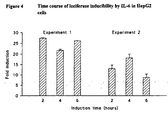
- Reporter plasmid pM8SVL was shown to confer IL-6 responsiveness after transient transfection of HepG2 cells, by increasing up to 50-100 times the expression of luciferase activity (Serlupi Crescenzi et al., Poster at the 12th European Immunol., Meeting, Barcelona, 14-17 June, 1994).
- This plasmid was also tested in T47D human breast carcinoma cells and in mouse M1 myeloid leukaemia cells. M1 cells were transfected with 0.5 ⁇ g DNA/10 6 cells using DEAE/Dextran, while 2.5 ⁇ g DNA/10 5 cells were used for calcium phosphate transfection of T47D cells.
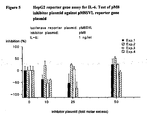
- Example 4 Test of inhibitor plasmid pM8 . Inhibition of IL-6 activity by M8 DNA molecules was measured after co-transfection in HepG2 cells of i) the pM8SVL reporter gene plasmid responding to IL-6 and ii) the M8 molecule inserted in the pM8 inhibitor plasmid. This latter plasmid hosts the M8 sequence but it has not the ability to confer responsiveness to IL-6. HepG2 cells were transfected with up to 2.5 ⁇ g/10 5 cells of the IL-6-responding reporter plasmid pM8SVL (containing M8 and the luciferase gene) and 10 or 50 fold molar excess of pM8, in the presence of various doses of IL-6. The total amount of DNA per transfection was kept constant with the use of the carrier plasmid pC, which is identical to pM8, except for the absence in the former plasmid of the specific 165 bp-long M8 DNA fragment.
- the inhibitor plasmid did not show significant and reproducible specific inhibition of the IL-6 activity in four experiments, even at 50 fold molar excess of the pM8 inhibitor plasmid.
- the IL-6-responding reporter gene plasmid pM8SVL was used at a dose of 0.1 ⁇ g/10 5 cells, while the constant amount of total DNA used in transfection was 5 ⁇ g/10 5 cells.
- the suboptimal dose of IL-6 used in these experiments was 1 ng/ml.
- variability was acceptable with these experimental conditions, given the fact that distinct transfections per se are an inevitable source of variability.
- Example 5 Test of inhibitor plasmid pM8SV .
- the results reported in Figure 5 were somewhat surprising, because the active M8 inhibitor DNA sequence of the inhibitor plasmid pM8 is identical to the active sequence of the pM8SVL reporter gene plasmid. After co-transfection, competition between these two identical M8 sequences present in different plasmids would therefore be expected, resulting in inhibition of IL-6 activity in the reporter gene assay.
- sequences other than M8 in the reporter gene plasmid may contribute to the IL-6-specific signal transduction. These sequences should be missing in the pM8 inhibitor plasmid, but they should be present in the positive reporter gene plasmid pM8SVL (e.g., sequences of the SV40 early gene promoter, which can bind general transcription factors). The inhibitor plasmid pM8 would therefore be ineffective in competing with the reporter gene plasmid pM8SVL.
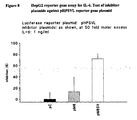
- an inhibitor plasmid (pM8SV) was constructed, containing as IL-6-inhibitor DNA sequences, both the M8 sequence and the SV40 promoter sequence (see Fig. 1). This inhibitor plasmid was tested in the IL-6 reporter gene assay with HepG2 cells. Four independent experiments were performed, with duplicate transfections per experiment. Transfections were performed with 0.1 ⁇ g of reporter plasmid DNA and the molar excess of inhibitor plasmid shown in Figure 6. The total amount of transfected DNA was kept constant with the carrier plasmid. Transfected cells were treated for 18 hours with 1 ng/ml of IL-6.
- Results shown in Fig. 6, indicated a clear dose-dependent inhibition of IL-6 activity by the pM8SV inhibitor plasmid
- Table 1 Three replicate transfections per dose of inhibitor plasmid were performed in each experiment. For each experiment, the induced and non-induced values shown in a single row come from the same transfection. Reported values of light emission are cps integrated over a period of 30 seconds. As it can be seen from such Table 1, some variability was observed in these experiments, especially at lower doses of the inhibitor plasmid, but usually CVs of replicate transfections were well below 20%.
- Transfections were performed with 0.1 ⁇ g of reporter plasmid DNA and the molar excess of inhibitor plasmid shown in Figure 7. The total amount of transfected DNA was kept constant with the carrier plasmid. Transfected cells were treated for 18 hours with 1 ng/ml of IL-6. The results, reported in Figure 7, show that this inhibitor plasmid (pSV) displayed only partial inhibition of IL-6 activity, which never resulted to be above 40% and was not dose-dependent. This allows to conclude that the SV40 DNA sequence alone was not sufficient for effective inhibition of IL-6 activity.
- the luciferase-containing reporter plasmid pGL2-pv contains the SV40 promoter sequence but not the M8 sequence, thus resulting in a basal level of luciferase expression not further inducible by IL-6.
- the basal level of luciferase expression was not inhibited by the pM8SV inhibitor plasmid, thus showing that transcription factors which are specifically bound only to the SV40 promoter region of pGL2-pv, are not effectively removed by the pM8SV inhibitor plasmid.
- luciferase activity from the reporter plasmid pGL2-pv was even higher than in the absence of the inhibitor plasmid (not shown).
- Example 6 Inhibition by pM8SV of the IL-6 activity conferred by the reporter gene plasmid pHPSVL .
- HepG2 cells were therefore transfected with plasmid pHPSVL, which contains 841 base pairs from the promoter sequence of the human haptoglobin gene, flanked by the SV40 promoter and the luciferase gene.
- One APRE site from the haptoglobin promoter sequence (according to Maeda et al., J. Biol.
- Example 7 Test of inhibitor plasmid pM8SV in T47D cells.
- the pM8SV inhibitor plasmid was also tested in the pM8SVL reporter gene assay, using T47D human breast carcinoma cells, where the transduction of the IL-6 signal might be different than in hepatoma cells.
- the IL-6 reporter gene assay with the pM8SVL reporter gene plasmid is working on this cell line, although it is not optimised. Since sensitivity of the assay is somewhat lower with T47D cells, transfections were performed with 1 ⁇ g of the positive reporter gene plasmid /10 5 cells, which is a relatively high level of plasmid DNA. Non-specific inhibition was therefore observed in this experiment in the presence of excess carrier or inhibitor plasmid, resulting in higher variability of the IL-6-specific inhibition.
- Average values of fold induction are calculated from the raw values of each transfection. 1 and 0.5 ⁇ g of reporter gene plasmid were used in experiments 1 and 2 respectively per 10 5 transfected cells.
- Example 8 Definition of the minimal DNA inhibitory sequence .
- the experimental approach of electrophoretic mobility shift assay can be used (according to Ausubel).
- a test for functional inhibition imparted by this minimal sequence can be set using the reporter gene assay mentioned in Example 3 and following Examples.
- the minimal DNA sequence we have shown to functionally inhibit IL-6 activity in a reporter gene assay was the BamH I-Hind III fragment of 350 bp of the inhibitor plasmid pM8SV, which contains an 8-fold repetition of an APRE DNA sequence and the SV40 early promoter sequence.
- This latter sequence is known to contain binding sites for general transcription factors such as an AP-1-like site (as reported in Zenke et al., EMBO J., 5(2), pp. 387-97, 1986) and a 6-fold repetition of the Sp-1 site (as reported in Dynan et al., Cell, 35, pp. 79-87, 1983).
- the BamH I-Hind III DNA fragment can be deleted at its 5' and/or 3' ends, by conventional means such as PCR or nuclease treatment (according to Ausubel) in order to contain, e.g., two APRE sequences and only a single or a few binding site for specific transcription factors from the SV40 early promoter.
- the resulting DNA sequences can be used for inhibition tests of the pSVM8L-based reporter gene assay in HepG2 cells.
- a minimal DNA fragment which retains full ability to functionally inhibit the IL-6 signal can be used in EMSA, by labelling this DNA with a 32 P nucleotide through conventional means, such as end-labelling or fill-in Kleenow reactions.
- the resulting labelled DNA fragment can be incubated with nuclear extracts from HepG2 cells after IL-6 treatment.
- Increasing amounts of a competitor DNA sequence can also be co-incubated, such as anyone of the unlabelled DNA fragments which resulted from the above-mentioned deletions of the BamH I-Hind III inhibitor DNA fragment. After incubation, the mixture can be run in non-denaturing polyacrylamide gel electrophoresis. The binding of relevant transcription factors to the tested labelled DNA fragment will be revealed by a shift in the gel mobility (retardation) expected for the unbound, labelled DNA. The inhibition of this binding in the presence of competitor, unlabelled DNA sequences will be revealed by the specific disappearance of the shifted gel bands.
Landscapes
- Health & Medical Sciences (AREA)
- Life Sciences & Earth Sciences (AREA)
- Chemical & Material Sciences (AREA)
- Genetics & Genomics (AREA)
- Organic Chemistry (AREA)
- Engineering & Computer Science (AREA)
- General Health & Medical Sciences (AREA)
- Zoology (AREA)
- Molecular Biology (AREA)
- Biomedical Technology (AREA)
- Biotechnology (AREA)
- Medicinal Chemistry (AREA)
- Bioinformatics & Cheminformatics (AREA)
- General Engineering & Computer Science (AREA)
- Wood Science & Technology (AREA)
- Biophysics (AREA)
- Biochemistry (AREA)
- Veterinary Medicine (AREA)
- Public Health (AREA)
- Animal Behavior & Ethology (AREA)
- Pharmacology & Pharmacy (AREA)
- Toxicology (AREA)
- General Chemical & Material Sciences (AREA)
- Proteomics, Peptides & Aminoacids (AREA)
- Nuclear Medicine, Radiotherapy & Molecular Imaging (AREA)
- Plant Pathology (AREA)
- Gastroenterology & Hepatology (AREA)
- Physics & Mathematics (AREA)
- Microbiology (AREA)
- Chemical Kinetics & Catalysis (AREA)
- Immunology (AREA)
- Epidemiology (AREA)
- Pain & Pain Management (AREA)
- Rheumatology (AREA)
- Micro-Organisms Or Cultivation Processes Thereof (AREA)
- Pharmaceuticals Containing Other Organic And Inorganic Compounds (AREA)
- Medicines Containing Material From Animals Or Micro-Organisms (AREA)
- Measuring Or Testing Involving Enzymes Or Micro-Organisms (AREA)
- Medicines That Contain Protein Lipid Enzymes And Other Medicines (AREA)
Claims (12)
- Verwendung einer Nukleotidsequenz bei der Herstellung einer pharmazeutischen Zusammensetzung, die bei Therapien zur Hemmung der Wirkung von IL-6 nützlich ist, wobei die Nukleotidsequenz imstande ist, die IL-6-Aktivität zu hemmen, und Folgendes umfasst:i) mindestens eine Nukleotidsequenz, die ein APRE-Element mit der allgemeinen Formel ZXMYKGKAA ist, wobei Z für T oder G steht oder auch abwesend sein kann, X für T steht oder auch abwesend sein kann, M für C oder A steht, Y für C oder T steht und K für T oder G steht, in Verbindung mitii) mindestens einer Nukleotidsequenz, welche eine Transkriptionsfaktor-Bindungsstelle darstellt, die nicht das APRE-Element ist.
- Verwendung nach Anspruch 1, wobei (i) die Nukleotidsequenz TTCTGGGAA ist.
- Verwendung nach einem der vorhergehenden Ansprüche, wobei (ii) aus der Gruppe ausgewählt ist, die aus TATA-Box und den Bindungsstellen für die folgenden Transkriptionsfaktoren: AP-1, AP-2, HNF-1, SP-1, NF-κB, Oct-1, E-2 und SRF besteht.
- Verwendung nach einem der vorhergehenden Ansprüche, wobei das APRE-Element (i) mindestens zweimal wiederholt wird.
- Verwendung nach Anspruch 4, wobei das APRE-Element drei- bis zehnmal wiederholt wird.
- Verwendung nach Anspruch 4 oder 5, wobei das APRE-Element achtmal wiederholt wird.
- Verwendung nach einem der vorhergehenden Ansprüche, wobei die Sequenz (i) mindestens zwei unterschiedliche APRE-Elemente umfasst.
- Verwendung nach einem der vorhergehenden Ansprüche, wobei die Sequenz (ii) mindestens zwei unterschiedliche Oligonukleotidsequenzen umfasst, die eine Transkriptionsfaktor-Bindungsstelle darstellen.
- Verwendung nach Anspruch 8, wobei die Sequenz (ii) der frühe SV40-Promotor ist.
- Verwendung nach Anspruch 1, wobei die Nukleotidsequenz so ist wie in SEQ ID NO: 1 angeführt.
- Verwendung nach einem der vorhergehenden Ansprüche, wobei die Nukleotidsequenz in einem Plasmidvektor enthalten ist.
- Verwendung nach einem der vorhergehenden Ansprüche, wobei die pharmazeutische Zusammensetzung zur Behandlung von Myelomen, Autoimmunerkrankungen, Knochenverlust, Hypercalcämie oder Entzündungskrankheiten, einschließlich rheumatischer Arthritis, Glomerulonephritis, Psoriasis oder Castelman-Erkrankung, dient.
Priority Applications (1)
| Application Number | Priority Date | Filing Date | Title |
|---|---|---|---|
| PT95919438T PT824588E (pt) | 1995-05-11 | 1995-05-11 | Inibidor da actividade da il-6 |
Applications Claiming Priority (1)
| Application Number | Priority Date | Filing Date | Title |
|---|---|---|---|
| PCT/EP1995/001778 WO1996035782A1 (en) | 1995-05-11 | 1995-05-11 | Il-6 activity inhibitor |
Publications (2)
| Publication Number | Publication Date |
|---|---|
| EP0824588A1 EP0824588A1 (de) | 1998-02-25 |
| EP0824588B1 true EP0824588B1 (de) | 2004-07-14 |
Family
ID=8166014
Family Applications (1)
| Application Number | Title | Priority Date | Filing Date |
|---|---|---|---|
| EP95919438A Expired - Lifetime EP0824588B1 (de) | 1995-05-11 | 1995-05-11 | Inhibitoren der il-6 aktivitaet |
Country Status (16)
| Country | Link |
|---|---|
| US (1) | US6004813A (de) |
| EP (1) | EP0824588B1 (de) |
| JP (1) | JP4173539B2 (de) |
| KR (1) | KR100449677B1 (de) |
| AT (1) | ATE271128T1 (de) |
| AU (1) | AU715125B2 (de) |
| CA (1) | CA2220433C (de) |
| DE (1) | DE69533264T2 (de) |
| DK (1) | DK0824588T3 (de) |
| ES (1) | ES2220929T3 (de) |
| IL (1) | IL118158A (de) |
| MX (1) | MX9708663A (de) |
| RU (1) | RU2205874C2 (de) |
| UA (1) | UA63888C2 (de) |
| WO (1) | WO1996035782A1 (de) |
| ZA (1) | ZA963593B (de) |
Families Citing this family (49)
| Publication number | Priority date | Publication date | Assignee | Title |
|---|---|---|---|---|
| US6727230B1 (en) | 1994-03-25 | 2004-04-27 | Coley Pharmaceutical Group, Inc. | Immune stimulation by phosphorothioate oligonucleotide analogs |
| US6239116B1 (en) | 1994-07-15 | 2001-05-29 | University Of Iowa Research Foundation | Immunostimulatory nucleic acid molecules |
| US6429199B1 (en) | 1994-07-15 | 2002-08-06 | University Of Iowa Research Foundation | Immunostimulatory nucleic acid molecules for activating dendritic cells |
| US6207646B1 (en) | 1994-07-15 | 2001-03-27 | University Of Iowa Research Foundation | Immunostimulatory nucleic acid molecules |
| US7935675B1 (en) | 1994-07-15 | 2011-05-03 | University Of Iowa Research Foundation | Immunostimulatory nucleic acid molecules |
| CA2237114A1 (en) * | 1995-11-07 | 1997-05-15 | Kaneka Corporation | Autoantigens |
| EP0855184A1 (de) * | 1997-01-23 | 1998-07-29 | Grayson B. Dr. Lipford | Pharmazeutisches Präparat das ein Polynukleotid und ein Antigen enthält, insbesondere zur Impfung |
| WO1998037919A1 (en) | 1997-02-28 | 1998-09-03 | University Of Iowa Research Foundation | USE OF NUCLEIC ACIDS CONTAINING UNMETHYLATED CpG DINUCLEOTIDE IN THE TREATMENT OF LPS-ASSOCIATED DISORDERS |
| US6406705B1 (en) | 1997-03-10 | 2002-06-18 | University Of Iowa Research Foundation | Use of nucleic acids containing unmethylated CpG dinucleotide as an adjuvant |
| EP1003531B1 (de) | 1997-05-20 | 2007-08-22 | Ottawa Health Research Institute | Verfahren zur Herstellung von Nukleinsäurekonstrukten |
| AU760549B2 (en) | 1998-04-03 | 2003-05-15 | University Of Iowa Research Foundation, The | Methods and products for stimulating the immune system using immunotherapeutic oligonucleotides and cytokines |
| EP0972780A1 (de) * | 1998-05-18 | 2000-01-19 | Applied Research Systems ARS Holding N.V. | Il-6-Antagonistische Peptide |
| BR9913562A (pt) | 1998-09-11 | 2001-05-22 | Ajinomoto Kk | Derivados de benzeno, inibidor de ativação de ap-1 e nf-capa b, inibidor de produção de citoquina inflamatória, inibidor de produção de metaloprotease matricial ou inibidor de aparecimento de fator de adesão de célula inflamatório, e, agente antiinflamatório, anti-reumático, imunossupressor, inibidor de metástase cancerosa, remédio para arterioesclerose e agente antiviral |
| US6977245B2 (en) | 1999-04-12 | 2005-12-20 | The United States Of America As Represented By The Department Of Health And Human Services | Oligodeoxynucleotide and its use to induce an immune response |
| AU7078200A (en) | 1999-08-27 | 2001-03-26 | United States Of America, Represented By The Secretary, Department Of Health And Human Services, The | Polypeptides, comprising il-6 ligand-binding receptor domains and related nucleic acids, antibodies, compositions, and methods of use |
| US6949520B1 (en) | 1999-09-27 | 2005-09-27 | Coley Pharmaceutical Group, Inc. | Methods related to immunostimulatory nucleic acid-induced interferon |
| AU2001227889A1 (en) | 2000-01-14 | 2001-07-24 | The United States of America, represented by The Secretary, Department of Health & Human Services | Oligodeoxynucleotide and its use to induce an immune response |
| US7585847B2 (en) | 2000-02-03 | 2009-09-08 | Coley Pharmaceutical Group, Inc. | Immunostimulatory nucleic acids for the treatment of asthma and allergy |
| EP1296714B1 (de) | 2000-06-22 | 2009-08-26 | University Of Iowa Research Foundation | Kombination von CpG und Antikörpern gegen CD19,CD20,CD22 oder CD40 zur Prävention oder Behandlung von Krebs. |
| WO2003020884A2 (en) | 2001-08-14 | 2003-03-13 | The Government Of The United States Of America As Represented By The Secretary Of Health And Human Services | Method for rapid generation of mature dendritic cells |
| WO2003054161A2 (en) | 2001-12-20 | 2003-07-03 | The Government Of The United States Of America As Represented By The Secretary Of The Department Of Health And Human Services | USE OF CpG OLIGODEOXYNUCLEOTIDES TO INDUCE ANGIOGENESIS |
| AU2003216585A1 (en) * | 2002-04-10 | 2003-10-20 | Orchid Chemicals And Pharmaceuticals Limited | Pyrimidinedione derivatives useful for the treatment of inflammation and immunological diseases |
| US6794401B2 (en) * | 2003-01-17 | 2004-09-21 | Bexel Pharmaceuticals, Inc. | Amino acid phenoxy ethers |
| US7521465B2 (en) * | 2003-01-17 | 2009-04-21 | Bexel Pharmaceuticals, Inc. | Diphenyl ether derivatives |
| US7781464B2 (en) * | 2003-01-17 | 2010-08-24 | Bexel Pharmaceuticals, Inc. | Heterocyclic diphenyl ethers |
| US7087576B2 (en) * | 2003-10-07 | 2006-08-08 | Bexel Pharmaceuticals, Inc. | Dipeptide phenyl ethers |
| AU2005235811B2 (en) * | 2004-02-06 | 2011-11-03 | Morphosys Ag | Anti-CD38 human antibodies and uses therefor |
| EP1858845A2 (de) * | 2005-03-18 | 2007-11-28 | Orchid Chemicals and Pharmaceuticals Limited | Neue tyrosinderivate |
| US20080267888A1 (en) * | 2005-05-26 | 2008-10-30 | Pandey Surendrakumar Satyanara | Heterocyclic Derivatives |
| JP2008543968A (ja) * | 2005-06-28 | 2008-12-04 | オーキッド リサーチ ラボラトリーズ リミテッド | 新規なピラゾロピリミジノン誘導体 |
| CA2625681C (en) | 2005-10-12 | 2016-08-02 | Morphosys Ag | Generation and profiling of fully human hucal gold-derived therapeutic antibodies specific for human cd38 |
| PL1973884T3 (pl) * | 2006-01-19 | 2017-05-31 | Orchid Pharma Limited | Nowe związki heterocykliczne |
| US7863446B2 (en) * | 2006-01-19 | 2011-01-04 | Orchid Research Laboratories Limited | Heterocycles |
| WO2008110891A2 (en) * | 2007-03-09 | 2008-09-18 | Orchid Research Laboratories Limited, | New heterocyclic compounds |
| US7943591B2 (en) * | 2007-05-11 | 2011-05-17 | Adynxx, Inc. | Gene expression and pain |
| BRPI0912029A2 (pt) | 2008-02-01 | 2020-06-30 | Orchid Research Laboratories Limited | novos heterociclos |
| CN102282155B (zh) | 2008-12-02 | 2017-06-09 | 日本波涛生命科学公司 | 磷原子修饰的核酸的合成方法 |
| RU2612521C2 (ru) | 2009-07-06 | 2017-03-09 | Онтории, Инк. | Новые пролекарства нуклеиновых кислот и способы их применения |
| JP5868324B2 (ja) | 2010-09-24 | 2016-02-24 | 株式会社Wave Life Sciences Japan | 不斉補助基 |
| CN103796657B (zh) | 2011-07-19 | 2017-07-11 | 波涛生命科学有限公司 | 合成官能化核酸的方法 |
| PT2846839T (pt) | 2012-05-10 | 2019-05-29 | Adynxx Inc | Formulações para a administração de ingredientes ativos |
| CA2879066C (en) | 2012-07-13 | 2019-08-13 | Shin Nippon Biomedical Laboratories, Ltd. | Chiral nucleic acid adjuvant |
| PL2872485T3 (pl) | 2012-07-13 | 2021-05-31 | Wave Life Sciences Ltd. | Asymetryczna grupa pomocnicza |
| KR102213609B1 (ko) | 2012-07-13 | 2021-02-08 | 웨이브 라이프 사이언시스 리미티드 | 키랄 제어 |
| JPWO2015108048A1 (ja) | 2014-01-15 | 2017-03-23 | 株式会社新日本科学 | 抗腫瘍作用を有するキラル核酸アジュバンド及び抗腫瘍剤 |
| US10322173B2 (en) | 2014-01-15 | 2019-06-18 | Shin Nippon Biomedical Laboratories, Ltd. | Chiral nucleic acid adjuvant having anti-allergic activity, and anti-allergic agent |
| JPWO2015108047A1 (ja) | 2014-01-15 | 2017-03-23 | 株式会社新日本科学 | 免疫誘導活性を有するキラル核酸アジュバンド及び免疫誘導活性剤 |
| BR112016016400A2 (pt) | 2014-01-16 | 2017-10-03 | Wave Life Sciences Ltd | Composições de oligonucleotídeos quiralmente controlados, seu uso, sua composição farmacêutica, e métodos |
| RU2017108238A (ru) | 2014-08-15 | 2018-09-17 | Эйдинкс, Инк. | Олигонуклеотиды-приманки для лечения боли |
-
1995
- 1995-05-11 AT AT95919438T patent/ATE271128T1/de active
- 1995-05-11 MX MX9708663A patent/MX9708663A/es unknown
- 1995-05-11 US US08/945,726 patent/US6004813A/en not_active Expired - Lifetime
- 1995-05-11 KR KR1019970708022A patent/KR100449677B1/ko not_active Expired - Lifetime
- 1995-05-11 ES ES95919438T patent/ES2220929T3/es not_active Expired - Lifetime
- 1995-05-11 WO PCT/EP1995/001778 patent/WO1996035782A1/en not_active Ceased
- 1995-05-11 JP JP53368396A patent/JP4173539B2/ja not_active Expired - Lifetime
- 1995-05-11 AU AU25267/95A patent/AU715125B2/en not_active Expired
- 1995-05-11 CA CA2220433A patent/CA2220433C/en not_active Expired - Lifetime
- 1995-05-11 DE DE69533264T patent/DE69533264T2/de not_active Expired - Lifetime
- 1995-05-11 DK DK95919438T patent/DK0824588T3/da active
- 1995-05-11 EP EP95919438A patent/EP0824588B1/de not_active Expired - Lifetime
- 1995-05-11 RU RU97120584/13A patent/RU2205874C2/ru active
- 1995-11-05 UA UA97126018A patent/UA63888C2/uk unknown
-
1996
- 1996-05-06 IL IL11815896A patent/IL118158A/en not_active IP Right Cessation
- 1996-05-07 ZA ZA963593A patent/ZA963593B/xx unknown
Also Published As
| Publication number | Publication date |
|---|---|
| ZA963593B (en) | 1996-11-25 |
| DE69533264T2 (de) | 2004-11-25 |
| US6004813A (en) | 1999-12-21 |
| CA2220433C (en) | 2010-02-16 |
| DE69533264D1 (de) | 2004-08-19 |
| JPH11504816A (ja) | 1999-05-11 |
| EP0824588A1 (de) | 1998-02-25 |
| AU2526795A (en) | 1996-11-29 |
| UA63888C2 (en) | 2004-02-16 |
| ES2220929T3 (es) | 2004-12-16 |
| ATE271128T1 (de) | 2004-07-15 |
| IL118158A (en) | 2004-07-25 |
| WO1996035782A1 (en) | 1996-11-14 |
| CA2220433A1 (en) | 1996-11-14 |
| JP4173539B2 (ja) | 2008-10-29 |
| DK0824588T3 (da) | 2004-08-16 |
| MX9708663A (es) | 1998-02-28 |
| KR100449677B1 (ko) | 2004-11-20 |
| RU2205874C2 (ru) | 2003-06-10 |
| KR19990014681A (ko) | 1999-02-25 |
| AU715125B2 (en) | 2000-01-20 |
| IL118158A0 (en) | 1996-09-12 |
| HK1016213A1 (en) | 1999-10-29 |
Similar Documents
| Publication | Publication Date | Title |
|---|---|---|
| EP0824588B1 (de) | Inhibitoren der il-6 aktivitaet | |
| MXPA97008663A (en) | Activity inhibitor i | |
| Klein-Hitpass et al. | A 13 bp palindrome is a functional estrogen responsive element and interacts specifically with estrogen receptor | |
| Edbrooke et al. | Identification of cis-acting sequences responsible for phorbol ester induction of human serum amyloid A gene expression via a nuclear factor κB-like transcription factor | |
| Woloshin et al. | MSX1 inhibits MyoD expression in fibroblast× 10T½ cell hybrids | |
| Garay-Rojas et al. | An apparent autocrine mechanism amplifies the dexamethasone-and retinoic acid-induced expression of mouse lipocalin-encoding gene 24p3 | |
| Banerjee et al. | Transforming growth factor-beta 1 responsiveness of the rat osteocalcin gene is mediated by an activator protein-1 binding site | |
| Weinberger et al. | Localization of a repressive sequence contributing to B-cell specificity in the immunoglobulin heavy-chain enhancer | |
| Klotzbücher et al. | Misexpression of wild-type and truncated isoforms of the high-mobility group I proteins HMGI-C and HMGI (Y) in uterine leiomyomas | |
| Olive et al. | Design of a C/EBP-specific, dominant-negative bZIP protein with both inhibitory and gain-of-function properties | |
| McCracken et al. | An alternative pathway for expression of p56lck from type I promoter transcripts in colon carcinoma | |
| JPH07184661A (ja) | 抗骨粗鬆症物質をスクリーニングするための物質および方法 | |
| Ciudad et al. | Deletion analysis of the Chinese hamster dihydrofolate reductase gene promoter. | |
| Munoz-Canoves et al. | Analysis of complement factor H mRNA expression: dexamethasone and IFN-. gamma. increase the level of H in L cells | |
| Kawasaki et al. | c‐Fos/activator protein‐1 transactivates wee1 kinase at G1/S to inhibit premature mitosis in antigen‐specific Th1 cells | |
| Lin et al. | Site-specific methylation inhibits transcriptional activity of platelet-derived growth factor A-chain promoter | |
| Aoki et al. | Genomic structure and chromosomal localization of the gene encoding translin, a recombination hotspot binding protein | |
| Srivastava et al. | The HIV-1 transactivator protein Tat is a potent inducer of the human DNA repair enzyme β-polymerase | |
| Lee et al. | Regulatory elements mediating transcription of the human Ha-ras gene | |
| Weir et al. | Characterization of the nonmuscle myosin heavy chain IIB promoter: regulation by E2F | |
| NZ330866A (en) | Methods for the characterization of compounds which stimulate STF-1 expression in pancreatic islet cells | |
| Nolan et al. | Transcriptional regulation of the human chromogranin A gene by its 5′ distal regulatory element: novel effects of orientation, structure, flanking sequences, and position on expression | |
| Chen et al. | Promoter analysis of interleukin 19 | |
| US5534631A (en) | Cellular factor ILF | |
| Li et al. | Cloning and sequencing of CATR1. 3, a human gene associated with tumorigenic conversion. |
Legal Events
| Date | Code | Title | Description |
|---|---|---|---|
| PUAI | Public reference made under article 153(3) epc to a published international application that has entered the european phase |
Free format text: ORIGINAL CODE: 0009012 |
|
| 17P | Request for examination filed |
Effective date: 19971202 |
|
| AK | Designated contracting states |
Kind code of ref document: A1 Designated state(s): AT BE CH DE DK ES FR GB GR IE IT LI LU MC NL PT SE |
|
| 17Q | First examination report despatched |
Effective date: 20010718 |
|
| GRAP | Despatch of communication of intention to grant a patent |
Free format text: ORIGINAL CODE: EPIDOSNIGR1 |
|
| GRAS | Grant fee paid |
Free format text: ORIGINAL CODE: EPIDOSNIGR3 |
|
| RAP1 | Party data changed (applicant data changed or rights of an application transferred) |
Owner name: APPLIED RESEARCH SYSTEMS ARS HOLDING N.V. |
|
| GRAA | (expected) grant |
Free format text: ORIGINAL CODE: 0009210 |
|
| AK | Designated contracting states |
Kind code of ref document: B1 Designated state(s): AT BE CH DE DK ES FR GB GR IE IT LI LU MC NL PT SE |
|
| REG | Reference to a national code |
Ref country code: GB Ref legal event code: FG4D |
|
| REG | Reference to a national code |
Ref country code: CH Ref legal event code: NV Representative=s name: SERONO INTERNATIONAL SA CORPORATE IP DEPARTMENT Ref country code: CH Ref legal event code: EP |
|
| REG | Reference to a national code |
Ref country code: DK Ref legal event code: T3 |
|
| REF | Corresponds to: |
Ref document number: 69533264 Country of ref document: DE Date of ref document: 20040819 Kind code of ref document: P |
|
| REG | Reference to a national code |
Ref country code: IE Ref legal event code: FG4D |
|
| REG | Reference to a national code |
Ref country code: PT Ref legal event code: SC4A Free format text: AVAILABILITY OF NATIONAL TRANSLATION Effective date: 20040803 |
|
| REG | Reference to a national code |
Ref country code: SE Ref legal event code: TRGR |
|
| REG | Reference to a national code |
Ref country code: GR Ref legal event code: EP Ref document number: 20040402842 Country of ref document: GR |
|
| REG | Reference to a national code |
Ref country code: ES Ref legal event code: FG2A Ref document number: 2220929 Country of ref document: ES Kind code of ref document: T3 |
|
| ET | Fr: translation filed | ||
| PLBE | No opposition filed within time limit |
Free format text: ORIGINAL CODE: 0009261 |
|
| STAA | Information on the status of an ep patent application or granted ep patent |
Free format text: STATUS: NO OPPOSITION FILED WITHIN TIME LIMIT |
|
| 26N | No opposition filed |
Effective date: 20050415 |
|
| REG | Reference to a national code |
Ref country code: CH Ref legal event code: PCAR Free format text: MERCK SERONO INTERNATIONAL S.A. CORPORATE IP DEPARTMENT;9, CHEMIN DES MINES;1202 GENEVE (CH) |
|
| REG | Reference to a national code |
Ref country code: CH Ref legal event code: PUE Owner name: LABORATOIRES SERONO SA Free format text: APPLIED RESEARCH SYSTEMS ARS HOLDING N.V.#PIETERMAAI 15#CURACAO (AN) -TRANSFER TO- LABORATOIRES SERONO SA#CENTRE INDUSTRIEL#1267 COINSINS, VAUD (CH) |
|
| REG | Reference to a national code |
Ref country code: PT Ref legal event code: PC4A Owner name: LABORATOIRES SERONO SA, CH Effective date: 20071030 |
|
| NLS | Nl: assignments of ep-patents |
Owner name: LABORATOIRES SERONO SA Effective date: 20070920 |
|
| REG | Reference to a national code |
Ref country code: GB Ref legal event code: 732E |
|
| REG | Reference to a national code |
Ref country code: FR Ref legal event code: TP |
|
| REG | Reference to a national code |
Ref country code: CH Ref legal event code: PFA Owner name: MERCK SERONO SA Free format text: LABORATOIRES SERONO SA#CENTRE INDUSTRIEL#1267 COINSINS, VAUD (CH) -TRANSFER TO- MERCK SERONO SA#CENTRE INDUSTRIEL#1267 COINSINS, VAUD (CH) Ref country code: CH Ref legal event code: NV Representative=s name: MERCK SERONO S.A. - GENEVA |
|
| REG | Reference to a national code |
Ref country code: FR Ref legal event code: CD |
|
| REG | Reference to a national code |
Ref country code: DE Ref legal event code: R081 Ref document number: 69533264 Country of ref document: DE Owner name: MERCK SERONO SA, COINSINS, CH Free format text: FORMER OWNER: LABORATOIRES SERONO S.A., COINSINS, VAUD, CH Effective date: 20110427 Ref country code: DE Ref legal event code: R081 Ref document number: 69533264 Country of ref document: DE Owner name: MERCK SERONO SA, CH Free format text: FORMER OWNER: LABORATOIRES SERONO S.A., COINSINS, CH Effective date: 20110427 |
|
| REG | Reference to a national code |
Ref country code: ES Ref legal event code: PC2A Owner name: MERCK SERONO SA Effective date: 20110901 |
|
| REG | Reference to a national code |
Ref country code: NL Ref legal event code: TD Effective date: 20111212 |
|
| PGFP | Annual fee paid to national office [announced via postgrant information from national office to epo] |
Ref country code: MC Payment date: 20140327 Year of fee payment: 20 |
|
| PGFP | Annual fee paid to national office [announced via postgrant information from national office to epo] |
Ref country code: LU Payment date: 20140515 Year of fee payment: 20 |
|
| PGFP | Annual fee paid to national office [announced via postgrant information from national office to epo] |
Ref country code: GB Payment date: 20140507 Year of fee payment: 20 Ref country code: IE Payment date: 20140512 Year of fee payment: 20 |
|
| PGFP | Annual fee paid to national office [announced via postgrant information from national office to epo] |
Ref country code: SE Payment date: 20140513 Year of fee payment: 20 Ref country code: AT Payment date: 20140428 Year of fee payment: 20 Ref country code: ES Payment date: 20140411 Year of fee payment: 20 Ref country code: CH Payment date: 20140513 Year of fee payment: 20 Ref country code: GR Payment date: 20140414 Year of fee payment: 20 Ref country code: NL Payment date: 20140410 Year of fee payment: 20 Ref country code: PT Payment date: 20140506 Year of fee payment: 20 Ref country code: DE Payment date: 20140507 Year of fee payment: 20 Ref country code: IT Payment date: 20140408 Year of fee payment: 20 Ref country code: FR Payment date: 20140509 Year of fee payment: 20 |
|
| PGFP | Annual fee paid to national office [announced via postgrant information from national office to epo] |
Ref country code: BE Payment date: 20140513 Year of fee payment: 20 Ref country code: DK Payment date: 20140512 Year of fee payment: 20 |
|
| REG | Reference to a national code |
Ref country code: DE Ref legal event code: R071 Ref document number: 69533264 Country of ref document: DE |
|
| REG | Reference to a national code |
Ref country code: DK Ref legal event code: EUP Effective date: 20150511 |
|
| REG | Reference to a national code |
Ref country code: NL Ref legal event code: V4 Effective date: 20150511 Ref country code: PT Ref legal event code: MM4A Free format text: MAXIMUM VALIDITY LIMIT REACHED Effective date: 20150511 |
|
| REG | Reference to a national code |
Ref country code: CH Ref legal event code: PL |
|
| REG | Reference to a national code |
Ref country code: GB Ref legal event code: PE20 Expiry date: 20150510 |
|
| REG | Reference to a national code |
Ref country code: AT Ref legal event code: MK07 Ref document number: 271128 Country of ref document: AT Kind code of ref document: T Effective date: 20150511 |
|
| REG | Reference to a national code |
Ref country code: SE Ref legal event code: EUG |
|
| REG | Reference to a national code |
Ref country code: IE Ref legal event code: MK9A |
|
| REG | Reference to a national code |
Ref country code: ES Ref legal event code: FD2A Effective date: 20150724 |
|
| REG | Reference to a national code |
Ref country code: GR Ref legal event code: MA Ref document number: 20040402842 Country of ref document: GR Effective date: 20150512 |
|
| PG25 | Lapsed in a contracting state [announced via postgrant information from national office to epo] |
Ref country code: PT Free format text: LAPSE BECAUSE OF EXPIRATION OF PROTECTION Effective date: 20150520 Ref country code: GB Free format text: LAPSE BECAUSE OF EXPIRATION OF PROTECTION Effective date: 20150510 |
|
| PG25 | Lapsed in a contracting state [announced via postgrant information from national office to epo] |
Ref country code: IE Free format text: LAPSE BECAUSE OF EXPIRATION OF PROTECTION Effective date: 20150511 |
|
| PG25 | Lapsed in a contracting state [announced via postgrant information from national office to epo] |
Ref country code: ES Free format text: LAPSE BECAUSE OF EXPIRATION OF PROTECTION Effective date: 20150512 |