EP0809637B1 - Fungizide aza-heterocycloalkene - Google Patents
Fungizide aza-heterocycloalkene Download PDFInfo
- Publication number
- EP0809637B1 EP0809637B1 EP96901336A EP96901336A EP0809637B1 EP 0809637 B1 EP0809637 B1 EP 0809637B1 EP 96901336 A EP96901336 A EP 96901336A EP 96901336 A EP96901336 A EP 96901336A EP 0809637 B1 EP0809637 B1 EP 0809637B1
- Authority
- EP
- European Patent Office
- Prior art keywords
- methyl
- formula
- compounds
- ethyl
- fufion
- Prior art date
- Legal status (The legal status is an assumption and is not a legal conclusion. Google has not performed a legal analysis and makes no representation as to the accuracy of the status listed.)
- Expired - Lifetime
Links
- 0 *CC*NC(*c1c(CO*)cccc1)=* Chemical compound *CC*NC(*c1c(CO*)cccc1)=* 0.000 description 1
Classifications
-
- A—HUMAN NECESSITIES
- A01—AGRICULTURE; FORESTRY; ANIMAL HUSBANDRY; HUNTING; TRAPPING; FISHING
- A01N—PRESERVATION OF BODIES OF HUMANS OR ANIMALS OR PLANTS OR PARTS THEREOF; BIOCIDES, e.g. AS DISINFECTANTS, AS PESTICIDES OR AS HERBICIDES; PEST REPELLANTS OR ATTRACTANTS; PLANT GROWTH REGULATORS
- A01N43/00—Biocides, pest repellants or attractants, or plant growth regulators containing heterocyclic compounds
- A01N43/72—Biocides, pest repellants or attractants, or plant growth regulators containing heterocyclic compounds having rings with nitrogen atoms and oxygen or sulfur atoms as ring hetero atoms
- A01N43/88—Biocides, pest repellants or attractants, or plant growth regulators containing heterocyclic compounds having rings with nitrogen atoms and oxygen or sulfur atoms as ring hetero atoms six-membered rings with three ring hetero atoms
-
- C—CHEMISTRY; METALLURGY
- C07—ORGANIC CHEMISTRY
- C07D—HETEROCYCLIC COMPOUNDS
- C07D273/00—Heterocyclic compounds containing rings having nitrogen and oxygen atoms as the only ring hetero atoms, not provided for by groups C07D261/00 - C07D271/00
- C07D273/02—Heterocyclic compounds containing rings having nitrogen and oxygen atoms as the only ring hetero atoms, not provided for by groups C07D261/00 - C07D271/00 having two nitrogen atoms and only one oxygen atom
- C07D273/04—Six-membered rings
-
- C—CHEMISTRY; METALLURGY
- C07—ORGANIC CHEMISTRY
- C07D—HETEROCYCLIC COMPOUNDS
- C07D291/00—Heterocyclic compounds containing rings having nitrogen, oxygen and sulfur atoms as the only ring hetero atoms
- C07D291/02—Heterocyclic compounds containing rings having nitrogen, oxygen and sulfur atoms as the only ring hetero atoms not condensed with other rings
- C07D291/06—Six-membered rings
-
- C—CHEMISTRY; METALLURGY
- C07—ORGANIC CHEMISTRY
- C07D—HETEROCYCLIC COMPOUNDS
- C07D413/00—Heterocyclic compounds containing two or more hetero rings, at least one ring having nitrogen and oxygen atoms as the only ring hetero atoms
- C07D413/02—Heterocyclic compounds containing two or more hetero rings, at least one ring having nitrogen and oxygen atoms as the only ring hetero atoms containing two hetero rings
- C07D413/12—Heterocyclic compounds containing two or more hetero rings, at least one ring having nitrogen and oxygen atoms as the only ring hetero atoms containing two hetero rings linked by a chain containing hetero atoms as chain links
-
- C—CHEMISTRY; METALLURGY
- C07—ORGANIC CHEMISTRY
- C07D—HETEROCYCLIC COMPOUNDS
- C07D413/00—Heterocyclic compounds containing two or more hetero rings, at least one ring having nitrogen and oxygen atoms as the only ring hetero atoms
- C07D413/14—Heterocyclic compounds containing two or more hetero rings, at least one ring having nitrogen and oxygen atoms as the only ring hetero atoms containing three or more hetero rings
-
- C—CHEMISTRY; METALLURGY
- C07—ORGANIC CHEMISTRY
- C07D—HETEROCYCLIC COMPOUNDS
- C07D417/00—Heterocyclic compounds containing two or more hetero rings, at least one ring having nitrogen and sulfur atoms as the only ring hetero atoms, not provided for by group C07D415/00
- C07D417/02—Heterocyclic compounds containing two or more hetero rings, at least one ring having nitrogen and sulfur atoms as the only ring hetero atoms, not provided for by group C07D415/00 containing two hetero rings
- C07D417/12—Heterocyclic compounds containing two or more hetero rings, at least one ring having nitrogen and sulfur atoms as the only ring hetero atoms, not provided for by group C07D415/00 containing two hetero rings linked by a chain containing hetero atoms as chain links
-
- C—CHEMISTRY; METALLURGY
- C07—ORGANIC CHEMISTRY
- C07D—HETEROCYCLIC COMPOUNDS
- C07D417/00—Heterocyclic compounds containing two or more hetero rings, at least one ring having nitrogen and sulfur atoms as the only ring hetero atoms, not provided for by group C07D415/00
- C07D417/14—Heterocyclic compounds containing two or more hetero rings, at least one ring having nitrogen and sulfur atoms as the only ring hetero atoms, not provided for by group C07D415/00 containing three or more hetero rings
-
- C—CHEMISTRY; METALLURGY
- C07—ORGANIC CHEMISTRY
- C07D—HETEROCYCLIC COMPOUNDS
- C07D419/00—Heterocyclic compounds containing two or more hetero rings, at least one ring having nitrogen, oxygen, and sulfur atoms as the only ring hetero atoms
- C07D419/02—Heterocyclic compounds containing two or more hetero rings, at least one ring having nitrogen, oxygen, and sulfur atoms as the only ring hetero atoms containing two hetero rings
- C07D419/12—Heterocyclic compounds containing two or more hetero rings, at least one ring having nitrogen, oxygen, and sulfur atoms as the only ring hetero atoms containing two hetero rings linked by a chain containing hetero atoms as chain links
-
- C—CHEMISTRY; METALLURGY
- C07—ORGANIC CHEMISTRY
- C07D—HETEROCYCLIC COMPOUNDS
- C07D419/00—Heterocyclic compounds containing two or more hetero rings, at least one ring having nitrogen, oxygen, and sulfur atoms as the only ring hetero atoms
- C07D419/14—Heterocyclic compounds containing two or more hetero rings, at least one ring having nitrogen, oxygen, and sulfur atoms as the only ring hetero atoms containing three or more hetero rings
Definitions
- the invention relates to new substituted heterocycloalkenes, several processes for their Manufacture and its use as fungicides and new intermediates and several methods of making them.
- WO 95/26956 discloses oxime derivatives. Tilley et al (Helv. Chim. Acta, 63 (4), (1980), 841-859) describe 2,4-dihydro-3H-1,2,4-triazol- 3-one derivatives. Joshua et al. (J. Chem. Sect. B, 29 (4), (1990), 315-318) describe 4-methyl-2,4-dihydro-3H-1,2,4-triazole- 3-thione derivatives. Guha et al. (J. Indian Chem. Soc. 7, (1930), 933, 943). Bose et al. (J. Indian Chem.
- the compounds of the invention can optionally be used as mixtures of different possible isomeric forms, especially stereoisomers, such as. B. E and Z isomers, but optionally also of tautomers. It will both the E and the Z isomers, any mixtures of these isomers, and the possible tautomeric forms claimed.
- saturated or unsaturated hydrocarbon chains such as alkyl, alkanediyl, alkenyl or alkynyl, also in combination with heteroatoms, as in alkoxy, alkylthio or alkylamino, in each case straight-chain or branched.
- Halogen generally represents fluorine, chlorine, bromine or iodine, preferably Fluorine, chlorine or bromine, especially for fluorine or chlorine.
- Formula (II) provides a general definition of the hydroxy compounds required as starting materials for carrying out process a) according to the invention.
- E preferably or in particular, has the meaning which has already been given for and Z in connection with the description of the compounds of the formula (I) according to the invention.
- Y 3 stands for an imino grouping and Y 4 stands for an imino grouping.
- hydroxy compounds of formula (II) are not yet known. If Y 3 and Y 4 do not simultaneously represent oxygen, they are the subject of the present application.
- Formula (IV) provides a general definition of the carboxylic acid derivatives required as starting materials for carrying out process a-1) according to the invention for the preparation of the hydroxy compounds of the general formula (II).
- E, Y 3 and Z preferably or in particular have the meaning which, in connection with the description of the compounds of the formula (I) according to the invention or of the hydroxy compounds of the formula (II), are preferred or was given as particularly preferred for E, Y 3 and Z.
- X 2 represents halogen, preferably chlorine, or alkoxy, preferably ethoxy or methoxy.
- the carboxylic acid derivatives of the formula (IV) are known and / or per se known processes can be prepared (cf. EP-A 178826, EP-A 242081, EP-A 382375, EP-A 493711, EP-A 432503, DE-A 3938054, EP-A 528 681).
- Formula (V) provides a general definition of the hydroxyalkyl compounds required as starting materials for carrying out process a-1) according to the invention for the preparation of the hydroxy compounds of the general formula (II).
- Y 4 preferably or in particular has the meaning which, in connection with the description of the compounds of the formula (I) according to the invention, or of the hydroxy compounds of the formula (II), is preferred or as particularly preferred for Y 4 was specified.
- hydroxyalkyl compounds of formula (V) are known and / or can according to known processes can be prepared (see, for example, J. Chem. Soc., Chem. Com. 1986, 903 or J. Med. Chem. 1968, 504.
- Process a) according to the invention is optionally carried out in the presence of a suitable diluent carried out.
- a suitable diluent carried out.
- a suitable diluent carried out.
- a suitable diluent all inert organic Solvent into consideration.
- These preferably include aliphatic, alicyclic or aromatic hydrocarbons, such as petroleum ether, hexane, heptane, Cyclohexane, methylcyclohexane, benzene, toluene, xylene or decalin; halogenated Hydrocarbons, such as chlorobenzene, dichlorobenzene, dichloromethane, Chloroform, carbon tetrachloride, dichloroethane or trichloroethane; Ethers, such as diethyl ether, Diisopropyl ether, methyl t-butyl ether, methyl t-amyl ether, dio
- Process a) according to the invention is optionally carried out in the presence of a suitable Condensing agent carried out.
- a suitable Condensing agent carried out.
- Acid halide formers such as phosgene, phosphorus tribromide, Phosphorus trichloride, phosphorus pentachloride, phosphorus oxychloride or thionyl chloride;
- Anhydride formers such as ethyl chloroformate, methyl chloroformate, Isopropyl chloroformate, isobutyl chloroformate or methanesulfonyl chloride;
- Carbodiimides such as N, N'-dicyclohexylcarbodiimide (DCC) or other usual condensing agents, such as phosphorus pentoxide, polyphosphoric acid, N, N'-carbonyldiimidazole, 2-ethoxy-N-ethoxycarbonyl-1,2-dihydro
- reaction temperatures can be carried out when carrying out the process according to the invention a) be varied over a wide range. Generally you work at Temperatures between 0 ° C and + 200 ° C, preferably at temperatures between 10 ° C and 140 ° C.
- Formula (III) provides a general definition of the nitrogen-containing carboxylic acid derivatives required as starting materials for carrying out process b) according to the invention.
- E, Y 1 , Y 2 and Z preferably or in particular have the meaning which, in connection with the description of the compounds of the formula (I) according to the invention, are preferred or as particularly preferred for E, Y 1 , Y 2 was specified.
- X 1 represents halogen, arylsulfonyl or alkylsulfonyl, preferably chlorine, methylsulfonyl or 4-tolylsulfonyl.
- the nitrogen-containing carboxylic acid derivatives of the formula (III) are not yet known; she are the subject of the present application as new substances.
- Thionyl chloride optionally in the presence of a diluent, such as Toluene, xylene or chlorobenzene, optionally in the presence of a diluent, such as Toluene, xylene or chlorobenzene, optionally in the presence of a diluent, such as Toluene, xylene or chlorobenzene, optionally in the presence of a diluent, such as Toluene, xylene or chlorobenzene, optionally in the presence of a diluent, such as Toluene, xylene or chlorobenzene, optionally in the presence of a diluent, such as Toluene, xylene or chlorobenzene, optionally in the presence of a diluent, such as Toluene, xylene or chlorobenzene, optionally in the presence of a diluent, such as To
- Reaction aids such as dimethylformamide or pyridine, at temperatures from -20 to 120 ° C, preferably 0 to 100 ° C, or with a sulfonic acid halide, such as b.
- Methanesulfonic acid chloride or 4-toluenesulfonic acid chloride if appropriate in the presence of a diluent such as toluene, pyridine, Dichloromethane or tetrahydrofuran and optionally in the presence of an acid acceptor, such as triethylamine, pyridine, dimethylaminopyridine, sodium hydroxide or potassium carbonate, at temperatures from -20 to 120 ° C, preferably 0 to 100 ° C.
- Acid acceptors are all customary inorganic or organic bases. These include, for example, alkaline earth metal or alkali metal hydrides, hydroxides, amides, alcoholates, acetates, carbonates or bicarbonates, such as, for example Sodium hydride, sodium amide, sodium methylate, sodium ethylate, potassium tert-butoxide, Sodium hydroxide, potassium hydroxide, ammonium hydroxide, sodium acetate, potassium acetate, Calcium acetate, ammonium acetate, sodium carbonate, potassium carbonate, potassium hydrogen carbonate, Sodium bicarbonate or ammonium carbonate, as well as tertiary Amines, such as trimethylamine, triethylamine, tributylamine, N, N-dimethylaniline, N, N-dimethylbenzylamine, Pyridine, N-methylpiperidine, N-methylmorpholine, N, N-dimethylaminopyr
- Suitable diluents for carrying out process b) according to the invention all inert organic solvents.
- These preferably include aliphatic, alicyclic or aromatic hydrocarbons, such as petroleum ether, Hexane, heptane, cyclohexane, methylcyclohexane, benzene, toluene, xylene or decalin; halogenated hydrocarbons, such as chlorobenzene, dichlorobenzene, Dichloromethane, chloroform, carbon tetrachloride, dichloroethane or trichloroethane; Ethers, such as diethyl ether, diisopropyl ether, methyl t-butyl ether, methyl t-amyl ether, Dioxane, tetrahydrofuran, 1,2-dimethoxyethane, 1,2-diethoxyethane or anisole; Ketones such as acetone, butanone,
- reaction temperatures can be carried out when carrying out the process according to the invention b) can be varied over a wide range. Generally you work at Temperatures between -20 ° C and + 130 ° C, preferably at temperatures between 0 ° C and 100 ° C.
- the processes a) and b) according to the invention are generally under normal pressure carried out. However, it is also possible to increase or decrease it Pressure - generally between 0.1 bar and 10 bar - to work.
- the reaction is carried out, worked up and isolated from the reaction products by known methods (see also the manufacturing examples).
- the active compounds according to the invention have a strong microbicidal action and are used to combat unwanted microorganisms.
- the active ingredients are for use as pesticides, especially as Suitable for fungicides.
- Fungicidal agents in crop protection are used to control Plasmodiophoromycetes, Oomycetes, Chytridiomycetes, Zygomycetes, Ascomycetes, Basidiomycetes, Deuteromycetes.
- the active compounds according to the invention are particularly effective in combating them of cereal diseases, such as, for example, against Erysiphe species or of Diseases in wine, fruit and vegetable growing, such as against Venturia, Podospherea and Sphaerotheca species used.
- cereal diseases such as, for example, against Erysiphe species or of Diseases in wine, fruit and vegetable growing, such as against Venturia, Podospherea and Sphaerotheca species used.
- Active ingredients according to the invention also include rice diseases, such as, for example, Pyricularia species, fought.
- the active ingredients are dependent on their respective physical and / or chemical properties optionally converted into conventional formulations, such as z. B. solutions, emulsions, suspensions, powders, foams, pastes, granules, Aerosols, very fine encapsulations in polymeric substances and in coating materials for seeds, as well as ULV cold and warm fog formulations.
- formulations are made in a known manner, e.g. by mixing of the active substances with extenders, i.e. liquid solvents, under pressure liquefied gases and / or solid carriers, optionally using of surface-active agents, i.e. emulsifiers and / or dispersants and / or foam-generating agents. If water is used as an extender can e.g. organic solvents are also used as auxiliary solvents become.
- extenders i.e. liquid solvents
- surface-active agents i.e. emulsifiers and / or dispersants and / or foam-generating agents.
- water e.g. organic solvents are also used as auxiliary solvents become.
- aromatics such as Xylene, toluene, alkylnaphthalenes, chlorinated aromatics or chlorinated aliphatic Hydrocarbons, such as chlorobenzenes, chlorethylenes, or methylene chloride, aliphatic Hydrocarbons such as cyclohexane or paraffins, e.g.
- natural rock flour such as kaolins, clays, talc, chalk, quartz, attapulgite, montmorillonite or Diatomaceous earth and synthetic rock powder, such as highly disperse silica, Alumina and silicates
- solid carriers for granules are possible: e.g. broken and fractionated natural rocks such as calcite, marble, pumice, sepiolite, Dolomite and synthetic granules from inorganic and organic flours as well as granules of organic material such as sawdust, coconut shells, corn cobs and tobacco stems; come as emulsifying and / or foam-generating agents in question: e.g.
- non-ionic and anionic emulsifiers such as polyoxyethylene fatty acid esters, Polyoxyethylene fatty alcohol ethers, e.g. Alkylaryl polyglycol ethers, alkyl sulfonates, Alkyl sulfates, aryl sulfonates and protein hydrolyzates; as a dispersant are possible: e.g. Lignin sulfite liquor and methyl cellulose.
- Adhesives such as carboxymethyl cellulose, natural and synthetic, powdery, granular or latex-shaped polymers used such.
- Other possible additives are mineral and vegetable oils.
- Dyes such as inorganic pigments, e.g. iron oxide, Titanium oxide, ferrocyan blue and organic dyes such as alizarin, azo and Metal phthalocyanine dyes and trace nutrients such as salts of iron, manganese, Boron, copper, cobalt, molybdenum and zinc added.
- inorganic pigments e.g. iron oxide, Titanium oxide, ferrocyan blue and organic dyes such as alizarin, azo and Metal phthalocyanine dyes and trace nutrients such as salts of iron, manganese, Boron, copper, cobalt, molybdenum and zinc added.
- the formulations generally contain between 0.1 and 95 percent by weight Active ingredient, preferably between 0.5 and 90%.
- the active compounds according to the invention are used as such or in their formulations also in a mixture with known fungicides, bactericides, acaricides, nematicides or insecticides, e.g. to broaden the spectrum of activity or To prevent the development of resistance.
- the active compounds according to the invention are also known with other Active ingredients, such as herbicides or with fertilizers and growth regulators mixed.
- the active ingredients are taken as such, in the form of their formulations or from them prepared application forms, such as ready-to-use solutions, suspensions, Spray powder, pastes, soluble powders, dusts and granules are used.
- the Application takes place in the usual way, e.g. by pouring, spraying, spraying, Scattering, dusting, foaming, brushing, etc.
- the Active ingredients applied according to the ultra-low-volume process or Active ingredient preparation or the active ingredient itself is injected into the soil.
- the seeds of the plants may also be treated.
- the drug concentrations in the Application forms can be varied in a larger area: They are in the Generally between 1 and 0.0001% by weight, preferably between 0.5 and 0.001% by weight.
- amounts of active ingredient are generally from 0.001 to 50 g per kilogram of seed, preferably 0.01 to 10 g.
- active ingredient concentrations are from 0.00001 to 0.1% by weight, preferably from 0.0001 to 0.02% by weight, is required at the site of action.
- amounts of active ingredient are generally from 0.001 to 50 g per kilogram of seed, preferably 0.01 to 10 g.
- active ingredient concentrations are from 0.00001 to 0.1% by weight, preferably from 0.0001 to 0.02% by weight, is required at the site of action.
- the plants are then grown in a greenhouse at 20 ° C and a relative humidity of approximately 70%.
- Evaluation is carried out 12 days after the inoculation.
- active compound To produce a suitable preparation of active compound, it is mixed 1 part by weight of active ingredient with the stated amounts of solvent and emulsifier and dilute the concentrate with water to the desired concentration.
- the plants are grown in a greenhouse at a temperature of approx. 20 ° C and a relative humidity of approx. 80% set up to the development of Favor mildew pustules.
- Evaluation is carried out 7 days after the inoculation.
- the plants are then grown in a greenhouse at 23 ° C and a relative humidity of approximately 70%.
- Evaluation is carried out 10 days after the inoculation.
- the plants are then at 23 to 24 ° C and at a relative humidity of about 75% set up in the greenhouse.
- Evaluation is carried out 10 days after the inoculation.
Landscapes
- Chemical & Material Sciences (AREA)
- Organic Chemistry (AREA)
- Life Sciences & Earth Sciences (AREA)
- Dentistry (AREA)
- Wood Science & Technology (AREA)
- Plant Pathology (AREA)
- Health & Medical Sciences (AREA)
- Engineering & Computer Science (AREA)
- Agronomy & Crop Science (AREA)
- General Health & Medical Sciences (AREA)
- Pest Control & Pesticides (AREA)
- Zoology (AREA)
- Environmental Sciences (AREA)
- Agricultural Chemicals And Associated Chemicals (AREA)
- Plural Heterocyclic Compounds (AREA)
- Organic Low-Molecular-Weight Compounds And Preparation Thereof (AREA)
- Heterocyclic Carbon Compounds Containing A Hetero Ring Having Nitrogen And Oxygen As The Only Ring Hetero Atoms (AREA)
Description

- E
- für eine der nachstehenden Gruppierungen steht,

- Z
- für jeweils gegebenenfalls einfach bis dreifach, gleich oder verschieden substituiertes
Phenyl steht, wobei die möglichen Substituenten vorzugsweise aus
der nachstehenden Aufzählung ausgewählt sind:
Fluor, Chlor, Brom, Cyano, Methyl, Ethyl, n- oder i-Propyl, n-, i-, s- oder t-Butyl, Methoxy, Ethoxy, n- oder i-Propoxy, Methylthio, Ethylthio, n- oder i-Propylthio, Methylsulfinyl, Ethylsulfinyl, Methylsulfonyl oder Ethylsulfonyl, Trifluormethyl, Difluormethoxy, Trifluormethoxy, Difluorchlormethoxy, Trifluorethoxy, Difluormethylthio, Trifluormethylthio, Difluorchlormethylthio, Trifluormethylsulfinyl oder Trifluormethylsulfonyl, Methoxycarbonyl, Ethoxycarbonyl,
jeweils gegebenenfalls einfach bis vierfach, gleich oder verschieden durch Fluor, Chlor, Methyl, Trifluormethyl oder Ethyl substituiertes, jeweils zweifach verknüpftes Methylendioxy oder Ethylendioxy, oder eine Gruppierungworin
- A1
- für Methyl, Ethyl, n- oder i-Propyl, n-, i-, s- oder t-Butyl, Cyclopropyl oder Cyclobutyl und
- A2
- für Methyl, Ethyl, n- oder i-Propyl, n-, i-, s- oder t-Butyl, Allyl, Propargyl, But-2-en-1-yl, 2-Methyl-prop-1-en-3-yl, Cyanmethyl, Methoxymethyl, Ethoxymethyl, Methoxyethyl, Ethoxyethyl, Methylthiomethyl, Ethylthiomethyl, Methylthioethyl, Ethylthioethyl, Dimethylaminomethyl, Dimethylaminoethyl, Methylaminomethyl, Methylaminoethyl oder Benzyl steht.

E und Z die oben angegebene Bedeutung haben, wobei
- Y3
- für eine Imino-Gruppierung ("Azamethylen", NH) steht und
- Y4
- für Sauerstoff steht,
oder wenn man

- Y1
- für eine Imino-Gruppierung ("Azamethylen", NH) steht,
- Y2
- für Sauerstoff steht,
- A, Ar, E, G und Z
- die oben angegebene Bedeutung haben und
- X1
- für Halogen, Arylsulfonyl oder Alkylsulfonyl steht,


- E, Y3 und Z
- die oben angegebene Bedeutung haben und
- X2
- für Halogen oder Alkoxy steht,

- Y4
- die oben angegebene Bedeutung hat,


MS: 116, 158, 188, 237, 268, 344, 375 M+.

1H-NMR (CDCl3/TMS): δ = 4,08 (s, 3H) ppm


| Venturia-Test (Apfel) / protektiv | |
| Lösungsmittel | 12,5 Gewichtsteile Aceton |
| Emulgator | 0,3 Gewichtsteile Alkylarylpolyglykolether |
| Erysiphe-Test (Gerste) / protektiv | |
| Lösungsmittel | 12,5 Gewichtsteile N-Methyl-pyrrolidon |
| Emulgator | 0,3 Gewichtsteile Alkylarylpolyglykolether |
| Podosphaera-Test (Apfel) / protektiv | |
| Lösungsmittel | 4,7 Gewichtsteile Aceton |
| Emulgator | 0,3 Gewichtsteile Alkylarylpolyglykolether |
| Sphaerotheca-Test (Gurke) / protektiv | |
| Lösungsmittel | 4,7 Gewichtsteile Aceton |
| Emulgator | 0,3 Gewichtsteile Alkylarylpolyglykolether |
Claims (6)
- Verbindungen der allgemeinen Formel (I),in welcher
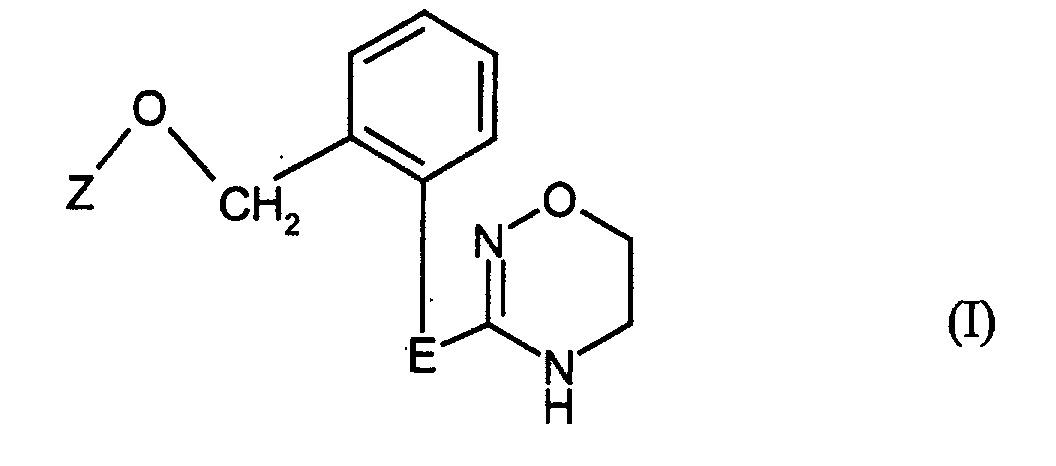
- E
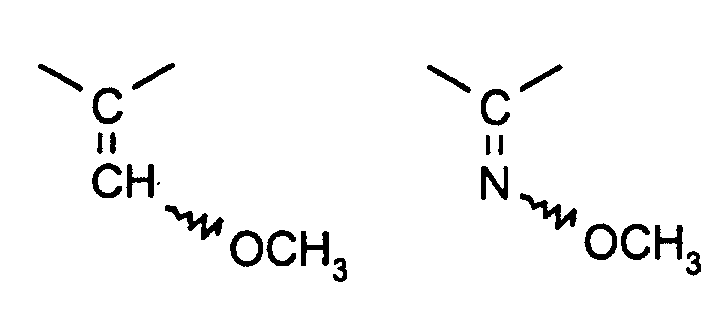
- für eine der nachstehenden Gruppierungen steht,
und
- Z
- für jeweils gegebenenfalls einfach bis dreifach, gleich oder verschieden
substituiertes Phenyl steht, wobei die möglichen Substituenten vorzugsweise
aus der nachstehenden Aufzählung ausgewählt sind:
Fluor, Chlor, Brom, Cyano, Methyl, Ethyl, n- oder i-Propyl, n-, i-, s-oder t-Butyl, Methoxy, Ethoxy, n- oder i-Propoxy, Methylthio, Ethylthio, n- oder i-Propylthio, Methylsulfinyl, Ethylsulfinyl, Methylsulfonyl oder Ethylsulfonyl, Trifluormethyl, Difluormethoxy, Trifluormethoxy, Difluorchlormethoxy, Trifluorethoxy, Difluormethylthio, Trifluormethylthio, Difluorchlormethylthio, Trifluormethylsulfinyl oder Trifluormethylsulfonyl, Methoxycarbonyl, Ethoxycarbonyl,
jeweils gegebenenfalls einfach bis vierfach, gleich oder verschieden durch Fluor, Chlor, Methyl, Trifluormethyl oder Ethyl substituiertes, jeweils zweifach verknüpftes Methylendioxy oder Ethylendioxy,
oder eine Gruppierungworin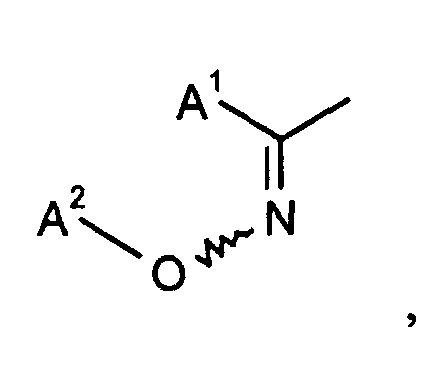
- A1
- für Methyl, Ethyl, n- oder i-Propyl, n-, i-, s- oder t-Butyl, Cyclopropyl oder Cyclobutyl und
- A2
- für Methyl, Ethyl, n- oder i-Propyl, n-, i-, s- oder t-Butyl, Allyl, Propargyl, But-2-en-1-yl, 2-Methyl-prop-1-en-3-yl, Cyanmethyl, Methoxymethyl, Ethoxymethyl, Methoxyethyl, Ethoxyethyl, Methylthiomethyl, Ethylthiomethyl, Methylthioethyl, Ethylthioethyl, Dimethylaminomethyl, Dimethylaminoethyl, Methylaminomethyl, Methylaminoethyl oder Benzyl steht.
- Schädlingsbekämpfungsmittel, gekennzeichnet durch einen Gehalt an mindestens einer Verbindung der Formel (I) nach Anspruch 1.
- Verfahren zur Bekämpfung von Schädlingen, dadurch gekennzeichnet, dass man Verbindungen der Formel (I) nach Anspruch 1 auf Schädlinge und/oder ihren Lebensraum einwirken lässt.
- Verwendung von Verbindungen der Formel (I) nach Anspruch 1 zur Bekämpfung von Schädlingen.
- Verfahren zur Herstellung von Schädlingsbekämpfungsmitteln, dadurch gekennzeichnet, dass man Verbindungen der Formel (I) nach Anspruch 1 mit Streckmitteln und/oder oberflächenaktiven Mitteln vermischt.
- Verfahren zur Herstellung von Verbindungen der Formel (I), gemäß Anspruch 1, dadurch gekennzeichnet, dass mana) Hydroxyverbindungen der allgemeinen Formel (II)in welcher
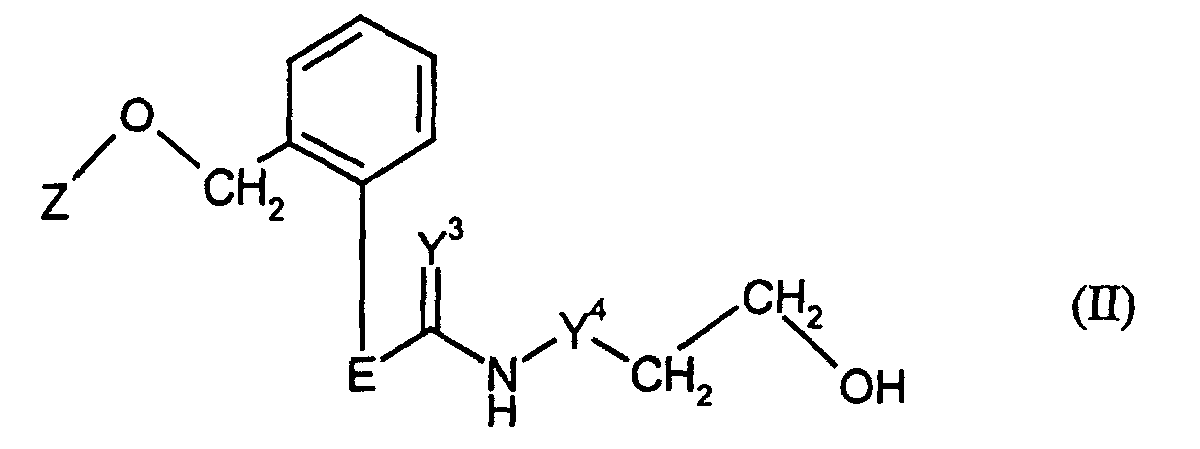
- E und Z
- die in Anspruch 1 angegebene Bedeutung haben, wobei
- Y3
- für eine Imino-Gruppierung ("Azamethylen", NH) steht und
- Y4
- für Sauerstoff steht,
oder wenn manb) Stickstoffhaltige Carbonsäurederivate der allgemeinen Formel (III)in welcher
- Y1
- für eine Imino-Gruppierung ("Azamethylen", NH) steht,
- Y2
- für Sauerstoff steht,
- E und Z
- die in Anspruch 1 angegebene Bedeutung haben und
- X1
- für Halogen, Arylsulfonyl oder Alkylsulfonyl steht,
Applications Claiming Priority (5)
| Application Number | Priority Date | Filing Date | Title |
|---|---|---|---|
| DE19504625 | 1995-02-13 | ||
| DE19504625 | 1995-02-13 | ||
| DE19510297 | 1995-03-22 | ||
| DE19510297A DE19510297A1 (de) | 1995-02-13 | 1995-03-22 | Substituierte Heterocycloalkene |
| PCT/EP1996/000384 WO1996025406A1 (de) | 1995-02-13 | 1996-01-31 | Fungizide aza-heterocycloalkene |
Publications (2)
| Publication Number | Publication Date |
|---|---|
| EP0809637A1 EP0809637A1 (de) | 1997-12-03 |
| EP0809637B1 true EP0809637B1 (de) | 2003-06-04 |
Family
ID=26012371
Family Applications (1)
| Application Number | Title | Priority Date | Filing Date |
|---|---|---|---|
| EP96901336A Expired - Lifetime EP0809637B1 (de) | 1995-02-13 | 1996-01-31 | Fungizide aza-heterocycloalkene |
Country Status (16)
| Country | Link |
|---|---|
| US (2) | US6214825B1 (de) |
| EP (1) | EP0809637B1 (de) |
| JP (1) | JPH11500717A (de) |
| CN (1) | CN1181076A (de) |
| AT (1) | ATE242224T1 (de) |
| AU (1) | AU4539396A (de) |
| BR (1) | BR9606955A (de) |
| CA (1) | CA2212683A1 (de) |
| CZ (1) | CZ253397A3 (de) |
| HU (1) | HUP9702456A3 (de) |
| IL (1) | IL117097A0 (de) |
| MX (1) | MX9706142A (de) |
| PL (1) | PL321757A1 (de) |
| SK (1) | SK107597A3 (de) |
| TR (1) | TR199700790T1 (de) |
| WO (1) | WO1996025406A1 (de) |
Families Citing this family (6)
| Publication number | Priority date | Publication date | Assignee | Title |
|---|---|---|---|---|
| DE19642864A1 (de) | 1996-10-17 | 1998-04-23 | Bayer Ag | Oximderivate |
| JP2001515076A (ja) * | 1997-08-14 | 2001-09-18 | バイエル・アクチエンゲゼルシヤフト | 有害生物防除剤として使用されるメトキシイミノメチルオキサジアジン |
| DE19745376A1 (de) | 1997-10-14 | 1999-04-15 | Bayer Ag | Thiomide |
| DE19810018A1 (de) | 1998-03-09 | 1999-09-16 | Bayer Ag | Benzoheterocyclyloxime |
| DE19819828A1 (de) * | 1998-05-04 | 1999-11-11 | Bayer Ag | Methoximinomethyloxathiazine |
| EP2922823B1 (de) | 2012-11-20 | 2018-10-31 | Merck Sharp & Dohme Corp. | Pde10-pyrimidininhibitoren |
Family Cites Families (5)
| Publication number | Priority date | Publication date | Assignee | Title |
|---|---|---|---|---|
| CA1273921A (en) * | 1982-09-28 | 1990-09-11 | Walter G. Brouwer | 3-aryl-5, 6-dihydro-1, 4, 2-oxathiazines and their oxides |
| GB9307247D0 (en) * | 1993-04-07 | 1993-06-02 | Zeneca Ltd | Fungicidal compounds |
| DE4408005A1 (de) | 1993-08-11 | 1995-02-16 | Bayer Ag | Substituierte Azadioxacycloalkene |
| AU685933B2 (en) * | 1994-04-01 | 1998-01-29 | Shionogi & Co., Ltd. | Oxime derivative and bactericide containing the same as active ingredient |
| DE19819828A1 (de) * | 1998-05-04 | 1999-11-11 | Bayer Ag | Methoximinomethyloxathiazine |
-
1996
- 1996-01-31 PL PL96321757A patent/PL321757A1/xx unknown
- 1996-01-31 CN CN96193205A patent/CN1181076A/zh active Pending
- 1996-01-31 JP JP8524610A patent/JPH11500717A/ja not_active Ceased
- 1996-01-31 HU HU9702456A patent/HUP9702456A3/hu unknown
- 1996-01-31 MX MX9706142A patent/MX9706142A/es unknown
- 1996-01-31 US US08/875,908 patent/US6214825B1/en not_active Expired - Fee Related
- 1996-01-31 SK SK1075-97A patent/SK107597A3/sk unknown
- 1996-01-31 EP EP96901336A patent/EP0809637B1/de not_active Expired - Lifetime
- 1996-01-31 CZ CZ972533A patent/CZ253397A3/cs unknown
- 1996-01-31 TR TR97/00790T patent/TR199700790T1/xx unknown
- 1996-01-31 AU AU45393/96A patent/AU4539396A/en not_active Abandoned
- 1996-01-31 CA CA002212683A patent/CA2212683A1/en not_active Abandoned
- 1996-01-31 BR BR9606955A patent/BR9606955A/pt not_active Application Discontinuation
- 1996-01-31 WO PCT/EP1996/000384 patent/WO1996025406A1/de not_active Ceased
- 1996-01-31 AT AT96901336T patent/ATE242224T1/de not_active IP Right Cessation
- 1996-02-09 IL IL11709796A patent/IL117097A0/xx unknown
-
2000
- 2000-10-31 US US09/702,551 patent/US6407098B1/en not_active Expired - Fee Related
Also Published As
| Publication number | Publication date |
|---|---|
| WO1996025406A1 (de) | 1996-08-22 |
| HUP9702456A3 (en) | 2000-06-28 |
| PL321757A1 (en) | 1997-12-22 |
| US6214825B1 (en) | 2001-04-10 |
| AU4539396A (en) | 1996-09-04 |
| TR199700790T1 (xx) | 1998-02-21 |
| MX9706142A (es) | 1997-11-29 |
| IL117097A0 (en) | 1996-06-18 |
| BR9606955A (pt) | 1997-10-28 |
| US6407098B1 (en) | 2002-06-18 |
| CZ253397A3 (en) | 1997-11-12 |
| CA2212683A1 (en) | 1996-08-22 |
| HUP9702456A2 (hu) | 1998-03-30 |
| EP0809637A1 (de) | 1997-12-03 |
| SK107597A3 (en) | 1998-02-04 |
| JPH11500717A (ja) | 1999-01-19 |
| CN1181076A (zh) | 1998-05-06 |
| ATE242224T1 (de) | 2003-06-15 |
Similar Documents
| Publication | Publication Date | Title |
|---|---|---|
| EP0807102B1 (de) | Alkoximinoessigsäureamide | |
| EP0730583B1 (de) | 3-methoxy-2-phenyl-acrylsäuremethylester | |
| EP0623604B1 (de) | Oxa(Thia)-diazol-oxy-phenyl-acrylate als Schädlingsbekämpfungsmittel | |
| EP0749419B1 (de) | Oxim-derivate und ihre verwendung als schädlingsbekämpfungsmittel | |
| EP0842146B1 (de) | Oximether- und acrylsäurederivate und ihre verwendung als fungizide | |
| DE4408005A1 (de) | Substituierte Azadioxacycloalkene | |
| EP0805805B1 (de) | Substituierte arylazadioxacycloalkene fungizide | |
| EP0805798B1 (de) | Aminosäureamid-derivate und ihre verwendung als schädlingsbekämpfungsmittel | |
| EP0809637A1 (de) | Fungizide aza-heterocycloalkene | |
| EP0865423B1 (de) | Iminoessigsäureamide und ihre verwendung als schädlingsbekämpfungsmittel | |
| EP0840721A1 (de) | Carbonsäureamidderivate und ihre verwendung als schädlingsbekämpfungsmittel | |
| EP0863886B1 (de) | Fluormethoxyacrylsäurederivate und ihre verwendung als schädlingsbekämpfungsmittel | |
| EP0820436B1 (de) | Substituierte cycloalkene und ihre verwendung als mikrobizide, insbesondere als fungizide | |
| EP0707578A1 (de) | 2-oximino-2-thienyl-essigsäurederivate | |
| EP0846104B1 (de) | Alkoxyacrylsäurethiolester als fungizide | |
| EP0820437A1 (de) | Hydrazonoessigsäureamide und ihre verwendung als schädlingsbekämpfungsmittel | |
| DE4419587A1 (de) | Heterocyclische Imino-Derivate | |
| EP0741695A1 (de) | Hydroxamsäurederivate, verfahren zu ihrer herstellung und verwendung als fungizide | |
| WO1995021833A1 (de) | Substituierte oxazacycloalkene, zwischenprodukte und verwendung als fungizide | |
| EP1061066A2 (de) | Fluormethoxyacrylsäurederivate, Zwischenprodukte in der Herstellung von Schädlingsbekämpfungsmitteln | |
| EP0796253A1 (de) | Fungizide 1,3,4-oxathiazol-2-one | |
| DE19510297A1 (de) | Substituierte Heterocycloalkene | |
| EP0833817A1 (de) | Substituierte carbamide und ihre verwendung als pflanzenschutzmittel, insbesondere als fungizide | |
| DE19543199A1 (de) | Alkoximinoessigsäureamide | |
| DE19602094A1 (de) | Substituierte Carbamide |
Legal Events
| Date | Code | Title | Description |
|---|---|---|---|
| PUAI | Public reference made under article 153(3) epc to a published international application that has entered the european phase |
Free format text: ORIGINAL CODE: 0009012 |
|
| 17P | Request for examination filed |
Effective date: 19970915 |
|
| AK | Designated contracting states |
Kind code of ref document: A1 Designated state(s): AT BE CH DE DK ES FR GB GR IE IT LI NL PT |
|
| 17Q | First examination report despatched |
Effective date: 19991022 |
|
| GRAH | Despatch of communication of intention to grant a patent |
Free format text: ORIGINAL CODE: EPIDOS IGRA |
|
| RAP1 | Party data changed (applicant data changed or rights of an application transferred) |
Owner name: BAYER CROPSCIENCE AG |
|
| GRAH | Despatch of communication of intention to grant a patent |
Free format text: ORIGINAL CODE: EPIDOS IGRA |
|
| GRAA | (expected) grant |
Free format text: ORIGINAL CODE: 0009210 |
|
| AK | Designated contracting states |
Designated state(s): AT BE CH DE DK ES FR GB GR IE IT LI NL PT |
|
| PG25 | Lapsed in a contracting state [announced via postgrant information from national office to epo] |
Ref country code: NL Free format text: LAPSE BECAUSE OF FAILURE TO SUBMIT A TRANSLATION OF THE DESCRIPTION OR TO PAY THE FEE WITHIN THE PRESCRIBED TIME-LIMIT Effective date: 20030604 Ref country code: IE Free format text: LAPSE BECAUSE OF FAILURE TO SUBMIT A TRANSLATION OF THE DESCRIPTION OR TO PAY THE FEE WITHIN THE PRESCRIBED TIME-LIMIT Effective date: 20030604 |
|
| REG | Reference to a national code |
Ref country code: GB Ref legal event code: FG4D Free format text: NOT ENGLISH |
|
| REG | Reference to a national code |
Ref country code: CH Ref legal event code: EP |
|
| REG | Reference to a national code |
Ref country code: IE Ref legal event code: FG4D Free format text: GERMAN |
|
| REF | Corresponds to: |
Ref document number: 59610503 Country of ref document: DE Date of ref document: 20030710 Kind code of ref document: P |
|
| GBT | Gb: translation of ep patent filed (gb section 77(6)(a)/1977) |
Effective date: 20030723 |
|
| PG25 | Lapsed in a contracting state [announced via postgrant information from national office to epo] |
Ref country code: PT Free format text: LAPSE BECAUSE OF FAILURE TO SUBMIT A TRANSLATION OF THE DESCRIPTION OR TO PAY THE FEE WITHIN THE PRESCRIBED TIME-LIMIT Effective date: 20030904 Ref country code: GR Free format text: LAPSE BECAUSE OF FAILURE TO SUBMIT A TRANSLATION OF THE DESCRIPTION OR TO PAY THE FEE WITHIN THE PRESCRIBED TIME-LIMIT Effective date: 20030904 Ref country code: DK Free format text: LAPSE BECAUSE OF FAILURE TO SUBMIT A TRANSLATION OF THE DESCRIPTION OR TO PAY THE FEE WITHIN THE PRESCRIBED TIME-LIMIT Effective date: 20030904 |
|
| PG25 | Lapsed in a contracting state [announced via postgrant information from national office to epo] |
Ref country code: ES Free format text: LAPSE BECAUSE OF FAILURE TO SUBMIT A TRANSLATION OF THE DESCRIPTION OR TO PAY THE FEE WITHIN THE PRESCRIBED TIME-LIMIT Effective date: 20030915 |
|
| NLV1 | Nl: lapsed or annulled due to failure to fulfill the requirements of art. 29p and 29m of the patents act | ||
| PGFP | Annual fee paid to national office [announced via postgrant information from national office to epo] |
Ref country code: DE Payment date: 20031213 Year of fee payment: 9 |
|
| PGFP | Annual fee paid to national office [announced via postgrant information from national office to epo] |
Ref country code: FR Payment date: 20031222 Year of fee payment: 9 |
|
| PGFP | Annual fee paid to national office [announced via postgrant information from national office to epo] |
Ref country code: GB Payment date: 20040128 Year of fee payment: 9 |
|
| REG | Reference to a national code |
Ref country code: IE Ref legal event code: FD4D |
|
| PG25 | Lapsed in a contracting state [announced via postgrant information from national office to epo] |
Ref country code: LI Free format text: LAPSE BECAUSE OF NON-PAYMENT OF DUE FEES Effective date: 20040131 Ref country code: CH Free format text: LAPSE BECAUSE OF NON-PAYMENT OF DUE FEES Effective date: 20040131 Ref country code: BE Free format text: LAPSE BECAUSE OF NON-PAYMENT OF DUE FEES Effective date: 20040131 Ref country code: AT Free format text: LAPSE BECAUSE OF NON-PAYMENT OF DUE FEES Effective date: 20040131 |
|
| ET | Fr: translation filed | ||
| PLBE | No opposition filed within time limit |
Free format text: ORIGINAL CODE: 0009261 |
|
| STAA | Information on the status of an ep patent application or granted ep patent |
Free format text: STATUS: NO OPPOSITION FILED WITHIN TIME LIMIT |
|
| 26N | No opposition filed |
Effective date: 20040305 |
|
| BERE | Be: lapsed |
Owner name: *BAYER CROPSCIENCE A.G. Effective date: 20040131 |
|
| REG | Reference to a national code |
Ref country code: CH Ref legal event code: PL |
|
| PG25 | Lapsed in a contracting state [announced via postgrant information from national office to epo] |
Ref country code: IT Free format text: LAPSE BECAUSE OF NON-PAYMENT OF DUE FEES;WARNING: LAPSES OF ITALIAN PATENTS WITH EFFECTIVE DATE BEFORE 2007 MAY HAVE OCCURRED AT ANY TIME BEFORE 2007. THE CORRECT EFFECTIVE DATE MAY BE DIFFERENT FROM THE ONE RECORDED. Effective date: 20050131 Ref country code: GB Free format text: LAPSE BECAUSE OF NON-PAYMENT OF DUE FEES Effective date: 20050131 |
|
| PG25 | Lapsed in a contracting state [announced via postgrant information from national office to epo] |
Ref country code: DE Free format text: LAPSE BECAUSE OF NON-PAYMENT OF DUE FEES Effective date: 20050802 |
|
| GBPC | Gb: european patent ceased through non-payment of renewal fee |
Effective date: 20050131 |
|
| PG25 | Lapsed in a contracting state [announced via postgrant information from national office to epo] |
Ref country code: FR Free format text: LAPSE BECAUSE OF NON-PAYMENT OF DUE FEES Effective date: 20050930 |
|
| REG | Reference to a national code |
Ref country code: FR Ref legal event code: ST |