EP0809517B1 - Anti-transformierender wachstumsfaktor beta gentherapie - Google Patents
Anti-transformierender wachstumsfaktor beta gentherapie Download PDFInfo
- Publication number
- EP0809517B1 EP0809517B1 EP96905473A EP96905473A EP0809517B1 EP 0809517 B1 EP0809517 B1 EP 0809517B1 EP 96905473 A EP96905473 A EP 96905473A EP 96905473 A EP96905473 A EP 96905473A EP 0809517 B1 EP0809517 B1 EP 0809517B1
- Authority
- EP
- European Patent Office
- Prior art keywords
- tgf
- decorin
- cell
- inhibitory agent
- nucleic acid
- Prior art date
- Legal status (The legal status is an assumption and is not a legal conclusion. Google has not performed a legal analysis and makes no representation as to the accuracy of the status listed.)
- Expired - Lifetime
Links
Images



Classifications
-
- C—CHEMISTRY; METALLURGY
- C12—BIOCHEMISTRY; BEER; SPIRITS; WINE; VINEGAR; MICROBIOLOGY; ENZYMOLOGY; MUTATION OR GENETIC ENGINEERING
- C12N—MICROORGANISMS OR ENZYMES; COMPOSITIONS THEREOF; PROPAGATING, PRESERVING, OR MAINTAINING MICROORGANISMS; MUTATION OR GENETIC ENGINEERING; CULTURE MEDIA
- C12N15/00—Mutation or genetic engineering; DNA or RNA concerning genetic engineering, vectors, e.g. plasmids, or their isolation, preparation or purification; Use of hosts therefor
- C12N15/09—Recombinant DNA-technology
- C12N15/11—DNA or RNA fragments; Modified forms thereof; Non-coding nucleic acids having a biological activity
-
- C—CHEMISTRY; METALLURGY
- C07—ORGANIC CHEMISTRY
- C07K—PEPTIDES
- C07K14/00—Peptides having more than 20 amino acids; Gastrins; Somatostatins; Melanotropins; Derivatives thereof
- C07K14/435—Peptides having more than 20 amino acids; Gastrins; Somatostatins; Melanotropins; Derivatives thereof from animals; from humans
- C07K14/46—Peptides having more than 20 amino acids; Gastrins; Somatostatins; Melanotropins; Derivatives thereof from animals; from humans from vertebrates
- C07K14/47—Peptides having more than 20 amino acids; Gastrins; Somatostatins; Melanotropins; Derivatives thereof from animals; from humans from vertebrates from mammals
- C07K14/4701—Peptides having more than 20 amino acids; Gastrins; Somatostatins; Melanotropins; Derivatives thereof from animals; from humans from vertebrates from mammals not used
- C07K14/4725—Proteoglycans, e.g. aggreccan
-
- A—HUMAN NECESSITIES
- A61—MEDICAL OR VETERINARY SCIENCE; HYGIENE
- A61K—PREPARATIONS FOR MEDICAL, DENTAL OR TOILETRY PURPOSES
- A61K38/00—Medicinal preparations containing peptides
- A61K38/16—Peptides having more than 20 amino acids; Gastrins; Somatostatins; Melanotropins; Derivatives thereof
- A61K38/17—Peptides having more than 20 amino acids; Gastrins; Somatostatins; Melanotropins; Derivatives thereof from animals; from humans
- A61K38/177—Receptors; Cell surface antigens; Cell surface determinants
-
- A—HUMAN NECESSITIES
- A61—MEDICAL OR VETERINARY SCIENCE; HYGIENE
- A61P—SPECIFIC THERAPEUTIC ACTIVITY OF CHEMICAL COMPOUNDS OR MEDICINAL PREPARATIONS
- A61P1/00—Drugs for disorders of the alimentary tract or the digestive system
- A61P1/16—Drugs for disorders of the alimentary tract or the digestive system for liver or gallbladder disorders, e.g. hepatoprotective agents, cholagogues, litholytics
-
- A—HUMAN NECESSITIES
- A61—MEDICAL OR VETERINARY SCIENCE; HYGIENE
- A61P—SPECIFIC THERAPEUTIC ACTIVITY OF CHEMICAL COMPOUNDS OR MEDICINAL PREPARATIONS
- A61P11/00—Drugs for disorders of the respiratory system
-
- A—HUMAN NECESSITIES
- A61—MEDICAL OR VETERINARY SCIENCE; HYGIENE
- A61P—SPECIFIC THERAPEUTIC ACTIVITY OF CHEMICAL COMPOUNDS OR MEDICINAL PREPARATIONS
- A61P13/00—Drugs for disorders of the urinary system
- A61P13/02—Drugs for disorders of the urinary system of urine or of the urinary tract, e.g. urine acidifiers
-
- A—HUMAN NECESSITIES
- A61—MEDICAL OR VETERINARY SCIENCE; HYGIENE
- A61P—SPECIFIC THERAPEUTIC ACTIVITY OF CHEMICAL COMPOUNDS OR MEDICINAL PREPARATIONS
- A61P15/00—Drugs for genital or sexual disorders; Contraceptives
-
- A—HUMAN NECESSITIES
- A61—MEDICAL OR VETERINARY SCIENCE; HYGIENE
- A61P—SPECIFIC THERAPEUTIC ACTIVITY OF CHEMICAL COMPOUNDS OR MEDICINAL PREPARATIONS
- A61P3/00—Drugs for disorders of the metabolism
- A61P3/06—Antihyperlipidemics
-
- A—HUMAN NECESSITIES
- A61—MEDICAL OR VETERINARY SCIENCE; HYGIENE
- A61P—SPECIFIC THERAPEUTIC ACTIVITY OF CHEMICAL COMPOUNDS OR MEDICINAL PREPARATIONS
- A61P43/00—Drugs for specific purposes, not provided for in groups A61P1/00-A61P41/00
-
- A—HUMAN NECESSITIES
- A61—MEDICAL OR VETERINARY SCIENCE; HYGIENE
- A61P—SPECIFIC THERAPEUTIC ACTIVITY OF CHEMICAL COMPOUNDS OR MEDICINAL PREPARATIONS
- A61P9/00—Drugs for disorders of the cardiovascular system
-
- C—CHEMISTRY; METALLURGY
- C07—ORGANIC CHEMISTRY
- C07K—PEPTIDES
- C07K14/00—Peptides having more than 20 amino acids; Gastrins; Somatostatins; Melanotropins; Derivatives thereof
- C07K14/435—Peptides having more than 20 amino acids; Gastrins; Somatostatins; Melanotropins; Derivatives thereof from animals; from humans
- C07K14/705—Receptors; Cell surface antigens; Cell surface determinants
- C07K14/71—Receptors; Cell surface antigens; Cell surface determinants for growth factors; for growth regulators
-
- C—CHEMISTRY; METALLURGY
- C07—ORGANIC CHEMISTRY
- C07K—PEPTIDES
- C07K16/00—Immunoglobulins [IG], e.g. monoclonal or polyclonal antibodies
- C07K16/18—Immunoglobulins [IG], e.g. monoclonal or polyclonal antibodies against material from animals or humans
- C07K16/28—Immunoglobulins [IG], e.g. monoclonal or polyclonal antibodies against material from animals or humans against receptors, cell surface antigens or cell surface determinants
- C07K16/2863—Immunoglobulins [IG], e.g. monoclonal or polyclonal antibodies against material from animals or humans against receptors, cell surface antigens or cell surface determinants against receptors for growth factors, growth regulators
-
- A—HUMAN NECESSITIES
- A61—MEDICAL OR VETERINARY SCIENCE; HYGIENE
- A61K—PREPARATIONS FOR MEDICAL, DENTAL OR TOILETRY PURPOSES
- A61K38/00—Medicinal preparations containing peptides
-
- A—HUMAN NECESSITIES
- A61—MEDICAL OR VETERINARY SCIENCE; HYGIENE
- A61K—PREPARATIONS FOR MEDICAL, DENTAL OR TOILETRY PURPOSES
- A61K48/00—Medicinal preparations containing genetic material which is inserted into cells of the living body to treat genetic diseases; Gene therapy
Definitions
- This invention relates generally to the regulation of growth factors and, more specifically, to the control of excessive extracellular matrix production and cell growth influenced by the growth factor TGF- ⁇ .
- TGF- ⁇ Transforming growth factor- ⁇
- the extracellular matrix is a complex superstructure of self-aggregating macromolecules, including fibronectin, collagens, and proteoglycans, to which cells attach by means of surface receptors. Integrins are a class of surface receptors known to bind specific matrix components. Matrix surrounding the cells is maintained by a dynamic process of degradation of existing matrix and synthesis and reformation of new matrix.
- TGF- ⁇ is one factor involved in the regulation of matrix accumulation, both stimulating new matrix synthesis and inhibiting matrix degradation.
- Tissue fibrosis is a pathological state characterized by a deleterious accumulation of extracellular matrix.
- extracellular matrix accumulates in the mesangium or along the glomerular basement membrane, eventually causing end-stage disease and uremia.
- ARDS adult or acute respiratory distress syndrome
- cirrhosis of the liver is characterized by a deleterious matrix accumulation evidenced by scarring of the liver.
- Another condition characterized by the deleterious accumulation of extracellular matrix is diabetes, which is now the most common cause of progressive kidney failure.
- TGF- ⁇ Uncontrolled synthesis of TGF- ⁇ is one factor which caused the deleterious accumulation of extracellular matrix that underlies the development of tissue fibrosis. Methods to control the action of TGF- ⁇ will have a significant impact on the treatment and prevention of tissue fibrosis and on the overall cost of health care.
- the present invention provides the manufacture of preparations for reducing a pathology in a subject characterized by a deleterious accumulation of TGF- ⁇ -induced extracellular matrix in a tissue by introducing a nucleic acid encoding a TGF- ⁇ -specific inhibitory agent or active fragment thereof into a cell in the subject.
- a nucleic acid encoding the TGF- ⁇ specific inhibitory agent is introduced into a cell in vivo by injection, for example, in skeletal muscle.
- the nucleic acid encoding the TGF- ⁇ specific inhibitory agent is transfected into a cell ex vivo to obtain a cell expressing the agent, and the cell is then transplanted or grafted into the subject to be treated.
- Cells that can express the TGF- ⁇ specific inhibitory agent include those from skeletal muscle, kidney, liver, lung and skin.
- TGF- ⁇ specific inhibitory agents of the present invention include, for example, members of the decorin family of proteoglycans such as decorin, biglycan, fibromodulin and lumican, TGF- ⁇ specific receptors such as betaglycan and endoglin, and antibodies specific for TGF- ⁇ .
- Pathologies that can be reduced by the present invention include, but are not limited to, fibrotic diseases and conditions, such as glomerulonephritis, ARDS, cirrhosis, fibrotic cancer, fibrosis of the lungs, arteriosclerosis, post myocardial infarction, cardiac fibrosis, post-angioplasty restenosis, renal interstitial fibrosis, scarring and diabetes-associated pathologies.
- Tissues that can be treated by the invention include kidney, liver, lung or skin.
- the invention also provides preparations for use in methods for reducing a pathology in a subject characterized by TGF- ⁇ -induced deleterious growth of a tissue.
- the method consists of introducing a nucleic acid encoding a TGF- ⁇ specific inhibitory agent or an active fragment thereof in a cell in the subject, wherein the specific agent or active fragment thereof is expressed in the cell, resulting in suppression of the deleterious growth of the tissue.
- Expression of the TGF- ⁇ specific inhibitory agent can be achieved by direct injection of the nucleic acid encoding the agent in vivo or by transfection of a cell ex vivo and then transplanting or grafting the transfected cell into a subject.
- the invention is directed to preparation for use in methods for reducing a pathology characterized by the TGF- ⁇ -induced deleterious accumulation of extracellular matrix in a tissue.
- Such methods involve introducing a nucleic acid encoding a TGF- ⁇ -specific inhibitory agent into a cell in a subject, resulting in expression of the agent in the subject.
- the methods are advantageous over other modes of administration because sustained production of the inhibitory agent can be accomplished by modifying an endogenous cell to express its encoding nucleic acid.
- a nucleic acid encoding the TGF- ⁇ specific inhibitory agent decorin is available in an expression vector.
- the decorin encoding vector is injected intramuscularly into a subject having a fibroproliferative disease such as glomerulonephritis.
- the decorin encoded vector is encapsulated into a hemagglutinating virus of Japan (HVJ) liposome construct.
- HVJ hemagglutinating virus of Japan
- decorin is expressed and secreted into the circulation where it accumulates in the kidney.
- TGF- ⁇ specific inhibitory agent decorin can bind to TGF- ⁇ at the site of disease and inhibit the deleterious accumulation of extracellular matrix.
- TGF- ⁇ specific inhibitory agent is intended to mean a protein or active fragment thereof that can inhibit activities of TGF- ⁇ , which are associated with fibroproliferative diseases.
- TGF- ⁇ activity associated with fibroproliferative diseases is the induction or accumulation of extracellular matrix.
- Another TGF- ⁇ activity associated with such diseases is the induction of cell proliferation.
- TGF- ⁇ specific inhibitory agents are therefore capable of inhibiting either or both of these activities.
- TGF- ⁇ specific inhibitory agent that can be used to treat fibrotic diseases and fibrotic conditions.
- Other examples of TGF- ⁇ specific inhibitory agents include, but are not limited to the decorin family of molecules such as biglycan, fibromodulin and lumican, TGF- ⁇ receptors such as betaglycan and endoglin and soluble forms and active fragments thereof and antibodies specific for TGF- ⁇ .
- a TGF- ⁇ specific inhibitory agent also includes a nucleic acid encoding a particular TGF- ⁇ specific inhibitory agent. When the TGF- ⁇ specific inhibitory agents are such encoding nucleic acids, the activity of TGF- ⁇ is inhibited by, for example, expressing the encoded agent in a cell in a subject.
- decorin refers to a proteoglycan having substantially the structural characteristics defined in Krusius and Ruoslahti ( Pro. Natl. Acad. Sci. (USA) 83:7683-7688(1986), and functional equivalents thereof.
- Human fibroblast decorin having substantially the amino acid sequence presented in Krusius and Ruoslahti (supra), refers both to the native composition and to modifications thereof that substantially retain the functional characteristics of the molecule, such as the ability to inhibit the activity of TGF- ⁇ .
- the core protein of decorin which is the decorin polypeptide without attached glycosaminoglycan, is also included within the meaning of decorin as defined herein.
- Decorin can be rendered glycosaminoglycan-free by enzymatic treatment, mutation or other means, such as by producing recombinant decorin in cells incapable of attaching glycosaminoglycan chains to a core protein.
- both decorin and decorin core protein are examples of TGF- ⁇ specific inhibitory agents.
- Functional equivalents of decorin include modifications of decorin that retain functional characteristics of decorin such as the ability to inhibit the activity of TGF- ⁇ . Modifications can include, for example, the substitution or addition of one or more amino acids that do not interfere with the TGF- ⁇ specific inhibitory activity of the decorin core protein.
- functional equivalents of decorin also include the members of the decorin family of proteoglycans, such as biglycan, fibromodulin and lumican, that share a structural and a functional relationship with decorin (Funderburgh et al., J. Biol. Chem. 268:11874-11880 (1993), Takahashi et al., J. Histochem. Cytochem . 41:1447-1457 (1993), Yamaguchi et al., Nature 346:281-284 (1990) and Blochberger et al., J. Biol. Chem. 267:20613-20619 (1992).
- an active fragment is intended to mean a portion of a full length TGF- ⁇ specific inhibitory agent, provided that the portion has the TGF- ⁇ activity characteristic of the corresponding full length protein.
- an active fragment is capable of preventing the induction or deleterious accumulation of extracellular matrix in a tissue.
- Active fragments of decorin that can inhibit binding of TGF- ⁇ to decorin or a cell are known in the art (see WO 93/20202).
- a fusion protein that encompasses the amino terminal 45 residues of decorin, including a mutation of cysteine residue 26 to a tyrosine can inhibit the activity of TGF- ⁇ (see WO 93/20202).
- Other active fragments of decorin or other TGF- ⁇ specific inhibitory agents are known or can be determined by one skilled in the art.
- the present invention can be used to reduce a pathology characterized by a deleterious accumulation of extracellular matrix.
- diseases are characterized by deleterious accumulation of extracellular matrix involving collagens, fibronectin and other matrix components.
- diseases include, for example, glomerulonephritis, adult or acute respiratory distress syndrome (ARDS), diabetes-associated pathologies, such as diabetic kidney disease, fibrotic diseases of the liver and lung and post infarction cardiac fibrosis.
- ARDS adult or acute respiratory distress syndrome
- diabetes-associated pathologies such as diabetic kidney disease
- fibrotic diseases of the liver and lung and post infarction cardiac fibrosis.
- fibrocytic disease fibrosclerosis
- fibrotic cancers such as of the breast, uterus or pancreas, including fibroids, fibroma, fibroadenomas and fibrosarcomas.
- Such conditions include, for example, post myocardial infarction, cardiac fibrosis and post-angioplasty restenosis and renal interstitial fibrosis, excessive scarring such as keloid scars and scars resulting from injury, burns, or surgery.
- reducing a pathology means a reduction in at least one characteristic associated with the pathology.
- glomerulonephritis can be characterized by pathologies such as sclerosis resulting from an increase in extracellular matrix or hypercellularity, resulting in loss in kidney function.
- a decrease in sclerosis following treatment of glomerulonephritis with the present invention is a reduction in a pathology as defined herein.
- the present invention can be used to reduce a pathology, the invention is therefore useful for treatment of a disease.
- TGF- ⁇ is an important causative factor in these diseases and conditions, both from animal models of human diseases and in human diseases (for review see Border and Ruoslahti, J. Clin Invest. 90:1-7 (1992) and Border and Noble, New Engl. J. Med. 331:1286-1292 (1994).
- TGF- ⁇ mediates these pathologies by stimulating production of collagens, fibronectin, and other matrix components, and, in part by stimulating proliferation of mesenchymal cells in the tissue.
- the proliferation of mesenchymal cells results in a deleterious accumulation of extracellular matrix produced by the expanding cells that obliterates the parenchymal tissue thereby destroying organ function.
- the methods of the present invention can be used to treat or prevent such pathologies in a subject by expressing a TGF- ⁇ specific inhibitory agent in the subject.
- the methods of the present invention are useful as a medicament for treatment of such pathologies.
- the invention is directed to methods that reduce the deleterious accumulation of extracellular matrix by inhibiting TGF- ⁇ with TGF- ⁇ specific inhibitory agents, the mechanism by which such agents work is unimportant.
- the TGF- ⁇ specific inhibitory agent can directly inhibit TGF- ⁇ by binding to TGF- ⁇ and preventing it from binding to its receptors or, such agent can indirectly inhibit the activity of TGF- ⁇ by, for example, inhibiting the synthesis or secretion of TGF- ⁇ or by sequestering TGF- ⁇ away from target cells.
- the pathologies disclosed as a group herein are merely representative and a person skilled in the art would readily recognize that the methods of the present invention are useful in any pathology associated with deleterious accumulation of extracellular matrix.
- TGF- ⁇ is a multifunctional cytokine that normally regulates repair and regeneration following tissue injury. During normal tissue repair, TGF- ⁇ production is increased to stimulate the process of repair and when completed, TGF- ⁇ expression is reduced. If TGF- ⁇ expression is not reduced following normal tissue repair, then fibrosis can develop. Thus, repeated tissue injury or a defect in TGF- ⁇ regulation leading to sustained TGF- ⁇ production results in deleterious accumulation of extracellular matrix underlying tissue fibrosis (Border and Noble, supra ).
- TGF- ⁇ is synthesized as a 391 amino acid precursor molecule that is proteolytically cleaved to yield peptide fragments and a 112 amino acid subunit.
- Active TGF- ⁇ is a 25 kilodalton (kD) dimeric protein composed of two 112 amino acid subunits linked by a disulfide bond.
- TGF- ⁇ is secreted in an inactive or latent form that requires activation before it can exert biological effect.
- the latent form of TGF- ⁇ is a high-molecular weight complex formed between the TGF- ⁇ dimer and a cleavage fragment of the precursor TGF- ⁇ , known as latency associated peptide.
- Latent TGF- ⁇ is stored at the cell surface and in the extracellular matrix and is converted to active TGF- ⁇ by an unknown mechanism.
- TGF- ⁇ has been demonstrated to bind three membrane proteins, referred to as receptors types I, II and III, which are present on virtually all types of cells.
- the type I and type II receptors contain transmembrane serine-threonine kinase domains that interact and facilitate intracellular signalling.
- the type III receptor also known as betaglycan, is a membrane-anchored proteoglycan that facilitates recognition of TGF- ⁇ by the type I and type II receptors.
- the effects of TGF- ⁇ on the synthesis and deposition of extracellular matrix components are mediated by the type I receptor, while effects on cell proliferation are mediated by the type II receptor.
- TGF- ⁇ The effects of TGF- ⁇ on cell proliferation are complex, but a useful generalization is that the proliferation of mesenchymally-derived cells is generally stimulated by TGF- ⁇ , whereas epithelial cells are inhibited in their growth. TGF- ⁇ also stimulates extracellular matrix production in mesenchymally-derived cells (Okuda et al., J. Clin. Invest. 86:453-462 (1990), and this also can be inhibited with decorin (Border et al., supra ). Several types of cancer cells and tumors are dependent on TGF- ⁇ activity for tumor growth.
- Examples include a mouse mesothelial tumor that faithfully reproduces the features of the corresponding human malignancy (Fitzpatrick, et al., Growth Factors 11:29 (1994)), a fibrosarcoma (Spearman et al., Gene 149:25 (1994)) and Chinese hamster ovary cells (Yamaguchi and Ruoslahti, Nature 336:244-246 (1988). Tumor growth in these models was shown to be linked to elevated TGF- ⁇ by suppressing TGF- ⁇ activity with antisense oligonucleotides.
- TGF- ⁇ specific inhibitory agents of the present invention have been used successfully to inhibit the development of acute mesangial proliferative glomerulonephritis induced by TGF- ⁇ in an animal model (see Examples I and IV).
- Glomeruli from rats made nephritic by intravenous injection of antithymocyte serum are characterized by an increased synthesis of TGF- ⁇ mRNA and TGF- ⁇ protein, and secrete significantly more fibronectin and proteoglycans (Okuda et al., supra ).
- the rat nephritic model is relevant to human glomerulonephritis and glomerulosclerosis and in particular to human mesangial proliferative glomerulonephritis since it reproduces all the significant features of these human diseases (Yamamoto and Wilson, Kidney Int. 32:514-525 (1987); Bagchus et al., Lab Invest. 55:680-687 (1986) and Border, Kidney Int. 34:419-434 (1988)).
- Glomerulosclerosis is considered to be a final common pathway leading to a progressive loss of renal function for a variety of diseases, including, for example, primary glomerulonephritis, diabetic nephropathy and lupus nephritis. These diseases are characterized by a common pathology involving mesangial cell proliferation and/or extracellular matrix expansion which is mediated, in part, by the action of TGF- ⁇ .
- gene transfer of a nucleic acid encoding a TGF- ⁇ inhibitory agent into a cell in a subject can be used to reduce the pathology associated with glomerulosclerosis by inhibiting TGF- ⁇ -induced mesangial cell proliferation and deleterious accumulation of extracellular matrix in the kidney.
- Rats can be, for example, injected in the skeletal muscle with a nucleic acid encoding decorin. Since skeletal muscle is highly vascularized, decorin expressed by muscle cells enters the bloodstream and is delivered to other sites in the body where it associated with the extracellular matrix and inhibits the activity of TGF- ⁇ .
- nucleic acid encoding a TGF- ⁇ specific inhibitory agent means a cDNA or a genomic DNA or an RNA encoding the TGF- ⁇ specific inhibitory agent.
- Decorin cDNA is an example of a nucleic acid encoding a TGF- ⁇ inhibitory agent.
- Gene transfer can be accomplished by direct injection of the nucleic acid encoding a TGF- ⁇ specific inhibitory agent in vivo, or by transfecting a cell ex vivo to obtain a cell expressing the agent is then transplanted or grafted into the subject to be treated.
- the term "cell expressing a TGF- ⁇ specific inhibitory agent” means a cell that can produce and secrete the agent, which is encoded by the nucleic acid provided to the cell.
- a nucleotide sequence encoding a TGF- ⁇ specific inhibitory agent can be cloned into an expression vector where the sequence encoding the agent is operably linked with expression control elements.
- the pAct nucleic acid expression vector containing the human decorin nucleotide sequence operably linked to a constitutive promotor is a specific example of a nucleic acid encoding a TGF- ⁇ specific inhibitory agent.
- Expression control elements are well known in the art and include, for example, promoters, enhancers and appropriate start and stop codons.
- cDNA sequences or genomic sequences encoding the various agents of the present invention are useful for encoding the TGF- ⁇ specific inhibitory agent.
- Such sequences are known and available from publicly available DNA data banks and the genes can be cloned by PCR or be chemically synthesized.
- cDNA sequences known in the art include, for example, fibromodulin (Antonsson et al. Biochem. Biophys. Acta. 1174:204-206 (1993)), biglycan (Fisher et al., J. Biol. Chem.
- antibody includes a full sized antibody molecule or a fragment such as Fab, F(ab') 2 , Fv and Fd fragments that retain specific binding of the immunogen, such as TGF- ⁇ .
- Naturally occurring antibodies as well as non-naturally occurring antibodies and fragments of antibodies that retain binding activity are also an antibody as disclosed herein.
- non-naturally occurring antibodies can be constructed using solid phase peptide synthesis, or can be obtained, for example, by screening combinatorial libraries consisting of variable heavy chains and variable light chains as described by Huse et al., Science 246:1275-1281 (1989).
- a monoclonal antibody specific for TGF- ⁇ that neutralizes the activity of TGF- ⁇ can be prepared from an immunized rodent or other animal using well known methods of hybridoma development as described, for example, by Harlow and Lane, Antibodies: A laboratory manual (Cold Spring Harbor Laboratory Press, 1988). TGF- ⁇ or a portion thereof can be used as an immunogen, which can be prepared from natural sources or produced recombinantly or can be chemically synthesized.
- Methods to identify hybridomas that produce monoclonal antibodies that function as a TGF- ⁇ specific inhibitory agent can utilize, for example, assays that detect inhibitors of binding between radiolabeled TGF- ⁇ and targets such as HepG2 cells or purified decorin (see Example I and WO 93/20202).
- the cDNA sequences encoding the light and heavy chains of a monoclonal antibody specific for TGF- ⁇ can be obtained by cloning such sequences from hybridoma cells that secrete the antibody.
- Methods for cloning antibody genes are well known in the art (see, for example, Borrebaeck, Antibody Engineering: A Practical Guide (W.H. Freeman and Co., New York, 1991).
- Humanized antibodies that inhibit the activity of TGF- ⁇ can be produced by grafting the nucleotide sequences encoding the complementarity determining regions (CDRs) from the rodent or other animal antibodies specific for TGF- ⁇ to nucleotide framework sequences derived from the light and heavy chain variable regions of a human immunoglobulin molecule.
- CDRs complementarity determining regions
- Human immunoglobulin variable region framework and constant region nucleotide sequences are well known in the art.
- a cDNA encoding a human immunoglobulin sequence can be obtained from publicly available gene repositories or can be cloned from human lymphoid cell lines also available from public cell repositories (see, for example, American Type Culture Collection, Rockville MD).
- TGF- ⁇ specific inhibitory agent A variety of expression vectors and gene transfer methods useful for obtaining expression of a TGF- ⁇ specific inhibitory agent by gene transfer as disclosed herein are well known in the art (for example, see Sambrook et al., Molecular Cloning: A laboratory manual (Cold Spring Harbor Laboratory Press 1989); Kriegler M. Gene Transfer and Expression: A Laboratory Manual (W. H. Freeman and Co. New York NY, 1990) and Wu, Meth. in Enzymol , (Academic Press, New York, 1993). The choice of vector or method depends on several factors such as the particular TGF- ⁇ specific inhibitory agent and the amount of the agent required in a tissue to obtain a reduction in pathology.
- the level of expression of a particular TGF- ⁇ specific inhibitory agent in a cell can depend on many factors, such as the nature of the cell, the regulatory regions operably linked to the nucleotide sequence encoding the agent as well as the agent itself.
- the level of expression of the TGF- ⁇ specific inhibitory agent that can be achieved in vivo in a tissue also depends on other factors such as the site of production in vivo and the pharmacokinetic properties of the agent.
- Methods disclosed in the present invention are useful to help select the appropriate combination of factors, such as vector, regulatory regions, cell type to be transfected and method of gene delivery in order to achieve the necessary level of expression of a TGF- ⁇ specific inhibitory agent in a tissue desired by the practitioner.
- An in vitro transfection method disclosed herein provides the ability to evaluate parameters such as vector, regulatory elements and nature of the TGF- ⁇ specific inhibitory agent on expression by a particular cell.
- the vector described in Example II, the pAct-Dec vector, which has a decorin encoded gene operably linked to the chicken ⁇ -actin constitutive promoter was initially tested by in vitro transfection of cultured muscle myocytes prior to attempting gene transfer to of skeletal muscle in vivo (see Example II).
- skeletal muscle is a convenient and useful site for obtaining expression of a TGF- ⁇ specific inhibitory agent that can enter the blood and reduce a pathology at site distant from the muscle.
- Gene transfer methods suitable for the present invention also can be directed to cells other than muscle cells. Such cells include, for example, epithelial cells of particular organs.
- a higher concentration of the TGF- ⁇ specific inhibitory agent can be achieved in a particular tissue by directing the nucleic acid encoding the agent to a cell type localized within or near the tissue.
- Tissue specific expression control elements that enable selective cell type expression are known in the art and include, for example, the muscle creatine kinase enhancer for restricting expression to muscle cells or the immunoglobulin enhancer for restricting expression to B lymphoid cells.
- a variety of methods can be used for introducing a nucleic acid encoding a TGF- ⁇ specific inhibitory agent into a cell at the site of injection in vivo.
- the nucleic acid can be injected alone, can be encapsulated into liposomes or liposomes combined with a hemagglutinating Sendai virus, or can be encapsulated into a viral vector.
- the nucleic acid was cloned into the pAct vector and the vector encapsulated into a liposome HVJ construct prior to injection.
- Direct injection of a nucleic acid molecule alone or encapsulated, for example, in cationic liposomes also can be used for stable gene transfer of a nucleic acid encoding a TGF- ⁇ specific inhibitory agent into non-dividing or dividing cells in vivo (Ulmer et al., Science 259:1745-1748 (1993).
- the nucleic acid can be transferred into a variety of tissues in vivo using the particle bombardment method (Williams et al., Proc. Natl. Acad. Sci. USA 88:2726-2730 (1991).
- Encapsulation of the nucleic acid into liposomes incorporating a Sendai virus that promotes cell fusion can be used for gene delivery of a nucleic acid of the present invention.
- the hemagglutinating virus of Japan is a Sendai virus (Z strain) that provides an effective means of achieving expression of a TGF- ⁇ specific inhibitory agent by transfecting cells by ex vivo and by in vivo methods (see Example II and III).
- the efficiency of gene transfer using the HVJ-liposome method was surprisingly better than with liposomes produced by LipofectamineTM (see Example II and III).
- Viral vectors are useful for gene transfer of a nucleic acid encoding a TGF- ⁇ specific inhibitory agent into a specific cell type in vivo or in vitro.
- Viruses are specialized infectious agents that can infect and propagate in specific cell types. This specificity for infecting particular cell types is especially suitable for targeting a TGF- ⁇ specific inhibitory agent to selected cells in vivo.
- the selection of a viral vector will depend, in part, on the cell type to be targeted.
- Specialized viral vectors are well known in the art that can target to specific cell types.
- Such vectors include, for example, a vector derived from herpes simplex virus that targets neuronal cells (Battleman et al., J. Neurosci. 13:941-951 (1993), which is incorporated herein by reference), an immunodeficiency virus that targets hematopoietic cells (Carroll et al., J. Cell. Biochem. 17E:241 (1993), and recombinant adeno-associated viral vectors having general or tissue-specific promoters (Lebkowski et al. U.S Patent 5,354,678.
- Recombinant adeno-associated viral vectors have the added advantage that the recombinant virus can stably integrate into the chromatin of even quiescent non-proliferating cells (Lebkowski et al., Mol. Cell. Biol. 8:3988-3996 (1988).
- Viral vectors can be constructed to further control the type of cell that expresses the encoded TGF- ⁇ specific inhibitory agent by incorporating a tissue-specific promoter or enhancer into the vector (Dai et al., Proc. Natl. Acad. Sci. USA 89:10892-10895 (1992).
- a viral or other vector also can have the nucleotide sequence encoding the TGP- ⁇ specific inhibitory agent under control of a constitutive promoter.
- the pAct-Dec vector disclosed herein is an example of a constitutive expression vector useful for the present invention (see Example II).
- Retroviral vectors are suitable for the methods of gene transfer disclosed herein.
- Such vectors can be constructed either to function as infectious particles or as non-infectious particles that undergo only a single initial round of infection.
- the genome of the virus is modified so that it maintains the necessary genes, regulatory sequences and packaging signals to synthesize new viral proteins and RNA.
- genes conferring oncogenic potential of these viruses are destroyed or removed.
- the host cell packages the RNA into new viral particles, which can undergo further rounds of infection.
- the viral genome also is engineered to encode and express the desired recombinant gene.
- helper virus genome is required to provide the structural genes necessary to encode viral structural proteins.
- the helper virus is mutated to destroy the viral packaging signal required to encapsulate the helper viral RNA into viral particles.
- the recombinant viral vector containing the gene of interest and a functional packaging signal, but lacking viral structural genes can be incorporated into a virus particle.
- this new virus can infect a target cell, no further infectious virus can be produced since there are no viral structural genes provided.
- a variety of vectors and promoters are available in the art to produce an expression vector that encodes for a TGF- ⁇ specific inhibitory agent.
- An important feature is that the promoter is functional in the desired cell type for expression and that the vector can be maintained in the cell for sufficient time to enable therapeutic benefit to the subject.
- Receptor-mediated DNA delivery approaches also can be used to deliver a nucleic acid molecule encoding a TGF- ⁇ specific inhibitory agent into a cell in a tissue-specific manner using a tissue-specific ligand or an antibody that is non-covalently complexed with the nucleic acid molecule via a bridging molecule (Curiel et al., Hum. Gene Ther. 3:147-154 (1992); Wu and Wu, J. Biol. Chem. 262:4429-4432 (1987).
- Gene transfer to obtain expression of the TGF- ⁇ specific inhibitory agent in a subject also can be performed by, for example, ex vivo transfection of autologous cells.
- Suitable cells for such ex vivo transfection include blood cells since these cells are readily accessible for manipulation and reintroduction back into the subject by methods well known in the art.
- Non-autologous cells such as allogeneic cells also can be used provided they share histocompatibility antigens with the subject to be treated.
- TGF- ⁇ specific inhibitory agent Gene transfer of a TGF- ⁇ specific inhibitory agent by ex vivo transfection can be beneficial for obtaining high levels of expression since stable populations of cells can be selected for that express the agent. Moreover, expression levels can be increased further by incorporating drug selection markers into the vector which under the proper conditions result in the amplification of the encoded sequence. Such selection markers include, for example, dihydrofolate reductase or glutamine synthetase genes. Methods for gene selection and amplification in mammalian cells are well known in the art (see, for example, Sambrook et al. supra ). Another approach for achieving high level expression of a TGF- ⁇ specific inhibitory agent is to perform multiple rounds of transfection and selection using vectors with different drug resistance genes.
- Gene transfer through transfection of cells ex vivo can be performed by a variety of methods, including, for example, calcium phosphate precipitation, diethyaminoethyl dextran, electroporation, lipofection, or viral infection. Such methods are well known in the art (see, for example, Sambrook et al., supra and Wu, supra, 1993).
- the cells are then transplanted or grafted back into a subject to be treated.
- the cells once introduced into the body can produce the TGF- ⁇ specific inhibitory agent, which can enter the circulation and inhibit the activity of TGF- ⁇ at the site of the disease or condition.
- the choice between gene transfer by in vivo and by ex vivo transfection can affect the choice of vector used for obtaining expression of a particular TGF- ⁇ specific inhibitory agent.
- gene delivery of a neutralizing antibody to TGF- ⁇ requires separate expression of both the heavy and light chains of the antibody unless a single chain antibody design is used.
- ex vivo transfection is chosen as the method of gene transfer and a genomic sequence is chosen for encoding the TGF- ⁇ specific inhibitory agent, then each chain of the antibody can be encoded by a different vector. In this case, expression of the complete antibody is achieved by separate sequential transfection of the two vectors or simultaneous transfection with both vectors and dual drug selection.
- Gene transfer of a member of the decorin family of proteoglycans by direct injection of the encoding nucleic acid in vivo can be achieved by a single vector design.
- a single vector where both the heavy and the light chains of an antibody are encoded in the same vector known as a dual chain vector, also can be used for expressing an antibody by gene transfer in vivo or ex vivo.
- Dual chain expression vectors, suitable for antibody expression are well known to those in the art (see, for example, Borrebaeck, supra 1991 and Phelps, et al. J. Immunol. 145:1200-1204 (1990).
- gene transfer of an antibody by direct injection of the nucleic acid in vivo can be achieved by introducing a mixture of two expression vectors, each encoding the immunoglobulin heavy or light chains of the antibody.
- various animal models of fibrotic diseases are well known in the art and are available for testing the efficacy of gene transfer using TGF- ⁇ specific inhibitory agents as disclosed herein.
- TGF- ⁇ specific inhibitory agents include, for example, an acute rat antithymocyte serum model of mesangial proliferative glomerulonephritis (see Examples III and IV) and a chronic model of glomerular disease produced by repeated injections of antithymocyte serum (Yamamoto et al., supra ).
- the chronic model produces progressive glomerular disease characterized by elevated levels of urinary protein, blood urea nitrogen and extracellular matrix.
- the chronic glomerulonephritic disease model is distinguished from the acute model in having progressive tubulointerstitial disease characterized by extracellular matrix accumulation.
- Nephropathy also can be induced in animals by chronic administration of angiotensin II (Miller, et. al., Amer. J. Physiol. (Renal Fluid Electrolyte Physiol. 30:F549-F465 (1991).
- pumps delivering 100ng angiotensin II/min (Alza Corp. Palo Alto CA) in 0.01 N acetic acid can be surgically implanted in the necks of rats to deliver angiotensin II and control rats can receive identical pumps containing 0.01 N acetic acid.
- angiotensin treated rat glomeruli show a specific and substantial increase in TGF- ⁇ and collagen type I mRNA expression accompanied by an accumulation of extracellular matrix. This accumulation of matrix can be suppressed by intravenous administration of purified human decorin.
- the streptozotocin rat model for human diabetic nephropathy also can be used to test the efficacy of gene transfer using TGF- ⁇ specific inhibitory agents.
- Diabetes can be induced in 150 g male Sprague-Dawley rats by a single intravenous injection of streptozotocin (Sigma Chemical Co., St. Louis, MO), at 6.5 mg/100 g body weight in citrate buffer as described in Velasquez et al., FASEB 4:2850 (1990), Mauer et al., Diabetes 25:850 (1976) and U.S. Application Serial No. 07/885,674.
- This example provides methods to use purified decorin to reduce a deleterious accumulation of extracellular matrix in an experimental model of glomerulonephritis.
- the amount of fibronectin present in glomeruli was used quantitatively to assess the ability of decorin to block matrix deposition in glomerulonephritis.
- Decorin was produced using decorin-expressing CHO cells as follows. The 1.8 kb full-length decorin cDNA described in Krusius and Ruoslahti ( supra, 1986), was used for the construction of decorin expression vectors. For the expression of decorin core protein, cDNA was mutagenized so the fourth codon, TCT, coding for serine, was changed to ACT coding for threonine, or GCT coding for alanine. This was engineered by site-directed mutagenesis according to the method of Kunkel ( Proc. Natl. Acad. Sci USA 82:488 (1985)). The presence of the appropriate mutation was verified by DNA sequencing.
- the mammalian expression vectors pSV2-decorin and pSV2-decorin/CP-thr4 core protein were constructed by ligating the decorin cDNA or the mutagenized decorin cDNA into 3.4 kb Hin dIII- Bam HI fragment of pSV2 (Mulligan and Berg, Science 209:1423 (1980).
- Dihydrofolate reductase (dhfr)-negative CHO cells (CHO-DG44) were cotransfected with pSV2-decorin or pSV2-decorin/CP and pSV2dhfr by the calcium phosphate coprecipitation method.
- the CHO-DG44 cells transfected with pSV2-decorin are deposited with the American Type Culture Collection under Accession Number ATCC No. CRL 10332.
- the transfected cells were cultured in nucleoside-minus alpha-modified minimal essential medium ( ⁇ -MEM), (GIBCO, Long Island) supplemented with 9% dialyzed fetal calf serum, 2 mM glutamine, 100 units/ml penicillin and 100 ⁇ g/ml streptomycin. Colonies arising from transfected cells were picked using cloning cylinders, expanded and checked for the expression of decorin by immunoprecipitation from 35 SO 4 -labeled culture supernatants. Clones expressing a substantial amount of decorin were then subjected to gene amplification by step-wise increasing concentration of methotrexate (MTX) up to 0.64 ⁇ M (Kaufman and Sharp, J. Mol. Biol.
- MTX methotrexate
- All the amplified cell lines were cloned either by limiting dilution or by picking single MTX resistant colonies. Stock cultures of these established cell lines were kept in MTX-containing medium. Before use in protein production, cells were subcultured in MTX-minus medium from stock cultures and passed at least once in this medium to eliminate the possible MTX effects.
- decorin-expressing CHO cells as described above were allowed to adhere to microcarrier beads, then were cultured in suspension. Once a seed culture of decorin-expressing cells was established, the fermentation reaction vessel was seeded and the growth phase of fermentation continued until the desired cell density was achieved. At that time, fresh medium was slowly perfused into the reactor vessel and conditioned medium was collected at a rate of about 80-85% of the reactor volume per day. Care was taken to separate cell-containing microcarriers from the perfusate so as not to lose decorin-producing cells. The harvest medium was incubated at 4°C for 24 hours prior to filtration to allow cell debris to settle out.
- Decorin was purified from 40 liters of CHO cell culture medium produced in microcarrier cultures. A solution of benzamidine and Na 4 EDTA was added to a final concentration of 1X in the medium (100X solution is 100 mM benzamidine and 500 mM Na 4 EDTA). The medium was filtered with Whatman #1 filter paper and the NaCl concentration was adjusted to 0.4 NaCl
- a Q-Sepharose® column was prepared by washing 300 ml resin (Q-Sepharose fast flow gel; Pharmacia, Piscataway NJ) in a fritted disc glass funnel with 10 column volume deionized water to remove ethanol.
- the Q-Sepharose was degassed and placed into a 10 cm x 30 cm column with a flow adapter (Watson/Marlow Peristaltic Pump with 9.6 mm ID tubing).
- the bubble trap and pump were connected to the column, which then was equilibrated at a flow rate of 200 ml/min with 10 column volume buffer A (25 mM Tris, pH 7.8, 0.4 M NaCl).
- UV absorbance at 280 nm, 1.0 AUFS Absorbance units, full scale
- Cell culture medium was loaded onto the column at a flow rate of 200 ml/min and the flow through was collected.
- the column was washed with buffer A ((1 liter).
- the column was eluted with buffer B ((1.5 liter) 25 mM Tris, pH 7.8, 1 M NaCl) and one minute fractions were collected.
- the eluted peak was pooled, the volume was recorded (usually 1-1.5 liters) and absorbance at 280 nm and at 260 nm was determined. The latter reading was used to detect nucleic acid co-eluted with decorin on the Q-Sepharose column.
- One volume (equal to the pooled volume) 2 M guanidinium-HCl (GuHCl) was added and the sample was loaded onto an Octyl-Sepharose® column.
- the Octyl-Sepharose® column was prepared by washing 60 ml Octyl-Sepharose® gel (Pharmacia) with 10 column volume deionized water in a sintered glass funnel to remove EtOH. The gel was degassed and placed in a 2.6 cm x 30 cm water jacketed column with two flow adapters (Pharmacia), which compacted and retained the gel in position. The column was maintained at 25°C with a refrigerated circulator. The UV monitor (280 nm) was connected and was set to zero with buffer C ((10 column volume or 600 ml) 0.1 NaOAc, pH 6.3, 1 M GuHCl; filtered with 0.2 ⁇ M acetate filter and degassed).
- buffer C ((10 column volume or 600 ml) 0.1 NaOAc, pH 6.3, 1 M GuHCl; filtered with 0.2 ⁇ M acetate filter and degassed).
- the fraction collected from the Q-Sepharose column was loaded onto the Octyl-Sepharose column at a flow rate of 3 ml/min and samples were collected at 2 min/fraction (6 ml/tube).
- the column was washed with buffer C, until the baseline was established, then with buffer D (0.1 M NaOAc, pH 6.3, 2 M GuHCl; filtered with 0.2 ⁇ M acetate filter, then degassed) until the same baseline was established.
- Decorin was eluted using buffer E ((200 ml) 0.1 M NaOAc, pH 6.3, 3 M GuHCl) at a flow rate of 3 ml/min. A small amount of protein contaminant eluted with the decorin. An elution profile was performed on the fractions by determining the absorbance at 280 nm and 260 nm to show that most of O.D. 280 absorbance was due to decorin and not to nucleic acid.
- the column then was eluted using buffer F ((150 ml) 0.1 M NaOAc, pH 6.3, 4 M GuHCl; filtered with 0.2 ⁇ M acetate filter, then degassed), to remove an unidentified 200 kDa protein and some histone proteins.
- the column was stripped with of buffer G ((150 ml) 0.1 M NaOAc, pH 6.3, 8 M GuHCl; filtered with 0.2 ⁇ M acetate filter, then degassed) to remove more host cells contaminating proteins
- the 3 M GuHCl fraction containing decorin was diluted 1:10 with a solution containing 50 mM NaPO 4 at pH 7.4.
- a Q-Sepharose column (Pharmacia) was equilibrated with a buffer, 50 mM NaPO 4 (pH 7.4), 0.4 M NaCl, and the diluted decorin solution was pumped (Minipuls 2 peristaltic pump with 1.52 ID PVC manifold tubing; Gilson; Middleton WI) onto the column at a rate of 3 ml/min.
- the column was washed with five column volumes of the same buffer, then decorin was eluted with additional buffer, 50 mM NaPO 4 (pH 7.4)/1.0 M NaCl.
- the eluant was concentrated/diafiltered by ultrafiltration (Amicon Inc., Beverly, MA).
- the coating solution was flicked out and 200 ⁇ l 1X PBS + 1% BSA ((100 mls) 90 ml ddH 2 O; 10 ml 10X PBS ((1 liter) 80 g NaCl; 2 g KCl; 6.1 g Na2HPO4 2 g KH2PO4; volume brought up with ddH2O); 1 g Bovine Serum Albumin; solution made fresh the day of the assay) was added per well and incubated at 37°C for 0.5-1.0 hours. The wells were then washed three times with 1X PBS + 0.1% Tween-20.
- BSA ((100 mls) 90 ml ddH 2 O; 10 ml 10X PBS ((1 liter) 80 g NaCl; 2 g KCl; 6.1 g Na2HPO4 2 g KH2PO4; volume brought up with ddH2O); 1 g Bovine Serum Albumin; solution made fresh the
- a 100 ⁇ l/well aliquot of rabbit anti-decorin antibody (anti-PG40 (described in WO 91/10727 obtained from La Jolla Cancer Research Foundation) at 1:1000) was added.
- the antibody was diluted in 1X PBS + 0.1% BSA + 0.1% Tween-20 ((100 mls) 90 ml ddH 2 O; 10 ml 10X PBS; 0.1 g Bovine Serum Albumin; 0.1 ml Tween-20; solution made fresh the day of the assay) and incubated at 37°C for 60 minutes.
- OPD o-phenylenediamine dihydrochloride
- Three lots of decorin samples prepared by the above recombinant and purification procedures contained 0.82 mg/ml, 1.23 mg/ml, and 1.43 mg/ml of decorin.
- HepG2 cells (ATCC #HB8025) were incubated with 250 pM 125 I-TGF- ⁇ , in the presence of recombinant human decorin (DC-12) or PT-71 (maltose binding protein) for 2 hours at room temperature. Cells were washed with washing buffer (128 mM NaCl, 5 mM KCl, 5 mM Mg 2 SO 4 , 1.2 mM CaCl 2 , 50 mM HEPES, pH 7.5) four times before determination of bound counts per minute (cpm).
- washing buffer (128 mM NaCl, 5 mM KCl, 5 mM Mg 2 SO 4 , 1.2 mM CaCl 2 , 50 mM HEPES, pH 7.5
- Table I provides numerical data for decorin (DC-12) inhibition of TGF- ⁇ binding to HepG2 cells.
- the "% Change” represents the difference in the mean cpm of the test samples compared to the cpm of the medium (negative control).
- the ⁇ -TGF- ⁇ antibody inhibits the binding of labeled TGF- ⁇ to cells bearing TGF- ⁇ receptors and serves as a positive control.
- a 96-well Linbro microtiter plate was coated with 0.5 ⁇ g/ml recombinant decorin at 50 ⁇ l/well. The plate was placed in a 37°C incubator overnight and thereafter washed 3 times with 200 ⁇ l PBS (0.15 M NaCl) per well to remove unbound decorin.
- TGF- ⁇ labeled with 125 I 400 pM, New England Nuclear, Bolton-Hunter Labeled
- BINDING OF 125I-TGF- ⁇ 1 TO HEPG2 CELLS Treatment Concentrate CPM Bound Mean % Change Medium --- 13,899 13,898 12,529 11,764 12,694 12,448 12,872 ⁇ 856 --- TGF- ⁇ 1 2.5 x 10E-8M 3,092 2,543 2,800 2,812 ⁇ 275 -78 Anti-TGF- ⁇ 1 2.5 x 10E-7M 6,191 (R&D) 4,848 3,839 4,959 ⁇ 1,180 -61 Decorin 2.5 x 10E-6M 2,745 (DC-12) 2,844 1,945 2,511 ⁇ 493 -80 2.5 x 10E-7M 4,258 5,914 4,052 4,741 ⁇ 1,021 -63 2.5 x 10E-8M 13,596 12,798 11,599 12,664 ⁇ 1,005 -2 PT-71 2.5 x 10E
- TGF- ⁇ Fifty ⁇ l/well of the pre-incubated TGF- ⁇ mixture or control were added and incubated overnight at 0°C. Following the incubation, 50 ⁇ l of the free TGF- ⁇ supernatants were transferred to labeled tubes. The plate was washed 3 times with 0.05% Tween-20 in PBS (200 ⁇ l/well). Reducing sample buffer (2X Laemmli sample buffer) was added at 100 ⁇ l/well and incubated at 37°C for 30 minutes. While gently pulsing the solution, 100 ⁇ l of bound 125 I-TGF- ⁇ was removed from each well and transferred into tubes for counting in a gamma counter.
- TGF- ⁇ 1, anti-TGF- ⁇ 1 or decorin inhibit the binding of radiolabelled TGF- ⁇ to its receptor on HepG2 cells.
- Glomeruli were stained with antibodies that detect EDA+ fibronectin and tenascin; these matrix components are relatively specifically induced by TGF- ⁇ .
- Mouse monoclonal antibody prepared against human fibronectin containing extra domain A (EDA+) was kindly provided by Dr. L. Zardi, Instituto Nazionale per la Ricerca sul Cancro, Italy. Rabbit anti-human tenascin was obtained from Telios Pharmaceuticals, Inc. (La Jolla, CA).
- Fluorescein isothiocyanate-conjugated rat F(ab')2 anti-mouse IgG and donkey F(ab')2 anti-rabbit IgG were used as second antibodies (Jackson Immunoresearch Lab, West Grove, PA).
- the technique of matrix scoring and the method of statistical analysis for EDA+ fibronectin and tenascin staining are the same as for fibronectin, which is described above.
- Glomerulonephritis was induced in Sprague-Dawley rats (4-6 wk old) by intravenous injection of antithymocyte serum as described by Okuda, et al., ( supra ). Age matched rats served as normal controls. Eight rats were divided into four groups of two each and injected with antithymocyte serum. One hour later treatment was begun with a single intravenous injection of 0.45 mg of recombinant human decorin or bovine decorin in 0.5 ml of PBS or, as control, 0.5 ml PBS alone (rats were restrained but not anesthetized for the injections).
- kidneys were perfused in situ with cold PBS and then excised. Kidney tissue was prepared for light and immunofluorescence microscopy as described by Okuda et al., ( supra ).
- EDA+ fibronectin and tenascin were detectable in only trace amounts in glomeruli of normal rats.
- EDA+ fibronectin and tenascin were greatly increased in nephritic glomeruli in rats treated with no or two injections of decorin.
- four or six injections of decorin greatly reduced the deposition of these two markers of TGF-B activity. Histological analysis of periodic acid-Schiff stained sections of the same kidneys showed a comparable effect of decorin in preventing the increase in glomerular extracellular matrix and associated glomerular enlargement that occurs in the disease.
- This example provides a method to evaluate expression of decorin in muscle cells in vitro.
- the rat decorin expression vector, pAct-Dec was constructed by cloning the EcoRI fragment containing the complete region of rat decorin cDNA from vector pGEM4-RNDCN (Aundi and Dreher et al. Eur. J. Cell. Biol. 59:314-321 (1992) and Dreher et al. Eur. J. Cell Biol. 53:296-304 (1990), into the expression vector pAct-CAGGS (Niwa et al. Gene 108:193-199 (1991), which is incorporated herein by reference).
- pAct-CAT which is the same vector as pAct-Dec except that decorin cDNA is replaced with the bacterial gene encoding chloramphenicol acetyl-transferase (CAT), was produced as described previously (Kaneda et al. Science 243:375-378 (1989) and Isaka et al. J. Clin. Invest. 92:2597-2601, (1993).
- C2C12 cultured mouse myocyte cells (American Type Cell Culture Collection, Rockville MD) were seeded at 1X10 6 cells per well in six-well culture plates and grown to subconfluence (70-80% confluent) in Dulbecco's minimal essential medium containing 10% fetal calf serum (culture medium).
- the cells were transfected with either pAct-Dec or pAct-CAT by the hemagglutinin virus of Japan (HVJ)-liposome method (Kato et al. J. Biol. Chem. 266:3361-3364, (1991)) or by lipofection with LipofectamineTM (Gibco BRL, Gaithersburg, MD) as described previously (Takeshita et al. J. Clin. Invest. 93:652-651 (1993).
- HVJ hemagglutinin virus of Japan
- LipofectamineTM Gibco BRL, Gaithersburg, MD
- the HVJ is a Sendai virus, which promotes membrane fusion. Methods that employ the functional capacity of HVJ can alternatively be used to promote liposome fusion with recipient cells.
- HVJ-liposomes were produced by dissolving chromatographically pure bovine brain phosphatidylserine (sodium salt; Avanti Polar Lipids Inc.) in tetrahydrofuran and 0.01 m K 2 PO 4 , pH 6.8 (9:1, v/v). Phosphatidylcholine and cholesterol (both from Sigma, St. Louis MO) were each dissolved in tetrahydrofuran.
- Phosphatidylserine, phosphatidylcholine and cholesterol were mixed in a weight ratio of 1:4.8:2.
- the lipid mixture (10mg) was deposited on the sides of a flask by removal of the organic solvent in a rotary evaporator, and the residue was stored at -20°C under nitrogen gas.
- HVJ Z strain
- HVJ was propagated in chorioallantoic fluid of embryonated eggs (Nakanishi et al., Exp. Cell Res. 159:399-409 (1991).
- HVJ was collected by centrifugation at 27,000 x g for 40 min. and suspended with BSS(-).
- the HVJ suspension was layered on a discontinuous gradient composed of 60, 40, and 30% sucrose (1:1:8, v/v) in BSS(-).
- the gradient was centrifuged at 60,000 x g for 4 hr at 4 °C, and the HVJ was stored at 4 °C.
- HVJ was inactivated by 11 J.m -2 ⁇ s -1 of UV irradiation for 3 min just before use.
- the hemagglutinating activity of HVJ was determined as described previously (Salk et al., J. Immunol. 69:87-97 (1944)).
- One A 540 of HVJ suspension contained 1 mg/ml protein and was equivalent to 15,000 hemagglutinating units (HAU)/ml.
- the liposome suspension (0.5 ml, containing 10 mg of lipids) was mixed with HVJ (64,000 HAU) in a total volume of 4 ml of BSS(-). The mixture was incubated at 4 °C for 30 min. and then at 37 °C for 2 hr with gentle shaking. To prevent formation of multinuclear cells, free HVJ was removed from the HVJ-liposomes by sucrose density gradient centrifugation.
- the suspension was layered onto a discontinuous sucrose gradient (1 ml of 60%, 1 ml of 40%, and 8 ml of 30% sucrose in BSS(-) and centrifuged at 60,000 x g at 4 °C for exactly 3.5 hr in a swing-bucket rotor. A 4 ml fraction from the top of each centrifuge tube was collected.
- BSS(-) balanced salt solution
- HVJ-liposome solution 2.5 mg of lipids and 10 ⁇ g encapsulated DNA
- plasmid DNA dissolved in 500 ⁇ l of OptimenTM serum-free medium (BRL Life Technologies, Gaithersburg MD) was added to 250 ⁇ l of LipofectamineTM (BRL Life Technologies) previously dissolved in 250 ⁇ l of water. The mixture was incubated for 30 min. at room temperature (rt) and then added drop-wise to a cell culture well containing the myocytes in 2 ml of serum-free medium. The cells were incubated for 2 hr at 37°C to allow uptake of the DNA. After incubation, the medium was removed, the cells were washed in BSS(-), fresh culture medium was added and the cells were incubated further at 37°C.
- the culture medium was replaced on the day following transfection and twice each week thereafter. Cells were removed from the wells and passaged by distribution of the cells into two new wells at weekly intervals.
- the transfected cells were biosnythetically labeled on day 3, 7 and 14 following transfection.
- Cells were washed 3 x with sterile phosphate buffered saline (PBS; 0.14 M NaCl, 2 mM KCl. 10 mM Na 2 RPO 4 , 1.8 mM KH 2 PO 4 , pH 7.4) and then culture medium without methionine, cysteine, glutamine and fetal calf serum was added.
- Cells were incubated for 2 hr at 37°C. The medium was removed from the cells and replaced with fresh culture medium containing 100 ⁇ Ci/ml 35 S-sulfate (New England Nuclear, Boston MA) and the cells were incubated for 18 hr at 37°C, after which the culture medium was removed.
- the culture media containing radiolabeled proteoglycans was analyzed by sodium dodecyl sulfate polyacrylamide gel electrophoresis (SDS-PAGE) on a 4-12% acrylamide gel under non-reducing conditions as described previously (Okuda et al. J. Clin. Invest. 86:453-462 (1992)). After SDS-PAGE, the gel was dried and exposed to X-ray film using standard methods (see, for example, Harlow and Lane, supra , 1988). The autoradioraphic exposure was scanned using a densitomiter (LKB instruments Bromma, Sweden) to obtain a relative estimate of decorin production by the transfected cells.
- LLB instruments Bromma, Sweden densitomiter
- Myocytes transfected with pAct-Dec in conjunction with the HVJ-liposome method secreted 9 fold more decorin into the culture medium (see 120 kD marker) than did myocytes transfected with pAct-Dec in conjunction with LipofectamineTM.
- decorin expression following transfection with pAct-CAT in HVJ-liposomes was similar in amount to the level of decorin expressed using pAct-Dec and LipofectamineTM ( Figure 1). The results indicate that transfection of pAct-Dec is much more effective when conducted with the HVJ-liposome method than by lipofection with LipofectamineTM ( Figure 1).
- This example provides a method to evaluate the efficiency of decorin expression in vivo following intramuscular injection of a decorin expression vector.
- pAct-Dec treated rats showed increased staining for decorin in kidney, liver and lung compared to pAct-CAT control vector treated rats at all time points evaluated (see Figure 2 for day 5 post injection).
- the expression of immunoreactive decorin in the pAct-Dec treated animals was similar overall to the results obtained when purified decorin is administered intravenously (see Border et al. supra, 1992).
- the results indicate that introducing a decorin expression vector into skeletal muscle results in the expression of decorin that can enter the blood and access other organs such as kidney, lung and liver.
- the level of decorin expressed in the blood of decorin transfected rats was below detection by decorin ELISA indicating that high serum concentrations are not required for decorin to enter the circulation and accumulate in the various different tissues.
- This example provides methods to evaluate the effect of administering a decorin expression vector on the development of pathology in an experimental animal model of fibrosis that involves TGF- ⁇ -induced abnormal accumulation of extracellular matrix components.
- a probe for TGF- ⁇ 1 was generated by subcloning a 280 base pair Pvu II fragment from a mouse TGF- ⁇ 1 cDNA (Derynck et al., J. Biol. Chem. 261:4377-4379 (1986) into Hinc II digested pBluescript SKII+ (Strategene, San Diego CA).
- a rat GAPDH cDNA was obtained as previously described (Fort et al., Nucl. Acid Res. 13:1431-1443 (1985).
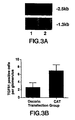
- the density of autoradiographic bands representing decorin mRNA at 2.5 kb and GAPDH mRNA at 1.3 kb) was determined by standard densitometry scanning with a laser densitomiter (LKB). GAPDH band density was used as a control for RNA loading as described previously (Yamamoto et al., supra).
- TGF- ⁇ immunoreactive cells were identified by staining with a rabbit polyclonal antibody to human TGF- ⁇ 1 (King Brewing Co., Ltd, Kakagawa, Japan). Fluorescein isothiocyanate-conjugated donkey F(ab') 2 anti-rabbit IgG was used a secondary antibody (Jackson Immunoresearch Labs). Glomerular TGF- ⁇ 1 positive cells were counted by scoring 30 randomly selected glomeruli as previously described (Okuda et al. supra, and Yamamoto et al. supra).
- Transfection of rat skeletal muscle in vivo with pAct-Dec and pAct-CAT and disease induction were as described above.
- Four rats for each condition were sacrificed at either 6 or 14 days post disease induction. These time points were chosen because in this disease model, TGF- ⁇ 1 mRNA expression peaks by day 6 and matrix component accumulation peaks by day 14 prior to returning to control levels.
- the day 6 time point also included a control group that was not disease induced and received a single injection of PBS.
- Polyclonal rabbit antibodies to tenascin were obtained commercially (Gibco/BRL) as well as a mouse monoclonal antibody specific for fibronectin EDA+ (Accurate Chemical Scientific Corp., Westbury NY) that was produced as previously described (Balza et al., FEBS Letters 228:42-44 (1988). Secondary antibodies were fluorescently labelled rat F(ab') 2 anti-mouse IgG (Jackson Immunoresearch Labs.) for mouse and as described above for rabbit.
- PAS staining for total extracellular matrix proteoglycans and individual extracellular matrix components were evaluated by scoring 30 randomly selected glomeruli per sample on a 0 to 4 scale as previously described (Yamamoto et al., supra 1994).
- Proteinuria a hallmark of the clinical severity of glomerulonephritis, was significantly reduced in the decorin transfected rats on day 6 (mg/day, mean ⁇ SD; decorin vows. CAT) (17.3 ⁇ 5.5 vows. 118 ⁇ 52.4, p ⁇ 0.01) and on day 14 (21.9 ⁇ 7.7 vows. 89.5 ⁇ 19.6, p ⁇ 0.01). Proteinuria that occurs in this model on days 1-3 is due to injection of ariti-thymocyte serum that causes lysis of a portion of the glomerular mesangial cells. This early proteinuria was not decreased by decorin transfection 24 hours before (83.1 ⁇ 27.6 vows. 102.2 ⁇ 23.1. N.S.) or 24 hours after disease induction (data not shown). This result indicates that transfection did not affect immunological injury to the glomeruli but likely acted by preventing the deleterious accumulation of extracellular matrix induced by TGF- ⁇ 1 overproduction.
Landscapes
- Health & Medical Sciences (AREA)
- Life Sciences & Earth Sciences (AREA)
- Chemical & Material Sciences (AREA)
- Organic Chemistry (AREA)
- General Health & Medical Sciences (AREA)
- Medicinal Chemistry (AREA)
- Engineering & Computer Science (AREA)
- Bioinformatics & Cheminformatics (AREA)
- Genetics & Genomics (AREA)
- Pharmacology & Pharmacy (AREA)
- Animal Behavior & Ethology (AREA)
- Public Health (AREA)
- Veterinary Medicine (AREA)
- Proteomics, Peptides & Aminoacids (AREA)
- Molecular Biology (AREA)
- Immunology (AREA)
- Zoology (AREA)
- Gastroenterology & Hepatology (AREA)
- Chemical Kinetics & Catalysis (AREA)
- Biochemistry (AREA)
- Biophysics (AREA)
- Nuclear Medicine, Radiotherapy & Molecular Imaging (AREA)
- General Chemical & Material Sciences (AREA)
- Toxicology (AREA)
- Cell Biology (AREA)
- Biomedical Technology (AREA)
- Wood Science & Technology (AREA)
- General Engineering & Computer Science (AREA)
- Biotechnology (AREA)
- Epidemiology (AREA)
- Cardiology (AREA)
- Plant Pathology (AREA)
- Reproductive Health (AREA)
- Endocrinology (AREA)
- Pulmonology (AREA)
- Hematology (AREA)
- Physics & Mathematics (AREA)
- Heart & Thoracic Surgery (AREA)
- Diabetes (AREA)
- Urology & Nephrology (AREA)
Claims (11)
- Verwendung einer Nukleinsäure, die für ein TGFβ-spezifisches inhibitorisches Agens oder ein aktives Fragment desselben kodiert, zur Herstellung einer pharmazeutischen Zubereitung zur Behandlung einer TGFβ-induzierten Pathologie, wobei die Pathologie ausgewählt ist aus:wobei die Verabreichung der die Nukleinsäure enthaltenden Zubereitung in das Subjekt in folgendem resultiert:einer Akkumulation extrazellulärer Matrix in einem Gewebe eines Subjekts oder einem TGFβ-induzierten schädlichen Wachstum eines Gewebes eines Subjekts;Einführung der Nukleinsäure in eine Zelle in dem Subjekt;Expression und Sekretion des Agens oder des aktiven Fragments desselben durch die Zelle; undSuppression der TGFβ-induzierten Pathologie.
- Verwendung nach Anspruch 1, bei der die Pathologie die Akkumulation extrazellulärer Matrix in einem Gewebe eines Subjekts ist.
- Verwendung nach Anspruch 1, bei der die Pathologie das TGFβ-induzierte schädliche Wachstum eines Gewebes des Subjekts ist.
- Verwendung nach Anspruch 2, bei der die Pathologie Glomerulonephritis ist, das TGFβ-spezifische inhibitorische Agens Decorin oder ein aktives Fragment desselben ist, und
wobei das Decorin oder ein aktives Fragment desselben in der Niere akkumuliert und Glomerulonephritis supprimiert. - Verwendung nach irgendeinem der Ansprüche 1 bis 4, bei der man die pharmazeutische Zubereitung, die die Nukleinsäure enthält, die für das inhibitorische Agens oder aktive Fragment desselben kodiert, in eine Zelle in vivo einführt, um zu erreichen, daß diese Zelle Decorin oder ein aktives Fragment desselben exprimiert und sekretiert.
- Verwendung nach irgendeinem der Ansprüche 1 bis 4, bei der man die Nukleinsäure, die für das inhibitorische Agens oder aktive Fragment desselben kodiert, zuerst in eine Zelle ex vivo einführt, um zu erreichen, daß diese Zelle Decorin oder ein aktives Fragment desselben exprimiert und sekretiert, und man diese pharmazeutische Zubereitung, die diese exprimierende Zelle enthält, in ein Subjekt einführt.
- Verwendung nach irgendeinem der Ansprüche 1, 2, 3, 5 oder 6, bei der man das TGFβ-spezifische inhibitorische Agens aus der Gruppe bestehend aus Decorin, Biglycan, Fibromodulin, Lumican, Betaglycan und Endoglin auswählt.
- Verwendung nach irgendeinem der Ansprüche 1, 2, 3, 5 oder 6, bei der das TGFβ-spezifische inhibitorische Agens ein Antikörper gegen TGFβ ist.
- Verwendung nach irgendeinem der Ansprüche 1 bis 6, bei der man die Zelle aus der Gruppe bestehend aus einer Skelettmuskelzelle, Nierenzelle, Lungenzelle, Leberzelle und Hautzelle auswählt.
- Verwendung nach irgendeinem der Ansprüche 1, 2, 5 oder 6, bei der die Pathologie aus der Gruppe bestehend aus Glomerulonephritis, ARDs, Leberzirrhose, fibrotischem Krebs, Lungenzirrhose, post-myocardialem Infarkt, Herzfibrose, post-Angioplastik-Restenose, renaler interstitieller Fibrose, Vernarbung und Diabetesassoziierter Pathologie ausgewählt ist.
- Verwendung nach irgendeinem der Ansprüche 1, 2, 5 oder 6, bei der das Gewebe aus der Gruppe bestehend aus Niere, Leber, Lunge und Haut ausgewählt ist.
Applications Claiming Priority (3)
| Application Number | Priority Date | Filing Date | Title |
|---|---|---|---|
| US08/389,887 US5824655A (en) | 1995-02-15 | 1995-02-15 | Anti-transforming growth factor-β gene therapy |
| US389887 | 1995-02-15 | ||
| PCT/US1996/001913 WO1996025178A1 (en) | 1995-02-15 | 1996-02-14 | ANTI-TRANSFORMING GROWTH FACTOR-β GENE THERAPY |
Publications (2)
| Publication Number | Publication Date |
|---|---|
| EP0809517A1 EP0809517A1 (de) | 1997-12-03 |
| EP0809517B1 true EP0809517B1 (de) | 2002-08-07 |
Family
ID=23540156
Family Applications (1)
| Application Number | Title | Priority Date | Filing Date |
|---|---|---|---|
| EP96905473A Expired - Lifetime EP0809517B1 (de) | 1995-02-15 | 1996-02-14 | Anti-transformierender wachstumsfaktor beta gentherapie |
Country Status (10)
| Country | Link |
|---|---|
| US (1) | US5824655A (de) |
| EP (1) | EP0809517B1 (de) |
| JP (1) | JPH11500128A (de) |
| KR (1) | KR19980702268A (de) |
| AT (1) | ATE221788T1 (de) |
| AU (1) | AU694621B2 (de) |
| CA (1) | CA2213198C (de) |
| DE (1) | DE69622846T2 (de) |
| ES (1) | ES2179933T3 (de) |
| WO (1) | WO1996025178A1 (de) |
Families Citing this family (54)
| Publication number | Priority date | Publication date | Assignee | Title |
|---|---|---|---|---|
| US7214375B1 (en) * | 1989-09-29 | 2007-05-08 | La Jolla Cancer Research Foundation | Methods of decreasing the accumulation of extracellular matrix associated with glomerulonephritis with anti-TGF-β-specific antibodies |
| GB2324960A (en) * | 1997-05-09 | 1998-11-11 | Univ Manchester | Delivery of naked DNA for wound healing |
| CA2308511C (en) | 1997-10-29 | 2016-01-19 | University Of Pittsburgh Of The Commonwealth System Of Higher Education | Use of transfected or transduced mammalian cells for treating bone pathologies |
| US6524573B1 (en) | 1997-12-30 | 2003-02-25 | Thomas Jefferson University | Method of suppressing tumor cell growth by administering a decorin gene or gene product |
| WO1999033342A1 (en) * | 1997-12-30 | 1999-07-08 | Thomas Jefferson University | Method of suppressing tumor cell growth by administering decorin |
| EP1094115B1 (de) * | 1998-07-03 | 2009-05-06 | Dnavec Research Inc. | (-)-strang rns virusvektor für nervenzellen |
| ES2146552B1 (es) * | 1998-11-24 | 2001-04-16 | Inst Cientifico Tecnol Navarra | Peptidos inhibidores de tgf/31 |
| AU2008200019B2 (en) * | 1999-01-05 | 2009-10-08 | American National Red Cross | Methods for treating conditions associated with the accumulation of excess extracellular matrix |
| AU771635B2 (en) * | 1999-01-05 | 2004-04-01 | American National Red Cross, The | Methods for treating conditions associated with the accumulation of excess extracellular matrix |
| US7763580B2 (en) | 1999-01-05 | 2010-07-27 | University Of Utah Research Foundation | Methods for treating conditions associated with the accumulation of excess extracellular matrix |
| US7314614B1 (en) * | 1999-11-02 | 2008-01-01 | Dnavec Research, Inc. | Recombinant sendai virus vector for introducing exogenous genes to airway epithelia |
| JP2001206899A (ja) * | 1999-11-18 | 2001-07-31 | Japan Tobacco Inc | TGF−βII型受容体に対するヒトモノクローナル抗体及びその医薬用途 |
| US20040197333A1 (en) * | 2000-02-10 | 2004-10-07 | Cornell Research Foundation, Inc. | Use of TGF-beta antagonists to inhibit tumor cell formation or progression |
| PT1263464E (pt) | 2000-03-09 | 2012-12-17 | Genzyme Corp | Utilização de anticorpos anti-tgf-beta antagonistas para tratar ou para prevenir a perda da função renal |
| WO2001074404A2 (en) * | 2000-03-31 | 2001-10-11 | Novarx | Compositions containing genetically modified lung cancer cells expressing a tgf-beta inhibitor |
| US7101543B2 (en) | 2000-03-31 | 2006-09-05 | Novarx | Genetically modified cells expressing a TGFβ inhibitor, the cells being lung cancer cells |
| WO2001082973A2 (en) * | 2000-04-28 | 2001-11-08 | University Of Pittsburgh Of The Commonwealth System Of Higher Education | Viral and non-viral vectors as vehicles for delivering transgenes for treating bone pathologies |
| MXPA02012157A (es) * | 2000-06-09 | 2003-06-06 | Bristol Myers Squibb Co | Metodos para regular una respuesta inmune mediada por celulas al bloquear se°ales linfociticas y al bloquear la adhesion mediada por el antigeno 1 asociado con la funcion de linfocitos. |
| US20040022787A1 (en) * | 2000-07-03 | 2004-02-05 | Robert Cohen | Methods for treating an autoimmune disease using a soluble CTLA4 molecule and a DMARD or NSAID |
| CA2630062C (en) | 2000-07-03 | 2014-10-14 | Bristol-Myers Squibb Company | Methods for treating graft versus host disease and immune disorders associated with rejection using a soluble ctla4 molecule |
| JP2002142770A (ja) * | 2000-11-08 | 2002-05-21 | Dnavec Research Inc | 循環系への遺伝子送達用パラミクソウイルスベクター |
| US20030180301A1 (en) * | 2002-01-22 | 2003-09-25 | Shaf Keshavjee | Use of TGF-beta antagonists to treat or to prevent chronic transplant rejection |
| US20050095592A1 (en) * | 2002-02-13 | 2005-05-05 | Jazaeri Amir A. | Identification of ovarian cancer tumor markers and therapeutic targets |
| AU2003297460A1 (en) * | 2002-12-19 | 2004-07-14 | Scios, Inc. | TREATMENT OF OBESITY AND ASSOCIATED CONDITIONS WITH TGF-Beta INHIBITORS |
| EP1484410B1 (de) * | 2003-06-05 | 2011-11-02 | Ajinomoto Co., Inc. | Fermentierungsverfahren mittels veränderter Bakterien mit einer erhöhten Aufnahme von Nebenprodukten |
| ATE459707T1 (de) * | 2003-06-30 | 2010-03-15 | Dnavec Research Inc | Negativ-strang rna-virus-vektoren, welche ein gen mit veränderten hypermutierbaren regionen tragen |
| AU2004257367A1 (en) * | 2003-07-16 | 2005-01-27 | Resverlogix, Inc. | Compounds and methods for downregulating the effects of TGF-beta |
| WO2005016254A2 (en) * | 2003-07-16 | 2005-02-24 | The Ohio State University Research Foundation | Methods and reagents for treating inflammation and fibrosis |
| CN1961003B (zh) * | 2004-03-31 | 2013-03-27 | 健泰科生物技术公司 | 人源化抗TGF-β抗体 |
| AU2005285483A1 (en) * | 2004-08-05 | 2006-03-23 | The Board Of Trustees Of The Leland Stanford Junior University | Methods and compositions for cell activation |
| JP5481028B2 (ja) * | 2004-10-13 | 2014-04-23 | ザ オハイオ ステート ユニバーシティー リサーチ ファウンデーション | ウイルス関連リンパ増殖性障害を処置または予防するための方法 |
| CA2597098C (en) | 2005-02-08 | 2016-08-02 | Steven R. Ledbetter | Antibodies to tgfbeta |
| KR100747646B1 (ko) * | 2005-02-25 | 2007-08-08 | 연세대학교 산학협력단 | 데코린 유전자를 포함하는 유전자 전달 시스템 및 이를 포함하는 약제학적 항종양 조성물 |
| EP2862867A3 (de) | 2005-10-25 | 2015-08-05 | The Johns Hopkins University | Verfahren und Zusammensetzungen zur Behandlung des Marfan-Syndroms und assoziierter Erkrankungen |
| US7582609B2 (en) | 2006-03-01 | 2009-09-01 | Digna Biotech, S.L. | Method for the treatment of skin fibrosis and suitable compositions for such treatment |
| EP2230252A1 (de) | 2006-03-13 | 2010-09-22 | The Johns Hopkins University | Erhöhung der endothelialen Thromboresistenz |
| CN101553254A (zh) * | 2006-10-03 | 2009-10-07 | 建新公司 | TGF-β拮抗物治疗具有罹患支气管肺发育不良风险的婴儿的用途 |
| JP2010529859A (ja) * | 2007-06-15 | 2010-09-02 | ジェンザイム、コーポレーション | TGF−βII型受容体の2つのTGF−β結合ドメインを含有する融合タンパク質 |
| US20090124570A1 (en) * | 2007-11-08 | 2009-05-14 | University Of Maryland, Baltimore | Methods and Compositions for Facilitating Tissue Repair and Diagnosing, Preventing, and Treating Fibrosis |
| FR2943249B1 (fr) | 2009-03-18 | 2011-08-12 | Genethon | Utilisation de la decorine pour augmenter la masse musculaire |
| EP2435468B1 (de) | 2009-05-26 | 2018-11-14 | The Regents of The University of California | Fibromodulinpeptid |
| EP3117709B1 (de) | 2010-03-12 | 2018-08-01 | Genzyme Corporation | Kombinationstherapie zur behandlung von brustkrebs |
| US8956868B2 (en) | 2010-12-27 | 2015-02-17 | Lsip, Llc | Induced pluripotent stem cells produced with a connexin inhibitor and a TGF-β signaling inhibitor |
| WO2013014262A1 (en) | 2011-07-27 | 2013-01-31 | INSERM (Institut National de la Santé et de la Recherche Médicale) | Methods for diagnosing and treating myhre syndrome |
| US9468612B2 (en) | 2011-10-26 | 2016-10-18 | Seattle Children's Hospital | Cysteamine in the treatment of fibrotic disease |
| US20150044178A1 (en) | 2011-12-28 | 2015-02-12 | Kyoto Prefectural Public University Corporation | Normalization of culture of corneal endothelial cells |
| WO2013149094A1 (en) | 2012-03-28 | 2013-10-03 | The Board Of Regents Of The University Of Texas System | TGFβ TYPE II-TYPE III RECEPTOR FUSIONS |
| CA2927898C (en) | 2013-10-31 | 2021-11-16 | Kyoto Prefectural Public University Corporation | Therapeutic drug for diseases related to endoplasmic reticulum cell death in corneal endothelium |
| WO2016187312A1 (en) | 2015-05-18 | 2016-11-24 | The Arizona Board Of Regents On Behalf Of The University Of Arizona | Methods and compositions for treating an alphavirus infection |
| CN109844124B (zh) * | 2016-05-20 | 2023-10-03 | 哈佛学院董事及会员团体 | 年龄相关疾病和病症的基因治疗方法 |
| TW202506185A (zh) | 2017-01-20 | 2025-02-16 | 法商賽諾菲公司 | 抗TGF-β抗體及其用途 |
| AR110755A1 (es) | 2017-01-20 | 2019-05-02 | Genzyme Corp | Anticuerpos dirigidos a hueso |
| KR20200130709A (ko) | 2018-03-06 | 2020-11-19 | 더 트러스티스 오브 더 유니버시티 오브 펜실바니아 | 전립선-특이 막 항원 car 및 이의 사용 방법 |
| JP2026019514A (ja) * | 2024-07-26 | 2026-02-05 | デンカ株式会社 | 核酸を浮遊細胞に導入する方法 |
Family Cites Families (6)
| Publication number | Priority date | Publication date | Assignee | Title |
|---|---|---|---|---|
| WO1991010727A1 (en) * | 1990-01-22 | 1991-07-25 | La Jolla Cancer Research Foundation | Inhibitors of cell regulatory factors |
| GB9106678D0 (en) * | 1991-03-28 | 1991-05-15 | Ferguson Mark W J | Wound healing |
| AU671606B2 (en) * | 1991-10-31 | 1996-09-05 | Whitehead Institute For Biomedical Research | TGF-beta type receptor cDNAs and uses therefor |
| WO1993010215A1 (en) * | 1991-11-15 | 1993-05-27 | Memorial Sloan-Kettering Cancer Center | Purified proteoglycan betaglycan, compositions, and methods |
| JP3854307B2 (ja) * | 1991-12-04 | 2006-12-06 | ザ バーナム インスティテュート | 細胞外マトリックスの蓄積を防止するためのトランスフォーミング増殖因子βの阻害 |
| WO1993021945A1 (en) * | 1992-04-23 | 1993-11-11 | The Regents Of The University Of California | METHODS FOR TREATING VASCULAR DISORDERS BY INHIBITING THE ENDOTHELIN STIMULATORY ACTIVITY OF TGF$g(b) |
-
1995
- 1995-02-15 US US08/389,887 patent/US5824655A/en not_active Expired - Lifetime
-
1996
- 1996-02-14 JP JP8525079A patent/JPH11500128A/ja not_active Ceased
- 1996-02-14 DE DE69622846T patent/DE69622846T2/de not_active Expired - Fee Related
- 1996-02-14 AT AT96905473T patent/ATE221788T1/de not_active IP Right Cessation
- 1996-02-14 AU AU49220/96A patent/AU694621B2/en not_active Ceased
- 1996-02-14 WO PCT/US1996/001913 patent/WO1996025178A1/en not_active Ceased
- 1996-02-14 KR KR1019970705665A patent/KR19980702268A/ko not_active Ceased
- 1996-02-14 CA CA002213198A patent/CA2213198C/en not_active Expired - Fee Related
- 1996-02-14 ES ES96905473T patent/ES2179933T3/es not_active Expired - Lifetime
- 1996-02-14 EP EP96905473A patent/EP0809517B1/de not_active Expired - Lifetime
Also Published As
| Publication number | Publication date |
|---|---|
| ATE221788T1 (de) | 2002-08-15 |
| WO1996025178A1 (en) | 1996-08-22 |
| US5824655A (en) | 1998-10-20 |
| ES2179933T3 (es) | 2003-02-01 |
| DE69622846T2 (de) | 2003-04-24 |
| AU4922096A (en) | 1996-09-04 |
| KR19980702268A (ko) | 1998-07-15 |
| DE69622846D1 (de) | 2002-09-12 |
| AU694621B2 (en) | 1998-07-23 |
| CA2213198C (en) | 2002-12-03 |
| JPH11500128A (ja) | 1999-01-06 |
| EP0809517A1 (de) | 1997-12-03 |
| CA2213198A1 (en) | 1996-08-22 |
Similar Documents
| Publication | Publication Date | Title |
|---|---|---|
| US5824655A (en) | Anti-transforming growth factor-β gene therapy | |
| EP0536275B1 (de) | Inhibitoren des tumorwachstums aus geweben, methoden ihrer herstellung und verwendungen | |
| JP3854307B2 (ja) | 細胞外マトリックスの蓄積を防止するためのトランスフォーミング増殖因子βの阻害 | |
| AU773278B2 (en) | Connective tissue growth factor fragments and methods and uses thereof | |
| US8420793B2 (en) | Polynucleotides encoding recombinant lubricin molecules and uses thereof | |
| EP1469878B1 (de) | Fgfr agoniste | |
| JP2003530325A (ja) | 好ましくは特異的ケモカインレセプター分析、及びケモカインレセプター/リガンド相互作用の助けによる、腫瘍及び炎症細胞の細胞表面プロテオームの調査、並びに腫瘍疾患及び炎症性疾患の治療のための診断薬及び薬剤 | |
| HK1040744A1 (en) | Tgf-beta type receptor cdnas and uses thereof | |
| CN119074926B (zh) | 一种靶向fap的car-t细胞在制备治疗心肌炎慢性期心脏纤维化的药物中的应用 | |
| US5408041A (en) | Process of purifying antler-derived bone growth factors | |
| US7837993B2 (en) | Methods and compositions for regeneration of aged skeletal muscle tissues | |
| JP2002515444A (ja) | 骨粗鬆症の治療方法 | |
| EP1008603B1 (de) | Lösliche Polypeptide bestehend aus der ersten Coiled coil Domäne aus Mensch- und Maus-Epimorphin | |
| EP0585801A2 (de) | Protein des Cadherin-Typs aus Knochen und Verfahren zur Herstellung | |
| JPH107698A (ja) | エピモルフィン・アンタゴニスト | |
| UA73300C2 (en) | Use of composition containing homolog of antibody antagonizing interaction between integrin with alpha-4 subunit and its ligand for treating fibrosis | |
| US20030206902A1 (en) | Ve-cadherin and vegfr-2 antagonists for therapeutic modulation of angiogenesis | |
| US6149945A (en) | Human fibroblast diffusable factors | |
| WO2001066063A2 (en) | Ve-cadherin and vegfr-2 antagonists for therapeutic modulation of angiogenesis | |
| Goldman | Angiogenesis: A unifying model for the proliferative and differentiation phases of capillary formation | |
| AU2079900A (en) | Inhibiting transforming growth factor beta to prevent accumulation of extracellular matrix |
Legal Events
| Date | Code | Title | Description |
|---|---|---|---|
| PUAI | Public reference made under article 153(3) epc to a published international application that has entered the european phase |
Free format text: ORIGINAL CODE: 0009012 |
|
| 17P | Request for examination filed |
Effective date: 19970910 |
|
| AK | Designated contracting states |
Kind code of ref document: A1 Designated state(s): AT BE CH DE DK ES FR GB GR IE IT LI LU MC NL PT SE |
|
| GRAG | Despatch of communication of intention to grant |
Free format text: ORIGINAL CODE: EPIDOS AGRA |
|
| 17Q | First examination report despatched |
Effective date: 20010314 |
|
| GRAG | Despatch of communication of intention to grant |
Free format text: ORIGINAL CODE: EPIDOS AGRA |
|
| GRAG | Despatch of communication of intention to grant |
Free format text: ORIGINAL CODE: EPIDOS AGRA |
|
| GRAH | Despatch of communication of intention to grant a patent |
Free format text: ORIGINAL CODE: EPIDOS IGRA |
|
| GRAH | Despatch of communication of intention to grant a patent |
Free format text: ORIGINAL CODE: EPIDOS IGRA |
|
| GRAA | (expected) grant |
Free format text: ORIGINAL CODE: 0009210 |
|
| AK | Designated contracting states |
Kind code of ref document: B1 Designated state(s): AT BE CH DE DK ES FR GB GR IE IT LI LU MC NL PT SE |
|
| PG25 | Lapsed in a contracting state [announced via postgrant information from national office to epo] |
Ref country code: NL Free format text: LAPSE BECAUSE OF FAILURE TO SUBMIT A TRANSLATION OF THE DESCRIPTION OR TO PAY THE FEE WITHIN THE PRESCRIBED TIME-LIMIT Effective date: 20020807 |
|
| REF | Corresponds to: |
Ref document number: 221788 Country of ref document: AT Date of ref document: 20020815 Kind code of ref document: T |
|
| REG | Reference to a national code |
Ref country code: GB Ref legal event code: FG4D |
|
| REG | Reference to a national code |
Ref country code: CH Ref legal event code: EP |
|
| REG | Reference to a national code |
Ref country code: IE Ref legal event code: FG4D |
|
| REF | Corresponds to: |
Ref document number: 69622846 Country of ref document: DE Date of ref document: 20020912 |
|
| PG25 | Lapsed in a contracting state [announced via postgrant information from national office to epo] |
Ref country code: DK Free format text: LAPSE BECAUSE OF FAILURE TO SUBMIT A TRANSLATION OF THE DESCRIPTION OR TO PAY THE FEE WITHIN THE PRESCRIBED TIME-LIMIT Effective date: 20021107 |
|
| PG25 | Lapsed in a contracting state [announced via postgrant information from national office to epo] |
Ref country code: PT Free format text: LAPSE BECAUSE OF FAILURE TO SUBMIT A TRANSLATION OF THE DESCRIPTION OR TO PAY THE FEE WITHIN THE PRESCRIBED TIME-LIMIT Effective date: 20021122 |
|
| REG | Reference to a national code |
Ref country code: CH Ref legal event code: NV Representative=s name: E. BLUM & CO. PATENTANWAELTE |
|
| REG | Reference to a national code |
Ref country code: GR Ref legal event code: EP Ref document number: 20020403327 Country of ref document: GR |
|
| NLV1 | Nl: lapsed or annulled due to failure to fulfill the requirements of art. 29p and 29m of the patents act | ||
| ET | Fr: translation filed | ||
| REG | Reference to a national code |
Ref country code: ES Ref legal event code: FG2A Ref document number: 2179933 Country of ref document: ES Kind code of ref document: T3 |
|
| PG25 | Lapsed in a contracting state [announced via postgrant information from national office to epo] |
Ref country code: MC Free format text: LAPSE BECAUSE OF NON-PAYMENT OF DUE FEES Effective date: 20030228 |
|
| PLBE | No opposition filed within time limit |
Free format text: ORIGINAL CODE: 0009261 |
|
| STAA | Information on the status of an ep patent application or granted ep patent |
Free format text: STATUS: NO OPPOSITION FILED WITHIN TIME LIMIT |
|
| 26N | No opposition filed |
Effective date: 20030508 |
|
| PGFP | Annual fee paid to national office [announced via postgrant information from national office to epo] |
Ref country code: IE Payment date: 20060227 Year of fee payment: 11 |
|
| PGFP | Annual fee paid to national office [announced via postgrant information from national office to epo] |
Ref country code: SE Payment date: 20060228 Year of fee payment: 11 Ref country code: IT Payment date: 20060228 Year of fee payment: 11 Ref country code: GR Payment date: 20060228 Year of fee payment: 11 Ref country code: FR Payment date: 20060228 Year of fee payment: 11 Ref country code: ES Payment date: 20060228 Year of fee payment: 11 Ref country code: AT Payment date: 20060228 Year of fee payment: 11 |
|
| PGFP | Annual fee paid to national office [announced via postgrant information from national office to epo] |
Ref country code: CH Payment date: 20060314 Year of fee payment: 11 |
|
| PGFP | Annual fee paid to national office [announced via postgrant information from national office to epo] |
Ref country code: BE Payment date: 20060320 Year of fee payment: 11 |
|
| PGFP | Annual fee paid to national office [announced via postgrant information from national office to epo] |
Ref country code: DE Payment date: 20060419 Year of fee payment: 11 |
|
| PG25 | Lapsed in a contracting state [announced via postgrant information from national office to epo] |
Ref country code: SE Free format text: LAPSE BECAUSE OF NON-PAYMENT OF DUE FEES Effective date: 20070215 |
|
| PG25 | Lapsed in a contracting state [announced via postgrant information from national office to epo] |
Ref country code: LI Free format text: LAPSE BECAUSE OF NON-PAYMENT OF DUE FEES Effective date: 20070228 Ref country code: CH Free format text: LAPSE BECAUSE OF NON-PAYMENT OF DUE FEES Effective date: 20070228 |
|
| PGFP | Annual fee paid to national office [announced via postgrant information from national office to epo] |
Ref country code: LU Payment date: 20070228 Year of fee payment: 12 |
|
| REG | Reference to a national code |
Ref country code: CH Ref legal event code: PL |
|
| EUG | Se: european patent has lapsed | ||
| GBPC | Gb: european patent ceased through non-payment of renewal fee |
Effective date: 20070214 |
|
| PG25 | Lapsed in a contracting state [announced via postgrant information from national office to epo] |
Ref country code: AT Free format text: LAPSE BECAUSE OF NON-PAYMENT OF DUE FEES Effective date: 20070214 |
|
| REG | Reference to a national code |
Ref country code: IE Ref legal event code: MM4A |
|
| REG | Reference to a national code |
Ref country code: FR Ref legal event code: ST Effective date: 20071030 |
|
| BERE | Be: lapsed |
Owner name: THE *UNIVERSITY OF UTAH Effective date: 20070228 |
|
| PG25 | Lapsed in a contracting state [announced via postgrant information from national office to epo] |
Ref country code: BE Free format text: LAPSE BECAUSE OF NON-PAYMENT OF DUE FEES Effective date: 20070228 |
|
| PG25 | Lapsed in a contracting state [announced via postgrant information from national office to epo] |
Ref country code: IE Free format text: LAPSE BECAUSE OF NON-PAYMENT OF DUE FEES Effective date: 20070214 Ref country code: DE Free format text: LAPSE BECAUSE OF NON-PAYMENT OF DUE FEES Effective date: 20070901 |
|
| PG25 | Lapsed in a contracting state [announced via postgrant information from national office to epo] |
Ref country code: GB Free format text: LAPSE BECAUSE OF NON-PAYMENT OF DUE FEES Effective date: 20070214 Ref country code: FR Free format text: LAPSE BECAUSE OF NON-PAYMENT OF DUE FEES Effective date: 20070228 |
|
| REG | Reference to a national code |
Ref country code: ES Ref legal event code: FD2A Effective date: 20070215 |
|
| PG25 | Lapsed in a contracting state [announced via postgrant information from national office to epo] |
Ref country code: ES Free format text: LAPSE BECAUSE OF NON-PAYMENT OF DUE FEES Effective date: 20070215 |
|
| PG25 | Lapsed in a contracting state [announced via postgrant information from national office to epo] |
Ref country code: GR Free format text: LAPSE BECAUSE OF NON-PAYMENT OF DUE FEES Effective date: 20070904 |
|
| PGFP | Annual fee paid to national office [announced via postgrant information from national office to epo] |
Ref country code: GB Payment date: 20060301 Year of fee payment: 11 |
|
| PG25 | Lapsed in a contracting state [announced via postgrant information from national office to epo] |
Ref country code: IT Free format text: LAPSE BECAUSE OF NON-PAYMENT OF DUE FEES Effective date: 20070214 |
|
| PG25 | Lapsed in a contracting state [announced via postgrant information from national office to epo] |
Ref country code: LU Free format text: LAPSE BECAUSE OF NON-PAYMENT OF DUE FEES Effective date: 20080214 |