EP0806479B1 - Fermentative Herstellung von Biotin - Google Patents
Fermentative Herstellung von Biotin Download PDFInfo
- Publication number
- EP0806479B1 EP0806479B1 EP97106762A EP97106762A EP0806479B1 EP 0806479 B1 EP0806479 B1 EP 0806479B1 EP 97106762 A EP97106762 A EP 97106762A EP 97106762 A EP97106762 A EP 97106762A EP 0806479 B1 EP0806479 B1 EP 0806479B1
- Authority
- EP
- European Patent Office
- Prior art keywords
- nifu
- biotin
- nifs
- biob
- desthiobiotin
- Prior art date
- Legal status (The legal status is an assumption and is not a legal conclusion. Google has not performed a legal analysis and makes no representation as to the accuracy of the status listed.)
- Expired - Lifetime
Links
Images






Classifications
-
- C—CHEMISTRY; METALLURGY
- C12—BIOCHEMISTRY; BEER; SPIRITS; WINE; VINEGAR; MICROBIOLOGY; ENZYMOLOGY; MUTATION OR GENETIC ENGINEERING
- C12N—MICROORGANISMS OR ENZYMES; COMPOSITIONS THEREOF; PROPAGATING, PRESERVING, OR MAINTAINING MICROORGANISMS; MUTATION OR GENETIC ENGINEERING; CULTURE MEDIA
- C12N9/00—Enzymes; Proenzymes; Compositions thereof; Processes for preparing, activating, inhibiting, separating or purifying enzymes
- C12N9/93—Ligases (6)
-
- C—CHEMISTRY; METALLURGY
- C12—BIOCHEMISTRY; BEER; SPIRITS; WINE; VINEGAR; MICROBIOLOGY; ENZYMOLOGY; MUTATION OR GENETIC ENGINEERING
- C12N—MICROORGANISMS OR ENZYMES; COMPOSITIONS THEREOF; PROPAGATING, PRESERVING, OR MAINTAINING MICROORGANISMS; MUTATION OR GENETIC ENGINEERING; CULTURE MEDIA
- C12N9/00—Enzymes; Proenzymes; Compositions thereof; Processes for preparing, activating, inhibiting, separating or purifying enzymes
- C12N9/10—Transferases (2.)
- C12N9/13—Transferases (2.) transferring sulfur containing groups (2.8)
-
- C—CHEMISTRY; METALLURGY
- C12—BIOCHEMISTRY; BEER; SPIRITS; WINE; VINEGAR; MICROBIOLOGY; ENZYMOLOGY; MUTATION OR GENETIC ENGINEERING
- C12P—FERMENTATION OR ENZYME-USING PROCESSES TO SYNTHESISE A DESIRED CHEMICAL COMPOUND OR COMPOSITION OR TO SEPARATE OPTICAL ISOMERS FROM A RACEMIC MIXTURE
- C12P17/00—Preparation of heterocyclic carbon compounds with only O, N, S, Se or Te as ring hetero atoms
- C12P17/18—Preparation of heterocyclic carbon compounds with only O, N, S, Se or Te as ring hetero atoms containing at least two hetero rings condensed among themselves or condensed with a common carbocyclic ring system, e.g. rifamycin
- C12P17/185—Heterocyclic compounds containing sulfur atoms as ring hetero atoms in the condensed system
- C12P17/186—Heterocyclic compounds containing sulfur atoms as ring hetero atoms in the condensed system containing a 2-oxo-thieno[3,4-d]imidazol nucleus, e.g. Biotin
Definitions
- This invention relates to a fermentative process for the production of biotin from desthiobiotin.
- Biotin is one of the essential vitamins for nutrition of animals, plants, and microorganisms, and very important as a medicine or food additive.
- Escherichia strains are known as microorganisms which can be used for the above process [see Japanese Patent Publication (Kokai) No. 149091/1986, WO 87/01391 and Japanese Patent Publication (Kokai) No. 155081/1987].
- Bacillus strains Japanese Patent Publication (Kokai) No. 180174/1991
- Serratia strains Japanese Patent Publication (Kokai) No. 27980/1990
- Brevibacterium strains Japanese Patent Publication (Kokai) No. 240489/1991
- an object of the present invention is to find a more efficient process of producting biotin from desthiobiotin, and to this end there have been elucidated various protein factors. It has been found that nifU and nifS gene products (hereinafter referred to as NIFU and NIFS), which are suggested to be involved in the mobilization of the iron and sulfide necessary for nitrogenase metallocluster core formation [J. Bacteriology, 175, 6737 (1993)], are significantly effective for the production of higher amount of biotin from desthiobiotin. The present invention is based upon these findings.
- the present invention provides a process for the production of biotin from desthiobiotin which comprises contacting desthiobiotin with an enzyme reaction system containing bioB gene product (which encodes biotin synthase; hereafter referred to as BIOB) and also NIFU and/or NIFS, and isolating the resulting biotin from the reaction mixture, especially such a process wherein BIOB is derived from Escherichia coli and NIFU and/or NIFS are derived from Klebsiella pneumoniae, or a process as described before wherein the enzyme reaction mixture further contains S-adenosylmethionine, L-cysteine and an electron supplying system, e.g. wherein the electron supplying system comprises NADPH, ferredoxin-NADP reductase and flavodoxin or wherein the electron supplying system comprises deazariboflavin or a functional equivalent component thereof.
- an enzyme reaction system containing bioB gene product (which encodes biotin synthase
- the present invention also provides a fermentative process for the production of biotin from desthiobiotin which comprises cultivating a microorganism, which has been transformed by the DNA sequences encoding BIOB and NIFU and/or NIFS itself or comprised by a single or independent from each other by several plasmids in the presence of desthiobiotin and in an aqueous nutrient medium, and isolating the resulting biotin from the culture medium, especially such a process wherein the microorganism is selected from the genus Escherichia and specifically a process wherein the cultivation is effected for from 1 to 5 days, preferably from 1 to 3 days, at a pH of from 5 to 9, preferably from 6 to 8, and in a temperature range of from 10 to 45°C, preferably from 25 to 40°C.
- the enzyme reaction system used in this invention contains BIOB, NIFU and/or NIFS as protein factors.
- BIOB for the above reaction, a cell-free extract of the cells containing BIOB or the BIOB partially or completely purified through conventional isolation methods for enzymes can be used. Any kind of BIOB which has biotin synthase activity can also be used for this reaction, but it is preferable to use Escherichia coli BIOB. If desired, a large amount of purified BIOB can be obtained by the following procedures. A gene library of Escherichia coli containing an appropriate length of DNA fragment covering the full size of the coding region of the bioB gene is constructed.
- Escherichia coli R875 [bioB17; J. Bacteriol., 112, 830 (1972)] is suitable for this purpose.
- the clones showing biotin prototrophy are selected based on the expression of the objective bioB gene.
- This clone should contain the bioB gene and express it.
- Any hybrid plasmid showing this property can be used to obtain BIOB.
- the hybrid plasmid named pTrcEB1 is one of the objective plasmids.
- Escherichia coli JM109 (Takara Shuzo Co., Shiga, Japan) transformed by pTrcEB1 1 by a suitable cell method is cultivated in a nutrient medium with induction, and the produced BIOB can be isolated by using the general chromatography technologies.
- the Escherichia coli bioB gene expression plasmid can be constructed according to the known procedures disclosed in Japanese Patent Publication (Kokai) No. 149091/1986 or Japanese Patent Publication (Kokai) No. 236493/1995.
- NIFU and NIFS for the above reaction, a cell-free extract of the cells containing the above proteins of the NIFU and NIFS, or NIFU and NIFS partially purified through conventional isolation methods for enzymes, can be used. Any kind of NIFU and NIFS having the effects on biotin formation from desthiobiotin can be used for this reaction. But it is preferable to use Klebsiella pneumoniae NIFU and NIFS.
- Klebsiella pneumoniae M5a1 is a well characterized strain having the nifU and nifS genes. The nifU and nifS genes of Klebsiella pneumoniae are obtained by the following procedures.
- a gene library of Klebsiella pneumoniae M5a1 is first constructed by using DNA fragment cut by a restriction enzyme such as BamH1. Because it has been known that a 2.5 Kb BamH1 fragment of the Klebsiella pneumoniae chromosomal DNA contains the objective nifU and nifS genes [J. Bacteriol., 169, 4024 (1987)], DNA fragments of 2.3 - 2.6 Kb in length are collected and ligated with any vector plasmids which are replicable in appropriate microorganisms.
- a restriction enzyme such as BamH1.
- the vector plasmid pUC19 (Takara Shuzo Co.) with Escherichia coli JM109 is one of the suitable combinations of a plasmid and host microorganism to construct a gene library. Then the objective clones can be selected by conventional methods such as colony hybridization using synthesized oligonucleotide probes prepared based on the published DNA sequence of nifU and nifS genes. Subsequently, the DNA fragment harboring the nifU and nifS genes can be subcloned into other expression vector plasmids.
- the inducible vector plasmid such as pTrc99A can favorably be used to express the nifU and nifS genes.
- Escherichia coli JM109 (pKNnif04) is one of the suitable clones to express nifU and nifS genes.
- DNA sequences encoding such genes can also be synthetically constructed by methods known in the art, e.g. see EP 747 483.
- DNA sequences encoding any BIOB, NIFU or NIFS can be isolated from any microorganisms based on published sequences using the well known PCR Technology. Such microorganisms can be obtained from any known depository authority listed in the journal "Industrial Property" [(1991) 1 , 29-40], e.g. the American Type Culture Collection (ATCC).
- ATCC American Type Culture Collection
- Cultivation of the microorganisms used in the present invention can be effected by using known procedures.
- An aqueous medium containing an assimilable carbon source, a digestible nitrogen source, an inorganic salt, and other nutrients necessary for the growth of the microorganism can be used as the aqueous nutrient (culture) medium.
- the carbon source for example, glucose, fructose, lactose, galactose, sucrose, maltose, starch, dextrin or glycerol may be employed.
- the nitrogen source for example, peptone, soybean powder, corn steep liquor, meat extract, ammonium sulfate, ammonium nitrate, urea or a mixture any of these may be employed.
- the inorganic salt a sulfate, hydrochloride or phosphate of calcium, magnesium, zinc, manganese, cobalt or iron may be employed.
- conventional nutrient factors or an antifoaming agent such as animal oil, vegetable oil or mineral oil can also be included in the aqueous nutrient medium.
- relevant antibiotic can also be included in the medium.
- the expression of the objective genes are inducible by isopropyl-beta-D-thiogalactopyranoside (IPTG), this compound can also be present in the medium.
- the pH of the culture medium is suitably 5 to 9, preferably 6 to 8.
- the cultivation temperature range is suitably 10 to 45 °C, preferably 25 - 40 °C.
- the cultivation time is normally from 1 to 5 days, preferably 1 to 3 days.
- cell-free extract For the preparation of cell-free extract from the obtained cells by cultivation, general methods such as sonication, cell breakage in the presence of glass beads or by French press can be applied. After cell breakage, the obtained solution is centrifuged to separate the cell debris, and its supernatant can be used as a cell-free extract
- the enzyme reaction system contains as the reactive components BIOB and also NIFU and/or NIFS proteins in the cell-free extracts as prepared above or those partially purified.
- desthiobiotin is added as the substrate for this reaction.
- the amount of desthiobiotin to be added can be varied depending on the enzyme reaction system employed. Both D-form and a mixture of D- and L-form desthiobiotin can be used as the substrate.
- S-adenosylmethionine, L-cysteine and an electron supplying system such as deazariboflavin or a functional equivalent component of deazariboflavin, stimulates the reaction.
- ferredoxin-NADP reductase and flavodoxin together with NADPH can be employed as a physiological electron supplying system for the reaction.
- concentrations of these additive components can vary depending on the employed enzyme reaction system. But in general, 50 ⁇ M - 2 mM for S-adenosylmethionine, 10 ⁇ M - 2 mM for L-cysteine and 10 - 1000 ⁇ M for deazariboflavin are recommended.
- buffer solution which has no negative influence on biotin formation can be used.
- Tris-HCl buffer is preferably used.
- the enzyme reaction is suitably effected at a pH in the range of 6.0 to 8.5, more preferably in the range of 7.0 to 8.0.
- the reaction temperature is suitably between 20 and 45 °C, more preferably between 25 and 40 °C. If deazariboflavin is used for stimulating the reaction, this is suitably started by photoreduction using a fluorescent lamp located about 10 cm away from the reaction mixture.
- the incubation period may be between 30 minutes and 3 hours. Much longer incubation can be effected so long as the enzymes are active.
- nifU and nifS genes may be placed on one plasmid or on multiple independent plasmids, and introduced into host microorganism such as Escherichia coli by a conventional transformation method. Then the biotin production from desthiobiotin can be carried out under a growing system, a resting system and , if desired, an enzyme reaction system using the cell-free extract of the above mentioned microorganism.
- Any Escherichia coli strains modified to overexpress bioB, nifU and nifS genes together can favorably be used.
- particularly preferred strains are Escherichia coli JM109 (pTrcEB1, pKNnif05) and Escherichia coli JM109 (pKNnif06).
- the biotin produced from desthiobiotin under the conditions as described above can easily be recovered.
- a process generally used for extracting a certain product from its solution may be employed which is applicable to the various properties of biotin.
- the biotin in the filtrate is absorbed on active carbon, then eluted and purified further with an ion exchange resin.
- the filtrate is applied directly to an ion exchange resin and, after the elution, the desired product is recrystallized from a mixture of alcohol and water.
- Escherichia coli HB101 [J. Mol. Biol., 41, 459 (1969); Takara Shuzo Co.] was cultured in 100 ml of Luria broth (LB) medium (1% tryptone, 0.5% yeast extract 0.5% NaCl; pH7.5) at 37°C for 10 hours, and bacterial cells were recovered by centrifugation.
- LB Luria broth
- the whole DNA was extracted from cells by the phenol method (Experiments with gene fusions, Cold Spring Harbor Laboratory Press 1984, pp. 137-139; Sambrook et al. 1989 "Molecular Cloning", Cold Spring Harbor Laboratory Press), and 0.7 mg of the whole DNA was obtained.
- Fig. 1 3 ⁇ g of the whole DNA was completely digested with NcoI and HaeIII, and the DNA fragments of 1.2-1.5 kb were isolated by the agarose gel electrophoresis.
- the DNA fragments were ligated with the vector plasmid pTrc99A (Pharmacia Biotech Co., Pharmacia, Uppsala, Sweden) digested with NcoI and SmaI using the DNA ligation Kit (Takara Shuzo Co., Japan) according to the instructions of the manufacturer.
- the ligation mixture was transferred into Escherichia coli strain JM109 [Gene, 33, 103 (1985)] by a suitable cell method (Molecular Cloning, Cold Spring Harbor Laboratory Press 1982, pp.
- the ampicillin resistant strains having the genomic library were cultured at 37°C for 16 hours in 50 ml of LB medium containing 100 ⁇ g/ml ampicillin, and bacterial cells were collected by centrifugation. Plasmid DNA pool was extracted from the bacterial cells by the alkaline-denaturation method (Molecular Cloning, Cold Spring Harbor Laboratory Press 1982, pp. 90-91).
- the plasmid DNA pool was transferred into Escherichia coli bioB deficient mutant R875 [J. Bacteriol. 112, 830-839 (1972)] by a suitable cell method.
- the transformants were selected for resistance to ampicillin and for biotin prototrophy on LB medium agar plate containing 100 ⁇ g/ml ampicillin, 0.075 U/ml avidin and 0.1 mM isopropyl-beta-D-thio-galactopyranoside (IPTG).
- One of the obtained transformants was cultivated in LB medium containing 100 ⁇ g/ml ampicillin, and the hybrid plasmid was extracted from the cells.
- the isolated plasmid was analyzed using restriction enzymes.
- the hybrid plasmid had a 1.3 kb of NcoI-HaeIII fragment containing the bioB gene and was designated pTrcEB1 (see Fig. 2).
- Escherichia coli strain JM109 having this plasmid was named Escherichia coli JM109 (pTrcEB1).
- Escherichia coli JM109 (pTrcEB1) was precultured at 37°C overnight in LB medium containing 100 ⁇ g/ml ampicillin. 0.1 ml of the preculture was transferred to 5 ml of the same medium in a test tube. After cultivation at 37°C for 3 hours, IPTG was added at 2 mM to induce the trc promoter, and cultivation was continued for 4 hours. Bacterial cells were collected and washed with saline.
- BIOB was overproduced in quantities of about 2% of whole cell proteins.
- Escherichia coli JM109 (pTrcEB1) cells were aerobically cultivated with 2 L of Terrific broth (TB; 24 g Yeast extract/Difco, 12 g Tryptone/Difco, 4 g glycerol, 2.31 g KH2PO4, 12. 54 g K2HPO4 in 1 liter) containing 100 ⁇ g/ml of ampicillin at 37°C for 3 hours. BioB protein expression was induced by further cultivation for 3 hours after addition of 1 mM IPTG.
- Cells were thawed with about 60 ml of TB containing 5 mM 2-mercaptoethanol (hereafter referred to as 2-ME) and disrupted by French press in the presence of 0.25 mM phenylmethylsulfonyl fluoride, 10 ⁇ g/ml deoxyribonuclease I and 10 ⁇ g/ml ribonuclease A, and cell debris was removed by centrifugation at 15000 x g for 30 min.
- the solution was filled up to 200 ml with TB containing 5 mM 2-ME, and the same volume (200 ml) of TB containing 20% ammonium sulfate (w/v) was added to the solution.
- BIOB peak around 6% ammonium sulfate concentration was collected, concentrated to about 3 ml by Centriprep-30 (Amicon) and passed through HiPrep Sephacryl S200HR 26/60 (Pharmacia) with TB containing 2 mM 2-ME and 0.25 M NaCl.
- the BIOB peak with red color was collected, diluted with the same volume of TB containing 2 mM 2-ME and loaded on RESOURCE Q 6 ml (Pharmacia) which had been equilibrated with the same buffer. After washing, elution was effected with 120 ml of 0 - 0.5 M NaCl linear gradient. The BIOB peak with red color was collected.
- the BIOB was once diluted to a final protein concentration of about 1 mg/ml with 50 mM Tris-HCl/pH 8.1 containing 1 mM dithiothreitol (hereafter referred to as DTT) and anaerobically incubated with 100 ⁇ M FeCl 3 and 50 ⁇ M Na2S at room temperature for 2 hours. Excess ions and DTT were removed by passing through Sephadex G-25 (M, 1.5 x 18 cm, Pharmacia) with 0.1 M Tris-HCl/pH 7.5 containing 0.2 mM DTT. The BioB protein was concentrated to a final protein concentration of 20 - 30 mg/ml and stored at -80°C.
- DTT dithiothreitol
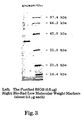
- BioB protein prepared as above was estimated to be over 80% by a single protein band with about 37 kDa molecular weight on SDS-PAGE (see Fig. 3).
- the BioB protein prepared as above showed a typical absorption spectrum pattern of iron-sulfur proteins (see Fig. 4).
- Klebsiella pneumoniae strain M5a1 [Nature, 237, 102 (1972)] was grown in 50 ml of LB medium at 37°C for 10 hours, and bacterial cells were recovered by centrifugation. The whole DNA was extracted from cells by the phenol method.
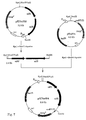
- the cloning of Klebsiella pneumoniae nifU and nifS genes was performed as shown in Fig. 5.
- the whole DNA (2 ⁇ g) was completely digested with BamHI, and 2.3-2.6 kb of DNA fragments were obtained by the agarose gel electrophoresis.
- the vector plasmid pUC19 (Takara Shuzo Co.) was completely digested with BamHI, and then treated with alkaline phosphatase to avoid self-ligation.
- the genomic DNA fragments prepared above were ligated with the cleaved pUC19 using the DNA ligation Kit (Takara Shuzo Co.), and the ligation mixture was transferred into Escherichia coli strain JM109 by a suitable cell method.
- the strains were selected for ampicillin resistance (100 ⁇ g/ml) on LB medium agar plate. 2,000 of individual clones having the genomic DNA fragments were obtained as a genomic library.
- the grown colonies on the agar plate were transferred to nylon membranes (Hybond-N, Amersham Co.) and lysed by alkali. The denatured DNA was then immobilized on the membranes. Hybridization was performed using the DIG DNA Labeling and Detection system (Boehringer Mannheim Co., Mannheim, Germany) according to the instructions of manufacturer. Two oligonucleotides having partial sequences of the nifU and nifS genes were synthesized.
- sequences are shown as follows: 3'-Ends of the oligonucleotides were labeled using the DIG Oligonucleotide 3'-End Labeling Kit (Boehringer Mannheim Co.), and a mixture of the labeled oligonucleotide was used as a probe for hybridization. Hybridized clones were detected using the DIG Luminescent Detection Kit (Boehringer Mannheim Co.). Twenty-six candidates for the clone bearing the nifU and nifS genes were obtained.
- the hybrid plasmids were extracted from the cells by the alkaline-denaturation method and analyzed using restriction enzymes (BamHI, VspI and ScaI). 300-400 of nucleotide sequences from both ends of inserted DNA fragments were determined using the ALFred DNA sequencer (Pharmacia Biotech Co.). The determined sequences were identical to the nucleotide sequence of Klebsiella pneumoniae nifU, S cluster published by Beynon [J. Bacteriol. 169, 4024-4029 (1987)]. These results showed that the obtained clones had Klebsiella pneumoniae nifU, S cluster.
- the hybrid plasmid in which the nifU, S cluster was inserted in the same direction as the lactose (lac) promoter in the vector was named pKNnif01.
- the hybrid plasmid having the nifU, S cluster inserted in opposite direction to the lac promoter was named pKNnif02 (see Fig. 5).
- the vector plasmid pBluescriptII-SK + (Toyobo Co., Tokyo, Japan) was completely digested with HincII and BamHI.
- the hybrid plasmid pKNnif02 was completely digested with VspI.
- the cleaved pKNnif02 was blunted with the DNA Blunting Kit (Takara Shuzo Co., Japan) and completely digested with BamHI.
- a 2.4 kb of fragment containing the nifU, S cluster was obtained by the agarose gel electrophoresis.
- the 2.4 kb of fragment was inserted to the cleaved pBluescriptII-SK + using the DNA ligation Kit to obtain the hybrid plasmid pKNnif03.
- the vector plasmid pTrc99A was completely digested with KpnI and BamHI.
- the hybrid plasmid pKNnif03 was completely digested with KpnI and BamHI, and a 2.4 kb of KpnI-BamHI fragment containing the nifU, S cluster was obtained by the agarose gel electrophoresis.
- the 2.4 kb of fragment was ligated with the cleaved pTrc99A using the DNA ligation Kit.
- the hybrid plasmid pKNnif04 in which the nifU, S cluster was inserted at the downstream of the trc promoter was finally obtained.
- Escherichia coli strain JM109 having this hybrid plasmid was named Escherichia coli JM109 (pKNnif04).
- Escherichia coli JM109 (pKNnif04) was precultured at 30°C overnight in LB medium containing 100 ⁇ g/ml ampicillin. 0.1 ml of the preculture was transferred to 5 ml of the same medium in a test tube. After cultivation at 30°C for 3 hour, IPTG was added at 1 mM to induce the trc promoter, and cultivation was continued for 3 hours. Bacterial cells were collected and washed with saline.
- NIFU and NIFS were overproduced in the cells.
- Escherichia coli JM109 (pKNnif04) and Escherichia coli JM109 (pTrc99A) cells were aerobically cultivated with Terrific broth (see Example 2) containing 100 ⁇ g/ml of ampicillin at 30°C for 3 hours. NifU and NIFS expression was induced by further cultivation for 3 hours after addition of 1 mM IPTG. Cells were harvested by centrifugation at 8000 x g for 20 min., washed once with TB containing 0.1 M NaCl and 1 mM EDTA, washed twice with the same buffer without 1 mM EDTA and stored at -80°C until use.
- Cell-free extract of each strain was prepared as follows. Cells were thawed and suspended in about 2 volumes of 0.1 M Tris-HCl/pH 7.5 containing 0.2 mM 2-ME against wet cell weight. Cells in the suspension were degassed, purged by argon gas and disrupted by sonicator (Bioruptor, Cosmo Bio) in a sealed tube with argon. Insoluble materials were removed by centrifugation at 100000 x g for 30 min. The resulting supernatant was used as the cell-free extract.
- Total protein concentration of the cell-free extracts was determined by BCA protein assay system (PIERCE, Rockford, IL 61105, USA) after protein precipitation by 6% trichloroacetic acid and protein washing with acetone. Cell-free extracts with about 30 mg/ml protein concentration were obtained by the above method. Cell-free extracts of Escherichia coli JM109 (pKNnif04) expressing NIFU and NIPS showed remarkable red color comparing with that of Escherichia coli JM109 harboring pTrc99A at the same protein concentration. Cell-free extracts were stored at -80°C with argon in sealed tubes.
- the enzyme reaction mixture contained 100 ⁇ M desthiobiotin, 1000 ⁇ M S-adenosylmethionine [SAM], 200 ⁇ M L-cysteine, 50 ⁇ M deazariboflavin [DAF], 0.6 mg/ml (16 ⁇ M) BIOB protein, 20 mg protein/ml of the mixture of the cell-free extracts from Escherichia coli JM109 (pKNnif04) and Escherichia coli JM109 (pTrc99A), and 0.1 M Tris-HCl/pH 7.5 in a total volume of 50 ⁇ l.
- SAM S-adenosylmethionine
- DAF deazariboflavin
- the enzyme reaction mixture in a 300 ⁇ l glass tapered ended tube was brought to anaerobic condition by repetition of weak aspiration and argon pressure under darkness.
- the reaction was started at 30°C by light irradiation with a 20 W fluorescent bulb located 10 cm away. After 80 min. reaction, the reaction was stopped by heating at 95°C, and the produced biotin was determined by the microbiological assay using Lactobacillus plantarum (ATCC8014).
- Two kinds of cell-free extracts derived from Escherichia coli JM109 (pKNnif04) and Escherichia coli JM109 (pTrc99A) were mixed at various ratios at the constant protein concentration of 20 mg/ml in the reaction mixtures.
- the vector plasmid pMW218 (Nippon Gene Co., Tokyo, Japan) was completely digested with KpnI and BamHI.
- the 2.4 kb of KpnI-BamHI fragment carrying the nifU, S cluster obtained from the hybrid plasmid pKNnif03 in Example 3 was ligated with the cleaved pMW218 using the DNA ligation Kit.
- the hybrid plasmid pKNnif05 in which the nifU, S cluster was inserted at the downstream of the lac promoter was finally obtained.
- the vector plasmid pMW218 and the hybrid plasmid pKNnif05 were transferred to Escherichia coli JM109 (pTrcEB1) by a suitable cell method, and transformants were selected on LB medium agar plate containing 100 ⁇ g/ml ampicillin and 10 ⁇ g/ml kanamycin.
- Escherichia coli strain JM109 having the hybrid plasmid pTrcEB1 and the vector plasmid pMW218 was named Escherichia coli JM109 (pTrcEB1 and pMW218).
- Escherichia coli strain JM109 having the hybrid plasmids pTrcEB1 and pKNnif05 was named Escherichia coli JM109 (pTrcEB1, pKNnif05).
- the hybrid plasmid pTrcEB 1 was completely digested with BamHI and treated with alkaline phosphatase to avoid self ligation.
- the hybrid plasmid pKNnif02 was completely digested with VspI.
- the cleaved pKNnif02 was blunted with the DNA Blunting Kit and ligated with BamHI linker (Takara Shuzo Co.) using the DNA ligation Kit.
- BamHI linker Takara Shuzo Co.
- the 2.4 kb of fragment was inserted to the cleaved pTrcEB1 using the DNA ligation Kit.
- the hybrid plasmid pKNnif06 in which the bioB, nifU and nifS genes were inserted at the downstream of the trc promoter was finally obtained.
- Escherichia coli strain JM109 having this hybrid plasmid was named Escherichia coli JM109 (pKNnif06).
- Escherichia coli JM109 (pTrcEB1, pKNnif05) and Escherichia coli JM109 (pKNnif06) were precultured at 30°C overnight in LB medium containing 100 ⁇ g/ml ampicillin and 10 ⁇ g/ml kanamycin and in LB medium containing 100 ⁇ g/ml ampicillin, respectively. 0.1 ml of the precultures were transferred to 5 ml of the same medium in test tubes. After cultivation at 30°C for 3 hours, IPTG was added at 1 mM for the induction, and cultivation was continued for 3 hours. Bacterial cells were collected and washed with saline.
- BIOB, NIFU and NIFS proteins were found to be overproduced together in the cells.
- Escherichia coli JM109 (pTrcEB1, pMW218) and Escherichia coli JM109 (pTrcEB1, pKNnif05) were inoculated into 50 ml of PC medium (2% glycerol, 5% protease peptone, 2% casamino acid, 1% K2HPO4, 0.05% KCl, 0.05% MgSO4 7H2O, 0.001% MnSO4 4-6H2O, 0.001% FeSO4 7H2O; pH7.0) containing 100 ⁇ g/ml ampicillin, 10 ⁇ g/ml kanamycin and 200 ⁇ g/ml desthiobiotin, and subjected to shaking culture at 30°C for 3 hours.
- PC medium 2% glycerol, 5% protease peptone, 2% casamino acid, 1% K2HPO4, 0.05% KCl, 0.05% MgSO4 7H2O, 0.001% MnSO4
- Escherichia coli JM109 (pTrc99A), Escherichia coli JM109 (pTrcEB1) and Escherichia coli JM109 (pKNnif06) were inoculated into 50 ml of PC medium containing 100 ⁇ g/ml ampicillin and 200 ⁇ g/ml desthiobiotin, and cultivated in the same way as described above.
- Escherichia coli JM109 (pKTnif04) cells were aerobically cultivated with 1 L of Terrific broth containing 100 ⁇ g/ml of ampicillin at 26°C for 3 hours.
- the NIFU and NIFS gene expression was induced by further cultivation for 3 hours after addition of 1 mM IPTG.
- Cells (5.4 g wet weight) were harvested by centrifugation at 8,000 x g for 20 min, washed with 20 mM Tris-HCl/pH 7.4 containing 0.1 M NaCl and 1 mM EDTA, washed with the same buffer without 1 mM EDTA twice and stocked at -80°C until use.
- NIFU and NIFS proteins were chased as protein bands on SDS-PAGE.
- the cells were thawed with about 40 ml of 20 mM Tris-HCl/pH 7.4 containing 5 mM dithiothreitol (hereafter referred to DTT) and disrupted by French press in the presence of 0.5 mM phenylmethylsulfonyl fluoride, 10 ⁇ g/ml deoxyribonuclease I, 10 ⁇ g/ml ribonuclease A and 5 mM pyridoxal phosphate.
- DTT dithiothreitol
- the cell debris was removed by centrifugation at 7,700 x g for 30 min and the insoluble fraction was removed by centrifugation at 48,000 x g for 30 min.
- the solution was filled up to 50 ml with the same buffer and streptomycin sulfate was added to the solution at final concentration of 1% (w/v).
- the insoluble residue was removed by centrifugation at 48,000 x g for 20 min and solid ammonium sulfate was added to the supernatant to 30% saturation. After gently stirring at room temperature for 10 min, the precipitate containing NIFU and NIFS proteins was obtained by centrifugation at 48,000 x g for 10 min.
- the precipitate was resuspended in 20 mM Tris-HCl/pH 7.4 containing 5 mM DTT, and the supernatant obtained by centrifugation at 48,000 x g for 30 min was loaded on RESOURCE Q (6 ml, Pharmacia) which had been equilibrated with 20 mM Tris-HCl/pH 7.4 containing 5 mM DTT. After washing with the same buffer, elution was done by 150 ml of 0-0.5 M NaCl linear gradient. The NIFU and NIFS proteins were co-eluted in 20 ml of fraction around 0.3 M NaCl, and the fraction was collected and concentrated to 3.5 ml by PM-30 (Amicon).
- the concentrated protein solution was passed through HiPrep Sephacryl S-200 HR 26/60 (Pharmacia) with 20 mM Tris-HCl/pH 7.4 containing 5 mM DTT and 0.25 M NaCl. All NIFS protein was recovered as a protein complex with NIFU protein, and some part of NIFU protein as a monomer. The NIFU/S complex was eluted at about 140 kDa molecular weight position, and the NIFU monomer was eluted at about 35 kDa molecular weight position. The 18 ml of fraction containing the NIFU/S complex and the 24 ml of fraction containing the NIFU monomer were concentrated to 3 ml by CentriPlus-30 (Amicon) and stocked at -80°C.
- the enzyme reaction mixture without cell-free extracts contained 100 ⁇ M desthiobiotin, 1000 ⁇ M SAM, 200 ⁇ M L-cysteine, 50 ⁇ M deazariboflavin, 0.6 mg/ml (16 ⁇ M) BIOB protein, 10 mM DTT and 0.1 M Tris-HCl/pH 7.5 in total volume of 50 ⁇ l.
- the enzyme reaction mixture in a 300 ⁇ l glass spitz tube was brought to anaerobic condition by repeating of weak aspiration and argon pressure under dark. The reaction was started by light irradiation from 10 cm distance with 20 W fluorescent bulb at 30°C. After 80 min reaction, reaction was stopped by heating at 95°C, and produced biotin was determined by the microbiological assay using Lactobacillus plantarum. (ATCC8014)
Landscapes
- Chemical & Material Sciences (AREA)
- Life Sciences & Earth Sciences (AREA)
- Organic Chemistry (AREA)
- Health & Medical Sciences (AREA)
- Wood Science & Technology (AREA)
- Zoology (AREA)
- Engineering & Computer Science (AREA)
- Bioinformatics & Cheminformatics (AREA)
- Genetics & Genomics (AREA)
- General Engineering & Computer Science (AREA)
- Microbiology (AREA)
- Biotechnology (AREA)
- General Health & Medical Sciences (AREA)
- Biochemistry (AREA)
- Medicinal Chemistry (AREA)
- Molecular Biology (AREA)
- Biomedical Technology (AREA)
- Chemical Kinetics & Catalysis (AREA)
- General Chemical & Material Sciences (AREA)
- Preparation Of Compounds By Using Micro-Organisms (AREA)
- Micro-Organisms Or Cultivation Processes Thereof (AREA)
- Heterocyclic Carbon Compounds Containing A Hetero Ring Having Oxygen Or Sulfur (AREA)
- Saccharide Compounds (AREA)
- Enzymes And Modification Thereof (AREA)
- Pharmaceuticals Containing Other Organic And Inorganic Compounds (AREA)
Claims (9)
- Verfahren zur Herstellung von Biotin aus Desthiobiotin, umfassend Inkontaktbringen von Desthiobiotin mit einem Enzymreaktionsgemisch, umfassend ein bioB-Genprodukt und ein zusätzliches Genprodukt, ausgewählt aus der Gruppe, bestehend aus einem nifU-Genprodukt, einem nifS-Genprodukt und einer Kombination davon, und Isolieren von Biotin aus dem Reaktionsgemisch.
- Verfahren nach Anspruch 1, wobei das bioB-Genprodukt von Escherichia coli ableitbar ist, und das nifU-Genprodukt und/oder das nifS-Genprodukt von Klebsiella pneumoniae ableitbar sind.
- Verfahren nach Anspruch 1 oder 2, wobei das Enzymreaktionsgemisch weiterhin S-Adenosylmethionin, L-Cystein und ein elektronenzuführendes System umfasst.
- Verfahren nach Anspruch 3, wobei das elektronenzuführende System NADPH, Ferredoxin-NADP-Reduktase und Flavodoxin umfasst.
- Verfahren nach Anspruch 3, wobei das elektronenzuführende System Desazariboflavin umfasst.
- Verfahren nach einem der Ansprüche 1 bis 5, wobei die Reaktion bei einem pH-Wert 6,0 bis 8,5, vorzugsweise 7,0 bis 8,0, und in einem Temperaturbereich von 20 bis 45°C, vorzugsweise 25 bis 40°C, bewirkt wird.
- Verfahren zur Herstellung von Biotin aus Desthiobiotin, welches Züchten eines Mikroorganismus, der durch eine DNA-Sequenz, die für BIOB kodiert, und eine zusätzliche DNA-Sequenz, ausgewählt aus der Gruppe, bestehend aus einer Sequenz, die für NIFU kodiert, einer Sequenz, die für NIFS kodiert, und einer Sequenz, die für eine Kombination von NIFU und NIFS kodiert, transformiert wurde; wobei die DNA-Sequenzen auf ein einziges Plasmid oder unabhängig von einander auf verschiedenen Plasmiden exprimiert werden, in einem wässrigen Nährmedium, in Gegenwart von Desthiobiotin und Isolieren des erhaltenen Biotins aus dem Kulturmedium umfasst.
- Verfahren nach Anspruch 7, wobei der Mikroorganismus aus der Gattung Escherichia ausgewählt ist.
- Verfahren nach Anspruch 7 oder 8, wobei die Züchtung 1 bis 5 Tage, vorzugsweise 1 bis 3 Tage, bei einem pH-Wert von 5 bis 9, vorzugsweise 6 bis 8, und in einem Temperaturbereich von 10 bis 45°C, vorzugsweise 25 bis 40°C, bewirkt wird.
Priority Applications (1)
| Application Number | Priority Date | Filing Date | Title |
|---|---|---|---|
| EP97106762A EP0806479B1 (de) | 1996-05-06 | 1997-04-24 | Fermentative Herstellung von Biotin |
Applications Claiming Priority (3)
| Application Number | Priority Date | Filing Date | Title |
|---|---|---|---|
| EP96107064 | 1996-05-06 | ||
| EP96107064 | 1996-05-06 | ||
| EP97106762A EP0806479B1 (de) | 1996-05-06 | 1997-04-24 | Fermentative Herstellung von Biotin |
Publications (2)
| Publication Number | Publication Date |
|---|---|
| EP0806479A1 EP0806479A1 (de) | 1997-11-12 |
| EP0806479B1 true EP0806479B1 (de) | 2003-06-18 |
Family
ID=8222753
Family Applications (1)
| Application Number | Title | Priority Date | Filing Date |
|---|---|---|---|
| EP97106762A Expired - Lifetime EP0806479B1 (de) | 1996-05-06 | 1997-04-24 | Fermentative Herstellung von Biotin |
Country Status (9)
| Country | Link |
|---|---|
| US (1) | US6361978B1 (de) |
| EP (1) | EP0806479B1 (de) |
| JP (1) | JP4084440B2 (de) |
| CN (1) | CN1161476C (de) |
| AT (1) | ATE243256T1 (de) |
| BR (1) | BR9703055A (de) |
| DE (1) | DE69722852T2 (de) |
| DK (1) | DK0806479T3 (de) |
| ES (1) | ES2201219T3 (de) |
Families Citing this family (3)
| Publication number | Priority date | Publication date | Assignee | Title |
|---|---|---|---|---|
| ES2231835T3 (es) | 1996-09-27 | 2005-05-16 | Dsm Ip Assets B.V. | Genes biosinteticos ii de biotina. |
| DE19731274A1 (de) * | 1997-07-22 | 1999-01-28 | Basf Ag | Verfahren zur Herstellung von Biotin |
| DE19806872A1 (de) * | 1998-02-19 | 1999-08-26 | Basf Ag | Verfahren zur Herstellung von Biotin |
Family Cites Families (12)
| Publication number | Priority date | Publication date | Assignee | Title |
|---|---|---|---|---|
| JPS61149091A (ja) | 1984-12-24 | 1986-07-07 | Nippon Soda Co Ltd | ビオチン合成酵素をコ−ドする二重鎖dna、それを含む微生物及びビオチンの製造法 |
| NZ217336A (en) * | 1985-08-26 | 1988-06-30 | Amgen | Production of biotin from microorganisms |
| JPS62155081A (ja) | 1985-12-27 | 1987-07-10 | Shiseido Co Ltd | 新規微生物およびそれを用いる醗酵法によるビオチンの製造法 |
| JP2722504B2 (ja) | 1988-07-14 | 1998-03-04 | 田辺製薬株式会社 | 新規微生物及びそれを用いるd−ビオチンの製法 |
| FR2642768B1 (fr) | 1989-01-19 | 1991-05-17 | Transgene Sa | Procede perfectionne pour l'expression de la biotine dans bacillus sphaericus |
| JPH03240489A (ja) | 1990-02-19 | 1991-10-25 | Mitsubishi Petrochem Co Ltd | 新規なプラスミド、それを保有するコリネ型細菌及びビオチンの製造法 |
| JPH06339371A (ja) * | 1991-04-15 | 1994-12-13 | Nippon Zeon Co Ltd | クレビシエラ属に属する形質転換微生物及びそれを用いたビオチンの製造方法 |
| CZ285533B6 (cs) * | 1992-10-02 | 1999-08-11 | Lonza Ag | DNA-fragmenty, plasmidy a mikroorganismy obsahující tyto DNA-fragmenty a plasmidy a způsob biotechnologické výroby biotinu |
| JP3240489B2 (ja) | 1993-01-21 | 2001-12-17 | 株式会社日立製作所 | Igbtの過電流保護装置及びigbtの保護装置 |
| JPH07236493A (ja) | 1994-03-03 | 1995-09-12 | Shiseido Co Ltd | デスチオビオチンからビオチンへの変換方法 |
| JP3180174B2 (ja) | 1994-06-23 | 2001-06-25 | 新日本製鐵株式会社 | 窒素酸化物含有排ガスの生物学的脱硝方法 |
| DK0747483T3 (da) | 1995-06-09 | 2004-06-28 | Dsm Ip Assets Bv | Fermentativ carotenoid-produktion |
-
1997
- 1997-04-24 AT AT97106762T patent/ATE243256T1/de not_active IP Right Cessation
- 1997-04-24 ES ES97106762T patent/ES2201219T3/es not_active Expired - Lifetime
- 1997-04-24 DE DE69722852T patent/DE69722852T2/de not_active Expired - Fee Related
- 1997-04-24 US US08/840,059 patent/US6361978B1/en not_active Expired - Fee Related
- 1997-04-24 EP EP97106762A patent/EP0806479B1/de not_active Expired - Lifetime
- 1997-04-24 DK DK97106762T patent/DK0806479T3/da active
- 1997-05-02 JP JP11457197A patent/JP4084440B2/ja not_active Expired - Fee Related
- 1997-05-05 BR BR9703055A patent/BR9703055A/pt active Search and Examination
- 1997-05-05 CN CNB971097798A patent/CN1161476C/zh not_active Expired - Fee Related
Non-Patent Citations (4)
| Title |
|---|
| COLLINS C.M. ET AL.: "Identification of a nitrogen-regulated promoter controlling expression of Klebsiella pneumoniae urease genes", MOLECULAR MICROBIOLOGY, vol. 8, no. 1, 1993, pages 187 - 198 * |
| COLLINS J.J. AND BRILL W.J.: "Control of Klebsiella pneumoniae nif mRNA synthesis", JOURNAL OF BACTERIOLOGY, vol. 162, no. 3, June 1985 (1985-06-01), pages 1186 - 1190, XP001041720 * |
| HILL S. ET AL.: "Nitrogen fixation gene (nifL) involved in oxygen regulation of nitrogenase synthesis in K. pneumoniae", NATURE, vol. 290, 1981, pages 424 - 426 * |
| ROBERTS G.B. AND BRILL W.J.: "Genetics and regulation of nitrogen fixation", ANNUAL REVIEW OF MICROBIOLOGY, vol. 35, 1981, pages 207 - 235, XP001041594, DOI: doi:10.1146/annurev.mi.35.100181.001231 * |
Also Published As
| Publication number | Publication date |
|---|---|
| DE69722852T2 (de) | 2004-05-06 |
| CN1170762A (zh) | 1998-01-21 |
| DE69722852D1 (de) | 2003-07-24 |
| ATE243256T1 (de) | 2003-07-15 |
| JP4084440B2 (ja) | 2008-04-30 |
| CN1161476C (zh) | 2004-08-11 |
| US6361978B1 (en) | 2002-03-26 |
| DK0806479T3 (da) | 2003-10-06 |
| JPH1033189A (ja) | 1998-02-10 |
| ES2201219T3 (es) | 2004-03-16 |
| BR9703055A (pt) | 1998-09-29 |
| EP0806479A1 (de) | 1997-11-12 |
Similar Documents
| Publication | Publication Date | Title |
|---|---|---|
| EP0753575A1 (de) | NEUARTIGE L-SORBOSEDEHYDROGENASE UND NEUARTIGE LSORBOSEDEHYDROGENASE AUS $i(GLUCONOBACTER OXYDANS) | |
| Daruwala et al. | Menaquinone (vitamin K2) biosynthesis: overexpression, purification, and characterization of a new isochorismate synthase from Escherichia coli | |
| KR100356926B1 (ko) | 트랜스-4-히드록시-l-프롤린의제조법 | |
| EP0068486B1 (de) | Neue Amidohydrolase | |
| KR870000509B1 (ko) | L-글루탐산 산화효소(h₂o₂생성), 그 제법 및 분석방법 | |
| CA2183632A1 (en) | Process for producing 2-keto-l-gulonic acid | |
| Hummel et al. | Leucine dehydrogenase from Bacillus sphaericus. Optimized production conditions and an efficient method for its large-scale purification | |
| CA1340504C (en) | Y-glutamyltranspeptidase, its preparation and its use | |
| US6361978B1 (en) | Production of biotin | |
| EP0911415B1 (de) | Microbiologische Herstellung von L-Ascorbinsäure | |
| US20030096382A1 (en) | Production of biotin | |
| EP0365158B1 (de) | Verfahren zur Herstellung von L-Alanin-Dehydrogenase und Mikroorganismusstamm des Genus Sporolactobacillus | |
| Croes et al. | Regulation of methanol oxidation and carbon dioxide fixation in Xanthobacter strain 25a grown in continuous culture | |
| US4347323A (en) | Glycerol kinase from Streptomyces canus | |
| Nguyen et al. | The tylosin producer, Streptomyces fradiae, contains a second valine dehydrogenase | |
| KR100356927B1 (ko) | 시스-3-히드록시-l-프롤린의제조법 | |
| KR100576341B1 (ko) | 5'-뉴클레오티다제를 코딩하는 유전자가 불활성화된 코리네박테리움 속 미생물 및 이를 이용한 5'-이노신산의 제조방법 | |
| EP1543126B1 (de) | Ein gen kodierend für vitamin b6-phosphat-phosphatase und deren verwendung | |
| Untrau et al. | Lysine catabolism in Streptomyces ambofaciens producer of macrolide antibiotic, spiramycin | |
| EP0542240B1 (de) | Verfahren zur Herstellung von Flavin-Nukleotiden | |
| EP1543138B1 (de) | Verfahren zur herstellung von vitamin-b6 | |
| EP1543104B1 (de) | Mikroorganismus und verfahren für die produktion von vitamin b6 | |
| Kalcheva et al. | Activities and regulation of the enzymes involved in the first and the third steps of the aspartate biosynthetic pathway in Enterococcus faecium | |
| JPH0254075B2 (de) | ||
| JPH08242863A (ja) | 新規なグルタミン酸デヒドロゲナーゼをコードする遺伝子及び該遺伝子を用いたグルタミン酸デヒドロゲナーゼの製造法 |
Legal Events
| Date | Code | Title | Description |
|---|---|---|---|
| PUAI | Public reference made under article 153(3) epc to a published international application that has entered the european phase |
Free format text: ORIGINAL CODE: 0009012 |
|
| AK | Designated contracting states |
Kind code of ref document: A1 Designated state(s): AT BE CH DE DK ES FR GB IT LI NL |
|
| 17P | Request for examination filed |
Effective date: 19970424 |
|
| 17Q | First examination report despatched |
Effective date: 20000403 |
|
| GRAG | Despatch of communication of intention to grant |
Free format text: ORIGINAL CODE: EPIDOS AGRA |
|
| GRAG | Despatch of communication of intention to grant |
Free format text: ORIGINAL CODE: EPIDOS AGRA |
|
| GRAG | Despatch of communication of intention to grant |
Free format text: ORIGINAL CODE: EPIDOS AGRA |
|
| GRAG | Despatch of communication of intention to grant |
Free format text: ORIGINAL CODE: EPIDOS AGRA |
|
| GRAH | Despatch of communication of intention to grant a patent |
Free format text: ORIGINAL CODE: EPIDOS IGRA |
|
| GRAH | Despatch of communication of intention to grant a patent |
Free format text: ORIGINAL CODE: EPIDOS IGRA |
|
| GRAA | (expected) grant |
Free format text: ORIGINAL CODE: 0009210 |
|
| AK | Designated contracting states |
Designated state(s): AT BE CH DE DK ES FR GB IT LI NL |
|
| REG | Reference to a national code |
Ref country code: GB Ref legal event code: FG4D |
|
| REG | Reference to a national code |
Ref country code: CH Ref legal event code: EP |
|
| REF | Corresponds to: |
Ref document number: 69722852 Country of ref document: DE Date of ref document: 20030724 Kind code of ref document: P |
|
| REG | Reference to a national code |
Ref country code: DK Ref legal event code: T3 |
|
| REG | Reference to a national code |
Ref country code: CH Ref legal event code: PUE Owner name: DSM IP ASSETS B.V. Free format text: F. HOFFMANN-LA ROCHE AG#124 GRENZACHERSTRASSE#4070 BASEL (CH) -TRANSFER TO- DSM IP ASSETS B.V.#HET OVERLOON 1#6411 TE HEERLEN (NL) |
|
| REG | Reference to a national code |
Ref country code: ES Ref legal event code: FG2A Ref document number: 2201219 Country of ref document: ES Kind code of ref document: T3 |
|
| PLBE | No opposition filed within time limit |
Free format text: ORIGINAL CODE: 0009261 |
|
| STAA | Information on the status of an ep patent application or granted ep patent |
Free format text: STATUS: NO OPPOSITION FILED WITHIN TIME LIMIT |
|
| ET | Fr: translation filed | ||
| NLS | Nl: assignments of ep-patents |
Owner name: DSM IP ASSETS B.V. |
|
| 26N | No opposition filed |
Effective date: 20040319 |
|
| REG | Reference to a national code |
Ref country code: GB Ref legal event code: 732E |
|
| REG | Reference to a national code |
Ref country code: FR Ref legal event code: TP |
|
| PGFP | Annual fee paid to national office [announced via postgrant information from national office to epo] |
Ref country code: ES Payment date: 20080428 Year of fee payment: 12 Ref country code: DK Payment date: 20080429 Year of fee payment: 12 Ref country code: DE Payment date: 20080602 Year of fee payment: 12 Ref country code: CH Payment date: 20080430 Year of fee payment: 12 |
|
| PGFP | Annual fee paid to national office [announced via postgrant information from national office to epo] |
Ref country code: AT Payment date: 20080402 Year of fee payment: 12 |
|
| PGFP | Annual fee paid to national office [announced via postgrant information from national office to epo] |
Ref country code: IT Payment date: 20080428 Year of fee payment: 12 Ref country code: BE Payment date: 20080527 Year of fee payment: 12 |
|
| PGFP | Annual fee paid to national office [announced via postgrant information from national office to epo] |
Ref country code: FR Payment date: 20080417 Year of fee payment: 12 |
|
| PGFP | Annual fee paid to national office [announced via postgrant information from national office to epo] |
Ref country code: GB Payment date: 20080429 Year of fee payment: 12 |
|
| PGFP | Annual fee paid to national office [announced via postgrant information from national office to epo] |
Ref country code: NL Payment date: 20090423 Year of fee payment: 13 |
|
| BERE | Be: lapsed |
Owner name: *DMS IP ASSETS B.V. Effective date: 20090430 |
|
| REG | Reference to a national code |
Ref country code: CH Ref legal event code: PL |
|
| REG | Reference to a national code |
Ref country code: DK Ref legal event code: EBP |
|
| GBPC | Gb: european patent ceased through non-payment of renewal fee |
Effective date: 20090424 |
|
| REG | Reference to a national code |
Ref country code: FR Ref legal event code: ST Effective date: 20091231 |
|
| PG25 | Lapsed in a contracting state [announced via postgrant information from national office to epo] |
Ref country code: LI Free format text: LAPSE BECAUSE OF NON-PAYMENT OF DUE FEES Effective date: 20090430 Ref country code: DE Free format text: LAPSE BECAUSE OF NON-PAYMENT OF DUE FEES Effective date: 20091103 Ref country code: CH Free format text: LAPSE BECAUSE OF NON-PAYMENT OF DUE FEES Effective date: 20090430 Ref country code: AT Free format text: LAPSE BECAUSE OF NON-PAYMENT OF DUE FEES Effective date: 20090424 |
|
| PG25 | Lapsed in a contracting state [announced via postgrant information from national office to epo] |
Ref country code: GB Free format text: LAPSE BECAUSE OF NON-PAYMENT OF DUE FEES Effective date: 20090424 Ref country code: FR Free format text: LAPSE BECAUSE OF NON-PAYMENT OF DUE FEES Effective date: 20091222 Ref country code: DK Free format text: LAPSE BECAUSE OF NON-PAYMENT OF DUE FEES Effective date: 20090430 |
|
| PG25 | Lapsed in a contracting state [announced via postgrant information from national office to epo] |
Ref country code: BE Free format text: LAPSE BECAUSE OF NON-PAYMENT OF DUE FEES Effective date: 20090430 |
|
| REG | Reference to a national code |
Ref country code: ES Ref legal event code: FD2A Effective date: 20090425 |
|
| PG25 | Lapsed in a contracting state [announced via postgrant information from national office to epo] |
Ref country code: ES Free format text: LAPSE BECAUSE OF NON-PAYMENT OF DUE FEES Effective date: 20090425 |
|
| REG | Reference to a national code |
Ref country code: NL Ref legal event code: V1 Effective date: 20101101 |
|
| PG25 | Lapsed in a contracting state [announced via postgrant information from national office to epo] |
Ref country code: NL Free format text: LAPSE BECAUSE OF NON-PAYMENT OF DUE FEES Effective date: 20101101 |
|
| PG25 | Lapsed in a contracting state [announced via postgrant information from national office to epo] |
Ref country code: IT Free format text: LAPSE BECAUSE OF NON-PAYMENT OF DUE FEES Effective date: 20090424 |