EP0803578B1 - Kit enthaltend Reagenzien zur Amplifizierung und Erkennung von Nukleinsäuren von Cytomegalovirus (CMV) mit der Nukleinsäuresequenz ss2.7 - Google Patents
Kit enthaltend Reagenzien zur Amplifizierung und Erkennung von Nukleinsäuren von Cytomegalovirus (CMV) mit der Nukleinsäuresequenz ss2.7 Download PDFInfo
- Publication number
- EP0803578B1 EP0803578B1 EP97106495A EP97106495A EP0803578B1 EP 0803578 B1 EP0803578 B1 EP 0803578B1 EP 97106495 A EP97106495 A EP 97106495A EP 97106495 A EP97106495 A EP 97106495A EP 0803578 B1 EP0803578 B1 EP 0803578B1
- Authority
- EP
- European Patent Office
- Prior art keywords
- nucleic acid
- dna
- rna
- acid sequence
- cmv
- Prior art date
- Legal status (The legal status is an assumption and is not a legal conclusion. Google has not performed a legal analysis and makes no representation as to the accuracy of the status listed.)
- Expired - Lifetime
Links
- 150000007523 nucleic acids Chemical class 0.000 title claims description 254
- 241000701022 Cytomegalovirus Species 0.000 title claims description 166
- 108091028043 Nucleic acid sequence Proteins 0.000 title claims description 133
- 102000039446 nucleic acids Human genes 0.000 title claims description 120
- 108020004707 nucleic acids Proteins 0.000 title claims description 120
- 230000003321 amplification Effects 0.000 title description 22
- 238000003199 nucleic acid amplification method Methods 0.000 title description 22
- 238000001514 detection method Methods 0.000 title description 16
- 108020004414 DNA Proteins 0.000 claims description 88
- 238000000034 method Methods 0.000 claims description 77
- 239000000523 sample Substances 0.000 claims description 74
- 230000001419 dependent effect Effects 0.000 claims description 68
- 108090000626 DNA-directed RNA polymerases Proteins 0.000 claims description 57
- 102000004163 DNA-directed RNA polymerases Human genes 0.000 claims description 57
- 108091034117 Oligonucleotide Proteins 0.000 claims description 48
- 239000000126 substance Substances 0.000 claims description 44
- 102000053602 DNA Human genes 0.000 claims description 42
- 102100034343 Integrase Human genes 0.000 claims description 39
- 101710203526 Integrase Proteins 0.000 claims description 32
- 230000000694 effects Effects 0.000 claims description 29
- 108010092799 RNA-directed DNA polymerase Proteins 0.000 claims description 27
- 102000016928 DNA-directed DNA polymerase Human genes 0.000 claims description 26
- 108010014303 DNA-directed DNA polymerase Proteins 0.000 claims description 26
- 238000006243 chemical reaction Methods 0.000 claims description 26
- 108020004682 Single-Stranded DNA Proteins 0.000 claims description 20
- 239000003153 chemical reaction reagent Substances 0.000 claims description 20
- 230000000295 complement effect Effects 0.000 claims description 16
- 239000001226 triphosphate Substances 0.000 claims description 12
- 235000011178 triphosphate Nutrition 0.000 claims description 12
- -1 ribonucleoside triphosphates Chemical class 0.000 claims description 8
- 238000011144 upstream manufacturing Methods 0.000 claims description 8
- JLCPHMBAVCMARE-UHFFFAOYSA-N [3-[[3-[[3-[[3-[[3-[[3-[[3-[[3-[[3-[[3-[[3-[[5-(2-amino-6-oxo-1H-purin-9-yl)-3-[[3-[[3-[[3-[[3-[[3-[[5-(2-amino-6-oxo-1H-purin-9-yl)-3-[[5-(2-amino-6-oxo-1H-purin-9-yl)-3-hydroxyoxolan-2-yl]methoxy-hydroxyphosphoryl]oxyoxolan-2-yl]methoxy-hydroxyphosphoryl]oxy-5-(5-methyl-2,4-dioxopyrimidin-1-yl)oxolan-2-yl]methoxy-hydroxyphosphoryl]oxy-5-(6-aminopurin-9-yl)oxolan-2-yl]methoxy-hydroxyphosphoryl]oxy-5-(6-aminopurin-9-yl)oxolan-2-yl]methoxy-hydroxyphosphoryl]oxy-5-(6-aminopurin-9-yl)oxolan-2-yl]methoxy-hydroxyphosphoryl]oxy-5-(6-aminopurin-9-yl)oxolan-2-yl]methoxy-hydroxyphosphoryl]oxyoxolan-2-yl]methoxy-hydroxyphosphoryl]oxy-5-(5-methyl-2,4-dioxopyrimidin-1-yl)oxolan-2-yl]methoxy-hydroxyphosphoryl]oxy-5-(4-amino-2-oxopyrimidin-1-yl)oxolan-2-yl]methoxy-hydroxyphosphoryl]oxy-5-(5-methyl-2,4-dioxopyrimidin-1-yl)oxolan-2-yl]methoxy-hydroxyphosphoryl]oxy-5-(5-methyl-2,4-dioxopyrimidin-1-yl)oxolan-2-yl]methoxy-hydroxyphosphoryl]oxy-5-(6-aminopurin-9-yl)oxolan-2-yl]methoxy-hydroxyphosphoryl]oxy-5-(6-aminopurin-9-yl)oxolan-2-yl]methoxy-hydroxyphosphoryl]oxy-5-(4-amino-2-oxopyrimidin-1-yl)oxolan-2-yl]methoxy-hydroxyphosphoryl]oxy-5-(4-amino-2-oxopyrimidin-1-yl)oxolan-2-yl]methoxy-hydroxyphosphoryl]oxy-5-(4-amino-2-oxopyrimidin-1-yl)oxolan-2-yl]methoxy-hydroxyphosphoryl]oxy-5-(6-aminopurin-9-yl)oxolan-2-yl]methoxy-hydroxyphosphoryl]oxy-5-(4-amino-2-oxopyrimidin-1-yl)oxolan-2-yl]methyl [5-(6-aminopurin-9-yl)-2-(hydroxymethyl)oxolan-3-yl] hydrogen phosphate Polymers Cc1cn(C2CC(OP(O)(=O)OCC3OC(CC3OP(O)(=O)OCC3OC(CC3O)n3cnc4c3nc(N)[nH]c4=O)n3cnc4c3nc(N)[nH]c4=O)C(COP(O)(=O)OC3CC(OC3COP(O)(=O)OC3CC(OC3COP(O)(=O)OC3CC(OC3COP(O)(=O)OC3CC(OC3COP(O)(=O)OC3CC(OC3COP(O)(=O)OC3CC(OC3COP(O)(=O)OC3CC(OC3COP(O)(=O)OC3CC(OC3COP(O)(=O)OC3CC(OC3COP(O)(=O)OC3CC(OC3COP(O)(=O)OC3CC(OC3COP(O)(=O)OC3CC(OC3COP(O)(=O)OC3CC(OC3COP(O)(=O)OC3CC(OC3COP(O)(=O)OC3CC(OC3COP(O)(=O)OC3CC(OC3COP(O)(=O)OC3CC(OC3CO)n3cnc4c(N)ncnc34)n3ccc(N)nc3=O)n3cnc4c(N)ncnc34)n3ccc(N)nc3=O)n3ccc(N)nc3=O)n3ccc(N)nc3=O)n3cnc4c(N)ncnc34)n3cnc4c(N)ncnc34)n3cc(C)c(=O)[nH]c3=O)n3cc(C)c(=O)[nH]c3=O)n3ccc(N)nc3=O)n3cc(C)c(=O)[nH]c3=O)n3cnc4c3nc(N)[nH]c4=O)n3cnc4c(N)ncnc34)n3cnc4c(N)ncnc34)n3cnc4c(N)ncnc34)n3cnc4c(N)ncnc34)O2)c(=O)[nH]c1=O JLCPHMBAVCMARE-UHFFFAOYSA-N 0.000 claims description 6
- 239000005549 deoxyribonucleoside Substances 0.000 claims description 6
- 239000002342 ribonucleoside Substances 0.000 claims description 6
- 125000002264 triphosphate group Chemical class [H]OP(=O)(O[H])OP(=O)(O[H])OP(=O)(O[H])O* 0.000 claims description 6
- FWMNVWWHGCHHJJ-SKKKGAJSSA-N 4-amino-1-[(2r)-6-amino-2-[[(2r)-2-[[(2r)-2-[[(2r)-2-amino-3-phenylpropanoyl]amino]-3-phenylpropanoyl]amino]-4-methylpentanoyl]amino]hexanoyl]piperidine-4-carboxylic acid Chemical compound C([C@H](C(=O)N[C@H](CC(C)C)C(=O)N[C@H](CCCCN)C(=O)N1CCC(N)(CC1)C(O)=O)NC(=O)[C@H](N)CC=1C=CC=CC=1)C1=CC=CC=C1 FWMNVWWHGCHHJJ-SKKKGAJSSA-N 0.000 claims description 4
- 239000007787 solid Substances 0.000 claims description 2
- 108091032973 (ribonucleotides)n+m Proteins 0.000 description 67
- 239000002585 base Substances 0.000 description 34
- 102000004190 Enzymes Human genes 0.000 description 21
- 108090000790 Enzymes Proteins 0.000 description 21
- 108020004999 messenger RNA Proteins 0.000 description 20
- 239000000243 solution Substances 0.000 description 18
- YBJHBAHKTGYVGT-ZKWXMUAHSA-N (+)-Biotin Chemical compound N1C(=O)N[C@@H]2[C@H](CCCCC(=O)O)SC[C@@H]21 YBJHBAHKTGYVGT-ZKWXMUAHSA-N 0.000 description 14
- 238000009396 hybridization Methods 0.000 description 14
- 230000035945 sensitivity Effects 0.000 description 12
- 238000003786 synthesis reaction Methods 0.000 description 12
- 239000002773 nucleotide Substances 0.000 description 11
- 125000003729 nucleotide group Chemical group 0.000 description 11
- 230000015572 biosynthetic process Effects 0.000 description 10
- 238000003752 polymerase chain reaction Methods 0.000 description 10
- IAZDPXIOMUYVGZ-UHFFFAOYSA-N Dimethylsulphoxide Chemical compound CS(C)=O IAZDPXIOMUYVGZ-UHFFFAOYSA-N 0.000 description 9
- 101710137500 T7 RNA polymerase Proteins 0.000 description 9
- 102000002260 Alkaline Phosphatase Human genes 0.000 description 8
- 108020004774 Alkaline Phosphatase Proteins 0.000 description 8
- TWRXJAOTZQYOKJ-UHFFFAOYSA-L Magnesium chloride Chemical compound [Mg+2].[Cl-].[Cl-] TWRXJAOTZQYOKJ-UHFFFAOYSA-L 0.000 description 8
- VYPSYNLAJGMNEJ-UHFFFAOYSA-N Silicium dioxide Chemical compound O=[Si]=O VYPSYNLAJGMNEJ-UHFFFAOYSA-N 0.000 description 8
- DRTQHJPVMGBUCF-XVFCMESISA-N Uridine Chemical compound O[C@@H]1[C@H](O)[C@@H](CO)O[C@H]1N1C(=O)NC(=O)C=C1 DRTQHJPVMGBUCF-XVFCMESISA-N 0.000 description 8
- 239000000872 buffer Substances 0.000 description 8
- 241000700605 Viruses Species 0.000 description 7
- 229960002685 biotin Drugs 0.000 description 7
- 235000020958 biotin Nutrition 0.000 description 7
- 239000011616 biotin Substances 0.000 description 7
- 239000003599 detergent Substances 0.000 description 7
- 239000012528 membrane Substances 0.000 description 7
- VHUUQVKOLVNVRT-UHFFFAOYSA-N Ammonium hydroxide Chemical compound [NH4+].[OH-] VHUUQVKOLVNVRT-UHFFFAOYSA-N 0.000 description 6
- QGZKDVFQNNGYKY-UHFFFAOYSA-N ammonia Natural products N QGZKDVFQNNGYKY-UHFFFAOYSA-N 0.000 description 6
- 230000027455 binding Effects 0.000 description 6
- 208000015181 infectious disease Diseases 0.000 description 6
- 239000012071 phase Substances 0.000 description 6
- 238000000746 purification Methods 0.000 description 6
- 241000589499 Thermus thermophilus Species 0.000 description 5
- 239000000941 radioactive substance Substances 0.000 description 5
- 238000005406 washing Methods 0.000 description 5
- CSCPPACGZOOCGX-UHFFFAOYSA-N Acetone Chemical compound CC(C)=O CSCPPACGZOOCGX-UHFFFAOYSA-N 0.000 description 4
- 102000016911 Deoxyribonucleases Human genes 0.000 description 4
- 108010053770 Deoxyribonucleases Proteins 0.000 description 4
- LFQSCWFLJHTTHZ-UHFFFAOYSA-N Ethanol Chemical compound CCO LFQSCWFLJHTTHZ-UHFFFAOYSA-N 0.000 description 4
- 208000032420 Latent Infection Diseases 0.000 description 4
- WCUXLLCKKVVCTQ-UHFFFAOYSA-M Potassium chloride Chemical compound [Cl-].[K+] WCUXLLCKKVVCTQ-UHFFFAOYSA-M 0.000 description 4
- 102000006382 Ribonucleases Human genes 0.000 description 4
- 108010083644 Ribonucleases Proteins 0.000 description 4
- DRTQHJPVMGBUCF-PSQAKQOGSA-N beta-L-uridine Natural products O[C@H]1[C@@H](O)[C@H](CO)O[C@@H]1N1C(=O)NC(=O)C=C1 DRTQHJPVMGBUCF-PSQAKQOGSA-N 0.000 description 4
- 210000004027 cell Anatomy 0.000 description 4
- 208000037771 disease arising from reactivation of latent virus Diseases 0.000 description 4
- 239000012153 distilled water Substances 0.000 description 4
- 229910001629 magnesium chloride Inorganic materials 0.000 description 4
- 239000002245 particle Substances 0.000 description 4
- 239000000377 silicon dioxide Substances 0.000 description 4
- 239000007790 solid phase Substances 0.000 description 4
- 230000002194 synthesizing effect Effects 0.000 description 4
- 238000010189 synthetic method Methods 0.000 description 4
- DRTQHJPVMGBUCF-UHFFFAOYSA-N uracil arabinoside Natural products OC1C(O)C(CO)OC1N1C(=O)NC(=O)C=C1 DRTQHJPVMGBUCF-UHFFFAOYSA-N 0.000 description 4
- 229940045145 uridine Drugs 0.000 description 4
- XLYOFNOQVPJJNP-UHFFFAOYSA-N water Chemical compound O XLYOFNOQVPJJNP-UHFFFAOYSA-N 0.000 description 4
- MXHRCPNRJAMMIM-SHYZEUOFSA-N 2'-deoxyuridine Chemical compound C1[C@H](O)[C@@H](CO)O[C@H]1N1C(=O)NC(=O)C=C1 MXHRCPNRJAMMIM-SHYZEUOFSA-N 0.000 description 3
- 241000588724 Escherichia coli Species 0.000 description 3
- 108091028733 RNTP Proteins 0.000 description 3
- HEMHJVSKTPXQMS-UHFFFAOYSA-M Sodium hydroxide Chemical compound [OH-].[Na+] HEMHJVSKTPXQMS-UHFFFAOYSA-M 0.000 description 3
- DBMJMQXJHONAFJ-UHFFFAOYSA-M Sodium laurylsulphate Chemical compound [Na+].CCCCCCCCCCCCOS([O-])(=O)=O DBMJMQXJHONAFJ-UHFFFAOYSA-M 0.000 description 3
- 241000589500 Thermus aquaticus Species 0.000 description 3
- 239000007983 Tris buffer Substances 0.000 description 3
- 229920004890 Triton X-100 Polymers 0.000 description 3
- 239000013504 Triton X-100 Substances 0.000 description 3
- 210000004748 cultured cell Anatomy 0.000 description 3
- SUYVUBYJARFZHO-RRKCRQDMSA-N dATP Chemical compound C1=NC=2C(N)=NC=NC=2N1[C@H]1C[C@H](O)[C@@H](COP(O)(=O)OP(O)(=O)OP(O)(O)=O)O1 SUYVUBYJARFZHO-RRKCRQDMSA-N 0.000 description 3
- SUYVUBYJARFZHO-UHFFFAOYSA-N dATP Natural products C1=NC=2C(N)=NC=NC=2N1C1CC(O)C(COP(O)(=O)OP(O)(=O)OP(O)(O)=O)O1 SUYVUBYJARFZHO-UHFFFAOYSA-N 0.000 description 3
- RGWHQCVHVJXOKC-SHYZEUOFSA-J dCTP(4-) Chemical compound O=C1N=C(N)C=CN1[C@@H]1O[C@H](COP([O-])(=O)OP([O-])(=O)OP([O-])([O-])=O)[C@@H](O)C1 RGWHQCVHVJXOKC-SHYZEUOFSA-J 0.000 description 3
- HAAZLUGHYHWQIW-KVQBGUIXSA-N dGTP Chemical compound C1=NC=2C(=O)NC(N)=NC=2N1[C@H]1C[C@H](O)[C@@H](COP(O)(=O)OP(O)(=O)OP(O)(O)=O)O1 HAAZLUGHYHWQIW-KVQBGUIXSA-N 0.000 description 3
- NHVNXKFIZYSCEB-XLPZGREQSA-N dTTP Chemical compound O=C1NC(=O)C(C)=CN1[C@@H]1O[C@H](COP(O)(=O)OP(O)(=O)OP(O)(O)=O)[C@@H](O)C1 NHVNXKFIZYSCEB-XLPZGREQSA-N 0.000 description 3
- MXHRCPNRJAMMIM-UHFFFAOYSA-N desoxyuridine Natural products C1C(O)C(CO)OC1N1C(=O)NC(=O)C=C1 MXHRCPNRJAMMIM-UHFFFAOYSA-N 0.000 description 3
- 238000002405 diagnostic procedure Methods 0.000 description 3
- 230000000977 initiatory effect Effects 0.000 description 3
- 210000002966 serum Anatomy 0.000 description 3
- 235000019333 sodium laurylsulphate Nutrition 0.000 description 3
- LENZDBCJOHFCAS-UHFFFAOYSA-N tris Chemical compound OCC(N)(CO)CO LENZDBCJOHFCAS-UHFFFAOYSA-N 0.000 description 3
- 102000040650 (ribonucleotides)n+m Human genes 0.000 description 2
- TVZRAEYQIKYCPH-UHFFFAOYSA-N 3-(trimethylsilyl)propane-1-sulfonic acid Chemical compound C[Si](C)(C)CCCS(O)(=O)=O TVZRAEYQIKYCPH-UHFFFAOYSA-N 0.000 description 2
- 101150101112 7 gene Proteins 0.000 description 2
- 241000283690 Bos taurus Species 0.000 description 2
- HEDRZPFGACZZDS-UHFFFAOYSA-N Chloroform Chemical compound ClC(Cl)Cl HEDRZPFGACZZDS-UHFFFAOYSA-N 0.000 description 2
- 102000004594 DNA Polymerase I Human genes 0.000 description 2
- 108010017826 DNA Polymerase I Proteins 0.000 description 2
- 241000701832 Enterobacteria phage T3 Species 0.000 description 2
- 239000004677 Nylon Substances 0.000 description 2
- 108010065868 RNA polymerase SP6 Proteins 0.000 description 2
- UIIMBOGNXHQVGW-UHFFFAOYSA-M Sodium bicarbonate Chemical compound [Na+].OC([O-])=O UIIMBOGNXHQVGW-UHFFFAOYSA-M 0.000 description 2
- FAPWRFPIFSIZLT-UHFFFAOYSA-M Sodium chloride Chemical compound [Na+].[Cl-] FAPWRFPIFSIZLT-UHFFFAOYSA-M 0.000 description 2
- ZMZDMBWJUHKJPS-UHFFFAOYSA-M Thiocyanate anion Chemical compound [S-]C#N ZMZDMBWJUHKJPS-UHFFFAOYSA-M 0.000 description 2
- 108020005202 Viral DNA Proteins 0.000 description 2
- 239000003513 alkali Substances 0.000 description 2
- 229910000147 aluminium phosphate Inorganic materials 0.000 description 2
- 108010028263 bacteriophage T3 RNA polymerase Proteins 0.000 description 2
- 238000012217 deletion Methods 0.000 description 2
- 230000037430 deletion Effects 0.000 description 2
- 238000010790 dilution Methods 0.000 description 2
- 239000012895 dilution Substances 0.000 description 2
- 201000010099 disease Diseases 0.000 description 2
- 208000037265 diseases, disorders, signs and symptoms Diseases 0.000 description 2
- 238000010828 elution Methods 0.000 description 2
- 230000002255 enzymatic effect Effects 0.000 description 2
- 238000010438 heat treatment Methods 0.000 description 2
- ZMZDMBWJUHKJPS-UHFFFAOYSA-N hydrogen thiocyanate Natural products SC#N ZMZDMBWJUHKJPS-UHFFFAOYSA-N 0.000 description 2
- 238000011065 in-situ storage Methods 0.000 description 2
- 238000003780 insertion Methods 0.000 description 2
- 230000037431 insertion Effects 0.000 description 2
- 238000011835 investigation Methods 0.000 description 2
- 238000002372 labelling Methods 0.000 description 2
- 239000007788 liquid Substances 0.000 description 2
- 239000007791 liquid phase Substances 0.000 description 2
- 239000000203 mixture Substances 0.000 description 2
- 238000012986 modification Methods 0.000 description 2
- 230000004048 modification Effects 0.000 description 2
- 230000035772 mutation Effects 0.000 description 2
- 229920001778 nylon Polymers 0.000 description 2
- 229940124276 oligodeoxyribonucleotide Drugs 0.000 description 2
- 230000003204 osmotic effect Effects 0.000 description 2
- NBIIXXVUZAFLBC-UHFFFAOYSA-N phosphoric acid Substances OP(O)(O)=O NBIIXXVUZAFLBC-UHFFFAOYSA-N 0.000 description 2
- 239000001103 potassium chloride Substances 0.000 description 2
- 235000011164 potassium chloride Nutrition 0.000 description 2
- 238000002360 preparation method Methods 0.000 description 2
- 108090000623 proteins and genes Proteins 0.000 description 2
- 239000011541 reaction mixture Substances 0.000 description 2
- 230000007420 reactivation Effects 0.000 description 2
- 238000011160 research Methods 0.000 description 2
- 238000006467 substitution reaction Methods 0.000 description 2
- 239000000758 substrate Substances 0.000 description 2
- 238000010998 test method Methods 0.000 description 2
- 210000001541 thymus gland Anatomy 0.000 description 2
- 210000001519 tissue Anatomy 0.000 description 2
- 238000013518 transcription Methods 0.000 description 2
- 230000035897 transcription Effects 0.000 description 2
- UWAFTVOXQNGLPS-UHFFFAOYSA-N (3-bromo-2-chlorophenyl) dihydrogen phosphate Chemical compound OP(O)(=O)OC1=CC=CC(Br)=C1Cl UWAFTVOXQNGLPS-UHFFFAOYSA-N 0.000 description 1
- NVWKYNBWYYJZTK-UHFFFAOYSA-N 8-(2,5-dioxopyrrolidin-1-yl)oxy-8-oxooctanoic acid Chemical compound OC(=O)CCCCCCC(=O)ON1C(=O)CCC1=O NVWKYNBWYYJZTK-UHFFFAOYSA-N 0.000 description 1
- 208000030507 AIDS Diseases 0.000 description 1
- 241000271566 Aves Species 0.000 description 1
- BTBUEUYNUDRHOZ-UHFFFAOYSA-N Borate Chemical compound [O-]B([O-])[O-] BTBUEUYNUDRHOZ-UHFFFAOYSA-N 0.000 description 1
- 101100263837 Bovine ephemeral fever virus (strain BB7721) beta gene Proteins 0.000 description 1
- 108020004635 Complementary DNA Proteins 0.000 description 1
- 108020004394 Complementary RNA Proteins 0.000 description 1
- 206010011831 Cytomegalovirus infection Diseases 0.000 description 1
- 108020003215 DNA Probes Proteins 0.000 description 1
- 239000003298 DNA probe Substances 0.000 description 1
- 101100316840 Enterobacteria phage P4 Beta gene Proteins 0.000 description 1
- 101000686777 Escherichia phage T7 T7 RNA polymerase Proteins 0.000 description 1
- 241000700586 Herpesviridae Species 0.000 description 1
- 241000701024 Human betaherpesvirus 5 Species 0.000 description 1
- 206010061598 Immunodeficiency Diseases 0.000 description 1
- 208000029523 Interstitial Lung disease Diseases 0.000 description 1
- 241000124008 Mammalia Species 0.000 description 1
- 206010028980 Neoplasm Diseases 0.000 description 1
- 108020004711 Nucleic Acid Probes Proteins 0.000 description 1
- 102000035195 Peptidases Human genes 0.000 description 1
- 108091005804 Peptidases Proteins 0.000 description 1
- 102000003992 Peroxidases Human genes 0.000 description 1
- ISWSIDIOOBJBQZ-UHFFFAOYSA-N Phenol Chemical compound OC1=CC=CC=C1 ISWSIDIOOBJBQZ-UHFFFAOYSA-N 0.000 description 1
- 239000004793 Polystyrene Substances 0.000 description 1
- 241001499750 Pseudomonad phage gh-1 Species 0.000 description 1
- 241000205156 Pyrococcus furiosus Species 0.000 description 1
- 108010013845 RNA Polymerase I Proteins 0.000 description 1
- 102000017143 RNA Polymerase I Human genes 0.000 description 1
- 206010038910 Retinitis Diseases 0.000 description 1
- 241001468001 Salmonella virus SP6 Species 0.000 description 1
- 229920005654 Sephadex Polymers 0.000 description 1
- 239000012507 Sephadex™ Substances 0.000 description 1
- VMHLLURERBWHNL-UHFFFAOYSA-M Sodium acetate Chemical compound [Na+].CC([O-])=O VMHLLURERBWHNL-UHFFFAOYSA-M 0.000 description 1
- UIIMBOGNXHQVGW-DEQYMQKBSA-M Sodium bicarbonate-14C Chemical compound [Na+].O[14C]([O-])=O UIIMBOGNXHQVGW-DEQYMQKBSA-M 0.000 description 1
- 238000002105 Southern blotting Methods 0.000 description 1
- 241000205180 Thermococcus litoralis Species 0.000 description 1
- 239000002253 acid Substances 0.000 description 1
- 239000011543 agarose gel Substances 0.000 description 1
- 125000003277 amino group Chemical group 0.000 description 1
- 239000003957 anion exchange resin Substances 0.000 description 1
- 230000003466 anti-cipated effect Effects 0.000 description 1
- 239000012472 biological sample Substances 0.000 description 1
- 230000000903 blocking effect Effects 0.000 description 1
- 238000010804 cDNA synthesis Methods 0.000 description 1
- 201000011510 cancer Diseases 0.000 description 1
- 150000001720 carbohydrates Chemical class 0.000 description 1
- 230000005101 cell tropism Effects 0.000 description 1
- 239000002299 complementary DNA Substances 0.000 description 1
- 239000003184 complementary RNA Substances 0.000 description 1
- 238000010276 construction Methods 0.000 description 1
- 238000007796 conventional method Methods 0.000 description 1
- 238000012136 culture method Methods 0.000 description 1
- 238000003745 diagnosis Methods 0.000 description 1
- 238000004090 dissolution Methods 0.000 description 1
- 238000001962 electrophoresis Methods 0.000 description 1
- 206010014599 encephalitis Diseases 0.000 description 1
- 238000000605 extraction Methods 0.000 description 1
- IRSCQMHQWWYFCW-UHFFFAOYSA-N ganciclovir Chemical compound O=C1NC(N)=NC2=C1N=CN2COC(CO)CO IRSCQMHQWWYFCW-UHFFFAOYSA-N 0.000 description 1
- 229960002963 ganciclovir Drugs 0.000 description 1
- 238000002523 gelfiltration Methods 0.000 description 1
- 208000006454 hepatitis Diseases 0.000 description 1
- 231100000283 hepatitis Toxicity 0.000 description 1
- 230000003301 hydrolyzing effect Effects 0.000 description 1
- 230000003100 immobilizing effect Effects 0.000 description 1
- 238000011534 incubation Methods 0.000 description 1
- 208000032839 leukemia Diseases 0.000 description 1
- 150000002632 lipids Chemical class 0.000 description 1
- 238000004020 luminiscence type Methods 0.000 description 1
- 238000012544 monitoring process Methods 0.000 description 1
- 210000003098 myoblast Anatomy 0.000 description 1
- 201000008383 nephritis Diseases 0.000 description 1
- JPXMTWWFLBLUCD-UHFFFAOYSA-N nitro blue tetrazolium(2+) Chemical compound COC1=CC(C=2C=C(OC)C(=CC=2)[N+]=2N(N=C(N=2)C=2C=CC=CC=2)C=2C=CC(=CC=2)[N+]([O-])=O)=CC=C1[N+]1=NC(C=2C=CC=CC=2)=NN1C1=CC=C([N+]([O-])=O)C=C1 JPXMTWWFLBLUCD-UHFFFAOYSA-N 0.000 description 1
- 230000009871 nonspecific binding Effects 0.000 description 1
- 239000002853 nucleic acid probe Substances 0.000 description 1
- 210000000056 organ Anatomy 0.000 description 1
- 230000007170 pathology Effects 0.000 description 1
- 108040007629 peroxidase activity proteins Proteins 0.000 description 1
- 229920002223 polystyrene Polymers 0.000 description 1
- 230000035755 proliferation Effects 0.000 description 1
- 235000019833 protease Nutrition 0.000 description 1
- 102000004169 proteins and genes Human genes 0.000 description 1
- 230000001105 regulatory effect Effects 0.000 description 1
- 238000003757 reverse transcription PCR Methods 0.000 description 1
- 239000001632 sodium acetate Substances 0.000 description 1
- 235000017281 sodium acetate Nutrition 0.000 description 1
- 235000017557 sodium bicarbonate Nutrition 0.000 description 1
- 229910000030 sodium bicarbonate Inorganic materials 0.000 description 1
- 239000011780 sodium chloride Substances 0.000 description 1
- 238000005063 solubilization Methods 0.000 description 1
- 230000007928 solubilization Effects 0.000 description 1
- 125000006850 spacer group Chemical group 0.000 description 1
- 230000001225 therapeutic effect Effects 0.000 description 1
- 238000002560 therapeutic procedure Methods 0.000 description 1
- 238000000108 ultra-filtration Methods 0.000 description 1
- 241001529453 unidentified herpesvirus Species 0.000 description 1
- 241001515965 unidentified phage Species 0.000 description 1
- 241001430294 unidentified retrovirus Species 0.000 description 1
- 230000029812 viral genome replication Effects 0.000 description 1
- 239000011534 wash buffer Substances 0.000 description 1
Images
Classifications
-
- C—CHEMISTRY; METALLURGY
- C12—BIOCHEMISTRY; BEER; SPIRITS; WINE; VINEGAR; MICROBIOLOGY; ENZYMOLOGY; MUTATION OR GENETIC ENGINEERING
- C12Q—MEASURING OR TESTING PROCESSES INVOLVING ENZYMES, NUCLEIC ACIDS OR MICROORGANISMS; COMPOSITIONS OR TEST PAPERS THEREFOR; PROCESSES OF PREPARING SUCH COMPOSITIONS; CONDITION-RESPONSIVE CONTROL IN MICROBIOLOGICAL OR ENZYMOLOGICAL PROCESSES
- C12Q1/00—Measuring or testing processes involving enzymes, nucleic acids or microorganisms; Compositions therefor; Processes of preparing such compositions
- C12Q1/70—Measuring or testing processes involving enzymes, nucleic acids or microorganisms; Compositions therefor; Processes of preparing such compositions involving virus or bacteriophage
- C12Q1/701—Specific hybridization probes
-
- C—CHEMISTRY; METALLURGY
- C12—BIOCHEMISTRY; BEER; SPIRITS; WINE; VINEGAR; MICROBIOLOGY; ENZYMOLOGY; MUTATION OR GENETIC ENGINEERING
- C12Q—MEASURING OR TESTING PROCESSES INVOLVING ENZYMES, NUCLEIC ACIDS OR MICROORGANISMS; COMPOSITIONS OR TEST PAPERS THEREFOR; PROCESSES OF PREPARING SUCH COMPOSITIONS; CONDITION-RESPONSIVE CONTROL IN MICROBIOLOGICAL OR ENZYMOLOGICAL PROCESSES
- C12Q2531/00—Reactions of nucleic acids characterised by
- C12Q2531/10—Reactions of nucleic acids characterised by the purpose being amplify/increase the copy number of target nucleic acid
- C12Q2531/143—Promoter based amplification, e.g. NASBA, 3SR, TAS
Definitions
- the present invention relates to a reagent kit for amplification and detection of nucleic acid of cytomegalovirus (CMV) utilizing a nucleic acid sequence ( ⁇ 2.7) and also to a method for amplifying and detecting a nucleic acid of cytomegalovirus (CMV) simply and rapidly using such a reagent.
- CMV cytomegalovirus
- Cytomegalovirus (hereinafter, abbreviated as CMV) is a virus belonging to a family Herpesviridae and belongs to ⁇ herpesvirus in view of its cell tropism, proliferation cycle and latent mode.
- the characteristic feature is that, after its primary infection, CMV causes latent infection in a host until its end of life, and this virus is reactivated by the physiological changes of the host.
- the immunocompromised state is a cause of reactivation of CMV resulting in a problem with an onset of interstitial pneumonia, hepatitis, retinitis, encephalitis or nephritis.
- PCR polymerase chain reaction
- the former is a method in which a labeled DNA probe complementary with CMV sequence is used to hybridize with tissue samples or cultured cells whereby a viral DNA is identified.
- the latter i.e. a PCR is a method in which a CMV-specific primer is used whereby viral DNA in a small amount is amplified by means of a polymerase reaction.
- the PCR method is especially characteristic in its very high sensitivity and excellent quickness.
- CMV infects latently to various organs in a form of DNA and, therefore, it is not possible to distinguish between active infection and latent infection only by the detection of CMV DNA by a PCR.
- RNA(-) is amplified only from RNA(+) which is basically a template and, therefore, when mRNA which is not expressed in latent infection but is expressed only in active infection is selected, then it is possible to specifically detect the active CMV.
- RNA(+) which is basically a template and, therefore, when mRNA which is not expressed in latent infection but is expressed only in active infection is selected, then it is possible to specifically detect the active CMV.
- the mRNA which is transcribed from the DNA exists in a large amount as compared with the genome DNA and, accordingly, construction of the system with a higher sensitivity can be expected.
- a system for detecting the mRNA in the active infection is useful in the monitoring of the therapeutic effect by ganciclovir, etc.
- An object of the present invention is to provide an oligonucleotide which is capable of amplifying and detecting a CMV nucleic acid by means of an NASBA method in an easy, rapid and specific manner with a high sensitivity.
- the present invention is to provide amplifying primers suitable for the NASBA method and also a capturing probe or a detecting probe for identifying the amplified product obtained by said primers whereby the problems in the conventional clinical test methods for CMV have now been solved.
- the present inventors have conducted an intensive study on genes of CMV and, as a result, they have paid their attention to the fact that ⁇ 2.7 transcript of CMV does not express in latent infection but expresses in a large amount only in active infection and have established a detection method using amplifying primers and capturing probe and/or detecting probe having a sequence which is capable of amplifying in an easy, rapid and specific manner with a high sensitivity from RNA which is a transcript of ⁇ 2.7 gene of CMV whereupon the present invention has been achieved.
- the present invention relates to an oligonucleotide for amplifying a nucleic acid of cytomegalovirus (CMV) utilizing a nucleic acid sequence ( ⁇ 2.7), said oligonucleotide containing a nucleic acid sequence consisting of at least fifteen continuous bases selected from the nucleic acid sequence of SEQ ID NO:1.
- CMV cytomegalovirus
- the present invention relates to an oligonucleotide for amplifying a nucleic acid of cytomegalovirus (CMV) utilizing a nucleic acid sequence ( ⁇ 2.7), said oligonucleotide containing a nucleic acid sequence consisting of at least fifteen continuous bases selected from the nucleic acid sequence of SEQ ID NO:2, NO;3, or NO:4
- the present invention relates to an oligonucleotide as described above for amplifying a nucleic acid of cytomegalovirus (CMV) utilizing a nucleic acid sequence ( ⁇ 2.7), said oligonucleotide having a promoter sequence of DNA-dependent RNA polymerase at the 5'-terminal of oligonucleotide as mentioned hereinabove.
- CMV cytomegalovirus
- the present invention also relates to an oligonucleotides set for amplifying a nucleic acid of cytomegalovirus (CMV) utilizing a nucleic acid sequence ( ⁇ 2.7), said oligonucleotides set comprising an oligonucleotide containing a nucleic acid sequence consisting of at least fifteen continuous bases selected from the nucleic acid sequence of SEQ ID NO:1 and an oligonucleotide containing a nucleic acid sequence consisting of at least fifteen continuous bases selected from the nucleic acid sequence of SEQ ID NO:2, NO;3, or NO:4, wherein at least one of said oligonucleotide has a promoter sequence of a DNA-dependent RNA polymerase at the 5'-terminal.
- CMV cytomegalovirus
- the present invention also relates to a reagent kit for amplifying a nucleic acid of cytomegalovirus (CMV), said reagent kit comprising;
- the present invention relates to a reagent kit for amplifying a nucleic acid of cytomegalovirus (CMV), said reagent kit comprising;
- the present invention relates to a reagent kit for amplifying a nucleic acid of cytomegalovirus (CMV), said reagent kit comprising;
- the present invention also relates to a method for amplifying a nucleic acid of cytomegalovirus (CMV) utilizing a nucleic acid sequence ( ⁇ 2.7), which method comprises the following steps (1)to (10);
- the present invention relates to a method for amplifying a nucleic acid of cytomegalovirus (CMV) utilizing a nucleic acid sequence ( ⁇ 2.7), which method comprises the following steps (1)to (10);
- the present invention relates to a probe for detecting and/or capturing a nucleic acid of the cytomegalavirus (CMV), said probe containing a nucleic acid sequence consisting of at least fifteen continuous bases selected from the nucleic acid sequence of SEQ ID NO:5, NO:6 and/or NO:7 or complementary nucleic acid thereof or said nucleic acid being modified if necessary.
- CMV cytomegalavirus
- the present invention also relates to a reagent kit for detecting a nucleic acid of the cytomegalovirus (CMV), said reagent kit comprising a reagent kit for amplifying a nucleic acid of the above-mentioned cytomegalovirus (CMV), and further a probe for detecting and/or capturing a nucleic acid of the cytomegalovirus (CMV) which contains a nucleic acid sequence consisting of at least fifteen continuous bases selected from the nucleic acid sequence of SEQ ID NO:5, NO:6 and/or NO:7 or complementary nucleic acid thereof or said nucleic acid being modified if necessary.
- CMV cytomegalovirus
- the present invention also relates to a method for detecting a nucleic acid of the cytomegalovirus (CMV) utilizing a nucleic acid sequence ( ⁇ 2.7), which comprises detecting nucleic acids amplified by the above-mentioned method with a probe for detecting and/or capturing a nucleic acid of the cytomegalovirus (CMV) containing a nucleic acid sequence consisting of at least fifteen continuous bases selected from the nucleic acid sequence of SEQ ID NO:5, NO:6 and/or NO:7 or complementary nucleic acid thereof or said nucleic acid being modified by a label.
- a nucleic acid sequence consisting of at least fifteen continuous bases selected from the nucleic acid sequence of SEQ ID NO:5, NO:6 and/or NO:7 or complementary nucleic acid thereof or said nucleic acid being modified by a label.
- the present invention relates to a method for detecting a nucleic acid of the cytomegalovirus (CMV) utilizing a nucleic acid sequence ( ⁇ 2.7), which method comprises hybridizing nucleic acids amplified by the above-mentioned method with a capturing probe absorbed or bound with solid support wherein a nucleic acid sequence consisting of at least fifteen continuous bases selected from the nucleic acid sequence of SEQ ID NO:5, NO:6 and/or NO:7 and optionally modified and a detecting probe wherein a nucleic acid sequence consisting of at least fifteen continuous bases selected from the nucleic acid sequence of SEQ ID NO:5, NO:6 and/or NO:7 which is modified by a label, then separating the unreacted detecting probe and measuring a label of a conjugate of capturing probe, amplified nucleic acids and detecting probe.
- CMV cytomegalovirus
- Promoter sequence is a nucleic acid sequence to which the DNA-dependent RNA polymerase specifically binds.
- the DNA-dependent RNA polymerase synthesizes the RNA homologous to the DNA sequence which is downstream from the promoter sequence.
- a method of amplifying the nucleic acid using a DNA-dependent RNA polymerase is that the promoter sequence of the DNA-dependent RNA polymerase sequence is contained in the primer used for the synthesis of a double-stranded DNA from a target nucleic acid (DNA) whereupon, succeeding to the synthesis of the double-stranded DNA, the RNA corresponding to the target nucleic acid (DNA) is synthesized by a DNA-dependent RNA polymerase using the synthesized double-stranded DNA as a template.
- NASBA method is that RNA/DNA hybrid is synthesized by RNA-dependent DNA polymerase from a target nucleic acid (RNA) with a primer (P1) having promoter sequence of the DNA-dependent RNA polymerase and then RNA strand of this hybrid is digested by ribonuclease H to remain DNA strand.
- a double-stranded DNA is synthesized from the remaining DNA of the hybrid with an another primer (P2) different from the above-mentioned primer and DNA-dependent DNA polymerase.
- P2 another primer
- a lot of RNAs complementary to the target nucleic acid are transcribed from the double-stranded DNA by DNA-dependent RNA polymerase.
- RNA/DNA hybrid is synthesized from the said complementary RNA with a primer (P2) by RNA-dependent DNA polymerase and then RNA strand of this hybrid is digested by ribonuclease H, wherein a single-stranded DNA is obtained. From this single-stranded DNA and said primer (P1) having a promoter sequence of the DNA-dependent RNA polymerase a double-stranded DNA having the promoter sequence is synthesized and RNA transcription that produces RNA complementary to target nucleic acid is performed again.
- the NASBA method includes a method wherein a target nucleic acid (DNA) is transcribed to RNA and then a usual NASBA method is performed.
- DNA target nucleic acid
- the NASBA method is characterized in using ribonuclease H in a method of separating the DNA on a duplicated RNA base. According to this method, it is possible to transcribe several tens to several thousands molecules of RNA from one molecule of a double-stranded nucleic acid (DNA) using a DNA-dependent RNA polymerase and an efficiency of amplifying the nucleic acid per cycle is high as compared with the PCR method. In addition, as a result of the use of ribonuclease H, the temperature cycle which is necessary in the PCR method is no longer necessary whereby it is possible to amplify the nucleic acid (RNA) in an easier and simpler manner.
- RNA nucleic acid
- Modification means that another nucleotide is added to or substituted for at least one nucleotide in the oligonucleotide.
- add(ed) means that nucleotide, oligo dGTP, oligo dATP, oligo dTTP, oligo dCTP, etc. having fluorescence substance, linker arm, biotin, etc. are bound to a 5'-terminal or a 3'-terminal of the oligonucleotide sequence.
- substitute(d) means that nucleotide having fluorescence substance, linker arm, biotin, etc.
- oligonucleotide is introduced as a substitute for at least one nucleotide in the oligonucleotide.
- Introduction of known labels such as radioactive substances, enzymes, fluorescence substances, etc. after synthesis of oligonucleotide is also included therein.
- Label is a substance which is detectable as it is such as radioactive substances, enzymes, fluorescence substances, etc. It also covers a substance which is capable of binding with such a detectable substance.
- the target nucleic acid to be detected in accordance with the present invention may be either DNA or RNA. It is subjected to an amplifying reaction after changing it to a single-stranded chain by a modifying treatment such as heating or treating with acid or alkali in the case of a double-stranded chain or even in the case of a single-stranded chain if it is in a high-order structure.
- a modifying treatment such as heating or treating with acid or alkali in the case of a double-stranded chain or even in the case of a single-stranded chain if it is in a high-order structure.
- the target nucleic acid is present in a mixture of protein, lipid, saccharide, etc. or in a biological sample, the target nucleic acid is extracted by a conventional methods and then utilized to the amplification and detection of the present invention.
- a specific example of the extracting method is that a solution containing proteinase, detergent, etc. is added to the sample, an incubation is carried out for about 30 minutes, the resulting solution is extracted with phenol, chloroform or the like and the extract is treated with ethanol to precipitate the nucleic acid.
- Another example is to use a method described by Boom et al. (cf. J. Clin. Microbiol. 28:495-503).
- a cultured cell liquid of the cells infected by CMV (AD 169 strain) is treated in a buffer for solubilization containing Triton X-100 and guanidium thiocyanate (GuSCN) and silica particle is added thereto to adsorb the mRNA.
- the silica particle adsorbing the mRNA is washed twice to thrice with a buffer for washing containing GuSCN, then GuSCN is removed with acetone and the residue is dried. Elution is carried out using distilled water containing neither ribonuclease (RNase) nor deoxyribonuclease (DNase). The eluate may be subjected to a gradient dilution with the same distilled water.
- RNase ribonuclease
- DNase deoxyribonuclease
- the primer for amplification in accordance with the present invention includes a nucleic acid sequence consisting of at least fifteen continuous bases selected from the nucleic acid sequence mentioned in SEQ ID NO:1 of the Sequence Listing or a nucleic acid sequence consisting of at least fifteen continuous bases selected from the nucleic acid sequence mentioned in SEQ ID NO:2, NO:3 or NO:4 of the Sequence Listing.
- the capturing probe or the detecting probe of the present invention includes a nucleic acid sequence consisting of at least fifteen continuous bases selected from the nucleic acid mentioned in SEQ ID NO:5, NO:6 or NO:7 of the Sequence Listing wherein said nucleic acid may be modified if necessary.
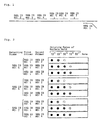
- Figure 1 shows the positional relation of the target nucleic acid sequence ( ⁇ 2.7 gene of the CMV nucleic acid) with the base sequences mentioned in SEQ ID NO:1 to NO:7 of the Sequence Listing.
- the first primer for the CMV amplification used in the present invention has a nucleic acid sequence which is sufficiently complementary to the target nucleic acid sequence and a promoter sequence to the side of its 5'-terminal.
- the second primer for the CMV amplification is a nucleic acid sequence which is sufficiently homologous to the target nucleic acid sequence and its 3'-terminal is directed to the 3'-terminal of the first primer on the complementary chain.
- Capturing probe or detecting probe is established in such a manner that it is capable of hybridizing with the amplified product of any combination of the first and the second primers for the CMV amplification.
- the primer for amplifying the CMV in accordance with the present invention may be deoxyribonucleic acid (DNA) and can be prepared by means of chemical synthesis. For example, it can be synthesized by a phosphoamidite method using a DNA synthesizer (type 391) of ABI. Deblocking of various oligonucleotides is carried out by aqueous ammonia. Purification may be carried out by means of an FPLC using a reverse phase column. Examples of other synthetic methods are phosphoric acid triester method, H-phosphonate method and thiophosphite method.
- a point mutation such as deletion, insertion and substitution in the primer.
- the primer of the present invention is a synthetic substance and, therefore, it is possible to prepare an oligonucleotide of a constant quality in an easy manner and also in large quantities.
- promoter sequence of the first primer for CMV amplification used in the present invention but it is necessary to function so that the DNA-dependent RNA polymerase does act.
- 5'-AAT TCT AAT ACG ACT CAC TAT AGG G-3' has been known in the case of, for example, T7 RNA polymerase.
- the promoter sequence may contain a spacer until the initiating point for the amplification.
- a part of a sequence such as 5'-AGG A-3' may be bound to the 3'-terminal of the promoter sequence.
- promoter sequences are as follows. for T3 RNA polymerase; and for SP6 RNA polymerase.
- the second primer for CMV amplification in the present invention has a nucleic acid sequence which is complementary to the nucleic acid sequence of the elongated first primer and is sufficiently homologous to the target nucleic acid sequence.
- the second primer may have a promoter sequence to the side of its 5'-terminal if necessary.
- the second primer When the second primer has a promoter sequence, it may be same as or different from the promoter sequence of the first primer. When it is different, plural DNA-dependent RNA polymerases acting on each of the promoters may be used if necessary. For example, when T7 promoter, T3 promoter or SP6 promoter is used as the promoter sequence of the second primer, then T7 RNA polymerase, T3 RNA polymerase or SP6 RNA polymerase is used, respectively.
- RNA-dependent RNA polymerases and the concomitant promoter sequences are preferred although they are not limited thereto. It is particularly preferred to use T7 RNA polymerase and its promoter sequence.
- both the first and the second primers are bound with a promoter sequence of T7 RNA polymerase whereby copy numbers are increased by the T7 RNA polymerase.
- the domain where the hybridization takes place with target nucleic acid sequences or complementary sequences of the first and the second primers or the elongated primers requires a nucleic acid sequence consisting of at least fifteen bases of each of the sequences of the Sequence Listing.
- an optimum sequence and optimum sequence length may be selected from 15 to 30 bases.
- the sequence at the side of the 3'-terminal is a nucleic acid sequence consisting of at least 15 continuous bases of the sequence as shown in the Sequence Listing.
- the ideal length of the domain where hybridization takes place is preferably from 15 bases to the whole sequence length as shown in the Sequence Listing, more preferably the whole sequence length.
- Second Primer for Amplification SEQ ID NO:1 + Promoter Sequence SEQ ID NO:2, NO:3 or NO:4 + Promoter Sequence SEQ ID NO:1 + Promoter Sequence SEQ ID NO:2, NO:3 or NO:4 SEQ ID NO:2, NO:3 or NO:4 SEQ ID NO:1+Promoter Sequence
- RNA-dependent DNA polymerase used in the present invention is an enzyme which synthesizes DNA from oligodeoxyribonucleotide primer and RNA template.
- this enzyme may contain DNA-dependent DNA polymerase (DNA polymerase) and ribonuclease H (RNase H) activity.
- DNA polymerase DNA polymerase
- RNase H ribonuclease H
- examples of such an enzyme are those derived from other retrovirus such as avian myoblast virus polymerase (AMV reverse transcriptase) and Maloney mouse leukemia virus.
- thermostable RNA-dependent DNA polymerase reverse transcriptase
- the ribonuclease H (RNase H) used in the present invention is an enzyme capable of hydrolyzing the RNA which is annealed to a complementary DNA. This enzyme should not be able to hydrolyze the single-stranded or double-stranded RNA or all DNA.
- RNase H ribonuclease H
- examples of the preferred enzyme are RNase H derived from Escherichia coli and RNase H derived from bovine thymus.
- examples of the thermostable RNase H are RNase H derived from Thermus thermophilus .
- the DNA-dependent DNA polymerase (DNA polymerase) used in the present invention is an enzyme which is capable of synthesizing DNA from oligodeoxyribonucleotide primer and a DNA template.
- examples of such an enzyme are AMV reverse transcriptase, DNA polymerase isolated from tissues of mammals such as bovine thymus, Klenow fragment of DNA polymerase I derived from Escherichia coli and DNA polymerase derived from bacteriophage T7.
- DNA polymerases derived from Thermus thermophilus , Thermus aquaticus , Pyrococcus furiosus and Thermococcus litoralis.
- the DNA-dependent RNA polymerase (RNA polymerase) used in the present invention is an enzyme which binds to a promoter sequence and is capable of specifically initiating the synthesis of RNA at the initiation site regulated at near this promoter sequence. Said enzyme is capable of synthesizing several RNA copies per copy which is functional to the template within a suitable time.
- suitable enzyme are other bacteriophage RNA polymerases such as bacteriophage T7 RNA polymerase, phage T3, phage XII, Salmonella phage sp6 or Pseudomonas phage gh-1.
- the RNA polymerases derived from other procaryotic and eucaryotic cells may be used too.
- DNA polymerases derived from Thermus thermophilus and Thermus aquaticus have an RNA polymerase activity and one kind of DNA polymerase having both activities may be used commonly as well.
- an NASBA method using the present invention it may be done by referring, for example, to a literature (J. Virol. Methods 35:273-286).
- An example is that, in a reaction mixture of 25 ⁇ l, an arrangement is conducted so as to make the final concentrations after addition of the enzyme as follows.
- the reaction mixture is mixed with the extracted RNA and heated at 65°C for five minutes.
- a nucleic acid sequence consisting of at least fifteen continuous bases as shown in SEQ ID NO:5, NO:6 or NO:7 of the Sequence Listing is necessary.
- the detecting probe or the capturing probe may be deoxyribonucleic acid (DNA) and can be prepared by a chemical synthesis.
- DNA deoxyribonucleic acid
- it can be synthesized by a phosphoamidite method using a DNA synthesizer (type 391) of ABI.
- Deblocking is carried by aqueous ammonia.
- Purification may be carried out by means of an FPLC using an MONO-Q column or a reversed phase column. Examples of other synthetic methods are phosphoric acid triester method, H-phosphonate method and thiophosphite method.
- oligo dCTP, oligo dTTP, oligo dATP, oligo dGTP or nucleotide having fluorescence substance, linker arm, biotin, etc. may be added to 5'-terminal or to 3'-terminal.
- the synthesis may be conducted by substituting nucleotide having fluorescence substance, linker arm, biotin, etc. for the nucleotide in the oligonucleotide.
- known labels such as radioactive substances, enzymes or fluorescence substances may be introduced into the synthesized nucleotide.
- Examples of such a labeling method when oligonucleotide is labeled with an enzyme are that the nucleotide having a linker arm is chemically synthesized from deoxyuridine to substitute or add as one member of the oligonucleotide (Japanese Laid-Open Patent Publication Sho-60/500,717) and alkaline phosphatase or peroxidase is bound to the linker (Nucleic Acids Research; volume 14, page 6115, 1986).
- a point mutation such as deletion, insertion or substitution may be present in the probe.
- the detecting probe of the present invention is modified by a label such as enzyme, biotin, fluorescence substance or radioactive substance or by a substance capable of binding said label by means of the above-mentioned method. And a detection operation may be carried out using the nature of the respective label.
- the amplified product from the target nucleic acid derived from CMV is subjected to an electrophoresis using agarose gel, then nucleic acid is immobilized to the membrane by a Southern blotting and subjected to a hybridization with a detecting probe labeled whereupon a detecting operation depending upon the nature of the label may be carried out.
- a detection operation may be conducted by the above-mentioned method after immobilizing the amplified product as it is on the membrane followed by modifying by an alkali.
- Another detecting method is a sandwich technique using detecting probe and capturing probe.
- the detecting probe is labeled by such as enzyme, biotin, fluorescence substance or radioactive substance or by a substance capable of binding with said label.
- the capturing probe may be left unmodified when adsorbed with a support, it may be added with or substituted by a nucleotide having biotin, linker arm, fluorescence substance, etc. or added with oligo dGTP, oligo dATP, oligo dTTP, oligo dCTP, etc. depending upon the nature of the support.
- Examples of the practical methods applicable are a liquid phase sandwich technique in which target nucleic acid, detecting probe and capturing probe, in a liquid phase, with a capturing probe which is modified so as to make the capturing possible and then this modified capturing probe is captured by a capture which is fixed to the support (Japanese Laid-Open Patent Publications Sho-61/195699, Sho-61/274699, Sho-62/229068, Hei-01/104200, Hei-01/501399, etc.); a solid phase sandwich technique in which a capturing probe directly fixed to the support and a detecting probe modified by a label or a substance capable of binding with a label (Japanese Laid-Open Patent Publications Sho-60/188100, Sho-60/188397, Sho-61/264240, Sho-62/851564, etc.); and the like.
- a capturing probe containing a linker arm is immobilized in a solid phase (Japanese Laid-Open Patent Publication Hei-06/329694) and the amplified product is hybridized with a detecting probe whereby the detection may be performed.
- the amplifying primer of the present invention which is suitable for an NASBA method and the detecting and capturing probes which are to judge the amplified product obtained by said primer, it is now possible to solve the problems in the conventional clinical test methods for CMV and to detect the CMV in an easy, rapid and specific manner and also with a high sensitivity.
- a phosphoamidite method was carried out using a DNA synthesizer type 391 (manufactured by ABI) whereupon the first primer (SEQ ID NO:1) having a sequence shown in the Sequence Listing (i.e. a sequence which is complementary to mRNA of cytomegalovirus wherein the promoter sequence of T7 RNA polymerase is bound at 5'-terminal) and the second primers (SEQ ID NO:2, NO:3 and NO:4) having a sequence which is homologous to mRNA of cytomegalovirus were synthesized.
- the specific means in accordance with the Manual of ABI was conducted in a scale of 0.2M. Deblocking of various oligonucleotides was carried out with an aqueous ammonia for overnight at 55°C. Purification was carried out by means of an FPLC (manufactured by Pharmacia) using a reversed phase column.
- RNA was prepared from the cells infected with CMV (AD 169 strain).
- cultured cell liquid was treated in a buffer for dissolution containing Triton X-100 and guanidium thiocyanate (GuSCN) and silica particle was added thereto to adsorb mRNA therewith.
- the mRNA-adsorbed silica particle was washed twice with a wash buffer containing GuSCN, twice with 70% ethanol and once with acetone and the residue was dried. Elution was carried out using distilled water containing neither ribonuclease (RNase) nor deoxyribonuclease (DNase). The eluate was subjected to a gradient dilution with the same distilled water.
- RNase ribonuclease
- DNase deoxyribonuclease
- Nucleic acid sequences shown in the Sequence Listing i. e. the detecting probes (SEQ ID NO:5, NO:6 and NO:7), were synthesized by a phosphoamidite method using a synthesizer (type 391 manufactured by ABI).
- a DNA synthetic method mentioned in the Japanese Laid-Open Patent Publication Sho-60/500717 was conducted whereby the uridine having a linker arm at 5'-position and chemically synthesized from deoxyuridine was introduced into the above-mentioned oligonucleotide.
- This uridine can be substituted with any T in the oligonucleotide but, in this Example, it was bound at a 5'-terminal.
- Deblocking of the synthesized linker oligonucleotide was carried out at 55°C for overnight using an aqueous ammonia. Purification was carried out by means of an FPLC (manufactured by Pharmacia) using a reversed phase column.
- the linker oligonucleotide wherein the terminal amino group was activated was further made to react at room temperature for 16 hours with an alkaline phosphatase (being dissolved in 100 mM of sodium bicarbonate and 3M of HCl) in a 2-fold amount in terms of molar ratio to give a probe labeled with an alkaline phosphatase.
- the resulting labeled probe was purified by means of an FPLC (manufactured by Pharmacia) using a column of an anionic exchange resin and the fractions containing the purified labeled probe were collected and concentrated by means of an ultrafiltration using Centricon 30K (Amicon).
- the amplification reaction was carried out according to a literature (J. Virol. Methods 35:273-286).
- a reaction system of 25 ⁇ l an arrangement was done so as to make the final concentrations after addition of the enzyme as follows.
- 40 mM of Tris pH 8.5
- 20 mM of magnesium chloride 40 mM of potassium chloride
- 5 mM of DTT 5 mM of DTT
- 15% of DMSO 1 mM of dNTP
- 4.1 mM of rNTP 0.2 ⁇ M of the first primer
- 0.2 ⁇ M of the second primer was mixed with the extracted RNA followed by heating at 65°C for five minutes.
- RNA Guard 20 U of T7 RNA polymerase, 4 U of AMV reverse transcriptase and 0.2 U of ribonuclease H (RNase H) were added to make the total volume 25 ⁇ l followed by incubating for three hours.
- RNase H ribonuclease H
- the reaction solution (1 ⁇ l was dropped onto a nylon membrane and the nucleic acid was immobilized under an alkaline condition.
- This membrane was neutralized and immobilized under an alkaline condition.
- a hybridization buffer (5 x SSC; 0.5% of BSA, 0.5% of PVP and 1% of SDS) containing the above-mentioned nucleic acid probe labeled with an alkaline phosphatase and a hybridization was carried out at 50°C for 15 minutes.
- the nylon membrane was taken out from the hybridization bag and subjected to an osmotic washing with a detergent solution 1 (1 x SSC; 1% of SDS) at 50°C for ten minutes.
- the detection sensitivity was the highest when the sequence of SEQ ID NO:1 of the Sequence Listing was used as the first primer and that of SEQ ID NO:3 or NO:4 of the Sequence Listing was used as the second primer.
- the detection sensitivity was low but, in the detection of CMV, there are some cases where a low sensitivity is preferred depending upon the condition of a disease. Accordingly, an optimum combination is to be selected depending upon the necessary detection sensitivity.
- the first primer (SEQ ID NO:1) having a sequence given in the Sequence Listing, i.e. a sequence complementary to mRNA of cytomegalovirus binding a promoter sequence (AAT TCT AAT ACG ACT CAC TAT AGG GAG GA) of T7 RNA polymerase at the 5'-terminal and the second primer (SEQ ID NO:4) having a sequence homologous to mRNA of cytomegalovirus were synthesized by a phosphoamidite method using a DNA synthesizer (type 391) manufactured by ABI. Specific means were performed in accordance with the instruction manual of the ABI and were done in a 0.2 M scale. Deblocking of various oligonucleotides was carried out at 55°C for overnight using an aqueous ammonia. Purification was carried out by means of an FPLC (manufactured by Pharmacia) using a reversed phase column.
- FPLC manufactured by Pharmacia
- Sequences shown in the Sequence Listing i.e. capturing probes (SEQ ID NO:5, NO:6 and NO:7), were prepared by a phosphoamidite method using a DNA synthesizer (model 391) manufactured by ABI.
- a DNA synthesizer model 391 manufactured by ABI.
- uridine having a linker arm at 5-position and chemically synthesized from deoxyuridine was introduced into the above-mentioned oligonucleotide according to a synthetic method mentioned in the Japanese Laid-Open Patent Publication Sho-60/500717. This uridine can be substituted with any T in the oligonucleotide and, in this Example, it was bound at the 5'-terminal.
- Deblocking of the synthesized linker oligonucleotide was carried out at 55°C for overnight using an aqueous ammonia. Purification was performed by means of an FPLC (manufactured by Pharmacia) using a reversed phase column.
- a microtiter plate made of polystyrene (Microlite 2 manufactured by Dynatec) was used as a solid phase support.
- the capturing probe was diluted to an extent of 10 pmoles/ml using 50 mM borate buffer. Each 100 ⁇ l of the solution was placed on a well of the microtiter plate and incubated at room temperature for one night. The capturing probe solution was removed from the resulting plate using an aspirator and, in order to prevent a nonspecific binding, each 150 ⁇ l of block buffer was placed followed by allowing to stand at room temperature for two hours for blocking.
- the 1000-fold diluted solution of the gradient diluted solution of nucleic acid used in Example 1 was used.
- the target nucleic acid was subjected to an amplification reaction by the same manner as in Example 1.
- the resulting amplified product was denatured with an equivalent amount of 0.6N NaOH at room temperature for one minute.
- a block buffer was removed from a plate which was fixed with a capturing probe and 10 ⁇ l of the denatured sample was added thereto.
- 100 ⁇ l of a hybridization buffer was added and a hybridization was carried out at 50°C for 60 minutes.
- the solution was removed from the well and washed with 200 ⁇ l of a detergent solution 1 (2 x SSC; 1% of sodium laurylsulfate) at 50°C for five minutes.
- the detergent solution 1 was removed, the inside of the well was rinsed with 200 ⁇ l of 1 x SSC, then 100 ⁇ l of a probe solution labeled with an alkaline phosphatase was added and a hybridization was carried out at 50°C for 60 minutes.
- the probe solution was removed from the well, 200 ⁇ l of the detergent solution 1 was added, washing was performed at 50°C for ten minutes, then 200 ⁇ l of detergent solution 2 (1 x SSC; 0.5% of Triton X-100) was added and a washing was carried out at room temperature for ten minutes.
- the inside of the well was rinsed with 200 ⁇ l of 1 x SSC, 100 ⁇ l of Lumiphos 480 (manufactured by Wako Pure Chemicals; a chemiluminescence substance which is a substrate for an alkaline phosphatase) was added and a luminescence reaction was conducted in a dark place at 37°C for 15 minutes.
- the luminescent amount was measured by a Microlite 1000 (manufactured by Dynatec).
Landscapes
- Chemical & Material Sciences (AREA)
- Life Sciences & Earth Sciences (AREA)
- Health & Medical Sciences (AREA)
- Organic Chemistry (AREA)
- Zoology (AREA)
- Engineering & Computer Science (AREA)
- Immunology (AREA)
- Wood Science & Technology (AREA)
- Proteomics, Peptides & Aminoacids (AREA)
- Virology (AREA)
- Biotechnology (AREA)
- Microbiology (AREA)
- Molecular Biology (AREA)
- Physics & Mathematics (AREA)
- Biophysics (AREA)
- Analytical Chemistry (AREA)
- Biochemistry (AREA)
- Bioinformatics & Cheminformatics (AREA)
- General Engineering & Computer Science (AREA)
- General Health & Medical Sciences (AREA)
- Genetics & Genomics (AREA)
- Measuring Or Testing Involving Enzymes Or Micro-Organisms (AREA)
Claims (13)
- Oligonukleotid zum Amplifizieren einer Nukleinsäure von Cytomegalovirus (CMV) unter Verwendung einer Nukleinsäuresequenz (β 2.7), wobei das Oligonukleotid eine Nukleinsäuresequenz ,enthält, die aus mindestens fünfzehn zusammenhängenden Basen, ausgewählt aus der Nukleinsäuresequenz von SEQ ID NR: 1, besteht.
- Oligonukleotid zum Amplifizieren einer Nukleinsäure von Cytomegalovirus (CMV) unter Verwendung einer Nukleinsäuresequenz (β 2.7), wobei das Oligonukleotid eine Nukleinsäuresequenz enthält, die aus mindestens fünfzehn zusammenhängenden Basen, ausgewählt aus der Nukleinsäuresequenz von SEQ ID NR: 2, NR: 3 oder NR: 4, besteht.
- Oligonukleotid nach Anspruch 1 oder 2 zum Amplifizieren einer Nukleinsäure von Cytomegalovirus (CMV) unter Verwendung einer Nukleinsäuresequenz (β 2.7), wobei das Oligonukleotid eine Promotorsequenz einer DNA-abhängigen RNA-Polymerase am 5'-Ende aufweist.
- Oligonukleotid-Satz zum Amplifizieren einer Nukleinsäure von Cytomegalovirus (CMV) unter Verwendung einer Nukleinsäuresequenz (β 2.7), wobei der Satz ein Oligonukleotid, welches eine Nukleinsäuresequenz, bestehend aus mindestens fünfzehn zusammenhängenden Basen, ausgewählt aus der Nukleinsäuresequenz von SEQ 1D NR: 1, enthält, und ein Oligonukleotid, welches eine Nukleinsäuresequenz, bestehend mindestens fünfzehn zusammenhängenden Basen, ausgewählt aus der Nukleinsäuresequenz von SEQ ID NR: 2, NR: 3 oder NR: 4, enthält, umfaßt, wobei mindestens eines der Oligonukleotide eine Promotorsequenz einer DNA-abhängigen RNA-Polymerase am 5'-Ende aufweist.
- Reagenzkit zum Amplifizieren einer Nukleinsäure von Cytomegalovirus (CMV), wobei das Reagenzkitumfaßt.(a) einen ersten Primer zum Amplifizieren einer Nukleinsäure von Cytomegalovirus (CMV), der eine Nukleinsäuresequenz, bestehend aus mindestens fünfzehn zusammenhängenden Basen, ausgewählt aus der Nukleinsäuresequenz von SEQ lD NR: 1, enthält, und eine Promotorsequenz einer DNA-abhängigen RNA-Polymerase am 5'-Ende aufweist,(b) einen zweiten Primer zum Amplifizieren einer Nukleinsäure von Cytomegalovirus (CMV), der eine Nukleinsäuresequenz, bestehend aus mindestens fünfzehn zusammenhängenden Basen, ausgewählt aus der Nukleinsäuresequenz von SEQ ID NR: 2, NR: 3 oder NR: 4, enthält,(c) eine Substanz mit RNA-abhängiger DNA-Polymerase-Aktivität,(d) eine, Substanz mit Ribonuklease H-Aktivität,(e) eine Substanz mit DNA-abhängiger DNA-Polymerase-Aktivität,(f) eine Substanz mit einer DNA-abhängigen RNA-Polymerase-Aktivität,(g) Ribonukleosidtriphosphate und(h) Desoxyribonukleosidtriphosphate
- Reagenzkit zum Amplifizieren einer Nukleinsäure von Cytomegalovirus (CMV), wobei das Reagenzkitumfaßt.(a) einen ersten Primer zum Amplifizieren einer Nukleinsäure von Cytomegalovirus (CMV), der eine Nukleinsäuresequenz, bestehend aus mindestens fünfzehn zusammenhängenden Basen, ausgewählt aus der Nukleinsäuresequenz von SEQ ID NR: 2, NR: 3 oder NR: 4, enthält und eine Promotorsequenz einer DNA-abhängigen RNA-Polymerase am 5'-Ende aufweist,(b) einen zweiten Primer zum Amplifizieren einer Nukleinsäure von Cytomegalovirus (CMV), der eine Nukleinsäuresequenz, bestehend aus mindestens fünfzehn zusammenhängenden Basen, ausgewählt aus der Nukleinsäuresequenz von SEQ ID NR: 1, enthält,(c) eine Substanz mit einer RNA-abhängigen DNA-Polymerase-Aktivität,(d) eine Substanz mit einer Ribonuklease H-Aktivität,(e) eine Substanz mit einer DNA-abhängigen DNA-Polymerase-Aktivität,(f) eine Substanz mit einer DNA-abhängigen RNA-Polymerase-Aktivität,(g) Ribonukleosidtriphosphate und(h) Desoxyribonukleosidtriphosphate
- Reagenzkit zum Amplifizieren einer Nukleinsäure von Cytomegalovirus (CMV), wobei das Reagenzkitumfaßt.(a) einen ersten Primer zum Amplifizieren einer Nukleinsäure von Cytomegalovirus (CMV), der eine Nukleinsäuresequenz, bestehend aus mindestens fünfzehn zusammenhängenden Basen, ausgewählt aus der Nukleinsäuresequenz von SEQ ID NR: 1, enthält, und eine Promotorsequenz einer DNA-abhängigen RNA-Polymerase am 5'-Ende aufweist,(b) einen zweiten Primer zum Amplifizieren einer Nukleinsäure von Cytomegalovirus (CMV), der eine Nukleinsäuresequenz, bestehend aus mindestens fünfzehn zusammenhängenden Basen, ausgewählt aus der Nukleinsäuresequenz von SEQ ID NR: 2, NR: 3 oder NR: 4 enthält, und eine Promotorsequenz einer DNA-abhängigen RNA-Polymerase am 5'-Ende aufweist,(c) eine Substanz mit einer RNA-abhängigen DNA-Polymerase-Aktivität,(d) eine Substanz mit einer Ribonuklease H-Aktivität,(e) eine Substanz mit einer DNA-abhängigen DNA-Polymerase-Aktivität,(f) eine Substanz mit einer DNA-abhängigen RNA-Polymerase-Aktivität,(g) Ribonukleosidtriphosphate und(h) Desoxyribonukleosidtriphosphate
- Verfahren zum Amplifizieren einer Nukleinsäure von Cytomegalovirus (CMV) unter Verwendung einer Nukleinsäuresequenz (β 2.7), wobei das Verfahren die folgenden Schritte (1) bis (10) umfaßt:(1) Extrahieren einer aus RNA (+) bestehenden Zielnukleinsäure aus einer Probe, wenn erforderlich,(2) Hybridisieren eines ersten Primers zum Amplifizieren einer Nukleinsäure von Cytomegalovirus (CMV), der eine Nukleinsäuresequenz, bestehend aus mindestens fünfzehn zusammenhängenden Basen, ausgewählt aus der Nukleinsäuresequenz von SEQ ID NR: 1, enthält und eine Promotorsequenz einer DNA-abhängigen RNA-Polymerase am 5'-Ende aufweist, mit einer RNA (+) als Matrize zum Verlängern des Primers durch eine RNA-abhängige DNA-Polymerase, woraufhin ein verlängertes RNA/DNA-Hybrid erhalten wird,(3) Verdauen der RNA in dem verlängerten RNA/DNA-Hybrid durch eine Ribonuklease H, die speziell nur die RNA des verlängerten RNA/DNA-Hybrids verdaut, woraufhin eine einzelsträngige DNA erhalten wird,(4) Hybridisieren eines zweiten Primers zum Amplifizieren einer Nukleinsäure von Cytomegalovirus (CMV), der eine Nukleinsäuresequenz, bestehend aus mindestens fünfzehn zusammenhängenden Basen, ausgewählt aus der Nukleinsäuresequenz von SEQ ID NR: 2, NR: 3 oder NR: 4, enthält, mit der einzelsträngigen DNA als Matrize zum Durchführen der DNA-Verlängerungsreaktion durch die DNA-abhängige DNA-Polymerase, woraufhin ein doppelsträngiges DNA-Zwischenprodukt mit einer funktionsfähigen Promotorsequenz stromaufwärts vom 5'-Ende erzeugt wird,(5) Transkribieren einer einzelsträngigen RNA (-), zunehmend von dem doppelsträngigen DNA-Zwischenprodukt durch eine DNA-abhängige RNA-Polymerase, die befähigt ist, die vorstehend erwähnte Promotorsequenz zu erkennen,(6) Hybridisieren des zweiten Primers zum Amplifizieren einer Nukleinsäure von Cytomegalovirus (CMV), der eine Nukleinsäuresequenz, bestehend aus mindestens fünfzehn zusammenhängenden Basen, ausgewählt aus der Nukleinsäuresequenz von SEQ ID NR: 2, NR: 3 oder NR: 4, enthält, mit der im vorstehenden Schritt erhaltenen, einzelsträngigen RNA (-) als Matrize zum Durchführen einer DNA-Verlängerungsreaktion durch eine RNA-abhängige DNA-Polymerase, woraufhin ein verlängertes RNA/DNA-Hybrid erhalten wird,(7) Verdauen der RNA in dem verlängerten RNA/DNA-Hybrid durch eine Ribonuklease H, die speziell nur die RNA des verlängerten RNA/DNA-Hybrids verdaut, woraufhin eine einzelsträngige DNA erhalten wird,(8) Hybridisieren des ersten Primers zum Amplifizieren einer Nukleinsäure von Cytomegalovirus (CMV), der eine Nukleinsäuresequenz, bestehend aus mindestens fünfzehn zusammenhängenden Basen, ausgewählt aus der Nukleinsäuresequenz von SEQ ID NR: 1, enthält und eine Promotorsequenz einer DNA-abhängigen RNA-Polymerase am 5'-Ende aufweist, mit der einzelsträngigen DNA als Matrize zum Durchführen einer DNA-Verlängerungsreaktion durch eine DNA-abhängige DNA-Polymerase, woraufhin ein doppelsträngiges DNA-Zwischenprodukt mit einer funktionsfähigen Promotorsequenz stromaufwärts vom 5'-Ende erzeugt wird,(9) Transkribieren der einzelsträngigen RNA (-), zunehmend von dem doppelsträngigen DNA-Zwischenprodukt, durch die DNA-abhängige RNA-Polymerase, die zum Erkennen der vorstehend erwähnte Promotorsequenz befähigt ist, und,(10) wenn erforderlich, Wiederholen der vorstehend erwähnten Schritte (6) bis (9), unter Verwendung der resultierenden einzelsträngigen RNA (-) als Matrize.
- Verfahren zum Amplifizieren einer Nukleinsänre von Cytomegalovirus (CMV) unter Verwendung einer Nukleinsäuresequenz (β 2.7), wobei das Verfahren die folgenden Schritte (1) bis (10) umfaßt,(1) Extrahieren einer aus RNA (+) bestehenden Zielnukleinsäure aus einer Probe, wenn erforderlich,(2) Hybridisieren eines ersten Primers zum Amplifizieren einer Nukleinsäure von Cytomegalovirus (CMV), der eine Nukleinsäuresequenz, bestehend aus mindestens fünfzehn zusammenhängenden Basen, ausgewählt aus der Nukleinsäuresequenz von SEQ ID NR: 1, enthält und eine Promotorsequenz einer DNA-abhängigen RNA-Polymerase am 5'-Ende aufweist, mit einer RNA (+) als Matrize zum Verlängern des Primers durch eine RNA-abhängige DNA-Polymerase, woraufhin ein verlängertes RNA/DNA-Hybrid erhalten wird,(3) Verdauen der RNA in dem verlängerten RNA/DNA-Hybrid durch eine Ribonuklease H, die speziell nur die RNA des verlängerten RNA/DNA-Hybrids verdaut, woraufhin eine einzelsträngige DNA erhalten wird,(4) Hybridisieren eines zweiten Primers zum Amplifizieren einer Nukleinsäure von Cytomegalovirus (CMV), der eine Nukleinsäuresequenz, bestehend aus mindestens fünfzehn zusammenhängenden Basen, ausgewählt aus der Nukleinsäuresequenz von SEQ ID NR: 2, NR: 3 oder NR: 4, enthält und eine Promotorsequenz für eine DNA-abhängige RNA-Polymerase am 5'-Ende aufweist, mit der einzelsträngigen DNA als Matrize zum Durchführen einer DNA-Verfängerungsreaktion durch eine DNA-abhängige DNA-Polymerase, woraufhin ein doppelsträngiges DNA-Zwischenprodukt mit einer funktionsfähigen Promotorsequenz stromaufwärts des 5'-Endes erzeugt wird,(5) Transkribieren einer einzelsträngigen RNA (-), zunehmend von dem doppelsträngigen DNA-Zwischenprodukt, durch eine DNA-abhängige RNA-Polymerase, die befähigt ist, die vorstehend erwähnte Promotorsequenz zu erkennen,(6) Hybridisieren des zweiten Primers zum Amplifizieren einer Nukleinsäure von Cytomegalovirus (CMV), der eine Nukleinsäuresequenz, bestehend aus mindestens fünfzehn zusammenhängenden Basen, ausgewählt aus der Nukleinsäuresequenz von SEQ ID NR: 1, enthält und eine Promotorsequenz für eine DNA-abhängige RNA-Polymerase am 5'-Ende aufweist, mit der im vorstehenden Schritt erhaltenen, einzelsträngigen RNA (-) als Matrize zum Durchführen der DNA-Verlängerungsreaktion durch eine RNA-abhängige DNA-Polymerase, woraufhin ein verlängertes RNA/DNA-Hybrid erhalten wird,(7) Verdauen der RNA in dem verlängerten RNA/DNA-Hybrid durch eine Ribonuklease H, die speziell nur die RNA des verlängerten RNA/DNA-Hybrids verdaut, woraufhin eine einzelsträngige DNA erhalten wird,(8) Hybridisieren des ersten Primers zum Amplifizieren einer Nukleinsäure von Cytomegalovirus (CMV), der eine Nukleinsäuresequenz, bestehend aus mindestens fünfzehn zusammenhängenden Basen, ausgewählt aus der Nukleinsäuresequenz von SEQ ID NR: 2, NR: 3 oder NR: 4, enthält und eine Promotorsequenz für eine DNA-abhängige RNA-Polymerase am 5'-Ende aufweist, mit der einzelsträngigen DNA als Matrize zum Durchführen einer DNA-Verlängerungsreaktion durch eine DNA-abhängige DNA-Polymerase, woraufhin ein doppelsträngiges DNA-Zwischenprodukt mit einer funktionsfähigen Promotorsequenz stromaufwärts von beiden Enden erzeugt wird,(9) Transkribieren der einzelstränigen RNA (-) und RNA (+), zunehmend von dem doppelsträngigen DNA-Zwischenprodukt durch eine DNA-abhängige RNA-Polymerase, die zum Erkennen der vorstehend erwähnten Promotorsequenz befähigt ist, und,(10) wenn erforderlich, Wiederholen der vorstehend erwähnten Schritte (6) bis (9) unter Verwendung der resultierenden einzelsträngigen RNA (-) und RNA (+) als Matrize.
- Sonde zum Nachweisen und/oder Einfangen einer Nukleinsäure des Cytomegalovirus (CMV), wobei die Sonde eine Nukleinsäuresequenz, bestehend aus mindestens fünfzehn zusammenhängenden Basen, ausgewählt aus der Nukleinsäuresequenz von SEQ ID NR: 5, NR: 6 und/oder NR: 7 oder einer komplementären Nukleinsäure davon oder einer, wenn erforderlich, modifizierten Nukleinsäure, enthält.
- Reagenzkit zum Nachweisen einer Nukleinsäure des Cytomegalovirus (CMV), wobei das Reagenzkit einen Reagenzkit zum Amplifizieren einer Nukleinsäure von Cytomegalovirus (CMV) nach Anspruch 5 bis 7 und femer eine Sonde zum Nachweisen und/oder Einfangen einer Nukleinsäure des Cytomegalovirus (CMV), die eine Nukleinsäuresequenz, bestehend aus mindestens fünfzehn zusammenhängenden Basen, ausgewählt aus der Nukleinsäuresequenz von SEQ ID NR: 5, NR: 6 und/oder NR: 7 oder einer komplementären Nukleinsäure davon oder einer, wenn erforderlich, modifizierten Nukleinsäure, enthält.
- Verfahren zum Nachweisen einer Nukleinsäure von Cytomegalovirus (CMV), unter Verwendung einer Nukleinsäuresequenz (β 2.7), umfassend das Nachweisen von Nukleinsäuren, die mit dem Verfahren nach einem der Ansprüche 8 oder 9 amplifiziert wurden, mit einer Sonde zum Nachweisen und/oder Einfangen einer Nukleinsäure des Cytomegalovirus (CMV), die eine Nukleinsäuresequenz, bestehend aus mindestens fünfzehn zusammenhängenden Basen, ausgewählt aus der Nukleinsäuresequenz von SEQ ID NR: 5, NR: 6 und/oder NR: 7, oder einer komplementären Nukleinsäuresequenz davon oder einer, wenn erforderlich, durch eine Markierung modifizierten Nukleinsäure, enthält.
- Verfahren zum Nachweisen einer Nukleinsäure von Cytomegalovirus (CMV) unter Verwendung einer Nukleinsäuresequenz (β 2.7), wobei das Verfahren das Hybridisieren von Nukleinsäuren, die mit dem Verfahren nach einem der Ansprüche 8 oder 9 amplifiziert wurden, mit einer Einfang-Sonde, die an einem festen Träger absorbiert oder gebunden ist, wobei eine Nukleinsäuresequenz, bestehend aus mindestens fünfzehn zusammenhängenden Basen, ausgewählt ist aus der Nukleinsäuresequenz von SEQ ID NR: 5, NR: 6 und/oder NR: 7 und gegebenenfalls modifiziert ist, und mit einer Nachweis-Sonde, wobei eine Nukleinsäuresequenz, bestehend aus mindestens fünfzehn zusammenhängenden Basen, ausgewählt ist aus der Nukleinsäuresequenz von SEQ ID NR: 5, NR: 6 und/oder NR: 7, die durch eine Markierung modifiziert ist, danach das Abtrennen der nicht reagierten Nachweis-Sonde und das Messen der Markierung eines Konjugats der Einfang-Sonde, der amplifizierten Nukleinsäuren und der Nachweis-Sonde umfaßt.
Applications Claiming Priority (3)
| Application Number | Priority Date | Filing Date | Title |
|---|---|---|---|
| JP10778996 | 1996-04-26 | ||
| JP8107789A JPH09289900A (ja) | 1996-04-26 | 1996-04-26 | 核酸配列(β2.7)を利用したサイトメガロウイルス(CMV)の核酸増幅ならびに検出用試薬キット |
| JP107789/96 | 1996-04-26 |
Publications (3)
| Publication Number | Publication Date |
|---|---|
| EP0803578A2 EP0803578A2 (de) | 1997-10-29 |
| EP0803578A3 EP0803578A3 (de) | 1999-01-13 |
| EP0803578B1 true EP0803578B1 (de) | 2005-02-16 |
Family
ID=14468077
Family Applications (1)
| Application Number | Title | Priority Date | Filing Date |
|---|---|---|---|
| EP97106495A Expired - Lifetime EP0803578B1 (de) | 1996-04-26 | 1997-04-18 | Kit enthaltend Reagenzien zur Amplifizierung und Erkennung von Nukleinsäuren von Cytomegalovirus (CMV) mit der Nukleinsäuresequenz ss2.7 |
Country Status (4)
| Country | Link |
|---|---|
| US (1) | US5853981A (de) |
| EP (1) | EP0803578B1 (de) |
| JP (1) | JPH09289900A (de) |
| DE (1) | DE69732505T2 (de) |
Families Citing this family (18)
| Publication number | Priority date | Publication date | Assignee | Title |
|---|---|---|---|---|
| US6703211B1 (en) | 1998-03-13 | 2004-03-09 | Promega Corporation | Cellular detection by providing high energy phosphate donor other than ADP to produce ATP |
| US6277578B1 (en) | 1998-03-13 | 2001-08-21 | Promega Corporation | Deploymerization method for nucleic acid detection of an amplified nucleic acid target |
| US6235480B1 (en) * | 1998-03-13 | 2001-05-22 | Promega Corporation | Detection of nucleic acid hybrids |
| US6270973B1 (en) | 1998-03-13 | 2001-08-07 | Promega Corporation | Multiplex method for nucleic acid detection |
| US6268146B1 (en) | 1998-03-13 | 2001-07-31 | Promega Corporation | Analytical methods and materials for nucleic acid detection |
| US6270974B1 (en) | 1998-03-13 | 2001-08-07 | Promega Corporation | Exogenous nucleic acid detection |
| US6312902B1 (en) | 1998-03-13 | 2001-11-06 | Promega Corporation | Nucleic acid detection |
| US7090975B2 (en) | 1998-03-13 | 2006-08-15 | Promega Corporation | Pyrophosphorolysis and incorporation of nucleotide method for nucleic acid detection |
| US6391551B1 (en) | 1998-03-13 | 2002-05-21 | Promega Corporation | Detection of nucleic acid hybrids |
| JP2002142765A (ja) * | 2000-07-14 | 2002-05-21 | Tosoh Corp | 新規ゲノム解析法 |
| JP4534627B2 (ja) * | 2004-06-30 | 2010-09-01 | 東ソー株式会社 | サイトメガロウイルスの検出および定量方法 |
| KR100760525B1 (ko) * | 2006-04-13 | 2007-10-04 | 김재만 | 병원성 미생물의 무증폭 다중 정량 검출킷트 및 검출방법 |
| US7736849B2 (en) * | 2006-07-21 | 2010-06-15 | Taipei Veterans General Hospital, Vac | Oligonucleotides targeting the UL73 gene region and use thereof |
| WO2009148617A2 (en) * | 2008-06-04 | 2009-12-10 | The Salk Institute For Biological Studies | Grepseq: an almost inexhaustible, cost-effective, high-throughput protocol for the generation of selector sequences |
| US8614062B1 (en) | 2009-07-24 | 2013-12-24 | University Of South Florida | RNA-based system and method to differentiate seafood |
| CN113025746B (zh) * | 2019-12-09 | 2022-06-07 | 北京博奥晶典生物技术有限公司 | 利用nasba检测rev的方法及使用的成套试剂 |
| EP4324932A1 (de) * | 2022-08-15 | 2024-02-21 | Koninklijke Philips N.V. | Vorbereitung und analyse von nukleinsäureproben |
| WO2024037898A1 (en) * | 2022-08-15 | 2024-02-22 | Koninklijke Philips N.V. | Nucleic acid sample preparation and analysis |
Family Cites Families (1)
| Publication number | Priority date | Publication date | Assignee | Title |
|---|---|---|---|---|
| CA1340807C (en) * | 1988-02-24 | 1999-11-02 | Lawrence T. Malek | Nucleic acid amplification process |
-
1996
- 1996-04-26 JP JP8107789A patent/JPH09289900A/ja active Pending
-
1997
- 1997-04-18 DE DE69732505T patent/DE69732505T2/de not_active Expired - Fee Related
- 1997-04-18 EP EP97106495A patent/EP0803578B1/de not_active Expired - Lifetime
- 1997-04-18 US US08/839,306 patent/US5853981A/en not_active Expired - Fee Related
Also Published As
| Publication number | Publication date |
|---|---|
| DE69732505T2 (de) | 2006-01-12 |
| DE69732505D1 (de) | 2005-03-24 |
| EP0803578A2 (de) | 1997-10-29 |
| US5853981A (en) | 1998-12-29 |
| EP0803578A3 (de) | 1999-01-13 |
| JPH09289900A (ja) | 1997-11-11 |
Similar Documents
| Publication | Publication Date | Title |
|---|---|---|
| US5853981A (en) | Oligonucleotides, methods and kits for amplifying and detecting a nucleic acid of cytomegalovirus (CMV) using nucleic acid sequence β2.7 | |
| US6001558A (en) | Amplification and detection of HIV-1 and/or HIV 2 | |
| JP3356179B2 (ja) | クラミジア・トラコマチス検出のための組成物および方法 | |
| JP2561053B2 (ja) | ナイセリア・ゴノレエの検出方法、並びにそのための試薬およびキット | |
| KR960015744B1 (ko) | 핵산을 증폭시키는 방법 | |
| AU741141B2 (en) | Specific and sensitive method for detecting nucleic acids | |
| JP2005511030A (ja) | 核酸の増幅方法 | |
| KR20010012175A (ko) | 폴리뉴클레오티드의 2단계 혼성화 및 포획법 | |
| EP0428197A2 (de) | Verfahren zur Nukleinsäureextraktion und PCR-Amplifizierung ohne Gebrauch von proteolytischem Enzym | |
| JPH09511658A (ja) | 鳥型結核菌複合種の増幅および検出 | |
| JPH05507206A (ja) | レジオネラ種の検出用pcrプライマーおよびハイブリダイゼーションアッセイにおける光学的強度の調整方法 | |
| CN114317690B (zh) | 预扩增多靶核酸结合荧光定量pcr检测的方法 | |
| US5972607A (en) | Methods for nucleic acid amplification with thermostable ribonuclease H | |
| CA2199213C (en) | Amplifying and detecting target nucleic acids using a post amplification incubation step | |
| JP4744053B2 (ja) | マイコバクテリウム属(Mycobacterium)種の核酸増幅および検出 | |
| JP4625019B2 (ja) | ナイセリア・ゴノロエアエ検出のための試薬および方法 | |
| WO2000008136A1 (fr) | Amplification enzymatique d'acide nucleique | |
| JPWO2009044773A1 (ja) | レジオネラ属菌rRNA増幅用プライマー、検出方法および検出キット | |
| WO1990001068A1 (en) | Sequence specific assay for the detection of a nucleic acid molecule | |
| US5545520A (en) | Nucleic acid fragments and diagnostic reagents derived from the HHV6/SIE genome and procedures for diagnosing HHV6 infections | |
| JP2003516765A (ja) | 鳥型結核菌(Mycobacteriumavium)複合体種の検出のための方法および組成物 | |
| CN112501166A (zh) | 一种化学修饰的高稳定性rna及试剂盒和方法 | |
| JP4126348B2 (ja) | リボ核酸のデオキシリボ核酸への転写中のアーティファクト形成の低減方法 | |
| JP5164850B2 (ja) | インフルエンザaウイルスのh5及びn1遺伝子の存在を診断するためのオリゴヌクレオチド、その使用、検出方法及びキット | |
| JP3145169B2 (ja) | 核酸検出法及びキット |
Legal Events
| Date | Code | Title | Description |
|---|---|---|---|
| PUAI | Public reference made under article 153(3) epc to a published international application that has entered the european phase |
Free format text: ORIGINAL CODE: 0009012 |
|
| AK | Designated contracting states |
Kind code of ref document: A2 Designated state(s): DE FR GB IT |
|
| PUAL | Search report despatched |
Free format text: ORIGINAL CODE: 0009013 |
|
| AK | Designated contracting states |
Kind code of ref document: A3 Designated state(s): DE FR GB IT |
|
| 17P | Request for examination filed |
Effective date: 19990204 |
|
| 17Q | First examination report despatched |
Effective date: 20030226 |
|
| GRAP | Despatch of communication of intention to grant a patent |
Free format text: ORIGINAL CODE: EPIDOSNIGR1 |
|
| GRAS | Grant fee paid |
Free format text: ORIGINAL CODE: EPIDOSNIGR3 |
|
| GRAA | (expected) grant |
Free format text: ORIGINAL CODE: 0009210 |
|
| AK | Designated contracting states |
Kind code of ref document: B1 Designated state(s): DE FR GB IT |
|
| REG | Reference to a national code |
Ref country code: GB Ref legal event code: FG4D |
|
| REF | Corresponds to: |
Ref document number: 69732505 Country of ref document: DE Date of ref document: 20050324 Kind code of ref document: P |
|
| ET | Fr: translation filed | ||
| PLBE | No opposition filed within time limit |
Free format text: ORIGINAL CODE: 0009261 |
|
| STAA | Information on the status of an ep patent application or granted ep patent |
Free format text: STATUS: NO OPPOSITION FILED WITHIN TIME LIMIT |
|
| 26N | No opposition filed |
Effective date: 20051117 |
|
| PGFP | Annual fee paid to national office [announced via postgrant information from national office to epo] |
Ref country code: DE Payment date: 20070412 Year of fee payment: 11 |
|
| PGFP | Annual fee paid to national office [announced via postgrant information from national office to epo] |
Ref country code: GB Payment date: 20070418 Year of fee payment: 11 |
|
| PGFP | Annual fee paid to national office [announced via postgrant information from national office to epo] |
Ref country code: IT Payment date: 20070529 Year of fee payment: 11 |
|
| PGFP | Annual fee paid to national office [announced via postgrant information from national office to epo] |
Ref country code: FR Payment date: 20070411 Year of fee payment: 11 |
|
| GBPC | Gb: european patent ceased through non-payment of renewal fee |
Effective date: 20080418 |
|
| PG25 | Lapsed in a contracting state [announced via postgrant information from national office to epo] |
Ref country code: DE Free format text: LAPSE BECAUSE OF NON-PAYMENT OF DUE FEES Effective date: 20081101 |
|
| REG | Reference to a national code |
Ref country code: FR Ref legal event code: ST Effective date: 20081231 |
|
| PG25 | Lapsed in a contracting state [announced via postgrant information from national office to epo] |
Ref country code: FR Free format text: LAPSE BECAUSE OF NON-PAYMENT OF DUE FEES Effective date: 20080430 |
|
| PG25 | Lapsed in a contracting state [announced via postgrant information from national office to epo] |
Ref country code: GB Free format text: LAPSE BECAUSE OF NON-PAYMENT OF DUE FEES Effective date: 20080418 |
|
| PG25 | Lapsed in a contracting state [announced via postgrant information from national office to epo] |
Ref country code: IT Free format text: LAPSE BECAUSE OF NON-PAYMENT OF DUE FEES Effective date: 20080418 |