EP0767931B1 - Increasing the useful range of cationic photoinitiators in stereolithography - Google Patents
Increasing the useful range of cationic photoinitiators in stereolithography Download PDFInfo
- Publication number
- EP0767931B1 EP0767931B1 EP95924712A EP95924712A EP0767931B1 EP 0767931 B1 EP0767931 B1 EP 0767931B1 EP 95924712 A EP95924712 A EP 95924712A EP 95924712 A EP95924712 A EP 95924712A EP 0767931 B1 EP0767931 B1 EP 0767931B1
- Authority
- EP
- European Patent Office
- Prior art keywords
- anthracene
- vinyl ether
- ultraviolet light
- compounds
- group
- Prior art date
- Legal status (The legal status is an assumption and is not a legal conclusion. Google has not performed a legal analysis and makes no representation as to the accuracy of the status listed.)
- Expired - Lifetime
Links
- 0 C[*@](C1CCCCC1)*=*C Chemical compound C[*@](C1CCCCC1)*=*C 0.000 description 3
Images
Classifications
-
- G—PHYSICS
- G03—PHOTOGRAPHY; CINEMATOGRAPHY; ANALOGOUS TECHNIQUES USING WAVES OTHER THAN OPTICAL WAVES; ELECTROGRAPHY; HOLOGRAPHY
- G03F—PHOTOMECHANICAL PRODUCTION OF TEXTURED OR PATTERNED SURFACES, e.g. FOR PRINTING, FOR PROCESSING OF SEMICONDUCTOR DEVICES; MATERIALS THEREFOR; ORIGINALS THEREFOR; APPARATUS SPECIALLY ADAPTED THEREFOR
- G03F7/00—Photomechanical, e.g. photolithographic, production of textured or patterned surfaces, e.g. printing surfaces; Materials therefor, e.g. comprising photoresists; Apparatus specially adapted therefor
- G03F7/0037—Production of three-dimensional images
-
- B—PERFORMING OPERATIONS; TRANSPORTING
- B33—ADDITIVE MANUFACTURING TECHNOLOGY
- B33Y—ADDITIVE MANUFACTURING, i.e. MANUFACTURING OF THREE-DIMENSIONAL [3D] OBJECTS BY ADDITIVE DEPOSITION, ADDITIVE AGGLOMERATION OR ADDITIVE LAYERING, e.g. BY 3D PRINTING, STEREOLITHOGRAPHY OR SELECTIVE LASER SINTERING
- B33Y70/00—Materials specially adapted for additive manufacturing
-
- G—PHYSICS
- G03—PHOTOGRAPHY; CINEMATOGRAPHY; ANALOGOUS TECHNIQUES USING WAVES OTHER THAN OPTICAL WAVES; ELECTROGRAPHY; HOLOGRAPHY
- G03F—PHOTOMECHANICAL PRODUCTION OF TEXTURED OR PATTERNED SURFACES, e.g. FOR PRINTING, FOR PROCESSING OF SEMICONDUCTOR DEVICES; MATERIALS THEREFOR; ORIGINALS THEREFOR; APPARATUS SPECIALLY ADAPTED THEREFOR
- G03F7/00—Photomechanical, e.g. photolithographic, production of textured or patterned surfaces, e.g. printing surfaces; Materials therefor, e.g. comprising photoresists; Apparatus specially adapted therefor
- G03F7/004—Photosensitive materials
- G03F7/027—Non-macromolecular photopolymerisable compounds having carbon-to-carbon double bonds, e.g. ethylenic compounds
- G03F7/028—Non-macromolecular photopolymerisable compounds having carbon-to-carbon double bonds, e.g. ethylenic compounds with photosensitivity-increasing substances, e.g. photoinitiators
- G03F7/029—Inorganic compounds; Onium compounds; Organic compounds having hetero atoms other than oxygen, nitrogen or sulfur
-
- G—PHYSICS
- G03—PHOTOGRAPHY; CINEMATOGRAPHY; ANALOGOUS TECHNIQUES USING WAVES OTHER THAN OPTICAL WAVES; ELECTROGRAPHY; HOLOGRAPHY
- G03F—PHOTOMECHANICAL PRODUCTION OF TEXTURED OR PATTERNED SURFACES, e.g. FOR PRINTING, FOR PROCESSING OF SEMICONDUCTOR DEVICES; MATERIALS THEREFOR; ORIGINALS THEREFOR; APPARATUS SPECIALLY ADAPTED THEREFOR
- G03F7/00—Photomechanical, e.g. photolithographic, production of textured or patterned surfaces, e.g. printing surfaces; Materials therefor, e.g. comprising photoresists; Apparatus specially adapted therefor
- G03F7/004—Photosensitive materials
- G03F7/038—Macromolecular compounds which are rendered insoluble or differentially wettable
-
- G—PHYSICS
- G03—PHOTOGRAPHY; CINEMATOGRAPHY; ANALOGOUS TECHNIQUES USING WAVES OTHER THAN OPTICAL WAVES; ELECTROGRAPHY; HOLOGRAPHY
- G03F—PHOTOMECHANICAL PRODUCTION OF TEXTURED OR PATTERNED SURFACES, e.g. FOR PRINTING, FOR PROCESSING OF SEMICONDUCTOR DEVICES; MATERIALS THEREFOR; ORIGINALS THEREFOR; APPARATUS SPECIALLY ADAPTED THEREFOR
- G03F7/00—Photomechanical, e.g. photolithographic, production of textured or patterned surfaces, e.g. printing surfaces; Materials therefor, e.g. comprising photoresists; Apparatus specially adapted therefor
- G03F7/004—Photosensitive materials
- G03F7/09—Photosensitive materials characterised by structural details, e.g. supports, auxiliary layers
- G03F7/091—Photosensitive materials characterised by structural details, e.g. supports, auxiliary layers characterised by antireflection means or light filtering or absorbing means, e.g. anti-halation, contrast enhancement
-
- B—PERFORMING OPERATIONS; TRANSPORTING
- B33—ADDITIVE MANUFACTURING TECHNOLOGY
- B33Y—ADDITIVE MANUFACTURING, i.e. MANUFACTURING OF THREE-DIMENSIONAL [3D] OBJECTS BY ADDITIVE DEPOSITION, ADDITIVE AGGLOMERATION OR ADDITIVE LAYERING, e.g. BY 3D PRINTING, STEREOLITHOGRAPHY OR SELECTIVE LASER SINTERING
- B33Y30/00—Apparatus for additive manufacturing; Details thereof or accessories therefor
Definitions
- This invention relates to the art of stereolithography, which is a technique for forming solid shapes from a liquid polymer precursor. More particularly, the invention relates to improvements in such polymer precursors.
- Stereolithography is described in U.S. Patent 4,575,330 to Hull.
- the method involves building up a predetermined three dimensional shape by forming a series of layers of polymerized solids. A cross-section of the solid is traced out on the surface of a bath of polymer precursors under the direction of a computer controlled system which causes the liquid to be exposed to a form of radiation such as an ultraviolet laser. After each polymerized layer is formed, it is lowered in the bath so that a new layer can be formed on top.
- Hull does not discuss in detail the type of polymer precursors which may be used, confining his discussion to the equipment used in the stereolithographic process.
- the curable liquid i.e., the polymer precursor
- should cure fast enough to allow practical object formation times should be self-adherent, should have a relatively low viscosity, should absorb UV light, should be soluble when not polymerized but insoluble when polymerized, and should be non-toxic.
- Acrylates are not entirely satisfactory for use in stereolithography. They are not as non-toxic as one would be like and they are not cured as rapidly and completely as would be desired. Post curing of the solids formed by stereolithography is necessary and it is difficult to obtain rapid and complete curing of acrylates by exposure to intense UV light or exposure to elevated temperatures.
- compositions useful in stereolithography have been sought, particularly with regard to improving the accuracy of the finished parts.
- Improved compositions comprising vinyl ethers and epoxy compounds which provide advantages over those previously disclosed are disclosed in USSN 07/693,890 and 07/855,392 which correspond to WO-A-92/20014.
- said compositions comprise a cationic photoinitiator such as an onium salt and optionally dyes.
- compositions comprising cationically polymerizable compounds like vinyl ethers and/or epoxy compounds, cationic photoinitiators and dyes and/or sensitizers including anthracenes.
- the invention relates to improvements in stereolithography, particularly with respect to equipment which employs Argon ion lasers.
- Such equipment typically operates at wavelengths between 334 and 364 nm, especially at 351 and 364 nm.
- the cationic photoinitiators used with vinyl ether-epoxide monomers, such as onium salts are not as effective since they respond best to UV light having a wavelength of about 300 nm.
- the result of the mismatch in wavelengths is that the monomers cure to an excessive depth because the light is not as readily absorbed by the cationic photoinitiators.
- UV light absorbers are anthracene and certain of its derivatives. They absorb at the wavelength of the UV source and are non-volatile, non-basic, and do not produce visible color.
- one subject of the instant invention is a process of stereolithography in which vinyl ether and epoxide monomers are polymerized by the catalytic action of onium salt cationic photoinitiators activated by ultraviolet light-absorbing compounds to said monomers in quantities up to 0.5 pph to provide a depth of cure, wherein said ultraviolet absorbing compounds are anthracenes and/or derivatives thereof having the formula: wherein:
- the preferred anthracene and/or anthracene derivatives are selected from the group consisting of anthracene, 9-anthroic acid, 9,10-diphenylanthracene, 9,10-dimethoxy-2-ethyl anthracene and 9-anthracene methanol. They are added singly or in combination to the monomer mixture along with the photoinitiator before the mixture is used in stereolithography.
- a preferred compound is 9,10-dimethoxy-2-ethyl anthracene. It has been found to have a sensitizing effect on onium photoinitiators when used at light wavelengths greater than 360 nm, especially at 364 nm with an argon ion laser. Other anthracenes containing at least two alkoxy moieties are expected to have the same effect. The alkoxy groups should be either opposite or adjacent each other on the anthracene fused rings.
- the invention consists of a polymer precursor composition for use in stereolithography, particularly equipment employing argon ion lasers.
- the composition includes vinyl ether functionalized compounds and epoxy functionalized compounds, along with an effective amount of a cationic photoinitiator, preferably an onium salt, and a sufficient amount of an ultraviolet light-absorbing compound, preferably anthracene and/or derivatives thereof, particularly 9,10-dimethoxy-2-ethyl anthracene, to provide a predetermined depth of cure of the vinyl ether and epoxy functionalized compounds.
- Another embodiment of the invention is a polymer precursor composition for stereolithography consisting essentially of
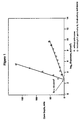
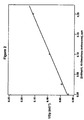
- Figures 1 and 2 illustrate the effect on polymer cure depth of adding an anthracene derivative to an epoxy-vinyl ether monomer mixture.
- the monomers are polymerized in successive layers to build up a solid object by exposure to actinic light, particularly an UV or visible laser beam, such as ultraviolet light from helium/cadmium laser or an argon ion laser or visible light from an argon ion laser.
- actinic light particularly an UV or visible laser beam, such as ultraviolet light from helium/cadmium laser or an argon ion laser or visible light from an argon ion laser.
- UV or visible laser beam such as ultraviolet light from helium/cadmium laser or an argon ion laser or visible light from an argon ion laser.
- the laser introduces light energy (photons) into the liquid monomers along a narrow path. If there is sufficient total energy present, the photoinitiator will decompose and cause polymerization to occur.
- the minimum amount of energy required is termed Ec or E crit .
- Cd or cure depth As the amount of energy ( light exposure) is increased, the depth to which the monomers are polymerized is increased. This is termed Cd or cure depth.
- the relationship between the cure depth and the logarithm of the total light energy provided to each unit of area (commonly called the "working curve") should be linear and where this is so, the slope of the line on a plot of Cd versus log e E is called the depth of penetration, or Dp. This is a measure of the depth to which the light beam penetrates the liquid monomer.
- the volume of the polymer is usually found to be greater than the volume being traced out by the laser beam.
- the Dp value is 2 to 4 times smaller than the desired thickness of the layer, then to achieve the desired polymer depth the laser exposure time would have to be increased, leading to unacceptably long build-times.
- the actual depth to which the laser light penetrates is determined by the absorbence of the monomers and the photoinitiator.
- the amount of the photoinitiator is adjusted to control the depth of penetration and the cure depth for a given amount of light energy or exposure.
- the amount of the photoinitiator used will control the minimum amount of energy needed to cure the monomer (Ec) and the depth to which it is cured (Cd).
- He-Cd lasers which irradiate the monomer bath with ultraviolet light at a wavelength of about 324 nm.
- the radical photoinitiators used respond well, having a useful range of about 300 to 380 nm.
- cationic photoinitiators particularly onium salts, rather than the radical initiators used with acrylates.
- these cationic photoinitiators respond to ultraviolet light over a frequency range of about 300 to 350 nm, they typically have a peak response at about 300 nm.
- the He-Cd laser has an operating frequency of about 324 nm, it is sufficiently close to the optimum frequency for the cationic initiators that the difference has proven to be no problem in using vinyl ether-epoxide monomers, as is described in the earlier co-pending and commonly-assigned patent applications. This has not been the experience with argon ion lasers which operate at frequencies between 334 and 364 nm.
- the cationic photoinitiators do not absorb the ultraviolet light readily. Consequently, the light penetrates the monomer bath to an undesirably great depth and produces a poorly defined polymer layer which does not accurately represent the desired shape.
- the UV light-absorbing materials should be chosen from those which absorb strongly at the wavelengths of the argon ion laser (between 334 and 364 nm) but not absorb strongly at the lower wavelength of the helium-cadmium laser (325 nm) and below. Also, such materials should not react detrimentally with the photoinitiators or the resins. In particular, compounds which have desirable light-absorbing properties but are basic in nature, such as aromatic compounds which have amine, sulfide, or amide moieties should be avoided since they will interfere with the acid species released by the cationic photoinitiators used with vinyl ether-epoxide resins. In addition to these properties, the UV light absorbers should be reasonably soluble in the resins to be polymerized and should not add undesirable color to the product.
- Preferred light-absorbing materials include aromatic compounds which have fused rings and particularly anthracene and its derivatives.
- Anthracene compounds of interest may be described by the following formula: where:
- anthracene 9-anthroic acid, 9,10-diphenyl anthracene, 9,10-dimethoxy-2-ethyl anthracene, and 9-anthracene methanol.
- Additional aromatic compounds may have application where they satisfy the requirements above, for example, bianthranyl and its derivatives and stilbene derivatives, such as BPSB (p-bis(p-propylstryl) benzene) and BMSB (p-bis(methylstryl)benzene).
- BPSB p-bis(p-propylstryl) benzene
- BMSB p-bis(methylstryl)benzene
- a preferred compound is 9,10-dimethoxy-2-ethyl anthracene. It has been found to have a sensitizing effect on onium photoinitiators when used at light wavelengths greater than 360 nm, especially at 364 nm with an argon ion laser. It is believed that other anthracene derivatives which contain alkoxy moieties would have an advantageous effect on the photoinitiators, particularly those which contain at least two alkoxy groups. They would be expected to have the best effect when the alkoxy groups are opposite or adjacent each other on the anthracene fused rings.
- the absorbers are used in small quantities, generally up to about 0.5 pph based on the monomers, typically about 0.02 to 0.2 pph.
- the amounts added to the monomer bath will be chosen to control the penetration depth, Dp, so that the cure depth will satisfy the requirements of the laser and of the layer thickness wanted.
- Compositions for use in stereolithography comprise vinyl ethers and epoxides.
- vinyl ether functionalized compounds of interest would include those derived from urethanes, phenols, esters, ethers, siloxanes, carbonates and aliphatic or aromatic hydrocarbons.
- the epoxides will generally include the broad classes of available epoxy functionalized compounds such as those derived from phenols, particularly bisphenol A, novolacs, linear or cycloaliphatic diols, polyether diols and siloxanes.
- the green piece can be thermally post-cured so that the epoxide cures under the influence of the photo acids generated during the UV or visible laser exposure.
- Thermal post-curing preferably is isotropic and any additional shrinkage that occurs should not produce additional distortion in the part.
- the vinyl ethers may include vinyl ether oligomers and/or multifunctional and/or monofunctional vinyl ether monomers.
- the vinyl ether urethane oligomer may be obtained by reacting
- the moieties X and Y may be alkylene groups, especially those containing up to about 20 carbon atoms, a cycloalkylene group, an arylene, or aralkylene group.
- alkylene moieties which may be used include ethylene, propylene, butylene, pentylene, hexylene, heptylene, octylene, nonylene, decylene, undecylene, dodecylene, tridecylene, tetradecylene, pentadecylene, hexadecylene, heptadecylene, octa-decylene, nonadecylene, and eicosylene.
- arylene groups include phenylene, naphthylene, anthrylene, phenanthrylene, etc.
- Cycloalkylene groups include the cyclopentylene, cyclohexylene, cycloheptylene, cyclooctylene, and cycloalkylene groups containing 1 or more alkyl groups on the nucleus.
- the arylene groups which may be used for Y also may contain one or more alkyl groups on the aromatic ring, especially where such alkyl groups contain up to about 6 carbon atoms.
- aralkylene groups include benzylene, 1-phenethylene, 2-phenethylene, 3- phenylpropylene, 2-phenylpropylene, 1-phenylpropylene, etc.
- Particularly useful Y groups are -(CH 2 ) n - groups where n is 2, 3, or 4; 1,2, 1,3, or 1,4 phenylene groups; and 1,4 cyclohexylene groups.
- Particularly useful X groups are -CH 2 CH 2 -; -CH 2 CH 2 -O-CH 2 CH 2 -; -CH 2 -(CH 3 )CH-; -(CH 2 ) n - where n is 4 or 6; -CH 2 -(CH 3 ) 2 C-CH 2 -; 1,4 phenylene; and 1,4-bis(methyl)phenylene.
- n will be an integer from 1 to about 100, preferably from 1 to 10.
- Particularly preferred hydroxyl-terminated polyesters include poly(propylene adipate), poly(neopentyl adipate), poly(1,4-butane adipate), poly(1,6-hexane adipate), poly(neopentyl isophthalate), and poly(1,6-hexane isophthalate).
- Polyesters derived from mixed polyols or acids may be useful. Particularly important are polyesters in which triols such as trimethylol propane or glycerol are incorporated into the polyester to produce a polyester with a functionality >2.
- the preferred molecular weights for the polyesters will be about 500 to 5000.
- X preferably will be -CH 2 CH 2 -, -CH 2 (CH 3 )CH-, and -CH 2 CH 2 CH 2 CH 2 -.
- the molecular weight preferably will be about 250 to 5,000.
- Mixed polyethers may also be used, for example, those derived from a polyol, such as ethoxylated or propoxylated trimethylol propane.
- diisocyanates may be used and may be exemplified by such materials as the toluene diisocyanates (TDI), p- and m-phenylene diisocyanate, 1,4-tetramethylene diisocyanate, 1,6-hexamethylene diisocyanate, 2,2,4-trimethylhexamethylene diisocyanate, 1,4-cyclohexane diisocyanate, 4,4'-di-cyclohexylmethane diisocyanate (Desmodur W), 4,4'-diphenylmethane diisocyanate (MDI), 3,3'-dimethyl-4,4-diphenylmethane diisocyanate, 1,5-tetrahydronaphthalene diisocyanate, naphthalene-1,5'-diisocyanate, bis(2-methyl-3-isocyanatephenyl)methane, 4,4'- diphenylpropane diisocyanate,
- the term polyisocyanate also includes quasi prepolymers of polyisocyanates with active hydrogen containing materials where the polyisocyanate is typically reacted with from about 0.05 to about 0.3 equivalents of a polyol. Although a vast number of polyisocyanates are suitable, in practice polyisocyanates based on MDI and TDI may be preferred for economy and general availability.
- isocyanates may be mentioned 4,4'-diphenylmethane diisocyanate, toluene diisocyanate, isophorone diisocyanate, m-tetramethylxylene diisocyanate, 4,4'- dicyclohexylmethane diisocyanate (Desmodur W), and 1,6- hexamethylene diisocyanate.
- the vinyl ether terminated alcohols which are used in preparing the oligomeric esters have a structure corresponding to the adduct of an alkyne and a diol.
- a diol may be reacted with acetylene.
- these vinyl ether terminated alcohols also can be made in other ways, and the method of producing them is not part of this invention.
- the resulting hydroxy monovinyl ether may be purified or in many cases the reaction mixture, which includes divinyl ether and residual diol may be used directly.
- the alkyne has the generic formula R'C ⁇ CR", and the diol has the generic formula HO-Z-OH.
- R' and R" are independently selected from the group consisting of hydrogen and lower alkyl moieties containing from 1 to 10 carbon atoms, although those with from 1 to about 4 carbon atoms are favored. It is preferable that both R' and R" are not alkyl moieties, for in the case where both are lower alkyl groups this causes an undesirable reduction in polymerization rate of the oligomers of our invention. Where R' is an alkyl moiety it is preferred that R" be hydrogen, and conversely, where R' is hydrogen then R" should be an alkyl of 1 to 4 carbons. In a preferred embodiment R' or R" is a methyl group and R" and R' is hydrogen. In a still more preferred embodiment both R' and R" are hydrogen.
- Z will be a divalent radical having a molecular weight of 28 to about 250 and selected from the group consisting of alkylene, cycloalkylene, or polyalkylene ether radicals.
- Z is ethylene, butylene, or dimethylene cyclohexane radicals.
- alkylene glycols HO(C n H 2n )OH, where n is an integer from 2 to about 10.
- the linear alkylene glycols, HO(CH 2 ) n OH, (polymethylenediols), where n is an integer from 2 to about 10, are particularly useful, especially where n is from 2 to about 6.
- Illustrative of the members of this group are such diols as ethylene glycol, 1,3-propylene glycol, 1,4-butanediol, 1,5-pentanediol, 1,6-hexanediol, 1,7-heptanediol, 1,8-octanediol, 1,9-nonanediol, and 1,10- decanediol (decamethylene glycol).
- diols as ethylene glycol, 1,3-propylene glycol, 1,4-butanediol, 1,5-pentanediol, 1,6-hexanediol, 1,7-heptanediol, 1,8-octanediol, 1,9-nonanediol, and 1,10- decanediol (decamethylene glycol).
- nonlinear or branched alkylene diols also may be used, where such glycols contain from 3 up to about 10 carbon atoms.
- examples include 1,2-propylene glycol, 2,3-butanediol, 2,3-dimethyl-2-3-butanediol, 2,3-dimethyl-1,4-butanediol, 2,2- dimethyl-1,3-propanediol(neopentylglycol).
- diols are the polyalkylene glycols, especially poly(ethylene) glycols, HO[-CH 2 CH 2 O-] m OH, and poly(propylene) glycol, HO[-CH(CH 3 )CH 2 O-] m OH, where m is an integer from 1 up through about 50, although more usually m is an integer from 1 up to about 10, and most preferably from 1 up to about 5.
- these glycols include diethylene glycol, triethylene glycol, tetraethylene glycol, pentaethylene glycol, hexaethylene glycol, etc., along with the analogs of the propylene glycols.
- Z is a divalent radical whose parent is a cycloalkane, such as cyclopentane, cyclohexane, cycloheptane, or cyclooctane, preferably the bishydroxy alkyl derivatives.
- the preferred diols are the 1,3-bis(hydroxyalkyl)cyclopentanes and the 1,4-bis(hydroxyalkyl)cyclohexanes, -cycloheptanes, and -cyclooctanes, particularly the cyclohexanes. Diols substituted at positions different from those specified above may be used in the practice of this invention, but not necessarily with equivalent results.
- the bis(hydroxymethyl)cyclohexanes are preferred as they are readily available from the reduction of the corresponding phthalic acids, and among these 1,4-bis(hydroxymethyl)cyclohexane is favored.
- hydroxy monovinyl ethers which are produced by the reaction of acetylene with the diols described above, those which are especially preferred include 4-hydroxybutyl vinyl ether, 4-hydroxymethyl cyclohexylmethyl vinyl ether, 2-hydroxy ethyl vinyl ether, triethylene glycol monovinyl ether, and diethylene glycol monovinyl ether.
- the vinyl ether terminated urethane oligomers An important characteristic of the vinyl ether terminated urethane oligomers is that in all cases there are few hydroxyl groups derived from the polyester, polyether or hydroxy monovinyl ether in the final product. That is, less than about 10% of the initial hydroxyl groups remain unreacted. It is most preferable that the oligomeric vinyl ether terminated product contain no detectable free hydroxyl groups, i.e., less than about 1% of the initial hydroxyl groups of the reactant mixture remain unreacted. It is also important that there should be essentially no free isocyanate groups remaining in the product, that is, less than about 1% of the initial isocyanate groups of the reactant mixture. In general, the ratios of polyester (a), diisocyanate (b) and monovinyl ether (c) are selected to provide an equal number of equivalents of hydroxyl and isocyanate groups.
- the vinyl ether urethane oligomers may be formed by reacting the hydroxyl-terminated polyester (a) with the isocyanate compound (b) or by reacting the isocyanate (b) with the hydroxy vinyl ether (c) and thereafter reacting the adduct with the remaining component or alternatively, the three components may be co-reacted.
- the ratios of (a), (b), and (c) will be chosen so that the ratio of the total number of hydroxyl groups from (a) and (c) to the number of isocyanate groups from (b) is about 1:1.
- the ratio of the number of hydroxyl groups from (a) to the number of hydroxyl groups from (c) should be in the range from about 0.5 to 5.
- the reaction may be carried out at temperatures in the range of 0° to 150°C.
- Solvents such as diethyl ether, methylene chloride, or toluene may be employed and later removed from the oligomers, or the components may be reacted in the absence of solvents.
- Divinyl ether monomers such as 1,4-cyclohexane dimethanol divinyl ether or triethylene glycol divinyl ether may also be used as solvents.
- Such compounds may be obtained as by-produets in the preparation of hydroxy monovinyl ethers. Since they have no free hydroxyl groups they do not react with the isocyanates, but may remain with the oligomers and become included in the formulations used for stereolithography.
- the reaction may be carried out without a catalyst, but a tin containing catalyst such as dibutyl tin dilaurate may be used.
- A is derived from a polyester, they may be considered the product obtained by reacting
- A is derived from a polysiloxane
- the polysiloxane may be linear, cyclic, or a combination of both types and may be substituted with aliphatic or aromatic moieties.
- Preferred substituents on the Si atoms are methyl and phenyl groups.
- A is derived from a polyether they may be obtained by reacting poly(ethylene oxy), poly(propylene oxy) or poly(butyleneoxy) glycols, i.e., HO-[-CH 2 CH 2 O] m -H, HO-[-CH(CH 3 )CH 2 O] m -H, or HO-[-(CH 2 ) 4 O] m -H, respectively, where m has an average value from 2 to 50 with acetylene or a vinyloxy alkyl halide, for example, 2-chloroethyl vinyl ether.
- Vinyl ether terminated carbonates may be described by the formula where
- the structure of the vinyl ether monomers may be similar to those of the oligomers described above but the monomers will have lower molecular weights. When their viscosity is low, they are useful as reactive diluents in the stereolithography formulations.
- Vinyl ether terminated ester monomers may be described by the formula where
- Vinyl ether terminated ether monomers are related to the polyether oligomers described above but the molecular weight is much lower, i.e., "m" is only about 1 to 5.
- Vinyl ether terminated siloxane monomers are related to the polysiloxane oligomers described above but the molecular weight is lower, i.e. A' has a molecular weight of about 140-500.
- Vinyl ether terminated carbonate monomers are related to the oligomers described above but the molecular weight is lower, i.e. p is only about 0 to 3.
- the vinyl ethers found to be useful may also be characterized by their physical properties and will generally have as many as possible of the following properties.
- Vinyl ether oligomers may include urethane oligomers derived from isocyanates, such as MDI (4,4'-diphenylmethane diisocyanate), reacted with a hydroxyl terminated polyester such as poly(propylene adipate) and a mono vinyl ether such as cyclohexane dimethanol vinyl ether.
- Polyether oligomers may include polytetrahydrofuran reacted with acetylene to form the vinyl ether.
- Polyester oligomers include the reaction product of polytetrahydrofuran with dimethyl adipate, end-capped by reaction with bis(4- vinyloxybutyl)isophthalate.
- the epoxides which are useful in the invention should have as many as possible of the following properties
- the formulations should have a viscosity in the range of 50 to 50,000 mPa•s, preferably 50-5000 mPa•s.
- the viscosity of the formulation should be relatively low in order to facilitate the movement of the liquid prepolymers over the solid piece being formed by the stereolithography apparatus.
- the vinyl ethers may have a high viscosity with the epoxides having low viscosity or vice versa. Alternatively, both may have low viscosity. High viscosities are useable, but not preferred.
- the relative reaction speed of the vinyl ethers is the relative reaction speed of the vinyl ethers.
- the vinyl ether oligomers are less reactive, particularly the urethane oligomers. Since they also have a greater weight for the number of vinyl ether equivalents the value of M will be higher, making it desirable to include lower molecular weight polyfunctional vinyl ethers to decrease the value of M.
- E c or E crit is also a factor which must be considered when formulating for a stereolithographic application. This is defined as the lowest light exposure which forms a polymer. It is commonly measured by the technique described in Example 2 below. Too low a value of E c is undesirable since the formula may prematurely polymerize or it may decrease the accuracy of the parts. A high value of E c implies a slower rate of reaction and reduced production of parts. However, compensation is possible when formulating so that a desired value of E c is obtained by adjusting the amount of the photoinitiator. Among the vinyl ether oligomers and monomers the value of E c is affected by the molecular composition and structure of the substituents.
- E c is not generally affected by addition of anthracene or its derivatives in the small amounts required to change the depth of cure of the monomers.
- An exception is the use of 2-ethyl-9,10-dimethoxy anthracene, as will be seen in the examples below, which appears to act as a sensitizer for onium salts. The effect is evident at wavelengths above about 360 nm when the onium salts absorb little energy.
- Ambient humidity will affect the rate of polymerization. Consequently, it may be necessary to adjust the value of E c by reformulation, typically to lower the E c to compensate for the effect of increased humidity.
- Still another factor to be considered is the effect of heat released during polymerization.
- damage to the polymer may result.
- Less reactive vinyl ethers would be chosen to avoid such a result or the value of M could be increased.
- An advantage of using anthracene or its derivatives to adjust the depth of cure that their response is to fluoresce rather than to generate heat which could adversely affect the polymerization of vinyl ethers and epoxides.
- a cationic photoinitiator is used to cause the vinyl ethers to react and produce the desired polymer.
- the recognized classes of cationic photoinitiators include various compounds which respond to irradiation by producing acid species capable of catalyzing cationic polymerization. See Crivello, Advances in Polymer Science, 62, p. 1-48 (1984).
- Onium salts of Group V, VI, and VII elements are stated to be the most efficient and versatile of the cationic photoinitiators. They generate strong Lewis acids which can promote cationic polymerization. Curing of the vinyl ether compositions of the invention is not limited to a particular class of such photoinitiators, although certain types are preferred, including onium salts based on halogens and sulfur.
- onium salt photoinitiators described in Crivello's U.S. Pat. No. 4,058,400 and in particular iodonium and sulfonium salts of BF 4 -, PF 6 -, SbF 6 -, and SO 3 CF 3 -.
- Preferred photoinitiators are triarylsulfonium salts, and diaryliodonium salts.
- Preferred anions are hexafluorophosphate and hexafluoroantimonate. They are usually required in amounts from about 0.1 to 5 wt.% in the blended formula of vinyl ethers and epoxides.
- Preferred initiators include: where X is SbF 6 - or PF 6 -
- Commercially available initiators include UVI-6974 (an SbF 6 - salt) and UVI-6990 (a PF 6 - salt) supplied by Union Carbide.
- Other cationic photoinitiators are defined by the formulas and where y is 1 to 18
- the formulations may also contain dyes, stabilizers, fillers, pigments, and antioxidants such as hindered phenols, wetting agents such as fluorosurfactants e.g. FC-430 from 3-M, photosensitizers such as benzophenone, thioxanthone, perylene and other components familiar to those skilled in the art.
- a stereolithographic composition was prepared by mixing 56% by weight of isophthaloyl-dibutyoxy vinyl ether (4010 SF, AlliedSignal) and 44% by weight of the diglycidyl ether of bisphenol (DER-331, Dow Chemical) with 0.475 pph of UVI-6974 (Union Carbide) a triaryl sulfonium salt as a cationic photoinitiator.
- Example 1 A sample of the composition of Example 1 was placed in a shallow dish in a 3D Systems Model SLA-190 stereolithographic unit and maintained at 30°C.
- the He-Cd laser (325 nm and 10.0 mW) was scanned across the resin to produce a series of small rectangular shaped cured layers which had been exposed to different doses of UV light by varying the speed of the laser beam's movement.
- the test part was removed from the bath after less than one minute and the thickness of the rectangular layers were measured with a micrometer to provide the depth of cure obtained with each dose of UV light. This information when plotted yields a straight line relationship between the logarithm of the light dose (exposure) and the depth of cure.
- Example 3 The measurements of Example 3 were repeated using a SLA-190 (3D Systems, Inc.) stereolithographic apparatus employing an Argon ion UV laser as an excitation source, operating at a wavelength of 351 nm and power of 19.2 mW.
- the variation of Ec and Dp are reported in the following table.
- Example 5 The experiments of Example 5 were repeated in greater detail with respect to the performance of the Argon ion laser equipment.
- the results of tests in which the concentration of the photoinitiator and the 9-anthracene methanol were varied in a monomer mixture as in Example 1 are presented in the following table.
- the absorbance or optical density was measured by ultraviolet spectroscopy using monomer compositions according to Example 1 in which the amounts of photoinitiator and 9-anthracene methanol were varied. Values which correspond to the characteristic wavelengths of He-Cd (324 nm) and Argon ion (332, 334, 350, 352, 364 nm) lasers are reported in the following table.
- Example 1 The monomer composition of Example 1 was tested according to the method of Example 2 using an Argon ion laser providing wavelengths of 333.6, 334.4, 335.8, 351.4, 351.1, and 363.8 nm (Innova 305).
- the concentration of 2-ethyl-9,10-dimethoxy anthracene was varied to show the effect on the minimum exposure for polymerization (Ec) and the change in cure depth for each unit of UV exposure (Dp). The results are shown in the following table and in Figure 2.
- the effect of changing the concentration of 2-ethyl-9,10-dimethoxy anthancene (EDMA) was measured using a composition similar to that of Example 1 except that 53 wt.% of VectomerTM and 47 wt.% of DER 331 was used with 0.9 pph of UVI 6974.
- the Ec and Dp for two wavelengths (351 nm and 364 nm) were determined using an Argon ion laser. The results are shown in the following table.
- Example 10 The composition of Example 10 was used with two UV absorbing compounds, EDMA and anthracene methanol (AnthMeOH). The effectiveness of the two materials is quite different, as shown in the following table: Working Curves at 324 nm Working Curves at 351 nm Working Curves at 364 mn Sample Ec mJ/cm 2 Dp mil Ec mJ/cm 2 Dp mil Ec mJ/cm 2 Dp mil pph 9-AnthMeOh 5.29 3.20 23.54 7.66 105.44 9.94 0.175 pph EDMA 3.22 2.68 9.10 5.91 26.5 5.36
- Example 9 The aging experiment of Example 9 was repeated using EDMA in the formulation of Example 10. The results are shown in the following table: Sample Fresh viscosity at 33°C ⁇ 1°C Aged at 80°C for 72 hours viscosity at 33°C ⁇ 1°C Difference 0.073 pph 9-AnthMeOH 240 cps (mPa• s) 303 cps (mPa•s) 26% 0.175 pph EDMA 241 cps (mPa•s) 258 cps (mPa•s) 7%
Landscapes
- Physics & Mathematics (AREA)
- General Physics & Mathematics (AREA)
- Engineering & Computer Science (AREA)
- Chemical & Material Sciences (AREA)
- Spectroscopy & Molecular Physics (AREA)
- Materials Engineering (AREA)
- Inorganic Chemistry (AREA)
- Manufacturing & Machinery (AREA)
- Architecture (AREA)
- Structural Engineering (AREA)
- Epoxy Resins (AREA)
- Dental Preparations (AREA)
- Medicines Containing Antibodies Or Antigens For Use As Internal Diagnostic Agents (AREA)
Applications Claiming Priority (5)
| Application Number | Priority Date | Filing Date | Title |
|---|---|---|---|
| US08/266,829 US5494618A (en) | 1994-06-27 | 1994-06-27 | Increasing the useful range of cationic photoinitiators in stereolithography |
| US266829 | 1994-06-27 | ||
| US463086 | 1995-06-21 | ||
| US08/463,086 US5705116A (en) | 1994-06-27 | 1995-06-21 | Increasing the useful range of cationic photoinitiators in stereolithography |
| PCT/US1995/008074 WO1996000412A1 (en) | 1994-06-27 | 1995-06-26 | Increasing the useful range of cationic photoinitiators in stereolithography |
Publications (2)
| Publication Number | Publication Date |
|---|---|
| EP0767931A1 EP0767931A1 (en) | 1997-04-16 |
| EP0767931B1 true EP0767931B1 (en) | 2001-12-19 |
Family
ID=26952056
Family Applications (1)
| Application Number | Title | Priority Date | Filing Date |
|---|---|---|---|
| EP95924712A Expired - Lifetime EP0767931B1 (en) | 1994-06-27 | 1995-06-26 | Increasing the useful range of cationic photoinitiators in stereolithography |
Country Status (6)
| Country | Link |
|---|---|
| US (1) | US5705116A (enExample) |
| EP (1) | EP0767931B1 (enExample) |
| JP (1) | JP3475275B2 (enExample) |
| DE (1) | DE69524758T2 (enExample) |
| ES (1) | ES2169138T3 (enExample) |
| WO (1) | WO1996000412A1 (enExample) |
Families Citing this family (46)
| Publication number | Priority date | Publication date | Assignee | Title |
|---|---|---|---|---|
| JP3117394B2 (ja) * | 1994-11-29 | 2000-12-11 | 帝人製機株式会社 | 光学的立体造形用樹脂組成物 |
| US7332537B2 (en) * | 1996-09-04 | 2008-02-19 | Z Corporation | Three dimensional printing material system and method |
| GB9702658D0 (en) | 1997-02-10 | 1997-04-02 | Imperial College | Fabrication method and apparatus |
| US5976770A (en) | 1998-01-15 | 1999-11-02 | Shipley Company, L.L.C. | Dyed photoresists and methods and articles of manufacture comprising same |
| US6136497A (en) * | 1998-03-30 | 2000-10-24 | Vantico, Inc. | Liquid, radiation-curable composition, especially for producing flexible cured articles by stereolithography |
| US6458468B1 (en) | 1999-01-28 | 2002-10-01 | Eastman Chemical Company | Photocurable coatings for polyester articles |
| KR100804873B1 (ko) * | 1999-06-10 | 2008-02-20 | 얼라이드시그날 인코퍼레이티드 | 포토리소그래피용 sog 반사방지 코팅 |
| EP1226019B1 (en) * | 1999-11-05 | 2004-03-03 | Z Corporation | Methods of three-dimensional printing |
| US20010050031A1 (en) | 2000-04-14 | 2001-12-13 | Z Corporation | Compositions for three-dimensional printing of solid objects |
| US7087109B2 (en) * | 2002-09-25 | 2006-08-08 | Z Corporation | Three dimensional printing material system and method |
| WO2004113042A2 (en) * | 2003-05-21 | 2004-12-29 | Z Corporation | Thermoplastic powder material system for appearance models from 3d printing systems |
| US8053159B2 (en) | 2003-11-18 | 2011-11-08 | Honeywell International Inc. | Antireflective coatings for via fill and photolithography applications and methods of preparation thereof |
| US7261542B2 (en) * | 2004-03-18 | 2007-08-28 | Desktop Factory, Inc. | Apparatus for three dimensional printing using image layers |
| ES2374823T3 (es) * | 2004-03-22 | 2012-02-22 | Huntsman Advanced Materials (Switzerland) Gmbh | Composiciones fotocurables. |
| JP3852460B2 (ja) * | 2004-05-14 | 2006-11-29 | Jsr株式会社 | 化学増幅型感放射線性樹脂組成物 |
| JP4544085B2 (ja) * | 2004-09-28 | 2010-09-15 | Jsr株式会社 | ポジ型感放射線性樹脂組成物 |
| US7488771B2 (en) * | 2005-09-02 | 2009-02-10 | International Business Machines Corporation | Stabilization of vinyl ether materials |
| EP2001656B1 (en) * | 2006-04-06 | 2014-10-15 | 3D Systems Incorporated | KiT FOR THE PRODUCTION OF THREE-DIMENSIONAL OBJECTS BY USE OF ELECTROMAGNETIC RADIATION |
| US20070298176A1 (en) * | 2006-06-26 | 2007-12-27 | Dipietro Richard Anthony | Aromatic vinyl ether based reverse-tone step and flash imprint lithography |
| JP5189598B2 (ja) * | 2006-12-08 | 2013-04-24 | スリーディー システムズ インコーポレーテッド | 過酸化物硬化を用いた三次元印刷材料系および方法 |
| EP2109528B1 (en) * | 2007-01-10 | 2017-03-15 | 3D Systems Incorporated | Three-dimensional printing material system with improved color, article performance, and ease of use and method using it |
| WO2008103450A2 (en) * | 2007-02-22 | 2008-08-28 | Z Corporation | Three dimensional printing material system and method using plasticizer-assisted sintering |
| US20120251841A1 (en) | 2009-12-17 | 2012-10-04 | Dsm Ip Assets, B.V. | Liquid radiation curable resins for additive fabrication comprising a triaryl sulfonium borate cationic photoinitiator |
| AU2011207304B2 (en) | 2010-01-22 | 2014-07-17 | Stratasys, Inc. | Liquid radiation curable resins capable of curing into layers with selective visual effects and methods for the use thereof |
| EP2502728B1 (en) | 2011-03-23 | 2017-01-04 | DSM IP Assets B.V. | Lightweight and high strength three-dimensional articles producible by additive fabrication processes |
| KR20170018067A (ko) | 2014-06-23 | 2017-02-15 | 카본, 인크. | 다중 경화 메커니즘을 갖는 물질로부터 폴리우레탄 3차원 물체를 제조하는 방법 |
| WO2017040883A1 (en) * | 2015-09-04 | 2017-03-09 | Carbon, Inc. | Cyanate ester dual cure resins for additive manufacturing |
| EP3347399B1 (en) | 2015-09-09 | 2020-12-09 | Carbon, Inc. | Epoxy dual cure resins for additive manufacturing |
| US11891485B2 (en) | 2015-11-05 | 2024-02-06 | Carbon, Inc. | Silicone dual cure resins for additive manufacturing |
| WO2017112571A1 (en) | 2015-12-22 | 2017-06-29 | Carbon, Inc. | Dual cure additive manufacturing of rigid intermediates that generate semi-rigid, flexible, or elastic final products |
| US10343331B2 (en) | 2015-12-22 | 2019-07-09 | Carbon, Inc. | Wash liquids for use in additive manufacturing with dual cure resins |
| US10501572B2 (en) | 2015-12-22 | 2019-12-10 | Carbon, Inc. | Cyclic ester dual cure resins for additive manufacturing |
| CN108475008B (zh) | 2015-12-22 | 2020-11-06 | 卡本有限公司 | 一种形成三维物体的方法 |
| WO2017112751A1 (en) | 2015-12-22 | 2017-06-29 | Carbon, Inc. | Blocked silicone dual cure resins for additive manufacturing |
| JP7189015B2 (ja) | 2015-12-22 | 2022-12-13 | カーボン,インコーポレイテッド | 二重硬化樹脂を用いた積層造形のための二重前駆体樹脂システム |
| WO2017112483A2 (en) | 2015-12-22 | 2017-06-29 | Carbon, Inc. | Accelerants for additive manufacturing with dual cure resins |
| US10500786B2 (en) | 2016-06-22 | 2019-12-10 | Carbon, Inc. | Dual cure resins containing microwave absorbing materials and methods of using the same |
| WO2018056375A1 (ja) * | 2016-09-22 | 2018-03-29 | 川崎化成工業株式会社 | Uv-a吸収剤 |
| WO2018165090A1 (en) | 2017-03-09 | 2018-09-13 | Carbon, Inc. | Tough, high temperature polymers produced by stereolithography |
| US10316213B1 (en) | 2017-05-01 | 2019-06-11 | Formlabs, Inc. | Dual-cure resins and related methods |
| US11458673B2 (en) | 2017-06-21 | 2022-10-04 | Carbon, Inc. | Resin dispenser for additive manufacturing |
| US11472904B2 (en) * | 2017-09-22 | 2022-10-18 | Carbon, Inc. | Production of light-transmissive objects by additive manufacturing |
| WO2019094431A1 (en) * | 2017-11-07 | 2019-05-16 | 3D Systems, Inc. | Inks for 3d printing having low print through depth |
| US11633908B2 (en) * | 2018-03-02 | 2023-04-25 | Formlabs, Inc. | Latent cure resins and related methods |
| US11504903B2 (en) | 2018-08-28 | 2022-11-22 | Carbon, Inc. | 1K alcohol dual cure resins for additive manufacturing |
| US20230042586A1 (en) * | 2021-08-05 | 2023-02-09 | Toyota Motor Engineering & Manufacturing North America, Inc. | Interference lithography using reflective base surfaces |
Family Cites Families (14)
| Publication number | Priority date | Publication date | Assignee | Title |
|---|---|---|---|---|
| ZA85973B (en) * | 1984-02-10 | 1985-09-25 | Ciba Geigy Ag | Hardenable composition and its use |
| EP0152377B1 (de) * | 1984-02-10 | 1987-12-09 | Ciba-Geigy Ag | Härtbare Zusammensetzung und deren Verwendung |
| US4575330A (en) * | 1984-08-08 | 1986-03-11 | Uvp, Inc. | Apparatus for production of three-dimensional objects by stereolithography |
| DE3766315D1 (de) * | 1986-08-06 | 1991-01-03 | Ciba Geigy Ag | Negativ-photoresist auf basis von polyphenolen und epoxidverbindungen oder vinylethern. |
| JP2538652B2 (ja) * | 1988-09-19 | 1996-09-25 | 旭電化工業株式会社 | 光学的造形用樹脂組成物 |
| JP2873482B2 (ja) * | 1989-02-09 | 1999-03-24 | 関西ペイント株式会社 | 光架橋性樹脂組成物 |
| US5036112A (en) * | 1990-01-26 | 1991-07-30 | Gaf Chemicals Corporation | Cross-linkable vinyl ether polyacetal oligomers |
| DE4102546A1 (de) * | 1990-02-09 | 1991-08-14 | Basf Ag | Verfahren zur kationischen photopolymerisation |
| CA2102107C (en) * | 1991-05-01 | 2002-07-16 | Stephen Craig Lapin | Stereolithography using vinyl ether-epoxide polymers |
| EP0536086A1 (de) * | 1991-10-03 | 1993-04-07 | Ciba-Geigy Ag | Photoempfindliche Gemische |
| US5322765A (en) * | 1991-11-22 | 1994-06-21 | International Business Machines Corporation | Dry developable photoresist compositions and method for use thereof |
| US5296332A (en) * | 1991-11-22 | 1994-03-22 | International Business Machines Corporation | Crosslinkable aqueous developable photoresist compositions and method for use thereof |
| JP3173196B2 (ja) * | 1992-11-18 | 2001-06-04 | ソニー株式会社 | 光学的造形方法および光学的造形装置 |
| ES2147777T3 (es) * | 1993-09-16 | 2000-10-01 | Ciba Sc Holding Ag | Compuestos vinileter con grupos funcionales adicionales, distintos de vinileter, y su utilizacion en la formulacion de compuestos reticulables. |
-
1995
- 1995-06-21 US US08/463,086 patent/US5705116A/en not_active Expired - Lifetime
- 1995-06-26 WO PCT/US1995/008074 patent/WO1996000412A1/en not_active Ceased
- 1995-06-26 JP JP50339296A patent/JP3475275B2/ja not_active Expired - Fee Related
- 1995-06-26 DE DE69524758T patent/DE69524758T2/de not_active Expired - Lifetime
- 1995-06-26 ES ES95924712T patent/ES2169138T3/es not_active Expired - Lifetime
- 1995-06-26 EP EP95924712A patent/EP0767931B1/en not_active Expired - Lifetime
Non-Patent Citations (1)
| Title |
|---|
| Colour Index, vol. 3, p.5653; vol.5,p.3608-3611, THE SOCIETY OF DYERS AND COLOURISTS, BRADFORD * |
Also Published As
| Publication number | Publication date |
|---|---|
| JPH10502461A (ja) | 1998-03-03 |
| JP3475275B2 (ja) | 2003-12-08 |
| DE69524758D1 (de) | 2002-01-31 |
| EP0767931A1 (en) | 1997-04-16 |
| ES2169138T3 (es) | 2002-07-01 |
| WO1996000412A1 (en) | 1996-01-04 |
| US5705116A (en) | 1998-01-06 |
| DE69524758T2 (de) | 2002-08-08 |
Similar Documents
| Publication | Publication Date | Title |
|---|---|---|
| US5705116A (en) | Increasing the useful range of cationic photoinitiators in stereolithography | |
| US5494618A (en) | Increasing the useful range of cationic photoinitiators in stereolithography | |
| US5437964A (en) | Stereolithography using vinyl ether-epoxide polymers | |
| EP1918316B1 (en) | Photo-curable resin composition | |
| US5658712A (en) | (Meth)acrylates containing urethane groups | |
| US5506087A (en) | Stereolithography using vinyl ether based polymers | |
| JP3626302B2 (ja) | 光硬化性樹脂組成物 | |
| CA2111718C (en) | Photosensitive compositions | |
| EP1171502B2 (en) | Resin composition for photofabrication of three dimensional objects | |
| EP2466378B1 (en) | Radiation curable resin composition and rapid prototyping process using the same | |
| RU2518125C9 (ru) | Полиуретановый состав и его применение для получения голографических сред | |
| US4977199A (en) | Photo curable blends of 2-methyoxytetrahydropyran and a cycloaliphatic diepoxide | |
| US5510226A (en) | Stereolithography using vinyl ether-epoxide polymers | |
| EP2033982B1 (en) | Resin composition for stereolithography | |
| JP3626275B2 (ja) | 光硬化性樹脂組成物 | |
| CA2680963A1 (en) | Special polyether-based polyurethane formulations for the production of holographic media | |
| JPH11228610A (ja) | 光硬化性樹脂組成物 | |
| CA1340758C (en) | Energy curable compositions: single component curing agents | |
| JP3974336B2 (ja) | 光学的立体造形用の活性エネルギー線硬化性樹脂組成物 | |
| WO1998036323A9 (en) | High temperature performance polymers for stereolithography | |
| EP1636274A1 (en) | Photocurable resin composition | |
| JPH10168107A (ja) | 光硬化性樹脂組成物 | |
| JP2025130455A (ja) | カチオン重合開始剤およびそれを用いた光学的立体造形用組成物 | |
| WO2025169923A1 (ja) | 樹脂組成物 | |
| JPWO1996035756A1 (ja) | 光学的立体造形用樹脂組成物および光学的立体造形法 |
Legal Events
| Date | Code | Title | Description |
|---|---|---|---|
| PUAI | Public reference made under article 153(3) epc to a published international application that has entered the european phase |
Free format text: ORIGINAL CODE: 0009012 |
|
| 17P | Request for examination filed |
Effective date: 19961205 |
|
| AK | Designated contracting states |
Kind code of ref document: A1 Designated state(s): BE CH DE ES FR GB IT LI NL SE |
|
| 17Q | First examination report despatched |
Effective date: 19971205 |
|
| RAP1 | Party data changed (applicant data changed or rights of an application transferred) |
Owner name: CIBA SPECIALTY CHEMICALS HOLDING INC. |
|
| GRAG | Despatch of communication of intention to grant |
Free format text: ORIGINAL CODE: EPIDOS AGRA |
|
| RAP1 | Party data changed (applicant data changed or rights of an application transferred) |
Owner name: HONEYWELL INTERNATIONAL INC. |
|
| RAP1 | Party data changed (applicant data changed or rights of an application transferred) |
Owner name: VANTICO AG |
|
| GRAG | Despatch of communication of intention to grant |
Free format text: ORIGINAL CODE: EPIDOS AGRA |
|
| GRAG | Despatch of communication of intention to grant |
Free format text: ORIGINAL CODE: EPIDOS AGRA |
|
| GRAH | Despatch of communication of intention to grant a patent |
Free format text: ORIGINAL CODE: EPIDOS IGRA |
|
| GRAH | Despatch of communication of intention to grant a patent |
Free format text: ORIGINAL CODE: EPIDOS IGRA |
|
| GRAA | (expected) grant |
Free format text: ORIGINAL CODE: 0009210 |
|
| AK | Designated contracting states |
Kind code of ref document: B1 Designated state(s): BE CH DE ES FR GB IT LI NL SE |
|
| REG | Reference to a national code |
Ref country code: CH Ref legal event code: EP |
|
| REG | Reference to a national code |
Ref country code: GB Ref legal event code: IF02 |
|
| REF | Corresponds to: |
Ref document number: 69524758 Country of ref document: DE Date of ref document: 20020131 |
|
| ET | Fr: translation filed | ||
| PGFP | Annual fee paid to national office [announced via postgrant information from national office to epo] |
Ref country code: SE Payment date: 20020611 Year of fee payment: 8 |
|
| PGFP | Annual fee paid to national office [announced via postgrant information from national office to epo] |
Ref country code: ES Payment date: 20020618 Year of fee payment: 8 |
|
| PGFP | Annual fee paid to national office [announced via postgrant information from national office to epo] |
Ref country code: NL Payment date: 20020628 Year of fee payment: 8 |
|
| REG | Reference to a national code |
Ref country code: ES Ref legal event code: FG2A Ref document number: 2169138 Country of ref document: ES Kind code of ref document: T3 |
|
| PLBE | No opposition filed within time limit |
Free format text: ORIGINAL CODE: 0009261 |
|
| STAA | Information on the status of an ep patent application or granted ep patent |
Free format text: STATUS: NO OPPOSITION FILED WITHIN TIME LIMIT |
|
| 26N | No opposition filed | ||
| PG25 | Lapsed in a contracting state [announced via postgrant information from national office to epo] |
Ref country code: SE Free format text: LAPSE BECAUSE OF NON-PAYMENT OF DUE FEES Effective date: 20030627 Ref country code: ES Free format text: LAPSE BECAUSE OF NON-PAYMENT OF DUE FEES Effective date: 20030627 |
|
| PG25 | Lapsed in a contracting state [announced via postgrant information from national office to epo] |
Ref country code: NL Free format text: LAPSE BECAUSE OF NON-PAYMENT OF DUE FEES Effective date: 20040101 |
|
| EUG | Se: european patent has lapsed | ||
| NLV4 | Nl: lapsed or anulled due to non-payment of the annual fee |
Effective date: 20040101 |
|
| REG | Reference to a national code |
Ref country code: ES Ref legal event code: FD2A Effective date: 20030627 |
|
| REG | Reference to a national code |
Ref country code: DE Ref legal event code: R082 Ref document number: 69524758 Country of ref document: DE Representative=s name: VON KREISLER SELTING WERNER, DE |
|
| REG | Reference to a national code |
Ref country code: CH Ref legal event code: PUE Owner name: 3D SYSTEMS, INC., US Free format text: FORMER OWNER: HUNTSMAN ADVANCED MATERIALS (SWITZERLAND) GMBH, CH Ref country code: CH Ref legal event code: PFA Owner name: HUNTSMAN ADVANCED MATERIALS (SWITZERLAND) GMBH, CH Free format text: FORMER OWNER: VANTICO GMBH, CH Ref country code: CH Ref legal event code: PFA Owner name: VANTICO GMBH, CH Free format text: FORMER OWNER: VANTICO AG, CH Ref country code: CH Ref legal event code: NV Representative=s name: PATENTANWAELTE SCHAAD, BALASS, MENZL AND PARTN, CH |
|
| REG | Reference to a national code |
Ref country code: DE Ref legal event code: R082 Ref document number: 69524758 Country of ref document: DE Representative=s name: VON KREISLER SELTING WERNER - PARTNERSCHAFT VO, DE Effective date: 20121217 Ref country code: DE Ref legal event code: R082 Ref document number: 69524758 Country of ref document: DE Representative=s name: VON KREISLER SELTING WERNER, DE Effective date: 20121217 Ref country code: DE Ref legal event code: R081 Ref document number: 69524758 Country of ref document: DE Owner name: 3D SYSTEMS, INC., ROCK HILL, US Free format text: FORMER OWNER: VANTICO AG, BASEL, CH Effective date: 20121217 Ref country code: DE Ref legal event code: R081 Ref document number: 69524758 Country of ref document: DE Owner name: 3D SYSTEMS, INC., US Free format text: FORMER OWNER: VANTICO AG, BASEL, CH Effective date: 20121217 |
|
| REG | Reference to a national code |
Ref country code: CH Ref legal event code: PUE Owner name: 3D SYSTEMS, INC., US Free format text: FORMER OWNER: HUNTSMAN ADVANCED MATERIALS (SWITZERLAND) GMBH, CH Ref country code: CH Ref legal event code: PFA Owner name: HUNTSMAN ADVANCED MATERIALS (SWITZERLAND) GMBH, CH Free format text: FORMER OWNER: VANTICO GMBH, CH Ref country code: CH Ref legal event code: PFA Owner name: VANTICO GMBH, CH Free format text: FORMER OWNER: VANTICO AG, CH Ref country code: CH Ref legal event code: NV Representative=s name: PATENTANWAELTE SCHAAD, BALASS, MENZL AND PARTN, CH |
|
| REG | Reference to a national code |
Ref country code: FR Ref legal event code: TP Owner name: 3 D SYSTEMS, INC, US Effective date: 20130415 |
|
| BECA | Be: change of holder's address |
Owner name: 333 THREE D SYSTEMS CIRCLE,ROCK HILL SOUTH CAROLI Effective date: 20130517 Owner name: 3D SYSTEMS, INC. Effective date: 20130517 |
|
| BECH | Be: change of holder |
Owner name: 3D SYSTEMS, INC. Effective date: 20130517 |
|
| REG | Reference to a national code |
Ref country code: GB Ref legal event code: 732E Free format text: REGISTERED BETWEEN 20130613 AND 20130619 |
|
| PGFP | Annual fee paid to national office [announced via postgrant information from national office to epo] |
Ref country code: GB Payment date: 20140627 Year of fee payment: 20 |
|
| PGFP | Annual fee paid to national office [announced via postgrant information from national office to epo] |
Ref country code: IT Payment date: 20140625 Year of fee payment: 20 Ref country code: CH Payment date: 20140627 Year of fee payment: 20 |
|
| PGFP | Annual fee paid to national office [announced via postgrant information from national office to epo] |
Ref country code: DE Payment date: 20140627 Year of fee payment: 20 Ref country code: BE Payment date: 20140630 Year of fee payment: 20 |
|
| PGFP | Annual fee paid to national office [announced via postgrant information from national office to epo] |
Ref country code: FR Payment date: 20140617 Year of fee payment: 20 |
|
| REG | Reference to a national code |
Ref country code: DE Ref legal event code: R071 Ref document number: 69524758 Country of ref document: DE |
|
| REG | Reference to a national code |
Ref country code: CH Ref legal event code: PL |
|
| REG | Reference to a national code |
Ref country code: GB Ref legal event code: PE20 Expiry date: 20150625 |
|
| PG25 | Lapsed in a contracting state [announced via postgrant information from national office to epo] |
Ref country code: GB Free format text: LAPSE BECAUSE OF EXPIRATION OF PROTECTION Effective date: 20150625 |