EP0708176B1 - Verfahren zur Kultivierung lipidabhängiger Tetrahymeniden und ein Verfahren zur Herstellung von biogenen Wertstoffen aus lipidabhängigen Tetrahymeniden - Google Patents
Verfahren zur Kultivierung lipidabhängiger Tetrahymeniden und ein Verfahren zur Herstellung von biogenen Wertstoffen aus lipidabhängigen Tetrahymeniden Download PDFInfo
- Publication number
- EP0708176B1 EP0708176B1 EP95116245A EP95116245A EP0708176B1 EP 0708176 B1 EP0708176 B1 EP 0708176B1 EP 95116245 A EP95116245 A EP 95116245A EP 95116245 A EP95116245 A EP 95116245A EP 0708176 B1 EP0708176 B1 EP 0708176B1
- Authority
- EP
- European Patent Office
- Prior art keywords
- lipid
- dependent
- process according
- tetrahymenids
- enzymes
- Prior art date
- Legal status (The legal status is an assumption and is not a legal conclusion. Google has not performed a legal analysis and makes no representation as to the accuracy of the status listed.)
- Expired - Lifetime
Links
Images

Classifications
-
- C—CHEMISTRY; METALLURGY
- C12—BIOCHEMISTRY; BEER; SPIRITS; WINE; VINEGAR; MICROBIOLOGY; ENZYMOLOGY; MUTATION OR GENETIC ENGINEERING
- C12N—MICROORGANISMS OR ENZYMES; COMPOSITIONS THEREOF; PROPAGATING, PRESERVING, OR MAINTAINING MICROORGANISMS; MUTATION OR GENETIC ENGINEERING; CULTURE MEDIA
- C12N1/00—Microorganisms; Compositions thereof; Processes of propagating, maintaining or preserving microorganisms or compositions thereof; Processes of preparing or isolating a composition containing a microorganism; Culture media therefor
- C12N1/10—Protozoa; Culture media therefor
-
- C—CHEMISTRY; METALLURGY
- C12—BIOCHEMISTRY; BEER; SPIRITS; WINE; VINEGAR; MICROBIOLOGY; ENZYMOLOGY; MUTATION OR GENETIC ENGINEERING
- C12N—MICROORGANISMS OR ENZYMES; COMPOSITIONS THEREOF; PROPAGATING, PRESERVING, OR MAINTAINING MICROORGANISMS; MUTATION OR GENETIC ENGINEERING; CULTURE MEDIA
- C12N9/00—Enzymes; Proenzymes; Compositions thereof; Processes for preparing, activating, inhibiting, separating or purifying enzymes
- C12N9/14—Hydrolases (3)
- C12N9/24—Hydrolases (3) acting on glycosyl compounds (3.2)
- C12N9/2402—Hydrolases (3) acting on glycosyl compounds (3.2) hydrolysing O- and S- glycosyl compounds (3.2.1)
Definitions
- the present invention relates to a method for cultivating lipid-dependent tetrahymenids, so-called lipid requirer or fastidious species, in particular from Tetrahymena setosa, and a method for Production of biogenic materials from lipid-dependent tetrahymenides, especially of enzymes derived from the lipid-dependent tetrahymenides in the surrounding medium are secreted by such enzymes which are cell-associated and of polyunsaturated fatty acids.
- Phospholipase C and phospholipase A 1 have also been identified as secretory enzymes of T. thermophila (J. Florin-Christensen et al., 1986, Comp. Biochem. Physiol., 85B, 149; J. Florin-Christensen et al., 1986, Comp. Biochem. Physiol., 85B, 143).
- ⁇ -galactosidases can e.g. B. for the breakdown of milk sugar (lactose) and in the ⁇ -galactosidase-catalyzed transglycosidation - z. B. for the production of ⁇ -galacto-, arabino- and fucopyranosides - are used.
- the phosphatases can be used, for example, to reduce the phosphate content in foods.
- ⁇ -glucosidases can be used for the synthesis of glucosaccharides.
- the proteases can be used for peptide synthesis using the acyltransferase reaction.
- T. became termophila cells ⁇ -linolenic acid and from the culture supernatant of T. thermophila pigment mutants Melanin precursors isolated (T. Kiy & A. Tiedtke, 1993, BioEng., 5, 22).
- T. pyriformis complex The two species mentioned at the beginning belong to the so-called T. pyriformis complex and are relatively easy to grow on simple, inexpensive nutrient media. Simple axenic culture media are therefore also suitable for mass cultivation of the types of the Pyriformis complex (K. Keenan et al., 1978, J. Protozool., 25, 385). Culture media for the mass cultivation of these representatives of the Pyriformis complex include the so-called TGMM-2 medium (K. Keenan et al., 1978, J.
- Protozool., 25, 385) consisting of 0.3 g per 100 ml of water Brewer's yeast, 1 mg soy lecithin and 0.1 mg skimmed milk powder, and more recently a so-called skimmed milk medium (T. Kiy & A. Tiedtke, 1992, Appl. Microbiol. Biotechnol., 37, 576), consisting of skimmed milk powder, yeast extract and glucose, proposed.
- ciliates from the group of lipid-dependent tetrahymenids, the so-called “lipid-requirers” or “fastidious species” (e.g. T. setosa, T. rostrata, T. paravorax, T. patula and others) to cultivate for a long time and in bulk. These ciliates are in theirs Very dependent on growth and have special nutritional requirements. you Potential is therefore largely unexplored (K. Keenan et al., 1978, J. Protozool., 25, 385). As a result, there are no investigations regarding the presence of valuable substances - such as enzymes.
- lipid requirer lipid-dependent tetrahymenids
- lipid requirer lipid-dependent tetrahymenids
- the object is accordingly achieved according to the invention by a process for the cultivation of lipid-dependent tetrahymenides (lipid requirer), which is characterized in that the lipid-dependent tetrahymenids are cultivated on a medium which 5 to 100 g / l skimmed milk powder or cottonseed flour, 1 to 20 g / l yeast extract, 0.03 g / l iron in the form of complexed iron ions and Contains 0 to 100 g / l glucose.
- lipid-dependent tetrahymenides lipid requirer
- the medium preferably contains 20 g / l skimmed milk powder, 5 g / l yeast extract, 0.03 g / l iron in the form of complexed iron ions and 10 g / l glucose.
- 10 ml / l soybean oil can optionally be added to the medium.
- complexed iron ions are iron ions in the form of the iron-ethylenediaminetetraacetate complex (EDTA complex) suitable.
- EDTA complex iron-ethylenediaminetetraacetate complex
- the iron can also be added to the culture medium in the form of iron citrate become.
- cultivation can also take place under Cell retention using membranes takes place continuously.
- Tetrahymena rostrata is preferred as the lipid-dependent tetrahymenide, Tetrahymena patula or Tetrahymena setosa, particularly preferred Tetrahymena rostrata ATCC 30770, Tetrahymena patula CCAP 1630/2 or Tetrahymena setosa ATCC 30782, their mutants or their variants used.
- the task set out above is also achieved by a method for Production of biogenic materials from lipid-dependent tetrahymenides (lipid requirer), characterized in that the lipid-dependent tetrahymenids cultivated using the method described above and the biogenic Recyclable materials isolated according to known methods.
- lipid requirer lipid-dependent tetrahymenides
- Enzymes derived from lipid-dependent tetrahymenids (lipid requirer) in the surrounding medium can be secreted, preferably produce that the lipid-dependent tetrahymenids using the above described method cultivated until the secreted enzymes in Have enriched culture medium, and then the enzymes after known processes from the cell-free culture supernatant and isolated by separates chromatographic processes.
- Cell-associated enzymes from lipid-dependent tetrahymenids are preferably obtained in that the lipid-dependent Tetrahymenids are cultivated using the method described above, the cells homogenized, the enzyme-containing solution by means of centrifugation or filtration separated from the disrupted cells and the enzymes through separates chromatographic processes.
- the method can also be used more than once win unsaturated fatty acids.
- lipid-dependent Tetrahymenids (lipid requirer), such as T. setosa, T. rostrata or T. patula, can be successfully cultivated in high cell densities on simple complex media. This makes it possible for lipid-dependent tetrahymenids to exist of hydrolytic, lysosomal enzymes in particular.
- the following enzyme activities can be detected: Alkaline Phosphatase, esterase (C4), esterase lipase (C8), phosphodiesterase, Arylamidase, trypsin, chymotrypsin, acid phosphatase, Naphthol-AS-BI phosphohydrolase, ⁇ -galactosidase, ⁇ - and ⁇ -glucosidase, N-acetyl- ⁇ -glucosaminidase, ⁇ - and ⁇ -mannosidase and ⁇ -fucosidase.
- the Advantages of these enzymes are that compared to most lysosomal, enzymes from other sources are secreted and also outside the cells are very stable.
- Tetrahymena patula CCAP 1630/2 was from the Culture Collection of Algae and Protozoa, Freshwater Biological Association, The Ferry House, Ambleside, Cumbria LA220LP, U.K., Tetrahymena setosa ATCC 30782 and Tetrahymena Rostrata ATCC 30770 were from the American Type Culture Collection (ATCC), 12301 Parklawn Drive, Rockville, Maryland, USA. Instead of by T. patula CCAP 1630/2, T. setosa ATCC 30782 and T. rostrata ATCC 30770 their mutants and variants can also be used, as far as they continue to have the enzymatic activities mentioned. Such Mutants can e.g. B. by means of those described for T. thermophila Method (P. Hunseler et al., 1987, J. Cell Sci., 88, 47) using Win N-methyl-N'-nitro-N'-nitrosoguanidine.
- T. setosa was based on the method of the present invention Skim milk medium and on Pharmamedia® medium, consisting essentially Made from cottonseed flour, successfully mass-grown for the first time. It showed that the growth on these media compared to that so far known TGMM-2 medium is significantly better.
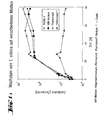
- T. setosa is used on the previously used TGMM-2 medium (American Type Culture Collection Catalog, Algae & Protozoa, 18th edition, 1993, Medium 986) grown in batch culture (shaking culture, 25 ° C), so you get to 28 h a cell density of 155,000 cells / ml.
- the cell density is 23 times higher in skim milk medium (3,500,000 cells / ml), 39 times higher in Pharmamedia without soybean oil (6,000,000 cells / ml) and 32 times higher in Pharmamedia + soybean oil (5,000,000 cells / ml) (Fig. 1).
- T. rostrata and T. patula The same results can also be achieved with T. rostrata and T. patula.
- representatives of the Group of lipid-dependent tetrahymenids (lipid-requirer) excellent as Enzyme producers are suitable.
- lipid-requirer representatives of the Group of lipid-dependent tetrahymenids (lipid-requirer) excellent as Enzyme producers are suitable.
- lipid-requirer lipid-requirer
- T. setosa T. patula and T. rostrata are also Peptones, tryptones, meat extracts or flours and other ground seeds (e.g. corn, oat, wheat, soy and bean seeds) are suitable.
- the nutrient solution can contain sources of lipids (e.g. asolectin).
- Lipid-dependent tetrahymenids are grown aerobically for example submerged with shaking or stirring in shaking flasks or Fermenters, possibly with the introduction of air or oxygen. PH regulation can also be carried out.
- the cultivation can be done in one Temperature range from 18 to 37 ° C, but preferably between 23 and 33 ° C.
- T. setosa is cultivated under the conditions mentioned until the enzymes accumulate in the culture.
- the fermentation such as already shown using T. thermophila (T. Kiy & A. Tiedtke, 1992, Appl. Microbiol. Biotechnol. 38, 141) can be carried out continuously. In this In this case, the product-containing culture medium is harvested continuously.
- Cultivation is preferably carried out in several stages, i. H. from a regular culture becomes a preculture, with the production medium already being used, inoculated. After about 24 to 72 hours, the pre-culture becomes the main culture, for example in the volume ratio 1:10, inoculated.
- the fermentation can be determined by determining the biomass or the Cell concentration to be monitored.
- the product concentration can be track the determination of the volume activity of the enzymes.
- the isolation of the enzymes can either be from the cell-free supernatant or from the cell homogenate.
- the enzymes are to be isolated from the cell-free culture supernatant, so the cells must be separated from the culture medium. This can e.g. B. about Cell immobilization (T. Kiy & A. Tiedtke, 1991, Appl. Microbiol. Biotechnol., 35, 18) or by using membrane or spin filter bioreactors already happen during fermentation, or via tangential filtration or centrifugation after fermentation is complete.
- the Cells are first homogenized. Are particularly suitable in this Relationship between ultrasound and ultraturrax devices, but also simple ones Freezing is enough to unlock the cells. Via centrifugation or Filtration can be made of particulate material after homogenization Remove the supernatant.
- the enzymes are separated and purified using chromatographic methods Methods.
- the enzyme-containing sample can, for. B. first on a Apply anion exchange column (e.g. Q-Sepharose®, Mono Q). The elution takes place via an ascending salt gradient. Alternatively, one Chromatofocusing column (Mono P) are used, using a descending pH gradient is eluted.
- anion exchange column e.g. Q-Sepharose®, Mono Q
- gel filtration e.g. Superose®, Superdex®
- affinity chromatography media For the targeted purification of individual enzymes, the use of affinity chromatography media. are preferred here Substrate analogs, inhibitors or specific anti-enzyme Antibodies used as ligands.
Landscapes
- Life Sciences & Earth Sciences (AREA)
- Chemical & Material Sciences (AREA)
- Health & Medical Sciences (AREA)
- Engineering & Computer Science (AREA)
- Genetics & Genomics (AREA)
- Organic Chemistry (AREA)
- Zoology (AREA)
- Bioinformatics & Cheminformatics (AREA)
- Wood Science & Technology (AREA)
- Biotechnology (AREA)
- Medicinal Chemistry (AREA)
- Microbiology (AREA)
- Biomedical Technology (AREA)
- Biochemistry (AREA)
- General Engineering & Computer Science (AREA)
- General Health & Medical Sciences (AREA)
- Virology (AREA)
- Tropical Medicine & Parasitology (AREA)
- Molecular Biology (AREA)
- Preparation Of Compounds By Using Micro-Organisms (AREA)
- Micro-Organisms Or Cultivation Processes Thereof (AREA)
- Enzymes And Modification Thereof (AREA)
- Organic Low-Molecular-Weight Compounds And Preparation Thereof (AREA)
Description
β-Galactosidasen können z. B. zur Spaltung des Milchzuckers (Lactose) und bei der β-Galactosidase-katalysierten Transglycosidierung - z. B. zur Herstellung von β-Galacto-, Arabino- und Fucopyranosiden - verwendet werden.
Die Phosphatasen können beispielsweise zur Reduzierung des Phosphatgehalts von Lebensmitteln eingesetzt werden.
β-Glucosidasen lassen sich zur Synthese von Glucosacchariden verwenden.
Die Proteasen können unter Ausnutzung der Acyltransferasereaktion zur Peptidsynthese verwendet werden.
Als Kulturmedien für die Massenkultivierung dieser Vertreter des Pyriformis-Komplexes werden unter anderem das sogenannte TGMM-2 Medium (K. Keenan et al., 1978, J. Protozool., 25, 385), bestehend pro 100 ml Wasser aus 0,3 g Bierhefe, 1 mg Soja-Lecithin sowie 0,1 mg Magermilchpulver, und neuerdings ein sogenanntes Magermilchmedium (T. Kiy & A. Tiedtke, 1992, Appl. Microbiol. Biotechnol., 37, 576), bestehend aus Magermilchpulver, Hefeextrakt und Glucose, vorgeschlagen.
5 bis 100 g/l Magermilchpulver oder Baumwollsamenmehl,
1 bis 20 g/l Hefeextrakt,
0,03 g/l Eisen in Form komplexierter Eisenionen und
0 bis 100 g/l Glucose enthält.
20 g/l Magermilchpulver,
5 g/l Hefeextrakt,
0,03 g/l Eisen in Form komplexierter Eisenionen und
10 g/l Glucose.
Kulturmedium
20 g/l Baumwollsamenmehl,
5 g/l Hefeextrakt,
0,03 g/l Eisen in Form komplexierter Eisenionen und
10 g/l Glucose enthält. Wahlweise kann bei dieser Zusammensetzung dem Medium noch 10 ml/l Sojaöl zugesetzt werden.
Die Dauerkultivierung erfolgt bei 20°C in Reagenzgläsern auf autoklavierten Kichererbsen. Dazu wird eine Kichererbse in 10 ml Aqua demin. pro Reagenzglas eingesetzt. Das Umimpfen erfolgt halbjährlich.
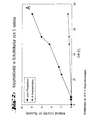
Ein 100-ml-Erlenmeyerkolben, der 10 ml Kulturmedium enthält, wird mit 1 ml der Stammkultur angeimpft und bei 25°C über Nacht auf einem Schüttler (80 rpm) inkubiert. Am nächsten Tag wird ein 500-ml-Erlenmeyerkolben, der 100 ml Kulturmedium enthält, mit 10 ml dieser Vorkultur inokuliert. Nach 24 h werden 500 ml Medium (in 2,5-l-Erlenmeyerkolben) mit 30 ml dieser Vorkultur angeimpft. Die maximale volumetrische Aktivität ist je nach Enzym zwischen 40 und 90 h erreicht. Die Kultur enthält z. B. bis zu 8.000 mU/ml saure Phosphatase, 800 mU/ml β-Hexosaminidase, 100 mU/ml β-Glucosidase, 100 mU/ml β-Fucosidase und 40 mU/ml Phosphodiesterase (Fig. 2 und 3). Wird die Kultivierung kontinuierlich mit Zellrückhaltung - z. B. in einem Membranbioreaktor - durchgeführt, so ist eine Steigerung der volumetrischen Aktivität bis um das 50fache realisierbar.
Das Produktionsmedium enthält Magermilchpulver (20 g/l), Hefeextrakt (5 g/l), Sequestrene (0,003 %) und Glucose (10 g/l). Die Glucose wird getrennt autoklaviert und erst nach dem Abkühlen dem Kulturmedium zugeführt. Alternativ kann Pharmamedia®-Medium (20 g/l Baumwollsamenmehl, 10 g/l Glucose, 5 g/l Hefeextrakt und 0,003% Sequestrene® oder 1 ml/l Eisenspur) verwendet werden, wobei das Medium zusätzlich mit 10 ml/l Sojaöl supplementiert werden kann.
Die Zellen aus insgesamt 2,5 l Kultur werden vom Medium über eine FILTRON®-Tangentialfiltrationseinheit getrennt (Porengröße der Membran, 0,3 µm). In einem zweiten Schritt wird der zellfreie Überstand durch Verwendung einer anderen Membran (Ausschlußgröße, 10 kDa) bis auf ein Volumen von 300 ml eingeengt. Über eine AMICON®-Zelle (PM 10-Membran) wird das Konzentrat in den Startpuffer für die nachfolgende chromatographische Reinigung umdialysiert und gleichzeitig weiter auf ein Volumen von 50 ml konzentriert.
Die in Puffer A (20 mM Triethanolamin , pH: 7,8) umdialysierte Probe wird auf eine Q-Sepharose®-Säule aufgetragen. Für die Elution wird ein 20 mM Triethanolamin-Puffer (pH: 7,8) eingesetzt, der NaCl (1M) enthält. Während einige der lysosomalen Enzyme im Durchbruch enthalten sind (z. B. β-Galactosidase, β-Fucosidase), werden die anderen im Verlauf des Gradienten eluiert.
Fraktionen, die das gewünschte Enzym enthalten, werden gepoolt und in Citratpuffer (50 mM Citrat, 100 mM NaCl, pH: 6,5) umdialysiert.
Über eine Gelfiltration (Superose® 12) werden kleinmolekulare Verunreinigungen von den Enzymen getrennt.
Claims (17)
- Verfahren zur Kultivierung lipidabhängiger Tetrahymeniden (lipid requirer), dadurch gekennzeichnet, daß man die lipidabhängigen Tetrahymeniden auf einem Medium kultiviert, das
5 bis 100 g/l Magermilchpulver oder Baumwollsamenmehl,
1 bis 20 g/l Hefeextrakt,
0,03 g/l Eisen in Form komplexierter Eisenionen und
0 bis 100 g/l Glucose enthält. - Verfahren nach Anspruch 1, dadurch gekennzeichnet, daß das Medium
20 g/l Magermilchpulver,
5 g/l Hefeextrakt,
0,03 g/l Eisen in Form komplexierter Eisenionen und
10 g/l Glucose enthält. - Verfahren nach Anspruch 1, dadurch gekennzeichnet, daß das Medium
20 g/l Baumwollsamenmehl,
5 g/l Hefeextrakt,
0,03 g/l Eisen in Form komplexierter Eisenionen und
10 g/l Glucose enthält. - Verfahren nach Anspruch 3, dadurch gekennzeichnet, daß das Medium 10 ml/l Sojaöl enthält.
- Verfahren nach einem der Ansprüche 1 bis 4, dadurch gekennzeichnet, daß die komplexierten Eisenionen als EDTA-Komplex vorliegen.
- Verfahren nach einem der Ansprüche 1 bis 4, dadurch gekennzeichnet, daß das Eisen als Eisencitrat eingesetzt wird.
- Verfahren nach einem der Ansprüche 1 bis 6, dadurch gekennzeichnet, daß die Kultivierung unter Zellrückhaltung mittels Membranen kontinuierlich erfolgt.
- Verfahren nach einem der Ansprüche 1 bis 7, dadurch gekennzeichnet, daß das lipidabhängige Tetrahymenid Tetrahymena setosa ist.
- Verfahren nach Anspruch 8, dadurch gekennzeichnet, daß als lipidabhängige Tetrahymeniden Tetrahymena setosa ATCC 30782, dessen Mutanten oder dessen Varianten verwendet werden.
- Verfahren nach einem der Ansprüche 1 bis 7, dadurch gekennzeichnet, daß das lipidabhängige Tetrahymenid Tetrahymena rostrata ist.
- Verfahren nach Anspruch 10, dadurch gekennzeichnet, daß das lipidabhängige Tetrahymenid Tetrahymena rostrata ATCC 30770 ist.
- Verfahren nach einem der Ansprüche 1 bis 7, dadurch gekennzeichnet, daß das lipidabhängige Tetrahymenid Tetrahymena patula ist.
- Verfahren nach Anspruch 12, dadurch gekennzeichnet, daß das lipidabhängige Tetrahymenid Tetrahymena patula CCAP 1630/2 ist.
- Verfahren zur Herstellung von biogenen Wertstoffen aus lipidabhängigen Tetrahymeniden (lipid requirer), dadurch gekennzeichnet, daß man die lipidabhängigen Tetrahymeniden mittels eines Verfahrens gemäß einem der Ansprüche 1 bis 13 kultiviert und die biogenen Wertstoffe nach bekannten Methoden isoliert.
- Verfahren nach Anspruch 14 zur Herstellung von Enzymen, welche von lipidabhängigen Tetrahymeniden (lipid requirer) in das umgebende Medium sezerniert werden, dadurch gekennzeichnet, daß man die lipidabhängigen Tetrahymeniden mittels eines Verfahrens gemäß einem der Ansprüche 1 bis 13 kultiviert bis sich die sezernierten Enzyme im Kulturmedium angereichert haben und man anschließend die Enzyme nach bekannten Verfahren aus dem zellfreien Kulturüberstand isoliert und durch chromatographische Verfahren voneinander trennt.
- Verfahren nach Anspruch 14 zur Herstellung von zellassoziierten Enzymen aus lipidabhängigen Tetrahymeniden (lipid requirer), dadurch gekennzeichnet, daß man die lipidabhängigen Tetrahymeniden mittels eines Verfahrens gemäß einem der Ansprüche 1 bis 13 kultiviert, die Zellen homogenisiert, die enzymhaltige Lösung mittels Zentrifugation oder Filtration von den aufgeschlossenen Zellen abtrennt und die Enzyme durch chromatographische Verfahren voneinander trennt.
- Verfahren nach Anspruch 14, dadurch gekennzeichnet, daß die biogenen Werstoffe mehrfach ungesättigte Fettsäuren sind.
Applications Claiming Priority (2)
| Application Number | Priority Date | Filing Date | Title |
|---|---|---|---|
| DE4437615 | 1994-10-21 | ||
| DE4437615 | 1994-10-21 |
Publications (3)
| Publication Number | Publication Date |
|---|---|
| EP0708176A2 EP0708176A2 (de) | 1996-04-24 |
| EP0708176A3 EP0708176A3 (de) | 1998-09-16 |
| EP0708176B1 true EP0708176B1 (de) | 2004-10-06 |
Family
ID=6531328
Family Applications (1)
| Application Number | Title | Priority Date | Filing Date |
|---|---|---|---|
| EP95116245A Expired - Lifetime EP0708176B1 (de) | 1994-10-21 | 1995-10-16 | Verfahren zur Kultivierung lipidabhängiger Tetrahymeniden und ein Verfahren zur Herstellung von biogenen Wertstoffen aus lipidabhängigen Tetrahymeniden |
Country Status (4)
| Country | Link |
|---|---|
| EP (1) | EP0708176B1 (de) |
| JP (1) | JPH08228763A (de) |
| AT (1) | ATE278772T1 (de) |
| DE (1) | DE59510951D1 (de) |
Families Citing this family (4)
| Publication number | Priority date | Publication date | Assignee | Title |
|---|---|---|---|---|
| DE19626564A1 (de) * | 1996-07-03 | 1998-01-08 | Hoechst Ag | Genetische Transformation von Ciliatenzellen durch Microcarrier-Bombardement mit DNA beladenen Goldpartikeln |
| JP3149958B2 (ja) * | 1996-08-30 | 2001-03-26 | ノボ ノルディスク アクティーゼルスカブ | Glp―1誘導体 |
| DE19741489A1 (de) * | 1997-09-19 | 1999-03-25 | Hoechst Ag | Fermentationsverfahren mit kontinuierlicher Massenkultivierung von Ciliaten (Protozoa) zur Produktion biogener Wertstoffe |
| DE19903095C2 (de) * | 1999-01-27 | 2003-05-22 | Nutrinova Gmbh | Gewinnung von gamma-Linolensäure aus Protozoen der Gattung Colpidium |
Family Cites Families (2)
| Publication number | Priority date | Publication date | Assignee | Title |
|---|---|---|---|---|
| FR2574089B1 (fr) * | 1984-12-03 | 1987-04-10 | Inst Nat Sante Rech Med | Procede de production d'acides gras, en particulier d'acide g-linoleique a partir de tetrahymena, produits obtenus et preparation medicamenteuse ou alimentaire contenant de l'acide g-linolenique ou ses derives en tant qu'agent anti-agregation plaquettaire |
| DE4238842A1 (de) * | 1992-11-17 | 1994-05-19 | Arno Prof Dr Tiedtke | Hochzelldichte Fermentation von Ciliaten zur Gewinnung von Naturstoffen |
-
1995
- 1995-10-16 AT AT95116245T patent/ATE278772T1/de not_active IP Right Cessation
- 1995-10-16 EP EP95116245A patent/EP0708176B1/de not_active Expired - Lifetime
- 1995-10-16 DE DE59510951T patent/DE59510951D1/de not_active Expired - Lifetime
- 1995-10-20 JP JP7272157A patent/JPH08228763A/ja not_active Abandoned
Non-Patent Citations (1)
| Title |
|---|
| DATABASE BIOSIS BIOSCIENCES INFORMATION SERVICE, PHILADELPHIA, PA, US; 1993, CHRISTENSEN SOREN T ET AL: "Cell multiplicaiton in Tetrahymena setosa and Tetrahymena thermophila in synthetic nutrient medium: Effects of ethanol, cholesterol and extracellular medium" * |
Also Published As
| Publication number | Publication date |
|---|---|
| EP0708176A3 (de) | 1998-09-16 |
| ATE278772T1 (de) | 2004-10-15 |
| JPH08228763A (ja) | 1996-09-10 |
| EP0708176A2 (de) | 1996-04-24 |
| DE59510951D1 (de) | 2004-11-11 |
Similar Documents
| Publication | Publication Date | Title |
|---|---|---|
| DE60126269T2 (de) | Isolierte beta-galactosidase von bifidobacterium | |
| DE69833652T2 (de) | System zum exprimieren einer hyperthermostabilen protease | |
| DE69332217T2 (de) | Phospholipase A1, Verfahren zu seiner Herstellung und Anwendung | |
| DE69621663T2 (de) | Verfahren zur Herstellung von Arachidonsäure | |
| DE60036647T2 (de) | Klonierung und expression einer extrazellulären säurebeständigen lipase aus yarrowia lipolytica | |
| EP0599159B1 (de) | Heterogenes Proteingemisch mit alpha-L-rhamnosidase Aktivität, Verfahren zu ihrer Herstellung und ihre Verwendung. | |
| DE1932981C3 (de) | Verfahren zur biotechnischen Herstel lung eines Enzyms Lipase | |
| EP0416282B1 (de) | Mikrobiologisch hergestellte N-Acyl-L-prolin-Acylase, Verfahren zu ihrer Gewinnung und ihre Verwendung | |
| EP0708176A2 (de) | Verfahren zur Kultivierung lipidabhängiger Tetrahymeniden und ein Verfahren zur Herstellung von biogenen Wertstoffen aus lipidabhängigen Tetrahymeniden | |
| DE69828338T2 (de) | Esterase und seine Verwendung zur Herstellung von optisch aktiven Chroman-Verbindungen | |
| DE2167078B1 (de) | Verfahren zur Herstellung einer Amylase und deren Verwendung zur Gewinnung von Maltose aus Staerke | |
| DE69033770T2 (de) | Dna-zusammensetzung und modifizierte hefe | |
| DE3402504C2 (de) | Verfahren zur Gewinnung von Bilirubinoxidase | |
| DE3889577T2 (de) | Monoglycerid-Lipase, ihre Herstellungsverfahren und analytische Methode zu ihrer Verwendung. | |
| DE2912660A1 (de) | Verfahren zur herstellung von collagenase | |
| DE2164018C3 (de) | Verfahren zur biotechnischen Her stellung von Uncase | |
| DE69428395T2 (de) | Neue Aminopeptidase aus Streptomyces | |
| DE3024915A1 (de) | Verfahren zur gewinnung von kreatinase | |
| DE69115556T2 (de) | Wärmebeständige Beta-Galactosyltransferase, ihr Herstellungsverfahren und ihre Verwendung | |
| EP1012246B1 (de) | Fermentationsverfahren mit kontinuierlicher massenkultivierung von ciliaten (protozoa) zur produktion biogener wertstoffe | |
| DE69422298T2 (de) | Enzym und dessen verwendung zur herstellung von (s)-pipecolinsäure | |
| DE4124248A1 (de) | Verfahren zur selektiven fettspaltung, dazu geeignete lipasemischung und mikroorganismus | |
| EP0759066B1 (de) | Verfahren zur gewinnung von peptidamidase enthaltenden mikroorganismen, damit gewonnene mikroorganismen, darin enthaltene peptidamidasen und deren verwendung | |
| DE3019450A1 (de) | Verfahren zur gewinnung von glucosedehydrogenase und hierfuer geeigneter mikroorganismus | |
| DE3782716T2 (de) | Verfahren zum herstellung eines wachstumsfaktors fuer bifidobacterium sp. |
Legal Events
| Date | Code | Title | Description |
|---|---|---|---|
| PUAI | Public reference made under article 153(3) epc to a published international application that has entered the european phase |
Free format text: ORIGINAL CODE: 0009012 |
|
| AK | Designated contracting states |
Kind code of ref document: A2 Designated state(s): AT BE CH DE DK ES FR GB GR IE IT LI LU NL PT SE |
|
| PUAL | Search report despatched |
Free format text: ORIGINAL CODE: 0009013 |
|
| AK | Designated contracting states |
Kind code of ref document: A3 Designated state(s): AT BE CH DE DK ES FR GB GR IE IT LI LU NL PT SE |
|
| 17P | Request for examination filed |
Effective date: 19990316 |
|
| RAP1 | Party data changed (applicant data changed or rights of an application transferred) |
Owner name: AVENTIS RESEARCH & TECHNOLOGIES GMBH & CO. KG |
|
| RAP1 | Party data changed (applicant data changed or rights of an application transferred) |
Owner name: AXIVA GMBH |
|
| RAP1 | Party data changed (applicant data changed or rights of an application transferred) |
Owner name: CELANESE VENTURES GMBH |
|
| 17Q | First examination report despatched |
Effective date: 20011120 |
|
| RAP1 | Party data changed (applicant data changed or rights of an application transferred) |
Owner name: NUTRINOVA NUTRITION SPECIALTIES & FOOD INGREDIENTS |
|
| GRAP | Despatch of communication of intention to grant a patent |
Free format text: ORIGINAL CODE: EPIDOSNIGR1 |
|
| GRAS | Grant fee paid |
Free format text: ORIGINAL CODE: EPIDOSNIGR3 |
|
| GRAA | (expected) grant |
Free format text: ORIGINAL CODE: 0009210 |
|
| AK | Designated contracting states |
Kind code of ref document: B1 Designated state(s): AT BE CH DE DK ES FR GB GR IE IT LI LU NL PT SE |
|
| PG25 | Lapsed in a contracting state [announced via postgrant information from national office to epo] |
Ref country code: SE Free format text: LAPSE BECAUSE OF FAILURE TO SUBMIT A TRANSLATION OF THE DESCRIPTION OR TO PAY THE FEE WITHIN THE PRESCRIBED TIME-LIMIT Effective date: 20041006 Ref country code: NL Free format text: LAPSE BECAUSE OF FAILURE TO SUBMIT A TRANSLATION OF THE DESCRIPTION OR TO PAY THE FEE WITHIN THE PRESCRIBED TIME-LIMIT Effective date: 20041006 Ref country code: IT Free format text: LAPSE BECAUSE OF FAILURE TO SUBMIT A TRANSLATION OF THE DESCRIPTION OR TO PAY THE FEE WITHIN THE PRE;WARNING: LAPSES OF ITALIAN PATENTS WITH EFFECTIVE DATE BEFORE 2007 MAY HAVE OCCURRED AT ANY TIME BEFORE 2007. THE CORRECT EFFECTIVE DATE MAY BE DIFFERENT FROM THE ONE RECORDED.SCRIBED TIME-LIMIT Effective date: 20041006 Ref country code: IE Free format text: LAPSE BECAUSE OF FAILURE TO SUBMIT A TRANSLATION OF THE DESCRIPTION OR TO PAY THE FEE WITHIN THE PRESCRIBED TIME-LIMIT Effective date: 20041006 |
|
| REG | Reference to a national code |
Ref country code: GB Ref legal event code: FG4D Free format text: NOT ENGLISH |
|
| REG | Reference to a national code |
Ref country code: CH Ref legal event code: EP |
|
| PG25 | Lapsed in a contracting state [announced via postgrant information from national office to epo] |
Ref country code: LU Free format text: LAPSE BECAUSE OF NON-PAYMENT OF DUE FEES Effective date: 20041016 Ref country code: AT Free format text: LAPSE BECAUSE OF NON-PAYMENT OF DUE FEES Effective date: 20041016 |
|
| PG25 | Lapsed in a contracting state [announced via postgrant information from national office to epo] |
Ref country code: LI Free format text: LAPSE BECAUSE OF NON-PAYMENT OF DUE FEES Effective date: 20041031 Ref country code: CH Free format text: LAPSE BECAUSE OF NON-PAYMENT OF DUE FEES Effective date: 20041031 Ref country code: BE Free format text: LAPSE BECAUSE OF NON-PAYMENT OF DUE FEES Effective date: 20041031 |
|
| REG | Reference to a national code |
Ref country code: IE Ref legal event code: FG4D Free format text: GERMAN |
|
| REF | Corresponds to: |
Ref document number: 59510951 Country of ref document: DE Date of ref document: 20041111 Kind code of ref document: P |
|
| PG25 | Lapsed in a contracting state [announced via postgrant information from national office to epo] |
Ref country code: GR Free format text: LAPSE BECAUSE OF FAILURE TO SUBMIT A TRANSLATION OF THE DESCRIPTION OR TO PAY THE FEE WITHIN THE PRESCRIBED TIME-LIMIT Effective date: 20050106 Ref country code: DK Free format text: LAPSE BECAUSE OF FAILURE TO SUBMIT A TRANSLATION OF THE DESCRIPTION OR TO PAY THE FEE WITHIN THE PRESCRIBED TIME-LIMIT Effective date: 20050106 |
|
| PG25 | Lapsed in a contracting state [announced via postgrant information from national office to epo] |
Ref country code: ES Free format text: LAPSE BECAUSE OF FAILURE TO SUBMIT A TRANSLATION OF THE DESCRIPTION OR TO PAY THE FEE WITHIN THE PRESCRIBED TIME-LIMIT Effective date: 20050117 |
|
| GBT | Gb: translation of ep patent filed (gb section 77(6)(a)/1977) |
Effective date: 20050201 |
|
| NLV1 | Nl: lapsed or annulled due to failure to fulfill the requirements of art. 29p and 29m of the patents act | ||
| BERE | Be: lapsed |
Owner name: NUTRINOVA NUTRITION SPECIALTIES & FOOD INGREDIENTS Effective date: 20041031 |
|
| REG | Reference to a national code |
Ref country code: IE Ref legal event code: FD4D |
|
| REG | Reference to a national code |
Ref country code: CH Ref legal event code: PL |
|
| PLBE | No opposition filed within time limit |
Free format text: ORIGINAL CODE: 0009261 |
|
| STAA | Information on the status of an ep patent application or granted ep patent |
Free format text: STATUS: NO OPPOSITION FILED WITHIN TIME LIMIT |
|
| ET | Fr: translation filed | ||
| 26N | No opposition filed |
Effective date: 20050707 |
|
| BERE | Be: lapsed |
Owner name: *NUTRINOVA NUTRITION SPECIALTIES & FOOD INGREDIENT Effective date: 20041031 |
|
| PG25 | Lapsed in a contracting state [announced via postgrant information from national office to epo] |
Ref country code: PT Free format text: LAPSE BECAUSE OF NON-PAYMENT OF DUE FEES Effective date: 20050306 |
|
| PGFP | Annual fee paid to national office [announced via postgrant information from national office to epo] |
Ref country code: GB Payment date: 20100823 Year of fee payment: 16 |
|
| PGFP | Annual fee paid to national office [announced via postgrant information from national office to epo] |
Ref country code: DE Payment date: 20100823 Year of fee payment: 16 |
|
| PGFP | Annual fee paid to national office [announced via postgrant information from national office to epo] |
Ref country code: FR Payment date: 20111103 Year of fee payment: 17 |
|
| GBPC | Gb: european patent ceased through non-payment of renewal fee |
Effective date: 20121016 |
|
| REG | Reference to a national code |
Ref country code: FR Ref legal event code: ST Effective date: 20130628 |
|
| PG25 | Lapsed in a contracting state [announced via postgrant information from national office to epo] |
Ref country code: DE Free format text: LAPSE BECAUSE OF NON-PAYMENT OF DUE FEES Effective date: 20130501 Ref country code: GB Free format text: LAPSE BECAUSE OF NON-PAYMENT OF DUE FEES Effective date: 20121016 |
|
| REG | Reference to a national code |
Ref country code: DE Ref legal event code: R119 Ref document number: 59510951 Country of ref document: DE Effective date: 20130501 |
|
| PG25 | Lapsed in a contracting state [announced via postgrant information from national office to epo] |
Ref country code: FR Free format text: LAPSE BECAUSE OF NON-PAYMENT OF DUE FEES Effective date: 20121031 |