EP0705238B1 - Regeneration and stabilization of dehydrogenation catalyst - Google Patents
Regeneration and stabilization of dehydrogenation catalyst Download PDFInfo
- Publication number
- EP0705238B1 EP0705238B1 EP94922075A EP94922075A EP0705238B1 EP 0705238 B1 EP0705238 B1 EP 0705238B1 EP 94922075 A EP94922075 A EP 94922075A EP 94922075 A EP94922075 A EP 94922075A EP 0705238 B1 EP0705238 B1 EP 0705238B1
- Authority
- EP
- European Patent Office
- Prior art keywords
- alkali metal
- metal compound
- catalyst
- feedstream
- conversion
- Prior art date
- Legal status (The legal status is an assumption and is not a legal conclusion. Google has not performed a legal analysis and makes no representation as to the accuracy of the status listed.)
- Expired - Lifetime
Links
- 239000003054 catalyst Substances 0.000 title claims abstract description 135
- 238000006356 dehydrogenation reaction Methods 0.000 title claims abstract description 58
- 230000006641 stabilisation Effects 0.000 title abstract description 4
- 238000011105 stabilization Methods 0.000 title abstract description 4
- 238000011069 regeneration method Methods 0.000 title description 8
- 230000008929 regeneration Effects 0.000 title description 7
- 238000000034 method Methods 0.000 claims abstract description 117
- 150000001339 alkali metal compounds Chemical class 0.000 claims abstract description 107
- 150000002430 hydrocarbons Chemical class 0.000 claims abstract description 62
- 229930195733 hydrocarbon Natural products 0.000 claims abstract description 61
- 239000004215 Carbon black (E152) Substances 0.000 claims abstract description 59
- 239000000376 reactant Substances 0.000 claims abstract description 53
- 230000001172 regenerating effect Effects 0.000 claims abstract description 14
- 230000003213 activating effect Effects 0.000 claims abstract description 5
- 238000006243 chemical reaction Methods 0.000 claims description 92
- KWYUFKZDYYNOTN-UHFFFAOYSA-M Potassium hydroxide Chemical compound [OH-].[K+] KWYUFKZDYYNOTN-UHFFFAOYSA-M 0.000 claims description 75
- YNQLUTRBYVCPMQ-UHFFFAOYSA-N Ethylbenzene Chemical compound CCC1=CC=CC=C1 YNQLUTRBYVCPMQ-UHFFFAOYSA-N 0.000 claims description 56
- 230000008569 process Effects 0.000 claims description 54
- PPBRXRYQALVLMV-UHFFFAOYSA-N Styrene Chemical compound C=CC1=CC=CC=C1 PPBRXRYQALVLMV-UHFFFAOYSA-N 0.000 claims description 50
- 230000000694 effects Effects 0.000 claims description 19
- 238000012544 monitoring process Methods 0.000 claims description 16
- UQSXHKLRYXJYBZ-UHFFFAOYSA-N Iron oxide Chemical compound [Fe]=O UQSXHKLRYXJYBZ-UHFFFAOYSA-N 0.000 claims description 14
- 230000003750 conditioning effect Effects 0.000 claims description 14
- 230000003197 catalytic effect Effects 0.000 claims description 12
- 229910052783 alkali metal Inorganic materials 0.000 claims description 9
- 150000001340 alkali metals Chemical class 0.000 claims description 9
- 239000000203 mixture Substances 0.000 claims description 9
- 239000007787 solid Substances 0.000 claims description 9
- 239000007788 liquid Substances 0.000 claims description 8
- BWHMMNNQKKPAPP-UHFFFAOYSA-L potassium carbonate Chemical compound [K+].[K+].[O-]C([O-])=O BWHMMNNQKKPAPP-UHFFFAOYSA-L 0.000 claims description 8
- CHWRSCGUEQEHOH-UHFFFAOYSA-N potassium oxide Chemical compound [O-2].[K+].[K+] CHWRSCGUEQEHOH-UHFFFAOYSA-N 0.000 claims description 7
- 239000007864 aqueous solution Substances 0.000 claims description 5
- ZLMJMSJWJFRBEC-UHFFFAOYSA-N Potassium Chemical compound [K] ZLMJMSJWJFRBEC-UHFFFAOYSA-N 0.000 claims description 4
- 230000004913 activation Effects 0.000 claims description 4
- JEIPFZHSYJVQDO-UHFFFAOYSA-N iron(III) oxide Inorganic materials O=[Fe]O[Fe]=O JEIPFZHSYJVQDO-UHFFFAOYSA-N 0.000 claims description 4
- 229910052700 potassium Inorganic materials 0.000 claims description 4
- 239000011591 potassium Substances 0.000 claims description 4
- 229910000027 potassium carbonate Inorganic materials 0.000 claims description 4
- -1 steam Substances 0.000 claims description 4
- 238000011144 upstream manufacturing Methods 0.000 claims description 4
- DGAQECJNVWCQMB-PUAWFVPOSA-M Ilexoside XXIX Chemical compound C[C@@H]1CC[C@@]2(CC[C@@]3(C(=CC[C@H]4[C@]3(CC[C@@H]5[C@@]4(CC[C@@H](C5(C)C)OS(=O)(=O)[O-])C)C)[C@@H]2[C@]1(C)O)C)C(=O)O[C@H]6[C@@H]([C@H]([C@@H]([C@H](O6)CO)O)O)O.[Na+] DGAQECJNVWCQMB-PUAWFVPOSA-M 0.000 claims description 3
- 230000003247 decreasing effect Effects 0.000 claims description 3
- 150000003112 potassium compounds Chemical class 0.000 claims description 3
- 229910001950 potassium oxide Inorganic materials 0.000 claims description 3
- 239000011734 sodium Substances 0.000 claims description 3
- 229910052708 sodium Inorganic materials 0.000 claims description 3
- 150000003388 sodium compounds Chemical class 0.000 claims description 3
- 230000003019 stabilising effect Effects 0.000 claims description 2
- 239000000126 substance Substances 0.000 claims description 2
- HEMHJVSKTPXQMS-UHFFFAOYSA-M Sodium hydroxide Chemical compound [OH-].[Na+] HEMHJVSKTPXQMS-UHFFFAOYSA-M 0.000 claims 6
- CDBYLPFSWZWCQE-UHFFFAOYSA-L Sodium Carbonate Chemical compound [Na+].[Na+].[O-]C([O-])=O CDBYLPFSWZWCQE-UHFFFAOYSA-L 0.000 claims 4
- 229910000029 sodium carbonate Inorganic materials 0.000 claims 2
- KKCBUQHMOMHUOY-UHFFFAOYSA-N sodium oxide Chemical compound [O-2].[Na+].[Na+] KKCBUQHMOMHUOY-UHFFFAOYSA-N 0.000 claims 2
- 229910001948 sodium oxide Inorganic materials 0.000 claims 2
- 230000000087 stabilizing effect Effects 0.000 abstract description 11
- 238000007792 addition Methods 0.000 description 24
- XEEYBQQBJWHFJM-UHFFFAOYSA-N Iron Chemical compound [Fe] XEEYBQQBJWHFJM-UHFFFAOYSA-N 0.000 description 8
- 230000015556 catabolic process Effects 0.000 description 5
- 230000009849 deactivation Effects 0.000 description 4
- 238000006731 degradation reaction Methods 0.000 description 4
- 230000006866 deterioration Effects 0.000 description 4
- 238000002347 injection Methods 0.000 description 4
- 239000007924 injection Substances 0.000 description 4
- 229910052742 iron Inorganic materials 0.000 description 4
- 230000008901 benefit Effects 0.000 description 3
- 230000007246 mechanism Effects 0.000 description 3
- WCUXLLCKKVVCTQ-UHFFFAOYSA-M Potassium chloride Chemical compound [Cl-].[K+] WCUXLLCKKVVCTQ-UHFFFAOYSA-M 0.000 description 2
- PNEYBMLMFCGWSK-UHFFFAOYSA-N aluminium oxide Inorganic materials [O-2].[O-2].[O-2].[Al+3].[Al+3] PNEYBMLMFCGWSK-UHFFFAOYSA-N 0.000 description 2
- 239000006227 byproduct Substances 0.000 description 2
- 230000007423 decrease Effects 0.000 description 2
- 230000007850 degeneration Effects 0.000 description 2
- 229910052736 halogen Inorganic materials 0.000 description 2
- 238000011065 in-situ storage Methods 0.000 description 2
- 230000000737 periodic effect Effects 0.000 description 2
- 239000011541 reaction mixture Substances 0.000 description 2
- 229910001220 stainless steel Inorganic materials 0.000 description 2
- 239000010935 stainless steel Substances 0.000 description 2
- VEXZGXHMUGYJMC-UHFFFAOYSA-M Chloride anion Chemical compound [Cl-] VEXZGXHMUGYJMC-UHFFFAOYSA-M 0.000 description 1
- WHXSMMKQMYFTQS-UHFFFAOYSA-N Lithium Chemical compound [Li] WHXSMMKQMYFTQS-UHFFFAOYSA-N 0.000 description 1
- 230000032683 aging Effects 0.000 description 1
- 229910001413 alkali metal ion Inorganic materials 0.000 description 1
- 229910052792 caesium Inorganic materials 0.000 description 1
- TVFDJXOCXUVLDH-UHFFFAOYSA-N caesium atom Chemical compound [Cs] TVFDJXOCXUVLDH-UHFFFAOYSA-N 0.000 description 1
- 238000003763 carbonization Methods 0.000 description 1
- 239000007795 chemical reaction product Substances 0.000 description 1
- 238000004891 communication Methods 0.000 description 1
- 150000001875 compounds Chemical class 0.000 description 1
- 230000002542 deteriorative effect Effects 0.000 description 1
- 238000005516 engineering process Methods 0.000 description 1
- 150000002367 halogens Chemical class 0.000 description 1
- 238000010438 heat treatment Methods 0.000 description 1
- 230000000977 initiatory effect Effects 0.000 description 1
- 230000001788 irregular Effects 0.000 description 1
- 230000002045 lasting effect Effects 0.000 description 1
- 229910052744 lithium Inorganic materials 0.000 description 1
- 238000011068 loading method Methods 0.000 description 1
- 238000004519 manufacturing process Methods 0.000 description 1
- 229910052751 metal Inorganic materials 0.000 description 1
- 239000002184 metal Substances 0.000 description 1
- 150000002739 metals Chemical class 0.000 description 1
- 239000002574 poison Substances 0.000 description 1
- 231100000614 poison Toxicity 0.000 description 1
- 239000001103 potassium chloride Substances 0.000 description 1
- 235000011164 potassium chloride Nutrition 0.000 description 1
- 229910001414 potassium ion Inorganic materials 0.000 description 1
- 238000004064 recycling Methods 0.000 description 1
- 230000008439 repair process Effects 0.000 description 1
- 229910052701 rubidium Inorganic materials 0.000 description 1
- IGLNJRXAVVLDKE-UHFFFAOYSA-N rubidium atom Chemical compound [Rb] IGLNJRXAVVLDKE-UHFFFAOYSA-N 0.000 description 1
- 230000011664 signaling Effects 0.000 description 1
- 239000000243 solution Substances 0.000 description 1
- 230000008016 vaporization Effects 0.000 description 1
Images
Classifications
-
- C—CHEMISTRY; METALLURGY
- C07—ORGANIC CHEMISTRY
- C07C—ACYCLIC OR CARBOCYCLIC COMPOUNDS
- C07C5/00—Preparation of hydrocarbons from hydrocarbons containing the same number of carbon atoms
- C07C5/42—Preparation of hydrocarbons from hydrocarbons containing the same number of carbon atoms by dehydrogenation with a hydrogen acceptor
-
- C—CHEMISTRY; METALLURGY
- C07—ORGANIC CHEMISTRY
- C07C—ACYCLIC OR CARBOCYCLIC COMPOUNDS
- C07C5/00—Preparation of hydrocarbons from hydrocarbons containing the same number of carbon atoms
- C07C5/32—Preparation of hydrocarbons from hydrocarbons containing the same number of carbon atoms by dehydrogenation with formation of free hydrogen
- C07C5/327—Formation of non-aromatic carbon-to-carbon double bonds only
- C07C5/333—Catalytic processes
- C07C5/3332—Catalytic processes with metal oxides or metal sulfides
-
- B—PERFORMING OPERATIONS; TRANSPORTING
- B01—PHYSICAL OR CHEMICAL PROCESSES OR APPARATUS IN GENERAL
- B01J—CHEMICAL OR PHYSICAL PROCESSES, e.g. CATALYSIS OR COLLOID CHEMISTRY; THEIR RELEVANT APPARATUS
- B01J23/00—Catalysts comprising metals or metal oxides or hydroxides, not provided for in group B01J21/00
- B01J23/02—Catalysts comprising metals or metal oxides or hydroxides, not provided for in group B01J21/00 of the alkali- or alkaline earth metals or beryllium
- B01J23/04—Alkali metals
-
- B—PERFORMING OPERATIONS; TRANSPORTING
- B01—PHYSICAL OR CHEMICAL PROCESSES OR APPARATUS IN GENERAL
- B01J—CHEMICAL OR PHYSICAL PROCESSES, e.g. CATALYSIS OR COLLOID CHEMISTRY; THEIR RELEVANT APPARATUS
- B01J23/00—Catalysts comprising metals or metal oxides or hydroxides, not provided for in group B01J21/00
- B01J23/70—Catalysts comprising metals or metal oxides or hydroxides, not provided for in group B01J21/00 of the iron group metals or copper
- B01J23/76—Catalysts comprising metals or metal oxides or hydroxides, not provided for in group B01J21/00 of the iron group metals or copper combined with metals, oxides or hydroxides provided for in groups B01J23/02 - B01J23/36
- B01J23/78—Catalysts comprising metals or metal oxides or hydroxides, not provided for in group B01J21/00 of the iron group metals or copper combined with metals, oxides or hydroxides provided for in groups B01J23/02 - B01J23/36 with alkali- or alkaline earth metals
-
- B—PERFORMING OPERATIONS; TRANSPORTING
- B01—PHYSICAL OR CHEMICAL PROCESSES OR APPARATUS IN GENERAL
- B01J—CHEMICAL OR PHYSICAL PROCESSES, e.g. CATALYSIS OR COLLOID CHEMISTRY; THEIR RELEVANT APPARATUS
- B01J23/00—Catalysts comprising metals or metal oxides or hydroxides, not provided for in group B01J21/00
- B01J23/90—Regeneration or reactivation
- B01J23/94—Regeneration or reactivation of catalysts comprising metals, oxides or hydroxides of the iron group metals or copper
-
- B—PERFORMING OPERATIONS; TRANSPORTING
- B01—PHYSICAL OR CHEMICAL PROCESSES OR APPARATUS IN GENERAL
- B01J—CHEMICAL OR PHYSICAL PROCESSES, e.g. CATALYSIS OR COLLOID CHEMISTRY; THEIR RELEVANT APPARATUS
- B01J38/00—Regeneration or reactivation of catalysts, in general
- B01J38/04—Gas or vapour treating; Treating by using liquids vaporisable upon contacting spent catalyst
- B01J38/06—Gas or vapour treating; Treating by using liquids vaporisable upon contacting spent catalyst using steam
-
- B—PERFORMING OPERATIONS; TRANSPORTING
- B01—PHYSICAL OR CHEMICAL PROCESSES OR APPARATUS IN GENERAL
- B01J—CHEMICAL OR PHYSICAL PROCESSES, e.g. CATALYSIS OR COLLOID CHEMISTRY; THEIR RELEVANT APPARATUS
- B01J38/00—Regeneration or reactivation of catalysts, in general
- B01J38/04—Gas or vapour treating; Treating by using liquids vaporisable upon contacting spent catalyst
- B01J38/08—Gas or vapour treating; Treating by using liquids vaporisable upon contacting spent catalyst using ammonia or derivatives thereof
-
- C—CHEMISTRY; METALLURGY
- C07—ORGANIC CHEMISTRY
- C07C—ACYCLIC OR CARBOCYCLIC COMPOUNDS
- C07C2523/00—Catalysts comprising metals or metal oxides or hydroxides, not provided for in group C07C2521/00
- C07C2523/02—Catalysts comprising metals or metal oxides or hydroxides, not provided for in group C07C2521/00 of the alkali- or alkaline earth metals or beryllium
- C07C2523/04—Alkali metals
-
- C—CHEMISTRY; METALLURGY
- C07—ORGANIC CHEMISTRY
- C07C—ACYCLIC OR CARBOCYCLIC COMPOUNDS
- C07C2523/00—Catalysts comprising metals or metal oxides or hydroxides, not provided for in group C07C2521/00
- C07C2523/70—Catalysts comprising metals or metal oxides or hydroxides, not provided for in group C07C2521/00 of the iron group metals or copper
- C07C2523/74—Iron group metals
- C07C2523/745—Iron
-
- C—CHEMISTRY; METALLURGY
- C07—ORGANIC CHEMISTRY
- C07C—ACYCLIC OR CARBOCYCLIC COMPOUNDS
- C07C2523/00—Catalysts comprising metals or metal oxides or hydroxides, not provided for in group C07C2521/00
- C07C2523/70—Catalysts comprising metals or metal oxides or hydroxides, not provided for in group C07C2521/00 of the iron group metals or copper
- C07C2523/76—Catalysts comprising metals or metal oxides or hydroxides, not provided for in group C07C2521/00 of the iron group metals or copper combined with metals, oxides or hydroxides provided for in groups C07C2523/02 - C07C2523/36
- C07C2523/78—Catalysts comprising metals or metal oxides or hydroxides, not provided for in group C07C2521/00 of the iron group metals or copper combined with metals, oxides or hydroxides provided for in groups C07C2523/02 - C07C2523/36 with alkali- or alkaline earth metals or beryllium
-
- Y—GENERAL TAGGING OF NEW TECHNOLOGICAL DEVELOPMENTS; GENERAL TAGGING OF CROSS-SECTIONAL TECHNOLOGIES SPANNING OVER SEVERAL SECTIONS OF THE IPC; TECHNICAL SUBJECTS COVERED BY FORMER USPC CROSS-REFERENCE ART COLLECTIONS [XRACs] AND DIGESTS
- Y02—TECHNOLOGIES OR APPLICATIONS FOR MITIGATION OR ADAPTATION AGAINST CLIMATE CHANGE
- Y02P—CLIMATE CHANGE MITIGATION TECHNOLOGIES IN THE PRODUCTION OR PROCESSING OF GOODS
- Y02P20/00—Technologies relating to chemical industry
- Y02P20/50—Improvements relating to the production of bulk chemicals
- Y02P20/584—Recycling of catalysts
Definitions
- the present invention relates generally to a method and associated apparatus for greatly extending the useful life of a catalyst bed used in the catalytic dehydrogenation of alkylaromatic hydrocarbons while maintaining a very high level of conversion and a very high level of selectivity and without the need to interrupt the conversion process.
- an alkylaromatic hydrocarbon can be catalytically dehydrogenated to form an alkenylaromatic hydrocarbon, such as in the conversion of ethylbenzene to styrene.
- the prior art teaches a variety of different dehydrogenation catalysts and process parameters, each having different advantages and disadvantages.
- certain tradeoffs ordinarily must be made between level of conversion and level of selectivity, between level of conversion and catalyst life, and so forth.
- the disadvantage of obtaining a higher degree of dehydrogenation of the alkylaromatic in some processes may be a lower level of selectivity, i.e., a higher percentage of undesired dehydrogenation byproducts.
- Catalyst life, and the related cost factors, is another important process parameter in these dehydrogenation reactions.
- First are the costs related to the catalyst itself. Although the unit cost of the catalyst may not be great, because of the large amounts of catalyst required as well as the cost of disposing of used, contaminated catalyst in an environmentally acceptable way, the life of the catalyst and the ability to regenerate used catalyst are critical elements in a commercial dehydrogenation process.
- Second are the costs related to shutting down a large, perhaps multistage, dehydrogenation reactor, operating at temperatures on the order of 600°C, in order to either replace or regenerate the catalyst bed. In addition to the obvious labor costs, there are also the capital costs of having expensive equipment off-line for any length of time. Heat losses add still further costs to this catalyst replacement or regeneration step. Of even greater significance is the cost of lost production during the shutdown period.
- German Patentschrift Nos. DD 298 353, DD 298 354, DD 298 355, DD 298 356, and DD 298 357 teach a 3-step process for regenerating the catalyst bed in an ethylbenzene-to-styrene dehydrogenation comprising: (1) shutting down the reaction and substituting a steam feed for the mixed steam-ethylbenzene feedstream; (2) followed by a heat treatment step; and (3) followed by introducing potassium ions in a steam feed (for example by vaporizing KOH or K 2 CO 3 ).
- DE-863 342 discloses a process for the dehydrogenation of alkylaromatic hydrocarbons such as ethylbenzene using an iron oxide catalyst containing an alkali metal compound. For regeneration of the catalyst, it is suggested the addition of an alkali metal compound which is added to the steam.
- Another, more specific object of this invention is to provide a method of and apparatus for continuously or intermittently regenerating a dehydrogenation catalyst without process interruption and so as to maintain substantially steady-state reaction conditions at high levels of conversion and selectively over extended time periods.
- Still a further object of this invention is to provide an improved method for dehydrogenating ethylybenzene to styrene in the presence of a catalyst containing iron and one or more alkali metal compounds.
- the dehydrogenation catalyst regeneration and/or stabilization method of this invention comprises the steps of continually, that is either continuously or intermittently, adding to a reactant feedstream an effective amount of an alkali metal compound during continuation of the dehydrogenation process.
- the method of this invention may also include the step of gradually increasing the reaction zone temperature.
- the method of this invention can be utilized, for example in the catalytic dehydrogenation of ethylbenzene to styrene, to achieve substantially steady-state reaction conditions at high levels of conversion and selectivity.
- a process for catalytically converting an alkylaromatic hydrocarbon into an alkenylaromatic hydrocarbon comprising the steps of:
- a dehydrogenation catalyst consisting of iron oxide catalyst promoted with alkali metal, used in the catalytic dehydrogenation of an alkylaromatic hydrocarbon in a reactcr containing said catalyst to obtain an alkenylaromatic hydrocarbon, said method comprising the steps of:
- apparatus for converting an alkylaromatic hydrocarbon into an alkenylaromatic hydrocarbon comprising in combination: at least one reaction chamber comprising inlet and outlet means and loaded with a dehydrogenation catalyst consisting of iron oxide catalyst promoted with alkali metal; conduit means for delivering to said inlet means of said reaction chamber a mixed reactant stream consisting of the alkylaromatic hydrocarbon, steam, and an effective amount of an alkali metal compound sufficient to maintain substantially constant levels of catalyst conversion and selectivity, said conduit means including addition means proximate to said inlet means for adding alkali metal compound to an inlet feedstream of said alkylaromatic hydrocarbon, steam, or a mixture thereof, without interrupting the conversion reaction; and alkali metal compound supply means for adding alkali metal compound to said addition means at a rate equivalent to a continuous addition of 0.01 to 100 parts per million by weight of alkali metal compound relative to the weight of the total alkylaromatic hydrocarbon and steam directed into the reactor.
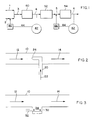
- Fig. 1 is a schematic representation of one embodiment of the method and apparatus of this invention.
- Fig. 2 illustrates a preferred method and associated apparatus for carrying out the alkali metal compound addition step of this invention.
- Fig. 3 illustrates an alternative method and associated apparatus for carrying out the alkali metal compound addition step of this invention.
- the method of this invention broadly comprises regenerating and/or stabilizing the activity of a dehydrogenation catalyst used in the catalytic dehydrogenation of an alkylaromatic hydrocarbon to obtain a specific desired alkenylaromatic hydrocarbon.
- a dehydrogenation catalyst used in the catalytic dehydrogenation of an alkylaromatic hydrocarbon to obtain a specific desired alkenylaromatic hydrocarbon.
- Such dehydrogenation catalysts are well known in the art and are commercially available.
- catalyst dehydrogenation processes are carried out at temperatures ranging from about 400°C to about 700°C, and preferably between about 500°C to 700°C, by contacting a preheated feedstream, containing a mixture of the alkylaromatic hydrocarbon and steam, with a particular dehydrogenation catalyst.
- the process can be carried out in single or multistage reactors having fixed catalyst beds or in fluidized beds.
- ethylbenzene is converted to styrene by contact with a dehydrogenation catalyst containing iron and at least one alkali metal compound.
- a dehydrogenation catalyst containing iron and at least one alkali metal compound for example, the ethylbenzene-to-styrene conversion can be advantageously carried out at reaction temperatures ranging from about 500°C to about 700°C, preferably from about 550°C to about 650°C, and at reaction pressures ranging from about 20.7 to about 138 kN/m 2 (about 3 to about 20 psia), preferably from about 34.5 to 62.1 kN/m 2 (about 5 to about 9 psia).
- the steam-to-hydrocarbon ratio in the reactant feedstream may range from a ratio of about 0.6:1 to about 3:1 steam to ethylbenzene by weight, preferably a ratio of about 1.0:1 to about 2.0:1 steam to ethylbenzene by weight.
- the space velocity may range from about 0.2 to about 1.2 kilograms of ethylbenzene per hour per kilogram of catalyst.
- the level of conversion of ethylbenzene to styrene in each stage might drop by about one-third, for example, from about 30-36 mole % to about 20-24 mole %, during the initial conditioning period, and then continue to drop at a slower rate thereafter.
- the end of the initial conditioning period in this process generally can be identified by those skilled in the art as the point at which the slope of the line plotting conversion level over time flattens out.
- the prior art has suggested a number of possible explanations for the gradual deterioration of catalyst activity, but no single mechanism seems to fully account for this phenomenon.
- the continued process deterioration beyond the initial conditioning period leads to a number of problems and disadvantages.
- One technique for maintaining the conversion level of ethylbenzene to styrene is to raise the reaction temperature. This can be accomplished, for example, by increasing the temperature of the reactant stream or by adding heat to the reactor chamber.
- the reaction temperature can be increased slowly and substantially continuously or it can be increased periodically in increments.
- the impact of such reaction temperature increases is to increase the rate of reaction in order to offset the continuing deterioration of catalyst activity.
- there are relatively narrow limits to the utility of this temperature-raising technique In particular, above a certain temperature, the mechanical temperature limit of the catalyst or the equipment is approached. Beyond this point, further temperature increases lead to degradation of the catalyst's physical structure and degradation of equipment integrity.
- the method of this invention is capable of restoring and/or stabilizing the activity of the catalyst and consequently extending the life of the catalyst far beyond what can be achieved with conventional processes. More particularly, the method of this invention is capable of restoring the activity of the dehydrogenation catalyst to substantially the same high levels of conversion and selectivity as those established at the end of the initial conditioning period. The method of this invention is also capable of stabilizing the activity of the catalyst at those same high levels of conversion and selectivity for extended periods of time beyond those achievable with conventional processes. The method of this invention may also be utilized in tandem with the aforedescribed temperature-raising technique for additional benefits of further increasing the catalyst life or increasing the ethylbenzene conversion.
- the method of this invention broadly comprises the steps of continuously or intermittently adding to a reactant feedstream of an alkylaromatic hydrocarbon an effective amount of an alkali metal compound sufficient to regenerate, stabilize, or enhance the activity of the dehydrogenation catalyst and thereby to restore and to maintain high levels of conversion and selectivity.
- the term "maintain” as used herein is intended to be construed to mean "to keep in a state of repair, efficiency or validity; to preserve from failure or decline over a protracted period of time, e.g. for many months or years.”
- the method is of particular utility in connection with regenerating and/or stabilizing a dehydrogenation catalyst containing iron and at least one alkali metal compound.
- Such dehydrogenation catalysts are well known in the art and some of those that are available commercially include: the S6-20, S6-21 and S6-30 series from BASF Corporation; the C-105, C-015, C-025 and C-035 series from Criterion Catalyst Company, L.P.; and the G-64 and G-84 series (including catalyst G-84C used in Examples 1-4 hereinafter) from United Catalysts, Inc. These catalysts typically contain 40-80% Fe 2 O 3 , 5-30% K 2 O, and other promoters. All of such and similar catalysts are considered within the scope of this invention.
- the method of this invention can be used in connection with the catalytic dehydrogenation of virtually any alkylaromatic hydrocarbon to a corresponding alkenylaromatic hydrocarbon.
- the appropriate combination of alkylaromatic hydrocarbon, catalyst and reaction conditions in order to obtain a particular desired alkenylaromatic hydrocarbon is generally well known in the art and, in any event, would be a matter of choice and routine experimentation.
- the method of this invention is of particular utility in connection with regenerating and/or stabilizing a dehydrogenation catalyst in the process of converting ethylbenzene to styrene.
- Fig. 1 is a flowchart that schematically illustrates one embodiment of the method of this invention wherein an alkali metal compound is added to an incoming feedstream as well as to the partially converted reactant stream passing between the stages of a multi-stage reactor.
- feedstream and “partially converted reactant stream” are used to help identify particular stages in the conversion process, elsewhere in this description these terms are considered generic and interchangeable.
- incoming feedstream 1 may be the feed of alkylaromatic hydrocarbon, for example ethylbenzene
- incoming feedstream 2 may be steam.
- Fig. 1 is a flowchart that schematically illustrates one embodiment of the method of this invention wherein an alkali metal compound is added to an incoming feedstream as well as to the partially converted reactant stream passing between the stages of a multi-stage reactor.
- an effective amount of an alkali metal compound is added continually, that is either continuously or intermittently, to feedstream 2 by alkali metal supply means 46.
- the alkali metal compound can be added to feedstream 1.
- Feedstreams 1 and 2, including any alkali metal compound, are combined into reactant stream 3 and directed to the inlet of the first reactor stage 50, which is loaded with a suitable dehydrogenation catalyst.
- the alkali metal compound can be added after feedstreams 1 and 2 have been combined into reactant stream 3 prior to first reactor stage 50. Partial conversion of the alkylaromatic hydrocarbon, for example ethylbenzene to styrene, occurs in reactor stage 50.
- the partially converted reactant stream or exit stream 4 emerging from reactor stage 50 is then passed through a reheater 52 to restore the heat lost in reactor stage 50 and to reestablish the optimum reaction temperature.
- Additional alkali metal compound from alkali metal supply means 66 is added continually, that is either continuously or intermittently, to the partially converted reactant stream 5 emerging from the reheater 52 before reactant stream 5 is directed to the inlet of second reactor stage 54.
- additional alkali metal compound can be added to the partially converted reactant stream 4 coming from reactor stage 50 before it enters the reheater 52.
- Reactor stage 54 is also loaded with a suitable dehydrogenation catalyst. Further conversion of the alkylaromatic hydrocarbon occurs in reactor stage 54.
- the apparatus of this invention may advantageously include monitoring means for monitoring the chemical composition of the exit streams coming from the outlets of any one or more of the reactor stages, such as monitoring means 42 and 62 associated respectively with reactant streams 4 and 6.
- the monitoring means may also advantageously be coupled to activating means, such as electrical wires 44 and 64 respectively, for signalling and activating alkali metal compound supply means, such as pump or injection means 46 and 66 respectively, located upstream from the subject reactor stage, namely reactor stages 50 and 54 respectively.
- the monitoring means can be adapted through conventional technology to send a signal to the alkali metal compound supply means whenever the exit stream from the subject reactor stage falls below a predetermined level of conversion or selectivity, which indicates degradation of catalyst activity in the reactor stage.
- the alkali metal compound supply means Upon activation by the signal from the associated monitoring means, the alkali metal compound supply means would begin to supply alkali metal compound at a predetermined rate to the associated feedstream or reactant stream. For example, on signal from monitoring means 42 that the conversion or selectivity in first reactor stage 50 had dropped below a certain level, pump means 46 would begin to supply alkali metal compound to feedstream 2.
- the apparatus can be designed on activation to continue supplying alkali metal compound for a predetermined period of time or until another signal from the associated monitoring means signals that catalyst activity in the subject reactor stage has been restored to the desired activity level.
- Fig. 2 schematically illustrates in somewhat greater detail one preferred method and associated apparatus for adding alkali metal compound to a feedstream or a reactant stream in accordance with this invention.
- Conduit 10 in Fig. 2 contains and directs stream 12 in the direction of a reactor stage containing dehydrogenation catalyst as illustrated by the arrows.
- Stream 12 may represent, for example, feedstreams 1 or 2, the combined reactant stream 3, or partially converted reactant streams 4 and 5 as shown in Fig. 1.
- Alkali metal compound is added continually, that is either continuously or intermittently, to stream 12 in the form of aqueous solution 22 delivered through injection means 24 at the outlet end of an injection tube 20 fitted through an aperture in the wall of conduit 10.
- Stream 14, downstream from the outlet end of injection tube 20, represents a feedstream or a reactant stream that has been mixed with alkali metal compound in accordance with this invention.
- Fig. 3 schematically illustrates an alternative method and associated apparatus for adding alkali metal compound to a feedstream or a reactant stream in accordance with this invention.
- Conduit 10 in Fig. 3 contains and directs stream 12 in the direction of a reactor stage containing dehydrogenation catalyst as illustrated by the arrows 12 and 14.
- Stream 12 may represent, for example, feedstreams 1 or 2, the combined reactant stream 3, or partially converted reactant streams 4 and 5 as shown in Fig. 1.
- Conduit 10 further defines an adjacent vessel 30 in open vapor communication with the flow path of stream 12 and capable of retaining solid or liquid matter.
- Alkali metal compound in a solid or liquid state is fed as necessary to the interior 34 of vessel 30, through feed 32, so as to gradually vaporize and diffuse into the passing stream, as indicated by the arrows inside vessel 30.
- Stream 14, downstream from vessel 30, represents a feedstream or a reactant stream that has been mixed with alkali metal compound in accordance with this invention.
- alkali metal is meant to include, but without limitation thereto, potassium, sodium, lithium and other less-common members of the group IA metals of the periodic table, such as rubidium and cesium. Cost considerations will ordinarily dictate the choice of a potassium or sodium compound, however.
- the preferred alkali metal compounds are potassium compounds, more particularly one or more compounds selected from the group consisting of potassium oxide, potassium hydroxide, and potassium carbonate. It is also within the scope of this invention to use mixtures of two or more alkali metal compounds. Because halogen ions, such as chloride, have typically been found to poison the dehydrogenation catalyst, alkali metal compounds such as potassium chloride should generally be avoided.
- the amount of alkali metal compound to be added to a feedstream or reactant stream in accordance with this invention may vary depending upon the catalyst, the alkylaromatic hydrocarbon, the reaction conditions, and the alkali metal compound itself.
- An effective amount or an effective rate of addition of alkali metal compound to the reactant stream sufficient to maintain high levels of conversion and selectivity can be determined by routine experimentation in order to optimize system performance.
- an effective amount of the alkali metal compound comprises from about 0.01 to about 100 parts by weight of alkali metal compound per million parts of the reactant stream, preferably from about 0.10 to about 10 parts by weight, on average over a representative time frame.
- a representative time frame as used herein means that period of time during which high levels of conversion and selectivity are maintained without further addition of alkali metal compound. It is also within the scope of this invention to vary the amount of alkali metal compound in the reactant stream over time to restore or to maintain optimum system performance.
- the alkali metal compound may be added to the reactant stream either continuously or intermittently and, if intermittently, at regular or irregular intervals. Whether the alkali metal compound is added continuously or intermittently, the amounts added and, in the case of intermittent additions, the intervals selected, should be such to insure addition of an effective amount sufficient to restore or to maintain the desired high levels of conversion and selectivity. In general, such amounts will comprise from about 0.01 to about 100 parts weight of alkali metal compound per million parts of the reactant stream on average over a representative time frame.
- the addition of the alkali metal compound to the reactant stream may be accomplished in a number of ways.
- One such addition method is to add the alkali metal compound in dry, solid, powdered form to a reactant stream.
- a solid lump of or a vessel containing the alkali metal compound in solid, liquid or solution form can be placed in the path of the heated reactant stream and allowed to gradually vaporize into the passing stream, as illustrated in Fig. 3.
- Another and particularly preferred addition method is to add the alkali metal compound in the form of an aqueous solution into a reactant stream, for example as described above in connection with Fig. 2. Because of ease of handling and the ability to automate the process, as described in connection with Fig.
- alkali metal compound in the form of an aqueous solution will probably normally be the preferred commercial application of this invention.
- Still another addition method is to inject the alkali metal compound in a liquid form into the reactant stream.
- Still another addition method is to pre-vaporize the alkali metal compound and inject the vapor into the reactant stream.
- the catalyst activity then remained stable at about 2.3 percentage points higher in conversion and about 0.3 percentage points higher in styrene selectivity than before addition of KOH.
- the ethylbenzene conversion with KOH addition was 4.4 percentage points higher than what it would have been at the same on-stream time had the catalyst deactivated at the same rate as before the introduction of KOH.
- the styrene selectivity with KOH addition was 0.4 percentage points higher than that without KOH when compared with data at comparable ethylbenzene conversion (e.g., that at 854 hours).
- a second reactor constructed and loaded similar to that described in example 1 was loaded with 32.5 grams of G-84C catalyst in the top zone.
- the reactor was operated at average temperatures between 594 and 612°C, steam-to-ethylbenzene ratio between 9 and 12, at an outlet pressure of 101.4 kN/m 2 (14.7 psia) between 0 and 3341 hours.
- the ethylbenzene feed rate throughout the run was kept the same as that in example 1.
- Deactivation of the top zone catalyst was observed between 1722 and 1888 hours, as shown in Table 2 below, while the zone was kept within 1°C of 597°C.
- the steam-to-ethylbenzene ratio was 12 molar.
- the vapor pressure of KOH at such temperature was equivalent to about 9 ppm (by weight) of total feed.
- the ethylbenzene conversion in the top zone improved rapidly from 5.1% to 12.3% in 103 hours while the zone was kept within 1°C of 622°C, then increased gradually to 12.9% in 176 hours, and remained at such high level for 630 hours.
- This example illustrates that the catalyst which is immediately exposed to the feedstream is most susceptible to deactivation and also received the greatest benefit from the method of this invention.
- the reactor described in example 2 was run until the KOH in the superheater was depleted.
- the outlet pressure and the steam-to-ethylbenzene ratio were then adjusted to 41.4 kN/m 2 (6 psia) and 8:1 molar, respectively.
- the top zone temperature was kept within 1°C of 622°C. Ageing of the top zone catalyst was observed between 4731 and 5022 hours while the styrene selectivity was deteriorating.
- an additional 1.90 grams of KOH was loaded into the superheater and the superheater temperature was controlled to give a KOH vapor pressure equivalent to about 2 ppm (weight) of total feed.
- the average temperature of the four catalyst zones was kept within 1 °C of 613°C.
- the reactor outlet pressure was 41.4 kN/m 2 (6 psia), and the steam-to-ethylbenzene ratio was 8:1 molar.
- the overall conversion decreased from 70.4 % to 69.3 % between 4728 and 5019 hours before the second batch of KOH was loaded.
- the overall styrene selectivity was stable at 96.9%. After KOH was loaded into the superheater at 5022 hours, the overall, conversion increased steadily from 69.3 to 70.4% in two days and remained above that high level subsequently.
Landscapes
- Chemical & Material Sciences (AREA)
- Organic Chemistry (AREA)
- Chemical Kinetics & Catalysis (AREA)
- Engineering & Computer Science (AREA)
- Materials Engineering (AREA)
- Organic Low-Molecular-Weight Compounds And Preparation Thereof (AREA)
- Low-Molecular Organic Synthesis Reactions Using Catalysts (AREA)
- Catalysts (AREA)
Applications Claiming Priority (3)
| Application Number | Priority Date | Filing Date | Title |
|---|---|---|---|
| US88306 | 1979-10-25 | ||
| US08/088,306 US5461179A (en) | 1993-07-07 | 1993-07-07 | Regeneration and stabilization of dehydrogenation catalysts |
| PCT/US1994/007474 WO1995001947A1 (en) | 1993-07-07 | 1994-06-30 | Regeneration and stabilization of dehydrogenation catalyst |
Publications (3)
| Publication Number | Publication Date |
|---|---|
| EP0705238A4 EP0705238A4 (en) | 1996-02-22 |
| EP0705238A1 EP0705238A1 (en) | 1996-04-10 |
| EP0705238B1 true EP0705238B1 (en) | 1999-10-20 |
Family
ID=22210598
Family Applications (1)
| Application Number | Title | Priority Date | Filing Date |
|---|---|---|---|
| EP94922075A Expired - Lifetime EP0705238B1 (en) | 1993-07-07 | 1994-06-30 | Regeneration and stabilization of dehydrogenation catalyst |
Country Status (16)
| Country | Link |
|---|---|
| US (3) | US5461179A (enExample) |
| EP (1) | EP0705238B1 (enExample) |
| JP (1) | JP3573348B2 (enExample) |
| KR (1) | KR100338298B1 (enExample) |
| CN (1) | CN1040098C (enExample) |
| AU (1) | AU7254294A (enExample) |
| BR (1) | BR9406880A (enExample) |
| CA (1) | CA2163222C (enExample) |
| CZ (1) | CZ287493B6 (enExample) |
| DE (1) | DE69421276T2 (enExample) |
| ES (1) | ES2139084T3 (enExample) |
| RU (1) | RU2139846C1 (enExample) |
| SA (1) | SA94150274B1 (enExample) |
| SG (1) | SG52372A1 (enExample) |
| SK (1) | SK196A3 (enExample) |
| WO (1) | WO1995001947A1 (enExample) |
Cited By (2)
| Publication number | Priority date | Publication date | Assignee | Title |
|---|---|---|---|---|
| US8912110B2 (en) | 2012-03-29 | 2014-12-16 | Uop Llc | Catalyst for conversion of hydrocarbons |
| US9266091B2 (en) | 2012-03-29 | 2016-02-23 | Uop Llc | Reforming catalysts with tuned acidity for maximum aromatics yield |
Families Citing this family (30)
| Publication number | Priority date | Publication date | Assignee | Title |
|---|---|---|---|---|
| US5461179A (en) * | 1993-07-07 | 1995-10-24 | Raytheon Engineers & Constructors, Inc. | Regeneration and stabilization of dehydrogenation catalysts |
| US5739071A (en) * | 1993-07-07 | 1998-04-14 | Raytheon Engineers & Constructors, Inc. | Method and apparatus for regeneratinig and stabilizing dehydrogenation catalysts |
| CA2207564C (en) * | 1994-12-14 | 2007-05-01 | Shell Internationale Research Maatschappij B.V. | Iron oxide dehydrogenation catalysts and process |
| CA2337824C (en) | 1998-07-09 | 2006-01-24 | Washington Group International, Inc. | Radial flow reactor |
| GB9914662D0 (en) | 1999-06-24 | 1999-08-25 | Johnson Matthey Plc | Catalysts |
| KR100642659B1 (ko) * | 1999-09-20 | 2006-11-13 | 삼성토탈 주식회사 | 스티렌 제조용 촉매의 성능개선방법 |
| KR100642658B1 (ko) | 1999-09-20 | 2006-11-03 | 삼성토탈 주식회사 | 스티렌 제조용 촉매의 성능개선방법 |
| BR0016762A (pt) * | 1999-12-17 | 2002-09-03 | Dow Global Technologies Inc | Processo para desidrogenação de um composto aromático de alquila e regeneração de catalisador em um reator de leito fluidizado e reator de leito fluidizado |
| ITMI20012709A1 (it) * | 2001-12-20 | 2003-06-20 | Snam Progetti | Composizione catalitica per la deidrogenazione di idrocarburi alchilaromatici |
| TWI267401B (en) * | 2002-01-30 | 2006-12-01 | Shell Int Research | A catalyst, its preparation and its use in a dehydrogenation process |
| JP4205056B2 (ja) * | 2002-07-03 | 2009-01-07 | ストーン・アンド・ウエブスター・プロセス・テクノロジー、インコーポレイテッド | 流体混合における凝結の減少 |
| US6936743B2 (en) * | 2002-09-05 | 2005-08-30 | Fina Technology, Inc. | Method for extending catalyst life in processes for preparing vinyl aromatic hydrocarbons |
| US20070264435A1 (en) * | 2006-05-10 | 2007-11-15 | Kenrick Venett | Material processing system through an injection nozzle |
| EP2000450A1 (en) * | 2007-06-05 | 2008-12-10 | Total Petrochemicals France | Regeneration and stabilization of dehydrogenation catalyst |
| US7981377B2 (en) * | 2007-11-06 | 2011-07-19 | Fina Technology, Inc. | Dehydrogenation of alkyl aromatics |
| US8648007B2 (en) | 2008-04-22 | 2014-02-11 | Fina Technology, Inc. | Vaporization and transportation of alkali metal salts |
| US9138706B2 (en) * | 2008-04-22 | 2015-09-22 | Fina Technology, Inc. | Method and apparatus for addition of an alkali metal promoter to a dehydrogenation catalyst |
| CN101623643B (zh) * | 2008-07-08 | 2011-07-20 | 中国石油化工股份有限公司 | 失活乙苯脱氢制苯乙烯催化剂的再生方法 |
| US8453729B2 (en) * | 2009-04-02 | 2013-06-04 | Key Energy Services, Llc | Hydraulic setting assembly |
| US9303477B2 (en) | 2009-04-02 | 2016-04-05 | Michael J. Harris | Methods and apparatus for cementing wells |
| US8684096B2 (en) | 2009-04-02 | 2014-04-01 | Key Energy Services, Llc | Anchor assembly and method of installing anchors |
| CN101992129B (zh) * | 2009-08-31 | 2013-03-06 | 中国石油化工股份有限公司 | 乙苯脱氢制备苯乙烯催化剂的补钾方法 |
| RU2508163C1 (ru) * | 2012-12-05 | 2014-02-27 | Федеральное государственное бюджетное образовательное учреждение высшего профессионального образования "Ярославский государственный технический университет" | Способ определения устойчивости катализатора для дегидрирования алкилароматических углеводородов |
| CN103044180B (zh) * | 2012-12-28 | 2017-10-31 | 北京石油化工学院 | 一种异丁烷脱氢制备异丁烯的方法 |
| KR102349195B1 (ko) * | 2015-03-09 | 2022-01-10 | 피나 테크놀러지, 인코포레이티드 | 촉매 응집 개선 |
| JP6602975B2 (ja) * | 2015-11-04 | 2019-11-06 | エクソンモービル ケミカル パテンツ インコーポレイテッド | 炭化水素をシクロペンタジエンに変換するための方法及びシステム |
| RU2634452C1 (ru) * | 2017-03-14 | 2017-10-30 | Андрей Владиславович Курочкин | Установка для восстановления катализатора |
| EP3634925A1 (en) | 2017-05-25 | 2020-04-15 | The Scripps Research Institute | Oxidation of alkane to alkene |
| US10961169B2 (en) | 2019-04-18 | 2021-03-30 | Lummus Technology Llc | Systems and processes for maintaining ethylbenzene dehydration catalyst activity |
| KR102813048B1 (ko) * | 2019-04-18 | 2025-05-27 | 루머스 테크놀로지 엘엘씨 | 에틸벤젠 탈수소화 촉매 활성을 유지하기 위한 시스템 및 방법 |
Family Cites Families (27)
| Publication number | Priority date | Publication date | Assignee | Title |
|---|---|---|---|---|
| DE298354C (enExample) * | ||||
| DE298356C (enExample) * | ||||
| DE298353C (enExample) * | ||||
| DE298357C (enExample) * | ||||
| DE298355C (de) * | 1913-05-06 | 1917-06-16 | Nasenbad-Gefass mit einer Durch Wuldtflansche eingefassten Nasenanschulss-Öffnung | |
| US3755482A (en) * | 1972-03-24 | 1973-08-28 | Dow Chemical Co | Multistage production of styrene |
| US4018671A (en) * | 1975-01-14 | 1977-04-19 | Marathon Oil Company | Intermittent catalyst addition system |
| US4064187A (en) * | 1976-08-30 | 1977-12-20 | The Dow Chemical Company | Dehydrogenation catalysts |
| US4094959A (en) * | 1977-02-02 | 1978-06-13 | Phillips Petroleum Company | Process measurement and control |
| FR2442815A1 (fr) * | 1978-11-29 | 1980-06-27 | Inst Francais Du Petrole | Procede de regeneration d'un catalyseur de dealkylation a la vapeur d'eau d'hydrocarbures aromatiques |
| DE2909763C2 (de) * | 1979-03-13 | 1982-09-09 | Deggendorfer Werft Und Eisenbau Gmbh, 8360 Deggendorf | Verfahren zur katalytischen einstufigen, isothermen Dehydrierung von Äthylbenzol zu Styrol |
| US4902845A (en) * | 1982-02-04 | 1990-02-20 | Amoco Corporation | Method to extend life of iron oxide-containing catalysts using low levels of oxygen |
| US4737595A (en) * | 1982-08-30 | 1988-04-12 | Atlantic Richfield Company | Hydrocarbon dehydrogenation |
| US4668473A (en) * | 1983-04-25 | 1987-05-26 | The Babcock & Wilcox Company | Control system for ethylene polymerization reactor |
| US4451686A (en) * | 1983-05-09 | 1984-05-29 | Cosden Technology, Inc. | Dehydrogenation process |
| US4551571A (en) * | 1984-03-14 | 1985-11-05 | Mitsubishi Petrochemical Co., Ltd. | Production of alkenylbenzenes |
| US4621062A (en) * | 1984-04-27 | 1986-11-04 | Phillips Petroleum Company | Control of an isomerization process |
| US4590324A (en) * | 1985-03-11 | 1986-05-20 | Amoco Corporation | Dehydrogenation of alkylaromatics |
| US4645753A (en) * | 1985-03-13 | 1987-02-24 | Standard Oil Company | Doped aluminum borate |
| US4769506A (en) * | 1985-03-21 | 1988-09-06 | The Dow Chemical Company | Method for dehydrogenating a hydrocarbon, an apparatus and method for conducting chemical reactions therein |
| US4863697A (en) * | 1985-07-19 | 1989-09-05 | Phillips Petroleum Co. | Catalytic alkylation apparatus |
| US4891464A (en) * | 1985-12-26 | 1990-01-02 | Uop | Control method for oxygen addition to oxidative reheat zone of hydrocarbon conversion process |
| DD298353A5 (de) * | 1989-08-10 | 1992-02-20 | Buna Ag,De | Verfahren zur regenerierung von kaliumpromotierten dehydrierkatalysatoren |
| US5188805A (en) * | 1990-07-03 | 1993-02-23 | Exxon Research And Engineering Company | Controlling temperature in a fluid hydrocarbon conversion and cracking apparatus and process comprising a novel feed injection system |
| JPH04277030A (ja) * | 1991-03-05 | 1992-10-02 | Nissan Gaadoraa Shokubai Kk | エチルベンゼン脱水素触媒 |
| US5243122A (en) * | 1991-12-30 | 1993-09-07 | Phillips Petroleum Company | Dehydrogenation process control |
| US5461179A (en) * | 1993-07-07 | 1995-10-24 | Raytheon Engineers & Constructors, Inc. | Regeneration and stabilization of dehydrogenation catalysts |
-
1993
- 1993-07-07 US US08/088,306 patent/US5461179A/en not_active Expired - Lifetime
-
1994
- 1994-06-30 BR BR9406880A patent/BR9406880A/pt not_active IP Right Cessation
- 1994-06-30 CA CA002163222A patent/CA2163222C/en not_active Expired - Lifetime
- 1994-06-30 SK SK1-96A patent/SK196A3/sk unknown
- 1994-06-30 ES ES94922075T patent/ES2139084T3/es not_active Expired - Lifetime
- 1994-06-30 JP JP50408695A patent/JP3573348B2/ja not_active Expired - Lifetime
- 1994-06-30 AU AU72542/94A patent/AU7254294A/en not_active Abandoned
- 1994-06-30 CN CN94192721A patent/CN1040098C/zh not_active Expired - Lifetime
- 1994-06-30 EP EP94922075A patent/EP0705238B1/en not_active Expired - Lifetime
- 1994-06-30 CZ CZ199613A patent/CZ287493B6/cs not_active IP Right Cessation
- 1994-06-30 SG SG1996003638A patent/SG52372A1/en unknown
- 1994-06-30 RU RU96107462A patent/RU2139846C1/ru active
- 1994-06-30 US US08/557,088 patent/US5695724A/en not_active Expired - Lifetime
- 1994-06-30 WO PCT/US1994/007474 patent/WO1995001947A1/en not_active Ceased
- 1994-06-30 DE DE69421276T patent/DE69421276T2/de not_active Expired - Lifetime
- 1994-06-30 KR KR1019960700044A patent/KR100338298B1/ko not_active Expired - Lifetime
- 1994-10-31 SA SA94150274A patent/SA94150274B1/ar unknown
-
1995
- 1995-06-06 US US08/467,301 patent/US5686369A/en not_active Expired - Lifetime
Cited By (2)
| Publication number | Priority date | Publication date | Assignee | Title |
|---|---|---|---|---|
| US8912110B2 (en) | 2012-03-29 | 2014-12-16 | Uop Llc | Catalyst for conversion of hydrocarbons |
| US9266091B2 (en) | 2012-03-29 | 2016-02-23 | Uop Llc | Reforming catalysts with tuned acidity for maximum aromatics yield |
Also Published As
| Publication number | Publication date |
|---|---|
| US5686369A (en) | 1997-11-11 |
| WO1995001947A1 (en) | 1995-01-19 |
| CZ287493B6 (en) | 2000-12-13 |
| JPH08512320A (ja) | 1996-12-24 |
| US5461179A (en) | 1995-10-24 |
| CN1040098C (zh) | 1998-10-07 |
| SG52372A1 (en) | 1998-09-28 |
| KR960703829A (ko) | 1996-08-31 |
| SA94150274B1 (ar) | 2006-06-04 |
| JP3573348B2 (ja) | 2004-10-06 |
| CN1126986A (zh) | 1996-07-17 |
| RU2139846C1 (ru) | 1999-10-20 |
| CA2163222A1 (en) | 1995-01-19 |
| DE69421276T2 (de) | 2000-08-10 |
| CZ1396A3 (en) | 1996-04-17 |
| US5695724A (en) | 1997-12-09 |
| CA2163222C (en) | 1999-02-16 |
| ES2139084T3 (es) | 2000-02-01 |
| EP0705238A4 (en) | 1996-02-22 |
| AU7254294A (en) | 1995-02-06 |
| DE69421276D1 (de) | 1999-11-25 |
| EP0705238A1 (en) | 1996-04-10 |
| BR9406880A (pt) | 1996-04-02 |
| KR100338298B1 (ko) | 2003-03-06 |
| SK196A3 (en) | 1996-05-08 |
Similar Documents
| Publication | Publication Date | Title |
|---|---|---|
| US5695724A (en) | Regeneration and stabilization of dehydrogenation catalyst | |
| US5739071A (en) | Method and apparatus for regeneratinig and stabilizing dehydrogenation catalysts | |
| KR0169117B1 (ko) | 탄화수소를 탈수화시키거나 탈수소 고리화시키는 방법 및 촉매 | |
| EP0647157B1 (en) | Regeneration of acetylene converter catalysts by hydrogen stripping | |
| US4945175A (en) | Dehydrocyclodimerization process start-up procedure | |
| US5495055A (en) | Acetone hydrogenation using a supported ruthenium catalyst | |
| US20150057146A1 (en) | Catalyst regenerator process | |
| JP4355289B2 (ja) | ビニル芳香族炭化水素の製造法における触媒の延命法 | |
| US5691262A (en) | Regeneration of catalysts used in oxidative dehydrogenation of alkylaromatics and paraffins | |
| US4766266A (en) | Dehydrogenation of isobutane | |
| US4418005A (en) | Pressure activation of magnesium oxide catalysts | |
| US20110130605A1 (en) | Regeneration and Stabilization of Dehydrogenation Catalyst | |
| US4902845A (en) | Method to extend life of iron oxide-containing catalysts using low levels of oxygen | |
| US3378591A (en) | Production of 1-naphthol | |
| EP0086100B1 (en) | Method to extend life of iron oxide-containing catalysts using low levels of oxygen | |
| WO2006110252A2 (en) | Method of extending catalyst life in vinyl aromatic hydrocarbon formation |
Legal Events
| Date | Code | Title | Description |
|---|---|---|---|
| A4 | Supplementary search report drawn up and despatched | ||
| AK | Designated contracting states |
Kind code of ref document: A4 Designated state(s): BE DE ES FR GB IT NL |
|
| PUAI | Public reference made under article 153(3) epc to a published international application that has entered the european phase |
Free format text: ORIGINAL CODE: 0009012 |
|
| 17P | Request for examination filed |
Effective date: 19951218 |
|
| AK | Designated contracting states |
Kind code of ref document: A1 Designated state(s): BE DE ES FR GB IT NL |
|
| 17Q | First examination report despatched |
Effective date: 19980203 |
|
| GRAG | Despatch of communication of intention to grant |
Free format text: ORIGINAL CODE: EPIDOS AGRA |
|
| GRAG | Despatch of communication of intention to grant |
Free format text: ORIGINAL CODE: EPIDOS AGRA |
|
| GRAH | Despatch of communication of intention to grant a patent |
Free format text: ORIGINAL CODE: EPIDOS IGRA |
|
| GRAH | Despatch of communication of intention to grant a patent |
Free format text: ORIGINAL CODE: EPIDOS IGRA |
|
| GRAA | (expected) grant |
Free format text: ORIGINAL CODE: 0009210 |
|
| AK | Designated contracting states |
Kind code of ref document: B1 Designated state(s): BE DE ES FR GB IT NL |
|
| ET | Fr: translation filed | ||
| REF | Corresponds to: |
Ref document number: 69421276 Country of ref document: DE Date of ref document: 19991125 |
|
| ITF | It: translation for a ep patent filed | ||
| REG | Reference to a national code |
Ref country code: ES Ref legal event code: FG2A Ref document number: 2139084 Country of ref document: ES Kind code of ref document: T3 |
|
| PLBE | No opposition filed within time limit |
Free format text: ORIGINAL CODE: 0009261 |
|
| STAA | Information on the status of an ep patent application or granted ep patent |
Free format text: STATUS: NO OPPOSITION FILED WITHIN TIME LIMIT |
|
| 26N | No opposition filed | ||
| REG | Reference to a national code |
Ref country code: GB Ref legal event code: 732E |
|
| REG | Reference to a national code |
Ref country code: GB Ref legal event code: IF02 |
|
| NLS | Nl: assignments of ep-patents |
Owner name: MORRISON KNUDSEN CORPORATION |
|
| NLT1 | Nl: modifications of names registered in virtue of documents presented to the patent office pursuant to art. 16 a, paragraph 1 |
Owner name: WASHINGTON GROUP INTERNATIONAL, INC. |
|
| REG | Reference to a national code |
Ref country code: FR Ref legal event code: CD |
|
| PGFP | Annual fee paid to national office [announced via postgrant information from national office to epo] |
Ref country code: ES Payment date: 20100601 Year of fee payment: 17 |
|
| PGFP | Annual fee paid to national office [announced via postgrant information from national office to epo] |
Ref country code: GB Payment date: 20100505 Year of fee payment: 17 Ref country code: FR Payment date: 20100727 Year of fee payment: 17 |
|
| GBPC | Gb: european patent ceased through non-payment of renewal fee |
Effective date: 20110630 |
|
| REG | Reference to a national code |
Ref country code: FR Ref legal event code: ST Effective date: 20120229 |
|
| PG25 | Lapsed in a contracting state [announced via postgrant information from national office to epo] |
Ref country code: FR Free format text: LAPSE BECAUSE OF NON-PAYMENT OF DUE FEES Effective date: 20110630 |
|
| PG25 | Lapsed in a contracting state [announced via postgrant information from national office to epo] |
Ref country code: GB Free format text: LAPSE BECAUSE OF NON-PAYMENT OF DUE FEES Effective date: 20110630 |
|
| REG | Reference to a national code |
Ref country code: ES Ref legal event code: FD2A Effective date: 20120717 |
|
| PG25 | Lapsed in a contracting state [announced via postgrant information from national office to epo] |
Ref country code: ES Free format text: LAPSE BECAUSE OF NON-PAYMENT OF DUE FEES Effective date: 20110701 |
|
| REG | Reference to a national code |
Ref country code: DE Ref legal event code: R082 Ref document number: 69421276 Country of ref document: DE Representative=s name: HOFSTETTER, SCHURACK & PARTNER PATENT- UND REC, DE |
|
| BECH | Be: change of holder |
Owner name: STONE & WEBSTER PROCESS TECHNOLOGY, INC. Effective date: 20121031 |
|
| REG | Reference to a national code |
Ref country code: DE Ref legal event code: R082 Ref document number: 69421276 Country of ref document: DE Representative=s name: HOFSTETTER, SCHURACK & PARTNER PATENT- UND REC, DE Effective date: 20121002 Ref country code: DE Ref legal event code: R081 Ref document number: 69421276 Country of ref document: DE Owner name: STONE & WEBSTER PROCESS TECHNOLOGY, INC., HOUS, US Free format text: FORMER OWNER: WASHINGTON GROUP INTERNATIONAL, INC. (N.D.GES. D. STAATES OHIO), BOISE, ID., US Effective date: 20121002 Ref country code: DE Ref legal event code: R081 Ref document number: 69421276 Country of ref document: DE Owner name: STONE & WEBSTER PROCESS TECHNOLOGY, INC., US Free format text: FORMER OWNER: WASHINGTON GROUP INTERNATIONAL, INC. (N.D.GES. D. STAATES OHIO), BOISE, US Effective date: 20121002 |
|
| REG | Reference to a national code |
Ref country code: NL Ref legal event code: SD Effective date: 20120712 |
|
| PGFP | Annual fee paid to national office [announced via postgrant information from national office to epo] |
Ref country code: DE Payment date: 20130628 Year of fee payment: 20 |
|
| PGFP | Annual fee paid to national office [announced via postgrant information from national office to epo] |
Ref country code: BE Payment date: 20130513 Year of fee payment: 20 Ref country code: NL Payment date: 20130619 Year of fee payment: 20 Ref country code: IT Payment date: 20130625 Year of fee payment: 20 |
|
| BE20 | Be: patent expired |
Owner name: STONE & WEBSTER PROCESS TECHNOLOGY, INC. Effective date: 20140630 |
|
| REG | Reference to a national code |
Ref country code: DE Ref legal event code: R071 Ref document number: 69421276 Country of ref document: DE |
|
| REG | Reference to a national code |
Ref country code: NL Ref legal event code: V4 Effective date: 20140630 |
|
| PG25 | Lapsed in a contracting state [announced via postgrant information from national office to epo] |
Ref country code: DE Free format text: LAPSE BECAUSE OF EXPIRATION OF PROTECTION Effective date: 20140701 |