EP0679695B1 - Processes for the preparation of hydroxygallium phthalocyanine - Google Patents
Processes for the preparation of hydroxygallium phthalocyanine Download PDFInfo
- Publication number
- EP0679695B1 EP0679695B1 EP95302667A EP95302667A EP0679695B1 EP 0679695 B1 EP0679695 B1 EP 0679695B1 EP 95302667 A EP95302667 A EP 95302667A EP 95302667 A EP95302667 A EP 95302667A EP 0679695 B1 EP0679695 B1 EP 0679695B1
- Authority
- EP
- European Patent Office
- Prior art keywords
- phthalocyanine
- gallium
- hydroxygallium phthalocyanine
- dimer
- type
- Prior art date
- Legal status (The legal status is an assumption and is not a legal conclusion. Google has not performed a legal analysis and makes no representation as to the accuracy of the status listed.)
- Expired - Lifetime
Links
- IEQIEDJGQAUEQZ-UHFFFAOYSA-N phthalocyanine Chemical compound N1C(N=C2C3=CC=CC=C3C(N=C3C4=CC=CC=C4C(=N4)N3)=N2)=C(C=CC=C2)C2=C1N=C1C2=CC=CC=C2C4=N1 IEQIEDJGQAUEQZ-UHFFFAOYSA-N 0.000 title claims description 142
- 238000000034 method Methods 0.000 title claims description 65
- 238000002360 preparation method Methods 0.000 title claims description 28
- -1 gallium phthalocyanine dimer Chemical class 0.000 claims description 105
- 229910052733 gallium Inorganic materials 0.000 claims description 83
- 230000015572 biosynthetic process Effects 0.000 claims description 30
- 239000000243 solution Substances 0.000 claims description 30
- 239000000047 product Substances 0.000 claims description 29
- 239000002904 solvent Substances 0.000 claims description 25
- YXFVVABEGXRONW-UHFFFAOYSA-N Toluene Chemical compound CC1=CC=CC=C1 YXFVVABEGXRONW-UHFFFAOYSA-N 0.000 claims description 24
- 238000006243 chemical reaction Methods 0.000 claims description 24
- 239000000539 dimer Substances 0.000 claims description 24
- UPWPDUACHOATKO-UHFFFAOYSA-K gallium trichloride Chemical compound Cl[Ga](Cl)Cl UPWPDUACHOATKO-UHFFFAOYSA-K 0.000 claims description 24
- XLYOFNOQVPJJNP-UHFFFAOYSA-N water Substances O XLYOFNOQVPJJNP-UHFFFAOYSA-N 0.000 claims description 19
- WQDUMFSSJAZKTM-UHFFFAOYSA-N Sodium methoxide Chemical compound [Na+].[O-]C WQDUMFSSJAZKTM-UHFFFAOYSA-N 0.000 claims description 14
- 238000001914 filtration Methods 0.000 claims description 13
- 230000007062 hydrolysis Effects 0.000 claims description 13
- 238000006460 hydrolysis reaction Methods 0.000 claims description 13
- 239000000203 mixture Substances 0.000 claims description 13
- 239000006227 byproduct Substances 0.000 claims description 12
- 150000002009 diols Chemical class 0.000 claims description 12
- 238000003756 stirring Methods 0.000 claims description 11
- XCZLSTLZPIRTRY-UHFFFAOYSA-N oxogallium Chemical compound [Ga]=O XCZLSTLZPIRTRY-UHFFFAOYSA-N 0.000 claims description 10
- 239000003960 organic solvent Substances 0.000 claims description 9
- RZVCEPSDYHAHLX-UHFFFAOYSA-N 3-iminoisoindol-1-amine Chemical compound C1=CC=C2C(N)=NC(=N)C2=C1 RZVCEPSDYHAHLX-UHFFFAOYSA-N 0.000 claims description 8
- FAPWRFPIFSIZLT-UHFFFAOYSA-M Sodium chloride Chemical compound [Na+].[Cl-] FAPWRFPIFSIZLT-UHFFFAOYSA-M 0.000 claims description 8
- 239000002253 acid Substances 0.000 claims description 8
- 238000005406 washing Methods 0.000 claims description 8
- OTMSDBZUPAUEDD-UHFFFAOYSA-N Ethane Chemical compound CC OTMSDBZUPAUEDD-UHFFFAOYSA-N 0.000 claims description 7
- 229910052783 alkali metal Inorganic materials 0.000 claims description 7
- 230000003301 hydrolyzing effect Effects 0.000 claims description 7
- UHOVQNZJYSORNB-UHFFFAOYSA-N Benzene Chemical compound C1=CC=CC=C1 UHOVQNZJYSORNB-UHFFFAOYSA-N 0.000 claims description 6
- 239000007864 aqueous solution Substances 0.000 claims description 5
- 125000000217 alkyl group Chemical group 0.000 claims description 4
- 238000004090 dissolution Methods 0.000 claims description 4
- 239000011780 sodium chloride Substances 0.000 claims description 4
- CTQNGGLPUBDAKN-UHFFFAOYSA-N O-Xylene Chemical compound CC1=CC=CC=C1C CTQNGGLPUBDAKN-UHFFFAOYSA-N 0.000 claims description 3
- 239000003125 aqueous solvent Substances 0.000 claims description 3
- 238000001556 precipitation Methods 0.000 claims description 3
- 239000008096 xylene Substances 0.000 claims description 3
- 229910001508 alkali metal halide Inorganic materials 0.000 claims description 2
- 150000008045 alkali metal halides Chemical class 0.000 claims description 2
- 229910052708 sodium Inorganic materials 0.000 claims description 2
- 239000011734 sodium Substances 0.000 claims description 2
- QDRKDTQENPPHOJ-UHFFFAOYSA-N sodium ethoxide Chemical compound [Na+].CC[O-] QDRKDTQENPPHOJ-UHFFFAOYSA-N 0.000 claims description 2
- RCOSUMRTSQULBK-UHFFFAOYSA-N sodium;propan-1-olate Chemical compound [Na+].CCC[O-] RCOSUMRTSQULBK-UHFFFAOYSA-N 0.000 claims description 2
- ATUOYWHBWRKTHZ-UHFFFAOYSA-N Propane Chemical compound CCC ATUOYWHBWRKTHZ-UHFFFAOYSA-N 0.000 claims 4
- 239000001294 propane Substances 0.000 claims 2
- 125000005011 alkyl ether group Chemical group 0.000 claims 1
- 239000001273 butane Substances 0.000 claims 1
- 238000010952 in-situ formation Methods 0.000 claims 1
- 150000007529 inorganic bases Chemical class 0.000 claims 1
- IJDNQMDRQITEOD-UHFFFAOYSA-N n-butane Chemical compound CCCC IJDNQMDRQITEOD-UHFFFAOYSA-N 0.000 claims 1
- OFBQJSOFQDEBGM-UHFFFAOYSA-N n-pentane Natural products CCCCC OFBQJSOFQDEBGM-UHFFFAOYSA-N 0.000 claims 1
- 150000007530 organic bases Chemical class 0.000 claims 1
- 230000001376 precipitating effect Effects 0.000 claims 1
- 239000012265 solid product Substances 0.000 claims 1
- 239000010410 layer Substances 0.000 description 61
- ZMXDDKWLCZADIW-UHFFFAOYSA-N N,N-Dimethylformamide Chemical compound CN(C)C=O ZMXDDKWLCZADIW-UHFFFAOYSA-N 0.000 description 53
- 238000003384 imaging method Methods 0.000 description 43
- 239000000049 pigment Substances 0.000 description 41
- LYCAIKOWRPUZTN-UHFFFAOYSA-N Ethylene glycol Chemical compound OCCO LYCAIKOWRPUZTN-UHFFFAOYSA-N 0.000 description 34
- OKKJLVBELUTLKV-UHFFFAOYSA-N Methanol Chemical compound OC OKKJLVBELUTLKV-UHFFFAOYSA-N 0.000 description 30
- 238000003786 synthesis reaction Methods 0.000 description 26
- 239000002243 precursor Substances 0.000 description 24
- 238000004566 IR spectroscopy Methods 0.000 description 23
- 239000000463 material Substances 0.000 description 23
- 238000012360 testing method Methods 0.000 description 23
- 230000000052 comparative effect Effects 0.000 description 22
- 238000002441 X-ray diffraction Methods 0.000 description 19
- 238000000634 powder X-ray diffraction Methods 0.000 description 18
- 239000000758 substrate Substances 0.000 description 18
- 239000007787 solid Substances 0.000 description 16
- PRMHOXAMWFXGCO-UHFFFAOYSA-M molport-000-691-708 Chemical compound N1=C(C2=CC=CC=C2C2=NC=3C4=CC=CC=C4C(=N4)N=3)N2[Ga](Cl)N2C4=C(C=CC=C3)C3=C2N=C2C3=CC=CC=C3C1=N2 PRMHOXAMWFXGCO-UHFFFAOYSA-M 0.000 description 14
- QAOWNCQODCNURD-UHFFFAOYSA-N Sulfuric acid Chemical compound OS(O)(=O)=O QAOWNCQODCNURD-UHFFFAOYSA-N 0.000 description 13
- IJGRMHOSHXDMSA-UHFFFAOYSA-N Atomic nitrogen Chemical compound N#N IJGRMHOSHXDMSA-UHFFFAOYSA-N 0.000 description 12
- CSCPPACGZOOCGX-UHFFFAOYSA-N Acetone Chemical compound CC(C)=O CSCPPACGZOOCGX-UHFFFAOYSA-N 0.000 description 11
- 239000008367 deionised water Substances 0.000 description 11
- 229910021641 deionized water Inorganic materials 0.000 description 11
- 238000011161 development Methods 0.000 description 11
- 239000011521 glass Substances 0.000 description 11
- 229910052757 nitrogen Inorganic materials 0.000 description 11
- HEDRZPFGACZZDS-MICDWDOJSA-N Trichloro(2H)methane Chemical compound [2H]C(Cl)(Cl)Cl HEDRZPFGACZZDS-MICDWDOJSA-N 0.000 description 10
- 150000004982 aromatic amines Chemical group 0.000 description 10
- 229920000642 polymer Polymers 0.000 description 10
- VHUUQVKOLVNVRT-UHFFFAOYSA-N Ammonium hydroxide Chemical compound [NH4+].[OH-] VHUUQVKOLVNVRT-UHFFFAOYSA-N 0.000 description 9
- 235000011114 ammonium hydroxide Nutrition 0.000 description 9
- 239000011324 bead Substances 0.000 description 9
- 238000001816 cooling Methods 0.000 description 9
- 238000011065 in-situ storage Methods 0.000 description 9
- 229920000515 polycarbonate Polymers 0.000 description 9
- 230000001351 cycling effect Effects 0.000 description 8
- 239000004417 polycarbonate Substances 0.000 description 8
- 238000005160 1H NMR spectroscopy Methods 0.000 description 7
- 239000011230 binding agent Substances 0.000 description 7
- 238000000921 elemental analysis Methods 0.000 description 7
- 230000005525 hole transport Effects 0.000 description 7
- 229920000728 polyester Polymers 0.000 description 7
- XIYWAPJTMIWONS-UHFFFAOYSA-N trimethoxygallane Chemical compound [Ga+3].[O-]C.[O-]C.[O-]C XIYWAPJTMIWONS-UHFFFAOYSA-N 0.000 description 7
- GYHNNYVSQQEPJS-UHFFFAOYSA-N Gallium Chemical compound [Ga] GYHNNYVSQQEPJS-UHFFFAOYSA-N 0.000 description 6
- 206010034972 Photosensitivity reaction Diseases 0.000 description 6
- 239000000460 chlorine Substances 0.000 description 6
- 229910052801 chlorine Inorganic materials 0.000 description 6
- MVPPADPHJFYWMZ-UHFFFAOYSA-N chlorobenzene Chemical compound ClC1=CC=CC=C1 MVPPADPHJFYWMZ-UHFFFAOYSA-N 0.000 description 6
- 238000005384 cross polarization magic-angle spinning Methods 0.000 description 6
- 125000004122 cyclic group Chemical group 0.000 description 6
- 239000012065 filter cake Substances 0.000 description 6
- 230000036211 photosensitivity Effects 0.000 description 6
- 229920002037 poly(vinyl butyral) polymer Polymers 0.000 description 6
- NLXLAEXVIDQMFP-UHFFFAOYSA-N Ammonium chloride Substances [NH4+].[Cl-] NLXLAEXVIDQMFP-UHFFFAOYSA-N 0.000 description 5
- ZAMOUSCENKQFHK-UHFFFAOYSA-N Chlorine atom Chemical compound [Cl] ZAMOUSCENKQFHK-UHFFFAOYSA-N 0.000 description 5
- 238000005481 NMR spectroscopy Methods 0.000 description 5
- 239000012790 adhesive layer Substances 0.000 description 5
- QGZKDVFQNNGYKY-UHFFFAOYSA-N ammonia Natural products N QGZKDVFQNNGYKY-UHFFFAOYSA-N 0.000 description 5
- 239000000706 filtrate Substances 0.000 description 5
- 238000010438 heat treatment Methods 0.000 description 5
- 229920005596 polymer binder Polymers 0.000 description 5
- 239000002491 polymer binding agent Substances 0.000 description 5
- DTQVDTLACAAQTR-DYCDLGHISA-N trifluoroacetic acid-d1 Chemical compound [2H]OC(=O)C(F)(F)F DTQVDTLACAAQTR-DYCDLGHISA-N 0.000 description 5
- XKRFYHLGVUSROY-UHFFFAOYSA-N Argon Chemical compound [Ar] XKRFYHLGVUSROY-UHFFFAOYSA-N 0.000 description 4
- LRHPLDYGYMQRHN-UHFFFAOYSA-N N-Butanol Chemical compound CCCCO LRHPLDYGYMQRHN-UHFFFAOYSA-N 0.000 description 4
- SECXISVLQFMRJM-UHFFFAOYSA-N N-Methylpyrrolidone Chemical compound CN1CCCC1=O SECXISVLQFMRJM-UHFFFAOYSA-N 0.000 description 4
- 239000011248 coating agent Substances 0.000 description 4
- 238000000576 coating method Methods 0.000 description 4
- 239000006185 dispersion Substances 0.000 description 4
- 239000003365 glass fiber Substances 0.000 description 4
- 229910044991 metal oxide Inorganic materials 0.000 description 4
- 150000004706 metal oxides Chemical class 0.000 description 4
- DNIAPMSPPWPWGF-UHFFFAOYSA-N monopropylene glycol Natural products CC(O)CO DNIAPMSPPWPWGF-UHFFFAOYSA-N 0.000 description 4
- XQZYPMVTSDWCCE-UHFFFAOYSA-N phthalonitrile Chemical compound N#CC1=CC=CC=C1C#N XQZYPMVTSDWCCE-UHFFFAOYSA-N 0.000 description 4
- 239000004814 polyurethane Substances 0.000 description 4
- 229920002635 polyurethane Polymers 0.000 description 4
- 229910052573 porcelain Inorganic materials 0.000 description 4
- ZWEHNKRNPOVVGH-UHFFFAOYSA-N 2-Butanone Chemical compound CCC(C)=O ZWEHNKRNPOVVGH-UHFFFAOYSA-N 0.000 description 3
- YMWUJEATGCHHMB-UHFFFAOYSA-N Dichloromethane Chemical compound ClCCl YMWUJEATGCHHMB-UHFFFAOYSA-N 0.000 description 3
- LFQSCWFLJHTTHZ-UHFFFAOYSA-N Ethanol Chemical compound CCO LFQSCWFLJHTTHZ-UHFFFAOYSA-N 0.000 description 3
- XEKOWRVHYACXOJ-UHFFFAOYSA-N Ethyl acetate Chemical compound CCOC(C)=O XEKOWRVHYACXOJ-UHFFFAOYSA-N 0.000 description 3
- KFZMGEQAYNKOFK-UHFFFAOYSA-N Isopropanol Chemical compound CC(C)O KFZMGEQAYNKOFK-UHFFFAOYSA-N 0.000 description 3
- 238000005004 MAS NMR spectroscopy Methods 0.000 description 3
- HEMHJVSKTPXQMS-UHFFFAOYSA-M Sodium hydroxide Chemical compound [OH-].[Na+] HEMHJVSKTPXQMS-UHFFFAOYSA-M 0.000 description 3
- 238000013019 agitation Methods 0.000 description 3
- 239000000908 ammonium hydroxide Substances 0.000 description 3
- 239000012298 atmosphere Substances 0.000 description 3
- 229920001400 block copolymer Polymers 0.000 description 3
- 230000000903 blocking effect Effects 0.000 description 3
- 239000001055 blue pigment Substances 0.000 description 3
- 238000005660 chlorination reaction Methods 0.000 description 3
- 238000005388 cross polarization Methods 0.000 description 3
- 229910052736 halogen Inorganic materials 0.000 description 3
- 150000002367 halogens Chemical class 0.000 description 3
- 238000011068 loading method Methods 0.000 description 3
- 229910052751 metal Inorganic materials 0.000 description 3
- 239000002184 metal Substances 0.000 description 3
- 229920000058 polyacrylate Polymers 0.000 description 3
- 229920005989 resin Polymers 0.000 description 3
- 239000011347 resin Substances 0.000 description 3
- 150000003839 salts Chemical class 0.000 description 3
- 239000000523 sample Substances 0.000 description 3
- 238000004611 spectroscopical analysis Methods 0.000 description 3
- CZDYPVPMEAXLPK-UHFFFAOYSA-N tetramethylsilane Chemical compound C[Si](C)(C)C CZDYPVPMEAXLPK-UHFFFAOYSA-N 0.000 description 3
- 238000003828 vacuum filtration Methods 0.000 description 3
- 229910052726 zirconium Inorganic materials 0.000 description 3
- DNIAPMSPPWPWGF-VKHMYHEASA-N (+)-propylene glycol Chemical compound C[C@H](O)CO DNIAPMSPPWPWGF-VKHMYHEASA-N 0.000 description 2
- YPFDHNVEDLHUCE-UHFFFAOYSA-N 1,3-propanediol Substances OCCCO YPFDHNVEDLHUCE-UHFFFAOYSA-N 0.000 description 2
- JTPNRXUCIXHOKM-UHFFFAOYSA-N 1-chloronaphthalene Chemical compound C1=CC=C2C(Cl)=CC=CC2=C1 JTPNRXUCIXHOKM-UHFFFAOYSA-N 0.000 description 2
- 229920002799 BoPET Polymers 0.000 description 2
- DKPFZGUDAPQIHT-UHFFFAOYSA-N Butyl acetate Natural products CCCCOC(C)=O DKPFZGUDAPQIHT-UHFFFAOYSA-N 0.000 description 2
- HEDRZPFGACZZDS-UHFFFAOYSA-N Chloroform Chemical compound ClC(Cl)Cl HEDRZPFGACZZDS-UHFFFAOYSA-N 0.000 description 2
- IAZDPXIOMUYVGZ-UHFFFAOYSA-N Dimethylsulphoxide Chemical compound CS(C)=O IAZDPXIOMUYVGZ-UHFFFAOYSA-N 0.000 description 2
- 229910005267 GaCl3 Inorganic materials 0.000 description 2
- PXHVJJICTQNCMI-UHFFFAOYSA-N Nickel Chemical compound [Ni] PXHVJJICTQNCMI-UHFFFAOYSA-N 0.000 description 2
- 239000004793 Polystyrene Substances 0.000 description 2
- JUJWROOIHBZHMG-UHFFFAOYSA-N Pyridine Chemical compound C1=CC=NC=C1 JUJWROOIHBZHMG-UHFFFAOYSA-N 0.000 description 2
- 208000032400 Retinal pigmentation Diseases 0.000 description 2
- BLRPTPMANUNPDV-UHFFFAOYSA-N Silane Chemical compound [SiH4] BLRPTPMANUNPDV-UHFFFAOYSA-N 0.000 description 2
- PPBRXRYQALVLMV-UHFFFAOYSA-N Styrene Chemical compound C=CC1=CC=CC=C1 PPBRXRYQALVLMV-UHFFFAOYSA-N 0.000 description 2
- WYURNTSHIVDZCO-UHFFFAOYSA-N Tetrahydrofuran Chemical compound C1CCOC1 WYURNTSHIVDZCO-UHFFFAOYSA-N 0.000 description 2
- DTQVDTLACAAQTR-UHFFFAOYSA-N Trifluoroacetic acid Chemical compound OC(=O)C(F)(F)F DTQVDTLACAAQTR-UHFFFAOYSA-N 0.000 description 2
- QCWXUUIWCKQGHC-UHFFFAOYSA-N Zirconium Chemical compound [Zr] QCWXUUIWCKQGHC-UHFFFAOYSA-N 0.000 description 2
- 230000002411 adverse Effects 0.000 description 2
- 229910001514 alkali metal chloride Inorganic materials 0.000 description 2
- 150000004703 alkoxides Chemical class 0.000 description 2
- 229910052782 aluminium Inorganic materials 0.000 description 2
- XAGFODPZIPBFFR-UHFFFAOYSA-N aluminium Chemical compound [Al] XAGFODPZIPBFFR-UHFFFAOYSA-N 0.000 description 2
- 229910052786 argon Inorganic materials 0.000 description 2
- 150000004945 aromatic hydrocarbons Chemical class 0.000 description 2
- 238000000498 ball milling Methods 0.000 description 2
- 239000000919 ceramic Substances 0.000 description 2
- 150000003841 chloride salts Chemical class 0.000 description 2
- 125000001309 chloro group Chemical group Cl* 0.000 description 2
- 229920001577 copolymer Polymers 0.000 description 2
- 239000013078 crystal Substances 0.000 description 2
- JHIVVAPYMSGYDF-UHFFFAOYSA-N cyclohexanone Chemical compound O=C1CCCCC1 JHIVVAPYMSGYDF-UHFFFAOYSA-N 0.000 description 2
- 230000001419 dependent effect Effects 0.000 description 2
- 230000001627 detrimental effect Effects 0.000 description 2
- 238000000227 grinding Methods 0.000 description 2
- FUZZWVXGSFPDMH-UHFFFAOYSA-N hexanoic acid Chemical compound CCCCCC(O)=O FUZZWVXGSFPDMH-UHFFFAOYSA-N 0.000 description 2
- 125000002887 hydroxy group Chemical group [H]O* 0.000 description 2
- WGCNASOHLSPBMP-UHFFFAOYSA-N hydroxyacetaldehyde Natural products OCC=O WGCNASOHLSPBMP-UHFFFAOYSA-N 0.000 description 2
- 239000012535 impurity Substances 0.000 description 2
- 238000002347 injection Methods 0.000 description 2
- 239000007924 injection Substances 0.000 description 2
- 239000007788 liquid Substances 0.000 description 2
- 150000002734 metacrylic acid derivatives Chemical class 0.000 description 2
- 125000002496 methyl group Chemical group [H]C([H])([H])* 0.000 description 2
- 238000002156 mixing Methods 0.000 description 2
- 239000003973 paint Substances 0.000 description 2
- 229920006287 phenoxy resin Polymers 0.000 description 2
- 239000013034 phenoxy resin Substances 0.000 description 2
- 108091008695 photoreceptors Proteins 0.000 description 2
- 229920003023 plastic Polymers 0.000 description 2
- 239000004033 plastic Substances 0.000 description 2
- 239000003880 polar aprotic solvent Substances 0.000 description 2
- 229920003227 poly(N-vinyl carbazole) Polymers 0.000 description 2
- 229920002239 polyacrylonitrile Polymers 0.000 description 2
- 238000006068 polycondensation reaction Methods 0.000 description 2
- 229920002223 polystyrene Polymers 0.000 description 2
- 229920000166 polytrimethylene carbonate Polymers 0.000 description 2
- 229920002451 polyvinyl alcohol Polymers 0.000 description 2
- 229920000915 polyvinyl chloride Polymers 0.000 description 2
- 239000004800 polyvinyl chloride Substances 0.000 description 2
- 239000001267 polyvinylpyrrolidone Substances 0.000 description 2
- 229920000036 polyvinylpyrrolidone Polymers 0.000 description 2
- 235000013855 polyvinylpyrrolidone Nutrition 0.000 description 2
- 235000013772 propylene glycol Nutrition 0.000 description 2
- 238000010926 purge Methods 0.000 description 2
- 239000000376 reactant Substances 0.000 description 2
- 230000003134 recirculating effect Effects 0.000 description 2
- 230000000284 resting effect Effects 0.000 description 2
- 229910000077 silane Inorganic materials 0.000 description 2
- 239000002002 slurry Substances 0.000 description 2
- 239000000725 suspension Substances 0.000 description 2
- VZGDMQKNWNREIO-UHFFFAOYSA-N tetrachloromethane Chemical compound ClC(Cl)(Cl)Cl VZGDMQKNWNREIO-UHFFFAOYSA-N 0.000 description 2
- 229910052724 xenon Inorganic materials 0.000 description 2
- FHNFHKCVQCLJFQ-UHFFFAOYSA-N xenon atom Chemical compound [Xe] FHNFHKCVQCLJFQ-UHFFFAOYSA-N 0.000 description 2
- DNIAPMSPPWPWGF-GSVOUGTGSA-N (R)-(-)-Propylene glycol Chemical compound C[C@@H](O)CO DNIAPMSPPWPWGF-GSVOUGTGSA-N 0.000 description 1
- POILWHVDKZOXJZ-ARJAWSKDSA-M (z)-4-oxopent-2-en-2-olate Chemical compound C\C([O-])=C\C(C)=O POILWHVDKZOXJZ-ARJAWSKDSA-M 0.000 description 1
- RYHBNJHYFVUHQT-UHFFFAOYSA-N 1,4-Dioxane Chemical compound C1COCCO1 RYHBNJHYFVUHQT-UHFFFAOYSA-N 0.000 description 1
- USDNTLSSMWDFHG-UHFFFAOYSA-N 2-ethenylpyridine;styrene Chemical compound C=CC1=CC=CC=C1.C=CC1=CC=CC=N1 USDNTLSSMWDFHG-UHFFFAOYSA-N 0.000 description 1
- XLLIQLLCWZCATF-UHFFFAOYSA-N 2-methoxyethyl acetate Chemical compound COCCOC(C)=O XLLIQLLCWZCATF-UHFFFAOYSA-N 0.000 description 1
- KGIGUEBEKRSTEW-UHFFFAOYSA-N 2-vinylpyridine Chemical compound C=CC1=CC=CC=N1 KGIGUEBEKRSTEW-UHFFFAOYSA-N 0.000 description 1
- SJECZPVISLOESU-UHFFFAOYSA-N 3-trimethoxysilylpropan-1-amine Chemical compound CO[Si](OC)(OC)CCCN SJECZPVISLOESU-UHFFFAOYSA-N 0.000 description 1
- 229910001369 Brass Inorganic materials 0.000 description 1
- KFDGIFZCOIOUIL-UHFFFAOYSA-N CCCCO[Zr](OCCCC)OCCCC Chemical compound CCCCO[Zr](OCCCC)OCCCC KFDGIFZCOIOUIL-UHFFFAOYSA-N 0.000 description 1
- VYZAMTAEIAYCRO-UHFFFAOYSA-N Chromium Chemical compound [Cr] VYZAMTAEIAYCRO-UHFFFAOYSA-N 0.000 description 1
- 239000004593 Epoxy Substances 0.000 description 1
- 239000004425 Makrolon Substances 0.000 description 1
- 229920000134 Metallised film Polymers 0.000 description 1
- FXHOOIRPVKKKFG-UHFFFAOYSA-N N,N-Dimethylacetamide Chemical compound CN(C)C(C)=O FXHOOIRPVKKKFG-UHFFFAOYSA-N 0.000 description 1
- AMQJEAYHLZJPGS-UHFFFAOYSA-N N-Pentanol Chemical compound CCCCCO AMQJEAYHLZJPGS-UHFFFAOYSA-N 0.000 description 1
- 239000004952 Polyamide Substances 0.000 description 1
- 239000004743 Polypropylene Substances 0.000 description 1
- 229910000831 Steel Inorganic materials 0.000 description 1
- NINIDFKCEFEMDL-UHFFFAOYSA-N Sulfur Chemical compound [S] NINIDFKCEFEMDL-UHFFFAOYSA-N 0.000 description 1
- RTAQQCXQSZGOHL-UHFFFAOYSA-N Titanium Chemical compound [Ti] RTAQQCXQSZGOHL-UHFFFAOYSA-N 0.000 description 1
- XSTXAVWGXDQKEL-UHFFFAOYSA-N Trichloroethylene Chemical group ClC=C(Cl)Cl XSTXAVWGXDQKEL-UHFFFAOYSA-N 0.000 description 1
- XTXRWKRVRITETP-UHFFFAOYSA-N Vinyl acetate Chemical compound CC(=O)OC=C XTXRWKRVRITETP-UHFFFAOYSA-N 0.000 description 1
- BZHJMEDXRYGGRV-UHFFFAOYSA-N Vinyl chloride Chemical compound ClC=C BZHJMEDXRYGGRV-UHFFFAOYSA-N 0.000 description 1
- 150000001242 acetic acid derivatives Chemical class 0.000 description 1
- 239000000853 adhesive Substances 0.000 description 1
- 230000001070 adhesive effect Effects 0.000 description 1
- 150000001298 alcohols Chemical class 0.000 description 1
- 150000001338 aliphatic hydrocarbons Chemical class 0.000 description 1
- 229910000272 alkali metal oxide Inorganic materials 0.000 description 1
- 150000005215 alkyl ethers Chemical group 0.000 description 1
- 229920005603 alternating copolymer Polymers 0.000 description 1
- 150000001408 amides Chemical class 0.000 description 1
- 150000001412 amines Chemical class 0.000 description 1
- 239000003637 basic solution Substances 0.000 description 1
- 239000010951 brass Substances 0.000 description 1
- 244000309464 bull Species 0.000 description 1
- 125000000484 butyl group Chemical group [H]C([*])([H])C([H])([H])C([H])([H])C([H])([H])[H] 0.000 description 1
- 125000004432 carbon atom Chemical group C* 0.000 description 1
- 229920002678 cellulose Polymers 0.000 description 1
- 239000001913 cellulose Substances 0.000 description 1
- 239000003153 chemical reaction reagent Substances 0.000 description 1
- 239000007810 chemical reaction solvent Substances 0.000 description 1
- 229910052804 chromium Inorganic materials 0.000 description 1
- 239000011651 chromium Substances 0.000 description 1
- 239000004020 conductor Substances 0.000 description 1
- 239000013058 crude material Substances 0.000 description 1
- 230000007547 defect Effects 0.000 description 1
- FYWVTSQYJIPZLW-UHFFFAOYSA-K diacetyloxygallanyl acetate Chemical compound [Ga+3].CC([O-])=O.CC([O-])=O.CC([O-])=O FYWVTSQYJIPZLW-UHFFFAOYSA-K 0.000 description 1
- 238000004821 distillation Methods 0.000 description 1
- 239000002019 doping agent Substances 0.000 description 1
- 230000000694 effects Effects 0.000 description 1
- 230000007613 environmental effect Effects 0.000 description 1
- 125000003700 epoxy group Chemical group 0.000 description 1
- 150000002148 esters Chemical class 0.000 description 1
- 150000002170 ethers Chemical class 0.000 description 1
- 125000001495 ethyl group Chemical group [H]C([H])([H])C([H])([H])* 0.000 description 1
- 239000004744 fabric Substances 0.000 description 1
- 239000012467 final product Substances 0.000 description 1
- 150000004820 halides Chemical class 0.000 description 1
- 125000005843 halogen group Chemical group 0.000 description 1
- 125000004051 hexyl group Chemical group [H]C([H])([H])C([H])([H])C([H])([H])C([H])([H])C([H])([H])C([H])([H])* 0.000 description 1
- AMGQUBHHOARCQH-UHFFFAOYSA-N indium;oxotin Chemical compound [In].[Sn]=O AMGQUBHHOARCQH-UHFFFAOYSA-N 0.000 description 1
- 230000001939 inductive effect Effects 0.000 description 1
- 229910010272 inorganic material Inorganic materials 0.000 description 1
- 239000011147 inorganic material Substances 0.000 description 1
- 239000011810 insulating material Substances 0.000 description 1
- 230000010354 integration Effects 0.000 description 1
- 150000002576 ketones Chemical class 0.000 description 1
- 238000003801 milling Methods 0.000 description 1
- 238000012986 modification Methods 0.000 description 1
- 230000004048 modification Effects 0.000 description 1
- 239000000178 monomer Substances 0.000 description 1
- 230000007935 neutral effect Effects 0.000 description 1
- 229910052759 nickel Inorganic materials 0.000 description 1
- 238000000655 nuclear magnetic resonance spectrum Methods 0.000 description 1
- 238000005580 one pot reaction Methods 0.000 description 1
- 239000011368 organic material Substances 0.000 description 1
- TWNQGVIAIRXVLR-UHFFFAOYSA-N oxo(oxoalumanyloxy)alumane Chemical compound O=[Al]O[Al]=O TWNQGVIAIRXVLR-UHFFFAOYSA-N 0.000 description 1
- 229920003229 poly(methyl methacrylate) Polymers 0.000 description 1
- 229920002647 polyamide Polymers 0.000 description 1
- 229920005668 polycarbonate resin Polymers 0.000 description 1
- 239000004431 polycarbonate resin Substances 0.000 description 1
- 229920000647 polyepoxide Polymers 0.000 description 1
- 239000004926 polymethyl methacrylate Substances 0.000 description 1
- 229920001155 polypropylene Polymers 0.000 description 1
- 229920001296 polysiloxane Polymers 0.000 description 1
- 239000002244 precipitate Substances 0.000 description 1
- 238000012545 processing Methods 0.000 description 1
- ULWHHBHJGPPBCO-UHFFFAOYSA-N propane-1,1-diol Chemical group CCC(O)O ULWHHBHJGPPBCO-UHFFFAOYSA-N 0.000 description 1
- 125000001436 propyl group Chemical group [H]C([*])([H])C([H])([H])C([H])([H])[H] 0.000 description 1
- UMJSCPRVCHMLSP-UHFFFAOYSA-N pyridine Natural products COC1=CC=CN=C1 UMJSCPRVCHMLSP-UHFFFAOYSA-N 0.000 description 1
- 229920005604 random copolymer Polymers 0.000 description 1
- 239000002994 raw material Substances 0.000 description 1
- 238000010992 reflux Methods 0.000 description 1
- 239000004576 sand Substances 0.000 description 1
- 230000035945 sensitivity Effects 0.000 description 1
- 238000000926 separation method Methods 0.000 description 1
- 150000004756 silanes Chemical class 0.000 description 1
- 150000003384 small molecules Chemical class 0.000 description 1
- 241000894007 species Species 0.000 description 1
- 239000007921 spray Substances 0.000 description 1
- 229910001220 stainless steel Inorganic materials 0.000 description 1
- 239000010935 stainless steel Substances 0.000 description 1
- 239000010959 steel Substances 0.000 description 1
- 239000000126 substance Substances 0.000 description 1
- 125000001424 substituent group Chemical group 0.000 description 1
- 229910052717 sulfur Inorganic materials 0.000 description 1
- 239000011593 sulfur Substances 0.000 description 1
- 239000002344 surface layer Substances 0.000 description 1
- YLQBMQCUIZJEEH-UHFFFAOYSA-N tetrahydrofuran Natural products C=1C=COC=1 YLQBMQCUIZJEEH-UHFFFAOYSA-N 0.000 description 1
- 239000010936 titanium Substances 0.000 description 1
- 229910052719 titanium Inorganic materials 0.000 description 1
- UBOXGVDOUJQMTN-UHFFFAOYSA-N trichloroethylene Natural products ClCC(Cl)Cl UBOXGVDOUJQMTN-UHFFFAOYSA-N 0.000 description 1
- 229920002554 vinyl polymer Polymers 0.000 description 1
- 238000001238 wet grinding Methods 0.000 description 1
Images


Classifications
-
- C—CHEMISTRY; METALLURGY
- C07—ORGANIC CHEMISTRY
- C07D—HETEROCYCLIC COMPOUNDS
- C07D487/00—Heterocyclic compounds containing nitrogen atoms as the only ring hetero atoms in the condensed system, not provided for by groups C07D451/00 - C07D477/00
- C07D487/22—Heterocyclic compounds containing nitrogen atoms as the only ring hetero atoms in the condensed system, not provided for by groups C07D451/00 - C07D477/00 in which the condensed system contains four or more hetero rings
-
- C—CHEMISTRY; METALLURGY
- C09—DYES; PAINTS; POLISHES; NATURAL RESINS; ADHESIVES; COMPOSITIONS NOT OTHERWISE PROVIDED FOR; APPLICATIONS OF MATERIALS NOT OTHERWISE PROVIDED FOR
- C09B—ORGANIC DYES OR CLOSELY-RELATED COMPOUNDS FOR PRODUCING DYES, e.g. PIGMENTS; MORDANTS; LAKES
- C09B47/00—Porphines; Azaporphines
- C09B47/04—Phthalocyanines abbreviation: Pc
- C09B47/08—Preparation from other phthalocyanine compounds, e.g. cobaltphthalocyanineamine complex
-
- C—CHEMISTRY; METALLURGY
- C09—DYES; PAINTS; POLISHES; NATURAL RESINS; ADHESIVES; COMPOSITIONS NOT OTHERWISE PROVIDED FOR; APPLICATIONS OF MATERIALS NOT OTHERWISE PROVIDED FOR
- C09B—ORGANIC DYES OR CLOSELY-RELATED COMPOUNDS FOR PRODUCING DYES, e.g. PIGMENTS; MORDANTS; LAKES
- C09B67/00—Influencing the physical, e.g. the dyeing or printing properties of dyestuffs without chemical reactions, e.g. by treating with solvents grinding or grinding assistants, coating of pigments or dyes; Process features in the making of dyestuff preparations; Dyestuff preparations of a special physical nature, e.g. tablets, films
- C09B67/0025—Crystal modifications; Special X-ray patterns
- C09B67/0026—Crystal modifications; Special X-ray patterns of phthalocyanine pigments
Definitions
- This invention is generally directed to hydroxygallium phthalocyanines and photoconductive imaging members thereof, and more specifically the present invention is directed to processes for the preparation of hydroxygallium phthalocyanines.
- hydroxygallium phthalocyanines including Type V hydroxygallium phthalocyanine which could be used in electrophotographic applications.
- a phthalocyanine based electrophotographic photoreceptor having high sensitivity to near infrared light, it is believed necessary to control the purity and chemical structure of the pigment, as well as to prepare the pigment in the correct crystal modification, as is generally the situation with many organic photoconductors. It is also known that certain impurities, such as ionic species, or sulfur in some situations, as well as phthalocyanine ring chlorination, even at very low levels, can be detrimental. Thus, there is a need for processes in which the pigments are obtained in high purity, acceptable yields and with superior electrophotographic properties.
- the present invention in embodiments is directed to in situ processes for the preparation of hydroxygallium phthalocyanines wherein there can be avoided the use of a halo component, especially a chloro component such as chlorogallium phthalocyanine, as a precursor as it is known that such precursors can impart unfavorable properties to the aforementioned photoconductive members.
- a halo component especially a chloro component such as chlorogallium phthalocyanine
- the Type V hydroxygallium phthalocyanine prepared by the processes of the present invention can be selected as photogenerator components in photoresponsive imaging members.
- These photoresponsive, or photoconductive imaging members may contain separate charge transport layers, especially hole transport layers containing hole transport molecules such as known tertiary aryl amines.
- the aforementioned photoresponsive imaging members can be negatively charged when the photogenerating layer is situated between the hole transport layer and the substrate, or positively charged when the hole transport layer is situated between the photogenerating layer and the supporting substrate.
- the layered photoconductor imaging members can be selected for a number of different known imaging and printing processes including, for example, electrophotographic imaging processes, especially xerographic imaging and other printing processes wherein negatively charged or positively charged images are rendered visible with toner compositions of the appropriate charge.
- diode lasers can be selected as the light source, especially diode lasers which emit light in the region of from 700 to 850 nanometers.
- the present invention is directed to a process for the preparation of the Type V polymorph of hydroxygallium phthalocyanine, which comprises the reaction of a gallium alkoxide with ortho-phthalodinitrile or 1,3-diiminoisoindoline, in a diol in the absence or in the presence of a solvent to obtain an alkoxy-bridged gallium phthalocyanine dimer, which dimer is hydrolyzed and converted to Type V hydroxygallium phthalocyanine.
- the aforementioned hydrolysis and conversion involves hydrolyzing the precursor dimer by dissolving it in a strong acid and then reprecipitating the resulting dissolved pigment in water, or an aqueous solvent, such as aqueous ammonia, thereby forming the Type I polymorph of hydroxygallium phthalocyanine; and treating the Type I hydroxygallium phthalocyanine formed with a polar aprotic organic solvent, for example N,N-dimethylformamide, N-methylpyrrolidinone, dimethylsulfoxide or pyridine to convert it to Type V hydroxygallium phthalocyanine.
- a polar aprotic organic solvent for example N,N-dimethylformamide, N-methylpyrrolidinone, dimethylsulfoxide or pyridine
- gallium chloride is converted to a less-reactive gallium alkoxide prior to the phthalocyanine synthesis being performed at elevated temperature.
- the present invention provides improved layered photoresponsive imaging members with near infrared photosensitivity.
- the present invention provides in situ processes for the preparation of Type V hydroxygallium phthalocyanine with the X-ray diffraction pattern (XRD) with peaks at Bragg angles of 7.4, 9.8, 12.4, 12.9, 16.2, 18.4, 21.9, 23.9, 25.0 and 28.1, with the highest peak at 7.4 degrees 2 ⁇ (2 theta +/- 0.2°).
- XRD X-ray diffraction pattern
- the present invention provides high yield, simple and economical processes for the preparation of Type V hydroxygallium phthalocyanine from an alkoxy-bridged gallium phthalocyanine dimer as precursor, the processes being economical primarily because they circumvent the high cost and the limited availability of gallium alkoxides.
- the present invention provides processes for the preparation of electrically superior Type V hydroxygallium phthalocyanine in acceptable yield, exceeding 60 weight percent and, more specifically, from 60 to 90 percent, and wherein residual halogens, such as chlorine, are not contained in the product, which halogens adversely affect the photoconductive characteristics of imaging members with Type V hydroxygallium phthalocyanine as the photogenerating pigment.
- Type V hydroxygallium phthalocyanine that can be selected as a photogenerator pigment in layered photoconductive imaging members and which members, in embodiments, possess excellent cyclic stability and excellent dark decay characteristics.
- photoresponsive imaging members with a photogenerator layer comprised of Type V hydroxygallium phthalocyanine pigment components obtained by the processes illustrated herein.
- photoresponsive imaging members with an aryl amine hole transport layer and a photogenerator layer comprised of Type V hydroxygallium phthalocyanine pigment components obtained by the processes illustrated herein.
- processes for the preparation of Type V hydroxygallium phthalocyanine which comprise providing a precursor alkoxy-bridged gallium phthalocyanine dimer by, for example, the reaction of a gallium alkoxide with ortho-phthalodinitrile or 1,3-diiminoisoindoline and a diol, and thereafter subjecting the dimeric phthalocyanine to hydrolysis to form hydroxygallium phthalocyanine, and subsequently converting to the desired Type V polymorph of hydroxygallium phthalocyanine.
- the present invention relates to an in situ process for the preparation of Type V hydroxygallium phthalocyanine which comprises the formation of an alkoxy-bridged gallium phthalocyanine dimer hydrolyzing said alkoxy-bridged gallium phthalocyanine dimer to hydroxygallium phthalocyanine, and subsequently converting the hydroxygallium phthalocyanine product obtained to Type V hydroxygallium phthalocyanine; and wherein the dimer is obtained by the reaction gallium trichloride with an alkali metal oxide in a solvent; thereafter removing the alkali metal halide byproduct; and reacting the obtained gallium alkoxide solution with ortho-phthalodinitrile or 1,3-diiminoisoindoline and a diol.
- the alkoxy-bridged gallium phthalocyanine dimer precursor for the preparation of hydroxygallium phthalocyanine is of the general formula C 32 H 16 N 8 GaOROGaN 8 H 16 C 32 as illustrated by Formula 1. with, for example, from 2 to 10, and preferably 2 to 6 carbon atoms in the alkoxybridging unit (O-R-O) wherein R is an alkyl group or an alkyl ether, and wherein Ga can be another trivalent metal.
- O-R-O alkoxybridging unit
- the dimer which incorporates the ethanediol fragment into the structure and has the specific formula C 32 H 16 N 8 GaOCH 2 CH 2 OGaN 8 H 16 C 32 .
- 1,3-propanediol in the alkoxy-bridged gallium phthalocyanine dimer synthesis there is provided the dimer which incorporates the propanediol fragment into the structure and has the specific formula C 32 H 16 N 8 GaOCH 2 CH 2 CH 2 OGaN 8 H 16 C 32 .
- gallium alkoxide required for the alkoxy-bridged gallium phthalocyanine dimer synthesis is prepared prior to the phthalocyanine synthesis, and the gallium alkoxide solution is treated in order to remove the salt byproduct, prior to the phthalocyanine synthesis.
- the gallium alkoxide can be synthesized from gallium chloride and an alkali metal alkoxide, which results in an insoluble alkali metal chloride salt byproduct being formed. Removal of the salt byproduct prior to the phthalocyanine synthesis requires a separation step, for example filtration.
- gallium alkoxide required for the alkoxy-bridged gallium phthalocyanine dimer synthesis is prepared as an integral part of the phthalocyanine synthesis.
- the gallium alkoxide is synthesized from gallium chloride and an alkali metal alkoxide, which results in an insoluble alkali metal chloride salt byproduct being formed.
- the other reactants, such as o-phthalodinitrile and a diol are added to the gallium alkoxide mixture containing the salt byproduct, and the phthalocyanine synthesis is performed in a one-pot synthesis, referred to as an "in situ" synthesis.
- the process of the present invention comprises the preparation of an alkoxy-bridged gallium phthalocyanine dimer, and the subsequent hydrolysis of the resulting phthalocyanine dimer to hydroxygallium phthalocyanine by dissolving the dimer in a concentrated acid like sulfuric acid, and then adding the phthalocyanine solution to an aqueous solution to precipitate hydroxygallium phthalocyanine Type I.
- the hydroxygallium phthalocyanine obtained by hydrolysis of the dimer is then converted to Type V hydroxygallium phthalocyanine by treatment or contacting with a polar aprotic organic solvent, for example N,N-dimethylformamide.
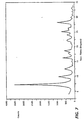
- a hydroxygallium phthalocyanine with an X-ray diffraction pattern having major peaks at Bragg angles of 6.8, 13.0, 16.5, 21.0, 26.3 and 29.5, with the highest peak at 6.8 degrees 2 ⁇ (2 theta +/- 0.2°), described as Type I hydroxygallium phthalocyanine is obtained by hydrolysis of an alkoxy-bridged gallium phthalocyanine dimer, and it is then converted to a hydroxygallium phthalocyanine with an X-ray diffraction pattern having major peaks at Bragg angles of 7.4, 9.8, 12.4, 12.9, 16.2, 18.4, 21.9, 23.9, 25.0 and 28.1, with the highest peak at 7.4 degrees 2 ⁇ (2 theta +/- 0.2°), referred to as Type V hydroxygallium phthalocyanine.
- the alkoxy-bridged gallium phthalocyanine dimer is 1,2-di(oxogallium phthalocyaninyl) ethane, characterized by elemental analysis (including absence of chlorine), infrared spectroscopy, 1 H NMR spectroscopy, 13 C solid state CP/MAS NMR spectroscopy and X-ray powder diffraction.
- Infrared of the dimer does not show the characteristic broad hydroxyl group peak of hydroxygallium phthalocyanine at about 3490 cm -1 (see Figures 4 and 6), or the hydroxyl group peak expected for ethanediol (3300 to 3400 cm -1 ).
- 1 H NMR spectroscopy in trifluoroacetic acid, TFA-d/CDCl 3 solution, 1:1 v/v, tetramethylsilane reference
- Embodiments of the present invention are directed to processes for the preparation of Type V hydroxygallium phthalocyanine, which comprise the dissolution of 1 part gallium chloride in 1 to 100 parts, and preferably about 10 parts, of an organic solvent, such as benzene, toluene or xylene, at a temperature of from 0 to 100°C, and preferably at a temperature of about 25°C, to form a solution of gallium chloride; followed by the addition of 3 parts of an alkali metal alkoxide, such as sodium methoxide, sodium ethoxide or, sodium propoxide preferably in a solution form, to produce a gallium alkoxide solution, and an alkali metal salt byproduct, for example sodium chloride, at a temperature of from 0 to 100°C, and preferably at a temperature of 20 to 40°C; followed by the reaction with from 1 to 10 parts, and preferably about 4 parts, ortho-phthalodinitrile or 1,3-diiminoisoindolene
- the isolated pigment is subsequently washed with an organic solvent such as dimethylformamide at a temperature of from 20°C to 120°C, and preferably at a temperature of 80°C, followed by washing with aqueous solvents, such as aqueous ammonium hydroxide, aqueous sodium hydroxide, cold or hot water, and possibly another organic solvent wash to provide a pure form of the alkoxy-bridged gallium phthalocyanine dimer.
- aqueous solvents such as aqueous ammonium hydroxide, aqueous sodium hydroxide, cold or hot water, and possibly another organic solvent wash to provide a pure form of the alkoxy-bridged gallium phthalocyanine dimer.
- aqueous solvents such as aqueous ammonium hydroxide, aqueous sodium hydroxide, cold or hot water, and possibly another organic solvent wash.
- aqueous solvents such as aqueous ammonium hydroxide, aqueous sodium hydroxide, cold or hot water
- the alkoxy-bridged gallium phthalocyanine dimer pigment (1 weight part) is dissolved in concentrated sulfuric acid (about 95 percent) in an amount of from 1 to 100 weight parts, and in an embodiment about 25 weight parts, by stirring said pigment in the acid for an effective period of time, from one minute to 24 hours, and in an embodiment about 2 hours, at a temperature of from 0°C to 75°C, and preferably about 40°C in air or under an inert atmosphere such as argon or nitrogen; adding the resulting mixture at a controlled rate to a stirred solvent, such as water or a basic aqueous solution, which can be an aqueous ammonia solution of from 3 to 15 molar concentration, and preferably 6 to 10 molar concentration, selecting from 1 to 10 volume parts of the basic solution for each volume part of sulfuric acid that was used such that at the end of the precipitation step the pH of the pigment suspension should be over 7, which solvent is chilled while being stirred, in order to maintain a temperature from -5°C to 40°C during the
- the product is a dark blue solid with an X-ray diffraction pattern having major peaks at Bragg angles of 6.8, 13.0, 16.5, 21.0, 26.3 and 29.5, with the highest peak at 6.8 degrees 2 ⁇ (2 theta +/- 0.2°), described as Type I hydroxygallium phthalocyanine.
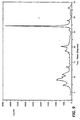
- the Type I hydroxygallium phthalocyanine product obtained can be contacted or treated with a polar aprotic solvent, such as N,N-dimethylformamide or N-methylpyrrolidone by, for example, stirring, ball milling or otherwise contacting said Type I hydroxygallium phthalocyanine pigment with the aforementioned solvent in the absence or presence of grinding media such as stainless steel shot, spherical or cylindrical ceramic media, or spherical glass beads, at a temperature from 0°C to 40°C for a period of from 2 hours to 1 week, and preferably 12 to 24 hours, such that there is obtained a Type V hydroxygallium phthalocyanine polymorph with an X-ray diffraction pattern having major peaks at Bragg angles of 7.4, 9.8, 12.4, 12.9, 16.2, 18.4, 21.9, 23.9, 25.0 and 28.1, with the highest peak at 7.4 degrees 2 ⁇ (2 theta +/- 0.2°).
- a polar aprotic solvent such as N,
- Preferred embodiments of the present invention are directed to in situ processes for the preparation of Type V hydroxygallium phthalocyanine, which comprise the dissolution of 1 part gallium chloride in 1 to 100 parts, and preferably 10 parts of toluene at a temperature of from 0°C to 100°C, and preferably at a temperature of about 25°C, to form a solution of gallium chloride; followed by the addition of 3 parts of a sodium methoxide solution in methanol to form a gallium methoxide solution and sodium chloride by product, for example, at a temperature of from 0°C to 100°C, and preferably at a temperature of 20°C to 40°C; followed by reaction with from 1 to 10 parts, and preferably 4 parts of ortho-phthalodinitrile, and 1,2-ethanediol (ethylene glycol) in an amount of from 3 parts to 100 parts, and preferably about 10 parts for each part of gallium alkoxide formed at a temperature of from 150 to 220°C, and preferably
- the isolated pigment is subsequently washed with an organic solvent such as dimethylformamide at a temperature of from 20°C to 120°C, and preferably at a temperature of about 80°C, followed by washing with hot water, and another organic solvent wash to provide a pure form of the precursor alkoxy-bridged gallium phthalocyanine dimer in a yield of about 75 percent, calculated based upon the amount of gallium chloride used.
- an organic solvent such as dimethylformamide
- the specific alkoxy-bridged gallium phthalocyanine dimer product resulting from the synthesis using ethylene glycol is 1,2-di(oxogallium phthalocyaninyl) ethane, C 32 H 16 N 8 GaOCH 2 CH 2 OGaN 8 H 16 C 32 , having an XRD pattern with major peaks at Bragg angles of 6.7, 8.9, 12.8, 13.9, 15.7, 16.6, 21.2, 25.3, 25.9 and 28.3, with the highest peak at 6.7 degrees 2 ⁇ (2 theta +/- 0.2°).
- the 1,2-di(oxogallium phthalocyaninyl) ethane pigment precursor (1 weight part) is dissolved in concentrated sulfuric acid (95 to 98 percent) in an amount of from 1 to 100 weight parts, and preferably 25 to 30 weight parts by stirring the pigment in the acid for an effective period of time, from 30 minutes to 6 hours, and in an embodiment about 2 hours at a temperature of from 0°C to 75°C, and preferably 30°C to 50°C in air or under an inert atmosphere such as argon or nitrogen; adding the resulting mixture at a controlled rate to a stirred solvent, such as water, or a basic aqueous solution, such as aqueous ammonia solution of 6 to 10 molar concentration, preferably with the aqueous ammonia solution in such an amount that at the end of the precipitation step the pH of the pigment suspension should be about 8 with the solvent being chilled and stirred in order to maintain a temperature of from -5°C to 40°C during the pigment precipitation, and preferably under 25
- the product is a dark blue solid with an X-ray diffraction pattern having major peaks at Bragg angles of 6.8, 13.0, 16.5, 21.0, 26.3 and 29.5, with the highest peak at 6.8 degrees 2 ⁇ (2 theta +/- 0.2°), described as Type I hydroxygallium phthalocyanine.
- the Type I hydroxygallium phthalocyanine product obtained can then be treated with a polar aprotic solvent, such as N,N-dimethylformamide or N-methylpyrrolidone by, for example, ball milling the Type I hydroxygallium phthalocyanine pigment in the presence of spherical glass beads, approximately 1 millimeters to 6 millimeters in diameter, at about 25°C, for a period of from 1 hour to 1 week, and preferably 1 to 24 hours, such that there is obtained a Type V hydroxygallium phthalocyanine with an X-ray diffraction pattern having major peaks at Bragg angles of 7.4, 9.8, 12.4, 12.9, 16.2, 18.4, 21.9, 23.9, 25.0 and 28.1, with the highest peak at 7.4 degrees 2 ⁇ (2 theta +/- 0.2°).
- a polar aprotic solvent such as N,N-dimethylformamide or N-methylpyrrolidone
- the processes described in the present invention provide in embodiments a high yield, for example from 75 to 82 percent, of the precursor alkoxy-bridged gallium phthalocyanine dimer, and, therefore, a high yield for the final product Type V hydroxygallium phthalocyanine using raw materials readily available and process conditions amenable for large scale operations, such as at the 100 gallon scale. Furthermore, by converting the gallium chloride to a gallium alkoxide, the processes provided herein yield alkoxy-bridged gallium phthalocyanine dimers which do not contain detrimental impurities, such as organic chlorinated derivatives which can be observed when gallium chloride is used directly as the source of gallium in the synthesis of gallium phthalocyanines.
- Type V hydroxygallium phthalocyanine obtained according to the present invention using an alkoxy-bridged gallium phthalocyanine dimer as precursor shows superior properties in photoresponsive imaging members when used as photogenerator material, in particular, lower dark decay and better cyclic stability compared to Type V hydroxygallium phthalocyanine obtained from other gallium phthalocyanine precursors, such as for example chlorogallium phthalocyanine.
- the present invention relates to a process for the preparation of Type V hydroxygallium phthalocyanine which comprises the formation of an alkoxy-bridged gallium phthalocyanine dimer by the reaction of an organic gallium complex of, for example, a metal alkoxide like gallium alkoxide and corresponding halide precipitate, metal acetates like gallium acetate instead of the alkoxide with ortho-phthalodinitrile or 1,3-diiminoisoindoline and a diol; hydrolyzing the resulting alkoxy-bridged gallium phthalocyanine dimer to hydroxygallium phthalocyanine, and subsequently converting the hydroxygallium phthalocyanine product obtained to Type V hydroxygallium phthalocyanine; and a process for the preparation of Type V hydroxygallium phthalocyanine which comprises the formation of an alkoxy-bridged gallium phthalocyanine dimer by the reaction of a gallium alkoxide, which has
- the layered photoresponsive imaging members are comprised of a supporting substrate, a charge transport layer, especially an aryl amine hole transport layer, and situated therebetween a photogenerator layer comprised of the Type V hydroxygallium phthalocyanine photogenerating pigment.
- Another embodiment of the present invention is directed to positively charged layered photoresponsive imaging members comprised of a supporting substrate, a charge transport layer, especially an aryl amine hole transport layer, and as a top overcoating layer Type V hydroxygallium phthalocyanine pigment obtained with the processes of the present invention.
- an improved negatively charged photoresponsive imaging member comprised of a supporting substrate, a thin adhesive layer, a photogenerating layer containing Type V hydroxygallium phthalocyanine photogenerator obtained by the processes of the present invention dispersed in a polymeric resinous binder, such as a poly(vinyl butyral), a polycarbonate, or a styrene-vinylpyridine block copolymer, and as a top layer, aryl amine hole transporting molecules dispersed in a polymeric resinous binder such as polycarbonate.
- a polymeric resinous binder such as a poly(vinyl butyral), a polycarbonate, or a styrene-vinylpyridine block copolymer
- Imaging members of the present invention are useful in various electrostatographic imaging and printing systems, particularly those conventionally known as xerographic processes. Specifically, the imaging members of the present invention are useful in xerographic imaging processes wherein the Type V hydroxygallium phthalocyanine pigment absorbs light of a wavelength of from 500 to 900 nanometers, and preferably from 700 to 850 nanometers. In these known processes, electrostatic latent images are initially formed on the imaging member followed by development, and thereafter transferring the image to a suitable substrate.
- Substrate layers of an effective thickness of, for example, from 50 to 1,000 ⁇ m (microns) selected for the imaging members of the present invention can be opaque or substantially transparent, and may comprise any suitable material having the requisite mechanical properties.
- the substrate may comprise a layer of insulating material including inorganic or organic polymeric materials, such as MYLAR® a commercially available polyester, MYLAR® containing titanium, a layer of an organic or inorganic material having a semiconductive surface layer, such as indium tin oxide, or aluminum arranged thereon, or a conductive material inclusive of aluminum, chromium, nickel, or brass.
- the substrate may be flexible, seamless, or rigid and many have a number of many different configurations, such as for example a plate, a cylindrical drum, a scroll and an endless flexible belt.
- the substrate is in the form of a seamless flexible belt.
- an anticurl layer such as for example polycarbonate materials commercially available such as MAKROLON® .
- the photoconductive imaging member may optionally contain a charge blocking layer situated between the conductive substrate and the photogenerating layer.
- This layer may comprise metal oxides, such as aluminum oxide and the like, or materials such as silanes, or polymers such as polyesters. The primary purpose of this layer is to prevent charge injection from the substrate during and after charging.
- Typical adhesive layers include film forming polymers such as polyester, polyvinylbutyral, polyvinylpyrrolidone, polycarbonate, polyurethane, polymethyl methacrylate and mixtures thereof. Since the surface of the substrate can be a metal oxide layer or an adhesive layer, the expression "substrate" as employed herein is intended to include in embodiments a metal oxide layer with or without an adhesive layer on a metal oxide layer.
- the photoconductive imaging member may also optionally contain an adhesive interface layer situated between the hole blocking layer and the photogenerating layer.
- This layer may comprise a polymeric material such as polyester, polyvinyl butyral and polyvinyl pyrrolidone.
- the photogenerator layer is preferably comprised of Type V hydroxygallium phthalocyanine obtained with the processes of the present invention dispersed in polymer binders.
- the thickness of the photogenerator layer depends on a number of factors, including the thicknesses of the other layers and the amount of photogenerator material contained in this layer. Accordingly, this layer can be of a thickness of from 0.05 to 10 ⁇ m (microns) when the hydroxygallium phthalocyanine photogenerator composition is present in an amount of from 5 to 100 percent by volume.
- this layer is of a thickness of from 0.25 to 1 ⁇ m (micron) when the photogenerator composition is present in this layer in an amount of 30 to 75 percent by volume.
- the maximum thickness of this layer in an embodiment is dependent primarily upon factors, such as photosensitivity, electrical properties and mechanical considerations.
- the photogenerator layer can be fabricated by coating a dispersion of Type V hydroxygallium phthalocyanine obtained with the processes of the present invention in a suitable solvent with or without an optional polymer binder material.
- the dispersion can be prepared by mixing and/or milling the Type V hydroxygallium phthalocyanine in equipment such as paint shakers, ball mills, sand mills and attritors.
- the binder resin may be selected from a number of known polymers such as poly(vinyl butyral), poly(vinyl carbazole), polyesters, polycarbonates, poly(vinyl chloride), polyacrylates and methacrylates, copolymers of vinyl chloride and vinyl acetate, phenoxy resins, polyurethanes, poly(vinyl alcohol), polyacrylonitrile and polystyrene.
- solvents that can be selected for use as coating solvents for the photogenerator layer are ketones, alcohols, aromatic hydrocarbons, halogenated aliphatic or aromatic hydrocarbons, ethers, amines, amides, esters, and the like.
- cyclohexanone acetone, methyl ethyl ketone, methanol, ethanol, butanol, amyl alcohol, toluene, xylene, chlorobenzene, carbon tetrachloride, chloroform, methylene chloride, trichloroethylene, tetrahydrofuran, dioxane, dimethylformamide, dimethylacetamide, butyl acetate, ethyl acetate and methoxyethyl acetate.
- the coating of the photogenerator layer in embodiments of the present invention can be accomplished with spray, dip or wire-bar methods such that the final dry thickness of the photogenerator layer is from 0.01 to 30 ⁇ m (microns) and preferably from 0.1 to 15 ⁇ m (microns) after being dried at 40°C to 150°C for 5 to 90 minutes.
- polymeric binder materials that can be selected for the photogenerator pigment include those polymers as illustrated herein, and disclosed in US-A-3,121,006.
- the binder resin may be selected from a wide number of polymers such as polyesters, poly(vinyl butyral), poly(vinyl carbazole), polycarbonates, poly(vinyl chloride), polyacrylates and methacrylates, phenoxy resins, polyurethanes, poly(vinyl alcohol), polyacrylonitrile, polystyrene, copolymers and block copolymers of selected monomers such as styrene and vinylpyridine.
- the solvents used to dissolve these binders depend upon the particular resin.
- the charge transport layer is generally a nonphotoconductive material which supports the injection of photogenerated holes from the generator layer.
- the hole transporting layer is generally of a thickness of from 5 to 75 ⁇ m (microns), and preferably of a thickness of from 10 to 40 ⁇ m (microns).
- the charge transport layer may be a material comprising a hole transporting small molecule such as an aryl amine in an inactive, highly insulating and transparent polymer binder, or a charge transporting polymer such as an aryl amine polycondensation polymer.
- Aryl amines selected for the hole transporting layer include molecules of the following formula wherein X is an alkyl group or a halogen, especially those substituents selected from the group consisting of Cl and CH 3 .
- Examples of specific aryl amines are N,N'-diphenyl-N,N'-bis(alkylphenyl)-1,1-biphenyl-4,4'-diamine wherein alkyl is selected from the group consisting of methyl, ethyl, propyl, butyl and hexyl; and N,N'-diphenyl-N,N'-bis(halophenyl)-1,1'-biphenyl-4,4'-diamine wherein the halo substituent is preferably a chloro substituent.
- Other known charge transport layer molecules can be selected, reference for example US-A-4,921,773 and 4,464,450.
- Charge transporting polymers such as aryl amine polycondensation polymers, are described in US-A-4,806,443 and 5,028,687, can also be selected.
- the highly insulating and transparent polymer binder material for the transport layers include materials such as those described in US-A-3,121,006.
- polymer binder materials include polycarbonates, acrylate polymers, vinyl polymers, cellulose polymers, polyesters, polysiloxanes, polyamides, polyurethanes and epoxies, as well as block, random or alternating copolymers thereof.
- Preferred electrically inactive binders are comprised of polycarbonate resins having a molecular weight of from 20,000 to 100,000 with a molecular weight of from 50,000 to 100,000 being particularly preferred.
- the transport layer contains from 10 to 75 percent by weight of the charge transport material, and preferably from 35 to 50 percent of this material.
- the xerographic electrical properties of the imaging members can be determined by known means, including as indicated herein electrostatically charging the surfaces thereof with a corona discharge source until the surface potentials, as measured by a capacitively coupled probe attached to an electrometer, attains an initial value V 0 of about -800 volts. After resting for 0.5 second in the dark, the charged members attain a surface potential of V ddp , dark development potential. Each imaging member is then exposed to light from a filtered Xenon lamp with a XBO 150 watt bulb, thereby inducing a photodischarge which results in a reduction of surface potential to a V bg value, background potential.
- the desired wavelength and energy of the exposed light can be determined by the type of filters placed in front of the lamp.
- the monochromatic light photosensitivity is determined by using a narrow band-pass filter.
- the dark decay in volts per second was calculated as (V 0 -V ddp )/0.5.
- the photosensitivity of the imaging members is provided in terms of the amount of exposure energy in ⁇ j/cm 2 (ergs/cm 2 ), designated as E 1/2 , required to achieve 50 percent photodischarge from the dark development potential.
- E 800-100V which is the amount of exposure energy causing reduction of the V ddp from 800 volts to 100 volts, was also determined. The higher the photosensitivity is indicated by the smaller the E 1/2 and E 800-100V values.
- Cyclic stability is determined by performing cycling tests. Devices were charged with a corotron to about -800 volts. They were exposed with 775 nanometers light with an intensity of about 0.7 ⁇ j/cm 2 (7 ergs/cm 2 ) and erased with white light of about 60 ergs/cm 2 . The dark development (V ddp ) and background (V bg ) potentials were measured and recorded while the testing was performed for 10,000 cycles. After the cycling test had been completed, the devices remained in the dark for about 20 hours.
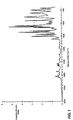
- Figure 1 represents an infrared plot of the alkoxy-bridged phthalocyanine dimer prepared as described in Example I, which has the formula C 32 H 16 N 8 GaOCH 2 CH 2 OGaN 8 H 16 C 32 .
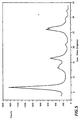
- Figure 2 represents a plot of 1 H NMR spectroscopy (in TFA-d/CDCl 3 solution) of the alkoxy-bridged phthalocyanine dimer prepared as described in Example I.
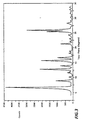
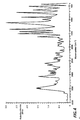
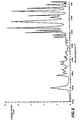
- Figure 3 represents an X-ray powder diffraction trace for the alkoxy-bridged gallium phthalocyanine dimer (Type I polymorph) prepared as described in Example I.
- Figure 4 represents an infrared plot of the Type I hydroxygallium phthalocyanine prepared as described in Example III.
- Figure 5 represents an X-ray powder diffraction trace for the Type I hydroxygallium phthalocyanine prepared as described in Example III.
- Figure 6 represents an infrared plot of the Type V hydroxygallium phthalocyanine prepared as described in Example V.
- Figure 7 represents an X-ray powder diffraction trace for the Type V hydroxygallium phthalocyanine prepared as described in Example V.
- Figure 8 represents an infrared plot of the chlorogallium phthalocyanine prepared as described in Comparative Example II.
- Figure 9 represents an X-ray powder diffraction trace for the chlorogallium phthalocyanine (Type I polymorph) prepared as described in Comparative Example II.
- the alkoxy-bridged gallium phthalocyanine dimer was isolated by filtration at 120°C. The product was then washed with 400 milliliters of DMF at 100°C for 1 hour and filtered. The product was then washed with 400 milliliters of deionized water at 80°C for 1 hour and filtered. The product was then washed with 400 milliliters of methanol at 60°C for 1 hour and filtered. The product was dried at 60°C under vacuum for 18 hours.
- the alkoxy-bridged gallium phthalocyanine dimer, 1,2-di(oxogallium phthalocyaninyl) ethane was isolated as a dark blue solid in 80 percent yield.
- the dimer product was characterized by elemental analysis, infrared spectroscopy, 1 H NMR spectroscopy, 13 C solid state CP/MAS (cross polarization/magic angle spinning) NMR spectroscopy and X-ray powder diffraction. Elemental analysis showed the presence of 0.05 percent chlorine.
- a 75.7 l (20 gallon) glass-lined reactor was purged with nitrogen and charged with 32.0 kilograms of toluene.
- the reactor agitator was started and 3.00 kilograms of gallium trichloride were loaded through the reactor loading port
- the reactor loading port was closed, a nitrogen purge started, and the agitator speed increased to 200 rpm, while cooling was applied to the reactor jacket by a recirculating cooling system, and 11.04 kilograms of sodium methoxide solution (25 weight percent in methanol) was charged to the reactor from an addition vessel over a period of 30 minutes.
- the reactor was then charged with 8.73 kilograms of o-phthalodinitrile and 20 kilograms of ethylene glycol.
- the reactor was purged with nitrogen after which heating was applied using hot oil supply to the reactor jacket. During heating to a reaction temperature of 195 to 200°C, methanol and toluene were removed by distillation. After 20 kilograms of distillate has been removed another 20 kilograms of ethylene glycol were charged in the reactor from an addition vessel over a period of 10 minutes. The reaction was accomplished for 5 hours at 195 to 200°C. At the end of the 5 hour reaction period, cooling was applied using the recirculating cooling system. When the reactor temperature was 90°C, the reactor contents were discharged into an agitated vacuum filter and the filtrate drained. The crude material was reslurry washed in the agitated vacuum filter two times with 50 kilograms of DMF used to rinse the reactor.
- the washing was accomplished two more times in the agitated vacuum filter with 100 kilograms of hot DMF at 75°C to 90°C.
- the material was then reslurry washed three times in the agitated vacuum filter with 50 kilograms of deionized water at 75°C to 90°C.
- the wet cake resulting was then reslurry washed in the agitated vacuum filter three additional times for 30 minutes with 50 kilograms of warm methanol (45°C) and filtered.
- the material was dried at 60°C in a vacuum shelf dryer. 8.51 Kilograms of alkoxy-bridged gallium phthalocyanine dimer of Example I were obtained as a dark blue solid (81.4 percent yield).
- the dimer product was characterized by elemental analysis, infrared spectroscopy, 1 H NMR spectroscopy, 13 C solid state CP/MAS (cross polarization/magic angle spinning) NMR spectroscopy and X-ray powder diffraction. Elemental analysis showed the presence of only 0 09 percent chlorine.
- Infrared spectroscopy major peaks at 573, 611, 636, 731, 756, 775, 874, 897, 962, 999, 1069, 1088, 1125, 1165, 1289, 1337, 1424, 1466, 1503, 1611, 2569, 2607, 2648, 2864, 2950, and 3045 cm -1 (identical to Figure 1);
- 1 H NMR spectroscopy (TFA-d/CDCl 3 solution, 1:1 v/v, tetramethylsilane reference): peaks at (8, ppm ⁇ 0.01 ppm) 4.00 (4H), 8.54 (16H), and 9.62 (16H) (identical to Figure 2);
- 13 C solid state CP/MAS NMR spectroscopy peaks at ( ⁇ , ppm ⁇ 1 ppm): 60.5 (2CH 2 ), 123.4 (16CH), 128.5 (16CH), 135.0 (16C), 152.4 (16C);
- X-ray powder diffraction pattern peaks at Bragg angles (2
- the alkoxy-bridged gallium phthalocyanine dimer prepared as described in Example I was hydrolyzed as follows. Sulfuric acid (94 to 96 percent, 125 grams) was heated to 40°C in a 125 milliliter Erlenmeyer flask and then 5 grams of the alkoxy-bridged gallium phthalocyanine dimer were added, while stirring, over approximately 15 minutes, during which time the temperature of the solution increased to about 48°C.
- the acid solution was then stirred for 2 hours at 40°C, after which it was added in a dropwise fashion to a mixture comprised of concentrated ( ⁇ 30 percent) ammonium hydroxide (265 milliliters) and deionized water (435 milliliters), which had been cooled to a temperature below 5°C.
- Addition of the dissolved dimer pigment was completed in about 30 minutes, during which time the temperature of the solution increased to about 40°C.
- the reprecipitated pigment was then removed from the cooling bath and allowed to stir at room temperature for 1 hour. It was then filtered through a porcelain funnel fitted with a Whatman 934-AH grade glass fiber filter. The resulting blue pigment was redispersed in fresh deionized water by stirring at room temperature for 1 hour and filtered as before.
- Infrared spectroscopy major peaks at 507, 573, 629, 729, 756, 772, 874, 898, 956, 984, 1092, 1121, 1165, 1188, 1290, 1339, 1424, 1468, 1503, 1588, 1611, 1757, 1835, 1951, 2099, 2207, 2280, 2384, 2425, 2570, 2608, 2652, 2780, 2819, 2853, 2907, 2951, 3049 and 3479 (very broad) cm -1 ( Figure 4); X-ray diffraction pattern: peaks at Bragg angles of 6.8, 13.0, 16.5, 21.0, 26.3 and 29.5, with the highest peak at 6.8 degrees 2 ⁇ (2 theta +/-0.2°) ( Figure 5).
- the alkoxy-bridged gallium phthalocyanine dimer prepared as described in Example II above was hydrolyzed on a 3.0 kilogram scale in the following manner.
- Ninety kilograms of 96 percent reagent grade sulfuric acid was charged into a 30 gallon reactor and then the reactor agitator was set to run at 100 rpm.
- 3.0 kilograms of the dimer was charged into the reactor over a period of 30 minutes, after which the reactor loading port was closed and the reactor was heated to 40°C using a hot glycol heating system.
- the dimer dissolved in the acid while the agitation was continued at 40°C for an additional 3.5 hours.
- a 378.5 l (100 gallon) reactor was charged with 200 kilograms of 26 percent aqueous ammonia solution and 75 kilograms of deionized water, and then it was cooled to 0°C using a cold glycol cooling system.
- the H 2 SO 4 solution in the 30 gallon reactor was slowly added to the ammonia solution while agitating at 200 rpm, so that the temperature could be maintained below 10°C by the cooling system.
- the addition consumed about 4 hours, during which time the phthalocyanine precipitated.
- the phthalocyanine slurry was then transferred to a 264.9 l (70 gallon) plastic filter equipped with a polypropylene filter cloth, and the liquid was removed by vacuum filtration under continuous agitation.
- the phthalocyanine was repeatedly washed in the filter with portions of 150 kilograms of deionized water, under continuous agitation and filtration, until the conductivity of the filtrate was under 20 ⁇ s (micromhos).
- the wet cake was then transferred to a vacuum shelf dryer and dried at 80 to 85°C under full vacuum for a minimum of 24 hours to provide 2.85 kilograms (95 percent yield) of Type I HOGaPc identified by infrared spectroscopy and X-ray powder diffraction.
- Infrared spectroscopy major peaks at 507, 573, 629, 729, 756, 772, 874, 898, 956, 984, 1092, 1121, 1165, 1188, 1290, 1339, 1424, 1468, 1503, 1588, 1611, 1757, 1835, 1951, 2099, 2207, 2280, 2384, 2425, 2570, 2608, 2652, 2780, 2819, 2853, 2907, 2951, 3049 and 3479 (very broad) cm -1 (identical to Figure 4); X-ray diffraction pattern: peaks at Bragg angles of 6.8, 13.0, 16.5, 21.0, 26.3 and 29.5, with the highest peak at 6.8 degrees 2 ⁇ (2 theta +/- 0.2°) (identical to Figure 5).
- Type I hydroxygallium phthalocyanine pigment obtained in Example IV above was converted to Type V HOGaPc as follows.
- the pigment (3.0 grams) was added to 45 milliliters of N,N-dimethylformamide in a 120 milliliter glass bottle containing 90 grams of glass bead 0.635 cm ((0.25 inch)in diameter).
- the bottle was sealed and placed on a ball mill for 24 hours.
- the solid resulting was isolated by filtration through a porcelain funnel fitted with a Whatman GF/F grade glass fiber filter, and washed in the filter using several 50 milliliter portions of butyl acetate.
- Type I hydroxygallium phthalocyanine pigment obtained in Example IV was converted to Type V HOGaPc in the following manner. Dry, clean 1 / 4 inch glass beads (21 kilograms) were charged into a 20 liter polypropylene carbon and then 1.05 kilogram of the phthalocyanine was added, followed by 8.0 kilograms of DMF (dimethylformamide). The material was wet milled for 24 hours using a roll mill at a carboy rotational speed of 60 rpm, during which time a conversion to Type V HOGaPc takes place. At the end of the wet milling, the phthalocyanine was washed free of DMF in a plastic filter fitted with an air driven agitator.
- DMF dimethylformamide
- the HOGaPc slurry was transferred from the carboy to the filter and most of the DMF was removed by vacuum filtration.
- the glass beads were rinsed three times with 5 kilograms of acetone, and each wash was transferred to the filter. When most of the first acetone washes had been removed, the filtercake was rinsed twice with 20 kilograms of fresh acetone. The vacuum filtration was continued until the filtercake became very firm.
- the HOGaPc was then transferred to a vacuum shelf dryer and dried at 60°C under full vacuum for 24 hours. The yield was 1.0 kilogram (95 percent) of Type V HOGaPc which was identified by infrared spectroscopy and X-ray powder diffraction.
- Infrared spectroscopy major peaks at 507, 571, 631, 733, 756, 773, 897, 965, 1067, 1084, 1121, 1146, 1165, 1291, 1337, 1425, 1468, 1503, 1588, 1609, 1757, 1848, 1925, 2099, 2205, 2276, 2384, 2425, 2572, 2613, 2653, 2780, 2861, 2909, 2956, 3057 and 3499 (broad) cm -1 (identical to Figure 6); X-ray diffraction pattern: peaks at Bragg angles of 7.4, 9.8, 12.4, 12.9, 16.2, 18.4, 21.9, 23.9, 25.0 and 28.1, with the highest peak at 7.4 degrees 2 ⁇ (2 theta +/- 0.2°) (identical to Figure 7).
- Type I hydroxygallium phthalocyanine obtained by the hydrolysis of an alkoxy-bridged gallium phthalocyanine dimer, which was synthesized by reacting gallium methoxide (obtained from a vendor) with ortho-phthalodinitrile and ethylene glycol, was converted to Type V HOGaPc by an identical procedure to that described in Example V.
- the Type V HOGaPc was identified by infrared spectroscopy and X-ray powder diffraction.
- Infrared spectroscopy major peaks at 507, 571, 631, 733, 756, 773, 897, 965, 1067, 1084, 1121, 1146, 1165, 1291, 1337, 1425, 1468, 1503, 1588, 1609, 1757, 1848, 1925, 2099, 2205, 2276, 2384, 2425, 2572, 2613, 2653, 2780, 2861, 2909, 2956, 3057 and 3499 (broad) cm -1 (identical to Figure 6); X-ray diffraction pattern: peaks at Bragg angles of 7.4, 9.8, 12.4, 12.9, 16.2, 18.4, 21.9, 23.9, 25.0 and 28.1, with the highest peak at 7.4 degrees 2 ⁇ (2 theta +/- 0.2°) (identical to Figure 7).
- the product was then washed again at 22°C for 30 minutes in a beaker with 1.5 liters of DMF and filtered.
- the product was then washed in a beaker with 1.5 liters of methanol at 65°C for 1 hour and filtered.
- the product was then washed again at 22°C for 30 minutes in a beaker with 1.5 liters of methanol and filtered.
- the wet cake was dried at 60°C under vacuum for 18 hours resulting in 271 grams of chlorogallium phthalocyanine (39 percent yield).
- the product pigment hydroxygallium phthalocyanine Type V was characterized by elemental analysis, infrared spectroscopy and X-ray powder diffraction.
- the acid solution was then stirred for 2 hours at 40°C, after which it was added in a dropwise fashion to a mixture comprised of concentrated ( ⁇ 30 percent) ammonium hydroxide (265 milliliters) and deionized water (435 milliliters), which had been cooled to a temperature below 5°C. Addition of the dissolved phthalocyanine was completed over the course of approximately 30 minutes, during which time the temperature of the solution increased to about 40°C. The reprecipitated phthalocyanine was then removed from the cooling bath and allowed to stir at room temperature for 1 hour. It was then filtered through a porcelain funnel fitted with a Whatman 934-AH grade glass fiber filter.
- the resulting blue solid was redispersed in fresh deionized water by stirring at room temperature for 1 hour and filtered as before. This process was repeated at least three times until the conductivity of the filtrate was ⁇ 20 ⁇ S.
- the filtercake was oven dried overnight at 50°C to give 4.75 grams (95 percent) of Type I HOGaPc, identified by infrared spectroscopy and X-ray powder diffraction.
- Infrared spectroscopy major peaks at 507, 573, 629, 729, 756, 772, 874, 898, 956, 984, 1092, 1121, 1165, 1188, 1290, 1339, 1424, 1468, 1503, 1588, 1611, 1757, 1835, 1951, 2099, 2207, 2280, 2384, 2425, 2570, 2608, 2652, 2780, 2819, 2853, 2907, 2951, 3049 and 3479 (broad) cm -1 (identical to Figure 4); X-ray diffraction pattern: peaks at Bragg angles of 6.8, 13.0, 16.5, 21.0, 26.3 and 29.5, with the highest peak at 6.8 degrees 2 ⁇ (2 theta +/-0.2°) (identical to Figure 5).
- Type I hydroxygallium phthalocyanine pigment obtained in Comparative Example 3 above was converted to Type V HOGaPc as follows.
- the Type I hydroxygallium phthalocyanine pigment (3.0 grams) was added to 25 milliliters of N N-dimethylformamide in a 60 milliliter glass bottle containing 60 grams of glass beads (0.625 cm (0.25 inch)in diameter). The bottle was sealed and placed on a ball mill overnight (18 hours). The solid was isolated by filtration through a porcelain funnel fitted with a Whatman GF/F grade glass fiber filter, and washed in the filter using several 25 milliliter portions of acetone.
- the Type V hydroxygallium phthalocyanine prepared in Examples V and VI, and Comparative Examples 1 and 4 above can be selected as a photogenerating layer in a layered photoconductive imaging member prepared by the following procedure.
- a dispersion was prepared by combining 0.5 gram of the HOGaPc prepared as described in Example V, and 0.26 gram of poly(vinyl butyral) in 25.2 grams of chlorobenzene in a 60 milliliter glass jar containing 70 grams of 0.8 millimeter glass beads. The dispersion was shaken on a paint shaker for 2 hours and then coated onto the silane/zirconium layer described above using a number 6 wire wound rod applicator. The Type V HOGaPc photogenerating layer formed was dried at 100°C for 10 minutes to a final thickness of about 0.20 ⁇ m (micron).
- a hole transporting layer solution was prepared by dissolving 5.4 grams of N,N'-diphenyl-N,N-bis(3-methylphenyl)-1,1'-biphenyl-4,4'-diamine, and 8.1 grams of polycarbonate in 61.5 grams of chlorobenzene. The solution was coated onto the Type V HOGaPc generator layer using a 10 mm(mil)film applicator. The charge transporting layer thus obtained was dried at 115°C for 60 minutes to provide a final thickness of about 28 mm (microns).
- the xerographic electrical properties of photoresponsive imaging members prepared as described above were determined by electrostatically charging the surface thereof with a corona discharge source until the surface potential, as measured by a capacitatively coupled probe attached to an electrometer, attained an initial dark value, V 0 , of -800 volts. After resting for 0.5 second in the dark, the charged member reached a surface potential, V ddp , or dark development potential. The member was then exposed to filtered light from a Xenon lamp. A reduction in surface potential from V ddp to a background potential, V bg , due to the photodischarge effect was observed. The dark decay in volts per second was calculated as (V 0 -V ddp )/0.5.
- the half exposure energy that is E 1/2 , is the amount of exposure energy causing reduction of the V ddp to half of its initial value, was determined.
- E 800-100V which is the amount of exposure energy causing reduction of the V ddp from -800 volts to -100 volts, was also determined.
- the wavelength of light selected was 780 nanometers.
- Device 1 had a cycle down of -25 volts after 10,000 cycles and a cycledown of -29 volts after 5,000 cycles in the more stressful test.
- Device 2 had a cycle down of -27 volts after 10,000 cycles and a cycledown of -33 volts after 5,000 cycles in the more stressful test
- Device 3 had a cycledown of -26 volts after 10,000 cycles and a cycledown of -48 volts after 5,000 cycles in the more stressful test.
- Device 3 had a cycledown of -47 volts after 10,000 cycles and a cycledown of -90 volts after 5,000 cycles in the more stressful test.
- Table 1 that follows summarizes the information and data for layered imaging members identified as Devices 1, 2, 3 and 4, which members are comprised of the components illustrated in the Examples described herein.
- Devices 1, 2, 3 and 4 are thus comprised of equivalent components for the data presented, except that the Type V hydroxygallium phthalocyanines (Type V HOGaPc) obtained from the Examples V and VI and Comparative Examples 1 and 4 were selected.
- Type V HOGaPc Type V HOGaPc
- the Type V hydroxygallium phthalocyanines of the Examples V and VI were prepared according to the processes of the present invention by the synthesis of the alkoxy-bridged gallium phthalocyanine dimer precursors as described in Examples I and II, respectively; the preparation of the Type I hydroxygallium phthalocyanines from the alkoxy-bridged gallium phthalocyanine dimers as described in Examples III and IV, respectively; and by conversion of the Type I hydroxygallium phthalocyanines to Type V hydroxygallium phthalocyanines as described in Examples V and VI, respectively.
- the Type V hydroxygallium phthalocyanine of the Comparative Example 1 was prepared according to a process similar to the present invention by the synthesis of an alkoxy-bridged gallium phthalocyanine dimer precursor using commercially supplied gallium methoxide; the preparation of the Type I hydroxygallium phthalocyanine from the alkoxy-bridged gallium phthalocyanine dimer; and conversion of the Type I hydroxygallium phthalocyanine to Type V hydroxygallium phthalocyanine as described in Comparative Example 1.
- the Type V hydroxygallium phthalocyanine of the Comparative Example 4 was prepared according to a process of the previous art by the synthesis of a chlorogallium phthalocyanine precursor (ClGaPc) as described in Comparative Example 2; the preparation of the Type I hydroxygallium phthalocyanine from chlorogallium phthalocyanine as described in Comparative Example 3,;and conversion of the Type I hydroxygallium phthalocyanine to Type V hydroxygallium phthalocyanine as described in Comparative Example 4.
Landscapes
- Chemical & Material Sciences (AREA)
- Organic Chemistry (AREA)
- Chemical Kinetics & Catalysis (AREA)
- Photoreceptors In Electrophotography (AREA)
- Nitrogen Condensed Heterocyclic Rings (AREA)
Applications Claiming Priority (2)
| Application Number | Priority Date | Filing Date | Title |
|---|---|---|---|
| US08/233,834 US5521306A (en) | 1994-04-26 | 1994-04-26 | Processes for the preparation of hydroxygallium phthalocyanine |
| US233834 | 1994-04-26 |
Publications (3)
| Publication Number | Publication Date |
|---|---|
| EP0679695A2 EP0679695A2 (en) | 1995-11-02 |
| EP0679695A3 EP0679695A3 (en) | 1997-12-10 |
| EP0679695B1 true EP0679695B1 (en) | 2001-10-04 |
Family
ID=22878872
Family Applications (1)
| Application Number | Title | Priority Date | Filing Date |
|---|---|---|---|
| EP95302667A Expired - Lifetime EP0679695B1 (en) | 1994-04-26 | 1995-04-21 | Processes for the preparation of hydroxygallium phthalocyanine |
Country Status (4)
| Country | Link |
|---|---|
| US (1) | US5521306A (enExample) |
| EP (1) | EP0679695B1 (enExample) |
| JP (1) | JPH07292269A (enExample) |
| DE (1) | DE69522987T2 (enExample) |
Families Citing this family (153)
| Publication number | Priority date | Publication date | Assignee | Title |
|---|---|---|---|---|
| EP0798346A3 (en) * | 1996-03-29 | 1997-12-10 | Xerox Corporation | Hydroxygallium phthalocyanine and alkoxygallium phthalocyanine dimers |
| US5698359A (en) * | 1997-01-13 | 1997-12-16 | Xerox Corporation | Method of making a high sensitivity visible and infrared photoreceptor |
| US5681678A (en) * | 1997-01-21 | 1997-10-28 | Xerox Corporation | Charge generation layer containing hydroxyalkyl acrylate reaction product |
| US5725985A (en) * | 1997-01-21 | 1998-03-10 | Xerox Corporation | Charge generation layer containing mixture of terpolymer and copolymer |
| US6016533A (en) * | 1997-12-16 | 2000-01-18 | Advanced Micro Devices, Inc. | Way prediction logic for cache array |
| US6569587B2 (en) * | 1999-01-29 | 2003-05-27 | Fuji Electric Imaging Co., Ltd. | Photosensitive body for electrophotography and manufacturing method for the same |
| US6074791A (en) * | 1999-02-26 | 2000-06-13 | Xerox Corporation | Photoconductive imaging members |
| US5985505A (en) * | 1999-04-21 | 1999-11-16 | Xerox Corporation | Processes for the preparation of hydroxygallium phthalocyanine |
| JP2000338695A (ja) * | 1999-05-31 | 2000-12-08 | Konica Corp | 金属フタロシアニン結晶粒子、その製造法、これを使用した電子写真感光体及び電子写真プロセス |
| US6171741B1 (en) | 2000-01-19 | 2001-01-09 | Xerox Corporation | Light shock resistant electrophotographic imaging member |
| US6492080B1 (en) | 2001-03-23 | 2002-12-10 | Xerox Corporation | Process for tuning photoreceptor sensitivity |
| US6350550B1 (en) | 2001-04-13 | 2002-02-26 | Xerox Corporation | Photoreceptor with adjustable charge generation section |
| US6376141B1 (en) | 2001-04-13 | 2002-04-23 | Xerox Corporation | Photoreceptor with layered charge generation section |
| US6645687B1 (en) | 2002-05-10 | 2003-11-11 | Xerox Corporation | Imaging members |
| US6713220B2 (en) | 2002-05-17 | 2004-03-30 | Xerox Corporation | Photoconductive members |
| US6919154B2 (en) * | 2003-05-05 | 2005-07-19 | Xerox Corporation | Photoconductive members |
| US20050050278A1 (en) * | 2003-09-03 | 2005-03-03 | Advanced Micro Devices, Inc. | Low power way-predicted cache |
| US7117290B2 (en) * | 2003-09-03 | 2006-10-03 | Advanced Micro Devices, Inc. | MicroTLB and micro tag for reducing power in a processor |
| JP2006008877A (ja) * | 2004-06-28 | 2006-01-12 | Mitsubishi Chemicals Corp | フタロシアニン化合物の製造方法、並びに電子写真感光体、電子写真感光体カートリッジ及び画像形成装置 |
| US7270926B2 (en) * | 2004-12-15 | 2007-09-18 | Xerox Corporation | Imaging member |
| US7169920B2 (en) * | 2005-04-22 | 2007-01-30 | Xerox Corporation | Photoreceptors |
| US20060293212A1 (en) * | 2005-05-05 | 2006-12-28 | Ecolab Inc. | Stable solid compositions of spores, bacteria, fungi and/or enzyme |
| US20060257770A1 (en) * | 2005-05-10 | 2006-11-16 | Xerox Corporation | Photoreceptors |
| US7462431B2 (en) * | 2005-05-12 | 2008-12-09 | Xerox Corporation | Photoreceptors |
| US7378204B2 (en) * | 2005-06-15 | 2008-05-27 | Xerox Corporation | Photoconductive member |
| US20060286469A1 (en) * | 2005-06-16 | 2006-12-21 | Xerox Corporation | Imaging members |
| US20060286468A1 (en) * | 2005-06-16 | 2006-12-21 | Xerox Corporation | Hydroxygallium phthalocyanines |
| US7459250B2 (en) * | 2006-06-15 | 2008-12-02 | Xerox Corporation | Polyphenyl ether containing photoconductors |
| US7462432B2 (en) | 2006-06-15 | 2008-12-09 | Xerox Corporation | Polyphenyl thioether and thiophosphate containing photoconductors |
| US7476478B2 (en) * | 2006-06-15 | 2009-01-13 | Xerox Corporation | Polyphenyl thioether and antioxidant containing photoconductors |
| US7479358B2 (en) * | 2006-06-15 | 2009-01-20 | Xerox Corporation | Ether and thiophosphate containing photoconductors |
| US7491480B2 (en) * | 2006-06-15 | 2009-02-17 | Xerox Corporation | Thiophosphate and antioxidant containing photoconductors |
| US7468229B2 (en) * | 2006-06-15 | 2008-12-23 | Xerox Corporation | Polyphenyl thioether and thiophosphate containing photoconductors |
| US7498108B2 (en) * | 2006-06-15 | 2009-03-03 | Xerox Corporation | Thiophosphate containing photoconductors |
| US7452643B2 (en) * | 2006-06-15 | 2008-11-18 | Xerox Corporation | Polyphenyl ether and thiophosphate containing photoconductors |
| US7476477B2 (en) * | 2006-06-15 | 2009-01-13 | Xerox Corporation | Thiophosphate containing photoconductors |
| US7507510B2 (en) | 2006-06-15 | 2009-03-24 | Xerox Corporation | Polyphenyl ether phosphate containing photoconductors |
| US7445876B2 (en) | 2006-06-15 | 2008-11-04 | Xerox Corporation | Ether and thiophosphate containing photoconductors |
| US7473505B2 (en) * | 2006-06-15 | 2009-01-06 | Xerox Corporation | Ether and antioxidant containing photoconductors |
| US7485398B2 (en) | 2006-06-22 | 2009-02-03 | Xerox Corporation | Titanyl phthalocyanine photoconductors |
| US7553593B2 (en) * | 2006-06-22 | 2009-06-30 | Xerox Corporation | Titanyl phthalocyanine photoconductors |
| US7575838B2 (en) * | 2006-07-06 | 2009-08-18 | Xerox Corporation | Imaging members and method for sensitizing a charge generation layer of an imaging member |
| US20080008951A1 (en) * | 2006-07-06 | 2008-01-10 | Xerox Corporation | Imaging members and method for sensitizing a charge generation layer of an imaging member |
| US20080008949A1 (en) * | 2006-07-06 | 2008-01-10 | Xerox Corporation | Imaging members and method for sensitizing a charge generation layer of an imaging member |
| US7541122B2 (en) * | 2006-07-12 | 2009-06-02 | Xerox Corporation | Photoconductor having silanol-containing charge transport layer |
| US7560206B2 (en) * | 2006-07-12 | 2009-07-14 | Xerox Corporation | Photoconductors with silanol-containing photogenerating layer |
| US7622231B2 (en) * | 2006-08-30 | 2009-11-24 | Xerox Corporation | Imaging members containing intermixed polymer charge transport component layer |
| US7799497B2 (en) * | 2006-11-07 | 2010-09-21 | Xerox Corporation | Silanol containing overcoated photoconductors |
| US7776498B2 (en) * | 2006-11-07 | 2010-08-17 | Xerox Corporation | Photoconductors containing halogenated binders |
| US7785756B2 (en) * | 2006-11-07 | 2010-08-31 | Xerox Corporation | Overcoated photoconductors with thiophosphate containing charge transport layers |
| US7785757B2 (en) * | 2006-11-07 | 2010-08-31 | Xerox Corporation | Overcoated photoconductors with thiophosphate containing photogenerating layer |
| US7781132B2 (en) * | 2006-11-07 | 2010-08-24 | Xerox Corporation | Silanol containing charge transport overcoated photoconductors |
| US7771909B2 (en) * | 2006-11-20 | 2010-08-10 | Xerox Corporation | Titanyl phthalocyanine photoconductors |
| US7799494B2 (en) * | 2006-11-28 | 2010-09-21 | Xerox Corporation | Polyhedral oligomeric silsesquioxane thiophosphate containing photoconductors |
| US7851112B2 (en) * | 2006-11-28 | 2010-12-14 | Xerox Corporation | Thiophosphate containing photoconductors |
| US7550239B2 (en) | 2007-01-23 | 2009-06-23 | Xerox Corporation | Alkyltriol titanyl phthalocyanine photoconductors |
| US7592110B2 (en) * | 2007-02-13 | 2009-09-22 | Xerox Corporation | Polyhydroxy siloxane photoconductors |
| US7732111B2 (en) | 2007-03-06 | 2010-06-08 | Xerox Corporation | Photoconductors containing halogenated binders and aminosilanes in hole blocking layer |
| US7662525B2 (en) | 2007-03-29 | 2010-02-16 | Xerox Corporation | Anticurl backside coating (ACBC) photoconductors |
| US7670733B2 (en) * | 2007-04-27 | 2010-03-02 | Xerox Corporation | Silanol containing photoconductors |
| US7678517B2 (en) * | 2007-04-30 | 2010-03-16 | Xerox Corporation | Single layered photoconductors |
| US7700249B2 (en) * | 2007-04-30 | 2010-04-20 | Xerox Corporation | Single layered photoconductors |
| US7662526B2 (en) * | 2007-05-04 | 2010-02-16 | Xerox Corporation | Photoconductors |
| US20080274419A1 (en) * | 2007-05-04 | 2008-11-06 | Xerox Corporation | Photoconductors |
| US7862967B2 (en) * | 2007-05-15 | 2011-01-04 | Xerox Corporation | Photoconductors |
| US7838186B2 (en) * | 2007-05-18 | 2010-11-23 | Xerox Corporation | Photoconductors containing charge transport chelating components |
| US7759031B2 (en) * | 2007-05-24 | 2010-07-20 | Xerox Corporation | Photoconductors containing fluorogallium phthalocyanines |
| US20080299474A1 (en) * | 2007-05-31 | 2008-12-04 | Xerox Corporation | High quality substituted aryl diamine and a photoreceptor |
| US7799501B2 (en) * | 2007-05-31 | 2010-09-21 | Xerox Corporation | Photoreceptors |
| US7932006B2 (en) * | 2007-05-31 | 2011-04-26 | Xerox Corporation | Photoconductors |
| US7888502B2 (en) * | 2007-06-27 | 2011-02-15 | Xerox Corporation | Titanyl phthalocyanine processes and photoconductors thereof |
| US20090004584A1 (en) * | 2007-06-27 | 2009-01-01 | Xerox Corporation | Hydroxygallium phthalocyanine processes and photoconductors thereof |
| US7670737B2 (en) * | 2007-07-31 | 2010-03-02 | Xerox Corporation | UV absorbing hole blocking layer containing photoconductors |
| US7867676B2 (en) * | 2007-07-31 | 2011-01-11 | Xerox Corporation | Copper containing hole blocking layer photoconductors |
| US7871748B2 (en) * | 2007-07-31 | 2011-01-18 | Xerox Corporation | Iron containing hole blocking layer containing photoconductors |
| US7851115B2 (en) * | 2007-07-31 | 2010-12-14 | Xerox Corporation | Iodonium hole blocking layer photoconductors |
| US7914962B2 (en) * | 2007-08-31 | 2011-03-29 | Xerox Corporation | Light stabilizer containing photoconductors |
| US20090061337A1 (en) * | 2007-08-31 | 2009-03-05 | Xerox Corporation | Photoconductors |
| US7670738B2 (en) * | 2007-08-31 | 2010-03-02 | Xerox Corporation | Boron containing photoconductors |
| US20090061340A1 (en) * | 2007-08-31 | 2009-03-05 | Xerox Corporation | Hydroxy benzophenone containing photoconductors |
| US7785758B2 (en) * | 2007-08-31 | 2010-08-31 | Xerox Corporation | Triazole containing photogenerating layers in photoconductors |
| US7914960B2 (en) * | 2007-10-09 | 2011-03-29 | Xerox Corporation | Additive containing charge transport layer photoconductors |
| US7901856B2 (en) * | 2007-10-09 | 2011-03-08 | Xerox Corporation | Additive containing photogenerating layer photoconductors |
| US8062815B2 (en) * | 2007-10-09 | 2011-11-22 | Xerox Corporation | Imidazolium salt containing charge transport layer photoconductors |
| US20090092914A1 (en) * | 2007-10-09 | 2009-04-09 | Xerox Corporation | Phosphonium containing photogenerating layer photoconductors |
| US7914961B2 (en) * | 2007-10-09 | 2011-03-29 | Xerox Corporation | Salt additive containing photoconductors |
| US7709168B2 (en) * | 2007-10-09 | 2010-05-04 | Xerox Corporation | Phosphonium containing charge transport layer photoconductors |
| US7709169B2 (en) * | 2007-10-09 | 2010-05-04 | Xerox Corporation | Charge trapping releaser containing charge transport layer photoconductors |
| US7687212B2 (en) * | 2007-10-09 | 2010-03-30 | Xerox Corporation | Charge trapping releaser containing photogenerating layer photoconductors |
| US7879518B2 (en) * | 2007-11-20 | 2011-02-01 | Xerox Corporation | Photoreceptor |
| US20090162767A1 (en) * | 2007-12-20 | 2009-06-25 | Xerox Corporation | Benzophenone containing photoconductors |
| US7855039B2 (en) * | 2007-12-20 | 2010-12-21 | Xerox Corporation | Photoconductors containing ketal overcoats |
| US7846627B2 (en) * | 2007-12-20 | 2010-12-07 | Xerox Corporation | Aminoketone containing photoconductors |
| US7897310B2 (en) * | 2007-12-20 | 2011-03-01 | Xerox Corporation | Phosphine oxide containing photoconductors |
| US7972756B2 (en) * | 2007-12-20 | 2011-07-05 | Xerox Corporation | Ketal containing photoconductors |
| US7867675B2 (en) * | 2007-12-20 | 2011-01-11 | Xerox Corporation | Nitrogen heterocyclics in photoconductor charge transport layer |
| US7981578B2 (en) * | 2008-03-31 | 2011-07-19 | Xerox Corporation | Additive containing photoconductors |
| US7981579B2 (en) * | 2008-03-31 | 2011-07-19 | Xerox Corporation | Thiadiazole containing photoconductors |
| US8119316B2 (en) * | 2008-03-31 | 2012-02-21 | Xerox Corporation | Thiuram tetrasulfide containing photogenerating layer |
| US7960080B2 (en) * | 2008-03-31 | 2011-06-14 | Xerox Corporation | Oxadiazole containing photoconductors |
| US7799495B2 (en) * | 2008-03-31 | 2010-09-21 | Xerox Corporation | Metal oxide overcoated photoconductors |
| US7811732B2 (en) * | 2008-03-31 | 2010-10-12 | Xerox Corporation | Titanocene containing photoconductors |
| US7794906B2 (en) * | 2008-03-31 | 2010-09-14 | Xerox Corporation | Carbazole hole blocking layer photoconductors |
| US7785759B2 (en) * | 2008-03-31 | 2010-08-31 | Xerox Corporation | Thiadiazole containing charge transport layer photoconductors |
| US7989129B2 (en) * | 2008-03-31 | 2011-08-02 | Xerox Corporation | Hydroxyquinoline containing photoconductors |
| US7989128B2 (en) * | 2008-03-31 | 2011-08-02 | Xerox Corporation | Urea resin containing photogenerating layer photoconductors |
| US7935466B2 (en) * | 2008-03-31 | 2011-05-03 | Xerox Corporation | Benzothiazole containing photogenerating layer |
| US8088542B2 (en) * | 2008-03-31 | 2012-01-03 | Xerox Corporation | Overcoat containing titanocene photoconductors |
| US7960079B2 (en) * | 2008-04-30 | 2011-06-14 | Xerox Corporation | Phenazine containing photoconductors |
| US7989126B2 (en) * | 2008-04-30 | 2011-08-02 | Xerox Corporation | Metal mercaptoimidazoles containing photoconductors |
| US7897311B2 (en) * | 2008-04-30 | 2011-03-01 | Xerox Corporation | Phenothiazine containing photogenerating layer photoconductors |
| US20090274967A1 (en) * | 2008-04-30 | 2009-11-05 | Xerox Corporation | Quinoxaline containing photoconductors |
| US7923185B2 (en) * | 2008-04-30 | 2011-04-12 | Xerox Corporation | Pyrazine containing charge transport layer photoconductors |
| US7989127B2 (en) * | 2008-04-30 | 2011-08-02 | Xerox Corporation | Carbazole containing charge transport layer photoconductors |
| US7871746B2 (en) * | 2008-04-30 | 2011-01-18 | Xerox Corporation | Thiophthalimides containing photoconductors |
| US8003289B2 (en) * | 2008-05-30 | 2011-08-23 | Xerox Corporation | Ferrocene containing photoconductors |
| US7985521B2 (en) * | 2008-05-30 | 2011-07-26 | Xerox Corporation | Anthracene containing photoconductors |
| US7968261B2 (en) * | 2008-05-30 | 2011-06-28 | Xerox Corporation | Zirconocene containing photoconductors |
| US7968263B2 (en) * | 2008-05-30 | 2011-06-28 | Xerox Corporation | Amine phosphate containing photogenerating layer photoconductors |
| US8062816B2 (en) | 2008-05-30 | 2011-11-22 | Xerox Corporation | Phosphonate hole blocking layer photoconductors |
| US8048601B2 (en) | 2008-05-30 | 2011-11-01 | Xerox Corporation | Aminosilane and self crosslinking acrylic resin hole blocking layer photoconductors |
| US7981580B2 (en) * | 2008-06-30 | 2011-07-19 | Xerox Corporation | Tris and bis(enylaryl)arylamine mixtures containing photoconductors |
| US8007971B2 (en) * | 2008-06-30 | 2011-08-30 | Xerox Corporation | Tris(enylaryl)amine containing photoconductors |
| US8067137B2 (en) * | 2008-06-30 | 2011-11-29 | Xerox Corporation | Polymer containing charge transport photoconductors |
| US7968262B2 (en) * | 2008-06-30 | 2011-06-28 | Xerox Corporation | Bis(enylaryl)arylamine containing photoconductors |
| US8026027B2 (en) * | 2008-06-30 | 2011-09-27 | Xerox Corporation | (Enylaryl)bisarylamine containing photoconductors |
| US8053151B2 (en) | 2008-06-30 | 2011-11-08 | Xerox Corporation | Phosphonate containing photoconductors |
| US8053150B2 (en) * | 2008-09-17 | 2011-11-08 | Xerox Corporation | Thiobis(thioformate) containing photoconductors |
| US8071265B2 (en) * | 2008-09-17 | 2011-12-06 | Xerox Corporation | Zinc dithiol containing photoconductors |
| US7951515B2 (en) * | 2008-11-24 | 2011-05-31 | Xerox Corporation | Ester thiols containing photogenerating layer photoconductors |
| US20100221650A1 (en) * | 2009-02-27 | 2010-09-02 | Xerox Corporation | Carbazole containing photogenerating photoconductors |
| US8409773B2 (en) | 2009-02-27 | 2013-04-02 | Xerox Corporation | Epoxy carboxyl resin mixture hole blocking layer photoconductors |
| US20100221648A1 (en) * | 2009-02-27 | 2010-09-02 | Xerox Corporation | Zinc thione photoconductors |
| US8105740B2 (en) * | 2009-04-29 | 2012-01-31 | Xerox Corporation | Fatty ester containing photoconductors |
| US8173342B2 (en) | 2009-06-29 | 2012-05-08 | Xerox Corporation | Core shell photoconductors |
| US8168357B2 (en) * | 2009-06-29 | 2012-05-01 | Xerox Corporation | Polyfluorinated core shell photoconductors |
| US8168358B2 (en) * | 2009-06-29 | 2012-05-01 | Xerox Corporation | Polysulfone containing photoconductors |
| US8158315B2 (en) * | 2009-07-29 | 2012-04-17 | Xerox Corporation | SN containing hole blocking layer photoconductor |
| US7897314B1 (en) | 2009-08-31 | 2011-03-01 | Xerox Corporation | Poss melamine overcoated photoconductors |
| US20110053065A1 (en) * | 2009-08-31 | 2011-03-03 | Xerox Corporation | Plasticizer containing photoconductors |
| US7993805B2 (en) * | 2009-12-22 | 2011-08-09 | Xerox Corporation | Polyalkylene glycol benzoate containing photoconductors |
| US8318394B2 (en) * | 2009-12-22 | 2012-11-27 | Xerox Corporation | Sulfonamide containing photoconductors |
| US8268520B2 (en) | 2010-05-26 | 2012-09-18 | Xerox Corporation | Polyalkylene glycol benzoate polytetrafluoroethylene containing photoconductors |
| US8563204B2 (en) | 2010-06-29 | 2013-10-22 | Xerox Corporation | Hydroxygallium hydroxyaluminum phthalocyanine silanol containing photoconductors |
| US8304152B2 (en) | 2010-07-29 | 2012-11-06 | Xerox Corporation | Spirodilactam polycarbonate containing photoconductors |
| US8481235B2 (en) | 2010-08-26 | 2013-07-09 | Xerox Corporation | Pentanediol ester containing photoconductors |
| US8426092B2 (en) | 2010-08-26 | 2013-04-23 | Xerox Corporation | Poly(imide-carbonate) polytetrafluoroethylene containing photoconductors |
| US8535859B2 (en) | 2010-11-09 | 2013-09-17 | Xerox Corporation | Photoconductors containing biaryl polycarbonate charge transport layers |
| US8377615B2 (en) | 2010-11-23 | 2013-02-19 | Xerox Corporation | Photoconductors containing charge transporting polycarbonates |
| US8715896B2 (en) | 2011-01-28 | 2014-05-06 | Xerox Corporation | Polyalkylene glycol benzoate containing photoconductors |
| US8775121B2 (en) | 2011-05-18 | 2014-07-08 | Xerox Corporation | Methods for measuring charge transport molecule gradient |
| US8574796B2 (en) | 2011-08-22 | 2013-11-05 | Xerox Corporation | ABS polymer containing photoconductors |
| JP5957888B2 (ja) * | 2012-01-10 | 2016-07-27 | 株式会社リコー | 新規な結晶型を有するガリウムフタロシアニンダイマー結晶及びその製造方法 |
Family Cites Families (8)
| Publication number | Priority date | Publication date | Assignee | Title |
|---|---|---|---|---|
| JPS5263007A (en) * | 1975-11-18 | 1977-05-25 | Toa Electric Co Ltd | Device for connecting among time division switches of time division switching system |
| JP2561940B2 (ja) * | 1988-02-26 | 1996-12-11 | 東洋インキ製造株式会社 | ガリウムフタロシアニン化合物およびそれを用いた電子写真感光体 |
| JP3166293B2 (ja) * | 1991-04-26 | 2001-05-14 | 富士ゼロックス株式会社 | ヒドロキシガリウムフタロシアニンの新規な結晶、その新規な結晶よりなる光導電材料およびそれを用いた電子写真感光体 |
| JP2808379B2 (ja) * | 1992-03-26 | 1998-10-08 | コニカ株式会社 | 電子写真感光体 |
| JP2765397B2 (ja) * | 1992-08-25 | 1998-06-11 | 富士ゼロックス株式会社 | ヒドロキシガリウムフタロシアニンの製造方法 |
| US5393881A (en) * | 1992-08-26 | 1995-02-28 | Fuji Xerox Co., Ltd. | Crystalline forms of hydroxygallium phthalocyanine |
| JPH06122833A (ja) * | 1992-10-09 | 1994-05-06 | Fuji Xerox Co Ltd | ヒドロキシメタルフタロシアニン顔料の顔料化方法 |
| US5407766A (en) * | 1993-12-20 | 1995-04-18 | Xerox Corporation | Hydroxygallium phthalocyanine photoconductive imaging members |
-
1994
- 1994-04-26 US US08/233,834 patent/US5521306A/en not_active Expired - Lifetime
-
1995
- 1995-04-19 JP JP7093959A patent/JPH07292269A/ja active Pending
- 1995-04-21 DE DE69522987T patent/DE69522987T2/de not_active Expired - Fee Related
- 1995-04-21 EP EP95302667A patent/EP0679695B1/en not_active Expired - Lifetime
Also Published As
| Publication number | Publication date |
|---|---|
| DE69522987T2 (de) | 2002-04-04 |
| JPH07292269A (ja) | 1995-11-07 |
| DE69522987D1 (de) | 2001-11-08 |
| EP0679695A3 (en) | 1997-12-10 |
| US5521306A (en) | 1996-05-28 |
| EP0679695A2 (en) | 1995-11-02 |
Similar Documents
| Publication | Publication Date | Title |
|---|---|---|
| US5521306A (en) | Processes for the preparation of hydroxygallium phthalocyanine | |
| US5563261A (en) | Hydroxygallium phthalocyanine photoconductive imaging members | |
| US5473064A (en) | Hydroxygallium phthalocyanine imaging members and processes | |
| EP0679954B1 (en) | Photoconductive imaging members containing metallophthalocyanine dimers | |
| JP3216426B2 (ja) | ヒドロキシガリウムフタロシアニン結晶及びそれを用いた電子写真感光体 | |
| JPH07292269A5 (enExample) | ||
| JPH03128973A (ja) | オキシチタニウムフタロシアニン,その製造方法,それを用いた電子写真感光体,該電子写真感光体を有する装置ユニットおよび電子写真装置 | |
| US5407766A (en) | Hydroxygallium phthalocyanine photoconductive imaging members | |
| EP0516433B1 (en) | Process for the preparation of titanyl phthalocyanines | |
| EP0679692B1 (en) | Alkoxy-bridged metallophthalocyanine dimers | |
| EP0584754B1 (en) | Process for producing hydroxygallium phthalocyanine | |
| US5668276A (en) | Hydroxygallium phthalocyanine processes | |
| US5334478A (en) | Oxytitanium phthalocyanine imaging members and processes thereof | |
| US5288574A (en) | Phthalocyanine imaging members and processes | |
| US5302710A (en) | Phthalocyanine mixed crystal and electrophotographic photoreceptor containing the same | |
| US5420268A (en) | Oxytitanium phthalocyanine imaging members and processes thereof | |
| US5534376A (en) | Tetrafluoro hydroxygallium phthalocyanines and photoconductive imaging members | |
| US6180301B1 (en) | Tetrafluoro hydroxygallium phthalocyanines and photoconductive imaging members | |
| CA2123341C (en) | Metal phthalocyanines and processes for the preparation thereof | |
| US5491228A (en) | Preparative processes for dihydroxygermanium phthalocyanine | |
| US5382493A (en) | Hydroxygermanium phthalocyanine processes | |
| JPH059402A (ja) | オキシチタニウムフタロシアニン結晶の製造方法及びそれを用いた電子写真感光体 | |
| MXPA95001710A (en) | Photoconductive imaging members containing alkoxy-bridged metallophthalocyanine dimers | |
| JPH0673304A (ja) | ヒドロキシガリウムフタロシアニン結晶の製造方法 | |
| JPH1048861A (ja) | 電子写真感光体および電荷発生層塗工液製造方法 |
Legal Events
| Date | Code | Title | Description |
|---|---|---|---|
| PUAI | Public reference made under article 153(3) epc to a published international application that has entered the european phase |
Free format text: ORIGINAL CODE: 0009012 |
|
| AK | Designated contracting states |
Kind code of ref document: A2 Designated state(s): DE FR GB |
|
| PUAL | Search report despatched |
Free format text: ORIGINAL CODE: 0009013 |
|
| AK | Designated contracting states |
Kind code of ref document: A3 Designated state(s): DE FR GB |
|
| 17P | Request for examination filed |
Effective date: 19980610 |
|
| 17Q | First examination report despatched |
Effective date: 19991115 |
|
| GRAG | Despatch of communication of intention to grant |
Free format text: ORIGINAL CODE: EPIDOS AGRA |
|
| GRAG | Despatch of communication of intention to grant |
Free format text: ORIGINAL CODE: EPIDOS AGRA |
|
| GRAH | Despatch of communication of intention to grant a patent |
Free format text: ORIGINAL CODE: EPIDOS IGRA |
|
| GRAH | Despatch of communication of intention to grant a patent |
Free format text: ORIGINAL CODE: EPIDOS IGRA |
|
| GRAA | (expected) grant |
Free format text: ORIGINAL CODE: 0009210 |
|
| AK | Designated contracting states |
Kind code of ref document: B1 Designated state(s): DE FR GB |
|
| REF | Corresponds to: |
Ref document number: 69522987 Country of ref document: DE Date of ref document: 20011108 |
|
| REG | Reference to a national code |
Ref country code: GB Ref legal event code: IF02 |
|
| ET | Fr: translation filed | ||
| PLBE | No opposition filed within time limit |
Free format text: ORIGINAL CODE: 0009261 |
|
| STAA | Information on the status of an ep patent application or granted ep patent |
Free format text: STATUS: NO OPPOSITION FILED WITHIN TIME LIMIT |
|
| 26N | No opposition filed | ||
| PGFP | Annual fee paid to national office [announced via postgrant information from national office to epo] |
Ref country code: DE Payment date: 20070419 Year of fee payment: 13 |
|
| PGFP | Annual fee paid to national office [announced via postgrant information from national office to epo] |
Ref country code: GB Payment date: 20070418 Year of fee payment: 13 |
|
| PGFP | Annual fee paid to national office [announced via postgrant information from national office to epo] |
Ref country code: FR Payment date: 20070411 Year of fee payment: 13 |
|
| GBPC | Gb: european patent ceased through non-payment of renewal fee |
Effective date: 20080421 |
|
| PG25 | Lapsed in a contracting state [announced via postgrant information from national office to epo] |
Ref country code: DE Free format text: LAPSE BECAUSE OF NON-PAYMENT OF DUE FEES Effective date: 20081101 |
|
| REG | Reference to a national code |
Ref country code: FR Ref legal event code: ST Effective date: 20081231 |
|
| PG25 | Lapsed in a contracting state [announced via postgrant information from national office to epo] |
Ref country code: FR Free format text: LAPSE BECAUSE OF NON-PAYMENT OF DUE FEES Effective date: 20080430 |
|
| PG25 | Lapsed in a contracting state [announced via postgrant information from national office to epo] |
Ref country code: GB Free format text: LAPSE BECAUSE OF NON-PAYMENT OF DUE FEES Effective date: 20080421 |