EP0678104B1 - Verpackung mit beschränkter sauerstoffdurchlässigkeit - Google Patents
Verpackung mit beschränkter sauerstoffdurchlässigkeit Download PDFInfo
- Publication number
- EP0678104B1 EP0678104B1 EP95900183A EP95900183A EP0678104B1 EP 0678104 B1 EP0678104 B1 EP 0678104B1 EP 95900183 A EP95900183 A EP 95900183A EP 95900183 A EP95900183 A EP 95900183A EP 0678104 B1 EP0678104 B1 EP 0678104B1
- Authority
- EP
- European Patent Office
- Prior art keywords
- formula
- polymer
- use according
- radical
- monomer
- Prior art date
- Legal status (The legal status is an assumption and is not a legal conclusion. Google has not performed a legal analysis and makes no representation as to the accuracy of the status listed.)
- Expired - Lifetime
Links
- QVGXLLKOCUKJST-UHFFFAOYSA-N atomic oxygen Chemical compound [O] QVGXLLKOCUKJST-UHFFFAOYSA-N 0.000 title claims description 21
- 239000001301 oxygen Substances 0.000 title claims description 21
- 229910052760 oxygen Inorganic materials 0.000 title claims description 21
- 238000004806 packaging method and process Methods 0.000 title description 8
- 230000004888 barrier function Effects 0.000 title description 6
- 229920000642 polymer Polymers 0.000 claims description 63
- 239000000178 monomer Substances 0.000 claims description 23
- VGGSQFUCUMXWEO-UHFFFAOYSA-N Ethene Chemical compound C=C VGGSQFUCUMXWEO-UHFFFAOYSA-N 0.000 claims description 16
- 150000003254 radicals Chemical class 0.000 claims description 16
- 230000035699 permeability Effects 0.000 claims description 15
- 239000005977 Ethylene Substances 0.000 claims description 13
- CIUQDSCDWFSTQR-UHFFFAOYSA-N [C]1=CC=CC=C1 Chemical compound [C]1=CC=CC=C1 CIUQDSCDWFSTQR-UHFFFAOYSA-N 0.000 claims description 10
- 125000004435 hydrogen atom Chemical group [H]* 0.000 claims description 10
- -1 cycloalkyl radical Chemical class 0.000 claims description 9
- 239000000463 material Substances 0.000 claims description 8
- OKTJSMMVPCPJKN-UHFFFAOYSA-N Carbon Chemical compound [C] OKTJSMMVPCPJKN-UHFFFAOYSA-N 0.000 claims description 5
- ACIAHEMYLLBZOI-ZZXKWVIFSA-N Unsaturated alcohol Chemical compound CC\C(CO)=C/C ACIAHEMYLLBZOI-ZZXKWVIFSA-N 0.000 claims description 5
- 229910052799 carbon Inorganic materials 0.000 claims description 5
- 125000004432 carbon atom Chemical group C* 0.000 claims description 5
- 229920001567 vinyl ester resin Polymers 0.000 claims description 5
- PXGOKWXKJXAPGV-UHFFFAOYSA-N Fluorine Chemical compound FF PXGOKWXKJXAPGV-UHFFFAOYSA-N 0.000 claims description 4
- 229920000098 polyolefin Polymers 0.000 claims description 4
- WKBOTKDWSSQWDR-UHFFFAOYSA-N Bromine atom Chemical compound [Br] WKBOTKDWSSQWDR-UHFFFAOYSA-N 0.000 claims description 3
- ZAMOUSCENKQFHK-UHFFFAOYSA-N Chlorine atom Chemical compound [Cl] ZAMOUSCENKQFHK-UHFFFAOYSA-N 0.000 claims description 3
- 229910052731 fluorine Inorganic materials 0.000 claims description 3
- GDTBXPJZTBHREO-UHFFFAOYSA-N bromine Substances BrBr GDTBXPJZTBHREO-UHFFFAOYSA-N 0.000 claims description 2
- 229910052794 bromium Inorganic materials 0.000 claims description 2
- 239000000460 chlorine Substances 0.000 claims description 2
- 229910052801 chlorine Inorganic materials 0.000 claims description 2
- QUPDWYMUPZLYJZ-UHFFFAOYSA-N ethyl Chemical compound C[CH2] QUPDWYMUPZLYJZ-UHFFFAOYSA-N 0.000 claims description 2
- 239000011737 fluorine Substances 0.000 claims description 2
- 125000005843 halogen group Chemical group 0.000 claims description 2
- WCYWZMWISLQXQU-UHFFFAOYSA-N methyl Chemical compound [CH3] WCYWZMWISLQXQU-UHFFFAOYSA-N 0.000 claims description 2
- 150000001338 aliphatic hydrocarbons Chemical class 0.000 claims 4
- XLYOFNOQVPJJNP-UHFFFAOYSA-N water Substances O XLYOFNOQVPJJNP-UHFFFAOYSA-N 0.000 description 22
- 230000010933 acylation Effects 0.000 description 17
- 238000005917 acylation reaction Methods 0.000 description 17
- 229920001577 copolymer Polymers 0.000 description 17
- 239000002904 solvent Substances 0.000 description 16
- JUJWROOIHBZHMG-UHFFFAOYSA-N Pyridine Chemical compound C1=CC=NC=C1 JUJWROOIHBZHMG-UHFFFAOYSA-N 0.000 description 14
- IAZDPXIOMUYVGZ-UHFFFAOYSA-N Dimethylsulphoxide Chemical compound CS(C)=O IAZDPXIOMUYVGZ-UHFFFAOYSA-N 0.000 description 11
- 239000000203 mixture Substances 0.000 description 11
- 239000012429 reaction media Substances 0.000 description 11
- SECXISVLQFMRJM-UHFFFAOYSA-N N-Methylpyrrolidone Chemical compound CN1CCCC1=O SECXISVLQFMRJM-UHFFFAOYSA-N 0.000 description 8
- WYURNTSHIVDZCO-UHFFFAOYSA-N Tetrahydrofuran Chemical compound C1CCOC1 WYURNTSHIVDZCO-UHFFFAOYSA-N 0.000 description 8
- UMJSCPRVCHMLSP-UHFFFAOYSA-N pyridine Natural products COC1=CC=CN=C1 UMJSCPRVCHMLSP-UHFFFAOYSA-N 0.000 description 7
- 239000003795 chemical substances by application Substances 0.000 description 6
- LFQSCWFLJHTTHZ-UHFFFAOYSA-N Ethanol Chemical compound CCO LFQSCWFLJHTTHZ-UHFFFAOYSA-N 0.000 description 5
- IMROMDMJAWUWLK-UHFFFAOYSA-N Ethenol Chemical compound OC=C IMROMDMJAWUWLK-UHFFFAOYSA-N 0.000 description 5
- WPYMKLBDIGXBTP-UHFFFAOYSA-N benzoic acid Chemical compound OC(=O)C1=CC=CC=C1 WPYMKLBDIGXBTP-UHFFFAOYSA-N 0.000 description 5
- 239000002131 composite material Substances 0.000 description 5
- 150000001875 compounds Chemical class 0.000 description 5
- 238000000034 method Methods 0.000 description 5
- ZHNUHDYFZUAESO-UHFFFAOYSA-N Formamide Chemical compound NC=O ZHNUHDYFZUAESO-UHFFFAOYSA-N 0.000 description 4
- ZMXDDKWLCZADIW-UHFFFAOYSA-N N,N-Dimethylformamide Chemical compound CN(C)C=O ZMXDDKWLCZADIW-UHFFFAOYSA-N 0.000 description 4
- 125000004429 atom Chemical group 0.000 description 4
- PASDCCFISLVPSO-UHFFFAOYSA-N benzoyl chloride Chemical compound ClC(=O)C1=CC=CC=C1 PASDCCFISLVPSO-UHFFFAOYSA-N 0.000 description 4
- 235000013305 food Nutrition 0.000 description 4
- 239000000843 powder Substances 0.000 description 4
- BDERNNFJNOPAEC-UHFFFAOYSA-N propan-1-ol Chemical compound CCCO BDERNNFJNOPAEC-UHFFFAOYSA-N 0.000 description 4
- YLQBMQCUIZJEEH-UHFFFAOYSA-N tetrahydrofuran Natural products C=1C=COC=1 YLQBMQCUIZJEEH-UHFFFAOYSA-N 0.000 description 4
- UHOVQNZJYSORNB-UHFFFAOYSA-N Benzene Chemical compound C1=CC=CC=C1 UHOVQNZJYSORNB-UHFFFAOYSA-N 0.000 description 3
- RTZKZFJDLAIYFH-UHFFFAOYSA-N Diethyl ether Chemical compound CCOCC RTZKZFJDLAIYFH-UHFFFAOYSA-N 0.000 description 3
- OKKJLVBELUTLKV-UHFFFAOYSA-N Methanol Chemical compound OC OKKJLVBELUTLKV-UHFFFAOYSA-N 0.000 description 3
- ATHHXGZTWNVVOU-UHFFFAOYSA-N N-methylformamide Chemical compound CNC=O ATHHXGZTWNVVOU-UHFFFAOYSA-N 0.000 description 3
- 238000005481 NMR spectroscopy Methods 0.000 description 3
- 239000002253 acid Substances 0.000 description 3
- 230000009471 action Effects 0.000 description 3
- 150000008064 anhydrides Chemical class 0.000 description 3
- 239000012298 atmosphere Substances 0.000 description 3
- 125000003236 benzoyl group Chemical group [H]C1=C([H])C([H])=C(C([H])=C1[H])C(*)=O 0.000 description 3
- 150000001805 chlorine compounds Chemical class 0.000 description 3
- 238000001914 filtration Methods 0.000 description 3
- 238000010438 heat treatment Methods 0.000 description 3
- 238000005259 measurement Methods 0.000 description 3
- 239000005022 packaging material Substances 0.000 description 3
- 230000001954 sterilising effect Effects 0.000 description 3
- 238000004659 sterilization and disinfection Methods 0.000 description 3
- NOGFHTGYPKWWRX-UHFFFAOYSA-N 2,2,6,6-tetramethyloxan-4-one Chemical compound CC1(C)CC(=O)CC(C)(C)O1 NOGFHTGYPKWWRX-UHFFFAOYSA-N 0.000 description 2
- XKRFYHLGVUSROY-UHFFFAOYSA-N Argon Chemical compound [Ar] XKRFYHLGVUSROY-UHFFFAOYSA-N 0.000 description 2
- IJGRMHOSHXDMSA-UHFFFAOYSA-N Atomic nitrogen Chemical compound N#N IJGRMHOSHXDMSA-UHFFFAOYSA-N 0.000 description 2
- 239000005711 Benzoic acid Substances 0.000 description 2
- VEXZGXHMUGYJMC-UHFFFAOYSA-M Chloride anion Chemical compound [Cl-] VEXZGXHMUGYJMC-UHFFFAOYSA-M 0.000 description 2
- VEXZGXHMUGYJMC-UHFFFAOYSA-N Hydrochloric acid Chemical compound Cl VEXZGXHMUGYJMC-UHFFFAOYSA-N 0.000 description 2
- QQONPFPTGQHPMA-UHFFFAOYSA-N Propene Chemical compound CC=C QQONPFPTGQHPMA-UHFFFAOYSA-N 0.000 description 2
- VMHLLURERBWHNL-UHFFFAOYSA-M Sodium acetate Chemical compound [Na+].CC([O-])=O VMHLLURERBWHNL-UHFFFAOYSA-M 0.000 description 2
- 238000006136 alcoholysis reaction Methods 0.000 description 2
- 230000001174 ascending effect Effects 0.000 description 2
- 230000008901 benefit Effects 0.000 description 2
- 235000010233 benzoic acid Nutrition 0.000 description 2
- 238000009529 body temperature measurement Methods 0.000 description 2
- 150000001732 carboxylic acid derivatives Chemical class 0.000 description 2
- 150000001735 carboxylic acids Chemical class 0.000 description 2
- 238000006243 chemical reaction Methods 0.000 description 2
- 238000001816 cooling Methods 0.000 description 2
- 230000004927 fusion Effects 0.000 description 2
- 239000007789 gas Substances 0.000 description 2
- 238000002844 melting Methods 0.000 description 2
- 230000008018 melting Effects 0.000 description 2
- 239000012528 membrane Substances 0.000 description 2
- 238000002156 mixing Methods 0.000 description 2
- 239000012299 nitrogen atmosphere Substances 0.000 description 2
- 229920006254 polymer film Polymers 0.000 description 2
- 229920002451 polyvinyl alcohol Polymers 0.000 description 2
- 235000019422 polyvinyl alcohol Nutrition 0.000 description 2
- 230000035484 reaction time Effects 0.000 description 2
- 239000003507 refrigerant Substances 0.000 description 2
- 238000001226 reprecipitation Methods 0.000 description 2
- 238000007127 saponification reaction Methods 0.000 description 2
- HHVIBTZHLRERCL-UHFFFAOYSA-N sulfonyldimethane Chemical compound CS(C)(=O)=O HHVIBTZHLRERCL-UHFFFAOYSA-N 0.000 description 2
- 229920002554 vinyl polymer Polymers 0.000 description 2
- WOGITNXCNOTRLK-VOTSOKGWSA-N (e)-3-phenylprop-2-enoyl chloride Chemical compound ClC(=O)\C=C\C1=CC=CC=C1 WOGITNXCNOTRLK-VOTSOKGWSA-N 0.000 description 1
- NGNBDVOYPDDBFK-UHFFFAOYSA-N 2-[2,4-di(pentan-2-yl)phenoxy]acetyl chloride Chemical group CCCC(C)C1=CC=C(OCC(Cl)=O)C(C(C)CCC)=C1 NGNBDVOYPDDBFK-UHFFFAOYSA-N 0.000 description 1
- VMZCDNSFRSVYKQ-UHFFFAOYSA-N 2-phenylacetyl chloride Chemical compound ClC(=O)CC1=CC=CC=C1 VMZCDNSFRSVYKQ-UHFFFAOYSA-N 0.000 description 1
- QTBSBXVTEAMEQO-UHFFFAOYSA-M Acetate Chemical compound CC([O-])=O QTBSBXVTEAMEQO-UHFFFAOYSA-M 0.000 description 1
- 101100514821 Caenorhabditis elegans dsc-4 gene Proteins 0.000 description 1
- 229920000219 Ethylene vinyl alcohol Polymers 0.000 description 1
- 239000004698 Polyethylene Substances 0.000 description 1
- 239000004743 Polypropylene Substances 0.000 description 1
- 150000001298 alcohols Chemical class 0.000 description 1
- 229910001854 alkali hydroxide Inorganic materials 0.000 description 1
- 150000008044 alkali metal hydroxides Chemical class 0.000 description 1
- 150000001408 amides Chemical class 0.000 description 1
- 229910052786 argon Inorganic materials 0.000 description 1
- 239000011230 binding agent Substances 0.000 description 1
- 238000009835 boiling Methods 0.000 description 1
- 230000015556 catabolic process Effects 0.000 description 1
- 238000007385 chemical modification Methods 0.000 description 1
- 239000003153 chemical reaction reagent Substances 0.000 description 1
- 239000002537 cosmetic Substances 0.000 description 1
- 235000013365 dairy product Nutrition 0.000 description 1
- 238000006731 degradation reaction Methods 0.000 description 1
- 239000006185 dispersion Substances 0.000 description 1
- 238000010981 drying operation Methods 0.000 description 1
- 239000000428 dust Substances 0.000 description 1
- 230000000694 effects Effects 0.000 description 1
- 150000002148 esters Chemical class 0.000 description 1
- JRPMQMJWXVZRSU-UHFFFAOYSA-N ethenyl 2-phenylbenzoate Chemical compound C=COC(=O)C1=CC=CC=C1C1=CC=CC=C1 JRPMQMJWXVZRSU-UHFFFAOYSA-N 0.000 description 1
- 125000001153 fluoro group Chemical group F* 0.000 description 1
- 238000009920 food preservation Methods 0.000 description 1
- 235000015203 fruit juice Nutrition 0.000 description 1
- 230000009477 glass transition Effects 0.000 description 1
- 239000001307 helium Substances 0.000 description 1
- 229910052734 helium Inorganic materials 0.000 description 1
- SWQJXJOGLNCZEY-UHFFFAOYSA-N helium atom Chemical compound [He] SWQJXJOGLNCZEY-UHFFFAOYSA-N 0.000 description 1
- 125000002887 hydroxy group Chemical group [H]O* 0.000 description 1
- 230000006872 improvement Effects 0.000 description 1
- 239000011261 inert gas Substances 0.000 description 1
- 239000002198 insoluble material Substances 0.000 description 1
- 239000012948 isocyanate Substances 0.000 description 1
- 150000002513 isocyanates Chemical class 0.000 description 1
- YDNLNVZZTACNJX-UHFFFAOYSA-N isocyanatomethylbenzene Chemical compound O=C=NCC1=CC=CC=C1 YDNLNVZZTACNJX-UHFFFAOYSA-N 0.000 description 1
- 238000004898 kneading Methods 0.000 description 1
- 238000004519 manufacturing process Methods 0.000 description 1
- 230000004048 modification Effects 0.000 description 1
- 238000012986 modification Methods 0.000 description 1
- 229910052757 nitrogen Inorganic materials 0.000 description 1
- 235000019645 odor Nutrition 0.000 description 1
- 235000021485 packed food Nutrition 0.000 description 1
- 238000009928 pasteurization Methods 0.000 description 1
- DGTNSSLYPYDJGL-UHFFFAOYSA-N phenyl isocyanate Chemical compound O=C=NC1=CC=CC=C1 DGTNSSLYPYDJGL-UHFFFAOYSA-N 0.000 description 1
- 229920000728 polyester Polymers 0.000 description 1
- 229920000573 polyethylene Polymers 0.000 description 1
- 229920001155 polypropylene Polymers 0.000 description 1
- 229920002689 polyvinyl acetate Polymers 0.000 description 1
- 238000001556 precipitation Methods 0.000 description 1
- 238000002360 preparation method Methods 0.000 description 1
- 238000003825 pressing Methods 0.000 description 1
- 230000008569 process Effects 0.000 description 1
- 125000004805 propylene group Chemical group [H]C([H])([H])C([H])([*:1])C([H])([H])[*:2] 0.000 description 1
- 239000011541 reaction mixture Substances 0.000 description 1
- 238000011084 recovery Methods 0.000 description 1
- 230000001105 regulatory effect Effects 0.000 description 1
- 150000003839 salts Chemical class 0.000 description 1
- 239000001632 sodium acetate Substances 0.000 description 1
- 235000017281 sodium acetate Nutrition 0.000 description 1
- 239000011877 solvent mixture Substances 0.000 description 1
- 238000009987 spinning Methods 0.000 description 1
- 238000003756 stirring Methods 0.000 description 1
- 239000000126 substance Substances 0.000 description 1
- 125000000383 tetramethylene group Chemical group [H]C([H])([*:1])C([H])([H])C([H])([H])C([H])([H])[*:2] 0.000 description 1
- 238000002076 thermal analysis method Methods 0.000 description 1
- 230000007704 transition Effects 0.000 description 1
- KOZCZZVUFDCZGG-UHFFFAOYSA-N vinyl benzoate Chemical compound C=COC(=O)C1=CC=CC=C1 KOZCZZVUFDCZGG-UHFFFAOYSA-N 0.000 description 1
- 125000000391 vinyl group Chemical group [H]C([*])=C([H])[H] 0.000 description 1
- 238000005406 washing Methods 0.000 description 1
Images

Classifications
-
- C—CHEMISTRY; METALLURGY
- C08—ORGANIC MACROMOLECULAR COMPOUNDS; THEIR PREPARATION OR CHEMICAL WORKING-UP; COMPOSITIONS BASED THEREON
- C08F—MACROMOLECULAR COMPOUNDS OBTAINED BY REACTIONS ONLY INVOLVING CARBON-TO-CARBON UNSATURATED BONDS
- C08F8/00—Chemical modification by after-treatment
- C08F8/14—Esterification
-
- C—CHEMISTRY; METALLURGY
- C08—ORGANIC MACROMOLECULAR COMPOUNDS; THEIR PREPARATION OR CHEMICAL WORKING-UP; COMPOSITIONS BASED THEREON
- C08F—MACROMOLECULAR COMPOUNDS OBTAINED BY REACTIONS ONLY INVOLVING CARBON-TO-CARBON UNSATURATED BONDS
- C08F2800/00—Copolymer characterised by the proportions of the comonomers expressed
- C08F2800/10—Copolymer characterised by the proportions of the comonomers expressed as molar percentages
Definitions
- the subject of the present invention is a packaging material having improved oxygen barrier properties, especially in the wet state.
- Ethylene / vinyl alcohol copolymers as well as alcohols polyvinyl (PVA) quickly established themselves in this area as the best materials for packaging dry or weak products wet.
- EVOH Ethylene / vinyl alcohol copolymers
- PVA alcohols polyvinyl
- Examples include pasteurization and sterilization.
- the packaging - or the packaged food product - is subjected to the action of hot water (85 ° C-100 ° C) or to the action of water vapor superheated for times ranging from a few seconds to several hours.
- the temperature can reach 121 ° C or even 135 ° C-140 ° C.
- the packaging is subjected to the combined action of water, temperature and also at pressures which can reach 3 to 4 bars.
- EVOH or APV are used in the form of a multilayer composite structure obtained in particular by coextrusion with polyolefins such as polyethylenes, polypropylenes or polyesters which have a high impermeability to water vapor.
- the composites thus obtained can be used in different aspects such as flexible or rigid films, tubes, bottles ensuring not only the packaging of food products, but also products pharmaceutical and cosmetic.
- a packaging material comprising at least one film based on a polymer comprising (i) units derived from an unsaturated alcohol and (ii) and units derived from a vinyl ester and such as permeability to oxygen, measured at 23 ° C and 100% relative humidity, is less than 10 cm 3/24 hours m 2 atm.
- the material can be a multilayer comprising one or more polyolefin layers and a polymer film.
- the permeability is measured according to the protocol described by G. Friedmann, P. Sperry and J. Brossas in Journal of Membrane Science, 65, 1992 pages 93-100.
- the material was placed for one week at 23 ° C in a 100% atmosphere relative humidity.
- the oxygen permeability is less than 7 and of preferably between 1 and 5.
- the material of the invention is such as the oxygen permeability at 23 ° C and 100% relative humidity (RH) is at most 3 times the oxygen permeability at 0% RH.
- the material of the invention can be manufactured by the usual techniques such as coextrusion.
- the film of the unsaturated alcohol / vinyl ester polymer has generally a thickness between 10 and 150 microns.
- R 2 represents a hydrogen atom and R 1 a monovalent residue -OH.
- R represents a hydrogen atom, a methyl radical or an ethyl radical.
- the invention relates very particularly to ethylene.
- the polymer according to the present invention contains a molar amount derived from a monomer of formula (I) at least equal to 10% and preferably between 40% and 80% and a molar amount derived from a monomer of formula (II) at most equal to 90% and preferably between 60% and 20%.
- this polymer contains units derived from a monomer of formula (III), this polymer contains a quantity molar derivative of a monomer of formula (III) at least equal to 20% and of preferably between 25% and 50% and molar amounts derived from monomers of formula (I) and (II) such that their sum is at most equal to 80% and preferably between 75% and 50%.
- the ratio of the molar quantities derived from the monomers of formula (I) and (II): (I) / (II) can vary widely. It is at least between 0.5 and 100 and preferably between 1 and 50.
- the polymer according to the present invention can be obtained by modification chemical of polymers (I) or copolymers (I) - (III).
- Polyvinyl alcohols (I) or ethylene / vinyl alcohol copolymers (I) - (III) can be obtained respectively by saponification or partial alcoholysis or total of polyvinyl acetates or ethylene / vinyl acetate copolymers.
- the degree of saponification or alcoholysis is at least equal to 90% by mole and preferably is between 94% and 99.5%.
- the proportion in moles of ethylene in the ethylene / alcohol copolymers vinyl (I) - (III) is in the range of 20% to 50% and preferably of 25% to 50%.
- the chemical modification of the polymers (I) or of the copolymers (I) - (III) according to the present invention is carried out by acylation or by urethanization using any compound containing the unit of formula (II) and comprising a function capable of reacting with the hydroxyl function of the polymers (I) or of the copolymers (I) - (III).
- acylation compounds By way of illustration of acylation compounds, mention may be made of chlorides acid, carboxylic acids, their anhydrides or their esters or their amides.
- carboxylic acid there may be mentioned very particularly benzoic acid, and as anhydride, benzoic anhydride.
- isocyanates such as phenylisocyanate and benzylisocyanate.
- the acylation or urethanization reaction can be carried out either by solution, either in the molten state.
- acylation in solution solvents that are inert with respect to them will be used. acylating reagents.
- solvents will be used which make it possible to dissolve both the polymers (I) or the copolymers (I) - (III) and the polymer according to the invention.
- the weight concentration of the polymer (I) or of the copolymer (I) - (III) to modifying in these solvents can vary to a large extent. It is understood between 20 g / l and 350 g / l and, preferably between 50 g / l and 200 g / l.
- acylation in solution we generally operate by adding gradually the acylating agent as it is, or possibly in solution in one any of the previously listed solvents or polymer (I) or copolymer (I) - (III) to be modified, dissolved by one or more solvents previously listed.
- the solvent of the polymer (I) or of the copolymer (I) - (III) can be identical or different from the solvent of the acylating agent.
- the acylating agent is an acid chloride
- a hydrochloric acid sensor which can be a alkali hydroxide or pyridine.
- the acylating agent is a carboxylic acid, will operate in the presence of a salt such as an alkaline acetate.
- the reaction time can vary widely. It is a function of desired acylation rate. This reaction time is at least 30 minutes and preferably between 4 and 48 hours.
- the reactor is purged with an inert gas such as nitrogen, argon, helium.
- acylation in the molten state one generally operates in introducing the acylating agent and the polymer (I) or the copolymer (I) - (III) to be modified in a mixing device ensuring good dispersion or in a extruder.
- mixers type BUSS, BRABENDER, WERNER-PFLEIDER double screw As an example of devices which are particularly suitable for this effect we will mention the mixers type BUSS, BRABENDER, WERNER-PFLEIDER double screw.
- the temperature of the reaction medium can vary to a large extent.
- the mixing time can also vary widely and as for acylation in solution, depends on the acylation rate.
- the polymer prepared by the solution acylation method can be separated medium by precipitation and then purified by all known methods such as filtration, washing, spinning and then subjected to a drying operation generally under reduced pressure.
- reaction medium is poured into a large amount of non solvent for the polymer.
- the precipitated polymer is collected, drained and optionally washed.
- This operation can be repeated several times.
- water or low-alcohol alcohols are used, for example. molecular weights such as methanol, ethanol and n-propanol or mixtures water / alcohol.
- non-solvent can vary widely. We generally uses a non-solvent / reaction mixture volume ratio at less equal to 4 and preferably between 8 and 12.
- the reaction medium is recovered which are treated directly with a water / alcohol mixture of low molecular weight.
- the insoluble material is generally wrung, washed and then dried under pressure scaled down.
- the polymer obtained according to the present invention is in the form white powder.
- composition is determined by NMR analysis of H 1 .
- Films made on the powders are produced in particular oxygen permeability measurements in the wet state (100% relative humidity).
- the polymer of the present invention has the advantage of having a low permeability to oxygen, regardless of the relative humidity.
- the polymer of the present invention is particularly applicable to the manufacture of packaging requiring a low impermeability to oxygen in the state wet.
- the invention also relates to a packaging material comprising at least a film based on the polymer that has just been described, that is to say the polymer which includes the reasons (I), (II) and possibly (III).
- the material can be a multilayer comprising one or more polyolefin layers and a polymer film.
- reaction medium is brought to 115 ° C. and then introduced dropwise in 10 min 20.71 ml of benzoyl chloride (0.1803 mole).
- reaction medium When the addition is complete, the reaction medium is kept for 2 hours at 115 ° C. then let it cool. The cooled reaction medium is then poured into a large amount of water (4 liters).
- the precipitated polymer is collected by filtration.
- the polymer thus obtained is purified by redissolution in 500 ml of tetrahydrofuran (THF) then reprecipitation in water.
- the polymer is then dried under reduced pressure at 50 ° C for 24 hours. It comes in the form of a white powder.
- the molar composition of the polymer obtained was determined by H 1 NMR on a BRUCKER WP® apparatus of 200 MH z in DMSO deuterated as solvent.
- reaction medium is brought to 115 ° C. and then the medium is allowed to cool. reaction at 20 ° C.
- the polymer obtained is purified by redissolution in 250 ml of THF then reprecipitation in water. This operation is repeated twice.
- the polymer is then dried under reduced pressure at 50 ° C for 24 hours.
- the molar composition of the polymer obtained was determined by H 1 NMR, according to the conditions of Example 1.
- the Ta acylation rate is 7%.
- reaction medium is maintained after addition of the chloride of paraphenyl benzoyl at 20 ° C for 4 hours and 30 minutes.
- the polymer obtained is precipitated in benzene and purified as previously.
- the Ta acylation rate is 37%.
- the reaction medium is brought to 150 ° C. and then maintained at this temperature for 20 hours.
- reaction medium After cooling, the reaction medium is poured into 1 liter of water and the precipitated polymer is collected by filtration and then washed with diethyl ether.
- the polymer is then dried under reduced pressure at 80 ° C for 48 hours.
- the Ta acylation rate is 3%.
- the blade rotation speed is 64 rpm.
- the kneading time at 205 ° C is 20 min then the polymer is recovered and then treated with a solution of water and n-propanol (50/50 by volume).
- the insoluble residue is drained and then dried under reduced pressure at 80 ° C. for 48 hours.
- the temperatures Tg and Tf are determined by thermal analysis differential on a Perking Elmer DSC 4 device.
- Tg and Tf are carried out during phase d /.
- Water recovery is carried out by determining the increase in weight of samples placed for one week at 23 ° C in atmospheres having respectively 75% and 100% relative humidity.
- the oxygen permeability in the dry state and in the wet state are determined according to the protocol described by G. Friedmann, P. Sperry and J. Brossas in Journal of Membrane Science, 65, 1992 pages 93-100 whose content is incorporated into this application by reference.
- Example 1 has at 0% RH a oxygen permeability almost identical to EVOH whereas at 100% RH this polymer is more efficient because its oxygen permeability is only 2.5 whereas for the EVOH it is 15 to 20.
Landscapes
- Chemical & Material Sciences (AREA)
- General Chemical & Material Sciences (AREA)
- Health & Medical Sciences (AREA)
- Chemical Kinetics & Catalysis (AREA)
- Medicinal Chemistry (AREA)
- Polymers & Plastics (AREA)
- Organic Chemistry (AREA)
- Addition Polymer Or Copolymer, Post-Treatments, Or Chemical Modifications (AREA)
- Laminated Bodies (AREA)
- Manufacture Of Macromolecular Shaped Articles (AREA)
Claims (11)
- Verwendung als Verpackungsmaterial eines Films auf der Basis eines Polymers, das (i) Einheiten, die von einem ungesättigten Alkohol abstammen, und (ii) Einheiten, die von einem Vinylester abstammen, enthält und das eine Sauerstoffdurchlässigkeit, die bei 23 °C und 100 % relativer Feuchtigkeit gemessen wird, unter 10 cm3/24 h m2 atm aufweist.
- Verwendung nach Anspruch 1, wobei die Sauerstoffdurchlässigkeit bei 23 °C und 100 % relativer Feuchtigkeit höchstens dreimal so groß ist wie die Durchlässigkeit bei 23 °C und 0 % relativer Feuchtigkeit.
- Verwendung nach Anspruch 1 oder 2, wobei das Polymer, das Einheiten, die von einem ungesättigten Alkohol abstammen, und Einheiten, die von einem Vinylester abstammen, enthält, ein Polymer ist, das enthält:a) mindestens eine Einheit, die von einem Monomer der Formelabstammt, in der bedeuten:
 R1 einen einwertigen Rest, wie z.B. -OH, CH2OH;R2 ein Wasserstoffatom, einen geradkettigen oder verzweigten Kohlenwasserstoffrest mit 1 bis 4 Kohlenstoffatomen;b) mindestens eine Einheit, die von einem Monomer der Formelabstammt, in der bedeuten:
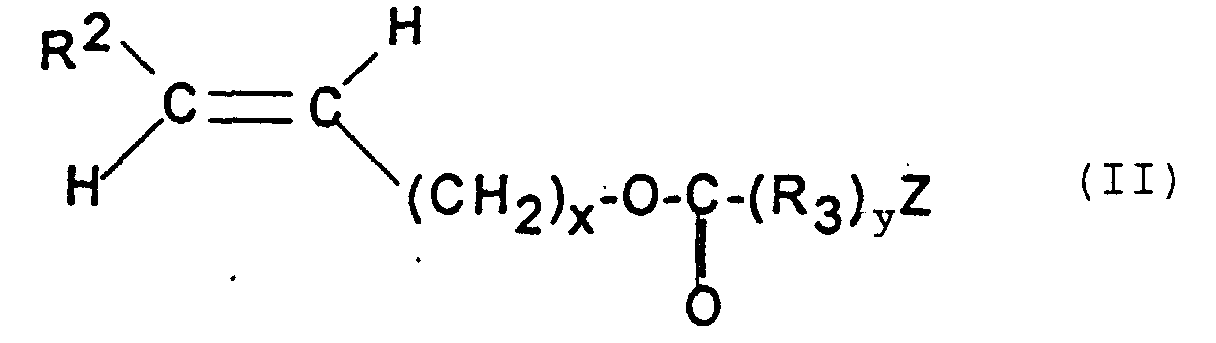 und gegebenenfallsR2 dasselbe wie unter a) angegeben,Z einen nicht substituierten Phenylrest oder einen Phenylrest, der mit einem oder mehreren gleichen oder verschiedenen Resten substituiert ist, die unter Phenyl, Cycloalkyl mit 3 bis 8 Kohlenstoffatomen, geradkettigen oder verzweigten Kohlenwasserstoffresten mit bis zu 10 Kohlenstoffatomen, Halogenen, wie z.B. Fluor, Chlor und Brom, dem Rest -NO2 und dem Rest -CN ausgewählt sind.R3 eine zweiwertige Gruppe, die ausgewählt ist unter -(CH2)w-, worin w den Wert 0, 1 oder 2 haben kann, -CH=CH-,worin Y einen geradkettige oder verzweigten aliphatischen Kohlenwasserstoffrest mit bis zu 4 Kohlenstoffatomen darstellt und z den Wert 0 oder 1 haben kann,
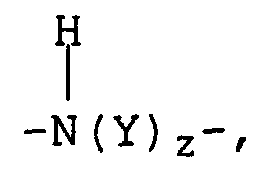 x und y den Wert 0 oder 1,c) mindestens eine Einheit, die von einem Monomer der Formelabstammt, in der R Wasserstoff, einen geradkettigen oder verzweigten Kohlenwasserstoffrest mit bis zu 4 Kohlenstoffatomen darstellt.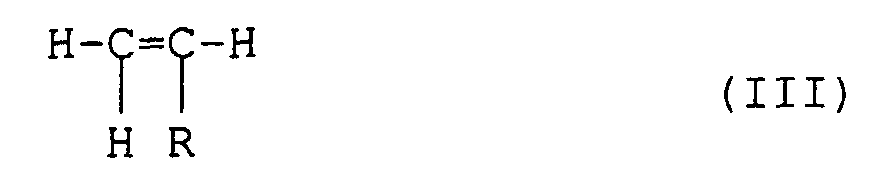
- Verwendung nach Anspruch 3, dadurch gekennzeichnet, daß in Formel (I) R2 Wasserstoff und R1 den Rest -OH darstellt.
- Verwendung nach Anspruch 3, dadurch gekennzeichnet, daß in Formel (II) R2 Wasserstoff bedeutet, x und y gleich Null sind und Z einen nicht substituierten Phenylrest oder einen Phenylrest, der mit Phenyl substituiert ist, darstellt.
- Verwendung nach Anspruch 3, dadurch gekennzeichnet, daß der Rest R in Formel (III) Wasserstoff, Methyl oder Ethyl bedeutet.
- Verwendung nach Anspruch 6, dadurch gekennzeichnet, daß es sich bei dem Monomer der Formel (III) um Ethylen handelt.
- Verwendung nach einem der Ansprüche 3 bis 5, dadurch gekennzeichnet, daß das Polymer mindestens 10 Mol-% und vorzugsweise 40 bis 80 Mol-% Einheiten, die von einem Monomer der Formel (I) abstammen, und höchstens 90 Mol-% und vorzugsweise 60 bis 20 Mol-% Einheiten, die von einem Monomer der Formel (II) abstammen, enthält.
- Verwendung nach einem der Ansprüche 3 bis 7, dadurch gekennzeichnet, daß das Polymer mindestens 20 Mol-% und vorzugsweise 25 bis 50 Mol-% Einheiten, die von einem Monomer der Formel (III) abstammen, und Einheiten der Formeln (I) und (II) in einer solchen Menge enthält, daß ihre Summe höchstens 80 Mol-% und vorzugsweise 75 bis 50 Mol-% entspricht.
- Verwendung nach einem der Ansprüche 1 bis 9, dadurch gekennzeichnet, daß das Material außerdem eine oder mehrere Schichten aus Polyolefinen enthält.
- Verpackung, die mindestens einen Film auf der Basis eines Polymers nach einem der Ansprüche 1 bis 9 enthält.
Applications Claiming Priority (3)
| Application Number | Priority Date | Filing Date | Title |
|---|---|---|---|
| FR9313173 | 1993-11-05 | ||
| FR9313173 | 1993-11-05 | ||
| PCT/FR1994/001269 WO1995012624A1 (fr) | 1993-11-05 | 1994-11-02 | Materiau d'emballage ayant des proprietes barrieres a l'oxygene |
Publications (2)
| Publication Number | Publication Date |
|---|---|
| EP0678104A1 EP0678104A1 (de) | 1995-10-25 |
| EP0678104B1 true EP0678104B1 (de) | 1999-10-06 |
Family
ID=9452541
Family Applications (1)
| Application Number | Title | Priority Date | Filing Date |
|---|---|---|---|
| EP95900183A Expired - Lifetime EP0678104B1 (de) | 1993-11-05 | 1994-11-02 | Verpackung mit beschränkter sauerstoffdurchlässigkeit |
Country Status (4)
| Country | Link |
|---|---|
| EP (1) | EP0678104B1 (de) |
| JP (1) | JPH08508065A (de) |
| DE (1) | DE69421063T2 (de) |
| WO (1) | WO1995012624A1 (de) |
Families Citing this family (3)
| Publication number | Priority date | Publication date | Assignee | Title |
|---|---|---|---|---|
| JPH09316208A (ja) * | 1996-03-22 | 1997-12-09 | Kureha Chem Ind Co Ltd | 気体選択透過性を有する成形物、そのフイルムおよびその製造方法 |
| DE69714680T2 (de) * | 1996-10-15 | 2003-04-10 | Kuraray Co., Ltd | Mehrschichten-Gassperrmaterial |
| JP6246772B2 (ja) * | 2015-10-06 | 2017-12-13 | 日機装株式会社 | 収納トレイ |
Family Cites Families (6)
| Publication number | Priority date | Publication date | Assignee | Title |
|---|---|---|---|---|
| US2269187A (en) * | 1940-04-17 | 1942-01-06 | Gen Electric | Halogenated benzoic ester |
| GB1013105A (en) * | 1961-08-18 | 1965-12-15 | Director Of Kogyogijutsuin | Process for esterifying a polymer containing hydroxyl groups |
| GB1145961A (en) * | 1966-01-07 | 1969-03-19 | Monsanto Chemicals | Resin process |
| US3560465A (en) * | 1969-04-01 | 1971-02-02 | Eastman Kodak Co | Preparation of soluble poly(vinyl esters) from high molecular weight acid chlorides |
| US3825523A (en) * | 1971-04-19 | 1974-07-23 | Mitsui Petrochemical Ind | Polymer composition stabilized against oxidation and light |
| CS204190B1 (en) * | 1978-02-22 | 1981-03-31 | Jaroslav Drobnik | Activation method for hydrxyl groups containing insoluble carriers |
-
1994
- 1994-11-02 DE DE69421063T patent/DE69421063T2/de not_active Expired - Fee Related
- 1994-11-02 JP JP7513049A patent/JPH08508065A/ja not_active Ceased
- 1994-11-02 WO PCT/FR1994/001269 patent/WO1995012624A1/fr not_active Ceased
- 1994-11-02 EP EP95900183A patent/EP0678104B1/de not_active Expired - Lifetime
Also Published As
| Publication number | Publication date |
|---|---|
| EP0678104A1 (de) | 1995-10-25 |
| DE69421063T2 (de) | 2000-03-02 |
| JPH08508065A (ja) | 1996-08-27 |
| WO1995012624A1 (fr) | 1995-05-11 |
| DE69421063D1 (de) | 1999-11-11 |
Similar Documents
| Publication | Publication Date | Title |
|---|---|---|
| EP0012701B1 (de) | PVC- und Polyurethan-Zusammensetzungen für medizinische Zwecke, Verfahren zu ihrer Herstellung und daraus hergestellte Gegenstände | |
| JP3061639B2 (ja) | ポリ(ペルフルオロエーテル)アシル過酸化物 | |
| CA1253293A (fr) | Additifs polymeriques utilisables pour l'inhibition du depot de paraffines dans les huiles brutes | |
| FR2812647A1 (fr) | Film imper-respirant | |
| FR3071500A1 (fr) | Synthese de latex de poly(fluorure de vinylidene) sans tensioactif par polymerisation en emulsion raft | |
| EP0418129B1 (de) | Ethylvinylalcoholcopolymermischungen mit Gasbarriereeigenschaften, Thermoformbarkeit und/oder Dauerbiegebeständigkeit | |
| EP0441666B1 (de) | Äthylen-Vinylalkohol-Copolymer-Gassperrfilm, seine Herstellung und seine Anwendung für Verpackungszwecke | |
| EP0678104B1 (de) | Verpackung mit beschränkter sauerstoffdurchlässigkeit | |
| FR2532652A1 (fr) | Pellicule souple en polymere de propylene | |
| EP0015856A1 (de) | Aromatische thermotrope Copolyester und Verfahren zu ihrer Herstellung | |
| FR2598425A1 (fr) | Compose de poly-b-alanine, procede pour sa production et composition de resine de polyacetal contenant un compose de poly-b-alanine | |
| FR2518552A1 (fr) | Procede perfectionne pour la preparation d'un constituant catalyseur pour la polymerisation des olefines | |
| JPH10502689A (ja) | 超臨界co▲下2▼中でのポリ(ビニルトリフルオロアセテート)及びポリ(ビニルトリフルオロアセテート/ビニルエステル)コポリマーの製造方法 | |
| CA2221552A1 (fr) | Copolymere ethylene/ester (meth)acrylique de polyalkyleneglycol(ether) et film imperrespirant obtenu a partir de celui-ci | |
| FR2746322A1 (fr) | Emulseurs anti-incendies polyvalents comprenant un polysaccharide et un polymere fluore tribloc | |
| EP0708118B1 (de) | Verwendung von Fluorcopolymeren als Schutzbeschichtungsmittel | |
| FR2601007A1 (fr) | Procede de preparation de polyisocyanate a groupement biuret | |
| BE890476A (fr) | Copolymeres de tetrafluoroethylene et procede pour leur preparation | |
| FR2530645A1 (fr) | Procede de production de polyethylene lineaire basse densite et produit obtenu | |
| BE899831A (fr) | Feuille ou pellicule soluble dans l'eau. | |
| LU84641A1 (fr) | Polymeres d'ethylene a structure lineaire et leur procede de preparation | |
| EP1353800A1 (de) | Strukturen mit mehreren polymerlagen | |
| CA2011092C (fr) | Procede pour la fabrication de polymeres du chlorure de vinyle modifies par des polymeres de lactones et nouveaux polymeres du chlorure de vinyle modifies par des polymeres de lactones | |
| FR2685341A1 (fr) | Solutions de polyamides-imides dans la gamma-butyrolactone leur procede d'obtention et les fils ainsi obtenus. | |
| WO2021123592A1 (fr) | Copolymere d'ethylene et d'un 1,3-diene |
Legal Events
| Date | Code | Title | Description |
|---|---|---|---|
| PUAI | Public reference made under article 153(3) epc to a published international application that has entered the european phase |
Free format text: ORIGINAL CODE: 0009012 |
|
| 17P | Request for examination filed |
Effective date: 19950630 |
|
| AK | Designated contracting states |
Kind code of ref document: A1 Designated state(s): DE FR GB IT |
|
| RIN1 | Information on inventor provided before grant (corrected) |
Inventor name: STAVERIS, STAVROS Inventor name: GANDON, CHRISTOPHE Inventor name: FRIEDMANN, GILBERT Inventor name: BOUILLOUX, ALAIN Inventor name: BOIRON, GUY |
|
| 17Q | First examination report despatched |
Effective date: 19980212 |
|
| GRAG | Despatch of communication of intention to grant |
Free format text: ORIGINAL CODE: EPIDOS AGRA |
|
| GRAG | Despatch of communication of intention to grant |
Free format text: ORIGINAL CODE: EPIDOS AGRA |
|
| GRAH | Despatch of communication of intention to grant a patent |
Free format text: ORIGINAL CODE: EPIDOS IGRA |
|
| GRAH | Despatch of communication of intention to grant a patent |
Free format text: ORIGINAL CODE: EPIDOS IGRA |
|
| GRAA | (expected) grant |
Free format text: ORIGINAL CODE: 0009210 |
|
| AK | Designated contracting states |
Kind code of ref document: B1 Designated state(s): DE FR GB IT |
|
| REF | Corresponds to: |
Ref document number: 69421063 Country of ref document: DE Date of ref document: 19991111 |
|
| ITF | It: translation for a ep patent filed | ||
| GBT | Gb: translation of ep patent filed (gb section 77(6)(a)/1977) |
Effective date: 19991209 |
|
| PLBE | No opposition filed within time limit |
Free format text: ORIGINAL CODE: 0009261 |
|
| STAA | Information on the status of an ep patent application or granted ep patent |
Free format text: STATUS: NO OPPOSITION FILED WITHIN TIME LIMIT |
|
| RAP2 | Party data changed (patent owner data changed or rights of a patent transferred) |
Owner name: SOCIETE ALSACIENNE D'ALUMINIUM SOCIETE ANONYME Owner name: ATOFINA |
|
| 26N | No opposition filed | ||
| PGFP | Annual fee paid to national office [announced via postgrant information from national office to epo] |
Ref country code: DE Payment date: 20001023 Year of fee payment: 7 |
|
| PGFP | Annual fee paid to national office [announced via postgrant information from national office to epo] |
Ref country code: GB Payment date: 20001101 Year of fee payment: 7 |
|
| PGFP | Annual fee paid to national office [announced via postgrant information from national office to epo] |
Ref country code: FR Payment date: 20001110 Year of fee payment: 7 |
|
| PG25 | Lapsed in a contracting state [announced via postgrant information from national office to epo] |
Ref country code: GB Free format text: LAPSE BECAUSE OF NON-PAYMENT OF DUE FEES Effective date: 20011102 |
|
| REG | Reference to a national code |
Ref country code: GB Ref legal event code: IF02 |
|
| GBPC | Gb: european patent ceased through non-payment of renewal fee |
Effective date: 20011102 |
|
| PG25 | Lapsed in a contracting state [announced via postgrant information from national office to epo] |
Ref country code: DE Free format text: LAPSE BECAUSE OF NON-PAYMENT OF DUE FEES Effective date: 20020702 |
|
| PG25 | Lapsed in a contracting state [announced via postgrant information from national office to epo] |
Ref country code: FR Free format text: LAPSE BECAUSE OF NON-PAYMENT OF DUE FEES Effective date: 20020730 |
|
| REG | Reference to a national code |
Ref country code: FR Ref legal event code: ST |
|
| REG | Reference to a national code |
Ref country code: FR Ref legal event code: ST |
|
| PG25 | Lapsed in a contracting state [announced via postgrant information from national office to epo] |
Ref country code: IT Free format text: LAPSE BECAUSE OF NON-PAYMENT OF DUE FEES;WARNING: LAPSES OF ITALIAN PATENTS WITH EFFECTIVE DATE BEFORE 2007 MAY HAVE OCCURRED AT ANY TIME BEFORE 2007. THE CORRECT EFFECTIVE DATE MAY BE DIFFERENT FROM THE ONE RECORDED. Effective date: 20051102 |