EP0671663A1 - Photoconducteur électrophotographique - Google Patents
Photoconducteur électrophotographique Download PDFInfo
- Publication number
- EP0671663A1 EP0671663A1 EP95102889A EP95102889A EP0671663A1 EP 0671663 A1 EP0671663 A1 EP 0671663A1 EP 95102889 A EP95102889 A EP 95102889A EP 95102889 A EP95102889 A EP 95102889A EP 0671663 A1 EP0671663 A1 EP 0671663A1
- Authority
- EP
- European Patent Office
- Prior art keywords
- group
- electrophotographic photoreceptor
- interlayer
- compound
- alkyl
- Prior art date
- Legal status (The legal status is an assumption and is not a legal conclusion. Google has not performed a legal analysis and makes no representation as to the accuracy of the status listed.)
- Granted
Links
Images


Classifications
-
- G—PHYSICS
- G03—PHOTOGRAPHY; CINEMATOGRAPHY; ANALOGOUS TECHNIQUES USING WAVES OTHER THAN OPTICAL WAVES; ELECTROGRAPHY; HOLOGRAPHY
- G03G—ELECTROGRAPHY; ELECTROPHOTOGRAPHY; MAGNETOGRAPHY
- G03G5/00—Recording-members for original recording by exposure, e.g. to light, to heat or to electrons; Manufacture thereof; Selection of materials therefor
- G03G5/14—Inert intermediate or cover layers for charge-receiving layers
- G03G5/142—Inert intermediate layers
-
- G—PHYSICS
- G03—PHOTOGRAPHY; CINEMATOGRAPHY; ANALOGOUS TECHNIQUES USING WAVES OTHER THAN OPTICAL WAVES; ELECTROGRAPHY; HOLOGRAPHY
- G03G—ELECTROGRAPHY; ELECTROPHOTOGRAPHY; MAGNETOGRAPHY
- G03G5/00—Recording-members for original recording by exposure, e.g. to light, to heat or to electrons; Manufacture thereof; Selection of materials therefor
- G03G5/14—Inert intermediate or cover layers for charge-receiving layers
- G03G5/142—Inert intermediate layers
- G03G5/144—Inert intermediate layers comprising inorganic material
-
- G—PHYSICS
- G03—PHOTOGRAPHY; CINEMATOGRAPHY; ANALOGOUS TECHNIQUES USING WAVES OTHER THAN OPTICAL WAVES; ELECTROGRAPHY; HOLOGRAPHY
- G03G—ELECTROGRAPHY; ELECTROPHOTOGRAPHY; MAGNETOGRAPHY
- G03G5/00—Recording-members for original recording by exposure, e.g. to light, to heat or to electrons; Manufacture thereof; Selection of materials therefor
- G03G5/02—Charge-receiving layers
- G03G5/04—Photoconductive layers; Charge-generation layers or charge-transporting layers; Additives therefor; Binders therefor
- G03G5/043—Photoconductive layers characterised by having two or more layers or characterised by their composite structure
- G03G5/047—Photoconductive layers characterised by having two or more layers or characterised by their composite structure characterised by the charge-generation layers or charge transport layers
Definitions
- the present invention relates to an electrophotographic photoreceptor.
- the present invention also relates to an image forming apparatus in which the electrophotographic photoreceptor is used.
- an image forming apparatus recently that can be used as an output device of a computer or as an output device capable of processing various images.
- LBP laser beam printer
- a digital copying machine In order to assemble a photoreceptor to these apparatus, it is necessary that the photoreceptor is sufficiently highly sensitive with respect to a beam of light of long wavelength emitted by the semiconductor laser. Therefore, a phthalocyanine compound attracts notice, which is a carrier generation material (CGM) highly sensitive with respect to a beam of light of long wavelength.
- CGM carrier generation material
- Various phthalocyanine compounds are proposed.
- titanyl phthalocyanine is a CGM capable of accomplishing high sensitivity and high image quality.
- TiOPc is sufficiently sensitive in the long wavelength region from 600 nm to 850 nm.
- the long wavelength region is defined as a region, the wavelength of which is from 600 nm to 850 nm.
- TiOPc is very suitable to the photosensitive material used for an image forming apparatus in which an LED, EL (electro-luminescence) or LCD (liquid crystal shutter) is used for the light source.
- the improvement of the CGM is not sufficient for the demand of high speed copying machine or LBP and therefore various attempts are required on other items for improving other characteristics.
- One example is an improvement of an interlayer. It is provided between the conductive support and the photosensitive layer in order to enhance the mechanical adhesion property and restrain the electrical image defect.
- An example of the serious image defect is black spots or white spots. In the case of reversal development process which is used in LBP, small black spots sometimes appear on a copied white image surface. In the case of normal development, white spots sometimes appear on a copied solid black image surface.
- Examples of usable materials to compose the interlayer are: polyamide resin, polyester resin, and polyurethane resin, which are most commonly used.
- the following problems may be encountered. Under the condition of high temperature and high humidity, resistance of the intermediate resin layer is lowered so that the barrier property is deteriorated, and further the electrical carrier generating property of imidazole perylene compound and TiOPc is high. Therefore, positive holes tend to be injected from conductive support, so that image defects such as white spots or black spots tend to occur. Under the condition of low temperature and low humidity, resistance of the resin layer is raised, so that the barrier property is enhanced. Accordingly, sensitivity is lowered, and the residual potential is increased when the photoreceptor is repeatedly used. Especially when TiOPc is used as CGM, the above problems become remarkable since the carrier generating capacity of TiOPc is low under the condition of low temperature and low humidity.
- the CGM having the high carrier generating ability is subjected by the variation of resistivity due to the change of environment to cause white spots or black spots and further the deterioration of electrical potential.
- a photoreceptor surface corresponding to the image portion is subjected to exposure of a laser beam, and the formed image is subjected to reversal development.
- Concerning the transfer charging process in the case of a negatively charged photoreceptor, charging is carried out so that the photoreceptor can be charged to be a reverse polarity. It can be considered that the negative charge induced by the positive carrier generated on the photoreceptor surface during the transfer process exists on an interface between the carrier generation layer, which is a photosensitive layer, and the interlayer, which is a resin layer. When this negative charge is accumulated without being erased, a sufficiently high charging potential can not be provided on the surface, and fog appears on the image. This phenomenon is referred to as transfer memory. That is, the problem of transfer memory is encountered.
- Japanese Patent Publication Open to Public Inspection No. 93062/1983 discloses a technique for providing an interlayer by mixing a resin with metal alkoxide chemical compound and metal chelate compound. However, this method is not competent for improving the potential characteristics, either.
- the interlayer is formed from an organic metal compound and silane coupling reagent without using resin.
- Japanese Patent Publication Open to Public Inspection No. 272277/1985 discloses a technique in which a metal alkoxide compound and silane coupling reagent are used.
- the former in order to distinguish the interlayer composed of an organic metal compound and silane coupling reagent of the invention from the interlayer composed of resin, the former is referred to as a ceramic interlayer.
- the present invention has been achieved to solve the above problems caused in the conventional interlayer and photoreceptor.
- the first object of the present invention is to stably provide an electrophotographic photoreceptor including an interlayer characterized in that: the interlayer is formed from a coating solution in which a precipitation is not generated when a predetermined time has passed after the preparation; and even when an electrophotographic photoreceptor, the interlayer of which is formed from the coating solution, is repeatedly used under a wide range of temperature and humidity condition, the interlayer exhibits a sufficiently high charging capacity, residual electrical potential and excellent image forming characteristics.
- an object of the present invention is to provide an electrophotographic photoreceptor, the pot life of the coating composition (a period of time in which the high performance can be exhibited) is sufficiently long, and the electrical potential characteristic and image characteristic of photoreceptor are excellent.
- the second object of the present invention is to stably provide an electrophotographic photoreceptor characterized in that: even when the photoreceptor is mounted on an image forming apparatus, the image forming proces speed of which is high, and operated over a long period of time, images of high contrast and resolution can be formed, so that the occurrence of image defects such as white spots, fog and deterioration of density can be avoided and the electrical potential is stable.
- the third object of the present invention is to stably provide an electrophotographic photoreceptor characterized in that: even when the exposure light source of the image forming apparatus is a semiconductor laser, the wavelength of which is long, images of high contrast and resolution can be formed when the photoreceptor has a sufficiently high photosensitivity, so that the occurrence of image defects such as black spots, fog caused by transfer memory and deterioration of density can be avoided.
- the electrophotographic photoreceptor of the invention comprises an interlayer and a photosensitive layer provided on an electrical conductive support in which the interlayer conteins: a metallic chelate compound of formula I and a compound of formula II.
- I (RO) m MX n II Z a A b SiY c wherein, R is an alkyl group, preferably having not more than 4 carbon atoms; M is a titanium or Aluminium; X is a chelate forming group such as an acetoacetic ester group or a ⁇ diketone group; m and n are individually an integer more than 1 provided that the sum of m and n is 4 in case that M is a titanium and 3 in case that M is an aluminium, preferably m is not less than n; Z is a hydrolysis group such as an alkoxy group, a halogen atom or an amine group, preferably an alkoxy group having not more than 4 carbon atoms; A is an alkyl or aryl group,
- the photosensitive layer of the invention preferably contains imidazole perylene or titanylphthalocyanine pigment.
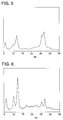
- the preferable imidazole perylene pigment is a crystal form having peaks at 6.3 ⁇ 0.2°, 12.4 ⁇ 0.2°, 25.3 ⁇ 0.2° and 27.1 ⁇ 0.2° in the X-ray diffraction spectrum with respect to Cu-K ⁇ rays, and the peak intensity at 12.4 ⁇ 0.2° is maximum and the peak width at half height is not less than 0.65° and a clear peak is not shown at 11.5 ⁇ 0.2°.
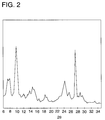
- the preferable titanyl phthalocyanine is a crystal form having peaks at 9.6 ⁇ 0.2°, 11.7 ⁇ 0.2°, 15.0 ⁇ 0.2°, 24.1 ⁇ 0.2° and 27.3 ⁇ 0.2° in the X-ray diffraction spectrum with respect to Cu-K ⁇ rays.
- Fig. 1 is a sectional view of the image forming apparatus of the present invention.
- Fig. 2 is a view showing an X ray diffraction spectrum of titanyl phthalocyanine (Synthetic Example 1, thin film sample) according to the present invention.
- Fig. 3 is a view showing an X ray diffraction spectrum of imidazole perylene compound (synthetic substance, powder sample) according to the present invention.
- Fig. 4 is a view showing an X ray diffraction spectrum of imidazole perylene compound (sublimation substance, powder sample) according to the present invention.
- Fig. 5 is a view showing an X ray diffraction spectrum of imidazole perylene compound (AP substance, powder sample) according to the present invention.
- Fig. 6 is a view showing an X ray diffraction spectrum of imidazole perylene compound (Example 8, powder sample) according to the present invention.
- the ceramic based interlayer was known and composing materials, i.e. metal, chelate compound and coupling reagent, were selected widely. However it was hard to have found the sufficient combination of the materials that all of charging potential characteristics, image characteristics and pot life of coating composition are satisfied. Further it is required to restrain the occurrence of image defects used in combination with the high photosensitive materials.
- the present inventors made investigation into the chemical compounds described above. As a result, the following problems were encountered with respect to the items (3) to (7):
- the residual electrical potential was high in the initial stage or when the photoreceptor was repeatedly used.
- the film forming property was low.
- the adhesion property onto the photosensitive layer was low. Image defects such as white spots and black spots were caused.
- ⁇ -diketone of item (1) and acetoacetic ester of item (2) were excellent in view of the characteristics of electrical potential, film forming property, adhesion property, image characteristic, and pot life of the coating solution.
- acetoacetic ester described in item (2) is more preferable since it is more stable.
- ⁇ -diketone chelate compound is used, the following problems may be encountered.
- the number of chelate groups of the organic metal compound must be put in an appropriate range.
- the organic metal compound has no alkoxy groups but it only has chelate groups, the residual electrical potential is raised. Therefore, it is necessary that the organic metal compound has at least one alkoxy group. It is preferable that the number of chelate groups in the chemical compound is not more than the number of alkoxy groups. Due to the foregoing, the residual electrical potential can be maintained at a low level.
- a metal used for the organic metal compound was examined, In case that a known zirconium chelate compound is used, the pot life is short in such a manner that precipitation is caused when a certain period of time has passed after the preparation of the coating solution. Some other metals are not suitable for general use, so that the manufacturing method has not been established yet, or the cost is high. Therefore, they are not put into practical used.
- a titanium and aluminum are preferably used in the present invention. They give a stable coating composition and do not show the image defects. They also show reduce increase of residual potential when repeatedly used. Especially titanium compound gives reduced residual potential.
- Titanium chelate compounds used in the present invention will be described below.
- Examples of usable chemical compounds having an acetoacetic ester chelate group are: diisopropoxytitaniumbis(methylacetoacetate), diisopropoxytitaniumbis(ethylacetoacetate), diisopropoxytitaniumbis(propylacetoacetate), diisopropoxytitaniumbis(buthylacetoacetate), dibutoxytitaniumbis(methylacetoacetate), dibutoxytitaniumbis(ethylacetoacetate), triisoprpoxytitanium(methylacetoacetate), triisoprpoxytitanium(ethylacetoacetate), tributoxytitanium(methylacetoacetate), tributoxytitanium(ethylacetoacetate), isopropoxytitaniumtri(methylacetoacetate), isopropoxytitaniumtri(ethylacetoacetate), isobutoxytitaniumtri(methylacetoacetate), and isobutoxytitan
- Examples of usable chemical compounds having a ⁇ -diketone chelate group are: diisopropoxytitaniumbis(acetylacetone), diisopropoxytitaniumbis(2,4-heptanedionate), dibutoxytitaniumbis(acetylactonate), dibutoxytitaniumbis(2,4-heptanedionate), triisopropoxytitanium(acetylactonate), triisopropoxytitanium(2,4-heptanedionate), tributoxytitanium(acetylacetonate), tributoxytitanium(2,4-heptanedionate), isopropoxytitaniumtri(acetylacetonate), isopropoxytitaniumtri(2,4-heptanedionate), isobutoxytitaniumtri(acetylactonate), and isobutoxytitaniumtri(2,4-heptanedionate).
- Aluminum chelate compounds used in the present invention are described below.
- Examples of usable chemical compounds having an acetoacetic ester chelate groups are: diisopropoxyaluminum(methylacetoacetate), diisopropoxyaluminum(ethylacetoacetate), diisopropoxyaluminum(propylacetoacetate), diisopropoxyaluminum(butylacetoacetate), dibutoxyaluminum(methylacetoacetate), dibutoxyaluminum(ethylacetoacetate), isopropoxyaluminumbis(methylacetoacetate), isopropoxyaluminumbis(ethylacetoacetate), isobutoxyaluminumbis(methylacetoacetate), and isobutoxyaluminumbis(ethylacetoacetate).
- Examples of usable chemical compounds having a ⁇ -diketone chelate group are: diisopropoxyaluminum(acetylacetonate), diisopropoxyaluminum(2,4-heptanedionate), dibutoxyaluminum(acetylacetonate), dibutoxyaluminum(2,4-heptanedionate), isopropoxyaluminumbis(acetylacetonate), isopropoxyaluminumbis(2,4-heptanedionate), isobutoxyaluminumbis(acetylacetonate), isobutoxyaluminumbis(acetylacetonate), and isobutoxyaluminumbis(2,4-heptanedionate).
- silane coupling reagent used in the present invention, is represented by the following formula II. II Z a A b SiY c
- the functional group Y effects the characteristics of the interlayer remarkably. For example, those having -SH group or Chloride tend to be cracked in the photoreceptor, and those having epoxy group tend to give an image defect.
- the best functional group is that having methacryroxy group at the end, and next one is that having an amino group at the end.
- Examples of silan coupling reagent having the methacryroxy group are; ⁇ -methylmethacryroxypropyltrimethoxysilane, ⁇ -methylmethacryroxypropyltriethoxysilane, ⁇ -ethylmethacryroxypropyltrimethoxysilane, ⁇ -methylmethacryroxypropylmethyldimethoxysilane, and ⁇ -methylmethacryroxypropylmethyldiethoxysilane.
- silane coupling reagent By using the silane coupling reagent, it is possible to provide a higher film forming characteristic, image characteristic and electrical potential characteristic.
- Remarkable characteristics represented by the silane coupling reagent having methacryroxy group at the end is the stability of potential. It provides an interlayer giving very stable property that residual potential rises slightly in case using repeatedly.
- the other good silane coupling reagent that is next to those having methacryroxy group is that having an amino group, i.e. -NH2 or -NHR'' at the end of the chemical formula.
- R'' is an alkyl or aryl group, preferably an alkyl group having not more than 6 carbon atoms and an aryl group having not more than 8 carbon atoms.
- the silane coupling reagent having this amino group at the end has a higher reactivity than the other coupling reagent, and when the interlayer film is formed, the net work constitution tends to be formed by polymerization with metallic chelate compounds. This high reactivity greatly contributes to the suppression of occurrence of image defects such as white spots or black spots. It is assumed that this silane coupling reagent is superior to others from the above viewpoint.
- the reactivity of the first or secondary amino group is high. Especially, the reactivity of the first class amino group of -NH2 is very high, so that it is effective for the suppression of occurrence of image defects.
- Examples of specific organic functional groups having -NH2 at the end are: a ⁇ -aminopropyl group, ⁇ -aminoethyl group, and ⁇ -aminobutyl group.
- Examples of the silane coupling reagents having the above organic functional group are: ⁇ -aminopropyltrimethoxysilane, ⁇ -aminopropyltriethoxysilane, ⁇ -aminopropylmethyldimethoxysilane, ⁇ -aminopropylmethyldiethoxysilane, ⁇ -aminoethyltrimethoxysilane, and ⁇ -aminobutyltrimethoxysilane.
- the aliphatic hydrocarbon chain -(CH2)k is used as the joint component of the organic functional group, and further -(CH2) k -NH-(CH2) j -, -(CH2) k -O-(CH2) j -and -(CH2) k -NH-CO- containing an amino group or carbonyl group may be adopted.
- k and j are respectively an integer , preferably not more than 10.
- Examples of the aforementioned organic functional groups are: an N- ⁇ (aminoethyl) ⁇ -aminopropyl group, N- ⁇ (aminopropyl) ⁇ -aminopropyl group, N- ⁇ (aminoethyl) ⁇ -aminobutyl group, and ⁇ -ureidopropyl group.
- Examples of usable silane coupling reagents having this organic functional group are: N- ⁇ (aminoethyl) ⁇ -aminopropyltrimethoxysilane, N- ⁇ (aminoethyl) ⁇ -aminopropyltriethoxysilane, N- ⁇ (aminoethyl) ⁇ -aminopropylmethyldimethoxysilane, N- ⁇ (aminoethyl) ⁇ -aminopropylmethyldiethoxysilane, N- ⁇ (aminopropyl) ⁇ -aminopropylmethylmethoxysilane, N- ⁇ (aminoethyl) ⁇ -aminobutyltrimethoxysilane, ⁇ -ureidopropyltrimethoxysilane, and ⁇ -ureidopropyltriethoxysilane.
- the joint component composed of only aliphatic hydrocarbon chain -(CH2) k - is superior in view of increasing the sensitivity and reducing the residual electrical potential, so that an excellent electrical potential performance can be provided.
- R'' i.e., aliphatic or aromatic hydrocarbon groups, which are introduced to the secondary amino group, are: an alkyl group such as a methyl group, ethyl group, propyl group and butyl group; a residue of unsaturated aliphatic hydrocarbon such as a vinyl group and allyl group; and an aryl group such as a phenyl group, tolyl group, xylyl group and naphthyl group.
- Examples of usable organic functional groups having the secondary amino group at the end are: an N-methyl- ⁇ -aminopropyl group, N-ethyl- ⁇ -aminopropyl group, N-vinyl- ⁇ -aminopropyl group, N-allyl- ⁇ -aminopropyl group, N-phenyl- ⁇ -aminopropyl group, and N-tolyl- ⁇ -aminopropyl group.
- silane coupling reagents having these organic functional groups are: an N-methyl- ⁇ -aminopropyltrimethoxysilane, N-ethyl- ⁇ -aminopropyltrimethoxysilane, N-vinyl- ⁇ -aminopropyltrimethoxysilane, N-allyl- ⁇ -aminopropyltrimethoxysilane, N-phenyl- ⁇ -aminopropyltrimethoxysilane, and N-tolyl- ⁇ -aminopropyltrimethoxysilane.
- the interlayer contains at least one type of metallic chelate compound of titanium or aluminum and a silane coupling reagent. When necessary, not less than two types may be mixed.
- resins or other chemical compounds may be contained.
- the interlayer selected in the manner described above is improved as compared with a conventional ceramic interlayer.
- the points of improvements are described as follows: Pot life of the interlayer coating solution, which is a serious problem when it is put into practical use, can be remarkably enhanced. Therefore, this interlayer is used, an excellent electrical potential characteristic and image characteristic can be provided.
- the electrical potential characteristic, image characteristic and pot life were not sufficiently satisfied at the same time.
- the reason why the present invention has attained the compatibility of the three factors is the most optimum selection of the material of the ceramic interlayer.
- the material to make the interlayer was selected in the following manner: The type of the central metal of the organic metal compound, the type and number of the chelate group and the type of the silane coupling reagent were optimized. Therefore, the reactivity of both compounds in the coating solution, the reactivity in the process of thermosetting, the film forming property of the interlayer, the resistance, the work function and the surface energy were maintained to be the most appropriate levels.
- the second object of the present invention is to form an image of high contrast and resolution even when the photoreceptor is mounted on an image forming apparatus, the proces speed of which is high, and repeatedly used over a long period of time.
- the imidazole-perylene compound is the one of the most preferable CGM in order to attain high sensitivity and resolution.
- the structure of imidazole-perylene compound is expressed by either of the following structural formulas.
- the most preferable imidazole perylene compound is that has a crystal form having peaks at 6.3 ⁇ 0.2°, 12.4 ⁇ 0.2°, 25.3 ⁇ 0.2° and 27.1 ⁇ 0.2° in the X-ray diffraction spectrum with respect to Cu-K ⁇ rays, and the peak intensity at 12.4 ⁇ 0.2° is maximum and the peak width at half height is not less than 0.65° and a clear peak is not shown at 11.5 ⁇ 0.2°.
- the carrier generating capacity of CGM depends on not only the molecular structure of CGM but also the stacking form of these molecules (the crystal structure). In the investigation made by the present inventors, they found the following: Imidazole-perylene compound having the crystal structure of the aforementioned X-ray diffraction spectrum can be provided has a high carrier generation capacity and exhibits an excellent performance.
- the preferable crystal structure used for the invention is the " ⁇ " type, and imidazole-perylene of the " ⁇ ” type is prepared by growing the crystal to have a maximum peak at 12.5° by processing fine particles in an organic solvent.
- An example of the method of diffusion and making fine particles is described as follows. The imidazole compound refined by means of sublimation was dissolved in sulfuric acid and then poured into water to become anorphous or crystal (acidic-paste-process).
- the crystal compound is obtained by gently diffusing in an organic solvent of high affinity under existing of a polymer binder. According to this way, fine crystals having higher uniformity are grown than by mechanical powdering process, and crystal deffects are avoided because the crystals are not subjected with high impact force. As the result, electrophpotogaphic characteristics are not deteoriated.
- the third object of the present invention is to stably provide an electrophotographic photoreceptor characterized in that: even when the exposure light source of the image forming apparatus is a semiconductor laser, the wavelength of which is long, images of high contrast and resolution can be formed when the photoreceptor has a sufficiently high photosensitivity.
- CGM is provided with a sufficient spectral sensitivity even in the long wavelength region so that an electrical charge is faithfully generated in accordance with a minute difference of exposure amount. Due to the foregoing, it is possible to form an image of high contrast and resolution. As a result, it is concluded that TiOPc is most preferable for CGM.
- TiOPc The basic structure of TiOPc is expressed by the following chemical formula.
- X1, X2, X3 and X4 respectively represent a hydrogen atom, halogen atom, alkyl group and alkoxy group.
- n, m, l and k respectively represent integers of 0 to 4. The preferable example is that every X1, X2, X3 and X4 is a hydrogen atom.
- TiOPc is a crystal form having peaks at 9.5 ⁇ 0.2°, 9.7 ⁇ 0.2°, 11.7 ⁇ 0.2°, 15.0 ⁇ 0.2°, 23.5 ⁇ 0.2°, 24.1 ⁇ 0.2° and 27.3 ⁇ 0.2° in the X-ray diffraction spectrum with respect to Cu-K ⁇ rays.
- crystal form of TiOPc there are provided types A, B and Y.
- the aforementioned crystal form belongs to the type Y. Compared with other crystal forms, this crystal form has a very high carrier generating capacity. Therefore, this crystal form is most preferable.
- the interlayer of the present invention is formed on the conductive support.
- a publicly known support such as a metallic support made of aluminum or stainless steel is used, or alternatively a laminated support is used, in which a metallic conductive layer is laminated on an insulating material such as plastic.
- the interlayer of the present invention is formed in the following manner:
- the organic titanium compound and silane coupling reagent, which are materials to compose the interlayer, are dissolved in a solvent.
- This solvent (referred to as a coating solution in this specification before) is coated on the conductive support and dried to be hardened.
- usable solvents are: alcohol such as methanol, ethanol, propanol and butanol; aromatic hydrocarbon such as toluene; ethyl acetate; and ester such as cellosolve-acetate.
- the above compounds may be singly used or mixed with each other. When necessary, they may be mixed with water.
- Examples of usable coating methods are: a dip coating method, spray coating method, blade coating method, spinner coating method, bead coating method, and curtain coating method.
- drying conditions for drying the coating film are described as follows:
- the drying temperature is in a range from 10 to 250°C, and preferably from 90 to 200°C.
- the drying time is in a range from 5 minutes to 5 hours, and preferably in a range from 20 minutes to 2 hours. Drying may be exerted by air blowing, or alternatively drying may be exerted in a stationary condition.
- the film thickness of the interlayer is generally 0.1 to 10 ⁇ m, and preferably 0.3 to 3 ⁇ m.
- a photosensitive layer is provided on the interlayer.
- the photosensitive layer may be composed of a single layer structure or a laminated layer structure.
- the photosensitive layer may include the carrier transfer material in which the carrier generation material is diffused.
- the layer may be divided into a carrier generation layer and carrier transfer layer in accordance with the function.
- the laminating order may be arbitrarily determined.
- the carrier generation layer is provided in such a manner that the carrier generation material (CGM) is diffused in the binder resin when necessary.
- CGM carrier generation material
- examples of usable CGM are: an inorganic photoconductor such as selenium, selenium alloy, CdS, CdSe, CdSSe, ZnO and ZnS; metal-chelated of nonmetal chelated phthalocyanine compound; bisazo compound; azo compound of triazo compound; squarelium compound; azulenium compound; perylene compound; indigo compound; quinacridone compound; polycyclic quinone compound; cyanin pigment; xanthene dye; and an electrical carrier transfer complex composed of poly-N-vinylcarbazole and trinitrofluorenone.
- a type of perylene compound a type of imidazole perylene compound or metallic phthalocyanine compound, and titanyl phthalocyanine (TiOPc).
- imidazole perylene compound is the most preferable, CGM and in order to accomplish the third object, TiOPc is the most preferable, CGM.
- Examples of usable binder resins to compose the carrier generation layer are: polystyrene resin, polyethylene resin, polypropylene resin, acrylic resin, methacrylic resin, vinyl chloride resin, vinyl acetate resin, polyvinyl butyral resin, epoxy resin, polyurethane resin, phenol resin, polyester resin, alkyd resin, polycabonate resin, silicon resin, melamine resin, and copolymer resin containing at least two of the above resins, for example, vinyl chloride-vinyl acetate-maleic anhydride copolymer, and semiconductive polymer, for example, poly-N-vinylcarbazole.
- the preferable binder is polyvinyl butyral resin
- the preferable binders are silicon resin or polyvinyl butyral resin, or alternatively both resins are mixed with each other.
- the carrier transfer layer is singly composed of the carrier transfer material (CTM) or alternatively the carrier transfer layer is composed of the carrier transfer material (CTM) and binder resin.
- CTM carrier transfer material
- Examples of usable CTM are: a carbazole derivative, oxazole derivative, oxadiazole derivative, thiazole derivative, thiadiazole derivative, triazole derivative, imidazole derivative, imidazolone derivative, imidazolidine derivative, bisimidazolidine derivative, styrile compound, styryl compound, hydrazone compound, pyrazoline derivative, oxazolone derivative, benzimidazole derivative, quinazoline derivative, benzofuran derivative, acridine derivative, phenazine derivative, aminostilbene derivative, triarylamine derivative, phenylenediamine derivative, stilbene derivative, benzidine derivative, poly-N-vinylcarbazole, poly-1-vinylpyrene, and poly-9-vinylanthracen
- Examples of usable binder resins for composing the carrier transfer layer are: polycarbonate resin, polyacrylate resin, polyester resin, polystyrene resin, styrene-acrylonitrile copolymer resin, polymethacrylic acid ester resin, and styrene-methacrylic acid ester copolymer resin.
- the publicly known antioxidant, ultraviolet ray absorbing agent, electron receiving material, surface improving agent, plasticizer, and environment dependency reducing agent may be added to each layer of the photoreceptor by an appropriate amount when necessary.
- a non-photosensitive layer such as a protective layer may be provided on the photoreceptor when necessary.
- the photoreceptor of the invention is especially effective when adopted in an image forming process using a reverse developing process such as an LBP or digital copying machine.
- a digital copying machine using the image forming process is shown in Fig. 1 to illustrate the invention.
- a beam of light sent from an illumination light source is incident upon a document, and the reflected beam of light is subjected to color separation, and the document image is formed on CCD.
- Optical information received by CCD is converted into an electrical signal, and then thus obtained image data is sent to an image writing section 3.
- a photoreceptor drum 1 which is an image forming body, is subjected to corona discharge, so that the photoreceptor drum is uniformly charged. Successively, the photoreceptor drum 1 is exposed to a beam of light sent from a laser beam light source in the image writing section 3. Then the formed latent image is subjected to reversal development, so that a toner image is formed in the exposed portion on the photoreceptor drum 1.
- the image writing operation such as charging and exposing is conducted for each separated color, and also color toner development corresponding to the formed latent image is conducted for each color. The above processes are repeated, and 4 color toner image including yellow, magenta, cyan and black is formed in the photoreceptor.
- the 4 color toner image is transferred onto a recording sheet by a transfer pole 6.
- the recording sheet is separated from the photoreceptor drum by the action of a separation pole 7, and the transferred image on the recording sheet is fixed by a fixing unit 8.
- the photoreceptor drum is cleaned by a cleaning unit 9.
- the toner image forming method and the transfer method are not limited to the specific examples, and other methods may be adopted.
- the present invention is applied to various image forming process other than the above example.
- Image information may be previously stored in the image memory such as a ROM and floppy disk, and the stored image information may be called when necessary and outputted to the image forming section.
- the image forming apparatus of the present invention includes an apparatus having no image reading section and the operation is conducted in such a manner that information sent from a computer is stored in the memory and outputted to the image forming section.
- One of the most typical example is an LED printer or an LBP.
- the above chemical compounds were mixed and reacted at 140°C in the atmosphere of nitrogen for 2 hours.
- Organic metal compound (A1) 140 g Silane coupling reagent (B1) 60 g Isopropyl alcohol 2000 ml Ethyl alcohol 500 ml
- B1 60 g Isopropyl alcohol 2000 ml
- Ethyl alcohol 500 ml The above compounds were mixed and stirred with the stirrer. In this way, the interlayer coating solution was prepared. Three days after the preparation, this coating solution was coated on an aluminum metal support by the dip coating method and dried at 150°C for 30 minutes. In this way, an interlayer, the thickness of which was 0.7 ⁇ m, was formed.
- Carrier generation material (C1) (titanyl phthalocyanine having the X ray diffraction spectrum shown in Fig. 2 which was obtained in Synthetic Example 1) 60 g Silicon resin solution (KR5240, 15% xylene butanol solution, manufactured by Shinetsu Kagaku Co.) 700 g Methyl ethyl ketone 2000 ml The above compounds were mixed and diffused with the sand mill for 10 hours. In this way, the carrier generation layer coating solution was prepared. This coating solution was coated on the aforementioned interlayer by the dip coating method. In this way, the carrier generation layer, the thickness of which was 0.2 ⁇ m, was formed.
- Carrier transfer material 200 g Bisphenol Z type polycarbonate (IUPILON Z300, manufactured by Mitsubishi Gas Kagaku Co.) 300 g 1,2-dichloroethane 2000 ml The above compounds were mixed and dissolved, so that the carrier transfer layer coating solution was prepared. This coating solution was coated on the above carrier generation layer by the dip coating method. In this way, a carrier transfer layer, the film thickness of which was 20 ⁇ m, was formed.
- EXAMPLES 9 and 12 were modified to prepare EXAMPLES 1 - 27 and 1 - 28.
- the coating compositions of coated after 60 days but not 3 days after preparation The samples are shown with an asterisks in the Table.
- Example 1-1 only the interlayer was changed as follows.
- Polyamide resin (CM8000, manufactured by Toray Co.) in an amount of 60 g was dissolved in 2000 ml of methanol.
- This coating compound was coated on an aluminum metal support by the dip coating method and dried at the room temperature. In this way, an interlayer, the film thickness of which was 0.3 ⁇ m, was formed.
- Photoreceptors obtained in Examples 1 - 1 to 1 - 21 and Comparative Examples 1 - 1 to 1- 26 were assembled to a copying machine.
- the specification of the copying machine was described as follows: Konica U-BIX4045 copying machine manufactured by Konica Corporation.
- the machine was modified to be a digital system in which 780 nm semiconductor laser exposure and reversal development were adopted. Using the above copying machine, 100,000 copies were tested, and the change in the surface electrical potential and the image characteristics were evaluated.
- Black spots degree of generation of black spots on a white copied image
- Deterioration of density of a solid black area degree of deterioration of density of a copied black sheet
- Overall fog degree of generation of fog when a white document, the reflective density of which is 0, is copied
- Belt-shaped fog by transfer memory degree of generation of belt-shaped fog on a white copied image caused by transfer memory
- the imidazoleperylene compound obtained in Synthetic Example 2 was refined by means of sublimation at 500°C under the pressure of 5 ⁇ 10 ⁇ 4 to 5 ⁇ 10 ⁇ 3 torr, and volatile impurities were removed by a shutter.
- obtained refined crystals were subjected again to the same sublimation treatment so that the crystals were further refined.
- obtained crystals subjected to sublimation treatment twice are referred to as a sublimation sample, and its X ray diffraction spectrum is shown in Fig. 4.
- An interlayer was formed in the same manner as that of Example 1 - 2.
- Carrier Generating Material (C2) (Imidazoleperylene compound of AP substance obtained in the acid paste treatment example) 70 g Polyvinylbutyral resin (Eslec BL-S manufactured by Sekisui Kagaku Co.) 15 g Methylethylketone 2500 ml The above compounds were mixed and diffused by the sand mill for 15 hours. In this way, the carrier generation layer coating solution was prepared. The X ray diffraction spectrum of this coating solution is shown in Fig. 6. This coating solution was coated on the aforementioned interlayer by the dip coating method, and a carrier generation layer, the thickness of which was 0.3 ⁇ m, was formed.
- a carrier transfer layer was formed on the carrier generation layer described before in the same manner as that of Example 1 - 2.
- the interlayer was modified by using A2 and B5 in place of A2 and B1. Except for that, the photoreceptor was formed in the same manner as that of Example 2 - 1.
- the carrier generating layer was changed in the following away.
- Carrier generation material C3 in an amount of 60 g, 15 g of polybutyral resin (Eslec BM-S, a product of Sekisui Chemical) and 2000 ml of Methyl ethyl ketone were mixed and diffused with the sand mill for 10 hours. In this way, the carrier generation layer coating solution was prepared. This coating solution was coated on the aforementioned interlayer by the dip coating method. In this way, the carrier generation layer, the thickness of which was 0.5 ⁇ m, was formed. Except for that, the photoreceptor was formed in the same manner as that of Example 2 - 1 and 2 - 2.
- the carrier generating layer was changed in the following away.
- Carrier generation material C4 in an amount of 100 g, 50 g of polybutyral resin (Eslec BM-S, a product of Sekisui Chemical) and 2000 ml of Methyl ethyl ketone were mixed and diffused with the sand mill for 10 hours. In this way, the carrier generation layer coating solution was prepared. This coating solution was coated on the aforementioned interlayer by the dip coating method. In this way, the carrier generation layer, the thickness of which was 0.8 ⁇ m, was formed. Except for that, the photoreceptor was formed in the same manner as that of Example 2 - 1 and 2 - 2.
- composition of the interlayer of each Examples 2 - 1, 2 - 2 and 2 - 3 was replaced by a combination of A2 and B8, that is fallen without of the invention. Except for that, the photoreceptor was formed in the same manner as that of the Examples.
- Photoreceptors obtained in Examples 2 - 1 to 2 - 6 and Comparative Examples 2 - 1 to 2- 3 were assembled to a copying machine manufactured by Konica Corporation, the brand name of which is Konica U-BIX4045 copying machine. Using the above copying machine, 100,000 copies were tested, and the change in the surface electrical potential and the image characteristics were evaluated.
- the sensitivity depends upon the species of CGM. So the exposing amount was adjusted so that initial V L did not excess 50 volts in the reference samples (Examples 2 - 1, 2 - 2, 2 - 5) for fair comparison with each interlayer.
- the interlayer obtained from the metallic chelate compound and silane coupling agent of the present invention is provided with an excellent characteristic.
- problems of image defect and transfer memory were not caused, and even when the photoreceptor was repeatedly used, the residual electric potential was seldom increased. After a long period of time (60 days) had passed, a change in the coating solution was small.
- the inventors further analyzed the experimental data. It is preferable that the number of alkoxy groups of the metallic chelate compound is larger than the number of chelate groups.
- Examples 1-27 and 28 Excellent performance of the interlayer of the present invention was exhibited even under the condition of high temperature and humidity (33°C, 80%), so that the occurrence of image defects was prevented, further the interlayer of the invention was effective for preventing the residual electric potential from rising. (Tables 3 and 4) In the normal development process (Examples 2-1 to 2-6, Comparative Examples 2-1 to 2-3), the number of image defects of the photoreceptor having the interlayer of the present invention was smaller than that of Comparative Example, which shows the effectiveness of the present invention.
- the imidazol-perylene compound or the TiOPc is excellent in the electrical carrier generating capacity, the characteristics of imidazol-perylene compound and TiOPc are sufficiently high.
- the aforementioned photoreceptor containing imedazol-perylene compound or titanyl phthalocyanine has a high electric charge generation capacity. Therefore, even when the photoreceptor containing imedazol-perylene compound or titanyl phthalocyanine is assembled to a high speed copier, the linear velocity of which is high, or a semiconductor laser printer, a high contrast and resolution can be provided.
- the surface of an organic photoreceptor is electrically charged to be negative by means of corona discharge, and when the electrically charged surface is exposed to light, positive holes and electrons are generated, and the generated positive holes erase the negative charge on the surface, so that an electrostatic latent image is formed in accordance with an amount of irradiated light. Therefore, when positive holes are injected from the electrically conductive support except for the irradiation of light, the electrical potential on the negatively charged photoreceptor surface is lowered, which can be the cause of image defect and fog.
- positive holes tend to be injected due to the defect or dirt of a conductive support.
- the formed image become defective.
- white spots are caused, and in the reversal development, black spots are caused.
- black spots appear on the white background, so that the image quality is greatly deteriorated.
- the problem of belt-shaped fog (transfer memory) is caused, which is peculiar to the reversal development, wherein the belt-shaped fog is caused in a portion where a transfer sheet has not existed in the previous operation.
- the cause of belt-shaped fog is in the transfer process.
- toner provided on an electrostatic latent image formed on the photoreceptor is transferred onto a transfer sheet.
- corona discharge is carried out on the reverse side of the transfer sheet. In this transfer process, a portion of the photoreceptor where the transfer sheet is not provided is subjected to corona discharge.
- a transfer charge the polarity of which is the same as that of the charging, is given, so that no problems are caused.
- a negatively charged photoreceptor is used, and transfer is carried out by giving a positive charge, the polarity of which is reverse to that of the photoreceptor. Accordingly, when the photoreceptor surface is directly subjected to corona discharge, a negative charge is induced inside the photoreceptor by the action of the positive charge generated in the portion. In this case, the negative charge is accumulated at a position close to the interface between the charge generation layer and the interlayer.
- the interlayer has a property of N type semiconductor. It is difficult for an interlayer made of resin to have the aforementioned properties. Even when commonly used polyamide resin can not suppress the occurrence of transfer memory. Even the composition of ceramic interlayer can not provide a sufficiently high property.
- a number of alkoxy metallic compounds are described. However, the above patent only lists the types of alkoxy metallic compounds, silane coupling agents and chelate groups. In order to severely suppress the occurrence of image defects, which is the object of the present inventors, it is necessary to more strictly select the materials to be used for the interlayer.
- the present inventors made investigations into ceramic materials to be used for the interlayer so that the interlayer can be competently applied to a photoreceptor in which a highly sensitive CGM material such as titanyl phthalocyanine is used.
- the interlayer to be applied to a photoreceptor in which a highly sensitive CGM material is used is required to have a higher function for suppressing the occurrence of image defects.
- the inventors found ceramic materials for the interlayer by which a rise of the residual potential is suppressed in the use of repetition and further the occurrence of fog caused by transfer memory is suppressed.
Landscapes
- Physics & Mathematics (AREA)
- General Physics & Mathematics (AREA)
- Chemical & Material Sciences (AREA)
- Inorganic Chemistry (AREA)
- Photoreceptors In Electrophotography (AREA)
Applications Claiming Priority (6)
| Application Number | Priority Date | Filing Date | Title |
|---|---|---|---|
| JP3250894 | 1994-03-02 | ||
| JP32508/94 | 1994-03-02 | ||
| JP22681894A JP3693260B2 (ja) | 1994-09-21 | 1994-09-21 | 電子写真感光体及び画像形成装置 |
| JP226818/94 | 1994-09-21 | ||
| JP253576/94 | 1994-10-19 | ||
| JP25357694A JP3693261B2 (ja) | 1994-03-02 | 1994-10-19 | 電子写真感光体 |
Publications (2)
| Publication Number | Publication Date |
|---|---|
| EP0671663A1 true EP0671663A1 (fr) | 1995-09-13 |
| EP0671663B1 EP0671663B1 (fr) | 1998-08-12 |
Family
ID=27287738
Family Applications (1)
| Application Number | Title | Priority Date | Filing Date |
|---|---|---|---|
| EP95102889A Expired - Lifetime EP0671663B1 (fr) | 1994-03-02 | 1995-03-01 | Photoconducteur électrophotographique |
Country Status (3)
| Country | Link |
|---|---|
| US (1) | US5716745A (fr) |
| EP (1) | EP0671663B1 (fr) |
| DE (1) | DE69503939T2 (fr) |
Cited By (3)
| Publication number | Priority date | Publication date | Assignee | Title |
|---|---|---|---|---|
| EP0725316A1 (fr) * | 1995-01-30 | 1996-08-07 | Konica Corporation | Photorécepteur électrophotographique |
| EP0763782A1 (fr) * | 1995-09-14 | 1997-03-19 | Konica Corporation | Photorécepteur électrophotographique |
| CN103576472A (zh) * | 2012-08-06 | 2014-02-12 | 柯尼卡美能达株式会社 | 电子照相感光体及图像形成装置 |
Families Citing this family (3)
| Publication number | Priority date | Publication date | Assignee | Title |
|---|---|---|---|---|
| GB9815029D0 (en) | 1998-07-11 | 1998-09-09 | Ici Plc | Polyisocyanate compositions |
| JP2012237823A (ja) * | 2011-05-10 | 2012-12-06 | Konica Minolta Business Technologies Inc | 電子写真感光体、それを含むプロセスカートリッジおよび画像形成装置 |
| JP6711107B2 (ja) * | 2016-04-25 | 2020-06-17 | 株式会社リコー | 感光体、画像形成装置、及びプロセスカートリッジ |
Citations (6)
| Publication number | Priority date | Publication date | Assignee | Title |
|---|---|---|---|---|
| DE3228218A1 (de) * | 1981-07-28 | 1983-03-17 | Fuji Xerox Co., Ltd., Tokyo | Elektrofotografisches lichtempfindliches material |
| EP0378153A2 (fr) * | 1989-01-09 | 1990-07-18 | Konica Corporation | Photorécepteur électrophotographique |
| EP0497523A1 (fr) * | 1991-01-25 | 1992-08-05 | Canon Kabushiki Kaisha | Elément de formation d'images, appareil électrophotographique, bloc d'assemblage, appareil facsimilé l'utilisant |
| DE4221599A1 (de) * | 1991-07-03 | 1993-01-07 | Konishiroku Photo Ind | Elektrophotographisches aufzeichnungsmaterial |
| US5188916A (en) * | 1990-10-08 | 1993-02-23 | Fuji Xerox Co., Ltd. | Electrophotographic photoreceptor having a zirconium and silicon-containing underlayer |
| US5286591A (en) * | 1991-07-10 | 1994-02-15 | Fuji Xerox Co., Ltd. | Electrophotographic photoreceptor with subbing layer |
Family Cites Families (3)
| Publication number | Priority date | Publication date | Assignee | Title |
|---|---|---|---|---|
| JPH0711713B2 (ja) * | 1985-12-19 | 1995-02-08 | 富士ゼロックス株式会社 | 電子写真用感光体 |
| JPH0721647B2 (ja) * | 1986-05-22 | 1995-03-08 | 富士ゼロックス株式会社 | 電子写真用感光体 |
| US5372904A (en) * | 1994-01-03 | 1994-12-13 | Xerox Corporation | Photoreceptor with improved charge blocking layer |
-
1995
- 1995-03-01 EP EP95102889A patent/EP0671663B1/fr not_active Expired - Lifetime
- 1995-03-01 DE DE69503939T patent/DE69503939T2/de not_active Expired - Lifetime
-
1996
- 1996-10-03 US US08/720,857 patent/US5716745A/en not_active Expired - Lifetime
Patent Citations (6)
| Publication number | Priority date | Publication date | Assignee | Title |
|---|---|---|---|---|
| DE3228218A1 (de) * | 1981-07-28 | 1983-03-17 | Fuji Xerox Co., Ltd., Tokyo | Elektrofotografisches lichtempfindliches material |
| EP0378153A2 (fr) * | 1989-01-09 | 1990-07-18 | Konica Corporation | Photorécepteur électrophotographique |
| US5188916A (en) * | 1990-10-08 | 1993-02-23 | Fuji Xerox Co., Ltd. | Electrophotographic photoreceptor having a zirconium and silicon-containing underlayer |
| EP0497523A1 (fr) * | 1991-01-25 | 1992-08-05 | Canon Kabushiki Kaisha | Elément de formation d'images, appareil électrophotographique, bloc d'assemblage, appareil facsimilé l'utilisant |
| DE4221599A1 (de) * | 1991-07-03 | 1993-01-07 | Konishiroku Photo Ind | Elektrophotographisches aufzeichnungsmaterial |
| US5286591A (en) * | 1991-07-10 | 1994-02-15 | Fuji Xerox Co., Ltd. | Electrophotographic photoreceptor with subbing layer |
Cited By (6)
| Publication number | Priority date | Publication date | Assignee | Title |
|---|---|---|---|---|
| EP0725316A1 (fr) * | 1995-01-30 | 1996-08-07 | Konica Corporation | Photorécepteur électrophotographique |
| US5800956A (en) * | 1995-01-30 | 1998-09-01 | Konica Corporation | Electrophotographic photoreceptor with specific interlayer |
| EP0763782A1 (fr) * | 1995-09-14 | 1997-03-19 | Konica Corporation | Photorécepteur électrophotographique |
| US5846679A (en) * | 1995-09-14 | 1998-12-08 | Konica Corporation | Electrophotographic photoreceptor |
| CN103576472A (zh) * | 2012-08-06 | 2014-02-12 | 柯尼卡美能达株式会社 | 电子照相感光体及图像形成装置 |
| CN103576472B (zh) * | 2012-08-06 | 2016-08-10 | 柯尼卡美能达株式会社 | 电子照相感光体及图像形成装置 |
Also Published As
| Publication number | Publication date |
|---|---|
| DE69503939D1 (de) | 1998-09-17 |
| US5716745A (en) | 1998-02-10 |
| DE69503939T2 (de) | 1999-01-21 |
| EP0671663B1 (fr) | 1998-08-12 |
Similar Documents
| Publication | Publication Date | Title |
|---|---|---|
| JPH0252257B2 (fr) | ||
| JP2000275886A (ja) | 電子写真感光体、それを用いたプロセスカートリッジ及び画像形成装置 | |
| EP1030223B1 (fr) | Photorécepteur électrophotographique, appareil de formation des images et procédé de formation des images, unité de traitement | |
| US5834146A (en) | Electrophotographic photoreceptor containing uniform and nonuniform charge transporting layers | |
| EP0725316B1 (fr) | Photorécepteur électrophotographique | |
| EP0671663B1 (fr) | Photoconducteur électrophotographique | |
| US6002901A (en) | Electrophotographic photoreceptor and electrophotographic apparatus | |
| JP2001034001A (ja) | 電子写真感光体、画像形成方法、画像形成装置及びプロセスカートリッジ | |
| EP0821277B1 (fr) | Photorécepteur électrophotographique | |
| US5589314A (en) | Image forming method using an imidazole-perylene electrophotographic photoreceptor | |
| JPS59168456A (ja) | 電子写真感光体 | |
| JPH11258835A (ja) | 電子写真用画像形成部材及びその製造方法 | |
| JPH0337658A (ja) | 感光体 | |
| JP2001013707A (ja) | 電子写真感光体と、該感光体を用いた電子写真画像形成装置、及びプロセスカートリッジ | |
| JPS63292141A (ja) | 電子写真感光体 | |
| JP3693260B2 (ja) | 電子写真感光体及び画像形成装置 | |
| JP4148433B2 (ja) | 電子写真感光体とそれを用いた画像形成装置、画像形成方法及びプロセスカートリッジ | |
| JP3693261B2 (ja) | 電子写真感光体 | |
| JP2001100441A (ja) | 電子写真感光体と、該感光体を用いた電子写真画像形成方法、電子写真画像形成装置、及びプロセスカートリッジ | |
| JP4306684B2 (ja) | 電子写真感光体とそれを用いた画像形成方法、画像形成装置及びプロセスカートリッジ | |
| JPS63292137A (ja) | 電子写真感光体 | |
| JP2000305291A (ja) | 電子写真感光体とそれを用いた画像形成装置、画像形成方法及びプロセスカートリッジ | |
| JP2000284515A (ja) | 電子写真感光体と、該感光体を用いたプロセスカートリッジ及び画像形成装置 | |
| JPH0895279A (ja) | 電子写真感光体及び画像形成装置 | |
| JP3347681B2 (ja) | 電子写真感光体 |
Legal Events
| Date | Code | Title | Description |
|---|---|---|---|
| PUAI | Public reference made under article 153(3) epc to a published international application that has entered the european phase |
Free format text: ORIGINAL CODE: 0009012 |
|
| AK | Designated contracting states |
Kind code of ref document: A1 Designated state(s): DE FR GB IT NL |
|
| 17P | Request for examination filed |
Effective date: 19960305 |
|
| 17Q | First examination report despatched |
Effective date: 19960515 |
|
| GRAG | Despatch of communication of intention to grant |
Free format text: ORIGINAL CODE: EPIDOS AGRA |
|
| GRAG | Despatch of communication of intention to grant |
Free format text: ORIGINAL CODE: EPIDOS AGRA |
|
| GRAH | Despatch of communication of intention to grant a patent |
Free format text: ORIGINAL CODE: EPIDOS IGRA |
|
| GRAH | Despatch of communication of intention to grant a patent |
Free format text: ORIGINAL CODE: EPIDOS IGRA |
|
| GRAA | (expected) grant |
Free format text: ORIGINAL CODE: 0009210 |
|
| AK | Designated contracting states |
Kind code of ref document: B1 Designated state(s): DE GB |
|
| REF | Corresponds to: |
Ref document number: 69503939 Country of ref document: DE Date of ref document: 19980917 |
|
| EN | Fr: translation not filed | ||
| PLBE | No opposition filed within time limit |
Free format text: ORIGINAL CODE: 0009261 |
|
| STAA | Information on the status of an ep patent application or granted ep patent |
Free format text: STATUS: NO OPPOSITION FILED WITHIN TIME LIMIT |
|
| 26N | No opposition filed | ||
| REG | Reference to a national code |
Ref country code: GB Ref legal event code: IF02 |
|
| PGFP | Annual fee paid to national office [announced via postgrant information from national office to epo] |
Ref country code: DE Payment date: 20130227 Year of fee payment: 19 Ref country code: GB Payment date: 20130228 Year of fee payment: 19 |
|
| REG | Reference to a national code |
Ref country code: DE Ref legal event code: R119 Ref document number: 69503939 Country of ref document: DE |
|
| GBPC | Gb: european patent ceased through non-payment of renewal fee |
Effective date: 20140301 |
|
| REG | Reference to a national code |
Ref country code: DE Ref legal event code: R119 Ref document number: 69503939 Country of ref document: DE Effective date: 20141001 |
|
| PG25 | Lapsed in a contracting state [announced via postgrant information from national office to epo] |
Ref country code: DE Free format text: LAPSE BECAUSE OF NON-PAYMENT OF DUE FEES Effective date: 20141001 Ref country code: GB Free format text: LAPSE BECAUSE OF NON-PAYMENT OF DUE FEES Effective date: 20140301 |