EP0658113B1 - Isolated nonapeptide derived from mage-3 gene and presented by hla-a1, and uses thereof - Google Patents
Isolated nonapeptide derived from mage-3 gene and presented by hla-a1, and uses thereof Download PDFInfo
- Publication number
- EP0658113B1 EP0658113B1 EP93920419A EP93920419A EP0658113B1 EP 0658113 B1 EP0658113 B1 EP 0658113B1 EP 93920419 A EP93920419 A EP 93920419A EP 93920419 A EP93920419 A EP 93920419A EP 0658113 B1 EP0658113 B1 EP 0658113B1
- Authority
- EP
- European Patent Office
- Prior art keywords
- nonapeptide
- molecule
- hla
- mage
- cell line
- Prior art date
- Legal status (The legal status is an assumption and is not a legal conclusion. Google has not performed a legal analysis and makes no representation as to the accuracy of the status listed.)
- Expired - Lifetime
Links
Images




Classifications
-
- C—CHEMISTRY; METALLURGY
- C07—ORGANIC CHEMISTRY
- C07K—PEPTIDES
- C07K14/00—Peptides having more than 20 amino acids; Gastrins; Somatostatins; Melanotropins; Derivatives thereof
- C07K14/435—Peptides having more than 20 amino acids; Gastrins; Somatostatins; Melanotropins; Derivatives thereof from animals; from humans
- C07K14/46—Peptides having more than 20 amino acids; Gastrins; Somatostatins; Melanotropins; Derivatives thereof from animals; from humans from vertebrates
- C07K14/47—Peptides having more than 20 amino acids; Gastrins; Somatostatins; Melanotropins; Derivatives thereof from animals; from humans from vertebrates from mammals
- C07K14/4701—Peptides having more than 20 amino acids; Gastrins; Somatostatins; Melanotropins; Derivatives thereof from animals; from humans from vertebrates from mammals not used
- C07K14/4748—Tumour specific antigens; Tumour rejection antigen precursors [TRAP], e.g. MAGE
-
- A—HUMAN NECESSITIES
- A61—MEDICAL OR VETERINARY SCIENCE; HYGIENE
- A61P—SPECIFIC THERAPEUTIC ACTIVITY OF CHEMICAL COMPOUNDS OR MEDICINAL PREPARATIONS
- A61P37/00—Drugs for immunological or allergic disorders
-
- C—CHEMISTRY; METALLURGY
- C07—ORGANIC CHEMISTRY
- C07K—PEPTIDES
- C07K16/00—Immunoglobulins [IG], e.g. monoclonal or polyclonal antibodies
- C07K16/18—Immunoglobulins [IG], e.g. monoclonal or polyclonal antibodies against material from animals or humans
- C07K16/28—Immunoglobulins [IG], e.g. monoclonal or polyclonal antibodies against material from animals or humans against receptors, cell surface antigens or cell surface determinants
- C07K16/30—Immunoglobulins [IG], e.g. monoclonal or polyclonal antibodies against material from animals or humans against receptors, cell surface antigens or cell surface determinants from tumour cells
-
- A—HUMAN NECESSITIES
- A61—MEDICAL OR VETERINARY SCIENCE; HYGIENE
- A61K—PREPARATIONS FOR MEDICAL, DENTAL OR TOILETRY PURPOSES
- A61K38/00—Medicinal preparations containing peptides
-
- A—HUMAN NECESSITIES
- A61—MEDICAL OR VETERINARY SCIENCE; HYGIENE
- A61K—PREPARATIONS FOR MEDICAL, DENTAL OR TOILETRY PURPOSES
- A61K39/00—Medicinal preparations containing antigens or antibodies
Definitions
- This invention relates to immunogenetics and to peptide chemistry. More particularly, it relates to a nonapeptide useful in various ways, including as an immunogen and as a target for the HLA-A1 molecule. More particularly, it relates to a so-called "tumor rejection antigen", derived from the tumor rejection antigen precursor encoded by gene MAGE-3, and presented by human leukocyte antigens of HLA-A1.
- the family of tum - antigen presenting cell lines are immunogenic variants obtained by mutagenesis of mouse tumor cells or cell lines, as described by Boon et al., J. Exp. Med. 152: 1184-1193 (1980).
- tum - antigens are obtained by mutating tumor cells which do not generate an immune response in syngeneic mice and will form tumors (i.e., "tum + " cells). When these tum + cells are mutagenized, they are rejected by syngeneic mice, and fail to form tumors (thus "tum - "). See Boon et al., Proc. Natl. Acad. Sci. USA 74: 272 (1977).
- tum - variants fail to form progressive tumors because they initiate an immune rejection process.
- the evidence in favor of this hypothesis includes the ability of "tum - " variants of tumors, i.e., those which do not normally form tumors, to do so in mice with immune systems suppressed by sublethal irradiation, Van Pel et al., Proc. Natl. Acad. Sci. USA 76: 5282-5285 (1979); and the observation that intraperitoneally injected tum - cells of mastocytoma P815 multiply exponentially for 12-15 days, and then are eliminated in only a few days in the midst of an influx of lymphocytes and macrophages (Uyttenhove et al., J.
- mice acquire an immune memory which permits them to resist subsequent challenge to the same tum - variant, even when immunosuppressive amounts of radiation are administered with the following challenge of cells (Boon et al., Proc. Natl, Acad. Sci. USA 74: 272-275 (1977); Van Pel et al., supra ; Uyttenhove et al., supra ).
- TRAs tumor rejection antigens
- CTL cytolytic T cell
- a tumor exemplary of the subject matter described supra is known as P815. See DePlaen et al., Proc. Natl. Acad. Sci. USA 85: 2274-2278 (1988); Szikora et al., EHBO J 9: 1041-1050 (1990), and Sibille et al., J. Exp. Med. 172: 35-45 (1990).
- the P815 tumor is a mastocytoma, induced in a DBA/2 mouse with methylcholanthrene and cultured as both an in vitro tumor and a cell line.
- the P815 line has generated many tum - variants following mutagenesis, including variants referred to as P91A (DePlaen, supra ), 35B (Szikora, supra ), and P198 (Sibille, supra ).
- P91A DePlaen, supra
- 35B Szikora, supra
- P198 Sudle, supra
- the tum - antigens are only present after the tumor cells are mutagenized. Tumor rejection antigens are present on cells of a given tumor without mutagenesis.
- a cell line can be tum + , such as the line referred to as "P1", and can be provoked to produce tum - variants. Since the tum - phenotype differs from that of the parent cell line, one expects a difference in the DNA of tum - cell lines as compared to their tum + parental lines, and this difference can be exploited to locate the gene of interest in tum - cells. As a result, it was found that genes of tum - variants such as P91A, 35B and P198 differ from their normal alleles by point mutations in the coding regions of the gene.
- nonapeptides were described as being useful for identifying various HLA subtypes on the surface of tumor cells, such as melanomas. Via this ability they served both as diagnostic markers and as therapeutic agents. These features are discussed infra .
- nucleic acid sequences which code for the nonapeptides were also described therein. These nucleic acid sequences were described as also being useful as diagnostic probes for tumor presence.
- the application also showed how it had been found that a cellular model could be used, wherein a non-human cell can be transfected with a nucleic acid sequence coding for a human HLA molecule. The resulting transfectant could then be used to test for nonapeptide specificity of the particular HLA molecule, or as the object of a second transfection with a MAGE gene. The co-transfectant could be used to determine whether the particular MAGE based TRA is presented by the particular HLA molecule.
- the present invention deals with one of the peptides described in the earlier of the two parent application. Specifically, the nonapeptide derived from the tumor rejection antigen precursor coded for by MAGE-3 has now been found to be presented by human leukocyte antigen HLA-A1. This finding and the ramifications thereof are described in the disclosure which follows.
- SEQ ID NOS: 1-9 show homologous nonapeptides from MAGE genes and the nucleic acid sequences coding for these.
- the 2.4 Kb BamIII fragment described by van der Bruggen et al., Science 254: 1643 (1991), is known to contain only exons 2 and 3 of the gene coding for MAGE-1 protein.
- the fragment transfers expression of antigen MZ2-E to E - antigen loss cell line variant 'MZ2-MEL.2.2, and leads to lysis of the transfectants by E + CTLs.
- these experiments identified a 300 base pair fragment from MAGE-1 exon 3 capable of efficient transferring of expression of antigen MZ2E.
- the MAGE-1 gene belongs to a family of several highly related genes. See van der Bruggen et al., supra . Prior experiments had noted that MAGE-2 and MAGE-3 did not direct expression of antigen MZ2-E. As the 300 base pair fragment clearly did, the homologous sections of MAGE-2 and MAGE-3 genes were compared to the 300 base pair fragment. Differences were clear, and several 15 amino acid peptides were synthesized, using F-moc for transient N-terminal protection, in accordance with Atherton et al., J. Chem. Soc. 1: 538 (1981). The peptides were purified by C-18 reverse phase HPLC, and characterized by amino acid analysis.
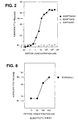
- peptides were secured, they were tested in lysis assays, using the chromium release methodology of Boon et al., J. Exp. Med. 152: 1184 (1980). Briefly, 1000 51 Cr labeled E - target cells were incubated in 96 well microplates, using various concentrations of peptides for 30 minutes at 37°C.
- Figure 3 shows that the cell line was lysed, showing that a model has been developed for screening for a lytic peptide, using a non-human cell.
- a cytolytic CTL clone "20/38" was obtained from peripheral blood lymphocytes of melanoma patient MZ2. This clone is described by Van den Eynde et al., Int. J. Cancer 44: 634-640 (1989). The CTL clone was isolated following Herin et al., Int. J. Cancer 39: 390-396 (1987). The assay is described herein, however. Autologous melanoma cells were grown in vitro , and then resuspended at 10 7 cells/ml in DMEM, supplemented with 10% HEPES and 30% FCS, and incubated for 45 minutes at 37°C with 200 ⁇ Ci/ml of Na( 51 Cr)O 4 .
- Labelled cells were washed three times with DMEM, supplemented with 10 mM HEPES. These were then resuspended in DMEM supplemented with 10 mM HEPES and 10% FCS, after which 100 ⁇ l aliquots containing 10 3 cells, were distributed into 96 well microplates. Samples of the CTL clone were added in 100 ul of the same medium, and assays were carried out in duplicate. Plates were centrifuged for four minutes at 100g, and incubated for four hours at 37°C in a 5.5% CO 2 atmosphere.
- % 51 Cr release (ER-SR) (MR-SR) x 100 where ER is observed, experimental 51 Cr release, SR is spontaneous release measured by incubating 10 3 labeled cells in 200 ul of medium alone, and MR is maximum release, obtained by adding 100 ul 0.3% Triton X-100 to target cells.
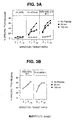
- Figure 5 presents the results of these assays. Specifically, it will be seen that the CTL clone lysed autologous melanoma cell line MZ2-MEL.3.0, but did not lyse EBV-B cell lines, fibroblasts, K562 or non-autologous melanoma cell line SK-MEL-29.
- antigen D was identified as the target molecule, studies were carried out to determine the HLA type which presented it.
- the experiments described in example A showed that antigen D was presented by MZ2-MEL, and this cell line's HLA specificity is known (i.e., A1, A29, B37, B44, Cw6, C.cl.10). It was also known, however, that a variant of MZ2-MEL which had lost HLA molecules A29, B44 and C.cl.10 still expressed antigen D, so these could be eliminated from consideration. Studies were not carried out on lines expressing B37, as none could be found.
- This assay measures TNF release via testing toxicity of supernatants on WEHI 164-13 cells.
- cell samples (3000, 10,000 or 30,000 cells) from the allogeneic lines were cultured in the presence of 1500 cells of the CTL clone, and 25 u/ml of IL-2. Twenty-four hours later, the supernatant from the culture was tested against the WEHI cells for toxicity. The results are presented in Table 1, which follows.
- Samples of COS-7 cells were seeded, at 15,000 cells/well into tissue culture flat bottom microwells, in Dulbeco's modified Eagles Medium ("DMEM") supplemented with 10% fetal calf serum. The cells were incubated overnight at 37°C, medium was removed and then replaced by 30 ⁇ l/well of DMEM medium containing 10% Nu serum, 400 ⁇ g/ml DEAE-dextran, 100 ⁇ M chloroquine, and the plasmids described above. Following four hours of incubation at 37°C, the medium was removed, and replaced by 50 ⁇ l of PBS containing 10% DMSO. This medium was removed after two minutes and replaced by 200 ⁇ l of DMEM supplemented with 10% of FCS.
- DMEM Dulbeco's modified Eagles Medium
- antigen D is a tumor rejection antigen derived from the tumor rejection antigen precursor coded by gene MAGE-3, and that this TRA is presented by HLA-A1 molecules.
- the peptide was prepared in the same manner as were the peptides of example 2.
- the chromium release assay described in that example was also used.
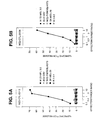
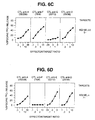
- Cell line MZ2-MEL 61.2 which is an antigen D loss variant of MZ2.MEL43 was labelled with 51 Cr, and was then tested with antigen D specific cytolytic cell clone CTL 20/38, and varying concentrations of the peptide.
- MZ2-MEL61.2 and CTL 20/38 were combined in a 1.5:1 ratio, together with the peptide at varying concentrations. The mixture was incubated for four hours, after which chromium release was measured.
- chromium labelled MZ2-MEL.43 was used as a control.
- nonapeptide derived from MAGE-3 is presented by HLA-A1 molecules, and cells presenting the complex of HLA-A1 and the nonapeptide are recognized and lysed by specific CTL cells. This observation indicates that the nonapeptide of the invention may be used both therapeutically and diagnostically.
- the nonapeptide may be used, for example, to identify tumors expressing a particular HLA molecule, or cancer cells per se.
- the nonapeptide may be used in an in vivo therapeutic approach.
- the nonapeptide may be administered in a way which targets it to tumors to be treated. This can be done via direct injection, time release administration, coupling to tumor specific antibodies, and so forth.
- Upon binding to HLA-A1 molecules there is a CTL response, leading to lysis of the tumor.
- the nonapeptide is administered in an amount sufficient to lead to lysis of the tumor. This amount will vary, based upon the particular patient, the type and size of the tumor, and so forth.
- an "in vitro" form of therapy is also contemplated.
- HLA-A1 molecules bind to the MAGE-3 derived nonapeptide
- CTLs are the agents of tumor lysis in vivo ; the resulting expanded populations may be administered to the patient.
- the CTLs can be expanded by using the patient's own blood or any other source of CTLs, or by contact to samples of peptide specific CTLs which have previously been established.
- CTL 20/38 discussed supra had been available for some time as was the methodology for its development.
- Therapies of the type described herein are particularly useful for melanoma. Analysis of samples has shown that about 26% of the caucasian population at large presents HLA-A1 allele. Thus, at the least, 26% of the caucasian melanoma population may be considered as potential subjects for therapy with the peptide.
- the patents may also be treated with proliferative cells which have complexes of HLA-A1 and the nonapeptide presented on their surface.
- the nucleic acid sequences may be used in a variety of ways. MAGE genes are expressed in tumors, and thus the nucleic acid sequences may be used a probes to identify tumor cells. This can be accomplished via labelled hybridization probes, PCR, or any of the various nucleic acid probe based assays known to the art.
- non-human cell lines described herein presents a unique way to carry out some of the features of the invention described herein.
- the examples show, e.g., that the CTLs recognize the complex of HLA and nonapeptide, and do not appear to differentiate between the cell types which present the complexes.
- the isolated, non-human cell lines of the invention can be used to generate CTLs, and to identify their presence in human samples.
- the invention also involves isolated non-human cell lines transfected with both an HLA-A1 gene, and a sequence coding for the nonapeptide.
- One is not limited to transfection with one HLA coding gene and one MAGE peptide, and indeed the invention contemplates polytransfected cells, which may contain more than one HLA gene and more than one MAGE antigen coding sequence.
- polytransfected cells which may contain more than one HLA gene and more than one MAGE antigen coding sequence.
- Such cells may be regarded as universal effector cells, as the presence of appropriate pairs of HLA and peptide on the surface will lead either to identification of specific CTLs of choice, or to generation of CTL proliferation in a therapeutic context.
- Such cells may serve as vaccines when combined with a suitable adjuvant, such as those well known to the art.
- a suitable adjuvant such as those well known to the art.
- Treatment of various cancerous conditions, such as melanoma and breast cancer, may be carried out using these transfectant.
Landscapes
- Health & Medical Sciences (AREA)
- Chemical & Material Sciences (AREA)
- Organic Chemistry (AREA)
- Life Sciences & Earth Sciences (AREA)
- Immunology (AREA)
- Medicinal Chemistry (AREA)
- General Health & Medical Sciences (AREA)
- Biophysics (AREA)
- Genetics & Genomics (AREA)
- Biochemistry (AREA)
- Molecular Biology (AREA)
- Proteomics, Peptides & Aminoacids (AREA)
- Cell Biology (AREA)
- Toxicology (AREA)
- Zoology (AREA)
- Gastroenterology & Hepatology (AREA)
- Engineering & Computer Science (AREA)
- Bioinformatics & Cheminformatics (AREA)
- Chemical Kinetics & Catalysis (AREA)
- General Chemical & Material Sciences (AREA)
- Nuclear Medicine, Radiotherapy & Molecular Imaging (AREA)
- Pharmacology & Pharmacy (AREA)
- Animal Behavior & Ethology (AREA)
- Public Health (AREA)
- Veterinary Medicine (AREA)
- Peptides Or Proteins (AREA)
- Micro-Organisms Or Cultivation Processes Thereof (AREA)
- Preparation Of Compounds By Using Micro-Organisms (AREA)
- Measuring Or Testing Involving Enzymes Or Micro-Organisms (AREA)
- Medicines Containing Material From Animals Or Micro-Organisms (AREA)
- Medicines That Contain Protein Lipid Enzymes And Other Medicines (AREA)
- Medicines Containing Antibodies Or Antigens For Use As Internal Diagnostic Agents (AREA)
Priority Applications (1)
| Application Number | Priority Date | Filing Date | Title |
|---|---|---|---|
| EP03016150A EP1361271B1 (en) | 1992-08-31 | 1993-08-30 | Isolated nonapeptide derived from MAGE-3 gene and presented by HLA-A1, and uses thereof |
Applications Claiming Priority (7)
| Application Number | Priority Date | Filing Date | Title |
|---|---|---|---|
| US938334 | 1992-08-31 | ||
| US07/938,334 US5405940A (en) | 1992-08-31 | 1992-08-31 | Isolated nonapeptides derived from MAGE genes and uses thereof |
| US08/037,230 US6235525B1 (en) | 1991-05-23 | 1993-03-26 | Isolated nucleic acid molecules coding for tumor rejection antigen precursor MAGE-3 and uses thereof |
| US37230 | 1993-03-26 | ||
| US08/073,103 US5462871A (en) | 1992-08-31 | 1993-06-07 | Isolated nucleic acid molecules which encode MAGE derived nonapeptides |
| US73103 | 1993-06-07 | ||
| PCT/US1993/008157 WO1994005304A1 (en) | 1992-08-31 | 1993-08-30 | Isolated nonapeptide derived from mage-3 gene and presented by hla-a1, and uses thereof |
Related Child Applications (1)
| Application Number | Title | Priority Date | Filing Date |
|---|---|---|---|
| EP03016150A Division EP1361271B1 (en) | 1992-08-31 | 1993-08-30 | Isolated nonapeptide derived from MAGE-3 gene and presented by HLA-A1, and uses thereof |
Publications (3)
| Publication Number | Publication Date |
|---|---|
| EP0658113A1 EP0658113A1 (en) | 1995-06-21 |
| EP0658113A4 EP0658113A4 (en) | 1997-11-26 |
| EP0658113B1 true EP0658113B1 (en) | 2004-10-20 |
Family
ID=26713936
Family Applications (1)
| Application Number | Title | Priority Date | Filing Date |
|---|---|---|---|
| EP93920419A Expired - Lifetime EP0658113B1 (en) | 1992-08-31 | 1993-08-30 | Isolated nonapeptide derived from mage-3 gene and presented by hla-a1, and uses thereof |
Country Status (12)
| Country | Link |
|---|---|
| US (2) | US5695994A (enExample) |
| EP (1) | EP0658113B1 (enExample) |
| JP (1) | JP3608788B2 (enExample) |
| AT (2) | ATE280180T1 (enExample) |
| AU (1) | AU668772B2 (enExample) |
| CA (1) | CA2143335C (enExample) |
| DE (1) | DE69333670T2 (enExample) |
| DK (1) | DK0658113T3 (enExample) |
| ES (1) | ES2225824T3 (enExample) |
| FI (1) | FI950887L (enExample) |
| PT (1) | PT658113E (enExample) |
| WO (1) | WO1994005304A1 (enExample) |
Families Citing this family (69)
| Publication number | Priority date | Publication date | Assignee | Title |
|---|---|---|---|---|
| US7252829B1 (en) | 1998-06-17 | 2007-08-07 | Idm Pharma, Inc. | HLA binding peptides and their uses |
| US5662907A (en) * | 1992-08-07 | 1997-09-02 | Cytel Corporation | Induction of anti-tumor cytotoxic T lymphocytes in humans using synthetic peptide epitopes |
| US20020168374A1 (en) * | 1992-08-07 | 2002-11-14 | Ralph T. Kubo | Hla binding peptides and their uses |
| US6222012B1 (en) * | 1992-08-31 | 2001-04-24 | Ludwig Institute For Cancer Research | Isolated nonapeptides presented by HLA molecules, and uses thereof |
| US5977300A (en) * | 1994-06-03 | 1999-11-02 | Ludwig Institute Of Cancer Research | Isolated nonapeptide which bind to HLA-B44 molecules and the uses thereof |
| US6060257A (en) * | 1994-06-03 | 2000-05-09 | Ludwig Institute For Cancer Research | Tumor rejection antigens presented by HLA-B44 molecules, and uses thereof |
| US5830753A (en) * | 1994-09-30 | 1998-11-03 | Ludwig Institute For Cancer Research | Isolated nucleic acid molecules coding for tumor rejection antigen precursor dage and uses thereof. |
| US5843648A (en) * | 1995-01-10 | 1998-12-01 | The United States Of America As Represented By The Secretary, Department Of Health And Human Services | P15 and tyrosinase melanoma antigens and their use in diagnostic and therapeutic methods |
| US5587289A (en) * | 1995-03-14 | 1996-12-24 | Ludwig Institute For Cancer Research | Isolated nucleic acid molecules which are members of the MAGE-Xp family and uses thereof |
| EP0815229A2 (en) * | 1995-03-21 | 1998-01-07 | Ludwig Institute For Cancer Research | Rage tumor rejection antigens |
| WO1997001574A1 (en) * | 1995-06-29 | 1997-01-16 | Ludwig Institute For Cancer Research | Isolated nucleic acid molecule which encodes murine tumor rejection antigen precursor smage-3 |
| US6951917B1 (en) | 1995-09-26 | 2005-10-04 | The United States Of America As Represented By The Department Of Health And Human Services | MHC-class II restricted melanoma antigens and their use in therapeutic methods |
| US7501501B2 (en) | 1995-09-26 | 2009-03-10 | The United States Of America As Represented By The Secretary Department Of Health And Human Services | MHC-Class II restricted melanoma antigens and their use in therapeutic methods |
| RS50101B (sr) | 1996-02-24 | 2009-01-22 | Boehringer Ingelheim International Gmbh., | Farmaceutski preparati za imunomodulaciju |
| US5965535A (en) * | 1997-09-12 | 1999-10-12 | Ludwig Institute For Cancer Research | Mage-3 peptides presented by HLA class II molecules |
| SI1659178T1 (sl) | 1998-02-05 | 2010-07-30 | Glaxosmithkline Biolog Sa | Postopek za čiščenje ali proizvodnjo MAGE proteina |
| AU5810201A (en) | 2000-05-10 | 2001-11-20 | Aventis Pasteur | Immunogenic polypeptides encoded by mage minigenes and uses thereof |
| EP2295575A3 (en) | 2000-12-04 | 2011-07-06 | Immunotope, Inc. | Cytotoxic T-lymphocyte-inducing immunogens for prevention, treatment, and diagnosis of cancer |
| AU2002306600A1 (en) * | 2001-02-26 | 2002-09-12 | Albany Medical College | Sperm protein 17 for the diagnosis and treatment of cancer |
| EP1377680B1 (en) | 2001-04-12 | 2011-10-05 | Imperial Innovations Limited | Diagnosis and treatment of breast cancer based upon scn5a |
| US7892559B2 (en) | 2002-01-30 | 2011-02-22 | Survac Aps | Survivin-derived peptides and use thereof |
| US7786278B2 (en) | 2002-04-09 | 2010-08-31 | Sanofi Pasteur Limited | Modified CEA nucleic acid and expression vectors |
| EP1556082A1 (en) * | 2002-10-22 | 2005-07-27 | Aventis Pasteur Limited | Anti-cancer vaccines and high-dose cytokines as adjuvants |
| PT2359841E (pt) | 2003-01-30 | 2015-02-10 | Survac Aps | Péptidos derivados de survivina e a sua utilização |
| BRPI0415199A (pt) * | 2003-10-08 | 2006-12-05 | Sanofi Pasteur Inc | vetor cea/b7 modificado |
| DK1691824T3 (da) | 2003-11-19 | 2009-07-06 | Merck Patent Gmbh | Proteiner tilhörende BCL-2-familien og fragmenter deraf og deres anvendelse i cancerpatienter |
| WO2006113540A2 (en) | 2005-04-14 | 2006-10-26 | Duke University | Use of ntrosylated hemoglobin |
| JO2660B1 (en) | 2006-01-20 | 2012-06-17 | نوفارتيس ايه جي | Pi-3 inhibitors and methods of use |
| TW200808739A (en) | 2006-04-06 | 2008-02-16 | Novartis Vaccines & Diagnostic | Quinazolines for PDK1 inhibition |
| CN101952282A (zh) | 2007-12-20 | 2011-01-19 | 诺瓦提斯公司 | 用作pi 3激酶抑制剂的噻唑衍生物 |
| US8293753B2 (en) | 2009-07-02 | 2012-10-23 | Novartis Ag | Substituted 2-carboxamide cycloamino ureas |
| JP5770751B2 (ja) | 2010-02-22 | 2015-08-26 | エフ.ホフマン−ラ ロシュ アーゲーF. Hoffmann−La Roche Aktiengesellschaft | ピリド[3,2−d]ピリミジン系のPI3Kデルタ阻害化合物および使用方法 |
| AR082418A1 (es) | 2010-08-02 | 2012-12-05 | Novartis Ag | Formas cristalinas de 1-(4-metil-5-[2-(2,2,2-trifluoro-1,1-dimetil-etil)-piridin-4-il]-tiazol-2-il)-amida de 2-amida del acido (s)-pirrolidin-1,2-dicarboxilico |
| CA2825605C (en) | 2011-01-31 | 2019-05-07 | Novartis Ag | Heterocyclic derivatives |
| PL2755997T3 (pl) | 2011-09-15 | 2019-01-31 | The United States Of America, As Represented By The Secretary, Department Of Health And Human Services | Receptory komórek T rozpoznające MAGE ograniczone do HLA-A1 lub HLA-CW7 |
| JP6059731B2 (ja) | 2011-10-28 | 2017-01-11 | ノバルティス アーゲー | 新規プリン誘導体および疾患の処置におけるその使用 |
| GB201120860D0 (en) | 2011-12-05 | 2012-01-18 | Cambridge Entpr Ltd | Cancer immunotherapy |
| HK1202435A1 (en) | 2012-05-16 | 2015-10-02 | Novartis Ag | Dosage regimen for a pi-3 kinase inhibitor |
| CA2930359C (en) | 2013-12-06 | 2022-03-01 | Novartis Ag | Dosage regimen for an alpha-isoform selective phosphatidylinositol 3-kinase inhibitor |
| WO2016094309A1 (en) | 2014-12-10 | 2016-06-16 | Myosotis | Inhibition of tnf signaling in cancer immunotherapy |
| KR20210089270A (ko) | 2015-07-16 | 2021-07-15 | 바이오카인 테라퓨틱스 리미티드 | 암 치료용 조성물 및 방법 |
| GB201519340D0 (en) | 2015-11-02 | 2015-12-16 | Cambridge Entpr Ltd | Methods of T-lymphocyte expansion |
| MX2018005298A (es) | 2015-11-02 | 2018-06-22 | Novartis Ag | Regimen de dosificacion para un inhibidor de fosfatidilinositol 3-quinasa. |
| GB201519481D0 (en) | 2015-11-04 | 2015-12-16 | Cancer Rec Tech Ltd | Immunomodulatory antibodies |
| GB201616238D0 (en) | 2016-09-23 | 2016-11-09 | Adaptimmune Ltd | Modified T cells |
| WO2018060833A1 (en) | 2016-09-27 | 2018-04-05 | Novartis Ag | Dosage regimen for alpha-isoform selective phosphatidylinositol 3-kinase inhibitor alpelisib |
| PL3565828T3 (pl) | 2017-01-05 | 2022-04-04 | Kahr Medical Ltd. | Białko fuzyjne SIRP1 ALFA-41BBL i sposoby jego zastosowania |
| CN110536693B (zh) | 2017-01-05 | 2023-12-22 | 卡尔医学有限公司 | Pd1-41bbl融合蛋白及使用其的方法 |
| GB201700345D0 (en) | 2017-01-09 | 2017-02-22 | F-Star Beta Ltd | Conditional agonists of immune responses |
| IL250916A0 (en) | 2017-03-02 | 2017-06-29 | Geiger Benjamin | Methods of culturing t cells and uses of same |
| WO2019006003A1 (en) | 2017-06-27 | 2019-01-03 | The Trustees Of Princeton University | COMPOSITIONS AND METHODS FOR IMPROVING IMMUNOTHERAPY |
| GB201713078D0 (en) | 2017-08-15 | 2017-09-27 | Adaptimmune Ltd | T Cell Modification |
| CA3089154A1 (en) | 2018-01-26 | 2019-08-01 | Cambridge Enterprise Limited | Peptide exchange protein |
| CN112543773B (zh) | 2018-07-11 | 2024-05-31 | 卡尔医学有限公司 | SIRPα-4-1BBL变体融合蛋白及其使用方法 |
| GB201811410D0 (en) | 2018-07-12 | 2018-08-29 | F Star Beta Ltd | OX40 Binding molecules |
| GB201811404D0 (en) | 2018-07-12 | 2018-08-29 | F Star Beta Ltd | Anti-CD137 Antibodies |
| GB201811408D0 (en) | 2018-07-12 | 2018-08-29 | F Star Beta Ltd | CD137 Binding Molecules |
| WO2020041662A1 (en) | 2018-08-24 | 2020-02-27 | The Trustees Of Princeton University | Immunotherapy with metabolic enzyme expression |
| GB201820444D0 (en) | 2018-12-14 | 2019-01-30 | Adaptimmune Ltd | Marker for T cell expansion |
| KR20220044284A (ko) | 2019-07-11 | 2022-04-07 | 카 메디컬 리미티드 | 이종이량체 및 이의 사용방법 |
| GB201911954D0 (en) | 2019-08-20 | 2019-10-02 | Adaptimmune Ltd | Lentiviral transduction methods |
| US20230048719A1 (en) | 2019-12-31 | 2023-02-16 | Kahr Medical Ltd. | Methods of culturing t cells with a 4-1bbl fusion polypeptide and uses of same |
| WO2021137230A1 (en) | 2019-12-31 | 2021-07-08 | Kahr Medical Ltd. | Methods of culturing t cells and uses of same |
| CN115835888B (zh) | 2020-03-25 | 2026-09-04 | 君实润佳(上海)医药科技有限公司 | 酰胺官能团中的稳定重同位素及其用途 |
| IL276599A (en) | 2020-08-09 | 2022-03-01 | Yeda Res & Dev | T cell receptor unique to mage-a1 and its uses |
| KR20230126727A (ko) | 2020-12-30 | 2023-08-30 | 이뮤노믹 쎄라퓨틱스, 인크. | 항-hvem 항체 |
| GB202303250D0 (en) | 2023-03-06 | 2023-04-19 | King S College London | Method and compounds |
| WO2025155971A1 (en) | 2024-01-19 | 2025-07-24 | Immunomic Therapeutics, Inc | Anti-activin receptor 1c (alk-7) receptor antibodies |
| GB202501534D0 (en) | 2025-02-03 | 2025-03-19 | Cambridge Entpr Ltd | Targeted phagocytic degradation |
Citations (1)
| Publication number | Priority date | Publication date | Assignee | Title |
|---|---|---|---|---|
| WO1992020356A1 (en) * | 1991-05-23 | 1992-11-26 | Ludwig Institute For Cancer Research | Tumor rejection antigen precursors, tumor rejection antigens and uses thereof |
Family Cites Families (6)
| Publication number | Priority date | Publication date | Assignee | Title |
|---|---|---|---|---|
| US4492760A (en) * | 1983-04-19 | 1985-01-08 | The Wistar Institute Of Anatomy And Biology | HLA D Typing assay |
| US4707438A (en) * | 1984-08-22 | 1987-11-17 | Tel Aviv University | Immunoassay for breast cancer employing monoclonal antibodies |
| JPH03505276A (ja) * | 1988-02-05 | 1991-11-21 | ジェンザイム・コーポレーション | 再配列された組織プラスミノーゲン活性化因子及びその産生方法 |
| AU8305491A (en) * | 1990-08-01 | 1992-03-02 | Cytel Corporation | Novel immunosuppressant peptides |
| SG52492A1 (en) * | 1992-08-07 | 1998-09-28 | Cytel Corp | Hla binding peptides and their uses |
| US5405940A (en) * | 1992-08-31 | 1995-04-11 | Ludwig Institute For Cancer Research | Isolated nonapeptides derived from MAGE genes and uses thereof |
-
1993
- 1993-08-30 FI FI950887A patent/FI950887L/fi unknown
- 1993-08-30 AT AT93920419T patent/ATE280180T1/de active
- 1993-08-30 AU AU50969/93A patent/AU668772B2/en not_active Expired
- 1993-08-30 CA CA002143335A patent/CA2143335C/en not_active Expired - Lifetime
- 1993-08-30 DK DK93920419T patent/DK0658113T3/da active
- 1993-08-30 PT PT93920419T patent/PT658113E/pt unknown
- 1993-08-30 DE DE69333670T patent/DE69333670T2/de not_active Expired - Lifetime
- 1993-08-30 EP EP93920419A patent/EP0658113B1/en not_active Expired - Lifetime
- 1993-08-30 WO PCT/US1993/008157 patent/WO1994005304A1/en not_active Ceased
- 1993-08-30 JP JP50737394A patent/JP3608788B2/ja not_active Expired - Lifetime
- 1993-08-30 ES ES93920419T patent/ES2225824T3/es not_active Expired - Lifetime
- 1993-08-30 AT AT03016150T patent/ATE378406T1/de not_active IP Right Cessation
-
1995
- 1995-05-17 US US08/443,341 patent/US5695994A/en not_active Expired - Lifetime
- 1995-05-17 US US08/443,580 patent/US6379901B1/en not_active Expired - Fee Related
Patent Citations (1)
| Publication number | Priority date | Publication date | Assignee | Title |
|---|---|---|---|---|
| WO1992020356A1 (en) * | 1991-05-23 | 1992-11-26 | Ludwig Institute For Cancer Research | Tumor rejection antigen precursors, tumor rejection antigens and uses thereof |
Non-Patent Citations (1)
| Title |
|---|
| TRAVERSARI ET AL: "Transfection and expression of a gene coding for a human melanoma antigen recognized by autologous cytolytic T lymphocytes.", IMMUNOGENETICS, vol. 35, no. 3, 1992, pages 145 - 152, XP002080832, DOI: doi:10.1007/BF00185107 * |
Also Published As
| Publication number | Publication date |
|---|---|
| PT658113E (pt) | 2005-03-31 |
| WO1994005304A1 (en) | 1994-03-17 |
| DE69333670D1 (de) | 2004-11-25 |
| DK0658113T3 (da) | 2005-02-14 |
| EP0658113A1 (en) | 1995-06-21 |
| ATE280180T1 (de) | 2004-11-15 |
| ES2225824T3 (es) | 2005-03-16 |
| JPH08500837A (ja) | 1996-01-30 |
| US6379901B1 (en) | 2002-04-30 |
| CA2143335C (en) | 2000-03-14 |
| ATE378406T1 (de) | 2007-11-15 |
| FI950887A0 (fi) | 1995-02-27 |
| AU5096993A (en) | 1994-03-29 |
| CA2143335A1 (en) | 1994-03-17 |
| FI950887A7 (fi) | 1995-02-27 |
| DE69333670T2 (de) | 2005-03-10 |
| FI950887L (fi) | 1995-02-27 |
| JP3608788B2 (ja) | 2005-01-12 |
| AU668772B2 (en) | 1996-05-16 |
| EP0658113A4 (en) | 1997-11-26 |
| US5695994A (en) | 1997-12-09 |
Similar Documents
| Publication | Publication Date | Title |
|---|---|---|
| US6379901B1 (en) | Method for screening for cancer using binders for MAGE related peptides and complexes of the peptide and HLA molecules | |
| US6222012B1 (en) | Isolated nonapeptides presented by HLA molecules, and uses thereof | |
| EP1361271B1 (en) | Isolated nonapeptide derived from MAGE-3 gene and presented by HLA-A1, and uses thereof | |
| US5405940A (en) | Isolated nonapeptides derived from MAGE genes and uses thereof | |
| EP0690915B1 (en) | Isolated nucleic acid molecules coding for tumor rejection antigen precursor mage-3 and uses thereof | |
| EP0804483B1 (en) | Isolated peptides derived from mage tumor rejection antigen precursors which complex with hla-a2 molecules | |
| US5591430A (en) | Isolated, MAGE-3 derived peptides which complex with HLA-A2 molecules and uses thereof | |
| AU682956B2 (en) | Isolated, mage-3 derived peptides which complex with HLA-A2 molecules and uses thereof | |
| AU722890B2 (en) | Isolated peptides which complex with HLA-Cw*16 molecules, and uses thereof | |
| US6682731B1 (en) | Isolated peptides derived from mage tumor rejection antigen precursors which complex with HLA-A2 molecules |
Legal Events
| Date | Code | Title | Description |
|---|---|---|---|
| PUAI | Public reference made under article 153(3) epc to a published international application that has entered the european phase |
Free format text: ORIGINAL CODE: 0009012 |
|
| 17P | Request for examination filed |
Effective date: 19950306 |
|
| AK | Designated contracting states |
Kind code of ref document: A1 Designated state(s): AT BE CH DE DK ES FR GB GR IE IT LI LU MC NL PT SE |
|
| RHK1 | Main classification (correction) |
Ipc: A61K 35/16 |
|
| RHK1 | Main classification (correction) |
Ipc: C12N 15/11 |
|
| A4 | Supplementary search report drawn up and despatched |
Effective date: 19971014 |
|
| AK | Designated contracting states |
Kind code of ref document: A4 Designated state(s): AT BE CH DE DK ES FR GB GR IE IT LI LU MC NL PT SE |
|
| RAP1 | Party data changed (applicant data changed or rights of an application transferred) |
Owner name: LUDWIG INSTITUTE FOR CANCER RESEARCH |
|
| 17Q | First examination report despatched |
Effective date: 20000114 |
|
| GRAP | Despatch of communication of intention to grant a patent |
Free format text: ORIGINAL CODE: EPIDOSNIGR1 |
|
| RIC1 | Information provided on ipc code assigned before grant |
Ipc: 7G 01N 33/574 B Ipc: 7C 07K 16/30 B Ipc: 7C 07K 14/705 A |
|
| RIC1 | Information provided on ipc code assigned before grant |
Ipc: 7G 01N 33/574 B Ipc: 7C 07K 16/30 B Ipc: 7C 07K 14/705 A |
|
| GRAS | Grant fee paid |
Free format text: ORIGINAL CODE: EPIDOSNIGR3 |
|
| GRAA | (expected) grant |
Free format text: ORIGINAL CODE: 0009210 |
|
| AK | Designated contracting states |
Kind code of ref document: B1 Designated state(s): AT BE CH DE DK ES FR GB GR IE IT LI LU MC NL PT SE |
|
| REG | Reference to a national code |
Ref country code: GB Ref legal event code: FG4D |
|
| REG | Reference to a national code |
Ref country code: SE Ref legal event code: TRGR |
|
| REG | Reference to a national code |
Ref country code: CH Ref legal event code: EP |
|
| REG | Reference to a national code |
Ref country code: IE Ref legal event code: FG4D |
|
| REF | Corresponds to: |
Ref document number: 69333670 Country of ref document: DE Date of ref document: 20041125 Kind code of ref document: P |
|
| REG | Reference to a national code |
Ref country code: CH Ref legal event code: NV Representative=s name: MOINAS & SAVOYE SA |
|
| REG | Reference to a national code |
Ref country code: DK Ref legal event code: T3 |
|
| REG | Reference to a national code |
Ref country code: GR Ref legal event code: EP Ref document number: 20040404437 Country of ref document: GR |
|
| REG | Reference to a national code |
Ref country code: ES Ref legal event code: FG2A Ref document number: 2225824 Country of ref document: ES Kind code of ref document: T3 |
|
| REG | Reference to a national code |
Ref country code: PT Ref legal event code: SC4A Free format text: AVAILABILITY OF NATIONAL TRANSLATION Effective date: 20050119 |
|
| ET | Fr: translation filed | ||
| PLBE | No opposition filed within time limit |
Free format text: ORIGINAL CODE: 0009261 |
|
| STAA | Information on the status of an ep patent application or granted ep patent |
Free format text: STATUS: NO OPPOSITION FILED WITHIN TIME LIMIT |
|
| 26N | No opposition filed |
Effective date: 20050721 |
|
| PGFP | Annual fee paid to national office [announced via postgrant information from national office to epo] |
Ref country code: DK Payment date: 20110824 Year of fee payment: 19 Ref country code: CH Payment date: 20110824 Year of fee payment: 19 |
|
| PGFP | Annual fee paid to national office [announced via postgrant information from national office to epo] |
Ref country code: LU Payment date: 20120824 Year of fee payment: 20 |
|
| PGFP | Annual fee paid to national office [announced via postgrant information from national office to epo] |
Ref country code: GB Payment date: 20120823 Year of fee payment: 20 Ref country code: IE Payment date: 20120821 Year of fee payment: 20 Ref country code: SE Payment date: 20120823 Year of fee payment: 20 Ref country code: MC Payment date: 20120823 Year of fee payment: 20 |
|
| PGFP | Annual fee paid to national office [announced via postgrant information from national office to epo] |
Ref country code: GR Payment date: 20120821 Year of fee payment: 20 |
|
| PGFP | Annual fee paid to national office [announced via postgrant information from national office to epo] |
Ref country code: ES Payment date: 20120824 Year of fee payment: 20 Ref country code: IT Payment date: 20120828 Year of fee payment: 20 Ref country code: FR Payment date: 20120831 Year of fee payment: 20 Ref country code: BE Payment date: 20120831 Year of fee payment: 20 |
|
| PGFP | Annual fee paid to national office [announced via postgrant information from national office to epo] |
Ref country code: DE Payment date: 20121024 Year of fee payment: 20 Ref country code: PT Payment date: 20120229 Year of fee payment: 20 Ref country code: NL Payment date: 20120824 Year of fee payment: 20 |
|
| PGFP | Annual fee paid to national office [announced via postgrant information from national office to epo] |
Ref country code: AT Payment date: 20120822 Year of fee payment: 20 |
|
| REG | Reference to a national code |
Ref country code: DE Ref legal event code: R071 Ref document number: 69333670 Country of ref document: DE |
|
| BE20 | Be: patent expired |
Owner name: *LUDWIG INSTITUTE FOR CANCER RESEARCH Effective date: 20130830 |
|
| REG | Reference to a national code |
Ref country code: DE Ref legal event code: R071 Ref document number: 69333670 Country of ref document: DE |
|
| REG | Reference to a national code |
Ref country code: DK Ref legal event code: EUP |
|
| REG | Reference to a national code |
Ref country code: PT Ref legal event code: MM4A Free format text: MAXIMUM VALIDITY LIMIT REACHED Effective date: 20130830 |
|
| REG | Reference to a national code |
Ref country code: NL Ref legal event code: V4 Effective date: 20130830 |
|
| REG | Reference to a national code |
Ref country code: CH Ref legal event code: PL |
|
| REG | Reference to a national code |
Ref country code: GB Ref legal event code: PE20 Expiry date: 20130829 |
|
| REG | Reference to a national code |
Ref country code: SE Ref legal event code: EUG |
|
| REG | Reference to a national code |
Ref country code: AT Ref legal event code: MK07 Ref document number: 280180 Country of ref document: AT Kind code of ref document: T Effective date: 20130830 |
|
| REG | Reference to a national code |
Ref country code: GR Ref legal event code: MA Ref document number: 20040404437 Country of ref document: GR Effective date: 20130831 |
|
| PG25 | Lapsed in a contracting state [announced via postgrant information from national office to epo] |
Ref country code: DE Free format text: LAPSE BECAUSE OF EXPIRATION OF PROTECTION Effective date: 20130831 Ref country code: PT Free format text: LAPSE BECAUSE OF EXPIRATION OF PROTECTION Effective date: 20130906 |
|
| PG25 | Lapsed in a contracting state [announced via postgrant information from national office to epo] |
Ref country code: GB Free format text: LAPSE BECAUSE OF EXPIRATION OF PROTECTION Effective date: 20130829 |
|
| REG | Reference to a national code |
Ref country code: IE Ref legal event code: MK9A |
|
| PG25 | Lapsed in a contracting state [announced via postgrant information from national office to epo] |
Ref country code: IE Free format text: LAPSE BECAUSE OF EXPIRATION OF PROTECTION Effective date: 20130830 |
|
| REG | Reference to a national code |
Ref country code: ES Ref legal event code: FD2A Effective date: 20140925 |
|
| PG25 | Lapsed in a contracting state [announced via postgrant information from national office to epo] |
Ref country code: ES Free format text: LAPSE BECAUSE OF EXPIRATION OF PROTECTION Effective date: 20130831 |