EP0646175B1 - Recombinant pseudomonas exotoxin with increased activity - Google Patents
Recombinant pseudomonas exotoxin with increased activity Download PDFInfo
- Publication number
- EP0646175B1 EP0646175B1 EP93915414A EP93915414A EP0646175B1 EP 0646175 B1 EP0646175 B1 EP 0646175B1 EP 93915414 A EP93915414 A EP 93915414A EP 93915414 A EP93915414 A EP 93915414A EP 0646175 B1 EP0646175 B1 EP 0646175B1
- Authority
- EP
- European Patent Office
- Prior art keywords
- recombinant
- molecule
- domain
- amino acids
- binding agent
- Prior art date
- Legal status (The legal status is an assumption and is not a legal conclusion. Google has not performed a legal analysis and makes no representation as to the accuracy of the status listed.)
- Expired - Lifetime
Links
Images



Classifications
-
- C—CHEMISTRY; METALLURGY
- C07—ORGANIC CHEMISTRY
- C07K—PEPTIDES
- C07K16/00—Immunoglobulins [IG], e.g. monoclonal or polyclonal antibodies
- C07K16/18—Immunoglobulins [IG], e.g. monoclonal or polyclonal antibodies against material from animals or humans
- C07K16/28—Immunoglobulins [IG], e.g. monoclonal or polyclonal antibodies against material from animals or humans against receptors, cell surface antigens or cell surface determinants
- C07K16/30—Immunoglobulins [IG], e.g. monoclonal or polyclonal antibodies against material from animals or humans against receptors, cell surface antigens or cell surface determinants from tumour cells
-
- A—HUMAN NECESSITIES
- A61—MEDICAL OR VETERINARY SCIENCE; HYGIENE
- A61P—SPECIFIC THERAPEUTIC ACTIVITY OF CHEMICAL COMPOUNDS OR MEDICINAL PREPARATIONS
- A61P35/00—Antineoplastic agents
-
- C—CHEMISTRY; METALLURGY
- C07—ORGANIC CHEMISTRY
- C07K—PEPTIDES
- C07K14/00—Peptides having more than 20 amino acids; Gastrins; Somatostatins; Melanotropins; Derivatives thereof
- C07K14/195—Peptides having more than 20 amino acids; Gastrins; Somatostatins; Melanotropins; Derivatives thereof from bacteria
- C07K14/21—Peptides having more than 20 amino acids; Gastrins; Somatostatins; Melanotropins; Derivatives thereof from bacteria from Pseudomonadaceae (F)
-
- C—CHEMISTRY; METALLURGY
- C07—ORGANIC CHEMISTRY
- C07K—PEPTIDES
- C07K14/00—Peptides having more than 20 amino acids; Gastrins; Somatostatins; Melanotropins; Derivatives thereof
- C07K14/435—Peptides having more than 20 amino acids; Gastrins; Somatostatins; Melanotropins; Derivatives thereof from animals; from humans
- C07K14/475—Growth factors; Growth regulators
- C07K14/495—Transforming growth factor [TGF]
-
- C—CHEMISTRY; METALLURGY
- C07—ORGANIC CHEMISTRY
- C07K—PEPTIDES
- C07K16/00—Immunoglobulins [IG], e.g. monoclonal or polyclonal antibodies
- C07K16/18—Immunoglobulins [IG], e.g. monoclonal or polyclonal antibodies against material from animals or humans
- C07K16/28—Immunoglobulins [IG], e.g. monoclonal or polyclonal antibodies against material from animals or humans against receptors, cell surface antigens or cell surface determinants
- C07K16/2881—Immunoglobulins [IG], e.g. monoclonal or polyclonal antibodies against material from animals or humans against receptors, cell surface antigens or cell surface determinants against CD71
-
- A—HUMAN NECESSITIES
- A61—MEDICAL OR VETERINARY SCIENCE; HYGIENE
- A61K—PREPARATIONS FOR MEDICAL, DENTAL OR TOILETRY PURPOSES
- A61K38/00—Medicinal preparations containing peptides
-
- C—CHEMISTRY; METALLURGY
- C07—ORGANIC CHEMISTRY
- C07K—PEPTIDES
- C07K2319/00—Fusion polypeptide
-
- C—CHEMISTRY; METALLURGY
- C07—ORGANIC CHEMISTRY
- C07K—PEPTIDES
- C07K2319/00—Fusion polypeptide
- C07K2319/01—Fusion polypeptide containing a localisation/targetting motif
- C07K2319/02—Fusion polypeptide containing a localisation/targetting motif containing a signal sequence
-
- C—CHEMISTRY; METALLURGY
- C07—ORGANIC CHEMISTRY
- C07K—PEPTIDES
- C07K2319/00—Fusion polypeptide
- C07K2319/55—Fusion polypeptide containing a fusion with a toxin, e.g. diphteria toxin
-
- C—CHEMISTRY; METALLURGY
- C07—ORGANIC CHEMISTRY
- C07K—PEPTIDES
- C07K2319/00—Fusion polypeptide
- C07K2319/70—Fusion polypeptide containing domain for protein-protein interaction
- C07K2319/74—Fusion polypeptide containing domain for protein-protein interaction containing a fusion for binding to a cell surface receptor
- C07K2319/75—Fusion polypeptide containing domain for protein-protein interaction containing a fusion for binding to a cell surface receptor containing a fusion for activation of a cell surface receptor, e.g. thrombopoeitin, NPY and other peptide hormones
-
- Y—GENERAL TAGGING OF NEW TECHNOLOGICAL DEVELOPMENTS; GENERAL TAGGING OF CROSS-SECTIONAL TECHNOLOGIES SPANNING OVER SEVERAL SECTIONS OF THE IPC; TECHNICAL SUBJECTS COVERED BY FORMER USPC CROSS-REFERENCE ART COLLECTIONS [XRACs] AND DIGESTS
- Y10—TECHNICAL SUBJECTS COVERED BY FORMER USPC
- Y10S—TECHNICAL SUBJECTS COVERED BY FORMER USPC CROSS-REFERENCE ART COLLECTIONS [XRACs] AND DIGESTS
- Y10S424/00—Drug, bio-affecting and body treating compositions
- Y10S424/832—Drug, bio-affecting and body treating compositions involving bacterial toxin that has modified amino acid sequence
-
- Y—GENERAL TAGGING OF NEW TECHNOLOGICAL DEVELOPMENTS; GENERAL TAGGING OF CROSS-SECTIONAL TECHNOLOGIES SPANNING OVER SEVERAL SECTIONS OF THE IPC; TECHNICAL SUBJECTS COVERED BY FORMER USPC CROSS-REFERENCE ART COLLECTIONS [XRACs] AND DIGESTS
- Y10—TECHNICAL SUBJECTS COVERED BY FORMER USPC
- Y10S—TECHNICAL SUBJECTS COVERED BY FORMER USPC CROSS-REFERENCE ART COLLECTIONS [XRACs] AND DIGESTS
- Y10S530/00—Chemistry: natural resins or derivatives; peptides or proteins; lignins or reaction products thereof
- Y10S530/82—Proteins from microorganisms
- Y10S530/825—Bacteria
Definitions
- This invention relates to the production and use of recombinant Pseudomonas-derived toxins modified to increase their toxicity and potency in therapy. More particularly, the invention relates to exotoxins comprising deletions in the amino acid sequence that represent the removal of domain Ia and certain sequences of domain II of Pseudomonas exotoxin.
- Toxins attached to growth factors, antibodies and other cell targeting molecules can be used to kill harmful cells bearing specific receptors or antigens (Pastan et al., Cell 47:641 (1986) and Vitetta et al, Science 238:1098 (1987)).
- Pseudomonas exotoxin A is an effective therapeutic toxin.
- Pseudomonas exotoxin A is an extremely active monomeric protein (molecular weight 66kD), secreted by Pseudomonas aeruginosa, which inhibits protein synthesis in eukaryotic cells through the inactivation of elongation factor 2 (EF-2) by catalyzing its ADP-ribosylation (catalyzing the transfer of the ADP ribosyl moiety of oxidized NAD onto EF-2).
- EF-2 elongation factor 2
- the toxin contains three structural domains that act in concert to cause cytotoxicity.
- Domain Ia (amino acids 1-252) mediates cell binding.
- Domain II (amino acids 253-364) is responsible for translocation into the cytosol and domain III (amino acids 400-613) mediates ADP ribosylation of elongation factor 2, which inactivates the protein and causes death.
- domain Ib (amino acids 365-399) remains undefined, although a large part of it, amino acids 365-380, can be deleted without loss of cytotoxicity. See Siegall et al., Biochem. 30:7154-7159 (1991). PE has been combined with growth factors, antibodies or CD4 to create toxins that can be selectively targeted to cells with different cell membrane proteins as reviewed in Pastan and FitzGerald, Science 254:1173-1177 (1991).
- Native PE characteristically produces death due to liver failure. Immunotoxins with PE also attack the liver and, when given in much larger (20 to 250-fold larger) doses, may produce death due to liver toxicity. Improved forms of PE that reduce non-specific toxicity in the host and which improve therapeutic efficacy are highly desirable. Variants of PE omitting the cell binding domain Ia have been found to be effective while reducing the amount of non-specific toxicity. See, U.S. Patent No. 4,892,827, for example.
- This invention discloses improved recombinant Pseudomonas exotoxin molecules that demonstrate higher activities than prior described molecules. Further, the discoveries described here enable one to create PE molecules that are smaller in size, likely to be less immunogenic, that are able to enter the cytosol of target cells, and better able to penetrate the interior of tumors.
- PE To be cytotoxic native PE must be proteolytically cleaved within cells (Ogata et al., J. Biol Chem. 265:20678-20685 (1990)). This cleavage takes place between amino acid 279 and 280. The importance of the cleavage is illustrated with results that indicate that mutant forms of PE that cannot be cleaved at this site are non-toxic. Ogata et al., supra. However, cleavage by cells is not very efficient. The present invention aims to overcome the problem of inefficient cleavage by constructing a PE derivative that requires no cleavage by cells. Such "pre-cleaved" PE molecules have increased potency because the efficiency of delivery of active toxin fragments to the cytosol is increased.
- the invention includes recombinant Pseudomonas exotoxin molecules in which domain Ia is deleted and no more than the first 27 amino acids from the amino terminal end of domain II have been deleted.
- a preferred PE molecule begins with a methionine at amino acid position 280 of domain II, comprises the deletion of about amino acids 365 to 380 of domain Ib and includes a substitution of serine at amino acid position 287 in place of cysteine.
- Preferred molecules also include those that have an amino acid sequence at a carboxyl terminal end of the molecule selected from the group consisting of REDLK (Seq. ID No. 14), REDL (Seq. ID No. 15), and KDEL (Seq. ID No. 16).
- Exemplary PE molecules may consist essentially of about amino acids 280 to 613 or consist essentially of about amino acids 280 to 364 and 381 to 613.
- the PE molecules may also be fused to ligand binding agents such as antibodies or binding fragments thereof, growth factors, hormones, cytokines and the like.
- the ligand binding agent is preferably inserted after about amino acid position 607 and amino acids 604-613 are placed at the C-terminus of the ligand. Because we have shown that only certain sequences in domain II are necessary to translocate a binding protein into the cytosol of a cell, the PE molecules of this invention may be used to transport various peptides into cells. Domain III may be deleted from PE molecules and replaced with other peptides for use as a vaccine or in gene therapeutic applications.
- the PE molecules are also characterized by having a deletion of domain Ia and a deletion in the amino terminal end of domain II such that the molecule is at least twenty times more cytotoxic to target cells than PE40 (described below) in a cytotoxicity assay wherein the cytotoxicity to the target cells of PE40 and the recombinant PE molecule described herein is measured by assaying against the target cells, PE40 fused to a ligand binding agent specific for the target cells and the recombinant PE molecule fused to a ligand binding agent specific for the target cells.
- Vectors comprising a nucleic acid sequence encoding the amino acid sequences of the PE molecules and host cells expressing the molecules are also contemplated. Further included are pharmaceutical compositions and methods for treating cancer and other conditions with the novel molecules described here.
- This invention relates to recombinant Pseudomonas exotoxin molecules having increased cytotoxic activity in which a portion of the amino terminal end of domain II has been deleted.
- This molecule may be linked or fused to other target molecules so that the improved cytotoxin is targeted to desired cells.
- Native PE has the amino acid sequence set forth in Sequence ID Listing No. 1. All amino acid sequence positions described herein use as a frame of reference this sequence listing. For example, a PE molecule "consisting essentially of about amino acids 280 to 613" would refer to a molecule having amino acids substantially corresponding to those positions on Sequence ID Listing No. 1. other common references are used herein to indicate deletions or substitutions to a sequence using Sequence ID Listing No. 1 as the frame of reference.
- the use of the symbol “ ⁇ ” refers to a deletion of the amino acids following the symbol. For example, " ⁇ 365-380", refers to the deletion from a PE molecule of amino acids 365 to 380.
- Amino acid substitutions may be indicated by parentheses, for example "(ser 287)” refers to a molecule having serine at amino acid position 287. Amino acids are also sometimes referred to here by the single letter codes recommended by the IUPAC-IUB Biochemical Nomenclature Commission.
- PE molecules of this invention are uniquely characterized by their increased cytotoxicity to target cells when coupled with a ligand binding agent specific for the target cells.
- the increased cytotoxicity occurs in comparison to the use of native PE molecules or those where no significant deletion of domain II has occurred, such as PE(4E) or PE40 described in the Example section below and U.S. Patent No. 5,458,878.
- An assay for determining an increase in cytotoxicity is one where a fusion protein comprising the subject PE molecule and a ligand binding agent is compared with a fusion protein comprising the reference PE molecule, e.g. PE40, and the same ligand binding agent.
- the respective fusion proteins are then tested in cytotoxicity assays against cells specific for the ligand binding agent.
- ID 50 s (defined below) obtained may be adjusted to obtain a cytotoxicity index by adjusting the values such that the concentration of toxin that displaces 50% of labeled ligand from ligand receptors is divided by the ID 50 of the recombinant toxin on cells bearing the ligand receptors.
- the cytotoxicity index for each PE molecule is then compared.
- PE molecules having corrected cytotoxicity indexes of about 20 times or more, preferably about 60 times or more, and most preferably about 300 times or more, over PE40 or other PE molecules where no deletion of domain II has occurred are desired.
- a PE molecule lacking domain Ia may be expressed by plasmid pJH8 which expresses domains II, Ib and III. Plasmid pJH8 is described in U.S. Patent No. 4,892,827 incorporated by reference herein and is available from the American Type Culture Collection in Rockville, Maryland as ATCC 67208.
- ID 50 refers to the concentration of the toxin that inhibits protein synthesis in the target cells by 50%, which is typically measured by standard 3 H-leucine incorporation assays. Displacement assays or competitive binding assays are well known and described in the art. They measure the ability of one peptide to compete with another peptide for the binding of a target antigen.
- a preferred PE molecule is one in which domain Ia is deleted and no more than the first 27 amino acids have been deleted from the amino terminal end of domain II. This substantially represents the deletion of amino acids 1 to 279.
- the cytotoxic advantage created by this deletion is greatly decreased if the following deletions are made: 1-281; 1-283; 1-286; and 314-380. It is surprising that the deletion of 27, but not 29, 31, 33 or 36 amino acids from the amino end of domain II results in increased toxic activity since this domain is responsible for the translocation of the toxin into the cytosol.
- PE molecules can be further modified using site-directed mutagenesis or other techniques known in the art, to alter the molecule for particular desired application.
- Means to alter the PE molecule in a manner that does not substantially affect the functional advantages provided by the PE molecules described here can also be used and such resulting molecules are intended to be covered herein.
- REDLK as in native PE
- REDL or KDEL repeats of those, or other sequences that function to maintain or recycle proteins into the endoplasmic reticulum, referred to here as "endoplasmic retention sequences”. See, for example, Chaudhary et al, Proc. Natl. Acad. sci. USA 87:308-312 and Seetharam et al, J. Biol. Chem. 266: 17376-17381 (1991).
- Deletions of amino acids 365-380 of domain Ib can be made without loss of activity. Further, a substitution of methionine at amino acid position 280 in place of glycine to allow the synthesis of the protein to begin and of serine at amino acid position 287 in place of cysteine to prevent formation of improper disulfide bonds is beneficial.
- a “ligand binding agent” refers generally to all molecules capable of reacting with or otherwise recognizing or binding to a receptor on a target cell.
- binding agents include, but are not limited to, antibodies, growth factors such as TGF ⁇ , IL2, IL4, IL6, IGF1 or CD4, lymphokines, cytokines, hormones and the like which specifically bind desired target cells.
- antibody includes various forms of modified or altered antibodies, such as an intact immunoglobulin, an Fv fragment containing only the light and heavy chain variable regions, a Fab or (Fab)' 2 fragment containing the variable regions and parts of the constant regions, a single-chain antibody (Bird et al., Science 242, 424-426 (1988); Huston et al., Proc. Nat. Acad. Sci. USA 85, 5879-5883 (1988)), and the like.
- the antibody may be of animal (especially mouse or rat) or human origin or may be chimeric (Morrison et al., Proc Nat. Acad. Sci.
- the recombinant PE molecules of the present invention may be fused to, or otherwise bound to a ligand binding agent by any method known and available to those in the art.
- the two components may be chemically bonded together by any of a variety of well-known chemical procedures.
- the linkage may be by way of heterobifunctional cross-linkers, e.g. SPDP, carbodiimide, glutaraldehyde, or the like.
- Production of various immunotoxins is well-known within the art and can be found, for example in "Monoclonal Antibody-Toxin Conjugates: Aiming the Magic Bullet," Thorpe et al., Monoclonal Antibodies in Clinical Medicine, Academic Press, pp. 168-190 (1982) and Waldmann, Science , 252:1657 (1991).
- a form of the PE molecule with cysteine at amino acid position 287 is preferred to couple the toxin to the antibody or other ligand through the thiol moiety of cysteine.
- the PE molecules may also be fused to the ligand binding agent by recombinant means such as through the production of single chain antibodies in E. coli.
- the genes encoding protein chains may be cloned in cDNA or in genomic form by any cloning procedure known to those skilled in the art. See for example Sambrook et al., Molecular Cloning : A Laboratory Manual, Cold Spring Harbor laboratory, (1989).
- the ligand binding agent is fused between about amino acid positions 607 and 604 of the PE molecule. This means that the ligand binding agent is inserted after about amino acid 607 of the molecule and an appropriate carboxyl end of PE is recreated by placing amino acids about 604-613 of PE after the binding agent.
- the ligand binding agent is inserted within the recombinant PE molecule after about amino acid 607 and is followed by amino acids 604-613 of domain III.
- V L and V H regions from a desired antibody may also be inserted in a single chain form within domain III.
- Binding agents may also be inserted in replacement for domain Ia as has been accomplished in what is known as the TGF ⁇ /PE40 molecule (also referred to as TP40) described in Heimbrook et al., Proc. Natl. Acad. Sci., USA, 87:4697-4701 (1990) and in commonly assigned U.S.S.N. 07/865,722 filed April 8, 1992 and in U.S.S.N. 07/522,563 filed May 14, 1990.
- TGF ⁇ /PE40 also referred to as TP40
- deletions or changes may be made in PE or in a linker connecting an antibody gene to PE, in order to increase cytotoxicity of the fusion protein toward target cells or to decrease nonspecific cytotoxicity toward cells without antigen for the antibody. All such constructions may be made by methods of genetic engineering well known to those skilled in the art (see, generally, Sambrook et al., supra ) and may produce proteins that have differing properties of affinity, specificity, stability and toxicity that make them particularly suitable for various clinical or biological applications.
- Fusion proteins of the invention including PE molecules may be expressed in a variety of host cells, including E. coli, other bacterial hosts, yeast, and various higher eucaryotic cells such as the COS, CHO and HeLa cells lines and myeloma cell lines.
- the recombinant protein gene will be operably linked to appropriate expression control sequences for each host.
- this includes a promoter such as the T7, trp, or lambda promoters, a ribosome binding site and preferably a transcription termination signal.
- control sequences will include a promoter and preferably an enhancer derived from immunoglobulin genes, SV40, cytomegalovirus, etc., and a polyadenylation sequence, and may include splice donor and acceptor sequences.
- the plasmids of the invention can be transferred into the chosen host cell by well-known methods such as calcium chloride transformation for E. coli and calcium phosphate treatment or electroporation for mammalian cells. Cells transformed by the plasmids can be selected by resistance to antibiotics conferred by genes contained on the plasmids, such as the amp, gpt, neo and hyg genes.
- the recombinant fusion proteins can be purified according to standard procedures of the art, including ammonium sulfate precipitation, affinity columns, column chromatography, gel electrophoresis and the like (see, generally, R. Scopes, Protein Purification, Springer-Verlag, N.Y. (1982)). Substantially pure compositions of at least about 90 to 95% homogeneity are preferred, and 98 to 99% or more homogeneity are most preferred for pharmaceutical uses. Once purified, partially or to homogeneity as desired, the polypeptides may then be used therapeutically.
- compositions of this invention are particularly useful for parenteral administration, such as intravenous administration or administration into a body cavity or lumen of an organ.
- the compositions for administration will commonly comprise a solution of the PE molecule fusion protein dissolved in a pharmaceutically acceptable carrier, preferably an aqueous carrier.
- a pharmaceutically acceptable carrier preferably an aqueous carrier.
- aqueous carriers can be used, e.g. , buffered saline and the like. These solutions are sterile and generally free of undesirable matter.
- These compositions may be sterilized by conventional, well known sterilization techniques.
- compositions may contain pharmaceutically acceptable auxiliary substances as required to approximate physiological conditions such as pH adjusting and buffering agents, toxicity adjusting agents and the like, for example, sodium acetate, sodium chloride, potassium chloride, calcium chloride, sodium lactate and the like.
- concentration of fusion protein in these formulations can vary widely, and will be selected primarily based on fluid volumes, viscosities, body weight and the like in accordance with the particular mode of administration selected and the patient's needs.
- a typical pharmaceutical composition for intravenous administration would be about 0.1 to 10 mg per patient per day. Dosages from 0.1 up to about 100mg per patient per day may be used, particularly when the drug is administered to a secluded site and not into the blood stream, such as into a body cavity or into a lumen of an organ. Actual methods for preparing parenterally administrable compositions will be known or apparent to those skilled in the art and are described in more detail in such publications as Remington's Pharmaceutical Science, 15th ed., Mack Publishing Company, Easton, Pennsylvania (1980).
- compositions containing the present fusion proteins or a cocktail thereof can be administered for therapeutic treatments.
- compositions are administered to a patient suffering from a disease, in an amount sufficient to cure or at least partially arrest the disease and its complications.
- An amount adequate to accomplish this is defined as a "therapeutically effective dose.” Amounts effective for this use will depend upon the severity of the disease and the general state of the patient's health.
- compositions may be administered depending on the dosage and frequency as required and tolerated by the patient.
- the composition should provide a sufficient quantity of the proteins of this invention to effectively treat the patient.
- fusion proteins of the present invention are included a variety of disease conditions caused by specific human cells that may be eliminated by the toxic action of the protein.
- One preferred application is the treatment of cancer, such as by the use of TGF ⁇ as the ligand binding agent or of autoimmune conditions such as graft-versus-host disease, organ transplant rejection, type I diabetes, multiple sclerosis, rheumatoid arthritis, systemic lupus erythematosus, myasthenia gravis and the like caused by T and B cells.
- the fusion proteins may also be used in vitro, for example, in the elimination of harmful cells from bone marrow before transplant.
- the ligand binding agent portion of the fusion protein is chosen according to the intended use.
- Proteins on the membranes of T cells that may serve as targets for the binding agent include CD2 (T11), CD3, CD4 and CD8. Proteins found predominantly on B cells that might serve as targets include CD10 (CALLA antigen), CD19 and CD20. CD45 is a possible target that occurs broadly on lymphoid cells. These and other possible target lymphocyte antigens for the binding agent are described in Leucocyte Typing III, A.J. McMichael, ed., Oxford University Press, 1987.
- Antigens found on cancer cells that may serve as targets for the binding agent include carcinoembryonic antigen (CEA), the transferrin receptor, P-glycoprotein, c-erbB2, and antigens described in the Abstracts of the Third International Conference on Monoclonal Antibody Immunoconjugates for Cancer (San Diego, CA 1988).
- CEA carcinoembryonic antigen
- P-glycoprotein P-glycoprotein
- c-erbB2 a transferrin receptor
- antigens described in the Abstracts of the Third International Conference on Monoclonal Antibody Immunoconjugates for Cancer San Diego, CA 1988.
- ligand binding agents may be chosen that bind to receptors expressed on still other types of cells as described above, for example, membrane glycoproteins or growth factor or hormone receptors such as epidermal growth factor receptor and the like.
- PE molecules described here will also serve as signal sequences in gene therapy applications or other applications where signal sequences find use, such as with the use of vaccines.
- a substantial deletion of domain III of the PE molecule could be replaced with a desired antigen.
- a substantial deletion of domain III is a deletion of a major portion of the domain such that the function of that domain has been inactivated or destroyed. Retention of about amino acids 604-613 of domain III in the molecule is highly desired.
- a portion of a desired protein could be inserted in the place of domain III and a ligand inserted between the desired protein and the carboxyl end of PE to cause the recombinant protein to bind to an antigen presenting cell.
- a DNA sequence could be inserted in the place of domain III.
- Recombinant means that the subject product is the result of the manipulation of genes into new or non-native combinations.
- a “vector” is a sequence of DNA, typically in plasmid or viral form, which is capable of replicating in a host.
- a vector can be used to transport or manipulate DNA sequences.
- An "expression vector” includes vectors which are capable of expressing DNA sequences contained therein, producing a protein product. The coding sequences are linked to other sequences capable of effecting their expression, such as promoters and enhancers.
- fusion protein of the present-invention does not affect the function of the untargeted cells to any appreciable degree or to any abnormal level.
- PE(4E)/TGF ⁇ (also sometimes designated PE 4E -TGF ⁇ ) was a gift from R. Kreitman, see Kreitman et al., Bioconjugate Chem. 3:58-62 (1992) and Krietman et al., Bioconjugate Chem. 3:63-68 (1992), both of which are incorporated by reference and both of which are referred to herein as "Kreitman et al.”.
- PE contains full length PE with a mutated and inactive native binding domain where amino acids 57, 246, 247 and 249 are all replaced by glutamates, TGF ⁇ placed after amino acid 607, and a proper carboxyl end of PE recreated by placing amino acids 604-613 of PE after TGF ⁇ as described in Kreitman, et al., supra .
- HUT 102 cells were a gift from T. Waldmann, Leonard et al., Nature 300:267-269 (1982). All other cell lines were from the American Type Culture Collection (Rockville, MD).
- Amplification - oligonucleotides C1, C2, C7 and C8 are detailed in Table 1 and were constructed using a DNA synthesizer (Applied Biosystems, Inc., Foster City, CA). Polymerase chain reaction (PCR) reactions were carried out using 10 ng pCT4 (see below) as template and reagents as per the manufacturer's instruction (Gene Amp; Perkin-Elmer Cetus Instruments, Norwalk, CT) in the presence of 5% formamide (Fluka Chemika, Rankokoma, New York) and 100 pmol of primers C1 and C2 or C7 and C2 or C8 and C2.
- PCR Polymerase chain reaction
- Each PCR reaction totaled 30 cycles consisting of denaturation at 94°C for 1 minute, annealing at 42°C for 90 seconds and polymerization at 72°C for 2 minutes with a 10 second extension in each cycle.
- the amplified fragments were purified on 1.5% low-melting-point agarose (SeaPlaque; FMC Corp., Rockland, ME).
- E. coli strain HB101 was used for the propagation of the plasmids.
- E. coli strain BL21 ( ⁇ DE3) which carries an inducible T7 RNA polymerase gene on a prophage (Studier & Moffatt, J. Mol. Biol . 189:113-130 (1986)), was used as the host for fusion protein expression.
- the plasmid 4735/4E has been described previously, (Kreitman, et al., supra ) . It contains the gene encoding TGF ⁇ inserted after amino acid 607.
- Plasmid DF1 was created by insertion of the annealed oligonucleotide S1 and S2 (Table 1) into a 4.2 kb (kilobase), NdeI-SalI fragment of plasmid MS8 which encodes a derivative of PE40, NLysPE40, containing an extra lysine at the amino end, was propagated in the HB101 strain. Plasmid MS8 was prepared by ligating an oligonucleotide duplex to plasmid pVC8f(+)T (Chaudhary et al., Proc. Natl. Acad.
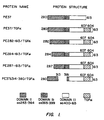
- the plasmid DF1 encodes a 37 kD protein termed PE37 that contains an initial methionine followed by amino acids 281-613 of native PE. The cysteine at position 287 was replaced by serine.
- Plasmid DF1 was deposited with the American Type culture Collection at Rockville, Maryland on June 12, 1992 and has been designated ATCC No. .
- Plasmid CT4 (pCT4) was made by ligating a DNA fragment identical to a 551 bp (base pair) BamH1-EcoR1 fragment of plasmid 4735/4E with a 3.6 kb BamH1-EcoR1 dephosphorylated fragment of plasmid DF1.
- Plasmid CT4 encodes a protein termed PE37/TGF ⁇ (PE 280-613/TGF ⁇ ).
- PE37 deletion mutants were created by the insertion of NdeI-SacII digested PCR fragments into NdeI-SacII restriction sites found in plasmid DF1.
- Plasmid CT2 encodes a methionine at position 282 and amino acids 283-613 of native PE, except a serine at position 287.
- Plasmid CT3 encodes a methionine at position 284 and amino acids 285-613 of native PE, except a serine at position 287.
- Plasmid CT14 encodes a methionine at position 287 and amino acids 288-613 of native PE.
- periplasm fraction was prepared for the mutant proteins from plasmid DF1.
- fusion proteins were purified from inclusion bodies as described in Kreitman, et al., supra.
- Periplasm or inclusion bodies extracted with guanidine and renatured by rapid dilution into PBS were purified by sequential use of Q sepharose, Mono Q HR 5/5 (Pharmacia-LKB, Inc., Piscataway, NJ) or Porous A/F (Perceptive Biosystems, Cambridge, MA), and TSK-250 columns using a Pharmacia LKB Biotechnology, Inc. (Piscataway, NJ) FPLC.
- SDS-PAGE as described in Laemmli, Nature 227:680-685 (1970), incorporated by reference, was used to analyze column fractions. The identity of PE containing proteins was verified by immunoblotting using polyclonal rabbit anti-PE antisera and a Vectastain kit (Vector Labs, Burlingame, CA).
- ADP-ribosylation assay ADP-ribosylation activity of protein samples was measured by the procedure of Collier and Kandel using wheat germ extract enriched in elongation factor 2, J. Biol. Chem. 246:1496-1503 (1971), incorporated by reference.
- [ 125 I]-EGF displacement studies - A431 cells (human epidermoid cancer cells) were plated at 8,000 cells per well in 1 ml of media in 24 well plates. After 24 hours, the cells were washed twice with binding buffer (DMEM containing 50 mM MES pH 6.8 and BSA 1 mg/ml) and treated with 200 ⁇ l of binding buffer containing 0.5 ng (0.05 ⁇ Ci)) of [ 125 I]-EGF (New England Nuclear, Inc., Boston, MA) combined with either 0, 0.8, 4, 20, or 100 pmol of toxin.
- binding buffer DMEM containing 50 mM MES pH 6.8 and BSA 1 mg/ml
- binding buffer containing 0.5 ng (0.05 ⁇ Ci)
- [ 125 I]-EGF New England Nuclear, Inc., Boston, MA
- the cells were washed with binding buffer, lysed with 10 mM Tris-HCl pH 7.4 containing 0.5% SDS and 1 mM EDTA, and bound ligand counted with a gamma detector.
- DNA sequencing of plasmid DF1 confirmed that it had the desired sequence.
- PE37 was expressed in BL21 ( ⁇ DE3) and found to be equally distributed between the periplasm and spheroplasts when cell fractions were analyzed by SDS-PAGE.
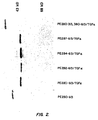
- Toxin was purified from periplasm to >90% homogeneity using anion exchange chromatography and gel filtration. The purified protein had the expected molecular weight on SDS-PAGE (37 kD) and was immunoreactive with anti-PE antibodies ( Figures 2 and 3).
- Protein sequencing confirmed the 14 amino-terminal amino acids (MWEQLEQSGYPVQR).
- ADP ribosylation activity was identical to that of PE40, a molecule with ADP-ribosylation activity identical to native PE. See, Kondo, et al., J. Biol. Chem. 263:9470-9475 (1988). When tested on a number of cell lines, PE37 had very little cytotoxic activity because it could not bind to the target cells.
- PE37 / TGF ⁇ - To target PE37 to cells without modifying its amino-terminus, a plasmid was constructed in which a cDNA encoding TGF ⁇ was inserted so that TGF ⁇ was placed after amino acid 607 of PE37 and a carboxyl end of PE was recreated by placing amino acids (604-613) of PE after TGF ⁇ .
- Toxin molecules with TGF ⁇ inserted at this position and also containing an inactive cell binding domain, PE(4E)/TGF ⁇ , (also known as PE66 4Glu -TGF ⁇ ) are very cytotoxic to EGF receptor bearing cells. See Kreitman, et al. supra.
- the fusion protein PE37/TGF ⁇ whose structure is shown in Figure 1, was expressed in BL21 ( ⁇ DE3) and found almost exclusively in inclusion bodies.
- the protein was solubilized in 7M guanidine, renatured in phosphate buffered saline, and purified to >90% homogeneity on anion exchange and gel filtration columns as described previously for other TGF ⁇ containing recombinant proteins, Kreitman, et al., supra.
- the purified protein migrated with the expected molecular weight (43 kD) on SDS-PAGE, was immunoreactive with antibodies against PE ( Figures 2 and 3), and had full ADP ribosylation activity when compared with other PE molecules, Table 2.
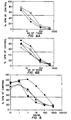
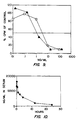
- the recombinant protein was cytotoxic to cell lines expressing various numbers of EGF receptors and the cytotoxic effect was related to the number of receptors present (Table 3). Furthermore, HUT 102 cells, which do not have EGF receptors, were resistant to the toxic effects of PE37/TGF ⁇ . Cytotoxicity on A431 human epidermoid cancer cells was completely inhibited using excess EGF, indicating that PE37/TGF ⁇ was binding specifically via the EGF receptor. The ID 50 of PE37/TGF ⁇ on A431 cells was less than PE(4E)/TGF ⁇ , a molecule that contains all of domain II, and therefore must be processed prior to translocating to the cytosol ( Figure 4).
- PE37/TGF ⁇ is a very active and specific recombinant toxin. Comparison of activities of various PE mutants Construct Plasmid ADP Rib. (%) ID 50 (A431) ng/ml [nM] displaces 125 I-EGF Corrected cytotoxicity Index PE37 pDFl 100 250 ND ND PE37/TGF ⁇ pCT4/T 100 0.02 20 1000 PE282-613/TGF ⁇ pCT2/T 100 0.5 41 82 PE284-613/TGF ⁇ pCT3/T 100 0.25 14 56 PE287-613/TGF ⁇ pCT14/T 100 2 12 6 PE37A314-380/TGF ⁇ pCT8/T 100 25 8 0.32 PE(4E)/TGF ⁇ pVC4735/4E 100 0.3 12 40 PE35/TGF ⁇ 0.06 20 333 PE35/TGF ⁇ & KDEL 0.006 9 1500 TP40 (ala 265,287, 0.4 2 5 372,379) PE37/TGF ⁇
- a decrease in cytotoxicity may be attributed to decreased binding of the recombinant toxin to the EGF receptor.
- TGF ⁇ has three disulfide bonds, a variety of improperly folded forms can be generated during the refolding process, Kreitman, supra.
- an [ 125 I]-EGF displacement assay was conducted ( Figure 6). Each toxin's cytotoxic activity was then corrected for differences in EGF receptor binding.
- a corrected cytotoxicity index value was calculated by dividing the concentration of toxin (nM) that displaced 50% of [ 125 I]-EGF from EGF receptors by the ID 50 of the recombinant toxin on A431 cells (Table 2). This index highlights the superior cytotoxic activity of PE37/TGF ⁇ compared to the other mutants described here and to PE(4E)/TGF ⁇ .
- the 37 kD protein (termed PE37) described above is a preferred embodiment. Because the amino-terminal methionine is at amino acid position 280, this molecule should not require either proteolysis or disulfide bond reduction to enable it to translocate to the cytosol. Substitution of methionine for glycine at position 280 does not decrease cytotoxicity.
- a chimeric molecule was created using a cDNA encoding TGF ⁇ . PE37/TGF ⁇ acted specifically to kill target cells because cytotoxicity was inhibited by excess EGF, while HUT 102 cells, which lack EGF receptors, were insensitive to PE37/TGF ⁇ . Amino acids 253-280 are apparently necessary for toxin function only to facilitate proteolytic processing.
- Domain Ib and III are also not necessary for translocation because they can be replaced with the ribonuclease barnase to generate a cytotoxic molecule, as described in Prior, et al., Biochemistry 31:3555-3559 (1992).
- Amplification - oligonucleotides C9 and C2 were constructed as described above using a DNA synthesizer (Applied Biosystems). Polymerase chain reaction (PCR) was carried out using 10 ng of plasmid DF1 (described above) as template and reagents as per the manufacturer's instructions (Gene Amp; Perkin-Elmer/Cetus) in the presence of 5% formamide (Fluka Chemika) and 100 pmol of primers C9 and C2. Each PCR reaction totalled 30 cycles consisting of denaturation at 94°C for 1 minute, annealing at 42°C for 90 seconds and polymerization at 72°C for 2 minutes with a 10 second extension in each cycle. The amplified fragments were purified on 1.5% low-melting-point agarose (SeaPlaque, FMC).
- Plasmid CT132 was made by the insertion of a Ndel-SacII digested PCR fragment (amplified using C9 and C2) into a dephosphorylated 3.6 kb NdeI-SacII fragment of plasmid DF1, described above.
- Plasmid CT11 was created by ligating a 515 bp SalI-BamH1 fragment of a plasmid containing a DNA sequence identical to plasmid CS10 (Siegall et al., Biochem . 30:7154-59 (1991)) which encodes a PE mutant containing a deletion of amino acids 365-380 from domain Ib, with a 3.7 kb SalI-BamH1 dephosphorylated fragment of plasmid CT132. Plasmid CT11 was verified by DNA sequencing and encodes a protein termed PE35 that consists of a methionine and amino acids 281-364,381-613 of native PE.
- NlysPE38 is a mutant PE protein that contains aa 253-364,381-613 of PE preceded by an 11 amino acid peptide containing a lysine residue that is easily derivatized.
- NlysPE38 was purified by sequential use of Q sepharose, Mono Q (HR 5/5; Pharmacia) and TSK-250 (Tosohaas, Montgomeryville, PA) columns using Pharmacia LKB Biotechnology Inc. FPLC as described in the prior example.
- Periplasm containing PE35 was purified by elution from Q sepharose at 0.26-0.30 M NaCl in 20 mM Tris pH 7.4. The eluant was injected onto a chelating sepharose column (Pharmacia) that had been 50% saturated with 1 mg/ml CuSO 4 in 50 mM Tris-acetate pH 7.0 containing 1 M NaCl.
- the flow through contained almost pure PE35 that was purified as monomer on a TSK-250 column in PBS containing 10 mM EDTA and 10 mM DTT.
- SMCC succinimidyl 4-(N-maleimidomethyl) cyclohexane-1-carboxylate
- PE35 was stored in 0.2 M sodium phosphate (pH 7.0) containing 1 mM EDTA and 50 mM DTT and separated from DTT on Sephadex G-25 prior to coupling to antibody.
- Monoclonal antibody (MAb) B3 is reactive against polysaccharide antigen found on many human tumors and was purified from serum free culture medium as described. Pastan, et al., Cancer Res. 51:3781-7 (1991), incorporated by reference herein.
- MAb HB21 is directed against the human transferrin receptor and was purified from the ascities of nude mice bearing HB21 as described. MAb concentrations were determined by absorbance at 280 nm, assuming an extinction coefficient of 1.4 ml/mg-cm.
- B3 and HB21 (4-8 mg/ml) in 0.2 M sodium phosphate (pH 7.0) containing 1 mM EDTA were reacted with a two-fold and four-fold molar excess of SMCC, respectively, and incubated at 22°C for one hour.
- Derivatized MAb was separated from reactant using Sephadex G-25.
- B3 and HB21 had 0.83 and 1.0 reactive groups measured per molecule, respectively, under these conditions. See Yoshitake, et al., supra.
- B3 and HB21 (4-5 mg/ml) in 0.2 M sodium phosphate (pH 8.0) containing 1 mM EDTA were also reacted with a two-fold or three-fold molar excess of SPDP, respectively, and incubated at 22°C for 30 minutes.
- Derivatized MAb was separated from reactant using Sephadex G-25.
- B3 and HB21 had 0.79 and 0.56 reactive groups measured per molecule, respectively, under these conditions.
- B3 or HB21 derivatized with either SPDP or SMCC were each separated into two pools and reacted with a 2 to 3 molar excess of NlysPE38 that had been derivatized with iminothiolane or with reduced PE35 for 16 hours at 22°C. Reactions were terminated by the addition of iodoacetamide (Sigma Chemical Co., St. Louis, Mo.) to a 1mM final concentration. In addition, B3 was derivatized using iminothiolane. B3 (5-10 mg/ml) in 0.2 M sodium phosphate (pH 8.0) was reacted with a two molar excess of iminothiolane at 37°C for one hour.
- iodoacetamide Sigma Chemical Co., St. Louis, Mo.
- ADP-ribosylation assay ADP-ribosylation activity of protein samples was measured by the procedure of Collier and Kandel using wheat germ extract enriched in elongation factor 2, as described in the previous example.
- PE35 35 kD carboxyl-terminal fragment
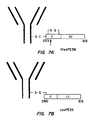
- Plasmid CT132 was constructed using a PCR fragment that reintroduces a cysteine at position 287 of PE37. DNA sequencing confirmed that this mutation was present. Plasmid CT11 was constructed by replacing PE encoding DNA sequences of plasmid CT132 with a PE encoding DNA sequence containing a deletion of amino acids 365-380 from domain Ib. This deletion does not affect the cytotoxicity of PE proteins. Thus, plasmid CT11 (f+T) contains a T7 promoter and DNA encoding a met at position 280 followed by amino acids 281-364,381-613 of native PE. The protein encoded by this plasmid (PE35) has a single cysteine residue at position 287 ( Figure 7).
- PE35 was expressed in BL21 ( ⁇ DE3) and found to be equally distributed between the periplasm and spheroplast on SDS-PAGE. Purification from periplasm to >95% homogeneity was done using anion exchange and chelation chromatography and gel filtration. PE35 was found to be of expected molecular weight on SDS-PAGE (35 kD) and was immunoreactive with rabbit sera reactive with PE. ADP ribosylation activity was identical to that of lysPE40 (Collier & Kandel, supra ), a molecule with ADP-ribosylation activity identical to native PE. The number of thiol groups was found to be one per mole when measured using Ellman's reagent. When tested on a number of cell lines, PE35 had very little cytotoxic activity because it could not bind specifically to target cells (Table 4).
- NlysPE38 a molecule that contains amino acids 253-364,381-613 of PE preceded by an 11-amino acid peptide that contains an accessible lysine residue (Figure 7), was derivatized with iminothiolane to create a free sulfhydryl group, and was coupled to MAb derivatized with either SMCC (to produce a thioether bond) or SPDP (to produce a disulfide bond).
- SMCC to produce a thioether bond
- SPDP to produce a disulfide bond
- conjugates were then tested on A431 and MCF7 cells to determine their activities.
- Conjugates employing a disulfide linkage to PE35 were most active on A431 and MCF7 cells (Table 4 and Figure 8).
- NlysPE38 conjugates displayed nearly identical cytotoxicity regardless of the method of conjugation, but were five-fold less active than those containing a disulfide bond to PE35 on A431 cells.
- the thioether conjugate made using PE35 was more than 100-fold less active than the disulfide conjugate containing PE35.
- Mouse L929 cells, which do not contain the human transferrin receptor were resistant to the toxic effects of immunotoxin containing HB21.
- cytotoxicity on the A431 human epidermoid cancer cell line was inhibited using 10 ⁇ g/ml of HB21, indicating that immunotoxin was binding specifically via the human transferrin receptor.
- B3 conjugated to NlysPE38 through a thioether bond B3-S-C-PE38 reduced to produce MAb heavy chain (50 kD) and light chain (20 kD) as well as MAb heavy and light chains bound to PE38.
- B3 conjugated to PE35 through a disulfide bond B3-S-S-PE35 reduced to produce MAb heavy and light chain as well as free toxin (35 kD).
- PE35 retains the unique features of PE37 and can be easily conjugated to antibody.
- PE35 has full ADP ribosylation activity; it contains a single cysteine residue at position 287 so it can be reliably coupled to antibody through either a thioether or disulfide bond.
- MAb HB21 that had been derivatized with either SMCC or SPDP were each separated into two pools and reacted with each toxin in parallel to create conjugates employing either a thioether or disulfide bond, respectively.
- Derivatization was done to ensure a predominance of immunotoxin containing antibody and toxin in a one-to-one ratio. Only purified one-to-one immunotoxin was used for the analyses done here.
- HB21 conjugated to PE35 through a disulfide bond was five-fold more active on A431 cells than PE38 conjugates.
- proteolytic processing may be rate-limiting in the action of PE38 containing immunotoxin on these cells.
- HB21-S-S-PE35 did not exhibit increased cytotoxicity on the human breast carcinoma MCF7 cell line in comparison to conjugates containing NlysPE38. It is possible that MCF7 cells are more efficient than A431 cells at proteolyzing PE38. Hence, proteolysis of PE mutants may not be rate-limiting in these cells.
- the fact that PE35 and PE38 have similar non-specific toxicities on this cell line (200 ng/ml versus 300 ng/ml, respectively) reinforces the contention that MCF7 cells process NlysPE38 nearly as well as PE35.
- PE35 does not contain the proteolytic site recognized by mammalian cells that process PE, immunotoxin containing PE35 linked to HB21 through a thioether bond were quite inactive. The small degree of activity observed may be attributed to proteolytic processing occurring at other sites within the MAb or PE35 and inefficient translocation of the resulting fragments.
- Immunotoxin containing B3 conjugated to PE35 through a disulfide bond were also more active than a B3 thioether conjugate to NlysPE38.
- the magnitude of the effect of bypassing proteolytic processing was less than that observed with HB21 conjugates.
- the B3 conjugate made using SMCC to derivatize MAb was less active than the same immunotoxin made in which MAb was derivatized with iminothiolane and NlysPE38 was derivatized with SMCC. While both of these agents react with amino groups, they differ in polarity (iminothiolane > SPDP > SMCC).
- the nonpolar reactant SMCC derivatized a unique lysine residue and interfered with a critical binding property of B3 during the derivatization process.
- a PE35 disulfide conjugate made using iminothiolane to derivatize B3 was 10-fold more potent than one using SPDP to derivatize B3.
- B3-S-S-PE35 was injected intravenously into mice at a level of 5 ⁇ g. Serum levels of the immunotoxin were determined over a period of over 20 hours by incubating the serum with A431 cells and measuring the effect on protein synthesis as described above. A standard curve was made with B3-S-S-PE35 diluted in control mouse serum. See Figure 10.
- mice received 2,000,000 A431 cells on day 0 and a single intravenous dose on day 5 of 25 ⁇ g of B3-S-S-PE35, an equimolar amount of B3, PE35 or PBS containing HSA.
- the results over time on tumor growth measured in cubic mm are shown on Figure 11.
- the immunotoxin caused complete regression of the tumor.
- Patients diagnosed with bladder cancer may be treated with PE35/TGF ⁇ having a carboxyl terminal sequence KDEL by instilling the protein in 60 ml of diluent once a week by catheter for a period of six weeks.
- This molecule is more active and smaller than TP40 and will penetrate into bladder tumors better than larger molecules and be effective.
- B3Fv refers to a sequence including the heavy and light chain regions of MabB3 connected by a flexible linker (Gly, Ser), which starts at the carboxyl end of the heavy chain Fv domain and ends at the amino terminus of the light chain Fv domain, all as described in commonly assigned U.S.S.N. 07/767,331, incorporated by reference herein. This gene encoding this protein is fused to the PE35 gene.
- CYTOTOXIC ACTIVITIES OF PROTEINS AND IMMUNOTOXINS Toxin or Immunotoxin
- ID 50 CYTOTOXIC ACTIVITIES OF PROTEINS AND IMMUNOTOXINS Toxin or Immunotoxin
Landscapes
- Chemical & Material Sciences (AREA)
- Health & Medical Sciences (AREA)
- Organic Chemistry (AREA)
- Life Sciences & Earth Sciences (AREA)
- Medicinal Chemistry (AREA)
- General Health & Medical Sciences (AREA)
- Biochemistry (AREA)
- Biophysics (AREA)
- Genetics & Genomics (AREA)
- Immunology (AREA)
- Molecular Biology (AREA)
- Proteomics, Peptides & Aminoacids (AREA)
- Gastroenterology & Hepatology (AREA)
- Cell Biology (AREA)
- Zoology (AREA)
- Toxicology (AREA)
- Veterinary Medicine (AREA)
- Pharmacology & Pharmacy (AREA)
- Animal Behavior & Ethology (AREA)
- Public Health (AREA)
- Chemical Kinetics & Catalysis (AREA)
- Nuclear Medicine, Radiotherapy & Molecular Imaging (AREA)
- General Chemical & Material Sciences (AREA)
- Peptides Or Proteins (AREA)
- Preparation Of Compounds By Using Micro-Organisms (AREA)
- Medicines Containing Antibodies Or Antigens For Use As Internal Diagnostic Agents (AREA)
- Micro-Organisms Or Cultivation Processes Thereof (AREA)
- Medicines That Contain Protein Lipid Enzymes And Other Medicines (AREA)
Applications Claiming Priority (3)
| Application Number | Priority Date | Filing Date | Title |
|---|---|---|---|
| US90170992A | 1992-06-18 | 1992-06-18 | |
| US901709 | 1992-06-18 | ||
| PCT/US1993/005858 WO1993025690A1 (en) | 1992-06-18 | 1993-06-17 | Recombinant pseudomonas exotoxin with increased activity |
Publications (2)
| Publication Number | Publication Date |
|---|---|
| EP0646175A1 EP0646175A1 (en) | 1995-04-05 |
| EP0646175B1 true EP0646175B1 (en) | 2005-12-28 |
Family
ID=25414676
Family Applications (1)
| Application Number | Title | Priority Date | Filing Date |
|---|---|---|---|
| EP93915414A Expired - Lifetime EP0646175B1 (en) | 1992-06-18 | 1993-06-17 | Recombinant pseudomonas exotoxin with increased activity |
Country Status (8)
| Country | Link |
|---|---|
| US (3) | US5602095A (enExample) |
| EP (1) | EP0646175B1 (enExample) |
| JP (1) | JP3553933B2 (enExample) |
| AT (1) | ATE314475T1 (enExample) |
| AU (1) | AU675440B2 (enExample) |
| CA (1) | CA2136724A1 (enExample) |
| DE (1) | DE69333951D1 (enExample) |
| WO (1) | WO1993025690A1 (enExample) |
Families Citing this family (128)
| Publication number | Priority date | Publication date | Assignee | Title |
|---|---|---|---|---|
| IL116436A (en) * | 1995-12-18 | 2006-12-31 | Yissum Res Dev Co | Fc?Á-PE CHIMERIC PROTEIN FOR TARGETED TREATMENT OF ALLERGY RESPONSES AND |
| IL118570A (en) * | 1996-06-04 | 2007-06-17 | Shai Yarkoni | USE OF A CHIMERIC PROTEIN COMPRISING Met-GnRH IN THE PREPARATION OF A PHARMACEUTICAL COMPOSITION FOR TREATING ADENOCARCINOMA OR HEPATOCARCINOMA |
| US6426075B1 (en) | 1996-11-06 | 2002-07-30 | The United States Of America As Represented By The Secretary Of The Department Of Health And Human Services | Protease-activatable pseudomonas exotoxin A-like proproteins |
| US7314632B1 (en) * | 1997-07-11 | 2008-01-01 | The United States Of America As Represented By The Secretary Of The Department Of Health And Human Services | Pseudomonas exotoxin A-like chimeric immunogens |
| EP1000163B1 (en) * | 1997-07-11 | 2005-10-19 | THE GOVERNMENT OF THE UNITED STATES OF AMERICA as represented by the Secretary of the Department of Health and Human Services | Pseudomonas exotoxin a-like chimeric immunogens |
| US20030054012A1 (en) * | 2000-05-12 | 2003-03-20 | Fitzgerald David J. | Pseudomonas exotoxin a-like chimeric immunogens for eliciting a secretory iga-mediated immune response |
| US20020088019A1 (en) * | 1997-09-02 | 2002-07-04 | Oron Yacoby-Zeevi | Methods of and pharmaceutical compositions for improving implantation of embryos |
| US20040213789A1 (en) * | 1997-09-02 | 2004-10-28 | Oron Yacoby-Zeevi | Heparanase activity neutralizing anti-heparanase monoclonal antibody and other anti-heparanase antibodies |
| US6177545B1 (en) * | 1997-09-02 | 2001-01-23 | Insight Strategy & Marketing Ltd. | Heparanase specific molecular probes and their use in research and medical applications |
| US20010006630A1 (en) * | 1997-09-02 | 2001-07-05 | Oron Yacoby-Zeevi | Introducing a biological material into a patient |
| US6699672B1 (en) | 1997-09-02 | 2004-03-02 | Insight Biopharmaceuticals Ltd. | Heparanase specific molecular probes and their use research and medical applications |
| US6645490B2 (en) * | 1998-03-02 | 2003-11-11 | Yissum Research Development Company Of The Hebrew University Of Jerusalem | Chimeric proteins with cell-targeting specificity and apoptosis-inducing activities |
| US7045305B1 (en) | 1998-04-08 | 2006-05-16 | The Regents Of The University Of California | Methods and reagents for targeting organic compounds to selected cellular locations |
| WO1999051986A1 (en) * | 1998-04-08 | 1999-10-14 | The Regents Of The University Of California | Methods and reagents for targeting organic compounds to selected cellular locations |
| US6277824B1 (en) * | 1998-07-10 | 2001-08-21 | Adherex Technologies | Compounds and methods for modulating adhesion molecule function |
| US20030217375A1 (en) * | 1998-08-31 | 2003-11-20 | Eyal Zcharia | Transgenic animals expressing heparanase and uses thereof |
| WO2000052178A1 (en) * | 1999-03-01 | 2000-09-08 | Insight Strategy & Marketing Ltd. | Polynucleotide encoding a polypeptide having heparanase activity and expression of same in genetically modified cells |
| US20030162733A1 (en) * | 2000-11-27 | 2003-08-28 | Haynes Joel R. | Nucleic acid adjuvants |
| EP1379550B1 (en) * | 2000-12-21 | 2009-03-11 | THE GOVERNMENT OF THE UNITED STATES OF AMERICA, as represented by THE SECRETARY, DEPARTMENT OF HEALTH AND HUMAN SERVICES | A chimeric protein comprising non-toxic pseudomonas exotoxin a and type iv pilin sequences |
| US20040018203A1 (en) * | 2001-06-08 | 2004-01-29 | Ira Pastan | Pegylation of linkers improves antitumor activity and reduces toxicity of immunoconjugates |
| ES2342929T3 (es) | 2001-09-26 | 2010-07-19 | The Government of the United States of America as represented by the Secretary of Health and Human | Anticuerpos anti-cd22 con afinidad aumentada por las celulas leucemicas que expresan cd22. |
| US6671189B2 (en) * | 2001-11-09 | 2003-12-30 | Minebea Co., Ltd. | Power converter having primary and secondary side switches |
| US6908453B2 (en) * | 2002-01-15 | 2005-06-21 | 3M Innovative Properties Company | Microneedle devices and methods of manufacture |
| CA2826735C (en) | 2003-04-30 | 2019-06-04 | University Of Zurich | Methods for treating cancer using an immunotoxin |
| WO2004108065A2 (en) * | 2003-06-09 | 2004-12-16 | Insight Biopharmaceuticals Ltd. | Heparanase activity neutralizing anti- heparanase monoclonal antibody and other anti-heparanase antibodies |
| US8206950B2 (en) * | 2003-06-09 | 2012-06-26 | Animal Technology Institute Taiwan | Fusion antigen used as vaccine and method of making them |
| US7335361B2 (en) * | 2003-06-09 | 2008-02-26 | Animal Technology Institute Taiwan | Fusion antigen used as vaccine |
| US7595054B2 (en) * | 2003-06-09 | 2009-09-29 | Healthbanks Biotech Co., Ltd. | Fusion antigen used as vaccine |
| JP4813364B2 (ja) * | 2003-11-25 | 2011-11-09 | アメリカ合衆国 | 突然変異型抗cd22抗体および免疫複合体 |
| US7999077B2 (en) * | 2004-09-30 | 2011-08-16 | The United States Of America As Represented By The Secretary Of The Department Of Health And Human Services | IRTA2 antibodies and methods of use |
| US20090155297A1 (en) * | 2004-10-04 | 2009-06-18 | Trinity Biosystems, Inc. | Methods and Compositions for Inducing an Immune Response Against Multiple Antigens |
| JP2008515808A (ja) * | 2004-10-04 | 2008-05-15 | トリニティ バイオシステムズ インコーポレーテッド | 針不用の高分子送達のための方法及び組成物 |
| US7611714B2 (en) | 2004-10-04 | 2009-11-03 | Trinity Biosystems, Inc. | Methods and compositions for immunizing against Pseudomonas infection |
| US7964200B2 (en) | 2005-05-18 | 2011-06-21 | Children's Hospital & Research Center At Oakland | Methods and compositions for immunizing against Chlamydia infection |
| ES2660026T3 (es) * | 2005-07-29 | 2018-03-20 | The Government Of The United States Of America, As Represented By The Secretary Of Health And Human Services | Exotoxinas de pseudomonas mutadas con antigenicidad reducida |
| EP1971367A4 (en) * | 2005-12-05 | 2010-04-07 | Trinity Biosystems Inc | METHOD AND COMPOSITIONS FOR THE NEEDLESS DELIVERY OF BINDING PARTNERS |
| US7666991B2 (en) * | 2005-12-05 | 2010-02-23 | Trinity Biosystems, Inc. | Compositions for needleless delivery of antibodies |
| WO2007109110A2 (en) | 2006-03-16 | 2007-09-27 | Trinity Biosystems, Inc. | Methods for increasing the size of animals using needleless delivery constructs |
| EP2046375B1 (en) | 2006-07-20 | 2017-04-05 | The General Hospital Corporation | Methods and compositions for the selective activation of protoxins through combinatorial targeting |
| US20090092660A1 (en) * | 2006-08-09 | 2009-04-09 | Trinity Biosystems, Inc. | Methods and compositions for needleless delivery of particles |
| US8043621B2 (en) * | 2007-05-10 | 2011-10-25 | Ramot At Tel Aviv University Ltd. | Recombinant fusion protein and polynucleotide construct for immunotoxin production |
| US8597655B2 (en) | 2007-05-10 | 2013-12-03 | Ramot At Tel-Aviv University Ltd. | Recombinant fusion protein and polynucleotide construct for immunotoxin production |
| US8524241B2 (en) * | 2007-07-20 | 2013-09-03 | The General Hospital Corporation | Fusion proteins comprising a fragment of Vibrio cholerae exotoxin A |
| CA2698357C (en) | 2007-09-04 | 2017-06-06 | The Government Of The United States Of America, As Represented By The Secretary Of The Department Of Health And Human Services | Deletions in domain ii of pseudomonas exotoxin a that reduce non-specific toxicity |
| HUE039413T2 (hu) | 2008-02-20 | 2018-12-28 | Glaxosmithkline Biologicals Sa | Prokarióta sejtekbõl származó rekombináns N-glikozilált fehérjékbõl készített biokonjugátumok |
| CA2737597C (en) | 2008-10-16 | 2017-03-14 | University Of Pittsburgh-Of The Commonwealth System Of Higher Education | Fully human antibodies to high molecular weight-melanoma associated antigen and uses thereof |
| EP2379720B1 (en) | 2009-01-20 | 2016-08-17 | Alona Zilberberg | Mir-21 promoter driven targeted cancer therapy |
| WO2011031441A1 (en) | 2009-08-28 | 2011-03-17 | The Government Of The United States Of America As Represented By The Secretary Of The Department Of Health And Human Services | Therapy with a chimeric molecule and a pro-apoptotic agent |
| RU2012114005A (ru) | 2009-09-11 | 2013-10-20 | Те Гавернмент Оф Те Юнайтед Стейтс Оф Америка Эз Репризентед Бай Те Секретари Оф Те Департмент Хелт Энд Хьюман Сервисез | Усовершенствованный экзотоксин а pseudomonas со сниженной иммуногенностью |
| WO2011100455A1 (en) | 2010-02-12 | 2011-08-18 | The Government Of The United States Of America As Represented By The Secretary Of The Department Of Health And Human Services | Inhibition of antibody responses to foreign proteins |
| CN103068851B (zh) | 2010-06-16 | 2015-03-11 | 高等教育联邦系统-匹兹堡大学 | 内质蛋白的抗体及其用途 |
| PL3434346T3 (pl) | 2010-07-30 | 2021-04-06 | Medimmune, Llc | Oczyszczone aktywne polipeptydy lub immunokoniugaty |
| BR112013006088B1 (pt) | 2010-09-15 | 2022-06-14 | Randall J Mrsny | Construto de entrega isolado, e, composição farmacêutica |
| US11246915B2 (en) | 2010-09-15 | 2022-02-15 | Applied Molecular Transport Inc. | Cholix toxin-derived fusion molecules for oral delivery of biologically active cargo |
| WO2012075324A1 (en) | 2010-12-02 | 2012-06-07 | University Of Pittsburgh - Of The Commonwealth System Of Higher Education | Methods for treating a tumor using an antibody that specifically binds hmw-maa |
| EP3070104B1 (en) | 2011-04-19 | 2017-12-27 | The United States of America, as represented by The Secretary, Department of Health and Human Services | Human monoclonal antibodies specific for glypican-3 and use thereof |
| JP6169561B2 (ja) | 2011-05-06 | 2017-07-26 | ザ ガバメント オブ ザ ユナイテツド ステイツ オブ アメリカ アズ リプリゼンテツド バイ ザ セクレタリー オブ ザ デパートメント オブ ヘルス アンド ヒユーマン サービシズ | メソテリンを標的とする組換え免疫毒素 |
| AU2012268013B2 (en) | 2011-06-09 | 2016-11-17 | The United States Of America, As Represented By The Secretary, Department Of Health And Human Services | Pseudomonas exotoxin A with less immunogenic T cell and/or B cell epitopes |
| US8932586B2 (en) | 2011-09-06 | 2015-01-13 | Intrexon Corporation | Modified forms of Pseudomonas exotoxin A |
| WO2013039916A1 (en) | 2011-09-12 | 2013-03-21 | The United States Of America, Represented By The Secretary, Dept. Of Health And Human Services | Compositions for and methods of treatment and enhanced detection of non-pituitary tumors |
| US9206240B2 (en) | 2011-09-16 | 2015-12-08 | The United States of America, as represented by the Secretary, Department of Helath and Human Services | Pseudomonas exotoxin A with less immunogenic B cell epitopes |
| WO2013049535A2 (en) | 2011-09-30 | 2013-04-04 | The United States Of America, As Represented By The Secretary, Department Of Health & Human Services | Influenza vaccine |
| AU2011378675B2 (en) | 2011-10-04 | 2017-10-05 | Epsilogen Ltd | IgE anti -HMW-MAA antibody |
| US9409994B2 (en) | 2012-06-01 | 2016-08-09 | The United States Of America, As Represented By The Secretary, Department Of Health And Human Services | High-affinity monoclonal antibodies to glypican-3 and use thereof |
| AU2013306076B2 (en) | 2012-08-21 | 2018-01-25 | The United States Of America, As Represented By The Secretary, Department Of Health And Human Services | Mesothelin domain-specific monoclonal antibodies and use thereof |
| AU2013324049B2 (en) | 2012-09-27 | 2017-09-21 | The United States Of America, As Represented By The Secretary, Department Of Health And Human Services | Mesothelin antibodies and methods for eliciting potent antitumor activity |
| EP2934597B1 (en) | 2012-12-20 | 2018-10-17 | MedImmune, LLC | Methods of producing immunoconjugates |
| US9790282B2 (en) | 2013-03-25 | 2017-10-17 | The United States Of America, As Represented By The Secretary, Department Of Health And Human Services | Anti-CD276 polypeptides, proteins, and chimeric antigen receptors |
| CA2926215A1 (en) | 2013-10-06 | 2015-04-09 | The United States Of America, As Represented By The Secretary, Department Of Health And Human Services | Modified pseudomonas exotoxin a |
| CA3178299A1 (en) | 2013-10-11 | 2015-04-16 | The United States Of America, As Represented By The Secretary, Department Of Health And Human Services | Tem8 antibodies and their use |
| EP3066118B1 (en) | 2013-11-06 | 2020-01-08 | The U.S.A. as represented by the Secretary, Department of Health and Human Services | Alk antibodies, conjugates, and chimeric antigen receptors, and their use |
| CA2937524A1 (en) | 2014-02-05 | 2015-08-13 | Molecular Templates, Inc. | Methods of screening, selecting, and identifying cytotoxic recombinant polypeptides based on an interim diminution of ribotoxicity |
| CN107002119A (zh) | 2014-03-24 | 2017-08-01 | 豪夫迈·罗氏有限公司 | 使用c‑met拮抗剂的癌症治疗及前者与hgf表达的关联 |
| SG11201610183XA (en) | 2014-05-07 | 2017-01-27 | Applied Molecular Transp Llc | Cholix toxin-derived fusion molecules for oral delivery of biologically active cargo |
| ES2925224T3 (es) | 2014-07-31 | 2022-10-14 | Us Gov Health & Human Services | Anticuerpos monoclonales humanos contra EphA4 y su uso |
| ES2875057T3 (es) | 2014-09-17 | 2021-11-08 | Us Health | Anticuerpos anti-CD276 (B7H3) |
| WO2016146833A1 (en) | 2015-03-19 | 2016-09-22 | F. Hoffmann-La Roche Ag | Biomarkers for nad(+)-diphthamide adp ribosyltransferase resistance |
| US10676723B2 (en) | 2015-05-11 | 2020-06-09 | David Gordon Bermudes | Chimeric protein toxins for expression by therapeutic bacteria |
| CA3289997A1 (en) | 2015-09-20 | 2026-03-02 | The United States Of America, As Represented By The Secretary, Department Of Health And Human Services | Monoclonal Antibodies Specific for Fibroblast Growth Factor Receptor 4 (FGFR4) and Methods of Their Use |
| EP3184547A1 (en) | 2015-10-29 | 2017-06-28 | F. Hoffmann-La Roche AG | Anti-tpbg antibodies and methods of use |
| PL3370777T3 (pl) | 2015-11-06 | 2021-03-22 | Uniwersytet Warszawski | Sposób oczyszczania rekombinowanej Egzotoksyny A, rekombinowanych mutein Egzotoksyny A i rekombinowanych białek zawierających fragmenty Egzotoksyny A |
| EP3374396A1 (en) | 2015-11-13 | 2018-09-19 | The United States of America, as represented by the secretary, Department of Health and Human Services | Anti-bcma polypeptides and proteins |
| WO2017196847A1 (en) | 2016-05-10 | 2017-11-16 | The United States Of America, As Represented By The Secretary, Department Of Health And Human Services | Variable new antigen receptor (vnar) antibodies and antibody conjugates targeting tumor and viral antigens |
| WO2017214182A1 (en) | 2016-06-07 | 2017-12-14 | The United States Of America. As Represented By The Secretary, Department Of Health & Human Services | Fully human antibody targeting pdi for cancer immunotherapy |
| US11066479B2 (en) | 2016-08-02 | 2021-07-20 | The United States Of America, As Represented By The Secretary, Department Of Health And Human Services | Monoclonal antibodies targeting glypican-2 (GPC2) and use thereof |
| WO2018067582A2 (en) | 2016-10-03 | 2018-04-12 | The United States Of America, As Represented By The Secretary, Department Of Health And Human Services | Hiv-1 env fusion peptide immunogens and their use |
| WO2018081832A1 (en) | 2016-10-31 | 2018-05-03 | The United States Of America, As Represented By The Secretary, Department Of Health And Human Services | Peptide fragments from filoviruses and their uses |
| US11129906B1 (en) | 2016-12-07 | 2021-09-28 | David Gordon Bermudes | Chimeric protein toxins for expression by therapeutic bacteria |
| US11236171B2 (en) | 2016-12-21 | 2022-02-01 | The United States Of America, As Represented By The Secretary, Department Of Health And Human Services | Human monoclonal antibodies specific for FLT3 and uses thereof |
| EP3600405B1 (en) | 2017-03-24 | 2025-08-20 | The United States of America, as represented by the Secretary, Department of Health and Human Services | Glycan-masked engineered outer domains of hiv-1 gp120 and their use |
| WO2018213612A1 (en) | 2017-05-18 | 2018-11-22 | The United States Of America, As Represented By The Secretary, Department Of Health And Human Services | Anti-mesothelin polypeptides and proteins |
| AU2018268970B2 (en) | 2017-05-19 | 2024-12-12 | The United States Of America, As Represented By The Secretary, Department Of Health And Human Services | Human monoclonal antibody targeting tnfr2 for cancer immunotherapy |
| WO2019005208A1 (en) | 2017-06-30 | 2019-01-03 | The United States Of America, As Represented By The Secretary, Department Of Health And Human Services | ANTIBODIES TO HUMAN MESOTHELIN AND USES IN ANTICANCER THERAPY |
| CA3066953A1 (en) | 2017-06-30 | 2019-01-03 | Lentigen Technology, Inc. | Human monoclonal antibodies specific for cd33 and methods of their use |
| US10849960B2 (en) | 2017-09-08 | 2020-12-01 | The United States Of America, As Represented By The Secretary, Department Of Health And Human Services | Synergistic combination of IL-4, interferon gamma, and interferon alpha in treating ovarian cancer |
| WO2019055955A1 (en) | 2017-09-18 | 2019-03-21 | The United States Of America, As Represented By The Secretary, Department Of Health And Human Services | IMMUNOTOXINS WITH ALBUMIN BINDING DOMAIN |
| WO2019079337A1 (en) | 2017-10-16 | 2019-04-25 | The United States Of America, As Represented By The Secretary, Department Of Health And Human Services | RECOMBINANT HIV-1 ENVELOPE PROTEINS AND THEIR USE |
| PL3762009T3 (pl) | 2018-03-08 | 2022-09-12 | Applied Molecular Transport Inc. | Pochodzące z toksyny konstrukty dostarczające do dostarczania doustnego |
| JP7459043B2 (ja) | 2018-07-12 | 2024-04-01 | ザ ユナイテッド ステイツ オブ アメリカ, アズ リプレゼンテッド バイ ザ セクレタリー, デパートメント オブ ヘルス アンド ヒューマン サービシーズ | 親和性成熟cd22特異的モノクローナル抗体およびその使用 |
| AU2019317565B2 (en) | 2018-08-08 | 2026-04-16 | The United States Of America, As Represented By The Secretary, Department Of Health And Human Services | High affinity monoclonal antibodies targeting glypican-2 and uses thereof |
| WO2020061564A1 (en) | 2018-09-23 | 2020-03-26 | The United States Of America, As Represented By The Secretary, Department Of Health And Human Services | Hiv-1 env fusion peptide nanoparticle carrier conjugates and their use |
| US12162910B2 (en) | 2018-10-22 | 2024-12-10 | The United States Of America, As Represented By The Secretary, Department Of Health And Human Services | Recombinant gp120 protein with V1-loop deletion |
| KR20210110800A (ko) | 2018-11-07 | 2021-09-09 | 어플라이드 몰레큘라 트랜스포트 인크. | 이종성 페이로드의 경구 전달용 콜릭스-유래 담체 |
| CN113490510B (zh) | 2019-01-08 | 2025-02-14 | 美国政府(由卫生和人类服务部的部长所代表) | 用于治疗实体瘤的靶向间皮素的跨物种单结构域抗体 |
| CA3125033A1 (en) | 2019-01-22 | 2020-07-30 | The United States Of America, As Represented By The Secretary, Department Of Health And Human Services | High affinity monoclonal antibodies targeting glypican-1 and methods of use |
| WO2021003297A1 (en) | 2019-07-02 | 2021-01-07 | The United States Of America, As Represented By The Secretary, Department Of Health And Human Services | Monoclonal antibodies that bind egfrviii and their use |
| WO2021034727A1 (en) | 2019-08-16 | 2021-02-25 | Applied Molecular Transport Inc. | Compositions, formulations, and interleukin production and purification |
| CA3156761A1 (en) | 2019-10-22 | 2021-04-29 | The United States Of America, As Represented By The Secretary, Department Of Health And Human Services | High affinity nanobodies targeting b7h3 (cd276) for treating multiple solid tumors |
| WO2021097289A1 (en) | 2019-11-15 | 2021-05-20 | The United States Of America, As Represented By The Secretary, Department Of Health And Human Services | Pegylated recombinant immunotoxins |
| US12210017B2 (en) | 2020-01-08 | 2025-01-28 | The United States Of America, As Represented By The Secretary, Department Of Health And Human Services | Peptides representing epitopes from filoviruses |
| WO2021173674A1 (en) | 2020-02-26 | 2021-09-02 | A2 Biotherapeutics, Inc. | Polypeptides targeting mage-a3 peptide-mhc complexes and methods of use thereof |
| WO2022093745A1 (en) | 2020-10-26 | 2022-05-05 | The United States Of America, As Represented By The Secretary, Department Of Health And Human Services | Single domain antibodies targeting sars coronavirus spike protein and uses thereof |
| TWI925918B (zh) | 2020-12-22 | 2026-05-21 | 大陸商江蘇恆瑞醫藥股份有限公司 | 抗il-4r抗體或其抗原結合片段的複合物及醫藥用途 |
| WO2022232612A1 (en) | 2021-04-29 | 2022-11-03 | The United States Of America, As Represented By The Secretary, Department Of Health And Human Services | Lassa virus-specific nanobodies and methods of their use |
| WO2022261017A1 (en) | 2021-06-09 | 2022-12-15 | The United States Of America, As Represented By The Secretary, Department Of Health And Human Services | Cross species single domain antibodies targeting pd-l1 for treating solid tumors |
| CA3228275A1 (en) | 2021-08-03 | 2023-02-09 | Genoveffa Franchini | Hiv-1 vaccination and samt-247 microbicide to prevent hiv-1 infection |
| US20240417446A1 (en) | 2021-10-26 | 2024-12-19 | The U.S.A., As Represented By The Secretary, Department Of Health And Human Services | Single domain antibodies targeting the s2 subunit of sars-cov-2 spike protein |
| EP4448566A1 (en) | 2021-12-17 | 2024-10-23 | The United States of America, as represented by the Secretary, Department of Health and Human Services | Anti-mesothelin polypeptides, proteins, and chimeric antigen receptors |
| US20250197455A1 (en) | 2022-03-27 | 2025-06-19 | TThe United States of America, as represented by the Secretary, Department of Health and Human Servi | Base-covered hiv-1 envelope ectodomains and their use |
| US20260070960A1 (en) | 2022-09-01 | 2026-03-12 | The U.S.A., As Represented By The Secretary, Department Of Health And Human Services | Single domain antibodies targeting hpv e6/e7 oncogenic peptide/mhc complexes |
| WO2024104584A1 (en) | 2022-11-17 | 2024-05-23 | University Of Cape Town | Deimmunized pseudomonas exotoxin a |
| WO2024238346A1 (en) | 2023-05-12 | 2024-11-21 | The United States Of America, As Represented By The Secretary, Department Of Health And Human Services | Single domain antibodies that specifically bind the s2 subunit of sars-cov-2 spike protein and compositions and uses thereof |
| WO2024249626A1 (en) | 2023-05-30 | 2024-12-05 | The United States Of America, As Represented By The Secretary, Department Of Health And Human Services | Hiv-1 envelope triple tandem trimers and their use |
| AU2024296940A1 (en) | 2023-07-07 | 2026-01-29 | The United States Of America, As Represented By The Secretary, Department Of Health And Human Services | Humanized 40h3 antibody |
| AU2024295016A1 (en) | 2023-07-20 | 2026-02-05 | The United States Of America, As Represented By The Secretary, Department Of Health And Human Services | Fully human monoclonal antibodies and chimeric antigen receptors against cd276 for the treatment of solid tumors |
| WO2025106427A1 (en) | 2023-11-14 | 2025-05-22 | The United States Of America, As Represented By The Secretary, Department Of Health And Human Services | Neutralizing and protective monoclonal antibodies against respiratory syncytial virus (rsv) |
| AU2025218272A1 (en) | 2024-02-07 | 2026-06-25 | The United States Of America, As Represented By The Secretary, Department Of Health And Human Services | Monoclonal antibodies that bind the juxta-membrane region of mesothelin and uses thereof |
| WO2026165109A1 (en) | 2025-01-28 | 2026-08-06 | The United States Of America, As Represented By The Secretary, Department Of Health And Human Services | Tem8 monoclonal antibodies and their use |
Family Cites Families (3)
| Publication number | Priority date | Publication date | Assignee | Title |
|---|---|---|---|---|
| US4892827A (en) * | 1986-09-24 | 1990-01-09 | The United States Of America As Represented By The Department Of Health And Human Services | Recombinant pseudomonas exotoxins: construction of an active immunotoxin with low side effects |
| US5082927A (en) * | 1986-09-24 | 1992-01-21 | The United States Of America As Represented By The Department Of Health And Human Services | Selectively cytotoxic IL-4-PE40 fusion protein |
| US5458878A (en) * | 1990-01-02 | 1995-10-17 | The United States Of America As Represented By The Secretary Of The Department Of Health And Human Services | P. exotoxin fusio proteins have COOHG220101al alterations which increase cytotoxicity |
-
1993
- 1993-06-17 AT AT93915414T patent/ATE314475T1/de not_active IP Right Cessation
- 1993-06-17 CA CA002136724A patent/CA2136724A1/en not_active Abandoned
- 1993-06-17 AU AU45404/93A patent/AU675440B2/en not_active Ceased
- 1993-06-17 EP EP93915414A patent/EP0646175B1/en not_active Expired - Lifetime
- 1993-06-17 DE DE69333951T patent/DE69333951D1/de not_active Expired - Lifetime
- 1993-06-17 JP JP51783693A patent/JP3553933B2/ja not_active Expired - Fee Related
- 1993-06-17 WO PCT/US1993/005858 patent/WO1993025690A1/en not_active Ceased
-
1995
- 1995-03-15 US US08/405,615 patent/US5602095A/en not_active Expired - Fee Related
- 1995-06-05 US US08/463,480 patent/US5854044A/en not_active Expired - Fee Related
- 1995-06-05 US US08/461,234 patent/US5821238A/en not_active Expired - Fee Related
Also Published As
| Publication number | Publication date |
|---|---|
| EP0646175A1 (en) | 1995-04-05 |
| JP3553933B2 (ja) | 2004-08-11 |
| DE69333951D1 (de) | 2006-02-02 |
| US5602095A (en) | 1997-02-11 |
| JPH07508641A (ja) | 1995-09-28 |
| WO1993025690A1 (en) | 1993-12-23 |
| US5821238A (en) | 1998-10-13 |
| US5854044A (en) | 1998-12-29 |
| AU675440B2 (en) | 1997-02-06 |
| AU4540493A (en) | 1994-01-04 |
| ATE314475T1 (de) | 2006-01-15 |
| CA2136724A1 (en) | 1993-12-23 |
Similar Documents
| Publication | Publication Date | Title |
|---|---|---|
| US5821238A (en) | Recombinant pseudomonas exotoxin with increased activity | |
| AU656352B2 (en) | Recombinant immunotoxin composed of a single chain antibody reacting with the human transferrin receptor and diphtheria toxin | |
| DE69529517T2 (de) | Kreisförmig permutierte liganden und kreisförmig permutierte chimärische molekülen | |
| US5990296A (en) | Single chain B3 antibody fusion proteins and their uses | |
| US6051405A (en) | Constructs encoding recombinant antibody-toxin fusion proteins | |
| AU660616B2 (en) | Target-specific, cytotoxic, recombinant pseudomonas exotoxin | |
| EP0261671B1 (en) | Recombinant pseudomonas exotoxin: construction of an active immunotoxin with low side effects | |
| US5889157A (en) | Humanized B3 antibody fragments, fusion proteins, and uses thereof | |
| Theuer et al. | Immunotoxins made with a recombinant form of Pseudomonas exotoxin A that do not require proteolysis for activity | |
| WO1999051643A1 (en) | Mutagenized il13-based chimeric molecules | |
| EP0469065B1 (en) | Recombinant antibody-toxin fusion protein | |
| EP0467536B1 (en) | Method of treating bladder cancer cells | |
| AU675413B2 (en) | Recombinant immunotoxins | |
| Kreitman et al. | Rational design of a chimeric toxin: an intramolecular location for the insertion of transforming growth factor. alpha. within Pseudomonas exotoxin as a targeting ligand |
Legal Events
| Date | Code | Title | Description |
|---|---|---|---|
| PUAI | Public reference made under article 153(3) epc to a published international application that has entered the european phase |
Free format text: ORIGINAL CODE: 0009012 |
|
| 17P | Request for examination filed |
Effective date: 19941223 |
|
| AK | Designated contracting states |
Kind code of ref document: A1 Designated state(s): AT BE CH DE DK ES FR GB GR IE IT LI LU MC NL PT SE |
|
| RIN1 | Information on inventor provided before grant (corrected) |
Inventor name: FITZGERALD, DAVID, J. Inventor name: PASTAN, IRA, H. |
|
| RIN1 | Information on inventor provided before grant (corrected) |
Inventor name: FITZGERALD, DAVID, J. Inventor name: PASTAN, IRA, H. |
|
| 17Q | First examination report despatched |
Effective date: 19990317 |
|
| GRAP | Despatch of communication of intention to grant a patent |
Free format text: ORIGINAL CODE: EPIDOSNIGR1 |
|
| RTI1 | Title (correction) |
Free format text: RECOMBINANT PSEUDOMONAS EXOTOXIN WITH INCREASED ACTIVITY |
|
| RTI1 | Title (correction) |
Free format text: RECOMBINANT PSEUDOMONAS EXOTOXIN WITH INCREASED ACTIVITY |
|
| GRAS | Grant fee paid |
Free format text: ORIGINAL CODE: EPIDOSNIGR3 |
|
| GRAA | (expected) grant |
Free format text: ORIGINAL CODE: 0009210 |
|
| AK | Designated contracting states |
Kind code of ref document: B1 Designated state(s): AT BE CH DE DK ES FR GB GR IE IT LI LU MC NL PT SE |
|
| PG25 | Lapsed in a contracting state [announced via postgrant information from national office to epo] |
Ref country code: NL Free format text: LAPSE BECAUSE OF FAILURE TO SUBMIT A TRANSLATION OF THE DESCRIPTION OR TO PAY THE FEE WITHIN THE PRESCRIBED TIME-LIMIT Effective date: 20051228 Ref country code: LI Free format text: LAPSE BECAUSE OF FAILURE TO SUBMIT A TRANSLATION OF THE DESCRIPTION OR TO PAY THE FEE WITHIN THE PRESCRIBED TIME-LIMIT Effective date: 20051228 Ref country code: IT Free format text: LAPSE BECAUSE OF FAILURE TO SUBMIT A TRANSLATION OF THE DESCRIPTION OR TO PAY THE FEE WITHIN THE PRESCRIBED TIME-LIMIT;WARNING: LAPSES OF ITALIAN PATENTS WITH EFFECTIVE DATE BEFORE 2007 MAY HAVE OCCURRED AT ANY TIME BEFORE 2007. THE CORRECT EFFECTIVE DATE MAY BE DIFFERENT FROM THE ONE RECORDED. Effective date: 20051228 Ref country code: CH Free format text: LAPSE BECAUSE OF FAILURE TO SUBMIT A TRANSLATION OF THE DESCRIPTION OR TO PAY THE FEE WITHIN THE PRESCRIBED TIME-LIMIT Effective date: 20051228 Ref country code: BE Free format text: LAPSE BECAUSE OF FAILURE TO SUBMIT A TRANSLATION OF THE DESCRIPTION OR TO PAY THE FEE WITHIN THE PRESCRIBED TIME-LIMIT Effective date: 20051228 Ref country code: AT Free format text: LAPSE BECAUSE OF FAILURE TO SUBMIT A TRANSLATION OF THE DESCRIPTION OR TO PAY THE FEE WITHIN THE PRESCRIBED TIME-LIMIT Effective date: 20051228 |
|
| REG | Reference to a national code |
Ref country code: GB Ref legal event code: FG4D |
|
| RIC1 | Information provided on ipc code assigned before grant |
Ipc: 7C 12R 1:19 J Ipc: 7C 12N 1/21 J Ipc: 7C 12N 1/21 B Ipc: 7C 12N 15/62 B Ipc: 7C 12N 15/31 A |
|
| REG | Reference to a national code |
Ref country code: CH Ref legal event code: EP |
|
| REG | Reference to a national code |
Ref country code: IE Ref legal event code: FG4D |
|
| REF | Corresponds to: |
Ref document number: 69333951 Country of ref document: DE Date of ref document: 20060202 Kind code of ref document: P |
|
| PG25 | Lapsed in a contracting state [announced via postgrant information from national office to epo] |
Ref country code: SE Free format text: LAPSE BECAUSE OF FAILURE TO SUBMIT A TRANSLATION OF THE DESCRIPTION OR TO PAY THE FEE WITHIN THE PRESCRIBED TIME-LIMIT Effective date: 20060328 Ref country code: GR Free format text: LAPSE BECAUSE OF FAILURE TO SUBMIT A TRANSLATION OF THE DESCRIPTION OR TO PAY THE FEE WITHIN THE PRESCRIBED TIME-LIMIT Effective date: 20060328 Ref country code: DK Free format text: LAPSE BECAUSE OF FAILURE TO SUBMIT A TRANSLATION OF THE DESCRIPTION OR TO PAY THE FEE WITHIN THE PRESCRIBED TIME-LIMIT Effective date: 20060328 |
|
| PG25 | Lapsed in a contracting state [announced via postgrant information from national office to epo] |
Ref country code: DE Free format text: LAPSE BECAUSE OF FAILURE TO SUBMIT A TRANSLATION OF THE DESCRIPTION OR TO PAY THE FEE WITHIN THE PRESCRIBED TIME-LIMIT Effective date: 20060329 |
|
| PG25 | Lapsed in a contracting state [announced via postgrant information from national office to epo] |
Ref country code: ES Free format text: LAPSE BECAUSE OF FAILURE TO SUBMIT A TRANSLATION OF THE DESCRIPTION OR TO PAY THE FEE WITHIN THE PRESCRIBED TIME-LIMIT Effective date: 20060408 |
|
| PG25 | Lapsed in a contracting state [announced via postgrant information from national office to epo] |
Ref country code: PT Free format text: LAPSE BECAUSE OF FAILURE TO SUBMIT A TRANSLATION OF THE DESCRIPTION OR TO PAY THE FEE WITHIN THE PRESCRIBED TIME-LIMIT Effective date: 20060529 |
|
| NLV1 | Nl: lapsed or annulled due to failure to fulfill the requirements of art. 29p and 29m of the patents act | ||
| PG25 | Lapsed in a contracting state [announced via postgrant information from national office to epo] |
Ref country code: GB Free format text: LAPSE BECAUSE OF NON-PAYMENT OF DUE FEES Effective date: 20060617 |
|
| PG25 | Lapsed in a contracting state [announced via postgrant information from national office to epo] |
Ref country code: IE Free format text: LAPSE BECAUSE OF NON-PAYMENT OF DUE FEES Effective date: 20060619 |
|
| PG25 | Lapsed in a contracting state [announced via postgrant information from national office to epo] |
Ref country code: MC Free format text: LAPSE BECAUSE OF NON-PAYMENT OF DUE FEES Effective date: 20060630 |
|
| REG | Reference to a national code |
Ref country code: CH Ref legal event code: PL |
|
| PLBE | No opposition filed within time limit |
Free format text: ORIGINAL CODE: 0009261 |
|
| STAA | Information on the status of an ep patent application or granted ep patent |
Free format text: STATUS: NO OPPOSITION FILED WITHIN TIME LIMIT |
|
| 26N | No opposition filed |
Effective date: 20060929 |
|
| GBPC | Gb: european patent ceased through non-payment of renewal fee |
Effective date: 20060617 |
|
| REG | Reference to a national code |
Ref country code: IE Ref legal event code: MM4A |
|
| PG25 | Lapsed in a contracting state [announced via postgrant information from national office to epo] |
Ref country code: FR Free format text: LAPSE BECAUSE OF FAILURE TO SUBMIT A TRANSLATION OF THE DESCRIPTION OR TO PAY THE FEE WITHIN THE PRESCRIBED TIME-LIMIT Effective date: 20070216 |
|
| PG25 | Lapsed in a contracting state [announced via postgrant information from national office to epo] |
Ref country code: LU Free format text: LAPSE BECAUSE OF NON-PAYMENT OF DUE FEES Effective date: 20060617 |
|
| PG25 | Lapsed in a contracting state [announced via postgrant information from national office to epo] |
Ref country code: FR Free format text: LAPSE BECAUSE OF FAILURE TO SUBMIT A TRANSLATION OF THE DESCRIPTION OR TO PAY THE FEE WITHIN THE PRESCRIBED TIME-LIMIT Effective date: 20051228 |