EP0637245B1 - Zubereitungen von hyaluronsaeure mit niedrigem molekulargewicht zur foerderung der knochenbildung - Google Patents
Zubereitungen von hyaluronsaeure mit niedrigem molekulargewicht zur foerderung der knochenbildung Download PDFInfo
- Publication number
- EP0637245B1 EP0637245B1 EP93911478A EP93911478A EP0637245B1 EP 0637245 B1 EP0637245 B1 EP 0637245B1 EP 93911478 A EP93911478 A EP 93911478A EP 93911478 A EP93911478 A EP 93911478A EP 0637245 B1 EP0637245 B1 EP 0637245B1
- Authority
- EP
- European Patent Office
- Prior art keywords
- hyaluronic acid
- kdaltons
- pharmaceutical composition
- molecular weight
- acid fraction
- Prior art date
- Legal status (The legal status is an assumption and is not a legal conclusion. Google has not performed a legal analysis and makes no representation as to the accuracy of the status listed.)
- Expired - Lifetime
Links
- 229920002674 hyaluronan Polymers 0.000 title claims abstract description 82
- 229960003160 hyaluronic acid Drugs 0.000 title claims abstract description 81
- KIUKXJAPPMFGSW-DNGZLQJQSA-N (2S,3S,4S,5R,6R)-6-[(2S,3R,4R,5S,6R)-3-Acetamido-2-[(2S,3S,4R,5R,6R)-6-[(2R,3R,4R,5S,6R)-3-acetamido-2,5-dihydroxy-6-(hydroxymethyl)oxan-4-yl]oxy-2-carboxy-4,5-dihydroxyoxan-3-yl]oxy-5-hydroxy-6-(hydroxymethyl)oxan-4-yl]oxy-3,4,5-trihydroxyoxane-2-carboxylic acid Chemical compound CC(=O)N[C@H]1[C@H](O)O[C@H](CO)[C@@H](O)[C@@H]1O[C@H]1[C@H](O)[C@@H](O)[C@H](O[C@H]2[C@@H]([C@@H](O[C@H]3[C@@H]([C@@H](O)[C@H](O)[C@H](O3)C(O)=O)O)[C@H](O)[C@@H](CO)O2)NC(C)=O)[C@@H](C(O)=O)O1 KIUKXJAPPMFGSW-DNGZLQJQSA-N 0.000 title claims abstract description 80
- 238000002360 preparation method Methods 0.000 title claims description 8
- 230000004936 stimulating effect Effects 0.000 title claims description 5
- 230000011164 ossification Effects 0.000 title description 2
- 239000000061 acid fraction Substances 0.000 claims abstract description 30
- 238000000034 method Methods 0.000 claims abstract description 19
- 239000008194 pharmaceutical composition Substances 0.000 claims abstract description 19
- 210000000988 bone and bone Anatomy 0.000 claims description 21
- 210000001519 tissue Anatomy 0.000 claims description 18
- 239000012528 membrane Substances 0.000 claims description 12
- 230000001575 pathological effect Effects 0.000 claims description 9
- 241001465754 Metazoa Species 0.000 claims description 8
- 230000004221 bone function Effects 0.000 claims description 8
- 230000001684 chronic effect Effects 0.000 claims description 5
- 230000001154 acute effect Effects 0.000 claims description 4
- 239000000843 powder Substances 0.000 claims description 4
- 239000003937 drug carrier Substances 0.000 claims description 3
- 230000032683 aging Effects 0.000 claims description 2
- 230000003412 degenerative effect Effects 0.000 claims description 2
- 239000008187 granular material Substances 0.000 claims description 2
- 230000012010 growth Effects 0.000 claims description 2
- 239000004005 microsphere Substances 0.000 claims description 2
- 238000007911 parenteral administration Methods 0.000 claims description 2
- 238000011200 topical administration Methods 0.000 claims description 2
- 230000000472 traumatic effect Effects 0.000 claims description 2
- 230000002138 osteoinductive effect Effects 0.000 abstract description 10
- 208000020084 Bone disease Diseases 0.000 abstract 1
- 208000037265 diseases, disorders, signs and symptoms Diseases 0.000 abstract 1
- 210000004027 cell Anatomy 0.000 description 25
- FAPWRFPIFSIZLT-UHFFFAOYSA-M Sodium chloride Chemical compound [Na+].[Cl-] FAPWRFPIFSIZLT-UHFFFAOYSA-M 0.000 description 21
- LFQSCWFLJHTTHZ-UHFFFAOYSA-N Ethanol Chemical compound CCO LFQSCWFLJHTTHZ-UHFFFAOYSA-N 0.000 description 12
- 239000002244 precipitate Substances 0.000 description 12
- 239000000243 solution Substances 0.000 description 11
- 239000000203 mixture Substances 0.000 description 10
- 239000011780 sodium chloride Substances 0.000 description 10
- CSCPPACGZOOCGX-UHFFFAOYSA-N Acetone Chemical compound CC(C)=O CSCPPACGZOOCGX-UHFFFAOYSA-N 0.000 description 8
- 229920002683 Glycosaminoglycan Polymers 0.000 description 8
- 239000007788 liquid Substances 0.000 description 8
- XLYOFNOQVPJJNP-UHFFFAOYSA-N water Chemical compound O XLYOFNOQVPJJNP-UHFFFAOYSA-N 0.000 description 8
- 210000002744 extracellular matrix Anatomy 0.000 description 7
- 239000000047 product Substances 0.000 description 7
- 102000010834 Extracellular Matrix Proteins Human genes 0.000 description 6
- 108010037362 Extracellular Matrix Proteins Proteins 0.000 description 6
- 229960001927 cetylpyridinium chloride Drugs 0.000 description 6
- YMKDRGPMQRFJGP-UHFFFAOYSA-M cetylpyridinium chloride Chemical compound [Cl-].CCCCCCCCCCCCCCCC[N+]1=CC=CC=C1 YMKDRGPMQRFJGP-UHFFFAOYSA-M 0.000 description 6
- 230000008569 process Effects 0.000 description 6
- 238000005119 centrifugation Methods 0.000 description 5
- 210000002808 connective tissue Anatomy 0.000 description 5
- 239000011159 matrix material Substances 0.000 description 5
- 102000016611 Proteoglycans Human genes 0.000 description 4
- 108010067787 Proteoglycans Proteins 0.000 description 4
- 238000013019 agitation Methods 0.000 description 4
- 238000004113 cell culture Methods 0.000 description 4
- 230000007717 exclusion Effects 0.000 description 4
- 239000000463 material Substances 0.000 description 4
- 239000002609 medium Substances 0.000 description 4
- 230000004048 modification Effects 0.000 description 4
- 238000012986 modification Methods 0.000 description 4
- 102000004169 proteins and genes Human genes 0.000 description 4
- 108090000623 proteins and genes Proteins 0.000 description 4
- 239000006228 supernatant Substances 0.000 description 4
- 238000000108 ultra-filtration Methods 0.000 description 4
- VYPSYNLAJGMNEJ-UHFFFAOYSA-N Silicium dioxide Chemical compound O=[Si]=O VYPSYNLAJGMNEJ-UHFFFAOYSA-N 0.000 description 3
- 239000012153 distilled water Substances 0.000 description 3
- 229920002521 macromolecule Polymers 0.000 description 3
- 239000000126 substance Substances 0.000 description 3
- 230000029663 wound healing Effects 0.000 description 3
- OYPRJOBELJOOCE-UHFFFAOYSA-N Calcium Chemical compound [Ca] OYPRJOBELJOOCE-UHFFFAOYSA-N 0.000 description 2
- CURLTUGMZLYLDI-UHFFFAOYSA-N Carbon dioxide Chemical compound O=C=O CURLTUGMZLYLDI-UHFFFAOYSA-N 0.000 description 2
- 102000008186 Collagen Human genes 0.000 description 2
- 108010035532 Collagen Proteins 0.000 description 2
- 102000029816 Collagenase Human genes 0.000 description 2
- 108060005980 Collagenase Proteins 0.000 description 2
- 241000906034 Orthops Species 0.000 description 2
- 229920002385 Sodium hyaluronate Polymers 0.000 description 2
- 230000019552 anatomical structure morphogenesis Effects 0.000 description 2
- 230000004071 biological effect Effects 0.000 description 2
- 230000015572 biosynthetic process Effects 0.000 description 2
- 239000011575 calcium Substances 0.000 description 2
- 229910052791 calcium Inorganic materials 0.000 description 2
- 230000012292 cell migration Effects 0.000 description 2
- 239000003795 chemical substances by application Substances 0.000 description 2
- 229920001436 collagen Polymers 0.000 description 2
- 229960002424 collagenase Drugs 0.000 description 2
- 125000000600 disaccharide group Chemical group 0.000 description 2
- 230000000694 effects Effects 0.000 description 2
- 238000000605 extraction Methods 0.000 description 2
- 239000011521 glass Substances 0.000 description 2
- -1 i.e. Substances 0.000 description 2
- 238000000338 in vitro Methods 0.000 description 2
- 238000011065 in-situ storage Methods 0.000 description 2
- 230000002757 inflammatory effect Effects 0.000 description 2
- 230000001537 neural effect Effects 0.000 description 2
- 239000008188 pellet Substances 0.000 description 2
- 235000018102 proteins Nutrition 0.000 description 2
- 239000002510 pyrogen Substances 0.000 description 2
- 229940010747 sodium hyaluronate Drugs 0.000 description 2
- YWIVKILSMZOHHF-QJZPQSOGSA-N sodium;(2s,3s,4s,5r,6r)-6-[(2s,3r,4r,5s,6r)-3-acetamido-2-[(2s,3s,4r,5r,6r)-6-[(2r,3r,4r,5s,6r)-3-acetamido-2,5-dihydroxy-6-(hydroxymethyl)oxan-4-yl]oxy-2-carboxy-4,5-dihydroxyoxan-3-yl]oxy-5-hydroxy-6-(hydroxymethyl)oxan-4-yl]oxy-3,4,5-trihydroxyoxane-2- Chemical compound [Na+].CC(=O)N[C@H]1[C@H](O)O[C@H](CO)[C@@H](O)[C@@H]1O[C@H]1[C@H](O)[C@@H](O)[C@H](O[C@H]2[C@@H]([C@@H](O[C@H]3[C@@H]([C@@H](O)[C@H](O)[C@H](O3)C(O)=O)O)[C@H](O)[C@@H](CO)O2)NC(C)=O)[C@@H](C(O)=O)O1 YWIVKILSMZOHHF-QJZPQSOGSA-N 0.000 description 2
- QAOWNCQODCNURD-UHFFFAOYSA-L sulfate group Chemical group S(=O)(=O)([O-])[O-] QAOWNCQODCNURD-UHFFFAOYSA-L 0.000 description 2
- 238000012360 testing method Methods 0.000 description 2
- 230000025366 tissue development Effects 0.000 description 2
- 229950003937 tolonium Drugs 0.000 description 2
- HNONEKILPDHFOL-UHFFFAOYSA-M tolonium chloride Chemical compound [Cl-].C1=C(C)C(N)=CC2=[S+]C3=CC(N(C)C)=CC=C3N=C21 HNONEKILPDHFOL-UHFFFAOYSA-M 0.000 description 2
- QIJRTFXNRTXDIP-UHFFFAOYSA-N (1-carboxy-2-sulfanylethyl)azanium;chloride;hydrate Chemical compound O.Cl.SCC(N)C(O)=O QIJRTFXNRTXDIP-UHFFFAOYSA-N 0.000 description 1
- WCDDVEOXEIYWFB-VXORFPGASA-N (2s,3s,4r,5r,6r)-3-[(2s,3r,5s,6r)-3-acetamido-5-hydroxy-6-(hydroxymethyl)oxan-2-yl]oxy-4,5,6-trihydroxyoxane-2-carboxylic acid Chemical compound CC(=O)N[C@@H]1C[C@H](O)[C@@H](CO)O[C@H]1O[C@@H]1[C@@H](C(O)=O)O[C@@H](O)[C@H](O)[C@H]1O WCDDVEOXEIYWFB-VXORFPGASA-N 0.000 description 1
- GNSFRPWPOGYVLO-UHFFFAOYSA-N 3-hydroxypropyl 2-methylprop-2-enoate Chemical compound CC(=C)C(=O)OCCCO GNSFRPWPOGYVLO-UHFFFAOYSA-N 0.000 description 1
- 229910000619 316 stainless steel Inorganic materials 0.000 description 1
- SQDAZGGFXASXDW-UHFFFAOYSA-N 5-bromo-2-(trifluoromethoxy)pyridine Chemical compound FC(F)(F)OC1=CC=C(Br)C=N1 SQDAZGGFXASXDW-UHFFFAOYSA-N 0.000 description 1
- 108010088751 Albumins Proteins 0.000 description 1
- 102000009027 Albumins Human genes 0.000 description 1
- 208000010392 Bone Fractures Diseases 0.000 description 1
- 108091003079 Bovine Serum Albumin Proteins 0.000 description 1
- 229920001287 Chondroitin sulfate Polymers 0.000 description 1
- 229920000045 Dermatan sulfate Polymers 0.000 description 1
- 102000016942 Elastin Human genes 0.000 description 1
- 108010014258 Elastin Proteins 0.000 description 1
- 102000016359 Fibronectins Human genes 0.000 description 1
- 108010067306 Fibronectins Proteins 0.000 description 1
- CEAZRRDELHUEMR-URQXQFDESA-N Gentamicin Chemical compound O1[C@H](C(C)NC)CC[C@@H](N)[C@H]1O[C@H]1[C@H](O)[C@@H](O[C@@H]2[C@@H]([C@@H](NC)[C@@](C)(O)CO2)O)[C@H](N)C[C@@H]1N CEAZRRDELHUEMR-URQXQFDESA-N 0.000 description 1
- 229930182566 Gentamicin Natural products 0.000 description 1
- WQZGKKKJIJFFOK-GASJEMHNSA-N Glucose Natural products OC[C@H]1OC(O)[C@H](O)[C@@H](O)[C@@H]1O WQZGKKKJIJFFOK-GASJEMHNSA-N 0.000 description 1
- 229920002971 Heparan sulfate Polymers 0.000 description 1
- HTTJABKRGRZYRN-UHFFFAOYSA-N Heparin Chemical compound OC1C(NC(=O)C)C(O)OC(COS(O)(=O)=O)C1OC1C(OS(O)(=O)=O)C(O)C(OC2C(C(OS(O)(=O)=O)C(OC3C(C(O)C(O)C(O3)C(O)=O)OS(O)(=O)=O)C(CO)O2)NS(O)(=O)=O)C(C(O)=O)O1 HTTJABKRGRZYRN-UHFFFAOYSA-N 0.000 description 1
- 108010003272 Hyaluronate lyase Proteins 0.000 description 1
- 102000001974 Hyaluronidases Human genes 0.000 description 1
- 229920000288 Keratan sulfate Polymers 0.000 description 1
- 102000007547 Laminin Human genes 0.000 description 1
- 108010085895 Laminin Proteins 0.000 description 1
- FYYHWMGAXLPEAU-UHFFFAOYSA-N Magnesium Chemical compound [Mg] FYYHWMGAXLPEAU-UHFFFAOYSA-N 0.000 description 1
- 241000551546 Minerva Species 0.000 description 1
- 241000699666 Mus <mouse, genus> Species 0.000 description 1
- 241000699670 Mus sp. Species 0.000 description 1
- CTQNGGLPUBDAKN-UHFFFAOYSA-N O-Xylene Chemical compound CC1=CC=CC=C1C CTQNGGLPUBDAKN-UHFFFAOYSA-N 0.000 description 1
- 108090000526 Papain Proteins 0.000 description 1
- GOOHAUXETOMSMM-UHFFFAOYSA-N Propylene oxide Chemical compound CC1CO1 GOOHAUXETOMSMM-UHFFFAOYSA-N 0.000 description 1
- 239000004365 Protease Substances 0.000 description 1
- 239000004115 Sodium Silicate Substances 0.000 description 1
- COQLPRJCUIATTQ-UHFFFAOYSA-N Uranyl acetate Chemical compound O.O.O=[U]=O.CC(O)=O.CC(O)=O COQLPRJCUIATTQ-UHFFFAOYSA-N 0.000 description 1
- 241000700605 Viruses Species 0.000 description 1
- 150000001298 alcohols Chemical class 0.000 description 1
- 238000004458 analytical method Methods 0.000 description 1
- 125000000129 anionic group Chemical group 0.000 description 1
- 239000007864 aqueous solution Substances 0.000 description 1
- 230000008901 benefit Effects 0.000 description 1
- HOQPTLCRWVZIQZ-UHFFFAOYSA-H bis[[2-(5-hydroxy-4,7-dioxo-1,3,2$l^{2}-dioxaplumbepan-5-yl)acetyl]oxy]lead Chemical compound [Pb+2].[Pb+2].[Pb+2].[O-]C(=O)CC(O)(CC([O-])=O)C([O-])=O.[O-]C(=O)CC(O)(CC([O-])=O)C([O-])=O HOQPTLCRWVZIQZ-UHFFFAOYSA-H 0.000 description 1
- 210000004556 brain Anatomy 0.000 description 1
- 230000002308 calcification Effects 0.000 description 1
- 229910002092 carbon dioxide Inorganic materials 0.000 description 1
- 239000001569 carbon dioxide Substances 0.000 description 1
- 125000003178 carboxy group Chemical group [H]OC(*)=O 0.000 description 1
- 210000000845 cartilage Anatomy 0.000 description 1
- 230000021164 cell adhesion Effects 0.000 description 1
- 230000024245 cell differentiation Effects 0.000 description 1
- 230000009087 cell motility Effects 0.000 description 1
- 239000006285 cell suspension Substances 0.000 description 1
- 239000004568 cement Substances 0.000 description 1
- 239000003153 chemical reaction reagent Substances 0.000 description 1
- 229940059329 chondroitin sulfate Drugs 0.000 description 1
- 230000005757 colony formation Effects 0.000 description 1
- 229960001305 cysteine hydrochloride Drugs 0.000 description 1
- 230000006378 damage Effects 0.000 description 1
- 230000007547 defect Effects 0.000 description 1
- AVJBPWGFOQAPRH-FWMKGIEWSA-L dermatan sulfate Chemical compound CC(=O)N[C@H]1[C@H](O)O[C@H](CO)[C@H](OS([O-])(=O)=O)[C@@H]1O[C@H]1[C@H](O)[C@@H](O)[C@H](O)[C@H](C([O-])=O)O1 AVJBPWGFOQAPRH-FWMKGIEWSA-L 0.000 description 1
- 229940051593 dermatan sulfate Drugs 0.000 description 1
- 238000011161 development Methods 0.000 description 1
- 230000018109 developmental process Effects 0.000 description 1
- 239000008121 dextrose Substances 0.000 description 1
- 206010012601 diabetes mellitus Diseases 0.000 description 1
- 230000004069 differentiation Effects 0.000 description 1
- 238000009826 distribution Methods 0.000 description 1
- 239000003814 drug Substances 0.000 description 1
- 229920002549 elastin Polymers 0.000 description 1
- 229920001971 elastomer Polymers 0.000 description 1
- 238000001493 electron microscopy Methods 0.000 description 1
- 230000013020 embryo development Effects 0.000 description 1
- 210000002257 embryonic structure Anatomy 0.000 description 1
- 210000002889 endothelial cell Anatomy 0.000 description 1
- 230000006862 enzymatic digestion Effects 0.000 description 1
- 210000000981 epithelium Anatomy 0.000 description 1
- 210000001723 extracellular space Anatomy 0.000 description 1
- 239000012894 fetal calf serum Substances 0.000 description 1
- 210000003754 fetus Anatomy 0.000 description 1
- 210000002950 fibroblast Anatomy 0.000 description 1
- 102000034240 fibrous proteins Human genes 0.000 description 1
- 108091005899 fibrous proteins Proteins 0.000 description 1
- 239000010408 film Substances 0.000 description 1
- 238000001914 filtration Methods 0.000 description 1
- 239000012530 fluid Substances 0.000 description 1
- 150000004676 glycans Polymers 0.000 description 1
- 239000001963 growth medium Substances 0.000 description 1
- 229920000669 heparin Polymers 0.000 description 1
- 229960002897 heparin Drugs 0.000 description 1
- KIUKXJAPPMFGSW-MNSSHETKSA-N hyaluronan Chemical compound CC(=O)N[C@H]1[C@H](O)O[C@H](CO)[C@@H](O)C1O[C@H]1[C@H](O)[C@@H](O)[C@H](O[C@H]2[C@@H](C(O[C@H]3[C@@H]([C@@H](O)[C@H](O)[C@H](O3)C(O)=O)O)[C@H](O)[C@@H](CO)O2)NC(C)=O)[C@@H](C(O)=O)O1 KIUKXJAPPMFGSW-MNSSHETKSA-N 0.000 description 1
- 229940099552 hyaluronan Drugs 0.000 description 1
- 229940014041 hyaluronate Drugs 0.000 description 1
- 229960002773 hyaluronidase Drugs 0.000 description 1
- KXCLCNHUUKTANI-RBIYJLQWSA-N keratan Chemical compound CC(=O)N[C@@H]1[C@@H](O)C[C@@H](COS(O)(=O)=O)O[C@H]1O[C@@H]1[C@@H](O)[C@H](O[C@@H]2[C@H](O[C@@H](O[C@H]3[C@H]([C@@H](COS(O)(=O)=O)O[C@@H](O)[C@@H]3O)O)[C@H](NC(C)=O)[C@H]2O)COS(O)(=O)=O)O[C@H](COS(O)(=O)=O)[C@@H]1O KXCLCNHUUKTANI-RBIYJLQWSA-N 0.000 description 1
- 150000002605 large molecules Chemical class 0.000 description 1
- 150000002632 lipids Chemical class 0.000 description 1
- 238000000464 low-speed centrifugation Methods 0.000 description 1
- 239000011777 magnesium Substances 0.000 description 1
- 229910052749 magnesium Inorganic materials 0.000 description 1
- 238000004519 manufacturing process Methods 0.000 description 1
- 235000013372 meat Nutrition 0.000 description 1
- 230000007246 mechanism Effects 0.000 description 1
- 230000001404 mediated effect Effects 0.000 description 1
- 238000000386 microscopy Methods 0.000 description 1
- 210000005036 nerve Anatomy 0.000 description 1
- PGSADBUBUOPOJS-UHFFFAOYSA-N neutral red Chemical compound Cl.C1=C(C)C(N)=CC2=NC3=CC(N(C)C)=CC=C3N=C21 PGSADBUBUOPOJS-UHFFFAOYSA-N 0.000 description 1
- 238000000399 optical microscopy Methods 0.000 description 1
- 210000000056 organ Anatomy 0.000 description 1
- 229910000489 osmium tetroxide Inorganic materials 0.000 description 1
- 239000012285 osmium tetroxide Substances 0.000 description 1
- 201000008482 osteoarthritis Diseases 0.000 description 1
- 229940055729 papain Drugs 0.000 description 1
- 235000019834 papain Nutrition 0.000 description 1
- 239000012188 paraffin wax Substances 0.000 description 1
- 230000001936 parietal effect Effects 0.000 description 1
- 208000028169 periodontal disease Diseases 0.000 description 1
- 239000008363 phosphate buffer Substances 0.000 description 1
- 230000000704 physical effect Effects 0.000 description 1
- 230000004962 physiological condition Effects 0.000 description 1
- 230000035479 physiological effects, processes and functions Effects 0.000 description 1
- 150000004804 polysaccharides Polymers 0.000 description 1
- 238000001556 precipitation Methods 0.000 description 1
- 230000035935 pregnancy Effects 0.000 description 1
- 239000002994 raw material Substances 0.000 description 1
- 230000001105 regulatory effect Effects 0.000 description 1
- 230000003252 repetitive effect Effects 0.000 description 1
- 238000011160 research Methods 0.000 description 1
- 239000011369 resultant mixture Substances 0.000 description 1
- 210000003625 skull Anatomy 0.000 description 1
- IHQKEDIOMGYHEB-UHFFFAOYSA-M sodium dimethylarsinate Chemical compound [Na+].C[As](C)([O-])=O IHQKEDIOMGYHEB-UHFFFAOYSA-M 0.000 description 1
- QGMRQYFBGABWDR-UHFFFAOYSA-N sodium;5-ethyl-5-pentan-2-yl-1,3-diazinane-2,4,6-trione Chemical compound [Na+].CCCC(C)C1(CC)C(=O)NC(=O)NC1=O QGMRQYFBGABWDR-UHFFFAOYSA-N 0.000 description 1
- 210000004872 soft tissue Anatomy 0.000 description 1
- 230000002123 temporal effect Effects 0.000 description 1
- 230000017423 tissue regeneration Effects 0.000 description 1
- 230000007704 transition Effects 0.000 description 1
- 238000005406 washing Methods 0.000 description 1
- 239000008096 xylene Substances 0.000 description 1
Images

Classifications
-
- C—CHEMISTRY; METALLURGY
- C08—ORGANIC MACROMOLECULAR COMPOUNDS; THEIR PREPARATION OR CHEMICAL WORKING-UP; COMPOSITIONS BASED THEREON
- C08B—POLYSACCHARIDES; DERIVATIVES THEREOF
- C08B37/00—Preparation of polysaccharides not provided for in groups C08B1/00 - C08B35/00; Derivatives thereof
- C08B37/006—Heteroglycans, i.e. polysaccharides having more than one sugar residue in the main chain in either alternating or less regular sequence; Gellans; Succinoglycans; Arabinogalactans; Tragacanth or gum tragacanth or traganth from Astragalus; Gum Karaya from Sterculia urens; Gum Ghatti from Anogeissus latifolia; Derivatives thereof
- C08B37/0063—Glycosaminoglycans or mucopolysaccharides, e.g. keratan sulfate; Derivatives thereof, e.g. fucoidan
- C08B37/0072—Hyaluronic acid, i.e. HA or hyaluronan; Derivatives thereof, e.g. crosslinked hyaluronic acid (hylan) or hyaluronates
-
- A—HUMAN NECESSITIES
- A61—MEDICAL OR VETERINARY SCIENCE; HYGIENE
- A61P—SPECIFIC THERAPEUTIC ACTIVITY OF CHEMICAL COMPOUNDS OR MEDICINAL PREPARATIONS
- A61P19/00—Drugs for skeletal disorders
- A61P19/08—Drugs for skeletal disorders for bone diseases, e.g. rachitism, Paget's disease
-
- A—HUMAN NECESSITIES
- A61—MEDICAL OR VETERINARY SCIENCE; HYGIENE
- A61P—SPECIFIC THERAPEUTIC ACTIVITY OF CHEMICAL COMPOUNDS OR MEDICINAL PREPARATIONS
- A61P43/00—Drugs for specific purposes, not provided for in groups A61P1/00-A61P41/00
Definitions
- the present invention relates to the use of various fractions of hyaluronic acid as osteoinductive agents, i.e., agents capable of stimulating the growth and differentiation of bone forming cells, and therefore the formation of new bone material itself.
- the type of activity refers to cells of mammalian origin.
- Glycosaminoglycans are the most plentiful non-fibrous, extracellular macromolecules, and are ubiquitous in all connective tissues. This group of high molecular weight anionic glycoconjugates is present in both the soft and mineralized connective tissues. They are substantially composed of large molecules called "non-collagenous proteins" (NCP) of the extracellular matrix, or "proteoglycans". The first of these terms distinguishes these molecules from the group of fibrous proteins such as collagen, elastin, fibronectin and laminin; the second indicates that they are usually found to be covalently bound to protein.
- NCP non-collagenous proteins
- proteoglycans have been the object of intense research, mainly with regard to the soft tissues.
- the bone and cement have been virtually ignored as far as their proteoglycan content is concerned.
- there is only one report in existence which describes the proteoglycans of the alveolar bone R. J. Waddington et al., Connective Tissue Res. , 1988: 17, 171).
- GAGs are long, unbranched polysaccharide chains composed of repetitive disaccharide units.
- the type of sugar residues, their bonds, and the number and position of the sulfate groups have led to the identification of four main groups of GAGs: 1) hyaluronic acid, 2) chondroitin sulfate and dermatan sulfate, 3) heparan sulfate and heparin, and 4) keratan sulfate.
- GAGs (with the probable exception of hyaluronic acid) rarely exist in a free state within tissues. They are usually covalently bound to proteins.
- GAGs contain sulfate groups, which together with carboxy groups, form a molecule with a highly negative charge under physiological conditions.
- Hyaluronic acid also called hyaluronan or hyaluronate, contains up to several thousand sugar residues. It is a relatively simple molecule composed of regular sequences of non-sulfated disaccharide units.
- HA is considered capable of facilitating cell migration during morphogenesis and tissue repair. It is found in varying quantities in all tissues and fluids in adult animals, and is particularly abundant in early embryos. Because of its simplicity, HA could represent the earliest evolutionary form of glycosaminoglycan. There is a correlation between HA production and mesenchymal cell movement on the one hand, and between HA distribution and cell differentiation on the other (B. Toole et al., Proc. Nat. Acad. Sci., USA , 1972: 69, 1384). The wound healing process possesses some aspects in common with early events which occur during the embryonic development of many organs, and HA plays an important role in both processes (B.P. Toole (1976) in S.H.
- the HA matrix is first synthesized and then degraded. Consequently, it is probable that this transitory HA matrix, poor in cells, is needed before the complicated series of cell-mediated events which follows its destruction can proceed.
- HA is able to interact specifically both with the cell surfaces and with the molecules of the extracellular matrices.
- Hyaluronic acid has already been disclosed as being useful in the medical field.
- EP-A-0 138 572 discloses hyaluronic acid fractions with a molecular weight of lower than 30 Kdaltons, a HYALASTINE fraction with an average molecular weight of from 50 to 100 Kdaltons, and a HYALECTIN fraction with an average molecular weight of from about 500 to 730 Kdaltons.
- the higher molecular weight fractions are useful for wound healing.
- the 30 Kdalton fraction exhibits an undesirable inflammatory activity and cannot be considered to be pharmaceutically useful.
- 5,079,236 discloses hyaluronic acid fractions of 50 to 200 Kdaltons, preferably of 75 to 150 Kdaltons for the treatment of osteoarthritis in animals, preferably horses.
- WO 92/10195 discloses sodium hyaluronate with an overall molecular weight of at least 25,000 Daltons.
- the preferred embodiments comprise fractions in the range of 1.2 x 10 6 to 2.5 x 10 6 Daltons for the treatment of bone fractures, Ulcus Varicosum Cruris, and ulcera caused by Diabetes Mellitus. The usefulness in the treatment of ulcera was demonstrated for sodium hyaluronate having an average molecular weight of 1.2 x 10 6 Daltons. This document does not disclose an indication of the medical utility of hyaluronic acid in the low molecular range.
- An object of the present invention is to provide a hyaluronic acid fraction wherein the molecular weight of said fraction is 30 Kdaltons to 40 Kdaltons.
- a further object of the present invention is to provide a hyaluronic acid fraction with a molecular weight of 20 Kdaltons to 60 Kdaltons for the purposes of exerting osteoinductive activity.
- An object of the present invention is to provide the above mentioned different fractions of hyaluronic acid extracted and purified from a source other than that of the cells on which it is to exert osteoinductive activity.
- a substantially pure fraction of hyaluronic acid with a molecular weight as described above, a viscosity in the range from about 1.2 dl/g to about 2.8 dl/g, and a protein content of less than about 0.5% (weight/weight).
- Another object of the present invention is to provide a pharmaceutical composition, comprising a hyaluronic acid fraction of 30 Kdaltons to 40 Kdaltons possessing osteoinductive activity, and a pharmaceutically acceptable carrier.
- a still further object of the present invention is the use of a hyaluronic acid fraction with a molecular weight of 20 Kdaltons to 60 Kdaltons for the preparation of a pharmaceutical composition useful in human and veterinary medicine, of maintaining bone function, of preventing the loss of bone function, of recovering bone function under traumatic conditions, of recovering bone function in acute or chronic pathological conditions, including acute pathological conditions in a late stage and chronic degenerative pathological conditions, and of treating pathological conditions caused by bone aging.
- Said pharmaceutical composition can be in the form of microspheres, membranes, films, non-woven tissues, tubes, nerve channels, sponges, a powder, or granules, and can contain from 0.1% to 99% by weight of said hyaluronic acid fraction, more preferably from 10% to 90% by weight of said hyaluronic acid fraction, and most preferably from 20% to 80% by weight of said hyaluronic acid fraction.
- the pharmaceutical composition is for administration to a human or animal in need thereof comprising an effective amount of the hyaluronic acid fraction possessing osteoinductive activity and a pharmaceutically acceptable carrier.
- Said pharmaceutical composition can be used for administration by a route selected from the group consisting of parenteral administration, intradermal administration, local administration, and topical administration.
- Local administration can include intragengival application at the site of bone defects.
- Hen crests either fresh or frozen (3000 g) are minced in a meat mincer and then carefully homogenized in a mechanical homogenizer.
- the resulting paste is placed in an AISI 316 stainless steel container or in a glass container with 10 volumes of anhydrous acetone.
- the entire content is then agitated for 6 hours at a speed of 50 g/minute and left to separate for 12 hours, after which the acetone is syphoned off and discarded.
- the resulting substance is then centrifuged and vacuum dried at a suitable temperature for 5-8 hours. With this process, approximately 500-600 g of dry powder is obtained from the hen crests.
- 300 g of the dry powder is then submitted to an enzymatic digestion process with papain (0.2 g) through a buffered agueous medium with a phosphate buffer in the presence of a suitable quantity of cysteine hydrochloride.
- This mixture is then agitated for 24 hours at 60 g/minute at a constant temperature of 60-65°C.
- This whole mass is cooled to 25°C adding 60 g of Celite (R) and the agitation is maintained for an additional hour.
- the resulting mixture is filtered until a clear liquid is obtained.
- This clear liquid then undergoes molecular ultrafiltration by means of membranes with a molecular exclusion limit of 30,000 to retain on the membrane those molecules with a molecular weight of greater than 30,000.
- Five to six original volumes are ultrafiltered and, at the same time, distilled water is continually added to the product. The addition of distilled water is suspended and the product is ultrafiltered until it is reduced to one-third of its original volume.
- the residue liquid is rendered O.lM by adding sodium chloride and the temperature is brought to 50°C. 45 g of cetylpyridinium chloride is added while the product is being agitated at 60 g/minute. This mixture is agitated for 60 minutes, after which 50 g of Celite(R) is added. Under agitation the temperature of the product is reduced to 25°C and the precipitate formed is collected by means of centrifugation. The precipitate thus obtained is suspended in a 0.01M solution of sodium chloride (5 liters) containing 0.05% cetylpyridinium chloride. It is agitated for a further 60 minutes at 50°C. The temperature is lowered to 25°C and the precipitate centrifuged.
- the washing process is then repeated three times and the precipitate finally gathered into containers holding 3 liters of a 0.05M solution of sodium chloride containing 0.05% of cetylpyridinium chloride. This is agitated at 60 g/minute for 60 minutes and maintained at a constant temperature of 25°C for a period of 2 hours. The lipid supernatant is eliminated by means of centrifugation.
- the procedure is thus repeated several times with a O.lM sodium chloride solution containing 0.05% of cetylpyridinium chloride.
- the mixture is centrifuged and the supernatant discarded.
- the precipitate is dispersed in a 0.30M sodium chloride solution containing 0.05% of cetylpyridinium chloride (3 1).
- the mixture is agitated and both the precipitate and the clear liquid are gathered. Extraction is repeated on the precipitate an additional 3 times, each time using 0.5 liters of the same aqueous solution.
- the residue precipitate is eliminated and the clear liquids united in a single container.
- the temperature of the liquid is increased to 50°C while agitating.
- the liquid is then brought to 0.23M with sodium chloride.
- 1 g of cetylpyridinium chloride is added and agitation maintained for 12 hours.
- the mixture is cooled to 25°C then filtered, first through Celite(R) packs and then through a filter (1 ⁇ m).
- the resultant mixture then undergoes a further molecular ultrafiltration through membranes with a molecular exclusion limit of 30,000, ultrafiltering 3 original volumes with the addition of a 0.33M sodium chloride solution.
- the addition of the sodium chloride solution is suspended and the volume of the liquid reduced to a quartet of its original volume.
- the solution thus concentrated is precipitated under agitation (60 g/minute) at a temperature of 25°C with three volumes of ethanol (95%).
- the precipitate is collected by centrifugation and the supernatant discarded.
- the precipitate is dissolved in 1 liter of O.1M sodium chloride solution and the precipitation procedure is repeated with three volumes of 95% ethanol.
- the precipitate is gathered and washed, first with 75% ethanol (three times), then with absolute ethanol (three times) and thirdly with absolute acetone (three times).
- the product thus obtained (HYALASTINE + HYALECTIN fraction) has an average molecular weight between 250,000 and 350,000.
- the hyaluronic acid yield is equal to 0.6% of the original fresh tissue.
- the mixture obtained by the method described in Example 1 is dissolved in pyrogen free distilled water in proportions of 10 mg of product in 1 ml of water.
- the solution thus obtained undergoes molecular ultrafiltration through membranes with a molecular exclusion limit of 200,000 with a concentration technique and without addition of water on the membrane.
- molecules with molecule weight greater than 200,000 will not pass, whereas smaller molecules will pass through the membrane along with the water.
- no water is added in the compartment above the membrane; therefore, the volume in this compartment will decrease, along with an increase in the concentration of molecules with M.W. over 200,000. It is then ultrafiltered until the volume on the membrane is reduced to 10% of the initial volume.
- Two volumes of pyrogen free bidistilled water are added and the solution is again ultrafiltered until the volume is reduced to one-third. The operation is repeated another two times.
- the solution which passes through the membrane is brought to 1.OM with sodium chloride and then precipitated with four volumes of ethanol at 95%.
- the precipitate is washed three times with 75% ethanol and then vacuum dried.
- the product thus obtained (HYALASTINE fraction) has an average molecular weight between 50,000 and 100,000.
- the hyaluronic acid yield is equal to 0.4% of the original fresh tissue.
- the low molecular weight hyaluronic acid fractions of the present invention were prepared from the hyalastine fraction as shown in Figure 1.
- mice at their 12th-13th day of pregnancy were anesthetized with 0.4 ml of sodium nembutal administered intraperitoneally.
- the fetuses were removed under sterile conditions.
- the epithelium was removed from the head, and the crown lifted to reveal the brain.
- Portions of the temporal, frontal, parietal and occipital mesenchyme were removed and immediately placed in BGJb medium.
- the tissue from each mouse was placed separately in a sterile Petri dish containing 12 ml of sterile Hank's balanced saline solution (HBSS) without calcium or magnesium, 10 mg of raw collagenase, and 50 ⁇ g of dextrose.
- HBSS Hank's balanced saline solution
- the Petri dish was placed on a rotating platform and the tissue dissociated by crushing for 90 minutes at 37°C.
- the tissue thus dispersed was transferred to a sterile, conical 50ml test tube for centrifugation. After centrifugation, the supernatant was removed and the resulting pellet was resuspended in BGJb medium enriched with 50 ⁇ g/ml gentamycin and 10% heat-inactivated fetal calf serum (checked for the absence of viruses). This procedure is repeated three times to ensure complete removal of collagenase. After the final resuspension, an aliquot is transferred to a hemocytometer for the determination of cell numbers.
- the count is repeated.
- the cell suspension is then diluted or concentrated until a concentration of 4x10 5 cells/ml is obtained. Aliquots of 5 ml, each containing 2x10 6 cells, are placed in sterile, 60-mm Petri dishes and stored at 37°C, 100% humidity, in an atmosphere of 95% compressed air and 5% carbon dioxide. These cells develop into numerous bone colonies, as described by Marvaso and Bernard (J. S. Ko et al., Am. J. Anat. 1981: 161, 415).
- the bone cultures are fixed in situ and subsequently removed intact from the Petri dishes with a rubber scoop, and gently packed by low-speed centrifugation. By sectioning the cell cultures thus treated, it is possible to see many areas of the culture, including their reciprocal relationships, and therefore to obtain an overall impression of the histological representation in each Petri dish.
- all the tissue is dehydrated by passage through a series of alcohols, clarified with xylene, and embedded in paraffin. The area covered by each bone colony is measured by a digital analyzer connected to a phase contrast microscope (35x). Sections of 5-6 microns are taken from along the entire length of the material and mounted in a semiserial manner. Three consecutive sections of each row of 15 are stained in the same order with toluidine blue, H. and E, or neutral red, having been treated with Von Kossa reagents for the determination of bound calcium. All sections of a given tissue are examined, and the most representative microscopic fields are photographed.
- control skulls, the isolated mesenchymal cell pellets, and the cell culture material are collected and fixed as described above, with the difference that the cell cultures are not removed from the Petri dishes, but are fixed in situ . All the tissues are then post-fixed for one hour in 1% osmium tetroxide in 0.1 M sodium cacodylate at pH 7.4, dehydrated in alcohol and propylene oxide or hydroxypropylmethacrylate and embedded in Epon 812. The blocks are cut with glass blades on a Porter-blum MT-1 ultramicrotome.
- Electron microscopy was performed with a Siemens 1A Elmskop at 80 KV. Within the cell cultures, only the clumps which represent cell aggregates of bone colony are examined. At least three clumps are chosen at random from each Petri dish, embedded at the set times.
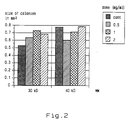
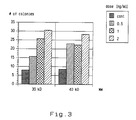
- the various HA samples were used to treat mesenchymal cells at three different concentrations: 0.5, 1.0 and 2.0 mg/ml. All samples were administered to a total of 8 Petri dishes per test to yield statistically significant data.
- the culture medium (BGJb) containing HA was first replaced with HA-free medium after 48 hours, and then every 24 hours thereafter until day 10, when the resulting tissues were fixed.
- Figures 2 and 3 show the effects of HA fractions having molecular weights of 30 and 40 Kdaltons on colony area and colony number, respectively, in cultured bone colonies.
- the HA fraction with a molecular weight of 30 Kdaltons was most effective in stimulating bone colony area development at a concentration of 1 mg/ml.
- the HA fraction with a molecular weight of 40 Kdaltons was most effective at a concentration of 2 mg/ml (right panel). In both cases, the relationship between colony size and HA dose was roughly linear.
- both the 30 and 40 Kdalton HA fractions were most effective in stimulating colony formation at 2 mg/ml. Treatment with both HA fractions induced a marked increase in the number of bone colonies in culture as compared to non-treated controls. This increase was roughly linear with increasing dose, and was more evident with the 30 Kdalton HA fraction.
Landscapes
- Health & Medical Sciences (AREA)
- Chemical & Material Sciences (AREA)
- Life Sciences & Earth Sciences (AREA)
- General Health & Medical Sciences (AREA)
- Organic Chemistry (AREA)
- Chemical Kinetics & Catalysis (AREA)
- Medicinal Chemistry (AREA)
- Engineering & Computer Science (AREA)
- Veterinary Medicine (AREA)
- Materials Engineering (AREA)
- Bioinformatics & Cheminformatics (AREA)
- Animal Behavior & Ethology (AREA)
- Nuclear Medicine, Radiotherapy & Molecular Imaging (AREA)
- Public Health (AREA)
- General Chemical & Material Sciences (AREA)
- Molecular Biology (AREA)
- Biochemistry (AREA)
- Pharmacology & Pharmacy (AREA)
- Polymers & Plastics (AREA)
- Physical Education & Sports Medicine (AREA)
- Orthopedic Medicine & Surgery (AREA)
- Rheumatology (AREA)
- Pharmaceuticals Containing Other Organic And Inorganic Compounds (AREA)
- Polysaccharides And Polysaccharide Derivatives (AREA)
- Materials For Medical Uses (AREA)
Claims (16)
- Hyaluronsäurefraktion, wobei das Molekulargewicht der Fraktion 30 kD bis 40 kD beträgt.
- Arzneimittel, umfassend die Hyaluronsäurefraktion nach Anspruch 1 und einen pharmazeutisch verträglichen Träger.
- Verwendung einer Hyaluronsäurefraktion mit einem Molekulargewicht von 20 kD bis 60 kD für die Herstellung eines Arzneimittels zur Aufrechterhaltung der Knochenfunktion bei einem Mensch oder einem Tier.
- Verwendung einer Hyaluronsäurefraktion mit einem Molekulargewicht von 20 kD bis 60 kD für die Herstellung eines Arzneimittels zur Verhütung des Verlustes der Knochenfunktion bei einem Mensch oder einem Tier.
- Verwendung einer Hyaluronsäurefraktion mit einem Molekulargewicht von 20 kD bis 60 kD für die Herstellung eines Arzneimittels zur Wiedererlangung der Knochenfunktion in traumatischen Zuständen bei einem Mensch oder einem Tier.
- Verwendung einer Hyaluronsäurefraktion mit einem Molekulargewicht von 20 kD bis 60 kD für die Herstellung eines Arzneimittels zur Wiedererlangung der Knochenfunktion in einem akuten oder chronischen pathologischen Zustand bei einem Mensch oder einem Tier.
- Verwendung nach Anspruch 6, wobei der akute pathologische Zustand in einem späten Stadium vorliegt.
- Verwendung nach Anspruch 6, wobei der chronische pathologische Zustand ein chronisch degenerativer pathologischer Zustand ist.
- Verwendung einer Hyaluronsäurefraktion mit einem Molekulargewicht von 20 kD bis 60 kD für die Herstellung eines Arzneimittels zur Behandlung pathologischer Zustände, die durch die Knochenalterung bei einem Mensch oder einem Tier hervorgerufen wurden.
- Verwendung nach einem der Ansprüche 3 bis 9, wobei das Arzneimittel so formuliert ist, daß es auf einem Weg verabreicht werden kann, der ausgewählt ist aus parenteraler Verabreichung, intradermaler Verabreichung, lokaler Verabreichung und topischer Verabreichung.
- Verwendung nach Anspruch 10, wobei die lokale Verabreichung mittels intragingivaler Anwendung durchgeführt wird.
- Hyaluronsäurefraktion nach Anspruch 1, Arzneimittel nach Anspruch 2, oder Verwendung nach einem der Ansprüche 3 bis 11, wobei die Viskosität der Hyaluronsäurefraktion im Bereich von etwa 1,2 dl/g bis etwa 2,8 dl/g liegt.
- Hyaluronsäurefraktion, Arzneimittel oder Verwendung nach Anspruch 12, wobei die Viskosität der Hyaluronsäurefraktion 1,3 dl/g beträgt.
- Hyaluronsäurefraktion nach einem der Ansprüche 1, 12 oder 13, Arzneimittel nach einem der Ansprüche 2, 12 oder 13 oder Verwendung nach einem der Ansprüche 3 bis 13, wobei der Proteingehalt der Hyaluronsäurefraktion geringer als etwa 0,5 % ist.
- Arzneimittel nach einem der Ansprüche 2 oder 12 bis 14, oder Verwendung nach einem der Ansprüche 3 bis 14, wobei das Arzneimittel in einer Form vorliegt, die ausgewählt ist aus Mikrokügelchen, einer Membran, einem Film, einem nichtgewebten Gewebe, einer Röhre, einem Schwamm, einem Pulver, und Granulat.
- Ein ex-vivo Verfahren zur Anregung des Wachstums bei knochenbildenden Zellen, umfassend das Inkontaktbringen von Mesenchymzellen mit Hyaluronsäure, die ein Molekulargewicht von 20 kD bis 60 kD aufweist.
Applications Claiming Priority (4)
| Application Number | Priority Date | Filing Date | Title |
|---|---|---|---|
| ITPD920007 | 1992-04-17 | ||
| ITPD920071 | 1992-04-17 | ||
| ITPD920071A IT1260148B (it) | 1992-04-17 | 1992-04-17 | Impiego di preparazioni di acido ialuronico per la formazione di tessuto osseo |
| PCT/EP1993/000932 WO1993020827A1 (en) | 1992-04-17 | 1993-04-16 | Preparations of low molecular weight hyaluronic acid for stimulating bone formation |
Publications (2)
| Publication Number | Publication Date |
|---|---|
| EP0637245A1 EP0637245A1 (de) | 1995-02-08 |
| EP0637245B1 true EP0637245B1 (de) | 1999-03-17 |
Family
ID=11389901
Family Applications (1)
| Application Number | Title | Priority Date | Filing Date |
|---|---|---|---|
| EP93911478A Expired - Lifetime EP0637245B1 (de) | 1992-04-17 | 1993-04-16 | Zubereitungen von hyaluronsaeure mit niedrigem molekulargewicht zur foerderung der knochenbildung |
Country Status (11)
| Country | Link |
|---|---|
| US (1) | US5646129A (de) |
| EP (1) | EP0637245B1 (de) |
| JP (1) | JP3333205B2 (de) |
| KR (1) | KR100310277B1 (de) |
| AT (1) | ATE177641T1 (de) |
| AU (1) | AU677189B2 (de) |
| CA (1) | CA2118219C (de) |
| DE (1) | DE69324006T2 (de) |
| ES (1) | ES2130268T3 (de) |
| IT (1) | IT1260148B (de) |
| WO (1) | WO1993020827A1 (de) |
Families Citing this family (30)
| Publication number | Priority date | Publication date | Assignee | Title |
|---|---|---|---|---|
| CA2165826A1 (en) * | 1993-07-01 | 1995-01-12 | Alain E. Lagarde | Hyaluronic acid fragments and their therapeutic use |
| IT1282219B1 (it) * | 1995-12-20 | 1998-03-16 | Fidia Advanced Biopolymers Srl | Processo chimico fisico combinato per la preparazione di frazioni di acido ialuronico a basso peso molecolare caratterizzate da bassa |
| US6875753B1 (en) * | 1996-03-14 | 2005-04-05 | The Governors Of The University Of Alberta | Methods for cell mobilization using in vivo treatment with hyaluronan (HA) |
| US20050101564A1 (en) * | 1996-04-02 | 2005-05-12 | Pilarski Linda M. | Methods for cell mobilization using in vivo treatment with hyaluronan (HA) |
| US5939047A (en) * | 1996-04-16 | 1999-08-17 | Jernberg; Gary R. | Local delivery of chemotherapeutic agents for treatment of periodontal disease |
| US6872819B1 (en) | 1998-05-27 | 2005-03-29 | Fidia Advanced Biopolymers S.R.L. | Biomaterials containing hyaluronic acid derivatives in the form of three-dimensional structures free from cellular components or products thereof for the in vivo regeneration of tissue cells |
| JP3032824B1 (ja) * | 1999-01-28 | 2000-04-17 | 東京医科歯科大学長 | 骨誘導促進剤 |
| CA2362046A1 (en) * | 1999-02-04 | 2000-08-10 | Sdgi Holdings, Inc. | Osteogenic paste compositions and uses thereof |
| IT1306644B1 (it) | 1999-04-08 | 2001-10-02 | Fidia Advanced Biopolymers Srl | Strutture tridimensionali comprendenti derivati dell'acido ialuronicoottenibili mediante la tecnica antisolvente supercritico. |
| US6576226B1 (en) | 2000-11-17 | 2003-06-10 | Gary R. Jernberg | Local delivery of agents for disruption and inhibition of bacterial biofilm for treatment of periodontal disease |
| US6726898B2 (en) | 2000-11-17 | 2004-04-27 | Gary R. Jernberg | Local delivery of agents for disruption and inhibition of bacterial biofilm for treatment of periodontal disease |
| JP2004250592A (ja) * | 2003-02-20 | 2004-09-09 | Seikagaku Kogyo Co Ltd | 紫外線照射による低分子化グリコサミノグリカンの製造方法 |
| US6946551B2 (en) * | 2003-03-12 | 2005-09-20 | New Life Resources, Llc | Preparation of hyaluronic acid from eggshell membrane |
| US20040180025A1 (en) * | 2003-03-12 | 2004-09-16 | New Life Resources, Llc | Therapeutic, nutraceutical and cosmetic applications for eggshell membrane and processed eggshell membrane preparations |
| US20080063677A1 (en) * | 2004-03-10 | 2008-03-13 | New Life Resources, Llc | Therapeutic, nutraceutical and cosmetic applications for eggshell membrane and processed eggshell membrane preparations |
| US8580315B2 (en) * | 2004-03-10 | 2013-11-12 | Esm Technologies, Llc | Anti-inflammatory activity of eggshell membrane and processed eggshell membrane preparations |
| US20050226936A1 (en) | 2004-04-08 | 2005-10-13 | Q-Med Ab | Method of soft tissue augmentation |
| US20100075921A1 (en) * | 2005-02-15 | 2010-03-25 | Ahmad Alkayali | Prêparation of hyaluronic acid with desired low molecular weight as a food supplement |
| US20060183709A1 (en) * | 2005-02-15 | 2006-08-17 | Ahmad Alkayali | Preparation of low molecular weight hyaluronic acid as a food supplement |
| US20070099867A1 (en) * | 2005-05-24 | 2007-05-03 | Glycoscience Laboratories, Inc. | Pharmaceutical agent containing hyaluronan as an active ingredient |
| JP2009091248A (ja) * | 2006-01-17 | 2009-04-30 | Toshitsu Kagaku Kenkyusho:Kk | 外傷性神経障害および/または運動機能障害の治療薬 |
| CN101389342B (zh) | 2006-12-05 | 2012-08-08 | 株式会社糖质科学研究所 | 用于变性关节炎的治疗剂 |
| US8529951B1 (en) | 2007-02-21 | 2013-09-10 | Anand Ramamurthi | Elastogenic cues and methods for using same |
| FR2919185B1 (fr) * | 2007-07-23 | 2010-09-10 | Ard Sa | Utilisation d'acide hyaluronique pour la preparation de compositions destinees a l'amelioration notamment de l'etat des muqueuses |
| JP5957096B2 (ja) | 2012-02-21 | 2016-07-27 | ブルームエイジ フリーダ バイオファーム カンパニー リミテッド | バチルス、ヒアルロン酸酵素、及びそれらの使用 |
| KR20190022476A (ko) * | 2016-04-12 | 2019-03-06 | 일루스트리스 파마슈티컬즈 인코포레이티드 | 화합물의 국소 도포용 조성물 |
| JP2018168263A (ja) * | 2017-03-29 | 2018-11-01 | 日油株式会社 | 植物性プロテオグリカン及びその用途 |
| WO2019075263A2 (en) * | 2017-10-11 | 2019-04-18 | Illustris Pharmaceuticals, Inc. | METHODS AND COMPOSITIONS WITH TOPICAL ADMINISTRATION |
| US20210000910A1 (en) | 2019-07-03 | 2021-01-07 | Jysk Skin Solutions Pte Ltd | Topical compositions |
| US12083204B2 (en) | 2022-06-02 | 2024-09-10 | L'oreal | Topical composition for homeostatic delivery of nitric oxide and uses thereof |
Family Cites Families (8)
| Publication number | Priority date | Publication date | Assignee | Title |
|---|---|---|---|---|
| IN163192B (de) * | 1983-10-11 | 1988-08-20 | Fidia Spa | |
| JP2604135B2 (ja) * | 1986-02-28 | 1997-04-30 | ライオン株式会社 | 口腔骨疾患治療剤 |
| US5041138A (en) * | 1986-11-20 | 1991-08-20 | Massachusetts Institute Of Technology | Neomorphogenesis of cartilage in vivo from cell culture |
| US5079236A (en) | 1987-05-27 | 1992-01-07 | Hyal Pharmaceutical Corporation | Pure, sterile, pyrogen-free hyaluronic acid formulations their methods of preparation and methods of use |
| GB2215209B (en) * | 1988-03-14 | 1992-08-26 | Osmed Inc | Method and apparatus for biodegradable, osteogenic, bone graft substitute device |
| JPH01265970A (ja) * | 1988-04-19 | 1989-10-24 | Shiseido Co Ltd | ヒアルロン酸を含有させたコラーゲン水溶液又は水分散液 |
| US5059123A (en) * | 1990-05-14 | 1991-10-22 | Jernberg Gary R | Periodontal barrier and method for aiding periodontal tissue regeneration |
| SE501217C2 (sv) * | 1990-12-06 | 1994-12-12 | Skandigen Ab | Cellproliferationsmatris och användning därav |
-
1992
- 1992-04-17 IT ITPD920071A patent/IT1260148B/it active IP Right Grant
-
1993
- 1993-04-16 EP EP93911478A patent/EP0637245B1/de not_active Expired - Lifetime
- 1993-04-16 JP JP51799393A patent/JP3333205B2/ja not_active Expired - Fee Related
- 1993-04-16 AT AT93911478T patent/ATE177641T1/de active
- 1993-04-16 WO PCT/EP1993/000932 patent/WO1993020827A1/en not_active Ceased
- 1993-04-16 AU AU40404/93A patent/AU677189B2/en not_active Ceased
- 1993-04-16 US US08/318,804 patent/US5646129A/en not_active Expired - Lifetime
- 1993-04-16 ES ES93911478T patent/ES2130268T3/es not_active Expired - Lifetime
- 1993-04-16 CA CA002118219A patent/CA2118219C/en not_active Expired - Lifetime
- 1993-04-16 DE DE69324006T patent/DE69324006T2/de not_active Expired - Lifetime
-
1994
- 1994-10-14 KR KR1019940703659A patent/KR100310277B1/ko not_active Expired - Fee Related
Also Published As
| Publication number | Publication date |
|---|---|
| AU4040493A (en) | 1993-11-18 |
| AU677189B2 (en) | 1997-04-17 |
| ITPD920071A0 (it) | 1992-04-17 |
| JPH08508973A (ja) | 1996-09-24 |
| EP0637245A1 (de) | 1995-02-08 |
| CA2118219C (en) | 2004-06-01 |
| US5646129A (en) | 1997-07-08 |
| IT1260148B (it) | 1996-03-28 |
| DE69324006T2 (de) | 1999-11-11 |
| ITPD920071A1 (it) | 1993-10-17 |
| DE69324006D1 (de) | 1999-04-22 |
| ES2130268T3 (es) | 1999-07-01 |
| ATE177641T1 (de) | 1999-04-15 |
| CA2118219A1 (en) | 1993-10-28 |
| WO1993020827A1 (en) | 1993-10-28 |
| JP3333205B2 (ja) | 2002-10-15 |
| KR100310277B1 (ko) | 2001-12-28 |
Similar Documents
| Publication | Publication Date | Title |
|---|---|---|
| US5646129A (en) | Method of using low molecular weight hyaluronic acid for stimulating bone formation | |
| Bartold | Proteoglycans of the periodontium: structure, role and function | |
| Hascall et al. | Proteoglycans | |
| Hascall | Interaction of cartilage proteoglycans with hyaluronic acid | |
| Gordon et al. | The basal lamina of the postnatal mammary epithelium contains glycosaminoglycans in a precise ultrastructural organization | |
| Trelstad et al. | Epithelial collagens and glycosaminoglycans in the embryonic cornea: Macromolecular order and morphogenesis in the basement membrane | |
| Smith et al. | The synthesis of hyaluronic acid by human synovial fibroblasts is influenced by the nature of the hyaluronate in the extracellular environment | |
| US5071436A (en) | Substitute bony matrix products promoting osteogenesis | |
| US6841644B2 (en) | Biopolymers obtained by solid state irradiation in an unsaturated gaseous atmosphere | |
| Srivastava et al. | Chondroid expression by lapine articular chondrocytes in spinner culture following monolayer growth | |
| Schnyder et al. | Secretion of lysosomal hydrolases by stimulated and nonstimulated macrophages. | |
| KR20210047271A (ko) | 시험관내 배양 및 이식을 위한 조직 구축물의 생리학적 3d 바이오프린팅을 위한 바이오검 및 식물성 검 히드로겔 바이오잉크 | |
| Al-Khateeb et al. | Hyaluronic acid: the reason for its variety of physiological and biochemical functional properties | |
| US20030162744A1 (en) | Salmon-origin chondroitin sulfate | |
| Mcdevitt | Cell biology of the eye | |
| Hart | Biosynthesis of glycosaminoglycans by the separated tissues of the embryonic chick cornea | |
| EP3463392B1 (de) | Polysaccharidzusammensetzungen für gewebereparatur | |
| Kato et al. | Effect of exogenous extracellular matrices on proteoglycan synthesis by cultured rabbit costal chondrocytes. | |
| Shulman et al. | Cellular differentiation and the aging process in cartilaginous tissues: mucopolysaccharide synthesis in cell cultures of chondrocytes | |
| Lesot et al. | Cell–matrix interactions: influence of noncollagenous proteins from dentin on cultured dental cells | |
| Smith Jr et al. | The nature and origin of the glycosaminoglycans of the embryonic chick vitreous body | |
| Daniel et al. | The synthesis of matrix components by chondrocytes in vitro in the presence of 5-bromodeoxyuridine | |
| Carvalho et al. | The effect of growth on collagen and glycosaminoglycans in the articular disc of the rat temporomandibular joint | |
| Fricke et al. | Connective tissues: biochemistry and pathophysiology | |
| Huang | Extracellular matrix-cell interactions and chondrogenesis |
Legal Events
| Date | Code | Title | Description |
|---|---|---|---|
| PUAI | Public reference made under article 153(3) epc to a published international application that has entered the european phase |
Free format text: ORIGINAL CODE: 0009012 |
|
| 17P | Request for examination filed |
Effective date: 19941117 |
|
| AK | Designated contracting states |
Kind code of ref document: A1 Designated state(s): AT BE CH DE DK ES FR GB GR IE IT LI LU MC NL PT SE |
|
| 17Q | First examination report despatched |
Effective date: 19961210 |
|
| GRAG | Despatch of communication of intention to grant |
Free format text: ORIGINAL CODE: EPIDOS AGRA |
|
| 111L | Licence recorded |
Free format text: 980216 0100 FIDIA ADVANCED BIOPOLYMERS S.R.L. |
|
| GRAG | Despatch of communication of intention to grant |
Free format text: ORIGINAL CODE: EPIDOS AGRA |
|
| GRAG | Despatch of communication of intention to grant |
Free format text: ORIGINAL CODE: EPIDOS AGRA |
|
| GRAH | Despatch of communication of intention to grant a patent |
Free format text: ORIGINAL CODE: EPIDOS IGRA |
|
| GRAH | Despatch of communication of intention to grant a patent |
Free format text: ORIGINAL CODE: EPIDOS IGRA |
|
| GRAA | (expected) grant |
Free format text: ORIGINAL CODE: 0009210 |
|
| AK | Designated contracting states |
Kind code of ref document: B1 Designated state(s): AT BE CH DE DK ES FR GB GR IE IT LI LU MC NL PT SE |
|
| PG25 | Lapsed in a contracting state [announced via postgrant information from national office to epo] |
Ref country code: NL Free format text: LAPSE BECAUSE OF FAILURE TO SUBMIT A TRANSLATION OF THE DESCRIPTION OR TO PAY THE FEE WITHIN THE PRESCRIBED TIME-LIMIT Effective date: 19990317 Ref country code: GR Free format text: LAPSE BECAUSE OF NON-PAYMENT OF DUE FEES Effective date: 19990317 |
|
| REF | Corresponds to: |
Ref document number: 177641 Country of ref document: AT Date of ref document: 19990415 Kind code of ref document: T |
|
| REG | Reference to a national code |
Ref country code: CH Ref legal event code: EP |
|
| PG25 | Lapsed in a contracting state [announced via postgrant information from national office to epo] |
Ref country code: LU Free format text: LAPSE BECAUSE OF NON-PAYMENT OF DUE FEES Effective date: 19990416 |
|
| REG | Reference to a national code |
Ref country code: IE Ref legal event code: FG4D |
|
| REF | Corresponds to: |
Ref document number: 69324006 Country of ref document: DE Date of ref document: 19990422 |
|
| ITF | It: translation for a ep patent filed | ||
| PG25 | Lapsed in a contracting state [announced via postgrant information from national office to epo] |
Ref country code: PT Free format text: LAPSE BECAUSE OF FAILURE TO SUBMIT A TRANSLATION OF THE DESCRIPTION OR TO PAY THE FEE WITHIN THE PRESCRIBED TIME-LIMIT Effective date: 19990617 Ref country code: DK Free format text: LAPSE BECAUSE OF FAILURE TO SUBMIT A TRANSLATION OF THE DESCRIPTION OR TO PAY THE FEE WITHIN THE PRESCRIBED TIME-LIMIT Effective date: 19990617 |
|
| REG | Reference to a national code |
Ref country code: CH Ref legal event code: NV Representative=s name: A. BRAUN, BRAUN, HERITIER, ESCHMANN AG PATENTANWAE |
|
| REG | Reference to a national code |
Ref country code: ES Ref legal event code: FG2A Ref document number: 2130268 Country of ref document: ES Kind code of ref document: T3 |
|
| ET | Fr: translation filed | ||
| NLV1 | Nl: lapsed or annulled due to failure to fulfill the requirements of art. 29p and 29m of the patents act | ||
| PG25 | Lapsed in a contracting state [announced via postgrant information from national office to epo] |
Ref country code: MC Free format text: LAPSE BECAUSE OF NON-PAYMENT OF DUE FEES Effective date: 19991031 |
|
| PLBE | No opposition filed within time limit |
Free format text: ORIGINAL CODE: 0009261 |
|
| STAA | Information on the status of an ep patent application or granted ep patent |
Free format text: STATUS: NO OPPOSITION FILED WITHIN TIME LIMIT |
|
| 26N | No opposition filed | ||
| REG | Reference to a national code |
Ref country code: GB Ref legal event code: IF02 |
|
| REG | Reference to a national code |
Ref country code: CH Ref legal event code: PFA Owner name: FIDIA FARMACEUTICI S.P.A. Free format text: FIDIA S.P.A.#VIA PONTE DELLA FABBRICA 3-A#35031 ABANO TERME (PADOVA) (IT) -TRANSFER TO- FIDIA FARMACEUTICI S.P.A.#VIA PONTE DELLA FABBRICA, 3/A#35031 ABANO TERME (PADOVA) (IT) |
|
| REG | Reference to a national code |
Ref country code: FR Ref legal event code: CD |
|
| PG25 | Lapsed in a contracting state [announced via postgrant information from national office to epo] |
Ref country code: IT Free format text: LAPSE BECAUSE OF NON-PAYMENT OF DUE FEES;WARNING: LAPSES OF ITALIAN PATENTS WITH EFFECTIVE DATE BEFORE 2007 MAY HAVE OCCURRED AT ANY TIME BEFORE 2007. THE CORRECT EFFECTIVE DATE MAY BE DIFFERENT FROM THE ONE RECORDED. Effective date: 20050416 |
|
| REG | Reference to a national code |
Ref country code: CH Ref legal event code: PFA Owner name: FIDIA FARMACEUTICI S.P.A. Free format text: FIDIA FARMACEUTICI S.P.A.#VIA PONTE DELLA FABBRICA, 3/A#35031 ABANO TERME (PADOVA) (IT) -TRANSFER TO- FIDIA FARMACEUTICI S.P.A.#VIA PONTE DELLA FABBRICA, 3/A#35031 ABANO TERME (PADOVA) (IT) |
|
| PGFP | Annual fee paid to national office [announced via postgrant information from national office to epo] |
Ref country code: IE Payment date: 20110322 Year of fee payment: 19 |
|
| PGFP | Annual fee paid to national office [announced via postgrant information from national office to epo] |
Ref country code: CH Payment date: 20110322 Year of fee payment: 19 Ref country code: SE Payment date: 20110322 Year of fee payment: 19 Ref country code: FR Payment date: 20110317 Year of fee payment: 19 |
|
| PGFP | Annual fee paid to national office [announced via postgrant information from national office to epo] |
Ref country code: GB Payment date: 20110317 Year of fee payment: 19 Ref country code: BE Payment date: 20110329 Year of fee payment: 19 Ref country code: DE Payment date: 20110324 Year of fee payment: 19 Ref country code: ES Payment date: 20110324 Year of fee payment: 19 |
|
| PGRI | Patent reinstated in contracting state [announced from national office to epo] |
Ref country code: IT Effective date: 20110616 |
|
| PGFP | Annual fee paid to national office [announced via postgrant information from national office to epo] |
Ref country code: AT Payment date: 20110323 Year of fee payment: 19 |
|
| PGFP | Annual fee paid to national office [announced via postgrant information from national office to epo] |
Ref country code: IT Payment date: 20110406 Year of fee payment: 19 |
|
| BERE | Be: lapsed |
Owner name: *FIDIA FARMACEUTICI S.P.A. Effective date: 20120430 |
|
| REG | Reference to a national code |
Ref country code: CH Ref legal event code: PL |
|
| REG | Reference to a national code |
Ref country code: SE Ref legal event code: EUG |
|
| REG | Reference to a national code |
Ref country code: AT Ref legal event code: MM01 Ref document number: 177641 Country of ref document: AT Kind code of ref document: T Effective date: 20120416 |
|
| GBPC | Gb: european patent ceased through non-payment of renewal fee |
Effective date: 20120416 |
|
| REG | Reference to a national code |
Ref country code: IE Ref legal event code: MM4A |
|
| REG | Reference to a national code |
Ref country code: FR Ref legal event code: ST Effective date: 20121228 |
|
| PG25 | Lapsed in a contracting state [announced via postgrant information from national office to epo] |
Ref country code: GB Free format text: LAPSE BECAUSE OF NON-PAYMENT OF DUE FEES Effective date: 20120416 Ref country code: LI Free format text: LAPSE BECAUSE OF NON-PAYMENT OF DUE FEES Effective date: 20120430 Ref country code: BE Free format text: LAPSE BECAUSE OF NON-PAYMENT OF DUE FEES Effective date: 20120430 Ref country code: IE Free format text: LAPSE BECAUSE OF NON-PAYMENT OF DUE FEES Effective date: 20120416 Ref country code: AT Free format text: LAPSE BECAUSE OF NON-PAYMENT OF DUE FEES Effective date: 20120416 Ref country code: CH Free format text: LAPSE BECAUSE OF NON-PAYMENT OF DUE FEES Effective date: 20120430 |
|
| REG | Reference to a national code |
Ref country code: DE Ref legal event code: R119 Ref document number: 69324006 Country of ref document: DE Effective date: 20121101 |
|
| PG25 | Lapsed in a contracting state [announced via postgrant information from national office to epo] |
Ref country code: SE Free format text: LAPSE BECAUSE OF NON-PAYMENT OF DUE FEES Effective date: 20120417 Ref country code: IT Free format text: LAPSE BECAUSE OF NON-PAYMENT OF DUE FEES Effective date: 20120416 Ref country code: FR Free format text: LAPSE BECAUSE OF NON-PAYMENT OF DUE FEES Effective date: 20120430 |
|
| REG | Reference to a national code |
Ref country code: ES Ref legal event code: FD2A Effective date: 20130715 |
|
| PG25 | Lapsed in a contracting state [announced via postgrant information from national office to epo] |
Ref country code: ES Free format text: LAPSE BECAUSE OF NON-PAYMENT OF DUE FEES Effective date: 20120417 |
|
| PG25 | Lapsed in a contracting state [announced via postgrant information from national office to epo] |
Ref country code: DE Free format text: LAPSE BECAUSE OF NON-PAYMENT OF DUE FEES Effective date: 20121101 |