EP3463392B1 - Polysaccharidzusammensetzungen für gewebereparatur - Google Patents
Polysaccharidzusammensetzungen für gewebereparatur Download PDFInfo
- Publication number
- EP3463392B1 EP3463392B1 EP17734998.2A EP17734998A EP3463392B1 EP 3463392 B1 EP3463392 B1 EP 3463392B1 EP 17734998 A EP17734998 A EP 17734998A EP 3463392 B1 EP3463392 B1 EP 3463392B1
- Authority
- EP
- European Patent Office
- Prior art keywords
- hyaluronic acid
- use according
- chitosan
- polysaccharide composition
- lactose
- Prior art date
- Legal status (The legal status is an assumption and is not a legal conclusion. Google has not performed a legal analysis and makes no representation as to the accuracy of the status listed.)
- Active
Links
Images




Classifications
-
- A—HUMAN NECESSITIES
- A61—MEDICAL OR VETERINARY SCIENCE; HYGIENE
- A61K—PREPARATIONS FOR MEDICAL, DENTAL OR TOILETRY PURPOSES
- A61K31/00—Medicinal preparations containing organic active ingredients
- A61K31/70—Carbohydrates; Sugars; Derivatives thereof
- A61K31/702—Oligosaccharides, i.e. having three to five saccharide radicals attached to each other by glycosidic linkages
-
- A—HUMAN NECESSITIES
- A61—MEDICAL OR VETERINARY SCIENCE; HYGIENE
- A61K—PREPARATIONS FOR MEDICAL, DENTAL OR TOILETRY PURPOSES
- A61K31/00—Medicinal preparations containing organic active ingredients
- A61K31/70—Carbohydrates; Sugars; Derivatives thereof
- A61K31/715—Polysaccharides, i.e. having more than five saccharide radicals attached to each other by glycosidic linkages; Derivatives thereof, e.g. ethers, esters
- A61K31/716—Glucans
- A61K31/722—Chitin, chitosan
-
- A—HUMAN NECESSITIES
- A61—MEDICAL OR VETERINARY SCIENCE; HYGIENE
- A61K—PREPARATIONS FOR MEDICAL, DENTAL OR TOILETRY PURPOSES
- A61K31/00—Medicinal preparations containing organic active ingredients
- A61K31/70—Carbohydrates; Sugars; Derivatives thereof
- A61K31/715—Polysaccharides, i.e. having more than five saccharide radicals attached to each other by glycosidic linkages; Derivatives thereof, e.g. ethers, esters
- A61K31/726—Glycosaminoglycans, i.e. mucopolysaccharides
- A61K31/728—Hyaluronic acid
-
- A—HUMAN NECESSITIES
- A61—MEDICAL OR VETERINARY SCIENCE; HYGIENE
- A61P—SPECIFIC THERAPEUTIC ACTIVITY OF CHEMICAL COMPOUNDS OR MEDICINAL PREPARATIONS
- A61P17/00—Drugs for dermatological disorders
- A61P17/02—Drugs for dermatological disorders for treating wounds, ulcers, burns, scars, keloids, or the like
-
- A—HUMAN NECESSITIES
- A61—MEDICAL OR VETERINARY SCIENCE; HYGIENE
- A61P—SPECIFIC THERAPEUTIC ACTIVITY OF CHEMICAL COMPOUNDS OR MEDICINAL PREPARATIONS
- A61P17/00—Drugs for dermatological disorders
- A61P17/12—Keratolytics, e.g. wart or anti-corn preparations
-
- A—HUMAN NECESSITIES
- A61—MEDICAL OR VETERINARY SCIENCE; HYGIENE
- A61P—SPECIFIC THERAPEUTIC ACTIVITY OF CHEMICAL COMPOUNDS OR MEDICINAL PREPARATIONS
- A61P19/00—Drugs for skeletal disorders
-
- A—HUMAN NECESSITIES
- A61—MEDICAL OR VETERINARY SCIENCE; HYGIENE
- A61P—SPECIFIC THERAPEUTIC ACTIVITY OF CHEMICAL COMPOUNDS OR MEDICINAL PREPARATIONS
- A61P19/00—Drugs for skeletal disorders
- A61P19/02—Drugs for skeletal disorders for joint disorders, e.g. arthritis, arthrosis
-
- A—HUMAN NECESSITIES
- A61—MEDICAL OR VETERINARY SCIENCE; HYGIENE
- A61P—SPECIFIC THERAPEUTIC ACTIVITY OF CHEMICAL COMPOUNDS OR MEDICINAL PREPARATIONS
- A61P19/00—Drugs for skeletal disorders
- A61P19/04—Drugs for skeletal disorders for non-specific disorders of the connective tissue
-
- A—HUMAN NECESSITIES
- A61—MEDICAL OR VETERINARY SCIENCE; HYGIENE
- A61P—SPECIFIC THERAPEUTIC ACTIVITY OF CHEMICAL COMPOUNDS OR MEDICINAL PREPARATIONS
- A61P41/00—Drugs used in surgical methods, e.g. surgery adjuvants for preventing adhesion or for vitreum substitution
Definitions
- the invention relates to polysaccharide compositions comprising a water-soluble mixture of polysaccharides useful as modulators of cell proliferation processes and their use in tissue repair with fibrotic process inhibition. These modulation properties can suitably be used in tissue repair and for the prevention of fibrosis and/or tissue adhesions.
- the extracellular matrix is a dynamic collection of molecules interacting with each other and plays a key role in the regulation and modulation of cellular functions in tissue repair processes.
- tissue repair processes following trauma of various origins, a sequence of events occurs that involves different cell types, from macrophages to vascular endothelial cells to fibroblasts, all surrounded by an extracellular matrix composed of a multiplicity of components such as fibronectin, collagen, proteoglycans and glycosaminoglycans (e.g. hyaluronic acid), which have many functions of cell regulation.
- Collagen is recognized as the most abundant component of the extracellular matrix.
- the connective cells such as fibroblasts and synoviocytes, are the cells involved especially during tissue remodeling needed for repairing, and thus primarily in the synthesis and degradation of extracellular matrix proteins, among which type I and type II collagen predominate. Their functional regulation at this stage appears crucial, since if this synthesis is excessive and not counter-balanced by collagen degradation processes, collagen production by these cells leads to the formation of fibrotic tissues. Fibrosis consists basically in an excessive deposition of cellular matrix components with pathological consequences on tissue architecture and its functions ( Mutsaers SE et al., Int J Biochem Cell Biol, 1997, 29, 5-17 ).
- tissue repair such as after surgical interventions, it is necessary to intervene in both the restorative phase with the promotion of cell proliferation and migration, and also in tissue remodeling by preventing the excessive deposition of extracellular matrix, especially collagen, in order to prevent fibrotic processes underlying tissue adhesion and hypertrophic scarring.
- glycosaminoglycans which, as is known, are involved in a large number of both normal and pathological biological processes of tissue repair involved cells . Such biological processes include: migration, adhesion, differentiation and proliferation.
- Glycosaminoglycans are unbranched biopolymers composed of repeating disaccharide units with high hydrophilicity and they behave as polyanions at physiological due to the presence of carboxyl groups or sulfates on the saccharide residues. This allows them to adopt conformations suitable for the formation of compression-resistant matrices with rheological characteristics of high viscosity and/or viscoelasticity.
- hyaluronic acid also known as sodium hyaluronate, or HA
- HA sodium hyaluronate
- Its molecular weight can range from 400 daltons (disaccharide) o over 10 million daltons and is present in many tissues and body fluids of mammals, such as the dermal layer of the skin, the joint cartilage, the endobulbar fluids of the eye, where it is a key element for organizing other molecules and therefore also in the formation of the extracellular matrix.
- the hydration associated with hyaluronic acid determines a suitable environment for cell motility and proliferation.
- hyaluronic acid as endogenous biopolymer, has a role in cell motility and adhesion mediated by a surface receptor, RHAMM (Receptor for Hyaluronan-Mediated Motility), and by the transmembrane receptor CD44. From what briefly described above, therefore, it is apparent that hyaluronic acid has a key role in biological processes associated with tissue repair ( Jiang D, Liang J, Noble PW, Annu Rev. Cell Dev Biol, 2007, 23, 435-61 ).
- hyaluronic acid is its average molecular weight, in fact hyaluronic acid is a polymer consisting of fractions having different molecular weights and this technical feature is responsible of the physical properties thereof, which are in turn essential for the biological effects ( EP 0138572 ; WO 2010/003797 ).
- the viscous and/or viscoelastic properties have been the basis for its use in visco-supplementation in osteoarticular diseases, use that has above all concerned fractions of high molecular weight hyaluronic acid (over 2000 kDa), the high molecular weight fractions having a high viscoelastic modulus in addition to high viscosity.
- chitosan is a polysaccharide widely available in nature, being obtainable through chemical deacetylation of chitin, and is composed mainly of glucosamine units and N-acetyl-glucosamine units residual from the chitin deacetylation treatment. Unlike hyaluronic acid, it behaves as a polycation due to the presence of amino groups of glucosamine derived from chitin deacetylation.
- chitosan can play a role in cellular regulation according to mechanisms still under investigation.
- chitosan has shown to be able to induce the formation of fibrous tissue, the proliferation of chondrocytes and to reduce the decrease of the epiphyseal cartilage thickness ( Jian Xi Lu et al., 1999, 20, Biomaterials, 1937-1944 ).
- hydrogels formed of a polymer per se devoid of biological activity such as polyvinyl pyrrolidone in combination with chitosan have shown an interesting modulation activity on different cell types.
- these hydrogels have shown to be able to inhibit the growth and proliferation of fibroblasts and to induce the rooting and growth of epithelial cells.
- chitosan alone has shown the ability to induce a decrease in the growth of epithelial cells ( Risbud M et al., J Biosci, 2000, 25, 25-31 ). This effect of cell growth inhibition of chitosan was also confirmed in an Achilles tendon injury model where chitosan has shown to be able to induce an inhibition of fibroblasts growth, acting on cell adhesion processes which is significant in post-surgical sequelae of these diseases ( Qiang Chen et al, Int J Clin Exp Pathol, 2014, 7, 8462-8470 ).
- chitosan has become one of the most studied polysaccharides from a chemical point of view in order to improve its useful properties for application purposes, in particular its viscosity and solubility in water.
- several chitosan derivatives have been obtained through chemical modifications of the polymer chain. Commonly, reactions of the amino residues of glucosamine units are used for these modifications.
- saccharide units mono- and oligosaccharides
- the chitosan oligosaccharide derivative obtained by the functionalization of the amino group of glucosamine with lactose has also shown interesting properties from a biological point of view.
- two derivatives with different degree of functionalization were able, unlike the unmodified chitosan, to induce the cellular aggregation of chondrocytes and stimulate the production of glycosaminoglycans and collagen through an interaction with galectin-1 ( Donati et al., Biomaterials, 2005, 26, 987-998 ; Marcon P. et al., 2005, 26, 4975-4984).
- EP 059015 describes compositions comprising a fibrin- and fibrinogen-based glue combined with biodegradable and biocompatible polymers capable of increasing the viscosity of the compositions.
- these polymers are selected among proteoglycans and polysaccharides, including hyaluronic acid, and for the purposes of the invention such polymers must have a high molecular weight.
- these polymers therefore, the only physical property is exploited, and in fact, these polymers are defined as "viscosity enhancing polymers". This concept has long been followed in the preparation of compositions suitable for preventing tissue adhesions.
- the research aimed at the development of tissue repair tools with inhibition of fibrotic and tissue adhesion processes has been directed primarily to the development of fractions of high molecular weight hyaluronic acid or its degradation-resistant derivatives by endogenous hyaluronidase for the promotion of a "barrier effect" due to the high viscosity of the compositions.
- WO 97/07833 there are described biomaterials consisting of hyaluronic acid derivatives esterified with benzyl alcohol or cross-linked as an alternative to hyaluronic acid fractions of high molecular weight and hence very viscous for use in the prevention of post-surgical adhesions.
- the hyaluronic acid derivatization is intended to increase its degradation resistance and to optimize the biomaterials in the form of gels, membranes, and tissues.
- EP 1207828 describes gels that can be used as anti-adhesion barriers, which are obtained by mixing a foam of cross-linked hyaluronic acid derivatives and hyaluronic acid aqueous solutions. To obtain such gel, the use of hyaluronic acid with a molecular weight in the range of 1000 kDa to 2000 kDa is indicated.
- the object of the present invention is to provide compositions to modulate cell proliferation processes for use in tissue repair with the inhibition of fibrotic processes, exploiting the biological properties of polysaccharide biopolymers. Therefore, an object of the present invention are polysaccharide compositions comprising hyaluronic acid and an oligosaccharide derivative of chitosan with lactose, obtained by a reductive amination reaction of D-glucosamine having a degree of substitution of the amine functional group of the same with lactose of at least 40%, for use in tissue repair and in inhibition of fibrosis and/or tissue adhesions through cell proliferation modulation, as defined in the appended claims.
- the hyaluronic acid of the polysaccharide composition object of the invention is the matrix in which the oligosaccharide derivative of chitosan is homogeneously dispersed.
- compositions of the invention is for use in the tissue repair and/or for the prevention of fibrosis and/or adhesions in traumatic, post-surgical and chronic inflammatory tissue injuries.
- chitlac The oligosaccharide derivative of chitosan, obtained by reductive amination of the D-glucosamine amino functional group with lactose, of the polysaccharide composition object of the invention, hereinafter also referred to as chitlac, was evaluated in vitro on different cell types of connective tissue origin, as these cells are the most involved in issue repair and remodeling following tissue injuries. Such injuries may have various origins and may vary from surgical or traumatic injuries to those resulting from chronic inflammatory processes.
- chitlac exerts a clear and significant dose-dependent inhibitory effect on cell proliferation following incubation for six days already at the concentration of 0.25 mg/ml.
- the effect is very noticeable at higher concentrations (0.75 and 1.0 mg/ml for fibroblasts and 1.0 and 1.5 mg/ml for synoviocytes and chondrocytes).
- concentrations 0.25 mg/ml.
- chitlac inhibits the cell proliferation of chondrocytes and synoviocytes after three days of incubation at concentrations of 1.0 and 1.25 mg/ml and after 6 days of incubation already at 0.25 mg/ml on all three cell types considered.
- the effect is therefore not only dose-dependent but also time-dependent.
- chitlac inhibits the cell proliferation of any cell type, that is, both cells involved in tissue remodeling with deposition of collagen, such as fibroblasts and synoviocytes whose hyperactivity is prodromal to fibrotic processes, and on cells than have a function involved in injured tissue repair such as chondrocytes, which as known are cells involved in the formation of joint cartilage.
- hyaluronic acid (hereinafter also referred to as HA) has instead shown that it does not significantly influence the processes of cell proliferation of fibroblasts and chondrocyte at none of the concentrations employed nor any of the incubation times considered, except for an inhibitory effect already at 0.75 mg/ml and significant at the highest concentration (1.25 mg/ml) and after six days of incubation on synoviocytes.
- This effect does not seem to be related to a barrier effect of hyaluronic acid because the fraction of HA used has a molecular weight that is not significantly high.
- the combination of HA at a concentration of 0.5 mg/ml does not significantly affect the inhibitory effect exerted by chitlac at none of the concentrations tested nor at three or six days of incubation on chondrocytes and synoviocytes; ii) the combination of HA at the concentration of 1.0 mg/ml prevents the inhibitory effect of chitlac at all concentrations totally on chondrocytes and it partially reduces the inhibitory effect of chitlac at higher concentrations on synoviocytes; iii) the combination of HA at the concentration of 1.25 mg/ml prevents the inhibitory effect of chitlac at concentrations from 0.1 to 0.75 mg/ml on chondrocytes but not at the highest concentration of chitlac and reduces the effect of chitlac but does not abolish it on synoviocytes, while on fibroblasts it does not inhibit the effect of chitlac.
- the present invention therefore relates to a polysaccharide composition
- a polysaccharide composition comprising hyaluronic acid and an oligosaccharide derivative of chitosan with lactose obtained by a reductive amination reaction of D-glucosamine having a degree of substitution of the amine functional group of the same with lactose of at least 40% for use in tissue repair and in the inhibition of fibrotic processes through cell proliferation modulation, as defined in the appended claims.
- the two polysaccharides have good water solubility properties and are compatible with each other, since aqueous solutions of the same when mixed do not give rise to precipitates in the form of coacervates, with phase separation, due to the interactions between anionic groups of hyaluronic acid and cationic groups of amino residues still present in the oligosaccharide derivative obtained from chitosan and lactose (chitlac). They instead give compositions, especially solutions characterized by viscosity and viscoelasticity, wherein the hyaluronic acid is a matrix in which the oligosaccharide derivative chitlac is homogeneously dispersed.
- the chitosan used to obtain the oligosaccharide derivative with lactose is obtained from various natural sources (e.g. by deacetylation of chitin) or with recombinant technology methods and has an average molecular weight (hereinafter referred to as MW) up to 1,000 kDa.
- the average molecular weight of the starting chitosan is preferably in the range from 500 kDa to 700 kDa and more preferably between 200 and 400 kDa.
- Such a chitosan preferably has a degree of deacetylation up to 90% and the preferred one has a degree of residual acetylation of between 10 and 20%.
- the degree of substitution of amino groups of chitosan D-glucosamine with lactose is at least 40%.
- the degree of substitution of amino groups of chitosan with such an oligosaccharide is in the range from 50% to 70% and more preferably, it is 60%.
- this polysaccharide can be obtained from various natural sources or with recombinant technology methods via fermentation.
- the average molecular weight for this polysaccharide is significant and for the purposes of the invention, it is not greater than 2,000 kDa and comprised between 1,000 kDa and 1,600 kDa, so as to have, after damp heat sterilization, a process that as known causes some degradation of the biopolymer, a hyaluronic acid with a molecular weight of between 800 kDa and 1,000 kDa.
- the more important aspect of the polysaccharide compositions object of the invention is the content of the two polysaccharides because, as observed experimentally, this content has a significant effect for achieving the purposes of the invention.
- hyaluronic acid in the polysaccharide compositions used for reparative purposes and for the prevention of fibrotic processes is at a concentration of 10 to 20 mg/ml (1-2% w/v) and the oligosaccharide derivative chitlac of 2.5 to 7.5 mg/ml (0.25%-0.75 w/v).
- hyaluronic acid is 10 mg/ml or 12.5 mg/ml and chitlac is of 2.5 to 7.5 mg/ml.
- hyaluronic acid is 10 mg/ml while chitlac can range from 2.5 to 5 mg/ml depending on the desired effects.
- compositions of the invention is used to promote tissue repair and/or prevent fibrotic processes in traumatic and post-surgical tissue lesions and chronic fibrotic processes associated to autoimmune diseases.
- tissue repair and fibrotic processes prevention mostly involving tissues selected from skin dermis, abdominal endothelial tissues, tendons and cartilage.
- one of the use is in traumatic and post-surgical sequelae involving dermis and abdominal tissues.
- Yet other uses are in post-surgical sequelae of tendons and cartilage tissues and fibrotic process associated to autoimmune diseases affecting dermis and cartilage tissues, most preferably selected from psoriasis and psoriatic osteoarthritis.
- compositions object of the invention is used in combination with other ingredients and/or solvents suitable for pharmaceutical use for preparing biomaterials, suitable to be administered by topical, intradermal or intra-articular route as aqueous solutions, non-woven fabric, membranes, hydrogels or preparations obtained thereby by freeze-drying.
- Hyaluronic Acid 1% in PBS 1X 800 mg of hyaluronic acid were dissolved in 72 mL of water for injection preparations. The solution thus obtained was added with 8 mL of 10X saline phosphate buffer (PBS 10 X: NaCl 1370 mM, KCI 27 mM, Na 2 HPO 4 81 mM, NaH 2 PO 4 17.6 mM) and then sterilized in autoclave at 121 °C for 15 minutes (EP 5.1.1).
- 10X saline phosphate buffer PBS 10 X: NaCl 1370 mM, KCI 27 mM, Na 2 HPO 4 81 mM, NaH 2 PO 4 17.6 mM
- Example 1 assay on the proliferation of human dermic fibroblasts
- Human fibroblasts were isolated from skin samples of healthy donor (57 - 62 years) undergoing plastic surgery.
- the skin was placed for 1 hour in sterile PBS with 3% penicillin and streptomycin, in order to break down the bacterial charge. Subsequently, the samples were cut into small pieces and placed in a dispase II solution (2.5 mg/ml HBSS, Hank's balanced salt solution) for 4 hours at 37 °C, to obtain detachment of the epithelial from the underlying dermis.
- the dermis fragments were digested with collagenase I (80 U/ml in HBSS) for 12 hours in a 37 °C incubator, 5% pCO2.
- DMEM Dulbecco's Modified Eagle's Medium
- FCS fetal calf serum
- FCS fetal calf serum
- penicillin/streptavidin 100IU/ml penicillin/streptavidin
- the suspension was filtered and centrifuged at 1200 rpm.
- the fibroblasts present in the pellets were resuspended in complete DMEM medium and seeded on sterile culture plates in incubator at 37 °C, with a percentage of CO 2 of 5% and a relative humidity of 90%.
- the cell phenotype was confirmed by observing the shape of cells in the inverted optical microscope and by immunocytochemical analysis for prolyl-4-hydroxylase.
- the medium was changed every two days and confluent cultures were detached from the bottom of the plate with a 0.05% trypsin solution and 0.02% EDTA and subsequently divided by 1:3.
- cells from the third to the fifth passage were used.
- the fibroblasts were seeded at a concentration of 2500 cells per well in a 48-well plate. The day after the sowing, the cells were treated with the substances under study at the following concentrations: hyaluronic acid (HA) 0.1 to 1.25 mg/ml; Chitlac (CTL) 0.1 to 1.0 mg/ml; a mixture of HA and CTL, consisting of a fixed concentration of 1.25 mg/ml HA and increasing amounts of CTL (0.1 to 1.0 mg/ml). The medium was renewed every two days with the substances under examination.
- HA hyaluronic acid
- CTL Chitlac
- the cell monolayers were washed with PBS and the MTT solution was added for 3 hours at 37 °C.
- the MTT was removed and replaced with an extraction solution (90% isopropanol, 10% DMSO) for 15 minutes at 37 °C.
- the absorbance measurement was performed with a spectrophotometer at 570 nm.
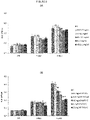
- Figure 1A and Table 1A show the results obtained on cell proliferation with hyaluronic acid at the mentioned concentrations.
- Table 1A 24 hr SD 3 days SD 6 days SD Ctrl 0.134 0.017 0.274 0.033 0.678 0,161 0.1 mg / ml 0.135 0.01 0.284 0.039 0.637 0.027 0.25 mg / ml 0.118 0.003 0.285 0.013 0.696 0.002 0.5 mg / ml 0.131 0.01 0.276 0.006 0.713 0.009 1 mg / ml 0.122 0.006 0.301 0.006 0.731 0.44 1.5 mg / ml 0.124 0.004 0.275 0.014 0.752 0.023
- Figure 1B and Table 1B show the results obtained on cell proliferation with chitlac at the mentioned concentrations.
- Table 1B 24 hr SD 3 days SD 6 days SD Ctrl 0.116 0.004 0.271 0.015 0.662 0,003 0.1 mg / ml 0.121 0.013 0.266 0.025 0.598 0.058 0.25 mg / ml 0.133 0.018 0.289 0.027 0.554 0.026 0.5 mg / ml 0.139 0.011 0.274 0.027 0.512 0.031 1 mg / ml 0.130 0.008 0.270 0.011 0.406 0.043 1.5 mg / ml 0.127 0.002 0.282 0.009 0.370 0.024
- Figure 1C and Table 1C show the results obtained on cell proliferation with hyaluronic acid at a concentration of 1.25 mg/ml and chitlac at concentrations increasing from 0.1 to 1.0 mg/ml at the mentioned concentrations.
- Table 1C CHITLAC 24 hr SD 3 days SD 6 days SD Ctrl 0.100 0.002 0.300 0.001 0.627 0,002 0.1 mg / ml 0.114 0.008 0.273 0.021 0.579 0.006 0.25 mg / ml 0.129 0.016 0.289 0.002 0.471 0.025 0.5 mg / ml 0.127 0.012 0.241 0.046 0.401 0.028 0.75 mg / ml 0.122 0.003 0.238 0.029 0.345 0.039 1.0 mg / ml 0.122 0.008 0.231 0.043 0.328 0.014
- Human chondrocytes have been isolated from a cartilage biopsy taken from patients undergoing surgery to replace the knee cartilage.
- the biopsy was finely cut and then transferred to a 0.25% trypsin solution for 15 minutes at 37 °C.
- the cartilage was transferred to a I 300 U/ml collagenase solution for 12 hours in a 37 °C incubator, 5% pCO2.
- the solution was centrifuged at 1200 rpm and the pellet cells re-suspended in Dulbecco's Modified Eagle's Medium (DMEM) completed with 10% fetal calf serum (FCS), 4 mM glutamine, 100 IU/ml penicillin/streptavidin, in presence of 50 mg/ml of ascorbic acid.
- DMEM Dulbecco's Modified Eagle's Medium
- FCS fetal calf serum
- 4 mM glutamine 100 IU/ml penicillin/streptavidin
- the chondrocytes were seeded at a concentration of 3000 cells per well in a 48-well plate. The day after the sowing, the cells were treated with the substances under study at the following concentrations: CTL 0.1 to 1.5 mg/ml; HA 0.1 to 1.25 mg/ml; a mixture of HA and CTL, consisting of a fixed concentration (0.5 mg/ml, 1 mg/ml or 1.25 mg/ml) of HA and variable amounts of CTL. The medium was renewed every two days with the substances under examination.
- the cell monolayers were washed with PBS and the MTT solution was added for 3 hours at 37 °C.
- the MTT was removed and replaced with an extraction solution (90% isopropanol, 10% DMSO) for 15 minutes at 37 °C.
- the absorbance measurement was performed with a spectrophotometer at 570 nm.
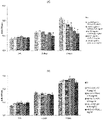
- Figure 2A and Table 2A show the results obtained on cell proliferation after incubation and 1, 3 and 6 days with hyaluronic acid at the mentioned concentrations.
- Table 2A 24 hr SD 3 days SD 6 days SD Ctrl 0.069 0.012 0.169 0.019 0.250 0,024 0.25 mg / ml 0.086 0.003 0.173 0.016 0.278 0.007 0.5 mg / ml 0.091 0.009 0.177 0.005 0.264 0.017 0.75 mg / ml 0.087 0.011 0.145 0.008 0.251 0.001 1 mg / ml 0.081 0.006 0.135 0.019 0.226 0.005 1.25 mg / ml 0.087 0.008 0.146 0.011 0.235 0.004
- Figure 2B and Table 2B show the results obtained on cell proliferation with chitlac at the mentioned concentrations.
- Table 2B 24 hr SD 3 days SD 6 days SD Ctrl 0.066 0.008 0.178 0.011 0.426 0.020 0.1 mg / ml 0.065 0.006 0.170 0.019 0.402 0.24 0.25 mg / ml 0.067 0.007 0.169 0.018 0.313 0.014 0.5 mg / ml 0.065 0.002 0.180 0.016 0.266 0.009 1 mg / ml 0.076 0.008 0.166 0.026 0.199 0.009 1.5 mg / ml 0.064 0.009 0.131 0.021 0.218 0.004
- Figure 2C and Table 2C show the results obtained on cell proliferation with hyaluronic acid at a concentration of 0.5 mg/ml and chitlac at concentrations increasing from 0.1 to 1.5 mg/ml at the mentioned concentrations.
- Table 2C CHITLAC 24 hr SD 3 days SD 6 days SD Ctrl (0 mg) 0.076 0.009 0.12 0.09 0.212 0.010 0.1 mg / ml 0.081 0.007 0.132 0.001 0.179 0.024 0.25 mg / ml 0.089 0.007 0.125 0.001 0.173 0.026 0.5 mg / ml 0.094 0.005 0.0106 0.007 0.158 0.014 1 mg / ml 0.085 0.005 0.0119 0.001 0.130 0.005 1.5 mg / ml 0.087 0.007 0.097 0.007 0.115 0.010
- Figure 2D and Table 2D show the results obtained on cell proliferation with hyaluronic acid at a concentration of 1.0 mg/ml and chitlac at concentrations increasing from 0.1 to 1.0 mg/ml at the mentioned concentrations.
- Table 2D CHITLAC 24 hr SD 3 days SD 6 days SD Ctrl (0 mg) 0.085 0.003 0.173 0.008 0.23 0.016 0.1 mg / ml 0.09 0.001 0.148 0.013 0.265 0.006 0.25 mg / ml 0.094 0.007 0.165 0.007 0.267 0.008 0.5 mg / ml 0.097 0.01 0.151 0.017 0.277 0.1019 0.75 mg / ml 0.088 0.009 0.162 0.004 0.277 0.067 1.0 mg / ml 0.092 0.01 0.154 0.015 0.232 0.585
- Figure 2E and Table 2E show the results obtained on cell proliferation with hyaluronic acid at a concentration of 1.25 mg/ml and chitlac at concentrations increasing from 0.1 to 1.0 mg/ml at the mentioned concentrations.
- Table 2E CHITLAC 24 hr SD 3 days SD 6 days SD Ctrl (0 mg) 0.089 0.006 0.149 0.005 0.29 0.003 0.1 mg / ml 0.093 0.002 0.147 0.004 0.313 0.016 0.25 mg / ml 0.099 0.015 0.176 0.008 0.312 0.004 0.5 mg / ml 0.094 0.006 0.175 0.021 0.264 0.037 0.75 mg / ml 0.100 0.041 0.176 0.019 0.271 0.008 1.0 mg / ml 0.092 0.007 0.166 0.013 0.229 0.012
- Example 3 essay on proliferation of sinoviocytes from human synovia
- Human synoviocytes were obtained from synovias of patients undergoing surgery to repair ligaments.
- Cells were extracted by treatment with a first collagenase I solution of 40U/ml for 12 hours in a 37 °C in incubator with a 5% CO 2 and 90% humidity percentage. The enzymatic action was blocked by adding the complete DMEM medium, the filtered and the 1200 rpm centrifuged solution. The pellet cells were re-suspended in DMEM, 10% fetal calf serum, 4 mM glutamine, 100IU/ml penicillin/streptavidin and seeded on sterile culture plates in incubator at 37 °C, with 5% CO 2 and relative humidity of 90%. The cell phenotype was confirmed by morphological analysis with optical microscopy and by immunocytochemical analysis for prolyl-4-hydroxylase. The medium was changed every two days and confluent cultures were detached with a 0.05% trypsin solution and 0.02% EDTA and passed into new plates by dividing them 1:3. For the experiments, cells from the fourth to sixth passage were used.
- the synoviocytes were seeded at a concentration of 3000 cells per well in a 48-well plate. The day after the sowing, the cells were treated with the substances under study at the following concentrations: CTL 0.1 to 1 mg/ml; HA 0.1 to 1.25 mg/ml; a mixture of HA and CTL, consisting of a fixed concentration (0.5 mg/ml, 1 mg/ml or 1.25 mg/ml) of HA and variable amounts of CTL. The medium was renewed every two days with the substances under examination.
- the cell monolayers were washed with PBS and the MTT solution was added for 3 hours at 37 °C.
- the MTT was removed and replaced with an extraction solution (90% isopropanol, 10% DMSO) for 15 minutes at 37 °C.
- the absorbance measurement was performed with a spectrophotometer at 570 nm.
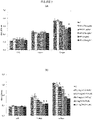
- Figure 3A and Table 3A show the results obtained on cell proliferation with hyaluronic acid at the mentioned concentrations.
- Table 3A 24 hr SD 3 days SD 6 days SD Ctrl 0.116 0.012 0.234 0.010 0.370 0,028 0.25 mg / ml 0.140 0.005 0.218 0.009 0.373 0.010 0.5 mg / ml 0.134 0.016 0.208 0.011 0.357 0.006 0.75 mg / ml 0.132 0.023 0.229 0.012 0.302 0.011 1 mg / ml 0.139 0.014 0.227 0.016 0.274 0.023 1.25 mg / ml 0.124 0.018 0.211 0.003 0.280 0.003
- Figure 3B and Table 3B show the results obtained on cell proliferation with chitlac at the mentioned concentrations.
- Table 3B 24 hr SD 3 days SD 6 days SD Ctrl 0.090 0.005 0.183 0.015 0.319 0,005 0.1 mg / ml 0.096 0.007 0.195 0.020 0.303 0,023 0.25 mg / ml 0.092 0.006 0.154 0.011 0.282 0,020 0.5 mg / ml 0.087 0.007 0.132 0.011 0.257 0.004 1 mg / ml 0.093 0.012 0.114 0.011 0.184 0,008 1.5 mg / ml 0.087 0.009 0.117 0.002 0.166 0.026
- Figure 3C and Table 3C show the results obtained on cell proliferation with hyaluronic acid at a concentration of 0.5 mg/ml and chitlac at concentrations increasing from 0.1 to 1.5 mg/ml at the mentioned concentrations.
- Table 3C CHITLAC 24 hr SD 3 days SD 6 days SD Ctrl (0 mg) 0.086 0.016 0.142 0.014 0.227 0.003 0.1 mg / ml 0.092 0.009 0.141 0.007 0.211 0.012 0.25 mg / ml 0.095 0.003 0.134 0.019 0.226 0.016 0.5 mg / ml 0.091 0.001 0.120 0.015 0.177 0.009 1 mg / ml 0.080 0.001 0.105 0.006 0.148 0.012 1.5 mg / ml 0.079 0.007 0.107 0.008 0.124 0.009
- Figure 3D and Table 3D show the results obtained on cell proliferation with hyaluronic acid at a concentration of 1.0 mg/ml and chitlac at increasing concentrations at the mentioned concentrations.
- Table 3D CHITLAC 24 hr SD 3 days SD 6 days SD Ctrl (0 mg) 0.102 0.003 0.224 0.013 0.487 0.001 0.1 mg / ml 0.109 0.001 0.217 0.006 0.46 0.014 0.25 mg / ml 0.108 0.001 0.202 0.008 0.410 0.007 0.5 mg / ml 0.107 0.006 0.211 0.012 0.401 0.011 0.75 mg / ml 0.113 0.009 0.208 0.012 0.367 0.023 1 mg / ml 0.104 0.007 0.205 0.007 0.372 0.010
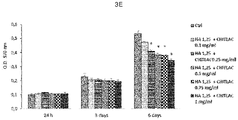
- Figure 3E and Table 3E show the results obtained on cell proliferation with hyaluronic acid at a concentration of 1.25 mg/ml and chitlac at increasing concentrations at the mentioned concentrations.
- Table 3E CHITLAC 24 hr SD 3 days SD 6 days SD Ctrl (0 mg) 0.101 0.006 0.228 0.024 0.535 0.021 0.1 mg / ml 0.108 0.005 0.206 0.013 0.476 0.002 0.25 mg / ml 0.114 0.004 0.208 0.007 0.409 0.011 0.5mglml 0.106 0.003 0.199 0.013 0.385 0.008 0.75 mg / ml 0.104 0.003 0.201 0.013 0.381 0.001 1 mg / ml 0.108 0.008 0.197 0.011 0.346 0.008
- Example 4 assay on migration of dermal fibroblasts in vitro - scratch test
- the influence of the treatment with HA and CTL on migration and proliferation speed of cultured fibroblasts was evaluated on cells prepared as described in Example 1 and brought to semi-confluence on 6-well cell culture plates.
- the cell monolayer was cut to divide it into two parts and then treated with the studied substances alone (HA at a concentration of 1 mg/ml; CTL at a concentration of 0.75 mg/ml) or with the mixture of 1 Mg/ml HA and CTL at a concentration of 0.75 mg/ml). Closure of the gap created in the cell monolayer was monitored at the optical microscope 48 and 72 hours after treatment. Three-fold experiments were set up and performed three times.
Landscapes
- Health & Medical Sciences (AREA)
- Life Sciences & Earth Sciences (AREA)
- Pharmacology & Pharmacy (AREA)
- Veterinary Medicine (AREA)
- Public Health (AREA)
- Chemical & Material Sciences (AREA)
- General Health & Medical Sciences (AREA)
- Medicinal Chemistry (AREA)
- Animal Behavior & Ethology (AREA)
- Engineering & Computer Science (AREA)
- General Chemical & Material Sciences (AREA)
- Nuclear Medicine, Radiotherapy & Molecular Imaging (AREA)
- Chemical Kinetics & Catalysis (AREA)
- Organic Chemistry (AREA)
- Bioinformatics & Cheminformatics (AREA)
- Epidemiology (AREA)
- Molecular Biology (AREA)
- Dermatology (AREA)
- Physical Education & Sports Medicine (AREA)
- Immunology (AREA)
- Orthopedic Medicine & Surgery (AREA)
- Rheumatology (AREA)
- Surgery (AREA)
- Biomedical Technology (AREA)
- Pharmaceuticals Containing Other Organic And Inorganic Compounds (AREA)
- Polysaccharides And Polysaccharide Derivatives (AREA)
Claims (15)
- Polysaccharidzusammensetzung, umfassend Hyaluronsäure und ein Oligosaccharidderivat von Chitosan mit Lactose, das durch eine reduktive Aminierungsreaktion von D-Glucosamin mit einem Substitutionsgrad der funktionellen Amingruppe desselben mit Lactose von mindestens 40 % erhalten wird, zur Verwendung bei der Gewebereparatur und/oder zur Prävention von Fibrose und/oder Adhäsionen durch die Hemmung der Zellproliferation, wobei die Zelle ein Fibroblast oder Synoviozyt ist, während die Hemmung der Chondrozyten-Proliferation verhindert wird, die prodromal für die Gewebereparatur ist.
- Polysaccharidzusammensetzung zur Verwendung nach Anspruch 1, wobei die Hyaluronsäure eine Matrix ist, in der das Oligosaccharidderivat von Chitosan mit Lactose homogen dispergiert ist.
- Polysaccharidzusammensetzung zur Verwendung nach Anspruch 1, wobei die Hyaluronsäure mindestens 1 Gew.-% ausmacht und das Oligosaccharidderivat von Chitosan mit Lactose nicht mehr als 0,75 Gew.-% ausmacht.
- Polysaccharidzusammensetzung zur Verwendung nach Anspruch 1, wobei die Hyaluronsäure im Bereich von 1 bis 2 Gew.-% liegt und das Oligosaccharidderivat von Chitosan mit Lactose im Bereich von 0,25 bis 0,75 Gew.-% liegt.
- Polysaccharidzusammensetzung zur Verwendung nach Anspruch 3, wobei die Hyaluronsäure 1 Gew.-% oder 1,25 Gew.-% beträgt.
- Polysaccharidzusammensetzung zur Verwendung nach Anspruch 5, wobei das Oligosaccharidderivat von Chitosan mit Lactose 0,25 Gew.-% oder 0,5 Gew.-% oder 0,75 Gew.-% beträgt.
- Polysaccharidzusammensetzung zur Verwendung nach Anspruch 1, wobei die Hyaluronsäure eine durchschnittliche Molekülmasse zwischen 1.000 und 1.600 kDa oder zwischen 800 und 1.000 kDa aufweist.
- Polysaccharidzusammensetzung zur Verwendung nach Anspruch 1, wobei das Chitosan des Oligosaccharidderivats mit Lactose eine durchschnittliche Molekülmasse zwischen 500 und 600 kDa oder zwischen 200 und 400 kDa aufweist.
- Polysaccharidzusammensetzung zur Verwendung nach Anspruch 1, wobei das Oligosaccharidderivat von Chitosan mit Lactose einen Substitutionsgrad von 50 bis 70 % aufweist.
- Polysaccharidzusammensetzung zur Verwendung nach einem der Ansprüche 1-9, wobei das Oligosaccharidderivat von Chitosan mit Lactose ein Hydrochloridsalz ist, das einen Lactoseaustauschgrad zwischen 50 und 70 % aufweist, und aus einem Chitosan mit 200-400 kDa mit einem Restacetylierungsgrad von etwa 15 % erhalten wird, und wobei die Hyaluronsäure eine durchschnittliche Molekülmasse zwischen 1.000 und 1.600 kDa aufweist.
- Polysaccharidzusammensetzung zur Verwendung nach Anspruch 1, wobei die Verwendung bei traumatischem und/oder postoperativem Gewebeprozess und/oder chronischen fibrotischen Prozessen im Zusammenhang mit Autoimmunerkrankungen erfolgt.
- Polysaccharidzusammensetzung zur Verwendung nach Anspruch 11, wobei die Verwendung bei traumatischen und postoperativen Folgeerscheinungen erfolgt, die Dermis und Bauchgewebe einbeziehen.
- Polysaccharidzusammensetzung zur Verwendung nach Anspruch 11, wobei die Verwendung bei postoperativen Folgeerscheinungen von Sehnen- und/oder Knorpelgeweben erfolgt.
- Polysaccharidzusammensetzung zur Verwendung nach Anspruch 11, wobei die Verwendung bei einem fibrotischen Prozess erfolgt, der mit Autoimmunerkrankungen verbunden ist, die Dermis und/oder Knorpelgewebe betreffen.
- Polysaccharidzusammensetzung zur Verwendung nach Anspruch 14, wobei die Autoimmunerkrankungen ausgewählt sind aus Psoriasis und Psoriasisarthritis.
Applications Claiming Priority (2)
| Application Number | Priority Date | Filing Date | Title |
|---|---|---|---|
| ITUA2016A004153A ITUA20164153A1 (it) | 2016-06-07 | 2016-06-07 | Composizioni polisaccaridiche impiegabili nella riparazione tissutale |
| PCT/EP2017/063639 WO2017211776A1 (en) | 2016-06-07 | 2017-06-06 | Polysaccharide compositions for tissue repair |
Publications (2)
| Publication Number | Publication Date |
|---|---|
| EP3463392A1 EP3463392A1 (de) | 2019-04-10 |
| EP3463392B1 true EP3463392B1 (de) | 2022-07-06 |
Family
ID=57113588
Family Applications (1)
| Application Number | Title | Priority Date | Filing Date |
|---|---|---|---|
| EP17734998.2A Active EP3463392B1 (de) | 2016-06-07 | 2017-06-06 | Polysaccharidzusammensetzungen für gewebereparatur |
Country Status (9)
| Country | Link |
|---|---|
| US (1) | US11116787B2 (de) |
| EP (1) | EP3463392B1 (de) |
| CN (1) | CN109310706A (de) |
| CA (1) | CA3025989A1 (de) |
| ES (1) | ES2928087T3 (de) |
| IT (1) | ITUA20164153A1 (de) |
| MX (1) | MX384436B (de) |
| RU (1) | RU2760358C2 (de) |
| WO (1) | WO2017211776A1 (de) |
Families Citing this family (8)
| Publication number | Priority date | Publication date | Assignee | Title |
|---|---|---|---|---|
| IT201700060530A1 (it) * | 2017-06-01 | 2018-12-01 | Jointherapeutics S R L | Derivati polisaccaridici idrosolubili, loro procedimento di preparazione e loro usi |
| IT201700111939A1 (it) * | 2017-10-05 | 2019-04-05 | Jointherapeutics S R L | Composizione farmaceutica per l’uso nel trattamento di stati infiammatori |
| IT201900006250A1 (it) | 2019-04-23 | 2020-10-23 | Fidia Farm Spa | Medicazione per il trattamento della cute lesa |
| CA3135919A1 (en) * | 2019-04-19 | 2020-10-22 | Jointherapeutics Srl | Crosslinked polymer of functionalized hyaluronic acid and its use in the treatment of inflammatory states |
| IT202000007372A1 (it) * | 2020-04-07 | 2021-10-07 | Jointherapeutics S R L | Materiale polimerico reticolato, comprendente almeno un chitosano funzionalizzato, e suo uso nel trattamento di stati infiammatori |
| CN113045760B (zh) * | 2021-04-12 | 2022-03-25 | 华南理工大学 | 一种基于透明质酸和α-D-半乳糖的聚合物刷及其制备方法和应用 |
| IT202100010187A1 (it) * | 2021-04-22 | 2022-10-22 | Jointherapeutics S R L | Uso di chitosano funzionalizzato nel trattamento di patologie infiammatorio-fibrotiche del tratto respiratorio e epatiche |
| IT202100012737A1 (it) * | 2021-05-18 | 2022-11-18 | Jointherapeutics S R L | Miscele di polisaccaridi e poliamminosaccaridi con proprietà reologiche migliorate |
Family Cites Families (16)
| Publication number | Priority date | Publication date | Assignee | Title |
|---|---|---|---|---|
| ATE14836T1 (de) | 1981-02-24 | 1985-08-15 | Procter & Gamble | Saugfaehiger wegwerfartikel mit verbessertem aufbau der gegen durchfeuchten widerstandsfaehigen aeusseren begrenzung. |
| US4424346A (en) | 1981-06-04 | 1984-01-03 | Canadian Patents And Development Ltd. | Derivatives of chitins, chitosans and other polysaccharides |
| IN163192B (de) | 1983-10-11 | 1988-08-20 | Fidia Spa | |
| BR9610996A (pt) * | 1995-08-29 | 1999-07-13 | Fidia Advanced Biopolymers Srl | Biomateriais para prevenção de ades es pós-cirúrgicas compreendendo derivados de ácidos hialurônico |
| CA2377544C (en) | 1999-07-28 | 2008-09-23 | United States Surgical Corporation | Hyaluronic acid anti-adhesion barrier |
| US7700819B2 (en) * | 2001-02-16 | 2010-04-20 | Kci Licensing, Inc. | Biocompatible wound dressing |
| ITPD20040053A1 (it) * | 2004-02-27 | 2004-05-27 | Fidia Advanced Biopolymers Srl | Biomateriali costituiti da derivati dell'acido ialuronico come nuova terapia di cura per la protezione e la la riparazione della cartilagine articolare danneggiata per osteoartrosi |
| ITRM20040539A1 (it) * | 2004-11-02 | 2005-02-02 | Mavi Sud S R L | Preparati a base di chitina o suoi derivati per uso cosmetico o medico. |
| ITPD20060202A1 (it) | 2006-05-22 | 2007-11-23 | Univ Degli Studi Trieste | Miscele polimeriche di polisaccaridi anionici e cationici e loro impiego |
| SI2107913T1 (sl) * | 2006-12-22 | 2012-05-31 | Croma Pharma Ges M B H | Uporaba tioliranih polisaharidov za tkivno avgmentacijo |
| WO2010003797A1 (en) | 2008-07-09 | 2010-01-14 | Novozymes Biopharma Dk A/S | Hyaluronic acid for corneal wound healing |
| CN101897990B (zh) * | 2010-07-06 | 2013-01-02 | 大连理工大学 | 一种用于抑制瘢痕促进伤口快速愈合敷料组合物及应用 |
| IT1401498B1 (it) | 2010-07-30 | 2013-07-26 | Mero Srl | Idrogelo a base di acido ialuronico e suo uso in ortopedia |
| CN102210885B (zh) * | 2011-06-06 | 2013-08-07 | 深港产学研基地 | 高透气性可降解的载药皮肤创伤敷料及其制备方法和设备 |
| KR101598329B1 (ko) | 2013-03-20 | 2016-02-29 | 일동제약주식회사 | 히알루론산의 제조방법 및 상기 제조방법으로 제조된 히알루론산을 포함하는 유착방지용 조성물 |
| CA2956658C (en) * | 2013-07-30 | 2021-03-02 | Oligo Medic Inc. | Composition comprising polyglucosamine-glyoxylate solutions mixed with hyaluronan |
-
2016
- 2016-06-07 IT ITUA2016A004153A patent/ITUA20164153A1/it unknown
-
2017
- 2017-06-06 CA CA3025989A patent/CA3025989A1/en active Pending
- 2017-06-06 US US16/306,983 patent/US11116787B2/en active Active
- 2017-06-06 ES ES17734998T patent/ES2928087T3/es active Active
- 2017-06-06 EP EP17734998.2A patent/EP3463392B1/de active Active
- 2017-06-06 MX MX2018015101A patent/MX384436B/es unknown
- 2017-06-06 WO PCT/EP2017/063639 patent/WO2017211776A1/en not_active Ceased
- 2017-06-06 CN CN201780035775.4A patent/CN109310706A/zh active Pending
- 2017-06-06 RU RU2018141365A patent/RU2760358C2/ru active
Also Published As
| Publication number | Publication date |
|---|---|
| ES2928087T3 (es) | 2022-11-15 |
| RU2760358C2 (ru) | 2021-11-24 |
| ITUA20164153A1 (it) | 2017-12-07 |
| EP3463392A1 (de) | 2019-04-10 |
| US20200306288A1 (en) | 2020-10-01 |
| RU2018141365A (ru) | 2020-07-09 |
| MX2018015101A (es) | 2019-05-06 |
| CA3025989A1 (en) | 2017-12-14 |
| WO2017211776A1 (en) | 2017-12-14 |
| US11116787B2 (en) | 2021-09-14 |
| RU2018141365A3 (de) | 2020-09-17 |
| MX384436B (es) | 2025-03-14 |
| CN109310706A (zh) | 2019-02-05 |
Similar Documents
| Publication | Publication Date | Title |
|---|---|---|
| US11116787B2 (en) | Polysaccharide compositions for tissue repair | |
| Mao et al. | A preliminary study on chitosan and gelatin polyelectrolyte complex cytocompatibility by cell cycle and apoptosis analysis | |
| AU2019230193B2 (en) | Nanocellulose-containing bioinks for 3D bioprinting, methods of making and using the same, and 3D biostructures obtained therefrom | |
| Suri et al. | Photopatterned collagen–hyaluronic acid interpenetrating polymer network hydrogels | |
| JP3333205B2 (ja) | 骨形成を刺激するための低分子量ヒアルロン酸の製法 | |
| US6610810B2 (en) | Biopolymers obtained by solid state irradiation in an unsaturated gaseous atmosphere | |
| TW574302B (en) | A method for producing cross-linked hyaluronic acid-protein bio-composites | |
| Wu et al. | Proliferation of chondrocytes on porous poly (DL-lactide)/chitosan scaffolds | |
| PT2470230E (pt) | Geles viscoelásticos como enchimentos inovadores | |
| CN101636181A (zh) | 形成水凝胶的新颖的可注入壳聚糖混合物 | |
| Thomas et al. | An injectable hydrogel having proteoglycan-like hierarchical structure supports chondrocytes delivery and chondrogenesis | |
| EP2210621A1 (de) | Zusammensetzung zur behandlung von gelenkerkrankungen | |
| Li et al. | A rapid crosslinking injectable polygalacturonic acid barrier modified with zwitterion bottlebrush for preventing postoperative adhesion | |
| CN111012803A (zh) | 用于引导组织再生的生物材料装置和局部组合物 | |
| JP2020058785A (ja) | 皮膚異常の処置のためのバイオマテリアルデバイスおよび局所用組成物 | |
| Fakhari | Biomedical application of hyaluronic acid nanoparticles | |
| KR20190096946A (ko) | 지방 세포에 활성인 신규 조성물 | |
| Brekke et al. | Hyaluronan as a biomaterial | |
| Swann et al. | Hyaluronic acid | |
| Hwang et al. | Development and biocompatibility assessment of alginate–ulvan hydrogels for potential medical use | |
| Wei et al. | Heparosan crosslinked hydrogels for injectable dermal fillers: fabrication, physicochemical properties and biocompatibility | |
| Olgierd et al. | Methods of Biomaterial-Aided Cell or Drug Delivery: Extracellular Matrix Proteins as Biomaterials | |
| Byram et al. | Exploring Xanthan Gum as a Plasticizer in Silk Fibroin/Gelatin Films: Toward Self‐Assemblies, Robust, and Cytocompatible Structures | |
| Al Qteishat et al. | The therapeutic potential of bioactive polysaccharides in tissue repairing and wound healing | |
| Apryatina et al. | Biocompatible compositions based on chitosan and collagen with high strength characteristics |
Legal Events
| Date | Code | Title | Description |
|---|---|---|---|
| STAA | Information on the status of an ep patent application or granted ep patent |
Free format text: STATUS: UNKNOWN |
|
| STAA | Information on the status of an ep patent application or granted ep patent |
Free format text: STATUS: THE INTERNATIONAL PUBLICATION HAS BEEN MADE |
|
| PUAI | Public reference made under article 153(3) epc to a published international application that has entered the european phase |
Free format text: ORIGINAL CODE: 0009012 |
|
| STAA | Information on the status of an ep patent application or granted ep patent |
Free format text: STATUS: REQUEST FOR EXAMINATION WAS MADE |
|
| 17P | Request for examination filed |
Effective date: 20181220 |
|
| AK | Designated contracting states |
Kind code of ref document: A1 Designated state(s): AL AT BE BG CH CY CZ DE DK EE ES FI FR GB GR HR HU IE IS IT LI LT LU LV MC MK MT NL NO PL PT RO RS SE SI SK SM TR |
|
| AX | Request for extension of the european patent |
Extension state: BA ME |
|
| DAV | Request for validation of the european patent (deleted) | ||
| DAX | Request for extension of the european patent (deleted) | ||
| STAA | Information on the status of an ep patent application or granted ep patent |
Free format text: STATUS: EXAMINATION IS IN PROGRESS |
|
| 17Q | First examination report despatched |
Effective date: 20200423 |
|
| GRAP | Despatch of communication of intention to grant a patent |
Free format text: ORIGINAL CODE: EPIDOSNIGR1 |
|
| STAA | Information on the status of an ep patent application or granted ep patent |
Free format text: STATUS: GRANT OF PATENT IS INTENDED |
|
| INTG | Intention to grant announced |
Effective date: 20220128 |
|
| GRAS | Grant fee paid |
Free format text: ORIGINAL CODE: EPIDOSNIGR3 |
|
| GRAA | (expected) grant |
Free format text: ORIGINAL CODE: 0009210 |
|
| STAA | Information on the status of an ep patent application or granted ep patent |
Free format text: STATUS: THE PATENT HAS BEEN GRANTED |
|
| AK | Designated contracting states |
Kind code of ref document: B1 Designated state(s): AL AT BE BG CH CY CZ DE DK EE ES FI FR GB GR HR HU IE IS IT LI LT LU LV MC MK MT NL NO PL PT RO RS SE SI SK SM TR |
|
| REG | Reference to a national code |
Ref country code: AT Ref legal event code: REF Ref document number: 1502380 Country of ref document: AT Kind code of ref document: T Effective date: 20220715 Ref country code: CH Ref legal event code: EP |
|
| REG | Reference to a national code |
Ref country code: DE Ref legal event code: R096 Ref document number: 602017059244 Country of ref document: DE |
|
| REG | Reference to a national code |
Ref country code: IE Ref legal event code: FG4D |
|
| REG | Reference to a national code |
Ref country code: LT Ref legal event code: MG9D |
|
| REG | Reference to a national code |
Ref country code: NL Ref legal event code: MP Effective date: 20220706 |
|
| REG | Reference to a national code |
Ref country code: ES Ref legal event code: FG2A Ref document number: 2928087 Country of ref document: ES Kind code of ref document: T3 Effective date: 20221115 |
|
| PG25 | Lapsed in a contracting state [announced via postgrant information from national office to epo] |
Ref country code: SE Free format text: LAPSE BECAUSE OF FAILURE TO SUBMIT A TRANSLATION OF THE DESCRIPTION OR TO PAY THE FEE WITHIN THE PRESCRIBED TIME-LIMIT Effective date: 20220706 Ref country code: RS Free format text: LAPSE BECAUSE OF FAILURE TO SUBMIT A TRANSLATION OF THE DESCRIPTION OR TO PAY THE FEE WITHIN THE PRESCRIBED TIME-LIMIT Effective date: 20220706 Ref country code: PT Free format text: LAPSE BECAUSE OF FAILURE TO SUBMIT A TRANSLATION OF THE DESCRIPTION OR TO PAY THE FEE WITHIN THE PRESCRIBED TIME-LIMIT Effective date: 20221107 Ref country code: NO Free format text: LAPSE BECAUSE OF FAILURE TO SUBMIT A TRANSLATION OF THE DESCRIPTION OR TO PAY THE FEE WITHIN THE PRESCRIBED TIME-LIMIT Effective date: 20221006 Ref country code: NL Free format text: LAPSE BECAUSE OF FAILURE TO SUBMIT A TRANSLATION OF THE DESCRIPTION OR TO PAY THE FEE WITHIN THE PRESCRIBED TIME-LIMIT Effective date: 20220706 Ref country code: LV Free format text: LAPSE BECAUSE OF FAILURE TO SUBMIT A TRANSLATION OF THE DESCRIPTION OR TO PAY THE FEE WITHIN THE PRESCRIBED TIME-LIMIT Effective date: 20220706 Ref country code: LT Free format text: LAPSE BECAUSE OF FAILURE TO SUBMIT A TRANSLATION OF THE DESCRIPTION OR TO PAY THE FEE WITHIN THE PRESCRIBED TIME-LIMIT Effective date: 20220706 Ref country code: FI Free format text: LAPSE BECAUSE OF FAILURE TO SUBMIT A TRANSLATION OF THE DESCRIPTION OR TO PAY THE FEE WITHIN THE PRESCRIBED TIME-LIMIT Effective date: 20220706 |
|
| REG | Reference to a national code |
Ref country code: AT Ref legal event code: MK05 Ref document number: 1502380 Country of ref document: AT Kind code of ref document: T Effective date: 20220706 |
|
| PG25 | Lapsed in a contracting state [announced via postgrant information from national office to epo] |
Ref country code: PL Free format text: LAPSE BECAUSE OF FAILURE TO SUBMIT A TRANSLATION OF THE DESCRIPTION OR TO PAY THE FEE WITHIN THE PRESCRIBED TIME-LIMIT Effective date: 20220706 Ref country code: IS Free format text: LAPSE BECAUSE OF FAILURE TO SUBMIT A TRANSLATION OF THE DESCRIPTION OR TO PAY THE FEE WITHIN THE PRESCRIBED TIME-LIMIT Effective date: 20221106 Ref country code: HR Free format text: LAPSE BECAUSE OF FAILURE TO SUBMIT A TRANSLATION OF THE DESCRIPTION OR TO PAY THE FEE WITHIN THE PRESCRIBED TIME-LIMIT Effective date: 20220706 Ref country code: GR Free format text: LAPSE BECAUSE OF FAILURE TO SUBMIT A TRANSLATION OF THE DESCRIPTION OR TO PAY THE FEE WITHIN THE PRESCRIBED TIME-LIMIT Effective date: 20221007 |
|
| REG | Reference to a national code |
Ref country code: DE Ref legal event code: R097 Ref document number: 602017059244 Country of ref document: DE |
|
| PG25 | Lapsed in a contracting state [announced via postgrant information from national office to epo] |
Ref country code: SM Free format text: LAPSE BECAUSE OF FAILURE TO SUBMIT A TRANSLATION OF THE DESCRIPTION OR TO PAY THE FEE WITHIN THE PRESCRIBED TIME-LIMIT Effective date: 20220706 Ref country code: RO Free format text: LAPSE BECAUSE OF FAILURE TO SUBMIT A TRANSLATION OF THE DESCRIPTION OR TO PAY THE FEE WITHIN THE PRESCRIBED TIME-LIMIT Effective date: 20220706 Ref country code: DK Free format text: LAPSE BECAUSE OF FAILURE TO SUBMIT A TRANSLATION OF THE DESCRIPTION OR TO PAY THE FEE WITHIN THE PRESCRIBED TIME-LIMIT Effective date: 20220706 Ref country code: CZ Free format text: LAPSE BECAUSE OF FAILURE TO SUBMIT A TRANSLATION OF THE DESCRIPTION OR TO PAY THE FEE WITHIN THE PRESCRIBED TIME-LIMIT Effective date: 20220706 Ref country code: AT Free format text: LAPSE BECAUSE OF FAILURE TO SUBMIT A TRANSLATION OF THE DESCRIPTION OR TO PAY THE FEE WITHIN THE PRESCRIBED TIME-LIMIT Effective date: 20220706 |
|
| PLBE | No opposition filed within time limit |
Free format text: ORIGINAL CODE: 0009261 |
|
| STAA | Information on the status of an ep patent application or granted ep patent |
Free format text: STATUS: NO OPPOSITION FILED WITHIN TIME LIMIT |
|
| PG25 | Lapsed in a contracting state [announced via postgrant information from national office to epo] |
Ref country code: SK Free format text: LAPSE BECAUSE OF FAILURE TO SUBMIT A TRANSLATION OF THE DESCRIPTION OR TO PAY THE FEE WITHIN THE PRESCRIBED TIME-LIMIT Effective date: 20220706 Ref country code: EE Free format text: LAPSE BECAUSE OF FAILURE TO SUBMIT A TRANSLATION OF THE DESCRIPTION OR TO PAY THE FEE WITHIN THE PRESCRIBED TIME-LIMIT Effective date: 20220706 |
|
| 26N | No opposition filed |
Effective date: 20230411 |
|
| P01 | Opt-out of the competence of the unified patent court (upc) registered |
Effective date: 20230515 |
|
| PG25 | Lapsed in a contracting state [announced via postgrant information from national office to epo] |
Ref country code: AL Free format text: LAPSE BECAUSE OF FAILURE TO SUBMIT A TRANSLATION OF THE DESCRIPTION OR TO PAY THE FEE WITHIN THE PRESCRIBED TIME-LIMIT Effective date: 20220706 |
|
| PG25 | Lapsed in a contracting state [announced via postgrant information from national office to epo] |
Ref country code: SI Free format text: LAPSE BECAUSE OF FAILURE TO SUBMIT A TRANSLATION OF THE DESCRIPTION OR TO PAY THE FEE WITHIN THE PRESCRIBED TIME-LIMIT Effective date: 20220706 |
|
| PGFP | Annual fee paid to national office [announced via postgrant information from national office to epo] |
Ref country code: GB Payment date: 20230510 Year of fee payment: 7 Ref country code: ES Payment date: 20230703 Year of fee payment: 7 |
|
| PG25 | Lapsed in a contracting state [announced via postgrant information from national office to epo] |
Ref country code: MC Free format text: LAPSE BECAUSE OF FAILURE TO SUBMIT A TRANSLATION OF THE DESCRIPTION OR TO PAY THE FEE WITHIN THE PRESCRIBED TIME-LIMIT Effective date: 20220706 |
|
| PG25 | Lapsed in a contracting state [announced via postgrant information from national office to epo] |
Ref country code: MC Free format text: LAPSE BECAUSE OF FAILURE TO SUBMIT A TRANSLATION OF THE DESCRIPTION OR TO PAY THE FEE WITHIN THE PRESCRIBED TIME-LIMIT Effective date: 20220706 |
|
| REG | Reference to a national code |
Ref country code: CH Ref legal event code: PL |
|
| REG | Reference to a national code |
Ref country code: BE Ref legal event code: MM Effective date: 20230630 |
|
| PG25 | Lapsed in a contracting state [announced via postgrant information from national office to epo] |
Ref country code: LU Free format text: LAPSE BECAUSE OF NON-PAYMENT OF DUE FEES Effective date: 20230606 |
|
| REG | Reference to a national code |
Ref country code: IE Ref legal event code: MM4A |
|
| PG25 | Lapsed in a contracting state [announced via postgrant information from national office to epo] |
Ref country code: LU Free format text: LAPSE BECAUSE OF NON-PAYMENT OF DUE FEES Effective date: 20230606 |
|
| PG25 | Lapsed in a contracting state [announced via postgrant information from national office to epo] |
Ref country code: IE Free format text: LAPSE BECAUSE OF NON-PAYMENT OF DUE FEES Effective date: 20230606 |
|
| PG25 | Lapsed in a contracting state [announced via postgrant information from national office to epo] |
Ref country code: IE Free format text: LAPSE BECAUSE OF NON-PAYMENT OF DUE FEES Effective date: 20230606 Ref country code: CH Free format text: LAPSE BECAUSE OF NON-PAYMENT OF DUE FEES Effective date: 20230630 |
|
| PG25 | Lapsed in a contracting state [announced via postgrant information from national office to epo] |
Ref country code: BE Free format text: LAPSE BECAUSE OF NON-PAYMENT OF DUE FEES Effective date: 20230630 |
|
| PG25 | Lapsed in a contracting state [announced via postgrant information from national office to epo] |
Ref country code: BG Free format text: LAPSE BECAUSE OF FAILURE TO SUBMIT A TRANSLATION OF THE DESCRIPTION OR TO PAY THE FEE WITHIN THE PRESCRIBED TIME-LIMIT Effective date: 20220706 |
|
| PG25 | Lapsed in a contracting state [announced via postgrant information from national office to epo] |
Ref country code: BG Free format text: LAPSE BECAUSE OF FAILURE TO SUBMIT A TRANSLATION OF THE DESCRIPTION OR TO PAY THE FEE WITHIN THE PRESCRIBED TIME-LIMIT Effective date: 20220706 |
|
| GBPC | Gb: european patent ceased through non-payment of renewal fee |
Effective date: 20240606 |
|
| PG25 | Lapsed in a contracting state [announced via postgrant information from national office to epo] |
Ref country code: GB Free format text: LAPSE BECAUSE OF NON-PAYMENT OF DUE FEES Effective date: 20240606 |
|
| PGFP | Annual fee paid to national office [announced via postgrant information from national office to epo] |
Ref country code: DE Payment date: 20250509 Year of fee payment: 9 |
|
| PGFP | Annual fee paid to national office [announced via postgrant information from national office to epo] |
Ref country code: FR Payment date: 20250512 Year of fee payment: 9 |
|
| PG25 | Lapsed in a contracting state [announced via postgrant information from national office to epo] |
Ref country code: CY Free format text: LAPSE BECAUSE OF FAILURE TO SUBMIT A TRANSLATION OF THE DESCRIPTION OR TO PAY THE FEE WITHIN THE PRESCRIBED TIME-LIMIT; INVALID AB INITIO Effective date: 20170606 |
|
| REG | Reference to a national code |
Ref country code: ES Ref legal event code: FD2A Effective date: 20250728 |
|
| PG25 | Lapsed in a contracting state [announced via postgrant information from national office to epo] |
Ref country code: HU Free format text: LAPSE BECAUSE OF FAILURE TO SUBMIT A TRANSLATION OF THE DESCRIPTION OR TO PAY THE FEE WITHIN THE PRESCRIBED TIME-LIMIT; INVALID AB INITIO Effective date: 20170606 |
|
| PG25 | Lapsed in a contracting state [announced via postgrant information from national office to epo] |
Ref country code: ES Free format text: LAPSE BECAUSE OF NON-PAYMENT OF DUE FEES Effective date: 20240607 |
|
| PG25 | Lapsed in a contracting state [announced via postgrant information from national office to epo] |
Ref country code: TR Free format text: LAPSE BECAUSE OF FAILURE TO SUBMIT A TRANSLATION OF THE DESCRIPTION OR TO PAY THE FEE WITHIN THE PRESCRIBED TIME-LIMIT Effective date: 20220706 |
|
| PGFP | Annual fee paid to national office [announced via postgrant information from national office to epo] |
Ref country code: IT Payment date: 20260324 Year of fee payment: 10 |