EP0625908B1 - Antidot für hirudin und synthetische thrombininhibitoren - Google Patents
Antidot für hirudin und synthetische thrombininhibitoren Download PDFInfo
- Publication number
- EP0625908B1 EP0625908B1 EP93903233A EP93903233A EP0625908B1 EP 0625908 B1 EP0625908 B1 EP 0625908B1 EP 93903233 A EP93903233 A EP 93903233A EP 93903233 A EP93903233 A EP 93903233A EP 0625908 B1 EP0625908 B1 EP 0625908B1
- Authority
- EP
- European Patent Office
- Prior art keywords
- meizothrombin
- hirudin
- prothrombin
- antidote
- thrombin inhibitors
- Prior art date
- Legal status (The legal status is an assumption and is not a legal conclusion. Google has not performed a legal analysis and makes no representation as to the accuracy of the status listed.)
- Expired - Lifetime
Links
Images

Classifications
-
- C—CHEMISTRY; METALLURGY
- C12—BIOCHEMISTRY; BEER; SPIRITS; WINE; VINEGAR; MICROBIOLOGY; ENZYMOLOGY; MUTATION OR GENETIC ENGINEERING
- C12N—MICROORGANISMS OR ENZYMES; COMPOSITIONS THEREOF; PROPAGATING, PRESERVING, OR MAINTAINING MICROORGANISMS; MUTATION OR GENETIC ENGINEERING; CULTURE MEDIA
- C12N9/00—Enzymes; Proenzymes; Compositions thereof; Processes for preparing, activating, inhibiting, separating or purifying enzymes
- C12N9/14—Hydrolases (3)
- C12N9/48—Hydrolases (3) acting on peptide bonds (3.4)
- C12N9/50—Proteinases, e.g. Endopeptidases (3.4.21-3.4.25)
- C12N9/64—Proteinases, e.g. Endopeptidases (3.4.21-3.4.25) derived from animal tissue
- C12N9/6421—Proteinases, e.g. Endopeptidases (3.4.21-3.4.25) derived from animal tissue from mammals
- C12N9/6424—Serine endopeptidases (3.4.21)
- C12N9/6429—Thrombin (3.4.21.5)
-
- A—HUMAN NECESSITIES
- A61—MEDICAL OR VETERINARY SCIENCE; HYGIENE
- A61P—SPECIFIC THERAPEUTIC ACTIVITY OF CHEMICAL COMPOUNDS OR MEDICINAL PREPARATIONS
- A61P7/00—Drugs for disorders of the blood or the extracellular fluid
- A61P7/04—Antihaemorrhagics; Procoagulants; Haemostatic agents; Antifibrinolytic agents
-
- C—CHEMISTRY; METALLURGY
- C12—BIOCHEMISTRY; BEER; SPIRITS; WINE; VINEGAR; MICROBIOLOGY; ENZYMOLOGY; MUTATION OR GENETIC ENGINEERING
- C12N—MICROORGANISMS OR ENZYMES; COMPOSITIONS THEREOF; PROPAGATING, PRESERVING, OR MAINTAINING MICROORGANISMS; MUTATION OR GENETIC ENGINEERING; CULTURE MEDIA
- C12N9/00—Enzymes; Proenzymes; Compositions thereof; Processes for preparing, activating, inhibiting, separating or purifying enzymes
- C12N9/14—Hydrolases (3)
- C12N9/48—Hydrolases (3) acting on peptide bonds (3.4)
- C12N9/50—Proteinases, e.g. Endopeptidases (3.4.21-3.4.25)
- C12N9/64—Proteinases, e.g. Endopeptidases (3.4.21-3.4.25) derived from animal tissue
- C12N9/6402—Proteinases, e.g. Endopeptidases (3.4.21-3.4.25) derived from animal tissue from non-mammals
- C12N9/6418—Proteinases, e.g. Endopeptidases (3.4.21-3.4.25) derived from animal tissue from non-mammals from snakes
-
- C—CHEMISTRY; METALLURGY
- C12—BIOCHEMISTRY; BEER; SPIRITS; WINE; VINEGAR; MICROBIOLOGY; ENZYMOLOGY; MUTATION OR GENETIC ENGINEERING
- C12Y—ENZYMES
- C12Y304/00—Hydrolases acting on peptide bonds, i.e. peptidases (3.4)
- C12Y304/21—Serine endopeptidases (3.4.21)
- C12Y304/21005—Thrombin (3.4.21.5)
-
- A—HUMAN NECESSITIES
- A61—MEDICAL OR VETERINARY SCIENCE; HYGIENE
- A61K—PREPARATIONS FOR MEDICAL, DENTAL OR TOILETRY PURPOSES
- A61K38/00—Medicinal preparations containing peptides
Definitions
- the invention relates to an antidote for hirudin and synthetic thrombin inhibitors, the use of a compound which cleaves prothrombin to meizothrombin, a prothrombin intermediate or a pharmacologically acceptable salt thereof as an antidote for hirudin and synthetic thrombin inhibitors or for the preparation of an antidote for hirudin and synthetic thrombin inhibitors.
- Anticoagulants such as, for example, heparin or coumarins
- heparin or coumarins are widely used today for the therapy and prophylaxis of thromboembolic disorders, in particular for the treatment of myocardial infarction, arteriosclerosis, also in blood transfusions and after operations. They can also be used as a remedy for frostbite, since they prevent the blood from clotting when it is very cold, which otherwise clogs the blood vessels and cuts off the frozen organs from the bloodstream.
- Hirudin which is obtained from the salivary gland of Hirudo medicinalis (leech), is an anticoagulant, the effect of which is based on the formation of a chemical compound with thrombin, which inhibits its catalytic action.
- Hirudin is a 65 amino acid miniprotein with a molecular weight of 7 kD. It is of great interest because of its strong affinity for thrombin (k i values of 10 -12 mol / l) and its direct mechanism of action. Its clinical use has been extremely limited in the past because hirudin is not easily standardized was accessible and no antidote was available. Hirudin can be produced by genetic engineering today and therefore its clinical application would be possible in the near future.
- EP-A-0 468 327 describes pharmaceutical preparations for oral administration which contain recombinant hirudin.
- Hirudin has been extensively studied pharmacologically in recent years and the pharmacological data were collected in experimental animals and humans. Hirudin is not metabolized in the liver, but is excreted unchanged via the kidneys. Hirudin is excreted from the body with a half-life of about 1 to 2 hours and is distributed in the extracellular fluid spaces of the body. Similar to heparin, hirudin is not absorbed orally. Earlier studies have shown that hirudin is effective in almost all thrombosis models, including endotoxin shock and experimental coronary thrombosis, as well as preventing reocclusion after thrombolysis. No immunological reactions have been demonstrated in clinical pharmacological studies. Hirudin has been shown to be superior to heparin in clinical trials as an anticoagulant and antithrombotic.
- Synthetic thrombin inhibitors have recently become very important. Many research laboratories worldwide are currently working on synthetic inhibitors of this type. The most advanced are the studies with derivatives of benzamidine, such as the small molecular synthetic thrombin inhibitor NAPAP (N ⁇ - (2-naphthylsulforyl-glycyl) -D, L-amidinophenylalanine piperidide) and with so-called tripeptides. All synthetic thrombin inhibitors are currently in the preclinical investigation. Their effects are qualitatively equivalent to those of hirudin. The metabolism of the However, synthetic thrombin inhibitors differ from that of hirudin. As a rule, the thrombin inhibitors are metabolized in the liver or in the blood. It is anticipated that such substances will soon be available for clinical trials. The main advantage over hirudin is that these substances can be administered orally.
- hirudin has so far not been carried out or is only very limited, since, as mentioned above, no antidote is available, which e.g. in the case of heparin with the protamine sulfate.
- no antidote is available, which e.g. in the case of heparin with the protamine sulfate.
- the presence of an antidote is imperative for a thrombin inhibitor, because in the event of accidental overdoses or in patients with renal dysfunction who are at risk of bleeding complications, an antidote must be present immediately if an overdose is found.
- Such bleeding complications occur, for example, as hemorrhagic side effects, especially in the vascular areas of the peritoneum, pleura, pericardium and pia mater, but also in surgical cuts, as was observed in animals with extremely high blood levels of a thrombin inhibitor.
- hirudin antidote principles for hirudin have been experimentally investigated in the past, such as the use of gamma thrombin preparations, such as DFP thrombin or benzoyl thrombin (Brüggener, E., Walsmann, P., Markwardt, F .: Neutralization of hirudin anticoagulant action by DIP thrombin. Pharmacy 1989; 44: 648-9).
- these preparations have not proven themselves in practice because their affinity for hirudin is too low and they are too toxic.
- Activated plasma fractions such as FEIBA or autoplex preparations, are also unsuitable because of the thromboplastin-like activity (Fareed.
- the object of the present invention is to provide an antidote for hirudin and synthetic thrombin inhibitors.
- the antidote is said to be effective, i.e. have sufficient affinity for hirudin and synthetic thrombin inhibitors, its dosage should be simple and it should be easily accessible.
- the invention relates to an antidote for hirudin and synthetic thrombin inhibitors, which is characterized in that it comprises a compound which cleaves prothrombin to meizothrombin, a prothrombin intermediate, a pharmacologically acceptable salt thereof or a mixture of these compounds together with conventional carriers and / or Contains diluents, containing meizothrombin, PIVKA prothrombin, meizothrombin-des-fragment-1 or a compound containing meizothrombin as prothrombin intermediate.
- the invention furthermore relates to the use of a compound which cleaves prothrombin to meizothrombin, a prothrombin intermediate defined above, a pharmacologically acceptable salt thereof or a mixture of these compounds together with customary carriers and / or diluents as an antidote for hirudin and synthetic thrombin inhibitors or for Preparation of an antidote for hirudin and synthetic thrombin inhibitors.
- hirudin and synthetic, preferably small-molecular, thrombin inhibitors are suitable as thrombin inhibitors.
- synthetic thrombin inhibitors are NAPAP (N ⁇ - (2-naphthylsulforyl-glycyl) -D, L-amidinophenylalanine piperidide), furthermore the derivatives of the tripeptide Phe-Pro-Arg, such as boronic acid derivatives, argininals, chloromethyl ketone derivatives and amino acid derivatives modified derivatives as well as benzamidine derivatives and also so-called hirologists, ie synthetic hirudin-like partial sequences.
- the antidote principle is the same for all these compounds as for hirudin.
- the antidote of the invention is in a form suitable for parenteral administration, i.e. form suitable for subcutaneous, intramuscular or intravenous administration. Intravenous administration is preferred. If appropriate, the antidote according to the invention can also be administered as a continuous infusion.
- a snake venom is used as the compound that cleaves prothrombin to meizothrombin.
- snake venoms are ecarin and the venoms of Dispholidus, Rhabdophis, Bothrops, Notechis, Oxyuranus and Russell Viper species.
- Ecarin a purified poison fraction from Echis carinatus toxin, is preferred. All of the snake venoms can be purchased as biochemicals, for example from SIGMA Chemie GmbH, 8024 Deisenhofen. Purified fractions of individual snake venoms listed can be obtained from Pentapharm in Switzerland on request.
- the snake venom, especially ecarin and immobilized ecarin can also be purchased from Pentapharm in Switzerland.
- the poisons are available as dry matter, usually freeze-dried, in quantities between 5 mg and 1 g. All poisons are readily water-soluble and should be taken up with 0.9% saline.
- the amount of the dose can easily be determined by a person skilled in the art. The dose depends on the body weight, the hirudin content and the route of administration. The amounts used for a person with a body weight of 70 kg are in the range from 0.5 to 5 mg.
- meizothrombin meizothrombin-des-fragment-1, PIVKA prothrombin or a compound containing meizothrombin is used as the prothrombin intermediate.
- Meizothrombin is commercially available and can also be obtained from Pentapharm mentioned above.
- Meizothrombin, PIVKA prothrombin, meizothrombin-des-fragment-1 or other prothrombin intermediates can also be formed in vitro.
- factor II prothrombin
- factor VII factor VII
- factor IX factor X
- factor X factor X
- the gamma-carboxyglutamic acid residues are essential for the clotting effect. They represent the necessary binding valences for calcium ions.
- vitamin K antagonists indirect anticoagulants of the dicumarole type
- the postribosomal gamma carboxylation cannot take place and there are incomplete coagulation factors or acarboxy factors in the blood, because they lack the calcium-binding gamma-carboxy groups.
- PIVKA prothrombin PIVKA meizothrombin is produced in this plasma in the same way by limited proteolysis as in normal plasma samples with prothrombin happens.
- PIVKA meizothrombin or other PIVKA intermediates have retained their ability to bind to hirudin, but they have no or significantly less effects on other factors in the coagulation cascade (platelets, fibrinogen, thrombomodulin, etc.).
- meizothrombin, PIVKA-meizothrombin, their intermediates and PIVKA intermediates from PIVKA prothrombin can be used as an antidote. These can come from humans or other mammals.
- immobilized ecarin (product of Pentapharm AG, Basel), for example, can be packed in mini columns with a size of, for example, 2-4 cm 3 .
- Ecarin Immobilisat comes in a swollen state, suspended in an aqueous solution of sodium chloride 0.15 M, sodium acetate 0.02 M, Prionex® (trademark of Pentapharm AG for a protein-stabilizing polypeptide fraction from purified pig skin collagen) 0.2% and Trichloroisobutanol 0.3%, pH 5.5, for delivery.
- Purified prothrombin fractions are then added to these columns and the meizothrombin formed, optionally after stabilization with heparin, is then freeze-dried.
- the freeze-dried material is packaged sterile in ampoules and then reconstituted for use as an antidote with a suitable solvent, preferably with sterile sodium chloride solution suitable for intravenous injection.
- meizothrombin-des-fragment-1 The same procedure as for meizothrombin is used to prepare meizothrombin-des-fragment-1. In the batch process, only a longer reaction time (3 - 4 h) should be provided.
- Meizothrombin-des-Fragment-1 is a secondary product of meizothrombin activation.
- the antidote for injection such as intravascular, for example intravenous, intramuscular or subcutaneous, injection can be formulated.
- Intravascular administration is preferred.
- Preparations for injection can be in single-dose form, for example in ampoules, or in multi-dose containers with an added preservative.
- the preparations can be in the form of suspensions, solutions or emulsions in oily or aqueous vehicles and contain preparation aids, such as suspending, stabilizing and / or dispersing agents, and / or agents for adjusting the tonicity of the solution.
- the active ingredient may be in powder form for constitution with a suitable carrier, e.g. sterile pyrogen-free water, before use.
- the product e.g. meizothrombin
- the ampoules should be 0.5; 1; Contain 2 or 5 mg meizothrombin, multi-dose container 10; 20 or 50 mg.
- Short-term storage (days - 1 month) is also possible in the deep-frozen state (-25 ° C).
- Mixtures with 1% dimeticon suspensions, 5% erythrocyte membrane fragments or barium sulfate emulsions are also suitable for extravascular parenteral administration. Liposome adsorption is also suitable for extravascular use.
- the content of the individual formulation of meizothrombin in these preparations is equivalent to ampoule and multi-dose fillings as for intravascular use.
- ecarin a highly purified fraction of the Echis carinatus toxin, is preferably used as the snake venom.
- Ecarin cleaves a peptide bond at arginine 323 of the prothrombin, creating the intermediate meizothrombin.
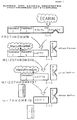
- the further implementation is usually carried out by autocatalysis or by thrombin acceleration. If hirudin or synthetic thrombin inhibitors are present in the plasma, there is an interaction between meizothrombin and the inhibitor. In contrast, heparin cannot react with meizothrombin.
- protarin activation is induced by ecarin in highly diluted human plasma.
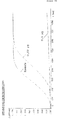
- Thrombin / meizothrombin activity was measured with Chromozym® TH. The results obtained are shown in FIG. 2.
- the at heparin amounts of 2.5 - 35 IU / ml detectable dose-independent residual activity corresponds to the extent of meizothrombin formation after exposure to ecarine. Depending on the dose, hirudin completely inhibits the formation of meizothrombin / thrombin.
- the antidote mechanism was demonstrated on a bleeding model.
- 5 mg / kg hirudin was administered intravenously to nephrectomized rats. After 2 hours a constant blood level of 18 ⁇ g / ml hirudin was reached. At this point, a bleeding time of more than 100 minutes was measured. If the rats are infused with Echis carinatus toxin (1 mg / kg ⁇ h -1 ), the bleeding stops after 90 min. The blood loss from the experimental cut is greatly reduced, the hirudin blood level has dropped to values of 1 - 3 ⁇ g / ml. The results obtained are shown in the following table.
- meizothrombin an intermediate prothrombin activation product from Ecarin, acts as an antidote for hirudin intoxication. Similar pharmacological results have been obtained with other prothrombin intermediates.
- prothrombin solution Prothrombin is precipitated from 2 l of oxalate plasma using Ba SO 4 and then washed with 0.1 M sodium oxalate and 0.006 M sodium citrate at pH 7.5. After eluting the prothrombin with 0.15 M sodium citrate and adjusting the pH to 7.5, an alcohol precipitation (19%) is carried out at -5 ° C. The supernatant is adjusted to pH 5.5 and the alcohol concentration is increased to 25%. The precipitate is dissolved and heated to 50 ° C. for 5 min, centrifuged at 6000 g and then made up to 500 ml with acetate buffer.
- the lyophilized 1 mg ampoules are dissolved with 10 ml 0.9% NaCl and applied in this form.
- multiple dose containers containing 10 mg meizothrombin are dissolved with 0.9% NaCl and applied in 500 ml 0.9% NaCl infusion solution.
- the infusion rate should be about 1000 ml / h.
- the plasma hirudin content must be checked continuously using a bed-side method.
Landscapes
- Health & Medical Sciences (AREA)
- Chemical & Material Sciences (AREA)
- Engineering & Computer Science (AREA)
- Life Sciences & Earth Sciences (AREA)
- Organic Chemistry (AREA)
- Bioinformatics & Cheminformatics (AREA)
- Zoology (AREA)
- Wood Science & Technology (AREA)
- Genetics & Genomics (AREA)
- Biomedical Technology (AREA)
- General Health & Medical Sciences (AREA)
- Biochemistry (AREA)
- General Engineering & Computer Science (AREA)
- Medicinal Chemistry (AREA)
- Microbiology (AREA)
- Molecular Biology (AREA)
- Biotechnology (AREA)
- Nuclear Medicine, Radiotherapy & Molecular Imaging (AREA)
- Animal Behavior & Ethology (AREA)
- Veterinary Medicine (AREA)
- Pharmacology & Pharmacy (AREA)
- Public Health (AREA)
- General Chemical & Material Sciences (AREA)
- Chemical Kinetics & Catalysis (AREA)
- Hematology (AREA)
- Diabetes (AREA)
- Medicines That Contain Protein Lipid Enzymes And Other Medicines (AREA)
- Enzymes And Modification Thereof (AREA)
- Peptides Or Proteins (AREA)
- Medicines Containing Material From Animals Or Micro-Organisms (AREA)
Description
- Die Erfindung betrifft ein Antidot für Hirudin und synthethische Thrombininhibitoren, die Verwendung einer Verbindung, die Prothrombin zu Meizothrombin spaltet, eines Prothrombin-Intermediats oder eines pharmakologisch annehmbaren Salzes davon als Antidot für Hirudin und synthetische Thrombininhibitoren oder zur Herstellung eines Antidots für Hirudin und synthetische Thrombininhibitoren.
- Antikoagulantien, wie beispielsweise Heparin oder Cumarine, finden heute zur Therapie und Prophylaxe thromboembolischer Erkrankungen, insbesondere zur Behandlung des Herzinfarkts, der Arteriosklerose, ferner bei Bluttransfusionen und nach Operationen vielfach Verwendung. Sie können auch als Mittel gegen Erfrierungen verwendet werden, da sie das bei großer Kälte eintretende Gerinnen des Blutes verhindern, durch welches sonst die Blutgefäße teilweise verstopft und die erfrorenen Organe vom Blutkreislauf abgeschnitten werden.
- Hirudin, das aus der Speicheldrüse von Hirudo medicinalis (Blutegel) gewonnen wird, ist ein Antikoagulans, dessen Wirkung auf der Bildung einer chemischen Verbindung mit Thrombin beruht, wodurch dessen katalytische Wirkung inhibiert wird. Hirudin ist ein Miniprotein aus 65 Aminosäuren mit einem Molekulargewicht von 7 kD. Aufgrund seiner starken Affinität zu Thrombin (ki-Werte von 10-12 Mol/l) und seines direkten Wirkungsmechanismus ist es von großem Interesse. Seine klinische Anwendung war in der Vergangenheit äußerst beschränkt, da Hirudin nicht leicht in standardisierter Form zugänglich war und kein Gegenmittel verfügbar war. Hirudin kann heute gentechnologisch hergestellt werden und daher wäre seine klinische Anwendung in der nächsten Zeit möglich.
- Beispielsweise werden in der EP-A-0 468 327 pharmazeutische Präparate für die orale Verabreichung beschrieben, die rekombinantes Hirudin enthalten.
- Hirudin wurde in den letzten Jahren pharmakologisch intensiv untersucht und die pharmakologischen Daten wurden bei Versuchstieren und am Menschen erfaßt. Hirudin wird in der Leber nicht metabolisiert, sondern in unveränderter Form über die Nieren ausgeschieden. Hirudin wird mit einer Halbwertszeit von etwa 1 bis 2 Stunden aus dem Körper ausgeschieden und verteilt sich in den extrazellulären Flüssigkeitsräumen des Körpers. Ähnlich wie Heparin wird Hirudin nicht oral resorbiert. In früheren Untersuchungen wurde gezeigt, daß Hirudin in nahezu allen Thrombosemodellen wirksam ist, so auch beim Endotoxinschock und bei experimenteller Koronarthrombose sowie bei der Verhinderung der Reocclusion nach Thrombolyse. Bei klinisch-pharmakologischen Untersuchungen wurden keine immunologischen Reaktionen nachgewiesen. Hirudin hat sich bei klinischen Untersuchungen als Antikoagulans und Antithrombotikum als dem Heparin überlegen erwiesen.
- In letzter Zeit haben synthetische Thrombininhibitoren große Bedeutung erlangt. Augenblicklich wird weltweit in vielen Forschungslaboratorien zu derartigen synthetischen Inhibitoren Synthesearbeit geleistet. Am weitesten fortgeschritten sind die Untersuchungen mit Derivaten des Benzamidins, wie z.B. dem kleinmolekularen synthetischen Thrombininhibitor NAPAP (Nα-(2-Naphthylsulforyl-glycyl)-D,L-amidinophenylalanin-piperidid) und mit sogenannten Tripeptiden. Alle synthetischen Thrombininhibitoren befinden sich augenblicklich in der präklinischen Untersuchung. Ihre Wirkungen sind qualitativ denen von Hirudin gleichzusetzen. Der Metabolismus der synthetischen Thrombininhibitoren unterscheidet sich jedoch von dem des Hirudins. In der Regel werden die Thrombininhibitoren in der Leber oder im Blut metabolisiert. Es ist abzusehen, daß in Kürze derartige Substanzen für die klinische Erprobung zur Verfügung stehen. Der Vorteil gegenüber dem Hirudin liegt vor allem darin, daß diese Substanzen oral verabreicht werden können.
- Trotz der günstigen Wirkungen ist der klinische Einsatz von Hirudin bis jetzt unterblieben bzw. erfolgt nur sehr eingeschränkt, da, wie oben erwähnt, kein Antidot zur Verfügung steht, welches z.B. beim Heparin mit dem Protaminsulfat gegeben ist. Das Vorhandensein eines Antidots ist bei einem Thrombininhibitor zwingend erforderlich, denn bei zufälligen Überdosierungen oder bei Patienten mit Nierenfunktionsstörungen, bei denen eine Blutungskomplikation droht, muß sofort ein Antidot vorhanden sein, wenn eine Überdosierung festgestellt wird. Derartige Blutungskomplikationen treten beispielsweise als hämorrhagische Nebenwirkungen auf, vor allem in den Gefäßgebieten des Peritoneums, der Pleura, des Pericards und der Pia mater, aber auch in Operationsschnittwunden, wie dies an Tieren mit extrem hohen Blutspiegeln eines Thrombininhibitors beobachtet wurde.
- In der Vergangenheit wurden verschiedene Antidotprinzipien für Hirudin experimentell untersucht, so der Einsatz von Gammathrombinpräparaten, wie DFP-Thrombin oder Benzoylthrombin (Brüggener, E., Walsmann, P., Markwardt, F.: Neutralization of hirudin anticoagulant action by DIP-thrombin. Pharmazie 1989; 44: 648-9). Diese Präparate haben sich jedoch in der Praxis nicht bewährt, da ihre Affinität zu Hirudin zu gering ist und sie zu toxisch sind. Auch aktivierte Plasmafraktionen, wie FEIBA oder Autoplex-Präparate, sind wegen der thromboplastinähnlichen Aktivität ungeeignet (Fareed. J., Walenga, J.M.: Do we need to neutralize hirudin's anticoagulant effects to minimized bleeding. Fed Proc 1989; 3: A328; Walenga, J.M., Piffarre, R., Hoppensteadt, D.A., Fareed: Development of recombinant hirudin as a therapeutic anticoagulant and antithrombotic agent. Some objective considerations. Sem Thromb Hemost 1989; 15: 316-33).
- Der vorliegenden Erfindung liegt die Aufgabe zugrunde, ein Antidot für Hirudin und synthetische Thrombininhibitoren zur Verfügung zu stellen. Das Antidot soll gut wirksam sein, d.h. eine ausreichende Affinität zu Hirudin und synthetischen Thrombininhibitoren aufweisen, seine Dosierung soll einfach sein und es soll leicht zugänglich sein.
- Gegenstand der Erfindung ist ein Antidot für Hirudin und synthetische Thrombininhibitoren, das dadurch gekennzeichnet ist, daß es eine Verbindung, die Prothrombin zu Meizothrombin spaltet, ein Prothrombin-Intermediat, ein pharmakologisch annehmbares Salz davon oder ein Gemisch dieser Verbindungen zusammen mit üblichen Trägerstoffen und/oder Verdünnungsmitteln enthält, wobei es als Prothrombin-Intermediat Meizothrombin, PIVKA-Prothrombin, Meizothrombin-des-Fragment-1 oder eine Meizothrombin enthaltende Verbindung enthält.
- Gegenstand der Erfindung ist weiterhin die Verwendung einer Verbindung, die Prothrombin zu Meizothrombin spaltet, eines vorstehend definierten Prothrombin-Intermediats, eines pharmakologisch annehmbaren Salzes davon oder eines Gemisches dieser Verbindungen zusammen mit üblichen Trägerstoffen und/oder Verdünnungsmitteln als Antidot für Hirudin und synthetische Thrombininhibitoren oder zur Herstellung eines Antidots für Hirudin und synthetische Thrombininhibitoren.
- Als Thrombininhibitoren kommen erfindungsgemäß Hirudin und synthetische, vorzugsweise kleinmolekulare, Thrombininhibitoren in Frage. Beispiele für synthetische Thrombininhibitoren sind NAPAP (Nα-(2-Naphtylsulforyl-glycyl)-D,L-amidinophenylalanin-piperidid), weiterhin die Derivate des Tripeptids Phe-Pro-Arg, wie Boronsäure-Derivate, Argininale, Chlormethylketon-Derivate und Aminosäure-modifizierte Derivate sowie Benzamidin-Derivate und auch sogenannte Hirologe, d.h. synthetische Hirudin-analoge Teilsequenzen. Bei all diesen Verbindungen ist das Antidotprinzip das gleiche wie bei Hirudin.
- Das erfindungsgemäße Antidot liegt in einer für die parenterale Verabreichung geeigneten Form, d.h. für die subkutane, intramuskuläre oder intravenöse Verabreichung geeigneten Form, vor. Die intravenöse Verabreichung ist bevorzugt. Gegebenenfalls kann das erfindungsgemäße Antidot auch als Dauerinfusion verabreicht werden.
- Erfindungsgemäß wird als Verbindung, die Prothrombin zu Meizothrombin spaltet, ein Schlangengift verwendet. Beispiele für Schlangengifte sind Ecarin und die Gifte von Dispholidus-, Rhabdophis-, Bothrops-, Notechis-, Oxyuranus- und Russell-Vipern-Arten. Bevorzugt ist Ecarin, eine gereinigte Giftfraktion aus Echis-carinatus-Toxin. Die Schlangengifte sind als Biochemikalien sämtlich, beispielsweise bei der Firma SIGMA Chemie GmbH, 8024 Deisenhofen, zu erwerben. Gereinigte Fraktionen einzelner aufgeführter Schlangengifte können auf Anfrage bei der Firma Pentapharm in der Schweiz bezogen werden. Die Schlangengifte, insbesondere Ecarin sowie immobilisiertes Ecarin, können ebenfalls von der Firma Pentapharm in der Schweiz käuflich bezogen werden.
- Die Gifte sind als Trockensubstanz, in der Regel gefriergetrocknet, in Mengen zwischen 5 mg und 1 g erhältlich. Alle Gifte sind gut wasserlöslich und sollten mit 0,9%iger Kochsalzlösung aufgenommen werden. Die Menge der Dosis kann vom Fachmann leicht bestimmt werden. Die Dosis hängt von dem Körpergewicht, dem Hirudingehalt und dem Verabreichungsweg ab. Die verwendeten Mengen liegen für einen Menschen mit 70 kg Körpergewicht im Bereich von 0,5 bis 5 mg.
- Erfindungsgemäß wird als Prothrombin-Intermediat Meizothrombin, Meizothrombin-des-Fragment-1, PIVKA-Prothrombin oder eine Meizothrombin enthaltende Verbindung verwendet. Meizothrombin ist im Handel erhältlich und kann ebenfalls von der oben genannten Firma Pentapharm bezogen werden. Meizothrombin, PIVKA-Prothrombin, Meizothrombin-des-Fragment-1 oder andere Prothrombin-Intermediate können aber auch in vitro gebildet werden.
- Vier Faktoren des Gerinnungssystems, Faktor II (Prothrombin), Faktor VII, Faktor IX und Faktor X sind, wie im folgenden Schema dargestellt, dadurch gekennzeichnet, daß sie gamma-Carboxyglutaminsäurereste enthalten. Diese gamma-Carboxylierung an der Glutaminsäure erfolgt erst nach der ribosomalen Synthese des "Acarboxy-Faktors" in der Leber mit Hilfe eines Enzymsystems, welches Vitamin K als Cofaktor benötigt.

- Die gamma-Carboxyglutaminsäurereste sind für die Gerinnungswirkung essentiell. Sie stellen die nötigen Bindungsvalenzen für Calciumionen dar. Bei Behandlung mit indirekten Antikoagulantien vom Typ der Dicumarole ("Vitamin-K-Antagonisten") kann die postribosomale gamma-Carboxylierung nicht stattfinden und es befinden sich im Blut inkomplette Gerinnungsfaktoren bzw. Acarboxy-Faktoren, denn ihnen fehlen die Calcium-bindenden gamma-Carboxy-Gruppen. Diese Gerinnungsfaktoren werden auch PIVKA-Faktoren (PIVKA = proteins induced by Vitamin K antagonists) genannt.
- Wenn Plasma von Patienten, die mit derartigen Antikoagulantien vom Dicumarol-Typ behandelt wurden, mit Ecarin versetzt wird, dann entsteht in diesem Plasma aus dem PIVKA-Prothrombin PIVKA-Meizothrombin in der gleichen Weise durch eine limitierte Proteolyse wie dies auch in normalen Plasmaproben mit Prothrombin geschieht.
- Dieses PIVKA-Meizothrombin bzw. andere PIVKA-Intermediate haben ihre Bindungsfähigkeit zu Hirudin behalten, sie haben aber keine bzw. wesentlich geringere Wirkungen auf andere Faktoren der Gerinnungskaskade (Plättchen, Fibrinogen, Thrombomodulin u.a.). Erfindungsgemäß können Meizothrombin, PIVKA-Meizothrombin, deren Intermediate und PIVKA-Intermediate aus PIVKA-Prothrombin als Antidot verwendet werden. Diese können vom Menschen oder von anderen Säugetieren stammen.
- Zur Herstellung von Meizothrombin kann beispielsweise immobilisiertes Ecarin (Produkt der Pentapharm AG, Basel) in Minisäulen in einer Größe von beispielsweise 2 - 4 cm3 gepackt werden. Ecarin-Immobilisat gelangt in gequollenem Zustand, suspendiert in einer wäßrigen Lösung von Natriumchlorid 0,15 M, Natriumacetat 0,02 M, Prionex® (Warenzeichen der Pentapharm AG für eine proteinstabilisierende Polypeptidfraktion aus gereinigtem Schweinehaut-Kollagen) 0,2% und Trichlorisobutanol 0,3%, pH 5,5, zur Auslieferung. 1 g gequollenes Ecarin-Immobilisat produziert aus Bariumcitrat-Eluat bei 37°C, pH 8,4, innerhalb von 30 min 500 bis 700 U amidolytische Aktivität (1 U = 123 NIH-Einheiten), gemessen an Tos-Gly-Pro-Arg-pNA (Chromozym® TH).
- Dann werden gereinigte Prothrombinfraktionen auf diese Säulen gegeben, und das gebildete Meizothrombin, gegebenenfalls nach Stabilisierung mit Heparin, wird anschließend gefriergetrocknet. Das gefriergetrocknete Material wird steril in Ampullen abgepackt und dann für die Verwendung als Antidot mit einem geeigneten Lösungsmittel, vorzugsweise mit steriler Natriumchloridlösung, die für die intravenöse Injektion geeignet ist, rekonstituiert.
- Zur Herstellung von Meizothrombin-des-Fragment-1 wird dasselbe Verfahren wie für Meizothrombin verwendet. Im Batch-Verfahren ist nur eine längere Reaktionszeit (3 - 4 h) vorzusehen. Meizothrombin-des-Fragment-1 ist ein Folgeprodukt der Meizothrombin-Aktivierung.
- Für die parenterale Verabreichung kann das Antidot für die Injektion, wie die intravasale, z.B. intravenöse, intramuskuläre oder subkutane, Injektion, formuliert werden. Die intravasale Verabreichung ist bevorzugt. Zubereitungen für die Injektion können in Eindosenform, zum Beispiel in Ampullen, oder in Mehrfachdosis-Behältern mit einem zugegebenen Konservierungsstoff vorliegen. Die Zubereitungen können in Form von Suspensionen, Lösungen oder Emulsionen in öligen oder wäßrigen Trägern vorliegen und Zubereitungshilfsmittel enthalten, wie Suspendier-, Stabilisier- und/oder Dispersionsmittel, und/oder Mittel zur Einstellung der Tonizität der Lösung. Alternativ kann der aktive Bestandteil in Pulverform für die Konstitution mit einem geeigneten Träger, zum Beispiel sterilem pyrogenfreien Wasser, vor der Verwendung vorliegen.
- In Ampullen und Mehrfachdosis-Behältern zur intravasalen Anwendung sollte das Produkt, z B. das Meizothrombin, vorzugsweise gefriergetrocknet vorliegen. In dieser Form ist es in sterilem Wasser, physiologischer Kochsalzlösung oder Pufferlösungen, die Ca++-Ionen enthalten und auf einen pH-Wert von 6,5 - 7 eingestellt sind, vollständig lösbar. Die Ampullen sollten 0,5; 1; 2 oder 5 mg Meizothrombin enthalten, Mehrfachdosis-Behälter 10; 20 oder 50 mg. Eine kurzfristige Lagerung (Tage - 1 Monat) ist auch in tiefgefrorenem Zustand (-25°C) möglich. Zur extravasalen parenteralen Applikation kommen auch Mischungen mit 1% Dimeticon-Suspensionen, 5% Erythrozytenmembran-Fragmenten oder Bariumsulfat-Emulsionen in Betracht. Auch eine Liposomenadsorption ist zur extravasalen Anwendung geeignet. Der Gehalt der Einzelformulierung an Meizothrombin ist bei diesen Präparationen den Ampullen- und Mehrfachdosis-Abfüllungen wie für die intravasale Anwendung gleichzusetzen.
- Erfindungsgemäß wird als Schlangengift bevorzugt Ecarin, eine hochgereinigte Fraktion des Echis-carinatus-Toxins, verwendet. Ecarin spaltet am Arginin 323 des Prothrombins eine Peptidbindung, wodurch das Intermediat Meizothrombin entsteht. Normalerweise erfolgt die weitere Umsetzung durch Autokatalyse bzw. durch Thrombinakzeleration. Bei Vorliegen von Hirudin oder synthetischen Thrombininhibitoren im Plasma kommt es zur Interaktion zwischen Meizothrombin und dem Inhibitor. Im Gegensatz dazu kann Heparin nicht mit Meizothrombin reagieren. Diese Wirkungen sind in der beigefügten Figur 1 dargestellt.
- Es konnte gezeigt werden, daß im stark verdünnten Humanplasma durch Ecarin die Prothrombin-Aktivierung induziert wird. Die Thrombin-/Meizothrombin-Aktivität wurde mit Chromozym® TH gemessen. Die erhaltenen Ergebnisse sind in Figur 2 dargestellt. Die bei Heparinmengen von 2,5 - 35 IE/ml nachweisbare dosisunabhängige Restaktivität entspricht dem Ausmaß der Meizothrombinbildung nach Ecarineinwirkung. Hirudin hemmt dosisabhängig komplett die Meizothrombin-/Thrombinbildung.
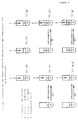
- Zum Nachweis der Antidotwirkung wurden verschiedene pharmakologische Versuche durchgeführt. Die Antidotwirkung des erfindungsgemäßen Antidots wurde im Rattenversuch nachgewiesen. In der beigefügten Figur 3 sind die erhaltenen Ergebnisse dargestellt. Rattenzitratplasma wurde mit Thrombin zur Gerinnung gebracht. Die Kontrollen haben Gerinnungszeiten von durchschnittlich 17 sec. Werden dem Versuchsansatz 0,1 µg Hirudin/ml zugesetzt, ist die Thrombinzeit auf 30 sec verlängert. Wenn der Ansatz mit 0,25 mU Ecarin/ml vorinkubiert wird, kommt es nach einer Vorinkubationsdauer von 20 sec zu einer Verkürzung der Thrombinzeit auf 27,5 sec durch den Verbrauch von Hirudin im Plasma. Bei einer 50 sekündigen Vorinkubation entspricht die Thrombinzeit dem Kontrollwert (ohne Hirudinzusatz). Die verwendete Ecarinkonzentration selbst bewirkt in diesem Zeitbereich keine Gerinnungsbeschleunigung im Versuchsansatz.
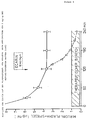
- Zum Nachweis der Antidotwirkung wurden weiterhin in nephrektomierten Ratten konstante Blutspiegel von Hiurdin im Bereich zwischen 3,5 - 4,2 µg/ml nach intravenöser Applikation von 1 mg/kg Hirudin erzeugt. Während der Infusion von 50 µg Ecarin/kg·h-1 fällt der Hirudinspiegel rasch ab und ist bereits 30 min nach Applikationsbeginn signifikant auf 2,1 µg/ml vermindert. Am Ende der Toxininfusion ist der Blutspiegel auf 1,2 µg/ml abgefallen. Rebound-Phänomene sind nicht zu beobachten. Als besonders bedeutsam ist der Befund zu werten, daß bei diesen Versuchen die Plättchenzahl sowie der Fibrinogenspiegel nahezu unverändert blieben. Auch bei Verkürzung der Ecarin-Infusionsdauer auf 30 bzw. 15 min, und damit einer Dosisreduktion um die Hälfte bzw. auf ein Viertel, ist dieser Hirudinspiegelabfall in ähnlicher Weise nachzuweisen (vgl. Figur 4).
- In einer weiteren Versuchsreihe wurde der Antidotmechanismus an einem Blutungsmodell nachgewiesen. Hierzu wurden nephrektomierten Ratten 5 mg/kg Hirudin intravenös appliziert. Nach 2 Stunden war ein konstanter Blutspiegel von 18 µg/ml Hirudin erreicht. Zu diesem Zeitpunkt wurde eine Blutungszeit von länger als 100 min gemessen. Wird den Ratten Echis-carinatus-Toxin (1 mg/kg·h-1) infundiert, dann sistiert die Blutung nach 90 min. Der Blutverlust aus der experimentellen Schnittwunde ist stark vermindert, der Hirudin-Blutspiegel ist auf Werte von 1 - 3 µg/ml gefallen. Die erhaltenen Ergebnisse sind in der folgenden Tabelle aufgeführt.
Ecarin-Antagonismus gegen Hirudin-induzierte Blutung bei Ratten Zeit (h) Versuchsprotokoll Plasmaspiegel an Hirudin (µg/ml) Blutungszeit* (min) Blutverlust 0 bilaterale Nephrektomie 2 0 2,52 - 2 Hirudin i.v. (5 mg/kg) 4 17,8 > 30 +++ 4 E.carinatus-Toxin-Infusion, (1 mg/kg·h-1), Prothrombin-Substitution 5 5,9 8,17 (+) 6 3,5 6,40 - (* Einschnitt in die Bauchhaut) - Aus den obigen Versuchen geht eindeutig hervor, daß Meizothrombin, ein intermediäres Prothrombin-Aktivierungsprodukt von Ecarin, als Antidot bei Hirudinintoxikationen wirkt. Ähnliche pharmakologische Ergebnisse wurden mit anderen Prothrombin-Intermediaten erhalten.
- Die folgenden Beispiele erläutern die Erfindung.
- 500 ml Prothrombin-Lösung:
Aus 2 l Oxalatplasma wird Prothrombin mittels Ba SO4 gefällt und anschließend mit 0,1 M Natriumoxalat und 0,006 M Natriumcitrat bei pH 7,5 gewaschen. Nach Eluierung des Prothrombins mit 0,15 M Natriumcitrat und pH-Regulierung auf 7,5 wird bei -5°C eine Alkoholfällung (19%) durchgeführt. Der Überstand wird auf pH 5,5 eingestellt und die Alkoholkonzentration auf 25% erhöht. Der Niederschlag wird gelöst und für 5 min auf 50°C erhitzt, bei 6000 g zentrifugiert und dann mit Acetat-Puffer auf 500 ml aufgefüllt. - 50 mg humanes Prothrombin gelöst in 500 ml Acetat-Puffer pH 5,5 werden mit 10 g immobilisiertem Ecarin 60 min bei 20°C gerührt. Nach Zentrifugation (15 min bei 6000 g) wird der Überstand mit Hilfe einer Eichkurve, die mit einem Meizothrombin-Standard erhalten wurde, kalibriert auf 1 mg/ml, in 10-ml-Ampullen gefüllt, gefriergetrocknet und verschweißt. Die Abfüllung erfolgt bei gleichzeitiger Sterilisation unter aseptischen Bedingungen. Nach Gefriertrocknung erfolgt der Verschluß der Ampullen und die Lagerung bei 4°C. In dieser Form sind die Präparate mindestens 12 Monate ohne Aktivitätsverlust lagerbar.
- 250 ml Essigsäure-Puffer-Lösung (pH 5,5), die 25 mg PIVKA-Prothrombin (Präparation nach Beispiel 1, Ausgangsmaterial 1 l Oxalatplasma, gewonnen durch Pooling vom Plasma Dicumarol-behandelter Patienten) enthält, wird über 40 cm3-Säulen (50 - 75 cm Länge), gepackt mit 10 g gequollenem Ecarin-Immobilisat, eluiert. Das eluierte Volumen wird auf 500 ml begrenzt, danach sterilfiltriert (mit Sterilfiltern) und danach in 10 ml-Portionen ampulliert. Nach der Gefriertrocknung werden die Ampullert verschlossen und in gleicher Weise wie in Beispiel 1 beschrieben gelagert.
- Die lyophilisierten 1-mg-Ampullen werden mit 10 ml 0,9% NaCl gelöst und in dieser Form appliziert. Zur intravenösen Infusion werden Mehrfachdosis-Behälter, 10 mg Meizothrombin enthaltend, mit 0,9% NaCl gelöst und in jeweils 500 ml 0,9% NaCl-Infusionslösung appliziert. Die Infusionsgeschwindigkeit sollte etwa 1000 ml/h betragen. Der Plasma-Hirudingehalt muß kontinuierlich mit einer bed-side-Methode kontrolliert werden.
Claims (9)
- Antidot für Hirudin und synthetische Thrombininhibitoren, dadurch gekennzeichnet, daß es eine Verbindung, die Prothrombin zu Meizothrombin spaltet, ein Prothrombin-Intermediat, ein pharmakologisch annehmbares Salz davon oder ein Gemisch dieser Verbindungen zusammen mit üblichen Trägerstoffen und/oder Verdünnungsmitteln enthält, wobei es als Prothrombin-Intermediat Meizothrombin, PIVKA-Prothrombin, Meizothrombin-des-Fragment-1 oder eine Meizothrombin enthaltende Verbindung enthält.
- Antidot nach Anspruch 1, dadurch gekennzeichnet, daß es als Verbindung, die Prothrombin zu Meizothrombin spaltet, ein Schlangengift enthält.
- Antidot nach Anspruch 2, dadurch gekennzeichnet, daß es als Schlangengift Ecarin enthält.
- Antidot nach mindestens einem der Ansprüche 1 bis 3 , dadurch gekennzeichnet, daß es in einer für die parenterale Verabreichung geeigneten Form vorliegt.
- Antidot nach Anspruch 4, dadurch gekennzeichnet, daß es in einer für die subkutane, intramuskuläre oder intravasale Verabreichung geeigneten Form vorliegt.
- Verwendung einer Verbindung, die Prothrombin zu Meizothrombin spaltet, eines Prothrombin-Intermediats, eines pharmakologisch annehmbaren Salzes davon oder eines Gemisches dieser Verbindungen zusammen mit üblichen Trägerstoffen und/oder Verdünnungsmitteln zur Herstellung eines Antidots für Hirudin und synthetische Thrombininhibitoren, wobei als Prothrombin-Intermediat Meizothrombin, PIVKA-Prothrombin, Meizothrombin-des-Fragment-1 oder eine Meizothrombin enthaltende Verbindung verwendet wird.
- Verwendung nach Anspruch 6 dadurch gekennzeichnet, daß als Verbindung, die Prothrombin zu Meizothrombin spaltet, ein Schlangengift verwendet wird.
- Verwendung nach Anspruch 7, dadurch gekennzeichnet, daß als Schlangengift Ecarin verwendet wird.
- Verwendung nach mindestens einem der Ansprüche 6 bis 8, dadurch gekennzeichnet, daß ein für die parenterale Verabreichung geeignetes Antidot hergestellt wird.
Applications Claiming Priority (3)
| Application Number | Priority Date | Filing Date | Title |
|---|---|---|---|
| DE4203965A DE4203965A1 (de) | 1992-02-11 | 1992-02-11 | Antidot fuer hirudin und synthetische thrombininhibitoren |
| DE4203965 | 1992-02-11 | ||
| PCT/EP1993/000162 WO1993015757A1 (de) | 1992-02-11 | 1993-01-25 | Antidot für hirudin und synthetische thrombininhibitoren |
Publications (2)
| Publication Number | Publication Date |
|---|---|
| EP0625908A1 EP0625908A1 (de) | 1994-11-30 |
| EP0625908B1 true EP0625908B1 (de) | 1997-12-17 |
Family
ID=6451410
Family Applications (1)
| Application Number | Title | Priority Date | Filing Date |
|---|---|---|---|
| EP93903233A Expired - Lifetime EP0625908B1 (de) | 1992-02-11 | 1993-01-25 | Antidot für hirudin und synthetische thrombininhibitoren |
Country Status (6)
| Country | Link |
|---|---|
| US (1) | US5817309A (de) |
| EP (1) | EP0625908B1 (de) |
| JP (1) | JP3744936B2 (de) |
| AT (1) | ATE161187T1 (de) |
| DE (2) | DE4203965A1 (de) |
| WO (1) | WO1993015757A1 (de) |
Families Citing this family (14)
| Publication number | Priority date | Publication date | Assignee | Title |
|---|---|---|---|---|
| DE4430204A1 (de) * | 1994-08-26 | 1996-02-29 | Behringwerke Ag | Arzneimittel, welches als Gegenmittel für Blut-Antikoagulanzien geeignet ist und seine Verwendung |
| DE4430205A1 (de) * | 1994-08-26 | 1996-02-29 | Behringwerke Ag | Zusammensetzungen, die als Gegenmittel für Blut-Antikoagulanzien geeignet sind und deren Verwendung |
| DE4437544A1 (de) * | 1994-10-20 | 1996-04-25 | Behringwerke Ag | Einsatz von vWF-enthaltenden Konzentraten als Kombinationstherapie bei Therapie mit Antithrombotika und Fibrinolytika |
| AT404357B (de) * | 1995-06-13 | 1998-11-25 | Immuno Ag | Prothrombin-derivate |
| DE19605126A1 (de) * | 1996-02-12 | 1997-08-14 | Basf Ag | Thrombinmuteine als Antidot für Thrombininhibitoren |
| DE19625642A1 (de) * | 1996-06-26 | 1998-01-08 | Max Planck Gesellschaft | Verfahren zur Herstellung einer Antidotausgangssubstanz für natürliche und synthetische Thrombininhibitoren |
| DE19715504C2 (de) | 1997-04-14 | 2000-10-26 | Max Planck Gesellschaft | PMMA-Membranen mit Polyethylenglykol-gekoppelten Wirksubstanzen |
| BRPI0816837B1 (pt) * | 2007-09-28 | 2022-10-18 | Portola Pharmaceuticals, Inc | Composições farmacêuticas, polipeptídeo isolado de duas cadeias e uso de uma composição farmacêutica |
| US8455439B2 (en) | 2008-11-14 | 2013-06-04 | Portola Pharmaceuticals, Inc. | Antidotes for factor Xa inhibitors and methods of using the same in combination with blood coagulating agents |
| PT3604510T (pt) | 2009-03-30 | 2025-06-24 | Alexion Pharma Inc | Antídotos para inibidores do fator xa e métodos de utilização dos mesmos |
| PT2453910T (pt) * | 2009-07-15 | 2016-12-07 | Portola Pharm Inc | Formulação de dose unitária de antídoto contra inibidores de fator xa para uso na prevenção de sangramento |
| AR079944A1 (es) | 2010-01-20 | 2012-02-29 | Boehringer Ingelheim Int | Anticuerpo neutralizante de la actividad de un anticoagulante |
| WO2012130834A1 (en) | 2011-03-30 | 2012-10-04 | Boehringer Ingelheim International Gmbh | Anticoagulant antidotes |
| EP3744840A1 (de) | 2014-05-26 | 2020-12-02 | Academisch Ziekenhuis Leiden | Prohämostatische proteine zur behandlung von blutungen |
Family Cites Families (7)
| Publication number | Priority date | Publication date | Assignee | Title |
|---|---|---|---|---|
| CH586233A5 (de) * | 1971-01-18 | 1977-03-31 | Pentapharm Ag | |
| US4849403A (en) * | 1985-05-29 | 1989-07-18 | Pentapharm Ag | Protein C activator, methods of preparation and use thereof |
| US5196403A (en) * | 1989-01-27 | 1993-03-23 | Biogen, Inc. | Method of inhibiting platelet activation |
| US5182260A (en) * | 1989-01-27 | 1993-01-26 | Biogen, Inc. | Dna sequences encoding snake venom inhibitors of platelet activation processes for producing those inhibitors and compositions using them |
| DE59109048D1 (de) * | 1990-02-14 | 1998-10-15 | Pentapharm Ag | Inhibitoren zur antikoagulierenden Vorbehandung von Blutproben |
| US5242810A (en) * | 1990-12-07 | 1993-09-07 | Biogen, Inc. | Bifunctional inhibitors of thrombin and platelet activation |
| DE4203980A1 (de) * | 1992-02-11 | 1993-08-12 | Max Planck Gesellschaft | Verfahren zur bestimmung von hirudin und synthetischen thrombininhibitoren |
-
1992
- 1992-02-11 DE DE4203965A patent/DE4203965A1/de not_active Ceased
-
1993
- 1993-01-25 EP EP93903233A patent/EP0625908B1/de not_active Expired - Lifetime
- 1993-01-25 DE DE59307859T patent/DE59307859D1/de not_active Expired - Fee Related
- 1993-01-25 JP JP51370993A patent/JP3744936B2/ja not_active Expired - Fee Related
- 1993-01-25 AT AT93903233T patent/ATE161187T1/de not_active IP Right Cessation
- 1993-01-25 WO PCT/EP1993/000162 patent/WO1993015757A1/de not_active Ceased
-
1996
- 1996-08-09 US US08/694,831 patent/US5817309A/en not_active Expired - Fee Related
Also Published As
| Publication number | Publication date |
|---|---|
| DE59307859D1 (en) | 1998-01-29 |
| WO1993015757A1 (de) | 1993-08-19 |
| ATE161187T1 (de) | 1998-01-15 |
| JPH07503719A (ja) | 1995-04-20 |
| JP3744936B2 (ja) | 2006-02-15 |
| US5817309A (en) | 1998-10-06 |
| DE4203965A1 (de) | 1993-08-12 |
| EP0625908A1 (de) | 1994-11-30 |
Similar Documents
| Publication | Publication Date | Title |
|---|---|---|
| EP0142860B1 (de) | Desulfatohirudine, Verfahren zu ihrer Herstellung und pharmazeutische Mittel | |
| EP0796623B1 (de) | Pharmazeutisches Präparat zur Behandlung von Blutgerinnungsstörungen | |
| EP0625908B1 (de) | Antidot für hirudin und synthetische thrombininhibitoren | |
| DE3240174C2 (de) | ||
| DE69428905T2 (de) | Aktivierter faktor viii als ein therapeutisches mittel und verfahren zur behandlung eines faktor viii mangels | |
| EP0331152B1 (de) | Zweikammerspritze mit einer Füllung aus aktivitätsempfindlichem humanen Protein als Wirkstoff | |
| DE69503120T3 (de) | Zusammensetzungen aus einer thrombolytisch wirkende substanz und antikoagulantien, und ihre verwendungen | |
| DE3689943T2 (de) | Degradierte Spezies eines Gewebeplasminogenaktivators, pharmazeutische Zubereitung und Verfahren zur Herstellung derselben. | |
| DE69433133T2 (de) | Lösliches thrombomodulin enthaltende zubereitung | |
| DE3150318C2 (de) | "Verfahren zur Herstellung eines Polysaccharidderivats des Fibrinolysins" | |
| EP1183043B1 (de) | Arzneimittel zur lokalen anwendung, das fibrinogen, thrombin, transglutaminasen und proteinaseinhibitoren enthält | |
| EP0674906A2 (de) | Thrombosemittel, das Plasmin und einen Plasminogenaktivator enthält | |
| DE69429816T2 (de) | C1-Esterasehemmer zur Verringerung von Myokardschäden bei akutem Herzinfarkt | |
| EP0700684A2 (de) | Zusammensetzungen, enthaltend Prothrombinkomplex-Konzentrat und wenigstens eine weitere Komponente das die Blutgerrinnung fördert, als Gegenmittel für Blut-Anticoagulanzien | |
| EP0626070B1 (de) | Verfahren zur bestimmung von hirudin und synthetischen trhombininhibitoren | |
| DE1442134C3 (de) | In vivo antikoagulierend wirkendes und defibrinierendes Enzym | |
| DE4430204A1 (de) | Arzneimittel, welches als Gegenmittel für Blut-Antikoagulanzien geeignet ist und seine Verwendung | |
| DE68908716T2 (de) | Heparin enthaltende formulierungen. | |
| EP0629406B1 (de) | Arzneimittel zur Behandlung der Sepsis und des septischen Schocks | |
| CH525251A (de) | Verfahren zur Herstellung einer therapeutisch aktiven Aspergillopeptidase zur Verhinderung der Bildung von Blutgerinnseln | |
| EP0733371B1 (de) | Mittel zur subkutanen Verabreichung von Protein C | |
| DE69127346T2 (de) | Behandlung thrombotischer ereignisse | |
| DE2246969C2 (de) | Urokinase-Heparinat und dieses enthaltende Arzneimittel | |
| DE60004185T2 (de) | Supar stimulierende aktivität auf die tcupa vermittelte fibrinolyse und verschiedene verwendungen davon | |
| EP4554612A1 (de) | Arzneimittel zur förderung der hämostase |
Legal Events
| Date | Code | Title | Description |
|---|---|---|---|
| PUAI | Public reference made under article 153(3) epc to a published international application that has entered the european phase |
Free format text: ORIGINAL CODE: 0009012 |
|
| 17P | Request for examination filed |
Effective date: 19940822 |
|
| AK | Designated contracting states |
Kind code of ref document: A1 Designated state(s): AT BE CH DE DK ES FR GB IE IT LI NL SE |
|
| 17Q | First examination report despatched |
Effective date: 19951030 |
|
| GRAG | Despatch of communication of intention to grant |
Free format text: ORIGINAL CODE: EPIDOS AGRA |
|
| GRAH | Despatch of communication of intention to grant a patent |
Free format text: ORIGINAL CODE: EPIDOS IGRA |
|
| GRAH | Despatch of communication of intention to grant a patent |
Free format text: ORIGINAL CODE: EPIDOS IGRA |
|
| GRAA | (expected) grant |
Free format text: ORIGINAL CODE: 0009210 |
|
| AK | Designated contracting states |
Kind code of ref document: B1 Designated state(s): AT BE CH DE DK ES FR GB IE IT LI NL SE |
|
| PG25 | Lapsed in a contracting state [announced via postgrant information from national office to epo] |
Ref country code: IT Free format text: LAPSE BECAUSE OF FAILURE TO SUBMIT A TRANSLATION OF THE DESCRIPTION OR TO PAY THE FEE WITHIN THE PRE;WARNING: LAPSES OF ITALIAN PATENTS WITH EFFECTIVE DATE BEFORE 2007 MAY HAVE OCCURRED AT ANY TIME BEFORE 2007. THE CORRECT EFFECTIVE DATE MAY BE DIFFERENT FROM THE ONE RECORDED.SCRIBED TIME-LIMIT Effective date: 19971217 Ref country code: ES Free format text: THE PATENT HAS BEEN ANNULLED BY A DECISION OF A NATIONAL AUTHORITY Effective date: 19971217 Ref country code: DK Free format text: LAPSE BECAUSE OF NON-PAYMENT OF DUE FEES Effective date: 19971217 |
|
| REF | Corresponds to: |
Ref document number: 161187 Country of ref document: AT Date of ref document: 19980115 Kind code of ref document: T |
|
| REG | Reference to a national code |
Ref country code: CH Ref legal event code: NV Representative=s name: RITSCHER & SEIFERT PATENTANWAELTE VSP Ref country code: CH Ref legal event code: EP |
|
| GBT | Gb: translation of ep patent filed (gb section 77(6)(a)/1977) |
Effective date: 19971219 |
|
| REF | Corresponds to: |
Ref document number: 59307859 Country of ref document: DE Date of ref document: 19980129 |
|
| ET | Fr: translation filed | ||
| REG | Reference to a national code |
Ref country code: IE Ref legal event code: FG4D Free format text: 77928 |
|
| PG25 | Lapsed in a contracting state [announced via postgrant information from national office to epo] |
Ref country code: IE Free format text: LAPSE BECAUSE OF NON-PAYMENT OF DUE FEES Effective date: 19980714 |
|
| REG | Reference to a national code |
Ref country code: IE Ref legal event code: FD4D Ref document number: 77928 Country of ref document: IE |
|
| PLBE | No opposition filed within time limit |
Free format text: ORIGINAL CODE: 0009261 |
|
| STAA | Information on the status of an ep patent application or granted ep patent |
Free format text: STATUS: NO OPPOSITION FILED WITHIN TIME LIMIT |
|
| 26N | No opposition filed | ||
| REG | Reference to a national code |
Ref country code: GB Ref legal event code: IF02 |
|
| PGFP | Annual fee paid to national office [announced via postgrant information from national office to epo] |
Ref country code: AT Payment date: 20070111 Year of fee payment: 15 |
|
| PGFP | Annual fee paid to national office [announced via postgrant information from national office to epo] |
Ref country code: DE Payment date: 20070118 Year of fee payment: 15 |
|
| PGFP | Annual fee paid to national office [announced via postgrant information from national office to epo] |
Ref country code: NL Payment date: 20070123 Year of fee payment: 15 |
|
| PGFP | Annual fee paid to national office [announced via postgrant information from national office to epo] |
Ref country code: GB Payment date: 20070124 Year of fee payment: 15 |
|
| PGFP | Annual fee paid to national office [announced via postgrant information from national office to epo] |
Ref country code: SE Payment date: 20070126 Year of fee payment: 15 |
|
| PGFP | Annual fee paid to national office [announced via postgrant information from national office to epo] |
Ref country code: CH Payment date: 20070129 Year of fee payment: 15 |
|
| PGFP | Annual fee paid to national office [announced via postgrant information from national office to epo] |
Ref country code: BE Payment date: 20070320 Year of fee payment: 15 |
|
| PGFP | Annual fee paid to national office [announced via postgrant information from national office to epo] |
Ref country code: FR Payment date: 20070125 Year of fee payment: 15 |
|
| BERE | Be: lapsed |
Owner name: *MAX-PLANCK-GESELLSCHAFT ZUR FORDERUNG DER WISSENS Effective date: 20080131 |
|
| REG | Reference to a national code |
Ref country code: CH Ref legal event code: PL |
|
| EUG | Se: european patent has lapsed | ||
| GBPC | Gb: european patent ceased through non-payment of renewal fee |
Effective date: 20080125 |
|
| NLV4 | Nl: lapsed or anulled due to non-payment of the annual fee |
Effective date: 20080801 |
|
| PG25 | Lapsed in a contracting state [announced via postgrant information from national office to epo] |
Ref country code: NL Free format text: LAPSE BECAUSE OF NON-PAYMENT OF DUE FEES Effective date: 20080801 Ref country code: LI Free format text: LAPSE BECAUSE OF NON-PAYMENT OF DUE FEES Effective date: 20080131 Ref country code: DE Free format text: LAPSE BECAUSE OF NON-PAYMENT OF DUE FEES Effective date: 20080801 Ref country code: CH Free format text: LAPSE BECAUSE OF NON-PAYMENT OF DUE FEES Effective date: 20080131 |
|
| PG25 | Lapsed in a contracting state [announced via postgrant information from national office to epo] |
Ref country code: AT Free format text: LAPSE BECAUSE OF NON-PAYMENT OF DUE FEES Effective date: 20080125 |
|
| REG | Reference to a national code |
Ref country code: FR Ref legal event code: ST Effective date: 20081029 |
|
| PG25 | Lapsed in a contracting state [announced via postgrant information from national office to epo] |
Ref country code: GB Free format text: LAPSE BECAUSE OF NON-PAYMENT OF DUE FEES Effective date: 20080125 |
|
| PG25 | Lapsed in a contracting state [announced via postgrant information from national office to epo] |
Ref country code: SE Free format text: LAPSE BECAUSE OF NON-PAYMENT OF DUE FEES Effective date: 20080126 |
|
| PG25 | Lapsed in a contracting state [announced via postgrant information from national office to epo] |
Ref country code: BE Free format text: LAPSE BECAUSE OF NON-PAYMENT OF DUE FEES Effective date: 20080131 |
|
| PG25 | Lapsed in a contracting state [announced via postgrant information from national office to epo] |
Ref country code: FR Free format text: LAPSE BECAUSE OF NON-PAYMENT OF DUE FEES Effective date: 20080131 |