EP0619802B1 - A mixture of higher primary aliphatic alcohols and its pharmaceutical uses - Google Patents
A mixture of higher primary aliphatic alcohols and its pharmaceutical uses Download PDFInfo
- Publication number
- EP0619802B1 EP0619802B1 EP93903874A EP93903874A EP0619802B1 EP 0619802 B1 EP0619802 B1 EP 0619802B1 EP 93903874 A EP93903874 A EP 93903874A EP 93903874 A EP93903874 A EP 93903874A EP 0619802 B1 EP0619802 B1 EP 0619802B1
- Authority
- EP
- European Patent Office
- Prior art keywords
- mixture
- induced
- octacosanol
- rats
- hexacosanol
- Prior art date
- Legal status (The legal status is an assumption and is not a legal conclusion. Google has not performed a legal analysis and makes no representation as to the accuracy of the status listed.)
- Expired - Lifetime
Links
Images



Classifications
-
- C—CHEMISTRY; METALLURGY
- C07—ORGANIC CHEMISTRY
- C07C—ACYCLIC OR CARBOCYCLIC COMPOUNDS
- C07C29/00—Preparation of compounds having hydroxy or O-metal groups bound to a carbon atom not belonging to a six-membered aromatic ring
- C07C29/74—Separation; Purification; Use of additives, e.g. for stabilisation
- C07C29/88—Separation; Purification; Use of additives, e.g. for stabilisation by treatment giving rise to a chemical modification of at least one compound
-
- A—HUMAN NECESSITIES
- A61—MEDICAL OR VETERINARY SCIENCE; HYGIENE
- A61K—PREPARATIONS FOR MEDICAL, DENTAL OR TOILETRY PURPOSES
- A61K31/00—Medicinal preparations containing organic active ingredients
- A61K31/045—Hydroxy compounds, e.g. alcohols; Salts thereof, e.g. alcoholates
-
- A—HUMAN NECESSITIES
- A61—MEDICAL OR VETERINARY SCIENCE; HYGIENE
- A61K—PREPARATIONS FOR MEDICAL, DENTAL OR TOILETRY PURPOSES
- A61K31/00—Medicinal preparations containing organic active ingredients
- A61K31/60—Salicylic acid; Derivatives thereof
-
- A—HUMAN NECESSITIES
- A61—MEDICAL OR VETERINARY SCIENCE; HYGIENE
- A61P—SPECIFIC THERAPEUTIC ACTIVITY OF CHEMICAL COMPOUNDS OR MEDICINAL PREPARATIONS
- A61P1/00—Drugs for disorders of the alimentary tract or the digestive system
- A61P1/04—Drugs for disorders of the alimentary tract or the digestive system for ulcers, gastritis or reflux esophagitis, e.g. antacids, inhibitors of acid secretion, mucosal protectants
-
- A—HUMAN NECESSITIES
- A61—MEDICAL OR VETERINARY SCIENCE; HYGIENE
- A61P—SPECIFIC THERAPEUTIC ACTIVITY OF CHEMICAL COMPOUNDS OR MEDICINAL PREPARATIONS
- A61P15/00—Drugs for genital or sexual disorders; Contraceptives
- A61P15/08—Drugs for genital or sexual disorders; Contraceptives for gonadal disorders or for enhancing fertility, e.g. inducers of ovulation or of spermatogenesis
-
- A—HUMAN NECESSITIES
- A61—MEDICAL OR VETERINARY SCIENCE; HYGIENE
- A61P—SPECIFIC THERAPEUTIC ACTIVITY OF CHEMICAL COMPOUNDS OR MEDICINAL PREPARATIONS
- A61P3/00—Drugs for disorders of the metabolism
- A61P3/06—Antihyperlipidemics
-
- A—HUMAN NECESSITIES
- A61—MEDICAL OR VETERINARY SCIENCE; HYGIENE
- A61P—SPECIFIC THERAPEUTIC ACTIVITY OF CHEMICAL COMPOUNDS OR MEDICINAL PREPARATIONS
- A61P7/00—Drugs for disorders of the blood or the extracellular fluid
- A61P7/02—Antithrombotic agents; Anticoagulants; Platelet aggregation inhibitors
-
- A—HUMAN NECESSITIES
- A61—MEDICAL OR VETERINARY SCIENCE; HYGIENE
- A61P—SPECIFIC THERAPEUTIC ACTIVITY OF CHEMICAL COMPOUNDS OR MEDICINAL PREPARATIONS
- A61P9/00—Drugs for disorders of the cardiovascular system
- A61P9/08—Vasodilators for multiple indications
-
- A—HUMAN NECESSITIES
- A61—MEDICAL OR VETERINARY SCIENCE; HYGIENE
- A61P—SPECIFIC THERAPEUTIC ACTIVITY OF CHEMICAL COMPOUNDS OR MEDICINAL PREPARATIONS
- A61P9/00—Drugs for disorders of the cardiovascular system
- A61P9/10—Drugs for disorders of the cardiovascular system for treating ischaemic or atherosclerotic diseases, e.g. antianginal drugs, coronary vasodilators, drugs for myocardial infarction, retinopathy, cerebrovascula insufficiency, renal arteriosclerosis
-
- C—CHEMISTRY; METALLURGY
- C07—ORGANIC CHEMISTRY
- C07C—ACYCLIC OR CARBOCYCLIC COMPOUNDS
- C07C29/00—Preparation of compounds having hydroxy or O-metal groups bound to a carbon atom not belonging to a six-membered aromatic ring
- C07C29/74—Separation; Purification; Use of additives, e.g. for stabilisation
- C07C29/76—Separation; Purification; Use of additives, e.g. for stabilisation by physical treatment
-
- C—CHEMISTRY; METALLURGY
- C07—ORGANIC CHEMISTRY
- C07C—ACYCLIC OR CARBOCYCLIC COMPOUNDS
- C07C31/00—Saturated compounds having hydroxy or O-metal groups bound to acyclic carbon atoms
- C07C31/02—Monohydroxylic acyclic alcohols
-
- C—CHEMISTRY; METALLURGY
- C07—ORGANIC CHEMISTRY
- C07C—ACYCLIC OR CARBOCYCLIC COMPOUNDS
- C07C31/00—Saturated compounds having hydroxy or O-metal groups bound to acyclic carbon atoms
- C07C31/02—Monohydroxylic acyclic alcohols
- C07C31/125—Monohydroxylic acyclic alcohols containing five to twenty-two carbon atoms
Definitions
- This invention is related to a mixture of higher primary aliphatic alcohols, containing alcohols of a range from 24 to 34 carbon atoms and more especially, those with straight chain of 24, 26, 27, 28, 29, 30, 32 and 34 carbon atoms.
- This mixture shows a relative composition of each alcohol, that is highly reproducible batch to batch.
- this mixture of higher primary aliphatic alcohols from 24 to 34 carbon atoms shows new properties such as antiplatelet, antithrombotic and/or anti-ischemic agents, as well as for the antagonism of drug-induced ulcers and that is why this specific mixture can be used as active ingredient of pharmaceutical formulations prepared for these purposes.
- a further object of the invention is to place at the public's disposal M.H.P.A.A. of 24 to 34 carbon atoms in combination with salicylic acid for pharmaceutical formulations.
- Lipid-lowering effects of sugar cane wax have been demonstrated in rats (Fukuda, Effects of sugar cane wax on serum liver lipids on rats; Chemical Abstracts, 106, 17, 137413p) and mice (Sho H. et al (1984; Effects of Okinawan sugar cane wax and fatty alcohols on serum and liver lipids in the rats; J.Nutri. Vitaminol 30 (6) 553- 559).
- antilipaemic effects have been also further attributed to hexacosanol, another higher primary aliphatic alcohol, although very high doses were reported as needed to obtain such results (10-30 mg/kg/day) (Hagiwara Y. 1987: Antilipaemic agents containing hexacosanol used to treat hypertension, arteriosclerosis, diabetes mellitus, heart disease and obesity; JP A 62 099323).
- lipid-lowering drugs There are different commercial lipid-lowering drugs considered as effective, safe and well tolerated, but most of them produce different adverse side effects. Since lipid-lowering therapy must be administered chronically, this aspect is very important.
- gemfibrozil reduces serum triglycerides, raises HDL-C levels and produces a mild decrease of serum cholesterol, but several drug-related adverse effects have been reported.
- gastrointestinal effects such as epigastric pain, diarrhoea, nausea, vomiting and flatulence have been referred.
- headache, dizziness, blurred vision, impotence, decreased libido and liver function abnormalities such as increased transaminases, LDH, creatinphosphokinase and alkaline phosphatase have occurred in gemfibrozil-treated patients. Likewise, it should not be administered to patients with renal failures.
- Probucol is other lipid-lowering drug with antioxidant properties that causes mild decreases of serum cholesterol and LDL-C. Nevertheless, a disadvantage of its lipid-lowering action is that it reduces the HDL-C fraction. Moreover, several adverse effects as gastrointestinal disturbances in approximately 10 % of the population, as well as a considerable variation in the electrocardiogram have been reported.
- lipid-lowering drugs used frequently are Cholestiramine and Cholestipol. These are effective first-line cholesterol-lowering drugs that strongly decrease serum cholesterol and LDL-C, but tend to increase triglyceride levels. These drugs induced several gastrointestinal symptoms, mainly constipation. Compliance with the treatment is generally low, because the adverse symptoms and since they are not easy-to-take agents, requiring doses up to 12 to 20 g/day to achieve the desired effects. Moreover, adverse chemical interactions with other drugs such as digitoxin have been described.
- Lovastatin is the first of the “statins", drugs acting as inhibitors of HMGCoA-reductase and thus efficiently reducing serum cholesterol and LDL-C levels, it also moderately increases HDL-C and decreases triglycerides.
- Several adverse effects have been reported for this drug.
- miopathy mild to moderate increases of creatinphosphokinase and persistent increases in serum transaminases, that frequently becames reversible after withdrawal of the treatment.
- Miopathy has occurred mainly in patients receiving concomitant therapy with inmunosuppresive drugs as gemfibrozil or niacin.
- simvastatin and pravastatin are other "statins", acting by the same mechanism of lovastatin and showing approximately the same cholesterol-lowering effects. Adverse effects reported by these patients are similar to those reported for lovastatin-treated patients, but claimed as slightly lower. Simvastatin and pravastatin-treated patients showed increases of transaminases and creatin phosphokinase and patients reported constipation, flatulence, nausea, headache, fatigue, subcutaneous rash and myopathies.
- Table 1 shows the qualitative and quantitative composition of the mixture of M.H.P.A.A. obtained from sugar cane wax for use according to the invention.
- Components Proportion in the mixture 1 - tetracosanol 0.5 - 5.0% 1 - hexacosanol 5.0 - 15.0% 1 - heptacosanol 0.5 - 5.0% 1 - octacosanol 50.0 - 80.0% 1 - nonacosanol 0.5 - 3.0% 1 - triacontanol 6.0 - 20.0% 1 - dotriacontanol 1.0 - 10.0% 1 - tetratriacontanol 0.0 - 2.5%
- the preferred alcohol mixture proposed for use in the present invention shows the qualitative and quantitative composition between its components described in Table 2.
- Preferred qualitative and quantitative composition of M.H.P.A.A. proposed in the present invention Components Proportion in the mixture 1 - tetracosanol 0.5 - 1.0 % 1 - hexacosanol 6.0 - 8.0 % 1 - heptacosanol 2.5 - 3.5 % 1 - octacosanol 60.0 - 70.0 % 1 - nonacosanol 0.5 - 1.0 % 1 - triacontanol 10.0 - 15.0 % 1 - dotriacontanol 4.5 - 6.0 % 1 - tetratriacontanol 0.5 - 2.0 %
- composition shows, surprisingly, new effects such as antiplatelet, anti-thrombotic and/or anti-ischemic agents, as well as for the antagonism of drug-induced ulcers.
- This particular mixture shows also the same properties reported for the mixture described in the European Patent Application 0 488 928.
- Still another object of the invention is to demonstrate the protective effect of M.H.P.A.A. on ischemia.
- Still another object of the invention is to demonstrate that M.H.P.A.A. shows pharmacological interaction with ASA, the drug most commonly used for cerebral ischemic therapy.
- results showed a synergism between antiplatelet, anti-thrombotic and anti- ischemic properties of M.H.P.A.A. and ASA.
- Still another object of the present invention is to demonstrate that M.H.P.A.A. reduced significantly the gastric ulcera induced by aspirin, ethanol, indomethacine, compound C4880 (Sigma) and other medications producing gastric ulcer in human beings under treatment.
- gastric ulcer induced by alcohol is mainly related with an increase of TxA2 as physiological agent, while ulcer induced by C 4880 mainly involves serotonergic mechanisms, although a role of TxA2 in its ethiogenesis can not be ruled out.
- gastric ulcer induced by ASA is related with the inhibition of prostaglandins (E series) synthesis produced by ASA, since they have a cytoprotective effect ion the gastric mucosa. It has been demonstrated that the TxA2 to PgI2 ratio in gastric mucosa plays an important role as an endogenous mechanism of its integrity.
- Atherosclerosis is a variable combination of changes of the intima of the arteries consisting of the focal accumulation of lipids, complex carbohydrates, blood and blood products, fibrous tissue and calcium deposits, frequently also associated with medial changes.
- this definition indicates atherosclerosis as a multifactorial process, not only including hyperlipidaemia as risk factor.
- platelet aggregation has a very important place.
- TxA2 thromboxane A2
- Platelet aggregation can be elicited by different compounds, such as collagen, ADP and epinephrine, between others.
- different experimental "in vivo", “ex vivo” or “in vitro” models testing effectiveness of putative antiplatelet drugs commonly explored their effect on platelet aggregation induced by these agents.
- Some drugs showing platelet anti-aggregatory effects are useful for treatment of thrombotic diseases, myocardial infarction and stroke, but not all of them show these advantages.
- antithrombotic drugs that mainly act by lytic processes affecting blood coagulation, but not on the platelet aggregation such as estreptokinase and urokinase.
- ischemic cardiovascular diseases, stroke and vascular peripheric obstructive pathologies are the main sequelae of atherosclerosis, effects of several drugs on these complications are commonly tested.
- a drug showing cholesterol-lowering properties that also can prevent these complications by acting on other events involved in these processes must be advantageous for treating these patients.
- reduction of TxA2 levels have been associated not only with antiplatelet and antithrombotic effects, but also with antiischemic effects.
- the pharmacological screening of antiischemic drugs commonly includes the evaluation of their effects on brain- induced global ischemia.
- NSAID non- steroidal anti-inflammatory drugs
- PgI2 specific inhibitors of thromboxane synthetase and prostacyclin analogues
- Acetyl salicylic acid is a compound exhibiting antiplatelet, antithrombotic and anti-ischemic properties in experimental models and human beings. It is the drug most widely used for treatment of acute myocardial infarction and stroke, as well as for preventing thromboembolic disorders. ASA effects are supported by its well known inhibition of cyclooxygenase, a key enzyme in the arachidonic acid metabolism. Thus, ASA induces a significant and remarkable reduction of serum levels of thromboxane A2 (TxA2), a recognized pathophysiological agent for the vascular endothelium and it explains the aforementionend effects of ASA.
- TxA2 thromboxane A2
- a most preferred composition of the specific higher primary aliphatic alcohols for use in the present invention is the one described in Table 3.
- Most preferred qualitative and quantitative composition of M.H.P.A.A. used in the formulations Components Proportion in the mixture 1 - tetracosanol 0.8 +/- 0.1 % 1 - hexacosanol 6.7 +/- 0.3 % 1 - heptacosanol 3.0 +/- 0.3 % 1 - octacosanol 65.6 +/- 3.4 % 1 - nonacosanol 0.7 +/- 0.1 % 1 - triacontanol 12.5 +/- 0.6 % 1 - dotriacontanol 5.0 +/- 0.4 % 1 - tetratriacontanol 0.8 +/- 0.1 %
- the pharmaceutical formulations with this specific mixture of higher primary aliphatic alcohols may be administered to human and animals beings.
- the daily dosage of M.H.P.A.A. obtained from sugar cane wax to be used for treatment of different diseases is established between 1 to 100 mg per day, preferably about 3 - 20 mg M.H.P.A.A. may e.g. be administered orally or parenterally.
- a preferred route of administration is oral film-coated tablets as well as granules or capsules.
- compositions contain as an active ingredient from 0.5 to 15.0 % wt of M.H.P.A.A.. This dosage is obtained by mixing M.H.P.A.A. with different excipients such as agglutinants, disintegrators, lubricants, sliders or just fillers. In these excipients are included lactose, corn starch, saccharose, magnesium stearate, microcrystalline cellulose, sodium croscarmellose gelatin, cellulose acetopthalate, titanium dioxide, special talc for tablets and polyethylenglycol.
- excipients such as agglutinants, disintegrators, lubricants, sliders or just fillers.
- lactose lactose
- corn starch saccharose, magnesium stearate, microcrystalline cellulose, sodium croscarmellose gelatin, cellulose acetopthalate, titanium dioxide, special talc for tablets and polyethylenglycol.
- the mixture of acetyl salicylic acid with the M.H.P.A.A., object of the present invention shows a synergism in its pharmacological interaction related with its antiplatelet, anti-thrombotic and anti-ischemic properties when the ratio between them is from 20:1 to 1: 20, especially those in the ratio 10:1 to 1:10.
- Sugar cane wax and its natural source, mud have always been a matter of interest, not only because of their industrial application, but also because of their chemical composition.
- the amount of wax in sugar cane ranges between 0.1 % to 0.3 %, depending on its variety. During the agroindustrial process, only 40 % of the wax content is diluted in the juice, the remaining material is lost in the bagasse.
- This wax is made up of esters, aldehydes, ketones, hydrocarbons, fatty acids and free alcohols, the amount of each depending on the variety and origin of the sugar cane plant and the technology used to obtain the wax.
- a procedure for obtaining the mixture of higher aliphatic primary alcohols from animal and vegetable wax is based on the saponification of the fatty esters followed by the extraction of alcohol mixtures through a fluid in sub and supercritical state of between 25 - 100° C using adequate solvents, showing that depending on the solubility and at low temperature and pressure changes, selective extraction can be carried out. According to this procedure applied to the sugar cane wax, it is possible to obtain 5 % of C 20 - C 36 alcohol mixtures.
- the procedure for making M.H.P.A.A. for use according to the current invention is based on a homogeneous phase saponification process of the sugar cane wax previously melted with concentrated solutions of alkaline and alkaline terrum hydroxides, especially with that of low molecular weight and more especially with that of sodium, potassium and calcium.
- the concentration of the hydroxide solutions must be such that the ratio in weight of the corresponding hydroxide with that of the wax to be processed must be over 5 %, especially from 8 to 25 % and more especially, from 15 to 25 %.
- the saponification process remains for a period of 30 minutes and more especially from 2 to 5 hours.
- the solid obtained in this step is taken to a solid-liquid extractor, where M.H.P.A.A. is selectively extracted with adequate organic solvents, chosen among ketones from 3 to 8 carbon atoms, alcohols from 1 to 5 carbon atoms, hydrocarbons from 6 to 9 carbon atoms, haloforms as well as aromatic compounds such as benzene and its derivatives including mixtures of them.
- solvents used in the present invention are the following: acetone, methyl ethyl ketone, pentanone, hexanone, heptanone, 2-methylpentanone, ethanol, methanol, 2-propanol, butanol,terbutanol, pentane, hexane, heptane, octane, chloroform, 1,2-dichloroethane, dichloromethane, trichloroethane, 1,2,3-trichloropropane, benzene, toluene, phenol, p-methyl toluene and others.
- M.H.P.A.A. is formed by alcohols ranging from 22 to 38 carbon atoms. This is an off-white color mixture with a fusion point between 76.5 and 84.5° C.
- MSTFA N-methyl-N-TMS-trifluoroacetamide
- the proposed procedure for obtaining M.H.P.A.A. from sugar cane wax has some advantages with regards to other previously reported.
- One of these advantages is related with the short obtention time.
- Another advantage is related to the practical yields (near 30 % in weight) that can be obtained of alcohols from the sugar cane wax compared with the results previously described of Sho et al, which reports yields lower than 5 %.
- Other advantage of the proposed procedure is related with the purity degree of M.H.P.A.A. that can be obtained (near 98 %) which are significantly higher from that reported in the previously reported works.
- the method that has been proposed is simple and appropriate for large scale production compared with that reported by Inada et al (JP 60- 119514) and also by Hagiwara Y. (JP 62-87537).
- Table 4 shows the qualitative and quantitative composition of M.H.P.A.A. obtained using this procedure.
- Qualitative and quantitative composition of M.H.P.A.A. obtained Component Percentage of each alcohol 1- tetracosanol 0.81 1- hexacosanol 7.00 1- heptacosanol 2.81 1- octacosanol 65.09 1- nonacosanol 0.67 1- triacontanol 12.43 1- dotriacontanol 5.05 1- tetratriacontanol 0.84
- M.H.P.A.A. Two (2) kg of raw wax from sugar cane are taken to be melted at 85 - 100 ° C, to which 300 g of sodium hydroxide dissolved in 200 ml of water are added, the saponification process remains for a period of 4 h with stirring.
- the extraction of M.H.P.A.A. is implemented using chloroform as solvent for a period of 10 hours in a conventional solid-liquid extraction system, whereby the extract obtained is cooled at room temperature, the solid obtained is recrystallized in methanol and finally in a chloroform / methyl ethyl ketone mixture.
- M.H.P.A.A. (405 g) was obtained with a purity amounting to 92.52 %.
- M.H.P.A.A. Twelve kg of calcium hydroxide dissolved in 7L of water are added to 50 kg of refined sugar cane wax - previously melted at 100 - 120 ° C. The saponification process is continued for 7.5 hours with stirring. M.H.P.A.A. is extracted using ethanol as solvent for 12 hours in a solid-liquid extraction system. The obtained extract is left to cool at room temperature, later this solid is recrystallized in chloroform. M.H.P.A. (13.7 kg) is obtained with a purity of 93.77 %. The melting point of the mixture ranges from 80.0 - 82.0 ° C. Table 6 shows the qualitative and quantitative composition of M.H.P.A.A. obtained using this procedure.
- M.H.P.A.A. Twenty (20) kg of refined sugar cane wax previously melted at a temperature of 100-110 ° C, are taken, adding 3.7 kg of potassium hydroxide diluted in 3.0 L of water. The saponification process lasted 5 hours performed with continuous stirring. The extraction of M.H.P.A.A. is performed with a Soxhlet extractor using methyl ethyl ketone as solvent for 14 hours. The extracted material is cooled at room temperature. Further on, it is recrystallized into a mixture of hexane:chloroform 1:1. M.H.P.A.A. (3.8 kg) was obtained with a purity of 92.56 %. The melting point of M.H.P.A.A. ranges between 78.5 and 80.5 ° C.
- Table 8 shows the qualitative and quantitative composition of M.H.P.A.A. obtained using this procedure.
- Qualitative and quantitative composition of M.H.P A.A. obtained Component Percentage of each alcohol 1- tetracosanol 0.85 1- hexacosanol 6.56 1- heptacosanol 3.10 1- octacosanol 63.10 1- nonacosanol 0.72 1- triacontanol 12.18 1- dotriacontanol 5.31 1- tetratriacontanol 0.74
- M.H.P.A.A. is extracted using 2- propanol as solvent for 12 h in a solid-liquid extraction system. The product obtained is cooled at room temperature, and is then recrystallized using heptane.
- M.H.P.A.A. (165 g) was obtained with a purity of 93.63 %. The melting point of this M.H.P.A.A. ranges from 80.0-81.5°C. Table 9 shows the qualitative and quantitative composition of M.H.P.A.A. obtained using this procedure.
- M.H.P.A.A. Five (5) kg of refined sugar cane wax were treated with 1 kg of potassium hydroxide diluted in 500 mL of water after melting it at 120 ° C. This process is maintained for 4 hours with continuous stirring. M.H.P.A.A. is extracted using ethanol as solvent, in a solid-liquid extraction system during 5 h. After that, the extract is cooled at room temperature, whereafter M.H.P.A.A. is crystallized using toluene as solvent. M.H.P.A.A. (1490 g) was obtained with a purity of 92.20%. The melting point of M.H.P.A.A. ranges between 79.5 and 81.0 ° C. Table 11 shows the qualitative and quantitative composition of M.H.P.A.A.
- compositions of two different developed pharmaceutical formulations, using this M.H.P.A.A. as active principle are shown in Table 12. These formulations were developed taking into account the physical, chemical and physico-chemical characteristics of the active principle. The formulations were manufactured by a wet granulation process mixing the active principle and the pharmaceutical excipients with controlled portions, drying, degranulating, lubricating and stamping them. Pharmaceutical formulations using M.H.P.A.A. as active principle Component Formulation 1 Formulation 2 ( % ) M.H.P.A.A.
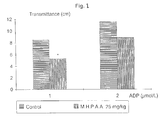
- M.H.P.A.A was investigated the effect of M.H.P.A.A. and its effect on ADP and collagen-induced platelet aggregation in rats.
- M.H.P.A.A. was administered orally as a suspension in a Acacia gum-water vehicle by gastric gavage for 4 weeks.
- the following groups were included: Control group (only receiving vehicle) and a M.H.P.A.A. (25 mg/kg) treated group.
- rats were anaesthetized in an ether atmosphere.
- M.H.P.A.A. was prepared as described in Example 10 and administered orally as single doses, two hours prior to the experiment. Control animals receiving the same volume of vehicle. All animals were deprived of food, but had free access to water for 20 h prior to the experiment. All animals were anaesthetized with ether and blood samples were drawn from vena cava and mixed with 3.8 % sodium citrate (9 volumes of blood per 1 of anticoagulant). Blood was centrifuged at 250 g for 10 minutes to obtain platelet-rich plasma (PRP). Once PRP was isolated, the rest was centrifuged at 1300 g for 15 minutes to obtain platelet-poor plasma (PPP).
- PRP platelet-rich plasma
- PRP platelet-poor plasma
- Platelet aggregation was quantified by turbidimetric method (Born G., 1962; Aggregation of blood platelets by adenosine diphosphate and its reversal; Nature (London) 194, 927-929). Platelet aggregation levels were measured after calibrating the equipment at 0% of light transmission for PRP and at 100% for PPP. Aggregation curves were recorded for 5 min.
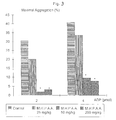
- Figure 3 shows the effect of M.H.P.A.A. on ADP-induced platelet aggregation in rat platelet-rich plasma, p ⁇ 0.05 (Mann-Whitney U test). Results were expressed in percent of maximal aggregation(%). Groups were compared using the Mann-Whitney U test (p ⁇ 0.05).
- M.H.P.A.A. 50 and 200 mg/kg administered 2 h before blood sampling inhibited ADP-induced platelet aggregation, while lower doses (25 mg/kg) did not change significantly responses to ADP.
- the highest dose of M.H.P.A.A. (200 mg/kg) was chosen to study time course of anti-platelet effects.
- M.H.P.A.A. The effects of M.H.P.A.A. on "in vivo" intravascular platelet aggregation in rats and on collagen-induced mortality in mice were studied.
- Drugs were administered orally by gavage 2 h before the assay. Animals received no food for 16 h prior to oral administration of the drugs.
- Rats were given 1 mL/100 g body weight and mice 0.5 mL/20 g body weight, control animals received equivalent volumes of the vehicle.
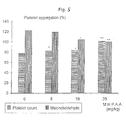
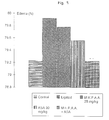
- mice Four experimental groups were used in the study of the intravascular platelet aggregation in rats: 1) Controls, 2, 3 and 4 M.H.P.A.A. at 5, 10 and 20 mg/kg. Animals were anaesthetized i.p. with pentobarbital sodium (30-40 mg/kg). A cannula was inserted into a carotid artery for blood sampling before and 90 seconds after a 30 mg/kg collagen i.v. injection into the penile vein.
- Blood (900 ⁇ L) was collected in plastic tubes containing a 100 ⁇ L mixture with 0.7 mg/mL indomethacin and 19 mg/mL EDTA. An aliquote was used to determine platelet concentration in each sample through optic microscopic counting. Blood was then centrifuged and plasma malondialdehyde (MDA) concentration was quantified through the thiobarbituric acid method (Satoh M, 1978; Serum lipid peroxyde in cerebrovascular disorders determined by a new colorimetric method; Clin.Chim Acta 90, 34-43). Platelet count and plasma MDA concentration variations after injecting collagen were expressed as a percent of baseline values. Differences between control and treatment groups were determined using the Mann-Whitney U Test.
- MDA malondialdehyde
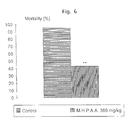
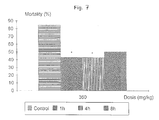
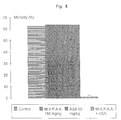
- mice For the study of the collagen induced mortality in rats, the experimental groups were the following: 1) controls: animals only receiving the vehicle, but inducing mortality by a collagen intravenous injection, 2) Animals pretreated with M.H.P.A.A. at 360 mg/kg 2 hours prior collagen injection; 3) Animals pretreated with M.H.P.A.A. at 360 mg/kg 1, 4, 8 and 24 hours prior to mortality induction and 4) Animals pretreated with M.H.P.A.A. at 180 mg/kg and ASA at 50 mg/kg 2 h prior to the assay.
- Acid-soluble veal skin collagen type III was prepared as described (Kimura Y., Kaube T. and Watanabe K., 1985; Effect of celostagel on platelet aggregation and experimental thrombosis; Arzneim Forsch Drug Res. 35, 114-1148) and used at final concentration of 2.5 mg/mL. A 0.1 mL/20 g injection was administered via the retro- orbital plexus. This dose caused from 60 to 100 % mortality in control animals. The comparison of the mortality percent between control and treatment animals was done using Fisher's Exact probability Test.
- Figure 5 shows the effect of M.H.P.A.A. on intravascular platelet aggregation in rats, p ⁇ 0.05; p ⁇ 0.01 (Mann Whitney U test) .
- M.H.P.A.A. significantly inhibited the decrease in circulating platelet count and the simultaneous increase of MDA concentration in plasma induced by collagen.
- Figure 6 demonstrates the effect of M.H.P.A.A. on collagen-induced mortality in C57BL6 mice, p ⁇ 0.01 (Mann-Whitney U test). Collagen-induced mortality was significantly reduced by M.H.P.A.A. at 360 mg/kg. This protective effect on the collagen induced mortality was observed when this dose was administered 1 and 4 hours prior to the assay, but significance was not obtained when administered 8 h before the assay.
- Fig 7 shows the effect of M.H.P.A.A. on collagen-induced mortality in C57BL6 mice, p ⁇ 0.05 (Mann-Whitney U test).
- Figure 8 illustrates the effect of combined administration of M.H.P.A.A. and ASA on collagen-induced mortality in mice, p « 0.01 (Fisher's exact probability Test) .
- the combination of M.H.P.A.A. (180 mg/kg) and ASA (50 mg/kg) also caused a significant statistical decrease in collagen-induced mortality, while both treatments proved ineffective when administered independently.
- M.H.P.A.A. effect on rat cerebral infarction male Sprague Dawley rats weighing 290 to 330 g were distributed into the following experimental groups: 1) negative control: non- ligated rats receiving only the vehicle by gastric gavage, 2) positive control: ligated rats also receiving the vehicle by gastric gavage, 3) and 4) ligated rats receiving M.H.P.A.A. (5 and 25 mg/kg) by the same route.
- the different treatments were administered daily for 4 weeks . The last one was administered 12 h before ligation, as well as 8 and 24 h after the ligation, as commonly used in this model.
- M.H.P.A.A. at 25 mg/kg decreased significantly the cerebral edema (p ⁇ 0.05) when is administered daily for 4 weeks. This dose also reduced mortality rates and percent of animals with edema, though these other reductions did not reach significant levels.
- M.H.P.A.A. at 25 mg/kg significantly protect cerebral ischemia experimentally induced in rats, since a significant reduction in the brain edema was produced. There was also a reduction in the percent of animals treated showing brain edema areas, 3 but this reduction did not reach significant levels (Table 13). Effect of M.H.P.A.A.
- mice Male Sprague Dawley rats weighing 250 to 300 g were distributed in 5 groups: 1) negative control(non ligated rats); 2) positive control (ligated animals receiving only the vehicle); 3) animals received orally by gavage 25 mg/kg of M.H.P.A.A.; 4) animals received orally ASA dissolved in 5 % sodium bicarbonate 30 mg/kg; 5) rats administered orally ASA (30 mg/kg) + M.H.P.A.A. (25 mg/kg). Treatments were administered 2 hours prior the experiment.
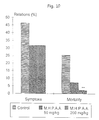
- M.H.P.A.A. was administered by gastric gavage suspended in a Tween 20- water vehicle. Animals were distributed randomly into the following groups: (1) positive control (ligated animals, only receiving the vehicle), (2) M.H.P.A.A. (50 mg/kg) and (3) M.H.P.A.A. (300 mg/kg). All treatment were administered two hours prior to induction of brain ischemia. The left common carotid artery was exposed in the neck and doubly ligated with surgical thread under ether anaesthesia.
- M.H.P.A.A (200 mg/kg) protects significantly the brain global ischemia induced by unilateral ligation of common artery in Mongolian gerbils. Thus, indicating usefulness of M.H.P.A.A. for prevent global ischemia development.
- FIG. 11 shows the effect of M.H.P.A.A. on C4880 and alcohol-induced gastric ulcer, p ⁇ 0.05 M.H.P.A.A. administered intraperitoneally (25mg/kg) inhibited significantly the occurrence of gastric ulcer induced by C 4880, ethanol and ASA. Moreover, as can be observed in Table 14, M.H.P.A.A. administered orally not only reduces TxB2 but also increase PgI2, thus very significantly reducing TxB2 to PgI2 ratio. Effect of M.H.P.A.A.
Landscapes
- Chemical & Material Sciences (AREA)
- Health & Medical Sciences (AREA)
- Organic Chemistry (AREA)
- Veterinary Medicine (AREA)
- Medicinal Chemistry (AREA)
- Pharmacology & Pharmacy (AREA)
- Life Sciences & Earth Sciences (AREA)
- Animal Behavior & Ethology (AREA)
- General Health & Medical Sciences (AREA)
- Public Health (AREA)
- Chemical Kinetics & Catalysis (AREA)
- General Chemical & Material Sciences (AREA)
- Engineering & Computer Science (AREA)
- Bioinformatics & Cheminformatics (AREA)
- Nuclear Medicine, Radiotherapy & Molecular Imaging (AREA)
- Epidemiology (AREA)
- Reproductive Health (AREA)
- Diabetes (AREA)
- Heart & Thoracic Surgery (AREA)
- Cardiology (AREA)
- Hematology (AREA)
- Vascular Medicine (AREA)
- Obesity (AREA)
- Gynecology & Obstetrics (AREA)
- Pregnancy & Childbirth (AREA)
- Urology & Nephrology (AREA)
- Endocrinology (AREA)
- Acyclic And Carbocyclic Compounds In Medicinal Compositions (AREA)
- Pharmaceuticals Containing Other Organic And Inorganic Compounds (AREA)
- Organic Low-Molecular-Weight Compounds And Preparation Thereof (AREA)
- Medicines Containing Plant Substances (AREA)
- Medicinal Preparation (AREA)
- Fats And Perfumes (AREA)
- Indole Compounds (AREA)
Applications Claiming Priority (3)
| Application Number | Priority Date | Filing Date | Title |
|---|---|---|---|
| CU10792 | 1992-09-29 | ||
| CU92107A CU22229A1 (es) | 1992-09-29 | 1992-09-29 | Policosanol, una mezcla de alcoholes alifaticos primarios superiores para hipergregabilidad plaquetaria, los accidentes isquemicos, trombosis e incluso efectividad contra ulceras gastricas quimicamente inducidas y su proceso de obtencion de la caña de azucar. el tratamiento de complicaciones ateroscleroticas tales como la |
| PCT/EP1993/000007 WO1994007830A1 (en) | 1992-09-29 | 1993-02-25 | A mixture of higher primary aliphatic alcohols, its obtention from sugar cane wax and its pharmaceutical uses |
Publications (2)
| Publication Number | Publication Date |
|---|---|
| EP0619802A1 EP0619802A1 (en) | 1994-10-19 |
| EP0619802B1 true EP0619802B1 (en) | 1998-11-04 |
Family
ID=5459372
Family Applications (1)
| Application Number | Title | Priority Date | Filing Date |
|---|---|---|---|
| EP93903874A Expired - Lifetime EP0619802B1 (en) | 1992-09-29 | 1993-02-25 | A mixture of higher primary aliphatic alcohols and its pharmaceutical uses |
Country Status (18)
| Country | Link |
|---|---|
| US (2) | US5663156A (enExample) |
| EP (1) | EP0619802B1 (enExample) |
| JP (1) | JP3602531B2 (enExample) |
| KR (1) | KR100269844B1 (enExample) |
| CN (3) | CN1736384B (enExample) |
| AT (1) | ATE172954T1 (enExample) |
| AU (2) | AU682462B2 (enExample) |
| BR (1) | BR9305652A (enExample) |
| CA (1) | CA2124578C (enExample) |
| CU (1) | CU22229A1 (enExample) |
| DE (1) | DE69321941T2 (enExample) |
| DK (1) | DK0619802T3 (enExample) |
| EG (1) | EG20174A (enExample) |
| ES (1) | ES2125973T3 (enExample) |
| GR (1) | GR3029280T3 (enExample) |
| HU (2) | HU0300408D0 (enExample) |
| RU (1) | RU2163229C2 (enExample) |
| WO (1) | WO1994007830A1 (enExample) |
Families Citing this family (70)
| Publication number | Priority date | Publication date | Assignee | Title |
|---|---|---|---|---|
| CU22229A1 (es) * | 1992-09-29 | 1996-01-31 | Dalmer Lab Sa | Policosanol, una mezcla de alcoholes alifaticos primarios superiores para hipergregabilidad plaquetaria, los accidentes isquemicos, trombosis e incluso efectividad contra ulceras gastricas quimicamente inducidas y su proceso de obtencion de la caña de azucar. el tratamiento de complicaciones ateroscleroticas tales como la |
| CU22412A1 (es) * | 1993-11-09 | 1996-01-31 | Dalmer Lab Sa | Una mezcla natural compuesta por alcoholes alifaticos primarios superiores obtenidos de la cera de abejas para el tratamiento de las ulceras gastricas y duodenales que presenta tambien actividad antiinflamatoria |
| CU22723A1 (es) * | 1997-04-02 | 2002-02-28 | Dalmer Lab Sa | Mezcla de ácidos grasos primarios de alto peso molecular obtenidos de la cera de cana de azúcar y sus usos farmacéuticos |
| IT1294227B1 (it) * | 1997-08-01 | 1999-03-24 | Sigma Tau Ind Farmaceuti | Composizione farmaceutica contenente l-carnitina o una alcanoil l-carnitina e alcoli alifatici a lunga catena utile per la prevenzione |
| US5952393A (en) * | 1998-02-12 | 1999-09-14 | Sorkin, Jr.; Harlan Lee | Composition for reducing serum cholesterol levels |
| GB9806086D0 (en) * | 1998-03-20 | 1998-05-20 | Woolcombers Group Plc | Product and method of isolating same |
| US6596776B2 (en) | 1999-06-21 | 2003-07-22 | Hauser, Inc. | High molecular weight primary aliphatic alcohols obtained from natural products and uses thereof |
| US6225354B1 (en) * | 1999-06-21 | 2001-05-01 | Cholesterol Control Laboratories, Inc. | High molecular weight primary aliphatic alcohols obtained from beeswax and pharmaceutical use thereof |
| US6197832B1 (en) | 1999-09-14 | 2001-03-06 | Harlan Lee Sorkin, Jr. | Composition for reducing serum cholesterol levels |
| US7232574B1 (en) | 1999-12-15 | 2007-06-19 | Mcneil-Ppc, Inc. | Long chain alcohols provided in edible oils |
| US6355274B1 (en) | 1999-12-15 | 2002-03-12 | Mcneil-Ppc, Inc. | Encapsulated long chain alcohols |
| CN1091093C (zh) * | 1999-12-30 | 2002-09-18 | 广东省食品工业研究所 | 高级脂肪醇脂肪酸酯及其用途 |
| CN1100744C (zh) * | 2000-04-30 | 2003-02-05 | 雷少华 | 一种由蔗蜡制取高级脂肪伯醇混合物的方法 |
| WO2003020260A1 (en) * | 2001-08-31 | 2003-03-13 | Metaproteomics, Llc | Arginine compositions for coordinate modification of multiple cardiovascular risk factors |
| US6683116B1 (en) | 2003-01-31 | 2004-01-27 | Unigen Pharmaceuticals, Inc. | Polycosanols from Ericerus pela wax |
| AU2003231261A1 (en) * | 2002-05-02 | 2003-11-17 | Volker Kuellmer | Coated, agglomerated phytochemicals |
| US20060166951A1 (en) * | 2002-05-31 | 2006-07-27 | Archer-Daniels-Midland Company | Compositions and methods for sterol isolation and purification |
| US7214394B2 (en) * | 2002-05-31 | 2007-05-08 | Archer-Daniels-Midland Company | Policosanol compositions, extraction from novel sources, and uses thereof |
| WO2003105822A1 (en) * | 2002-06-01 | 2003-12-24 | Medestea Research & Production S.R.L. | Long chain unsaturated oxygenated compounds and their use in the therapeutical, cosmetic and nutraceutical field |
| CA2488498A1 (en) * | 2002-06-10 | 2003-12-18 | Elan Pharma International Limited | Nanoparticulate polycosanol formulations and novel polycosanol combinations |
| KR100590620B1 (ko) * | 2002-09-13 | 2006-06-19 | 박유석 | 화분으로부터 고급알콜을 제조하는 방법 |
| US20060127449A1 (en) * | 2003-01-28 | 2006-06-15 | Hargrove James L | Method and composition for lowering cholesterol |
| US7034060B2 (en) | 2003-01-31 | 2006-04-25 | Unigen Pharmaceuticals, Inc. | Polycosanols from Ericerus pela wax |
| US7217546B1 (en) * | 2003-07-01 | 2007-05-15 | Sami Labs Ltd | Commercially viable process for high purity of fatty alcohol C24 to C36 and its cosmetic application for skin hair and nails |
| US20050074443A1 (en) * | 2003-10-03 | 2005-04-07 | Treadwell Benjamin V. | Methods of attenuating autoimmune disease and compositions useful therefor |
| US6890941B1 (en) * | 2003-12-03 | 2005-05-10 | Procaps S.A. | Compositions containing HMG Co-A reductase inhibitors and policosanol |
| AP2006003832A0 (en) * | 2004-01-20 | 2006-12-31 | Panacea Biotec Ltd | Pharmaceutical compositions comprising higher primary alcohols and ezetimibe and process of preparation thereof |
| EA200602203A1 (ru) * | 2004-01-20 | 2007-04-27 | Панацея Биотек Лтд. | Новые композиции, содержащие высшие первичные спирты и никотиновую кислоту, и способ их получения |
| US20050267091A1 (en) * | 2004-05-25 | 2005-12-01 | Roger Berlin | Compositions containing policosanol and niacin and/or niacin derivatives and their pharmaceutical uses |
| US20050267197A1 (en) * | 2004-05-25 | 2005-12-01 | Roger Berlin | Compositions containing policosanol and HMG-Co-A reductase inhibitor and their pharmaceutical uses |
| JP5112859B2 (ja) * | 2004-06-04 | 2013-01-09 | ホリズン サイエンス ピーティーワイ リミテッド | 天然甘味料 |
| US20060009486A1 (en) * | 2004-07-07 | 2006-01-12 | Gm Pharmaceuticals Inc. | Composition and method for treatment and prevention of coronary artery disease |
| US20060013842A1 (en) * | 2004-07-15 | 2006-01-19 | Matkin John R | Natural mixture of long-chain fatty alcohols and long-chain fatty acids, its obtension from animal and vegetable waxes and its nutraceutical uses |
| US7615641B2 (en) * | 2004-07-20 | 2009-11-10 | Sino Pharmaceuticals Corporation | Long chain aliphatic alcohol derivatives and methods of making and using same |
| US20060020031A1 (en) * | 2004-07-26 | 2006-01-26 | Roger Berlin | Compositions containing policosanol and omega-3 fatty acids and their pharmaceutical uses |
| US20060020043A1 (en) * | 2004-07-26 | 2006-01-26 | Roger Berlin | Methods and compositions for reducing C-reactive protein |
| US20060020044A1 (en) * | 2004-07-26 | 2006-01-26 | Roger Berlin | Methods and compositions for treating or preventing macular-degeneration related disorders |
| US20060020007A1 (en) * | 2004-07-26 | 2006-01-26 | Roger Berlin | Compositions containing policosanol and biotin and their pharmaceutical uses |
| US20060020045A1 (en) * | 2004-07-26 | 2006-01-26 | Roger Berlin | Methods and compositions for treating inflammatory disorders of the gastrointestinal tract |
| US20060024383A1 (en) * | 2004-07-27 | 2006-02-02 | Roger Berlin | Compositions containing policosanol and chromium and/or chromium salts and their pharmaceutical uses |
| US20060025486A1 (en) * | 2004-07-27 | 2006-02-02 | Roger Berlin | Compositions containing policosanol and B vitamins and their pharmaceutical uses |
| WO2006042835A1 (en) * | 2004-10-18 | 2006-04-27 | Dsm Ip Assets B.V. | Process for the preparation of aliphatic primary alcohols and related intermediates in such process |
| DE102004055858A1 (de) * | 2004-11-19 | 2006-05-24 | Clariant Gmbh | Verwendung von langkettigen Alkoholen zur effektiven Senkung erhöhter Cholesterinspiegel |
| DE102005045829A1 (de) * | 2005-09-24 | 2007-03-29 | Clariant Produkte (Deutschland) Gmbh | Mittel enthaltend langkettige Alkohole zur Suppression der Konzentrationen des C-reaktiven Proteins (CRP) im menschlichen Blut |
| MXPA05014086A (es) * | 2005-12-20 | 2007-06-20 | Leopoldo De Jesus Espinosa Abdala | Composiciones farmaceuticas que comprenden sustancias antiagregantes plaquetarios combinadas para su uso en el tratamiento y prevencion de eventos vasculares de origen isquemico. |
| WO2007121584A1 (en) * | 2006-04-20 | 2007-11-01 | Metabev Inc. | Food product containing policosanols |
| WO2007122636A1 (en) * | 2006-04-25 | 2007-11-01 | Panacea Biotec Ltd | Pharmaceutical compositions containing long chain fatty acids as excipients as well as a process for manufacturing the same |
| US20070295326A1 (en) * | 2006-06-07 | 2007-12-27 | Rafael Almagro | Method for obtaining long chain aliphatic alcohols and fatty acids from sugar cane mud and related wax esters |
| CN101190210B (zh) * | 2006-11-23 | 2010-05-12 | 樊献俄 | 三十烷醇在制备抗癌药物中的应用 |
| US20080207748A1 (en) * | 2007-02-22 | 2008-08-28 | Innovation Labs, Inc. | Vitamin c preparation |
| WO2008101956A1 (de) * | 2007-02-23 | 2008-08-28 | Basf Se | Gemische von n-alkanolen und ihre verwendung |
| US20110124894A1 (en) * | 2009-11-25 | 2011-05-26 | Rafael Almagro | Method for obtaining long chain aliphatic alcohols and fatty acids from sugar cane mud and related wax esters |
| WO2012106761A1 (en) | 2011-02-08 | 2012-08-16 | Horizon Science Pty Ltd | Sugar extracts |
| CN102211976A (zh) * | 2011-04-14 | 2011-10-12 | 黑龙江省科学院大庆分院 | 从动植物蜡中提取普利醇的方法 |
| CN102715510A (zh) * | 2012-06-18 | 2012-10-10 | 广州白云山制药股份有限公司广州白云山化学制药厂 | 一种天然提取物作食用功能添加剂 |
| CN102795960B (zh) * | 2012-08-08 | 2015-04-22 | 湖州圣涛生物技术有限公司 | 一种高纯度二十八烷醇、三十烷醇的规模化制备方法 |
| MY171216A (en) | 2012-08-28 | 2019-10-02 | The Product Makers Australia Pty Ltd | Extraction method |
| KR101492213B1 (ko) * | 2012-10-30 | 2015-02-16 | 한국식품연구원 | 폴리코사놀을 유효성분으로 하는 히스타민 수용체 길항제 조성물 |
| WO2015021512A1 (en) | 2013-08-16 | 2015-02-19 | Horizon Science Pty Ltd | Sugar cane derived extracts and methods of treatment |
| EP3110781B1 (en) | 2014-02-27 | 2018-06-27 | Tydock Pharma S.r.l. | Microwave-assisted treatment for the production of polycosanol-enriched mixtures from wax matrices |
| CN104557458A (zh) * | 2014-12-24 | 2015-04-29 | 宜宾学院 | 一种从青蒿素生产废弃物中提取二十八烷醇的方法 |
| CN106187677B (zh) * | 2016-07-19 | 2019-03-26 | 北京颐方生物科技有限公司 | 一种以蔗蜡制备高级脂肪伯醇混合物的方法及应用 |
| CN107332573B (zh) * | 2017-07-25 | 2021-04-13 | Oppo广东移动通信有限公司 | 一种射频电路、天线装置及电子设备 |
| CN110108815B (zh) * | 2019-05-24 | 2022-01-04 | 江西省科学院生物资源研究所 | 一种用于二十八烷醇预防肝损伤效果的体外评价方法 |
| CU24638B1 (es) * | 2020-02-03 | 2023-01-16 | Centro Nac De Investigaciones Cientificas | Suspensión oral con efecto antiulceroso y quimioprotector sobre el cáncer de colon |
| CN112716923B (zh) * | 2021-01-13 | 2023-03-17 | 河北康泰药业有限公司 | 一种二十八元醇在制备治疗肺纤维化药物中的应用 |
| CN113057941B (zh) * | 2021-03-26 | 2022-06-17 | 中国林业科学研究院资源昆虫研究所 | 一种改善学习记忆的高级烷醇脂质体及其制备方法 |
| CU24732B1 (es) * | 2021-07-13 | 2025-02-07 | Centro Nac De Investigaciones Cientificas | Mezcla de compuestos con altos pesos moleculares, obtenida a partir de la cera de caña de azúcar (saccharum officinarum l.) |
| IT202100020228A1 (it) * | 2021-07-29 | 2023-01-29 | Chromaleont Srl | Metodo per l’estrazione di policosanoli da canapa industriale e relativa miscela. |
| CN115414333A (zh) * | 2022-05-31 | 2022-12-02 | 湖北中古生物制药有限公司 | 一种多廿烷醇阿司匹林复方制剂及其制备方法 |
Family Cites Families (15)
| Publication number | Priority date | Publication date | Assignee | Title |
|---|---|---|---|---|
| US2021926A (en) * | 1932-03-17 | 1935-11-26 | Ici Ltd | Treatment of waxes |
| GB650367A (en) * | 1948-11-05 | 1951-02-21 | Arthur Wade | Improvements relating to the manufacture of therapeutic preparations |
| US2719858A (en) * | 1952-07-31 | 1955-10-04 | Ethyl Corp | High molecular weight alcohols |
| US3031376A (en) * | 1956-10-11 | 1962-04-24 | Levin | Compositions comprising octacosanol, triacontanol, tetracosanol, or hexacosanol, andmethods employing same |
| DE1202262B (de) * | 1962-04-19 | 1965-10-07 | Deutsche Erdoel Ag | Verfahren zur Reinigung von Fettalkoholen mit mindestens 8 Kohlenstoffatomen |
| FR2159194A1 (en) * | 1971-11-10 | 1973-06-22 | Fabre Sa Pierre | Compsns contg aspirin and sorbitol - suppression of ulcerogenic effects |
| US4186212A (en) * | 1978-03-09 | 1980-01-29 | Howell F Maurice | Animal feed containing high molecular weight aliphatic alcohols |
| GB2105699B (en) * | 1981-07-09 | 1985-06-19 | Unilever Plc | Preparation of materials useful as plant nutrients |
| US5106879A (en) * | 1981-11-03 | 1992-04-21 | Clark Lealand L | Treatment for inflammatory skin disease |
| US5071879A (en) * | 1989-04-28 | 1991-12-10 | Lidak Pharmaceuticals | Systemic antiviral treatment |
| US5166219A (en) * | 1989-11-02 | 1992-11-24 | Lidak Pharmaceuticals | Systemic anti-inflammatory treatment |
| CH681007A5 (enExample) * | 1990-10-23 | 1992-12-31 | Nestle Sa | |
| CU22225A1 (es) * | 1990-11-30 | 1995-01-31 | Cent Nac Investig Scient | Composicion farmacautica que contiene mezcla de alcoholes alifaticos primarios superiores para el tratamiento de hipercolesterolemia y la hiperlipoproteinemia tipo ii asi como estimulante de la conducta sexual en animales y humanos |
| CU22229A1 (es) * | 1992-09-29 | 1996-01-31 | Dalmer Lab Sa | Policosanol, una mezcla de alcoholes alifaticos primarios superiores para hipergregabilidad plaquetaria, los accidentes isquemicos, trombosis e incluso efectividad contra ulceras gastricas quimicamente inducidas y su proceso de obtencion de la caña de azucar. el tratamiento de complicaciones ateroscleroticas tales como la |
| US8572345B2 (en) * | 2011-09-16 | 2013-10-29 | Freescale Semiconductor, Inc. | Memory management unit (MMU) having region descriptor globalization controls and method of operation |
-
1992
- 1992-09-29 CU CU92107A patent/CU22229A1/es not_active IP Right Cessation
-
1993
- 1993-01-09 EG EG1493A patent/EG20174A/xx active
- 1993-02-25 DE DE69321941T patent/DE69321941T2/de not_active Expired - Lifetime
- 1993-02-25 DK DK93903874T patent/DK0619802T3/da active
- 1993-02-25 JP JP50860894A patent/JP3602531B2/ja not_active Expired - Fee Related
- 1993-02-25 KR KR1019940701826A patent/KR100269844B1/ko not_active Expired - Lifetime
- 1993-02-25 EP EP93903874A patent/EP0619802B1/en not_active Expired - Lifetime
- 1993-02-25 AU AU34939/93A patent/AU682462B2/en not_active Expired
- 1993-02-25 CA CA002124578A patent/CA2124578C/en not_active Expired - Lifetime
- 1993-02-25 RU RU94028887/04A patent/RU2163229C2/ru active
- 1993-02-25 ES ES93903874T patent/ES2125973T3/es not_active Expired - Lifetime
- 1993-02-25 AT AT93903874T patent/ATE172954T1/de not_active IP Right Cessation
- 1993-02-25 US US08/211,501 patent/US5663156A/en not_active Expired - Lifetime
- 1993-02-25 HU HU0300408A patent/HU0300408D0/hu unknown
- 1993-02-25 BR BR9305652A patent/BR9305652A/pt not_active Application Discontinuation
- 1993-02-25 HU HU9401938A patent/HU225050B1/hu not_active IP Right Cessation
- 1993-02-25 WO PCT/EP1993/000007 patent/WO1994007830A1/en not_active Ceased
- 1993-03-19 CN CN2004100834974A patent/CN1736384B/zh not_active Expired - Fee Related
- 1993-03-19 CN CN93103165A patent/CN1084844A/zh not_active Withdrawn
-
1996
- 1996-12-23 US US08/771,970 patent/US5856316A/en not_active Expired - Fee Related
-
1998
- 1998-01-09 AU AU51092/98A patent/AU711756B2/en not_active Expired
-
1999
- 1999-02-03 GR GR990400360T patent/GR3029280T3/el unknown
-
2000
- 2000-01-10 CN CNB001010573A patent/CN1201731C/zh not_active Expired - Fee Related
Also Published As
| Publication number | Publication date |
|---|---|
| CA2124578C (en) | 2003-12-16 |
| RU2163229C2 (ru) | 2001-02-20 |
| HK1087935A1 (en) | 2006-10-27 |
| CU22229A1 (es) | 1996-01-31 |
| CN1084844A (zh) | 1994-04-06 |
| HU0300408D0 (en) | 2003-04-28 |
| ATE172954T1 (de) | 1998-11-15 |
| CN1201731C (zh) | 2005-05-18 |
| WO1994007830A1 (en) | 1994-04-14 |
| CA2124578A1 (en) | 1994-04-14 |
| HUT67607A (en) | 1995-04-28 |
| DK0619802T3 (da) | 1999-07-19 |
| AU711756B2 (en) | 1999-10-21 |
| US5663156A (en) | 1997-09-02 |
| EP0619802A1 (en) | 1994-10-19 |
| KR100269844B1 (ko) | 2000-10-16 |
| JPH07505414A (ja) | 1995-06-15 |
| HU225050B1 (en) | 2006-05-29 |
| DE69321941T2 (de) | 1999-06-10 |
| CN1736384B (zh) | 2010-05-26 |
| JP3602531B2 (ja) | 2004-12-15 |
| GR3029280T3 (en) | 1999-05-28 |
| DE69321941D1 (de) | 1998-12-10 |
| AU5109298A (en) | 1998-03-26 |
| AU682462B2 (en) | 1997-10-09 |
| CN1736384A (zh) | 2006-02-22 |
| CN1271577A (zh) | 2000-11-01 |
| AU3493993A (en) | 1994-04-26 |
| HK1032356A1 (en) | 2001-07-20 |
| BR9305652A (pt) | 1996-11-19 |
| ES2125973T3 (es) | 1999-03-16 |
| EG20174A (en) | 1997-08-31 |
| US5856316A (en) | 1999-01-05 |
| HU9401938D0 (en) | 1994-09-28 |
Similar Documents
| Publication | Publication Date | Title |
|---|---|---|
| AU711756B2 (en) | A mixture of higher primary aliphatic alcohols, its obtention from sugar cane wax and its pharmaceutical uses | |
| US6225354B1 (en) | High molecular weight primary aliphatic alcohols obtained from beeswax and pharmaceutical use thereof | |
| US7141611B2 (en) | High molecular weight primary aliphatic alcohols obtained from natural products and uses thereof | |
| Vali et al. | A process for the preparation of food-grade rice bran wax and the determination of its composition | |
| Baer et al. | Synthesis of a homologous series of optically active normal aliphatic α-monoglycerides (L-series) | |
| HU200686B (en) | Process for producing pharmaceutical compositions comprising epa and/or dha, suitable for treating or preventing rheumatic arthritis | |
| NO163825B (no) | Fremgangsmaate for selektiv anrikning av en fettsyreblanding paa delta6-fettsyrer. | |
| WO2012011214A1 (ja) | スフィンゴ脂質の取得方法およびスフィンゴ脂質 | |
| JP4907750B2 (ja) | サトウキビ・ワックスから得られる第一級脂肪酸の混合物 | |
| JP2012126910A (ja) | 発酵粕由来スフィンゴ脂質 | |
| KR840001518B1 (ko) | 3,7,11,15-테트라메틸-2,4,6,10,14-헥사데카펜타엔산(酸)의 제조방법 | |
| MC2222A1 (fr) | Nouveaux retinoides | |
| GB2073750A (en) | 3,7,11,15-Tetramethyl- 2,4,6,10,14-hexadecapentaenoic Acid | |
| HK1087935B (en) | Mixture of a mixture of higher primary aliphatic alcohols with acetyl salicylic acid and pharmaceutical formulations | |
| JPH0717859A (ja) | アラキドン酸代謝異常疾患治療剤 | |
| CA2081781A1 (en) | Allyl alcohol derivative | |
| AU2020221684A1 (en) | Method for obtaining oleacein and oleomissional type secoiridoids and for producing respective pharmaceutical preparations | |
| TW299230B (enExample) | ||
| FR3144992A1 (fr) | Nouveaux composés dérivés du CNSL et leur application en cosmétique | |
| JPH08157359A (ja) | 胃潰瘍および十二指腸潰瘍の処置剤および抗炎症剤 | |
| JPH0317043A (ja) | 新規ポリアセチレン系化合物類ならびに該新規ポリアセチレン系化合物類を有効成分とする5‐リポキシゲナーゼ阻害剤およびシクロオキシゲナーゼ阻害剤 | |
| AU2002252729A1 (en) | High molecular weight primary aliphatic alcohols obtained from natural products and uses thereof |
Legal Events
| Date | Code | Title | Description |
|---|---|---|---|
| PUAI | Public reference made under article 153(3) epc to a published international application that has entered the european phase |
Free format text: ORIGINAL CODE: 0009012 |
|
| AK | Designated contracting states |
Kind code of ref document: A1 Designated state(s): AT BE CH DE DK ES FR GB GR IE IT LI LU MC NL PT SE |
|
| 17P | Request for examination filed |
Effective date: 19941011 |
|
| 17Q | First examination report despatched |
Effective date: 19960123 |
|
| GRAG | Despatch of communication of intention to grant |
Free format text: ORIGINAL CODE: EPIDOS AGRA |
|
| GRAG | Despatch of communication of intention to grant |
Free format text: ORIGINAL CODE: EPIDOS AGRA |
|
| GRAG | Despatch of communication of intention to grant |
Free format text: ORIGINAL CODE: EPIDOS AGRA |
|
| GRAH | Despatch of communication of intention to grant a patent |
Free format text: ORIGINAL CODE: EPIDOS IGRA |
|
| RAP1 | Party data changed (applicant data changed or rights of an application transferred) |
Owner name: LABORATORIOS DALMER SA |
|
| GRAH | Despatch of communication of intention to grant a patent |
Free format text: ORIGINAL CODE: EPIDOS IGRA |
|
| GRAA | (expected) grant |
Free format text: ORIGINAL CODE: 0009210 |
|
| AK | Designated contracting states |
Kind code of ref document: B1 Designated state(s): AT BE CH DE DK ES FR GB GR IE IT LI LU MC NL PT SE |
|
| REF | Corresponds to: |
Ref document number: 172954 Country of ref document: AT Date of ref document: 19981115 Kind code of ref document: T |
|
| REG | Reference to a national code |
Ref country code: CH Ref legal event code: EP |
|
| REF | Corresponds to: |
Ref document number: 69321941 Country of ref document: DE Date of ref document: 19981210 |
|
| REG | Reference to a national code |
Ref country code: IE Ref legal event code: FG4D |
|
| ITF | It: translation for a ep patent filed | ||
| ET | Fr: translation filed | ||
| REG | Reference to a national code |
Ref country code: CH Ref legal event code: NV Representative=s name: BRAUN & PARTNER PATENT-, MARKEN-, RECHTSANWAELTE |
|
| REG | Reference to a national code |
Ref country code: ES Ref legal event code: FG2A Ref document number: 2125973 Country of ref document: ES Kind code of ref document: T3 |
|
| REG | Reference to a national code |
Ref country code: PT Ref legal event code: SC4A Free format text: AVAILABILITY OF NATIONAL TRANSLATION Effective date: 19990203 |
|
| REG | Reference to a national code |
Ref country code: DK Ref legal event code: T3 |
|
| PLBE | No opposition filed within time limit |
Free format text: ORIGINAL CODE: 0009261 |
|
| STAA | Information on the status of an ep patent application or granted ep patent |
Free format text: STATUS: NO OPPOSITION FILED WITHIN TIME LIMIT |
|
| 26N | No opposition filed | ||
| REG | Reference to a national code |
Ref country code: GB Ref legal event code: IF02 |
|
| PG25 | Lapsed in a contracting state [announced via postgrant information from national office to epo] |
Ref country code: IT Free format text: LAPSE BECAUSE OF NON-PAYMENT OF DUE FEES;WARNING: LAPSES OF ITALIAN PATENTS WITH EFFECTIVE DATE BEFORE 2007 MAY HAVE OCCURRED AT ANY TIME BEFORE 2007. THE CORRECT EFFECTIVE DATE MAY BE DIFFERENT FROM THE ONE RECORDED. Effective date: 20050225 |
|
| PGFP | Annual fee paid to national office [announced via postgrant information from national office to epo] |
Ref country code: DK Payment date: 20080215 Year of fee payment: 16 |
|
| PGRI | Patent reinstated in contracting state [announced from national office to epo] |
Ref country code: IT Effective date: 20080301 |
|
| PGFP | Annual fee paid to national office [announced via postgrant information from national office to epo] |
Ref country code: SE Payment date: 20080219 Year of fee payment: 16 Ref country code: MC Payment date: 20080212 Year of fee payment: 16 Ref country code: LU Payment date: 20080303 Year of fee payment: 16 Ref country code: IE Payment date: 20080218 Year of fee payment: 16 |
|
| PG25 | Lapsed in a contracting state [announced via postgrant information from national office to epo] |
Ref country code: MC Free format text: LAPSE BECAUSE OF NON-PAYMENT OF DUE FEES Effective date: 20090228 |
|
| EUG | Se: european patent has lapsed | ||
| REG | Reference to a national code |
Ref country code: DK Ref legal event code: EBP |
|
| REG | Reference to a national code |
Ref country code: IE Ref legal event code: MM4A |
|
| PG25 | Lapsed in a contracting state [announced via postgrant information from national office to epo] |
Ref country code: IE Free format text: LAPSE BECAUSE OF NON-PAYMENT OF DUE FEES Effective date: 20090225 |
|
| PGFP | Annual fee paid to national office [announced via postgrant information from national office to epo] |
Ref country code: GB Payment date: 20100224 Year of fee payment: 18 Ref country code: DE Payment date: 20100303 Year of fee payment: 18 Ref country code: BE Payment date: 20100215 Year of fee payment: 18 Ref country code: AT Payment date: 20100212 Year of fee payment: 18 |
|
| PG25 | Lapsed in a contracting state [announced via postgrant information from national office to epo] |
Ref country code: DK Free format text: LAPSE BECAUSE OF NON-PAYMENT OF DUE FEES Effective date: 20090831 |
|
| PGFP | Annual fee paid to national office [announced via postgrant information from national office to epo] |
Ref country code: NL Payment date: 20100209 Year of fee payment: 18 |
|
| REG | Reference to a national code |
Ref country code: CH Ref legal event code: PL |
|
| PG25 | Lapsed in a contracting state [announced via postgrant information from national office to epo] |
Ref country code: LI Free format text: LAPSE BECAUSE OF NON-PAYMENT OF DUE FEES Effective date: 20100228 Ref country code: CH Free format text: LAPSE BECAUSE OF NON-PAYMENT OF DUE FEES Effective date: 20100228 |
|
| REG | Reference to a national code |
Ref country code: CH Ref legal event code: AEN Free format text: DAS PATENT IST AUFGRUND DES WEITERBEHANDLUNGSANTRAGS VOM 09.11.2010 REAKTIVIERT WORDEN. |
|
| PGFP | Annual fee paid to national office [announced via postgrant information from national office to epo] |
Ref country code: GR Payment date: 20100216 Year of fee payment: 18 |
|
| PGRI | Patent reinstated in contracting state [announced from national office to epo] |
Ref country code: CH Effective date: 20101109 |
|
| PG25 | Lapsed in a contracting state [announced via postgrant information from national office to epo] |
Ref country code: LU Free format text: LAPSE BECAUSE OF NON-PAYMENT OF DUE FEES Effective date: 20090225 |
|
| PG25 | Lapsed in a contracting state [announced via postgrant information from national office to epo] |
Ref country code: SE Free format text: LAPSE BECAUSE OF NON-PAYMENT OF DUE FEES Effective date: 20090226 |
|
| BERE | Be: lapsed |
Owner name: S.A. LABORATORIOS *DALMER Effective date: 20110228 |
|
| REG | Reference to a national code |
Ref country code: NL Ref legal event code: V1 Effective date: 20110901 |
|
| GBPC | Gb: european patent ceased through non-payment of renewal fee |
Effective date: 20110225 |
|
| PGFP | Annual fee paid to national office [announced via postgrant information from national office to epo] |
Ref country code: CH Payment date: 20110811 Year of fee payment: 19 |
|
| PG25 | Lapsed in a contracting state [announced via postgrant information from national office to epo] |
Ref country code: BE Free format text: LAPSE BECAUSE OF NON-PAYMENT OF DUE FEES Effective date: 20110228 Ref country code: AT Free format text: LAPSE BECAUSE OF NON-PAYMENT OF DUE FEES Effective date: 20110225 Ref country code: GR Free format text: LAPSE BECAUSE OF NON-PAYMENT OF DUE FEES Effective date: 20110902 |
|
| PGFP | Annual fee paid to national office [announced via postgrant information from national office to epo] |
Ref country code: ES Payment date: 20110831 Year of fee payment: 19 Ref country code: FR Payment date: 20110907 Year of fee payment: 19 Ref country code: PT Payment date: 20110812 Year of fee payment: 19 |
|
| PG25 | Lapsed in a contracting state [announced via postgrant information from national office to epo] |
Ref country code: NL Free format text: LAPSE BECAUSE OF NON-PAYMENT OF DUE FEES Effective date: 20110901 |
|
| REG | Reference to a national code |
Ref country code: DE Ref legal event code: R119 Ref document number: 69321941 Country of ref document: DE Effective date: 20110901 |
|
| PG25 | Lapsed in a contracting state [announced via postgrant information from national office to epo] |
Ref country code: GB Free format text: LAPSE BECAUSE OF NON-PAYMENT OF DUE FEES Effective date: 20110225 |
|
| PGFP | Annual fee paid to national office [announced via postgrant information from national office to epo] |
Ref country code: IT Payment date: 20120225 Year of fee payment: 20 |
|
| REG | Reference to a national code |
Ref country code: PT Ref legal event code: MM4A Free format text: LAPSE DUE TO NON-PAYMENT OF FEES Effective date: 20120827 |
|
| REG | Reference to a national code |
Ref country code: CH Ref legal event code: PL |
|
| PG25 | Lapsed in a contracting state [announced via postgrant information from national office to epo] |
Ref country code: CH Free format text: LAPSE BECAUSE OF NON-PAYMENT OF DUE FEES Effective date: 20120229 Ref country code: LI Free format text: LAPSE BECAUSE OF NON-PAYMENT OF DUE FEES Effective date: 20120229 |
|
| REG | Reference to a national code |
Ref country code: FR Ref legal event code: ST Effective date: 20121031 |
|
| PG25 | Lapsed in a contracting state [announced via postgrant information from national office to epo] |
Ref country code: PT Free format text: LAPSE BECAUSE OF NON-PAYMENT OF DUE FEES Effective date: 20120827 |
|
| PG25 | Lapsed in a contracting state [announced via postgrant information from national office to epo] |
Ref country code: FR Free format text: LAPSE BECAUSE OF NON-PAYMENT OF DUE FEES Effective date: 20120229 |
|
| REG | Reference to a national code |
Ref country code: PT Ref legal event code: MM4A Free format text: MAXIMUM VALIDITY LIMIT REACHED Effective date: 20130225 |
|
| PG25 | Lapsed in a contracting state [announced via postgrant information from national office to epo] |
Ref country code: PT Free format text: LAPSE BECAUSE OF EXPIRATION OF PROTECTION Effective date: 20130305 |
|
| PG25 | Lapsed in a contracting state [announced via postgrant information from national office to epo] |
Ref country code: DE Free format text: LAPSE BECAUSE OF NON-PAYMENT OF DUE FEES Effective date: 20110901 |
|
| REG | Reference to a national code |
Ref country code: ES Ref legal event code: FD2A Effective date: 20130708 |
|
| PG25 | Lapsed in a contracting state [announced via postgrant information from national office to epo] |
Ref country code: ES Free format text: LAPSE BECAUSE OF NON-PAYMENT OF DUE FEES Effective date: 20120226 |
|
| PG25 | Lapsed in a contracting state [announced via postgrant information from national office to epo] |
Ref country code: PT Free format text: LAPSE BECAUSE OF EXPIRATION OF PROTECTION Effective date: 20120225 |