EP0581848B1 - Oligonucleotides fermes, antisens et sens, et leurs applications - Google Patents
Oligonucleotides fermes, antisens et sens, et leurs applications Download PDFInfo
- Publication number
- EP0581848B1 EP0581848B1 EP92910423A EP92910423A EP0581848B1 EP 0581848 B1 EP0581848 B1 EP 0581848B1 EP 92910423 A EP92910423 A EP 92910423A EP 92910423 A EP92910423 A EP 92910423A EP 0581848 B1 EP0581848 B1 EP 0581848B1
- Authority
- EP
- European Patent Office
- Prior art keywords
- oligonucleotides
- oligonucleotide
- agent according
- closed
- stranded
- Prior art date
- Legal status (The legal status is an assumption and is not a legal conclusion. Google has not performed a legal analysis and makes no representation as to the accuracy of the status listed.)
- Expired - Lifetime
Links
Images








Classifications
-
- C—CHEMISTRY; METALLURGY
- C12—BIOCHEMISTRY; BEER; SPIRITS; WINE; VINEGAR; MICROBIOLOGY; ENZYMOLOGY; MUTATION OR GENETIC ENGINEERING
- C12N—MICROORGANISMS OR ENZYMES; COMPOSITIONS THEREOF; PROPAGATING, PRESERVING, OR MAINTAINING MICROORGANISMS; MUTATION OR GENETIC ENGINEERING; CULTURE MEDIA
- C12N15/00—Mutation or genetic engineering; DNA or RNA concerning genetic engineering, vectors, e.g. plasmids, or their isolation, preparation or purification; Use of hosts therefor
- C12N15/09—Recombinant DNA-technology
- C12N15/11—DNA or RNA fragments; Modified forms thereof; Non-coding nucleic acids having a biological activity
- C12N15/113—Non-coding nucleic acids modulating the expression of genes, e.g. antisense oligonucleotides; Antisense DNA or RNA; Triplex- forming oligonucleotides; Catalytic nucleic acids, e.g. ribozymes; Nucleic acids used in co-suppression or gene silencing
-
- A—HUMAN NECESSITIES
- A61—MEDICAL OR VETERINARY SCIENCE; HYGIENE
- A61K—PREPARATIONS FOR MEDICAL, DENTAL OR TOILETRY PURPOSES
- A61K31/00—Medicinal preparations containing organic active ingredients
- A61K31/70—Carbohydrates; Sugars; Derivatives thereof
-
- A—HUMAN NECESSITIES
- A61—MEDICAL OR VETERINARY SCIENCE; HYGIENE
- A61P—SPECIFIC THERAPEUTIC ACTIVITY OF CHEMICAL COMPOUNDS OR MEDICINAL PREPARATIONS
- A61P31/00—Antiinfectives, i.e. antibiotics, antiseptics, chemotherapeutics
- A61P31/12—Antivirals
-
- A—HUMAN NECESSITIES
- A61—MEDICAL OR VETERINARY SCIENCE; HYGIENE
- A61P—SPECIFIC THERAPEUTIC ACTIVITY OF CHEMICAL COMPOUNDS OR MEDICINAL PREPARATIONS
- A61P35/00—Antineoplastic agents
-
- A—HUMAN NECESSITIES
- A61—MEDICAL OR VETERINARY SCIENCE; HYGIENE
- A61P—SPECIFIC THERAPEUTIC ACTIVITY OF CHEMICAL COMPOUNDS OR MEDICINAL PREPARATIONS
- A61P37/00—Drugs for immunological or allergic disorders
-
- C—CHEMISTRY; METALLURGY
- C12—BIOCHEMISTRY; BEER; SPIRITS; WINE; VINEGAR; MICROBIOLOGY; ENZYMOLOGY; MUTATION OR GENETIC ENGINEERING
- C12N—MICROORGANISMS OR ENZYMES; COMPOSITIONS THEREOF; PROPAGATING, PRESERVING, OR MAINTAINING MICROORGANISMS; MUTATION OR GENETIC ENGINEERING; CULTURE MEDIA
- C12N2310/00—Structure or type of the nucleic acid
- C12N2310/10—Type of nucleic acid
- C12N2310/13—Decoys
-
- C—CHEMISTRY; METALLURGY
- C12—BIOCHEMISTRY; BEER; SPIRITS; WINE; VINEGAR; MICROBIOLOGY; ENZYMOLOGY; MUTATION OR GENETIC ENGINEERING
- C12N—MICROORGANISMS OR ENZYMES; COMPOSITIONS THEREOF; PROPAGATING, PRESERVING, OR MAINTAINING MICROORGANISMS; MUTATION OR GENETIC ENGINEERING; CULTURE MEDIA
- C12N2310/00—Structure or type of the nucleic acid
- C12N2310/50—Physical structure
- C12N2310/53—Physical structure partially self-complementary or closed
Definitions
- the present invention relates to compounds of the type oligonucleotide and their applications.
- Antisense oligonucleotides are short synthetic DNA -or RNA molecules of sequence complementary to a target sequence belonging to a gene or to a messenger RNA whose expression it is desired to specifically block. Antisense oligonucleotides can be directed against a messenger RNA sequence, or alternatively against a DNA sequence. Antisense oligonucleotides hybridize to the sequence of which they are complementary and can thus block the expression of the messenger RNA carrying this sequence.
- the term "oligonucleotide” is used generally to denote a ribo- or deoxyribo- series polynucleotide.
- oligodeoxyribonucleotide or oligoribonucleotide When it is a question of a particular property linked to the use of a deoxyribo- or a ribo- series, the full name oligodeoxyribonucleotide or oligoribonucleotide will be used.
- An oligonucleotide can be single-stranded, that is to say have only one alignment of nucleotides, not paired with another chain, or else be double-stranded, that is to say have nucleotides paired with another polynucleotide chain Two oligonucleotides complementary form a double-stranded structure.
- a single-stranded oligonucleotide may however have double-stranded regions by intra-catenary pairings between complementary sequences carried on the same strand.
- hybridization means the formation of hydrogen bonds between complementary base pairs, guanine and cytosine forming three hydrogen bonds, and adenine and thymine forming two.
- Antisense oligonucleotides are synthesized chemically and frequently contain modifications which alter the very backbone of the molecule or carry additional reactive groups, located at their ends. The purpose of these modifications introduced into the antisense oligonucleotides is either to increase the resistance of these molecules to nucleolytic degradation, or to promote their interactions with their targets, or to allow specific degradation / modification reactions of the targets, RNA or DNA, or to increase their intracellular penetration.
- Antisense oligonucleotides are sensitive to nuclease degradation, and mainly to the action of exonucleases. The nucleases are found in all compartments - cellular and extra-cellular, in particular in the serum - and cause a rapid degradation of these molecules.
- antisense molecules involves solving these degradation problems in order to achieve satisfactory pharmacokinetics and therefore sufficient sustainability of the effects of these molecules.
- Numerous chemical modifications allow the antisense oligonucleotides to become resistant to nucleases.
- Some modifications directly affect the structure or nature of the phosphodiester bond (methylphosphonates, phosphorothioates, alpha oligonucleotides, phosphoramidates to name a few examples), others consist of the addition of blocking groups at the 3 ′ and 5 ′ ends of the molecules ( Perbost et al., 1989; Bertrand et al., 1989; Bazile et al., 1989; Andrus et al., 1989; Cazenave et al., 1989; Zon, 1988; Maher and Dolnick, 1988; Gagnor et al., 1987; Markus-Sekura, 1987).
- an intercalating group (acridines for example) can be added to one end of the antisense oligonucleotide.
- reactive groups alkylating agents, psoralens, Fe-EDTA for example
- the last type of classic modification of antisense oligonucleotides consists of the addition of groups modifying the charge and / or the hydrophilicity of molecules in order to facilitate their trans-membrane passage (Kabanov et al., 1990; Degols et al. 1989; Stevenson et al., 1989; Leonetti et al., 1988). All these modifications can obviously be combined with one another.
- a messenger RNA is not a fixed linear molecule, but on the contrary a molecule comprising many secondary structures (complex intra-molecular hybridizations), tertiary (folds and particular conformations, pseudo nodes), and interacting with structural and functional nucleoproteins ( basic proteins, splicing complexes, poly-adenylation, capping, translation complex for example).
- the effective availability and accessibility of the different regions of a messenger RNA will depend on their commitments in these structures.
- the effectiveness of an inhibiting agent interacting with a particular sequence will also depend on the engagement of this sequence in a particular function.
- the target regions for the antisense molecules must be accessible to the oligonucleotide.
- the use of secondary structure prediction software makes it possible to predict theoretical degrees of accessibility and therefore to orient the choice of targets for antisense oligonucleotides.
- the regions most used as targets are the translation start-up sites (initiator AUG region) as well as splicing sites (SD / SA junctions). Numerous other sequences having no particular functionalities and not engaged in intramolecular pairing have also proved to be effective as targets for antisense oligonucleotides (see the examples cited below).
- Antisense oligodeoxyribonucleotides can also be directed against certain regions of double-stranded DNA (homopurine / homopyrimidine sequences or rich in purines / pyrimidines) and thus form triple helices (Perroualt et al., 1990; Institut et al. (A), 1989; Institut et al. (B), 1989; Institut et al. (C), 1989; Wang et al., 1989; Maher et al., 1989; Sun et al., 1989; Boidot-Forget and al., 1988; Moser and Dervan, 1987; Dervan, 1986).
- oligonucleotides so directed against DNA have been called "anti-gene” or even “anti-code”.
- anti-gene or even "anti-code”.
- the formation of a triple propeller, at the level of a particular sequence, can block the fixation of proteins involved in the expression of a gene and / or allow the introduction of irreversible damage in DNA if the oligonucleotide under consideration has a particular reactive group.
- Such oligonucleotides antisense can become true endonucleases of artificial restrictions, directed on demand against specific sequences.
- directed antisense oligonucleotides against DNA they can act either by inhibiting binding a regulatory protein essential for the expression of targeted gene (transcription factor for example), either by introducing irreversible damage (cuts, cross-links) in the DNA molecule, making it incapable, locally, for gene expression.
- Ribozymes are RNA molecules with activity enzymatic, capable in particular of causing endonuclease cleavages in target RNAs.
- a ribozyme can be considered an antisense oligonucleotide particular, endonuclease catalytic activity natural (Vasseur, 1990; Symons, 1989; Jeffrie and Symons, 1989; Haseloff and Gerlach, 1988; Uhlenbeck, 1987; Symons and al., 1987).
- a ribozyme is made up of two parts, on the one hand it has a complementary sequence to the target sequence that we want to cut, and on the other hand, a catalytic sequence, acting as a group reactive (Fedor and Uhlenbeck, 1990; Uhlenbeck et al; 1989; Sheldon and Symons, 1989; Sampson et al., 1987). It is currently possible, using a consensus active site deduced from the viral ribozyme sequence, to cut theoretically any messenger RNA, in a position determined in advance (Haseloff and Gerlach, 1988; Uhlenbeck, 1987). Ribozymes meet the same usage problems as antisense oligonucleotides classics, especially regarding phenomena degradation, RNAs being even more sensitive to nucleolytic degradation than DNAs.
- Antisense oligonucleotides make it possible to specifically block the expression of cellular messenger RNAs, for example messengers of the oncogenic type, (Tortora et al., 1990; Chang et al., 1989; Anfossi et al., 1989; Zheng et al.
- messenger RNA encoding the marker gene CAT can be cleaved in vivo , inhibiting the maturation process of histone messenger RNA (Cotten et al. 1989; Cotten and Birnstiel, 1989) or partially protect the cell against HIV-1 infection (Sarver et al., 1990).
- Oligonucleotides can also be used in the framework of "sense" type strategies. This approach consists to use an oligonucleotide in deoxyribo- or ribo- series, single-stranded or double-stranded, of specific sequence, such as protein binding agent for this sequence and which we want to decrease the effective concentration, through competition, within cells. We can thus consider using oligonucleotides interacting with transcription, viral packaging factors, translation regulatory factors, etc. This approach is not yet used as is the strategy more classic antisense. In this case, the problem of oligonucleotide stability is also a factor important criticism for the effectiveness and sustainability of their action. The use of modified oligonucleotides for a such approach may run into structural problems recognition by proteins. The possibility of have stable natural oligonucleotides in the serum and cells would consider the development of new therapeutic routes targeted in particular on regulatory factors with affinity for acids Nucleic.
- Antisense and sense oligonucleotides are therefore potential, powerful and highly specific pharmacological agents, making it possible to inhibit the expression of messengers coding for products having pathogenic effects.
- the therapeutic use of oligonucleotides encounters several problems of physiological type, in particular that of the intracellular delivery of these molecules and that of their sensitivity to nucleolytic degradation.
- the use of modified derivatives overcomes the problem of sensitivity to nucleases, but introduces a new problem, that of the possible toxicity of the chemical modifications introduced into the molecule.
- the use of modified antisense oligonucleotides poses toxicological problems. While some of the changes are said to be fairly neutral, most are not devoid of potential toxicity.
- Chemically modified antisense oligonucleotides can exhibit toxicity at several levels, either directly through the effects of the whole molecule, or indirectly via the effects of degradation products. Nucleotides carrying chemical modifications, and present in a cell at a high concentration can thus have a toxicity - and more particularly a genotoxicity - which is not negligible from the pharmacological point of view. For example, many of the problems raised by the use of modified antisense oligonucleotides, in particular non-sequence-specific anti-viral effects, seem to be due to the nature of some of the chemical modifications introduced into antisense oligonucleotides to make them resistant. nucleases.
- the invention presented here relates to a new type structural of antisense, or sense, resistant oligonucleotide to exonucleases without intervention of modifications stabilizing chemicals.
- the oligonucleotides making the object of the invention have the distinction of presenting a closed structure, offering no end available to the exonuclease degradation.
- oligonucleotides can be used in their natural state but may however also include modified nucleotides, reactive groups, or be physically associated with other molecules or macromolecules in order to strengthen their inhibition efficiency, their penetration, their affinity for their targets, their targeting cellular or intra-cellular, or to optimize any other property.
- nucleases are degrading enzymes capable of cutting the phosphodiester bonds of DNA or RNA, either in introducing internal breaks on mono- molecules or double-stranded, either by attacking these molecules from their ends. Enzymes attack internally are called endonucleases and those attacking by ends are called axonucleases.
- the stability of the antisense oligonucleotides - hence their effectiveness - can be considerably increased by introducing various chemical modifications making them resistant to degradation as described above. It is established that it is the exonucleases which are the main cause of degradation of the antisense oligonucleotides in the serum and in the cell. More particularly, it seems that the exonucleases attacking the 3'OH end are especially to be accused of this phenomenon. Changes in the structure of the ends of the antisense oligonucleotides can protect them, block the activities of exonucleases, and give the oligonucleotides increased stabilization.
- closed oligonucleotides having no ends free, will therefore, by definition, be resistant to this type of degradation.
- Closed, circular oligonucleotides by example, do not have a substrate accessible to 3 'or 5' exonucleases and are thus stabilized.
- the invention therefore relates to an agent antisense or oligonucleotide type sense, characterized in that it consists of one or more sequence (s) single-stranded oligonucleotides whose ends are linked together by covalent bonds to form at least partially a closed single-stranded structure.
- oligonucleotides closed or circular oligonucleotides as long as this type of compound preferably has a majority of nucleotides versus non-nucleotide structures.
- oligonucleotide has been given previously and incorporates both the ribo- and deoxyribo- natural, as well as the modifications of these bases which will be globally referred to below as non-natural and which have also been mentioned previously.
- the covalent bond can be a non covalent structure protein, lipid, osidic nucleotide and / or a mixed structure, as will be explained below.
- a covalent structure nucleotide ie a phosphodiester bond.
- the invention relates to closed oligonucleotides, circular for example, having no free ends, but composed by a series of linked nucleotide bases between them by all types of links, and preferably by phosphodiester type bonds. These bases can be associated with each other by links such that the distance between these bases will be about 3 A to 4 A which is the distance that we find in natural DNA or RNA molecules when the internucleotide links are provided by phosphodiester groups.
- Closed oligonucleotides will advantageously be composed of natural nucleotides preferentially linked together by unmodified phosphodiester bonds, but may also include modified nucleotides and / or modified connections respecting the distances between bases and allowing the characteristic axial helical rotations conformations of nucleic acids.
- the closed oligonucleotides will therefore be advantageously composed bases A, T, G, C, or U, in their deoxy- or ribonucleotide.
- Closed oligonucleotides can therefore be either oligodeoxyribonucleotides or oligoribonucleotides, i.e. mixed molecules comprising deoxyribonucleotides and ribonucleotides.
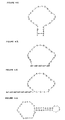
- closed oligonucleotides are shown in Figures 1A to 1C.
- Figure 1A shows examples of structure closed antisense oligonucleotides.
- Figure 1B shows examples of the structure of closed sense oligonucleotides.
- the Figure 1C shows a mixed molecule that can exert a sense and antisense effect.
- the number of unit nucleotides making up the closed oligonucleotides can vary within wide proportions especially between 10 and 200, but this number will advantageously included, for information only, between a twenty and fifty nucleotides, depending on the closing structure (circular, lasso structure, balloon, double-stranded structure, etc ... see below descriptions of the different structures), uses (anti-sense anti-RNA molecule, anti-sense anti-DNA molecule, anti-protein sense molecule), the type of oligonucleotide -deoxy or ribonucleotide- (simple antisense or antisense ribozymic, etc.) and the targets considered ( messenger RNA, Premessage RNA, specific secondary structure, etc.).
- the closed oligonucleotides which are the subject of the present invention are preferably composed by a sequence of bases comprising adenine (A), guanine (G), cytosine (C), thymine (T) and uracil (U), general formulas presented in figure 1D.
- Closed oligonucleotides may also contain rare nucleotides (Inosine, I, or rI for example) or modified nucleotides, either in series deoxyribo- or in ribo- series.
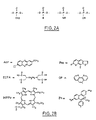
- Closed oligonucleotides may contain nucleotides modified at the phosphodiester bond, for example, according to the few formulas presented in Figure 2.
- closed oligonucleotides may have one or more of the well-known groupings that are phosphorothioates, methylphosphonates, phosphorodithioates, phosphoselonates, phosphoroamidates, alkyl phosphotriesters.
- closed antisense oligonucleotides preferably include natural nucleotides, interconnected by phosphodiester bonds not changed.
- Closed oligonucleotides may contain reactive nucleotides, capable of establishing links with the sequence of the target molecule complementary to the oligonucleotide.
- closed oligonucleotides may carry reactive groups grafted onto the nucleotides, as for example of psoralen groups, or other agents of bridging or intercalating agents which may react with the sequence of the target molecule complementary to the oligonucleotide (see some non-exhaustive examples shown in Figure 2).
- Closed antisense oligonucleotides may also include, among the nucleotides that are part of the closed structure, an RNA sequence exhibiting activity Catalytic. These circular oligonucleotides will thus be circular ribozymes, with joined ends, comprising, in addition to the catalytic sequence which can be any RNA sequence capable of causing cleavage or modification in a target RNA sequence, a sequence of antisense type, complementary to the targeted sequence, and which may consist of either RNA, DNA or a DNA / RNA mixture ( Figure 3).
- oligonucleotides closed coupled with molecules allowing to increase their intra-cellular penetration and in particular lipophilic group, polypeptides or proteins.
- oligonucleotides have the characteristic main not to offer a substrate for 3 'exonucleases and 5 '. To acquire this property, the most simple is a circular oligonucleotide, formed of a succession of nucleotides linked together by bonds phosphodiesters as shown above, and presenting or not intracatenary pairings ( Figures 1A to 1C and figure 4).
- lasso molecules composed of deoxy or ribonucleotide residues and closed either by a link involving either the 3 'end, either the 5 ′ end of the molecule (FIGS. 1A to 1C and Figure 4B).
- the linear part may have only one nucleotide residue, or may include a nucleotide side chain of several residues.
- one of the nucleotides terminals of the oligonucleotide is coupled to a nucleotide internal, by a link that can be made with the base or with sugar, or with the phosphodiester group.
- Such oligonucleotides have a free end and a blocked end.
- the free end may be subject to a nucleolytic degradation.
- the 5 'and 3' ends of the oligonucleotides are not equivalently sensitive to degradation, the 3 'end being the most sensitive.
- a circular lasso oligonucleotide showing only the free 5 'end is largely protected against degradation.
- exonucleases can degrade the linear part of the lasso will be stopped at the point of connection. At this point, the oligonucleotide has become totally resistant to 3 'and 5' exonucleases, whatever either the free end or initially connected.
- Such molecules in lasso can contain residues natural or modified nucleotides as stated above in the previous paragraph.
- the general structure of molecules in lasso is presented in figure 1A and figure 4B.
- oligonucleotides closed in a balloon are closed by a chemical bond corresponding to an intercatenary bypass made between two internal nucleotides.
- This bypass can be carried out using a reactive photoactivatable nucleotide for example- or using a reagents exogenous establishing a link between two paired regions of the oligonucleotide.
- a balloon oligonucleotide does not presents that a limited number, or not, of substrate sites for exonucleases.
- Another family also forms part of the invention circular oligonucleotides closed in on themselves by through a non-nucleotide molecule.
- These closed oligonucleotides have some of their molecular structure corresponding to a DNA sequence or RNA in which the bases are unmodified, and whose first nucleoside unit is connected to the last by a bond involving a molecule structure any.
- antisense oligonucleotides can be circularized by means of a coupling between the terminal nucleotides by a protein structure or polypeptide that will be linked to nucleoside units terminal by any type of coupling (Figure 4).
- oligonucleotides circulars comprising a nucleotide part and a protein part.
- the insertion of this protein part can be done by various coupling methods.
- Fraction protein can be designed to increase the effectiveness of nucleotide molecule by different mechanisms.
- the part protein may, for example, promote internalization of oligonucleotide in cells, allow targeting possibly some cells by choosing a protein determinant used.
- Protein components or peptides used in circular oligonucleotides of this type could also be molecules of signaling, allowing intra-cellular targeting of oligonucleotides. For example, we could use nuclear targeting peptides from proteins natural cellular or viral.
- This aspect of the invention therefore consists in proposing oligonucleotides, of structure new, and containing compounds capable of reacting specifically with particular receptors for the membrane surface of the cell, to be internalized by said cells, and to exercise their biological activity at inside the cell.
- oligonucleotides circulars closed on themselves by grouping lipophilic or chains containing lipophilic radicals and favoring the cellular internalization of these molecules.
- oligonucleotides closed associated by covalent or non-covalent couplings to liposomal-type packaging structures or any other lipoprotein or lipopolysaccharide structure are also part of the invention.
- oligonucleotides circulars closed on themselves by a link phosphodiester, but additionally comprising one or more internal bonds produced by reactive agents belonging to the structure of the molecules itself or brought in exogenously.
- These molecules will have the resistance characteristics to exonucleases from circular oligonucleotides and offer in addition, particular secondary conformations, which may be adapted to the recognition of particular sites on targets which themselves have conformations particular secondary or tertiary, that these targets are nucleic acids or any other structure cellular or viral likely to have an affinity elective and selective towards a structural polynucleotide primary and secondary special.
- circular or closed antisense oligonucleotides capable of forming a triple helix with the target RNA.
- the formation of a triple helix makes it possible to stabilize the DNA / RNA interaction between the antisense and the target sequence.
- a circular antisense is a “prodrug” compound with respect to a linear antisense oligonucleotide. The cleavage of a circular oligonucleotide will give rise to a linear oligonucleotide which can exert a classic antisense effect, with delay.
- the compounds according to the invention will contain nucleotide sequences which are not capable of self-pairing are also part of the invention of closed oligonucleotides comprising self-paired regions forming a double-stranded structure of variable length (see FIG. 5) ).
- This double-stranded structure could have several roles, for example that of stabilizing the molecule to allow its circularization, during the synthesis of circular molecules (see below the preparation methods).
- This double-stranded structure may also have an active role, such as that of interacting with proteins having an affinity for this sequence.
- the double-stranded structure could correspond to a binding sequence for protein factors.
- one aspect of the invention is to provide stable natural oligonucleotide molecules which can bind cellular or viral protein factors and therefore interfere with biological processes involving these factors.
- An example of the use of closed oligonucleotides comprising a self-paired region - oligonucleotides intended for such an application will advantageously be simply circular - is the intra-cellular competition with transcription factors.
- the double-stranded portion of the closed oligonucleotide will carry the sequence for fixing the transcription factor, the regulator, the hormonal nuclear receptor which it is desired to trap.
- the interaction between the double-stranded circular oligonucleotide and a transcription factor will result in reducing the intra-cellular availability of this factor, and therefore will modify the regulatory equilibria for which this factor intervenes. If it is a positive transcription factor, exerting a stimulating effect, blocking this factor will result in an inhibition of the genes considered; if it is a negative factor, inhibiting the expression of genes after interaction with cellular DNA, then the expression of these genes will be stimulated.
- closed oligonucleotides, of circular type, of deoxyribo- series and comprising a double-stranded part may interact for therapeutic purposes with any protein factor exhibiting affinity for DNA and the effects of which it is desired to reduce or alter. a given pathological situation.
- closed oligonucleotides advantageously circular, to combine antisense and sense approaches with the aim of greater efficiency.
- This method consists in simultaneously using a closed antisense oligonucleotide directed against the messenger RNA of a transcription factor, and a closed "sense" oligonucleotide comprising a double-stranded structure of sequence corresponding to the site of attachment on the DNA of this transcription factor. .
- Two action levels are therefore targeted simultaneously, in synergy, on the same target molecule, the antisense decreasing the synthesis of this factor and the sense molecule exerting a trap effect on the residual molecules that may remain.
- the combined sense and antisense approaches can be used either to target the same protein, at two different levels of expression and functionality, or to attack two different proteins, with the aim of finding the greatest efficiency in the process.
- This dual approach may involve the use simultaneous of two different molecules, one sense and the other antisense, or to a single molecule closed oligonucleotide like that described in the figure 1 C.
- closed oligonucleotides Another example of the use of closed oligonucleotides is the intra-cellular competition with affinity factors for certain double-stranded RNA sequences. This is the case for certain regulatory proteins interacting with messenger RNAs, in particular with viral messenger RNAs. We can cite, for example, the case of the HIV tat gene product which binds to a double-stranded region at the 5 ′ end of the viral messenger RNA.
- the closed oligonucleotides - circular for example - would comprise a double-stranded part in ribo- series, the rest of the oligonucleotide being composed of nucleotides either in ribo- series or deoxyribo- series.
- the closed oligonucleotides which are the subject of the invention may be used as stabilized molecules for the trapping of protein factors having an affinity for nucleic acids, DNA or RNA, single-stranded or double-stranded, by mimicking both the structure primary (sequence) of affinity sites and possible secondary structures (hairpin structures, cruciform structures for example).
- Such closed oligonucleotides, advantageously circular, comprising a nucleotide sequence recognized by protein factors may also carry reactive groups capable of performing bridging, spontaneous or photoactivatable, with the proteins interacting with them.
- One aspect of the invention is to provide new stable natural oligonucleotides capable of being internalized into cells and then interact with cellular or viral factors with affinity for specific nucleic acid sequences.
- oligonucleotides circulars associated two by two thanks to the complementarities of their sequences, to form a circular structure complete or partial double-stranded (may have non-pairings, in other words "mismatches"), and resistant to exonucleases.
- These oligonucleotides circular double streaks may be composed of natural, rare, artificial, or modified nucleotides, deoxyribo- or ribo- series.
- These oligonucleotides double-stranded flyers could be made up of DNA from form I or form V DNA, i.e. containing type B and Z composite structures. Form I DNA is super-coiled circular DNA, both strands show interlacing.
- Form V DNA is DNA whose complementary strands are not interlaced, that is to say a DNA formed of two complementary strands, side by side.
- Double-stranded DNA can adopt different conformations, A, B or Z.
- the most natural and most common DNA is a straight helix type B, while the less frequent form Z is a left helix, more elongated than form B.
- a structure circular like that described above, comprising two complementary strands not interleaved will include at the both left and right propellers.
- Such double-stranded circular oligonucleotide may be used as a sense agent, to interact with proteins with affinity for a particular sequence which will be present on the oligonucleotide considered.
- Such circular double-stranded oligonucleotide, ribo series in particular, can also be used as immunostimulant in general, and more particularly as an interferon induction agent. Note that this potential immunostimulation function that some RNAs can also be exploited using single-stranded circular oligonucleotides present self-paired double-stranded structures thanks to internal sequence complementarities and taking advantage of the advantage of resistance to exonucleases from circular structure.
- the closed oligonucleotides which are the subject of the invention can be obtained chemically, biologically, or by approaches using combinations of synthetic chemistry and biology techniques molecular.
- Closed oligonucleotides can therefore be prepared, either from linear oligonucleotides, then closed by chemical or biological techniques, either directly in as oligonucleotides chemically, using reaction resulting in the cyclization of the molecule. These two approaches are considered successively below.
- Various methods of chemical synthesis of natural oligonucleotides have been developed and are well known to specialists working in the state of the art.
- one method consists in using a solid support called CPG (controlled pore glass) on which the first nucleoside is covalently fixed by a coupling arm, via its 3'OH end.
- CPG controlled pore glass
- the 5'OH end of the nucleoside is protected by an acid labile di-p-methoxytrityl group.
- This approach using the chemistry of phosphite triesters, and in which 3'phosphoramidite deoxynucleosides are used as synthons is called the phosphoramidite method (Caruthers, 1985). This approach is the most used today and has the advantage of being fully automatic.
- oligonucleotide from a first unit fixed on CPG begins with a deprotection step during which the trityl group is eliminated, then a nucleoside unit activated on its 5 'group is added, the non-reactive products are blocked, then a new deprotection / activation / coupling cycle begins again.
- the addition of a deoxynucleotide is carried out according to the following four steps i) deprotection and elimination of a dimethoxytrityl protective group with the acid, ii) condensation of the resulting product with a 3'-phosphoramidite deoxynucleoside, giving a deoxydinucleoside phosphite triester, iii) acylation, that is to say blocking of the 5'-hydroxyl groups which have not reacted and iv) oxidation of the phosphite triester to phosphate triester.
- the repetition of such cycles leads to the synthesis of oligonucleotides which can reach more than 200 units.
- oligonucleotides that is possible to circularize biologically, using ligation enzymes.
- the oligonucleotides must contain a group terminal 5'P, that the phosphorylation of the 5 'terminal has been carried out chemically or else biologically by using a kinase (preferably the polynucleotide kinase) and ATP or any other phosphate donor.
- 1-1-A linear oligonucleotide can be circularized by establishing a partially double-stranded paired structure to allow the functioning of a ligase, like T4 ligase, using a second oligonucleotide shorter than the previous one, and of sequence complementary to the two ends of the first oligonucleotide.
- the second small oligonucleotide acts adapter and allows the end to end of the two terminal nucleotides of the oligonucleotide to be circularized.
- the action of T4 ligase, or any other enzyme ligation capable of exerting its action on DNA then allows circularization by forming a phosphodiester bond between these two nucleotides.
- This ligation can be done by solution, the two oligonucleotides being mixed in a medium allowing hybridization and ligation in conditions of concentration and suitable temperature to promote intra-catenary circularization and disadvantage the inter-oligonucleotide ligation which can decrease the yield of the circularization reaction proper.
- 1-2-A variant of the process described in (1) consists in circularize the oligonucleotide always using an adapter, but using an oligonucleotide fixed on a support which can be for example nitrocellulose or a derivative, a nylon membrane, a glass support, a polysaccharide structure, or any other support allowing to fix in a covalent way or not covalently a nucleic acid fragment and allowing subsequently the hybridization between this fragment and a oligonucleotide and compatible with the action of a ligase.
- This procedure therefore consists in fixing the oligonucleotide adapter on a support, either by means of a connection covalent, either by non-covalent links.
- the oligonucleotide adapter can be fixed to its support either at the level a terminal nucleotide, directly or by means of an agent coupling, either by a nucleotide located in position internal and carrying a reactive group.
- the scheme of principle of such a method is illustrated in figure 6.
- the advantage of fixing the adapter oligonucleotide is twofold: on the one hand, this fixation carried out under conditions controlled physical (number of molecules fixed per unit reduces the incidence of the formation of concatemers during the hybridization reaction, following of inter-oligonucleotide linkages and, on the other hand, it facilitates the construction of ligation reactors using a lot of times the adapter oligonucleotides for multiple circularization cycles.
- oligonucleotides may be circularized by taking advantage of secondary structures deliberately introduced by providing sequences capable of folding in on themselves by forming partial double-stranded structures.
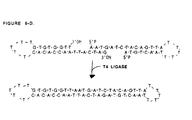
- FIG. 6 illustrates the case of a “dumbbell” oligonucleotide, comprising a linear part forming a loop and comprising the sequence of antisense type, a double-stranded region 9 base pairs long, and a closing sequence composed of T 5 .
- This structure is capable of performing self-pairings, thus giving a molecule capable of being used as a substrate by a ligation enzyme such as T4 ligase.
- the yield of the ligation depends inter alia on the stability of the pairing at the level of the double-stranded structure.
- Several pairing sequences have been the subject of comparative studies and one of the sequences allowing an advantageous circularization yield (of the order of 75%) is indicated in FIG. 6.
- any of the nucleotides can be used to make a closing loop of variable length, we will preferentially use 4 to 8 residues, and mainly either A or T.
- the double-stranded pairing region may comprise either a sequence used only for the formation of the “dumbbell” structure, or a sequence corresponding in part to the target region and potentially displaceable by inter-molecular hybridization.
- the circular oligonucleotides may also be formed by a double-stranded structure closed on itself at each end by a short loop of junction nucleotides. These oligonucleotides could be used for "sense" type approaches such as those described above.
- a typical example of a sense oligonucleotide is illustrated in FIG. 6. This oligonucleotide comprises a paired sequence of 24 nucleotides and two junction loops formed by T 5 . In the example given here, this circular oligonucleotide comprises a double-stranded structure corresponding to the recognition sequence of the hepatocyte transcription factor HNF-1.
- Such an oligonucleotide can be circularized simply by taking advantage of the double-stranded secondary structure formed by the complementary sequences.
- the closure point (that is to say the ends) of the oligonucleotide will be chosen so as to allow the best efficiency of circularization by intra-molecular folding. This point may be centered or more or less distal with respect to the median of the central secondary structure.
- such oligonucleotides can be synthesized not from an intra-molecular reaction, but by an intermolecular reaction, using two linear oligonucleotides folded back on themselves, having a partial double strand structure and generating ends cohesive, can pair with each other (see diagram in Figure 6).
- T4 ligase By action of T4 ligase, it is possible to join the two ends of the long oligonucleotides at the ends of the paired oligonucleotide, even if there are no homologies sequence allowing the formation of a self-pairing at level of the 3 'and 5' distal sequences.
- Such a mechanism results in the formation of an oligonucleotide structure closed circular with a double-stranded part Central.
- RNA T4 ligase which is capable of spontaneously performing ribo- or oligonucleotide circularization in series deoxyribonucleic. This enzyme allows, in the presence of ATP, to close linear oligonucleotides and convert them to circular oligonucleotides. It is therefore possible, without particular matrix, and in the absence of any adapter oligonucleotide to thereby circularize oligoribonucleotides.
- RNA T4 ligase will be used advantageously for circularizing oligonucleotides antisense with ribozymic activity, or circularize "sense" RNAs, such as sequences of interaction with HIV tat type transactivators.
- thermostable enzymes can be advantageously used, originating from heat-resistant organisms, making it possible to carry out successive cycles of ligation / denaturation / hybridization.
- reagents such as carbodiimide or cyanogen bromide could be used.
- the preparation of closed oligonucleotides for the purpose of pharmacological application, whether for animal experiments or for the preparation of pharmaceutical compounds, will advantageously use chemical methods allowing the preparation of the large quantities required.
- routes can be used, in particular one can either synthesize linear oligonucleotides by the usual routes which will then be closed by chemical ligation or by a link involving terminal nucleotides, or synthesize oligonucleotides which can be the subject of a cyclization directly in the last stage of chemical synthesis.
- cyclic oligonucleotides for the purpose of making antisense or sense molecules resistant to exonucleases, any synthesis process allowing the elongation of a polynucleotide chain from the two 3 'ends and 5 ', and the union of these two ends after completion of the extension of the chosen sequence.
- polypeptide sequence having to have a mass sufficient to be recognized by cellular receptors and allow better internalization or better addressing.
- oligonucleotides in particular circular, subject of the invention described here may be used in all cases where it will be advantageous to have of an oligonucleotide exhibiting increased resistance to exonucleases relative to a linear oligonucleotide.
- the closed oligonucleotides may in particular be used as antisense or sense agents to act in a way specific on the transcription or translation of protein (s) whose expression level is to be modulated for research or therapeutic purposes.
- the compounds according to the invention are usable as a therapeutic agent, in particular as anti-viral or anti-cancer agent, in particular in pharmaceutical compositions for external topical use, or for systemic use.
- closed oligonucleotides natural and circular in particular, will find application areas particularly suitable in the field of dermatology because of the accessibility of the targets to be treated, and the minor or non-existent toxicity of these compounds. All the dermatological affections, being able to raise from a mechanism of genetic dysfunction for which one will be able to identify an etiological factor, to know the sequence of the gene of it, and / or of the messenger RNA will allow to consider potentially an antisense approach, -or even a "sense" approach in certain favorable cases.
- inflammatory diseases such that atopic dermatitis or lupus erythematosus, keratinization diseases such as ichthyosis and psoriasis, and tumor diseases like melanoma or cutaneous T lymphoma.
- oligonucleotides circular antisense applied to dermatology could be directed against RNA messengers of mediators of inflammation like interleukins, against RNA protein messengers involved in disorders of proliferation of epidermal cells, or against Messenger RNA coding for proteins involved possibly in phenotypic skin aging, such as collagenase, elastase, transglutaminase.
- closed oligonucleotides could for example be used as antiviral, antisense, or sense agents, whether for topical (dermatological) indications or for systemic indications.
- such oligonucleotides could be used as anti-herpetic agents (HSV 1 and HSV 2, CMV, EBV), as anti-papillomavirus agents (cutaneous, genital, laryngeal or other HPV), as anti-hepatitis agents (HBV, HCV, HDV), as anti-HIV agents (HIV-1 and HIV-2), as anti-HTLV agent (HTLV-1 or HTLV-2), etc.
- circular oligonucleotides could also be used as agents for suppressing the expression of certain cellular proteins directly responsible for or involved in the etiology of cell proliferation and differentiation diseases.
- these circular oligonucleotides could be directed against the expression of hyper-expressed or uncontrolled cellular oncogenes expressed in tumor cell types (RAS, ERB, NEU, SIS, MYC, MYB, etc.).
- these natural circular oligonucleotides resistant to serum exonucleases could be used as an antisense agent directed against RNA messengers of oncogenes expressed in leukemic cells and involved in their proliferation, or as "sense” agents directed against proteins with affinity for certain DNA sequences and expressed at pathological levels in some of these proliferative diseases.
- the closed, circular oligonucleotides may be used in the context of "ex vivo" applications.
- oligonucleotides in in particular, may be encapsulated in liposomes, nanoparticles, LDL particles, or any other type of micro-sphere allowing adequate conservation, and promoting targeting. Oligonucleotide molecules closed, circular for example, could also be associated with cationic surfactants. It is well obvious that these few examples are neither exhaustive nor limiting.
- Closed oligonucleotides, in particular circular, forming the subject of the invention described here, are therefore capable of being included in all kinds of pharmaceutical preparations, at varying concentrations according to the indications.
- the dermatological applications mentioned above will require the preparation of creams, solutions, emulsions, lotions, gels, sprays, powders, aerosols, etc., prepared by combining the circular or closed oligonucleotide of selected sequence with the usual pharmaceutical components used in the composition of these products.
- the circular or closed oligonucleotides may be combined with all kinds of preservatives, such as methyl or propyl hydroxybenzoate, for example benzalkonium chloride, and other stabilizing, emulsifying, dispersing, suspending, solubilizing, coloring, thickening, fragrance agents, etc.
- preservatives such as methyl or propyl hydroxybenzoate, for example benzalkonium chloride
- other stabilizing emulsifying, dispersing, suspending, solubilizing, coloring, thickening, fragrance agents, etc.
- A-Examples of closed antisense oligonucleotide structures A-Examples of closed antisense oligonucleotide structures.
- B-Examples of closed sense oligonucleotide structures B-Examples of closed sense oligonucleotide structures.
- This kind of structure can have one or more links between any of the pairs of paired nucleotides forming the tail of the balloon.
- oligonucleotides c7 is that described in Figure 6C; oligonucleotides c6 and c8 are composed of different sequences but which can adopt the same type of structure as c7, that is to say a closed structure with a central double-stranded part.
- the conditions for ligation of oligonucleotides c6, c7 and c8 are those described in "Properties and advantages of closed oligonucleotides -1".
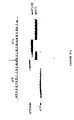
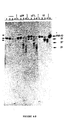
- 300 ng of the closed radioactive c7 oligonucleotide (F) or 160 ng of the linear c7 oligonucleotide (L) were incubated with increasing amounts of a non-complementary oligonucleotide (lanes a to g) or of an oligonucleotide 42- mer (12; tracks h to n) complementary to 21 nucleotides of the large loop of c7 ( Figure 6C).
- the amount of cold oligonucleotide added is 0 (tracks a and h), 30 ng (b and i), 60 ng (c and j), 150 ng (d and k), 300 ng (e and 1), 750 ng (f and m) or 1500 ng (g and n).
- the products were analyzed on a 20% polyacrylamide non-denaturing gel.
- the arrows indicate the positions of the closed (F), linear (L) and c7L / 12 and c7F / 12 c7 oligonucleotides.
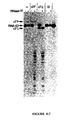
- the 43-mer RNA comprises 27 bases complementary to the 21 nucleotides of the large loop plus 6 nucleotides of the self-paired region of c7F ( Figure 6C); it is also complementary to 37 bases of the oligonucleotide 42-mer 12.
- the products are analyzed on 20% polyacrylamide gel / 7M urea directly (lane 1) or after 3 minutes incubation (lane 3) or 30 minutes (lane 4) in the presence of nuclease S1 or 30 minutes in the absence of nuclease S1 (lane 2) under the conditions described in "Properties and advantages of closed oligonucleotides-4-2".
- the left part of the figure (-) shows the results obtained with RNA 43-mer incubated alone.
- Lane 5 43-mer RNA which has not undergone any treatment after transcription.
- the arrows indicate the positions of the RNA 43-mer, closed c7 (F), linear c7 (L) oligonucleotides as well as those of the protected RNAs (RNA 37, 27 and 21).
- RNA 43, c7F, C7L and 12 oligonucleotides tested (RNA 43, c7F, C7L and 12), as well as the hybridization conditions, are the same as those described in FIG. 8B.
- the reaction products were incubated in the absence (-) or presence (+) of RNase H and were analyzed on 20% polyacrylamide gel / 7M urea under the conditions described in "Properties and advantages of closed oligonucleotides -5 ".
- the arrows indicate the positions of the RNA 43-mer, closed c7 (F) or linear c7 (L).
- HNF-1C1, C2, C3 represent 3 different preparations of the sense oligonucleotide HNF-1 C.
- the reaction mixtures are extracted with phenol / chloroform / isoamilic alcohol, precipitated with absolute ethanol, washed with 80% ethanol and dried.
- the ligation products are then separated from the non-ligated oligonucleotide by denaturing electrophoresis in 20% polyacrylamide gel / 7 M urea.
- the positions of the oligonucleotides can be observed directly by fluorescence interference by irradiating at 212 nm the gel placed on a plate containing a chromophore fluorescent with ultraviolet rays, or else by autoradiography.
- the ligated monomeric oligonucleotide is characterized by a slowed migration compared to its non-ligated counterpart ( Figure 7A and B).
- the bands corresponding to the closed monomeric oligonucleotide and its unrelated linear counterpart are excised from the gel, and the DNA is isolated by standard techniques for extracting polyacrylamide gels.
- the yield of formation of the closed monomeric oligonucleotide is of the order of 65 to 75%.
- the products of the ligation reaction can be analyzed without prior purification, directly after inactivation of the DNA ligase by heating the ligation medium for 2 minutes at 90 ° C.
- oligonucleotides antisense must be able to hybridize with their target in satisfactory stability conditions.
- hybridization between closed oligonucleotides and polynucleotides carrying complementary sequences either in ribo- series or in deoxyribo- series.
- 300 ng of closed circular oligonucleotide, prepared and purified as described above, are incubated - or 160 ng of the linear homologous oligonucleotide as a control - with a cold oligomer long 42 nucleotides comprising a sequence of 21 nucleotides complementary to 21 bases forming the large loop in the closed structure (see the sequence of Figure 6C)
- the molar ratios between the labeled oligonucleotide and the cold complementary oligonucleotide vary from 10: 1 to 1: 5 Hybridization takes place for 1 hour at 37 ° C in 1X SSC (150 mM NaCl, 15 mM Na 3 citrate, pH 7.0).
- HSV-1 Herpes Simplex virus type 1
- oligonucleotide GT the sequence of which is given below has been synthesized, circularized or not, and used in experiments described here, either in linear form or in circular form.
- the oligonucleotide GT was synthesized in the 3'P form, and circularized by positioning the 5 'and 3'P ends by hybridization with the partially sequence oligonucleotide following additional: 5 'CCA CGC CG 3'
- the cells (Vero ATCC cells -passage 121- cultured in medium (Gibco) MEM supplemented with 5 or 10% of FCS, L-glutamine, non-essential amino acids and penistrepto) are subcultured the day before infection with a density of 5.10 4 cells per well of 2 cm 2 . 16 to 24 hours later, the cells are infected with RSV1F at a multiplicity of infection of 3 pfu / cell in the presence or in the absence of oligonucleotides.
- the oligonucleotides are diluted in culture medium without serum in a 2X concentration relative to the final concentration desired to be added in a volume of 50 ⁇ l.
- the virus is also added in a volume of 50 ⁇ l, 5 min after the oligonucleotides.
- the cells are therefore treated in a volume of 100 ⁇ l (50 ⁇ l oligonucleotides + 50 ⁇ l virus) for one hour at 37 ° C. with gentle stirring every 15 min.
- the oligonucleotides can be added several hours before infection. After 1 hour of incubation, the medium is aspirated and 500 ⁇ l of complete medium are added to the cells. Incubation is continued for 24 hours before being stopped by freezing the plates in liquid nitrogen. All inhibition measurements are carried out in duplicates or triplicates.
- the viruses are recovered directly from the culture medium after 3 rapid cycles of liquid nitrogen freezing / thawing at 37 ° C. They are then diluted in a serum-free medium to carry out the actual titration.
- the indicator cells are subcultured the previous day in complete medium at the rate of 10 5 cells / well of 2 cm 2 . The next day, the medium is aspirated and 100 ⁇ l of these different dilutions / well are deposited. After a one hour incubation at 37 ° C with shaking every 15 min, the medium is aspirated and the cells are covered with complete medium containing 1.2% methyl cellulose (final concentration of serum 2.5%) for 3 days at 37 ° C.
- the medium is eliminated, the cells are fixed with PBS-10% formalin (37% solution) for 20 min and then stained with 2% crystal violet (in PBS-20% ethanol) for 20 min. The plates are then rinsed and the areas are counted by transparency on the X-ray viewer. Titrations are performed in duplicate for each point. The inhibition calculations are carried out relative to the viral titers observed in the absence of oligonucleotide.
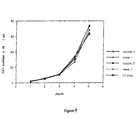
- FIG. 9 presents the results of cell growth measurement (Vero cells) in the presence of various oligonucleotides, linear or circular, in comparison with the normal growth of the cells alone.
- the oligonucleotides were used at a concentration of 20 ⁇ M. The results show that the growth curves are superimposed. Linear or circular oligonucleotides do not appear to have any toxic effects on cell growth.
- the antisense are added at the time of infection, while in B, they are introduced in the middle 4 hours before infection.
- the results presented in figure 10 show that circular antisense oligonucleotides inhibit viral multiplication. The inhibition is 30% at 2 ⁇ M, and reaches 65% at 5 ⁇ M. At these low concentrations, the circular oligonucleotides have an effect higher inhibition than that of the oligonucleotide linear.
- the experimental conditions allowing efficient ligation of the oligonucleotide whose sequence is given in FIG. 5-B are similar to those described in Example 1.
- the ligation products are then analyzed by denaturing electrophoresis in 12% polyacrylamide gel / 7M urea.
- oligonucleotide For the preparation of labeled closed sense oligonucleotides used for the delay gel tests, the conditions are as follows: 22n moles of oligonucleotide are labeled in 5 'with gamma-32 ATP (specific activity 2-5x10 8 cpm / ⁇ g), 50mM Tris HCl pH7.8, 10mM MgCl2, 20mM DTT, 1mM ATP, 1mM bSA and 400 units of T4 DNA ligase in a volume of 10 ⁇ l. Incubation takes place for 2 hours at 16 ° C.
- the ligation products are purified by denaturing electrophoresis in polyacrylamide gel of 12% / 7M urea, the bands corresponding to the closed oligonucleotide are detected by excised autoradiography of the gel and the DNA is isolated by conventional techniques of gel extraction. polyacrylamide.
- the products of the ligation reaction are used without prior purification, after inactivation of the DNA ligase by heating the ligation medium for 2 minutes at 90 ° C. extraction with phenol / chloroform / isoamilic alcohol, precipitation with alcohol absolute in the presence of 20 ⁇ g of glycogen as a trainer and 80% alcohol wash
- the "sense" oligonucleotides exhibit resistance to nucleolytic degradation when incubated in presence of serum.
- the comparisons made between the resistance of circularized oligonucleotides and linear double-stranded oligonucleotides give the same results than those presented in figure 7-C.
- closed oligonucleotides have a higher resistance than non-oligonucleotides closed.
- the half-life time of sense oligonucleotides closed is at least a factor of 10 greater than that of unclosed double-stranded linear oligonucleotides, with free 3 'and 5' ends.
Landscapes
- Health & Medical Sciences (AREA)
- Life Sciences & Earth Sciences (AREA)
- Engineering & Computer Science (AREA)
- Chemical & Material Sciences (AREA)
- Genetics & Genomics (AREA)
- Organic Chemistry (AREA)
- General Health & Medical Sciences (AREA)
- Biomedical Technology (AREA)
- Molecular Biology (AREA)
- Medicinal Chemistry (AREA)
- Veterinary Medicine (AREA)
- Pharmacology & Pharmacy (AREA)
- Bioinformatics & Cheminformatics (AREA)
- Animal Behavior & Ethology (AREA)
- Public Health (AREA)
- Zoology (AREA)
- Wood Science & Technology (AREA)
- General Engineering & Computer Science (AREA)
- Biotechnology (AREA)
- Chemical Kinetics & Catalysis (AREA)
- Nuclear Medicine, Radiotherapy & Molecular Imaging (AREA)
- General Chemical & Material Sciences (AREA)
- Microbiology (AREA)
- Biochemistry (AREA)
- Biophysics (AREA)
- Physics & Mathematics (AREA)
- Epidemiology (AREA)
- Plant Pathology (AREA)
- Virology (AREA)
- Communicable Diseases (AREA)
- Immunology (AREA)
- Oncology (AREA)
- Pharmaceuticals Containing Other Organic And Inorganic Compounds (AREA)
- Medicines That Contain Protein Lipid Enzymes And Other Medicines (AREA)
- Saccharide Compounds (AREA)
- Medicines Containing Plant Substances (AREA)
- Measuring Or Testing Involving Enzymes Or Micro-Organisms (AREA)
- Preparation Of Compounds By Using Micro-Organisms (AREA)
- Investigating Or Analysing Biological Materials (AREA)
- Medicines Containing Antibodies Or Antigens For Use As Internal Diagnostic Agents (AREA)
Description
Le terme "oligonucléotide" est utilisé de façon générale pour désigner un polynucléotide en série ribo- ou désoxyribo-. Lorsqu'il sera question qu'une propriété particulière liée à l'utilisation d'une série désoxyribo- ou d'une série ribo-, on utilisera la dénomination complète oligodésoxyribonucléotide ou oligoribonucléotide. Un oligonucléotide peut être monocaténaire, c'est-à-dire ne comporter qu'un alignement de nucléotides, non appariés à un autre chaíne, ou bien être bicaténaire, c'est à dire comporter des nucléotides appariés à une autre chaíne polynucléotidique Deux oligonucléotides complémentaires forment une structure bicaténaire. Un oligonucléotide monocaténaire peut cependant présenter des régions bicaténaires par appariements intra-caténaire entre séquences complémentaires portées sur le même brin.
Le terme hybridation utilisé ici signifie la formation de liaisons hydrogènes entre des paires de bases complémentaires, la guanine et la cytosine formant trois liens hydrogènes, et l'adénine et la thymine en formant deux.
Les oligonucléotides antisens sont sensibles aux dégradations nucléasiques, et principalement à l'action des exonucléases. Les nucléases se trouvent dans tous les compartiments -cellulaires et extra-cellulaires, en particulier dans le sérum- et provoquent une dégradation rapide de ces molécules. Une utilisation pharmacologique de molécules antisens implique la résolution de ces problèmes de dégradation afin d'arriver à une pharmacocinétique satisfaisante et donc à une pérennisation suffisante des effets de ces molécules. De nombreuses modifications chimiques permettent aux oligonucléotides antisens de devenir résistants aux nucléases. Certaines modifications affectent directement la structure ou la nature de la liaison phosphodiester (méthylphosphonates, phosphorothioates, oligonucléotides alpha, phosphoramidates pour citer quelques exemples), d'autre consistent en l'addition de groupements de blocage aux extrémités 3' et 5' des molécules (Perbost et al., 1989; Bertrand et al., 1989; Bazile et al., 1989; Andrus et al., 1989; Cazenave et al., 1989; Zon, 1988; Maher and Dolnick, 1988; Gagnor et al., 1987; Markus-Sekura, 1987).
Pour accroítre l'efficacité des interactions entre un oligonucléotide et sa cible, on peut ajouter à une extrémité de l'oligonucléotide antisens un groupement intercalant (acridines par exemple). Enfin, on peut ajouter aux oligonucléotides antisens des groupements réactifs (agents alkylants, psoralènes, Fe-EDTA par exemple) capables de provoquer des coupures ou des altérations chimiques définitives au niveau de la cible (Sun et al, 1989; Helene, 1989; Durand et al., 1989; Sun et al., 1988; Helene and Thuong, 1988; Verspieren et al., 1987; Sun et al., 1987; Cazenave et al., 1988, 1987; Le Doan et al., 1987; Toulme et al., 1986; Vlassov et al., 1986).
Le dernier type de modification classique des oligonucléotides antisens consiste en l'addition de groupements modifiant la charge et/ou l'hydrophilie des molécules afin de faciliter leur passage trans-membranaire (Kabanov et al., 1990; Degols et al. 1989; Stevenson et al., 1989; Leonetti et al., 1988).
Toutes ces modifications peuvent évidemment être combinées entre elles.
L'utilisation de logiciels de prédiction de structures secondaires permet de prévoir des degrés d'accessibilité théoriques et donc d'orienter le choix de cibles pour des oligonucléotide antisens. Globalement, les régions les plus utilisées comme cibles sont les sites de démarrage de la traduction (région de l'AUG initiateur) ainsi que les sites d'épissage (jonctions SD/SA). De nombreuses autres séquences n'ayant pas de fonctionnalités particulières et non engagées dans des appariement intra-moléculaires se sont avérées également efficaces comme cible pour des oligonucléotides antisens (voir les exemples cités plus loin).
- l'interaction entre l'ARN messager et un oligonucléotide antisens complémentaire peut créer une barrière physique interdisant la fixation et/ou la progression de protéines ou de complexes protéiques nécessaire à la traduction, à la maturation, à la stabilisation ou au transport de l'ARN messager. Ce blocage physique aboutira finalement à une inhibition de l'expression de l'ARN messager ciblé.
- l'hybridation entre un ARN messager et un oligodésoxyribonucléotide antisens va créer un substrat pour la RNase H, enzyme présent dans toutes les cellules eucaryotes. La RNase H est un enzyme qui dégrade spécifiquement l'ARN lorsqu'il est hybridé à de l'ADN. L'hybridation d'un oligonucléotide antisens à un ARN cible aboutira donc à la coupure de cet ARN cible à l'emplacement de cette hybridation, et donc à son inactivation définitive.
- Par ailleurs, comme indiqué plus haut, les oligonucléotides antisens peuvent comporter des groupement réactifs capables de produire directement des dommages irréversibles dans la molécules d'ARN cible.
Avec des ribozymes, on peut cliver in vivo l'ARN messager codant, pour le gène marqueur CAT (Cameron and Jennings, 1989), inhiber le processus de maturation de l'ARN messager d'histone (Cotten et al.1989; Cotten and Birnstiel, 1989) ou protéger partiellement la cellule contre l'infection par HIV-1 (Sarver et al., 1990).
L'utilisation thérapeutique des oligonucléotides se heurte cependant à plusieurs problèmes de type physiologiques, en particulier celui de la délivrance intracellulaire de ces molécules et celui de leur sensibilité à la dégradation nucléolytique. L'utilisation de dérivés modifiés permet de surmonter le problème de la sensibilité aux nucléases, mais introduit un nouveau problème, celui de la toxicité éventuelle des modifications chimiques introduites dans la molécule.
L'utilisation des oligonucléotides antisens modifiés pose en effet des problèmes de nature toxicologiques. Si certaines des modifications sont réputées plutôt neutres, la plupart ne sont pas dénuées de toxicité potentielle. Des oligonucléotides antisens modifiés chimiquement peuvent présenter une toxicité à plusieurs niveau, soit directement par des effets de la molécule entière, soit indirectement via les effets des produits de dégradation. Des nucléotides porteurs de modifications chimiques, et présents dans une cellule à une concentration élevée peuvent ainsi présenter une toxicité -et plus particulièrement une génotoxicité- non négligeable au plan pharmacologique.
Par exemple, de nombreux problèmes soulevés par l'emploi d'oligonucléotides antisens modifiés, en particulier des effets anti-viraux non séquence-spécifiques, semblent bien être dus à la nature de certaines des modifications chimiques introduites dans les oligonucléotides antisens pour les rendre résistant aux nucléases.
Il est établi que ce sont les exonucléases qui sont la principale cause de dégradation des oligonucléotides antisens dans le sérum et dans la cellule. Plus particulièrement, il semble que les exonucléases s'attaquant à l'extrémité 3'OH soient surtout à incriminer dans ce phénomène.
Des modifications apportées à la structure des extrémités des oligonucléotides antisens peuvent les protéger, bloquer les activités des exonucléases, et conférer aux oligonucléotides une stabilisation accrue.
Des exemples d'oligonucléotides fermés sont présentés dans les figures 1A à 1C.
De façon générale, on peut également dire qu'un antisens circulaire est un composé "prodrug" par rapport à un oligonucléotide antisens linéaire. La coupure d'un oligonucléotide circulaire donnera naissance à un oligonucléotide linéaire qui pourra exercer un effet antisens classique, avec retard.
Un exemple de l'utilisation d'oligonucléotides fermés comportant une région auto-appariées -des oligonucléotides destinés à une telle application seront avantageusement circulaires simplement- est la compétition intra-cellulaire avec des facteurs de transcription. Dans ce cas, la partie bicaténaire de l'oligonucléotide fermé portera la séquence de fixation du facteur de transcription, du régulateur, du récepteur nucléaire hormonal que l'on désire piéger. L'interaction entre l'oligonucléotide circulaire bicaténarisé et un facteur de transcription va aboutir à réduire la disponibilité intra-cellulaire de ce facteur, et donc va modifier les équilibres de régulation pour lesquels ce facteur intervient. S'il s'agit d'un facteur de transcription positif, exerçant un effet de stimulation, le blocage de ce facteur aboutira à une inhibition des gènes considérés; s'il s'agit d'un facteur négatif, inhibant l'expression de gènes après interaction avec l'ADN cellulaire, alors l'expression de ces gènes sera stimulée. De façon générale, les oligonucléotides fermés, de type circulaire, de série désoxyribo- et comportant une partie bicaténaire pourront interagir dans des buts thérapeutiques avec tout facteur protéique présentant de l'affinité pour l'ADN et dont on désire réduire ou altérer les effets dans une situation pathologique donnée.
Il est également envisager d'utiliser des oligonucléotides fermés, avantageusement circulaires, pour combiner des approches antisens et sens dans un but de plus grande efficacité. Ce procédé consiste à utiliser simultanément un oligonucléotide antisens fermé dirigé contre l'ARN messager d'un facteur de transcription, et un oligonucléotide "sens" fermé comportant une structure bicaténaire de séquence correspondant au site de fixation sur l'ADN de ce facteur de transcription. Deux niveaux d'action sont donc ciblés simultanément, en synergie, sur la même molécule cible, l'antisens diminuant la synthèse de ce facteur et la molécule sens exerçant un effet de piège sur les molécules résiduelles pouvant subsister. Les approches combinées sens et antisens pourront être utilisées soit pour cibler la même protéine, à deux niveaux d'expression et de fonctionnalité différents, soit pour attaquer deux protéines différentes, dans un but de recherche de la plus grande efficacité du procédé.
De façon générale, les oligonucléotides fermés faisant l'objet de l'invention pourront être utilisés comme molécules stabilisées pour le piégeage de facteurs protéiques présentant une affinité pour les acides nucléiques, ADN ou ARN, monocaténaire ou bicaténaire, en mimant à la fois la structure primaire (séquence) des sites d'affinité et les structures secondaires éventuelles (structures en épingle à cheveux, structures cruciformes par exemple).
De tels oligonucléotides fermés, avantageusement circulaires, comportant une séquence nucléotidique reconnue par des facteurs protéiques pourront également porter des groupements réactifs capables d'effectuer des pontages, spontanés ou photo-activables, avec les protéines interagissant avec eux.
Pour citer un second exemple, une autre approche utilisée pour la synthèse d'oligonucléotides est celle de la chimie des phosphonates (Froehler et al, 1986). Cette approche commence par la condensation d'un désoxynucléoside 3'-H-phosphonate avec un deoxynucléoside couplé à un support de verre de silice. Des cycles de condensation successifs conduisent à la synthèse d'oligonucléotides H-phosphonates. Ces oligonucléotides sont oxydés en une étape pour donner les phosphodiesters.
La région bicaténaire d'appariement pourra comporter soit une séquence utilisée seulement pour la formation de la structure en "haltère", soit une séquence correspondant en partie à la région cible et potentiellement déplaçable par une hybridation inter-moléculaire.
Les conditions expérimentales permettant la circularisation efficace de l'oligonucléotide dont la séquence est donnée en figure 6 sont indiquées précisément plus loin dans la partie expérimentale (voir "Propriétés et Avantages des Oligonucléotides Fermés). Dans le cas de cette séquence, le rendement de circularisation est de l'ordre de 75%.
Cette technique a été utilisée pour préparer les oligonucléotides circulaires dont il est question dans la partie expérimentale
Pourront également être utilisées pour préparer les molécules circulaires faisant l'objet de l'invention tout réactif chimique permettant une ligation chimique. Par exemple, et de façon non limitative, pourraient être utilisés des réactifs tels que le carbodiimide ou le bromure de cyanogène.
Plusieurs voies pourront êtres utilisées, en particulier on pourra soit synthétiser des oligonucléotides linéaires par les voies usuelles que l'on fermera ensuite par ligation chimique ou par une liaison faisant intervenir des nucléotides terminaux, soit synthétiser des oligonucléotides pouvant faire l'objet d'une cyclisation directement en dernière étape de la synthèse chimique.
C'est le cas en particulier des structures en lasso ou l'un des nucléotides terminaux -avantageusement le nucléotide 3' terminal- est couplé à l'un des nucléotides de la partie 5' de l'oligonucléotide. De telles structures pourront être obtenues en utilisant des nucléotides modifiés capables d'établir des pontages avec d'autres parties de la molécule. C'est le cas également des structures en ballon, dans lesquelles un pontage a été établit par tout agent entre deux ou plus de deux nucléotides situés dans les régions terminales de l'oligonucléotide, ces région étant appariés un petit nombre de nucléotides, préférentiellement sur 4 à 10 nucléotides.
C'est le cas également des oligonucléotides qui seront fermés par l'intermédiaire de tout groupement, toute molécule ou macromolécule permettant un couplage des nucléotides terminaux entre-eux, ou entre un nucléotide terminal et un nucléotide interne, et pouvant accroítre l'efficacité du composé en terme de son action intra-cellulaire antisens ou sens. A titre d'exemple, on pourra utiliser pour cycliser les oligonucléotide des polypeptides longs par exemple de 5 à 100 acides aminés, l'enchaínement polypeptidique devant avoir une masse suffisante pour être reconnu par des récepteurs cellulaires et permettre une meilleure internalisation ou un meilleur adressage.
L'utilisation d'oligonucléotides naturels, donc présentant la toxicité la plus réduite, permet d'envisager la possibilité de ce genre d'approche pour des affections graves ou mineures, et même éventuellement pour des utilisations de type cosmétologiques, c'est-à-dire sur peau saine, et dans un domaine d'application ou les toxicités des produits doivent êtres les plus basses possibles.
Ces oligonucléotides circulaires, pourraient également être utilisés comme agents de répression de l'expression de certaines protéines cellulaires directement responsables ou impliquées dans l'étiologie de maladies de la prolifération et de la différenciation cellulaire. Par exemple, ces oligonucléotides circulaires pourraient être dirigés contre l'expression d'oncogènes cellulaires hyper-exprimés ou exprimés de façon incontrôlés dans des types cellulaires tumoraux (RAS, ERB, NEU, SIS, MYC, MYB,etc...).
En particulier, ces oligonucléotides circulaires naturels résistants aux exonucléases sériques pourraient êtres utilisés comme agent antisens dirigés contre des ARN messagers d'oncogènes exprimés dans des cellules leucémiques et impliqués dans leur prolifération, ou bien comme agents "sens" dirigés contre des protéines à affinité pour certaines séquences de l'ADN et exprimées à des niveaux pathologiques dans certaines de ces maladies prolifératives. Dans le cadre du traitement de certaines leucémies, pour des greffes de moelle, les oligonucléotides fermés, circulaires, pourront êtres utilisés dans le cadre d'applications "ex vivo".
En particulier, les applications dermatologiques évoquées plus haut exigeront la préparation de crèmes, solutions, émulsions, lotions, gels, sprays, poudres, aérosols, etc.., préparés en associant l'oligonucléotide circulaire -ou fermé- de séquence choisie, avec les composants pharmaceutiques usuels entrants dans la composition de ces produits. Par exemple, pour des préparations destinées à des applications topiques en dermatologie, les oligonucléotides circulaires, ou fermés, pourront être associés à toutes sortes d'agents de préservation, comme l'hydroxybenzoate de méthyle ou de propyle, le chlorure de benzalkonium par exemple, et à d'autres agents de stabilisation, d'émulsification, de dispersion, de suspension, de solubilisation, de coloration, d'épaississement, de fragrances, etc...
On doit noter que certaines de ces compositions, en particulier les compositions destinées à des applications topiques pour des indications en dermatologie, pourront associer à la fois des oligonucléotides circulaires -ou fermés- avec d'autres principes actifs comme par exemple des agents bactériostatiques, ou antiseptiques, ou antimicrobiens, ou antibiotiques, ou analgésiques, ou antipruritiques, etc...
Tous ces exemples ne sont donnés que pour illustrer le propos et ne sont ni exhaustifs ni limitatifs.
La séquence de l'oligonucléotide c7 est celle décrite dans la Figure 6C; les oligonucléotides c6 et c8 sont composés de séquences différentes mais pouvant adopter le même type de structure que c7, c'est-à-dire une structure fermée avec partie bicaténaire centrale.
Les conditions de ligation des oligonucléotides c6, c7 et c8 sont celles décrites dans "Propriétés et avantages des oligonucléotides fermés -1". 1 µg d'oligonucléotide radioactif provenant de la réaction de ligation (pistes 5 à 8) ou 1 µg d'oligonucléotide linéaire correspondant (pistes 1 à 4) ont été analysés sur gel de polyacrylamide 15%/7M urée sans traitement postérieur (pistes 4 et 5), ou après incubation avec la phosphatase alcaline (pistes 3 et 6), avec l'exonucléase VII (pistes 2 et 7) ou avec la phosphodiésterase I (pistes 1 et 8) dans les conditions décrites dans "Propriétés et avantages des oligonucléotides fermés -2".
L indique la position de migration des oligonucléotides linéaires ; F indique la position de migration des oligonucléotides fermés.
1 µg de l'oligonucléotide radioactif c7 ( dont la séquence est donnée en figure 6C) linéaire (L) ou fermé (F), ont été préparés et purifiés comme décrit dans "Propriétés et avantages des oligonucléotides fermés-1". Après incubation à 37°C pendant les temps indiqués en présence de DMEM contenant 10% sérum de veau foetal, les produits ont été analysés sur gel de polyacrylamide 15%/7M urée dans les conditions détaillées dans "Propriétés et avantages des oligonucléotides fermés-3".
ou circulaires après hybridation avec des oligonucléotides comportant des séquences complémentaires, en série désoxyribo- ou ribo-.
300 ng de l'oligonucléotide radioactif c7 fermé (F) ou 160 ng de l'oligonucléotide c7 linéaire (L) ont été incubés avec des quantités croissantes d'un oligonucléotide non complémentaire (pistes a à g) ou d'un oligonucléotide 42-mer (12; pistes h à n) complémentaire de 21 nucléotides de la grande boucle de c7 (Figure 6C). La quantité d'oligonucléotide froid ajoutée est de 0 (pistes a et h), 30 ng (b et i), 60 ng (c et j), 150 ng (d et k), 300 ng (e et 1), 750 ng (f et m) ou 1500 ng (g et n). Après hybridation dans les conditions décrites dans "Propriétés et avantages des oligonucléotides fermés-4-1", les produits ont été analysés sur gel non dénaturant de polyacrylamide 20%.
Les flèches indiquent les positions des oligonucléotides c7 fermé (F), linéaire (L) et des hybrides c7L/12 et c7F/12.
300 ng de l'oligonucléotide c7 fermé (F) ou linéaire (L), synthétisés et purifiés comme décrit dans la Figure 8A, ou 300 ng d'un oligonucléotide froid 42-mer (12) ont été incubés avec 1 ng d'un ARN long de 43 nucléotides transcrit in vitro et marqué au 32P à haute activité spécifique ("Propriétés et avantages des oligonucléotides fermés-4-2"). L'ARN 43-mer comporte 27 bases complémentaires des 21 nucléotides de la grande boucle plus 6 nucléotides de la région auto-appariée de c7F (Figure 6C); il est aussi complémentaire de 37 bases de l'oligonucléotide 42-mer 12. Après hybridation, les produits sont analysés sur gel de polyacrylamide 20%/7M urée directement (piste 1) ou après incubation de 3 minutes (piste 3) ou 30 minutes (piste 4) en présence de la nucléase S1 ou 30 minutes en absence de nucléase S1 (piste 2) dans les conditions décrites dans "Propriétés et avantages des oligonucléotides fermés-4-2".La partie gauche de la figure (-) montre les résultats obtenus avec l'ARN 43-mer incubé seul.
Piste 5: ARN 43-mer n'ayant subi aucun traitement postérieur à la transcription.
Les flèches indiquent les positions des oligonucléotides ARN 43-mer, c7 fermé (F), c7 linéaire (L) ainsi que celles des ARN protégés (RNA 37, 27 et 21).
Les oligonucléotides testés (RNA 43, c7F , C7L et 12), ainsi que les conditions d'hybridation, sont les mêmes que ceux décrit dans la Figure 8B. Après hybridation, les produits de la réaction ont été incubés en absence (-) ou présence (+) de la RNase H et ont été analysés sur gel de polyacrylamide 20%/7M urée dans les conditions décrites dans "Propriétés et avantages des oligonucléotides fermés-5". Les flèches indiquent les positions de l'ARN 43-mer, c7 fermé (F) ou c7 linéaire (L).
Alternativement, les produits de la réaction de ligation peuvent êtres analysés sans purification préalable, directement après inactivation de la ADN ligase en chauffant le milieu de ligation pendant 2 minutes à 90°C
1 µg d'oligonucléotide provenant de la réaction de ligation ou 1 µg de l'oligonucléotide linéaire homologue, non-circularisé et utilisé à titre de témoin, ont été incubés à 37°C dans un volume de 10 µl de 50 mM Tris HCl pH 7.5, 10 mM MgCl2, 20 mM DTT en présence de 1 unité de phosphatase intestinale de veau (CIP) ou de 1 unité d'exonucléase VII de E.coli pendant 1 heure, ou de 5 x 10⁻⁵ unités de phosphodiestérase I de Crotalus durissus pendant 10 minutes. Après incubation, les produits de la réaction sont analysés sur gel de polyacrylamide 15% dans des conditions dénaturantes. Le résultat du gel est présenté en Figure 7A. On observe sur l'autoradiographie de ce gel que:
- les oligonucléotides fermés circulaires sont résistants à la phosphatase alors que les oligonucléotides linéaires y sont sensibles;
- les oligonucléotides fermés circulaires sont résistants à l'action de l'exonucléase VII alors que les oligonucléotides linéaires y sont sensibles;
- les oligonucléotides fermés circulaires sont résistants à l'action de la phosphodiestérase I alors que les oligonucléotides linéaires y sont sensibles.
1 µg d'oligonucléotide fermé et 1 µg d'oligonucléotide linéaire correspondant, préparés et purifiés après ligation comme décrit dans le paragraphe 1, sont incubés à 37°C dans 10 µl de milieu DMEM contenant 10% de sérum de veau foetal. La cinétique de la réaction est suivie jusqu'à 96 heures, et les prélèvements effectués en fonction du temps analysee sur gel de polyacrylamide 15% en conditions dénaturantes.
L'autoradiographie d'un gel d'analyse de la dégradation sur 24 heures est présenté en Figure 7B.
La figure 7-C est la représentation graphique d'une étude sur 96 heures de la dégradation d'un oligonucléotide linéaire (c7L) en comparaison avec la dégradation d'un oligonucléotide circulaire (c7F) dans les conditions décrites ci-dessus. Ce graphique met en évidence les différences considérables de stabilités entre ces deux types d'oligonucléotides.
Ces expériences permettent de tirer les conclusions suivantes:
- les oligonucléotides linéaires sont rapidement dégradés par les nucléases du sérum. La dégradation intervient dès les premières minutes de l'incubation, et est complète après quelques heures;
- le temps de demie-vie d'un oligonucléotide linéaire normal, non modifié, est très inférieur à 1 heure, cette durée pouvant varier légèrement en plus ou en moins selon les sérums utilisés;
- la dégradation des oligonucléotides linéaires est processive, et on observe l'apparition de produits de dégradation de longueur décroissante, devenant de plus en plus courts en fonction du temps, ce qui indique que la dégradation est principalement le fait d'exonucléases, et en particulier de 3'. exo;
- en revanche, les oligonucléotides fermés sont résistants à la nucléolyse par les enzymes sériques, et moins de 60% de conversion en produits de dégradation est observée même après 96 heures (4 jours) d'incubation à 37°C.
- le temps de demie-vie d'un oligonucléotide circulaire fermé dans le sérum est très supérieur à 24 heures.
On observe sur ce gel que les cinétiques de déplacement des bandes entre les positions monocaténaire et bicaténaire sont identiques pour les oligonucléotides linéaires et les oligonucléotides fermés. Ce résultat signifie que les efficacités d'hybridation entre un oligonucléotide fermé et un ADN complémentaire sont identiques à celles d'un oligonucléotide linéaire avec une séquence complémentaire.
On incube un oligonucléotide fermé, synthétisé et purifié comme décrit plus haut, avec un ARN linéaire long de 43 nucléotides, comportant une séquence de 27 bases complémentaires aux 21 nucléotides de la boucle de l'oligonucléotide fermé et à 6 des nucléotides engagés dans la région auto-appariée (voir la séquence de la Figure 6C). Cet ARN a été transcrit par l'ARN polymérase de T7 à partir d'une matrice synthétique et marqué avec de l'a32P ATP à une activité spécifique élevée (2,3 x 10⁸ cpm/µg). Après transcription l'ARN transcrit est purifié par électrophorèse sur gel de polyacrylamide 15%/7 M urée, elué du gel et précipité à l'éthanol, puis suspendu dans de l'eau.
Après incubation pendant 1 heure à 37°C de 300 ng d'oligonucléotide fermé ou de son homologue linéaire avec 1 ng d'ARN dans 0.15 M NaCl, 0.1 M Hepes pH 7.9, 0.3 mM EDTA, on dilue le mélange de réaction 10 fois dans 50 mM NaCl, 33 mM acétate de sodium pH 4.4 et 30 µM ZnSO4 et on ajoute 4 unités de nucléase S1. On prélève des aliquotes après 3 minutes et 30 minutes de digestion à 37°C et on analyse les produits obtenus sur gel de polyacrylamide 20% dans des conditions dénaturantes. A titre de contrôle, on a également incubé dans des conditions identiques l'ARN radioactif en présence d'un oligonucléotide linéaire complémentaire à l'ARN sur 37 nucléotides.
Les résultats de cette expérience sont présentés en Figure 8B
On observe sur ce gel que:
- L'ARN incubé en l'absence d'oligonucléotide complémentaire ou en présence d'un oligonucléotide non complémentaire, est effectivement non hybridé et complètement digéré par la nucléase S1;
- l'ARN incubé avec un oligonucléotide linéaire contrôle est protégé de la digestion sur une longueur de 37 nucléotides, ce qui correspond à la longueur des séquences complémentaires; après 30 minutes d'incubation le profil de protection se déplace vers des bandes centrées autour de deux bandes majoritaires de 35 et 34 nucléotides, respectivement ce qui peut correspondre à une "respiration" de la molécule bicaténaire;
- l'ARN incubé avec l'oligonucléotide fermé présente un profil de protection caractéristique, avec plusieurs bandes réparties selon une distribution centrées autour d'une bande de longueur de 27 nucléotides correspondant à la bande majoritaire; après 30 minutes d'incubation les bandes protégés majoritaires se situent au niveau de 20 et 21 nucléotides;
- le profil de protection observé lors de l'incubation de l'ARN avec un oligonucléotide de même séquence que l'oligonucléotide circularisé, mais linéaire est identique à celui de l'oligonucléotide circularisé;
- le schéma de protection de l'ARN par l'oligonucléotide fermé montre donc que l'hybridation entre l'ARN et la boucle circulaire de l'oligonucléotide s'effectue sur une longueur optimale de 21 nucléotides, comprenant ainsi la totalité de la boucle. L'ARN complémentaire peut même déplacer les nucléotides appariés dans la partie bicaténaire de l'oligonucléotide pour s'y hybrider.
La structure de l'ARN linéaire utilisé pour cette expérience ainsi que sa préparation ont été décrites au paragraphe ci-dessus.
L'hybridation de 300 ng d'oligonucléotide fermé ou de son homologue linéaire avec 1 ng d'ARN radioactif (2,3 x 10⁸ cpm/µg) comportant une région complémentaire à la partie en boucle de l'oligonucléotide antisens est réalisée dans les conditions décrites dans le paragraphe 4-2. Ces conditions assurent une hybridation de la totalité de l'ARN à l'ADN complémentaire. On dira que la réaction d'hybridation est "conduite" par l'ADN. Après incubation, on dilue 10 fois le volume, en ajustant le tampon d'incubation à 20 mM Tris HCl pH 7.5, 100 mM KCl, 10 mM MgCl2, 0.1 mM DTT, et on ajoute 2 unités de RNase H. On incube à 37°C pendant 20 minutes et on analyse les produits de la réaction comme ci-dessus. Les résultats du gel sont présentés dans la Figure 8C. On observe sur ce gel que:
- l'ARN marqué non hybridé avec une séquence d'ADN complémentaire est complètement résistant à l'action de la RNase H;
- l'ARN marqué, long de 43 nucléotides, hybridé avec un oligonucléotide linéaire contrôle complémentaire à 37 bases de l'ARN devient partiellement sensible à l'action de la RNase H, et donne des produits de dégradation;
- l'ARN marqué hybridé avec un oligonucléotide fermé, dont la boucle est complémentaire à 21 nucléotides de cet ARN, devient très sensible à l'action de la RNase H et donne une série de produits de dégradation dont les longueurs sont compatibles avec les analyses de protections à la S1 décrites dans le paragraphe ci-dessus.

0,25 M MES, pH 7,4
20 mM MgCl2
0,2 M CnBr
Incubation à 4°c pendant 30 minutes. La réaction est arrêtée par addition de 1/10 de volume d'acétate de sodium 3M, et 2,5 volumes d'ethanol absolu, les oligonucléotides précipités et purifiés sur gel de polyacrylamide dénaturant.
Les oligonucléotides sont dilués dans du milieu de culture sans sérum en concentration 2X par rapport à la concentration finale désirée pour être ajoutés sous un volume de 50 µl. Le virus est ajouté également sous un volume de 50 µl, 5 mn après les oligonucléotides. Les cellules sont donc traitées sous un volume de 100µl (50 µl oligonucléotides + 50 µl virus) pendant une heure à 37°C avec agitation douce toutes les 15 mn. Alternativement, les oligonucléotides peuvent être ajoutés plusieurs heures avant l'infection.
Après 1 heure d'incubation, le milieu est aspiré et 500 µl de milieu complet sont ajoutés sur les cellules. L'incubation est poursuivie 24 h avant d'être arrêtée par congélation des plaques dans l'azote liquide.
Toutes les mesures d'inhibition sont effectuées en duplicats ou triplicats.
Les cellules indicatrices sont repiquées la veille en milieu complet à raison de 105 cellules/puits de 2 cm2.
Le lendemain, le milieu est aspiré et on dépose 100 µl ces différentes dilutions/puits. Après une incubation d'une heure à 37°C avec agitation toutes les 15 mn, le milieu est aspiré et les cellules sont recouvertes avec du milieu complet contenant 1,2% de méthyl cellulose (concentration finale de sérum 2,5%) pendant 3 jours à 37°C.
Après 3 jours, le milieu est éliminé, les cellules sont fixées avec du PBS-10% formol (solution à 37%) pendant 20 mn puis colorées au cristal violet 2% (dans PBS-20% éthanol) pendant 20 mn. Les plaques sont ensuite rincées et les plages sont comptées par transparence sur le négatoscope.
Les titration sont effectuées en double pour chaque point.
Les calculs d'inhibitions sont effectuées par rapport aux titres viraux observés en l'absence d'oligonucléotide.
Les résultats montrent que les courbes de croissance sont superposées. Les oligonucléotides linéaires ou circulaires ne semblent présenter aucun effet toxiques sur la croissance cellulaire.
Les produits de ligation sont ensuite analysés, par électrophorèse dénaturante en gel de polyacrylamide de 12%/7M urée.
Pour la préparation des oligonucléotides sens fermés marqués servant aux essais de gel de retard, les conditions sont les suivantes:
22n moles d'oligonucléotide sont marqué en 5' avec du gamma-32 ATP (activité spécifique 2-5x10⁸ cpm/µg), 50mM Tris HCl pH7,8, 10mM MgCl2, 20mM DTT, 1mM ATP, 1mM bSA et 400 unités de l'ADN ligase de T4 dans un volume de 10µl. L'incubation se fait pendant 2h à 16°C. Les produits de ligation sont purifiés par électrophorèse dénaturante en gel de polyacrylamide de 12%/7M urée, les bandes correspondantes à l'oligonucléotide fermé sont détectées par autoradiographie excisées du gel et l'ADN est isolé par les techniques classiques d'extraction de gels de polyacrylamide.
Alternativement, les produits de la réaction de la ligation sont utilisés sans purification préalable, après inactivation de l'ADN ligase par chauffage du milieu de ligation pendant 2 minutes à 90°C extraction au phénol/chloroforme/alcool isoamilique, précipitation à l'alcool absolu en présence de 20µg de glycogène comme entraíneur et lavage à l'alcool 80%



3 f moles de chaque oligonucléotide (activité spécifique 7000 cpm/f moles pour l'oligonucléotide linéaire double brin et 3500 cpm/f moles pour les autres oligonucléotides) sont incubés dans un volume final de 14µl avec 1µg d'un extrait protéique nucléaire de foie dans 10mM Hepes pH 7,9, 50mM KCl, 10% glycerol, 0,1mM EDTA, 0,5mM DTT, 0,5 mM PMSF, 6 mM MgCl2, 6mM spermine en présence de 1,5 µg de poly dI.dC-poly dI.dC et 250 ng d'ADN de sperme de saumon soniqué comme compétiteurs non spécifique. Après 10 mn à 4°C, les mélanges de réaction, ainsi que des contrôles dans lesquels on a omis l'addition des protéines, sont déposés sur un gel natif de polyacrylamide 6%/0,25 x TBE. A la fin de la migration, le gel est fixé dans une solution 10% acide acétique, 10% métanol, transféré sur du papier 3MM, séché et autoradiographié. Le résultat de cette expérience est présenté dans la figure 11.
On observe que:
Anfossi, Giovanni; Gewirtz, Alan M.; Calabretta, Bruno, (1989), Proc. Natl. Acad. Sci. U.S.A., 86, 3379-83
Barbato, S., De Napoli, L., Mayol,L, Piccialli, G, and Santacroce, C. (1989). Tetrahedron, 54, 4523-4536
Bazile D; Gautier C; Rayner B; Imbach JL; Paoletti C; Paoletti J, (1989), Nucleic Acids Res, 17, 7749-59
Bertrand JR; Imbach JL; Paoletti C; Malvy C, (1989), Biochem Biophys Res Commun, 164, 311-8
Cameron FH; Jennings PA, (1989), Proc Natl Acad Sci U S A, 86, 9139-43
Caruthers, M.H. (1985) Sciences, 230, 281
Cazenave C; Chevrier M; Nguyen TT; Helene C, (1987), Nucleic Acids Res, 15, 10507-10521
Cazenave, C.; Stein, C. A.; Loreau, N.; Thuong, N. T.; Neckers, L. M.; Subasinghe, C.; Helene, C.; Cohen, J. S.; Toulme, J. J., (1989), Nucleic Acids Res., 17, 4255-73
Chang, E. H.; Yu, Z.; Shinozuka, K.; Zon, G.; Wilson. W. D.; Strekowska, A., (1989), Anti-Cancer Drug Des., 4, 221-32 Cope, F. O.; Wille, J. J., (1989), Proc. Natl. Acad. Sci. U.S.A., 86, 5590-4
Cotten M. and Birnstiel ML. (1989). EMBO J. 8, 3861-3866.
Cotten M; Schaffner G; Birnstiel ML, (1989), Mol Cell Biol, 9, 4479-87
Degols, G.; Leonetti, J.P.; Gagnor, C.; Lemaitre, M.; Lebleu, B., (1989), Nucleic Acids Res., 17, 9341-50
DDe Vroom E., Broxterman, H.J., Sliedregt, L.A.J., Van der Marel, G.A., Van Boom, J.H., (1988), Nucl. Ac. Res., 16, 4607-4620
Dervan PB, (1986), Science, 232, 464-71
Durand M; Maurizot JC; Asseline U; Barbier C; Thuong NT; Helene C, (1989), Nucleic Acids Res, 17, 1823-1837
Fedor MJ; Uhlenbeck OC, (1990), Proc Natl Acad Sci, 87, 1668-72
Francois JC; Saison-Behmoaras T; Barbier C; Chassignol M; Thuong NT; Helene C, (1989), Proc Natl Acad Sci, 86, 9702-9706
Francois JC; Saison-Behmoaras T; Chassignol M; Thuong NT; Helene C, (1989), J Biol Chem, 264 5891-5898
Francois JC; Saison-Behmoaras T; Helene C, (1988), Nucleic Acids Res, 16, 11431-11440
Francois JC; Saison-Behmoaras T; Thuong NT; Helene C, (1989), Biochemistry, 28, 9617-9619
Froehler, B.C., Ng, P. and Matteucci, M.D. (1986) Nucl. Acid Res., 14, 5399
Gagnor, C., Bertrand, J.R., Thenet, S., Lemaitre, M., Morvan, F., Rayner, B., Malvy, C., Lebleu, B., Imbach, J.L., Paoletti, C., (1987), Nucleic Acids Res., 15, 10419-36
Gao, W., STein, C.A., Cohen, J.S., Dutchmann, G. and Cheng, Y.C., (1988). J. Biol. Chem., 264, 11521-11532
Goodchild, John; Agrawal, Sudhir; Civeira, Maria P.; Sarin, Prem S.; Sun, Daisy; Zamecnik, Paul C., (1988), Proc. Natl. Acad. Sci. U.S.A., 85, 5507-11
Haseloff J; Gerlach WL, (1988), Nature, 334, 585-91
Helene C, (1989) Br J Cancer, 60, 157-60
Helene C; Thuong NT, (1988), Biochem Pharmacol, 37, 1797-1798 Jeffries AC; Symons RH, (1989), Nucleic Acids Res, 17, 1371-7
Jessus C; Chevrier M; Ozon R; Helene C; Cazenave C, (1989), Gene, 72, 311-312
Kabanov, A. V.; Vinogradov, S. V.; Ovcharenko, A. V.; Krivonos, A. V.; Melik-Nubarov, N. S.; Kiselev, V. I.; Severin, E. S., (1990), FEBS Lett., 259, 327-30 Le Doan T; Chavany C; Helene C, (1989) Bull Cancer, 76, 849-52
Leonetti, J.P, Degols, G., Milhaud, P., Gagnor, C., Lemaitre, M., Lebleu, B., (1989), Nucleosides Nucleotides, 8, 5-6, 825-8
Maher, Louis J, III; Dolnick, Bruce J., (1988), Nucleic Acids Res., 16, 3341-58 Marcus-Sekura, Carol J.; Woerner, Amy M.; Shinozuka, Kazuo; Zon, Gerald; Quinnan, Gerald V., Jr., (1987), Nucleic Acids Res., 15, 5749-63
Matsukura, Makoto; Zon, Gerald; Shinozuka, Kazuo;Robert-Guroff, Marjorie; Shimada, Takashi; Stein, C. A.; Mitsuya, Hiroaki; Mitsuya, Hiroaki; Wong-Staal, Flossie; et al., (1989), Proc. Natl. Acad. Sci. U.S.A., 86, 4244-8
Miroshnichenko, O. I.; Ponomareva, T. I.; Tikhonenko, T. I., (1989), Gene, 84, 83-9
Perbost M; Lucas M; Chavis C; Pompon A; Baumgartner H; Rayner B; Griengl H; Imbach JL, (1989), Biochem Biophys Res Commun, 165, 742-7
Perroualt, L., Asseline, U., Rivalle,C., Thuong, N.Y., Bisagni, E., Giovanelli, C., LeDoan, T. and Helene, C. (1990). Nature, 344, 358-361
Sampson, J. R.; Sullivan, F. X.; Behlen, L. S.; DiRenzo, A. B.; Uhlenbeck, O. C., (1987), Cold Spring Harbor Symp. Quant. Biol., 52, 267-75
Sankar, Sabita; Cheah, Keat Chye; Porter, Alan G., (1989), Eur. J. Biochem. 184, 39-45
Sarver, N., Cantin, E.M., Pairoj, S., C., Zaia, J.A., Ladne, P.A., Stephens, D. A. and Rossi, J.J. (1990). Science, 247, 1222-1225.
Sheldon CC; Symons RH, (1989), Nucleic Acids Res, 17, 5679-85 Sheldon CC; Symons RH, (1989), Nucleic Acids Res, 17, 5665-77
Shuttleworth, John; Matthews, Glenn; Dale, Les; Baker, Chris; Colman, Alan, (1988), Gene, 72,1-2, 267-75
Stevenson, Mario; Iversen, Patrick L., (1989), J. Gen. Virol., 70, 2673-82
Sun JS; Asseline U; Rouzaud D; Montenay-Garestier T; Nguyen TT; Helene C, (1987), Nucleic Acids Res, 15, 6149-58
Sun JS; Francois JC; Lavery R; Saison-Behmoaras T; Montenay-Garestier T; Thuong NT; Helene C, (1988), Biochemistry, 27, 6039-6045
Sun JS; Francois JC; Montenay-Garestier T; Saison-Behmoaras T; Roig V; Thuong NT; Helene C, (1989) Proc Natl Acad Sci 86, 9198-9202
Symons RH, (1989), Trends Biochem Sci, 14, 445-50
Symons RH; Hutchins CJ; Forster AC; Rathjen PD; Keese P; Visvader JE, (1987), J Cell Sci Suppl, 7, 303-18
Tortora, Giampaolo; Clair, Timothy; Cho-Chung, Yoon Sang, (1990), Proc. Natl. Acad. Sci. U.S.A., 87, 705-8
Toulme JJ; Krisch HM; Loreau N; Thuong NT; Helene C, (1986), Proc Natl Acad Sci, 83, 1227-31
Trung Le Doan; Perrouault L; Chassignol M; Nguyen TT; Helene C, (1987), Nucleic Acids Res, 15, 8643-8659
Uhlenbeck, Olke C., (1987), Nature, 328, 596-600
Uhlenbeck, Olke C.; Dahm, Sue Ann C.; Ruffner, Duane E.; Fedor, Martha J., (1989), Nucleic Acids Symp. Ser., 21, 95-6 Vasseur, M. (1990), Biofutur, avril 1990, 18-28.
Verspieren P; Cornelissen AW; Thuong NT; Helene C; Toulme JJ, (1987), Gene, 61, 307-315
Vlassov, V.V., Zarytova, V.F., Kutiavin, I.V., Mamaev, S.V. and Podyminogin, M.A. (1986) Nucl. Acids Res., 14, 4065-4076.
Wang AH; Cottens S; Dervan PB; Yesinowski JP; van der Marel GA; van Boom JH, (1989), J Biomol Struct Dyn, 7, 101-17
Westermann, P.; Gross, B.; Hoinkis, G., (1989), Biomed. Biochim. Acta, 48, 85-93
Zerial A; Thuong NT; Helene C, (1987), Nucleic Acids Res, 15, 9909-9919
Zheng, H., Sahai, Beni M., Kilgannon, P., Fotedar, A., Green, D. R., (1989), Proc. Natl. Acad. Sci. U.S.A., 86, 3758-62
Claims (35)
- Agent du type oligonucléotide constitué d' une ou plusieurs séquence(s) d'oligonucléotides monocaténaires, dont les extrémités sont reliées entre elles par des liens covalents pour former au moins partiellement une structure monocaténaire fermée, ledit agent étant caractérisé en ce qu'il est constitué d'au moins une séquence sélectionnée parmi les séquences suivantes :a) un oligonucléotide antisens ;b) un oligonucleotide sens, reconnu spécifiquement par une protéine naturelle.
- Agent selon la revendication 1, caractérisé en ce qu'il est constitué d'un oligonucléotide antisens.
- Agent selon la revendication 2 caractérisé en ce qu'il est constitué d'une séquence oligonucléotidique monocaténaire dont les extrémités 5' et 3' sont reliées par une structure covalente non nucléotidique.
- Agent selon la revendication 2 , caractérisé en ce qu'il est constitué d'une séquence oligonucléotidique monocaténaire dont les extrémités 5' et 3' sont reliées entre elles par une liaison par une liaison nucléotidique.
- Agent selon l'une des revendications 2 à 4 , caractérisé en ce que les séquences d'oligonucléotides ne comportent aucune extrémité 5' ou 3' libre.
- Agent selon l'une des revendications 1 à 5, constitué d'un oligonucléotide antisens, caractérisé en ce que la ou les séquence(s) nucléotidique(s) du composé ne comportent pas de fragments susceptibles de s'auto-apparier.
- Agent selon l'une des revendications 2 à 6, caractérisé en ce que au moins une séquence d'oligonucléotides est la séquence complémentaire d'une région d'ARN messager ou d'un fragment d'ADN naturel.
- Agent selon l'une des revendications 1 à 7, caractérisé en ce qu'il comporte une partie polyribonucléotidique capable d'exercer une activité de clivage en trans sur un ARN.
- Agent selon la revendication 1, caractérisé en ce que les séquences d'oligonucléotides comportent des fragments susceptibles de s'apparier pour fomer des auto-appariements bicaténaires.
- Agent selon la revendication 9, caractérisé en ce que les fragments susceptibles de s'apparier peuvent être séparés par des fragments ne pouvant pas s'apparier.
- Agent selon la revendication 10, caractérisé en ce que ladite protéine naturelle est un facteur de transcription.
- Agent selon la revendication 11, caractérisé en ce que le facteur de transcription est HNF-1.
- Agent selon la revendication 12, caractérisé en ce que les fragments susceptibles de s'apparier peuvent être séparés par des fragments ne pouvant pas s'apparier.
- Agent selon l'une des revendications 2 à 11, caractérisé en ce que la ou les séquence(s) d'oligonucléotides peuvent comporter des nucléotides en série désoxyribo- ou en série ribo- naturelle ou non naturelle.
- Agent selon l'une des revendications 1 à 11 et 14, caractérisé en ce que un composant ayant une activité biologique est greffé sur la structure monocaténaire fermée
- Agent selon la revendication 15, caractérisé en ce que ledit composant est greffé sur la structure covalente non nucléotidique.
- Agent selon l'une des revendications 1 à 11, 14-16, caractérisé en ce que la structure covalents non nucléotidique est une structure peptidique.
- Agent selon l'une des revendications 1 à 11, 14-17, caractérisé en ce que la structure covalente non nucléotidique est une structure au moins partiellement lipidique.
- Agent selon l'une des revendications 1 à 11, 14-18, caractérisé en ce que la séquence d'oligonucléotides est uniquement en série désoxyribo- ou en série ribo- naturelle ou non naturelle.
- Agent selon l'une des revendications 1 à 11, 14-19, caractérisé en ce que le séquences nucléotidiques lui permettent d'adapter une structure bicaténaire, faisant intervenir des appariements anti-parallèles et/ou parallèles dans une conformation de type Moebius.
- Agent selon l'une des revendications 1 à 11, 14-20, caractérisé en ce que les séquences d'oligonucléotides comportent entre 10 et 200 nucléotides.
- Procédé de préparation d'un agent selon l'une des revendications 1 à 21, caractérisé en ce que l'on a effectué la synthèse chimique partielle ou totale de la chaíne monocaténaire du composé avant de le cycliser.
- Procédé selon la revendication 22, caractérisé en ce que la séquence d'oligonucléotides est obtenue par une méthode biochimique.
- Agent selon l'une des revendications 1 à 11, 14-21 pour la fabrication d'un médicament.
- Utilisation d'un agent selon l'une des revendications 1 à 11, 14 à 21 pour la fabrication d'un médicament anti-viral ou anticancéreux
- Agent selon la revendication 24, caractérisée en ce que le médicament est inducteur d'immuno-modulateurs naturels.
- Agent selon la revendication 24, caractérisée en ce que le médicament est inducteur d'interférons.
- Agent selon l'une des revendications 1 à 11, 14 à 21 pour la fabrication d'un médicament destiné à agir de façon spécifique sur la transcription ou la traduction de protéines dont on désire moduler le niveau d'expression.
- Agent selon la revendication 28 comme agent de répression de l'expression de protéines directement impliquées dans les maladies de la prolifération et de la différenciation.
- Utilisation d'un agent selon l'une des revendications 1 à 11, 14 à 21 à la fabrication d'un agent de diagnostic.
- Utilisation selon la revendication 30, caractérisée en ce que l'agent est marqué.
- Utilisation d'un agent selon l'une des revendications 1 à 11, 14 à 21 en cosmétique
- Composition pharmaceutique caractérisée en ce qu'elle comporte à titre de principe actif au moins un agent selon l'une des revendications 1 à 11, 14-21.
- Composition selon la revendication 33, caractérisée en ce que la composition pharmaceutique est sous une forme administrable par voie topique externe.
- Composition selon la revendication 34, caractérisée en ce qu'il s'agit d'une composition anti-virale.
Applications Claiming Priority (3)
| Application Number | Priority Date | Filing Date | Title |
|---|---|---|---|
| FR9105114A FR2675803B1 (fr) | 1991-04-25 | 1991-04-25 | Oligonucleotides fermes, antisens et sens et leurs applications. |
| FR9105114 | 1991-04-25 | ||
| PCT/FR1992/000370 WO1992019732A1 (fr) | 1991-04-25 | 1992-04-24 | Oligonucleotides fermes, antisens et sens, et leurs applications |
Publications (2)
| Publication Number | Publication Date |
|---|---|
| EP0581848A1 EP0581848A1 (fr) | 1994-02-09 |
| EP0581848B1 true EP0581848B1 (fr) | 2003-07-02 |
Family
ID=9412249
Family Applications (2)
| Application Number | Title | Priority Date | Filing Date |
|---|---|---|---|
| EP92910423A Expired - Lifetime EP0581848B1 (fr) | 1991-04-25 | 1992-04-24 | Oligonucleotides fermes, antisens et sens, et leurs applications |
| EP19930400154 Withdrawn EP0572287A3 (fr) | 1991-04-25 | 1993-01-22 | Utilisation d'oligonucléotides cycliques bicaténaires, contenant le site de liaison d'un facteur de transcription, pour inhiber l'expression de gènes |
Family Applications After (1)
| Application Number | Title | Priority Date | Filing Date |
|---|---|---|---|
| EP19930400154 Withdrawn EP0572287A3 (fr) | 1991-04-25 | 1993-01-22 | Utilisation d'oligonucléotides cycliques bicaténaires, contenant le site de liaison d'un facteur de transcription, pour inhiber l'expression de gènes |
Country Status (11)
| Country | Link |
|---|---|
| US (1) | US6369038B1 (fr) |
| EP (2) | EP0581848B1 (fr) |
| JP (1) | JPH06506834A (fr) |
| AT (1) | ATE244303T1 (fr) |
| AU (1) | AU660679B2 (fr) |
| CA (1) | CA2102229A1 (fr) |
| DE (1) | DE69233117T2 (fr) |
| DK (1) | DK0581848T3 (fr) |
| ES (1) | ES2199936T3 (fr) |
| FR (1) | FR2675803B1 (fr) |
| WO (1) | WO1992019732A1 (fr) |
Families Citing this family (107)
| Publication number | Priority date | Publication date | Assignee | Title |
|---|---|---|---|---|
| US5683874A (en) * | 1991-03-27 | 1997-11-04 | Research Corporation Technologies, Inc. | Single-stranded circular oligonucleotides capable of forming a triplex with a target sequence |
| EP0580754A1 (fr) * | 1991-04-18 | 1994-02-02 | The Salk Institute For Biological Studies | Oligodesoxynucleotides et oligonucleotides utiles en tant que pieges pour des proteines qui se lient selectivement a des sequences definies d'adn |
| FR2675803B1 (fr) * | 1991-04-25 | 1996-09-06 | Genset Sa | Oligonucleotides fermes, antisens et sens et leurs applications. |
| US5698391A (en) * | 1991-08-23 | 1997-12-16 | Isis Pharmaceuticals, Inc. | Methods for synthetic unrandomization of oligomer fragments |
| JPH07502898A (ja) * | 1992-01-13 | 1995-03-30 | デューク・ユニバーシティー | 酵素rna分子 |
| US6521601B1 (en) * | 1992-04-14 | 2003-02-18 | Signal Pharmaceuticals, Inc. | Method and composition for inhibition of viral replication |
| GB2273932A (en) * | 1992-11-24 | 1994-07-06 | Stiefel Laboratories | Stable oligonucleotides |
| FR2703053B1 (fr) * | 1993-03-26 | 1995-06-16 | Genset Sa | Oligonucleotides agrafes et semi-agrafes, procede de preparation et applications . |
| FR2707880B1 (fr) * | 1993-06-30 | 1995-10-06 | Rhone Poulenc Rorer Sa | Compositions pharmaceutiques et leur utilisation, notamment pour le traitement des maladies neurodégénératives. |
| FR2708270B1 (fr) * | 1993-07-28 | 1995-10-20 | Genset Sa | Oligonucléotides antisens dirigés contre les virus Herpès Simplex de types 1 & 2. |
| US5859226A (en) * | 1993-07-29 | 1999-01-12 | Regents Of The University Of California, The | Polynucleotide decoys that inhibit MHC-II expression and uses thereof |
| WO1995004064A1 (fr) | 1993-07-29 | 1995-02-09 | The Regents Of The University Of California | Leurres polynucleotidiques inhibant l'expression du complexe d'histocompatibilite majeure ii, et applications |
| US8431119B2 (en) | 1993-10-04 | 2013-04-30 | Aventis Pharma S.A. | Pharmaceutical compositions and utilization thereof particularly for the treatment of neurodegenerative diseases |
| FR2710846B1 (fr) * | 1993-10-04 | 1995-12-22 | Rhone Poulenc Rorer Sa | Compositions pharmaceutiques et leur utilisation, notamment dans le traitement des maladies neurogénératives. |
| US6399376B1 (en) | 1993-11-05 | 2002-06-04 | Isis Pharmaceuticals, Inc. | Modulation of vascular cell adhesive molecule expression through oligonucleotide interactions |
| EP0736093B1 (fr) * | 1993-12-23 | 2003-03-19 | BIOGNOSTIK GESELLSCHAFT FÜR BIOMOLEKULARE DIAGNOSTIK mbH | ACIDES NUCLEIQUES ANTI-SENS DESTINES A LA PREVENTION ET AU TRAITEMENT DE TROUBLES DANS LESQUELS INTERVIENT L'EXPRESSION DE c-erbB-2 |
| FR2714383B1 (fr) * | 1993-12-29 | 1996-02-09 | Centre Nat Rech Scient | Contrôle de l'expression de gènes. |
| AU2116995A (en) * | 1994-03-07 | 1995-09-25 | University Of Medicine And Dentistry Of New Jersey | Cyclic polycationic polymer-oligonucleotide conjugates and methods for preparing same |
| US5674683A (en) * | 1995-03-21 | 1997-10-07 | Research Corporation Technologies, Inc. | Stem-loop and circular oligonucleotides and method of using |
| FR2732344B1 (fr) * | 1995-04-03 | 1997-06-20 | Genset Sa | Oligonucleotides a liaison covalente transversale, procede de preparation et synthon utile dans le procede |
| FR2732971B1 (fr) * | 1995-04-13 | 1997-07-04 | Genset Sa | Oligonucleotide sens inhibiteur de virus herpes simplex (hsv) a structure en haltere |
| US6509149B2 (en) * | 1995-06-06 | 2003-01-21 | Hybridon, Inc. | HPV-specific oligonucleotides |
| ES2109177B1 (es) * | 1995-10-11 | 1998-07-16 | Univ Barcelona | Procedimiento general de preparacion de oligonucleotidos ciclicos e intermedios para el mismo. |
| US20030119724A1 (en) * | 1995-11-22 | 2003-06-26 | Ts`O Paul O.P. | Ligands to enhance cellular uptake of biomolecules |
| EP0855403A1 (fr) * | 1996-06-10 | 1998-07-29 | Laboratory of Molecular Biophotonics | Oligonucleotide cyclique photoclivable |
| DE19631919C2 (de) * | 1996-08-07 | 1998-07-16 | Deutsches Krebsforsch | Anti-Sinn-RNA mit Sekundärstruktur |
| EP0860167A1 (fr) * | 1997-01-30 | 1998-08-26 | Robert Gurny | Agents actifs dérivés de l'ADN et de l'ARN inclus dans des nanoparticules |
| US6586661B1 (en) | 1997-06-12 | 2003-07-01 | North Carolina State University | Regulation of quinolate phosphoribosyl transferase expression by transformation with a tobacco quinolate phosphoribosyl transferase nucleic acid |
| ATE440951T1 (de) | 1997-12-17 | 2009-09-15 | Serono Genetics Inst Sa | Verlängerte cdns, die für sekretierte proteine kodieren |
| US6506559B1 (en) | 1997-12-23 | 2003-01-14 | Carnegie Institute Of Washington | Genetic inhibition by double-stranded RNA |
| AUPP249298A0 (en) * | 1998-03-20 | 1998-04-23 | Ag-Gene Australia Limited | Synthetic genes and genetic constructs comprising same I |
| BRPI9908967B1 (pt) | 1998-03-20 | 2017-05-30 | Benitec Australia Ltd | processos para reprimir, retardar ou de outro modo reduzir a expressão de um gene alvo em uma célula de planta |
| AU6055299A (en) * | 1998-09-21 | 2000-04-10 | Ribozyme Pharmaceuticals, Inc. | Hairpin hybridizer molecules for modulation of gene expression |
| WO2000044914A1 (fr) * | 1999-01-28 | 2000-08-03 | Medical College Of Georgia Research Institute, Inc. | Composition et methode destinees a l'attenuation in vivo et in vitro de l'expression genique utilisant de l'arn double brin |
| AU2008202208C1 (en) * | 1999-01-30 | 2014-04-24 | Alnylam Pharmaceuticals, Inc. | Method and medicament for inhibiting the expression of a defined gene |
| DE19956568A1 (de) | 1999-01-30 | 2000-08-17 | Roland Kreutzer | Verfahren und Medikament zur Hemmung der Expression eines vorgegebenen Gens |
| US20040138168A1 (en) * | 1999-04-21 | 2004-07-15 | Wyeth | Methods and compositions for inhibiting the function of polynucleotide sequences |
| CA2370628A1 (fr) * | 1999-04-21 | 2000-10-26 | American Home Products Corporation | Procedes et compositions pour l'inhibition de la fonction de sequences polynucleotidiques |
| DE19935756A1 (de) * | 1999-07-27 | 2001-02-08 | Mologen Forschungs Entwicklung | Kovalent geschlossenes Nukleinsäuremolekül zur Immunstimulation |
| US6423885B1 (en) | 1999-08-13 | 2002-07-23 | Commonwealth Scientific And Industrial Research Organization (Csiro) | Methods for obtaining modified phenotypes in plant cells |
| DE10100586C1 (de) | 2001-01-09 | 2002-04-11 | Ribopharma Ag | Verfahren zur Hemmung der Expression eines Ziegens |
| US7829693B2 (en) | 1999-11-24 | 2010-11-09 | Alnylam Pharmaceuticals, Inc. | Compositions and methods for inhibiting expression of a target gene |
| ATE450621T2 (de) | 2000-03-30 | 2009-12-15 | Whitehead Biomedical Inst | Mediatoren von rns-interferenz, die rns- sequenzspezifisch sind |
| US6667300B2 (en) | 2000-04-25 | 2003-12-23 | Icos Corporation | Inhibitors of human phosphatidylinositol 3-kinase delta |
| CN1330753C (zh) | 2000-08-30 | 2007-08-08 | 北卡罗莱纳州立大学 | 含有可改变蛋白含量的分子诱导物的转基因植物 |
| EP1191097A1 (fr) * | 2000-09-21 | 2002-03-27 | Leids Universitair Medisch Centrum | Induction du "exon-skipping" dans des cellules eukaryotes |
| WO2002038588A2 (fr) | 2000-11-07 | 2002-05-16 | North Carolina State University | Promoteur de la putrescine-n-méthyltransférase |
| KR100872437B1 (ko) | 2000-12-01 | 2008-12-05 | 막스-플랑크-게젤샤프트 츄어 푀르더룽 데어 비쎈샤프텐 에.파우. | Rna 간섭을 매개하는 작은 rna 분자 |
| US7423142B2 (en) | 2001-01-09 | 2008-09-09 | Alnylam Pharmaceuticals, Inc. | Compositions and methods for inhibiting expression of anti-apoptotic genes |
| US8546143B2 (en) | 2001-01-09 | 2013-10-01 | Alnylam Pharmaceuticals, Inc. | Compositions and methods for inhibiting expression of a target gene |
| US7767802B2 (en) | 2001-01-09 | 2010-08-03 | Alnylam Pharmaceuticals, Inc. | Compositions and methods for inhibiting expression of anti-apoptotic genes |
| CA2369944A1 (fr) * | 2001-01-31 | 2002-07-31 | Nucleonics Inc. | Utilisation de l'inhibition genetique post-transcriptionnelle pour identifier les sequences d'acides nucleiques qui modulent la fonction d'une cellule |
| JP2005511009A (ja) | 2001-07-24 | 2005-04-28 | セローノ ジェネティクス インスティテュート ソシエテ アノニム | Glyt1トランスポーターの新規変異体及びエクソン |
| US6867189B2 (en) | 2001-07-26 | 2005-03-15 | Genset S.A. | Use of adipsin/complement factor D in the treatment of metabolic related disorders |
| JP2005502383A (ja) * | 2001-09-27 | 2005-01-27 | ティモシー アルバート ホルトン | 核酸ライブラリーを作製する方法 |
| CN1240439C (zh) * | 2002-03-28 | 2006-02-08 | 南京凯基生物科技发展有限公司 | 肿瘤基因开关药物 |
| ES2280826T5 (es) | 2002-08-05 | 2017-08-03 | Silence Therapeutics Gmbh | Nuevas formas adicionales de moléculas de ARN de interferencia |
| AU2003225410A1 (en) * | 2003-03-21 | 2004-10-11 | Academisch Ziekenhuis Leiden | Modulation of exon recognition in pre-mrna by interfering with the secondary rna structure |
| JP2007524395A (ja) * | 2003-06-25 | 2007-08-30 | ソーマジェニックス インコーポレイテッド | 標的依存性の環状化及びトポロジー的結合が可能なポリヌクレオチド |
| US20050054614A1 (en) * | 2003-08-14 | 2005-03-10 | Diacovo Thomas G. | Methods of inhibiting leukocyte accumulation |
| US20050043239A1 (en) * | 2003-08-14 | 2005-02-24 | Jason Douangpanya | Methods of inhibiting immune responses stimulated by an endogenous factor |
| CA2538215A1 (fr) * | 2003-09-30 | 2005-04-07 | Anges Mg, Inc. | Oligonucleotide du type en agrafe et medicament comprenant celui-ci |
| KR100698056B1 (ko) * | 2003-12-26 | 2007-03-23 | 엘지.필립스 엘시디 주식회사 | 레이저 빔 패턴 마스크 및 이를 이용한 결정화 방법 |
| EP1761540B1 (fr) | 2004-05-13 | 2016-09-28 | Icos Corporation | Quinazolinones utilisees en tant qu'inhibiteurs de la phosphatidylinositol 3-kinase delta humaine |
| CA2567883A1 (fr) * | 2004-05-25 | 2005-12-15 | Icos Corporation | Methodes de traitement et/ou de prevention de la proliferation aberrante des cellules hematopoietiques |
| EP1749096B1 (fr) * | 2004-05-28 | 2013-07-17 | Mologen AG | Procede de production d'adn de synthese appropries pour l'inhibition specifique de l'expression genique par interference arn |
| EP1807522B1 (fr) * | 2004-10-21 | 2013-11-20 | Venganza Inc. | Procedes et materiaux permettant de conferer a des plantes une resistance aux parasites et aux agents pathogenes |
| WO2006089106A2 (fr) * | 2005-02-17 | 2006-08-24 | Icos Corporation | Procede d'inhibition d'accumulation de leucocytes |
| DE202005004135U1 (de) * | 2005-03-11 | 2005-05-19 | Klocke Verpackungs-Service Gmbh | Mehrkomponentenverpackung mit Applikator |
| US20090312532A1 (en) * | 2005-04-22 | 2009-12-17 | Van Deutekom Judith Christina | Modulation of exon recognition in pre-mrna by interfering with the binding of sr proteins and by interfering with secodary rna structure |
| US20100184209A1 (en) * | 2006-02-17 | 2010-07-22 | Dharmacon, Inc. | Compositions and methods for inhibiting gene silencing by rna interference |
| WO2007123391A1 (fr) * | 2006-04-20 | 2007-11-01 | Academisch Ziekenhuis Leiden | Intervention thérapeutique dans une maladie génétique chez un individu en modifiant l'expression d'un gène exprimé de manière aberrante. |
| EP1857548A1 (fr) * | 2006-05-19 | 2007-11-21 | Academisch Ziekenhuis Leiden | Procédé et moyen permettant d'induire un saut d'exon |
| JP6047270B2 (ja) | 2006-08-11 | 2016-12-21 | バイオマリン テクノロジーズ ベー.フェー. | Dnaリピートの不安定性に関連した遺伝的障害を治療するための方法及び手段 |
| EP3199635B1 (fr) | 2007-05-11 | 2019-02-06 | Adynxx, Inc. | Expression genique et douleur |
| CA2693742A1 (fr) * | 2007-07-12 | 2009-01-15 | Prosensa Technologies B.V. | Molecules pour cibler des composes vers divers organes, tissus ou cellules tumorales selectionnes |
| CN103212085A (zh) * | 2007-07-12 | 2013-07-24 | 普罗森那技术公司 | 用于使化合物靶向多种选定器官或组织的分子 |
| USRE48468E1 (en) | 2007-10-26 | 2021-03-16 | Biomarin Technologies B.V. | Means and methods for counteracting muscle disorders |
| EP2203173B1 (fr) | 2007-10-26 | 2015-12-23 | Academisch Ziekenhuis Leiden | Moyens et procédé de compensation des troubles musculaires |
| WO2009099326A1 (fr) * | 2008-02-08 | 2009-08-13 | Prosensa Holding Bv | Méthodes et moyens pour traiter les affections génétiques associées à l’instabilité de répétition d’adn |
| EP3269824A1 (fr) | 2008-03-28 | 2018-01-17 | Pacific Biosciences Of California, Inc. | Compositions et procédés deséquençage d'acide nucléique |
| WO2009120374A2 (fr) | 2008-03-28 | 2009-10-01 | Pacific Biosciences Of California, Inc. | Procédés et compositions pour la préparation d’échantillon d’acide nucléique |
| US8628940B2 (en) | 2008-09-24 | 2014-01-14 | Pacific Biosciences Of California, Inc. | Intermittent detection during analytical reactions |
| EP2119783A1 (fr) | 2008-05-14 | 2009-11-18 | Prosensa Technologies B.V. | Procédé pour l'omission efficace de l'exon (44) dans la dystrophie musculaire de Duchenne et moyens connexes |
| WO2010036287A1 (fr) | 2008-09-24 | 2010-04-01 | Pacific Biosciences Of California, Inc. | Détection intermittente durant des réactions analytiques |
| US8383369B2 (en) * | 2008-09-24 | 2013-02-26 | Pacific Biosciences Of California, Inc. | Intermittent detection during analytical reactions |
| KR20160091440A (ko) | 2008-11-13 | 2016-08-02 | 길리아드 칼리스토가 엘엘씨 | 혈액 종양에 대한 요법 |
| US9492449B2 (en) | 2008-11-13 | 2016-11-15 | Gilead Calistoga Llc | Therapies for hematologic malignancies |
| GB0901593D0 (en) | 2009-01-30 | 2009-03-11 | Touchlight Genetics Ltd | Production of closed linear DNA |
| CA2756347A1 (fr) | 2009-03-24 | 2010-09-30 | Gilead Calistoga Llc | Atropisomeres de derives de 2-purinyl-3-tolyl-quinazolinone et procedes d'utilisation |
| US20100257634A1 (en) * | 2009-04-03 | 2010-10-07 | Venganza Inc. | Bioassay for gene silencing constructs |
| SG175259A1 (en) * | 2009-04-20 | 2011-11-28 | Gilead Calistoga Llc | Methods of treatment for solid tumors |
| EP2421971B1 (fr) | 2009-04-24 | 2016-07-06 | BioMarin Technologies B.V. | Oligonucléotides comportant une inosine pour le traitement de dmd |
| AU2010276160A1 (en) | 2009-07-21 | 2012-02-09 | Gilead Calistoga Llc | Treatment of liver disorders with PI3K inhibitors |
| EP2516647B1 (fr) | 2009-12-24 | 2016-12-14 | BioMarin Technologies B.V. | Molécule pour le traitement d'un trouble inflammatoire |
| GB201013153D0 (en) | 2010-08-04 | 2010-09-22 | Touchlight Genetics Ltd | Primer for production of closed linear DNA |
| CN118581086A (zh) | 2012-01-27 | 2024-09-03 | 比奥马林技术公司 | 用于治疗杜兴型肌营养不良症和贝克型肌营养不良症的具有改善特性的rna调节性寡核苷酸 |
| WO2013130868A1 (fr) * | 2012-02-29 | 2013-09-06 | Isis Pharmaceuticals, Inc. | Méthodes de modulation de l'expression des fibrinogènes |
| EA025407B1 (ru) | 2012-03-05 | 2016-12-30 | Джилид Калистога Ллс | Полиморфная форма i (s)-2-(1-(9h-пурин-6-иламино)пропил)-5-фтор-3-фенилхиназолин-4(3h)-она |
| CN104487096B (zh) | 2012-05-10 | 2020-09-15 | 埃迪恩克斯股份有限公司 | 用于活性成分递送的配制物 |
| NZ720867A (en) | 2013-12-20 | 2018-01-26 | Gilead Calistoga Llc | Process methods for phosphatidylinositol 3-kinase inhibitors |
| WO2015095605A1 (fr) | 2013-12-20 | 2015-06-25 | Gilead Calistoga Llc | Formes polymorphes d'un sel chlorhydrate de la (s)-2-(9h-purine-6-ylamino)propyl)-5-fluoro-3-phénylquinazolin-4(3h)-one |
| JP6455995B2 (ja) | 2014-06-13 | 2019-01-23 | ギリアード サイエンシーズ, インコーポレイテッド | ホスファチジルイノシトール3−キナーゼ阻害剤 |
| AU2015301491A1 (en) | 2014-08-15 | 2017-02-02 | Adynxx, Inc. | Oligonucleotide decoys for the treatment of pain |
| CA3104113A1 (fr) | 2018-06-22 | 2019-12-26 | Asklepios Biopharmaceutical, Inc. | Vecteurs pour l'administration de genes qui persistent dans les cellules |
| EP4419677A4 (fr) | 2021-10-18 | 2025-09-24 | Flagship Pioneering Innovations Vii Llc | Compositions d'adn et procédés associés |
| CN121620594A (zh) * | 2023-06-23 | 2026-03-06 | 阿尔奈科学有限责任公司 | 使用环状核酸递送rna治疗剂 |
Family Cites Families (9)
| Publication number | Priority date | Publication date | Assignee | Title |
|---|---|---|---|---|
| AU632993B2 (en) * | 1987-12-15 | 1993-01-21 | Gene Shears Pty. Limited | Ribozymes |
| US5434070A (en) * | 1989-02-24 | 1995-07-18 | The University Of Medicine And Dentistry Of New Jersey | Reverse transcriptases from Escherichia coli and Myxococcus xanthus |
| US5436141A (en) * | 1989-02-24 | 1995-07-25 | University Of Medicine And Dentistry Of New Jersey | Method for synthesizing stable single-stranded CDNA in eukaryotes by means of a bacterial retron and products |
| US5405775A (en) * | 1989-02-24 | 1995-04-11 | The University Of Medicine And Dentistry Of New Jersey | Retrons coding for hybrid DNA/RNA molecules |
| DE3928900A1 (de) * | 1989-08-31 | 1991-03-07 | Europ Lab Molekularbiolog | Neue nucleotidderivate, ihre herstellung und ihre verwendung |
| EP0579771A4 (en) * | 1991-03-27 | 1997-06-11 | Res Corp Technologies Inc | Single-stranded circular oligonucleotides |
| US5426180A (en) | 1991-03-27 | 1995-06-20 | Research Corporation Technologies, Inc. | Methods of making single-stranded circular oligonucleotides |
| EP0580754A1 (fr) | 1991-04-18 | 1994-02-02 | The Salk Institute For Biological Studies | Oligodesoxynucleotides et oligonucleotides utiles en tant que pieges pour des proteines qui se lient selectivement a des sequences definies d'adn |
| FR2675803B1 (fr) * | 1991-04-25 | 1996-09-06 | Genset Sa | Oligonucleotides fermes, antisens et sens et leurs applications. |
-
1991
- 1991-04-25 FR FR9105114A patent/FR2675803B1/fr not_active Expired - Fee Related
-
1992
- 1992-04-24 US US08/137,134 patent/US6369038B1/en not_active Expired - Fee Related
- 1992-04-24 DK DK92910423T patent/DK0581848T3/da active
- 1992-04-24 ES ES92910423T patent/ES2199936T3/es not_active Expired - Lifetime
- 1992-04-24 AT AT92910423T patent/ATE244303T1/de not_active IP Right Cessation
- 1992-04-24 DE DE69233117T patent/DE69233117T2/de not_active Expired - Fee Related
- 1992-04-24 AU AU17596/92A patent/AU660679B2/en not_active Ceased
- 1992-04-24 CA CA002102229A patent/CA2102229A1/fr not_active Abandoned
- 1992-04-24 JP JP4510454A patent/JPH06506834A/ja active Pending
- 1992-04-24 WO PCT/FR1992/000370 patent/WO1992019732A1/fr not_active Ceased
- 1992-04-24 EP EP92910423A patent/EP0581848B1/fr not_active Expired - Lifetime
-
1993
- 1993-01-22 EP EP19930400154 patent/EP0572287A3/fr not_active Withdrawn
Also Published As
| Publication number | Publication date |
|---|---|
| DK0581848T3 (da) | 2003-10-27 |
| AU1759692A (en) | 1992-12-21 |
| WO1992019732A1 (fr) | 1992-11-12 |
| AU660679B2 (en) | 1995-07-06 |
| JPH06506834A (ja) | 1994-08-04 |
| ATE244303T1 (de) | 2003-07-15 |
| EP0572287A2 (fr) | 1993-12-01 |
| FR2675803A1 (fr) | 1992-10-30 |
| DE69233117T2 (de) | 2004-04-15 |
| CA2102229A1 (fr) | 1992-10-26 |
| EP0572287A3 (fr) | 1994-01-12 |
| US6369038B1 (en) | 2002-04-09 |
| DE69233117D1 (de) | 2003-08-07 |
| ES2199936T3 (es) | 2004-03-01 |
| EP0581848A1 (fr) | 1994-02-09 |
| FR2675803B1 (fr) | 1996-09-06 |
Similar Documents
| Publication | Publication Date | Title |
|---|---|---|
| EP0581848A1 (fr) | Oligonucleotides fermes, antisens et sens, et leurs applications | |
| WO1994023026A1 (fr) | Oligonuclotides agrafes et semi-agrafes, procede de preparation et applications | |
| JP5982288B2 (ja) | 腫瘍タンパク質63(p63)に対する天然アンチセンス転写物の阻害による腫瘍タンパク質63関連疾患の治療 | |
| TWI575068B (zh) | 藉由抑制msra天然反股轉錄本治療甲硫胺亞磺酸還原酶a(msra)相關疾病 | |
| JPH08510130A (ja) | 異常スプライシングを阻害するアンチセンスオリゴヌクレオチドと同物質の利用法 | |
| JPH09507381A (ja) | 血管平滑筋細胞の増殖の阻害 | |
| JPH07508656A (ja) | アンチセンスオリゴヌクレオチドの標的rna二次構造へのハイブリダイゼーションによるシュード−ハーフ−ノットrnaの形成 | |
| CA2771228A1 (fr) | Traitement des maladies liees a « l'extremite c de la proteine chip (proteine interagissant avec hsp70) » par inhibition du transcrit antisens naturel de chip | |
| FR2714383A1 (fr) | Contrôle de l'expression de gènes. | |
| WO2000053745A9 (fr) | Oligonucleotides contenant une sequence antisens stabilises par une structure secondaire et compositions pharmaceutiques les contenant | |
| CA2975750C (fr) | Traitement de la dystrophie facio-scapulo-humerale | |
| KR20040023596A (ko) | 신규 맥시자임 | |
| JPH0851985A (ja) | イソプレニルタンパク質トランスフェラーゼの発現を抑制するオリゴヌクレオチド、それを含有する治療剤組成物及び該組成物の使用方法 | |
| AU2005229159A1 (en) | Therapeutic molecules for modulating stability of VEGF transcripts | |
| Barker Jr et al. | Plasmodium falciparum: Effect of Chemical Structure on Efficacy and Specificity of Antisense Oligonucleotides against Malariain Vitro | |
| JP2026502333A (ja) | 補体成分C3(C3)の発現を阻害するRNAi剤、その医薬組成物及び使用方法 | |
| TW202503056A (zh) | 用於抑制補體因子B (CFB)之表現之RNAi藥劑、其醫藥組合物及使用方法 | |
| WO2026030427A1 (fr) | Agents d'arni pour inhiber l'expression du génome viral du virus de la fièvre jaune (virus fj) | |
| WO1995004141A1 (fr) | Oligonucleotides antisens diriges contre les virus herpes simplex de types 1 et 2 | |
| WO2002068582A2 (fr) | Oligonucleotides a phosphorothioate (p=s) renfermant des nucleotides modifies par des azasucres hexagonaux et leur utilisation dans une therapie contre le sida | |
| Chrisey | MEETING REPORT: Nucleic Acids as Potential Therapeutics | |
| AU2011203348A1 (en) | Therapeutic molecules for modulation stability of VEGF transcripts |
Legal Events
| Date | Code | Title | Description |
|---|---|---|---|
| PUAI | Public reference made under article 153(3) epc to a published international application that has entered the european phase |
Free format text: ORIGINAL CODE: 0009012 |
|
| 17P | Request for examination filed |
Effective date: 19931115 |
|
| AK | Designated contracting states |
Kind code of ref document: A1 Designated state(s): AT BE CH DE DK ES FR GB GR IT LI LU MC NL SE |
|
| 17Q | First examination report despatched |
Effective date: 19980423 |
|
| GRAG | Despatch of communication of intention to grant |
Free format text: ORIGINAL CODE: EPIDOS AGRA |
|
| GRAG | Despatch of communication of intention to grant |
Free format text: ORIGINAL CODE: EPIDOS AGRA |
|
| GRAH | Despatch of communication of intention to grant a patent |
Free format text: ORIGINAL CODE: EPIDOS IGRA |
|
| GRAH | Despatch of communication of intention to grant a patent |
Free format text: ORIGINAL CODE: EPIDOS IGRA |
|
| GRAA | (expected) grant |
Free format text: ORIGINAL CODE: 0009210 |
|
| AK | Designated contracting states |
Designated state(s): AT BE CH DE DK ES FR GB GR IT LI LU MC NL SE |
|
| REG | Reference to a national code |
Ref country code: GB Ref legal event code: FG4D Free format text: NOT ENGLISH |
|
| REG | Reference to a national code |
Ref country code: CH Ref legal event code: EP |
|
| BECA | Be: change of holder's address |
Owner name: S.A. *GENSETROUTE NATIONALE 7, F-91000 EVRY Effective date: 20030702 |
|
| BECN | Be: change of holder's name |
Owner name: S.A. *GENSET Effective date: 20030702 |
|
| REF | Corresponds to: |
Ref document number: 69233117 Country of ref document: DE Date of ref document: 20030807 Kind code of ref document: P |
|
| REG | Reference to a national code |
Ref country code: CH Ref legal event code: NV Representative=s name: SCINTILLA AG, DIREKTION |
|
| REG | Reference to a national code |
Ref country code: SE Ref legal event code: TRGR |
|
| GBT | Gb: translation of ep patent filed (gb section 77(6)(a)/1977) |
Effective date: 20031023 |
|
| REG | Reference to a national code |
Ref country code: GR Ref legal event code: EP Ref document number: 20030404839 Country of ref document: GR |
|
| REG | Reference to a national code |
Ref country code: ES Ref legal event code: FG2A Ref document number: 2199936 Country of ref document: ES Kind code of ref document: T3 |
|
| PLBE | No opposition filed within time limit |
Free format text: ORIGINAL CODE: 0009261 |
|
| STAA | Information on the status of an ep patent application or granted ep patent |
Free format text: STATUS: NO OPPOSITION FILED WITHIN TIME LIMIT |
|
| 26N | No opposition filed |
Effective date: 20040405 |
|
| REG | Reference to a national code |
Ref country code: CH Ref legal event code: PCAR Free format text: MERCK SERONO INTERNATIONAL S.A. CORPORATE IP DEPARTMENT;9, CHEMIN DES MINES;1202 GENEVE (CH) |
|
| PGFP | Annual fee paid to national office [announced via postgrant information from national office to epo] |
Ref country code: CH Payment date: 20070413 Year of fee payment: 16 |
|
| PGFP | Annual fee paid to national office [announced via postgrant information from national office to epo] |
Ref country code: DE Payment date: 20070419 Year of fee payment: 16 |
|
| PGFP | Annual fee paid to national office [announced via postgrant information from national office to epo] |
Ref country code: LU Payment date: 20070430 Year of fee payment: 16 |
|
| PGFP | Annual fee paid to national office [announced via postgrant information from national office to epo] |
Ref country code: GB Payment date: 20070418 Year of fee payment: 16 |
|
| PGFP | Annual fee paid to national office [announced via postgrant information from national office to epo] |
Ref country code: MC Payment date: 20080327 Year of fee payment: 17 |
|
| PGFP | Annual fee paid to national office [announced via postgrant information from national office to epo] |
Ref country code: FR Payment date: 20080312 Year of fee payment: 17 Ref country code: ES Payment date: 20080520 Year of fee payment: 17 Ref country code: DK Payment date: 20080430 Year of fee payment: 17 |
|
| PGFP | Annual fee paid to national office [announced via postgrant information from national office to epo] |
Ref country code: AT Payment date: 20080410 Year of fee payment: 17 |
|
| PGFP | Annual fee paid to national office [announced via postgrant information from national office to epo] |
Ref country code: BE Payment date: 20080616 Year of fee payment: 17 Ref country code: IT Payment date: 20080429 Year of fee payment: 17 |
|
| PGFP | Annual fee paid to national office [announced via postgrant information from national office to epo] |
Ref country code: NL Payment date: 20080403 Year of fee payment: 17 Ref country code: SE Payment date: 20080408 Year of fee payment: 17 |
|
| REG | Reference to a national code |
Ref country code: CH Ref legal event code: PL |
|
| GBPC | Gb: european patent ceased through non-payment of renewal fee |
Effective date: 20080424 |
|
| PG25 | Lapsed in a contracting state [announced via postgrant information from national office to epo] |
Ref country code: LI Free format text: LAPSE BECAUSE OF NON-PAYMENT OF DUE FEES Effective date: 20080430 Ref country code: DE Free format text: LAPSE BECAUSE OF NON-PAYMENT OF DUE FEES Effective date: 20081101 Ref country code: CH Free format text: LAPSE BECAUSE OF NON-PAYMENT OF DUE FEES Effective date: 20080430 |
|
| PGFP | Annual fee paid to national office [announced via postgrant information from national office to epo] |
Ref country code: GR Payment date: 20080313 Year of fee payment: 17 |
|
| PG25 | Lapsed in a contracting state [announced via postgrant information from national office to epo] |
Ref country code: GB Free format text: LAPSE BECAUSE OF NON-PAYMENT OF DUE FEES Effective date: 20080424 |
|
| BERE | Be: lapsed |
Owner name: S.A. *GENSET Effective date: 20090430 |
|
| REG | Reference to a national code |
Ref country code: DK Ref legal event code: EBP |
|
| EUG | Se: european patent has lapsed | ||
| NLV4 | Nl: lapsed or anulled due to non-payment of the annual fee |
Effective date: 20091101 |
|
| REG | Reference to a national code |
Ref country code: FR Ref legal event code: ST Effective date: 20091231 |
|
| PG25 | Lapsed in a contracting state [announced via postgrant information from national office to epo] |
Ref country code: AT Free format text: LAPSE BECAUSE OF NON-PAYMENT OF DUE FEES Effective date: 20090424 |
|
| PG25 | Lapsed in a contracting state [announced via postgrant information from national office to epo] |
Ref country code: NL Free format text: LAPSE BECAUSE OF NON-PAYMENT OF DUE FEES Effective date: 20091101 |
|
| PG25 | Lapsed in a contracting state [announced via postgrant information from national office to epo] |
Ref country code: MC Free format text: LAPSE BECAUSE OF NON-PAYMENT OF DUE FEES Effective date: 20090430 Ref country code: FR Free format text: LAPSE BECAUSE OF NON-PAYMENT OF DUE FEES Effective date: 20091222 Ref country code: DK Free format text: LAPSE BECAUSE OF NON-PAYMENT OF DUE FEES Effective date: 20090430 |
|
| PG25 | Lapsed in a contracting state [announced via postgrant information from national office to epo] |
Ref country code: BE Free format text: LAPSE BECAUSE OF NON-PAYMENT OF DUE FEES Effective date: 20090430 |
|
| REG | Reference to a national code |
Ref country code: ES Ref legal event code: FD2A Effective date: 20090425 |
|
| PG25 | Lapsed in a contracting state [announced via postgrant information from national office to epo] |
Ref country code: LU Free format text: LAPSE BECAUSE OF NON-PAYMENT OF DUE FEES Effective date: 20080424 Ref country code: GR Free format text: LAPSE BECAUSE OF NON-PAYMENT OF DUE FEES Effective date: 20091104 |
|
| PG25 | Lapsed in a contracting state [announced via postgrant information from national office to epo] |
Ref country code: ES Free format text: LAPSE BECAUSE OF NON-PAYMENT OF DUE FEES Effective date: 20090425 |
|
| PG25 | Lapsed in a contracting state [announced via postgrant information from national office to epo] |
Ref country code: IT Free format text: LAPSE BECAUSE OF NON-PAYMENT OF DUE FEES Effective date: 20090424 |
|
| PG25 | Lapsed in a contracting state [announced via postgrant information from national office to epo] |
Ref country code: SE Free format text: LAPSE BECAUSE OF NON-PAYMENT OF DUE FEES Effective date: 20090425 |