EP0515112B1 - Corrosion resistant high chromium stainless steel alloy and method of reducing stress corrosion cracking - Google Patents
Corrosion resistant high chromium stainless steel alloy and method of reducing stress corrosion cracking Download PDFInfo
- Publication number
- EP0515112B1 EP0515112B1 EP92304443A EP92304443A EP0515112B1 EP 0515112 B1 EP0515112 B1 EP 0515112B1 EP 92304443 A EP92304443 A EP 92304443A EP 92304443 A EP92304443 A EP 92304443A EP 0515112 B1 EP0515112 B1 EP 0515112B1
- Authority
- EP
- European Patent Office
- Prior art keywords
- water
- corrosion
- stainless steel
- potential
- alloy
- Prior art date
- Legal status (The legal status is an assumption and is not a legal conclusion. Google has not performed a legal analysis and makes no representation as to the accuracy of the status listed.)
- Expired - Lifetime
Links
- 230000007797 corrosion Effects 0.000 title claims description 122
- 238000005260 corrosion Methods 0.000 title claims description 122
- 239000011651 chromium Substances 0.000 title claims description 18
- 229910052804 chromium Inorganic materials 0.000 title claims description 17
- 229910001256 stainless steel alloy Inorganic materials 0.000 title claims description 15
- VYZAMTAEIAYCRO-UHFFFAOYSA-N Chromium Chemical compound [Cr] VYZAMTAEIAYCRO-UHFFFAOYSA-N 0.000 title claims description 9
- 238000005336 cracking Methods 0.000 title description 38
- 238000000034 method Methods 0.000 title description 6
- XLYOFNOQVPJJNP-UHFFFAOYSA-N water Substances O XLYOFNOQVPJJNP-UHFFFAOYSA-N 0.000 claims description 93
- BASFCYQUMIYNBI-UHFFFAOYSA-N platinum Chemical group [Pt] BASFCYQUMIYNBI-UHFFFAOYSA-N 0.000 claims description 68
- 229910045601 alloy Inorganic materials 0.000 claims description 41
- 239000000956 alloy Substances 0.000 claims description 41
- 229910052739 hydrogen Inorganic materials 0.000 claims description 38
- 239000001257 hydrogen Substances 0.000 claims description 38
- 229910052751 metal Inorganic materials 0.000 claims description 36
- 239000002184 metal Substances 0.000 claims description 36
- PXHVJJICTQNCMI-UHFFFAOYSA-N Nickel Chemical compound [Ni] PXHVJJICTQNCMI-UHFFFAOYSA-N 0.000 claims description 12
- 239000000203 mixture Substances 0.000 claims description 12
- 239000012535 impurity Substances 0.000 claims description 7
- 239000010955 niobium Substances 0.000 claims description 7
- XEEYBQQBJWHFJM-UHFFFAOYSA-N Iron Chemical compound [Fe] XEEYBQQBJWHFJM-UHFFFAOYSA-N 0.000 claims description 6
- RTAQQCXQSZGOHL-UHFFFAOYSA-N Titanium Chemical compound [Ti] RTAQQCXQSZGOHL-UHFFFAOYSA-N 0.000 claims description 6
- 229910052759 nickel Inorganic materials 0.000 claims description 6
- 229910052758 niobium Inorganic materials 0.000 claims description 6
- GUCVJGMIXFAOAE-UHFFFAOYSA-N niobium atom Chemical compound [Nb] GUCVJGMIXFAOAE-UHFFFAOYSA-N 0.000 claims description 6
- 229910052715 tantalum Inorganic materials 0.000 claims description 6
- GUVRBAGPIYLISA-UHFFFAOYSA-N tantalum atom Chemical compound [Ta] GUVRBAGPIYLISA-UHFFFAOYSA-N 0.000 claims description 6
- 239000010936 titanium Substances 0.000 claims description 6
- 229910052719 titanium Inorganic materials 0.000 claims description 6
- WPBNNNQJVZRUHP-UHFFFAOYSA-L manganese(2+);methyl n-[[2-(methoxycarbonylcarbamothioylamino)phenyl]carbamothioyl]carbamate;n-[2-(sulfidocarbothioylamino)ethyl]carbamodithioate Chemical compound [Mn+2].[S-]C(=S)NCCNC([S-])=S.COC(=O)NC(=S)NC1=CC=CC=C1NC(=S)NC(=O)OC WPBNNNQJVZRUHP-UHFFFAOYSA-L 0.000 claims description 4
- OKTJSMMVPCPJKN-UHFFFAOYSA-N Carbon Chemical compound [C] OKTJSMMVPCPJKN-UHFFFAOYSA-N 0.000 claims description 3
- 229910052799 carbon Inorganic materials 0.000 claims description 3
- 229910052742 iron Inorganic materials 0.000 claims description 3
- 125000004435 hydrogen atom Chemical class [H]* 0.000 claims 1
- 230000035882 stress Effects 0.000 description 46
- 238000012360 testing method Methods 0.000 description 42
- KDLHZDBZIXYQEI-UHFFFAOYSA-N Palladium Chemical compound [Pd] KDLHZDBZIXYQEI-UHFFFAOYSA-N 0.000 description 37
- UFHFLCQGNIYNRP-UHFFFAOYSA-N Hydrogen Chemical compound [H][H] UFHFLCQGNIYNRP-UHFFFAOYSA-N 0.000 description 35
- 239000000306 component Substances 0.000 description 26
- 229910052697 platinum Inorganic materials 0.000 description 25
- QVGXLLKOCUKJST-UHFFFAOYSA-N atomic oxygen Chemical compound [O] QVGXLLKOCUKJST-UHFFFAOYSA-N 0.000 description 23
- 229910052760 oxygen Inorganic materials 0.000 description 23
- 239000001301 oxygen Substances 0.000 description 23
- 229910052763 palladium Inorganic materials 0.000 description 18
- 230000001590 oxidative effect Effects 0.000 description 16
- 238000007792 addition Methods 0.000 description 15
- 229910001220 stainless steel Inorganic materials 0.000 description 13
- 230000003197 catalytic effect Effects 0.000 description 12
- 239000010963 304 stainless steel Substances 0.000 description 10
- 229910000589 SAE 304 stainless steel Inorganic materials 0.000 description 10
- 230000005855 radiation Effects 0.000 description 9
- 150000002739 metals Chemical class 0.000 description 8
- 239000010935 stainless steel Substances 0.000 description 8
- IJGRMHOSHXDMSA-UHFFFAOYSA-N Atomic nitrogen Chemical compound N#N IJGRMHOSHXDMSA-UHFFFAOYSA-N 0.000 description 6
- MHAJPDPJQMAIIY-UHFFFAOYSA-N Hydrogen peroxide Chemical compound OO MHAJPDPJQMAIIY-UHFFFAOYSA-N 0.000 description 6
- QAOWNCQODCNURD-UHFFFAOYSA-N Sulfuric acid Chemical compound OS(O)(=O)=O QAOWNCQODCNURD-UHFFFAOYSA-N 0.000 description 6
- 229910000619 316 stainless steel Inorganic materials 0.000 description 5
- 238000000354 decomposition reaction Methods 0.000 description 5
- 230000007423 decrease Effects 0.000 description 5
- 238000005204 segregation Methods 0.000 description 5
- 229910052710 silicon Inorganic materials 0.000 description 5
- 239000010703 silicon Substances 0.000 description 5
- 229910000599 Cr alloy Inorganic materials 0.000 description 4
- XUIMIQQOPSSXEZ-UHFFFAOYSA-N Silicon Chemical compound [Si] XUIMIQQOPSSXEZ-UHFFFAOYSA-N 0.000 description 4
- NINIDFKCEFEMDL-UHFFFAOYSA-N Sulfur Chemical compound [S] NINIDFKCEFEMDL-UHFFFAOYSA-N 0.000 description 4
- MCMNRKCIXSYSNV-UHFFFAOYSA-N Zirconium dioxide Chemical compound O=[Zr]=O MCMNRKCIXSYSNV-UHFFFAOYSA-N 0.000 description 4
- 229910001566 austenite Inorganic materials 0.000 description 4
- 238000009835 boiling Methods 0.000 description 4
- 239000000788 chromium alloy Substances 0.000 description 4
- 239000011572 manganese Substances 0.000 description 4
- 239000000463 material Substances 0.000 description 4
- 239000011593 sulfur Substances 0.000 description 4
- 229910052717 sulfur Inorganic materials 0.000 description 4
- 206010073306 Exposure to radiation Diseases 0.000 description 3
- 238000005275 alloying Methods 0.000 description 3
- 125000004429 atom Chemical group 0.000 description 3
- 238000002347 injection Methods 0.000 description 3
- 239000007924 injection Substances 0.000 description 3
- 230000007774 longterm Effects 0.000 description 3
- 239000000155 melt Substances 0.000 description 3
- 238000002844 melting Methods 0.000 description 3
- 230000008018 melting Effects 0.000 description 3
- 239000007769 metal material Substances 0.000 description 3
- 229910052757 nitrogen Inorganic materials 0.000 description 3
- 238000002161 passivation Methods 0.000 description 3
- 238000007655 standard test method Methods 0.000 description 3
- -1 32 ppb Chemical compound 0.000 description 2
- QGZKDVFQNNGYKY-UHFFFAOYSA-N Ammonia Chemical compound N QGZKDVFQNNGYKY-UHFFFAOYSA-N 0.000 description 2
- OAKJQQAXSVQMHS-UHFFFAOYSA-N Hydrazine Chemical compound NN OAKJQQAXSVQMHS-UHFFFAOYSA-N 0.000 description 2
- OAICVXFJPJFONN-UHFFFAOYSA-N Phosphorus Chemical compound [P] OAICVXFJPJFONN-UHFFFAOYSA-N 0.000 description 2
- 230000032683 aging Effects 0.000 description 2
- 238000000137 annealing Methods 0.000 description 2
- 230000008901 benefit Effects 0.000 description 2
- 230000003247 decreasing effect Effects 0.000 description 2
- 230000003292 diminished effect Effects 0.000 description 2
- 238000006056 electrooxidation reaction Methods 0.000 description 2
- 230000004907 flux Effects 0.000 description 2
- BHEPBYXIRTUNPN-UHFFFAOYSA-N hydridophosphorus(.) (triplet) Chemical compound [PH] BHEPBYXIRTUNPN-UHFFFAOYSA-N 0.000 description 2
- 150000002431 hydrogen Chemical class 0.000 description 2
- 238000010348 incorporation Methods 0.000 description 2
- 238000003754 machining Methods 0.000 description 2
- 229910052748 manganese Inorganic materials 0.000 description 2
- 238000005259 measurement Methods 0.000 description 2
- 229910052698 phosphorus Inorganic materials 0.000 description 2
- 239000011574 phosphorus Substances 0.000 description 2
- 230000009467 reduction Effects 0.000 description 2
- 238000003466 welding Methods 0.000 description 2
- 239000002970 Calcium lactobionate Substances 0.000 description 1
- JPVYNHNXODAKFH-UHFFFAOYSA-N Cu2+ Chemical compound [Cu+2] JPVYNHNXODAKFH-UHFFFAOYSA-N 0.000 description 1
- PWHULOQIROXLJO-UHFFFAOYSA-N Manganese Chemical compound [Mn] PWHULOQIROXLJO-UHFFFAOYSA-N 0.000 description 1
- 206010037660 Pyrexia Diseases 0.000 description 1
- KJTLSVCANCCWHF-UHFFFAOYSA-N Ruthenium Chemical compound [Ru] KJTLSVCANCCWHF-UHFFFAOYSA-N 0.000 description 1
- 239000004809 Teflon Substances 0.000 description 1
- 229920006362 Teflon® Polymers 0.000 description 1
- 239000006096 absorbing agent Substances 0.000 description 1
- 239000003929 acidic solution Substances 0.000 description 1
- 230000009471 action Effects 0.000 description 1
- 229910021529 ammonia Inorganic materials 0.000 description 1
- 229910000963 austenitic stainless steel Inorganic materials 0.000 description 1
- 230000015572 biosynthetic process Effects 0.000 description 1
- 230000015556 catabolic process Effects 0.000 description 1
- 125000002091 cationic group Chemical group 0.000 description 1
- 230000008859 change Effects 0.000 description 1
- 238000005253 cladding Methods 0.000 description 1
- 239000000498 cooling water Substances 0.000 description 1
- 239000008358 core component Substances 0.000 description 1
- 238000006731 degradation reaction Methods 0.000 description 1
- 238000006073 displacement reaction Methods 0.000 description 1
- 230000007613 environmental effect Effects 0.000 description 1
- 239000000446 fuel Substances 0.000 description 1
- 238000010438 heat treatment Methods 0.000 description 1
- 230000006698 induction Effects 0.000 description 1
- 229910052741 iridium Inorganic materials 0.000 description 1
- GKOZUEZYRPOHIO-UHFFFAOYSA-N iridium atom Chemical compound [Ir] GKOZUEZYRPOHIO-UHFFFAOYSA-N 0.000 description 1
- 238000004519 manufacturing process Methods 0.000 description 1
- 238000012544 monitoring process Methods 0.000 description 1
- 229910052762 osmium Inorganic materials 0.000 description 1
- SYQBFIAQOQZEGI-UHFFFAOYSA-N osmium atom Chemical compound [Os] SYQBFIAQOQZEGI-UHFFFAOYSA-N 0.000 description 1
- 239000002245 particle Substances 0.000 description 1
- 238000010248 power generation Methods 0.000 description 1
- 230000002265 prevention Effects 0.000 description 1
- 238000012545 processing Methods 0.000 description 1
- 230000000644 propagated effect Effects 0.000 description 1
- 238000003608 radiolysis reaction Methods 0.000 description 1
- 229910052703 rhodium Inorganic materials 0.000 description 1
- 239000010948 rhodium Substances 0.000 description 1
- MHOVAHRLVXNVSD-UHFFFAOYSA-N rhodium atom Chemical compound [Rh] MHOVAHRLVXNVSD-UHFFFAOYSA-N 0.000 description 1
- 229910052707 ruthenium Inorganic materials 0.000 description 1
- 230000000087 stabilizing effect Effects 0.000 description 1
- 230000003068 static effect Effects 0.000 description 1
- 239000000126 substance Substances 0.000 description 1
- 238000009864 tensile test Methods 0.000 description 1
- 230000008719 thickening Effects 0.000 description 1
- 238000011282 treatment Methods 0.000 description 1
Images




Classifications
-
- C—CHEMISTRY; METALLURGY
- C22—METALLURGY; FERROUS OR NON-FERROUS ALLOYS; TREATMENT OF ALLOYS OR NON-FERROUS METALS
- C22C—ALLOYS
- C22C30/00—Alloys containing less than 50% by weight of each constituent
Definitions
- This application relates to stainless steel alloys, and in particular to stainless steel alloys having a high resistance to corrosion and stress corrosion cracking in high-temperature water.
- high temperature water means water of about 150°C or greater, steam, or the condensate thereof.
- stress corrosion cracking means cracking propagated by static or dynamic stressing in combination with corrosion at the crack tip.
- High-temperature water can be found in a variety of known apparatus, such as water deaerators, nuclear reactors, and in steam driven central station power generation. Corrosion and stress corrosion cracking are known phenomena occurring in the components, including structural members, piping, fasteners, and weld deposits, of apparatus exposed to high-temperature water.
- the components in nuclear reactors exposed to high-temperature water are known to undergo stress corrosion cracking.
- the reactor components are subject to a variety of stresses associated with, e.g., differences in thermal expansion, the operating pressure needed for the containment of the reactor cooling water, and other sources including residual stress from welding, cold work and other asymmetric metal treatments.
- water chemistry, welding, heat treatment, and radiation can increase the susceptibility of a component to stress corrosion cracking of the metal.
- Irradiation of stainless steel alloys in the core of nuclear reactors can promote stress corrosion cracking from the segregation of impurities, such as phosphorus, silicon and sulfur, to the grain boundaries. Irradiation-assisted stress corrosion cracking has been reduced by restricting such impurities in stainless steel alloys.
- modified forms of such alloys as 348, 316, and 304 stainless steel using the official classification system of the American Society of Testing and Materials have been developed with upper limits on phosphorus, silicon and sulfur below the limits of the standard alloys.
- U.S. Patent 4,836,976 further reduction in susceptibility to irradiation-assisted stress corrosion cracking was achieved by limiting the nitrogen content of austenitic stainless steels to a maximum of 0.05 weight percent.
- stress corrosion cracking occurs at higher rates when oxygen is present in the reactor water in concentrations of about 5 parts per billion, ppb, or greater. Stress corrosion cracking is further increased in a high radiation flux where oxidizing species, such as oxygen, hydrogen peroxide, and short-lived radicals are produced from radiolytic decomposition of the reactor water. Such oxidizing species increase the electrochemical corrosion potential of metals. Electrochemical corrosion is caused by a flow of electrons from anodic and cathodic areas on metallic surfaces. The corrosion potential is a measure of the thermodynamic tendency for corrosion phenomena to occur, and is a fundamental parameter in determining rates of, e.g., stress corrosion cracking, corrosion fatigue, corrosion film thickening, and general corrosion.
- stress corrosion cracking in boiling water nuclear reactors and the associated water circulation piping has been reduced by injecting hydrogen in the water circulated therein.
- the injected hydrogen reduces oxidizing species in the water, such as dissolved oxygen, and as a result lowers the corrosion potential of metals in the water.
- factors such as variations in water flow rates and the time or intensity of exposure to neutron or gamma radiation result in the production of oxidizing species at different levels in different reactors.
- varying amounts of hydrogen have been required to reduce the level of oxidizing species sufficiently to maintain the corrosion potential below a critical potential required for protection from the stress corrosion cracking in the high-temperature water.
- critical potential means a corrosion potential at or below a range of values of about -230 to -300 mV based on the standard hydrogen electrode (she) scale. Below the critical potential, stress corrosion cracking is markedly reduced or even eliminated as disclosed in references 2-5. Stress corrosion cracking proceeds at an accelerated rate in systems in which the electrochemical potential is above the critical potential, and at a substantially lower rate in systems in which the electrochemical potential is below the critical potential. Water containing oxidizing species such as oxygen increases the corrosion potential of metals exposed to the water above the critical potential, while water with little or no oxidizing species present results in corrosion potentials below the critical potential.
- Corrosion potentials of stainless steels in contact with reactor water containing oxidizing species can be reduced below the critical potential by injection of hydrogen into the water in a concentration of 50 to 100 ppb or greater.
- Much higher hydrogen injection levels are necessary to reduce the corrosion potential within the high radiation flux of the reactor core, or when oxidizing cationic impurities, e.g., cupric ion are present.
- Such hydrogen injection lowers the concentration of dissolved oxidizing species in the water and also the corrosion potential of the metal.
- high hydrogen additions for example of about 150 ppb or greater, that reduce the corrosion potential below the critical potential can result in a higher radiation level in the steam driven turbine section from incorporation of the short-lived N 16 species.
- the higher radiation requires additional shielding, and radiation exposure control.
- One object of this invention is to provide a stainless steel alloy having improved resistance to corrosion and stress corrosion cracking in high-temperature water.
- Another object is to provide a stainless steel alloy comprised of high-chromium that reduces corrosion of grain boundaries within components formed from the alloy and exposed to high-temperature water.
- Another object is to provide a high-chromium stainless steel alloy comprised of titanium, tantalum, niobium, or mixtures thereof that reduces corrosion of grain boundaries within components formed from the alloy and exposed to high-temperature water.
- Another object is to provide a high-chromium stainless steel alloy comprised of a platinum group metal that reduces the corrosion potential of the alloy in high-temperature water.
- Another object is to provide a method for reducing stress corrosion cracking of a component exposed to high-temperature water by lowering the corrosion potential of the component.
- a high-chromium stainless steel alloy having improved resistance to corrosion and stress corrosion cracking in high-temperature water consisting of, in weight percent; 24 to 32 percent chromium, 20 to 40 percent nickel, up to 10 percent manganese, up to 0.06 percent carbon, 2 to 9 weight percent of titanium, niobium, tantalum and mixtures thereof, optionally a platinum group metal in an amount of 0.01 to 5 atomic percent to reduce the corrosion potential of the alloy in high-temperature water provided with hydrogen and the balance being iron plus incidental impurities.
- Impurity amounts of phosphorous, sulfur, silicon and nitrogen should be limited to, about 0.005 weight percent or less of phosphorous or sulfur, and about 0.2 weight percent or less of silicon or nitrogen.
- platinum group metal means metals from the group consisting of platinum, palladium, osmium, ruthenium, iridium, rhodium and mixtures thereof.
- the method of this invention reduces corrosion on components exposed to high-temperature water.
- Oxidizing species such as oxygen or hydrogen peroxide are present in such high-temperature water.
- corrosion is further increased by higher levels of oxidizing species, e.g. up to 200 ppb or greater of oxygen in the water, from the radiolytic decomposition of water in the core of the nuclear reactor.
- the method comprises providing a reducing species in the high-temperature water that can combine with the oxidizing species, and forming the component from a stainless steel alloy comprised of, in weight percent; 24 to 32 percent chromium, 20 to 40 percent nickel, 1 to 10 percent manganese, an amount of 0.01-5at% of a platinum group metal to reduce the corrosion potential of the component below the critical potential when exposed to the water, and the balance iron plus incidental impurities.
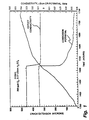
- FIGS. 1-3 are graphs plotting the measured crack length extension in precracked test samples loaded under various conditions over a period of time, and exposed to high-temperature water.
- the corrosion potential and conductivity of the water were varied by introducing oxygen or sulfuric acid into the water, and the change in corrosion potential and conductivity of the water is plotted on the abscissa on the right side of the graphs.
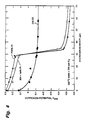
- FIG. 4 is a graph of the corrosion potential of samples of pure platinum, stainless steel, and stainless steel comprised of 1 atomic percent platinum in water at 285°C with 350 parts per billion oxygen plotted against increasing hydrogen concentration in the water.
- FIGS. 5-7 are graphs of the corrosion potential of samples of stainless steel comprised of a platinum or palladium solute versus a pure platinum electrode in water at 285°C with 150 parts per billion hydrogen plotted over a period of time.
- Intergranular stress corrosion cracking of the components in nuclear reactors is heightened by long term irradiation. It is known the long term exposure to radiation induces changes at the grain boundaries of materials by the action of radiation segregation. Radiation segregation results from the displacement of atoms from high energy particles impinging on the atoms and leaving vacancies. The displaced atoms and associated vacancies diffuse to locations such as grain boundaries, resulting in compositional gradients near the grain boundaries. Such radiation segregation renders existing materials susceptible to stress corrosion cracking. Additionally, the high radiation flux creates a more aggressive or corrosive water chemistry by the radiolytic decomposition of water into oxidizing species such as oxygen and hydrogen peroxide.
- Alloys of this invention can be used to form components exposed to high-temperature water, such as components in deaerators, steam driven power generators, and light water nuclear reactors, including both pressurized water reactors and boiling water reactors.
- the alloy of this invention can be used to form core components of boiling water reactors, including for example, fuel and absorber rod cladding, neutron source holders, and top guides.
- the high-chromium stainless steel alloy of this invention is an austenitic stainless steel. Alloys of the invention are comprised of a high-chromium of 24 to 32 weight percent to minimize corrosion in the grain boundaries of the alloy. Below about 24 weight percent chromium, the alloy has a lower resistance to stress corrosion cracking in high-temperature water when corrosion potential and conductivity are increased. In addition, below 24 weight percent chromium irradiation segregation can deplete the grain boundaries of chromium to the point where the grain boundaries become more susceptible to corrosion and stress corrosion cracking. To maintain the alloy stable in the austenite phase, nickel is provided at about 20 to 40 weight percent.
- Manganese is another austenite stabilizing element and may be present up to 10 weight percent. Carbon stabilizes the austenite phase and strengthens the alloy, and may be present up to 0.06 weight percent, preferably, 0.01 to 0.03 weight percent.
- a preferred high-chromium stainless steel alloy is further comprised of 2 to 9 weight percent of a metal from the group consisting of titanium, niobium, tantalum, or mixtures thereof.
- the titanium, niobium, and tantalum help prevent corrosion at the grain boundaries of the alloy. Below 2 weight percent of the metals, the grain boundaries can become depleted in the metals after long term exposure to radiation. Above 9 weight percent of the metals, formation of undesirable phases such as the brittle mu phase occurs, and toughness and ductility are diminished.
- the high-chromium alloys are heat treated to enrich the grain boundaries in chromium, titanium, niobium, or tantalum.
- Annealing at 1050°C to 1200°C for ten to thirty minutes provides such enrichment at the grain boundaries.
- annealing time may be increased to heat the entire cross section of the component for the ten to thirty minute period.
- a platinum group metal in the alloy catalyzes the combination of reducing species, such as hydrogen, with oxidizing species, such as oxygen or hydrogen peroxide, that are present in the water.
- reducing species such as hydrogen
- oxidizing species such as oxygen or hydrogen peroxide
- platinum group metal in the alloy are sufficient to provide the catalytic activity at the surface of components formed from the alloy. So, we have found that 0.01 weight percent, preferably at least 0.1 weight percent of the platinum group metal provides catalytic activity sufficient to lower the corrosion potential of the alloy below the critical potential. Preferably, the platinum group metal is present below an amount that substantially impairs the metallurgical properties, including strength, ductility, and toughness of the alloy.
- the platinum group metal can be provided by methods known in the art, for example by addition to a melt of the alloy, or by surface alloying as shown for example in the reference cited above "Increasing the Passivation Ability and Corrosion Resistance of Chromium Steel by Surface Alloying With Palladium".
- the corrosion potential of a metal component exposed to water comprised of 200 ppb oxygen can be reduced below the critical potential by the addition of about 100 ppb hydrogen to the water, i.e., an increase of 400 percent in hydrogen that must be added to the water.
- Reducing species that can combine with the oxidizing species in the high temperature water are provided by conventional means known in the art, for example, see “Water Chemistry of Nuclear Power Plants", W.T. Lindsay, Jr., Proceeding Second International Conference on Environmental Degradation of Materials in Nuclear Power Systems-Water Reactors, Monterey, California, 1985, pp. 203-210. Briefly described, reducing species such as hydrogen, ammonia, or hydrazine are injected into the feedwater of the nuclear reactor. Reducing species are also provided within the core of a nuclear reactor by the radiolytic decomposition of water.
- the melts were poured to form 10.2 centimeter tapered square ingots about 30 centimeters long that were forged at 1000°C, homogenized at 1200°C for sixteen hours, and hot rolled at 900°C to form plates having a thickness of about 2.8 centimeters.
- Test samples were machined from the plates into standard 1 inch compact geometries in conformance with ASTM E 399, "Standard Test Method for Plane-Strain Fracture Toughness of Metallic Materials," 1990 ANNUAL BOOK OF ASTM STANDARDS, Vol. 03.01. The test samples were precracked, and instrumented for crack monitoring using reversed DC potential drop methods, shown for example in U.S. Patents 4,924,708 and 4,677,855.
- the instrumented test samples were placed in an autoclave.
- the autoclave was part of a test loop which had been set up for a series of water chemistry studies.
- a pump circulated water through the autoclave.
- the system was brought to a temperature of about 288°C and a pressure of about 1500 psig (10.34 N/mm 2 ).
- FIGS. 1-3 are graphs in which the crack extension in microns in the precracked test sample is plotted on the left abscissa, versus the time in hours, plotted on the ordinate, that the load was applied to the test sample.
- the water conductivity at the inlet and outlet of the autoclave was also measured using a standard conductivity meter, model PM-512 Barnstead Co., and plotted on the rightmost abscissa of the graphs in FIGS. 1-3.
- the increases in corrosion potential and conductivity correspond to the addition of water comprised sulfuric acid and 200 parts per billion oxygen to the water circulated in the autoclave.
- FIGS. 1-2 show that the rate of stress corrosion cracking of 316 and 304 stainless steel exposed to high-temperature water is sensitive to changes in corrosion potential and conductivity in the water.
- FIG. 1 shows that the rate of stress corrosion cracking in 316 stainless steel is accelerated when corrosion potential and conductivity are increased. Conversely, when corrosion potential and conductivity are decreased the stress corrosion cracking rate decreases.
- FIG. 2 shows a similar behavior for 304 stainless steel. When corrosion potential and conductivity are low, the stress corrosion cracking rate of 309 stainless steel is low, but when conductivity and corrosion potential are increased the stress corrosion cracking rate increases.
- FIG. 3 shows that the high-chromium alloys of this invention are relatively insensitive to changes in corrosion potential and conductivity.
- the rate of stress corrosion cracking remains substantially constant.
- the low rate of stress corrosion cracking in the alloys of this invention that occurs in high-temperature water having low corrosion potential and low conductivity is maintained when corrosion potential and conductivity are increased.
- Example 2 A series of test samples were prepared by melting 20 kilogram charges in a vacuum furnace, and forming the melts into sheets as described in Example 1. The composition of each charge is shown in Table 2 below. Tensile specimens were machined from the plates, and the yield strength, tensile strength, and percentage elongation for the specimens were measured in accordance with ASTM E 8 "Standard Test Methods of Tension Testing of Metallic Materials," 1990 ANNUAL BOOK OF ASTM STANDARDS, Vol. 03.01, and are shown in Table 2 below. Typical tensile values for 304 stainless steel are shown for comparison in Table 2. Table 2 Tensile Properties of High-Chromium Stainless Steels (1ksi ⁇ 6.89476 N/mm 2 ) Test Composition (wt.
- Test samples were prepared by melting 1.03 or 20 kilogram charges comprised of, in weight percent; about 18 percent chromium, 9.5 percent nickel, 1.2 percent manganese, 0.5 percent silicon, and platinum or palladium ranging from about 0.01 to 3.0 percent as shown in Table 3 below.
- the composition of the test samples is similar to the composition of 304 stainless steel in Table 2, but are further comprised of a platinum or palladium solute.
- the charges were vacuum arc melted as cylindrical ingots about 8 centimeters in diameter by 2.1 centimeters in thickness, or were vacuum induction melted and poured into 10.2 centimeter tapered square ingots about 30 centimeters in length. The ingots were forged at 1000°C.
- Test specimens were fabricated by electro-discharge machining rods about 0.3 centimeter in diameter by 6 centimeters long from the samples. The test specimens were wet ground using 600 grit paper to remove the re-cast layer produced by the electro-discharge machining. Table 3 Chemical Composition of 304 Stainless Steel Samples With Palladium or Platinum Addition Sample No. Cr Ni Mn Si Pt Pd 1. 18 9.5 1.2 0.5 0.01 2. 18 9.5 1.2 0.5 0.035 3. 18 9.5 1.2 0.5 0.1 4.
- test specimen prepared from sample number 10 in Table 3 was welded to a Teflon insulated 0.76 millimeter stainless steel wire and mounted in a Conax fitting for placement in an autoclave.
- the test specimen mounted on a Conax fitting was transferred to a test loop which had been set up for a series of water chemistry studies.
- the Conax mounted coupon was placed in the autoclave along with a specimen of 316 stainless steel, and a platinum reference electrode specimen.
- a pump circulated water through the autoclave. The system was brought to a temperature between 280 and 285°C, 1200 psig.
- FIG. 4 is a graph in which the corrosion potential is plotted against the concentration of hydrogen in the test water in parts per billion.
- the potentials of the specimens and the platinum electrode, converted to the standard hydrogen electrode (SHE) scale, are shown as the three separate plots representing the three different specimens on Figure 4.
- the filled squares correspond to the electrical potential of the 316 stainless steel sample with no palladium; the filled triangles to the platinum reference electrode; and the open circles to the stainless steel specimens comprised of 1 atomic percent platinum.
- FIGS. 5-7 are graphs of the corrosion potential measured on the samples as compared to the platinum reference electrode, i.e. 0 is the corrosion potential of the platinum reference electrode.
- the oxygen level was reduced and increased in a step-wise manner over a period of days while hydrogen was maintained at 150 ppb as shown in FIGS 5-7.
- Small amounts of a platinum group metal as a solute in an alloy can impart improved resistance to corrosion and stress corrosion cracking in high-temperature water. These additions modify the surface catalytic properties of the metal, decreasing the corrosion potential in the presence of dissolved hydrogen in water containing dissolved oxygen or other oxidents. With dissolved hydrogen provided at a sufficient level to combine with the dissolved oxygen, the corrosion potential decreases to about -0.5 V she .
- the corrosion tests from Example 3 in 350 ppb dissolved oxygen show that even at levels of dissolved hydrogen slightly below what is needed to combine with the dissolved oxygen, i.e. 32 ppb, the corrosion potential drops dramatically from about 0.15 to about -0.5 V she as shown in FIG. 4. Note that about 350 parts per billion of oxygen requires about 44 parts per billion of hydrogen for complete combination of the oxygen to form water.
Landscapes
- Chemical & Material Sciences (AREA)
- Engineering & Computer Science (AREA)
- Materials Engineering (AREA)
- Mechanical Engineering (AREA)
- Metallurgy (AREA)
- Organic Chemistry (AREA)
- Preventing Corrosion Or Incrustation Of Metals (AREA)
- Prevention Of Electric Corrosion (AREA)
Applications Claiming Priority (2)
| Application Number | Priority Date | Filing Date | Title |
|---|---|---|---|
| US07/703,325 US5147602A (en) | 1991-05-20 | 1991-05-20 | Corrosion resistant high chromium stainless steel alloy |
| US703325 | 1996-08-26 |
Publications (2)
| Publication Number | Publication Date |
|---|---|
| EP0515112A1 EP0515112A1 (en) | 1992-11-25 |
| EP0515112B1 true EP0515112B1 (en) | 1996-09-11 |
Family
ID=24824952
Family Applications (1)
| Application Number | Title | Priority Date | Filing Date |
|---|---|---|---|
| EP92304443A Expired - Lifetime EP0515112B1 (en) | 1991-05-20 | 1992-05-15 | Corrosion resistant high chromium stainless steel alloy and method of reducing stress corrosion cracking |
Country Status (6)
| Country | Link |
|---|---|
| US (1) | US5147602A (enExample) |
| EP (1) | EP0515112B1 (enExample) |
| JP (1) | JPH0711062B2 (enExample) |
| DE (1) | DE69213553T2 (enExample) |
| ES (1) | ES2092037T3 (enExample) |
| TW (1) | TW246692B (enExample) |
Families Citing this family (20)
| Publication number | Priority date | Publication date | Assignee | Title |
|---|---|---|---|---|
| US5285486A (en) * | 1992-11-25 | 1994-02-08 | General Electric Company | Internal passive hydrogen peroxide decomposer for a boiling water reactor |
| US5287392A (en) * | 1992-11-25 | 1994-02-15 | General Electric Company | Internal passive water recombiner/hydrogen peroxide decomposer for a boiling water reactor |
| JP3218779B2 (ja) * | 1993-03-18 | 2001-10-15 | 株式会社日立製作所 | 耐中性子照射脆化に優れた構造部材及びそれに用いるオーステナイト鋼とその用途 |
| US5392325A (en) * | 1993-05-21 | 1995-02-21 | General Electric Company | Method and apparatus for local protection of piping systems from stress corrosion cracking |
| JP2938758B2 (ja) * | 1994-07-08 | 1999-08-25 | 株式会社日立製作所 | 金属材料の耐腐食性評価方法、高耐食合金の設計方法、金属材料の腐食状態診断方法およびプラントの運転方法 |
| US5793830A (en) * | 1995-07-03 | 1998-08-11 | General Electric Company | Metal alloy coating for mitigation of stress corrosion cracking of metal components in high-temperature water |
| DE19610977C1 (de) * | 1996-03-20 | 1997-04-10 | Siemens Ag | Kernreaktor mit Katalysatormaterial zum Beseitigen von Oxidationsmitteln |
| US6245289B1 (en) | 1996-04-24 | 2001-06-12 | J & L Fiber Services, Inc. | Stainless steel alloy for pulp refiner plate |
| US6024805A (en) * | 1997-11-12 | 2000-02-15 | General Electric Company | Metal hydride addition for reducing corrosion potential of structural steel |
| US6259758B1 (en) | 1999-02-26 | 2001-07-10 | General Electric Company | Catalytic hydrogen peroxide decomposer in water-cooled reactors |
| US6149862A (en) * | 1999-05-18 | 2000-11-21 | The Atri Group Ltd. | Iron-silicon alloy and alloy product, exhibiting improved resistance to hydrogen embrittlement and method of making the same |
| US6488782B2 (en) * | 2001-01-29 | 2002-12-03 | General Electric Company | Method of reducing corrosion potential and stress corrosion cracking susceptibility in nickel-based alloys |
| US6582652B2 (en) * | 2001-05-11 | 2003-06-24 | Scimed Life Systems, Inc. | Stainless steel alloy having lowered nickel-chromium toxicity and improved biocompatibility |
| DE10123690A1 (de) * | 2001-05-15 | 2002-12-05 | Framatome Anp Gmbh | Verfahren zum Schutz der Bauteile des Primärsystems eines Siedewasserreaktors insbesondere vor Spannungsrisskorrosion |
| US6724854B1 (en) | 2003-06-16 | 2004-04-20 | General Electric Company | Process to mitigate stress corrosion cracking of structural materials in high temperature water |
| US20040258192A1 (en) * | 2003-06-16 | 2004-12-23 | General Electric Company | Mitigation of steam turbine stress corrosion cracking |
| DE102006009502B3 (de) * | 2006-02-27 | 2007-08-30 | Framatome Anp Gmbh | Verfahren zur Prüfung eines Brennstabhüllrohres sowie zugehörige Vorrichtung |
| EP3253898A4 (en) * | 2015-02-06 | 2018-07-11 | Atomic Energy of Canada Limited/ Énergie Atomique du Canada Limitée | Nickel-chromium-iron alloys with improved resistance to stress corrosion cracking in nuclear environments |
| CN105349905A (zh) * | 2015-10-29 | 2016-02-24 | 无锡市嘉邦电力管道厂 | 一种耐高温耐腐蚀金属材料 |
| CN115954122B (zh) * | 2022-12-30 | 2023-11-17 | 中国核动力研究设计院 | 一种核反应堆压力容器疲劳状态监测方法、设备和装置 |
Family Cites Families (22)
| Publication number | Priority date | Publication date | Assignee | Title |
|---|---|---|---|---|
| US2661284A (en) * | 1951-06-27 | 1953-12-01 | Gen Electric | Precipitation hardenable iron base alloy |
| NL122532C (enExample) * | 1960-02-02 | |||
| FR1460760A (fr) * | 1964-10-12 | 1966-01-07 | Atomic Energy Authority Uk | Procédé de réduction de l'effet de rayonnement sur des aciers inoxydables et des alliages à base de nickel |
| DE1210496B (de) * | 1964-10-30 | 1966-02-10 | Keller & Knappich Gmbh | Ausfuetterung fuer einen Mantel eines Kernreaktor-Behaelters |
| GB1170455A (en) * | 1966-12-07 | 1969-11-12 | Apv Paramount Ltd | Chromium Nickel Steels |
| JPS512050A (ja) * | 1974-06-23 | 1976-01-09 | Kinzoku Giken Kk | Akyumureetaa |
| JPS5145612A (en) * | 1974-10-16 | 1976-04-19 | Sumitomo Metal Ind | Taikoonware oosutenaitosutenresuko |
| JPS5589459A (en) * | 1978-12-27 | 1980-07-07 | Daido Steel Co Ltd | Boron-containing stainless steel having good corrosion resistance and workability |
| JPS5696052A (en) * | 1979-12-29 | 1981-08-03 | Nippon Steel Corp | Low sulfur steel with hydrogen sulfide crack resistance |
| JPS599621B2 (ja) * | 1980-04-21 | 1984-03-03 | 株式会社クボタ | 溶融ほう砂用耐食合金 |
| JPS571583A (en) * | 1980-06-06 | 1982-01-06 | Fuji Kogyosho:Kk | Roller electrode for seam welding |
| US4384891A (en) * | 1980-07-07 | 1983-05-24 | Regie Nationale Des Usines Renault | Metal alloy with high catalytic activity |
| US4494987A (en) * | 1982-04-21 | 1985-01-22 | The United States Of America As Represented By The United States Department Of Energy | Precipitation hardening austenitic superalloys |
| GB2149391B (en) * | 1983-11-10 | 1987-10-07 | Westinghouse Electric Corp | Method for removing dissolved oxygen from aqueous media |
| US4842811A (en) * | 1985-02-05 | 1989-06-27 | Westinghouse Electric Corp. | Method for preventing oxygen corrosion in a boiling water nuclear reactor and improved boiling water reactor system |
| US4849082A (en) * | 1986-02-03 | 1989-07-18 | The Babcock & Wilcox Company | Ion implantation of zirconium alloys with hafnium |
| EP0246092A3 (en) * | 1986-05-15 | 1989-05-03 | Exxon Research And Engineering Company | Alloys resistant to stress corrosion cracking |
| JPS62287051A (ja) * | 1986-06-03 | 1987-12-12 | Kobe Steel Ltd | 耐粒界腐食性並びに耐粒界応力腐食割れ性の優れたオ−ステナイト系ステンレス鋼 |
| US4836976A (en) * | 1987-04-20 | 1989-06-06 | General Electric Company | Light water reactor cores with increased resistance to stress corrosion cracking |
| JP3009147B2 (ja) * | 1988-06-10 | 2000-02-14 | 株式会社日立製作所 | 中性子照射下で高温高圧水にさらされるオーステナイト鋼及びその用途 |
| JPH02247358A (ja) * | 1989-03-20 | 1990-10-03 | Hitachi Ltd | 原子炉部材用Fe基合金及びその製造法 |
| JP2574917B2 (ja) * | 1990-03-14 | 1997-01-22 | 株式会社日立製作所 | 耐応力腐食割れ性に優れたオーステナイト鋼及びその用途 |
-
1991
- 1991-05-20 US US07/703,325 patent/US5147602A/en not_active Expired - Lifetime
-
1992
- 1992-01-21 TW TW081100422A patent/TW246692B/zh active
- 1992-05-15 ES ES92304443T patent/ES2092037T3/es not_active Expired - Lifetime
- 1992-05-15 EP EP92304443A patent/EP0515112B1/en not_active Expired - Lifetime
- 1992-05-15 DE DE69213553T patent/DE69213553T2/de not_active Expired - Fee Related
- 1992-05-19 JP JP4125219A patent/JPH0711062B2/ja not_active Expired - Lifetime
Non-Patent Citations (1)
| Title |
|---|
| * Stahlschlüssel, Wegst, Verl. Stahlschlüssel, (1983) pp. 260, 281, 317, 325; * Peckner/Bernstein; Handbook of Stainless Steels, McGraw Hill, (1977), p. 4.8-4.11; * |
Also Published As
| Publication number | Publication date |
|---|---|
| JPH05179407A (ja) | 1993-07-20 |
| EP0515112A1 (en) | 1992-11-25 |
| JPH0711062B2 (ja) | 1995-02-08 |
| TW246692B (enExample) | 1995-05-01 |
| ES2092037T3 (es) | 1996-11-16 |
| US5147602A (en) | 1992-09-15 |
| DE69213553T2 (de) | 1997-03-06 |
| DE69213553D1 (de) | 1996-10-17 |
Similar Documents
| Publication | Publication Date | Title |
|---|---|---|
| EP0515112B1 (en) | Corrosion resistant high chromium stainless steel alloy and method of reducing stress corrosion cracking | |
| JP2766422B2 (ja) | 高温の水にさらされる部品の腐蝕を低減する方法 | |
| Hänninen | Influence of metallurgical variables on environment-sensitive cracking of austenitic alloys | |
| Bruemmer et al. | Microstructural and microchemical mechanisms controlling intergranular stress corrosion cracking in light-water-reactor systems | |
| EP1715071A1 (en) | Austenitic stainless steel, method for producing same and structure using same | |
| KR100264467B1 (ko) | 수냉식 원자로 내의 금속 구성 요소 내의 응력 부식 균열을 완화시키기 위한 방법 | |
| Kuang et al. | The effect of post-irradiation annealing on the stress corrosion crack growth rate of neutron-irradiated 304L stainless steel in boiling water reactor environment | |
| Seifert et al. | The influence of ppb levels of chloride impurities on the stress corrosion crack growth behaviour of low-alloy steels under simulated boiling water reactor conditions | |
| JPH06271988A (ja) | 耐中性子照射脆化に優れた構造部材及びそれに用いるオーステナイト鋼とその用途 | |
| JPH0372054A (ja) | 耐中性子照射脆化に優れたオーステナイト鋼及びその用途 | |
| Shoji et al. | Factors affecting stress corrosion cracking (SCC) and fundamental mechanistic understanding of stainless steels | |
| Chopra et al. | Crack growth rates and fracture toughness of irradiated austenitic stainless steels in BWR environments. | |
| Was et al. | Effect of irradiation on stress-corrosion cracking and corrosion in light water reactors | |
| McMinn et al. | Stress corrosion cracking of inconel alloys and weldments in high-temperature water—the effect of sulfuric acid addition | |
| Klueh et al. | The resistance of 9 Cr-1 MoVNb and 12 Cr-1 MoVW steels to helium embrittlement | |
| Rebak | Resistance of ferritic steels to stress corrosion cracking in high temperature water | |
| Nordin et al. | Corrosion and deuterium pickup in Zr-2.5 Nb: Twenty years of in-reactor testing at the OECD Halden boiling water reactor | |
| Chopra et al. | Crack growth rates of irradiated austenitic stainless steel weld heat affected zone in BWR environments. | |
| Chen et al. | Irradiation-assisted stress corrosion cracking of austenitic stainless steels in BWR environments | |
| Schroeder et al. | Dependence of the tensile properties of 316 L parent material and welds on implanted hydrogen and/or helium | |
| Andresen et al. | Stress Corrosion Cracking Resistance of Ferritic Chromium Steels in High Temperature Water | |
| Kodama et al. | Influence of impurities and alloying elements on IASCC in neutron irradiated austenitic stainless steels | |
| Rebak et al. | Environmentally Assisted Cracking Resistant Ferritic Steels for Light Water Reactor Applications | |
| Yeh et al. | An Investigation into Stress Corrosion Cracking of Dissimilar Metal Welds with 304L Stainless Steel and Alloy 82 in High Temperature Pure Water | |
| Andresen | Effects of transients in water chemistry, temperature, and loading on intergranular stress corrosion cracking of AISI 304 stainless steel |
Legal Events
| Date | Code | Title | Description |
|---|---|---|---|
| PUAI | Public reference made under article 153(3) epc to a published international application that has entered the european phase |
Free format text: ORIGINAL CODE: 0009012 |
|
| AK | Designated contracting states |
Kind code of ref document: A1 Designated state(s): CH DE ES LI SE |
|
| 17P | Request for examination filed |
Effective date: 19930513 |
|
| 17Q | First examination report despatched |
Effective date: 19950327 |
|
| GRAH | Despatch of communication of intention to grant a patent |
Free format text: ORIGINAL CODE: EPIDOS IGRA |
|
| GRAH | Despatch of communication of intention to grant a patent |
Free format text: ORIGINAL CODE: EPIDOS IGRA |
|
| GRAA | (expected) grant |
Free format text: ORIGINAL CODE: 0009210 |
|
| AK | Designated contracting states |
Kind code of ref document: B1 Designated state(s): CH DE ES LI SE |
|
| REG | Reference to a national code |
Ref country code: CH Ref legal event code: NV Representative=s name: RITSCHER & SEIFERT PATENTANWAELTE VSP |
|
| REF | Corresponds to: |
Ref document number: 69213553 Country of ref document: DE Date of ref document: 19961017 |
|
| REG | Reference to a national code |
Ref country code: ES Ref legal event code: FG2A Ref document number: 2092037 Country of ref document: ES Kind code of ref document: T3 |
|
| PGFP | Annual fee paid to national office [announced via postgrant information from national office to epo] |
Ref country code: SE Payment date: 19970421 Year of fee payment: 6 |
|
| PGFP | Annual fee paid to national office [announced via postgrant information from national office to epo] |
Ref country code: CH Payment date: 19970424 Year of fee payment: 6 |
|
| PGFP | Annual fee paid to national office [announced via postgrant information from national office to epo] |
Ref country code: DE Payment date: 19970428 Year of fee payment: 6 |
|
| PGFP | Annual fee paid to national office [announced via postgrant information from national office to epo] |
Ref country code: ES Payment date: 19970516 Year of fee payment: 6 |
|
| PLBE | No opposition filed within time limit |
Free format text: ORIGINAL CODE: 0009261 |
|
| STAA | Information on the status of an ep patent application or granted ep patent |
Free format text: STATUS: NO OPPOSITION FILED WITHIN TIME LIMIT |
|
| 26N | No opposition filed | ||
| PG25 | Lapsed in a contracting state [announced via postgrant information from national office to epo] |
Ref country code: SE Free format text: LAPSE BECAUSE OF NON-PAYMENT OF DUE FEES Effective date: 19980516 Ref country code: ES Free format text: LAPSE BECAUSE OF EXPIRATION OF PROTECTION Effective date: 19980516 |
|
| PG25 | Lapsed in a contracting state [announced via postgrant information from national office to epo] |
Ref country code: LI Free format text: LAPSE BECAUSE OF NON-PAYMENT OF DUE FEES Effective date: 19980531 Ref country code: CH Free format text: LAPSE BECAUSE OF NON-PAYMENT OF DUE FEES Effective date: 19980531 |
|
| REG | Reference to a national code |
Ref country code: CH Ref legal event code: PL |
|
| EUG | Se: european patent has lapsed |
Ref document number: 92304443.2 |
|
| PG25 | Lapsed in a contracting state [announced via postgrant information from national office to epo] |
Ref country code: DE Free format text: LAPSE BECAUSE OF NON-PAYMENT OF DUE FEES Effective date: 19990302 |
|
| REG | Reference to a national code |
Ref country code: ES Ref legal event code: FD2A Effective date: 20000601 |