EP0505311B1 - A process for producing peroxidases proteins in a strain of aspergillus - Google Patents
A process for producing peroxidases proteins in a strain of aspergillus Download PDFInfo
- Publication number
- EP0505311B1 EP0505311B1 EP92610017A EP92610017A EP0505311B1 EP 0505311 B1 EP0505311 B1 EP 0505311B1 EP 92610017 A EP92610017 A EP 92610017A EP 92610017 A EP92610017 A EP 92610017A EP 0505311 B1 EP0505311 B1 EP 0505311B1
- Authority
- EP
- European Patent Office
- Prior art keywords
- peroxidase
- aspergillus
- oryzae
- strain
- coprinus
- Prior art date
- Legal status (The legal status is an assumption and is not a legal conclusion. Google has not performed a legal analysis and makes no representation as to the accuracy of the status listed.)
- Expired - Lifetime
Links
Images

Classifications
-
- C—CHEMISTRY; METALLURGY
- C12—BIOCHEMISTRY; BEER; SPIRITS; WINE; VINEGAR; MICROBIOLOGY; ENZYMOLOGY; MUTATION OR GENETIC ENGINEERING
- C12N—MICROORGANISMS OR ENZYMES; COMPOSITIONS THEREOF; PROPAGATING, PRESERVING, OR MAINTAINING MICROORGANISMS; MUTATION OR GENETIC ENGINEERING; CULTURE MEDIA
- C12N9/00—Enzymes; Proenzymes; Compositions thereof; Processes for preparing, activating, inhibiting, separating or purifying enzymes
- C12N9/0004—Oxidoreductases (1.)
- C12N9/0065—Oxidoreductases (1.) acting on hydrogen peroxide as acceptor (1.11)
-
- C—CHEMISTRY; METALLURGY
- C12—BIOCHEMISTRY; BEER; SPIRITS; WINE; VINEGAR; MICROBIOLOGY; ENZYMOLOGY; MUTATION OR GENETIC ENGINEERING
- C12N—MICROORGANISMS OR ENZYMES; COMPOSITIONS THEREOF; PROPAGATING, PRESERVING, OR MAINTAINING MICROORGANISMS; MUTATION OR GENETIC ENGINEERING; CULTURE MEDIA
- C12N15/00—Mutation or genetic engineering; DNA or RNA concerning genetic engineering, vectors, e.g. plasmids, or their isolation, preparation or purification; Use of hosts therefor
- C12N15/09—Recombinant DNA-technology
- C12N15/63—Introduction of foreign genetic material using vectors; Vectors; Use of hosts therefor; Regulation of expression
- C12N15/79—Vectors or expression systems specially adapted for eukaryotic hosts
- C12N15/80—Vectors or expression systems specially adapted for eukaryotic hosts for fungi
-
- C—CHEMISTRY; METALLURGY
- C07—ORGANIC CHEMISTRY
- C07K—PEPTIDES
- C07K2319/00—Fusion polypeptide
- C07K2319/01—Fusion polypeptide containing a localisation/targetting motif
- C07K2319/02—Fusion polypeptide containing a localisation/targetting motif containing a signal sequence
Definitions
- the present invention relates to a process for producing heterologous heme proteins in filamentous fungi.
- the recombinant enzyme has less activity than native horseradish peroxidase C and is produced in a yield of 2-3% (of the purified, active enzyme).
- S. Loprasert et al., J. Bact. 171 (9), 1989, pp. 4871-4875 report the cloning and expression in E. coli of peroxidase A from Bacillus stearothermophilus .
- S.J. Hoffman et al., Proc. Natl. Acad. Sci. USA 87 , pp. 8521-8525 describe the expression of functional human hemoglobin in E. coli .
- Z. Wang et al., J. Biotechn. 13 ., 1990, pp. 131-144 describe the cloning and expression of lignin peroxidase from Streptomyces viridosporus in Streptomyces lividans .
- hemoglobins in yeast Saccharomyces cerevisiae .
- yeast Saccharomyces cerevisiae
- hemoglobin is expressed as a fully assembled, heme-containing tetramer.
- the protein is not secreted from the yeast cells, but remains in the cytoplasmic space and must be purified therefrom.
- a host organism such as a filamentous fungus, which is capable not only of producing heme proteins but also of exporting them through the cell membrane in active form, thereby simplifying purification procedures.
- peroxidases may be produced in Aspergillus sp . in yields which far exceed those obtainable for the same protein in yeast.
- the present invention relates to a process for the extracellular production of a heterologous peroxidase in a strain of Aspergillus sp. , the process comprising
- extracellular production is understood to indicate that, contrary to the known methods of producing heme proteins in bacteria or yeast, the heme protein is secreted from the host cell into the culture medium and may readily be recovered therefrom.
- the recombinant protein is able to incorporate heme produced by the heme synthetic pathway of the fungal host and may therefore be secreted by the host cell as a fully assembled, heme-containing protein.
- heterologous is meant to indicate proteins which are not, in nature, produced by the host organism in question.
- heme protein is intended to include any member of a group of proteins containing heme (e.g. protoporphyrin IX) as a prosthetic group.
- the vector conveniently comprises DNA sequences encoding functions facilitating gene expression, typically a promoter, transcription initiation sites, and transcription termination and polyadenylation functions.
- the promoter which may be preceded by upstream activating sequences and enhancer sequences as known in the art may be any DNA sequence exhibiting a strong transcriptional activity in filamentous fungi and may be derived from a gene encoding an extracellular or intracellular protein such as an amylase, a glucoamylase, a protease, a lipase, a cellulase or a glycolytic enzyme.
- suitable promoters are those derived from the gene encoding A. oryzae TAKA amylase, Rhizomucor miehei aspartic proteinase, A. niger neutral ⁇ -amylase, A. niger acid stable ⁇ -amylase, A. niger glucoamylase, Rhizomucor miehei lipase, A. oryzae alkaline protease or A. oryzae triose phosphate isomerase.
- the host organism may conveniently be one which has previously been used as a host for producing recombinant proteins, e.g. a strain of Aspergillus sp., such as A. niger , A. nidulans or A. oryzae .
- a strain of Aspergillus sp. such as A. niger , A. nidulans or A. oryzae .
- the use of A. oryzae in the production of recombinant proteins is extensively described in, e.g. EP 238 023.
- a preferred promoter for use in the process of the present invention is the A. oryzae TAKA amylase promoter as it exhibits a strong transcriptional activity in A. oryzae .
- the sequence of the TAKA amylase promoter appears from EP 238 023.
- Termination and polyadenylation sequences may suitably be derived from the same sources as the promoter.
- the techniques used to transform a fungal host cell may suitably be adapted from the methods of transforming A. nidulans described in, for instance, Yelton et al., Proc. Natl. Acad. Sci. USA 81 , 1984, pp. 1470-1474, or EP 215 594, or from the methods of transforming A. niger described in, for instance Buxton et al., Gene 37 , 1985, pp. 207-215 or US 4,885,249, or from the method of transforming A. oryzae described in EP 238 023.
- the host cell may be transformed with a vector system comprising a DNA sequence coding for a selection marker which is capable of being incorporated in the genome of the host organism on transformation, but which is either not expressed by the host before transformation or expressed in amounts which are not sufficient to permit growth under selective conditions. Transformants can then be selected and isolated from non-transformants on the basis of the incorporated selection marker.
- Suitable selection markers may be derived from the A. nidulans or A. niger argB gene, the A. nidulans trpC gene, the A. nidulans amdS gene, the Neurospora crassa pyr4 or DHFR genes, or the A. niger or A. oryzae niaD gene.
- Preferred selection markers for use in the present invention are derived from the A. nidulans or A. niger amdS or argB genes.
- Wild-type A. oryzae strains are usually ArgB + (which means that the argB gene is expressed in A. oryzae ).
- ArgB is chosen as the selection marker
- an ArgB - mutant strain of A. oryzae which does not express the ArgB gene
- the amdS gene may be used as the selection marker in wild-type A. oryzae strains which do not express this gene in sufficient amounts to permit growth under selective conditions.
- the preregion provided on the vector to ensure efficient direction of the expressed product into the secretory pathway of the host cell may be a naturally occurring signal or leader peptide or a functional part thereof or a synthetic sequence providing secretion of the protein from the cell.
- the preregion may be derived from a gene coding for a secreted protein derived from any source.
- the preregion may be derived from a gene encoding an Aspergillus sp. amylase or glucoamylase, a gene encoding a Rhizomucor miehei lipase or protease, or a gene encoding a Coprinus sp. peroxidase.
- the preregion is preferably derived from the gene encoding A. oryzae TAKA amylase, A. niger neutral ⁇ -amylase, A. niger acid-stable ⁇ -amylase, A. niger glucoamylase, or a Coprinus macrorhizus or cinereus peroxidase.
- the DNA sequences coding for the peroxidase protein, preregion, promoter and terminator may be inserted in a vector containing a selection marker, or it may be inserted in a separate vector for introduction into the host cell.
- the vector or vectors may be linear or closed circular molecules.
- two vectors, one carrying the DNA sequence coding for the selection marker, and the other carrying the DNA sequences encoding the heme protein, the preregion and the functions facilitating gene expression may be introduced into the host cell.
- the protein produced by the process of the present invention is a peroxidase, and the DNA sequence encoding the peroxidase is derivable from a Coprinus sp., in particular Coprinus macrorhizus or cinereus .
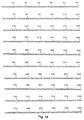
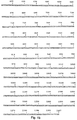
- the present invention relates to a DNA construct comprising the DNA sequence shown in Fig. 1A - 1B encoding a Coprinus sp. peroxidase, or a suitable modification thereof.
- nucleotide substitutions which do not give rise to another amino acid sequence of the peroxidase, but which correspond to the codon usage of the host organism into which the DNA construct is introduced or nucleotide substitutions which do give rise to a different amino acid sequence and therefore, possibly, a different protein structure which might give rise to a peroxidase mutant with different properties than the native enzyme.
- Other examples of possible modifications are insertion of one or more nucleotides into the sequence, addition of one or more nucleotides at either end of the sequence, or deletion of one or more nucleotides at either end or within the sequence.
- the DNA construct of the invention encoding the peroxidase may be prepared synthetically by established standard methods, e.g. the phosphoamidite method described by S.L. Beaucage and M.H. Caruthers, Tetrahedron Letters 22 , 1981, pp. 1859-1869, or the method described by Matthes et al., EMBO Journal 3 , 1984, pp. 801-805.
- phosphoamidite method oligonucleotides are synthesized, e.g. in an automatic DNA synthesizer, purified, annealed, ligated and cloned in suitable vectors.
- the DNA construct of the invention may also be of genomic or cDNA origin, for instance obtained by preparing a genomic or cDNA library and screening for DNA sequences coding for all or part of the peroxidase by hybridization using synthetic oligonucleotide probes in accordance with standard techniques (cf. Sambrook et al., Molecular Cloning: A Laboratory Manual , 2nd Ed., Cold Spring Harbor, 1989).
- a genomic or cDNA sequence encoding the peroxidase may be modified at a site corresponding to the site(s) at which it is desired to introduce amino acid substitutions, e.g. by site-directed mutagenesis using synthetic oligonucleotides encoding the desired amino acid sequence for homologous recombination in accordance with well-known procedures.
- the DNA construct may be of mixed synthetic and genomic, mixed synthetic and cDNA or mixed genomic and cDNA origin prepared by ligating fragments of synthetic, genomic or cDNA origin (as appropriate), the fragments corresponding to various parts of the entire DNA construct, in accordance with standard techniques.
- the DNA construct may also be prepared by polymerase chain reaction using specific primers, for instance as described in US 4,683,202 or R.K. Saiki et al., Science 239 , 1988, pp. 487-491.
- the invention further relates to a recombinant expression vector into which the DNA construct of the invention is inserted.
- This may be any vector which may conveniently be subjected to recombinant DNA procedures, and the choice of vector will often depend on the host cell into which it is to be introduced.
- the vector may be an autonomously replicating vector, i.e. a vector which exists as an extrachromosomal entity, the replication of which is independent of chromosomal replication, e.g. a plasmid.
- the vector may be one which, when introduced into a host cell, is integrated into the host cell genome and replicated together with the chromosome(s) into which it has been integrated.
- the DNA sequence encoding the peroxidase should be operably connected to a suitable promoter and terminator sequence.
- the promoter may be any DNA sequence which shows transcriptional activity in the host cell of choice and may be derived from genes encoding proteins either homologous or heterologous to the host cell. Examples of suitable promoters are those indicated above.
- the procedures used to ligate the DNA sequences coding for the peroxidase, the promoter and the terminator, respectively, and to insert them into suitable vectors are well known to persons skilled in the art (cf., for instance, Sambrook et al., op.cit. ).
- the invention also relates to a host cell which is transformed with the the expression vector of the invention.
- the host cell is a cell of an Aspergillus sp. as indicated above.
- the medium used to culture the transformed host cells may be any conventional medium suitable for growing filamentous fungi.
- the transformants are usually stable and may be cultured in the absence of selection pressure. However, if the transformants are found to be unstable, a selection marker introduced into the cells may be used for selection. It has surprisingly been found that if hemin or a heme-containing material (e.g. hemoglobin or red blood cells) is added to the medium, the yield of peroxidase may be significantly increased (cf. Examples 3-6 below).
- the mature heme protein secreted from the host cells may conveniently be recovered from the culture medium by well-known procedures including separating the cells from the medium by centrifugation or filtration, and precipitating proteinaceous components of the medium by means of a salt such as ammonium sulphate, followed by chromatographic procedures such as ion exchange chromatography, affinity chromatography, or the like.
- Peroxidase cDNA fragments were prepared by polymerase chain reaction (PCR) using specific oligonucleotide primers (R.K. Saiki et al., Science 239 , 1988, pp. 487-491) constructed on the basis of the amino acid sequence of the Coprinus macrorhizus peroxidase.
- PCR was carried out using the Gene Amp kit and apparatus (available from Perkin Elmer Cetus, Norwalk, CT, USA) in accordance with the manufacturer's instructions, with the exception that the reaction was conducted at 28°C for the first three cycles in order to obtain better hybridisation to the first strand cDNA (prepared from mRNA obtained from Coprinus cenereus , IFO 8371) and subsequently at 65°C for 30 cycles of PCR.
- the primers were combined as follows: 1 with 2, 3 with 4, 5 with 7, 6 with 7, 1 with 4, 1 with 7 and 3 with 7.
- the PCR fragments were thus extended with an EcoRI site at the 5'-end and a BamHI site at the 3'-end.
- the PCR reactions were analysed on a 1% agarose gel. Bands of the expected size were found in all reactions.
- the gel was subjected to Southern blotting and hybridised to an oligonucleotide probe with the following sequence which is positioned between PCR primers 3 and 4. The probe was found to hybridise to bands of approximately 130 bp, 420 bp, 540 bp and 240 bp, thus confimrming that the DNA bands observed correspond to peroxidase sequences.
- DNA from the various PCR reactions was digested with EcoRI and BamHI and cloned into the plasmid pUC19 (C. Yanisch-Perron et al., Gene 33 , 1985, pp. 103-119). Colonies containing the correct PCR fragments were identified by hybridisation using the oligonucleotide probe specified above. DNA from positive colonies was analysed by restriction enzyme mapping and partial DNA sequence analysis as described by Sanger et al., Proc. Natl. Acad. Sci. USA 74, 1977, pp. 5463-5467. A 430 bp fragment from one of the clones, obtained by using primer 1 and 4, was used to screen a Coprinus cinereus cDNA library as described below.
- Poly(A)-containing RNA is obtained by two cycles of affinity chromatography on oligo(dT)-cellulose as described by Aviv and Leder (PNAS, USA 69 :1408-1412, 1972).
- cDNA is synthesized by means of a cDNA synthesis kit from Invitrogen according to the manufacturer's instructions. About 50.000 E.
- coli recombinants from the Coprinus cinereus cDNA library were transferred to Whatman 540 paper filters.
- the colonies were lysed and immobilized as described by Gergen et al. (Nucleic Acids Res. 7 , 2115-2135, 1979).
- the filters were hybridized with the 32 P-labelled 430 bp peroxidase-specific probe in 0.2 x SSC, 0.1% SDS. Hybridization and washing of the filters was conducted at 65°C followed by autoradiography for 24 hours with an intensifier screen. After autoradiography, the filters were washed at increasing temperatures followed by autoradiography for 24 hours with an intensifier screen. In this way, more than 50 positive clones were identified.
- Miniprep plasmid DNA was isolated from hybridizing colonies by standard procedures (Birnboim and Doly Nucleic Acids Res. 7 , 1513-1523, 1979), and the DNA sequence of the cDNA insert was determined by the Sanger dideoxy procedure (Sanger et al., Proc. Natl. Acad. Sci. USA 74 , 1977, pp. 5463-5467).
- the peroxidase cDNA fragment was exised from the vector by cleavage with HindIII/XhoI and was purified by agarose gel electrophoresis, electroeluted and made ready for ligation reactions.
- the cDNA fragment was ligated to HindIII/XhoI digested pHD414 to generate pCip in which the cDNA is under transcriptional control of the TAKA promotor from Aspergillus oryzae and the AMG terminator from Aspergillus niger .
- the vector pHD414 is a derivative of the plasmid p775 (described in EP 238 023). In contrast to p775, pHD414 has a string of unique restriction sites between the promotor and the terminator.
- the plasmid was constructed by removal of an approximately 200 bp long fragment (containing undesirable restriction sites) at the 3' end of the terminator, and subsequent removal of an approximately 250 bp long fragment at the 5' end of the promotor, also containing undesirable restriction sites.
- the 200 bp region was removed from p775 by cleavage with NarI (positioned in the pUC vector) and XbaI (positioned just 3' to the terminator), subsequent filling in the generated ends with Klenow DNA polymerase + dNTP, purification of the vector fragment on gel and religation of the vector fragment.
- the DNA was transformed into E. coli MC1061 as described above. 10 colonies (pHD413-1 to -10) were selected and analyzed by restriction enzyme analysis. One of the clones exhibiting the expected band pattern in the restriction enzyme analysis was used in the construction of pHD414.
- pHD413 was cut with StuI (positioned in the 5' end of the promoter) and PvuII (positioned in the pUC vector) and fractionated on a gel.
- the vector fragment was purified, religated and transformed into E. coli MC1061. 12 colonies were selected and analyzed by restriction enzyme analysis. All 12 clones exhibited the expected band pattern.
- the plasmid pHD414 is shown in Fig. 2.
- YPD medium (Sherman et al., Methods in Yeast Genetics, Cold Spring Harbor Laboratory, 1981) was inoculated with spores of A. oryzae or A. niger and incubated with shaking at 37°C for about 2 days.
- the mycelium was harvested by filtration through miracloth and washed with 200 ml of 0.6 M MgSO 4 .
- the suspension was cooled on ice, and 1 ml of buffer containing 120 mg of Novozym® 234, batch 1687 was added.
- 100 ⁇ l of the protoplast suspension was mixed with 5-25 ⁇ g of the appropriate DNA in 10 ⁇ l of STC.
- Protoplasts from the argB strains were mixed with pSal43 DNA (an A. nidulans argB gene carrying plasmid) and protoplasts from the argB + strains were mixed with p3SR2 (an A. nidulans amdS gene carrying plasmid).
- the mixture was left at room temperature for 25 minutes.
- 0.2 ml of 60% PEG 4000 (BDH 29576), 10 mM CaCl 2 and 10 mM Tris-HCl, pH 7.5, were added and carefully mixed (twice) and finally 0.85 ml of the same solution was added and carefully mixed.
- the mixture was left at room temperature for 25 minutes, spun at 2500 x g for 15 minutes and the pellet was resuspended in 2 ml of 1.2 M sorbitol. After another sedimentation, the protoplasts were spread on the appropriate plates. Protoplasts from the argB strains transformed with pSal43 were spread on minimal plates (Cove Biochem.Biophys.Acta 113 (1966) 51-56) with glucose and urea as carbon and nitrogen sources, respectively, and containing 1.2 M sorbitol for osmotic stabilization.
- pCip was transformed into A. oryzae A1560 (IFO 4177) by cotransformation with p3SR2 containing the amdS gene from A. nidulans as described above with a mixture of equal amounts of pCip and p3SR2 (approximately 5 ⁇ g of each).
- Transformants which are able to use acetamide as their sole nitrogen source were reisolated twice. After growth on YPD medium (Sherman et al. 1981) for three days culture supernatants were analysed by a peroxidase activity assay using ABTS ( vide below). The best transformants were selected for further studies.
- the peroxidase gene was isolated from pCip and introduced into the yeast expression vector pYHD5 in which the cDNA was under transcriptional control of the Gal 1-10 promoter and the ⁇ -factor terminator.
- a URA3 mutant yeast strain was transformed with the yeast expression plasmid by the LiAc procedure (in Yeast: A Practical Approach , I. Campbell and O.H. Duffus (eds.), IRL Press, 1988, p. 115). Transformants were selected on minimal agar plates without uracil and subsequently replica plated onto minimal agar plates without uracil, but supplemented with galactose (in order to induce the promoter) and tested for expression of peroxidase by Western blotting and by measuring the enzyme activity.
- pCip was transformed into A. oryzae A1560 (IFO 4177) by cotransformation with p3SR2 containing the amdS gene from A. nidulans as described above with a mixture of equal amounts of pCip and p3SR2 (approximately 5 ⁇ g of each). Transformants which are able to use acetamide as their sole nitrogen source were reisolated twice.
- Glanapon DG 160 available from Bussetti
- Glanapon has an excellent synergistic effect with hemin on the peroxidase yield.
- A. oryzae transformants obtained as described above were cultured as described in Example 2 in a medium to which hemin, hemoglobin (Merck Art 4300) or red blood cells (spray-dried mixed porcine and bovine red blood cells, food grade) has been added (before or after autoclaving). Hemoglobin and red blood cells were dissolved at pH 10.5 (NaOH) before autoclaving and sterile filtration. The results appear from the table below. Peroxidase activity after 72 hours Heme source Sterile filtered Autoclaved 20 min. 121°C Hemin (10 mg/l) 800 PODU/ml 448 PODU/ml Hemoglobin (1 g/l) 1020 - 958 - Red blood cells (1 g/l) 903 -
Landscapes
- Life Sciences & Earth Sciences (AREA)
- Health & Medical Sciences (AREA)
- Genetics & Genomics (AREA)
- Engineering & Computer Science (AREA)
- Chemical & Material Sciences (AREA)
- Zoology (AREA)
- Organic Chemistry (AREA)
- Bioinformatics & Cheminformatics (AREA)
- Wood Science & Technology (AREA)
- Biomedical Technology (AREA)
- Biotechnology (AREA)
- General Engineering & Computer Science (AREA)
- Microbiology (AREA)
- Molecular Biology (AREA)
- Biochemistry (AREA)
- General Health & Medical Sciences (AREA)
- Mycology (AREA)
- Medicinal Chemistry (AREA)
- Physics & Mathematics (AREA)
- Biophysics (AREA)
- Plant Pathology (AREA)
- Enzymes And Modification Thereof (AREA)
- Micro-Organisms Or Cultivation Processes Thereof (AREA)
- Preparation Of Compounds By Using Micro-Organisms (AREA)
- Peptides Or Proteins (AREA)
- Medicines Containing Material From Animals Or Micro-Organisms (AREA)
- Polysaccharides And Polysaccharide Derivatives (AREA)
Priority Applications (2)
| Application Number | Priority Date | Filing Date | Title |
|---|---|---|---|
| EP92610017A EP0505311B1 (en) | 1991-03-22 | 1992-03-20 | A process for producing peroxidases proteins in a strain of aspergillus |
| GR20000401974T GR3034287T3 (en) | 1991-03-22 | 2000-08-30 | A process for producing heme proteins. |
Applications Claiming Priority (3)
| Application Number | Priority Date | Filing Date | Title |
|---|---|---|---|
| EP91610022 | 1991-03-22 | ||
| EP91610022 | 1991-03-22 | ||
| EP92610017A EP0505311B1 (en) | 1991-03-22 | 1992-03-20 | A process for producing peroxidases proteins in a strain of aspergillus |
Publications (3)
| Publication Number | Publication Date |
|---|---|
| EP0505311A2 EP0505311A2 (en) | 1992-09-23 |
| EP0505311A3 EP0505311A3 (en) | 1993-07-28 |
| EP0505311B1 true EP0505311B1 (en) | 2000-06-07 |
Family
ID=8208769
Family Applications (1)
| Application Number | Title | Priority Date | Filing Date |
|---|---|---|---|
| EP92610017A Expired - Lifetime EP0505311B1 (en) | 1991-03-22 | 1992-03-20 | A process for producing peroxidases proteins in a strain of aspergillus |
Country Status (13)
| Country | Link |
|---|---|
| US (2) | US5744323A (enExample) |
| EP (1) | EP0505311B1 (enExample) |
| JP (1) | JP3343117B2 (enExample) |
| AT (1) | ATE193727T1 (enExample) |
| BR (1) | BR9205802A (enExample) |
| CA (1) | CA2106485A1 (enExample) |
| DE (1) | DE69231137T2 (enExample) |
| DK (1) | DK0505311T3 (enExample) |
| ES (1) | ES2148168T3 (enExample) |
| FI (1) | FI111957B (enExample) |
| GR (1) | GR3034287T3 (enExample) |
| NZ (1) | NZ242074A (enExample) |
| WO (1) | WO1992016634A1 (enExample) |
Families Citing this family (28)
| Publication number | Priority date | Publication date | Assignee | Title |
|---|---|---|---|---|
| JP3399549B2 (ja) * | 1990-11-16 | 2003-04-21 | サントリー株式会社 | 微生物由来ペルオキシダーゼ遺伝子 |
| DK36592D0 (da) * | 1992-03-20 | 1992-03-20 | Novo Nordisk As | Fremgangsmaade til fremstilling af proteiner |
| DK72992D0 (da) * | 1992-06-01 | 1992-06-01 | Novo Nordisk As | Enzym |
| CN1133062A (zh) * | 1993-10-13 | 1996-10-09 | 诺沃挪第克公司 | 对过氧化氢稳定的过氧化物酶变体 |
| US5824511A (en) * | 1995-08-01 | 1998-10-20 | University Technology Corporation | Method for enhancing the production of hemoproteins |
| EP0910642B1 (en) * | 1996-06-10 | 2004-04-28 | Novozymes Biotech, Inc. | A method for increasing hemoprotein production in filamentous fungi |
| AUPO776697A0 (en) * | 1997-07-08 | 1997-07-31 | Commonwealth Scientific And Industrial Research Organisation | Method of increasing the iron content of plant cells |
| EP1015544B1 (en) | 1997-09-08 | 2001-10-24 | Unilever N.V. | Method for enhancing the activity of an enzyme |
| CN1152136C (zh) * | 1997-11-17 | 2004-06-02 | 诺沃奇梅兹生物技术有限公司 | 具有5-氨基酮戊酸合酶活性的多肽和编码该多肽的核酸 |
| US6033892A (en) * | 1998-11-16 | 2000-03-07 | Novo Nordis Biotech, Inc. | Polypeptides having 5-aminolevulinic acid synthase activity and nucleic acids encoding same |
| CN100494363C (zh) | 1997-12-22 | 2009-06-03 | 诺维信公司 | 糖氧化酶及其在焙烤中的用途 |
| US6298859B1 (en) | 1998-07-08 | 2001-10-09 | Novozymes A/S | Use of a phenol oxidizing enzyme in the treatment of tobacco |
| PL361932A1 (en) | 2000-10-31 | 2004-10-18 | Unilever N.V. | Oxidation process and composition |
| DE602004022967D1 (de) | 2003-10-30 | 2009-10-15 | Novozymes As | Kohlenhydratbindende module |
| WO2005067531A2 (en) | 2004-01-16 | 2005-07-28 | Novozymes Inc. | Methods for degrading lignocellulosic materials |
| CN108728428A (zh) | 2004-01-30 | 2018-11-02 | 诺维信股份有限公司 | 具有分解纤维增强活性的多肽及其编码多核苷酸 |
| JP5015610B2 (ja) | 2004-02-06 | 2012-08-29 | ノボザイムス,インコーポレイティド | セルロース分解増強活性を有するポリペプチド及びそれをコードするポリヌクレオチド |
| PL3219806T3 (pl) | 2004-03-25 | 2020-11-02 | Novozymes, Inc. | Sposoby rozkładania lub przekształcania polisacharydów ściany komórkowej roślin |
| WO2006114616A1 (en) * | 2005-04-26 | 2006-11-02 | University Of Sussex | Engineered peroxidases with veratryl alcohol oxidase activity |
| EP2385110A3 (en) | 2005-09-30 | 2011-11-16 | Novozymes, Inc. | Methods for enhancing the degradation or conversion of cellulosic material |
| US10023881B2 (en) | 2007-04-24 | 2018-07-17 | Novozymes A/S | Detoxifying pre-treated lignocellulose-containing materials |
| CA2747056A1 (en) | 2008-12-19 | 2010-07-15 | Novozymes, Inc. | Methods for increasing enzymatic hydrolysis of cellulosic material in the presence of a peroxidase |
| CA2919157A1 (en) | 2013-09-04 | 2015-03-12 | Novozymes A/S | Processes for increasing enzymatic hydrolysis of cellulosic material |
| EP3344761A1 (en) | 2015-09-04 | 2018-07-11 | Novozymes A/S | Methods of inhibiting aa9 lytic polysaccharide monooxygenase catalyzed inactivation of enzyme compositions |
| CA3005292A1 (en) | 2015-12-09 | 2017-06-15 | Basf Se | Method of purifying a protein from fermentation solids under desorbing conditions |
| EP3210596A1 (en) | 2016-02-29 | 2017-08-30 | G.L. Pharma GmbH | Abuse-deterrent pharmaceutical composition |
| DK3484996T3 (da) | 2016-07-14 | 2020-12-07 | Basf Se | Fermenteringsmedium, der omfatter et chelateringsmiddel |
| EP3707255A1 (en) | 2017-11-09 | 2020-09-16 | Basf Se | Coatings of enzyme particles comprising organic white pigments |
Family Cites Families (4)
| Publication number | Priority date | Publication date | Assignee | Title |
|---|---|---|---|---|
| CA1341130C (en) * | 1984-07-27 | 2000-10-31 | Adrianus Marinus Ledeboer | Use of oxidoreductases in bleaching and/or detergent compositions and their preparation by microorganisms engineered by recombinant dna technology |
| AU607398B2 (en) * | 1985-08-29 | 1991-03-07 | Genencor Inc. | Heterologous polypeptides expressed in filamentous fungi, processes for making same, and vectors for making same |
| DK122686D0 (da) * | 1986-03-17 | 1986-03-17 | Novo Industri As | Fremstilling af proteiner |
| JPH01501037A (ja) * | 1986-09-12 | 1989-04-13 | サンド アクチェンゲゼルシャフト | 有機化合物の又はそれに関連する改良 |
-
1992
- 1992-03-20 CA CA002106485A patent/CA2106485A1/en not_active Abandoned
- 1992-03-20 AT AT92610017T patent/ATE193727T1/de not_active IP Right Cessation
- 1992-03-20 BR BR9205802A patent/BR9205802A/pt not_active Application Discontinuation
- 1992-03-20 DK DK92610017T patent/DK0505311T3/da active
- 1992-03-20 JP JP50682992A patent/JP3343117B2/ja not_active Expired - Fee Related
- 1992-03-20 EP EP92610017A patent/EP0505311B1/en not_active Expired - Lifetime
- 1992-03-20 NZ NZ242074A patent/NZ242074A/xx unknown
- 1992-03-20 WO PCT/DK1992/000088 patent/WO1992016634A1/en not_active Ceased
- 1992-03-20 DE DE69231137T patent/DE69231137T2/de not_active Expired - Fee Related
- 1992-03-20 ES ES92610017T patent/ES2148168T3/es not_active Expired - Lifetime
-
1993
- 1993-09-21 FI FI934135A patent/FI111957B/fi active
-
1994
- 1994-09-30 US US08/315,671 patent/US5744323A/en not_active Expired - Fee Related
-
1997
- 1997-05-20 US US08/858,933 patent/US5958724A/en not_active Expired - Lifetime
-
2000
- 2000-08-30 GR GR20000401974T patent/GR3034287T3/el not_active IP Right Cessation
Non-Patent Citations (1)
| Title |
|---|
| Gene, vol. 85, pp. 343-351, 1989 * |
Also Published As
| Publication number | Publication date |
|---|---|
| EP0505311A3 (en) | 1993-07-28 |
| ATE193727T1 (de) | 2000-06-15 |
| FI934135L (fi) | 1993-09-21 |
| JPH06506108A (ja) | 1994-07-14 |
| EP0505311A2 (en) | 1992-09-23 |
| BR9205802A (pt) | 1994-06-28 |
| ES2148168T3 (es) | 2000-10-16 |
| GR3034287T3 (en) | 2000-12-29 |
| FI934135A0 (fi) | 1993-09-21 |
| DE69231137D1 (de) | 2000-07-13 |
| DE69231137T2 (de) | 2001-02-15 |
| JP3343117B2 (ja) | 2002-11-11 |
| CA2106485A1 (en) | 1992-09-23 |
| US5958724A (en) | 1999-09-28 |
| FI111957B (fi) | 2003-10-15 |
| WO1992016634A1 (en) | 1992-10-01 |
| US5744323A (en) | 1998-04-28 |
| NZ242074A (en) | 1993-08-26 |
| DK0505311T3 (da) | 2000-09-18 |
Similar Documents
| Publication | Publication Date | Title |
|---|---|---|
| US5744323A (en) | Process for producing heme proteins | |
| EP0305216B1 (en) | Recombinant Humicola lipase and process for the production of recombinant humicola lipases | |
| JP2592444B2 (ja) | ポリペプチドの製造法 | |
| FI95285C (fi) | 2 m-plasmidivektori, menetelmä sen valmistamiseksi sekä sen käyttö | |
| DE3788524T3 (de) | Verfahren zur Herstellung von Proteinprodukten in Aspergillus Oryzae und in Aspergillus zu verwendender Promotor. | |
| US7517668B1 (en) | Process for the production of protein products in aspergillus | |
| US5965422A (en) | Lysophospholipase produced from aspergillus by recombinant methods | |
| WO1990014423A1 (en) | Microorganism transformation | |
| DE69728878T2 (de) | Verfahren zur vermehrung der hemoproteinherstellung in filamentösen fungi | |
| EP0672149B1 (en) | PROCESS FOR PRODUCING/SECRETING A PROTEIN BY A TRANSFORMED MOULD USING EXPRESSION/SECRETION REGULATING REGIONS DERIVED FROM AN $i(ASPERGILLUS) ENDOXYLANASE II GENE | |
| EP0631631B1 (en) | A process for producing heme proteins | |
| DE3887082T2 (de) | Verfahren zur Regulierung der Proteinglycosylierung. | |
| EP1196592B1 (de) | Expressionssystem zur Produktion von Proteinen in Pilzen | |
| JP3113284B2 (ja) | アスペルギルス・フェティダス発現系 | |
| DE19526485A1 (de) | Rekombinant hergestellte Leucinaminopeptidase aus Aspergillus sojae | |
| KR970005584B1 (ko) | 폴리 펩타이드의 개선된 제조방법 | |
| EP0570096A2 (en) | Ornithine carbamoyl transferase gene and its use as a marker gene in a host-vector system for the production of proteins in basidiomycetes | |
| JP3694928B2 (ja) | 担子菌コリオラス属由来プロモーター活性を有するdna断片 | |
| JP2001157586A (ja) | プロモーター遺伝子 | |
| JP2003189855A (ja) | 新規薬剤耐性遺伝子 | |
| DK165640B (da) | Fremgangsmaade til fremstilling af rekombinant humicola lipase og rekombinante humicola lipaser, der kan fremstilles ved fremgangsmaaden. | |
| DD296699A5 (de) | Neuartiges expressionssystem |
Legal Events
| Date | Code | Title | Description |
|---|---|---|---|
| PUAI | Public reference made under article 153(3) epc to a published international application that has entered the european phase |
Free format text: ORIGINAL CODE: 0009012 |
|
| AK | Designated contracting states |
Kind code of ref document: A2 Designated state(s): AT BE CH DE DK ES FR GB GR IT LI LU NL SE |
|
| PUAL | Search report despatched |
Free format text: ORIGINAL CODE: 0009013 |
|
| AK | Designated contracting states |
Kind code of ref document: A3 Designated state(s): AT BE CH DE DK ES FR GB GR IT LI LU NL SE |
|
| 17P | Request for examination filed |
Effective date: 19930608 |
|
| 17Q | First examination report despatched |
Effective date: 19951130 |
|
| GRAG | Despatch of communication of intention to grant |
Free format text: ORIGINAL CODE: EPIDOS AGRA |
|
| GRAG | Despatch of communication of intention to grant |
Free format text: ORIGINAL CODE: EPIDOS AGRA |
|
| GRAH | Despatch of communication of intention to grant a patent |
Free format text: ORIGINAL CODE: EPIDOS IGRA |
|
| GRAG | Despatch of communication of intention to grant |
Free format text: ORIGINAL CODE: EPIDOS AGRA |
|
| GRAH | Despatch of communication of intention to grant a patent |
Free format text: ORIGINAL CODE: EPIDOS IGRA |
|
| GRAG | Despatch of communication of intention to grant |
Free format text: ORIGINAL CODE: EPIDOS AGRA |
|
| GRAG | Despatch of communication of intention to grant |
Free format text: ORIGINAL CODE: EPIDOS AGRA |
|
| GRAH | Despatch of communication of intention to grant a patent |
Free format text: ORIGINAL CODE: EPIDOS IGRA |
|
| GRAH | Despatch of communication of intention to grant a patent |
Free format text: ORIGINAL CODE: EPIDOS IGRA |
|
| GRAA | (expected) grant |
Free format text: ORIGINAL CODE: 0009210 |
|
| AK | Designated contracting states |
Kind code of ref document: B1 Designated state(s): AT BE CH DE DK ES FR GB GR IT LI LU NL SE |
|
| REF | Corresponds to: |
Ref document number: 193727 Country of ref document: AT Date of ref document: 20000615 Kind code of ref document: T |
|
| REG | Reference to a national code |
Ref country code: CH Ref legal event code: EP |
|
| REF | Corresponds to: |
Ref document number: 69231137 Country of ref document: DE Date of ref document: 20000713 |
|
| REG | Reference to a national code |
Ref country code: CH Ref legal event code: NV Representative=s name: R. A. EGLI & CO. PATENTANWAELTE |
|
| ITF | It: translation for a ep patent filed | ||
| ET | Fr: translation filed | ||
| REG | Reference to a national code |
Ref country code: DK Ref legal event code: T3 |
|
| REG | Reference to a national code |
Ref country code: ES Ref legal event code: FG2A Ref document number: 2148168 Country of ref document: ES Kind code of ref document: T3 |
|
| PG25 | Lapsed in a contracting state [announced via postgrant information from national office to epo] |
Ref country code: LU Free format text: LAPSE BECAUSE OF NON-PAYMENT OF DUE FEES Effective date: 20010320 |
|
| PLBE | No opposition filed within time limit |
Free format text: ORIGINAL CODE: 0009261 |
|
| REG | Reference to a national code |
Ref country code: CH Ref legal event code: PUE Owner name: NOVO NORDISK A/S TRANSFER- NOVOZYMES A/S |
|
| REG | Reference to a national code |
Ref country code: FR Ref legal event code: TP |
|
| 26N | No opposition filed | ||
| REG | Reference to a national code |
Ref country code: GB Ref legal event code: 732E |
|
| NLS | Nl: assignments of ep-patents |
Owner name: NOVOZYMES A/S |
|
| PGFP | Annual fee paid to national office [announced via postgrant information from national office to epo] |
Ref country code: GR Payment date: 20011220 Year of fee payment: 11 |
|
| REG | Reference to a national code |
Ref country code: GB Ref legal event code: IF02 |
|
| PGFP | Annual fee paid to national office [announced via postgrant information from national office to epo] |
Ref country code: AT Payment date: 20020326 Year of fee payment: 11 |
|
| PGFP | Annual fee paid to national office [announced via postgrant information from national office to epo] |
Ref country code: CH Payment date: 20020403 Year of fee payment: 11 |
|
| PGFP | Annual fee paid to national office [announced via postgrant information from national office to epo] |
Ref country code: SE Payment date: 20030306 Year of fee payment: 12 |
|
| PG25 | Lapsed in a contracting state [announced via postgrant information from national office to epo] |
Ref country code: AT Free format text: LAPSE BECAUSE OF NON-PAYMENT OF DUE FEES Effective date: 20030320 |
|
| PGFP | Annual fee paid to national office [announced via postgrant information from national office to epo] |
Ref country code: ES Payment date: 20030328 Year of fee payment: 12 |
|
| PG25 | Lapsed in a contracting state [announced via postgrant information from national office to epo] |
Ref country code: LI Free format text: LAPSE BECAUSE OF NON-PAYMENT OF DUE FEES Effective date: 20030331 Ref country code: CH Free format text: LAPSE BECAUSE OF NON-PAYMENT OF DUE FEES Effective date: 20030331 |
|
| PG25 | Lapsed in a contracting state [announced via postgrant information from national office to epo] |
Ref country code: GR Free format text: LAPSE BECAUSE OF NON-PAYMENT OF DUE FEES Effective date: 20031002 |
|
| REG | Reference to a national code |
Ref country code: CH Ref legal event code: PL |
|
| PG25 | Lapsed in a contracting state [announced via postgrant information from national office to epo] |
Ref country code: SE Free format text: LAPSE BECAUSE OF NON-PAYMENT OF DUE FEES Effective date: 20040321 |
|
| PG25 | Lapsed in a contracting state [announced via postgrant information from national office to epo] |
Ref country code: ES Free format text: LAPSE BECAUSE OF NON-PAYMENT OF DUE FEES Effective date: 20040322 |
|
| EUG | Se: european patent has lapsed | ||
| PG25 | Lapsed in a contracting state [announced via postgrant information from national office to epo] |
Ref country code: IT Free format text: LAPSE BECAUSE OF NON-PAYMENT OF DUE FEES;WARNING: LAPSES OF ITALIAN PATENTS WITH EFFECTIVE DATE BEFORE 2007 MAY HAVE OCCURRED AT ANY TIME BEFORE 2007. THE CORRECT EFFECTIVE DATE MAY BE DIFFERENT FROM THE ONE RECORDED. Effective date: 20050320 |
|
| REG | Reference to a national code |
Ref country code: ES Ref legal event code: FD2A Effective date: 20040322 |
|
| PGFP | Annual fee paid to national office [announced via postgrant information from national office to epo] |
Ref country code: DK Payment date: 20080328 Year of fee payment: 17 |
|
| PGFP | Annual fee paid to national office [announced via postgrant information from national office to epo] |
Ref country code: GB Payment date: 20080326 Year of fee payment: 17 |
|
| PGFP | Annual fee paid to national office [announced via postgrant information from national office to epo] |
Ref country code: NL Payment date: 20090303 Year of fee payment: 18 |
|
| PGFP | Annual fee paid to national office [announced via postgrant information from national office to epo] |
Ref country code: DE Payment date: 20090313 Year of fee payment: 18 |
|
| PGFP | Annual fee paid to national office [announced via postgrant information from national office to epo] |
Ref country code: BE Payment date: 20090401 Year of fee payment: 18 |
|
| PGFP | Annual fee paid to national office [announced via postgrant information from national office to epo] |
Ref country code: FR Payment date: 20090316 Year of fee payment: 18 |
|
| REG | Reference to a national code |
Ref country code: DK Ref legal event code: EBP |
|
| GBPC | Gb: european patent ceased through non-payment of renewal fee |
Effective date: 20090320 |
|
| PG25 | Lapsed in a contracting state [announced via postgrant information from national office to epo] |
Ref country code: GB Free format text: LAPSE BECAUSE OF NON-PAYMENT OF DUE FEES Effective date: 20090320 Ref country code: DK Free format text: LAPSE BECAUSE OF NON-PAYMENT OF DUE FEES Effective date: 20090331 |
|
| BERE | Be: lapsed |
Owner name: *NOVOZYMES A/S Effective date: 20100331 |
|
| REG | Reference to a national code |
Ref country code: NL Ref legal event code: V1 Effective date: 20101001 |
|
| REG | Reference to a national code |
Ref country code: FR Ref legal event code: ST Effective date: 20101130 |
|
| PG25 | Lapsed in a contracting state [announced via postgrant information from national office to epo] |
Ref country code: NL Free format text: LAPSE BECAUSE OF NON-PAYMENT OF DUE FEES Effective date: 20101001 Ref country code: FR Free format text: LAPSE BECAUSE OF NON-PAYMENT OF DUE FEES Effective date: 20100331 |
|
| PG25 | Lapsed in a contracting state [announced via postgrant information from national office to epo] |
Ref country code: DE Free format text: LAPSE BECAUSE OF NON-PAYMENT OF DUE FEES Effective date: 20101001 Ref country code: BE Free format text: LAPSE BECAUSE OF NON-PAYMENT OF DUE FEES Effective date: 20100331 |