EP0474492B1 - Regelungssystem des Typs mit zwei Freiheitsgraden - Google Patents
Regelungssystem des Typs mit zwei Freiheitsgraden Download PDFInfo
- Publication number
- EP0474492B1 EP0474492B1 EP91308139A EP91308139A EP0474492B1 EP 0474492 B1 EP0474492 B1 EP 0474492B1 EP 91308139 A EP91308139 A EP 91308139A EP 91308139 A EP91308139 A EP 91308139A EP 0474492 B1 EP0474492 B1 EP 0474492B1
- Authority
- EP
- European Patent Office
- Prior art keywords
- deviation
- target variable
- variable
- computed
- value
- Prior art date
- Legal status (The legal status is an assumption and is not a legal conclusion. Google has not performed a legal analysis and makes no representation as to the accuracy of the status listed.)
- Expired - Lifetime
Links
- 238000000034 method Methods 0.000 claims description 36
- 230000008569 process Effects 0.000 claims description 29
- 230000004044 response Effects 0.000 claims description 17
- 238000009499 grossing Methods 0.000 claims description 4
- 238000010276 construction Methods 0.000 description 9
- 230000008859 change Effects 0.000 description 7
- 238000010586 diagram Methods 0.000 description 6
- 238000013459 approach Methods 0.000 description 4
- 238000013461 design Methods 0.000 description 4
- 238000012546 transfer Methods 0.000 description 4
- 239000003990 capacitor Substances 0.000 description 2
- 230000014509 gene expression Effects 0.000 description 2
- 230000006872 improvement Effects 0.000 description 2
- 239000004065 semiconductor Substances 0.000 description 2
- 230000001629 suppression Effects 0.000 description 2
- 230000000694 effects Effects 0.000 description 1
- 238000002474 experimental method Methods 0.000 description 1
- 238000009926 jugging Methods 0.000 description 1
- 238000004886 process control Methods 0.000 description 1
- 238000012545 processing Methods 0.000 description 1
- 230000035939 shock Effects 0.000 description 1
Images




Classifications
-
- G—PHYSICS
- G05—CONTROLLING; REGULATING
- G05B—CONTROL OR REGULATING SYSTEMS IN GENERAL; FUNCTIONAL ELEMENTS OF SUCH SYSTEMS; MONITORING OR TESTING ARRANGEMENTS FOR SUCH SYSTEMS OR ELEMENTS
- G05B15/00—Systems controlled by a computer
-
- G—PHYSICS
- G05—CONTROLLING; REGULATING
- G05B—CONTROL OR REGULATING SYSTEMS IN GENERAL; FUNCTIONAL ELEMENTS OF SUCH SYSTEMS; MONITORING OR TESTING ARRANGEMENTS FOR SUCH SYSTEMS OR ELEMENTS
- G05B13/00—Adaptive control systems, i.e. systems automatically adjusting themselves to have a performance which is optimum according to some preassigned criterion
- G05B13/02—Adaptive control systems, i.e. systems automatically adjusting themselves to have a performance which is optimum according to some preassigned criterion electric
- G05B13/0265—Adaptive control systems, i.e. systems automatically adjusting themselves to have a performance which is optimum according to some preassigned criterion electric the criterion being a learning criterion
- G05B13/0275—Adaptive control systems, i.e. systems automatically adjusting themselves to have a performance which is optimum according to some preassigned criterion electric the criterion being a learning criterion using fuzzy logic only
-
- G—PHYSICS
- G05—CONTROLLING; REGULATING
- G05B—CONTROL OR REGULATING SYSTEMS IN GENERAL; FUNCTIONAL ELEMENTS OF SUCH SYSTEMS; MONITORING OR TESTING ARRANGEMENTS FOR SUCH SYSTEMS OR ELEMENTS
- G05B11/00—Automatic controllers
- G05B11/01—Automatic controllers electric
- G05B11/36—Automatic controllers electric with provision for obtaining particular characteristics, e.g. proportional, integral, differential
- G05B11/42—Automatic controllers electric with provision for obtaining particular characteristics, e.g. proportional, integral, differential for obtaining a characteristic which is both proportional and time-dependent, e.g. P. I., P. I. D.
-
- Y—GENERAL TAGGING OF NEW TECHNOLOGICAL DEVELOPMENTS; GENERAL TAGGING OF CROSS-SECTIONAL TECHNOLOGIES SPANNING OVER SEVERAL SECTIONS OF THE IPC; TECHNICAL SUBJECTS COVERED BY FORMER USPC CROSS-REFERENCE ART COLLECTIONS [XRACs] AND DIGESTS
- Y10—TECHNICAL SUBJECTS COVERED BY FORMER USPC
- Y10S—TECHNICAL SUBJECTS COVERED BY FORMER USPC CROSS-REFERENCE ART COLLECTIONS [XRACs] AND DIGESTS
- Y10S706/00—Data processing: artificial intelligence
- Y10S706/90—Fuzzy logic
-
- Y—GENERAL TAGGING OF NEW TECHNOLOGICAL DEVELOPMENTS; GENERAL TAGGING OF CROSS-SECTIONAL TECHNOLOGIES SPANNING OVER SEVERAL SECTIONS OF THE IPC; TECHNICAL SUBJECTS COVERED BY FORMER USPC CROSS-REFERENCE ART COLLECTIONS [XRACs] AND DIGESTS
- Y10—TECHNICAL SUBJECTS COVERED BY FORMER USPC
- Y10S—TECHNICAL SUBJECTS COVERED BY FORMER USPC CROSS-REFERENCE ART COLLECTIONS [XRACs] AND DIGESTS
- Y10S706/00—Data processing: artificial intelligence
- Y10S706/902—Application using ai with detail of the ai system
- Y10S706/903—Control
Definitions
- This invention relates to a process control system, and more particularly to a two degrees of freedom type control system.
- a conventional two degrees of freedom type control system having a target variable filter is constructed as shown in Figure 1.
- Such a filter is disclosed in document EP-A- 333 477. That is to say, this control system introduces the target variable SV to target variable filter unit 21, and obtains arithmetic target variable SVo by executing arithmetic processing which imparts 2 degrees of freedom to the proportional gain. Then, it introduces this arithmetic target variable SVo and process variable PV from process system 22 to deviate operation unit 23 and obtains deviation E through the (SVo - PV) operation. Next, deviation E obtained by deviation operation unit 23 is introduced into PI control unit 24 which has a transfer function of Kp ⁇ 1 + 1/(T I ⁇ S) ⁇ .
- Kp is the proportional gain
- T I is the integral time
- S is the Laplace operator.
- target variable filter unit 21 which includes coefficient unit 11,subtractor unit 12, first order lag element 13, and adder unit 14.
- Coefficient unit 11 multiplies target variable SV introduced from outside by the coefficient ⁇ which imparts 2 degrees of freedom to the proportional gain.
- Subtractor unit 12 subtracts the output of coefficient unit 11, from target variable SV.
- First order lag element 13 outputs by executing a first order lag operation to make the integral time for the output of subtractor unit 12 a time constant.
- Adder unit 14 obtains arithmetic target variable SVo by adding the output of first order lag element 13 and the output of coefficient unit 11.
- the PV ⁇ SV transfer function C PM (S) and the SV ⁇ MV transfer function C SM (S) become respectively
- ⁇ is the coefficient which imparts 2 degrees of freedom to the proportional gain (a constant capable of being set between 0 and 1). Therefore, 2 degrees of freedom can be achieved if the coefficient ⁇ which imparts 2 degrees of freedom to the proportional gain is determined so that the target variable follow-up characteristic becomes optimum after Kp and T I have been determined so that the disturbance suppression characteristic becomes optimum.
- the above target variable filter type control system with 2 degrees of freedom has excellent characteristics which simultaneously optimise the disturbance suppression characteristic and the target variable follow-up characteristic.
- target variable filter unit 21 When studying the cause of this, there is at least a first order lag element in target variable filter unit 21.
- the target variable SV of this change When a target variable SV is changed to a stepped state, the target variable SV of this change is subjected to the influence of the first order lag element. Therefore, it takes some time until the final value is reached.
- FIG.2 shows the state when target variable SV in the system in FIG.1 is caused to vary in step form. Only the output, (SV ⁇ ⁇ ) of coefficient unit 1, varies in step form. However, the output, ⁇ SV ⁇ (1 - ⁇ ) ⁇ , of subtractor unit 12 undergoes the influence of first order lag element 13 and gradually rises to approach target variable SV.
- a system for controlling a process system subject to an external disturbance by adjusting a process variable output by the process system to a given target variable comprising target variable filter means for generating a computed target variable to perform a compensation control operation; deviation operation means for computing a deviation between the process variable and the computed target variable inputted from the target variable filter means; and main control means for performing at least proportional and integral control operations on the computed deviation between the process variable and the computed target variable inputted from the deviation operation means to suppress fluctuation of the process variable produced by the external disturbance; characterised in target variable control means for changing the input into the deviation operation means from the computed target variable to the given target variable either at the moment when the deviation between the given target variable and the computed target variable computed by the target variable filter means is less than a predetermined value or gradually, at a predetermined speed rate, after the deviation between the given target variable and the computed target variable has become less than a predetermined value.
- a method of controlling a process system subject to an external disturbance by adjusting according to a deviation output by a deviation operation means, a process variable output by the process system to a given target variable comprises the steps of generating a computed target variable to perform a compensation control operation; computing a deviation between the process variable and the computed target variable inputted into the deviation operation means; performing at least proportional and integral control operations on the computed deviation between the process variable and the computed target variable inputted from the deviation operation means to suppress fluctuation of the process variable produced by the external disturbance; and changing the input into the deviation operation means from the computed target variable to the given target variable either at the moment when a deviation between the given target variable and the computed target variable is less than a predetermined computed target variable is less than a predetermined value or gradually, at a predetermined speed rate, after a deviation between the given target variable and the computed target variable has become less than a predetermined value.
- FIG. 3 An embodiment of this invention is described below with reference to FIG. 3.
- the same symbols are used and detailed descriptions are omitted where components are the same as those in FIG.1.
- the following is mainly a description of those components which differ from prior art.
- comparator unit 11 is provided between the control target variable input terminal and the output terminal of adder unit 14, for jugging whether or not the deviation between control target variable SV and arithmetic target variable SVo, which is the output of target variable filter unit 21, is less than a pre-determined set value.
- signal switching unit 12 is provided for introducing judgement values to deviation operation unit 23. When the above deviation is greater than the specified value in comparator unit 11, signal switching unit 12 receives a switching command and selects arithmetic target variable SVo. Also, when the deviation is smaller than the set value, it receives a switching command and selects control target variable SV.
- comparator unit 11 compares the size relationship between a specified value and the deviation signal due to target variable SV and arithmetic target variable SVo. Since this is immediately after the change to step form, the relationship is
- signal switching unit 12 receives the output of comparator unit 11 and selects and outputs arithmetic target variable SVo. Therefore, in this case, target variable SVa for PI control unit 24 becomes SVo.
- specified value ⁇ is a value which has no effect on the 2 degrees of freedom, and it is determined on the basis of experiment and past experience.
- comparator unit 11 compares the specified value ⁇ with the deviation between target variable SV and arithmetic target variable SVo.
- the relationship becomes
- signal switching unit 12 receives this switching command and selects control target variable SV.
- comparator unit 11 and signal switching unit 12 may be achieved by hardware using resistors, capacitors and semiconductors. They may also be achieved by software using a computer.
- Subtractor unit 31 subtracts arithmetic target variable SVo from target variable SV.
- Adder unit 33 adds the output obtained from subtractor unit 31 via signal switching unit 32 and arithmetic target variable SVo which is the output of target variable filter unit 21.
- the construction is such that the output of adder unit 33 is introduced into deviation operation unit 23 as the target variable for PI control.
- this embodiment is provided with the function of judging whether or not to add the deviation between control target variable SV and arithmetic target variable SVo to arithmetic target variable SVo.
- arithmetic target variable SVo which is outputted from target variable filter unit 21 is introduced into deviation operation unit 23 as target variable SVa for PI control via adder unit 33.
- comparator unit 11 compares a specified value ⁇ and the deviation between target variable SV and arithmetic target variable SVo. Since this is immediately after the change to step form, the relationship is
- ⁇ ⁇ Since no switching command is generated from comparator unit 11, signal switching unit 32 is in a non-conductive state. As a result, SVa SVo is transmitted to deviation operation unit 23 as the target variable for PI control.
- comparator unit 11 compares the specified value ⁇ with the deviation between target variable SV and arithmetic target variable SVo.
- signal switching unit 32 becomes in a conductive state and introduces the subtraction signal (SV - SVo) from subtractor unit 31 to adder unit 33.
- arithmetic target variable SVo is introduced into deviation operation unit 23.
- the design is such that, when the deviation between target variable SV and arithmetic target variable SVo becomes less than specified value ⁇ , the subtraction signal (SV - SVo) is added to SVo.
- the target variable for PI control can be supplied to deviation operation unit 23 without any loss of time.
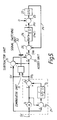
- This embodiment uses almost the same construction as in FIG.5. The particular difference is that first order lag element 41 is added at the input side of adder unit 33.
- comparator unit 11 compares specified value ⁇ with the deviation between target variable SV and arithmetic target variable SVo.
- First order lag element 41 is provided on the input side of adder unit 33.
- the first order lag element may also be provided on the contact b side of signal switching unit 12 shown in FIG.3.
- PI control operation has been described in the above embodiments.
- this invention can also be applied in the same way in PID ( D : derivative) control operation.
- the response time for the change of target value can be greately reduced within limits which do not interfere with the original function of imparting 2 degrees of freedom, and the target variable for control can be settled at the control target variable.
- the target variable for control can be transferred to the control target variable without any loss of time.
- the deviation between the target variable control and the control target variable becomes less than a specified value, it can be transferred smoothly to the control target variable by smoothing the target variable for control.
- the target variable follow-up time for changes of target variable can be greatly reduced. Also, the performance of a control system fitted with a target variable filter unit can be greatly improved. Therefore, a higher performance of plant operating characteristics can be achieved by providing the above inventions throughout the plant.
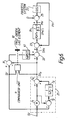
- FIG.7 An embodiment of this invention is described below with reference to FIG. 7.
- FIG.7 the same symbols are used and detailed descriptions are omitted where components are the same as those in FIG.1.
- the following is mainly a description of those components which differ from prior art.
- this system is provided with subtractor unit 51 between the control target variable input terminal and the output terminal of adder unit 14.
- absolute value unit 52 is provided at the output side of subtractor unit 51.
- the design is that absolute value
- membership function m( ⁇ ) which takes a value from 0 to 1 in response to the absolute value is determined beforehand.
- Fuzzy coefficient setting unit 53 is provided which outputs membership function m( ⁇ ) in response to the absolute value
- adder unit 55 which makes the target variable SVa for PI control by adding the multiplication value obtained by multiplication unit 54 and arithmetic target variable SVo is also provided.
- the deviation ⁇ SV - SVo between control target variable SV and arithmetic target variable SVo is obtained by subtractor unit 51 for the variation of the step form of control target variable SV. Then, this deviation ⁇ is transmitted to absolute value unit 52 and multiplication unit 54. After the absolute Value
- the fuzzy coefficient setting unit 53, etc, may be achieved by hardware using resistors, capacitors and semiconductors. They may also be achieved by means of software using a computer.
- this embodiment is a design in which absolute value unit 52 is omitted from FIG.7. Because of this, fuzzy coefficient setting unit 53′ individually sets membership functions m( ⁇ ) in response to the sign of the deviation between control target variable SV and arithmetic target variable SVo. The membership functions m( ⁇ ) for plus and minus are set so that they differ.
- the design is that target variable SVa for PI control is forcibly and rapidly transferred to control target variable SV from the arithmetic target variable SVo of target variable filter unit 21 using the membership function, when arithmetic target variable SVo of target variable filter unit 21 approaches control target variable SV, that is to say when the deviation between the two target variables becomes less than specified value ⁇ 2 . Therefore, the target variable follow-up time can be greatly reduced without any influence on the function of 2 degrees of freedom. Thus, the performance of this type of control device with 2 degrees of freedom can be greatly improved. Therefore, the provision of these systems throughout a plant can greatly contribute to improvement of the plant operating characteristics.
- the above embodiment are designed to supply the multiplication variable of the output of subtactor unit 51 and the membership function to adder unit 55.
- they may also be designed to eliminate multiplication unit 54 and to output values equivalent to the multiplication variable from fuzzy coefficient setting units 53 and 53′ and then add them in adder unit 55.
- PI control operation has been described in the above embodiments. However, needless to say, this invention can also applied in the same way for PID control operation.
- a fuzzy combination type control system with 2 degrees of freedom can be provided which can greatly reduce the response time for variation of the target variable compared with the prior art, and thus contributes greatly to the improvement of performance.
Landscapes
- Engineering & Computer Science (AREA)
- Physics & Mathematics (AREA)
- Artificial Intelligence (AREA)
- Automation & Control Theory (AREA)
- General Physics & Mathematics (AREA)
- Software Systems (AREA)
- Health & Medical Sciences (AREA)
- Computer Vision & Pattern Recognition (AREA)
- Evolutionary Computation (AREA)
- Medical Informatics (AREA)
- Mathematical Physics (AREA)
- Fuzzy Systems (AREA)
- General Engineering & Computer Science (AREA)
- Feedback Control In General (AREA)
Claims (13)
- Vorrichtung zur Regelung eines Prozeßsystems, das einer externen Störung unterworfen ist, durch Einstellen einer durch das Prozeßsystem ausgegebenen Prozeßvariablen auf eine gegebene Zielvariable, mit einer Zielvariablenfiltereinrichtung (21) zur Erzeugung einer berechneten Zielvariablen, um eine Kompensationsregeloperation durchzuführen, einer Abweichungsoperationseinrichtung (23) zur Berechnung einer Abweichung zwischen der Prozeßvariablen und der von der Zielvariablenfiltereinrichtung eingegebenen, berechneten Zielvariablen und eine Hauptregeleinrichtung (24) zur Durchführung von mindestens Proportional- und Integralregeloperationen der berechneten Abweichung zwischen der Prozeßvariablen und der von der Abweichungsoperationseinrichtung eingegebenen, berechneten Zielvariablen, um eine Fluktuation der Prozeßvariablen, die durch die externe Störung hervorgerufen wird, zu unterdrücken,
gekennzeichnet durch
eine Zielvariablenregeleinrichtung zum Wechseln bzw. Ändern der Eingabe in die Abweichungsoperationseinrichtung von der berechneten Zielvariablen zur gegebenen Zielvariablen entweder in dem Moment, wenn die Abweichung zwischen der gegebenen Zielvariablen und der berechneten Zielvariablen, die durch die Zielvariablenfiltereinrichtung berechnet ist, geringer ist als ein vorbestimmter Wert, oder allmählich mit einer vorbestimmten Geschwindigkeitsrate, nachdem die Abweichung zwischen der gegebenen Zielvariablen und der berechneten Zielvariablen geringer als ein vorbestimmter Wert geworden ist. - Vorrichtung nach Anspruch 1, dadurch gekennzeichnet, daß die Zielvariablenregeleinrichtung eine Komparatoreinrichtung (11) zur Erzeugung eines Schaltsignals, wenn die Abweichung zwischen der gegebenen Zielvariablen und der berechneten Zielvariablen geringer als ein vorbestimmter Wert ist, und eine Schalteinrichtung (12), die auf das Schaltsignal für die Änderung einer Eingabe in die Abweichungsoperationseinrichtung von der berechneten Zielvariablen zur gegebenen Zielvariablen reagiert, enthält.
- Vorrichtung nach Anspruch 1, dadurch gekennzeichnet, daß die Zielvariablenregeleinrichtung eine Komparatoreinrichtung (11) zur Erzeugung eines Schaltsignals, wenn die Abweichung zwischen der gegebenen Zielvariablen und der berechneten Zielvariablen geringer als ein vorbestimmter Wert ist, eine Subtrahiereinrichtung (31) zum Halten bzw. Zwischenspeichern der Abweichung und eine Schalteinrichtung (32, 33), die für das Addieren der Abweichung zur berechneten Zielvariable auf das Schaltsignal reagiert, enthält.
- Vorrichtung nach Anspruch 3, dadurch gekennzeichnet, daß die Schalteinrichtung eine Addiereinrichtung (33) zum Addieren der Abweichung zur berechneten Zielvariablen, um die gegebene Zielvariable in die Abweichungsoperationseinrichtung einzuspeisen, und eine Signalschalteinrichtung (32), die zum Eingeben der Abweichung in die Addiereinrichtung auf das Schaltsignal reagiert, umfaßt.
- Vorrichtung nach Anspruch 4, dadurch gekennzeichnet, daß die Schalteinrichtung weiterhin ein Laufzeitglied erster Ordnung (41) zum Glätten der Abweichung, bevor sie in die Addiereinrichtung eingegeben ist, enthält.
- Vorrichtung nach Anspruch 1, dadurch gekennzeichnet, daß die Zielvariablenregeleinrichtung eine Subtrahiereinrichtung (51) zum Halten bzw. Zwischenspeichern einer Abweichung zwischen der gegebenen Zielvariablen und der berechneten Zielvariablen, eine Fuzzy-Koeffizientenerzeugungseinrichtung (52, 53, 54, 55 oder 53′, 54, 55) zur Erzeugung eines Fuzzy-Koeffizienten mit einem Wert zwischen 1 und 0 entsprechend der Abweichung, zur Erzeugung einer Multiplikationsvariablen, die durch Multiplikation der Abweichung mit dem Fuzzy-Koeffizienten hervorgerufen wird, und zum Anlegen der berechneten Zielvariable und der Multiplikarionsvariable an die Abweichungsoperationseinrichtung enthält.
- Vorrichtung nach Anspruch 6, dadurch gekennzeichnet, daß die Fuzzy-Koeffizientenerzeugungseinrichtung eine Absolutwerteinrichtung (52) zum Wandeln des Werts der Abweichung in seinen absoluten Wert, eine Fuzzy-Koeffizienteneinstelleinrichtung (53) zur Erzeugung eines Fuzzy-Koeffizientenwerts mit einem Wert zwischen 1 und 0 entsprechend dem Absolutwert der Abweichung, eine Addiereinrichtung (55) zum Anlegen der berechneten Zielvariablen und der Multiplikationsvariablen an die Abweichungsoperationseinrichtung und eine Multiplikationseinrichtung (54) zum Erzeugen einer Multiplikationsvariable, die durch Multiplizieren der Abweichung mit dem Fuzzy-Koeffizientenwert geschaffen wird, enthält.
- Verfahren zum Regeln eines Prozeßsystems, das einer externen Störung unterworfen ist, durch einer Abweichungsausgabe von einer Abweichungsoperationseinrichtung entsprechendes Einstellen einer durch das Prozeßsystem ausgegebenen Prozeßvariablen auf eine gegebene Zielvariable mit den Schritten:
Erzeugen einer berechneten Zielvariablen, um eine Kompensationsregeloperation durchzuführen, Berechnen einer Abweichung zwischen der Prozeßvariablen und der in die Abweichungsoperationseinrichtung eingegebenen, berechneten Zielvariablen, Durchführen von mindestens Proportional- und Integralregeloperationen der berechneten Abweichung zwischen der Prozeßvariablen und der von der Abweichungsoperationseinrichtung eingegebenen, berechneten Zielvariablen, um eine Fluktuation der Prozeßvariablen, die durch die externe Störung hervorgerufen wird, zu unterdrücken, gekennzeichnet durch
Wechseln bzw. Ändern der Eingabe in die Abweichungsoperationseinrichtung von der berechneten Zielvariablen zur gegebenen Zielvariablen entweder in dem Moment, wenn die Abweichung zwischen der gegebenen Zielvariablen und der berechneten Zielvariablen geringer als ein vorbestimmter Wert ist, oder allmählich mit einer vorbestimmten Geschwindigkeitsrate, nachdem eine Abweichung zwischen der gegebenen Zielvariablen und der berechneten Zielvariablen geringer als ein vorbestimmter Wert geworden ist. - Verfahren nach Anspruch 8, dadurch gekennzeichnet, daß der Schritt des Änderns den Schritt eines Erzeugens eines Schaltsignals, wenn die Abweichung zwischen der gegebenen Zielvariablen und der berechneten Zielvariablen geringer als ein vorbestimmter Wert ist, und den Schritt des Änderns einer Eingabe in die Abweichungsoperationseinrichtung von der berechneten Zielvariablen zur gegebenen Zielvariablen als Reaktion auf das Schaltsignal enthält.
- Verfahren nach Anspruch 9, dadurch gekennzeichnet, daß der Schritt des Änderns den Schritt eines Erzeugens eines Schaltsignals, wenn die Abweichung zwischen der gegebenen Zielvariablen und der berechneten Zielvariablen geringer als ein vorbestimmter Wert ist, den Schritt eines Haltens bzw. Zwischenspeicherns der Abweichung und den Schritt eines Addierens der Abweichung zur berechneten Zielvariablen, um die gegebene Zielvariable an die Abweichungsoperationseinrichtung anzulegen, enthält.
- Verfahren nach Anspruch 10, dadurch gekennzeichnet, daß der Schritt des Addierens weiterhin den Schritt eines Glättens der Abweichung enthält.
- Verfahren nach Anspruch 8, dadurch gekennzeichnet, daß der Schritt des Änderns den Schritt eines Haltens bzw. Zwischenspeicherns der Abweichung, den Schritt eines Erzeugens eines Fuzzy-Koeffizienten mit einem Wert zwischen 1 und 0 entsprechend der Abweichung, den Schritt eines Erzeugens einer Multiplikationsvariablen, die durch Multiplizieren der Abweichung mit dem Fuzzy-Koeffizientenwert geschaffen wird, und den Schritt eines Anlegens der berechneten Zielvariablen und der Multiplikationsvariablen an die Abweichungsoperationseinrichtung enthält.
- Verfahren nach Anspruch 12, dadurch gekennzeichnet, daß der Schritt des Erzeugens eines Fuzzy-Koeffizienten den Schritt eines Wandelns des Werts der Abweichung zu seinem Absolutwert, den Schritt eines Erzeugens eines Fuzzy-Koeffizientenwerts mit einem Wert zwischen 1 und 0 entsprechend dem Absolutwert der Abweichung, den Schritt eines Anlegens der berechneten Zielvariablen und der Multiplikationsvariablen an die Abweichungsoperationseinrichtung und den Schritt eines Erzeugens einer Multiplikationsvariablen, die durch Multiplizieren der Abweichung mit dem Fuzzy-Koeffizientenwert geschaffen wird, enthält.
Applications Claiming Priority (4)
| Application Number | Priority Date | Filing Date | Title |
|---|---|---|---|
| JP237643/90 | 1990-09-07 | ||
| JP23764390A JP2809849B2 (ja) | 1990-09-07 | 1990-09-07 | 2自由度調節装置 |
| JP23764290A JP2752240B2 (ja) | 1990-09-07 | 1990-09-07 | 目標値追従速応形2自由度調節装置 |
| JP237642/90 | 1990-09-07 |
Publications (3)
| Publication Number | Publication Date |
|---|---|
| EP0474492A2 EP0474492A2 (de) | 1992-03-11 |
| EP0474492A3 EP0474492A3 (en) | 1993-04-28 |
| EP0474492B1 true EP0474492B1 (de) | 1995-11-15 |
Family
ID=26533300
Family Applications (1)
| Application Number | Title | Priority Date | Filing Date |
|---|---|---|---|
| EP91308139A Expired - Lifetime EP0474492B1 (de) | 1990-09-07 | 1991-09-05 | Regelungssystem des Typs mit zwei Freiheitsgraden |
Country Status (6)
| Country | Link |
|---|---|
| US (1) | US5245529A (de) |
| EP (1) | EP0474492B1 (de) |
| KR (1) | KR950009526B1 (de) |
| CN (1) | CN1045669C (de) |
| AU (1) | AU625714B2 (de) |
| DE (1) | DE69114623T2 (de) |
Families Citing this family (7)
| Publication number | Priority date | Publication date | Assignee | Title |
|---|---|---|---|---|
| JPH06274205A (ja) * | 1993-03-22 | 1994-09-30 | Toshiba Corp | ゲイン適応形調節装置 |
| US5848535A (en) * | 1997-03-24 | 1998-12-15 | Gas Research Institute | Control system having a binomial setpoint filter |
| DE19734711C1 (de) * | 1997-08-11 | 1999-04-15 | Siemens Ag | Regler mit zeitdiskreten, dynamischen Fuzzy-Regelgliedern |
| WO2003010647A2 (en) * | 2001-07-24 | 2003-02-06 | Koninklijke Philips Electronics N.V. | Interface for transferring signals from a hand-operated signal generator |
| DE10226670B4 (de) * | 2002-06-14 | 2004-09-02 | Siemens Ag | Regeleinrichtung und -verfahren |
| CN106950835B (zh) * | 2017-04-19 | 2020-03-17 | 上海交通大学 | 简洁鲁棒二自由度比例积分控制方法 |
| US11782402B2 (en) * | 2021-07-02 | 2023-10-10 | Mitsubishi Electric Research Laboratories, Inc. | Device for controlling a system with polynomial dynamics |
Family Cites Families (10)
| Publication number | Priority date | Publication date | Assignee | Title |
|---|---|---|---|---|
| US4539633A (en) * | 1982-06-16 | 1985-09-03 | Tokyo Shibaura Denki Kabushiki Kaisha | Digital PID process control apparatus |
| JPS6069702A (ja) * | 1983-09-26 | 1985-04-20 | Toshiba Corp | サンプル値プロセス制御装置 |
| US4755924A (en) * | 1985-02-19 | 1988-07-05 | Kabushiki Kaisha Toshiba | Process controller having an adjustment system with two degrees of freedom |
| JPS6266301A (ja) * | 1985-09-18 | 1987-03-25 | Yamatake Honeywell Co Ltd | オ−トチユ−ニングコントロ−ラ |
| JPS6346503A (ja) * | 1986-08-14 | 1988-02-27 | Yokogawa Electric Corp | Pid調節装置 |
| US4881160A (en) * | 1987-03-09 | 1989-11-14 | Yokogawa Electric Corporation | Self-tuning controller |
| JPH07104681B2 (ja) * | 1988-03-18 | 1995-11-13 | 株式会社東芝 | プロセス制御装置 |
| JPH0774961B2 (ja) * | 1988-04-07 | 1995-08-09 | 株式会社日立製作所 | オートチユーニングpid調節計 |
| JPH0298701A (ja) * | 1988-10-05 | 1990-04-11 | Toshiba Corp | 制御装置 |
| AU611839B1 (en) * | 1989-09-11 | 1991-06-20 | Kabushiki Kaisha Toshiba | Two degree of freedom controller |
-
1991
- 1991-09-05 EP EP91308139A patent/EP0474492B1/de not_active Expired - Lifetime
- 1991-09-05 DE DE69114623T patent/DE69114623T2/de not_active Expired - Fee Related
- 1991-09-06 AU AU83656/91A patent/AU625714B2/en not_active Ceased
- 1991-09-07 CN CN91109572A patent/CN1045669C/zh not_active Expired - Fee Related
- 1991-09-07 KR KR1019910015624A patent/KR950009526B1/ko not_active Expired - Fee Related
- 1991-09-09 US US07/757,011 patent/US5245529A/en not_active Expired - Fee Related
Also Published As
| Publication number | Publication date |
|---|---|
| AU625714B2 (en) | 1992-07-16 |
| KR950009526B1 (ko) | 1995-08-23 |
| EP0474492A2 (de) | 1992-03-11 |
| CN1060540A (zh) | 1992-04-22 |
| DE69114623T2 (de) | 1996-04-18 |
| KR920006824A (ko) | 1992-04-28 |
| AU8365691A (en) | 1992-03-19 |
| US5245529A (en) | 1993-09-14 |
| CN1045669C (zh) | 1999-10-13 |
| DE69114623D1 (de) | 1995-12-21 |
| EP0474492A3 (en) | 1993-04-28 |
Similar Documents
| Publication | Publication Date | Title |
|---|---|---|
| Hauser | Learning control for a class of nonlinear systems | |
| US7805207B2 (en) | Method and apparatus for adaptive parallel proportional-integral-derivative controller | |
| Wright et al. | Nonminimum‐phase compensation for nonlinear processes | |
| JP3516232B2 (ja) | 最適かつ自動的に外乱を排除するフィードバック制御を実現するための方法及び装置 | |
| US7080055B2 (en) | Backlash compensation with filtered prediction in discrete time nonlinear systems by dynamic inversion using neural networks | |
| EP0553356B1 (de) | Verfahren und gerät zur vorhersage-wiederholungssteuerung für servomotor | |
| EP0037579B1 (de) | Verfahren zur selbstanpassenden, prädiktiven Regelung und selbstanpassendes prädiktives Regelungssystem | |
| EP0474492B1 (de) | Regelungssystem des Typs mit zwei Freiheitsgraden | |
| EP0518651B1 (de) | Prozesssteuerung | |
| EP0407590A1 (de) | Servoregelvorrichtung | |
| Liu et al. | Observer-based composite adaptive dynamic terminal sliding-mode controller for nonlinear uncertain SISO systems | |
| EP0709754B1 (de) | Prädiktive steuerung | |
| Sun et al. | Disturbance observer based adaptive predefined‐time sliding mode control for robot manipulators with uncertainties and disturbances | |
| JP3107800B2 (ja) | 制御システム | |
| Elnaggar et al. | New method for delay estimation | |
| CN119187827A (zh) | 一种fsw接头力学性能无模型自适应控制方法 | |
| JPS61109104A (ja) | Pid調節計 | |
| CN116713998A (zh) | 一种机器人非提升优化迭代学习控制方法 | |
| RU2856800C1 (ru) | Система управления по состоянию объекта управления с адаптивным регулятором состояния | |
| JPH04256102A (ja) | モデル予測制御装置 | |
| JPH1185214A (ja) | プロセス制御装置 | |
| KR100198056B1 (ko) | 귀환 제어 장치 및 방법 | |
| CN113568309B (zh) | 用于温度场的在线时空控制方法 | |
| JP2915220B2 (ja) | プロセス制御装置 | |
| JP2809849B2 (ja) | 2自由度調節装置 |
Legal Events
| Date | Code | Title | Description |
|---|---|---|---|
| PUAI | Public reference made under article 153(3) epc to a published international application that has entered the european phase |
Free format text: ORIGINAL CODE: 0009012 |
|
| 17P | Request for examination filed |
Effective date: 19910913 |
|
| AK | Designated contracting states |
Kind code of ref document: A2 Designated state(s): DE FR GB |
|
| PUAL | Search report despatched |
Free format text: ORIGINAL CODE: 0009013 |
|
| AK | Designated contracting states |
Kind code of ref document: A3 Designated state(s): DE FR GB |
|
| 17Q | First examination report despatched |
Effective date: 19950109 |
|
| GRAA | (expected) grant |
Free format text: ORIGINAL CODE: 0009210 |
|
| AK | Designated contracting states |
Kind code of ref document: B1 Designated state(s): DE FR GB |
|
| REF | Corresponds to: |
Ref document number: 69114623 Country of ref document: DE Date of ref document: 19951221 |
|
| ET | Fr: translation filed | ||
| PLBE | No opposition filed within time limit |
Free format text: ORIGINAL CODE: 0009261 |
|
| STAA | Information on the status of an ep patent application or granted ep patent |
Free format text: STATUS: NO OPPOSITION FILED WITHIN TIME LIMIT |
|
| 26N | No opposition filed | ||
| PGFP | Annual fee paid to national office [announced via postgrant information from national office to epo] |
Ref country code: GB Payment date: 19970827 Year of fee payment: 7 |
|
| PGFP | Annual fee paid to national office [announced via postgrant information from national office to epo] |
Ref country code: FR Payment date: 19970909 Year of fee payment: 7 |
|
| PGFP | Annual fee paid to national office [announced via postgrant information from national office to epo] |
Ref country code: DE Payment date: 19970912 Year of fee payment: 7 |
|
| PG25 | Lapsed in a contracting state [announced via postgrant information from national office to epo] |
Ref country code: GB Free format text: LAPSE BECAUSE OF NON-PAYMENT OF DUE FEES Effective date: 19980905 |
|
| GBPC | Gb: european patent ceased through non-payment of renewal fee |
Effective date: 19980905 |
|
| PG25 | Lapsed in a contracting state [announced via postgrant information from national office to epo] |
Ref country code: FR Free format text: LAPSE BECAUSE OF NON-PAYMENT OF DUE FEES Effective date: 19990531 |
|
| PG25 | Lapsed in a contracting state [announced via postgrant information from national office to epo] |
Ref country code: DE Free format text: LAPSE BECAUSE OF NON-PAYMENT OF DUE FEES Effective date: 19990701 |
|
| REG | Reference to a national code |
Ref country code: FR Ref legal event code: ST |