EP0452811A2 - Emballage de produit photosensible - Google Patents
Emballage de produit photosensible Download PDFInfo
- Publication number
- EP0452811A2 EP0452811A2 EP91105765A EP91105765A EP0452811A2 EP 0452811 A2 EP0452811 A2 EP 0452811A2 EP 91105765 A EP91105765 A EP 91105765A EP 91105765 A EP91105765 A EP 91105765A EP 0452811 A2 EP0452811 A2 EP 0452811A2
- Authority
- EP
- European Patent Office
- Prior art keywords
- group
- film
- groups
- package
- carbon atoms
- Prior art date
- Legal status (The legal status is an assumption and is not a legal conclusion. Google has not performed a legal analysis and makes no representation as to the accuracy of the status listed.)
- Granted
Links
Images


Classifications
-
- G—PHYSICS
- G03—PHOTOGRAPHY; CINEMATOGRAPHY; ANALOGOUS TECHNIQUES USING WAVES OTHER THAN OPTICAL WAVES; ELECTROGRAPHY; HOLOGRAPHY
- G03C—PHOTOSENSITIVE MATERIALS FOR PHOTOGRAPHIC PURPOSES; PHOTOGRAPHIC PROCESSES, e.g. CINE, X-RAY, COLOUR, STEREO-PHOTOGRAPHIC PROCESSES; AUXILIARY PROCESSES IN PHOTOGRAPHY
- G03C1/00—Photosensitive materials
- G03C1/005—Silver halide emulsions; Preparation thereof; Physical treatment thereof; Incorporation of additives therein
- G03C1/06—Silver halide emulsions; Preparation thereof; Physical treatment thereof; Incorporation of additives therein with non-macromolecular additives
- G03C1/34—Fog-inhibitors; Stabilisers; Agents inhibiting latent image regression
-
- G—PHYSICS
- G03—PHOTOGRAPHY; CINEMATOGRAPHY; ANALOGOUS TECHNIQUES USING WAVES OTHER THAN OPTICAL WAVES; ELECTROGRAPHY; HOLOGRAPHY
- G03C—PHOTOSENSITIVE MATERIALS FOR PHOTOGRAPHIC PURPOSES; PHOTOGRAPHIC PROCESSES, e.g. CINE, X-RAY, COLOUR, STEREO-PHOTOGRAPHIC PROCESSES; AUXILIARY PROCESSES IN PHOTOGRAPHY
- G03C3/00—Packages of films for inserting into cameras, e.g. roll-films, film-packs; Wrapping materials for light-sensitive plates, films or papers, e.g. materials characterised by the use of special dyes, printing inks, adhesives
-
- G—PHYSICS
- G03—PHOTOGRAPHY; CINEMATOGRAPHY; ANALOGOUS TECHNIQUES USING WAVES OTHER THAN OPTICAL WAVES; ELECTROGRAPHY; HOLOGRAPHY
- G03B—APPARATUS OR ARRANGEMENTS FOR TAKING PHOTOGRAPHS OR FOR PROJECTING OR VIEWING THEM; APPARATUS OR ARRANGEMENTS EMPLOYING ANALOGOUS TECHNIQUES USING WAVES OTHER THAN OPTICAL WAVES; ACCESSORIES THEREFOR
- G03B2217/00—Details of cameras or camera bodies; Accessories therefor
- G03B2217/26—Holders for containing light-sensitive material and adapted to be inserted within the camera
- G03B2217/265—Details of light-proofing
Definitions
- the present invention relates to a package containing a photosensitive material.
- the present invention relates to a small package containing a photosensitive materal capable of facilitating charging of a camera with a photographic film.
- the photographic properties of a photosensitive material comprising a silver halide in the package of the present invention can be protected from deterioration during storage before the use.
- the film In a conventional photographic film patrone, the film is wound round a spool not tightly but loosely and, therefore, the film cannot be sent toward the outside by rotating the spool in a direction opposite to the winding direction. Accordingly, it has been necessary to previously draw out a proper length of an end of the photographic film from the patrone so that the user can hook the end of the film in a film-feeding mechanism of a camera.
- Such a camera can be produced if the photographic film can be sent out from the cartridge. Namely, if the photographic film can be sent out from the cartridge, the film can be engaged with a film-advancing mechanism in the camera by sending out the end of the film to make the operation of hooking the end of the film in the film-advancing mechanism of the camera unnecessary. It is necessitated, therefore, to develope a cartridge capable of sending out the film therefrom in place of the ordinary patrone.
- the photographic film can be sent out from the cartridge by a method comprising rotating the spool in a direction opposite to the film-winding direction.
- the free space in the cartridge must be limited to below a certain degree, since when the free space is large, the film is reversed to make it impossible that the end of the film is sent out from the cartridge by the rotation of the spool.
- An object of the present invention is to provide a small package of photosensitive material which can be easily and surely installed in a camera and which has improved photographic properties resistant to deterioration with time.
- a package containing a photosensitive material which comprises a spool, a photographic film engaged with the spool at an end and rolled round the spool and a cartridge body, the whole photographic film being placed in the cartridge, wherein the void volume V in the cartridge which is represented by the following formula is not higher than 0.25, the photographic film comprises at least one photosensitive silver halide emulsion layer formed on a transparent support and the photographic film contains a compound selected from the group consisting of the compounds of the following general formulae [I], [II], [III] and [IV]: wherein [I] z-S-M wherein M represents a hydrogen atom, cation or -S-Z Z being a heterocyclic residue having at least one nitrogen atom which residue
- Z1 and Z2 each represent atoms necessitated for completing an imidazole ring, pyridine ring, thiazole ring or selenasole ring which may be further condensed
- R1 and A3 each represent a substituted or unsubstituted alkyl group, alkenyl group, aralkyl group or aryl group
- R2 represents a hydrogen atom or a substituted or unsubstituted alkyl group
- R1 and R2 may form a ring together
- L represents a divalent connecting group
- X ⁇ represents an acid anion
- m represents 0 or 1 and n represents 0, 1 or 2 with the proviso that when an inner salt is formed
- m represents 0 and n represents 1 or 0 and they are selected so that the whole molecule will be electrically neutral
- R4 represents a substituted or unsubstituted alkyl group, aralkyl group, alkenyl group
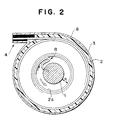
- Figs. 1, 2 and 3 are cross-sectional views showing parts of cartridges and films contained therein according to the present invention. 1 and 35 . . . . spool, 2 . . . . film, 3,35. . . . cartridge.
- the photographic film can be sent out from the cartridge by rotating the spool round which the film is wound in a direction opposite to the film-winding direction.
- the free space in the cartridge must be limited to a certain degree. When the free space is large, the film is reversed to make it impossible that the end of the film is sent out from the cartridge by the rotation of the spool.
- A represents the cross-sectional area of the film roll and B represents the cross-sectional area of the inside of the cartridge.
- the film length is from an end to the other end of the film. When the end of the film is not straight, the most projected part of the end is deemed to be the end. When an end of the film is inserted into the spool, a portion of the film at the slit of the spool is deemed to be the end thereof.
- the thickness of the film is the total of the layers including the film support and gelatin layers containing an emulsion, which is determined by measuring the thickness of the film at ten arbitrary points thereof with a contact film thickness meter (Electronic Micrometer manufactured by Anritsu Electric Co., Ltd.) and taking an average.
- a contact film thickness meter Electric Micrometer manufactured by Anritsu Electric Co., Ltd.
- the cross-sectional area of the spool is that of a part of the spool round which the film is to be wound.
- the cross-sectional area of the cartridge body is the area of the inside of the cartridge not at the upper or lower end thereof but at a part round which the film is to be wound.
- the cartridge has a rib formed inside thereof in order to adjust the position of the film or to smooth the sending of the film, the cross-sectional area of the inside of the rib of a cartridge is employed.
- the cartridge has a flange for controlling the film roll, the cross-sectional area of the inside the flange which adjusts the outermost periphery of the film is employed.
- the void volume V is 0 ⁇ V ⁇ 0.25, preferably 0.04 ⁇ V ⁇ 0.22 and more preferably 0.08 ⁇ V ⁇ 0.18.
- FIGs. 1 (a) and (b) show an example of the cartridge of the present invention.
- a photographic film cartridge 20 comprises a spool 1, a photographic film 2 wound round the spool 1 with an end thereof engaged with the spool 1 and a cartridge body 3.
- the spool 1 is placed in the cartridge body 3 so that it is axially rotatable.
- the spool 1 can be rotated from outside the cartridge body 3.
- the cartridge body 3 has an outlet 4 for drawing out the photographic film 2.
- Light-screening components 4a for keeping the inside of the cartridge body 3 from light is provided in the outlet 4.
- a pair of ribs 8 having a width of about 15 to 20 % based on the film width and extending along the circumference on the inner surface of the cartridge body 3 are provided at positions corresponding to both ends of the width of the film 2.
- the ribs 8 open toward the outlet 4 so that the photographic film 2 can be drawn through it.
- An end 6 of the film 2 is positioned at an end 7 of the film-outlet 4.
- the ribs 8 kept in contact with the outermost surface of the roll of the film 2 keeps the film 2 tightly wound round the spool 1 by pressing it.
- cross-sectional area of cartridge body is the area of the inside of the rib 8.
- the outer diameter of the spool 1 is determined as follows: it is difficult, as described above, to tightly wind the film 2 round the spool 1 while the innermost surface 2a of the film is brought into contact with the outer periphery of the spool 1. It is unavoidable, therefore, that a gap is formed between the innermost surface 2a of the film and the spool 1 in this case. To avoid the formation of the gap, the void volume V must be reduced to 0.25 or less. Further, when the distance h between the innermost surface of the film 2a and the spool 1 is too long, the film 2 turns reversely as shown in Fig. 2.
- the outer diameter of the spool 1 is preferably such that when the gap is formed between the innermost surface 2a of the film and the spool 1, the distance h between them will be 2 mm or less.
- the spool rotation torque is set at 0.8 kgf ⁇ cm or less by controlling the distance h at 2 mm or less, the reverse turn of the photographic film 2 can be prevented.
- the ribs 8 may be formed along the whole peripheral length of the inner surface of the cartridge body 3 but they may be formed along only a part of the peripheral length of the cartridge body 3. Further, the ribs 8 may be formed only at positions corresponding to both ends of the width of the film 2 as in this embodiment or they may be formed also along the whole width of the film 2.
- the material for the ribs 8 is selected from those which do not hurt the film 2 such as plastics.
- the material may be selected from those having some elasticity such as urethane.
- the method of keeping the film-outlet from light is not particularly limited.
- a light-shading felt component called 'teremp' used heretofore can be used.
- the film-outlet is formed so that it can be closed when the film is not drawn through it.
- the end 6 of the film 2 is not necessarily trued up at the end 7 of the film-outlet 4 and it is enough that the end 6 of the film 2 is in the patrone body 3. preferably, however, the end 6 of the film 2 is in the film-outlet 4.
- the shape of the spool flange is modified as described in Japanese Patent Application No. hei 1-172594 so that the film is delivered by rotating the spool while the edge faces of the outermost part of the film roll are pressed.
- ribs opposing to each other are formed on a pair of flanges capable of rotating relatively to the spool shaft to hold the both sides of the film roll in order to prevent the roll from loosening and the shape of the ribs is modified at the film-delivering portion so as to deliver the film by rotating the spool as described in U.S. Patent No. 4,834,306.
- the cross-sectional area of the cartridge body is the cross-sectional area thereof inside of the separation claw.
- the package of the present invention is usually stored in a sealed vessel.
- the sealed vessel may be any of those capable of keeping the photosensitive material contained therein from the outer world.
- the term 'separation' indicates that air in the outer world is substantially separated from air in the vessel.
- Such vessels include, for example, those with a lid which are prepared with a resin having a low vapor permeability such as polyethylene, polypropylene or polyvinyl chloride. They can be rectangular parallelepiped or cylindrical as an ordinary P case.
- the cartridge per se can be sealed so as not to use the P case, while the conventional patrone per se has no sealing properties.
- the sealing of the cartridge per se is not always necessary and the cartridge can be vacuum-sealed in a moisture-proof film such as a polyethylene film, polypropylene film or polyvinyl chloride film.
- the photosensitive material in the package of the present invention comprises a transparent support and at least one photosensitive silver halide emulsion layer formed on the support.
- the material of the support is not particularly limited. It is, for example, a cellulose triacetate film, polyester film or the like. To make the package small, the thickness of the support is preferably not more than 125 ⁇ m, more preferably 85 to 115 ⁇ m.
- the photosensitive material of the present invention comprises a hydrophilic colloid layer including at least one silver halide emulsion layer formed on the support.
- the thickness of the hydrophilic colloid layer at 25 ° C at a humidity of 55 % under pressure of 1 atm is preferably in the range of 5 to 22 ⁇ m , more preferably 8 to 18 ⁇ m.
- the photographic properties of the packed photographic material are deteriorated with time and particularly, the fogging is accelerated.
- various compounds can be incorporated into the hydrophilic colloid layer in order to stabilize the photographic properties.
- R11, R12, R13 and R14 may be the same or different from one another and they each represent a hydrogen atom, substituted or unsubstituted alkyl group, substituted or unsubstituted aryl group, substituted or unsubstituted amino group, hydroxyl group, alkoxyl group, alkylthio group, substituted or unsubstituted carbamoyl group, halogen atom, cyano group, carboxyl group, alkoxycarbonyl group or heterocyclic residue, R11 and R12 or R12 and R13 may form together a five-membered or six-membered ring, with the proviso that at least one of R11 and R13 represents a hydroxyl group; nitroindazoles, triazoles, benzotriazoles, benzimidazoles, benzotriazole compounds of the following general formula: wherein X and Y each represent a carbon
- the mercapto-type FI preferably used in the present invention is represented by the following general formula: [I] Z-S-M wherein M represents a hydrogen atom, a cation (such as an alkali metal ion or ammonium ion) or -S-Z, Z being a heterocyclic residue containing at beast one nitrogen atom.
- the heterocyclic residue represented by Z may be further condensed.
- the heterocyclic residues Z are preferably imidazole, triazole, tetrazole, thiazole, oxazole, selenazole, benzimidazole, benzoxazole, bensothiazole, thiadiazole, oxadiazole, benzoselenazole, pyrazole, pyrimidine, triazine, pyridine, naphthothiazole, naphthoimidazole, naphthoxazole, azabenzimidazole, purine, and azaindenes (such as triazaindene, tetrazaindene and pentazaindene).
- heterocyclic residues and condensed rings may be substituted with a suitable substituent.
- substituents include alkyl groups (such as methyl, ethyl, hydroxyethyl, trifluoromethyl, sulfopropyl, dipropylaminoethyl and adamantane groups), alkenyl groups (such as allyl group), aralkyl groups (such as benzyl and p-chlorophenethyl groups), aryl groups (such as phenyl, naphthyl, p-carboxyphenyl, 3,5-dicarboxyphenyl, m-sulfophenyl, p-acetamidophenyl, 3-captamidophenyl, p-sulfamoylphenyl, m-hydroxyphenyl, p-nitrophenyl, 3,5-dichlorophenyl, m-(3-methylureido)phenyl and 2-
- the compounds of the general formula [I] can be produced by a process disclosed in literatures cited in E. J. Birr "Stabilization of Photographic silver Halide emulsions” (published by Focal Press Co. in 1974), C. G. Barlow et al. "Rep. Prog. Appl. Chem., Vol. 59, p.159 (1974) and Research Disclosure No. 17643 (1978).
- Examples of the mercapto-type FI usable in the present invention are as follows:
- Examples of the quaternary salt-type FI preferably used in the present invention can be represented by the following general formulae: wherein Z1 and Z2 each represent an atomic group necessitated for forming an imidazole ring, pyridine ring, thiazole ring or selenazole ring, R1 and R3 each represent a substituted or unsubstituted alkyl group, alkenyl group, aralkyl group or aryl group, R2 represents a hydrogen atom or substituted or unsubstituted alkyl group, L represents a divalent connecting group, R1 and R2 may together form a ring, X ⁇ represents an acid anion, m represents 0 or 1, and n represents 0, 1 or 2 so that the whole molecule will be electrically neutral, with the proviso that when an inner salt is formed, m is 0 and n is 0 or 1 and that when n is 1, a partial inner salt is formed.
- the heterocycle completed with Z1 and Z2 may have a substituent at a position other than 2-position or 3-position or it may be condensed with another 5- to 7-membered carbon ring.
- substituents include alkyl and alkoxyl groups having 18 or less carbon atoms and monocyclic or bicyclic aryl groups.
- the rings with which the heterocycle can be condensed include, for example, benzene, naphthalene, cyclohexene, azulene and cycloheptene rings.
- Examples of the condensed heterocycles completed with Z1 and Z2 include benzothiazole nucleus, naphtho[1,2-d]thiazole nucleus, naphtho[2,1-d]thiazole nucleus, naphtho[2,3-d]thiazole nucleus, thiazolo[4,5-a]azulene nucleus, tetrahydrobenzothiazole nucleus, dihydronaphtho[1,2-d]thiazole nucleus, dihydronaphtho[2,1-d]thiazole nucleus, benzimidazole nucleus, naphthoimidazole nucleus and quinoline nucleus.
- These nucleus may further have a substituent bonded with a carbon atom thereof.
- the substituents include, for example, halogen atoms (such as chlorine and bromine atoms), alkyl groups having 1 to 18 carbon atoms (such as methyl, ethyl and heptadecyl groups), alkoxyl groups having 1 to 18 carbon atoms (such as methoxy, ethoxy and heptadecyloxy groups), alkoxycarbonyl groups having 2 to 18 carbon atoms (such as methoxycarbonyl and ethoxycarbonyl groups), carboxyl group, cyano group, trifluoromethyl group, nitro group, sulfo group, phenyl group which may be substituted, acyl group having 18 or less carbon atoms (such as alkylcarbonyl groups, e.g.
- alkylsulfonyl groups such as methylsulfonyl group
- sulfamoyl group such as methylsulfamoyl group
- sulfamoyl groups mono- or disubstituted with alkyl or aryl group(s) such as methylsulfamoyl and benzenesulfamoyl groups
- carbamoyl groups such as methylcarbamoyl, dimethylcarbamoyl, ethylcarbamoyl and phenylcarbamoyl groups
- hydroxyl group and alkylthio groups having 18 or less carbon atoms.
- heterocyclic nuclei formed with Z1 or Z2 examples include thiazole nucleus, 4-methoxythiazole nucleus, 4-methylthiazole nucleus, 5-methylthiazole nucleus, 4,5-dimethylthiazole nucleus, 4-ethyl-5-methoxythiazole nucleus, 4-methyl-5-ethoxythiazole nucleus, 4-ethoxy-5-methylthiazole nucleus, 4-phenylthiazole nucleus, 5-phenylthiazole nucleus, 4-(p-sulfophenyl)thiazole nucleus, 5-(p-sulfophenyl)thiazole nucleus, 4,5-di(p-sulfophenylthiazole nucleus, benzothiazole nucleus; 4-chlorobenzothiazole nucleus; 5-chlorobenzothiazole nucleus; 6-chlorobenzothiazole nucleus; 5-methylbenzothiazole nucleus; 6-methyl
- the alkyl groups, alkenyl groups, aralkyl groups and aryl groups represented by R1 or R3 have preferably 1 to 18 carbon atoms.
- the alkyl groups represented by R1 or R3 include, for example, methyl, ethyl, propyl, butyl and hexyl groups.
- the alkeyl groups include, for example, allyl group.
- the aralkyl groups include, for example, benzyl and phenetyl groups.
- the aryl groups include, for example, phenyl group.
- R1 and R3 may be branched or substituted.
- substituents include halogen atoms (such as chlorine and bromine atoms), cyano group, sulfo group, carboxyl group, phospho group, alkoxycarbonyl groups having 18 or less carbon atoms (such as ethoxycarbonyl and 3-benzothiazolylmethoxycarbonyl groups), acyloxy groups having 18 or less carbon atoms (such as acetoxy and 3-benzothiazolylacetoxy groups), alkoxyl groups having 18 or less carbon atoms (such as methoxy and ethoxy groups), substituted alkoxyl groups (such as sulfoalkoxyl groups, e.g.
- sulfoethoxyl group sulfoalkoxyalkoxyl groups, e.g. sulfoethoxyethoxyl group; and alkoxyl group substituted with a heterocyclic residue, e.g.
- 3-benzothiazolylmethoxyl group hydroxyl group, substituted or unsubstituted alkylthio groups (such as methylthio and 3-benzothiazolylmethylthio groups), carbamoyl group, substituted carbamoyl groups (such as dimethylcarbamoyl, ethylcarbamoyl and phenylcarbamoyl groups), sulfamoyl group, substituted sulfamoyl groups (such as dimethylsulfamoyl, ethylsulfamoyl and phenylsulfamoyl groups) and heterocyclic residues (such as 3-thiazolyl, 3-benzothiazolyl and 6-methoxy-3-benzothiazolyl groups).
- alkyl groups substituted with the heterocyclic residue include those of the following general formula: wherein Z1, R2, X ⁇ and m are as defined in the above general formula [II], A represents an alkylene group having 18 or less carbon atoms which may be branched or substituted and when R1 drepresents the alkenylgroup, the carbon atom bonded with the nitrogen atom is preferably saturated.
- alkyl groups represented by R1 or R3 include methyl, ethyl, n-propyl, isopropyl, n-butyl, 2-chloroethyl, 2-cyanoethyl, 2-sulfoethyl, 3-sulfopropyl, 4-sulfobutyl, 3-sulfobutyl, 2-hydroxy-3-sulfopropyl, 2-chloro-3-sulfopropyl, carboxymethyl, 2-carboxyethyl, 2-phosphoethyl, 3-phosphopropyl, methoxycarbonylmethyl, acetoxymethyl, methoxymethyl, 2-ethoxyethyl, 2-(3-sulfopropoxy)ethyl, 2-[2-(3-sulfopropoxy)ethoxy]ethyl, 2-hydroxyethyl, 3-hydroxypropyl, benzyl, phenethyl and 6-(3-benzothiazolium)hexyl,
- the alkyl groups represented by R2 has 1 to 6 carbon atoms and they may be branched or substituted.
- the substituents include, for example, halogen atoms (such as chlorine atom), hydroxyl group, alkoxyl groups having 1 to 5 carbon atoms (such as methoxyl group), alkylthio groups having 1 to 5 carbon atoms (such as methylthio group), carboxyl group, sulfo group, alkoxycarbonyl groups having 2 to 5 carbon atoms and alkylcarbonyloxy groups having 2 to 5 carbon atoms (such as acetoxy group).
- alkyl groups represented by R2 include methyl, ethyl, propyl, butyl, methoxymethyl, acetoxymethyl, methoxycarbonylmethyl, chloromethyl, bromomethyl, 2-chloroethyl, 2-bromoethyl, hydroxyethyl, methylthiomethyl, methylthioethyl and carboxyethylthiomethyl groups.
- the ring formed by bonding R1 with R2 is preferably a 5- or 6-membered ring which may have an oxygen or sulfur atom in the ring, in addition to the nitrogen atom.
- Examples of the rings formed by R1 and R2 include, for example, pyrroline ring, thiazoline ring and tetrahydropyridine ring.
- the acid anions represented by X ⁇ may be inorganic acid anions or organic acid anions. They include inorganic acid anions such as chlorine, bromine, iodine, sulfate, nitrate and perchlorate ions; and organic acid anions such as methylsulfate ion and p-toluenesulfonate ion.
- the bivalent connecting group represented by L in the general formula [III] has preferably 1 to 12 carbon atoms, it may have a saturated or unsaturated ring (such as benzene ring) and it may be branched or have a substituent.
- L is preferably a divalent hydrocarbon group.
- the substituents include, for example, a hydroxyl group, chlorine atom and phenyl group. Those having an oxygen atom or sulfur atom in the carbon chain are also included therein.
- Examples of the divalent hydrocarbon groups represented by L include ethylene group, butylene group, 1,4-phenylene group, -CH2CH2-O-CH2CH2- and - CH2 CH2-S-CH2CH2-.
- W represents a sulfur atom or selenium atom, the sulfur atom being particularly preferred
- R1, R2 and X ⁇ are as defined in the general formula [II]
- R6 and R7 each represent a hydrogen atom, halogen atom (such as chlorine atom or bromine atom), nitro group, cyano group, sulfo group, carboxyl group, alkoxycarbonyl group having 2 to 18 carbon atoms (such as ethoxycarbonyl group or butoxycarbonyl group), acyl group having 2 to 18 carbon atoms (such as acetyl group), alkyl group having 1 to 18 carbon atoms (such as methyl group, ethyl group, n-butyl group, heptyl group or decyl group), alkoxyl group having 1 to 18 carbon atoms (such as methoxy group, butoxy group or hept
- the compounds of the above general formulae [II] or [III] usable in the present invention can be produced by, for example, a process described in U.S. Patent Nos. 2,131,038, 2,334,864, 2,425,774, 2,500,110 and 2,694,716.
- the thion-type FI usable in the present invention can be represented by the following general formula: wherein R4 represents a substituted or unsubstituted alkyl group, aralkyl group, alkenyl group, aryl group or heterocyclic residue, X represents O, S, Se or NR5 (R5 being the same or different from R4 and being an alkyl group, aralkyl group, alkenyl group, aryl group or heterocyclic residue), and Q represents an atomic group necessitated for forming a five- to six-membered heterocycle which group may be further condensed.
- the alkyl groups represented by R4 or R5 are unsubstituted or substituted alkyl groups having preferably 1 to 20 carbon atoms.
- substituents include halogen atoms (such as chlorine atom), cyano group, carboxyl group, hydroxyl group, acyloxy groups having 2 to 6 carbon atoms (such as acetoxy group), alkoxycarbonyl groups having 2 to 22 carbon atoms (such as ethoxycarbonyl and butoxycarbonyl groups), carbamoyl group, sulfamoyl group, sulfo group, amino group and substituted amino groups.
- alkyl groups examples include methyl group, ethyl group, propyl group (n- or iso-), butyl group (n-, iso- or t-), amyl group (straight chain or branched; the same shall apply hereinafter), hexyl group, octyl group, dodecyl group, pentadecyl group, heptadecyl group, chloromethyl group, 2-chloroethyl group, 2-cyanoethyl group, carboxymethyl group, 2-carboxyethyl group, 2-hydroxyethyl group, 2-acetoxyethyl group, acetoxymethyl group, ethoxycarbonylmethyl group, butoxycarbonylmethyl group, 2-methoxycarbonylethyl group, benzyl group, o-nitrobenzyl group and p-sulfobenzyl group.
- the aralkyl groups represented by R4 or R5 are, for example, benzyl group and phenethyl group.
- the alkenyl groups represented by R4 or R5 are, for example, allyl group.
- the aryl groups represented by R4 or R5 are monocyclic or bicyclic aryl groups which may be substituted.
- the monocyclic aryl groups are preferred.
- the substituents include, for example, alkyl groups having 1 to 20 carbon atoms (such as methyl, ethyl and nonyl groups), alkoxyl groups having 1 to 20 carbon atoms (such as methoxyl and ethoxyl groups), hydroxyl group, halogen atoms (such as chlorine and bromine atoms), carboxyl group and sulfo group.
- aryl groups examples include phenyl group, p-tolyl group, p-methoxyphenyl group, p-hydroxyphenyl group, p-chlorophenyl group, 2,5-dichlorophenyl group, p-carboxyphenyl group, o-carboxyphenyl group, 4-sulfophenyl group, 2,4-disulfophenyl group, 2,5-disulfophenyl group, 3-sulfophenyl group and 3,5-disulfophenyl group.
- Examples of the 5-membered or 6-membered heterocycles formed with Q include thiazoline ring, thiazolidine ring, selenazoline ring, oxazoline ring, oxazolidine ring, imidazoline ring, imidazolidine ring, 1,3,4-thiazoline ring, 1,3,4-oxadiazoline ring, 1,3,4-triazoline ring, tetrazoline ring and pyrimidine ring.
- these heterocycles include those further condensed with a 5- to 7-membered carbon ring or heterocycle.
- benzothiazoline nucleus include, for example, benzothiazoline nucleus, naphthothiazoline nucleus, dihydronaphthothiazoline nucleus, tetrahydrobenzothiazoline nucleus, benzoselenazoline nucleus, benzoxazoline nucleus, naphthoxazoline nucleus, benzimidazoline nucleus, dihydroimidazolopyrimidine nucleus, dihydrotriazolopyridine nucleus and dihydrotriazolopyrimidine nucleus.
- These heterocondensed rings may have various substituents on their nuclei.
- substituents include alkyl groups having 1 to 20 carbon atoms (such as methyl, ethyl, n-butyl, t-butyl, heptyl and heptadecyl groups), alkoxyl groups having 1 to 20 carbon atoms (such as methoxyl, ethoxyl, dodecyloxyl and heptadecyloxyl groups), alkylthio groups having 1 to 20 carbon atoms (such as methylthio, ethylthio and butylthio groups), hydroxyl group, amino groups (unsubstituted amino group and substituted amino groups such as alkyl-substituted amino groups, e.g.
- acetylthioamido and propionylthioamido groups include aryl groups (such as phenyl, naphthyl and tolyl groups), alkenyl groups having 2 to 20 carbon atoms (such as allyl and methacryl groups), aralkyl groups wherein the alkyl group has 1 to 4 carbon atoms (such as benzyl and phenethyl groups), halogen atoms (such as chlorine and bromine atoms), cyano group, carboxyl group, sulfo group, carbamoyl groups (unsubstituted and substituted carbamoyl groups such as carbamoyl, methylcarbamoyl, dimethylcarbamoyl, ethylcarbamoyl and phenylcarbamoyl groups), thiocarbamoyl groups (unsubstituted or substituted thiocarbamoyl groups such as thiocarbamoyl
- the alkyl groups may be further substituted with carboxyl group, sulfo group, alkoxycarbonyl groups (such as methoxycarbonyl and ethoxycarbonyl groups), acyloxy groups (such as acetoxy group) and aryl groups (unsubstituted or substituted phenyl group such as nitrophenyl group).
- J.P. KOKOKU Japanese Patent Publication for Opposition Purpose
- the FI compounds may be used either alone or in the form of a mixture of two or more of them in the present invention.
- the FI compound is used in an amount of preferably 10 ⁇ 6 to 10 ⁇ 1, more preferably 10 ⁇ 5 to 10 ⁇ 2 mol per 1 mol of silver halide.
- the FI compound is usually dissolved in water or an alcohol and the solution is added to the silver halide emulsion or coating liquid.
- the FI compound can be incorporated in any of the hydrophilic colloid layer, it is particularly effective to incorporate it into a hydrophilic colloid layer containing a photosensitive silver halide emulsion.
- Deterioration of photographic properties with time due to a photographically harmful gas can be unexpectedly effectively inhibited by incorporating a compound of any of the general formulae [I] through [IV] into the hydrophilic colloid layer. This effect is particularly remarkable when a compound of the general formula [I] is used.
- aliphatic groups herein indicates alkyl groups, alkenyl groups and alkynyl groups.
- the aromatic groups include, for example, phenyl group and naphthyl group.
- the heterocyclic groups include 3- to 8-membered, preferably 5- or 6-membered heterocyclic group having at least one hetero atom selected from among O, N, S and Se and at least one carbon atom.
- R11 in the above general formula [V] is preferably a phenyl group substituted with at least one COOM or -SO3M.
- alkali metals in the above general formula [V] include sodium, potassium and lithium.
- quaternary ammoniums include -NH4, -N(CH3 )4 and -N(C2H5 )4.
- R21 is represented by the formula: wherein X is preferably COOM.
- X in the above general formula [V] represents a sulfo group, carboxyl group or a salt thereof, or a group selected from the group consisting of halogen atoms (such as fluorine, chlorine and bromine atoms), alkyl groups (such as methyl, ethyl, hydroxyethyl, benzyl and ⁇ -dimethylaminoethyl groups), aryl groups (such as phenyl group), alkoxyl groups (such as methoxyl and ethoxyl groups), aryloxy groups (such as phenyloxy group), alkoxycarbonyl groups (such as methoxycarbonyl group), acylamino groups (such as acetylamino and methoxymethylcarbonylamino groups), carbamoyl group, alkylcarbamoyl groups (such as methylcarbamoyl and ethylcarbamoyl groups), dialkylcarbamoyl groups (such
- X is preferably -SO3M, -COOM, an alkyl group having 3 or less carbon atoms, substituted alkyl group, alkoxyl group or substituted alkoxyl group.
- m is preferably 1 or 2.
- the package of the present invention can contain various photosensitive materials including black-and-white and color photosensitive materials.
- the present invention is preferably applicable to the ordinary color negative films.
- the present invention will be, therefore, illustrated with reference to ordinary color negative films.
- the photosensitive material used in the present invention may comprise at least seven layers including silver halide emulsion layers, i.e. a blue-sensitive layer, green-sensitive layer and red-sensitive layer formed on a support in which these layers are simultaneously coated on the support.
- silver halide emulsion layers i.e. a blue-sensitive layer, green-sensitive layer and red-sensitive layer formed on a support in which these layers are simultaneously coated on the support.
- the arrangement of the unit photosensitive layers is: a red-sensitive layer, a green-sensitive layer and a blue-sensitive layer in this order from the support.
- the order may be reversed or a different sensitive layer may be interposed between two layers having the same sensitivity depending on the purpose.
- a layer structure comprising the ordinary three layers, i.e. blue-sensitive layer, green-sensitive layer and red-sensitive layer, and in addition, one or more color-sensitive layers formed for the purpose of improving the color reproduction is described in J.P. KOKAI Nos. 61-34541, 61-201245, 61-198236 and 62-160448.
- the position of the fourth color-sensitive layer and other color-sensitive photosensitive layers are not limted.
- the fourth or another color-sensitive photosensitive layer may comprise a single layer or multiple layers.
- a photoinsensitive layer such as an intermediate layer can be provided between the silver halide photosensitive layers or as the top layer or the bottom layer.
- the intermediate layer may contain a coupler or DIR compound as described in J.P. KOKAI Nos. 61-43748, 59-113438, 59-113440, 61-20037 and 61-20038, or an ordinary color-mixing inhibitor.
- the two or more silver halide emulsion layers constituting the unit photosensitive layer have preferably a structure consisting of two layers, i.e. a high-sensitivity emulsion layer and a low-sensitivity emulsion layer, as described in West German Patent No. 1,121,470 or British Patent No. 923,045.
- the arrangement of the layers be such that the sensitivity thereof decreases gradually toward the support.
- a photoinsensitive layer may be provided between the silver halide emulsion layers.
- An emulsion layer having a low sensitivity may be formed away from the support and an emulsion layer having a high sensitivity may be formed close to the support as described in J.P. KOKAI No. 57-112751, 62-200350, 62-206541 and 62-206543.
- An example of the arrangement is a structure of a blue-sensitive layer having a low sensitivity (BL)/blue-sensitive layer having a high sensitivity (BH)/green-sensitive layer having a high sensitivity (GH)/green-sensitive layer having a low sensitivity (GL)/red-sensitive layer having a high sensitivity (AH)/red-sensitive layer having a low sensitivity (RL); BH/BL/GL/GH/RH/RL or BH/BL/GH/GL/RL/RH toward the support.
- BL low sensitivity
- BH high sensitivity
- GH high sensitivity
- GL low sensitivity
- AH high sensitivity
- RL high sensitivity
- the arrangement may be a blue-sensitive layer /GH/RH/GL/RL toward the support.
- Another arrangemnet is a blue-sensitive layer/GL/RL/GH/RH toward the support as described in J.P. KOKAI Nos. 56-25738 and 62-63936.
- a sensitive layer may comprise further an emulsion layer having a medium sensitivity / emulsion layer having a high sensitivity / emulsion layer having a low sensitivity in the order toward the support as described in J.P. KOKAI No. 59-202464.
- Still another arrangement is a structure of high-sensitivity emulsion layer / low-sensitivity emulsion layer / medium-sensitivity emulsion layer or low-sensitivity emulsion layer / medium-sensitivity emulsion layer / high-sensitivity emulsion layer.
- the arrangement of the layers may be varied as described above.
- the layer construction and the arrangement can be selected suitably for the use of the photosensitive material.
- the amount of the silver halide used in the present invention is not particularly limited, it is preferably 3 to 10 g/m2, more preferably 3 to 7 g/m2 (in terms of silver).
- the silver density based on the gelatin binder is also not particularly limited, silver is used in such an amount that the weight ratio of silver to gelatin will be in the range of 0.01 to 5.0 depending on the intended sensitivity of the emulsion layer.
- Preferred silver halides contained in the photographic emulsion layers of the photosensitive material used in the present invention include silver bromoiodide, silver chloroiodide and silver chlorobromoiodide, which contain about 30 molar % or less of silver iodide. Particularly preferred is silver bromoiodide or silver chlorobromoiodide containing about 2 to 25 molar % of silver iodide.
- the silver halide grains in the photographic emulsion may be in a regular crystal form such as a cubic, octahedral or tetradecahedral form; an irregular crystal form such as spherical or plate form; those having a crystal fault such as a twin plate; or a complex crystal form thereof.
- the silver halide grain diameter may be not more than about 0.2 ⁇ m or the projection area diameter thereof may be about 10 ⁇ m or less.
- the emulsion may be either a polydisperse emulsion or monodisperse emulsion.
- the silver halide photographic emulsion usable in the present invention can be prepared by processes described in, for example, 'Research Disclosure (RD)' No. 17643 (December, 1978), pages 22 to 23, '1. Emulsion Preparation and types'; RD No. 18716 (November, 1979), p. 648; P. Glafkides, 'Chemic et Phisique Photographique', Paul Montel, 1967; G.F. Duffin, 'Photographic Emulsion Chemistry' (Focal Press, 1966); and V.L. Zelikman et al., 'Making and Coating Photographic Emulsion', (Focal Press, 1964).
- Monodisperse emulsions described in U.S. Patent Nos. 3,574,628 and 3,655,394 and British Patent No. 1,413,748 are also preferred.
- Tabular grains having an aspect ratio of about 5 or higher are also usable.
- the tabular grains can be easily prepared by processes described in, for example, Gutoff, 'Photographic Science and Engineering', Vol. 14, pages 248 to 257 (1970); U.S. Patent Nos. 4,434,226, 4,414,310, 4,433,048 and 4,439,520 and British Patent No. 2,112,157.
- the crystal structure of the grains in the above emulsion may be homogeneous; the grains may comprise an inside portion and an outside portion which are composed of silver halides different from each other; or the structure may be a laminated one. Different silver halide grains can be bonded together by an epitaxial bond or they can be bonded with a compound other than silver halides such as silver rhodanate or lead oxide.
- a mixture of grains having various crystal forms can also be used.
- the silver halide emulsion to be used in the present invention is usually physically and chemically ripened and spectrally sensitized.
- the additives to be used in these steps are shown in Research Disclosure Nos. 17643 and 18716. The portions in which the additives are mentioned in these two Research Disclosure's are summarized in the following table.
- Preferred yellow couplers are those described in, for example, U.S. Patent Nos. 3,933,051, 4,022,620, 4,326,024, 4,401,752 and 4,248,961, J.P. KOKOKU No. 58-10739, British Patent Nos. 1,425,020 and 1,476,760, U.S. Patent Nos. 3,973,968, 4,314,023 and 4,511,649, and European Patent No. 249,473A.
- magenta couplers usable in the present invention are preferably 5-pyrazolone couplers and pyrazoloazole couplers. Particularly preferred are those described in U.S. Patent Nos. 4,310,619 and 4,351,897, European Patent No. 73,636, U.S. Patent Nos. 3,061,432 and 3,725,067, Research Disclosure No. 24220 (June, 1984), J.P. KOKAI No. 60-33552, Research Disclosure No. 24230 (June, 1984), J.P. KOKAI Nos. 60-43659, 61-72238, 60-35730, 55-118034 and 60-185951, U.S. Patent Nos. 4,500,630, 4,540,654 and 4,556,630, and WO (PCT) 88/04795.
- the cyan couplers usable in the present invention are phenolic and naphtholic couplers.
- Preferred cyan couplers are those described in U.S. Patent Nos. 4,052,212, 4,146,396, 4,228,233, 4,296,200, 2,369,929, 2,801,171, 2,772,162, 2,895,826, 3,772,002, 3,758,308, 4,334,011 and 4,327,173, West German Patent Unexamined Published Application No. 3,329,729, European Patent Nos. 121,365A and 249,453A, U.S. Patent Nos. 3,446,622, 4,333,999, 4,775,616, 4,451,559, 4,427,767, 4,690,889, 4,254,212 and 4,296,199 and J.P. KOKAI No. 61-42658.
- Colored couplers used for compensation for unnecessary absorption of the colored dye are preferably those described in Research Disclosure No. 17643, VII-G, U.S. Patent No. 4,163,670, J.P. KOKOKU No. 57-39413, U.S. Patent Nos. 4,004,929 and 4,138,258 and British Patent No. 1,146,368. It is also preferred to use couplers for compensation for unnecessary absorption of the colored dye with a fluorescent dye released in the coupling as described in U. S. Patent No. 4,774,181 or couplers having, as a split-off group, a dye precursor group capable of forming a dye by reaction with a developing agent as described in U.S. Patent No. 4,777,120.
- the couplers capable of forming a color dye having a suitable diffusivity are preferably those described in U.S. Patent No. 4,366,237, British Patent No. 2,125,570, European Patent No. 96,570 and West German Patent No. 3,234,533.
- Typical examples of the polymerized color-forming couplers are described in, for example, U.S. Patent Nos. 3,451,820, 4,080,211, 4,367,282, 4,409,320 and 4,576,910 and British Patent No. 2,102,173.
- couplers which release a photographically useful residual group during a coupling reaction are also preferably usable in the present invention.
- DIR couplers which release a development inhibitor are preferably those described in the patents shown in the above described RD 17643, VII-F as well as J.P. KOKAI No. 57-151944, 57-154234, 60-184248 and 63-37346 and U.S. Patent Nos. 4,248,962 and 4,782,012.
- the couplers which release a nucleating agent or a development accelerator in the image-form are preferably those described in British Patent Nos. 2,097,140 and 2,131,188 and J.P. KOKAI Nos. 59-157638 and 59-170840.
- couplers usable for the photosensitive material of the present invention include competing couplers described in U.S. Patent No. 4,130,427, polyequivalent couplers described in U.S. Patent Nos. 4,283,472, 4,338,393 and 4,310,618, DIR redox compound-releasing couplers, DIR coupler-releasing couplers, DIR coupler-releasing redox compounds and DIR redox-releasing redox compounds described in J.P. KOKAI Nos. 60-185950 and 62-24252, couplers which release a dye that restores the color after coupling-off described in European Patent No. 173,302A, bleach-accelerator-releasing couplers described in R.D. Nos.
- the coupler used in the present invention can be incorporated into the photosensitive material by various known dispersion methods.
- High-boiling solvents used for an oil-in-water dispersion method are described in, for example, U.S. Patent No. 2,322,027.
- the high-boiling organic solvents having a boiling point under atmospheric pressure of at least 175 °C and usable in the oil-in-water dispersion method include, for example, phthalates [such as dibutyl phthalate, dicyclohexyl phthalate, di-2-ethylhexyl phthalate, decyl phthalate, bis(2,4-di-t-amylphenyl) phthalate, bis(2,4-di-t-amylphenyl) isophthalate and bis(1,1-diethylpropyl) phthalate], phosphates and phosphonates [such as triphenyl phosphate, tricresyl phosphate, 2-ethylhexyldiphenyl phosphate, tricyclohexyl phosphate, tri-2-ethylhexyl phosphate, tridecyl phosphate, tributoxyethyl phosphate, trichloropropy
- Co-solvents usable in the present invention include, for example, organic solvents having a boiling point of at least about 30°C, preferably 50 to about 160°C. Typical examples include ethyl acetate, butyl acetate, ethyl propionate, methyl ethyl ketone, cyclohexanone, 2-ethoxyethyl acetate and dimethylformamide.
- the present invention is applicable to various color photosensitive materials such as ordinary color negative films, cinema color negative films, reversal color films for slides or televisions, color papers, positive color films and reversal color papers.
- Suitable supports usable in the present invention are described in, for example, on page 28 of the above-described RD. No. 17643 and from right column, page 647 to left column, page 648 of RD. No. 18716.
- the photosensitive material of the present invention has a total thickness of the hydrophilic colloidal layers on the emulsion layer-side of 24 ⁇ m or less, preferably 20 ⁇ m or less and more preferably 18 ⁇ m or less and a film-swelling rate T 1/2 of preferably 30 sec or less, more preferably 20 sec or less.
- the thickness is determined at 25 °C and at a relative humidity of 55% (2 days).
- the film-swelling rate T 1/2 can be determined by a method known in this technical field. For example, it can be determined with a swellometer described on pages 124 to 129 of A. Green et al. 'Photogr. Sci. Eng.', Vol. 19, No. 2.
- T 1/2 is defined to be the time required for attaining the thickness of T 1/2 which is the saturated film thickness (corresponding to 90% of the maximum thickness of film swollen with the color developer at 30 °C for 3 min 15 sec.).
- the film-swelling rate T 1/2 can be controlled by adding a hardener to gelatin used as the binder or by varying the time conditions after the coating.
- the swelling rate is preferably 150 to 400%.
- the swelling rate is calculated according to the following formula: [(maximum swollen film thickness) - (film thickness)] / (film thickness) wherein the maximum swollen film thickness is determined under the above-described conditions.
- the color photosensitive material used in the present invention can be developed by an ordinary method described in, for example, the above-described R.D. No. 17643, pages 28 to 29 and R.D. No. 18716, page 615, left to the right columns.
- J.UM. KOKAI Japanese Utility Model Unexamined Published Application
- J.P. KOKAI Nos. 58-181035 and 58-182634 J.UM. KOKAI No. 58-195236
- U.S. Patent No. 4,221,479 Japanese Patent Application Nos.
- a multi-layered color photosensitive material composed of layers of the following compositions formed on a primed cellulose triacetate film support having a thickness of 120 ⁇ m was prepared.
- the numerals for the components each show the amount of the coating (g/m2).
- the amounts of the silver halides are given in terms of silver applied.
- the amount of the sensitizing dye is shown in terms of the molar number thereof per mol of the silver halide contained in the same layer.
- W-1, W-2, W-3, B-4, B-5 and F-1 as well as an iron salt, lead salt, gold salt, platinum salt, iridium salt and rhodium salt were incorporated into all the layers in order to prevent the processability, pressure resistance, mildew resistance, antimicrobial properties, antistatic properties and spreadability.
- Samples 102 to 109 were prepared in the same manner as that of the preparation of Sample 101 except that the variety and amount of the fog inhibitor were altered as shown in Table 2.
- the thickness of the hydrophillic colloid layer of Samples 101 to 109 was 21.0 ⁇ m.
- Samples 101 to 109 were left to stand at 25 °C at a relative humidity of 65 % for one week and then cut to form slits having a width of 35 mm under the same temperature and humidity conditions as above.
- the slits were cut to a length of 130 cm and each slit was rolled in a cartridge shown in Fig. 3 to form Samples A-101 to A-109, respectively.
- Samples B-101 to B-109 were prepared in the same manner as described above except that the length of the films in Samples A-101 to A-109 were altered to 145 cm.
- Samples C-101 to C-109 were prepared in the same manner as described above except that the length of the films were altered to 150 cm.
- Samples D-101 to D-109 having the film length of 160 cm were prepared in the same manner as above. Although it was tried to roll longer films, the friction in the cartridge was increased to also increase the sending stress.
- Samples A-101 to 109 and D-101 to 109 were kept at 60 °C for 3 days or at room temperature. They were subjected to sensitometric exposure (4800 ° K, 1/100 sec, 2CMS) and then to color development by process A.
- the preparation of a package of a photosensitive material with a small cartridge which is capable of surely sending out the film is made possible.
- the amount of replenisher is given per width of 35 mm and length of 1 m.
- compositions of the processing solutions were as follows:
- the amount of replenisher is given per width of 35 mm and length of 1 m.
- compositions of the processing solutions were as follows:
- City water was passed through a column of a mixed-bed system filled with H-type acidic cation exchange resin (Amberlite IR-120B; product of Rohm & Haas Co.) and OH-type anion exchange resin (Amberlite IR-400; product of Rohm & Haas Co.) to reduce calcium and magnesium ion concentration to 3 mg/ll or less. Then 20 mg/l of sodium dichloroisocyanurate and 0.15 g/l of sodium sulfate were added thereto. pH of the liquid was in the range of 6.5 to 7.5.
- City water was passed through a column of a mixed-bed system filled with H-type acidic cation exchange resin (Amberlite IR-120B; product of Rohm & Haas Co.) and OH-type anion exchange resin (Amberlite IR-400; product of Rohm & Haas Co.) to reduce calcium and magnesium ion concentration to 3 mg/ll or less. Then 20 mg/l of sodium dichloroisocyanurate and 0.15 g/ l of sodium sulfate were added thereto. pH of the liquid was in the range of 6.5 to 7.5.
Landscapes
- Physics & Mathematics (AREA)
- Engineering & Computer Science (AREA)
- General Physics & Mathematics (AREA)
- Chemical & Material Sciences (AREA)
- Microelectronics & Electronic Packaging (AREA)
- Spectroscopy & Molecular Physics (AREA)
- Chemical Kinetics & Catalysis (AREA)
- Materials Engineering (AREA)
- Silver Salt Photography Or Processing Solution Therefor (AREA)
Applications Claiming Priority (2)
| Application Number | Priority Date | Filing Date | Title |
|---|---|---|---|
| JP104727/90 | 1990-04-20 | ||
| JP10472790A JPH043051A (ja) | 1990-04-20 | 1990-04-20 | 写真感光材料包装体 |
Publications (3)
| Publication Number | Publication Date |
|---|---|
| EP0452811A2 true EP0452811A2 (fr) | 1991-10-23 |
| EP0452811A3 EP0452811A3 (en) | 1991-12-11 |
| EP0452811B1 EP0452811B1 (fr) | 1996-07-10 |
Family
ID=14388531
Family Applications (1)
| Application Number | Title | Priority Date | Filing Date |
|---|---|---|---|
| EP19910105765 Expired - Lifetime EP0452811B1 (fr) | 1990-04-20 | 1991-04-11 | Emballage de produit photosensible |
Country Status (3)
| Country | Link |
|---|---|
| EP (1) | EP0452811B1 (fr) |
| JP (1) | JPH043051A (fr) |
| DE (1) | DE69120714T2 (fr) |
Cited By (1)
| Publication number | Priority date | Publication date | Assignee | Title |
|---|---|---|---|---|
| EP0553785A1 (fr) * | 1992-01-31 | 1993-08-04 | Konica Corporation | Cartouche pour rouleau de film photographique de petite dimension et caméra à cet effet |
Family Cites Families (7)
| Publication number | Priority date | Publication date | Assignee | Title |
|---|---|---|---|---|
| JPS60153039A (ja) * | 1984-01-20 | 1985-08-12 | Fuji Photo Film Co Ltd | ハロゲン化銀感光材料 |
| JPS6221527A (ja) * | 1985-07-22 | 1987-01-29 | Sekisui Plastics Co Ltd | 熱可塑性樹脂発泡板の製造方法 |
| JPS6424250A (en) * | 1987-07-21 | 1989-01-26 | Fuji Photo Film Co Ltd | Wrapping unit for photosensitive material with endowed exposure function |
| JPH0243536A (ja) * | 1988-08-03 | 1990-02-14 | Fuji Photo Film Co Ltd | 感光材料包装ユニット |
| US4860037A (en) * | 1988-09-12 | 1989-08-22 | Eastman Kodak Company | Film cassette with magnetic film leader |
| US4887776A (en) * | 1989-03-08 | 1989-12-19 | Eastman Kodak Company | Film cassette |
| US4883236A (en) * | 1989-03-08 | 1989-11-28 | Eastman Kodak Company | Film cassette |
-
1990
- 1990-04-20 JP JP10472790A patent/JPH043051A/ja active Pending
-
1991
- 1991-04-11 EP EP19910105765 patent/EP0452811B1/fr not_active Expired - Lifetime
- 1991-04-11 DE DE1991620714 patent/DE69120714T2/de not_active Expired - Fee Related
Cited By (1)
| Publication number | Priority date | Publication date | Assignee | Title |
|---|---|---|---|---|
| EP0553785A1 (fr) * | 1992-01-31 | 1993-08-04 | Konica Corporation | Cartouche pour rouleau de film photographique de petite dimension et caméra à cet effet |
Also Published As
| Publication number | Publication date |
|---|---|
| JPH043051A (ja) | 1992-01-08 |
| DE69120714T2 (de) | 1996-12-05 |
| DE69120714D1 (de) | 1996-08-14 |
| EP0452811B1 (fr) | 1996-07-10 |
| EP0452811A3 (en) | 1991-12-11 |
Similar Documents
| Publication | Publication Date | Title |
|---|---|---|
| EP0318001B1 (fr) | Matériau photographique à l'halogénure d'argent | |
| EP0371338B1 (fr) | Martériau photographique à l'halogénure d'argent sensible à la lumière | |
| EP0434012A1 (fr) | Emulsion photographique à l'halogénure d'argent et matériau photographique à l'halogénure d'argent sensible à la lumière | |
| EP0369491A1 (fr) | Méthode pour préparer une émulsion à l'halogénure d'argent | |
| US5550012A (en) | Silver halide emulsion and silver halide photographic light-sensitive material using the same | |
| EP0452811A2 (fr) | Emballage de produit photosensible | |
| EP0435270B1 (fr) | Procédé de préparation d'une émulsion au bromo-iodure d'argent et matériau photographique sensible à la lumière l'utilisant | |
| GB2176304A (en) | Silver halide photographic emulsion | |
| US5476758A (en) | Silver halide color photographic light-sensitive material | |
| JP2691089B2 (ja) | ハロゲン化銀写真感光材料 | |
| JPH0114573B2 (fr) | ||
| JPH0727188B2 (ja) | ハロゲン化銀写真感光材料の処理方法 | |
| US4147553A (en) | Supersensitized photographic emulsion | |
| US5284740A (en) | Silver halide color photographic material | |
| JPH0119571B2 (fr) | ||
| JPS6255644A (ja) | ハロゲン化銀写真感光材料 | |
| EP0378841B1 (fr) | Matériau photographique à l'halogénure d'argent sensible à la lumière | |
| JPH02285346A (ja) | ハロゲン化銀カラー写真感光材料及びその処理方法 | |
| US6342341B1 (en) | Fragmentable electron donor compounds used in conjunction with epitaxially sensitized silver halide emulsions | |
| JPH0833599B2 (ja) | ハロゲン化銀カラ−写真感光材料 | |
| JP4220682B2 (ja) | ハロゲン化銀写真感光材料 | |
| JP2867371B2 (ja) | ハロゲン化銀写真感光材料 | |
| JPH01137255A (ja) | カラー反転画像形成方法 | |
| JPS61182040A (ja) | カラ−反転写真感光材料の処理方法 | |
| JPH03188438A (ja) | ハロゲン化銀写真感光材料 |
Legal Events
| Date | Code | Title | Description |
|---|---|---|---|
| PUAI | Public reference made under article 153(3) epc to a published international application that has entered the european phase |
Free format text: ORIGINAL CODE: 0009012 |
|
| PUAL | Search report despatched |
Free format text: ORIGINAL CODE: 0009013 |
|
| AK | Designated contracting states |
Kind code of ref document: A2 Designated state(s): DE FR GB IT NL |
|
| AK | Designated contracting states |
Kind code of ref document: A3 Designated state(s): DE FR GB IT NL |
|
| 17P | Request for examination filed |
Effective date: 19920218 |
|
| 17Q | First examination report despatched |
Effective date: 19950222 |
|
| GRAH | Despatch of communication of intention to grant a patent |
Free format text: ORIGINAL CODE: EPIDOS IGRA |
|
| GRAH | Despatch of communication of intention to grant a patent |
Free format text: ORIGINAL CODE: EPIDOS IGRA |
|
| GRAA | (expected) grant |
Free format text: ORIGINAL CODE: 0009210 |
|
| AK | Designated contracting states |
Kind code of ref document: B1 Designated state(s): DE FR GB IT NL |
|
| PG25 | Lapsed in a contracting state [announced via postgrant information from national office to epo] |
Ref country code: IT Free format text: LAPSE BECAUSE OF FAILURE TO SUBMIT A TRANSLATION OF THE DESCRIPTION OR TO PAY THE FEE WITHIN THE PRE;WARNING: LAPSES OF ITALIAN PATENTS WITH EFFECTIVE DATE BEFORE 2007 MAY HAVE OCCURRED AT ANY TIME BEFORE 2007. THE CORRECT EFFECTIVE DATE MAY BE DIFFERENT FROM THE ONE RECORDED.SCRIBED TIME-LIMIT Effective date: 19960710 Ref country code: NL Free format text: LAPSE BECAUSE OF FAILURE TO SUBMIT A TRANSLATION OF THE DESCRIPTION OR TO PAY THE FEE WITHIN THE PRESCRIBED TIME-LIMIT Effective date: 19960710 Ref country code: FR Effective date: 19960710 |
|
| REF | Corresponds to: |
Ref document number: 69120714 Country of ref document: DE Date of ref document: 19960814 |
|
| NLV1 | Nl: lapsed or annulled due to failure to fulfill the requirements of art. 29p and 29m of the patents act | ||
| EN | Fr: translation not filed | ||
| PLBE | No opposition filed within time limit |
Free format text: ORIGINAL CODE: 0009261 |
|
| STAA | Information on the status of an ep patent application or granted ep patent |
Free format text: STATUS: NO OPPOSITION FILED WITHIN TIME LIMIT |
|
| 26N | No opposition filed | ||
| REG | Reference to a national code |
Ref country code: GB Ref legal event code: IF02 |
|
| PGFP | Annual fee paid to national office [announced via postgrant information from national office to epo] |
Ref country code: GB Payment date: 20040401 Year of fee payment: 14 |
|
| PG25 | Lapsed in a contracting state [announced via postgrant information from national office to epo] |
Ref country code: GB Free format text: LAPSE BECAUSE OF NON-PAYMENT OF DUE FEES Effective date: 20050411 |
|
| GBPC | Gb: european patent ceased through non-payment of renewal fee |
Effective date: 20050411 |
|
| PGFP | Annual fee paid to national office [announced via postgrant information from national office to epo] |
Ref country code: DE Payment date: 20080417 Year of fee payment: 18 |
|
| PG25 | Lapsed in a contracting state [announced via postgrant information from national office to epo] |
Ref country code: DE Free format text: LAPSE BECAUSE OF NON-PAYMENT OF DUE FEES Effective date: 20091103 |