EP0435725B1 - DNS mit der genetischen Information der Phospholipase D und seine Verwendung - Google Patents
DNS mit der genetischen Information der Phospholipase D und seine Verwendung Download PDFInfo
- Publication number
- EP0435725B1 EP0435725B1 EP19900403529 EP90403529A EP0435725B1 EP 0435725 B1 EP0435725 B1 EP 0435725B1 EP 19900403529 EP19900403529 EP 19900403529 EP 90403529 A EP90403529 A EP 90403529A EP 0435725 B1 EP0435725 B1 EP 0435725B1
- Authority
- EP
- European Patent Office
- Prior art keywords
- phospholipase
- dna
- genus
- transformant
- microorganism
- Prior art date
- Legal status (The legal status is an assumption and is not a legal conclusion. Google has not performed a legal analysis and makes no representation as to the accuracy of the status listed.)
- Expired - Lifetime
Links
Images






Classifications
-
- C—CHEMISTRY; METALLURGY
- C12—BIOCHEMISTRY; BEER; SPIRITS; WINE; VINEGAR; MICROBIOLOGY; ENZYMOLOGY; MUTATION OR GENETIC ENGINEERING
- C12N—MICROORGANISMS OR ENZYMES; COMPOSITIONS THEREOF; PROPAGATING, PRESERVING, OR MAINTAINING MICROORGANISMS; MUTATION OR GENETIC ENGINEERING; CULTURE MEDIA
- C12N15/00—Mutation or genetic engineering; DNA or RNA concerning genetic engineering, vectors, e.g. plasmids, or their isolation, preparation or purification; Use of hosts therefor
- C12N15/09—Recombinant DNA-technology
- C12N15/63—Introduction of foreign genetic material using vectors; Vectors; Use of hosts therefor; Regulation of expression
- C12N15/74—Vectors or expression systems specially adapted for prokaryotic hosts other than E. coli, e.g. Lactobacillus, Micromonospora
- C12N15/76—Vectors or expression systems specially adapted for prokaryotic hosts other than E. coli, e.g. Lactobacillus, Micromonospora for Actinomyces; for Streptomyces
-
- C—CHEMISTRY; METALLURGY
- C12—BIOCHEMISTRY; BEER; SPIRITS; WINE; VINEGAR; MICROBIOLOGY; ENZYMOLOGY; MUTATION OR GENETIC ENGINEERING
- C12N—MICROORGANISMS OR ENZYMES; COMPOSITIONS THEREOF; PROPAGATING, PRESERVING, OR MAINTAINING MICROORGANISMS; MUTATION OR GENETIC ENGINEERING; CULTURE MEDIA
- C12N9/00—Enzymes; Proenzymes; Compositions thereof; Processes for preparing, activating, inhibiting, separating or purifying enzymes
- C12N9/14—Hydrolases (3)
- C12N9/16—Hydrolases (3) acting on ester bonds (3.1)
Definitions
- the present invention relates to a phospholipase D gene and a process for producing a phospholipase D with use of the gene.
- Phospholipase D Phosphatidylcholine Phosphatidohydrolase; referred to hereinafter as PLD
- PLD is an enzyme which acts one, for example, lecithin (phosphatidylcholine) as a phospholipid to decompose the ester bond of the phospholic acid and the choline moiety and to liberate phosphatidic acid and choline.
- lecithin phosphatidylcholine
- Phospholipase D is known to be an enzyme which is utilized for a reagent of determinating blood phopholipids and for the production of derivatives by the hydrolysis of a phospholipid or the base exchange reaction with use of the reaction of the phospholipase (see Japanese Patent Laid-Open Publication Nos. 63-36790 and 61-236793).
- the present inventors have conducted earnest researches on the aforementioned problems. As a result, they have isolated and purified the gene coding for the amino acid sequence of the polypeptide which constitutes phospholipase D from a microorganism belonging to Streptomyces chromofuscus , determined the primary structure of the polypeptide which constitutes the enzyme and the base sequence of the DNA which codes for the amino acid sequence of the enzyme.
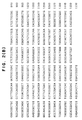
- the N-terminal side and the C-terminal side of the amino acid sequence represented by Fig. 1 may contain an amino acid moiety or a polypeptide moiety, and one or more amino acid moieties may be present upstream to Ala in the N-terminal side.
- amino acid moiety there are mentioned an initiation codon or a signal peptide.
- One or more amino acid moieties may be present downstream to Val in the C-terminal side.
- amino acid sequence constituting phospholipase D may be a part of the amino acid sequence represented by Fig. 1 which expresses the same effect as the expression of enzyme activity by a polypeptide comprising the amino acid sequence represented by Fig. 1.
- the novel DNA according to the present invention which codes for the amino acid sequence represented by Fig. 1 must only a DNA comprising any one codon among series of codons corresponding to amino acids, respective, in the amino acid sequence including the amino acid moiety or polypeptide moiety in the N-terminal side or the C-terminal side.
- DNA coding for the amino acid sequence which constitutes phospholipase D according to the present invention may be a DNA coding for a part of the amino acid sequence in Fig. 1 which expresses the same effect as the expression of enzyme activity by a polypeptide comprising the amino acid sequence represented by Fig. 1.
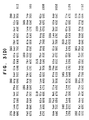
- a DNA containing a base sequence from 5′-terminal side represented by Fig. 2.
- the DNA may contain one or more codons which code for amino acids upstream to the 5′-terminus and must only be codons other than TAA, TAG and TGA.
- DNA which preferably contains ATG, GTG, initiation codons other than the two or codons corresponding to a signal peptide.
- the DNA may contain downstream to GTG as the 3′-terminus one or more codons which code for amino acids or a translation terminating codon.
- the DNA contains one or more codons which code for amino acids in the 3′-terminal side, it preferably contain a translation terminating codon at the 3′-terminus of the codon which codes for the amino acids.
- the DNA coding for the amino acid sequence represented by Fig. 1 or the DNA represented by Fig. 2 may be produced, for example, by isolating and purifying the DNA of a microorganism as a donor of a phospholipase D gene which produces phospholipase D from the microorganism, ligating the DNA which has been cleaved with supersonic, a restriction enzyme or the like and an expression vector which has been cleaved into a linear form at the blunt or cohesive end of these DNA to form a cycle, transferring the recombinant DNA vector thus obtained to a replicalbe host microorganism, culturing the recombinant DNA vector retaining microorganism which is obtained by screening with indices of the marker of the vector and the activity of phospholipase D, isolating and purifying the recombinant DNA vector from the cultured microorganism cells and harvesting the DNA as the phospholipase D gene from the recombinant DNA vector.
- actinomycetes preferably S. chromofuscus A-0848 strain (FERM P-3519, BP-361) or its redeposition strain S. chromofuscus A-0848 (FERM BP-2682).
- the DNA derived from the microorganism as a donor of gene is harvested in the following procedures.
- the microorgainsm as the donor described above is cultured in a liquid culture medium in a jar fermentor for about 1-3 days, and the culture obtained is centrifuged to collect the microorganism, which is then lysed to prepare a lysate containing the phospholipase D gene.
- the microorganism is treated with a cell wall lytic enzyme such as lysozyme or ⁇ -glucanase, if necessary, in combination with other enzymes such as protease or the like or surfactants such as sodium laurylsulfate or the like.
- the freezing and shawing method or the French press treatment as the physical destruction methods of the cell wall may be used in combination with the aforementioned lysis method.
- the isolation of purification of the DNA from lysate thus obtained can be carried out in usual manners such as the deproteination treatment by the phenol extraction, the protease treatment, the ribonuclease treatment, the alcohol precipitation or centrifugation in an appropriate combination with each other.
- the microorganismic DNA thus isolated and purified can be cleaved by the treatment, for example, with supersonic or a restriction enzyme
- the treatment with a restriction enzyme particularly a restriction enzyme of the type II such as Sal I, Sac I, Kpn I, Xho I or Mlu I which act on the specific nucleotide sequences is preferred for the easy lygation of the DNA fragment thus obtained and a vector.
- a vector which has been constructed as a vector for genetic recombination from a phage which is autonomously propagatable in a host microorganism or a plasmid.
- phage vector there may be used ⁇ gt, ⁇ C, ⁇ gt or ⁇ B when Escherichia coli is used as the host microorganism.
- plasmid vector there may be used plasmids such as pBR 322, pBR 325, pACYC 184, pUC 12, pUC 13, pUC 18, pUC 19, pUC 118, pIN I or the like for E. coli .
- plasmids such as pTUB, pTUB 285 or the like for Bacillus subtilis , a plasmid pAM 82 for Saccharomyces cerivisiae , plasmids such as pSEV 1 (Mol. Gen.
- a shuttle vector which can be autonomously propagated in two or more host microorganisms such as E. coli and S. lividans can be used.
- Such vectors are preferably cleaved with the same restriciton enzyme as the one used for the cleavage of the microorganismic DNA as the donor of the phospholipase D gene to give a vector fragments.
- the method of ligating the microorganismic DNA fragment and the vector fragment may be any methods in which a well-known DNA ligase is used.
- a well-known DNA ligase is used.
- the cohesive end of the microorganismic DNA fragment and the cohesive end of the vector fragment are annealed, and a recombinant DNA is next prepared from the microorganismic DNA fragment and the vector fragment by the effect of an appropriate DNA ligase. If necessary, it is also possible to transfer the annealed fragments into the host microorganism and to prepare a recombinant DNA with use of the DNA ligase present in the microorganism.
- the host microorganism may be any one in which the recombinant DNA can be stably and autonomously propagated and the character of an exogenous DNA can be expressed.
- E. coli E. coli DH1, E. coli HB 101, E. coli W 3110, E. coli C 600 or the like can be used.
- S. lividans S. lividans TK-24 (FERM BP-2685)
- S. lividans TK-21, S. griseofuscus , S. coelicolor , S. ambofaciens or the like can be used.
- the method for introducing the recombinant DNA into the host microorganism there may be used a method for introducing a recombinant DNA in the presence of a calcium ion, when the host microorganism is the one belonging to the Escherichia genus.
- the competent cell method the introducing method by electro fusion of a ribosome recombinant DNA into a protoplast host cell and the microinjection method.
- the presence of the introduction of an objective recombinant DNA into a host microorganism may be carried out by radioactive labelling of the DNA probe of a preliminarily synthesized phospholipase D with 32P or the like, colony hybridizing the labelled DNA probe with a preliminarily anticipated gene library and selecting a positive strain as an objective transformant.
- the aforementioned gene manipulation has generally a relationship in quantity of about 1-10 »g of a restriction enzyme, about 300 »g of a ligase and about 1 - 10 »g of other enzymes to 0.1 - 10 »g of a DNA from a donor microorganism and a plasmid DNA.
- the microorganism as the transformant thus obtained such as a microorganism belonging to E. coli has an ability of stably producing a large amount of phospholipase D on culturing the microorganism in a nutrient medium.
- E. coli DH 1 ⁇ pcPLD1 (FERM BP-2683) which is obtained by incorporating the DNA represented by Fig. 2 into a plasmid pUC 118 (TAKARA SHUZO K.K.), transfoming into E. coli DH 1 (ATCC 33849) [T. Maniatis et al., Molecular Cloning: Cold Spring Harbor (1982), 504 - 506] as a host microorganism, and selecting a microorganism which produces phospholipase D.
- the recombinant DNA thus selected can be easily taken out from the recombinant microorganism retaining the recombinant DNA and introduced again into the other host microorganism.
- the DNA which codes for the amino acid sequence of the polypeptide constituting phospholipase D can be cut out from the recombinant DNA with an enzyme such as a restriction enzyme and ligated with the terminus of the other open ring vector which is obtained by the cleavage in the same manner as above to make a recombinant DNA having new characteristics, which is then easily introduced into the other host microorganism.
- an enzyme such as a restriction enzyme
- S. lividans TK-24 ⁇ pSEV 1-PLD (FERM BP-2686) which is obtained by incorporating the DNA represented by Fig. 2 into a plasmid pSEV1 (FERM BP-2684), transforming into S. lividans TK-24 (FERM BP-2685) as a host microorganism, and selecting a microorganism which produces phospholipase D.
- the phospholipase D of the present invention may be subjected to a well-known gene manipulation to cause the mutation of a peptide.
- Such mutein DNA indicates an artificial mutant gene which is produced from the phospholipase D of the present invention by some genetic technology.
- the artificial mutant gnee is obtained by the use of various genetic technologies such as the site specific base transformation method and the substitution of a specific DNA fragment of an objective gene with an artificial mutant DNA fragment.
- the phospholipase D mutein DNA having extremely excellent properties among artificial mutant genes thus obtained can be finally inserted into a vector to produce a recombinant DNA, which is then introduced into a host microorganism to produce a phospholipase D mutein.
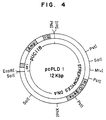
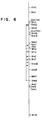
- ther are mentioned the plasmid pcPLD1 taken from E. coli DH1 ⁇ pcPLD 1 and the plasmid pSEV-PLD taken from S. lividans TK-24 (Figs. 4 and 5 show their restriction enzyme maps). Also, the restriction enzyme cleavage map of the PLD gene obtained from the plasmid pcPLD 1 is shown in Fig. 6 (wherein indicates a signal peptide).
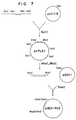
- the base sequence of the DNA coding for the amino acid sequence of the polypeptide which constitutes the phospholipase D obtained by the aforementioned method was decoded by the dideoxy method disclosed in Science, 214, 1205 - 1210 (1981), and the total amino acid sequence of the polypeptide which constitutes the phospholipase D was estimated from the base sequence. It was also confirmed that as for the polypeptide as the phospholipase D having been cultured and purified by the method described below, the N-terminal amino acid sequecne measured by a liquid phase protein sequencer (Beckman System 890 ME; manufactured by Beckman) was in accordance with a part of the estimated amino acid sequence. The construction of the plasmid pcPLD1 and the plasmid pSEV-PLD are illustrated in Fig. 7 (wherein indicates the phospholipase D gene).
- the production of the phospholipase D with a transformant can be carried out by culturing the transformant in a nutrient culture medium to have the phospholipase D produced in the microorganismic cell or in the culture medium, harvesting the cell by some means such as filtration or centrifugation of the culture obtained after culturing, destroying the cell by a mechanical method or an enzymatic method with lysozyme or the like, adding, if necessary, EDTA and/or an appropriate surfactant to solubilize the phospholipase D, and separating and collecting as an aqueous solution.
- the aqueous solution of the phospholipase D thus obtained can be, with or without condensation, subjected to ammonium sulfate fractionation, gel permeation, absorption chromatography such as affinity chromatography or the like, or ion exchange chromatography to give a phospholipase D having a high purity.
- the culturing mode of a microorganism as a transformant may be selected in consideration of the nutrient physiological properties. While the microorganism is cultured in liquid, submerged culture in a jar fermenter is advantageous to the industrial production of the microorganism. As a nutrient source of the culture medium, a culture medium which is usually used for the culture of microorganisms can be widely used.
- the carbon source is a carbon compound which can be used as a nutrient, and there are used, for example, glucose, saccharose, lactose, maltose, fructose, molasses or the like.
- the nitrogen source is a nitrogen compound which can be used as nutrient, and there are used, for example, peptone, broth, yeast extract, casein hydrolysate or the like.
- the culturing temperature can be varied appropriately within the temperature range that the microorganism grows and produces the phospholipase D, and it is preferably in the range of 20 - 42°C for E. coli and 28 - 30°C for S. lividans . While the culturing time varies depending on the conditions, it is sufficient that the culturing is finished at an appropriate time when the phospholipase D reaches a maximum yield. The culturing time is usually in the range of 12 - 48 hours for E. coli and 48 - 72 hours for S. lividans .
- the pH of the culture medium can be appropriately varied within the range that a microorganism can grow and produce phospholipase D, and it is preferably in the range of 6.0 - 8.0 for E. coli and 7.0 - 7.5 for S. lividans .
- the phospholipase D in the culture can be directly harvested and utilized in the form of a culture medium containing the microorganismic cells.
- a culture medium containing the microorganismic cells.
- the culture obtained is subjected to filtration, centrifugation or the like to harvest the microorganismic cell, which is then destroyed by a mechanical method or an enzymatic method with lysozyme or the like.
- a chelating agent such as EDTA or the like and/or a surfactant are added to the destroyed cell mixture, and the phospholipase D is solubilized, then separated and collected in the form of an aqueous solution.
- the phospholipase D containing solution thus obtained is subjected to, for example, condensation under reduced pressure, membrane condensation, a salting out treatment with ammonium sulfate, sodium sulfate or the like, or a fractional precipitation method with a hydrophilic organic solvent such as methanol, ethanol, acetone or the like to give a precipitate.
- the precipitate can be dissolved in water and subjected to dialysis through a semipermeable membrane to remove impurities having a lower molecular weight.
- the product is further purified by gel filtration with use of an adsorbent or a gel filter medium, absorption chromatography such as affinity chromatography or the like, ion exchange chromatography or the like, and the phospholipase D containing solution obtained by these purification procedures are subjected to condensation under reduced pressure, lyophilization or the like to give a purified phospholipase D.
- a phospholipase D having the following physical properties:
- Phospholipase D has an action on the ester bond of the phosphoric acid and a nitrogen containing base of a phospholipid to cleave into a phophorus compound and a corresponding nitrogen containing compound.
- the action of the phospholipase D on lecithin is represented as follows: Furthermore, lecithin is hydrolyzed with phospholipase D, so that it is also possible to produce a nucleic acid type nucleoside-phospholipid complex having a carcinostatic effect by the base-exchange reaction between the substrates of nucleic acid type nucleoside and a phospholipid such as lecithin in the reversible reaction.
- Tris-hydrochloric acid buffer pH 8.0
- 0.1 ml 10 mM lecithin emulsion 0.1 ml 0.1 M calcium chloride 0.05 ml 1% Triton X100 0.1 ml Water 0.1 ml
- reaction mixture having a composition as above was added 0.05 ml of the enzyme solution. After reaction it 37°C for 10 minutes, the mixture was boiled for 5 minutes to stop the reaction. The reaction solution was cooled to 37°C. Then, 0.1 ml of 4-aminoantipyrine (3 mg/ml), 0.1 ml of Phenol (2 mg/ml), 0.1 ml of peroxidase (2 U/ml), 0.1 ml of choline oxidase (30 U/ml) and 0.1 ml of water were added to the solution, the reaction was conducted at 37°C for 20 minutes before adding 2 ml of 1% Triton X100 to the reaction mixture for measuring the absorbance at 500 nm.
- 1 Unit (U) of phospholipase D has an enzyme activity of producing 1 »mole/min of choline.
- pH 5 Acetate buffer pH 6 - 7: Dimethyl glutarate-sodium hydroxide buffer pH 8 - 9: Tris-hydrochloric acid buffer pH 10: Glycine-sodium hydroxide buffer.
- the activity of the phospholipase D is measured in accordance with the aforementioned method for determining the enzyme activity.
- the enzyme is comparatively stable at pH 7 - 9.
- pH 6 - 7.5 Dimethyl glutarate-dosium hydroxide buffer pH 7 - 9: Tris-hydrochloric acid buffer pH 9 - 10: Glycine-sodium hydroxide buffer.
- the activity of the phospholipase D is measured in accordance with the aforementioned method for determining the enzyme activity.
- the optimal pH is in the range of about 7.5 - 8.
- the activity of the phospholipase D is measured in accordance with the aforementioned method for determining the enzyme activity.
- the enzyme is stable at a temperature of up to 70°C.
- the phospholipase D has a molecular weight of about 50,000 measured by Sephadex G-150 gel filtration and about 57,000 measured by SDS-polyacrylamide disk electrophoresis.
- the phospholipase D has an isoelectric point (IP) of pH 5.0.
- the phospholipase D thus obtained is superior to a phospholipase D obtained from the Streptomyces hachijoensis A 1143 strain (Japanese Patent Laid-Open Publication No. 48 - 99386) in the optimum pH, the stability to pH and the thermal stability.
- As the S. hachijoensis A 1143 strain produces phospholipase C in addition to phospholipase D (Japanese Patent Laid-Open Publication No. 49 - 55893), it has a disadvantage of causing a side reaction due to the contamination of phospholipase C into a final product unless substantially completely purified.
- a phospholipase D having a high purity is obtained by a easy purification procedure according to the present invention, and thus the phospholipase D can be said to be a particularly useful enzyme.
- the actinomycetes cells were suspended in 20 ml of TES (50 mM Tris-HCl pH 8.0, 50 mM EDTA pH 8.0, 15% sucrose), and lysozyme (manufactured by SIGMA Co.) was added in such an amount as the final concentration is of 1 mg/ml. Treatment was conducted at 37°C for 10 minutes to destroy the cell wall. Then, 0.5 ml of 10% SDS was added, and 21 ml of a mixture of phenol and chloroform (1 : 1) was further added before centrifugation at 14,000 rpm (25,000 G) for 15 minutes. The aqueous layer separated was placed in the other vessel, and 42 ml of ethanol was added. Chromosome deposited was collected by entwining it around a glass rod.
- TES 50 mM Tris-HCl pH 8.0, 50 mM EDTA pH 8.0, 15% sucrose
- lysozyme manufactured by SIGMA Co.
- the chromosome was dissolved in 20 ml TE (10 mM Tris-HCl pH 8.0, 1 mM EDTA pH 8.0), and 20 ml of a mixed solution of phenol and chloroform (1 : 1) was added before stirring. Then, centrifugation was carried out at 14,000 rpm (25,000 G) for 15 minutes. The aqueous layer separated was placed in the other vessel, and 2 ml of 3 M sodium acetate buffer (pH 5.5) and 50 ml of ethanol were added before stirring.
- the mixture was cooled at -70°C for 20 minutes and centrifuged at 3,000 rpm (2,000 G) for 15 minutes, and the chromosome deposited was washed with 75% ethanol and dried to give 550 »g of the product of chromosomal DNA.
- Actinomycetal chromosomal DNA (2 »g) was cleaved with 4 U of the restriction endonuclease Sal I (manufactured by TOYOBO Co.) at 37°C for 2 hours in the presence of 50 mM Tris-HCl (pH 7.5), 100 mM NaCl, 10 mM MgCl2, 1 mM DTT (dithiothreitol) and 10 »g/ml BSA (bovine serum albumin; BOEHRINGER-MANNHEIM Co.).
- Sal I restriction endonuclease Sal I
- 2 »g of the vector plasmid pUC 118 (ColE 1 ori, Amp r , M 13 IG; manufactured by TAKARA SHUZO Co.) was cleaved with 4 U of Sal I at 37°C for 16 hours under the same condition as above before treatment with phenol-chloroform and precipitation with ethanol.
- the linearized pUC 118 was reacted with the alkaline phosphatase derived from E. coli (manufactured by TOYOBO Co.) at 65°C for 1 hour in the presence of 50 mM Tris-HCl (pH 8.0) and 1 mM MgCl2 to remove the phosphate moiety at the 5′-terminus.
- the pUC 118 (100 ng) and the actinomycetal chromosome (200 ng) thus treated were treated with 100 U of the T4 DNA ligase (manufactured by TAKARA SHUZO Co.) at 16°C for 16 hours in the presence of 66 mM Tris-HCl (pH 7.6), 6.6 mM MgCl2, 10 mM DTT (dithiothreitol) and 660 »M ATP (manufactured by BOEHRINGER-MANNHEIM).
- T4 DNA ligase manufactured by TAKARA SHUZO Co.
- a phospholipase D obtained by the fermentation method was first purified completely, and the amino acid sequence in the N-terminal side of the phospholipase D was investigated. As a result, the sequence of 20 amino acids from the N-terminus was analyzed and determined as the amino acid sequence represented by the following A. Prior to the preparation of an oligonucleotide probe in a phospholipase D, the sequence of 60 bases from the 5′-terminal side of the gene was presumed as various kinds of oligonucleotides represented by the following B on the basis of the 20 amino acids from the N-terminal side thus determined.
- oligonucleotide probe designed on the basis of the presumed sequences
- several kinds of the sequences were designed in the present invention.
- the oligonucleotide which consists of 50 bases and is represented by the following C is most useful in the present invention, and thus the oligonucleotide was used as a probe in the following operation.
- the oligonucleotide represented by C in the above was prepared with use of a DNA synthesizer (Beckman System 1 plus, manufactured by BECKMAN Co.) on the basis of the method by R.L. Letsinger, W.B. Lursford; J. Am. Chem. Soc., 98, 3655.
- the oligonucleotide (200 ng) thus obtained was reacted with 8.5 U of T4 polynucleotide kinase (manufactured by TOYOBO Co.) at 37°C for 30 minutes in the presence of a T4 polynucleotide kinase buffer (50 mM Tris-HCl, pH 8.0; 10 mM MgCl2; 10 mM 2-mercaptoethanol) and 740 kBq of 32P-ATP (manufactured by AMERCIAM JAPAN Co.) to give a radioactive oligonucleotide probe by incorporating the radioisotope 32P into the oligonucleotide.
- T4 polynucleotide kinase buffer 50 mM Tris-HCl, pH 8.0; 10 mM MgCl2; 10 mM 2-mercaptoethanol
- 32P-ATP manufactured by AMERCIAM JAPAN Co.
- the gene library thus obtained that is the ampicillin resistant colonies on the plate agar culture medium was placed a nylon membrane filter (Biodine A, manufactured by PALL Co.), and a part of the colonies was moved onto the filter.
- the filter on which a part of the colonies had been moved was placed on another ampicillin (50 »g/ml) containing L agar plate culture medium, and the microorganism cell was cultured at 37°C for 16 hours.
- the filter was dipped into an alkali denaturating solution (0.5 N NaOH, 1.5 N NaCl) for 5 minutes, further dipped into 3 M sodium acetate buffer (pH 5.5) for 5 minutes and dried.
- the filter was heated at 80°C for 1 hour, and the plasmid DNA in the microorganism cell was immobilized on the filter.
- the filter was further dipped into hybridization solution [NaCl (43.84 g/l), trisodium citrate (22.1 g/l), 50 mM trisodium phosphate (pH 6.5), sodium dodecylsulfate (1 g/l), phycol (1 g/l, manufactured by PHARMACIA Co.), polyvinylpyrrolidone (1 g/l), BSA (1 g/l, manufactured by BOEHRINGER-MANNHEIM Co.), salmon sperma DNA (250 mg/l, manufactured by PHARMACIA Co.), formamide (0.4 l/l)], and hybridization was conducted at 42°C for 1 hour. Then, the filter was dipped into a fresh hybridization solution, and the preliminarily prepared radioative oligonucleotide probe was added. Hybirdization was conducted at 42°C for 24 hours.
- the filter was washed thrice with a washing solution [NaCl (4.38 g/l), trisodium citrate (2.21 g/l), sodium dodecylsulfate (1 g/l)], and the filter was further dipped into the washing solution at 50°C to remove the excessive probe.
- the filter was air dried and placed on a film for X ray photography (New RXO-H, manufactured by FUJI PHOTO FILM Co.), and autoradiography was conducted at -70°C for 24 hours with shielding the light.
- the optimum condition of hybridization varies depending on the shapes of the oligonucleotide. Therefore, in the present invention, it was found as result of repeated examinations with try and error that the oligonucleotide probe having the 50 bases which was represented by the above-described C was optimal under the aforementioned hybridization condition, and it was also possible to distinguish the positive signal of the transformant which was present alone among about 100,000 colonies and contained the gene of phospholipase D.
- the recombinant plasmid pcPLD1 containing the DNA which encoded the phospholipase D was extracted from E. coli DH1 ⁇ pcPLD1 by the method of T. Maniatis et al., Molecular Cloning; Cold Spring Harbor, (1982) 86 - 94.
- the restriction enzyme map is shown in Fig. 4.
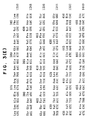
- the base sequence of the DNA at the part derived from actinomycetal chromosome in the plasmid was determined by the dideoxy method [Science, 214 , 1205 - 1210 (1981)], so that it was confirmed that the total DNA coding for the phospholipase D is contained. At the same time, the total base sequence was determined. The result is shown in Fig. 3.
- E. coli DH1 ⁇ pcPLD1 containing pcPLD1 was cultured in 20 ml of an ampicillin (50 »g/ml) containing LB culture medium [1.0% Bacto Tripton (manufactured by DIFCO Co.), 0.5% yeast extract (manufactured by DIFCO Co.), 1.0% NaCl] at 37°C for 18 hours, and the cells were collected by centrifugation (6,000 rpm, 10 minutes) and suspended in 100 »l of a 10 mM Tris-HCl (pH 8.0) buffer. The cells were crushed with a supersonic crusher and centrifuged at 14,000 rpm for 5 minutes, and the supernatant was collected as cell extract.
- a 5 ml portion of a substrate solution (5 mM phosphatidylcholine, 3.8% chloroform, 1% Triton X-100, 40 mM Tris-HCl, pH 8.0, 10 mM CaCl2) was sampled and maintained at a temperature of 37°C for 5 minutes.
- the cell extract (50 »l) was added, and the mixture was stirred and reacted at 37°C for 10 minutes.
- 2.5 ml of Chromogen solution [0.6 mM 4-aminoantipyrine, phenol (80 »g/ml), 2.4 mM EDTA, 40 mM Tris-HCl (pH 8.0)] was added, and the mixture was stirred was reacted at 37°C for 4 hours.
- the absorbance at 500 nm of the reaction solution was measured and taken as an index of the phospholipase D.
- E. coli DH1 pcPLD1 expressed the phospholipase D activity.
- the plasmid vector pcPLD 1 (2 »g) was cleaved with restriction endonucleases Mlu I (6 U) and Xho I (10 U) (manufactured by TOYOBO Co.), and the 3 kb DNA fragment containing the phospholipase D (PLD) gene is separated by electrophoresis on a 1% low melting agarose gel (manufactured by BETHESDA RESEARCH LABORATORIES Co.).
- the PLD gene containing fragment (200 ng) thus treated and the plasmid pSEV1 (100 ng) were ligated with 100 U of T4 NDA ligase (manufactured by TAKARA SHUZO Co.) in the presence of 6.6 mM Tris-HCl (pH 7.6), 6.6 mM MgCl2, 10 mM DTT and 660 »M ATP (manufactured by BOEHRINGER-MANNHEIM) at 16°C for 16 hours.
- the ligated product was transformed into S. lividans TK-24 (FERM BP 2685) which had been made into a competent cell by the method of D.A. Hopwood et al.
- Streptomyces lividans TK-24 ⁇ pSEV1-PLD which was the transformant of the actinomycetes thus obtained was cultured in a 3% Triptic Soy (manufactured by DIFCO Co.) culture medium at 28°C for 3 days. The culture was centrifuged at 14,000 rpm for 2 minutes, and the supernatant was separated. The phospholipase D activity of the culture supernatant was measured in the same manner as in Example 7. The phospholipase D activity of the culture supernatant of an untransformed Streptomyces lividans TK-24 was also measured. The results are shown in Table 2. It was confirmed that the phospholipase D activity was expressed by the introduction of the vector pSEV-PLD. Table 2 Culture Supernatant Phospholipase D activity (U/ml) Transformant 1.36 Untransformed 0.064
- a novel phospholipase D gene of which the total DNA sequence had been defined was separated from a chromosomal DNA library derived from a phospholipase D producing strain with use of an oligonucleotide synthesized on the basis of the N-terminal amino acid sequence of phospolipase D.
- the use of the phospholipase D gene made it possible to produce and culture phospholipase D in any host-vector systems.
- protein engineerings such as the improvement of the heat resistance or the change of the substrate specificity of the phospholipase D were also made possible by the isolation of the phospholipase D gene.
Landscapes
- Health & Medical Sciences (AREA)
- Life Sciences & Earth Sciences (AREA)
- Genetics & Genomics (AREA)
- Chemical & Material Sciences (AREA)
- Engineering & Computer Science (AREA)
- Zoology (AREA)
- Organic Chemistry (AREA)
- Bioinformatics & Cheminformatics (AREA)
- Wood Science & Technology (AREA)
- General Engineering & Computer Science (AREA)
- Biomedical Technology (AREA)
- Biotechnology (AREA)
- Microbiology (AREA)
- Biochemistry (AREA)
- Molecular Biology (AREA)
- General Health & Medical Sciences (AREA)
- Medicinal Chemistry (AREA)
- Physics & Mathematics (AREA)
- Biophysics (AREA)
- Plant Pathology (AREA)
- Enzymes And Modification Thereof (AREA)
- Micro-Organisms Or Cultivation Processes Thereof (AREA)
Claims (9)
- Eine DNA, für die die DNA-Sequenz vom 5'-Terminus durch Figur 2 wiedergegeben ist.
- Ein Vektor, dadurch gekennzeichnet, daß er eine DNA-Sequenz vom 5'-Terminus gemäß Figur 2 umfaßt.
- Ein Vektor nach Anspruch 2, wobei es sich bei dem Vektor um das Plasmid pcPLD1 in Escherichia coli DH1.pcPLD1 (FERM BP 2683) oder das Plasmid pSEV1-PLD in Streptomyces lividans TK24.pSEV1-PLD (FERM BP 2686) handelt.
- Ein Transformant, gekennzeichnet durch einen Wirt, bei dem es sich um einen Mikroorganismus handelt, der zur Gattung Escherichia, zur Gattung Streptomyces, zur Gattung Saccharomyces oder zur Gattung Bacillus gehört, enthaltend eine für den Wirt exogene DNA, wobei die DNA-Sequenz vom 5'-Terminus durch die Figur 2 wiedergegeben ist.
- Ein Transformant nach Anspruch 4, wobei der Mikroorganismus der Gattung Escherichia ein Mikroorganismus ist, der zu Escherichia coli gehört.
- Ein Transformant nach Anspruch 5, wobei der Transformant Escherichia coli DH1-pcPLD1 (FERM BP 2683) ist.
- Ein Transformant nach Anspruch 4, wobei der Mikroorganismus der Gattung Streptomyces ein Mikroorganismus ist, der zu Streptomyces lividans gehört.
- Ein Transformant nach Anspruch 7, wobei der Transformant Streptomyces lividans TK24.pSEV1-PLD (FERM BP 2686) ist.
- Verfahren zur Herstellung von Phospholipase D, gekennzeichnet durch einen Wirt, der ein Mikroorganismus der Gattung Escherichia, der Gattung Streptomyces, der Gattung Saccharomyces oder der Gattung Bacillus ist, wobei ein Transformant, der eine DNA gemäß Figur 2 umfaßt, kultiviert wird und die genetische Information der DNA exprimiert wird und Phospholipase D von der Kultur geerntet wird.
Applications Claiming Priority (2)
| Application Number | Priority Date | Filing Date | Title |
|---|---|---|---|
| JP325355/89 | 1989-12-15 | ||
| JP1325355A JPH03187382A (ja) | 1989-12-15 | 1989-12-15 | ホスホリパーゼdの遺伝情報を有するdna及びその用途 |
Publications (2)
| Publication Number | Publication Date |
|---|---|
| EP0435725A1 EP0435725A1 (de) | 1991-07-03 |
| EP0435725B1 true EP0435725B1 (de) | 1995-02-01 |
Family
ID=18175894
Family Applications (1)
| Application Number | Title | Priority Date | Filing Date |
|---|---|---|---|
| EP19900403529 Expired - Lifetime EP0435725B1 (de) | 1989-12-15 | 1990-12-11 | DNS mit der genetischen Information der Phospholipase D und seine Verwendung |
Country Status (3)
| Country | Link |
|---|---|
| EP (1) | EP0435725B1 (de) |
| JP (1) | JPH03187382A (de) |
| DE (1) | DE69016630T2 (de) |
Families Citing this family (5)
| Publication number | Priority date | Publication date | Assignee | Title |
|---|---|---|---|---|
| WO1995009234A1 (en) * | 1993-09-30 | 1995-04-06 | Japan Tobacco Inc. | Plant-derived phospholipase d gene |
| CN102286440B (zh) * | 2011-07-22 | 2012-11-21 | 天津科技大学 | 高活力磷脂酶d及细胞表面展示磷脂酶d酵母全细胞催化剂的制备 |
| CN103013947B (zh) * | 2012-12-17 | 2014-12-17 | 宁夏乙征生物工程有限公司 | 一种重组磷脂酶d的生产方法 |
| CN110317800B (zh) * | 2019-06-27 | 2021-04-27 | 厦门大学 | 一种用重组短芽孢杆菌生产磷脂酶d的方法 |
| CN112575023B (zh) * | 2020-12-31 | 2023-08-22 | 河南省商业科学研究所有限责任公司 | 一种在链霉菌中高效表达磷脂酶d的方法及重组链霉菌 |
Family Cites Families (1)
| Publication number | Priority date | Publication date | Assignee | Title |
|---|---|---|---|---|
| WO1989009818A1 (en) * | 1988-04-15 | 1989-10-19 | Biogen, Inc. | Processes for purifying phospholipase a2 and producing phospholipase a2-like polypeptides |
-
1989
- 1989-12-15 JP JP1325355A patent/JPH03187382A/ja active Pending
-
1990
- 1990-12-11 EP EP19900403529 patent/EP0435725B1/de not_active Expired - Lifetime
- 1990-12-11 DE DE1990616630 patent/DE69016630T2/de not_active Expired - Fee Related
Also Published As
| Publication number | Publication date |
|---|---|
| DE69016630T2 (de) | 1995-09-07 |
| DE69016630D1 (de) | 1995-03-16 |
| JPH03187382A (ja) | 1991-08-15 |
| EP0435725A1 (de) | 1991-07-03 |
Similar Documents
| Publication | Publication Date | Title |
|---|---|---|
| KR100312456B1 (ko) | 슈도모나스 플루오레슨스 유래의 외래단백질 분비촉진유전자 | |
| EP0606008B1 (de) | Ein für eine hyperthermostabile beta-Galaktosidase kodierendes Gen | |
| EP0435725A1 (de) | DNS mit der genetischen Information der Phospholipase D und seine Verwendung | |
| US5795766A (en) | Protein having α-glucosidase activity, DNA having genetic information thereof, and production of α-glucosidase | |
| US7351556B2 (en) | α-agarase and process for producing the same | |
| EP1099755B1 (de) | Neuartiges gen und transformant, welcher dieses beinhaltet | |
| EP0179025B1 (de) | Verfahren zur Herstellung von neutraler Protease | |
| US5217880A (en) | L-fucose dehydrogenase gene, microorganism having said gene and production of l-fucose dehydrogenase by the use of said microorganism | |
| JP3121890B2 (ja) | ホスホリパーゼd−pの遺伝子情報を有するdna及びその用途 | |
| US5340733A (en) | MboI restriction-modification genes | |
| KR20020056894A (ko) | 신규 카르보닐 환원효소, 그의 유전자 및 그의 이용 방법 | |
| JP3173619B2 (ja) | ピログルタミルアミノペプチダーゼの製造法 | |
| JP4161236B2 (ja) | 新規なL−α−グリセロホスフェートオキシダーゼおよびその製造方法 | |
| JPH10262674A (ja) | アルカリホスファターゼをコードする遺伝子 | |
| JP3508871B2 (ja) | クレアチニンデイミナーゼ活性を有する蛋白質の遺伝情報を有するdna並びにクレアチニンデイミナーゼの製造法 | |
| JP3358686B2 (ja) | 新規なグルタミン酸デヒドロゲナーゼをコードする遺伝子及び該遺伝子を用いたグルタミン酸デヒドロゲナーゼの製造法 | |
| JPH06303981A (ja) | ホルムアルデヒド脱水素酵素活性を有する蛋白質の遺伝情報を有するdna並びにホルムアルデヒド脱水素酵素の製造法 | |
| EP1673442B1 (de) | Transgene organismen mit niedrigerer wachstumstemperatur | |
| JP3668272B2 (ja) | 新規なグリセロールキナーゼをコードするdna及び該dnaを保有する実質的に純粋な微生物 | |
| JP2706223B2 (ja) | ピルビン酸オキシダーゼの遺伝情報を有するdnaの用途 | |
| JPH08238087A (ja) | サルコシンオキシダーゼおよびその製造法 | |
| JPH09168389A (ja) | アスコルビン酸オキシダーゼをコードするdna | |
| JP3829950B2 (ja) | 新規なクレアチニンアミドヒドロラーゼ | |
| US5441881A (en) | NSP7524V restriction-modification genes | |
| JPH0638769A (ja) | プロリンイミノペプチダーゼの遺伝情報を有するdna断片およびその用途 |
Legal Events
| Date | Code | Title | Description |
|---|---|---|---|
| PUAI | Public reference made under article 153(3) epc to a published international application that has entered the european phase |
Free format text: ORIGINAL CODE: 0009012 |
|
| AK | Designated contracting states |
Kind code of ref document: A1 Designated state(s): DE FR GB IT |
|
| 17P | Request for examination filed |
Effective date: 19911108 |
|
| RAP1 | Party data changed (applicant data changed or rights of an application transferred) |
Owner name: ASAHI KASEI KOGYO KABUSHIKI KAISHA |
|
| 17Q | First examination report despatched |
Effective date: 19930830 |
|
| GRAA | (expected) grant |
Free format text: ORIGINAL CODE: 0009210 |
|
| AK | Designated contracting states |
Kind code of ref document: B1 Designated state(s): DE FR GB IT |
|
| REF | Corresponds to: |
Ref document number: 69016630 Country of ref document: DE Date of ref document: 19950316 |
|
| ET | Fr: translation filed | ||
| ITF | It: translation for a ep patent filed | ||
| PLBE | No opposition filed within time limit |
Free format text: ORIGINAL CODE: 0009261 |
|
| STAA | Information on the status of an ep patent application or granted ep patent |
Free format text: STATUS: NO OPPOSITION FILED WITHIN TIME LIMIT |
|
| 26N | No opposition filed | ||
| REG | Reference to a national code |
Ref country code: GB Ref legal event code: IF02 |
|
| PGFP | Annual fee paid to national office [announced via postgrant information from national office to epo] |
Ref country code: GB Payment date: 20061206 Year of fee payment: 17 |
|
| PGFP | Annual fee paid to national office [announced via postgrant information from national office to epo] |
Ref country code: DE Payment date: 20061207 Year of fee payment: 17 |
|
| PGFP | Annual fee paid to national office [announced via postgrant information from national office to epo] |
Ref country code: IT Payment date: 20061231 Year of fee payment: 17 |
|
| GBPC | Gb: european patent ceased through non-payment of renewal fee |
Effective date: 20071211 |
|
| PG25 | Lapsed in a contracting state [announced via postgrant information from national office to epo] |
Ref country code: DE Free format text: LAPSE BECAUSE OF NON-PAYMENT OF DUE FEES Effective date: 20080701 |
|
| PG25 | Lapsed in a contracting state [announced via postgrant information from national office to epo] |
Ref country code: GB Free format text: LAPSE BECAUSE OF NON-PAYMENT OF DUE FEES Effective date: 20071211 |
|
| PGFP | Annual fee paid to national office [announced via postgrant information from national office to epo] |
Ref country code: FR Payment date: 20081212 Year of fee payment: 19 |
|
| PG25 | Lapsed in a contracting state [announced via postgrant information from national office to epo] |
Ref country code: IT Free format text: LAPSE BECAUSE OF NON-PAYMENT OF DUE FEES Effective date: 20071211 |
|
| REG | Reference to a national code |
Ref country code: FR Ref legal event code: ST Effective date: 20100831 |
|
| PG25 | Lapsed in a contracting state [announced via postgrant information from national office to epo] |
Ref country code: FR Free format text: LAPSE BECAUSE OF NON-PAYMENT OF DUE FEES Effective date: 20091231 |