EP0346761A2 - Verfahren zur Herstellung von aromatischen Polycarbonaten - Google Patents
Verfahren zur Herstellung von aromatischen Polycarbonaten Download PDFInfo
- Publication number
- EP0346761A2 EP0346761A2 EP89110354A EP89110354A EP0346761A2 EP 0346761 A2 EP0346761 A2 EP 0346761A2 EP 89110354 A EP89110354 A EP 89110354A EP 89110354 A EP89110354 A EP 89110354A EP 0346761 A2 EP0346761 A2 EP 0346761A2
- Authority
- EP
- European Patent Office
- Prior art keywords
- aromatic
- bis
- hydroxyphenyl
- toluene
- mol
- Prior art date
- Legal status (The legal status is an assumption and is not a legal conclusion. Google has not performed a legal analysis and makes no representation as to the accuracy of the status listed.)
- Granted
Links
Classifications
-
- C—CHEMISTRY; METALLURGY
- C08—ORGANIC MACROMOLECULAR COMPOUNDS; THEIR PREPARATION OR CHEMICAL WORKING-UP; COMPOSITIONS BASED THEREON
- C08G—MACROMOLECULAR COMPOUNDS OBTAINED OTHERWISE THAN BY REACTIONS ONLY INVOLVING UNSATURATED CARBON-TO-CARBON BONDS
- C08G63/00—Macromolecular compounds obtained by reactions forming a carboxylic ester link in the main chain of the macromolecule
- C08G63/64—Polyesters containing both carboxylic ester groups and carbonate groups
-
- C—CHEMISTRY; METALLURGY
- C08—ORGANIC MACROMOLECULAR COMPOUNDS; THEIR PREPARATION OR CHEMICAL WORKING-UP; COMPOSITIONS BASED THEREON
- C08G—MACROMOLECULAR COMPOUNDS OBTAINED OTHERWISE THAN BY REACTIONS ONLY INVOLVING UNSATURATED CARBON-TO-CARBON BONDS
- C08G63/00—Macromolecular compounds obtained by reactions forming a carboxylic ester link in the main chain of the macromolecule
- C08G63/78—Preparation processes
- C08G63/79—Interfacial processes, i.e. processes involving a reaction at the interface of two non-miscible liquids
-
- C—CHEMISTRY; METALLURGY
- C08—ORGANIC MACROMOLECULAR COMPOUNDS; THEIR PREPARATION OR CHEMICAL WORKING-UP; COMPOSITIONS BASED THEREON
- C08G—MACROMOLECULAR COMPOUNDS OBTAINED OTHERWISE THAN BY REACTIONS ONLY INVOLVING UNSATURATED CARBON-TO-CARBON BONDS
- C08G63/00—Macromolecular compounds obtained by reactions forming a carboxylic ester link in the main chain of the macromolecule
- C08G63/78—Preparation processes
- C08G63/82—Preparation processes characterised by the catalyst used
- C08G63/87—Non-metals or inter-compounds thereof
-
- C—CHEMISTRY; METALLURGY
- C08—ORGANIC MACROMOLECULAR COMPOUNDS; THEIR PREPARATION OR CHEMICAL WORKING-UP; COMPOSITIONS BASED THEREON
- C08G—MACROMOLECULAR COMPOUNDS OBTAINED OTHERWISE THAN BY REACTIONS ONLY INVOLVING UNSATURATED CARBON-TO-CARBON BONDS
- C08G64/00—Macromolecular compounds obtained by reactions forming a carbonic ester link in the main chain of the macromolecule
- C08G64/20—General preparatory processes
- C08G64/22—General preparatory processes using carbonyl halides
- C08G64/24—General preparatory processes using carbonyl halides and phenols
Definitions
- the present invention relates to a process for the preparation of aromatic polycarbonates, aromatic polyester carbonates and aromatic polyesters according to the known two-phase interfacial process in the presence of an aqueous and organic phase by reaction of diphenols with phosgene and / or with aromatic dicarboxylic acid dihalides in the presence of catalysts, optionally with the use of monofunctional chain terminators and optionally with the use of trifunctional or more than trifunctional branching agents, if appropriate in the presence of reducing agents, which is characterized in that a mixture of 5 to 95% by weight, preferably 30 to 90% by weight, particularly as the organic phase preferably 50 to 85% by weight of aromatic hydrocarbons with 95 to 5% by weight, preferably 70 to 10% by weight and in particular 50 to 15% by weight of alkanes and / or of cycloalkanes are used, and that phosphines or phosphine oxides are used as catalysts.
- thermoplastic polycarbonates by the two-phase interface process is known (see, for example, US Patents 3,028,365 and 3,275,601).
- gasoline, ligroin, cyclohexane, methylcyclohexane, benzene, toluene, xylenes and the like can be used as the organic phase.
- a. can be used (see for example US Pat. No. 3,028,365, column 2, lines 45-48 in connection with lines 32-35 of column 2 and the examples).
- aromatic, aliphatic and cycloaliphatic hydrocarbons can be used to precipitate polycarbonate from its solutions (column 6, lines 60 ff), while benzene and toluene can also form the organic phase in polycarbonate production using the interfacial process (column 5, lines 28-33).
- chlorobenzene is recommended as a solvent in the production of polycarbonates, although temperatures> 70 ° C must be maintained.
- DE-OS 2 940 024 (Le A 19 932) describes the two-phase interface process for the production of aromatic polyesters.
- Dichloromethane, chloroform, tri- and tetrachlorethylene, tetrachloroethanes, chlorobenzenes, dichlorobenzenes and mixtures of these compounds are described as solvents (page 11, lines 6-12 of DE-OS).
- DE-OS 3 007 934 (Le A 20 203) describes the two-phase interface process for the production of aromatic polyester carbonates. Again, the chlorine-containing solvents mentioned above are described as solvents (page 11, last paragraph of DE-OS).
- phase interface process is generally carried out using the chlorine-containing compounds as solvents, but this still has certain disadvantages for the insulation of at least the thermoplastic polycarbonates, so that special, i.e. H. complex measures are required (see, for example, DE-OS 34 29 960).
- the process according to the invention in the production of aromatic polyesters and polyester carbonates offers the advantage of being able to work in unusually high concentrations, as a result of which a better space-time yield is possible.
- the problem of the complete removal of the halogenated hydrocarbons is not the focus here.
- the aromatic hydrocarbons to be used according to the invention preferably have 7 to 15 carbon atoms and correspond in particular to the formula (I).
- R1-R6 are independently hydrogen or optionally branched C1-C19 alkyl, phenyl or C7-C9 alkaryl / aralkyl, where at least one radical R1-R6 is not hydrogen;
- two ortho radicals R1-R6 can form an optionally substituted aromatic or cycloaliphatic fused ring.
- aromatic hydrocarbons examples include Toluene, ethylbenzene, 1,2-dimethylbenzene, 1,3-dimethylbenzene, 1,4-dimethylbenzene, 2-, 3- and 4-ethyltoluene, cumene, n-propylbenzene, 1,2,3-trimethylbenzene, 1,2, 4-trimethylbenzene, 1,3,5-trimethylbenzene, i / n / sec.
- the optionally branched alkanes to be used according to the invention have 5 to 20 carbon atoms, preferably 5-12 carbon atoms.
- alkanes are n / i-pentane, n / i-hexane, n / i-heptane, n / i-octane as well as their mixtures as they are e.g. in the distillation of petroleum fraction.
- the cycloalkanes to be used according to the invention have 5 to 20 carbon atoms and preferably 5-12 carbon atoms.
- cycloalkanes examples include cyclopentane, cyclohexane, ethylcyclopentane, methylcyclohexane, ethylcyclohexane, tetralin and decalin, cyclooctane, cyclododecane.
- Preferred combinations are, for example, toluene / pentane, toluene / i-octane, toluene / petroleum ether, toluene / petrol, toluene / cyclohexane, xylene / i-octane, xylene / petroleum ether, xylene / petrol and xylene / cyclohexane.
- the amount of organic phase for carrying out the process according to the invention is 300 ml to 8000 ml per mole of diphenol, preferably 350 ml to 5000 ml per mole of diphenol.
- reaction temperatures for the phase interface process are between 0 ° C and 100 ° C, in particular between 5 ° C and 50 ° C, of course, the boiling point of the reaction mixture must be taken into account and, if necessary, a slight excess pressure must be used.
- reaction times for the phase interface process are between 15 minutes and 150 minutes.
- the reaction according to the invention takes place at pressures from 1 atm to 6 atm, preferably at normal pressure.
- the pH of the aqueous phase of the two-phase interface process according to the invention is between 9 and 14, preferably between 10 and 14.
- the amount of the aqueous phase must be such that emulsions are obtained under the chosen stirring conditions.
- Suitable basic materials for the aqueous phase are the usual ones, such as, for example, aqueous alkali or aqueous alkaline earth, preferably aqueous alkali and in particular aqueous NaOH or aqueous KOH.
- the diphenols which can be used in the process according to the invention are all those which have no reactive substituents under the reaction conditions of the phase interface process according to the invention, i.e. apart from the two phenolic OH groups, at most only substituents which are inert under the reaction conditions of the phase interface process according to the invention, for example aromatically bound chlorine, bromine or alkyl .
- the diphenols preferably have 6 to 21 carbon atoms.
- diphenols examples include dihydroxydiphenyls, bis (hydroxyphenyl) alkanes, bis (hydroxyphenyl) cycloalkanes, bis (hydroxyphenyl) sulfides, bis (hydroxyphenyl) ethers, bis (hydroxyphenyl) ketones, bis (hydroxyphenyl) ) sulfoxides, bis (hydroxyphenyl) sulfones and ⁇ , ⁇ '-bis (hydroxyphenyl) diisopropylbenzenes, 4,4'-dihydroxydiphenyl, 4,4'-dihydroxy-3,3 ', 5,5'-tetramethyldiphenyl , 4,4'-dihydroxy-3,3 ', 5,5'-tetrachlorodiphenyl, bis (4-hydroxyphenyl) methane, bis (4-hydroxy-3,5-dimethylphenyl) methane, bis (4 -hydroxy-3,5-dichlorophenyl) methane, 2,2-bis (4-hydroxyphen
- Preferred diphenols are 2,2-bis (4-hydroxyphenyl) propane, 1,1-bis (4-hydroxyphenyl) cyclohexane, Bis (4-hydroxphenyl) sulfide, Bis (4-hydroxyphenyl) sulfone and 2,2-bis (4-hydroxy-3,5-dimethylphenyl) propane.
- the diphenols can be used both individually and in a mixture of two or more diphenols.
- Aromatic dicarboxylic acid dichlorides which can be used according to the invention are preferably those having 8 to 18 carbon atoms, in particular those of the formula (IV), Cl -Ar- -Cl (IV) in the Ar stands for an aromatic, optionally substituted radical with 6-14 C atoms.
- Suitable aromatic dicarboxylic acid dihalides are, for example, terephthalic acid dichloride, isophthalic acid dichloride, phthalic acid dichloride and naphthalene-1,2-, -1,4, -1,5 or -1,8-dicarboxylic acid dichloride.
- Terephthalic acid dichloride and isophthalic acid dichloride and mixtures thereof are preferred.
- Chain terminators which can be used according to the invention are monophenols and chlorides of monobasic acids, in particular of monocarboxylic acids.
- Suitable monophenols are phenol, p-tert-butylphenol, o-cresol, m-cresol, p-cresol, 2- / 3- / 4-ethylphenol, cumene, p-nonylphenol, p-isooctylphenol, p-chlorophenol, p-bromophenol, ß-naphthol, ⁇ -naphthol.
- acid chlorides such as acetyl chloride, benzoyl chloride, naphthoic acid chloride or the chloroformates of the phenols mentioned above can be used.
- the amounts of chain terminators are between 0.2-10.0 mol%, preferably 1.0-6.5 mol%, based on the moles of diphenols used in each case.
- Branching agents suitable for the process according to the invention are, for example, polyhydroxy compounds with three or more than three phenolic hydroxyl groups.
- German laid-open publications 1 570 533, 15 95 762, 21 16 974, 21 13 347 and 25 090 924 of British patent specification 1 079 821 and US patent specification 3 544 514 are suitable as branching component.
- Some of the compounds which can be used with three or more than three phenolic hydroxyl groups are, for example, phloroglucin, 4,6-dimethyl-2,4,6-tri- (4-hydroxyphenyl) -hepten-2, 4,6-dimethyl-2,4, 6-tri- (4-hydroxyphenyl) heptane, 1,3,5-tri- (4-hydroxyphenyl) benzene, 1,1,1-tri- (4-hydroxyphenyl) ethane, tri- (4-hydroxyphenyl ) -phenylmethane, 2,2-bis- [4,4-bis- (4-hydroxyphenyl) cyclohexyl] propane, 2,4-bis- (hydroxyphenylisopropyl) phenol, 2,6-bis- (2nd -hydroxy-5'-methyl-benzyl) -4-methylphenol, 2- (4-hydroxyphenyl) -2- (2,4-dihydroxyphenyl) propane and 1,4- Bis (4,4'-dihydroxytriphenylmethyl
- trimesic acid trichloride cyanuric chloride
- 3,3-bis (4-hydroxyphenyl) -2-oxo-2,3-dihydroindole 3,3-bis (4-hydroxy-3-methylphenyl) -2- oxo-2,3-dihydroindole.
- the amount of branching agent that can be used in each case is between 0.05 and 3.0 mol%, preferably between 0.1 and 1.5 mol%, based on the diphenols used in each case.
- the amount of phosphines and / or phosphine oxides to be used according to the invention as catalysts varies, depending on the type of diphenols used, between 0.2-10 mol% and, if tetrasubstituted diphenols are used, between 0.5-15 mol%, based on the total amount of diphenols used Diphenols.
- Phosphines suitable for the process according to the invention are those of the formula (V) Z2 - P - Z1 (V) wherein Z is a C6-C14 aryl radical which may be substituted or unsubstituted, a C7-C15 alkaryl radical which may be substituted or unsubstituted C7-C15 aralkyl radical which may be substituted or unsubstituted, and wherein Z1 has the meaning of Z and is also a C1-C18 alkyl which may be substituted or unsubstituted.
- Suitable phosphines are, for example, triphenylphosphine, diphenylbutylphosphine, diphenyloctadecylphosphine, diphenylbenzylphosphine, tris-p-tolylphosphine, tris (p-chlorophenyl) phosphine and phenylnaphthylbenzylphosphine.
- Phosphine oxides suitable for the process according to the invention are those of the formula (VI) Z2 - - Z1 (VI), wherein Z and Z1 have the meaning given for formula (V).
- Suitable phosphine oxides are, for example, triphenylphosphine oxide, butyl-diphenylphosphine oxide, octodecyl-diphenylphosphine oxide, benzyl-diphenylphosphine oxide, tris-p-tolylphosphine oxide, tris (p-chlorophenyl) phosphine oxide and phenylnaphthylbenzylphosphine oxide.
- the catalysts are added in a known manner either before or during or after the phosgenation or the addition of acid chloride.
- Suitable reducing agents are, for example, sodium sulfite or sodium borohydride.
- the reducing agents are used in amounts of 0.25-2 mol%, based on moles of diphenols.
- COBr2 and bishaloformates of the diphenols can also be used, for example the bischloroformates of 2,2-bis (4-hydroxyphenyl) propane or of 2,2-bis (4-hydroxy-3,5) -dimethylphenyl) propane, but also, for example, the bischloroformates of bisdiphenol esters of aromatic dicarboxylic acids.
- Bishalogen formates of aromatic oligocarbonates and bis-acid bishalides of aromatic oligoesters of aromatic dicarboxylic acids and diphenols can also be used.
- the amount of phosgene, based on phenolic OH, which is required to carry out the process according to the invention can be between 100-200 mol%, preferably 110-150 mol%, in the synthesis of aromatic polycarbonates.
- the amount of dicarboxylic acid dihalide, based on phenolic OH, which is required to carry out the process according to the invention can be used in the synthesis of aromatic polyesters are between 98-103 mol%, preferably 99-102 mol%.
- the ratio of carbonate to dicarboxylic diester structures in the synthesis of aromatic polyester carbonates according to the invention can be between 1:25 and 25: 1, preferably between 1:20 and 10: 1, carbonate: dicarboxylic diester.
- the reaction of the dicarboxylic acid dichlorides is preferably carried out before the phosgenation and the phosgene is used in excess of 10 to 50 mol%, calculated on the amount to be used stoichiometrically.
- the process according to the invention generally leads to a heterogeneous mixture, but can be mixed in a normal stirred kettle or else on kneaders such as those used for. B. are common in the rubber sector.
- the polycarbonate or the polyester carbonate or the polyester can be worked up, for example, after the liquid phase has been separated off by dissolving these polycondensates in easily removable solvents, by subsequent customary washing processes and by customary insulation.
- the polycondensates can also be worked up after the organic and inorganic phases have been separated off by directly washing the reaction products present in the swollen state with acids, for example phosphoric acid or hydrochloric acid, and water, which is preferably carried out on a kneader. The washed products are then dried. Furthermore, the organic phase can optionally be removed by steam distillation.
- the thermoplastic aromatic polycarbonates obtainable by the process according to the invention can have average weight-average molecular weights of 8,000 to 50,000. (Measured by gel permeation chromatography).
- They can be stabilized, colored, filled, pigmented, flame retardant or modified with other polymers in the usual way.
- thermoplastic polycarbonates obtainable by the process according to the invention is known and can be carried out, for example, in the electrical sector or in the automotive sector.
- thermoplastic, aromatic polyester carbonates obtainable by the process according to the invention can have average weight-average molecular weights of 8,000 to 50,000. (Measured by gel permeation chromatography).
- They can be stabilized, colored, filled, pigmented, flame retardant or modified with other polymers in the usual way.
- thermoplastic polyester carbonates obtainable by the process according to the invention is known and can be carried out, for example, in the electrical sector or in the automotive sector.
- thermoplastic, aromatic polyesters obtainable by the process according to the invention can have average weight-average molecular weights of 8,000 to 50,000. (Measured by gel permeation chromatography).
- They can be stabilized, colored, filled, pigmented, flame retardant or modified with other polymers in the usual way.
- thermoplastic polyesters obtainable by the process according to the invention are known and can be carried out, for example, in the electrical sector or in the automotive sector.
Landscapes
- Chemical & Material Sciences (AREA)
- Health & Medical Sciences (AREA)
- Chemical Kinetics & Catalysis (AREA)
- Medicinal Chemistry (AREA)
- Polymers & Plastics (AREA)
- Organic Chemistry (AREA)
- Polyesters Or Polycarbonates (AREA)
Abstract
Description
- Gegenstand der vorliegenden Erfindung ist ein Verfahren zur Herstellung von aromatischen Polycarbonaten, aromatischen Polyestercarbonaten und aromatischen Polyestern nach dem bekannten Zweiphasengrenzflächenverfahren in Gegenwart von wäßriger und organischer Phase durch Umsetzung von Diphenolen mit Phosgen und/oder mit aromatischen Dicarbonsäuredihalogeniden in Gegenwart von Katalysatoren, gegebenenfalls unter Mitverwendung von monofunktionellen Kettenabbrechern und gegebenenfalls unter Mitverwendung von dreifunktionellen oder mehr als dreifunktionellen Verzweigern, gegebenenfalls in Anwesenheit von Reduktionsmitteln, das dadurch gekennzeichnet ist, daß als organische Phase eine Mischung aus 5 bis 95 Gew.-%, vorzugsweise 30 bis 90 Gew.-%, besonders bevorzugt 50 bis 85 Gew.-% an aromatischen Kohlenwasserstoffen mit 95 bis 5 Gew.-%, vorzugsweise 70 bis 10 Gew.-% und insbesondere 50 bis 15 Gew.-% an Alkanen und/oder an Cycloalkanen eingesetzt sind, und daß als Katalysatoren Phosphine oder Phosphinoxide verwendet werden.
- Die Herstellung von thermoplastischen Polycarbonaten nach dem Zweiphasengrenzflächenverfahren ist bekannt (siehe beispielsweise US-Patente 3 028 365 und 3 275 601). Hierbei können als organische Phase Benzin, Ligroin, Cyclohexan, Methylcyclohexan, Benzol, Toluol, Xylole u. a. eingesetzt werden (siehe beispielsweise US-PS 3 028 365, Spalte 2, Zeilen 45-48 in Verbindung mit Zeilen 32-35 von Spalte 2 und die Beispiele).
- Die erfindungsgemäß einzusetzenden Mischungen von aromatischen Kohlenwasserstoffen mit Alkanen bzw. Cycloalkanen sind darin nicht beschrieben.
- In der US-Patentschrift Nr. 3 112 292, die auf die Herstellung von linearen, kristallisierten Polycarbonaten gerichtet ist, kann die Herstellung nach dem Phasengrenzflächenverfahren zwar in Gegenwart von aromatischen Kohlenwasserstoffen wie Benzol, Toluol, Xylol (Spalte 2, Zeile 46) erfolgen, wohingegen aliphatische Kohlenwasserstoffe und cycloaliphatische Kohlenwasserstoffe zur Förderung der Kristallisation des Polycarbonats aus seinen Lösungen eingesetzt werden können (Spalte 3, Zeilen 18-24).
- Gemäß der japanischen Patentpublikation Nr. 21 472/66 besteht die Möglichkeit, das Polycarbonat sofort in fester Form herzustellen, wenn man die Umsetzung mit Phosgen in Gegenwart von gegebenenfalls chlorierten aromatischen Kohlenwasserstoffen, oberflächenaktiven Stoffen und wäßriger Alkalilösung durchführt.
- Gemäß US-Patent 3 530 094 können aromatische, aliphatische und cycloaliphatische Kohlenwasserstoffe zur Fällung von Polycarbonat aus seinen Lösungen eingesetzt werden (Spalte 6, Zeilen 60 ff), während Benzol und Toluol auch die organische Phase bei der Polycarbonatherstellung nach dem Phasengrenzflächenverfahren bilden können (Spalte 5, Zeilen 28-33).
- Gemäß DE-OS 2 410 716 (Le A 15 514) wird Chlorbenzol als Lösungsmittel bei der Polycarbonatherstellung empfohlen, wobei jedoch Temperaturen > 70°C eingehalten werden müssen.
- Schließlich ist aus der DE-OS 3 429 960 (Le A 22 921) bekannt, daß man Polycarbonatlösungen mit Dämpfen von Benzol oder Alkylbenzolen behandelt und somit eine schonende Isolierung der Polycarbonate ermöglicht. Daraus ergibt sich, daß Benzol oder Alkylbenzole selbst als organische Phase bei der Phasengrenzflächenpolykondensation in der Praxis sich als ungeeignet herausgestellt haben.
- Aus der DE-OS 2 940 024 (Le A 19 932) ist das Zweiphasengrenzflächenverfahren für die Herstellung von aromatischen Polyestern beschrieben. Als Lösungsmittel sind Dichlormethan, Chloroform, Tri- und Tetrachlorethylen, Tetrachlorethane, Chlorbenzole, Dichlorbenzole und Gemische dieser Verbindungen beschrieben (Seite 11, Zeilen 6-12 der DE-OS).
- Aus der DE-OS 3 007 934 (Le A 20 203) ist das Zweiphasengrenzflächenverfahren für die Herstellung von aromatischen Polyestercarbonaten beschrieben. Als Lösungsmittel sind wiederum die vorstehend genannten, chlorhaltigen beschrieben (Seite 11, letzter Absatz der DE-OS).
- Somit ergab sich, daß in der Praxis das Phasengrenzflächenverfahren in der Regel unter Verwendung der chlorhaltigen Verbindungen als Lösungsmittel durchgeführt wird, was jedoch für die Isolierung zumindest der thermoplastischen Polycarbonate noch gewisse Nachteile in sich birgt, so daß dafür jeweils spezielle, d. h. aufwendige Maßnahmen erforderlich sind (siehe dazu beispielsweise DE-OS 34 29 960).
- Andererseits gewährt das erfindungsgemäße Verfahren bei der Herstellung von aromatischen Polyestern und Polyestercarbonaten den Vorteil, in ungewöhnlich hohen Konzentrationen arbeiten zu können, wodurch eine bessere Raum-Zeit-Ausbeute möglich ist. Das Problem der restlosen Entfernung der halogenierten Kohlenwasserstoffe steht hierbei nicht im Vordergrund.
- Die erfindungsgemäß einzusetzenden aromatischen Kohlenwasserstoffe haben vorzugsweise 7 bis 15 C-Atome und entsprechen insbesondere der Formel (I).
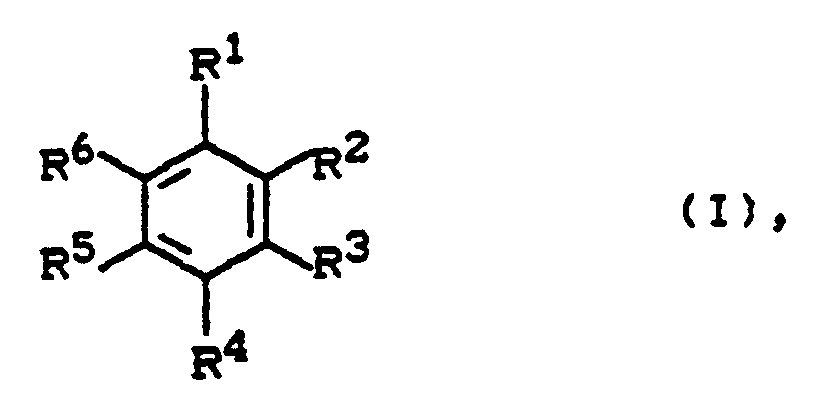
R¹-R⁶ unabhängig voneinander Wasserstoff oder gegebenenfalls verzweigtes C₁-C₁₉-Alkyl, Phenyl oder C₇-C₉-Alkaryl/Aralkyl sind, wobei immer mindestens ein Rest R¹-R⁶ kein Wasserstoff ist; ferner können zwei ortho-ständige Reste R¹-R⁶ einen gegebenenfalls substituierten aromatischen oder cycloaliphatischen annelierten Ring bilden. - Beispiele für aromatische Kohlenwasserstoffe sind
Toluol, Ethylbenzol, 1,2-Dimethylbenzol, 1,3-Dimethylbenzol, 1,4-Dimethylbenzol, 2-, 3- und 4-Ethyltoluol, Cumol, n-Propylbenzol, 1,2,3-Trimethylbenzol, 1,2,4-Trimethylbenzol, 1,3,5-Trimethylbenzol, i/n/sek./tert.-Butylbenzol, o/m/p-Cymol, 1,2-, 1,3- und 1,4-Diethylbenzol, 2-/3-/4-Methyl-n/i-propylbenzol, 1,2,3,4-Tetramethylbenzol, 1,2,3,5-Tetramethylbenzol, 1,2,4,5-Tetramethylbenzol, n-Amylbenzol, Isoamylbenzol, Pentamethylbenzol, 1-/2-Methylnaphthalin, 1-/2-Ethylnaphthalin, 1,2-/1,4-/1,6-/1,7-Dimethylnaphthalin, Hexamethylbenzol, Hexylbenzol, 1,3,5-Triethylbenzol, 1,2,5-Trimethylnaphthalin, 1,2,7-Trimethylnaphthalin und 1,3,5- Triisopropylbenzol, Tetralin, Ditolyl, Diphenyl. Bevorzugt sind: Toluol, Ethylbenzol, o/m/p-Xylol, 1,3,5-Trimethylbenzol, 1,3,5-Triisopropylbenzol. - Die erfindungsgemäß einzusetzenden gegebenenfalls verzweigten Alkane haben 5 bis 20 C-Atome vorzugsweise 5-12 C-Atome.
- Beispiele für Alkane sind n/i-Pentan, n/i-Hexan, n/i-Heptan, n/i-Octan sowie deren Gemische wie sie auch z.B. bei der Destillation von Erdölfraktion anfallen.
- Der erfindungsgemäß einzusetzende Cycloalkane haben 5 bis 20 C-Atome und vorzugsweise 5-12 C-Atome.
- Beispiele für Cycloalkane sind Cyclopentan, Cyclohexan, Ethylcyclopentan, Methylcyclohexan, Ethylcyclohexan, Tetralin und Dekalin, Cyclooctan, Cyclododecan.
- Es können beliebige Kombinationen der genannten aromatischen Kohlenwasserstoffe mit den genannten Alkanen und/oder mit den Cycloalkanen verwendet werden. Geeignete Kombinationen sind beispielsweise
- Toluol/Pentan, Toluol/Hexan, Toluol/Heptan, Toluol/i/n-Octan, Toluol/Cyclopentan, Toluol/Cyclohexan, Toluol/Petrolether, Toluol/Benzin, Xylol/Pentan, Xylol/Hexan, Xylol/Heptan, Xylol/i/n-Octan, Xylol/Cyclopentan, Xylol/Cyclohexan, Xylol/Petrolether, Xylol/Benzin, Mesitylen/Pentan, Mesitylen/Hexan und Mesitylen/i/n-Octan.
- Bevorzugte Kombinationen sind beispielsweise Toluol/Pentan, Toluol/i-Octan, Toluol/Petrolether, Toluol/Benzin, Toluol/Cyclohexan, Xylol/i-Octan, Xylol/Petrolether, Xylol/Benzin und Xylol/Cyclohexan.
- Die Menge an organischer Phase zur Durchführung des erfindungsgemäßen Verfahrens beträgt 300 ml bis 8000 ml pro Mol Diphenol, vorzugsweise 350 ml bis 5000 ml pro Mol Diphenol.
- Die Reaktionstemperaturen für das Phasengrenzflächenverfahren liegen zwischen 0 C und 100 °C, insbesondere zwischen 5° C und 50° C wobei selbstverständlich der Siedepunkt des Reaktionsgemisches berücksichtigt werden muß und gegebenenfalls mit leichten Überdruck gearbeitet werden muß.
- Die Reaktionszeiten für das Phasengrenzflächenverfahren liegen einschließlich Nachkondensationszeit zwischen 15 Min und 150 Min.
- Die erfindungsgemäße Umsetzung erfolgt bei Drücken von 1 atm, bis 6 atm, vorzugsweise bei Normaldruck.
- Der pH-Wert der wäßrigen Phase des erfindungsgemäßen Zweiphasengrenzflächenverfahrens liegt zwischen 9 und 14, vorzugsweise zwischen 10 und 14. Die Menge an wäßriger Phase muß so bemessen sein, daß unter den gewählten Rührbedingungen Emulsionen erhalten werden.
- Geeignete basische Materialien für die wäßrige Phase sind die üblichen, wie beispielsweise wäßriges Alkali oder wäßriges Erdalkali vorzugsweise wäßriges Alkali und insbesondere wäßrige NaOH oder wäßrige KOH.
- Die in dem erfindungsgemäßen Verfahren einsetzbaren Diphenole sind alle die, die unter den Reaktionsbedingungen des erfindungsgemäßen Phasengrenzflächenverfahrens keine reaktiven Substituenten haben, also außer den beiden phenolischen OH-Gruppen allenfalls nur unter den Reaktionsbedingungen des erfindungsgemäßen Phasengrenzflächenverfahrens inerte Substituenten wie beispielsweise aromatisch gebundenes Chlor, Brom oder Alkyl.
- Die Diphenole haben vorzugsweise 6 bis 21 C-Atome.
- Beispiele für Diphenole sind Dihydroxydiphenyle, Bis-(hydroxyphenyl)-alkane, Bis-(hydroxyphenyl)-cycloalkane, Bis-(hydroxyphenyl)-sulfide, Bis-(hydroxyphenyl)-ether, Bis-(hydroxyphenyl)-ketone, Bis-(hydroxyphenyl)-sulfoxide, Bis-(hydroxyphenyl)-sulfone und α,α′-Bis-(hydroxyphenyl)-diisopropylbenzole, 4,4′-Dihydroxydiphenyl, 4,4′-Dihydroxy-3,3′,5,5′-tetramethyldiphenyl, 4,4′-Dihydroxy-3,3′,5,5′-tetrachlordiphenyl, Bis-(4-hydroxyphenyl)-methan, Bis-(4-hydroxy-3,5-dimethylphenyl)-methan, Bis-(4-hydroxy-3,5-dichlorphenyl)-methan, 2,2-Bis-(4-hydroxyphenyl)-propan, 2,2-Bis-(4-hydroxy-3,5-dimethylphenyl)-propan, 2,2-Bis-(4-hydroxy-3,5-dichlorphenyl)-propan, 1,1-Bis-(4-hydroxyphenyl)-cyclohexan, 1,1-Bis-(4-hydroxy-3,5-dimethylphenyl)-cyclohexan, 1,1-Bis-(4-hydroxy-3,5-dichlorphenyl)-cyclohexan, Bis-(4-hydroxyphenyl)-sulfon, Bis-(4- hydroxy-3,5-dichlorphenyl)-sulfon, Bis-(4-hydroxy-3,5-dimethylphenyl)-sulfon, Bis-(4-hydroxyphenyl)-sulfid, Bis-(4-hydroxy-3,5-dimethylphenyl)-sulfid, Bis-(4-hydroxy-3,5-dichlorphenyl)-sulfid, Bis-(4-hydroxyphenyl)-oxid, Bis-(4-hydroxy-3,5-dimethylphenyl)-oxid, Bis-(4-hydroxyphenyl)-keton und Bis-(4-hydroxy-3,5-dimethylphenyl)-keton.
- Diese Diphenole sind entweder literaturbekannt oder nach literaturbekannten Verfahren erhältlich.
- Bevorzugte Diphenole sind
2,2-Bis-(4-hydroxyphenyl)propan,
1,1-Bis-(4-hydroxyphenyl)cyclohexan,
Bis-(4-hydroxphenyl)sulfid,
Bis-(4-hydroxyphenyl)sulfon und
2,2-Bis-(4-hydroxy-3,5-dimethylphenyl)propan. - Die Diphenole können sowohl einzeln, als auch im Gemisch von zwei oder mehr Diphenolen eingesetzt werden.
- Erfindungsgemäß einsetzbare aromatische Dicarbonsäuredichloride sind vorzugsweise solche mit 8 bis 18 C-Atomen, insbesondere solche der Formel (IV),
Cl-Ar- -Cl (IV)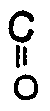
in der
Ar für einen aromatischen, gegebenenfalls substiutierten Rest mit 6-14 C-Atomen steht. - Geeignete aromatische Dicarbonsäuredihalogenide sind beispielsweise Terephthalsäuredichlorid, Isophthalsäuredichlorid, Phthalsäuredichlorid und Naphthalin-1,2-, -1,4, -1,5 oder -1,8-dicarbonsäuredichlorid.
- Bevorzugt sind Terephthalsäuredichlorid und Isophthalsäuredichlorid sowie deren Gemische.
- Erfindungsgemäß einsetzbare Kettenabbrecher sind Monophenole und Chloride von einbasischen Säuren, insbesondere von Monocarbonsäuren.
- Geeignete Monophenole sind Phenol, p-tert.-Butylphenol, o-Kresol, m-Kresol, p-Kresol, 2-/3-/4-Ethylphenol, Cumol,

- Als Säurechloride können z. B. Acetylchlorid, Benzoylchlorid, Naphthoesäurechlorid oder die Chlorformiate der vorstehend genannten Phenole verwendet werden.
- Die Mengen an Kettenabbrechern liegen zwischen 0,2 - 10,0 Mol %, vorzugsweise 1,0 - 6,5 Mol %, bezogen auf die jeweils eingesetzten Mole Diphenole.
- Es können sowohl die Monophenole allein, als auch die Säurechloride allein, aber auch Monophenole und Säurechloride gemeinsam, aber dann sukzessive eingesetzt werden.
- Für das erfindungsgemäße Verfahren geeignete Verzweiger sind beispielsweise Polyhydroxyverbindungen mit drei oder mehr als drei phenolischen Hydroxygruppen.
- Als Verzweigerkomponenten kommen die in den deutschen Offenlegungsschriften 1 570 533, 15 95 762, 21 16 974, 21 13 347 und 25 090 924 der britischen Patentschrift 1 079 821 und der US-Patentschrift 3 544 514 beschriebenen Verbindungen in Frage.
- Einige der verwendbaren Verbindungen mit drei oder mehr als drei phenolischen Hydroxygruppen sind beispielsweise Phloroglucin, 4,6-Dimethyl-2,4,6-tri-(4-hydroxyphenyl)-hepten-2, 4,6-Dimethyl-2,4,6-tri-(4-hydroxyphenyl)-heptan, 1,3,5-Tri-(4-hydroxyphenyl)-benzol, 1,1,1-Tri-(4-hydroxyphenyl)-ethan, Tri-(4-hydroxyphenyl)-phenylmethan, 2,2-Bis-[4,4-bis-(4-hydroxyphenyl)-cyclohexyl]-propan, 2,4-Bis-(hydroxyphenyl-isopropyl)-phenol, 2,6-Bis-(2-hydroxy-5′-methyl-benzyl)-4-methylphenol, 2-(4-Hydroxyphenyl)-2-(2,4-dihydroxyphenyl)-propan und 1,4- Bis-(4,4˝-dihydroxytriphenyl-methyl)-benzol. Einige der sonstigen dreifunktionellen Verbindungen sind Trimesinsäuretrichlorid, Cyanurchlorid, 3,3-Bis-(4-hydroxyphenyl)-2-oxo-2,3-dihydroindol und 3,3-Bis-(4-hydroxy-3-methylphenyl)-2-oxo-2,3-dihydroindol.
- Die Menge an jeweils einsetzbarem Verzweiger beträgt zwischen 0,05 und 3,0 Mol %, vorzugsweise zwischen 0,1 und 1,5 Mol %, bezogen auf jeweils eingesetzte Diphenole.
- Die Menge an erfindungsgemäß einzusetzenden Phosphinen und/oder Phosphinoxiden als Katalysatoren variiert je nach Art der eingesetzten Diphenole zwischen 0,2 -10 Mol %, bei Einsatz von gegebenenfalls tetrasubstituierten Diphenolen zwischen 0,5 - 15 Mol %, bezogen jeweils auf die Gesamtmenge an eingesetzten Diphenolen.
- Es können einzelne Katalysatoren als auch Gemische von verschiedenen Katalysatoren eingesetzt werden.
- Für das erfindungsgemäße Verfahren geeignete Phosphine sind solche der Formel (V)
Z₂ - P - Z¹ (V)
worin
Z ein C₆-C₁₄-Aryl-Rest ist, welcher substituiert oder unsubstituiert sein kann, ein C₇-C₁₅-Alkaryl-Rest ist, welcher substituiert oder unsubstituiert sein kann, ein C₇-C₁₅-Aralkyl-Rest ist, welcher substituiert oder unsubstituiert sein kann, und worin Z¹ die Bedeutung von Z hat und außerdem ein C₁-C₁₈-Alkyl ist, welches substituiert oder unsubstituiert sein kann. - Geeignete Phosphine sind beispielsweise Triphenylphosphin, Diphenylbutylphosphin, Diphenyloctadecylphosphin, Diphenylbenzylphosphin, Tris-p-tolylphosphin, Tris-(p-chlorphenyl)-phosphin und Phenylnaphthylbenzylphosphin.
- Für das erfindungsgemäße Verfahren geeignete Phosphinoxide sind solche der Formel (VI)
Z₂ -- Z¹ (VI),
worin
Z und Z¹ die für Formel (V) genannte Bedeutung haben. - Geeignete Phosphinoxide sind beispielsweise Triphenylphosphinoxid, Butyl-di-phenylphosphinoxid, Octodecyl-di-phenylphosphinoxid, Benzyl-di-phenylphosphinoxid, Tris-p-tolyl-phosphinoxid, Tris-(p-chlorphenyl)-phosphinoxid und Phenyl-naphthyl-benzylphosphinoxid.
- Die Zugabe der Katalysatoren erfolgt in bekannter Weise entweder vor oder während oder nach der Phosgenierung beziehungsweise der Säurechloridzugabe.
- Geeignete Reduktionsmittel sind beispielsweise Natriumsulfit oder Natriumborhydrid. Die Reduktionsmittel werden in Mengen von 0,25-2 Mol-%, bezogen auf Mole Diphenole, eingesetzt.
- In dem erfindungsgemäßen Verfahren können anstelle von Phosgen auch COBr₂ sowie Bishalogenformiate der Diphenole eingesetzt werden, beispielsweise die Bischlorformiate von 2,2-Bis-(4-hydroxyphenyl)-propan oder von 2,2-Bis-(4-hydroxy-3,5-dimethylphenyl)-propan, aber auch beispielsweise die Bischlorformiate der Bisdiphenolester von aromatischen Dicarbonsäuren.
- Es können auch Bishalogenformiate von aromatischen Oligocarbonaten und Bissäurebishalogenide von aromatischen Oligoestern aus aromatischen Dicarbonsäuren und Diphenolen eingesetzt werden.
- Die Menge an Phosgen, bezogen auf phenolisches OH, die zur Durchführung des erfindungsgemäßen Verfahrens erforderlich ist, kann bei der Synthese von aromatischen Polycarbonaten zwischen 100-200 Mol-% vorzugsweise 110-150 Mol-% liegen.
- Entsprechendes gilt bei Einsatz von Bishalogenformiaten.
- Die Menge an Dicarbonsäuredihalogenid, bezogen auf phenolisches OH, die zur Durchführung des erfindungsgemäßen Verfahrens erforderlich ist, kann bei der Synthese von aromatischen Polyestern zwischen 98-103 Mol-% vorzugsweise 99-102 Mol-% liegen.
- Entsprechendes gilt bei Einsatz von Bissäurebishalogeniden von aromatischen Oligoestern.
- Das Verhältnis von Carbonat zu Dicarbonsäurediester-Strukturen bei der erfindungsgemäßen Synthese von aromatischen Polyestercarbonaten kann zwischen 1:25 und 25:1, vorzugsweise zwischen 1:20 und 10:1, Carbonat:Dicarbonbsäurediester liegen.
- Dabei wird die Umsetzung der Dicarbonsäuredichloride vorzugsweise vor der Phosgenierung vorgenommen und das Phosgen mit Überschüssen von 10 bis 50 Mol-%, berechnet auf die stöchiometrisch einzusetzende Menge, verwendet.
- Das erfindungsgemäße Verfahren führt in der Regel zu einem heterogenen Gemisch, kann aber in einem normalen Rührkessel durchmischt werden oder aber auch auf Knetern, wie sie z. B. im Kautschukbereich üblich sind. Die Aufarbeitung des Polycarbonats beziehungsweise des Polyestercarbonats beziehungsweise des Polyesters kann zum Beispiel nach Abtrennen der flüssigen Phase durch Auflösen dieser Polykondensate in leicht entfernbaren Lösungsmitteln, durch anschließende übliche Waschvorgänge und durch übliche Isolierung erfolgen.
- Die Aufarbeitung der Polykondensate kann aber auch nach Abrennung der organischen und der anorganischen Phase durch direkte Wäsche der in gequollenem Zustand vorliegenden Reaktionsprodukte mit Säuren, wie beispielsweise Phosphorsäure oder Salzsäure, und Wasser erfolgen, was vorzugsweise auf einem Kneter durchgeführt wird. Anschließend erfolgt Trocknung der so gewaschenen Produkte. Ferner kann die organische Phase gegebenenfalls durch eine Wasserdampfdestillation entfernt werden.
Die nach dem erfindungsgemäßen Verfahren erhältlichen thermoplastischen aromatischen Polycarbonate können mittlere Gewichtsmittelmolekulargewichte von 8000 bis 50 000 haben. (Gemessen durch Gelpermeationschromatographie). - Sie können in üblicher Weise stabilisiert, eingefärbt, gefüllt, pigmentiert, flammgeschützt oder mit anderen Polymeren modifiziert werden.
- Die technische Brauchbarkeit der nach dem erfindungsgemäßen Verfahren erhältlichen thermoplastischen Polycarbonate ist bekannt, sie kann beispielsweise im Elektrosektor oder im Automobilsektor erfolgen.
- Die nach dem erfindungsgemäßen Verfahren erhältlichen, thermoplastischen, aromatischen Polyestercarbonate können mittlere Gewichtsmittelmolekulargewichte von 8000 bis 50 000 haben. (Gemessen durch Gelpermeationschromatographie).
- Sie können in üblicher Weise stabilisiert, eingefärbt, gefüllt, pigmentiert, flammgeschützt oder mit anderen Polymeren modifiziert werden.
- Die technische Brauchbarkeit der nach dem erfindungsgemäßen Verfahren erhältlichen thermoplastischen Polyestercarbonate ist bekannt, sie kann beispielsweise im Elektrosektor oder im Automobilsektor erfolgen.
- Die nach dem erfindungsgemäßen Verfahren erhältlichen, thermoplastischen, aromatischen Polyester können mittlere Gewichtsmittelmolekulargewichte von 8000 bis 50 000 haben. (Gemessen durch Gelpermeationschromatographie).
- Sie können in üblicher Weise stabilisiert, eingefärbt, gefüllt, pigmentiert, flammgeschützt oder mit anderen Polymeren modifiziert werden.
- Die technische Brauchbarkeit der nach dem erfindungsgemäßen Verfahren erhältlichen thermoplastischen Polyester ist bekannt, sie kann beispielsweise im Elektrosektor oder im Automobilsektor erfolgen.
- In einem Dreihalskolben mit Rührer, Stickstoffeinleitung und Tropftrichter werden 350 ml Toluol, 100 ml i-Octan und 20,5 g (0,102 Mol) eines 1:1-Gemisches aus Tere- und Isophthalsäuredichlorids (gelöst in 150 ml Toluol) zusammen mit 131 mg (0,5 Mol-%) Triphenylphosphin vorgelegt. Bei 10°C wird eine Lösung aus 22,8 g Bisphenol A; 10 g (0,25 Mol) Natriumhydroxid, 600 mg (4 Mol-%) p-tert.- Butylphenol und 200 ml H₂O in 15 Min eingetropft. Anschließend wird 60 Minuten nachkondensiert. Das ausgefallene Polymer wird von der alkalischen Phase abgetrennt, mit verdünnter Phosphorsäure und anschließend mehrmals mit Wasser gewaschen und 10 h bei 80°C im Vakuum getrocknet.
Ausbeute: 25,7 g /ηrel = 1.346 - Wie Beispiel 1 jedoch werden 175 ml Toluol und 50 ml i-Octan verwendet und 2 h nachgerührt.
Ausbeute: 26,6 g /ηrel = 1.434 - Wie Beispiel 2 jedoch werden 2 Mol-% Triphenylphosphin als Katalysator eingesetzt und kein Kettenabbrecher (p-tert.-Butylphenol) verwendet.
Ausbeute: 33,5 g /ηrel = 1.653 - 22,8 g (0,1 Mol) Bisphenol A werden zusammen mit 400 ml Wasser, 20 g (0,5 Mol) Natriumhydroxid, 125 ml Toluol, 125 ml i-Octan und 0,5 Mol-% Triphenylphosphin (131 mg) bei 20°C vorgelegt und 0,15 Mol (14,85 g) Phosgen unter Rühren eingeleitet. Anschließend wird 1 h bei 20°C gerührt.
- Zur Aufarbeitung wird mit Wasser verdünnt und mit verdünnter Phosphorsäure angesäuert. Das Polymer wird abgesaugt, neutral gewaschen und bei 80°C im Vakuum getrocknet.
Ausbeute: 22,7 g /ηrel = 1.497 - Wie Beispiel 4 jedoch werden 75 ml Toluol und 75 ml i-Octan verwendet und die Reaktion bei 10°C durchgeführt.
Ausbeute: 25,1 g /ηrel = 1.358
Claims (3)
Applications Claiming Priority (2)
| Application Number | Priority Date | Filing Date | Title |
|---|---|---|---|
| DE3819943A DE3819943A1 (de) | 1988-06-11 | 1988-06-11 | Verfahren zur herstellung von aromatischen polycarbonaten, aromatischen polyestercarbonaten und aromatischen polyestern |
| DE3819943 | 1988-06-11 |
Publications (3)
| Publication Number | Publication Date |
|---|---|
| EP0346761A2 true EP0346761A2 (de) | 1989-12-20 |
| EP0346761A3 EP0346761A3 (de) | 1991-11-06 |
| EP0346761B1 EP0346761B1 (de) | 1994-12-21 |
Family
ID=6356360
Family Applications (1)
| Application Number | Title | Priority Date | Filing Date |
|---|---|---|---|
| EP89110354A Expired - Lifetime EP0346761B1 (de) | 1988-06-11 | 1989-06-08 | Verfahren zur Herstellung von aromatischen Polycarbonaten |
Country Status (4)
| Country | Link |
|---|---|
| US (1) | US4973652A (de) |
| EP (1) | EP0346761B1 (de) |
| JP (1) | JP2579684B2 (de) |
| DE (2) | DE3819943A1 (de) |
Cited By (1)
| Publication number | Priority date | Publication date | Assignee | Title |
|---|---|---|---|---|
| US8664349B2 (en) | 2009-09-30 | 2014-03-04 | Bayer Materialscience Ag | Polycarbonate compositions having improved optical properties |
Families Citing this family (21)
| Publication number | Priority date | Publication date | Assignee | Title |
|---|---|---|---|---|
| DE4032924A1 (de) * | 1990-10-17 | 1992-04-23 | Bayer Ag | Verfahren zur herstellung von loesungsmittelfreiem polycarbonat |
| JP3102592B2 (ja) | 1991-10-22 | 2000-10-23 | 宇部興産株式会社 | ポリカーボネートの製造方法 |
| US5278279A (en) * | 1992-03-11 | 1994-01-11 | Daicel Chemical Industries, Ltd. | Process for producing (co)polycarbonate with transesterification catalyst and compound |
| JP3102597B2 (ja) | 1992-03-24 | 2000-10-23 | 宇部興産株式会社 | ポリカーボネートの製造方法 |
| JP3526984B2 (ja) | 1994-11-28 | 2004-05-17 | ユニチカ株式会社 | ポリアリレート及びこれを用いた電子写真感光体 |
| US6384736B1 (en) * | 1998-04-30 | 2002-05-07 | Dave Gothard | Remote control electronic display system |
| EP1124879B1 (de) | 1998-10-29 | 2005-11-16 | General Electric Company | Witterungsbeständige blockcopolyestercarbonate, verfahren zu deren herstellung und diese enthaltende polymerlegierungen |
| ES2214046T3 (es) | 1998-10-29 | 2004-09-01 | General Electric Company | Copoliestercarbonatos de bloque resistentes a la intemperie y mezclas que los contienen. |
| US7790292B2 (en) * | 1999-05-18 | 2010-09-07 | Sabic Innovative Plastics Ip B.V. | Polysiloxane copolymers, thermoplastic composition, and articles formed therefrom |
| US6689474B2 (en) | 1999-05-18 | 2004-02-10 | General Electric Company | Thermally stable polymers, method of preparation, and articles made therefrom |
| US7605221B2 (en) * | 1999-05-18 | 2009-10-20 | Sabic Innovative Plastics Ip B.V. | Weatherable, thermostable polymers having improved flow composition |
| US6664366B2 (en) | 1999-05-18 | 2003-12-16 | General Electric Company | Thermally stable polymers, method of preparation, and articles made therefrom |
| US6306507B1 (en) | 1999-05-18 | 2001-10-23 | General Electric Company | Thermally stable polymers, method of preparation, and articles made therefrom |
| US7169859B2 (en) * | 1999-05-18 | 2007-01-30 | General Electric Company | Weatherable, thermostable polymers having improved flow composition |
| US6861482B2 (en) * | 1999-05-18 | 2005-03-01 | General Electric Company | Weatherable, thermostable polymers having improved flow composition |
| US6812320B2 (en) | 2002-03-25 | 2004-11-02 | General Electric Company | Method for copolyestercarbonate synthesis |
| US7326764B2 (en) * | 2005-05-20 | 2008-02-05 | General Electric Company | Transparent compositions, methods for the preparation thereof, and articles derived therefrom |
| US7323536B2 (en) * | 2005-05-20 | 2008-01-29 | General Electric Company | Transparent compositions, methods for the preparation thereof, and articles derived therefrom |
| US7273917B2 (en) * | 2005-05-20 | 2007-09-25 | General Electric Company | Transparent compositions, methods for the preparation thereof, and articles derived therefrom |
| US7323535B2 (en) * | 2005-05-20 | 2008-01-29 | General Electric Company | Transparent compositions, methods for the preparation thereof, and articles derived therefrom |
| JP2008304523A (ja) * | 2007-06-05 | 2008-12-18 | Hitachi Displays Ltd | 集光用のマイクロレンズアレイを備える液晶表示装置及びその製造方法 |
Family Cites Families (14)
| Publication number | Priority date | Publication date | Assignee | Title |
|---|---|---|---|---|
| NL104015C (de) * | 1953-10-16 | |||
| US3275601A (en) * | 1956-01-04 | 1966-09-27 | Bayer Ag | Manufacture of polycarbonates using tertiary amines, quaternary amines and salts thereof as catalysts |
| US3112292A (en) * | 1958-06-23 | 1963-11-26 | Bayer Ag | Production of linear crystallized polycarbonates |
| DE1300266B (de) * | 1960-06-10 | 1969-07-31 | Bayer Ag | Verfahren zur Herstellung hochmolekularer, linearer Polycarbonate |
| US3240755A (en) * | 1960-12-29 | 1966-03-15 | Allied Chem | Process for the preparation of polycarbonates |
| US3376261A (en) * | 1966-03-16 | 1968-04-02 | Eastman Kodak Co | Process for preparing polycarbonates |
| DE2122170A1 (de) * | 1970-05-06 | 1971-11-25 | Gen Electric | Verfahren zur Herstellung aromatischer Superpolyester |
| DE2410716B2 (de) * | 1974-03-06 | 1977-02-10 | Bayer Ag, 5090 Leverkusen | Verfahren zur herstellung aromatischer polycarbonate nach der methode der phasengrenzflaechenkondensation |
| JPS5525427A (en) * | 1978-08-10 | 1980-02-23 | Mitsubishi Chem Ind Ltd | Preparation of aromatic polyester-polycarbonate |
| DE2933148A1 (de) * | 1979-08-16 | 1981-02-26 | Bayer Ag | Verfahren zur herstellung von aromatischen dicarbonsaeuredichloriden iv |
| DE2940024A1 (de) * | 1979-10-03 | 1981-04-16 | Bayer Ag, 5090 Leverkusen | Aromatische polyester, verfahren zu ihrer herstellung und ihre verwendung zur herstellung von spritzgussartikeln, folien und ueberzuegen |
| DE3007934A1 (de) * | 1980-03-01 | 1981-09-17 | Bayer Ag, 5090 Leverkusen | Aromatische polyestercarbonate, verfahren zu ihrer herstellung und ihre verwendung zur herstellung von spritzgussartikeln, folien und ueberzuegen |
| DE3429960A1 (de) * | 1984-08-16 | 1986-02-27 | Bayer Ag, 5090 Leverkusen | Verfahren zur isolierung von thermoplastischen polycarbonaten aus seinen loesungen |
| JPH02147266A (ja) * | 1989-08-31 | 1990-06-06 | Toshiba Corp | 証明書類の発行システム装置ならびに印刷発行装置 |
-
1988
- 1988-06-11 DE DE3819943A patent/DE3819943A1/de not_active Withdrawn
-
1989
- 1989-06-06 US US07/361,876 patent/US4973652A/en not_active Expired - Lifetime
- 1989-06-08 JP JP1144281A patent/JP2579684B2/ja not_active Expired - Lifetime
- 1989-06-08 EP EP89110354A patent/EP0346761B1/de not_active Expired - Lifetime
- 1989-06-08 DE DE58908790T patent/DE58908790D1/de not_active Expired - Fee Related
Cited By (1)
| Publication number | Priority date | Publication date | Assignee | Title |
|---|---|---|---|---|
| US8664349B2 (en) | 2009-09-30 | 2014-03-04 | Bayer Materialscience Ag | Polycarbonate compositions having improved optical properties |
Also Published As
| Publication number | Publication date |
|---|---|
| EP0346761A3 (de) | 1991-11-06 |
| DE3819943A1 (de) | 1990-02-08 |
| EP0346761B1 (de) | 1994-12-21 |
| US4973652A (en) | 1990-11-27 |
| DE58908790D1 (de) | 1995-02-02 |
| JP2579684B2 (ja) | 1997-02-05 |
| JPH0245525A (ja) | 1990-02-15 |
Similar Documents
| Publication | Publication Date | Title |
|---|---|---|
| EP0346761B1 (de) | Verfahren zur Herstellung von aromatischen Polycarbonaten | |
| DE60110776T2 (de) | Herstellungsverfahren für polycarbonate | |
| EP0006516B1 (de) | Verfahren zur Herstellung von aliphatisch-aromatischen Polycarbonaten mit Diphenolcarbonat-Endruppen, die nach dem Verfahren erhaltenen Polycarbonate und ihre Verwendung zur Herstellung von thermoplastisch verarbeitbaren, hochmolekularen, segmentierten, aliphatisch-aromatischen Polycarbonat-Elastomeren | |
| EP0013904B1 (de) | Verfahren zur Herstellung von Polycarbonaten | |
| EP0008724B1 (de) | Verfahren zur Herstellung von Polymeren mit Diphenolcarbonat-Endgruppen | |
| DE1495912A1 (de) | Verfahren zur Herstellung linearer Mischpolyester | |
| EP0443058B1 (de) | Polyester und Polyestercarbonate auf Basis von 1,1-Bis-(4-hydroxyphenyl)-alkylcycloalkanen | |
| CA1173998A (en) | Aromatic polyester carbonates, a process for their preparation and their use for the production of injection moulded articles, films and coatings | |
| EP0355513B1 (de) | Isomerisierung oder Homologisierung von Bisphenolen | |
| EP0075772B1 (de) | Verfahren zur Isolierung von Polycarbonaten auf Basis von 4,4-Dihydroxidiphenylsulfonen | |
| DE3926850A1 (de) | Polysiloxan-polycarbonat-blockcopolymere auf basis spezieller dihydroxydphenylcycloalkane | |
| EP0337207A2 (de) | Verfahren zur Herstellung von aromatischen Polycarbonaten, aromatischen Polyestercarbonaten und aromatischen Polyestern | |
| DE3927771A1 (de) | Polyester und polyestercarbonate | |
| US3282893A (en) | Process for preparing synthetic resins | |
| EP0025928B1 (de) | Verfahren zur Herstellung von aromatischen Polycarbonaten nach dem Phasengrenzflächenverfahren | |
| EP1203043B1 (de) | Oligomere bischlorkohlensäureester aus ausgewählten cycloaliphatischen bisphenolen und anderen bisphenolen | |
| WO2019121248A1 (de) | Verfahren zur herstellung eines polycarbonats unter verwendung eines organischen lösungsmittels auf der grundlage von chlorkohlenwasserstoffen | |
| EP0480237B1 (de) | Spezielle Dihydroxydiphenylbicycloalkane, ihre Herstellung und ihre Verwendung zur Herstellung von hochmolekularen Polycarbonaten | |
| EP1352925B1 (de) | Verfahren zur Herstellung stabilisierten Polycarbonats | |
| WO2021144212A1 (de) | Verfahren zur herstellung eines polycarbonats mit verbesserter rückgewinnung von nicht umgesetzten diarylcarbonat | |
| EP0678538B1 (de) | Verwendung von hydrierter Abietinsäure als Kettenabbrecher für die Herstellung von Polycarbonaten und von Polyestercarbonaten | |
| EP0138047A2 (de) | Phasengrenzflächenverfahren zur Herstellung voll-aromatischer Polyestercarbonate | |
| WO2019121240A1 (de) | Verfahren zur herstellung eines polycarbonats unter verwendung eines organischen lösungsmittels auf der grundlage von chlorkohlenwasserstoffen | |
| DE4003437A1 (de) | Spezielle dihydroxydiphenylcycloalkane, ihre herstellung und ihre verwendung zur herstellung von hochmolekularen polycarbonaten | |
| DE19962016A1 (de) | Oligomere Bischlorkohlensäureester aus ausgewählten cycloaliphatischen Bisphenolen und anderen Bisphenolen |
Legal Events
| Date | Code | Title | Description |
|---|---|---|---|
| PUAI | Public reference made under article 153(3) epc to a published international application that has entered the european phase |
Free format text: ORIGINAL CODE: 0009012 |
|
| 17P | Request for examination filed |
Effective date: 19890608 |
|
| AK | Designated contracting states |
Kind code of ref document: A2 Designated state(s): DE FR GB IT NL |
|
| PUAL | Search report despatched |
Free format text: ORIGINAL CODE: 0009013 |
|
| AK | Designated contracting states |
Kind code of ref document: A3 Designated state(s): DE FR GB IT NL |
|
| 17Q | First examination report despatched |
Effective date: 19921005 |
|
| GRAA | (expected) grant |
Free format text: ORIGINAL CODE: 0009210 |
|
| AK | Designated contracting states |
Kind code of ref document: B1 Designated state(s): DE FR GB IT NL |
|
| REF | Corresponds to: |
Ref document number: 58908790 Country of ref document: DE Date of ref document: 19950202 |
|
| ITF | It: translation for a ep patent filed | ||
| ET | Fr: translation filed | ||
| GBT | Gb: translation of ep patent filed (gb section 77(6)(a)/1977) |
Effective date: 19950314 |
|
| PGFP | Annual fee paid to national office [announced via postgrant information from national office to epo] |
Ref country code: GB Payment date: 19950530 Year of fee payment: 7 |
|
| PGFP | Annual fee paid to national office [announced via postgrant information from national office to epo] |
Ref country code: FR Payment date: 19950616 Year of fee payment: 7 |
|
| PGFP | Annual fee paid to national office [announced via postgrant information from national office to epo] |
Ref country code: NL Payment date: 19950627 Year of fee payment: 7 |
|
| PLBE | No opposition filed within time limit |
Free format text: ORIGINAL CODE: 0009261 |
|
| STAA | Information on the status of an ep patent application or granted ep patent |
Free format text: STATUS: NO OPPOSITION FILED WITHIN TIME LIMIT |
|
| 26N | No opposition filed | ||
| PG25 | Lapsed in a contracting state [announced via postgrant information from national office to epo] |
Ref country code: GB Effective date: 19960608 |
|
| PG25 | Lapsed in a contracting state [announced via postgrant information from national office to epo] |
Ref country code: NL Effective date: 19970101 |
|
| GBPC | Gb: european patent ceased through non-payment of renewal fee |
Effective date: 19960608 |
|
| PG25 | Lapsed in a contracting state [announced via postgrant information from national office to epo] |
Ref country code: FR Effective date: 19970228 |
|
| NLV4 | Nl: lapsed or anulled due to non-payment of the annual fee |
Effective date: 19970101 |
|
| REG | Reference to a national code |
Ref country code: FR Ref legal event code: ST |
|
| PGFP | Annual fee paid to national office [announced via postgrant information from national office to epo] |
Ref country code: DE Payment date: 20000518 Year of fee payment: 12 |
|
| PG25 | Lapsed in a contracting state [announced via postgrant information from national office to epo] |
Ref country code: DE Free format text: LAPSE BECAUSE OF NON-PAYMENT OF DUE FEES Effective date: 20020403 |
|
| PG25 | Lapsed in a contracting state [announced via postgrant information from national office to epo] |
Ref country code: IT Free format text: LAPSE BECAUSE OF NON-PAYMENT OF DUE FEES;WARNING: LAPSES OF ITALIAN PATENTS WITH EFFECTIVE DATE BEFORE 2007 MAY HAVE OCCURRED AT ANY TIME BEFORE 2007. THE CORRECT EFFECTIVE DATE MAY BE DIFFERENT FROM THE ONE RECORDED. Effective date: 20050608 |