EP0341688B1 - Verfahren zur Herstellung elektrischer Leitungsmittel mit einer Schmiermittelzusammensetzung - Google Patents
Verfahren zur Herstellung elektrischer Leitungsmittel mit einer Schmiermittelzusammensetzung Download PDFInfo
- Publication number
- EP0341688B1 EP0341688B1 EP89108389A EP89108389A EP0341688B1 EP 0341688 B1 EP0341688 B1 EP 0341688B1 EP 89108389 A EP89108389 A EP 89108389A EP 89108389 A EP89108389 A EP 89108389A EP 0341688 B1 EP0341688 B1 EP 0341688B1
- Authority
- EP
- European Patent Office
- Prior art keywords
- substances
- wires
- die
- ferrous metal
- lubricant
- Prior art date
- Legal status (The legal status is an assumption and is not a legal conclusion. Google has not performed a legal analysis and makes no representation as to the accuracy of the status listed.)
- Expired - Lifetime
Links
Images
Classifications
-
- C—CHEMISTRY; METALLURGY
- C10—PETROLEUM, GAS OR COKE INDUSTRIES; TECHNICAL GASES CONTAINING CARBON MONOXIDE; FUELS; LUBRICANTS; PEAT
- C10M—LUBRICATING COMPOSITIONS; USE OF CHEMICAL SUBSTANCES EITHER ALONE OR AS LUBRICATING INGREDIENTS IN A LUBRICATING COMPOSITION
- C10M169/00—Lubricating compositions characterised by containing as components a mixture of at least two types of ingredient selected from base-materials, thickeners or additives, covered by the preceding groups, each of these compounds being essential
- C10M169/04—Mixtures of base-materials and additives
- C10M169/045—Mixtures of base-materials and additives the additives being a mixture of compounds of unknown or incompletely defined constitution and non-macromolecular compounds
-
- C—CHEMISTRY; METALLURGY
- C10—PETROLEUM, GAS OR COKE INDUSTRIES; TECHNICAL GASES CONTAINING CARBON MONOXIDE; FUELS; LUBRICANTS; PEAT
- C10M—LUBRICATING COMPOSITIONS; USE OF CHEMICAL SUBSTANCES EITHER ALONE OR AS LUBRICATING INGREDIENTS IN A LUBRICATING COMPOSITION
- C10M107/00—Lubricating compositions characterised by the base-material being a macromolecular compound
- C10M107/02—Hydrocarbon polymers; Hydrocarbon polymers modified by oxidation
- C10M107/04—Polyethylene
-
- C—CHEMISTRY; METALLURGY
- C10—PETROLEUM, GAS OR COKE INDUSTRIES; TECHNICAL GASES CONTAINING CARBON MONOXIDE; FUELS; LUBRICANTS; PEAT
- C10M—LUBRICATING COMPOSITIONS; USE OF CHEMICAL SUBSTANCES EITHER ALONE OR AS LUBRICATING INGREDIENTS IN A LUBRICATING COMPOSITION
- C10M107/00—Lubricating compositions characterised by the base-material being a macromolecular compound
- C10M107/02—Hydrocarbon polymers; Hydrocarbon polymers modified by oxidation
- C10M107/08—Hydrocarbon polymers; Hydrocarbon polymers modified by oxidation containing butene
-
- C—CHEMISTRY; METALLURGY
- C10—PETROLEUM, GAS OR COKE INDUSTRIES; TECHNICAL GASES CONTAINING CARBON MONOXIDE; FUELS; LUBRICANTS; PEAT
- C10M—LUBRICATING COMPOSITIONS; USE OF CHEMICAL SUBSTANCES EITHER ALONE OR AS LUBRICATING INGREDIENTS IN A LUBRICATING COMPOSITION
- C10M107/00—Lubricating compositions characterised by the base-material being a macromolecular compound
- C10M107/20—Lubricating compositions characterised by the base-material being a macromolecular compound containing oxygen
- C10M107/22—Macromolecular compounds obtained by reactions only involving carbon-to-carbon unsaturated bonds
- C10M107/28—Macromolecular compounds obtained by reactions only involving carbon-to-carbon unsaturated bonds containing monomers having an unsaturated radical bound to a carboxyl radical, e.g. acrylate
-
- C—CHEMISTRY; METALLURGY
- C10—PETROLEUM, GAS OR COKE INDUSTRIES; TECHNICAL GASES CONTAINING CARBON MONOXIDE; FUELS; LUBRICANTS; PEAT
- C10M—LUBRICATING COMPOSITIONS; USE OF CHEMICAL SUBSTANCES EITHER ALONE OR AS LUBRICATING INGREDIENTS IN A LUBRICATING COMPOSITION
- C10M129/00—Lubricating compositions characterised by the additive being an organic non-macromolecular compound containing oxygen
- C10M129/02—Lubricating compositions characterised by the additive being an organic non-macromolecular compound containing oxygen having a carbon chain of less than 30 atoms
- C10M129/24—Aldehydes; Ketones
-
- C—CHEMISTRY; METALLURGY
- C10—PETROLEUM, GAS OR COKE INDUSTRIES; TECHNICAL GASES CONTAINING CARBON MONOXIDE; FUELS; LUBRICANTS; PEAT
- C10M—LUBRICATING COMPOSITIONS; USE OF CHEMICAL SUBSTANCES EITHER ALONE OR AS LUBRICATING INGREDIENTS IN A LUBRICATING COMPOSITION
- C10M129/00—Lubricating compositions characterised by the additive being an organic non-macromolecular compound containing oxygen
- C10M129/02—Lubricating compositions characterised by the additive being an organic non-macromolecular compound containing oxygen having a carbon chain of less than 30 atoms
- C10M129/26—Carboxylic acids; Salts thereof
- C10M129/28—Carboxylic acids; Salts thereof having carboxyl groups bound to acyclic or cycloaliphatic carbon atoms
- C10M129/38—Carboxylic acids; Salts thereof having carboxyl groups bound to acyclic or cycloaliphatic carbon atoms having 8 or more carbon atoms
- C10M129/42—Carboxylic acids; Salts thereof having carboxyl groups bound to acyclic or cycloaliphatic carbon atoms having 8 or more carbon atoms polycarboxylic
-
- C—CHEMISTRY; METALLURGY
- C10—PETROLEUM, GAS OR COKE INDUSTRIES; TECHNICAL GASES CONTAINING CARBON MONOXIDE; FUELS; LUBRICANTS; PEAT
- C10M—LUBRICATING COMPOSITIONS; USE OF CHEMICAL SUBSTANCES EITHER ALONE OR AS LUBRICATING INGREDIENTS IN A LUBRICATING COMPOSITION
- C10M159/00—Lubricating compositions characterised by the additive being of unknown or incompletely defined constitution
- C10M159/02—Natural products
- C10M159/08—Fatty oils
-
- C—CHEMISTRY; METALLURGY
- C10—PETROLEUM, GAS OR COKE INDUSTRIES; TECHNICAL GASES CONTAINING CARBON MONOXIDE; FUELS; LUBRICANTS; PEAT
- C10M—LUBRICATING COMPOSITIONS; USE OF CHEMICAL SUBSTANCES EITHER ALONE OR AS LUBRICATING INGREDIENTS IN A LUBRICATING COMPOSITION
- C10M2205/00—Organic macromolecular hydrocarbon compounds or fractions, whether or not modified by oxidation as ingredients in lubricant compositions
-
- C—CHEMISTRY; METALLURGY
- C10—PETROLEUM, GAS OR COKE INDUSTRIES; TECHNICAL GASES CONTAINING CARBON MONOXIDE; FUELS; LUBRICANTS; PEAT
- C10M—LUBRICATING COMPOSITIONS; USE OF CHEMICAL SUBSTANCES EITHER ALONE OR AS LUBRICATING INGREDIENTS IN A LUBRICATING COMPOSITION
- C10M2205/00—Organic macromolecular hydrocarbon compounds or fractions, whether or not modified by oxidation as ingredients in lubricant compositions
- C10M2205/02—Organic macromolecular hydrocarbon compounds or fractions, whether or not modified by oxidation as ingredients in lubricant compositions containing acyclic monomers
- C10M2205/022—Ethene
- C10M2205/0225—Ethene used as base material
-
- C—CHEMISTRY; METALLURGY
- C10—PETROLEUM, GAS OR COKE INDUSTRIES; TECHNICAL GASES CONTAINING CARBON MONOXIDE; FUELS; LUBRICANTS; PEAT
- C10M—LUBRICATING COMPOSITIONS; USE OF CHEMICAL SUBSTANCES EITHER ALONE OR AS LUBRICATING INGREDIENTS IN A LUBRICATING COMPOSITION
- C10M2205/00—Organic macromolecular hydrocarbon compounds or fractions, whether or not modified by oxidation as ingredients in lubricant compositions
- C10M2205/02—Organic macromolecular hydrocarbon compounds or fractions, whether or not modified by oxidation as ingredients in lubricant compositions containing acyclic monomers
- C10M2205/026—Butene
-
- C—CHEMISTRY; METALLURGY
- C10—PETROLEUM, GAS OR COKE INDUSTRIES; TECHNICAL GASES CONTAINING CARBON MONOXIDE; FUELS; LUBRICANTS; PEAT
- C10M—LUBRICATING COMPOSITIONS; USE OF CHEMICAL SUBSTANCES EITHER ALONE OR AS LUBRICATING INGREDIENTS IN A LUBRICATING COMPOSITION
- C10M2205/00—Organic macromolecular hydrocarbon compounds or fractions, whether or not modified by oxidation as ingredients in lubricant compositions
- C10M2205/02—Organic macromolecular hydrocarbon compounds or fractions, whether or not modified by oxidation as ingredients in lubricant compositions containing acyclic monomers
- C10M2205/026—Butene
- C10M2205/0265—Butene used as base material
-
- C—CHEMISTRY; METALLURGY
- C10—PETROLEUM, GAS OR COKE INDUSTRIES; TECHNICAL GASES CONTAINING CARBON MONOXIDE; FUELS; LUBRICANTS; PEAT
- C10M—LUBRICATING COMPOSITIONS; USE OF CHEMICAL SUBSTANCES EITHER ALONE OR AS LUBRICATING INGREDIENTS IN A LUBRICATING COMPOSITION
- C10M2207/00—Organic non-macromolecular hydrocarbon compounds containing hydrogen, carbon and oxygen as ingredients in lubricant compositions
- C10M2207/04—Ethers; Acetals; Ortho-esters; Ortho-carbonates
-
- C—CHEMISTRY; METALLURGY
- C10—PETROLEUM, GAS OR COKE INDUSTRIES; TECHNICAL GASES CONTAINING CARBON MONOXIDE; FUELS; LUBRICANTS; PEAT
- C10M—LUBRICATING COMPOSITIONS; USE OF CHEMICAL SUBSTANCES EITHER ALONE OR AS LUBRICATING INGREDIENTS IN A LUBRICATING COMPOSITION
- C10M2207/00—Organic non-macromolecular hydrocarbon compounds containing hydrogen, carbon and oxygen as ingredients in lubricant compositions
- C10M2207/08—Aldehydes; Ketones
-
- C—CHEMISTRY; METALLURGY
- C10—PETROLEUM, GAS OR COKE INDUSTRIES; TECHNICAL GASES CONTAINING CARBON MONOXIDE; FUELS; LUBRICANTS; PEAT
- C10M—LUBRICATING COMPOSITIONS; USE OF CHEMICAL SUBSTANCES EITHER ALONE OR AS LUBRICATING INGREDIENTS IN A LUBRICATING COMPOSITION
- C10M2207/00—Organic non-macromolecular hydrocarbon compounds containing hydrogen, carbon and oxygen as ingredients in lubricant compositions
- C10M2207/10—Carboxylix acids; Neutral salts thereof
- C10M2207/12—Carboxylix acids; Neutral salts thereof having carboxyl groups bound to acyclic or cycloaliphatic carbon atoms
- C10M2207/121—Carboxylix acids; Neutral salts thereof having carboxyl groups bound to acyclic or cycloaliphatic carbon atoms having hydrocarbon chains of seven or less carbon atoms
- C10M2207/123—Carboxylix acids; Neutral salts thereof having carboxyl groups bound to acyclic or cycloaliphatic carbon atoms having hydrocarbon chains of seven or less carbon atoms polycarboxylic
-
- C—CHEMISTRY; METALLURGY
- C10—PETROLEUM, GAS OR COKE INDUSTRIES; TECHNICAL GASES CONTAINING CARBON MONOXIDE; FUELS; LUBRICANTS; PEAT
- C10M—LUBRICATING COMPOSITIONS; USE OF CHEMICAL SUBSTANCES EITHER ALONE OR AS LUBRICATING INGREDIENTS IN A LUBRICATING COMPOSITION
- C10M2207/00—Organic non-macromolecular hydrocarbon compounds containing hydrogen, carbon and oxygen as ingredients in lubricant compositions
- C10M2207/10—Carboxylix acids; Neutral salts thereof
- C10M2207/12—Carboxylix acids; Neutral salts thereof having carboxyl groups bound to acyclic or cycloaliphatic carbon atoms
- C10M2207/125—Carboxylix acids; Neutral salts thereof having carboxyl groups bound to acyclic or cycloaliphatic carbon atoms having hydrocarbon chains of eight up to twenty-nine carbon atoms, i.e. fatty acids
-
- C—CHEMISTRY; METALLURGY
- C10—PETROLEUM, GAS OR COKE INDUSTRIES; TECHNICAL GASES CONTAINING CARBON MONOXIDE; FUELS; LUBRICANTS; PEAT
- C10M—LUBRICATING COMPOSITIONS; USE OF CHEMICAL SUBSTANCES EITHER ALONE OR AS LUBRICATING INGREDIENTS IN A LUBRICATING COMPOSITION
- C10M2207/00—Organic non-macromolecular hydrocarbon compounds containing hydrogen, carbon and oxygen as ingredients in lubricant compositions
- C10M2207/10—Carboxylix acids; Neutral salts thereof
- C10M2207/12—Carboxylix acids; Neutral salts thereof having carboxyl groups bound to acyclic or cycloaliphatic carbon atoms
- C10M2207/125—Carboxylix acids; Neutral salts thereof having carboxyl groups bound to acyclic or cycloaliphatic carbon atoms having hydrocarbon chains of eight up to twenty-nine carbon atoms, i.e. fatty acids
- C10M2207/127—Carboxylix acids; Neutral salts thereof having carboxyl groups bound to acyclic or cycloaliphatic carbon atoms having hydrocarbon chains of eight up to twenty-nine carbon atoms, i.e. fatty acids polycarboxylic
-
- C—CHEMISTRY; METALLURGY
- C10—PETROLEUM, GAS OR COKE INDUSTRIES; TECHNICAL GASES CONTAINING CARBON MONOXIDE; FUELS; LUBRICANTS; PEAT
- C10M—LUBRICATING COMPOSITIONS; USE OF CHEMICAL SUBSTANCES EITHER ALONE OR AS LUBRICATING INGREDIENTS IN A LUBRICATING COMPOSITION
- C10M2207/00—Organic non-macromolecular hydrocarbon compounds containing hydrogen, carbon and oxygen as ingredients in lubricant compositions
- C10M2207/10—Carboxylix acids; Neutral salts thereof
- C10M2207/12—Carboxylix acids; Neutral salts thereof having carboxyl groups bound to acyclic or cycloaliphatic carbon atoms
- C10M2207/129—Carboxylix acids; Neutral salts thereof having carboxyl groups bound to acyclic or cycloaliphatic carbon atoms having hydrocarbon chains of thirty or more carbon atoms
-
- C—CHEMISTRY; METALLURGY
- C10—PETROLEUM, GAS OR COKE INDUSTRIES; TECHNICAL GASES CONTAINING CARBON MONOXIDE; FUELS; LUBRICANTS; PEAT
- C10M—LUBRICATING COMPOSITIONS; USE OF CHEMICAL SUBSTANCES EITHER ALONE OR AS LUBRICATING INGREDIENTS IN A LUBRICATING COMPOSITION
- C10M2207/00—Organic non-macromolecular hydrocarbon compounds containing hydrogen, carbon and oxygen as ingredients in lubricant compositions
- C10M2207/10—Carboxylix acids; Neutral salts thereof
- C10M2207/22—Acids obtained from polymerised unsaturated acids
-
- C—CHEMISTRY; METALLURGY
- C10—PETROLEUM, GAS OR COKE INDUSTRIES; TECHNICAL GASES CONTAINING CARBON MONOXIDE; FUELS; LUBRICANTS; PEAT
- C10M—LUBRICATING COMPOSITIONS; USE OF CHEMICAL SUBSTANCES EITHER ALONE OR AS LUBRICATING INGREDIENTS IN A LUBRICATING COMPOSITION
- C10M2207/00—Organic non-macromolecular hydrocarbon compounds containing hydrogen, carbon and oxygen as ingredients in lubricant compositions
- C10M2207/40—Fatty vegetable or animal oils
-
- C—CHEMISTRY; METALLURGY
- C10—PETROLEUM, GAS OR COKE INDUSTRIES; TECHNICAL GASES CONTAINING CARBON MONOXIDE; FUELS; LUBRICANTS; PEAT
- C10M—LUBRICATING COMPOSITIONS; USE OF CHEMICAL SUBSTANCES EITHER ALONE OR AS LUBRICATING INGREDIENTS IN A LUBRICATING COMPOSITION
- C10M2207/00—Organic non-macromolecular hydrocarbon compounds containing hydrogen, carbon and oxygen as ingredients in lubricant compositions
- C10M2207/40—Fatty vegetable or animal oils
- C10M2207/402—Castor oils
-
- C—CHEMISTRY; METALLURGY
- C10—PETROLEUM, GAS OR COKE INDUSTRIES; TECHNICAL GASES CONTAINING CARBON MONOXIDE; FUELS; LUBRICANTS; PEAT
- C10M—LUBRICATING COMPOSITIONS; USE OF CHEMICAL SUBSTANCES EITHER ALONE OR AS LUBRICATING INGREDIENTS IN A LUBRICATING COMPOSITION
- C10M2207/00—Organic non-macromolecular hydrocarbon compounds containing hydrogen, carbon and oxygen as ingredients in lubricant compositions
- C10M2207/40—Fatty vegetable or animal oils
- C10M2207/404—Fatty vegetable or animal oils obtained from genetically modified species
-
- C—CHEMISTRY; METALLURGY
- C10—PETROLEUM, GAS OR COKE INDUSTRIES; TECHNICAL GASES CONTAINING CARBON MONOXIDE; FUELS; LUBRICANTS; PEAT
- C10M—LUBRICATING COMPOSITIONS; USE OF CHEMICAL SUBSTANCES EITHER ALONE OR AS LUBRICATING INGREDIENTS IN A LUBRICATING COMPOSITION
- C10M2209/00—Organic macromolecular compounds containing oxygen as ingredients in lubricant compositions
-
- C—CHEMISTRY; METALLURGY
- C10—PETROLEUM, GAS OR COKE INDUSTRIES; TECHNICAL GASES CONTAINING CARBON MONOXIDE; FUELS; LUBRICANTS; PEAT
- C10M—LUBRICATING COMPOSITIONS; USE OF CHEMICAL SUBSTANCES EITHER ALONE OR AS LUBRICATING INGREDIENTS IN A LUBRICATING COMPOSITION
- C10M2209/00—Organic macromolecular compounds containing oxygen as ingredients in lubricant compositions
- C10M2209/02—Macromolecular compounds obtained by reactions only involving carbon-to-carbon unsaturated bonds
-
- C—CHEMISTRY; METALLURGY
- C10—PETROLEUM, GAS OR COKE INDUSTRIES; TECHNICAL GASES CONTAINING CARBON MONOXIDE; FUELS; LUBRICANTS; PEAT
- C10M—LUBRICATING COMPOSITIONS; USE OF CHEMICAL SUBSTANCES EITHER ALONE OR AS LUBRICATING INGREDIENTS IN A LUBRICATING COMPOSITION
- C10M2209/00—Organic macromolecular compounds containing oxygen as ingredients in lubricant compositions
- C10M2209/02—Macromolecular compounds obtained by reactions only involving carbon-to-carbon unsaturated bonds
- C10M2209/08—Macromolecular compounds obtained by reactions only involving carbon-to-carbon unsaturated bonds containing monomers having an unsaturated radical bound to a carboxyl radical, e.g. acrylate type
-
- C—CHEMISTRY; METALLURGY
- C10—PETROLEUM, GAS OR COKE INDUSTRIES; TECHNICAL GASES CONTAINING CARBON MONOXIDE; FUELS; LUBRICANTS; PEAT
- C10M—LUBRICATING COMPOSITIONS; USE OF CHEMICAL SUBSTANCES EITHER ALONE OR AS LUBRICATING INGREDIENTS IN A LUBRICATING COMPOSITION
- C10M2209/00—Organic macromolecular compounds containing oxygen as ingredients in lubricant compositions
- C10M2209/02—Macromolecular compounds obtained by reactions only involving carbon-to-carbon unsaturated bonds
- C10M2209/08—Macromolecular compounds obtained by reactions only involving carbon-to-carbon unsaturated bonds containing monomers having an unsaturated radical bound to a carboxyl radical, e.g. acrylate type
- C10M2209/084—Acrylate; Methacrylate
-
- C—CHEMISTRY; METALLURGY
- C10—PETROLEUM, GAS OR COKE INDUSTRIES; TECHNICAL GASES CONTAINING CARBON MONOXIDE; FUELS; LUBRICANTS; PEAT
- C10M—LUBRICATING COMPOSITIONS; USE OF CHEMICAL SUBSTANCES EITHER ALONE OR AS LUBRICATING INGREDIENTS IN A LUBRICATING COMPOSITION
- C10M2209/00—Organic macromolecular compounds containing oxygen as ingredients in lubricant compositions
- C10M2209/02—Macromolecular compounds obtained by reactions only involving carbon-to-carbon unsaturated bonds
- C10M2209/08—Macromolecular compounds obtained by reactions only involving carbon-to-carbon unsaturated bonds containing monomers having an unsaturated radical bound to a carboxyl radical, e.g. acrylate type
- C10M2209/084—Acrylate; Methacrylate
- C10M2209/0845—Acrylate; Methacrylate used as base material
-
- C—CHEMISTRY; METALLURGY
- C10—PETROLEUM, GAS OR COKE INDUSTRIES; TECHNICAL GASES CONTAINING CARBON MONOXIDE; FUELS; LUBRICANTS; PEAT
- C10M—LUBRICATING COMPOSITIONS; USE OF CHEMICAL SUBSTANCES EITHER ALONE OR AS LUBRICATING INGREDIENTS IN A LUBRICATING COMPOSITION
- C10M2209/00—Organic macromolecular compounds containing oxygen as ingredients in lubricant compositions
- C10M2209/02—Macromolecular compounds obtained by reactions only involving carbon-to-carbon unsaturated bonds
- C10M2209/08—Macromolecular compounds obtained by reactions only involving carbon-to-carbon unsaturated bonds containing monomers having an unsaturated radical bound to a carboxyl radical, e.g. acrylate type
- C10M2209/086—Macromolecular compounds obtained by reactions only involving carbon-to-carbon unsaturated bonds containing monomers having an unsaturated radical bound to a carboxyl radical, e.g. acrylate type polycarboxylic, e.g. maleic acid
- C10M2209/0863—Macromolecular compounds obtained by reactions only involving carbon-to-carbon unsaturated bonds containing monomers having an unsaturated radical bound to a carboxyl radical, e.g. acrylate type polycarboxylic, e.g. maleic acid used as base material
-
- C—CHEMISTRY; METALLURGY
- C10—PETROLEUM, GAS OR COKE INDUSTRIES; TECHNICAL GASES CONTAINING CARBON MONOXIDE; FUELS; LUBRICANTS; PEAT
- C10M—LUBRICATING COMPOSITIONS; USE OF CHEMICAL SUBSTANCES EITHER ALONE OR AS LUBRICATING INGREDIENTS IN A LUBRICATING COMPOSITION
- C10M2209/00—Organic macromolecular compounds containing oxygen as ingredients in lubricant compositions
- C10M2209/10—Macromolecular compoundss obtained otherwise than by reactions only involving carbon-to-carbon unsaturated bonds
-
- C—CHEMISTRY; METALLURGY
- C10—PETROLEUM, GAS OR COKE INDUSTRIES; TECHNICAL GASES CONTAINING CARBON MONOXIDE; FUELS; LUBRICANTS; PEAT
- C10M—LUBRICATING COMPOSITIONS; USE OF CHEMICAL SUBSTANCES EITHER ALONE OR AS LUBRICATING INGREDIENTS IN A LUBRICATING COMPOSITION
- C10M2211/00—Organic non-macromolecular compounds containing halogen as ingredients in lubricant compositions
- C10M2211/04—Organic non-macromolecular compounds containing halogen as ingredients in lubricant compositions containing carbon, hydrogen, halogen, and oxygen
- C10M2211/044—Acids; Salts or esters thereof
-
- C—CHEMISTRY; METALLURGY
- C10—PETROLEUM, GAS OR COKE INDUSTRIES; TECHNICAL GASES CONTAINING CARBON MONOXIDE; FUELS; LUBRICANTS; PEAT
- C10M—LUBRICATING COMPOSITIONS; USE OF CHEMICAL SUBSTANCES EITHER ALONE OR AS LUBRICATING INGREDIENTS IN A LUBRICATING COMPOSITION
- C10M2211/00—Organic non-macromolecular compounds containing halogen as ingredients in lubricant compositions
- C10M2211/06—Perfluorinated compounds
-
- C—CHEMISTRY; METALLURGY
- C10—PETROLEUM, GAS OR COKE INDUSTRIES; TECHNICAL GASES CONTAINING CARBON MONOXIDE; FUELS; LUBRICANTS; PEAT
- C10N—INDEXING SCHEME ASSOCIATED WITH SUBCLASS C10M RELATING TO LUBRICATING COMPOSITIONS
- C10N2020/00—Specified physical or chemical properties or characteristics, i.e. function, of component of lubricating compositions
- C10N2020/01—Physico-chemical properties
-
- C—CHEMISTRY; METALLURGY
- C10—PETROLEUM, GAS OR COKE INDUSTRIES; TECHNICAL GASES CONTAINING CARBON MONOXIDE; FUELS; LUBRICANTS; PEAT
- C10N—INDEXING SCHEME ASSOCIATED WITH SUBCLASS C10M RELATING TO LUBRICATING COMPOSITIONS
- C10N2040/00—Specified use or application for which the lubricating composition is intended
-
- C—CHEMISTRY; METALLURGY
- C10—PETROLEUM, GAS OR COKE INDUSTRIES; TECHNICAL GASES CONTAINING CARBON MONOXIDE; FUELS; LUBRICANTS; PEAT
- C10N—INDEXING SCHEME ASSOCIATED WITH SUBCLASS C10M RELATING TO LUBRICATING COMPOSITIONS
- C10N2040/00—Specified use or application for which the lubricating composition is intended
- C10N2040/20—Metal working
- C10N2040/24—Metal working without essential removal of material, e.g. forming, gorging, drawing, pressing, stamping, rolling or extruding; Punching metal
-
- C—CHEMISTRY; METALLURGY
- C10—PETROLEUM, GAS OR COKE INDUSTRIES; TECHNICAL GASES CONTAINING CARBON MONOXIDE; FUELS; LUBRICANTS; PEAT
- C10N—INDEXING SCHEME ASSOCIATED WITH SUBCLASS C10M RELATING TO LUBRICATING COMPOSITIONS
- C10N2040/00—Specified use or application for which the lubricating composition is intended
- C10N2040/20—Metal working
- C10N2040/241—Manufacturing joint-less pipes
-
- C—CHEMISTRY; METALLURGY
- C10—PETROLEUM, GAS OR COKE INDUSTRIES; TECHNICAL GASES CONTAINING CARBON MONOXIDE; FUELS; LUBRICANTS; PEAT
- C10N—INDEXING SCHEME ASSOCIATED WITH SUBCLASS C10M RELATING TO LUBRICATING COMPOSITIONS
- C10N2040/00—Specified use or application for which the lubricating composition is intended
- C10N2040/20—Metal working
- C10N2040/242—Hot working
-
- C—CHEMISTRY; METALLURGY
- C10—PETROLEUM, GAS OR COKE INDUSTRIES; TECHNICAL GASES CONTAINING CARBON MONOXIDE; FUELS; LUBRICANTS; PEAT
- C10N—INDEXING SCHEME ASSOCIATED WITH SUBCLASS C10M RELATING TO LUBRICATING COMPOSITIONS
- C10N2040/00—Specified use or application for which the lubricating composition is intended
- C10N2040/20—Metal working
- C10N2040/243—Cold working
-
- C—CHEMISTRY; METALLURGY
- C10—PETROLEUM, GAS OR COKE INDUSTRIES; TECHNICAL GASES CONTAINING CARBON MONOXIDE; FUELS; LUBRICANTS; PEAT
- C10N—INDEXING SCHEME ASSOCIATED WITH SUBCLASS C10M RELATING TO LUBRICATING COMPOSITIONS
- C10N2040/00—Specified use or application for which the lubricating composition is intended
- C10N2040/20—Metal working
- C10N2040/244—Metal working of specific metals
-
- C—CHEMISTRY; METALLURGY
- C10—PETROLEUM, GAS OR COKE INDUSTRIES; TECHNICAL GASES CONTAINING CARBON MONOXIDE; FUELS; LUBRICANTS; PEAT
- C10N—INDEXING SCHEME ASSOCIATED WITH SUBCLASS C10M RELATING TO LUBRICATING COMPOSITIONS
- C10N2040/00—Specified use or application for which the lubricating composition is intended
- C10N2040/20—Metal working
- C10N2040/244—Metal working of specific metals
- C10N2040/245—Soft metals, e.g. aluminum
-
- C—CHEMISTRY; METALLURGY
- C10—PETROLEUM, GAS OR COKE INDUSTRIES; TECHNICAL GASES CONTAINING CARBON MONOXIDE; FUELS; LUBRICANTS; PEAT
- C10N—INDEXING SCHEME ASSOCIATED WITH SUBCLASS C10M RELATING TO LUBRICATING COMPOSITIONS
- C10N2040/00—Specified use or application for which the lubricating composition is intended
- C10N2040/20—Metal working
- C10N2040/244—Metal working of specific metals
- C10N2040/246—Iron or steel
-
- C—CHEMISTRY; METALLURGY
- C10—PETROLEUM, GAS OR COKE INDUSTRIES; TECHNICAL GASES CONTAINING CARBON MONOXIDE; FUELS; LUBRICANTS; PEAT
- C10N—INDEXING SCHEME ASSOCIATED WITH SUBCLASS C10M RELATING TO LUBRICATING COMPOSITIONS
- C10N2040/00—Specified use or application for which the lubricating composition is intended
- C10N2040/20—Metal working
- C10N2040/244—Metal working of specific metals
- C10N2040/247—Stainless steel
-
- C—CHEMISTRY; METALLURGY
- C10—PETROLEUM, GAS OR COKE INDUSTRIES; TECHNICAL GASES CONTAINING CARBON MONOXIDE; FUELS; LUBRICANTS; PEAT
- C10N—INDEXING SCHEME ASSOCIATED WITH SUBCLASS C10M RELATING TO LUBRICATING COMPOSITIONS
- C10N2040/00—Specified use or application for which the lubricating composition is intended
- C10N2040/30—Refrigerators lubricants or compressors lubricants
-
- C—CHEMISTRY; METALLURGY
- C10—PETROLEUM, GAS OR COKE INDUSTRIES; TECHNICAL GASES CONTAINING CARBON MONOXIDE; FUELS; LUBRICANTS; PEAT
- C10N—INDEXING SCHEME ASSOCIATED WITH SUBCLASS C10M RELATING TO LUBRICATING COMPOSITIONS
- C10N2040/00—Specified use or application for which the lubricating composition is intended
- C10N2040/32—Wires, ropes or cables lubricants
-
- C—CHEMISTRY; METALLURGY
- C10—PETROLEUM, GAS OR COKE INDUSTRIES; TECHNICAL GASES CONTAINING CARBON MONOXIDE; FUELS; LUBRICANTS; PEAT
- C10N—INDEXING SCHEME ASSOCIATED WITH SUBCLASS C10M RELATING TO LUBRICATING COMPOSITIONS
- C10N2040/00—Specified use or application for which the lubricating composition is intended
- C10N2040/34—Lubricating-sealants
-
- C—CHEMISTRY; METALLURGY
- C10—PETROLEUM, GAS OR COKE INDUSTRIES; TECHNICAL GASES CONTAINING CARBON MONOXIDE; FUELS; LUBRICANTS; PEAT
- C10N—INDEXING SCHEME ASSOCIATED WITH SUBCLASS C10M RELATING TO LUBRICATING COMPOSITIONS
- C10N2040/00—Specified use or application for which the lubricating composition is intended
- C10N2040/36—Release agents or mold release agents
-
- C—CHEMISTRY; METALLURGY
- C10—PETROLEUM, GAS OR COKE INDUSTRIES; TECHNICAL GASES CONTAINING CARBON MONOXIDE; FUELS; LUBRICANTS; PEAT
- C10N—INDEXING SCHEME ASSOCIATED WITH SUBCLASS C10M RELATING TO LUBRICATING COMPOSITIONS
- C10N2040/00—Specified use or application for which the lubricating composition is intended
- C10N2040/38—Conveyors or chain belts
-
- C—CHEMISTRY; METALLURGY
- C10—PETROLEUM, GAS OR COKE INDUSTRIES; TECHNICAL GASES CONTAINING CARBON MONOXIDE; FUELS; LUBRICANTS; PEAT
- C10N—INDEXING SCHEME ASSOCIATED WITH SUBCLASS C10M RELATING TO LUBRICATING COMPOSITIONS
- C10N2040/00—Specified use or application for which the lubricating composition is intended
- C10N2040/40—Generators or electric motors in oil or gas winning field
-
- C—CHEMISTRY; METALLURGY
- C10—PETROLEUM, GAS OR COKE INDUSTRIES; TECHNICAL GASES CONTAINING CARBON MONOXIDE; FUELS; LUBRICANTS; PEAT
- C10N—INDEXING SCHEME ASSOCIATED WITH SUBCLASS C10M RELATING TO LUBRICATING COMPOSITIONS
- C10N2040/00—Specified use or application for which the lubricating composition is intended
- C10N2040/42—Flashing oils or marking oils
-
- C—CHEMISTRY; METALLURGY
- C10—PETROLEUM, GAS OR COKE INDUSTRIES; TECHNICAL GASES CONTAINING CARBON MONOXIDE; FUELS; LUBRICANTS; PEAT
- C10N—INDEXING SCHEME ASSOCIATED WITH SUBCLASS C10M RELATING TO LUBRICATING COMPOSITIONS
- C10N2040/00—Specified use or application for which the lubricating composition is intended
- C10N2040/44—Super vacuum or supercritical use
-
- C—CHEMISTRY; METALLURGY
- C10—PETROLEUM, GAS OR COKE INDUSTRIES; TECHNICAL GASES CONTAINING CARBON MONOXIDE; FUELS; LUBRICANTS; PEAT
- C10N—INDEXING SCHEME ASSOCIATED WITH SUBCLASS C10M RELATING TO LUBRICATING COMPOSITIONS
- C10N2040/00—Specified use or application for which the lubricating composition is intended
- C10N2040/50—Medical uses
Definitions
- the present invention relates to a method for manufacturing electrically conductive substances such as power transmission cables, leads or wires used in electronic parts, coiling wires and the like.
- Linear metallic substances for use in power transmission cables, leads in electronic parts and the like, and in electrically conductive composite wires or cables consisting of a metallic core cladded with non-ferrous metals such as copper, aluminum and the like have been manufactured by producing linear metallic materials by any of known methods, for example, hot or warm extrusion, or hot rolling and reducing the diameter of the materials with a drawing bench having a die for working to produce linear substances having a desired diameter.
- electrically conductive wires of a given dimension have been manufactured by means of a continuous drawing equipment having a plurality of benches bearing dies disposed on line.
- the ratio in cross sectional area of the core to the cladding layer changes with the drawings of the wires, because the resistance to deformation of the core is different from that of the cladding. Therefore, the change of the ratio in cross-sectional area of the core to the cladding due to drawing is predetermined, thereby the thickness of the cladding layer relative to the core is determined, based on which the composite substances are made and then drawn to give composite wires having desired dimensions.
- the working such as the drawing described above has been carried out generally with lubricants of liquid- and/or powder-types as lubricants for working.
- the velocity of transferring a wire must be higher in the later drawing step through which the wire passes.
- the velocity may become as high as 250 to 400 m/min.
- the surface condition of composite wires is dependent on the ratio in cross-sectional area of the core to the cladding layer, the configuration of drawing dies, the percentage reduction, particularly to a great extent on the lubricants. Furthermore, there is a need for increasing the speed of working to produce composite wires at a higher productivity, and for the purpose, the quality of lubricants must be improved to a great extent.
- a lubricant having a higher viscosity is more effective to prevent metal materials from contacting with one another and the wires from galling during drawing.
- Liquid lubricants include formulations consisting of a basic oil selected from mineral oils, synthetic oils such as ester oils and the like, and mixtures thereof, with addition of any of various additives such as oiliness improving agents, for example, higher fatty acids and higher alcohols as described by T. SAKURAI in "PETROCHEMICAL ADDITIVES” (published by Saiwai Shobo, Japan, May 1973) and extreme-pressure lubricants of a phosphorus, chlorine or sulfur type.
- Powder-type lubricants include metallic soaps such as calcium soap and sodium soap.
- the soap powder is forced into a space between a die and a wire under pressure and then the drawing is effected.
- lubricant For drawing wires from steel material alone, there is a lubricant produced by incorporating metallic soap powder of 100 ⁇ m or less into polybutene [see, JP-A-80-135198]. There are also lubricants for use in metal wire drawing produced by incorporating paraffin wax, chlorinated paraffine and phosphite ester or phosphate ester [see, JP-A-87-153396] and those produced by dispersing fats and fatty oils or wax in water with a high molecular dispersant, surfactant and the like [see, JP-A-80-147593].
- the high viscosity lubricants as described above suffer from being reluctant and unmanageable in replenishing and the like, and when they are splashed around adhering to the surfaces of machinery and floor, their high viscosity may cause sticking of work clothings and shoes of operators on the splashed spots. In such case, there may be a risk that the operators fall down or be caught in the drawing machine to raise the problem of safety practice.
- lubricants suitable for drawing steel wires are unsuitable for drawing non-ferrous metals, particularly soft metals such as copper or aluminum and apt to cause galling and surface cracking.
- the surface cracking occurs when the non-ferrous metal materials has a higher shearing strength than the frictional force between the materials and the die.
- lubricants for use in plastic working of aluminum one may employ polybutene having a viscosity of 0.171 m2/s (171,000 cSt) (40°C) or more. As described above, however, the lubricants have a less tendency to cause seizing of materials and dies making it possible to draw wires even at a velocity of 200 m/min, though the higher viscosity lubricants raise difficulties in workability and safety as pointed out above.
- EP-A-0242040 discloses a metal pipe- or metal sheet-drawing, metal rolling or metal forging lubricant composition
- a metal pipe- or metal sheet-drawing, metal rolling or metal forging lubricant composition comprising at least one of 2-ethyl polyacrylate-hexyl ester and polymethylacrylic acid lauryl ester, and an oiliness improver such as lard, oleic acid, phosphate, hindered ester, isostearic acid, C18 saturated higher alcohol or mixtures thereof.
- a base oil such as polybutene, ⁇ -olefin, ⁇ -olefin oligomer, polyethylene glycol etc.
- an oiliness improver such as fats and oils, saturated or unsaturated fatty acid with ten or more carbon atoms, fatty acid ester, alcohol etc. It is silent, however, as to the viscosity of the base oil and as to wire drawing non-ferrous metal material.
- FR-A-1426791 discloses a lubricant composition for rolling metals, particularly steel, comprising a liquid polybutene having a viscosity ranging from 30 to 1100 Saybolt (5082 cSt) at 99°C and a molecular weight of 300 to 900, 2 to 50% of a fatty material such as a high molecular weight fatty acid from animals, plants or sea products and glyceride, an oxidized oil such as oxidized spermaceti or sulfurized fatty acids, and 0 to 5% of an emulsifier. It is silent, however, as to wire drawing non-ferrous metal material.
- a method for manufacturing electrically conductive substances characterized by coating the surface of a non-ferrous metal material with a liquid lubricant composition
- a liquid lubricant composition comprising as base oil a liquid high molecular compound, having a viscosity of 0.0003 to 0.05 m2/s (300 to 50,000 cSt) at 40°C, and an additive of an oiliness agent, added 2 to 25% by weight to said base oil, selected from the group consisting of animal and vegetable fats and oils and aliphatic dicarboxylic acids, and wire drawing on said non-ferrous metal material with a die while forming a lubricant film on the surface of the material.
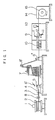
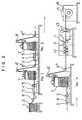
- continuous linear material 2 is unwound from supply 1, guided by first roller 8, passes via guide 3 of wire drawing machine No. 1 coated on its surface with lubricant 4, pulled by storage drum 7 to be drawn to have the first reduced diameter with drawing die 5 and wound on the storage drum.
- the thinner wire may further drawn sequentially by a desired number of wire drawing machines (the last one is designated as No. n) to have a desired diameter.
- the wire is introduced into treating chamber 9, passed through straightening machine 10 where the strain is removed, thereafter the lubricant adhered on the surface of the wire is removed by rolling brush 12 with solvent 11 and then the wire is dried in the blower 13. The dried wire is wound on winding drum 15 of winding machine 14.
- the lubricant comprises a base oil and an additive.
- a base oil As a common prior art base oil, one may mention mineral oil.
- mineral oil has a viscosity index not higher than 100 and its viscosity is rapidly reduced with an increase of temperature. For the reason, adhesion force of mineral oil to the surface of wire materials is lowered rendering lubrication poor, so that galling and fracturing of the wires are apt to occur and smooth drawing is unattainable.
- the temperature of the drawing die is 120°C or higher, the use of mineral oils as base oil leads to discoloration of the surface of the wires and is unsuitable for the high velocity drawing.
- liquid high molecular compounds do not diminish the excellent lubricating properties of animal and vegetable fats and oils or aliphatic dicarboxylic acid as additives, have less tendency to lower the viscosity with an increase of the temperature and have excellent adherability and heat resistance.
- the present invention has been made on the basis of this finding.
- Liquid high molecular compounds include, for example, polybutene, polymethacrylate, polyisobutylene, ethylene- ⁇ -olefin copolymers.
- polyphenyl ether, fluorinated ester, polyether, and the like may be employed.
- the liquid high molecular compounds are liquid polymers which can be produced by any of known methods, and their viscosity can be freely controlled by varying their molecular weight or selecting and incorporating those having different molecular weights.
- the liquid high molecular compounds to be used as base oils should have a viscosity of 0.0003 to 0.05 m2/s (300 to 50,000 cSt) at 40°C in view of the conditions of drawing, workability and manageability.
- Additives (lubricity improving agents) to be incorporated into the base oils include animal and vegetable oils such as hardened castor oil, lard oil, linseed oil, soybean oil, hardened tallow, lanolin and the like.
- Aliphatic dicarboxylic acids include those having 5 to 36 carbon atoms such as glutaric acid, adipic acid, pimelic acid, azelaic acid, sebacic acid, undecanoic acid, dodecanoic acid, tridecanoic acid, dimer acid and the like.
- An amount of animal and vegetable fats and oils or aliphatic dicarboxylic acids to be incorporated into the base oil, liquid high molecular compound is 2 to 25% by weight, preferably 5 to 20% by weight. It an amount of animal and vegetable fats and oils or aliphatic dicarboxylic acids to be incorporated is less than 2% by weight, the effect of improving lubricity is insufficient and galling is apt to occur during drawing. Although one may use a higher amount than 25% by weight of the additives, any further improvement of antigalling will not be attained.
- an oiliness improving agent such as higher fatty acids, higher alcohol and the like, an extreme-pressure lubricant of phosphorus-, chlorine- or sulfur-type, or metal soap powder and the like, if necessary.
- an oiliness improving agent such as higher fatty acids, higher alcohol and the like, an extreme-pressure lubricant of phosphorus-, chlorine- or sulfur-type, or metal soap powder and the like, if necessary.
- water so as to produce the lubricants of emulsion type.
- any of known emulsifiers may be added.
- the present invention allows composite wires consisting of superconductive core material cladded with non-ferrous metal material such as copper, aluminum and the like to be drawn at a higher velocity.
- the lubricants used in the present invention exhibit a lower reduction of viscosity with an increase of the temperature and are thermally stable and excellent in adhesion to the surface of metal material with formation of a good lubricant film (oil film) at the frictional interface upon plastic working.
- a good lubricant film oil film
- the film produced by the reaction of the surface of non-ferrous metal material and the additive in the lubricant, i.e., animal and vegetable fats and oils or aliphatic dicarboxylic acid is formed on the surface subjected to plastic working resulting in prevention of galling and in facility of plastic working because the film has an excellent lubricating property.
- the film is a metal soap film produced by primarily the reaction of the surface of the non-ferrous metal material and the additive with frictional heat generated at the interface between the material and the die; see, T. SAKURAI, "LUBRICANT OIL ADDITIVES ⁇ STATE AND FUTURE", LUBLICATION, 15 , No. 6302-310, (1970).
- the metal soap film is effectively formed locally at a part of the surface of the material in contact with the die to become a stiff film preventing the "galling" which occurs owing to direct contact of the metal material with the die. Therefore, smooth plastic working can be achieved. Such effect can be most remarkably attained in wire drawing with no galling occurring even in high velocity wire drawing.
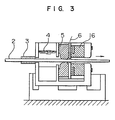
- FIGURE 3 shows a diagrammatical cross-sectional view of the die.
- Composite linear substance 2 unwound from supply 1 was guided by guide 3, immersed in and coated with lubricant 4, drawn through drawing die 5 equipped with thermocouple 6 to reduce the diameter of the substance and wound on dram 7 disposed in the drawing machine.
- the surfaces of the wires were observed with the naked eyes to determine the surface condition on the basis of appearance of galling and surface cracking.
- the temperature increase of the die [(Temperature during drawing) ⁇ (Initial temperature)] was determined. The results are indicated in Table 1.
- the wire drawing was performed under the following condition:
- the lubricant used in each Comparative Example is shown in Table 2.
- the parenthesized number indicates the viscosity at 40°C (m2/s).
- the analysis with the roundness measuring apparatus indicates that the surface roughness after wire drawing is about ⁇ 2 ⁇ m in the circumferential direction.
- the surface roughnesses of the wires of the Comparative Examples 2 (using polybutene) and 5 (using polybutene and calcium soap) analyzed in the same procedure are both about ⁇ 4 ⁇ m.
- Lubricants consisting of base oils and fats and oils and aliphatic dicarboxylic acids as shown in Table 4 were melted under heat and using the melted lubricants at 15 ⁇ 17°C, the aluminum-cladding steel composite substance was subjected to wire drawing with the same drawing machine as in Example 2. The die temperature increase and the surface condition were determined. The results are shown in Table 4.
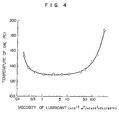
- Example 2 Using the lubricant prepared by incorporating 10% by weight of lanolin into polybutene having a viscosity of 0.0002 to 0.3 m2/s (200 to 300,000 cSt at a temperature of 40°C, the same aluminum-cladding steel composite substances as in Example 2 were subjected to wire drawing under a working reduction of 20% with the drawing machine as shown in FIGURE 1. Variation of the die temperature was measured as a function of the viscosity of the base oil. The results are shown in FIGURE 4.
- the viscosity of lubricants should be up to about 0.05 m2/s (50,000 cSt).
- the lubricant comprising 90% by weight of ethylene- ⁇ -olefin copolymer having a viscosity of 0.031 m2/s (31,000 cSt) at a temperature of 40°C and 10% by weight of lanolin
- the aluminum-cladding steel composite substances having a diameter of 8.4 mm were subjected to wire drawing through eleven stages with the continuous multi-stage wire drawing machine as shown in FIGURE 2.
- the practical performance of the lubricant was evaluated.
- the results obtained by observing the surface properties of the wires after drawing, working condition and the ratio in cross-sectional area of the core to the cladding layer are indicated in Table 5.
- the aluminum-cladding steel wires (the individual wire has a diameter of 2.9 mm) obtained in Example 40 were twisted under the conditions of a number of wires of 30 and a cross-sectional area of 200 mm2 with the tandem high velocity twisting machine and the practical performance was evaluated. As a result, there could be obtained a normal twisted wires having no flaw on the surfaces thereof.
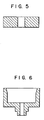
- a number of aluminum substances of A 2218 (O) (annealed from 400°C to room temperature according to JIS-H4000) of a ring type having dimensions of 63 mm in outside diameter ⁇ 12 mm in inside diameter ⁇ 12 mm in thickness as shown in FIGURE 5 was coated on its surface with the lubricants having the same compositions as in Examples 1 to 11 and Comparative Examples 1 to 7 and were subjected to plastic working at a velocity of 40 pieces/min to produce 2000 parts having the configuration as shown in FIGURE 6.
- the surface conditions are indicated in Table 6. It can be seen from the table that workpieces worked in accordance with the present invention have no galling generated, but excellent surface conditions.
- Y-Ba-Cu-O and Bi-Ca-Cu-O system superconductive substances in the form of pellet produced by an oxide-kneading process were introduced in a tube of oxygen-free copper C 1020 (JIS H 3300) and an aluminum tube A 1070 (JIS H 4080) having dimensions 8 mm in outside diameter ⁇ 0.6 mm in thickness.
- the tubes were subjected to swaging by using a lubricant composition comprising 90% by weight of ethylene- ⁇ -olefin copolymer having a viscosity of 0.031 m2/s (31000 cSt) at a temperature of 40°C and 10% by weight of lanolin to reduce the outside diameter to 6 mm.
- These substances were subjected to wire drawing at a drawing velocity of 110/min through five stages with the same die as in Example 1 to produce superconductive wires having a diameter of 2.9 mm.
- the results are indicated in Table 7.
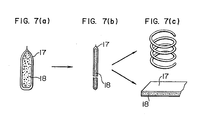
- the superconductive wires having a diameter of 2.9 mm obtained in Example 53, No. 1 and No. 3, were rolled repeatedly 5 to 8 times by using a lubricant composition comprising 90% by weight of ethylene- ⁇ -olefin copolymer and 10% by weight of lanolin to produce tapes having a thickness of 0.1 mm.
- the resulting tapes were remarkably good without any galling generated on their surfaces. No cracks were generated inside the tapes.
- the method for plastic drawing in according to the present invention allows the plastic drawing to be effected generating no galling and the like and to provide high quality non-ferrous parts since the parts after working have an excellent surface condition.
- the lubricant composition according to the present invention has an excellent antigalling property and a high lublicity even during high velocity wire drawing. Therefore, it allows the high velocity wire drawing and the high velocity twisting to be smoothly effected and allows excellently the quality of wires and the productivity to be improved.
- the wire drawing method according to the present invention can provide sufficiently acceptable composite wires with respect to conductivity (the thickness of the cladding is constant).
- the lubricant for use in wire drawing in accordance with the present invention is excellent in workability and safty of operation because of its low viscosity.
Landscapes
- Chemical & Material Sciences (AREA)
- Chemical Kinetics & Catalysis (AREA)
- General Chemical & Material Sciences (AREA)
- Oil, Petroleum & Natural Gas (AREA)
- Organic Chemistry (AREA)
- Health & Medical Sciences (AREA)
- Emergency Medicine (AREA)
- Metal Extraction Processes (AREA)
Claims (5)
Applications Claiming Priority (4)
| Application Number | Priority Date | Filing Date | Title |
|---|---|---|---|
| JP63111575A JP2551459B2 (ja) | 1988-05-10 | 1988-05-10 | 伸線加工用潤滑油 |
| JP111575/88 | 1988-05-10 | ||
| JP63235193A JPH0726110B2 (ja) | 1988-09-20 | 1988-09-20 | 導電線の製造方法 |
| JP235193/88 | 1988-09-20 |
Publications (2)
| Publication Number | Publication Date |
|---|---|
| EP0341688A1 EP0341688A1 (de) | 1989-11-15 |
| EP0341688B1 true EP0341688B1 (de) | 1991-08-21 |
Family
ID=26450936
Family Applications (1)
| Application Number | Title | Priority Date | Filing Date |
|---|---|---|---|
| EP89108389A Expired - Lifetime EP0341688B1 (de) | 1988-05-10 | 1989-05-10 | Verfahren zur Herstellung elektrischer Leitungsmittel mit einer Schmiermittelzusammensetzung |
Country Status (2)
| Country | Link |
|---|---|
| EP (1) | EP0341688B1 (de) |
| DE (1) | DE68900213D1 (de) |
Families Citing this family (5)
| Publication number | Priority date | Publication date | Assignee | Title |
|---|---|---|---|---|
| JP2003513422A (ja) * | 1999-10-29 | 2003-04-08 | エヌケイティ ケイブルズ アクティーゼルスカブ | 超電導ケーブルの製造方法 |
| FR2820661B1 (fr) * | 2001-02-14 | 2004-09-24 | Roger Marcel Sabau | Dispositif permettant de trefiler ou d'etirer les metaux ferreux et non ferreux (fils, barres, tubes) avec une usure quasi-nulle des filieres et un respect total de l'etat de surface de tous les produits fabriques |
| FR2820660B1 (fr) * | 2001-02-14 | 2003-04-04 | Roger Marcel Sabau | Dispositif permettant de trefiler ou d'etirer les metaux, ferreux et non ferreux (fils, barres, tubes) avec une usure quasi-nulle des filieres et un respect total de l'etat de surface de tous les produits fabriques |
| EP1388379A1 (de) * | 2002-08-08 | 2004-02-11 | Roger Sabau | Vorrichtung zum Ziehen oder Strecken (Draht, Stange, Rohr) mit einem sehr verschleissarmen Ziehstein und zum Erreichen von optimalen tribologischen Bedingungen |
| CN104240848A (zh) * | 2014-09-12 | 2014-12-24 | 靖江市华氏电机电磁线厂 | 漆包机高效润滑油涂覆装置 |
Family Cites Families (6)
| Publication number | Priority date | Publication date | Assignee | Title |
|---|---|---|---|---|
| US3250103A (en) * | 1964-01-30 | 1966-05-10 | Shell Oil Co | Metal working process |
| FR1426791A (fr) * | 1964-03-27 | 1966-01-28 | Standard Oil Co | Lubrifiant pour le travail de métaux, et procédés pour son utilisation |
| GB1261358A (en) * | 1967-11-22 | 1972-01-26 | Nippon Kokan Kk | Lubricant compositions for metal-forming processes and the method of coating metals therewith |
| GB1507823A (en) * | 1973-12-17 | 1978-04-19 | Lee & Sons Ltd A | Wire drawing |
| CH649575A5 (de) * | 1982-02-23 | 1985-05-31 | Alusuisse | Hydraulikfluessigkeit. |
| JPH0672233B2 (ja) * | 1986-04-14 | 1994-09-14 | 日本工作油株式会社 | 金属材料の冷間塑性加工用油状潤滑剤 |
-
1989
- 1989-05-10 DE DE8989108389T patent/DE68900213D1/de not_active Expired - Lifetime
- 1989-05-10 EP EP89108389A patent/EP0341688B1/de not_active Expired - Lifetime
Also Published As
| Publication number | Publication date |
|---|---|
| DE68900213D1 (de) | 1991-09-26 |
| EP0341688A1 (de) | 1989-11-15 |
Similar Documents
| Publication | Publication Date | Title |
|---|---|---|
| EP0177021B1 (de) | Schmiermittel für die plastische Verformung von Metallen | |
| EP0206237B1 (de) | Schmiermittel für die plastische Verarbeitung von Aluminiumlegierungen | |
| US3280027A (en) | Lubricants and lubricated structures | |
| EP0341688A1 (de) | Verfahren zur Herstellung elektrischer Leitungsmittel mit einer Schmiermittelzusammensetzung | |
| JPH0726110B2 (ja) | 導電線の製造方法 | |
| EP0242040B1 (de) | Ölschmiermittel für die plastische Verarbeitung von Metallmaterial | |
| JP2000117486A (ja) | 溶接用ワイヤおよびその製造方法 | |
| JPH0439518B2 (de) | ||
| JPS6160791A (ja) | 塑性加工用潤滑剤及びそれを用いた塑性加工方法 | |
| CN103725379B (zh) | 高速拉拔小直径铝及铝合金管的润滑剂 | |
| JPS6053043B2 (ja) | 溶接用線材を伸線する方法 | |
| EP1420899B1 (de) | Verfahren zur herstellung von strangförmigen produkten aus magnesium oder magnesiumlegierungen | |
| US4755309A (en) | Cold working lubricant for metallic conduits | |
| JP2551459B2 (ja) | 伸線加工用潤滑油 | |
| JP3124454B2 (ja) | 鋼材の熱間圧延用潤滑剤組成物及び鋼材の熱間圧延方法 | |
| JPS58152096A (ja) | 金属加工用潤滑油組成物及びその使用方法 | |
| JP3016128B2 (ja) | 合金鋼鋼管の潤滑法およびその製造方法 | |
| JPH0631378B2 (ja) | アルミニウム又はアルミニウム合金の冷間加工用潤滑剤及びそれを用いた該金属の冷間加工方法 | |
| JPH09295038A (ja) | 炭素鋼鋼管の冷間引抜き法および製造方法 | |
| JPS61281200A (ja) | アルミニウム冷間鍛造用潤滑剤 | |
| JPH0543888A (ja) | 冷間圧延油 | |
| JPH0211638B2 (de) | ||
| JP2915993B2 (ja) | ステンレス鋼の冷間加工用潤滑油 | |
| JPH01256595A (ja) | 鋼材の冷間引抜き加工用潤滑油 | |
| JPH0433998A (ja) | 鋼管の潤滑処理法 |
Legal Events
| Date | Code | Title | Description |
|---|---|---|---|
| PUAI | Public reference made under article 153(3) epc to a published international application that has entered the european phase |
Free format text: ORIGINAL CODE: 0009012 |
|
| AK | Designated contracting states |
Kind code of ref document: A1 Designated state(s): DE FR GB NL |
|
| 17P | Request for examination filed |
Effective date: 19890928 |
|
| 17Q | First examination report despatched |
Effective date: 19900425 |
|
| GRAA | (expected) grant |
Free format text: ORIGINAL CODE: 0009210 |
|
| AK | Designated contracting states |
Kind code of ref document: B1 Designated state(s): DE FR GB NL |
|
| REF | Corresponds to: |
Ref document number: 68900213 Country of ref document: DE Date of ref document: 19910926 |
|
| ET | Fr: translation filed | ||
| PLBE | No opposition filed within time limit |
Free format text: ORIGINAL CODE: 0009261 |
|
| STAA | Information on the status of an ep patent application or granted ep patent |
Free format text: STATUS: NO OPPOSITION FILED WITHIN TIME LIMIT |
|
| 26N | No opposition filed | ||
| PGFP | Annual fee paid to national office [announced via postgrant information from national office to epo] |
Ref country code: FR Payment date: 19970320 Year of fee payment: 9 |
|
| PGFP | Annual fee paid to national office [announced via postgrant information from national office to epo] |
Ref country code: GB Payment date: 19970324 Year of fee payment: 9 |
|
| PGFP | Annual fee paid to national office [announced via postgrant information from national office to epo] |
Ref country code: NL Payment date: 19970327 Year of fee payment: 9 |
|
| PGFP | Annual fee paid to national office [announced via postgrant information from national office to epo] |
Ref country code: DE Payment date: 19970630 Year of fee payment: 9 |
|
| PG25 | Lapsed in a contracting state [announced via postgrant information from national office to epo] |
Ref country code: GB Free format text: LAPSE BECAUSE OF NON-PAYMENT OF DUE FEES Effective date: 19980510 |
|
| PG25 | Lapsed in a contracting state [announced via postgrant information from national office to epo] |
Ref country code: FR Free format text: LAPSE BECAUSE OF NON-PAYMENT OF DUE FEES Effective date: 19980531 |
|
| PG25 | Lapsed in a contracting state [announced via postgrant information from national office to epo] |
Ref country code: NL Free format text: LAPSE BECAUSE OF NON-PAYMENT OF DUE FEES Effective date: 19981201 |
|
| GBPC | Gb: european patent ceased through non-payment of renewal fee |
Effective date: 19980510 |
|
| NLV4 | Nl: lapsed or anulled due to non-payment of the annual fee |
Effective date: 19981201 |
|
| PG25 | Lapsed in a contracting state [announced via postgrant information from national office to epo] |
Ref country code: DE Free format text: LAPSE BECAUSE OF NON-PAYMENT OF DUE FEES Effective date: 19990302 |
|
| REG | Reference to a national code |
Ref country code: FR Ref legal event code: ST |