EP0332017B1 - Herstellen von Abdichtungen mittels einer Dichtungsmasse - Google Patents
Herstellen von Abdichtungen mittels einer Dichtungsmasse Download PDFInfo
- Publication number
- EP0332017B1 EP0332017B1 EP89103452A EP89103452A EP0332017B1 EP 0332017 B1 EP0332017 B1 EP 0332017B1 EP 89103452 A EP89103452 A EP 89103452A EP 89103452 A EP89103452 A EP 89103452A EP 0332017 B1 EP0332017 B1 EP 0332017B1
- Authority
- EP
- European Patent Office
- Prior art keywords
- carbon atoms
- alkyl
- radical
- sealings
- mixture
- Prior art date
- Legal status (The legal status is an assumption and is not a legal conclusion. Google has not performed a legal analysis and makes no representation as to the accuracy of the status listed.)
- Expired - Lifetime
Links
- 238000007789 sealing Methods 0.000 title claims abstract description 10
- 238000004519 manufacturing process Methods 0.000 title claims abstract description 4
- 125000004432 carbon atom Chemical group C* 0.000 claims abstract description 16
- 150000001875 compounds Chemical class 0.000 claims abstract description 13
- 239000000203 mixture Substances 0.000 claims abstract description 13
- 125000000217 alkyl group Chemical group 0.000 claims abstract description 10
- 239000000654 additive Substances 0.000 claims abstract description 5
- 239000004815 dispersion polymer Substances 0.000 claims abstract description 5
- 125000003545 alkoxy group Chemical group 0.000 claims abstract description 3
- 125000004849 alkoxymethyl group Chemical group 0.000 claims abstract description 3
- QVGXLLKOCUKJST-UHFFFAOYSA-N atomic oxygen Chemical compound [O] QVGXLLKOCUKJST-UHFFFAOYSA-N 0.000 claims abstract description 3
- 229910052760 oxygen Inorganic materials 0.000 claims abstract description 3
- 239000001301 oxygen Substances 0.000 claims abstract description 3
- 239000006185 dispersion Substances 0.000 claims description 9
- 238000000034 method Methods 0.000 claims description 3
- FBPFZTCFMRRESA-JGWLITMVSA-N D-glucitol Chemical compound OC[C@H](O)[C@@H](O)[C@H](O)[C@H](O)CO FBPFZTCFMRRESA-JGWLITMVSA-N 0.000 claims description 2
- 239000011230 binding agent Substances 0.000 claims description 2
- 239000004014 plasticizer Substances 0.000 abstract description 4
- LFQSCWFLJHTTHZ-UHFFFAOYSA-N Ethanol Chemical compound CCO LFQSCWFLJHTTHZ-UHFFFAOYSA-N 0.000 abstract description 3
- -1 alkenyloxy radical Chemical class 0.000 description 15
- 239000002562 thickening agent Substances 0.000 description 15
- 239000000565 sealant Substances 0.000 description 13
- 229920005862 polyol Polymers 0.000 description 9
- 125000002947 alkylene group Chemical group 0.000 description 5
- 229920001577 copolymer Polymers 0.000 description 4
- GYZLOYUZLJXAJU-UHFFFAOYSA-N diglycidyl ether Chemical class C1OC1COCC1CO1 GYZLOYUZLJXAJU-UHFFFAOYSA-N 0.000 description 4
- 238000009472 formulation Methods 0.000 description 4
- 239000007788 liquid Substances 0.000 description 4
- 229920000642 polymer Polymers 0.000 description 4
- LYCAIKOWRPUZTN-UHFFFAOYSA-N Ethylene glycol Chemical compound OCCO LYCAIKOWRPUZTN-UHFFFAOYSA-N 0.000 description 3
- IAYPIBMASNFSPL-UHFFFAOYSA-N Ethylene oxide Chemical compound C1CO1 IAYPIBMASNFSPL-UHFFFAOYSA-N 0.000 description 3
- PEDCQBHIVMGVHV-UHFFFAOYSA-N Glycerine Chemical compound OCC(O)CO PEDCQBHIVMGVHV-UHFFFAOYSA-N 0.000 description 3
- 239000004721 Polyphenylene oxide Substances 0.000 description 3
- MTHSVFCYNBDYFN-UHFFFAOYSA-N diethylene glycol Chemical compound OCCOCCO MTHSVFCYNBDYFN-UHFFFAOYSA-N 0.000 description 3
- 150000002118 epoxides Chemical class 0.000 description 3
- 150000002334 glycols Chemical class 0.000 description 3
- 229920000570 polyether Polymers 0.000 description 3
- 150000003077 polyols Chemical class 0.000 description 3
- 150000003254 radicals Chemical group 0.000 description 3
- 239000011347 resin Substances 0.000 description 3
- 229920005989 resin Polymers 0.000 description 3
- XLYOFNOQVPJJNP-UHFFFAOYSA-N water Substances O XLYOFNOQVPJJNP-UHFFFAOYSA-N 0.000 description 3
- PUPZLCDOIYMWBV-UHFFFAOYSA-N (+/-)-1,3-Butanediol Chemical compound CC(O)CCO PUPZLCDOIYMWBV-UHFFFAOYSA-N 0.000 description 2
- HOSGXJWQVBHGLT-UHFFFAOYSA-N 6-hydroxy-3,4-dihydro-1h-quinolin-2-one Chemical group N1C(=O)CCC2=CC(O)=CC=C21 HOSGXJWQVBHGLT-UHFFFAOYSA-N 0.000 description 2
- QGZKDVFQNNGYKY-UHFFFAOYSA-N Ammonia Chemical compound N QGZKDVFQNNGYKY-UHFFFAOYSA-N 0.000 description 2
- KAKZBPTYRLMSJV-UHFFFAOYSA-N Butadiene Chemical compound C=CC=C KAKZBPTYRLMSJV-UHFFFAOYSA-N 0.000 description 2
- GOOHAUXETOMSMM-UHFFFAOYSA-N Propylene oxide Chemical compound CC1CO1 GOOHAUXETOMSMM-UHFFFAOYSA-N 0.000 description 2
- VYPSYNLAJGMNEJ-UHFFFAOYSA-N Silicium dioxide Chemical compound O=[Si]=O VYPSYNLAJGMNEJ-UHFFFAOYSA-N 0.000 description 2
- PPBRXRYQALVLMV-UHFFFAOYSA-N Styrene Chemical compound C=CC1=CC=CC=C1 PPBRXRYQALVLMV-UHFFFAOYSA-N 0.000 description 2
- WYURNTSHIVDZCO-UHFFFAOYSA-N Tetrahydrofuran Chemical compound C1CCOC1 WYURNTSHIVDZCO-UHFFFAOYSA-N 0.000 description 2
- 150000001298 alcohols Chemical class 0.000 description 2
- 229920001400 block copolymer Polymers 0.000 description 2
- WERYXYBDKMZEQL-UHFFFAOYSA-N butane-1,4-diol Chemical compound OCCCCO WERYXYBDKMZEQL-UHFFFAOYSA-N 0.000 description 2
- 238000006243 chemical reaction Methods 0.000 description 2
- 230000000052 comparative effect Effects 0.000 description 2
- 230000000694 effects Effects 0.000 description 2
- 150000002191 fatty alcohols Chemical class 0.000 description 2
- 239000000945 filler Substances 0.000 description 2
- 125000002887 hydroxy group Chemical group [H]O* 0.000 description 2
- 239000000463 material Substances 0.000 description 2
- YPFDHNVEDLHUCE-UHFFFAOYSA-N propane-1,3-diol Chemical compound OCCCO YPFDHNVEDLHUCE-UHFFFAOYSA-N 0.000 description 2
- 238000010791 quenching Methods 0.000 description 2
- 229920005604 random copolymer Polymers 0.000 description 2
- 239000007787 solid Substances 0.000 description 2
- 239000002904 solvent Substances 0.000 description 2
- 239000003381 stabilizer Substances 0.000 description 2
- 230000008719 thickening Effects 0.000 description 2
- 125000000391 vinyl group Chemical group [H]C([*])=C([H])[H] 0.000 description 2
- 229920002554 vinyl polymer Polymers 0.000 description 2
- ORTVZLZNOYNASJ-UPHRSURJSA-N (z)-but-2-ene-1,4-diol Chemical compound OC\C=C/CO ORTVZLZNOYNASJ-UPHRSURJSA-N 0.000 description 1
- RBACIKXCRWGCBB-UHFFFAOYSA-N 1,2-Epoxybutane Chemical compound CCC1CO1 RBACIKXCRWGCBB-UHFFFAOYSA-N 0.000 description 1
- PQXKWPLDPFFDJP-UHFFFAOYSA-N 2,3-dimethyloxirane Chemical compound CC1OC1C PQXKWPLDPFFDJP-UHFFFAOYSA-N 0.000 description 1
- GTTITHACWAWITC-UHFFFAOYSA-N 2-(2-octyldodecoxymethyl)oxirane Chemical compound CCCCCCCCCCC(CCCCCCCC)COCC1CO1 GTTITHACWAWITC-UHFFFAOYSA-N 0.000 description 1
- DDHJMUWKDMGQFH-KTKRTIGZSA-N 2-[[(z)-octadec-9-enoxy]methyl]oxirane Chemical compound CCCCCCCC\C=C/CCCCCCCCOCC1CO1 DDHJMUWKDMGQFH-KTKRTIGZSA-N 0.000 description 1
- JCGRTWRFDLWVDA-UHFFFAOYSA-N 2-docosyloxirane Chemical compound CCCCCCCCCCCCCCCCCCCCCCC1CO1 JCGRTWRFDLWVDA-UHFFFAOYSA-N 0.000 description 1
- MBJVZMPEPVSKAS-UHFFFAOYSA-N 2-hexacosyloxirane Chemical compound CCCCCCCCCCCCCCCCCCCCCCCCCCC1CO1 MBJVZMPEPVSKAS-UHFFFAOYSA-N 0.000 description 1
- QBJWYMFTMJFGOL-UHFFFAOYSA-N 2-hexadecyloxirane Chemical compound CCCCCCCCCCCCCCCCC1CO1 QBJWYMFTMJFGOL-UHFFFAOYSA-N 0.000 description 1
- VHAXNXDRZSLKOX-UHFFFAOYSA-N 2-tetracosyloxirane Chemical compound CCCCCCCCCCCCCCCCCCCCCCCCC1CO1 VHAXNXDRZSLKOX-UHFFFAOYSA-N 0.000 description 1
- FBPFZTCFMRRESA-FSIIMWSLSA-N D-Glucitol Natural products OC[C@H](O)[C@H](O)[C@@H](O)[C@H](O)CO FBPFZTCFMRRESA-FSIIMWSLSA-N 0.000 description 1
- BRLQWZUYTZBJKN-UHFFFAOYSA-N Epichlorohydrin Chemical compound ClCC1CO1 BRLQWZUYTZBJKN-UHFFFAOYSA-N 0.000 description 1
- WQZGKKKJIJFFOK-GASJEMHNSA-N Glucose Natural products OC[C@H]1OC(O)[C@H](O)[C@@H](O)[C@@H]1O WQZGKKKJIJFFOK-GASJEMHNSA-N 0.000 description 1
- 239000004354 Hydroxyethyl cellulose Substances 0.000 description 1
- 229920000663 Hydroxyethyl cellulose Polymers 0.000 description 1
- UWHCKJMYHZGTIT-UHFFFAOYSA-N Tetraethylene glycol, Natural products OCCOCCOCCOCCO UWHCKJMYHZGTIT-UHFFFAOYSA-N 0.000 description 1
- ZJCCRDAZUWHFQH-UHFFFAOYSA-N Trimethylolpropane Chemical compound CCC(CO)(CO)CO ZJCCRDAZUWHFQH-UHFFFAOYSA-N 0.000 description 1
- XTXRWKRVRITETP-UHFFFAOYSA-N Vinyl acetate Chemical compound CC(=O)OC=C XTXRWKRVRITETP-UHFFFAOYSA-N 0.000 description 1
- NIXOWILDQLNWCW-UHFFFAOYSA-N acrylic acid group Chemical group C(C=C)(=O)O NIXOWILDQLNWCW-UHFFFAOYSA-N 0.000 description 1
- 125000003342 alkenyl group Chemical group 0.000 description 1
- 229910021529 ammonia Inorganic materials 0.000 description 1
- 125000001204 arachidyl group Chemical group [H]C([*])([H])C([H])([H])C([H])([H])C([H])([H])C([H])([H])C([H])([H])C([H])([H])C([H])([H])C([H])([H])C([H])([H])C([H])([H])C([H])([H])C([H])([H])C([H])([H])C([H])([H])C([H])([H])C([H])([H])C([H])([H])C([H])([H])C([H])([H])[H] 0.000 description 1
- WQZGKKKJIJFFOK-VFUOTHLCSA-N beta-D-glucose Chemical compound OC[C@H]1O[C@@H](O)[C@H](O)[C@@H](O)[C@@H]1O WQZGKKKJIJFFOK-VFUOTHLCSA-N 0.000 description 1
- DLDJFQGPPSQZKI-UHFFFAOYSA-N but-2-yne-1,4-diol Chemical compound OCC#CCO DLDJFQGPPSQZKI-UHFFFAOYSA-N 0.000 description 1
- BMRWNKZVCUKKSR-UHFFFAOYSA-N butane-1,2-diol Chemical compound CCC(O)CO BMRWNKZVCUKKSR-UHFFFAOYSA-N 0.000 description 1
- 150000001735 carboxylic acids Chemical class 0.000 description 1
- 125000003901 ceryl group Chemical group [H]C([*])([H])C([H])([H])C([H])([H])C([H])([H])C([H])([H])C([H])([H])C([H])([H])C([H])([H])C([H])([H])C([H])([H])C([H])([H])C([H])([H])C([H])([H])C([H])([H])C([H])([H])C([H])([H])C([H])([H])C([H])([H])C([H])([H])C([H])([H])C([H])([H])C([H])([H])C([H])([H])C([H])([H])C([H])([H])C([H])([H])[H] 0.000 description 1
- 238000010276 construction Methods 0.000 description 1
- 235000014113 dietary fatty acids Nutrition 0.000 description 1
- SZXQTJUDPRGNJN-UHFFFAOYSA-N dipropylene glycol Chemical compound OCCCOCCCO SZXQTJUDPRGNJN-UHFFFAOYSA-N 0.000 description 1
- 125000003700 epoxy group Chemical group 0.000 description 1
- 150000002148 esters Chemical class 0.000 description 1
- UIWXSTHGICQLQT-UHFFFAOYSA-N ethenyl propanoate Chemical compound CCC(=O)OC=C UIWXSTHGICQLQT-UHFFFAOYSA-N 0.000 description 1
- 239000000194 fatty acid Substances 0.000 description 1
- 229930195729 fatty acid Natural products 0.000 description 1
- 150000004665 fatty acids Chemical class 0.000 description 1
- 239000008103 glucose Substances 0.000 description 1
- NYTBHLJJQXOHJR-UHFFFAOYSA-N hept-3-ene-1,2,6,7-tetrol Chemical compound OCC(O)CC=CC(O)CO NYTBHLJJQXOHJR-UHFFFAOYSA-N 0.000 description 1
- TUYVVZNULFVBEZ-UHFFFAOYSA-N hex-4-ene-1,3,6-triol Chemical compound OCCC(O)C=CCO TUYVVZNULFVBEZ-UHFFFAOYSA-N 0.000 description 1
- ZJUFPQDVIGUBQX-UHFFFAOYSA-N hex-4-yne-1,3,6-triol Chemical compound OCCC(O)C#CCO ZJUFPQDVIGUBQX-UHFFFAOYSA-N 0.000 description 1
- KUQWZSZYIQGTHT-UHFFFAOYSA-N hexa-1,5-diene-3,4-diol Chemical compound C=CC(O)C(O)C=C KUQWZSZYIQGTHT-UHFFFAOYSA-N 0.000 description 1
- 229930195733 hydrocarbon Natural products 0.000 description 1
- 150000002430 hydrocarbons Chemical class 0.000 description 1
- 235000019447 hydroxyethyl cellulose Nutrition 0.000 description 1
- 230000001771 impaired effect Effects 0.000 description 1
- 239000011256 inorganic filler Substances 0.000 description 1
- 229910003475 inorganic filler Inorganic materials 0.000 description 1
- 150000002576 ketones Chemical class 0.000 description 1
- 125000002463 lignoceryl group Chemical group [H]C([*])([H])C([H])([H])C([H])([H])C([H])([H])C([H])([H])C([H])([H])C([H])([H])C([H])([H])C([H])([H])C([H])([H])C([H])([H])C([H])([H])C([H])([H])C([H])([H])C([H])([H])C([H])([H])C([H])([H])C([H])([H])C([H])([H])C([H])([H])C([H])([H])C([H])([H])C([H])([H])C([H])([H])[H] 0.000 description 1
- 229910052751 metal Inorganic materials 0.000 description 1
- 239000002184 metal Substances 0.000 description 1
- 150000002739 metals Chemical class 0.000 description 1
- 125000005397 methacrylic acid ester group Chemical group 0.000 description 1
- 239000000178 monomer Substances 0.000 description 1
- SLCVBVWXLSEKPL-UHFFFAOYSA-N neopentyl glycol Chemical compound OCC(C)(C)CO SLCVBVWXLSEKPL-UHFFFAOYSA-N 0.000 description 1
- 239000002736 nonionic surfactant Substances 0.000 description 1
- NXBZOSIUSIHMDY-UHFFFAOYSA-N oct-4-yne-1,2,7,8-tetrol Chemical compound OCC(O)CC#CCC(O)CO NXBZOSIUSIHMDY-UHFFFAOYSA-N 0.000 description 1
- 239000006259 organic additive Substances 0.000 description 1
- 239000003960 organic solvent Substances 0.000 description 1
- 230000003647 oxidation Effects 0.000 description 1
- 238000007254 oxidation reaction Methods 0.000 description 1
- 125000005702 oxyalkylene group Chemical group 0.000 description 1
- 125000006353 oxyethylene group Chemical group 0.000 description 1
- WXZMFSXDPGVJKK-UHFFFAOYSA-N pentaerythritol Chemical compound OCC(CO)(CO)CO WXZMFSXDPGVJKK-UHFFFAOYSA-N 0.000 description 1
- 229920000233 poly(alkylene oxides) Polymers 0.000 description 1
- 229920000058 polyacrylate Polymers 0.000 description 1
- 239000000843 powder Substances 0.000 description 1
- 238000002360 preparation method Methods 0.000 description 1
- 230000001698 pyrogenic effect Effects 0.000 description 1
- 230000000171 quenching effect Effects 0.000 description 1
- 239000000377 silicon dioxide Substances 0.000 description 1
- 239000000600 sorbitol Substances 0.000 description 1
- 230000007103 stamina Effects 0.000 description 1
- 125000004079 stearyl group Chemical group [H]C([*])([H])C([H])([H])C([H])([H])C([H])([H])C([H])([H])C([H])([H])C([H])([H])C([H])([H])C([H])([H])C([H])([H])C([H])([H])C([H])([H])C([H])([H])C([H])([H])C([H])([H])C([H])([H])C([H])([H])C([H])([H])[H] 0.000 description 1
- 238000003756 stirring Methods 0.000 description 1
- 150000005846 sugar alcohols Polymers 0.000 description 1
- YLQBMQCUIZJEEH-UHFFFAOYSA-N tetrahydrofuran Natural products C=1C=COC=1 YLQBMQCUIZJEEH-UHFFFAOYSA-N 0.000 description 1
- 239000013008 thixotropic agent Substances 0.000 description 1
- 230000009974 thixotropic effect Effects 0.000 description 1
- ZIBGPFATKBEMQZ-UHFFFAOYSA-N triethylene glycol Chemical compound OCCOCCOCCO ZIBGPFATKBEMQZ-UHFFFAOYSA-N 0.000 description 1
- 229920001567 vinyl ester resin Polymers 0.000 description 1
- 239000004711 α-olefin Substances 0.000 description 1
Classifications
-
- C—CHEMISTRY; METALLURGY
- C09—DYES; PAINTS; POLISHES; NATURAL RESINS; ADHESIVES; COMPOSITIONS NOT OTHERWISE PROVIDED FOR; APPLICATIONS OF MATERIALS NOT OTHERWISE PROVIDED FOR
- C09K—MATERIALS FOR MISCELLANEOUS APPLICATIONS, NOT PROVIDED FOR ELSEWHERE
- C09K3/00—Materials not provided for elsewhere
- C09K3/10—Materials in mouldable or extrudable form for sealing or packing joints or covers
-
- C—CHEMISTRY; METALLURGY
- C09—DYES; PAINTS; POLISHES; NATURAL RESINS; ADHESIVES; COMPOSITIONS NOT OTHERWISE PROVIDED FOR; APPLICATIONS OF MATERIALS NOT OTHERWISE PROVIDED FOR
- C09K—MATERIALS FOR MISCELLANEOUS APPLICATIONS, NOT PROVIDED FOR ELSEWHERE
- C09K2200/00—Chemical nature of materials in mouldable or extrudable form for sealing or packing joints or covers
- C09K2200/06—Macromolecular organic compounds, e.g. prepolymers
- C09K2200/0645—Macromolecular organic compounds, e.g. prepolymers obtained otherwise than by reactions involving carbon-to-carbon unsaturated bonds
- C09K2200/0657—Polyethers
- C09K2200/0662—Polyether-polyol
Definitions
- the invention relates to the production of seals by means of a joint sealant with improved processing properties.
- sealants sealants
- inorganic fillers have been known for a long time. They are mainly used in the construction sector.
- the sealant In addition to the requirements for the mechanical properties of the processed materials, it is important in practice for the sealant to have sufficient durability (the property of an as yet uncured sealant to remain in the specified form after processing, testing in accordance with DIN 52454) and have good processability (determination of the processability of sealants according to DIN 52456).
- dispersion sealants are often mixed with pyrogenic silicas or with synthetic, organic additives as thixotropic and thickening agents, whereby the processability and the side adhesion are impaired.
- Such polyether polyols are obtained by, as described in EP 61 822 and EP 116 564, a polyhydric alcohol (having 2 to 6 hydroxyl groups) containing about 2 to 10 carbon atoms, with ethylene oxide alone or with ethylene oxide and one or more alkylene oxides with 3 or 4 carbon atoms (in the latter case the reaction takes place in a mixture if a random copolymer is desired and takes place successively if a block copolymer is desired) and then this intermediate with 0.3 to 5 equivalents (per hydroxyl group) alkylene oxide with 18 up to 32 carbon atoms and terminal epoxy group or with 0.3 to 5 equivalents of alkyl or alkenyl glycidyl ether with 16 to 30 carbon atoms in the alkyl or alkenyl radical.
- a polyhydric alcohol having 2 to 6 hydroxyl groups
- ethylene oxide alone or with ethylene oxide and one or more alkylene oxides with 3 or 4 carbon atoms in the latter case the reaction takes place
- the preparation can, as described in US 4,398,045, by reacting an already present polyalkylene oxide homo- or copolymer, which is composed of C2- or C2 and C3 / C4-epoxides, with the above. longer-chain alkylene oxides or glycidyl ethers are obtained.
- 2 to 6-valent alcohols are meant those which have 2 to 6 hydroxyl groups. Specifically, they are alkane polyols, alkene polyols, alkyne polyols or oligooxyalkylene glycols, each with 2 to 10, preferably 2 to 6, carbon atoms.
- alkane polyols examples include ethylene glycol, 1,2- and 1,3-propylene glycol, neopentyl glycol, 1,2-butanediol, 1,3-butanediol, 1,4-butanediol, trimethylolpropane, glycerol, pentaerythritol, 2,3,4, 5-hexane tetrol, sorbitol, glucose.
- the basic structure of the polyether polyol can either be composed only of oxyethylene units or, in addition, also contain oxyalkylene units with 3 to 4 carbon atoms in an amount of up to 50, preferably up to 30, mol%.
- Corresponding alkylene oxides are, in particular, propylene oxide, but also 1,2-butylene oxide, 2,3-butylene oxide and also tetrahydrofuran.
- the corresponding copolymers can be random or block copolymers. Among the copolymers, those which contain ethylene oxide and propylene oxide in a weight ratio of 70:30 to 95: 5 are particularly preferred.
- the longer-chain epoxides or glycidyl ethers having 18 to 32 or 19 to 33 carbon atoms installed at the end of the chain are prepared in the customary manner by ⁇ -olefin oxidation or by reaction of fatty alcohols with epichlorohydrin.
- alkyl glycidyl ethers examples include octadecyl, eicosyl, tetracosyl, ceryl, 2-hexyldodecyl and 2-octyldodecylglycidyl ether.
- the polymers of the polymer dispersion can e.g. of acrylic and / or methacrylic acid esters of straight-chain or branched alkanols, which usually have 1 to 10, in particular 4 to 8, carbon atoms, of vinyl aromatic monomers, such as styrene; derived from vinyl esters of 2 to 10, in particular 2 to 4, carboxylic acids, preferably vinyl acetate and vinyl propionate, vinyl and / or vinylidene halides and / or 1,3-diolefins, preferably butadiene.
- the polymer dispersions have a solids content in the range from 35 to 70, preferably 40 to 60,% by weight.
- the thickeners according to the invention can be used in the entire pH range from 1 to 10, since their effect depends very little on the pH value. They can be made from water or aqueous mixtures of water-miscible solvents such as alcohols, glycols and from conventional solvents in which the thickeners are soluble, such as esters, Ketones, hydrocarbons, plasticizers, liquid resins or from liquid nonionic surfactants such as fatty alcohol alkoxylates, alkylphenol alkoxylates, fatty acid alkoxylates are processed. Because of the very strong thickening effects, it is advantageous to work with about 10% thickening solutions.
- the proportion of the thickener of the formula I (100% solids content) in the total formulation is between 0.02 and 2% by weight, preferably between 0.05 and 1.0% by weight. When combined with other thickeners, e.g. Hydroxyethyl cellulose, these quantities can be significantly undercut.
- the thickeners are preferably used as a solution in water or a combination of water and at least partially water-miscible organic solvents.
- the sealing compounds were produced in the usual mixing units in such a way that the dispersion was adjusted to pH 8.0 (with ammonia, conc.) And the additives specified in formulations A and B were added with stirring. The mass was then thickened with the thickeners until the stamina was reached in accordance with DIN 52454. (Profile dimensions 26 x 18 mm, no bulge).
- the amount sprayed out according to DIN 52456 is based on the comparative example.
- Table 1 shows a surprising superiority of the sealants according to the invention over the prior art (the comparative silica-based thickener is one of the best on the market) with regard to sprayability.
- the real element of surprise is that the other properties, especially the ability to stand, are not deteriorated at the same time. Normally, the demands for good sprayability and good durability are opposed, so that a compromise must always be made because one cannot set both very well at the same time. However, this is exactly what is now possible thanks to the invention. It allows high sprayability to be combined with high durability. In addition, the other requirements, such as good flank adhesion, etc., are optimally met.
Landscapes
- Chemical & Material Sciences (AREA)
- Engineering & Computer Science (AREA)
- Materials Engineering (AREA)
- Organic Chemistry (AREA)
- Sealing Material Composition (AREA)
- Compositions Of Macromolecular Compounds (AREA)
- Gasket Seals (AREA)
- Encapsulation Of And Coatings For Semiconductor Or Solid State Devices (AREA)
- Medicines Containing Antibodies Or Antigens For Use As Internal Diagnostic Agents (AREA)
Description
- Die Erfindung betrifft das Herstellen von Abdichtungen mittels einer Fugendichtungsmasse mit verbesserten Verarbeitungseigenschaften.
- Fugendichtmassen (= Dichtstoffe = Dichtungsmassen) auf Basis von Polymerdispersionen, die auch erhebliche Mengen an anorganischen Füllstoffen enthalten, sind seit längerem bekannt. Sie werden hauptsächlich auf dem Bausektor eingesetzt.
- Der Aufbau solcher Massen auf Polyacrylat-Dispersionsbasis ist z.B. in "Adhäsion" 3/1971, Seiten 90 - 93, zusammengefaßt. Allgemeine Anforderungen an Dichtungsmassen sind in verschiedenen DIN-Schriften, z.B. DIN 18540 und DIN 18545, zusammengestellt. Übliche Zusatzstoffe (zusätzlich zur Polymerdispersion) sind z.B Weichmacher, Harze, Füllstoffe, Dispergierhilfsmittel und Stabilisatoren.
- Neben den Anforderungen an die mechanischen Eigenschaften der verarbeiteten Massen ist es für die Praxis wichtig, bei der Verarbeitung des Dichtstoffs ein ausreichendes Standvermögen (die Eigenschaft eines noch nicht ausgehärteten Dichtstoffes, nach der Verarbeitung in der vorgegebenen Form zu bleiben, Prüfung nach DIN 52454) und eine gute Verarbeitbarkeit (Bestimmung der Verarbeitbarkeit von Dichtstoffen nach DIN 52456) zu haben.
- Um gutes Standvermögen nach DIN 52454 zu erhalten, werden Dispersionsdichtmassen oft mit pyrogenen Kieselsäuren oder mit synthetischen, organischen Additiven als Thixotropierungs- und Verdickungsmittel versetzt, wobei die Verarbeitbarkeit und die Flankenhaftung verschlechtert wird.
- Aufgabe der vorliegenden Erfindung ist es, die für Dichtungsmassen eingesetzten Dispersionen rheologisch so zu modifizieren, daß die daraus hergestellten Dichtmassen neben dem guten Standvermögen eine leichte Verarbeitbarkeit bei gleichbleibend guter Flankenhaftung aufweisen.
- Es wurde gefunden, daß Polymerdispersionen für Fugendichtungsmassen sich durch Zusatz von Verbindungen der allgemeinen Formel I

wobei
R = über Sauerstoff gebundener Rest eines 2 bis 6-wertigen Alkohols mit 2 bis 10 C-Atomen,
R¹ = Alkyl-, Alkoxymethyl- oder Alkenyloxymethyl-Rest oder eine Mischung dieser Reste, mit jeweils 16 bis 30 C-Atomen im Alkyl-, Alkoxy- bzw. Alkenyloxy-Rest,
A = -CH₂CH₂-O- (=EO) allein oder in Mischung mit


-CH₂CH₂CH₂CH₂-O-,
wobei A zu mindestens 50, vorzugsweise mindestens 70 Mol%
-CH₂CH₂O-bedeutet,
x = 12 bis 500,
y = ein Durchschnittswert (gemittelt über zahlreiche Moleküle) von 0,3 bis 5
n = eine ganze Zahl von 2 bis 6
als Verdicker so modifizieren lassen, daß deren Verarbeitung als Dichtmasse vorteilhaft beeinflußt wird. - Derartige Verbindungen wurden bereits als Verdicker für hydraulische Flüssigkeiten auf wäßriger Basis (US 4 411 819, 4 649 224, 4 665 239, WO 84/00361) sowie für wäßrige Quenchflüssigkeiten (US 4 381 205) zum Abschrecken heißer Metalle vorgeschlagen. Ihre hervorragende Eignung als Verdicker für Dichtungsmassen war dadurch jedoch nicht nahegelegt.
- Die erfindungsgemäß eingesetzten Verdicker sind Polyetherpolyole, die aus einem linearen oder verzweigten Niedrigalkylenoxid-Homo- oder -Copolymeren bestehen, das endständig mit 1,2-Alkylenoxiden mit 18 bis 32 Kohlenstoffatomen oder Alkyl- bzw. Alkenylglycidylethern mit 16 bis 30 Kohlenstoffatomen in der Alkyl- bzw. Alkenylkette umgesetzt ist. Das mittlere Molekulargewicht liegt im Bereich von 1 000 bis 75 000.
- Solche Polyetherpolyole werden erhalten, indem man, wie in EP 61 822 und EP 116 564 beschrieben, einen mehrwertigen Alkohol (mit 2 bis 6 Hydroxylgruppen), enthaltend etwa 2 bis 10 Kohlenstoffatome, mit Ethylenoxid alleine oder mit Ethylenoxid und einem oder mehreren Alkylenoxiden mit 3 oder 4 Kohlenstoffatomen umsetzt (wobei im letzteren Fall die Umsetzung im Gemisch erfolgt, wenn ein statistisches Copolymeres gewünscht ist, und sukzessiv erfolgt, wenn ein Blockcopolymeres gewünscht ist) und anschließend diese Zwischenstufe mit 0,3 bis 5 Äquivalent (pro Hydroxylgruppe) Alkylenoxid mit 18 bis 32 Kohlenstoffatomen und endständiger Epoxidgruppe oder mit 0,3 bis 5 Äquivalent Alkyl- oder Alkenylglycidylether mit 16 bis 30 Kohlenstoffatomen im Alkyl- bzw. Alkenylrest umsetzt. Die Herstellung kann auch, wie in US 4 398 045 beschrieben, durch Umsetzung eines bereits vorliegenden Polyalkylenoxidhomo- oder copolymeren, das aus C₂- bzw. C₂ und C₃/C₄-Epoxiden aufgebaut ist, mit den o.g. längerkettigen Alkylenoxiden bzw. Glycidylethern erhalten werden.
- Mit 2 bis 6-wertigen Alkoholen sind solche gemeint, die 2 bis 6 Hydroxylgruppen besitzen. Es handelt sich im einzelnen um Alkanpolyole, Alkenpolyole, Alkinpolyole oder Oligooxyalkylenglykole, jeweils mit 2 bis 10, vorzugsweise 2 bis 6 Kohlenstoffatomen.
- Beispiele für geeignete Alkanpolyole sind Ethylenglykol, 1,2- und 1,3-Propylenglykol, Neopentylglykol, 1,2-Butandiol, 1,3-Butandiol, 1,4-Butandiol, Trimethylolpropan, Glycerin, Pentaerythrit, 2,3,4,5-Hexantetrol, Sorbit, Glucose.
- Beispiele für Alkenpolyole sind 2-Buten-1,4-diol, 2-Hexen-1,4,6-triol, 1,5-Hexadien-3,4-diol, 3-Hepten-1,2,6,7-tetrol.
- Beispiele für Alkinpolyole sind 2-Butin-1,4-diol, 2-Hexin-1,4,6-triol, 4-Octin-1,2,7,8-tetrol.
- Beispiele für Oligooxyalkylenglykole sind Diethylenglykol, Triethylenglykol, Tetraethylenglykol, Dipropylenglykol.
- Das Grundgerüst des Polyetherpolyols kann entweder nur aus Oxyethyleneinheiten aufgebaut sein oder daneben auch Oxyalkyleneinheiten mit 3 bis 4 Kohlenstoffatomen in einer Menge bis zu 50, vorzugsweise bis zu 30 Mol% enthalten. Entsprechende Alkylenoxide sind insbesondere Propylenoxid, aber auch 1,2-Butylenoxid, 2,3-Butylenoxid, ferner auch Tetrahydrofuran. Die entsprechenden Copolymeren können statistische oder Blockcopolymere sein. Unter den Copolymeren besonders bevorzugt sind solche, die Ethylenoxid und Propylenoxid im Gewichtsverhältnis 70:30 bis 95:5 enthalten.
- Die Herstellung der am Kettende eingebauten längerkettigen Epoxide bzw. Glycidylether mit 18 bis 32 bzw. 19 bis 33 Kohlenstoffatomen erfolgt in üblicher Weise durch α-Olefinoxidation bzw. durch Umsetzung von Fettalkoholen mit Epichlorhydrin.
- Die Menge an längerkettigem 1,2-Alkylenoxid bzw. Glycidylether liegt im allgemeinen zwischen 0,5 und 75 Gew.%, bezogen auf das Gesamtmolekül. Das durchschnittliche molare Verhältnis von längerkettigem Epoxid bzw. Glycidylether zu jeder einzelnen Hydroxygruppe des mehrfunktionellen Alkohols soll im Bereich von 0,3 bis 5, vorzugsweise zwischen 0,5 und 2 liegen.
- Beispiele für langkettige 1,2-Epoxide sind 1,2-Epoxyoctadecan, Epoxieicosan, Epoxidocosan, 1,2-Epoxytetracosan, 1,2-Epoxyhexacosan, 1,2-Epoxyoctacosan wie auch Mischungen solcher Epoxide, die käuflich erhältlich sind.
- Beispiele für Alkylglycidylether sind Octadecyl-, Eicosyl-, Tetracosyl-, Ceryl-, 2-Hexyldodecyl- und 2-Octyldodecylglycidylether.
- Beispiele für Alkenylglycidylether sind Oleylglycidylether oder Phytylglycidylether.
- Die Polymerisate der Polymer-Dispersion können sich z.B. von Acryl- und/oder Methacrylsäureestern geradkettiger oder verzweigter Alkanole, die meist 1 bis 10, insbesondere 4 bis 8 C-Atome aufweisen, von vinylaromatischen Monomeren, wie Styrol; von Vinylestern 2 bis 10, insbesondere 2 bis 4 C-Atome enthaltender Carbonsäuren, vorzugsweise Vinylacetat und Vinylpropionat, Vinyl- und/oder Vinylidenhalogeniden und/oder 1,3-Diolefinen, vorzugsweise Butadien, ableiten. Die Polymerdispersionen haben einen Festgehalt im Bereich von 35 bis 70, vorzugsweise 40 bis 60 Gew.%.
- Neben der Polymerdispersion als Bindemittel und dem Verdicker sind als weitere Bestandteile (Zusatzstoffe) beispielsweise üblich: anorganische, wasserunlösliche Pulver sowie organische Harze als Füllstoffe, Weichmacher, Entschäumer, Dispergierhilfsmittel, Stabilisatoren (vgl. z.B. H. Lucke in "Adhäsion" 15 (1971), Berliner Fachverl. GmbH, Heft 3, S. 90 - 93).
- Die erfindungsgemäßen Verdicker können im Gegensatz zu vielen üblichen im gesamten pH-Bereich von 1 bis 10 eingesetzt werden, da ihr Effekt sehr wenig vom pH-Wert abhängt. Sie können aus Wasser oder wäßrigen Mischungen von mit Wasser mischbaren Lösungsmitteln wie Alkoholen, Glykolen und aus üblichen Lösungsmitteln, in denen die Verdicker löslich sind, wie Estern, Ketonen, Kohlenwasserstoffen, Weichmachern, flüssigen Harzen oder aus flüssigen nichtionischen Tensiden wie Fettalkoholalkoxylaten, Alkylphenolalkoxylaten, Fettsäurealkoxylaten verarbeitet werden. Wegen der sehr starken Verdickungseffekte ist es vorteilhaft, mit etwa 10 %igen Verdickerlösungen zu arbeiten.
- Der Anteil des Verdickers der Formel I (100 % Festgehalt) an der gesamten Formulierung liegt zwischen 0,02 und 2 Gew.%, vorzugsweise zwischen 0,05 und 1,0 Gew.%. Bei Kombination mit anderen Verdickungsmitteln, z.B. Hydroxyethylcellulose, können diese Mengen deutlich unterschritten werden. Die Verdicker werden vorzugsweise als Lösung in Wasser oder einer Kombination aus Wasser und wenigstens teilweise wassermischbaren organischen Lösemitteln eingesetzt.
- Die in den Formulierungen und Beispielen angegebenen Teile und Verhältnisse beziehen sich auf das Gewicht.
-

- Die Dichtungsmassen wurden in den üblichen Mischaggregaten so hergestellt, daß die Dispersion auf pH 8,0 (mit Ammoniak, konz.) gestellt und die in den Formulierungen A und B angegebenen Zusatzstoffe unter Rühren zugegeben wurden. Anschließend wurde die Masse mit den Verdickern bis zum Erreichen des Standvermögens nach DIN 52454 verdickt. (Profilabmessung 26 x 18 mm, keine Ausbuchtung).
- An den fertigen Massen wurde anschließend die Spritzbarkeit nach DIN 52456 - Lochplatte d = 4 mm ermittelt.
- Die Ergebnisse mit den erfindungsgemäßen Verdickern und Vergleich sind in Tab. 1 zusammengestellt.
- Zur besseren Vergleichbarkeit der Ergebnisse mit verschiedenen Dispersionen und Hilfsstoffen wird die ausgespritzte Menge nach DIN 52456 auf das Vergleichsbeispiel bezogen.


- Tabelle 1 zeigt eine überraschende Überlegenheit der erfindungsgemäßen Dichtungsmassen gegenüber dem Stand der Technik (der Vergleichs-Verdicker auf Kieselsäurebasis gehört zu den besten auf dem Markt) hinsichtlich der Spritzbarkeit. Das eigentliche Überraschungsmoment besteht darin, daß die übrigen Eigenschaften, insbesondere das Standvermögen, nicht gleichzeitig verschlechtert werden. Normalerweise sind die Forderungen nach guter Spritzbarkeit und gutem Standvermögen gegenläufig, so daß stets ein Kompromiß geschlossen werden muß, weil man nicht beide gleichzeitig sehr gut einstellen kann. Genau das gelingt aber jetzt aufgrund der Erfindung. Sie gestattet es, hohe Spritzbarkeit mit hohem Standvermögen zu verbinden. Außerdem werden die übrigen Anforderungen, wie gute Flankenhaftung usw., optimal erfüllt.
Claims (2)

R = über Sauerstoff gebundener Rest eines 2 bis 6-wertigen Alkohols mit 2 bis 10 C-Atomen,
R¹ = Alkyl-, Alkoxymethyl- oder Alkenyloxymethyl-Rest oder eine Mischung dieser Reste, mit jeweils 16 bis 30 C-Atomen im Alkyl-, Alkoxy- bzw. Alkenyloxy-Rest,
A = -CH₂CH₂-O- allein oder in Mischung mit

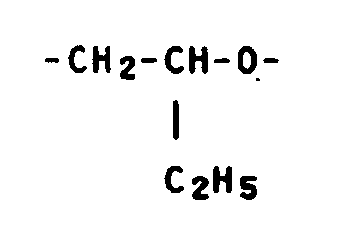

wobei A zu mindestens 50 Mol% -CH₂CH₂O- bedeutet,
x = eine Zahl von 12 bis 500,
y = ein Durchschnittswert von 0,3 bis 5,
n = eine ganze Zahl von 2 bis 6.
Priority Applications (1)
| Application Number | Priority Date | Filing Date | Title |
|---|---|---|---|
| AT89103452T ATE75247T1 (de) | 1988-03-05 | 1989-02-28 | Herstellen von abdichtungen mittels einer dichtungsmasse. |
Applications Claiming Priority (2)
| Application Number | Priority Date | Filing Date | Title |
|---|---|---|---|
| DE3807237 | 1988-03-05 | ||
| DE3807237A DE3807237A1 (de) | 1988-03-05 | 1988-03-05 | Dichtungsmasse |
Publications (3)
| Publication Number | Publication Date |
|---|---|
| EP0332017A2 EP0332017A2 (de) | 1989-09-13 |
| EP0332017A3 EP0332017A3 (en) | 1990-01-31 |
| EP0332017B1 true EP0332017B1 (de) | 1992-04-22 |
Family
ID=6348939
Family Applications (1)
| Application Number | Title | Priority Date | Filing Date |
|---|---|---|---|
| EP89103452A Expired - Lifetime EP0332017B1 (de) | 1988-03-05 | 1989-02-28 | Herstellen von Abdichtungen mittels einer Dichtungsmasse |
Country Status (6)
| Country | Link |
|---|---|
| EP (1) | EP0332017B1 (de) |
| JP (1) | JPH01268782A (de) |
| AT (1) | ATE75247T1 (de) |
| AU (1) | AU610348B2 (de) |
| DE (2) | DE3807237A1 (de) |
| FI (1) | FI891032A7 (de) |
Family Cites Families (5)
| Publication number | Priority date | Publication date | Assignee | Title |
|---|---|---|---|---|
| GB1324846A (en) * | 1969-10-31 | 1973-07-25 | Dow Corning Ltd | Organosilicon compounds |
| DE2005530C3 (de) * | 1970-02-06 | 1975-03-27 | Wacker-Chemie Gmbh, 8000 Muenchen | Springkitte |
| US4649224A (en) * | 1979-10-22 | 1987-03-10 | Basf Corporation | Polyethers modified with alpha olefin oxides |
| BR8200372A (pt) * | 1981-04-01 | 1982-11-23 | Basf Wyandotte Corp | Polieteres modificados com oxidos de alfa-olefina |
| US4381205A (en) * | 1982-04-05 | 1983-04-26 | E. F. Houghton & Company | Metal quenching process |
-
1988
- 1988-03-05 DE DE3807237A patent/DE3807237A1/de not_active Withdrawn
-
1989
- 1989-02-28 AT AT89103452T patent/ATE75247T1/de not_active IP Right Cessation
- 1989-02-28 EP EP89103452A patent/EP0332017B1/de not_active Expired - Lifetime
- 1989-02-28 DE DE8989103452T patent/DE58901212D1/de not_active Expired - Lifetime
- 1989-03-03 AU AU30935/89A patent/AU610348B2/en not_active Ceased
- 1989-03-03 FI FI891032A patent/FI891032A7/fi not_active IP Right Cessation
- 1989-03-06 JP JP1052192A patent/JPH01268782A/ja active Pending
Also Published As
| Publication number | Publication date |
|---|---|
| EP0332017A2 (de) | 1989-09-13 |
| DE58901212D1 (de) | 1992-05-27 |
| AU610348B2 (en) | 1991-05-16 |
| AU3093589A (en) | 1989-09-07 |
| ATE75247T1 (de) | 1992-05-15 |
| JPH01268782A (ja) | 1989-10-26 |
| EP0332017A3 (en) | 1990-01-31 |
| DE3807237A1 (de) | 1989-09-14 |
| FI891032A7 (fi) | 1989-09-06 |
| FI891032A0 (fi) | 1989-03-03 |
Similar Documents
| Publication | Publication Date | Title |
|---|---|---|
| EP0209758B1 (de) | Kraftstoffe und Heizöle und Verwendung eines Emulgatorsystems zur Herstellung dieser Kraftstoffe und Heizöle | |
| DE69519832T2 (de) | Verfahren zur Polyetherreinigung | |
| DE3233230C2 (de) | Wäßriges Schlichtemittel für Kohlenstoffasern, Verfahren zu dessen Herstellung und Anwendungsverfahren | |
| DE3239564C1 (de) | Mit Fettsaeure und/oder Isostearinsaeure veresterte Polyoxyalkylenether des Glycerins oder 1.2-Propandiols,deren Herstellung sowie Verwendung als Verdickungs- oder Solubilisierungsmittel | |
| DE69020767T2 (de) | Wasserlösliche nichtionische Celluloseether und ihre Verwendung in Farben. | |
| EP1486524A1 (de) | Epoxid-Addukte und deren Salze als Dispergiermittel | |
| EP0340704A2 (de) | Wässrige saure Reinigerformulierungen | |
| DE3426870A1 (de) | Verfahren zur herstellung eines gehaerteten zementgemisches mit hoher festigkeit | |
| DE1184960B (de) | Verfahren zur Herstellung von halogenhaltigen, endstaendige Epoxyalkylreste aufweisenden Polyaethern | |
| DE1643426B2 (de) | Verfahren zur Herstellung von Polyoxyalkylenpolyaminen | |
| EP0362121A2 (de) | Bohrspüladditive auf Basis eines Polymergemisches, deren Verwendung sowie Verfahren zur Herstellung derselben | |
| EP0332016B1 (de) | Verlegung von Fliesen mittels eines Fliesenklebstoffs | |
| EP0346736A2 (de) | Polyether | |
| DE3706038A1 (de) | Synthetische polyether-verdickungsmittel und diese enthaltende verdickte waessrige systeme | |
| DE2003016C3 (de) | Diglycidyläther, Verfahren zu ihrer Herstellung und ihre Verwendung | |
| DE1469904B2 (de) | Verfahren zum Herstellen gehärteter Harze mit. einer weitreichenden Elastizität | |
| DE68918379T2 (de) | Eindickende Mittel für wässerige Systeme. | |
| EP0224167A2 (de) | Verwendung von Polyglykoldialkylethern als Viskositätsregler für wässrige Aniontensidlösungen | |
| EP0130458B1 (de) | Verwendung von Polyoxyalkylenethern des Rizinusöles zur Herstellung von Polyurethanen | |
| DE69428994T2 (de) | Polymerer verdicker für wässerige zusammensetzungen | |
| EP0332017A2 (de) | Herstellen von Abdichtungen mittels einer Dichtungsmasse | |
| EP0332015B1 (de) | Klebstoff | |
| DE2246598B2 (de) | Schmieröl | |
| DE2126280A1 (de) | Diglycidylester von substituierten Alkan-omega^mega-dicarbonsäuren, deren Herstellung und deren Verwendung | |
| EP1663930B1 (de) | In alkalien stabile alkoxylate |
Legal Events
| Date | Code | Title | Description |
|---|---|---|---|
| PUAI | Public reference made under article 153(3) epc to a published international application that has entered the european phase |
Free format text: ORIGINAL CODE: 0009012 |
|
| AK | Designated contracting states |
Kind code of ref document: A2 Designated state(s): AT BE CH DE ES FR GB IT LI NL SE |
|
| PUAL | Search report despatched |
Free format text: ORIGINAL CODE: 0009013 |
|
| AK | Designated contracting states |
Kind code of ref document: A3 Designated state(s): AT BE CH DE ES FR GB IT LI NL SE |
|
| 17P | Request for examination filed |
Effective date: 19900203 |
|
| 17Q | First examination report despatched |
Effective date: 19910917 |
|
| GRAA | (expected) grant |
Free format text: ORIGINAL CODE: 0009210 |
|
| AK | Designated contracting states |
Kind code of ref document: B1 Designated state(s): AT BE CH DE ES FR GB IT LI NL SE |
|
| PG25 | Lapsed in a contracting state [announced via postgrant information from national office to epo] |
Ref country code: IT Free format text: LAPSE BECAUSE OF FAILURE TO SUBMIT A TRANSLATION OF THE DESCRIPTION OR TO PAY THE FEE WITHIN THE PRE;WARNING: LAPSES OF ITALIAN PATENTS WITH EFFECTIVE DATE BEFORE 2007 MAY HAVE OCCURRED AT ANY TIME BEFORE 2007. THE CORRECT EFFECTIVE DATE MAY BE DIFFERENT FROM THE ONE RECORDED.SCRIBED TIME-LIMIT Effective date: 19920422 Ref country code: GB Effective date: 19920422 Ref country code: NL Effective date: 19920422 Ref country code: BE Effective date: 19920422 Ref country code: ES Free format text: THE PATENT HAS BEEN ANNULLED BY A DECISION OF A NATIONAL AUTHORITY Effective date: 19920422 Ref country code: SE Effective date: 19920422 |
|
| REF | Corresponds to: |
Ref document number: 75247 Country of ref document: AT Date of ref document: 19920515 Kind code of ref document: T |
|
| REF | Corresponds to: |
Ref document number: 58901212 Country of ref document: DE Date of ref document: 19920527 |
|
| EN | Fr: translation not filed | ||
| PG25 | Lapsed in a contracting state [announced via postgrant information from national office to epo] |
Ref country code: FR Effective date: 19920911 |
|
| NLV1 | Nl: lapsed or annulled due to failure to fulfill the requirements of art. 29p and 29m of the patents act | ||
| GBV | Gb: ep patent (uk) treated as always having been void in accordance with gb section 77(7)/1977 [no translation filed] | ||
| PLBE | No opposition filed within time limit |
Free format text: ORIGINAL CODE: 0009261 |
|
| STAA | Information on the status of an ep patent application or granted ep patent |
Free format text: STATUS: NO OPPOSITION FILED WITHIN TIME LIMIT |
|
| PG25 | Lapsed in a contracting state [announced via postgrant information from national office to epo] |
Ref country code: CH Effective date: 19930228 Ref country code: AT Effective date: 19930228 Ref country code: LI Effective date: 19930228 |
|
| 26N | No opposition filed | ||
| REG | Reference to a national code |
Ref country code: CH Ref legal event code: PL |
|
| PG25 | Lapsed in a contracting state [announced via postgrant information from national office to epo] |
Ref country code: DE Effective date: 19931103 |
|
| REG | Reference to a national code |
Ref country code: FR Ref legal event code: ST |