EP0325035B1 - Flüssigkristall-Verbindung und Verfahren zu deren Herstellung, dieselbe enthaltende Flüssigkristallzusammensetzung und Flüssigkristall-Anzeigevorrichtung - Google Patents
Flüssigkristall-Verbindung und Verfahren zu deren Herstellung, dieselbe enthaltende Flüssigkristallzusammensetzung und Flüssigkristall-Anzeigevorrichtung Download PDFInfo
- Publication number
- EP0325035B1 EP0325035B1 EP88311135A EP88311135A EP0325035B1 EP 0325035 B1 EP0325035 B1 EP 0325035B1 EP 88311135 A EP88311135 A EP 88311135A EP 88311135 A EP88311135 A EP 88311135A EP 0325035 B1 EP0325035 B1 EP 0325035B1
- Authority
- EP
- European Patent Office
- Prior art keywords
- group
- formula
- liquid crystal
- compound
- active group
- Prior art date
- Legal status (The legal status is an assumption and is not a legal conclusion. Google has not performed a legal analysis and makes no representation as to the accuracy of the status listed.)
- Expired - Lifetime
Links
- 150000001875 compounds Chemical class 0.000 title claims description 89
- 239000004973 liquid crystal related substance Substances 0.000 title claims description 57
- 239000000203 mixture Substances 0.000 title claims description 22
- 238000004519 manufacturing process Methods 0.000 title claims description 10
- 125000000217 alkyl group Chemical group 0.000 claims description 23
- 125000004432 carbon atom Chemical group C* 0.000 claims description 19
- 239000000758 substrate Substances 0.000 claims description 12
- -1 2-octyl group Chemical group 0.000 claims description 10
- 150000001732 carboxylic acid derivatives Chemical class 0.000 claims description 10
- 150000002440 hydroxy compounds Chemical class 0.000 claims description 8
- 125000004493 2-methylbut-1-yl group Chemical group CC(C*)CC 0.000 claims description 4
- 125000005010 perfluoroalkyl group Chemical group 0.000 claims description 4
- 125000003178 carboxy group Chemical group [H]OC(*)=O 0.000 claims description 3
- 125000004435 hydrogen atom Chemical group [H]* 0.000 claims description 3
- 125000004093 cyano group Chemical group *C#N 0.000 claims description 2
- 229910052736 halogen Inorganic materials 0.000 claims description 2
- 150000002367 halogens Chemical class 0.000 claims description 2
- JUJWROOIHBZHMG-UHFFFAOYSA-N Pyridine Chemical compound C1=CC=NC=C1 JUJWROOIHBZHMG-UHFFFAOYSA-N 0.000 description 22
- 239000013078 crystal Substances 0.000 description 17
- 238000000034 method Methods 0.000 description 17
- 238000006243 chemical reaction Methods 0.000 description 14
- 239000000243 solution Substances 0.000 description 14
- KWYUFKZDYYNOTN-UHFFFAOYSA-M Potassium hydroxide Chemical compound [OH-].[K+] KWYUFKZDYYNOTN-UHFFFAOYSA-M 0.000 description 12
- 238000000921 elemental analysis Methods 0.000 description 12
- UMJSCPRVCHMLSP-UHFFFAOYSA-N pyridine Natural products COC1=CC=CN=C1 UMJSCPRVCHMLSP-UHFFFAOYSA-N 0.000 description 12
- 239000004990 Smectic liquid crystal Substances 0.000 description 11
- NGNBDVOYPDDBFK-UHFFFAOYSA-N 2-[2,4-di(pentan-2-yl)phenoxy]acetyl chloride Chemical compound CCCC(C)C1=CC=C(OCC(Cl)=O)C(C(C)CCC)=C1 NGNBDVOYPDDBFK-UHFFFAOYSA-N 0.000 description 10
- LFQSCWFLJHTTHZ-UHFFFAOYSA-N Ethanol Chemical compound CCO LFQSCWFLJHTTHZ-UHFFFAOYSA-N 0.000 description 10
- 239000005262 ferroelectric liquid crystals (FLCs) Substances 0.000 description 10
- FYSNRJHAOHDILO-UHFFFAOYSA-N thionyl chloride Chemical compound ClS(Cl)=O FYSNRJHAOHDILO-UHFFFAOYSA-N 0.000 description 10
- 238000000655 nuclear magnetic resonance spectrum Methods 0.000 description 9
- YXFVVABEGXRONW-UHFFFAOYSA-N Toluene Chemical compound CC1=CC=CC=C1 YXFVVABEGXRONW-UHFFFAOYSA-N 0.000 description 6
- 230000002194 synthesizing effect Effects 0.000 description 6
- 230000007704 transition Effects 0.000 description 6
- RLRJTIVTCUAJJX-UHFFFAOYSA-N 7-octoxy-9h-fluorene-2-carboxylic acid Chemical compound OC(=O)C1=CC=C2C3=CC=C(OCCCCCCCC)C=C3CC2=C1 RLRJTIVTCUAJJX-UHFFFAOYSA-N 0.000 description 5
- 238000003756 stirring Methods 0.000 description 5
- JOXIMZWYDAKGHI-UHFFFAOYSA-N toluene-4-sulfonic acid Chemical compound CC1=CC=C(S(O)(=O)=O)C=C1 JOXIMZWYDAKGHI-UHFFFAOYSA-N 0.000 description 5
- ZDOIAPGLORMKTR-UHFFFAOYSA-N 2-Hydroxyfluorene Chemical compound C1=CC=C2C3=CC=C(O)C=C3CC2=C1 ZDOIAPGLORMKTR-UHFFFAOYSA-N 0.000 description 4
- FTJHYGJLHCGQHQ-UHFFFAOYSA-N 2-bromooctane Chemical compound CCCCCCC(C)Br FTJHYGJLHCGQHQ-UHFFFAOYSA-N 0.000 description 4
- QIGBRXMKCJKVMJ-UHFFFAOYSA-N Hydroquinone Chemical compound OC1=CC=C(O)C=C1 QIGBRXMKCJKVMJ-UHFFFAOYSA-N 0.000 description 4
- 229910052799 carbon Inorganic materials 0.000 description 4
- 238000004440 column chromatography Methods 0.000 description 4
- 238000007796 conventional method Methods 0.000 description 4
- VLKZOEOYAKHREP-UHFFFAOYSA-N n-Hexane Chemical compound CCCCCC VLKZOEOYAKHREP-UHFFFAOYSA-N 0.000 description 4
- 239000002244 precipitate Substances 0.000 description 4
- 239000011541 reaction mixture Substances 0.000 description 4
- 238000001953 recrystallisation Methods 0.000 description 4
- KLONBQLDKJEANF-UHFFFAOYSA-N 1-(7-octoxy-9h-fluoren-2-yl)ethanone Chemical compound CC(=O)C1=CC=C2C3=CC=C(OCCCCCCCC)C=C3CC2=C1 KLONBQLDKJEANF-UHFFFAOYSA-N 0.000 description 3
- ZWEHNKRNPOVVGH-UHFFFAOYSA-N 2-Butanone Chemical compound CCC(C)=O ZWEHNKRNPOVVGH-UHFFFAOYSA-N 0.000 description 3
- GCQBIYCSSJYFJX-UHFFFAOYSA-N 4-(2-methylbutoxy)phenol Chemical compound CCC(C)COC1=CC=C(O)C=C1 GCQBIYCSSJYFJX-UHFFFAOYSA-N 0.000 description 3
- GILRCPLNYHHYJM-UHFFFAOYSA-N 7-decoxy-9h-fluorene-2-carboxylic acid Chemical compound OC(=O)C1=CC=C2C3=CC=C(OCCCCCCCCCC)C=C3CC2=C1 GILRCPLNYHHYJM-UHFFFAOYSA-N 0.000 description 3
- QTBSBXVTEAMEQO-UHFFFAOYSA-N Acetic acid Chemical compound CC(O)=O QTBSBXVTEAMEQO-UHFFFAOYSA-N 0.000 description 3
- 0 C(C1)C1C1(CC1)[C@]1C[C@](C2)CCCC*2C1 Chemical compound C(C1)C1C1(CC1)[C@]1C[C@](C2)CCCC*2C1 0.000 description 3
- HEMHJVSKTPXQMS-UHFFFAOYSA-M Sodium hydroxide Chemical compound [OH-].[Na+] HEMHJVSKTPXQMS-UHFFFAOYSA-M 0.000 description 3
- HEDRZPFGACZZDS-MICDWDOJSA-N Trichloro(2H)methane Chemical compound [2H]C(Cl)(Cl)Cl HEDRZPFGACZZDS-MICDWDOJSA-N 0.000 description 3
- 210000004027 cell Anatomy 0.000 description 3
- 210000002858 crystal cell Anatomy 0.000 description 3
- 230000003647 oxidation Effects 0.000 description 3
- 238000007254 oxidation reaction Methods 0.000 description 3
- 230000010287 polarization Effects 0.000 description 3
- 239000000047 product Substances 0.000 description 3
- 230000002269 spontaneous effect Effects 0.000 description 3
- XLYOFNOQVPJJNP-UHFFFAOYSA-N water Substances O XLYOFNOQVPJJNP-UHFFFAOYSA-N 0.000 description 3
- LZJUAZNLJDHKQL-UHFFFAOYSA-N 2-acetyl-7-octoxyfluoren-1-one Chemical compound C1=C(C(C)=O)C(=O)C2=CC3=CC(OCCCCCCCC)=CC=C3C2=C1 LZJUAZNLJDHKQL-UHFFFAOYSA-N 0.000 description 2
- IWEINEQCAZEDPW-UHFFFAOYSA-N 2-hydroxy-7-octan-2-yloxyfluoren-1-one Chemical compound OC=1C(C2=CC3=CC(=CC=C3C2=CC1)OC(C)CCCCCC)=O IWEINEQCAZEDPW-UHFFFAOYSA-N 0.000 description 2
- FJKROLUGYXJWQN-UHFFFAOYSA-N 4-hydroxybenzoic acid Chemical compound OC(=O)C1=CC=C(O)C=C1 FJKROLUGYXJWQN-UHFFFAOYSA-N 0.000 description 2
- OGIZCELCHIWJEP-UHFFFAOYSA-N 4-nonylbenzoyl chloride Chemical compound CCCCCCCCCC1=CC=C(C(Cl)=O)C=C1 OGIZCELCHIWJEP-UHFFFAOYSA-N 0.000 description 2
- NTDQQZYCCIDJRK-UHFFFAOYSA-N 4-octylphenol Chemical compound CCCCCCCCC1=CC=C(O)C=C1 NTDQQZYCCIDJRK-UHFFFAOYSA-N 0.000 description 2
- NVLYFJNOEHVKHC-UHFFFAOYSA-N 7-dodecoxy-9h-fluorene-2-carboxylic acid Chemical compound OC(=O)C1=CC=C2C3=CC=C(OCCCCCCCCCCCC)C=C3CC2=C1 NVLYFJNOEHVKHC-UHFFFAOYSA-N 0.000 description 2
- CJEYCCOEWCKQIW-UHFFFAOYSA-N 7-octan-2-yloxy-9h-fluoren-2-ol Chemical compound OC1=CC=C2C3=CC=C(OC(C)CCCCCC)C=C3CC2=C1 CJEYCCOEWCKQIW-UHFFFAOYSA-N 0.000 description 2
- DUVHJNHKDQXXDH-UHFFFAOYSA-N 7-tetradecoxy-9h-fluorene-2-carboxylic acid Chemical compound OC(=O)C1=CC=C2C3=CC=C(OCCCCCCCCCCCCCC)C=C3CC2=C1 DUVHJNHKDQXXDH-UHFFFAOYSA-N 0.000 description 2
- IIYYRXVPODDRJO-UHFFFAOYSA-N 9h-fluorene-2,7-diol Chemical compound OC1=CC=C2C3=CC=C(O)C=C3CC2=C1 IIYYRXVPODDRJO-UHFFFAOYSA-N 0.000 description 2
- VEXZGXHMUGYJMC-UHFFFAOYSA-N Hydrochloric acid Chemical compound Cl VEXZGXHMUGYJMC-UHFFFAOYSA-N 0.000 description 2
- 239000004988 Nematic liquid crystal Substances 0.000 description 2
- ISWSIDIOOBJBQZ-UHFFFAOYSA-N Phenol Chemical compound OC1=CC=CC=C1 ISWSIDIOOBJBQZ-UHFFFAOYSA-N 0.000 description 2
- 238000007664 blowing Methods 0.000 description 2
- 239000011248 coating agent Substances 0.000 description 2
- 238000000576 coating method Methods 0.000 description 2
- 150000002148 esters Chemical class 0.000 description 2
- 238000001704 evaporation Methods 0.000 description 2
- 230000008020 evaporation Effects 0.000 description 2
- NIHNNTQXNPWCJQ-UHFFFAOYSA-N fluorene Chemical compound C1=CC=C2CC3=CC=CC=C3C2=C1 NIHNNTQXNPWCJQ-UHFFFAOYSA-N 0.000 description 2
- 238000002329 infrared spectrum Methods 0.000 description 2
- 238000002156 mixing Methods 0.000 description 2
- 230000001590 oxidative effect Effects 0.000 description 2
- 150000003222 pyridines Chemical class 0.000 description 2
- BZQDHZSCEMOENZ-UHFFFAOYSA-N (4-hydroxyphenyl) 2-methylbutanoate Chemical compound CCC(C)C(=O)OC1=CC=C(O)C=C1 BZQDHZSCEMOENZ-UHFFFAOYSA-N 0.000 description 1
- LFJJTULXULBHML-UHFFFAOYSA-N (4-octan-2-ylphenyl) 7-octoxy-9h-fluorene-2-carboxylate Chemical compound C=1C(OCCCCCCCC)=CC=C(C2=CC=3)C=1CC2=CC=3C(=O)OC1=CC=C(C(C)CCCCCC)C=C1 LFJJTULXULBHML-UHFFFAOYSA-N 0.000 description 1
- QPRQEDXDYOZYLA-YFKPBYRVSA-N (S)-2-methylbutan-1-ol Chemical compound CC[C@H](C)CO QPRQEDXDYOZYLA-YFKPBYRVSA-N 0.000 description 1
- MCMZHMQZJRYWIH-UHFFFAOYSA-N 2,7-dihydroxyfluoren-1-one Chemical compound OC=1C(C2=CC3=CC(=CC=C3C2=CC1)O)=O MCMZHMQZJRYWIH-UHFFFAOYSA-N 0.000 description 1
- TUWWMVLKYZVTIQ-UHFFFAOYSA-N 2-(2-methylbutoxy)phenol Chemical compound CCC(C)COC1=CC=CC=C1O TUWWMVLKYZVTIQ-UHFFFAOYSA-N 0.000 description 1
- 229940090248 4-hydroxybenzoic acid Drugs 0.000 description 1
- FLRVNGMVEBEPQG-UHFFFAOYSA-N 4-nonylbenzoic acid Chemical compound CCCCCCCCCC1=CC=C(C(O)=O)C=C1 FLRVNGMVEBEPQG-UHFFFAOYSA-N 0.000 description 1
- DJQPEGRPSMOYLI-UHFFFAOYSA-N 4-octan-2-ylphenol Chemical compound CCCCCCC(C)C1=CC=C(O)C=C1 DJQPEGRPSMOYLI-UHFFFAOYSA-N 0.000 description 1
- OQZYBDRVLMWSHH-UHFFFAOYSA-N 7-heptoxy-9h-fluorene-2-carboxylic acid Chemical compound OC(=O)C1=CC=C2C3=CC=C(OCCCCCCC)C=C3CC2=C1 OQZYBDRVLMWSHH-UHFFFAOYSA-N 0.000 description 1
- JQLRCIOACPBSSF-UHFFFAOYSA-N 7-hexoxy-9h-fluorene-2-carboxylic acid Chemical compound OC(=O)C1=CC=C2C3=CC=C(OCCCCCC)C=C3CC2=C1 JQLRCIOACPBSSF-UHFFFAOYSA-N 0.000 description 1
- VJOTZCMODVZAKU-UHFFFAOYSA-N 7-nonoxy-9h-fluorene-2-carboxylic acid Chemical compound OC(=O)C1=CC=C2C3=CC=C(OCCCCCCCCC)C=C3CC2=C1 VJOTZCMODVZAKU-UHFFFAOYSA-N 0.000 description 1
- AEWRNCMWHVQIKH-UHFFFAOYSA-N 7-octan-2-yloxy-9h-fluorene-2-carboxylic acid Chemical compound OC(=O)C1=CC=C2C3=CC=C(OC(C)CCCCCC)C=C3CC2=C1 AEWRNCMWHVQIKH-UHFFFAOYSA-N 0.000 description 1
- WNNSAUHCMYCNCS-UHFFFAOYSA-N 7-undecoxy-9h-fluorene-2-carboxylic acid Chemical compound OC(=O)C1=CC=C2C3=CC=C(OCCCCCCCCCCC)C=C3CC2=C1 WNNSAUHCMYCNCS-UHFFFAOYSA-N 0.000 description 1
- QGZKDVFQNNGYKY-UHFFFAOYSA-O Ammonium Chemical compound [NH4+] QGZKDVFQNNGYKY-UHFFFAOYSA-O 0.000 description 1
- 239000004642 Polyimide Substances 0.000 description 1
- VYPSYNLAJGMNEJ-UHFFFAOYSA-N Silicium dioxide Chemical compound O=[Si]=O VYPSYNLAJGMNEJ-UHFFFAOYSA-N 0.000 description 1
- KPRYJRBEZLPANL-UHFFFAOYSA-N [4-(2-methylbutanoyloxy)phenyl] 7-decoxy-9h-fluorene-2-carboxylate Chemical compound C=1C(OCCCCCCCCCC)=CC=C(C2=CC=3)C=1CC2=CC=3C(=O)OC1=CC=C(OC(=O)C(C)CC)C=C1 KPRYJRBEZLPANL-UHFFFAOYSA-N 0.000 description 1
- HAVJRCPALOYAHZ-UHFFFAOYSA-N [4-(2-methylbutanoyloxy)phenyl] 7-heptoxy-9h-fluorene-2-carboxylate Chemical compound C=1C(OCCCCCCC)=CC=C(C2=CC=3)C=1CC2=CC=3C(=O)OC1=CC=C(OC(=O)C(C)CC)C=C1 HAVJRCPALOYAHZ-UHFFFAOYSA-N 0.000 description 1
- VPLPSCBTFIJSRO-UHFFFAOYSA-N [4-(2-methylbutanoyloxy)phenyl] 7-nonoxy-9h-fluorene-2-carboxylate Chemical compound C=1C(OCCCCCCCCC)=CC=C(C2=CC=3)C=1CC2=CC=3C(=O)OC1=CC=C(OC(=O)C(C)CC)C=C1 VPLPSCBTFIJSRO-UHFFFAOYSA-N 0.000 description 1
- CNRVUYCDPVOWLM-UHFFFAOYSA-N [4-(2-methylbutanoyloxy)phenyl] 7-undecoxy-9h-fluorene-2-carboxylate Chemical compound C=1C(OCCCCCCCCCCC)=CC=C(C2=CC=3)C=1CC2=CC=3C(=O)OC1=CC=C(OC(=O)C(C)CC)C=C1 CNRVUYCDPVOWLM-UHFFFAOYSA-N 0.000 description 1
- 125000002777 acetyl group Chemical group [H]C([H])([H])C(*)=O 0.000 description 1
- QVGXLLKOCUKJST-UHFFFAOYSA-N atomic oxygen Chemical compound [O] QVGXLLKOCUKJST-UHFFFAOYSA-N 0.000 description 1
- 239000003637 basic solution Substances 0.000 description 1
- SOCTUWSJJQCPFX-UHFFFAOYSA-N dichromate(2-) Chemical compound [O-][Cr](=O)(=O)O[Cr]([O-])(=O)=O SOCTUWSJJQCPFX-UHFFFAOYSA-N 0.000 description 1
- 239000012769 display material Substances 0.000 description 1
- 238000001035 drying Methods 0.000 description 1
- 239000012156 elution solvent Substances 0.000 description 1
- 230000001747 exhibiting effect Effects 0.000 description 1
- 239000007789 gas Substances 0.000 description 1
- 239000011521 glass Substances 0.000 description 1
- 150000002576 ketones Chemical class 0.000 description 1
- 238000001819 mass spectrum Methods 0.000 description 1
- 239000000463 material Substances 0.000 description 1
- 239000011159 matrix material Substances 0.000 description 1
- 230000003446 memory effect Effects 0.000 description 1
- 125000001570 methylene group Chemical group [H]C([H])([*:1])[*:2] 0.000 description 1
- 229910052760 oxygen Inorganic materials 0.000 description 1
- 239000001301 oxygen Substances 0.000 description 1
- 125000001997 phenyl group Chemical group [H]C1=C([H])C([H])=C(*)C([H])=C1[H] 0.000 description 1
- 229920001721 polyimide Polymers 0.000 description 1
- 238000000746 purification Methods 0.000 description 1
- 239000012264 purified product Substances 0.000 description 1
- 239000002994 raw material Substances 0.000 description 1
- 239000011369 resultant mixture Substances 0.000 description 1
- 239000003566 sealing material Substances 0.000 description 1
- 239000000741 silica gel Substances 0.000 description 1
- 229910002027 silica gel Inorganic materials 0.000 description 1
- KIEOKOFEPABQKJ-UHFFFAOYSA-N sodium dichromate Chemical compound [Na+].[Na+].[O-][Cr](=O)(=O)O[Cr]([O-])(=O)=O KIEOKOFEPABQKJ-UHFFFAOYSA-N 0.000 description 1
- CRWJEUDFKNYSBX-UHFFFAOYSA-N sodium;hypobromite Chemical compound [Na+].Br[O-] CRWJEUDFKNYSBX-UHFFFAOYSA-N 0.000 description 1
- 125000006850 spacer group Chemical group 0.000 description 1
- 238000001228 spectrum Methods 0.000 description 1
- 239000007858 starting material Substances 0.000 description 1
- 125000000547 substituted alkyl group Chemical group 0.000 description 1
- 125000000475 sulfinyl group Chemical group [*:2]S([*:1])=O 0.000 description 1
- 229920003051 synthetic elastomer Polymers 0.000 description 1
- 239000010409 thin film Substances 0.000 description 1
Images


Classifications
-
- C—CHEMISTRY; METALLURGY
- C09—DYES; PAINTS; POLISHES; NATURAL RESINS; ADHESIVES; COMPOSITIONS NOT OTHERWISE PROVIDED FOR; APPLICATIONS OF MATERIALS NOT OTHERWISE PROVIDED FOR
- C09K—MATERIALS FOR MISCELLANEOUS APPLICATIONS, NOT PROVIDED FOR ELSEWHERE
- C09K19/00—Liquid crystal materials
-
- C—CHEMISTRY; METALLURGY
- C09—DYES; PAINTS; POLISHES; NATURAL RESINS; ADHESIVES; COMPOSITIONS NOT OTHERWISE PROVIDED FOR; APPLICATIONS OF MATERIALS NOT OTHERWISE PROVIDED FOR
- C09K—MATERIALS FOR MISCELLANEOUS APPLICATIONS, NOT PROVIDED FOR ELSEWHERE
- C09K19/00—Liquid crystal materials
- C09K19/04—Liquid crystal materials characterised by the chemical structure of the liquid crystal components, e.g. by a specific unit
- C09K19/06—Non-steroidal liquid crystal compounds
- C09K19/32—Non-steroidal liquid crystal compounds containing condensed ring systems, i.e. fused, bridged or spiro ring systems
-
- C—CHEMISTRY; METALLURGY
- C07—ORGANIC CHEMISTRY
- C07C—ACYCLIC OR CARBOCYCLIC COMPOUNDS
- C07C69/00—Esters of carboxylic acids; Esters of carbonic or haloformic acids
- C07C69/66—Esters of carboxylic acids having esterified carboxylic groups bound to acyclic carbon atoms and having any of the groups OH, O—metal, —CHO, keto, ether, acyloxy, groups, groups, or in the acid moiety
- C07C69/73—Esters of carboxylic acids having esterified carboxylic groups bound to acyclic carbon atoms and having any of the groups OH, O—metal, —CHO, keto, ether, acyloxy, groups, groups, or in the acid moiety of unsaturated acids
-
- C—CHEMISTRY; METALLURGY
- C07—ORGANIC CHEMISTRY
- C07C—ACYCLIC OR CARBOCYCLIC COMPOUNDS
- C07C69/00—Esters of carboxylic acids; Esters of carbonic or haloformic acids
- C07C69/76—Esters of carboxylic acids having a carboxyl group bound to a carbon atom of a six-membered aromatic ring
Definitions
- the present invention relates to a novel liquid crystal compound and a method of manufacturing the same and, more particularly, to a ferroelectric liquid crystal compound which can exhibit chiral smectic C phase and a method of manufacturing the same.
- the present invention also relates to a liquid crystal composition containing such a liquid crystal compound, and a liquid crystal display device.
- Liquid crystals are widely used as the best display material for small flat panel display devices such as portable calculators and time pieces. Recently, liquid crystals are also used in automobile displays and personal computer displays. In addition, liquid crystals have now begun to be used in moving image displays such as small liquid crystal television sets.
- Twisted nematic liquid crystals are conventionally used in portable calculators, time pieces, and the like. In display systems using these liquid crystals, however, a response speed is unsatisfactory, and cross-talk is produced. Therefore, it is difficult to apply these liquid crystals to displays such as large screen displays which must have a high response speed.
- a display system such as an active matrix display system using a thin film transistor has been developed.
- a manufacturing cost of devices adopting such a display system is high.
- the conventional ferroelectric liquid crystals are, however, unstable with respect to moisture in air or light, and have narrow temperature ranges within which chiral smectic C phase appears. Therefore, applications of these liquid crystals are limited.
- an object of the present invention to provide a novel liquid crystal compound exhibiting chiral smectic C phase over a wide temperature range and good thermodynamic stability, and method of manufacturing the same.
- each of Ra and Rb independently represents an optically each of Ra and Rb independently represents an optically non-active alkyl group (as defined below) or an optically active group having an asymmetric carbon atom (as defined below), with the proviso that one of Ra and Rb is the optically active group,
- X represents and each of l and m represents 0 or 1.
- liquid crystal compounds of the present invention in which X represents in the above formula can be manufactured by reacting a carboxylic acid represented by formula: Ra(O) l -Ar-COOH where Ra, Ar and l are as defined above, or its reactive derivative, with a hydroxy compound represented by formula: where Rb and m are as defined above.
- liquid crystal compound of the present invention in which X represents is manufactured by reaction of a hydroxy compound represented by formula: Ra(O) l -Ar-OH where Ra, Ar and l are as defined above with a carboxylic acid represented by formula: where Rb and m are as defined above or its reactive derivative.
- the liquid crystal composition of the present invention contains 5 to 90% by weight, preferably 10 to 60% by weight, of the liquid crystal compound of the present invention.
- the liquid crystal display device of the present invention comprises a pair of electrode substrates arranged to oppose each other with a predetermined interval, at least one of them being transparent, and the liquid crystal composition containing the liquid crystal compound of the present invention arranged between the electrode substrates.
- liquid crystal compound of the present invention is represented by formula:
- Ar represents or X represents and each of l and m independently represents 0 or 1.
- Ra and Rb is independently an optically non-active alkyl group or an optically active group having an asymmetric carbon atom, and either Ra or Rb is the optically active group.
- Ra or Rb is the optically non-active alkyl group (i.e., an alkyl group having no asymmetric carbon atom)
- it is a straight-chain alkyl group having 3 to 18 carbon atoms in order to widen a temperature range within which chiral smectic C phase appears.
- the straight-chain alkyl group has 4 to 14 carbon atoms.
- Ra or Rb is the optically active group, it is preferably an optically active alkyl or substituted alkyl group having asymmetric carbon atom C* represented by formula: where each of R1, R2 and R3 independently represents an alkyl group (preferably, an alkyl group having 1 to 18 carbon atoms), halogen, cyano, perfluoroalkyl (preferably, a perfluoroalkyl group having 1 to 18 carbon atoms) or a hydrogen atom, R1, R2 and R3 satisfying conditions R1 ⁇ R2, R2 ⁇ R3 and R3 ⁇ R1 at the same time, and n represents an integer from 0 to 15 (preferably, 0 to 8).
- 2-methylbutyl group and 2-octyl group are used.
- a compound of the present invention represented by formula (A) has a wide temperature range (about 50°C to about 150°C) within which chiral smectic C phase appears, and is a ferroelectric liquid crystal.
- a compound of the present invention represented by formula (A) includes compounds represented by formulas: where R represents the optically non-active alkyl group, R* represents the optically active group, and X, l and m are as defined above.
- a carboxylic acid represented by formula (C) is first made to react with thionyl chloride by a conventional method to convert it into a corresponding acid chloride represented by the formula: Ra(O) l -Ar-COCl (C-1)
- a desired compound can be prepared.
- a carboxylic acid represented by formula (F) is first made to react with thionyl chloride by a conventional method to convert it into a corresponding acid chloride represented by the formula:
- a desired compound can be prepared.
- This compound can be manufactured by the following reaction route: More specifically, 2-hydroxyfluorene (II) is synthesized from commercially available fluorene (I) by, e.g., a 3-stage reaction described in Org. Synth., 1933, 13, 74. Then, the compound of formula (II) is made to react in accordance with a method described by C. H. Coak et al., in J. Org. Chem., 1954, 19, 628 to prepare compound (III). Compound (III) is made to react in accordance with a method described by G. W. Gray et al., in J. Chem. Soc., 1957, 3228 to prepare compound (C-a) represented by formula (C) in which Ar represents
- a compound of formula (C) in which Ar represents can be prepared by oxidizing a compound of formula (V), followed by treating with NaOBr.
- This oxidation can be performed by a conventional method using sodium bichromate or ammonium bichromate in acetic acid.
- the present inventors have found that this oxidation can be efficiently performed by blowing oxygen-containing gas (e.g., O2, air) into the basic solution of the compound such as a sodium hydroxide solution to manufacture a desired compound with high yield.
- oxygen-containing gas e.g., O2, air
- alkanol of formula (VII) is made to react with p-toluenesulfonyl acid chloride in pyridine to produce alkanol ester of p-toluenesulfonic acid (VIII).
- This compound is made to react with hydroquinone to prepare a compound of formula (D).
- This compound can be manufactured by the following route: More specifically, alkanol of formula (IX) is made to react with p-toluenesulfonyl acid chloride in pyridine to produce alkanol ester of p-toluenesulfonic acid (X). By reaction of this compound with 2,7-dihydroxyfluorene, compound (E-a) of formula (E) in which Ar represents can be prepared.
- This compound can be manufactured by reaction of a compound of formula (VIII) with p-hydroxybenzoic acid in the presence of potassium hydroxide:
- the compounds of the present invention have a wide temperature range within which chiral smectic C phase appears and good thermodynamic stability. Therefore, by mixing two or more types of the compounds of the present invention or blending the other ferroelectric liquid crystal, a liquid crystal composition applications of which are less limited can be provided.
- the liquid crystal composition of the present invention contains 5 to 90% by weight, more preferably 10 to 60% by weight (total) of one or more of the compounds according to the present invention.
- This liquid crystal display device has a pair of electrode substrates 11 and 12 arranged to oppose each other with a predetermined interval by sealing material 13 and spacer 15. At least one of electrode substrates 11 and 12 is transparent. Electrode substrates 11 and 12 have structure that transparent electrodes 11b, 12b are formed on glass substrates 11a and 12a, and insulating layers 11c, 12c subjected to an orienting treatment are formed on electrodes 11b and 12b. The electrode substrates 11, 12 are arranged such that electrodes 11b, 12b face each other.
- Liquid crystal composition 14 of the present invention is filled in a closed space between the electrode substrates.
- Electrodes 11b and 12b are connected to drive source 15 for driving composition 14.
- the prepared white needle crystal was dissolved in deuteriochloroform and an NMR spectrum was measured.
- elemental analysis of the white needle crystal was performed to obtain a result of C : 79.5, H : 8.1 and O : 12.6 (calculated values are C : 79.20, H : 8.00 and O : 12.80).
- this white needle crystal was confirmed to be 7-n-octyloxyfluorene-2-carboxylic acid 4-(2-methylbutyroxy) phenyl ester represented by formula (A-1) wherein R represents n-C8H17, R* represents: and each of l and m represents 1.
- a relationship between spontaneous polarization Ps and a temperature (T-Tc) of these compounds is shown in Fig. 2, and a relationship between a tilt angle and the temperature (T-Tc) is shown in Fig. 3.
- a relationship between spontaneous polarization Ps and a temperature (T-Tc) of a compound represented by formula: (wherein n represents 10, 12 or 14) is shown in Fig. 4, and a relationship between a tilt angle and the temperature (T-Tc) thereof is shown in Fig. 5.
- An optically active 7-(2-octyloxy)-fluorene-2-carboxylic acid was prepared in accordance with a method described by G. W. Gray et al. in J. Chem. Soc., 1957, 3228 using optically active 2-octyl bromide instead of the n-alkyl bromide.
- the obtained carboxylic acid and 4-n-octyl phenol were reacted as in Example 1 to prepare a white crystal with a yield of 87%.
- the white crystal was confirmed to be optically active 7-(2-octyloxy)-fluorene-2-carboxylic acid 4-n-octyl phenyl ester by the NMR and elemental analyses.
- Optically active 7-n-octyloxy-fluorene-2-carboxylic acid 4-(2-octyl)phenyl ester was prepared by reacting 7-n-octyloxy-fluorene-2-carboxylic acid with optically active 4-(2-octyl)phenol as in Example 1.
- optically active 2-octyl bromide and 2,7-dihydroxyfluorene were reacted in ethanol in the presence of potassium hydroxide.
- the resultant reaction mixture was purified by a column chromatography and recrystallization to obtain optically active 2-hydroxy-7-(2-octyloxy)-fluorene.
- the obtained optically active 2-hydroxy-7-(2-octyloxy)-fluorene and 4-n-nonyl benzoic acid chloride were reacted in pyridine.
- the resultant reaction mixture was purified by a column chromatography and recrystallization to obtain a while needle crystal.
- the obtained crystal was dissolved in deuteriochloroform, and an NMR spectrum was measured.
- elemental analysis of the crystal was performed to obtain a result of C : 78.9, H : 7.3, O : 13.9 (calculated values are C : 78.86, H : 7.43, O : 13.71).
- the yellow needle crystal was confirmed to be 2-acetyl-7-n-octyloxyfluorenone in which the methylene group bridging the two benzene rings of the raw material 2-acetyl-7-n-octyloxyfluorene has been oxidized into ketone.
- the obtained 2-acetyl-7-n-octyloxyfluorenone was subjected to oxidation of its acetyl group in accordance with a method described by G. W. Gray in J. Chem. Soc., 1957, 3228 to obtain 7-n-octyloxyfluorenone-2-carboxylic acid.
- Fig. 6 shows an NMR spectrum of a deuteriochloroform solution of the crystal.
- a relationship between spontaneous polarization Ps and a temperature (T-Tc) of these compounds is shown in Fig. 7, and a relationship between a tilt angle and the temperature (T-Tc) thereof is shown in Fig. 8.
- Optically active 7-(2-octyloxy)-fluorenone-2-carboxylic acid was prepared in accordance with a method described by G. W. Gray et al. in J. Chem. Soc., 1957, 3228 using an optically active 2-octyl bromide instead of the n-alkyl bromide.
- the obtained carboxylic acid and 4-n-octyl phenol were reacted as in Example 17 to prepare yellow needles with a yield of 85%.
- the needles were confirmed to be optically active 7-(2-octyloxy)-fluorenone-2-carboxylic acid 4-n-octyl phenyl ester by the NMR and elemental analyses.
- optically active 2-octyl bromide and 2,7-dihydroxylfluorenone were reacted in ethanol in the presence of potassium hydroxide.
- the resultant reaction mixture was purified by a column chromatography and recrystallization to obtain optically active 2-hydroxy-7-(2-octyloxy)-fluorenone.
- a liquid crystal cell having a structure as shown in Fig. 1 was manufactured using the liquid crystal composition of Example H.
- An orienting treatment was performed by coating a 2.5% solution of polyimide JIB available from Japan Synthetic Rubber Co., Ltd. on a substrate and then drying and rubbing the coating.
- a response speed of this cell was 250 ⁇ s at room temperature (25°C).
- a liquid crystal cell was manufactured using the above liquid crystal composition following the same procedures as in Example H.
- a response speed of this cell was 265 ⁇ s at room temperature (25°C).
- a liquid crystal cell was manufactured using the above liquid crystal composition following the same procedures as in Example H.
- a response speed of this cell was 245 ⁇ s at room temperature (25°C).
- the liquid crystal compound of the present invention have a wide temperature range over which chiral smectic C phase appears and good stability and therefore can be used in a liquid crystal display device without not much limiting its applications.
Landscapes
- Chemical & Material Sciences (AREA)
- Organic Chemistry (AREA)
- Crystallography & Structural Chemistry (AREA)
- Engineering & Computer Science (AREA)
- Materials Engineering (AREA)
- Organic Low-Molecular-Weight Compounds And Preparation Thereof (AREA)
- Liquid Crystal Substances (AREA)
Claims (16)
- Verbindung der Formel:

Ar

wobei einer der Reste Ra und Rb für die optisch aktive Gruppe steht;
X
l und m jeweils 0 oder 1. - Verbindung nach Anspruch 1, dadurch gekennzeichnet, daß R¹, R² und R³ unabhängig voneinander jeweils für eine Alkylgruppe oder ein Wasserstoffatom stehen und n 0 bis 8 darstellt.
- Verbindung nach Anspruch 1, dadurch gekennzeichnet, daß die Alkylgruppe und die Perfluoralkylgruppe der optisch aktiven Gruppe jeweils bis zu 19 Kohlenstoffatomen aufweist.
- Verbindung nach Anspruch 1, dadurch gekennzeichnet, daß die optisch nicht-aktive Gruppe aus einer geradkettigen Alkylgruppe mit 4 bis 14 Kohlenstoffatomen besteht.
- Verbindung nach Anspruch 1 der Formel:

- Verbindung nach Anspruch 5, dadurch gekennzeichnet, daß die optisch aktive Gruppe aus einer 2-Methylbutylgruppe oder einer 2-Octylgruppe und die optisch nicht-aktive Gruppe aus einer geradkettigen Alkylgruppe mit 4 bis 14 Kohlenstoffatomen bestehen.
- Verbindung nach Anspruch 1 der Formel:

- Verbindung nach Anspruch 7, dadurch gekennzeichnet, daß die optisch aktive Gruppe aus einer 2-Methylbutylgruppe oder einer 2-octylgruppe und die optisch nicht-aktive Gruppe aus einer geradkettigen Alkylgruppe mit 4 bis 14 Kohlenstoffatomen bestehen.
- Verbindung nach Anspruch 1 der Formel:

- Verbindung nach Anspruch 9, dadurch gekennzeichnet, daß die optisch aktive Gruppe aus einer 2-Methylbutylgruppe oder einer 2-Octylgruppe und die optisch nicht-aktive Gruppe aus einer linearen Alkylgruppe mit 4 bis 14 Kohlenstoffatomen bestehen.
- Verbindung nach Anspruch 1 der Formel:

- Verbindung nach Anspruch 11, dadurch gekennzeichnet, daß die optisch aktive Gruppe aus einer 2-Methylbutylgruppe oder einer 2-Octylgruppe und die optisch nichtaktive Gruppe aus einer linearen Alkylgruppe mit 4 bis 14 Kohlenstoffatomen bestehen.
- Verfahren zur Herstellung einer Verbindung der Formel:


Ra(O)l-Ar-COOH
worin Ra, Ar und l die zuvor angegebene Bedeutung besitzen, oder eines reaktionsfähigen Derivats derselben mit einer Hydroxyverbindung der Formel: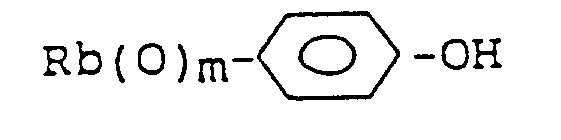
- Verfahren zur Herstellung einer Verbindung der Formel:


Ra(O)l-Ar-OH
worin Ra, Ar und l die zuvor angegebene Bedeutung besitzen, mit einer Carbonsäure der Formel:
- Flüssickristallmasse mit 5 - 90 Gew.-% der Verbindung nach Anspruch 1.
- Flüssigkristallanzeigevorrichtung, umfassend ein Paar von in einem gegebenen Abstand einander gegenüberliegenden Elektrodensubstraten, von denen mindestens eines durchsichtig ist, und eine zwischen dem Paar der Elektrodensubstrate befindliche und mindestens eine Verbindung nach Anspruch 1 enthaltende Flüssigkristallmasse.
Applications Claiming Priority (2)
| Application Number | Priority Date | Filing Date | Title |
|---|---|---|---|
| JP961688 | 1988-01-21 | ||
| JP9616/88 | 1988-01-21 |
Publications (3)
| Publication Number | Publication Date |
|---|---|
| EP0325035A2 EP0325035A2 (de) | 1989-07-26 |
| EP0325035A3 EP0325035A3 (en) | 1990-08-01 |
| EP0325035B1 true EP0325035B1 (de) | 1993-08-18 |
Family
ID=11725221
Family Applications (1)
| Application Number | Title | Priority Date | Filing Date |
|---|---|---|---|
| EP88311135A Expired - Lifetime EP0325035B1 (de) | 1988-01-21 | 1988-11-24 | Flüssigkristall-Verbindung und Verfahren zu deren Herstellung, dieselbe enthaltende Flüssigkristallzusammensetzung und Flüssigkristall-Anzeigevorrichtung |
Country Status (4)
| Country | Link |
|---|---|
| US (1) | US4976887A (de) |
| EP (1) | EP0325035B1 (de) |
| KR (1) | KR920000878B1 (de) |
| DE (1) | DE3883366T2 (de) |
Families Citing this family (10)
| Publication number | Priority date | Publication date | Assignee | Title |
|---|---|---|---|---|
| JP2857223B2 (ja) * | 1990-05-02 | 1999-02-17 | キヤノン株式会社 | 液晶性化合物、それを含有する液晶組成物およびそれを使用した液晶素子 |
| JP3308626B2 (ja) * | 1992-02-12 | 2002-07-29 | キヤノン株式会社 | 液晶性化合物、これを含む液晶組成物、それを有する液晶素子、それらを用いた表示方法、および表示装置 |
| DK0655992T3 (da) * | 1993-06-18 | 1999-07-19 | Otsuka Pharma Co Ltd | Fluorenonderivater, fremgangsmåde til deres fremstilling samt regenererings- og beskyttelsesmiddel mod central eller perife |
| CN1214073A (zh) * | 1995-07-17 | 1999-04-14 | 德国赫彻斯特研究技术两合公司 | 铁电性液晶混合物 |
| JP3391653B2 (ja) | 1997-04-16 | 2003-03-31 | 株式会社クボタ | リアディスチャージモーアユニット及び芝刈機 |
| US5885669A (en) * | 1997-08-08 | 1999-03-23 | Acheson Industries, Inc. | Liquid crystal device and method |
| TWI229120B (en) * | 1999-08-03 | 2005-03-11 | Dainippon Ink & Chemicals | Condensed ring compound for liquid crystal |
| DE10101022A1 (de) * | 2001-01-11 | 2002-07-18 | Clariant Internat Ltd Muttenz | Fluorierte Aromaten und ihre Verwendung in Flüssigkristallmischungen |
| US7018685B2 (en) | 2001-01-11 | 2006-03-28 | Merck Patent Gmbh | Fluorinated aromatic compounds and the use of the same in liquid crystal mixtures |
| CN101133138B (zh) * | 2005-03-24 | 2013-07-17 | 默克专利股份有限公司 | 液晶介质 |
Family Cites Families (5)
| Publication number | Priority date | Publication date | Assignee | Title |
|---|---|---|---|---|
| FR2538804A1 (fr) * | 1982-12-30 | 1984-07-06 | Thomson Csf | Famille de cristaux liquides presentant une phase smectique a et son procede de fabrication |
| JPS6143A (ja) * | 1984-06-11 | 1986-01-06 | Chisso Corp | 強誘電性液晶化合物及び液晶組成物 |
| US4886620A (en) * | 1985-09-18 | 1989-12-12 | Merck Patent Gesellschaft Mit Beschrankter Haftung | Smectic liquid-crystalline phases |
| JPH0739579B2 (ja) * | 1986-09-29 | 1995-05-01 | 株式会社東芝 | 液晶材料 |
| JPH0823015B2 (ja) * | 1987-05-26 | 1996-03-06 | 株式会社東芝 | 液晶材料 |
-
1988
- 1988-11-23 US US07/275,383 patent/US4976887A/en not_active Expired - Fee Related
- 1988-11-24 EP EP88311135A patent/EP0325035B1/de not_active Expired - Lifetime
- 1988-11-24 DE DE88311135T patent/DE3883366T2/de not_active Expired - Fee Related
- 1988-11-26 KR KR1019880015660A patent/KR920000878B1/ko not_active Expired
Also Published As
| Publication number | Publication date |
|---|---|
| KR890011975A (ko) | 1989-08-23 |
| US4976887A (en) | 1990-12-11 |
| EP0325035A3 (en) | 1990-08-01 |
| DE3883366T2 (de) | 1994-01-05 |
| DE3883366D1 (de) | 1993-09-23 |
| KR920000878B1 (ko) | 1992-01-30 |
| EP0325035A2 (de) | 1989-07-26 |
Similar Documents
| Publication | Publication Date | Title |
|---|---|---|
| EP0325035A2 (de) | Flüssigkristall-Verbindung und Verfahren zu deren Herstellung, dieselbe enthaltende Flüssigkristallzusammensetzung und Flüssigkristall-Anzeigevorrichtung | |
| US5378396A (en) | Liquid crystal compound and liquid crystal display device | |
| EP0224725A1 (de) | Optisch aktive Benzoesäureesterderivate | |
| EP0718274A1 (de) | Zwei-Ring enthaltende Phenylesterverbindung und sie enthaltende anti-ferroelektrische flüssigkristalline Zusammensetzung | |
| JPH0669988B2 (ja) | エステル化合物及びこれを含む液晶組成物 | |
| EP0586263B1 (de) | Flüssigkristallverbindung | |
| US5582766A (en) | Cholesteric liquid crystal compound, manufacturing method thereof and display device employing the same | |
| US4970023A (en) | Biphenyl compounds, method of producing the same as well as liquid crystal compositions and light switch elements each containing the same | |
| US5853612A (en) | Compound for use in liquid crystal composition, liquid crystal composition comprising the same, and liquid crystal display device using the same | |
| JPH01146842A (ja) | 液晶性化合物および液晶組成物 | |
| US5360575A (en) | Lactic acid derivatives having two asymmetric carbon atoms, liquid crystal composition containing same and liquid crystal device | |
| US5462695A (en) | Chiral liquid crystal materials as dopant for ferroelectric liquid crystal compositions | |
| JP3732255B2 (ja) | 反強誘電性液晶化合物および該化合物を含有する反強誘電性液晶組成物 | |
| JP2735263B2 (ja) | 液晶材料及びこれを用いた液晶表示素子 | |
| JP2786513B2 (ja) | エステル化合物及びこれを含む液晶組成物 | |
| US5055225A (en) | Alkyl thiobenzoate derivative, production of same and liquid crystal display element | |
| KR20000028981A (ko) | 페닐 트리에스테르 화합물 및 이를 함유하는 반강유전성액정 조성물 | |
| JP2862708B2 (ja) | 新規なフェニルピリジン化合物及びこれを含む液晶組成物 | |
| JP2989317B2 (ja) | 新規なフェニルピリジン化合物を含む液晶組成物 | |
| JPH0823015B2 (ja) | 液晶材料 | |
| JPS62181237A (ja) | 液晶化合物及び液晶組成物 | |
| JPH0320390A (ja) | 液晶材料 | |
| JPH083093B2 (ja) | 強誘電性スメクチツク液晶組成物 | |
| JPH03151371A (ja) | 光学活性オキサゾリドン誘導体、その中間体、液晶材料及び液晶表示素子 | |
| JPH0794435B2 (ja) | 光学活性ラクタム化合物およびそれを用いた液晶組成物 |
Legal Events
| Date | Code | Title | Description |
|---|---|---|---|
| PUAI | Public reference made under article 153(3) epc to a published international application that has entered the european phase |
Free format text: ORIGINAL CODE: 0009012 |
|
| 17P | Request for examination filed |
Effective date: 19881207 |
|
| AK | Designated contracting states |
Kind code of ref document: A2 Designated state(s): CH DE FR GB LI NL |
|
| PUAL | Search report despatched |
Free format text: ORIGINAL CODE: 0009013 |
|
| AK | Designated contracting states |
Kind code of ref document: A3 Designated state(s): CH DE FR GB LI NL |
|
| 17Q | First examination report despatched |
Effective date: 19920218 |
|
| GRAA | (expected) grant |
Free format text: ORIGINAL CODE: 0009210 |
|
| AK | Designated contracting states |
Kind code of ref document: B1 Designated state(s): CH DE FR GB LI NL |
|
| PG25 | Lapsed in a contracting state [announced via postgrant information from national office to epo] |
Ref country code: NL Effective date: 19930818 Ref country code: LI Effective date: 19930818 Ref country code: FR Effective date: 19930818 Ref country code: CH Effective date: 19930818 |
|
| REF | Corresponds to: |
Ref document number: 3883366 Country of ref document: DE Date of ref document: 19930923 |
|
| REG | Reference to a national code |
Ref country code: CH Ref legal event code: PL |
|
| EN | Fr: translation not filed | ||
| NLV1 | Nl: lapsed or annulled due to failure to fulfill the requirements of art. 29p and 29m of the patents act | ||
| PLBE | No opposition filed within time limit |
Free format text: ORIGINAL CODE: 0009261 |
|
| STAA | Information on the status of an ep patent application or granted ep patent |
Free format text: STATUS: NO OPPOSITION FILED WITHIN TIME LIMIT |
|
| 26N | No opposition filed | ||
| REG | Reference to a national code |
Ref country code: GB Ref legal event code: 746 Effective date: 19980917 |
|
| PGFP | Annual fee paid to national office [announced via postgrant information from national office to epo] |
Ref country code: GB Payment date: 19991124 Year of fee payment: 12 |
|
| PGFP | Annual fee paid to national office [announced via postgrant information from national office to epo] |
Ref country code: DE Payment date: 19991129 Year of fee payment: 12 |
|
| PG25 | Lapsed in a contracting state [announced via postgrant information from national office to epo] |
Ref country code: GB Free format text: LAPSE BECAUSE OF NON-PAYMENT OF DUE FEES Effective date: 20001124 |
|
| GBPC | Gb: european patent ceased through non-payment of renewal fee |
Effective date: 20001124 |
|
| PG25 | Lapsed in a contracting state [announced via postgrant information from national office to epo] |
Ref country code: DE Free format text: LAPSE BECAUSE OF NON-PAYMENT OF DUE FEES Effective date: 20010801 |