EP0306933B1 - Druckplatte, insbesondere für den Zeitungsrotations-Hochdruck - Google Patents
Druckplatte, insbesondere für den Zeitungsrotations-Hochdruck Download PDFInfo
- Publication number
- EP0306933B1 EP0306933B1 EP88114640A EP88114640A EP0306933B1 EP 0306933 B1 EP0306933 B1 EP 0306933B1 EP 88114640 A EP88114640 A EP 88114640A EP 88114640 A EP88114640 A EP 88114640A EP 0306933 B1 EP0306933 B1 EP 0306933B1
- Authority
- EP
- European Patent Office
- Prior art keywords
- printing
- layer
- plastic
- printing plate
- printed
- Prior art date
- Legal status (The legal status is an assumption and is not a legal conclusion. Google has not performed a legal analysis and makes no representation as to the accuracy of the status listed.)
- Expired - Lifetime
Links
- 238000007639 printing Methods 0.000 title claims abstract description 92
- 239000004033 plastic Substances 0.000 claims abstract description 30
- 229920003023 plastic Polymers 0.000 claims abstract description 30
- 238000007644 letterpress printing Methods 0.000 claims abstract 2
- 239000010410 layer Substances 0.000 claims description 51
- 239000012790 adhesive layer Substances 0.000 claims description 8
- 239000002184 metal Substances 0.000 claims description 8
- 229920005615 natural polymer Polymers 0.000 claims description 2
- 229920001059 synthetic polymer Polymers 0.000 claims description 2
- 239000000463 material Substances 0.000 abstract description 14
- 229920001971 elastomer Polymers 0.000 abstract description 9
- 239000000806 elastomer Substances 0.000 abstract description 6
- 239000011111 cardboard Substances 0.000 abstract description 2
- 239000000123 paper Substances 0.000 abstract description 2
- 239000002985 plastic film Substances 0.000 abstract description 2
- 229920006255 plastic film Polymers 0.000 abstract description 2
- 230000000994 depressogenic effect Effects 0.000 abstract 1
- 239000000976 ink Substances 0.000 description 8
- 238000000034 method Methods 0.000 description 8
- 230000008569 process Effects 0.000 description 8
- 239000005062 Polybutadiene Substances 0.000 description 4
- 239000000758 substrate Substances 0.000 description 4
- -1 Polyethylene Polymers 0.000 description 3
- 238000005516 engineering process Methods 0.000 description 3
- 229920002857 polybutadiene Polymers 0.000 description 3
- 239000005060 rubber Substances 0.000 description 3
- 229920000181 Ethylene propylene rubber Polymers 0.000 description 2
- 244000043261 Hevea brasiliensis Species 0.000 description 2
- 239000004698 Polyethylene Substances 0.000 description 2
- 239000004743 Polypropylene Substances 0.000 description 2
- 238000003854 Surface Print Methods 0.000 description 2
- 239000000853 adhesive Substances 0.000 description 2
- 230000001070 adhesive effect Effects 0.000 description 2
- 229920005549 butyl rubber Polymers 0.000 description 2
- 238000011161 development Methods 0.000 description 2
- 230000018109 developmental process Effects 0.000 description 2
- 230000009021 linear effect Effects 0.000 description 2
- 229920003052 natural elastomer Polymers 0.000 description 2
- 229920001194 natural rubber Polymers 0.000 description 2
- 229920000573 polyethylene Polymers 0.000 description 2
- 229920001155 polypropylene Polymers 0.000 description 2
- NIXOWILDQLNWCW-UHFFFAOYSA-M Acrylate Chemical compound [O-]C(=O)C=C NIXOWILDQLNWCW-UHFFFAOYSA-M 0.000 description 1
- 229920002943 EPDM rubber Polymers 0.000 description 1
- VGGSQFUCUMXWEO-UHFFFAOYSA-N Ethene Chemical compound C=C VGGSQFUCUMXWEO-UHFFFAOYSA-N 0.000 description 1
- 239000005977 Ethylene Substances 0.000 description 1
- 239000004721 Polyphenylene oxide Substances 0.000 description 1
- NIXOWILDQLNWCW-UHFFFAOYSA-N acrylic acid group Chemical group C(C=C)(=O)O NIXOWILDQLNWCW-UHFFFAOYSA-N 0.000 description 1
- 238000004026 adhesive bonding Methods 0.000 description 1
- 238000007774 anilox coating Methods 0.000 description 1
- 239000011248 coating agent Substances 0.000 description 1
- 238000000576 coating method Methods 0.000 description 1
- 239000003086 colorant Substances 0.000 description 1
- 230000002860 competitive effect Effects 0.000 description 1
- 238000001035 drying Methods 0.000 description 1
- 229920001973 fluoroelastomer Polymers 0.000 description 1
- 239000006260 foam Substances 0.000 description 1
- 230000008570 general process Effects 0.000 description 1
- 229910052500 inorganic mineral Inorganic materials 0.000 description 1
- 239000002480 mineral oil Substances 0.000 description 1
- 235000010446 mineral oil Nutrition 0.000 description 1
- 230000035515 penetration Effects 0.000 description 1
- 229920000570 polyether Polymers 0.000 description 1
- 229920001195 polyisoprene Polymers 0.000 description 1
- 229920000642 polymer Polymers 0.000 description 1
- 229920000098 polyolefin Polymers 0.000 description 1
- 239000011148 porous material Substances 0.000 description 1
- QQONPFPTGQHPMA-UHFFFAOYSA-N propylene Natural products CC=C QQONPFPTGQHPMA-UHFFFAOYSA-N 0.000 description 1
- 125000004805 propylene group Chemical group [H]C([H])([H])C([H])([*:1])C([H])([H])[*:2] 0.000 description 1
- 229920002379 silicone rubber Polymers 0.000 description 1
- 239000007779 soft material Substances 0.000 description 1
- 239000007787 solid Substances 0.000 description 1
- 230000003746 surface roughness Effects 0.000 description 1
- 229920003051 synthetic elastomer Polymers 0.000 description 1
- 239000005061 synthetic rubber Substances 0.000 description 1
- 239000012815 thermoplastic material Substances 0.000 description 1
- 235000015112 vegetable and seed oil Nutrition 0.000 description 1
- 239000008158 vegetable oil Substances 0.000 description 1
Images
Classifications
-
- B—PERFORMING OPERATIONS; TRANSPORTING
- B41—PRINTING; LINING MACHINES; TYPEWRITERS; STAMPS
- B41N—PRINTING PLATES OR FOILS; MATERIALS FOR SURFACES USED IN PRINTING MACHINES FOR PRINTING, INKING, DAMPING, OR THE LIKE; PREPARING SUCH SURFACES FOR USE AND CONSERVING THEM
- B41N1/00—Printing plates or foils; Materials therefor
- B41N1/12—Printing plates or foils; Materials therefor non-metallic other than stone, e.g. printing plates or foils comprising inorganic materials in an organic matrix
Definitions
- the invention relates to a printing plate with a plastic cover layer, an adhesive layer and a metal carrier for printing on printing materials such as paper, cardboard, plastic film or the like, in particular in the newspaper rotary high-pressure process.
- mineral and vegetable oil-containing inks of different viscosity and consistency are used, the properties of which are ultimately determined by the printing material and the coverage requirement, the path and penetration behavior, the drying property and the smudge resistance.
- inking units In order to bring the required amount of ink onto the printing plate and from there onto the printing substrate, a wide variety of inking units are used, from simple lifter inking units through film inking units to modern anilox inking units, which have the task of ink distribution, ink quantity control and inking of the printing plates.
- This creates differences that require very different color variants due to their technical conception.
- the required reproduction-related amount of ink can only be measured in the page-occupied printing direction, the areal interval sequence not being controllable, from which it follows that the saturation of the printing plate with ink at high density inevitably leads to oversaturation in the areas with lighter elements in the interval sequence in the printing direction.
- the printing process takes place in newspaper high-pressure by counter-pressure of the printing and plate cylinders, whereby in the coating area of the printing cylinder there are in practice a wide variety of hardness ratios as well as magnetic and clamping fixtures for the clamping devices for the printing plates.
- the contact pressure between the printing and plate cylinders has a linear effect across the entire cylinder width and can only be controlled linearly on the right and left sides.
- a printing plate with a printing cover layer made of a photopolymerizable plastic with a relief height of 0, 50 or 0.54 mm, which is attached by means of a 0.02 mm thick adhesive layer on a 0.24 or 0.25 mm thick metal support can be provided to achieve a uniform linear pressure between the printing plate and the printing substrate supported by an impression cylinder to use a correspondingly soft plastic for the top layer.
- a soft plastic has the disadvantage, however, that deformations in the structure of the drawing and thus blurred printing can occur during the printing process due to the soft printing surface.
- EP-A-00 57 593 discloses a printing plate with an intermediate layer consisting of closed or open-pore foam plastic, which is intended to create a compressible flexographic printing plate which makes it possible to compensate for unevenness in the printing material or to print uneven printing materials.
- a printing plate with a relatively thin, printing cover layer made of a flexible and elastic plastic and an approximately 3 to 10 times thicker intermediate layer made of an elastomer is known.
- An elastic, multilayer printing form is also known from DE-A-857 055, in which a thin, hard printing layer with an underlying soft, elastic cushion layer and at least one shrink-proof insert is provided, and a compensation layer which counteracts the tendency of the printing form to roll is arranged under the shrink-proof insert.
- a printing plate is also known from BE-A-437 281, in which the printing areas are formed in a flexible intermediate layer and the intermediate layer is covered with a uniformly thin plastic cover layer.
- GB-A-997 717 finally also discloses a flexible printing plate in which a relatively thin, printing layer made of a flexible, thermoplastic material is underlaid with a relatively thick intermediate layer made of a likewise flexible material.
- the object of the invention is to provide a printing plate which enables a compensation of the dynamic forces occurring during the printing process between the printing plate on the plate cylinder and the printing material with the impression cylinder, without thereby questioning the quality of the printout.
- the flexible intermediate layer provided under the plastic cover layer is able to absorb to a high degree the compressive forces acting perpendicular to the planar extent, which also enables the plastic layer to move more or less strongly in the direction perpendicular to its planar extent, depending on the respective contact pressure to deform and adapt to the conditions of the printing material and the partially necessary drawing structures of the ink-carrying printing surface of the printing plate, without the need to use a particularly soft material for the plastic cover layer. It is advantageous that the relief height of the plastic layer can be kept lower than is the case with printing plates of conventional design. Due to the flexible intermediate layer, it is also possible to provide the carrier layer with a smaller thickness than the conventional designs, without the proper function and durability of the printing plate being called into question.
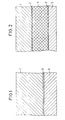
- the known printing plate of FIG. 1 has the cover layer 1 made of a photopolymerizable plastic with a thickness or relief height of 0.50 mm, which is connected flatly to the 0.24 mm thick metal carrier layer 3 by means of the 0.02 mm thick adhesive layer 2.
- the printing plate according to the invention of FIG. 2 has a 0.30 mm thick plastic cover layer 1, a likewise 0.30 mm thick flexible intermediate layer 4 and a 0.14 mm thick metal carrier layer 3, layers 1 and 3 with the intermediate layer 4 are connected by means of two adhesive layers with a total thickness of 0.02 mm, so that, as in FIG. 1, the overall thickness of the printing plate is 0.76 mm.
- the plastic cover layer of FIG. 2 can, when using exactly the same plastic, in particular exactly the same hardness or softness, compressive stresses in the direction perpendicular to its planar extent due to its substantially smaller thickness and the flexible Adjust the underlay much better than the plastic cover layer of Figure 1.
- suitable polyolefins in particular polymers of ethylene and / or propylene, such as e.g. Polyethylene (PE) or polypropylene (PP), but also, for example, also photopolymerizable plastics.
- PE Polyethylene
- PP polypropylene
- the elastomers of the intermediate layer are synthetic or natural polymers with rubber-elastic behavior such as, among others.
- NR natural rubber
- SBR styprol-butadiene rubber
- BR polybutadiene
- IIR polyisoprene
- IIR ethylene-propylene rubber
- EPM EPDM
- NBR acrylate rubber
- ACM acrylate rubber
- polyether rubbers thioplastics, silicone rubbers and fluororubbers.
- elastomers that can be firmly and permanently bonded to the plastic cover layer and, if applicable, the carrier and are not attacked by the printing inks.
Landscapes
- Printing Plates And Materials Therefor (AREA)
- Printing Methods (AREA)
- Photosensitive Polymer And Photoresist Processing (AREA)
- Supply, Installation And Extraction Of Printed Sheets Or Plates (AREA)
Description
- Die Erfindung betrifft eine Druckplatte mit einer Kunststoffdeckschicht, einer Haftschicht und einem Metallträger zum Bedrucken von Bedruckstoffen wie Papier, Karton, Kunststoffolie oder dergleichen, insbesondere im Zeitungsrotations-Hochdruckverfahren.
- Beim Drucken, d.h. Vervielfältigen von Informationen, sei es in Form von Rasterpunkten, Schriftzeichen oder auch Vollflächen sowohl in schwarz/weiß, in Spotfarben oder auch im Mehrfarbendruck, ist man bestrebt, eine möglichst hohe Qualität der Wiedergabe bei vertretbarem Aufwand zu erzielen. Allgemeine verfahrensunabhängige drucktechnische Qualitätskriterien sind dabei die Konturenschärfe der Zeichnungselemente, die Gleichmäßigkeit und die Densität der Rasterpunkte bzw. Schriftzeichen sowie bei Flächendruck im Raster die Gleichmäßigkeit der Rasterflächen und das Offenhalten der Rasterzwischenräume bzw. bei Flächendruck das gleichmäßige Ausdrucken bei Vollton. Bei Mehrfarbendruck ist darüberhinaus die Toleranz der Farbregister von Bedeutung sowie in allen Fällen die Gleichmäßigkeit der Farbführung über die Druckfläche wie auch über die Zeit.
- Die Höhe der Druckqualität im Zeitungsdruck wird wesentlich von den Anforderungen des Marktes, den Lesergewohnheiten, den Ansprüchen der Anzeigenkunden, der Konkurrenzsituation und von den technischen Möglichkeiten unter Beachtung wirtschaftlicher Überlegungen bestimmt. Dabei erreicht man im allgemeinen mit dem Offset-Verfahren das höhere Qualitätsniveau, wenngleich durch die Weiterentwicklung der Materialien sowie den Einsatz photopolymerer Druckplatten auch im Zeitungshochdruck Fortschritte zu verzeichnen sind. Um durchschnittliche Offset-Qualität zu erreichen, bedarf es beim Hochdruckverfahren jedoch besonderer und verhältnismäßig aufwendiger Anstrengungen.
- Beim Hochdruckverfahren in seinen derzeitigen Ausführungsformen kommen mineral- und pflanzenölhaltige Farben unterschiedlicher Viskosität und Konsistenz zur Anwendung, deren Eigenschaften letzlich vom Bedruckstoff sowie vom Deckungserfordernis, dem Weg-und Durchschlagverhalten, der Trocknungseigenschaft und der Wischfestigkeit bestimmt werden.
- Um die jeweils erforderliche Menge Farbe auf die Druckplatte und von dieser dann auf den Bedruckstoff zu bringen, finden die unterschiedlichsten Farbwerke vom einfachen Heberfarbwerk über Filmfarbwerke bis hin zum modernen Aniloxfarbwerk Verwendung, denen die Aufgabe der Farbverreibung, der Farbmengensteuerung und der Einfärbung der Druckplatten zukommt. Damit sind aber Unterschiede geschaffen, die von ihrer technischen Konzeption her sehr unterschiedliche Farbvarianten erforderlich machen. Die erforderliche wiedergabebezogene Farbmenge ist nur in seitenbelegter Druckrichtung meßbar, wobei die flächenmäßige Intervallfolge nicht steuerbar ist, woraus folgt, daß die Sättigung der Druckplatte mit Farbe bei hoher Dichte zwangsläufig in der Intervallfolge in Druckrichtung zu einer Übersättigung in den Partien mit lichteren Elementen führt.
- Der Druckvorgang vollzieht sich beim Zeitungshochdruck durch Gegeneinanderlaufen der Druck- und Plattenzylinder, wobei man im Überzugsbereich des Druckzylinders in der Praxis die unterschiedlichsten Härteverhältnisse sowie bei den Aufspanneinrichtungen für die Druckplatten sowohl Magnet- wie auch Spannbefestigungen vorfindet. Der zwischen Druck- und Plattenzylinder vorhandene Anpreßdruck wirkt linear über die gesamte Zylinderbreite und kann nur rechts- und linksseitig linear gesteuert werden.
- Da bei einer Hochdruckplatte alle druckenden Elemente in einer Ebene liegen, treffen die dynamischen Druckverhältnisse gleichermaßen stark auf Druckflächen und lichte Teile einer Druckplatte. Dies macht ein Zurichten der Druckplatten erforderlich, es müssen z.B. Partien mit Negativelementen grundsätzlich unterlegt werden, um den nötigen Anpreßdruck für eine einigermaßen vertretbare Deckung auf dem Bedruckstoff partiell zu erzielen.
- Je nach Art des verwendeten Bedruckstoffes weist dieser eine mehr oder weniger große Oberflächenrauhigkeit, also erhöhte und vertiefte Bereiche auf. Je nachdem, ob die als druckende Flächen dienenden Teile der Kunststoffdeckschicht einer Druckplatte beim Druckvorgang in mehr oder weniger großem Maße auf erhöhte oder vertiefte Bereiche des Bedruckstoffes auftreffen, kann es durch ein ungleichmäßiges Anliegen der Druckplatte am Bedruckstoff zu einem entsprechend ungleichmäßigen Farbauftrag auf dem Bedruckstoff kommen.
- Bei den bekannten und üblicherweise im Zeitungshochdruck verwendeten Druckplatten mit einer mittels einer 0,01 bis 0,02 mm dicken Haftschicht auf einem Metallträger aufgebracht, zum Drucken dienenden Kunststoffschicht, beispielsweise einer Druckplatte mit einer druckenden Deckschicht aus einem fotopolymerisierbaren Kunststoff mit einer Reliefhöhe von 0,50 oder 0,54 mm, die mittels einer 0,02 mm dicken Haftschicht auf einem 0,24 bzw. 0,25 mm dicken Metallträger befestigt ist, kann zur Erzielung eines gleichmäßigen linearen Druckes zwischen Druckplatte und dem durch einen Gegendruckzylinder abgestützten Bedruckstoff vorgesehen werden, für die Deckschicht einen entsprechend weichen Kunststoff zu verwenden. Ein solcher weicher Kunststoff hat jedoch den Nachteil, daß es beim Druckvorgang infolge der weichen Druckoberfläche zu Verformungen in der Zeichnungsstruktur und damit zu einem unscharfen Ausdruck kommen kann.
- Durch die EP-A-00 57 593 ist eine Druckplatte mit einer aus geschlossen- oder auch offenporigem Schaumkunststoff bestehenden Zwischenschicht bekannt, womit eine zusammendrückbare flexographische Druckplatte geschaffen werden soll, die es ermöglicht, Unebenheiten des Bedruckstoffes auszugleichen bzw. unebene Bedruckstoffe zu bedrucken.
- Durch die US-A-27 41 297 ist auch eine Druckplatte mit einer verhältnismäßig dünnen, druckenden Deckschicht aus einem flexiblen und elastischen Kunststoff und einer etwa 3 bis 10 mal dickeren Zwischenschicht aus einem Elastomeren bekannt. Eine elastische, mehrschichtige Druckform kennt man auch aus der DE-A-857 055, bei der eine dünne, harte Druckschicht mit einer darunterliegenden weichen, elastischen Polsterschicht und mindestens einer schrumpffesten Einlage versehen ist und wobei unter der schrumpffesten Einlage eine dem Rollbestreben der Druckform entgegenwirkende Ausgleichsschicht angeordnet ist.
- Durch die BE-A-437 281 ist des weiteren eine Druckplatte bekannt, bei der die druckenden Bereiche in einer flexiblen Zwischenschicht ausgeformt und die Zwischenschicht mit einer gleichmäßig dünnen Kunststoffdeckschicht belegt ist.
- Durch die GB-A-997 717 ist schließlich auch eine flexible Druckplatte bekannt, bei der eine verhältnismäßig dünne, druckende Schicht aus einem flexiblen, thermoplastischen Material mit einer verhältnismäßig dicken Zwischenschicht aus einem ebenfalls flexiblen Material unterlegt ist.
- Aufgabe der Erfindung ist es, eine Druckplatte zu schaffen, die einen Ausgleich der beim Druckvorgang zwischen der Druckplatte auf dem Plattenzylinder und dem Bedruckstoff mit Gegendruckzylinder auftretenden dynamischen Kräfte ermöglicht, ohne daß dadurch die Qualität des Ausdruckes in Frage gestellt wird.
- Diese Aufgabe wird mit einer Druckplatte gemäß dem Kennzeichen des Anspruchs 1 gelöst. Zweckmäßige weitere Ausgestaltungen der Erfindung sind in den Unteransprüchen beschrieben.
- Die unter der Kunststoffdeckschicht vorgesehene flexible Zwischenschicht ist in der Lage, in hohem Maße die senkrecht zur flächigen Erstreckung wirkenden Druckkräfte aufzunehmen, wodurch die Kunststoffschicht ebenso in die Lage versetzt ist, sich entsprechend dem jeweiligen Anpreßdruck mehr oder weniger stark in Richtung senkrecht zu ihrer flächigen Erstreckung zu verformen und sich an die Gegebenheiten des Bedruckstoffes und den partiell notwendigen Zeichnungsstrukturen der farbführenden druckenden Oberfläche der Druckplatte anzupassen, ohne daß es dazu der Verwendung eines besonders weichen Materials für die Kunststoffdeckschicht bedarf. Dabei ist es vorteilhaft, daß die Reliefhöhe der Kunststoffschicht geringer gehalten werden kann, als dies bei Druckplatten herkömmlicher Ausbildung der Fall ist. Durch die flexible Zwischenschicht ist es darüberhinaus möglich, auch die Trägerschicht gegenüber den herkömmlichen Ausbildungen mit geringerer Dicke zu versehen, ohne daß dadurch die einwandfreie Funktion und die Haltbarkeit der Druckplatte in Frage gestellt wird.
- Die Erfindung ist in der Zeichnung in einem Ausführungsbeispiel gezeigt und wird anhand dieses erläutert. Es zeigen
- Figur 1
- in schematischer Darstellung und in vergrößertem Maßstab den Aufbau einer herkömmlichen Druckplatte und
- Figur 2
- im Vergleich dazu ebenfalls in schematischer Darstellung und in vergrößertem Maßstab den Aufbau einer erfindungsgemäßen Druckplatte gleicher Gesamtdicke.
- Die bekannte Druckplatte der Figur 1 weist die Deckschicht 1 aus einem fotopolymerisierbaren Kunststoff mit einer Dicke bzw. Reliefhöhe von 0,50 mm auf, die mittels der 0,02 mm dicken Haftschicht 2 mit der 0,24 mm dicken Metallträgerschicht 3 flächig verbunden ist.
- Im Unterschied hierzu weist die erfindungsgemäße Druckplatte der Figur 2 eine 0,30 mm dicke Kunststoffdeckschicht 1, eine ebenfalls 0,30 mm dicke flexible Zwischenschicht 4 und eine 0,14 mm dicke Metallträgerschicht 3 auf, wobei die Schichten 1 und 3 mit der Zwischenschicht 4 mittels zweier Haftschichten von zusammen 0,02 mm Dicke verbunden sind, so daß sich ebenso wie bei Figur 1 eine Gesamtdicke der Druckplatte von 0,76 mm ergibt.
- Wie sich bei einem Vergleich der beiden Figuren miteinander ersehen läßt, kann sich die Kunststoffdeckschicht der Figur 2 bei Verwendung genau gleichen Kunststoffes, also insbesondere genau gleicher Härte bzw. Weichheit, Druckbeanspruchungen in Richtung senkrecht zu ihrer flächigen Erstreckung infolge ihrer wesentlich geringeren Dicke und der flexiblen Unterlage wesentlich besser anpassen als die Kunststoffdeckschicht der Figur 1.
- Im Flexodruck, bei dem das Aufbringen der etwa 5 mm dicken Kunststoffdeckschicht teilweise durch Aufkleben auf den Druckzylinder erfolgt, ist eine besondere Metallträgerschicht selbstverständlich entbehrlich und kann die Kunststoffdeckschicht unter Zwischenschaltung der Zwischenschicht auf den Druckzylinder aufgebracht werden.
- Für die Kunststoffdeckschicht kommen die bekanntermaßen geeigneten Polyolefine, insbesondere Polymerisate des Ethylens und/oder des Propylens wie z.B. Polyethylen (PE) oder Polypropylen (PP), ebenso aber beispielsweise auch photopolymerisierbare Kunststoffe in Betracht.
- Die Elastomeren der Zwischenschicht sind synthetische oder natürliche Polymere mit gummielastischem Verhalten wie sie u.a. in RÖMPPS CHEMIE-LEXIKON 8. Aufl. bei den Stichworten Elastomere, Seite 1082 und Kautschuk, Seite 2064 ff und in Winnaker-Küchler,Chemische Technologie Band 6, Organische Technologie II, im Abschnitt Elastomere, Seite 514 beschrieben sind. Dazu gehören insbesondere Naturkautschuk (NR) und die zahlreichen Synthekautschuke wie Styprol-Butadien-Kautschuk (SBR), Polybutadien (BR), Polyisopren (IR), Butylkautschuk (IIR), Ethylen-Propylen-Kautschuke (EPM, EPDM), Acryl-Butadien-Kautschuk (NBR), Acrylatkautschuk (ACM), Polyetherkautschuke, Thioplaste, Siliconkautschuke und Fluorkautschuke. Der Fachmann wird jeweils solche Elastomeren wählen, die sich mit der Kunststoffdeckschicht und ggf. den Träger fest und dauerhaft verbinden lassen und von den Druckfarben nicht angegriffen werden.
- Als Haftschicht können die handelsüblichen und bekannten Kunststoffklebstoffe verwendet werden, die in RÖMPPS CHEMIE-LEXIKON (loc. cit) unter dem Stichwort "Klebstoffe" Seite 21, 22 ff zusammengefaßt sind.
Claims (4)
- Druckplatte mit einer mit ihrer Oberfläche die Druckfläche bildenden Kunststoffdeckschicht, insbesondere für den Zeitungsrotations-Hochdruck, dadurch gekennzeichnet, daß die Kunststoffdeckschicht (1) mit einer als Druckausgleichsschicht dienenden flexiblen Zwischenschicht (4) aus einem synthetischen oder natürlichen Polymeren mit gummielastischem Verhalten unterlegt ist, wobei die Kunststoffdeckschicht zumindest im Bereich der farbführenden Stellen und die Zwischenschicht eine gleichmäßige Dicke von etwa 0,3 bis etwa 5 mm aufweisen und die Dicken der Kunststoffdeckschicht und der Zwischenschicht zumindest angenähert gleich groß sind.
- Druckplatte nach Anspruch 1, darurch gekennzeichnet, dass die Zwischenschicht (4) mit der Kunststoffschicht (1) mittels einer Haftschicht (2) verbunden ist.
- Druckplatte nach Anspruch 1 oder 2, dadurch gekennzeichnet, dass die Zwischenschicht mit einer Metallträgerschicht (3) unterlegt ist.
- Druckplatte nach Anspruch 3, dadurch gekennzeichnet, dass die Zwischenschicht (4) mit der Metallträgerschicht (3) mittels einer Haftschicht (2) verbunden ist.
Priority Applications (1)
| Application Number | Priority Date | Filing Date | Title |
|---|---|---|---|
| AT88114640T ATE84750T1 (de) | 1987-09-09 | 1988-09-08 | Druckplatte, insbesondere fuer den zeitungsrotations-hochdruck. |
Applications Claiming Priority (2)
| Application Number | Priority Date | Filing Date | Title |
|---|---|---|---|
| DE3730194 | 1987-09-09 | ||
| DE19873730194 DE3730194A1 (de) | 1987-09-09 | 1987-09-09 | Druckplatte, insbesondere fuer den zeitungsrotations-hochdruck |
Publications (3)
| Publication Number | Publication Date |
|---|---|
| EP0306933A2 EP0306933A2 (de) | 1989-03-15 |
| EP0306933A3 EP0306933A3 (en) | 1989-04-19 |
| EP0306933B1 true EP0306933B1 (de) | 1993-01-20 |
Family
ID=6335566
Family Applications (1)
| Application Number | Title | Priority Date | Filing Date |
|---|---|---|---|
| EP88114640A Expired - Lifetime EP0306933B1 (de) | 1987-09-09 | 1988-09-08 | Druckplatte, insbesondere für den Zeitungsrotations-Hochdruck |
Country Status (4)
| Country | Link |
|---|---|
| EP (1) | EP0306933B1 (de) |
| JP (1) | JPH01105790A (de) |
| AT (1) | ATE84750T1 (de) |
| DE (2) | DE3730194A1 (de) |
Families Citing this family (5)
| Publication number | Priority date | Publication date | Assignee | Title |
|---|---|---|---|---|
| DE4324577C1 (de) * | 1993-07-22 | 1994-12-15 | Ver Glaswerke Gmbh | Druckform für ein Hochdruckverfahren, Verwendung der Druckform zum Bedrucken von Glasoberflächen sowie Verfahren zur Herstellung einer ein Druckraster aufweisenden Druckform für das Flexodruckverfahren |
| US5578364A (en) * | 1995-05-03 | 1996-11-26 | Markem Corporation | Gravure plate assembly |
| DE29801017U1 (de) * | 1998-01-23 | 1998-03-05 | MAN Roland Druckmaschinen AG, 63075 Offenbach | Beschichtungseinheit für eine Druckmaschine und Hochdruckplatte |
| DE19804672A1 (de) * | 1998-02-06 | 1999-08-12 | Technoplast Beschichtungsgesel | Einreißgeschützte Hochdruckform |
| DE102004053824A1 (de) * | 2004-11-04 | 2006-05-11 | Folex Coating Gmbh | Druckform für Lacke |
Family Cites Families (6)
| Publication number | Priority date | Publication date | Assignee | Title |
|---|---|---|---|---|
| BE437281A (de) * | ||||
| CH277680A (de) * | 1948-04-20 | 1951-09-15 | Semperit Ag | Elastische, mehrschichtige Druckform. |
| US2741297A (en) * | 1952-05-09 | 1956-04-10 | Us Rubber Co | Printing plate material |
| BE633202A (de) * | 1962-07-12 | |||
| EP0057593A3 (de) * | 1981-02-02 | 1983-01-19 | Uniroyal, Inc. | Zussammenpressbare photopolymere Druckplatte |
| US4582777A (en) * | 1983-05-18 | 1986-04-15 | W. R. Grace & Co. | Compressible printing plate |
-
1987
- 1987-09-09 DE DE19873730194 patent/DE3730194A1/de not_active Withdrawn
-
1988
- 1988-09-08 AT AT88114640T patent/ATE84750T1/de not_active IP Right Cessation
- 1988-09-08 EP EP88114640A patent/EP0306933B1/de not_active Expired - Lifetime
- 1988-09-08 JP JP63225486A patent/JPH01105790A/ja active Pending
- 1988-09-08 DE DE8888114640T patent/DE3877666D1/de not_active Expired - Fee Related
Also Published As
| Publication number | Publication date |
|---|---|
| ATE84750T1 (de) | 1993-02-15 |
| EP0306933A3 (en) | 1989-04-19 |
| DE3877666D1 (de) | 1993-03-04 |
| JPH01105790A (ja) | 1989-04-24 |
| EP0306933A2 (de) | 1989-03-15 |
| DE3730194A1 (de) | 1989-03-23 |
Similar Documents
| Publication | Publication Date | Title |
|---|---|---|
| EP0128411B1 (de) | Farbabteilungsvorrichtung an Farbwalzen von Druckmaschinen | |
| DE2219403A1 (de) | Druckvorrichtung | |
| DE2914878A1 (de) | Tiefdruckmaschine | |
| DE68922479T2 (de) | Bildplattenkonstruktion für Hochdruck. | |
| DE19934395B4 (de) | Farbwerk in einer Rotations-Offsetdruckmaschine mit einer Farbauftragswalze zur Verringerung des Perleffekts der Druckfarbe | |
| EP0306933A2 (de) | Druckplatte, insbesondere für den Zeitungsrotations-Hochdruck | |
| EP1837175A1 (de) | Druckform sowie Druckwerk einer Druckmaschine | |
| EP0428894B1 (de) | Verfahren zur Druckvorbereitung eines Druckwerks und dazu verwendbares Druckwerk | |
| EP1230095B1 (de) | Unterbaumaterial für eine druckvorrichtung und drucktuch für den druck von unebenen bedruckstoffen | |
| DE2462017A1 (de) | Rotationstiefdruckeinrichtung | |
| EP1227937B1 (de) | Druckwerk und verfahren für den druck von wellkarton | |
| DE19750259B4 (de) | Verfahren und Druckmaschine zum mehrfarbigen Bedrucken von nichtsaugendem Material | |
| DE102009000522A1 (de) | Bogendruckmaschine | |
| EP0594016B1 (de) | Verfahren zur Übertragung flüssiger Medien von einem Festkörper auf einen anderen sowie Vorrichtung zur Durchführung des Verfahrens | |
| EP0739731A1 (de) | Gegendruckvorrichtung für die Durchführung von Perforationen und/oder Stanzungen an Offset-Bogenmaschinen | |
| WO2008113621A1 (de) | Drucktuch mit einer nicht dehnbaren trägerschicht | |
| DE2809689A1 (de) | Druckwerk mit nur zwei druckwerkszylindern | |
| EP3322594A1 (de) | Farbübertragungsmedium | |
| DE9303835U1 (de) | Druckeinheit einer Offset-Rotationsdruckmaschine | |
| AT527433B1 (de) | Druckvorrichtung | |
| DE19628649C2 (de) | Zwischen Panoramadruck und Druck von vier Farben nebeneinander umstellbares Farbwerk | |
| DE10032432A1 (de) | Flexodruckwerk | |
| EP0432415B1 (de) | Druckzylinder mit dämpfenden Eigenschaften | |
| DE19628648C1 (de) | Zwischen Panoramadruck und Druck von vier Farben nebeneinander umstellbares Farbwerk | |
| DE29918060U1 (de) | Unterbaumaterial für Offset-Druckmaschinen |
Legal Events
| Date | Code | Title | Description |
|---|---|---|---|
| PUAI | Public reference made under article 153(3) epc to a published international application that has entered the european phase |
Free format text: ORIGINAL CODE: 0009012 |
|
| PUAL | Search report despatched |
Free format text: ORIGINAL CODE: 0009013 |
|
| AK | Designated contracting states |
Kind code of ref document: A2 Designated state(s): AT BE CH DE ES FR GB GR IT LI LU NL SE |
|
| AK | Designated contracting states |
Kind code of ref document: A3 Designated state(s): AT BE CH DE ES FR GB GR IT LI LU NL SE |
|
| 17P | Request for examination filed |
Effective date: 19890927 |
|
| 17Q | First examination report despatched |
Effective date: 19910514 |
|
| GRAA | (expected) grant |
Free format text: ORIGINAL CODE: 0009210 |
|
| AK | Designated contracting states |
Kind code of ref document: B1 Designated state(s): AT BE CH DE ES FR GB GR IT LI LU NL SE |
|
| PG25 | Lapsed in a contracting state [announced via postgrant information from national office to epo] |
Ref country code: IT Free format text: LAPSE BECAUSE OF FAILURE TO SUBMIT A TRANSLATION OF THE DESCRIPTION OR TO PAY THE FEE WITHIN THE PRE;WARNING: LAPSES OF ITALIAN PATENTS WITH EFFECTIVE DATE BEFORE 2007 MAY HAVE OCCURRED AT ANY TIME BEFORE 2007. THE CORRECT EFFECTIVE DATE MAY BE DIFFERENT FROM THE ONE RECORDED.SCRIBED TIME-LIMIT Effective date: 19930120 Ref country code: BE Effective date: 19930120 Ref country code: FR Effective date: 19930120 Ref country code: NL Effective date: 19930120 Ref country code: GR Free format text: LAPSE BECAUSE OF FAILURE TO SUBMIT A TRANSLATION OF THE DESCRIPTION OR TO PAY THE FEE WITHIN THE PRESCRIBED TIME-LIMIT Effective date: 19930120 Ref country code: ES Free format text: THE PATENT HAS BEEN ANNULLED BY A DECISION OF A NATIONAL AUTHORITY Effective date: 19930120 Ref country code: GB Effective date: 19930120 |
|
| REF | Corresponds to: |
Ref document number: 84750 Country of ref document: AT Date of ref document: 19930215 Kind code of ref document: T |
|
| REF | Corresponds to: |
Ref document number: 3877666 Country of ref document: DE Date of ref document: 19930304 |
|
| EN | Fr: translation not filed | ||
| NLV1 | Nl: lapsed or annulled due to failure to fulfill the requirements of art. 29p and 29m of the patents act | ||
| GBV | Gb: ep patent (uk) treated as always having been void in accordance with gb section 77(7)/1977 [no translation filed] |
Effective date: 19930120 |
|
| PG25 | Lapsed in a contracting state [announced via postgrant information from national office to epo] |
Ref country code: AT Effective date: 19930908 |
|
| PG25 | Lapsed in a contracting state [announced via postgrant information from national office to epo] |
Ref country code: LU Free format text: LAPSE BECAUSE OF NON-PAYMENT OF DUE FEES Effective date: 19930930 |
|
| PLBE | No opposition filed within time limit |
Free format text: ORIGINAL CODE: 0009261 |
|
| STAA | Information on the status of an ep patent application or granted ep patent |
Free format text: STATUS: NO OPPOSITION FILED WITHIN TIME LIMIT |
|
| 26N | No opposition filed | ||
| EAL | Se: european patent in force in sweden |
Ref document number: 88114640.1 |
|
| PGFP | Annual fee paid to national office [announced via postgrant information from national office to epo] |
Ref country code: SE Payment date: 19980922 Year of fee payment: 11 |
|
| PGFP | Annual fee paid to national office [announced via postgrant information from national office to epo] |
Ref country code: CH Payment date: 19980929 Year of fee payment: 11 |
|
| PG25 | Lapsed in a contracting state [announced via postgrant information from national office to epo] |
Ref country code: SE Free format text: THE PATENT HAS BEEN ANNULLED BY A DECISION OF A NATIONAL AUTHORITY Effective date: 19990929 |
|
| PG25 | Lapsed in a contracting state [announced via postgrant information from national office to epo] |
Ref country code: LI Free format text: LAPSE BECAUSE OF NON-PAYMENT OF DUE FEES Effective date: 19990930 Ref country code: CH Free format text: LAPSE BECAUSE OF NON-PAYMENT OF DUE FEES Effective date: 19990930 |
|
| EUG | Se: european patent has lapsed |
Ref document number: 88114640.1 |
|
| REG | Reference to a national code |
Ref country code: CH Ref legal event code: PL |
|
| PGFP | Annual fee paid to national office [announced via postgrant information from national office to epo] |
Ref country code: DE Payment date: 20011130 Year of fee payment: 14 |
|
| PG25 | Lapsed in a contracting state [announced via postgrant information from national office to epo] |
Ref country code: DE Free format text: LAPSE BECAUSE OF NON-PAYMENT OF DUE FEES Effective date: 20030401 |