EP0240983A2 - Agglomérat compact de particules de latex de polymère - Google Patents
Agglomérat compact de particules de latex de polymère Download PDFInfo
- Publication number
- EP0240983A2 EP0240983A2 EP87105111A EP87105111A EP0240983A2 EP 0240983 A2 EP0240983 A2 EP 0240983A2 EP 87105111 A EP87105111 A EP 87105111A EP 87105111 A EP87105111 A EP 87105111A EP 0240983 A2 EP0240983 A2 EP 0240983A2
- Authority
- EP
- European Patent Office
- Prior art keywords
- latex
- grains
- coagulated
- coagulant
- temperature
- Prior art date
- Legal status (The legal status is an assumption and is not a legal conclusion. Google has not performed a legal analysis and makes no representation as to the accuracy of the status listed.)
- Withdrawn
Links
Images


Classifications
-
- C—CHEMISTRY; METALLURGY
- C08—ORGANIC MACROMOLECULAR COMPOUNDS; THEIR PREPARATION OR CHEMICAL WORKING-UP; COMPOSITIONS BASED THEREON
- C08F—MACROMOLECULAR COMPOUNDS OBTAINED BY REACTIONS ONLY INVOLVING CARBON-TO-CARBON UNSATURATED BONDS
- C08F6/00—Post-polymerisation treatments
- C08F6/14—Treatment of polymer emulsions
- C08F6/22—Coagulation
-
- C—CHEMISTRY; METALLURGY
- C08—ORGANIC MACROMOLECULAR COMPOUNDS; THEIR PREPARATION OR CHEMICAL WORKING-UP; COMPOSITIONS BASED THEREON
- C08F—MACROMOLECULAR COMPOUNDS OBTAINED BY REACTIONS ONLY INVOLVING CARBON-TO-CARBON UNSATURATED BONDS
- C08F6/00—Post-polymerisation treatments
- C08F6/14—Treatment of polymer emulsions
- C08F6/18—Increasing the size of the dispersed particles
-
- Y—GENERAL TAGGING OF NEW TECHNOLOGICAL DEVELOPMENTS; GENERAL TAGGING OF CROSS-SECTIONAL TECHNOLOGIES SPANNING OVER SEVERAL SECTIONS OF THE IPC; TECHNICAL SUBJECTS COVERED BY FORMER USPC CROSS-REFERENCE ART COLLECTIONS [XRACs] AND DIGESTS
- Y10—TECHNICAL SUBJECTS COVERED BY FORMER USPC
- Y10T—TECHNICAL SUBJECTS COVERED BY FORMER US CLASSIFICATION
- Y10T428/00—Stock material or miscellaneous articles
- Y10T428/29—Coated or structually defined flake, particle, cell, strand, strand portion, rod, filament, macroscopic fiber or mass thereof
- Y10T428/2982—Particulate matter [e.g., sphere, flake, etc.]
-
- Y—GENERAL TAGGING OF NEW TECHNOLOGICAL DEVELOPMENTS; GENERAL TAGGING OF CROSS-SECTIONAL TECHNOLOGIES SPANNING OVER SEVERAL SECTIONS OF THE IPC; TECHNICAL SUBJECTS COVERED BY FORMER USPC CROSS-REFERENCE ART COLLECTIONS [XRACs] AND DIGESTS
- Y10—TECHNICAL SUBJECTS COVERED BY FORMER USPC
- Y10T—TECHNICAL SUBJECTS COVERED BY FORMER US CLASSIFICATION
- Y10T428/00—Stock material or miscellaneous articles
- Y10T428/29—Coated or structually defined flake, particle, cell, strand, strand portion, rod, filament, macroscopic fiber or mass thereof
- Y10T428/2982—Particulate matter [e.g., sphere, flake, etc.]
- Y10T428/2991—Coated
- Y10T428/2998—Coated including synthetic resin or polymer
Definitions
- the present invention relates to agglomerates of latex particles formed by turning latex particles into regularly arranged and aggregated compacted grains by availing themselves of their flocculation and coagulation in polymer latex and, then, separating these grains from the polymer latex, after which their interior is further compacted.
- the grain surface needs to be fused and solidified by way of heating treatment, since the coagulated grains themselves mainly comprise fine grains which are weak. Because the particle surface is fused and solidified, it becomes extremely difficult for foreign matters to move out of the grains, thus yielding high purity powders containing foreign matters.
- the powder has characteristics such that it has a small bulk density and low fluidity and tends to make dust and form block, and it is composed of grains which are amorphous, of which many are fine grains and which have a wide range of grain size distribution.
- this powder When this powder is used for the purpose of forming solutions or fine dispersions by redispersing it into solvents, since the latex particles have been fused by heating treatment, etc., they can not be adequately separated into latex particles; as a result, their dissolution is difficult and their perfect dispersion can not be formed; such other problems will arise. Moreover, degradation in quality due to containing of foreign matters is unavoidable. And when injection molding is to be performed, making direct use of this _powder, reduction in the rate of injection or in the productivity occurs, or yellowing, silver streaks, flow marks, etc., will be generated, or degradation in physical properties will take place. Actually these problems make direct molding with it impossible.
- An object of this invention is to provide high purity polymer latex grains with small content of inorganic salts, organic water soluble foreign matters and oil soluble foreign matters, residual monomers, etc.
- Another object of this invention is to provide polymer latex grains which permit uniform impregnation of intragrain spaces with water soluble materials, oil soluble materials, liquid materials, etc.
- Still another object of this invention is to provide polymer latex grains which give high rates of dispersion and dissolution and which are capable of making fine dispersion of particles as homogeneous latex particles in dispersing or dissolving dried grains into aqueous solutions or organic solvents.
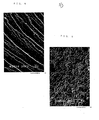
- PHOTOS 1 through 6 all are microscopic photographs, showing the particle structures of the spherical compacted grains of this invention, of which:
- the basic processes of the method for acquiring the grains of this invention comprise:
- step (1-a) coagulated grains which are strong enough to withstand handling in manufacture are obtained without conducting heating treatment; in steps (l-b) and (1-c), simultaneously as further closely packing latex particles, water soluble impurities and volatile impurities are respectively removed, taking advantage of the existence of interstices between latex particles; and further, as required, in step (2), fused high density grains- of which interior is uniform continuous mass having no cavity are obtained. Further, if need be, it is also possible insteps (1-b) and (1-c) , to uniformly impregnate the grains with desired materials by immersing them in desired chemical solutions or to remove oil soluble impurities by extraction.
- a coagulant is added to latex, to be dispersed as minute volumes into said latex, while suppressing its diffusion thereinto, thereby forming scattered seed coagula; thereafter, by getting the coagulant naturally dissolved and diffused into said latex from said scattered seed coagula, said latex is coagulated along with the seed coagula as the centers, thereby causing growth of coagulating particles to be made from inner to outer part, subsequently to be separated as coagulated grains from said latex; then, they are immersed in an aqueous phase, followed by drying, yielding the object grains and, as required, these grains are sintered at a temperature higher than their softening temperature after or simultaneously as the drying.
- This invention is based on the processes of obtaining coagulated grains in a state of latex particles being closely packed, but not being fused together (also a state in which they are regularly arranged in a crystal configuration).
- the coagulant is scattered in latex in the state of being dispersed as minute volumes but not dissolved therein, as the first step. Since the coagulation reaction rate is generally very high, the coagulation takes place in the process of dispersing and scattering the coagulant as minute volumes in latex, causing coagulated product to form on the outer circumferences of minute volumes of the coagulant, thus coating their surfaces.
- coagulated grains which have undergone partial advancement of coagulation are sometimes broken down and divided and are, then, dispersed and scattered into coagulant seeds. Accordingly, even if the coagulant is liquid or gas, if fact, the scattered-coagulant seeds may be believed to form solid grains having coagulants at their centers and coagulated mass around their perimeter.
- the coagulant at the center dissolves and diffuses, to come out from the interior through the peripheral coagulated matter layer, and simultaneously therewith, it comes in contact with latex at the surface, immediately undergoing coagulation; then, the latex particles are laminated on the outer surface, thereby making gradual growth of coagulated grains from the interior.
- the present object to set the conditions for preventing the processes of (1) and (2). Since if the coagulant is in an aqueous solution and its concentration is low, both processes of (I) and (2) tend to occur, the concentration should desirably be high. Besides, if its concentration is low, it is difficult to disperse the coagulant exactly into minute volumes, such devices are necessary as increasing the viscosity by adding thickners or suppressing dissolution and diffusion of coagulant in latex and coagulation by lowering the temperature until the minute volumes of coagulant are scatterd. The aforementioned facts suggest that using the coagulant as solid powder is most handy and sure.
- the higher the coagulation rate the easier it becomes to achieve stable operation.
- acids and salts of higher valent metals which have large coordination numbers lend themselves to this application, but conversely, too high a coagulation rate makes it difficult to scatter coagulant seeds in latex.
- it becomes necessary to control the concentration with water or alcohol in the case of liquid and with air, nitrogen or water soluble carbon dioxide as a diluent in the case of gas.
- it is possible to regulate the relationship between the dispersion of coagulant in latex and the reaction rate or diffusion rate through temperature adjustment by cooling the coagulant and through viscoisty adjustment by addition of thickener.
- Latex is put in a beaker and stirred.
- a powdery solid coagulant like salts, etc. is put in this beaker and instantaneously strongly stirred so as to disperse it in latex, immediately followed by slow stirring. This state is maintained for 1 min - 1 hr; then, the stirring is stopped and coagulated grains are taken out by passing the latex through a sieve. Under weak stirring, the coagulant will settle to the bottom, forming semispherical coagulated grains.
- a powder dispersion of coagulant is formed in an organic solvent being a water soluble organic solvent such as alkohols, ketons, etc., and which is unable to dissolve or hard to dissolve the coagulant and this dispersion is added to the latex.
- organic solvent being a water soluble organic solvent such as alkohols, ketons, etc.
- the coagulant is added as fine parti b le drops into the latex by spraying it.
- the latex and the coagulant may be desirable to cool the latex and the coagulant beforehand. After its dispersion, cooling is not particularly required. In order to form dispersed droplets, while suppressing diffusion, addition of thickener to coagulant is effective.
- the coagulant gas and latex are cooled beforehand, they are added in the neighborhood of the bottom of the stirring vanes. Then by way of strong stirring, the gases are dispersed in the latex.
- random flocculates are formed by adding a diluted aqueous solution of coagulant into latex under vigorous stirring, yielding coagulated slurry and in forming impregnated solid, powder particles are immersed in an aqueous solution of coagulant, to get the coagulant permeated into the particles, and thereafter, the aqueous solution of the coagulant left on the particle surface is drained off by filtration; such a solid product may be mentioned as an example.
- the stirring at the time of coagulation should be done so slowly that the agglomeration of coagulating particles through mutual collisions may be prevented, after the coagulant seeds have been scattered in the latex.
- the coagulating particles settle and make contact with each other, thereby to be agglomerated.
- the coagulating grains which are always growing, tend to be agglomerated. If it is too strong, besides the agglomeration of the coagulating particles, dissolution and diffusion of coagulant is induced by breakdown of coagulated grains, giving rise to the conventional coagulation, and yielding random agglomerate, which is a wholly coagulated product, etc.
- caution is necessary. This suggests that the liquid flow at the time of coagulation is desired to be in laminar flow state.
- the grains of this invention need to be separated from the coagulation system in the state of the latex particles, being the basic particles, being not mutually adhered by fusion. Accordingly, the temperature of the coagulation system or the whole of the latex tank has to be kept at a low temperature lower than the softening temperature of the latex particles in performing the coagulation operation. Therefore, with a polymer latex of which the softening temperature is lower than the latex tank temperature, the need for conducting the coagulation operation while the system is being cooled will arise.
- the coagulated grains separated from inside latex By getting the coagulated grains separated from inside latex, subsequent operations are made practicable, to obtain grains suitable for any purposes.
- they include high purity grains from which water soluble impurities, oil soluble impurities and volatile impurities are removed, grains which permit easy dispersion into latex particles grains of a fused mass structure having no cavity and grains uniformly containing useful substances. In this way, not only the merits in the manufacturing processes are pursued, but the grains may be adapted to various new uses.
- a state is produced in which coagulant particles are scattered in a latex containing a high density of coagulant without being dissolved therein, and then, they are naturally diffused into the latex, so that the coagulation may be governed by the diffusing of the coagulant into the latex.
- unit particles seem to become regularly disposed inside the coagulated mass.
- the latex particles make growth as coagulated agglomerates, the latex particles give the behavior of taking the highest compacted arrangement that is on the lowest energy level; as a consequence, the grain density will become larger than the particle density of the latex.
- the order of density depends on the level of the agglomerating power and the time to spare for rearrangement of unit particles.
- the latex particles can not be densely arranged. This situation will be determined by the balance between the softening temperature of the latex particles and the temperature of the coagulation system.
- the slower the coagulation reaction rate, and the slower the diffusion rate of the coagulant the more time to spare for rearranging latex particles is produced, with resultant closer packing degrees.
- the inter- particular bonding force is the small van der Waarls force only, but as a plurality of these particles combine to each other forming a network, the holding strength of the coagulating particles becomes strong.
- the latex is strong enough to bear industrial handling as solid, even though it is not agglomerated by fusion.
- the strength required is determined according to the operation of handling coagulated grains and this strength depends on the physical properties of the latex particles and the packing degree of latex particles in the coagulated grains. Since the packing rate depends on the latex solid content density, the latex solid content density generally is also required to be higher than 7 vol % and should preferably be higher than 20 vol %, and as for density, the higher the better.
- coagulated grains with increased packing rate give high holding strength, such that deformation or breakdown in such physical operations as their separation from inside the latex and cleaning, etc., may be averted. That the way of packing of the latex particles in the coagulated grain is regular may be ascertained from the fact that the coagulated grain can be assumed to have a crystalline structure, because on its fractured surface, a cleavage with a regularly staired and layered pattern is observed.
- the size and grain size distribution of the coagulated grains depend on the sizes of the individual minute volumes of the coagulant dispersed in the latex, their distribution and the coagulation time and their dispersion.
- the grains obtained by the method of this invention are grains with homogeneous evened-up grain size range which involve quite no fear of producing fine powders.
- formation of large grains is made by applying opposite conditions. Thus their size may be freely controlled.
- This method is generally suitable for obtaining grains with diameters of the order from about 200 ⁇ m to 1 cm.
- the grain size distribution is concerned, it is easy to obtain homogeneous grains, but in order to achieve further improvement in the homogenuity, it is desirable to even up the size of the minute volumes of the coagulant dispersed in latex and to make the coagulation time uniform; especially, if the operation is run continuously, some device is required to equalize the residing time of the coagulating particles inside the coagulation apparatus.
- agglomeration of coagulating particles should be considered.
- the coagulated grains of this invention have latex particles regularly arranged, thereby forming firm units; accordingly, they do. not make further agglomeration, even if they came in contact with each other in latex in the state of ceased coagulation growth. So long as the temperature is held below the softening temperature of latex particles, there is no possibility of their making agglomeration. Under the state of coagulating particles growing by coagulating surrounding latex, however, they tend to agglomerate; this tendency is particularly notable in the initial period of coagulation.
- stirring should preferably be done at higher than the critical agitator speed for fluidization of solid particles which is determined by the following formula, but at as low an rpm of stirring as possible: where, nf: Critical agitator speed for fluidization of solid
- the aforementioned formula clearly indicates that the critical agitator speed for fluidization of solid particles is a function of the tank diameter and the solid grain diameter obtained and, therefore, the rpm of stirring can not be determined unitarily, but once the conditions of such factors as the apparatus and the solid grain size, etc., have been determined, it is possible to set the rpm of stirring with the critical agitator speed for fluidization of solid particles calculated by the aforementioned formula as the standard.
- the size of the coagulated grain may be freely set from fine powder to lump, but to measure the dried grains or sintered grains which are finally obtained, the shrinkage attributable to the water content in the coagulated grains needs to be taken into account.
- the adopting ranges of operation factors such as type and properties of coagulant, stirring conditions, temperature, residing time, etc., may be selected, but more precisely, the most desirable ranges should be determined by experiments.
- the coagulant which is to be scattered by dispersion is partly dissolved and diffused in latex, thereby hampering the stability of whole of the latex, and as a result, the whole is finally coagulated.
- this invention may be readily carried out by selecting the conditions hereabove-mentioned such as the solid concentration of latex, type, form, concentration and temperature of coagulant, stirring speed, etc.
- this method involves any difficulty due to restrictions in the quality and cost aspects, some devices in stabilizing latex and for modifications of the apparatus are considered to become necessary.
- the coagulation for stabilization of latex, it is possible to make the coagulation after or while adding such latex stabilizers as dispersant, emulsifier, etc., and insofar as the apparatus is concerned, in order to suppress dissolution and diffusion of coagulant into latex, when scattering the coagulant by dispersion, the coagulant is dropped into an atmosphere in which the latex is sprayed into mist, thereby forming coagulant seeds coated with coagulated mass on their peripheries; thereafter, they are recovered and dispersed into the latex, thereby making growth by way of coagulation.
- latex stabilizers as dispersant, emulsifier, etc.
- the coagulated grains obtained in this way each has latex particles arranged with substantial regularity, they have a sufficiently high strength, such that they will not be decomposed, even if immersed in water with stirring, they may be subjected to a process of removing water soluble impurities contained in such grains.
- various types of materials used for polymerization, emulsifiers, etc. which exist in the interior or on the surface of the coagulated grains, they are immersed in some aqueous-phase prepared to meet the physical properties of the impurity to be removed, such as water, solution of acid or alkali, etc., and then, cleaned after the immersion, as required.
- the temperature of the aqueous phase needs to be held below the softening temperature, but as it is held as high as possible in this range, a phenomenon of water in the coagulated grains being discharged out of the grains is often observed; in such occurrences, compacting of latex particles advances, with resultant shrinkage of grains. Because of the expelling and diffusion into the aqueous phase of the internal water accompanying the shrinkage of the coagulated grains, the content of foreign matters in the grains can be effectively reduced. In addition, since the water content is greatly reduced, this provides an effective means for energy saving, where it comes down to the problem of energy consumption at the time of drying.
- the softening temperature used here implies the temperature at which latex particles mutually fuse under the atmospheric pressure; generally, it may be regarded as the melting point of a substance.
- definite melting points can hardly be determined in defining this temperature.
- it is not determined by their polymerization degrees and distribution only, but is greatly influenced by their crystalinity and foreign matters which impart plasticizing effect.
- it may be considered to fall within the range of assuming the glass transition point to be Tg (°C).
- Tg glass transition point
- approximate value of the softening point may be grasped, if approximate value of Tg of the macromolecule is known; as a consequence, the applicable temperature range may be readily ascertained by trying the measurements at a few temperatures.
- Tg the minimum value of Tg is advisable. But higher Tg may be applied, if this value is that of its main component amounting to more than 60% by weight of the mix. Even though the temperature is lower than the softening temperature, the lower the better and it should preferably be further more than 20°C lower than the softening temperature.
- this sintering operation may be run simultaneously with the drying operation, thus continuously therefrom, the sintering operation may be started with the coagulated grains as they are, or immediately after the aforementioned heating treatment.
- the surface layer of a grain fuses to form a contiguous layer, while water is remaining in the interior of the grain, voids will be formed in the interior of the grain; it is, therefore, of course necessary to see to it that the temperature condition should be set somewhat lower.
- oxidation of material resulting from the sintering operation run in air is apprehended, it is proper to conduct the treatment in an atmosphere devoid of oxygen, for example in such an inert gas as nitrogen, etc., in overheated steam or in vacuum.
- the higher the temperature the rapider the speed with which the operation may be accomplished, insofar as no quality deterioration occurs from decomposition or oxidation, etc., of macromolecules.
- the extent of the fused and dissolved state of latex particles in the interior of the grain may be readily controlled; accordingly, adjustments to desired states may be made in keeping with the objects.
- the latex particles inside the dried grains of the material are regularly and utmost closely packed.
- the grains obtained through the sintering treatment in this way will give cleaved surface, when fractured, even when their interior is forming a melted homogeneous contiguous layer. That is to say, the fracture tends to occur at a specified surface, and quite hardly occurs on other surfaces.
- the staired and layered crystal structure makes its appearance more prominently than in the particles before sintered and the stripe pattern which seems to have been the growing surface becomes distinct (PHOTO 5).
- the grain surface forms a fused layer, which makes transfer of matters from within the grain very difficult; on this account, the efficiency of removal of water soluble impurities, oil soluble impurities or volatile components etc., at the time of aqueous phase immersion or drying operation is notably low, thus, often making the removal operation impractical because of degradation in quality during the operation in addition to lowered productivity.
- the grains are not adequately shrunk even by drying or sintering; therefore, compacted aggregate inside the grain is not obtainable; grains having many a cavity or void inside the grains are produced. And even if their drying and sintering can be done without subjecting the coagulated grains to heating treatment, the shrinkage and compacting of latex particles due to their rearrangement does not take place; they are produced only as grains having numerous voids and which is brittle. In addition, since spherical grains which are large and have equalized grain size cannot be obtained, eventually, they are inevitably grains having small bulk specific gravities, low fluidity and abounding foreign matters.
- the particle size of the coagulated grains obtained can be freely determined by a suitable choice of the kind and - amount of the coagulant, agitation conditions, coagulation time, etc., but an average particle size of 1 mm or more is desirable from separation of the coagulated grains from the polymer latex.
- the upper limit is 10 mm on the average, because too large particle size takes much more time for immersion -in-hot water treatment and thus is uneconomical.
- coagulant used according to this invention there are available materials which are capable of coagulating latex or those consisting of two parties of materials, one to be preliminarily mixed into latex and the other newly added, which by way of reaction, etc., produce materials having coagulating function.
- the materials which can induce coagulation can be either gas, liquid or solid. Or a coagulated slurry formed by coagulating latex beforehand can be utilized as a coagulant. In this reaction, a slurry preliminarily coagulated, using the aforementioned coagulant, may be used as a coagulant for the same or different type of latex. It may be provided as a capsuled composite body. Or powder particles prepared beforehand may be impregnated or mixed with the aforementioned coagulant and this powder is, then, to be added to latex as a coagulant. This product is formed as a capsulated composite body (this method is identical with preliminarily forming coagulant seeds).
- Coagulants used in the state of liquid or solid include, e.g., inorganic salts such as sodium chloride, potassium chloride, lithium chloride, sodium bromide, potassium bromide, lithium bromide, potassium iodide, potassium sulfate, ammonium sulfate, sodium sulfate, ammonium chloride, sodium nitrate, potassium nitrate, potassium chloride, ferrous sulfate, magnesium sulfate, zinc sulfate, copper sulfate, barium chloride, ferrous chloride, magnesium chloride, ferric chloride, ferric sulfate, aluminum sulfate, potassium alum, iron alum, etc.; inorganic acids such as hydrochloric acid, sulfuric acid, phosphoric acid, nitric acid, etc.; inorganic alkalis such as sodium hydroxide, potassium hydroxide, calcium hydroxide, magnesium hydroxide, etc.; organic acids such as acetic acid, formic
- What is called here solid is a substance which behaves -as a solid or a substance which may be handled as such; rubbery materials which are elastic bodies or gelled plastic materials with high viscosities are also-included in the applicable range, to be sure. Those being coagulated masses which show fluidity at the normal temperature, but which turn into solid by cooling may be also included, with a provision that the operation shall be run under cooling. For example, following substances or almost all polymer latices which are in substance obtained by emulsion polymerization or suspension polymerization and whcih may be recovered in resinous state may be taken as objects to which this invention is applicable.
- Single or mixed polymer latexes formed by polymerization, copolymerization or graft polymerization of monomer compositions consisting of one member or two or more members of monomers as their main components selected from among following monomer groups may be taken up as the objects. It goes without saying, however, that unpolymerizable monomers are excluded.
- Aromatic vinyl compounds such as styrene, monochlorostyrene, dichlorostyrene, a-methyl styrene, etc.; vinyl cyanides such as acrylonitrile, methacrylonitrile, etc.; acrylic esters such as methyl acrylate, ethyl acrylate, butyl acrylate, etc.; methacrylic esters such as methyl methacrylate, ethyl metha- acrylate, butyl methacrylate, etc.; vinyl halides such as vinyl chloride, vinyl bromide, vinyl fluoride, etc.; vinylidene halides such as vinylidene chloride, vinylidene bromide, etc.; acrylic acid, methacrylic acid, itaconic-acid, maleic acid, vinyl acetate, ethylene, propylene, butylene, butadiene, isoprene, chloroprene; and cross-linking monomers such as allyl methacrylate,
- polymer latexes may be particularly preferably usable according to this invention:
- Water soluble substances, oil soluble substances and liquid substances may be uniformly permeated into the interior of the grain.
- Coagulated grains when immersed in aqueous phase or as dry grains, may be readily impregnated with desired substances by contacting them with the grains in the form of solution or liquid, taking advantage of the fact that the whole of each grain has interstices between latex particles. It should, them, be the prerequisite that the material with which to impregnate the grains, of course, can not be scattered or decomposed in the subsequent drying and sintering processes and conversely, the medium liquid needs to be removed by vaporization or decomposition, etc. And-it is desired that the medium liquid does not block the interstices between latex particles, dissolve nor highly swell the grains.
- the rate of dispersion and the rate of dissolution is high and the dispersed grains may be finely dispersed as latex particles being the uniform basic particles.
- the dissolving power of solvent is diminished by lowering the temperature and after homogeneously dispersing the grains in the solvent, the temperature is raised, thereby making their dissolution.
- the grains of this invention may be readily dismenbered and scattered into latex particles by applying a moderate force as by stirring, etc., for as the solvent- has been permeated into the interstices between latex particles, the latex particles are not fused to each other.
- the grains have excellent physical properties and particular features.
- the latex particles in the dried grains are not completely agglomerated by fusion, the latex particles are compacted, so that adequately high form holding strength may be provided; thus they can withstand such physical operations as normal transportation, storage, etc., without suffering disintegration of the grains.
- the grains bulk specific gravity is larger than those of conventional products, so that the flow is greatly improved. And because fine powders are not produced at all, handling of grains is facilitated.
- this invention in addition to enabling reduction in packaging and transportation costs, solution of blocking and bridging problems in storage tanks, truck lorry and bulk transport and silo storage, where macromolecules are concerned, this invention is useful not only in the cost aspect, where high workability.at the time or processing and molding, remarkable improvement in otherwise dust-laden environment and realization of automation at the processing time can be achieved, but in processing and molding macromolecules, where because homogeneous gellation is practicable, production of partly ungelled grains having fish eyes in molded products may be prevented, thus enabling stable production of homogeneous mold and high quality products.
- Direct injection molding is made practicable by omitting the pelletizing process.
- the grains obtained by the sintering treatment become masses compacted to the same degree as in the pellets or molds being fused masses obtained through processing molders. Thus they are heavy grains with high densities.
- a polymer latex was prepared by graft copolymerization of a mixture of styrene, acrylonitrile and methyl methacrylate onto butadiene polymer. It was a polymer latex with its softening temperature 105°C being a mixture of 35% of a polymer latex (A) consisting of 60% of butadiene, 10% of methyl methacrylate, 10% of acrylonitrile and 20% of styrene and 65% of another polymer latex (B), a homo-copolymer, consisting of 20% of a-methyl styrene, 25% of acrylonitrile and 55% of styrene.
- A polymer latex
- B another polymer latex
- coagulated grains were separated from said polymer latex by passing it through a 60 mesh sieve; further, the coagulated grains were immersed in warm water held at 60°C for 30 min and, then, passed through a 100 mesh sieve; these grains thus taken out were water rinsed and dehydrated by a Nutche and, thereafter, were dried for about 2 hr at 60°C in an oven shape drier. Furthermore, the grains were subjected to a sintering treatment for 30 min at 140°C in nitrogen atmosphere.
- the grains obtained after the drying were white true spherical grains, as seen in PHOTO 1, with bulk sp. gr. 0.49 (g/cm 3 ), grain size evened up to have a grain size distribution of 96% for 6-16 meshes and average grain size 2.3 mm.
- the interior of the grain, as seen fractured in PHOTO 2 is highly compacted, except the coarsely packed part due to a small size of coagulant trace at the grain center.
- water soluble sulfur compounds which were contained at 0.87% in the latex were reduced to 900 ppm (both concentrations by weight in proportion to resin, the same shall apply hereinafter) and residing a-methyl styrene monomer diminished from 1.7% to 75 ppm.
- the grains obtained by sintering were, as shown in PHOTO 3, lustrous pearly heavy grains with transparent feel and bulk sp. gr. 0.66 (g/cm 3 ).
- sulfur compounds were 780 ppm, and residual a-methyl styrene 30 ppm.
- This powder was composed of amorphous grains having abounding fine powders with 42% passing 230 mesh, and 33% 270-60 mesh; its bulk specific gravity was 0.43. And it contained 0.64% of sulfur compounds and 1.2% of residual a-methyl styrene. It could no longer be redispersed in water nor subjected to injection molding.
- An amount of 300 mi of a polymer latex consisting of 35% of styrene, 30% of methyl methacrylate and 35% of butadiene and with solid content of 30% and softening temperature 55°C, being a polymer latex formed by graft- copolymering a mixture of styrene and methyl methacrylate onto copolymer of styrene and butadiene, was taken in a 500 ml beaker, cooled to 5°C from outside with ice water and gently stirred, using a screwing-up 3 vane propellers with d/D 0.5 at 100 rpm, with concentrated hydrochloric acid solution (approx. 35%) cooled to 5°C dropped from pipet as coagulant.
- the coagulated grains were separated therefrom by means of a 60 mesh sieve, further immersed in water at 40°C and stirred for 10 min, after adjusting-pH to 5.0 with NaOH. Then following their water rinsing and dehydration in a Nutche, they were dried at 40°C for about 4 hr in an oven type drier. Further, they were subjected to sintering treatment at 120°C for 40 min in nitrogen atmosphere.
- the grains obtained after drying were white true spherical grains with their average grain size 4.2 mm and bulk sp. gr. 0.44 (g/cm 3 ) which had almost no void inside the grain.
- the grains obtained after drying were white true spherical grains with their average grain size 4.2 mm and bulk sp. gr. 0.44 (g/cm 3 ) which had almost no void inside the grain.
- dichloromethane contained in a 100 ml, triangular flask and the mixture was stirred at room temperature by means of a stirrer, then, a homogeneous solution was obtained 2 min later.
- the residual styrene monomer was reduced from 750 ppm to 10 ppm.
- the sintered grains were highly compacted grains with a pearly luster and a bulk sp. gr. of 0.55 (g/cm 3 ).
- the coagulation was performed at 60°C latex temperature in the process of Example 2. No sooner had hydrochloric acid been added, large amorphous lumps were formed which were coagulated grains with uneven grain sizes. And when dried, the grains were not well shrunk and had many cavities left in their interior.
- coagulated grains were separated from the polymer latex, using a 60 mesh sieve, and further put in a 10l stainless steel container filled with 6 t of water and the mixture was slowly stirred at 80°C for 60 min. Subsequently, they were water-rinsed and dehydrated by use of a Nutche and, then, dried at 90°C for 3 hr in a box shape drier. The filtrate was in such a filthy state that it stinked. The water content of the grains after dehydrated decreased from 64% before immersion in warm water to 47%.
- the amounts of chlorine ions and sulfate ions in the grains were-found markedly diminished from their values before immersion in warm water of 1.3% and 0.7% to less than 0.3% and 0.1%, respectively (the % was recalculated in terms of dried grains).
- the dried grains were white true spherical grains with bulk sp. gr. 0.48 (g/cm 3 ) and evened up in grain size with mean value 4.5 mm.
- the grains When the grains were subjected to sintering treatment at 140°C for 30 min in an nitrogen atmosphere, the grains further shrank and compacted grains with mean grain size 3.1 mm and having almost no intragrain porosity could be acquired.
- the grains thus obtained were grains with bulk sp. gr. 0.65 (g/cm 3 ) and having pearl like luster and highly transparent feel.
- Example 3 Similar operation as that of Example 3 was run with the solid content of the latex set at 3%; 2 min latex, coagulated grains formed any way were separated, but they were too soft and lacking in holding power, so that when separating the coagulated grains from the polymer latex using a sieve, the grains broke down. But after a lapse of about 5 min, the whole of latex begins coagulating, then turning into a viscous agar-agar like coagulated mass.
- coagulated grains were separated from the polymer latex using a 60 mesh sieve; they were, then, immersed in water at the room temperature and left there for 30 min under stirring, after the pH was adjusted to 8.0 with potassium hydroxide. And after water rinsing and dehydration by use of a Nutche, the grains were dried for 3 hr in a box shape drier. Further, when they were subjected to sintering treatment at 140°C for 40 min in an nitrogen atmosphere, compacted grains with grain sizes 6-12 mm ⁇ could be obtained. The grains obtained had a bulk sp. gr. of 0.61 (g/cm 3 ), pearly luster and highly transparent feel. In these grains, sulfur compounds were 720 ppm; chlorine ions 0.6%; and residual a-methyl styrene 220 ppm. When these grains were directly injection-molded, an excellent result equivalent to that of Exampel 3 was obtained.
- Example 4 In the process of Example 4, the coagulated grains were dried and subjected to sintering treatment, without subjecting them to the immersing treatment.
- the grains obtained were no different from those of Example 4, but in the grains, sulfur compound were 0.66%, and chlorine ion 3.7%, showing abundant existence of foreign matters.
- coagulated grains were separated from the polymer latex using a 100 mesh sieve and immersed in water at the room temperature and after leaving them there for 30 min under stirring, their water rinsing and dehydration by use of a Nutche were carried out. Thereafter, they were dried at 90°C for 3 hr in an oven type drier. When they were further subjected to a sintering treatment at 140°C for 40 min in an nitrogen atmosphere, minute grains could be obtained which were highly transparent and highly compacted to have a bulk sp. gr. of 0.64 (g/cm 3 ) and 83% of which passed 48-80 mesh.
- the grains thus obtained after drying were white true spherical grains with their grain size evened up at 2.6 mm.
- 5 g of these grains were taken and added in 20 mi of acetone cooled to -15°C and shaken by hand, a homogeneous dispersed state was achieved 5 min later.
- a fracture of this grain showed a grain interior having latex particles not fused to each other but finely compacted.
Landscapes
- Chemical & Material Sciences (AREA)
- Health & Medical Sciences (AREA)
- Chemical Kinetics & Catalysis (AREA)
- Medicinal Chemistry (AREA)
- Polymers & Plastics (AREA)
- Organic Chemistry (AREA)
- Dispersion Chemistry (AREA)
- Processes Of Treating Macromolecular Substances (AREA)
- Addition Polymer Or Copolymer, Post-Treatments, Or Chemical Modifications (AREA)
Applications Claiming Priority (2)
| Application Number | Priority Date | Filing Date | Title |
|---|---|---|---|
| JP80338/86 | 1986-04-08 | ||
| JP61080338A JPH0676498B2 (ja) | 1986-04-08 | 1986-04-08 | 高分子ラテツクス粒子の球状密充填体 |
Publications (2)
| Publication Number | Publication Date |
|---|---|
| EP0240983A2 true EP0240983A2 (fr) | 1987-10-14 |
| EP0240983A3 EP0240983A3 (fr) | 1988-09-21 |
Family
ID=13715473
Family Applications (1)
| Application Number | Title | Priority Date | Filing Date |
|---|---|---|---|
| EP87105111A Withdrawn EP0240983A3 (fr) | 1986-04-08 | 1987-04-07 | Agglomérat compact de particules de latex de polymère |
Country Status (4)
| Country | Link |
|---|---|
| US (1) | US4792490A (fr) |
| EP (1) | EP0240983A3 (fr) |
| JP (1) | JPH0676498B2 (fr) |
| CA (1) | CA1279745C (fr) |
Families Citing this family (12)
| Publication number | Priority date | Publication date | Assignee | Title |
|---|---|---|---|---|
| JP2567627B2 (ja) * | 1987-09-21 | 1996-12-25 | 三菱レイヨン株式会社 | 熱可塑性ポリエステル樹脂組成物 |
| TW241270B (fr) * | 1991-08-13 | 1995-02-21 | Rohm & Haas | |
| DE19751332A1 (de) * | 1997-11-19 | 1999-05-20 | Basf Ag | Verfahren zur Herstellung grobteiliger Polymerdispersionen |
| EP1115764B1 (fr) * | 1998-08-18 | 2004-08-04 | Dow Global Technologies Inc. | Compositions de polymeres formant barriere extrudables, procede de preparation des compositions et structures monocouches ou multicouches comprenant les compositions |
| JP4173226B2 (ja) * | 1998-09-10 | 2008-10-29 | 三菱レイヨン株式会社 | グラフト共重合体粉体およびその製造方法 |
| KR100377860B1 (ko) * | 1999-02-10 | 2003-03-29 | 주식회사 엘지화학 | 열가소성 수지의 분체 제조 방법 |
| WO2001016196A1 (fr) * | 1999-08-31 | 2001-03-08 | Mitsubishi Rayon Co., Ltd. | Procede de production de particules de polymere |
| EP1834988B1 (fr) * | 2004-12-27 | 2011-02-09 | Kaneka Corporation | Composition de resine thermoplastique |
| TW200639199A (en) * | 2005-02-28 | 2006-11-16 | Kaneka Corp | Process for producing coagulated latex particle |
| TWI414811B (zh) * | 2006-03-23 | 2013-11-11 | Sumitomo Chemical Co | 具有無機微粒子層之積層體之製造方法 |
| WO2016136403A1 (fr) * | 2015-02-23 | 2016-09-01 | 株式会社カネカ | Procédé de production d'une suspension de polymère acrylique |
| CN113527724B (zh) * | 2021-07-21 | 2023-12-08 | 常熟理工学院 | 一种粒径可控的含氟聚合物乳液凝聚方法 |
Family Cites Families (12)
| Publication number | Priority date | Publication date | Assignee | Title |
|---|---|---|---|---|
| US2408128A (en) * | 1942-10-24 | 1946-09-24 | Standard Oil Dev Co | Coagulation process |
| US2558948A (en) * | 1945-03-07 | 1951-07-03 | Oliver Corp | Subsoil plow |
| US2556260A (en) * | 1946-08-12 | 1951-06-12 | Celanese Corp | Process for coagulating polymer emulsions and recovering spherical particles |
| BE484297A (fr) * | 1948-08-09 | |||
| DE1770950A1 (de) * | 1968-07-22 | 1972-01-05 | Grossforschungszentrum Chemiea | Vorrichtung zur kontinuierlichen Faellung von Kunststofflatices |
| DE2023057A1 (de) * | 1969-05-27 | 1970-12-03 | Grossforschungszentrum Chemiea | Verfahren zur kontinuierlichen Faellung von Kunststofflatices |
| JPS523637A (en) * | 1975-06-02 | 1977-01-12 | Kanegafuchi Chem Ind Co Ltd | Process for preparing a coagulated latex |
| US4213888A (en) * | 1978-07-14 | 1980-07-22 | Copolymer Rubber & Chemical Corporation | Particulate elastomeric materials and method |
| JPS57146639A (en) * | 1981-03-05 | 1982-09-10 | Japan Synthetic Rubber Co Ltd | Method and apparatus for continuously coagulating rubber polymer latex |
| JPS57187322A (en) * | 1981-05-15 | 1982-11-18 | Mitsubishi Rayon Co Ltd | Production of particulate product |
| JPS60217224A (ja) * | 1984-04-11 | 1985-10-30 | Kureha Chem Ind Co Ltd | ゴム含有グラフト共重合体の製造法 |
| JPH0457374A (ja) * | 1990-06-27 | 1992-02-25 | Nec Corp | 電歪効果素子 |
-
1986
- 1986-04-08 JP JP61080338A patent/JPH0676498B2/ja not_active Expired - Lifetime
-
1987
- 1987-04-07 CA CA000534067A patent/CA1279745C/fr not_active Expired - Lifetime
- 1987-04-07 EP EP87105111A patent/EP0240983A3/fr not_active Withdrawn
- 1987-04-08 US US07/035,795 patent/US4792490A/en not_active Expired - Fee Related
Also Published As
| Publication number | Publication date |
|---|---|
| JPH0676498B2 (ja) | 1994-09-28 |
| US4792490A (en) | 1988-12-20 |
| JPS62236829A (ja) | 1987-10-16 |
| CA1279745C (fr) | 1991-01-29 |
| EP0240983A3 (fr) | 1988-09-21 |
Similar Documents
| Publication | Publication Date | Title |
|---|---|---|
| US4792490A (en) | Compacted agglomerates of polymer latex particles | |
| NO167723B (no) | Slitebane for pneumatiske dekk, spesielt for vinterfoere og dekk utstyrt med slik slitebane. | |
| EP0215321B1 (fr) | Particule de polymère et procédé pour sa préparation | |
| JP7782454B2 (ja) | 中空粒子の製造方法及び中空粒子 | |
| JPH0326724A (ja) | 中空重合体粒子を含有するラテックス及びその製造方法 | |
| CN116209682A (zh) | 中空颗粒的制造方法 | |
| US4767803A (en) | Method of producing coagulated colloidal particles | |
| US4429114A (en) | Method for treating emulsified latex | |
| NO128536B (fr) | ||
| KR20020018952A (ko) | 고 고형분 중합 첨가제 시스템: 조성물, 방법 및 이로부터제조된 물품 | |
| US10392477B2 (en) | Method for manufacturing coagulated particles from latex prepared by emulsion polymerization, aggregates from latex prepared by emulsion polymerization, and coagulated particles from latex prepared by emulsion polymerization | |
| KR101709799B1 (ko) | 이온 교환체 및 그의 제조 방법 | |
| CN118401569A (zh) | 中空颗粒 | |
| JPH0459010B2 (fr) | ||
| JPH0457374B2 (fr) | ||
| KR20080037054A (ko) | 응고 라텍스 입자의 제조 방법 | |
| KR101862323B1 (ko) | Nbr 합성고무 라텍스를 이용한 nbr 수지의 분체 제조방법 | |
| JPH0124175B2 (fr) | ||
| JPH0247482B2 (ja) | Netsukasoseijushinoseizohoho | |
| JP7786450B2 (ja) | 中空粒子 | |
| JPH10279694A (ja) | メタアクリル酸エステル系または/及びアクリル酸エステル系複合重合体粒子、その製造方法および塩化ビニル系樹脂組成物 | |
| KR100377860B1 (ko) | 열가소성 수지의 분체 제조 방법 | |
| JPH0580936B2 (fr) | ||
| DE2728979A1 (de) | Nichtklebrige formteile und verfahren zu ihrer herstellung | |
| US2974129A (en) | Process for preparing polyvinyl chloride useful in plastisols |
Legal Events
| Date | Code | Title | Description |
|---|---|---|---|
| PUAI | Public reference made under article 153(3) epc to a published international application that has entered the european phase |
Free format text: ORIGINAL CODE: 0009012 |
|
| AK | Designated contracting states |
Kind code of ref document: A2 Designated state(s): BE DE FR GB |
|
| PUAL | Search report despatched |
Free format text: ORIGINAL CODE: 0009013 |
|
| AK | Designated contracting states |
Kind code of ref document: A3 Designated state(s): BE DE FR GB |
|
| 17P | Request for examination filed |
Effective date: 19890315 |
|
| 17Q | First examination report despatched |
Effective date: 19900418 |
|
| STAA | Information on the status of an ep patent application or granted ep patent |
Free format text: STATUS: THE APPLICATION IS DEEMED TO BE WITHDRAWN |
|
| 18D | Application deemed to be withdrawn |
Effective date: 19901029 |
|
| RIN1 | Information on inventor provided before grant (corrected) |
Inventor name: MIKI, YASUHIRO Inventor name: YASUI, HIDEO Inventor name: OKADA, WATARU |