EP0227401A2 - Method of producing prefilled sterile plastic syringes - Google Patents
Method of producing prefilled sterile plastic syringes Download PDFInfo
- Publication number
- EP0227401A2 EP0227401A2 EP86309761A EP86309761A EP0227401A2 EP 0227401 A2 EP0227401 A2 EP 0227401A2 EP 86309761 A EP86309761 A EP 86309761A EP 86309761 A EP86309761 A EP 86309761A EP 0227401 A2 EP0227401 A2 EP 0227401A2
- Authority
- EP
- European Patent Office
- Prior art keywords
- syringe
- barrel
- piston
- tip seal
- open end
- Prior art date
- Legal status (The legal status is an assumption and is not a legal conclusion. Google has not performed a legal analysis and makes no representation as to the accuracy of the status listed.)
- Granted
Links
Images

Classifications
-
- B—PERFORMING OPERATIONS; TRANSPORTING
- B65—CONVEYING; PACKING; STORING; HANDLING THIN OR FILAMENTARY MATERIAL
- B65B—MACHINES, APPARATUS OR DEVICES FOR, OR METHODS OF, PACKAGING ARTICLES OR MATERIALS; UNPACKING
- B65B3/00—Packaging plastic material, semiliquids, liquids or mixed solids and liquids, in individual containers or receptacles, e.g. bags, sacks, boxes, cartons, cans, or jars
- B65B3/003—Filling medical containers such as ampoules, vials, syringes or the like
-
- A—HUMAN NECESSITIES
- A61—MEDICAL OR VETERINARY SCIENCE; HYGIENE
- A61L—METHODS OR APPARATUS FOR STERILISING MATERIALS OR OBJECTS IN GENERAL; DISINFECTION, STERILISATION OR DEODORISATION OF AIR; CHEMICAL ASPECTS OF BANDAGES, DRESSINGS, ABSORBENT PADS OR SURGICAL ARTICLES; MATERIALS FOR BANDAGES, DRESSINGS, ABSORBENT PADS OR SURGICAL ARTICLES
- A61L2/00—Disinfection or sterilisation of materials or objects, in general; Accessories therefor
- A61L2/02—Disinfection or sterilisation of materials or objects, in general; Accessories therefor using physical processes
- A61L2/04—Heat
- A61L2/06—Hot gas
- A61L2/07—Steam
-
- B—PERFORMING OPERATIONS; TRANSPORTING
- B65—CONVEYING; PACKING; STORING; HANDLING THIN OR FILAMENTARY MATERIAL
- B65B—MACHINES, APPARATUS OR DEVICES FOR, OR METHODS OF, PACKAGING ARTICLES OR MATERIALS; UNPACKING
- B65B7/00—Closing containers or receptacles after filling
- B65B7/16—Closing semi-rigid or rigid containers or receptacles not deformed by, or not taking-up shape of, contents, e.g. boxes or cartons
- B65B7/28—Closing semi-rigid or rigid containers or receptacles not deformed by, or not taking-up shape of, contents, e.g. boxes or cartons by applying separate preformed closures, e.g. lids, covers
- B65B7/2821—Closing semi-rigid or rigid containers or receptacles not deformed by, or not taking-up shape of, contents, e.g. boxes or cartons by applying separate preformed closures, e.g. lids, covers applying plugs or threadless stoppers
-
- A—HUMAN NECESSITIES
- A61—MEDICAL OR VETERINARY SCIENCE; HYGIENE
- A61M—DEVICES FOR INTRODUCING MEDIA INTO, OR ONTO, THE BODY; DEVICES FOR TRANSDUCING BODY MEDIA OR FOR TAKING MEDIA FROM THE BODY; DEVICES FOR PRODUCING OR ENDING SLEEP OR STUPOR
- A61M2207/00—Methods of manufacture, assembly or production
-
- A—HUMAN NECESSITIES
- A61—MEDICAL OR VETERINARY SCIENCE; HYGIENE
- A61M—DEVICES FOR INTRODUCING MEDIA INTO, OR ONTO, THE BODY; DEVICES FOR TRANSDUCING BODY MEDIA OR FOR TAKING MEDIA FROM THE BODY; DEVICES FOR PRODUCING OR ENDING SLEEP OR STUPOR
- A61M5/00—Devices for bringing media into the body in a subcutaneous, intra-vascular or intramuscular way; Accessories therefor, e.g. filling or cleaning devices, arm-rests
- A61M5/002—Packages specially adapted therefor, e.g. for syringes or needles, kits for diabetics
Definitions
- the present invention relates to processes for producing prefilled sterile, plastic syringes containing liquid materials suitable for injection in the diagnosis and treatment of medical conditions and particularly for producing prefilled syringes containing contrast media for injection into blood vessels during uroangiographic procedures.
- the prior art contains processes for producing prefilled sterile glass syringes wherein the syringe parts are washed and sterilized prior to assembly, filling and sealing with a piston. Then the assembled and filled syringes are autoclaved to sterilize the syringe contents. Generally, the sterilizing of the syringe parts including glass barrels prior to assembly is performed by heating. Plastic syringes, or syringes with barrels made of synthetic resins, are softened and warped by heat, and thus prior art plastic syringes were sterilized by non-heating methods, such as gas sterilization techniques.
- plastic syringes were believed unable to withstand autoclaving in the sterilization of the contents of prefilled syringes.
- unfilled sterile plastic syringes were employed by filling with sterilized contrast media, or other diagnostic or treatment material, during the injection procedure thus increasing the time required for the procedure as well as increasing the risk of contamination and introduction of pyrogens.
- the present invention is concerned with a method of producing a prefilled, sterile plastic syringe having a molded plastic barrel with an open end and a nozzle at the opposite end, a tip seal closing the nozzle, and a piston slidable in the barrel and sealing the open end of the barrel to retain a liquid therein.
- the method includes the steps or removing debris and other contaminants from the tip seal and piston; destroying microbial contaminants on the tip seal and piston; washing the barrel with a multiplicity of jets of water to remove debris and pyrogens from the barrel; applying a layer of lubricant to the barrel, the tip seal and the piston; assembling the tip seal on the nozzle of the barrel; filling the barrel through its open end with a desired quantity of liquid material; assembling the piston in the open end of the barrel to complete the enclosure and to seal the open end of the syringe; and autoclaving the assembled and sealed syringe to sterilize the syringe and its contents, while maintaining a pressure on the outside surfaces of the syringe at least equal to the pressure of the syringe contents during autoclaving.
- the method comprises washing the tip seal and piston to remove debris and other contaminants; autoclaving the washed tip seal and piston to destroy bacteria and other contaminants; rinsing the autoclaved tip seal and piston to remove loosened contaminants; washing the barrel with a multiplicity of jets of water to remove debris and pyrogens from the barrel; applying a fine mist of silicone lubricant to the barrel; assembling the tip seal on the nozzle of the barrel; filling the barrel through its open end with a desired quantity of liquid material; assembling the piston in the open end of the syringe; and autoclaving the assembled and sealed syringe to sterilize the syringe and its contents, while maintaining a pressure on the outside surfaces of the syringe at least equal to the pressure of the syringe contents during autoclaving.
- the invention seeks to provide a method of producing sterile, prefilled plastic syringes, and particularly plastic syringes containing sterilized contrast media.
- An advantage of the invention is that the present process enables reducing the time spent in medical procedures such as angiographic procedures. Another advantage of the invention is that the risk of injecting pathogens or contaminants is reduced during injection procedures.
- One feature of the invention is that the process provides a unique combination of steps which enable the production of sterile prefilled plastic syringes.
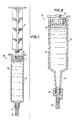
- a prefilled plastic syringe indicated generally at 20 produced in accordance with one embodiment of the invention includes a plastic barrel 22 having a nozzle 24 at one end which is closed by a tip seal 26. An open end 28 of the barrel 22 is closed and sealed by a rubber piston 30 which can be operated by a handle 32 for expressing the contents 34 through the nozzle 24.
- the parts of the syringe are individually manufactured.
- the syringe barrel 22 is produced by a suitable plastic-forming process such as injection molding of a suitable polymer such as polypropylene, or a co-polymer of polypropylene and polyethylene.
- the tip seal 26 and piston 30 are likewise produced by injection molding a suitable elastomeric plastic or rubber material to the desired shapes.
- quantities of the various parts of the syringe 20 are received at step 40 and passed to quality control inspection and testing procedure 42 where suitable inspection and testing of the chemicals utilized to make up the contrast medium, and inspection and testing of the barrels 22, the tip seals 26 and the pistons 30, as well as the packaging materials are performed to ensure that these chemicals and parts meet suitable standards for producing prefilled packaged and completed syringes.
- the chemicals, barrels 22, tip seals 26, pistons 30 and packaging materials are suitably inventoried and stored in steps 44, 46, 48, 50 and 52.
- the chemicals pass through the staging step 54 to a make-up step 56 where the chemicals are made up into the liquid contrast media which is then passed to holding tanks 58 prior to being tested at 60.
- the barrels 22, after passing through a staging step 62 are printed on the outside with an ink which is cured with ultraviolet radiation in step 64.
- the barrels After printing and curing of the ink, the barrels are passed to a washing and depyrogenation step 66 wherein the barrels are inverted and subjected to a multiplicity, e.g., ten, successive high velocity water jet washings. By repeated washing of the barrels with relatively strong water jets, contaminants, including any pyrogens that are present in the barrels, are removed.
- the tip seals 26 and the pistons 30 from their receiving storage steps 48 and 50 pass through the staging steps 63 and 65 prior to removing debris and other contaminants.
- debris and contaminants are removed from the tip seals 26 and pistons 30 in washing steps 68 and 70 where they are subjected to washing to remove most contaminants.
- debris and contaminants can be removed from the tip seals 26 and pistons 30 by other methods such as subjecting them to high frequency vibrations. This can be accomplished using known procedures such as, for example, by subjecting them to ultrasound vibrations or by causing high frequency pulses of air to impinge on the surfaces of the tip seals 26 and pistons 30 from pneumatic nozzles. Another method of removing debris and contaminants from the tip seals 26 and pistons 30 can be accomplished by washing them in liquid freon under pressure to dissolve and remove particles adhered to their surfaces.
- the tip seals 26 and pistons 30 pass to respective autoclave steps 72 and 74 where they are heated by steam under pressure to a temperature in the range from 120 to 125°C. to destroy viable microorganisms and remove contaminants on the tip seals 26 and pistons 30.
- microorganisms can be destroyed on the tip seals 26 and pistons 30 by other known means, provided only that they do not adversely affect the materials of construction.
- another suitable method for destroying microbial contaminants is by treating the tip seals 26 and pistons 30 with an antimicrobial chemical agent.
- Ethylene oxide gas may be employed as the antimicrobial agent; however, care must be taken to remove all the ethylene oxide from the surfaces of the tip seals 26 and pistons 30 by aeration and/or the application of vacuum.
- tip seals 26 and pistons 30 are rinsed in respective steps 76 and 78 to remove the loosened contaminants. From steps 76 and 78, tip seals 26 and pistons 30 are passed in the preferred embodiment to respective siliconizing steps 82 and 84 where the parts are soaked in a fine water emulsion siliconization bath to enable their easy assembly.
- the barrels 22 are sprayed at siliconizing step 80 with a fine mist of a selected liquid silicone. While silicone is the preferred lubricant, other lubricants can be used, provided they are pharmaceutically acceptable and inert to the materials of construction. One can mention as suitable lubricants, paraffinic waxes such as refined beeswax and fixed oils such as cottonseed oil.
- lubricants can be applied by spraying in a fine mist or by any other method of application which is capable of applying a thin layer of lubricant.
- the barrels 22 may then be treated to remove the adherence of excess lubricant to the barrels 22 by such processes as autoclaving or heating.
- the tip seals are assembled onto the nozzles 24 of the barrels in step 86 after the siliconizing.
- the empty barrels with tip caps on are purged with nitrogen prior to filling with contrast media.
- the barrels are filled in step 88 with contrast media 34 held in step 58 after the contrast media has been sampled and tested in step 60.
- the pistons 30 are then assembled in the open upper ends 28 of the barrels in step 90 to seal the contrast media in the syringe.
- the assembly of the pistons includes the evacuation of air from the barrels via a vacuum system so that the pistons 30 can be inserted within the open upper ends 28 of the barrel with a selected amount of inert gas above the level of the liquid contents 34.
- a reject mechanism discards those syringe barrels which were without a tip cap, or a piston, and/or otherwise improperly positioned or not ready for the next step.
- the syringes are passed to an autoclave in step 92 where the syringes and their contents are heated under pressure in a steam/air mixture autoclave and sterilized to an F o value of 20 or more, dependent on the contents to be sterilized.
- the syringes are inspected in step 94 and the syringes are passed through packaging step 96, inspecting step 98 to storage in step 100 from which they are shipped in step 102. Syringes which do not pass the inspection 92 are rejected at 104 and discarded.
- the piston 30 has a backer plate 122 which is designed for being gripped and driven by a conventional power injecting machine (not shown).
- the modified syringe 120 includes a nut 124 which is threaded onto the nozzle 24 and is configured for securing a luer of a catheter (not shown) to the nozzle 24 in a conventional manner.
- the process for producing the syringe 120 differs from the process of Fig. 3 by including a storage step 130 and washing step 132 for the backer plates 122, as well as an assembly step 134 wherein the backer plate 122 is assembled in the piston 130 prior to the autoclaving step 74.
- the luer nut 124 is sterilized and prepackaged at step 136.
- the sterilized prepackaged luer nut 124 is placed into a form-filled seal tray together with the assembled prefilled syringe.
- the luer nut 124 may be assembled onto the syringe prior to packaging.
- the filled syringe is autoclaved by steam/air mixture autoclave which selectively adds compressed air during the autoclave cycle as necessary in order to maintain a pressure in the autoclave, i.e., a pressure on the outer surfaces of the filled syringes, which is at least as great as the pressure of the syringe contents during autoclaving.
- the steam/air autoclave has programmable controls which adjust the pressure by air injection during the autoclave cycle in order to maintain the pressure on the outer surfaces at a level at least as great as the pressure of the syringe contents.
- a suitable programmable steam/air autoclave is commercially available from American Sterilizer Co., Erie, Pa.
Landscapes
- Engineering & Computer Science (AREA)
- Mechanical Engineering (AREA)
- Health & Medical Sciences (AREA)
- Epidemiology (AREA)
- Life Sciences & Earth Sciences (AREA)
- Animal Behavior & Ethology (AREA)
- General Health & Medical Sciences (AREA)
- Public Health (AREA)
- Veterinary Medicine (AREA)
- Infusion, Injection, And Reservoir Apparatuses (AREA)
- Apparatus For Disinfection Or Sterilisation (AREA)
- Medical Preparation Storing Or Oral Administration Devices (AREA)
Abstract
Description
- The present invention relates to processes for producing prefilled sterile, plastic syringes containing liquid materials suitable for injection in the diagnosis and treatment of medical conditions and particularly for producing prefilled syringes containing contrast media for injection into blood vessels during uroangiographic procedures.
- The prior art contains processes for producing prefilled sterile glass syringes wherein the syringe parts are washed and sterilized prior to assembly, filling and sealing with a piston. Then the assembled and filled syringes are autoclaved to sterilize the syringe contents. Generally, the sterilizing of the syringe parts including glass barrels prior to assembly is performed by heating. Plastic syringes, or syringes with barrels made of synthetic resins, are softened and warped by heat, and thus prior art plastic syringes were sterilized by non-heating methods, such as gas sterilization techniques. Also, the plastic syringes were believed unable to withstand autoclaving in the sterilization of the contents of prefilled syringes. Where the size and relative cost of plastic and glass syringes made the employment of plastic syringes desirable, unfilled sterile plastic syringes were employed by filling with sterilized contrast media, or other diagnostic or treatment material, during the injection procedure thus increasing the time required for the procedure as well as increasing the risk of contamination and introduction of pyrogens.
- The present invention is concerned with a method of producing a prefilled, sterile plastic syringe having a molded plastic barrel with an open end and a nozzle at the opposite end, a tip seal closing the nozzle, and a piston slidable in the barrel and sealing the open end of the barrel to retain a liquid therein. The method includes the steps or removing debris and other contaminants from the tip seal and piston; destroying microbial contaminants on the tip seal and piston; washing the barrel with a multiplicity of jets of water to remove debris and pyrogens from the barrel; applying a layer of lubricant to the barrel, the tip seal and the piston; assembling the tip seal on the nozzle of the barrel; filling the barrel through its open end with a desired quantity of liquid material; assembling the piston in the open end of the barrel to complete the enclosure and to seal the open end of the syringe; and autoclaving the assembled and sealed syringe to sterilize the syringe and its contents, while maintaining a pressure on the outside surfaces of the syringe at least equal to the pressure of the syringe contents during autoclaving.
- In a preferred embodiment of the invention, the method comprises washing the tip seal and piston to remove debris and other contaminants; autoclaving the washed tip seal and piston to destroy bacteria and other contaminants; rinsing the autoclaved tip seal and piston to remove loosened contaminants; washing the barrel with a multiplicity of jets of water to remove debris and pyrogens from the barrel; applying a fine mist of silicone lubricant to the barrel; assembling the tip seal on the nozzle of the barrel; filling the barrel through its open end with a desired quantity of liquid material; assembling the piston in the open end of the syringe; and autoclaving the assembled and sealed syringe to sterilize the syringe and its contents, while maintaining a pressure on the outside surfaces of the syringe at least equal to the pressure of the syringe contents during autoclaving.
- The invention seeks to provide a method of producing sterile, prefilled plastic syringes, and particularly plastic syringes containing sterilized contrast media.
- An advantage of the invention is that the present process enables reducing the time spent in medical procedures such as angiographic procedures. Another advantage of the invention is that the risk of injecting pathogens or contaminants is reduced during injection procedures.
- One feature of the invention is that the process provides a unique combination of steps which enable the production of sterile prefilled plastic syringes.
- Other advantages and features of the invention will be apparent from the following description of the preferred embodiments taken in conjunction with the accompanying drawings wherein:
- Figure 1 is a sectional view of a prefilled sterile plastic syringe produced in accordance with the invention;
- Figure 2 is a sectional view of a variation of the prefilled sterile plastic syringe produced in accordance with the invention;
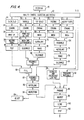
- Figure 3 is a process flow diagram of a preferred embodiment of a method for producing the prefilled sterile plastic syringe of Figure 1; and
- Figure 4 is a process flow diagram of a preferred embodiment of a method for producing the prefilled sterile plastic syringe of Figure 2.
- As shown in Fig. 1, a prefilled plastic syringe indicated generally at 20 produced in accordance with one embodiment of the invention includes a
plastic barrel 22 having anozzle 24 at one end which is closed by atip seal 26. Anopen end 28 of thebarrel 22 is closed and sealed by arubber piston 30 which can be operated by ahandle 32 for expressing thecontents 34 through thenozzle 24. The parts of the syringe are individually manufactured. Thesyringe barrel 22 is produced by a suitable plastic-forming process such as injection molding of a suitable polymer such as polypropylene, or a co-polymer of polypropylene and polyethylene. Thetip seal 26 andpiston 30 are likewise produced by injection molding a suitable elastomeric plastic or rubber material to the desired shapes. - In a process for producing the prefilled
sterile syringe 20 as illustrated in Fig. 3, quantities of the various parts of thesyringe 20 are received atstep 40 and passed to quality control inspection andtesting procedure 42 where suitable inspection and testing of the chemicals utilized to make up the contrast medium, and inspection and testing of thebarrels 22, thetip seals 26 and thepistons 30, as well as the packaging materials are performed to ensure that these chemicals and parts meet suitable standards for producing prefilled packaged and completed syringes. After passing through the inspection andtesting procedure 42, the chemicals,barrels 22,tip seals 26,pistons 30 and packaging materials are suitably inventoried and stored insteps step 44, the chemicals pass through thestaging step 54 to a make-up step 56 where the chemicals are made up into the liquid contrast media which is then passed toholding tanks 58 prior to being tested at 60. Thebarrels 22, after passing through astaging step 62 are printed on the outside with an ink which is cured with ultraviolet radiation instep 64. After printing and curing of the ink, the barrels are passed to a washing anddepyrogenation step 66 wherein the barrels are inverted and subjected to a multiplicity, e.g., ten, successive high velocity water jet washings. By repeated washing of the barrels with relatively strong water jets, contaminants, including any pyrogens that are present in the barrels, are removed. - The
tip seals 26 and thepistons 30 from theirreceiving storage steps staging steps tip seals 26 andpistons 30 inwashing steps - Alternatively, debris and contaminants can be removed from the
tip seals 26 andpistons 30 by other methods such as subjecting them to high frequency vibrations. This can be accomplished using known procedures such as, for example, by subjecting them to ultrasound vibrations or by causing high frequency pulses of air to impinge on the surfaces of thetip seals 26 andpistons 30 from pneumatic nozzles. Another method of removing debris and contaminants from thetip seals 26 andpistons 30 can be accomplished by washing them in liquid freon under pressure to dissolve and remove particles adhered to their surfaces. - After removal of debris and other contaminants, the
tip seals 26 andpistons 30 pass torespective autoclave steps tip seals 26 andpistons 30. - Alternatively, microorganisms can be destroyed on the
tip seals 26 andpistons 30 by other known means, provided only that they do not adversely affect the materials of construction. For example, another suitable method for destroying microbial contaminants is by treating thetip seals 26 andpistons 30 with an antimicrobial chemical agent. Ethylene oxide gas may be employed as the antimicrobial agent; however, care must be taken to remove all the ethylene oxide from the surfaces of thetip seals 26 andpistons 30 by aeration and/or the application of vacuum. - After autoclaving, the
tip seals 26 andpistons 30 are rinsed inrespective steps steps tip seals 26 andpistons 30 are passed in the preferred embodiment to respectivesiliconizing steps barrels 22 are sprayed at siliconizingstep 80 with a fine mist of a selected liquid silicone. While silicone is the preferred lubricant, other lubricants can be used, provided they are pharmaceutically acceptable and inert to the materials of construction. One can mention as suitable lubricants, paraffinic waxes such as refined beeswax and fixed oils such as cottonseed oil. These lubricants can be applied by spraying in a fine mist or by any other method of application which is capable of applying a thin layer of lubricant. Thebarrels 22 may then be treated to remove the adherence of excess lubricant to thebarrels 22 by such processes as autoclaving or heating. - The tip seals are assembled onto the
nozzles 24 of the barrels instep 86 after the siliconizing. The empty barrels with tip caps on are purged with nitrogen prior to filling with contrast media. The barrels are filled instep 88 withcontrast media 34 held instep 58 after the contrast media has been sampled and tested instep 60. Following the filling of the barrels instep 88 to the desired volume, thepistons 30 are then assembled in the openupper ends 28 of the barrels instep 90 to seal the contrast media in the syringe. The assembly of the pistons includes the evacuation of air from the barrels via a vacuum system so that thepistons 30 can be inserted within the openupper ends 28 of the barrel with a selected amount of inert gas above the level of theliquid contents 34. At this stage, a reject mechanism discards those syringe barrels which were without a tip cap, or a piston, and/or otherwise improperly positioned or not ready for the next step. After the pistons have been assembled instep 90 the syringes are passed to an autoclave instep 92 where the syringes and their contents are heated under pressure in a steam/air mixture autoclave and sterilized to an Fo value of 20 or more, dependent on the contents to be sterilized. After sterilization, the syringes are inspected instep 94 and the syringes are passed throughpackaging step 96, inspectingstep 98 to storage instep 100 from which they are shipped instep 102. Syringes which do not pass theinspection 92 are rejected at 104 and discarded. - In a variation of the sterile prefilled syringe indicated generally at 120 in Fig. 2, the
piston 30 has abacker plate 122 which is designed for being gripped and driven by a conventional power injecting machine (not shown). Additionally, the modifiedsyringe 120 includes anut 124 which is threaded onto thenozzle 24 and is configured for securing a luer of a catheter (not shown) to thenozzle 24 in a conventional manner. - As shown in Fig. 4, the process for producing the
syringe 120 differs from the process of Fig. 3 by including a storage step 130 and washingstep 132 for thebacker plates 122, as well as anassembly step 134 wherein thebacker plate 122 is assembled in the piston 130 prior to theautoclaving step 74. Theluer nut 124 is sterilized and prepackaged atstep 136. Atstep 96, the sterilizedprepackaged luer nut 124 is placed into a form-filled seal tray together with the assembled prefilled syringe. Alternatively, theluer nut 124 may be assembled onto the syringe prior to packaging. - The combination of steps forming the process of Figs. 3 and 4 is able to produce sterile prefilled plastic syringes which have heretofore been impossible to produce utilizing standard production procedures. Plastic syringes, and particularly the
plastic barrels 22, have been subject to deformation when heatsterilizing the syringes. The present process substitutes a multiple washing anddepyrogenation step 66 which is accomplished by repeated water jet washings. Furthermore, it has been found that when the syringe is filled and sealed and then subjected to theautoclaving step 92 to sterilize the sealed contents of the syringe, thebarrel 22 is not subject to distortion as indicated by the prior art. To avoid barrel distortion, the filled syringe is autoclaved by steam/air mixture autoclave which selectively adds compressed air during the autoclave cycle as necessary in order to maintain a pressure in the autoclave, i.e., a pressure on the outer surfaces of the filled syringes, which is at least as great as the pressure of the syringe contents during autoclaving. The steam/air autoclave has programmable controls which adjust the pressure by air injection during the autoclave cycle in order to maintain the pressure on the outer surfaces at a level at least as great as the pressure of the syringe contents. A suitable programmable steam/air autoclave is commercially available from American Sterilizer Co., Erie, Pa. - Since many variations, modifications and changes in detail may be made to the above-described embodiments without departing from the scope and spirit of the invention, it is intended that all matter described above and shown in the accompanying drawings be interpreted as only illustrative of one or more of many possible embodiments of the invention which is defined in the following claims.
Claims (4)
removing debris and other contaminants from the tip seal and piston;
destroying microbial contaminants on the tip seal and piston;
washing the barrel with a sequence of a multiplicity of jets of water to remove debris and pyrogens from the barrel;
applying a lubricant to the tip seal, piston and barrel;
assembling the tip seal on the nozzle of the barrel;
filling the barrel through its open end with a desired quantity of liquid material;
assembling the piston in the open end of the barrel after the filling thereof to complete the enclosure and sealing of the syringe and its contents; and
autoclaving the assembled and sealed syringe to sterilize the plastic syringe and its contents, while maintaining a pressure on the outside surfaces of the syringe at least equal to the pressure of the syringe contents during autoclaving.
washing the tip seal and piston to remove debris and other contaminants;
autoclaving the washed tip seal and piston to destroy bacteria and other contaminants;
rinsing the autoclaved tip seal and piston to remove loosened contaminants;
washing the barrel with a multiplicity of jets of water to remove debris and pyrogens from the barrel;
applying a fine mist of silicone lubricant to the barrel;
assembling the tip seal on the nozzle of the barrel;
filling the barrel through its open end with a desired quantity of liquid material;
assembling the piston in the open end of the syringe; and
autoclaving the assembled and sealed syringe to sterilize the syringe and its contents, while maintaining a pressure on the outside surfaces of the syringe at least equal to the pressure of the syringe contents during autoclaving.
Priority Applications (1)
| Application Number | Priority Date | Filing Date | Title |
|---|---|---|---|
| AT86309761T ATE68979T1 (en) | 1985-12-20 | 1986-12-15 | PROCESS FOR THE MANUFACTURE OF FILLED, STERILE PLASTIC SYRINGES. |
Applications Claiming Priority (4)
| Application Number | Priority Date | Filing Date | Title |
|---|---|---|---|
| US06/811,456 US4628969A (en) | 1985-12-20 | 1985-12-20 | Method of producing prefilled sterile plastic syringes |
| US811456 | 1986-12-08 | ||
| US06/938,828 US4718463A (en) | 1985-12-20 | 1986-12-08 | Method of producing prefilled sterile plastic syringes |
| US938828 | 1992-08-31 |
Publications (3)
| Publication Number | Publication Date |
|---|---|
| EP0227401A2 true EP0227401A2 (en) | 1987-07-01 |
| EP0227401A3 EP0227401A3 (en) | 1988-12-14 |
| EP0227401B1 EP0227401B1 (en) | 1991-10-30 |
Family
ID=27123474
Family Applications (1)
| Application Number | Title | Priority Date | Filing Date |
|---|---|---|---|
| EP86309761A Expired - Lifetime EP0227401B1 (en) | 1985-12-20 | 1986-12-15 | Method of producing prefilled sterile plastic syringes |
Country Status (7)
| Country | Link |
|---|---|
| US (1) | US4718463A (en) |
| EP (1) | EP0227401B1 (en) |
| JP (5) | JPH0634827B2 (en) |
| AU (1) | AU583967B2 (en) |
| CA (1) | CA1289737C (en) |
| DE (1) | DE3682260D1 (en) |
| ES (1) | ES2027227T3 (en) |
Cited By (12)
| Publication number | Priority date | Publication date | Assignee | Title |
|---|---|---|---|---|
| WO1995000180A1 (en) * | 1993-06-17 | 1995-01-05 | Farco-Pharma Gesellschaft Mit Beschränkter Haftung Pharmazeutische Präparate | Process for producing sterile packings of ready-for-use articles and container for such packings |
| EP0648510A1 (en) * | 1993-10-18 | 1995-04-19 | IMMUNO Aktiengesellschaft | Syringe device for storing and application of a multi-component material and operating device therefor |
| DE19622283A1 (en) * | 1996-05-23 | 1997-11-27 | Schering Ag | Process for the terminal sterilization of filled syringes |
| DE19632402C1 (en) * | 1996-08-02 | 1998-04-09 | Schering Ag | Method of making a prefilled, sterile syringe |
| WO1998017338A1 (en) * | 1996-10-18 | 1998-04-30 | Schering Aktiengesellschaft | Prefilled sterile syringes with polyethylene stoppers |
| DE19644622C2 (en) * | 1996-10-18 | 1999-10-28 | Schering Ag | Medical, pre-filled, sterilized syringe |
| US6189292B1 (en) | 1998-03-13 | 2001-02-20 | Becton Dickinson And Company | Method and apparatus for manufacturing, filling and packaging medical devices and medical containers |
| WO2009019044A3 (en) * | 2007-11-09 | 2009-07-09 | Envitec Wismar Gmbh | Apparatus for measuring blood oxygen saturation |
| ITMI20090041A1 (en) * | 2009-01-19 | 2010-07-20 | Semafra S A | PRODUCTION PROCESS OF INJECTIONABLE SUBSTANCES |
| EP1882629A3 (en) * | 2000-08-10 | 2011-10-05 | Baxa Corporation | Method, system, and apparatus for handling, labelling, filling and capping syringes |
| WO2016113206A1 (en) * | 2015-01-12 | 2016-07-21 | Sanofi-Aventis Deutschland Gmbh | Pre-filled drug cartridge with stopper partially protruding from it for facilitating priming |
| WO2022194920A1 (en) * | 2021-03-18 | 2022-09-22 | B. Braun Melsungen Ag | Medical product and method for producing a medical product of this type |
Families Citing this family (83)
| Publication number | Priority date | Publication date | Assignee | Title |
|---|---|---|---|---|
| US4718463A (en) * | 1985-12-20 | 1988-01-12 | Mallinckrodt, Inc. | Method of producing prefilled sterile plastic syringes |
| AU595096B2 (en) * | 1988-02-10 | 1990-03-22 | Astra Pharmaceuticals Pty Ltd | Plastic cartridge and syringe |
| US4878903A (en) * | 1988-04-15 | 1989-11-07 | Mueller Louis H | Prefilled catheter tip syringe kit |
| US5450847A (en) * | 1991-04-22 | 1995-09-19 | Schering Aktiengesellschaft | Process for making doses formulation of contrast media from concentrate |
| US5207983A (en) * | 1992-01-29 | 1993-05-04 | Sterling Winthrop Inc. | Method of terminal steam sterilization |
| US5256154A (en) * | 1992-01-31 | 1993-10-26 | Sterling Winthrop, Inc. | Pre-filled plastic syringes and containers and method of terminal sterilization thereof |
| WO1994013347A1 (en) * | 1992-12-14 | 1994-06-23 | Mallinckrodt Medical, Inc. | Prefilled delivery apparatus adapted for sterile use |
| US5373684A (en) * | 1992-12-14 | 1994-12-20 | Mallinckrodt Medical, Inc. | Process and apparatus used in producing prefilled, sterile delivery devices |
| AU5745494A (en) * | 1992-12-14 | 1994-07-04 | Mallinckrodt Medical, Inc. | Pre-filled, sterilized syringe and method of making |
| US5439643A (en) * | 1993-11-03 | 1995-08-08 | Liebert; Richard T. | Method and apparatus for terminal sterilization |
| US5620425A (en) * | 1993-11-03 | 1997-04-15 | Bracco International B.V. | Method for the preparation of pre-filled plastic syringes |
| DE4423753C1 (en) * | 1994-06-27 | 1996-02-01 | Schering Ag | Multi-part syringe with a glass cylinder |
| US5597530A (en) * | 1994-08-18 | 1997-01-28 | Abbott Laboratories | Process for prefilling and terminally sterilizing syringes |
| DE4438360C2 (en) | 1994-10-27 | 1999-05-20 | Schott Glas | Pre-fillable, low-particle, sterile disposable syringe for the injection of preparations and methods for their manufacture |
| JP3417108B2 (en) * | 1994-12-19 | 2003-06-16 | 澁谷工業株式会社 | Syringe manufacturing equipment |
| CA2215177A1 (en) * | 1995-03-13 | 1996-09-19 | Taisho Pharmaceutical Co., Ltd. | Prefilled syringe and method for sterilizing prefilled parenteral solution |
| US5643533A (en) * | 1995-05-12 | 1997-07-01 | Fishman; Yoram | Method of packaged goods sterilization |
| US6189195B1 (en) | 1995-08-22 | 2001-02-20 | Medrad, Inc. | Manufacture of prefilled syringes |
| US5687542A (en) * | 1995-08-22 | 1997-11-18 | Medrad, Inc. | Isolation module for molding and packaging articles substantially free from contaminants |
| DE19647694C1 (en) * | 1996-11-05 | 1998-06-04 | Schering Ag | Method of making a prefilled, sterile syringe |
| US5944694A (en) * | 1996-11-12 | 1999-08-31 | Medrad, Inc. | Prefillable syringes and injectors for use therewith |
| US5947935A (en) * | 1996-11-12 | 1999-09-07 | Medrad, Inc. | Syringes, syringe plungers and injector systems |
| US5873861A (en) * | 1996-11-12 | 1999-02-23 | Medrad, Inc. | Plunger systems |
| WO1998020920A2 (en) | 1996-11-12 | 1998-05-22 | Medrad, Inc. | Prefillable syringes, plungers and injectors for use therewith |
| US5855568A (en) * | 1996-11-22 | 1999-01-05 | Liebel-Flarsheim Company | Angiographic syringe and luer connector |
| DE19652708C2 (en) * | 1996-12-18 | 1999-08-12 | Schott Glas | Process for producing a filled plastic syringe body for medical purposes |
| JP4078406B2 (en) * | 1997-01-22 | 2008-04-23 | 有限会社コーキ・エンジニアリング | Method for manufacturing syringe cylinder |
| US5885270A (en) * | 1997-02-05 | 1999-03-23 | Smith Kline Beecham Corporation | Method and apparatus for automatically transferring liquids between containers |
| US5884457A (en) * | 1997-02-05 | 1999-03-23 | Smithkline Beecham Corporation | Method and apparatus for automatically producing a plurality of sterile liquid filled delivery devices |
| AU9202398A (en) | 1997-09-29 | 1999-04-23 | Becton Dickinson & Company | Injection device and drug cartridge for preventing cross-use of the device and drug cartridge |
| US6224577B1 (en) | 1998-03-02 | 2001-05-01 | Medrad, Inc. | Syringes and plungers for use therein |
| DE60005817T2 (en) * | 1999-05-28 | 2004-07-29 | Novartis Ag | PACKAGING FOR A PHARMACEUTICAL PRODUCT AND METHOD FOR STERILIZING THE PACKAGING |
| WO2001005456A1 (en) * | 1999-07-15 | 2001-01-25 | Bracco International B.V. | Plunger for syringe |
| DK1092447T3 (en) | 1999-10-14 | 2004-05-10 | Becton Dickinson Co | Nasal delivery device including a spray nozzle |
| US6494865B1 (en) | 1999-10-14 | 2002-12-17 | Becton Dickinson And Company | Intradermal delivery device including a needle assembly |
| US6382204B1 (en) * | 1999-10-14 | 2002-05-07 | Becton Dickinson And Company | Drug delivery system including holder and drug container |
| DE19952358A1 (en) * | 1999-10-30 | 2001-05-17 | Vetter & Co Apotheker | Device for placing needle caps on medical syringes |
| JP4593714B2 (en) * | 2000-02-10 | 2010-12-08 | 株式会社根本杏林堂 | Syringe outer cylinder, syringe holder, syringe piston and piston holder |
| AUPQ867900A0 (en) | 2000-07-10 | 2000-08-03 | Medrad, Inc. | Medical injector system |
| DE60131986T2 (en) | 2000-08-10 | 2008-08-28 | Baxa Corp., Englewood | ARTICLES FOR HANDLING, LABELING, FILLING AND CLOSING OF SPRAY |
| US7392638B2 (en) * | 2000-08-10 | 2008-07-01 | Baxa Corporation | Method, system, and apparatus for handling, labeling, filling, and capping syringes with improved cap |
| JP4485032B2 (en) * | 2000-08-24 | 2010-06-16 | 第一三共株式会社 | Sterilization method |
| US6436075B1 (en) * | 2000-10-18 | 2002-08-20 | Hsueh-Cheng Liao | Syringe |
| US20020172615A1 (en) * | 2001-03-08 | 2002-11-21 | Archie Woodworth | Apparatus for and method of manufacturing a prefilled sterile container |
| US6915619B2 (en) | 2001-08-10 | 2005-07-12 | Baxa Corporation | Method for handling syringe bodies |
| US6802828B2 (en) * | 2001-11-23 | 2004-10-12 | Duoject Medical Systems, Inc. | System for filling and assembling pharmaceutical delivery devices |
| DE10235542A1 (en) * | 2002-08-03 | 2004-07-22 | Arzneimittel Gmbh Apotheker Vetter & Co. Ravensburg | Method for continuous measurement, detection and control of the support pressure and device for carrying out the method |
| DE10254762A1 (en) * | 2002-11-22 | 2004-06-09 | Transcoject Gesellschaft für medizinische Geräte mbH & Co. KG | Process for producing and / or handling a high-purity object |
| US20060161105A1 (en) | 2003-06-27 | 2006-07-20 | Akihide Mori | Disposable injector |
| US7666169B2 (en) | 2003-11-25 | 2010-02-23 | Medrad, Inc. | Syringe and syringe plungers for use with medical injectors |
| USD1031029S1 (en) | 2003-11-25 | 2024-06-11 | Bayer Healthcare Llc | Syringe plunger |
| US8100263B2 (en) * | 2004-07-01 | 2012-01-24 | West Pharmaceutical Services, Inc. | Vacuum package system |
| US7963396B2 (en) * | 2004-07-01 | 2011-06-21 | West Pharmaceutical Services, Inc. | Vacuum package system |
| US20060016156A1 (en) * | 2004-07-01 | 2006-01-26 | West Pharmaceutical Services, Inc. | Vacuum package system and method |
| CN100374166C (en) * | 2005-12-19 | 2008-03-12 | 何德贤 | Steam sterilization process and steam sterilization apparatus employed the same |
| ATE406926T1 (en) * | 2006-02-14 | 2008-09-15 | Gerresheimer Buende Gmbh | METHOD FOR PRODUCING PREFILLABLE SYRINGES |
| US8926569B2 (en) | 2006-03-15 | 2015-01-06 | Bayer Medical Care Inc. | Plunger covers and plungers for use in syringes and methods of fabricating plunger covers and plungers for use in syringes |
| US9295790B2 (en) * | 2006-05-05 | 2016-03-29 | Retractable Technologies, Inc. | Syringe with recessed nose and protective guard for use with frontal attachments |
| AP2008004667A0 (en) * | 2006-05-05 | 2008-12-31 | Retractable Technologies Inc | Syringe with recessed nose for use with frontal attachments |
| DE102006049528A1 (en) * | 2006-09-28 | 2008-04-03 | Robert Bosch Gmbh | Device and method for mounting a needle guard on a syringe body |
| JP2008255325A (en) * | 2006-11-22 | 2008-10-23 | Japan Polypropylene Corp | Propylene-based resin composition and molded product thereof |
| USD1002840S1 (en) | 2007-03-14 | 2023-10-24 | Bayer Healthcare Llc | Syringe plunger |
| USD942005S1 (en) | 2007-03-14 | 2022-01-25 | Bayer Healthcare Llc | Orange syringe plunger cover |
| USD847985S1 (en) | 2007-03-14 | 2019-05-07 | Bayer Healthcare Llc | Syringe plunger cover |
| JP2009120797A (en) * | 2007-10-24 | 2009-06-04 | Japan Polypropylene Corp | Extruded sheet and packaged product comprising the same |
| JP5265666B2 (en) | 2008-04-01 | 2013-08-14 | 生化学工業株式会社 | Chemical liquid discharge part sealing cap |
| CN102176938A (en) | 2008-10-22 | 2011-09-07 | 托马斯·J·肖 | Universal syringe with retractable needle |
| TWI543790B (en) * | 2008-12-03 | 2016-08-01 | Denka Company Ltd | To syringe |
| JP4981949B2 (en) * | 2010-05-07 | 2012-07-25 | 株式会社根本杏林堂 | Chemical solution injection system with buttock-enhanced syringe and automatic injection device |
| US20110315720A1 (en) * | 2010-06-28 | 2011-12-29 | Unicep Packaging, Inc. | Dispenser with twist lock fitting |
| US9033006B2 (en) | 2010-09-17 | 2015-05-19 | Nicholas J. Perazzo | Oral syringe packaging system for hospital pharmacies |
| US9174003B2 (en) | 2012-09-28 | 2015-11-03 | Bayer Medical Care Inc. | Quick release plunger |
| KR101297790B1 (en) * | 2012-10-12 | 2013-08-19 | (주) 오스타테크 | Prefilled syringe filling device and filling method |
| EP2862587A1 (en) | 2013-10-15 | 2015-04-22 | Becton Dickinson France | Tip cap assembly for closing an injection system |
| CN106102806B (en) | 2014-03-19 | 2019-12-17 | 拜耳医药保健有限公司 | System for engaging a syringe to a syringe |
| EP3204751B1 (en) * | 2014-10-06 | 2019-05-15 | Zebrasci, Inc. | Syringe barrel lubricant coverage quality control |
| US10137289B2 (en) * | 2014-12-20 | 2018-11-27 | Esthetic Education LLC | Microneedle cartridge and nosecone assembly |
| CN105151342A (en) * | 2015-07-15 | 2015-12-16 | 广州金中健医疗器材有限公司 | Packing method and device for propofol injections |
| US9480797B1 (en) | 2015-10-28 | 2016-11-01 | Bayer Healthcare Llc | System and method for syringe plunger engagement with an injector |
| AU2018205704B2 (en) | 2017-01-06 | 2023-08-24 | Bayer Healthcare Llc | Syringe plunger with dynamic seal |
| CN110234439B (en) * | 2017-03-13 | 2021-03-12 | 纳美仕有限公司 | Prefilled syringe and method for storing resin composition |
| CN111770771B (en) | 2018-02-27 | 2023-06-13 | 拜耳医药保健有限公司 | Syringe plunger engagement mechanism |
| EP4168065A1 (en) | 2020-06-18 | 2023-04-26 | Bayer HealthCare, LLC | System and method for syringe plunger engagement with an injector |
Family Cites Families (32)
| Publication number | Priority date | Publication date | Assignee | Title |
|---|---|---|---|---|
| GB820699A (en) * | 1958-03-06 | 1959-09-23 | Mueller Arthur | Improvements in or relating to sterilization processes |
| US3406686A (en) * | 1965-01-15 | 1968-10-22 | Becton Dickinson Co | Prefilled syringe |
| US3623474A (en) * | 1966-07-25 | 1971-11-30 | Medrad Inc | Angiographic injection equipment |
| US3561596A (en) * | 1969-05-20 | 1971-02-09 | Knox Lab Inc | Packaging for hypodermic syringes, needles and the like |
| US3701345A (en) * | 1970-09-29 | 1972-10-31 | Medrad Inc | Angiographic injector equipment |
| JPS5114841Y2 (en) * | 1971-04-23 | 1976-04-20 | ||
| JPS4914467U (en) * | 1972-05-12 | 1974-02-06 | ||
| JPS5664B2 (en) * | 1972-07-12 | 1981-01-06 | ||
| FR2227020B1 (en) * | 1973-04-27 | 1975-08-22 | Radiologie Cie Gle | |
| FR2258866A1 (en) * | 1974-01-30 | 1975-08-22 | Merieux Inst | Sterilisation of syringes, pref. contg. medicaments - which does not require high degree of precision; overpressure being accommodated without expelling contents |
| JPS5113954A (en) * | 1974-07-24 | 1976-02-03 | Nippon Telegraph & Telephone | DENKISE TSUTEN |
| FR2288481A1 (en) * | 1974-10-24 | 1976-05-21 | Hanau Sa F | NEW METHODS AND EQUIPMENT FOR THE HEAT TREATMENT OF PRODUCTS CONTAINED IN WATERTIGHT CONTAINERS |
| US4006736A (en) * | 1974-11-27 | 1977-02-08 | Medrad, Inc. | Angiographic injector |
| JPS5214550A (en) * | 1975-07-26 | 1977-02-03 | Kantou Kouatsu Youki Seisakush | Cylinder retaining device |
| SE403964B (en) * | 1976-01-26 | 1978-09-18 | Electrolux Ab | SET AND DEVICE AT A CAR COVER |
| US4046616A (en) * | 1976-09-13 | 1977-09-06 | V-Mark Automation Ltd. | Automatic assembly apparatus of syringes |
| JPS575629Y2 (en) * | 1976-09-28 | 1982-02-02 | ||
| US4171699A (en) * | 1977-05-09 | 1979-10-23 | Princeton Polymer Laboratories, Inc. | Mercaptan modified methyl methacrylate-alpha methyl styrene copolymer syringe |
| JPS546392A (en) * | 1977-06-15 | 1979-01-18 | Toray Eng Co Ltd | Heat sterilizing method |
| US4171698A (en) * | 1977-08-15 | 1979-10-23 | Abbott Laboratories | Prefilled two-compartment syringe |
| GB1544260A (en) * | 1977-09-13 | 1979-04-19 | Prebbles Ltd | Packaging |
| DE2821052C2 (en) * | 1978-05-13 | 1986-08-21 | Robert Bosch Gmbh, 7000 Stuttgart | Dosing and filling device for liquid media |
| AT371998B (en) * | 1978-07-04 | 1983-08-25 | Nyegaard & Co As | METHOD FOR PRODUCING A STERILE INJECTABLE PHYSIOLOGICALLY ACCEPTABLE SOLUTION OF AN X-RAY CONTRAST AGENT |
| JPS5536339A (en) * | 1978-09-01 | 1980-03-13 | Chuo Rika Kogyo Kk | Production of thick heat resistant paper cloth |
| AT360139B (en) * | 1978-10-16 | 1980-12-29 | Immuno Ag | COMBINED AMPOULE DISPOSABLE INJECTION SYRINGE |
| JPS5664A (en) * | 1979-06-11 | 1981-01-06 | Pioneer Electronic Corp | Tone arm control unit |
| JPS572341A (en) * | 1980-06-06 | 1982-01-07 | Asahi Glass Co Ltd | Polyurethane foam for absorbing energy |
| JPS5750042U (en) * | 1980-09-05 | 1982-03-20 | ||
| JPS5928973A (en) * | 1982-08-07 | 1984-02-15 | 株式会社トツプ | Production of syringe filled with drug |
| AU2843084A (en) * | 1983-09-27 | 1985-04-04 | Becton Dickinson & Company | Two component syringe with bipass zone |
| GB2162341B (en) * | 1984-07-27 | 1988-02-03 | Ae Plc | Automatic vehicle speed control system |
| US4718463A (en) * | 1985-12-20 | 1988-01-12 | Mallinckrodt, Inc. | Method of producing prefilled sterile plastic syringes |
-
1986
- 1986-12-08 US US06/938,828 patent/US4718463A/en not_active Expired - Lifetime
- 1986-12-15 DE DE8686309761T patent/DE3682260D1/en not_active Revoked
- 1986-12-15 ES ES198686309761T patent/ES2027227T3/en not_active Expired - Lifetime
- 1986-12-15 AU AU66562/86A patent/AU583967B2/en not_active Expired
- 1986-12-15 EP EP86309761A patent/EP0227401B1/en not_active Expired - Lifetime
- 1986-12-15 JP JP61296845A patent/JPH0634827B2/en not_active Expired - Lifetime
- 1986-12-15 CA CA000525387A patent/CA1289737C/en not_active Expired - Lifetime
-
1995
- 1995-12-25 JP JP7336619A patent/JPH08224302A/en active Pending
- 1995-12-25 JP JP7336612A patent/JPH09135900A/en active Pending
- 1995-12-25 JP JP7336616A patent/JPH08224303A/en active Pending
-
1998
- 1998-03-19 JP JP1998001622U patent/JP2588871Y2/en not_active Expired - Lifetime
Cited By (18)
| Publication number | Priority date | Publication date | Assignee | Title |
|---|---|---|---|---|
| WO1995000180A1 (en) * | 1993-06-17 | 1995-01-05 | Farco-Pharma Gesellschaft Mit Beschränkter Haftung Pharmazeutische Präparate | Process for producing sterile packings of ready-for-use articles and container for such packings |
| EP0648510A1 (en) * | 1993-10-18 | 1995-04-19 | IMMUNO Aktiengesellschaft | Syringe device for storing and application of a multi-component material and operating device therefor |
| DE19622283A1 (en) * | 1996-05-23 | 1997-11-27 | Schering Ag | Process for the terminal sterilization of filled syringes |
| DE19632402C1 (en) * | 1996-08-02 | 1998-04-09 | Schering Ag | Method of making a prefilled, sterile syringe |
| WO1998017338A1 (en) * | 1996-10-18 | 1998-04-30 | Schering Aktiengesellschaft | Prefilled sterile syringes with polyethylene stoppers |
| WO1998017339A1 (en) | 1996-10-18 | 1998-04-30 | Schering Aktiengesellschaft | Syringe with a polyethylene stopper |
| DE19644622C2 (en) * | 1996-10-18 | 1999-10-28 | Schering Ag | Medical, pre-filled, sterilized syringe |
| US6250052B1 (en) | 1998-03-13 | 2001-06-26 | Becton, Dickinson And Company | Method and apparatus for assembling and packaging medical devices |
| US6189292B1 (en) | 1998-03-13 | 2001-02-20 | Becton Dickinson And Company | Method and apparatus for manufacturing, filling and packaging medical devices and medical containers |
| US6263641B1 (en) | 1998-03-13 | 2001-07-24 | Becton, Dickinson And Company | Method and apparatus for manufacturing, filling and packaging medical devices and medical containers |
| US6792743B2 (en) | 1998-03-13 | 2004-09-21 | Becton, Dickinson And Company | Method and apparatus for manufacturing, filling and packaging medical devices and medical containers |
| USRE46510E1 (en) | 1998-03-13 | 2017-08-15 | Becton, Dickinson And Company | Method and apparatus for manufacturing, filling and packaging medical devices and medical containers |
| EP1882629A3 (en) * | 2000-08-10 | 2011-10-05 | Baxa Corporation | Method, system, and apparatus for handling, labelling, filling and capping syringes |
| WO2009019044A3 (en) * | 2007-11-09 | 2009-07-09 | Envitec Wismar Gmbh | Apparatus for measuring blood oxygen saturation |
| US8721989B2 (en) | 2007-11-09 | 2014-05-13 | Envitec-Wismar Gmbh | Apparatus for measuring blood oxygen saturation |
| ITMI20090041A1 (en) * | 2009-01-19 | 2010-07-20 | Semafra S A | PRODUCTION PROCESS OF INJECTIONABLE SUBSTANCES |
| WO2016113206A1 (en) * | 2015-01-12 | 2016-07-21 | Sanofi-Aventis Deutschland Gmbh | Pre-filled drug cartridge with stopper partially protruding from it for facilitating priming |
| WO2022194920A1 (en) * | 2021-03-18 | 2022-09-22 | B. Braun Melsungen Ag | Medical product and method for producing a medical product of this type |
Also Published As
| Publication number | Publication date |
|---|---|
| JPH0634827B2 (en) | 1994-05-11 |
| CA1289737C (en) | 1991-10-01 |
| ES2027227T3 (en) | 1992-06-01 |
| EP0227401A3 (en) | 1988-12-14 |
| JPH08224302A (en) | 1996-09-03 |
| JPH08224303A (en) | 1996-09-03 |
| US4718463A (en) | 1988-01-12 |
| JP2588871Y2 (en) | 1999-01-20 |
| AU6656286A (en) | 1987-06-25 |
| JPS62194866A (en) | 1987-08-27 |
| JPH09135900A (en) | 1997-05-27 |
| EP0227401B1 (en) | 1991-10-30 |
| AU583967B2 (en) | 1989-05-11 |
| DE3682260D1 (en) | 1991-12-05 |
| JPH10212U (en) | 1998-09-14 |
Similar Documents
| Publication | Publication Date | Title |
|---|---|---|
| EP0227401B1 (en) | Method of producing prefilled sterile plastic syringes | |
| US4628969A (en) | Method of producing prefilled sterile plastic syringes | |
| EP0846072B1 (en) | Process for manufacturing partially assembled syringes | |
| US5597530A (en) | Process for prefilling and terminally sterilizing syringes | |
| KR100424827B1 (en) | How to fill a sealed container under aseptic condition, container and equipment for carrying out the method | |
| JP4216467B2 (en) | Medical device assembly and packaging method | |
| EP0673332B1 (en) | Method of producing prefilled, sterile delivery devices | |
| EP1940476B1 (en) | Methods of sterilizing elastomeric sealing articles | |
| JPH08505334A (en) | Method for manufacturing prefilled plastic syringe | |
| EP0901380A1 (en) | Method of terminally sterilizing filled syringes | |
| WO1994013345A1 (en) | Pre-filled, sterilized syringe and method of making | |
| JP3404109B2 (en) | Manufacturing method of plastic syringe preparation filled with chemical solution | |
| DE3843001C1 (en) | ||
| EP4566564A1 (en) | Device for processing of medical instruments | |
| CN116421552A (en) | A kind of preparation method of lacosamide injection | |
| JP3592391B2 (en) | Heat sterilization method | |
| MXPA00008780A (en) | Method for manufacturing, filling and packaging medical containers |
Legal Events
| Date | Code | Title | Description |
|---|---|---|---|
| PUAI | Public reference made under article 153(3) epc to a published international application that has entered the european phase |
Free format text: ORIGINAL CODE: 0009012 |
|
| AK | Designated contracting states |
Kind code of ref document: A2 Designated state(s): AT BE CH DE ES FR GB IT LI NL SE |
|
| PUAL | Search report despatched |
Free format text: ORIGINAL CODE: 0009013 |
|
| RHK1 | Main classification (correction) |
Ipc: A61J 5/08 |
|
| AK | Designated contracting states |
Kind code of ref document: A3 Designated state(s): AT BE CH DE ES FR GB IT LI NL SE |
|
| 17P | Request for examination filed |
Effective date: 19890522 |
|
| 17Q | First examination report despatched |
Effective date: 19901116 |
|
| GRAA | (expected) grant |
Free format text: ORIGINAL CODE: 0009210 |
|
| AK | Designated contracting states |
Kind code of ref document: B1 Designated state(s): AT BE CH DE ES FR GB IT LI NL SE |
|
| REF | Corresponds to: |
Ref document number: 68979 Country of ref document: AT Date of ref document: 19911115 Kind code of ref document: T |
|
| REF | Corresponds to: |
Ref document number: 3682260 Country of ref document: DE Date of ref document: 19911205 |
|
| ET | Fr: translation filed | ||
| ITF | It: translation for a ep patent filed | ||
| REG | Reference to a national code |
Ref country code: ES Ref legal event code: FG2A Ref document number: 2027227 Country of ref document: ES Kind code of ref document: T3 |
|
| PLBI | Opposition filed |
Free format text: ORIGINAL CODE: 0009260 |
|
| 26 | Opposition filed |
Opponent name: BRACCO S.P.A. Effective date: 19920730 Opponent name: ARZNEIMITTEL GMBH APOTHEKER VETTER & CO. Effective date: 19920728 |
|
| NLR1 | Nl: opposition has been filed with the epo |
Opponent name: BRACCO S.P.A. Opponent name: ARZNEIMITTEL GMBH APOTHEKER VETTER & CO. |
|
| PLAB | Opposition data, opponent's data or that of the opponent's representative modified |
Free format text: ORIGINAL CODE: 0009299OPPO |
|
| R26 | Opposition filed (corrected) |
Opponent name: ARZNEIMITTEL GMBH APOTHEKER VETTER & CO. * 920730 Effective date: 19920728 |
|
| EAL | Se: european patent in force in sweden |
Ref document number: 86309761.4 |
|
| APAE | Appeal reference modified |
Free format text: ORIGINAL CODE: EPIDOS REFNO |
|
| PGFP | Annual fee paid to national office [announced via postgrant information from national office to epo] |
Ref country code: FR Payment date: 19971119 Year of fee payment: 12 |
|
| PGFP | Annual fee paid to national office [announced via postgrant information from national office to epo] |
Ref country code: SE Payment date: 19971120 Year of fee payment: 12 |
|
| PGFP | Annual fee paid to national office [announced via postgrant information from national office to epo] |
Ref country code: AT Payment date: 19971124 Year of fee payment: 12 |
|
| PGFP | Annual fee paid to national office [announced via postgrant information from national office to epo] |
Ref country code: DE Payment date: 19971125 Year of fee payment: 12 |
|
| PGFP | Annual fee paid to national office [announced via postgrant information from national office to epo] |
Ref country code: GB Payment date: 19971126 Year of fee payment: 12 |
|
| PGFP | Annual fee paid to national office [announced via postgrant information from national office to epo] |
Ref country code: CH Payment date: 19971128 Year of fee payment: 12 |
|
| PGFP | Annual fee paid to national office [announced via postgrant information from national office to epo] |
Ref country code: NL Payment date: 19971130 Year of fee payment: 12 |
|
| PGFP | Annual fee paid to national office [announced via postgrant information from national office to epo] |
Ref country code: ES Payment date: 19971212 Year of fee payment: 12 Ref country code: BE Payment date: 19971212 Year of fee payment: 12 |
|
| APAC | Appeal dossier modified |
Free format text: ORIGINAL CODE: EPIDOS NOAPO |
|
| RDAG | Patent revoked |
Free format text: ORIGINAL CODE: 0009271 |
|
| STAA | Information on the status of an ep patent application or granted ep patent |
Free format text: STATUS: PATENT REVOKED |
|
| 27W | Patent revoked |
Effective date: 19980731 |
|
| GBPR | Gb: patent revoked under art. 102 of the ep convention designating the uk as contracting state |
Free format text: 980731 |
|
| REG | Reference to a national code |
Ref country code: CH Ref legal event code: PL |
|
| NLR2 | Nl: decision of opposition | ||
| APAH | Appeal reference modified |
Free format text: ORIGINAL CODE: EPIDOSCREFNO |