EP0213794B1 - Poly-Kringle-Plasminogenaktivator - Google Patents
Poly-Kringle-Plasminogenaktivator Download PDFInfo
- Publication number
- EP0213794B1 EP0213794B1 EP86306058A EP86306058A EP0213794B1 EP 0213794 B1 EP0213794 B1 EP 0213794B1 EP 86306058 A EP86306058 A EP 86306058A EP 86306058 A EP86306058 A EP 86306058A EP 0213794 B1 EP0213794 B1 EP 0213794B1
- Authority
- EP
- European Patent Office
- Prior art keywords
- dna
- amino acids
- plasminogen activator
- kringle
- linker
- Prior art date
- Legal status (The legal status is an assumption and is not a legal conclusion. Google has not performed a legal analysis and makes no representation as to the accuracy of the status listed.)
- Expired - Lifetime
Links
- 108010001014 Plasminogen Activators Proteins 0.000 title claims description 67
- 102000001938 Plasminogen Activators Human genes 0.000 title claims description 66
- 229940127126 plasminogen activator Drugs 0.000 title claims description 66
- 108020004414 DNA Proteins 0.000 claims description 210
- 150000001413 amino acids Chemical group 0.000 claims description 90
- 238000000034 method Methods 0.000 claims description 65
- 108090000435 Urokinase-type plasminogen activator Proteins 0.000 claims description 54
- 102000003990 Urokinase-type plasminogen activator Human genes 0.000 claims description 51
- 229960005356 urokinase Drugs 0.000 claims description 45
- 108090000765 processed proteins & peptides Proteins 0.000 claims description 25
- 239000013598 vector Substances 0.000 claims description 21
- 229920001184 polypeptide Polymers 0.000 claims description 20
- 102000004196 processed proteins & peptides Human genes 0.000 claims description 20
- 230000008569 process Effects 0.000 claims description 18
- 108091028043 Nucleic acid sequence Proteins 0.000 claims description 17
- 108010094028 Prothrombin Proteins 0.000 claims description 17
- 238000004519 manufacturing process Methods 0.000 claims description 17
- 102100027378 Prothrombin Human genes 0.000 claims description 16
- 239000013604 expression vector Substances 0.000 claims description 16
- 229940039716 prothrombin Drugs 0.000 claims description 16
- 108020004511 Recombinant DNA Proteins 0.000 claims description 6
- 244000005700 microbiome Species 0.000 claims description 5
- 241000894006 Bacteria Species 0.000 claims description 4
- 238000004113 cell culture Methods 0.000 claims description 4
- 238000012258 culturing Methods 0.000 claims description 4
- 230000001131 transforming effect Effects 0.000 claims description 4
- LDEBVRIURYMKQS-WISUUJSJSA-N Ser-Thr Chemical compound C[C@@H](O)[C@@H](C(O)=O)NC(=O)[C@@H](N)CO LDEBVRIURYMKQS-WISUUJSJSA-N 0.000 claims description 2
- 239000008194 pharmaceutical composition Substances 0.000 claims description 2
- 239000013599 cloning vector Substances 0.000 claims 1
- 230000001225 therapeutic effect Effects 0.000 claims 1
- 108090000373 Tissue Plasminogen Activator Proteins 0.000 description 92
- 102000003978 Tissue Plasminogen Activator Human genes 0.000 description 84
- 229960000187 tissue plasminogen activator Drugs 0.000 description 80
- 239000012634 fragment Substances 0.000 description 77
- 235000001014 amino acid Nutrition 0.000 description 76
- 239000013612 plasmid Substances 0.000 description 72
- 108090000623 proteins and genes Proteins 0.000 description 58
- 210000004027 cell Anatomy 0.000 description 38
- 239000011543 agarose gel Substances 0.000 description 36
- 241000588724 Escherichia coli Species 0.000 description 26
- 238000002360 preparation method Methods 0.000 description 25
- ISWSIDIOOBJBQZ-UHFFFAOYSA-N Phenol Chemical compound OC1=CC=CC=C1 ISWSIDIOOBJBQZ-UHFFFAOYSA-N 0.000 description 22
- 238000001962 electrophoresis Methods 0.000 description 19
- 239000002773 nucleotide Substances 0.000 description 17
- 125000003729 nucleotide group Chemical group 0.000 description 17
- 108091034117 Oligonucleotide Proteins 0.000 description 16
- 108010076504 Protein Sorting Signals Proteins 0.000 description 16
- 230000029087 digestion Effects 0.000 description 16
- 235000018102 proteins Nutrition 0.000 description 15
- 102000004169 proteins and genes Human genes 0.000 description 15
- 101000740205 Homo sapiens Sal-like protein 1 Proteins 0.000 description 14
- 102100037204 Sal-like protein 1 Human genes 0.000 description 14
- 108020004635 Complementary DNA Proteins 0.000 description 13
- 101100293593 Neurospora crassa (strain ATCC 24698 / 74-OR23-1A / CBS 708.71 / DSM 1257 / FGSC 987) nar-1 gene Proteins 0.000 description 12
- 125000003275 alpha amino acid group Chemical group 0.000 description 12
- 238000010804 cDNA synthesis Methods 0.000 description 12
- 239000002299 complementary DNA Substances 0.000 description 12
- 239000002609 medium Substances 0.000 description 12
- 240000004808 Saccharomyces cerevisiae Species 0.000 description 11
- LFQSCWFLJHTTHZ-UHFFFAOYSA-N Ethanol Chemical compound CCO LFQSCWFLJHTTHZ-UHFFFAOYSA-N 0.000 description 10
- 235000014680 Saccharomyces cerevisiae Nutrition 0.000 description 10
- 238000012869 ethanol precipitation Methods 0.000 description 10
- 230000014509 gene expression Effects 0.000 description 10
- 102000004190 Enzymes Human genes 0.000 description 9
- 108090000790 Enzymes Proteins 0.000 description 9
- 229960000723 ampicillin Drugs 0.000 description 9
- AVKUERGKIZMTKX-NJBDSQKTSA-N ampicillin Chemical compound C1([C@@H](N)C(=O)N[C@H]2[C@H]3SC([C@@H](N3C2=O)C(O)=O)(C)C)=CC=CC=C1 AVKUERGKIZMTKX-NJBDSQKTSA-N 0.000 description 9
- 230000001580 bacterial effect Effects 0.000 description 9
- 229940088598 enzyme Drugs 0.000 description 9
- 238000000605 extraction Methods 0.000 description 9
- 239000000523 sample Substances 0.000 description 9
- 239000011541 reaction mixture Substances 0.000 description 8
- 102000009123 Fibrin Human genes 0.000 description 7
- 108010073385 Fibrin Proteins 0.000 description 7
- BWGVNKXGVNDBDI-UHFFFAOYSA-N Fibrin monomer Chemical compound CNC(=O)CNC(=O)CN BWGVNKXGVNDBDI-UHFFFAOYSA-N 0.000 description 7
- 238000010586 diagram Methods 0.000 description 7
- 229950003499 fibrin Drugs 0.000 description 7
- 239000000499 gel Substances 0.000 description 7
- 108091032973 (ribonucleotides)n+m Proteins 0.000 description 6
- OPIFSICVWOWJMJ-AEOCFKNESA-N 5-bromo-4-chloro-3-indolyl beta-D-galactoside Chemical compound O[C@@H]1[C@@H](O)[C@@H](O)[C@@H](CO)O[C@H]1OC1=CNC2=CC=C(Br)C(Cl)=C12 OPIFSICVWOWJMJ-AEOCFKNESA-N 0.000 description 6
- 238000006243 chemical reaction Methods 0.000 description 6
- 239000000203 mixture Substances 0.000 description 6
- 229920001817 Agar Polymers 0.000 description 5
- 239000008272 agar Substances 0.000 description 5
- 238000009835 boiling Methods 0.000 description 5
- 210000004899 c-terminal region Anatomy 0.000 description 5
- 238000010367 cloning Methods 0.000 description 5
- 108020004999 messenger RNA Proteins 0.000 description 5
- 230000010076 replication Effects 0.000 description 5
- 108091008146 restriction endonucleases Proteins 0.000 description 5
- 238000012216 screening Methods 0.000 description 5
- 230000002103 transcriptional effect Effects 0.000 description 5
- DIGQNXIGRZPYDK-WKSCXVIASA-N (2R)-6-amino-2-[[2-[[(2S)-2-[[2-[[(2R)-2-[[(2S)-2-[[(2R,3S)-2-[[2-[[(2S)-2-[[2-[[(2S)-2-[[(2S)-2-[[(2R)-2-[[(2S,3S)-2-[[(2R)-2-[[(2S)-2-[[(2S)-2-[[(2S)-2-[[2-[[(2S)-2-[[(2R)-2-[[2-[[2-[[2-[(2-amino-1-hydroxyethylidene)amino]-3-carboxy-1-hydroxypropylidene]amino]-1-hydroxy-3-sulfanylpropylidene]amino]-1-hydroxyethylidene]amino]-1-hydroxy-3-sulfanylpropylidene]amino]-1,3-dihydroxypropylidene]amino]-1-hydroxyethylidene]amino]-1-hydroxypropylidene]amino]-1,3-dihydroxypropylidene]amino]-1,3-dihydroxypropylidene]amino]-1-hydroxy-3-sulfanylpropylidene]amino]-1,3-dihydroxybutylidene]amino]-1-hydroxy-3-sulfanylpropylidene]amino]-1-hydroxypropylidene]amino]-1,3-dihydroxypropylidene]amino]-1-hydroxyethylidene]amino]-1,5-dihydroxy-5-iminopentylidene]amino]-1-hydroxy-3-sulfanylpropylidene]amino]-1,3-dihydroxybutylidene]amino]-1-hydroxy-3-sulfanylpropylidene]amino]-1,3-dihydroxypropylidene]amino]-1-hydroxyethylidene]amino]-1-hydroxy-3-sulfanylpropylidene]amino]-1-hydroxyethylidene]amino]hexanoic acid Chemical compound C[C@@H]([C@@H](C(=N[C@@H](CS)C(=N[C@@H](C)C(=N[C@@H](CO)C(=NCC(=N[C@@H](CCC(=N)O)C(=NC(CS)C(=N[C@H]([C@H](C)O)C(=N[C@H](CS)C(=N[C@H](CO)C(=NCC(=N[C@H](CS)C(=NCC(=N[C@H](CCCCN)C(=O)O)O)O)O)O)O)O)O)O)O)O)O)O)O)N=C([C@H](CS)N=C([C@H](CO)N=C([C@H](CO)N=C([C@H](C)N=C(CN=C([C@H](CO)N=C([C@H](CS)N=C(CN=C(C(CS)N=C(C(CC(=O)O)N=C(CN)O)O)O)O)O)O)O)O)O)O)O)O DIGQNXIGRZPYDK-WKSCXVIASA-N 0.000 description 4
- 101100148606 Caenorhabditis elegans pst-1 gene Proteins 0.000 description 4
- HEDRZPFGACZZDS-UHFFFAOYSA-N Chloroform Chemical compound ClC(Cl)Cl HEDRZPFGACZZDS-UHFFFAOYSA-N 0.000 description 4
- 102000012410 DNA Ligases Human genes 0.000 description 4
- 108010061982 DNA Ligases Proteins 0.000 description 4
- 102000004594 DNA Polymerase I Human genes 0.000 description 4
- 108010017826 DNA Polymerase I Proteins 0.000 description 4
- TWRXJAOTZQYOKJ-UHFFFAOYSA-L Magnesium chloride Chemical compound [Mg+2].[Cl-].[Cl-] TWRXJAOTZQYOKJ-UHFFFAOYSA-L 0.000 description 4
- 241000124008 Mammalia Species 0.000 description 4
- 102000003792 Metallothionein Human genes 0.000 description 4
- 108090000157 Metallothionein Proteins 0.000 description 4
- 102000013566 Plasminogen Human genes 0.000 description 4
- 108010051456 Plasminogen Proteins 0.000 description 4
- DBMJMQXJHONAFJ-UHFFFAOYSA-M Sodium laurylsulphate Chemical compound [Na+].CCCCCCCCCCCCOS([O-])(=O)=O DBMJMQXJHONAFJ-UHFFFAOYSA-M 0.000 description 4
- 208000007536 Thrombosis Diseases 0.000 description 4
- 238000000246 agarose gel electrophoresis Methods 0.000 description 4
- 239000000872 buffer Substances 0.000 description 4
- 230000000295 complement effect Effects 0.000 description 4
- 238000005520 cutting process Methods 0.000 description 4
- VHJLVAABSRFDPM-QWWZWVQMSA-N dithiothreitol Chemical compound SC[C@@H](O)[C@H](O)CS VHJLVAABSRFDPM-QWWZWVQMSA-N 0.000 description 4
- 239000013613 expression plasmid Substances 0.000 description 4
- 239000001963 growth medium Substances 0.000 description 4
- 238000003306 harvesting Methods 0.000 description 4
- 238000002955 isolation Methods 0.000 description 4
- 210000004962 mammalian cell Anatomy 0.000 description 4
- 229940012957 plasmin Drugs 0.000 description 4
- 238000012545 processing Methods 0.000 description 4
- 238000000746 purification Methods 0.000 description 4
- 239000000243 solution Substances 0.000 description 4
- 230000002792 vascular Effects 0.000 description 4
- MTCFGRXMJLQNBG-REOHCLBHSA-N (2S)-2-Amino-3-hydroxypropansäure Chemical compound OC[C@H](N)C(O)=O MTCFGRXMJLQNBG-REOHCLBHSA-N 0.000 description 3
- 108091026890 Coding region Proteins 0.000 description 3
- PEDCQBHIVMGVHV-UHFFFAOYSA-N Glycerine Chemical compound OCC(O)CO PEDCQBHIVMGVHV-UHFFFAOYSA-N 0.000 description 3
- WHUUTDBJXJRKMK-VKHMYHEASA-N L-glutamic acid Chemical compound OC(=O)[C@@H](N)CCC(O)=O WHUUTDBJXJRKMK-VKHMYHEASA-N 0.000 description 3
- 239000007983 Tris buffer Substances 0.000 description 3
- 241000700605 Viruses Species 0.000 description 3
- JLCPHMBAVCMARE-UHFFFAOYSA-N [3-[[3-[[3-[[3-[[3-[[3-[[3-[[3-[[3-[[3-[[3-[[5-(2-amino-6-oxo-1H-purin-9-yl)-3-[[3-[[3-[[3-[[3-[[3-[[5-(2-amino-6-oxo-1H-purin-9-yl)-3-[[5-(2-amino-6-oxo-1H-purin-9-yl)-3-hydroxyoxolan-2-yl]methoxy-hydroxyphosphoryl]oxyoxolan-2-yl]methoxy-hydroxyphosphoryl]oxy-5-(5-methyl-2,4-dioxopyrimidin-1-yl)oxolan-2-yl]methoxy-hydroxyphosphoryl]oxy-5-(6-aminopurin-9-yl)oxolan-2-yl]methoxy-hydroxyphosphoryl]oxy-5-(6-aminopurin-9-yl)oxolan-2-yl]methoxy-hydroxyphosphoryl]oxy-5-(6-aminopurin-9-yl)oxolan-2-yl]methoxy-hydroxyphosphoryl]oxy-5-(6-aminopurin-9-yl)oxolan-2-yl]methoxy-hydroxyphosphoryl]oxyoxolan-2-yl]methoxy-hydroxyphosphoryl]oxy-5-(5-methyl-2,4-dioxopyrimidin-1-yl)oxolan-2-yl]methoxy-hydroxyphosphoryl]oxy-5-(4-amino-2-oxopyrimidin-1-yl)oxolan-2-yl]methoxy-hydroxyphosphoryl]oxy-5-(5-methyl-2,4-dioxopyrimidin-1-yl)oxolan-2-yl]methoxy-hydroxyphosphoryl]oxy-5-(5-methyl-2,4-dioxopyrimidin-1-yl)oxolan-2-yl]methoxy-hydroxyphosphoryl]oxy-5-(6-aminopurin-9-yl)oxolan-2-yl]methoxy-hydroxyphosphoryl]oxy-5-(6-aminopurin-9-yl)oxolan-2-yl]methoxy-hydroxyphosphoryl]oxy-5-(4-amino-2-oxopyrimidin-1-yl)oxolan-2-yl]methoxy-hydroxyphosphoryl]oxy-5-(4-amino-2-oxopyrimidin-1-yl)oxolan-2-yl]methoxy-hydroxyphosphoryl]oxy-5-(4-amino-2-oxopyrimidin-1-yl)oxolan-2-yl]methoxy-hydroxyphosphoryl]oxy-5-(6-aminopurin-9-yl)oxolan-2-yl]methoxy-hydroxyphosphoryl]oxy-5-(4-amino-2-oxopyrimidin-1-yl)oxolan-2-yl]methyl [5-(6-aminopurin-9-yl)-2-(hydroxymethyl)oxolan-3-yl] hydrogen phosphate Polymers Cc1cn(C2CC(OP(O)(=O)OCC3OC(CC3OP(O)(=O)OCC3OC(CC3O)n3cnc4c3nc(N)[nH]c4=O)n3cnc4c3nc(N)[nH]c4=O)C(COP(O)(=O)OC3CC(OC3COP(O)(=O)OC3CC(OC3COP(O)(=O)OC3CC(OC3COP(O)(=O)OC3CC(OC3COP(O)(=O)OC3CC(OC3COP(O)(=O)OC3CC(OC3COP(O)(=O)OC3CC(OC3COP(O)(=O)OC3CC(OC3COP(O)(=O)OC3CC(OC3COP(O)(=O)OC3CC(OC3COP(O)(=O)OC3CC(OC3COP(O)(=O)OC3CC(OC3COP(O)(=O)OC3CC(OC3COP(O)(=O)OC3CC(OC3COP(O)(=O)OC3CC(OC3COP(O)(=O)OC3CC(OC3COP(O)(=O)OC3CC(OC3CO)n3cnc4c(N)ncnc34)n3ccc(N)nc3=O)n3cnc4c(N)ncnc34)n3ccc(N)nc3=O)n3ccc(N)nc3=O)n3ccc(N)nc3=O)n3cnc4c(N)ncnc34)n3cnc4c(N)ncnc34)n3cc(C)c(=O)[nH]c3=O)n3cc(C)c(=O)[nH]c3=O)n3ccc(N)nc3=O)n3cc(C)c(=O)[nH]c3=O)n3cnc4c3nc(N)[nH]c4=O)n3cnc4c(N)ncnc34)n3cnc4c(N)ncnc34)n3cnc4c(N)ncnc34)n3cnc4c(N)ncnc34)O2)c(=O)[nH]c1=O JLCPHMBAVCMARE-UHFFFAOYSA-N 0.000 description 3
- 238000005119 centrifugation Methods 0.000 description 3
- 238000012512 characterization method Methods 0.000 description 3
- 238000010276 construction Methods 0.000 description 3
- 230000003480 fibrinolytic effect Effects 0.000 description 3
- 230000002068 genetic effect Effects 0.000 description 3
- 239000008188 pellet Substances 0.000 description 3
- 230000008488 polyadenylation Effects 0.000 description 3
- LENZDBCJOHFCAS-UHFFFAOYSA-N tris Chemical compound OCC(N)(CO)CO LENZDBCJOHFCAS-UHFFFAOYSA-N 0.000 description 3
- 229910001868 water Inorganic materials 0.000 description 3
- KDELTXNPUXUBMU-UHFFFAOYSA-N 2-[2-[bis(carboxymethyl)amino]ethyl-(carboxymethyl)amino]acetic acid boric acid Chemical compound OB(O)O.OB(O)O.OB(O)O.OC(=O)CN(CC(O)=O)CCN(CC(O)=O)CC(O)=O KDELTXNPUXUBMU-UHFFFAOYSA-N 0.000 description 2
- 229920000936 Agarose Polymers 0.000 description 2
- 102000002260 Alkaline Phosphatase Human genes 0.000 description 2
- 108020004774 Alkaline Phosphatase Proteins 0.000 description 2
- 108050009160 DNA polymerase 1 Proteins 0.000 description 2
- BWGNESOTFCXPMA-UHFFFAOYSA-N Dihydrogen disulfide Chemical compound SS BWGNESOTFCXPMA-UHFFFAOYSA-N 0.000 description 2
- KCXVZYZYPLLWCC-UHFFFAOYSA-N EDTA Chemical compound OC(=O)CN(CC(O)=O)CCN(CC(O)=O)CC(O)=O KCXVZYZYPLLWCC-UHFFFAOYSA-N 0.000 description 2
- 241001646716 Escherichia coli K-12 Species 0.000 description 2
- 108090000386 Fibroblast Growth Factor 1 Proteins 0.000 description 2
- 102100031706 Fibroblast growth factor 1 Human genes 0.000 description 2
- AYFVYJQAPQTCCC-GBXIJSLDSA-N L-threonine Chemical compound C[C@@H](O)[C@H](N)C(O)=O AYFVYJQAPQTCCC-GBXIJSLDSA-N 0.000 description 2
- 102000003960 Ligases Human genes 0.000 description 2
- 108090000364 Ligases Proteins 0.000 description 2
- 239000000020 Nitrocellulose Substances 0.000 description 2
- 108020005187 Oligonucleotide Probes Proteins 0.000 description 2
- 102000035195 Peptidases Human genes 0.000 description 2
- 108091005804 Peptidases Proteins 0.000 description 2
- 239000004365 Protease Substances 0.000 description 2
- 238000012300 Sequence Analysis Methods 0.000 description 2
- 102000012479 Serine Proteases Human genes 0.000 description 2
- 108010022999 Serine Proteases Proteins 0.000 description 2
- 101150006914 TRP1 gene Proteins 0.000 description 2
- 239000012190 activator Substances 0.000 description 2
- 125000000539 amino acid group Chemical group 0.000 description 2
- 238000003556 assay Methods 0.000 description 2
- 102000005936 beta-Galactosidase Human genes 0.000 description 2
- 108010005774 beta-Galactosidase Proteins 0.000 description 2
- 239000007853 buffer solution Substances 0.000 description 2
- 235000018417 cysteine Nutrition 0.000 description 2
- ZMMJGEGLRURXTF-UHFFFAOYSA-N ethidium bromide Chemical compound [Br-].C12=CC(N)=CC=C2C2=CC=C(N)C=C2[N+](CC)=C1C1=CC=CC=C1 ZMMJGEGLRURXTF-UHFFFAOYSA-N 0.000 description 2
- 229960005542 ethidium bromide Drugs 0.000 description 2
- 238000011049 filling Methods 0.000 description 2
- 238000005194 fractionation Methods 0.000 description 2
- 125000003630 glycyl group Chemical group [H]N([H])C([H])([H])C(*)=O 0.000 description 2
- 238000009396 hybridization Methods 0.000 description 2
- 238000001114 immunoprecipitation Methods 0.000 description 2
- 238000007901 in situ hybridization Methods 0.000 description 2
- 238000001802 infusion Methods 0.000 description 2
- 238000005304 joining Methods 0.000 description 2
- 229910001629 magnesium chloride Inorganic materials 0.000 description 2
- 239000000463 material Substances 0.000 description 2
- 229920001220 nitrocellulos Polymers 0.000 description 2
- 108020004707 nucleic acids Proteins 0.000 description 2
- 102000039446 nucleic acids Human genes 0.000 description 2
- 150000007523 nucleic acids Chemical class 0.000 description 2
- 239000002751 oligonucleotide probe Substances 0.000 description 2
- 229920002401 polyacrylamide Polymers 0.000 description 2
- 238000011084 recovery Methods 0.000 description 2
- 238000010186 staining Methods 0.000 description 2
- 238000010561 standard procedure Methods 0.000 description 2
- 238000003786 synthesis reaction Methods 0.000 description 2
- 230000009466 transformation Effects 0.000 description 2
- 230000014621 translational initiation Effects 0.000 description 2
- QKNYBSVHEMOAJP-UHFFFAOYSA-N 2-amino-2-(hydroxymethyl)propane-1,3-diol;hydron;chloride Chemical compound Cl.OCC(N)(CO)CO QKNYBSVHEMOAJP-UHFFFAOYSA-N 0.000 description 1
- 241001502050 Acis Species 0.000 description 1
- HRPVXLWXLXDGHG-UHFFFAOYSA-N Acrylamide Chemical compound NC(=O)C=C HRPVXLWXLXDGHG-UHFFFAOYSA-N 0.000 description 1
- 102000007698 Alcohol dehydrogenase Human genes 0.000 description 1
- 108010021809 Alcohol dehydrogenase Proteins 0.000 description 1
- 241000024188 Andala Species 0.000 description 1
- 108010039627 Aprotinin Proteins 0.000 description 1
- QYLJIYOGHRGUIH-CIUDSAMLSA-N Arg-Ile Chemical compound CC[C@H](C)[C@@H](C(O)=O)NC(=O)[C@@H](N)CCCNC(N)=N QYLJIYOGHRGUIH-CIUDSAMLSA-N 0.000 description 1
- 241000304886 Bacilli Species 0.000 description 1
- 244000063299 Bacillus subtilis Species 0.000 description 1
- 235000014469 Bacillus subtilis Nutrition 0.000 description 1
- 241000283690 Bos taurus Species 0.000 description 1
- 101100462495 Caenorhabditis elegans rsa-1 gene Proteins 0.000 description 1
- UXVMQQNJUSDDNG-UHFFFAOYSA-L Calcium chloride Chemical compound [Cl-].[Cl-].[Ca+2] UXVMQQNJUSDDNG-UHFFFAOYSA-L 0.000 description 1
- 108700010070 Codon Usage Proteins 0.000 description 1
- OEDPLIBVQGRKGZ-AVGNSLFASA-N Cys-Tyr-Glu Chemical compound [H]N[C@@H](CS)C(=O)N[C@@H](CC1=CC=C(O)C=C1)C(=O)N[C@@H](CCC(O)=O)C(O)=O OEDPLIBVQGRKGZ-AVGNSLFASA-N 0.000 description 1
- 230000004543 DNA replication Effects 0.000 description 1
- 108010014303 DNA-directed DNA polymerase Proteins 0.000 description 1
- 102000016928 DNA-directed DNA polymerase Human genes 0.000 description 1
- 241000388186 Deltapapillomavirus 4 Species 0.000 description 1
- 206010059866 Drug resistance Diseases 0.000 description 1
- 208000005189 Embolism Diseases 0.000 description 1
- 102000010911 Enzyme Precursors Human genes 0.000 description 1
- 108010062466 Enzyme Precursors Proteins 0.000 description 1
- 108700028146 Genetic Enhancer Elements Proteins 0.000 description 1
- 108700039691 Genetic Promoter Regions Proteins 0.000 description 1
- 108700007698 Genetic Terminator Regions Proteins 0.000 description 1
- WHUUTDBJXJRKMK-UHFFFAOYSA-N Glutamic acid Natural products OC(=O)C(N)CCC(O)=O WHUUTDBJXJRKMK-UHFFFAOYSA-N 0.000 description 1
- DHMQDGOQFOQNFH-UHFFFAOYSA-N Glycine Chemical compound NCC(O)=O DHMQDGOQFOQNFH-UHFFFAOYSA-N 0.000 description 1
- HTTJABKRGRZYRN-UHFFFAOYSA-N Heparin Chemical compound OC1C(NC(=O)C)C(O)OC(COS(O)(=O)=O)C1OC1C(OS(O)(=O)=O)C(O)C(OC2C(C(OS(O)(=O)=O)C(OC3C(C(O)C(O)C(O3)C(O)=O)OS(O)(=O)=O)C(CO)O2)NS(O)(=O)=O)C(C(O)=O)O1 HTTJABKRGRZYRN-UHFFFAOYSA-N 0.000 description 1
- 101000605403 Homo sapiens Plasminogen Proteins 0.000 description 1
- 101000651439 Homo sapiens Prothrombin Proteins 0.000 description 1
- QNAYBMKLOCPYGJ-REOHCLBHSA-N L-alanine Chemical compound C[C@H](N)C(O)=O QNAYBMKLOCPYGJ-REOHCLBHSA-N 0.000 description 1
- CKLJMWTZIZZHCS-REOHCLBHSA-N L-aspartic acid Chemical compound OC(=O)[C@@H](N)CC(O)=O CKLJMWTZIZZHCS-REOHCLBHSA-N 0.000 description 1
- QIVBCDIJIAJPQS-VIFPVBQESA-N L-tryptophane Chemical compound C1=CC=C2C(C[C@H](N)C(O)=O)=CNC2=C1 QIVBCDIJIAJPQS-VIFPVBQESA-N 0.000 description 1
- 108091026898 Leader sequence (mRNA) Proteins 0.000 description 1
- 108091036060 Linker DNA Proteins 0.000 description 1
- 125000001429 N-terminal alpha-amino-acid group Chemical group 0.000 description 1
- 229930193140 Neomycin Natural products 0.000 description 1
- 101710163270 Nuclease Proteins 0.000 description 1
- 108091000080 Phosphotransferase Proteins 0.000 description 1
- 108010021757 Polynucleotide 5'-Hydroxyl-Kinase Proteins 0.000 description 1
- 102000008422 Polynucleotide 5'-hydroxyl-kinase Human genes 0.000 description 1
- 229940124158 Protease/peptidase inhibitor Drugs 0.000 description 1
- 208000010378 Pulmonary Embolism Diseases 0.000 description 1
- 101710086015 RNA ligase Proteins 0.000 description 1
- 108020005091 Replication Origin Proteins 0.000 description 1
- 229920002684 Sepharose Polymers 0.000 description 1
- MTCFGRXMJLQNBG-UHFFFAOYSA-N Serine Natural products OCC(N)C(O)=O MTCFGRXMJLQNBG-UHFFFAOYSA-N 0.000 description 1
- 108091081024 Start codon Proteins 0.000 description 1
- 208000006011 Stroke Diseases 0.000 description 1
- 229930006000 Sucrose Natural products 0.000 description 1
- CZMRCDWAGMRECN-UGDNZRGBSA-N Sucrose Chemical compound O[C@H]1[C@H](O)[C@@H](CO)O[C@@]1(CO)O[C@@H]1[C@H](O)[C@@H](O)[C@H](O)[C@@H](CO)O1 CZMRCDWAGMRECN-UGDNZRGBSA-N 0.000 description 1
- 108020005038 Terminator Codon Proteins 0.000 description 1
- 239000004098 Tetracycline Substances 0.000 description 1
- 108091036066 Three prime untranslated region Proteins 0.000 description 1
- 208000001435 Thromboembolism Diseases 0.000 description 1
- 102000004357 Transferases Human genes 0.000 description 1
- 108090000992 Transferases Proteins 0.000 description 1
- 102000004142 Trypsin Human genes 0.000 description 1
- 108090000631 Trypsin Proteins 0.000 description 1
- QIVBCDIJIAJPQS-UHFFFAOYSA-N Tryptophan Natural products C1=CC=C2C(CC(N)C(O)=O)=CNC2=C1 QIVBCDIJIAJPQS-UHFFFAOYSA-N 0.000 description 1
- 230000004913 activation Effects 0.000 description 1
- 230000003024 amidolytic effect Effects 0.000 description 1
- 238000003277 amino acid sequence analysis Methods 0.000 description 1
- 230000003321 amplification Effects 0.000 description 1
- 239000003242 anti bacterial agent Substances 0.000 description 1
- 229940088710 antibiotic agent Drugs 0.000 description 1
- 238000013459 approach Methods 0.000 description 1
- 229960004405 aprotinin Drugs 0.000 description 1
- 210000001367 artery Anatomy 0.000 description 1
- 238000000211 autoradiogram Methods 0.000 description 1
- 230000015572 biosynthetic process Effects 0.000 description 1
- 210000004204 blood vessel Anatomy 0.000 description 1
- 210000001124 body fluid Anatomy 0.000 description 1
- 239000010839 body fluid Substances 0.000 description 1
- 230000037396 body weight Effects 0.000 description 1
- KGBXLFKZBHKPEV-UHFFFAOYSA-N boric acid Chemical compound OB(O)O KGBXLFKZBHKPEV-UHFFFAOYSA-N 0.000 description 1
- 239000004327 boric acid Substances 0.000 description 1
- AIYUHDOJVYHVIT-UHFFFAOYSA-M caesium chloride Chemical compound [Cl-].[Cs+] AIYUHDOJVYHVIT-UHFFFAOYSA-M 0.000 description 1
- 239000001110 calcium chloride Substances 0.000 description 1
- 229910001628 calcium chloride Inorganic materials 0.000 description 1
- 239000001506 calcium phosphate Substances 0.000 description 1
- 229910000389 calcium phosphate Inorganic materials 0.000 description 1
- 235000011010 calcium phosphates Nutrition 0.000 description 1
- 230000001413 cellular effect Effects 0.000 description 1
- 239000001913 cellulose Substances 0.000 description 1
- 229920002678 cellulose Polymers 0.000 description 1
- 239000003153 chemical reaction reagent Substances 0.000 description 1
- 229960005091 chloramphenicol Drugs 0.000 description 1
- WIIZWVCIJKGZOK-RKDXNWHRSA-N chloramphenicol Chemical compound ClC(Cl)C(=O)N[C@H](CO)[C@H](O)C1=CC=C([N+]([O-])=O)C=C1 WIIZWVCIJKGZOK-RKDXNWHRSA-N 0.000 description 1
- 238000004587 chromatography analysis Methods 0.000 description 1
- 239000013611 chromosomal DNA Substances 0.000 description 1
- 238000003776 cleavage reaction Methods 0.000 description 1
- 238000004440 column chromatography Methods 0.000 description 1
- 150000001875 compounds Chemical class 0.000 description 1
- 239000013068 control sample Substances 0.000 description 1
- 239000012531 culture fluid Substances 0.000 description 1
- XUJNEKJLAYXESH-UHFFFAOYSA-N cysteine Natural products SCC(N)C(O)=O XUJNEKJLAYXESH-UHFFFAOYSA-N 0.000 description 1
- 150000001945 cysteines Chemical class 0.000 description 1
- SUYVUBYJARFZHO-UHFFFAOYSA-N dATP Natural products C1=NC=2C(N)=NC=NC=2N1C1CC(O)C(COP(O)(=O)OP(O)(=O)OP(O)(O)=O)O1 SUYVUBYJARFZHO-UHFFFAOYSA-N 0.000 description 1
- RGWHQCVHVJXOKC-SHYZEUOFSA-J dCTP(4-) Chemical compound O=C1N=C(N)C=CN1[C@@H]1O[C@H](COP([O-])(=O)OP([O-])(=O)OP([O-])([O-])=O)[C@@H](O)C1 RGWHQCVHVJXOKC-SHYZEUOFSA-J 0.000 description 1
- HAAZLUGHYHWQIW-KVQBGUIXSA-N dGTP Chemical compound C1=NC=2C(=O)NC(N)=NC=2N1[C@H]1C[C@H](O)[C@@H](COP(O)(=O)OP(O)(=O)OP(O)(O)=O)O1 HAAZLUGHYHWQIW-KVQBGUIXSA-N 0.000 description 1
- NHVNXKFIZYSCEB-XLPZGREQSA-N dTTP Chemical compound O=C1NC(=O)C(C)=CN1[C@@H]1O[C@H](COP(O)(=O)OP(O)(=O)OP(O)(O)=O)[C@@H](O)C1 NHVNXKFIZYSCEB-XLPZGREQSA-N 0.000 description 1
- 239000008367 deionised water Substances 0.000 description 1
- 229910021641 deionized water Inorganic materials 0.000 description 1
- MUCZHBLJLSDCSD-UHFFFAOYSA-N diisopropyl fluorophosphate Chemical compound CC(C)OP(F)(=O)OC(C)C MUCZHBLJLSDCSD-UHFFFAOYSA-N 0.000 description 1
- 230000000694 effects Effects 0.000 description 1
- 238000005516 engineering process Methods 0.000 description 1
- 230000006862 enzymatic digestion Effects 0.000 description 1
- 230000002255 enzymatic effect Effects 0.000 description 1
- 238000006911 enzymatic reaction Methods 0.000 description 1
- 238000009585 enzyme analysis Methods 0.000 description 1
- DEFVIWRASFVYLL-UHFFFAOYSA-N ethylene glycol bis(2-aminoethyl)tetraacetic acid Chemical compound OC(=O)CN(CC(O)=O)CCOCCOCCN(CC(O)=O)CC(O)=O DEFVIWRASFVYLL-UHFFFAOYSA-N 0.000 description 1
- 230000001747 exhibiting effect Effects 0.000 description 1
- 230000020764 fibrinolysis Effects 0.000 description 1
- 239000003527 fibrinolytic agent Substances 0.000 description 1
- 210000002950 fibroblast Anatomy 0.000 description 1
- 229960005051 fluostigmine Drugs 0.000 description 1
- 102000006602 glyceraldehyde-3-phosphate dehydrogenase Human genes 0.000 description 1
- 108020004445 glyceraldehyde-3-phosphate dehydrogenase Proteins 0.000 description 1
- 230000000004 hemodynamic effect Effects 0.000 description 1
- 229960002897 heparin Drugs 0.000 description 1
- 229920000669 heparin Polymers 0.000 description 1
- 229920001519 homopolymer Polymers 0.000 description 1
- 229940039715 human prothrombin Drugs 0.000 description 1
- 230000001900 immune effect Effects 0.000 description 1
- 238000000338 in vitro Methods 0.000 description 1
- 238000001727 in vivo Methods 0.000 description 1
- 238000011065 in-situ storage Methods 0.000 description 1
- ZPNFWUPYTFPOJU-LPYSRVMUSA-N iniprol Chemical compound C([C@H]1C(=O)NCC(=O)NCC(=O)N[C@H]2CSSC[C@H]3C(=O)N[C@@H](CCCCN)C(=O)N[C@@H](C)C(=O)N[C@@H](CCCNC(N)=N)C(=O)N[C@H](C(N[C@H](C(=O)N[C@@H](CCCNC(N)=N)C(=O)N[C@@H](CC=4C=CC(O)=CC=4)C(=O)N[C@@H](CC=4C=CC=CC=4)C(=O)N[C@@H](CC=4C=CC(O)=CC=4)C(=O)N[C@@H](CC(N)=O)C(=O)N[C@@H](C)C(=O)N[C@@H](CCCCN)C(=O)N[C@@H](C)C(=O)NCC(=O)N[C@@H](CC(C)C)C(=O)N[C@@H](CSSC[C@H](NC(=O)[C@H](CC(O)=O)NC(=O)[C@H](CCC(O)=O)NC(=O)[C@H](C)NC(=O)[C@H](CO)NC(=O)[C@H](CCCCN)NC(=O)[C@H](CC=4C=CC=CC=4)NC(=O)[C@H](CC(N)=O)NC(=O)[C@H](CC(N)=O)NC(=O)[C@H](CCCNC(N)=N)NC(=O)[C@H](CCCCN)NC(=O)[C@H](C)NC(=O)[C@H](CCCNC(N)=N)NC2=O)C(=O)N[C@@H](CCSC)C(=O)N[C@@H](CCCNC(N)=N)C(=O)N[C@@H]([C@@H](C)O)C(=O)N[C@@H](CSSC[C@H](NC(=O)[C@H](CC=2C=CC=CC=2)NC(=O)[C@H](CC(O)=O)NC(=O)[C@H]2N(CCC2)C(=O)[C@@H](N)CCCNC(N)=N)C(=O)N[C@@H](CC(C)C)C(=O)N[C@@H](CCC(O)=O)C(=O)N2[C@@H](CCC2)C(=O)N2[C@@H](CCC2)C(=O)N[C@@H](CC=2C=CC(O)=CC=2)C(=O)N[C@@H]([C@@H](C)O)C(=O)NCC(=O)N2[C@@H](CCC2)C(=O)N3)C(=O)NCC(=O)NCC(=O)N[C@@H](C)C(O)=O)C(=O)N[C@@H](CCC(N)=O)C(=O)N[C@H](C(=O)N[C@@H](CC=2C=CC=CC=2)C(=O)N[C@H](C(=O)N1)C(C)C)[C@@H](C)O)[C@@H](C)CC)=O)[C@@H](C)CC)C1=CC=C(O)C=C1 ZPNFWUPYTFPOJU-LPYSRVMUSA-N 0.000 description 1
- 238000002347 injection Methods 0.000 description 1
- 239000007924 injection Substances 0.000 description 1
- 238000001990 intravenous administration Methods 0.000 description 1
- 150000002540 isothiocyanates Chemical class 0.000 description 1
- 210000004185 liver Anatomy 0.000 description 1
- 239000011159 matrix material Substances 0.000 description 1
- 230000000813 microbial effect Effects 0.000 description 1
- 230000004048 modification Effects 0.000 description 1
- 238000012986 modification Methods 0.000 description 1
- 238000010369 molecular cloning Methods 0.000 description 1
- 230000035772 mutation Effects 0.000 description 1
- 208000010125 myocardial infarction Diseases 0.000 description 1
- 210000004897 n-terminal region Anatomy 0.000 description 1
- 229960004927 neomycin Drugs 0.000 description 1
- 238000003199 nucleic acid amplification method Methods 0.000 description 1
- LQRJAEQXMSMEDP-XCHBZYMASA-N peptide a Chemical group N([C@@H](CC=1C2=CC=CC=C2NC=1)C(=O)N[C@@H](C)C(=O)NCCCC[C@@H](NC(=O)[C@H](C)NC(=O)[C@H](CC=1C2=CC=CC=C2NC=1)NC(=O)C(\NC(=O)[C@@H](CCCCN)NC(=O)CNC(C)=O)=C/C=1C=CC=CC=1)C(N)=O)C(=O)C(\NC(=O)[C@@H](CCCCN)NC(=O)CNC(C)=O)=C\C1=CC=CC=C1 LQRJAEQXMSMEDP-XCHBZYMASA-N 0.000 description 1
- 239000000137 peptide hydrolase inhibitor Substances 0.000 description 1
- 230000002093 peripheral effect Effects 0.000 description 1
- 102000020233 phosphotransferase Human genes 0.000 description 1
- 238000013492 plasmid preparation Methods 0.000 description 1
- 229920000642 polymer Polymers 0.000 description 1
- 210000004896 polypeptide structure Anatomy 0.000 description 1
- 238000001556 precipitation Methods 0.000 description 1
- 125000002924 primary amino group Chemical group [H]N([H])* 0.000 description 1
- 230000002797 proteolythic effect Effects 0.000 description 1
- 230000002285 radioactive effect Effects 0.000 description 1
- 238000000163 radioactive labelling Methods 0.000 description 1
- 238000011536 re-plating Methods 0.000 description 1
- 230000035484 reaction time Effects 0.000 description 1
- 238000005215 recombination Methods 0.000 description 1
- 230000006798 recombination Effects 0.000 description 1
- 230000009467 reduction Effects 0.000 description 1
- 238000011160 research Methods 0.000 description 1
- 210000003705 ribosome Anatomy 0.000 description 1
- 230000007017 scission Effects 0.000 description 1
- 238000000926 separation method Methods 0.000 description 1
- 238000012163 sequencing technique Methods 0.000 description 1
- 150000003354 serine derivatives Chemical class 0.000 description 1
- 238000012289 standard assay Methods 0.000 description 1
- 239000000126 substance Substances 0.000 description 1
- 239000000758 substrate Substances 0.000 description 1
- 239000005720 sucrose Substances 0.000 description 1
- 229960002180 tetracycline Drugs 0.000 description 1
- 229930101283 tetracycline Natural products 0.000 description 1
- 235000019364 tetracycline Nutrition 0.000 description 1
- 150000003522 tetracyclines Chemical class 0.000 description 1
- 125000000341 threoninyl group Chemical group [H]OC([H])(C([H])([H])[H])C([H])(N([H])[H])C(*)=O 0.000 description 1
- 229960000103 thrombolytic agent Drugs 0.000 description 1
- 230000002537 thrombolytic effect Effects 0.000 description 1
- 210000001519 tissue Anatomy 0.000 description 1
- 238000001890 transfection Methods 0.000 description 1
- 238000013519 translation Methods 0.000 description 1
- QORWJWZARLRLPR-UHFFFAOYSA-H tricalcium bis(phosphate) Chemical compound [Ca+2].[Ca+2].[Ca+2].[O-]P([O-])([O-])=O.[O-]P([O-])([O-])=O QORWJWZARLRLPR-UHFFFAOYSA-H 0.000 description 1
- 239000012588 trypsin Substances 0.000 description 1
- 208000019553 vascular disease Diseases 0.000 description 1
- 210000003462 vein Anatomy 0.000 description 1
- 230000029812 viral genome replication Effects 0.000 description 1
- XLYOFNOQVPJJNP-UHFFFAOYSA-N water Chemical compound O XLYOFNOQVPJJNP-UHFFFAOYSA-N 0.000 description 1
Images








Classifications
-
- C—CHEMISTRY; METALLURGY
- C12—BIOCHEMISTRY; BEER; SPIRITS; WINE; VINEGAR; MICROBIOLOGY; ENZYMOLOGY; MUTATION OR GENETIC ENGINEERING
- C12N—MICROORGANISMS OR ENZYMES; COMPOSITIONS THEREOF; PROPAGATING, PRESERVING, OR MAINTAINING MICROORGANISMS; MUTATION OR GENETIC ENGINEERING; CULTURE MEDIA
- C12N15/00—Mutation or genetic engineering; DNA or RNA concerning genetic engineering, vectors, e.g. plasmids, or their isolation, preparation or purification; Use of hosts therefor
- C12N15/09—Recombinant DNA-technology
- C12N15/11—DNA or RNA fragments; Modified forms thereof; Non-coding nucleic acids having a biological activity
- C12N15/52—Genes encoding for enzymes or proenzymes
-
- C—CHEMISTRY; METALLURGY
- C12—BIOCHEMISTRY; BEER; SPIRITS; WINE; VINEGAR; MICROBIOLOGY; ENZYMOLOGY; MUTATION OR GENETIC ENGINEERING
- C12N—MICROORGANISMS OR ENZYMES; COMPOSITIONS THEREOF; PROPAGATING, PRESERVING, OR MAINTAINING MICROORGANISMS; MUTATION OR GENETIC ENGINEERING; CULTURE MEDIA
- C12N9/00—Enzymes; Proenzymes; Compositions thereof; Processes for preparing, activating, inhibiting, separating or purifying enzymes
- C12N9/14—Hydrolases (3)
- C12N9/48—Hydrolases (3) acting on peptide bonds (3.4)
- C12N9/50—Proteinases, e.g. Endopeptidases (3.4.21-3.4.25)
- C12N9/64—Proteinases, e.g. Endopeptidases (3.4.21-3.4.25) derived from animal tissue
- C12N9/6421—Proteinases, e.g. Endopeptidases (3.4.21-3.4.25) derived from animal tissue from mammals
- C12N9/6424—Serine endopeptidases (3.4.21)
- C12N9/6456—Plasminogen activators
-
- A—HUMAN NECESSITIES
- A61—MEDICAL OR VETERINARY SCIENCE; HYGIENE
- A61P—SPECIFIC THERAPEUTIC ACTIVITY OF CHEMICAL COMPOUNDS OR MEDICINAL PREPARATIONS
- A61P7/00—Drugs for disorders of the blood or the extracellular fluid
- A61P7/02—Antithrombotic agents; Anticoagulants; Platelet aggregation inhibitors
-
- C—CHEMISTRY; METALLURGY
- C07—ORGANIC CHEMISTRY
- C07K—PEPTIDES
- C07K2319/00—Fusion polypeptide
Definitions
- This invention relates to plasminogen activators, more particularly to polykringle plasminogen activators to the means and methods for preparing such activators and to compositions containing them and to methods of using them.
- Plasminogen activators are a class of serine proteases that convert plasminogen into plasmin. Plasmin degrades the fibrin matrix of blood clots, thereby restoring the hemodynamic condition of an open vascular system after an internal vascular accident has produced thrombosis or thromboembolism.
- Vascular disease states involving partial or total blockage of blood vessels which are amenable to treatment with plasminogen activators include stroke, pulmonary embolism, myocardial infarction, as well as deep vein and peripheral artery obstructions.
- tissue-type plasminogen activator There are two immunologically distinct types of plasminogen activators found in human plasma and other body fluids - the urokinase-type plasminogen activator (u-PA; M rt 55,000) and the tissue-type plasminogen activator (t-PA; M r , 68,000).
- the activity of the tissue-type plasminogen activator is potentiated by fibrin.
- the enzyme acts at the site of a thrombus and demonstrates a higher affinity for fibrin than does the urokinase-type plasminogen activator (Haylaeris et al., J. Biol. Chem., 257, 2912, 1982). Therefore, the tissue-type plasminogen activator is considered to be the physiologically relevant thrombolytic agent.
- Both activators u-PA and t-PA, share the following common features: 1) they are synthesised as single chain proenzymes which can be cleaved by plasmin or trypsin, without disrupting their disulfide linked two-chain molecular structure. Upon reduction, each plasminogen activator breaks down into a heavy and a light chain (M r 33,000 for u-PA; M r 35,000 for t-PA); 2) both enzymes are serine proteases which can be inactivated by serine-specific reagents such as diisopropyl fluorophosphate; and 3) both enzymes contain a triple disulfide-linked sequence of amino acids which form a loop or kringle in the molecule.
- Urokinase plasminogen activator has a single kringle. Tissue plasminogen activator has two kringles connected by a hexapeptide linker sequence. These kringles are believed to be responsible for binding of the enzymes to fibrin (Thorsen, Biochem. Biophys. Acta., 393, 55, 1975).
- the DNA sequence analysis and the amino acid sequence of t-PA is disclosed by Pennica et al., Nature, 301, 214, (1983), Ny etal., Proc. Natl. Acad. Sci. USA 815355 (1984) and European Patent Application 93,619 to Genentech Inc.
- the DNA sequence analysis and the amino acid sequence of u-PA is disclosed in European Patent Application 92,182 to Genentech Inc. and urokinase cDNA is discussed by Verde et al. Proc. Natl. Acad. Sci. USA 81 4727 (1984).
- a group of hybrid, third generation, plasminogen activators containing plural polypeptide kringles at least one of said kringles being heterologous and at least one being homologous.
- the polypeptides of this invention may contain from 2 to 6 kringles eg 3 or 4 kringles.
- heterologous kringles applicants mean the polypeptide product contains at least one kringle corresponding to that found in a different, naturally-occurring source or an additional kringle structure common to and in addition to those found in a nature plasminogen activator.
- the DNA is chemically synthesised and the DNA codon usage for production of that common kringle must differ from that found in the DNA coding sequence for the native plasminogen activator to avoid recombination (looping out) while generating the desired amino acid sequence of the native kringle.
- the kringles present in the hybrid plasminogen activators of this invention are heterologous in nature and as a result thereof, the plasminogen activators of this invention differ in their kringle combination from any found in native plasminogen activators, either in amino acid sequence, number and/or size.
- this invention provides the genes coding for the hybrid plasminogen activators and key fragments thereof, expression vectors for DNA production of the complete polypeptides as well as key fragments thereof, microorganisms or cell cultures transformed with the expression vectors, compositions comprising the plasminogen activators and a method for using the hybrid plasminogen activators.
- a kringle is a triple looped polypeptide structure formed by three disulfide bonds. Kringles vary in length from about 79 to 82 amino acid groups. A high degree of sequence homology is shared among the single kringle of human urokinase (Gunzler et al., Hoppe-Seyler's Z. Physiol. Chem. 363, 1155, 1982), the two kringles of human tissue plasminogen activator (Pennica, etal. Nature, 301, 214,1983), the two kringles of human prothrombin (Walz et al., Proc. Nat'l. Acad. Sci.
- kringle(s) used in this application may be taken to mean any of such structure(s) in the above mentioned proteins. It is also understood that polymorphic forms in the kringle region of these proteins may exist in nature where one or more amino acids may be added, deleted or substituted.
- the polykringle plasminogen activator comprises the two kringles of t-PA, i.e. the polypeptide sequence corresponding to the amino acid sequence 92 to 261 of t-PA.
- Other useful kringle portions are amino acid sequences 1 to 261 t-PA; 92 to 527 of t-PA; 1 to 131 of urokinase, 50 to 131 of urokinase; 65 to 248 of prothrombin.
- the following description specifically illustrates the production of a triple kringle (tris-kringle) plasminogen activator, as well as a tetra-kringle plasminogen activator.
- the methods employed are representative of those applicable to the production of the other polypeptides of this invention.
- the tris-kringle plasminogen activators of this invention offer the advantages of increased stability, increased binding affinity for fibrin and improved half-life in vivo when compared to either of the native plasminogen activators. These properties of the tris-kringle plasminogen activators provide improved biological potency and improved shelf life.
- the tris-kringle-PA molecule is easier to handle during production and purification than native t-PA because the latter polypeptide, as found in culture fluids and various purification stages, is accompanied by low molecular weight, heavy and light chain fragments.
- the tetra-kringle plasminogen activator as well as the other poly-kringle plasminogen activators share these properties.
- the tris-kringle plasminogen activator of this invention is constructed by combining the N-terminal portion of urokinase through its single kringle region with that portion of t-PA beginning at or before the beginning of the double kringle via a suitable linker.
- the single kringle or urokinase is known to precede the glycine residue at amino acid position number 131.
- the double kringle of t-PA is known to begin at the cysteine following a threonine residue at position number 91.
- the N-terminal portion of urokinase terminated at the glycine residue at number 131 is joined, optionally through a suitable linker mimicking the hexapeptide link between the two kringles of t-PA, to a t-PA molecule from which the first 91 N-terminal amino acids have been deleted.
- the resulting hybrid molecule is larger than t-PA by 46 amino acid residues providing a protein of about 73,000 M.W. (t-PA has a molecular weight of 68,000) depending upon the specific linker employed.
- the single kringle of urokinase (UKKaa50-131 in conjunction with a kringle linker, is inserted into the t-PA polymer between amino acids 91-92 or 261-262 to afford two different genes for production of tris-kringle plasminogen activators.
- the u-PA kringle may be inserted, with appropriate linkers, between the two t-PA kringles.
- the kringles found in plasminogen or prothrombin may be isolated and inserted in any of the position of t-PA mentioned above.
- the construction of any of the poly-kringle plasminogen activators of this invention follows the same basic plan of isolating single or double kringle region from the protein mentioned and inserting them into the backbone of the t-PA molecule.
- Kringle linkers employed in this invention may have 6 to 20 amino acid moieties, preferably 6 to 10, e.g., L-Ser-L-Glu-Gly-L-Asn-L-Ser-L-Asp, or L-Thr-L-Asp-L-Ala-L-Glu-L-Thr-L-Glu or combinations of such amino acids.
- the kringle linkers employed to join the single kringle portion of urokinase (UKK) to the double kringle region of t-PA (t-PK1 and t-PK2) is a polypeptide containing 6 to 10 natural amino acid moieties.
- the kringle linker is selected to maintain a similar spatial arrangement to that which exists between the two kringles of t-PA.
- the preferred linker is L-Ser-L-Glu-Gly-L-Asn-L-Ser-L-Asp because it is identical to that joining t-PK1 to t-PK2 in t-PA.
- the hexapeptide L-Thr-L-Asp-L-Ala-L-Glu-L-Thr-L-Glu represents another applicable hexapeptide linker and any combination of L-Ala, Gly, L-Ser, L-Glu, L-Thr and L-Asp may be employed on the N-terminal or C-terminal ends of the hexapeptide linker to provide a more open structure as a hepta-, octa-, nona- or decapeptide link between the t-PA kringles and the UK kringle.
- Other linkers will be obvious to the chemist.
- the kringle linker specifically mentioned throughout the rest of this application is limited to the preferred linker referred to above.
- the tris-kringle plasminogen activators are produced by limited digestion of urokinase and t-PA coding sequences with selected restriction enzymes to afford the desired u-PA and t-PA fragments.
- the fragments are isolated by fractionation on agarose or acrylamide gels, ligated together and introduced into an appropriate vector or vectors for cloning and subsequent expression.
- Plasminogen activators produced by this invention include 91 (PTK 65 - 248 Ser-Glu-Gly-Asn-Ser-Asp)-92-t-PA; (UKaa 1-131 -Kringlelinker) 1-91 t-PA; 91-(UKaaso-'3'-kringle linker) - 92t-PA; 261-(Kringlelinker - UKaa 50-131 ) 262 t-PA in which the Kringle-linker is a polypeptide moiety containing 6 to 10 natural amino acids e.g. Ser-Glu-Gly-Asn-Ser-Asp.
- This invention provides a process for preparing a plasminogen activator having plural heterologous kringles which comprises culturing a host cell which has been transformed with recombinant DNA coding for said plasminogen activator. Also provided by this invention is a process for preparing said polykringle plasminogen activators which comprises constructing by recombinant DNA techniques, a replicable expression vector containing the DNA sequence encoding for said hybrid plasminogen activator, transforming suitable host cells to introduce said expression vector and obtain transformed host cells, culturing said transformants to express said hybrid plasminogen activator and recovering said hybrid plasminogen activator.
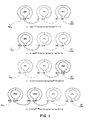
- Figure 1 presents schematic configurational drawings of three triskringle plasminogen activators and one tetra-kringle plasminogen activator produced by the methods disclosed in this application.
- the darkened portion of the depicted structures 1 (a-c) defines that portion of urokinase containing the urokinase kringle (UKK).
- the darkened portion of structure 1(d) defines the double kringle region of prothrombin (PTK1 and PTK2).
- the abbreviations tPK1 and tPK2 define the tissue plasminogen activator kringle 1 and 2, respectively.
- a ligation reaction for the sticky end DNA is typically performed at 15°C overnight in a buffered 20 ⁇ l solution containing 100-200 ng DNA and 400 units of T4 DNA ligase (N.E. Biolabs.).
- T4 DNA ligase N.E. Biolabs.
- 4 units of T4 RNA ligase are included in the above reaction mixture.
- the buffer solution used is prepared as a stock 10X solution; 0.5 m Tris® ⁇ HCl (pH 7.6), 0.1 M MgCI 2 and 0.1 M DTT (dithiothreitol).
- the oligomers were phosphorylated at the 5' end in a volume of 50 pl containing 200-500 ng DNA, 10 units of T4 DNA kinase, 0.5 mM ATP and kinase buffer (0.05M Tris-HCl, pH 7.6, 10 mM MgCl2, 5 mM DTT) and incubated at 37°C for hour.
- oligomers were radiolabeled with 100 ⁇ Ci gamma 32 P-ATP (5,000 C i /mmol, Amersham, Arlington Heights, ll) following the procedure of Maxam, A. M and Gilbert, W. Method Enzymol. 65, 499 (1980).
- DNA fragments were first separated by electrophoresis through 0.5-1.5% agarose gel. Electrophoresis is carried out at about 100 volts for 2-4 hours in Tris-Borate-EDTA (TBE) buffer (0.089 M Tris, 0.089 M boric acid, 2 mM EDTA, pH 8.0). DNA bands are visualized under UV light by staining the gel in 0.5 ⁇ g/ml ethidium bromide solution (Sharp et al. Biochem, 12, 3055, 1973). The agarose containing the DNA band is cut out with a razor. The DNA is electroeluted from the gel. (Maniatis et al.
- the DNA is further purified by passing it through an Elutip-d ® column (Schleicher and Schuell, Keene, NH). The DNA is precipitated with ethanol. After centrifugation in an Eppendorf microfuge for 15 minutes, the pellet is washed once with 70% ethanol, dried under vacuum and dissolved in 50 ⁇ l deionized water.
- Miniplasmid DNA Preparation About 2 ml of LB (Luria Bertani) medium containing appropriate antibiotics is inoculated with a single bacterial colony and is incubated at 37°C overnight with vigorous shaking. About 1.5 ml of the culture medium is used to isolate plasmid DNA by the boiling method described in Maniatis et al., loc. cit. p. 366. The rest of the culture is stored in 15% glycerol at -20°C for later use. The DNA is dissolved in 40 ⁇ l H 2 0 containing 10 ⁇ g RNAse/ml. About 8 ⁇ l is sufficient for one restriction enzyme analysis.
- Plasmid DNA typically, one liter of LB medium is inoculated with a single bacterial colony. After amplification of the plasmid DNA with chloramphenicol, the bacterial cells are harvested and lysed according to the boiling method (Holmes, D. S. and Quigley, M. Anal Biochem. 114, 193, 1981). The plasmid DNA is further purified either by cesium chloride gradient centrifugation or by column chromatography on a Sepharose 4B column (Pharmacia, Uppsala, Sweden) as described in Maniatis et al., loc. cit. pp. 93-96. A recovery of about 400 ⁇ g DNA per liter culture is routinely obtained.
- dG-tailed pBR322 plasmid DNA (Bethesda Research Laboratories, Inc., Gaithersburg, MD) was used to clone the cDNA for t-PA and u-PA.
- the detailed molecular structure of pBR322 is described by Maniatis et al., loc. cit. pp. 5 and 488.
- the E. coli strains used for transformation with recombinant pBR322 were either HB101 or MM294 (Maniatis et al., loc. cit. p. 504).
- Cloning in any of the 11 sites can be monitored by the appearance of white recombinant colonies in the background of blue vector colonies on an indicator plate containing X-gal (5-bromo-4-Chloro-3-indolyl ⁇ -D-galactoside) (Ruther, Mol. Gen. Genetics 178, 475, 1980).
- the E. coli strain used for transformation with the recombinant pUC plasmid was JM 103.
- the pUC plasmid and E. coli JM 103 were obtained from Pharmacia P-L Biochemicals, Milwaukee, WI.
- E. coli K-12 strain JM 103 PL Biochemicals
- E. coli K-12 strain MM294 ATCC No. 33625
- Other microorganisms which may be used in this process include other useful E. coli strains and Bacilli, such as Bacillus subtilis. All these microorganisms utilize plasmids that can replicate and express heterologous gene sequences.
- the expression system in yeast employs a plasmid which is capable of selection and replication in E. coli and/or yeast (Saccharomyces cerevisiae).
- the plasmid contains the TRP 1 gene which renders a transformed trp - yeast strain (RH218) prototrophic for tryptophan.
- the yeast expression vector can shuttle in between yeast and E. coli.
- the plasmid has the following components: 1) a DNA segment derived from PBR322 containing the origin of replication and the ampicillin resistance gene, 2) the yeast TRP1 gene, 3) the yeast 2 p DNA which enables the plasmid to replicate in yeast with high stability, 4) A promoter region from the yeast gene, such as alcohol dehydrogenase, a factor, glyceraldehyde-3-phosphate-dehydrogenase, etc., 5) translational start and transciptional stop sequences which can be used for proper termination and polyadenylation of mRNA in the expression system.
- Mammalian cell lines capable of the replication and expression of a compatible vector for the production of heterologous proteins can be used in the present invention. They are, for example: Cos-7, W138, 3T3, CHO, Hela cells, and C127 cells.
- the vectors used contain 1) the origin of replication derived from a virus (SV40, adeno, polyoma, BPV) or cellular chromosomal DNA, 2) a promoter, 3) the translational initiation signals, such as ribosomal binding sites, and 4) RNA processing signals, (RNA splicing, polyadenylation and transcriptional terminator sequences).
- the expression vectors presented here use a BPV viral replication origin, a mouse metallothionein promoter and SV40 RNA processing signals.
- the vector can also be shuttled between mammalian cell culture and E. coli. It contains derivatives of PBR322 sequences which provide selectable markers for E. coli amplicillin resistance as well as an E. coli origin of DNA replication. These sequences are derived from the plasmid pML-2d.
- the edited hybrid plasminogen activator gene containing a Bam H1 sticky end is first inserted at the Bgl II site of plasmid 341-3 (Law MF et al., Md. Cell Biol. F 3,2110,1983) between the mouse metallothionein transcriptional promoter element and the SV40 early region transcriptional processing signals.
- the complete BPV genome obtained after digestion of plasmid 142-6 (ATCC No. 37134) with Bam H1, is ligated to the unique Bam H1 site.
- Plasmid 341-3 also contains pML2, a pBR 322 derivative which allows plasmid replication in bacterial cells.
- the expression plasmid constructed herein can replicate in mouse C-127 cells exclusively as an extrachromosomal episome. Transfected cells can be selected for the transformed phenotype. Further modification of the expression vector, such as by adding specific enhancer elements for higher expression levels or inserting drug resistance (such as neomycin resistance) into the gene is also possible.
- RNA was isolated by the isothiocyanate method (Maniatis et al., loc. cit. p. 196) from normal human fibroblast cells (WI-38 cells), which had been stimulated by endothelial cell growth factor (ECGF) and heparin to produce t-PA. The same stimulated cells produce urokinase.
- Messenger RNA (mRNA) was obtained from the total RNA by chromatography on an oligo-deoxythymidine (dT)-cellulose column (Aviv et al., Proc. Nat'l. Acad. Sci. USA, 69, 1408, 1972).
- the pooled mRNA (5 ⁇ g) described in the previous paragraph was used to produce double stranded cDNA and the cDNA was homopolymer tailed with polydeoxycytidylate (poly dC) using terminal nucleotide transferase.
- the product was annealed with Pst 1 digested, polydeoxyguanylate (poly dG) tailed pBR322.
- the annealed DNA was used to transform competent E. coli 294 cells which were cultured to produce about 10 5 bacterial clones (Maniatis et al. loc cit., p. 229).
- oligonucleotides after radiolabeling with 32 P-ATP, were used to screen the library of recombinant clones. These oligomers correspond to amino acid sequences, 34-39 (17 mer), 253-258 (18 mer) and 523-527 (15 mer) of t-PA molecule (Pennica, D., et al., Nature, 301 214, 1983) 17 mer: 5'-CCACTGTTGCACCAGCA-3'; 18 mer: 5'-CACATCACAGTACTCCCA-3'; 15 mer: 5'-CGGTCGCATGTTGTC-3'. About 20 colonies exhibited moderate to strong homology with the pooled probes.
- Plasmid DNA prepared from these clones was blotted on nitrocellulose paper and hybridized with individual probes. Two clones (42 and 62a) hybridized to both the middle (18 mer) and 3' end (15 mer) probes. Enzymatic digestion of plasmid DNA with Pst 1 showed that clone No. 42 contained the biggest insert of greater than 2 kilobase (Kb) in the form of three fragments of 1.1, 0.6 and 0.4 Kb.
- Kb kilobase
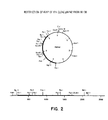
- a complete restriction map of the clone (pWP 42) is depicted in Figure 2 of the drawings. This clone contains the full length sequence for the t-PA gene, containing 2600 bp, which includes the 5'- and 3'-untranslated regions.
- pWP 42 plasmid DNA was digested with 9 units Xho II at 37°C for 2 hours.
- the reaction mixture was run on preparative 1.2% agarose gel and a 1618 bp DNA fragment was isolated by electrophoresis in agarose gel. After filling in cohesive ends with E. coli Polymerase 1 (Klenow fragment) and dNTPs (four deoxy nucleotide triphosphates- dATP, dGTP, dCTP and dTTP) 1 pg of the so modified DNA was ligated overnight with 300 ng of phosphorylated Sal 1 linker. After phenol/chloroform extraction and ethanol precipitation, the DNA was digested with 50 U of Sal 1 for four hours and the reaction mixture applied to a preparative 1% agarose gel to isolate the desired DNA fragment.
- the DNA with Sal 1 ends was ligated to Sal 1 cut pUC 13 and used to transform E. coli JM 103 cells and the cells were plated out on ampicillin and X-gal plates. Eight ampicillin resistant, white colonies were selected and grown to prepare a mini-plasmid preparation. Two clones (ptPS34B and ptPS39) were found to contain the required DNA fragment. Ten ⁇ g of ptPS39 plasmid DNA digested to completion with Bam H1 and Nar 1 was run on preparative agarose gel to obtain a 1288 bp fragment coding for the C-terminal end of t-PA.
- the 5' end of the t-PA gene was obtained by digestion of 10 ⁇ g of pWP 42 with four units of Hga 1 at 37°C for eight hours. A 515 bp fragment was isolated by electrophoresis in 1% agarose gel. The cohesive ends of this DNA fragment were filled in with DNA polymerase 1 (Klenow fragment) and dNTPs and the product was ligated to Sma 1 cut pUC 13. After transforming E. coli JM 103 cells, approximately 75 ampicillin resistant, white colonies were obtained. Twenty four of these colonies were grown to prepare a miniplasmid preparation. The miniplasmid preparation was digested with Nar 1 and 17 clones were found to have the required insert in either orientation.
- plasmid DNA pt PHga 4
- pt PHga 4 One clone was grown in 1.0 liter of LB medium containing ampicillin to obtain a large quantity of plasmid DNA using the boiling method.
- the plasmid DNA, pt PHga 4 was digested with Bam H1 and Nar 1 and electrophoresed on 1.2% agarose gel to isolate a 434 bp DNA fragment coding for the N-terminal end of t-PA.
- the 1288 bp DNA (300 ng) and 434 bp DNA (100 ng) were ligated overnight to obtain a 1722 bp DNA fragment.
- This DNA after ligation with Bam H1 cut pUC 13 was used to transform E. coli JM 103 cells. More than 1000 ampicillin resistant colonies were obtained. Plasmid DNA from twelve colonies was prepared by the boiling method. The plasmid DNA was identified by cutting with each of Bam H1, Nar 1 and Xho 11. All of the resulting plasmids were found to contain the desired 1,722 bp DNA fragment.
- One plasmid (pt PBM 1) was used for large scale plasmid DNA preparation.
- Urokinase Plasminogen Activator u-PA
- the probe synthesized by the standard phosphotriester method using a Gene Machine (Applied Biosystems), presents the oligomer sequence - 5'-GTA GAT GGC CGC AAA CCA-3' - corresponding to the middle part of the urokinase gene (aa 173-179 ). About 13 clones exhibited a moderate to strong hybridization signal.
- clones were grown in 2 ml LB medium containing tetracycline and a miniplasmid preparation was prepared.
- the miniplasmid preparation was dissolved in 40 pL H 2 0 containing 10 ⁇ g/ml RNAse.
- About 8 pL of the DNA thereby produced was digested with one unit of Pst 1 and the product separated by electrophoresis on 1 % agarose gel.
- One clone (pUK 53) was found to contain the largest insert of 1.7 Kb in the form of three inserts of sizes 1.2, 0.4 and 0.1 Kb long.
- the complete 3'- end nucleotide sequence of urokinase was present in the Pst cut 1.2 Kb DNA fragment.
- the 5' end sequence of the gene was discovered, through nucleotide sequencing by the Maxam and Gilbert method, Methods *Enzymol., 65, 1499, (1980) to be missing aproximately 30 nucleotides corresponding to the first 10 amino acids of the signal peptide coding region of the urokinase protein. Therefore, a duplex DNA sequence corresponding to the missing nucleotides was synthesized and ligated to the existing gene.
- the Urokinase plasmid (pUK 53) DNA was cut with Nco 1 and Mst II and the products separated by electrophoresis on 1% agarose gel. A DNA fragment of 1198 bp was isolated by electroelution. The 5' protruding end of the DNA fragment corresponding to the Nco 1 cut was made blunt ended by filling in with dNTP's and E. coli DNA polymerase (Klenowfragment). The DNA was then ligated to Sma 1 cut pUC 13 and the modified plasmid used to transform competent E. coli JM 103 cells. The Nco 1 site of the insert is regenerated when the DNA is ligated to the Sma 1 site of pUC 13.
- the cells were plated out on ampicillin and X-gal plates and a miniplasmid preparation produced from white colonies. Digestion of the mini- plasmid DNA preparation with Nco 1 and Sal 1 gave an approximate 1200 bp DNA fragment.
- a large scale plasmid DNA preparation from a positive clone (pUKNM-3') was made and digested with Nco 1 and Sal 1 to obtain a large amount of the approximate 1200 bp DNA fragment which was separated by preparative agarose gel electrophoresis.
- pUK 53 plasmid DNA was digested first with Pst 1 and a 400 bp DNA fragment was isolated. This DNA was then treated with ScrF1 to yield a 242 bp fragment of DNA. The protruding ends of the DNA were filled in with dNTP's and E. coli DNA polymerase 1 (Klenow fragment).
- Two complementary oligonucleotide sequences 38 and 42 bases in length, were synthesised on a Gene Machine to provide for missing amino acids (-9 to -20) while keeping the proper translational reading frame and providing a Sal 1 sequence on both ends of the DNA for subcloning in Sal 1 cut pUC 13.
- the two oligomers were mixed in equimolar amounts in ligase buffer (50 mM Tris-CHI, pH 7.6, 10 mM MgCl 2 , 10 mM dithiothreitol) and heated to 80°C for 5 minutes and allowed to cool to room temperature for about 1 hour.
- duplex of the two complementary nucleotide sequences (about 1 ug) was ligated to about 300 ng of the 242 bp DNA fragment in ligase buffer at 4°C for 16 hours using 400 units of T4 DNA ligase.
- the ligated mixture was separated by electrophoresis on 1.2% agarose gel and an approximate 320 bp DNA fragment was isolated by electroelution.
- This fragment (about 20 ng) was ligated to 100 ng of Sal 1 cut pUC 13 and the vector was used to transform competent E. coli JM 103 cells. The cells were plated out on ampicillin X-gal plates. Twelve white colonies were selected and grown to prepare a miniplasmid preparation.
- the miniplasmid preparation was cut with Sal 1.
- the DNA was cut with Sal 1 and Nco 1 to yield a 260 bp DNA fragment upon preparative agarose gel electrophoresis.
- the miniplasmid preparation was cut with Sal 1 and one clone (pUKBM) was found to contain the desired 1460 bp DNA insert.
- pUKBM was grown in large volume to provide plasmid DNA.
- the oligonucleotide sequence from the 5' end containing the synthetic linker was sequenced by the Maxam-Gilbert method to confirm its authenticity.
- the DNA insert in pUKBM plasmid was thereby established to contain the translational initiation codon AUG (met, -20 aa in the leader sequence) as well as the termination codon TGA.
- This complete gene codes for the 20 amino acids of the signal peptide (-1 to -20) and the 411 amino acids of mature urokinase protein.
- the t-PA sequence containing the signal peptide (a.a. -35 to -1) and the N-terminal peptide (a.a. 1 to 91) regions were replaced by an amino acid sequence containing the signal peptide (a.a., -20 to -1) and the first 131 amino acids of urokinase.
- the u-PA sequence was joined to the first kringle (tPK1) of t-PA via a oligonucleotide sequence coding for the hexapeptide L-Ser-L-Glu-Gly-L-Asn-L-Ser-L-Asp.
- plasmid pUKBM was digested with Eco R1 and Mst 1 under standard conditions. The reaction mixture was electrophoresed through a 1.2% agarose gel at 150 volts for 3 hours. After staining the gel with ethidium bromide to visualise the DNA bands, a 452 bp DNA fragment was isolated and purified. This DNA fragment contains coding information for the leader or signal peptide (20 amino acids) as well as N-terminal and kringle region (a.a. 1 to 131) of the urokinase gene.
- t-PA-des a.a 1-91 sequence, about 10 ⁇ g of recombinant plasmid ptPBM-1 was digested to completion with Ava II and electrophoresed on a 1.2% agarose gel to isolate a 747 bp DNA fragment.
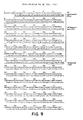
- the addition of an oligomer linker to this fragment followed by digestion with Eco R1 to obtain a 354 bp DNA fragment is described in Example 2 and depicted in Fig. 7.
- the 354 bp DNA codes for the hexapeptide linker and the t-PA peptide (a.a 92 to 204) - a 118 amino acid sequence.
- a 1300 bp DNA fragment was obtained by digestion of ptPBM-1 with Bam H1 and Nar 1. Equimolar amounts of 519 bp and 1300 bp DNA fragments were used for ligation following the standard procedure of Goodman, H.
- the ligation mixture was extracted twice with a phenol :chloroform (1: 1) mixture and the DNA was precipitated with two volumes of absolute ethanol. After dissolving the pellet in 50 pl H 2 0, the DNA was digested with Bam H1 under standard assay conditions and separated by electrophoresis on a 1% agarose gel. A DNA fragment containing 1819 bps, was cut, eluted from the gel and purified.
- This DNA fragment contained all the coding information required for the signal peptide (20 amino acids) and the mature hybrid or tris-kringle PA molecule of 573 amino acids which corresponds to (UKaa 1-131 -Ser-Glu-Gly-Asn-Ser-Asp) 1-91 -t-PA depicted in Figure 1(a).
- the tris-kringle gene was then ligated to Bgl II cut expression vectors papalloma virus (BPV) which served as the complete expression vector.
- Bgl II cut expression vectors papalloma virus (BPV) which served as the complete expression vector.
- Conventional culture yielded the tris-kringle plasminogen activator of Figure 1(a).
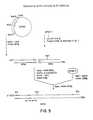
- Fig. 6 depicts the construction of a nucleotide sequence, coding for a.a. 51-131 from the recombinant plasmid pUK 53.
- Mst 1 just after the nucleotide sequence corresponding to amino acid 131.
- a scheme for the creation of a restriction site around a.a. 50 was formulated as shown in Fig. 6.
- the kringle region of urokinase corresponds to the nucleotide sequence from bp 284 (a.a. 50) to bp 530 (a.a. 131).
- pUK 53 plasmid DNA was digested to completion with Sca 1 which cuts at bp 204 in the urokinase sequence. After phenol extraction and ethanol precipitation, the DNA pellet was dissolved in 50 ⁇ l of buffer solution (10 mM CaCl 2 , 12 mM MgC) 2 , 0.2M NaCi 1,20 mM Tris ⁇ HCl (pH 8.0), 1 mM EDTA). To the reaction mixture was added 1 ⁇ l (2 units) of nuclease Bal 31 and the mixture was incubated at 30°C for 15 seconds (Legerski, R. J., J. L. Hodnett, and H. B. Gray, Jr., Nucleic Acid Res.
- the reaction was stopped by the addition of 5 pl of 0.4 M EGTA. This reaction time was found to be sufficient to remove about 80 bp from each end of the DNA fragment.
- the oligomer linker (Eco R1/Nde 1 linker) with the sequence, TGGAATTCCA, was designed to create an Nde 1 site (CATATG) when ligated to the DNA fragment and containing the sequence, TATG (corresponding to a.a. 51
- the restriction site, Eco R1 was built into the linker to provide for subsequent cloning in a pUC 13 vector.
- the DNA was digested with Eco R1 and separated by electrophoresis on 1% preparative agarose gel. A DNA band corresponding to 340 bp, was cut, eluted and ethanol precipitated. About 40 ng of this DNA was ligated with about 0.4 ug of Eco R1 cut pUC 13 vector DNA and used to transform competent E. coli JM 103 cells (Maniatis et al., loc. cit. p. 250). About 1,000 recombinant colonies were obtained from 10 plates. The bacterial colonies were replica-plated on nitrocellulose paper, and screened by in situ hybridization using a radioactive oligonucleotide probe (Grunstein et al. Proc. Nat'l.
- the oligonucleotide probe used was 18 bp long (TTCCATATGAGGGGAATG) and contains the first five nucleotides from the Eco R1/Nde 1 linker and the next 13 bases from the urokinase sequence corresponding to a.a. 51 to 54. About 12 clones showed a moderate to strong signal on X-ray film. Miniplasmid DNA prepared from these 12 clones was digested with Nde 1 and separated by electrophoresis on 1% agarose gel. One clone, pUKKNd 16, was found to contain the newly generated Nde 1 site.
- This plasmid DNA after digestion with Nde 1 and Mst 1, was separated by electrophoresis on 1.4% agarose gel to obtain a 246 bp DNA fragment.
- This DNA fragment contains the urokinase nucleotide sequence coding for a.a. 51 to 131.
- the DNA sequence for the missing a.a. 50 (Cys) is incorporated into the oligomer linker as shown in Fig. 7 and 8.
- Fig. 1 (b) The urokinase kringle sequence as shown in Fig. 1 (b) was inserted before the double kringle region of t-PA i.e. between a.a. 91 and 92.
- Nde 1 and Mst 1 digestion of pUKKNd 16 plasmid DNA gave rise to a 246 bp sequence which corresponds to a.a. 51 to 131 or urokinase.
- the two ends of the UK kringle sequence (246 bp) were inserted into the t-PA gene between nucleotide no. 462 (a.a. 91) and 463 (a.a. 92) through the use of two oligonucleotide linkers.
- the procedure followed is shown in Fig. 7.
- ptPBM-1 plasmid DNA was digested with Eco R1 and a 740 bp DNA fragment was isolated by electrophoresis in 1% agarose gel. This DNA was then digested partially with Sau 961 isoschizomer of Asu 1) for the isolation and purification of a 385 bp DNA fragment.
- oligonucleotide sequences Two complementary oligonucleotide sequences were synthesized by the phosphotriester method (Crea et al., Proc. Nat'l. Acad. Sci (USA) 75, 5765, 1978) which code for amino acid 91 (Thr) of t-PA and amino acid 50 (Cys) of the urokinase kringle.
- the oligonucleotide linker is flanked by Asu 1 and Nde 1 restriction sites. Only the upper oligonucleotide (GGCCACCTGC) was phosphorylated at its 5' end.
- This DNA after ligation with an equimolar amount of Eco R1 cut pUC 13 vector, was used to transform competent E coli JM 103 cells.
- Miniplasmid DNA preparations from 12 recombinant clones were digested with Eco R1.
- One clone containing the required insert of 994 bp, was grown in 1 liter LB medium for large scale preparation of plasmid DNA.
- About 10 pg of this plasmid DNA was digested with Bam H1 and Nar 1 and a DNA fragment corresponding to 700 bp size was purified from the 1% agarose gel.
- the 3' end of the t-PA gene was obtained by digestion of about 10 pg of ptPBM-1 plasmid DNA with Bam H1 and Nar 1. After separating the reaction mixture by electrophoresis on 1% agarose gel, an approximate 1300 bp DNA fragment was isolated by electroelution and purified.
- urokinase kringle sequence is inserted just after the double kringle region of the t-PA gene i.e. between the sequences corresponding to a.a. 262 (Cys.) and 262 (Ser).
- Fig. 8 shows the scheme detailing the varius steps involved in the production of this tris-kringle PA.
- pWP 42 plasmid DNA was digested with Hga 1 and a 400 bp DNA fragment was isolated from 1% agarose gel.
- This DNAfragment contains the sequence corresponding to part of the kringle region of t-PA, i.e., amino acids 135-261. It should be noted that the double kringle region of t-PA ranges from amino acids 92 to 261, with a hexapeptide (amino acids 174-179) joining the two kringles.
- An oligonucleotide linker consisting of two DNA sequences - 24 mer and 21 mer as depicted in Fig. 8 - was synthesized using the phosphotriester method.
- This oligomer linker codes for the hexapeptide linker as well as for missing amino acid 50 (Cys) of the UK kringle and is flanked by restriction enzyme sequences for HGa 1 and Nde 1. Only the upper oligonucleotide, 23 mer was phosphorylated at its 5' end and it was ligated to the Hga 1 end of the 400 bp DNA fragment from t-PA. The 421 bp DNA product was isolated from preparative 1% agarose gel.
- the post kringle part of t-PA was obtained by digestion of 10 pg of pWP 42 plasmid DNA with Rsa 1 followed by isolation of 501 bp DNA from 1.2% agarose gel.
- This DNA represents a.a. 269 to 435 of the t-PA molecule.
- Two complementary oligonucleotide sequences of 22 bases as depicted in Fig. 8 were synthesized by the phosphotriester method. This DNA linker, when ligated to the 501 bp DNA at its 5' end restores the missing amino acids from 262 to 268.
- the 1.8 Kb DNA obtained by digestion of ptPUHYC plasmid DNA with Bam H1, contains the nucleotide sequence coding for a protein of 650 amino acids - 35 amino acids for the signal peptide and 615 amino acids for mature protein corresponding to the product of Fig. 1(c).
- the tris-kringle gene is then ligated to Bgl II cut bovine papalloma virus (BPV) which serves as the complete expression vector.
- Bgl II cut bovine papalloma virus Bgl II cut bovine papalloma virus (BPV) which serves as the complete expression vector.
- Conventional culture yields the tris-kringle plasminogen activator of Fig. 1(c).
- a cDNA clone for the prothrombin gene was isolated from the human liver cDNA library following the procedure of Friezner et al., Biochemistry, 22, 2087, 1983.
- the clone, pPTR contains complete coding information for the mature protein of 579 amino acids.
- the double kringle region of prothrombin extends from amino acid 65 (bp 319) to amino acid 248 (bp 840), a 184 amino acid peptide.
- Each of the two kringles, PTK1 (amino acids 65-143) and PTK 2 (amino acids 170-248) are 79 amino acids long and are joined by a peptide of 26 amino acid length (amino acis 144-169).
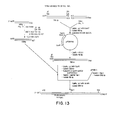
- the DNA sequence representing the double kringle region was isolated from the prothrombin cDNA in two steps (Fig. 12).
- pPTR plasmid DNA was digested with Ava 1 and a 706 bp DNA was isolated from 1 % agarose gel. This DNA was treated with Bal 31 for 7.5 seconds to remove about 38 bp from either end of the DNA (Legerski et al., Nucleic Acid Res., 5, 145, 1978). After phenol extracation and ethanol precipitation, the DNA was ligated to an Eco R1 linker, GGAATTCC, at 4°C for 15 hours.
- This linker when ligated to DNA ending with sequences CTGAG or TGAG (amino acid 67, Glu) will produce a new restriction sequence for Mst II (CCTGAGG) at the N-terminal of the double kringle (amino acid 67).
- CCTGAGG a DNAfragment of 630 bp size was isolated.
- This DNA after ligation in equimolar amounts with Eco R1/pUC 13, was then used to transform competent E, coli JM 103 cells.
- Initial screening for the desired clone was performed by in situ hybridization with a 32 P labeled probe, GAATTCCTGAGGGTCTG, containing nucleotide sequences for amino acids 66 to 68.
- the second step involved the editing of the 3' end of the kringle region, around amino acid 248, using a similar approach as described above.
- About 10 ⁇ g of pPTK-5' plasmid DNA was digested to completion with Bam H1.
- the DNA was then treated with Bal 31 for 15 seconds at 30°C to remove about 82 bp from both ends of the DNA.
- the DNA was lilgated to a Eco R1/ Fsp 1 linker, CGCAGAATTCTGCG.
- the linker generates an Fsp I sequence (TGCGCA) at any DNA sequence ending in TG-.
- a 546 bp DNA was isolated from 1.2% agarose gel and then ligated to Eco R1 cut pUC 13.
- the recombinant plasmid was then used to transform competent E. coli JM 103 cells. About 1000 recombinant clones were screened in situ using a 3z P-labelled oligomer with the sequence CTCAACTATTGCGCAGAA (amino acids 245 to 248). Plasmid DNA prepared from 12 potential clones, was cut with Mst II and Fsp 1 and run on a 1% agarose gel. One clone, pPT2K, was found to contain the required insert of 546 bp size.
- This DNA codes for a total of 182 amino acids, amino acids 67-248, of the double kringle region.
- the nucleotide sequence for the remaining two amino acids, at positions 65 (Cys) and 66 (Ala), are added via the oligomer linker as shown in Fig. 13.
- Mst II + Fspl or Eco R1 digestion of pPT2K plasmid DNA gives rise to a 546 bp DNA fragment which codes for amino acids 67 to 248 of prothrombin.
- the two ends of the 546 bp DNA were inserted into the t-PA gene between nucleotide 462 (amino acid 91) and 463 (amino acid 92). The scheme followed is shown in Fig. 13.
- the 354 bp DNA containing the nucleotide sequence for the peptide linker-Ser-Glu-Gly-Asn-Ser-Asp as well as for the amino acid 92 to 204 of t-PA, was prepared as described in Exmple 2 and Fig. 7. Equimolar amounts of the 354 bp DNA and 546 bp DNA (prothrombin kringles) was ligated at 4°C for 16 hours. The DNA was cut with Eco R1 and a 900 bp DNA fragment was isolated from agarose gel. This DNA after ligation to Eco R1 cut pUK 13 vector was used to transform E. coli JM 103 cells.
- Miniplasmid preparation obtained from 12 recombinant clones were digested with Eco R1 and Mst 11.
- One clone, pPT2KTPK was found to contain the required insert of 900 bp. This DNA codes for a total of 300 amino acids, 182 amino acids for prothrombin (amino acids 67-248), a hexapeptide sequence and 112 amino acids for t-PA (amino acids 92-204).
- a 1300 bp DNA fragment was obtained from digestion of ptPBM-1 with Bam H1 and Nar 1.
- the two DNA fragments, 986 bp and 1300 bp, in equimolar amounts were ligated, cut with Bam H1 and a 2286 bp DNA fragment was isolated from 1% agarose gel electrophoresis.
- the DNA, flanked by the Bam H1 sequences, was inserted at the Bgl II site of the BPV expression vector. This DNA codes for a total of 752 amino acids - 35 amino acids for the signal peptide and 717 amino acids for the mature protein.
- the mature protein, with an estimated molecular weight of about 92,000 contains 184 amino acids from the prothrombin double kringle region, a hexapeptide linker and complete t-PA sequence of 527 amino acids.
- Hybrid A and Hybrid B Two of the hybrid plasminogen activators (h-PA) shown in Fig. 1(a) and Fig. 1(b) were prepared for expression in the BPV-1 based expression vector system. These h-PA's are throughout this application referred to as Hybrid A and Hybrid B, respectively.
- the SV40 poly-A sequence located just behind the gene would process the RNA transcript of the gene by polyadenylation at its 3'-end for efficient translation of the gene.
- Two recombinant clones pHyb AMT-43 (for Hybrid A) and pHyb BMT-50 (for Hybrid B) were obtained.
- the two expression plasmids containing the genes encoding for hybrid t-PA/urokinase molecules were transfected into mouse C127 cells by the calcium phosphate precipitation method (Graham et al., Virology, 52, 456 (1973)). Foci of morphologiclly transformed cells were subcultured and screened for gene expression. Initial screening for fibrinolytic activity in the medium was done on a fibrin-agar plate as shown in Fig. 15(a) (Ploug et al. Biochim. Biophys. Acta, 24, 278 (1957)).
- the enzymatic activities of the hybrid molecules were assessed by fibrin-agar assay and amidolytic activity assay using synthetic substrates S-2444 and S-2251 (Shimoda et al., Thromb. Haemostas., 46, 507 (1981)). Approximately 1-5 units/pl active enzyme were secreted into the medium in 16 to 18 hours. Natural t-PA and urokinase are synthesized as prercursors and secreted from the cells after the signal sequences are cleaved off to become the mature protein. Furthermore, both t-PA and urokinase are glycosylated.
- the hybrid molecules were analyzed by SDS/polyacrylamide gel (PAGE) electrophoresis followed by fibrin-agar overlay (Granelli-Piperno et al., J. Exp. Med., 148, 223, (1978)).
- PAGE SDS/polyacrylamide gel
- fibrin-agar overlay Gnelli-Piperno et al., J. Exp. Med., 148, 223, (1978)
- the active enzyme from Hybrid B-containing medium has a molecular weight of 76,000 and Hybrid A, 71,000. These are in good agreement with the molecular weight calculated from the inserted gene.
- Hybrid B was purified from harvest medium in a manner similar to that used for t-PA purification. Amino acid sequence analysis indicated that the N-terminal of Hybrid B is correctly processed, having the sequence identical to the N-terminal region of mature t-PA; Ser-Tyr-Gln-; in addition, an N-terminal sequence, lIe-Lys-Gly-, corresponding to the amino acid at the activation cleavage site Arg-Ile was present. It is concluded that Hybrid B purified from the harvest medium existed mainly as an activated, two chain form. By addition of a protease inhibitor (Aprotinin) to the harvest medium, a single chain h-PA molecule is obtained.
- Aprotinin protease inhibitor
- the fibrinolytic activity of the culture media from 5A5 cells as well as purified t-PA was neutralized by anti-t-PA antiserum, but not by anti-urokinase antiserum, suggesting that although the Hybrid B contains a urokinase kringle in addition to t-PA, the protease domain of Hybrid B was recognized and neutralized by anti-t-PA.
- Anti-urokinase antibody may bind to the urokinase kringle portion of the hybrid molecule, but this binding, if any, does not interfere with the proteolytic activity conferred by the protease domain at the C-terminus of the hybrid molecule.
- the poly-kringle plasminogen activators of this invention are used in treatment of vascular accidents in mammals in the same manner and through the same delivery vehicles as t-PA itself.
- the poly-kringle plasminogen activators of this invention may be formulated into pharmaceutical compositions by dissolving or suspending the polypeptides in suitable pharmaceutically acceptable vehicles such as those known to the art as applied to t-PA.
- Administration to a mammal in need thereof by intravascular injection or infusion is conducted following techniques already established with t-PA itself.
- An intravenous primary dose of about 440 IU/kg body weight is normal, followed by continuing infusion of about 440 IU/kg/hr for about 6 to 12 hours is conventional practice when using t-PA.
- a process for converting plasminogen into plasmin which comprises contacting said plasminogen with a polypeptide according to this invention.
- this invention provides a process for disrupting blood clots in a mammal which comprises administering into the vascular system of said mammal a polypeptide according to this invention.
Landscapes
- Health & Medical Sciences (AREA)
- Engineering & Computer Science (AREA)
- Life Sciences & Earth Sciences (AREA)
- Chemical & Material Sciences (AREA)
- Genetics & Genomics (AREA)
- Organic Chemistry (AREA)
- Bioinformatics & Cheminformatics (AREA)
- Biomedical Technology (AREA)
- Zoology (AREA)
- Wood Science & Technology (AREA)
- General Engineering & Computer Science (AREA)
- Molecular Biology (AREA)
- Biotechnology (AREA)
- General Health & Medical Sciences (AREA)
- Biochemistry (AREA)
- Medicinal Chemistry (AREA)
- Microbiology (AREA)
- Diabetes (AREA)
- Physics & Mathematics (AREA)
- Nuclear Medicine, Radiotherapy & Molecular Imaging (AREA)
- Animal Behavior & Ethology (AREA)
- Veterinary Medicine (AREA)
- General Chemical & Material Sciences (AREA)
- Chemical Kinetics & Catalysis (AREA)
- Hematology (AREA)
- Public Health (AREA)
- Pharmacology & Pharmacy (AREA)
- Biophysics (AREA)
- Plant Pathology (AREA)
- Enzymes And Modification Thereof (AREA)
- Medicines That Contain Protein Lipid Enzymes And Other Medicines (AREA)
- Micro-Organisms Or Cultivation Processes Thereof (AREA)
- Saccharide Compounds (AREA)
- Medicines Containing Material From Animals Or Micro-Organisms (AREA)
- Peptides Or Proteins (AREA)
Claims (19)
Priority Applications (1)
| Application Number | Priority Date | Filing Date | Title |
|---|---|---|---|
| AT86306058T ATE59857T1 (de) | 1985-08-14 | 1986-08-06 | Poly-kringle-plasminogenaktivator. |
Applications Claiming Priority (4)
| Application Number | Priority Date | Filing Date | Title |
|---|---|---|---|
| US76616385A | 1985-08-14 | 1985-08-14 | |
| US766163 | 1985-08-14 | ||
| US06/884,835 US4916071A (en) | 1985-08-14 | 1986-07-11 | Poly-kringle plasminogen activator |
| US884835 | 1986-07-11 |
Publications (2)
| Publication Number | Publication Date |
|---|---|
| EP0213794A1 EP0213794A1 (de) | 1987-03-11 |
| EP0213794B1 true EP0213794B1 (de) | 1991-01-09 |
Family
ID=27117699
Family Applications (1)
| Application Number | Title | Priority Date | Filing Date |
|---|---|---|---|
| EP86306058A Expired - Lifetime EP0213794B1 (de) | 1985-08-14 | 1986-08-06 | Poly-Kringle-Plasminogenaktivator |
Country Status (15)
| Country | Link |
|---|---|
| US (1) | US4916071A (de) |
| EP (1) | EP0213794B1 (de) |
| JP (2) | JPH0829086B2 (de) |
| KR (1) | KR900007649B1 (de) |
| AU (1) | AU596369B2 (de) |
| CA (1) | CA1341449C (de) |
| DE (1) | DE3676760D1 (de) |
| DK (1) | DK175420B1 (de) |
| GB (1) | GB2179948B (de) |
| GR (1) | GR862076B (de) |
| HU (1) | HU200795B (de) |
| IE (1) | IE59380B1 (de) |
| IL (1) | IL79644A (de) |
| PH (1) | PH26199A (de) |
| PT (1) | PT83170B (de) |
Families Citing this family (30)
| Publication number | Priority date | Publication date | Assignee | Title |
|---|---|---|---|---|
| US5112755A (en) * | 1982-04-15 | 1992-05-12 | Genentech, Inc. | Preparation of functional human urokinase proteins |
| GB8334498D0 (en) * | 1983-12-24 | 1984-02-01 | Beecham Group Plc | Compounds |
| US4880776A (en) * | 1983-12-24 | 1989-11-14 | Beecham Group P.L.C. | Plasmin A-chain urokinase B-chain hybrid protein |
| JP2581668B2 (ja) * | 1985-11-27 | 1997-02-12 | 三井東圧化学株式会社 | ヒト正常細胞由来のヒト組織プラスミノ−ゲン活性化因子をコ−ドする新しいdna配列とそれを含むベクタ−及び細胞 |
| EP0231624B1 (de) * | 1985-12-20 | 1993-01-27 | The Upjohn Company | Analoge des gewebespezifischen Plasminogenaktivators |
| US5204255A (en) * | 1986-01-31 | 1993-04-20 | Sagami Chemical Research Center | Hybrid tissue plasminogen activator/urokinase polypeptides |
| ATE70301T1 (de) * | 1986-02-17 | 1991-12-15 | Stichting Centraal Lab | Gewebeplasminogen-aktivator-mutant, dafuer kodierende rekombinante genetische information und verfahren zur herstellung dieser mutanten, deren verwendung und pharmazeutische zusammensetzungen. |
| US5047241A (en) * | 1986-07-11 | 1991-09-10 | American Home Products Corporation | Tris-Kringle plasminogen activator with novel K2 insert |
| US5580559A (en) * | 1986-12-05 | 1996-12-03 | Ciba-Geigy Corporation | Hybrid plasminogen activator |
| US5242819A (en) * | 1986-12-05 | 1993-09-07 | Ciba-Geigy Corporation | DNA molecules encoding hybrid proteins of tissue plasminogen activator and urokinase |
| FI100106B (fi) * | 1986-12-05 | 1997-09-30 | Novartis Ag | Menetelmä plasminogeenin yksisäikeisen yhdistelmäaktivaattorin valmist amiseksi |
| EP0299053A1 (de) * | 1987-01-30 | 1989-01-18 | American Home Products Corporation | Des-epidermale wachstumsfaktor-plasminogenaktivatoren |
| GB8705377D0 (en) * | 1987-03-07 | 1987-04-08 | Beecham Group Plc | Compounds |
| GB8711957D0 (en) * | 1987-05-20 | 1987-06-24 | Beecham Group Plc | Compounds |
| EP0292009A1 (de) * | 1987-05-22 | 1988-11-23 | Zymogenetics, Inc. | Fibrinolytische Proteine |
| ZA884012B (en) * | 1987-06-04 | 1989-02-22 | Zymogenetics Inc | Tissue plasminogen activator analogs having modified growth factor domains |
| ATE118815T1 (de) * | 1987-06-04 | 1995-03-15 | Zymogenetics Inc | Gewebs-plasminogen-aktivator-analoge mit modifizierten wachstumsfaktordomänen. |
| US5149533A (en) * | 1987-06-04 | 1992-09-22 | Zymogenetics, Inc. | Modified t-PA with kringle-/replaced by another kringle |
| US5302390A (en) * | 1987-07-01 | 1994-04-12 | Beecham Group Plc | Hybrid proteins of human plasminogen and human t-PA, pharmaceutical compositions and methods of treatment |
| EP0297882B1 (de) * | 1987-07-01 | 1993-08-25 | Beecham Group Plc | Hybride Plasminogenaktivatoren |
| EP0394261A4 (en) * | 1987-07-06 | 1991-09-11 | Genetics Institute, Inc. | Novel thrombolytic proteins |
| JP2708749B2 (ja) * | 1987-08-10 | 1998-02-04 | エーザイ株式会社 | 修飾型tPA含有注射用組成物 |
| US5244676A (en) * | 1987-10-09 | 1993-09-14 | Monsanto Company | Modified tissue plasminogen activator with modified glycosylation site |
| US5100666A (en) * | 1987-10-09 | 1992-03-31 | Monsanto Company | Modified tissue plasminogen activator K2K2SP |
| AU3410289A (en) * | 1988-04-22 | 1989-11-24 | Collaborative Research Inc. | Plasminogen activators with increased fibrin selectivity |
| GB8826975D0 (en) * | 1988-11-18 | 1988-12-21 | Beecham Group Plc | Novel compounds |
| US5326700A (en) * | 1990-11-06 | 1994-07-05 | Eli Lilly And Company | DNA sequences encoding t-PA derivatives with cleavable sites |
| WO2003087393A2 (en) * | 2002-04-09 | 2003-10-23 | Global Biotech Inc. | Human tissue urokinase type plasminogen activator production |
| WO2009086552A1 (en) * | 2008-01-02 | 2009-07-09 | The Trustees Of The University Of Pennsylvania | Targeting recombinant therapeutics to circulating red blood cells |
| US11629198B2 (en) | 2017-12-05 | 2023-04-18 | The Trustees Of The University Of Pennsylvania | Fusion proteins and antibodies targeting human red blood cell antigens |
Citations (1)
| Publication number | Priority date | Publication date | Assignee | Title |
|---|---|---|---|---|
| EP0155387A2 (de) * | 1983-12-24 | 1985-09-25 | Beecham Group Plc | Fibrinolytisches hybrides Protein, Verfahren zu seiner Herstellung und pharmazeutische Zubereitung |
Family Cites Families (5)
| Publication number | Priority date | Publication date | Assignee | Title |
|---|---|---|---|---|
| GR78180B (de) * | 1982-04-15 | 1984-09-26 | Genentech Inc | |
| SU1662352A3 (ru) * | 1982-05-05 | 1991-07-07 | Генентек, Инк (Фирма) | Штамм бактерий ЕSснеRIснIа coLI - продуцент активатора плазминогена тканевого типа |
| AR241654A1 (es) | 1982-05-05 | 1992-10-30 | Genentech Inc | Procedimiento para producir activador de plasminogeno de tejido humano. |
| US4766075A (en) * | 1982-07-14 | 1988-08-23 | Genentech, Inc. | Human tissue plasminogen activator |
| EP0231883B1 (de) * | 1986-01-31 | 1992-09-02 | Sagami Chemical Research Center | Hybrides Plasminogenaktivatorähnliches Polypeptid |
-
1986
- 1986-07-11 US US06/884,835 patent/US4916071A/en not_active Expired - Lifetime
- 1986-08-06 GB GB8619154A patent/GB2179948B/en not_active Expired
- 1986-08-06 GR GR862076A patent/GR862076B/el unknown
- 1986-08-06 DE DE8686306058T patent/DE3676760D1/de not_active Expired - Lifetime
- 1986-08-06 EP EP86306058A patent/EP0213794B1/de not_active Expired - Lifetime
- 1986-08-06 IL IL79644A patent/IL79644A/xx not_active IP Right Cessation
- 1986-08-08 HU HU863509A patent/HU200795B/hu unknown
- 1986-08-08 PT PT83170A patent/PT83170B/pt unknown
- 1986-08-12 PH PH34127A patent/PH26199A/en unknown
- 1986-08-13 IE IE217886A patent/IE59380B1/en not_active IP Right Cessation
- 1986-08-13 KR KR1019860006663A patent/KR900007649B1/ko not_active Expired
- 1986-08-13 CA CA000515883A patent/CA1341449C/en not_active Expired - Fee Related
- 1986-08-13 DK DK198603856A patent/DK175420B1/da not_active IP Right Cessation
- 1986-08-13 AU AU61102/86A patent/AU596369B2/en not_active Expired
- 1986-08-13 JP JP61191173A patent/JPH0829086B2/ja not_active Expired - Lifetime
-
1994
- 1994-08-10 JP JP6188238A patent/JP2610783B2/ja not_active Expired - Lifetime
Patent Citations (1)
| Publication number | Priority date | Publication date | Assignee | Title |
|---|---|---|---|---|
| EP0155387A2 (de) * | 1983-12-24 | 1985-09-25 | Beecham Group Plc | Fibrinolytisches hybrides Protein, Verfahren zu seiner Herstellung und pharmazeutische Zubereitung |
Also Published As
| Publication number | Publication date |
|---|---|
| JP2610783B2 (ja) | 1997-05-14 |
| GB2179948B (en) | 1989-08-16 |
| JPH0829086B2 (ja) | 1996-03-27 |
| KR870002264A (ko) | 1987-03-30 |
| DK385686A (da) | 1987-02-15 |
| HUT41443A (en) | 1987-04-28 |
| DE3676760D1 (de) | 1991-02-14 |
| PH26199A (en) | 1992-03-18 |
| CA1341449C (en) | 2003-12-09 |
| GB8619154D0 (en) | 1986-09-17 |
| HU200795B (en) | 1990-08-28 |
| GR862076B (en) | 1986-12-24 |
| IE59380B1 (en) | 1994-02-23 |
| KR900007649B1 (ko) | 1990-10-17 |
| US4916071A (en) | 1990-04-10 |
| AU6110286A (en) | 1987-02-19 |
| AU596369B2 (en) | 1990-05-03 |
| IL79644A (en) | 1991-06-10 |
| IE862178L (en) | 1987-02-14 |
| DK175420B1 (da) | 2004-10-04 |
| GB2179948A (en) | 1987-03-18 |
| JPH07147984A (ja) | 1995-06-13 |
| JPS62104577A (ja) | 1987-05-15 |
| PT83170A (en) | 1986-09-01 |
| IL79644A0 (en) | 1986-11-30 |
| DK385686D0 (da) | 1986-08-13 |
| EP0213794A1 (de) | 1987-03-11 |
| PT83170B (pt) | 1988-07-29 |
Similar Documents
| Publication | Publication Date | Title |
|---|---|---|
| US4916071A (en) | Poly-kringle plasminogen activator | |
| EP0092182B1 (de) | Herstellung von funktionellen menschlichen Urokinasepolypeptiden | |
| EP0199574B1 (de) | Plasminogenaktivator-Mutante des menschlichen Gewebes, Verfahren und Zwischenprodukte dafür und diese Mutante verwendende Zusammensetzungen | |
| EP0234051B1 (de) | Gewebeplasminogen-Aktivator-Mutant, dafür kodierende rekombinante genetische Information und Verfahren zur Herstellung dieser Mutanten, deren Verwendung und pharmazeutische Zusammensetzungen | |
| BG60253B2 (bg) | Човешки тъканен плазминогенен активатор | |
| US5073494A (en) | Human tissue plasminogen activator substituted at position 275 or at positions 275 and 277 | |
| US5112755A (en) | Preparation of functional human urokinase proteins | |
| EP0424405B1 (de) | Plasminogenaktivator-varianten und verfahren zu ihrer herstellung | |
| EP0297066B1 (de) | Neue fibrinolytische Enzyme | |
| HK1007333B (en) | Variants of plasminogen activators and processes for their production | |
| EP0299706A2 (de) | Unglicosilierter Plasminogen-Aktivator und Methode zu seiner Herstellung | |
| US5376547A (en) | Des-epidermal growth factor plasminogen activators | |
| US4997766A (en) | Poly-kringle plasminogen activator | |
| US5045315A (en) | Process for treating thrombosis by administering poly-kringle plasminogen activator | |
| JPH03502526A (ja) | ヒトプロウロキナーゼの製造 | |
| EP0316068A1 (de) | Modifizierter Plasminogenaktivator mit niedrigem Molekulargewicht und Verfahren zu seiner Herstellung | |
| WO1989010401A1 (en) | Plasminogene activators with increased fibrin selectivity | |
| CA1341444C (en) | Modified tissue plasminogen activator | |
| US5047241A (en) | Tris-Kringle plasminogen activator with novel K2 insert |
Legal Events
| Date | Code | Title | Description |
|---|---|---|---|
| PUAI | Public reference made under article 153(3) epc to a published international application that has entered the european phase |
Free format text: ORIGINAL CODE: 0009012 |
|
| AK | Designated contracting states |
Kind code of ref document: A1 Designated state(s): AT BE CH DE FR GB IT LI LU NL SE |
|
| 17P | Request for examination filed |
Effective date: 19870822 |
|
| 17Q | First examination report despatched |
Effective date: 19890220 |
|
| GRAA | (expected) grant |
Free format text: ORIGINAL CODE: 0009210 |
|
| AK | Designated contracting states |
Kind code of ref document: B1 Designated state(s): AT BE CH DE FR GB IT LI LU NL SE |
|
| REF | Corresponds to: |
Ref document number: 59857 Country of ref document: AT Date of ref document: 19910115 Kind code of ref document: T |
|
| ITF | It: translation for a ep patent filed | ||
| REF | Corresponds to: |
Ref document number: 3676760 Country of ref document: DE Date of ref document: 19910214 |
|
| ET | Fr: translation filed | ||
| PLBE | No opposition filed within time limit |
Free format text: ORIGINAL CODE: 0009261 |
|
| STAA | Information on the status of an ep patent application or granted ep patent |
Free format text: STATUS: NO OPPOSITION FILED WITHIN TIME LIMIT |
|
| 26N | No opposition filed | ||
| EPTA | Lu: last paid annual fee | ||
| REG | Reference to a national code |
Ref country code: CH Ref legal event code: PFA Free format text: AMERICAN HOME PRODUCTS CORPORATION |
|
| NLXE | Nl: other communications concerning ep-patents (part 3 heading xe) |
Free format text: CORR.:MADISON, NEW JERSEY, VER. ST. V. AM. |
|
| EAL | Se: european patent in force in sweden |
Ref document number: 86306058.8 |
|
| REG | Reference to a national code |
Ref country code: GB Ref legal event code: IF02 |
|
| REG | Reference to a national code |
Ref country code: CH Ref legal event code: PFA Free format text: AMERICAN HOME PRODUCTS CORPORATION TRANSFER- WYETH |
|
| NLS | Nl: assignments of ep-patents |
Owner name: WYETH |
|
| BECA | Be: change of holder's address |
Free format text: 20020530 *WYETH:FIVE GIRALDA FARMS, MADISON, NEW JERSEY 07940 |
|
| REG | Reference to a national code |
Ref country code: FR Ref legal event code: CA Ref country code: FR Ref legal event code: CD |
|
| PGFP | Annual fee paid to national office [announced via postgrant information from national office to epo] |
Ref country code: AT Payment date: 20050624 Year of fee payment: 20 |
|
| PGFP | Annual fee paid to national office [announced via postgrant information from national office to epo] |
Ref country code: LU Payment date: 20050701 Year of fee payment: 20 |
|
| PGFP | Annual fee paid to national office [announced via postgrant information from national office to epo] |
Ref country code: GB Payment date: 20050707 Year of fee payment: 20 |
|
| PGFP | Annual fee paid to national office [announced via postgrant information from national office to epo] |
Ref country code: NL Payment date: 20050712 Year of fee payment: 20 |
|
| PGFP | Annual fee paid to national office [announced via postgrant information from national office to epo] |
Ref country code: FR Payment date: 20050804 Year of fee payment: 20 |
|
| PGFP | Annual fee paid to national office [announced via postgrant information from national office to epo] |
Ref country code: SE Payment date: 20050805 Year of fee payment: 20 |
|
| PGFP | Annual fee paid to national office [announced via postgrant information from national office to epo] |
Ref country code: IT Payment date: 20050816 Year of fee payment: 20 |
|
| PGFP | Annual fee paid to national office [announced via postgrant information from national office to epo] |
Ref country code: BE Payment date: 20050826 Year of fee payment: 20 |
|
| REG | Reference to a national code |
Ref country code: GB Ref legal event code: PE20 |
|
| PGFP | Annual fee paid to national office [announced via postgrant information from national office to epo] |
Ref country code: DE Payment date: 20050831 Year of fee payment: 20 |
|
| PGFP | Annual fee paid to national office [announced via postgrant information from national office to epo] |
Ref country code: CH Payment date: 20050927 Year of fee payment: 20 |
|
| PG25 | Lapsed in a contracting state [announced via postgrant information from national office to epo] |
Ref country code: GB Free format text: LAPSE BECAUSE OF EXPIRATION OF PROTECTION Effective date: 20060805 |
|
| PG25 | Lapsed in a contracting state [announced via postgrant information from national office to epo] |
Ref country code: NL Free format text: LAPSE BECAUSE OF EXPIRATION OF PROTECTION Effective date: 20060806 |
|
| REG | Reference to a national code |
Ref country code: CH Ref legal event code: PL |
|
| NLV7 | Nl: ceased due to reaching the maximum lifetime of a patent |
Effective date: 20060806 |
|
| EUG | Se: european patent has lapsed | ||
| BE20 | Be: patent expired |
Owner name: *WYETH Effective date: 20060806 |