EP0210059B1 - Verfahren zur Herstellung eines mikroporösen Polyäthylenfilms - Google Patents
Verfahren zur Herstellung eines mikroporösen Polyäthylenfilms Download PDFInfo
- Publication number
- EP0210059B1 EP0210059B1 EP86305551A EP86305551A EP0210059B1 EP 0210059 B1 EP0210059 B1 EP 0210059B1 EP 86305551 A EP86305551 A EP 86305551A EP 86305551 A EP86305551 A EP 86305551A EP 0210059 B1 EP0210059 B1 EP 0210059B1
- Authority
- EP
- European Patent Office
- Prior art keywords
- percent
- film
- precursor film
- length
- temperature
- Prior art date
- Legal status (The legal status is an assumption and is not a legal conclusion. Google has not performed a legal analysis and makes no representation as to the accuracy of the status listed.)
- Expired - Lifetime
Links
- -1 polyethylene Polymers 0.000 title claims abstract description 47
- 239000004698 Polyethylene Substances 0.000 title claims abstract description 37
- 229920000573 polyethylene Polymers 0.000 title claims abstract description 37
- 238000004519 manufacturing process Methods 0.000 title abstract 2
- 238000000034 method Methods 0.000 claims abstract description 51
- 230000008569 process Effects 0.000 claims abstract description 42
- 239000002243 precursor Substances 0.000 claims description 77
- 238000000137 annealing Methods 0.000 claims description 26
- 238000002844 melting Methods 0.000 claims description 13
- 230000008018 melting Effects 0.000 claims description 13
- 230000007423 decrease Effects 0.000 claims description 11
- 230000002040 relaxant effect Effects 0.000 claims description 10
- 229920005989 resin Polymers 0.000 claims description 10
- 239000011347 resin Substances 0.000 claims description 10
- 239000000155 melt Substances 0.000 claims description 9
- 238000001125 extrusion Methods 0.000 claims description 8
- VGGSQFUCUMXWEO-UHFFFAOYSA-N Ethene Chemical compound C=C VGGSQFUCUMXWEO-UHFFFAOYSA-N 0.000 claims description 7
- 239000005977 Ethylene Substances 0.000 claims description 7
- 229920013716 polyethylene resin Polymers 0.000 claims description 5
- 238000009998 heat setting Methods 0.000 claims description 3
- 230000035699 permeability Effects 0.000 abstract description 36
- 239000004743 Polypropylene Substances 0.000 description 9
- 229920001155 polypropylene Polymers 0.000 description 9
- 239000011148 porous material Substances 0.000 description 7
- 230000000694 effects Effects 0.000 description 5
- 230000008859 change Effects 0.000 description 4
- 229920000642 polymer Polymers 0.000 description 4
- 238000012546 transfer Methods 0.000 description 4
- 238000011144 upstream manufacturing Methods 0.000 description 4
- IJGRMHOSHXDMSA-UHFFFAOYSA-N Atomic nitrogen Chemical compound N#N IJGRMHOSHXDMSA-UHFFFAOYSA-N 0.000 description 3
- 230000003247 decreasing effect Effects 0.000 description 3
- 230000004907 flux Effects 0.000 description 3
- 229920001903 high density polyethylene Polymers 0.000 description 3
- 239000004700 high-density polyethylene Substances 0.000 description 3
- 238000002360 preparation method Methods 0.000 description 3
- 239000011800 void material Substances 0.000 description 3
- GWEVSGVZZGPLCZ-UHFFFAOYSA-N Titan oxide Chemical compound O=[Ti]=O GWEVSGVZZGPLCZ-UHFFFAOYSA-N 0.000 description 2
- 238000005266 casting Methods 0.000 description 2
- 238000001816 cooling Methods 0.000 description 2
- 238000002474 experimental method Methods 0.000 description 2
- 229920001519 homopolymer Polymers 0.000 description 2
- 229910052757 nitrogen Inorganic materials 0.000 description 2
- 229920005638 polyethylene monopolymer Polymers 0.000 description 2
- 230000004044 response Effects 0.000 description 2
- 239000000126 substance Substances 0.000 description 2
- FBDMJGHBCPNRGF-UHFFFAOYSA-M [OH-].[Li+].[O-2].[Mn+2] Chemical compound [OH-].[Li+].[O-2].[Mn+2] FBDMJGHBCPNRGF-UHFFFAOYSA-M 0.000 description 1
- 238000013459 approach Methods 0.000 description 1
- 230000009286 beneficial effect Effects 0.000 description 1
- 230000001413 cellular effect Effects 0.000 description 1
- 238000010622 cold drawing Methods 0.000 description 1
- 230000000052 comparative effect Effects 0.000 description 1
- 239000013078 crystal Substances 0.000 description 1
- 230000006378 damage Effects 0.000 description 1
- 238000011161 development Methods 0.000 description 1
- 239000012530 fluid Substances 0.000 description 1
- 238000010438 heat treatment Methods 0.000 description 1
- 239000000463 material Substances 0.000 description 1
- 239000012528 membrane Substances 0.000 description 1
- QJGQUHMNIGDVPM-UHFFFAOYSA-N nitrogen group Chemical group [N] QJGQUHMNIGDVPM-UHFFFAOYSA-N 0.000 description 1
- 238000004806 packaging method and process Methods 0.000 description 1
- 230000002093 peripheral effect Effects 0.000 description 1
- 239000000049 pigment Substances 0.000 description 1
- 229920006254 polymer film Polymers 0.000 description 1
- 229920005633 polypropylene homopolymer resin Polymers 0.000 description 1
- 238000012545 processing Methods 0.000 description 1
- 230000009467 reduction Effects 0.000 description 1
- 238000009877 rendering Methods 0.000 description 1
- 230000006641 stabilisation Effects 0.000 description 1
- 238000011105 stabilization Methods 0.000 description 1
- 229920001059 synthetic polymer Polymers 0.000 description 1
- 229920003002 synthetic resin Polymers 0.000 description 1
- 239000000057 synthetic resin Substances 0.000 description 1
- 238000010998 test method Methods 0.000 description 1
- 239000004408 titanium dioxide Substances 0.000 description 1
- XLYOFNOQVPJJNP-UHFFFAOYSA-N water Substances O XLYOFNOQVPJJNP-UHFFFAOYSA-N 0.000 description 1
Images


Classifications
-
- B—PERFORMING OPERATIONS; TRANSPORTING
- B29—WORKING OF PLASTICS; WORKING OF SUBSTANCES IN A PLASTIC STATE IN GENERAL
- B29C—SHAPING OR JOINING OF PLASTICS; SHAPING OF MATERIAL IN A PLASTIC STATE, NOT OTHERWISE PROVIDED FOR; AFTER-TREATMENT OF THE SHAPED PRODUCTS, e.g. REPAIRING
- B29C55/00—Shaping by stretching, e.g. drawing through a die; Apparatus therefor
- B29C55/005—Shaping by stretching, e.g. drawing through a die; Apparatus therefor characterised by the choice of materials
-
- B—PERFORMING OPERATIONS; TRANSPORTING
- B01—PHYSICAL OR CHEMICAL PROCESSES OR APPARATUS IN GENERAL
- B01D—SEPARATION
- B01D67/00—Processes specially adapted for manufacturing semi-permeable membranes for separation processes or apparatus
- B01D67/0002—Organic membrane manufacture
- B01D67/0023—Organic membrane manufacture by inducing porosity into non porous precursor membranes
- B01D67/0025—Organic membrane manufacture by inducing porosity into non porous precursor membranes by mechanical treatment, e.g. pore-stretching
- B01D67/0027—Organic membrane manufacture by inducing porosity into non porous precursor membranes by mechanical treatment, e.g. pore-stretching by stretching
-
- B—PERFORMING OPERATIONS; TRANSPORTING
- B29—WORKING OF PLASTICS; WORKING OF SUBSTANCES IN A PLASTIC STATE IN GENERAL
- B29C—SHAPING OR JOINING OF PLASTICS; SHAPING OF MATERIAL IN A PLASTIC STATE, NOT OTHERWISE PROVIDED FOR; AFTER-TREATMENT OF THE SHAPED PRODUCTS, e.g. REPAIRING
- B29C48/00—Extrusion moulding, i.e. expressing the moulding material through a die or nozzle which imparts the desired form; Apparatus therefor
- B29C48/001—Combinations of extrusion moulding with other shaping operations
- B29C48/0012—Combinations of extrusion moulding with other shaping operations combined with shaping by internal pressure generated in the material, e.g. foaming
-
- B—PERFORMING OPERATIONS; TRANSPORTING
- B29—WORKING OF PLASTICS; WORKING OF SUBSTANCES IN A PLASTIC STATE IN GENERAL
- B29C—SHAPING OR JOINING OF PLASTICS; SHAPING OF MATERIAL IN A PLASTIC STATE, NOT OTHERWISE PROVIDED FOR; AFTER-TREATMENT OF THE SHAPED PRODUCTS, e.g. REPAIRING
- B29C55/00—Shaping by stretching, e.g. drawing through a die; Apparatus therefor
- B29C55/02—Shaping by stretching, e.g. drawing through a die; Apparatus therefor of plates or sheets
- B29C55/04—Shaping by stretching, e.g. drawing through a die; Apparatus therefor of plates or sheets uniaxial, e.g. oblique
- B29C55/06—Shaping by stretching, e.g. drawing through a die; Apparatus therefor of plates or sheets uniaxial, e.g. oblique parallel with the direction of feed
- B29C55/065—Shaping by stretching, e.g. drawing through a die; Apparatus therefor of plates or sheets uniaxial, e.g. oblique parallel with the direction of feed in several stretching steps
-
- B—PERFORMING OPERATIONS; TRANSPORTING
- B29—WORKING OF PLASTICS; WORKING OF SUBSTANCES IN A PLASTIC STATE IN GENERAL
- B29C—SHAPING OR JOINING OF PLASTICS; SHAPING OF MATERIAL IN A PLASTIC STATE, NOT OTHERWISE PROVIDED FOR; AFTER-TREATMENT OF THE SHAPED PRODUCTS, e.g. REPAIRING
- B29C55/00—Shaping by stretching, e.g. drawing through a die; Apparatus therefor
- B29C55/02—Shaping by stretching, e.g. drawing through a die; Apparatus therefor of plates or sheets
- B29C55/04—Shaping by stretching, e.g. drawing through a die; Apparatus therefor of plates or sheets uniaxial, e.g. oblique
- B29C55/08—Shaping by stretching, e.g. drawing through a die; Apparatus therefor of plates or sheets uniaxial, e.g. oblique transverse to the direction of feed
- B29C55/085—Shaping by stretching, e.g. drawing through a die; Apparatus therefor of plates or sheets uniaxial, e.g. oblique transverse to the direction of feed in several stretching steps
-
- B—PERFORMING OPERATIONS; TRANSPORTING
- B29—WORKING OF PLASTICS; WORKING OF SUBSTANCES IN A PLASTIC STATE IN GENERAL
- B29D—PRODUCING PARTICULAR ARTICLES FROM PLASTICS OR FROM SUBSTANCES IN A PLASTIC STATE
- B29D7/00—Producing flat articles, e.g. films or sheets
- B29D7/01—Films or sheets
-
- C—CHEMISTRY; METALLURGY
- C08—ORGANIC MACROMOLECULAR COMPOUNDS; THEIR PREPARATION OR CHEMICAL WORKING-UP; COMPOSITIONS BASED THEREON
- C08J—WORKING-UP; GENERAL PROCESSES OF COMPOUNDING; AFTER-TREATMENT NOT COVERED BY SUBCLASSES C08B, C08C, C08F, C08G or C08H
- C08J5/00—Manufacture of articles or shaped materials containing macromolecular substances
- C08J5/18—Manufacture of films or sheets
-
- C—CHEMISTRY; METALLURGY
- C08—ORGANIC MACROMOLECULAR COMPOUNDS; THEIR PREPARATION OR CHEMICAL WORKING-UP; COMPOSITIONS BASED THEREON
- C08J—WORKING-UP; GENERAL PROCESSES OF COMPOUNDING; AFTER-TREATMENT NOT COVERED BY SUBCLASSES C08B, C08C, C08F, C08G or C08H
- C08J9/00—Working-up of macromolecular substances to porous or cellular articles or materials; After-treatment thereof
-
- H—ELECTRICITY
- H01—ELECTRIC ELEMENTS
- H01M—PROCESSES OR MEANS, e.g. BATTERIES, FOR THE DIRECT CONVERSION OF CHEMICAL ENERGY INTO ELECTRICAL ENERGY
- H01M50/00—Constructional details or processes of manufacture of the non-active parts of electrochemical cells other than fuel cells, e.g. hybrid cells
- H01M50/40—Separators; Membranes; Diaphragms; Spacing elements inside cells
- H01M50/409—Separators, membranes or diaphragms characterised by the material
- H01M50/411—Organic material
- H01M50/414—Synthetic resins, e.g. thermoplastics or thermosetting resins
- H01M50/417—Polyolefins
-
- B—PERFORMING OPERATIONS; TRANSPORTING
- B01—PHYSICAL OR CHEMICAL PROCESSES OR APPARATUS IN GENERAL
- B01D—SEPARATION
- B01D2323/00—Details relating to membrane preparation
- B01D2323/08—Specific temperatures applied
- B01D2323/081—Heating
-
- B—PERFORMING OPERATIONS; TRANSPORTING
- B01—PHYSICAL OR CHEMICAL PROCESSES OR APPARATUS IN GENERAL
- B01D—SEPARATION
- B01D2323/00—Details relating to membrane preparation
- B01D2323/44—Relaxation steps
-
- B—PERFORMING OPERATIONS; TRANSPORTING
- B01—PHYSICAL OR CHEMICAL PROCESSES OR APPARATUS IN GENERAL
- B01D—SEPARATION
- B01D2325/00—Details relating to properties of membranes
- B01D2325/04—Characteristic thickness
-
- B—PERFORMING OPERATIONS; TRANSPORTING
- B29—WORKING OF PLASTICS; WORKING OF SUBSTANCES IN A PLASTIC STATE IN GENERAL
- B29K—INDEXING SCHEME ASSOCIATED WITH SUBCLASSES B29B, B29C OR B29D, RELATING TO MOULDING MATERIALS OR TO MATERIALS FOR MOULDS, REINFORCEMENTS, FILLERS OR PREFORMED PARTS, e.g. INSERTS
- B29K2023/00—Use of polyalkenes or derivatives thereof as moulding material
- B29K2023/04—Polymers of ethylene
- B29K2023/06—PE, i.e. polyethylene
-
- B—PERFORMING OPERATIONS; TRANSPORTING
- B29—WORKING OF PLASTICS; WORKING OF SUBSTANCES IN A PLASTIC STATE IN GENERAL
- B29K—INDEXING SCHEME ASSOCIATED WITH SUBCLASSES B29B, B29C OR B29D, RELATING TO MOULDING MATERIALS OR TO MATERIALS FOR MOULDS, REINFORCEMENTS, FILLERS OR PREFORMED PARTS, e.g. INSERTS
- B29K2105/00—Condition, form or state of moulded material or of the material to be shaped
- B29K2105/04—Condition, form or state of moulded material or of the material to be shaped cellular or porous
- B29K2105/045—Condition, form or state of moulded material or of the material to be shaped cellular or porous with open cells
-
- C—CHEMISTRY; METALLURGY
- C08—ORGANIC MACROMOLECULAR COMPOUNDS; THEIR PREPARATION OR CHEMICAL WORKING-UP; COMPOSITIONS BASED THEREON
- C08J—WORKING-UP; GENERAL PROCESSES OF COMPOUNDING; AFTER-TREATMENT NOT COVERED BY SUBCLASSES C08B, C08C, C08F, C08G or C08H
- C08J2323/00—Characterised by the use of homopolymers or copolymers of unsaturated aliphatic hydrocarbons having only one carbon-to-carbon double bond; Derivatives of such polymers
- C08J2323/02—Characterised by the use of homopolymers or copolymers of unsaturated aliphatic hydrocarbons having only one carbon-to-carbon double bond; Derivatives of such polymers not modified by chemical after treatment
- C08J2323/04—Homopolymers or copolymers of ethene
- C08J2323/06—Polyethene
-
- H—ELECTRICITY
- H01—ELECTRIC ELEMENTS
- H01M—PROCESSES OR MEANS, e.g. BATTERIES, FOR THE DIRECT CONVERSION OF CHEMICAL ENERGY INTO ELECTRICAL ENERGY
- H01M2300/00—Electrolytes
- H01M2300/0017—Non-aqueous electrolytes
- H01M2300/0025—Organic electrolyte
-
- H—ELECTRICITY
- H01—ELECTRIC ELEMENTS
- H01M—PROCESSES OR MEANS, e.g. BATTERIES, FOR THE DIRECT CONVERSION OF CHEMICAL ENERGY INTO ELECTRICAL ENERGY
- H01M50/00—Constructional details or processes of manufacture of the non-active parts of electrochemical cells other than fuel cells, e.g. hybrid cells
- H01M50/40—Separators; Membranes; Diaphragms; Spacing elements inside cells
- H01M50/489—Separators, membranes, diaphragms or spacing elements inside the cells, characterised by their physical properties, e.g. swelling degree, hydrophilicity or shut down properties
-
- Y—GENERAL TAGGING OF NEW TECHNOLOGICAL DEVELOPMENTS; GENERAL TAGGING OF CROSS-SECTIONAL TECHNOLOGIES SPANNING OVER SEVERAL SECTIONS OF THE IPC; TECHNICAL SUBJECTS COVERED BY FORMER USPC CROSS-REFERENCE ART COLLECTIONS [XRACs] AND DIGESTS
- Y02—TECHNOLOGIES OR APPLICATIONS FOR MITIGATION OR ADAPTATION AGAINST CLIMATE CHANGE
- Y02E—REDUCTION OF GREENHOUSE GAS [GHG] EMISSIONS, RELATED TO ENERGY GENERATION, TRANSMISSION OR DISTRIBUTION
- Y02E60/00—Enabling technologies; Technologies with a potential or indirect contribution to GHG emissions mitigation
- Y02E60/10—Energy storage using batteries
Definitions
- the present invention relates to a process for producing open-celled microporous films from high density polyethylene homopolymer resins by mechanical means.
- Porous or cellular films can be classified into two general types: one type in which the pores are not interconnected, i.e., a closed-cell film, and the other type in which the pores are essentially interconnected through tortuous paths which may extend from one exterior surface or surface region to another i.e., an open-celled film.
- the porous film of the present invention are of the latter type.
- the microporous films of the present invention are characterized by having high film permeabilities.
- Film "permeability” is a measure of the ease with which a fluid can pass from one exterior surface of a microporous film to another exterior surface.
- the number of pores, the size of the pores, the degree of pore interconnection and the thickness of a microporous film are among the factors upon which the present invention operates and that influence the permeability of the film.
- Such permeabilities can be expressed in terms of Gurley seconds, which is the time required for 10 cm.3 of air to pass through 1 in. 2 (6.45 cm 2 ) of film from one exterior surface to the other when a pressure differential of 12.2 in. (31 cm) of water is applied across the film. Since permeability is a measure of the ease of mass transfer across the film, lower Gurley second values correspond to lower mass transfer times and hence to higher permeabilities and a greater ease of mass transfer.
- films have been prepared from synthetic resins or polymers, e.g., polypropylene and polyethylene, by various melt extrusion or casting methods.
- Such films have many desirable properties such as high strength and resistance to heat, light, and various chemicals.
- the films should have not only such properties but also a porous structure.
- Porous films have been produced which possess a microporous, open-celled structure. Such films are described, for example, in our U.S. Patent 3,426,754.
- the preferred method of preparation described therein involves drawing or stretching at ambient temperatures, i.e., "cold drawing", a crystalline, elastic starting film in an amount of about 10 to 300 percent of its original length, with subsequent stabilization by heat setting of the drawn film under tension such that the film is not free to shrink or can shrink only to a limited extent.
- Other processes for producing microporous films involve both "cold” stretching and “hot” stretching steps.
- our U.S. Patent 3,843,761 describes a process involving annealing, cold stretching, and subsequent multiple hot stretching steps for rendering various polymeric films microporous.
- Other methods described for example in US Patents 3679538, 3801692 and 4,138,459 render various polymeric films microporous by processes involving annealing, cold stretching, hot stretching, and heat relaxing steps.
- the present invention provides a process which makes it possible to achieve several advantages in a surprising and effective manner.
- the instant invention is directed to an improved process for the preparation of microporous films.
- the process of the instant invention provides microporous polyethylene films having superior permeabilities as compared to microporous polyethylene films of the prior art as well as having dimensional stability.
- the process of the invention involves sequential steps of melt extrusion of a polyethylene resin having a certain minimum density, using a certain drawdown ratio; annealing the resulting precursor film at a certain temperature; and cold stretching and hot stretching the film in certain combinations of conditions (with a possible heat relaxing step in certain conditions).
- the invention may be specifically defined in the form of two embodiments of the inventive concept.
- a polyethylene resin having a density of at least 0.960 gm./cm. 3 and having at least 99% by weight ethylene is melt extruded at a drawdown ratio of 20:1 to 200:1 to form an extruded precursor film preferably having a thickness of 0.2 mil to 2.0 mil; (0.005 to 0.05 mm); the extruded precursor film is annealed at a temperature in the range of from 10°C to 25°C less than the crystalline melting point of the resin to form an unstretched annealed precursor film; the annealed precursor film is uniaxially cold stretched at a temperature in the range of from -20°C to 70°C, and at a cold stretching rate of at least 75 percent per minute, based on the length of the unstretched annealed precursor film, to achieve an additional cold stretched length of 20 percent to 60 percent based upon the length of said unstretched annealed precursor film to form a cold stretched precursorfilm; and the cold stretched precursor film is hot stretched,
- the resulting microporous film may be allowed to relax, in the same uniaxial direction as the cold stretching and hot stretching, by from 40 percent to 50 percent, based on the length of the annealed precursor film, at a temperature in the range from above the temperature of cold stretching to less than or equal to the annealing temperature.
- a polyethylene homopolymer resin having a density of at least 0.960 gm./ cm. 3 and having at least 99% by weight ethylene is melt extruded at a drawdown ratio of 20:1 to 200:1 to form an extruded precursor film (preferably having a thickness of 0.2 mil to 2.0 mil (0.005 to 0.05 mm)); the extruded precursor film is annealed at a temperature in the range of from 10°C to 25°C less than the crystalline melting point of the resin to form an unstretched annealed precursor film; the annealed precursor film is uniaxially cold stretched at a temperature in the range of from -20°C to 70°C at a cold stretching rate of from 380 percent per minute to 440 percent per minute based on the length of the annealed precursor film, to achieve an additional cold stretched length of from 90 percent to 100 percent based upon the length of unstretched annealed precursor film to form a cold stretched precursor film; the cold stretched precursor film is hot
- the present invention provides a process for producing microporous polyethylene films which have improved permeabilities.
- the present invention produces open-celled microporous polyethylene films which can have controlled and predetermined permeabilities.
- the present invention produces highly permeable polyethylene films with superior dimensional stability.
- the present invention produces microporous polyethylene films which can be sterilized by irradiation.
- the process of the instant invention relates to the preparation of microporous polyethylene films having improved permeabilities after mechanical stretching.
- Gurley values are a measure of permeability, and the process of the instant invention produces microporous polyethylene films having Gurley value permeabilities below 20 seconds.
- the polymer employed in the instant invention is necessarily polyethylene, preferably a high density polyethylene, and most preferably a polyethylene having a density of at least 0.960 gm./cm. 3 (ASTM D1248-81 a, Type IV), as these polymers yield films with the highest permeabilities.
- high density polyethylene is meant a substantially linear homopolymer of ethylene containing at least 99% by weight of ethylene.
- the polyethylenes employed in the instant invention have an inherent viscosity (ASTM D1601-78) ranging from about 2.3 to about 1.4, preferably from about 2.1 to about 1.9, a melt flow rate in units of grams per 10 minutes (ASTM D1238-79, Condition E) of from about 0.2 to about 5.0, preferably from about 0.5 to about 1.0, and a crystalline melting point of about 135°C., to produce a final film product having the requisite permeability.
- ASTM D1601-78 inherent viscosity ranging from about 2.3 to about 1.4, preferably from about 2.1 to about 1.9
- a melt flow rate in units of grams per 10 minutes ASTM D1238-79, Condition E
- the films prepared by the instant invention preferably comprise at least about 99 weight percent polyethylene.
- the films of the present invention may also contain amounts of inert pigments (e.g. titanium dioxide) or other materials which do not detract from the present invention.
- inert pigments e.g. titanium dioxide
- other materials which do not detract from the present invention.
- the types of apparatus suitable for forming the extruded precursor films of this invention are well known in the art.
- a conventional film extruder equipped with a shallow channel metering screw and coat hanger die is satisfactory.
- the resin is introduced into a hopper of the extruder which contains a screw and a jacket fitted with heating elements.
- the resin is melted and transferred by the screw to the die from which it is extruded through a slot in the form of a film, which is drawn by a take-up or casting roll.
- an alternative and preferred method of forming the starting elastic films contemplated by this invention is the blown film extrusion method, wherein a hopper and an extruder are employed which are substantially the same as in the slot extruder described above. From the extruder, the melt enters a die from which it is extruded through a circular slot to form a tubular film having an initial diameter D 1 .
- the melt is extruded at a temperature in the range from about 160°C. to about 240°C., and preferably in the vicinity of about 200°C. However, significantly different temperatures may be required when polyethylenes of very low or very high molecular weights are employed in the present invention.
- the drawdown ratio is preferably 20:1 to 200:1.
- the term "drawdown ratio" as used herein is defined as the ratio of the die gap to the film thickness.
- Means such as air rings positioned close to the extrusion die may be provided for directing air about the exterior of the extruded tubular film to provide quick and effective Looting.
- the extruded precursor film is then annealed to improve its crystal structure, such as by increasing the size of the crystallites and removing imperfections therein.
- the annealing is carried out as the film is transported under tension through an oven, and at a temperature of about 10°C. to about 25°C. less than the crystalline melting point of the polymer, and preferably at a temperature of about 15°C. to 20°C. less than the crystalline melting point of the polymer.
- the period during which annealing occurs is in the range of from about 30 seconds to about 1 hour.
- the preferred period for annealing in each of the embodiments described hereinafter is about 20 minutes, at which time the beneficial effect of the annealing on the microporosity development during stretching of the film is essentially, fully realized. Without this annealing, subsequent stretching of the extruded film yields films of reduced porosity and permeability.
- the crystalline melting point of a resin is a recognized property and is often the primary criterion for establishing a maximum annealing temperature.
- the crystalline melting point is not as accurate a criterion for determining the maximum annealing temperature as is the incipient softening point; destruction rather than perfection of the crystalline structure occurs if the incipient softening point is exceeded.
- the incipient softening point for polyethylene homopolymers is 10°C..to 15°C. lower than the crystalline melting point, i.e. about 120°C.
- the "softening point" as defined herein is not generally published, it is necessarily of interest in practicing the present invention.
- annealing is preferably at the highest possible temperature below the incipient softening point.
- the elastic, partly-crystalline, non-porous, annealed precursor film is stretched to produce a microporous film.
- the unstretched annealed precursor film is initially stretched in a cold stretching zone.
- the cold stretching step comprises stretching the non-porous film between two rollers, wherein the second or downstream roller rotates at a greater peripheral speed than the first or upstream roller.
- Such a procedure can be accomplished by providing two rollers of approximately the same size wherein the second, downstream roller is rotated at a faster rotational speed than the upstream roller.
- the two rollers can be rotated at the same speed with the downstream roller being of greater diameter than the upstream roller.
- downstream roller imparts a greater linear velocity to the film than does the adjacent upstream roller.
- Such a procedure results in the preferred uniaxial longitudinal strength of the film, so as to form a cold stretched precursor film.
- cold stretching is meant stretching the film at a temperature in the range of between about -20°C. and a temperature of about 70°C., and preferably at ambient temperature.
- the cold stretched precursor film is thereafter hot stretched in the same uniaxial direction as the cold stretching so as to produce a microporous film.
- the film retains its uniaxial stretching configuration.
- the hot stretching occurs at a temperature in the range from above the temperature of the cold stretching to a temperature less than or equal to the annealing temperature.
- the hot stretching is multiple, i.e., the film length is continuously and steadily increased to achieve the final hot stretched film.
- a maximum annealing temperature is preferably determined from the incipient softening point, the temperature above which the crystalline structure of the film starts to deteriorate.
- the maximum temperature of hot stretching is also preferably determined from the incipient softening point.
- the hot stretching temperature may be greater than the annealing temperature as long as both temperatures are less than the incipient softening point.
- the process of the instant invention optionally includes heat relaxing the cold stretched and hot stretched microporous film under tension such that the dimension of the film along the stretching axis may decrease, and at a temperature in the range of from above the temperature of the cold stretching step to a temperature less than or equal to the annealing temperature.
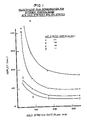
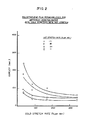
- Important charcteristics of this stretching scheme are that the permeability of the microporous film can be varied by controlling the total extension of the film, i.e., the length of the microporous film as compared to the length of the unstretched annealed precursor film, and that the permeability of the microporous film can be strongly influenced by controlling the rates of stretching during both the cold and hot stretching operations. As will be shown hereinafter, an increased cold stretching rate and a decreased hot stretching rate of the film lead to reduced Gurley values and hence correspondingly increased permeabilities of the films produced.
- the annealed precursor film is cold strenhched 20 to 60 percent at ambient temperature, hot stretched an additional 115 to 150 percent at a temperature less than or equal to the annealing temperature, and then allowed to relax under tension 40 to 50 percent at the same elevated temperature. All stretching and relaxation percentages are based on the length of the unstretched annealed precursor film, and the total extension percentages are based on the last step performed on the film, hence including a relaxing step if present.
- the relaxation or negative stretch imparts an improved dimensional stability to the microporous film produced, i.e., a reduced tendency to shrink during storage.
- the relaxation may be omitted if a higher tendency to shrink can be tolerated in conjunction with a particular end use of the microporous product.
- This embodiment produces a film having relatively large pores, a high void content, and good dimensional stability.
- the annealed precursor film is cold stretched as much as 100 percent at ambient temperature, hot stretched approximately an additional 40 percent at a temperature less than or equal to the annealing temperature, relaxed under tension 30 percent or less at the same elevated temperature, and heat set under tension at a constant length.
- the change in length during the relaxation may be zero percent, and is preferably from about 5 percent to about 10 percent.
- This heat set treatment may be carried out at a temperature in the range of from about 75°C. to the annealing temperature, and preferably at a temperature of from about 115°C. to 130°C.
- the period of the heat set should not be long at higher temperatures, and in general may be within the range of about 5 seconds to about 1 hour.
- the relaxation and heat set operations impart an improved dimensional stability to the microporous film product, i.e., a reduced tendency to shrink during storage. Either of these latter two operations may be omitted, but either or both of these latter two operations are necessary to stabilize products made with a large cold stretch. As the cold stretched length percentage is increased, it becomes more difficult to dimensionally stabilize the resultant film.
- This embodiment produces a microporous film having small pores, a high void content, and good dimensional stability.
- Crystalline polyethylene comprising at least 99% by weight ethylene and having a density of 0.960 gm./ cm. 3 , an inherent viscosity of 2.0, a crystalline melting point of about 135°C., and a melt flow rate of 0.85 is melt extruded at a temperature of 210°C. through a 30.48 cm (12 inch) diameter annular die having an opening of 0.18 cm (0.070 inches).
- the hot tube thus formed is maintained at the die diameter by internal air pressure and quenched by an air stream impinging on the film from an air ring located around and above the die.
- the extruded film is drawn down at a drawdown ratio of 65 to 1 and is passed through a series of rollers to collapse the tube.
- the extruded precursor film is then oven annealed at a temperature of 115°C. After removal from the oven, the annealed precursor film is allowed to cool to ambient temperature. Thereafter, the annealed precursor film is cold stretched at an ambient temperature of 23°C. and hot stretched at 115°C at varying rates for each stretching operation, at varying extensions for each stretching operation, and at varying total extensions. The incipient softening point of the polyethylene film is about 120°C.
- the annealed precursor as described above was cold stretched 30 percent and hot stretched an additional 81 percent to yield total extension of 111 percent at the stretching rates listed below and yielding the Gurley values listed below.
- the annealed precursor as described above was cold stretched 40 percent and hot stretched an additional 86 percent to yield a total extension of 126 percent at the stretching rates listed below and yielding the Gurley values listed below.
- the annealed precursor as described above was cold stretched 50 percent and hot stretched an additional 90 percent to yield a total extension of 140 percent at the stretching rates listed below and yielding the Gurley values listed below.
- the annealed precursor as described above was cold stretched 60 percent and hot stretched an additional 94 percent to yield a total extension of 154 percent at the stretching rates listed below and yielding the Gurley values listed below.
- a polypropylene homopolymer resin having a density of 0.90 gm.cm. 3 , an inherent viscosity of 3.08, a crystalline melting point of about 165°C., and a melt flow rate of 0.60 was blown film extruded to yield a two-ply film.
- the extruded two-ply film was annealed at a temperature of 140°C. for 20 minutes.
- the resultant two-ply annealed polypropylene film was cold stretched 20 percent at an ambient temperature of 23°C. and subsequently hot stretched an additional 80 percent at a temperature of 144°C.
- the incipient softening point of the polypropylene film is about 150°C.
- the cold stretching and hot stretching rates were varied to obtain Gurley second values for single plies as averaged from two-ply determinations and are listed in Table A.
- an annealed precursor film is prepared.
- the annealed and cooled precursor film is cold stretched 90 percent at a rate of 381 percent per minute and at a temperature of 23°C., hot stretched an additional 40 percent at a rate of 105 percent per minute and at a temperature of 115°C., heat relaxed at varying rates at a temperature of 115°C., and heat set at constant length at the same temperature.
- the Gurley values of the film produced were then determined. This stretching and relaxing scheme was performed on films of three different thicknesses. The results of these experiments are summarized in Table V.
- Tables V and VI also reveal that permeability increases as the starting film thickness is decreased, and in the preferred embodiments of the instant invention, it is preferred that the extruded precursor film thickness be less than or equal to 0.028 mm (0.89 mil).
- the thickness of the polyethylene film in the foregoing example is not critical. However, equipment capabilities to keep the film flat and crease free will limit the minimum thickness and thicker films will have higher Gurley values due to the increased intrasurface distance. It is preferred that the film thickness be from about 0.005 mm (0.2 mil) to about 0.05 mm (2.0 mil).
- U.S. Patent No. 3,679,538 discloses a process for producing a microporous polymer film by the consecutive steps of cold stretching, hot stretching and heat setting.
- the films therein, as exemplified by the claims, have permeabilities measured by nitrogen flux Q (gm.-mole N 2 / cm. 2- min.x10 3 at a differential pressure of 1378 kPa (200 p.s.i.)) of from 50-200.
- Q nitrogen flux
- G Gurley flux in seconds
- the permeability of the films in the patent range from 40 to 10 Gurley seconds.
- a polyethylene resin having a density of 0.960 gm./cm. 3 , a melt index of 0.49 gm./10 min. and an inherent viscosity of 1.9 dl./gm. was extruded at 185°C. through a 30.48 cm (12 inch) blown film die having a gap of 0.18 cm (0.070 inches).
- the resulting hot tube was drawn down at a ratio of 137:1 to produce the extruded precursor film.
- the extruded film was annealed under tension at 115°C. for 19 minutes to perfect the crystalline structure.
- the unstretched annealed precursor film was cold stretched 40 percent at a rate of 212 percent per minute, hot stretched at 103°C. an additional 129 percent at a rate of 22 percent per minute and relaxed at the same elevated temperature by 43 percent at a rate of 11 percent per minute.
- the microporous polyethylene film thus produced was cooled and the measured Gurley value was found to be 6 seconds, as opposed to the 40-10 seconds in the above-mentioned patent.
- the resultant film possessed a bulk density of 48 percent with respect to the corresponding polyethylene film having no open-celled structure. It is thus seen that microporous polyethylene films produced by the process of the present invention have greatly improved permeabilities with respect to microporous films produced by other processes.
- the present invention may be carried out in a batch processing manner.
- the present process for obtaining a microporous polyethylene product can be achieved by performing the process in a continuous manner.
- the films of the present invention are useful as separators in lithium-manganese dioxide batteries and in chemical packaging for use as a vent.
Landscapes
- Engineering & Computer Science (AREA)
- Chemical & Material Sciences (AREA)
- Chemical Kinetics & Catalysis (AREA)
- Mechanical Engineering (AREA)
- Manufacturing & Machinery (AREA)
- Materials Engineering (AREA)
- Health & Medical Sciences (AREA)
- Medicinal Chemistry (AREA)
- Polymers & Plastics (AREA)
- Organic Chemistry (AREA)
- Electrochemistry (AREA)
- General Chemical & Material Sciences (AREA)
- Manufacture Of Porous Articles, And Recovery And Treatment Of Waste Products (AREA)
- Shaping By String And By Release Of Stress In Plastics And The Like (AREA)
- Separation Using Semi-Permeable Membranes (AREA)
Claims (17)
Priority Applications (1)
| Application Number | Priority Date | Filing Date | Title |
|---|---|---|---|
| AT86305551T ATE56216T1 (de) | 1985-07-19 | 1986-07-18 | Verfahren zur herstellung eines mikroporoesen polyaethylenfilms. |
Applications Claiming Priority (2)
| Application Number | Priority Date | Filing Date | Title |
|---|---|---|---|
| US756527 | 1985-07-19 | ||
| US06/756,527 US4620956A (en) | 1985-07-19 | 1985-07-19 | Process for preparing microporous polyethylene film by uniaxial cold and hot stretching |
Publications (2)
| Publication Number | Publication Date |
|---|---|
| EP0210059A1 EP0210059A1 (de) | 1987-01-28 |
| EP0210059B1 true EP0210059B1 (de) | 1990-09-05 |
Family
ID=25043889
Family Applications (1)
| Application Number | Title | Priority Date | Filing Date |
|---|---|---|---|
| EP86305551A Expired - Lifetime EP0210059B1 (de) | 1985-07-19 | 1986-07-18 | Verfahren zur Herstellung eines mikroporösen Polyäthylenfilms |
Country Status (10)
| Country | Link |
|---|---|
| US (1) | US4620956A (de) |
| EP (1) | EP0210059B1 (de) |
| JP (1) | JPH0618915B2 (de) |
| KR (1) | KR940000967B1 (de) |
| AT (1) | ATE56216T1 (de) |
| AU (1) | AU591917B2 (de) |
| CA (1) | CA1312431C (de) |
| DE (1) | DE3673908D1 (de) |
| IL (1) | IL79444A0 (de) |
| ZA (1) | ZA865172B (de) |
Families Citing this family (46)
| Publication number | Priority date | Publication date | Assignee | Title |
|---|---|---|---|---|
| NZ218971A (en) * | 1986-01-21 | 1989-05-29 | Mitsui Toatsu Chemicals | Porous polyolefin films and their preparation |
| US4833172A (en) * | 1987-04-24 | 1989-05-23 | Ppg Industries, Inc. | Stretched microporous material |
| US4861644A (en) * | 1987-04-24 | 1989-08-29 | Ppg Industries, Inc. | Printed microporous material |
| EP0342026B1 (de) * | 1988-05-12 | 1995-10-18 | Hoechst Celanese Corporation | Mikroporöse Membranen mit gesteigerter Porendichte und Verfahren zur Herstellung derselben |
| US5013439A (en) * | 1988-05-12 | 1991-05-07 | Hoechst Celanese Corporation | Microporous membranes having increased pore densities and process for making the same |
| US5173235A (en) * | 1988-09-10 | 1992-12-22 | Ube Industries, Ltd. | Method of producing microporous film |
| US4865930A (en) * | 1988-10-27 | 1989-09-12 | Hughes Aircraft Company | Method for forming a gas-permeable and ion-permeable membrane |
| CA2007160C (en) * | 1989-01-09 | 1997-08-19 | Gunilla E. Gillberg-Laforce | Microporus membrane from cold-rolled precursor films |
| JP2628788B2 (ja) * | 1990-08-09 | 1997-07-09 | 宇部興産株式会社 | 微多孔性膜の製造方法及びその方法で製造される耐溶断性微多孔性膜 |
| JPH0661859B2 (ja) * | 1991-02-28 | 1994-08-17 | 清二 加川 | 多孔質フィルムの製造装置 |
| NL9101876A (nl) * | 1991-11-11 | 1993-06-01 | Dsm Nv | Werkwijze voor het vervaardigen van een stoomsteriliseerbaar poreus polyolefinemembraan en bij 134 graden celsius stoomsteriliseerbaar polyetheenmembraan. |
| TW412542B (en) * | 1995-12-25 | 2000-11-21 | Asahi Chemical Ind | Short-resistant micro-porous polyethylene membrane |
| JPH107832A (ja) * | 1996-04-26 | 1998-01-13 | Mitsui Petrochem Ind Ltd | 高強度ポリプロピレン多孔フィルム及びその製造方法 |
| RU2140936C1 (ru) * | 1997-04-15 | 1999-11-10 | Ельяшевич Галина Казимировна | Микропористая полиэтиленовая пленка и способ ее получения |
| US7560399B2 (en) * | 1998-08-28 | 2009-07-14 | Mmi-Ipco, Llc | Multi-layer composite fabric garment |
| JP2000071371A (ja) * | 1998-08-28 | 2000-03-07 | Malden Mills Ind Inc | 風防及び耐水性複合布 |
| US6113885A (en) * | 1998-12-18 | 2000-09-05 | Colgate Palmolive Company | Polyolefin packaged dentifrice having reduced flavor loss |
| CA2877233A1 (en) * | 1999-01-19 | 2000-07-27 | Lola M. Reid | Human liver progenitors |
| US6602593B1 (en) * | 1999-08-30 | 2003-08-05 | Celgard Inc. | Battery separators with reduced splitting propensity |
| CN1209404C (zh) | 1999-09-01 | 2005-07-06 | 埃克森化学专利公司 | 透气膜及其制备方法 |
| JP4206182B2 (ja) * | 1999-12-27 | 2009-01-07 | 日東電工株式会社 | 微多孔フィルム |
| US6689509B2 (en) | 2001-09-20 | 2004-02-10 | Daramic, Inc. | Laminated multilayer separator for lead-acid batteries |
| US6869726B2 (en) | 2001-09-20 | 2005-03-22 | Daramic, Inc. | Reinforced multilayer separator for lead-acid batteries |
| US6852444B2 (en) | 2001-09-20 | 2005-02-08 | Daramic, Inc. | Reinforced multilayer separator for lead-acid batteries |
| US6815123B2 (en) * | 2001-12-28 | 2004-11-09 | Policell Technologies, Inc. | Lithium-ion battery using heat-activatable microporous membrane |
| US6998193B2 (en) | 2001-12-28 | 2006-02-14 | Policell Technologies, Inc. | Microporous membrane and its uses thereof |
| JP4833486B2 (ja) * | 2002-05-28 | 2011-12-07 | 住友化学株式会社 | ミクロフィルター用濾材の製造方法およびミクロフィルター用濾材 |
| US20050202163A1 (en) * | 2004-03-09 | 2005-09-15 | Celgard Inc. | Method of making a composite microporous membrane |
| US20060051648A1 (en) * | 2004-09-06 | 2006-03-09 | Fusaki Fujibayashi | Solid polymer electrolyte membrane, method for producing the same, and fuel cell including the solid poymer electrolyte membrane |
| WO2007046473A1 (ja) * | 2005-10-19 | 2007-04-26 | Tonen Chemical Corporation | ポリオレフィン多層微多孔膜の製造方法 |
| KR20090050686A (ko) * | 2007-11-16 | 2009-05-20 | 에스케이에너지 주식회사 | 물성이 뛰어나고 투과도 및 표면에너지가 높은 폴리에틸렌미세다공막 |
| JP5373438B2 (ja) * | 2009-03-06 | 2013-12-18 | 旭化成イーマテリアルズ株式会社 | 微多孔性フィルムの製造方法 |
| US8506749B1 (en) | 2010-01-27 | 2013-08-13 | Dartex Coatings, Inc. | Method of improving adhesive coverage to maximize waterproofness while maintaining breathability of adhesively laminated webs, and laminates produced thereby |
| PL3219461T3 (pl) | 2010-12-28 | 2019-06-28 | Asahi Kasei Kabushiki Kaisha | Porowata powłoka na bazie poliolefiny i sposób jej wytwarzania |
| US20120190264A1 (en) * | 2011-01-24 | 2012-07-26 | Shamsheer Mahammad | Self-adhesive fiber mat |
| JP5861832B2 (ja) | 2011-06-30 | 2016-02-16 | Jnc株式会社 | 微多孔膜 |
| US9276244B2 (en) | 2012-02-08 | 2016-03-01 | Sumitomo Chemical Company, Limited | Method for producing polyolefin porous film, and laminated porous film |
| JP5694971B2 (ja) | 2012-02-08 | 2015-04-01 | 住友化学株式会社 | ポリオレフィン微多孔フィルムの製造方法及び積層多孔フィルムの製造方法 |
| CN103057111B (zh) * | 2012-12-20 | 2015-03-04 | 天邦膜技术国家工程研究中心有限责任公司 | 聚乙烯中空纤维微孔膜冷热拉伸设备及其拉伸工艺 |
| CN103072262A (zh) * | 2013-01-21 | 2013-05-01 | 江苏景宏新材料科技有限公司 | 一种双向拉伸pp隔膜强化退火方法 |
| CN105470434A (zh) * | 2015-12-17 | 2016-04-06 | 江门市龙世纪科技股份有限公司 | 吹膜法单向拉伸生产pp、pe复合结构隔膜的制备方法 |
| CN109689119A (zh) * | 2016-06-28 | 2019-04-26 | 陶氏环球技术有限责任公司 | 微孔薄膜及由其制成的制品 |
| TWI758301B (zh) | 2016-06-28 | 2022-03-21 | 美商陶氏全球科技有限責任公司 | 多層膜、包括多層膜之製品、製造多層膜之方法 |
| US11680159B2 (en) | 2019-09-30 | 2023-06-20 | Ddp Specialty Electronic Materials Us, Llc | Polyolefin-based microporous films via sequential cold and hot stretching of unannealed polypropylene copolymer films |
| US11575180B2 (en) * | 2020-03-19 | 2023-02-07 | Benq Materials Corporation | Separator and method for manufacturing thereof |
| TWI875331B (zh) * | 2023-11-23 | 2025-03-01 | 富邦先進材料股份有限公司 | 微多孔薄膜材料製備方法 |
Family Cites Families (4)
| Publication number | Priority date | Publication date | Assignee | Title |
|---|---|---|---|---|
| BE758820A (fr) * | 1969-11-13 | 1971-05-12 | Celanese Corp | Procede de production de pellicules microporeuses a cellules ouvertes |
| US3679538A (en) * | 1970-10-28 | 1972-07-25 | Celanese Corp | Novel open-celled microporous film |
| US3843761A (en) * | 1973-05-30 | 1974-10-22 | Celanese Corp | Process for preparing a thermoplastic microporous film involving a cold stretching step and multiple hot stretching steps |
| US4138459A (en) * | 1975-09-08 | 1979-02-06 | Celanese Corporation | Process for preparing a microporous polymer film |
-
1985
- 1985-07-19 US US06/756,527 patent/US4620956A/en not_active Expired - Lifetime
-
1986
- 1986-07-10 ZA ZA865172A patent/ZA865172B/xx unknown
- 1986-07-17 IL IL79444A patent/IL79444A0/xx not_active IP Right Cessation
- 1986-07-18 KR KR1019860005834A patent/KR940000967B1/ko not_active Expired - Lifetime
- 1986-07-18 CA CA000514149A patent/CA1312431C/en not_active Expired - Fee Related
- 1986-07-18 EP EP86305551A patent/EP0210059B1/de not_active Expired - Lifetime
- 1986-07-18 DE DE8686305551T patent/DE3673908D1/de not_active Expired - Fee Related
- 1986-07-18 AU AU60322/86A patent/AU591917B2/en not_active Ceased
- 1986-07-18 AT AT86305551T patent/ATE56216T1/de not_active IP Right Cessation
- 1986-07-18 JP JP61168180A patent/JPH0618915B2/ja not_active Expired - Lifetime
Also Published As
| Publication number | Publication date |
|---|---|
| KR870001016A (ko) | 1987-03-10 |
| US4620956A (en) | 1986-11-04 |
| AU591917B2 (en) | 1989-12-21 |
| JPS62121737A (ja) | 1987-06-03 |
| EP0210059A1 (de) | 1987-01-28 |
| KR940000967B1 (ko) | 1994-02-07 |
| CA1312431C (en) | 1993-01-12 |
| ATE56216T1 (de) | 1990-09-15 |
| AU6032286A (en) | 1987-01-22 |
| ZA865172B (en) | 1987-03-25 |
| IL79444A0 (en) | 1986-10-31 |
| DE3673908D1 (de) | 1990-10-11 |
| JPH0618915B2 (ja) | 1994-03-16 |
Similar Documents
| Publication | Publication Date | Title |
|---|---|---|
| US4620956A (en) | Process for preparing microporous polyethylene film by uniaxial cold and hot stretching | |
| US3801692A (en) | Production of novel open-celled microporous film | |
| US3843761A (en) | Process for preparing a thermoplastic microporous film involving a cold stretching step and multiple hot stretching steps | |
| US4138459A (en) | Process for preparing a microporous polymer film | |
| US5435955A (en) | Process of producing porous polypropylene hollow fiber and film | |
| US5102921A (en) | Polytetrafluoroethylene porous material and process for producing the same | |
| US5013439A (en) | Microporous membranes having increased pore densities and process for making the same | |
| US4384023A (en) | Porous polyethylene film | |
| US5134174A (en) | Polypropylene microporous film | |
| EP0124028B1 (de) | Heterogene Membran und Verfahren zu ihrer Herstellung | |
| US3880966A (en) | Corona treated microporous film | |
| US5830554A (en) | Method of producing of microporous polyolefin membrane | |
| US3839240A (en) | High melt index microporous films | |
| US4919856A (en) | Process for producing membranes for use in gas separation | |
| PL82856B1 (en) | Novel open-celled microporous film [us3679538a] | |
| EP0378346A2 (de) | Mikroporöse Membran, hergestellt aus einem kaltkalandrierten Vorläuferfilm | |
| JP5068168B2 (ja) | フッ化ビニリデン系樹脂中空糸多孔膜 | |
| EP0470633B1 (de) | Verfahren zur Herstellung einer microporösen Folie mit erhöhter Bruchfestigkeit beim Schmelzen und derart hergestellte microporöse Folie | |
| Han et al. | Effect of annealing on the morphology of porous polypropylene hollow fiber membranes | |
| EP0342026B1 (de) | Mikroporöse Membranen mit gesteigerter Porendichte und Verfahren zur Herstellung derselben | |
| JPH0712410B2 (ja) | 気体分離膜の製造方法 | |
| JPH0691943B2 (ja) | 高分離能高分子膜の製造方法 | |
| JP3597224B2 (ja) | ポリオレフィンフィルムの平滑化方法 | |
| JPH10237201A (ja) | 高分子量ポリオレフィン多孔フィルムの製造方法 | |
| JPH0679659B2 (ja) | 多孔質ポリプロピレン中空糸又はフィルムの製造法 |
Legal Events
| Date | Code | Title | Description |
|---|---|---|---|
| PUAI | Public reference made under article 153(3) epc to a published international application that has entered the european phase |
Free format text: ORIGINAL CODE: 0009012 |
|
| AK | Designated contracting states |
Kind code of ref document: A1 Designated state(s): AT BE CH DE FR GB IT LI LU NL SE |
|
| 17P | Request for examination filed |
Effective date: 19870706 |
|
| 17Q | First examination report despatched |
Effective date: 19890215 |
|
| GRAA | (expected) grant |
Free format text: ORIGINAL CODE: 0009210 |
|
| AK | Designated contracting states |
Kind code of ref document: B1 Designated state(s): AT BE CH DE FR GB IT LI LU NL SE |
|
| PG25 | Lapsed in a contracting state [announced via postgrant information from national office to epo] |
Ref country code: SE Effective date: 19900905 Ref country code: AT Effective date: 19900905 |
|
| REF | Corresponds to: |
Ref document number: 56216 Country of ref document: AT Date of ref document: 19900915 Kind code of ref document: T |
|
| REF | Corresponds to: |
Ref document number: 3673908 Country of ref document: DE Date of ref document: 19901011 |
|
| ITF | It: translation for a ep patent filed | ||
| ET | Fr: translation filed | ||
| PGFP | Annual fee paid to national office [announced via postgrant information from national office to epo] |
Ref country code: LU Payment date: 19910626 Year of fee payment: 6 |
|
| PLBE | No opposition filed within time limit |
Free format text: ORIGINAL CODE: 0009261 |
|
| STAA | Information on the status of an ep patent application or granted ep patent |
Free format text: STATUS: NO OPPOSITION FILED WITHIN TIME LIMIT |
|
| ITTA | It: last paid annual fee | ||
| 26N | No opposition filed | ||
| EPTA | Lu: last paid annual fee | ||
| PG25 | Lapsed in a contracting state [announced via postgrant information from national office to epo] |
Ref country code: LU Free format text: LAPSE BECAUSE OF NON-PAYMENT OF DUE FEES Effective date: 19920718 |
|
| PGFP | Annual fee paid to national office [announced via postgrant information from national office to epo] |
Ref country code: CH Payment date: 19920915 Year of fee payment: 7 |
|
| PG25 | Lapsed in a contracting state [announced via postgrant information from national office to epo] |
Ref country code: LI Effective date: 19930731 Ref country code: CH Effective date: 19930731 |
|
| REG | Reference to a national code |
Ref country code: CH Ref legal event code: PL |
|
| PGFP | Annual fee paid to national office [announced via postgrant information from national office to epo] |
Ref country code: NL Payment date: 19940731 Year of fee payment: 9 |
|
| PG25 | Lapsed in a contracting state [announced via postgrant information from national office to epo] |
Ref country code: NL Effective date: 19960201 |
|
| NLV4 | Nl: lapsed or anulled due to non-payment of the annual fee |
Effective date: 19960201 |
|
| REG | Reference to a national code |
Ref country code: GB Ref legal event code: 732E |
|
| REG | Reference to a national code |
Ref country code: FR Ref legal event code: TP Ref country code: FR Ref legal event code: CD Ref country code: FR Ref legal event code: CA |
|
| BECH | Be: change of holder |
Free format text: 19990105 *CELGARD LLC |
|
| REG | Reference to a national code |
Ref country code: GB Ref legal event code: 732E |
|
| REG | Reference to a national code |
Ref country code: FR Ref legal event code: TP |
|
| PGFP | Annual fee paid to national office [announced via postgrant information from national office to epo] |
Ref country code: FR Payment date: 20010702 Year of fee payment: 16 |
|
| PGFP | Annual fee paid to national office [announced via postgrant information from national office to epo] |
Ref country code: DE Payment date: 20010731 Year of fee payment: 16 |
|
| PGFP | Annual fee paid to national office [announced via postgrant information from national office to epo] |
Ref country code: BE Payment date: 20010814 Year of fee payment: 16 |
|
| REG | Reference to a national code |
Ref country code: GB Ref legal event code: IF02 |
|
| PG25 | Lapsed in a contracting state [announced via postgrant information from national office to epo] |
Ref country code: BE Free format text: LAPSE BECAUSE OF NON-PAYMENT OF DUE FEES Effective date: 20020731 |
|
| BERE | Be: lapsed |
Owner name: *CELGARD INC. Effective date: 20020731 |
|
| PG25 | Lapsed in a contracting state [announced via postgrant information from national office to epo] |
Ref country code: DE Free format text: LAPSE BECAUSE OF NON-PAYMENT OF DUE FEES Effective date: 20030201 |
|
| PG25 | Lapsed in a contracting state [announced via postgrant information from national office to epo] |
Ref country code: FR Free format text: LAPSE BECAUSE OF NON-PAYMENT OF DUE FEES Effective date: 20030331 |
|
| REG | Reference to a national code |
Ref country code: FR Ref legal event code: ST |
|
| PGFP | Annual fee paid to national office [announced via postgrant information from national office to epo] |
Ref country code: GB Payment date: 20050614 Year of fee payment: 20 |
|
| PGFP | Annual fee paid to national office [announced via postgrant information from national office to epo] |
Ref country code: IT Payment date: 20050711 Year of fee payment: 20 |
|
| PG25 | Lapsed in a contracting state [announced via postgrant information from national office to epo] |
Ref country code: GB Free format text: LAPSE BECAUSE OF EXPIRATION OF PROTECTION Effective date: 20060717 |
|
| REG | Reference to a national code |
Ref country code: GB Ref legal event code: PE20 |