EP0209061B1 - Neue Polypeptide mit blutgerinnungshemmender Wirkung, Verfahren zu deren Herstellung bzw. Gewinnung, deren Verwendung und diese enthaltende Mittel - Google Patents
Neue Polypeptide mit blutgerinnungshemmender Wirkung, Verfahren zu deren Herstellung bzw. Gewinnung, deren Verwendung und diese enthaltende Mittel Download PDFInfo
- Publication number
- EP0209061B1 EP0209061B1 EP86109309A EP86109309A EP0209061B1 EP 0209061 B1 EP0209061 B1 EP 0209061B1 EP 86109309 A EP86109309 A EP 86109309A EP 86109309 A EP86109309 A EP 86109309A EP 0209061 B1 EP0209061 B1 EP 0209061B1
- Authority
- EP
- European Patent Office
- Prior art keywords
- polypeptide
- lys
- ile
- denotes
- thr
- Prior art date
- Legal status (The legal status is an assumption and is not a legal conclusion. Google has not performed a legal analysis and makes no representation as to the accuracy of the status listed.)
- Expired - Lifetime
Links
Images





Classifications
-
- C—CHEMISTRY; METALLURGY
- C07—ORGANIC CHEMISTRY
- C07K—PEPTIDES
- C07K1/00—General methods for the preparation of peptides, i.e. processes for the organic chemical preparation of peptides or proteins of any length
- C07K1/14—Extraction; Separation; Purification
-
- C—CHEMISTRY; METALLURGY
- C07—ORGANIC CHEMISTRY
- C07K—PEPTIDES
- C07K14/00—Peptides having more than 20 amino acids; Gastrins; Somatostatins; Melanotropins; Derivatives thereof
- C07K14/81—Protease inhibitors
- C07K14/815—Protease inhibitors from leeches, e.g. hirudin, eglin
-
- A—HUMAN NECESSITIES
- A61—MEDICAL OR VETERINARY SCIENCE; HYGIENE
- A61P—SPECIFIC THERAPEUTIC ACTIVITY OF CHEMICAL COMPOUNDS OR MEDICINAL PREPARATIONS
- A61P7/00—Drugs for disorders of the blood or the extracellular fluid
- A61P7/02—Antithrombotic agents; Anticoagulants; Platelet aggregation inhibitors
-
- A—HUMAN NECESSITIES
- A61—MEDICAL OR VETERINARY SCIENCE; HYGIENE
- A61K—PREPARATIONS FOR MEDICAL, DENTAL OR TOILETRY PURPOSES
- A61K38/00—Medicinal preparations containing peptides
-
- Y—GENERAL TAGGING OF NEW TECHNOLOGICAL DEVELOPMENTS; GENERAL TAGGING OF CROSS-SECTIONAL TECHNOLOGIES SPANNING OVER SEVERAL SECTIONS OF THE IPC; TECHNICAL SUBJECTS COVERED BY FORMER USPC CROSS-REFERENCE ART COLLECTIONS [XRACs] AND DIGESTS
- Y02—TECHNOLOGIES OR APPLICATIONS FOR MITIGATION OR ADAPTATION AGAINST CLIMATE CHANGE
- Y02P—CLIMATE CHANGE MITIGATION TECHNOLOGIES IN THE PRODUCTION OR PROCESSING OF GOODS
- Y02P20/00—Technologies relating to chemical industry
- Y02P20/141—Feedstock
-
- Y—GENERAL TAGGING OF NEW TECHNOLOGICAL DEVELOPMENTS; GENERAL TAGGING OF CROSS-SECTIONAL TECHNOLOGIES SPANNING OVER SEVERAL SECTIONS OF THE IPC; TECHNICAL SUBJECTS COVERED BY FORMER USPC CROSS-REFERENCE ART COLLECTIONS [XRACs] AND DIGESTS
- Y10—TECHNICAL SUBJECTS COVERED BY FORMER USPC
- Y10S—TECHNICAL SUBJECTS COVERED BY FORMER USPC CROSS-REFERENCE ART COLLECTIONS [XRACs] AND DIGESTS
- Y10S930/00—Peptide or protein sequence
- Y10S930/01—Peptide or protein sequence
- Y10S930/26—Containing cys-cys disulfide bridge between nonadjacent cysteine residues
Definitions
- Anticoagulants are used for the prophylaxis and therapy of thrombo-embolic processes; Its main area of application is venous thromboembolism. Anticoagulants are also needed in the manufacture of preserved blood. Derivatives of 4-hydroxycoumarin or 1,4-indanedione, which are used for this purpose, for example, have a number of disadvantages despite extensive optimization.
- the Kunitz inhibitor which is obtained from soybeans. This inhibitor blocks the blood coagulation cascade by inhibiting the activated factor X, but the specificity of the inhibitor is so low that many side effects arise: inhibition of plasma kallikrein, plasmin, and trypsin, so that therapeutic applications are excluded.
- hirudin a polypeptide obtained from Hirudo medicinalis, has a specific antithrombin activity.
- European patent application 0 171 024 describes a genetic engineering process for the production of special hirudins.
- European patent application 0 158 564 also describes expression vectors for cloning and expression of hirudin and hirudin analogs.
- the three disulfide bridges are preferably between the Cys residues in positions 7 and 15, 17 and 29 as well as 23 and 40.
- Naturally occurring ⁇ -amino acids are in particular Gly, Ala, Ser, Thr, Val, Leu, Ile, Asp, Asn, Glu, Gln, Cys, Met, Arg, Lys, Hyl, Orn, Cit, Tyr, Phe, Trp, His , Pro and Hyp.
- R is preferably hydrogen, SO3E or PO3H2; hydrogen is particularly preferred.
- Particularly suitable salts are alkali and alkaline earth metal salts, salts with physiologically compatible amines and salts with physiologically compatible acids, such as HCl, H2SO4, maleic acid or acetic acid.
- the invention also relates to the new biologically active peptide cleavage products which are obtained by chemical or enzymatic cleavage of these polypeptides, with the exception of cleavage products of a peptide of the formula (niche EP-A-0 158 564):
- the invention further relates to a method for obtaining a purified polypeptide of the above formula, which is characterized in that the polypeptide is isolated from worms of the Annelida strain using a combination of extraction methods, precipitation methods, membrane filtration and / or chromatographic methods, an optionally present phenol ester group If desired, R is split off hydrolytically to form the phenolic hydroxyl group and the peptide obtained is optionally converted into its physiologically tolerable salts.
- the polypeptide is preferably obtained from the neck glands of worms of the class Hirudinea, in particular from those of the order Gnathobdellida.
- the genera Hirudo, Gnathobdella, Haemadipsa and Philaemon are preferred. Hirudo medicinalis is particularly preferred.
- the anterior body region or the whole leech can also be used.
- the leeches can be obtained in the bagdy et al. Methods of Enzymology 45 [1976] 669-678.
- the head parts of the leech can also be crushed in a frozen state and extracted using an aqueous buffer solution (for example phosphate buffer).
- the insoluble material is separated off, for example by brief centrifugation or by filtration through gauze, and the polypeptide is separated off from the extract thus obtained and isolated. It is advantageous to quickly heat this extract to 70 ° to 90 ° C because it will the majority of the proteolytic enzymes denatures and precipitates, the separation of which can then take place, for example, by centrifugation.
- the protein fraction containing the peptide according to the invention is isolated from the extract, for example by precipitation in such a way that the extract is placed in a water-miscible organic solvent.
- acetone can be used in a multiple amount of the extract volume, preferably about 10 times the amount, the precipitation taking place in the cold, usually at 0 to -40 ° C., preferably at about -20 ° C.
- Another way to carry out the precipitation is to add salts, e.g. Ammonium sulfate. Precipitation achieves a certain selectivity through pH control.
- the peptides according to the invention which have isoelectric points of 3.5-4, can be precipitated in the pH range between 3 and 5, preferably about 4, by adding ammonium sulfate to a concentration of about 50%, a large number of accompanying proteins being present remains in the solution.
- This precipitation is also carried out with cooling at about -5 to + 15 ° C., preferably between 0 and + 4 ° C.
- Proteins with a higher molecular weight can be separated from this crude extract, for example by ultrafiltration or by gel permeation chromatography.
- ultrafiltration can be carried out, for example, in two stages: in the first stage one works with a capillary membrane with an exclusion limit of 50,000 daltons and then in the second stage with a flat membrane with an exclusion limit of 10,000 daltons. With the help of the capillary membrane, a rapid separation of higher molecular material is achieved, which would prevent the flow through the selectively working flat membrane. With small quantities, you can also do without the first stage of ultrafiltration.
- the crude extract can also be purified by means of ion exchange chromatography, for example on DEAE- (R) Sephadex, in the method described by Markwardt, Walsmann, Hoppe-Seyler's Z. Physiol. Chem. 348 [1967] 1381-1386.
- the material thus obtained consists of a mixture of the thrombin inhibitors according to the invention and other polypeptides.
- the use of thrombin sepharose has proven particularly useful for affinity chromatography. Thrombin-Sepharose was prepared by the Brosstad method (Thrombos Res. II , 119, 1977).
- thrombin-Sepharose is poured into a column with a suitable buffer, such as, for example, 0.1 M N-methylmorpholine acetate buffer pH 8.0 or Tris / HCl 0.1 M pH 8.5.
- a suitable buffer such as, for example, 0.1 M N-methylmorpholine acetate buffer pH 8.0 or Tris / HCl 0.1 M pH 8.5.
- the peptides that have no thrombin affinity are removed by rinsing with the buffer.
- the complex thrombin / thrombin inhibitor is then dissolved in 0.1 M N-methylmorpholine acetate pH 8.0 by rinsing the column with a buffer of 0.5-2 M benzamidine or 4-amino-benzamidine.
- the various active fractions are pooled together and desalted by conventional gel permeation chromatography on Sephadex G 25 with 0.05 M N-methylmorpholine acetate pH 8.0.
- the different thrombin inhibitors are separated from one another by high-resolution chromatographic methods. HPLC has proven particularly useful for this.
- the high resolving power of HPLC technology makes it possible to separate the inhibitors of formula I from one another and from small amounts of accompanying protein and to present them in pure form.
- Derivatized silica gels with a suitable particle size have proven to be advantageous for the stationary phase.
- a suitable particle size e.g. between 3 and 20 ⁇ m
- a large number of other silane residues or mixtures thereof, such as silane residues with lower alkyl, phenylalkyl- or amino-substituted alkyl are suitable for the derivatization of the silica gel, the latter offering a certain combination of ion exchange and “reverse phase” chromatography. For example, separation columns 5 to 25 cm long and 3 to 10 mm in diameter can be used.
- organic and inorganic salts or other additives can be used as the buffer substance. Elution is advantageously carried out at a pH between 2 and 8.
- volatile buffer substances such as ammonium acetate or ammonium hydrogen carbonate, allows the inhibitors to be obtained from the eluate by simple freeze-drying.
- the splitting off of a sulfate monoester group R in position 64 can be carried out in an acid-catalyzed manner in analogy to the manner described in DE-A-33 42 139 or ensymatically using an aryl sulfatase.
- polypeptides of the formula I according to the invention are colorless, soluble in water and in aqueous buffers, are homogeneous in polyacrylamide electrophoresis and have isoelectric points from 3.5 to 4 (determined by isoelectric focusing).
- polystyrene resin hydroxypropylated polystyrene resin.
- the polystyrene is cross-linked with, for example, 1% divinylbenzene. It is usually in the form of small balls.
- the amino acids are used with N-terminal protection.
- the first N-protected amino acid is formed by ester formation attached to the carrier. After the amino protecting group has been removed, the next N-protected amino acid is attached using a coupling reagent such as dicyclohexylcarbodiimide. Deprotection and addition of further amino acids is continued until the desired sequence is reached.
- the selection of the protective groups depends on the amino acids and coupling methods.
- the amino acid groups are e.g. the known urethane protecting groups such as benzyloxycarbonyl (Z), p-methoxycarbobenzoxy, p-nitrocarbobenzoxy, t-butyloxycarbonyl (Boc), Fmoc and the like are in question.
- the Boc group is preferred because it can be split off under relatively mild conditions (e.g. with trifluoroacetic acid or HCl in organic solvents).
- Threonine can be blocked as a benzyl ether and the ⁇ -amino function of the lysine as a Z derivative. These two protective groups are largely resistant to the cleavage reagents for the Boc group and can be hydrogenolytically treated with a hydrogenation catalyst (Pd / activated carbon) or e.g. be removed with sodium in liquid ammonia.
- a hydrogenation catalyst Pd / activated carbon
- the protected peptide can be removed from the resin with hydrazine, for example.
- the disulfide bridges must be closed oxidatively (see König, Geiger, Perspectives in Peptide Chemistry, Karger Basel pages 31-44).
- hirudin is subjected to a rapid Edman degradation by using this polypeptide in a suitable buffer solution, such as pyridine / water or dioxane / water, optionally with the addition of a base such as dimethylbenzylamine (DMBA), dimethylallylamine (DMAA) or triethylamine, preferably at about 50 ° C. and a pH of 8-9 with an isothiocyanate, preferably converting phenyl isothiocyanate.
- DMBA dimethylbenzylamine
- DMAA dimethylallylamine
- triethylamine preferably at about 50 ° C.
- an isothiocyanate preferably converting phenyl isothiocyanate.
- the N-terminal valine is cleaved as phenylthiazolinone for 10 minutes at 50 ° C. by treatment with an acid (heptafluorobutyric acid or trifluoroacetic acid). This sequence of reactions is repeated to cle
- the Des- (Val) 2-hirudin derivative obtained in this way is reacted with an active ester of an amino acid or a peptide of the formula U- (X) m -ABC-OH.
- an active ester of an amino acid or a peptide of the formula U- (X) m -ABC-OH for example, p-nitrophenyl, cyanomethyl, N-hydroxyphthalimide or in particular N-hydroxysuccinimide esters are suitable.
- Suitable urethane protecting groups U are those that can be split off acidically or alkaline, such as Boc or Msc. If necessary, any functions in the side chains of B and C can be temporarily protected by suitable protective groups.
- a suitable solvent such as a lower alcohol or its mixture
- the remaining protective group (s) are then split off from this polypeptide in a suitable manner (Boc, for example with trifluoroacetic acid, Msc with a base), and the polypeptide of the formula I according to the invention is thus obtained.
- the polypeptides according to the invention are specific stoichiometric inhibitors of thrombin.
- the quantitative measurement of Thrombin inhibition by the inhibitors according to the invention showed that the complex thrombin inhibitor / thrombin practically does not dissociate.
- the activity and thus the degree of purity of the polypeptides according to the invention can be determined during workup and purification.
- the polypeptides of the above formula I purified in this way can have an inhibition of thrombin of more than 10,000 antithrombine units / mg and thus exceed that of conventional hirudin.
- the compounds of formula I with free phenolic hydrogen in position 64 are generally even more active in vivo.
- the invention therefore also relates to the use of polypeptides of the formula I in which m, n, R, X, Z, A, B, C, D, E, F, G, J and H have the meaning given above as anticoagulants Use in the therapy of thromboembolic processes and their use as diagnostics and reagents.
- the invention further relates to agents which contain a polypeptide of the formula I or its peptide cleavage product in a pharmaceutically acceptable carrier.
- the compounds according to the invention can be administered parenterally or topically in a corresponding pharmaceutical preparation.
- the active compounds or their physiologically tolerable salts are brought into solution, suspension or emulsion.
- suitable solvents for the new active compounds and the corresponding physiologically tolerable salts are: water, physiological saline solutions or alcohols, for example ethanol, propanediol or glycerol, in addition also sugar solutions such as glucose or mannitol solutions, or a mixture of the various solutions mentioned.
- the topical carriers can be organic or inorganic compounds.
- Typical pharmaceutically used carriers are aqueous solutions, e.g. Buffer systems or isotonic mixtures of water and water-miscible solvents are e.g. Alcohols or aryl alcohols, oils, polyalkylene glycols, ethyl cellulose, carboxymethyl cellulose, polyvinyl pyrrolidone or isopropyl myristate.
- Suitable buffer substances are e.g. Sodium borate, sodium phosphate, sodium acetate or gluconate buffer.
- the topical form of use can also contain non-toxic excipients such as emulsifying preservatives, crosslinking agents, e.g. Polyethylene glycols and antibacterial compounds.
- 0.1 ml of fibrinogen solution (0.5 to 1%) or dilute citrate plasma is added; at regular intervals, with stirring, at room temperature, an aliquot (50 - 100 ⁇ l) of the thrombin solution is added (approx. 100 NIH units per ml).
- the point of change in semi-quantitative work can be the coagulation of the liquid within the selected one Time interval, or, for quantitative determinations, the turbimetry measurement at 546 nm.
- Wild leeches (no breeding animals) of the species Hirudo medicinalis are used that have been collected in Germany.
- Approx. 150-200 g of frozen leech front parts are homogenized in a mixer with 2 l of ice-cold 0.09% aqueous sodium chloride solution and 10 ml of octanol within 3 minutes. After centrifugation at 0 ° C. and 10,000 rpm for 30 minutes, the supernatant is further clarified by filtration over 2 layers of gauze and then heated to 80 ° C. within 15 minutes with stirring. The resulting precipitate is separated by filtration over 4 layers of gases. The filtrate is rapidly cooled to 4 ° C. by stirring in an ice bath and placed in 7.5 l of pre-cooled acetone (-20 ° C.).
- a precipitate is formed again, which is filtered off on a glass suction filter after 5 minutes and washed with 1 l of cold acetone (-20 ° C.). After drying in vacuo, 520 mg of slightly yellowish powder with a protein content of 62% is obtained (determined according to the Lowry method).
- the antithrombin activity is approximately 400 units per mg.
- the wet precipitate obtained according to Example 3 is dissolved in 200 ml of 0.1 M ammonium hydrogen carbonate solution of pH 8 and ultrafiltered in a 250 ml Amicon R cell with a 5PM 10 flat membrane (10,000 Dalton cutoff).
- the solution is concentrated to about 40 ml, with 150 ml of 0.1 M ammonium hydrogen carbonate solution of pH 8.0 being topped up twice towards the end. Freeze-drying of the residue gives approx. 350 mg of material with a protein content of 89%.
- a column (0.9 x 15 cm) with thrombin-sepharose is poured into 0.1 M Tris buffer (HCl) pH 8.
- Tris buffer HCl
- the substance from Example 3 is dissolved in the same buffer and the sample is charged to the column.
- Inactive accompanying substances are removed by rinsing the column with the equilibration buffer.
- a solution of benzamidine 1.5 M Tris buffer pH 7
- 4-aminobenzamidine 0.2 M Tris buffer pH 7
- the hirudin can be displaced from the thrombin-hirudin complex and is eluted in portions.
- the competitive inhibitor must first be separated from hirudin by gel filtration (R) Sephadex G 20. Weight yield 55%; Activity 6000 to 12 000 ATU / mg.
Landscapes
- Chemical & Material Sciences (AREA)
- Health & Medical Sciences (AREA)
- Organic Chemistry (AREA)
- Medicinal Chemistry (AREA)
- General Health & Medical Sciences (AREA)
- Life Sciences & Earth Sciences (AREA)
- Genetics & Genomics (AREA)
- Biochemistry (AREA)
- Proteomics, Peptides & Aminoacids (AREA)
- Molecular Biology (AREA)
- Biophysics (AREA)
- Tropical Medicine & Parasitology (AREA)
- Gastroenterology & Hepatology (AREA)
- Hematology (AREA)
- Chemical Kinetics & Catalysis (AREA)
- Public Health (AREA)
- Veterinary Medicine (AREA)
- General Chemical & Material Sciences (AREA)
- Animal Behavior & Ethology (AREA)
- Bioinformatics & Cheminformatics (AREA)
- Engineering & Computer Science (AREA)
- Pharmacology & Pharmacy (AREA)
- Nuclear Medicine, Radiotherapy & Molecular Imaging (AREA)
- Diabetes (AREA)
- Analytical Chemistry (AREA)
- Peptides Or Proteins (AREA)
- Medicines That Contain Protein Lipid Enzymes And Other Medicines (AREA)
- Medicines Containing Material From Animals Or Micro-Organisms (AREA)
Description
- Antikoagulantien dienen der Prophylaxe und Therapie thrombo-embolischer Prozesse; ihr Haupteinsatzgebiet liegt dabei vor allem bei venösen Thromboembolien. Antikoagulantien werden ferner bei der Herstellung von Blutkonserven benötigt. Derivate des 4-Hydroxycumarins oder des 1,4-Indandions, die beispielsweise für diesen Zweck angewendet werden, weisen trotz weitgehender Optimierung eine Reihe von Nachteilen auf.
- Es ist daher wünschenswert, besonders in der Humanmedizin Blutgerinnungshemmer zur Verfügung zu haben, die eine geringe Toxizität und wenig Nebenwirkungen aufweisen und die durch ihren Metabolismus keine Belastung des erkrankten Organismus darstellen.
- Außer den körpereigenen plasmatischen Hemmstoffen wie Antithrombin III besitzen auch viele andere Proteine blutgerinnungshemmende Wirkung, wie z.B. der KunitzInhibitor, der aus Sojabohnen gewonnen wird. Dieser Hemmstoff blockt die Blutgerinnungskaskade durch Inhibition des aktivierten Faktors X, aber die Spezifität des Inhibitors ist so gering, daß viele Nebenwirkungen entstehen: Hemmung des Plasmakallikreins, des Plasmins, des Trypsins, so daß die therapeutischen Anwendungen ausgeschlossen sind. Auch andere Wirkstoffe, wie der Ascaris- oder der Kazals-Inhibitor, konnten wegen mangelnder Spezifität keine Bedeutung erlangen.
- Hirudin, ein aus Hirudo medicinalis gewonnenes Polypeptid, seigt dagegen eine spezifische Antithrombin-Aktivität.
- In der europäischen Patentanmeldung 0 171 024 wird nun ein gentechnologisches Verfahren zur Herstellung von speziellen Hirudinen beschrieben. Ferner beschreibt die europäische Patentanmeldung 0 158 564 Expressionsvektoren zur Klonierung und Expression von Hirudin und Hirudinanaloga.
- Das aufwendige Verfahren zu seiner Isolierung und Reinigung hat sich bisher nachteilig auf seine praktische Anwendung ausgewirkt.
- Es wurde nun gefunden, daß sich aus Blutegeln hochaktive Polypeptide der Formel I isolieren lassen.
- Die Erfindung betrifft daher Polypeptide der Formel I

in welcher - m =
- 0 - 50,
- n =
- 0 - 100 und
- R
- phenolischen Wasserstoff oder eine Phenolestergruppe bedeuten,
- X
- für gleiche oder verschiedene Reste natürlich vorkommende α-Aminosäuren steht,
- Z
- für gleiche oder verschiedene Reste natürlich vorkommender α-Aminosäuren steht und
- A
- für Ile oder die Abwesenheit einer Aminosäure steht
- B
- für Ile oder Thr oder die Abwesenheit einer Aminosäure steht,
- C
- Thr, Val, Ile, Leu oder Phe,
- D
- Glu oder die Abwesenheit einer Aminosäure
- E
- Glu oder Pro,
- F
- Thr oder Ile bedeuten,
- G
- Lys oder Lys-Asp bedeutet,
- H
- Ala oder Leu bedeutet und
- J
- Glu oder Lys bedeuten,
- Die drei Disulfid-Brücken befinden sich vorzugsweise zwischen den Cys-Resten in den Positionen 7 und 15, 17 und 29 sowie 23 und 40.
- Natürlich vorkommende α-Aminosäuren sind insbesondere Gly, Ala, Ser, Thr, Val, Leu, Ile, Asp, Asn, Glu, Gln, Cys, Met, Arg, Lys, Hyl, Orn, Cit, Tyr, Phe, Trp, His, Pro und Hyp.
- R bedeutet vorzugsweise Wasserstoff, SO₃E oder PO₃H₂; besonders bevorzugt ist Wasserstoff.
- Als Salze kommen insbesondere Alkali- und Erdalkalisalze, Salze mit physiologisch verträglichen Aminen sowie Salze mit physiologisch verträglichen Säuren, wie HCl, H₂SO₄, Maleinsäure oder Essigsäure in Frage.
- Bevorzugt sind Polypeptide der Formel I, in denen C für Thr steht; ferner solche, bei denen C für Thr und A für Ile steht. Speziell geeignete Peptide sind solche mit
- A= Ile, B= Thr, C= Thr, D= Glu, E= Glu, F= Thr, G= Lys, H= Leu, J= Gln, m= null, n= null, R= H oder SO₃H;
- m= null, n= null, R= H oder SO₃H, A= Ile, B= direkte Bindung, C= Thr, D= Glu, E= Glu, F= Thr, G= Lys, H Leu, J= Gln;
- m= null; n= null; R= H oder SO₃H, A= Ile, B= direkte Bindung, C= Thr, D= Glu, E= Glu, F= Ile, G= Lys, H= Leu, J= Gln;
- m= null, n= null, R= H oder SO₃H, A= Ile, B= direkte Bindung, C= Thr, D= Glu, E= Pro, F= Thr, G= Lys, H= Leu, J= Gln;
- m= null, n= null, R= H oder SO₃H, A= Ile, B= direkte Bindung, C= Thr, D= Glu, E= Pro, F= Ile, G= Lys, H= Leu, J= Gln;
- m= null, n= null, R= H oder SO₃H, A= direkte Bindung, B= direkte Bindung, C= Thr, D= direkte Bindung, E= Glu, F= Thr, G= Lys, H= Leu, J= Gln;
- A= Ile, B= direkte Bindung, C= Thr, D= direkte Bindung, E= Glu, F= Ile, G= Lys-Asp, H= Ala, J= Lys, m= null, n= null, R= SO₃H;
- A= Ile, B= direkte Bindung, C= Thr, D= direkte Bindung, E= Glu, F= Ile, G= Lys-Asp, H= Ala, J= Lys, m= null, n= null, R= Wasserstoff.
- Die Erfindung betrifft auch die neuen biologisch aktiven peptidischen Spaltprodukte, die durch chemische oder enzymatische Spaltung dieser Polypeptide erhalten werden mit Ausnahme von Spaltprodukten eines Peptids der Formel (niche EP-A-0 158 564):

Die Erfindung betrifft weiterhin ein Verfahren zur Gewinnung eines gereinigten Polypeptids der obengenannten Formel, das dadurch gekennzeichnet ist, daß man das Polypeptid aus Würmern des Stammes Annelida mit Hilfe einer Kombination von Extraktionsmethoden, Fällungsmethoden, Membranfiltration und/oder chromatographischen Verfahren isoliert, eine gegebenenfalls vorhandene Phenolestergruppe R gewünschtenfalls hydrolytisch unter Bildung der phenolischen Hydroxylgruppe abspaltet und das erhaltene Peptid gegebenenfalls in seine physiologisch verträglichen Salze überführt. - Das Polypeptid wird vorzugsweise aus den Halsdrüsen von Würmern der Klasse Hirudinea, insbesondere aus solchen der Ordnung Gnathobdellida gewonnen. Bevorzugt sind die Gattungen Hirudo, Gnathobdella, Haemadipsa und Philaemon. Besonders bevorzugt ist Hirudo medicinalis. Neben den Halsdrüsen des Blutegels kann auch dessen vordere Körperregion oder der ganze Blutegel Verwendung finden.
- Ein Verfahren zur Gewinnung eines Rohextraktes aus Blutegeln ist in Enzymology, Band 5 "Hirudin as an Inhibitor of Thrombin" beschrieben. Ein Reinigungsverfahren für Hirudin ist aus Bull. Soc. Chim. Biol. 45 (1963) 55 bekannt.
- Beim erfindungsgemäßen Verfahren hat sich insbesondere eine Kombination von Fällungsmethoden und von Gel-Permeations-Chromatographie oder Ultrafiltration, Affinitätschromatographie und von hoch auflösender Verteilungschromatographie an "Reverse-Phase"-Material und Chromatographie an Kieselgel oder Aluminumoxid als nützlich erwiesen. Je nach Beschaffenheit des Rohextraktes können aber auch andere Chromatographie-Verfahren vorteilhaft angesetzt werden (evtl. auch in Kombination mit dem obengenannten Verfahren), wie z.B. Kationen- oder AnionenAustausch-Chromatographie, Chromatographie an unspezifischen Absorbentien, insbesondere Hydroxylapatit.
- Um einen für die Chromatographie geeigneten Rohextrakt zu gewinnen, kann man die Blutegel in der bei Bagdy et al. Methods of Enzymology 45 [1976] 669-678 beschriebenen Weise aufarbeiten. Man kann aber auch beispielsweise die Kopfteile des Blutegels in gefrorenem Zustand zerkleinert und mittels einer wäßrigen Puffer-Lösung (z.B. Phosphatpuffer) extrahiert werden. Das unlösliche Material wird z.B. durch kurzes Zentrifugieren oder durch Filtration über Gaze abgetrennt und das Polypeptid aus dem so erhaltenen Extrakt abgetrennt und isoliert. Es ist vorteilhaft, diesen Extrakt schnell auf 70° bis 90°C zu erhitzen, weil dadurch die Hauptmenge der proteolytischen Enzyme denaturiert und ausfällt, deren Abtrennung dann z.B. durch Zentri-fugation erfolgen kann. Man isoliert aus dem Extrakt die Proteinfraktion, die das erfindungsgemäße Peptid enthält, z.B. durch Fällung in der Weise, daß man den Extrakt in ein wassermischbares organisches Lösungsmittel gibt. Z.B. kann Aceton in einer mehrfachen Menge des Extraktvolumen, vorzugsweise der etwa 10-fachen Menge eingesetzt werden, wobei die Fällung in der Kälte, üblicherweise bei 0 bis -40°C, vorzugsweise bei etwa -20°C vorgenommen wird.
- Eine andere Möglichkeit, die Fällung durchzuführen, ist die Zugabe von Salzen, wie z.B. Ammoniumsulfat. Durch pH-Steuerung erreicht die Fällung eine gewisse Selektivität. Die erfindungsgemäßen Peptide, die isoelektrische Punkte von 3,5 - 4 haben, können im pH-Bereich zwischen 3 und 5, vorzugsweise etwa 4, durch Zugabe von Ammoniumsulfat bis zu einer Konzentration von etwa 50 % ausgefällt werden, wobei eine Vielzahl von Begleitproteinen dabei in der Lösung bleibt. Auch diese Fällung wird unter Kühlung bei etwa -5 bis +15°C vorzugsweise zwischen 0 und +4°C durchgeführt.
- Aus diesem Rohextrakt können Proteine mit höherem Molekulargewicht z.b. durch Ultrafiltration oder durch Gel-Permeations-Chromatographie abgetrennt werden. Bei größeren Ansätzen kann die Ultrafiltation z.B. In zwei Stufen erfolgen: In der ersten Stufe arbeitet man mit einer Kapillarmembran mit einer Ausschlußgrenze von 50 000 Dalton und dann in der zweiten Stufe mit einer Flachmembran mit einer Ausschlußgrenze von 10 000 Dalton. Mit Hilfe der Kapillarmembran erreicht man eine schnelle Abtrennung von höhermolekularem Material, welches den Durchfluß durch die selektiv arbeitende Flachmembran verhindern würde. Bei kleinen Mengen kann man auch auf die erste Stufe der Ultrafiltation verzichten.
- Eine Reinigung des Rohextraktes kann auch mittels Ionenaustausch-Chromatographie, beispielsweise an DEAE- (R)Sephadex, in der von Markwardt, Walsmann, Hoppe-Seyler's Z. Physiol. Chem. 348 [1967] 1381-1386 beschriebenen Weise erfolgen.
- Das so erhaltene Material besteht aus einer Mischung der erfindungsgemäßen Thrombininhibitoren und anderen Polypeptiden. Ein bevorzugtes Verfahren zur Gewinnung der Inhibitoren der Formel I mit R= H bzw. SO₃H besteht darin, daß die Thrombininhibitoren aufgrund der Eigenschaften der Komplexbildung mit am Träger gebundenen Thrombin von Produkten, die keine Komplexe mit Thrombin bilden, getrennt werden. Die Fraktionen, die aufgrund ihrer Thrombinaffinität gewonnen worden sind, können wiederum durch ein zweites hochauflösendes chromatographisches System In einzelne Komponenten aufgelöst werden. So werden die Inhibitoren der Formel I isoliert. Für die Affinitätschromatographie hat sich die Benützung von ThrombinSepharose besonders bewährt. Thrombin-Sepharose wurde nach dem Verfahren von Brosstad (Thrombos Res. II, 119, 1977) hergestellt.
- Für die Trennung schüttet man Thrombin-Sepharose in eine Säule mit einem geeigneten Puffer, wie z.B. 0,1 M N-Methylmorpholinacetatpuffer pH 8,0 oder Tris/HCl 0,1 M pH 8,5 . Nach Äquilibrierung der Säule wird das Gemisch aus der Fällung in gleichem Puffer gelöst und auf die Säule aufgebracht. Die Peptide, die keine Thrombinaffinität haben, werden durch Spülung mit dem Puffer entfernt. Danach wird der Komplex Thrombin/Thrombin-Inhibitor durch Spülung der Säule mit einem Puffer aus 0,5 - 2 M Benzamidin oder 4-Amino-Benzamidin in 0,1 M N-Methylmorpholinacetat pH 8,0 aufgelöst. Die verschiedenen aktiven Fraktionen werden zusammen gepoolt und durch übliche Gel-PermeationsChromatographie auf Sephadex G 25 mit 0,05 M N-Methylmorpholinacetat pH 8,0 entsalzt.
- Die Trennung der verschiedenen Thrombin-Inhibitoren voneinander wird durch hoch auflösende chromatographische Verfahren besorgt. Dafür hat sich besonders die HPLC bewährt.
- Durch das hohe Auflösungsvermögen der HPLC-Technologie ist es möglich, die Inhibitoren der Formel I voneinander und von geringfügigen Mengen von Begleitprotein zu trennen und rein darzustellen.
- Für die stationäre Phase haben sich derivatisierte Kieselgele mit geeigneter Korngröße (z.B. zwischen 3 und 20 µm) vorteilhaft erwiesen. Für die Derivatisierung des Kieselgels eignen sich neben den verbreiteten Octadecylsilanresten auch eine Vielzahl anderer Silanreste oder deren Mischungen, wie Silanreste mit niedrigem Alkyl, Phenylalkyl- oder amino substituiertem Alkyl, wobei letztere eine gewisse Kombination von Ionenaustausch- und "Reverse-Phase" Chromatographie bieten. Es können beispielsweise Trennsäulen von 5 bis 25 cm Länge und einem Durchmesser von 3 bis 10 mm verwendet werden. Als gepuffertes Elutionsmittel kommen alle sekundären oder tertiären Mischungen zwischen Wasser, organischen Lösungsmitteln geeigneter Lipophilie in Frage, wie z.B. niedrige Alkohole, Ketone, Nitrile, Ether, Säure, Amine, Glykolether, Amide und deren Derivate. Als Puffersubstanz können organische und anorganische Salze oder andersartige Zusätze verwendet werden. Die Elution erfolgt vorteilhaft bei einem pH-Wert zwischen 2 und 8.
- Die Benutzung von flüchtigen Puffersubstanzen, wie Ammoniumacetat oder Ammoniumhydrogencarbonat, erlaubt die Gewinnung der Inhibitoren aus dem Eluat durch einfache Gefriertrocknung.
- Die Abspaltung einer Sulfatmonoestergruppe R in Position 64 kann in Analogie zu der in DE-A-33 42 139 beschriebenen Weise sauer katalysiert oder ensymatisch mit Hilfe einer Arylsulfatase erfolgen.
- Die erfindungsgemäßen Polypeptide der Formel I sind farblos, in Wasser und in wäßrigen Puffern löslich, zeigen sich homogen in der Polyacrylamid-Elektrophorese und besitzen isoelektrische Punkte von 3,5 bis 4(bestimmt durch isoelektrische Fokussierung). Bestimmt man die Aminosäurezusammensetzung nach der Methode von Moore und Stein (Methods of Enzymology Band VI, 819 - 831, herausgegeben von Rolovick und Kaplan, Academic Press, New York, London, 1963), findet man die in Tabelle 1 angegebenen Werte
Tabelle 1 II III IV V VI VII VIII IX Asparaginsäure 9 9 9 9 9 9 10 10 Threonin 6 5 4 5 4 5 4 4 Serin 4 4 4 4 4 4 4 4 Glutaminsäure 13 13 13 12 12 12 11 11 Prolin 3 3 3 4 4 3 3 3 Glycin 9 9 9 9 9 9 9 9 Valin 2 2 2 2 2 2 2 2 Cystein 6 6 6 6 6 6 6 6 Isoleucin 3 3 4 3 4 2 4 4 Leucin 4 4 4 4 4 4 3 3 Tyrosin 2 2 2 2 2 2 2 2 Phenylalanin 1 1 1 1 1 1 1 1 Lysin 3 3 3 3 3 3 4 4 Histidin 1 1 1 1 1 1 1 1 Alanin 0 0 0 0 0 0 1 1 IX wird erhalten durch Desulfatisierung von VIII. - Die Erfindung betrifft ferner ein Verfahren zur Herstellung eines Polgpeptids der obengenannten Formel I, das dadurch gekennzeichnet ist, daß man
- a) es in an sich bekannter Weise mittels Festphasensynthese herstellt oder
- b) zur Herstellung eines Polypeptids, in welchem m= 0 ist,
- I. Hirudin einem zweifachen Edman-Abbau unterwirft,
- II. das so erhalten Peptid mit einem Aktivester einer Aminosäure oder eines Peptids der Formel
U-(X)m-A-B-C-OH,
in welcher m, X und A, B, C wie oben definiert sind und U für eine säuren- oder basenlabile Urethanschutz gruppe steht, umsetzt, - III. die Phenylthiocarbamoyl-Gruppe an der ε-Amino-Funktion von Lys mittels Hydrazin
- IV. und die Urethan-Schutzgruppe U mit Hilfe einer Säure oder Base abspaltet und
- Bei der Festphasensynthese (vgl. hierzu Atherton, Sheppard, Perspectives in Peptide Chemistry, Karger Basel 1981, Seiten 101 - 117) kann in der Regel auf eine OH-Schutzgruppe für Thr verzichtet werden.
- Die Synthese des Polypeptids der Formel I erfolgt z.B. schrittweise an hydroxpethyliertem Polystyrol-Harz. Das Polystyrol ist mit beispielsweise 1 % Divinylbenzol quervernetzt. Es liegt gewöhnlich in Form kleiner Kügelchen vor.
- Die Aminosäuren werden N-terminal geschützt eingesetzt. Die erste N-geschützte Aminosäure wird per Esterbildung am Träger angebracht. Nach Beseitigung der Aminoschutzgruppe wird die nächste N-geschützte Aminosäure unter Verwendung eines Kupplungsreagenses wie Dicyclohexylcarbodiimid angeknüpft. Entschützen und Zufügen weiterer Aminosäuren wird fortgesetzt, bis die gewünschte Sequenz erreicht ist.
- Die Auswahl der Schutzgruppen richtet sich nach den Aminosäuren und Kupplungsmethoden.
- Als Aminoschutsgruppen kommen z.B. die bekannten urethanischen Schutzgruppen wie Benzyloxycarbonyl(Z), p-Methoxycarbobenzoxy, p-Nitrocarbobenzoxy, t-Butyloxycarbonyl(Boc), Fmoc und ähnliche in Frage.
- Die Boc-Gruppe wird bevorzugt, da sie unter relativ milden Bedingungen (z.B. mit Trifluoressigsäure oder HCl in organischen Lösungsmitteln) abspaltbar ist.
- Threonin kann als Benzylether blockiert werden und die ε-Aminofunktion des Lysins als Z-Derivat. Diese beiden Schutzgruppen sind gegen die Abspaltungsreagenzien für die Boc-Gruppe weitestgehend resistent und können hydrogenolytisch mit einem Hydrierkatalysator (Pd/Aktivkohle) oder z.B. mit Natrium in flüssigem Ammoniak entfernt werden.
- Das geschützte Peptid kann z.B. mit Hydrazin vom Harz genommen werden. Dabei entsteht das Hydrazid, welches z.B. mit N-Bromsuccinimid nach Int. J. Pept. Prot. Research 17 (1981) 6 - 11 in die freie Carbonsäure über-führt werden kann. Falls erforderlich, müssen die Disulfid-Brücken oxidativ geschlossen werden (vgl. König, Geiger, Perspectives in Peptide Chemistry, Karger Basel Seiten 31 - 44).
- Bei der Verfahrensvariante b) unterwirft man Hirudin einem sweifachen Edman-Abbau, indem man dieses Polypeptid in einer geeigneten Pufferlösung, wie Pyridin/Wasser oder Dioxan/Wasser gegebenenfalls unter Zusatz einer Base wie Dimethylbenzylamin (DMBA), Dimethylallylamin (DMAA) oder Triethylamin, vorzugsweise bei etwa 50°C und einem pH-Wert von 8 - 9 mit einem Isothiocyanat, vorzugsweise Phenylisothiocyanat umsetst. Nach Entfernung des überschüssigen Puffers und des überschüssigen Phenylisothiocyanats wird das N-terminale Valin durch Behandeln mit einer Säure (Heptafluorbuttersäure oder Trifluoressigsäure) während 10 Minuten bei 50°C als Phenylthiazolinon abgespalten. Man wiederholt diese Reaktionsfolge zur Spaltung des zweiten Valins am N-Terminus.
- Das auf diese Weise erhaltene Des-(Val)₂-Hirudin-Derivat wird mit einem Aktivester einer Aminosäure oder eines Peptids der Formel U-(X)m-A-B-C-OH, umgesetzt. Geeignet sind z.B. p-Nitrophenyl-, Cyanomethyl-, N-Hydroxyphthalimid oder insbesondere N-Hydroxysuccinimid-Ester. Geeignete Urethanschutzgruppen U sind solche, die sauer oder alkalisch abspaltbar sind, wie z.B. Boc oder Msc. Falls erforderlich, so können auch evtl. vorhandene Funktionen in den Seitenketten von B und C durch geeignete Schutzgruppen vorübergehend geschützt werden.
- Die auf diese Weise erhaltene geschützte Vorstufe des Polypeptids der Formel I (m=O) wird zur Abspaltung der phenylthiocarbamoyl-Gruppe am Lysin in einem geeignetem Lösungsmittel, wie einem niedrigen Alkohol oder dessen Gemisch mit Wasser mit Hydrazin-Hydrat behandelt.
- Man spaltet aus diesem Polypeptid nun noch die restliche(n) Schutzgruppe(n) in geeigneter Weise ab (Boc z.B. mit Trifluoressigsäure, Msc mit einer Base) und erhält so das erfindungsgemäße Polypeptid der Formel I.
- Die erfindungsgemäßen Polypeptide sind spezifische stöchiometrische Hemmer des Thrombins. Die quantitative Messung der Thrombin-Hemmung durch die erfindungsgemäßen Inhibitoren zeigte, daß der Komplex Thrombin-Inhibitor/Thrombin praktisch nicht dissoziiert. Mit Hilfe dieser Meßmethode kann während der Aufarbeitung und Reinigung die Aktivität und damit der Reinheitsgrad der erfindungsgemäßen Polypeptide bestimmt werden. Die so gereinigten Polypeptide der obengenannten Formel I können dabei eine Thrombinhemmung von über 10 000 antithrombine units/mg aufweisen und damit die des herkömmlichen Hirudins übertreffen. Dabei sind in vivo die Verbindungen der Formel I mit freiem phenolischem Wasserstoff in Position 64 in der Regel noch aktiver.
- Die Erfindung betrifft daher auch die Verwendung von Polypeptiden der Formel I, in welcher m, n, R, X, Z, A, B, C, D, E, F,G, J und H die oben genannte Bedeutung haben als Blutgerinnungshemmer zur Anwendung bei der Therapie thromboembolischer Prozesse sowie deren Anwendung als Diagnostika und Reagentien.
- Die Erfindung betrifft weiterhin Mittel, die ein Polypeptid der Formel I oder dessen peptidisches Spaltprodukt in einem pharmazeutisch unbedenklichen Träger enthalten.
- Die erfindungsgemäßen Verbindungen können parenteral oder topisch in entsprechender pharmazeutischer Zubereitung verabreicht werden.
- Zur subkutanen oder intravenösen Applikation werden die aktiven Verbindungen oder deren physiologisch verträgliche Salze, gewünschtenfalls mit den dafür üblichen Substanzen wie Lösungsvermittler, Emulgatoren, Isotoniemittel, Konservierungsstoffe oder weitere Hilfsstoffe in Lösung, Suspension oder Emulsion gebracht. Als Lösungsmittel für die neuen aktiven Verbindungen und die entsprechenden physiologisch verträglichen Salze kommen z.B. in Frage: Wasser, physiologische Kochsalzlösungen oder Alkohole, z.B. Ethanol, Propandiol, oder Glycerin, daneben auch Zuckerlösungen wie Glucose- oder Mannitlösungen, oder auch eine Mischug aus den verschiedenen genannten Lösungen. Bei subkutaner Anwendung weisen Verbindungen der Formel I (R= phenolischer Wasserstoff) in der Regel den Vorteil einer langsameren Resorption und damit einer retardierten Wirkung auf.
- Die topischen Trägerstoffe können organische oder anorganische Verbindungen sein. Typische pharmazeutisch gebrauchte Trägerstoffe sind wäßrige Lösungen, die z.B. Puffersysteme oder isotonische Mischungen von Wasser und wassermischbaren Lösungsmitteln sind, wie z.B. Alkohole oder Arylalkohole, öle, Polyalkylenglykole, Ethylcellulose, Carboxymethylcellulose, Polyvinylpyrrolidon oder Isopropylmyristat. Geeignete Puffersubstanzen sind z.B. Natriumborat, Natriumphosphat, Natriumacetat oder auch Gluconatpuffer. Die topische Anwendungsform kann auch nicht toxische Hilfsstoffe enthalten wie z.B. emulgierende Konservierungsstoffe, Vernetzer, wie z.B. Polyethylenglykole und antibakterielle Verbindungen.
- 10 bis 100 µl der Inhibitor-Lösung mit einem vorher bestimmten Proteingehalt werden mit 200 µl Natriumhydrogencarbonat-Lösung (pH= 7,0; 0,5 M) versetzt. Man addiert 0,1 ml Fibrinogen-Lösung (0,5 bis 1 %) oder verdünntes Citrat-Plasma; in regelmäßigem Abstand, unter Rühren, bei Zimmertemperatur, wird ein aliquoter Teil (50 - 100 µl) der Thrombin-Lösung sugefügt (ca. 100 NIH Einheiten pro ml). Als Umschlagpunkt kann beim halbquantitativen Arbeiten das Gerinnen der Flüssigkeit innerhalb des gewählten Zeitabstandes dienen, oder, für quantitative Bestimmungen, die Turbimetrie-Messung bei 546 nm.
- Es werden freilebende Blutegel (keine Zuchttiere) der Art Hirudo medicinalis verwendet, die in Deutschland gesammelt worden sind.
- Ca. 150 - 200 g gefrorene Blutegelvorderteile werden in einem Mixer mit 2 l eiskalter 0,09 %iger wäßriger Natriumchlorid-Lösung und 10 ml Octanol innerhalb von 3 Minuten homogenisiert. Nach 30 minütiger Zentrifugation bei 0°C und 10 000 Upm wird der Überstand mittels Filtration über 2 Lagen Gaze weitergeklärt und anschließend unter Rühren innerhalb von 15 Minuten auf 80°C erhitzt. Die entstandene Fällung wird durch Filtration über 4 Lagen Gase getrennt. Das Filtrat wird durch Rühren in einem Eisbad schnell auf 4°C heruntergekühlt und in 7,5 l vorgekühltes Aceton (-20°C) gegeben. Es entsteht erneut eine Fällung, die nach 5 Minuten auf einer Glasfilternutsche abfiltriert und mit 1 l kaltem Aceton (-20°C) nachgewaschen wird. Nach Trocknung im Vakuum entsteht 520 mg leicht gelbliches Pulver mit einem Proteingehalt von 62 % (bestimmt nach der Methode von Lowry). Die Antithrombinaktivität beträgt ca. 400 Einheiten pro mg.
- 520 mg Pulver gemäß Beispiel 2 werden in 75 ml Wasser gelöst, dann mit 5 N Ammoniak auf pH 8,0 eingestellt und 1 Stunde bei 0 - 4°C gerührt. Der unlösliche Anteil wird innerhalb von 30 Minuten mit einer Becher-Zentrifuge bei 5000 Upm abgeschleudert. Nach Einstellung des Proteingehaltes durch Wasserzugabe auf 25 mg/ml (Lowry), wird die Lösung mit 35 ml gesättigter Ammoniumsulfat-Lösung versetzt und 1 Stunde bei 4°C gerührt. Der erste Niederschlag wird schnell durch Zentrifugation (5000 Upm/30 Minuten) abgetrennt. Man löst noch ca. 26 g Ammoniumsulfat dazu und stellt den pH-Wert mit Eisessig auf pH 4 ein. Nach 5-stündigem Stehen wird die gesamte Suspension sentrifugiert und der erhaltene Feuchtniederschlag wie folgt weiterverarbeitet.
- Der gemäß Beispiel 3 erhaltenen Feuchtniederschlag wird in 200 ml 0,1 M Ammoniumhydrogencarbonat-Lösung vom pH 8 gelöst und in einer 250 ml AmiconR-Zelle mit einer 5PM 10-Flachmembran (Ausschlußgrenze 10 000 Dalton) ultrafiltriert. Dabei wird die Lösung auf ca. 40 ml eingeengt, wobei gegen Ende zweimal 150 ml 0,1 M Ammoniumhydrogencarbonat-Lösung vom pH 8,0 nachgefüllt werden. Gefriertrocknung des Rückstandes ergibt ca. 350 mg Material mit einem Proteingehalt von 89 %.
- Man schüttet eine Säule (0,9 x 15 cm) mit ThrombinSepharose in 0,1 m Tris-Puffer (HCl) pH 8.
Die Substanz aus Beispiel 3 wird im gleichen Puffer gelöst, und die Säule wird mit dieser Probe beschickt. Durch Spülung der Säule mit dem Equilibrierungspuffer werden inaktive Begleitsubstanzen entfernt. Danach mit einer Lösung von Benzamidin (1,5 M Tris Puffer pH 7) oder mit 4-Aminobenzamidin (0,2 M Tris Puffer pH 7) läßt sich das Hirudin von dem Komplex Thrombin-Hirudin verdrängen und wird portionsweise eluiert. Zum Testen der Antithrombinaktivität muß zuerst der kompetitive Inhibitor durch Gel-Filtration (R)Sephadex G 20 vom Hirudin getrennt werden. Gewicht-Ausbeute 55 %;
Aktivität 6000 bis 12 000 ATU/mg. - 20 mg Inhibitor gemäß Beispiel 3 werden in 200 µl Wasser von pH 2,16 (eingestellt mit Trifluoressigsäure + 5 % Acetonitril) gelöst und auf eine mit OctadecylsilanKieselgel (5 µm) gefüllte Stahl-Säule eingespritzt (Shandon RODS). Die Säule wird durch einen Gradienten von maximal 2 %/Minute zwischen dem Startpuffer (Wasser-pH= 2,16 + 5 % Acetonitril) und Acetonitril eluiert. Die Fraktionen werden einzeln gesammelt. Nach Trocknung haben die erfindungsgemäßen Inhibitoren der Formel I (R= H bzw. SO₃R) eine spezifische Aktivität, die der Stöchiometrie eines 1 : 1-Komplexes mit Thrombin entspricht.
-
- a) Das gemäß Beispiel 4 erhaltene Material wurde in der bei Markwardt, Walsmann, Hoppe-Seyler's z. Physiol. Chem. 348 [1967] 1381-1386 beschriebenen Weise an DEAE-(R)Sephadex A-25 gereinigt.
- b) 1,1 mg der so erhaltenen Proteinfraktion wurde mittels HPLC auf einer 25 cm x 4,6 mm (R)Bio-Rad (Richmond, CA) Hi-Pore-Säule aufgetrennt, die mit C-18 Reverse-Phase Kieselgel mit 5µ Teilchengröße und 330 Å Porenweite gefüllt war. Als mobile Phase wurde 10 % Acetonitril in Wasser mit 0,1 % Trifluoressigsäure (A) / 10 % Wasser in Acetonitril mit 0,1 % Trifluoressigsäure (B) mit einer Gradientengeschwindigkeit A:B von 1 %/Minute verwendet. Der zeitliche Verlauf der Chromatographie wurde durch Detektion bei 216 nm überwacht (siehe Fig. 1). Die in Fig. 1 schraffierten Fraktionen 1-5 wurden nochmals rechromatographiert, wobei das gleich HPLC-System benutzt wird.
- c) Rechromatographie von Fraktion 1 (Fig. 2) lieferte ca. 200 µg eines Proteins, dessen Struktur durch Sequenzanalyse bestimmt wurde. Ihm kommt die folgende Struktur zu:

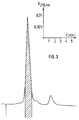
- d) Rechromatographie von Fraktion 2 (Fig. 3) lieferte ca. 300 µg eines Proteins, dessen Struktur durch Sequenzanalyse bestimmt wurde. Ihm kommt die folgende Struktur zu:

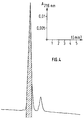
- e) Rechromatographie von Fraktion 3 (Fig. 4) lieferte ca. 150 µg eines Proteins, dessen Struktur durch Sequenzanalyse bestimmt wurde. Ihm kommt die folgende Struktur zu:

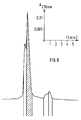
- f) Rechromatographie von Fraktion 4 (Fig. 5) lieferte ca. 80 µg eines Proteins, dessen Struktur durch Sequenzanalyse bestimmt wurde. Ihm kommt die folgende Struktur zu:

- g) Rechromatographie von Fraktion 5 (Fig. 6) lieferte ca. 40 µg eines Proteins, dessen Struktur noch nicht ermittelt wurde.
-
- a) Man ging von einem Material aus, das gemäß Beispiel 5 durch Aufarbeitung von im Handel erhältlichen Tieren gewonnen worden war, und unterwarf es einer Vorreinigung gemäß Beispiel 7 a).
- b) 1 mg der so erhaltenen Proteinfraktion wurde wie im Beispiel 7 b) mittels HPLC aufgetrennt. Die in Fig. 7 schraffierte Fraktion wurde rechromatographiert, wobei abgesehen von einer Gradientengeschwindigkeit A:B von 0,8 %/Minute die Bedingungen gleich blieben (Fig. 8). Fig. 9 zeigt das Chromatogramm des so gewonnenen analysenreinen Proteins, den die folgende durch Sequenzanalyse ermittelte Struktur zukommt:

-
Drei- und Ein-Buchstaben-Symbole der Aminosäuren Aminosäure Abkürzung Aminosäure Abkürzung Alanin Ala (A) Phenylalanin Phe (F) Arginin Arg (R) Prolin Pro (P) Cystein Cys (C) Serin Ser (S) Threonin Thr (T) Tryptophan Trp (W) Glycin Gly (G) Tyrosin Tyr (Y) Histidin His (H) Valin Val (V) Asparaginsäure Asp (D) Isoleucin Ile (I) Asparagin Asn (N) Glutaminsäure Glu (E) Leucin Leu (L) Glutamin Gln (Q) Lysin Lys (K) Methionin Met (M)
sowie deren physiologisch verträgliche Salze, wobie wenn
J = Gln
G ≠ Lys oder H ≠ Leu oder R ≠ Wasserstoff uns falls A und B abwesend sind C ≠ Val.
Claims (11)
- Polypeptid der Formel Iin welcher
 m= 0 - 50,n= 0 - 100 undR phenolischen Wasserstoff oder eine Phenolestergruppe bedeuten,X für gleiche oder verschiedene Reste natürlich vorkommende α-Aminosäuren steht,Z für gleiche oder verschiedene Reste naturlich vorkommender α-Aminosäuren steht undA für Ile oder die Abwesenheit einer Aminosäure steht,B für Ile oder Thr oder die Abwesenheit einer Aminosäure steht,C Thr, Val, Ile, Leu oder Phe bedeutetD Glu oder die Abwesenheit einer Aminosäure,E Glu oder Pro,F Thr oder Ile,G Lys oder Lys-Asp,H Ala oder Leu undJ Gln oder Lys bedeuten,in der die 6 cys-Reste paarweise über Disulfid-Brücken verknüpft sind,
sowie deren physiologisch verträglichen Salze, wobei wenn
J = Gln
G ≠ Lys oder H ≠ Leu oder R ≠ Wasserstoff und falls A und B abwesend sind C ≠ Val. - Polypeptid nach Anspruch 1, dadurch gekennzeichnet, daß C Thr ist.
- Polypeptid nach Anspruch 2, dadurch gekennzeichnet, daß A Ile ist.
- Verbindung gemäß mindestens einem der Ansprüche 1 - 3, in welcher R Wasserstoff, SO₃H oder PO₃H₂ bedeuten.
- Verbindung gemäß mindestens einem der Ansprüche 1 - 4, in welcher R für SO₃H steht.
- Verbindung gemäß einem der Ansprüche 1 - 4, in welcher R für phenolischen Wasserstoff steht.
- Peptidisches Spaltprodukt eines Polypeptids gemäß mindestens einem der Ansprüche 1 - 6 mit Antithrombin-Aktivität mit Ausnahme von Spaltprodukten eines Peptids der Formel:

- Verfahren zur Gewinnung eines gereinigten Polypeptides gemäß mindestens einem der Ansprüche 1 - 7, dadurch gekennzeichnet, daß man das Polypeptid aus Würmern der Ordnung Gnathobdellida, vorzugsweise aus Würmern der Gattung Hirudo mit Hilfe einer Kombination von Extraktionsmethoden, Fällungsmethoden, Membranfiltration und/oder chromatographischen Verfahren isoliert, eine gegebenenfalls vorhandene Phenolestergruppe R gewünschtenfalls hydrolytisch unter Bildung der phenolischen Hydroxylgruppe abspaltet, das Peptid gegebenenfalls chemisch oder enzymatisch spaltet und das erhaltene Peptid gegebenenfalls in seine physiologisch verträglichen Salze überführt.
- Verfahren zur Herstellung eines Polypeptids der Formel 5 gemäß mindestens einem der Ansprüche 1 - 7, dadurch gekennzeichnet, daß mana) es in an sich bekannter Weise mittels Festphasensynthese herstellt oderb) zur Herstellung eines Polypeptids, in welchem m= 0 ist,I. Hirudin einem zweifachen Edman-Abbau unterwirft,II. das so erhalten Peptid mit einem Aktivester einer Aminosäure oder eines Peptids der Formel
U-Xm-A-B-C-OH
in welcher m, X, A,B und C wie oben definiert sind und U für eine Urethanschutzgruppe steht, umsetzt,III. die Phenylthiocarbamoyl-Gruppe an der ε-Amino-Funktion von Lys mittels HydrazinIV. und die Urethan-Schutzgruppe U mit Hilfe einer Säure oder Base abspaltet, das nach a) oder b) erhaltenePolypeptid gegebenenfalls chemisch oder enzymatisch spaltet und gegebenenfalls in sein physiologisch verträgliches Salz überführt. - Peptid gemäß mindestens einem der Ansprüche 1 bis 7 zur Anwendung als Arzneimittel.
- Mittel enthaltend ein Peptid gemäß mindestens einem der Ansprüche 1 - 7 und einen pharmazeutisch unbedenklichen Träger.
Applications Claiming Priority (4)
| Application Number | Priority Date | Filing Date | Title |
|---|---|---|---|
| DE19853525428 DE3525428A1 (de) | 1985-07-17 | 1985-07-17 | Neue polypeptide mit blutgerinnungshemmender wirkung, verfahren zu deren herstellung bzw. gewinnung, deren verwendung und diese enthaltende mittel |
| DE3525428 | 1985-07-17 | ||
| DE3601032 | 1986-01-16 | ||
| DE19863601032 DE3601032A1 (de) | 1986-01-16 | 1986-01-16 | Neue polypeptide mit blutgerinnungshemmender wirkung, verfahren zu deren herstellung bzw. gewinnung, deren verwendung und diese enthaltende mittel |
Publications (3)
| Publication Number | Publication Date |
|---|---|
| EP0209061A2 EP0209061A2 (de) | 1987-01-21 |
| EP0209061A3 EP0209061A3 (en) | 1989-03-15 |
| EP0209061B1 true EP0209061B1 (de) | 1994-01-12 |
Family
ID=25834067
Family Applications (1)
| Application Number | Title | Priority Date | Filing Date |
|---|---|---|---|
| EP86109309A Expired - Lifetime EP0209061B1 (de) | 1985-07-17 | 1986-07-08 | Neue Polypeptide mit blutgerinnungshemmender Wirkung, Verfahren zu deren Herstellung bzw. Gewinnung, deren Verwendung und diese enthaltende Mittel |
Country Status (16)
| Country | Link |
|---|---|
| US (1) | US4791100A (de) |
| EP (1) | EP0209061B1 (de) |
| JP (1) | JPH0764875B2 (de) |
| KR (1) | KR940000758B1 (de) |
| AU (1) | AU593820B2 (de) |
| CA (1) | CA1340102C (de) |
| DE (1) | DE3689525D1 (de) |
| DK (1) | DK173509B1 (de) |
| ES (1) | ES2000216A6 (de) |
| FI (1) | FI862950A7 (de) |
| GR (1) | GR861837B (de) |
| HU (1) | HUT41418A (de) |
| IE (1) | IE61569B1 (de) |
| IL (1) | IL79424A (de) |
| NO (1) | NO862876L (de) |
| PT (1) | PT82993B (de) |
Families Citing this family (56)
| Publication number | Priority date | Publication date | Assignee | Title |
|---|---|---|---|---|
| ATE64956T1 (de) * | 1984-06-14 | 1991-07-15 | Ciba Geigy Ag | Verfahren zur herstellung von thrombininhibitoren. |
| DE3738541A1 (de) * | 1987-11-13 | 1989-05-24 | Hoechst Ag | Verfahren zur isolierung und reinigung von hirudin |
| ATE87938T1 (de) * | 1985-04-11 | 1993-04-15 | Hoechst Ag | Hirudin-derivat. |
| FR2607517B2 (fr) * | 1986-12-01 | 1989-12-22 | Transgene Sa | Vecteurs d'expression de variants de l'hirudine dans les levures, procede et produit obtenu |
| US5192745A (en) * | 1987-05-21 | 1993-03-09 | Merrell Dow Pharmaceuticals Inc. | Cyclic anticoagulant peptides |
| US5236898A (en) * | 1987-05-21 | 1993-08-17 | Merrell Dow Pharmaceuticals Inc. | Cyclic anticoagulant peptides |
| US5256559A (en) * | 1988-03-04 | 1993-10-26 | Biogen, Inc. | Methods and compositions for inhibiting platelet aggregation |
| DE68919848T2 (de) * | 1988-05-27 | 1995-05-04 | Philadelphia Children Hospital | Amphiphile peptide und deren verwendung. |
| US5114921A (en) * | 1988-05-27 | 1992-05-19 | The Children's Hospital Of Philadelphia | Amphiphilic peptides and use thereof |
| DE3819079A1 (de) * | 1988-06-04 | 1989-12-07 | Hoechst Ag | Hirudin-derivate mit verzoegerter wirkung |
| ES2052062T3 (es) * | 1988-06-11 | 1994-07-01 | Ciba Geigy Ag | Nuevos polipeptidos con actividad anticoagulante. |
| US5268296A (en) * | 1988-06-11 | 1993-12-07 | Ciba-Geigy Corporation | DNA vector and recombinant host cell for production of hirullin P6 and P18 |
| IL86856A0 (en) * | 1988-06-24 | 1988-11-30 | Yissum Res Dev Co | Bovine xa factor and pharmaceutical compositions containing the same |
| IL87004A (en) * | 1988-07-06 | 1992-08-18 | Technion Res & Dev Foundation | Method and apparatus for bioaffinity separation |
| GB8817160D0 (en) * | 1988-07-19 | 1988-08-24 | Ciba Geigy Ag | Novel proteins |
| DE3835815A1 (de) * | 1988-10-21 | 1990-04-26 | Hoechst Ag | Neue isohirudine |
| GB8826428D0 (en) * | 1988-11-11 | 1988-12-14 | Biopharm Ltd | Antithrombin |
| US4861865A (en) * | 1989-01-23 | 1989-08-29 | Washington University | Novel antithrombin peptide |
| US5254535A (en) * | 1989-04-17 | 1993-10-19 | The Children's Hospital Of Pennsylvania | Composition and treatment with biologically active peptides and antibiotic |
| US5187155A (en) * | 1989-06-23 | 1993-02-16 | Board Of Regents, The University Of Texas System | Anticoagulant peptides |
| US5192747A (en) * | 1989-10-03 | 1993-03-09 | Merrell Dow Pharmaceuticals Inc. | Anticoagulant peptides |
| ZA907743B (en) * | 1989-10-03 | 1991-07-31 | Merrell Dow Pharma | Radiolabeled anticoagulant peptides |
| US5190919A (en) * | 1989-11-13 | 1993-03-02 | Board Of Regents, The University Of Texas System | Antihemostatic factor vii peptides |
| DE3939801A1 (de) * | 1989-12-01 | 1991-06-06 | Basf Ag | Neue proteine und ihre herstellung |
| DE4001238A1 (de) * | 1990-01-18 | 1991-07-25 | Basf Ag | Verfahren zur anreicherung bzw. reinigung von biomolekuelen |
| US5459237A (en) * | 1990-02-08 | 1995-10-17 | Magainin Pharmaceuticals Inc. | Peptide compositions and uses therefor |
| EP0514464A4 (en) * | 1990-02-08 | 1993-04-28 | Magainin Sciences, Inc. | Biologically active amphiphilic peptides and method of inhibiting growth of target cells, virus or virally-infected cell |
| US5792831A (en) * | 1990-02-08 | 1998-08-11 | Magainin Pharmaceuticals Inc. | Analogues of magainin peptides containing D-amino acids |
| CA2035917C (en) * | 1990-02-13 | 2001-10-02 | John L. Krstenansky | Stabilized sulfonate, sulfate, phosphonate and phosphate derivatives of hirudin |
| US5330973A (en) * | 1990-03-19 | 1994-07-19 | Merck & Co., Inc. | Lipopeptide derivatives |
| US5386009A (en) * | 1990-03-19 | 1995-01-31 | Merck & Co. Inc. | Lipopeptide derivatives |
| WO1991017760A1 (en) * | 1990-05-14 | 1991-11-28 | Magainin Sciences Inc. | Composition of and treatment with biologically active peptides having d-amino acid residues |
| IE912046A1 (en) * | 1990-06-18 | 1991-12-18 | Fujisawa Pharmaceutical Co | New polypeptide compound and a process for preparation¹thereof |
| WO1992000090A1 (en) * | 1990-06-27 | 1992-01-09 | Magainin Pharmaceuticals Inc. | Composition and treatment with biologically active peptides and antibiotics which inhibit dna gyrase |
| US5208220A (en) * | 1990-06-27 | 1993-05-04 | Magainin Pharmaceuticals, Inc. | Composition and treatment with biologically active peptides and antibiotics which inhibit DNA gyrase |
| US5428009A (en) * | 1990-07-16 | 1995-06-27 | Merck & Co., Inc. | Lipopeptide derivatives |
| CA2047527A1 (en) * | 1990-07-24 | 1992-01-25 | Christopher Dunwiddie | Method for administering a therapeutic anticoagulant |
| DE4031731A1 (de) * | 1990-10-06 | 1992-04-09 | Basf Ag | Protein aus hirudo medicinalis |
| US5369093A (en) * | 1991-03-15 | 1994-11-29 | Merck & Co., Inc. | Lipopeptide derivatives |
| US5837808A (en) * | 1991-08-20 | 1998-11-17 | Baxter International Inc. | Analogs of hirudin |
| US5385884A (en) * | 1991-08-27 | 1995-01-31 | Merck & Co. Inc. | Lipopeptide derivatives |
| JPH07500342A (ja) * | 1991-10-16 | 1995-01-12 | ザ・チルドレンズ・ホスピタル・オブ・フィラデルフィア | 生物学的活性ペプチドおよび抗生物質を有する組成物およびこれを用いた治療 |
| DE4140381A1 (de) * | 1991-12-07 | 1993-06-09 | Hoechst Ag, 6230 Frankfurt, De | Neue synthetische isohirudine mit verbesserter stabilitaet |
| EP0693925B1 (de) * | 1993-04-09 | 2002-02-13 | Bio-Technology General Corporation | Herstellung eines rekombinanten inhibitors des faktors xa des blutegels hirudo medicinalis |
| US5863534A (en) * | 1993-04-09 | 1999-01-26 | Bio-Technology General Corp. | Polypeptide having factor Xa inhibitory method of reducing blood coagulation with a novel polypeptide having factor Xa inhibitory activity |
| GB9309509D0 (en) * | 1993-05-07 | 1993-06-23 | Merck Patent Gmbh | Thrombin inhibitors |
| DE4404168A1 (de) * | 1994-02-10 | 1995-08-17 | Hoechst Ag | Hirudinderivate und Verfahren zu deren Herstellung |
| DE19529997C1 (de) | 1995-08-16 | 1997-04-10 | Hoechst Ag | Verfahren zur Inaktivierung von Carboxypeptidase Y in hirudinhaltigen Kulturbrühen |
| DE19543737A1 (de) | 1995-11-24 | 1997-05-28 | Hoechst Ag | Verfahren zur Ultrafiltration von Peptide oder Proteine enthaltender biologischer Matrices |
| DE19544233A1 (de) * | 1995-11-28 | 1997-06-05 | Hoechst Ag | Verfahren zur Nutzung des Hefe-ADH II-Promotorsystems zur biotechnologischen Produktion heterologer Proteine in hohen Ausbeuten |
| DE69624087T2 (de) | 1996-01-31 | 2003-06-05 | Sumitomo Bakelite Co. Ltd., Tokio/Tokyo | Verfahren zur Herstellung von in Epoxyharz eingekapselter Halbleitervorrichtung |
| US6699836B2 (en) | 1999-04-02 | 2004-03-02 | The Trustees Of Princeton University | Vancomycin analogs |
| WO2000059528A1 (en) * | 1999-04-02 | 2000-10-12 | The Trustees Of Princeton University | Desleucyl glycopeptide antibiotics and methods of making same |
| SG171340A1 (en) * | 2008-11-19 | 2011-07-28 | Avantor Performance Mat Inc | New chromatographic media based on phenoxy alkyl and alkoxy-or phenoxy-phenyl alkyl ligands |
| CN102373216B (zh) * | 2011-10-28 | 2013-06-05 | 元昊 | 一种含有医用水蛭素基因的重组真核汉逊酵母工程菌株的构建及重组水蛭素的生产工艺 |
| CN113956339B (zh) * | 2021-10-28 | 2023-02-24 | 中国药科大学 | 宽体金线蛭抗凝血因子XIa多肽及其应用 |
Family Cites Families (5)
| Publication number | Priority date | Publication date | Assignee | Title |
|---|---|---|---|---|
| DE3342139A1 (de) * | 1983-11-22 | 1985-05-30 | Ciba-Geigy Ag, Basel | Desulfatohirudine, verfahren zu ihrer herstellung und pharmazeutische mittel |
| EP0158564B1 (de) * | 1984-03-27 | 1992-07-15 | Transgene S.A. | Expressionsvektoren für Hirudin, transformierte Zellen und Verfahren zur Herstellung von Hirudin |
| DE3438296A1 (de) * | 1984-04-18 | 1985-11-07 | Hoechst Ag, 6230 Frankfurt | Neue polypeptide mit blutgerinnungshemmender wirkung, verfahren zu deren herstellung bzw. gewinnung, deren verwendung und diese enthaltende mittel |
| DE3429430A1 (de) * | 1984-08-10 | 1986-02-20 | Hoechst Ag, 6230 Frankfurt | Gentechnologisches verfahren zur herstellung von hirudin und mittel zur durchfuehrung dieses verfahrens |
| DE3445532A1 (de) * | 1984-12-13 | 1986-06-19 | Plantorgan Werk Heinrich G.E. Christensen, KG, 2903 Bad Zwischenahn | Hirudin-pa, desulfatohirudine-pa, verfahren zur herstellung und pharmazeutische mittel, die diese wirkstoffe enthalten |
-
1986
- 1986-07-08 DE DE86109309T patent/DE3689525D1/de not_active Expired - Lifetime
- 1986-07-08 EP EP86109309A patent/EP0209061B1/de not_active Expired - Lifetime
- 1986-07-15 GR GR861837A patent/GR861837B/el unknown
- 1986-07-15 FI FI862950A patent/FI862950A7/fi not_active Application Discontinuation
- 1986-07-15 HU HU862913A patent/HUT41418A/hu unknown
- 1986-07-15 US US06/885,821 patent/US4791100A/en not_active Expired - Lifetime
- 1986-07-15 ES ES8600317A patent/ES2000216A6/es not_active Expired
- 1986-07-15 IL IL79424A patent/IL79424A/xx not_active IP Right Cessation
- 1986-07-16 KR KR1019860005761A patent/KR940000758B1/ko not_active Expired - Lifetime
- 1986-07-16 PT PT82993A patent/PT82993B/pt not_active IP Right Cessation
- 1986-07-16 CA CA000513871A patent/CA1340102C/en not_active Expired - Fee Related
- 1986-07-16 DK DK198603384A patent/DK173509B1/da not_active IP Right Cessation
- 1986-07-16 JP JP61165699A patent/JPH0764875B2/ja not_active Expired - Fee Related
- 1986-07-16 AU AU60233/86A patent/AU593820B2/en not_active Expired
- 1986-07-16 NO NO862876A patent/NO862876L/no unknown
- 1986-07-16 IE IE190286A patent/IE61569B1/en not_active IP Right Cessation
Also Published As
| Publication number | Publication date |
|---|---|
| EP0209061A3 (en) | 1989-03-15 |
| CA1340102C (en) | 1998-10-27 |
| DK338486A (da) | 1987-01-18 |
| FI862950A7 (fi) | 1987-01-18 |
| US4791100A (en) | 1988-12-13 |
| KR870001237A (ko) | 1987-03-12 |
| AU6023386A (en) | 1987-01-22 |
| NO862876L (no) | 1987-01-19 |
| IL79424A (en) | 1992-02-16 |
| EP0209061A2 (de) | 1987-01-21 |
| JPS6222799A (ja) | 1987-01-30 |
| HUT41418A (en) | 1987-04-28 |
| IE61569B1 (en) | 1994-11-16 |
| IL79424A0 (en) | 1986-10-31 |
| KR940000758B1 (ko) | 1994-01-29 |
| PT82993A (de) | 1986-08-01 |
| PT82993B (pt) | 1989-01-30 |
| ES2000216A6 (es) | 1988-01-16 |
| DE3689525D1 (de) | 1994-02-24 |
| GR861837B (en) | 1986-11-11 |
| DK338486D0 (da) | 1986-07-16 |
| NO862876D0 (no) | 1986-07-16 |
| JPH0764875B2 (ja) | 1995-07-12 |
| DK173509B1 (da) | 2001-01-15 |
| IE861902L (en) | 1987-01-17 |
| FI862950A0 (fi) | 1986-07-15 |
| AU593820B2 (en) | 1990-02-22 |
Similar Documents
| Publication | Publication Date | Title |
|---|---|---|
| EP0209061B1 (de) | Neue Polypeptide mit blutgerinnungshemmender Wirkung, Verfahren zu deren Herstellung bzw. Gewinnung, deren Verwendung und diese enthaltende Mittel | |
| EP0158986B1 (de) | Neue Polypeptide mit blutgerinnungshemmender Wirkung, Verfahren zu deren Herstellung bzw. Gewinnung, deren Verwendung und diese enthaltende Mittel | |
| EP0207956B1 (de) | Hirudin-pa und dessen derivate, verfahren zu deren herstellung und deren verwendung | |
| EP0134479B1 (de) | Modifizierte Protease-Inhibitoren, Verfahren zu ihrer Herstellung und daraus bereitete pharmazeutische Mittel | |
| EP0142860B1 (de) | Desulfatohirudine, Verfahren zu ihrer Herstellung und pharmazeutische Mittel | |
| DE3485945T2 (de) | Gereinigter transformierender wachstum-beta-faktor aus humanen plaketten und plazenten stammend. | |
| EP0001295B1 (de) | Somatostatin-analoge Cyclopeptide, Verfahren zu ihrer Herstellung, pharmazeutische Präparate enthaltend diese Verbindungen, sowie ihre therapeutische Anwendung | |
| EP0140084B1 (de) | Verfahren zur Herstellung von Insulin-Derivaten, deren B-Kette C-terminal verlängert ist, neue basisch modifizierte Insulin-Derivate, diese enthaltende Mittel und ihre Verwendung | |
| DE68918246T2 (de) | Verbindungen zur Verhinderung von Thrombose. | |
| DE3587526T2 (de) | Serinproteaseinhibitoren und isolierungsverfahren dazu. | |
| EP0101063B1 (de) | Neues Polypeptid mit Wirkung auf das Immunsystem, Verfahren zu seiner Isolierung und Reinigung, seine Verwendung und dieses enthaltende Mittel | |
| EP0297362A2 (de) | Human-Aprotinin, dessen Lys-Rest in Position 15 gegen einen anderen protogenen Aminosäurerest ausgetauscht ist | |
| EP0677107B1 (de) | Thrombininhibitor aus speichel von protostomiern | |
| EP0364942B1 (de) | Neue Isohirudine | |
| DE3525428A1 (de) | Neue polypeptide mit blutgerinnungshemmender wirkung, verfahren zu deren herstellung bzw. gewinnung, deren verwendung und diese enthaltende mittel | |
| DE3601032A1 (de) | Neue polypeptide mit blutgerinnungshemmender wirkung, verfahren zu deren herstellung bzw. gewinnung, deren verwendung und diese enthaltende mittel | |
| EP0610246B1 (de) | Neues thrombininhibitorisches protein aus zecken | |
| DE2900926A1 (de) | Therapeutisch wirksame pseudopeptide, diese enthaltende zusammensetzungen und verfahren zu deren herstellung | |
| DE1929957A1 (de) | Verfahren zur Herstellung neuer hypocalcaemischer Peptide |
Legal Events
| Date | Code | Title | Description |
|---|---|---|---|
| PUAI | Public reference made under article 153(3) epc to a published international application that has entered the european phase |
Free format text: ORIGINAL CODE: 0009012 |
|
| AK | Designated contracting states |
Kind code of ref document: A2 Designated state(s): AT BE CH DE FR GB IT LI LU NL SE |
|
| PUAL | Search report despatched |
Free format text: ORIGINAL CODE: 0009013 |
|
| AK | Designated contracting states |
Kind code of ref document: A3 Designated state(s): AT BE CH DE FR GB IT LI LU NL SE |
|
| 17P | Request for examination filed |
Effective date: 19890520 |
|
| 17Q | First examination report despatched |
Effective date: 19910517 |
|
| GRAA | (expected) grant |
Free format text: ORIGINAL CODE: 0009210 |
|
| AK | Designated contracting states |
Kind code of ref document: B1 Designated state(s): BE CH DE FR GB IT LI LU NL SE |
|
| REF | Corresponds to: |
Ref document number: 3689525 Country of ref document: DE Date of ref document: 19940224 |
|
| ITF | It: translation for a ep patent filed | ||
| ET | Fr: translation filed | ||
| GBT | Gb: translation of ep patent filed (gb section 77(6)(a)/1977) |
Effective date: 19940321 |
|
| EPTA | Lu: last paid annual fee | ||
| PLBE | No opposition filed within time limit |
Free format text: ORIGINAL CODE: 0009261 |
|
| STAA | Information on the status of an ep patent application or granted ep patent |
Free format text: STATUS: NO OPPOSITION FILED WITHIN TIME LIMIT |
|
| 26N | No opposition filed | ||
| EAL | Se: european patent in force in sweden |
Ref document number: 86109309.4 |
|
| REG | Reference to a national code |
Ref country code: GB Ref legal event code: IF02 |
|
| REG | Reference to a national code |
Ref country code: CH Ref legal event code: PUE Owner name: HOECHST AKTIENGESELLSCHAFT TRANSFER- SCHERING AKTI |
|
| NLS | Nl: assignments of ep-patents |
Owner name: SCHERING AKTIENGESELLSCHAFT |
|
| REG | Reference to a national code |
Ref country code: GB Ref legal event code: 732E |
|
| REG | Reference to a national code |
Ref country code: FR Ref legal event code: TP |
|
| PGFP | Annual fee paid to national office [announced via postgrant information from national office to epo] |
Ref country code: FR Payment date: 20050614 Year of fee payment: 20 |
|
| PGFP | Annual fee paid to national office [announced via postgrant information from national office to epo] |
Ref country code: GB Payment date: 20050615 Year of fee payment: 20 |
|
| PGFP | Annual fee paid to national office [announced via postgrant information from national office to epo] |
Ref country code: NL Payment date: 20050616 Year of fee payment: 20 |
|
| PGFP | Annual fee paid to national office [announced via postgrant information from national office to epo] |
Ref country code: DE Payment date: 20050617 Year of fee payment: 20 |
|
| PGFP | Annual fee paid to national office [announced via postgrant information from national office to epo] |
Ref country code: CH Payment date: 20050620 Year of fee payment: 20 |
|
| PGFP | Annual fee paid to national office [announced via postgrant information from national office to epo] |
Ref country code: SE Payment date: 20050622 Year of fee payment: 20 |
|
| PGFP | Annual fee paid to national office [announced via postgrant information from national office to epo] |
Ref country code: IT Payment date: 20050625 Year of fee payment: 20 |
|
| PGFP | Annual fee paid to national office [announced via postgrant information from national office to epo] |
Ref country code: LU Payment date: 20050627 Year of fee payment: 20 |
|
| PGFP | Annual fee paid to national office [announced via postgrant information from national office to epo] |
Ref country code: BE Payment date: 20050628 Year of fee payment: 20 |
|
| REG | Reference to a national code |
Ref country code: GB Ref legal event code: PE20 |
|
| PG25 | Lapsed in a contracting state [announced via postgrant information from national office to epo] |
Ref country code: GB Free format text: LAPSE BECAUSE OF EXPIRATION OF PROTECTION Effective date: 20060707 |
|
| PG25 | Lapsed in a contracting state [announced via postgrant information from national office to epo] |
Ref country code: NL Free format text: LAPSE BECAUSE OF EXPIRATION OF PROTECTION Effective date: 20060708 |
|
| REG | Reference to a national code |
Ref country code: CH Ref legal event code: PL |
|
| NLV7 | Nl: ceased due to reaching the maximum lifetime of a patent |
Effective date: 20060708 |
|
| EUG | Se: european patent has lapsed | ||
| BE20 | Be: patent expired |
Owner name: *SCHERING A.G. Effective date: 20060708 |