EP0160699B1 - Production of heterodimeric human fertlity hormones - Google Patents
Production of heterodimeric human fertlity hormones Download PDFInfo
- Publication number
- EP0160699B1 EP0160699B1 EP85900268A EP85900268A EP0160699B1 EP 0160699 B1 EP0160699 B1 EP 0160699B1 EP 85900268 A EP85900268 A EP 85900268A EP 85900268 A EP85900268 A EP 85900268A EP 0160699 B1 EP0160699 B1 EP 0160699B1
- Authority
- EP
- European Patent Office
- Prior art keywords
- hormone
- cell
- subunit
- vector
- promoter
- Prior art date
- Legal status (The legal status is an assumption and is not a legal conclusion. Google has not performed a legal analysis and makes no representation as to the accuracy of the status listed.)
- Expired - Lifetime
Links
- 229940088597 hormone Drugs 0.000 title claims abstract description 36
- 239000005556 hormone Substances 0.000 title claims abstract description 36
- 238000004519 manufacturing process Methods 0.000 title claims description 8
- 239000013612 plasmid Substances 0.000 claims abstract description 85
- 210000004027 cell Anatomy 0.000 claims abstract description 65
- 241000700605 Viruses Species 0.000 claims abstract description 28
- 238000000034 method Methods 0.000 claims abstract description 28
- 239000013604 expression vector Substances 0.000 claims abstract description 23
- 230000003362 replicative effect Effects 0.000 claims abstract description 14
- 210000003527 eukaryotic cell Anatomy 0.000 claims abstract description 9
- 239000013598 vector Substances 0.000 claims description 34
- 241000701822 Bovine papillomavirus Species 0.000 claims description 10
- 108090000157 Metallothionein Proteins 0.000 claims description 10
- DIGQNXIGRZPYDK-WKSCXVIASA-N (2R)-6-amino-2-[[2-[[(2S)-2-[[2-[[(2R)-2-[[(2S)-2-[[(2R,3S)-2-[[2-[[(2S)-2-[[2-[[(2S)-2-[[(2S)-2-[[(2R)-2-[[(2S,3S)-2-[[(2R)-2-[[(2S)-2-[[(2S)-2-[[(2S)-2-[[2-[[(2S)-2-[[(2R)-2-[[2-[[2-[[2-[(2-amino-1-hydroxyethylidene)amino]-3-carboxy-1-hydroxypropylidene]amino]-1-hydroxy-3-sulfanylpropylidene]amino]-1-hydroxyethylidene]amino]-1-hydroxy-3-sulfanylpropylidene]amino]-1,3-dihydroxypropylidene]amino]-1-hydroxyethylidene]amino]-1-hydroxypropylidene]amino]-1,3-dihydroxypropylidene]amino]-1,3-dihydroxypropylidene]amino]-1-hydroxy-3-sulfanylpropylidene]amino]-1,3-dihydroxybutylidene]amino]-1-hydroxy-3-sulfanylpropylidene]amino]-1-hydroxypropylidene]amino]-1,3-dihydroxypropylidene]amino]-1-hydroxyethylidene]amino]-1,5-dihydroxy-5-iminopentylidene]amino]-1-hydroxy-3-sulfanylpropylidene]amino]-1,3-dihydroxybutylidene]amino]-1-hydroxy-3-sulfanylpropylidene]amino]-1,3-dihydroxypropylidene]amino]-1-hydroxyethylidene]amino]-1-hydroxy-3-sulfanylpropylidene]amino]-1-hydroxyethylidene]amino]hexanoic acid Chemical compound C[C@@H]([C@@H](C(=N[C@@H](CS)C(=N[C@@H](C)C(=N[C@@H](CO)C(=NCC(=N[C@@H](CCC(=N)O)C(=NC(CS)C(=N[C@H]([C@H](C)O)C(=N[C@H](CS)C(=N[C@H](CO)C(=NCC(=N[C@H](CS)C(=NCC(=N[C@H](CCCCN)C(=O)O)O)O)O)O)O)O)O)O)O)O)O)O)O)N=C([C@H](CS)N=C([C@H](CO)N=C([C@H](CO)N=C([C@H](C)N=C(CN=C([C@H](CO)N=C([C@H](CS)N=C(CN=C(C(CS)N=C(C(CC(=O)O)N=C(CN)O)O)O)O)O)O)O)O)O)O)O)O DIGQNXIGRZPYDK-WKSCXVIASA-N 0.000 claims description 9
- 102000003792 Metallothionein Human genes 0.000 claims description 9
- 230000001131 transforming effect Effects 0.000 claims description 7
- 230000035558 fertility Effects 0.000 claims description 6
- 238000002360 preparation method Methods 0.000 claims description 5
- 230000013595 glycosylation Effects 0.000 claims description 4
- 238000006206 glycosylation reaction Methods 0.000 claims description 4
- 230000004481 post-translational protein modification Effects 0.000 claims description 3
- 239000008194 pharmaceutical composition Substances 0.000 claims description 2
- 108010073521 Luteinizing Hormone Proteins 0.000 abstract description 34
- 102000009151 Luteinizing Hormone Human genes 0.000 abstract description 34
- 229940040129 luteinizing hormone Drugs 0.000 abstract description 32
- 108090000623 proteins and genes Proteins 0.000 abstract description 11
- 102000004169 proteins and genes Human genes 0.000 abstract description 11
- 102000011923 Thyrotropin Human genes 0.000 abstract description 7
- 108010061174 Thyrotropin Proteins 0.000 abstract description 7
- 102000012673 Follicle Stimulating Hormone Human genes 0.000 abstract description 6
- 108010079345 Follicle Stimulating Hormone Proteins 0.000 abstract description 6
- 229940028334 follicle stimulating hormone Drugs 0.000 abstract description 6
- 239000012634 fragment Substances 0.000 description 45
- 239000002299 complementary DNA Substances 0.000 description 34
- 108020004414 DNA Proteins 0.000 description 27
- 241000588724 Escherichia coli Species 0.000 description 23
- 238000010276 construction Methods 0.000 description 20
- 230000029087 digestion Effects 0.000 description 16
- 108091026890 Coding region Proteins 0.000 description 11
- 108020004999 messenger RNA Proteins 0.000 description 11
- 239000000203 mixture Substances 0.000 description 11
- LFQSCWFLJHTTHZ-UHFFFAOYSA-N Ethanol Chemical compound CCO LFQSCWFLJHTTHZ-UHFFFAOYSA-N 0.000 description 10
- 108091032973 (ribonucleotides)n+m Proteins 0.000 description 9
- 101710132601 Capsid protein Proteins 0.000 description 9
- 101710197658 Capsid protein VP1 Proteins 0.000 description 8
- 101710118046 RNA-directed RNA polymerase Proteins 0.000 description 8
- 101710108545 Viral protein 1 Proteins 0.000 description 8
- 102000002260 Alkaline Phosphatase Human genes 0.000 description 7
- 108020004774 Alkaline Phosphatase Proteins 0.000 description 7
- 108010076504 Protein Sorting Signals Proteins 0.000 description 7
- 150000001413 amino acids Chemical class 0.000 description 7
- 108020005202 Viral DNA Proteins 0.000 description 6
- 238000010367 cloning Methods 0.000 description 6
- 238000001890 transfection Methods 0.000 description 6
- 101710149086 Nuclease S1 Proteins 0.000 description 5
- 230000001580 bacterial effect Effects 0.000 description 5
- 239000000499 gel Substances 0.000 description 5
- 239000002609 medium Substances 0.000 description 5
- 230000003169 placental effect Effects 0.000 description 5
- 239000000243 solution Substances 0.000 description 5
- 230000003612 virological effect Effects 0.000 description 5
- 241000282693 Cercopithecidae Species 0.000 description 4
- 108020004638 Circular DNA Proteins 0.000 description 4
- 108010014303 DNA-directed DNA polymerase Proteins 0.000 description 4
- 102000016928 DNA-directed DNA polymerase Human genes 0.000 description 4
- KCXVZYZYPLLWCC-UHFFFAOYSA-N EDTA Chemical compound OC(=O)CN(CC(O)=O)CCN(CC(O)=O)CC(O)=O KCXVZYZYPLLWCC-UHFFFAOYSA-N 0.000 description 4
- 108020004511 Recombinant DNA Proteins 0.000 description 4
- FAPWRFPIFSIZLT-UHFFFAOYSA-M Sodium chloride Chemical compound [Na+].[Cl-] FAPWRFPIFSIZLT-UHFFFAOYSA-M 0.000 description 4
- 238000009396 hybridization Methods 0.000 description 4
- 208000015181 infectious disease Diseases 0.000 description 4
- 230000001817 pituitary effect Effects 0.000 description 4
- 229920002401 polyacrylamide Polymers 0.000 description 4
- 239000000523 sample Substances 0.000 description 4
- DGVVWUTYPXICAM-UHFFFAOYSA-N β‐Mercaptoethanol Chemical compound OCCS DGVVWUTYPXICAM-UHFFFAOYSA-N 0.000 description 4
- 101710166678 50S ribosomal protein L28, chloroplastic Proteins 0.000 description 3
- 108091003079 Bovine Serum Albumin Proteins 0.000 description 3
- 102000004594 DNA Polymerase I Human genes 0.000 description 3
- 108010017826 DNA Polymerase I Proteins 0.000 description 3
- PEDCQBHIVMGVHV-UHFFFAOYSA-N Glycerine Chemical compound OCC(O)CO PEDCQBHIVMGVHV-UHFFFAOYSA-N 0.000 description 3
- 101710163270 Nuclease Proteins 0.000 description 3
- ISWSIDIOOBJBQZ-UHFFFAOYSA-N Phenol Chemical compound OC1=CC=CC=C1 ISWSIDIOOBJBQZ-UHFFFAOYSA-N 0.000 description 3
- HEMHJVSKTPXQMS-UHFFFAOYSA-M Sodium hydroxide Chemical compound [OH-].[Na+] HEMHJVSKTPXQMS-UHFFFAOYSA-M 0.000 description 3
- 229960000723 ampicillin Drugs 0.000 description 3
- AVKUERGKIZMTKX-NJBDSQKTSA-N ampicillin Chemical compound C1([C@@H](N)C(=O)N[C@H]2[C@H]3SC([C@@H](N3C2=O)C(O)=O)(C)C)=CC=CC=C1 AVKUERGKIZMTKX-NJBDSQKTSA-N 0.000 description 3
- 238000006243 chemical reaction Methods 0.000 description 3
- 239000013599 cloning vector Substances 0.000 description 3
- 238000000605 extraction Methods 0.000 description 3
- 210000004962 mammalian cell Anatomy 0.000 description 3
- 238000013507 mapping Methods 0.000 description 3
- 239000002953 phosphate buffered saline Substances 0.000 description 3
- 239000011541 reaction mixture Substances 0.000 description 3
- 230000010076 replication Effects 0.000 description 3
- 108091008146 restriction endonucleases Proteins 0.000 description 3
- HEDRZPFGACZZDS-UHFFFAOYSA-N Chloroform Chemical compound ClC(Cl)Cl HEDRZPFGACZZDS-UHFFFAOYSA-N 0.000 description 2
- 108020004705 Codon Proteins 0.000 description 2
- 208000003322 Coinfection Diseases 0.000 description 2
- 238000001712 DNA sequencing Methods 0.000 description 2
- ZHNUHDYFZUAESO-UHFFFAOYSA-N Formamide Chemical compound NC=O ZHNUHDYFZUAESO-UHFFFAOYSA-N 0.000 description 2
- 241001465754 Metazoa Species 0.000 description 2
- 101000832455 Pimpla hypochondriaca Small venom protein 1 Proteins 0.000 description 2
- 239000004098 Tetracycline Substances 0.000 description 2
- 239000008346 aqueous phase Substances 0.000 description 2
- 108010066058 beta Subunit Luteinizing Hormone Proteins 0.000 description 2
- 230000015572 biosynthetic process Effects 0.000 description 2
- 239000001506 calcium phosphate Substances 0.000 description 2
- 229910000389 calcium phosphate Inorganic materials 0.000 description 2
- 235000011010 calcium phosphates Nutrition 0.000 description 2
- 239000001913 cellulose Substances 0.000 description 2
- 229920002678 cellulose Polymers 0.000 description 2
- ULSFNUQXUHMWNZ-UHFFFAOYSA-N crl-8401 Chemical compound O=C1C2=NC=CC=C2C2=NC=CC3=C2C1=NC=C3OC ULSFNUQXUHMWNZ-UHFFFAOYSA-N 0.000 description 2
- 238000005520 cutting process Methods 0.000 description 2
- 230000000694 effects Effects 0.000 description 2
- 239000012894 fetal calf serum Substances 0.000 description 2
- 238000011049 filling Methods 0.000 description 2
- 229920001519 homopolymer Polymers 0.000 description 2
- 238000003780 insertion Methods 0.000 description 2
- 230000037431 insertion Effects 0.000 description 2
- 238000002955 isolation Methods 0.000 description 2
- 239000002244 precipitate Substances 0.000 description 2
- 238000010839 reverse transcription Methods 0.000 description 2
- 238000012216 screening Methods 0.000 description 2
- 239000011780 sodium chloride Substances 0.000 description 2
- 238000003786 synthesis reaction Methods 0.000 description 2
- 238000012360 testing method Methods 0.000 description 2
- 229960002180 tetracycline Drugs 0.000 description 2
- 229930101283 tetracycline Natural products 0.000 description 2
- 235000019364 tetracycline Nutrition 0.000 description 2
- 150000003522 tetracyclines Chemical class 0.000 description 2
- 210000001519 tissue Anatomy 0.000 description 2
- 230000002103 transcriptional effect Effects 0.000 description 2
- 230000009466 transformation Effects 0.000 description 2
- 238000013519 translation Methods 0.000 description 2
- QORWJWZARLRLPR-UHFFFAOYSA-H tricalcium bis(phosphate) Chemical compound [Ca+2].[Ca+2].[Ca+2].[O-]P([O-])([O-])=O.[O-]P([O-])([O-])=O QORWJWZARLRLPR-UHFFFAOYSA-H 0.000 description 2
- XLYOFNOQVPJJNP-UHFFFAOYSA-N water Chemical compound O XLYOFNOQVPJJNP-UHFFFAOYSA-N 0.000 description 2
- JKMHFZQWWAIEOD-UHFFFAOYSA-N 2-[4-(2-hydroxyethyl)piperazin-1-yl]ethanesulfonic acid Chemical compound OCC[NH+]1CCN(CCS([O-])(=O)=O)CC1 JKMHFZQWWAIEOD-UHFFFAOYSA-N 0.000 description 1
- QKNYBSVHEMOAJP-UHFFFAOYSA-N 2-amino-2-(hydroxymethyl)propane-1,3-diol;hydron;chloride Chemical compound Cl.OCC(N)(CO)CO QKNYBSVHEMOAJP-UHFFFAOYSA-N 0.000 description 1
- 241000972773 Aulopiformes Species 0.000 description 1
- 241000713838 Avian myeloblastosis virus Species 0.000 description 1
- 241000894006 Bacteria Species 0.000 description 1
- 102000011022 Chorionic Gonadotropin Human genes 0.000 description 1
- 108010062540 Chorionic Gonadotropin Proteins 0.000 description 1
- 101710094648 Coat protein Proteins 0.000 description 1
- 108010008286 DNA nucleotidylexotransferase Proteins 0.000 description 1
- 102100033215 DNA nucleotidylexotransferase Human genes 0.000 description 1
- 108010054576 Deoxyribonuclease EcoRI Proteins 0.000 description 1
- 229920002307 Dextran Polymers 0.000 description 1
- 239000006144 Dulbecco’s modified Eagle's medium Substances 0.000 description 1
- 102100031780 Endonuclease Human genes 0.000 description 1
- 102000004190 Enzymes Human genes 0.000 description 1
- 108090000790 Enzymes Proteins 0.000 description 1
- 108091029865 Exogenous DNA Proteins 0.000 description 1
- 108700039691 Genetic Promoter Regions Proteins 0.000 description 1
- 102100021181 Golgi phosphoprotein 3 Human genes 0.000 description 1
- 241000701806 Human papillomavirus Species 0.000 description 1
- 206010062767 Hypophysitis Diseases 0.000 description 1
- FFEARJCKVFRZRR-BYPYZUCNSA-N L-methionine Chemical compound CSCC[C@H](N)C(O)=O FFEARJCKVFRZRR-BYPYZUCNSA-N 0.000 description 1
- KZSNJWFQEVHDMF-BYPYZUCNSA-N L-valine Chemical compound CC(C)[C@H](N)C(O)=O KZSNJWFQEVHDMF-BYPYZUCNSA-N 0.000 description 1
- 101710125418 Major capsid protein Proteins 0.000 description 1
- 241001529936 Murinae Species 0.000 description 1
- 239000000020 Nitrocellulose Substances 0.000 description 1
- 108020004485 Nonsense Codon Proteins 0.000 description 1
- 108091028043 Nucleic acid sequence Proteins 0.000 description 1
- 101710141454 Nucleoprotein Proteins 0.000 description 1
- 101710083689 Probable capsid protein Proteins 0.000 description 1
- 102000055027 Protein Methyltransferases Human genes 0.000 description 1
- 108700040121 Protein Methyltransferases Proteins 0.000 description 1
- 108010092799 RNA-directed DNA polymerase Proteins 0.000 description 1
- 240000004808 Saccharomyces cerevisiae Species 0.000 description 1
- 108091036066 Three prime untranslated region Proteins 0.000 description 1
- 108091023045 Untranslated Region Proteins 0.000 description 1
- KZSNJWFQEVHDMF-UHFFFAOYSA-N Valine Natural products CC(C)C(N)C(O)=O KZSNJWFQEVHDMF-UHFFFAOYSA-N 0.000 description 1
- 238000004458 analytical method Methods 0.000 description 1
- 238000010171 animal model Methods 0.000 description 1
- 238000000376 autoradiography Methods 0.000 description 1
- 229940098773 bovine serum albumin Drugs 0.000 description 1
- 239000000872 buffer Substances 0.000 description 1
- 238000010804 cDNA synthesis Methods 0.000 description 1
- 238000004113 cell culture Methods 0.000 description 1
- 230000006037 cell lysis Effects 0.000 description 1
- 238000005119 centrifugation Methods 0.000 description 1
- 210000000349 chromosome Anatomy 0.000 description 1
- 230000000295 complement effect Effects 0.000 description 1
- 238000007796 conventional method Methods 0.000 description 1
- 238000001816 cooling Methods 0.000 description 1
- 238000012258 culturing Methods 0.000 description 1
- 230000007812 deficiency Effects 0.000 description 1
- 230000002939 deleterious effect Effects 0.000 description 1
- 239000005549 deoxyribonucleoside Substances 0.000 description 1
- 230000001419 dependent effect Effects 0.000 description 1
- 229960002086 dextran Drugs 0.000 description 1
- 229960000633 dextran sulfate Drugs 0.000 description 1
- 238000010586 diagram Methods 0.000 description 1
- LOKCTEFSRHRXRJ-UHFFFAOYSA-I dipotassium trisodium dihydrogen phosphate hydrogen phosphate dichloride Chemical compound P(=O)(O)(O)[O-].[K+].P(=O)(O)([O-])[O-].[Na+].[Na+].[Cl-].[K+].[Cl-].[Na+] LOKCTEFSRHRXRJ-UHFFFAOYSA-I 0.000 description 1
- 238000004090 dissolution Methods 0.000 description 1
- 239000003814 drug Substances 0.000 description 1
- 238000005516 engineering process Methods 0.000 description 1
- 239000012737 fresh medium Substances 0.000 description 1
- 230000002068 genetic effect Effects 0.000 description 1
- 210000004907 gland Anatomy 0.000 description 1
- ZJYYHGLJYGJLLN-UHFFFAOYSA-N guanidinium thiocyanate Chemical compound SC#N.NC(N)=N ZJYYHGLJYGJLLN-UHFFFAOYSA-N 0.000 description 1
- 239000000833 heterodimer Substances 0.000 description 1
- 238000000265 homogenisation Methods 0.000 description 1
- 238000000338 in vitro Methods 0.000 description 1
- 238000011065 in-situ storage Methods 0.000 description 1
- 238000010348 incorporation Methods 0.000 description 1
- 230000000977 initiatory effect Effects 0.000 description 1
- 239000000463 material Substances 0.000 description 1
- 229930182817 methionine Natural products 0.000 description 1
- 238000010369 molecular cloning Methods 0.000 description 1
- 229920001220 nitrocellulos Polymers 0.000 description 1
- 239000002773 nucleotide Substances 0.000 description 1
- 125000003729 nucleotide group Chemical group 0.000 description 1
- 239000006916 nutrient agar Substances 0.000 description 1
- 239000008188 pellet Substances 0.000 description 1
- 239000012071 phase Substances 0.000 description 1
- 210000005059 placental tissue Anatomy 0.000 description 1
- 238000002264 polyacrylamide gel electrophoresis Methods 0.000 description 1
- 229920001184 polypeptide Polymers 0.000 description 1
- 108090000765 processed proteins & peptides Proteins 0.000 description 1
- 102000004196 processed proteins & peptides Human genes 0.000 description 1
- 238000012545 processing Methods 0.000 description 1
- 239000000047 product Substances 0.000 description 1
- 230000002797 proteolythic effect Effects 0.000 description 1
- 239000002684 recombinant hormone Substances 0.000 description 1
- 230000006798 recombination Effects 0.000 description 1
- 238000005215 recombination Methods 0.000 description 1
- 238000001226 reprecipitation Methods 0.000 description 1
- 235000019515 salmon Nutrition 0.000 description 1
- 230000011664 signaling Effects 0.000 description 1
- 239000002356 single layer Substances 0.000 description 1
- 239000001488 sodium phosphate Substances 0.000 description 1
- 229910000162 sodium phosphate Inorganic materials 0.000 description 1
- 239000008223 sterile water Substances 0.000 description 1
- 239000011550 stock solution Substances 0.000 description 1
- 239000006228 supernatant Substances 0.000 description 1
- 239000000725 suspension Substances 0.000 description 1
- 239000001226 triphosphate Substances 0.000 description 1
- 235000011178 triphosphate Nutrition 0.000 description 1
- 125000002264 triphosphate group Chemical class [H]OP(=O)(O[H])OP(=O)(O[H])OP(=O)(O[H])O* 0.000 description 1
- RYFMWSXOAZQYPI-UHFFFAOYSA-K trisodium phosphate Chemical compound [Na+].[Na+].[Na+].[O-]P([O-])([O-])=O RYFMWSXOAZQYPI-UHFFFAOYSA-K 0.000 description 1
- 239000004474 valine Substances 0.000 description 1
- 239000013603 viral vector Substances 0.000 description 1
Images




Classifications
-
- C—CHEMISTRY; METALLURGY
- C07—ORGANIC CHEMISTRY
- C07K—PEPTIDES
- C07K14/00—Peptides having more than 20 amino acids; Gastrins; Somatostatins; Melanotropins; Derivatives thereof
- C07K14/435—Peptides having more than 20 amino acids; Gastrins; Somatostatins; Melanotropins; Derivatives thereof from animals; from humans
- C07K14/46—Peptides having more than 20 amino acids; Gastrins; Somatostatins; Melanotropins; Derivatives thereof from animals; from humans from vertebrates
- C07K14/47—Peptides having more than 20 amino acids; Gastrins; Somatostatins; Melanotropins; Derivatives thereof from animals; from humans from vertebrates from mammals
- C07K14/4701—Peptides having more than 20 amino acids; Gastrins; Somatostatins; Melanotropins; Derivatives thereof from animals; from humans from vertebrates from mammals not used
- C07K14/4715—Pregnancy proteins, e.g. placenta proteins, alpha-feto-protein, pregnancy specific beta glycoprotein
-
- C—CHEMISTRY; METALLURGY
- C07—ORGANIC CHEMISTRY
- C07K—PEPTIDES
- C07K14/00—Peptides having more than 20 amino acids; Gastrins; Somatostatins; Melanotropins; Derivatives thereof
- C07K14/435—Peptides having more than 20 amino acids; Gastrins; Somatostatins; Melanotropins; Derivatives thereof from animals; from humans
- C07K14/575—Hormones
- C07K14/59—Follicle-stimulating hormone [FSH]; Chorionic gonadotropins, e.g.hCG [human chorionic gonadotropin]; Luteinising hormone [LH]; Thyroid-stimulating hormone [TSH]
-
- C—CHEMISTRY; METALLURGY
- C12—BIOCHEMISTRY; BEER; SPIRITS; WINE; VINEGAR; MICROBIOLOGY; ENZYMOLOGY; MUTATION OR GENETIC ENGINEERING
- C12N—MICROORGANISMS OR ENZYMES; COMPOSITIONS THEREOF; PROPAGATING, PRESERVING, OR MAINTAINING MICROORGANISMS; MUTATION OR GENETIC ENGINEERING; CULTURE MEDIA
- C12N15/00—Mutation or genetic engineering; DNA or RNA concerning genetic engineering, vectors, e.g. plasmids, or their isolation, preparation or purification; Use of hosts therefor
- C12N15/09—Recombinant DNA-technology
- C12N15/63—Introduction of foreign genetic material using vectors; Vectors; Use of hosts therefor; Regulation of expression
- C12N15/79—Vectors or expression systems specially adapted for eukaryotic hosts
- C12N15/85—Vectors or expression systems specially adapted for eukaryotic hosts for animal cells
-
- A—HUMAN NECESSITIES
- A61—MEDICAL OR VETERINARY SCIENCE; HYGIENE
- A61K—PREPARATIONS FOR MEDICAL, DENTAL OR TOILETRY PURPOSES
- A61K38/00—Medicinal preparations containing peptides
-
- C—CHEMISTRY; METALLURGY
- C12—BIOCHEMISTRY; BEER; SPIRITS; WINE; VINEGAR; MICROBIOLOGY; ENZYMOLOGY; MUTATION OR GENETIC ENGINEERING
- C12N—MICROORGANISMS OR ENZYMES; COMPOSITIONS THEREOF; PROPAGATING, PRESERVING, OR MAINTAINING MICROORGANISMS; MUTATION OR GENETIC ENGINEERING; CULTURE MEDIA
- C12N2830/00—Vector systems having a special element relevant for transcription
-
- C—CHEMISTRY; METALLURGY
- C12—BIOCHEMISTRY; BEER; SPIRITS; WINE; VINEGAR; MICROBIOLOGY; ENZYMOLOGY; MUTATION OR GENETIC ENGINEERING
- C12N—MICROORGANISMS OR ENZYMES; COMPOSITIONS THEREOF; PROPAGATING, PRESERVING, OR MAINTAINING MICROORGANISMS; MUTATION OR GENETIC ENGINEERING; CULTURE MEDIA
- C12N2830/00—Vector systems having a special element relevant for transcription
- C12N2830/001—Vector systems having a special element relevant for transcription controllable enhancer/promoter combination
- C12N2830/002—Vector systems having a special element relevant for transcription controllable enhancer/promoter combination inducible enhancer/promoter combination, e.g. hypoxia, iron, transcription factor
-
- C—CHEMISTRY; METALLURGY
- C12—BIOCHEMISTRY; BEER; SPIRITS; WINE; VINEGAR; MICROBIOLOGY; ENZYMOLOGY; MUTATION OR GENETIC ENGINEERING
- C12N—MICROORGANISMS OR ENZYMES; COMPOSITIONS THEREOF; PROPAGATING, PRESERVING, OR MAINTAINING MICROORGANISMS; MUTATION OR GENETIC ENGINEERING; CULTURE MEDIA
- C12N2830/00—Vector systems having a special element relevant for transcription
- C12N2830/60—Vector systems having a special element relevant for transcription from viruses
-
- C—CHEMISTRY; METALLURGY
- C12—BIOCHEMISTRY; BEER; SPIRITS; WINE; VINEGAR; MICROBIOLOGY; ENZYMOLOGY; MUTATION OR GENETIC ENGINEERING
- C12N—MICROORGANISMS OR ENZYMES; COMPOSITIONS THEREOF; PROPAGATING, PRESERVING, OR MAINTAINING MICROORGANISMS; MUTATION OR GENETIC ENGINEERING; CULTURE MEDIA
- C12N2830/00—Vector systems having a special element relevant for transcription
- C12N2830/80—Vector systems having a special element relevant for transcription from vertebrates
- C12N2830/85—Vector systems having a special element relevant for transcription from vertebrates mammalian
-
- C—CHEMISTRY; METALLURGY
- C12—BIOCHEMISTRY; BEER; SPIRITS; WINE; VINEGAR; MICROBIOLOGY; ENZYMOLOGY; MUTATION OR GENETIC ENGINEERING
- C12N—MICROORGANISMS OR ENZYMES; COMPOSITIONS THEREOF; PROPAGATING, PRESERVING, OR MAINTAINING MICROORGANISMS; MUTATION OR GENETIC ENGINEERING; CULTURE MEDIA
- C12N2840/00—Vectors comprising a special translation-regulating system
- C12N2840/44—Vectors comprising a special translation-regulating system being a specific part of the splice mechanism, e.g. donor, acceptor
Definitions
- This invention relates to the use of recombinant DNA techniques to produce heteropolymeric protein hormones.
- hCG human choriogonadotropin
- US-A-4383036 (Kaname) describes a process for producing hCG in which human lymphoblastoid cells are implanted into a laboratory animal, harvested from the animal, and cultured in vitro; accumulated hCG is then harvested from the culture.
- a process for the preparation of a biologically active, post-translationally modified, proteinaceous hormone composed of a plurality of subunits comprising commonly synthesising each of the subunits in a eukaryotic cell transfected with one or more expression vectors comprising heterologous DNA encoding each of the subunits.
- the hormone may be hCG, luteinizing hormone (LH), follicle stimulating hormone (FSH) or thyroid stimulating hormone (TSH).
- the post-translational modification may be glycosylation.
- the hormone is a fertility hormone and may be a human hormone.
- the hormone may be heterodimeric or otherwise heteropolymeric.
- a eukaryotic cell transfected with one or more expression vectors the cell being capable of producing a biologically active, post-translationally modified proteinaceous hormone having a plurality of subunits, the subunits of the hormone being encoded by heterologous DNA in the expression vector(s).
- the cell may be a monkey or mouse cell.
- the cell is transfected with more than one expression vector and each vector comprises heterologous DNA encoding a respective subunit, whereas in other embodiments the cell is transfected with a single expression vector comprising heterologous DNA encoding each subunit.
- each heterologous, subunit-encoding DNA may if desired be under the control of a respective promoter; the use of different promoters advantageously minimises the possibility of deleterious recombinations.
- Preferred promoters for use in this invention include the SV40 late promoter, the mouse metallothionein promoter and the human papilloma virus promoter.
- the or each expression vector may contain plasmid-derived DNA and/or replicating virus-derived DNA such as at least the 69% transforming region of the bovine papilloma virus genome.
- plasmid-derived DNA and/or replicating virus-derived DNA such as at least the 69% transforming region of the bovine papilloma virus genome.
- an expression vector capable of transfecting a eukaryotic cell, the vector comprising heterologous DNA encoding the subunits of a biologically active, post-translationally modified, proteinaceous hormone having a plurality of subunits.
- a set of vectors wherein at least one, and preferably each, of the vectors comprises at least the 69% transforming region of the bovine papilloma virus genome.
- subunit refers to a portion of a protein, which portion, or homologue or analogue thereof, is encoded in nature by a distinct in mRNA.
- hCG, LH and FSH have more than one subunit by this criterion.
- expression vector refers to a cloning vector which includes heterologous (to the vector) DNA under the control of control sequences which permit expression in a host cell.
- Such vectors include replicating viruses, plasmids, and phages.
- the invention permits the production of a biologically active heteropolymeric proteinaceous hormone from a single culture of transformed cells.
- the production of both subunits of a heteropolymeric protein in the same cell eliminates the necessity of recombining subunits from separate cultures to assemble an active heteropolymeric molecule.
- the system also allows production of proteins, in a single culture, which undergo, in the culture, post-translational modification, eg glycosylation and proteolytic processing, for activity or stability.
- autonomously replicating expression vectors prevents undesirable influence of the desired coding regions by control sequences in the host chromosome.
- the invention also relates to a pharmaceutical composition
- a pharmaceutical composition comprising a recombinant proteinaceous hormone as described above and a carrier therefor and to the use of such a recombinant hormone in the preparation of a medicament, for treating hormone deficiency.
- the cloning vectors of the invention have the general structure described above.
- Preferred vectors have the structures shown in the Figures, and are described in more detail below.
- RNA is extracted from placental tissue by the following method. Homogenization of the tissue is carried out in a 1:1 mixture of phenol:100mM Na-acetate (pH 5.5) containing 1 mM EDTA, that has been warmed to 60° for 20 min. After cooling on ice for 10 min., the phases are separated by centrifugation. The hot phenol extraction is repeated twice more followed by two extractions with chloroform.
- RNA is precipitated from the final aqueous phase by the addition of 2.5 volumes of ethanol.
- placental RNA is passed over oligo (dT)-cellulose in 0.5M NaCl buffered with 10mM Tris-Hcl, pH 7.5, and washed with the same solution.
- Poly A+ mRNA is eluted with 10mM Tris-HCI (pH 7.5), 1 mM EDTA, 0.05% SDS and precipitated twice with ethanol.
- Typical initial yields are 1.5-2.0 mg of total RNA per g of tissue, of which about 2% is poly A+ mRNA.
- Placental cDNA libraries are constructed by reverse transcription of placental mRNA, second strand synthesis using E. coli DNA polymerase I (large fragment), treatment with SI nuclease, and homopolymer tailing (dC) with terminal deoxynucleotidyl transferase; all such procedures are by conventional techniques.
- a 219 bp fragment of a mouse alpha thyroid stimulating hormone (TSH) clone is used as a hybridization probe.
- This probe has 77% sequence homology with the human clone. It is radioactively labeled by nick translation and hybridized to the cDNA library under conditions that take into account the extent of homology. Strongly hybridizing clones are analyzed by restriction mapping and clones containing the complete coding sequence of alpha hCG are verified by DNA sequencing.
- a cDNA clone containing the alpha hCG fragment is digested with Ncol.
- the Ncol site just 5' to the ATG codon signalling initiation of translation, is filled in and ligated to a synthetic Hindlll linker.
- the natural Hindlll site in the 3' untranslated region of the clone is cut, filled in with E. coli DNA polymerase Klenow, and then ligated to a synthetic BamHl linker.
- This fragment is cloned into the plasmid pBR 322 between its Hindlll and BamHl sites to generate the plasmid alpha 574 H/B.
- This plasmid is digested with BamHl, treated with alkaline phosphatase, and ligated to the 396 bp Sau3A fragment of SV40 DNA (from 0.07 to 0.14 map units) which has been isolated from a polyacrylamide gel.
- the ligation mix is used to transform E. coli to ampicillin resistance and the desired plasmid, alpha 970 H/B, is identified among the transformants.
- the plasmid Q 2 7 is constructed by cutting SV40 at its Hpall site, making flush ends by digestion with nuclease S1, ligating on Eco RI linkers, digesting with EcoRl, and cloning the resulting 1436 bp fragment into the EcoRl site of pBR 322.
- Q 2 7 is digested completely with EcoRl and partially with Hindlll; the fragment from 0.72 to 0.94 map units is isolated and cloned into alpha 970 H/B, which has been digested with EcoRl and Hindlll and treated with alkaline phosphatase.
- the ligation mix is used to transform E. coli, and the desired plasmid, p alpha SVL, is identified among the transformants by restriction mapping.
- p alpha SVL is digested with EcoRl and the fragment of SV40, with EcoRl ends, extending from 0 to 0.72 map units, and containing the SV40 origin of replication and the intact early region, is ligated to it to generate the plasmid p alpha SVHVP1, which is isolated from E. coli transformants.
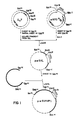
- a 579 bp cDNA clone coding for beta hCG was obtained from John C. Fiddes at Cold Spring Harbor Laboratory, Cold Spring Harbor, New York (Fiddes et al (1980) Nature Vol. 286, pg. 684-687). This fragment is ligated at each end to synthetic BamHl linkers. After digestion by Hgal restriction enzyme, the ends are filled in with Klenow DNA polymerase and synthetic EcoRl linkers are ligated on so that an EcoRl site is about 10 bp 5' to the ATG codon of the signal peptide coding sequence. A BamHl site is about 60 bp 3' to the nonsense codon marking the end of the coding sequence. Referring to Fig. 2, this 556 bp EcoRl-BamHl fragment is isolated and cloned into pBR 322, between the EcoRl and BamHl sites, to give the plasmid p beta 556 R/B.
- SV40 DNA is partially digested with Hindlll to yield linear molecules, digested with nuclease S1 to make flush ends, ligated to synthetic EcoRl linkers and digested with EcoRl and BamHl.
- the EcoRI site of the plasmid p beta 556 R/B is methylated in a reaction catalyzed by EcoRl methylase, following which the plasmid is cut with Ndel.
- EcoRl linkers are ligated to the SI treated Ndel flush ends and activated by digestion with EcoRl, which is followed by digestion with BamHl.
- the SV40 fragment of pSVHR from the EcoRl site to the BamHl site is isolated and ligated in a reaction mix containing the digestion fragments of p beta 556 R/B. Following ligation, the mix is digested with Sall to eliminate plasmids which have re-inserted the EcoRl (Ndel) to BamHl piece of pBR 322. E. coli is transformed with the digested ligation mix and p beta SVVP1 is identified and isolated.
- pBR 322/Kpn is derived from pBR 322 by inserting a Kpnl linker into its unique EcoRl site, after this site is deleted by digestion with EcoRl, followed by digestion with S1 nuclease.
- SV40 DNA is digested with Avall.
- the staggered ends of the resulting fragments are filled in by Klenow DNA polymerase to form flush ends, and the mixture is then fractionated on a polyacrylamide gel.
- the 682 base pair fragment (0.64 to 0.77 map units) containing the origin of replication and the unique Kpnl site is isolated from the gel, ligated to synthetic Hindlll linkers, and digested with Hindlll and Kpnl.
- pBR 322/Kpn contains the 266 base pair Kpnl - Hindlll fragment, including the SV40 late promoter region, is isolated.
- p266 is cut with Hindlll and BamHl, and treated with bacterial alkaline phosphatase.
- p beta SVVPI/B is constructed as follows: p beta SVVPI (Fig. 2) is cut with EcoRl, followed by ligation to eliminate pBR 322 sequences. Subsequently, this DNA is cut with BamHl and cloned into the BamHl site of pBR 322.
- p beta SVVPI/B The resulting plasmid, p beta SVVPI/B, is then digested with Hindlll and BamHl and the 1003 base pair Hindlll-BamHl fragment is ligated into p266 to yield the plasmid p beta VP1 266, in which the beta hCG cDNA is positioned downstream from the SV40 late promoter in such a way that its RNA transcript would be spliced as if it were the viral VP1 transcript.
- the alpha hCG cDNA is inserted into p beta VP1 266 as a Hindlll fragment, which has been cut at its Hindlll site and treated with bacterial alkaline phosphatase.
- E. coli transformants derived from this ligation are screened by restriction mapping, and plasmids are isolated that have the desired structure, in which the alpha hCG cDNA has replaced VP2 in the correct orientation, followed downstream by the beta hCG cDNA, which has replaced VP1.
- p alpha beta VP1 One such isolated plasmid, p alpha beta VP1, is used to complete the construction of p alpha beta SVVP1.
- the plasmid is cut with Kpnl, and the full SV40 genome, cut with Kpnl, is inserted by ligation into this site.
- a plasmid with the required structure, p alpha beta SVVP1 is isolated.
- This plasmid contains DNA encoding both the alpha and beta subunits of hCG, and thus is capable of directing the expression, in host mammalian cells, of both subunits, whereby biologically functional, glycosylated heterodimeric hCG is produced (glycosylation occurs post-translationally).
- the plasmid CL28 (identical to plasmid JYMMT(E); Hamer et al. (1983) J. Mol. Applied Gen. 1, 273-288), containing the murine metallothionein promoter, SV40 DNA, and pBR 322 sequences, is cut with the restriction endonuclease Bql II.
- cDNA clones of either alpha hCG or beta hCG containing untranslated regions of about 10 and 30 bp at their 5' and of about 220 and 60 bp at their 3' ends.
- These clones have been genetically engineered by the addition of synthetic Bam HI linkers at their termini.
- pRF 302 alpha
- pRF 394 beta
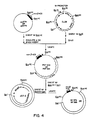
- Plasmid pB2-2 which contains the entire BPV genome, and some pBR 322 sequences, is digested with BamHl and Sall to yield the BPV genome with BamHl/Sall ends; this fragement is ligated into pRF 302 (alpha) and pRF 394 (beta) containing the metallothionein-hCG sequences.
- plasmids pRF 375 and pRF 398 are identified and isolated. They encode alpha hCG or beta hCG, respectively, under the control of the mouse metallothionein promoter.
- the plasmid p alpha t2 is derived by cloning the alpha hCG 574 Hindlll fragment into plasmid pVBt2 (V.B. Reddy et al., PNAS 79, 2064-2067, 1982).
- p alpha t2 which contains the alpha hCG cDNA under the control of the SV40 early promoter, is digested with EcoRl. The 5' overhangs are removed by S1 nuclease digestion prior to the addition of synthetic BamHl linkers by blunt end ligation.
- Plasmid RF 398 (Fig. 4) is digested with BamHl and treated with bacterial alkaline phosphatase. The 1735 base pair BamHl fragment of p alpha t 2 is inserted in to RF 398. The resulting plasmid RF 398 alpha t 2 is isolated from E. coli transformants. This plasmid thus has the beta hCG cDNA in a transcriptional unit under control of the mouse metallothionein promoter and the alpha hCG cDNA in a transcriptional unit controlled by the SV40 early promoter.
- LH Luteinizing Hormone
- RNA is prepared from human pituitaries by homogenizing 5 to 10 grams of the frozen glands in 20 ml of a solution containing 4 M guanidine thiocyanate, 1 M 2-mercaptoethanol, 0.05 M Na-acetate (pH 5.0), and 0.001 M EDTA.
- One g CsCI is added per ml of homogenate and the suspension is centrifuged at 2,000 rpm for 15 min.
- the supernatant is layered carefully over a 15 ml cushion of CsCI solution (containing 1.25 ml of 1 M Na-acetate (pH 5), 62.5 microliters of 0.4 M EDTA and 39.8g of CsCI in a final volume of 35 ml) and centrifuged at 45,000 rpm in the Ti 70 rotor of a Beckman ultracentrifuge for 18-24 h at 20 ° C.
- the RNA visible as a pellicle in the gradient is removed with a syringe, diluted, and precipitated by the addition of two volumes of ethanol.
- RNA pellet is dissolved in H 2 0 and brought to 0.01 M Tris-HCI (pH 7.5) and 0.5 M NaCl by the addition of concentrated stock solutions.
- the preparation is then enriched for poly A mRNA by two passes over oligo dT-cellulose, as described above in the case of placental RNA.
- a human pituitary cDNA library is constructed from the poly A mRNA as described above for placental poly A mRNA except that both the large fragment E. coli DNA polymerase I and the avian myeloblastosis virus reverse transciptase are used sequentially for second strand cDNA synthesis.
- the Klenow is used first. The reaction is stopped by phenol extraction.
- aqueous phase of the centrifuged extract is applied to a 5 ml column of BioGel A-5m. Fractions containing high molecular weight material are pooled, concentrated, precipitated with two volumes of ethanol, dried, and dissolved in 100 mM Tris-HCI (pH 8.3), 10 mM MgC1 2 , 140 mM KCI, 20 mM 2-mercaptoethanol, 1 mM of each of the four deoxyribonucleoside triphosphates, for reverse transcription. Reverse transcriptase is added to about 20 units per microgram of cDNA. Double stranded cDNA is then treated with nuclease S1, tailed, and cloned as described above.
- Colonies grown on nutrient agar plates containing 25 micrograms per ml of tetracycline are transferred to nitrocellulose filters.
- Colonies are lysed in situ by treatment with 0.5 M NaOH and neutralized with 0.5 M Tris-HCI (pH 7.4) containing 1.5 M NaCI.
- Liberated DNA is fixed to the filter by baking at 80 ° C in a vacuum oven for 2 h.
- the filters are screened by hybridization to a 32p labeled 88 base pair fragment of the beta hCG clone corresponding to amino acids 16 to 45 of the mature hCG beta chain, which has 29 of 30 amino acids in common with this region of the beta LH polypeptide (Fig. 6).
- Hybridization is carried out overnight at 32° in 50% formamide, 0.75 M NaCI, 0.075M Na-Citrate (pH 7.0), 2.5% dextran sulfate, 0.1% polyvinylpyrol- lidone, 0.1 mg per ml bovine serum albumin, and at least 10 5 cpm per filter of 32 P-labeled 88 bp beta hCG fragment. Filters are washed several times in 0.15 M NaCI, 0.015 M Na-citrate at 37 °C before autoradiography. One of the positive isolated clones LH12 ( Figure 7), is used further.
- LH12 is 365bp long and includes sequences coding for 15 amino acids of the pre-beta signal sequence plus 105 amino acids of the mature beta LH polypeptide. Its nucleotide sequence is determined. Since the complete mature beta LH is not coded by LH12, further screening of the human pituitary cDNA library is carried out using a 240 bp Ncol-Pvull fragment of LH12 (Fig. 7) as a 32p labeled hybridization probe. The clone LH6 (Fig. 7) is isolated from this screening. LH6 contains the complete 3' end of beta LH, including the region corresponding to the untranslated portion of the mRNA through 27 A residues of the poly A "tail" of the mRNA.
- a clone containing an intact signal peptide coding sequence and the complete mature beta LH sequence is constructed as shown in Fig. 8, using the restriction fragment illustrated in Fig. 7.
- a 104 bp EcoRl-Ddel fragment is isolated from the plasmid beta 579 H and ligated to an isolated 181 bp Ddel fragment, subsequently digested with Pstl, from the LH12 plasmid. Following ligation overnight at 15°C, the ligation mix is digested with EcoRl and Pstl and fractionated on a 7% polyacrylamide gel from which the desired 256 bp fragment is isolated. This fragment fuses the beta hCG signal sequence to that of the pre-beta LH in such a way as to provide a coding sequence for a 20 amino acid signal peptide.
- the 256 bp EcoRl-Pstl fragment is cloned into pBR 322 digested with EcoRl and Pstl so as to give the plasmid LH beta 260.
- the 146 bp EcoRl-Ncol fragment indicated in Fig. 8 is isolated from a polyacrylamide gel and used later in the construction as described below.
- the LH6 plasmid (Fig. 8) is digested with Sau3a and the 390 bp fragment is isolated by polyacrylamide gel electrophoresis. This fragment is then digested with Hincll, ligated to BamHl linkers, digested with BamHl, and cloned into the plasmid pAPP at the BamHl site.
- pAPP is derived from pBR 322 by digestion with Aval, filling in the 5' overhang with the dNTP's and the large fragment DNA polymerase I of E. coli, digestion with Pvull, and ligation to close the plasmid so as to eliminate the Pvull site.
- the plasmid LH6B isolated from the ligation of the 340 bp BamHl fragment into the BamHl site of pAPP, is digested with EcoRl and Pvull, and treated with bacterial alkaline phosphatase. The fragments are ligated to a mixture of the 145 bp EcoRl-Ncol fragment of LH beta 260, described above, and the isolated 241 bp Ncol-Pvull fragment from the plasmid LH12 shown in Fig. 8. The ligation mix is used to transform E. coli to ampicillin resistance.
- the plasmid LH 520 H/B is found among the transformants.
- LH 520 H/B contains a complete beta LH coding sequence including a hybrid signal peptide sequence.
- the plasmid p alpha beta VP1 whose construction and use in expressing both subunits of hCG is described earlier (Fig. 3), is digested with EcoRl and BamHl and ligated in a reaction mix containing the plasmid pLH496 R/B which had been digested with both of these enzymes (Fig. 9).
- the plasmid p alpha LHVP1 is identified among the E. coli transformants. As shown in Fig. 9, the intact SV40 viral early region is taken from p alpha SVHVP1 (Fig.
- the virus alpha LHSVVP1 is formed.
- This virus contains cloned cDNA's for the common (to LH and hCG, as well as FSH and TSH) alpha subunit and the specific beta LH subunit under control of the SV40 late promoter.
- the cloned cDNA's are positioned in such a way that the common alpha insert replaced the viral VP1 protein coding sequence and the beta LH insert replaced the viral VP2 coding sequence.
- Beta LH cDNA Insertion of the Beta LH cDNA (With Beta hCG 5' End of Signal Peptide) into a BPV-Based Expression System
- LH 520 H/B (Fig. 8) is digested with Hindlll and BamHl, treated with the E. coli DNA polymerase (Klenow), ligated to synthetic sail linkers, digested with Sall, and cloned into the Sail site of pBR 322.
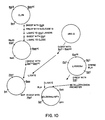
- the resulting plasmid, LH 530 Sal is used as a source of the LH cDNA clone for insertion into the mouse metallothionein gene of the plasmid CL28 as described in Fig. 10.
- CL28 is cut with Bglll, treated with nuclease S1, and ligated to Xhol linkers. Following digestion with Xhol, ligation and digestion with Bglll, E. coli is transformed with the reaction mix to give the plasmid CL28Xho. This plasmid is digested with BamHl and Sall and ligated to a BamHl plus Sall digest of the plasmid pB2-2 (Fig. 4) to give the plasmid CL28XhoBPV. The latter LH insert is then ligated into the Xhol site of CL28XhoBPV as a Sall fragment, since the 5' overhang of Sall digests is complementary to that of Xhol digests.
- E. coli Following digestion with Xhol to eliminate background, E. coli is transformed and the desired plasmid pCL28XhoLHBVP containing the (hybrid) pre-beta LH insert, in a BPV-based plasmid, under control of the mouse metallothionein promoter, is isolated.
- virus-containing vectors into eukaryotic cells for the production of a heteropolymeric protein is generally accomplished as follows. First, if the viral DNA and homopolymeric protein-encoding DNA are incorporated into a plasmid, which is maintained, in, say, E. coli, the plasmid sequences (e.g. the pBR 322 sequences) are removed and the resulting DNA is ligated to form circular DNA including the viral region and the heteropolymeric protein-encoding sequence or sequences.
- This circular DNA generally does not contain all of the genetic information needed to produce a replicating virus, the other necessary sequences (e.g. those encoding coat protein) having been replaced by the heteropolymeric protein-encoding sequence or sequences.
- the circular DNA, minus the plasmid DNA must be close enough in size to the naturally occurring viral DNA from which it is derived to permit the DNA to enter and replicate in appropriate host mammalian cells.
- the circular DNA is used to transfect host cells in order to produce virus stock for later infections. Since some of the DNA necessary to produce virus is missing, the transfection must occur in conjunction with helper virus DNA encoding enough of the missing function to produce replicating virus.
- Transfected host cells are grown and incubated until lysed by replicating virus.
- the resulting replicating virus stock including helper virus, is then used to infect host cells for production of the heteropolymeric protein.
- Virus stock is maintained, since it generally needs to be reused to infect fresh batches of host cells, as each culture of infected, protein-producing host cells generally is eventually lysed by the virus.
- the pBR 322 sequences are removed from the above-described SV40-containing plasmids to produce transfecting viral DNA.
- this is accomplished by digestion with BamHl, followed by ligation under conditions favoring circularization of the fragments to give (among other products) alpha SVHVP1 and alpha beta SVVPI.
- digestion with EcoRl followed by re-ligation brings the SV40 late promoter and VP1 splice region into juxtaposition with the beta hCG cDNA insert at the same time that it eliminates pBR 322 sequences and forms beta SVP1.
- ptsA58 Bam tsA58 SV40 viral DNA cloned into the pBR 322 BamHl site
- BamHl BamHl
- the DNAs which are cut and ligated as described above, are ethanol precipitated and dissolved in sterile water.
- the cells are left at 37 °C for 1-2 hrs with occasional shaking, washed with TBS twice, fed with 10 ml of DMEM containing 5% fetal calf serum, and left at 40 °C for 10-15 days. After complete cell lysis, the medium is transferred to a test tube, frozen and thawed five times, and centrifuged at 3000 rpm for five minutes. The resulting super-
- natants serve as virus stocks for infection of fresh CV-1 cells.
- CV-1 cells are grown to confluence in a T-150 flask. 1 ml of one of the virus stocks (made as described above) is added to the flask and the cells are incubated at 40°C for 5 days.
- CV-1 cells are grown to confluence in a T-150 flask. alpha SVHVP1 and beta SVP1 viruses are mixed in a 1:1 ratio and 1 ml of the mixed virus is used to infect CV-1 cells at 40°C.
- each BPV plasmid i.e., pRF 375 (alpha hCG) and pRF 398 (beta hCG)
- pRF 375 alpha hCG
- pRF 398 beta hCG
- mice C127 cells available from Dr. Dean Hamer, National Cancer Institute, NIH, Bethesda, MD
- fresh medium Dulbecco's Modified Medium, 10% fetal calf serum
- calcium phosphate precipitate is added to each dish (10 ml), and the cells are incubated for 6-8 hours at 37°C.
- the medium is aspirated and replaced with 5 ml of 20% glycerol in phosphate buffered saline, pH 7.0 (PBS) for 2 minutes at room temperature.
- the cells are washed with PBS, fed with 10ml of medium, and incubated at 37°C. After 20-24 hours, the medium is changed and subsequent refeeding of the cells is carried out every 3-4 days.
- Individual clones are grown in T-25cm flasks. After 7-21 days, cell clones can be transferred to larger flasks for analysis.
- plasmid RF 398 alpha t 2 is employed in the same manner as the above two plasmids were employed for a mixed infection.
- plasmids PRF 375 and pCL28XhoLHBPV are mixed, as described above in the case of hCG.
- hCG made according to the invention for example, has a number of well-known medical uses associated with human fertility.
- host cells can also be employed.
- the host cell employed generally is dependent on the vector being used.
- the host cells are cells capable of being infected or transfected, respectively, by those vectors; e.g., SV40-containing vectors require monkey host cells, preferably CV-1 cells.
- the cloning vector is a plasmid having procaryotic control sequences
- prokaryotic host cells e.g., E. coli
- appropriate eukaryotic host cells e.g., mouse C127 cells, are used.
Landscapes
- Health & Medical Sciences (AREA)
- Chemical & Material Sciences (AREA)
- Life Sciences & Earth Sciences (AREA)
- Genetics & Genomics (AREA)
- Organic Chemistry (AREA)
- Zoology (AREA)
- Engineering & Computer Science (AREA)
- Molecular Biology (AREA)
- Biochemistry (AREA)
- Biophysics (AREA)
- General Health & Medical Sciences (AREA)
- Bioinformatics & Cheminformatics (AREA)
- General Engineering & Computer Science (AREA)
- Gastroenterology & Hepatology (AREA)
- Proteomics, Peptides & Aminoacids (AREA)
- Toxicology (AREA)
- Wood Science & Technology (AREA)
- Medicinal Chemistry (AREA)
- Endocrinology (AREA)
- Reproductive Health (AREA)
- Biomedical Technology (AREA)
- Biotechnology (AREA)
- Pregnancy & Childbirth (AREA)
- Plant Pathology (AREA)
- Physics & Mathematics (AREA)
- Microbiology (AREA)
- Gynecology & Obstetrics (AREA)
- Preparation Of Compounds By Using Micro-Organisms (AREA)
- Micro-Organisms Or Cultivation Processes Thereof (AREA)
- Medicines That Contain Protein Lipid Enzymes And Other Medicines (AREA)
- Peptides Or Proteins (AREA)
- Pharmaceuticals Containing Other Organic And Inorganic Compounds (AREA)
- Crystals, And After-Treatments Of Crystals (AREA)
- Steroid Compounds (AREA)
Priority Applications (3)
| Application Number | Priority Date | Filing Date | Title |
|---|---|---|---|
| EP92200198A EP0487512B1 (en) | 1983-11-02 | 1984-10-31 | Production of heterodimeric human fertility hormones |
| AT85900268T ATE79408T1 (de) | 1983-11-02 | 1984-10-31 | Herstellung heterodimerer menschlicher fruchtbarkeitshormone. |
| NL300049C NL300049I2 (nl) | 1983-11-02 | 2001-07-20 | Productie van heterodimeer menselijk vruchtbaarheidshormoon. |
Applications Claiming Priority (3)
| Application Number | Priority Date | Filing Date | Title |
|---|---|---|---|
| US54821183A | 1983-11-02 | 1983-11-02 | |
| US548211 | 1983-11-02 | ||
| US06/548,228 US4840896A (en) | 1983-11-02 | 1983-11-02 | Heteropolymeric protein |
Related Child Applications (2)
| Application Number | Title | Priority Date | Filing Date |
|---|---|---|---|
| EP92200198A Division EP0487512B1 (en) | 1983-11-02 | 1984-10-31 | Production of heterodimeric human fertility hormones |
| EP92200198.7 Division-Into | 1992-01-24 |
Publications (3)
| Publication Number | Publication Date |
|---|---|
| EP0160699A1 EP0160699A1 (en) | 1985-11-13 |
| EP0160699A4 EP0160699A4 (en) | 1987-10-20 |
| EP0160699B1 true EP0160699B1 (en) | 1992-08-12 |
Family
ID=24187868
Family Applications (3)
| Application Number | Title | Priority Date | Filing Date |
|---|---|---|---|
| EP85900268A Expired - Lifetime EP0160699B1 (en) | 1983-11-02 | 1984-10-31 | Production of heterodimeric human fertlity hormones |
| EP99107952A Withdrawn EP0957167A1 (en) | 1983-11-02 | 1984-10-31 | Production of heterodimeric human fertility hormones |
| EP93202294A Expired - Lifetime EP0578328B1 (en) | 1983-11-02 | 1984-10-31 | Material and methods for the production of a heterodimeric human LH with a Met42 Val55 alpha subunit |
Family Applications After (2)
| Application Number | Title | Priority Date | Filing Date |
|---|---|---|---|
| EP99107952A Withdrawn EP0957167A1 (en) | 1983-11-02 | 1984-10-31 | Production of heterodimeric human fertility hormones |
| EP93202294A Expired - Lifetime EP0578328B1 (en) | 1983-11-02 | 1984-10-31 | Material and methods for the production of a heterodimeric human LH with a Met42 Val55 alpha subunit |
Country Status (8)
| Country | Link |
|---|---|
| EP (3) | EP0160699B1 (da) |
| AT (2) | ATE190461T1 (da) |
| DE (4) | DE3486474T2 (da) |
| DK (2) | DK297285A (da) |
| LU (1) | LU90770I2 (da) |
| MX (1) | MX9203334A (da) |
| NL (1) | NL300044I2 (da) |
| WO (1) | WO1985001959A1 (da) |
Cited By (1)
| Publication number | Priority date | Publication date | Assignee | Title |
|---|---|---|---|---|
| US7112341B1 (en) | 1999-04-13 | 2006-09-26 | Nektar Therapeutics | Pulmonary administration of dry powder formulations for treating infertility |
Families Citing this family (25)
| Publication number | Priority date | Publication date | Assignee | Title |
|---|---|---|---|---|
| US4923805A (en) * | 1983-11-02 | 1990-05-08 | Integrated Genetics, Inc. | Fsh |
| US5639639A (en) * | 1983-11-02 | 1997-06-17 | Genzyme Corporation | Recombinant heterodimeric human fertility hormones, and methods, cells, vectors and DNA for the production thereof |
| JPS60145098A (ja) * | 1984-01-09 | 1985-07-31 | Suntory Ltd | 糖付加ポリペプチドの製造法 |
| AU5993186A (en) * | 1985-06-04 | 1987-01-07 | Biotechnology Research Partners Limited | Autoantigen vaccines |
| CA1340740C (en) * | 1987-12-08 | 1999-09-14 | Eileen R. Mulvihill | Co-expression in eukaryotic cells |
| US5648254A (en) * | 1988-01-15 | 1997-07-15 | Zymogenetics, Inc. | Co-expression in eukaryotic cells |
| US6225449B1 (en) * | 1991-10-04 | 2001-05-01 | Washington University | Hormone analogs with multiple CTP extensions |
| JP3045539B2 (ja) * | 1989-02-21 | 2000-05-29 | ワシントン ユニバーシティ | 改変型生殖ホルモン |
| US5792460A (en) * | 1989-02-21 | 1998-08-11 | Washington University | Modified glycoprotein hormones having a CTP at the amino terminus |
| US5705478A (en) * | 1989-02-21 | 1998-01-06 | Washington University | Covalently linked β subunits of the glycoprotein hormones as antagonists |
| US6028177A (en) * | 1991-10-04 | 2000-02-22 | Washington University | Methods of detecting single-chain forms of the glycoprotein hormone quartet |
| IT1250075B (it) * | 1991-12-18 | 1995-03-30 | Serono Cesare Ist Ricerca | Composizioni farmaceutiche contenenti gonadotropine. |
| US6737515B2 (en) | 1993-11-19 | 2004-05-18 | Washington University | Follicle stimulating hormone-glycosylation analogs |
| US6238890B1 (en) | 1994-02-18 | 2001-05-29 | Washington University | Single chain forms of the glycoprotein hormone quartet |
| ES2210307T3 (es) * | 1994-08-12 | 2004-07-01 | Washington University | Formas monocatenarias del cuarteto de hormonas glicoproteinicas. |
| BR9506313A (pt) * | 1994-08-12 | 1997-08-05 | Univ Washington | Formas de cadeia simples do quarteto de hormônio de glicoproteína |
| RU2213099C2 (ru) * | 1994-08-12 | 2003-09-27 | Вашингтон Юниверсити | Одноцепочечный белок, модулятор гормонов лютеинизирующего, фолликулостимулирующего, тиреостимулирующего и хорионического гонадотропина (варианты), молекула нуклеиновой кислоты (варианты), вектор (варианты), линия трансформированных клеток сно (варианты), способ продуцирования одноцепочечного белка (варианты) |
| US6635256B1 (en) | 1998-10-19 | 2003-10-21 | Washington University | Glycoprotein hormone compositions comprising two β subunits and methods of use thereof |
| US6103501A (en) * | 1997-11-17 | 2000-08-15 | Washington University | Single chain glycoprotein hormones comprising two β and one α subunits and recombinant production thereof |
| EP1013281A1 (en) | 1998-12-15 | 2000-06-28 | Applied Research Systems ARS Holding N.V. | hCG therapy for the treatment of breast cancer |
| KR20040063928A (ko) * | 2001-11-08 | 2004-07-14 | 윌리암 알. 모일 | 단백질 노브 |
| US7081446B2 (en) | 2002-01-31 | 2006-07-25 | The Trustees Of Columbia University In The City Of New York | Long-acting follicle stimulating hormone analogues and uses thereof |
| KR20080044836A (ko) | 2005-07-15 | 2008-05-21 | 라보라뚜와르 세로노 에스. 에이. | 자궁내막증 치료용 jnk 억제제 |
| BRPI0613042A2 (pt) | 2005-07-15 | 2010-12-14 | Serono Lab | inibidores de jnk para o tratamento de endometriose |
| AU2006287767B2 (en) | 2005-09-07 | 2010-05-13 | Merck Serono Sa | IKK inhibitors for the treatment of endometriosis |
Family Cites Families (4)
| Publication number | Priority date | Publication date | Assignee | Title |
|---|---|---|---|---|
| GB2048894A (en) * | 1979-05-11 | 1980-12-17 | Gist Brocades Nv | Plasmid |
| US4419446A (en) * | 1980-12-31 | 1983-12-06 | The United States Of America As Represented By The Department Of Health And Human Services | Recombinant DNA process utilizing a papilloma virus DNA as a vector |
| GB8308235D0 (en) * | 1983-03-25 | 1983-05-05 | Celltech Ltd | Polypeptides |
| US4816567A (en) * | 1983-04-08 | 1989-03-28 | Genentech, Inc. | Recombinant immunoglobin preparations |
-
1984
- 1984-10-31 EP EP85900268A patent/EP0160699B1/en not_active Expired - Lifetime
- 1984-10-31 AT AT93202294T patent/ATE190461T1/de active
- 1984-10-31 DE DE3486474T patent/DE3486474T2/de not_active Expired - Lifetime
- 1984-10-31 EP EP99107952A patent/EP0957167A1/en not_active Withdrawn
- 1984-10-31 EP EP93202294A patent/EP0578328B1/en not_active Expired - Lifetime
- 1984-10-31 MX MX9203334A patent/MX9203334A/es unknown
- 1984-10-31 WO PCT/US1984/001771 patent/WO1985001959A1/en not_active Ceased
- 1984-10-31 DE DE2001199035 patent/DE10199035I2/de active Active
- 1984-10-31 DE DE2001199028 patent/DE10199028I2/de active Active
- 1984-10-31 AT AT92200198T patent/ATE169334T1/de active
- 1984-10-31 DE DE3486469T patent/DE3486469T2/de not_active Expired - Lifetime
-
1985
- 1985-07-01 DK DK297285A patent/DK297285A/da not_active Application Discontinuation
- 1985-07-01 DK DK297185A patent/DK171489B1/da not_active IP Right Cessation
-
2001
- 2001-05-03 LU LU90770C patent/LU90770I2/fr unknown
- 2001-05-10 NL NL300044C patent/NL300044I2/nl unknown
Non-Patent Citations (3)
| Title |
|---|
| Proc. Natl. Acad. Sci USA, vol. 78, n° 9, pages 5329-5333 (September 1981) * |
| Proc. Natl. Acad. Sci. USA, vol. 79, pages 4030-4034 (August 1982) * |
| Proc. Natl. Acad. Sci. USA, vol. 79, pages 4897-4901 (August 1982) * |
Cited By (1)
| Publication number | Priority date | Publication date | Assignee | Title |
|---|---|---|---|---|
| US7112341B1 (en) | 1999-04-13 | 2006-09-26 | Nektar Therapeutics | Pulmonary administration of dry powder formulations for treating infertility |
Also Published As
| Publication number | Publication date |
|---|---|
| DE3486474T2 (de) | 2000-08-03 |
| EP0957167A1 (en) | 1999-11-17 |
| EP0160699A4 (en) | 1987-10-20 |
| NL300044I2 (nl) | 2001-12-01 |
| DE3486469T2 (de) | 1999-04-15 |
| DK297185A (da) | 1985-07-01 |
| NL300044I1 (nl) | 2001-07-02 |
| LU90770I2 (fr) | 2001-07-03 |
| DK297285D0 (da) | 1985-07-01 |
| DE3486469D1 (de) | 1998-09-10 |
| DE10199028I1 (de) | 2001-09-20 |
| EP0160699A1 (en) | 1985-11-13 |
| MX9203334A (es) | 1992-09-01 |
| DE10199028I2 (de) | 2004-07-01 |
| DK297285A (da) | 1985-07-01 |
| EP0578328B1 (en) | 1999-12-29 |
| WO1985001959A1 (en) | 1985-05-09 |
| ATE190461T1 (de) | 2000-04-15 |
| EP0578328A1 (en) | 1994-01-12 |
| DK171489B1 (da) | 1996-11-25 |
| ATE169334T1 (de) | 1998-08-15 |
| DE3486474D1 (de) | 2000-02-03 |
| DE10199035I1 (de) | 2001-11-08 |
| DE10199035I2 (de) | 2006-03-16 |
| DK297185D0 (da) | 1985-07-01 |
Similar Documents
| Publication | Publication Date | Title |
|---|---|---|
| EP0160699B1 (en) | Production of heterodimeric human fertlity hormones | |
| US4840896A (en) | Heteropolymeric protein | |
| US5639639A (en) | Recombinant heterodimeric human fertility hormones, and methods, cells, vectors and DNA for the production thereof | |
| EP0211894B1 (en) | Fsh | |
| US6867020B2 (en) | Method of making glycoprotein exhibiting erythropoiesis regulating and glycoprotein produced by this method | |
| CA1341640C (en) | Recombinant fibroblast growth factors | |
| AU599572B2 (en) | Lymphokine production and purification | |
| FI105347B (fi) | Menetelmä erytropoietiinin valmistamiseksi | |
| EP0103395A2 (en) | DNA sequences, recombinant DNA molecules and processes for producing bovine growth hormone-like polypeptides in high yield | |
| JPH0655136B2 (ja) | ヒトエリスロポエチンをコードするdnaにより形質転換されている細胞 | |
| US4992367A (en) | Enhanced expression of human interleukin-2 in mammalian cells | |
| US5156957A (en) | Follicle stimulating hormone | |
| US6455282B1 (en) | Cells, vectors and methods for producing biologically active TSH | |
| US5827694A (en) | DNA encoding non-human animal interferons, vectors and hosts therefor, and recombinant production of IFN polypeptides | |
| EP0160091A1 (en) | Production of heterodimeric human fertility hormones |
Legal Events
| Date | Code | Title | Description |
|---|---|---|---|
| PUAI | Public reference made under article 153(3) epc to a published international application that has entered the european phase |
Free format text: ORIGINAL CODE: 0009012 |
|
| AK | Designated contracting states |
Designated state(s): AT BE CH DE FR GB LI LU NL SE |
|
| 17P | Request for examination filed |
Effective date: 19851108 |
|
| A4 | Supplementary search report drawn up and despatched |
Effective date: 19871020 |
|
| 17Q | First examination report despatched |
Effective date: 19900305 |
|
| RAP1 | Party data changed (applicant data changed or rights of an application transferred) |
Owner name: APPLIED RESEARCH SYSTEMS ARS HOLDING N.V. |
|
| GRAA | (expected) grant |
Free format text: ORIGINAL CODE: 0009210 |
|
| AK | Designated contracting states |
Kind code of ref document: B1 Designated state(s): AT BE CH DE FR GB LI LU NL SE |
|
| REF | Corresponds to: |
Ref document number: 79408 Country of ref document: AT Date of ref document: 19920815 Kind code of ref document: T |
|
| XX | Miscellaneous (additional remarks) |
Free format text: TEILANMELDUNG 92200198.7 EINGEREICHT AM 31/10/84. |
|
| REF | Corresponds to: |
Ref document number: 3485869 Country of ref document: DE Date of ref document: 19920917 |
|
| ET | Fr: translation filed | ||
| K2C2 | Correction of patent specification (partial reprint) published |
Effective date: 19920812 |
|
| K2C1 | Correction of patent specification (title page) published |
Effective date: 19920812 |
|
| NLXE | Nl: other communications concerning ep-patents (part 3 heading xe) |
Free format text: PAT.BUL.21/92 CORR.: 548211 |
|
| PLBI | Opposition filed |
Free format text: ORIGINAL CODE: 0009260 |
|
| 26 | Opposition filed |
Opponent name: AKZO PHARMA B.V. Effective date: 19930511 |
|
| NLR1 | Nl: opposition has been filed with the epo |
Opponent name: AKZO PHARMA B.V. |
|
| EPTA | Lu: last paid annual fee | ||
| EAL | Se: european patent in force in sweden |
Ref document number: 85900268.5 |
|
| REG | Reference to a national code |
Ref country code: GB Ref legal event code: 711H Ref country code: GB Ref legal event code: 711B |
|
| REG | Reference to a national code |
Ref country code: GB Ref legal event code: 711H |
|
| APAC | Appeal dossier modified |
Free format text: ORIGINAL CODE: EPIDOS NOAPO |
|
| APAC | Appeal dossier modified |
Free format text: ORIGINAL CODE: EPIDOS NOAPO |
|
| APAC | Appeal dossier modified |
Free format text: ORIGINAL CODE: EPIDOS NOAPO |
|
| PLBO | Opposition rejected |
Free format text: ORIGINAL CODE: EPIDOS REJO |
|
| PLBN | Opposition rejected |
Free format text: ORIGINAL CODE: 0009273 |
|
| STAA | Information on the status of an ep patent application or granted ep patent |
Free format text: STATUS: OPPOSITION REJECTED |
|
| 27O | Opposition rejected |
Effective date: 19981120 |
|
| NLR2 | Nl: decision of opposition | ||
| REG | Reference to a national code |
Ref country code: GB Ref legal event code: IF02 |
|
| PGFP | Annual fee paid to national office [announced via postgrant information from national office to epo] |
Ref country code: FR Payment date: 20031003 Year of fee payment: 20 |
|
| PGFP | Annual fee paid to national office [announced via postgrant information from national office to epo] |
Ref country code: SE Payment date: 20031007 Year of fee payment: 20 |
|
| PGFP | Annual fee paid to national office [announced via postgrant information from national office to epo] |
Ref country code: NL Payment date: 20031008 Year of fee payment: 20 |
|
| PGFP | Annual fee paid to national office [announced via postgrant information from national office to epo] |
Ref country code: AT Payment date: 20031013 Year of fee payment: 20 |
|
| PGFP | Annual fee paid to national office [announced via postgrant information from national office to epo] |
Ref country code: LU Payment date: 20031027 Year of fee payment: 20 |
|
| PGFP | Annual fee paid to national office [announced via postgrant information from national office to epo] |
Ref country code: GB Payment date: 20031029 Year of fee payment: 20 |
|
| PGFP | Annual fee paid to national office [announced via postgrant information from national office to epo] |
Ref country code: CH Payment date: 20031030 Year of fee payment: 20 |
|
| PGFP | Annual fee paid to national office [announced via postgrant information from national office to epo] |
Ref country code: DE Payment date: 20031113 Year of fee payment: 20 |
|
| PGFP | Annual fee paid to national office [announced via postgrant information from national office to epo] |
Ref country code: BE Payment date: 20031211 Year of fee payment: 20 |
|
| PG25 | Lapsed in a contracting state [announced via postgrant information from national office to epo] |
Ref country code: LI Free format text: LAPSE BECAUSE OF EXPIRATION OF PROTECTION Effective date: 20041030 Ref country code: GB Free format text: LAPSE BECAUSE OF EXPIRATION OF PROTECTION Effective date: 20041030 Ref country code: CH Free format text: LAPSE BECAUSE OF EXPIRATION OF PROTECTION Effective date: 20041030 |
|
| BE20 | Be: patent expired |
Owner name: *APPLIED RESEARCH SYSTEMS ARS HOLDING N.V. Effective date: 20041031 |
|
| PG25 | Lapsed in a contracting state [announced via postgrant information from national office to epo] |
Ref country code: NL Free format text: LAPSE BECAUSE OF EXPIRATION OF PROTECTION Effective date: 20041031 Ref country code: LU Free format text: LAPSE BECAUSE OF EXPIRATION OF PROTECTION Effective date: 20041031 Ref country code: AT Free format text: LAPSE BECAUSE OF EXPIRATION OF PROTECTION Effective date: 20041031 |
|
| REG | Reference to a national code |
Ref country code: GB Ref legal event code: PE20 |
|
| REG | Reference to a national code |
Ref country code: CH Ref legal event code: PL |
|
| EUG | Se: european patent has lapsed | ||
| NLV7 | Nl: ceased due to reaching the maximum lifetime of a patent |
Effective date: 20041031 |
|
| APAH | Appeal reference modified |
Free format text: ORIGINAL CODE: EPIDOSCREFNO |