EP0103470A1 - Film à couche mince en disulfure de titane et procédé pour sa fabrication - Google Patents
Film à couche mince en disulfure de titane et procédé pour sa fabrication Download PDFInfo
- Publication number
- EP0103470A1 EP0103470A1 EP83305284A EP83305284A EP0103470A1 EP 0103470 A1 EP0103470 A1 EP 0103470A1 EP 83305284 A EP83305284 A EP 83305284A EP 83305284 A EP83305284 A EP 83305284A EP 0103470 A1 EP0103470 A1 EP 0103470A1
- Authority
- EP
- European Patent Office
- Prior art keywords
- film
- substrate
- titanium disulfide
- prepared
- titanium
- Prior art date
- Legal status (The legal status is an assumption and is not a legal conclusion. Google has not performed a legal analysis and makes no representation as to the accuracy of the status listed.)
- Granted
Links
Images

Classifications
-
- H—ELECTRICITY
- H01—ELECTRIC ELEMENTS
- H01M—PROCESSES OR MEANS, e.g. BATTERIES, FOR THE DIRECT CONVERSION OF CHEMICAL ENERGY INTO ELECTRICAL ENERGY
- H01M6/00—Primary cells; Manufacture thereof
- H01M6/14—Cells with non-aqueous electrolyte
- H01M6/18—Cells with non-aqueous electrolyte with solid electrolyte
- H01M6/185—Cells with non-aqueous electrolyte with solid electrolyte with oxides, hydroxides or oxysalts as solid electrolytes
-
- C—CHEMISTRY; METALLURGY
- C23—COATING METALLIC MATERIAL; COATING MATERIAL WITH METALLIC MATERIAL; CHEMICAL SURFACE TREATMENT; DIFFUSION TREATMENT OF METALLIC MATERIAL; COATING BY VACUUM EVAPORATION, BY SPUTTERING, BY ION IMPLANTATION OR BY CHEMICAL VAPOUR DEPOSITION, IN GENERAL; INHIBITING CORROSION OF METALLIC MATERIAL OR INCRUSTATION IN GENERAL
- C23C—COATING METALLIC MATERIAL; COATING MATERIAL WITH METALLIC MATERIAL; SURFACE TREATMENT OF METALLIC MATERIAL BY DIFFUSION INTO THE SURFACE, BY CHEMICAL CONVERSION OR SUBSTITUTION; COATING BY VACUUM EVAPORATION, BY SPUTTERING, BY ION IMPLANTATION OR BY CHEMICAL VAPOUR DEPOSITION, IN GENERAL
- C23C16/00—Chemical coating by decomposition of gaseous compounds, without leaving reaction products of surface material in the coating, i.e. chemical vapour deposition [CVD] processes
- C23C16/22—Chemical coating by decomposition of gaseous compounds, without leaving reaction products of surface material in the coating, i.e. chemical vapour deposition [CVD] processes characterised by the deposition of inorganic material, other than metallic material
- C23C16/30—Deposition of compounds, mixtures or solid solutions, e.g. borides, carbides, nitrides
- C23C16/305—Sulfides, selenides, or tellurides
-
- C—CHEMISTRY; METALLURGY
- C30—CRYSTAL GROWTH
- C30B—SINGLE-CRYSTAL GROWTH; UNIDIRECTIONAL SOLIDIFICATION OF EUTECTIC MATERIAL OR UNIDIRECTIONAL DEMIXING OF EUTECTOID MATERIAL; REFINING BY ZONE-MELTING OF MATERIAL; PRODUCTION OF A HOMOGENEOUS POLYCRYSTALLINE MATERIAL WITH DEFINED STRUCTURE; SINGLE CRYSTALS OR HOMOGENEOUS POLYCRYSTALLINE MATERIAL WITH DEFINED STRUCTURE; AFTER-TREATMENT OF SINGLE CRYSTALS OR A HOMOGENEOUS POLYCRYSTALLINE MATERIAL WITH DEFINED STRUCTURE; APPARATUS THEREFOR
- C30B25/00—Single-crystal growth by chemical reaction of reactive gases, e.g. chemical vapour-deposition growth
- C30B25/02—Epitaxial-layer growth
-
- C—CHEMISTRY; METALLURGY
- C30—CRYSTAL GROWTH
- C30B—SINGLE-CRYSTAL GROWTH; UNIDIRECTIONAL SOLIDIFICATION OF EUTECTIC MATERIAL OR UNIDIRECTIONAL DEMIXING OF EUTECTOID MATERIAL; REFINING BY ZONE-MELTING OF MATERIAL; PRODUCTION OF A HOMOGENEOUS POLYCRYSTALLINE MATERIAL WITH DEFINED STRUCTURE; SINGLE CRYSTALS OR HOMOGENEOUS POLYCRYSTALLINE MATERIAL WITH DEFINED STRUCTURE; AFTER-TREATMENT OF SINGLE CRYSTALS OR A HOMOGENEOUS POLYCRYSTALLINE MATERIAL WITH DEFINED STRUCTURE; APPARATUS THEREFOR
- C30B29/00—Single crystals or homogeneous polycrystalline material with defined structure characterised by the material or by their shape
- C30B29/10—Inorganic compounds or compositions
- C30B29/46—Sulfur-, selenium- or tellurium-containing compounds
-
- C—CHEMISTRY; METALLURGY
- C30—CRYSTAL GROWTH
- C30B—SINGLE-CRYSTAL GROWTH; UNIDIRECTIONAL SOLIDIFICATION OF EUTECTIC MATERIAL OR UNIDIRECTIONAL DEMIXING OF EUTECTOID MATERIAL; REFINING BY ZONE-MELTING OF MATERIAL; PRODUCTION OF A HOMOGENEOUS POLYCRYSTALLINE MATERIAL WITH DEFINED STRUCTURE; SINGLE CRYSTALS OR HOMOGENEOUS POLYCRYSTALLINE MATERIAL WITH DEFINED STRUCTURE; AFTER-TREATMENT OF SINGLE CRYSTALS OR A HOMOGENEOUS POLYCRYSTALLINE MATERIAL WITH DEFINED STRUCTURE; APPARATUS THEREFOR
- C30B29/00—Single crystals or homogeneous polycrystalline material with defined structure characterised by the material or by their shape
- C30B29/60—Single crystals or homogeneous polycrystalline material with defined structure characterised by the material or by their shape characterised by shape
- C30B29/605—Products containing multiple oriented crystallites, e.g. columnar crystallites
-
- H—ELECTRICITY
- H01—ELECTRIC ELEMENTS
- H01M—PROCESSES OR MEANS, e.g. BATTERIES, FOR THE DIRECT CONVERSION OF CHEMICAL ENERGY INTO ELECTRICAL ENERGY
- H01M4/00—Electrodes
- H01M4/02—Electrodes composed of, or comprising, active material
- H01M4/13—Electrodes for accumulators with non-aqueous electrolyte, e.g. for lithium-accumulators; Processes of manufacture thereof
- H01M4/136—Electrodes based on inorganic compounds other than oxides or hydroxides, e.g. sulfides, selenides, tellurides, halogenides or LiCoFy
-
- H—ELECTRICITY
- H01—ELECTRIC ELEMENTS
- H01M—PROCESSES OR MEANS, e.g. BATTERIES, FOR THE DIRECT CONVERSION OF CHEMICAL ENERGY INTO ELECTRICAL ENERGY
- H01M4/00—Electrodes
- H01M4/02—Electrodes composed of, or comprising, active material
- H01M4/36—Selection of substances as active materials, active masses, active liquids
- H01M4/58—Selection of substances as active materials, active masses, active liquids of inorganic compounds other than oxides or hydroxides, e.g. sulfides, selenides, tellurides, halogenides or LiCoFy; of polyanionic structures, e.g. phosphates, silicates or borates
- H01M4/581—Chalcogenides or intercalation compounds thereof
-
- H—ELECTRICITY
- H01—ELECTRIC ELEMENTS
- H01M—PROCESSES OR MEANS, e.g. BATTERIES, FOR THE DIRECT CONVERSION OF CHEMICAL ENERGY INTO ELECTRICAL ENERGY
- H01M4/00—Electrodes
- H01M4/02—Electrodes composed of, or comprising, active material
- H01M4/36—Selection of substances as active materials, active masses, active liquids
- H01M4/58—Selection of substances as active materials, active masses, active liquids of inorganic compounds other than oxides or hydroxides, e.g. sulfides, selenides, tellurides, halogenides or LiCoFy; of polyanionic structures, e.g. phosphates, silicates or borates
- H01M4/581—Chalcogenides or intercalation compounds thereof
- H01M4/5815—Sulfides
-
- H—ELECTRICITY
- H01—ELECTRIC ELEMENTS
- H01M—PROCESSES OR MEANS, e.g. BATTERIES, FOR THE DIRECT CONVERSION OF CHEMICAL ENERGY INTO ELECTRICAL ENERGY
- H01M10/00—Secondary cells; Manufacture thereof
- H01M10/05—Accumulators with non-aqueous electrolyte
- H01M10/052—Li-accumulators
-
- H—ELECTRICITY
- H01—ELECTRIC ELEMENTS
- H01M—PROCESSES OR MEANS, e.g. BATTERIES, FOR THE DIRECT CONVERSION OF CHEMICAL ENERGY INTO ELECTRICAL ENERGY
- H01M10/00—Secondary cells; Manufacture thereof
- H01M10/05—Accumulators with non-aqueous electrolyte
- H01M10/056—Accumulators with non-aqueous electrolyte characterised by the materials used as electrolytes, e.g. mixed inorganic/organic electrolytes
- H01M10/0561—Accumulators with non-aqueous electrolyte characterised by the materials used as electrolytes, e.g. mixed inorganic/organic electrolytes the electrolyte being constituted of inorganic materials only
- H01M10/0562—Solid materials
-
- H—ELECTRICITY
- H01—ELECTRIC ELEMENTS
- H01M—PROCESSES OR MEANS, e.g. BATTERIES, FOR THE DIRECT CONVERSION OF CHEMICAL ENERGY INTO ELECTRICAL ENERGY
- H01M4/00—Electrodes
- H01M4/02—Electrodes composed of, or comprising, active material
- H01M4/13—Electrodes for accumulators with non-aqueous electrolyte, e.g. for lithium-accumulators; Processes of manufacture thereof
- H01M4/139—Processes of manufacture
- H01M4/1397—Processes of manufacture of electrodes based on inorganic compounds other than oxides or hydroxides, e.g. sulfides, selenides, tellurides, halogenides or LiCoFy
-
- Y—GENERAL TAGGING OF NEW TECHNOLOGICAL DEVELOPMENTS; GENERAL TAGGING OF CROSS-SECTIONAL TECHNOLOGIES SPANNING OVER SEVERAL SECTIONS OF THE IPC; TECHNICAL SUBJECTS COVERED BY FORMER USPC CROSS-REFERENCE ART COLLECTIONS [XRACs] AND DIGESTS
- Y02—TECHNOLOGIES OR APPLICATIONS FOR MITIGATION OR ADAPTATION AGAINST CLIMATE CHANGE
- Y02E—REDUCTION OF GREENHOUSE GAS [GHG] EMISSIONS, RELATED TO ENERGY GENERATION, TRANSMISSION OR DISTRIBUTION
- Y02E60/00—Enabling technologies; Technologies with a potential or indirect contribution to GHG emissions mitigation
- Y02E60/10—Energy storage using batteries
Definitions
- This invention relates to a Ti5 2 film and a process for fabricating the same, and particularly to a flat and dense Ti5 2 film suitable for the cathode film of a thin film lithium secondary battery and a process for fabricating the same.
- the thin film lithium battery has a thickness as small as about 100 um, which is considerably smaller than that of the conventional small battery usually having a thickness of about 1 mm. Furthermore, when a rechargeable thin film lithium battery can be made, a low discharge capacity, which is an inherent disadvantage of the thin film battery, can be overcome.
- cathode film of thin film lithium battery it is necessary that its surface be flat and dense. That is, when the surface of a cathode film 2 has sharp projections 5 in forming the cathode film 2 on a substrate 1, as shown in Fig. 1, the cathode film 2 cannot be completely covered by an electrolyte film 3, and cathodes are locally exposed. Thus, when an anode film 4 is formed on the electrolyte film 3, there are short-circuit with the projections of cathode, with a failure to work as a battery.
- An object of the present invention is to provide a flat and dense TiS 2 film and a process for fabricating the same.
- the present invention provides a titanium disulfide film fabricated or a substrate, which comprises crystallites of titanium disulfide being oriented at an angle of their c-axis to the substrate surface of not more than 45° on average, and also by a process for fabricating the same.
- TiS 2 can be synthesized by chemical vapor deposition (CVD) using H 2 S and TiCi 4 as source gases according to the following reaction:
- Some of the present inventors had abready studied ratio of TiCl 4 /H 2 S and substrate temperature, and had found a process for directly forming a TiS 2 film on a substrate, but had found that the process could not produce a TiS 2 film with a high density and a good flatness.
- the theoretical energy density (discharge capacity) of titanium disulfide is set by the following reaction and is 0.78 A h/cm 3 .
- Li + TiS 2 ⁇ LiTiS2 Thus, in fabricating a titanium disulfide film having 100% density on a substrate of 1 cm 2 , an energy density will be 78 uAh per thickness of 1 ⁇ m.
- IC memory some of IC memories of all CMOS type has a current consumption of about 1 ⁇ A, but most of them generally have a current consumption of about 5 - 10 ⁇ A.
- a battery when formed on these IC memories, can have an available area of about 5 mm x 5 mm.
- a current consumption will be about 4 - 40 ⁇ A/cm 2 , and a discharge capacity for backup of the memories for 24 hours with this current consumption will.be 100 - 1,000 uAh.
- the preferred thickness of a film is practically at least 1 ⁇ m, more preferably at least 10 ⁇ m.
- the film density of a titanium disulfide film has an influence upon its discharge capacity, current density, evenness of current and contactibility to an electrolyte film. For example, if a density is presumed to be 70% throughout, an apparent current density will be 1.4 times as high as that at 100% density, and reduction in battery voltage due to the discharge becomes considerable with increasing current density. And particularly at the initial stage the reduction in voltage is proportional to the second power of current density. That is, when the current density becomes 1.4 times as high, the reduction in voltage will be doubled. Other influences will give adverse effects on the battery characteristics with lowering density.
- the film density must be desirably at least 70%, preferably at least 85%.
- the flatness of titanium disulfide as the underlayer is a problem.
- an electrolyte film becomes extremely thin at the projection, with a possibility of short-circuit when used as a battery.
- the difference must be desirably less than 0.5 ⁇ m, preferably less than 0.2 ⁇ m, from the level of average film thickness.
- the structure of titanium disulfide crystal belongs to a hexagonal system, and its c-axis is orthogonal to the S-face.
- the direction of S-S layer of titanium disulfide is in agreement with the flow of Li in the structure of a battery, a high power discharge is possible because of good diffusion of Li + .
- the c-axis of crystallite of titanium disulfide that is, the axis orthogonal to the S-face be oriented at an angle of not more than 45°, preferably, not more than 30°, on average, with respect to the substrate surface.
- the chemical diffusion coefficient of Li + in the titanium disulfide lattice is anisotropic.
- the chemical diffusion coefficient of Li + in the direction orthogonal to the c-axis, that is, between the S-S layers orthogonal to the c-axis, is as large as up to 10-8 cm 2 /s, whereas the chemical diffusion coefficient in the direction of c-axis is by four orders as small as 10 -12 cm 2 /s.
- the case (i) can produce much current density because the direction of large chemical diffusion coefficient of Li + is in agreement with the flow direction of Li + when a battery is prepared.
- the case (ii) cannot produce much current density, because the direction of small chemical diffusion coefficient of Li + is in agreement with the flow direction of Li + when a battery is prepared.
- the case (iii) is an intermediate between the cases (i) and (ii), and both readily Li +- diffusible face and hardly Li +- diffusible face appear on the surface, where it seems that Li preferentially flows in the direction orthogonal to the c-axis, and thus apparent current density increases on each crystallite. This effect is more pronounced with increasing angle - between the c-axis and the substrate surface, and thus it is preferable that this angle be smaller.
- the size of crystallite be such that each crystallite continues from the substrate surface to the film surface.
- Such titanium disulfide film can be formed by CVD process using TiCt4 and H 2 5 as source gases under an inner pressure of reaction system of 0.001 - 30 k Pa, preferably 0.1 - 30 k Pa, and a substrate temperature of 350°- 650°C, preferably 350°- 600°C, more preferably 420°- 550°C.
- Concentration ratio (molar ratio) of H 2 S/TiCl 4 is preferably 3 - 20, and a carrier gas is preferably He, Ar, etc.
- Fig. 2 a CVD apparatus used in the present invention is shown.
- a carrier gas gas 27 was introduced into a TiCl 4 bubbler 25 to prepare a TiCl 4 -containing gas.
- the TiCi 4 -containing gas was mixed with a H 2 S carrier gas 28 to prepare a source gas.
- the source gas passed through a reaction tube under aspiration by a vacuum pump 26.
- the inner pressure of the reaction tube was controlled by two upstream and downstream needle valves 24, and measured by a mercury manometer.
- a substrate 21 in the reaction tube was heated by a bottom heater 22 and side heaters 23.
- CVD was carried out with the apparatus of Fig. 2 while keeping the temperature of quartz substrate 21 (20 mm in diameter, 1 mm thick) at 500°C, a TiCl 4 flow rate at 2.3 ⁇ l/s, a H 2 S flow rate at 40 ⁇ l/s, and a N 2 flow rate at 1.3 ml/s, whereas varying the inner pressure of reaction tube between 0.1 - 35 kPa.
- the surface and cross-section of the Ti5 2 films having a film thickness of about 3 ⁇ m thus fabricated were observed by a scanning electron microscope.
- the films prepared under an innere pressure of not more than 30 kPa had a flat surface and a density of about 70% or more.
- the c-axis of crystallites of the films were oriented at angles of about 0° to about 45° with respect to the substrate surface, and most of crystallites were single crystals growing from the substrate surface to the film surface.
- the flatness, density and orientation of the films were particularly better at an inner pressure of 1.5 kPa or less within the said inner pressure range.
- the films prepared under the inner pressure of 35 kPa very large crystals were contained in the films, making the film surfaces irregular, and the orientation of crystallite was at random, as compared with that of the films prepared under an inner pressure of 30kPa or less.
- a film having a composition of Li 3.6 Si 0.6 P 0.4 O 4 (film thickness: about 1 ⁇ m) was formed on the TiS 2 film as an electrolyte film and 5 Li dot films (film thickness: about 3 ⁇ m ; diameter: 2 mm) were formed on the electrolyte film to prepare 5 model film batteries.
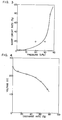
- the batteries prepared from the TiS 2 films fabricated under an inner pressure of reaction tube of 10 kPa or less had no short-circuit at all, as shown in Fig. 3, and one each of the batteries prepared from the TiS 2 films formed at 20 kPa and 30 kPa, respectively, had a short-circuit.
- four TiS 2 films prepared at 35kPa four had short-circuits. That is, only when the TiS 2 films had a flat surface, that is, only when the films were fabricated at 30 kPa or less, a thin film battery could be prepared with a good efficiency.
- a battery prepared from a TiS 2 film fabricated under the inner pressure of reaction tube of 9 kPa had an open circuit voltage of about 2.5 V, and had a discharge curve at a constant current discharge of 5 ⁇ A/cm 2 , as shown in Fig. 4, where a high discharge rate was obtained.
- the inner pressure of a reaction system is 30 kPa or less, preferably 1.5 kPa or less, as in the present invention as shown above.
- N 2 was used as the carrier gas, but it is desirable to use a noble gas such as He or Ar in place of N 2 , because no titanium nitride is formed.
- CVD was carried out with the same apparatus as used in Example 1, while keeping a TiCi4 flow rate at 2.3 ⁇ l/s, a H 2 S flow rate at 45 ⁇ l/s, a He flow rate at 1.3 ml/s, and an inner pressure of reaction tube at 9 kPa, whereas varying a substrate temperature between 300°-700°C.
- the TiS 2 films fabricated at a substrate temperature of 350°-650°C had a flat surface and a density of about 70% or higher, and their crystallites were oriented at an angle of its c-axis to the substrate surface of 45° or less, whereas the TiS 2 films formed at 700°C had a similar structure to that in which crystal- lates grow at random, that is, they had a disturbed orientation and pronounced surface irregularity.
- the growth rate of the film was considerably low. Better flatness, density and orientation of films were obtained in a temperature range of 420°-600°C, particularly 450°-550°C.
- model film batteries were prepared in the same manner as in Example 1.
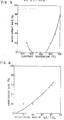
- the batteries prepared from the TiS 2 films fabricated at 420°-550°C had no short-circuits at all, as shown in Fig. 5, whereas only one each of the batteries prepared from the-TiS 2 films formed at 350°C and 600°C had a short-circuit, and only two of the batteries prepared from the TiS 2 film formed at 650°C had a short-circuit. On the other hand, among five batteries prepared from the TiS 2 film formed at 700°C, four had a short-circuit.
- the substrate temperature be 350°-650°, preferably 420°-600°C, more preferably 450°-550°C, as in the present invention as described above.
- Example 2 CVD was carried out with the same apparatus as in Example 1, while keeping the substrate temperature at 350°C and 650 0 C, respectively, and the inner pressure of reaction tube at 30 kPa.
- the TiCl 4 flow rate was 2.3 ⁇ l/s, the H 2 5 flow rate 45 ⁇ l/s, and the He flow rate 1.3 ml/s.
- a TiS 2 film having a flat surface, a density of about 70% and an angle of the c-axis to the substrate surface of about 45° can be obtained by keeping the substrate temperature in a range of 350° to 650°C though the inner pressure of reaction tube is increased to 30 kPa.
- Example 2 CVD was carried out with the same apparatus as in Example 1, while keeping the substrate temperature at 500°C, the inner pressure of reaction tube at 3 kPa, sum of the TiCl 4 flow rate and H 2 S flow rate at 50 ⁇ l/s, and the He flow rate at 5 ml/s, whereas varying a concentration ratio of H 2 S/TiCl 4 to 2 - 40.
- Batteries were prepared in the same manner as in Example 1, and it was found that all five batteries had no short-circuit in a concentration ratio of H 2 S/ TiCi4 of 2 - 3, and only one battery had a short-circuit in a ratio of 10 - 20, as shown in Fig. 6, whereas among five batteries, three had a short-circuit in the concentration ratio of 40. In Example 1, no batteries having a short-circuit was obtained in the concentration ratio of 20, but this difference seems to be due to a difference of carrier gas.
- Example 2 CVD was carried out with the same apparatus as in Example 1 at the substrate temperature of 550°C, the inner pressure of reaction tube of 0.4 kPa, the TiCl 4 flow rate of 5 ⁇ l/s, the H 2 S flow rate of 45 ⁇ l/s and the Ar flow rate of 1.0 ml/s to fabricate a TiS 2 film having a film thickness of 20 ⁇ m.
- the thus obtained TiS 2 film had the c-axis of crystallite being substantially in parallel to the substrate surface, i.e. an angle of the c-axis to the substrate surface being 30° or less, and a density of about 75% or higher. The crystallites grew from the substrate to the film surface.
- Model batteries were prepared from the thus obtained TiS 2 film and subjected to constant current discharge at the current density of 3 ⁇ A/cm 2 , whereby a discharge rate of about 80% was obtained. It seems that such a high discharge rate with such a thick film can be obtained owing to a good orientation of crystallites in the the film, good surface flatness and high density.
- quartz was used as the substrate, but other materials such as silicon, alumina, etc. could be used as a substitute material, in place of the quartz, and a flat and dense TiS 2 film of the present invention could be fabricated thereon.
- a flat and dense Ti5 2 film on which a film of other material, such as an oxide film, is formable can be fabricated on various materials.
- a film for a device using TiS 2 as a constituent can be prepared by application of the present invention, and furthermore a thin film lithium secondary battery using a TiS 2 film as a cathode film is prepared on silicon, from which a solar cell has been prepared in advance, to form a novel combined device for storing the solar cell energy.
- the memory chip When a thin film lithium secondary battery is formed on a volatile memory chip, the memory chip can be. made non-volatile.
- a novel thin film device or their combined devices can be prepared.
- the present TiS 2 film can be utilized in a film battery such as the said thin film lithium battery, etc., and is also applicable as an anti-corrosive film.
Landscapes
- Chemical & Material Sciences (AREA)
- General Chemical & Material Sciences (AREA)
- Engineering & Computer Science (AREA)
- Chemical Kinetics & Catalysis (AREA)
- Materials Engineering (AREA)
- Inorganic Chemistry (AREA)
- Metallurgy (AREA)
- Organic Chemistry (AREA)
- Electrochemistry (AREA)
- Crystallography & Structural Chemistry (AREA)
- Manufacturing & Machinery (AREA)
- Mechanical Engineering (AREA)
- Secondary Cells (AREA)
- Battery Electrode And Active Subsutance (AREA)
- Inorganic Compounds Of Heavy Metals (AREA)
- Crystals, And After-Treatments Of Crystals (AREA)
Applications Claiming Priority (2)
| Application Number | Priority Date | Filing Date | Title |
|---|---|---|---|
| JP158123/82 | 1982-09-13 | ||
| JP57158123A JPS5950027A (ja) | 1982-09-13 | 1982-09-13 | 二硫化チタン薄膜およびその形成法 |
Publications (2)
| Publication Number | Publication Date |
|---|---|
| EP0103470A1 true EP0103470A1 (fr) | 1984-03-21 |
| EP0103470B1 EP0103470B1 (fr) | 1986-09-03 |
Family
ID=15664795
Family Applications (1)
| Application Number | Title | Priority Date | Filing Date |
|---|---|---|---|
| EP83305284A Expired EP0103470B1 (fr) | 1982-09-13 | 1983-09-09 | Film à couche mince en disulfure de titane et procédé pour sa fabrication |
Country Status (4)
| Country | Link |
|---|---|
| US (1) | US4572873A (fr) |
| EP (1) | EP0103470B1 (fr) |
| JP (1) | JPS5950027A (fr) |
| DE (1) | DE3365874D1 (fr) |
Cited By (6)
| Publication number | Priority date | Publication date | Assignee | Title |
|---|---|---|---|---|
| DE3525475C1 (de) * | 1985-07-17 | 1986-10-09 | Degussa Ag, 6000 Frankfurt | Verfahren zur Aufbereitung von Titandisulfid fuer den Einsatz in Batterien |
| FR2581483A1 (fr) * | 1985-05-03 | 1986-11-07 | Balkanski Minko | Pile solide integrable et procede de realisation |
| EP0127373A3 (en) * | 1983-05-26 | 1986-12-10 | Hitachi, Ltd. | Cathode structure for a thin film battery, and a battery having such a cathode structure |
| US4816356A (en) * | 1985-05-03 | 1989-03-28 | Minko Balkanski | Process for producing a solid state battery |
| US5298295A (en) * | 1991-04-10 | 1994-03-29 | Wayne State University | Chemical vapor deposition of metal chalcogenide films |
| EP1026762A1 (fr) * | 1999-02-08 | 2000-08-09 | Wilson Greatbatch Ltd. | Composant d'électrode fabriqué par dépot chimique en phase vapeur et procédé de fabrication |
Families Citing this family (26)
| Publication number | Priority date | Publication date | Assignee | Title |
|---|---|---|---|---|
| US5194298A (en) * | 1990-09-14 | 1993-03-16 | Kaun Thomas D | Method of preparing corrosion resistant composite materials |
| US8236443B2 (en) * | 2002-08-09 | 2012-08-07 | Infinite Power Solutions, Inc. | Metal film encapsulation |
| US8394522B2 (en) * | 2002-08-09 | 2013-03-12 | Infinite Power Solutions, Inc. | Robust metal film encapsulation |
| US7993773B2 (en) | 2002-08-09 | 2011-08-09 | Infinite Power Solutions, Inc. | Electrochemical apparatus with barrier layer protected substrate |
| US8431264B2 (en) * | 2002-08-09 | 2013-04-30 | Infinite Power Solutions, Inc. | Hybrid thin-film battery |
| US20070264564A1 (en) | 2006-03-16 | 2007-11-15 | Infinite Power Solutions, Inc. | Thin film battery on an integrated circuit or circuit board and method thereof |
| US8021778B2 (en) * | 2002-08-09 | 2011-09-20 | Infinite Power Solutions, Inc. | Electrochemical apparatus with barrier layer protected substrate |
| US8404376B2 (en) | 2002-08-09 | 2013-03-26 | Infinite Power Solutions, Inc. | Metal film encapsulation |
| US8445130B2 (en) * | 2002-08-09 | 2013-05-21 | Infinite Power Solutions, Inc. | Hybrid thin-film battery |
| KR100682883B1 (ko) * | 2002-11-27 | 2007-02-15 | 삼성전자주식회사 | 고체 전해질, 그의 제조방법 및 이를 채용한 리튬전지 및 박막전지 |
| US8728285B2 (en) | 2003-05-23 | 2014-05-20 | Demaray, Llc | Transparent conductive oxides |
| UA67135A (en) * | 2003-07-25 | 2004-06-15 | Subsidiary Entpr With Foreign | Method for producing lithium battery |
| KR101127370B1 (ko) * | 2004-12-08 | 2012-03-29 | 인피니트 파워 솔루션스, 인크. | LiCoO2의 증착 |
| US7959769B2 (en) * | 2004-12-08 | 2011-06-14 | Infinite Power Solutions, Inc. | Deposition of LiCoO2 |
| US8062708B2 (en) * | 2006-09-29 | 2011-11-22 | Infinite Power Solutions, Inc. | Masking of and material constraint for depositing battery layers on flexible substrates |
| US8197781B2 (en) * | 2006-11-07 | 2012-06-12 | Infinite Power Solutions, Inc. | Sputtering target of Li3PO4 and method for producing same |
| US8268488B2 (en) | 2007-12-21 | 2012-09-18 | Infinite Power Solutions, Inc. | Thin film electrolyte for thin film batteries |
| TWI441937B (zh) * | 2007-12-21 | 2014-06-21 | Infinite Power Solutions Inc | 形成用於電解質薄膜之濺鍍靶材的方法 |
| KR101606183B1 (ko) | 2008-01-11 | 2016-03-25 | 사푸라스트 리써치 엘엘씨 | 박막 배터리 및 기타 소자를 위한 박막 캡슐화 |
| CN101983469B (zh) * | 2008-04-02 | 2014-06-04 | 无穷动力解决方案股份有限公司 | 与能量采集关联的储能装置的无源过电压/欠电压控制和保护 |
| KR20110058793A (ko) * | 2008-08-11 | 2011-06-01 | 인피니트 파워 솔루션스, 인크. | 전자기 에너지를 수확하기 위한 일체형 컬렉터 표면을 갖는 에너지 디바이스 및 전자기 에너지를 수확하는 방법 |
| WO2010030743A1 (fr) * | 2008-09-12 | 2010-03-18 | Infinite Power Solutions, Inc. | Dispositif d'énergie ayant une surface conductrice intégrée pour une communication de données par l'intermédiaire d'une énergie électromagnétique et procédé associé |
| WO2010042594A1 (fr) * | 2008-10-08 | 2010-04-15 | Infinite Power Solutions, Inc. | Module de capteurs sans fil alimenté par l’environnement |
| US20100294428A1 (en) * | 2009-05-20 | 2010-11-25 | Snyder Shawn W | Method of Integrating Electrochemical Devices Into and Onto Fixtures |
| KR101792287B1 (ko) | 2009-09-01 | 2017-10-31 | 사푸라스트 리써치 엘엘씨 | 집적된 박막 배터리를 갖는 인쇄 회로 보드 |
| US20110300432A1 (en) | 2010-06-07 | 2011-12-08 | Snyder Shawn W | Rechargeable, High-Density Electrochemical Device |
Citations (6)
| Publication number | Priority date | Publication date | Assignee | Title |
|---|---|---|---|---|
| US3808035A (en) * | 1970-12-09 | 1974-04-30 | M Stelter | Deposition of single or multiple layers on substrates from dilute gas sweep to produce optical components, electro-optical components, and the like |
| US4137297A (en) * | 1977-12-01 | 1979-01-30 | Laporte Industries Limited | Process for the production of titanium disulphide |
| US4203861A (en) * | 1977-12-01 | 1980-05-20 | Laporte Industries Limited | Inorganic compounds |
| EP0028691A1 (fr) * | 1979-11-09 | 1981-05-20 | Degussa Aktiengesellschaft | Procédé pour la production de disulfure de titane de pureté élevée et de composition stoechiométrique |
| GB1599794A (en) * | 1977-04-25 | 1981-10-07 | Duracell Int | Solid state electrochemical cells |
| GB1599793A (en) * | 1977-04-25 | 1981-10-07 | Duracell Int | Cathodes for solid electrolyte cells |
Family Cites Families (4)
| Publication number | Priority date | Publication date | Assignee | Title |
|---|---|---|---|---|
| SE393967B (sv) * | 1974-11-29 | 1977-05-31 | Sateko Oy | Forfarande och for utforande av stroleggning mellan lagren i ett virkespaket |
| US4007055A (en) * | 1975-05-09 | 1977-02-08 | Exxon Research And Engineering Company | Preparation of stoichiometric titanium disulfide |
| US4259310A (en) * | 1980-01-28 | 1981-03-31 | Kerr-Mcgee Chemical Corporation | Process for the manufacture of titanium disulfide |
| US4364995A (en) * | 1981-02-04 | 1982-12-21 | Minnesota Mining And Manufacturing Company | Metal/metal oxide coatings |
-
1982
- 1982-09-13 JP JP57158123A patent/JPS5950027A/ja active Granted
-
1983
- 1983-09-09 DE DE8383305284T patent/DE3365874D1/de not_active Expired
- 1983-09-09 EP EP83305284A patent/EP0103470B1/fr not_active Expired
-
1985
- 1985-02-19 US US06/702,661 patent/US4572873A/en not_active Expired - Lifetime
Patent Citations (6)
| Publication number | Priority date | Publication date | Assignee | Title |
|---|---|---|---|---|
| US3808035A (en) * | 1970-12-09 | 1974-04-30 | M Stelter | Deposition of single or multiple layers on substrates from dilute gas sweep to produce optical components, electro-optical components, and the like |
| GB1599794A (en) * | 1977-04-25 | 1981-10-07 | Duracell Int | Solid state electrochemical cells |
| GB1599793A (en) * | 1977-04-25 | 1981-10-07 | Duracell Int | Cathodes for solid electrolyte cells |
| US4137297A (en) * | 1977-12-01 | 1979-01-30 | Laporte Industries Limited | Process for the production of titanium disulphide |
| US4203861A (en) * | 1977-12-01 | 1980-05-20 | Laporte Industries Limited | Inorganic compounds |
| EP0028691A1 (fr) * | 1979-11-09 | 1981-05-20 | Degussa Aktiengesellschaft | Procédé pour la production de disulfure de titane de pureté élevée et de composition stoechiométrique |
Cited By (8)
| Publication number | Priority date | Publication date | Assignee | Title |
|---|---|---|---|---|
| EP0127373A3 (en) * | 1983-05-26 | 1986-12-10 | Hitachi, Ltd. | Cathode structure for a thin film battery, and a battery having such a cathode structure |
| FR2581483A1 (fr) * | 1985-05-03 | 1986-11-07 | Balkanski Minko | Pile solide integrable et procede de realisation |
| EP0201422A3 (en) * | 1985-05-03 | 1987-04-08 | Minko Balkanski | Integrable solid cell and process for its manufacture |
| US4730383A (en) * | 1985-05-03 | 1988-03-15 | Minko Balkanski | Integrable solid state battery and process for producing same |
| US4816356A (en) * | 1985-05-03 | 1989-03-28 | Minko Balkanski | Process for producing a solid state battery |
| DE3525475C1 (de) * | 1985-07-17 | 1986-10-09 | Degussa Ag, 6000 Frankfurt | Verfahren zur Aufbereitung von Titandisulfid fuer den Einsatz in Batterien |
| US5298295A (en) * | 1991-04-10 | 1994-03-29 | Wayne State University | Chemical vapor deposition of metal chalcogenide films |
| EP1026762A1 (fr) * | 1999-02-08 | 2000-08-09 | Wilson Greatbatch Ltd. | Composant d'électrode fabriqué par dépot chimique en phase vapeur et procédé de fabrication |
Also Published As
| Publication number | Publication date |
|---|---|
| JPS5950027A (ja) | 1984-03-22 |
| US4572873A (en) | 1986-02-25 |
| DE3365874D1 (en) | 1986-10-09 |
| EP0103470B1 (fr) | 1986-09-03 |
| JPH0323489B2 (fr) | 1991-03-29 |
Similar Documents
| Publication | Publication Date | Title |
|---|---|---|
| EP0103470B1 (fr) | Film à couche mince en disulfure de titane et procédé pour sa fabrication | |
| US4555456A (en) | Cathode structure for thin film battery | |
| US5455126A (en) | Electra-optical device including a nitrogen containing electrolyte | |
| TWI331634B (en) | Deposition of licoo2 | |
| US5238866A (en) | Plasma enhanced chemical vapor deposition process for producing an amorphous semiconductive surface coating | |
| CN104969302B (zh) | 质子传导体 | |
| Matthäus et al. | Highly Textured Films of Layered Metal Disulfide 2H‐WS 2: Preparation and Optoelectronic Properties | |
| US20030022065A1 (en) | Plasma enhanced chemical vapor deposition vanadium oxide thin films | |
| CN112838264A (zh) | 一种固体电解质材料及其制备方法和固态锂电池 | |
| WO1992009117A1 (fr) | Batterie rechargeable a electrode au lithium en couche mince intercalee | |
| KR20020029813A (ko) | 우수한 사이클링 안정성과 높은 이온 전도도를 갖는리튬-이온 이차 박막 전지 | |
| Kim et al. | A controlled nucleation and growth of Si nanowires by using a TiN diffusion barrier layer for lithium-ion batteries | |
| CN100592554C (zh) | 铅蓄电池用正极集电体 | |
| US8110167B2 (en) | Nanowire synthesis from vapor and solid sources | |
| US4965142A (en) | Molybdenum-platinum-oxide electrodes for thermoelectric generators | |
| Ansari et al. | Effect of growth temperature on the morphology and bonded states of SnO2 nanobaskets | |
| Shealy et al. | Preparation and Properties of Zinc Oxide Films Grown by the Oxidation of Diethylzinc | |
| EP0372069A1 (fr) | Preparations solides pour electrolytes de piles a combustible | |
| CN208604194U (zh) | 一种掺硼金刚石电极 | |
| CN110176625B (zh) | 一种固体电解质材料及其制备方法 | |
| JPS61295235A (ja) | 微粒状硫化チタンの製造方法 | |
| Choi et al. | Pt Thin Film Collectors Prepared by Liquid‐Delivery Metal–Organic CVD Using Pt (C2H5C5H4)(CH3) 3 for LiCoO2 Thin Film Cathodes | |
| CN110534348A (zh) | 一种基于3C-SiC薄膜的电极材料及其制备方法 | |
| US20250364558A1 (en) | Concentration gradient-type negative electrode active material for secondary battery and method for manufacturing same | |
| Hsiao et al. | Anisotropic Etching of a Novalak‐Based Polymer at Cryogenic Temperature |
Legal Events
| Date | Code | Title | Description |
|---|---|---|---|
| PUAI | Public reference made under article 153(3) epc to a published international application that has entered the european phase |
Free format text: ORIGINAL CODE: 0009012 |
|
| 17P | Request for examination filed |
Effective date: 19831025 |
|
| AK | Designated contracting states |
Designated state(s): DE GB NL |
|
| GRAA | (expected) grant |
Free format text: ORIGINAL CODE: 0009210 |
|
| AK | Designated contracting states |
Kind code of ref document: B1 Designated state(s): DE GB NL |
|
| REF | Corresponds to: |
Ref document number: 3365874 Country of ref document: DE Date of ref document: 19861009 |
|
| PLBE | No opposition filed within time limit |
Free format text: ORIGINAL CODE: 0009261 |
|
| STAA | Information on the status of an ep patent application or granted ep patent |
Free format text: STATUS: NO OPPOSITION FILED WITHIN TIME LIMIT |
|
| 26N | No opposition filed | ||
| REG | Reference to a national code |
Ref country code: GB Ref legal event code: IF02 |
|
| PGFP | Annual fee paid to national office [announced via postgrant information from national office to epo] |
Ref country code: GB Payment date: 20020830 Year of fee payment: 20 |
|
| PGFP | Annual fee paid to national office [announced via postgrant information from national office to epo] |
Ref country code: NL Payment date: 20020930 Year of fee payment: 20 |
|
| PGFP | Annual fee paid to national office [announced via postgrant information from national office to epo] |
Ref country code: DE Payment date: 20021125 Year of fee payment: 20 |
|
| PG25 | Lapsed in a contracting state [announced via postgrant information from national office to epo] |
Ref country code: GB Free format text: LAPSE BECAUSE OF EXPIRATION OF PROTECTION Effective date: 20030908 |
|
| PG25 | Lapsed in a contracting state [announced via postgrant information from national office to epo] |
Ref country code: NL Free format text: LAPSE BECAUSE OF EXPIRATION OF PROTECTION Effective date: 20030909 |
|
| REG | Reference to a national code |
Ref country code: GB Ref legal event code: PE20 |
|
| NLV7 | Nl: ceased due to reaching the maximum lifetime of a patent |
Effective date: 20030909 |