EP0103456B1 - Method of making a burnable neutron absorber body for a nuclear reactor - Google Patents
Method of making a burnable neutron absorber body for a nuclear reactor Download PDFInfo
- Publication number
- EP0103456B1 EP0103456B1 EP83305186A EP83305186A EP0103456B1 EP 0103456 B1 EP0103456 B1 EP 0103456B1 EP 83305186 A EP83305186 A EP 83305186A EP 83305186 A EP83305186 A EP 83305186A EP 0103456 B1 EP0103456 B1 EP 0103456B1
- Authority
- EP
- European Patent Office
- Prior art keywords
- boron
- compound
- compound particles
- slurry
- pore
- Prior art date
- Legal status (The legal status is an assumption and is not a legal conclusion. Google has not performed a legal analysis and makes no representation as to the accuracy of the status listed.)
- Expired
Links
Images
Classifications
-
- G—PHYSICS
- G21—NUCLEAR PHYSICS; NUCLEAR ENGINEERING
- G21C—NUCLEAR REACTORS
- G21C21/00—Apparatus or processes specially adapted to the manufacture of reactors or parts thereof
- G21C21/18—Manufacture of control elements covered by group G21C7/00
-
- Y—GENERAL TAGGING OF NEW TECHNOLOGICAL DEVELOPMENTS; GENERAL TAGGING OF CROSS-SECTIONAL TECHNOLOGIES SPANNING OVER SEVERAL SECTIONS OF THE IPC; TECHNICAL SUBJECTS COVERED BY FORMER USPC CROSS-REFERENCE ART COLLECTIONS [XRACs] AND DIGESTS
- Y02—TECHNOLOGIES OR APPLICATIONS FOR MITIGATION OR ADAPTATION AGAINST CLIMATE CHANGE
- Y02E—REDUCTION OF GREENHOUSE GAS [GHG] EMISSIONS, RELATED TO ENERGY GENERATION, TRANSMISSION OR DISTRIBUTION
- Y02E30/00—Energy generation of nuclear origin
- Y02E30/30—Nuclear fission reactors
Definitions
- This invention relates to a method of making burnable neutron absorber bodies for nuclear reactors and it has particular relationship to neutron absorbers in which the neutron-absorbing component or element is a boron compound.
- the principal neutron absorber boron compounds are boron carbide, B 4 C, and zirconium boride ZrB 2 .
- the neutron absorbers are ceramic pellets including the boron compound in a matrix of a highly refractory material.
- the principal refractory materials are aluminum oxide, AI 2 0 3 , and zirconium oxide, Zr0 2 .
- This invention has unique utility with respect of neutron-absorber ceramics in which B 4 C and/or ZrB 2 are encapsulated in a matrix of AI 2 0 3 and/or Zr0 2 .
- this invention is applicable to neutron absorbers including other compounds of boron and/or other matrix materials, or in which the neutron-absorber elements are other than boron but manifest the same swelling properties as boron compounds, such application is within the scope of equivalents of this invention under the doctrine of equivalents as this doctrine is defined and explained by the U.S. Supreme Court in Graver Tank & Mfg. Co., Inc. et al. vs Linde Air Products Co. 339 U.S. 605; 70 S Ct 1017 (1950).
- GB-A-865266 discloses mixing boron oxide with one or more oxides which include aluminum oxide, pressing the mixture to shape and sintering.
- This invention arises from the realization that, despite the porosity of the neutron-absorber ceramics produced as disclosed in the aforementioned Radford et al applications, it may happen that some of the boron-compound particles in the ceramics are tightly confined in contact with the surrounding matrix material. Under such circumstances, the expansion by reason of thermal expansion and swelling by reason of neutron irradiation of the boron-compound particles, while the neutron absorber is in use, sets up stresses within the ceramic which leads to cracking or crumbling.
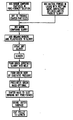
- the present invention resides in a method of making a burnable neutron absorber body for a nuclear reactor comprising coating boron-compound particles with a pore former; producing a slurry of matrix powder in a liquid; mixing the boron-compound particles coated with pore former in said slurry; drying the slurry thus produced to obtain a mixture of coated boron-compound particles and matrix powder; forming a green body of said mixture; and sintering said green body and burning out the pore former to form a sintered body of the boron compound in a matrix with substantially all boron-compound particles in a void so as to accommodate expansion of the boron-compound particles during subsequent irradiation.
- the aforementioned cracking or crumbling is precluded by coating the boron-compound particles with a pore former.
- the particles so coated are mixed into a slurry of the matrix powder and thereafter, the particles in the slurry are dried and pressed into a green body and the green body is sintered to form a ceramic.
- the pore formers are volatilized leaving voids around substantially all boron-compound particles.
- the boron-compound particles may settle under gravity in the voids created, but the voids in which these particles settle afford space for the particles to expand freely without stressing the ceramic internally. It is more probable, however, that the boron-compound particles will adhere to the surface of the pore due to limited chemical reaction with the matrix material, thus providing some degree of integrity to the two phase material.
- Boron-compound powder is thoroughly mixed in a pore-former solution.
- the boron compound is natural B 4 C with about 20% of 8 1 °.
- the mean size of the particles in the powder is between 5 microns and 30 microns; 5-15 microns means size is preferred.
- the particles should be sieved to exclude particles having diameters greater than 60 microns.
- a typical pore former is polymethyl methacrylate (PMMA) dissolved in methyl ethyl ketone (MEK): A slurry containing 100 gms 8 4 C in 200 g of a 20% solution of PMMA in MEK mixed in a shear type food blender to assure good dispersion of the B 4 C is preferred.
- pore forming binders can include: organic stearates, polyvinyl butyral, paraffin wax, vaseline and latex. Either an organic liquid medium which is then evaporated can be used or the binder could be liquefied by the action of applied heat.
- the mixture is dried leaving particles coated with pore former.
- the solution is typically dried while the boron compound is being mixed in the solution.
- the powder may require sieving to remove aggregated particles.
- the coating is typically about 25,4 pm [.001 inch] thick but depending upon the void sizes desired, may be of greater or less thickness than 25,4 pm [0.001 inch].
- the matrix powder typically AI 2 0 3
- a liquid typically water
- a wetting agent typically 1-20 microns
- surfactants typically 1-20 microns
- deflocculants are listed in EP-A-0 087 927.
- the components of a typical slurry are :
- the dry-coated boron compound is added to the slurry while thoroughly stirring.
- the quantity of B 4 C in the mixture may be between 1% and 25% by weight of the quantity of the AI 2 0 3 , typically.
- Organic binders and plasticizers are added to the slurry. Typical binders and plasticizers are listed in EP-A-0087927. Typically the slurry will contain 15 wt.% coated B 4 C particles based on the initial weight of theA1203 powder. Between 1 and 3 wt. % PVA (polyvinyl alcohol) binder is then added, with about 0.25 to 0.75 wt. % Carbowax 200 plasticizer.
- PVA polyvinyl alcohol
- This mixture is blended to ensure good dispersion of the B 4 C and also the binder system within the A1 2 0 3 slurry. The following steps than are taken:
- the pressure may vary between 3.51 and 42.13 kg/cm 2 [5,000 and 60,000 pounds per square inch]. A pressure 21.07 Kg/cm 2 of [30,00 pounds per square inch] is convenient.
- Pre-sinter the green mass is optional, and serves to remove the fugitive binder and other organix components. Sinter the resulting mass to size, burning out the pore former together with the binder and plasticizer. Typically, the sintering temperature is about 1500°C. With the pore former removed there are voids around substantially all B 4 C particles.
Landscapes
- Engineering & Computer Science (AREA)
- Manufacturing & Machinery (AREA)
- Physics & Mathematics (AREA)
- Plasma & Fusion (AREA)
- General Engineering & Computer Science (AREA)
- High Energy & Nuclear Physics (AREA)
- Compositions Of Oxide Ceramics (AREA)
- Ceramic Products (AREA)
Applications Claiming Priority (2)
| Application Number | Priority Date | Filing Date | Title |
|---|---|---|---|
| US06/416,767 US4522744A (en) | 1982-09-10 | 1982-09-10 | Burnable neutron absorbers |
| US416767 | 1982-09-10 |
Publications (3)
| Publication Number | Publication Date |
|---|---|
| EP0103456A2 EP0103456A2 (en) | 1984-03-21 |
| EP0103456A3 EP0103456A3 (en) | 1985-05-08 |
| EP0103456B1 true EP0103456B1 (en) | 1988-08-24 |
Family
ID=23651222
Family Applications (1)
| Application Number | Title | Priority Date | Filing Date |
|---|---|---|---|
| EP83305186A Expired EP0103456B1 (en) | 1982-09-10 | 1983-09-07 | Method of making a burnable neutron absorber body for a nuclear reactor |
Country Status (9)
| Country | Link |
|---|---|
| US (1) | US4522744A (enExample) |
| EP (1) | EP0103456B1 (enExample) |
| JP (1) | JPS5964568A (enExample) |
| KR (1) | KR910004783B1 (enExample) |
| BE (1) | BE897727A (enExample) |
| DE (1) | DE3377834D1 (enExample) |
| ES (1) | ES8702702A1 (enExample) |
| FR (1) | FR2533063B1 (enExample) |
| ZA (1) | ZA836282B (enExample) |
Families Citing this family (10)
| Publication number | Priority date | Publication date | Assignee | Title |
|---|---|---|---|---|
| US4826630A (en) * | 1981-12-28 | 1989-05-02 | Westinghouse Electric Corp. | Burnable neutron absorbers |
| EP0171938A3 (en) * | 1984-08-09 | 1986-10-08 | Chemring Limited | Slip coating |
| US4777153A (en) * | 1986-05-06 | 1988-10-11 | Washington Research Foundation | Process for the production of porous ceramics using decomposable polymeric microspheres and the resultant product |
| DE3736660A1 (de) * | 1987-10-29 | 1989-05-11 | Mtu Muenchen Gmbh | Verfahren zur herstellung eines poroesen formkoerpers |
| FR2713818B1 (fr) * | 1993-12-10 | 1996-01-12 | Commissariat Energie Atomique | Matériau composite absorbant les neutrons et son procédé de fabrication. |
| US6332906B1 (en) | 1998-03-24 | 2001-12-25 | California Consolidated Technology, Inc. | Aluminum-silicon alloy formed from a metal powder |
| US5965829A (en) * | 1998-04-14 | 1999-10-12 | Reynolds Metals Company | Radiation absorbing refractory composition |
| KR100636798B1 (ko) | 2005-02-21 | 2006-10-20 | 한국원자력연구소 | 저밀도 b4c 소결체 제조기술 |
| CN111153712A (zh) * | 2019-12-31 | 2020-05-15 | 南京即衡科技发展有限公司 | 一种多孔陶瓷互穿网络中子屏蔽复合材料及其制备方法 |
| CN117448657A (zh) * | 2023-11-23 | 2024-01-26 | 中国核动力研究设计院 | 一种碳化硼不锈钢复合材料及其制备方法 |
Family Cites Families (22)
| Publication number | Priority date | Publication date | Assignee | Title |
|---|---|---|---|---|
| CA722216A (en) * | 1965-11-23 | G. Sturges Donald | Porous refractory bodies and methods of manufacturing the same | |
| GB865226A (en) * | 1958-01-06 | 1961-04-12 | Gen Electric Co Ltd | Improvements in or relating to nuclear reactor control rod materials |
| GB942945A (en) * | 1960-01-19 | 1963-11-27 | Doulton & Co Ltd | Ceramic materials |
| US3166615A (en) * | 1960-12-30 | 1965-01-19 | James A Farrell | Method of forming porous rigid structures |
| US3122509A (en) * | 1961-05-17 | 1964-02-25 | Joseph H Handwerk | Coherent nuclear reactor elements |
| US3148056A (en) * | 1962-08-10 | 1964-09-08 | Westinghouse Electric Corp | Cathode |
| GB1106291A (en) * | 1963-11-25 | 1968-03-13 | Nat Res Dev | Boron-containing materials |
| US3485717A (en) * | 1967-08-29 | 1969-12-23 | Westinghouse Electric Corp | Control element |
| US3579390A (en) * | 1968-12-20 | 1971-05-18 | Nasa | Method of making a cermet |
| US3917768A (en) * | 1969-02-25 | 1975-11-04 | Fiat Spa | Sintered nuclear fuel and method of preparing same |
| US4104062A (en) * | 1969-08-13 | 1978-08-01 | Norton Company | Process for making aluminum modified boron carbide and products resulting therefrom |
| US3751538A (en) * | 1970-02-25 | 1973-08-07 | Belgonucleaire Sa | Fabrication of nuclear fuel pellets |
| US3697374A (en) * | 1970-11-03 | 1972-10-10 | Atomic Energy Commission | Gradient-type nuclear fuel plate |
| FR2133017A5 (en) * | 1971-04-06 | 1972-11-24 | Desmarquest & Cec | Nuclear reactor combustible poison - comprising ceramics formed from oxide and carbide |
| BE793980A (fr) * | 1972-01-13 | 1973-07-12 | Atomic Energy Authority Uk | Combustible nucleaire ceramique ameliore |
| BE793982A (fr) * | 1972-01-14 | 1973-05-02 | Foseco Int | Fabrication de produits ceramiques poreux |
| GB1461263A (en) * | 1973-01-12 | 1977-01-13 | British Nuclear Fuels Ltd | Ceramic nuclear fuel pellets |
| GB1482750A (en) * | 1973-12-27 | 1977-08-10 | British Nuclear Fuels Ltd | Material for shutting down gas cooled nuclear reactors |
| US3976735A (en) * | 1974-09-30 | 1976-08-24 | The United States Of America As Represented By The United States Energy Research And Development Administration | Fabrication of boron articles |
| DE2752040C3 (de) * | 1977-11-22 | 1981-10-08 | Elektroschmelzwerk Kempten GmbH, 8000 München | Neutronenabsorberplatten auf Grundlage von Borcarbid und Kohlenstoff und Verfahren zu ihrer Herstellung |
| US4172762A (en) * | 1978-01-20 | 1979-10-30 | Combustion Engineering, Inc. | High exposure control rod finger |
| US4381283A (en) * | 1978-10-18 | 1983-04-26 | The Babcock & Wilcox Company | Control component structure |
-
1982
- 1982-09-10 US US06/416,767 patent/US4522744A/en not_active Expired - Fee Related
-
1983
- 1983-08-24 ZA ZA836282A patent/ZA836282B/xx unknown
- 1983-09-06 ES ES525423A patent/ES8702702A1/es not_active Expired
- 1983-09-07 DE DE8383305186T patent/DE3377834D1/de not_active Expired
- 1983-09-07 EP EP83305186A patent/EP0103456B1/en not_active Expired
- 1983-09-08 FR FR8314325A patent/FR2533063B1/fr not_active Expired
- 1983-09-09 BE BE0/211509A patent/BE897727A/fr not_active IP Right Cessation
- 1983-09-10 JP JP58167391A patent/JPS5964568A/ja active Granted
- 1983-09-10 KR KR1019830004264A patent/KR910004783B1/ko not_active Expired
Also Published As
| Publication number | Publication date |
|---|---|
| JPS5964568A (ja) | 1984-04-12 |
| US4522744A (en) | 1985-06-11 |
| EP0103456A3 (en) | 1985-05-08 |
| FR2533063A1 (fr) | 1984-03-16 |
| EP0103456A2 (en) | 1984-03-21 |
| DE3377834D1 (en) | 1988-09-29 |
| FR2533063B1 (fr) | 1986-04-18 |
| KR840005895A (ko) | 1984-11-19 |
| BE897727A (fr) | 1984-03-09 |
| ES525423A0 (es) | 1986-12-16 |
| ES8702702A1 (es) | 1986-12-16 |
| JPH0339596B2 (enExample) | 1991-06-14 |
| KR910004783B1 (ko) | 1991-07-13 |
| ZA836282B (en) | 1984-11-28 |
Similar Documents
| Publication | Publication Date | Title |
|---|---|---|
| EP0087926B1 (en) | Burnable neutron absorbers | |
| CN108335760B (zh) | 一种高铀装载量弥散燃料芯块的制备方法 | |
| EP0087927B1 (en) | Method of making annular pellets for use as burnable neutron absorbers | |
| US5762831A (en) | Composite nuclear fuel material and method of manufacture of the material | |
| EP0103456B1 (en) | Method of making a burnable neutron absorber body for a nuclear reactor | |
| US3249551A (en) | Method and product for the disposal of radioactive wastes | |
| JPH0631759B2 (ja) | 核燃料 | |
| KR910000595B1 (ko) | 중성자 흡수체 펠릿 | |
| EP0502395B1 (en) | Nuclear fuel pellets and method of manufacturing the same | |
| US3995000A (en) | Ceramic nuclear fuel pellets | |
| US4383953A (en) | Method of improving the green strength of nuclear fuel pellets | |
| US3211812A (en) | Method of making nuclear fuel compact | |
| US5772922A (en) | Neutron- absorbing composite material and its production process | |
| US3137657A (en) | Ceramic product comprising sintered beryllia and bentonite and method | |
| US3161701A (en) | Method of making nuclear fuel compact | |
| US2900263A (en) | Method of preparing a fuel element for a nuclear reactor | |
| Nishioka et al. | Solidification of Glass Powder with Simulated High‐Level Radioactive Waste During Hydrothermal Hot‐Pressing | |
| JPH02114198A (ja) | 核燃料粒子およびそれから核燃料コンパクトを製造する方法 | |
| JP4306962B2 (ja) | 中性子吸収複合材料及びこの材料の製造方法 | |
| US3264379A (en) | Method of rounding actinide oxide gel particles | |
| JPH03159970A (ja) | 耐熱性多孔質非酸化物系セラミックス焼結体とその製造方法 | |
| Paprocki | Progress on the Use of Gas-Pressure Bonding for Fabricating Low-Cost Ceramic, Cermet, and Dispersion Fuels | |
| GB2067536A (en) | Nuclear fuel pellets | |
| Christie et al. | Fabrication of fuelled beryllia by extrusion and sintering | |
| CA1165067A (en) | Method of improving the green strength of nuclear fuel pellets, and product thereof |
Legal Events
| Date | Code | Title | Description |
|---|---|---|---|
| PUAI | Public reference made under article 153(3) epc to a published international application that has entered the european phase |
Free format text: ORIGINAL CODE: 0009012 |
|
| AK | Designated contracting states |
Designated state(s): CH DE GB IT LI SE |
|
| PUAL | Search report despatched |
Free format text: ORIGINAL CODE: 0009013 |
|
| AK | Designated contracting states |
Designated state(s): CH DE GB IT LI SE |
|
| 17P | Request for examination filed |
Effective date: 19851107 |
|
| 17Q | First examination report despatched |
Effective date: 19860923 |
|
| ITF | It: translation for a ep patent filed | ||
| GRAA | (expected) grant |
Free format text: ORIGINAL CODE: 0009210 |
|
| AK | Designated contracting states |
Kind code of ref document: B1 Designated state(s): CH DE GB IT LI SE |
|
| REF | Corresponds to: |
Ref document number: 3377834 Country of ref document: DE Date of ref document: 19880929 |
|
| PLBE | No opposition filed within time limit |
Free format text: ORIGINAL CODE: 0009261 |
|
| STAA | Information on the status of an ep patent application or granted ep patent |
Free format text: STATUS: NO OPPOSITION FILED WITHIN TIME LIMIT |
|
| 26N | No opposition filed | ||
| PGFP | Annual fee paid to national office [announced via postgrant information from national office to epo] |
Ref country code: SE Payment date: 19900625 Year of fee payment: 8 |
|
| PGFP | Annual fee paid to national office [announced via postgrant information from national office to epo] |
Ref country code: CH Payment date: 19900920 Year of fee payment: 8 |
|
| PGFP | Annual fee paid to national office [announced via postgrant information from national office to epo] |
Ref country code: DE Payment date: 19900929 Year of fee payment: 8 |
|
| ITTA | It: last paid annual fee | ||
| PG25 | Lapsed in a contracting state [announced via postgrant information from national office to epo] |
Ref country code: SE Effective date: 19910908 |
|
| PG25 | Lapsed in a contracting state [announced via postgrant information from national office to epo] |
Ref country code: LI Effective date: 19910930 Ref country code: CH Effective date: 19910930 |
|
| REG | Reference to a national code |
Ref country code: CH Ref legal event code: PL |
|
| PG25 | Lapsed in a contracting state [announced via postgrant information from national office to epo] |
Ref country code: DE Effective date: 19920602 |
|
| EUG | Se: european patent has lapsed |
Ref document number: 83305186.5 Effective date: 19920408 |
|
| REG | Reference to a national code |
Ref country code: GB Ref legal event code: IF02 |
|
| PGFP | Annual fee paid to national office [announced via postgrant information from national office to epo] |
Ref country code: GB Payment date: 20020807 Year of fee payment: 20 |
|
| PG25 | Lapsed in a contracting state [announced via postgrant information from national office to epo] |
Ref country code: GB Free format text: LAPSE BECAUSE OF EXPIRATION OF PROTECTION Effective date: 20030906 |
|
| REG | Reference to a national code |
Ref country code: GB Ref legal event code: PE20 |